When you hear the phrase “queer history,” how far back does your mind go? For many, there’s a sense that LGBTQIA+ history is fairly recent, starting with Marsha P. Johnson or maybe Oscar Wilde. Beyond that, we start to get into murky territory: stories of “lifelong bachelors” and “happy spinsters” and “historically very good friends.”
But LGBTQIA+ people didn’t spring up out of nowhere in the last 100 years, even if that’s when many history books start the story.
When I started writing Let the Dead Bury the Dead, I was inspired by the popular uprisings that regularly swept through Russia before the Russian Revolution of 1917. It’s a topic that’s always fascinated me, and one I think is essential to understand our world today. At the same time, I knew I wanted the characters navigating this turbulent time to be unapologetically queer. Not to be anachronistic or edgy, but because LGBTQIA+ people have always been here, in every time and under every regime—even if discriminatory laws and biased sources and book bans try to write over us.
The eight books in this list aren’t just gripping historical page-turners, although they’re definitely that. They’re also reminders that every corner of history is queerer than we were taught.
The final book in the Radiant Emperor duology picks up where She Who Became the Sun left off, with the warrior monk Zhu Yuanzhang carving her way through 14th-century China to seize the throne. But to pull it off, she may need to join forces with an old enemy: the ruthless General Ouyang, bent on revenge for his father’s murder. Meanwhile, the clever and calculating Wang Baoxiang has his own plans to win the throne…
There are numerous queer characters in Parker-Chan’s reimagining of the Ming Dynasty, all brilliantly drawn and all an absolute mess. Zhu, Ouyang, and Baoxiang all strive to carve out a place for themselves in a world that others them and considers them less-than, and their striving makes the line between hero and villain increasingly blurry.
This historical fantasy novel is spun straight out of the Icelandic sagas, which give us most of the information we know about Viking history. It’s an imaginative retelling of the story of Gunnhild Górmsdottir, a powerful 10th-century Viking queen rumored to have dark magic powers. (Of course, what powerful woman in history wasn’t rumored to have dark magic powers, really?)
The Weaver and the Witch Queen is an exciting adventure about magic, friendship, destiny, and loyalty. It’s also an absolutely dynamite exploration of what trans history might have looked like before modern, Western ideas about sex and gender really took hold.
When the Angels Left the Old Country opens in the fictitious “everytown” of Shtetl, where the angel Uriel and the small-fry demon Little Ash spend their time in the synagogue arguing the finer points of Talmud. But when one of the young people of Shtetl goes missing, Little Ash and Uriel make it their mission to rescue her. Along the way, they meet Rose Cohen, a fierce young woman who’s on her way to America to forget she’s in love with her best friend Dinah.
This is an immigration story that’s deeply Jewish, deeply queer, and absolutely original: think Good Omens meets Gilded Age labor unions. I physically can’t stop recommending it to people.
A reimagining of a sequence from the Ramayana, Kaikeyi presents the traditionally reviled queen as an independent woman in roughly 500 BCE India who’s determined to be recognized for her talents. Along the way, she learns how to enter the Binding Plane, using threads of magic to exert her influence and gain power. But magic has its darker side, and before long Kaikeyi is faced with a decision that could destroy all she’s built.
I’m constantly on the hunt for books with asexual characters—the oft-ignored A in LGBTQIA+. Kaikeyi is an asexual heroine whose orientation is part of her identity, not a problem to be fixed. The prose is gorgeous, the plot is captivating, and the representation is a triumph.
No list of queer historical fiction would be complete without this one, the BookTok-famous granddaddy of them all. This lush, romantic retelling of Homer’s The Iliadtraces the story of the famous warrior Achilles and his lover Patroclus, from their first meeting through the tragedy of the Trojan War.
Miller’s prose is ludicrously gorgeous, and it’s agonizing and beautiful to watch Achilles and Patroclus fall in love even while the end of their story is all too well known. Highly recommended for fans of lyricism, mythology, and ugly-crying.
The Huntress follows the fearless WWII fighter pilot Nina Markova as she fights the Nazis as part of the Soviet Union’s all-female bomber regiment, the Night Witches. After the war, Nina joins forces with a British war correspondent to track down the Huntress, a notorious Nazi who may be hiding in the most unexpected of places.
All this is already catnip to a huge swathe of historical fiction readers: women pilots! Nazi hunting! A dual-timeline mystery! But what if I told you it’s also gay? Nina’s relationship with her fellow Night Witch Yelena gives the book some of its tenderest moments, and it’s a joy to see Nina’s foul-mouthed, chaotic personality shift in these romantic interludes.
Sivak’s debut novel tells the story of Sylvie de Rosiers, a biracial heiress caught between the privileged world of her rich planter father and the horror and suffering of her enslaved mother. When the Haitian Revolution sweeps through the island, Sylvie and her brother flee to Paris, where Sylvie finds herself pulled between two equally alluring romantic partners: the headstrong Cornélie Duplay, and Cornélie’s political-minded lover Maximilien Robespierre.
Mademoiselle Revolution is a whirlwind adventure through two of the world’s most famous revolutions, with a bisexual love triangle at the center that quickly turns bloody. It’s cinematic and fast-paced—the perfect queer histfic to devour in one sitting.
Empty Theatre is a tongue-in-cheek historical novel with two protagonists: the headstrong and self-destructive Empress Sisi of Austria, and her artistic, neurotic cousin King Ludwig II of Bavaria. Sisi’s been having a bit of a moment lately, with The Empress on Netflix and a few other high-profile biopics. But what made me fall in love with Empty Theatre is Ludwig, which is both of its time and also wildly relatable.
As he struggles to rule a declining country, Ludwig’s attempts to connect with others are thwarted by his social station, his mental illness, his sexuality, his own terrible decisions. By the last page, I found myself urgently wanting to give a 19th-century gay Bavarian monarch a hug. It’s perfect for readers who like their angst to also be lots of fun.
An excerpt from Jonathan Abernathy You Are Kind by Molly McGhee
Abernathy arrives at the office late by three minutes. A harried woman leads him through the cold foyer, down a set of carpeted stairs, into a small basement recently refurbished. The woman deposits him next to a table of bagels, pastries, and the like.
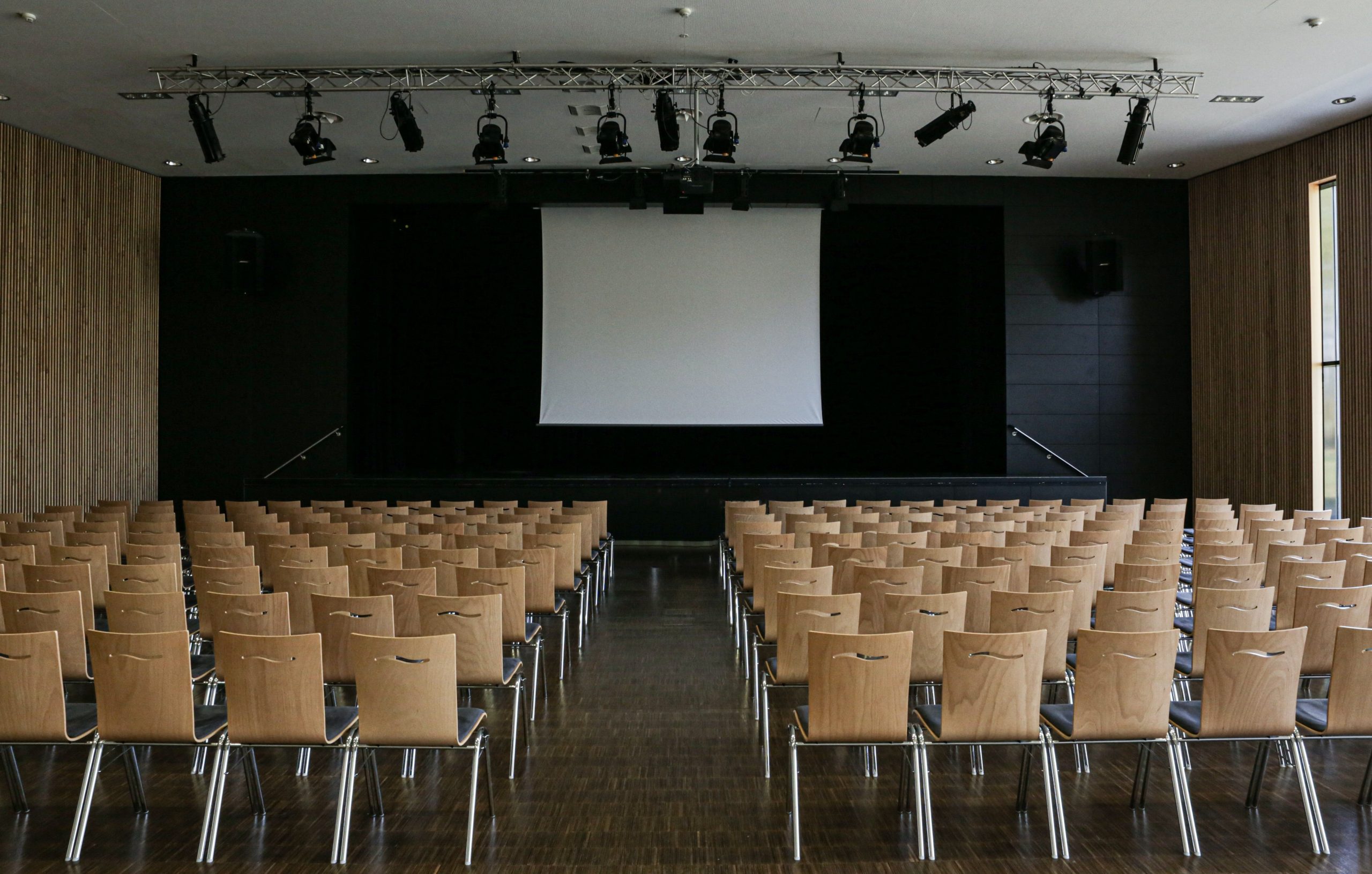
The room is low-ceilinged and has green industrial carpet. In the middle of the room, forty folding chairs are broken into five rows. A white projector screen has been pinned to the wall.
A group of dream collectors, looking superior, chat in the opposite corner with their arms crossed. There’s about ten of them. They talk conspiratorially amongst themselves.
The other people in the room are dispersed in depressed clusters and, like Abernathy, are there for training. They clutch plastic cups of water, murmuring. There are fewer than twenty of them, the auditors. They do not resemble the officers. Most look like Abernathy—dark under-eye bags, rounded bad-posture shoulders. The whole group appears to be stooped low by a potent, subconscious self-hatred. Their lives are too compacted by work (or the search for work) to contain skin-care routines, yoga practices, self-maintenance, or pride. They wear uniforms of varying colors or, if they are not uniformed, they wear ill-fitting clothes that indicate thrift. Most of them carry weight around their gut. They look nice but outdated. These are Abernathy’s people. Immediately, Abernathy is filled with love for them.
There are about thirty souls in the room, total.
“The holidays are our busiest season.” Kai says, coming up behind Abernathy. She surprises him, and to his horror, he jumps, knocking into the table of bagels. A few plastic forks go wonky.
“Kai,” he says, attempting a smile as he straightens the forks. “You surprised me. Hi. How are you?”
“‘Why am I here again,’ you might find yourself asking.” She reaches over Abernathy to take a strawberry. “Why call me back at all? Any guesses?”
“Your team couldn’t resist my charm?”
“No,” says Kai, popping the strawberry in her mouth. “Not your charm. Try again.”
“Your love for me?”
“. . .”
“I have skills the company values?”
“Holiday cycle,” she says. “Noticeable uptick in depressive episodes across the country.”
“Ah.”
“Depressive episodes mean a downturn in productivity. Downturn in productivity means an increased demand for our services hither-to unprecedented during other fiscal quarters. Hence”—she takes another strawberry—“why you are here.”
Simple stuff like saying “hello” would be beneath her, Abernathy thinks.
This, like most of Jonathan Abernathy’s assumptions about other people, is incorrect.
Abernathy does not understand Kai, Kai’s personality, Kai’s life, what Kai has done to get here, or what she has lost to be in this room, standing on a Tuesday morning next to a bagel platter with a lanky new recruit whose doe-eyed excitement just about stabs her in the gut every time she gets near him.
Jonathan Abernathy has no idea how he comes across.
It might not look like it, but Kai is putting in a lot of effort right now. She is trying her best, despite the fact that Abernathy shouldn’t be here at all, really, and that dumbasses like him are shipped in every year by the Archive in an attempt to replace Kai, who, so far, has proven to be irreplaceable. None of these dudes last more than, like, nine months. Do you know what that does to a person? Having to train a new guy exactly like the last guy every nine months?
Abernathy’s lucky Kai remembers his name.
“Right,” he says. “Who doesn’t get a little blue this time of the year. I know I always feel worse.” Abernathy decides not to take her rudeness (it’s not rudeness, but we’ll let him have this one) personally, even though he thinks her eyes are a little too glinty and aggressive for his comfort.
Mostly, he tries to feel lucky to be here.
“That’s why we bring assholes like you back into the fold.” She takes a sip from her tiny cup of water and smiles, tight-lipped. “Even though it’s apparent to anyone who’s met you that you’ve never understood another human being in your life.”
“I’m grateful for the growth opportunity you’ve provided. I know I’ve only completed two night cycles, but both were an honor to audit.”
Kai snorts. “Do you always talk like this?”
“Like what?”
She stares at him.
Abernathy doesn’t understand what she means.
“Are you always so—” she gestures up and down his figure—“earnest?”
They stand next to a beige and buttery pastry platter, a sin of croissants and stale scones. Abernathy has been eyeing the precut bagels and their exposed bellies with some interest for several minutes. There is silence, which Abernathy spends deciding whether or not the platter is only there for show. Is it socially acceptable to disturb the platter by touching one of the croissants? Having skipped breakfast to make it here on time, Abernathy is hungry. No one else has disturbed the platter of bagels. The same is not true for the fruit plate, now mostly melons. Abernathy does not want to be the first to break the pastry seal.
“Can I ask you a delicate question, Kai?” He turns with regret away from the bagels. He is hungry, but not hungry enough to risk shame.
He is hungry, but not hungry enough to risk shame.
“Fine.”
“Are you paid a salary? You mentioned pay grades, when we first met. I’m just wondering if now that I’m being brought on . . . that I might . . . well . . .”
She looks at him as if he is a silverfish. Examining him. Determining whether she should stomp on him or help him escape. He is very stompable. Abernathy’s comfortable acknowledging that.
“You don’t understand what this is, do you?”
“What?” Abernathy has, against his will, reached for a bagel and is now spreading butter across the top. Except the butter is not soft, so it really takes elbow grease to cover the bagel’s surface. He is destroying the bagel he did not consciously decide to eat and he feels horror, a sort of grim defeat and resignation, as crumbs fall like little pebbles from a cliff face to scatter across the table and the floor.
Kai watches him. She chooses her words carefully. “This isn’t corporate employment.”
“Yeah,” says Abernathy. He corrects himself: “Yes. I get that.”
Kai is at the precipice of realizing Abernathy is not the person she expected him to be, either. She baits him. “It’s not an internship to collect on your way to your big-boy job.”
Abernathy is confused. Does she think this is just a first step for him? To him, this is the final goal. The big break.
“I don’t think of this as an internship,” he says. He tries to sound earnest. He is earnest, but he tries to sound earnest, too. He tries to make his eyes sparkle. Usually women like when he does that. “I take my work here very seriously. I’m honored to have been chosen for training.”
Kai stops watching him attack the bagel. She pulls her eyes up to his. “I’m incarcerated,” she says. It’s more like a confession. A very blunt confession. “Formerly, once I finish this program. My pay grade is my freedom.”
Abernathy straightens up, trying to figure out where this conversation is going. The mauled bagel looks less appetizing now.
“Oh,” he says. “That’s cool?”
Kai raises an eyebrow.
“I had a cousin,” Abernathy says. “It took him like twenty years to get out. I met him as a full adult only after I had heard all these stories about him. I bet your family is really relieved.”
Kai stares at Abernathy blankly. In the silence that stretches out awkwardly between them, Kai appears to realize something about him—
“You know what this is, right? I’m working off the remainder of my sentence. Everyone in this room is working something off.” She gestures to the group of people scattered and small-talking throughout the room. “It’s not,” her voice is firm, like she’s explaining something really important, “like, a ‘feel-good’ opportunity—this job.”
“Right, right,” says Abernathy, not sure if this is the appropriate thing to say. He must have hit a nerve.
He smiles at her gently, trying to placate her. Comfort her. “Well, it’s no wonder you’re so good at this,” he says. “You really want it, I bet.” He takes a bite of his bagel. It’s not good. “Do you think,” he ventures, “you might be paid . . . afterwards? Like after you finish working off your sentence?”
“Oh my god,” Kai says. Her eyebrows have ascended even higher. They are now closer to her hairline than Abernathy thought possible. She sounds almost awed. “You are being completely serious.”
“I have a lot to learn still, yes,” Abernathy agrees. He doesn’t want to lay it on too thick, but he wants her to understand he really needs this. “But I am really excited to take on that challenge with you! I think our working relationship has so much potential.”
Before she can answer, the lights dim. A projector light flickers. The screen on the wall is illuminated. So that’s what it’s for.
“Ope,” says Abernathy. “And that’s our cue.”
He salutes her, hand to head, and Kai looks—frankly—astonished. That or completely disbelieving. Hard to know the difference sometimes. Abernathy’s not sure why he saluted, but no time to think about that now. Quickly he shuffles toward one of the empty middle seats, excusing his way across the legs of those already sitting. He comes to rest comfortably on a metal chair positioned between a very angry-looking man and a teenage (or maybe not teenage; Abernathy has a hard time telling) girl in a fast-food uniform.
Kai believes Abernathy to be entitled. Full of himself. Destined to swoop in and boss her to death. She does not realize, yet, that he is a well-meaning dumbass, and that he has no idea of the risks he agrees to by being here and working in this office.
Abernathy, on his part, does not realize the severity of the situation he is in. Nor does he realize that for Kai, as for him, this job is life or death. He thinks she is rude and blunt. He panders to her in an attempt to ignore these elements of her personality, which in turn exacerbates Kai’s assumption that he is a kiss-ass who will throw her under the bus at the first moment of inconvenience. To Abernathy, Kai is simply saying the things everyone thinks about him out loud. Though he finds her honesty grating, he also finds it comforting. In his heart of hearts, Jonathan Abernathy believes that he is a waste of human life.
In his heart of hearts, Jonathan Abernathy believes that he is a waste of human life.
The projector flickers.
Abernathy settles into his seat.
A black-and-white man in a much better astronaut suit than Abernathy’s struts onto the screen. He looks . . . very strapping. He takes off his helmet like an aviator returning from war. Hair shake. Gleaming smile. Very “ta-da, I am here.” I am here, I am a man, I will get things done. Abernathy would like to have a smile like that. Abernathy thinks it is very easy to trust a man whose appearance is that beautiful.
The man on the screen begins to talk.
“So you’re the brave souls who wish to colonize”—the fast food worker next to Abernathy snorts—“the next great beyond. Man’s final frontier: his dreams.”
“Wowww,” says the could-be teenager. The food worker next to him is the youngest in the room by far. Nineteen, maybe? There’s something sad about her that seems nineteen to Abernathy. She is one of maybe four women in the room, including Kai. Her hair is in two long braids and her mouth is set into a hard, unfavorable line. The food worker keeps glancing over at Kai. She’s not the type of teenager who starts smoking due to social pressure. She’s the type of teenager who starts smoking because she wants to die early and soon.
Will Timmy carry this sadness herself in ten years? That’s hard for Abernathy to imagine. Like, hard as in actually painful. He was a smoker, at that age. He desperately wanted to fit in, to have an excuse to stand in little groups. He never inhaled, but it became a habit anyway. He gave up at the request of his first college girlfriend. They dated for three months. She said his mouth tasted like ash. Ash reminds Abernathy of crematoriums. Crematoriums are where dead people are taken. Like his family. It’s not hot to think about family members while you kiss.
The fast-food worker has a notebook and isn’t even looking at the screen.
The man in the projection is walking toward the camera now. He’s saying stuff. (Abernathy is having a hard time turning off his thoughts long enough to pay attention, but the informational video thing has been going on for several minutes now and the man on the screen is talking very assuredly about things like “futures” and “employment” and “personal growth.” Really boring stuff.).
The girl is writing with determination in her notebook as the projection plays. A bunch of dangly bracelets on her left wrist click together as she does so. Click click click click. Of everyone in the room, she’s making the most noise by a pretty big margin. It is very distracting. The rest of the would-be auditors are hushed. What’s the guy on the screen saying? Something about safety. Safety and self-protection and liability. Boring stuff, still. In the dim glow of the
projector, the people in the room are simply a bunch of shadows together, upright in the dark.
Abernathy can’t help himself—he tries to look at what the food worker is writing. He manages to catch a few words at the top of the page before she shoots him a nasty look and scooches as far away from him as she can. The chair seats are not wide at all, so Abernathy decides this must be more for show than an actual desire to get away. Abernathy’s not sure why she does this. In her notebook she only wrote one phrase and it wasn’t exactly illuminating: government sponsored indentured servitude. Very foreboding, except she has doodled little hearts around the sentence.
♥♥♥ government sponsored indentured servitude ♥♥♥
What does that even mean? His neighbor closes the notebook before Abernathy can get a better look.
Was he like this when he was nineteen?
Not really.
He mostly just felt bad for his parents. They were really poor and had outsized personalities that could swing high and low without much notice. As a kid he was too busy navigating their moods to have much of a personality of his own. Jonathan Abernathy never doodled hearts on anything.
In a whisper he asks the teen what she’s writing. The teen ignores him. Another auditor-in-training shushes them from behind.
Abernathy has no choice. He must watch the informational video. The film is boring, in a twentieth-century way. A lot of glamour shots of employees talking about the importance of their job in that slow “I am teaching you” voice. Very official language. Not like how people actually talk at all. Dolly shots as they walk down long corridors. Rigid smiles of enthusiasm from all in the production. A dedication to a false idea of reality that isn’t realistic at all. Merely set pieces. Abernathy suffers through the film, bouncing his leg and occasionally glancing at the food worker, who has since put her journal away. Abernathy has never been one to excel in applying prolonged attention. From what he could gather, the video can be summed up as basically this:
What the dream auditors, officers, and servicemen do in the dreams has real-world impact on their customers. Like any service job, one should conduct oneself with the utmost integrity in the assistance of one’s client. While the technology is still new and there are some difficulties, it is important that one takes every precaution to . . . yadda yadda yadda; Abernathy stopped paying attention at this part.
After what feels like the third excruciatingly long segment about personal liability, which would be particularly illuminating if Abernathy chose to listen, the room’s lights turn back on. The projection whirs off. Abernathy is not really sure what it is he’s supposed to take away from this whole thing. Maybe: be confident in all that you do and you will go a long way to improving your dreamer’s life and, by extension, the economy, and thus yourself.
Abernathy’s colleagues stand up and begin to stretch. He stands with them, cracks one shoulder, then the other. The customary post-video mingling begins. An opportunity to network means it is now the time where Abernathy can assuage his curiosity. Abernathy turns to his seatmate to ask about her notebook again, but she is gone. Quickly he scans the rooms and sees she’s already at the exit shrugging into a jacket.
Abernathy knows this is ridiculous, but he hops over a chair to reach her—not trying to be dramatic, just trying to be efficient—but in the process he knocks the chair over.
Lots of folks turn to look at him.
“Hey,” he calls to the service worker, righting the chair. He is flushed red. “Hey, wait!”
She is already out the door. He rushes to follow, ignoring the stares, but Kai grabs him by the arm. Her grip is surprisingly firm.
“Did you pay attention?” she asks him, searching his eyes. Her glasses are the greenest of green. Something about the way she looks at Abernathy makes him think that her question is important. Maybe, like, really important.
“What?”
“Did you pay attention to the film?”
“Oh,” he says, “right. Right. Very informative. It’s just that I—”
“Good,” she says, relieved. “Follow me.”
She lets go of his arm, turns, and exits through a small door at the back of the room that swings shut behind her. Abernathy did not see the door before. It is hidden partially behind a half-full rack of metal chairs. He hesitates.
All the other folks are putting on their jackets.
A few of the more impressive dream collectors even mingle with the new recruits.
Abernathy looks towards the exiting crowd. Right now really is the perfect opportunity to show his worth to his colleagues, to prove himself capable, to shine, but the fast-food worker is already gone, and besides, Kai has a task for him. A task is good. A task means she must trust him. If she trusts him, that’s a good sign, right?
Electric Literature is thrilled to reveal the cover for acclaimed writer Claire Messud’s new novel, This Strange Eventful History, which will be published by W. W. Norton & Company in May 2024.
Spanning seventy years, Claire Messud’s forthcoming novel, This Strange Eventful History, tells an intimate yet expansive story inspired by the author’s own family history. A family separated in the chaos of World War II, the Cassars live in an itinerant state, constantly on the run from a messy colonial homeland. At the center of this novel is the patriarch, Gaston, and his wife, Lucienne, who strive to maintain an illusion of perfect, gracious love. Their children, though stifled by that mythology, are devoted to one another, François and Denise. Sweeping through generations, it’s Chloe, daughter of François and the result of his cross-cultural union with Barbara, who brings the family’s secrets to the surface, clinging to the belief that telling these long-buried stories will finally bring them all some peace.
This Strange Eventful History is a masterpiece—at once tender and filled with turmoil, immersive, and bringing forward the richly animated interior lives of characters you will fall in love with, all while finding their way amidst the social and political upheaval of a recently vanished world.
Here is the cover, designed by Jaya Miceli.
“A sweeping, ambitious novel inspired by the author’s own family history, This Strange Eventful History travels across seven decades between Salonica, Algeria, New England, Toronto, Australia, and France,” says Ingsu Liu, art director. “Through each unfolding decade, the past and the future simultaneously surround and envelop the Cassar family, expanding the story of one family into a story of the second half of the 20th century. The jacket design explored over 60+ iterations but, in the end, it was an image the author forwarded of her father that took our breath away. The brilliant designer Jaya Miceli distilled the complexity of the story and kept the design simple and cinematic, with the repeated French passport stamp hinting both at the five family perspectives in the novel, and also at how the family comes apart and back together again.”
Claire Messud similarly notes how the cover reflects the expansive nature of the narrative, as well as its connection to her own family history: “I absolutely love the cover. The novel, which spans 70 years from 1940-2010, is inspired by family history, and in particular by the peripatetic trajectory of my father’s life. Born in France, he grew up in the Middle East and North Africa, then studied in the United States and worked in Europe, Australia, and Canada before eventually settling here in the U.S. The characters in the novel are fictional, but that’s my dad on the cover, lighting a cigarette. He’s in Switzerland here, with a lake and vast mountains in a bluish haze behind him—to me, that nature evokes the world entirely, dwarfing the human figure. I love the mottled pale blue of the background, and the bright punctuating red of the French government stamps from the time of the French mandate in Syria and Lebanon—they’re from an earlier moment historically, but that, too, is part of the characters’ lives, and of the novel.”
It would make sense that any history would begin at Stillwater Prison, where so much of the story and mythology of prison in Minnesota also begins. It is where Cole Younger of the famous James-Younger gang did their time, and where they spent their own money to start the Prison Mirror, the world’s oldest and continuously run prison newspaper.
My first experience with a writing community came when I was still near the beginning of my sentence, decades ago, and was welcomed into the Stillwater Poetry Group (spg), the first place where I felt that art was something to be taken seriously. As part of the spg, we met with so many interesting local writers: Desdamona, Wang Ping, Ed Bok Lee, and J. Otis Powell, among others. It was exhilarating, until decision-makers in the facility realized the threat that artists and poets pose to the ideas of the captivity business. After only a year and a half, the group was disbanded. It was my first lesson in how easily good things in prison get discarded. Watching art and culture go away can create a bleak and hopeless landscape that will jade and obscure a person’s faith in creative community. It was a pattern shown to us repeatedly.
Several years later, after a long education shutdown and budget cuts, and years into Minnesota’s own mass incarceration expansion era, a new wave of incarcerated writers/thinkers/persons were emerging at Stillwater. Dr. Deborah Appleman and Dr. John Schmidt volunteered to teach courses on linguistics, literary theory, and creative writing. Out of these classes, a semblance of a new writer’s community was created and a book was published. Letters to a Young Man and Other Writings offered us both the gratification of seeing our words in print and a renewed sense of purpose. Then, collectively, we waited, just as before, for the facility to let the professors back in to cultivate our new community. Again, we were reminded of how good things in these places are rarely allowed to come back once they’ve left.
During those early classes I formed a friendship with Chris Cabrera, a genius young artist with whom I shared similar lofty aspirations for both our work and our lives. We spent hours conversing and arguing over the creative and intellectual visions we had. Cabrera would shout these big, abstract rhetorical questions at me, one after another, as we tried to figure out what so many more years as artists in prison would look like without fundamental change. We argued whether art was enough to free us, and to what extent we might go to make our dreams reality—or if it would even make a difference in a system that had pretty much always disregarded our work and our humanity. In the end, I think we agreed that neither of us wanted to disappear without the chance for our work to be realized, or at least the chance for it to be recognized and embraced by the people about whom we cared most.
Chris envisioned an ongoing writing program facilitated mostly by a collective of incarcerated writers. Ideally, it would harness resources so that it could offer writing classes and opportunities throughout a writer’s incarceration. I thought it was a great idea, but our experiences with administration and abandonment in the past made me suspicious of programming in these places. I wanted to publish and to have a career, even if it had to be behind these walls. I was working on a book project and was constantly worried something administrative would mess it up. We both argued that a collective couldn’t work unless we were ultimately reconnected to the greater, free-world literary community to which we had very little introduction. It was lofty thinking for guys who had sparse writing credits between them, and who really had no formal writing instruction outside an early creative writing course. Our experiences with Dr. Appleman, though, had empowered much of our thinking. Why not think big? Another writer from our community and I had just won the Pen Prison Writing Awards. Why shouldn’t we believe our work and our community had a right to be cultivated?
Ever since human beings began using confinement as a means to control other human beings, there have been writers imprisoned.
It was from these conversations that the Stillwater Writers’ Collective (swc) was born, out of an agreement that our power was as a community, and a realization that if we didn’t support each other, who would? We also realized that it was hard to get our peers, even when they are threatened, to write when there aren’t instructors to read and validate their work. Historically, there just hadn’t been enough support or success in our prison system to warrant that kind of confidence.
The swc was also created because our small cohort agreed that, at some point, someone or something was going to come along with opportunities that we had been waiting for throughout the long stretches of our collective incarcerations. There was agreement that as a community we would need to be ready so that the blessing we felt was supposed to be ours wouldn’t get passed along to somebody else. We believed it would be a crime for the story of writing in the Minnesota state prison system to be told, or written, without us. Just as the foundations of these old structures had been laid by the hands of the imprisoned, we were trying to lay a new literary and intellectual foundation. We were fortunate to have the support we needed from our then-education director, who introduced Jen Bowen and Minnesota Prison Writing Workshop (mpww) to us, and whose own vision made for an ideal partnership for the community at Stillwater, and throughout the state, to grow into what it has.
American Precariat: Parables of Exclusionis the culmination of a special partnership between Coffee House Press and the Minnesota Prison Writing Workshop with an editorial board starting with twelve writers from the prisoner-created collectives of the Minnesota Correctional Facilities at Stillwater, Faribault, and Moose Lake.
For the past decade, mpww has provided a first-of-its-kind ongoing writing program within Minnesota state prisons. What started from a single creative writing course taught by the organization’s founder, Jen Bowen, has expanded from one facility to every prison in the state. The program offers a wide range of writing classes at all levels of the learning spectrum, as well as an extensive mentorship program. The workshop has become a model admired by potential prison writing programs across the country.
We join forces because collectively we are power and possibility and refutation of the hypocrisy of the carceral complex.
Before mpww, there was already a burgeoning community of talented, but mostly unrecognized, artists and writers incarcerated in the state of Minnesota. Mpww’s presence offered opportunities and resources to meet and take instruction from the larger literary community in the state, helping us to grow into a stronger community and to develop as individual writers. The relationship between mpww and the incarcerated writing community has produced numerous awards and countless publishing credits for many of the workshop’s students, as well as for many of the incredible writers that make up the mpww instructor staff and mentor program.
The twelve members of this book’s editorial staff are a small group of the much larger collectives that have grown up in our state, and throughout the country, in the sense that writers and artists always find each other in these kinds of spaces. There are creation stories that connect to make this community possible.
Most of us on the editorial board of this project recognize how exceptional it is to have the opportunities mpww provides. It affords us agency in our work that most incarcerated writing communities in the country do not share. Writing communities have and do exist in other prison systems that don’t have the same kind of programming infrastructure that we have in Minnesota. Ever since human beings began using confinement as a means to control other human beings, there have been writers imprisoned. Writers have risked their safety and their futures to find ways to sneak their words out into the world. The written word matters. Just as likely—and for just as long—writing and intellectual communities have existed in those spaces. Just like we did, artists will always find each other. It’s like a law of nature—if you put a thousand people in a single space, the artists, even with their own divergent energies, will gravitate toward each other.
Time in the life of a writer, or a prisoner, is an emergency. Incarcerated writing communities provide for us what we can only assume they offer to non-incarcerated writing communities: peer support, friend- ship, competition, rivalry, and shared stakes in the success of their members. These communities offer reminders of time and the emergencies time represents. Classes get canceled and cut. In 2005, our whole education department shut down for months and every computer in the joint was wiped and scoured. Stories, essays, poetry, and even an anthology of our work disappeared from the universe. There are lockdowns, seizures of materials, intentionally, and sometimes collaterally. There are surprise transfers that leave us without computer access, and we must figure out how to keep the things we need most. We, who are working hard to mend some of the wounds in the social and familial fabric of our lives, live with a stopwatch to create evidence that will show something redemptive within us.
I published my first memoir, This Is Where I Am, after 17 years in prison with the support of my small but unified family unit. Less than a year later, my mom passed away. She was my last living blood relative. Deadlines, story and book completions fulfill the need to have whole pieces of writing that can speak for the incomplete parts of our lives and families. They are our main emergency.
We build community because we can’t expect, demand, or control the machinations of the captivity business. Likewise, we can’t be sure that the politics of confinement will provide the spiritual and artistic resources we need to transcend our encagements. These collectives are our expression of both community and art. They provide our agency. The carceral state will not feed the kind of hunger an artist in these kinds of places experiences. So, we find ways to feed each other. There is a ceiling to the kinds of programming corrections provides, and this includes education. A member of the collective (and the editorial board) connected me with the right people to be able to finish my bachelor’s in English when the prison system was unable to help me. Most of the computer labs in the system were originally proposed, and in many cases set up, by members of our community who knew their value. There is a constant nourishing in the books and magazines we pass around. There are the friendships—the several successions where one member will encourage the work of a newer writer to keep revising, because they see the genuine value, and then, later, they see these stories win awards or find publication in reputable journals. There are also the rivalries, so strong and ingrained into the history of collectives. They have driven some to become the writers they were never sure they were supposed to become. We join forces because individually we are writers and poets and artists, but collectively we are power and possibility and refutation of the hypocrisy of the carceral complex.
Does your life matter? Does your art matter? I hope so. I know that I could never rely on an ever-constricting prison system at a pivot point of mass incarceration to answer these questions for me.
There is great significance to a panel of incarcerated writers editing an anthology on the precarious class in 2023. We, the editors, are the same population who have been tweaking and revising our work so that our voices might gain acceptance into the journals and anthologies we’ve hoped would validate our efforts. We are trying to make greater sense of our place in the larger, broader world. It matters that this is a volume edited by the imprisoned, because the history of class hasn’t always been written by the powerful, but they have always been its editors. We are a group of human beings who sought out community to consolidate the power of our own work; we, the incarcerated, are editing this most recent chapter on class. As a group, we have come to understand, or have tried to understand, power and class distinctions through the ways we have, as an incarcerated community, categorized and divided ourselves. Incarceration is the extension of the same mechanisms of power and marginalization that Black, brown, queer, and impoverished human beings have been manipulated and oppressed by through the institutions of our society. We are the depository of that pipeline.
We, who are working hard to mend wounds, live with a stopwatch to create evidence that will show something redemptive within us.
Just as the largest of corporations believed that they could drop sewage into nearby rivers, or bury our human footprint in a land-fill or in a plastic swirl in the oceans, without the earth spitting its truth back at all of us, we dispose of human problems into the chasm of the penal system without confronting the socioeconomic circumstances that created the problems in the first place. The power dimensions that are at once manipulative, deceptive, and plain old mean are also cowardly and speak to the fragility of the human place in the eco-system. We have felt for so long—and our social and economic systems support the belief—that human beings must control each other to control the world.
As a broader, new American society in the wake of a global pandemic, we’ve now felt the soft incarceration of being sequestered, a fear of being trapped, and a fear of catching invisible sickness with uncertain consequences. The trapped analogy is obvious. The pathologies in all forms—viral, bacterial, psycho-sociological—well, we’ve been passing them back and forth unknowingly for generations until we are too sick to know any better. We watched, from inside and out, as a knee pushed on a neck and the stop-clock-emergency-of-time ran out, and then, like so often in our history, we have watched the fire and the rage. We bite down because we know that the violence of taking a person’s time and all their hope can’t be represented in a short video clip on tv, or even elicit the flash or rage such violent taking should.
During the course of this project, our editorial board went through two cohorts—the first, pre-pandemic, totaled twelve individual editors in three separate correctional facilities while the second consisted of a much smaller concentration of editors. Covid-19 did just what time in these places does—change and complicate things further. There were expected and unexpected transfers, incongruent security priorities and lockdowns that made it impossible for our cohorts to meet, so we had to depend on individual institutions to relay memos and manuscripts. Institutions have never been known for an ability to make adjustments to benefit the humanity of their inhabitants. In the pandemic, prisons reverted to the answer they knew best—tightened security. Our project went from finding its purpose and personality to frozen indefinitely—and that continued well beyond when the rest of the world started to open and venture out again. Significant effort was made to keep up momentum, but it was extremely difficult to keep twelve humans, all separated in different carceral compartments, connected to each other and to a changing outside world. When we did come back to this work, we were without members from both cohorts and access to the entire group from Stillwater was cut off. We were left with the cohort from Faribault, with participation from a couple of transferred editors in an entirely different facility in Moose Lake. And by that time, the entire world had transformed. Editing a book about class looked, felt, and tasted exponentially different.
It matters that this is a volume edited by the imprisoned, because the history of class hasn’t always been written by the powerful, but they have always been its editors.
We are now a community that has grown up, inside and out, with so many individual careers and successes. There is a pathway for young artists who believe in their work and in their ability to live a creative life in and outside of prison cells. We are also a community that is hyper aware of its own precarity. We’re here—curating, editing, and presenting a series of essays edited by twelve complicated, unique, human writers at different stages of complex lives and incarcerations, with different personal goals and philosophies of the world, working in community, and confronting and arguing over the invisible and not-so-invisible lines that shouldn’t mean anything, but too often draw the borders around what we are all afforded in this lifetime.
As an editorial board, we now represent twelve different voices, split between three prisons. We are made up of African American, Kenyan-born, Hmong, and, not unexpectedly, white males, unfortunately without women because of the structure of prison. There were plenty of voices missing from our tables as there are too many voices missing from any table when we discuss class in America.
In so many ways, prisons are secrets hidden from the rest of the world. Society has always hidden its most disturbing transgressions. Yet, culture still matters in these hidden spaces. We, the incarcerated, are the caretakers of it. If a prison is old enough, it remembers the prisoners that quarried the granite for its walls, or laid the bricks for its cell blocks that we have spent a century inhabiting. The incarcerated have always been more expendable than the buildings that house us, but our ideas echo long after we have left our initials scratched into old slabs of inmate-laid concrete, or scribbled on the walls of holding tanks. The state may maintain the institutions, but we nurture the culture, always—we, the artists, students, musicians, and writers. Prison writing communities are proof of a force stronger than single unread poems or stories. They are proof that there are more of us coming!
When I first encountered the work of Henry Dumas, I was very nearly finished with my undergraduate degree in English. I favored American literature in my time studying, and was lucky to have access to syllabi that spanned a more diverse array of writers. The Black writers I would come to know intimately were who you would think—Toni Morrison, James Baldwin, W.E.B. Dubois. In my modern fiction studies I found Helen Oyeyemi, Noviolet Bulawayo, and Zadie Smith. In my second-to-last term, a friend of mine took a short fiction class on a whim. They were studying Fine Arts, and I remember them being floored by one story in particular. It was Thalia by Henry Dumas. I was intrigued because, while they didn’t read very much, they texted me that the writing was almost overwhelming, spellbinding, that it was special—it took a lot to process. I myself was experiencing a deep disillusionment in my academic career— reading, or really skimming, because I had to.
I felt a sense of pointlessness in not being invigorated by writing, but churning out essays from necessity. Moreover, reading authors of color often had much to do with examining necessary, but heavy texts relating to the violence of their time. Studying slave narratives like Mary Prince were illuminating, but exhausting. The recommendation of Dumas excited me, and in looking for a copy to read, I came to find that his works were almost impossible to come by in print. Copies of his short story collections were few and far between, and expensive. They were not stocked in any library in my city, and they were not available in any local bookstores. Finally, I was able to access a PDF through my school’s online database.
Thalia opens with a breathless meditation on a past remembered and cherished, the reader held so close alongside the narrator’s grief and denial it almost feels claustrophobic:
“Somehow I heard the snow begin to fall even before it began its slow feathery descent. I thought of the sweater of wool you made for me. I was sitting upon the damp tree where we always sit, the tree with the notches carved from the first limb down to the roots. You know the tree, the tree where I wrote to you and you cried. And afterwards the tree broke the silence of winter that year, and shook away the fist of ice that paralyzed it. Remember how my knife bit into the bark and the tree bled, and you sang warm verses? The same tree I sat beneath, and I heard the wind, hoarse from barking all winter, but cold and ruthless. Maybe it was the wind that told me the snow was going to fall. I cannot say, for I was listening to your voice. Everywhere I turned I saw you, and whenever I reached to touch you the touch of passion told me the truth, that you were gone and I must bring you back. Thalia, every moment you were gone has been like time racing backwards into a darkness I care not to try to remember.”
What follows is six pages spanning the narrator’s journey through a night out with the aforementioned Thalia’s brother, in which he regularly speaks in asides to Thalia (to himself, to the reader), asking her about their life together, what she remembers. The scenes become increasingly surreal, time-bending, and distorted, his reality shaky and unclear. Speeches that could be real or imagined, delivered like sermons, concerning ideas of God, evil, love, and power draw the reader into a cramped bar, along the wintery streets, and finally, by the sea. At one point, the unnamed narrator takes his watch to a watchmaker who tells him that it is broken, and that he will need a new one. He replies, “Yes, this one runs too fast or too slow.” The watchmaker says: “No, it does not run at all.”
I knew immediately what my friend meant about the writing being special. It wasn’t only that I hadn’t read anything like it, but that it was so emotionally dense, delicate, and all-encompassing, strung together in six pages that felt at once brief, but also like an eternity between each paragraph.
I came to find that his works were almost impossible to come by in print.
Thalia lives within a collection of short stories called Echo Tree, and later would be selected as the winner for the Black Scholar literary competition by James Baldwin. His short stories, along with his poetry, vary in genre and theme, sometimes veering into the gothic, romantic, and mythological. He was influenced heavily by jazz (he once studied alongside artist and philosopher Sun Ra), gospel, African American history, Christianity, and the supernatural. His writing was a genuine universe, in every sense of the word.
Beyond being transfixed by Thalia and searching for more of his work, I could only wonder how I had never once heard of him. In all my time at university, I’d never even read his name in a reference. In my last semester, I spoke briefly with a professor who was instructing my course on romanticism. We talked about the things we were reading outside of class, and I mentioned Dumas, to which he replied something to the effect of, “Oh yes. I’ve not read much, but there’s some very good work there.”
As time went on, I began to feel more and more like I had come across the precious metals left by a ghost that nobody had collected, because everyone had forgotten. It does not take long in looking into Henry Dumas to discover more about him, and though what is available is scarce, his murder remains the great specter hovering between each line of text. It is clear and definitive that he died, and that he was shot. Everything else remains faded, far away. His death, shrouded in mystery and senseless violence, leaves his ephemeral life behind like a faint, tragic question in the world. While unclear, his murder is referred to by many, as it is the necessary fact in speaking of his life. The events of the day are colored by a different shade in each mention, creating the uncanny collage of a spirit snuffed out too early. Toni Morrison spoke of his murder after taking it upon herself to posthumously release his works: “A young black man, Henry Dumas, went through a turnstile at a New York City subway station. A transit cop shot him in the chest and killed him. Circumstances surrounding his death remain unclear. Before that happened, however, he had written some of the most beautiful, moving and profound poetry and fiction that I have ever in my life read.” Another source states simply: “At the age of 33, Dumas was shot and killed by a New York City Transit policeman in a case of mistaken identity.”
Dumas was born in Sweet Home, Arkansas. The Encyclopedia of Arkansas states:
“Dumas was shot and killed by a New York Transit policeman. Details surrounding his death remain sketchy and controversial; some evidence suggests that this shooting was a case of mistaken identity, while other evidence suggests that Dumas’s behavior led the officer to believe that Dumas was reaching for a weapon. Regardless of the exact circumstances, Dumas’s tragic, early death serves as a reminder of the capricious state of black men in American society during the 1960s and beyond.”
Visible Man, a book about Dumas written by Jeffrey B. Leak contains the most detailed information on his life, upbringing, relationships, writing, and death that I’ve come across. Yet, the confusion around his fate remains:
“On May 23, days after [a] wedding, a white transit patrolman shot Dumas after attempting to intervene in an altercation between Dumas and at least one other person on a Harlem subway platform. Accounts vary about the number of people involved, but it appears that Dumas was involved in a conflict with one person, and given the way in which the conflict evidently escalated, other people who were there felt in peril. The circumstances of the shooting were unclear, and after the passage of nearly five decades, many questions cannot be answered.”
Many questions cannot be answered. A case of mistaken identity. Maybe the feeling that there was violence on the horizon, though Dumas was unarmed at the time of his death, the threat of him necessitated his shooting. This story is an old one, and it was passed down by another, and it runs underneath our days today, with each loss misremembered, forgotten. These instances hold hands across time. In Henry Dumas, we have the ability to look inside him, to examine his heart long after he died. It’s not nearly enough, but it is a gift. Others were not and will not have this afforded to them. It brings to mind other cases where marginalized people with singular, unique, creative voices are damned by who they are, and what they do. What do we lose when we discard these people with so much to give, because we don’t want it, don’t understand it?
Though Dumas was unarmed at the time of his death, the threat of him necessitated his shooting.
I think specifically of Jordan Neely. In an uncomfortable parallel, he was murdered by another civilian on New York City transit. Dumas was 33 at his time of death; Jordan Neely was 30. Neely was homeless, and spent much of his time on the subways, dancing and notably impersonating Michael Jackson, for money. It seems that performance was once a means for him to keep himself, and his spirit, alive. He lived nowhere, but was on the subway getting by. His mental health was deteriorating. He could not afford to live. Neely’s experience is not unlike many others in the city who are unhoused, struggling to live, and are increasingly seen as inherently problematic, strung out, and violent. According to journalist Juan Alberto Vazquez, who recorded part of Neely’s last moments before being choked to death by Daniel Penny, Neely had said: “I’m tired already, don’t care if I go to jail and get locked up. I’m ready to die.” Daniel Penny took it upon himself to bring this death about. He felt he was protecting the public from Neely’s erratic behavior. According to the New York Times, witnesses saw Neely shouting at passengers, but there was no indication that he physically attacked anyone.
One woman gave a quote about the incident stating that the man who murdered Neely was a hero, that justice had been served. About Neely, she said: “I feel sorry for the man, but he was acting threatening.” In Jordan Neely’s death, the same conflicting sentiments we see with Henry Dumas’ shooting occur.
Damaging ideas about the homeless are often perpetuated by those who claim to (and perhaps truly believe themselves to) possess genuine sympathy for their plight. The underlying sentiment in a statement that starts with: “I feel sorry for him, but….” is often one of blame, disgust, and misunderstanding. There is an implication, a silent belief, that a person like Neely’s circumstances are created and worsened by himself and his choices, and everyday that he struggles is a choice to make life unlivable for himself, and potentially, anyone who encounters him. He was not the kind of homeless person who you can avert your eyes from going up the escalator in the subway, mutter a quick and quiet “no, sorry”, and be done with on the day he died. That day, he made them feel more involved. When pertaining to such a vulnerable population, words like “uncomfortable” and “frightening” are powerful weapons. Bystanders such as those who were interviewed after Neely’s murder do not often challenge their inherent discomfort around the homeless. The homeless have no history and no future once they leave their line of vision. They are able to rationalize why their discomfort should be assuaged, even if this results in violence, when it comes to them. It is easier to transform Jordan Neely from a person to a threat—a non-human entity who existed in a moment only to instill fear, and then be eradicated. It is easier to do this than to investigate his humanity.
Jordan Neely’s mother was murdered by her boyfriend when he was 14 years old. She was choked to death in her home, where Neely had been asleep in another room. Her body was found stuffed inside of a suitcase. The prosecution stated that the time it would have taken her to die from the strangulation was anywhere from 1 to 3 minutes. Witness reports of Neely’s choking death vary, with some claiming it went on for up to 15 minutes. Daniel Penny alleges that the interaction was about 5 minutes. His mother’s murder, coupled with its dark parallel to his own, is an enormous tragedy to process. Moses Harper, a friend of Neely’s, wrote of the enduring pain of Neely’s loss in an essay for The Marshall Project. The pair bonded over their shared love of dance, and particularly, of Michael Jackson tributes. Harper helped Neely pursue the craft more seriously. Their shared creativity was a lifeline for both of them:
“I don’t know about all of the ways that Jordan was trying to escape his pain, but perhaps the biggest one was performing. When he was Michael, moving his body, he could forget about his life. He was beautiful to watch. He had a gift, and I really appreciated watching him make it safe for a crowd to engage and dance. Being an artist, being a creator is how I decompress, too. I am a survivor of childhood physical and emotional abuse. And even though I have been through all these horrible things, I knew there had to be something else for my life.”
There had to be something else. It is clear that Jordan Neely desired something else, something that could make existing manageable, even pleasurable. But he didn’t have the tools. Addiction, homelessness, and the loneliness of survival in the city can make even the attempt to reach for such tools an insurmountable task. But of course he wanted more, that’s why he danced.
That’s why he was shouting on the train that he was tired and hungry.
In this pursuit of life, the thread between Neely and Dumas becomes more vivid. I think of what more for them. In Dumas’ case, we can parse out more of that would-be life. We do not have this luxury with Neely. Dumas had opportunities Neely did not; an education, housing, a career. Toni Morrison stated that in his life, Dumas “had completed work, the quality and quantity of which are almost never achieved in several lifetimes.” For Jordan Neely, we have only the suggestion of a creative future.
The homeless have no history and no future once they leave their line of vision.
Through Dumas’ writing, a more fleshed out portrait of the man comes into focus. We are able to analyze and connect with his ideas, his style, his influences. Moreover, Dumas’ works have been published posthumously, and while not widely known, they continue to exist – I found him. How could I ever have come across Jordan Neely, if not through his brutal murder, and the subsequent discourse inspired by it? We were only lucky to have something more to salvage with Henry Dumas.
The overall shape of their lives were different, sometimes starkly so. But the ways in which they mirror each other; their creativity, expression, the salvation they took in their respective mediums, are closely related. The ways in which they die are, too. In some ways, they represent two ends of a spectrum. Henry Dumas’ education and career may have adhered more closely to acceptable societal standards, whereas Neely’s life was high-risk and vulnerable, but this would not save him. They would both be failed by the same structures.
People agree or disagree that Jordan Neely seemed threatening, people can acknowledge that it was a tragedy or that it was a solemn necessity, but in the noise his humanity, like Dumas’, and like many before him, begins to shift. The granular details, whether or not something seemed
to be, move to the forefront in rationalizing his death. Many cannot accept the reality that white supremacy champions the senseless deaths of Black people, and encourages the lines in each predicament to be blurred.
Many cannot accept that we live in its home. In reflecting on them both, I feel the need to mourn the life, the potential, and the art. I mourn that we lost the potential to have Jordan Neely live to see his life play out. There are many structural influences that may have made that impossible regardless, but there is hope in imagining the ability to create the future that could have seen him dance longer, safer, touch more people’s lives, have a home, know peace, be a creative person in New York City. I mourn Henry Dumas’ short body of work, and the lengths to which it might have grown. These things that get passed down through generations, that help marginalized people make sense of the world through the talents and gifts of those before them. I mourn that in these deaths, everything, it seems, becomes lost.
Athena Dixon’s The Loneliness Files: A Memoir in Essaysopens on New Year’s Eve of 2021, with Dixon alone in her apartment in Philadelphia, thinking about death during a year fraught with pandemic fear. The first pieces explore her fascination with women who died on their own and, because they had no family or friends who checked in on them, went undiscovered, sometimes for years. This leads Dixon down a true crime rabbit hole, as she finds a strange sense of connection with these strangers who went unmissed by the world.
As the collection develops, the theme of loneliness is sounded in myriad ways, with Dixon shuttling back and forth in time. In some, she zooms close—for instance, describing the suffocating isolation of being a Black teenager pulled over on a deserted road by aggressive white cops. In others, she pans wide, exploring her lifelong fascination with fan fiction, her relationship with alcohol, and her closeness to family who live far from her, in the midwest. Piece by piece, with a sharp attention to language befitting her background as a poet, she brings the reader deep into her life’s experiences, so that at the book’s close, Dixon returns to that morbid scene on New Year’s Eve, this time not grieving strangers but family members who died of COVID-19.
I spoke to Dixon about the epidemic of loneliness, the soundtrack to her book, and writing fan fiction.
Brian Gresko: In the essay “Double Exposure,” speaking about your childhood, you write: “…I lived in some sort of duality. Halfway on the path of what a good girl should be and always wanting to veer off into the opposite direction. Or to be left alone. But to also be the center of attention.” This resonated so much with me! Do you think this duality is something shared by many writers? Because so much of what you’re talking about here strikes me as similar to writing.
Athena Dixon: I think most writers I know have a duality of the lived experience versus the written experience. Not that there is necessarily a large gap between the two, but I’m always mindful of how I am approaching my life experiences. I question: is this something I want to write about? Then tuck it away once I have distance from it versus trying to analyze and examine it in real time. I ask whether the experience is something to be lived and held as a private joy versus given to the world. Or can it be both? This duality also extends to my need for solitude, or the need for creative companionship when it comes to my work.
During the 2020 lockdowns, I needed creative companionship, so I did sprints on Zoom with my writing group three times a week. I wrote an entire novel during that first run. There was an energy in those meetings that helped me put words on the page because it was my only real outlet for observation and creative conversation. Yet, when it came to writing the essays in The Loneliness Files, I closed myself off to get a better handle on what I was trying to examine. I needed the quiet and the space to really think of how these feelings echoed in my life.
BG: Recently you mentioned on Instagram that you’ve been hearing from readers who have read the book and felt it resonated with them. We live in a time when the Surgeon General has put out a report on “Our Epidemic of Loneliness and Isolation.” Do you think there are more lonely people out there than we might think? What do you hope someone who is struggling with loneliness takes away from your book?
It can be difficult to express what it’s like to feel loneliness in a world that is seemingly always connected.
AD: There may not necessarily be more lonely people in the world, but I think more lonely people are recognizing the feeling and are more open to discussing it. I want to avoid leaning too much into the pandemic, but I really believe the last three years were a catalyst for some people to step outside of the daily grind and start to examine the connections in their lives. For some, this reflection led them to the conclusion they were not as intimately tied to the world as they believed when life was moving full speed ahead. I know I was one of them. My life is generally pretty packed and for a long time that created the illusion for me that I was nurturing connections. I was, but not nearly as much as I could have been. That revelation came to me in the very small moments of my life. Those feelings were never grand—they were ingrained into the daily acts of living I never gave second thought to until I didn’t have a choice other than to slow down and really pay attention.
More than anything I hope that people feel seen. It can be difficult to express what it’s like to feel loneliness in a world that is seemingly always connected, right? There are always notifications and expectations for response along with the highly curated version of our lives that we tend to share on social media. All of this can push these feelings to the side, and I hope that by sharing my own struggles and reflections that it helps others feel comfortable in doing the same.
BG: The book opens and closes with you meditating on death. What is the connection between thinking about mortality and loneliness?
AD: For me, mortality never seemed intimately connected with loneliness outside of the idea of crossing over into the next life alone. However, the deeper I got into writing the book, and researching the lonely deaths I came across, I started to rethink that. Of course, the women I write about in the book all died alone and were missing from the world for quite some time before their discoveries, but there was another element that rose to the surface. That was the concept of loneliness existing in grief—the loneliness that is dealt with by those left behind.
I started to think about how this feeling manifested depending on where you stood with the person who’d passed. How long had you been apart? Why? Were you on the fence about reaching out? Did you and it was too late? When answering those questions for myself I found that I’d placed so much distance between me and some of those I loved, and no matter the reasons I gave myself for that distance, it was a very lonely place to end up by myself. What I was left with were even more questions about how I wanted to proceed. Did I want to continue on the current path and be right back in that isolation when the next death occurred or did I want to figure out a balance between my need for space and rebuilding the connections I’d let lapse?
BG: One structural element that contributes to the book’s cohesiveness are the listening recommendations that accompany each section. In some of the essays themselves you mention music—for instance, an accounting of what you own includes six Björk cds. Can you tell me more about the listening recommendations and the intention around the decision to include them? And, generally, does music play a big role in your life?
AD: I love Björk! “All is Full of Love” is one of my favorites!
I often joke that my Spotify subscription is the most important non-essential money I spend each month. Music has been such a huge influence in my life because it was built into my foundation from before I was born. My mom told my dad about being pregnant with me at a concert. My father DJ’ed local events for my entire childhood and my mother briefly owned a record store. I, along with my sister and my father, played cello for years. There was always vinyl, cassette tapes, and CDs in our home in large numbers. This love of music carried over into my creative life. Nearly everything I write has a playlist or at least a singular track that I listen to before I start to write. Even though I write in silence, music is an important step for me in coming to the page.
The biggest difference between the loneliness I felt as a teenager versus now is that I see the cause of the loneliness through two different lenses.
When it came to including music in the book there wasn’t any real doubt it wouldn’t appear in some form. I shuffled between the idea of including the entire playlist I compiled for the book, individual lyrics for each essay, and finally the format of a small selection for each section. It was not only important for me to include music because of what it means for me personally, but also because each of the songs has either a lyrical or sonic component that opens up a path into the work, almost a back door of sorts. The pieces can be read without the soundtrack, but I think music does something to the body as much as the brain and I wanted to play with that idea. Is there a different experience when a person reads while listening? Does it fire different memories for them? Does the music relax them and that in turn makes their mind a bit more free? All of those possibilities are very interesting to me.
BG: In “Deprivation,” you write about how unmoored you feel without your phone. This made me wonder: do you ever struggle with phone use taking you away from writing, or reading, or just daydreaming? I find this such a common complaint among writers, particularly GenXers who remember life before smartphones and social media, though sometimes I wonder if we’re not romanticizing that time period.
AD: I struggle with being distracted. Part of that is my ADHD diagnosis, but a part of it is that so much of my daily life is tethered online, mainly via phone, and it is difficult to disengage from that. I think I’ve been trained over my adult life to always be available. Whether that be clearing notifications as quickly as they appear or not taking too long to answer emails or any other digital expectation that pops up in the course of a day. Some days fighting against that is placing my phone in another room or time blocking my writing/working time. Other days I justify the distraction by reminding myself maybe the distraction is necessary because I need down time. But I will be honest and say there is always a feeling of worry when my phone is not near me because I worry about missing something.
I’m also a Gen Xer and I remember being completely disconnected from online life, but what I remember more is how when I got my first taste of the Internet when I was 18 I never looked back. At my current age, I’ve spent more of my life online than off so I don’t give too much thought about what it was before. And my writing life really didn’t start to truly form until I was online. I was writing well before I knew what the Internet was, but I really started gaining confidence via poetry forums, message boards, and my Angelfire website. My romanticism is much more tied to the digital side of my life because it is where I really came of age. The problem with that romanticism, however, is that it includes a real dependency on being always online and that can easily railroad plans and writing goals.
BG: In “I Was In Love With Jake Sisko,” you describe your early love of Deep Space Nine, and writing fan fiction, and how, after the MCU movie Black Panther, you returned to that practice. You write specifically about finding a space as a Black woman in those worlds, and this resonated with me, though from a queer perspective. I’m curious to know: do you still write fan fiction? And is there any connection between writing in that mode and your memoir work?
AD: I do still write fan fiction! Not nearly as much as I have over the last five years or so, but I’ve been tinkering with writing a new piece that has been rolling around in my head for quite some time. My ultimate pop culture dream right now is to write a Jabari Tribe/M’Baku novel for Marvel.
There is quite a bit of overlap in how I craft my fan fiction and my memoir work. I noted in the book that at some point I was only writing fan fiction. Doing so, and getting to build community with the other writers, really helped me keep my creative brain working and also helped me figure out how to engage with my audience. Writing those stories allowed me to figure out how to build emotions and tension with readers and how to use scene and senses to place them into the spaces I needed them to be immersed in to get my point across. It also helped me strengthen writing work with little to no dialogue and still being able to create interest.
BG: Does the experience of loneliness change as you age? Is feeling lonely as a teenager fundamentally different from feeling lonely in your forties?
AD: The biggest difference between the loneliness I felt as a teenager versus now is that I see the cause of the loneliness through two different lenses. When I was younger, I placed all the blame for what I felt on external sources. I thought I wasn’t cool enough. Or popular. People didn’t see me or give me a chance to be included. I didn’t give too much thought about the actions I took to feel at least some of the disconnection. Now, I see that I’ve clearly made decisions that have amplified how I feel and I am much more cognizant that even if there are still some external factors to my loneliness, I have the power to either rectify what I think is off balance or accept that it is what it is. And also, I think the type of loneliness I feel has changed. It’s no longer a fully social loneliness I feel. In my forties, it is much more of an intimate loneliness and yearning for a deeper connection with what I want for the remainder of my life.
BG: I feel like our society stigmatizes loneliness, particularly when it comes to women, and especially when it comes to women who are middle-aged and older. Did you think about challenging that stigma while writing the book? How do you see The Loneliness Files in terms of our cultural conversation about loneliness?
AD: Loneliness exists in so many ways, and across so many demographics, but it was important for me to write from the lens of a woman who is an aging gray area. I’m out of the target demographics for most marketing, but I’m not near retirement age. I think there are so many spaces for loneliness to build in this kind of life. Between raising children and taking care of parents or feeling like you are being pulled in so many directions but never being fully at rest—all of it breeds points of possible disconnection. I hope that the book gives air to some of these intersections. While it wasn’t the goal, I hope that the book leads to a more internal view of our lives.
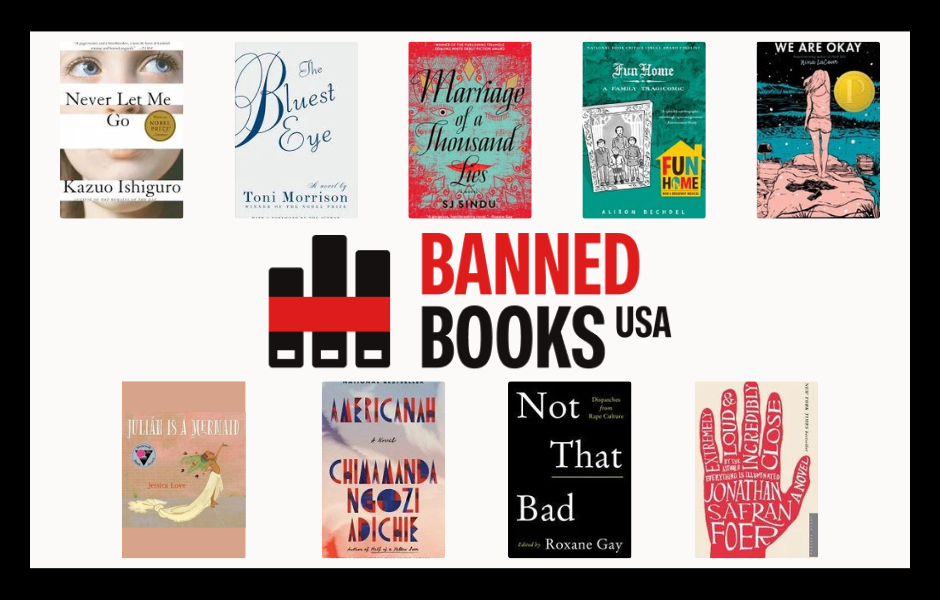
Electric Literature is excited to announce our latest initiative to support the freedom to read. Through Banned Books USA, any resident of Florida can order books that have been banned or challenged in the state of Florida for free, plus the cost of shipping.
Of the over 800 books that have been banned and challenged in Florida, ~600 are available from BannedBooksUSA.org. The Electric Literature staff has selected some of our favorite books on this terrible list. Order one for yourself, or send it to a friend or relative in Florida.
Many of the books listed here give voice to marginalized, often silenced, communities, by telling authentic and rarely heard stories. Book bans serve nothing more than to disenfranchise vulnerable people, both socially and politically. Supporting the freedom to read is at the core of Electric Literature’s mission to keep literature exciting, relevant, and inclusive, and by partnering with Banned Books USA, we will help preserve access to some of the most vital literature ever written.
If successful, the project will expand to other states. The cost of the books are covered by donations, including seed funding by tech entrepreneur and philanthropist Paul English. Additional funds are being raised from people concerned about the erosion of rights and freedoms that book bans represent; you can make an earmarked, tax-deductible donation here.
Banned Books USA is conceived of and sponsored by Paul English and Joyce Linehan, in partnership with Bookshop.org and Electric Literature. Book orders will be fulfilled by Bookshop.org, and the project is administered by Electric Literature. Following Bookshop.org’s business model, 10% of the cover price of all books paid for by Banned Books USA will be donated to support Florida bookstores during our Florida pilot. In addition, one dollar for every order will be donated to the Florida Freedom to Read Project. For more information about book bans and the challenges against the books on this list, visit PEN America.
Banned from libraries through legislative challenge in the School District of Manatee County, Florida in October 2022.
** If you are a Florida resident, or would like to send this book to a friend or family member in Florida, you are eligible to order this for only the cost of shipping via BannedBooksUSA.org.
Nobel Prize-winning author Kazuo Ishiguro is the master of the slow build, writing novels that unfurl and reveal themselves gradually and elegantly until suddenly you’re sobbing all over the pages. Never Let Me Go is about three childhood friends—Kathy, Ruth, and Tommy—who attended an exclusive boarding school in the English countryside. After they are reunited in adulthood, Kathy looks back on that seemingly idyllic time with a new perspective. But Never Let Me Go is not a traditional boarding school novel; it’s a fierce and painful examination of the moral compromises that society makes in order to survive, interrogating the very essence of what makes us human.
Banned from libraries in the Collier County Public Schools, Florida through administrative challenge in March 2023 and with additional bans and challenges in 28 other counties.
** If you are a Florida resident, or would like to send this book to a friend or family member in Florida, you are eligible to order this for only the cost of shipping via BannedBooksUSA.org.
When Toni Morrison published her seminal debut, The Bluest Eye, she said that she wrote the novel she wanted, and needed, to read—a novel where the least valued, least protected person in contemporary American society was taken seriously—the little Black girl. Pecola Breedlove, a young Black girl who is widely regarded as “ugly” because of her dark skin, wants blue eyes, which she associates with whiteness, and with being pretty, and loved, and protected. The Bluest Eye has long been controversial for it’s depiction of racism, incest, and child molestation, but as controversial as it is, it has been fiercely loved—for its beauty and humanity—for just as long.
Banned pending investigation in the Clay County School District of Florida, 2022-2023, via administrative/formal challenge.
** If you are a Florida resident, or would like to send this book to a friend or family member in Florida, you are eligible to order this for only the cost of shipping via BannedBooksUSA.org.
In this queer indie press novel, Krishnu is a Sri Lankan immigrant who was disowned by his family when he came out. His marriage to Lucky, an American citizen, enables him to live lawfully in the States. For Lucky, her relationship is a band-aid to the suffocatingly heteronormative pressure from her family and her community. When a trip back to Boston to care for her grandmother ignites a spark with a childhood flame, Lucky wonders if there is another path in life for her. A moving exploration on how much we’re willing to sacrifice for love and for family.
Banned from libraries and schools in Volusia County, Florida through formal challenge in September 2022, and banned pending investigation from Santa Rosa County District Schools.
** If you are a Florida resident, or would like to send this book to a friend or family member in Florida, you are eligible to order this for only the cost of shipping via BannedBooksUSA.org.
Fun Home is a graphic memoir about author Alison Bechdel’s childhood and adolescence in a rural Pennsylvania town. Told non-linearly through striking and verbally sharp panels, Bechdel considers and re-considers her relationship with her emotionally distant father, Bruce, who ran the titular family funeral home and taught high school English. Shortly before his death, Bechdel learns that her father is a closeted homosexual. He dies, likely by suicide, not long after she comes out to her family as a lesbian, leading Bechdel to wonder about how her acceptance of her own queer identity impacted him emotionally, and how both of their lives could have been different. A New York Times Bestseller and a National Book Critics Circle Award winner, Fun Home was turned into an award-winning musical in 2013.
Banned pending investigation in the Clay County School District of Florida, 2022-2023, via administrative/formal challenge.
** If you are a Florida resident, or would like to send this book to a friend or family member in Florida, you are eligible to order this for only the cost of shipping via BannedBooksUSA.org.
This queer young adult novel, which won the Printz Award and was included in TIME’s 100 Best YA Books of All Time, is a story told in dual timelines. In the present, eighteen-year-old Marin has fled her California hometown, without notice or goodbyes, after the death of her grandfather. She arrives early for her first year of college in New York in a state of profound grief, refusing contact for months with everyone she knew and loved in San Francisco. When her best friend arrives for a visit over the winter break, the past Marin tried so hard to close breaks open. In flashbacks, Marin’s history quietly unfolds and it is revealed that her heartbreak is rooted more deeply than even she realized. We Are Okay reads with the propulsion of a plotted mystery, but make no mistake: it is a nuanced and compassionate interrogation of grief in the tradition of the best literary fiction. By investigating the definition of family and the complexity of loneliness, LaCour asks readers to consider the ways in which each of us cope with pain—or choose not to.
Banned from libraries and classrooms through formal challenge in the Clay County School District of Florida in July 2022.
** If you are a Florida resident, or would like to send this book to a friend or family member in Florida, you are eligible to order this for only the cost of shipping via BannedBooksUSA.org.
Julián Is a Mermaid is a children’s book as beautiful in its illustrations as it is in its message. It’s the story of a young boy who sees women dressed up as mermaids and becomes entranced by the idea of dressing up as one himself. When he fashions his own mermaid costume, he is unsure if his grandmother approves of his new look, only for her to surprise him with another piece for his costume. It’s a tender, joyful book about loving and being yourself.
Banned from libraries and classrooms in the Clay County School District of Florida, 2022-2023, via administrative/formal challenge.
** If you are a Florida resident, or would like to send this book to a friend or family member in Florida, you are eligible to order this for only the cost of shipping via BannedBooksUSA.org.
This acclaimed novel by Chimamanda Ngozi Adichie interweaves the lives of Ifemelu and Obinze, classmates who fall in love at their high school in Lagos, Nigeria. Ifemelu moves to the US to study and escape a military dictatorship, where she encounters racism but also finds success for her blog posts about race. Prevented from joining her in the US after 9/11, Obinze struggles to make a life for himself in London before returning to Nigeria and becoming a wealthy property developer. When Ifemelu returns to Nigeria, the two consider reviving their relationship, although Ifemelu fears she has become an “Americanah,” a derisive term for a pretentious Americanized Nigerian. Americanah is an incisive and enlightening examination of race in the US, Britain and Africa and the downfall of the American dream.
Banned from libraries and classrooms through formal challenge in the Clay County School District of Florida in September 2022.
** If you are a Florida resident, or would like to send this book to a friend or family member in Florida, you are eligible to order this for only the cost of shipping via BannedBooksUSA.org.
An anthology of essays about rape culture curated by New York Times bestselling author Roxane Gay, Not That Bad scrutinizes what it means to function under a culture where so many become victims of sexual violence. Published shortly after the sexual abuse allegations against Harvey Weinstein and the spark of #MeToo Movement, these vulnerable and heart-wrenching essays expose how rape culture, misogyny, and sexual violence permeates women’s lives—and how often these transgressions are deemed “not that bad” by the perpetrators themselves.
Banned pending investigation through formal challenge in Escambia County Public Schools, Florida in September 2022 and with additional bans and challenges in 13 other counties.
** If you are a Florida resident, or would like to send this book to a friend or family member in Florida, you are eligible to order this for only the cost of shipping via BannedBooksUSA.org.
Jonathan Safran Foer’s second novel begins with Oskar Schell, a Shakespeare-quoting nine-year-old, looking for the lock to the key his father left before his death on the morning of 9/11. The inventive young narrator’s search, through a fog of grief, spans all of New York City and takes him through the lives of strangers along his journey. Interwoven into the narrative is the story of Oskar’s grandparents, both survivors from wartime Dresden. One of them has forsworn speech and the other types her stories on a ribbonless typewriter, showing the chasm between language and experience which might just be equidistant to the one between love and grief. A New York Times bestseller, and a NYPL Book to Remember, this novel breaks your heart while simultaneously showing you the ways to mend it before it’s too late.
My introduction to romance novels came when my high school crush handed me a book written by his mother’s friend under a pen name. It was all very hush hush, no one knew what the author’s real identity was, but he trusted me with this big secret (which might have been the first grand romantic gesture of my life). The book was set in colonized India with a British heroine and an Anglo Indian hero. I don’t remember much about the story but I do remember how it felt to read characters with familiar names in familiar places, who looked like me. It was an entirely unique experience to see those simple parts of me represented in a sweeping love story on the page. It didn’t happen again for a very long time and hungry for the experience of being desired and steadfastly loved for exactly who I was, I turned to Jane Austen and others who wrote characters somewhat less obviously like me.
For a large part of my youth, I remember reimagining Austen and Bronte novels in an Indian setting, with gossiping aunties and unbending fathers, and Bollywood heroes standing in for Darcy and Rochester.
These were the seeds for my writing journey: the need to use my life lens to understand relationships, my own worth, and the world we live in. I am often asked what it’s like to write Indian love stories. My answer is that I don’t: I write love stories. I am Indian. Those two facts coexist in my novels, as they do in the romance novels written by some of my favorite South Asian American writers. My favorite part of these books are the emotional intimacy, the humor, the angst, but also how the identity and heart of these writers dance like a Bollywood chorus on the pages of their stories.
No one else writes funnier romance than Sara Desai. Here she puts a twist on the classic “grumpy/sunshine” trope. Zara Patel, a carefree, filterless human rights lawyer and Jay Dayal, a brooding control freak marine who runs a security company meet at the singles’ table in the middle of wedding season. Neither of them has any intention of turning in their singles card to each other but that doesn’t stop them from getting into a deal where she’ll find his special someone if he introduces her to his celebrity clients. But of course, the more time they spend with each other, the more they find that opposites attract for a reason.
Nisha Sharma’s novels are filled with a deep fondness for Indian American culture. Dating Dr. Dil is a clashing of romantic ideologies and life beliefs that’s also a nod to Shakespeare’s Taming of the Shrew. Kareena Mann is determined to find an epic love like her parents had, and she has the support of her late mother’s best friends to help her in her quest. Dr. Prem Verma, a cardiologist with a radio show and a disdain for romance, is forced to date Kareena after her disastrous appearance on his show goes viral. Sure he’s doing it to avoid looking like the heartless heart doctor he is, but could there be something more to their sham romance?
Rai’s romances brim with emotional intelligence. Romantic tension and deeply buried pain dance beneath the surface in this heist caper. Mira Patel is trying to live a nice boring life, away from her dysfunctional family of criminals. Naveen Desai is trying to salvage his grandfather’s failing do-gooder law practice. A matchmaker sets them up, but despite serious fireworks, she unceremoniously dumps him. Their unlikely reconciliation is set in motion when they’re kidnapped in Las Vegas and have to escape and unearth long-buried secrets to save their lives. A breathless romp with a hot beating heart.
Is it just me or does everyone dream of falling in love at a wedding? This novel is for anyone fantasizing about finding the one at a big beautiful Indian wedding. Niki Randhawa has always chosen stability over passion, whether that’s in her career or her romantic partners. When at the cusp of 30, she finds herself unemployed and unanchored in life, she decides to be impulsive and take a spur of the moment trip to Mumbai for her friend’s wedding. There she meets Sameer Mukherji, a musician who is wild and fearless in his pursuit of his art. The pair embark on a whirlwind romance during the festive Diwali season. As she immerses herself in her roots and the land of her ancestors, Niki finds the hidden parts of herself blossoming. A heartwarming, uplifting holiday romance that seamlessly folds in an artist’s journey to empowerment and self-discovery.
Snyder writes a singularly smart and gritty dark fantasy romance set in a dystopian world filled with a myriad species at odds for power. Joe Peluso is half-man half-wolf, and finds himself in dire straits after being accused of a heinous crime. Neha Ahluwalia is the human lawyer tasked with proving his innocence, until the tables turn and he will burn everything down to protect her. A hotly pulsating drama that manages to be both thrilling and tender.
A classic Bollywood-style romcom set in modern-day New Delhi that will make you yearn and laugh and feel embraced in the warm hug of family. Samara Mansingh is a free-spirited photographer who’s grown up all over the world as the daughter of an emotionally absent diplomat. Sharav Khanna is the oldest son who had to take on the role of the head of his family when his father died too young. She’s craved a family all her life, he’s sacrificed his youth and freedom for his. This book epitomizes how reading romance can heal your heart with the belief that love is powerful enough to transform your life.
I won’t lie, this novel reveals some ugly parts of immigrant Indian life, but it also shows how individuals choosing to do the right thing can break those oppressive social structures. Liya Thakkar is fierce and unabashedly sexy and determined not to let the judgment of her family and community stop her from living her best life. This includes running for her life when her parents try to set her up. But what she didn’t expect was for the guy she ghosted to appear in her office as the new lawyer. Sparks fly as they’re stuck together in a race to save the company.
Food and romance always make a delectable combination and Heron spins a heartfelt and whip-smart tale about a pair who pretend to be engaged to enter a couples’ cooking contest. Even more delicious than their baked goodies is the spin on the arranged marriage story. Reena Manji is determined to defy expectations by not marrying the Muslim man of her parents’ choosing, but when the match they found is swooningly perfect and British, things become a little more complicated.
Hannah Michell’s Excavationsbegins with tragedy. A skyscraper suddenly collapses in 1990s Seoul, killing hundreds and leaving devastation in its wake. Sae, the mother of two young boys, is at home when she learns her husband is missing; he has been working on a project in the recently-collapsed Aspiration Tower. Drawing on her past as a former journalist and fervent anti-government student protestor, she attempts to find out what happened to him in Aspiration Tower—stumbling upon tangled truths that shake her entire worldview.
Michell’s debut novel is a propulsive thriller, grounded in its psychological drama and real-life tragedy. While Aspiration Tower is fictional, its demise mirrors the Sampoong department store collapse in 1995, which killed over 500 people and wounded over 900. Excavations to rescue the living continued for weeks, and the collapse remains the largest peacetime disaster in South Korean history. Michell skillfully teases out the historical resonances between the turbulent 1980s of student activism and labor rights movements; the economic boom of the 1990s and the building’s collapse; and the 2010s, with the Sewol ferry sinking—another tragedy that seemingly could have been prevented. Threaded throughout are the questions: can we love someone that we did not truly know? What value does truth hold, in a society dominated by patriarchal corruption and power?
Jaeyeon Yoo: What inspired you to write Excavations?
Hannah Mitchell: Originally, it was purely an intellectual project. I wanted to write the story of an unreliable narrator who was a chairman of a company, someone who paralleled the growth of the Korean economy. And I wanted his story to be unreliable. I don’t know if you’re familiar with Kazuo Ishiguro’s Remains of the Dayand An Artist of the Floating World? These are novels that have at their center an unreliable narrator who reflects on their many achievements, but by the end of the novel, you start to suspect that maybe their achievements aren’t viewed in the same way [by others]. I also read this autobiography of the founder of Daewoo Motors, and was really compelled by this arresting and charming voice. There were these wonderful anecdotes about how he had triumphed over adversity and pulled himself up by the bootstraps. All this entrepreneurial mythology was evident there. But I looked him up—I’d heard of Daewoo Motors while growing up—and it turned out he had embezzled millions of dollars. I liked the gap between the way someone talks about their life and achievements, versus the reality.
I started writing but I had a hard time, because I couldn’t get beyond a certain point with this chairman character. His life was so radically different from where I was; in my own life, I had two young children. I had four hours to write every day, while I put my children in the care of another caregiver. It struck me that my chairman character never had to worry about these things. I felt very stuck until I thought about the tension between motherhood and one’s commitment to one’s work—in particular, one’s commitment to one’s community. I teach at [UC] Berkeley, and I took some time out to go to a rally supporting undocumented students. I was really upset by the end of it, because I realized I just didn’t have the capacity to do more. This was during the Trump presidency and I wanted to do more as an activist—but I also very much had a responsibility to my own children, who I’d brought into the world. Once I started to mine the tension between one’s political ideals and one’s status as a mother, the novel really took off. I discovered the real novel that I was trying to write.
I also always knew there was going to be a relationship that was going to challenge the chairman’s story. I was trying to evaluate and answer, as I was writing, this question of: “Can two people coming from two very different political backgrounds be in a happy marriage or relationship?” Then, the 1980s—the student movements, those kinds of political ideals—came to mind, and that’s how I integrated [the protagonist’s marriage] into the story.
JY: While I can think of popular depictions of the 1980s in South Korean literature/media (I’m thinking of the film 1987, for example), that history remains unknown in the US literature I’ve encountered. Why did you think this time period was perfect to elaborate on a marriage between two ideologically opposed people?
Can two people coming from two very different political backgrounds be in a happy marriage or relationship?
HM: During the 1980s, we had these elite, high-achieving students who had fulfilled their parents’ wishes, with their path towards a more stable career. But [many] used their position of privilege to campaign against dictatorship, human rights abuses, torture—overall, they were campaigning for democracy. And on the other side, there was a sentiment that democracy and human rights were secondary to economic progress and stability. Those two kinds of ideological positions are very much at war with each other.
JY: I’d heard my parents’ stories of the 80s, because they were also college students in Seoul at the time. It was a strange experience, on my end, to read (in English) about some of the stories I’d only learned about orally (in Korean). You said you grew up in Seoul; was this history something that you grew up with hearing or experiencing secondhand?
HM: You mentioned the film 1987, which is actually one of my favorite films. I was incredibly emotionally affected by 1987. If you get to the end, there is a section with rolling credits, where there’s real footage of Lee Han-yeol’s [a student activist’s] funeral. That always gets to me, because I was a young child in Seoul at the time those funerals were happening. I think this might add another layer to the excavation [process of this novel], because I was a spectator to this massive social upheaval, but had no real language to understand what was really happening. There was a part of me that just really wanted to understand—all I had was this feeling that something horrible and huge had happened, with a strong desire to understand the full picture.
JY: Does this mean you were also there when the Sampoong department store collapsed?
HM: Yes. You know, I was reflecting on that. The thing is, the year before, there was a whole section of a bridge that had also collapsed. I feel like there was just so much upheaval in Korea in the ’80s and ’90s that it just felt like another event, even though it was probably the worst kind of civilian disaster. I was also young, but I don’t think I really internalized the full enormity of what happened in that incident.
JY: I was way too young to learn about the Sampoong department store collapse when it happened but, when the Sewol ferry sank in 2014, I think that was when I heard people bring up the Sampoong department store again.
The patriarchy really forces women, especially single mothers, to make impossible choices.
HM: Yes, there was a feeling of “this has all happened before.” The cheapness of life—or, rather, the cheap regard for human life—hasn’t changed in some ways. It was astounding to me that there were these untruths circulating about the Sewol ferry sinking, such as the navy being deployed. It’s such an emotional thought for me to imagine the parents waiting for the rescue effort to happen, and then realize that nothing was being done.
JY: In Excavations, there’s a strong focus on female narrators within this politicized landscape and what they can accomplish, such as Sae’s journalism. Yet, as Sae notes in her college days, feminism isn’t always a priority in the fight for democracy. I’d love to hear more of your thoughts on the role of women within anti-authoritarian movements, and perhaps the decision to center female perspectives.
HM: When I started writing this novel, I centered it on the monologue of this unreliable patriarch, as I mentioned. As I continued writing, I realized that it was a mistake just to privilege only his point of view, because Korean patriarchy has meant that economic development has only been associated with men’s work. Women’s contributions to politics and the economy have been totally invisibilized. So, I wanted to bring their experiences to the fore. I also wanted to show the struggle in critiquing patriarchy because, in writing these women’s stories, it became so stark to me that patriarchy really forces women, especially single mothers, to make impossible choices. I also wanted to include a non-judgmental depiction of sex work, because Korean patriarchal views of sexuality are so damning to women who have sex outside of marriage and sex work. It was important that Myunghee [a character who is a single mother and runs a nightclub] is not judged for being a prostitute in her relationship with other characters, such as Sae.
This book is about Korea, but I wrote it while living in the States in a kind of lockdown; I couldn’t leave the country due to my green card process. It was awful and really gloomy, because I couldn’t escape the Trump presidency. I had a hard time imagining a happy ending for these female characters, because this was also the time of #metoo and it felt like Trump himself represented the setbacks of women. But by the end of the novel, I wanted to take some liberties with the reality of how much women might have power. I just wanted to give them more agency, because I wanted to show that maybe when women really work together, they can have more power also.
JY: Speaking of Trump, what does it mean for you to release Excavations in 2023—with another extremely conservative South Korean president? And what does it mean to release it in the U.S.?
HM: This book feels very specific to Korea; even in Korea, I think that the ’80s student movement is not necessarily well understood by younger generations. And, as you said, it remains invisible in U.S. literature—but I felt like it was such an important period of history to keep in mind at this moment of real fragility, where democracy feels like it’s really constantly being challenged. I think there are echoes and parallels between America and Korea, in terms of how fragile democracy is in both countries. I was hoping that the reader would also make some connections between this unreliable and corrupt chairman and this era that we are living through. The Trump presidency is over, but not this Trumpian era of fake news. So in that way, I do feel like it’s not just the story of Korea, but about a fragile democracy and the need to really excavate: to be clear about our history and the stories that we tell about our history.
JY: I really appreciate the parallel you drew between the US and Korea about their shared fragile democracy, because I think something the US likes to gloss over is how complicit it was in shaping the South Korean government and its “democracy.”
HM: Yes—I’m going off on a bit of a tangent going back to motherhood. An interviewer recently asked me about my thoughts on international adoption; I think some people at the time thought that this was a humanitarian gesture to export Korean children around the world. But what doesn’t get talked about enough is how, in a way, the need for international adoption was a problem created by American militarism. I didn’t really go deeply into adoption in the book but, yeah, there is this history of US involvement. It fits into the invisible story of Korean economic development, where it really was an economic exchange. The more children the orphanages had, the more international aid was given. By the ’70s, transnational adoption had unfortunately become a huge business, which brought in foreign currency that helped this so-called “miraculous” growth of the Korean economy. That was a part of the story of South Korea that I wanted to include. I also did go more into this in previous drafts, talking about the anti-American sentiment amongst the student protesters, but it got edited out in the process.
JY: I wanted to circle back to your desire to understand the full picture of the past; the novel’s depiction of truth was very poignant—of how truth may destroy and hurt, even as we generally associate truth with morality and justice.
HM: The truth is more complex and multidimensional than we would like, and I think most people prefer that these complex truths are distilled into simpler stories. We can see how so many of these stories get co-opted by power, mythologized into history to serve a political agenda. This tension between embodied memory and recorded history—that sort of question came to me when I was teaching a module on Japanese American internment during the Second World War, and how that is not a history that is taught nationwide. Then, I turned my attention to Korean history and questioned, “What is the official narrative? What is it that people remember?” That helped form my fiction.
In the contemporary Korean context, I think the myth that gets talked about most often is how Korea has experienced miraculous economic development, going from the second poorest country in the world to becoming the 10th largest economy. But, of course, this mythology is really selective in its facts, because it ignores the reality of almost slave labor, and the abuse of human rights under a dictatorship. I wanted to expose this selective narrative development.
No History Is Immune From Ends, but the Americans Were Infinite
To the times that call for candor, hunger. Mr. President, what was the sound before surrender? It’s almost summer. I sit across from a white woman in the student union cafe who wants to adopt a child from a third-world country. She says “the Philippines” in a thick, midwestern accent. To feel small in the presence of a lighter people. To be a specter, speaking. To drown my anger, I gulp down tea that scalds my tongue, the ghost of taste gargling inside my oriental mouth like rags. “America will not renounce its part in the mission of its race,” announces US Senator Albert J Beveridge on January 9, 1900 in Washington, DC. To explain, with pride, that the Philippines has McDonald’s and Taco Bell and Subway. To eat at KFC after school within a younger body, the sweat of Manila on my back. To lick the thick, brown gravy off of my index finger, chicken oil dripping on my uniform paid for with lunch money. Mr. President, what alchemy will change my blood? To eat popcorn at the car dealership and be asked if the Philippines has popcorn. To stare back with animal eyes. To eat with my friends at the dining halls of an American university and pick the crumbs off my plate so nothing goes to waste. Hunger, like an heirloom passed to me by ancestors. To mourn the meat scraps washed away by dish soap. To mourn the daily bread from Piggly Wiggly, best before yesterday. To weep alone within myself for the cup that overfloweth, the pantry that ulcerates with nothing but applesauce and canned tomatoes, the great eternal ends of life, liberty, and the pursuit of happiness. Mr. President, what abhorrent mathematics will set the self-governing currents of the Americas pouring through my veins? “Savage blood, Oriental blood, Malay blood, Spanish example—are these the elements of self-government?” Beveridge asks. What will my father say at the emptying of a feast? For I have seen the ghosts that starve above rice fields far away and felt upon my tongue a promiscuous affinity. To be in the land of milk and honey, the Canaan of my mother’s dreams, and be emaciated, orphaned by two nations, child of barbarism schooled in Spanish methods, daughter of the island empire, colonial archipelago. “We must never forget that in dealing with the Filipinos we deal with children.” Mr. President, can you feel it? To hold the profit and the glory of the divine mission of America. To own my people’s hands and feet, our heads and hearts and spirits. All my ghosts have atrophied. To this, my distant declaration. To this, my spoken freedom silenced in the aftermath of louder anthems. I’m at a derby in Wisconsin. My parents hold their hands against their chests, laughing at the crushing of cars, selfie stick waving in the air like a flag. To what bright banner do the dead march on. To what dark song do we mourn so gallantly streaming.
DON’T MISS OUT
Sign up for our newsletter to get submission announcements and stay on top of our best work.
YOUR INBOX IS LIT
Enjoy strange, diverting work from The Commuter on Mondays, absorbing fiction from Recommended Reading on Wednesdays, and a roundup of our best work of the week on Fridays. Personalize your subscription preferences here.