For Melania Luisa Marte, Poems Are for Spellcasting

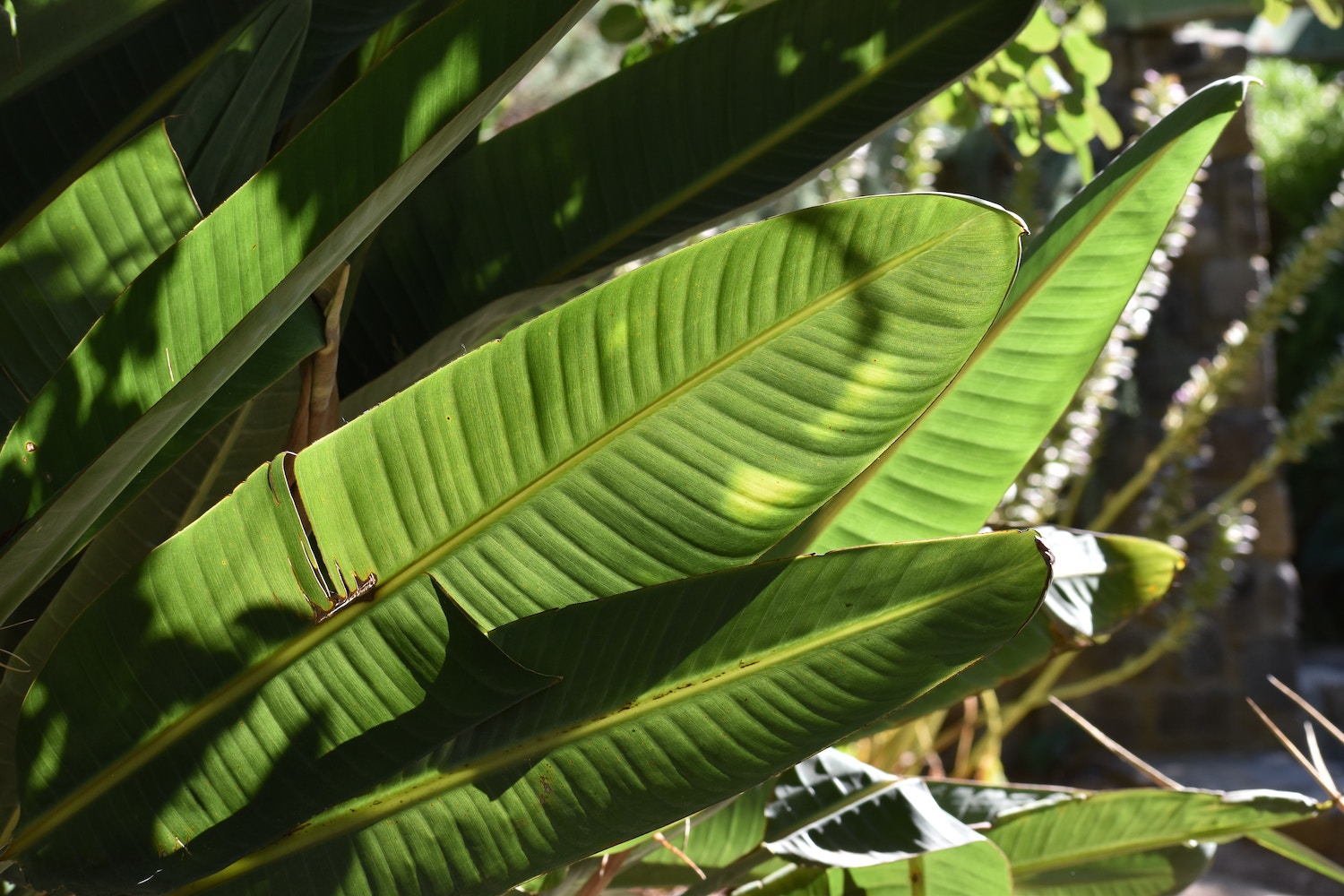
If ever there was a poetry collection you yearn to viscerally sink your teeth into, as if biting into a freshly ripe mango, it’s Melania Luisa Marte’s Plantains And Our Becoming. Even the cover is stunning, but it’s the poems within that unrestrainedly pulse with life, joy, rage, and love. It’s a book grown and nurtured in a lush Caribbean garden, both real and ancestral, that tracks the path of an Afro-Latina embracing her experience as a Black woman, daughter, and granddaughter, in all its complicated and wondrous beauty.

Marte, a NYC native who currently splits her time between Dallas, Texas, and her parents’ homeland, the Dominican Republic, is already a widely celebrated performance poet who has dominated slam stages across the country and whose poem “Afro-Latina” was featured on Instagram’s IG TV. Plantains And Our Becoming is the follow up to her debut collection, MELA, which came out in 2018. While Marte continues to call out the violent anti-Black racism that permeates Latinx culture, countries, and spaces, her current collection is also deeply personal and tied to the Dominican Republic. She stewards the land as her abuela did, a place where she grows the comida and medicina (oftentimes both) those of us in the Caribbean diaspora, and even on the islands themselves, have lost connection to. In both the garden and on the page, Marte brings us back into the Earth and plants her poems verdantly within us.

It was a delight to email with Marte about her new book, her love for Black women, and how poetry can embody true magic.


Angela María Spring: Felicidades, what an earth-shaking debut collection! Plantains And Our Becoming is an invitation to witness your a powerful journey, as an Afro-Latina and a daughter of immigrants; as a Black woman and mother; and also allows us into your sacred homes of NYC and the Dominican Republic. There is so much happening here, it’s astounding, we get to see a poet’s becoming and that is rare, precious thing. Can you tell us a little about the path to how these poems became a book?

Melania Luisa Marte: What a generous and thoughtful compliment! Thank you! I honestly think this collection came from one burning question that took on many different forms. I was sitting on my porch in Bonao looking out at the plantains and the mountainside. My partner and I had been farming the land for weeks and that morning the wind was flowing. The plants looked so peaceful which to me was so profound considering many of them had just been replanted, moved around on the land to make space for their siblings, and even more worrisome just days before a storm had also hit us. And yet, they were unfazed. I was like, THAT. That’s what I want to write about. That’s what I need and maybe all of us need. A reminder of “how we green things made it.” I want that. I want to be so present and certain in my survival that nothing and no one can shake me. I want to write something that reminds me, reminds us of why we need our roots, our guides, our faith. They all keep us sturdy and steady as we frolic towards our future. And so each poem I wrote was with that in mind.  

Knowing that we would have to go back in time but we would get to that place where rest, joy, and love find us whole and becoming.  

AMS: What did you find to be your biggest challenge focusing your work on the page, shaping it into a book, versus writing for and performing on the stage? And what did you discover is joyful about focusing on the page?

MLM: From 2016 to the present, I had been spending months back and forth between the Dominican Republic and the U.S. trying to answer many questions that would come up in my writing. Many of the poems felt like lists, archival notes, random phrases, and scribblings from family and friends. My biggest challenge was how to keep my essence while shape shifting throughout the collection and staying true to the story I wanted to tell. I definitely challenged myself more than I usually do for performance poems, but I do feel that reading my poems aloud as I wrote helped me not lose that spark that makes poetry so beautiful. I’m not sure if it’s something I can easily describe but I just know the poem is where it needs to be when I read it aloud. I know the slam poets will feel me on this. LOL. 

AMS: You have a stunning blurb from Elizabeth Acevedo on your advanced reader copy and it underscores just how influential the school of Afro-Dominican diaspora poetry is with poets like Acevedo, Roberto Carlos García, Yesenia Montilla, and Jasminne Mendez. I think you all are doing some of the most important work in contemporary poetry today and I’d love to hear you speak a little on your experience being a part of such a powerful community and how it influences/has influenced your own writing.

MLM: I love poetry. If I can be known for that one thing, then I am a happy camper. I don’t take lightly how many folks have championed my work and gifted me opportunities to share my poetry and stories. And I am always super grateful for Elizabeth Acevedo, and other women writers like Yesika Salgado, Elisabet Velazquez, and my Dallas Poetry Slam mentor, Sherrie Zantea, who from jump helped me see the potential in my writing and inspired me to polish and give my best to poetry and believe in my words. 

AMS: Plantains and Our Becoming has three very distinct sections, each containing their own narrative and logic, but I was particularly struck by the last section, which is truly a celebration of love in all its forms, admiration for not only a lover and for the self, for one’s own Black body, but also includes odes to so many wonderful Black women, whether they’re friends or artists or writers. But that love already begins to take full shape in the first section with the poem “Abuelita’s Garden” and I just wanted to stay there forever. It’s such a beautiful poem, full of so much earth, culture, tradition and belonging. The line “We are all becoming our best greenest thing,” echoes in the third section’s poem, “Thank You, Toni,” with the line, “For writing me back to Earth.” Can you speak a little about the importance of these women for you and why love and your writing for you are so intimately tied to the land, how this book is actually your own garden offering?

MLM: I love being a woman and I love women. It is honestly the highest honor to get to be a Black woman in this lifetime and hopefully in the next one too. It is my greatest accomplishment.  I once wrote that in a post once on social media and some white man commented and said, “that’s a really low bar to set for yourself.” And I laughed. I replied, “how you gon’ hate outside the club, if you can’t even get in.” I can literally cackle for hours when I think about it because being a Black woman is so powerful that your very existence provokes people. That just drives me to make it my mission to remind women and young girls of how powerful they are. In this collection, I really wanted to pay homage to all the women in my life who remind me of how blessed and gifted I am and how important it is to “keep that thang on you,” and by “thang” I mean faith, perseverance, confidence in the evergreen garden in you. So yes, haha. We can definitely call this my own garden offering. 

AMS: I think for those of us in the U.S. whose parents come from the Caribbean or Central/South America, we grow up being told by everyone around us that this country is where we are supposed to learn how to belong but see that everywhere, especially for Afro-Latinx people, that it’s not true. And Latinidad is another front for the racism/colorism of Latin America, both of which perpetrate as much anti-Blackness as the United States. But you carved out your own path and moved back to your parents’ home, the Dominican Republic. In the introduction to the book’s second part, you write so beautifully an you about what led you back to the island and I’d love to hear more about how choosing your motherland means choosing your truth.

MLM: Identity is so complex and I really just didn’t want to have any regrets or fears about my origin story. I wanted to free myself of those identity insecurities and live my life authentically. For me, because my parents loved their place of birth so much, it meant retracing the places that made us all feel our freest. And to this day, anytime my spirit is in crisis or my body is sick, I book a flight to my abuelita’s backyard in the countryside and I resurrect. I really feel like the motherland chose me, and I simply became a good servant to the truth. These poems became something so much bigger than me and my origin story. And I’m honestly still unraveling the beauty in that. It’s so profound to write something and have it grow into something so much bigger than you could have ever imagined. I come from really humble folks who like to keep their heads down and stay present in the labor of the soil. But they work hard and in turn can be very hard on themselves. My abuelita every now and then reminds me that it is also important to look up and out and have gratitude for all that our hands can do. She loves to sit and drink her coffee and stare out into her garden and hum. I want to channel her and keep humming my truth.  

AMS: Plantains mean something very important and sacred to me (and mangoes, so I loved all the mangoes in this book), but it was so integral to your book that it made it into the title I’d love if you’d share with us what plantains mean to you, what they represent in your own life?

MLM: For me, plantains became something very symbolic of the survival of African descendants in the Americas and beyond. Plantains are loving, earthy, and beautiful. The Black Diaspora loves plantains and I personally believe plantains love us. Haha. I know that’s weird to say because we are literally eating them but I think we are giving them purpose and they thank us for that. I was a vegetarian from the age of eleven until I was nineteen and I refused to eat my mother’s meat dishes but one thing I would always have with my rice and beans were fried plantains. I love plantains in any form from mangú to sweet plantain; the limit does not exist. I learned so much about my family through conversations in the kitchen, and, to me, it’s so important to know our history. The kitchen has always been a space for rekindling our stories, our culture, and our spirits. I feel like plantains are so symbolic of how we survive and move forward. We channel them because they are a part of us as much as they are a part of the earth. 

AMS: In “Dance With Me,” an epistolary poem to the father, you write, “Father, I wish I had chosen to be a magician but I am a poet.” This line haunts me because I believe poets are magicians and each poem a spell, words that arrow the poet’s will and energy into a form, and your book has so much powerful word magic. When on the stage, you command the energy of the crowd. But it made me wonder what your definition of magic is, because I’ve found everyone has a different definition, and if based on that definition, you might be open to the idea that your poems are magic?

MLM: I love that! I do believe poets can be magicians, and each poem can be spellcasting. In this poem, I was exploring how much of my own magic had sort of been stripped from me. How much of the magic I carry, I didn’t even know I possessed because of body politics, racism, sexism, and the policing of the black body. This poem was that vulnerable moment where you sit with how taxed your spirit can feel having to fight so many battles in countries that make it hard to love yourself. And I wanted to be honest about that. We don’t always feel as magical as we are. And sometimes we need that reminder. So thank you, for the reminder.

AMS: Who have you been reading lately that you can’t get out of your head? And who should we be reading or following?

MLM: Whenever I need a good laugh, I pick up My Sister, the Serial Killer by Oyinkan Braithwaite. Hilarious and haunting is definitely the experience I need that sort of shakes me out of whatever I am going through.  I always revisit The Temple of My Familiar by Alice Walker and Song of Solomon by Toni Morrison when I need a reminder of why I write.  I also have been reading lots of self-help right now and books that are honest AF about the ways society punishes Black women for existing: 

7 Cozy Mysteries To Curl Up With

Some might think of cozy mysteries as edgeless and old-fashioned, but that’s only the case if you want it to be. To my mind, the genre feels like a metaphorical warm blanket around the shoulders. Though the detective will be out to solve a murder, there’s usually (but not always) less gore on the page, and while I’ve used the word “detective,” a cozy crime is most often solved by an enterprising member of the public. With no official law enforcement experience, there’s room for the protagonist to make a few relatable mistakes on the way to justice. A lot of cozy mysteries will throw in a cute element as well—like a helpful pet, some hilarious older family members, or, a favorite trope, delicious food. 

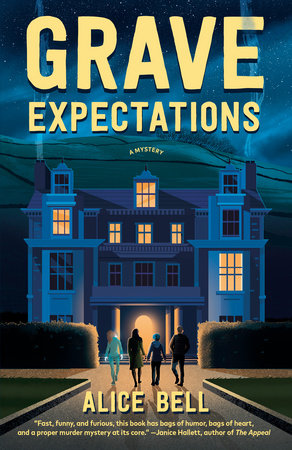
In my novel, Grave Expectations, Claire, a clairvoyant, is hired for a seance at a birthday party for an 80-year-old grandmother. With the ghost of her best friend Sophie in tow, she arrives in the English countryside and discovers that a secret has been haunting the manor. My book has a lot of swearing and very little baking, but it’s cozy because it’s comforting, familiar, and funny (I hope!). 

Some of my favorite writers today are playing with form, or rooting crime in their own diaspora, creating stories that are warm and full of love (and murder). You can make cozy crime a bit meta, or supernatural, or use it to highlight stories left out of traditional historical fiction. I’ve put together this list that, I think, gives you a taste of the breadth and depth of cozy crime, and will give anyone a fun place to start in a genuinely exciting genre.

The Three Dahlias by Katy Watson

The manor house murder has become a bit of a trope, and it’s a treat when a writer finds a way to twist the formula and make it fresh again. In Watson’s case she makes it a bit meta, as three actresses all known for playing Golden Age detective Dahlia Lively all meet up for a convention weekend at the stately home of the author who created Dahlia in the first place. Lettice Davenport’s descendants are an odd lot, not to mention the fans milling about the place, so when bodies start turning up, there are any number of suspects who could’ve done it. Unique for its trio of bickering sleuths, The Three Dahlias brings the Golden Age into the 21st century.

The Library of the Dead by T.L. Huchu

I’m stretching the genre a bit here, but one of the joys of modern cozy crime is that it’s a broad church that welcomes many different parishioners. Set in present day Edinburgh, The Library Of The Dead mixes Zimbabwean magic with Scottish moxy, and it’s a proper good time. Ropa is a teenage school dropout earning a living as a ghost talker, carrying messages from the dead to the living. Anything in this economy, right? But when the dead start warning of children in her area being bewitched, Ropa quickly becomes entangled in a web of dark secrets. Perfect if you want your mystery mixed with the otherworldly and a little shiver up the spine.

Death by Bubble Tea by Jennifer J. Chow

Chow is well-known for her hit Sassy Cat Mysteries series, and the LA Night Market Mysteries further proves her prowess as a writer. In Death By Bubble Tea, Yale Yee struggles to find her place in the world. When her influencer cousin Celine visits from Hong Kong, the two must work together to turn a profit at their family’s food stall, but a customer’s untimely death threatens to ruin them. Chow’s work is infused with a warm sense of humor and a sharp eye for the human condition, especially the ways in which family can drive you up the wall. 

Death In Heels by Kitty Murphy

The first in the Dublin Drag series, Death In Heels is an especially witty and catty read that brings the vibrancy of the city of Dublin to life. Fi’s best friend Robyn is making his debut as the gorgeous Mae B, but that night Fi discovers the body of another drag queen who had viciously mocked Mae B that same evening. Fi has a vested interest in proving Robyn’s innocence, but it’s easy for a citizen detective to get in over her head in the glamorous chaos of the drag scene. Death In Heels is full of memorable characters, so it’s even more upsetting when more of them start to die…

The Appeal by Janice Hallett

Janice Hallett is the new queen of crime gunning for the Christie crown. In her debut, The Appeal, a murder has shocked an amateur dramatics group in a small English village, casting suspicion on everyone in the group. The twist is that the story is told entirely in text files submitted as evidence — emails, text messages and even social media posts. The mystery at the core is a fiendishly well-plotted one and Hallett’s skill is that you can still feel the character and idiosyncrasies of everyone involved. She paints a picture of the small-town politics of claustrophobic country communities with hilarious accuracy. Perfect for fans of Midsomer Murders.

The Murder Next Door by Sarah Bell

Truly great historical fiction provides a deeper understanding and a new insight of an era. Set in 1912, The Murder Next Door follows a pair of sapphic citizen detectives getting into trouble all over town. Empathetic Ada and her more practical-thinking “companion” Louisa end up investigating the death of their neighbor Mr. Pearce after he’s found dead in his study. His wife is the obvious suspect, but Ada isn’t so sure. The mystery isn’t just about who the culprit is, but whether actually they might have done the right thing in the end. What makes The Murder Next Door so compelling is the tender relationship between our two sleuths, balancing each other out and supporting each other at the same time. It’s like a queer, British version of Only Murders in the Building.

Arsenic and Adobo by Mia P. Manansala

In this first novel in the Tita Rosie’s Kitchen series, Lila Macapal is recuperating from a truly catastrophic breakup by helping her aunt Rosie run her (unfortunately failing) restaurant. When a food critic dies, Tita Rosie is blamed, and it’s up to Lila to unravel the truth. She’s got a network of extremely funny aunties, a cute dog, and a seriously strong tenacious streak. These books don’t just have a dash of quirky humor, or a slice of romance on the side, but also a love of Filipino food and culture that just leaps off the page. And look, we’re surely all suckers for a book that includes recipes that you can cook along to.

Gentrifiers Never Want a Fight, but They Win Nonetheless

The year I taught at the College of New Jersey, a freshman went missing. It was a large mystery—he had crashed, drunk, in a friend’s dorm room after a party, then vanished without his shoes. This was whittled down to a smaller mystery—copious amounts of blood in the trash compactor room to which the trash chutes led; weeks of searching two nearby landfills, body found a month later. But did he fall down the chute, did he climb in the compactor to retrieve something, did a game of hide-and-seek go awry, was he killed? Those mysteries remain. Joyce Carol Oates fed at that landfill to write her next short story, “Landfill,” publishing it in the New Yorker barely five months after his disappearance. The story begins at the landfill, with meticulous description of his bodily disfigurements, that body having been compacted, backtracks to invent his many college failures and humiliations as a first-generation Latino freshman, and ends with his horrific death. I swore off of her work forever. 

I can’t stop thinking, now, five months after the fact, about the murder of another college freshman, December 2019. For a few weeks everyone knew her name and the same bright photograph in news stories across the country. Beloved and talented, in her first term at a storied college in a storied city.

Everyone could imagine themselves
into that grief, though
it remains unimaginable.

There should be a different word for the love you have for your child, and a word that erases the world if you lose them.

It was not a mystery for long, though. A thirteen-year-old boy, living in a nearby public housing development, was arrested the following week; later, his two fourteen-year-old friends, who wielded the knife, were arrested and charged as adults. How many would imagine themselves into this grief? To love a child who has done and can never undo the worst thing. 

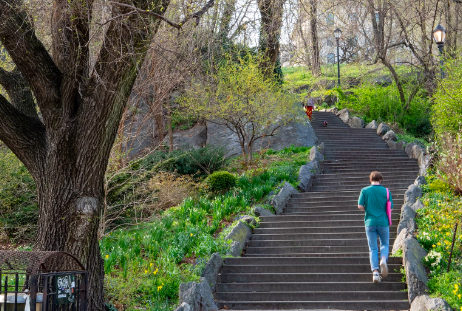
The act took place in a park wedged between Central Harlem, which twenty years ago was still half-gutted from the crack epidemic and began gentrifying in earnest only about ten years earlier, and Morningside Heights, the neighborhood of Columbia University and Barnard, several seminaries, a music school, and plenty of fresh produce. This park is built beside a cliff running north to south between the two neighborhoods, the physical manifestation of the city’s historical and evolving economic and racial divides. It is also the city’s most beautiful park, with tiers, boulder promontories, and many flights of Olmstead marble stairs. A waterfall, a grotto, flowering everything in springtime. 

This park was our neighbor for thirteen years. We have since moved away, but my sharp-sweet memories of it hail from this later period of earnest gentrification when we had a child and the need for lawn equivalents. It was the park where my son spilled his first blood, forehead on rough asphalt. Parents came running with the ointment and bandages I never packed. I carried him, both of us crying, back up the cliff and north to our stoop. Little divot, still, near his hairline.  

We held imprecise games of soccer on the south end after kindergarten pick up. One day, a boy—six or seven—joined us, played with gusto, gathered in for the snacks. And when we began the northward walk home, he walked with us. He was walking himself home, he said, as he always did. He said he hoped he’d see us again. We said we hoped so, too.  

For years we gravitated with my son’s friend Sasha to the rocky promontories to the north where the teenagers often hung out. I brushed the most obvious glass from the boulders so they could stage plays. The plays were like dreams, intricate and unhinged. They both loved to die. They took turns dying and being brought back to life.

Sasha is alive, I thought five months ago. My son, alive. His friends Rafi and Maya and Naomi—they have all played in that park and they are all alive. Their families, alive. And I miss and love them. 

The park was a known danger. The cliff that runs its length maintains the natural barrier between neighborhoods, the good air and water and schools always on high. Despite the divide, Columbia had seen in the park a potential land grab. After an outgoing president of the university urged the board of trustees in 1945 to “protect ourselves against invasion from Harlem or from the North” by buying land east and north of campus, another president successfully proposed building a large gymnasium for students and community members in the park itself.

Protests—among
student and community
groups—flared.

The plans designated the top floors and an entrance at the top of the cliff solely for the predominantly white Columbia affiliates and another entrance to the bottom two floors in the park for the Harlem residents. Protests—among student and community groups—flared. A man climbed into the giant shovel of an excavator, a Columbia board member was burned in effigy. Eventually, the plans and a giant crater they’d dug into the park were abandoned (which crater later became the pond and waterfall). 

But by the aughts, though the longtime Harlem residents might remember, the perpetual newcomers to Morningside Heights knew only that it came with a warning: it was both beautiful and dangerous, a borderland caught between dereliction and revival. The stairs, for example, five or six flights that bridge the highlands and the low had been recently restored. But people were still wounded and died in this borderland, in robberies, drug deals, and arguments. For the seven years I taught there, I received Columbia’s neighborhood crime alerts: almost every week there was a reported robbery or assault and many of these occurred on the Morningside border or just inside this park, usually past midnight. The power of the Ivy League did not grant residents immunity beyond its spiked walls. I walked the avenue two blocks over at all times of day and night but gave the borderland a wide berth at night. In the daylight, though, I walked that beautiful park, with thrills of fear and joy tangled in me.  Not at home, likely not welcome, but alert and alive. 

I was rarely unaware of race and class, living as we did on the less visible northern border that separates Morningside Heights and Harlem, a border to which Columbia has since taken a wrecking ball, erecting behemoths on the land it accrued over the line. We had smudged that line minutely years before the construction, though, stumbling into a dirt-cheap apartment ahead of the curve. We were gentrifiers, for certain. But when you don’t have or make much money, when your bathroom floor is a cracked pastiche of linoleum, tile, and puddle of concrete, you might occasionally forget that you are changing the tone and the viability of the neighborhood. 

Still, we lived there. And we had to understand how to be both a person and a demographic in the neighborhood. We worked at a blend of self-and-other awareness: how we are perceived in these streets, in our own building, a building sold to its residents in the 1980s for a few hundred dollars per apartment. What harm are we seeding, what harm might we shutter down? Could we imagine our way across the street (literally crossing under the elevated train to the other side of the tracks) into the ten towers of the Grant public housing: what was it like to grow up there, to parent there, to get good news, to save up for something, spiral into something, to be lonely there? Our imaginations were not always as vigilant as our bodies, though—they churned and faltered, revived and faltered again. Like that, on and on.

I come to know a place largely by walking, and a map of my long and varied routes would not include the many paths crisscrossing the fifteen acres of public housing grounds. A lacunae, it didn’t exist. Otherwise, I wore out many pairs of shoes walking everywhere, fast, with real or invented purpose. Or trying to slip through without taking up much space, an unasked for apology for my presence.

I walked at all hours.
I walked and remained unscathed.
Unthreatened, even.

Aside from cat callers. Aside from a stolen bike and car, and car windows in two smash-and-grabs, which we thought an acceptable urban tax. I called the police exactly once in these years. A white man I’d never seen before had plastered our stoop with porn mags and was himself spread-eagle on the steps, masturbating. He was gone by the time the cops arrived.  

Rare were the occasions when all of this subtext was made text, but we could count on one: the yearly “Anti-Gentrification Fair” on our block, which closed the street to traffic and produced a rummage sale, dj, a stickball game, even a bouncy castle once. We steeped in the dissonance of enjoying the music, feeling that we “supported the cause” (which meant, materially, what?), being cash strapped (for the first years, at least), and knowing that the fair on our block was a message exactly, precisely for us. Over the years—a new Starbucks on the corner, a juice bar, kombucha on tap—it dwindled to a boombox and a few dishes for sale on a blanket. Gentrifiers never want a fight, but they win nonetheless.

It did become my home, particularly after having a child, seven years later. I was no longer a ghost consciousness floating through the neighborhood, but the chaperone of a fluffy, squishy creature who drew advice and squeezes and so many admiring comments about his blue eyes that I began to think there should be copies of The Bluest Eye available on every corner. Having a child is a test of your self-erasure, as well, because you want things on their behalf, all the things you think you can do without for yourself. And then the contest over resources begins. Rather, the contest that has been there all along becomes manifest in the shape of your child darting for one of the two available swings, the single open subway seat, one of fifteen available preschool spots, one of thousands of applications for twenty kindergarten seats.

Morningside Park kept the fixed fight over resources in focus. And, in the playground at the top of the park, it heated up one day. What we called Bear playground was completed in 2010, the year our child was born—an elaborate play space in an area of the park that previously had been left mostly to drug users and the unhoused. It’s wedged between a public middle school built on a rocky promontory that, with its caged windows and prodigious concrete, looks like a wing of Alcatraz; the Grant towers to the north, and, to the east, unceasing construction on a boutique hotel and apartment buildings, one of which made the bold move of building around and over a shabby brownstone that clearly could not be bought and demolished. 

My three-year-old with his dandelion puff of hair was under a playground structure with several other children, Black and White. The details are hazy to me now, but they were hazy to me at the time, as well. I was in the perimeter of adults. In a panopticon, you can see but not necessarily hear. I saw him speaking to an African-American girl, perhaps a little younger. She had a toy and he was empty-handed. They seemed amicable. I’m pretty sure that the toy wasn’t in the ball or vehicle category, as my son had no interest in these, but in the toy weapon category—a Nerf or water gun. But a toy gun feels too outrageously symbolic, given the gun violence in the housing towers, given the death of Tamir Rice, and all of the invented weapons that have been the pretext for police and “stand your ground” shootings. But I feel certain it was because we didn’t allow gun toys (one of several confused prohibitions that are now half-intact or crumbled) and that would have made it irresistible. 

A parent I knew later told me my son had asked to play with it. I assume she said no. He must have reached for it. Then someone was cursing and shouting and it took me an excessive number of beats to register that my son was the object of the shouting and that this was probably her father.

Essentially, my son was trying
to take her toy and he better
not get near her again.

What I had read at first as a standard toddler toy negotiation, he saw as one of a portfolio of threats against his daughter’s well-being and self-determination. My son was another blond boy acting like everything in the m*****f**king world was his. 

Though I regularly railed against such boys and their adult and historical counterparts, I hadn’t seen my child as a threat. My dandelion-headed three-year-old. I felt misunderstood and ashamed and guilty, and we left as quickly as possible, shaken. Babyhood had functioned mostly as a meeting ground until then, I had thought. I was shaken because I didn’t know we were that far away from the people around us, from our neighbors. More precisely, I was shaken because I couldn’t count on everyone to pretend we weren’t so far away, to conform to the gentrifier’s interface of benign optimism.  The newcomers weren’t shouting and threatening children. Weren’t threatening anyone at all. We were volunteers for neighborhood beautification, and community gardens, and programs called “Everybody Wins.” Gentrification was unaccountable, agentless—ghosts rearranging the neighborhood as the human residents slept. 

But of course we were threatening his child, with the silent, steady rise in grocery bills and rents and property values and taxes, and the din of demolition and construction. Their housing, the streets, the park, now we wanted the toy from her hands? 

A gentrifier walks through
a high crime park radiating
the fear of becoming a victim.

Gentrifiers are constitutionally unable to see themselves as violent, as perpetrators. But I would like to see how an infrared camera might capture the fear a gentrifier spreads as she walks. As I walked north to south with my baby strapped to my chest, I was not a ghost at all but a tower of fire, sending out ripples of icy blue and white: She’s here. There are more on the way, a flickering army that will take and take and never understand what they’ve taken.

Five months later and her death and the middle-schoolers’ lives are turning in my mind—the human pain radiating from Morningside Park, through bedrooms and classrooms and juvenile detention facilities, across neighborhoods, across the country. Pain that makes it impossible to keep the lights on, impossible to turn them off. Pain that stops time, even while construction grinds on. Fearing “invasion,” Columbia preemptively invaded Harlem to the north. They evicted sweat equity tenants and have now nearly completed a 7 billion dollar glass-and-metal campus, a space they promised would be welcoming to residents—no gates. You can belong if you have $17 for “avotoast” and a coffee or $115/month for a climbing gym membership. A residential building still under construction will tower over Grant Housing across the street, on the other side of the tracks. According to a 2013 watchlist, Grant is most neglected public housing project in New York. The public housing authority now needs almost 80 billion just to repair existing homes across the city.  

I know at least a handful of people who knew her, I had taught students like her in the same rooms where she must have studied. In thirteen years of living across from the Grant housing projects, I know not one person who knew the three boys. So, it’s not my place to talk about her or to talk about the boys. The story would be rigged. The way their tragedies were hundreds of years in the making when they collided at the base of an ancient geological upheaval. Perhaps I can note simply that our culture takes a cliff and turns it into a self-fulfilling prophecy.

7 Indonesian Novels in Translation That Push Boundaries

Growing up as a Javanese daughter, there was one word that was drilled deep into my head by my mother: malu, which means “shame.” I had a huge list of things that I shouldn’t do or say because they could bring shame to my parents. I still hear the word often even today, in my mother’s voice, at the back of my head. Safe to say, I learned the concept of taboo pretty early in life.

I was a good kid, but as a grown-up, I am shameless. Writing shamelessly liberates me, and I hope it might help liberating my readers too.  

My novella, Birth Canal, opens with an abortion. Indonesia is a Muslim majority country, and while polygamy is legal, abortion is not. For me, there is an urgency to write about abortion not as an exceptional phenomenon, but as a daily occurrence. Just because nobody talks about it, doesn’t mean it isn’t happening. The abortion is described in minute details; the procedure, the pain, and the dangers of doing it in secrecy. In writing the book, I didn’t hold back. Female bodies, sexuality, infertility, marriage, motherhood, even suicide—these are the issues that we women have to deal in life. “Shame” is a word that very often haunts women, more than it does men.

Below are 7 Indonesian novels and short story collections that have shined a light on topics that society has deemed taboo: 

Happy Stories, Mostly by Norman Erikson Pasaribu, translated by Tiffany Tsao

A 2022 longlister for the International Booker Prize, the stories of Happy Stories, Mostly center on queer Indonesian characters. Norman Erikson Pasaribu uses science fiction and absurdism to reveal the destructiveness of heteronormativity and the pain caused by trying to conform to these societal norms. The short story collection explores contemporary Indonesian life to ask what does it mean to be mostly, almost, happy?  

Saman by Ayu Utami, translated by Pamela Allen

Published in 1998 as the first of a two-book series, Ayu Utami’s award-winning novel tells the story of four close-knit girlfriends, Shakun Tala, Yasmin, Leila, and Cok as they grapple with their womanhood and sexuality amidst the political upheaval of the New Order. Shakun Tala, a free-spirited dancer, shuns traditional norms assigned to women; Yasmin lives together with her boyfriend before marriage; Laila is in love with a married man; and Cok is deemed a “naughty girl” by society for losing her virginity as a teenager as well as for having many lovers. This novel became a pioneer in its genre, it was one of the first Indonesian works of fiction  that openly talked about female sexuality from the point of view of women—highly taboo for its time.

Apple and Knife by Intan Paramaditha, translated by Stephen J. Epstein

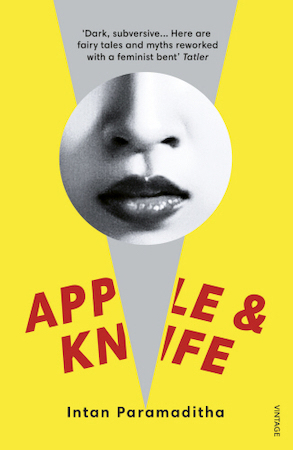
Apple and Knife is a collection of stories in which the female characters refuse to bend topatriarchy. Intan Paramaditha weaves in elements of body horror, gore, urban legends, fairy tales, and folklore into this feminist concoction, and her women can be anything from a menstruation-blood-drinking hag, a witch, a vengeful to a murderous ghost. In a country like Indonesia where women are taught to behave, these femme fatales are certainly shameless and proud of it.

The Girl from the Coast by Pramoedya Ananta Toer, translated by Willem Samuels

The Girl is fourteen and she has to get married. Pramoedya Ananta Toer wrote this novel as a fictionalization of his own grandmother’s life, and as a criticism of the Javanese social class system. The Girl—as she is called in the novel—is being sold to a man from the “priyayi”, or Javanese nobility, background. Because of her low socioeconomic background, she has no say to this arrangement. Banned in the ‘80s for its alleged “Marxist” ideas, the book remains timely even today on the issue of child marriage that is still happening everywhere in Indonesia but seldom talked about.      

Beauty Is a Wound by Eka Kurniawan, translated by Annie Tucker

Beauty Is a Wound is a family saga spanning multiple generations, told with a dose of dark humor to ease you the readers in to Indonesia’s long bloody history. Written in the fashion of magical realism à la Gabriel Garcia Marquez, the book opens with Dewi Ayu and goes back in time to her family tree, through Dutch colonialism and Suharto’s regime, to figure out how she became undead. From incest, murder, prostitution, to Communism (a lot of Communist ghosts!), International Booker Prize longlister Eka Kurniawan presents all things taboo.          

The Sea Speaks His Name by Leila Chudori, translated by John H. McGlynn

Suharto was Indonesia’s president in the ‘60s to the ‘90s. His dictatorship, the New Order, was responsible for many disappearances during his 30 plus years that he reigned in terror. Published in 2017, The Sea Speaks His Name is inspired by these events and based on a true story. In the novel, the main character Biru Laut (literally “sea blue”) and his student activist friends are captured by the government, tormented, and finally made to disappear forever, while their families are left behind searching for them and trying to make sense of what has happened. Just 25 years ago, Indonesian writers who dared to write about this would likely have “disappeared” as well.    

The Question of Red by Laksmi Pamuntjak, translated by the author

The Question of Red is about another disappearance, caused by the same brutal regime. Amba goes to the Buru Island in the Moluccas to find out about the fate of her missing lover who is also the father of their illegitimate daughter. Bhisma is a doctor who graduated from an Eastern German university, he was captured and exiled because of his involvement with the Communist Party of Indonesia. Pamuntjak skillfully combines the epic Mahabharata with the love story of Amba and Bhisma to illuminate the bleak reality of Suharto’s war on Communism and the aftermath of his legacy to this day.

7 Short Story Collections About the Joys and Struggles of Girlhood

If I could go back to any time in my life, I would choose the years between my girlhood and womanhood. Just for a day. And just to appreciate what I was noticing, doing, thinking, and feeling. That was a rich time of discovery and simple joy. Equally, as I grew older, I also came to understand how young women’s experiences are dismissed. Multiplied tenfold in Black girlhood, as we come of age we are watched, never seen. Both our innocence and insightfulness are often denied. 

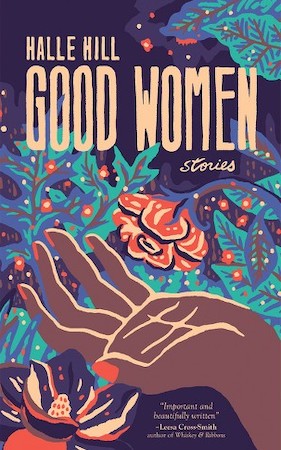
When I began writing my short story collection Good Women, I wanted to acknowledge those opposing thresholds and give them voice. I sought to remember these times in my life and the lives of women around me, not for the sake of biography, but for accuracy. In the clarity of that tender season, I first learned to fear and anticipate what was waiting: the dangers of beauty, dangers of men, first tastes of freedom, first tastes of self, and the painful distinctions that would soon come with adulthood: Would I stay or leave? 

As Ntozake Shange said, “somebody/ anybody sing a black girl’s song.” These collections surely sing songs of young womanhood and celebrate them. They urge us to listen.

Woman Hollering Creek by Sandra Cisneros

“I don’t think they understand how it is to be a girl,” notes the young narrator in “One Holy Night”, a story in Sandra Cisnero’s collection Woman Hollering Creek. She enters a relationship with a predatory older man-child she calls Boy Baby. He promises to “love her like a revolution”. When Boy Baby inevitably leaves her, she must deal with the after effects of his abuse and the cultural ostracization she faces for bearing his child. As time passes, she is stuck with poignant observations about love, relationships, family, and gender.

Cisneros’s stories shine like this across the board: luminescent, somber, and transcendent, balanced by sharp whips like; “Once you tell a man he’s pretty there’s no turning back.” The prose in this collection is unlike any other I have read, lyrical and wholly fresh. Here, the broken hearted soar and circle their loved ones with infinite hearts, moving from girls to women, and eventually becoming ancestors, continuing the boundless cycle. As one narrator writes in a letter left at a shrine to The Virgin of Guadalupe in the story “Little Miracles, Kept Promises”, “I am a snake swallowing its tail. I’m my history and my future. All my ancestors’ ancestors inside my belly. All my futures and all my pasts.” 

How to Breathe Underwater by Julie Orringer 

Julie Orringer’s collection, How to Breathe Underwater, explores the power of girls and women in nine captivating stories. Through wisdom, big hearts, and poignant questions, female protagonists navigate their worlds with restraint and intelligence. Orringer’s writing delicately weaves girlhood as a time of painful awakening and keen intuition. 

In the collection, Orringer skillfully portrays the struggles of her characters: a sister coping with the death of her brother’s girlfriend who drowned, a woman battling addiction while caring for a child, cousins navigating envy, competing for intelligence and beauty. In the story, “The Smoothest Way is Full of Stones”, a young woman finds her place within a religious family, alongside her cousin, as her mother recovers from a traumatic birth. God feels inescapable. “Tree frogs call in the dark, the rubber band twang of their throats sounding to me like God, God, God.” As the summer continues, the pair begin to face crucial choices. The story culminates in a liberating moment as they venture out to meet a forbidden boy they both deeply admire. “How to Breathe Underwater” captures the fragility of girlhood and womanhood with grace and insight.

Before You Suffocate Your Own Fool Self by Danielle Evans 

I cherish books that portray Black women as complicated, misguided, and fully human. “Before You Suffocate Your Own Fool Self” by Danielle Evans delivers that and more. In Danielle Evans’ 2010 debut collection, characters grapple with defining their personal sense ethics.

Stories are filled with uniqueness, intricacy, and unflinching observation, but what truly captivates is the collection’s emotional elegance. Evans’ voice exhibits empathy with remarkable restraint, respecting her characters by portraying them with honesty. Her prose is clear yet challenges readers to confront discomfort, compelling us to sit with the conflicted minds of her characters. The book values mistakes and trusts these young women as they navigate their cruel and vibrant worlds.

The Moths and Other Stories by Helena María Viramontes

Being a woman of color carries a significant cost. Within our own cultures, we face expectations of excellence, while non-POC outsiders look down on us with self-righteousness, contempt, and disgust. The constraints of gender add further complications. Despite this intersectional battle, we stand in our power with an unshakable sense of pride and self-determination. In this book, the characters, particularly Chicana women, strive to break free from societal limitations imposed by the church, the patriarchal male gaze, prejudice, and economic injustices. Viramontes writes with delicate yet unsentimental prose, portraying her characters as resilient, cautious, and observant, seeking empowerment in their minds, bodies, and sexualities. 

Two dominant stories stand out: “The Long Reconciliation” follows a woman who marries far too young. She grapples with understanding her sexuality and erotic expression, “Sex is the only free pleasure we have,” but faces stifling male dominance and religious pressure. In “Birthday,” a young woman confronts the decision of having an abortion and battles feelings of fear, shame, and liberation, driven by an all-seeing, condemning God. These necessary stories in “The Moths” reflect the complexities and struggles faced by women of color, resonating with readers across generations.

In Love & Trouble by Alice Walker

Alice Walker’s In Love & Trouble presents thirteen stories that portray the complexity of Black women through pivotal moments of choice. Walker’s voice is true, evoking the impact of generations in vignettes of family ties, trauma, freedom, pleasure, fear, and disgust, often within a simple sentence. “She dreams; dragging herself across the world.” Her characters possess a prophetic quality, and their humor adds depth to their narratives. Despite its brevity, the book’s impact lingers long after the first read, with “Everyday Use” standing out as one of the greatest short stories ever written. Across the collection, the intergenerational observations are knife-sharp, and the language so piercing it will move readers to tears.

A Day, A Night, Another Day, Summer by Christine Schutt

As Tiffany McDaniel opens, in her novel Betty, set in Ohio Appalachia, “A girl comes of age against the knife.” Becoming is brutal. The mystery of this transformative journey is where a poets’ touch becomes essential, helping to articulate the ineffable. While writing Good Women over six years, I turned to poetry, both for pleasure and to hone my ear. Discovering Christine Schutt’s short fiction was a gift: embodied short fiction, the poet’s way. Her collection, A Day, A Night, Another Day, Summer, carves through time with a tactile dream-like quality. The language is concise, rhythmic, and economical, never wasting a word. “Her teeth, her lips, her lip-like part.” Each story presents a unique world, dark and pulsing, where women and young women grapple with the worst of it: illness, impending death, dangerous love, abuse, and unspeakable taboos. Reading these stories reveals a seeping, feminine magic that’s alive. Something feral and angry. Something you can’t quite put your finger on.

Black Light by Kimberly King Parsons

My favorite childhood friends were weird girls who had something just a touch off about them. When my family moved from the predominantly Black, working class Mechanicsville to the Knoxville suburbs, I learned to assimilate as a child. By the time I went to high school, I had lost a sense of self and place. I was too self-preserving to rebel in the ways I wanted to, so I lived vicariously through young women who dared to buck back. 

Those cool girls are exactly the ones I admire in Kimberly King Parsons’ Black Light. They are enigmatic, searching, often mean, and refreshingly authentic. I’m reminded of the story “Glow Hunter,” which follows two girls on a Texan summer escapade, exploring the electric place of female friendships between companionship and deeper desires. Mushroom trips and lengthy car rides become their means of fantasy, while themes of parental abandonment loom in the background. These strange women claim their space, as echoed in the concluding lines of “We Don’t Come Natural to it.” A narrator, battling an eating disorder, realizes she’s locked out of her apartment, while drunk, in the early morning. Desperate for someone to hear her, she sings into the call box, repeating to anyone awake and listening, “It’s me, It’s me, It’s me.”

Take a Bow, Gas Station Drag Queen

Portrait of Drag Queen with a Pig Nose

behind the gas station the queen begins facing away from the crowd.
low cut back, floor length gown. pulses a knee to the music,
arm on hip, believable human silhouette. i should know this song.
the rest of the audience sings along, lit by a rented spot.
bride to tires and oil. centuries pass as she turns slow as a planet
with all us dying on it. the reveal, below the veil, her silicone snout,
scarred and profound. hybrid thing. elegant-bidpedal-terrifying. think
monster but make it fashion. think what monsters go into making
fashion. we gasp at the temporary godhead standing before us,
the promise of all our science inside one passable prosthetic.
in a laboratory in california scientists inject human stem cells into a pig
fetus & for four weeks it lives. miss vice, you are the perfected form
of all our darkest literatures smiling. you are the language we’ve been
looking for when we say we need a new language. darkness dragged,
bathed in light. the song ends. she sniffs. collects her tips.


Quarantine a Deux

a new app tells us whether it’s safe to breathe
i haven’t been outside in weeks
 
afternoons, sunbathe on the living room floor
beneath the barred windows
 
it’s grown sepia out there
a filter descended over the true face of the world
 
the little man in my phone’s purple today—wears a gas mask
recommends not riding a bicycle
 
i wipe ashes from my packages
my mail carrier says it’s the end of the fucking world
 	
if anyone, he should know: neither snow nor rain nor heat
nor gloom of night  
 
almost two and half millennia ago we split brussels,
broccoli, kale, collards, kohlrabi, all from the same wild cabbage
 
such imaginations humans have
it’s a miracle life existed here at all
 
long as it has

A Queer Undocumented Chef Rebuilds His Life After Deportation

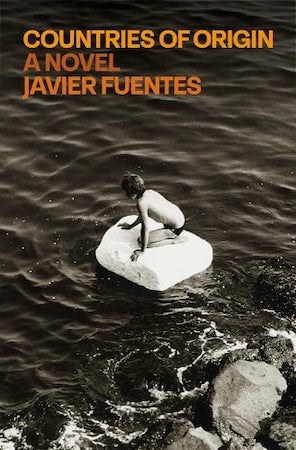
In Javier Fuentes’s touching and tender debut novel, Countries of Origin, the concept of home is complicated and politically fraught. After years of growing up undocumented in the United States, building a long and respectable career in the New York City restaurant industry, Demetrio faces deportation and must return to Madrid, his place of birth. There is a moment when, a couple of months into this new chapter of life, he laments this gnawing realization that he is still very much adrift. “I was feeling as foreign as I had the day of my arrival, even though I now navigated the streets with familiarity and interacted with the locals more fluidly,” he thinks. “I had accepted that I would never be home, because home, if I had ever had one, could never be found.”

What he does find, and what Fuentes renders so beautifully, is that home is more than place alone—it’s a swath of people. The people who raise us and help guide us through a murky world. People who shape and sustain culture. People who tether us to a ground when stability has been shattered. For Demetrio, it’s in Jacobo—a student he meets on the plane to Spain, whose aristocratic background is a stark difference to the world with which Demetrio was once familiar—finds a tether, a life raft, over a whirlwind of a summer.

Fuentes and I emailed about immigrant narratives, mentorship within marginalized communities, and the particularities of young, queer love.


Christopher Gonzalez: Countries of Origin is rooted firmly in two places, but also a specific year: 2007. What was going on in New York and Spain during 2007 that provided an opening for this novel?

Javier Fuentes: The novel, as you say, is very much about two places, and the constant feeling of foreboding that Demetrio experiences about his undocumented status and his fear of being pushed out of the United States. That sense of impermanence defines the way in which he moves through the world, and the kind of intimacy and interpersonal relationships he is able to engage in.

Impermanence defines the way in which he moves through the world, and the kind of intimacy he is able to engage in.

Regarding the year, I wanted the story to take place after 9/11 and during the Bush administration. That was the time when E-Verify was implemented by the Department of Homeland Security, a system to confirm eligibility of employees to work in the United States. Of course, the first half of 2007 were the leading months to the subprime mortgage crisis, but no one knew yet that we were about to enter the most severe financial crisis since the Great Depression. For believability purposes, I needed to place the story before 2008 because knowing Demetrio as I do, I am not sure he would have pursued a job in the middle of a global economic meltdown.

CG: Demetrio, like many cooks and back-of-house staff in restaurants, especially in New York City, is undocumented. At the start of the novel he’s facing the possibility of deportation, so he opts for voluntary departure and leaves knowing he isn’t able to return to the United States for another decade. Can you talk about writing about this angle of one of the many possible immigrant experiences?

JF: Since moving to New York from Madrid in the late ’90s, I became interested in stories about emigration as I looked for ways to understand my own story. As someone who has gone through the process of cultural assimilation and has built a life in a different country, I spent many years fearing not being able to stay. Up until I got my permanent residency and then my citizenship, I felt that the life I had worked so hard for, could one day be stripped from me. So, putting the protagonist in that position and forcing him out of the country was a way to explore a personal fear that I had suffered from for a long time.

Then years later, in grad school, I studied the American immigrant novel of the 20th century. All the novels I read were about the influx of migrants into the United States and their process of cultural assimilation, but I couldn’t find stories about the reverse journey: People who, after having moved to the United States and assimilated in different degrees, are forced out. That was the main reason why I chose to write an immigrant novel from that vantage point. I felt it was a story others could benefit from reading. 

CG: While Demetrio feels adrift in both Madrid and New York City, he’s always anchored by a mentor. There’s his uncle, Chus, who acts as a parent and queer elder; the Chef from his first restaurant job; and, in a way, Jacobo, who becomes Demetrio’s guide when he first arrives in Spain. We always think of mentorship in relation to career moves, but do you see it as a crucial part to navigating not just place but one’s own identities?

JF: Absolutely. Queer people who, like me, felt like outsiders in their own families growing up, had to look elsewhere to understand our sexuality, learn about the possibility of a life outside heteronormativity and build our own identities. Finding mentors and creating families that didn’t resemble the traditional structure is a crucial part of the queer experience. Also, as a foreigner, I benefited immensely from more experienced immigrants who generously shared their knowledge about the cultural challenges and legal hoops that come with establishing in a different country.

I had been terrified of being forced out of a place that had given me so much.

One of the beautiful things about mentorship is that it is not a one-way street. I have come to understand that once you have acquired the right experience or have “grown up”, you are in the position to help others who are in a way, similar versions of who you once were. It is incredibly rewarding because you are given the opportunity to pay back and help, in my case, two communities that are very dear to me, the queer and immigrant communities, which were crucial in my development, both as a writer and a human being.

CG: Demetrio is a pastry chef. What is it about pastry, specifically, that felt right for his character? 

JF: I made Demetrio a pastry chef for a variety of reasons. Back in the day, shortly after moving to New York, I worked in the service industry, so it is a world I know well. Also, I have been fascinated with pastries since a friend of mine who is a pastry chef, took me to the Big Sur Bakery in California. The world of pastries felt like a universe I would be happy inhabiting for a long time. And when I started to think about a job where you could become successful and go up the ladder without having the right papers, a pastry chef felt just right. 

CG: Were you always a foodie and are there any food writers you turned to while working on the novel?

JF: Having met people in the service industry who are intensely passionate about food, I wouldn’t call myself a foodie, though I get so much pleasure from a good, long meal with friends. In terms of inspiration, apart from watching Julie and Julia by Nora Ephron several times, the only food writer I read while doing research for the novel was M.F.K. Fisher, whose book How to Cook a Wolf I simply adore. W.H. Auden once said of her: “I do not know of anyone in the United States who writes better prose.”

CG: Are the dishes Demetrio prepares (for example, the ice cream with marigold) based on real dishes you’ve had before, or are they your own imagined desserts? 

JF: The dishes are imagined. Upon reading the novel, two pastry chefs reached out and asked whether I had trained as a baker or whether the desserts were solely based on research. Both said they sounded very plausible. I am curious to see if they could become real. I have always been interested in the line that separates fiction from reality. Though it is most common to see fiction borrowing elements from reality, it could easily be the other way around. An element, an idea, or a dessert from the world of fiction could cross into the realm of reality. That is why I would be interested in having a pastry chef make these desserts. For those reading this, consider it an open invitation. I mean wouldn’t you be thrilled by a meringue cake, inspired by fashion designer Alexander McQueen, with candied clementines, smaller meringues crumbled on top, edible gold leaf, and candied lemon-peel feathers? I know I would.

CG: I’ve often heard that love finds us when we least expect it, but lately I’ve wondered—and this novel affirms it—that love finds us when it’s least convenient, if not the most challenging times in our life. As in, Demetrio is starting over, needs to find work and a new way of life, and just left behind everything he knows. What does it mean to you for one to be open to love?

I couldn’t find stories about the reverse journey: People who, after having moved to the United States and assimilated, are forced out.

JF: Love, like life, is all about timing. There is a moment in the novel when Demetrio, the protagonist, is at the Museo Reina Sofía in Madrid wondering what would have happened if he had met Jacobo at a club, at a gym, or at a museum. Said a different way, if they had met under different circumstances. To truly be open to love, one needs to have done a lot of self-exploration. When I was in my mid-twenties, I was too busy just trying to make ends meet and figure out how to stay in a country that allowed me to live more freely. In retrospect, I wasn’t ready to love because it was a very challenging and confusing time in my life. Writing a novel about two characters who are in their early to mid-twenties was a way for me to revisit that moment in time.

CG: Something I’m drawn to in my own writing is the blurriness and friction between the platonic and romantic in relationships between queer men, as well as the tensions between eroticism and violence. Demetrio and Jacobo’s relationship has quite the arc in this sense — was this in-between space something you were thinking about when constructing the shape of their relationship?

JF: For queer people growing up in the shadows, platonic love is oftentimes the only version of love we get to experience in a romantic context. Demetrio, who was raised on the Lower East Side of Manhattan by his liberal uncle, is very comfortable with his sexuality. On the other hand, Jacobo, raised in a conservative family with strict traditional values, suffers from extreme internalized homophobia, so much so that at the start, he is unable to process his feelings for Demetrio. The violent episode that takes place in the book is nothing else but his version of intimacy, a version enacted by the heteronormative constraints in which he grew up.

The significant difference in how the characters map to their sexual desires was very purposeful. I wanted to create a correlation between the effects of what a conservative and a liberal upbringing can have in how queer people are able to love themselves, and, by extension, love others.

CG: Earlier, you mentioned fear—what were the questions you had about fear going into the book, and what answers did the book offer you on the other side? And did you ever find those stories you were searching for?

JF: I have always found art instrumental in providing answers to many of the questions life poses. In that sense, and since I was very young, I have been turning to literature to better understand my own story.

When I started writing Countries of Origin, I was not aware of the fact that, by imagining the story of someone being pushed out of the country, I was exploring a fear that I had had for so many years. As I mentioned before, I had been terrified of being forced out of a place that had given me so much. New York is where I came to terms with my sexuality and forged my most meaningful relationships, where my chosen family came to be. For a long time, I feared losing it all. So this fictional world, Demetrio’s return to Madrid, helped me explore the hypothetical, and delve into what it would be like for me to leave the country permanently. Now, upon completing the book and reflecting on the story, one of the main takeaways has been that the possibility of leaving will stay, for now, just that: a possibility.

9 Books With Fabulist Worlds That Push Boundaries

In its origins, the word “fabulous” lacked a positive connotation but simply meant “having to do with fables.” I’m no etymologist, so I don’t know how “fabulous” drifted into its current meanings, but I suspect it has something to do with the concepts that are expressed by similar words like “wonderful” (full of wonders), “marvelous” (related to “marvels”) and awesome (“expressive of awe”). Fables are stories that depict marvels, that narrate supernatural or paranormal events that evoke wonder or awe. Fair enough. But why have we come to use these words with a consistently positive connotation, when the marvels revealed by a fable could easily be ominous or terrifying rather than auspicious?  

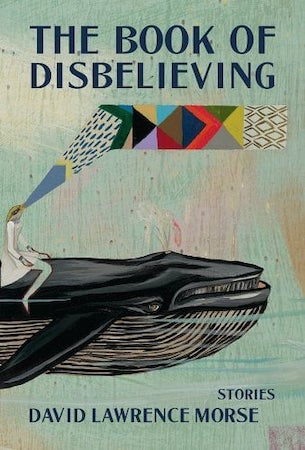
I was raised in the Southern Baptist church, and while I’m no longer a believer, I grew up hearing stories of the great flood, the burning bush, the plagues of Egypt, the Leviathan that confronts Job, paralyzed with fear. My teachers in the church tried to convert these stories into Disneyfied tales appropriate for children, with an easily comprehensible moral, but no amount of Sunday School sanitizing could eliminate the terror. And so in my debut collection of short stories, The Book of Disbelieving, I try to help reclaim the concept of the “fabulous” in all its complexity—to create worlds where inexplicable, fantastical events might occur, but for the characters who inhabit these worlds (and, hopefully, for the readers who encounter them), there is a mixture of terror and awe—above all, a destabilizing sense of metaphysical bewilderment.

The novels and story collections that I’ve included in this list range in scope, setting, tone, theme, and method, but they all do something similar: create worlds that defy expectation, that challenge our conception of the ordinary, that renew our understanding of the “fabulous.” But in all these authors’ work, the fabulous is not invoked merely for the purposes of sensationalism—as in The Book of Disbelieving, reality is being manipulated or exaggerated for thematic purposes, to explore some element of our shared collective existence that might have otherwise gone misunderstood or unappreciated. Samuel Taylor Coleridge claimed that appreciating a work of art required “the willing suspension of disbelief”; never has suspending one’s disbelief, as in these fables, been so rewarding.

Orange World and Other Stories by Karen Russell

Russell opens this collection with a quote from Ghostly Matters, by Avery Gordon, which could well serve as an epigraph for all fabulous narratives: “We need to know where we live in order to imagine living elsewhere. We need to imagine living elsewhere before we can live there.” That’s the reason fabulist worlds, such as the ones that Russell conjures in Orange World, are so compelling—they illuminate the complexities of our own world while offering a glimpse of compelling—or horrifying—alternatives. Do we want to live in these alternative worlds? Or should we find ways to live with—or improve—our own? 

In “The Gondoliers,” the landscape has been overwhelmed with water, navigated by a brave family of gondoliers who transport travelers across this fraught and haunted topography. In the wickedly funny yet weirdly touching “Bog Girl: A Romance,” the protagonist falls in love with a corpse excavated from a bog, bringing her with him to his high school dance. In the most original of these eight stories, “The Tornado Auction,” a farmer—one of the last of his kind—grows tornadoes, raising them “from seed” to mighty whirling cataclysms, barely restrained by the meager structures meant to contain them. Like the best conceits, the story works on multiple levels—first, on the level of narrative, as we follow the protagonist’s doomed efforts to grow one last tornado, the most gorgeously formidable of them all. And then also, of course, at the level of resonant metaphor: what kind of tempests do we grow from seed in our own hearts—and for what purpose?  

The City and the City by China Miéville

The City and the City, like Russell’s “The Tornado Auction,” originates with a core speculative conceit that both inspires an engaging plot and teems with the potential for metaphor. Two city-states, Besźel and Ul Qoma, exist in the same geographical space yet are considered to be distinct politically, legally, linguistically, and culturally. Inhabitants of this shared space are born, raised, educated, and indoctrinated as either a citizen of one city or the other; while some spaces within the city homogeneously belong to one city only, other “crosshatched” spaces are simultaneously inhabited by both cities. Inhabitants are trained from birth to recognize subtle differences in architecture and dress to differentiate the two cities; and it is an inviolable law that inhabitants of each city must ignore (or “unsee”) any element of the other—a law enforced by a powerful police entity known as Breach. The plot is comprised of a murder mystery that takes careful detective work—breaching both cities—to solve, but it is the rich evocative imagining of the daily operations of these two co-habitant cites that I found fascinating. The conceit provokes us to think about our own experience in urban environments—who and what do we “see” and who and what do we ignore, and why, and what are the perceived dangers of seeing what may be considered taboo?—while also conjuring more specific geopolitical conflicts, in which two politically and ethnically distinct communities live on top of each other, riven by bitterly ingrained and longstanding ideological differences, such as Jews and Palestinians in Jerusalem.  

White Cat, Black Dog by Kelly Link

The latest story collection from author, editor, and publisher Kelly Link, these fables transport readers to a range of eerie fairy tale locales, from a house visited by a sentient mist and a retinue of anthropomorphic animals in “Skinder’s Veil,” to a Nordic underworld governed by a vengeful, ageless witch in “Prince Hat Underground.” In my favorite, “The Girl Who Did Not Know Fear,” Link transforms the swimming pool at a typical airport hotel into a luminous dream-cave in which the protagonist, unable to return to her family, is suspended in a vexed, spectral limbo, until an uncanny encounter on a plane offers revelations about the debilitating nature of sexual jealousy and the bewildering claims that our bodies make upon us. 

Parable of the Sower and Parable of the Talents by Octavia Butler

Dystopian novels are a warning to readers of what their own society may one day become. In Butler’s Parable of the Sower and its sequel, Parable of the Talents, set in the US in the 2020s and 2030s, climate change upends civilization, corporations force people into subsistence level dependency or indentured servitude, public institutions like the police and public schools are increasingly privatized, only available to the wealthy, and public trust has disintegrated. A right-wing Christian demagogue named Jarret runs for president and is elected on the slogan “Help us make America great again” (startlingly prescient—Talents was published in 1998), waging a violent campaign against non-Christian faiths. And yet these two books are not your typical dystopian horror-show, for Butler also imagines that such social collapse could create blank-slate conditions in which a new utopian community might be created.

The protagonist, Lauren Oya Olamina, having fled her family’s walled enclave when it is looted, wanders north with fellow refugees and creates a new community, called Earthseed, predicated on the notion (you could call it a faith) that God is change. Butler skillfully manages to both imagine a compelling vision of an alternative community, modeled on many utopian predecessors, while also demonstrating the community’s potential weaknesses and the fascinating but deeply flawed character of its founder. In this way, like Ursula K. LeGuin, Butler creates that rare thing: a depiction of a utopian community that isn’t merely a boring wish list of desirable social reforms (think of influential but tedious novels like Walden Two or Looking Backward) but an intellectually and aesthetically complex work of art.  

The Dispossessed by Ursula K. LeGuin

Like Butler’s Parable series, The Dispossessed puts forward a vision of a utopian society that is ideologically compelling but also dramatically interesting. The narrative alternates between two planets: Urras (like Earth) and Anarres (like the Earth’s moon). While Urras is dominated by two nations, one capitalist, the other authoritarian/socialist, Anarres was founded according to anarcho-syndicalist principles, and as such, the centralized state—as well as ownership of private property—have been abolished. The protagonist, a physicist named Shevek, a native of Anarres, was modeled on a friend of LeGuin’s parents—J. Robert Oppenheimer. Shevek is struggling to finish formulating his life’s work, a new theory of time called the Principle of Simultaneity. Thwarted by departmental politics and restrictions on his time in the form of manual labor required of all Odonians (i.e., citizens of Anarres), Shevek travels to Urras, hoping to gain the time and support he needs to complete the Simultaneity, which he believes will benefit all humanity. Having grown disillusioned with the restrictive social mores on Anarres, he finds that life on Urras is worse, characterized by unrestrained competition, greed, and inequality. In the end, he publishes his Principles through a third entity, the Hainish, who help him return to Anarres, where, labeled a traitor, his fate is uncertain.

As with The City and the City, it is the imaginative details of LeGuin’s invented worlds that are so fascinating: she creates on Anarres a living, breathing culture, whose language and mores reflect their political ideology in nuanced ways. Thanks to LeGuin’s comprehensive depiction of Anarres’s anarcho-syndicalist society, we are able to regard it with wonder while analyzing its flaws and virtues.

Children of the New World by Alexander Weinstein

These thirteen dystopian fables all envision one kind of disaster or another in our not-too-distant future, some at the social and political level—entire worlds come undone by ecological collapse. Others at the personal level, as the protagonists struggle to reconcile their all-consuming dependence on technology with their need for human contact, human touch. In the worlds that Weinstein imagines, even experiences as profound as parenthood and transcendence can be manufactured and commodified by technology. 

In “Moksha,” the main character travels to Nepal in a desperate search for a particular kind of enlightenment that is facilitated by an advanced video game console banned by the U.S. government, while in the collection’s title story, a married couple raises two virtual reality children only to lose them when their VR account is fatally corrupted by malware. “I’m not deleting my children!” cries the father, but “delete” them he must, and it is a testament to Weinstein’s skill that we deeply feel the loss of these kids, despite the fact that, as the technician reminds us, they’re “just data.” “The Cartographers” achieves a similar effect, describing how a team of tech-savvy entrepreneurs sells fake memories implanted in people’s minds; ultimately, the protagonist must confront the fact that his own cherished memories of his life’s greatest romance are nothing more than artfully constructed terabytes of digital information. “Love scars memories, even if it was never real. When I walk the streets I think: we walked here together, she used to touch my arm like this, and the pain of white emptiness sets in. You can’t get rid of memories; you can only try to ignore them.” Weinstein’s worlds—though composed only of another kind of data in the form of words—are equally hard to ignore.

Klara and the Sun by Kazuo Ishiguro

“Saying Goodbye to Yang,” the first story in Alexander Weinstein’s Children of the New World, imagines a near future where advanced technology has created AI robots available as companions for children. This is the same conceit in Kazuo Ishiguro’s latest novel, Klara and the Sun, where androids known as Artificial Friends (AFs) are commonplace, available for purchase at a range of prices and abilities. The twist is that the novel is written from the point of view of one particular AF, Klara, who, like so many of Ishiguro’s protagonists, is curious, compassionate, naïve, somewhat stilted, and decorous to a fault. Klara is picked out for companionship by a girl named Josie, who, though smart, enthusiastic, and gregarious, is suffering from a prolonged illness that is the result of a common process of genetic engineering (called lifting) that was intended to boost her academic performance and prospects for a career. Solar powered, Klara becomes convinced that the sun has special healing powers, and thus begins a protracted effort, like a propitiate to a god, to persuade the sun to cure Josie’s ailment. 

In many respects, Klara and the Sun resembles another of my favorite Ishiguro novels, Never Let Me Go, told from the point of view of a clone created for the purposes of organ harvesting. In each of these tales, Ishiguro adopts the perspective of a sub-altern class of proto-humans that we ourselves have created, exploring our collective preference for social hierarchy and exclusion as well as the individual’s yearning for belonging, while, ultimately, attempting to determine what it means to be human.  

The Complete Stories of Leonora Carrington by Leonora Carrington

I’ve saved the wildest imagination for last. Leonora Carrington, the surrealist painter who fled Europe (and an insane asylum) during World War II (she may have escaped via submarine), settling in Mexico, where she continued to devote her life to art and literature and eventually became one of the founders of the Women’s Liberation Movement in the 1970s. Her collected stories, not published until 2017 by Dorothy, a publishing project, were composed in three languages (English, French, and Spanish), many written in her early 20s. 

These are stories where talking wild animals wreak havoc on human society, where queens and kings, ensconced in their castles, are no safer from danger than the rest of us, where even aggressive vegetables, animated by hate, get into the mix, and where corpses loom large, possessed of a potent capacity for both terror and balm (as in “How to Start a Pharmaceuticals Business,” where the miniaturized corpse of Joseph Stalin provides a source of magical hairs, the original ingredient in what will become a successful drug useful in the treatment of “childbearing and other convulsions”). Wandering through these worlds are Carringtonesque figures of various ages, who encounter the unexpected with courage, curiosity, and a surprising amount of tact. Two of her finest, most hilarious and most terrifying stories bookend this collection: “The Debutante,” in which a girl refuses to attend her own debutante ball and sends a hyena in her place instead; and “Jemima and the Wolf,” in which a similar protagonist, resisting her overbearing mother’s attempts to turn her into a “normal little girl,” flees her home for the forest in pursuit of a mysterious figure—who may be a man or may be a wolf. Carrington herself (as quoted in Kathryn Davis’s terrific introduction) provides an excellent epigraph to her work: “Even though you won’t believe me / my story is beautiful / And the serpent that sang it / Sang it from out of the well.” For more on Carrington’s life, writing, and art, see Leonora Carrington: Surrealism, Alchemy and Art by Susan Aberth.

The Collective Tragedy of Maternal Isolation

“The Swing” by Marianne Jay Erhardt

Eleanor Gaw didn’t know she was one of the last people to see Luca Swenson alive. She had seen him from quite a distance, just the little shape of him. The hood of his winter coat, moving back and forth in the bucket swing, on the far side of the playground in the park across the street from Eleanor’s home. From her stoop, while her own child napped hard in the house, Eleanor often took stock of the playground equipment—the slides, the little ladders—to see if there would be the right kind of company for her boy when he woke up grumpy, hungry, lonely for other children. If there were tender little kids, or oversized school-aged disasters, or no one at all. If there were other mothers there and if those mothers found their children, in that afternoon, precious, or boring, or utterly exhausting. Eleanor would see if there was company—saw that there was company. Eleanor looked, planned to go. But then there was a phone call or her child awoke with a rash, a surprise; there was something she had to tend to, something she needed to savor or something she wouldn’t want another child to catch. So what she saw, and then forgot, was company. For her: a mother. Her name was Rene. For her son: a boy in a bucket swing, Luca, not knowing how to pump, not knowing what to do in a swing beside send his arms and legs out, making his body a star.


Only a few months prior, the police had been called to that very swing set to rescue Lakela White. Lakela had no business swinging in a baby swing. She was twelve, and she climbed in as a joke when her friends commandeered the two big-kid swings. Some middle schoolers could tuck themselves easily into a baby swing. But Lakela was no bendy string bean. She was a strong girl, with strong legs, a girl that took up space without apology. When she got stuck in the swing, her jeans bunching, her sneakers just shy of reaching the mulch below, it was not Lakela who was embarrassed. It was her friend Victoria, who turned pink and said, Jesus Lakela, trying to lift her out.

Some of the mothers rushed to Lakela, as if to shield her from shame. One got on her hands and knees underneath the girl and said, Pretend I am the ground! Use my body! Another meant to reassure her that everything would be okay, the way things were okay when mothers were in the vicinity. One mother briefly forgot about her own son, then went into a panic, shouting, José! until he emerged from a tunnel slide, unharmed. On the whole, the mothers were ready to mother. But when they saw that Lakela felt no shame, that Lakela was not about to try to stand on the back of a middle-aged white lady in order to wriggle out of a plastic diaper hung from chains, when Lakela pulled out her phone and calmly called 911 as if she were calling for pizza, and when Lakela laughed, explaining her predicament to the operator, the mothers backed off. They admired her. They resented her. They felt exposed, found out, and they stayed to see what would happen to the feeling and to the girl.

And though it was getting late, even the small children forgot their hunger, sensing that this was a story worth staying for. The police arrived, then a fire truck, no siren. In the end, they had to cut the swing away from the girl with a large set of shears (although some of the mothers would say the firemen used the jaws of life when recounting the drama to their husbands, stabbing at their salads that evening) all while Lakela played a game on her phone. It was Candy Crush. Or maybe Pokémon something.

When she was free, the mothers cheered, and some clapped, as if they had all really been through something together. Lakela did not acknowledge the celebration and left with her friends, taking the path that cut through the woods.

For weeks after, empty chains hung from the swing set. And then one day, a new swing appeared. Only it wasn’t new; it was worn in the seat. The blue was whitened at the stress points. Which suggested that this swing had been taken from a different playground, maybe a better playground, which had been upgraded. Or maybe a worse playground, where rainwater pooled in the slides and the mulberries made a mess and the yellowjackets lasted past Halloween. Where that pale old man wore nothing under his trench coat that time. Where your favorite thing—a basketball hoop, a hot metal teeter-totter, a swing—the thing you loved best, might be taken from you, might vanish in the daylight.


If it weren’t for the rain, Jennie would have stayed longer, maybe long enough to know something was off. They had only just arrived at the playground when the skies opened up, and though her Waldorf parenting books told her that There is no such thing as bad weather, only bad clothing! Jennie was cold, and depleted, and now wet. And her daughter Anna Claire was less than two, barely verbal, unable to reveal to the Waldorf mom Facebook groups that her mother was a lazy fraud. Jennie resolved to be a better, more wholesome and nature-loving mother, when Anna Claire was older. When it counted. For now, for just today even, she would go home, light up her living room with Peppa Pig or some other animal in human clothing, and fall half-asleep on the couch with one hand on her daughter, who was easy to entrance.

Jennie resolved to be a better, more wholesome and nature-loving mother, when Anna Claire was older.

Days later, it was more Peppa Pig, and Jennie missed the news about Luca entirely. No bad news, she had once promised Anna Claire. A world that is lovely and predictable. Where there is a sweet little song for every mundane thing. Taking off your boots. Washing your hands. Folding the cloth napkins and lighting the beeswax candles before supper. That had been the hope.

If Jennie noticed Luca or his mother Rene, she noticed that they stayed, despite the rain. She noticed that Rene took off her own coat and wrapped it around Luca while he dangled. He made a sound. He was looking at the ground. Jennie thought special needs to herself, and felt a wave of gratitude that Anna Claire had only unspecial needs, followed by guilt that those needs felt endless nonetheless.

Months later, Rene’s mother defended her daughter to a local reporter She stayed with him all night, sang to him until her voice ran out. She was always loving. And it was true. Rene did not hide Luca in a bag or throw him in a ravine or bury pieces of him in the woods. No sharp shovel, no moonless night. She took her son to the playground. She pushed him on the swing. She wrapped him in her coat. Her hands were nothing but tender.


Rene was supposed to take the pills to quiet the disturbances. Only she didn’t find them terribly disturbing. For instance, when Luca’s father Doug left, calling her batshit, she heard a voice saying guano, which was a beautiful word. Also the voice said Rene with a warmth that Doug hadn’t used in years. Said, Rene, you will be okay. He is wrong. He has never been right. Which, Rene knew, was exactly the kind of thing a voice would say, but also the kind of thing a friend would say if the friend were good.

And at the playground, when Rene couldn’t leave, couldn’t figure out how to lift Luca out of the swing, how to move her legs or shout for help, couldn’t figure out how to do anything other than push that swing, push, push, for nineteen hours, through night falling and dawn rising, the voice was kind then, too. Help is coming, it promised. Push. You are okay. Push. Someone will be here any moment. Push. I think I hear them now.


Luca is born every day before he dies. Rene has this lovely curtain panel she found at the Goodwill. It’s baby blue, semi-sheer, embroidered with these rust-colored flowers and flourishes. Rene bought it because she would never have guessed that the colors would look so good together, but they do. They look so good. She delights in the surprise of it. It’s a long panel, no companion, meant for some floor-to-ceiling accent window in some tony neighborhood west of Route 52. Rene imagines she will cut it in half, learn to sew, and make a pair of café curtains for Luca’s bedroom, which for now relies on broken blinds for darkness. Until she learns to sew, the curtain is Luca’s plaything. He drapes it over his head and walks delicately through the apartment.

Grandma says, Where’s Luca? Is he hiding, Rene? But Rene says, Where’s Luca? It’s time to be born, Luca! And when he pulls the curtain down, both women have taken to saying, Happy Birthday! just like they did when Rene delivered him, fierce and focused, no wrong sounds in that room. Only the sounds of life, magic, a body becoming two bodies. It’s time to be born! It’s time! Happy Birthday, Luca! he hears every day. And when he pulls the curtain from his face, he has started to say, Bean Bone, which they realize is Being Born. And Rene pushes away the thoughts of his bones made of dried beans, the thoughts that the red beans she heats for dinner are not beans at all.

She tries another game with the curtain. When he tiptoes around, she pretends he is a celebrity about to perform. A trapeze artist, a pop star, a Guinness book of World Records novelty. Someone who gets famous. She tries on the voice of an announcer. Ladies and Gentlemen…But Luca hates the new voice, hates ladies, hates gentlemen. Bean Bone! he demands, and she relents. Happy Birthday, says Rene, dozens of times a day, dozens of days, more birthdays than any human lifetime could contain.


Maria could not push a wheelchair without thinking of Nellie Olson. The old episode of Little House where Nellie is in an old-timey wheelchair, and goody-goody Laura is pushing her along, until they come to the crest of a steep, overgrown hill. Mean Mrs. Olson at the bottom, on her literal high horse. Laura gives the chair a shove, shouting, Your mother wants you, Nellie! sending Nellie careening. And, while it might be true that bratty Nellie had it coming (she was, after all, faking paralysis for attention), Maria was shocked that Laura had it in her to do something so cruel, something that could, after all, result in real paralysis for Nellie, although Nellie fared just fine, landing in a pond, forgetting her lie, and standing up on her healthy legs to wring out her pinafore, petticoat.

Maria had always thought of herself as a Laura. Nice. And when she saw the episode as a child she was shaken at the girl’s capacity for violence, and thus her own capacity for violence, given the right circumstances.

And now Maria pushed a wheelchair every day. Her father’s, mostly, though before she left her job to care for him day and night, she was a CNA in a nursing home and pushed many wheelchairs there, too. Every time she held the handles, she felt the warmth, the possibility in the palms of her hands. That she might launch the chair down the hallway, down the sidewalk, down the ramp at the church, which backswitched three times between the door and the parking lot. She loved her father. The burden of his care, she knew, was quite temporary. He was dying, rising only to take a few bites of egg and attend Mass, where he slept. She did not want to hurt him. She had no reason to think that she ever would.

She tried to tell her husband about Nellie Olson. But John didn’t remember these kinds of things or have these kinds of thoughts. He once admitted, when she asked, What are you thinking? that he was thinking nothing at all. That his head was often pleasantly empty.

Maria was pregnant. The baby would be born a few months after they buried Maria’s father at the VA cemetery. Already, Maria was beginning to worry about the baby, about pushing the baby in a stroller. Would she still think about Nellie Olson every time? She said to John, There are mothers who drown their babies in the bathtub. There are mothers who have to drive their kids around until they fall asleep, and when they get home they plug up the exhaust pipe in the garage and nobody sees it coming. John waved her off, telling Maria that she will never be one of those mothers. You’re just not that type of person.

When Maria walked by the playground, before the rain, her hands were free. John was with her father for the hour so she could exercise. She touched her belly, happy to be showing. She took the path over the stone bridge, past the swing set, past Luca. He smiled then. She tried to guess his age. Two? Hi! he called out. Hi! said Maria, who locked eyes with Rene. Maria wanted her to notice her belly, wanted her to know that she and Rene were part of the same thing. Rene greeted her with a nod, but Maria couldn’t read her face. She was not good with faces, she told people after it happened. Just ask my husband.


A kid died on that slide, you know. Felix took it upon himself to inform the little kids. It had been more than a decade since they found Luca, in full rigor mortis, Rene still pushing in the light of dawn. Felix was a newborn, then, too little for a slide or a playground although Felix’s mother Toni admitted that she took him to the zoo when he was only six weeks old and that it was too hot and the animals all looked tranquilized, which made her worry about what kind of world she had brought this child into in the first place. Now she knew it was stupid to think such a young baby would appreciate a zoo, but she took flattering photos of herself and Felix with a dazed tiger behind them and in one of the photos you couldn’t see the glare of the plexiglass and it looked like they were in the enclosure together. She put the photos online. #adventuremom. These days, she posted photos of a messy house, an unused elliptical machine, and of Felix and his sister packing their own lunchboxes with fruit-shaped gummies, animal-shaped gummies, and cheesy puffs. She no longer obsessed over the caption: “I surrender. #realmomlife.”

Nobody died on the slide, but children map stories on to the equipment at hand, and there were no swings at the park anymore. After Luca, they were wrapped with caution tape, and when that caution tape began blowing around in the wind, kids began tearing it down. Some young couple stole the rest to decorate their front lawn for Halloween. They debated how best to tape it across the doorway. How to make their house look like a murder scene but also allow Amazon packages to be delivered without incident.

And maybe kids would have returned to the swings, but a few days after the caution tape was removed, the swings were, too. All of them, leaving empty metal A-frames for several years. But then word got out that the playground was getting some new equipment, better-than-swings equipment, along with new state-of-the-art playground turf. No more mulch or sand or diced tires from decommissioned school busses. The new ground would be made of something squishy but not too squishy. Walking on it would feel like walking across the surface of a kickball, if the kickball were flat or if you were very, very tiny and so the kickball seemed flat, like the earth seems flat.

The new equipment was donated by the corporate offices of CiderMill Donuts as a part of their Healthy Communities campaign. There was a CiderMill sign at the park now, next to the sign discouraging concealed weapons, and when Felix came here, Toni usually said something like, “CiderMill Donuts. Keeping kids healthy since 1958.” She and Felix both disliked the new equipment. It was just a bunch of plastic poles sticking out of the flattened kickball ground. Each pole had a light on it and made the kinds of sounds reserved for first generation video games. The game you were apparently supposed to play was to run among the poles, hitting the lights as they appear. Glorified Simon, said Toni. What a waste.

What’s worse was that after the first big spring rain, the squish of the turf grew untenable. And the game must have gotten wet in the wrong places because the lights never worked when you wanted them to anymore. You thumped them with your hand and they were unresponsive. But now, unprovoked, they lit up and sang out at random. In the middle of the night, even, when the donut batter was still raw and cold in the silver refrigerators, when the playground was dark and the only people who came through were a couple of teenagers with a joint, or a restless man in a reflective vest, running with his lean dog. No kids, of course. The kids were in their cribs and beds, where they belonged.


It was 4 AM when Rene understood that she and Luca had become invisible. It had been fifteen hours. While she shivered all night, Luca, somehow, slept. But he always ran hot. Kids run hot was what her mother said when Rene wanted to add another layer to the boy. When a police car drove by on Miller, she was sure it would stop and stop the swinging swing and bring her and Luca somewhere warm. Like the time she’d been found in the highway median with the boy. Or the time the bus line shut down because of the snowstorm and a man in a truck drove them home and nothing disgusting happened. Something about the storm made it okay to be stranded. Something about the white made people generous. In better weather, she knew, that man would have looked away, driven on. He wouldn’t have found a pouch of Goldfish crackers in his glove box to give to Luca, wouldn’t have blushed when he admitted, Nah, I don’t have kids. I just love these damn things. Wouldn’t have hollered to them to Watch the ice! as they tiptoed their way up the sidewalk to their building, which was not beautiful but looked beautiful as it disappeared under the snow.

It was 4 AM when Rene understood that she and Luca had become invisible.

But the cop didn’t notice Rene. And the not being noticed continued into the morning, into another spell of soft rain. Earlier, she had seen a pregnant woman and remembered being noticed when Luca was still inside of her. Everyone back then wanted a look, a guess, even a touch. Doug wanted all of her all of the time. But now, there were afternoons when she tried to buy a pack of gum and the cashier didn’t register her presence at all. Times when the bus driver almost missed her stop, times when the robotic voice on her doctor’s automated answering service said, Sorry, I missed that. Can you try again? State the last four digits of your social security number.

Rene thought of her best friend Sita. As a pair, Sita and Rene were always seen. There was that night long before Luca, before Doug, before Sita moved away, when they danced together at The Vital. It was the kind of bar where there was danceable music but nobody dancing. They didn’t care. Sita said, “Everyone is looking at us. Don’t look back.” And they ignored the stares, the men, even the free mixed drinks they were offered—shiny pink things with a lemon crescent worried onto the lip of each glass. “We don’t drink juice,” said Sita. “We’re not children.” And she bought them shots instead, which went down easy. And later they fell into a booth at a different bar and ordered the sweetest, pinkest daiquiris on the menu and laughed and cried about some things, and then Sita’s eyeliner was all fucked up and Rene found some wipes in her bag and tore one open and fixed everything in a matter of seconds.


It was easy to bury the wonder. Because the horror came first. This happened. A child. A mother. A swing. But then the wonder slipped out sometimes when the mothers were alone. Nineteen hours, one of them said out loud in the shower. It’s like a filibuster. One of them remembered the townie hot dog-eating contest she and her sorority sisters had entered, in jest, in college. It was supposed to be funny or sexy, good for photos, meant to shock the people who were the type to enter such a contest in earnest. But one of the Kaitlyns had a competitive streak and a remarkable capacity to swallow food without chewing, and the sisters rooted for her and rooted for her until it was down to Kaitlyn and some greasy man. There was a trick of the light or something off in the sisters’ bellies and they grew, in one shared breath, disgusted with themselves, disgusted with Kaitlyn, who didn’t even want to enter this contest in the first place but was now disappearing everything into herself, was unbecoming, was winning, winning, was the winner. One of the sisters, the one remembering it now, had cried on the drive back to campus.


Nineteen hours. Longer than my labor, thought another mother. Longer than my longest double shift at the warehouse. Did she lean against the metal pole at all? What kind of shoes did she wear on her feet?


I could never, thought another. And they weren’t referring to pushing a child on a swing until that child died of dehydration and hypothermia. They were referring to pushing a child on a swing for more than five minutes. They hated pushing a kid on a swing, even their own kid, especially their own kid. It was so boring. It was so lonely. It required no energy yet entirely wiped a person out. And the child kept demanding that you keep going. Of course you will keep going. Only a terrible mother would put an end to such joy. But it felt like a dog was barking at you. It felt like you were falling down an endless staircase and your child was naming every step your body hit along the way. Naming it with glee.


Another mother remembered Sister Mary Daniel from elementary school. Sister Mary Daniel was all about gratitude, and the way she taught you to practice gratitude was to make you imagine all the ways that your life could be so much worse. Skinned knee? A leper would gladly trade you for it. Boy snapped your training bra? At least you’re not a pillar of salt. Classroom radiator broken? Go complain to Joan of Arc, happy to share the warmth of her fire. Once, Sister Mary Daniel made the class stand up and stretch their arms out on their own invisible crosses. She wanted to show them how hard it can be to last. But instead of a twinge of suffering or solemnity, the kids savored every moment of discomfort. The longer they stood there in their plaid skirts and neckties, the fewer notes they would have to take on the Stations of the Cross. When they finally broke, with the bell, no lesson had been learned. One boy complained that he was sore and told Sister Mary Daniel that Jesus had it easy because Jesus didn’t have to hold his own arms up on the cross. There were ropes or nails or whatever.


There are different kinds of endurance. When, nearing dawn, a family of deer wandered onto the playground, there was a soft wind from the north and so they caught no scent of the humans. There was still a set of swings, still grass, still Luca. The deer nosed around the honeysuckle. One found a granola bar wrapper, the silver mirror of its interior still sticky, sweet. The deer licked at it, her tongue forceful, indelicate. When she lifted her head, the wrapper clung to her tongue, to her dismay. It became an ordeal. It became her project for the morning, for her lifetime. Who knows how time feels to a deer. She felt it. How she got it loose was another deer came along. All it took was one lick to the underside of the new deer’s neck—that tender, shadowy place—and the wrapper was free, falling away like nothing, like confetti, the silver rearranging the new day’s light. Rene told Luca to look, and that was when the deer realized they shared the morning. Mid-breath, they quieted every rhythm in their bodies. Their eyes fixed in place. Their hearts scarcely beat. They were almost invisible, almost trees, almost strollers. And again Rene said, Look. Rene said, Luca, would you look at that?

7 Books About Women Committing Acts of Violence

If you search the web for books about violent women, you are instead met with countless novels about violence against women. There are hundreds more books about murdered and abused women than there are about women who murder and abuse. But I’m tired of reading about how women are violated, traumatized, and killed. I want to read about dark, dangerous, and powerful women. Women who do to the world what the world does to them. After all, women have plenty of reasons to become violent.

Early on in my debut novel, the narrator remarks that “I knew, I’d always known, that war was a woman’s thing.” This is a lesson that she has learned from her mother, who brings her daughters to see the Irish border but leaves her sons at home. It is a lesson that she has learned from watching the Troubles unfold around her: women fighting in the guerilla war beside men. Women masterminding attacks; women luring soldiers to isolated areas to sabotage them or ply them for information. 

I always knew that the narrator of my novel, Trouble the Living, would commit an act of violence. But, as I wrote and edited, her feelings about this action changed. What began as an act of revenge—something she did because she felt she had no other choice—became something murkier, a violence from which she derives a twisted pleasure: “The feeling in my chest was hot and thick, raw milk straight from the udder, a sweltering desire.” It is this lust for violence that fascinates me; I think that many women feel it, and yet we very rarely see it represented. 

So, here are 7 books about women committing acts of violence. Books in which women have twisted desires or commit acts of vengeance in the name of some greater cause. These are books that flip the paradigm we’ve learned—bad man, battered woman—on its head, and show women as devastatingly powerful and wonderfully, frighteningly violent. 

The Perfect Nanny by Leila Slimani

We start Leila Slimani’s slim novel with the knowledge that two young children have been violently murdered by their nanny. We then flash backwards in time, first to a French couple’s search for someone to watch their children—“No illegal immigrants,” the husband says, “No veils and no smokers” —and then through the strange, complex relationship that forms between them and the woman they eventually hire. Exploring class, race, culture, and gender, Slimani unfolds a dark and disturbing story about how we rely on each other, the toll that domestic work takes, and what it means to raise a child that is not your own. Told in elegant, unemotional prose, the novel culminates in an act of violence that is particularly female—an act that is triggered by the pressures that the world has put on women in general and one woman in particular. 

Say Nothing by Patrick Radden Keefe

A New York Times bestseller, Say Nothing is a vivid history of the Provisional IRA in the 1970s in the north of Ireland, focusing especially on the disappearance of a Catholic woman, believed to be an informant. But the most intriguing part of the book is the story of Dolorous and Marian Price, IRA members and sisters who committed notorious acts of violence throughout the late ‘60s and ‘70s. The Price sisters were imprisoned for a bombing in London in 1973 and subsequently went on hunger strike, surviving only because they were force-fed by the British. Both women were traumatized by the torture they underwent, and later in life would reflect on their actions in different ways. It’s worth noting that Say Nothing has been criticized for condemning the violence of the IRA without examining the violence perpetrated by the loyalist volunteer groups during the same time period. But, if read alongside other texts, the book richly dramatizes the amazing story of the Price sisters and the violence they committed in the name of what they believed in. 

Females by Andrea Long Chu

The thesis of Andrea Long Chu’s thin, provocative book is “everyone is female, and everyone hates it.” Long Chu defines “femaleness” as an inversion of self, a prioritization of other over self, and a negation of our own desires. In this way, she argues, we are all female; and it is a state we all despise. Of course, in a world where everyone is female, “all rapists are female…females masterminded the Atlantic slave trade.” But female violence is explored in more depth than just these generalized statements; braided into her gender theory—and brief discussions of her own transition—Long Chu explores the story of Valerie Solanas, a playwright and infamous misandrist, who shot Andy Warhol after a long vendetta against the artist. This act of violence—revenge for not helping her achieve success—is also an enactment of Solanas’ philosophy, expressed in her provocative work, the SCUM Manifesto (SCUM stands for “the Society for Cutting Up Men”). Females is a clever, funny and deeply probing exploration of the wickedness and vindictiveness of women and the expansiveness of gender.   

My Sister, the Serial Killer by Oyinkan Braithwaite

Set in sprawling, sweltering Lagos, My Sister the Serial Killer tells the story of two sisters: Ayoola, a beautiful fashion designer, and Korede, a nurse. Ayoola is—you guessed it!—a serial killer. Or, at least, she has a habit of killing her boyfriends. Against her will, Korede has again and again been put in charge of the post-murder cleanup, rescuing Ayoola from her own messes. After yet another murder, Korede begins to wonder why she is helping her sister and why Ayoola is killing her boyfriends in the first place. Maybe, we learn, it has something to do with the sisters’ shared trauma. Maybe Ayoola just needs the power rush. Maybe all the men are violent, as she claims and Korede doubts. Ultimately, the novel playfully suggests that killing—and getting away with it—might really be a woman’s game.

Medea by Euripides  

The oldest title on this list, Medea is a tragic play by Ancient Greek writer Euripides. Written in 431 BC, Medea tells the story of a wife who, when her husband leaves her for a princess, exacts revenge by murdering his new wife and her own two sons. The play—though brutal—is often read in a feminist context, with Medea as a heroine desperate to take control of her life. In the final moments of the work, Medea ends her speech to a distraught Jason by saying, “My claws have gripped thine heart, and all things shine.” The beautiful poetry of this play, alongside a devastating act of violence, is gripping. And the idea that women must exert control in the only ways they are allowed—here, by attacking their own children—is insightful and provocative. 

Drive Your Plow Over the Bones of the Dead by Olga Tokarczuk

It’s hard to fully express the ingenuity of Drive Your Plow Over the Bones of the Dead without spoiling anything. The novel follows an elderly woman living alone in a rural Polish town and a string of strange murders. Filled with allusions to Blake (like the title), tongue-in-cheek astrological interpretations, and a deep love for animals—especially the narrator’s dog—the book would be delightful even without the final, delicious twist. Ultimately, this is a book about how we treat each other and what we each deserve. And, of course, it’s a book about what women are capable of, how they exert autonomy, how they are seen by their neighbors, and what darkness lives inside them.

The Shadow King by Maaza Mengiste

A beautifully crafted novel about Mussolini’s 1935 invasion of Ethiopia, The Shadow King was longlisted for the 2020 Booker Prize. In it, Mengiste tells the story of violence, both personal and political, and what it means to withstand it. The novel mostly centers on Hirut, the maid to an officer in Haile Selassie’s army, and Aster, the officer’s wife and Hirut’s abusive employer. Over the course of the war, Hirut devises an ingenious plan to fool the Italian army; meanwhile, the women, led by Aster, become an essential force in fighting off the would-be colonizers. The Shadow King is about the wars women fight across multiple arenas, and how their fractured, traumatized experiences can become sites of power. The women soldiers in The Shadow King are a fierce force to be reckoned with, and the way they see the world because of their gender is what ultimately enables them to fight so successfully.