Sally Wen Mao has built a powerfully intricate world in her third poetry collection,The Kingdom of Surfaces. An incisive examination into the Western gaze that others and exploits so much of Chinese culture, Mao’s poems invite the reader to enter into a lush garden of art, pop culture, fashion, and China’s artisanal crafts, to fall into the mirror and wake in a dream and nightmare. It is a truly brilliant collection which takes us on a deep, fantastic journey and awakens a profound yearning to not only learn more about the ancient crafts she interweaves throughout, but to question all you’ve ever internalized or learned about Chinese culture, especially in these current times when the pandemic fueled life into a frenzy of violent anti-Asian hate throughout the country.
The Kingdom of Surfaces is both a reckoning and a reclamation, whose poems are scalpels that carve themselves into you. To truly empathize, you first must bleed. It is only fitting as the blows to the AAPI community continue, with the Smithsonian’s abrupt cancellation of the Asian American Literature Festival and Mao’s own dismay at beloved NYC bookstore Yu and Me Books temporarily shutting down due to a fire. Mao had planned her launch event for The Kingdom of Surfaces and it was moved to Books Are Magic as a special partnered event. The Asian American literary community is a strong and vital force, one that has endured much but cannot, and will not, be kept down.
I met Mao at a literary event a few years ago in Washington, DC, and my first impression that she is a very funny, kind, and fun person has always born out every time we get a chance to catch up, so I was delighted to speak with her about about The Kingdom of Surfaces and her fascinating research.
Angela María Spring: How are you? I’m so sorry about your launch, but how are you feeling otherwise going into putting this book out into the world?
Sally Wen Mao: Currently, I’m feeling pretty grounded. I’m at the Millay [Arts] residency at the moment. It’s the residency on the former land of Edna St. Vincent Millay. She is a poet that I read a lot when I was in middle school, so I’m thinking a lot about my poetry journey here and how it’s returned to this. It’s returned to one of the first poets I read as, I want to say, a sixth grader. And I’m feeling her presence everywhere. It’s said that she pops in every now and then here at the residency. I am communing with her and my twelve-year-old poet self.
AMS: Speaking of spirits, I was wondering if you had a patron God or goddess or saint for the collection or that you tend to invoke when you’re writing.
SWM: Yeah, oh, absolutely. There are many of them. I worked on this collection side by side [with] my debut story collection, Nine Tales. So obviously I was thinking about nine-tailed fox spirits and some of them crept into this poetry collection, as well. I was thinking about Sekhmet, who is the Egyptian goddess of war, healing, a solar deity that is the goddess of wrath. She comes up in the collection because I visited the Temple of Dendur in The Met. She actually is in the book but back when I was living in Las Vegas during the height of the pandemic, I found out that there was a little goddess temple an hour away from Vegas and I just needed to visit, so I found someone to drive me an hour away to visit the Temple of Sekhmet. I do think of her as one of the patron goddesses of this collection.
AMS: Which poem in this book was the seed?
SWM: So, one of the early poems was the title poem, “The Kingdom of Surfaces”. That poem actually was shorn off of Oculus. It was a poem I wrote in December 2016 and I remembered asking my editor, Jeff Shotts, what he thought about adding this twelve-part epic poem as a last-minute addition to Oculus and basically it was, oh, Sally, you’re getting ahead of yourself, and it was ultimately left out. But years later, as I was working on whatever my next project was going to be, I kept returning to that poem. I felt that that poem led me to some of the new concerns that the The Kingdom of Surfaces is undergirded by, so all of these questions surfaced because I wrote that poem. So there are a lot of seeds that originated in Oculus, they bled into the The Kingdom of Surfaces.
AMS: I totally didn’t expect you to say that but it makes so much sense, especially if you’re familiar with Oculus. I’m just going to ask you my “Kingdom of Surfaces” question because it’s such a fascinating poem; I view it as your “Kubla Khan”. Of course it encompasses all the themes of your books: exploitation, consumption of Chinese people, their labor, their art, anti-Asian racism and the xenophobia, the ugliness of Orientalism and all the things that go with it, but in the poem, you turn the white gaze not only inside out as the looking glass, but turn it on itself. So how did you disappear into this poem and then come back?
SWM: The reason I wrote the poem was that I went to that Met exhibition “China: Through the Looking-Glass,” and wandering through that exhibition, I remembered thinking how beautiful everything was. It was just so sublimely beautiful. But then I would look at the descriptions or I would look at the walls of copy and it was really disturbing. I actually included some of [of that copy] in the book. This exhibition attempts to propose a less politicized and more positivistic examination of Orientalism as a site of infinite and unbridled creativity. That’s a literal quote from the wall and I remembered thinking but that examination, that examination itself is politicized. There’s no way to extract the politics. To fantasize about something is a political act, especially if it’s something that’s positioned as the “other” or something that’s positioned as, like, oh, it’s a looking glass. It’s this topsy-turvy world, which is I also grabbed from the copy. They called it a topsy-turvy world. So what I did was attempt to deconstruct that and decided to interpret it literally.
I wanted to take as many liberties with this white imagination as the white imagination has with this Chineseness that gets fetishized.
I took each chapter of Through The Looking-Glass by Lewis Carroll and I applied each chapter title as like the poem heading. I imagine myself stepping into the shoes of Alice and entering this portal or this looking-glass that the Met provided. It was really fun to construct this poem because I reread Through the Looking-Glass and I assigned different roles to different people. For example, the role of the Red Queen, it has to be the mastermind of it, so Anna Wintour. I also watched a documentary about the planning of that particular Met Exhibition and the Met Gala. I remembered moments in the documentary where the Chinese collaborators were pushing back against some of the ideas and then there was a little bit of a conversation between the organizers of the Met Gala and these Chinese people and there was a little bit of disagreement. The research for this poem was really fun because it involved not just probing into other people’s imaginative processes, but it also allowed me to take liberties. I really wanted to take as many liberties as I wanted with this white imagination as the white imagination has taken all of these liberties to imagine this Chinese-ness that gets fetishized in these contexts.
AMS: I love not only how you tie together so many pieces of European and US colonized history, both past and present, focusing on the Asian experience of Western exploitation and dehumanization through porcelain and silk, but also how deeply you go. There’s a whole decolonized Chinese Art history course in this collection. Was there a piece or, maybe, one or two pieces of that research that you had to cut out that you want it to leave in?
SWM: Wow, I did cut out a few poems that later I kind of wish I left in. There was one poem that actually focused on the auction house, and I ended up publishing it in The Washington Post as an illustrated poem. I call that a The Kingdom of Surfaces B-side. It’s a poem that replicates the sound of an auction house. It consider[s] all of these different. journeys that these objects take in order to get to the auction house. I think one of the things I’m still trying to probe through this collection and through my work in general is the process of attributing value and how that can often feel so arbitrary. One of the big historical dissonances I wanted to point out is that pricing Chinese objects as high in value, like the Ming blue-and-white porcelain is an example. The Dutch really tried to replicate it with their Delftware, right? Like Delftware comes from how much they love that blue-and-white porcelain look from China and now that’s become a really big signifier for Holland and the Netherlands. I went and there were blue and white Delftware everywhere as a cultural sign of being Dutch.
So I wanted to look at all the ways in which Europe interacted with Asian aesthetics but then, at the same time, starting these Opium Wars and in America, all the laws that arose, [the Chinese Exclusion Act], that all of this was happening at the same time as this China mania, this obsession with the Chinese aesthetic and the appropriation of that aesthetic. So all of this was happening in the 19th century and I wanted to place them side by side, right in the porcelain poems.
AMS: Absolutely. And you contain it within the shape. It made me interested in the art of the Chinese art of making porcelain, so I wondered if you were researching that or looking at specific vases, because the poems front and back are different vases.
SWM: Over the years, I visited several different galleries that focused on Ming, blue and white porcelain. So I learned a little bit about the specific recipes for making that porcelain. And the cobalt, the kaolin processes and most of that is in contemporary times. The porcelain town in China is still extremely famous for its porcelain. It’s very much like everyone who works with porcelain wants to go visit that town, Jingdezhen, in China.
The Met’s China exhibition attempts to propose a less politicized and more positivistic examination of Orientalism as a site of infinite and unbridled creativity.
So Jingdezhen, this is a city in China that is pretty much the Porcelain City and it’s been the Porcelain City for thousands of years. It’s been the pottery city as early as the 6th century CE and by the 14th century, it became the largest center if Chinese porcelain production. It’s still to this day famous for its porcelain. Wing On Wo & Co, which is one of the oldest Chinatown businesses in New York City, they do a lot of these beautiful porcelain wear and they source from Jingdezhen. These crafts are so ancient. When it comes to the history of porcelain production and the richness of it, I only scratch the surface and I hope it did bring you to these new discoveries because there’s just such a long and illustrious history of Jingdezhen on porcelain.
AMS: So I want to talk about silk. I’m haunted by all I learned from you about silk because I love silk and then it broke my heart. I didn’t realize there are no silk worms left in the wild, but through the process of extraction, there’s also a continual genocide of the silk moth, as well.
SWM: So there’s this funny thing called primal astrology. It’s if you combine your Chinese or your lunar astrological sign with your Western astrological sign. So I’m a Pisces and a Rabbit. If I combine them together, my primal astrology sign is a silkworm. And when I found this out, I was like, oh, that’s a bummer. Because silkworms, they’re pretty much just work worms, right? They’re just spinning the cocoon to make the silk but then they cannot become entombed in the cocoons [to become silk moths]. They can never actually grow up, so that is really fascinating to me. And they feast on the mulberry leaves. I went to a silk museum in Suzho, which is one of the show capitals of China back in 2018 and I remembered seeing the little silkworms eating the leaves and seeing the silk looms. That is also another ancient industry in China. So I was thinking about all of these really ancient industries that produce beauty in one way or another. So there’s silk and then there’s also the porcelain. And then there’s also the pearls. So those were the trades that I was really interested in examining.
AMS: When your readers walk away from reading this book, what do you want them to take with them that changes not just their minds but also their behaviors?
SWM: I want them to come away from it the way that you came away from it, with a renewed sense of curiosity. I love that. I hope that it opens up these other worlds and other histories that people then become curious about and they’re free to seek it out for themselves. I did do some research in the book and I hope it causes people to seek out those histories, which I think is very important to preserve especially given all the censorship happening now in this country.
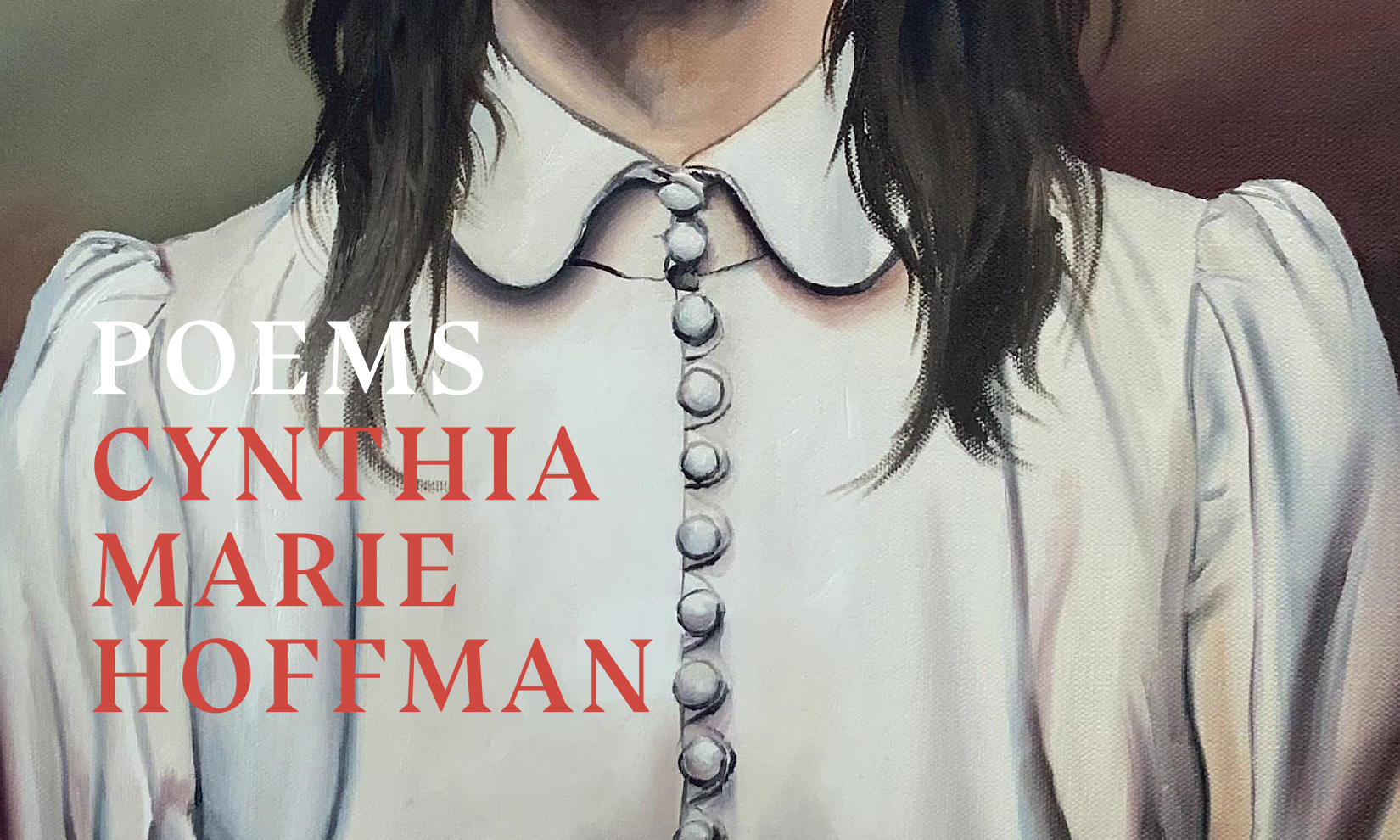
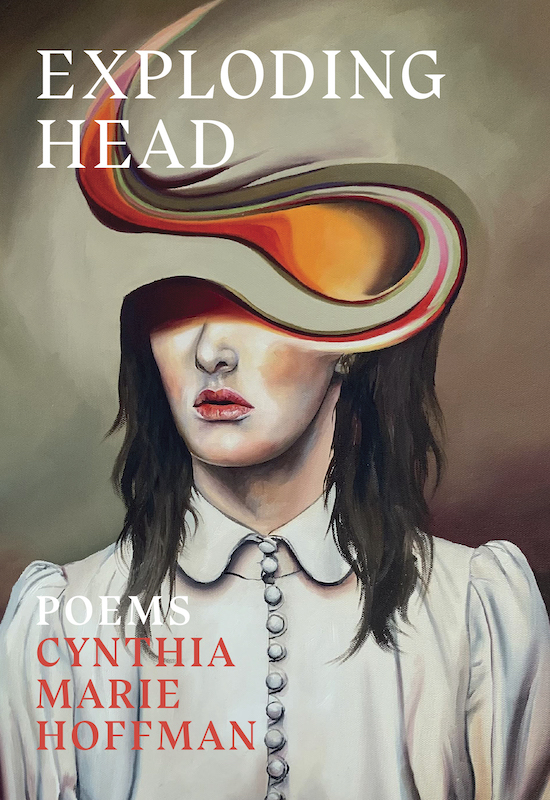
Electric Literature is pleased to reveal the cover for Cynthia Marie Hoffman‘s poetry collection, Exploding Head, which will be published by Persea Books in February 2024.Preorder the book here.
Cynthia Marie Hoffman’s vivid memoir-in-prose-poems, Exploding Head, chronicles a woman’s childhood onset and adult journey through obsessive-compulsive disorder (OCD), which manifests in fearful obsessions and counting compulsions that impact her relationship to motherhood, religion, and the larger world. Cynthia Marie Hoffman’s unsettling, image-rich poems chart the interior landscape of the obsessive mind. Along with an angel who haunts the poems’ speaker throughout her life, she navigates her fear of guns and accidents, fears for the safety of her child, and reckons with her own mortality, ultimately finding a path toward peace.
Here is the cover, designed by Dinah Fried.
Poet Cynthia Marie Hoffman: “The poems in Exploding Head are the most personal, raw, and vulnerable I’ve ever written. I knew I wanted a face on the cover of the book to kick-start the human connection I’m reaching toward in telling what has been, until recently, a very private, decades-long struggle with OCD.
Any person pictured on the cover of a book risks being interpreted as a representative stand-in for the main character, so it was important to find a female figure I could see myself in. I had to believe this figure had something unsettling churning behind her eyes.
I searched online for months. The images that appealed to me were troubling and sometimes off-putting, and when one such image sparked intensely visceral but opposite reactions in two of my trusted friends, I realized outside opinions were disrupting my ability to trust my own vision.
My Pinterest board filled up with surreal images of women whose heads were dissolving into blurs, streaks of color as if the wind had swept their thoughts away in a tangle of threads, or the tops of their skulls entirely disappeared. These images depicted how I felt when OCD ran off with my thoughts, what OCD has taken away.
Artist Sandra Boskamp is gifted in obscured portraiture. Her series have names like ‘Glitch,’ ‘Mindscapes,’ and ‘Undulating Figures.’ One image in her ‘Reclaimed by Nature’ series depicts a family of woodpeckers living in the holes they’ve pecked into a woman’s face and neck. Of course, Gabriel Fried, poetry editor at Persea Books, pointed out what I already knew: that spot-on violence was a step too far.
But Boskamp’s portrait ‘Rachel’ is the perfect combination of stability and disruption. The woman’s lips are parted, her posture upright as if she were simply sitting on a stool in the painter’s studio, posing for this portrait. Meanwhile, the top of her head is quite literally swirling into flame. There is violence in the reds and oranges. But there is also something so delicate, so masterful in the movement of that swirling flame. I am enticed by its beauty, by the woman’s ruddy complexion, by the way the negative space leads my gaze across the page from left to right, as if inviting me to open the book to my words waiting inside. Persea’s designer Dinah Fried created a masterful design, and her placement of the title Exploding Head in big, attention-grabbing letters complements the art without competing.”
Cover designer Dinah Fried of Small Stuff: “In most cases we resist the urge for a cover image to ‘say’ the same thing as the title itself, but in the case of this cover for Cynthia Marie Hoffman’s poetry collection, we embraced the repetition of title and image as a nod to the subject-matter. Together, the prominent title typography Exploding Head atop the painted portrait of a literal Exploding Head—expressed in this painting by Sandra Boskamp with swirling warm hues creeping off the top of the page—gesture at the relentlessness of the poet’s struggle with OCD throughout her life.”
In He’s Expecting, a 2022 six-episode Netflix drama, Kentaro Hiyama is a 37-year-old successful ad executive shocked to discover he’s one of a small percentage of cis men in Japan who have become pregnant. We watch him navigate some of the typical scenarios of a surprise pregnancy we’re used to seeing around women. He counts weeks to figure out who the mother is. He’s tired, nauseated, and unable to focus. At work, he’s quickly marginalized and left out, given work “anyone could do.” The project that was his idea is reassigned to his less talented and unpregnant male colleague. When he turns to the internet for advice on symptoms and worries, he’s talked to in the particular, patronizing, and bizarre communication style usually reserved for women (think “your little jumping bean” instead of “fetus”). Though, not bizarre, actually, if you want pregnant people to think what they’re doing isn’t serious or life-changing. Or if you want pregnant people to think they are people who should be talked to this way. “What’s with this lame design?” Kentaro says about a site called Pre-Mama Land. “Why do maternity products have such childish designs? The one who’s pregnant is an adult.”
I am very interested in empathetic pregnancy thought experiments, and have written many drafts of a novel in which I imagine a version of this, a man experiencing some of the sensations and effects of pregnancy and birth. I thought my interest lay in a safer exploration of how it felt for me. If a man is experiencing pregnancy, it’s at a distance, removed from me to the point of impossibility, and then I can examine it without fear. But in watching He’s Expecting I found myself also relating to the oppressor, thinking about pregnancy and birth as a miracle, and objectifying Kentaro’s pregnant body.
For me, pregnancy was lonely. I was the only passenger on an unstoppable train, destination 0-2 lives. Strangers’ smiles felt like hazing, my pregnancy cute and inconsequential to them. Even in rooms filled with other pregnant women, waiting rooms or birthing classes, we didn’t talk to each other. We were each on our own train with its own unknown destination. One of us arriving there alive with a living baby didn’t mean the same would happen for the rest of us. Maybe it even meant our chances went up for being the one something horrible happened to. People bought my future baby clothes, an assumption that felt dangerous. My husband wanted to have sex, of all things. Everyone around me drank alcohol and stood comfortably in the heat, while I felt temporarily removed from having any kind of shared experience.
Every one of us is here because someone gave birth. There’s something comforting about that idea.
In talking to my friend about this essay, she thought it was interesting that a pregnant person would feel more lonely than usual when there’s actually another person inside their body. It does seem paradoxical. Once, before I was ever pregnant, I visited my pregnant friend and asked, when she was alone in a room, did she feel like she was alone? She thought for a minute, maybe reflecting on the way she felt when she was alone, maybe wondering if it meant she didn’t have a deep enough connection to her fetus if she said yes. Yes, she said. She felt alone.
Maybe you feel alone, even when you can feel the baby moving and imagine a future together, because you’re facing something very much like death, if not actual death. One of my friends described herself laboring with her mother’s help. She said, perched over the toilet in the hospital room, she couldn’t do it and she wanted to stop. Her mom told her what you have to tell someone in this situation: the only way out was through, and no one could do it but her. There is an element of sacrifice in birth, one that if you wanted to be pregnant, you’re probably willing to make: a sacrifice of the way your body used to be, the way you spend your time, the way you use your mind, your sense of self, and sometimes, your actual life. I wanted to be pregnant both times, but I still resented the excitement of my community members for the arrival of the baby. I needed them. I needed them to support me, monitor me, sew me back together, to love the baby once they arrived, and also to consider how different the stakes were for me and for them.
Yes, birth is a tenuous tightrope between life and death, one I longed so badly for the people around me to acknowledge. After having a second hemorrhage outside the “window where it’s common” (the first 24 hours), I asked to talk to a doctor before being discharged and cornered her with unanswerable questions: Will it happen again? What are the signs to look out for that it will happen again? If it happens again, will I be able to get to the hospital before I die? With each question, she almost imperceptibly moved backwards away from my bed, finally shouting, “Childbirth is extremely dangerous!” And it was in this fleeting moment of honesty that I felt safe, that one other person and I understood each other.
A micromort is a unit of measurement defined by a one-in-a-million chance of death. Giving birth carries a risk of 120 micromorts vaginally. Birth by C-section is 170 micromorts, which is how the cis men in He’s Expecting give birth. If these numbers represent all births, they will be much higher when considering only Black mothers and much lower when considering mothers of other races, the lowest for white mothers. For anyone, they’re in a range much, much greater than skydiving (8), paragliding (74), and scuba diving (10), all things I would never do. And for a baby, simply living their first day of life is 430 micromorts, the same risk as base jumping.
At work, he’s quickly marginalized, given work ‘anyone could do.’ His project reassigned to his less talented and unpregnant male colleague.
When Kentaro vocalizes doubts to his boss about giving birth, he says, “I’m not sure I can actually do it.” His boss says, “You’ll be fine. Women get pregnant and give birth all the time. You’ll nail it.” I remember people telling me these exact words. Every one of us is here because someone gave birth. There’s something comforting about that idea. Everyone. The evidence of survival is everything you see around you. You can hide safely in these vast and real numbers. Billions. There’s something dismissive about it, too. You’ll nail it. You got this. What are the micromorts for other activities you might say that about. Giving a presentation? Scoring a goal? Jumping into a body of water? Kentaro’s boss gives him a supportive pat on the shoulder and catches up with another colleague leaving Kentaro standing alone in the hallway, gaze downward, hand on his stomach.
It’s not difficult to find Kentaro Hiyama attractive. He’s shaggy-haired, confident, and talented. Takumi Saito, the actor who plays Kentaro, is, among other things, a model. But it was when the character became pregnant that I was really drawn to him. His pregnant body, yes, was surprising and beautiful, but it was his singular, private experience that I found so alluring. He’s preoccupied, both inward- and outward-looking, and in both cases, concerned with something bigger than himself. That experience changes a person’s way of existing and relating to others. It changes the expression on their face. They’re not thinking about you. They’re not thinking about anything you’re thinking about.
When I think back on crushes I’ve had, part of the longing was longing for knowledge I couldn’t have: what was it like to be them? What music do you hear walking around Berlin nights in the ’80s? How humid is it when you visit your grandparents in Hunan Provence in July? These are experiences you can try to describe. You can try to close the gap between two bodies by one person saying, “You walk around crushed by disappointment that a girl you wanted to take out canceled your date and then you hear ‘Metropolis’ by Schwefel coming from a window.” Or, “You can tell your grandparents are disappointed that you didn’t have the correct expression on your face when their friend asked you a question.” And the other person can imagine feeling that way. What would those feelings feel like in me? If I can approximate, I can get closer to them.
After someone has been pregnant, they have another person’s DNA in their body forever. They contain actual multitudes.
The experience of pregnancy is paradoxically even more singular and isolating. Your experience is both marginalized by and mingled with someone else’s as you temporarily share a body. A compounding of two singular experiences, a quadrupling of impact like a head-on collision. You can say “my dreams are crazy, I can smell things miles away, I can’t lift my legs to put my own pants on, I’m treated differently by everyone around me, I’m worried about my job, I’m wondering when the last time I felt the baby move was,” but how do you describe the feeling of being cellularly connected to someone? Of sharing blood, fluid, calories, and chemicals?
For each pregnancy a person has, born or unborn, fetal microchimerism can occur, in which cells from the fetus are moved around the pregnant parent’s body and harbored in the tissues of different organs. Fetal cells can remain in the parent who carried them for decades, even until the end of life, and the cells are often credited with regrowth and repair of the organs they reside in. After someone has been pregnant, they have another person’s DNA in their body forever. They contain actual multitudes, unknowable even to themselves.
During both my pregnancies, my doctor asked what form of birth control I planned to use after delivery, and I said not to worry, I was never going to have sex again. The joke was unrealistic, but not untrue to my desires, in a state of loneliness nothing, especially sex, could remedy. I sometimes found it monstrous that my husband could be in such a wildly different emotional and mental state, to want to have sex when I was terrified, physically uncomfortable, and bearing the burden of keeping our baby safe all alone. Sex, I reminded everyone, was what got us into this mess in the first place. But maybe it’s that very state of loneliness and inaccessibility that makes pregnant people so attractive.
Aki, the mother of Kentaro’s child, is tall and thin with short hair. Perhaps the actress, Ueno Juri, was cast for her boyishness. She’s described as boyish on IMDB, even before her name appears. Her character is a freelance writer and photographer overloaded with work. She’s casual about her relationship with Kentaro, letting him come over or not as their busy schedules allow. When he tells her he’s pregnant she asks the familiar line we hear from men in this position, are you sure it’s mine?
When Kentaro asks Aki to sign an abortion consent form, she stalls, wondering aloud if the pregnancy is a blessing. She could have a baby without having to give birth, she says. Maybe it could even lead to new job opportunities for him as an ad man. Maybe, she says, it’s actually a huge stroke of luck. Kentaro listens a little resentfully and says, “Look, Aki. I’m actually pregnant.” “I get it,” she says. “You don’t,” he says. “I feel queasy all day. My boss is watching me. It’s already destroying my life. Don’t joke with me.” She apologizes and says she agrees they won’t have the baby. Kentaro says, “It’s not just about agreeing. Don’t make it sound so easy. I have to harm my body for an abortion. I’m the one who bears the risk whether it’s childbirth or an abortion.”
Recently, two friends, independently, told me I needed to deal with my anger. Two spontaneous interventions.
Clichés are useful when the show tries to show a flipping of tired male and female gender roles. The characters themselves often comment on it. Kentaro tells Aki she sounds “Just like one of those guys,” when Aki is dismissive about the effect pregnancy is having on Kentaro’s body. But the way I related to both Kentaro and Aki revealed to me that I am already embodying both the pregnant and the impregnator. My friend told me, “You’re already bought into the hegemony. Otherwise, you wouldn’t have had a second kid.”
Since having kids, I’ve had a constant, generalized hum of anger in the background of my days. Part of it is likely a reaction to some of the life-threatening experiences I had with my second birth. But part of it isn’t. I’ve had a hard time separating the lonely, dangerous experience of pregnancy from the institutions of heterosexual marriage and sex. Even as the country removes the right to healthcare for women and more and more states make abortion illegal, I know I am a white woman with enough money to have an abortion. I live in a state where abortion is legal and protected. I’m not presently at risk of forced birth except by myself. But I don’t want to have another baby or an abortion. I don’t want either. And to exist in a heterosexual marriage feels acutely dangerous to me in a way it is not to my husband.
Recently, two friends—independently—told me I needed to deal with my anger. Two spontaneous interventions. In an effort to help, they asked me questions: Am I gay? My friend who is gay reflected that she, too, had a lot of generalized anger before she came out. If I were independently wealthy, had so much money that all my possible needs were met, and had a ton of exciting and rewarding friendships, would I want to have sex with men? If my husband were pregnant, would I want to have sex with him? Would I want to impregnate my husband?
Imagining my husband pregnant is like imagining the United States without police. Impossible at first; I could feel my mind trying to change shape around this fundamental shift in reality, realizing all the features of our world, no matter how minor and unrelated they seemed, would be totally different, too. And then I couldn’t stop thinking about it, how much more sense everything made in a world like this. If childbearing were shared across genders, can you imagine it? Can you really imagine it? Men faced with the decision of whether or not to abort their own pregnancy. Men deciding on the right balance between breastfeeding and the independence they need for their mental health. Feeling guilty if they quit. Pumping in parking garages and designated conference rooms. Men stigmatized for needing government assistance for single dads. Men proudly telling their friends how quickly they got back down to their pre-pregnancy weight. Fathers talked to the way we talk to mothers. Fathers thinking about themselves the way mothers think about themselves.
He’s Expecting kind of tries to imagine it, but not in good faith. When the show could do anything, it still makes light of pregnancy, and particularly of a man being pregnant. Even while satirizing the Pre-Mama Lands of the world, it doubles down on the same style of infantilizing pregnant people and making the experience funny or inconsequential. When a doctor tells Kentaro he’s pregnant, he buys pregnancy tests to confirm. Women on the street giggle at him when they see he’s bought pregnancy tests and he walks away in an unnecessary, hip-swinging way, a feminine way, we’re supposed to understand, accompanied by playful music—though I’m not sure I’ve ever seen a woman walk like that. And why is it funny for a “man” to walk like a “woman?” Have you ever asked someone, after they tell a racist joke, why it’s funny? They don’t know. Why is it relieving to vocalize stereotypes and have other people laugh, acknowledging that they are aware of them, too. What do we do to ourselves when we laugh at the dehumanization of others?
Yes, I would want to have so much sex with my pregnant husband. I would feel so sorry for him and scared for him. I wouldn’t be able to stop touching him. I wouldn’t be able to stand not being able to help. Was his desire fueled by guilt? I would have felt less lonely if it had been, if we had had the same understanding of my experience in relation to his.
Would I want to impregnate him? Absolutely not. Even if he wanted me to, it’s too violent. Am I angry at him for doing to me an act so violent I couldn’t possibly commit it? Or could I?
How can you make a risky decision if the language used to describe it is purposefully and sinisterly playful, patronizing, and reductive?
In a scene where Aki and her friend discuss the pregnancy, her friend says, “It’s a pretty great time to be alive where men can give birth. I mean, being pregnant is tough. Nausea and headaches for months. People nagging you constantly until it’s born, like, ‘Don’t eat this, move that, go for a walk.’ You can’t drink or eat raw stuff. And to top it all off, the hellish pain of labor is waiting for you at the end. If a man did all that for me, I’d be over the moon.”
I would also be over the moon. Maybe I would impregnate my husband and make the consensual decision together, the same one we made for me, that we were willing to risk his and a future baby’s life for the chance at having one. Maybe I’m mad at his willingness to do that to me, and at my willingness to do that to him. Maybe I’m mad at life and death and fear and pain.
What can be helped are the Pre-Mama Lands who call this state, the delicate line between two lives and zero, a bun in the oven. Framing things in this way matters to the way society treats pregnancy, pregnant people, and the dangerous and life-changing process of birth. It matters to the way people think about themselves, their own worth, and what they want. How can you make a decision 15 times riskier than jumping out of a plane if the language used to describe it is purposefully and sinisterly playful, patronizing, and reductive?
Pregnancy is so much scarier than jumping out of a plane. It can (and usually does) happen by accident. It can happen by force. It can only happen to one group of people. And as soon as it happens, your human rights change. I wanted to have kids, I just wanted people to talk honestly, to me, about what it meant. Maybe what I wanted everyone to say instead of you’ll nail it, is, good luck. I love you. This might be the last thing you ever do.
You would think that with all the TV shows and books set in schools, people would have a pretty good idea of what happens in them on a day-to-day basis. But school stories are more often stories set in schools than they are about school. Stories that show the actual work of teaching and learning remain frustratingly few and far between. Quinta Brunson’s Abbott Elementary is a true delight, but that show’s realistic depiction of teaching is the exception that proves the rule.
When I first started writing my memoir-in-poems Dispatches from Frontier Schools, I was desperate to find a way to explain why teaching was so hard in a way people would understand. No matter how I told the stories about my work, my friends and family didn’t get it. They would tell me to quit, as if that didn’t mean leaving behind people I loved. They would tell me to just stop trying so hard, as if that didn’t mean purposely underserving other people’s children. They would praise me like I was saint, as if I hadn’t recently lost my temper, slammed a door, and hung my head in shame during my prep period. So, I started writing the stories as poems, the kinds of poems my husband described as “pain cries” and “cries for help.”
Heartbreakingly, the culture war over schooling continues unabated. Increasingly, my memoir-in-poems feels less like one teacher’s story and more like part of a larger, necessary project to humanize the people inside our school system. Teachers are feeling prettyembattled, and anti-teacher sentiment flows freely. But people consistently rank their own communities’ schools and teachers higher than they rank the nation’s schools as a whole. And I wonder if that is simply because they know the teachers in their community schools—can recognize them as people.
In that spirit, I offer these ten books, then, as part of that larger project of humanization. They portray educators with nuance, demystifying the job and demonstrating that it is a deeply human endeavor.
From the emotional-support Nalgene bottle and handouts hot from the photocopier to the student who knocks on the door the moment a teacher settles in to get her grading done, Minor Dramas and Other Catastrophes nails the details of teachers’ daily lives. I was hardly surprised to learn that author Kathleen West is a veteran teacher. The novel tells the story of how Isobel Johnson, an English teacher with a social justice mission, and Julia Abbott, a theatre mom who simply cannot keep her nose out of her kid’s life, both find themselves targets in the gossipy, politicking world of a high-achieving, suburban school district. Both Isobel and Julia make mistakes—some of them quite disastrous—but the story makes clear that their aim is always what is best for the kids.
My mom hassled me for—years!—to read this book, and I refused, thinking it was another one of those stories where the (white) teacher in an urban (Black and/or Hispanic) school is a conquering hero who saves her students from a life of poverty. But Up the Down Staircase refuses to bestow sainthood on its main character, rookie teacher Sylvia Barrett. (Also, it is set in New York City in the 1960s, before New York City public schools became majority-minority.) The novel tells the story of Miss Barrett’s first semester in the New York City Department of Education through the reams of notes, memos, notebook pages, school assignments, and student feedback forms that land daily in the trash can. Though satirical in its send up of the DOE’s dysfunction, the story holds on to its heart by showing its characters failing as often as they succeed, highlighting the Sisyphean task of teaching in a broken system. Most delightfully to me, the book also foregrounds what it feels like to be a human with a body in a classroom, from the teenagers struggling with their self-images to Ms. Barrett’s undeniable beauty.
Tom Perrotta understands how even seemingly small-stakes contests—like the titular election in Election and adult Tracy Flick’s quest to become principal in Tracy Flick Can’t Win—can feel like life and death endeavors. The schools in both of these novels capture the ephemeral alliances between teachers and students that can provide a life raft in trying times—or, when they turn sour, weigh you down like an anchor. The schools in Perrotta’s universe remind us that schools don’t always recognize the efforts of those who work hardest. And the problems Tracy Flick encounters, first as a student and later as an aspiring principal, demonstrate how petty politics can get in the way of even the most determined overachiever.
The Most Precious Substance on Earth charts the protagonist Nina’s journey from high school student to high school teacher. The book reflects the fraught power dynamics between students and teachers, beginning with Nina’s statutory rape at the hands of the teacher she has a crush on and culminating in her realization that her fear of being a bad teacher herself is just too much to bear. On an internet date, Nina explains teaching like this:
[I]n the classroom, you have to be teaching, of course, and doing teacherly tasks like handing out photocopies and telling people to stop talking, but you also have to be constantly aware of how fragile your students are. Sometimes it’s almost a high, and then other times it like being an air traffic controller—just…too much.
And I feel that in my heart, the way teaching is high-wire act of professionalism and personal connection that you are almost destined to screw up.
Saul and Patsy is the story of how Saul and Patsy get married, move to a small town where Saul becomes a high school teacher, and have a baby. Saul never seems to have too many papers to grade or too many lessons to plan—in fact his life is nothing like a teacher’s life! But I forgive Charles Baxter and this book for what it gets wrong about teaching because what itgets right is the way students haunt teachers—especially the students who seem unreachable. Much like Nina in The Most Precious Substance on Earth, Saul cannot shake his responsibility to his students. Gordy, one of Saul’s struggling students, takes to standing in Saul’s yard for hours a day to torment him. Gordy is a phantasmic figure, and his looming presence causes Saul—and Patsy—to fray at the edges. The violence Gordy inflicts on himself and those around him is a heartbreaking reminder of how we disinvest in education at the risk of the whole community.
I read the short story collection The Classroom in the early days of the coronavirus pandemic, missing my students and crying at how the fantastical and surreal short stories capture the weird alchemy of a classroom. In “The Floating Away School,” an elementary school literally floats away, to everyone’s delight. But weeks pass and the teacher eventually encourages all the students to jump to safety, staying behind to make sure they make it out safely. In “All of the Infinite Possibilities,” a substitute teacher takes his students on a field trip in his time machine, dazzling and endangering them all at once. And in “The 41st Bee,” a young teacher finds herself struggling to teach a new student—if you can a swarm of bees a singular student. Even in such fantastic situations, the teachers in this collection approach their jobs with heart and humility.
Dana Goldsteinwas a New York Times educator reporter for fifteen years, and reading her history of the teaching profession, The Teacher Wars, is like uncovering the source code for every fight over teachers and public education I have lived through as an educator. Though the book is almost ten years old, Goldstein’s thesis easily captures the state of education today: the fights we have about teaching and public education now are variations on the fights we’ve had for the past one hundred and fifty years. Goldstein compellingly digs up the roots of our debates over whether teachers are nurturers or academics, whether they should teach for the love of it or for the money, and what exactly we should teach our children and why. The Teacher Wars shows a possible path out of those wars, one where we understand teaching in all its complexity and thus don’t fall for the easy binaries culture warriors insist on.
Noliwe Rooks’s Cutting School: The Segronomics of American Education, analyzes the history of American schools through the twin lenses of race and class. Rooks argues that the project of equality depends on good public schools and that the United States has a dismal history of guaranteeing good schools to all its children. She traces American schooling from the post-Reconstruction period through Brown v. Board of Education and to the school choice movement of today to demonstrate how our school system remains stubbornly separate and unequal. Further, Rooks argues, failing schools are good business because they facilitate the transfer of wealth from the students who most need investment into the hands of private businesses who rarely deliver on the educational promises they offer (see: charter schools and vouchers, for two current examples). Cutting School helps explain why a single good teacher—or even a school full of good teachers—is not enough to fix our nation’s public schools, moving the policy focus away from individuals and to the broader system in which they struggle.
I end this list with a recent book that does basically everything I have been longing to see: an honest accounting of everything it takes to teach. In The Teachers, journalist Alexandra Robbins follows three dedicated and effective teachers for a year and supplements their stories with thoroughly reported and researched analysis of the issues teachers face, from incompetent administrators to politically motivated school boards, from struggling students to struggling coworkers. The result is a dizzying portrait that makes clear the enormous sacrifices, both monetary and emotional, teachers make in order to serve the students and communities they love. Perhaps what I love most about this book is that is never quite dips into the teacher-as-saint narrative. Even as the three teachers we follow are heroic, they make mistakes and struggle with their own failings—and some of the educators who surround them are downright awful. In other words, The Teachers both illustrates what is unique about teaching and how it is just a job like any other, filled with challenges and staffed by people both excellent and mediocre.
Two mathematicians but they are more friends than colleagues. The older of the two, Henry, teaches to graduate students in Tokyo while Liam, fifteen years his junior, works as a consultant for a private contractor in Madison. Liam makes fun of Henry because his name pentadecimally has more letters than his in correlation with the gap in their ages, but no one but them finds it funny. The two have been sending each other letters every month for the past eighteen years, on the days or weeks of the calendar marked with a prime number as another inside joke.
What did the triangle tell the circle? Henry asks Liam in his last letter before Christmas, postmarked on the twenty-third day of the month.
What? Liam asks in his reply.
You’re pointless, Henry writes back two weeks later.
They have a tradition where they send a pen nib back and forth as part of their snail mail correspondence, to be used for when someone important in their field passes away. The rule is that whoever is in possession of the nib on the day of the news should write a few words after the deceased and reserve a memorial spot in either The Times or The Tribune, the only two international papers distributed to where each lives. They’ve only made use of the nib six times in eighteen years, the last dedicated to Henry’s professor from his doctorate, who had lent him the nib in the first place. As the recipient of the nib, Henry wrote a numerically melodic eulogy for the man, showing his gratitude and appreciation in iambic pentameter. When he later tried to describe the experience to Liam, he used such quaint words as exultant and qualmish, the kind of feelings only the people past a certain age like him would feel.
In one of his more recent letters to Liam, Henry writes, What’s one word that starts with an E and ends with an E and only has one letter in between?
Liam replies: Envelope. He knows this thanks to the video his son shared on Twitter a few months back, which is also probably where Henry saw it.
Two months later, following their longest lapse in communication, Henry asks again in another letter: What’s one word that starts with an E and ends with an E and only has one letter in between?
Envelope, Liam writes at first but then, keeping in mind his friend’s declining health, replaces his paper with new stationery to ask him, What?
You’re pointless, Henry replies.
The next morning, before Liam can make it to the post office, he receives a phone call from Henry’s stepdaughter in Tokyo. Her father has passed away in his sleep.
“Toward the end, he started naming his friends after the months they died in,” she tells him. “So I guess you can start calling him August from now on.”
Today, it’s Liam’s turn to feel qualmish. He feels as if his past and present are drifting apart in front of his eyes like the continents that have separated them for all these years. As Henry used to complain, numbers defined an invariable order of things, dictating in an industrial precision what came before and what came after, unlike people; with people, he would say, it was all so random, the young going before the old, the big turning small. It pulls him from both edges like the tug-of-war that’s been happening inside him since losing his younger brother as a kid to the sea.
That morning, the nib in his possession, Liam’s mind cooks with possibilities. These days, the nib is chewed on its back end, showing all the wear and tear of its travels. Following the advice he gives to clients, he waits for the right moment, which happens on the seventh day of the month. It’s one of the sparkly ones, as Henry used to call them, a sensation he hasn’t felt in so long, most definitely not after he took up this stupid job. He sits at his desk looking out to the sea and goes through all 206 letters Henry has sent him over the years. He makes a list of all the jokes his friend made, both good and bad. He cuts parts from each joke and stitches them together with some others that have irregularly stretched out over two decades of long-distance friendship. He shuffles them as if they are variables of a formula whose outcome is yet unknown.
On the seventeenth day of the next month, the opening line of Henry’s memorial in The Times reads, What does the triangle say to a word that starts with an E and ends with an E and has one daughter in between?
On the same day, Henry’s memorial in The Tribune opens with: What does a heartbroken circle tell August?
Liam runs the memorials every week, each time with a newly pastiched joke. To his surprise, some people write back to him—and sometimes, thanks to the irony of fate, on prime number days. It’s not only colleagues who get in touch with him but also underappreciated kids, underpaid husbands, and undervoiced housewives from around the world. Sometimes, they confuse the jokes and accidentally generate new ones between their lines, which makes the outcome even more interesting for Liam.
We need new words, reads the letter of a high-school teacher from Leeds, where Liam’s mother was from.
An infinite amount of them, Liam writes back. Not unlike numbers if you ask me.
Months later, the day before Henry’s first anniversary, Liam pens a new joke to his old friend and slides the nib into the envelope. He writes Henry’s address in Tokyo on the flip side and tosses the letter in the mailbox, hoping one day it will be his turn again.
Banana Republic. No, not the clothing store. The term is more insidious than cotton slacks and button downs. In the 20th century, the phenomenon known as the “Banana Republic” originated from a white, American man’s imagination to describe a country with a monocrop economy, ruled by a small, powerful elite, and prone to political turmoil, easily overthrown governments, and above all, a habit of U.S. intervention. The banana—that delicious, golden fruit—started it all; the United Fruit Company—known today as Chiquita—bent entire nations to its will for produce and profits.
This reading list comes from those who survived banana plantations owned by the UFC, those who organized against it, who wrote with unflinching truth of its exploitative nature, squalid living conditions, and political meddling on local and national levels. The banana reigned supreme, and these authors sought to attack its influence, not with machetes like their countrymen, but with the pen. Their literary tradition, known as Social Realism, follows the lives of the lower classes and exposes the greater machinery that manipulates and subjugates their lives.
My debut novel Where There Was Fire deals a lot with bananas, more specifically, the American Fruit Company, a fictional amalgamation of United Fruit and the Standard Fruit Company (known today as Dole), and its use of an infamous pesticide by the name of Nemagon. While I’d visited banana plantations before to watch men throw bushels into piles and donkeys haul them to mills, the novels on this reading list provided me with an intimate, painful look into what really had happened on these same plantations decades before. What the United States sowed, and the sweet, toxic fruit indentured Latin Americans reaped.
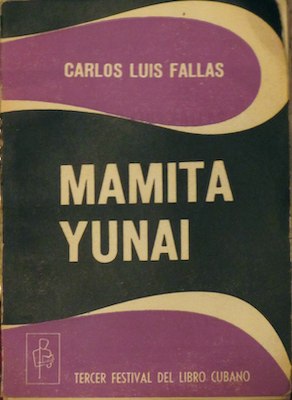
Mamita Yunai by Carlos Luís Fallas
Carlos Luís Fallas (known affectionately as Calufa) is arguably Costa Rica’s most famous writer, and his 1941 novel Mamita Yunai Costa Rica’s greatest literary export. While any other day, Mamita is a term of endearment in Costa Rica, Mamita [United Fruit Company] is used ironically, and sets the tone for the novel’s hyper-realistic depiction of life on the UFC’s plantations—disease and squalor, salaries spent on services provided by the company, men smashed by falling trees, and chopped to bit by machetes. The protagonist, a peasant union activist, confronts firsthand the impossibility of escape from the hellish shade of banana trees.
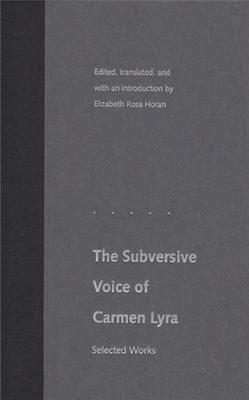
Bananas and Men by Carmen Lyra
“I put ‘Bananas’ first,'” Carmen Lyra’s epigraph reads, “because on the banana plantations, the fruit comes first, or, in fact, it is of singular importance… Man is an entity that has none.”
Carmen Lyra was the cofounder of Costa Rica’s Communist party, and her 1931 short story collection, Bananas and Men, tackles a myriad of social nuances and consequences on the banana plantations. While this book inspired Calufa’s Mamita Yunai, Lyra’s feminist tales begin with a woman’s illegible name written on a black, wooden cross buried on a beach, sea eaten. Lyra’s narrative documents the injustices women faced on these plantations—exploitation, disease, rape, abuse—and courageously condemns the Company and machismo beyond its plantations’ borders.
Skillfully buried below the yellow butterflies, discovery of ice, and Remedios the Beauty ascending to heaven, is a searing reproach of the UFC, namely, the Colombian Banana Massacre of 1928. In the fantastical prose of One Hundred Years of Solitude, three thousand men, women and children, protesting the squalid working conditions on the Company’s banana plantations, arrive and organize in the town square to negotiate with a government official. What greets them is military gunfire from every angle, and all but one is left dead, their bodies piled onto trains and tossed into the sea. While exaggerated in the novel, the real-life version is not too far off, and no less horrifying.
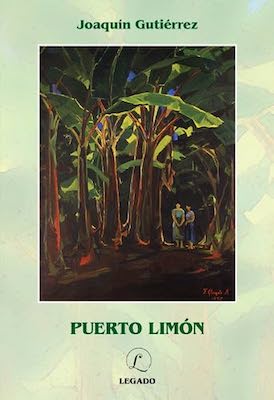
Puerto Limón by Joaquín Guitérrez
In 1950, a renowned Costa Rican literary critic exclaimed that Puerto Limón was Costa Rica’s finest novel, even if most of its population had never even heard of it. Originally published in Chile, the novel follows a young high school graduate named Silvano who relocates to work on his uncle’s banana plantation in the countryside, amid rising labor tensions between the government, labor syndicates, the UFC, and independent landowners. What follows is a deeply human internal struggle within a young man who loves his uncle but empathizes with the workers fighting for sanitary working conditions. A cast of characters accompanies Silvano, and its climax is a breathtaking scene of his uncle and union busters careening their car into a river, finally setting Silvano free and sets his eyes on the sea.
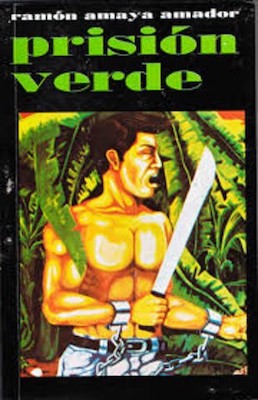
Green Prison by Ramón Amaya Amador
Like the other Social Realist writers on this list, Ramón Amaya Amador lived and worked as a pesticide sprayer on banana plantations, but his writing deals with the Standard Fruit Company in Honduras. Prisión Verde takes place in 1940s Honduras, where a military dictator protects the exploitative fruit companies to gain their favor by destroying labor strikes and assassinating workers. After publication, Amaya Amador was forced to flee Honduras, and Prisión Verde was banned; reading it could land you in jail, and for many years, those who mentioned it would have to do so in a whisper.
Strong Wind by Miguel Ángel Asturias
Starting off Asturias’s Banana Trilogy is Vientos Fuertes, a literal whirlwind of a novel. Local banana producers are undercut, short changed, and blown off by the fictional company Tropical Fruit, Inc., simply because it can—as their only buyer, the Company toys with these Guatemalan farmers, just as it did in real life, dropping prices, and if angered, leaving their fruit to rot. Initially aided by a white American who is secretly a stock owner of Tropical Fruit, Inc., the farmers are saved by a Native ritual that summons a literal cyclone that rips Tropical Fruit, Inc. plantations from the map.
The Green Pope by Miguel Ángel Asturias
The sophomore installment of Asturias’s Banana Trilogy, El papa verde tackles the fruit companies from the inside, or rather, from the top. Its anti-hero, George Maker Thompson, is a ruthless money-maker dealing in bananas in Central America. With so much power given to him by greed and the fruit, he christens himself as the Green Pope. He wishes for the annexation of Guatemala by the United States, fends off rival fruit companies, and pulls out every dastardly deed in the book to become president of the Company. With such caricature of a protagonist and a melodramatic plot, the novel carries the tone of a biting political cartoon and the mastery of Asturias’s prose.
Los ojos de los enterrados leaves off right where The Green Pope stopped—George Maker Thompson is still a powerful plutocrat, though he’s dying from throat cancer. Tropical Fruit, Inc. has become a behemoth, manipulating governments, economies, and people with the sticky dexterity of an octopus’s tentacles. Two “good gringos” ally themselves with Native laborers to fight against the influence of Tropical Fruit and its Green Pope, who plans to section off a swath of Central America as a “green zone”, where American culture and the dollar reign supreme with the help of the almighty banana. Asturias’s final installment of the Banana Trilogy is a rewarding, volcanic rollercoaster ride.
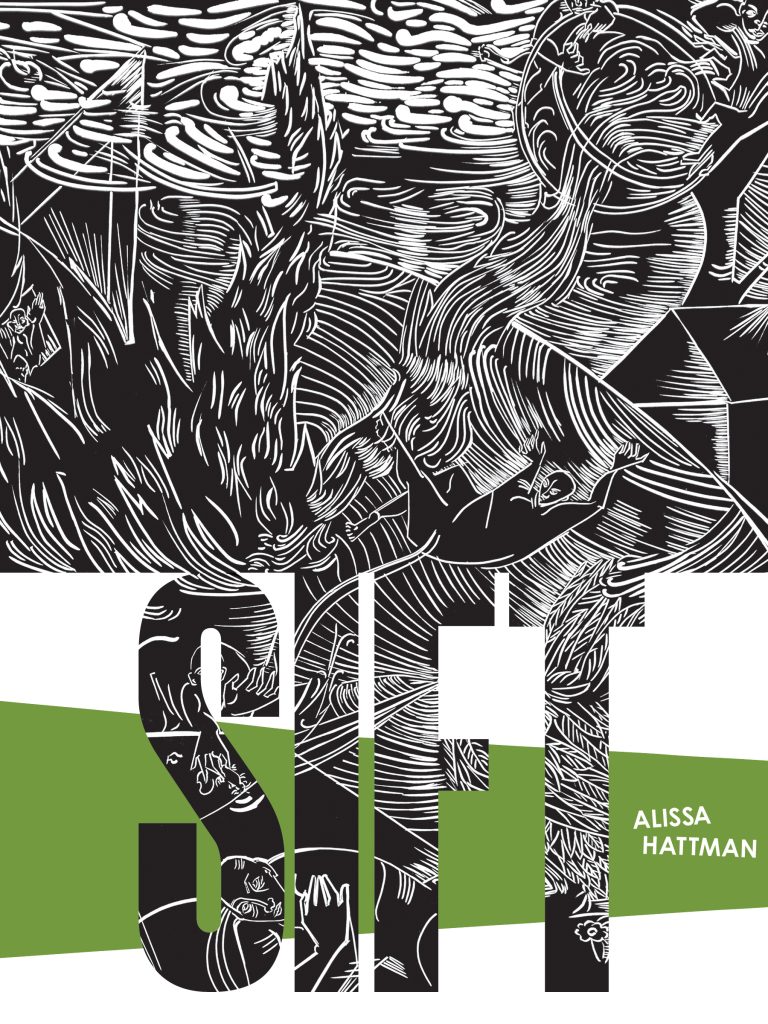
In Alissa Hattman’s debut novel Sift, the world, at first, appears hostile to life, nearly uninhabitable. Skies darken with toxins and smoke. Food, especially produce, is scarce. Drinking water is limited, a result of rivers and other natural bodies that have been poisoned. Fires rage and a tenor of violence hums at the edges of the story.
From this bleak landscape comes a story that unfurls like a new frond: green, bright, and tender. In the opening pages, the narrator, yet unnamed, is picked up by a woman she describes as “the only person I’d met who had learned how to keep living.” As the two travel across a dying landscape in the hope of finding some tangible relief, they begin to better understand not only one another, but themselves, the world around them, and the larger web of history that they are a part of.
Hattman’s prose is lyric, brimming with the pleasing sounds of a poem, and the novel is told in a series of sharp, sparse vignettes that feature not only the human perspectives of the narrator and her newfound travel companion, The Driver, but also includes segments exclusively focused on pond snails, the western banded gecko, wild mustard, and more. Reading Sift encouraged me to think about what it means to listen to the narratives of flora, fauna, and other elements in our world, and just how possible it is to translate that into language; what it means to care for another being or entity, and the cost that sometimes comes with our attempts to care; and how to grieve while also holding on to hope. I had the opportunity to speak with Hattman about all of this, and more, via Zoom.
Jacqueline Alnes: Your book opens with a quote from Robin Wall Kimmerer’s Gathering Moss, in which she writes: “From Tetraphis, I began to understand how to learn differently, to let the mosses tell their story, rather than wring it from them.”
I love the way that your book is a human story but also includes lyric sections that are focused on elements in the natural world. What does it look like when we let the environment speak to us rather than us imposing a story on it?
Alissa Hattman: With that epigraph, I was trying to be intentional in this process of gesturing toward the stories outside the human-driven story of the two main characters. I wanted to include more of the environmental elements within their own stories. It can be a hard thing to do because you don’t want to talk for the non-human other, but I approached it as a deep listening. I tried to remove any of the pronouns and any of this sense of subject or agency and see what could surface from that.
JA: In terms of that deep listening, this story seems to be so much about bearing witness: to environmental collapse, and to moments of joy—which aren’t very frequent in this story. You write, “Observing is one way to go on” and “I knew the act of writing would help it stay in my head.” There’s this recurring theme of wanting to remember. For you, does this book represent the importance of all of us bearing witness to what is currently going on in our world or the idea of putting that into language?
Storyteling helps us emotionally to engage with this very difficult topic of climate change or systemic racism.
AH: I do think this deep attention and witnessing can be a type of understanding, and then maybe also resistance in some cases. Paying attention to the environment, the long history of the land, another person’s grief, all of this is a type of repair, a type of listening that I think is very important. Grieving humanity or some of what we’ve lost, like species or the degradation of the land, is a larger witnessing. It can lead to action as well. If there is that type of listening that becomes more relational and becomes more understanding of a larger history, then I think it moves people to change and to act.
JA: It reminded me a little of when Trump was elected and people were keeping track of his tweets. It felt like something to do. It felt powerful at first but then, as it went on, it felt like an insurmountable wall of horrors. In your novel, there is this accumulation of grief—for humans, for air, for water, the internal landscapes of the characters. Did writing during a time of collective grief and unrest inform how you approached this subject?
AH: I started writing Sift at the beginning of the pandemic. It began with a deep fear of loss, which was something that was individual, this fear of losing loved ones, at first, but then it became so much larger. It became an anticipatory grief, of realizing how large and overwhelming it would get. There was so much happening alongside the pandemic. The pandemic is related to climate change. In Oregon, we had fires and then ice storms, increased air pollution, poverty, displacement, environmental racism, redlining, all these things were happening and coming to a head. The larger loss was an environmental grieving, grieving not only this moment but what came before as well.
In terms of what that means for Sift, I knew that I was going to write something that was going to encompass this heavy material, these traumatic moments. I wanted it to be in a way that felt the narrative was calm and safe as well, so there was a sense of yes, this is all happening, and we have community and connection, even if that connection is only one other person or even if that connection is with some aspect of the environment. It was originally just something I felt like I needed to write in this moment to go on but I was thinking about how to create a work that allows us to enter into that space that so many people feel overwhelmed by. I don’t know if it succeeds, but that was the plan when I started. I wanted to thread in love, community, friendship, and a certain amount of safety.
JA: While reading, I got this sense of interconnectedness, which is so beautiful but also means that when one thing starts to falter, everything does. It’s hard to reckon at any moment with how connected we are to the environment and other people.
AH: This quote from Hannah Arendt, “Storytelling reveals meaning without committing the error of defining it,” gets at this idea of being able to place a lot of these intersections together into story and some meaning will come of it. This is one of the great tools that we have as storytellers and novelists, to express a moment in some amount of clarity so that a number of people can take away intersections from that moment, something that will be meaningful to them. Storytelling is a place where repair can happen.
I think about holding some of those histories, social and environmental collapse, as being a rupture; holding and witnessing and discussing outside of the story is a type of repair. Not in a sense that it will fix everything, but that it emotionally helps us to engage with this very difficult topic of climate change or systemic racism. I think about how story is many-faceted in that way. Even though it might not change hearts and minds, there is a potential for something larger in that conversation in talking about literature or writing.
JA: In Sift, you write, “I did not care for you as I should have because I did not know, or I did not take the time to learn what caring for you meant…I am sorry for every casual or not-so-casual way I harmed you.” Care and harm seem like flipsides of each other in that none of us are perfect in our attempts to care for another person, being, or the space we are in; it’s an imperfect practice. Did you start to develop a semblance of what care might look like in our present world?
AH: The passage that you read is recognizing that there are things we will do that can hurt and can harm. There is no perfect way of caretaking. I’m not a parent, but I talk to people who are parents and they will say that one of the early lessons they have is that there is no perfect way of doing this. They are going to make mistakes and it’s going to be hard. There is going to be some harm, no matter what. I think about that in terms of any relationship, really. So you try to do what you can so you cause the least amount of harm or, if you do cause harm, to spend time repairing.
In this book, there is what’s held and what’s let go. The characters keep passing back these stones, these stories, back and forth. There are certain times when the other person can hold it and certain times when they can’t. It’s difficult to be able to recognize that and also communicate that, on the small and large level, too. When we talk about ecological grief, which is a term that’s been around since the 1940s, we are talking about the pain that is caused by environmental loss. In 2020, there was a survey that showed two-thirds of adults experience eco-anxiety. Allowing more of this discussion around some of the grief and the fears and the loss of environment is a step toward understanding, witnessing, and action and change.
In the same way we think about grief with individuals or about these different topics with our loved ones, I think about it as trying to hold some of it when you can and recognizing when it is not something you can hold or when it’s something you need to let go of. It would be so interesting to see more environmental grief groups or something like that in the world.
JA: The book highlights that there are these tangible forms of care, or attempts to pre-empt someone’s comfort through blankets or canned food, but then so much of care seems so intangible, which is maybe where some of the anxiety in regard to the environment comes from. I care, but I’m flailing. What can I physically, personally do about this thing that feels so far beyond the limits of my daily existence?
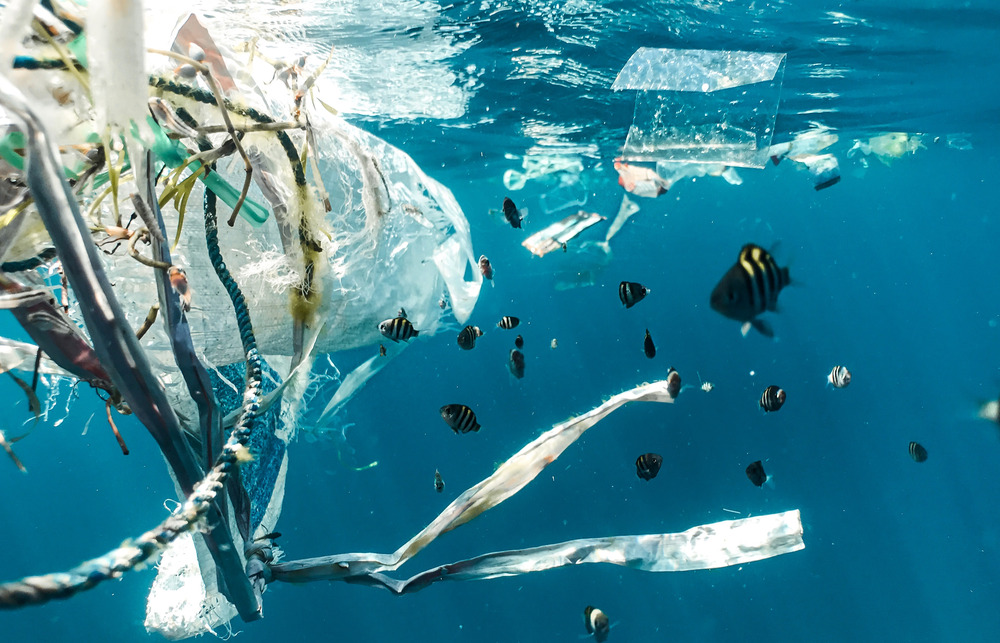
AH: That idea of tangibility and what can be done on a day-to-day basis is something I think about a lot in my life. In the book there’s this one scene where they come across a bag of garbage and I think it’s a very human problem where it’s like, what do we do with all this garbage? In the book, seeing garbage is a moment of hope: maybe there are other people. The characters have this conversation about what to do with it. One character wants to take it with them, but they have to travel light. The other character is being very practical and says no, somebody might come and it might be theirs. She thinks it might be someone else’s treasure. The narrator just takes one bottle from the garbage because she thinks it might be useful.
When I have felt joy in life, it’s because I have recognized my mortality or the mortality of others.
The thought process of going through recycling or being a conscious consumer is something that happens every day. There are these practical everyday things that you do not because you think about what it might mean long-term, but because this is what we do, right now, to care for each other. I think that it’s somehow trying to do the tangible but not being too overwhelmed by the intangible. You’re right that the anxiety comes from not knowing what to do. It’s going to be different for each person, but if it’s an emotional response, maybe it should be dealt with in an emotional way. Any time you’re having anxiety, there’s an underlying fear; can we get at that fear? Can we talk about some of that and learn how to be there for one another in the discussion rather than avoiding it and feeling like it’s too big or too much?
JA: There’s a thread of gender in the book. There’s this group of nameless men who keep coming back, and the brother has to go to war and that violence forever shapes him. There is also a strong theme of friendship between women. The ways that these expectations imposed on us in relation to gender shape who we are, what we are exposed to, and how we hold those traumas and carry them with us.
AH: I was absolutely thinking about the harms of patriarchy throughout this and what that looks like for men, women, and nonbinary people. I did want to look at how the harms of patriarchy show up in this particular world and I think it’s something that we see a little bit with the brother character and the harms of war. There are also moments where the past traumas with the narrator and these faceless men who are described only as “the men.” It’s meant to show the lack of individuality in moments of violence. They become this larger system, machine, something, that is taking away from identity in many ways. That violence becomes its own character.
JA: You obviously thought so much about language in this book. Some elements you just describe, others you leave vague, some you name. There’s always a tension, right, in how we name something? Naming something can be an act of colonization in the way they can be imposed, but a name is also a form of knowing, of intimacy.
AH:I know this comes up with a lot of writers around naming. In a number of Ursula LeGuin’s books, there are characters who have multiple names but there is one true name, and that is given by another character. I intentionally waited for the characters to name themselves in the drafting process and I realized I wanted there to be as much time to go by for the reader as time had gone by for me as the writer. The names encompassed other elements and were in harmony or concert with their environment. To me, that felt right. It felt like it represented collectivity.
The tension you’re talking about is an interesting one. I certainly don’t think I get around it in this book, even after the characters name each other. When they name each other, there is this familiarity and they see each other differently, but there’s that pinning down that happens with identity when there’s a name. I don’t know if it gets around that tension at all; it’s still quite there.
JA: Part of the book is about deep griefs, but there is this longing from the characters who want to get out of the darkness. What do you think the role of grief is in developing joy?
AH: I think that they are one in the same, in many ways. It’s a strange thing to say, but in my grieving process, it has always felt like an act of love to me, and an act of joy. And when I have felt joy in life, it’s because I have recognized my mortality or the mortality of others. It feels very much entwined.
In Sift, there are moments from the past where the narrator is talking about joy. There’s a moment in the field with music and there’s a moment at the grocery store, getting bread: small, small moments that didn’t feel like much, but now having lived through so much chaos and trauma, they hold a lot of medicine and joy. They are things that the narrator keeps calling on as a type of coping mechanism. I don’t know if I could write a grief narrative without including joy. Grieving is recognizing some of the joys of life.
JA: Do you feel like that’s part of your compulsion to write, especially in this current landscape we’re living in? You’re making something beautiful in a dark time.
AH: Yes. This is also the difficulty. I don’t want to aestheticize the environment or the horrors of the environment in a way that might ameliorate that horror. It’s a very tricky balance. My attempt is to be in the space of grief or of trauma or of a deep sense of loss or remembrance and witness of the degradation of the environment. I feel like as an artist, trying to create it in a way where people can still see it and hold it, but not be so beautiful that it distracts from the realities. It’s something that’s very hard to do and I don’t know if I’m successful at it, but to me it felt like the lyric of it, the music of the prose, was the beauty and that allowed me to do whatever else I feel like I needed to share with the content of the piece. My hope was that it would be a balance.
JA: It’s hard because you don’t want to go the other way, either. For me, if I read straight environmental horror it makes me feel like I can’t do anything.
AH: When I was working with the editors on writing the synopsis for this story, I kept bringing in the darkness and they were saying no, no, there’s lightness and joy. I was bringing in more of the grief aspect and they helped remind me, as you are reminding me, that there is a lot of joy mixed up with the grief.
If you want to be a likable person, one easy thing you can do is not murder anyone. I would go as far as to argue that not murdering people is indispensable to being likable. But we’re not talking about real life here. In fiction, we can explore the darker aspects of being human without the inevitable real-world consequences. A character can do harm without a corporeal person being hurt.
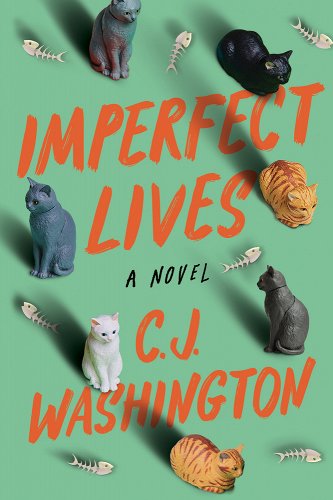
But even in fiction, we tend to like characters who share our values. As a rule, I root for the protagonist and rarely feel sympathy for the culprit. And yet, I occasionally find myself hoping that the killer gets away with it. It’s stranger still when this happens to me as a writer. In my novel, Imperfect Lives, two strangers are thrust into turmoil when a contract killer makes a deathbed confession. At heart, my novel is about murder, but I’ll leave it to the reader to decide if it’s about villains.
Deciding if the killer is a villain is half the fun of reading the novels on this list. If you read them with friends, don’t be surprised if you find yourself engaged in a killer debate.
When Joe Goldberg falls in love, he commits his heart and soul. Unfortunately, the world sometimes gets in the way of true love. Fortunately, or unfortunately (depending on who you are), Joe will do whatever he must to rescue his romantic entanglement. When murder is necessary, he may not like it, but he’s up for the task. He’s a rare individual who will do anything for love.
When Paul Phillips happens across a man in the woods beating a dog, a confrontation ensues, and Paul finds himself in a situation he’d never imagined. A carpenter living with his girlfriend Kate, a recovering alcoholic turned self-help writer, and Kate’s nine-year-old daughter, Paul is a man with a conscience who wants to be good. Is he good? Now, he has a toxic secret that is slowly seeping into every facet of his life.
Does the universe give us karma or is the onus on individuals to make it happen? Dark Things I Adore won’t answer that question, but it does give us Audra, a plucky and compelling heroine. When she invites Max, her art professor and mentor, to her home in rural Maine, an almost foreign land to Max, he has no idea that his past is stalking him. Filled with beautiful art and ugly deeds, dangerous twists and shocking violence, this novel offers many dark things, some of which you may even adore.
Dylan Moran is not a murderer. Of course, if he was, that would explain the untimely death of his beloved wife. In fact, in a parallel universe, Dylan Moran is a murderer. There are many Dylan Moran’s in many universes, and the one who lost his wife wants his life back. Traversing universes is a dangerous game and a thrilling one in this mind-boggling sci-fi novel.
What can go wrong when a research psychologist designs a study that enrolls seven psychopaths as students at the same college? Before you answer, you should probably know that Chloe, one of the psychopaths, is there to stalk and exact vengeance on an old friend. Everything goes wrong and college life turns deadly when one of the psychopaths is murdered. Can Chloe carry out her own murder plot while avoiding being murdered by a fellow psychopath?
Technically, no one is murdered in this novel, but there is a horrific accident followed by a desperate coverup. Leo Sheffield, a powerful businessman, is a complicated individual even before the dead body he must hide from his family. Corey Halpern, a Long Island local who resents the rich and their summer homes, witnesses everything. A mediation on social class and the insidious danger of secrets, this novel mixes literary writing with page-turning suspense.
John Keller is as ordinary as his first name. Except that he’s a killer for hire. His work typically involves travel, and things often don’t go as planned. Luckily, John is as skilled at extricating himself from tricky situations as he is at killing people as he is at blending in.
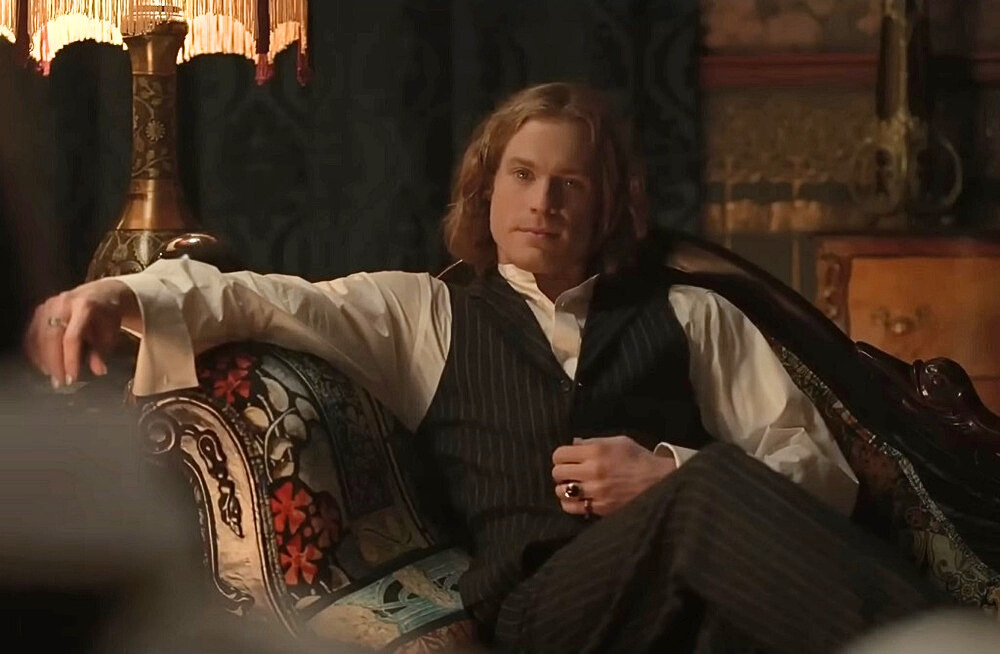
When a vampire kills a human to feed, is it murder? If not, is it murder when a vampire kills a human for sport? Lestat de Lioncourt, born a mortal in France in 1760, transfigured into a vampire in 1781, was thoroughly demonized by Louis de Pointe du Lac in Interview with the Vampire (the first book in the series and the proper place to start). In The Vampire Lestat (the second in the series), Lestat defends himself through the telling of his long and exciting history. A philosopher at heart, Lestat searches the world for other vampires, always seeking to discover the meaning of immortality.
I picture myself standing in the midst of a ruin. All around me there are mildewed canvases, rolled up crudely or crammed into drawers. The edges of the papers, mouse-eaten or worm-eaten, fall into heaps of dust.
As I work through the disorderly archive and chip away at the mountain of responsibilities, my mind is drawn back to this image of Turner’s studio, left in a state of Pompeii-like destruction after the painter’s death. That same atmosphere of decay permeates the Library in which I spend my mornings. On better days, disorder is forestalled, and there is only the linearity of the catalogue and the neat collection of books and objects. On days of anxiety, such as today, I find myself stranded in the wreckage. The dust that has gathered in the corners, the moldy papers, the shelves that bend under the weight of books and archival boxes, all these seem to be advancing toward me, millimeter by millimeter, until they overwhelm me.
September 2
A calmer start to the day. A thin column of sunlight shines down from above. Elsewhere, the Library’s underground storage space is illumined by a solar-powered lamp that is recharged daily on the desiccated lawn. I write by the light of this lamp and a pile of books serves as my desk.
Before I sat down to write, I spent some time admiring the flowers I keep in secret. The earthquake five years ago resulted in an irreparable crack down one wall of the Library. But plants have forced their way through the fissure and have begun to sprout in the space where books were once stored. Even now, as aridness eats through the outside world, the weeds and flowers that have flourished in the aftermath of disaster are protected by the shadows and nourished by the water from the broken pipe. I have not told anyone about this pipe, not even Aidan, as it would be fixed immediately, depriving the flowers of their sole source of water. This spot of green is the only place where I allow water to drip away unchecked; these flowers the only luxury I permit myself to keep in these days of want and longing.
It has been almost three years since it rained in this part of England. First came the floods, then came the droughts. Here at Mornington Hall, the one-thousand-acre parkland is parched, and the remaining leaves crumble between my fingers. Parts of the earth lie fractured, creating intricate webbing that spreads out like dark veins. I never thought I’d miss the cold, wet air on rainy days. We now count in milliliters, careful not to exceed the amount of water the government has allotted to the house. The small bottles Aidan and I pass between us are not merely tools of survival, but also mementoes of a past that recedes further and further with each passing month.
A nature diary composed over the past decade would read like a catalogue of losses. There was a time when catastrophe seemed far away. We glided through the seasons confident that each calendar year would yield the same degree of heat and cold, the same blossoms and migrating birds. Then change became visible. In aerial photographs, the earth, cracked, burnt, and striated by the lines of industry, resembled a painting, and some saw beauty. Nothing is certain, they continued to say. We’ll see, we’ll see. We have seen, yet the debates have intensified and some persist in believing the sky to be unchanging, the only immutable thing in a world of fluid truths.
Yesterday, I agonized over what to do with the boxes of newspapers I had collected at one point, news articles that detailed the progressive deterioration of the world we knew. I felt obliged, as an archivist, to keep a physical copy of everything, as though the collecting and preserving of these words could somehow stave off disaster. But a few months ago, during yet another heat wave that killed human and non-human animals alike, I stopped collecting the news. For the first time, archiving seemed futile. The heat encased us like a cocoon and we re-emerged into the melting world with fewer illusions about the future.
This morning, after confirming that the cedar tree I have loved for so long is indeed beyond saving, I started using the archived newspapers for packaging.
September 3
I left my childhood home and came here to Mornington Hall twenty-two years ago, at the start of my research fellowship. But now, in less than a year, this house, too, will be gone. The Long Gallery with its view of the park; the Conservatory with its surviving plants; the Library with its white columns—all these are to be demolished in about seven months.
Mornington, in its old age, has endured countless cycles of change and reinvention. It was once an aristocratic estate, a school, a hospital, and for a period of time after the Second World War, a cow shed and pigeon coop. When Aidan’s family purchased the estate decades ago, they restored it to its former self as a symbol of long-lost refinement.
We have now entered another phase of disrepair. The house has been falling apart for years. Rainstorms have inundated rooms; heat has dried and cracked the paint and plaster. Some days, Mornington seems uncommonly fragile. Pipes burst, windows break, and parts of the façade peel away in the wind. Since I first moved in with Aidan, we have attempted to avert decay by daily care, by the physical work of cleaning and mending, saving the house one piece at a time, and accommodating as many travelers as possible in the rooms that remain intact.
People once spoke of Ruinenlust, of the picturesque and melancholy beauty of abandoned buildings. On one occasion, Aidan joked that Mornington resembles the Villa Savoye, which had fallen into a state of complete dilapidation, filled with the stench of urine and excrement, its white walls smeared with graffiti. Even in that soiled state, Villa Savoye was still considered beautiful by some. But here, we know only the exhaustion of having to keep the house from collapsing.
The structural damage caused by the earthquake compromised much of the underground storage system in the Library. The robotic arms are broken, and we have to climb down a ladder to access the lower storage level. The flood from the burst pipes also damaged the collection. We have sold most of the valuable pieces to finance the repairs, including Turner’s A View on the Seine, once the gem of the house. Some artworks have gone to the national archives and museums; others to private collectors.
The items that remain in the Library do not have high market value: the books and objects that have sustained significant damage from the flood, and the ephemera I added during my time here. Before Mornington is dismantled, most of these artifacts must be reorganized and re-catalogued for potential online sale. Some items will be discarded. Others we might add to our own collection, which we will take with us when we leave in the spring. I also wish to keep a record of the objects that I find evocative, with a description of their physical states as they exist now, in my hands. This, then, has been my main task since early August: the building of an archive of remains.
Also in seven months: Julian’s scheduled return to Mornington, to visit the house one last time. And I will see, for the first time in twenty-two years, the man who forced himself upon me in the unbearable summer heat. I still remember the cries of the nightjar that evening, and the agitated glimmer of the lamp that arced over the painting of death hanging on the wall.
Photographs
Twelve black-and-white photographs, measuring 27 x 35 cm, depicting Mornington Hall, ca. 1920. Unbound, held in brown archival box. Photographer unknown. Toning and wear along the edges. Imperfections due to moisture.
September 12
The house in the photographs both is and is not the house I know. The first photo in the series shows the front façade. At the start of my fellowship, I first beheld this view in person: the pale stone, the central dome, and the long path lined with stretches of uncut grass. I remember how a breeze moved through the grass as I walked by, so that the undulating fields resembled a green sea bearing the barge that was Mornington.
The next photo shows the main entrance, flanked by Corinthian columns, with a marble frieze and intricate stone garlands above. When I reached the front door that first day, I found it wide open. My eyes scanned the colors in the vestibule—the black-and-white marble of the floor; the bronze of the sweeping staircase; and the pale-green panels on the walls. The house was silent and pristine, as if it had never known human habitation. An administrative assistant came out to greet me and led me to the Round Gallery, where I was asked to wait. She told me that the quiet was to be enjoyed while it lasted, because the renovations were to begin in a few days’ time. A new glasshouse was to be erected in the garden, and many rooms to be modernized, at the behest of the new owner, Julian.
Next in the box is a photo of the Round Gallery, an octagonal space topped with a dome and sky-lit through a glass oculus. Inside the semi-circular apses were marble statues of Roman gods; on the walls were some of the best paintings in the house.
On that first day, I tried to take a closer look at the Constable, but it was hung rather high up. As I stood on tiptoes to examine the landscape of a rural scene, a gust of wind blew in through the open front door, bringing with it a spiral of loose sheets of paper that spun around the gallery before the gust died down and the sheets settled on the floor. That was when I first met Aidan. He ran in after the papers with a stack of sheets in his hands. I still remember the warmth of his extended hand, which I held lightly in mine.
I wanted to welcome you when you arrived, he said, but I lost track of time. This place is temporarily in my charge.
He picked up the papers, covered with architectural sketches, and led me into the Hall, which was modeled on the atrium of a Roman villa. There were twenty fluted alabaster columns, with Corinthian capitals, standing on the patterned marble floor. A skylight lit the space from above. Gilded plaster ornaments filled the voids between antique statues and urns.
I know it’s a lot to take in at first, Aidan said. But these great houses are never what they seem. You see the faded silk wallpaper? I’ve been told to get rid of that. I also need to replace that tapestry. The moths got to it.
In the nineteenth century, I later read, Mornington Hall was famed for its seamless transition from interior to exterior, so that the man-made and the natural were interlaced in complete harmony. Large doors and windows opened onto the veranda lined with plants, beyond which were the flower beds and the velvety lawns, all replicated in the mirrors of the Long Gallery. Wallpaper was covered with trellises of roses, and ceilings painted with clouds and stars. The first owner, who had commissioned the building of the house to showcase his sugar wealth, held parties regularly. One party, mimicking a famous fête hosted at Carlton House by the spendthrift Prince Regent, featured an actual stream that coursed through the Dining Hall, stocked with goldfish and lined with real banks of moss and grass.
I sometimes wonder what Turner, the son of a barber, felt when he first stepped into Mornington. I wonder if he felt the same sense of unease that I, the daughter of a gardener, felt—still feel—when I came to this seat of opulence, the opulence that would not have allowed room for someone like me. I find greater comfort in the house’s current state of dereliction. It seems more honest, more aligned with the rest of the world.
September 15
Tonight, a simple dinner of vegetable soup and roasted potatoes. Aidan has just returned from a work trip, to survey a potential construction site. We decided to use candles at dinner, for the ambience, and the candlelight created haloes around the faces gathered at the table so that, for a brief while, we resembled the subjects of a painting. Aidan had on blue denim this evening, with the orange sweater that I knitted for him three years ago. The colors recall a Poussin painting, even though I don’t think he ever captured a scene by candlelight.
When I first stood before Poussin’s The Abduction of the Sabine Women, I was seduced by the intense colors. The ultramarine appeared to exert a physical force that leapt out of the frame and into the space of the gallery so that I was pinned to the spot, unable to move or avert my gaze. I was so transfixed by that blue that I nearly overlooked the violent nature of the subject.
The painting, completed in 1633–34, originally belonged to the French ambassador to Rome; then it passed to Cardinal Richelieu in Paris, where it stayed in several palatial residences before it was sold to a collector in Rotterdam. In the late eighteenth century it arrived in England, where it was housed for over a hundred years at the magnificent Stourhead. A few decades at Doughty House, in Richmond, followed, before the painting entered a museum collection in New York.
I try to imagine what the residents and visitors at Stourhead or Doughty—grand estates like Mornington—would have thought of The Abduction of the Sabine Women. I picture a party at Stourhead in the late nineteenth century, in the heyday of the English country house. All the elegantly dressed guests, wine glasses in hand, are scattered around the drawing room furnished with Chippendale cabinets and lined with Persian rugs. Outside the curtained windows: the sculpted gardens and the Wiltshire Downs beyond.
The male guests have returned from a hunt, the female guests from a walk in the gardens. The butler enters with drinks and hors d’oeuvres on a silver platter. The men discuss banking and the state of their companies in distant lands. They discuss art, for they are all collectors. Someone gestures to the Poussin, and the owner, proud of the acquisition, shares the details of the auction and the moments of anxiety when the painting was nearly lost to the other bidder, followed by the eventual relief and triumph.
The female guests join in the collective admiration of the masterpiece illumined by the chandelier. They comment on the composition, on Poussin’s expert rendering of ancient architecture.
Only one person turns away from the painting, an older woman, the sister of the owner of the estate, who is herself a collector and has written a few essays on art. She stands at the window and her gaze is drawn to the scenery outside, scarcely visible in the waning twilight.
A gong sounds. The butler announces that dinner is served. The group proceeds to the dining room. But the woman remains standing at the window. She looks at the Poussin through its reflection in the glass, its colors slightly dulled. As she studies the image of the abducted Sabine women superimposed on the layered landscape outside—on the woods emptied of a few more living beings after each hunt, on the remnants of the unsightly thickets that were burned, on the folly that was torn down after she herself, barely fifteen, was assaulted in its stony interior—as she contemplates all this, she understands, not for the first time, the true cost of all this beauty.
As she contemplates all this, she understands, not for the first time, the true cost of all this beauty.
Object
Claude glass, ca. 1800, small convex mirror, with dark tinted glass. Approximately ten cm in diameter. Circular bronze case, covered with leather; interior lined with silk. Cover scratched; mirror bears mark of mended fracture. Named for the French painter Claude Lorrain. Used by artists and landscape viewers to reflect the view or make tonal adjustments for painting.
September 21
Last week, while the solar panels were being repaired, a toolbox was accidentally dropped onto the central dome of the Round Gallery. The stained glass shattered. Thankfully no one was in the vicinity when it happened, but I cut my fingers as I helped clean up the multicolored glass fragments scattered across the floor.
I can’t believe this happened, Aidan said. They should have been more cautious. No, it was my fault. I should have supervised more closely.
It’ll be okay—I say this to him often.
That beautiful stained glass, he said in a low voice.
I know. But we can’t fix that.
Over the years, pieces of the house have slipped away from our hands, one by one, and loss has become commonplace. When we first began selling off the artworks in the Round Gallery, I grieved for the paintings. They left gaps on the walls, patches of brilliant color that contrasted with the ashen parts faded by sunlight. Each time I experience a sense of loss, I tell myself that none of this was mine to begin with, and none of it was as important as it seemed.
We cleared the broken glass, then Aidan, with the help of two of the men who have been staying with us, blocked off the Round Gallery using wooden planks taken from the empty bedrooms on the upper levels.
The money from the sale of the last batch of paintings has given us funds for repairs and a new backup generator. In order to conserve energy and better insulate the areas that are frequently used, Aidan and his colleagues from the architectural firm constructed plexiglass partitions to separate the living quarters from the disused rooms.
But at times, I still like to venture into those blocked-off areas, in spite of the cold. I’m particularly fond of the room at the top of the three-story southeast pavilion that extends outward from the front of the house. The roof of the pavilion collapsed years ago, during a season of storms. Initially, we panicked. But Aidan grew fond of that wound in the ceiling; he said it reminded him of the oculus at the Pantheon.
We adapted to the new space, just as the room itself adapted to the opening in the roof, taking in all the elements of the outside world. Birdsong, when it still existed, entered through the opening. Dust entered, and sometimes the smell of distant smoke could also be detected. Vines grew, puddles formed, and dead leaves carpeted the floor. When it rained, a column of water would materialize in the middle of the room.
The rain left dark streaks down the whole length of the walls and exposed the wormlike pipes. The colors of the walls changed, year by year. The blue faded into mottled green, and the green gradually became yellow. Dampness also created pockets of air bubbles in the damaged wallpaper.
Sometimes, when the sun shines directly into the room, a column of light appears. I like to set up a desk in this column, so that the sunlight envelops me. It is here, in the middle of this interior landscape, that I write today.
September 22
The house is quiet. There are twenty-one people staying with us right now. During the day, most of them are on the main floor of the central block, the corps de logis, which stretches from the Dining Hall on the northern end, through the Long Gallery and Conservatory, to the Green Writing Room, which has been converted into an office where I spend half of my days, overseeing the management of the house and grounds. Next to the Green Writing Room are the doors to the Library.
Aidan has been spending most of his time in the studio on the upper level, which faces west, offering a view of the sweeping vista designed by Capability Brown. All the larger bedrooms next to ours are currently occupied, and these, too, face the parkland. The group of younger travelers have little interest in such a view, perhaps not wanting to be reminded of all that had been destroyed. They have, instead, set up tents in the Hall. In the evenings, the tents glow from within when the inhabitants read or chat by the camping lanterns.
The northeast pavilion, which forms its own self-contained three-story block, has been repurposed to accommodate most of the other travelers. Some of them stay with us for as long as a year; others, mere days. Most stay for about a month before they move on to their next destination or to government housing. It is for them that we strive to keep the house intact. I call them travelers because not all of them are refugees. They are also not wanderers, for they have destinations, even if the gates might be closed to them. In all cases, though, they are bodies in transition, moving toward an uncertain future.
The plan to take in travelers was partly to do with my own internal shifts, and partly to do with Aidan’s work, his emergency shelter built using salvaged wood and construction waste. That summer when I accompanied him to the refugee camp near the Mediterranean was a pivotal point, and I think about it occasionally. When we returned from that trip, I applied for a non-profit license for Mornington. After the final residency program ended twelve years ago, and the artists departed, we refurbished the bedrooms and posted announcements online. We settled into a rhythm of preparing, welcoming, sending off, and reorganizing. This, then, became the work of my life.
The trip to the camp also marked the end of my academic career. Up until then, I had continued to apply for research positions, with little success, even as my belief in the efficacy of intellectual work was waning. At the refugee camp, it shocked and shamed me to realize that all of my research could not tell me what to do when money ran out, when the earth ceased to produce food. Ideas and theories could no longer hold together the disparate parts of the world. I rarely think back on my sojourn in academia. I cannot bear to remember the yearning for accomplishment, for prestige. The blindness of it all. I have retained the love of art, of Turner, disentangled from the obsession with accolades. This love sustains me, however naïve it might appear from the standpoint of scholarship. Looking back now, I doubt whether it was really knowledge I possessed, and not a very selective, rarefied view of the world.
September 24
In recent months, I have gotten to know two of the travelers, since both of them are staying at Mornington on a long-term basis. Miranda is here with her husband, Carlos, a carpenter, who has been working in the village nearby. Before coming here they lived in Spain, where Miranda taught English and ran an online shop selling cross-stitch and embroidery kits. The heat forced them to migrate north.
Celia is a painter. She stayed here years ago for one of the residency programs; I had invited her here after seeing some of her evocative pieces at a small gallery in London. She too had studied at the Slade, though she was a few years ahead of me. Her portraits of strangers and loved ones exude a deep sense of pathos, as though they offered a narrative about the subject, despite not presenting a single fact about them. She has painted Mornington too, but never in its entirety, only in parts—a column, a cornice, or a door handle, rendered in muted, autumnal tones.
Today Celia asked if she could paint my portrait. She has painted many of the people she met during her travels. Having never sat for an artist, I have no concept of what exactly I have agreed to do. But it was difficult to refuse her. Whenever I speak to her, I get the sense that she is someone who has surmounted untold obstacles, someone whose seeming fragility belies great resilience.
Book
Cicero, De Oratore. Published by B. et Gul Noyes, 1839. Chipped spine edge. Tan leather boards with moderate wear. Marbled endpapers, water-stained. Binding loose, but all contents intact. Significant foxing throughout.
September 26
I first came across De Oratore by chance, at an art exhibition in which the artist referenced Cicero’s tale of the poet Simonides, who was able to recollect the exact location of all those who had perished in a disaster by retracing the architectural space. The art of memory thus involves forming visual placeholders for objects, people, or ideas, and depositing them into an imaginary building erected in the mind.
Two houses serve as my memory palaces—Mornington Hall and the house I shared with Dad for the first three decades of my life. The latter was the same as countless such houses in the many boroughs of London. White doors flanked by white columns, with brick walls and small bay windows overlooking a tiny garden. Dad was proud of the fact that our house blended seamlessly into the neighborhood, without any details that stood out or drew attention. But I wished we had a mint-green door, which I have seen on a similar building in an adjacent street.
When I started university, I moved into the refurbished lower ground level, which used to be my mother’s dance studio and storage space. After she left us, when I was a few months old, Dad discarded most of her belongings, and the space remained empty. As soon as I moved in, I cleared away the dust and detritus, and lined the walls with pictures. I remember the few pieces by friends, all of which I lost in the flood: an oil painting of a glass vase filled with peonies; a portrait of a London street; pencil sketches of abstract shapes and lines. I also displayed copies of the artworks I have loved at one time or another, many of which I still keep with me. There was Rodin’s The Cathedral, with two stone hands turned toward one another, holding an empty space between them. Those hands intrigued me, and I always wondered whether they were on the verge of touch or separation. As a response to the Rodin, I pinned a postcard of Louise Bourgeois’s 10 am is When You Come to Me, consisting of twenty etchings of red, pink, and brown hands overlapping or clasping one another—a portrayal of friendship, of art as a meeting of hands. Below this was a black-and-white photograph of Joseph Cornell in his studio, hemmed in by pictures and miscellany.
I recall the thrill of being surrounded by these images. I remember how it felt to be captivated and confused by them, to be at a complete loss for words.
On the wall next to my desk was a framed print of Turner’s 1845 Norham Castle, Sunrise, the first painting I ever loved. I settled on Turner as my subject of study because of that painting. At a certain point, I wanted to spend my life in that landscape. By using a technique that he had perfected in watercolor, Turner applied thin layers of translucent paint which rendered everything luminous and diaphanous, the radiant forms blending into one another and melting into golden light. But the painting’s radiance belies its dark core, the ghostly blue ruins of Norham Castle, once the site of battles and death. This is what I love in Turner—the way violence is embedded in a gleaming landscape.
Next to Norham Castle, Sunrise I had pinned postcard reproductions of Turner’s marine disasters and stormy seas. I wrote my thesis on his works all those years ago, seated next to the images. During those research days, it was as though I, like Turner, had strapped myself to the mast of a ship in the middle of the storm and witnessed the raging of the sea and the tumultuous waves that swallowed the untethered human bodies. If I studied the disaster paintings long enough, I would experience the sensation of being thrown upon the wild waves, along with those frail human forms entangled in the white crests, their arms reaching out desperately for the chance to evade death.
If I studied at the disaster paintings long enough, I would experience the sensation of being thrown upon the wild waves.
Those images accompanied me during one of my most intense intervals of waiting. After I finished the doctoral program in art history, I spent a long stretch of time waiting. There were days when I would wake up early in the morning, then, after finding no replies to any of my applications, I would go back to bed and sleep until the afternoon, then attempt to continue writing in the garden. I waited for the desired response that never arrived. At the time, I found it ironic that I was named after the wife of Odysseus, the woman who waited. I learned that the only way to wait was to cancel out all thoughts of time until the days melted into one another. There is a boundary beyond which one ceases to believe that waiting will yield anything except the passing of minutes and hours. The only things that remained clear were the pictures on the wall.
All in good time, Dad used to say to me. He would bring tea down to my room, and we would have our evening chat in the little sitting area.
It took me ages to get my job at Kew, he said. You must be patient.
I am patient, or I think I am. But how long do I have to be patient for?
I know the situation is difficult, Dad said. I honestly can’t say how well I would do if I were in your position. But I was patient, and then something came along and you take the opportunity, and more opportunities will come from that. You’ll see.
I’m not sure about that anymore. Maybe art . . . I mean, maybe something other than art, maybe I should have done that instead. You know, all those classmates who went into useful, pragmatic disciplines? Those classmates are somewhere else.
Where are they?
Well, we never kept in touch, so I don’t know exactly. But that’s not the point. The point is . . . well, I can’t remember what the point is, but it doesn’t matter. Can we please, please stop talking about this?
Dad would gently pat me on the shoulder when I felt hopeless. Be patient, Penny, he would say to me. Something will come along. You’ll see.
Dad was the only one who called me Penny. I have not heard that name since he passed away.
I got the sense that he never knew how to react to my despondency. But there were times when he accepted my frustration, times when he said, I know, dear, how unfair the system is. None of us know what will happen. But no matter. You will find something.
What Dad had hoped would happen never happened, and the world became what it is. But I did receive the three-month research fellowship that brought me to Mornington Hall, and to Turner’s A View on the Seine.
I knew that the painter himself had stayed in the house for a period of time, when he was a young artist who had received patronage from the original owner of the estate. In an unfinished watercolor, Turner depicted the Library at Mornington, with its mahogany desks and shelves of leather-bound books. Another drawing shows bookcases and armchairs bathed in diagonal lines of sunlight. The Library underwent extensive renovations before I arrived, so the space I saw was no longer what it was in Turner’s days.
As I had feared, the work on this archive, the handling of these artifacts and images, means sliding slowly into memories. Or rather, I feel as if I’m standing inside a tank, and the memories are rising higher and higher until one day, they will tip over the edge and I will drown.
Book
Aby Warburg, Bilderatlas Mnemosyne. Published in 2020 by Hatje Cantz, as a companion to the exhibition at the Haus der Kulturen der Welt in Berlin. Elephant folio. Volume contains facsimiles of the sixty-three panels of Warburg’s monumental “image atlas,” composed of reproductions of paintings, sculptures, old photographs, books, newspapers, magazines, tapestries, playing cards, and postage stamps. In fair condition—except for a ripped copy of panel no. 77.
September 30
Today I cleaned an unconventional portrait of Aidan’s family. It was covered in dust and the paint was flaking off. The picture showed Mornington Hall as seen from the garden, with Aidan, Julian, and their parents looking toward the house, their backs to the viewer, their faces unseen.
Twenty-two years ago, while waiting for the result of my application for the Mornington fellowship, I developed a sort of obsession with the family in the portrait. I dove into a frenzy of fact-finding and image-collecting, though it is unclear to me now why I was intrigued by them in the first place.
At the time, one of the few connections I discovered between myself and the family was through Toby, a former classmate of mine at the Slade. When he was around twelve, he had attended the same school as Julian, though Julian was older. I contacted Toby, who divulged very little at first, except that he had known Julian well at one point. I pressed him for more details. It was not until after the acceptance letter for the fellowship arrived that I received Toby’s response, in which he related an incident that occurred during Julian’s final year at the school.
That spring, Toby explained, it rained relentlessly, so the students stayed in the school building more than usual. After classes, many of them would gather in the library. One day, someone took an object that belonged to Julian, and a confrontation ensued. It was something Julian made, Toby recalled, a little building made out of paper and wooden sticks. The other boy mocked him and tore it to bits.
“Before the tutors arrived,” Toby wrote in the email, “Julian jumped on the boy. He beat him with his bare hands. It was shocking. I called Julian’s name but he didn’t seem to hear me. He held the other boy down, and fed him punch after punch. Blood streamed out of the boy’s gums and nose. I stood there watching with the other students until the adults intercepted. The wooden floorboards of the library were stained with blood, I remember that very clearly. Julian never talked about that day. We went on like nothing happened. He transferred to another school the following year. I don’t know if that had anything to do with the incident. I never saw him again.”
After reading Toby’s email that day, I visited the Victoria and Albert Museum to look at the stone effigies in the Cast Courts. The museum also served as a memory palace at various points in my life. There was a time, when I was about six and I had an argument with Dad during one of our visits, I hid in the galleries for an hour before being discovered. Later, I fell in love in a room full of Raphaels, when Michael, a classmate at college, had kissed me. The ceramics gallery on the top floor was a sanctuary where I worked my way through the subsequent heartbreak. One corner of the museum offered a great view of the cityscape, and there I sat for the whole afternoon after I received the acceptance letter for graduate studies. In the Cast Courts, I found inspiration for the doctoral project. In the shadows of the truncated Trajan’s Column, among the statues and effigies, I grasped the importance of darkness in Turner’s works. Everyone was enthralled by the light in Turner, but I wanted to explore the shadows. Even in the brightest landscapes—like Norham Castle, Sunrise—there was chaos and darkness in which one might detect the artist’s wish to paint an entirely different sort of picture. The darkness of battles and empires; the dark forces of nature; the darkness that follows the blinding light at the center of the canvas. And the darkness of erotic desire, in the drawings that Ruskin hid in a folder intentionally mislabeled “Plants.”
That day, with Toby’s message lodged in my mind, I went to the Cast Courts and thought about Julian. In hindsight, Toby’s story should have been a kind of warning. But instead, it instilled in me an even greater curiosity about Julian that prompted me to accept the offer of the fellowship without pause. Julian intrigued me because he was a figure that lurked in the shadows of the house. I imagined that he harbored within him the same kind of darkness that lies in what I considered, at the time, to be Turner’s best works. And for that reason alone, I felt more drawn to him than to Aidan, whom I associated with light—with the bright and airy spaces he designed—and it was a long while before I understood the false appeal of that darkness. Sitting on a bench in the Cast Courts, I looked for a photo of Julian online, one I had already seen during an Internet search. Something in his expressionless face was kin to the stone bodies and faces I saw before me, the meticulously sculpted exterior that covered the bones—or the nothingness—that lay within. I found the photo chilling, but at the same time, it thrilled me, a thrill I had hitherto felt solely in relation to art.
It is the image of the effigies that I recall today in anticipation of seeing Julian again next year. But now, only the chill remains.
After visiting the Cast Courts that day, I wandered through the other rooms at the V&A. I saw a painting that is rooted in my mind, though I have forgotten its title and the name of the painter. All I remember are the shades of umber and the subject: a country house set in the middle of the woods. In the foreground, there was a mysterious circular patch of burgundy, perhaps a small pond. But when I first encountered the painting, I formed in my mind the image of a pool of blood on the floorboards of a library, seeping into the crevices and slowly staining the fibers of the wood.
In Mobility, Bunny, as aptly named as Jay Gatsby and Elle Woods, is the daughter of a public affairs officer in foreign service. “Silly but not stupid,” she splits her adolescence between boarding school and posts in Greece and Azerbaijan. Mostly, Bunny thinks of material possessions, teen soaps like Dawson’s Creek, thinness, and older white boys in boat shoes and Nantucket reds who, if not individually attractive, are “gorgeous in the aggregate.” Unambitious yet connected, she lands a position as an administrative assistant for an engineering company. Through her early twenties, she is surrounded by the “inelegant comfort of Costco millionaires” and men who have answers even when they don’t, and who deliver their thoughts in unbroken monologue. Soon enough, leadership is impressed by her potential, and Bunny is poached to join the tech-forward branch of Turnbridge Energy, a family-owned business engaging in exploration and production in the oil complex. Continued advancement for Bunny—her tiny piece of the pie—means graduating from Banana Republic to Louboutin, Tory Burch, Biologique Recherche, Goyard—a bag that Bunny learns to covet—and from Bunny to Elizabeth.
We watch Bunny evolve over decades, in bed with oil tycoons who speak not about political seasons but geologic time. Rarely does Bunny consider her own culpability in the destruction of the planet, even after her own family benefits from enhanced oil recovery of inherited land—and when she does, she consoles herself with same self-justified platitudes pushed by big oil, or takes comfort in the fact that she is blazing a trail for women in the industry or the illusion that one day the industry will pivot to clean energy. Americanness, in this book and this character, is defined as a refusal to interrogate what one has or what one wants, even in the face of a threatened existence.
Kiesling has a wonderful eye for glut and hypocrisy, as when the reader is confronted by eighteen rolls of paper towels in a Texan home, yet she is sympathetic towards Bunny, who like so many others is trapped by American consumerist values and the hegemony of the oil complex. Everyone does business with Halliburton here, Kiesling writes, everyone’s hands are black. We’re warned that by 2030, Mecca will be too hot for the hajj. We’re reminded that most petrostates, in the wake of colonialism, don’t have the resources and infrastructure to manage their own oil reserves. We’re forced to think about how most of what we wear comes from cotton grown in Central Asia, much of it processed through forced labor.
The perils and urgency of divesting from the carbon economy are undeniable and dire—yet we get the creeping sense that, with our self-justifications, our fast fashion and flights to Europe, our skin regimens and unsatisfied appetites, we have much more in common with Bunny than we once believed.
Annie Liontas: Mobility is a book about unintended consequences and wishful thinking. Tell us about Bunny. How is her blindness and privilege our own?
Lydia Kiesling: In Bunny’s world, there are very strong ideals about work. Ascension, upward mobility—you have to find the job that helps you climb the ladder. This was fundamental to the way that people I went to school with were brought up to think about the future. For women, even if you are coming from a position of privilege, you start to understand that the ladder doesn’t quite work as we’re meant to believe. A lot of people, when faced with that information, are not going to burn the ladder down or find a completely different structure that’s not a ladder. They’re just like, “No, I’m gonna stay on this ladder and cling to it as hard as I can.”
Bunny is doing everything she thinks she was supposed to at that moment in the book—she supports herself, she has a job—and she’s resentful of her mom for challenging her. She sees that her mom had a professional trajectory of her own but set it aside to support her father’s career and raise Bunny and her siblings. The traditional model was built on a man who has a wife who takes care of the home. And if that model goes away, as is the case for Bunny when her dad decides to leave her mom, it serves as a warning. Male approval is very important to Bunny, but Bunny also sees what happens when your material comfort and lifestyle are predicated on a man’s work, and she can’t see that her material and comfort and lifestyle are actually still predicated on a man’s work, in this case, the patriarchal structure of the workplace she joined.
AL: The novel launches after the collapse of the Soviet Union, when a lot of people are getting rich and the U.S. gets to decide who. One of the most powerful assertions of the book isn’t about the truth of global powers and players plundering countries like Azerbaijan, but the lies told about it. What are those lies? How are we still telling them?
LK: In that moment, America turned from the Cold War to the War on Terror. When Bunny is there in 1998, it’s just shifting over. The things that I always heard about communism and the Soviet Union was, “It didn’t work. And now look, everyone’s so poor, everyone’s miserable and trading fake Adidas sweatsuits for cigarettes.” Americans had an almost gleeful attitude toward places that were behind the iron curtain. It was really easy to joke and gloat about what life was like in places that were going through this very epic transformation and had just suffered a lot. Some of the stories from Azerbaijan particularly feel like they’re not real. The guy who owns Dooney and Burke handbags was trying to buy pieces of crappy infrastructure and sell them off. The lie was, This is going to be good, now people are going to have a better standard of living. But now we know the costs that come with that, and how that has not been true for many people.
A book I read recently that I love—a memoir by Lea Ypi called Free—recounts how Albania entered the rabid, neoliberal era. Ypi writes a scene about her mom hosting some people from an NGO. Her mom, like many women in Albania, suddenly had access to different clothes, but they weren’t sure what should be worn. She ends up wearing what actually turns out to be a teddy or a piece of lingerie, but which she bought as a dress to be like, Well, I’m supposed to wear shit like this and entertain these NGO people. And you imagine the NGO people go back home and are like, “You wouldn’t believe what they’re wearing in Albania.” I feel like that was very much an undercurrent of American perception of the Eastern Bloc and former Soviet Union and places that coming through those political transitions.
AL: It seems that nomenclature does a lot of work to create this kind of obfuscation in the oil complex. Oil companies use the word “green” in acts of blatant misdirection. Exxon’s myriad arms are named anything but Exxon, Pink Petro is Ally, Halliburton is a family-owned business. Elizabeth is Bunny is Elizabeth. What does this tell us about power, what can we possibly mean when we say “future casting” when the very future is in doubt?
LK: Googling all of these companies and looking at their websites, you really see greenwashing in action. You see how they change from one month to the next. You can go to Halliburton’s website, and it’s all about climate solutions and sustainability. The same people who created this problem are going to position themselves to buy up lithium mines or use the same kind of tactics in the energy transition, which is itself a euphemism. Shalanda Baker, who has a position in the Department of Energy, talks in Revolutionary Power about how if the fundamental structures are not dismantled, it will just be the same people benefitting, and the same people suffering from it. There are so many lies around like energy, and what makes it difficult is that they’re also true. It’s so easy to say, “A lot of people don’t have electricity.” Talking in those terms makes it so easy to shape a narrative, such as, “Well we need to do anything we can do to get those people electricity.” And that’s what oil companies do. And they barely even have to work that hard to sell that because it is very compelling to a lot of people to think in terms of standards of living and progress.
AL: Reading Mobility, one is perpetually aware of the people outside of this world—workers, immigrants, people in “sacrifice zones,” and those most vulnerable to unchecked climate change and the fossil fuel industry. How are you writing into this, even as you investigate these wealthy white profiteering spaces?
For women, even if you are coming from privilege, you start to understand that the ladder doesn’t quite work as we’re meant to believe.
LK: That was a big question of the book because ultimately, the real struggles are the ones that are not represented on the page. It’s active erasure, the way the book is constructed. I knew I was not going to be able to represent what daily life is like in Port Arthur, or swoop in to find a perspective I can necessarily inhabit. But I am very familiar with elite educational spaces, and white spaces, and justifications, and ideologies. I’ve been to a lot of weddings! I’ve also been very seduced at certain times in my life by those hierarchies and ideologies. It felt truer to me to represent that. I hope that readers who are also part of those spaces but have not disentangled themselves will think, “Oh yes, that sounds familiar.” Even thinking about how neighborhoods are constructed, such as the so-called golden triangle area of Texas and Southeast Texas and the Gulf. The consequences of oil logic is on the ground. You can see it so clearly when you’re driving through or when you’re looking at a map. Right across from the Motiva oil refinery, for instance, there’s a playground. The people who live in that town have higher rates of cancer. I wanted to put those things in the book for readers who are paying attention.
AL: I’m equally unnerved and fascinated at all we learn about the oil complex in these pages. In the gusher days, guys get paid to walk around with a stick called a “doodlebug.” When they found oil, men would rub it onto their cheeks. Stalin, himself, had been among the oil worker in Baku. How can we understand the history of our greed and dependency on oil in such mythologies?
LK: There’s a really fascinating human history with fossil fuels. In oil producing regions, oil was part of how people who lived there understood the space for thousands of years. And there’s something pretty amazing about that. There are also lots of ideas about meaningful work and national sovereignty and self-determination that are bound up with oil. The writer Abdulrahman Munif, who was stripped of Saudi citizenship for writing Cities of Salt, one of the great oil novels, had a PhD in petroleum economics. He wrote how oil was the greatest opportunity for Arab states but that it got squandered.
There are all these important, meaningful stories tied up with oil, but the overarching story is greed. The destruction, the obfuscation, the outright lies. We have wasted so much time because oil companies are actively working against people knowing the truth and still are doing that and still are working against people changing. That makes these noble stories about human relationships with this very important substance retroactively horrible. We read the news every day, and we see the temperatures and the people who are dying. That story can’t be romanticized knowing what we know now.
DON’T MISS OUT
Sign up for our newsletter to get submission announcements and stay on top of our best work.
YOUR INBOX IS LIT
Enjoy strange, diverting work from The Commuter on Mondays, absorbing fiction from Recommended Reading on Wednesdays, and a roundup of our best work of the week on Fridays. Personalize your subscription preferences here.