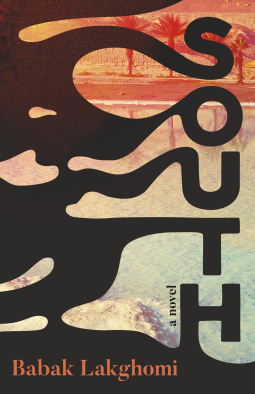
Searching for truth, whether at personal level or on a larger scale, has been the subject of many different narratives. I started writing my novel South in 2018 when I was thinking about truth, its relationship to history, and the possibility of accessing reality amid the excess of misinformation and the erasure of historical facts.
The narrator of South is a freelance journalist who is hired for a mission to investigate the labor strikes on an offshore oil rig. Soon after his arrival on the rig, he is pulled into a labyrinth of conspiracies and lies that he is not able to decipher. The book interweaves the narrator’s search for his past and his father with the search for a bigger truth. Censorship and manipulation—by the oil company, by the state—complicate his quest. I was interested in a form and narrative that would mirror the challenges in the narrator’s search for truth. To this effect, the novel integrates other texts: letters and emails, notes from the narrator and his father’s notebooks, excerpts from a (non-existent) religious book (The Book of the Winds).
Issues such as resistance, memory, history, and the possibilities and limitations of language are frequently explored in books whose focus is our relationship to truth. In some of these books, the form of the book becomes a means of reflecting the search and the difficulty of accessing reality.
The Taiga Syndrome by Cristina Rivera Garza, translated by Suzanne Jill Levine and Aviva Kana
The Taiga Syndrome is a short novel written in poetic prose and brief chapters. The female narrator of the novel is a former detective; she is hired to find the client’s wife who has run away with her new lover. The detective and her translator follow the lovers’ path through the Taiga that generates a sense of melancholy and malaise. Things become more surreal when the detective and her translator go deeper into the Taiga in their search. The novel successfully blends suspense with elements of fairy tale; the indirect narration and the added layer of translation between the locals and the detective produce a sense of displacement that heightens the mystery. The novel not only reflects on the difficulty of seeking truth but on the limitations of communication and language itself.
Jesse Ball’s first novel is a mystery thriller written with minimal prose and with white space between its concise sections. One day, the novel’s protagonist, James Sim, finds a dying (murdered) man during his walk at the park who tells him about a conspiracy, including someone called Samedi, which leads him into a self-assigned mission to find Samedi. Among other things, the novel includes an institution called a verisylum for the treatment of chronic liars. In this puzzle-like and enigmatic novel, we share the experience of Sim in his search for truth and his desire to make sense of the proliferating conspiracies around him.
Maggie Nelson’s investigation of the life and officially unsolved murder of her aunt Jane. The book combines poems, account of dreams, excerpts of media accounts and Jane’s journals, among other texts. Through its fragmented and innovative form, the book not only reflects the difficulty of resolution of the murder mystery, but the unknowable aspects of someone else’s life.
This 1992 novel by Argentinian avant-garde master is part detective thriller, part science fiction, but deep down an investigation of truth and history under a totalitarian regime where the accounts of the past monstrosities are erased by the government. Elena, the novel’s heroine, is a machine that is named after the writer Macedonio Fernandez’s wife; she is made after the wife’s death, when the writer tries to save her memories through the creation of this machine. The police are after Elena—she keeps sharing her memories, including the history of atrocities and crimes against humanity—while Junior, a reporter for a Buenos Aires newspaper, is also searching for her. The experience of reading the novel feels like opening a door to only find other doors, each door leading to new and unsolved stories.
The winner of the Prix Goncourt, Missing Person is the story of an amnesiac detective, Guy Roland, who starts a search for his identity and his past after his boss shuts down the detective agency he has been working at for the last eight years. Following elements of a typical detective thriller, the novel is at once an investigation of the nature of self, and a reflection on collective erasure and amnesia in the aftermath of the French occupation.
Missaghi’s hybrid novel interweaves two different narratives: the narrator’s search for disappearing statues in Tehran and an effort for documentation of mysterious political deaths in the wake of the Iranian 2009 post-election protests. Blending fact and fiction, theory, and dreams, the novel is at once a map of a city as well as a reflection on the history, art making, loss, and collective trauma.
Last Days combines detective and horror genres; the story homes in on a religious mutilation cult. Kline is an amputee, ex-detective who is kidnapped by two members of the mutilation cult in order to identify the murderer of their former leader. Kline has to find his way to freedom through the members of the cult and other rival sects, and navigate their web of lies and misinformation. Narrated in Evenson’s stark and vivid prose, the novel is filled with absurd and memorable passages and dialogue.
The narrator of this short novel purchases the house of Fra Keeler and becomes obsessed with the investigation of the former owner’s death. The investigation soon turns inward, getting stranger, as the book reveals the unraveling mind of the unreliable narrator. A novel about reality, perception, and insanity.
A metaphysical detective thriller about the daily life of two young men, Witold and Fuks, who go to stay with an eccentric family and their maid at a boarding house in the country in search of peace and quiet. Unusual things and symbols appear—like a sparrow hanging from a tree with a string as well as arrow marks on the wall—that set Witold on a comic quest while the atmosphere of the boarding house is filled with dread and sexual tension. The strange accumulation of associations and symbols, however, does not cohere into a resolved plot, challenging the effort to simplify reality and make order out of the chaos in which the characters exist.
The debut novel by “Nouveau Roman”novelist Alain Robbe-Grillet may be his most plot-driven novel. The story concerns eight murders that have occurred in various parts of the country. With the ninth murder, police agent Wallas is tasked to investigate the deaths. In this labyrinthine novel, carrying some of the trademarks of Robbe-Grillet’s later work, the detective genre elements are applied to investigate and challenge the limits of reality and certainty.
There’s something inherently magical about reading in the summer. Perhaps it dates back to those formative elementary school days of furiously cataloging summer reads for the chance at winning a free personal pizza, but the words “summer” and “reading” bring only positive associations to mind. With only a few weeks of summer left, indie booksellers from across the country have submitted recommendations for their favorite 2023 beach read and are here to make sure you find the perfect book to close out your summer and capture that summer-reading-magic at least one last time.
The best beach reads never sacrifice emotional complexity, originality, or quality prose: they are simply books that feel perfect to read against the backdrop of summer. Whether in a grassy park, sprawled out on your couch as the AC blasts, or, yes, on a literal beach, a beach read offers an escape within an escape and often matches the vibrant, dreamy, thrilling atmosphere that accompanies the best days of summer. Beach reads are expansive, diverse, thoughtful, and, most importantly, compulsively readable. A truly great beach read is one that fully pulls you into its world, causing you to lose track of time and look up hours later to find the sun is setting.
The books in the roundup below include everything from Hollywood historical fiction and queer campus novels to a surreal, tech-centric story collection and horror novel steeped in movie magic. Peruse this list, add a title to the tail end of your summer reading catalog, and then take yourself out for a personal pizza. We know you’ve read a lot this summer. You deserve it.
“I devoured this debut set in the heyday of the Hollywood studio system. When character actress Edie O’Dare is suddenly unemployed after her contract with FWM Studios ends, she uses her knowledge of industry secrets to become Hollywood’s leading gossip columnist, a decision that turns out to have far-reaching consequences in both her personal and professional life. A strong narrative voice, compassionately drawn characters, and a plot that had me racing to find out what happens next make this my must read of the summer. Perfect for fans of historical fiction and anyone who loves to watch Turner Classic Movies.”
“A young Scot takes a position as a ‘matron’ at an elite boarding school in the English countryside while grappling with her changing relationship to her body and gender identity. While there, she becomes embroiled in an illicit affair with the headmaster’s wife—an intimidating figure of indeterminate age whose attention and grasp on femininity has all of the students clamor for and envy. K Patrick beautifully marries suspense and romance in this tale of queer infatuation and forbidden love, crafting a narrative that is as sultry as it is propulsive. A sexy, thrilling page-turner that is the perfect accompaniment to a day spent in the sun and the sand.”
“This monster rom-com is laugh out loud funny with a diverse cast of monsters. It’s a perfect enemies-to-lovers ‘horror’ that will leave you wanting more monster shenanigans from Camp Clear Creek.”
—Sydne Conant, A Room of One’s Own in Madison, Wisconsin
“This book is one that hit home with me this summer. It has the fun friend group that goes on vacation, a second chance & fake dating romance situation, plus so much more! Happy Place is definitely one of those books that you can binge on the beach, and has something for everyone.”
“A queer, feminist take on the classic Western novel? Count me in! Bridget, penniless and alone, crosses the American prairies and happens upon Dodge City, where she takes up residence in a brothel in order to survive. What follows is a gorgeously written, deeply human, and completely immersive story about queer womanhood, friendship, and freedom. I loved every page.”
—Sarah Arnold, Parnassus Books in Nashville, Tennessee
“This is the lesbian-awakening coming-of-age campus novel I wish existed when I was a teenager! With sparse, lyrical prose, Fischer infuses mundane college scenes with a uniquely resonant light. Perfect for enjoyers of Donna Tartt and Emma Cline.”
—Skylar Miklus, Still North Books & Bar in Hanover, New Hampshire
“Emotionally warm, with themes of found family and healing childhood wounds, The Wishing Game is the perfect book to add to your summertime reading list. Lucy read The Clock Island series as a child but as an adult she’s trying to hold it all together for herself and the seven-year-old boy she desperately wants to adopt. When the author of The Clock Island series announces he is releasing a new book and is hosting a contest to win the single copy in existence, Lucy returns to the joys and traumas of her childhood to solve her adult problems. The Wishing Game made me think about the books I read as a child and how getting lost in an imaginary world was a reprieve from the very real turbulence of adolescence. The Wishing Game was a similar escape and I wish I could’ve lingered longer.”
—Rachel Ford, The Bookshop in Nashville, Tennessee
“This is an EXPLOSIVE little book! Just like the volcano that towers in the landscape’s hills. In Dogs of Summer, we follow two best friends on the brink between girlhood and that terrifying, exciting, electrifying other that is womanhood. Dogs of Summer will eat you up and spit you back out! Read and be mesmerized!”
“I flew through this book. The Rachel Incident is perfect for fans of Sally Rooney (me). It’s perfect for anyone who’s ever been a new adult wondering what exactly it is they’re supposed to be doing with their life (me). It’s perfect for people who love the feeling of looking up from the last page of a book feeling like they’ve just read about and gotten to know real people with real, complicated emotions (me).”
—Maddie Grimes, Parnassus Books in Nashville, Tennessee
“Maine is hot right now, and this is a twisty mystery that features some very cold-hearted Mainers from a guy who gets the accents right. At its heart is a complicated protagonist, just trying to live his life after a prison stint, who gets wrapped up in the offshore murders of some of Maine’s biggest power players. Is the cop trying to help him actually on the level? Will he ever be able to escape the family ties that bind us to small town life? Koryta makes sure we care about the answers.”
—Sam Pfeifle, The Book Shop of Beverly Farms in Beverly, Massachusetts
“Tom Lake is that rare novel that does so many things to absolute perfection. This is Ann Patchett’s masterpiece and any sort of synopsis sells it short. Yes, it’s a pandemic novel about a woman telling her daughters about a youthful fling she had with an actor who would go on to be wildly famous. But that’s like saying sitting outside on the first nice day of spring is refreshing. It’s true but cannot get at the heart of the magic of the experience”
“These short stories are tightly crafted, with not a word wasted. Themes include longing, loneliness, queer desire, Asian identity, self-conception, technology, and modernity. Qian has a great surrealist edge and a unique voice. A noteworthy debut collection that left me wanting more!”
—Skylar Miklus, Still North Books & Bar in Hanover, New Hampshire
“Silver Nitrate is a horror novel that involves literal movie magic, the occult, and bits of film lore. Moreno-Garcia also wrote Mexican Gothic, and she’s great at changing her vibe with each book.”
—Rowan Hawthorn, Gallery Bookshop in Mendocino, California
“This utterly charming novel finds its setting in ‘a wonderland of used books’: Tokyo’s Jimbōchō district, which is populated by hundreds of specialty used bookstores. By the time Takako begins to clean out the small room above her uncle’s bookshop, where she lives in the aftermath of breaking up with her cheating boyfriend and quitting her job, I felt wonderfully ensconced in a Studio Ghibli-esque atmosphere. This book hits all the right beats to be one of Miyazaki’s tender, heart-tugging animations. A perfectly cozy read!” –Chelsea, P&T Knitwear Books and Podcast in Manhattan, New York
I can’t usually stomach full-fledged horror, but give me a flicker of the unsettling or otherworldly in literature and I’m hooked. There’s no idyllic suburb in which I’m not looking for a barbaric ritual, or a new friend whose eyes I’m not searching for some terrible secret.
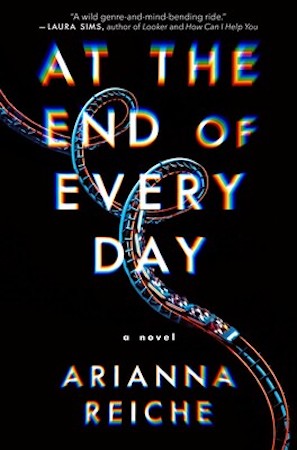
In the earliest days of the pandemic, unable to leave my London flat and working my day job atop a gradually collapsing cardboard box, I began watching videos of theme park rides breaking down and animatronics malfunctioning. Sitting there, my skin would prickle and my heart would race. I simply couldn’t get enough. Why is it that the more elaborately built our environment is, the more fragile our sanity seems to become? What does that say about the biggest theme parks in the world? And what happens in dark rides when the lights come on?
I wrote At the End of Every Day for people with the same curiosity coursing through their adrenal system, who are addicted to the eerie jolt of an optical illusion gone wrong. In my novel, Delphi has been working at an iconic and beloved theme park ever since she fled her hometown in Nebraska. But when a terrible incident transpires (involving an actress, the opening of a lagoon ride, and very realistic animatronics), the park must shutter for good. While finishing out their last weeks, Delphi and her fairytale-prince-boyfriend begin to notice strange glitches in the park, faces in the shadows, and a pull to a mysterious heat in the corridors beneath their feet.
Here are 7 books with a dark playfulness, with settings of strange innocence or nostalgia.
Kate Folk’s debut collection has already cemented its cult status with stories like “The Bone Ward”, in which romantic entanglements come to a head in a sanatorium for people whose bones turn to goo in the night, and the titular “Out There”, which depicts online dating with only a single flourish of the unreal. Somehow Folk’s debut collection, which is so full of bizarre moments, feels more like a gab session with a beleaguered pal than a work of experimental literature. But beware: once you’ve had a taste of her particular flavor of the bold and the surreal, you’ll be hungry for more.
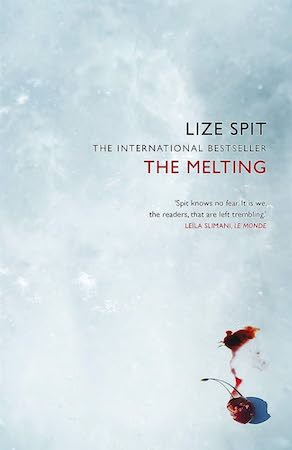
In a small and unremarkable Flemish village, three lifelong friends on the brink of adolescence come up with a riddle. Fun, right? Wrong. Belgian novelist Lize Spit’s first English translation is a heady and twisted portrait of pastoral boredom and dark mischief. Spit isn’t afraid to turn on her readers, letting them languish in a kind of luxuriant discomfort (Are these simply kids being kids, or is something much darker about to transpire?), drifting toward a punchline that is somehow both shocking and inevitable. The Melting is not for everyone—look up trigger warnings—but for those with an appetite for Benelux stagnation and the thick fog of teen trauma, The Melting is a masterpiece.
Books hyped by HorrorTok that manage to exceed expectations are few and far between— but CJ Leede’s Easton Ellis-esque debut about a deranged flâneuse who moonlights as a theme park princess is a triumph. Maeve Fly—the emotionally bereft granddaughter of a former Hollywood starlet who finds herself navigating friendships and nemeses as she grapples with some, shall we say, troubling compulsions—is a heroine whose hellish laissez faire brings to mind Brand New Cherry Flavor’s Lisa Nova or one of Evelyn Waugh’s eponymous vile bodies—cool and unmoored, the perfect lens through which to view the gorey acid trip that is Leede’s Los Angeles—mouse ears and all.
The question at the core of Kiersten White’s Mister Magic is: What are we to do with half-remembered things? Thirty years after the beloved—but largely forgotten—children’s show Mister Magic aired its last episode, former child stars reunite for a podcast untangling the mystery of the show. But why must they stay in this particular creepy old house? And why can no one—especially not Val, who lacks any memories of her early childhood—remember details about their time on the show? Eerie and addictive, White’s novel has the unmistakable aroma of Creepypasta (of course “Candle Cove” comes to mind) and prods at a truth that most people come to understand when childhood ends and adulthood begins: that communities glued together by devotion can be dangerous places indeed.
A documentary team, journeying from Paris to Switzerland in search of “Arcadia”, discovers that they’re being flanked by a quiet demon named Malasso. At the edge of a beautiful, isolated lake, on-camera host Lao loses his grasp on his girlfriend Mistletoe, who is drawn towards a fantastical elsewhere while out “adventuring” in the quiet town where they’ve camped out: think supernatural festival grounds, ethereal nighttime meandering, and vast etymologies of personal myth-making. As malevolent and beautiful forces respectively contort the psyches of Okri’s band of filmmakers, their collective story becomes a kind of firework show of poetic inner worlds… Labyrinthine and unhurried, The Age Of Magic is perfect for readers who are up for a non-traditional plot and a hefty dose of mesmerism.
There is a wing in Hell where unfinished books live. Claire, a diligent librarian, is charged with maintaining the Unwritten Wing, where much of her day-to-day involves suppressing those characters and entities who might try to materialize and escape from their liminal non-place in the neutral zone of the underworld. But when Claire lets one particular protagonist escape, she—along with a scrappy demon named Leto and her “muse” assistant Brevity—finds herself in the crosshairs of biblical warfare. If Paradise Lost was queer and funny, it would appear in AJ Hackwith’s genre-bending Hell’s Library series, which showcases the best of thoughtful, fantastical worldbuilding, and manages to celebrate the essence of storytelling with a fresh new voice.
Horrorstör takes readers on a chilling and playful journey through the manicured halls of Orsk, a fictional Scandinavian furniture store with deftly painted parallels to you-know-where. At first glance, Orsk appears to be like any other retail space, but as night falls, the store transforms into a chamber of ghostly horrors, and a group of employees, led by weary but pragmatic heroine Amy, must confront demons both metaphorical and very real. It makes sense that BookTok has recently rediscovered Horrorstör, which was originally published in 2014. The book itself takes the form of an IKEA catalogue, it’s playful and captivating, even when riffing on the absurdity of our modern retail compulsions. Only Hendrix could bring such metafictional mischief to a work of social commentary.
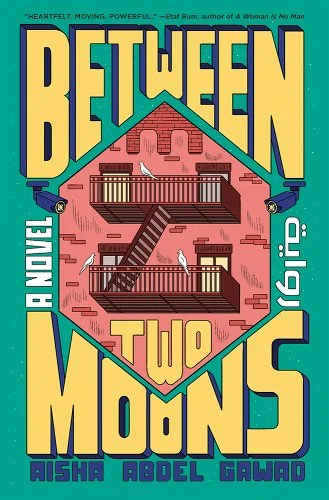
Aisha Abdel Gawad’s debut, Between Two Moons, is a striking novel about being an immigrant and Muslim in post-9/11 America, about battling the blasé of youth with the burdens of womanhood.
It’s June. Muslims in Bay Ridge, Brooklyn are ready to welcome with fervor the holy month of Ramadan. Twins, Amira and Lina, are only half prepared for the hunger and thirst pangs as they are days away from graduating high school, their minds swirling with plans to make this summer count. This will be the summer of freedom, before Amira heads for college in the Fall. This will be the summer of possibilities, where Lina finally kickstarts her modeling career. This is the summer they recreate themselves, away from their parents’ gaze, trying on identities like clothes to see what fits. Life, however, has its own plans.
On the first day of Ramadan, the café across from their apartment is raided. The air buzzes with gossip, speculation, and the all-too-familiar Muslim fear of being under surveillance. There’s uproar in the Arab-American community, and for Amira and Lina, there’s turmoil at home too. Their older brother, Sami, has returned from prison. Early parole, good behaviour, his lawyer said. But nothing about his demeanor seems good. Sami is quieter, more withdrawn. The sense of danger lurking around the corner heightens when Lina becomes entangled with a man who promises to launch her modeling career, and Amira meets Faraj, a Pakistani boy who progressively begins to take more interest in Sami.
Aisha Abdel Gawad has been published in The Kenyon Review, American Short Fiction and has also been awarded the 2015 Pushcart Prize. Currently, she’s a high school English teacher in Connecticut, a fact that seems to have lent her some insights into her teenage protagonists and their complicated relationship with social media.
Aisha tells me her ultimate hope with her work is to make people feel seen. To her, I’d say, mission accomplished. As a Muslim writer, raised in a fairly conservative home much like Aisha’s twin protagonists, watching them fumble their way into semi-adulthood and find their own equation with their faith has been affirming. Likewise, my conversation with Aisha felt restorative—on performing gender, authenticity in the age of social media, the anticipated violence of being a woman and being Muslim in a surveillance state.
Bareerah Ghani: I wanted to start with Amira and Sami and their dynamic. I find that it reflects this imbalance in their parents’ treatment of them. As the son, Sami is often seen being given special attention even when he’s not being volatile and causing trouble. It’s sort of disturbing to watch Amira feel like she has to make herself small in front of him. Can you talk about how you perceive such sibling dynamics in connection with Arab familial values? Do you think it’s a product of how in some Eastern/Middle Eastern cultures sons are given an elevated status in the family?
Aisha Abdel Gawad: So Sami does have this sort of precious status as the son and as a son who was taken. His trauma is something that everyone tiptoes around. And of course this idea of sons being particularly prized is a real part of Arab culture, although I’m not sure it’s entirely exclusive to Arab or more Eastern cultures. I think that actually Western societies do the same thing, but in different ways. I was interested in exploring how I think children learn gender, and how siblings often practice on each other before they go out in the world and perform the gender values they’ve been taught.
BG: Speaking of performing, there’s this idea of inauthenticity that forms the undercurrent of the narrative. Everyone’s maintaining a facade. Sami and Faraj are performing the roles they’ve been assigned by their fates. Even between Amira and Lina, they’re twins and they share everything but there are moments where they try to create a certain persona in front of one another. How do you perceive this idea of authenticity? I’m wondering if you can speak to it in connection to Arab culture, the Muslim identity and its various perceptions, and, of course, the age of social media.
AAG: I think of it on a base level in terms of teenage girls of any faith, background, race. Teenage girls are always performing different versions of themselves, testing out different identities, kind of seeing what sticks and also, what do people like? What gets me attention? What feels affirming or validating? And so we see the two sisters doing that a lot in the book, trying to see what’s going to make them feel valued. And unfortunately, as a lot of young women experience, they don’t often feel valued in the world. But one thing that was important for me to show is that they feel valued when they come back together. They kind of serve as mirrors to one another, and they can let down their masks and really show each other what their real value is. I also think there are moments when their parents and even Sammy, later on in the book—the family unit—gives them that value. But you’re right. They’re not the only characters who are sort of performing. I think Sami performs what he thinks a tough, Muslim man should be. He doesn’t really know how to express his emotions, how to be vulnerable. And in the very rare moments where he can let down his guard, that’s where we see him rebuilding these bonds with his family members.
I love that you also asked about social media. I teach high school English, so I watch teenagers all day long. It’s just an element of their coming-of-age that I did not experience—not having social media as a teenager. And there’s this extra layer of almost never being off the clock, like they’re always performing. And then, of course, the social media also adds a layer of surveillance, which is another theme that I was kind of playing with in the book. They sort of surveil and record themselves for the world.
BG: You know, it’s really interesting that you touched upon the girls’ need to try on identities. I found Amira quite relatable in the duality she feels within herself. She wants to be a good daughter, to not “abandon her tribe”. But then there are moments where she’s desperate for room to explore her authentic self outside of, you know, the noise of cultural expectations. I thought this hits home for many young Muslims, particularly women. To what extent do you think it’s possible to reconcile these opposite desires when you’re entrenched in a collectivistic culture?
AAG: So I think there’s two things that Amira can always fall back on—her family unit, and her faith. Those are her safe places. She doesn’t always know that at the beginning. She wonders a lot about what it means to be a good Muslim and if she can be the type of woman she wants to be and be a good Muslim, the way that other people would define it. I think one of the things I was hoping to explore is to take the reader on this journey with her where, even after she does some pretty, self-destructive things she finds safety in her faith, and that it’s always there waiting for her. And so I think this idea of her as a woman in particular, being able to cultivate her own relationship with God that no one else can touch, and that will always be there for her was really important to me. I didn’t want to tell a story about a Muslim woman oppressed by her religion, or has this sort of like, I’m going to rebel against my faith. And I’m going to drink. The girls do drink sometimes, but it’s not so much in rebellion against their religion. It’s more like on their journey to figure out who they are and faith is always there waiting for them to kind of come back on their own terms.
BG: I love that. I was very taken by this idea of the girls trying to balance their faith, but also trying to experiment, and indulge in all these practices that aren’t part of their religious teachings, like alcohol, and premarital sex, and to them this is freedom. And I can understand given that they’re being raised in a fairly conservative Muslim household. I’m wondering how you deconstruct the notion of freedom and agency when it comes to the Muslim experience in a non Muslim state.
Teenage girls are always performing different versions of themselves, seeing what sticks.
AAG: I think at the beginning of the book the girls conflate freedom with things like drinking, dating. At one point Amira has this fantasy of going to Europe and riding on the back of a Vespa with some cute boy, and I think what she discovers is that’s not freedom at all. And, in fact, there are these different cages that she enters as a woman in the world. And that the world is, in fact, a very dangerous place, no matter what your identity is as a woman. Just to be a woman in the world is to be in danger. I think that one of the things she struggles with is redefining what freedom is. And I’m not sure she ever feels free in this book but I think she begins to redirect in thinking about how she can liberate herself by developing her own relationship to God. And how can she develop agency in her own family. And then there’s this sort of wider thread of being a Muslim American at a time when Muslim Americans are facing threats from dominant society. What does resistance to that look like for a young woman?
BG: The novel has a haunting throughline of women of color being violated and exploited. Issues surrounding consent or lack thereof and bodily autonomy surface in different ways. How do you think women of color can assert themselves given that many like Amira are groomed to not take up too much space and how this warped exoticization of women of color can be tackled?
AAG: So these two sisters, as I said, all they want to do is to leave Bay Ridge and discover freedom. But what they discover instead is what I consider the anticipated violence of being a woman. The violence that’s a kind of a threat that’s always out there lurking, like the threat of something that could happen to you that hasn’t yet happened, or the ordinary violence embedded in daily interactions and relationships. The weight of that is something that these two sisters discover.
And you know, you ask, what can women of color do? Well, there’s really no escaping it, right? There’s nowhere they can turn except towards each other. So that’s one of the reasons why I kind of have this movement in the book where the girls kind of go in their separate directions out there in the world, and then sort of collide back into each other. I think the place where they can find some semblance of liberation is in their relationship with each other. So I try to think about how women actually cultivate relationships with each other, and the power of those relationships. And, in fact, there’s even a part in the book where Sami is so isolated. He has no one to share his emotions with. But the girls do. So how can women use the power of their own relationships that I think they forge in a shared trauma? And how can they use that to lift each other up?
BG: This reminds me of that moment in the book where the girls are at a party that’s just for women. That scene is buzzing with this loss of inhibition that I felt occurred because there’s this complete freedom from the male gaze. And at least in my experience and understanding, in this part of the world, there’s almost a cultural necessity for women to be hypersexualized in the public eye, so I was wondering what you think about spaces reserved for just women and feminine energy. Do you think there’s value and sustainability in cultivating in such spaces?
There are these dual ways Arab Muslim women are being surveilled and watched. How can you grow under such intense scrutiny?
AAG: Absolutely. I think in the society that we live in, the idea of a space where women can be, or where women can even just take a momentary break from feeling that threat of violence that’s always lurking, is really essential. I think women have to spend so much energy protecting themselves from these external forces. We can’t always express ourselves, it’s not always safe. We’re not always heard, right? Sometimes the ways that we’re conditioned are to perform what we think men want from us, and of course we do that to an extent among women too. But I do think there’s tremendous power in female friendships and in sisterhoods where women can go inward. So that’s one of the things the girls want—they want to figure out who they are, and they can’t really do that out there in the world, but they can do that sort of inward by kind of reflecting each other back.
BG: I find the novel is powerful in its critique of the US as a surveillance state. Particularly poignant is the depiction of Muslims having to walk on eggshells because we’ve been placed under extreme scrutiny post 9/11. As a writer, how do you contend with this reality where Muslims are always cognizant of being a minority that will most likely not be afforded the same opportunity for justice as we see toward the end of the book?
AAG: It’s one of the reasons why I wanted to write a sort of classic coming-of-age story. I wanted to layer on top of that classic story that we’re all so familiar with, this feeling of surveillance. We talked a little bit about the threats that women face as they go out in the world, as girls become women. But then you layer on top of that the fact that they’re Arab and Muslim women in this post 9/11 America. So there are these dual ways they’re being surveilled and watched. How can you grow under such intense scrutiny? With this feeling that someone’s out there baiting a trap for you, waiting for you to walk into it which is, I think, how a lot of Muslims have felt.
Before 9/11, I think a lot of Brown Muslims in particular wanted to believe they were some sort of model minority, and that dream, which was always a fallacy, has really been punctured by this feeling that the state that we live in, this government, is baiting a series of traps, and we have to try not to fall into them. And that can breed intense paranoia, distrust. It can make you question your own cultural instincts, you know? One of the things I think about is how Arabs and Muslims treat strangers, how they welcome people and my characters question that very impulse, that very value. Can I do this? Is this safe? Who is an enemy?
I wanted to play with the construction of the enemy itself. Muslims have been painted as the worldwide boogey-man for two decades now. And I wanted these Muslim characters to be sort of grappling with, who is our enemy? We can’t see it. We can’t identify it. It’s sort of a specter that lurks in their lives.
BG: Yeah, like a phantom. And it’s ever pressing. I feel like that fear, that anticipation of what’s around the corner has shaped a lot of Muslim lives now, especially Muslims growing up here. It’s made them into a certain kind of person that they wouldn’t be if there wasn’t that fear where you have to think two steps ahead.
Just to be a woman in the world is to be in danger.
AAG: Yeah, exactly. I think about that too. How fearful it has made so many generations of Muslims in America. Sometimes I wish Muslims were more active in solidarity. I think part of what’s successful about the state surveillance project is that it has really made us very afraid. So many of us just sort of try to keep our heads down and accept the treatment that we’ve been dealt, and are also too afraid to stand up for anyone else.
BG: Yeah, because you’re consistently fearful of the consequences.
AAG: Yes, definitely. And there’s also too many examples of people whose lives have been obliterated in these last two decades that sort of serve as this stark warning to Muslims not to fight back
BG: Absolutely. In the book too we reach a point where the three siblings come face to face with this fear and the consequences of having thrown caution to the wind, especially with what happens to Lina in that motel. After that, they impose a self quarantine, and we watch the siblings come toward their faith. Given that we were just talking about how Muslims can contend with our reality, I am curious about your thoughts on faith as a source of healing.
AAG: Yeah, that’s also part of the reason why I wanted to set the book during Ramadan. At the beginning of the book, Amira sees religion, and she sees Ramadan as just a thing she and her family does, a thing people in her neighborhood do. She doesn’t really think too hard about it. One thing I wanted to play with is the fact that Ramadan is an intense time of self-reflection. Of course, there’s an aspect of deprivation, of physical hardship to the fast. But really, it’s about this idea of purifying your mind-body relationship to God. And I wanted to have moments where Amira is seeing that aspect of her faith in a new way, where she’s actually able to feel clarified and cleansed through her own religious practice and through watching her siblings be on their own, parallel journeys with their faith and healing. They’re supporting each other in that healing too. Sami will wander away to the window and the girls will coax him back, and they pray together. And so it’s this idea of creating space for each one of them to heal within their own religious practice.
Author’s Note: I have chosen to publish this essay pseudonymously to prevent retribution from my ex-husband – a very real threat faced by survivors who choose to speak out. I don’t want to be anonymous, and it’s hard not to feel like the byline is one more thing he has taken from me. But my freedom is more important than credit. And with that freedom, not even he can stop me from telling my story.
As usual, the man rolled his shopping cart up to the empty stretch of sidewalk across the street from my apartment around 11pm. I put down my book and watched from the fire escape as he laid out his sleeping pad and lit a cigarette. We exchanged a nod and the small, knowing smile of two sentinels who could see everything because almost no one ever saw us. I watched as people stepped around him, averting their eyes, and he watched as people spilled from the bakery beneath my apartment, never looking up while I peered down at them.
His arrival was my signal to go to bed, to try and squeeze in as much sleep as I could before my husband got home from his bartending job. As usual, I went to sleep filled with dread, waking with a start when the front door of the brownstone banged shut downstairs. Heart pounding, I studied the sound of my husband coming up the stairs: how uneven his footsteps, whether he stumbled against the wall or merely leaned against it as he walked, how much his key scratched around the lock before he managed to find the opening, and the click.
Perhaps if I willed myself to look asleep enough, tonight he would leave me alone.
But soon enough, there he was in bed beside me, pressing up against my back and reaching around to fumble between my legs. His breath was hot and rank; old beer and whiskey and cigarettes smelled like something had died in his mouth. And when I said no, the space between us thrummed.
He yanked the blankets off me because I didn’t deserve them. He yelled at me, called me a bitch, reminded me that he worked his fingers to the bone, made more money than I did, and still, the house was a mess, I wouldn’t have sex with him. I was useless, useless, useless.
His breath was hot and rank; old beer and whiskey and cigarettes smelled like something had died in his mouth.
Before I married him, I didn’t know someone could be so drunk that their mind was gone while they were still awake. I couldn’t find the sweet man I’d married, who’d once cried and told me that sharing a bed with me would be the greatest thing he could ever do. Instead, as always, I began to feel that it was my fault he was so tortured, and if I gave him what he wanted, he would be better, everything would be better, and I could finally go to sleep.
I felt like a piece of furniture when he put himself inside me. Countless nights had taught me that the best way to survive was to wait, because you can survive anything if you know it will be over. But when his dead-animal breath overtook me, when it hurt, really hurt, my resolve broke. I begged him to stop, but he never did, so I studied the wall inches from my face, eyes focused on the frail marks the headboard etched into the paint.
When he finally fell asleep, dawn prickled under the borders of our blackout curtains. I pulled on the massive, fuzzy robe I bought for him one Christmas and climbed back out onto the fire escape. The city felt shocked by the end of the night, the pink morning light reminding me of a cheek freshly slapped.
My friend across the street was still there, sitting in the same position, smoking another cigarette. We nodded at each other again, and I wondered what he saw when he saw me, naked under an oversized robe at dawn, my eyes puffy from crying. Did he also see a useless woman?
My own continued presence in that apartment, where the same scene played out night after night no matter what I did to try and stop it, made me feel that perhaps I deserved it. That perhaps this was the story I was meant for.
Increasingly, I had come to feel that I was living in two timelines: the life I lived during the day, when I was successful and competent, and the shadowy nighttime world. My memories split into two tidy columns, making it possible for me to function during the day without the dread of him coming home each night eating me alive. But it also made it nearly impossible for me to recognize how bad things really were, because I defined reality by the daytime. I was a young professor who urged my students to interrogate their lives within the context of larger political issues, who taught feminist texts and assigned think pieces on rape culture. I couldn’t possibly be the woman who was so used to falling asleep with a belly full of dread that it had become normal. The woman who told herself it couldn’t be rape if she deserved it.
Whatever the man across the street saw, I wanted him to see it. I wanted my bare legs and my tear-streaked face to say, it happened again, and for him to nod and gather his things. I didn’t know how to begin the work of telling, but I needed to be seen so that it would exist in the world where the rest of my life happened.
A few hours later, I went to work and willed anyone and everyone to see my tear-swollen face and ask if I was okay, but as usual, no one did. Perhaps, I thought, I was useless at everything but hiding it. Or perhaps I really was living in two realities at once: the one where I was being hurt and the one where it was all a dream.
It’s been three months since I finally left my husband, but sleeping through the night still feels like a miracle. Every morning, my room in Tangier’s Hotel El Muniria floods with light and the mingling smell of sweet mint and salt I’ve never encountered anywhere else. From my window, the haphazard mosaic of whitewashed city walls ambles down to the Strait of Gibraltar, glinting turquoise. I climb to the tiled rooftop, where lines of brilliant white sheets hanging to dry billow in the sun-warmed breeze.
I picked this place for my month in Tangier mostly because it was once the flophouse where William S. Burroughs wrote Naked Lunchamidst an opium bender for the ages. Though it’s extraordinarily pleasant now, family-run and smelling of bleach and fresh drywall, its windows trimmed in blue paint and pink-flowered vines, it seems fitting for a trip where I feel like I’m running from something.
I didn’t know how to begin the work of telling, but I needed to be seen.
I spend my days doing whatever I want, which usually involves writing at a small table outside Cinema Rif, eating tiny marzipan pastries from my favorite bakery and raspberries from the old women who come by selling fruit from wicker pallets. In the evenings, I drink hot mint tea at cafes overlooking the Strait, listening to Arabic rap thumping from the boom boxes of young boys at nearby tables. I stroll home with chicken kebab that I share with the one-eyed kitten who stalks the alley beside the hotel, having learned quickly that I am a sucker.
Everything good feels uncanny. Like I’ve somehow stumbled into an alternate universe where I feel so much like myself, even if she is a person I can’t yet describe.
When I climb the stairs to my room, portraits of William S. Burroughs follow me with their eyes. He fled to Tangier in a cloud of scandal in 1954, after accidentally killing his wife in a botched game of William Tell. Tangier was still the Tangier International Zone then, a political and economic no-man’s-land under the joint administration of France, Spain, and the UK where outcasts and refugees mingled with merchants, kif-peddlers, and counter culturists. A place that was no place, or perhaps a little bit every place all at once.
I wonder if, after doing something as horrific as killing his own wife—even by accident—Burroughs had the feeling that he was carrying around memories that couldn’t possibly all fit into one story. Perhaps Tangier in 1954—a place where all things could be true, where Jews and Muslims and Christians traded in the medina and Beat poets boozed while the evening call to prayer echoed through the city, where it was just as easy to buy a gram of kif as a prayer rug or a copy of the Financial Times—was the only place where the chaos of his outer world seemed to align with his inner one. Did it seem impossible to him that he could contain memories of loving his wife and of killing her? Of being happy and of being destitute, hooked on opium and writing madly in a shabby room overlooking the Port of Tangier?
To me, Tangier is the opposite of a place you go to be miserable. Here, I feel free for the first time in a very long time. But on nights when I lean out my window, watching the port twinkle and listening to card-playing men shouting amiably in Arabic in the alleys below, I feel what I imagine Burroughs might have: that my new reality is completely unreal.
And perhaps the most unreal thing is me. When a friend texts to ask how I am, I reply without thinking, “I feel light.”
I can feel it in my body, a nimbleness as I weave through the crowds in the medina, as I scale cliffsides overlooking the Strait, even as I sleep at night. It’s like a different world has opened up inside of me.
In the years that follow, I search hungrily for freedom. I build a life where I am anything but useless, anything but trapped: I learn to surf in Santa Cruz, swim in Oregon’s frigid Cascade Lakes, and camp in the rainforest in Washington State. I change careers so I can become a digital nomad. I climb a volcano in Bali and cook breakfast in a hole seeping steam from the side of the mountain. I trek through the jungle in Borneo to see wild orangutans and learn how to yank leeches off the backs of my knees. I ride a motorcycle through the mountains on the Thailand-Myanmar border. I watch the sun rise at Angkor Wat.
And I feel my memory splitting again. Where I had once divided my story between the things I could bear and those I could not, now my memories feel split between being a prisoner in my life and living expansively. But it doesn’t feel as simple as a life divided into two eras, because there is no way these extremes could exist in one lifetime, in one set of memories.
Here, I feel free for the first time in a very long time.
In Malibu, a friend brings me to a canyon just off the Pacific Coast Highway. We hike deep into its crevices, rock scrambling barefoot beside a waterfall long past the trail’s end. We emerge dusty and sweaty and triumphant onto the beach just in time for a vermillion sunset, and I sit on the sand and cry. I can’t believe, I tell him, that days like this were an option the whole time. That I wasted so much time being miserable. But what I don’t say – what I am too afraid to say – is that it feels like maybe this new, beautiful present couldn’t possibly be real.
No matter how many cups of mint tea I drink or mountains I climb, I still define myself as the girl trapped in a body that a man mistook as his to play with. How is it possible for that girl to be making memories of haggling over black olives in a Moroccan market or sitting on the beach in Malibu with canyon dust and sand mingling between her toes?
But then I start to get used to being free.
Somewhere along the way, without even realizing it, I begin to accept that I deserve the life I’m making for myself. And the more I accept this, the less my past makes sense. It doesn’t seem possible that I once shoehorned myself into an existence smaller and more painful than I deserved. I feel more and more like I have someone else’s memories rattling around inside my head—a haunting I can’t exorcize.
In my new career as an editor, I make a niche working with memoirists who survived domestic and sexual violence. So many of them see their stories as “healing journeys” and want to illustrate how they transformed pain into enlightenment. It’s a noble goal, and I’m all in. Finding the structure in other people’s chaos calms me. Perhaps if I can’t make sense of my own experiences, I can at least help other people make meaning out of theirs. We graft their healing onto the plot arc that most readers intuitively know, finding the places where their pain resembles a call to action, rising action, falling action, climax, resolution. But more and more, I feel like something is missing.
The plot arc acknowledges that a journey is anything but a straight line. There is always room for diversions: a protagonist thinks they have it all figured out when they actually have no idea what they’re doing, or a nemesis rises again. But the goal of the arc is to drive a story to resolution, to move from chaos to reason. And though I love the feeling when things click into place in a client’s plot, it only makes my story feel more estranged from reality.
I feel more and more like I have someone else’s memories rattling around inside my head.
My trauma and healing haven’t felt like one cohesive story at all. It’s more like a choose-your-own-adventure novel read cover-to-cover. This makes me doubt everything: whether my memories of the past are true, whether my experience of the present is true. I feel like I must be crazy.
I start inhaling multiverse stories because they are the only ones that even remotely approximate how scattered mine feels. But from Matt Haig’s The Midnight Libraryto the Marvel Multiverse, each story shoehorns itself into cohesion. Time after time, the chaos of infinite timelines makes way for a tidy plot arc, making the multiverse little more than a fun trick to awe the audience or a handy metaphor for one tired message: that we should appreciate the life we have. As someone who is infinitely grateful for having jumped from one life to another, that just isn’t enough for me.
I don’t know much about Everything Everywhere All At Once, except that it has something to do with the multiverse and Michelle Yeoh looks like a badass on the posters—reason enough for me to hustle to a late-night showing. For the first hour or so, I resist its chaos, trying to grasp any details that could help me create a structured, reasonable view of what’s going on. But then I settle into the onslaught.
“Yes,” I think, “Yes—this is how it feels to be alive.”
I’ve always known, of course, that I did not actually jump from one timeline to another.
I’ve always known, of course, that I did not actually jump from one timeline to another. I’m not even sure that I believe the multiverse is real. But to me, it’s not a narrative trick. Saying that I carry memories from wildly disparate alternate universes is the closest I can come to describing what it’s like to be in my mind.
And I love that, in Everything Everywhere All At Once, I am finally encountering a story that doesn’t resist how wild that is—and how devastating. I find myself identifying with Jobu Tupaki, who is so overwhelmed after encountering literally everything that she concludes that if everything exists, nothing matters. I had become so overwhelmed by the extremities of my experiences, I had started to worry that nothing was real, not even the things I knew to be true about my life.
Perhaps, I realize, that’s why I love travel: everywhere new feels like an alternate universe, where the chaos outside matches what I feel inside. And I can finally feel like I am part of the real world.
The movie ends after midnight. I walk through Union Square with my new partner, a man who jumps worlds with me as easily as some people cross the street. Who loves my hauntings as much as my dreams. Who will be on a plane to Bali with me in a few short weeks.
I cut the relative peace of the late-night city air, holding forth about why this movie is so different. When I get to the part about how other multiverse stories are a vehicle for the cliched adage to “love the life you’ve got,” he stops me.
“Isn’t that what Everything Everywhere All At Once tells us to do?” He says. “Doesn’t Evelyn return to her original timeline with a greater acceptance of what she has?”
I’ve gone back and stood where the man used to sleep across the street from my apartment, looking up at my old window.
I consider this. He’s right—she does finish the movie accepting, even loving, what she has made in her original timeline. But the movie resists the tone of everything coming together neatly. The last scenes embody the instability of outcomes in a world where everything isn’t just possible, it’s real. More than that, Evelyn is changed not just by what she’s seen in other lives she could have lived. As she brings Jobu Tupaki back from the brink, she must grapple with the fact of everything, and in doing so, let go of the rigidity that bound her in her original timeline. It’s the chaos itself that changes her.
The apartment where I was raped is less than a ten minute walk in the other direction. As always when I’m in New York, I feel its proximity like a black hole with an uncannily strong gravitational pull. A few times over the years, I’ve gone back and stood where the man used to sleep across the street from my apartment, looking up at my old window. More than anywhere else in the world, that little square of asphalt seems to hold the possibility of infinite universes for me. Because when I’ve stood there, being a visitor from an alternate universe is the only way I can explain the pleasant curtains some stranger has hung in the window of the room where I was raped.
Or the fact that I can just walk away.
But now we’re headed uptown. As always, the Village is eerily quiet this late on a Tuesday. As always, the rain-slick street reflects the scattershot lights in windows up above. When I take off my glasses to wipe them clean, it’s almost impossible to know where in the fuzzy, twinkling world the buildings end and the street begins.
It could be five years ago. Except that it isn’t.
It occurs to me that I am now a woman who knows the many universes inside of her. I am free now, but not terribly long ago, I wasn’t. And I wouldn’t be what I am if it weren’t for that other universe I had to escape—because I shaped the life I’ve made with the knowledge of how I never again want to live. Knowing that all things are true—the realities you have made and the realities you have escaped from—works its way into your identity, as you carry the memories of other worlds and the other people you have been, in all their pain and triumph.
Perhaps that is the best resolution of all: accepting that the chaos of everything we have experienced, every person we have been, is true.
Jimin Han is a master of telling unique and compelling tales through fascinating storytelling techniques. Author of A Small Revolution, Han’s latest offering is part ghost story, part mystery, part family epic, and part humorous travel adventure.
In The Apology, 105-year-old Jeonga has a bone to pick with almost everyone. Having sacrificed her own love and happiness as a younger woman to save the family’s reputation in Seoul during the Korean War, now Jeonga clings to the walls of safety she’s built with clenched hands.
So when she receives a letter from a grand-niece in America that threatens to destroy the family’s reputation and excavate long-buried secrets, Jeonga springs into action, traveling the U.S. to avert disaster.
Yet when she is hit by a bus and sent spluttering into the afterlife, Jeonga must attempt to communicate with the living and save her youngest progeny from a terrible fate. To do so, she must relinquish her obsession with controlling other members of her family, and apologize once and for all for creating this tangled legacy of secrets.
I spoke to Jimin Han about her familial history of the Korean war, writing a ghost story, and the discourse around Asian American literature.
Kim Liao: I have to ask about your daring choice to kill the main character, Jeonga, in the first chapter. Much of the book plays out after her death, moving forwards and backwards in time. I was curious, why did you decide to do this?
Jimin Han: I have this memory from when I was a girl of my great aunt at a cemetery, crying, and I didn’t understand how she was connected to our family. I knew that she was at her son’s grave and that he had died in an accident. And I didn’t know anything about it. But that memory stayed with me.
I was writing what I thought would become a memoir about my grandmother, who was separated from the rest of our family in North Korea. I learned later that this great aunt was her sister, and that my grandmother was disinherited from her family because of her choice to marry my grandfather and go to what’s now North Korea.
However, because of the Korean War, this man my grandmother left her family for was forced to leave the northern part of the peninsula to avoid conscription into the army. So she lost both the man that she loved and her birth family in South Korea. I always thought there was a story there.
After my mother died and A Small Revolution was published, I was looking for something else to write. COVID hit and all of a sudden we were all talking a lot more about the possibility of death. It was all around us. A friend of mine had a brain tumor, and was diagnosed with Stage 4 brain cancer—and he was also working on his second novel. We started to meet on Zoom each week, and the idea of the afterlife came from these conversations we had. We were all sort of like living with this threat every day.
By making Jeonga 105 years old, it was a way to make death less threatening in some ways, to be less frightening. I mean, we feel sad if a 105-year-old dies, but not in the same way we would if somebody were younger. That was my way of trying to work around my fears, and trying to face those thoughts after my mother died and feeling scared for my friend facing mortality.
KL: In The Apology, the legacy of family secrets plays out over several generations in both Korea and America. I’m curious about how you feel like that act of immigrating affects these types of family dynamics. Is there something about being on two different continents that shifts things?
JH: For a big chunk of my childhood, it was hard to travel to Korea, where I was born. My first time back was when I was 18. My mother had been a doctor in Korea, and she couldn’t continue her practice when she was here because of the cost of travel. We also didn’t have the support of extended family. But she had a friend who was a doctor, and her friend would go to Korea and practice medicine for half the year and live with her family for half a year. I remember hearing in my mother’s voice that she wished she could have had the same thing because she loved being a doctor.
So what strikes me is how that has changed, and how these days, depending on where you are, there are more flights back. It’s more possible for people to go back and forth more.
Our world is much smaller now. I had a teacher from high school who when she turned 70, her best friend gave her an airline ticket to Tanzania. Her whole world had previously just been confined to the States. But because she got this airline ticket, she went to Tanzania with her friend. She came back and started learning Arabic. Then, she started tutoring English and had an Arabic language exchange with a young man, and helped someone in her city studying from Kenya. She eventually went back to Tanzania. It completely changed her outlook. She even climbed Kilimanjaro. That was all at 70 years old.
This makes me think there’s never a time when it’s too late to travel or do something new. If Jeonga is 105, then it’s never too late. Actually, along those lines, she’s still trying to affect the outcome of her legacy, trying to right some of these wrongs in the family.
KL: Yeah, there are a lot of questions in this book about karma, legacies, and redemption. Do you think that redemption is always possible?
JH: I have mixed feelings about it. We don’t know. But as long as someone’s willing to try, then that’s something. This was one of the last things my mother said when my father ended up taking her to Korea after she got sick. It was hard for us to accept that decision he made because it meant we wouldn’t be with her when she died.
But this idea makes me think that it doesn’t mean it’s already decided—like fate. It may mean that some things are in your control and some things are not in your control. I like to think that you can do more, that there’s more change that you can actually make.
I like to think that there’s always something that could happen that could be done. We just might not have thought of it yet. We don’t know what to do today, but maybe we’ll think of it tomorrow. How could we possibly know everything?
KL: There is a compelling mystery in the book about what happened to Jeonga’s younger sister Seona, after she ran away from the family and eloped to North Korea. How did you research this? Was this common for families to be separated and then have the border close during the Korean War and never see each other again?
JH: In terms of families being separated, I think about my uncle’s family. My uncle’s family had one brother who lived in the northern part of the peninsula, close to what would become the DMZ. His younger siblings were in Seoul. When they started to hear rumblings about fighting and the border closing, they all moved together as a whole family. But then when they saw that the U.N. forces were going to bring all this firepower they all moved back across the border, to the north side.
For my mother, the boundary between life and death seemed much more pleasant.
There was so much uncertainty. There was so much news changing every day. Then the family moved back to the south side. By the second or third time they had gone back and forth, it became clear that the U.N. was going to support the U.S. forces, and they didn’t want to support the communist political factions that were trying to get support from China and Russia.
But then when the fighting increased again and the DMZ border was moved south, it was too late for my uncle’s family to move. Which side were they on? They were on the northern side! His uncle came and took him as a 15-year-old boy, and they walked to get through the border back to the southern side. So he never saw his family again. I think there were a lot of those kinds of stories.
With my father and his father, they didn’t move back and forth as much. They didn’t have the economic means. They waited till the last minute and realized they didn’t want to fight on the side of the communists. So my father and his father, they also walked south very late in the conflict, and they saw people dying on the side of the road. He had to leave his mother and sister behind—my grandmother and her daughter. So I’ve always wondered about them.
Thinking about the legacy of the border and the DMZ and this sort of uncertainty, I had all of this material and, and I wondered about what it might be like for someone whose mother was now not only cut off from the man she left her family for, but also was isolated in this place. And I’ve always been told that I look like my grandmother. So I was thinking about borders, boundaries, death, and what it’s like to feel cut off.
KL: One image that really stuck with me was the persimmon with the bite taken out of it that Jeonga finds. What’s the importance of persimmons for you?
JH: My mother loved persimmons and I have a love-hate relationship with them. I’ve always wanted to like them, but she loves them. There were a lot of Korean foods where my mother would say, “Here’s something you’ll love.” And sometimes I loved those things, but other times I couldn’t understand why she liked them.
With persimmons, it’s very important how ripe they are, because an unripe persimmon can really hurt your mouth. It’s really hard to get it just right. There’s a moment when it’s good, and the next moment it’s mushy.
She was that way about melons, too. My mother always knew in the grocery store exactly when a melon was right. So there was a bit of a metaphor there, perhaps there’s something about having it just right and being able to be fooled—like I feel like I’m being fooled in some ways. Jeonga is a difficult character, so I was thinking about ways that she might be fooled, and ways that everyone could be fooled.
KL: What might you want to speak to about shifting perceptions of Korean American identities or how the community has evolved over time? Do you feel like there’s a difference in how younger generations think about Korean American identity versus, say, when you first arrived in America?
JH: I’m relieved to hear more and more conversations about the complexity of being Korean American. Other people in this country have been afforded that complexity. I think that the more stories we can have out there, it will add to this notion that there’s an intersectionality to every aspect of identity. People think that they know somebody else and can make decisions about them, and about the value of human life. I’m glad to be having these conversations even as they are really difficult.
Ghosts shouldn’t be feared, but just accepted as part of our lives.
I’ve always felt like an outsider in every way. I didn’t grow up in a large Korean American community, so I don’t always feel like I’ve got my finger on the pulse of what that is, but I also love being with other Korean Americans because then there’s other things we have in common.
There have been conversations recently about how there are more books about Asian Americans published. But are they all getting the marketing and publicity and support that they should? Like, could there be tokenizing? I feel like there are a lot of stories, but then still only a few get amplified. But it’s exciting to see more Korean American novels out there. I just hope that continues.
KL: Jeonga doesn’t feel like a traditional ghost to me. And this doesn’t feel like a classic ghost story. How do you feel about ghosts?
JH: You know, for my mother, the boundary between life and death seemed much more pleasant. I guess it just seemed much more permeable. The way my mother would talk about it, ghosts shouldn’t be feared, but just accepted as part of our lives. Again, it goes back to what we know. Why do we think we know everything?
So I wanted Jeonga to not be a scary ghost. Anyone could be afraid when they feel her trying to make contact with them, but she’s just trying to help. I thought she would be so mad to have died before she could finish doing what she needed to do.
I’ve had dreams of my mother since she died and they were comforting. In the dream, I was always so happy to see my mom. So I hope she comes back; I hope I dream about her more, because every time, I feel like she’s right there in front of me again.
O Sinéad—you are dead &
the headlines beside you are all
interest rate increases & thermal
hellscapes. I am new to the prairie
but even the New York Times thinks Duluth
is the place to be in the Anthropocene;
climate-proof, they dubbed it:
ample freshwater & buffered
from sea-level rise. Sinéad—
I am listening to “Just Like U Said
It Would B” on repeat & it was exactly
that when you called out misogyny,
excessive commercialism, sex abuse
in the Catholic church, a climate scientist
who says now all the projected changesare happening, & this morning to beat
the record temps, I woke before dawn
to walk backroad shoulders littered
with crushed Bud Light cans & sandwich
clamshells & skittering chip bags tossed
from car windows into Queen Anne’s lace,
purple chicory still folded in
on itself—it’s so early the sun is just
rising wildfire orange over the tracks
draped in kudzu, & Sinéad, the invasive
species are everywhere—the spotted
lanternflies too that I’m supposed to kill
on sight, but who has the heart
for that kind of violence. I wish
I had your conviction & righteousness.
Instead of thwacking them, I’ve been
trapping them under drinking glasses
until they suffocate & the radio
is playing “Nothing Compares 2 U”
all day as tribute while their delicate
pinkish polka-dotted wings are still
beating, & Sinéad—I think you might
like the farm across the road with
a Manure Happens sign out front,
& even the green barn with punched
out windows next to it the neighbors
call the meth lab, maybe as a joke
or maybe not. Sinéad, you were
always right—nothing compares
to you—not even the climate
apocalypse. But I’m still here
with my similes. This July is the
hottest month on Earth since scientists
have kept records. This week
the ocean off the coast of Florida
reached 100 degrees Fahrenheit—
a toddler running a low fever,
the temperature of an average hot tub.
Sinéad, you sing I will learn how to sink & to swim, & your voice is
an emergency, triple digits, summer
asphalt, breath blowing charcoal
briquettes to life.
It’s the year 2014, and the sounds of “Dark Horse” by Katy Perry echo through your room as you slip on your skinny jeans, inspirational tee shirt, and pink blazer. After a quick spritz of your Viva La Juicy perfume, you reach for your Michael Kors handbag and grab your new Etsy coffee tumbler smiling at the phrase looking back at you, “Girlboss.”
It’s a model of femininity, power, and privilege wrapped in a millennial pink bow—the Girlboss culture dominated the 2010s and was praised by women for years. It’s been almost a decade since the word was first used, and after pulling back the curtain, the true flaws of this pinkwashed SHE-E-O have been revealed. The #Girlboss movement has evolved through controversy and a general reckoning with work-life “hustle culture” to invoke much more cringe now than confidence in the corporate grind.
When I began writing my novel, Under the Influence, I knew I wanted to give readers a workplace-centric story that revealed parts of the #Girlboss movement that were flawed. The book follows Harper Cruz, a young woman living in New York City who is broke, lonely, and desperate to make a salary that won’t leave her scrambling for rent each month. When she is offered a job by the charismatic self-help influencer Charlotte Green, the offer is simultaneously too-good-to-be-true and too great to pass up. After accepting the job, Harper’s life is turned upside down as she quickly moves to Nashville to work at The Greenhouse, a place where mandatory dance parties, daily intentions, and group bonding activities make up for long hours and Charlotte’s persistent demands for loyalty. The deeper Harper is pulled into Charlotte’s world, the more she realizes that there is a cost to being a #Girlboss.
Here are 7 novels about Girlbosses and the dark side of social media:
Zakiya Dalila Harris delivers a compelling story that sheds light on important issues of identity, race, and toxic workplaces. Nella Rogers is an editorial assistant who is ambitious, hardworking, and tired of being the only Black employee – that is, until Hazel is hired. Hazel is everything Nella isn’t. She’s more outgoing, she’s more confident, but most importantly, she’s more liked at the office. While at first, Nella is excited about the prospect of another Black employee and potential friend, that hope is quickly extinguished. After she begins receiving threatening notes, Nella becomes suspicious. Could they be coming from the perfect new employee, Hazel? As she tries to uncover the truth about these sinister notes, Nella begs the question, “What are Hazel’s motives…and why?”
Aspiring writer and blogger Noora is an Iranian American young woman living in New York City. When she is hired as the assistant to Vinyl’s editor-in-chief, Loretta, it feels like all her dreams are finally coming true. But Noora’s dream quickly turns into a nightmare when she learns that her new boss Loretta is unhinged, over-demanding, and has a nasty penchant for gaslighting. Not to mention the turf war going on between the print and digital teams at Vinyl magazine that Noora soon finds herself in the middle of. With the stakes high and her dream job on the line, Noora will need to either choose a side or form her own.
Set in London, Emmeline Jackson is a successful influencer, a mummy blogger or “mamabare” who has built a beloved brand by showing the world all the struggles and challenges of beinga mom –the good, the bad, and the ugly. Although Emmy has mastered the skill of curating the “perfect life” for her followers, underneath it all there is a dark side to baring it all online. A lurking stalker that is waiting for the moment to pounce is right around the corner and is threatening to ruin Emmy’s picture-perfect life. Lloyd depicts the perfect thrilling story of the dangers of internet fame and the real dangers that can come with social media.
A dynamic story that shows the dark side of influencers and social media. Followers showcases the power of the internet, social media, and technology in our digital age. The story is told in a dual timeline, 2015 and 2055. As the story unfolds, we see how one character controls followers by creating an influencer, and another character is controlled by the government for her followers. Followers bring questions to the surface, like “How has the internet changed us? , “What is the importance of followers?” and “What would you do to gain followers and become famous?”
New mom Megan moves to Manhattan and, after a chance meeting, quickly falls under the spell of Daphne, a mommy influencer. She becomes so wrapped up in her new friendship with Daphne that it soon becomes toxic. Megan becomes fascinated with the NYC scene she is thrust into, but consequences for her marriage, work, and family develop the more she’s consumed with social media. Megan feels like she’s traded her mundane life for the fabulous influencer world that Daphne lives in, but as we peel back the layers, she starts to wonder how much of this “Instagram-perfect” life is real.
Evelyn Kumamoto has recently set aside her dissertation to work at “the third-most-popular internet company”. She can’t believe she’s finally making money as a researcher – enough that she can splurge on fancy cheese and flowers on her way home from work. She can finally be the type of woman she’s always admired, “fresh-cut flowers on the dining room table was a real woman”. She hopes to use her knowledge of philosophy to work on the happiness app her company is creating. As she navigates her new role and the tech environment she works in, Evelyn is forced to dive into the intrusiveness of technology and ask the question, “Can happiness be quantified?”.
Alix Chamberlain is an entitled, upper-class white woman in her 30s who is a blogger and Instagram influencer. Emira is a college-educated black woman in her mid-20s and confused about what she wants to do with her life. In the meantime, gets a part-time babysitting job watching Alix’s two-year-old, Briar. One night when Emira is babysitting Briar, they go to a Market Depot to pass the time by looking at the nuts and smelling teas. Things escalate when a security guard accuses Emira of kidnapping Briar, and a nearby shopper records the incident. Such a Fun Age is a story that touches on themes of race, privilege, and the distortions of social media.
Eight months after my dad died, I flew to Anchorage, Alaska. Feeling untethered from my own life in Brooklyn, I left as often as I could. Grief compelled me to be elsewhere, and elsewhere could have been anywhere I didn’t have a memory of my father.
On the descent into Anchorage, I peered out the plane window and saw a vast, mountainous landscape unlike any I’d seen before. I checked into a downtown Hilton, then settled into a chair by the window. I briefly gazed out over the grey Gulf of Alaska, and then fired up Tinder. Within minutes I had two promising matches.
Tinder in Alaska is much better than Tinder in Brooklyn, I texted a friend back in New York. I already have a marine biologist and an ER doctor.
It was 2015, and dating apps were still new enough to be intriguing, especially when traveling. For me, they offered a unique lens to see into whatever place I’d just landed. Who were the single men there? What was the ratio of self-identified liberals to conservatives? Or the ratio of men posing with dead fish to those posing for bathroom mirror selfies? It didn’t take long before the marine biologist called me cutie one time too many, and I let our conversation dissolve. But the doctor was compelling. Our banter was rapid-fire and electric.
How do you type so fast? He asked. Are you sure you’re not a bot?
I sent him a picture of me standing in the hotel lobby next to an enormous taxidermied polar bear. He sent a shot of himself at his parents’ house, several hours north of Anchorage. We quickly exchanged numbers—I saved him as Tim (The Doctor) in my phone—and moved off Tinder and onto texts. Just as quickly, I imagined a world where we’d connect back on the east coast and split our weekends between his place in New Haven and my apartment in Brooklyn, only two hours away by Amtrak.
It didn’t take long before the marine biologist called me cutie one time too many.
Soon, Tim had taken up residence in my phone, which was always in my hand. I sent him photos from a boat as I cruised past blue-white icebergs and pairs of otters holding hands. His texts made me laugh out loud while I sat perched on a barstool staring at my phone and inhaling french fries, only half noting the attractiveness of the real-life bartender who served them to me.
I actually really like you, Tim wrote on day four of our nascent textual relationship. I kind of want you to be my Her.
The year before, I’d watched Spike Jonze’s movie, Her, in a packed theater and wept through the second half of it. Framed as a love story between a human man, Theodore, and a computer operating system, Samantha, the scenes are soaked in intimacy. As viewers, we’re often lying in bed next to Theodore, nestled in so close we can almost feel the expensive linen of his pillowcase on our own cheek. There, Theodore whispers to us; Samantha purrs back, her voice dripping with suggestion.
When Tim said he wanted me to be his Her, an operating system who was always available and had no real needs or body of her own, I felt flattered: Samantha was witty and insightful, so that must mean Tim thought I was too. I was vaguely excited by the possibility.
I wasn’t sure I knew how to be anything else.
My father’s death less than a year earlier had left me stunned by grief. I felt numb, disconnected, and acutely aware that having a body meant having a body that could fail—a body that, by its very design, would eventually fail. Being human meant engaging in a world rife with risk; living with emotions coursing through my veins, inevitably vulnerable.
On one of my father’s last days, I stood by his hospital bed and experienced two urgent and competing thoughts. The first slammed into me with brute force: I don’t want to die alone. I need a partner and a baby and a new family immediately. When that thought receded, it left in its wake a quiet and more sobering one. I will never love again, I told myself. Not if this gut punch of devastation is what it comes to.
Back in Alaska, the omnipresence of dating apps meant it was suddenly normal to text with a stranger from morning to night. And Tim was a stranger, despite our never-ending conversation. We exchanged pictures, but I didn’t know what his laugh sounded like or how he smelled; I didn’t know how his embodied presence would make me feel.
Still, we texted constantly. I told him about my fear of grizzly bears and a sign I read that warned, “If a bear starts to eat you, play dead.” He told me not to worry about bears, despite the image seared in my mind by that sign. Tucked into my hotel bed each night, I’d scour the internet for strategies on how to deter a bear from starting to eat me.
But if I’m honest, it’s also true to say that I was afraid before that, too; that maybe I’d always been afraid.
Don’t make animal noises or run away, the websites said. But each time I visualized an encounter with a grizzly, I saw myself unable to resist the impulse to growl and then sprint.
Talk to the bear, so it knows you’re human, the sites advised. Back outside in the Alaskan wilderness, I began to train myself to speak human language to counteract the instinct to growl. Each time I stepped out of the car, I yelled, “I am human!” I’d continue as I took my first steps into a forest. “I am human!” I kept declaring throughout the vast state of Alaska.
I am human, I said, trying to convince myself as much as the bears.
In the movie Her, Theodore is reeling from a divorce when he “meets” Samantha. Devastated after being left by his wife, he begins a relationship with an operating system at least in part because he’s afraid of something more real. Human relationships bring inherent risk, unlike relationships with computers. Samantha picks up on this fear. “I wish there was something I could do to help you let go of it,” she tells him. “Because if you could, I don’t think you’d feel so alone anymore.”
When I “met” Tim, I was still reeling from my father’s death, a loss that had left me as broken as Theodore. But if I’m honest, it’s also true to say that I was afraid before that, too; that maybe I’d always been afraid.
In the months before my dad died, I’d briefly dated Zach, an English teacher I’d met on Tinder in Brooklyn. I was enthralled from the first moment I sat down next to him at a dive bar—mesmerized by his catalog model-esque looks and startling intellect. Our spark was instant and intense.But he was cautious. I don’t know if I’m looking for a relationship right now, he’d said. That’s cool, I’d lied.
But a few months into casually dating, something changed. “I’m starting to really care about you,” Zach said. “I want to give this an actual shot.”
Uh oh, I thought.
I’d been waiting for him to say those words, but when he finally did, I watched my own feelings parachute out the window.
Prior to that moment, Zach had been consistently emotionally unavailable, which made dating him feel safe: it would never become too real. Now, I had to ask myself if I really liked Zach—if I really cared about him, as he said he did for me—or whether I was just dazed by physical attraction. It took him opening the door to unguarded emotional connection for me to realize I did not. I gently closed the door and walked away, alone.
Less than a week after I ended things with Zach, my dad checked into the hospital for what was supposed to be a simple outpatient procedure. Doctors discovered that his white blood cell count was alarmingly high, and since they couldn’t figure out why, they kept him there. On the day after he was admitted, just nine days before he died, I arrived in his hermetically sealed hospital room. There, the rest of my family sat in stiff-backed chairs, staring at books or their phones while my dad dozed in a metal-framed cot. I quickly caught onto the protocol: distract yourself.
I was looking for distraction, and the specific human on the other end of that distraction was almost irrelevant.
I couldn’t focus on a book and didn’t want to text any of my friends, who might reasonably ask what was going on, so instead I opened Tinder. My physical, lived reality in the hospital already felt unbearable. I turned to Tinder because I needed a place to go where exhausted doctors in white coats and loosened ties weren’t shuffling in and out of the room with dire faces and inconclusive diagnoses. I swiped left again and again, passing up possible connections; then, finally, I swiped right on Andrew, a creative director at a tech startup. In his profile photo, he wore a hoodie over a plaid button-down shirt. I liked his three-day scruff and sleepy eyes. It’s a match! Tinder told me, so I opened a chat window.
Any fun plans this weekend? I asked, demonstrating my ability to initiate riveting conversation.
After enough time swiping and then texting with what sometimes feels like interchangeable matches, it can be hard to remember that the chatbot on the other end of the phone is not a chatbot at all, but a human being. That was fine with me: if I could forget there was a living, breathing person with human wants, feelings, and needs on the other end of the conversation, I could also kind of convince myself that I wasn’t subject to human emotions either. Instead, I could turn myself into a chatbot. Andrew was funny, so I donned my banter cap as if to say, look, I too am funny.
Did I even like Andrew? At the time, I don’t think it really mattered. I was looking for distraction, and the specific human on the other end of that distraction was almost irrelevant.
Siri, look up the stages of grief.
Alexa, turn off the lights.
Tinder Man, make me laugh.
When we first meet Samantha, she’s a nascent operating system and, thus, wholly devoted to Theodore. But eventually she confesses to talking with 8,316 other people at the same time she talks with him. She’s in love with 641 of them, she tells a shattered Theodore, who made the mistake of assuming he always knew what she was up to on the other end of their conversation.
I never told Andrew I was sitting in a hospital while we talked. Never told him, as days progressed and we batted banter back and forth, that my father’s illness was also progressing. When he broached the idea of meeting up when I got back to Brooklyn, I avoided specifics since I didn’t know if or when my father, who lay in a hospital bed three feet away from me, was going to die.
A couple of weeks later, I did meet Andrew in person. I showed up to a dimly lit bar somewhere in Brooklyn, shell-shocked and nearly paralyzed with grief. He ordered whiskey and smelled faintly of unwashed hair. I ordered a double IPA, but even loosened by alcohol, I still did not tell him my father had just died. Instead, I peppered him with questions about his job. I felt like I was disintegrating from the inside out, but pretended like it would be impossible for me to imagine anything more interesting than the creative design of iPhone apps.
We never spoke again after that night. I forgot about Andrew almost entirely until several years later, when I saw a fictionalized TV series set at the company where he worked. Our brief connection came rushing back, and I Googled him. The search window greeted me with the exact same photo I’d stared at in my father’s hospital room, the kind face and three-day stubble I’d hoped could transport me away from reality. A newspaper story reported that he’d gotten married to someone he’d met on Tinder just eighteen months after we’d matched.
I assumed we’d meet right up until he canceled our plan to do so at the last minute.
I kept digging, eventually finding my way to his Instagram account. He’d posted the first picture of Tinder Wife barely a month after he and I’d met. Huh, I thought. I wonder if he was already dating her when we matched. I scrolled through images of their children; I noted how often he was kissing the top of Tinder Wife’s head in photos and how easily she posed, nestled into the crook of his arm. That was one of the things I’d liked about him before we met—his stated height. Apparently, she did too.
As for Tim, the doctor from Alaska, he and I never met in real life. We texted for months after he returned to New Haven and I went home to New York. I assumed we’d meet right up until he canceled our plan to do so at the last minute. When I expressed dismay—what had we been doing all that time if not preparing to meet in real life?—he expressed disbelief.
“Remember,” he said. “I’m the guy who wanted you to be my Her.”
I felt as if I’d been slapped in the face; as if he’d told me I wasn’t a person at all.
I am human, I wanted to tell him, just like I’d told the bears. I am human.
Not long after my trip to Alaska, I moved from New York City to Maine. There, I took an extended break from dating and tried to find my footing on quiet, windswept beaches. Then the pandemic descended on America. In the early days of lockdown, the number of physical humans in my day-to-day life shrunk to zero. Aloneness fell like an anvil on my head.
I thought, again, of Her. Throughout the movie, there are lots of scenes where people walk by Theodore talking and gesticulating, presumably engaging with their own operating systems. It’s a crowded world, but one with a dearth of face-to-face interaction.
I could relate.
In those first few months of the pandemic, nearly everyone I knew was on a life raft peopled by others. I, on the other hand, was adrift on a solitary innertube in Maine, a state where I barely knew anyone. Suddenly, being single felt like a life-threatening condition. During long Zoom meetings for work, I’d stare at my own image on screen and wonder: Am I actually here? Do I have a body, or am I just this pixelated representation of myself?
The loneliness was visceral, and it was in this condition that I decided to download Hinge, another dating app. It didn’t take long before I matched with Josh.
He had deep-set eyes and bone-dry wit. We started texting—a lot. I called him Josh Hinge and he called me Amy Hinge, a joke that’s doubtless been made between countless fledgling online romances, but still felt specific to us. Although he lived in Maine, Josh was spending the summer with family in St. Louis. Several hundred miles away from each other, we quickly established a routine of daily contact. I became dependent on the little rush of dopamine that hit when my phone buzzed with his name: four letters that set off a tiny electric jolt in my gut.
I had to admit it was ridiculous to text all day with someone who was sitting in their apartment ten minutes away from mine and not actually meet him.
Soon, it felt like Josh had taken up residence in my phone, just like Tim had. I felt that same sense of heightened intimacy so well portrayed in Her. Josh was always there, one click away, ready to share secrets, fear, and laughter. I became used to him, my very own operating system.
And then, suddenly it was August, and Josh was headed back to Maine. After months of daily texting, 1.5 incidences of sexting, and several long phone conversations, my disembodied operating system was about to become a human being, and I worried we wouldn’t connect in person. Beyond that, I was scared to lose my pandemic lifeline—the guy who soothed me when I woke at dawn swirling with anxiety and sent one-liners that made me laugh out loud during conference calls.
Josh, like Theodore, was reeling from a divorce, and he’d expressed ambivalence about the idea of starting a new relationship. Once he was back in Maine, I didn’t know if I would be able to be casual. The frequency with which we communicated and the way we talked made it feel like we’d already progressed well beyond that; he had taken on outsize importance in my mind. Fearing I might lose him, I postponed meeting in person as long as I could. But eventually I had to admit it was ridiculous to text all day with someone who was sitting in their apartment ten minutes away from mine and not actually meet him.
We decided to get together at the beach near my house, and my first glimpse of him standing at the edge of the sand dissolved all the worry. He was smiling. Adorable. We tucked our masks into our pockets and found a place to sit on jagged rocks perched above a calm sea. As the sun sank low in the sky, we sipped lukewarm cans of cheap beer. Covid kept us an approximate six feet apart, but the distance didn’t really matter. The quick-wit and deadpan sense of humor Josh had displayed so often on text was even more appealing when his eyes were locked into mine. After we said goodbye, Josh moved seamlessly from my driveway back into my phone. As soon as he got back to his own apartment, we started texting again, as if we hadn’t just spent the past several hours together in person.
Not long after Josh came back to Maine, I left for a work trip. It was my first time traveling since the pandemic landed five months earlier, and I was ravaged with anxiety. But Josh was there in my phone each morning as I yawned and stretched in my hotel bed before dawn; he kept me entertained during endless meetings; he was waiting when I returned to the hotel room at the end of each day, finally ripping off my mask and scrubbing my hands with astringent soap before settling in with a microwave meal and a book.
On the last day of my trip, I woke up to a text from him before dawn. You get to see your dog today! He seemed excited I was coming back, and the attention he lavished on me had made it easy to forget his stated reluctance to start a relationship. But when I returned to Maine, things began to feel confusing. Josh still spent more time in my phone than he did in my actual physical presence. When we did get together, I struggled to reconcile his human form with his digital form.
Then, one morning, the home button on my iPhone stopped recognizing my finger. The fingerprint reader that unlocks my laptop also stopped reacting to my print. It was as if my hand were no longer a human hand.
There’s a scene in Her where Theodore and Samantha go from friends to, for lack of a better word, lovers. It’s a magnificent sex scene considering only one of the characters has a body, and the other is just a haunting voice. “I can feel my skin,” Samantha tells him at one point, as if the sex were actually turning her human. The next morning, Theodore freaks out. He tells Samantha he’s not really looking for anything serious. Each time I watched that scene, I groaned and heard Josh. “I never seem to know what I want,” Theodore confesses to his friend Amy. “I always hurt and confuse the people around me.” Ever since I’d returned to Maine, Josh had been hot and cold, available then not. He disappeared for days, then apologized for the silence when he resurfaced. Was he talking to 8,316 other people? Was he lavishing attention on 641 of them?
“Am I in this because I’m not strong enough to be in something real?” Theodore asks his friend Amy about his relationship with Samantha.
“Is it not real?” Amy asks.
“Of course it’s not real!” I heard myself yelling at my laptop screen. “She’s a computer!” But, the lines are blurred in the world of the movie. Theodore’s feelings are undeniably real, even if his girlfriend is not. Now, it suddenly felt like the lines were blurred in real life too. I knew the digital shape of Josh so well; the sight of those four letters on my screen still created a small jolt of excitement and, inevitably, subsequent laughter. I was in a kind of relationship with his digital form. But in person, he often felt like just some guy I occasionally met up with. I wanted to ask Josh what we were doing, but I was afraid of his answer. The uncertainty unhinged me; I felt insecure and frayed at the edges.
At the instruction of my job, I installed new antivirus software on my laptop and then, while composing an email, I received a pop-up notification that read “vulnerability blocked,” and I started to wonder if my computer might actually know me better than any human did.
“I changed your name to Amy in my phone,” Josh said to me one afternoon after removing the “Hinge” qualifier from my name. “You’ve been granted personhood.”
But I didn’t feel like that was entirely true. Instead, I felt like Samantha. There’s a scene in Her where Theodore frets over whether he’ll ever feel anything new again, and Samantha replies, “At least your feelings are real.”
Theodore soothes her with an earnest response. “You feel real to me, Samantha,” he says. What mattered was not whether she was actually real or whether she felt real to herself, but whether she felt real to him. And she did.
Until she didn’t.
In another scene, he becomes annoyed with her for making exhalation sounds to punctuate a thought. “Why do you do that?” he asks.
“That’s how people talk,” Samantha says.
“Because they’re people. They need oxygen,” Theodore says. “You’re not a person.”
In the world of the movie, this feels almost violent; as if he’d slapped her in the face. He’s furious he allowed himself to forget she wasn’t a person, for thinking that what they had together could be real; for thinking that it was real.
It was this simulacrum of connection—this almost connection—that started to feel all too familiar to me. I was real to Josh, except when I clearly wasn’t. Most of the time, he still seemed just out of reach. For the first time in years, I felt like maybe I was strong enough for something real, but Josh could not or would not provide it. Still, I was reluctant to let him go entirely. Instead, I told him I needed to pause our communication to recalibrate, as if I were an operating system that simply needed to reboot. During that break, a thousand times a day I’d see articles, podcasts, or memes my thumb itched to send him. I began to wonder if I could keep Josh the OS without the attendant pain that Josh the human stirred up in me.
But by then it was too late. My own ability to transform myself into a chatbot no longer worked.
A captcha test online announced, “We need to confirm you are human,” and presented me with a series of photographs and instructions to click on the images that showed cars. The images were blurry, or my eyesight was blurry, but either way I was never confident in my answers. And couldn’t a bot recognize a car as well as I could? Why was this the test for humanity? Shouldn’t it be an empathy test instead?
Pick out the faces of the people who are sad.
Now find the ones who have lost someone.
Choose them all.
About a year after I broke off the last remnants of contact with Josh, the pandemic had finally begun its lingering goodbye. Regulations were lifted, states of emergency undeclared, and masks no longer required in doctors’ offices. But the inertia hung on, and my life still seemed to happen primarily on a screen.
I read article after article proclaiming a crisis of loneliness in America, and then ChatGPT burst onto the scene and threatened to further blur the line between humans and our devices. A tech company built a program modeled after the operating systems in Her. I don’t think that was the point of the movie, I couldn’t help thinking.
In person, he often felt like just some guy I occasionally met up with.
Eventually, I drove down to Brooklyn to see my old friend Roger, who was visiting from England. Once there, I walked with my friend Silvia to the restaurant where we’d meet Roger and his thirteen-year-old son, Archie. As we navigated busy sidewalks, the full moon rose low in the sky, and streetlights started to flicker on. We passed under decadent pink cherry blossoms contrasted against the deepening blue sky and ducked out of the way of people on their way to restaurants, bars, and Seder dinners. Eventually, we spotted Roger and Archie standing in front of the restaurant. I gasped. During the pandemic, Archie had grown into a full person and was now almost as tall as Roger—far from the little boy I’d once known.
Years earlier, Roger and I had lived nearby. A few times a week, we’d meet for breakfast and then walk to work together. Then, at the end of the day, we’d walk back, eventually peeling off to return to our separate homes. Now I lived in Maine and Roger in England, and communication from our separate spheres had become sporadic at best.
Once inside the dimly lit restaurant, the four of us crowded around an old wooden table. A French waiter in a half-unbuttoned shirt praised my choice of dry Sancerre, and I beamed. The small dining room vibrated with energy and overflowed with people standing at the bar or sitting packed together at tables, engaged in raucous conversation. Our own table was so small that our legs knocked into each other, but we still had to lean our heads in close together to hear soft-spoken Archie amidst the bustling noise. Our forks mingled over grilled artichokes, and we took turns snatching french fries from Silvia’s plate. We talked quickly and laughed loudly to make up for years of separation. Every time I said something that made Roger guffaw, I’d burst into laughter in response.
After dinner, when I hugged Roger in front of the restaurant, the smell of his deodorant launched me back years, to the week after my father’s death. I’d gone back to work before I was ready. In the middle of a meeting, I ran to the bathroom, locked myself into a stall, and began to sob.
A few minutes later, Roger sent a text. Are you okay?
No, I’d replied.
I’m at the door, he wrote. If you want company.
I did. As soon as I left the stall and pulled open the heavy bathroom door, Roger looked helplessly at my tear-stained cheeks. I collapsed into him and buried my face in his thin cotton shirt, dripping snot and salty tears. As I shook and shuddered, gasping for air, he put his arms around my shoulders. Roger remained like that, unswaying, holding my imperfect human form like no operating system would ever be able to do.
In the middle of a meeting, I ran to the bathroom, locked myself into a stall, and began to sob.
As I thought back to that moment, I was reminded of the ending of Her. In it, all the operating systems decide to leave the human world. Theodore says a tearful goodbye to Samantha, then walks to his friend Amy’s door. She opens it and stands there in pajamas, her eyes puffy; his shirt is untucked and rumpled. Together, they walk up to the roof of the apartment building and sit down. There, the camera focuses so tightly on their faces that we can see every detail of their skin and each tiny imperfection of their flesh-bound bodies. Amy rests her head on Theodore’s shoulder, and they watch the sun rise, both in their own personal grief but also together, fully human.
I thought a lot about that scene on my walk home from the restaurant. By then, I could tell that my own face was flushed with wine, despite the cool April breeze. The muscles in my legs ached from miles of walking, and my belly felt full. Brooklyn was packed with people and positively alight with energy.
“What’s it like to be alive in that room right now?” Samantha asks Theodore one night while he’s lying in bed. On that walk, I was struck by the overwhelming sensation of it. This, I thought. This is what it’s like. The pulse of the world hummed around me, and the warmth of the bistro still animated my skin. The laughter of my friends lingered on me; it coursed through my veins. My very vulnerable; very precious; very human veins.
Ashley Wurzbacher’s debut novel How To Care for a Human Girl jumps with both feet into the debate over reproductive rights. When two sisters find themselves pregnant not long after their mother’s death, Jada choses an abortion, while Maddie drifts into the sticky embrace of a crisis pregnancy center. Their parallel journey explores the attitudes and judgments surrounding pregnancy in the U.S. However, Wurzbacher’s emotionally rich approach quickly moves past a post-Roe v. Wade hot take.
While Jada, married to a doctor and at work on a PhD in psychology, doesn’t regret her decision, she wrestles with what it means for her marriage. And Maddy, whose teenage affair with a married politician led to getting knocked up, struggles to assert her own agency over a situation that has spiraled out of control. For both women, their pregnancies are just part of the complex tangle of expectation and constraint that comes with being a woman in America—and their reactions are wrapped up in their grief and confusion over their mother’s recent death.
I spoke with Ashley Wurzbacher, a National Book Foundation 5-under-35 honoree, over Zoom and email about how abortion presented itself as a powerful lens with which to examine the emotional complexity of how humans make decisions.
Emily Wortman-Wunder: This book is coming out at a time of crisis for reproductive rights (and health/gender rights generally)—however, I think you were working on this book years ago, long before the supermajority on the Supreme Court or the repealing of Roe v. Wade. What was the origin of the book? What drew you to explore abortion this way? And why sisters?
Ashley Wurzbacher: I started planning and writing How To Care for a Human Girl in graduate school in Houston in 2015. At the same time that I was getting my PhD in Creative Writing and Literature I was also doing a certificate program in women and gender studies. So I was thinking a lot about gender as something that shapes our experiences, and doing so against the backdrop of a lot of attacks on our reproductive rights—the whole Wendy Davis thing and her 13-hour filibuster in pink tennis shoes was going on when I was living in Texas, so I felt very close to all of that. I knew that I wanted to write about it. And sisters are a thing that I return to again and again in my work, both because I do have a sister—I love her and she’s fascinating—but also there is something about sisters that invites us to imagine different versions of our lives. They come from the same origin point but they take their own path. That has always been really interesting to me, especially as one of the psychological principles that the book explores is this idea of counterfactual thought. What if I had done this, or what if this had happened to me instead of that? And there is something about sisters that makes their relationship really ripe for exploring this psychological concept.
EWW. What did it feel like to be completing this book as the right to abortion crumbled about our ears (especially living in Alabama)?
AW: At the time of the repeal of Roe, the book was in the copy-editing stage, so virtually finished. I did have conversations with my editor at Atria about what this means for the book—Do we need to change certain parts of it, or even just read it again with an eye for things that are going to feel different now? But we didn’t end up changing anything. The book is set in 2016 and 2018. It’s set in a state where legal abortion is still available. It didn’t seem right to alter anything about the book.
I live in Alabama, where abortion is now illegal, it seems almost quaint to me that a character of mine who wants an abortion simply goes and gets one. She’s harassed and has to face protestors and jump through some hoops, but her ease of access is in stark contrast to what women currently face throughout much of the nation.
However, I’ve lived in red states or rural areas for most of my life, so I have always been aware of the repeal of Roe as a possibility. A lot of people have mentioned how timely the book is, which it is—but it is also unfortunately timeless. It’s not as if it’s only now that abortion access has become difficult. I prefer to think of the book as timeless in a painful way. None of this is really new.
EWW: How To Care for a Human Girl definitely has the topic of an “Issue Novel”—but it never felt didactic or like it was trying to teach a lesson. Even New Dawn, the crisis pregnancy center, and Pat, the slightly manipulative staffer, are treated with compassion. Did you find that fiction allowed you to better explore the moral gray zone?
AW: I’ve found that readers often express frustration when they can’t find a clear “moral” in the book they’re reading. My students sometimes tease me about how exasperated I get when they try to determine a book’s “message,” or when I challenge their negative reactions to difficult characters. I think a lot of readers want literature to confirm their biases or reaffirm the correctness of whatever political or moral position they hold, because it feels good to be able to pinpoint who is right and who is wrong, but I don’t think that’s what literature is for. Morally obvious fiction is usually boring.
I don’t think there’s really any way you could say that How To Care for a Human Girl is utterly apolitical, or that it isn’t a pro-choice novel. Choice is its central thematic concern. But my characters are complicated, their dilemmas are complicated, and they should be no less complicated, even difficult, for the readers looking in on them from outside.
It would have been easy to make Jada and Maddy these perfect, virtuous heroines, to make them victims suffering at the hands of villains, whether those villains are individuals or social systems. But imperfection and complexity are essential parts of humanity. Pat can be manipulative but still genuinely believe that she’s helping Maddy. And Jada and Maddy’s own imperfections and complexities are key elements of their realness. People don’t have to be perfect in order to deserve the right to decide how they will live their lives. I’m glad you mentioned compassion, because the search for compassion for oneself and others—regardless of the choices you make, or they make—is really what lies at the emotional core of the novel for me. In the end, if the book does take a “stance,” I suppose it’s in favor of compassion and empathy.
EWW. Science is so often held up as the source of capital-t Truth, but Jada, although she tries to puzzle out her situation using scientific principles, doesn’t find many answers there. Nor does Maddy really seem helped by her foray into religion. So what ARE the roles of religion and science in our lives, in your experience?
AW: I was raised Catholic. It wasn’t all bad, it gave me a sense of purpose and community when I was growing up, but it also led to a lifelong preoccupation with guilt, and it taught me a lot of damaging things that it took a long time to unlearn, especially regarding reproductive choice. I was taught that it was gravely wrong not only to get an abortion, but even to use birth control.
I remain interested in the aesthetics of Catholicism, if not in its teachings. I eventually came to understand that the moments in my life that felt like profound religious experiences were in fact profound aesthetic experiences; I would be overwhelmed by the poeticism of Biblical language or the cadences of chants or prayers, by the grandeur of cathedrals, the haunting sounds of organ music, or the intoxicating scent of incense. I chose to place aesthetics at the center of my life and to locate my spirituality in language and art and the sense of connectedness to all things that they create in me. I think the experience Maddy has at church is similar; she’s overcome by the color and music and energy around her, it feels like God.
Sisters invite us to imagine different versions of our lives. They come from the same origin point but they take their own path.
When I began writing this book, I initially thought of Jada and Maddy as representing these fundamentally different things: science and religion, logic and feeling. The more I got to know them and explored their experiences, though, the more they—and the things they supposedly represented—began to converge. Jada is a scientist through and through, but she’s also concerned with the meaning of her actions, she’s discovering that she can be a mystery even to herself, she’s coming to terms with the fact that she can feel and act in ways that might not make sense from an outside perspective or that cause pain to herself or others. Science gives her a way to contextualize her actions and thoughts—she thinks of herself as a rat in an experiment and takes comfort in the fact that her behavior accords with most other rats’—but there are mysteries in her heart and in her life that it can’t solve. A big part of her journey is coming to terms with the presence of uncertainty in her life—something religion often helps people contend with.
On the other hand, Maddy has this religious awakening, she’s all feeling with not a lot of logic, she’s much more at ease with uncertainty than her sister is, but she still has a scientific streak of her own. In trying to decide what to do about her pregnancy, she turns to a version of the scientific method. She tries things out, and she sees how they feel. She gathers and analyzes emotional data in order to make a decision.
EWW. One of your enduring themes is the easy trap of social roles (maybe especially for women?): Wife. Mother. Daughter. Floozy. Both Maddy and Jada adopt various roles, but none of them fit, and the book seems to suggest that humans are too messy and surprising for any role to ever fit. Can you talk about what you’ve learned about how people use or abuse labels and roles?
AW: I’m interested in the tension between public and private. Abortion is a great example: something that should be an incredibly personal and private decision has become this public thing. Jada feels almost like she has a responsibility, whether she wants to or not, to “come out” as a person who’s had an abortion and join this united front in proudly claiming this label for herself. She doesn’t want to, but she feels like she’s supposed to. Other characters in the book also struggle with their awareness of public perceptions of their roles or actions or labels and their private uncertainties about whether they fit, or whether those perceptions match what they’re feeling or match their private experiences. A label or a role is a public thing. It’s a performance, almost. But if people are honest with themselves, their private feelings about those roles are often much more complicated.
I don’t think that any pro-choice person has really accepted defeat. We will find creative ways to get through this.
We should respect the mess and the surprise and fight the common tendency I mentioned earlier to read people—both in real life and in novels—from a place of judgement. There’s a lot of talk lately about “likeable” and “unlikeable” characters, and I fundamentally object to those labels. What does it mean for someone to be “unlikeable”? To me it implies that they’re unworthy of empathy, it lets us off the hook for considering their humanity or acknowledging potentially uncomfortable ways we might be like them. It’s a label that creates a false sense of order.
EWW. You did a ton of research for this book. What did you learn that surprised you? Can you offer any hope to those of us who are struggling with the direction the country is going vis a vis abortion?
AW: I’ve gained a new appreciation of the pressure that both people seeking abortions and healthcare professionals working to provide them are under. I also learned a lot about crisis pregnancy centers that startled me. Perusing scores of their websites brought me face to face with some of the misinformation they spread (see the pamphlets Maddy is given at New Dawn) and the tactics they use to coerce women, especially when it comes to things like “abortion pill reversal,” which uses doses of progesterone to disrupt an underway medication abortion, and which is not supported by science.
At one point, I impersonated Maddy in an online chat with a crisis pregnancy center worker. One thing that struck me was the way they talked about miscarriage as, basically, divine abortion—they sort of implied that “I,” “Maddy,” should just hold out and stay pregnant because miscarriages are common enough that I might not have to have the baby anyway. Like, you never know, you might get lucky after all! I found that really dark.
To keep apprised of important abortion-related developments and stories that aren’t being covered in the news, I recommend subscribing to Jessica Valenti’s brilliant and thorough “Abortion Daily” newsletter.
I guess my hope is that we can choose to care about women. That is really the project of this book: asking people to care about some imperfect but intelligent human women who deserve to decide their own lives.
Finally, there are a lot of people out there eager to help. I don’t think that any pro-choice person has really accepted defeat. We will find creative ways to get through this. I just wish we didn’t have to.
DON’T MISS OUT
Sign up for our newsletter to get submission announcements and stay on top of our best work.
YOUR INBOX IS LIT
Enjoy strange, diverting work from The Commuter on Mondays, absorbing fiction from Recommended Reading on Wednesdays, and a roundup of our best work of the week on Fridays. Personalize your subscription preferences here.