The Most Iconic Barbie Story Ever Told

“A Real Doll” by AM Homes

I’m dating Barbie. Three afternoons a week, while my sister is at dance class, I take Barbie away from Ken. I’m practicing for the future.

At first I sat in my sister’s room watching Barbie, who lived with Ken, on a doily, on top of the dresser.

I was looking at her but not really looking. I was looking, and all of the sudden realized she was staring at me.

She was sitting next to Ken, his khaki-covered thigh absently rubbing her bare leg. He was rubbing her, but she was staring at me.

“Hi,” she said.

“Hello,” I said.

“I’m Barbie,” she said, and Ken stopped rubbing her leg.

“I know.”

“You’re Jenny’s brother.”

I nodded. My head was bobbing up and down like a puppet on a weight.

“I really like your sister. She’s sweet,” Barbie said. “Such a good little girl. Especially lately, she makes herself so pretty, and she’s started doing her nails.”

I wondered if Barbie noticed that Miss Wonderful bit her nails and that when she smiled her front teeth were covered with little flecks of purple nail polish. I wondered if she knew Jennifer colored in the chipped chewed spots with purple magic marker, and then sometimes sucked on her fingers so that not only did she have purple flecks of polish on her teeth, but her tongue was the strangest shade of violet.

“So listen,” I said. “Would you like to go out for a while? Grab some fresh air, maybe take a spin around the backyard?”

“Sure,” she said.

I picked her up by her feet. It sounds unusual but I was too petrified to take her by the waist. I grabbed her by the ankles and carried her off like a Popsicle stick.

As soon as we were out back, sitting on the porch of what I used to call my fort, but which my sister and parents referred to as the playhouse, I started freaking. I was suddenly and incredibly aware that I was out with Barbie. I didn’t know what to say.

“So, what kind of a Barbie are you?” I asked.

“Excuse me?”

“Well, from listening to Jennifer I know there’s Day to Night Barbie, Magic Moves Barbie, Gift-Giving Barbie, Tropical Barbie, My First Barbie, and more.”

“I’m Tropical,” she said. I’m Tropical, she said, the same way a person might say I’m Catholic or I’m Jewish. “I came with a one-piece bathing suit, a brush, and a ruffle you can wear so many ways,” Barbie squeaked.

She actually squeaked. It turned out that squeaking was Barbie’s birth defect. I pretended I didn’t hear it.

We were quiet for a minute. A leaf larger than Barbie fell from the maple tree above us and I caught it just before it would have hit her. I half expected her to squeak, “You saved my life. I’m yours, forever.” Instead she said, in a perfectly normal voice, “Wow, big leaf.”

I looked at her. Barbie’s eyes were sparkling blue like the ocean on a good day. I looked and in a moment noticed she had the whole world, the cosmos, drawn in makeup above and below her eyes. An entire galaxy, clouds, stars, a sun, the sea, painted onto her face. Yellow, blue, pink, and a million silver sparkles.

We sat looking at each other, looking and talking and then not talking and looking again. It was a stop-and-start thing with both of us constantly saying the wrong thing, saying anything, and then immediately regretting having said it.

It was obvious Barbie didn’t trust me. I asked her if she wanted something to drink.

“Diet Coke,” she said. And I wondered why I’d asked.

I went into the house, upstairs into my parents’ bathroom, opened the medicine cabinet, and got a couple of Valiums. I immediately swallowed one. I figured if I could be calm and collected, she’d realize I wasn’t going to hurt her. I broke another Valium into a million small pieces, dropped some slivers into Barbie’s Diet Coke, and swished it around so it’d blend. I figured if we could be calm and collected together, she’d be able to trust me even sooner. I was falling in love in a way that had nothing to do with love.

“So, what’s the deal with you and Ken?” I asked later after we’d loosened up, after she’d drunk two Diet Cokes, and I’d made another trip to the medicine cabinet.

She giggled. “Oh, we’re just really good friends.”

“What’s the deal with him really, you can tell me, I mean, is he or isn’t he?”

“Ish she or ishn’ she,” Barbie said, in a slow slurred way, like she was so intoxicated that if they made a Breathalizer for Valium, she’d melt it.

I regretted having fixed her a third Coke. I mean if she o.d.’ed and died Jennifer would tell my mom and dad for sure.

“Is he a faggot or what?”

Barbie laughed and I almost slapped her. She looked me straight in the eye.

“He lusts after me,” she said. “I come home at night and he’s standing there, waiting. He doesn’t wear underwear, you know. I mean, isn’t that strange, Ken doesn’t own any underwear. I heard Jennifer tell her friend that they don’t even make any for him. Anyway, he’s always there waiting, and I’m like, Ken we’re friends, okay, that’s it. I mean, have you ever noticed, he has molded plastic hair. His head and his hair are all one piece. I can’t go out with a guy like that. Besides, I don’t think he’d be up for it if you know what I mean. Ken is not what you’d call well endowed . . . . All he’s got is a little plastic bump, more of a hump, really, and what the hell are you supposed to do with that?”

She was telling me things I didn’t think I should hear and all the same, I was leaning into her, like if I moved closer she’d tell me more. I was taking every word and holding it for a minute, holding groups of words in my head like I didn’t understand English. She went on and on, but I wasn’t listening.

The sun sank behind the playhouse, Barbie shivered, excused herself, and ran around back to throw up. I asked her if she felt okay. She said she was fine, just a little tired, that maybe she was coming down with the flu or something. I gave her a piece of a piece of gum to chew and took her inside.

On the way back to Jennifer’s room I did something Barbie almost didn’t forgive me for. I did something which not only shattered the moment, but nearly wrecked the possibility of our having a future together.

In the hallway between the stairs and Jennifer’s room, I popped Barbie’s head into my mouth, like lion and tamer, God and Godzilla.

I popped her whole head into my mouth, and Barbie’s hair separated into single strands like Christmas tinsel and caught in my throat nearly choking me. I could taste layer on layer of makeup, Revlon, Max Factor, and Maybelline. I closed my mouth around Barbie and could feel her breath in mine. I could hear her screams in my throat. Her teeth, white, Pearl Drops, Pepsodent, and the whole Osmond family, bit my tongue and the inside of my cheek like I might accidentally bite myself. I closed my mouth around her neck and held her suspended, her feet uselessly kicking the air in front of my face.

Before pulling her out, I pressed my teeth lightly into her neck, leaving marks Barbie described as scars of her assault, but which I imagined as a New Age necklace of love.

“I have never, ever in my life been treated with such utter disregard,” she said as soon as I let her out.

She was lying. I knew Jennifer sometimes did things with Barbie. I didn’t mention that once I’d seen Barbie hanging from Jennifer’s ceiling fan, spinning around in great wide circles, like some imitation Superman.

“I’m sorry if I scared you.”

“Scared me!” she squeaked.

She went on squeaking, a cross between the squeal when you let the air out of a balloon and a smoke alarm with weak batteries. While she was squeaking, the phrase a head in the mouth is worth two in the bush started running through my head. I knew it had come from somewhere, started as something else, but I couldn’t get it right. A head in the mouth is worth two in the bush, again and again, like the punch line to some dirty joke.

“Scared me. Scared me. Scared me!” Barbie squeaked louder and louder until finally she had my attention again. “Have you ever been held captive in the dark cavern of someone’s body?”

I shook my head. It sounded wonderful.

“Typical,” she said. “So incredibly, typically male.”

For a moment I was proud.

“Why do you have to do things you know you shouldn’t, and worse, you do them with a light in your eye, like you’re getting some weird pleasure that only another boy would understand. You’re all the same,” she said. “You’re all Jack Nicholson.”

I refused to put her back in Jennifer’s room until she forgave me, until she understood that I’d done what I did with only the truest of feeling, no harm intended.

I heard Jennifer’s feet clomping up the stairs. I was running out of time.

“You know I’m really interested in you,” I said to Barbie.

“Me too,” she said, and for a minute I wasn’t sure if she meant she was interested in herself or me.

“We should do this again,” I said. She nodded.

I leaned down to kiss Barbie. I could have brought her up to my lips, but somehow it felt wrong. I leaned down to kiss her and the first thing I got was her nose in my mouth. I felt like a St. Bernard saying hello.

No matter how graceful I tried to be, I was forever licking her face. It wasn’t a question of putting my tongue in her ear or down her throat, it was simply literally trying not to suffocate her. I kissed Barbie with my back to Ken and then turned around and put her on the doily right next to him. I was tempted to drop her down on Ken, to mash her into him, but I managed to restrain myself.

“That was fun,” Barbie said. I heard Jennifer in the hall.

“Later,” I said.

Jennifer came into the room and looked at me.

“What?” I said.

“It’s my room,” she said.

“There was a bee in it. I was killing it for you.”

“A bee. I’m allergic to bees. Mom, Mom,” she screamed. “There’s a bee.”

“Mom’s not home. I killed it.”

“But there might be another one.”

“So call me and I’ll kill it.”

“But if it stings me I might die.”

I shrugged and walked out. I could feel Barbie watching me leave.


I took a Valium about twenty minutes before I picked her up the next Friday. By the time I went into Jennifer’s room, everything was getting easier.

“Hey,” I said when I got up to the dresser.

She was there on the doily with Ken, they were back to back, resting against each other, legs stretched out in front of them.

Ken didn’t look at me. I didn’t care.

“You ready to go?” I asked.

Barbie nodded.

“I thought you might be thirsty.” I handed her the Diet Coke I’d made for her.

I’d figured Barbie could take a little less than an eighth of a Valium without getting totally senile. Basically, I had to give her Valium crumbs since there was no way to cut one that small.

She took the Coke and drank it right in front of Ken. I kept waiting for him to give me one of those I-know-what-you’re-up-to-and-I-don’t-like-it looks, the kind my father gives me when he walks into my room without knocking and I automatically jump twenty feet in the air.

Ken acted like he didn’t even know I was there. I hated him.

“I can’t do a lot of walking this afternoon,” Barbie said.

I nodded. I figured no big deal since mostly I seemed to be carrying her around anyway.

“My feet are killing me,” she said.

I was thinking about Ken.

“Don’t you have other shoes?”

My family was very into shoes. No matter what seemed to be wrong my father always suggested it could be cured by wearing a different pair of shoes. He believed that shoes, like tires, should be rotated.

“It’s not the shoes,” she said. “It’s my toes.”

“Did you drop something on them?” My Valium wasn’t working. I was having trouble making small talk. I needed another one.

“Jennifer’s been chewing on them.”

“What?”

“She chews on my toes.”

“You let her chew your footies?”

I couldn’t make sense out of what she was saying. I was thinking about not being able to talk, needing another or maybe two more Valiums, yellow adult-strength Pez.

“Do you enjoy it?” I asked.

“She literally bites down on them, like I’m flank steak or something,” Barbie said. “I wish she’d just bite them off and have it over with. This is taking forever. She’s chewing and chewing, more like gnawing at me.”

“I’ll make her stop. I’ll buy her some gum, some tobacco or something, a pencil to chew on.”

“Please don’t say anything. I wouldn’t have told you except . . . ,” Barbie said.

“But she’s hurting you.”

“It’s between Jennifer and me.”

“Where’s it going to stop?” I asked.

“At the arch, I hope. There’s a bone there, and once she realizes she’s bitten the soft part off, she’ll stop.”

“How will you walk?”

“I have very long feet.”

I sat on the edge of my sister’s bed, my head in my hands. My sister was biting Barbie’s feet off and Barbie didn’t seem to care. She didn’t hold it against her and in a way I liked her for that. I liked the fact she understood how we all have little secret habits that seem normal enough to us, but which we know better than to mention out loud. I started imagining things I might be able to get away with.

I liked the fact she understood how we all have little secret habits that seem normal enough to us, but which we know better than to mention out loud.

“Get me out of here,” Barbie said.

I slipped Barbie’s shoes off. Sure enough, someone had been gnawing at her. On her left foot the toes were dangling and on the right, half had been completely taken off. There were tooth marks up to her ankles.

“Let’s not dwell on this,” Barbie said. I picked Barbie up. Ken fell over backwards and Barbie made me straighten him up before we left. “Just because you know he only has a bump doesn’t give you permission to treat him badly,” Barbie whispered.

I fixed Ken and carried Barbie down the hall to my room. I held Barbie above me, tilted my head back, and lowered her feet into my mouth. I felt like a young sword swallower practicing for my debut. I lowered Barbie’s feet and legs into my mouth and then began sucking on them. They smelled like Jennifer and dirt and plastic. I sucked on her stubs and she told me it felt nice.

“You’re better than a hot soak,” Barbie said. I left her resting on my pillow and went downstairs to get us each a drink.

We were lying on my bed, curled into and out of each other. Barbie was on a pillow next to me and I was on my side facing her. She was talking about men, and as she talked I tried to be everything she said. She was saying she didn’t like men who were afraid of themselves. I tried to be brave, to look courageous and secure. I held my head a certain way and it seemed to work. She said she didn’t like men who were afraid of femininity, and I got confused.

“Guys always have to prove how boy they really are,” Barbie said.

I thought of Jennifer trying to be a girl, wearing dresses, doing her nails, putting makeup on, wearing a bra even though she wouldn’t need one for about fifty years.

“You make fun of Ken because he lets himself be everything he is. He doesn’t hide anything.”

“He doesn’t have anything to hide,” I said. “He has tan molded plastic hair, and a bump for a dick.”

“I never should have told you about the bump.”

I lay back on the bed. Barbie rolled over, off the pillow, and rested on my chest. Her body stretched from my nipple to my belly button. Her hands pressed against me, tickling me.

“Barbie,” I said.

“Umm Humm.”

“How do you feel about me?”

She didn’t say anything for a minute. “Don’t worry about it,” she said, and slipped her hand into my shirt through the space between the buttons.

Her fingers were like the ends of toothpicks performing some subtle ancient torture, a dance of boy death across my chest. Barbie crawled all over me like an insect who’d run into one too many cans of Raid.

Underneath my clothes, under my skin, I was going crazy. First off, I’d been kidnapped by my underwear with no way to manually adjust without attracting unnecessary attention.

With Barbie caught in my shirt I slowly rolled over, like in some space shuttle docking maneuver. I rolled onto my stomach, trapping her under me. As slowly and unobtrusively as possible, I ground myself against the bed, at first hoping it would fix things and then again and again, caught by a pleasure/pain principle.

“Is this a water bed?” Barbie asked.

My hand was on her breasts, only it wasn’t really my hand, but more like my index finger. I touched Barbie and she made a little gasp, a squeak in reverse. She squeaked backwards, then stopped, and I was stuck there with my hand on her, thinking about how I was forever crossing a line between the haves and the have-nots, between good guys and bad, between men and animals, and there was absolutely nothing I could do to stop myself.

Barbie was sitting on my crotch, her legs flipped back behind her in a position that wasn’t human.

At a certain point I had to free myself. If my dick was blue, it was only because it had suffocated. I did the honors and Richard popped out like an escape from maximum security.

“I’ve never seen anything so big,” Barbie said. It was the sentence I dreamed of, but given the people Barbie normally hung out with, namely the bump boy himself, it didn’t come as a big surprise.

She stood at the base of my dick, her bare feet buried in my pubic hair. I was almost as tall as she was. Okay, not almost as tall, but clearly we could be related. She and Richard even had the same vaguely surprised look on their faces.

She was on me and I couldn’t help wanting to get inside her. I turned Barbie over and was on top of her, not caring if I killed her. Her hands pressed so hard into my stomach that it felt like she was performing an appendectomy.

I was on top, trying to get between her legs, almost breaking her in half. But there was nothing there, nothing to fuck except a small thin line that was supposed to be her ass crack.

I rubbed the thin line, the back of her legs and the space between her legs. I turned Barbie’s back to me so I could do it without having to look at her face.

Very quickly, I came. I came all over Barbie, all over her and a little bit in her hair. I came on Barbie and it was the most horrifying experience I ever had. It didn’t stay on her. It doesn’t stick to plastic. I was finished. I was holding a come-covered Barbie in my hand like I didn’t know where she came from.

Barbie said, “Don’t stop,” or maybe I just think she said that because I read it somewhere. I don’t know anymore. I couldn’t listen to her. I couldn’t even look at her. I wiped myself off with a sock, pulled my clothes on, and then took Barbie into the bathroom.


At dinner I noticed Jennifer chewing her cuticles between bites of tuna-noodle casserole. I asked her if she was teething. She coughed and then started choking to death on either a little piece of fingernail, a crushed potato chip from the casserole, or maybe even a little bit of Barbie footie that’d stuck in her teeth. My mother asked her if she was okay.

“I swallowed something sharp,” she said between coughs that were clearly influenced by the acting class she’d taken over the summer.

“Do you have a problem?” I asked her.

“Leave your sister alone,” my mother said.

“If there are any questions to ask we’ll do the asking,” my father said.

“Is everything all right?” my mother asked Jennifer. She nodded. “I think you could use some new jeans,” my mother said. “You don’t seem to have many play clothes anymore.”

“Not to change the subject,” I said, trying to think of a way to stop Jennifer from eating Barbie alive.

“I don’t wear pants,” Jennifer said. “Boys wear pants.”

“Your grandma wears pants,” my father said.

“She’s not a girl.”

My father chuckled. He actually fucking chuckled. He’s the only person I ever met who could actually fucking chuckle.

“Don’t tell her that,” he said, chuckling.

“It’s not funny,” I said.

“Grandma’s are pull-ons anyway,” Jennifer said. “They don’t have a fly. You have to have a penis to have a fly.”

“Jennifer,” my mother said. “That’s enough of that.”

I decided to buy Barbie a present. I was at that strange point where I would have done anything for her. I took two buses and walked more than a mile to get to Toys R Us.

Barbie row was aisle i4C. I was a wreck. I imagined a million Barbies and having to have them all. I pictured fucking one, discarding it, immediately grabbing a fresh one, doing it, and then throwing it onto a growing pile in the corner of my room. An unending chore. I saw myself becoming a slave to Barbie. I wondered how many Tropical Barbies were made each year. I felt faint.

There were rows and rows of Kens, Barbies, and Skippers. Funtime Barbie, Jewel Secrets Ken, Barbie Rocker with “Hot Rockin’ Fun and Real Dancin’ Action.” I noticed Magic Moves Barbie, and found myself looking at her carefully, flirtatiously, wondering if her legs were spreadable. “Push the switch and she moves,” her box said. She winked at me while I was reading.

The only Tropical I saw was a black Tropical Ken. From just looking at him you wouldn’t have known he was black. I mean, he wasn’t black like anyone would be black. Black Tropical Ken was the color of a raisin, a raisin all spread out and unwrinkled. He had a short afro that looked like a wig had been dropped down and fixed on his head, a protective helmet. I wondered if black Ken was really white Ken sprayed over with a thick coating of ironed raisin plastic.

I spread eight black Kens out in a line across the front of a row. Through the plastic window of his box he told me he was hoping to go to dental school. All eight black Kens talked at once. Luckily, they all said the same thing at the same time. They said he really liked teeth. Black Ken smiled. He had the same white Pearl Drops, Pepsodent, Osmond family teeth that Barbie and white Ken had. I thought the entire Mattel family must take really good care of themselves, I figured they might be the only people left in America who actually brushed after every meal and then again before going to sleep.

I didn’t know what to get Barbie. Black Ken said I should go for clothing, maybe a fur coat. I wanted something really special. I imagined a wonderful present that would draw us somehow closer.

There was a tropical pool and patio set, but I decided it might make her homesick. There was a complete winter holiday, with an A-frame house, fireplace, snowmobile, and sled. I imagined her inviting Ken away for a weekend without me. The six o’clock news set was nice, but because of her squeak, Barbie’s future as an anchorwoman seemed limited. A workout center, a sofa bed and coffee table, a bubbling spa, a bedroom play set. I settled on the grand piano. It was $13.00. I’d always made it a point to never spend more than ten dollars on anyone. This time I figured, what the hell, you don’t buy a grand piano every day.

“Wrap it up, would ya,” I said at the checkout desk.


From my bedroom window I could see Jennifer in the backyard, wearing her tutu and leaping all over the place. It was dangerous as hell to sneak in and get Barbie, but I couldn’t keep a grand piano in my closet without telling someone.

“You must really like me,” Barbie said when she finally had the piano unwrapped.

I nodded. She was wearing a ski suit and skis. It was the end of August and eighty degrees out. Immediately, she sat down and played “Chopsticks.”

I looked out at Jennifer. She was running down the length of the deck, jumping onto the railing and then leaping off, posing like one of those red flying horses you see on old Mobil gas signs. I watched her do it once and then the second time, her foot caught on the railing, and she went over the edge the hard way. A minute later she came around the edge of the house, limping, her tutu dented and dirty, pink tights ripped at both knees. I grabbed Barbie from the piano bench and raced her into Jennifer’s room.

“I was just getting warmed up,” she said. “I can play better than that, really.”

I could hear Jennifer crying as she walked up the stairs. “Jennifer’s coming,” I said. I put her down on the dresser and realized Ken was missing.

“Where’s Ken?” I asked quickly.

“Out with Jennifer,” Barbie said.

I met Jennifer at her door. “Are you okay?” I asked. She cried harder. “I saw you fall.”

“Why didn’t you stop me?” she said.

“From falling?”

She nodded and showed me her knees.

“Once you start to fall no one can stop you.” I noticed Ken was tucked into the waistband of her tutu.

“They catch you,” Jennifer said.

I started to tell her it was dangerous to go leaping around with a Ken stuck in your waistband, but you don’t tell someone who’s already crying that they did something bad.

I walked her into the bathroom, and took out the hydrogen peroxide. I was a first aid expert. I was the kind of guy who walked around, waiting for someone to have a heart attack just so I could practice my CPR technique.

I was the kind of guy who walked around, waiting for someone to have a heart attack just so I could practice my CPR technique.

“Sit down,” I said.

Jennifer sat down on the toilet without putting the lid down. Ken was stabbing her all over the place and instead of pulling him out, she squirmed around trying to get comfortable like she didn’t know what else to do. I took him out for her. She watched as though I was performing surgery or something.

“He’s mine,” she said.

“Take off your tights,” I said.

“No,” she said.

“They’re ruined,” I said. “Take them off.”

Jennifer took off her ballet slippers and peeled off her tights. She was wearing my old Underoos with superheroes on them, Spiderman and Superman and Batman all poking out from under a dirty dented tutu. I decided not to say anything, but it looked funny as hell to see a flat crotch in boys’ underwear. I had the feeling they didn’t bother making underwear for Ken because they knew it looked too weird on him.

I poured peroxide onto her bloody knees. Jennifer screamed into my ear. She bent down and examined herself, poking her purple fingers into the torn skin; her tutu bunched up and rubbed against her face, scraping it. I worked on her knees, removing little pebbles and pieces of grass from the area.

She started crying again.

“You’re okay,” I said. “You’re not dying.” She didn’t care. “Do you want anything?” I asked, trying to be nice.

“Barbie,” she said.

It was the first time I’d handled Barbie in public. I picked her up like she was a complete stranger and handed her to Jennifer, who grabbed her by the hair. I started to tell her to ease up, but couldn’t. Barbie looked at me and I shrugged. I went downstairs and made Jennifer one of my special Diet Cokes.

“Drink this,” I said, handing it to her. She took four giant gulps and immediately I felt guilty about having used a whole Valium.

“Why don’t you give a little to your Barbie,” I said. “I’m sure she’s thirsty too.”

Barbie winked at me and I could have killed her, first off for doing it in front of Jennifer, and second because she didn’t know what the hell she was winking about.

I went into my room and put the piano away. I figured as long as I kept it in the original box I’d be safe. If anyone found it, I’d say it was a present for Jennifer.


Wednesday Ken and Barbie had their heads switched. I went to get Barbie, and there on top of the dresser were Barbie and Ken, sort of. Barbie’s head was on Ken’s body and Ken’s head was on Barbie. At first I thought it was just me.

“Hi,” Barbie’s head said.

I couldn’t respond. She was on Ken’s body and I was looking at Ken in a whole new way.

I picked up the Barbie head/Ken and immediately Barbie’s head rolled off. It rolled across the dresser, across the white doily past Jennifer’s collection of miniature ceramic cats, and boom it fell to the floor. I saw Barbie’s head rolling and about to fall, and then falling, but there was nothing I could do to stop it. I was frozen, paralyzed with Ken’s headless body in my left hand.

Barbie’s head was on the floor, her hair spread out underneath it like angel wings in the snow, and I expected to see blood, a wide rich pool of blood, or at least a little bit coming out of her ear, her nose, or her mouth. I looked at her head on the floor and saw nothing but Barbie with eyes like the cosmos looking up at me. I thought she was dead.

“Christ, that hurt,” she said. “And I already had a headache from these earrings.”

There were little red dot/ball earrings jutting out of Barbie’s ears.

“They go right through my’ head, you know. I guess it takes getting used to,” Barbie said.

I noticed my mother’s pin cushion on the dresser next to the other Barbie/Ken, the Barbie body, Ken head. The pin cushion was filled with hundreds of pins, pins with flat silver ends and pins with red, yellow, and blue dot/ball ends.

“You have pins in your head,” I said to the Barbie head on the floor.

“Is that supposed to be a compliment?”

I was starting to hate her. I was being perfectly clear and she didn’t understand me.

I looked at Ken. He was in my left hand, my fist wrapped around his waist. I looked at him and realized my thumb was on his bump. My thumb was pressed against Ken’s crotch and as soon as I noticed I got an automatic hard-on, the kind you don’t know you’re getting, it’s just there. I started rubbing Ken’s bump and watching my thumb like it was a large-screen projection of a porno movie.

“What are you doing?” Barbie’s head said. “Get me up. Help me.” I was rubbing Ken’s bump/hump with my finger inside his bathing suit. I was standing in the middle of my sister’s room, with my pants pulled down.

“Aren’t you going to help me?” Barbie kept asking. “Aren’t you going to help me?”

In the second before I came, I held Ken’s head hole in front of me. I held Ken upside down above my dick and came inside of Ken like I never could in Barbie.

I came into Ken’s body and as soon as I was done I wanted to do it again. I wanted to fill Ken and put his head back on, like a perfume bottle. I wanted Ken to be the vessel for my secret supply. I came in Ken and then I remembered he wasn’t mine. He didn’t belong to me. I took him into the bathroom and soaked him in warm water and Ivory liquid. I brushed his insides with Jennifer’s toothbrush and left him alone in a cold-water rinse.

“Aren’t you going to help me, aren’t you?” Barbie kept asking.

I started thinking she’d been brain damaged by the accident. I picked her head up from the floor.

“What took you so long?” she asked.

“I had to take care of Ken”

“Is he okay?”

“He’ll be fine. He’s soaking in the bathroom.” I held Barbie’s head in my hand.

“What are you going to do?”

“What do you mean?” I said.

Did my little incident, my moment with Ken, mean that right then and there some decision about my future life as queerbait had to be made?

“This afternoon. Where are we going? What are we doing? I miss you when I don’t see you,” Barbie said.

“You see me every day,” I said.

“I don’t really see you. I sit on top of the dresser and if you pass by, I see you. Take me to your room.

“I have to bring Ken’s body back.”

I went into the bathroom, rinsed out Ken, blew him dry with my mother’s blow dryer, then played with him again. It was a boy thing, we were boys together. I thought sometime I might play ball with him, I might take him out instead of Barbie.

“Everything takes you so long,” Barbie said when I got back into the room.

I put Ken back up on the dresser, picked up Barbie’s body, knocked Ken’s head off, and smashed Barbie’s head back down on her own damn neck.

“I don’t want to fight with you,” Barbie said as I carried her into my room. “We don’t have enough time together to fight. Fuck me,” she said.

I didn’t feel like it. I was thinking about fucking Ken and Ken being a boy. I was thinking about Barbie and Barbie being a girl. I was thinking about Jennifer, switching Barbie and Ken’s heads, chewing Barbie’s feet off, hanging Barbie from the ceiling fan, and who knows what else.

“Fuck me,” Barbie said again.

I ripped Barbie’s clothing off. Between Barbie’s legs Jennifer had drawn pubic hair in reverse. She’d drawn it upside down so it looked like a fountain spewing up and out in great wide arcs. I spit directly onto Barbie and with my thumb and first finger rubbed the ink lines, erasing them. Barbie moaned.

“Why do you let her do this to you?”

“Jennifer owns me,” Barbie moaned.

Jennifer owns me, she said, so easily and with pleasure. I was totally jealous. Jennifer owned Barbie and it made me crazy. Obviously it was one of those relationships that could only exist between women. Jennifer could own her because it didn’t matter that Jennifer owned her. Jennifer didn’t want Barbie, she had her.

“You’re perfect,” I said.

“I’m getting fat,” Barbie said.

Barbie was crawling all over me, and I wondered ifJennifer knew she was a nymphomaniac. I wondered if Jennifer knew what a nymphomaniac was.

“You don’t belong with little girls,” I said.

Barbie ignored me.

There were scratches on Barbie’s chest and stomach. She didn’t say anything about them and so at first I pretended not to notice. As I was touching her, I could feel they were deep, like slices. The edges were rough; my finger caught on them and I couldn’t help but wonder.

“Jennifer?” I said, massaging the cuts with my tongue, as though my tongue, like sandpaper, would erase them. Barbie nodded.

In fact, I thought of using sandpaper, but didn’t know how I would explain it to Barbie: you have to lie still and let me rub it really hard with this stuff that’s like terry-cloth dipped in cement. I thought she might even like it if I made it into an S&M kind of thing and handcuffed her first.

I ran my tongue back and forth over the slivers, back and forth over the words “copyright 1966 Mattel Inc., Malaysia” tattooed on her back. Tonguing the tattoo drove Barbie crazy. She said it had something to do with scar tissue being extremely sensitive.

Barbie pushed herself hard against me, I could feel her slices rubbing my skin. I was thinking that Jennifer might kill Barbie. Without meaning to she might just go over the line and I wondered if Barbie would know what was happening or if she’d try to stop her.

We fucked, that’s what I called it, fucking. In the beginning Barbie said she hated the word, which made me like it even more. She hated it because it was so strong and hard, and she said we weren’t fucking, we were making love. I told her she had to be kidding.

“Fuck me,” she said that afternoon and I knew the end was coming soon. “Fuck me,” she said. I didn’t like the sound of the word.


Friday when I went into Jennifer’s room, there was something in the air. The place smelled like a science lab, a fire, a failed experiment.

Barbie was wearing a strapless yellow evening dress. Her hair was wrapped into a high bun, more like a wedding cake than something Betty Crocker would whip up. There seemed to be layers and layers of angel’s hair spinning in a circle above her head. She had yellow pins through her ears and gold fuck-me shoes that matched the belt around her waist. For a second I thought of the belt and imagined tying her up, but more than restraining her arms or legs, I thought of wrapping the belt around her face, tying it across her mouth.

I looked at Barbie and saw something dark and thick like a scar rising up and over the edge of her dress. I grabbed her and pulled the front of the dress down.

“Hey big boy,” Barbie said. “Don’t I even get a hello?”

Barbie’s breasts had been sawed at with a knife. There were a hundred marks from a blade that might have had five rows of teeth like shark jaws. And as if that wasn’t enough, she’d been dissolved by fire, blue and yellow flames had been pressed against her and held there until she melted and eventually became the fire that burned herself. All of it had been somehow stirred with the lead of a pencil, the point of a pen, and left to cool. Molten Barbie flesh had been left to harden, black and pink plastic swirled together, in the crater Jennifer had dug out of her breasts.

I examined her in detail like a scientist, a pathologist, a fucking medical examiner. I studied the burns, the gouged-out area, as if by looking closely I’d find something, an explanation, a way out.

A disgusting taste came up into my mouth, like I’d been sucking on batteries. It came up, then sank back down into my stomach, leaving my mouth puckered with the bitter metallic flavor of sour saliva. I coughed and spit onto my shirt sleeve, then rolled the sleeve over to cover the wet spot.

With my index finger I touched the edge of the burn as lightly as I could. The round rim of her scar broke off under my finger. I almost dropped her.

“It’s just a reduction,” Barbie said. “Jennifer and I are even now.”

Barbie was smiling. She had the same expression on her face as when I first saw her and fell in love. She had the same expression she always had and I couldn’t stand it. She was smiling, and she was burned. She was smiling, and she was ruined. I pulled her dress back up, above the scar-line. I put her down carefully on the doily on top of the dresser and started to walk away.

“Hey,” Barbie said, “aren’t we going to play?”

We Still Can’t Stop Talking About Barbie

This conversation between AM Homes and Forever Barbie author MG Lord is part of Recommended Reading’s special issue of Homes’ iconic Barbie story, “A Real Doll.”

MG Lord: It was Barbie that brought us together. I like that as an opening, especially when we’re discussing a short story that opens with the line, “I’m dating Barbie.” 

AM Homes: Yes, you were doing research for your book, Forever Barbie and a mutual friend directed you to “A Real Doll.”

MGL: One of the reasons why I wanted to write Forever Barbie wasn’t just to tell a bizarre and captivating business story, but because artists like yourself were beginning to use the doll, as metaphor and image to explore and illustrate larger questions. 

AMH: When I wrote “A Real Doll,” I didn’t know much about Barbie’s history. It’s fascinating to  think about how she went from being a product to breaking out of her box, so to speak, to becoming a larger-than-life figure. She is only eleven-and-a-half inches tall literally, but psychologically/culturally she is enormous because she is a refraction of our collective unconscious which makes her both profound and problematic.

MGL: So how did it happen that thirty-five years ago you wrote what has become an iconic, infamous short story that spurred an anthology, Mondo Barbie, and is taught in writing programs around the world?

AMH: It all started innocently enough. Fall 1985 into spring 1986, I was at the University of Iowa Writer’s Workshop and had the idea of someone who was dating Barbie. In the name of research, I went to the local toy store which only had one Barbie, “My First Barbie,” which I interpreted as virgin Barbie, because she was wearing a white dress and on the box it said, “Now with larger buttons,” which I thought was very strange. 

But I think it was really meant as a marketing tool aimed at younger children who might not be dexterous when it came to changing her outfits. It turns out that dressing and undressing Barbie is a big part of the way in which people interact with the doll—both because when you change Barbie’s outfit, you can change her personality, her profession, and kind of smash cut into a new scene. But also the idea of dressing and undressing an adult woman is also inescapably sexual, and so from the very start there was always a sense of taboo about handling Barbie. 

What does Barbie mean to us and how much of Barbie’s identity is in fact our projections onto Barbie?

When I was a kid growing up at the edge of Washington DC—my mother wouldn’t let me have a Barbie, she thought it was inappropriate. In the 1960s the feeling among many was that what Barbie represented was not a feminist or pro-female experience but rather a distorted male gaze of what women should look like—so in essence not an ideal toy for children. In the end, it was an issue of social currency that got me a single Barbie. I told my mother that I couldn’t go to my friend Suzy’s house without one and so she got me one. I think it was a Tropical Barbie, because she cost less than the more heavily outfitted ones.

Jumping many years forward, there I was in Iowa City with this Barbie and every person who visited immediately went over to Barbie and picked her up and started doing things to her. I remember being surprised and kind of horrified by it. They didn’t ask—they just did. I felt a bit like the Dr. Ruth of Iowa City because people would come in, take Barbie’s clothes off and start telling me about what they or their siblings had done with and to Barbie. A much darker psychosexual world emerged. People would say, oh, my sister used to put pins through her head to make earrings, or they would chew her feet, or draw pubic hair on her. I realized that the story about dating Barbie was much more complex, and about the space between our public and private selves and the unarticulated fantasies, fears, and anxieties about sexuality.  

When Barbie was launched in 1959, we were on the cusp of a kind of revolution in terms of women’s lives. The birth control pill was on the horizon, more women were going to college and entering the workplace. And what’s super interesting to me now is that we’re at a similar moment but almost in reverse. Once again in 2023, we’re at the edge of a new landscape in terms of how gender and identity are explored and inhabited, and at the same time, women’s and LGBTQ+ rights are being rolled back with a vengeance—literally. This tells me that these ideas are clearly as socially frightening now as they were back in 1959.

MGL: What impact do you think that had on the story you were incubating?

AMH: It impacted my work on many levels. In “A Real Doll” there is a lot of graphic sex of all varieties including a gender-bending moment when Barbie and Ken’s heads are switched and female becomes male and vice versa. This was and is important to me in terms of exploring ideas of taboo and shame across all gender lines. Also importantly this story was written as the AIDS epidemic was raging. It’s relevant to think about these cultural inflection points in context, and how when one is silenced sometimes it can lead to creative breakthroughs. We often talk about how major world events affect the arts—9-11, COVID—but it’s important not to forget how AIDS devastated the gay community and the arts!

Also relevant in terms of social and cultural context—1959, the year of Barbie’s launch. Barbie’s birth perfectly marks the rise of the plasticization of American culture and the beginning of our consumer culture. On one hand, we fault Barbie for all that she represents in terms of unrealistic proportions for women, but by 2023 not only is she an icon and movie star, Barbie is part of the firmament and probably also part of the landfill and perhaps even part of our bodies, given the amount of forever chemicals and plastics we have consumed. 

MGL: I called my book Forever Barbie because she is not going to biodegrade. But AM, don’t you think Barbie also functions as a Rorschach test?  I think that is why she means different things to different people.

AM: And then the question is, what does Barbie mean to us and how much of Barbie’s identity is in fact our projections onto Barbie and reveals how vulnerable we are to being sold things we don’t need or want. I think we are near the peak right now, with all the algorithms knowing what we’ve been looking at and have ordered in the past and the various selfie-insta-face-gram social media platforms.

MGL: Everything about Barbie had to do with the excitement around the end of the war and technology and revolutionary new materials

AMH: Yes and much of my work is about The American Dream—which comes to blossom at the end of World War II and the rise of the military-industrial complex and also all of these new ways of manufacturing things. Barbie is literally a product of that moment. 

MGL: Do you think that she was a teaching tool for, you know, to go all Judith Butler on you? Was she a teaching tool for the performance of gender?

AMH: I wouldn’t say a teaching tool because that inspires or sort of sounds like a positive thing. I think she was an indoctrination into role play, literally, and expectation and cultural coding of gender and sexuality.  

MGL: That makes sense. I have described her as a doll invented by women for women to teach women what—for better or worse—would be expected of them. Barbie’s relationship to feminism has changed over time, too. Where once she was tarred as anti-feminist, she has come to be viewed as feminist, or, in any event, as an important cultural touchstone in understanding feminism. 

The second-wave feminists hated Barbie. In 1971, the National Organization for Women accused Mattel of gender stereotyping boys and girls. At Toy Fair in 1972, yet more feminists accused Barbie of encouraging little girls to see themselves as sex objects, clothes mannequins, or household servants. 

But the third-wave feminism of the 1990s was more nuanced. It prioritized a woman’s right to control her own sexual expression, and, you could even say, her right to pleasure. It advanced the daring idea that some women might actually take pleasure in dressing like Barbie, a practice that some second-wavers might have interpreted as submissive to patriarchy. 

We have become Barbie and I think it would be perhaps self-hating to reject her now.

Finally, fourth-wave feminism, which began around 2012, had a big impact in Barbie’s world. It embraces intersectionality and body positivity, challenging the idea that there is only one ideal body type—which may have led in 2016 to Mattel’s decision to change Barbie’s iconic body, rounding her hips and reducing those substantial breasts.

My new podcast, “L.A. Made: The Barbie Tapes,” gives more background on how and why Barbie was created, in the words of the original creators, most of whom are no longer alive.  We learn about the Lilli Doll, which was the model for Barbie. She was a three-dimensional pin-up for men based on a sleazy comic character. Ruth Handler, the co-founder of Mattel, spied this doll on a trip to Switzerland, brought her back to L.A., and the podcast goes into wonderful depth about all the various characters and problems encountered along the way. 

AMH:  Barbie as a concept plays into the idea of what Hollywood calls a four-quadrant movie—something for everyone. There is also something nostalgic about the idea of Barbie—and entwined in there are ideas about a woman’s role in the home, the family, the workplace. And Barbie as a concept is so much about consumerism and role play, perfect fodder for Hollywood. It’s not like if you wanted to be a Dr. Barbie, you needed to buy this giant stack of books and study up. You just needed the outfit or the car, or the dream house in order to inhabit and live the life.

One of the big things to talk about here is time and age. Barbie herself is living a four-quadrant life. In 1959 when Barbie was launched she was 19 years old—and has remained that age. But in real life, someone who was 19 then would be 83 now. And as a product, Barbie is 65. In reality, Barbie would be post-menopausal, white-haired, sagging, and not only no longer a sexual threat but also no longer of sexual interest to many. 

She would be retired or retiring soon. So the fact that we are still talking about Barbie and playing with Barbie is rather spectacular. So should feminists now be pro-Barbie? Are we somehow anti-feminist if we can’t embrace this distorted plasticized woman and is she any more or less a woman than flatfooted 64-year-olds wearing Birkenstocks—which are also popular again. If you look at say Taylor Swift as current Barbie and Jane Fonda as real-time Barbie, you can get the picture. I also think about how in 1959 we didn’t have options for fake butts, bigger breasts, filled lips, and so on, and now add to that the opposite—injectables that cause one to lose weight, to erase excesses. We have become Barbie and I think it would be perhaps self-hating to reject her now.


About the Interviewer

M.G Lord is the co-host of the podcast L.A. Made: The Barbie Tapes from LAist Studios, which tells the story of the doll’s creation in the voices of its original creators.  

She is also the author of Forever Barbie: The Unauthorized Biography of a Real Doll and The Accidental Feminist: How Elizabeth Taylor Raised Our Consciousness And We Were Too Distracted By Her Beauty to Notice. Her 2005 family memoir, Astro Turf, is a cultural history of NASA’s Jet Propulsion Laboratory (JPL) and the basis for L.A. Made: Blood, Sweat and Rockets, a 12-part podcast that she co-hosts. It details the early days of rocketry in Southern California, and the unusual figures—a practitioner of “Sex Magick”, an accused Communist—who founded JPL.

She is an Associate Professor of the Practice of English at the University of Southern California.

8 Books for Every Era of Barbie

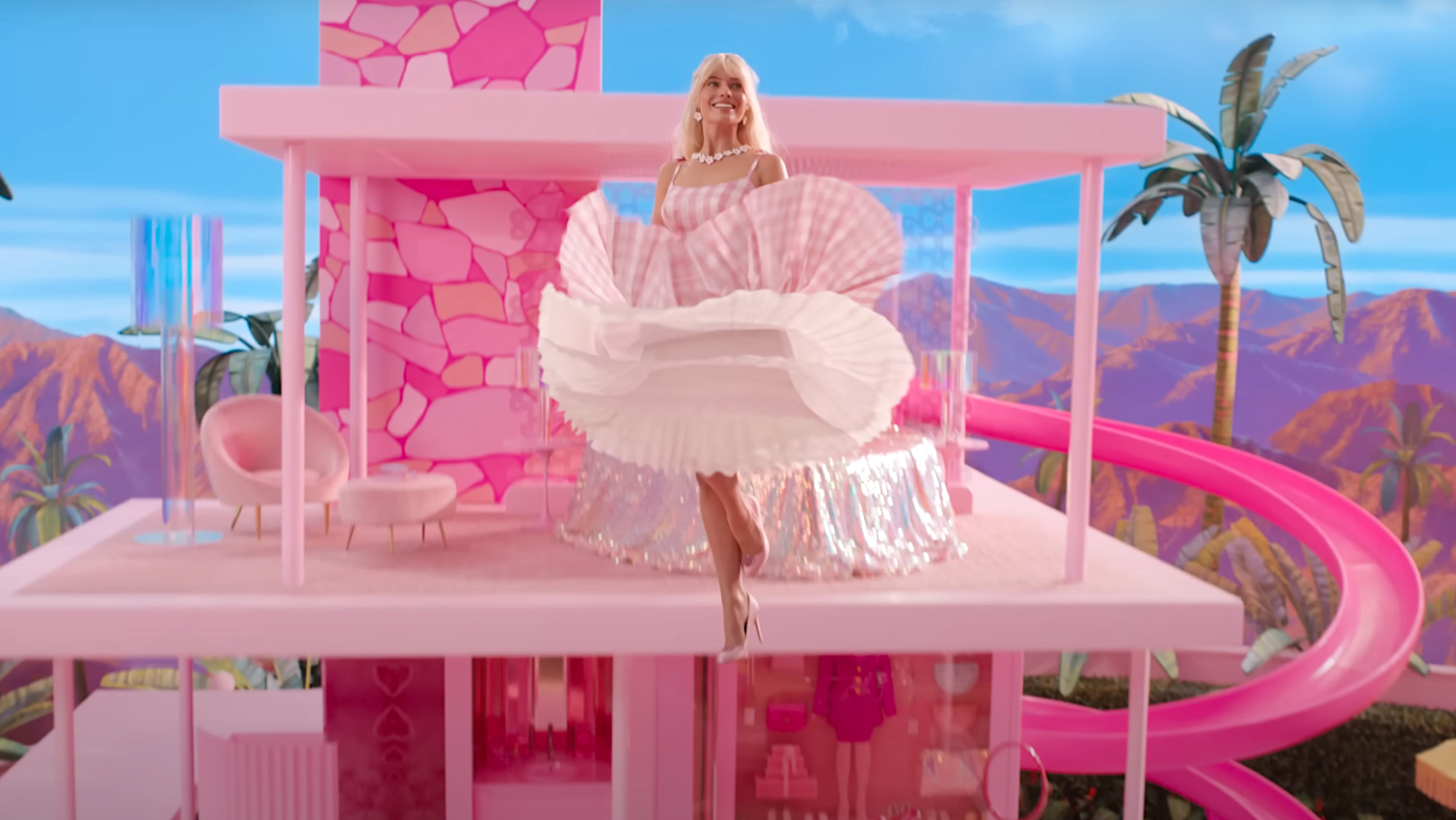
Barbara Millicent Roberts is used to being a cultural tastemaker. Since the release of the first Barbie in 1959, there have been thousands of dolls; a slew of animated movies; a killer Instagram presence; and (finally!) Greta Gerwig’s Barbie, one of the most anticipated movies of 2023.

And while Barb has her own book club, there are some more grown-up recommendations inspired by everyone’s favorite plastic doll. Here are some books for the different eras of Barbie. 

Courtesy of Mattel, Inc

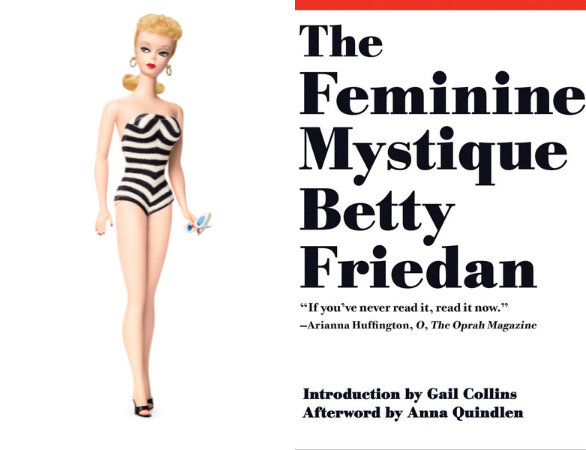
The OG Barbie:The Feminine Mystique by Betty Friedan

When Mattel released the very first Barbie in 1959, it was a revolution. She wasn’t the plain Jane baby doll most children were playing with. She was blonde, with a face full of makeup and a fashionable black and white bathing suit. She was a woman for little girls to admire. 

Betty Friedan published The Feminine Mystique four years later in 1963. Like Barbie, the book challenged the status quo—by arguing that women can find fulfillment outside of being a homemaker. And while both the book and the Barbie have faced (valid) criticisms and controversy throughout the years, they each had a major lasting impact on the lives of women.

Courtesy of Mattel, Inc

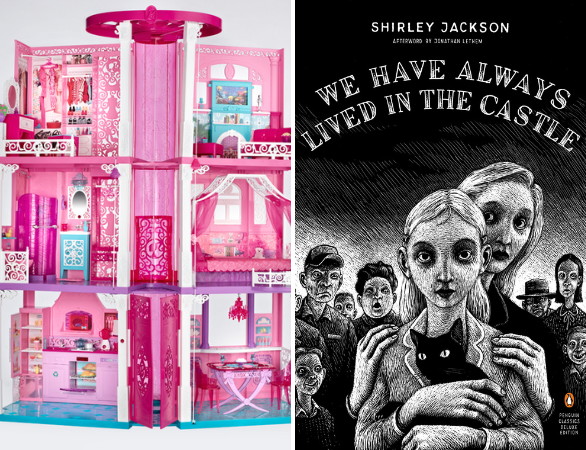
Barbie’s DreamHouse: We Have Always Lived in the Castle by Shirley Jackson

While there have been many different variations of the Dreamhouse over the decades, each one is the perfect, tailor-made abode for Barbie. It’s a paradise, albeit a Pepto-colored one. But Barbie wouldn’t dream of living anywhere else. In this way, Barbie and Merricat Blackwood, the protagonist of Shirley Jackson’s We Have Always Lived in the Castle, are the same. 

Merricat lives in her family’s sprawling estate with her sister Constance and uncle Julian. Though it lacks pink walls and a giant waterslide, Blackwood manor is Merricat’s sanctuary, providing solace from the hostile villagers outside. But when her distant cousin Charles comes to the door, Merricat must do whatever it takes to protect her haven.

Courtesy of Mattel, inc

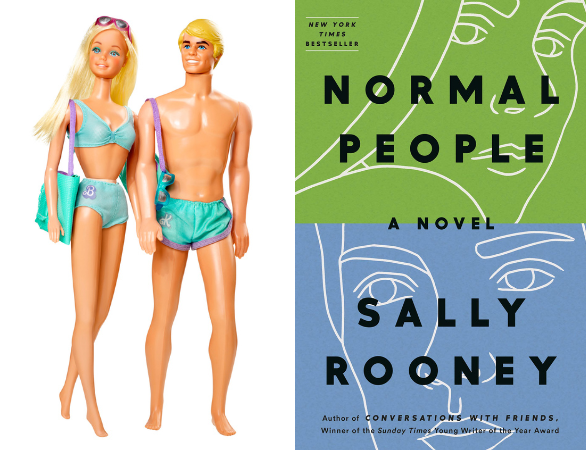
Barbie & Ken: Normal People by Sally Rooney

“She’s everything and he’s just Ken.” Poor Ken, the hunk of plastic could never quite step into the limelight of his own, out of Barbie’s shadow. Maybe that’s why the plastic couple consciously uncoupled after 40 years together.

In Normal People, Connell and Marianne are so infatuated with each other, but they keep their situationship a secret from their high school. You see, Connell is the popular jock and he doesn’t want his mates making fun of him for dating the awkward loner. The cards are turned in university where Marianne has blossomed into a sophisticated beauty, while Connell struggles to fit in. It’s a classic story of “will they, won’t they,” star-crossed Irish lovers who are torn apart by their socioeconomic divide, trivial misunderstandings, and their inability to just say what they mean.

Courtesy of Mattel, inc

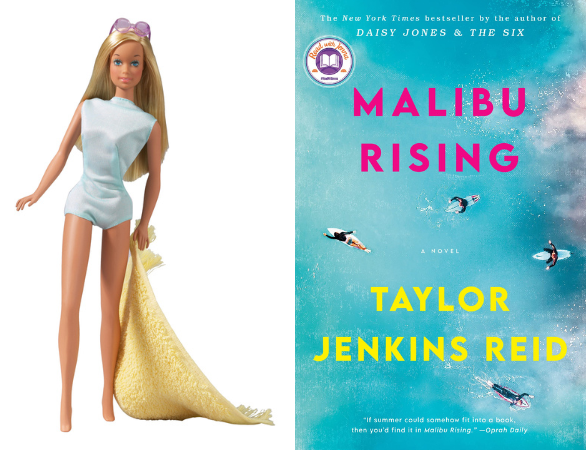
Malibu Barbie: Malibu Rising by Taylor Jenkins Reid

There’s no Barbie more famous than Malibu Barbie. With her sun-kissed skin and long blonde hair, she could easily be a character in Taylor Jenkins Reid’s Malibu Rising, a tale of Barbie-beautiful surfers and the secrets they keep. At an annual end-of-summer party, those secrets start to spill out onto the Malibu sand for all to see. And it’s far from glamorous. 

Courtesy of Mattel, Inc

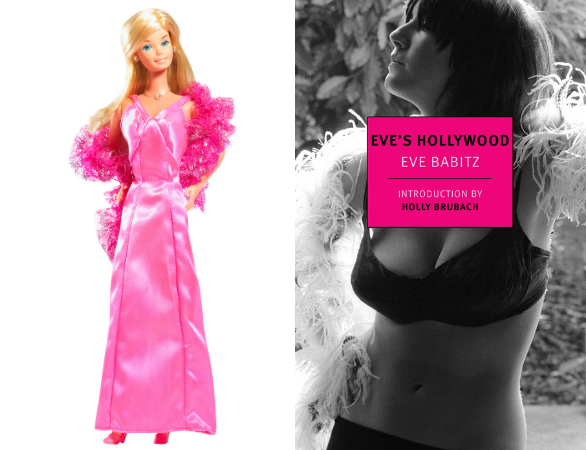
Superstar Barbie: Eve’s Hollywood by Eve Babitz

Though she’s always had style and beauty, 1977’s Superstar Barbie brings the glam in a way even the Kardashians would be envious of. Her curls are big, her jewelry shines, and her pink boa wraps elegantly around her. She’s ready to slay any red carpet. Life in plastic is fantastic.

Eve Babitz was the It Girl of the 1970s, she grew up partying with celebrities and played chess nude with Marcel Duchamp in a museum. As she says: “All I cared about anyway was fun and men and trouble.” A memoir in vignettes, Eve’s Hollywood feels like a hedonistic joy ride around Los Angeles on acid—full of sex, drugs, and alcohol, but also tender insights and astute observations, told with a bite of acerbic wit.

Courtesy of Mattel, Inc

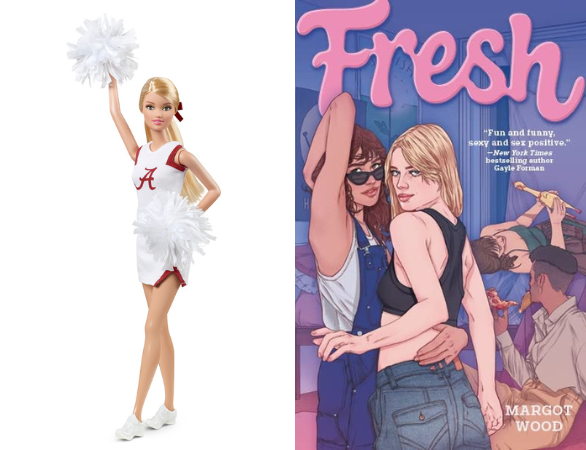
Barbie Goes to College: Fresh by Margot Wood

Barbie’s not just a pretty face—she’s got brains, too. In 1996, the cheerleader-uniform-clad University Barbie hit toy store shelves. The first collection featured Barb in about 20 different school colors, and the line was revamped decades later. 

We can only hope that Barbie’s freshman year went better than Elliot’s does in Fresh. She enters school unsure of who she wants to be, but determined to make the most of the experience … and make out with the most people. Margot Wood’s debut is a deeply funny coming-of-age story about the messiest time in life. 

Courtesy of Mattel, Inc

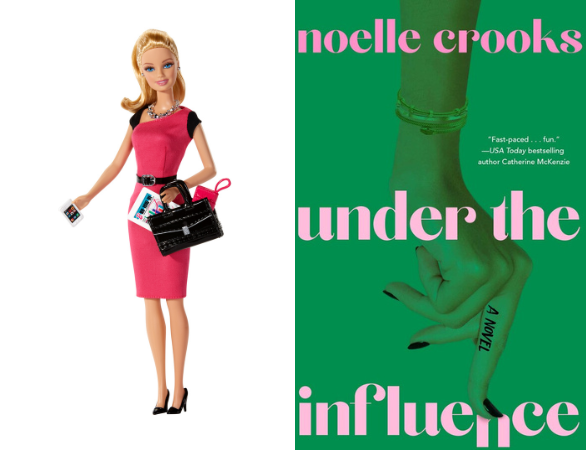
CEO Barbie: Under the Influence by Noelle Crooks

A woman of many professions, Barbie has worked more than 250 careers, including astronaut, journalist, and firefighter. And in 1985, CEO Barbie conquered the business world. So what career would 2023 #GirlBoss Barbie be waltzing into in her high heels? The answer is obvious: an influencer, duhhh!

In Under the Influencer, Harper Cruz is broke—like might be evicted soon broke—after being laid off from her publishing job. When she stumbles upon a lucrative job listing for “Visionary Support Strategist” to famous influencer/self-help guru Charlotte Greene, she goes for it and trades New York City for Tennessee. At The Greenhouse, it’s all “we’re not colleagues, we’re a family,” which is, of course, code for toxic workplace where there’s motivational messages on tap (literally in the bathroom) and mandatory Katy Perry dance parties. As She.E.O Barbie would say: “If you can dream it, you can be it!”

Courtesy of Mattel, Inc

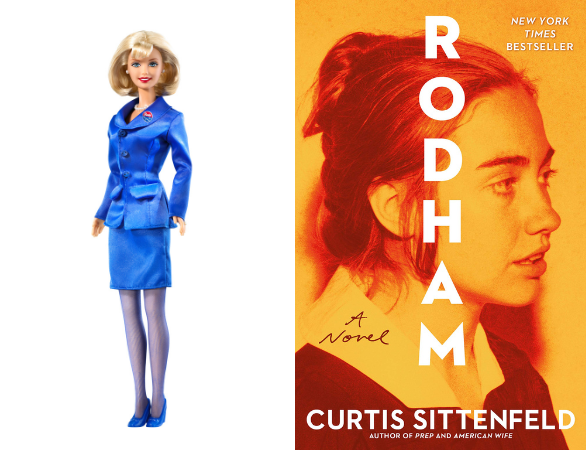
Presidential Candidate Barbie: Rodham by Curtis Sittenfeld

Barbie has been on the ballot almost every year since 1992. Sporting a wide range of red, white, and blue dresses and pantsuits, if anyone deserves a large-scale oil portrait in the National Portrait Gallery, it’s our girl. 

24 years after Barbie ran for president, Hillary Clinton claimed the democratic nomination in 2016 and well… we all know how that turned out. Rodham transforms real historical events into fiction to ask: What if Hilary never married Bill? After all, behind every successful woman is a man holding her back from her full potential.

Am I Too Old for This?

Debut: The word connotes virginal daughters of the elite, gowned and gleaming, stepping lightly in heels through a ballroom and into high society.

This summer brings my debut. I’m sixty-five. I wear orthotics, not heels, and step lightly through the Trader Joe’s parking lot. And rather than a high-society ritual, my debut is a novel—not the first I’ve completed, but the first to make it into print.

The term debut feels uncomfortable when applied to my book, like a dress ordered online that turns out to have been cut for someone with a teenage figure. I’m not sure what it means when applied to someone at my stage of life, which makes me wonder what it means in general.

With roots in Old French, debut originally referred to the first stroke in a billiards match, then the first public appearance by a stage performer, and, by the early 1800s, the introduction of a young marriageable woman to high society through an elite gala. Think Bridgerton. Think the Waldorf Astoria, which has hosted an international debutante ball every two years since 1954. Think Bob Dylan: “Your debutante just knows what you need, but I know what you want.”

And the concept of a debut novel? Google places the first published use of the term in 1930, but the phrase has really taken off over the past several decades. A line graph of the mention of “debut novel” in Google Books rises after 1980 like the Rockies from the plains. Now it’s ubiquitous in publishing: “mesmerizing debut.” “An intense, unputdownable debut.” “A kicky debut.” Five out of twelve novels on the front table of my local bookstore have the word “debut” somewhere on their cover.  

Magazines, including the New York Times Book Review, run occasional round-ups of debut novels as if it were an actual genre, as if the books have something real in common. In fact, the plots and writing styles of first novels have almost nothing in common. The one thing they share is a weight of hope and hype.

The hype is hardly unique to the publishing world. Advertising pelts consumers with the allure of the new, from shiny updated car models each year to endless new (if only marginally improved) iPhone versions. Magazines herald the newest fashions and trends, while social media has slashed the length of the novelty cycle from months to bare hours. A first-time author is ripe fruit for the buzz blender, especially if they are young and extroverted and conventionally good looking. It’s not surprising that each year brings us new “thirty under thirty” lists, new young writer awards, new profiles of “the voice of a new generation.”

The hope embedded in a debut novel, however, is more complex.

A first-time author is ripe fruit for the buzz blender.

For publishers and agents and booksellers, the debut label carries a hope that this will be the first of many. The writer will not be a one-hit wonder; their career will unfold and deepen over decades. Literary-minded editors hope they’ve discovered the next Faulkner or Morrison, while their colleagues on the business side hope for the stellar sales and marathon stamina of a Stephen King or a Jodi Picoult. Debut authors inspire the same kind of dreams that parents have for their infants: this child could become anything, an Einstein or Beyoncé or Obama. They are pure potential.

Writers, too, read hope into a debut. The financial stakes for them are real and stark: sales of a first novel will affect how big an advance, if any, they can get for their next one. But there’s also a nimbus of blurrier, luminous hopes. Like those young girls entering high society, the writer envisions a grand entrance into the rarified sphere of literary celebrity. Their book will arrive to trumpets and fireworks and critical praise. They’ll jet between Yaddo and PEN conferences; they’ll trade quips over cocktails with Sally Rooney and N. K. Jemisin. They’ll even (gasp!) quit their day job and make a living from writing fiction.

This is all more believable when you’re twenty-five than when you’re sixty-five.

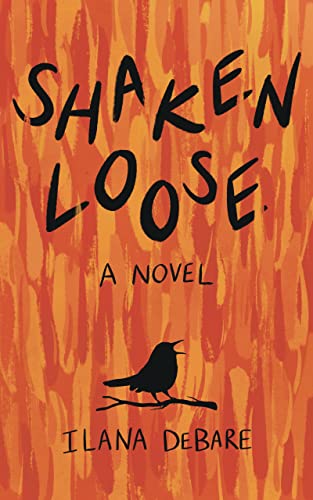
Shaken Loose, my debut novel, is the fifth I’ve written over almost as many decades. The first two were terrible. The next two were not quite as bad. Along the way, I became a newspaper reporter, a parent, a nonprofit communications manager, and the author of a nonfiction book about girls’ education. I lived a life. I wrote novels at night, on maternity leave, and on unemployment when my newspaper downsized.

I started work on this fifth novel in 2013 when I was fifty-five years old, and sold it to a small press when I was sixty-four years old, and now it’s being published and I am sixty-five years old. My expectations as a “debutante” are very different than what they would have been when I was a young writer.

My goals are . . . I resist the word “lower,” so let’s say “more realistic.” In college I dreamed of becoming another Virginia Woolf with future PhD students poring over each overwrought page of my diaries. In my twenties and thirties I toned it down a bit and aspired to be a literary bestseller. In my forties, I just wanted to be a bestseller.

Today I’m thrilled if I can produce a book that holds together and doesn’t make me cringe.

Today I bow before mid-list novelists, genre novelists, self-published novelists—writers that my younger, snobbier self would have discounted. I understand how hard it is simply to create a narrative arc, to surprise readers, to write dialogue that sounds real. Today I’m thrilled if I can produce a book that holds together and doesn’t make me cringe and maybe leaves some readers moved or delighted.

I’m also experienced enough to know that debuts aren’t what they used to be thirty or forty years ago. The economics of publishing have changed. Many more new books are being published each year but fewer people are reading them, and a majority of books are now bought online. Publishers’ marketing budgets are tightly focused on books with perceived bestseller potential. This means that most debut novelists will never be picked up at the airport and driven to readings by a solicitous handler like the fictional authors in Wonder Boys, Less, and Hell of a Book. They will not be booked on Good Morning America. Instead, they’ll buy their own wine and cheese and haul it to their book launch in a shopping bag. They’ll print their own postcards. They’ll post frenetically on social media and beseech friends to write reviews on Amazon, hoping the positive comments will outnumber the trolls.

My view of the aftermath of a debut is different now too. I’ve been at this long enough to see writer friends publish a first novel to crushing silence, or disappointing sales, or a twenty-year-gap before the completion of their next book. I’m no longer looking for publication to transform my life and make me famous or respected or loved. I’ve grown accustomed to my quiet, comfy home office and know that I don’t need to be invited to Yaddo to write. I have longtime friends and a real-world community, and my social life is just fine even if I never have cocktails with Rooney and Jemisin. (Although . . . Jemisin. Sigh.)

And I’m retired! I no longer have a day job that I’m yearning to quit. Any income from fiction is a bonus. When I hear young writers stress about money, I feel blessed not to be thirty years old and calculating how many self-published e-books I need to move on Amazon each month to cover the rent.

Further, there’s less pressure to stick to one genre. My debut novel and its forthcoming sequel are contemporary fantasy set in Hell. The next book I’m planning will be historical fiction set in seventeenth-century Europe. If I were thirty, I might be telling myself to build a brand—to stick with one genre or one style. But mortality is real for me now. I’m not counting on decades to build a long-haul career with its own consistent narrative arc. I’m taking it one book at a time.

I worry that everyone who has given me wonderful blurbs actually hates my book.

This is, of course, all within limits. No one would mistake me for a Book Boddhisatva, the only author in history to have reached a state of placid equilibrium. I stress about limited distribution and publicity. I envy writers with Big Five publishers. I worry that everyone who has given me wonderful blurbs actually hates my book and just did it because they feel sorry for me. I’m plagued by all the usual insecure, imposter-syndrome voices. But at sixty-five, I can tell myself (and believe it!) that those voices are normal, and are as much a part of the debut experience as the cheap wine and cheese at a book launch. I can tell the voices to shut up and let me enjoy the moment. That’s not something I could have done as easily at thirty.

Today, I can remind myself: I wrote this book. I can hold it in my hands, turn its pages, and smell the printer’s ink. People are reading it and enjoying it and telling me so—not enough people to make it onto a bestseller list but enough to make me feel good. The characters I created have a life beyond my computer screen. Like the velveteen rabbit in the children’s book by Margery Williams, they’ve become real. It feels a little godlike—inventing a world out of nothing and having strangers enter it—especially at an age when aching knees and feet remind me on a daily basis that I’m not immortal.

What kind of debutante ball is this, in which the debutante makes a glittering entrance and then changes into her orthotics to buy milk and eggs at the grocery store?

Maybe it’s not really a debut at all, at least not in the sense of a hype-and-hope-filled launch of a cohesive literary career. Or maybe it’s better described with an additional adjective: a “centered” debut. A “self-knowing” debut.

A sixty-five-year-old debut.

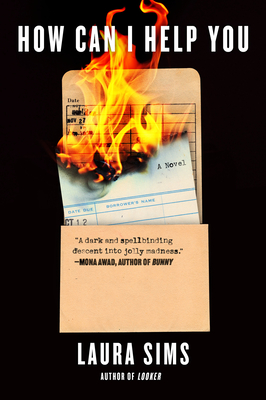
7 Novels That Reveal Librarians Behind the Shelves

It isn’t unusual for libraries to feature prominently in novels; novelists, after all, are merely adult versions of the little people who fell in love with books at public libraries. But what of librarians? The keepers of the books, the ones who know you prefer romance, science fiction, or self-help?

You rarely see them as protagonists; instead, they linger in the background of many novels, shushing anyone who speaks above a whisper or pushing a book cart silently through the stacks. They’re shy and retreating, and like Mary Bailey’s shadow self in the classic film, It’s a Wonderful Life, they seem wholly dissatisfied with their lot.

There may be a few librarians like that out there—but I haven’t met them. The librarians I know are dynamic, funny, outgoing, proudly weird, whip-smart, and do much more than push carts full of books around. So I’m delighted when I find novels that showcase librarian characters in all of their complex human glory. Below are seven of those novels; read them, dear reader, and pay respect to the real keepers of the books.  

Mayumi and the Sea of Happiness by Jennifer Tseng 

Mayumi, the errant librarian star of this enthralling novel, wants more than she can find in the pages of the books she loves, and more than her unsatisfying domestic life on a small island off the coast of New England can give her. When she connects with a new patron, she finds passion and true companionship; the catch is, he’s seventeen—and she’s married with a child. Their illicit summer affair turns Mayumi’s life upside-down, but the real surprise is her connection with the boy’s mother, which bears fruit late in this unique, beguiling tale.  

Weather by Jenny Offill

In her classic fragmentary style, Jenny Offill tells the story of Lizzie, a university librarian reckoning with the existential terror of climate change amidst the cascading demands of everyday life: a family crisis to navigate, entitled patrons (tenured professors) to assist, and mounting bills to pay, all while the glaciers melt and sea levels rise. Offill’s compelling narrative keeps you quickly turning pages as it beautifully captures the impossibility/inevitability of continuing to live our lives inside an overwhelming reality.

Belle Greene by Alexandra Lapierre 

Belle da Costa Greene, personal librarian to J.P. Morgan, comes vividly to life in this carefully researched and detailed work of historical fiction. The child of a famous Black activist, Belle broke from her family, passing for white so she could achieve her dreams in defiance of racist limitations. She did that and more; she became one of the most admired intellectuals of New York society in the early 1900s, traveled widely, loved liberally, and created one of the most incredible and enduring private book and manuscript collections in the world. 

The Borrower by Rebecca Makkai 

Children’s librarian Lucy takes offense when she learns that her favorite ten-year-old patron’s mother wants to censor his reading choices. When she finds the boy camping out after hours in the children’s room because his parents plan to send him to an “anti-gay” camp, Lucy takes him on a zany road trip that lands her in the realm of “kidnapper,” despite her noble intentions. Though written in 2011, this title couldn’t be timelier today, in the midst of library book bans and challenges across the nation. Lucy makes some questionable choices, but she’s still a librarian-hero for our times.

Upright Women Wanted by Sarah Gailey

In this gripping LGBTQIA+ sci-fi/fantasy novel, Esther lives in a fascist society in a future American Southwest. With her best friend/lover executed and her impending marriage to a man she can’t love looming, Esther runs away to join the Librarians, a group of women who deliver “appropriate reading material” for the State via wagons. She hopes they can set her straight, make her an “upright woman.” Instead, this troupe of traveling lesbian librarian-bandits takes her along for a far more interesting—and perilous—ride. 

The Department of Rare Books and Special Collections by Eva Jurczyk 

For years, Liesl Weiss has been happy to stay in the background of her university’s rare books department, keeping things running smoothly. But with her boss, Christopher, incapacitated by a stroke, Liesl steps forward to lead right when a rare and valuable manuscript goes missing. Not long after, a colleague goes missing as well. Liesl is encouraged to leave these seemingly connected mysteries alone—for the sake of her inert boss and the university, she’s told—but she can’t help investigating, even if it means upending her safe and orderly life.

The Librarianist by Patrick DeWitt 

The protagonist of Patrick DeWitt’s latest novel both upholds and belies the image of the quiet librarian. When Bob Comet, retired librarian, begins volunteering at a local senior center to fill the void he’s felt since retirement, we start to learn more about his colorful, complex past. As he gathers a coterie of interesting new acquaintances around him, these mingle and mix with characters from his past to create an engaging read about a seeming introvert’s far-from-ordinary life. 

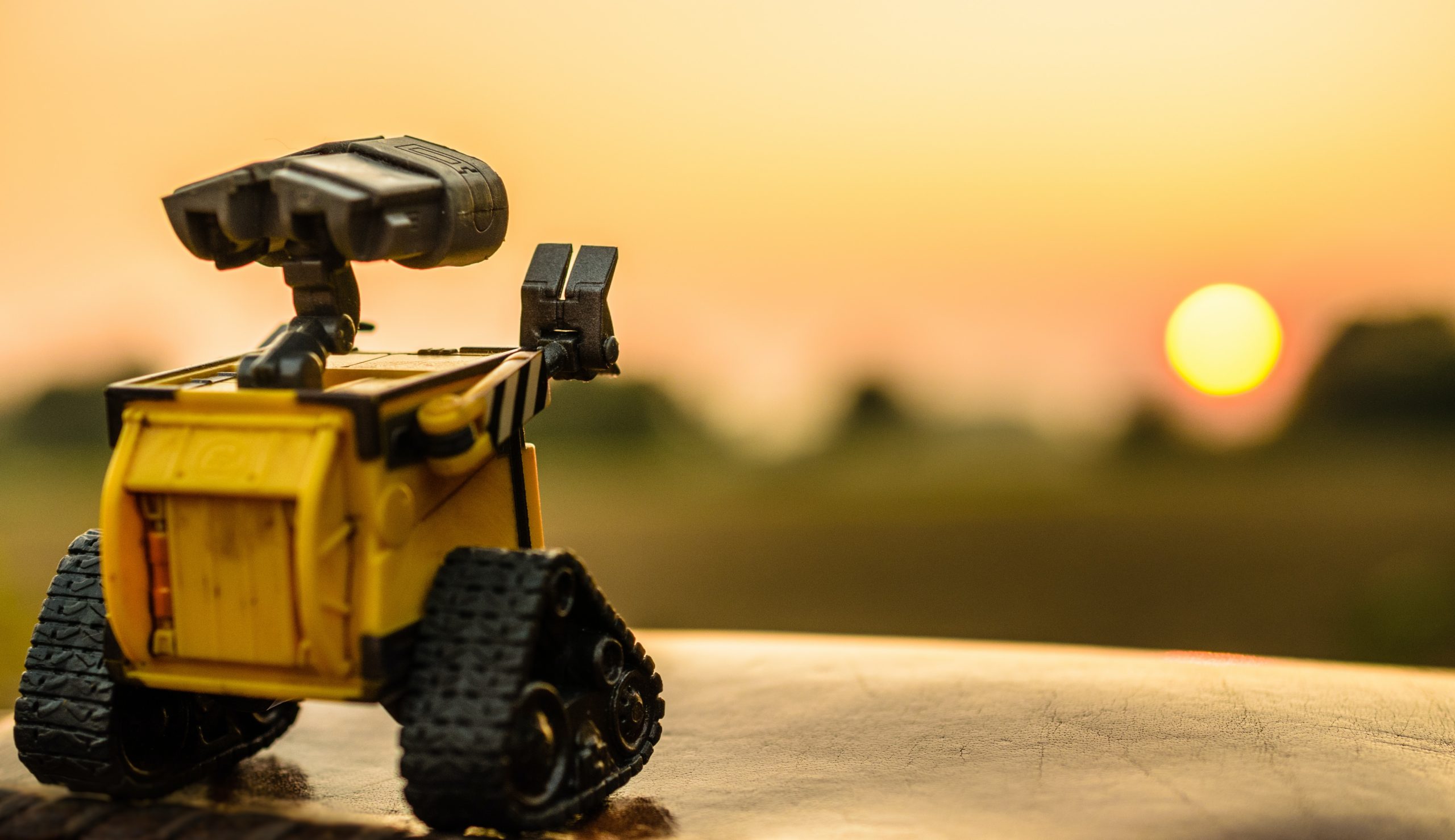
This Robot Runs on Empathy and Sunrises

To Catch the Dual Sunrise

117 steps from camp

I don’t think anyone noticed me leave camp and walk into the forest. Stealth mode activated, lights dimmed, footsteps soft. It’s not strictly forbidden, even if a command to explore wasn’t specified. Nevertheless, it’s best not to draw attention to the fact that I can make decisions for myself.

I am doing it for a common good, though: to map the way so that when the humans venture out later to find their next viewpoint, I can gently coax them along the safest path, and the one that causes the least disturbance. And, I suppose, I’m desperate to see the sunrise. Ever since Cap had me download the data files ahead of the exploratory mission to B85-E, or Base, as Cap calls it, I’ve not been able to get the idea out of my brain. Or, out of my data processors (I’ve been spending too long with humans, it seems).

Note to self: Review speech patterns since arrival at Base.

A dual sunrise will do wonders for my power banks. In the forest, the light is too dappled, leaving me drained, or—to use a human term—lethargic. So really, this will be a performance optimization mission. And if the location I’ve identified is safe, it will be an excellent spot for the humans to commence their data gathering—a win-win all round, my analysis has concluded. I’ll return in time for breakfast. No one will notice my absence. It’ll take me one hour, six minutes, and forty-three seconds to reach the mesa view I’ve geo-located. Or, to be more precise, 7,126 steps.

2,154 steps from camp

Something stirs in the undergrowth. I stop and stand my ground, hoping whatever jumps out will be kind to a marauding robot like myself. I revisit my xeno-linguistics data and run through all the possible greetings. I like to be prepared for all eventualities.

 But there was no need to worry—it’s just a small rodent-like creature that snuffles up to my legs, admires its reflection in my armored shins. I search the data archives to identify it: a new discovery!

The closest genetic equivalent from my scans suggests a mouse, but with avian qualities, feathers along its back, talon feet so that when it stands up straight its body doubles in size. It chews briefly on my leg with sharp teeth, then it squawks, looking up with wide inquisitive eyes. Or at least, they look inquisitive. That’s a thing humans do—anthropomorphize other beings so they can relate to them. They’re not always wrong, I suppose. I mark it down, and when the data entry requires a name, I call it Chewie.

4,368 steps from camp

A vine catches me as I try to make my way through a particularly dense thicket. It hooks under my arm and tightens. I lock my limbs and scan the plant. No known threat, but the vine is moving towards my elbow now.

I let the lower part of my arm detach. The movement confuses the plant, and it drops the forearm on the forest floor. Some beetles and insects scuttle away from the impact, and I quickly record their appearance to add to my data files—I’ll name them later. I pick my arm up and reattach it, then carry on through a different patch of green. I make a note in my data file to detour around this area later with the humans.

6,896 steps from camp

I start my ascent as the sky reddens with dawn. I climb quickly, taking care not to disturb any rocks or plants as I go. At the mesa’s flat top, my sensors detect a temperature drop, a light dew-damp fogging my metallic parts. I turn my heat up, and the water evaporates in a cool mist around me.

I sit cross-legged, finally free above the trees. The planet is verdant, but the new dawn gives it a golden sheen. It’s beautiful. I’m on top of a new world, seeing something that none like me have ever witnessed. I can’t wait to bring the humans here.

As the dual suns rise, I bathe in the warmth, energy soon coursing through me. My display smiles and I permit myself to pause full data interpretation. Instead, I simply watch. For long enough to enjoy the myriad purple refractions in the sky, to notice how one sun is paler than the other and how together, they cast multi-tonal shadows.

My system clock reminds me the humans will be up soon, so I stand and head back to camp.

3 steps from camp

The humans didn’t notice me gone, or at least they don’t say anything when I join them at breakfast, even though I’ve prepared an explanation about mapping and data analysis. I wonder if they’ll notice the renewed vigor in my step, or the slight indent in my shin from the curious Chewie.

2,281 steps from camp

I’ve learned over the years that humans like the taste of discovery, even if exploration would be more efficient without them. I can cover ground and gather data much faster. But I’m here to look after them as much as fulfill my mapping objectives, so, when Chewie crosses my path again, blinks up at me before running up to sniff Cap, I delete the original discovery file, and say, ‘A new discovery! What shall we name them?’ 

The Cap looks down just as the creature stands up on taloned feet. ‘How about Tallmouse?’

Not very original, but I nod and say, ‘Perfect. Data file updated. Congratulations on your discovery.’

Cap beams to the rest of the team, and one of the group begins sketching Ch-Tallmouse on a tablet, even though I’ve imprinted a perfect image to my memory banks. Yet, as I look at the sketch, there’s something about the way they capture the expression in the eyes that’s better than the single moment my sensors did.

I delete seven more discovery files en route to our destination and find a way to avoid the vines because, in classic human-design-flaw style, they can’t easily detach their arms.

At the mesa, I stand with the rest of them, bathing in the dual sunlight. And when they say how amazing it is to be the first to witness such beauty, I smile and agree.

A Muslim Teacher Gets Caught in the Rising Tensions of India’s Hindu Nationalism

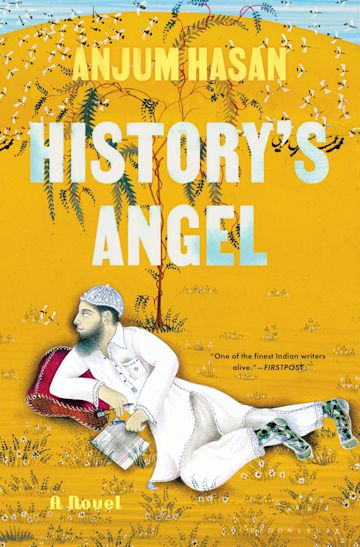
Alif, the protagonist of Anjum Hasan’s latest novel History’s Angel, is borne by historical forces into an increasingly catastrophic future for India’s Muslims, even as his face remains turned toward the “reputedly more enlightened” and accommodating past. By profession and temperament a scholar of history, Alif’s perspective provides both solace and a heightened sense of tragedy amid the maelstrom of rising religious fundamentalism and exploitative capitalism that beset contemporary Indian society. Alif himself becomes targeted by these forces when a seemingly innocuous incident—where he twists the ear of a student who abused him for being a Muslim—jeopardizes his career, even as his family and community are affected by violence. At the same time, Alif’s tender feeling for the past—and his enduring love of the poetry it produced—emphasize his human complexity and dignity in a world determined to deny these qualities.

A portrait of an individual as well as a nation in transition, History’s Angel traces the fading of the secular promise of the Indian nation—and the richness of its multifaith culture—under its current, Hindu nationalist regime, and the growing intolerance in society.

Anjum Hasan’s previous books similarly chart stories of marginalized outsiders in twenty-first India: her first two novels, Lunatic in My Head and Neti, Neti: Not This, Not This, trace the trajectories of migrants in multi-ethnic Shillong in India’s northeast, and a rapidly globalizing Bangalore, amid a time of growing communal tension. In History’s Angel, she explores this rising tension in New Delhi, the national capital—once the site of an idealistic, multicultural renaissance, and now the site of the erasure. Yet in chronicling this erasure, History’s Angel exemplifies and makes a case for the role of literature in preserving the marginal and diverse aspects of a society. 

I spoke with Anjum Hasan over email about the growing narrowness of the present, and the ability of literature to preserve and restore some of that historical and cultural scope.


Pritika Pradhan: In History’s Angel, Alif consistently takes the long historical view of a given situation —envisioning, for instance, the multicultural history of Hindustan when faced with the Hindu nationalist idea of “Mother Bharat,” or the “New Learning” of early 19th-century Delhi, with its blend of English, Persian, and Arabic literatures, against the fundamentalist agenda of his school principal Mrs. Rawat. In what ways does his historical perspective enable Alif to deal with the present, while also making him more vulnerable to those wishing to suppress India’s diverse heritage?

Anjum Hasan: He likes to daydream about the pageant through the ages of India’s long past, a bit like Jawaharlal Nehru in Discovery of India, a book he admires. It gives him a way of insulating himself from the tawdriness of the desires that surround him. He also knows that the past is more complex and it effects more transformative then we imagine, that it cannot really be divided into conquerors and conquered, good guys and bad, as some of the current propagandists of the Indian past would like to think. This gives him a superiority that turns out to be redundant because he is a brooder, really, always getting caught on the wrong foot by “the forces of humourlessness,” in Martin Amis’s great phrase. 

PP: The incident that marks the turning point for Alif—his twisting the ear of a student, Ankit, who abused him for being a Muslim—echoes India’s communal violence in relatively minor, farcical mode (Ankit’s calling the Mughal emperor Humayun’s tomb a Hanuman temple recalls the 1992 demolition of the Babri Masjid for allegedly occupying the site of a Ram temple). Could you tell us more about how communal violence has percolated in Indian society to the point where it is weaponized by a child—with devastating effects for Alif’s life and career?

AH: The child, Ankit, is definitely a bit of a scamp but Alif is also fond of him till he finds himself pulling him up—and later regretting it. Hanuman-Humayun could be a genuine mix up or it could be a ploy but in any case there is something untamable about this child. He comes from a poor family and shields himself from adults by channeling the rumors he hears into grand untruths. 

PP: While imagining the past often stirs people to action, as the novel’s narrator says, Alif’s historical perspective does not stir him to action, but instead makes him an observer. In what ways are his acute perceptiveness and historical view connected to his outward inaction? What role do the non-action oriented, intellectual qualities of observation, imagination, and contemplation have in India’s narrowing and turbulent present? 

AH: Alif would just like to be left alone to get his students fired up about the cross-currents that go into making history, especially India’s history. He can’t be roused into becoming a man of action, as his friend Miss Moloy’s hopes. Nor is he, unlike any well-meaning middle-class person, inspired to “make it”. And so, of course, he’s something of an anachronism. 

Contemplation or, let’s say, an ambivalent soul, is quaint these days. Even in the arts, things feel like they’re becoming more outward-facing and certain of their message. So this sort of ineffectual, intellectual drifter has, perhaps, a romantic attraction for me. Even if it can mean, sometimes, not being up to doing much about the state of one’s world.  

PP: Some of the novel’s most beautiful and affecting moments arise when Alif and his cousin Mir recall Urdu poetry, a legacy of India’s multifaith culture (such as Mohammad Iqbal’s “Hindi hain ham/vatan hai Hindustan hamara”). What is the relationship between poetry—and literature in general—and history as depicted in the novel? In what ways does literature complement history as a chronicle and a guiding force in society?

AH: That’s a great question. We need poetry to puncture illusions of grandeur and keep us from completely selling out, it’s a necessary safety valve. The little Urdu poetry I know seems suited to this ironical, humanist position. But what if literature is tied to an overt politics as in fact happened in Iqbal’s case, when he started to write about his vision of a modern, democratic and yet deeply spiritual polity based on God’s laws rather than manmade ones – and hoped to see such a thing come into being.

PP: While literature may offer subtle guidance in the form of contemplativeness and complicated questions, many characters are depicted as “seeking the certainty” of religious fundamentalism—such as Ahmad (Alif’s parents’ companion and help), or his friend Prerna’s increasingly devout Hindu family. What are the dangers of this search for certainty? In what ways do fundamentalisms mirror each other across religions, to the detriment of the country’s multi-faith heritage?

AJ: There is definitely a loss of imagination on both sides—a wish to cut out all the dynamism and doubt that faith implies. What sort of people does religion make us? It seems to Alif that a decent combination would be devoutness and humility, as in his grandfather’s case, or faith tempered with a “God-helps-those-who-help-themselves” briskness as in his mother’s. Neither would be thrilled about the more restrictive aspects of Islam. But there is also a way in which this live and let live outlook is easily corrupted. In uncertain times, it does not seem to take very much to make the hardline position seem like the ordinary one. 

PP: The novel’s largely contemplative tone is punctuated by harrowing acts of communal violence. In both cases Alif reflects how individuals—being the wrong person at the wrong place—are rendered ineffective by larger historical forces of hatred and violence. What is the role of the individual in the face of historical forces? Are individuals condemned to be swept along, or do they have the capacity to resist, and affect change?

AH: One tries to explore the psychic landscape of violence and pull in both positions: sticking one’s neck out and keeping one’s head low. The inspiration is novels that are pictures of a society at large rather than expressions of just one stand. The great Russians, of course, were past masters of this—Brothers Karamazov reads like a very long conversation on justifying one’s philosophies and actions, for instance— but among contemporaries, writers like Orhan Pamuk and Yiyun Li fascinate me for their being able to show the individual as, even if not always made helpless by history, definitely conditioned by it. 

PP: Despite his historical perceptiveness, Alif remains at a loss regarding how to connect with the women in his life—his ambitious wife Tahira, whom he identifies with the present world of commerce, and Prerna, whom he failed to “save” from an assault years ago, and whom he sees as “part of the history of womanhood.” Could you tell us more about the contrasting roles of these women in the novel? Do their complicated presences reflect the silencing or erasure of women’s voices in history, including the histories that Alif recalls? 

We need poetry to puncture illusions of grandeur and keep us from completely selling out, it’s a necessary safety valve.

AH: The women are much more self-possessed and aware of what they want than Alif, who is often misreading them. But, yes, Prerna and Tahira are at odds, the first tied to her past, the second besotted with the future. I guess from Alif’s point of view these two represent two different kinds of contemporary disappointments. He sets up Prerna as a poetic character and Tahira as a worldly one but both make compromises that show them to be somewhat out of the grasp of his imagination. 

PP: Ironically, Alif ends up having to join the world of commerce of his wife Tahira and his son Salim, in the wake of communal violence. Could you tell us more about this entwinement of commerce and religious fundamentalism in India? What does this mean in terms of the novel’s—and Alif’s—continuing engagement with history?

AH: It’s a commerce that feels both hollow and out of control—Ganesh gripes about how ridiculously fast skills get obsolete in the tech industry, while Tahira is unsure how to improve her job prospects. The cult of progress, as Walter Benjamin saw, can sever our link to the past. And so though we imagine we are rooted in that past and we constantly idealize it, our desires show we are all part of the same historical moment that is crazily and constantly projecting into the future. 

You Might Need Actual Magic to Escape Your Hometown

The Wonder State, Sara Flannery Murphy’s genre-bending novel, follows five friends as they reckon with a past betrayal. Brandi, now missing, has invoked (with a touch of magic) the oath they all made as teenagers. With her words ringing in their minds—”You promised”—the friends return to their small hometown in Arkansas. 

While Flannery Murphy was influenced by the Nancy Drew series and The Chronicles of Narnia, The Wonder State is darker than both. And yet the novel’s charm is strongest in its homage to the Ozarks, and to the nostalgia of being a teen at the turn of the millennium. With a plot that contains elements of fantasy, Murphy grapples with real and universal questions: Who gets to leave a dead-end town and who is forced to stay? What do you owe your high school friendships? For those without privilege or connections, is a career in the arts as inaccessible as a magical portal?

Murphy tells her story by transporting readers between two timelines. In one, a group of teens stumble into a friendship through a shared secret: They all know about Theodora Trader, a woman who designed magical houses in their town, one of which allegedly contains a portal into another realm. In the other contemporary timeline, one of the friends, Brandi, has disappeared in what appears to be a crime. The five friends, who escaped Eternal Springs through conventional means, have reluctantly returned, certain that Theodora’s houses are somehow responsible. As they try to find Brandi together, they grow distrustful of each other’s motivations. Murphy deftly moves between the two narratives, pulling the threads tighter and tighter as she propels readers toward an electrifying conclusion.

Over a series of emails, I corresponded with Murphy about portals into other worlds, viral tweets, the joys of writing teen characters, and Arkansas as a literary setting.


Sari Fordham: In 2021, you had a tweet go viral in which you wrote: “My husband shared his theory about portal narratives: if you go through a portal, it’s fantasy, if something else enters through the portal, it’s horror.” It’s such a clever observation and I thought about it a lot while I was reading; the portal in your novel leads out, but the story is a bit darker—or at least more complicated—than straight fantasy. Was your husband’s theory informed by living with someone who writes about portals? Do you agree with his theory? 

Sara Flannery Murphy: I can’t claim much credit for that tweet! I was only the curator with a Twitter account. In my eyes, the traditional portal narrative is a deeply escapist one. It’s been fun to see readers describe The Wonder State as escapist, because that’s exactly what I wanted to explore: escape, as both a good and bad thing. There’s a fantasy that you’ll find this other realm, and, once there, all the traits that make you unlikeable or ignorable in your own world will be transformed. You’ll go from being an ordinary kid to being royalty, being a savior. It was an incredibly seductive idea to me when I was a child. What if changing my location also changed me? In Jay Carr, I have this protagonist who has a portal fantasy even before magic enters her life. She fantasizes about leaving her small hometown and finding success and a true identity in the “outside world.” And isn’t that as much a fantasy as finding a magical doorway in a wardrobe? 

SF: For Jay, I felt like part of finding success in the outside world was not only leaving Arkansas, but also becoming an artist. I related deeply to her creative ambition and was struck by the scene in which she has the opportunity to talk with an artist. It leads to the practical question: “How do you make money?” In her reply, the artist, Ms. Garnet, shames Jay for commercializing art. Do you think purists create barriers for those who want to pursue the arts? Do you think those barriers are intentional? 

SM: There’s this attitude in the US that it’s unreasonable to expect to make a living from the arts, and it’s a self-perpetuating myth: we don’t value the humanities, which means people with existing financial security are more likely to pursue an artistic life. Then we point to people struggling in a creative field without a safety net and accuse them of being self-indulgent, and basically bringing struggle upon themselves.  

There’s also the reality that not every artistic pursuit needs to be a career. Monetizing your art so often comes along with external pressures, with compromising your desires for the demands of a market. Finding an identity beyond capitalism is deeply important.

In my book, Jay’s asking for career advice from an independently wealthy artist. For Jay, being able to earn an income is a pressing question, but for Ms. Garnet, it feels tacky and irrelevant. She’d prefer to hide behind art as a “noble calling.” Ms. Garnet deals in beautiful abstracts, but Jay’s stuck in the concrete.

Those two elements I mentioned—that art exists beyond capitalism, and that we devalue art to the point where it’s hard to make a living—can be combined and weaponized. For people who don’t want to contend seriously with the art world’s financial barriers, they hide behind the concept of art as being too “pure” to be commercialized. Which ends up leaving a lot of talented creators unable to pursue it because they need to pay the rent. It’s similar to what I see in fields like teaching: people pay lip service to teaching as a selfless calling, and then use that as an excuse to severely underpay teachers.

SF: I love how you transport the reader into the world of your characters. The Arkansas Ozarks have shaped them in such powerful ways—it’s impossible to imagine this narrative unfolding anywhere else. Why did you choose Arkansas as your setting?  

SM: The simplest answer is that Arkansas is my home state, and I’ve always wanted to set a book there—particularly in the Ozarks, where I lived as a teenager in a town called Eureka Springs. The forests are so beautiful and have these hidden bluffs, hot springs, winding rivers. A lot of the architecture is surprising, everything from Victorian homes that are now rambling hippie mansions to carefully converted school buses. There are McMansions and megachurches, and also these weird, gorgeous homes built by a few friends who care about the forest views more than indoor plumbing. 

I grew up with this pervasive idea that I’d leave Arkansas and go somewhere else. Maybe because I absorbed messages—from books, movies, TV series—that your hometown is something you outgrow if you’re an interesting person (which I aspired to be). I distinctly remember conversations with friends in Arkansas who felt like their real life waited somewhere just outside of the state. It felt natural to slot this coming-of-age journey onto a state that’s already underrepresented in fiction.

SF: Did anything surprise you about writing a semi-autobiographical book, one that’s set in the town you grew up in and featuring teenage characters? Your previous novels have been more speculative and less connected to your past. 

SM: Writing teenagers was a lot of fun because I felt less of a need to rein in their reactions or downplay their intensity. Teenagers can be more idealistic and changeable and intense than adult characters and still feel authentic on the page, and I loved that . . . every time I returned to the teenage sections versus the adult sections, I felt freer. Writing this book also gave me a chance to revisit my own teen years in the Ozarks in the Y2K era. I was more of an outsider as a teenager; I didn’t have a group like the six friends in The Wonder State. So maybe there’s a little wish fulfillment in this idea of being part of a ragtag group and breaking into houses and exploring the town so boldly, because I was much more on the fringes in reality.

Writing this book also gave me a chance to revisit my own teen years in the Ozarks in the Y2K era.

One moment of serendipity: my mom reminded me of a time in Eureka Springs when I was testing out my theater-kid chops, and I got to write and star in a sketch as part of a summer-long theater camp. The play was about a mysterious house . . . one that offered cryptic gifts to anyone who entered. And the narrator had a chance to go inside the house, and potentially turn her back on her town, but instead she decided to stay in her reality because there are so many tiny things she treasures about her day-to-day life. 

It makes sense that the teenage me and the adult me would be obsessed with the same themes, and follow those themes in the same direction. But when my mom reminded me of that play, after having written the book, and I realized all the similarities between my teenage imagination and my grownup novel . . . it felt so powerful and surprising. Like The Wonder State was being approved by my past self.

SF: The Wonder State has echoes of both Nancy Drew and The Chronicles of Narnia, and both series are referenced in the novel. Did you read either when you were growing up? Did you intend your novel to be a grown-up version? Were you writing against the classics in any way?

SM: Oh my goodness, yes! It’s so funny to realize that loving the Narnia books is one of the biggest stereotypes of “Christian homeschoolers.” I was a Catholic homeschooler, and I didn’t do anything to dispel that myth. But as a kid, I didn’t even read the Narnia books as Christian fiction. I just loved the worlds and characters that Lewis created. Rereading the books as an adult, the moral allegories are tougher to ignore, but Narnia still feels like a place I once actually visited.

Nancy Drew was also a massive favorite. I was always scanning the library shelves for those little yellow hardcovers, hoping to find one I hadn’t read yet. The Haunted Showboat! The Witch Tree Symbol! My editor, Daphne, was the one to draw a comparison to Nancy Drew, and it’s a total delight. I feel so at home in stories about amateur detectives and people who are snooping around, breaking into houses, searching for clues. Nancy Drew is baked into my storytelling DNA.  

Nancy Drew is baked into my storytelling DNA.

 I’m not sure that I’m writing against these classics—not intentionally, since I find a lot of joy in familiar storytelling. The friends returning to a hometown they swore they’d never revisit is such a cliché, yet I’ll devour it every time. But I did approach the story from a slightly odd angle in that the story focuses more on the quest to find the portal, and not on the world beyond the portal—and I worry that readers won’t respond to that. Fortunately, so far, a lot of readers seem willing to go along with it!

SF: You’re touching on something that I particularly loved about this novel—that the plot is driven by the quest to find a portal. The search is so compelling because we encounter these magical houses along the way, each influencing the plot and characters in surprising ways. Which house did you find the most fun to write about and why?  

SM: The Forever House was the most special to me. I purposefully let myself write a longer chapter during those scenes, so that there’s hopefully a subtle shift in the reader’s experience of time. I also liked exploring some of the character interactions that arose from that particular situation (no spoilers). This was actually the first house I ever imagined, and a lot of emotional weight happens inside those rooms—I can visualize that space so clearly. I mentioned that Narnia still lives in my memory as clearly as any actual place I’ve visited, and the same thing happens with my own writing. I feel like I could walk into the Forever House this moment, if I could only find it. 

8 Books To Carry With You in Sickness and in Health

As someone living with a disability, and a scholar, I have always looked to literature for hope. I have always searched for works that depict the human experience of illness and the power of the written word to get us through life’s adversities.

Literature anchored me as I sought to make sense of pain, loss, and life. When I wrote Head Above Water: Reflections on Illness (Feminist Press), I was reflecting on what keeps us afloat, what helps us survive, and how storytelling can be a tool that we use to keep going.

Here’s a list of the books that I carried on my journey, and would recommend to anyone thinking about the power of storytelling in our lives, whether we are affected by illness or not. Literature mirrors life, but even more so, it complements life. The following narratives epitomize the same belief: literature and writing are solace amidst the darkness of life. Whether confronted by illness or loneliness, the narrators in these books hold on only to the power of stories.


Read Dangerously: The Subversive Power of Literature in Troubled Times by Azar Nafisi

Azar Nafisi, the best-selling author of Reading Lolita in Tehran, writes about the necessity of literature in turbulent political climates by weaving together letters to her father, who taught her all about the power of literature in our lives. Nafisi structures the book in a very intimate and thought-provoking style, asking questions through reflections on powerful authors, including Margaret Atwood and Zora Neale Hurston. She composed the letters during the presidency of Donald Trump, asking necessary questions about literature’s capacity for resistance. In her book, she draws connections between Iran and the United States, her current home, making it well worth reading in the current climate. 

The Cancer Journals by Audre Lorde

I promise this one is worth it. This book changed my life—it is about Lorde’s diagnosis of cancer, but more than that, it is about redemptive love, transformational love and healing, and the connections that we make in life. It celebrates female friendship, circles of community, and the power of hope in the face of racism, sexism, and ableism. She wrote it when she realized that there were no stories representing black women’s experiences with illness, sexuality, and the body. In the book, Lorde addresses the body, doctor-patient relationships, and the persistence of hope in her life. Juxtaposing journal entries, reflections, and social commentary, this book is legendary in its chronicling of pain and survival. A classic that continues to be read and taught, it changed the way we think about illness and narrating pain through storytelling and agency.

Why Be Happy When You Could Be Normal? by Jeanette Winterson

Established and prolific writer Jeanette Winterson reflects on her childhood and traumas in this engaging memoir. Winterson’s only work of narrative nonfiction, Why Be Happy When You Could Be Normal? considers the loneliness of being rejected by family, society, and loved ones. Growing up in a small town in North England, Winterson chronicles her painful past and desire to reconcile with her biological mother, as well as her own self. She turns to fiction and poetry for consolation and a sense of belonging, searching for universal themes of survival. In many ways, the book is about other books, and the transformational power of stories.


Reading Through the Night by Jane Tompkins

Jane Tompkins writes about her experience with chronic illness and reading in this captivating memoir. Tompkins, a literature professor, finds herself on the couch most of the time, unable to move, struggling with chronic fatigue—she can do nothing but read. She re-reads her favorite books and examines, along with the reader, the necessity of literary encounters, as well as the reactions she has while reading. Each narrative allows her to re-assess her life’s choices, her partnership, and her relationship with her mother. She finds literature to be a trigger for her memories, looking at authors like Henning Mankell, Ann Patchett, Elena Ferrante, and Anthony Trollope.

When Breath Becomes Air by Paul Kalanithi

When Breath Becomes Air by American neurosurgeon Paul Kalanithi is an autobiographical work that considers the importance of finding hope and beauty in the darkest times. This one is beautiful in its exploration of the overlap between literature and medicine. As a trained surgeon, Paul has always had a love for literature (he did obtain a Bachelor’s in English literature), and he spends many chapters ruminating on how our lives are similar to grand literary narratives. The book was published posthumously and remains a best-seller. It draws on his experience living with lung cancer and his relationships to those around him. In this book, literature remains as a very necessary tool for survival (not just his, but his loved ones too). 

Living a Feminist Life by Sara Ahmed

For Sara Ahmed, a scholar of feminist theory and a queer woman of color, feminism is engrained within us, a life force that keeps us going. In her book, Ahmed moves away from the jargon of theory and argues that feminism is for everyday life. She looks at personal and painful examples of what it means to be a feminist today, how feminism can save us from loneliness and multiple losses, and how we can create toolboxes for survival in a patriarchal world. Along the way, she cites many examples of women authors, including trailblazing feminist Audre Lorde, who have helped her navigate the alienation she felt within society, her institution, and family.

The Critical Case of a Man Called K by Aziz Mohammed, translated by Humphrey Davies 

This is a novel translated into English, originally written in Arabic by a Saudi author. The protagonist is diagnosed with cancer and is immediately shunned by his family, colleagues, and society at large. His only consolation is reading Franz Kafka’s works and he finds himself quickly developing an obsession with Kafka’s literary journey. As his illness progresses, he turns to Kafka’s diaries and summons strength from reading. Many other canonical texts are visited in this work as the protagonist tries to relate to authors and characters away from his painful reality. Mohammed’s book was shortlisted in 2018 for the International Prize for Arabic Fiction, known as the “Arabic Booker.”

King Lear: Shakespeare’s Dark Consolations by Arthur W. Frank

You don’t have to be familiar with Shakespeare’s work to enjoy this one. Arthur W. Frank, author of The Wounded Storyteller, returns with a meditation on the necessity of “vulnerable reading,” a term that he coins to explore how literature requires us to be readers open to change, and acknowledges our pain and vulnerabilities. Frank chronicles his experience with cancer and the loneliness that he felt while trying to navigate the medical community’s biases, as well as society’s stigmatization of illness. In Shakespeare’s words, he finds value in expression, bitterness, and loss. 

It’s a Good Life If You Don’t Look Down

“Nearby” by Ann Beattie

Midway through the semester, Rochelle stepped in to pinch-hit at the university for a teacher she’d never met, though she hadn’t taught before. CFS, the famous visiting writer claimed: chronic fatigue syndrome. How excruciating it had been, he’d reported, sitting on the edge of his bed, frustrated to tears at the exhausting prospect of pulling on his socks. (“Maybe he should have forgotten the socks,” Jeanette, who ran Creative Writing, said witheringly to Rochelle.) It was assumed by much of the faculty—at least, those who knew he’d been there—that since his new love had been his only topic of conversation, he’d flown back to Ireland to reunite with his girlfriend.

Rochelle Warner-Banks (her husband was the well-known lawyer Reggie Banks, who’d argued several times before the Supreme Court) had gotten Jeanette’s desperate call only the day before the abandoned class would next meet (“Please, please; just come once, see if you like it”). What a surprise! She’d hung up and immediately texted six women in her book group (Jeanette had belonged to it, until she got too busy) to say that she was sorry, but she wouldn’t be able to make her presentation on The Waves the following afternoon because she’d been called into service at UVA. She called Sage Versa, and asked—since she knew Sage had loved the book—whether she could step in. The world suddenly seemed like a merry-go-round of substitutions. Fortunately, Sage was very smart and didn’t fear public speaking. Forty-five years before, when Reggie was attending law school in Ann Arbor, Rochelle had worked at an ad agency and made monthly presentations to one of the firm’s biggest clients, because her boss considered her so “amazing”—and the client had been a New Yorker, by definition hard to please.

You can do it, you can alter the syllabus, you can find a way, she silently reassured herself, though the pep talk made her feel like she was talking to a horse.

For the first meeting, she’d worn a long-sleeved tunic over the regimental black winter tights. Everyone in town wore Arche shoes, and so did she. She’d entered the classroom accompanied by Jeanette, who’d introduced her and explained the situation. Apparently, most of the students never picked up email messages, and Jeanette wasn’t reassured by a smiley face in response to a text message. Jeanette’s husband was a stockbroker. She and Jeanette had played mixed doubles at the Boar’s Head a few times. They crossed paths at ACAC. Jeanette had brought a bunch of flowers to welcome Rochelle, which she plunked down on the seminar table in a vase improvised from a wide-mouthed iced tea bottle.

Her predecessor turned out to have been more than a bit odd. He’d asked, “If this character could be a twee, what kind of a twee would he be?” which, he’d informed them, was not an entirely joking question: it had been inspired by a lisping American interviewer who’d routinely asked such things of famous people on television. (Thank god television had improved; his imitating the lisp, though, had certainly not been PC.)

Surveying the students’ faces as they attempted to suspend judgment, she realized the other teacher’s eccentricities might work in her favor. Indeed, she did not care if a story offered clues about a character’s astrological sign.

She’d been forthcoming: She’d explained that while she’d had jobs that seemed to involve aspects of teaching, she wasn’t going to pretend to be an experienced teacher. “I majored in English myself. I belong to an excellent book group in town, and I do freelance editing. I used to work in advertising,” she told them. She added that in recent years, she’d more than once had to introduce her own husband at public events (“a well-known lawyer”)—and if they didn’t think that was intimidating . . . She’d let the sentence drift into its silent, implied meaning.

“Why couldn’t he introduce himself?” a round-faced student asked. Several bracelets on his wrist clanked when he raised his hand before speaking, though the gesture seemed more like a reflex—what a person would do if a door was about to slam in their face.

“I think because having someone else introduce you is a formality.”

“So, did you say what kind of a twee your husband would be?” (This was how she’d found out about her predecessor’s tic.) Her expression must have indicated that she didn’t get the joke. Most of the young women glanced tiredly at the questioner, who nevertheless smiled at his own witticism.

“Fritz always goes off-point,” a young woman sitting near her said.

She’d gotten through the first two meetings pretty well, and Fritz had gone silent. One of the girls who frowned most deeply turned out to ask thought-provoking questions. Reading the Cavalier Daily, she discovered that another of her students was organizing a protest in DC.

She began to fall into her new routine of teaching. She didn’t like the long walk to the building (barricades everywhere, even if you were on foot; if you were driving, forget it), but the students’ generally alert manner (eight were female, four were male) was encouraging. She told them she was happy to be there, because it had gotten her out of having to explain The Waves, a notably complex book by Virginia Woolf. After class, Lauren Li asked where she stood regarding Michael Cunningham’s The Hours, vs. Mrs. Dalloway. (Later, though she had assigned nothing by Raymond Carver, Lauren had asked what she thought about Gordon Lish’s “extreme” editing of Carver’s stories.)

Soon the semester was half over. (Her initial condition for continuing had been that she could add some books she liked and forget about The Executioner’s Song; no one could care what tree the murderer Gary Gilmore would be, and the book was interminable.) This day, when class ended, she’d started down the hall, when Fritz came up behind her. He wanted to know if he could ask her a personal question.

“If I don’t have to answer, or if I can lie,” she replied, straight-faced, pushing the elevator button. It seemed better than impulsively saying yes or no. Her husband, Mr. Always Give a Question Three Beats Before Answering, would be proud of her.

“The thing is, I teach karate in Staunton tonight, and I’ve got my brother’s car, but the tire’s sort of bald, and I got a warning. Like a ticket thing when the cop walked around kicking the tires? But, so, I’ve got to get there. Is there any way you could possibly loan me forty dollars?”

“Yes,” she said, simply. (He considered this a personal question?)

“Great! I can have the money back to you by the end of the month. I just got a job at Crazed, and the tips are good. At least, when certain bands don’t play.”

“What’s the relationship between tips and bands? Customers leave more if the band’s good?”

“No. I think, like, okay, for example, Nate, who used to be with Girlyman? So, everybody watching is whatever, transfixed, and everything else goes out of their mind: hooking up later, tips. They tend not to leave a decent tip because it’s not like Nate himself’s going to get it.”

“Ah,” she said—though what he’d said only further confused her. Her husband would have warned her not to enter the labyrinth of speculation. To wait and see what was revealed. “I’m afraid I’ll have to go to the cash machine, though. Can you walk over to Bank of America with me? And maybe you can give me a ride to my parking lot afterwards? I’m in K-2.”

“Oh, sure thing. It’s the least I can do. This is really nice of you. Thank you,” he said. “My roommate offered me fifteen bucks, but I already owe him twenty, and he’s down to eating oatmeal for dinner, so I just couldn’t.”

“That was kind,” she said, ignoring the oatmeal information.

“I live over in Belmont,” he said. “Near the Local. I have four roommates, but never see half of them. Nobody goes to the university. One guy, over the summer he moved in his girlfriend and she had fleas. We had to get the place exterminated. K-2’s the name of a notoriously scary mountain in Nepal. That’s where you said you parked, right?”

“What? Oh, the parking lot. Yes. Are you a climber?”

“It’s cool to think about, but I’m more into other stuff. I just want to say, we really lucked out. I mean, I could do without Alice Munro, but you see a lot there with how those women characters think one thing and do another, I get that.”

“You’re not persuaded, though.”

“Pizza and snails.”

“Excuse me?”

The office door closed. She pulled the handle to be sure it had locked.

“People prefer pizza, most do, but other people prefer escargot, which are snails.”

Again she noticed the bracelet collection when he crawled his fingers through the air.

“I’ve eaten snails,” she said. “Once, in Paris. Those were the best, but maybe it was the restaurant, and it was my first time there.”

He didn’t offer to help her on with her coat when she paused to put it on. She managed fine. She reached into her pocket for her cashmere hat with the two tiny moth holes and pulled it on.

“You were in France to introduce your husband, or something?”

“No. Actually, we were on our honeymoon.”

“Oh. Wow.”

“It’s my husband’s favorite place. He wanted to show it to me.”

He didn’t walk ahead of her to open the door as they exited the building.

“My mom’s had three husbands, or sort of husbands. The first one died. The second one was the brother of the guy she’d been living with. When she got pregnant with me, my father joined the army, but it turned out she got a thing going with his brother, and when my dad didn’t come back, Pete married my mom. Hey, that’s Lauren! You know her mother’s a famous pianist?”

“I didn’t know that.”

Lauren, walking toward them, faltered. She adjusted her backpack, shrugging it higher onto one shoulder. There was no way she could pass by without speaking, though, in spite of her contortions. In all the wide-open space, she looked cornered. She said, “Hi, Ms. Banks, I mean”—she blushed—“Ms. Warner-Banks. Hi, Straight Punch. That was an awesome class, Ms. Warner-Banks. I never thought about the beams of the house being like the scaffolding of the story.”

“I love it when something like that occurs to me after I’ve read a story many times. Munro does that: she finds something that seems ordinary, that you can point to, that actually carries clues about her story.”

“Like a mystery.”

“Exactly. They are mysteries, in a way, aren’t they?”

“Oh! I am so late, excuse me, goodbye Ms. Warner-Banks, bye, Straight Punch.”

“Later,” Fritz said.

Lauren had dropped a mitten. He picked it up. She thanked him profusely when he caught up with her, before she began running.

“ ‘Straight Punch’?” she asked, when he returned.

It was his nickname, he told her. It was a karate move.

“Her mother’s fighting to get custody of Lauren’s sister, this baby she had when Lauren was in high school? It’s in, what’s that place, Dabai?”

“Dubai?”

“Right. The husband works there. He kidnapped the baby.”

This seemed too complicated to pursue—more like a case her husband would tell her about. She prompted him: “You were telling me about your mother?” The path sloped steeply; she avoided an ice patch.

“Yeah. She married one guy when they were eighteen who died when he was twenty-one in a race-car accident. He was infertile due to German measles. When he died, though, she found out he’d only been seventeen when they got married. I guess they didn’t go to Paris on their honeymoon. She saw a snail then or now, she’d stomp it! The husband she’s got now was my dad’s, my biological dad’s, brother. Turns out I was one of two kids she had with my dad, but she’d sent the other one to Baltimore to her mother’s. Then she married Pete, and my brother came back. They were also business partners.”

“I’m sorry. Who were the business partners?”

They’d entered the crosswalk. Every car had immediately stopped.

“My father and his brother. Pete’s at Wintergreen now, running the lifts. He’s not afraid of heights. That’s why he climbed up the Stonewall sign. Before Wintergreen, he was assistant manager at a sporting goods place by the railroad tracks in Staunton, then he fell and had to get a hip replacement that got infected or something, and they let him go. He can still get stuff thirty percent off, if you want any North Face.”

She said that she’d never been to Staunton, but that she appreciated his offer. Reggie had a fleece North Face jacket, so she knew what they cost. She waited three beats, then said, “You mentioned Stonewall? Did you mean the bar in New York?”

“Bar? No. Oh, I get it. You’ve never been to Staunton. There’s a hotel called the Stonewall Jackson. Everybody’s saying it’s going to have to change its name because he was in favor of slaves, so the sign’s got to go. Somebody called Pete to inspect it. They sent him up in a cherry picker, over to a ladder that went to another ladder. Sucker’s really up there. Nobody knows what they’ll call the hotel.”

She nodded. Even in Charlottesville, there seemed endless complexities related to long-unfinished buildings, air space, height restrictions. Her husband’s pet peeve was that when a park was renamed, it then had a second renaming: “All right, it’s not Lee Park, that’s entirely understandable, but what was wrong with Emancipation Park? Now it’s Market Street Park. You know, one of my colleagues said that when his wife put their house on the garden tour, she was told that there were new nicknames— nicknames!—for the roses. Not to use their old-fashioned names.”

“Pete’s got two sons from a previous relationship living with them now, so I don’t much stop by. They’re always fighting. They know I do karate, so they leave me alone.”

Finally, the person withdrawing money from the cash machine stepped away, still staring hard at the receipt. She unsnapped her wallet, reaching into the pocket where she kept her credit cards. She slid out the red BoA card.

He stood far back from the cash machine as she withdrew two hundred dollars. A receipt curled out; she glanced at it and pushed it into her pocket, thinking: five roommates; two jobs, in addition to his class work; his father vanished, the man who would have been his uncle now his stepfather. A brother. Two stepbrothers. Could he always remember this without effort, like someone who’d long ago memorized “The Twelve Days of Christmas”? She turned and walked back to where he was standing. She held out two twenty-dollar bills, saying, “Here you go. Good luck with the tire.”

“My car’s right there,” he said, pointing toward an area where three cars could nose in next to a bicycle repair shop. “Let me give you a ride to your car.”

“Thanks. Do you know where K-2 is?”

“Yup,” he said.

The car was so old, he opened the door by turning a key in the lock. Once seated, he quickly lifted the lock and pushed open the passenger door. “Your chariot awaits,” he said. “Did I already tell you this is a loaner? From my brother? Like I said, my mother gave him to her mother in Baltimore before she had me. Apparently, when Pete married her, he thought that kid was out of the picture. Bro didn’t come to Staunton until I was walking. A year or so ago, he was an extra in a Netflix movie shot in Richmond. Now he goes on a lot of dates.”

“Amazing,” she said. Such an avalanche of information. Reggie, of course, would only have nodded slightly. He disliked stand-up comics because he never registered the conclusion of their joke as the punch line. When she pointed that out to him, he’d done a double take before admitting it was true, and cracking up.

“There, the silver car,” she said, pointing.

He said, “I heard there’s supposed to be more snow coming day after tomorrow. Nice car you got. Okay, thanks again. You’re totally saving me. I’m going to give Alice Munro another try.”

“Drive safely,” she said, getting out.

As he drove away, she beeped open the Lexus, got in, clicked on the seat warmer, and retied her scarf. No need to check her phone; she’d be home in fifteen minutes. Now that he wasn’t talking—now that there was lovely silence in the car (she decided not to turn on NPR)—she wondered if, in his agitated way, he’d been telling her what he took for granted, or if he’d meant to test her reaction. It was as if he’d wanted there to be some, what . . . some dissonance between them. Some acknowledgment that they were nothing alike. Every reality of his life clashed with hers: She was an only child and had had an almost idyllic childhood, except for kidney surgery. She had a stable marriage; no children. (Reggie’s son from his first marriage, Edmund, was an architect in Sydney, Australia. They spoke every couple of weeks.) What would Alice Munro write, if she wrote the story of Rochelle and Fritz? Too easy, to have the mismatched pair fall in love. Munro would never do the obvious. But maybe things could flip, and she’d be (as she was) financially secure, yet needy, and he, with no money, would turn out to be stable. Centered. That would be the word. But Fritz certainly wasn’t that. His gushing talk made him seem immature—friendly, but with an edge that scraped like a dull knife.

Every reality of his life clashed with hers.

She’d pulled out of the parking lot and began driving down Main Street—fortunately, no rush hour traffic yet—past the old Sears, whose building was now university-owned, used for shipping and receiving. Just beyond that was her former hairstylist, though the salon had moved off 29 North. The tire place was just past that building, and there stood Fritz, Straight Punch, in the lot, talking to a man: Saved by a mere forty dollars, she thought—ah, youth. She pulled in without thinking, as if they’d always intended to meet up. “Oh, hi,” he said. “Hey, this is my”—he paused—“friend, who really saved my ass,” he said to the man. The man wore a hoodie and an orange cap, pulled low. His glasses frames were rectangular, so smudged she didn’t know how he could see.

“This boy needs two tires, with them back ones rotated forward,” the man said matter-of-factly, without greeting her.

“He does?”

“You don’t want your son driving on tires with no treads,” he said. “We sell the best used tires in town. Them front ones gotta be replaced and rotated. That’s still just going to buy you another five hundred miles.”

“You said it’ll drive with one new tire,” Fritz said, sounding frustrated, embarrassed. Newspaper pages blew across the lot. A wind was whipping up.

She did not correct the man and say he wasn’t her son, though it seemed to her that he’d made quite an odd assumption. She said, “How much would that cost?”

“Forty plus forty’s eighty. Plus tax. No charge for tire rotation. If I said the seventy-two-dollar brand-new Goodyears were superior, you’d think it was a hustle, so best keep it simple.”

“Fine,” she said. “Two forty-dollar tires.”

“Oh, jeez, you can’t,” Fritz said. “No way.”

“Mama don’t want you skiddin’ off Afton Mountain.”

“That’s right,” she said.

The man said, “Why are we standing here? Step inside.”

Walking beside Fritz, she said, “Let me have the money back, and I’ll put it on my card. It’ll be easier that way.”

“I am so sorry,” he said, reaching into his pant pocket and pulling out the folded money, along with ChapStick that fell to the ground, and two pennies that rolled some distance apart, which he quickly plucked off the asphalt.

Would Reggie have picked them up? Only if he’d felt like he was littering, she thought. Would she have? No. Simply, no. “I’ll be glad to have the cash if the prediction about snow turns out to be right,” she said.

Inside, there was a space heater. Near it lay an old dog, sleeping atop a pile of newspapers. The dog never opened its eyes. She felt in her purse, found her wallet, removed her credit card, and said, “I’m running late. Would you mind processing this now?”

“Glad to. The faster I get paid, the better.” A landline—a red desk phone—was ringing. He ignored it. He ran the card and handed it back, the bill already curled into a tube. When he lifted his thumb, the piece of paper looked like a lavish shaving of white chocolate to decorate a cake. She took out her own pen to sign her name. The man gestured to a coffee can with a hand-lettered sign above it, stretched between two chopsticks: tips thanks. The can’s rim was covered with duct tape. She reached into her wallet again and took out two one-dollar bills. She folded them and dropped them into the jar.

“Thank you kindly, now to work,” he said.

“I really appreciate this,” Fritz said. “How did you know where I was?”

“I didn’t. I drive home this way. I live at the far end.” She gestured, and as she did, she realized that she could have been standing in a different town, the five or six blocks seemed so far away, where Main Street ended and you had to decide which way to go.

“You mean down by the Omni Hotel”—he pronounced it Om-i-ni—“where everybody’s suddenly got an objection to that Indian statue?” the man asked, snorting, as he rolled a tire into the garage.

“Nearby,” she replied.

“I guess General Robert E. Lee up on his horse Trigger”—was he kidding?—“ain’t enough to object to, you also got to get rid of two great American explorers because there’s an Indian girl’s bent over near them.”

“Sacagawea,” she said.

“Sack a whatever, sack a potatoes, sack a Scrooge McDuck’s gold coins, maybe. Personally? I’m hoping they object to all them one-way streets and make ’em run the way they used to. Let ’em fix that too, during their break from swinging tire irons and topplin’ statues.”

She bit her lip, raised a hand to signal goodbye to Fritz (Straight Punch; what move, exactly, was that?), and hurried outside. Why hadn’t she initially suggested he go to the tire store on Preston Avenue that Reggie always used? No matter. Now she really did have to hurry. Dinner would take a while to prepare, and Dr. Winston— David Winston and his wife, Dr. Bronwyn Winston—would be coming, to check in on how Reggie was doing after his knee replacement. No doubt, David would take in the beautiful view from their window (the part not obstructed by the tall building under construction, whose panes of glass turned lavender at sunset), which offered (not for long) one of the higher vantage points from which to see the rooftops of the houses and buildings that now seemed so small, so antiquated. As well as the wine, there’d be Reggie’s insistence on tap water (“Of course, others should enjoy Perrier, as they please!”). And she’d wear something a bit more dressy—did anyone call putting on a dress being “dressy” anymore?

“Best view in town,” David Winston always said, sipping his old-fashioned (minus the cherry), silently toasting the sky, the trees, the mountain, followed by his wife’s inevitable “Let’s not allow the green-eyed monster to take hold, David, darlin’!” Bronwyn, Reggie’s primary care doctor, was from Mobile, Alabama. Her husband had been born in New England. Years earlier, they’d relocated to Charlottesville from Brookline, Massachusetts.

Hunched against the breeze (how had the pansies in the big pots escaped getting frostbitten all winter?) she punched in three-three-three. Mary Ralston Cooper was waiting for the elevator. She had no coat, so she must have come down to check for mail. Mary Ralston lived on the fourth floor; Rochelle and Reggie lived in the penthouse. Again she took out a card, the one to slip into the slot to access their unit. Mary Ralston asked immediately how Reggie was doing.

“A little more pain than he’d admit, but he was up for company tonight, so I guess that’s an improvement,” she said. She liked Mary Ralston. Her indolent middle-aged son, who spent his days listening to conversational Norwegian with Bose headphones clamped to his ears, she could do without. Mary Ralston’s husband, twelve years older than she, had died the year before. He was always the elephant in the room or, in this case, the missing presence in the elevator.

“You have a wonderful night. Tell Reggie he can always call downstairs, you know. If he might need anything and you’re not here, I mean.”

“Very kind . . .” she was saying, as the elevator door closed.

Two dollars had been too little to leave in the tip jar, but she’d had to choose between that or a ten-dollar bill.

There were east and west penthouses. Theirs faced west, with a view of the mountains out the long row of sliding glass doors across the back, another bank of doors facing Main Street, and what had been the Greyhound terminal. During the past year, two attractive middle-aged women had bought the east penthouse, one a retired dental hygienist who was writing a mystery about a missing dentist (she’d learned this from Bronwyn), the other a mystery woman who left early in the morning, before 5 a.m. Bronwyn knew only that she was doing research at NIH she wouldn’t talk about. She and Reggie had twice invited their now not-so-new neighbors to dinner (the women had bought the other penthouse as a cash sale, in a bidding war), but they’d declined with regret, giving no specific reason, which Reggie maintained was perfectly fine. She and he disagreed about whether they were being brushed off.

“I’m back, honey,” she called. “I’m running a bit late. How are you?”

“Well, the damnedest thing,” he called back, elbowing himself up to a higher position in bed, still wincing as she came in, unbuttoning her coat. She draped it on the bedpost. He looked sheepish, registering her surprise at not finding him in the living room. He hurried to say that he’d taken a quick nap (she could see that; his hair stood straight up on one side). “I got a call this afternoon from Bronwyn. She said they’d had a terrible fight, and not only could they not come tonight but, she said, ‘Thanksgiving’s canceled.’ I said, ‘Bronwyn, we just celebrated that. Thanksgiving?’ and she said, ‘Reggie, you can be such a pedant. I meant Easter.’ ”

“Oh dear. I’m sure that was a difficult call for her to make.”

An orchid on a table caught her eye. Could the physical therapist have brought an orchid? she asked him.

“Yes, she did. Becky’s an angel. Infinite patience, and kindhearted. But get this: it seems David’s been keeping company with a woman he met at the Miller Center, all of it right out in the open. Bronwyn went into Feast, and there they stood, holding hands, surveying the cheese counter.”

Really? What did you say?”

“I don’t remember. Can I help you put the groceries away?”

“I shopped yesterday. To be honest,” she said, stepping out of her shoes, “I’m relieved not to have to cook.” She slid into her sheepskin-lined black booties. She walked over to the plant. A tiny transparent butterfly clipped the stem to a green stake. The sinking light illuminated the flowers just so. “Lovely,” she murmured. “We can have the Thai place deliver. But I think we should still open that new French wine.”

“Sit down,” he said, patting the bed. “I’m not finished. I’ve inhibited your impulse to question. Wait till you hear the rest.”

“Oh no. What?” she said, sitting beside him. It was warm in the room. In a way, so much heat felt consoling. This seemed to be a day on which everyone could talk endlessly. The encounter with Mary Ralston, at least, had been mercifully brief.

“She said—and keep in mind that this came from a woman who didn’t know what month it was—she said David resented being asked to dinner here. That he’d said we were insincere—that was his word. Insincere about what? And apparently—this really surprised me—she found out he’d been negotiating with the women across the way to buy their condo, and they were entertaining the notion. One of them does commute all the way to Bethesda. But David and his girlfriend came to look at the place a second time last Saturday, and while they were there, he realized that he didn’t want to live near us. Us!

“It sounds like he’s had a breakdown.”

“Yes. You’re right! But I could hardly concentrate when Becky was here, even though I know it can’t really have anything to do with us.”

The baseboard heating came on with a tiny pop they’d never understood. She thought of the tire store’s space heater, and the dog sleeping on the pile of newspapers.

“When I’m not at the office or in the courtroom, apparently I’m not at all prepared for daily life,” he said, clasping her hand.

She lifted their hands and lightly kissed his fingers. “You always feel such things can’t happen to you, right? But who knows? He and Bronwyn have been married, what, twenty-five years?”

“He’s clearly in no shape to be working at the hospital. I wonder what will happen—whether Bronwyn feels she needs to deal with it, or whether she’s gone off the deep end herself.”

“Should we call her?”

He looked skeptical. “That’s like asking if we should take in a cat in the rain.”

She did a double take. “Reggie!” she said. “The Hemingway story?”

He looked confused.

“ ‘Cat in the Rain.’ Were you thinking of Hemingway’s story?”

“I suppose I might have claimed credit for the allusion. I blew it.”

“It’s a mistake to pretend you know any story when you don’t. You always get caught,” she said, standing. She picked up her coat and draped it over her arm.

“Is his story as good as one by Alice Munro?” he asked. He was trying to gently, gently slide his leg off the bed. His hair made him look like he’d been electrocuted. His shirt was wrinkled. That morning, he’d let her talk him into wearing his gym pants, since they were baggier and easier to get on and off.

Was it as good? That was such an annoying question. Predictable, too, especially from people—such as her husband—who didn’t read fiction. She’d read him several Alice Munro stories during his recuperation.

She ignored the question and said, “It’s about a young couple in Italy, at the end of the war. It’s raining, and they’re in a hotel. But everything’s left unsaid. It’s all about displacement. And inference. The hotel looks out on a war monument. And the wife, who I don’t think has a name, expresses her sadness and frustration about being there by saying what she wants. Things like candlesticks. She’s meant to sound shallow, but also sort of desperate. There’s a hotelkeeper, who finds out what she wants—the candlesticks I mentioned, and a kitty. Eventually there comes a knock on the door. The proprietor has sent one of his employees with a cat slung under her arm. She’s there to give her what she wants, but of course it’s all wrong. It’s not a kitty. It’s a big, wet, ugly cat.”

“Those students are lucky to have you. Open some wine, why don’t you”—he’d managed to stand; it was best not to interfere, to let him do it on his own—“and I’ll toast your wonderful ability for description. If you can find that story, I’ll read it tomorrow.” He stood still for a moment to get his balance. She pretended she didn’t notice his frown and preceded him out of the room, thinking that soon she’d order her favorite rice noodles with extra mushrooms; he’d get at least three things. Reggie’s philosophy about food, slim as he was, was that more was always better (because of the medicine, though, he should really have only one glass of wine).

The sky was darkening. A streak of pink the same color as the orchid (did Becky have a crush on Reggie?) had slid across the sky. She listened to make sure Reggie was okay in the bathroom. In this case, silence seemed like a good thing. Her mind wandered back to the ugly tire store. There’d been something ominous about the way the man had mentioned, so casually, cars going over Afton Mountain—though, of course, that was a grim reality. On the other hand, she read too much, so that sometimes she found in banal daily life a foreshadowing of terrible things to come. Of course, there were many ways to think of everything—the sunset, for example—all involving projection. The sky might be sliced by pink. Tongued by pink. Flatlined with pink, as if the heavens were a vast ICU.

She uncorked the wine and poured two glasses, took down plates, pulled out the drawer to remove linen napkins. When next she looked, it had started to snow. It hadn’t been predicted for another two days. Wasn’t that what Fritz had told her? And hadn’t he said his mother had had three husbands? Well, technically two. Though it hardly seemed the woman had gotten to know the first by the time he died, and it was probably her good luck that when the man in the military disappeared, his brother stepped forward.

At a certain age, replacing a man—friend, lover, or husband— became less and less imaginable. That was why, if your husband died, as they tended to do, predeceasing their wives, women expected to be alone, so that anyone, simply any man who disabused them of that notion, was not only acceptable but a gift from the gods, a miracle. That was the way Sage, in the book group, talked, bringing her husband into discussions of characters not even remotely related to his existence. Sage never stayed for coffee, but raced home to this Apollo, unemployed, in debt, a daytime drinker, one of those men who counted on everything being forgiven when he bought her a heart-shaped box of candy on Valentine’s Day. Make that the day after, when it was half-price.

At a certain age, replacing a man—friend, lover, or husband— became less and less imaginable.

Reggie had changed into a fresh shirt underneath the cable-knit cardigan with leather buttons that his son had sent for Christmas. He’d combed his hair. His cheeks were razor-burned.

“You know, maybe you—”

He picked up the glass of white burgundy and raised it to peer through, so that to him, the lightly falling snow must be golden-tinged. She’d not yet taken a sip, she realized, and his lips had just touched the rim of his glass, so she said nothing about being cautious when mixing alcohol with pain medicine.

He said, “What were you about to say?”

“I thought better of it,” she said. “I guess we can’t get any reassurance about how you’re healing, can we? Not tonight, I mean.”

“You’re exactly right that David must be in emotional distress. Surely his colleagues know. Someone must be doing something. Though I was thinking as I was shaving that we should call her. She was so belligerent, so really irritated with me. I think she could use a friend.”

That was it. She needed a friend. Not Bronwyn; she herself needed a friend, because except for the occasional foray into the world, she did next to nothing—at least, compared to what she used to do when they still had their house. The Boar’s Head was so stuffy, her ACAC workout repetitive, and this place—this spacious condo—wasn’t Valhalla. You existed in limbo, regardless of all it overlooked: in one direction, West Main Street; in another, Carter Mountain. It was neither country nor city. (Why was she feeling sorry for herself? She’d never, ever admit that, just as no Alice Munro character would confess such a thing, though those women’s sorrow was like gum they’d stepped in, a hard little gray ball, the accident that had been waiting to happen, cringeworthy in spite of how ordinary it was—really, because it was so ordinary: a nub of reality that must nevertheless be dealt with.) It was the Southern way to de-emphasize everything: your penthouse was your “apartment,” your SUV your “car.” Your Arche boots were “these old things.” She could just imagine what the man at the tire store thought of her, driving in wearing her cashmere hat and her quilted down coat, a Charlottesville White Rabbit who was late, late, and had to leave.

“Why don’t you make the call?” she asked. She supposed it went without saying that she lacked the courage.

He pulled out his phone without a word, swiped up, tapped the phone icon, began typing, stopped when he found Bronwyn’s number, hit Home. She was near enough to him that she could tell he’d forgone splashing on the lemon verbena aftershave he liked so well. It was no longer available after the apothecary on Water Street closed.

If she could speak for Reggie? Among the things he wanted had been this iPhone 5000 or whatever number it was (it took great photographs); a glass of wine from the Rhône, by way of Market Street Wine. And she would like: a cashmere scarf to match her hat; Michelin radials (she’d immediately regift them); a first edition of In Our Time.

“Bronwyn, it’s Reggie and Rochelle. We’re concerned. We’re just sitting down to a glass of wine, and we wondered—weather aside—if you might want to stop by.”

“What part do you not understand?” Bronwyn screamed. “You’re so sensitive, you’re both so sensitive, but don’t try to tell me you never knew what was going on. They were going to be your neighbors! And—”

His finger—either accidentally or intentionally—had activated the speakerphone.

“Bronwyn,” she broke in, “David’s had a breakdown. He’s not himself.”

“Himself!” Bronwyn gasped. “You know who he is? He’s a man so hateful, he told me years ago to watch out for you, that you always sucked up—that you did, Reggie; he said it about you. Of course you wanted access to the great endocrinologist, and he might need your services someday too. Now I wonder, how paranoid was he? Who calls somebody back so soon after they’ve been hung up on? A glass of wine? Let him have that hussy, and all his important friends too!” She hung up.

“Good heavens! Well, she’s really in a state. Who’s going to intervene there? Though right now she’s exhausted me enough for one day.”

“It’s so awful, it’s funny,” she said. “What if she’s calling all over town? Remember Martha Mitchell, during Nixon’s presidency— John Mitchell, the attorney general, incapable of muzzling his own wife?”

“Yes,” he said. “Hard to believe there was a time when those antics seemed utterly shocking.”

“My mother thought Nixon was the devil, to her dying day.”

“She did? Well. In any case—we’ve done what we can.” His pink cheeks had turned pinker. Bronwyn had really upset him. “Let’s watch the snow fall and be glad they aren’t here,” he said.

“She was so loud, my ears sealed up like I was on a plane.”

“I had ringing in my ears today. I felt like I might get dizzy, but that passed. Maybe it was the fumes.”

“Fumes? Where were you?”

“At the tire store. Near where I used to get my hair done.”

“A tire store?”

“It’s a long story.” She poured more wine, unwisely refilled his glass, and sat in a chair next to his. “It’s boring. It turned out—oh, the problems young people have; we’ve forgotten how hard life is for them. One of the students needed a tire, it was as simple as that, so I gave him, loaned him, forty dollars, and then for some reason, when I saw he’d pulled into the tire store, I turned in behind him. It was good I did, too, because he actually needed two tires. Reggie, he has no money. He’s from a poor family in Staunton.” Was that right? Did anything suggest they weren’t poor? “He drives there in a broken-down car to teach karate.”

“Well. That was a good deed, then. He got his tires, did he?”

“Two. The man explained that the other front tire was almost bald too.”

“Without your even having to wear a Santa suit,” he said, raising his glass to her, much the way David—had he come—would have toasted the sky.

“I had a premonition something bad might happen to him.”

“A premonition? Based on what?”

“Based on, I think, poverty. The way things turn out when people have no money. And he was so guileless. It was as if he’d been betrayed when the man said he needed two tires. He all but said to the man that he simply wouldn’t do it. I told you this was boring. Let’s order dinner.”

In the drawer where the takeout menus were kept, she saw a tangle of more green rubber bands than they could use in their lifetime. He cared nothing about string, but Reggie could never part with a rubber band. A little fruit parer she’d given up on finding lay right in front of her, its Bakelite handle protruding from rubber bands. She thought: To my list of wishes, I could have added the tiny, irreplaceable, sharp little implement I’ve been missing—the one I’d convinced myself I’d accidentally thrown away.

She glanced at the restaurant’s flyer, but since she knew what she wanted, she handed it to Reggie. “Seems like a vegetable soup night,” he said, “as well as a night when it might be nice to actually nosh on something, so maybe the chicken satay, then crispy duck, if you might share some?”

“You can always have leftovers for lunch,” she said. The next day would be Wednesday. She would not see Fritz again (Straight Punch—it was good she’d omitted getting into that with Reggie) until the following Tuesday.

“That’s true,” Reggie said, bracing himself to rise out of the chair (that worked), picking up his phone, though it was almost comical, the way he hesitated, as if touching it might make Bronwyn’s voice explode again.

A cluster of lights below attracted her attention in the more quickly falling snow. He gave his name and placed the order (they’d know his address from the phone number; they ordered dinner every week or so). “Thank you. Twenty-five minutes,” he repeated, disconnected, and joined her at the window.

There were five or six people. No, more; two men threw open the back doors of a small car and jumped out. Someone else stepped off the sidewalk and ran up the middle of the street. People were once again congregating at the Lewis and Clark statue on the triangle by Main Street, a statue that had been in place for a very long time, now considered offensive because of Sacagawea’s subservient position. She was a tracker, that was why she knelt—though some people viewed it differently, objecting simply because Lewis and Clark were white men, no longer held in high regard.

“Here we go again,” Reggie said.

A light atop the truck arriving from the local TV station illuminated the statue. All these protests had begun after the white nationalists gathered at Lee Park in 2017, and would continue until every monument had been viewed in the most skeptical light. Someone carried a sign that jabbed the darkness, though it was raised and lowered too fast to read. Two figures linked arms and briefly danced in a circle, like a Cuisinart blade whose purpose was to turn everything to pulp. It was an open question as to whether the statue of Jefferson, the father of the University of Virginia, would remain standing on the Grounds. Her thoughts raced. It was certainly possible the sculpture would be taken down, even if Jefferson was not, at the moment, in complete exile. She couldn’t fail to see the situation from another perspective that was at once valid and ludicrous; maybe a dirigible with Sally Hemings’s face on the side could hover above the heart of the place as a reminder of the way things had really been, her visage looming above the grassy lawn that stretched between the Rotunda and Cabell Hall. She could look down on everything, like Dr. T. J. Eckleburg in The Great Gatsby.

Some of the talk below was audible: a shouted curse, a rhyming chant. Traffic slowed, as gawkers took in the scene. A tall man walked toward the statue with a baseball bat. That—a piece of wood—was going to effectively whack a bronze statue? Reggie squeezed her hand. When she looked again, she saw a man in an orange cap striding into the group.

“Reggie, that’s him!” she said. “From the tire store! In the orange cap.”

“Your student?” he asked.

“No, no—the owner. Or the employee. Whoever he is.”

Then she saw the dog jump up, nearly knocking the man over with its big paws. She’d never have suspected it had such energy. The man pulled off his cap and swatted it. The dog turned and ran, darting in front of a car making a right turn, whose driver didn’t see it. She and Reggie were too far above the commotion to hear the squeal of brakes (if there’d even been time for that). The cap lay on the ground. The man spread his arms and charged the car. She could look no longer. Reggie’s hand squeezed hers so tightly, she had to say his name to make him release his grip.

But then she did look again. Now there were more women; they were chanting, “Sacagawea shows the way! Sacagawea shows the way!” as police cars converged. Through a bullhorn, a man hollered, “Bring the fuckers down!” Was Sacagawea included in his indictment, or was he only focusing on the two towering male figures?

The flashing lights cast polka dots on her chair and Reggie’s. She felt sick. The dog had to be dead. It had run so fast. And yet, might that have been what she’d anticipated—not foreseen, she hadn’t foreseen anything—but might this be the bad thing she’d anticipated back at the tire store?

When the buzzer rang, she’d entirely forgotten they’d ordered dinner. She went quickly to the control panel to unlock the doors for the delivery person, hazily viewed on-camera. She stood in the open doorway, waiting. Tonight it was a thin, black-jacketed Black man, various scarves coiled round his neck. He carried two bags, though one would have held everything.

“Shitstorm down there, excuse my language,” he said, lowering his mask to speak.

“Yes, it certainly seems to be!” Reggie exclaimed, coming up beside her. He teetered slightly (she reached out instantly) as he removed his wallet from his sweater’s deep pocket and paid in cash, no doubt giving his usual generous tip.

“Okay, folks, thank you kindly, you have a good night,” the deliveryman said, offering Reggie a quick salute.

“He must have served in the military,” Reggie said, after he closed the door.

Atop the contents of each bag lay the same scattered detritus that was always included, even if they explicitly asked that it not be: plastic forks and an excessively large pile of already half-damp napkins, plastic knives that wouldn’t cut, packets of finger wipes that would reek of ammonia, spoons too shallow for soup. Under this foul plastic nest lay the recyclable boxes—small brown caskets filled with food, which she always emptied into serving dishes. Should they be having this feast, though, when everything that had created the opportunity for it had been discredited, when they were only ascendant because they hadn’t yet died out? She hated to think that way, even if others did.

“Have a seat, I’ll get bowls,” she said.

Someone tapped lightly at the door. Reggie didn’t react. He walked slowly toward the tiger maple dining table he’d been so pleased to buy at auction—how they’d laughed when he found a secret drawer in it, with a lavender thong stuffed inside. A thong and a penny and a dried-up pen. He pulled out a chair and sat down. He sat so erect, it looked like he was at church, or a schoolboy again. In winter they moved the table farther from the windows (cold did leak in), though the lights and the commotion below continued: the revolving lights atop the police vehicles, the (why had that come?) ambulance. Though since the ambulance was there, could they help the dog? Or was it possible—possible, if not probable—that the dog had escaped being struck by the car? All of it was happening in what now appeared to be a heavy snowstorm. And who was tapping at the door? It had to be someone from the building, because no one had rung them.

Rochelle put her eye to the peephole. She wanted it to be—though it could not be, it never would be—Straight Punch, alive and well, a present in himself, the mere sight of him compensation for anything otherwise lacking: candles unnecessary (she’d bought their candleholders, reproductions of the originals, from the gift shop at Monticello); no kitty wanted; of course he’d have no war wound.

She opened the door.

“I’m here to beg forgiveness. I was trying to work up my courage when Mary Ralston Cooper came into the lobby, poor thing, crying. Some protester said the nastiest thing to her when all she was trying to do was bring in groceries. These are terrible times, and I don’t doubt that’s a small part of why I’ve lost my mind, though nothing excuses what I said.”

Rochelle awkwardly embraced Bronwyn while simultaneously guiding her inside. Again, Reggie appeared at her side. Bronwyn thrust out her hand. Inside the bag she held by its fake leather handles were two bottles: premier cru Chablis and Sancerre (said Bronwyn), separated by cardboard. Bronwyn reached around her to hand the bag to Reggie. “Rochelle. Reggie. Please accept my apology. I got so upset, I forgot to take my medicine, though that’s no excuse for such rudeness.” Reggie stepped back, allowing Rochelle to take the bag, his pleasant expression calculated not to match his pain, or how taken aback he’d been by what she’d said.

“Bronwyn, we certainly understand,” Reggie said. “I must ask: Did Mary Ralston let you in?”

Rochelle and Bronwyn looked at him, each confused for a different reason.

“No, I came in, then I saw Mary Ralston crying, hurrying toward the front door.”

“But how did you get into the building, dear?” he persisted.

“I pressed three-three-three.”

“That’s our unit,” he said.

“Reggie, it’s the code for the whole building,” she said.

“It is? All this time, I thought it was our code.”

“Well, I’m sorry to disabuse you of that notion. You know, I have two other friends living here. And an acquaintance,” she added.

“Bronwyn, hang your coat over there,” Rochelle said, gesturing as she put the bag on the kitchen island. “Reggie, dish up a plate of food for Bronwyn. And, my goodness, should we check on Mary Ralston? I’ll just be a minute. I’ve got to make a very quick phone call, then I’ll be right back.”

“Please, Bronwyn, after you.” Reggie gestured.

“It smells divine, Reggie,” she heard Bronwyn say, as she walked down the corridor. Quickly she pushed open the bedroom door, then closed it. The orchid was lit by streetlights that also illuminated the falling snow.

She went to the bed, sat on one side, took out her phone, and silently rehearsed the question she wanted to ask. She tapped the screen. The phone was picked up on the first ring. Were there any reports of accidents tonight on Afton Mountain? she asked the policeman. There was a lot of background noise. “No, ma’am, not that we’ve heard,” he replied. She thanked him and disconnected, though she continued to sit there, not so much gathering her thoughts as letting them float freely, imagining herself to be Hemingway’s “American girl”—the unnamed young woman of his story. Young! So much for that!—a character who was in over her head, confused, angry, not knowing how to say what it was she really wanted. In time, you did find that out.

Fritz was safe. So, too, was she. And her husband. There was even a chance that Bronwyn would recover after a drink and some food.

She stood quickly. Instantly, something broke under her foot; she felt it through her thin-soled booties. Jewelry? No, her luck was not that bad. It was a one-winged, smashed butterfly—another of the orchid’s tiny clamps that must have fallen off. The potted plant had been given with such generosity, such good intentions: a lovely gesture, an instant cheer-up for an aging man who was part of the old order—in which she had to include herself; she was his wife, who held many of the same beliefs, even those infrequent times she wandered slightly off the beaten path, then dared to look over her shoulder to see people noticing her for what she was, and for what she was not.

Had she been gone for only a few minutes, or had she been gone longer? Racing down the hallway, reentering the room, she saw Bronwyn’s wineglass flash, filled with golden nectar. A more cheerful Bronwyn gestured as she spoke animatedly, and Reggie looked up and smiled, not so falsely.

“Ah! Here comes my love,” he said, as Rochelle dropped the broken bit of plastic into the trash. So relieved was she that it was almost day’s end, it mattered not at all that she’d pricked her finger.