When I Grow Up I Aspire to Be Nothing Like My Father
Click to enlarge
Highland
Click to enlarge



Click to enlarge
Click to enlarge
Aaron Burch is the Rick Rubin of online literary publishing. Over the last two plus decades, he’s helped hundreds of writers jumpstart their careers, whether it was through Hobart, the online literary magazine he edited for 20 years; the micro prose journal HAD; or his latest project, Short Story, Long on Substack. Burch is also a lecturer at the University of Michigan and a successful writer in his own right, having published an essay collection, a craft book, a novel, a memoir, a short story collection, and now a new novella, Tacoma.

If there’s a shared thread in his work, it’s his playfulness, an underlying punk essence and dedication to absurdity that seems absent from some crustier tiers of the literary world. Tacoma is no exception. Though ostensibly about an ordinary couple enjoying their friend’s vacation house for the summer, Tacoma quickly dips its toes into the speculative waters of the Puget Sound when the couple discovers their neighborhood is full of portals that transcend space and time. They are forced to navigate this beautiful and strange world that threatens to pull them away from the present and each other.
What I’ve always loved and admired about Burch’s writing is its earnestness: he writes, as my professor Lee Martin always said, quoting Isak Dinesen, “without hope, without despair.” Whenever I read Burch’s work, I feel almost no separation between my enjoyment of the text and his delight in creating it. I had the pleasure of speaking with Burch over Zoom about his writerly obsessions, the evolution of the online literary scene over the past 20 years, and what it means to be a model literary citizen today.
Sophie Newman: The first thing I wanted to ask you about is the title, Tacoma. Why does it capture your literary imagination?
Aaron Burch: I grew up there. It’s that mysterious, curious magic of childhood. In high school and college, I loved hardcore music, and I got really into this band Botch. There was a pretty good hardcore scene in Seattle, but then, being an hour south of Seattle, it always felt like Tacoma was both part of Seattle and not. They would start every show by saying, “We’re Botch, and we’re from Tacoma.” As somebody who knew them, somebody who felt a part of Seattle but also not, that felt really exciting and welcoming. At some point, I’d written a handful of chapters which at that point were stories. When I had the idea of pulling them together and making one unified narrative out of them, I was like, oh, I could call it Tacoma. It just made me laugh, the idea of calling it Tacoma.
SN: While we’re talking about constructing this book, I’m curious about the decision to name the chapters. Was this concept there from the start?
AB: The titles are because I was titling short stories. Me and my girlfriend spent a summer in Tacoma, and I was writing these stories in our Airbnb. Sometimes they were literally capturing versions of our day-to-day and other times they had nothing explicitly to do with place. At the end of the summer, I collected a bunch that felt most like they could be woven and collaged together. But at some point, I was like, I don’t really want it to just feel like a bunch of short stories. I want it to feel like a narrative. So, how do I force that upon this thing that started as unconnected stories? And also, how do I play with chapter titles [in a way] that lends them to feeling like chapter titles and also does something for the book?
SN: Your narrator shares a lot of biographical details with you. At one point he tells his friend that he’s writing “exaggerated autofiction about us and writing and friendship and telling stories and life and seeing art and magic and beauty everywhere you look.” Do you consider this “autofiction”?
Sentiment and earnestness have always been there in my
writing. It doesn’t seem as cool as writing about despair, right?
AB: I do think of it as autofiction. Before this book, I wasn’t that interested in writing autofiction. I don’t read that much autofiction, which, counter-intuitively, was part of what was fun about this for me. How do I write into it, but make it my favorite book? How do I play with it? Anyone who reads [Tacoma] knows me to varying degrees. Some readers might not know anything about me. Some might be like: I’ve read a couple of things by you online, and I’m vaguely aware of your presence. My best friends probably notice things that aren’t important, but that are all over the book. Maybe part of the appeal is playing and bending and making stuff up but blending it with the stuff that isn’t [made up]. On top of calling it Tacoma, I knew I wanted to play with this summer that we spent in this place. But I didn’t want the impetus for the book to be, oh, the couple rents an Airbnb and goes and stays there. I wanted it to be a little more heightened, a little bit more magical, a little bit more fun.
SN: The inclusion of speculative elements plays with the expectations around autofiction. Some autofiction could literally be memoir. Instead, at times, you almost dip into horror, but always keep it very funny.
AB: Maybe there is a tradition of that silly, fun, magical element in autofiction, more than I’m even aware of. A lot of what I’m aware of is the, how do I most realistically capture my life on the page? Looking back, part of what all speculative writing is capturing with the magic are the feelings that feel true. I guess I was doing that.
SN: At the beginning of your first chapter, your narrator explicitly says, “this is a story about magic and beauty and wonder.” I was curious if you find these concepts harder to write about than, you know, crushing despair.
AB: I find them easier to write about, but I am something of a happy-go-lucky dork in general. Sentiment and earnestness have always been there in my writing. But, especially earlier on, I battled with it. It doesn’t seem as cool as writing about despair, right? The more I’ve embraced it, the better of a writer I’ve become. But it’s tricky. When it works, it lands so hard and lands so well and is so appreciated because it is a little less common. But then when you don’t land it, it’s so quickly and easily eye-rolly and easy to make fun of or groan at. That’s the tightrope.
SN: I think people shy away from it because there’s a vulnerability there. If you don’t stick the landing, you’re going to be exposed, versus if you’re writing about despair, you’re almost guarding yourself against those potential criticisms.
AB: It’s such an interesting contradiction, or two sides of the same coin, too. So much of the writing about despair or trauma is often celebrated for its vulnerability, and yet the flip side of that is we’ve been rewarding this kind of vulnerability while hiding or shying away from another kind of vulnerability.
SN: The novella seems to be about the tension between the past and the present. Your narrator is almost literally lost to the past. I understand Year of the Buffalo, your first novel, explores similar themes. Is this one of your writerly obsessions, or am I reading too much into it?
AB: No, it for sure is. As a human, I am generally a very nostalgic person and maybe often more nostalgic than is “cool.” I think both my reading and writing interests are books that deal with coming-of-age, growing up, nostalgia, wrestling with the past. That’s mirrored by when and where I grew up. Maybe I would have been like this no matter what, but Seattle in the 90s was so cool and so close, but also when you’re 16, an hour up the freeway is so far. I think I was at that age where, on the one hand, I was kind of perfect for being in the radius of grunge, but also, I was slightly too young to have gone to any of those shows. That idea of having grown up in a time and a place that felt so alive but often just barely out of reach definitely imprinted on me. All of my books are wrestling with the past to varying degrees and thinking about what that means.
SN: I wonder if we could transition to talking about some of your other literary projects. I know you started editing Hobart over 20 years ago. What’s your perspective on how the literary magazine landscape has changed since then, either for the worse or the better?
When I started Hobart, we were kind of in this boom of indie lit,
a lot of those people seemed like rock stars.
AB: At the time, websites with short shorts or flash fiction were not that common and were often looked down on like a little sibling or something. I’ve never made this connection before, but maybe there’s something interesting about thinking of Tacoma in relation to Seattle and websites in relation to print journals. Now, most writers I know would almost rather have something published online than in a print journal, because it’s going to get read more.
When I started Hobart, we were kind of in this boom of indie lit seeming really cool. We were all just riding the McSweeney’s/Dave Eggers coattails. I mean, maybe it was just me because I was a writer, but a lot of those people seemed like rock stars. I don’t think that’s the case now, right? I don’t think there is that cool aura around this scene outside of a pretty small group.
SN Is it just that there’s an over-saturation of journals, or do you think people have actually changed their mind about what’s cool?
AB: It’s a little bit of everything. There’s always fads. The grumpy old man on his porch perception is: People are reading less and spending more time on social media and scrolling and watching TikTok and reels. When I was in my early 20s and a new graduate, in the early years of Hobart, I was working at a bank, and in my downtime between customers, I would alt-tab over and read the new piece on McSweeney’s. I didn’t have a smartphone yet, and there wasn’t social media. Now, if I need to kill two minutes or five minutes and I’m waiting in line somewhere, I’m just doomscrolling.
In the past few years, it’s been interesting to hear from my students about their awareness of their own online-ness and their desire to be a little less so. For a while, I was like, oh, it’s just me as somebody your parents’ age being like, you’re looking at your phones too much. And then at some point they were like, we are looking at our phones too much, and I wish we weren’t. Hearing a student say, “part of what I enjoy about golfing is leaving my phone somewhere, and I’m just golfing with friends for four hours.” I hadn’t thought about that with golf, but that’s an interesting take and cool to hear from an 18-year-old.
SN: On the topic of social media, tell me about your decision to start Short Story, Long on Substack versus a more traditional platform.
AB: A few years ago, I stepped away from Hobart. Immediately when I stepped away, I was like, I’ll probably start a new thing. At this point, it’s just such a part of my life. I’ve been doing it for 20 years. Although I was still editing HAD, we built a pretty well-oiled machine that takes a lot of time once or twice a month and then otherwise not very much, if any. One of the things that I liked at Hobart, that I thought I was pretty good at, was editing and publishing longer fiction.
If you just want to start a journal, then start a journal.
An under-appreciated element is just trying.
There’re a bunch of websites that I love publishing short shorts and there aren’t many that excite me publishing a 4,000-word story. At the time, there hadn’t really been any literary journals using Substack, but it seemed to lend itself to it really well. It’s built in that you can subscribe as a paying subscriber, which meant I could pay contributors. It also meant not having to build a website myself or hire someone. Here’s this template, it’s set up, I can just plug and play, and I’ll borrow this One Story model of publishing one long story at a time and doing it once a month.
SN: I’m wondering how you split your time between teaching, writing, and editing. Do you have a schedule? Do you just organize by priority and deadline?
AB: I think some combo of priority and deadline and what feels exciting or where my own energy is. Sometimes those things align and sometimes they don’t. Sometimes, I really need to get this stack of papers graded. I’m not the most organized person—teaching, my own writing, editing, family life—I think I’m usually dropping one of those balls, and sometimes two. I think the journals take away time overall from my own writing. But the flip side of that is, I’m not always the most dedicated writer. It allows me to not be writing for a while but still feel like I’m being productive and living this literary life.
SN: Do you feel like teaching also feeds into your writing and editorial work?
AB: It all feels related and connected for sure. Obviously, it feels more like a job than writing or editing because it pays me and the other two arms don’t. Sometimes, it does feel a little bit more like a responsibility or a burden. Burden is kind of both too strong of a word and also true.
SN: I think a lot of people, myself included, see you as a model literary citizen who’s doing your own work, but you’re also dedicating a lot of time to championing other writers and building platforms for them. If a young writer asked you where they could plug themselves into the literary community, what would you say?
AB: For a long time, my answer was: Be on literary Twitter and interact with other writers. If you’re on Bluesky or if you are on Substack or if you are following the right journals and other writers and starting to interact with them, I do think there can be fulfillment there. I think every writer should be a reader for a journal for probably at least three to six months. I think if you just want to start a journal, then start a journal. In the publishing aspect, and also in our own writing, an under-appreciated element is just trying. Whether you’re like: What if I just try to be more earnest, and then don’t show anybody, and it turns out cheesy, but I tried? What if I just try to start a journal, and it turns out I don’t like it, and I fold it? But maybe it turns out I love it and it takes off.
As a Sri Lankan-American born in rural Appalachia, I have always sought stories with characters who connect me to a culture and heritage I can’t find in my own backyard. Having not seen my own heritage reflected back to me anywhere outside my own home, stories were the only way I could get a better understanding of what it meant to be both Sri Lankan and American. My parents, foreigners in a land not accepting of them, wanted me to assimilate. They spoke to me more often in English than their native tongue, and told me to hide my clothing when my mother made curry so our clothes wouldn’t smell of cumin and turmeric. We were taught by neighbors, colleagues, and even friends, that to be accepted in America was to shed parts of ourselves, at least from public view. And even when we returned to Sri Lanka every summer to visit family, stories about relatives killed in bombings, rumors of child soldiers in the north, and cruelty imposed by the government swirled in a contextless haze. It seems even in Sri Lanka, a place I was supposed to be myself, the American ideal of assimilation followed me.
During these visits to our ancestral home, where the sticky heat caused people to move like zombies and a war I couldn’t possibly understand infected every aspect of life, books kept me company. I was desperate for the greater truth as to who I was and where I came from. I sought out Sri Lankan stories and was struck with what I found: novels full of grief and complexity, grounded in sorrow, and haunted by a longing for a Sri Lanka that no longer exists.
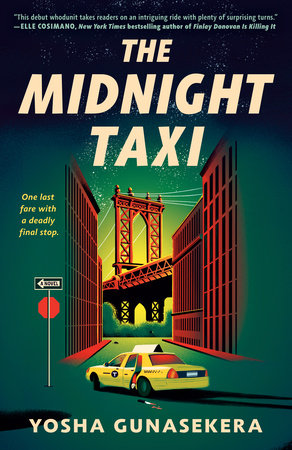
The novels on this list helped me understand what it meant to be Sri Lankan. Haunted by lingering ghosts of death, self-imposed exile, and the grief and terror that come from seeking the truth in a culture that sometimes wants to hide it, these narratives are anchored by the protagonists’ journeys of self-discovery. My own debut novel, The Midnight Taxi, follows a Sri Lankan–born taxi driver who feels neither fully Sri Lankan nor fully American and is searching for her identity and place in New York City. Like the protagonists in the novels on this list, my heroine, Siriwathi Perera, is running from something she cannot escape: the ghosts of her past and present. I hope my novel, like those listed below, helps readers better understand the Sri Lankan–American experience—and, beyond that, what it means to be imperfect in a world haunted by the ghosts of loss and uncertainty.
Quiet, introspective, and unsettling, A Passage North follows Krishan as he travels north for the funeral of his grandmother’s longtime caretaker: a woman he suspects may not have died by accident. As he journeys, Krishan reflects on her life, wonders whether her death was suicide, and confronts the enormous sorrow she carried after losing three sons to the war. At the same time, he revisits his dissolved relationship with Anjum, a political activist whose sense of urgency and moral clarity once gave his life shape. The ghosts here are intimate and internal: unresolved love, unanswered questions, and the emotional fallout of a war that keeps taking. Arudpragasam’s novel proves that silence can be as heavy as gunfire—and just as revealing.
Brotherless Night unfolds amid the early years of the civil war between the Tamils and Sinhalese. Through the eyes of Sashi, a young woman who dreams of becoming a doctor, the novel traces how violence infiltrates domestic life and slowly dismantles a Tamil family weighed down by the decisions they make to uphold their way of life. Somehow, those very decisions are the things that unravel them all. We follow Sashi through her adolescence, her education, and her deepening political awareness as the war tightens its grip. The ghosts in this novel are many: missing brothers, dead classmates, and abandoned futures. As Sashi’s world shrinks under the weight of conflict, her lost possibilities haunt her as much as the dead. The final effect is devastating—a reminder of the enduring physical and mental trauma of war.
In Anil’s Ghost, a Sri Lankan-born forensic anthropologist returns home after years abroad to investigate extrajudicial killings during the civil war. Anil works alongside Sarath, a quiet archaeologist whose loyalties remain unclear, to uncover the truth behind a body discovered in a sacred burial site, a man they call “Sailor.” As Anil traces her identity, she is forced to reckon not only with political terror but with personal loss—especially the shadow of her own parents and her estrangement from home. Ondaatje frames forensic science as a confrontation with memory itself: what bones reveal, what governments erase, and what history refuses to admit. While structured like a mystery, the novel’s true power lies in its meditation on grief and the cost of knowing too much.
Jayatissa’s My Sweet Girl is a sharply plotted psychological thriller. It centers on Paloma, a woman adopted from a Sri Lankan orphanage into a vastly different life in the United States. But like most compelling thrillers, her adopted life is built on a buried truth and Paloma carries a secret that trails her like a shadow. Paloma’s roommate begins to uncover this past, but before Paloma can pay him for his silence, she finds him dead in their apartment. By the time police arrive, the body has disappeared. The novel’s ghosts include the past Paloma has tried so hard to outrun, the identity she tried to abandon, and the lingering spectre of people who refused to be erased. In My Sweet Girl, the truth always catches up and it never arrives quietly.
Munaweera’s novel opens with a chilling story about moon bears and their devotion to their young—before undercutting it with a declaration that “in America, there are no good mothers.” What follows is a devastating exploration of motherhood, displacement, and unhealed trauma. The narrator, Ganga, recounts her childhood in Sri Lanka, where appearances of privilege mask emotional neglect and abuse. Her father drinks; her mother vacillates between love and withdrawal. A single act of violence fractures her life, setting her on a path that leads eventually to the United States but even ghosts of traumas past can cross oceans. The ghosts in this novel are relentless: memory, shame, and childhood terror that resurfaces in adulthood and motherhood. Munaweera’s portrait of intergenerational trauma is unflinching and intimate.
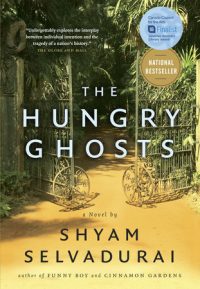
The title The Hungry Ghosts refers to a Buddhist concept of restless spirits plagued by craving—and it perfectly suits this coming-of-age novel set against Sri Lanka’s sociopolitical collapse. Shivan, a sensitive Tamil boy discovering his sexuality, grows up amid a disintegrating family and a nation consuming itself amidst a civil war. Shivan is craving a life of something more even as desire, shame, and fear intertwine with political violence threatening to erase his identity. Even as Shivan leaves Sri Lanka, he learns he cannot outrun his past and his earliest, and perhaps deepest, wounds suffered in his motherland. Selvadurai’s novel captures the cost of growing up gay in a culture where silence is survival and grief that lingers long after escape.
Part mystery, part satire, part obituary, The Legend of Pradeep Mathew follows W. G. Karunasena—an alcoholic sportswriter racing his failing liver—as he hunts for the truth behind Pradeep Mathew, a cricket legend who has gone missing. Karunasena has a year or two to live at most. Even if he cuts back to only two drinks a day, the years of arrack consumption have finally and definitively done in his liver. Mathew may have been smart or alcoholic or entirely invented. As Karunasena interviews old players, officials, and drunk cricketers, the investigation sprawls into something larger than Karunasena could have imagined with the search touching on ghosts of corruption, class division, denial, and war that haunt Sri Lanka. The deeper Karunasena digs into the truth of who Mathew was and where he’s gone, the more unstable the sportswriter becomes. As the search dissolves into uncertainty, we’re left to struggle with the notion that men aren’t accidentally forgotten; they are buried by design.
Alice Evelyn Yang’s sweeping debut novel, A Beast Slinks Toward Beijing, chronicles the experiences of a Qianze, a second-generation Chinese-American, whose estranged father reappears in her life a decade after leaving her and her mother. What follows is a whirlwind tale of Qianze’s lineage, spanning 93 years and two continents, tracing back through her father Weihong’s childhood during the Cultural Revolution in China to his mother Ming’s experience during the Japanese occupation of Manchuria. Shifting between these three perspectives, Yang not only chronicles the events that preceded and precipitated Weihong’s abandonment of his family, but also illustrates the magnetic power of stories and secrets as they accrue over generations, wielding the power to bring people together and repel them apart for reasons that seem inexplicable.
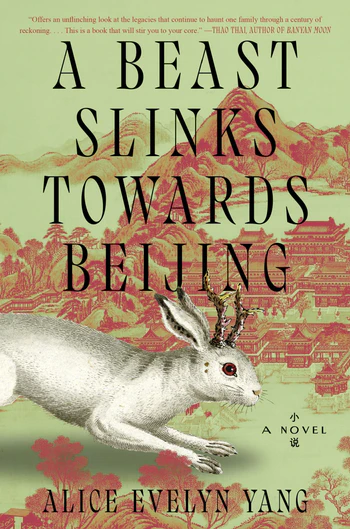
Through lush imagery, other-worldly creatures, and breath-taking attention to detail, A Beast Slinks Towards Beijing mimics the form of the story within. Under Yang’s precise and delicate pen, a family’s decades-long web of well-intentioned avoidance and experiences of colonial violence unceremoniously unravel as a drunk and confused Weihong attempts to reveal a prophecy from his past in his daughter’s Chinatown apartment. Careening between time periods and dimensions, the novel’s central characters are tied together not only by shared history and DNA but a deep-seated sense of anger and fear that transmutates into an empathy that cuts across time and space, revealing untrodden paths forward. Much like the accumulated weight of Ming, Weihong, and Qianze’s inherited trauma, A Beast Slinks Towards Beijing is all-consuming and impossible to put down until every last stone is overturned.
I had the pleasure of speaking to Yang in her Brooklyn apartment a week before her debut’s release about the blurred lines between predator and prey; folklore as a force of and against imperialism; and seeing one’s parents as complex, flawed humans.
Christ: I found A Beast Slinks Towards Beijing to be about the power of stories themselves. Was that the conception of the book?
Alice Evelyn Yang: I began the book by writing the initial reunion scenes between Qianze and her father. After I had this seed of an idea, I wrote the book chronologically. I first wrote Ming’s timeline, then Weihong’s, and then the present-day sections. I always knew that there was this frame-tale that would wrap around the story. My idea for structure has always been a Russian nesting doll where each generation carries the previous generation within it. I want to use stories as a way to interrogate how people share societal values and how myths and folklore are representations of patriarchy and the fears of a certain society.
C: So much in the book is about what happens when stories aren’t told. It’s understandable when parents want to save their children the unpleasant details of their past, but what do they risk when creating a vacuum like that?
It is possible to not follow down the path of your parents and grandparents.
AEY: I grew up in a first-generation immigrant household where my parents weren’t very forthcoming with their past or Chinese history at all. The bulk of what I learned about the Cultural Revolution I had researched on my own. Like Qianze’s mother, they thought, “Oh this is a new life, we are going to leave the past all behind.” The book poses the question of how do you reckon with trauma when it’s made physically manifest? A lot of the risks in not learning your familial history are things that are encoded genetically from intergenerational trauma. For Qianze, it’s physically-manifested unspoken trauma but also the trauma of colonialism and empire. The things that are happening to her she has no understanding of. You’re left in the dark scrambling, looking for answers, and the answers might be right in front of you, but you don’t have access to them.
C: Qianze, Ming, and Weihong all share experiences that lead to a bifurcation of the self. Is this exacerbated by their patchy understandings of their own personal histories?
AEY: The situations they were placed in forced them to have this sense of themselves as a before and after. They can’t conceive of themselves as a whole being in which before and after are reconciled. The events that split them, they hold so central to their sense of identity that there’s no way to make peace with them. They can’t let these wounds heal; they have to keep picking at them and taking the scab off. So it becomes this part of themselves that is so core to their identity.
C: As Ming and Weihong live through the Japanese occupation and the Cultural Revolution, respectively, the amount of political violence is staggering. How do you think that is reflected or refracted in Qianze’s timeline and her experience in the US?
AEY: A lot of people around me who are also second generation immigrants are learning about the Cultural Revolution through my book, despite their parents living through it. For Qianze and for myself, we live in a relatively privileged time, especially because we live in the imperial core. We’re insulated from what is going on outside of the West, neo-colonialism, and empire. If you don’t even have the knowledge of the effects of colonialism and empire, and it’s not actively taught in schools in the West, you can’t understand what’s happening right now in the Global South. Qianze lives this very privileged life where she doesn’t know about her family’s past, but at the same time the atrocities that happened in her family’s past are still ongoing in the present. It offers a window into empathy for and understanding of what atrocities happened in the past, but also what atrocities are ongoing in the present.
C: That sense of perpetuality comes throughout the book: that these things that have happened, are happening now, and will always be happening. How does this shape the arc of these characters?
AEY: I had to piece the timelines together like a patchwork quilt. I was looking for these tissues of connectivity between them to find where each generation echoed one another. Placing them in similar situations or placing the same objects throughout these generations, there is that sense of continuity, but also that they are speaking to one another. There are parallels between them, so even though Ming and Qianze never meet, Ming still somehow communicates with her, which is done through the folklore and magical realism elements. With the idea of a self-fulfilling prophecy, these characters find themselves in loops and a few of them can’t seem to break out. What I wanted to suggest in the ending is that it is possible to not follow down the path of your parents and grandparents, and you can find healing and move on from these cycles that feel inescapable.
C: There is a recurring metamorphosis of prey becoming predator, most obviously embodied by the hare becoming the jackalope. How does that figure come to represent the experiences and fears of the book’s central characters?
Anger is this nexus of transformation from prey to predator.
AEY: One of the primary emotions I am working with is anger and how transformative anger can be. Qianze is such an angry character and that anger has transformed her. Like you said, the bifurcation of her: The Qianze before Ba, who she sees as having this idyllic, happy childhood, versus the Qianze after Ba who’s forced into this position that she sees as unjust. She had to take on a very adult role from a young age. Anger is this nexus of transformation from prey to predator. At the same time, I want to challenge the notion of who is prey and who is predator. I never want to create a dynamic that is so black and white, because there is so much ambiguity. A lot of the characters that commit the most violent acts in the book, whose actions feel very predatory, you also understand the reasoning behind those actions and how, in certain circumstances, they were forced into committing those actions. Just because something or someone shifts from prey to predator doesn’t necessarily make them more powerful.
C: You do such a wonderful job of weaving passages of surrealism into what is a deeply realistic, human, and historically accurate story. Could you speak on where the magic of the story originates?
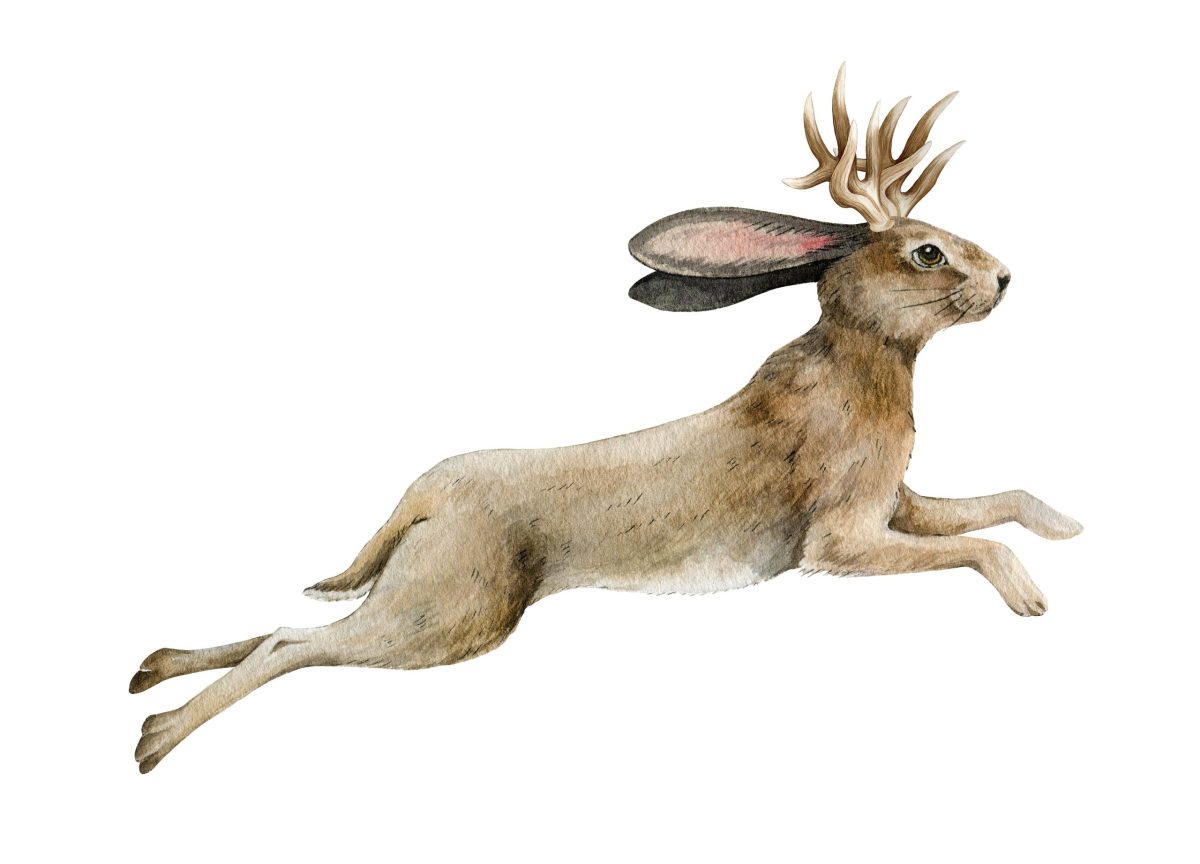
AEY: I studied magical realism in university in the context of Latin American literature: works by Gabriel García Márquez or Jorge Borges, Pedro Páramo by Juan Rulfo, Kingdom of this World by Alejo Carpentier. In those cases, a lot of folklore and magical realism is within a narrative of colonialism. There is this traditional folklore that sort of works as a force against colonialism. I wanted to examine that idea as what happens when a colonizing force that uses folklore is also colonizing the land? That’s where Japanese folklore creeps in and intrudes into the family. You have a foreign colonizing force’s demons and monsters, but you also have traditional folklore like the hare with horns, which in its simplest form is a metaphor for intergenerational trauma. My editor asked, “What makes this family special that they have this hare with horns?” This family isn’t special. I found the hare with horns in a book of omens and prophecies with hundreds of creatures. It could be any family or any creature. The idea of the magical part where it follows them and haunts them doesn’t mean that they’re chosen in any way. In fact, there are probably all these other families with different omens following them.
C: So many of the mythological or folktale figures during Ming and Weihong’s youth are women. Why is that?
AEY: There are a lot of allusions to female monsters and demons in both Japanese and Chinese folklore: fox demons, the Yamauba, which are old mountain hags in Japanese folklore. All of these portrayals go back to this idea of monster theory, where folklore conceives of monsters as fears of a certain society. The village in rural China was so afraid of women deviating from the norm, of being anything but a chaste wife and mother. Even when someone is forcibly driven off that track, they are vilified and demonized. It’s a deeper understanding of how these monsters were created and how maybe they weren’t monsters at all, but a reflection of the values that this village had.
A lot of what is considered monstrous is justified anger or emotion. Ming is seen as monstrous by the village because she is healing from something that they can’t understand, but they know that she no longer shares the values that they hold dear. Conversely, the Oni commander in the Japanese army is basically the most evil character, but when you think of someone who’s immortal, they have a completely different perspective of the world. There is complexity to him because he is envious of death. He isn’t meant to be a pure black-and-white figure. There is a sense he favors Ming because there is this distorted sense of connection between them.
C: Despite him being the most evil character throughout the book, it’s made clear that the worst violence in the world is committed by humans. How does that ground the story?
AEY: There are these supernatural elements of monsters and demons, but at the same time, that’s a story that we tell in order to justify the actions that humans have taken to survive. Qianze says, “If I was backed up in a corner, would I have committed the same moral failings as my father?” Looking at memoirs of the Cultural Revolution, it’s likely. We all want to think that we’re better, but when we’re pushed into situations that come between our survival and our family’s survival, people can easily do monstrous acts. The harder thing is to stand by your morals.
C: Food is very central to Chinese culture and the family unit throughout the book. How do you see food or the lack thereof operating across the book’s different timelines?
People can easily do monstrous acts. The harder thing is to stand by your morals.
AEY: I come from a privileged background, so I can never imagine what famine feels like: food as luxury, food as a driving force to make someone do these unforgivable actions. During the Red Guard ransacks, they would take the food. So food is this reward that’s won. During the Japanese occupation, the Japanese army plundered Manchuria for their goods. In the present timeline, it’s very different. Food becomes this language of care. Qianze and Weihong have a hard time expressing their complicated feelings towards each other, but you see how she makes the steamed egg custard, which is something he made for her. These unspoken gestures show how the connection between them still exists.
With all the motifs and symbols that keep on occurring in the novel, they have to change with time. It’s interesting to see how these same symbols appear in each generation, but they have completely different meanings.
C: In that same vein, the color red plays a pronounced role throughout the book.
AEY: Red is one of those symbols that accrues different meanings because it appears in all these different contexts. Part is the history of the Cultural Revolution. People were split up into this idea of red or black. You also have motifs: the red thread that is Weihong’s leading line into his past. He follows what he sees as a red thread of fate through the maze of his memory to find the memories that he feels are most important. The Cultural Revolution was so dominated by these colors of red, and I want it to have different meanings and complexity. In traditional Chinese culture, red is a very lucky color, and it’s something you wear for Chinese New Year and weddings. The color has such significance in the culture, it’s bound to have multiple meanings and the same is true in the book. It means fate and fortune, the communist regime and the violence that is committed because blood is red, and there’s a lot of blood spilling within this novel. Nothing is ever good or bad; it’s got multiple dimensions to it.
C: In the last part of the novel, each of these three characters have moments of keen understanding of one or both of their parents. How are those insights necessary for rebuilding their own self-image?
AEY: Ming was so vilified by the people around her who she considered part of her home [that] she understood more intimately the role of women in this society. That gave her access to understanding her mother and her conceptions of her mom as monstrous, which is not to say that her mother wasn’t a bad parent. She understands now how someone can become that angry and bitter because she’s gone through events that have created those emotions in her. That is a parallel experience with both Weihong for Ming and Qianze for Weihong: Understanding their parent’s past and what actions shaped them makes them more human. If you just know someone blindly without knowing their context, it’s easy to vilify them, but knowing [that] what happened to them and what they did didn’t occur in a vacuum lends itself to understanding them more as people.
C: What is so hard about getting to the place where you can see your parents as people and not just parents?
AEY: This is something my friends and I have dealt with. When you’re a child, you don’t have the maturity to see your parents as fully-fledged people beyond them being your caretakers. I’m 27 now, and I remember when my mom told me that she was 27 when she immigrated to North America. That was really jarring to me because I always felt her past was this mythological thing, but then I imagined myself in her place. When you’re a child, you tend to idolize your parents and it erases the flaws, and humanity comes from the flaws. Qianze is having trouble reckoning with this idealized vision of her father, who abruptly left, with the very human person he is now. Writing this book for me was trying to put myself into the skin of someone who lived through the times that [these characters] lived through.
[Like] a lot of second-generation children, I used to feel so frustrated with my parents that they hadn’t fully assimilated, because when you’re a child, being different feels so glaring, and I just wanted them to be like every other parent. I remember being frustrated when they would talk in Chinese in public. I have a lot of regret for how I acted then. I also don’t think I knew better, but now that I’m an adult, I just want to understand them as people, and I want to give them all the grace that they deserve.
I first found out about the notebooks from David. Interesting that somebody so pedestrian would change my life, but I suppose it had to come from somebody. If it wasn’t him it would have been one of the others. Or anybody, really. The source is not important. Obviously David was thrilled to be the instigator in our little group, but he has to take small victories doesn’t he.
He found out from his therapist. David was the last person I knew who was still doing therapy. Even Sophie couldn’t afford it anymore and she got pay raises in line with inflation. I dismissed the idea at first. It sounded like something I’d tried before. Bullet journals. Morning pages. Daily gratitudes. Hadn’t made a difference. “You didn’t use enough notebooks,” David said. “You need at least three.” That was the baseline. If you were doing ok, you needed three. But complicated people, with serious problems, creative inclinations, difficult thoughts, for them three was not enough. “I’m starting with ten,” David said. I immediately went out and bought fifteen. We all did. We just didn’t tell David how many. He was very insecure about the fact he didn’t have a diagnosed mental illness. We had to be mindful of that.
I didn’t start using my notebooks until I saw how they worked in practice. It was at Ben and Sophie’s house, maybe a week later. Ten minutes into the lentil ragu, David suddenly put down his fork, reached into his pocket and extracted a manila A6 notebook. Impressively nondescript. A flash of panic came over Claire’s face. Her notebooks were probably pink or purple or yellow, covered in stickers of potted plants and dolphins. She was already doing it wrong. I stuck a big piece of garlic baguette into my mouth to hide my smirk and made sure to observe David carefully. I’d decided to be the best at notebooks.
He only wrote for a few seconds, can’t have jotted down more than a sentence or two. Then he put the notebook back in his pocket, lifted his fork, and took another mouthful of linguine. Slowly. He was doing everything very slowly. And we were all quiet, of course, watching him, waiting for him to look up and say, “Oh, of course the notebooks, you must have questions about the notebooks!” He was loving every second of it. Finally he did look up and quietly said, “Lara, could you pass the parmesan please?” and Lara nearly screamed. She said she wouldn’t hand over the cheese until he told her what he’d been writing, and David said, “Well perhaps this is the impetus I need to finally go vegan” (moronic!), and then he talked about the notebooks for quite a while without really saying anything at all, just things like however you do the notebooks is the right way to do the notebooks and it’s really more of an instinctive thing and you’ll get the hang of it don’t worry.
So there we were, Lara fuming, Claire panicking about her ugly twee stickers, David, smug as anything. And that would have continued for a while, even as the conversation inevitably moved on to other things. Dating shows, spelt flour, personal vendettas. And then there would have been a fight about something, Lara’s cat maybe, because everybody knew it was her fault the poor thing had stress induced cystitis and kept pissing on her bed. We didn’t say anything usually when she brought it up, when she talked about how annoying the cat was (what a thing to say! about a cat!), but after a few bottles of wine somebody, probably Sophie, would ask if Lara had tried providing more of a structured routine for the cat and Lara would say, “I don’t like that accusatory tone, Sophie,” and Sophie would say, “I’m just looking out for the welfare of an animal,” and Lara would say, “You’re not better than me just because you have a dog! If I had inheritance and a garden, I’d get a dog as well and it would piss all over you!” and then Claire would inexplicably burst into tears, because whoever knew what was going on with her. I’ve known Claire the longest of any of them but I do find her difficult to read. Of course it’s difficult for her, because she never really grew into her looks the way I did, even though at school she was the pretty one and I was the intellectual. That’s what everybody said and now, bless her, she’s still not that smart, and those pink dungarees aren’t doing her any favors.
So thank god Ben was there. Because Ben said something like, “Gosh, David.” That’s how Ben talked, he said things like, “Gosh, David.” And then he’d follow up with something inane like, “I’m really struggling with these notebooks, you know.” And then, if you can believe it, “I’d really, genuinely, appreciate some tips.” And if anybody else had uttered such a pathetic and earnest string of words they’d be treated with the contempt they deserved, but not Ben. Who knows what it is about some people. I guess he’s just nice. And it meant that David shared his notebook technique with us, and talked about personal growth and about doing the work, and everybody took notes, thought up their own adjustments, and I suppose that’s when things really got underway.
That was the last time that David got to hold court. Laughable really, when you think about it now. How we used to be quiet and listen to him. Now I don’t even read his texts.
The next dinner was at Lara’s house. I busied myself in the kitchen making margaritas—it was Claire’s first week in her new job and I didn’t want to hear about it. She’s never been very resilient. I was absorbed in my task, enjoying the sound of the ice clattering cheerfully, when I realized the table had gone silent. Everybody was writing in their notebooks. Well that was interesting. I brought the drinks through and set them down and a few people nodded in thanks. David didn’t make a comment about it being a Tuesday and Sophie didn’t pointedly say that she was fine with water actually and Ben took a sip and raised an eyebrow but he didn’t say that it was a bit strong wasn’t it. They all just kept scribbling. So I sat down and got out the notebook I’d brought with me, a forest green moleskine, and I wrote: I love margaritas and I want to drink them every day. And then I looked around and watched everybody else writing for a bit, and I wrote: Silence is golden. It felt shameful to have written something so trite, I would never have dared say it out loud. But the notebook was just for me. I crossed out golden and wrote margaritas in its place, and that seemed even worse somehow. The stupidest thought I could put down to paper. It was a thrill. It was so much better than talking.
They were happening everywhere, these revelations, I suppose. We were early adopters, but we weren’t the first.
The silence was only temporary that night. The rest of the evening was similar to usual. We ate vienetta and took personality tests. Lara got an empathy score of 0/6 in the Hogan Personality Inventory and was furious. She stomped around the living room, shrieking. Any excuse to cause a scene. “Zero!” arms flailing. “Zero!” triple sec spilling over Ben and Sophie’s new floors. “Zero!” I also got zero, but people expected that, and I didn’t care. “Zero! Zero! Zero!” The flailing arms made contact with Claire’s nose but Lara didn’t notice. Usually David would have stepped in at this point but he was sulking over his low scores in the creativity section. “What about curiosity?” I asked helpfully. David wasn’t particularly bright but surely anybody could be curious. He didn’t respond. Well he was getting no sympathy from me in that case. A low curiosity score frankly meant he wasn’t even trying to be interesting.
I left soon afterwards. Claire’s nose bleed was off putting, and I could tell Sophie blamed me because I’d brought tequila again. Anyway I was eager to go home and write in my notebooks. I’d had such a fun evening, I felt very full of gratitude. And David had suggested we devote an entire notebook to that very topic.
Lara is a narcissist, I wrote. If David ever admitted how normal he is, he’d die of shame. I don’t think Ben and Sophie have sex anymore. Claire makes me uncomfortable. Why do I keep getting diarrhea? I was jumbling up notebooks back then. I hadn’t figured out the systems yet. But I was starting to understand what it was about, and so was everybody else.
We all went for a hike the following weekend, stopping every twenty seconds to write something or other down in a notebook. It seemed that most people had brought five or six books with them, so I was very pleased to be hauling around ten.
“You know you don’t need to have all your books with you at all times,” David said.
“Oh, I’ve only brought half of mine,” I replied, gleefully drinking in the look of panic in David’s face. Sophie whispered something in Ben’s ear. Claire suddenly started walking back in the direction we’d just come from. She did that kind of thing sometimes. The sun was shining off the hills. It was glorious.
From then on we all took enormous hiking rucksacks everywhere we went. They barricaded us in at the pub, where we sat silently scribbling. Conversation ceased almost entirely around week three or four. Why would you talk when you could write? If you’d just been to see a film you wouldn’t chat about it afterwards, you’d write it down in your notebooks, hash out your thoughts there. It was embarrassing to think about, really, how much we’d shared in the past. Our half-baked thoughts, those worries you have that are there one day and gone the next. How much of each other’s time we’d wasted! It became clear to me—conversation was just practice. That’s all it had ever been. Why talk to mediocre friends who were just trying to put their basic thoughts in order? The only reason I had ever tolerated this was so that I could talk back, so I could sort out my thoughts. But I didn’t need people anymore, I had my notebooks.
Why would you talk when you could write?
We need to stop rehearsing with each other, I wrote in Notebook #27. Let’s talk again when we have something worthwhile to say. I was on a roll. The thoughts I was coming up with. Unstoppable. Nobody in my way. Just the notebooks, just my own mind, encouraging, clarifying, putting the pieces together. Clogs, I wrote in Notebook #35. The others are clogging me up with their stupid opinions. I opened up Notebook #14. The best utensil is a spoon. Notebook #8. Lara’s cat is an incel.
Notebook #12. Buy peppermint capsules. Notebook #1. I’m notebook-maxxing.
I hosted the next dinner. I’d been working on improving my digestion and was undertaking an elimination diet to try and reduce bloating. We’re just tubes. Food goes in, shit comes out. Notebook #19. I served boiled white rice with black pepper. Nothing else. Nobody said anything, of course, they just wrote furiously in their notebooks. Most people got out several notebooks, writing in them all simultaneously. Sophie was colour coding, Lara had highlighters. Am I a tube or is there a tube inside me? The rice was overcooked, mushy and wet. The tubes are dying.
Afterwards we sat in the living room where we could write more comfortably. I put on a Randy Newman album, one I was sure everybody would hate. If it was two months earlier, everybody would have shouted at me. If it was two months earlier, Lara would have asked me about my new throw, instead of casually running her fingers over it, pretending she wasn’t actively seeking out the label to check if it was 100% cashmere (it was). If it was two months earlier, David would have said something extremely obvious about my new Leonora Carrington print, in order to demonstrate that he recognized it, instead of just staring at it with great intention in his face, and then looking around hoping to catch somebody’s attention. But it wasn’t two months earlier. It was blissful silence. I wrote about tubes for three hours.
Notebooks encourage proper rumination. It became distasteful to express an incomplete thought, an emotion that hadn’t been analysed. Even asking a question was frowned upon, if it was possible to find the answer yourself. At one point, Sophie started to say something. She thought she was ready, she thought she was finished. She only got three words in before Ben leaned over and clamped her mouth shut.
I spent Christmas alone with my notebooks. I explained to my mother, briefly over text, that I didn’t have any complete thoughts to share at that time, so the journey to Buckinghamshire seemed unnecessary. She wasn’t happy about it, but she understood. She had a few notebooks by then, the food bank where she volunteered had started giving them out. It was already helping her quite a bit. She’d stopped calling me so often.
I met up with the others in early January. I had no desire to see anybody, but I knew from my notebook work that if I went more than two weeks in isolation I would start to get acid reflux. And it was very pleasant in the pub. Quiet. Notebooks. Until Claire started crying.
Everybody shot her a sympathetic glance of course, I think Sophie even patted her on the shoulder. And then we turned back to our notebooks. When I looked up maybe fifteen minutes later, it was still going on. I nudged Lara. She cleared her throat and everybody saw what was happening, and we all waited politely. Waited for her to deal with it. Until finally, Ben, very gently, said, “Did you forget your notebooks, Claire?” She didn’t reply, just kept weeping into her pint. And I thought, well maybe she’s embarrassed, because at this point, who would forget their notebooks? Poor Claire. Poor stupid Claire. Perhaps I could tear a sheet out of one of my notebooks, and she could write in it and then glue it into her own book for later. It would be messy, but what are friends for? Or maybe they’d have some spares behind the bar. I was about to get up and ask when I saw it. A spiral bound notebook, peeking out of Claire’s jacket pocket.
It happened a couple more times. We reached breaking point when Claire called Sophie up and asked if they could talk. Said she wasn’t doing so good. Said she needed a friend. Well, that’s not right. That’s not how you should treat somebody, like a notebook. Claire wasn’t Sophie’s problem. And she said as much. Tactfully, of course. Sophie’s empathy score was 3/6. We didn’t see Claire after that. Last I heard, she’d moved to Germany and joined a wild swimming group, which is stupid because I’d already tried wild swimming years ago and it didn’t make any difference whatsoever. Faulty tubes, I wrote in Notebook #97. Deficient in notebooks. Notebook #84. You can’t control everything that comes out but you can control what goes in. Notebook #104. Half a cup of oats, boiled in water, pinch of salt. Handful of chopped and roasted hazelnuts. Five grams of psyllium husk. Bowel movement, Bristol stool scale type 3. Notebook #213.
This was in March and the notebooks were already everywhere. Who could have guessed that David would have stumbled onto a therapist who was actually at the forefront of something? Usually I’d be sceptical about anything that popular, but the notebooks just seemed right to me. Probably because they are. Of course, people complained when GPs started prescribing the notebooks, and then that they were overprescribing them, that it had become impossible to get any other kind of treatment, that the NICE recommendations were updated without proper consultation, that the introduction into schools happened too quickly. It was the usual suspects. Cowards who need their hands held, thirty-year-old children who won’t take agency over their own lives. Stupid people who were unable to grasp the message, the very basic message of the notebooks—stop expecting anybody to listen to you.
Ben and Sophie felt differently. “What are we losing?” Sophie asked, and I bristled at the sound of her shrill voice. It had been so long, I’d forgotten how annoying it was. “What are we giving up in place of these notebooks? What happened to society?” I packed up my books and walked away, my buddha bowl half finished. I wasn’t surprised this had happened. I was sure that Ben and Sophie still talked to each other. They didn’t know how to be silent in each other’s company. So they’d never really done the notebooks properly, never grasped what it was all about. And that’s why Sophie had thought it was acceptable to start shrieking at me about social welfare and youth groups and GP appointments. Sophie’s always been obsessed with the idea of structural problems. She’s never been very good at looking inward.
Stupid people were unable to grasp the message, the very basic message of the notebooks—stop expecting anybody to listen to you.
The more I’d gotten into notebooks, the more I’d found politics to be completely redundant. You have to start with the individual, self-improvement can only ever come from within. I assumed everyone else had also stopped going on marches, but maybe Ben and Sophie still were. That was concerning. That was a lot of time away from notebooks. Were they writing on placards? How much thought were they putting into their slogans? I would have liked to explain my tube theory to them both, to help them understand how everybody ultimately had the power to manage their own lives, to control their tube, but it wasn’t ready yet. I hadn’t quite figured out how to tie it in with my theories about notebooks. I was planning to keep my distance from those two now anyway, after that outburst. David seemed happy to avoid the politics discussions as well, which wasn’t surprising. I’d always suspected him of being a moderate, but too embarrassed to admit it. I don’t know what Lara felt about anything. Every now and then I’d sneak a peek at her notebooks, while she was scrawling away. She’d started using a red crayon, and for the past month or so all she’d been doing was drawing crude depictions of her cat. Most recently, I noticed the cat had grown wings, like an angel.
It’s not easy to fully commit to notebooks, and not just because of the intellectual discipline required. There are practical barriers too. By the end of that first year there really should have been more provisions in place, some kind of assistance for those of us who were doing it properly. Proper storage on trains, for example. When I went to the Isle of Skye with Lara and David, there was still nowhere to put our notebooks. We’d had to reserve extra seats on the train to Edinburgh, just for the books. It caused problems on the packed train, the people standing were pretty salty about it, but that’s why you need to reserve. We’d paid for the tickets, as I explained to anybody who objected. And surely they could see, from the number of notebooks we had, that perhaps our problems were a little bit more serious than theirs, our thoughts, frankly, quite a bit more sophisticated. A woman holding a tatty block of neon post-it notes scowled at me. I was hauling around 97 notebooks at this point. There was so much more to me than she could ever comprehend.
I was still stuck on the tubes. It was all I could really write about. Dozens of notebooks filled with my speculations as to what had happened to Claire’s tube, with no satisfactory answer. It was really very generous of me to be devoting so much of my thinking time to Claire. Our friendship had never made much sense in the first place, I only agreed to the relationship because she’d cornered me when I was eight years old and powerless. When I didn’t have notebooks. But I do feel bad for her nonetheless. She’s never been very cerebral. She’ll keep throwing her body into cold water, posting on Instagram, talking. She’ll never get anywhere like that and I’ll admit, it’s a real limitation of the notebooks, that they don’t work for people like her. That’s why I was working away, studiously tackling the task of Claire’s tube, when in fact my own tube was causing me all sorts of problems. The prune experiment was almost certainly the culprit, but I’d have to check Notebook #213 to be certain, and I’d left that one at home.
The train came to a halt just outside Peterborough. Par for the course these days. We were all scribbling away, no big deal. Our destination wasn’t going anywhere. But then the electricity went off. Well, whatever, it was still daylight outside, and notebooks didn’t need charging did they. Except the air conditioning was linked to the electricity. And it was August. A particularly hot August. And now the people standing and sweating were becoming more resentful about the notebooks. And my tube really wasn’t feeling great.
I stood up and saw somebody make a beeline for my seat.
“I’m coming back,” I said. “I’m just going to the toilet.”
“You can’t go to the toilet,” the somebody said. “The doors are electric. There’s no electricity.”
“What about in Coach A?” I asked, “the Coach A toilet doors aren’t electric.” They shrugged, turning back to their notebook.
Coach A was a snake of people, scrawling away. I stepped over bodies napping in the aisles. Notebooks under their heads.
“Is this a queue, or are you just standing?”
Nobody replied. Notebooks. My guts spasmed. I realized that in my rush I hadn’t brought a single notebook with me. I tried to remember my most recent thoughts and saw only blank pages. Panic set in. My tube. I had to do something about my tube.
I peered at a middle aged man with a red face. What did he have to write about? What problems could he possibly have? I couldn’t take it, I grabbed the notebook out of his hands. It was an unacceptable act. A woman fainted in response. Scribbling intensified. The man’s pages were horrible. Intense despair.
“You need therapy,” I said.
“There is no therapy,” he replied.
“Is this a queue, or are you just standing?” I asked. He didn’t reply.
I fought my way down the line, stepping over the fainted woman. People recoiled as I got near, held their notebooks close to their chests. Finally, I made it to the door.
“It’s locked,” somebody whispered. “It’s been locked the whole time.”
I shook the handle to no avail. My tube broke down.
It’s important to have humbling experiences. That’s how you strengthen your resolve. Because accidents happen. It’s what you do afterwards that matters. It’s what happens next that determines your fate. So I’m glad I was in that situation, I’m glad I felt, for one small moment, what it’s like to be Claire. I didn’t cry, of course, but there was a release of fluids. An uncontrollable release of fluids. And no way for me to escape, no notebook to write in. An old man started clawing at the windows. He’d forgotten that they don’t open on these trains. Minutes passed, maybe hours. I was paralyzed. The stench was horrific. A child threw up. My thoughts were empty. I could only feel. The child’s mother screamed at me. A growing desperation. Dripping down my legs. The inhabitants of Coach A fled, heads bowed, avoiding my gaze, stepping through vomit, stepping through feces, silent and furious. Finally somebody gave me what I needed.
To do. I wrote. One. Remove clothing. Two. Wipe self with t-shirt. Three. Place shirt on pool of excrement. It wasn’t possible to cover everything, of course, but so be it. Four. Trousers, also. Yes that was an improvement, an excellent addition. Five. Lift right foot and place 20cm ahead. Now we were getting somewhere. Six. Repeat with left foot. I began walking. Seven. Check the luggage rack for a better pen. Nothing to be found but so be it. I’m a pro, I could make do with a biro. Eight. Keep going. Oh absolutely. Nine. You’re doing great. I truly was! Scribbling away. Naked and invigorated. Ten. Enter Coach B. Filth on my feet and a smile on my face. A notebook in my hand. And there in front of me, my good friend from earlier, the man with the red face and the troubled thoughts! I looked up from my notebook to embrace him, to plant a gentle kiss on his large bald head. I could see his lips move, the dear man was trying to communicate with me but I couldn’t hear a word, how strange that I really couldn’t hear a thing. “Tubes!” I shouted, but I wasn’t sure if I managed to make a sound above the roar of notebooks. Eleven. Next destination: Coach C! Onwards I traveled, parting the aisles, admirers leaping out of the way to facilitate my journey. More friends, more notebooks. I grabbed them out of people’s hands, overcome by their generosity, by their recognition that I had important work to do, that my thoughts were more necessary than theirs. A man in a navy blazer handed me a stack of napkins, but there was really no need, I had more than enough notebooks at that point. What do Ben and Sophie mean when they say there’s no community anymore? This is community! Twelve. Push that woman. Why? She is in your way. Oh it’s true, and how much harder it was becoming to see things off the page, my vision blurring, the words clear but nothing else. Was I back at my seat yet? My destination no longer seemed important. I wrote. I thought. I didn’t stop. I was free again.
New page. New notebook. Important train thoughts. Free of my tube. Tears and feces. It’s all the same. I didn’t need a hero’s welcome as I marched through the doors of Coach E, triumphant. The body is separate from notebooks, it exists outside of notebooks. I didn’t expect Lara and David to jump up and offer assistance, to help me deal with the man who had taken up residence in my seat. What is the body? I knew they couldn’t yet understand the significance of what had happened, what was still happening. It moves around, things go in, things come out. That can’t be avoided. I knew all they could do was look, and very well, look if you must. It’s disgusting, but even calling it disgusting gives it too much credit. Look at my naked body, look at my soiled hands. What if the body was a notebook? I am beyond looking. Destroy all the mirrors. I am endeavouring to stay in the notebooks, I am working towards just being notebooks. I have almost succeeded. The body is a test. Claire failed the test but I will not! Fluids fluids fluids. I don’t care what happens to my fluids anymore as long as they don’t spill onto my notebooks. I don’t care if my fluids are spilling onto you because you are not a notebook. Tears and feces tears and feces. David’s mouth opening and closing. Lara’s arms moving erratically. The sweet stench of notebooks. There’s no point trying to communicate with me. Go on, leave. Get off this train, you are not ready. You were never even close. Everything outside of the notebooks is nothing. You think this is too hard, but I remember how it used to be. No more talk. This is so much better.
When my parents died, I expected grief. I expected flowers and casseroles, sympathy cards and awkward hugs from well-meaning acquaintances. I did not expect sticker shock.
According to the most recent statistics from the National Funeral Directors Association, the median cost of a funeral with burial is $8,300. The median cost of a funeral with cremation isn’t much better, at $6,280. Fortunately, my parents left some money behind—their friends really know how to run up a bar tab! But the bills don’t end with the memorial service. It cost around $300 to publish my dad’s obituary in the newspaper. It cost thousands of dollars to hire an estate attorney. While that money ultimately came from my parents’ estate, I’d never hired a lawyer before—I was just a 35-year-old baby, after all—so I was initially under the horrifying impression that I’d be on the hook. And I might have been, had my parents been in significant debt when they died. (Fear not: You don’t inherit your dead parents’ debts. But if their estate can’t cover the incidentals—like hiring a lawyer to deal with probate court—those bills might land in your mailbox.) I also had to pay an accountant to handle the taxes, shipping companies to send their belongings across state lines, and the county clerk’s office for dozens of death certificates.
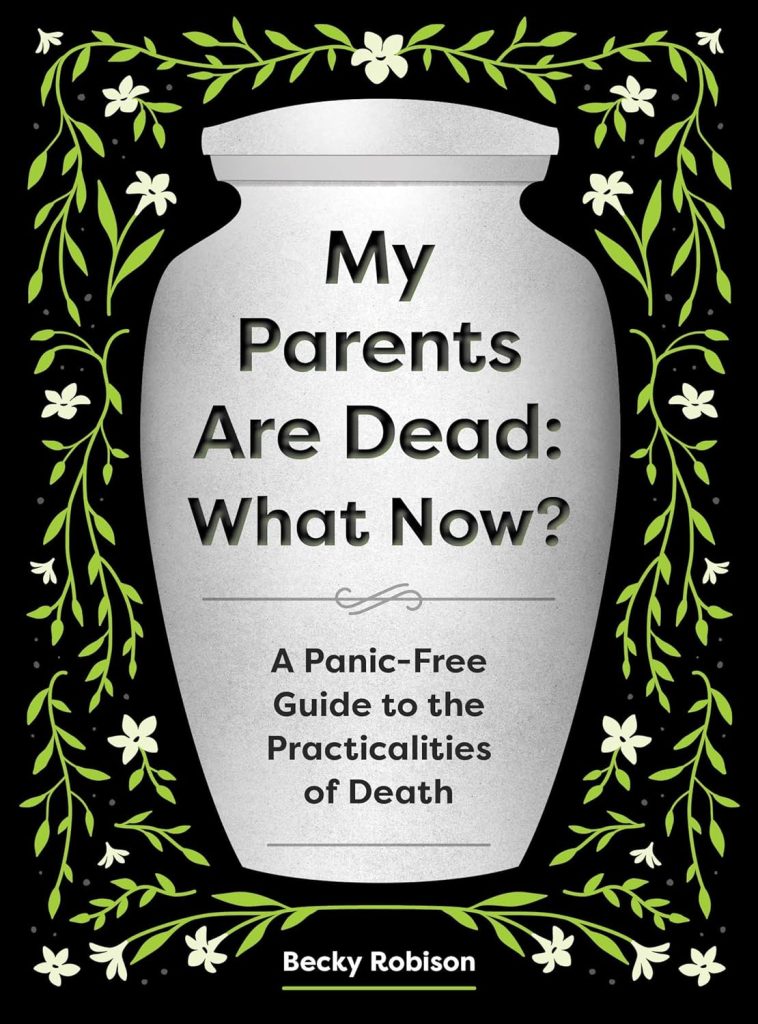
As it turns out, death ain’t cheap. And because I have extreme eldest daughter energy, I decided it was my problem to help everyone else navigate the maze of postdeath bureaucracy. When I was writing my how-to book, My Parents Are Dead: What Now? A Panic-Free Guide to the Practicalities of Death, I made sure to include information about covering the Grim Reaper’s associated fees, especially when mom and dad didn’t factor mortality into their budget. My research involved training as a death doula, auditing an estate law course, and interviewing morticians, accountants, attorneys, and more. And of course, I did plenty of reading. Here are some other books that show how the invisible hand of the market reaches far beyond the grave.
Born into a conservative, aristocratic British family, Jessica Mitford defied her parents by embracing communism and eloping to Spain with her first husband to fight against Francisco Franco in the Spanish Civil War. That wasn’t the end of it; she later moved to the United States, married a civil rights attorney, and became a muckraker. Her most famous book is 1963’s The American Way of Death, which took the funeral industry to task for its exploitative behavior toward grieving families, from wildly inflated pricing to outright lying about legal requirements. Updated shortly before Mitford’s own death in 1996, her wry exposé remains depressingly accurate, despite the Federal Trade Commission’s efforts, beginning in the 1980s, to regulate the industry. Mentioning Mitford’s name is still an effective way to piss off many funeral directors.
Forget about a funeral—what happens when a bereaved family can’t even afford to bury their dead? And what about deceased people who have no family to claim them? Through a combination of reporting and personal essays, Amy Shea—author and cofounder of the Equitable Disposition Alliance—uncovers the patchwork system U.S. municipalities have cobbled together to lay the indigent dead to rest. Some cities bury the unclaimed dead, while others cremate them. Some cities hold mass memorial services, while others dispose of the bodies without ceremony. By weaving her own experiences of death and working with unhoused populations into the narrative, Shea forces us to consider not only how we plan (or don’t plan) for our own demise, despite our comparative privileges, but also what we owe others in our community—during and after their lives. No spoilers, but you shouldn’t skip the index.
While Too Poor to Die covers funeral poverty in the United States more broadly, Prickett and Timmermans focus on a specific case study in The Unclaimed: four Angelenos who join the ranks of the abandoned dead for dramatically different reasons. Their reporting reveals that the poor aren’t the only ones who end up in the care of the overworked and bureaucracy-burdened civil servants we meet in the book. Like many cities, Los Angeles prioritizes immediate family when it comes to claiming a body—and some families refuse to claim their dead. Even if friends or other communities wish to step in, they often aren’t legally allowed to do so. When I saw Pamela Prickett speak at last year’s Funeral Consumers Alliance conference, she emphasized another cause: fraying social ties. Our culture promotes self-reliance, which can easily turn into isolation. As communities dissolve, more people die alone.
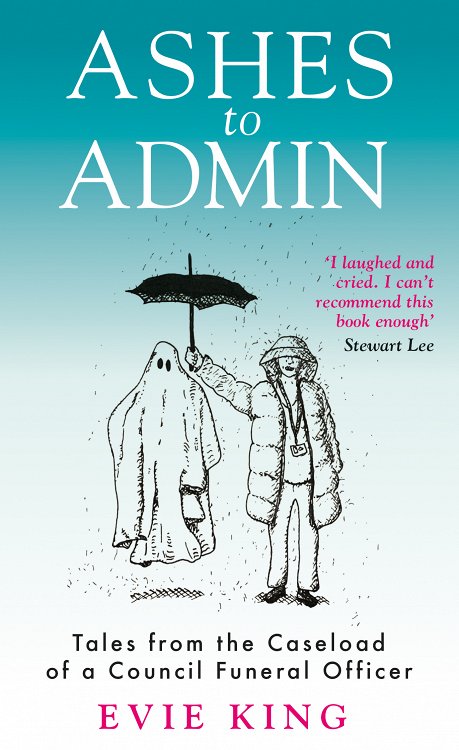
Although it’s tempting to imagine Europe as a paradise with robust social programs, they have their own problems with indigent death across the pond. In the United Kingdom, the Public Health Act requires that local governments provide funerals for the unclaimed dead. Enter Evie King. Ashes to Admin tells the story of how King became a Council Funeral Officer and her efforts to learn more about the individuals who wind up in her caseload so she can give them the sort of sendoff they would have wanted—mortician meets gumshoe. As far she’s concerned, a government funeral doesn’t have to mean a bad funeral. King’s memoir also discusses the increase in Section 46 funerals due to rising funeral poverty in the U.K., as well as the undue shame families feel when they can’t afford to pay for these services themselves.
In addition to its high monetary costs, death requires a tremendous amount of unacknowledged labor. In All the Living and the Dead, Campbell speaks to the workers you might expect—embalmers and gravediggers, for example. But she also speaks to a longtime executioner who performs complex mental gymnastics to reconcile his profession with his faith. She speaks to investigators who recover and identify bodies—or parts of them—after major disasters. She speaks to an artist who casts death masks of the recently deceased. Campbell is honest about how these interviews and experiences impact her own mental health, which gives readers permission to acknowledge and work through their abjection as they encounter these ordinary yet astounding professions for the first time. For what it’s worth, I don’t think it’s healthy—or even possible—to be stoic while reading an interview with a bereavement midwife.
Think capitalism stops with your funeral? Think again! In Body Brokers, Cheney reports on the illegal-but-thriving trade in human remains—bodies (and body parts) that were meant to be cremated or donated to science instead sold for a profit to companies who want them for research, testing, and transplantation. She even includes a price list, in case you want to know how much your knee is worth (though the book was first published in 2006, so you’ll need to account for inflation). I want to stress that this is incredibly unlikely to happen to you or anyone you know. Most corpses end up exactly where they’re supposed to go. But as the recent grave robbing scandal at Philadelphia’s historic Mount Moriah Cemetery shows, the black market body trade didn’t end with the Resurrectionists of the 19th century—who Cheney also covers, in case you’re unfamiliar with the term.
If we’re not doing death the right way, who is? After rising to prominence through her “Ask a Mortician” YouTube series, Caitlin Doughty began to publish some very funny books that, in no small part, influenced my own work. In the second of those books, From Here to Eternity, Doughty does exactly what the title says. She travels to Japan and watches families use chopsticks to carefully place the bones of cremated loved ones inside an urn. She travels to Bolivia to meet Doña Ely’s collection of behatted skulls from whom visitors seek advice about their daily problems. And while many Americans may be disinclined to imitate the Torajan people of Indonesia and ritually exhume their ancestors every few years to check in, Doughty’s morbid anthropological journey proves that we don’t have to accept the consumerist streak running through America’s funeral and mourning customs. There are other options.
As a shy junior high student, I had a love-hate relationship with my art teacher, Mr. Krezanosky. Love, because he paid attention to me. Hate, for the same reason.
“That drawing would be half good if we could actually see it,” he’d say. “Make it darker.”
I tried, but my version of dark was featherlight. Exasperated, he gave me a Sharpie.
“You’re only allowed to draw with this,” he said. “Use some force. Tentativeness kills talent.”
I was horrified. I didn’t know how to draw with something so blunt and bold. Somehow, I managed to be just as timid with the marker as I’d been with the pencil. Mr. Krezanosky sighed. “You’ll get there someday, kiddo.”
But have I? George Saunders’s new novel, Vigil, made me question how far I’ve come. Saunders’s protagonist, Jill Blaine, is a distinctly unforceful person intent on rankling no one. In other words, she’s me. A people-pleasing, Buddhist-leaning, born-and-bred conflict-avoider, I immediately recognized myself in Jill’s delicate approach. If she’s got a writing instrument in her little tan purse, I’d wager it’s a Number 2 pencil.
When I interviewed Saunders for my podcast, he confessed that he likewise relates to Jill’s kindly outlook on the world, experiencing a “generalized fondness” for strangers that makes it hard to fathom our transgressions as a species. Yet in Saunders’s case, a soft heart does not translate to a light line. Tentative he is not.
Jill is a ghost—literally. Her mission in the afterlife is to comfort the dying, a job at which she is highly successful until she meets oil company CEO K.J. Boone, a man who spurns solace. He has spent his life funding and spreading false narratives to discredit scientific findings on climate change. The book takes place at his deathbed during his final moments. Unrepentant, he believes he has contributed to human progress and is leaving the world a safer, more efficient place. He has lived a big, bold life free of pesky reflection. Force is the blood in his veins.
Jill uses her secret weapon—gentleness—to try to penetrate Boone’s haughty veneer to reach the lost little boy within, a kid teased for his shortness and backwater origins. Her outlook on the human condition is reflected in this passage about Bowman, a character from her past:
“He had left his mother’s womb with a particular predisposed mind and started living, and immediately that predisposed mind had run up against various events, and had been altered in exactly the way such a mind, buffeted by those exact events, would be altered, and all the while he, Bowman, trapped inside Bowman, had believed he was making choices, but what looked to him like choices had been so severely delimited in advance by the mind, body, and disposition thrust upon him that the whole game amounted to a sort of lavish jailing.”
I nearly tore the page underlining this passage, exhilarated to find a character who so blatantly embodied my worldview. According to neuroscientists, over 95% of our thoughts and actions stem from subconscious conditioning. We operate out of familial, cultural, and epigenetic downloads that cause us to live on autopilot. Some scientists argue that any degree of free will is an illusion. The view that this whole human game amounts to a “lavish jailing” makes room for infinite compassion, even for behavior like Boone’s, who is merely a product of his upbringing. Jill perceives that anyone born into Boone’s particular body and circumstances would have made the same choices. And so, she brings to his bedside only comfort.
I believe I generally succeed in humanizing my characters,
but do I sufficiently take them to task?
I adored her. Felt validated by her. Somehow my pale drawings of childhood felt vindicated. Yes, I thought, there’s a time and place—a deathbed, for example—when judgment must be relinquished and soft lines are called for. Yet, as in so much of Saunders’s work, as soon as my mind fixed on this conclusion, the novel stealthily toppled it over. A second psychopomp pops into the story, a furious Frenchman with a loaded backstory who comes to confront Boone with a mile-high list of his crimes against humanity and the planet. The Frenchman rebukes Jill’s soft approach, equating her sympathy to complicity. If she’s a Number 2 pencil, Frenchie is black spray paint. The two death doulas square off for Boone’s last breath, and the novel is off to the races.
The initial comfort I felt in my alliance with Jill turned to creeping unease—the kind of holy cognitive dissonance that lets me know I’m in the deep waters of living, breathing art. As a meditation teacher, I, like Jill, have come to see everyone as an “inevitable occurrence” shaped by forces beyond our control. Participating in Saunders’s Substack, “Story Club,” and reading his book on craft, A Swim in a Pond in the Rain, have bolstered my inclination to “revise toward kindness,” to ask, “who in this scene needs more love?” His novel Lincoln in the Bardo lends compassion to victims and perpetrators, each tangled in an unbidden destiny. Saunders is a Buddhist; dependent origination is a fundamental Buddhist belief that phenomena arise in dependence upon other phenomena, leaving us all interconnected.
In my own novels, I’ve savored writing unsavory characters—an abusive boyfriend in April and Oliver and a hard drinking philanderer in Dawnland. I worked to understand the roots of their particular “jailings”—not to satisfy some Buddhist precept, but because the substrate layers are what make a villain, or any character for that matter, compelling. When a narrative signals from the get-go who I’m supposed to love or hate, my engagement tanks and the fun stops. A villain who maps too closely onto a stereotype does nothing to expand the consciousness of the reader or the writer. I believe I generally succeed in humanizing my characters, but do I sufficiently take them to task? Are the two mutually exclusive?
Jill and the Frenchman remind me of benevolent and wrathful Buddhist deities. As Jill tries to console Boone, the Frenchman reads from his towering stack of accusations: “The cardinal, he shouted, feeds on bits of plastic piping. In a ballroom filling with mud, chairs squeak in objection. A groggy hippo (What hippo, I wondered, why speak of hippos in this fearful place, this somber moment?) rolls yellow eyes up at a hunter seeking its ivory canines. A juvenile jaguar creeps forward, dismembers a poodle in a bright pink jacket.”
Jill concludes the Frenchman is unhinged, yet I hear sanity in his madness. He asserts that Boone had power, knowledge, and choice. He was not a victim of conditioning, but an architect of climate catastrophe.
The Frenchman has his facts straight. In the 1970s, ExxonMobil executives had access to detailed climate data proving that burning fossil fuels would lead to global warming, yet the company publicly denied the link for decades. Just as tobacco companies refuted the health risks of smoking, oil companies deliberately sowed doubts about climate science to boost their bottom lines. Billionaires such as the Koch brothers and Robert Mercer heavily funded climate change denial. The misinformation they promoted impacted governmental policy decisions around the globe, and a disaster that could have been averted was instead accelerated. Like Boone, many of these men and women knew the truth. For the Frenchman, these decisions were not “inevitable occurrences,” but greed-driven choices made by people with extraordinary power.
“Rather than comforting him,” the Frenchman tells Jill, “I advise you to lead him as quickly as possible to contrition, shame, and self-loathing.”
Jill doesn’t buy it. But if what Boone needs most is redemption before death, isn’t leading him to contrition as forcefully as possible the most compassionate response? After all, in Dickens’s A Christmas Carol—a text which Vigil is deeply in conversation with—Marley doesn’t pat Scrooge’s hand.
In his Substack, Saunders often quotes Chekhov: “A work of art doesn’t have to solve a problem; it just has to formulate it correctly.” In Vigil, he sharpens his long held personal inquiries into free will, identity, and corporate greed, and as always, trusts us to draw our own conclusions. Tragicomic and morally lucid, the book is at once signature Saunders—you can pluck out any paragraph and know that it’s his—and wholly groundbreaking. On the Richter scale, he’s made an exponential leap.
Much of this ferocity comes from Boone himself. No sooner do I begin shifting my allegiance from Jill to the Frenchman than the story presents a third argument—classic Saunders—through Boone, who responds to the Frenchman with a scorching counter:
“You know one thing you rarely heard about in the good old U.S.A. anymore? Monsieur Frog? A young fellow dying of appendicitis. At twenty-eight. Like Grandpa’s brother had. Because a road got washed out. And the horse-drawn cart couldn’t make it through. Imagine you go back in time and drop that young guy into the backseat of a big old SUV, fly him over a perfect four-lane to some gleaming modern hospital, save his life.”
Boone asks if the Frenchman would prefer to die in the horse cart or go “zinging toward help, air-con blasting? / Anyone with a lick of sense would choose the latter. / We had. / The world had.”
Boone isn’t wrong about the benefits of modern technology. But he’s also not addressing the Frenchman’s accusation: that he knew the cost and chose profit anyway. Novels about our current Dark Age that don’t challenge or deepen our understanding lack punch. Vigil is a boxing match.
The act of writing (and reading) invites us to abide more closely within another’s consciousness than is possible even with our loved ones. It’s the ultimate intimacy. How then to embody a character as reviled as Boone, whose very smile is a grimace “shot through with a measure of forced goodwill”? Saunders told me that in order to render Boone fully, he had to give himself over to his perspective, feel the certitude of his convictions, and express them as passionately as Boone himself would. Yet, Saunders conceded, Boone is not a real-life oil executive but Saunders’s image of one. Did he get it right? There’s no way to know, but the effort is a noble one that lies at the heart of all fiction writing.
Novels about our current Dark Age that don’t challenge
or deepen our understanding lack punch.
As Boone’s life wanes, Jill nudges him toward a softer outlook on himself and those he harmed, trying her best to “revise” him toward kindness. In our interview, Saunders confessed to getting impatient with her in his early drafts. Her comforting style, successful with her previous charges, had no effect on this man. And so, it seems to me, Saunders revised not toward kindness, but fierceness—that is, fierce attention to what the story was telling him. Jill’s old bag of tricks didn’t cut it anymore. She had to come up with a bolder approach. In doing so, she becomes less wispy and tentative, more distinctly herself.
As we spoke, I felt my case for my Number 2 pencil—in writing, in life—further eroding. Yet, would I rather be Boone, a man who drilled bold lines in the world and left wreckage in his wake, or Jill, who lived and died without leaving a trace? A pencil, after all, is low impact and erasable. In writing and in living, I’ve chosen—or inherited—the softer tool. I may not have managed to draw with a Sharpie, but at least I didn’t clearcut a rain forest.
“Oh no?” asks the Boone in my head. “What about all the times you’ve driven your SUV—hybrid to assuage your guilt—while sipping from a throwaway coffee cup? How many goddam trees did that cost?”
“Fine,” I say, “but passive participation is not the same as deliberate orchestration.”
“Passive?” he says. “Does the car pump its own fricking gas? Is your air travel an inevitable occurrence?”
Oof. Nailed.
Boone points out that big actors rely on small actors. If I believe I had no part in “the world” deciding on progress, I’m a fool. Not leaving a bold mark doesn’t mean I’m innocent; it means I’m afraid of owning my power—and I have been for a long time. But I can’t hide behind pencil lines anymore. There’s no such thing as a passive participant when the house is burning down. I’ve walled myself off, but smoke is seeping through the doorjamb. Faced with the Frenchman’s accusations, Boone becomes aware of “the wall that must be continually maintained between himself and certain complicating admissions.” You and me both, Boonie.
Not leaving a bold mark doesn’t mean I’m innocent;
it means I’m afraid of owning my power.
One night while writing this, I dreamed of smoldering drones attacking protesters on a college campus. Caught in the chaos, there was no way for me to fight back. I did what seemed the most radical choice available. I sat on the pavement and meditated. Not to “pray away” the evil, but to invoke a fiery sword of inquiry: What walls have I built between myself and certain inconvenient admissions? What delusions do I maintain to fuel my personal bubble? If dependent origination is as true as modern science suggests and we are all intimately connected, the best thing I can do to abate our collective unconsciousness is to nudge my percentage of autopilot down a point or two, become slightly more intentional than inevitable.
Not so easy, it turns out—for me or for Jill.
Like Boone, Jill maintains a wall between herself and particular memories that, if allowed to surface, would complicate her work. She and Boone each practice their own form of denial, neither able to “expunge some clinging last bit” of themselves because that “bit” has never been brought into the light of awareness. Nevertheless, fragments surface that our dear girl would rather not acknowledge, stirring a wrath she didn’t know she could muster. In Buddhism, wrathful deities use their swords to cut through delusion as a means of fierce compassion. When free of self-interest and guided by wisdom, rage can be a powerful tool for liberation. The Frenchman’s fury isn’t cruelty. It’s clarity.
In Vigil, the picture of compassion drawn in the opening pages transmutes into a truer version of itself. Such metamorphosis becomes possible when we abandon our preconception of our work in order to ruthlessly listen to it. Saunders calls writing “a species of meditation,” and when he quiets his mind, in walks hilarity. Boone is visited by a host of people and birds, living and spectral. We can almost feel Saunders’s surprise as each new arrival materializes. He’s a kid in a sandbox, shutting out any “shoulds” convention might impose on him. His wild imagination springs from playful curiosity. Vigil is as funny as it is dark.
I’ve come a long way since Mr. Krezanosky’s class. I’ve learned that conflicts don’t get resolved by hiding under the bed. I still don’t like arguments, yet when they happen, I’m more able to stand in the fire with calm curiosity. But how about my writing? Have I outgrown my Number 2 pencil and learned to commit to a line? I’m working on a novel set in China, where I lived for several years before and after the Tiananmen massacre. I strive to understand my characters’ lavish jailing, to humanize without exonerating, to hold the paradox of conditioning and accountability. In Buddhist iconography, the blade is two-sided for a reason. One edge severs inner delusion, the other, outer. Are both edges of my sword equally sharp? Let’s just say after readingVigil, I’m investing in a whetstone.
Good stories, like suspension bridges, are held together by the tension of opposites. I’m learning slowly, tentatively (old habit), that this is true in life too. We need empathy as well as judgment. Understanding as well as rage. Literature in the age of the Anthropocene needs writers who can do what Saunders does in Vigil: keep us on the razor’s edge of paradox without collapsing us into facile conclusions. Because sometimes rage isn’t the opposite of compassion—it’s compassion with a spine. It’s what love looks like when it isn’t afraid to draw a bold line.
Emily Nemens’s Clutch is a sprawling, ambitious, and deeply-felt story of friendship. The five women—Hillary, Reba, Gregg, Carson, and Bella—are old enough for their fair share of regrets and responsibilities, and the book focuses on how they still show up for one another. Despite kids, addiction, ambition, parents, and career, these women will get on a plane and be there for one another, and if they can’t do that, there’s always their group chat. It’s an assured and wise book, unique in how seriously it takes the value of friendship between older women. I found myself rooting for each of the five protagonists, only to side-eye their choices in the next chapter, and then forgive them a few pages later. Similar, then, to most friendships.
I first got to know Emily when she was my boss at The Southern Review, where I got to witness her editorial excellence up close. She eventually left The Southern Review to helm The Paris Review, before turning to focus on her own work. Her sharp editorial instincts are obvious in her work: Clutch is a feat of narrative structure and organization, with five main characters, most living in different cities, and all with competing interests and backgrounds. Nemens expertly moves through all these plots and perspectives, a complicated dance that pays off with one of the most memorable party scenes I’ve read in a long time.
I sat down with Emily to chat with her about the ups and downs of longstanding friendship, revision and organizational techniques, finding inspiration in post-Roe America, and more.
Kathleen Boland: The first pages of the book introduce the “Group Chat” of Reba, Hillary, Carson, Gregg, and Bella. The characters’ chat is an essential aspect of their long-distance and longstanding friendship, which is something I think many people can relate to. It’s where some crucial plot development happens, and each chapter starts with a text message. Can you talk more about the concept of the group chat in Clutch?
I was interested in the chats running at times contrary
to the way things are playing out on the ground.
Emily Nemens: Well, group chats are, in our contemporary moment, a shorthand for a certain threshold of close friendship, and I liked what that signified, right off the bat. But on a time-management level, I found the chats to be very handy. Sometimes, it’s a time stamp: This prologue opens in November 2022, when they’re hatching plans for their Palm Springs reunion, then in the first chapter it’s January 2023 and everyone is on their way to the airport (at the ungodly hour of 3:08am). Then, when they’re all together, they don’t need to text each other, but life back home interrupts with these pesky reminders of the real world, which help us learn about the characters in another way and accelerates some action. When they’re home from Palm Springs and back to their regularly programmed lives, the chat underscores the passage of the year, and, time and again, those little pings let the women know that as daunting as things feel, they have a woman (or four) in their corner—as long as they are willing to share that they feel daunted in the first place. That’s another thing: These women love each other but they don’t have ESP, and I was interested in the chats running at times contrary to the way things are playing out on the ground, because admitting shit’s gone sideways is its own kind of humility, especially for a group that is good at masking/coping/denying difficulty.
KB: I loved the tension between how the women portrayed their lives to each other versus how their lives actually were. You balanced this so artfully throughout the book, and you did so with five main characters across multiple locations! What was your organizational process while writing?
EN: I found I overwrote a lot—the version I sold was 15K words longer than its present iteration (thank you to my editor, Masie Cochran, for her knife-like pencil!), and that was after cutting back on my own for months and months. Plus, I put my characters into a lot of situations that never ended up in the book. All those extra scenes and beats before/after/between what ended up on the page helped me figure out each of them, so I had a good sense of how they’d behave in just about any room, which includes who would hide what in certain scenarios. As for organizing them and keeping everyone straight, I think all my editing experience helped—I have a long history of tracking down and correcting continuity errors, addressing illogical swings, and striking redundancies. An early reviewer compared me to some kind of homicide detective (or madwoman?) with a bunch of corkboards in my study, and there was certainly some problem-solving and course-corrections along the way—the hardest thing was keeping track of all the toddlers, who was pregnant when and who was wrangling infants vis-à-vis the Covid lockdown—but mostly I thought it was fun to try and keep all these timelines and characters on track. I have one tiny corkboard in my office, but it’s only for postcards from dear ones. Your new book, Scavengers, has its fair share of complicated timelines and consequential backstories, too: How’d you keep everyone straight?
KB: Scavengers involved a lot of color-coded post-its scattered around my desk and walls, which I wouldn’t recommend, though they did inspire the haphazard treasure map that appears in the book. I eventually moved my notes to Scrivener, which was much better.
I also cut a lot of words, but nothing close to 15K words! Any cut scenes you still think about?
EN: I, for one, loved that treasure map! Thank god for Post-its. As for cuts, two pre-editor ones come to mind: Reba had a friend in San Francisco for a long time—another person who felt kind of marooned on their island/peninsula, isolated by tech bros and the bad will that was festering across San Francisco at that time. Honestly, I think Reba still has that friend, living a few houses down, but I realized that I wanted to focus on the five core friends and their domestic situations, and not have the readers be pulled sideways by other close alliances. And a second cut: I love Jackie Sibblies Drury’s plays, and have been lucky to see a few of them produced, in all their jawdropping vitality and carnage—and I imagined Gregg’s acting in one or another of these wild productions. I could have written about Gregg’s acting and the way she unleashed herself onstage for pages and pages . . . but I didn’t want to get carried away. What readers need to know: Gregg, as a performer, has some range.
KB: The epigraph is from Robert Creeley’s poem “America,” which I found to be a very evocative choice, both before and after I read the book. How did you come about this poem, and why choose it for Clutch?
I’m a bit cynical about the conventional markers of
success at this moment in this country.
EN: I could come at this question from about a dozen angles, but I’ll try at one. “America” is a short poem, written in the late 1960s, as a protest against all the awful stuff America was doing in the world. Creeley starts by decrying imperialism and the war and the harm “on the four corners of the world,” but at the end (from which I draw the epigraph), he’s lamenting the plight of the Americans who have no choice but to be complicit in, or at least associated with, the marauding (“nowhere but you to be,” with you being America . . . such a gut punch). Well, tbh, that sentiment felt a little too familiar. I started writing Clutch soon after Roe was overturned, and as an American woman, I was so mad at the decisions that were being made by “us” for “we.” The same anger Creeley expressed, I felt it, I feel it all the time. I think my characters are mad too, or at least have a very ambivalent and conflicted relationship with the power structures of this nation, the systems that delivered them to this moment, and they’re asking questions about how things got so wrong. I’ll also note that Creeley is hardly the only poet to pen a rousing critique of this nation in the 1960s, but I wrote a lot of this book while teaching at Appalachian State, not far from the Black Mountain College, where Creeley studied and taught. Name-checking BMC felt like a small, secret homage. Well, not so secret anymore!
KB: You’re an astonishingly deft writer of group dynamics. One of my favorite chapters of your debut novel, The Cactus League, was the one that featured the wives of the baseball players. Those women were hyper-focused on the power that comes from money and sex: Who has it, and who doesn’t. In Clutch, money and sex are both major factors in the groups, but each woman has a much more nuanced approach to having it or not. I appreciated how the women didn’t let anyone get off easily (no pun intended) when it came to their friends’ choices. What were you hoping to convey about the power of money and sex in friendships in Clutch?
EN: Well, first of all, thanks for saying that. Regarding group dynamics, I am a quiet person, which means in any given group, friends or otherwise, I’m often the one observing others, watching for a while before I chime in, and sometimes then only when prodded. So I guess I’ve grown a knack for tracking the volley of presentation and preening, noting when people are proud or insecure or defensive or thrilled beyond belief. It’s fun to write the equivalent, extrapolating interiority from performance. As for power and money, I don’t think I’m the only one who’s felt the strain of friendships that start on the relatively neutral ground of college and dormitory life—we all have the same crappy extra-long twin bed for a few years, and nobody is particularly good at dating—but then, because of privilege or ambition, lives begin to differentiate. Who buys a house, who keeps renting. What vacations look like, hell, what success and happiness look like. That broadening delta can be difficult to navigate, as shared experiences become fewer and farther between. I’m a bit cynical about the conventional markers of success at this moment in this country, you could probably tell from reading Clutch and what I’ve laid out in our conversation, but I didn’t want to say: This is the way you should live. Because it’s different for everyone. The thing I want for my friends, and the things this group of friends wants for one another, is utter and sustainable happiness.
I guess I didn’t really talk about sex. Do you want me to talk about sex?
KB: Of course!
I didn’t write much in the way of sex acts so much
as I wrote about the consequences of them.
EN: I think these women have all figured out that your romantic partner can’t be your everything. Their careers, their kids, their friendships are given equal billing (if not higher rank) to whomever it is sharing their beds. I just read Andrew Martin’s new book, Down Time, and he writes about sex, well and a lot, which made me realize I didn’t write much in the way of sex acts so much as I wrote about the consequences of them: pregnancy and partnering, the expectations that come when we open ourselves up in this most intimate way. The friends have earned intimacy through loyalty and duration instead of attraction and [physical] intimacy. It’s apart, and less electric than the intoxication of romantic love perhaps, but maybe just as important in terms of reaching toward the aforementioned sustainable happiness?
KB: Oh, I love this answer. In a not-very-graceful segue, how does sustainability factor into your writing practice and career? What are some things you do to keep going?
EN: I read. I read and read and read. Yes, there are times when the momentum of a project (or the exigencies of life) mean I don’t make it through a lot of new texts, but looking at the possibilities of style, and researching topics that I want to understand, typically so that I might metabolize them into my own creative work (last week had me reading a text about the Fluxus movement in NJ and Anelise Chen’s Clam Down, for instance) has been an endless font. When I think about how little I read as a young writer, I shake my head. Of course, I was headstrong and impatient to get going! All reasonable emotions, but I am so glad to have figured out some modicum of patience, of humility. I’ve noticed I’m also getting more curious as I go, which I think is a good thing for a writer. I know less, but I want to know more. Ambition, curiosity, and humility—that brew is either paralyzing or you go Energizer bunny. I’ve opted for the latter route. Do you have any tips for the readers?
KB: I would add “write most days” but with the strong caveat that the writing need not be project-driven. A brief description of a person on the bus in my Notes app, transcribing favorite passages from the book I’m reading: This all counts. Anything to keep the writerly part of my brain lit up.
Finally, if a reader loves Clutch, which they will, what should they read next?
EN: I’m delighted by the cluster of “friend” books coming out right now—Angela Flournoy’s The Wilderness and the aforementioned Down Time, Grady Chambers’s Great Disasters. Maybe we all missed our friends during Covid? Who knows. You could also go historic—Mary McCarthy’s The Group and Rona Jaffe’s The Best of Everything were important to me while writing. For a group of precocious young women, there’s always Little Women; for a group reckoning with unspoken sadness, there’s The Heart Is a Lonely Hunter (there’s a reason I named one of the protagonists after Carson McCullers). Or, for a really deep cut, when was the last time you read Crime and Punishment?
“But where was she radicalized?” they’ll ask.
“Why here, in the streets of Los Angeles, born and raised,” I’ll say.
My mother said I didn’t cry when I came out of the womb. I suspect I side eyed this world from the get. Though I was born in a hospital in Whittier, technically, I came to this city through LAX, as a four-month-old fetus in my pregnant mother’s belly—who had left Bangladesh for this city of Los Angeles and the land of opportunity. She wasn’t a third world refugee, exactly. She was a new “boah”—a new bride—who married a strange man in a strange land because that was better than the future she had for herself in her homeland. What is home, after all, for a people who are constantly running away from strife?
I was radicalized at my pre-school in San Clemente where I would not use my words. I was quiet. Instead of telling a kid how he upset me when he stole my toys, it seemed more efficient to bite him. This one time, the popular girls in the wooden jungle gym told me I couldn’t play with them because I was Brown, so I kicked sand in their faces. Baby’s first microaggression. It was the first time I got in trouble in school, but it was definitely not my last.
I was radicalized not in the terrorist sense, but in the Malcolm X sense. That is, unless you consider Malcolm X a terrorist.
The “madrassa” I was radicalized in wasn’t a mosque—but the space outside of it. It happened when the pig feet were thrown in the driveway during Ramadan at the Al Noor mosque in Chino. It happened when white supremacists brought big dogs outside the Temecula Mosque while it was being built. It was when hateful graffiti was spray painted at the mosque on Vermont. It was when the FBI informant infiltrated the mosque in Garden Grove and disturbed the congregants so much they reached out to the FBI to report the informant. It was when we had to walk through a metal detector and have our bags searched before going to Eid prayers to keep us safe from threats.
I didn’t find my radical community in online forums on the dark web—I found them in moshpits in dingy punk venues across Southern California. My mohawked crush in my Inland Empire high school wore a backpack with punk rock patches and I was in love with every band on them. The Palladium in Hollywood was my first rock show, the Glasshouse in Pomona my favorite, and the Wreck Room in Costa Mesa the most nostalgic. I took my rage out in mosh pits with fists up to the lyrics of NOFX’s Don’t Call Me White, Pennywise’s God Save the USA, Social Distortion’s Don’t Drag Me Down and Rancid’s Roots Radical. It gave teenaged me a place to funnel my pent-up anger when I was told to be silent. In my 20s, I registered voters at the Pomona Fairplex every time Warped Tour rolled through. Later, I’d organize punk shows myself at various hole-in-the-wall venues on Sunset every time the Desi punk band The Kominas came to town, because I wanted everyone to feel my specific brand of Brown rage.
I was radicalized here. Not in the terrorist sense, but in the Malcolm X sense. That is, unless you consider Malcolm X a terrorist. At UCLA in Westwood—at an institution that didn’t believe in the study of racial injustice—we were hungry to learn so we created our own student-led critical race theory course. In Little Tokyo at Tuesday Night Café we learned how to tell the counternarratives of our Asian American communities. In an old warehouse by the L.A. River, we created a Muslim woman fight club because to learn how to fight with each other, would help us protect each other. We learned for ourselves, we told our stories for ourselves, and we protected ourselves—there’s nothing more radical than that.
“But where are you really from, really?” They will ask, additionally.
I’m really from here, in a city where nobody walks and I was radicalized on these streets. When I didn’t have a car, I took the crosstown bus from West Adams to Westwood, up Crenshaw and West on Wilshire and Sunset. The brown skinned proletariats would slowly make their way on the bus—the women wearing the sensible shoes with cleaning supplies. The men in the corporate mandated polo shirts and Dickies. The kids in school uniform taking the bus to their anti-segregation charter schools. When the lawns became green and homes gated, the people would shift, people getting off the bus to their jobs while others got on to go to college or save gas on their hybrid vehicles. All of L.A.’s disparities on full display in one bus ride.
When protesting in Los Angeles, we take over the streets.
The home I grew up in is six houses south of the 60 freeway and is close enough for the windows to tremble when a semi truck blows its horn late at night. Close enough for the leaves of the guava trees to be covered in a thin layer of black soot, till the next rain, if it ever comes. Because of this, my little sister’s asthma attacks are a public health statistic, we lived in a disparity we couldn’t move from.
My mother is buried at the corner of the 57 and the 210 in the city of La Verne. When she died, I fought the imam to pray with the men in the front room of the mosque, to cry graveside with the men, to throw dirt on the grave like the men, to give a eulogy in the men’s section of the main hall. Her untimely death was already an injustice, a case study for how the marginalized are treated with inhumanity until they die. Then injustice again.
A few years ago, when Islamophobes were empowered to display their hate using laminated signs over the 110 freeway overpass, we’d go in the dead of night and steal the signs. The signs would reappear, a few days later, so our network of rebels would keep each other updated on who would rip down the signs next. I’d eventually cut the signs up and turn them into mixed media works of arts.
Maybe my joy made me radical, or maybe it was our collective joy at making change together.
When protesting in Los Angeles, we take over the streets in Los Angeles. I protested at MacArthur Park for the May Day protests in the mid-2000s. I protested for Palestine in 2009 in front of the Federal Building on Wilshire Blvd in Westwood and then again in 2010 in front of the Israeli Consulate on Wilshire Blvd and then again in 2023 in Pershing Square. Each time was same-same, but with better protest signs and improved chants. At the intersection of Crenshaw and MLK we protested for Ferguson, and at the intersection of Grand and Sunset we protested for the lives of Bangladeshi garment workers and against Wal-Mart gentrification. On Pioneer Blvd in Little India we protested for the El Paso 37, and then later to protest Modi’s increased fascism in India. On Hill street I carried a sign with the face of Yuri Kochiyama and the words “Destroy White Supremacy” for the Women’s March after Trump was elected. That International Women’s Day I rode on the float leading the procession with other Muslim activists, reading poems on a microphone when we stopped on Alameda Street, like it would change the mind of the oppressors if they could only hear me. In Grand Park in front of City Hall, we protested for our wombs. In front of the American Apparel factory on San Pedro with a stack of petitions we protested their labor practices until they called the cops. In Little Tokyo we were constantly protesting on 2nd street, for the rights of Muslims to exist. We wrote and performed collective poems, reused electric candles, and recruited everyone to help with organizing our vigils, an innumerable amount of times. One time, eggs were thrown at us from an apartment building as we walked up 2nd street, but it hardly even registered since we were walking on the same sidewalk in the shadows of Japanese Americans waiting to board the bus to Manzanar. A couple years ago, for the India’s Independence Day protest in Irvine, I made cute protest signs with a wide mouth tiger that said “We Won’t be Silenced.” The activists practiced a non-violent protest, walking in silence through the fair in opposition of Modi’s attacks on Muslims in India. They would later send me videos of being chased out and of an old uncle in a lavender polo shirt and a straw sunhat ripping up the protest sign I made in what I can only think he thought was a macho show of aggression. Silly men.
Maybe I was most radicalized at airports—Los Angeles, Burbank, Ontario, Long Beach and Santa Ana—where after 9/11 I wasn’t allowed to fly without a special phone call being made at the front desk because my name was so-called similar to someone on the Watch List. I just happened to get pulled aside for random inspections. Or maybe it was the clicking on the landline back then and how the FBI showed up at my parents’ home and how every brown person had to wave an American flag everywhere.
True radical change happens at the grassroots at home.
Maybe my joy made me radical, or maybe it was our collective joy at making collective change together. The dance parties at Grand Star in Chinatown surrounded by all the activists I had just protested with. Or it was listening to jokes and stories at Family Reunion shows at that one spot under Sunset on Alvarado. Or it’s walking with friends around the Silverlake Reservoir or outdoor pandemic picnics at Angels Point, Echo Park, Will Rogers and the Griffith Observatory Lawn. Maybe it’s my delight at the gorgeous white alponas—Bengali floor paintings symbolizing a welcoming—spray painted on sidewalks on Serrano and 3rd in Little Bangladesh reminding us how we are both here and there. The dynamic Los Angeles poetry readings at Tuesday Night Café, Sunday Jump, Our Mic, and LionLike Mindstate that moved me to realize that we need to witness each other’s stories being told and heard. It’s acting even though you are not an actor in all your friends’ film projects in backyards of La Cañada, or Larchmont, or Studio City because you want to see them all succeed at telling their stories, because if they succeed, we all do.
Here in Los Angeles we walk in the echoes of the Ghadar Party, and we step in the shadows of past revolutionaries. I am radicalized here, now, because they were radicalized a century before me. I didn’t know that the 1910s revolutionaries had secret meetings all across this city to scheme about overthrowing the British colonizers, getting them out of South Asia. At the Port of Long Beach, ammunition was secretly collected and shipped to seditionists in India. On the corner of Beverly and New Hampshire, is where Kala Bagai, one of the few women of the Ghadar Party and fondly referred to as Mother India, lived and died. On the corner of Olympic and the 110, Dalip Singh Saund founded the India Association of America in 1942, to nullify the Alien Land Law and give the right to citizenship back to South Asians. In this city, we move through their shadows, their activism imprinted in ours.
I tried to leave Los Angeles, I really did, because I thought the activism I wanted to be a part of was more powerful like Washington D.C. or more fruitful in a place like Oakland. But L.A. kept pulling me back. I should have known—true radical change of course happens at the grassroots at home. Of course.
To map oneself means to memorialize the echoes of all of our past selves. If time isn’t real, then we are constantly returning to the places we’ve imprinted. If our ancestor’s trauma is imprinted on our DNA through epigenetics, if looking at the stars is time traveling into the past, if the egg we were born from was created in our Nani’s womb, then who is to say what in fact is real? We are but maps of the echoes of our past selves, which is a radical way of thinking, isn’t it?
“Where was she radicalized,” they’ll ask.
And I’ll respond, “Right here. In Los Angeles. At home.”
Electric Literature is pleased to reveal the cover of Acid Green Velvet by Grace Krilanovich, which will be published on September 8, 2026 by Two Dollar Radio. You can pre-order your copy here!
The breathtaking and consequential first novel in nearly two decades from the award-winning author of the cult sensation, The Orange Eats Creeps.
In the late 19th century on a remote California beach, two young tramps—Paulette and Kenneth—threaten to kill a menacing man who wronged them: Paulette’s father, Rodney Eligon.
A handful of years later, the Central Coast town of Anzar has become the stomping grounds for all manner of cults, eccentrics, earth religions, and communal living. Presiding over the town from the luxe frivolity of their family manor, the Hasleys have ruled Anzar for generations. Their grip on the town is threatened by the rise of the working class, and their union with the vagrant population. Meanwhile, Paulette has taken up residence in the home of Johnny Hasley, a wealthy faux-socialist poseur, hoping to become his wife. Her plans are complicated by boot-prints in the garden signaling the arrival of Kenneth, who carries with him a dark secret that poses a grave threat to both of them.
In Anzar’s cracked mirror, Californian freakiness meets Victorian preoccupations with the domestic, pollution and filth, haunted houses, fringe societies, living death, spiritualism, vampiric women, and class parasites. Acid Green Velvet is a surreal powder keg of nihilism, fathers and their failures, manifest destiny, and American identity, penned in rapturous prose by the fiercest writer of her generation.
Here is the cover, designed by Eric Obenauf with art by Scott Treleaven:
Grace Krilanovich: I first became aware of Canadian artist Scott Treleaven’s work in 2007, with his solo show at Marc Selwyn Fine Art called “Witchcraft Through the Ages.” I was instantly intrigued by a series of iconographic collage works presenting a queer occult realm which drew heavily from the world of zines, underground film, queercore, pagan ritual, punk and goth. Casting their long cultural shadows were Crowley, Genet, Burroughs, Brion Gysin, Darby Crash, and Genesis P-Orridge. The pictures teemed with wolves and dogs, flowers, snakes, knives, insects, and sigils. Treleaven’s human subjects—most he photographed himself—were transposed onto the rotting environs of the squat and the punk show, the forests of violent fairy tales, ruins, or desecrated city streets. Guys in repose, laden with flowers, or napping with wolves; guys bearhugging huge bouquets of flowers. There were mountains of skulls; there were long strands of saliva. The textures of Xerox, hand-cut paper, and watercolor washes made the collages sparkle with an uncanny spell-like power. After seeing the exhibition, I sought out Treleaven’s 2007 monograph Some Boys Wander By Mistake, with texts by Dennis Cooper. I was just starting to write what would later become Acid Green Velvet. “Witchcraft” and Some Boys seeped into my writing, and reverberated eerily with the draft I’d already started, the path I was making with this book. Treleaven’s work is part of the novel’s DNA.
Two Dollar Radio publisher Eric Obenauf and I collaborated on the design. The cover looks slightly like an Olympia Press Traveller’s Companion book, which is cool. I’m glad it’s not making literal use of the color “acid green.” I’m also glad Eric talked me out of the psychedelic font I’d assumed this title should have, considering the book’s “Gilded Age meets the Age of Aquarius” conceit. But no, an elegant serif typeface was what suited best. I’m a sucker for that red-orange.
Scott Treleaven granted permission to use his art (so grateful for that!), and sent me dozens of files. I chose this collage because of the connection to dogs/wolves in the book, but also this guy’s attitude is just so off-kilter and enigmatic, crouching nude with his animal friend and enormous flowers. You can’t really see his face, so he could be almost any man in the book. His stance is loose and rangy, but he’s ready to pounce. He’s waiting. The look in the wolf’s eye is bashful, a little mysterious. Delicate spidery chrysanthemums dominate the background. The photo could plausibly be from 1880 or 1967, which is tantalizing, and meshes with the novel’s slipperiness and the liberties it takes with time and place. Who does this guy think he is, the vanguard of some new ferocious form of flower power? My characters are often trying to justify their actions by claiming a quasi-animal lineage. They seek to revert to an imagined ancient state of being, a false purity they think gives them the upper hand in the aftermath of societal collapse.
Eric Obenauf: I originally pictured a design along the lines of a poster I saw for Eddington, which I learned was a piece of art by David Wojnarowicz addressing the AIDS crisis. Acid Green Velvet conflates contemporary sensibilities with characters in a historical setting, so I was researching archival illustrations of animals, landscapes, and the American west, imagining presenting them in a hip, modern manner.
Grace has lived with this book for nearly two decades and had strong ideas for how she wanted to package the book. I’m a sucker for texture on book covers, and Scott Treleaven’s artwork is wonderfully tactile and absolutely striking, while also feeling simultaneously punk and timeless. I can understand why Grace wanted to feature it on the cover. Thankfully Scott was into the idea, and from there it was just a matter of settling on the perfect fonts and alignment.
 Thank You!