He—for of his gorgeous sex there could be no doubt—was sitting opposite me in the steam room. White towel tied around his waist, legs spread apart. He was speaking, of all things, of Antarctica. Of Robert Scott and his doomed expedition, and of the fate of the animals onboard. He had been devouring Scott’s last expedition journal, and his girlfriend was sick of hearing him talk about it. She really is a knockout, a complete fucking babe—except for her reality TV obsession. To her friends she likely said the same—a total hunk except for his annoying obsession with old, dead white men. I didn’t mind whatever he talked about as long as he was sitting with his legs spread in front of me. Scott felt sorry for the animals—the dogs and the horses—once the ship embarked, but he had no idea how sorry he would become in the weeks that followed. During rough seas dogs were saved from being washed overboard only by the chains keeping them lashed to the ship, pretty much hanging them by their necks. Two dead ponies lifted out through the skylight—can you imagine? Here his towel came undone—I could. He continued to talk but his words failed to register, and by the time I returned from my flight of fantasy—the ice of Antarctica failing to chill my blood—he had moved to a new subject. His body glistened as he spoke, and I imagined his every exhaled breath clinging to my skin. I had a brother once who froze to death on the hottest day of the year. The temperature had climbed to like one hundred fifteen, and Rob—my brother, not Robert Scott—was the first to take a swim in the lake to which we’d hiked. He took a swim, fucking never returned, and was later found dead of hypothermia. The water’s source had been a snow-capped peak indifferent to the heatwave below. He wiped sweat from his brow, scratched an immaculate thigh. There’s something in that, don’t you think? It’s how I feel about God sometimes. Whatever, if anything, happens way up there, it has nothing to do with our lives down below. You really are a great listener, you know. I fiddled with my wedding ring, which had loosened with the sweat on my finger.
It is now officially the year of the horse, specifically the fire horse, which makes way for new beginnings, newfound energy for change, and a death of old patterns that no longer serve. Take a deep breath and welcome this newness after the reckoning that was 2025, the year of the snake. The year of the snake symbolizes a shedding of old versions of self, a deepening intuition that comes from intentional introspection, and a rebirth. But a rebirth is painful and starting the world fresh again means leading with softness and vulnerability, which is also difficult. The world can feel harsh on fresh and tender skin. I felt as if 2025 was the end of a series of reckoning years, in which confrontation of the self was inevitable to build a desired life. This kind of work is lonely; the internal questioning of self and processing of the past is loaded with grief and darkness. Now, there is disorientation navigating this newness of self while acclimating to this increasingly chaotic world. Throughout all of this, I also feel the immense importance of finding new ways to mother myself through this winding path and grapple with what motherhood means.
I have the wonderful job of looking through all the new literature in winter and spring of 2026 to highlight those written by women of color. I have deep gratitude and respect for R.O. Kwon who handed me the torch after being the arbiter of this list for years. When I first opened Yu & Me Books in 2021, the goal was always to fill shelves with stories written by writers of color, especially immigrant stories. Storytelling is sharing the aliveness in our complex perspectives and breathing life into the nuances of existence. Sharing stories is also the constant fight for visibility under systems of oppression. For me, it is vital to pay attention to the richness and range within these narratives. To witness the breadth and continuous growth of literature created by women of color gives me much needed hope. As I look through these incredible works coming out this year, I feel deeply inspired and revived. I remember why I created Yu & Me Books and am reminded of the necessity of carrying on.
Through diving into of these upcoming books, I felt my shoulders relax as I begin to feel far less alone. In these upcoming literary works, I notice major similarities in themes of rest, retreat, confrontation, grief, motherhood, and release. The cohesion of our inherent connectivity becomes clear. Reckoning returns in many of these books, fueling plots and characters to unflinchingly confront their pasts so that they can burn a new path forward. I am excited to delve into these worlds where women are willing to ask the existential questions and do the painful work of standing still instead of running from. This kind of work requires fighting against expectations, societal standards, and misogyny, all while living with ghosts of before. These books are subversive in so many forms. Between the surreal and very real, these women writers show the braveness required in vulnerability and the power necessary for revival. They show the beauty of slowing down to trust one’s intuition. These writers remind us that rest is required in resistance and resilience, and while the dark storms of living will continue, our endurance is rejuvenated by being close to those we love, which includes the self. I am so excited for you all to read these incredible books and to continue this reflective journey together.
From the perspective of a South Korean adoptee, Bo Hee Moon explores the blurriness of memory and the longing for a home when the definition of home remains unclear. Matthew Zapruder, author of I Love Hearing Your Dreams, says “each poem is a whole world, magically conjured from the American vernacular, often enriched by Korean hangul. This is the hopeful, sad, elegiac, and important work of an original poet of great talent and truth.”
I love Chanel Miller as a writer and am always interested in her wide range of artistic abilities. I am such a big fan of her other middle grade novel, Magnolia Wu Unfolds It All, because of the depth, earnestness, and reality of the complexity of being that age. Reading her middle grade books deeply heal the inner child within me by seeing the breadth of all we hold as children and how that parallels all we hold as adults. The Moon Without Stars follows Luna in seventh grade who loves writing and making zines with her bff, Scott. But when one of their zines takes off and Luna is thrust into popularity, she must grapple with compromising who she is to be well liked while navigating understanding who she is. Deeply personal, funny, and vulnerable.
The Old Fire by Elisa Shua Dusapin, translated by Aneesa Abbas Higgins
For those who want a book to inhale in one sitting, Elisa Shua Dusapin is a master at that. For lovers of Katie Kitamura, Elena Ferrante, and Joachim Trier, The Old Fire follows Agathe who leaves New York to return to her home in the French countryside fifteen years after she left. A haunting, tender, and tense tale told anachronistically through the various versions of self, home, and family.
Vanessa Lawrence’s second novel, Sheer takes place over just nine days where Maxine Thomas, the founder of a cult makeup company, is suspended by her own board for a scandal. An investigation to the female gaze, queerness, shifting beauty standards, and the shaky line between empowerment and abuse of power.
Larissa Pham’s debut novel following her collection of essays, Pop Song, explores a woman forced to confront unsettling truths about herself, her past, her present, and her future as she recovers from a destructive affair with her former mentor. The New York Times writes that “while Discipline sounds like a thriller, Pham makes room for terse reflections on ambition, envy, creative exhaustion and the paintings of Vija Celmins.”
A debut novel full of magical realism that doesn’t shy from the darkness that comes from digging into family history. With folklore and atmospheric prose, Yang brings the reader through the long tail of intergenerational trauma and legacy of colonialism. The narrative moves through the Japanese occupation of Manchuria and the Cultural Revolution to unravel the tight intertwinement of fate, family, and forgiveness.
A kaleidoscopic memoir of finding oneself after the harsh aftermath of a manipulative relationship while still navigating the long tail of grief after the death of Fatima’s father. She is accompanied during the pandemic by her dog, Coco, as she begins to question everything about her life. Fatima is forced to confront the messy and harsh pains of her own experience. A heartbreaking and hopeful read to navigate loss, questioning motherhood, resilience, healing, and a desire for family through art, literature, cinema, nature, and friendship.
For fans of Victor LaValle and River Solomon, Yah Yah Scholfield writes a sinister and surreal Southern Gothic about Jude, a woman who escapes her abusive childhood home to the forests of Northern Georgia without a plan or destination. Jude soon finds shelter in an eccentric and dilapidated home haunted by a violent history that mirrors the horrors of her own.
A thriller following a woman who goes missing on a morning run and her wife’s determination to both find her and clear her own name while navigating the societal dangers of being brown and queer in America. The Washington Post describes it as “both propulsive and provocative, as the initial focus on Sam’s disappearance broadens to consider the far-reaching effects of prejudice and pressures to conform.”
For lovers of Homegoing by Yaa Gyasi, The Seven Daughters of Dupree follows fourteen-year-old Tati who uncovers a legacy of family secrets, leading her on a search for answers through seven generations of Dupree women. In this multi-generational epic, Williams writes with power about the legacy of generational resilience and the complexity of unbreakable family bonds.
In our increasingly ableist society, it’s more important than ever to be advocating for an inclusive world prioritizing innovation created for people with disabilities. When society values disabled people as the leaders, role models, and key innovators they truly are, everybody benefits. Lachi writes with humor and inspiration to shed more light on all the wisdom inherent in the disability experience.
Toni Morrison cracks open the American conception of race through the investigation of Black characters in the American literary canon. Morrison examines the white writers who created fictional Black characters and draws parallels to the commodification of Black bodies that built this country while examining the role of fiction in American racial identity. With energetic wit, Language as Liberation interrogates the seeds of language in America’s most famous works and its long-term effects on the skewed perspective of this nation’s subconscious. This work shows the brilliant teacher that Morrison is and redefines our literary landscape as we know it.
Poems both tender and burning hold the fragmentation of blackness, family, and community while navigating the necessity of pulsing love in the face of grief. Read if you’re looking for language to navigate the tumultuous frequencies of everyday life. Terrance Hayes calls it “a vision of recovery, witness and love.”
Canisia Lubrin brings us on a journey through this long-form poetic tribute to her mother. Dreaminess and pain in the ambiguity that grief are the foundation of Lubrin’s decisive and lyrical prose meditating on love, time, and loss through the tumult of living. Booklist writes how “the poet renders time atmospheric, with interiors and exteriors, personal and political, overlapping as Lubrin observes ‘how we are astonished.’”
Simple Heart by Cho Haejin, translated by Jamie Chang
Nana is a Korean playwright who was adopted as a child by a French couple. A Korean filmmaker wishes to make a documentary about her life, and she heads to Seoul where her memory unravels as she learns about her past. For fans of movies Return to Seoul and Past Lives, as well as Kyung-Sook Shin’s Please Look After Mom.
Jenny Tinghui Zhang first novel, Four Treasures of the Sky, still sticks with me. Her writing brings you into the complex characters and worlds she creates and I’m thrilled about her sophomore novel, Superfan, where she explores the horrors and magic of fandom during a shared time of loneliness.
For those who love complex and lifelong female friendships despite classism and family. Elizabeth McCracken says “I don’t think I have ever missed a set of novel characters more: astonishingly alive, lovable, aggravating, real. Shah writes beautifully about every sort of love: filial, parental, marital, and above all the longing and vivid pettiness and durable, complicated love between women over decades.”
Autobiography of Cotton by Cristina Rivera Garza, translated from the Spanish by Christina MacSweeney
Weaving archival research and personal narrative, Rivera Garza examines the borderlands of cotton cultivation and cycles of generational deprivation through the brittle land between Mexico and the U.S. She writes of her grandparents’ journey to these cotton fields and expertly expands from the deeply personal to the larger context of ecocide, colonization, labor activism, and migration.
A debut collection of eight stories that look unflinchingly into the complexity of exploring strange possibilities and desires in life and death. Written with humor and empathy for all the unseen and unexplored feelings that arise between this world and others. Full of love, whimsy, grief, and openness.
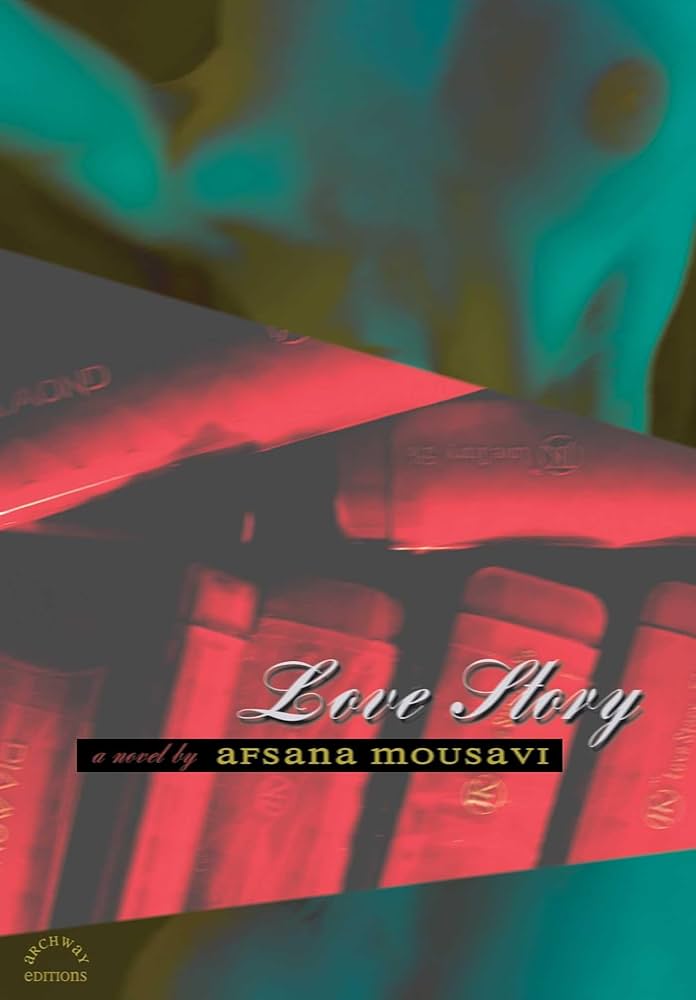
A dreamy debut that follows a young transsexual’s feverish passage through her initiation into New York City’s underground nightlife as she attempts to reconcile its predatory yet deeply salvational euphorias. Afsana delves into the blurring lines between transition and cultural capital and the currency of femininity.
Through the lens of the Caribbean and braiding together family history, cultural reportage, and social studies, Goffe radically transforms how we conceive Blackness, the natural world, colonialism, and the climate crisis. Dark Laboratory forces a reckoning with received forms of knowledge that have led us astray and dismantles the many layers of entrenched imperialist thinking that shroud our established understanding of the human and environmental conditions to reveal the cause and effect of a global catastrophe.
In this debut mystery novel, a Sri Lankan American taxi driver in New York City discovers one of her passengers murdered in the backseat. Siriwathi, the protagonist, becomes the primary and obvious suspect of the murder. She only has five days to chase through New York to find out who really killed the midnight passenger, or her own life will be over. Yosha Gunasekera is also an attorney at the Innocence Project fighting for the wrongfully convicted and I cannot wait to read her book.
This powerful novel follows the lives of two women through the crumbling of democracy in Hong Kong. Both have been chased and tear-gassed in the streets of their city after joining tens of thousands of others to protest a national security law that would effectively end democracy. Leung’s writing shows the existential dichotomy of everyday living against the backdrop of a shattering reality.
From the writer of Number One Chinese Restaurant, Lillian Li writes about a group of friends grappling with the challenges of perception, stereotyping, and the American dream while growing up Asian American during the rise of the internet. Kirkus Reviews writes that “the novel beautifully explores Asian American identity; economic instability; relationships as both anchor and buoy; the malleability of success; and the ways that ambition manifests itself for better or worse.”
Namwali Serpell uses her unique experience as both a writer and professor teaching a course on Toni Morrison to give breadth to her wide range of complex, masterful, and innovative experiments with literary form. With close readings and contextual guidance, On Morrison brings the reader on new journeys through her famous fiction and her lesser-known plays and poetry. Serpell will make you want to read literature with fresh eyes and rediscover a love for reading.
For lovers of Sabrina Imbler’s How Far the Light Reaches and Lulu Miller’s Why Fish Don’t Exist, jump into this collection of essays radically reimagining the ideal of “the self” through coexistence with other species. She teaches us to cherish the many other life forms while knowing we will never fully understand them.
In a subversive, evocative, and sensuous historical epic, Cleopatra tells her own story. Saara El-Arifi builds a deeply lush world that pulls you in with her prose. R.F. Kuang describes the book as “enchanting, smart, and subversive” and Kat Dunn calls it “vividly realized and skillfully unraveled . . . as insightful as it is engrossing.”
A beautiful debut poetry collection that dives into the conflicts between art and patriotism, labor and longing. With rich imagery and deeply expressive prose, Asa Drake traces multi-generational lineage shaped by economic, ecological, and political dissonance through the Philippines and the American South.
I love the way Tayari Jones writes and am a huge fan of An American Marriage. Kin is full of wit and emotion following two lifelong friends whose worlds converse after many years apart in the face of devastating tragedy. Ann Patchett calls Kin “the kind of all-encompassing reading experience I’m always hoping to find: smart and funny and deftly profound.”
Throughout Camonghne Felix’s experience at the center of American politics, she has maintained her unwavering belief in language’s foundational revolutionary potential, outside of its deployment for legislative and political ends. In this groundbreaking work of nonfiction, she argues that Black radical poetic traditions model an ethical code and overcome engrained patriarchal and reductive structures.
Kim Fu writes an eerie psychological horror about Eleanor, reckoning with the decisions she’s made in her life as grief haunts her into blurring the real and imagined. Eleanor lives in the aftermath of her mother’s death and tries to grapple with her own life under the ghost of her mother’s expectations.
T Kira Madden blew me away with her stunning memoir, Long Live the Tribe of Fatherless Girls, and I’m so excited to read her debut novel. Whidbey is an explosive and perceptive thriller that follows three women connected through one man in the aftermath of his murder. In page turning pace, Madden follows the intertwinement of these women to raise questions about the pursuit of justice and the power of the storyteller.
The voices of four generations of women from one family in Mount Lebanon echo a scarred history starting from the eve of the WWI to the 1982 Lebanon War. Iman Humaydan Yunis honors the lives of these women through songs that are the heartbeat of the required tenacity, generosity, and sacrifice necessary in dark times.
Sarvat Hasin makes her US debut with a novel about navigating the nuances of a fraught friendship that has lasted for years. Traveling between the past and present, Hasin shows how deeply friends influence each other, propel each other’s art, and break each other’s hearts. Kiran Millwood Hargrave calls it “Simply sublime—about that feverish, feral first finding of true friendship that becomes all-encompassing and reforms who you are.”
Light and Thread by Han Kang, translated by Maya West, e. yaewon and Paige Aniyah Morris
The power of Han Kang as a writer is her ability to peer into the hazy grays of existence and build new bridges between internal and external worlds. She sees daily living with a distinctly sharp and perceptive eye such that the reader has no choice but to breath expansively and recognize the additional space available in life. For lovers of The White Book, Han Kang once again masters a cross-genre work full of poems, essays, photographs, diary entries, and reflections in Light and Thread. Through the thread of language, Han Kang’s newly translated work will shorten the distance between the writer and reader and force the heart to beat with aliveness.
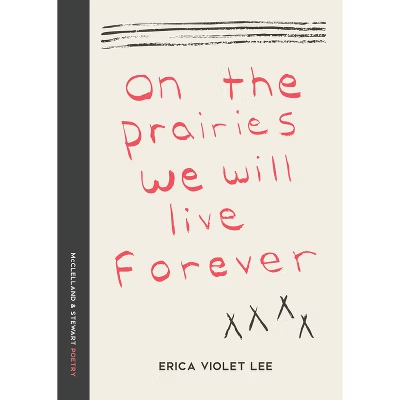
Erica Violet Lee’s exquisite debut poetry collection explores community love as a pathway towards freedom. She imagines thriving lives for Native girls where there is abundance in the inner-city, which is and has always been home on Native Land. David Chariandy describes On the Prairies We Will Live Forever as “a book of urgent aliveness, a love letter to the author’s most intimate relations and a beacon for all who yearn for a liveable future.”
Louise Erdrich dives into the wisdom and sorrow inherent in the extremes of existence itself in this short story collection written over two decades. Her range of characters speak to her unparalleled imagination. This collection is done in creative collaboration with visual artwork by her daughter, Aza Erdrich Abe.
In Amal El-Mohtar’s short story collection, she creates exquisite worlds through folk tales, letters, diary entries with beautiful lyricism. Booklist writes that “El-Mohtar brings genuine storytelling talent paired with lush poetic language to deliver the kind of narratives her devotees have grown to love.”
Lisa Lee’s debut novel challenges the assumptions about the immigrant experience with prose both serious and hilarious. Jane and her brother, Kevin, have “successfully” performed all the requirements to make their family proud. Both are athletically and academically gifted until they become distant from their careers and each other. When Kevin goes missing, their family’s dedication to achieving ideals of the ever-elusive American Dream starts to crack and they are forced to confront the past and present. Their family erupts, undoing of the façade of ideals that may be far from real.
In Aimee Nezhukumatathil’s fifth poetry collection, she explores magic, love, and nature that bloom in the dark hours of the night. She uses the transformative nature of night to shift our perspective on interconnectivity and blurs the borders between us and the surrounding world. Night Owl doesn’t shy away from the noises or silences of the dark and uses them to shine light on the love in revolutionary connection.
Magical realism, mythology, hope, and courage are the heartbeat of this debut novel by Jiyoung Han. Honey in the Wound follows Young-Ja through decades, a girl who infuses food with her emotions. The narrative delves into the lives of a sister who disappears and returns as a tiger, a mother whose voice compels the truth, and a granddaughter who divines secrets in others’ dreams. These women are all of part of one Korean family split across decades and borders by Japanese imperialism.
As a science nerd and a lover of poetry, I could not dream up a better combination than this fantastical and existential intersection of physics, Black feminism, queerness, and pop culture. This debut spans space and time and forces us to reckon with what we truly know about the world and ourselves.
At the core of these stories, Rachel Khong writes tales of love in its many forms: being in love, not being in love, yearning to be in love, in the throes of unexpected yet wonderful lifelong friendships, and the intimate intertwining of love and grief. Read if you’re down to be existential.
A debut novel following Anne, a lawyer in New York, who has a “successful” life contingent on the ignorance of her own past. She starts to unravel her family’s past after her father passes away and she returns home to Edmonton to discover he was from North Korea. Anne is transported back to her own childhood and her parents’ lives as she reads the undelivered letters her father wrote to his brother, who was left behind.
A fierce debut set in Seoul in 2008 following an unnamed teenage girl escaping an abusive home to live in a women’s boarding house during the global financial crisis. T Kira Madden describes it as “a gripping coming of age tale as savage as it is astounding, Tailbone seduces one first with voice, then swells and electrifies from within the storied walls of the Seoul boarding house in which anything is possible. Tailbone introduces Che Yeun as one of the absolute greats, an extraordinary stylist and singular storyteller of our time.”
Ericka Hart believes that sex ed done right can be a tool for liberation. Through Nasty Work, Ericka takes down society’s deeply entrenched colonial views on sex and gender throughout history in this accessible, candid, and revolutionary exploration of how we can—and should—reclaim our minds and bodies for a more pleasurable existence for all.
From the author of Sunshine Nails, Mai Nguyen gives us her second novel with her signature style of honesty, hilarity, and vulnerability. Nguyen uses dark humor to dive into Cleo Dang’s raw emotional turmoil following the loss of her child. She starts to work at a funeral home after self-isolating from grief and must navigate seeing her best friend live out a life of motherhood she desperately wanted for herself.
A debut fantasy novel set in the future where language magic reigns. A young Hawaiian woman, Kea Petrova, must solve a murder to save herself, her clan, and her Hawaiian homeland. Magical and mystical, Shay Kauwe is deeply imaginative in this spellbinding debut.
I am so excited to see Kelly Yang’s first adult fiction novel, especially from someone who is so brilliantly prolific in the children and YA literature realm. The Take is a fast-paced speculative story about two women clinging to their youth and relevancy when their lives intertwine through an age reversal treatment.
A stunning debut that does not shy away from the messiness of young adulthood and the chaos of discovering who you are. It balances the complexity of navigating a question that haunts most children of immigrants: what do we owe to our families and what do we owe to ourselves?
For those who find themselves waning on romance and want real, relatable, and layered characters who also prioritize the important and complex love found in deep friendship, sisters, and family in addition to romantic love. Nikki Payne calls it “a sharp, funny, feel-good love story about bad dates, big feelings, and one deliciously slow-burning love that captures the serious mess of modern womanhood and manages to be hilarious at the same time.”
An epic that spans a century, this ambitious debut novel follows a multi-generational restaurant owning family living in Brownsville, Brooklyn. Abigail Savitch-Lew unfolds the richness of Brooklyn and the merging of cultures integral to a New York landscape. This book will challenge our perception of what is required to live in true harmony.
For lovers of Babel, The Language of Liars is a sci-fi with an engaging world full of linguistics. It poses the question, “What does it mean to understand another species and does that understanding cause destruction?”
In this sharp and lyrical debut, M Lin takes us from present day to the near future following the complexities of home, memory, culture, and survival in China’s One-Child Generation. She stares deeply into the fogginess of existence between memory and future.
I inhaled Xochitl Gonzalez’s debut, Olga Dies Dreaming, and I’m very eager to read her sophomore novel about a 26-year-old woman who feels smothered by her future while obsessing over her glamorous neighbor. This novel challenges the life that money can buy and the compromises of fiscal assimilation for people of color chasing the “American Dream.”
For lovers of Ted Chiang and speculative sci-fi, If We Cannot Go at the Speed of Light travels far and wide to expand our imaginations of the unfamiliar. Kim Choyeop is unafraid to live in a sharp but ethereal space to look beyond our world to get a closer look at our shared disorienting and relatable humanity. Incredibly inventive and translated by the prolifically talented Anton Hur.
Monika Kim is a queen of horror. Molka is an abbreviation of molrae-kamera, a “sneaky camera” hidden to capture covert images and videos for voyeurs. This novel is a provocative delve into voyeurism, female rage, vengeance, and reckoning.
For those who love an unraveling woman protagonist (me included, obviously), then get ready for this addictive debut novel. Elizabeth Zhang is used to measuring herself by numbers, statistics, and productivity while also achieving these exceedingly high standards before rejection knocks her down from her expectations. She gets obsessive chasing her vision of success in this subversive and satirical novel.
A contemporary retelling of Korea’s Romeo & Juliet. Full of Korean folklore and magic, Dreamt I Found You shows the power of premonition when the cousin of the star-crossed lovers helps them avoid a tragic fate within a rigid class system.
To be considered for release from the West Coast concentration camps, Japanese Americans were required to answer the so-called loyalty questionnaire. Question 27 asked, to those who had been imprisoned without cause by the US military, whether they were willing to serve in combat for the US military. Question 28 asked them—many of whom American citizens who had never visited Japan—to renounce allegiance to the Japanese emperor. Karen Tei Yamashita writes a genre bending novel that chronicles three generations of laborers, artists, scholars, informants, and activists.
An adrenaline filled and dark humored novel about Yrsa, who gains a hunger for murder in the name of feminism. Through murdering misogynistic men, she rides a new high that gives her a greater sense of meaning from her PhD research on Afropessimism. The question is how long this rage can sustain her from her own buried family secrets?
Eve J. Chung’s sophomore novel takes place in 1950 and follows 28-year-old Chinese American journalist, Ellie Chang, who is trapped behind enemy lines during the Korean war. This sweeping novel follows her and the women who help her find her way home, not letting us forget about the resilience of love.
In Aguda’s debut novel after her 2024 short story collection, Ghostroots, she uses beautiful prose to portray the haunting changes (both internal and external) of newfound motherhood. Yosoye is the daughter of a distant mother who discovers she is pregnant. She fights for hope of new life while being haunted by strains of being a mother in an unforgiving world. She must also find her own way to navigate the tumultuous landscape of a rapidly changing Lagos.
Set in El Nido, an affluent Bay Area suburb, Coyoteland follows Jin Chang who hopes his new move into the neighborhood with his family will help him achieve social status and end his string of bad luck. In the wake of a coyote attack during the escalation of fire season, chaos exposes the town hypocrisies and family scandals that will forever change the fate El Nido and its residents. Written with wit, empathy, and heart, Vanessa Hua gives us a rich suburban drama that forces us to untangle the details of our current world.
Beth Piatote is a scholar of Native American literature and focuses on the endangerment of Indigenous languages. In this debut poetry collection, she reminds us the integrated connectivity of our sonic world governed by ancestral knowledge with her inventive and playful prose through the wisdom of the Nez Perce language.
I deeply admire the fantastic lyricism of Jesmyn Ward’s writing and am thrilled to read this collection of her essays. She writes with keen wisdom in this collection that starts from her upbringing in a multigenerational household in rural Mississippi and moves through the titular essay telling the story of her partner’s sudden death on the eve of the COVID-19 epidemic. Ward shows the mirrors, windows, and doors of her life that she finds in writers she loves like Octavia Butler, Richard Wright, and Toni Morrison. She reminds us of the healing that comes from writing and shows us hope and beauty in resilience.
Troubled Waters by Ichiyo Higuchi, translated by Bryan Karetnyk
A new translation of five remarkable stories from Japan’s first professional woman writer, Ichiyo Higuchi. Higuchi passed away at 24 in 1896 from tuberculosis and was a major figure in Meiji-era literature shining a light on the lives of Tokyo’s poor and broke a path for women writers.
There’s something undeniably compelling about stories of getting lost. They capture not only literal misplacement but also the emotional, spiritual, and intellectual ways we can feel unmoored. Being adrift is rarely just a setback; it can be a catalyst for insight, resilience, and self-discovery. Moments of disorientation, upheaval, and confusion often push us to look deeper, ask harder questions, and uncover strengths we didn’t know we had. Memoirs that explore these experiences offer a rare opportunity: They let us witness struggle and uncertainty, and through that, transformation.
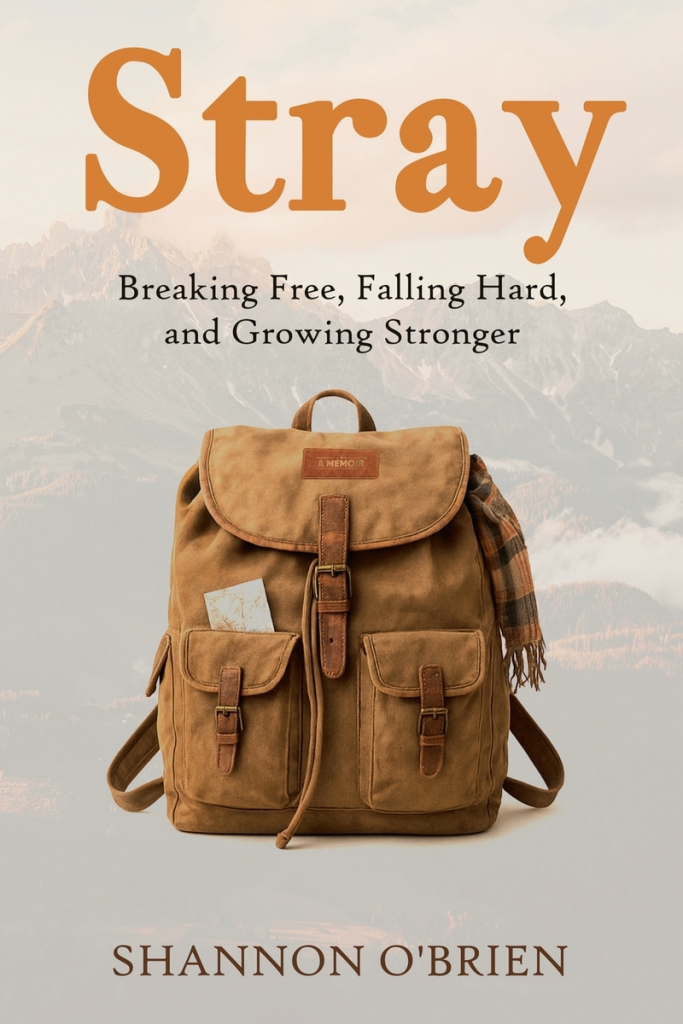
My own memoir, Stray: Breaking Free, Falling Hard, and Growing Stronger, recount moments when I felt uprooted, misunderstood, or untethered—experiences that tested me physically, emotionally, and intellectually. Stray demonstrates how challenging experiences, when faced with curiosity and courage, can lead to profound self-discovery. Alongside other transformative memoirs, it explores survival, heartbreak and personal evolution. That search, and the lessons it taught me, inspired this reading list of memoirs by women who have each, in their own way, navigated loss, upheaval, and the challenge of building themselves anew.
These books explore the many ways getting lost can lead to being found, changed, expanded. What makes these books resonate is the way they invite us not just to witness another’s journey, but to feel it. These authors carry us into unfamiliar landscapes—barren plains, hospital rooms, classrooms in unseen towns—and then show us something profound: growth often happens after we’ve wandered too far to see the path back. Some of these memoirs depict literal journeys across the globe; others traverse the inner terrain of identity, friendship, and perseverance. Together, they reveal the unexpected ways we navigate challenges, rebuild, and redefine ourselves.
Dr. Edith Eva Eger’s memoir is a testament to the human spirit’s capacity to find freedom in even the darkest circumstances. A Holocaust survivor, Eger recounts the harrowing experiences as a teenager imprisoned in Auschwitz, the brutal realities of forced labor, and the loss of her family, before eventually fleeing post-war Europe as a refugee. Through her reflections, she shows how she transformed trauma into a path of healing and empowerment. She illustrates how confronting loss and pain directly, and navigating profound physical, emotional, and moral disorientation, can ultimately lead to liberation and purpose. The book offers both historical perspective and deeply personal insight, illustrating resilience in the face of unimaginable challenges.
Stephanie Land chronicles her journey as a single mother navigating poverty while pursuing higher education. Through candid, intimate storytelling, she details the daily challenges of parenthood, working low-wage jobs, and grappling with the often absurd and inflexible systems that make it nearly impossible for low-income families to get support. Land shows the relentless effort it takes to work, study, and parent simultaneously, all while striving to break the cycle of poverty in her family. Land demonstrates perseverance and resourcefulness, showing how ambition and care for others intersect in complex and often unpredictable ways.
Lucy Grealy explores living with disfigurement and the intense scrutiny that accompanies it. Through her poetic, deeply reflective prose, she examines adolescence, self-image, and the emotional consequences of being different. Diagnosed with cancer in elementary school, she navigates the loss of her childhood, the shattering of her perceived support system due to emotionally distant parents, and the radical shift in her identity—“the sick girl,” “the survivor”—all while confronting societal expectations of beauty and normalcy. The memoir invites readers into Grealy’s inner world, experiencing both profound pain and moments of revelation. Autobiography of a Face is a meditation on navigating societal expectations, reclaiming agency, and learning self-worth despite adversity.
Elizabeth Rush intertwines environmental observation with intimate storytelling, chronicling her experiences in Antarctica alongside the challenges of new motherhood. Rush illuminates how immersion in extraordinary environments can transform understanding of both the natural world and oneself, emphasizing the interplay between personal growth and stewardship of the planet. Through sleepless nights, the isolation of Antarctica and the enormity of her new maternal responsibilities, Rush experiences a profound sense of being unmoored—intellectually, emotionally, and spiritually. She reflects on her place in the world, grappling with the uncertainty of climate change, the weight of responsibility, and what it means to care for a future she cannot fully predict or control.
Julia Baird’s memoir traces her journey through profound personal loss, including the death of her father, alongside the challenges of midlife, her breast cancer diagnosis, and the subtle weight of everyday grief. She grapples with depression, loneliness, and the disorientation of having her familiar world upended, while also navigating the demands of family, work, and self-expectations. Through reflective storytelling, Baird reveals how noticing small, luminous moments—like a quiet sunrise, time with loved ones, or the beauty of the natural world—can restore perspective and spark joy. The memoir blends personal narrative with philosophical insights, showing how attentiveness, presence, and openness can guide a path through emotional darkness toward self-discovery and resilience.
Ann Patchett’s memoir chronicles her deep friendship with fellow writer Lucy Grealy, exploring love, loyalty, and the complexities of human connection. Through moments of shared triumph and heartbreak—like nursing Lucy through her battles with illness, navigating jealousy and insecurity, and witnessing Lucy’s struggles with self-worth—Patchett illustrates the ways sustained relationships shape our understanding of ourselves. The narrative examines identity, vulnerability, and how intense dependency, miscommunication, and grief can make us feel lost even in love. As Patchett shows, human bonds have transformative power and disorientation in relationships can lead to profound insight and personal growth.
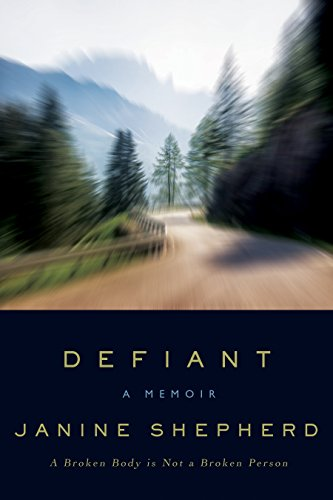
Janine Shepherd recounts her life-altering experience as an elite cross-country skier whose career, and life, was upended by a near-fatal accident that left her with severe injuries. She details the grueling process of recovery, from surgeries and rehabilitation to relearning basic physical skills such as sitting up, and the emotional resilience required to reclaim agency over her body and identity. The memoir highlights determination, self-awareness, and courage in navigating sudden, life-altering change. By illustrating the way physical and emotional challenges can open paths to empowerment, autonomy, and renewed purpose, Shepherd demonstrates adversity’s power to transform personal identity and perspective.
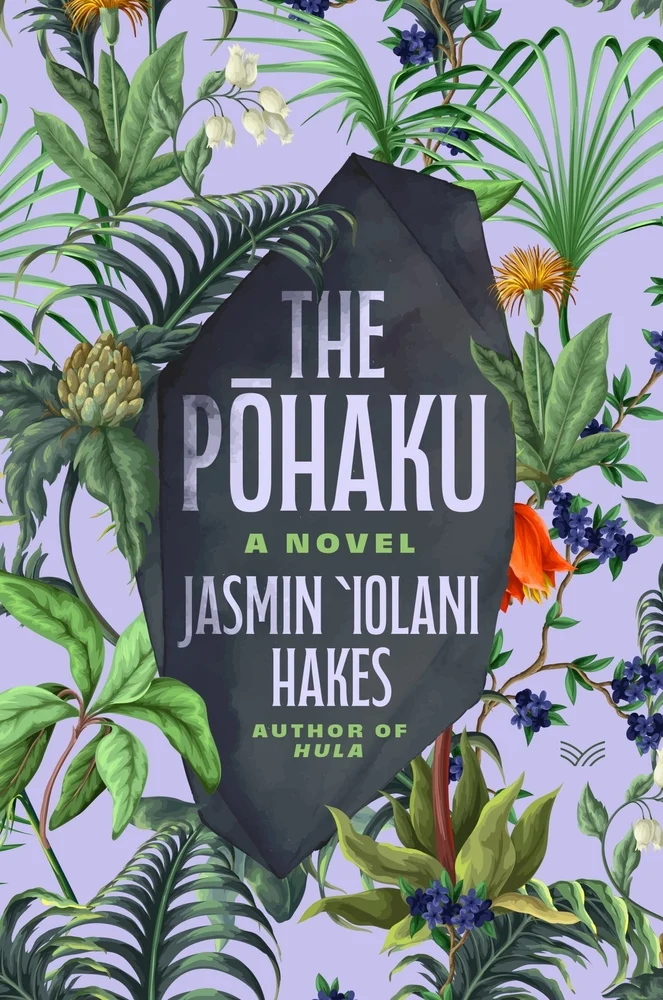
Two years ago, I stood in Jasmin ‘Iolani Hakes’s home office in the South Bay, surrounded by a whirlwind of color-coded index cards, open notebooks, and stacks of books, all orbiting a large whiteboard crowded with both historical facts and imagined possibilities. She told me—almost casually—that this was the research for the novel she was working on. I took it in, stunned, my eyes threatening to spin out of their sockets as I tried to absorb the scope of it all. All of it has since transformed into The Pōhaku, a novel shaped by history, memory, and the stories that refuse to disappear.
The book opens with a young woman lying comatose in a hospital. Her estranged grandmother, keeping vigil at her bedside, suspects that the truth behind her granddaughter’s fall—whether intentional or an accident—is linked to the pōhaku, an ancient stone her family has long been charged with protecting. From there, the novel unfolds across generations and geographies, tracing the deep and often misunderstood relationship between Hawai‘i and California, and illuminating a history in which Hawaiians were never passive or powerless. As the pōhaku moves alongside a grandmother, her daughter, and her granddaughters, it becomes clear that survival—of the family, of cultural memory, and of their relationship to home and the natural world—depends on which stories are preserved, who carries them forward, and what happens when they are nearly lost.
I sat down with Hakes to talk about The Pōhaku, the histories it insists we remember, and the power of stories to endure.
Greg Mania: Since we’re friends, I know and have seen how much research has gone into this book. What was the research process like for you, and how did it shape the book?
Jasmin ‘Iolani Hakes: I’m not a historian, so it took a long time to even know what I was looking for, though I did know from the beginning that I wasn’t going to find [it] in a book (if that book existed, I probably wouldn’t have worked for so long to write this one). I got creative. I had a little experience going through state archived materials for Hula, so I started there. I found graduate thesis work and archived essays printed in small regional newspapers and reached out to anyone and everyone I could find contact info for. Some of those people gave me other names to reach out to, other places to look. It was a lot of following breadcrumbs and not having any idea what I would find. Eventually everything I found started taking the shape of puzzle pieces. Because I wanted to stay as true as possible to history, it wasn’t until I put those pieces together that I felt like I could step back and start imagining a story that might connect them all.
GM: You’ve shared with me that everything in this book is true except for the pōhaku. Where did the idea for the pōhaku come from, and what made it feel like the right entry point for magical realism in the story?
The things we were told to do or not do were framed as truth, not superstitions.
JIH: Around fifteen years ago, out of sheer curiosity and with no intention of writing about them, I was trying to find anything I could about the group of Hawaiians who accompanied John Sutter to what would become Sacramento. At the time, I was working on a memoir that involved some pretty heavy subject matter and wanted to try my hand at fiction for a bit of levity. I was also living in Sacramento and spending a lot of time running and hiking along the American River. When my girls would join me, they’d always come home pockets stuffed with cool rocks they’d find along the riverbanks, something that you absolutely don’t do in Hawai‘i (every year the national park gets hundreds of rocks sent to them from tourists who took them and then regretted it later).
I happened to read People of the Book by Geraldine Brooks and watched the film The Red Violin around the same time. The book follows this ancient manuscript through time while the movie follows this violin through four centuries of owners, and I felt so inspired seeing snippets of history through that lens. I started playing with the idea of a pōhaku being taken from Hawai‘i and following its journey. Eventually the research I was doing about the Hawaiians who worked with Sutter collided with what I was working on.
GM: For readers who might experience elements of this book as “magical” or “mythic,” how does that framing differ from how these stories and beliefs are actually lived and understood in Hawai‘i?
JIH: A portrayal of Hawai‘i naked of its mystical elements is incomplete. Growing up, Pele’s presence was a matter of fact. The things we were told to do or not do were framed as truth, not superstitions. There was always the perspective that we are not the only ones here, and you not being able to explain something doesn’t make it not true. What in some places would be framed as mythology is in Hawai‘i learned as history. So thankfully the literary world has this term called magical realism that allows me to write a book that centers a rock as its main character, but in Hawai‘i, it’s just the way things are.
GM: This reminds me of something the writer John Manuel Arias once said about magical realism—that it can act as a kind of “savior of memory.” Does that resonate with you? What role does magical realism play in preserving, reshaping, or protecting memory in The Pōhaku?
JIH: It definitely resonates. I also love what he says about magical realism as a literary genre—it basically smashes two worlds together where magic can enter. When I read a book set in a world that allows for magical realism, I am going to read it in a different way [than] I would if it were, say, romance or a psychological thriller. If a story with magical realism is telling me it’s a windy day, I’m paying attention and taking note of things in a different way, allowing for possibilities beyond a setting of the scene with a report on the weather. In One Hundred Years of Solitude, a trail of ants is no mere pest problem. For Gabriel Garcia Marquez, the marching ants were ominous little creatures of fate. They are not just part of the backdrop.
For The Pōhaku, I used magical realism to center the earth and the pōhakuas active participants of the world we inhabit. Feeling connected to our environment requires more than just taking in surroundings with our eyes. It’s sensorial and intuitive and elemental. The pōhaku’s very existence is a signifier to those who know about it that the world is paying attention to how we treat it. It represents a symbiosis that, when displaced, easily tips the scales into parasitism, where the way we’re benefiting and surviving off the earth’s resources is not only no longer mutually beneficial, it’s downright harmful and diseased. In this world of magical realism, the pōhaku makes it impossible to dismiss our role in the state our world is in.
GM: This book spans generations across Hawai‘i and California. For readers who may not know this history, what are some of the historical realities you most wanted to illuminate?
JIH: The relationship between Hawai‘i and California goes way back. What I hoped to turn on its head is the notion that Hawaiians leaving the islands to live elsewhere is a relatively new phenomenon caused primarily by economic hardship. While the islands themselves are isolated, Hawaiians never were. There has always been an awareness and general curiosity about the outside world. Royals were sent abroad to be schooled in Europe, the whaling industry long saw having a Hawaiian on a ship as good luck and almost necessary, since they could swim and navigate by the stars, and when that group of Hawaiians left the islands with John Sutter, we can’t assume they left unwillingly or with a sense of subservience. He didn’t go there necessarily to harvest labor. Rather, he needed their expertise. The Hawaiian Kingdom at the time was civilized and cultured. A high value was placed on knowledge and education. They might have seen themselves as helping the guy out.
Feeling connected to our environment requires more than just taking in surroundings with our eyes.
GM: A lot of the dominant history flattens Hawaiian leadership into this passive, tragic narrative. What are the myths about the monarchy—and about Hawaiian agency more broadly—that you most wanted to put to rest?
JIH: The narrative that the Hawaiian Kingdom was overthrown because it was ill-equipped to rule itself and that the monarchy was sitting helpless as it watched foreigners scooping up the land and profiting enormously off its natural resources while consolidating power needs to be put to pasture. King Kalakaua building a palace and embarking on multiple world tours was part of a larger campaign to build the kind of visibility and legitimacy that would help them build international alliances. Queen Lili’uokalani was highly strategic in everything she did. These are some of the big things I wish were more common-knowledge. But there are smaller things I hope to illuminate as well: Sutter’s Fort was first built by Hawaiians. Hawaiians came in droves during the Gold Rush. A Hawaiian woman from Chico, descendant of one of the Hawaiians who arrived with John Sutter, did meet the king in San Francisco and accompany him back to Hawai‘i to join his court. She did return to Chico and worked with Annie Bidwell to develop her Indian School. Frankly, I love the idea that someone might read this book and then visit Sacramento and the greater Northern California region and see it in an entirely new, fuller way.
GM: When you were writing across this layered history, what felt most important to get right, and what felt most important to feel true?
JIH: The history I was piecing together was too fantabulous not to honor. I felt like if I changed any of it then it would be too easy to dismiss all of it as untrue. So I worked my way backward. I had birth records and genealogical charts and sometimes written anecdotes (Chico State has an incredible file of a descendant sharing the stories he inherited, a class did a project recording his oral history and their Special Collections department let me spend a day pouring through every piece of scrap paper they had on him). I had news articles like the one in Boston reporting how the city was preparing for the visit of the princess. I had history books about the Gold Rush and John Sutter’s journals. I felt an enormous pressure to get all of that right.
What needed to feel true was completely different. I had to really spend time with these names and facts and think about their motivations, why they were doing what they did, what they wanted, what was understood at the time. The sense of urgency to acknowledge and learn from our history to inform our present needed to feel true. Most of all, it felt important that Tutu, the narrator, feel true. Why she kept the story from her granddaughter, her struggles with faith and inheritance, her insecurities and doubt couched in determination and pride—since much of the book has this mystical element, I wanted her to provide a very human and perhaps even relatable balance.
GM: This novel really grapples with who gets to tell a story, and what happens when stories are erased, distorted, or taken away. How were you thinking about the power—and vulnerability—of cultural storytelling while writing?
I firmly believe our responsibility right now is to pay attention and bear witness. To remember.
JIH: When I was writing my first novel I went home to Hilo a lot, interviewing family and friends and elders who gifted me stories that provided this incredible context for some of the memories I was basing certain events off of. I learned so much that I bought a little recorder and got obsessed with the idea of asking my elders to share their stories with me before, you know, they pass and those stories pass along with them. When I once exclaimed to an uncle that I couldn’t believe I’d never heard a story he was telling me, he said it was because I was only now learning how to ask the right questions. His answer continues to reverberate in me. How much knowledge and experience have we lost over time because there wasn’t anyone around to pass a story to and keep it alive? When I was young and dancing hula we were continually reminded that the dances and chants and rituals we were learning existed solely because they had been carefully preserved over the generations, and that we were learning these things not only to enrich ourselves but because we were responsible to keep the torch lit for the next generation. I guess that has stuck with me too. Throughout the years I was writing and researching for The Pōhaku, I kept getting struck by how much information changes over time. Early portrayals of John Sutter have certainly evolved, as have the accounts of how Hawai‘i became the fiftieth state. Cultural storytelling has a staying power that often doesn’t exist in nonfiction.
GM: I know I’m supposed to say something like, “we’re living in a complicated time,” but I’ll be honest: It feels like a hellscape where those in power, across government and other institutions, are actively trying to soften or erase harmful histories. How did that reality shape how you approached truth in this novel?
JIH: It’s surreal and disorienting outside. I don’t recognize it. This past summer I had this urge to go to Washington, D.C. I kept telling people I wanted to go before it changed forever. Some thought I was being a little dramatic. I didn’t end up going, the timing didn’t work out, and now look: the Smithsonian is being scrubbed, part of the White House was demolished, and the Kennedy Center is now the Trump Kennedy Center. Our nation’s historic relationship with slavery is being rewritten. The lessons our kids learn in class are being redacted, the books they can access at the library are being restricted. It’s all very Orwellian. But the thing that keeps me going, and what really stayed front and center in my mind as I worked on this novel, was that no policy, no bulldozer, no despot can erase our stories. I firmly believe our responsibility right now is to pay attention and bear witness. To remember. Truth and fact have become these subjective concepts that make me wonder what the kids of the future are going to be learning when they are taught about what’s happening around us now. The lessons and how they evolve will depend on what stories stay alive to learn from. I could have written The Pōhaku chronologically, but I deliberately constructed it as a grandmother telling her granddaughter the story of their family because I wanted to explore that space of ownership. We have a duty and responsibility to future generations to preserve the stories of the past, as well as the ones we are living through now.
When I saw Geumok again, it was in front of Exit 4 at Sinchon Station. I didn’t recognize her right away. I merely thought, She looks familiar . . . and nothing more.
The first thing I noticed was her huge cross. I had come up the escalator to find a cross standing still amid a current of people rushing by on the sidewalk. I stared at it and ended up locking eyes with the woman below.
She was wearing the giant cross on her back shouting loudly at people walking by. Be born again with a new spirit! That was when I remembered her. Geumok. I hurried past as quickly as I could, but then heard, Is that you, Huiae?
Geumok, whom I hadn’t seen in twenty years, was very small. She was tiny when we were in junior high, and it seemed she hadn’t grown an inch since. She grabbed me by the wrist. It is you. It’s really you, Huiae. My Father must have listened to my prayers. For a split second I thought of Geumok’s father but then figured she must not be referring to him.
I can’t believe I bumped into you here, I said. I’ve been in Seoul for a few years now, Geumok replied, then said without pausing to take another breath, You know, Huiae, I was saved by my heavenly Father. You remember those dogs? I helped them get saved, even the tiny newborns. Her hand tremored as she spoke and I found myself pulling my wrist out of her grasp. Sorry, Geumok, I’m late, I said. It sounded like an excuse even to me. She took something out of her back pocket and pressed it into my palm. It’s my business card, she said. Call me.
Blue towel, then white towel. White towel, then blue towel. I was sitting on the couch, folding towels. Before we got married, back when we were just living together, I had asked my husband for one thing and one thing only. Let’s use separate towels. He was extremely hurt. But I couldn’t blithely brush away the germaphobia I’d developed during my long years of dorm living.
I began drying myself with his towel last year, without prompting, after we realized we were infertile. We had used birth control for the first two years of our marriage, and then had been trying for a baby for the next two, but it wasn’t working. People said you got pregnant when you were ready. Two years ago we stretched our budget to buy a three-bedroom apartment. We had sex like clockwork, timed to when I was ovulating. No baby, though. As time ticked on, I tried to show the universe how ready we were by taking on increasingly trivial things.
My father-in-law suggested around that time that we consult a doctor. They say it gets harder when you hit thirty-five, but you’re already pushing forty, he said. So’s your son, I replied in my head. But now I had no choice but to go to the doctor he recommended.
Once my father-in-law learned that we had been trying for two years, it became harder and harder to decline his kindness, though it certainly didn’t feel like a kindness. I took mystery medicinal herbs he procured for me and responded to texts that pinged at all hours about how he had his fingers crossed for happy news. I ruminated about it all until I noticed that I was folding the towels sloppily. I unfolded and refolded them. This time, Geumok popped into my head. I wouldn’t have bumped into her if I hadn’t been going to the doctor my father-in-law had recommended.
I found her business card in my bag. Inside a sky-blue circle was a picture of Jesus, his arms open wide. Jesus inside a circle—this was the cult that had been on the news a few times. The card was printed with the same slogan Geumok had been shouting in front of the station. Be born again with a new spirit.
The bottom right corner had a blank white box, in which she had written her name and phone number. I had never seen a business card like this. It felt alien, and I found myself slowly rubbing the name Choi Geumok with a finger.
A truck was what came to mind when I thought of Geumok. When I was younger that truck had ballooned larger and larger in my mind until it later became as large as a house, and only after I was grown did I acknowledge to myself that the size of the truck had been a trick of my imagination so that I would feel less guilty.
It was during the last drawing contest of junior high. Everyone had scattered around the reservoir near the school, and a few were headed to the empty lot to smoke when they discovered the dilapidated truck. They checked it out and determined that everyone had to see it, so they called everyone over, loudly.
Its front wheels were stuck in the mud by the road. Once a crowd gathered, one kid picked up a stick and used it to move aside the tarp hanging over the cargo hold. Only then did I understand why they had been so amped up. Inside the truck were dogs, sixty tiny puppies that had died in the heat. A terrible stench assaulted our noses; they had already started to decompose.
Things unfolded quickly from there. We learned that the truck was owned by Geumok’s father, a dog breeder, and Geumok became persona non grata. I was Geumok’s best friend, but I was also included in “everyone.”
Once, I watched a video of how an ice cream bar is made. In the machine, the stick was inserted into liquid, frozen, spun, and wrapped. Geumok’s fall from grace proceeded just as smoothly. Fourteen-year-old Geumok went through the process of being whispered about, cursed, and excluded, step by excruciating step. The video ended when the ice cream was sealed in a pretty wrapper, and just like that, my memories of Geumok were hermetically sealed in junior high.
Feeling out of sorts, I picked up my phone. I texted two junior high school friends I had stopped talking to two years ago. I met Geumok today. Remember her? Seconds before I hit send, I changed met to bumped into.
I started using a different exit after I’d bumped into Geumok. It added five minutes to my walk but that was preferable. I couldn’t bring myself to see her wearing that cross again. That first day, my old friends texted back like molasses. Who’s Geumok again? said one. OMG in Seoul? the other said; she knew even less than I did.
I decided to cast her out of my mind. I was distracted anyway because we were trying artificial insemination for the first time. I had to inject myself every other day. I had to get a sonogram during my period. I didn’t have any room for Geumok in my life. For a whole day it felt like I had a stitch in my right side. I told my husband, and he thought it was a positive sign. I felt my belly and it was a little bloated. I was two days late, too.
On the morning of my blood test I woke up an hour earlier than usual. My husband was about to get ready for work. He held my hand for a quick prayer. I told him to focus on work. After he left, I washed my face for a long time with cold water. Even so, the moment I stepped outside I couldn’t catch my breath; the heat was oppressive. Last week hadn’t been this hot.
It was worse on the subway. I ended up in the car with weaker AC. There were too many people; I couldn’t move to another car. I kept bumping into the people next to me, so I wrapped my arms around my belly. I’m being ridiculous, I thought, but didn’t lower my arms.
8.5. I stared at the 8 and the 5 written on the test strip. They said the number had to be more than 100 for a pregnancy to be possible. I told my doctor that my period was late and that my side ached. The doctor said it was probably from superovulation. I left the clinic and took a few steps when I felt a dull pain in my lower belly. It couldn’t be. I headed to the bathroom on the first floor of the medical building. My underwear was streaked with blood. I hadn’t even brought a pad, in case I jinxed myself. I went back up to the doctor’s office for a pad.
On the verge of tears, I went back into a bathroom stall. But I couldn’t cry. Instead I had to squat on the floor of the stall for a long time because of the pain. The pain didn’t go away; my calves ended up numb. I finally got up and headed to the closest subway entrance. I spotted Geumok from far away but couldn’t turn back. The heat and the pain made my vision cloud over.
Huiae, you look like you’re going to faint. Geumok’s voice sounded far away, even though she was standing right before me. I felt her holding me by the shoulders and studying me. I think you need to go to the doctor right away, she said. I told her I had just seen the doctor. It’s just cramps, I said. I got my period. Then Geumok said something to someone beside her, and helped me along the sidewalk.
Where are we going? I asked. Geumok said she lived nearby and that I should lie down for a short while. We went down an alley, climbed a small hill, and stopped in front of a tiny corner store. She put her key in a green metal gate next to the store which opened to reveal stone steps. We went down the steps and opened another door. That was where she lived.
Geumok’s place was less a house than a room, less a room than a storeroom. It was just a single room with a sink in it. She unfolded her mat and blankets for me as soon as we stepped inside. I lay down, and it smelled like fabric softener. The room was so tiny that I could see everything she was doing.
First she put the cross down. A loop was secured to the top of the cross, and when she hung it on a nail the cross filled the entire wall. I feel like I’m an offering or something. I had meant to think that to myself but it ended up tumbling out of my mouth. Geumok laughed out loud. I guess you’re not feeling that awful, Huiae.
Geumok said it would be good for me to eat something warm and brothy. I told her I was fine, but she said she had to eat, too. She washed her hands and began peeling potatoes. I watched her quietly. As she peeled potatoes and sliced young zucchini and chopped onions, she seemed to become an entirely different person from the one I had just seen on the street. She’s just like how she was in junior high, I thought, then dozed off.
When I opened my eyes, she had laid out a whole spread. You should have woken me up, I said. You woke up at the perfect time, she said, placing her spoon down. She asked how I was feeling, and I told her I felt a lot better.
Steam was curling up from the freshly made gochujang jjigae. I tried a spoonful. It was shockingly delicious. The potatoes in the jjigae were soft and warm. There was also roasted seaweed and stir-fried julienned potatoes, and I kept reaching for the potatoes, seasoned simply with salt. All of this is so good, Geumok, I told her again and again. I ended up emptying two bowls of rice. After the dishes were cleared away, we sat across the small, low table. She handed me something warm to drink. I took it, thinking it was coffee, but it was sungnyung.
Geumok told me she had come to Seoul five years ago, after burying her father. She initially stayed in one inn after another but then got a job as an assistant at a Sinwol-dong beauty salon. The owner paid her a very low wage but let her sleep in the supply closet. Geumok said she had once spent up to ten days in the beauty salon without stepping foot outside. She felt so nauseous from the chemicals that she lost eight kilos. That was when she’d met Suhui. Suhui was the only one in the salon who could cut short styles, and she was also the only one who called Geumok by name. That was the sole reason Geumok was drawn to her, and they soon grew very close.
What happened after that was as I had suspected. One weekend, Geumok went to a gathering with Suhui and was surrounded by people who smiled like Suhui, spoke like Suhui, and called each other by name kindly. It was such a typical initiation into a cult that I found myself glad nothing terrible had happened to her.
For a really long time, Geumok started again after a pause, I wondered where things had gone wrong. That was when I realized it was because I had committed a grave sin. Huiae, when you start believing, things that used to be hard aren’t hard anymore. She gazed at me quietly. I chugged down the cooled sungnyung so I could get out of there.
The days of sex becoming homework and a period indicating failure continued. At the doctor’s office they referred to sex as homework. You should do your homework on this date, the doctor would say without even a hint of a smile. After the first failed round of artificial insemination, I too stopped smiling at that expression. We went straight into the second round. I made my husband promise not to tell his father.
The days of sex becoming homework and a period indicating failure continued.
I became touchier as I was injected with more hormones. The day before, I discovered a spot on the water glass I was about to use and almost threw it at the wall. I kept dreaming that I was sitting alone in an empty classroom. Sitting smack in the center, I trembled with fear that I would die the moment someone stepped inside the classroom. I had this same dream every time I was stressed. So I nearly shrieked as I walked out after a sonogram, when someone grabbed me by the shoulders from behind.
I was so startled that the girl who had grabbed me kept apologizing. I said it was fine and asked who she was. You’re Geumok’s friend, right? she asked. She looked like a college student. She said she was doing missionary work with Geumok, and had seen us exchanging greetings from time to time. After eating a meal with Geumok, I had gone back to using the exit she was stationed at. This girl must be one of her colleagues.
The girl said she wanted to chat with me. Should we grab coffee nearby? she asked. I didn’t answer, instead casting around to find Geumok. I saw the cross looming above the crowd a distance away. I told the girl I would talk it over with Geumok first. Geumok saw us and ran over.
The girl suggested to Geumok that we all go sit somewhere cool and talk. It’s too hot out here, she explained. I made an uneasy face. Geumok glanced at me and said we had plans today. The girl asked if she could come along, but Geumok said, Next time.
Thanks, I told Geumok. We had walked away to avoid the girl and were now heading toward her place. Why don’t we grab a bite since we’re already here? I’ll make you kimchi jeon, Geumok said, and I didn’t refuse. After all, we couldn’t go to a restaurant with her cross. I asked to use the bathroom once we got to her place, but I looked around and didn’t see one. She told me it was on the second floor of the building, and handed me a roll of toilet paper.
It’s not an ideal place to call home, Geumok said when I returned. It’s really a storeroom for the corner store. But it’s my own place, my first studio in Seoul. She had lived in so many places since arriving. The beauty parlor, the youth lodging facilities, and now here. She said that she began living in the youth lodging facilities after she was born again. And that she had found herself a place of her own, here, for the very first time in her life.
Geumok told me to sit away from the portable stove, since the oil would splatter. I watched as she fried jeon on the low table. Is there something in Sinchon that brings you here so often? she asked. My in-laws are near here, I said, and she turned to look at me. Oh, silly me. I didn’t think you’d be married. I told her I’d been married for four years. You must have looked beautiful in your wedding dress, she said. I quickly told her I didn’t know how to get in touch with her to invite her to the wedding. She nodded. I only got a cell phone when I came to Seoul, she said. I never needed one before.
She had fried up three kimchi jeon in the blink of an eye. How did she make them so crispy? Her jeon were crispy all around. She let me in on a secret, that you had to add just a little oil to the batter. We had Sprite with the kimchi jeon. They went surprisingly well together. I told her it was delicious and she murmured, I know you’re just being nice. When you really like something, you clap with your spoon and chopsticks.
What was she talking about? Then I remembered. She was talking about my habit from back in junior high. Oh, I stopped doing that in high school, in the dorms, I said. We had a really scary dorm teacher. Geumok said she’d liked the sound I’d made, clapping my spoon and chopsticks together. It makes the food taste even better when you hear that, she said.
As I started in on the second kimchi jeon, I asked Geumok what the youth lodgings were like. Really tight, she said. Eight of us slept in a room this size. It was so cramped that we had to keep our shoes stacked one on top of the other. Geumok placed one hand over the other to show me. I was having a hard time imagining a space smaller than this. But I liked sleeping there, she said. You’d sleep, holding hands with the girls sleeping next to you. We held hands and prayed together. Then everything felt less scary.
After leaving the youth lodging facility, Geumok told me, she couldn’t sleep for a month. Her hands had felt adrift. So she developed the habit of sleeping with her hands clasped together. Still, it gets a little lonely here, she said. Will you come and share a bite with me when you have time? I pondered her question for a moment, then told her I would.
When I got home that night, I gently held my sleeping husband’s hand. I held it until my palm got sweaty. Still, my anxiety didn’t go away. Words like forever and eternal swam around my head. I rubbed my belly that had been shot up with ovulation-inducing medication. As I was about to slip my hand out, I felt my husband tighten his grip. Maybe I did understand what Geumok was talking about.
From then on, I had a meal with Geumok every time I went to the doctor. Usually it was once a week, but sometimes it was two or three times a week. We never made plans to meet. Geumok was always there when I came out of the doctor’s office; I would go up to her and say hi, then wait for her in the nearby McDonald’s with a cheap cup of coffee. Then Geumok would come find me about half an hour later.
I learned why I always bumped into Geumok. She proselytized in front of Exit 4 at Sinchon Station from nine in the morning to six in the evening, Monday through Saturday. She was there all day, other than to break for lunch, which they took in shifts. As I began frequenting Geumok’s, we settled into a natural routine. She would cook and I would do the dishes. I could bring groceries if there was something specific I wanted her to make, but nothing could cost more than ten thousand won. Ten thousand? I asked, and she said firmly that anything beyond that was too much.
I set certain strict rules, too. Don’t proselytize to me, I said. But—Geumok trailed off. Otherwise I’m going to feel too uncomfortable to come over, I said, and Geumok replied earnestly, I won’t, I swear. Not that she never talked about religion. I know that my Father has sent you to me, Geumok said as she sliced scallions for stir-fried squid. I would have died if I weren’t saved, Geumok said as she rehydrated seaweed. We wouldn’t even need laws if everyone believed, Geumok said as she seasoned bean sprouts.
Each time I changed the subject swiftly. Can you add red pepper powder in the bean sprouts? I would say. Then Geumok would stop and look for red pepper powder. It wasn’t too bad if the God talk stayed at this level. Most crucially, in this five-pyeong room, for a brief moment, I could be free from baby fever. All I did was watch expectantly as a dish was completed and eat it with gusto. That was all that could happen in that room.
When the second round didn’t work, I was able to accept the results more readily than the first time. Maybe it was because I now had a relief valve. Everyone else around me turned intense. The doctor began actively recommending IVF and my husband became noticeably anxious. He even skipped dinner the day we heard the second round hadn’t worked. Then he parked himself in front of the computer all weekend to look for new doctors.
We argued, too. Because I said I didn’t want to do IVF. But we should try everything we possibly can before giving up, he insisted. But I’m the one getting the procedure, I said. I get to choose whether to do it or not. He went outside for a cigarette. He had quit smoking two years ago. The next day, I bought tteok and cheongyang pepper after my appointment. I want really spicy tteokbokki today, I told Geumok. She said she had also been craving something spicy. We agreed to add five peppers to the sauce.
I had to throw open the window while the sauce cooked down, unable to handle the spice any longer. My nose was running. It’s because we’re getting older, Geumok said, placing the tteokbokki pot on the table. Now, when I eat something spicy, I end up having to wipe my nose the whole time, she said. With each bite of tteokbokki we had to take a sip of water. We ate like that for a while, then Geumok suddenly sprang up. She grabbed a bottle of soju from the fridge. The bottle was already half empty.
Let’s just have one glass each, she said. We downed the water in our cups and poured soju. I felt buzzed despite barely wetting my lips; it had been a while since I’d had a drink. I told Geumok that I was going through a rough patch with my in-laws and might not be able to come by for a while. Geumok said she was also going to be busy because she was in last place this month. Last place for what? I asked. Just last place, she said. We’re both a mess, huh? I asked. Looks like it, she said. Cheers, I said. Before we do, Huiae, come by sometime, even if you don’t make up with your in-laws, okay? Geumok said. Okay, I told her. Then let’s cheers for real, Geumok said. Okay, I said.
I felt a cool breeze when I opened the window. Fall had arrived earlier than expected. The season of Chuseok. My head pounded just thinking about going over to my father-in-law’s. I had to go over the day before Chuseok to start cooking, and early on the morning of I would have to prepare food for the ancestral rites. Ever since I got married, I had done this every year without fail.
I went out to the living room and found that my husband had set out breakfast for me, along with a note. Hope the appointment goes well today. I’m sorry. A sliced omelet made with minced carrots and ham was arranged in a pretty rectangle. Still on my feet, I cut a piece and put it in my mouth. The carrots were hard, not cooked all the way through. Thanks for the omelet, it’s great. I texted my husband and put the rest in the fridge. I couldn’t eat anymore because of my nerves.
Today was the first day on our IVF journey. A few days ago, I had watched a TV show featuring a comedian who was in front of the camera for the first time in three years since having a baby. She was giving a tour of her place. She was interviewed at her kitchen table, and I noticed the foam protectors on each corner of the table. Bright yellow pieces of round foam were glued to the wood table. I stared at them until the interview ended. And I thought, I can handle a little more intervention if it’s to make a life filled with things like that.
And I thought, I can handle a little more intervention if it’s to make a life filled with things like that
On my way out of the doctor’s office I found myself yearning for Geumok’s place. I had heard a litany of instructions and possible side effects, as though something bad could happen the very next day. So I gave an uncharacteristically huge wave with both hands when I spotted Geumok standing in front of the station. You were acting like a little monkey, Geumok said with amusement as we walked toward her place. I laughed. Is there something you want to eat? she asked. Anything, I told her. I have eomuk at home, she said. Great, I said. Okay, she said.
But her braised eomuk tasted funny. She tried a bite and frowned. I must have added vinegar instead of cooking wine, she said. I told her it was fine but she insisted on ordering two bowls of jjajangmyeon. The food arrived almost instantaneously. Eomuk would taste amazing with jjajangmyeon, I said. I mixed the jjajang sauce into the noodles, then tried some with a piece of eomuk on it instead of pickled radish. It didn’t taste amazing.
Geumok barely touched her food. Aren’t you going to eat? I asked, and Geumok put an eomuk in her mouth, but quickly spat it out. It’s inedible, she said as she put it in the sink. That’s okay, even monkeys fall out of trees sometimes, I reassured her. That’s not it, she said. She gripped the sink and stood still for a moment. I looked up from my bowl.
I think I’m going to be moving far away, she said. Last week, after service, the lead missionary had pulled her aside and suggested that she wrap things up within the month and move to a farm owned by the group. You see, I haven’t converted anyone in months, she said. He told me I would be given a chance to be born again as a new worker, through farming.
The problem is, Geumok said, then paused. There’s nothing there. They say even the cell service is spotty. There are still places like that these days? I asked. Right? she said. She sat back across from me. Should I go? I hedged at her sudden question and said, I don’t know, but she waited stubbornly for my answer. If you want to, wouldn’t it be good to go? I finally managed.
Geumok told me not to do the dishes today. She said it was only fair that I don’t do the dishes since the eomuk came out bad. I glanced at her face, then said okay. She had turned quiet after bringing up the move. She said she was going to skip her afternoon shift. All I could do for her on a day like this was to leave early. I told her I could see myself out.
As I placed the jjajangmyeon bowls by the green metal gate, I discovered a small black doodle on the gate. I looked at it more closely and realized it was a drawing of a snail. I’ll show Geumok next time, I thought. She would definitely like it; whenever she sent me a note in class, it had always been something meaningless. Once, I unfolded a note from her to find a drawing of just a single acorn, which made me burst into laughter. I’m sure it’ll be fine, I thought as I walked down the hill. I’m sure she’ll figure it out.
It’s looking good, the doctor said, looking at the sonogram. Three follicles were growing on the right, and five on the left. I followed the doctor’s finger to stare at those eight black circles. I would have to wait until they grew to be at least two centimeters in diameter. I made an appointment for two days later, got my prescriptions, and walked toward the subway station.
I slowed down as I approached Exit 4. In front was a hunched woman selling chewing gum. I went over to check her face. It wasn’t Geumok. I hadn’t seen Geumok last time, or the time before then. Once I even waited for her at McDonald’s for over two hours. I wondered if she’d gone to that farm she’d mentioned, so I asked the girl who’d been out there with Geumok, but she didn’t know.
As soon as I got home, I went into the bedroom and rummaged through the drawers. Thankfully I still had her business card. I called the number. As the phone rang I spat out the acacia gum I’d been chewing. I’d chewed it all the way home and it still had a hint of flavor. I couldn’t get through. I texted her. It’s Huiae. Call me when you get this.
I went back to the doctor two days later but I still hadn’t heard from Geumok. I tried calling again as I waited my turn. Her phone was turned off. The nurse called out, Ms. Kim Huiae, come on in. The doctor told me the follicles were looking great and asked me to return with my husband the next day. They would collect them as planned. Hope you have good dreams tonight, the doctor added. I said I would.
Again, Geumok wasn’t anywhere to be seen in front of the station today. I took a deep breath before letting it out. Then I headed the opposite way. I went down the alley and climbed the small hill until I reached the corner market. I banged on Geumok’s green metal gate. That was all I could do, as there was no bell. Hey, Geumok, I called, banging. Geumok. Are you home?
I pounded for a long time, and the sliding door to the corner market opened instead of the gate. You’re going to make my store collapse, admonished an old woman, her white hair combed back. Do you know Geumok, young lady? I said I was her friend. That can’t be, she muttered. I’m sorry? I asked, taken aback, and the old woman said, You look at least ten years younger than her.
She invited me to wait in the store. She had thought it odd that she hadn’t seen Geumok in over ten days, but then she had finally bumped into her the previous night. It looked like she was coming back after a trip, the old woman said, and she’ll be home today. I sat in the chair the old woman offered and was surprised. It was heated even though it was only September. This chair’s so warm, I said. I keep it warm all year round, the old woman said. Even in the middle of summer? Yeah.
I thought I would get too hot sitting there, but that wasn’t the case. I felt comforted. It’s nice to sit in a warm chair even when it’s not cold, I thought. I looked out the sliding glass door. People walked past the large gingko tree out front. I was watching the tree when the door slid open and a man with dyed yellow hair walked in.
The old woman glanced at him and whispered to me, Jin Ramen. And indeed, he bought a five-pack of Jin Ramen. When a tall woman stopped in, the old woman said, Homerun Ball and Bacchus. And indeed, the woman bought a packet of Homerun Ball and two bottles of Bacchus. When a bearded man opened the sliding door, I reflexively glanced at the old woman, who looked up at him but didn’t say anything. And what about him? I asked, unable to wait. How would I know? she said grumpily. I laughed out loud without meaning to. The bearded man glanced at me while he selected his beverage: orange juice.
When he left, the old woman turned toward me. I initially thought Geumok ran off without paying rent, she said. But I knew she wouldn’t do something like that. I told her she was right, that Geumok would never do a thing like that. So why did you come over without giving her a call? asked the old woman. Did you wrong her somehow? It did feel like I had wronged her somehow, so I told the old woman she was right.
The old woman stared at me, then tapped my chair. So you sit here and reflect, and when she comes you tell her you’re sorry. I said I would. Around the time the edges of the gingko leaves started to blend into the darkness, we heard the metal gate rattle. Go on, the old woman said, lightly squeezing my hand.
Geumok, I called, and Geumok jumped and turned her head. Her eyes darted all around. What’s wrong? I asked, and she said it was nothing. But she tugged me in by the hand and quickly locked the gate behind us. We went down the stone steps without speaking. Only after we entered her place did I manage to open my mouth. Is something wrong? Geumok said no and turned on the light. Where have you been? I asked. Geumok didn’t answer, then hung her jacket on a hanger and said something shocking. I went away with my boyfriend.
You have a boyfriend? Yeah. Why haven’t you told me? I didn’t have a chance. Where did you go? Incheon, we went fishing and ate raw fish. You know how to fish? Of course. I sat on the floor and watched her change out of her clothes. Are you telling the truth? I asked. Yes, I swear, she said. Now in comfortable clothes, she sat across from me. She said she had nothing to eat at home, let alone to drink. I’m sorry, she said. I told her it was fine, that I had to get going soon anyway. Okay, she said, and stopped talking.
A brief silence stretched between us. I stared at Geumok’s face as she looked silently down at the floor. Geumok, I blurted out. How was Incheon? She looked up. It was good. So you went fishing—did you catch anything? Yeah, it was as big as your arm, Huiae. My arms are still sore from pulling it out, she said, massaging her arm playfully. Did you eat it? I asked. Eat what? The fish, I said. Hey, do you think all I do is eat? Geumok asked, laughing. I laughed, too.
Then I said, Fourteen-year-old Geumok couldn’t even kill an ant. Geumok stopped laughing and looked at me. I was starting to feel uncomfortable when she finally spoke. Well, Huiae, she said. I nodded encouragingly. That was a long time ago, she said.
My legs were starting to cramp. I massaged my calves and told her I should get going. I’m sorry I can’t see you out, Geumok said. I told her it was fine. But Geumok, I said as I put my shoes on. Next time, when you go on a trip or something, can you let me know? Yeah, she said. I stood up and looked at her. Somehow she looked shorter than when I’d first seen her on the street. As she said goodbye to me, I realized what it was. The cross that should have been hanging on the wall behind her was gone.
The day after my eggs were retrieved, I packed a few things. My husband kept trying to convince me out of it, wanting me to rest at home this Chuseok. I told him I was feeling okay and that he shouldn’t fret. Only after we argued did he concede that I should do as I pleased. I placed my socks on top of my things and zipped up my overnight bag. I knew what would happen if I didn’t go to my father-in-law’s house. Next Chuseok, and five years into the future, he would talk about how lonely he had been that one Chuseok. I wasn’t sure I could listen to that over and over again.
We arrived in time for dinner. I smelled food cooking when the door swung open. Father, did you cook? I asked, taken aback. It had always fallen on me to cook after my mother-in-law passed away three years earlier. I headed into the kitchen to discover that he had already made toran guk.
I told my father-in-law that I would wash up, then dragged my husband into the room we stayed in. You told him we’re doing IVF? I demanded once I closed the door. He didn’t answer. When did you tell him? My husband said he’d told his father yesterday. That he’d had to say something because he wanted me to rest after the egg retrieval. I tried to calm down but I couldn’t speak for a while. Then let’s pretend that I don’t know that he knows, I managed. Chastened, my husband nodded.
I acted as though I wasn’t aware of anything. I was surprised and apologetic when my husband volunteered to do the dishes and when my father-in-law personally cut melon for dessert. I pretended I didn’t hear when my father-in-law almost brought up the topic of babies before trailing off. With my defenses up like that, I was exhausted by the time my father-in-law retired to bed. The bottle of lotion I picked up after washing my face felt like lead.
My husband had been quiet all night and he maintained his silence when we were alone in our room. That was his way of telling me he was mad. He refused to speak until I figured out why he was angry and apologized for that precise thing. I tried to pinpoint when he’d gotten mad but gave up; I didn’t have the energy to think. I took my medication and lay down. The blankets smelled musty. Though I’d expected to toss and turn all night, I quickly fell into deep slumber.
When I woke up, it was the middle of the night. My husband was asleep next to me. I went to the kitchen and filled the coffee pot to the brim. After the procedure I found myself constantly parched. I waited for the water to boil and glanced at the desktop calendar on the kitchen table. The fertilized egg would be implanted in two days. But there was a blue circle around September 2. Underneath, in small letters, was the word family.
What was September 2? There hadn’t been any other family gathering this month because of Chuseok. Everyone’s birthdays were in the winter, too. I mindlessly flipped to the previous month. Many more blue circles in August. Circles came one after another on the fourth and fifth weeks. I studied them, then slowly turned to the previous page. And again. And again. The blue circles paraded on. My eyes welled. I thought I knew what those circles indicated. They had started even before we’d opted for artificial insemination.
In the taxi, I called Geumok. She picked up after a series of rings. Were you asleep? I asked. No, Geumok said, her voice still sleepy. Can I come over? I asked. Now? she asked. When I said yes, she told me to come on over. I hung up and told the driver to take me to a different address.
The green metal gate was already ajar, propped open by a rock. I removed the rock and went downstairs to knock on the front door. I rapped twice lightly, then twice harder. The door opened. Huiae, you’re in your pajamas, Geumok said when she saw me. I looked down and discovered that I was.
I took off my shoes and went inside. Geumok stopped smiling and sat next to me. She sat quietly until I could speak. My head feels like it’s going to split open, I said finally. She got up.
I thought she was going to get me some pills, but she opened up the small table. Then she came over with the pot, the old pot she used to make soup, to boil noodles, or to cook tteokbokki. I made this when you called me, she said. You have to eat something before you take any meds.
I opened the lid and found steamed egg. I spooned up a bit, causing white steam to curl up. I tried a bite. It was soft, warm. I spooned it silently and ate, then clapped with my spoon. Geumok laughed.
We laughed together, then began talking, slowly. We talked for a long time, and we took long breaks. When one of us spoke, the other didn’t say a word until she was done. We looked into the other’s eyes, demonstrating with our entire bodies that we were listening intently. We were moving past something together as we continued to talk. Slowly, but toward a clear direction, moving past time that swelled gently, that lacked sharp edges. For the first time ever, we were reaching a destination we longed for.
The first half of 2026 is shaping up to be a particularly strong season for translated fiction. We move through queer Tokyo nightlife, militarized Estonian farmland, Parisian attics full of exiles, music festivals at the foot of Andean volcanoes, and even other galaxies. What links these books isn’t geography or genre so much as their attention to people living at the edge of systems—trying to disappear, to belong, or to start over as the ground keeps shifting beneath them. Below is some of the most exciting fiction in translation being released in the months to come.
Japan
Jackson Alone by Jose Ando, translated from Japanese by Kalau Almony
From Akatugawa Prize-winning author Jose Ando, Jackson Alone is a darkly comedic debut about four queer, mixed-race men who are all being discriminated against by their bosses, boyfriends, and society at large. Coming together by chance, they concoct a plan to switch identities and exact revenge on each other’s behalf by playing tricks on the people who have wronged them—people who can’t tell them apart anyways. Full of satire and bite, Ando tackles Japan’s cultural and corporate identity, hiding sharp social criticism under humor and wit.
Sisters in Yellow by Mieko Kawakami, translated from Japanese by Laurel Taylor and Hitomi Yoshio
The newest novel from bestselling Japanese author Mieko Kawakami, Sisters in Yellow follows a group of friends in 1990s Tokyo. Hana, a fifteen-year-old living with her hostess mother in a tiny apartment, is tired of her lack of agency and hungry for independence, when she meets Kimiko, who is older than her mother yet feels younger. Taking Hana under her wing, the two are thrown together with two other young women and together, all four set up a bar called Lemon. Could this be the way to gain financial and existential freedom and, ultimately, remake their lives? In a clash of teenage aspirations and the cruelties of the adult world, this new release by Kawakami promises a pacy story of friendship, longing, and betrayal.
Tatiana Țîbuleac, a former journalist and UNICEF worker, is one of Moldova’s most celebrated authors. In The Summer My Mother Had Green Eyes, we meet Aleksy who, at the advice of his psychiatrist, revisits his memories from the summer he was 18. Eager to head into adulthood on his own, he feels trapped spending the summer alone with his mother in Northern France. Still struggling with the death of his sister a few years earlier, the already strenuous summer takes another turn for the worse when his mother announces that she is dying. Exploring themes of grief and memory, The Summer My Mother Had Green Eyes looks at a fraught mother-son relationship and the possibility of reconciliation.
Estonia
The Cut Line by Carolina Pihelgas, translated from Estonian by Darcy Hurford
The first book translated into English written by Estonian poet, author, and editor Carolina Pihelgas, The Cut Line is a compact story about Liine, a woman who has just left a toxic relationship after 14 years. To make the decision final, she removes herself to the countryside in the heat of summer. At a quiet farmstead amongst the trees, she undergoes all the stages of separation, putting her body to work on the farm while her mind is preoccupied with what this means for her future. At the same time, climate change makes itself known in the form of drought and close to the cottage, just by the Russian border, a NATO base is practicing defensive drills. As Liine goes through an emotional transformation, the landscape around her shifts in this compact novel about where to draw the line and how to maintain that line once it’s drawn.
Poland
White Nights by Urszula Honek, translated from Polish by Kate Webster
Longlisted for the International Booker Prize, White Nights by poet Urszula Honek is set in a remote village in the Polish countryside. Through 13 interconnected stories, we follow families and characters in the village who all go through their own personal tragedies, heartbreaks, and disappointments. Whether suffering through poverty or facing violence, the characters are connected by the overwhelming sense of futility that they all feel. And yet, in the midst of it all, White Nights is also about the hope that keeps us going.
Algeria
The Fertility of Evil by Amara Lakhous, translated from Arabic by Alexander E. Elinson
In the coastal city of Oran, a criminal investigation is underway which must turn to the larger history of postcolonial Algeria in search of answers. A former National Liberation Front fighter and Algerian power broker has been found dead. It’s Independence Day, and Colonel Soltani of the Anti-Terrorism Unit is pulled in from his vacation to close the high profile case as quickly as possible. Digging into the victim’s past, Soltani and his team discover the secrets of a revolutionary cell whose three remaining members have become prime suspects. Flinging us between the dilapidated historic quarters and the shiny new districts of Oran, Amara Lakhous portrays a world full of corruption and deceit in this literary thriller.
Mexico
Eating Ashes by Brenda Navarro, translated from Spanish by Megan McDowell
Soon to be a major motion picture, Eating Ashes is an award-winning novel by Mexican writer Brenda Navarro that’s split across Spain and Mexico. With her brother’s ashes in her hand, a narrator returns to Mexico, recounting the events that eventually lead to his death in Spain. From struggling to raise her brother on her own while their mother earns a living across the globe to leaving their home country behind for a new life in Spain, the narrator retraces the siblings’ separation and ultimate confrontation. Through their story, Navarro confronts the intimate and systemic struggles that migrants face and asks what it means to live a life worth living in this novel about alienation and courage.
Bolivia
The Invisible Years by Rodrigo Hasbún, translated from Spanish by Lily Meyer
After over two decades of separation, Andrea and Julian, the main characters of The Invisible Years by Bolivian author Rodrigo Hasbún, reconnect in Houston. Brought together by a shocking phone call, the two unravel their past and the truth about what happened on the fateful night of their senior year that would end up marring their friend group forever. Julian, an author stuck in an unhappy marriage, has already been trying to turn his past into a novel in order to make sense of it. But now he must face it head on in this coming-of-age tale about the tipping point between adolescence and adulthood.
Russia
The Disappearing Act by Maria Stepanova, translated from Russian by Sasha Dugdale
Maria Stepanova’s The Disappearing Act follows a writer in exile as the war her home country wages on a neighboring state renders her native language nearly unusable. Cut off from home and stalled in the present, the writer, M., drifts through life filled with shame and uncertainty about the future. When she’s accidentally left stranded in an unfamiliar city, she sees it as a chance to slip away. But memory intrudes and soon a fleeting encounter with a group of circus performers opens the possibility of reinvention. Existing somewhere between dream and reality, The Disappearing Act is a meditation on exile, identity, and the allure of disappearing completely from one of contemporary Russia’s most critical voices.
Brazil
Diorama by Carol Bensimon, translated form Portuguese by Zoë Perry and Julia Sanches
In Carol Bensimon’s Diorama, we follow Cecília, a Brazilian migrant living in Northern California and working as a taxidermist. Despite her profession, Cecília struggles to properly reconstruct her own past until her father’s failing heart threatens to draw her home. With this possibility looming on the horizon, she is forced to confront a murder that shaped her childhood: the 1988 assassination of a beloved Porto Alegre congressman. Shifting between Brazil’s transition from dictatorship to democracy and Cecília’s present-day, Diorama blends the momentum of true-crime with the intimacy of a queer coming-of-age story.
Hong Kong
City Like Water by Dorothy Tse, translated from Chinese by Natascha Bruce
Dorothy Tse’s City Like Water imagines a city that has quietly slipped beneath the surface, and sunk to the bottom of the ocean. Amongst its winding streets, people vanish without explanation. Classmates, neighbors, even family members are absorbed into protests, television screens, or the tightening machinery of surveillance. As the once familiar city becomes more and more disorienting, the police go undercover to construct a violent labyrinth where the city dwellers are left wondering what it all means. City Like Water is a dystopian dispatch from a submerged city that is not so different from yours.
In Reza Ghassemi’s Woodwind Harmony in the Nighttime, Iranian expatriate Yadollah is trying to make ends meet in 1990s Paris, barely surviving in a crumbling attic apartment he shares with friends and fellow drifters. When a new neighbor known only as the Prophet moves into their apartment block, everyday precarity gives way to something stranger: Yadollah is confronted by angels of death and forced to investigate the circumstances of his own murder. Part metaphysical exploration, part whodunnit, Woodwind Harmony in the Nighttime ponders what displacement does to people stuck between homelands, languages, and realities.
Sweden
Event Horizon by Balsam Karam, translated from Swedish by Saskia Vogel
Event Horizon, written by Swedish Kurdish author Balsam Karam and translated by award-winning translator Saskia Vogel, is a story set in the stars of a galactic empire. Seventeen-year-old Milde comes from the Outskirts, where women live stripped of rights and recognition, surviving in a forbidding social landscape. When she takes part in an act of rebellion against the city’s authorities, Milde is made a scapegoat, imprisoned, and tortured—then offered a final choice: public execution or exile into the Mass, a black hole used for state experimentation. She chooses the void. Blending political allegory with existential inquiry, Event Horizon traces how resistance persists amid oppression and isolation.
Mauritius
All Flesh by Ananda Devi, translated from French by Jeffrey Zuckerman
Ananda Devi’s All Flesh is a coming-of-age novel about a teenage narrator who is relentlessly shamed for her body by a society obsessed with beauty and control. At home, she is smothered by a father who indulges her excesses and nurtures a darker family myth, and at school, she faces humiliation from both classmates and teachers. Caught between shame and fetishization, she struggles to imagine a self not defined by the shape of her body. Hungry for revenge on her tormentors, she is pushed to take drastic measures. Excavating the moral fantasies we build around bodies, desire, and gender, All Flesh asks where the line is drawn between being self-possessed and self-destructive.
From the author of Jawbone, Electric Shamans at the Festival of the Sun by Mónica Ojeda follows Noa and her friend Nicole as they escape the city for an eight-day festival in the Andean páramo. Nestled next to a volcano, they enter a place alive with shamanic ritual, underground music, and indigenous belief. Noa’s true aim, however, is to find her father, who abandoned her as a child. As the festival unfolds, she begins sleepwalking and speaking in voices not her own, blurring the line between the living and the dead, trauma and ecstasy. A hallucinatory journey reminiscent of Juan Rulfo’s Pedro Páramo, Electric Shamans at the Festival of the Sun promises a heartfelt meditation on love, family, and kinship, set to the natural rhythms of the land.
I first discovered George Saunders’s writing as a college student, home for summer break. Tenth of Decemberhad just come out, and I picked it up at the sole independent bookstore in my hometown on the recommendation of a writing professor. At this moment in my life, I was feeling a bit disillusioned with literature. My reading assignments for school weren’t especially resonating with me, and I no longer liked what I was writing, either—I felt cornered into a style that no longer excited nor suited me, but I had no idea what style I did want to embody.
I began reading Tenth of December right away, at the bookstore’s neighboring Starbucks (the best one could do for a sit-in coffee shop in suburban Pennsylvania circa 2013). Inside those pages was what I had been looking for all along, but hadn’t known until I found it: writing that felt wholly original, and so completely, exhilaratingly alive. I urgently took to social media, imploring my followers to read it: “I humbly request that everyone with a soul read Tenth of December and if your life isn’t changed by it then you need to read it again.” (The post received only one like—from my roommate at the time—so I unfortunately can’t claim to have had much influence on the book’s success, despite my best efforts.)
I’ve since read all of Saunders’s work and can firmly say that my 19-year-old self’s words stand true for each of his books, including his latest novel, Vigil. Saunders’s writing speaks straight into the soul, into what it is to be human: the absurdity, the beauty, the pain—all at once. As he nods to in his interview below, he is a writer who always strives to balance both the light and the dark; his mastery at striking that balance is, for me, what makes his work so singular and special. I’m thrilled he took the time to provide some insights on the writing life—and his personal process—for Electric Lit’s 23 Questions series.
– Katie Henken Robinson Senior Editor
1. In a six-word story, describe the process of writing Vigil.
George Saunders: Freedom, stuck, stuck, stuck, stuck, breakthrough.
2. What book should everyone read growing up?
GS: I’m ecumenical about a question like this, feeling, pretty much, “They should read whatever grabs them.” For me, I’m grateful to have read Johnny Tremaine, recommended (and procured from the library) for me by a nun I was in love with.
3. Write alone or in community?
GS: Alone. VERY alone.
4. How do you start from scratch?
GS: In a spirit of playfulness, with as few ideas or intentions as possible, so I can more quickly see my way to the fun.
5. If you were a book, which one would you be?
GS: I’d aspire to be a slender book with a lot of energy, and a cover that was flashy but not ostentatious, and also there’d be a slot inside, to hide a twenty-dollar bill, so everyone would want to read me.
6. Describe your ideal writing day.
GS: Nothing big to worry about and a five-hour empty space from, say, 10am until 3pm, and then it turns out to be a victorious day, full of revelations and decent jokes on the page, and then Paula and I go out to dinner. Also, maybe there could be a rainbow.
7. Typing or longhand?
GS: Typing. When I was writing Vigil, I kept a notebook in which I wrote longhand and did sketches and outlines and so on. But I always edit on paper, with a very sharp Blackwing 602.
8. What’s a piece of writing advice you never want to hear again?
GS: “George, stop writing, you’re boring everyone. Just go back to working at the slaughterhouse, you total drag.”
9. What’s a piece of writing advice you think everyone needs to hear?
GS: “Writing is rewriting.” Because, really, it is and to believe that is such a blessing—no more writer’s block, no more obsessing about whether you’re writing the right story. As Robert Frost was alleged to have said: “Don’t worry: work.” (Although I’ve also heard that what he said was the exact opposite: “Don’t work: worry.”) But I prefer the former.
10. How do you know if an idea is a short story, versus a novel?
GS: Well, for the two novels I’ve written, it was just a feeling that produced a very brief, one or two sentence outline that just felt like it might take a little longer to unpack (and would tolerate a more prolonged treatment). So, as is the case with so much of my “process”—it’s about feeling and intuition.
11. What is one thing teaching writing has taught you about craft?
GS: That good work comes from deep inside a person and wants to get out into the world. So it’s a natural thing, to be creative, and “craft” is really just the process of arranging things so we can do the maximum amount of highly personal choosing in the text. I see this again and again with my students—the more they lower themselves into the work and start really expressing their (what I call) “micro-opinions,” the more present they are in the resulting text.
12. What’s your favorite comfort snack?
GS: Graham crackers or pretzels, sometimes both at once, or alternately.
13. What’s the best way to push through writer’s block?
GS: Put your faith in revision—write any old thing, in the confidence that you can whip it into shape by rewriting it. As David Foster Wallace used to say, writer’s block comes from applying too-stringent standards (and too early in the game, I would add).
14. What’s your relationship to being edited?
GS: I love it, mostly because I have two great editors—Andy Ward at Random House and Deborah Treisman at The New Yorker. They are very ego-free editors and when working with them the feeling is that we are working in service of the story, which isn’t (at that point) mine and isn’t theirs. We’re like doctors huddled over a patient we love.
15. Write every day or write when inspired?
GS: Every day. The inspiration, such as it is, comes then. So much of writing is reaction, I think—so if I don’t feel like writing, I sit down and try, and pretty soon will find myself reacting to something I’ve already done (either positively or negatively)—and that, right there, IS writing.
16. What other art forms and literary genres inspire you?
GS: Music—it just makes me happy, which somehow, for me, inspires ambition.
17. Who was the writer who made you want to write?
GS: Esther Forbes, then Hemingway/Thomas Wolfe/Steinbeck, then Raymond Carver. And after that, the floodgates opened (Tobias Wolff, Toni Morrison, Grace Paley, Barry Hannah, Stuart Dybek, Issac Babel etc, etc).
18. How do you know when you’ve reached the end?
GS: It’s kind of like painting a wall. I keep looking for blotchy places and touching those up. And then there’ll come a time when I approve of the whole wall, except there’s one little unpainted corner (i.e., the last few pages of the book).
19. Describe your writing space.
GS: A little black table in our place in Los Angeles, under a TV we can’t figure out how to get down, with a few meaningful postcards I bring along with me from place to place, such as this, from Ed Ruscha: “Every artist wants to make a picture that will open the gates to heaven.”
20. How do you keep your favorite writers close to you?
GS: I tend to kidnap them and keep them in the basement, for consultation and forced rewrites of my stories. No—by re-reading them, but also, once a writer moves you, they are always there, in your modified view of the world.
21. What’s the last indie bookstore you went to?
GS: Skylight Books in Los Angeles—a great, beautifully run, welcoming store.
22. What does evolving as a writer mean to you?
GS: Being more capable of representing both the light and the dark.
23. Outside of literature, what are you obsessed with?
GS: Meditation, learning to play lead guitar better, trying to be a better person before it’s too late.
Early memoirs of people living with HIV and AIDS played a crucial role in humanizing the disease. Those books, alongside public service campaigns and media representations, put a face to HIV and helped generate not just compassion for those affected but also a deeper understanding of the complexity of the illness. Many of the first memoirs, while powerful, largely showcased the experience of white gay men confronting the virus. And many of them used the traditional approaches of the memoir genre: reporting personal experience from a single perspective in narrative prose.
For me, coming out as gay occurred at the height of the AIDS epidemic in the early 1990s. When I was writing my own recent memoir, Red Hot + Blue, I sought out new approaches for describing what it was like to live through that period. Inspired by the diverse forms of storytelling I encountered, I embraced an approach very much my own. I zeroed-in on the music that was central to that period in my life, reflecting on how one particular album helped me make sense of love in precarious times. The result was a type of narrative mixtape of memories and music that tells the story of how I made sense of the AIDS epidemic and figured out who I was in the process.
The ten recent books below each offer vital personal perspectives on the AIDS epidemic and embrace innovative forms for storytelling. On one level, they remind us that the epidemic is not over—both because the disease continues to threaten lives and because the cultural memory of the epidemic haunts lived experiences today. On another level, these books showcase a diverse array of voices, including those of people of color, trans and nonbinary people, and caregivers. Finally, many seize upon recent innovations in the memoir form, including the graphic memoir, the multi-voice community memoir, the music memoir, bibliomemoir, photo memoir, poetic memoir, and science memoir.
Sneed’s spellbinding book combines personal essays with poetry to capture her experience of losing members of the Black queer community to the epidemic. Importantly, she showcases the “silent invisible deaths” of people of color and queer women who acted as caregivers, so many of whom had been elided from earlier narratives of AIDS history characterized by “white men constantly at the helm.” The book’s title stems from a role that the activist often played at funerals. The six foot two poet relates how “Because of my stature, writing, outlandish outfits, and flair for the dramatic / I became a known and requested presence operating throughout the crisis / as an unofficially titled, ‘funeral diva.’”
These gathered journal entries frame the difficulties Sullivan faced being a trans man who identified as gay in the 1970s – 1980s, especially as one who was HIV-positive. Sullivan was an important pioneer in trans rights and advocacy. He published the guidebook Information for the FTM and organized one of the first peer-support groups for trans men. He was diagnosed with HIV in 1986 and remarked that “it was impossible for me to live as a gay man, but it looks like I’m gonna die like one.” The book is revelatory not just for the insights into his life navigating the intersections of his identity but because of his focus on trans joy as central to his life.
The author’s third collection of poems reflects on their experience as a nonbinary, HIV-positive person of color while also delivering stunning elegies for friends and the lineage of Black queer writers who have been lost to AIDS. Since their own diagnosis at age 24, Smith has captured the complex interplay between race, sexuality, and HIV status in their poetry. Homie’s “gay cancer” most explicitly elegizes previous writers, such as Melvin Dixon and Essex Hemphill, who have died from AIDS and influenced Smith’s writing In the poem “undetectable,” Smith describes their HIV status as “almost like gone but not gone,” an apt phrase to describe how many people may experience AIDS in the world now.
The author captures not just a personal history but also the history of a place: Provincetown in the early 1990s. The gay haven saw much of its population eroded as AIDS took hold, so much so that Lisicky describes every conversation taking place there being framed by the theme of death. Yet the book also ends on a hopeful note, as the final chapter takes us into the present where Provincetown remains a site of possibility for connection and community. Ultimately, Later offers a meaningful meditation on not just the toll of AIDS but on what the disease can teach us about mortality itself, given how Lisicky reflects that “everyone will always die before their time.”
This graphic memoir contains an oral history of Unit 371, an inpatient AIDS care unit in Chicago. Czerwiec worked there as a nurse at the height of the pandemic, yet the book gives us the larger arc of her journey from nursing school to her initial experiences caring for patients infected with HIV to becoming someone carrying the weight of years of loss. The book contains her own reflection as well as those of her co-workers. The book intermixes conversations with patients who are composites of those she knew, details of the complexity of AIDS medical care, and interviews with care providers—all rendered in startling, emotion-filled panels.
This experimental narrative portrays the author’s own failed attempt to write a book about Hervé Guibert, arguably the first major memoirist of life with AIDS. The first section focuses on Guibert‘s To the Friend Who Did Not Save My Life, which relates the loss of his friend Michel Foucault. Zambreno parallels this narrative with her own story of losing touch with a close friend. To Write as if Already Dead was partly composed during the height of COVID, and the second half of the book depicts Zambreno wrestling with an unexpected pregnancy and unexpected illness during that period. She reflects on the experiences of Guibert and others struggling with AIDS as a way to make sense of not just her life but of the universal experience of the precarity of the body in an uncertain world.
Merging science-writing with personal recollection, Osmundson contemplates his experience as a queer man living alongside viruses, especially HIV and COVID-19. The book contains 11 essays which, in lucid prose, combine personal reflection, concepts from queer theory, and molecular science. Much of the story is told through evocative juxtapositions. In one instance, the author excerpts his own diary entries and sets them alongside pieces by other AIDS memoirists, including Paul Monette and David Wojnarowicz. In another, he reflects on his participation in activist and scientific communities which responded to AIDS and to COVID. The result is a thought-provoking contemplation of the role of science in the stories we tell ourselves about our lives.
This young adult book largely uses photos to describe the author’s experience living through the AIDS epidemic. Curlee lived in two epicenters of the disease, New York and Los Angeles, during the 1980s and 1990s as the virus spread quickly through the queer community. His book compellingly makes sense of that time by keeping the story personal: relating the experience of losing not only close friends but also his life partner. While the book contains larger themes about inequities in the healthcare system, what makes it so powerful is the feeling that you’re reading through someone personal photo album and realizing that it is filled with loss.
At age 16, Lane joined ACT UP and Queer Nation chapters in Los Angeles. She subsequently watched as many of her fellow activists died, even as their efforts contributed to gains in areas such as needle exchange, hospice funding, and healthcare access. Like many of the narratives described in this list, Lane’s book is a thought-piece on the nature of survival as much as it is one on loss. Her short chapters and fragments weave together vignettes of mutual care, especially among queer communities of color, that reflection on the bonds of friendship amidst the struggle for social power.
In this 2025 book, Crighton chronicles his attempts to find love while he came out as queer during the height of the AIDS epidemic. What helps him survive the period of uncertainty—about both his own future and that of his community—is the music of the era: Adam Ant, Kate Bush, the B-52s, Elton John, Madonna, Prince, The Smiths, and many more. The book shares not just Crighton’s personal soundtrack for survival but also how we can find joy even during dark periods.
“Late, Blooming” by Roxane Gay, excerpted from The Big M, edited by Lidia Yuknavitch
Recently, my father sent me a picture of my cousin Ariane’s christening. In it, I was fourteen or so, her godmother. Another cousin was her godfather. We were all very young. We stood with the priest around the baptismal font, in our baptismal finery. Ariane was screaming her tiny, adorable head off in the priest’s arms. At first, I didn’t recognize myself in the photo. I remembered myself as much bigger. For nearly two years, I had been gaining weight and no one understood why. I knew, of course. I had made a choice to build a wall of flesh around myself, to make myself safe after being desperately unsafe. My family was panicked. They immediately shifted into overreaction, trying to solve the problem of my body but my body was not actually a problem, at least not to me.
That’s why, in the decades since, I am impossibly large in my recollections. That’s how extravagantly the people around me reacted to my changing body. The picture, though, seeing it so many years later, was startling. It was evidence that the story I told myself for so long—a story architected by people who meant well but caused harm nonetheless—was not the truth. Certainly, I looked awkward because I was wearing a cream-colored, satiny dress with boxy shoulders and I hated wearing dresses. They looked terrible on me, like I was playing dress-up with a very different girl’s wardrobe. I sported a weird haircut because I had no sense of style yet. I simply wanted to be invisible. My body was incidental, a vessel for my fractured mind. But, in reality, I was cute. I had a baby face. I was not fat, at all. So many years later, in a much larger body, I would love to be that size again. I would revel in it. And I would love to have recognized, back then, that there was nothing wrong with me at any size.
I am my father’s only daughter and while my brothers and I were each our parents’ favorites in different ways, I am his favorite. He had dreams for me as his only daughter, his American girl, and most of those dreams conflicted with who I actually was. This happens between parents and children. Even though he never explicitly articulated his dreams I knew he wanted me to be girly and popular. Maybe he wanted me to be a cheerleader, bright and bubbly, pretty in pink. Instead, he got a shy, quiet introvert who spent most of her time with her head in a book. This wasn’t necessarily a bad thing and he encouraged my reading and eventually, my writing. But as the only girl with two brothers, I was far more inclined to be something of a tomboy. I eschewed overly feminine things, and while people assumed it was because I was a tomboy, that wasn’t really the case. I eschewed anything that would bring attention to myself. I took comfort in oversized shirts and sweaters, baggy pants, anything that would shroud my ever-expanding body.
During the years when I was supposed to be taking an interest in boys, going on dates, maybe embarking on a sweet relationship with a first love, there was no one in my vicinity who was even remotely interested. I had crushes that were, mostly, silly affectations because I felt like I was supposed to have a crush and yearn dramatically. If I doodled some boy’s name on my notebook and drew hearts while I gazed into the distance, daydreaming, maybe I would become a real girl. Unfortunately, I was never that good at doing what was expected of me when it came to social graces.
When you are fat in a fatphobic world, you tend to live in a peculiar state of longing.
What my real life lacked, I more than compensated for with my imagination. In truth, I hated boys—their bravado and the tangy smell they carried in their skin. I hated their loud voices and growing muscles and how easily they took up space as if it was their due. But I wanted to be like the other girls, the normal girls. I wanted boys to want me before I understood that really, I wanted girls to want me. I wanted to wear a letterman jacket, have a boy hold my hand, ask me out on a date, recognize that I was a girl too, with a hungry girl heart. I succeeded in my desire to be invisible. The attention I did get from boys and then men was always furtive, often sleazy, and very transactional. They took and I gave and I told myself it was enough.
When you are fat in a fatphobic world, you tend to live in a peculiar state of longing, a state of perpetual anticipation, making yourself promises about all the things you will do when.
W
   h
      e
         n
            W
               h
                  e
                     n
                        W
                           h
                              e
                                 n
You plan your life around the bounty that awaits when you lose enough weight to find a loving partner, to get a good job, to travel abroad, to visit parents without intense anxiety, to make everyone happy, to make yourself happy. This fraught limbo is how I lived through my teens, my twenties, my thirties. Decades of waiting go by until you reach middle age and are forced to ask yourself, “When will I really start living?” Even once I started to embrace body neutrality in my forties, I nurtured this stasis, as if life would only truly begin when I was the right size and what a short life it would be. I wasted so much time I will never get back. There was never going to be a right size so long as I believed I was the problem. And oh, how I believed that, into the marrow of my bones. I couldn’t believe otherwise no matter how hard I tried.
As women, we are told relentlessly, in so many different ways, that youth and beauty and thinness are currency.It is how we communicate our value to the world. As we age, that currency becomes less powerful and then, we simply fade from relevance, left, hopefully, in peace to enjoy our dotage. If you don’t meet the standards of conventional attraction, your currency is less powerful. And when you are fat, when you inhabit an unruly body, you have no currency at all. I didn’t always know this but once I learned, I was a perfect student.
For years, I also told myself that when I emerged from this stasis, when I was the right size, I would finally be a real woman, where a real woman was thin, beautiful, desired—someone who had currency, someone who would be able to enjoy womanly things, be seen as and treated like a woman, even if I also had to deal with the challenges of womanhood with which most other women contend.
I had all these yearnings, but I was also furious with myself for wanting things that intellectually, at least, I found reductive, problematic, or misogynistic. That’s the terrible bind of body tyranny. We are taught to want the things that harm us most.
What I really mean is that I always hoped to be treated with care, with tenderness. I hoped people might recognize I could be as delicate as I am strong. I hoped people might truly see me. But fatness renders women genderless or, at least, that has been my experience of fatness. Fatness renders women not only invisible but also inconvenient, always in the way, always taking up too much space. People will stare too hard, make their snide little comments, sigh with impatience when I am walking too slowly, make it clear in one way or another that for them, my body is a problem, and a serious one at that.
As women, we are told relentlessly, in so many different ways, that youth and beauty and thinness are currency.
Men have treated me like one of the guys, a person so far beyond the reach of their desires as to be just like them. Women have treated me like one of the guys, a person so far beyond their understanding of womanhood as to be an entirely different species.
All these years, I thought I still had time to enjoy what were supposed to be the best years of my life. I thought I still had time to be a woman. And then, year by year, many of the things I wanted or at least thought I wanted for myself, all that possibility fell away. This is who I am, this is the body I am living in, there is a lot of life left to live, but there are certain experiences I will never have.
In some ways, I never got the chance to be a woman, but this is not a story of regret.
I am fifty years old but I’ve always been a late bloomer. Even as I stumbled into my teenage years, I was a very young thirteen, fourteen, even fifteen. I got my period later than most girls. I was at boarding school and too shy and self-conscious to ask my mom for guidance, so I went to the Woolworth’s in town and browsed the “feminine hygiene” aisle for a very long time, carefully reading the packages of menstrual pads and tampons. It all seemed awkward and uncomfortable. When I got back to my dorm with a box of tampons, I hid in a bathroom stall and pored over the folded instructions several times. This was before YouTube and Wikipedia. There were no online forums to consult for advice on how to actually use a tampon. It never crossed my mind to ask my mother, who was rather hands off when it came to all things womanhood. The first attempts were awkward and a little painful but eventually, I figured it out and a long, bloody misadventure began.
Even after that, I remained a late bloomer. I didn’t grow to my current height until my very late teens, well after everyone assumed I was done growing. I didn’t finish graduate school until I was thirty-six. I married in my late forties. For whatever reason, I have always taken a lot of time to become more of myself. And so, when it came to menopause, I expected the worst—having to deal with my period until my late sixties or something equally nightmarish. Once again, I didn’t know what to expect. My mother, who went through menopause in her fifties, was pretty circumspect about the experience. She didn’t have any of the typical lamentations you might expect. I heard little of hot flashes or all the other bodily changes many women experience. Both of my grandmothers had died many years earlier. Many of my friends were just starting their families in their early forties so menopause was not really on their radar. My wife had gone through menopause years before we met and her experience of it was relatively brief and not terribly disruptive. And, because I had so rarely, throughout my life, been seen or treated as a woman, I sort of assumed that menopause would simply pass me by, the way so many other things had.
That’s the terrible bind of body tyranny. We are taught to want the things that harm us most.
The only thing I knew for sure was that with menopause, I would no longer have to deal with my period and that felt like winning the lottery. Every single month, for nearly thirty-five years, I would start to feel despondent and irritable. My breasts became tender. My sex drive was out of control. I was incredibly tired and wanted to sleep all the time. I’d wonder what the hell was going on and start to worry that something might really be wrong. And then, my period would appear and I would realize that all of those weird symptoms were, simply, warning signs. Then, the next month, I started to feel despondent and irritable. My breasts became tender. You get the picture. Sometimes I kept track, first in a paper calendar, later with the Notes app on my phone, and eventually with a series of fertility apps. If I tracked my physical realities assiduously, I might become a real, responsible adult, in command of what little womanhood I had. For decades, I never really learned that my body was always trying to tell me something.
This is to say, I hated my period. I really did. It was inconvenient. I often had really heavy periods. I mean really heavy. At times, I worried I would simply bleed out. I wondered where the hell all that blood was coming from. I used an extraordinary number of very big, uncomfortable tampons. I didn’t have debilitating cramps or some of the other challenges people with uteruses must contend with, which was, I suppose, a small blessing.
In my mid-forties, my period suddenly became erratic, not that it had ever been particularly disciplined. I would get my period and then it would disappear for a few months. I’d have a delightfully abbreviated period, maybe two days, which absolutely thrilled me. A few months later, I would have a three-week period. Then I would get my period four times in a single month at which point I despaired that I would never, ever stop bleeding. Sometimes, I would start spotting, as if my period was just dipping her toes in the proverbial waters to see if she felt like making a full appearance. As my period came less and less frequently, I started to believe I was finally done with all of that and then yet again she would show up, taunting me, as if to say, “You wish!”
Each time I got my period after three or four months of absence, I was overcome by a wave of frustration that there was no way of knowing which period would be my last. I turned to the internet because my primary physician is a zygote, and I couldn’t bring myself to ask her what to expect when I was expecting to never be able to expect again. Dr. Google offered a bewildering range of information about menopause, its symptoms, and what to anticipate. A lot of that information was contradictory and wildly inadequate, a reminder that the medical establishment treats women’s bodies as mysterious and unknowable. Whatever goes on in our bodies is none of their concern, unless, of course, we are pregnant, and then for nine months, in certain states, our bodies are not only knowable but legislated, public property.
I knew menopause would happen, but I assumed it wasn’t going to affect me the way it affected other women because I spent so much of my life exiled to the periphery of traditional womanhood. I watched countless depictions of menopause in film and television that showed women worrying about their skin and their libido and hormone levels. I took in all the exaggerated depictions of women in the throes of hot flashes, drenched in sweat, shoving their heads into freezers or sitting in front of oscillating fans looking for respite from an inescapable heat. In Sex and the City 2, noted sex enthusiast Samantha Jones brought a small valise of hormones, supplements, and other elixirs she used to stave off the encroachment of “the change” and to “trick my body into thinking it’s younger.”
When I experienced my first hot flash, it defied everything I had ever imagined. A small fire was burning inside of me and it grew hotter and hotter until I was desperate to extinguish roaring flames I could not reach. When the heat subsided, I never wanted to experience a hot flash ever again. I did, of course, experience more hot flashes, but there was no set pattern. They would happen in the middle of class, while I was teaching. They would happen in the middle of the night as I tore the sheets off and tried to find pockets of cool air. My wife sometimes experienced sympathy hot flashes, drenched in sweat beside me.
The medical establishment treats women’s bodies as mysterious and unknowable.
Other than that, the onset of menopause or perimenopause, who can know, was fairly unremarkable. My hair thinned a bit, but because I have a thick head of hair it wasn’t alarming. I didn’t feel like my hormone levels were changing. I felt mostly like myself. There was some sadness because the likelihood of having a child—the old-fashioned way, with a donor and my wife wielding a turkey baster—had narrowed to a tiny sliver, but there were other options. It would be fine, no matter what. I had always known that while I would enjoy being a parent, I wouldn’t feel like I lived less of a life if I wasn’t one.
Menopause is, technically, a year after your last period so I don’t know if I am in menopause. I’m hovering in yet another stasis, wondering if a significant part of my life is over.
For years, I’ve been dealing with writer’s block though that is far too mild a term to describe it. One day, I was writing with ease, looking forward to getting back to the page each day, and the next, it was all gone. I would stare at an open Word file, the cursor slowly blinking, my fingers hovering above the keys as I willed them to make something out of nothing.
What had once been joyful instantly became misery. It was a breathtaking shock. I have always loved writing and I have always wanted to be a writer. Writing and reading have been the constants in my life so to lose them unmoored me completely. And because I was still publishing work, no one understood or believed me when I expressed how severely blocked I was, creatively. Technically, yes, I was writing but it wasn’t my best. It came in fits and spurts. I hated having to share work with anyone, and doubted every word I wrote, every idea I tried to develop. My writing was stilted, flat, drab. It stunned me, really, that I was capable of producing such inadequate, lifeless prose. The longer it went on, the harder it became to write. I’m stubborn, so I kept at it, but it was always squeezing absolutely nothing from obdurate stone. I felt utterly depleted and embarrassed.
I stopped trusting my judgment, my intelligence, my voice. I lost all faith in myself as a writer. I started making alternative plans for the future, one where I could no longer credibly identify as a writer. It was grim, but I so deeply believed I could no longer write that I needed to find a different way forward. On a more practical note, I needed to be able to pay my mortgage and student loans and meet my other financial obligations. At first this was all very annoying, and then it was sad, and then it was terrifying as panic set in. Deadlines came and went for days, weeks, months, and in some cases several years. The patience of my editors frayed to almost nothing and I understood. My patience with myself was similarly frayed. I felt so much shame, I thought I might drown in it.
So much of who I am is entwined with writing. I’m not talking about the public face of the work—the publications, the tours and events, the accolades. I can live without that. My original dream of being a writer was simple because I didn’t know what to dream beyond wanting to write good books and maybe have them published. All I needed was to be able to hold onto that dream, but as these fallow years stretched on, I tried to accept that I might lose even that. Almost every night, I stared at the ceiling asking myself, “Who am I if I am not a writer?”It was a question I could not answer then or now.
Almost every night, I stared at the ceiling asking myself, ‘Who am I if I am not a writer?’
And then, one day I was talking with a friend over dinner. We were on a double date with our spouses, a warm Los Angeles evening, sitting outside. The din of a busy restaurant surrounded us. We had nice cocktails. Great music was playing. My friend was talking about how the worst part of menopause was the brain fog. It affected almost everything she did on a daily basis; it was only with time and various treatments that the fog started to clear. It felt like a lightning bolt struck our table. I immediately peppered my friend with questions because I did not know brain fog could be a symptom of menopause. When I got home, I immediately started searching for more information and learned that many, many women deal with losing focus and becoming easily distracted and having no ability to concentrate and forgetting the very things we know for sure. Finally, I found a lifeline, the idea that maybe my overwhelming writer’s block was not a personal failing rendering me beyond redemption, that maybe, the source of what ailed me was, at least in part, beyond my control and would not last forever.
It is a bitter thing, to have spent most of your life in a body you’ve been told you are supposed to hate, a body that is considered a placeholder for the real, more appropriate body you’re meant to live in. You keep waiting for your real life to begin on that magical day when you finally discipline your body into what society prefers it to be. But sometimes, you get lucky. You stop waiting and start living. As I’ve tumbled into menopause, I’m supposed to believe my womanhood is ending but instead, I have been handed a new beginning.
Nearly six years ago, a woman named Debbie persisted in pursuing me until I finally accepted her invitation to go on a proper date. We had a lovely time and then there was a second date and a third and then we were officially girlfriends. We did long distance until the pandemic began. As we hunkered down in Los Angeles, we grew even closer, thriving with so much time together, just us and, before long, our pandemic puppy Max. We got engaged and we eloped under a plastic chuppah in Encino. We go on all kinds of adventures, all around the world. We’ve seen the mighty glaciers in Antarctica. On the steppes of Mongolia, we had the honor of sitting with a shaman who brought forth a spirit. In Uzbekistan, we stood at the center of Registan Square, in awe of the Islamic architecture around us. At a vineyard in Tuscany, we opened the windows to our hotel room and had a small picnic with a good bottle of wine, some cheese and cured meat, and watched Avengers: Endgame on an iPad after a long day of touristing. And many nights, we just sit on our couch at home, watching television and working away on our laptops. It sounds like a fairy tale and, in truth, it absolutely is. There is no more waiting. When is now.
N
   o
      w
         N
            o
               w
                  N
                     o
                        w
Another truth is that this story is only a fairy tale because I started believing that maybe, just maybe, I was worthy of living a fairy tale, in this body, exactly as I am. My forties had already been pretty good when we met but then my wife made them extraordinary. I am no longer living a life suspended. I am, simply, living. For decades, it turns out, I wasn’t really yearning to be treated like a woman. I was yearning to be treated like a human being. For the first time in my life, I am experiencing unconditional kindness, genuinely reciprocated passion, truly gentle touch. It was so startling, in the early going, as to almost be uncomfortable. Sometimes, it still is but I am more than willing to tolerate the discomfort. It’s not that I experienced violence at the hands of previous lovers. They were simply careless. I allowed them to be. They did not understand me as someone to be handled with care, someone worthy of being handled with care. I did not understand myself as someone to be handled with care. I do not know if I am at the beginning or the middle or the end of menopause, but “the change” has changed me, nonetheless.
Watching the steadily increasing discrimination against people from Latin America and the Caribbean [LAC] in the United States of America has been horrific; equally troubling is seeing the way in which certain people in the United States remain uninformed about their own country’s role in creating the conditions which force people to immigrate in the first place. For hundreds of years, the United States has treated LAC as its “backyard.” After the official adoption of this policy in 1823 via the Monroe Doctrine, LAC suffered decades and centuries of disastrous imperialist interference, corrupt dealings, and other violent events spurred by U.S. and European manipulations. In the 1960s and 70s, this came to a head when CIA-backed military governments in LAC led to a cascade of what became known as “Dirty Wars” across the region. I first heard the term “Dirty Wars,” after being assigned two of these books as readings in a class about gender, violence, and politics in Latin America during university. I’d taken the class as part of my process of learning about the region my grandparents had left in the 1950’s, when they decamped to the United States in search of a better life.
These are books I’ve been lucky enough to read through my own research interests about colonialism, imperialism, resistance, memory, and magic in LAC. Surrealism pervades multiple books on this list because, in the words of Gabriel García Márquez, “The problem is that Caribbean reality resembles the wildest imagination.” This holds true for both the horrors of colonialist-imperialism and the beauty of life in LAC. I prize these novels for reflecting the authors’ experiences of actually having lived in LAC during the events they discuss (in Héctor Tobar’s case, this includes blending personal experiences in L.A. from the 1990s with the legacy of his Guatemalan heritage). The following seven books are works of historical fiction about events in LAC which touch on the Dirty Wars. Each of them has helped me in my own process of self-education about these intentionally suppressed parts of global history.
With a narrative switching between Guatemala of the 1980’s and Los Angeles at the beginning of the 1992 Rodney King riots, The Tattooed Soldier is a harrowing read about trauma, complicity, and Guatemala’s Civil War and Guatemala’s Civil War (which ran from 1960 to 1996 and is also known as the Mayan Genocide or the Silent Genocide). Two Guatemalan men—Antonio Bernal, whose wife and child were murdered by the military, and Guillermo Longoria, a former soldier—immigrate to Los Angeles to escape the ashes of their past. Guillermo, an Indigenous man, is a victim in a different way than Antonio: he was kidnapped and brainwashed by the military after sneaking away from his shepherding duties as a teenager. The two men’s lives run in parallel vignettes of both the past and present, with tension rising as their new lives in L.A. begin to converge. This is an elegant story about Guatemala’s Civil War against the backdrop of the enduring issues left behind by the Civil War in the United States of America.
The winner of the Milkweed Prize for Fiction, and the Friends of American Writers Fiction Prize, The Tree of Red Stars is a fictional account of its author’s childhood. Told from the perspective of Magda, a sheltered young girl of Uruguay’s elite class, Bridal gives a candid illustration of how the privileged are allowed to be passive, shielded by wealth, until conflict arrives at their doorstep. The title of the book refers to the flowers of the ceibo tree, which is the national flower of both Uruguay and Argentina. Attached to the flowers is the legend of a Guarani woman named Anahí, who resisted Spanish colonization in what is today Argentina—Spanish soldiers attempted to burn Anahí at the stake, but when the flames touched her skin she was transformed into a ceibo flower. Madga’s sacrifice as a privileged, European-descended Latin American is a far cry from Anahí’s, yet she too pays for her revolutionary affiliations.
Our Share of Night is acclaimed Argentine author Mariana Enriquez’s masterpiece. Centering around the Argentinian Dirty War (1976 – 1983), Enriquez crafts an alternate reality in which the Argentine dictatorship is supported by a cult of would-be magical practitioners known as “The Order,” who all belong to the country’s elite, European-descendant, millionaire, landowning class. Enriquez skillfully demonstrates the way colonial violence and the accompanying abusive power dynamics of Europe’s wealthiest families have impacted generations through The Order’s exploitation of marginalized mediums—people capable of communicating with the ravenous entity The Order serves, known only as The Darkness. Switching between viewpoints of the latest medium: Juan, his son Gaspar, Gaspar’s mother Rosario—the heir apparent to The Order—and a journalist assigned to investigate a mass grave of disappeared Indigenous people and activists, Our Share of Night is a terrifying and captivating portrayal of the real-life horror movie that was Argentina’s military dictatorship.
Isabel Allende, cousin of the overthrown, democratically elected Chilean president, Salvador Allende, is the author of the surrealist, at times humorous, often sorrowful epic that is The House of the Spirits. This novel tells the socio-political story of Chile in the early and mid-20th century by following three generations of the Trueba family and their lovers, associates, and enemies. All the book’s events radiate out from the central foci of husband and wife, Esteban and Clara Trueba. Clara, around whom the novel’s events begin, speaks to spirits, predicts the future, and levitates objects. Esteban, symbolic of the conservative influences behind Chile’s anti-socialist opposition of the time period, imagines himself to be a man of traditional values and good character, yet he exploits, cheats, and beats his way through life. The book is a noteworthy reflection upon the ways in which conservative politicians are often revealed to be hypocritical of their espoused values.
After her father’s involvement in a failed plot to overthrow Dominican dictator Rafael Trujillo in 1960, Julia Alvarez and her family fled to New York. She memorialized the thirty-year dictatorship and Dominican resistance to tyranny through the real-life activist Mirabal sisters—Patria, Minerva, and Maria Teresa—who were known as Las Mariposas, The Butterflies. Cycling through the perspectives of all the sisters, the book begins and ends with Dede, who chose not to join her sisters’ guerrilla activities. Drawing on themes of class, gender, family dynamics, and survivor’s guilt, the book follows the Mirabals as they develop into revolutionaries. Ironically, though Dede did not want to be involved, she is the one who keeps the memory of their bravery in the face of tyranny and patriarchy alive. Perhaps that is Alvarez’s metaphor for how we cannot escape being a part of the revolution in the end, no matter how much we try.
Iconic in Latin American 20th century literary history for its inclusion of a gay character, Kiss of the Spider Woman is the dramatic tale of Valentin, a revolutionary, and Molina, a gay man, who share a cell in an Argentine military prison during the Dirty War—Valentin for his guerrilla activities, and Molina for the crime of homosexuality. Much of their conversation focuses around Molina telling Valentin the plots of films to pass the time and distract them both from their predicament. Slowly, Valentin begins to reveal personal details about his life and work to Molina. The book gives complex character portrayals of a revolutionary and a gay man during a time in which both are oppressed, but without fully escaping stereotypes about masculinity. The reader watches as their relationship, imprisoned together in the dark of a cell, develops and ultimately reaches a critical test of loyalty that has ramifications beyond the prison walls.
One Hundred Years of Solitude centers around the Buendia family, whose patriarch founds a town named Macondo in the jungle, a place steeped in magic and surrealism. Macondo reflects the trajectory of many LAC nations: Conservatives and Liberals are in constant conflict; the arrival of U.S. businessmen transforms the region into a monoculture economy; there is organized resistance, military violence, racial hierarchies among mestizos, Europeans, and Afro-Latinos; and ultimately, corruption is created by wealthy families, the Catholic church, and political figures. By referencing the Banana Massacre of 1928, in which the Colombian Army, on behalf of the United Fruit Company—now Chiquita Brands International—massacred striking plantation workers, Márquez memorializes an incident of U.S.-backed violence. One Hundred Years of Solitude is also notedly the only fiction book I have yet to read in which antillanos—descendants of West Indians who migrated from Caribbean Islands to Latin America, the ethnic group I belong to—are represented.
DON’T MISS OUT
Sign up for our newsletter to get submission announcements and stay on top of our best work.
YOUR INBOX IS LIT
Enjoy strange, diverting work from The Commuter on Mondays, absorbing fiction from Recommended Reading on Wednesdays, and a roundup of our best work of the week on Fridays. Personalize your subscription preferences here.