I feel the recognition in my bones when I read the opening line of Viet Thanh Nguyen’s novel The Sympathizer: “I am a spy, a sleeper, a spook, a man of two faces.” When I write in English, I feel like I’m lying. I am making up every waking thought I had since childhood, in a language that I did not grow up dreaming in. And yet, I feel the constellation of letters tickle at my senses, rebuilding a life reimagined in English. For instance, I do remember this being true: waking up in the first house I lived in, the one my father and mother built with their friends, and seeing the specs of dust moving through the beam of light that came through the wooden-framed window. In this beam of light, my mother sat at the desk wearing fingerless gloves that protected her hands from the cold. With a fountain pen with her name carved in its teal body, on green and red lined manuscript paper, she wrote her first book.
It was around then, in China, I learned the word wen xue, literature in English, from the stacks and stacks of books that seemed to spill out of every corner of our house. “Zuo jia, zuo zai jia.” My mother joked, that a writer (zuo jia) sat(zuo) at home (jia). A lover of literature, she seemed to have a joke or a poem to go with any occasion. She said she loved literature because literature allowed the understanding of love. I wanted to write and teach literature like my mother did. But in our life, literature meant Chinese literature and dedicating your life to the Chinese language meant a life of limitations. People who studied English literature could easily go abroad. People who studied other subjects could, with hard work, transition into the field of their study in another language. Choose Chinese and you choose a Chinese life. My mother said, once she became a Chinese major, she knew she’d be tied to China forever. She dissuaded me from getting tethered to this language she loved like her own house; I uttered poetry while knowing that one day, I might live in a place where no one will appreciate its meaning.
…literature meant Chinese literature and dedicating your life to the Chinese language meant a life of limitations.
Growing up, I read through the modern Chinese literary canon, remembering the searing social commentaries by Lu Xun, tender familial memories by Zhu Ziqing, or the romantic, global perspective in San Mao’s twelve volumes of memoir, only one of which was translated into English in 2019. I liked taking a book to bed, reading it before sleep, and waking up in the morning to read it first thing. I wrote on Chinese manuscript paper like my mother did, filling each red or green square with a carefully chosen word.
I’m no longer writing in Chinese in China. I’m writing in English in the United States. I’m crafting a voice: who do I want to sound like? Who can I imagine sounding like? What does it mean to have an authentic voice when I know it will never be authentic if we take the word for its literal meaning, original and genuine?
I didn’t show anyone my prose writing for the first ten years I lived in the United States because I didn’t believe in the legitimacy of my use of the English language. Perhaps, I don’t want to believe I can write in English for the purpose of making art. For me, English has been a language of practicality, business and work, travel, and even reading, but I still doubt whether it is the language of literature in my life. But your English is so good! Peoplesometimes confuse my ability to use English with my willingness to express myself in this language. I don’t want to pass as real. I don’t want to be caught trying.
My affinity to the English language flickers on a day-to-day basis. Some days, I feel seamless in my command of the letters, words, and sounds and their connection to my identity. Other days, I feel like I have never written anything satisfactory at all. “I shouldn’t be doing this,” I think to myself, as my essays stare back, unfamiliar, like a stranger. I wonder if my English should be perfect before it can become art. I know it won’t be.
My father, a migrant from the Northern middle-plain province of Shanxi and the first person in his village to attend university, told me he could not pursue a life of professorial teaching because of his accent. He had trouble differentiating many sounds in putonghua, and even uses a sound-agnostic input method to type, as opposed to the pronunciation-based pinyin. Even before he told me this, I could tell he didn’t sound like my kindergarten teachers or news anchors on TV. When I talk to him, I can still hear the places where his native dialect pushes through his putonghua. “Is it Lao Chen, Lao Cheng, or Lao Chang?” I teased him about saying one of his coworker’s names. Knowing he couldn’t differentiate those sounds, he opened his mouth and smiled with teeth, like a boy.
Some days, I feel seamless in my command of the letters, words, and sounds and their connection to my identity.
An accent is not just about pronouncing words; it’s a way of being, a posture of life. When my father talks, he starts with short, open lines, building a good cadence before blooming into an elastic speech that flows like the xipi segments of the Jin opera he likes to listen to on tape. Like an opera, there is opulence in his speech with the variety of sounds, tonal transitions and vibrations that are out of the putonghua world. Hearing his native dialect is like hearing warmth itself. If the sun made sounds when it moved slowly across the sky, perhaps it would sound as flowing, musical and thunderous as it did in Shanxi. I never learned to speak my father’s native dialect, and I grew up only speaking putonghua, which sounded neutral and official with its ups and downs more regulated at set intervals.
Polishing your speech was not just about regulating the pronunciations, either. It was always to get closer to the source of power. In my father’s case, to speak putonghua was to be wen ming. Wen ming, like wen xue, had to do with reading and writing, with being educated. I noticed him doing small odd things like insisting to call a spoon by its proper name, tiao geng, if we were at a restaurant, while my mother and I would freely use homegrown vernacular without a care for how we would be seen. I realized what he was doing much later in life — performing a facade of acceptability — when I became a migrant myself, when I knew what it was like to want to be perceived as polished and complete.
Being a bilingual writer, I spend a lot of time thinking about linguistic loyalty, which brings me back to the opening line of The Sympathizer, and how the narrator’s linguistic abilities mirror his ambiguous political identity. The cost of being fluid is never feeling true, the curse of being inauthentic to all sides. Many times in my life as an immigrant, I am asked whether I feel more American or Chinese. It is too big a question to answer definitively, but when I set out to make art on a day to day basis, the competition of languages and how much time I am willing to invest in each begs to be resolved with urgency. I had been considering the choice of a primary language as a problem of access: if my father had kept his native tongue, he would not have accessed this educated, urban life. If I invested all my time in Chinese literature, I would likely to home with my mother. In theory, we all have choices; in reality, do we really?
The cost of being fluid is never feeling true, the curse of being inauthentic to all sides.
But here’s the plot twist: I find out that the writers who proposed and practiced ban hua wen, the modern principle of Chinese literature, were fluent in Western languages and had lived extensively in the West. Lu Xun studied English, and San Mao was fluent in German and Spanish; one of the first female playwrights I read, Yang Jiang, spoke fluent English and French from her years of teaching in Europe. The famous founder of bai hua wen movement, Hu Shi, was a student of philosophy at Columbia University in New York, and when he published his first book of bai hua poetry he named it chang shi ji, a collection of attempt, after Montaigne’s essais. I remember feeling a sense of awe, and definitely betrayal, and maybe jealousy, at this discovery. And a tinge of recognition. Some of us bilingual writers can be men of two faces, like Nguyen’s narrator, who did not exist in the rigid void between cultures, but a sleeper, an agent who must declare himself.
What if I never find myself able to feel completely loyal, authentic, original in English? Now I know it won’t keep me from writing. Literature to me has become more than a mission of furthering one language over the other. The writer, seated at her desk, still diligently describes the light that comes through the window, in a childhood home; she records it, in a language that belongs to her, a speech that requires no disguise. “I am here,” she writes, in a yellow legal pad, Chinese manuscript paper, a word processor — “to write like no one else.”
No one knows how dark the darkness is. A bat flaps from the hay barn
dressed in a shawl of webs. Call to the night. It answers with a thud against the neighbor’s house. It screams like a fox at the gate. The black spots on your heart grow blacker. You might never cast off your darknesses. One trots beside you like a black hole on a leash, barking. No one was meant to live at absolute zero, absolute dark. The earth itself cannot imagine it. Its oceans are strung with lanternfish like fairy lights. Tonight, this spongy cloud blotting copies of the moon across the sky. The warmth of your body emits a single photon detectable by the most sensitive machinery. And then another. And then this fog slipping into your pocket like a ghostly hand, seeking comfort.
Diagnosis
How would you characterize the counting? Drawing a star on the face of
everyone you meet. Right now, are you counting these windows? Yes, but
only the edges that make the windows. What is the thing you are most
afraid of? The star peels from your face and floats through the window. In
the mornings, you descend the stairs counting the railings of the banister.
They rise as hammers inside a piano to make a silent music in your palm.
Beyond the window, star-shaped leaves dangle in the tree, turning on their
thin necks. What are you afraid of? The wind in their faces.
Therapy
Stand with your neck bare to the window. The principle of exposure
is governed by how long the camera gazes at its subject. Visualize the
shadow creeping behind you on the porch. The squeak of leather as
he raises an arm. Exposure is saying revolver over and over until the
word discharges its meaning. The exposure takes as long as it takes.
Night passes. Clouds pass between you and the moonlight so you
stand by turns in blindness and clarity. Stand until your heels root
into the floorboards, until your limbs lengthen into vines. Your body
flowers with honeysuckle, luring wild animals to the foyer. And you
will wear an ammunition belt of hummingbirds around your hips,
their shimmering, streamlined bodies. Nothing lives forever, not even
the planet Earth. But nothing lives by always dying. The exposure
includes the bullet in your brain and the drifting continents of bone, remapping a world in which you will die or be reborn.
The parade started early in the morning, before the heat could set in. The humidity in Taiwan was formidable, and heatstroke-addled marchers made for poor celebrants. The bustling streets of Taipei had been half-cordoned off; aggrieved drivers inched along single file. I waited on the sidewalk, craning my neck over the crowd, trying to catch a glimpse of the floats.
First, the loud music of brasses. Instead of gangly high schoolers, I spied a troupe of grannies huffing into their horns and banging on their drums, wearing uniforms best described as somewhere between majorette and cheerleader, with short, pleated skirts and vests pink enough to signal for help from a deserted island. Next came the standard bearers, waving red and gold banners embroidered with dragons and characters like “harmony” and “hope.” Suddenly, the tone shifted. The folksy brass music faded away, to be replaced by . . . EDM? And then I saw them. The teens and twenty-somethings were on their float, blasting a club remix of a pop song. Like the older women, they were there to celebrate Mazu, arguably one of Asia’s most beloved goddesses.
It was hard not to get swept up in the excitement, not to marvel a little at how Mazuism was thriving across generations and across the strait from Fujian, where the historical figure is said to have lived more than a thousand years ago. I surprised myself by tearing up—one of the few times I’d ever done so in response to an act of worship. Why had I never given folk religion a moment’s thought prior to this, I wondered. Why had it taken me so long to embrace a longstanding religion of my homeland as my own?
I was a happily godless child. A distant family member, deeply concerned about my immortal soul, convinced my mother to let her take me to Sunday school a few times, but either the material itself or the way it was taught didn’t connect with me. I remember sitting in an overly air-conditioned room, coloring in a picture of David and Goliath with three stubby crayons that were giving me no pigment at all. The teacher droned on and on about how faith could help one overcome all obstacles. I also remember thinking, rather blasphemously, that if God were so great, then He would have given the church some crayons that worked.
Even if the spiritual teachings had made more of an impact, my mother soon decided that she was more concerned about my inability to play the piano than about my immortal soul (“Your soul won’t get you into a good college!”), so Sunday school gave way to music lessons. I wouldn’t be surprised if she thought that a diploma from Harvard carried weight in heaven—like when I showed up at the gates, I could surreptitiously slip the document into Saint Peter’s hand the way a restaurant patron without a reservation can slip a twenty into the host’s.
Where my mother was indifferent to religion, my father was outright hostile. One of my earliest memories is passing by a famous Taoist temple in Taipei while taking a walk with my father. A service had just concluded, and plumes of worshippers were drifting from the temple courtyard like incense smoke. “Don’t be like those people,” my father said to me. “That’s how you end up getting scammed out of all your money.”
By high school, I was feeling the lack of spirituality in my life even more than I was feeling my lack of dates. Adolescence is, after all, a time of identity formation. Watching my friends peel off after school for Bible study, catching up with them on Mondays and hearing about all the church-sponsored social activities they’d participated in over the weekend, I wondered if I was maybe missing out on something great. But did I want to go back to church? I didn’t love a lot of the ideas I was hearing from these same friends about women, premarital sex, LGBTQ+ rights, etc. And of course, there was that crayon problem.
Like approximately sixty percent of people who grew up in the 90s (I’m approximating here), I was greatly influenced by the movie The Craft. In retrospect, I don’t know why I was so into it. It’s not that great. But I liked the idea of connecting with nature, and I really liked the idea of girls and women wielding power—which explains how I took a movie in which three of the four main characters suffer terrible fates practicing witchcraft and turned it into a plan for personal development. I was going to become spiritual or be damned trying.
Around the same time, as if in support of my terrible plan, a metaphysical store opened a block away from my high school. A hole-in-the-wall space lined with candles and oils, this store quickly became my favorite after-school (and sometimes during-school) hangout. In one corner, books with titles like The Truth About Wicca and Witchcraft for Beginners squeaked around on wire racks. I read them all and immediately threw myself into practice, drawing pentagrams on my belongings, doing rituals in the park with like-minded friends. But something nettled me, something that would take me years to properly articulate: I didn’t feel an emotional connection to any of it. I appreciated Wiccan tenets the way I did avant-garde art. Goddesses like Brigid and Freya were abstract to me, symbolizing concepts like poetry and love, but they were not “people” I could “talk” to when I felt scared or down. If my spirituality wasn’t serving as a source of comfort, I wondered, then what was the point?
A few years ago, I began doing research for my novel about the legendary pirate queen of Qing-dynasty China. I wanted to accurately represent not only the worldly lives of these pirates, but also their spiritual lives. Chinese pirates of that era were often extremely religious, particularly when it came to Mazu, the goddess of the sea. They had to be—their lives were contingent on the whims of nature. A freak storm could ruin everything. My research on Mazu brought back memories of those gilded gods and goddesses my father had warned me about when I was a child. I recalled the fruit-laden ancestral altars found in almost every home and shop, the pungent smoke of burning “ghost money” on festival days, the thin fortune sticks that made a sound like rushing water when you shook them in their containers. My memories were vivid, but I still didn’t consider making those spiritual practices my own.
Then, shortly after I started working on the novel, everything in my life went terribly wrong. It started when a massive tree outside my front door fell over at 4 AM. My partner and I woke to the smell of gas filling our house—the tree had pulled up a gas line. We grabbed our important belongings, stuffed our cat into her carrier while she clawed up our forearms, and evacuated. Once outside, we saw that the tree had fallen . . . onto our car . . . and the power lines. Sparks leapt and gas spewed into the air. Waiting in the cold for the fire department to arrive, I had the half-dissociated thought that this could be it. Everything that we had built together could just disappear.
Thank goddess it didn’t. The gas company and fire department arrived, and, all things considered, the damage wasn’t too bad. We chalked the experience up to chance, or perhaps some trickster god passing through the area. We figured we were done with freak accidents. But the weirdness clearly wasn’t done with us. Over the course of that month, financial problems cropped up, one after the other; our insurance company dropped us unexpectedly and without reason; and our cat suddenly needed very expensive dental work.
But the coup de grâce?
My mother was diagnosed with an aggressive form of uterine cancer. I remember sitting in the hospital waiting room while her surgery took place; on every TV screen, Notre Dame, one of the finest and most expensive religious tributes to Mother Mary, was burning. For the second time that month, I found myself in a dissociative state. It felt as though something immense had shifted in the universe, like a black hole coming into being, and I, having crossed the event horizon without even realizing it, could do nothing but watch helplessly.
It felt as though something immense had shifted in the universe, like a black hole coming into being.
The wait to see if my mother’s cancer had metastasized felt like an eon, though in reality it was only a few days. At the advice of a metaphysically minded friend, I took a raw egg that was still in its shell and rolled it all over myself. Then I repeated the ritual on my mother. Not knowing what to do with the two eggs, I set them aside. By the time I came out of my room an hour later, my mother had cooked and eaten both.
“Why would you do that?!” I asked her, because it doesn’t take a curandera to know that spiritually cleansing yourself with an egg and then eating the “contaminated” egg is . . . suboptimal.
“I don’t waste food,” my mother, who grew up poor, told me. “And you can tell your friend to send all her used eggs to me because, hey, free eggs.”
When everything had settled down and I finally had time to think, the symbols seemed undeniable: the tree, my mother’s uterine cancer, the financial problems, the burning of Mother Mary’s tribute. Whatever was happening had something to do with my roots, with motherhood. It had to do with my maternal lineage. Incidentally, the name of the Chinese goddess of the sea, Mazu, translates to “Maternal Ancestor.”
So, I found my way back, through disaster, to the folk spiritual practices of my birthplace. I visited temples, talking to the aunties who volunteered there, all of whom had very strong and completely different opinions about the “right” way to celebrate the gods. I burned incense for Mazu and my maternal ancestors, turning to them when I felt worried, or excited, or confused. I felt connected to them in a way I hadn’t with the European spiritual figures of my youth. There was something beautiful and almost inevitable about honoring my lineage—I’d grown up in a household of women presided over by my maternal grandmother. From them, I’d learned about the world, and from my grandmother in particular, my culture and family history. I never got a chance to meet my maternal great-grandmother because she and my grandmother were separated during the Communist Revolution, but my grandmother never stopped telling stories about her: a clever woman, as loving as she was sometimes punishing, who moved mountains to keep her teenage daughters from harm when the soldiers came. What a person she must have been, and what a shame it would be for me to not to get to know her, if only spiritually.
Looking back, I wonder why I never even considered folk religion and ancestral worship in all my years of spiritual confusion. Somewhere along the way, I’d bought into the idea that the folk religion of my homeland was backwards, maybe even sinister. It might have come from my father, or from Sunday school, or simply from feeling as a child that I had to Americanize as fast as possible, to fit in, to stay safe.
When I consider everything my ancestors survived—or at least, survived long enough to make my existence possible—I can’t help but be filled with awe. Each of us is connected, in a single unbroken line, back to the Mitochondrial Eve. I imagine a golden thread weaving through space and time, burrowing deep into the earth, shooting through the sky, and being borne along the seas.
In the first few pages of Helen Elaine Lee’s Pomegranate, protagonist Ranita recalls a moment when her father gives her the titular fruit. She breaks the pomegranate open, “awed by the wild design of it…a whole world, strange and crazy-beautiful, underneath the skin.” In many ways, this scene serves as a metaphor for the novel itself; it is, on the surface, about Ranita being released from prison, working to reunite with her children, trying to understand her queerness, and maintaining her sobriety, but the story is ripe with so much more.
Through alternating past tense sections written in third person and present day moments written from Ranita’s first person point of view, Lee peels back layers to reveal the intentional cruelty embedded in the carceral system and the way trauma can echo through not just one person’s life, but generations. As Ranita slowly opens up in meetings, therapy, and even in the stories she tells herself, Lee also explores the power of narrative itself: What happens when we tell our stories and they are held with care by someone else? What happens when we make a choice to revise, to write a different story as we move forward?
Lee, a professor of Comparative Media Studies and Writing at MIT and a former board member of PEN New England, where she helped to start a Prison Creative Writing Program, brings a wealth of research and experience to these pages. It was a delight to speak with Lee via phone about embodied and inter-generational trauma, what her students in the Bay State Correctional Institution taught her, how stories can be a form of hope, and the different forces that complicate—or encourage—healing.
Jacqueline Alnes: In a 2013 New York Times essay, you write about your time volunteering in a writing class in a prison. You write, “Their possessions and freedoms are few, but their memories are abundant. For three charged hours, through their writing, they become visible. They become more than their worst things.” What did you learn from your students that you might have brought to the writing of this novel?
Helen Elaine Lee: I wanted to write about the experience of incarceration, partially because my dad was a criminal defense lawyer for his whole working life. He embedded in me a couple fundamental beliefs. He taught me that justice is a fiction for many of us. Lots of people grow up without resources or advantages and everybody has a story that is important and deserves to be heard and seen. The people he represented were not invisible to me; they were a part of our community and family life. I had some shapeless desire to write about it but I didn’t know in what way. Since I had never been locked up, I knew I needed to earn that story.
For 15 years, I volunteered at a couple different institutions in the Boston area. First I went in with Growing Together, that’s an emotional literacy program in prisons around the country, and then, through PEN New England, I helped to establish a more formal creative writing workshop. The one I write about in that essay is the Bay State Correctional Institution, which actually is closed now; the men got dispersed to other places. I helped to start a creative writing workshop there. It ran for 8 years. It was important to me not to appropriate and violate people who had already been so deeply violated in another way, so I just listened for a couple of years. More than anything, I am indebted to them for the kind of access that they gave about the kind of emotional and psychological realities of being incarcerated.
I was expanded in so many ways. The generosity I witnessed, it made me realize how deep my ties to them, as Black people very differently situated from me, with all of my privilege and the sense of brotherhood, the sense of respect they gave to me, and how meaningful it was for them to be in community with people on the outside. In terms of outlook that I gained. One time I remember we did an exercise checking in and I was complaining about something trivial. We got to one man serving a life sentence and I asked how he was doing and he said “Great. Every day above ground is a good day.” That sort of perspective made me realize how fortunate I am, all the gifts I’ve been given, all that’s been done for me. I was expanded in that way as well, in terms of seeing the world and seeing my life, and seeing other people’s life and the disparate resources.
Some of the things I’m trying to capture in Pomegranate are the devastating and psychological toll of incarceration, the trauma of retributive captivity and deprivation, feeling invisible, the lack of privacy and respect and choice, and the destruction of families. I could read about those things—and I did do a lot of research—but it was being with that group of men, over time, where I really came to feel like I could maybe understand it enough to write about it.
JA: In the book I was thinking about prisons intentionally making spaces not beautiful. Beautiful things must be kept private, or exist mostly in the mind—in daydreams or memories or conversations happening secretly between two people. These private missives seem like a source of hope. There is power there, even in a place that has tried so hard to strip them of humanity. What do you believe the power of story to be?
HL: My mom was a literature professor; books and stories were the religion in the house I grew up in. Stories are everything—the written down stories that make up books, but also part of my heritage is the oral tradition. For Ranita, too, what her Blackness means to her is the part of the story that has been made and re-made: the oral story of our people and where we’ve been and how we made it through, the codes that have emerged through that history about choosing who to be. Story is everything. It’s healing.
I’m always interested, in everything I’ve ever written, in people who pull light from darkness and the role of narrative in people’s lives. It’s fundamental. We are always making stories about who we are and what we’ve done and who we want to be and will be. Especially for people who are incarcerated, when you live in this present tense, which is an experience of deprivation, as you were saying, of beauty, of human regard, of privacy, and even of the basic food that’s nourishing, and the past is partly about regret, partly what happened in those workshop sessions was the excavation of that healing thing or the good thing or the thing that made you laugh. You hope there’s some sense of the future. The story about who you are and who you might be is a big lifeline.
Writing in that context is really powerful because it represents the opportunity to revise. You perhaps have done some things—I mean there are a lot of wrongfully convicted people locked up—but perhaps you are wishing there are things you could redo in the past and not be there. But there’s a chance, through imagination and narrative, to revise who you are and to recover those parts of yourself that are powerful and generative. Reading stories, writing stories, it’s more fundamental than I could say.
JA: When Ranita tells the therapist her story after she’s released, it feels at first like another form of taking; she’s worried about what will happen to her story when it’s controlled by someone who’s not her or not told in its entirety. And just thinking about the number of narratives imposed on Ranita—her parents’ narratives for her, the world’s narratives, and men’s narratives for what they want her to be. I love that she’s finally telling her story in first person, present tense. It made me think so much about agency and how, when we are able to tell our stories in their wholeness, how much it changes what we are able to say.
HL: Yeah, and it’s a struggle to get there. She’s afraid to tell some things she’s ashamed about, but to bring those into the light and feel love and acceptance and affirmation of her.
Plot-wise, this book is about a woman getting out of prison, trying to stay clean, trying to repair relationships with her kids, and her love for this woman, but to grapple with and accept her story I see as a journey toward healing, self-acceptance, and autonomy. Being able to speak the things that have been pushed into the past is profound.
I could see that in the workshops, with the men and women inside, you could watch, sometimes through a prompt, something emerge that had been forgotten. It was powerful. Off the top of my head, there was one exercise to write about a food that was made for you with love. Or write about a time you learned how to do something, like frame a house or cook something from start to finish, and you would see this different, larger sense of self emerge. That thing had been forgotten along with all the trauma and pain.
JA: Ranita plants black-eyed Susan seeds and says, “I gave them what they needed and they grew.” While the idea that we need nourishment, on the surface, seems simple, it’s more complicated in the real world. We need food, but that costs money—and stigmas around bodies and weight passed down generationally can inhibit our ability to grow, as we see in the novel. We need space—spaces that feel safe, where we can be ourselves—but gentrification is a force that harms many in their efforts to find affordable homes in the novel. We need nurturing from other people. This book seems to ask: What happens when our access to these necessary tools of growth are limited? How do we learn to grow even when we’re planted in the same place twice?
HL: That’s nicely put. I can’t help think of Toni Morrison’s The Bluest Eye, because I’ve taught that book a bunch of times. That opening metaphor of marigolds didn’t grow that year. She circles back to that and says it’s the soil that was inhospitable to the marigolds. There, she’s talking about American society and its racism and misogyny and the trauma that it enacts on people. So again, I am trying to ask: What wounds and what heals?
How are we, Black women, shamed and silenced? Or being looked at but not seen?
Loss is a fact of life. If you’re paying attention, if you’re awake, things are painful. But we can also claim the gifts we’ve been given and the beauty that’s around us, natural and creative, and find our hands filled. Sometimes that’s through memory and imagination. Sometimes it’s small or ordinary on the outside, but wondrous within. I’m trying to ask that: What does it take to grow? How are we hampered and wounded and disabled and what can be done about it? What is there to draw on and resist?
JA: Agency is such an important thread in this book. I’m thinking of Ranita and her changing body, when suddenly, as a teen, she realizes “there always seemed to be someone watching, judging, lying in the cut. Was she her own or wasn’t she?” And later, as she “surrender[s]” her pee for testing, she wonders, “when this body might feel like it’s mine again.” Her body is at risk when she moves through spaces as a Black woman, she is a mother, her parents will her body to get smaller, her body is objectified by others, her body is imprisoned, she loves with her body, her body is deserving of tenderness. What was it like writing into all these notions of a body, especially through Ranita’s intersecting identities?
HL: I’ve lived a lot of it and think about it a lot. I wanted to explore how Black women’s bodies are contended territory, through which control, personal and societal, is exercised, and how the struggle between freedom and domination continue to play out through our bodies. How social and cultural conceptions of our bodies shape our experiences, how our bodies can’t be denied and keep a record of our lives. The strip search was probably the hardest thing to write—that was devastating—but I wanted to tell the truth. I think that moment is where, hopefully, it comes through most clearly the devastation and trauma of captivity and dehumanization and objectification.
The record that that the body keeps—that’s where the generational trauma is. The echoes of Middle Passage and enslavement are felt and resonate down through the generations. From enslavement to incarceration, we’ve had to manage being reduced, being denied the basic things that bodies need, and yet, remaining embodied somehow and insisting on pleasure and joy, and sometimes leaving the body behind. In that strip search scene, that is echoed later in the book when Ranita has to leave her body when experiencing sexual trauma. It figures in all those ways. Ranita’s body hasn’t felt like it belonged to her anyway, in some of the ways you named, so she’s asking: Am I my own?
We are always making stories about who we are and what we’ve done and who we want to be and will be.
You’re told that your body is a sacred temple and that it’s also something that you’re to be ashamed of. It has this power to reproduce which is why, societally, it has to be controlled. It’s really confusing to sort out, as you come of age, and then the sexual pressure that you feel. Ranita has no one to go to with any of that. I feel this is true for Black women uniquely: How are we shamed and silenced or being looked at but not seen? Scrutinized, desired, measured, eroticized, mythologized, reduced in complexity? All of those things take a constant toll. I want the book to name those things, to tell the truth, but also for this to be embodied in the elements of the story: How can we reclaim our bodies and our vision and our voices? There is this abundance within and around us. There are some things that heal. I don’t want to just say it’s a terrible world, which it is in a lot of ways.
That’s Black people’s story. It’s a devastating story of being in this society, brought by the slave trade and everything that’s happened since, not even just in this country. I was just in Brazil for a month and I keep thinking, what a devastating history for Black and Indigenous people. In Brazil, slavery lasted until 1888. I was down there co-teaching a class on those histories and it was a devastating story. It seems more above ground than it is here. Always, there is the other part of it, which is resistance. Survival. Celebration. What we are somehow able to bring out of these experiences. In Brazil, it’s music and insisting on remembering. I treasure that art of the Black story. There is a story of enslavement, exploitation, disenfranchisement, racial terrorism, state-sanctioned violence, all of this, sometimes it feels like it doesn’t ever change, but there is also this resistance. You can’t take people’s dignity from them, actually. There are powers of fellowship, community, memory and imagination, activism, naming the free things. And love, that’s how we’ve always made a way. I hope the book says that, both in a personal sense for Ranita, and in a larger way. And for queer people too. She’s trying to come to terms with that part of her story.
JA: What do you hope people might take from this book?
HL: Each reader is going to have their own experience with a book. Healing and self-acceptance and autonomy are possible. The freedom of spirit is possible. Wholeness, although it’s a lifelong journey, the journey toward wellness, toward telling your story, toward self-acceptance, autonomy, is possible.
It costs something to be awake and pay attention and the forces that make that statement possible are love—the practice of love, with accountability and family and community. Beauty in the world, natural and created, belongs to you; it’s yours. It can be claimed and recovered.
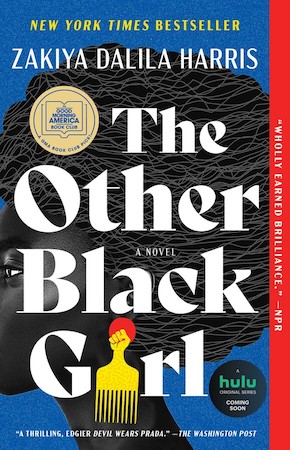
Obsessively scratching her scalp, while simultaneously chiding herself not to, Kendra Rae Phillips sits on a MetroNorth train anxious and jittery. She’s worried about being found, after being found out. Every lingering eye incites more sweat, and more scratching. Relief only comes when her train departs Grand Central Station. This is how Zakiya Dalila-Harris’ debut novel The Other Black Girl begins: in 1983 with a Black woman on the run.
It may be a coincidence that 1983 was also when Toni Morrison, the first Black woman editor at Random House, resigned after 16 years to focus on writing and teaching full-time. But unlike Morrison, Kendra Rae’s departure from her role as the Black woman editor at the fictional Wagner Books was not of her own volition.
Kendra Rae’s flight from New York City is a harried moment, symbolic of an ongoing pattern in book publishing, then and now. The numbers are scarce when it comes to Black people, and Black women, in publishing, and the systems in place have yet to change significantly enough for Kendra Rae, and the other Black women, in The Other Black Girl to feel safe in the professional space they occupy. The novel’smain storyline takes place in 2018 and follows two Black editorial assistants at Wagner Books: Nella who attempts to rise through the ranks as one of the only Black employees, and the newly arrived Hazel. Nella and Hazel’s conflict unravels the sinister motives behind the infiltration of OBGs (Other Black Girls) in the workplace, but Kendra Rae’s story serves as the catalyst for what unfolds.
For much of The Other Black Girl,the narrative surrounding Kendra’s swift retreat is that she chose to leave. The headline summarizing her feelings on the “frigid racial climate” at her workplace, “If You White, You Ain’t Right with Me,” is polarizing, inaccurate, and ultimately positions Kendra as “problematic” for her unwavering desire to work exclusively with Black authors. Kendra Rae’s intention to do her job, and do it well, makes her a threat the moment she vocalizes the issues she faces in the workplace. Even after being assigned a book that becomes a breakout hit by her best friend Diana Gordon, Kendra Rae is expected to retract her statements as if her experience isn’t important or necessary compared to Wagner Books’ image.
As a former acquisitions editor, I found Kendra Rae’s plotline relatable.Sadly, so was her departure.
Kendra Rae’s intention to do her job, and do it well, makes her a threat the moment she vocalizes the issues she faces in the workplace.
Last year, PEN America published a lengthy report on Race, Equity, and Book Publishing. Earlier in 2022, publishing veteran and VP/executive editor at Little, Brown, Tracy Sherrod wrote “Black Publishing in High Cotton” about the history of Black editors in book publishing for Publishers Weekly. Sherrod’s piece noted numbers as slim as seven total for Black editors in trade publishing. (Today, several dozen Black editors [including editorial assistants] exist at Big 5, mid-sized, and small publishers in the United States, totaling about 60 or so.) Prior to Covid, I reported on the inherent biases in book publishing, interviewing several Black women professionals. Almost 30 years ago, in 1995, The Village Voice reported on the “Unbearable Whiteness of Publishing” in two parts. And in 2021, Shelly Romero and Adriana M. Martinez revisited The Voice’s premise for Publishers Weekly. These reports, among others, reflect the same issue again and again and again: BIPOC writers and publishing professionals continue to face exclusion in the publishing industry.
Exclusion begins with erasure. Because if you don’t exist, how can you even attempt to tell your own story?
The year a pandemic and quarantine kept many of us indoors, and a supposed “racial reckoning” had occurred in America, suddenly—suddenly!—the offers came rolling in. The mandate was to quickly diversify publishing teams that didn’t have any, or many, Black team members. Sherrod’s piece mentioned that over the years, layoffs in publishing tended to come in waves, as did the industry’s interest and investment in Black content. So, the question remains: What support systems are in place, not simply for the employees, but for the authors’ whose books these editors will, and have, acquired?
In 2020, I was approached by the heads of five different imprints about editorial positions before I accepted one at Amistad Books, an imprint of HarperCollins. My reasons for joining Amistad were simple: its almost 40-year history and its focus on the African Diaspora. I also admired the leadership and vision of Tracy Sherrod, who, at that time, was Amistad’s editorial director. Like Kendra Rae, I wanted the opportunity to focus on my community’s stories.
Being the only, or one of the few, is an unenviable position no matter the situation or occupation.
Soon after my arrival, it seemed the tide was changing, again. After 10 years at the helm of Amistad, Sherrod left to work at Little, Brown & Company in April 2022. Within a year of being announced publisher of Coffee House Press, and being the first person of color in this role, Anitra Budd announced her resignation in August 2022. A month before Budd, Dana Canedy had left her position as the only Black SVP/publisher of Simon & Schuster after about two years in the role, and ultimately left the industry. Earlier this year, one of Canedy’s team members, VP/executive editor LaSharah Bunting, departed S&S under a similar two-year timeline after joining the company in 2021. People depart jobs for various reasons and under different circumstances. Yet, the shift from positions of power in publishing to sudden departures was, and continues to be, noticeable.
On August 29th, 2022, after 19 months and 18 book acquisitions, I was informed that my position as senior editor at Amistad “was no longer necessary.” (Imagine being told your role was unnecessary less than two years after being assured of the necessity to nurture more Black editors.) One of the first things I thought upon hearing those words was erasure. Erasure as colleagues reached out congratulating me on a new job. (They’d been told I was “leaving” and not that my company account had been disabled five minutes after logging off the virtual meeting in which I was let go). Erasure came to mind when my authors, and their agents, told me they hadn’t heard a word from anyone at the company until I publicly announced my departure two weeks later. And it felt like erasure in the extremewhen I saw how quickly I was removed as “editor” and others were given credit for the labor I’d put into editing, and advocating for, the books I had acquired. I was effectively erased because,like Kendra Rae, the narrative about my sudden departure from Amistad had been woven by others, and not by me.
This aligns with the erasure Sherrod writes about in “High Cotton.” Too few of us are aware of the history of the publishing industry’s many ebbs and flows in terms of providing the necessary resources for Black artists and Black workers. Too few of us understand why people and imprints no longer remain. (Consider One World in its initial iteration, Plume, or Harlem Moon, for example.)
As PEN reported, one of the biggest responses to this “racial reckoning” has been the hiring of DEI-designated personnel at every Big 5 publisher in the U.S. Additionally, many publishers established diversity committees, or ERGs (employee resource groups) advocating for inclusion, reading groups, and continued general education around social justice, specifically racial issues.
Along with hiring, these are attempts in the right direction. However, none of this guarantees that micro- or macroaggressions won’t happen in the workplace. They did not detail a plan for when aggressions or bias or racially motivated incidents occur, nor do they allow for people to continually build on what they learn. They rarely include concrete plans that will hold perpetrators, or anyone who causes harm, accountable. And these efforts do not include plans for training or mentorship or support long-term career trajectory for up-and-coming BIPOC who may be thrown in the deep-end on the job, and be expected from the start to do it well.
This also comes into play when considering how to market books by authors of color, and how the performance of those books is evaluated. DEI initiatives don’t automatically equate to better business practices. A diverse reads book club doesn’t translate to increased publicity or marketing budgets or detailed promotional plans. And diversity committees often result in additional unpaid labor. Being the only, or one of the few, is an unenviable position no matter the situation or occupation. Once you have your marching orders to “bring in books” or more specifically “bring in more books by Black authors,” there’s an ellipsis after the mandate, and it may translate into a lack of strategic support for those authors and their books.
I can speak from experience about the great divide between the excitement of acquisition to the travails of a book’s arrival in the warehouse. I can attest to being privy to, or being the one to speak up in, meetings on the need for sensitivity around the material being discussed. I’ve seen the names of Black people killed by police—names that were and remain hashtags alongside #BlackLivesMatter and #SayHerName—spelled wrong in books while the names of the white “founding fathers” were immediately fact checked. I heard from teams repping Black authors’ books, books granted scarce marketing budgets because the assumption is that these books will either “find their audience or they won’t.” It is both heartbreaking and infuriating to deal with, as a creator or as the editor who believes wholeheartedly in the work and the author entrusting you with their vision. It is deflating to have the same conversations over and over and then not see the impact of the emotional labor; the carefully crafted emails; the endless talks and promises that still broach more questions about how staff and authors are supported, the transparency of the business at large, and how work by BIPOC authors is ultimately received.
We do this work because we believe in the power of books as well as their importance in our lives.
Since 1983, when Morrison and Kendra Rae were editors, imprints—let alone publishing houses—have been consolidated. This has led to fewer publishers and more product. What it hasn’t led to is more staff supporting said product, nor greater diversity among the staff. Add to this the lack of cost of living raises, a perpetual hindrance for many to enter and remain in the industry, and book publishing continues to self-select. Overworked staff doesn’t result in time or space for contemplation, nor does it allow for innovation when the assembly line shifts into high gear.
Like Kendra Rae, I love what I do. I love books. I love words. I’ve found more connections and friendships in the writing & book community than I can count. And I am continually thankful for this because it allows me to consistently remember that I am not solely what I do. We do this work because we believe in the power of books as well as their importance in our lives. For Kendra Rae, books were her life—until they weren’t. Ultimately, she absolved herself from the narrative that followed her. She opted for honesty about being “the only one” at her job and was hesitant, or flat out unwilling, to “play the game” and say otherwise. Over 40 years there has been change with more implementation of “diversity” initiatives. And, yes, there have been more hires and promotions of Black and IPOC industry professionals. (Though the 2022 PW Salary Survey reflected the number of Black staff at 3%, which is not an improvement from the last survey in 2019 or even a year prior to that.) In 2020, several imprints dedicated to BIPOC voices, some celebrity-helmed, were announced. Since 2020, the base salary for entry-level positions at U.S. Big 5 publishers rose from $42,000 to $45,000, and most recently, to $47,500 (and $50,000 in the case of Simon & Schuster). We’ve seen an increase in acquisitions of books by authors of color along with more transparent discussions around the disparity in advances thanks to #PublishingPaidMe. And as much as people online, in offices, and in petitions have called for the industry at large to make substantial and long-standing changes towards a more inclusive environment, the events of 2022 to now, from resignations (and layoffs) to the 3-month long strike by HarperCollins employees for a higher starting wage and more concrete DEI initiatives, shows that when change does happen it is hard-won and the fight never stops. Whether by design or decree, erasureexists because something, or someone, is lacking. Without the freedom for BIPOC employees to live in our truth, and tell our stories, things will remain tenuous in publishing. When that happens, what’s left for the next generation, and what will the narrative be?
Excerpt from The Holy Days of Gregorio Pasos by Rodrigo Restrepo Montoya
I stayed in a hostel for a week, in Adams Morgan, by all the bars and clubs and hookah lounges. The hostel was quite nice. The desk people were kind enough to let me pay night by night while I looked for a more permanent living situation. I received a keycard, a sleep mask, shampoo, a toothbrush, toothpaste, a towel, and a lock and key for my valuables. I was assigned a bottom bunk on the second floor, across the hall from the men’s bathroom. The quarters were tight, but clean. The room was empty when I arrived. Some bunks were a mess, littered with clothes, chargers, maps, and pamphlets. Others were a bit tidier. I took my spot in the back corner, by the window, slid my luggage under my bunk, and slept through the evening, through the night, and into the weekday morning. I woke up as the more serious types buttoned up for work. I watched them fasten their belts, tie the laces of their leather shoes, and march into the swamp that was DC in September. I followed them downstairs into the communal kitchen and a complimentary continental breakfast. I reminded myself that I was lucky and returned to my bed for more sleep.
In the afternoon I walked, but not far. I walked through Columbia Heights, Shaw, and Dupont. This was especially true in the evenings, when people were winding down from their busy days: There were essentially two groups, tourists and work people. The tourists wore backpacks and the workers wore name tags. They were easy to tell apart on weekdays. On the weekends, they blurred together. They drank. They talked. They laughed. They fought. And so on.
Every day, and most nights, I ate at a small empanada restaurant in Adams Morgan, about a block away from my lodging. The empanadas weren’t the best I’d ever had. They weren’t the worst, either. The woman at the counter was very nice. One night, I asked her if she was the one who made all the empanadas. She laughed and pointed to the name on the door. “Julia makes them.” I took my time eating. Every now and then the woman at the counter would run back into the kitchen or out for a quick errand. She would ask me if I would look after the counter while she was gone, which I did. It felt good to be trusted. I sat at the table by the window while I waited for her to return. And I basked in the feeling, however slight, of being welcome.
One night, a Saturday, I was having a hard time sleeping. I was in and out of dreams for hours. Despite my earplugs, I could hear some guests singing downstairs. Later on in the night, I woke to a couple having sex on the other side of the dark room. I remember wishing I were both of them. It must’ve been three or four in the morning when I was woken up for the last time. The woman on the bunk above me was praying.
The morning after, I waited around for someone in the lobby to leave their Sunday paper behind, then brought the news back to bed with me. Trump. The wall, et cetera.
I came across an article about an unlikely, yet practical, living arrangement that was becoming more and more common. Many older folks needed younger people to help them with the tasks of daily living, and many young people needed affordable rent.
I was almost finished with the article when two workers walked into my room. One mopped the floors while the other replaced the sheets in each empty bed, mine being the only one still occupied. I pretended to read while I listened to them speak in Spanish. They both agreed that their children were growing up too fast, especially their daughters. The women worked quickly. They were breathing heavily.
“I’m thirsty,” said the woman mopping.
The woman responsible for bedding was on the top bunk, above me. She spoke as if she were speaking to no one, or God.
“What year is it?” she joked.
Using a computer at the hostel, I found a listing for a basement apartment in Georgetown. It’d been posted two days prior by a recently widowed Spanish woman who needed help keeping up with her house. The listing called for a young male Spanish speaker with a clean background and, preferably, experience with home maintenance and yardwork. I didn’t exactly qualify but called the listed number anyway. The woman’s name was Magdalena.
“What’s your name?” she asked.
“Gregorio,” I said.
Magdalena spoke in perfect English and perfect Spanish, though she never mixed the two. Her Spanish was a harsh Spanish, from Spain, and therefore foreign to me. Her English was much milder. I couldn’t detect any accent at all. Magdalena sounded like any American mother in the town where I’d been raised. She spoke, it seemed, with the voices of two people.
Over the phone, Magdalena gave me a very brief history of her life. She’d been born in a small city in the north of Spain. She’d recently lost her husband to, as she put it, old age. She needed some help around the house. She didn’t like to be alone.
“Don’t you have family?” I asked.
“No,” she said.
“What exactly is the job?”
“Your job would be to make my life a little easier,” Magdalena said. “That’s all.”
“What does it pay?”
“A room of your own.”
“I can help,” I said. Magdalena asked me to tell her a little bit more about myself over the phone before we met for a formal interview. I told her the truth. I told her that I was new in town and that I was far from home.
I told her the truth. I told her that I was new in town and that I was far from home.
I was early for my interview. Magdalena was late. I sat waiting at a small table on the shaded patio of the specialty market in Georgetown. I was surrounded by expensive dogs and their owners. When asked what I would like, I ordered two cups of coffee and a small loaf of bread.
Magdalena arrived wearing a gray cashmere sweater to match her silver hair. She was contained, yet warm. She said hello as if we’d already met and shook my hand with both of hers. She was as attractive as anyone I’d ever talked to. Magdalena took one sip of her coffee, put the mug down, and asked the waiter for two glasses with ice.
She removed a notebook and pen from her tote bag. “Where is home?” she asked.
“Danbury,” I said.
“Danbury?” she asked, unsatisfied.
“Danbury, Connecticut,” I repeated.
“And your parents?”
“Colombia.”
“Ah,” Magdalena said, nodding. She set her notebook down and poured the lukewarm coffee into the cup with ice. I did the same. I noticed that there was no writing in her notebook, only scribbles of cubes across the page.
“I’ve never been to Colombia,” Magdalena said.
“There’s a river there with your name,” I said.
“I didn’t know,” she said, smiling. “Have you been?”
“To Colombia? Yes. To the river? No.”
Magdalena asked about my family’s history. I told Magdalena about my recent trip and Nico’s death. She nodded as I spoke. My family’s reasons for leaving Colombia were not simple, but they were obvious. Their story was a common story.
Magdalena’s story was not as common. She managed, though, to tell it simply and calmly. She was from Guernica, born without grandparents or aunts or uncles or cousins. They had all been lost in the famous bombing of the town in 1937, at the beginning of the Civil War, when Franco let Hitler test his warplanes on their Basque rivals. Both Magdalena’s mother and father were orphaned following the bombing. Both were teenagers. They were taken in and cared for by the same woman, Magdalena, who had tragically lost her own husband and children in the same bombing. Eventually, Magdalena passed. The two orphans kept her house. Years later, they had a daughter of their own. They named her Magdalena.
“How did you end up here?” I asked.
“I went to university in Madrid. I met an American studying abroad there. We ended up together. Then we moved here and married. Thirty-five or so years ago, now.”
“The husband who died?”
“That one.”
“I’m sorry,” I said.
She laughed politely. “For what? You’ve done nothing wrong.”
The interview lasted about two hours. Because of my age, nineteen, Magdalena was under the impression I was a university student. I explained that I wasn’t and didn’t exactly plan on becoming one. She suggested I sit in on some classes anyway.
“Take your backpack with you and find a seat,” she said.
“You’ll fit right in.”
The only direct question Magdalena asked me was whether I had any experience with maintenance. I lied and said that I did, that I’d helped my uncle out with landscaping and some other work around the house.
She shrugged. “There isn’t really much to do. The yard is small and the house is in good shape.”
“Perfect,” I said.
Before showing me the house, Magdalena needed to do a background check. Once that was clear, I could move in. I handed her my license. While Magdalena photographed it, I wrote my Social Security number in her notebook. I drew a few cubes of my own next to hers. Magdalena shook my hand once more. “See you soon,” she said.
A basset hound tied with its leash to a patio table stared up at me as I stood to leave. The dog was unattended. It cried a little. I gave it half of my loaf of bread. It swallowed the loaf in seconds, then continued crying. I gave the dog the other half and left.
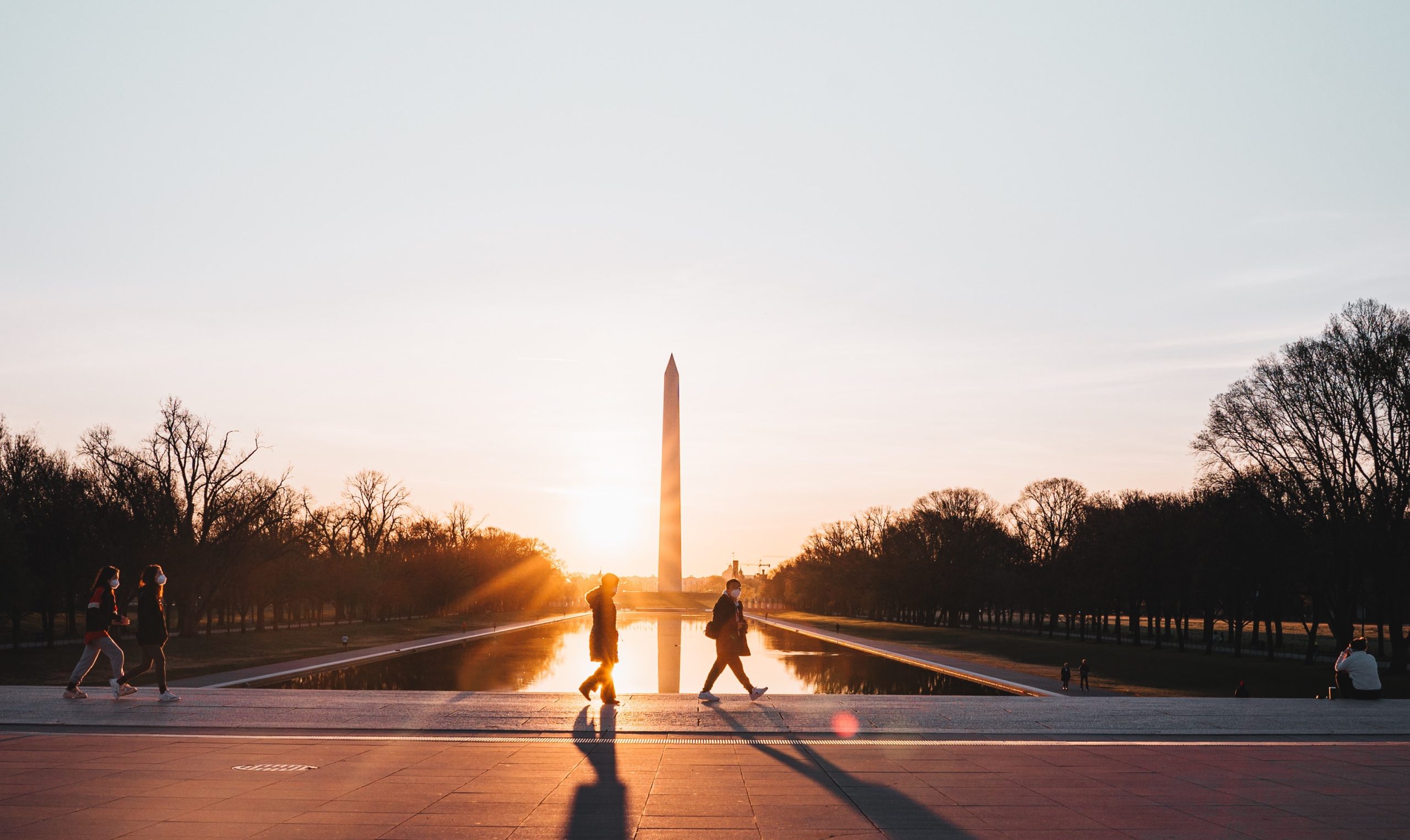
I spent more time at the tourist spots than I should’ve. I like to think it was a necessary, or at least inevitable, mistake. It made me sad, or mad, or both, when I saw tourists taking pictures of themselves smiling beside war memorials, or in front of giant marble statues of slave-owning presidents. The Washington Monument was, as my father had joked many times, an erection. I realized that most monuments were erections, one way or another. And it became clear to me, after the sun had gone down and the tourists had dispersed, that someday the monuments would be ruins.
I sat at the World War II memorial and smoked. I sat with my back against a marble pillar and listened to the water from the fountain. I grew tired and began to dread my walk back to the hostel. A man walked up to the fountain. He looked around, looked at me, and decided I wasn’t a threat to whatever he was about to do. He began to undress. He stood in the fountain and bathed.
And it became clear to me, after the sun had gone down and the tourists had dispersed, that someday the monuments would be ruins.
My background check was completed within a couple of days. Magdalena sent me an email confirming our arrangement. I was there the next morning. When I arrived, she was on the front steps of her red brick townhouse. She stood to greet me. “Welcome home,” she said, and gave me a customary kiss on both cheeks.
Magdalena quickly showed me the small shed where she kept the standing mower, the bush clippers, and the trash bins, then took me into the house. The front door opened into a long, dark hallway. There was a tearoom that seemed to have been untouched for years. There were no photos either, only paintings of open fields and empty oceans. The chairs looked uncomfortable and weak. When I dusted the house a few days later, I could see that the seats were made of leather, each depicting an engraved image of a bullfight.
The dining room was not much different, though a bit brighter. At the head of the long wooden table, where Magdalena’s husband once sat, was an empty linen placemat. Magdalena’s placemat lay next to it. On it was a silver tray, a silver plate, and silver utensils. On the mantel by the window there was a miniature house statuette. The house looked familiar. I bent down to look closely. I realized it was the very house I was standing in. I liked it. I asked Magdalena who’d made it.
“I did,” she said.
The living room consisted of a set of matching leather sofas, a rocking chair, and a huge television. “Do you enjoy watching television?” I asked.
“Who doesn’t?”
There were several paintings, drawings, and sketches hanging from the living room walls, all without color, each one seemingly incomplete and cut off from some larger whole. There was a horse’s head screaming and crying, its eyes looking up at the sky. Another drawing presented a clenched fist around a broken sword. There was a lost bull, a crying man with outstretched arms, a light bulb, a ghost coming in through an open window, and a wailing mother holding a dead child. I must’ve been staring, because Magdalena spoke as if to answer a question she could read on my face.
“Guernica,” she said.
Magdalena didn’t show me to her bedroom, but she did walk me through the rest of the upstairs. Her office was small and littered with jewelry. I saw silver. I saw gold. Emeralds, too. There was a desk at the window facing the quiet Georgetown street. Velvet displays of her most important pieces were hung up on the walls. Magdalena had more gold than the Vatican. I asked her if she was related to the queen.
“This is where I work,” she said.
Magdalena’s late husband’s office displayed various degrees. There was a brick of gold on the corner of his black wooden desk.
“He was a gold analyst,” she said.
The basement apartment had everything I needed except its own entrance. There was a small kitchen with a refrigerator, a small table for two people, a full bathroom, a desk, and a pullout couch. Magdalena was sorry that it didn’t have any windows. I told her it was a good thing, that I would sleep well no matter what the weather was like.
“Get settled,” Magdalena said. “If you need anything, let me know.”
“Likewise,” I said.
I tacked old pictures of my family on the bathroom mirror. I placed Nico’s letter, my mother’s purple stone, and my father’s money in the nightstand drawer. I got in bed, tried to sleep, and couldn’t. I went for groceries. I bought bananas, cereal, eggs, pasta, rice, and beans. My cooking was limited. I would only make food when I was especially hungry. But I was rarely hungry.
That night I drank too much rum and vomited in the toilet. The next morning, Magdalena invited me up for breakfast. Eggs and bacon. She told me she’d heard me getting sick and asked if I was okay. I apologized.
“For what?” she asked.
She told me to eat slowly. The food helped, but it was the broth she’d boiled that really saved me. Magdalena reminded me to go to class. It was the beginning of September and the universities were starting up that week. I told her I’d go. I had nothing better to do. I did the dishes. I took out the trash.
The first class I attended was an economics class at Georgetown University. There must’ve been at least two hundred people in the lecture hall. The professor read the syllabus aloud. “The course,” he said, “will introduce you all to the principles and policies affecting the economy, as well as to economic ethics.” The professor emphasized that his goal was to teach us the language of economics so that we could speak it for the rest of our lives, and eventually, become more fluent than he.
The next class I attended was Biology 101. The professor was more relaxed and more interesting. She had bright red hair and wore blue jeans and an oversized button-down shirt. The first thing she said about biology changed my life. She said that all species were destined to become extinct. With that, I’d learned everything I ever needed to know about biology. I also learned what to expect.
The last class I ever attended was an introductory chemistry class, taught by a tall Argentinian guy with a thick accent. I understood him perfectly. The class, he explained, was for non-majors, and therefore would not focus on the intricacies of chemistry but instead on the realities of the global climate disaster. “Many of you will go on to have big careers in business and politics. Most of you will have children. The future is coming, quickly, and it is crucial that you understand the circumstances that will dictate everything. In short, the objective of this course is for you to understand that the world is ending. Climate change is real and irreversible. It is already too late.” The lecture hall was quiet. The professor proceeded to pull up the syllabus on the projector. He said that the class would be easy so long as students attended regularly. He assigned one textbook. He’d written it himself.
Outside the lecture hall, by the bathroom, there was a bulletin board with fliers advertising different opportunities to make money. I took a couple of them with me. The first was for smokers between the ages of eighteen and twenty-four. The second was a family dynamics survey. The third was a sleep surveillance study.
First, I showed up to the smoking study. They assumed I was a student and asked what class I wanted credit toward. I told them that I wasn’t a student. When they asked me why I was interested in participating, I told them I wanted to make myself useful, and that I wanted to make money. There was more paperwork than I expected. The woman in charge of carrying out the study asked me a series of questions. She asked me how often I smoked, why I smoked, and whether I was trying to quit or not. I told her I smoked half a pack a day, that I smoked because I enjoyed smoking, and that I did not plan to quit. She explained that the study was designed to measure the extent to which cigarette packaging affected young smokers. She asked to see my pack, which had one warning: Smokers Die Younger. My job was to transfer my cigarettes into the packs the study provided and keep a tally of how many cigarettes I smoked each day. The pack she gave me was plain cardboard with warnings on both sides. One side had a picture of an aging smoker hooked up to an oxygen tank, surrounded by what appeared to be his devastated family. The other side had a picture of a stillborn baby. I was required to report back once a month over the course of the study, where I would be asked a series of questions about my experience. I would get paid each time I reported back.
The Family Dynamics Survey people weren’t interested in my participation. They asked me if I had a child with a partner I was living with. I said I didn’t, but that I was willing to contribute to the study anyway. They said that I was useless to them. When I asked why and told them I had a lot to say about family dynamics, they told me that the study was designed to see if there was a correlation between the amount of sleep a child gets and the parents’ satisfaction with their relationship. I asked them how they planned to measure satisfaction.
The sleep surveillance people were very excited to see me. They weren’t as excited when I told them I wasn’t a student. I’m not sure why. I assume it’s because they’d have to pay me, or because they thought I wouldn’t be as reliable. Probably both. Still, they had me fill out all their paperwork. They were concerned that I hadn’t been to a doctor in years.
I was required to wear a home sleep tester every night for two weeks. The device was impressive. There was a nose tube to measure my breathing, a belt that I had to wrap around my chest to measure more breathing, a finger clip to measure the oxygen in my blood, and a position sensor to record when I was asleep on my back, side, or stomach. I didn’t ask too many questions, only why they were studying people’s sleep. They said that sleep problems helped cause heart disease, depression, and poor work performance. I wondered if heart disease, depression, and poor work performance caused sleep problems, but I didn’t say anything. I was to be paid at the end of the study, after I’d reported back with the sleep machine and completed an exit interview with the staff.
When Magdalena asked me how class had gone, I told her I’d gotten three jobs instead. I showed her the pack from the smoke study and the sleep machine. When I told her how much I was getting paid, she said she was going to sign up, too.
“I should start smoking again,” Magdalena said.
“It’s never too late,” I said.
That night I made pasta for the two of us. It wasn’t good, but Magdalena said it was. The best part of the dinner was the wine. The conversation was nice, too. Magdalena asked what I was planning on doing for work, if anything. I told her I’d been thinking about working at one of the museums, as a janitor maybe. I explained that my uncle Nico had done the same when he was my age at a Botero museum in Medellín.
“Which museum do you want to work at?” she asked.
“I don’t know,” I said. “Which one do you recommend?”
“None of them,” Magdalena said. “What you should do is go to school.”
“I should,” I said. “You’re right.” “I am right,” she said.
“Will you pay?” I asked. Magdalena laughed. We opened a second bottle of wine. Magdalena stole a cigarette from my pack.
“What would you study?” she asked.
I made a point to look around at the house. “Gold,” I said, laughing. I asked Magdalena what she studied at university. She grew a little sad. “General courses. I never finished. I only studied a year.”
“If you go to school, I’ll go to school,” I said.
“Deal,” she said.
That night we watched a television documentary about prohibition. Magdalena and I fell asleep next to one another on the couch. I woke up, turned everything off, and went downstairs to my apartment. I wrote down that I’d smoked fifteen cigarettes, then hooked myself up to the sleep tester and went to bed. That night I dreamed that Nico and Magdalena were young. They sat across from one another in a small room without windows. They talked for hours. When I woke up, I couldn’t remember what they’d said.
I’ve always thought that “complicated relationship” is a bit redundant. Aren’t all relationships, in some sense, complicated? What’s more complicated than weaving two (or more) hearts and minds into a tapestry of shared experience? What’s more complicated than engaging in the delicate dance of give and take, the intricate interplay of emotions and experiences? That said, it’s certainly true that some relationships are more complicated than others. Messier than others. More volatile than others. Sometimes the strange, alchemical reaction between people leads to something brilliant… sometimes it starts a fire. I’ve always been interested in stories that tend toward the latter. Stories about people who ignite a spark in one another. About people who light each other up. People who—for better or worse—transform each other.
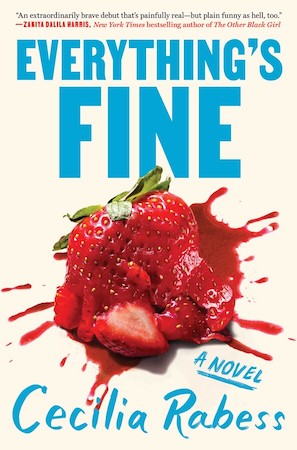
My novel Everything’s Fine is about one such relationship. It follows two very different young people as they fall reluctantly, deeply, complicatedly in love. At the center of this entanglement is a liberal Black woman named Jess who falls for a conservative white man named Josh. And as much as the book is about that relationship, it’s also about what it means to be a Black woman navigating predominantly white spaces. It’s about how the experience of being Black, of being a woman, of being a Black woman—“policed by your skin, by your gender, by your existence,” as the writer Jeneé Osterheldt put it—can, depending on the relationship, be at turns nourishing, illuminating, complicating, or even implicating.
This reading list explores books that center Black women in such complicated relationships. While many of these books focus on romantic relationships, others explore a wide range of connections, from mothers and daughters to coworkers and compatriots. What ties these works together is a shared interest in delving into the complex realities of Black women’s lives through the lens of their complicated relationships with others.
Newly engaged, Maria and Khalil are a golden couple, literally and figuratively. A pair of Stanford educated bobos living in Brooklyn in the 1990s, their Martha’s Vineyard wedding will be one for the New York Times Style section. They are also each the children of one white and one black parent, golden skinned, the “King and Queen of the Racially Nebulous Prom.” The twist here is that the complicated relationship that powers the novel is not the one between Maria and her fiance, but rather the parasocial relationship between Maria and a poet with whom she develops a troubling infatuation. The poet is Black and dark-skinned where Maria is light-skinned and white passing even though, raised by a single Black mother, she identifies more strongly as Black. It is this disconnect that largely seems to fuel her obsession. But Maria’s journey of racial self discovery quickly becomes a spiral as she begins to stalk the poet, her behavior escalating wildly until it reaches an unsettling climax. A subplot on the Jonestown massacre throws all of the novel’s themes of race, identity and agency in sharp relief. New People is a smart and scathing social satire about how the skin you’re in defines—and confines you.
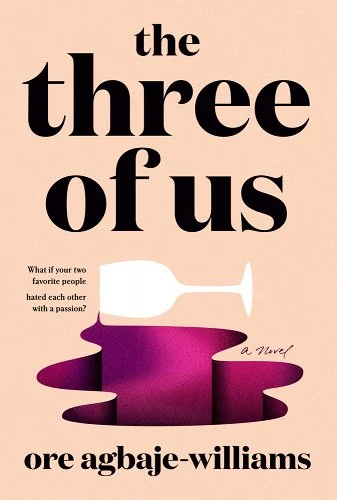
The premise of this one is deceptively simple: what if your husband and your best friend absolutely hated each other? While the premise is simple the story is anything but. Layered and brimming with subtext and sharp observations about money, gender, patriarchy and complicity, this story subverts the love triangle trope by introducing something more akin to a hate triangle. Told in three distinct first person narrations, the novel follows the aforementioned points of the triangle—the unnamed wife, the unnamed husband and the wife’s best friend, named Temi. Over the course of one alcohol fueled afternoon, as years of resentments and recriminations come to a head, allegiances shift, and information is parceled out in neat little poison filled bonbons. By the end, and by design, as the wife is forced to make an impossible choice, you won’t know who’s right, who’s wrong, who’s reliable and who’s not to be trusted, but you will have taken a wicked ride.
In this Cold War spy thriller, intelligence agent Marie Mitchell is deployed on a covert operation to topple a Marxist regime in Burkina Faso. A Black woman, overlooked and underestimated among her FBI peers, Marie is an unlikely choice to spearhead the mission, although without giving too much away, readers eventually learn that Marie is, in fact, recruited for unlikely reasons. In Burkina Faso, Marie finds her mark—a fictionalized Thomas Sankara—both politically and personally charismatic. As Marie begins to question her relationship with her homeland’s intelligence apparatus—which, by the way, may know more about her sister’s disappearance than it’s letting on—she also begins to fall into a relationship with Sankara that’s dangerous, thrilling, and, yes, complicated.
Gothic murder mystery? Historical fiction about the horrors of slavery? Illicit affair between a former slave and her employer’s wife? Check, check and check. Sara Collins’ strikingly original debut novel tells the story of the eponymous Frannie Langton, a servant and former slave, who is on trial for the murder of her employer and her employer’s wife. Though normally sharp and inquisitive, Frannie can’t remember anything that happened on the night of the murder, and so she tells her lawyer what she does remember: her life story. The novel is told in the form of Frannie’s confession in which she recounts everything from her violent and torturous experiences as a slave on a Jamaica plantation to the love affair at the center of the murder allegations. The word “complicated,” while directionally accurate, doesn’t quite capture all that’s at stake here. Life and death, yes, but also sex and adultery, grief and guilt, injustice and brutality, lies and desire.
Not all love stories are romances. And as the title suggests, Big Friendship, co-authored by best friends and co-hosts of the popular podcast Call Your Girlfriend (2014-2022), is at once an ode to friendship and a travel guide for to traversing the often uncharted territory of, what the authors call a “big friendship.” The book explores their own “big friendship,” which is a close friendship that Sow and Friedman argue is the most influential and important in a person’s life, even though society is reluctant to recognize it as such. The book gives the reader an intimate peek at the machinations of their relationship, its ups and its downs and everything in between. Sow is Black and Friedman is white, and so a lot of the tricky work of sustaining the friendship comes down to navigating their racial differences. Their commitment to one another, and to their friendship, is the beating heart of the book and a powerful reminder that not all complicated relationships are damaging or destructive. Big Friendship is a big hearted celebration of complicated relationships.
Granta recently named Natasha Brown one of Britain’s best young novelists and the accolade is well deserved. Assembly, her debut novel, about a young Black British woman on the brink, was hailed as equal parts brilliant and biting. And indeed, Brown’s prose is exquisite, eviscerating and economical. In a little more than 100 pages, as the unnamed narrator faces a series of difficult and escalating choices, Brown holds a scalpel to race, class, gender, family, identity, politics, capitalism and colonialism. Although the novel captures the complexity of several different relationships—friends, family, lovers—it is the relationship between the narrator and her colleagues that proves most incendiary. Brown’s examination of those workplace relationships, and the toxic brew of abuse, resentment and dependency that defines them, ultimately gives birth to one of the best lines in contemporary fiction. Regarding a lackluster colleague, the narrator says: “As if each morning, fresh mediocrity slides out of the ocean, slimes its way over mossy rocks and sand, then sprouts skittering appendages that stretch and morph and twist into limbs as it forges on inland until finally, fully formed, Lou! Strolls into the lobby on two flat feet in shined shoes.”
Gyasi may be more well known for her mega hit Homegoing, but Transcendent Kingdom, her sophomore novel, is an absolute achievement as well. A quietly devastating, but ultimately hopeful, meditation on loss, love, and loneliness, Transcendent Kingdom is clearly the work of a writer at the top of her game. The novel follows Gifty, the child of Ghanaian immigrants, now a neuroscience PhD at Stanford. Her brother has died of a heroin overdose and her mother is all but a ghost. Gifty spends her days in the laboratory, experimenting with mice, trying to understand the addiction and depression that have stolen her family. When the novel opens, Gifty’s mother, in the throes of a deep and intractable depression, has moved into Gifty’s apartment, where they both struggle, separately and together, to make sense of their shared tragedy. This delicate relationship is rendered beautifully and, over the course of the novel, as mother and daughter try and fail and try again to map the contours of their fraught relationship, Gyasi raises profound questions around faith, grief, family and belonging.
Sports, sci fi shows, and Stephen King were the most consistent topics of conversation for my father and I. Of the many hours I spent alone with him as a teenager, I don’t remember talking about much else. Perhaps this reveals us as one-dimensional and simple, or maybe even a little stereotypical (rough-around-the-edges Dad, lesbian daughter), but I think it saved my life.
My dad is a paradox. Growing up, he blubbered at videos of soldiers reuniting with their children enough times for me to know he had feelings. But to ask him what exactly those feelings were was useless— it would have been like asking a magician to reveal the secrets to his tricks. In the most difficult years of my life, his reluctance to unpack emotion became essential. I craved privacy throughout high school, but found total solitude daunting. My brain barked too loudly. I needed a companion. Someone willing to talk, but never insistent upon it.
I needed my dad.
Many of my friends had a different breed of dad, more similar to Danny Tanner from Full House or Phil Dunphy from Modern Family. These fathers were chock full of timely anecdotes and leading questions for their troubled teenage offspring.
Phil and Danny would have annoyed the shit out of me.
I struggled my way through high school, and my personality soured. Up until then, I had been described as happy-go-lucky. Spunky. Somewhere around age fourteen, I discovered my attraction to women. I became furious at the world, my friends, my family, but mostly I became furious at myself. The more my mom and close friends begged to understand me, the more incapable of explanation I grew. I shoved myself deep into the closet and boarded up the door. I mourned the dream of a normal life. The last thing I wanted was a sweater-vest-wearing Danny Tanner poking his head in to wonder if I wanted some cocoa and a chat.
I needed a dad like Joel Miller.
Miller is the protagonist of the action-horror video game (and recent HBO television adaptation) The Last of Us. The game begins 20 years after a zombifying disease called Cordyceps has virtually eradicated humans from the Earth. Players move through the game as Joel smuggles fifteen-year-old Ellie across the country to a doctor attempting a vaccine. Ellie is the key: she is immune to Cordyceps. Joel and Ellie’s relationship develops through long walks and car rides across a desolate and dangerous zombie-populated United States. The silence between them is interrupted only by Joel’s gruff teasing or Ellie’s terrible puns. There are no confessions of the heart or therapeutic dumps regarding the trauma they’ve experienced. Neither of them wants that. Their circumstances are too urgent.
I became furious at the world, my friends, my family, but mostly I became furious at myself.
Midway through their trek, Joel falls five floors down an elevator shaft. For a few beats, it’s unclear to Ellie whether or not he is alive. When he comes to and is able to ask if she’s okay, she screams down the shaft with a simple, “No! You scared the shit out of me.” Elaboration is unnecessary.
When I was seven, I was hospitalized for appendicitis on Father’s Day. My family had been celebrating with mine and my dad’s favorite: sticky blueberry pancakes drenched in maple syrup. My mom noticed I hadn’t taken a bite. As my stomach pain grew progressively worse throughout the day— so agonizing I was unable to stand without help—she rushed me to the hospital. She tends towards the dramatic, and my memories from the hospital are tinted in blue. I remember her gripping my hand hard enough to break it in half, her voice pealing with panic in every interaction with the doctors. I thought I was going to die.
My dad showed up a few hours later after my grandparents got to the house to watch my sisters and brother. He grabbed one of the braids in my hair and shook it before sitting beside my mom next to my bed. My mom relaxed, as did I.
“You know, if you wanted special attention this bad, you could have just asked,” he said, still sitting bedside when I woke from surgery. His hair flattened on his skull from a baseball cap he’d laid on the side table. “This is so like you, trying to steal my shine on Father’s Day.”
I giggled, shrieking that I would never do such a thing. The searing incision on my hip became an afterthought. He carried me to and from my bed every day for two weeks.
With every year of high school that passed, I became more and more certain I would never come out of the closet. I didn’t know any queer adults, and feared a life of loneliness. There was the social aspect, too.
I remember her gripping my hand hard enough to break it in half…
The word “lesbian” circled my sports team locker rooms; it was the ultimate insult. It degraded one as equal parts masculine, predatory, and disgusting. Sometimes, girls would shorten it to just “L.” The most troubling aspect of this was its double meaning: she’s such an L was used both as an insult to assumedly heterosexual girls, and as an actual descriptor for the few girls at our school who were publicly queer. In neither circumstance was the connotation positive.
Two girls in my grade began dating, one of them a lacrosse teammate of mine. She was outcast immediately. Girls in the locker room changed in bathroom stalls or with their chests facing the walls when she entered the room. I kept my head down and silently thanked my own brilliant foresight to remain closeted. It was keeping me safe. I dated boys, wore thick layers of makeup, and lied about what kind of TV shows, music, and books I was interested in. I worried constantly that any tipping of my hand, any confession as to my true interests and passions, would clue them in to what I really was.
The paranoia grew exhausting. Eventually, I withdrew. I stopped going to parties, seeing friends, and even listening to music (I once listened to a Tegan and Sara song and was horrified to realize that people could see what I listened to on Spotify). It was just easier that way. At least I wouldn’t have to wonder whether or not anything I said could have been interpreted as gay.
As I slowly dropped off the social scene, I began to spend a bizarre amount of time with my dad. Most days during my junior and senior year of high school, I drove home for lunch so I could eat Greek salads coated in hot sauce dressing with my dad on side-by-side TV trays while watching the nuclear apocalypse drama The 100.
While my mom and friends wanted to know what was wrong with me—why I’d changed and when I’d be better—all he wanted to know was what I thought of Stranger Things’s second season. And somehow, even through our complete lack of nuanced conversation, he knew me better than anyone in the world. I didn’t have to crack the door open for him to see through. It was relieving. We were like those nature photographs of unlikely animal friendships. Crocodiles granting free rides to baby birds on their backs across the swamps. The mentally unwell teenage lesbian watching March Madness with her bearded grumpy father.
At least I wouldn’t have to wonder whether or not anything I said could have been interpreted as gay.
Towards the end of their journey, Joel and Ellie’s surrogate father-daughter relationship deepens. Their bond of reluctant necessity thickens into something more substantial. For the first time we see that Joel views Ellie as more than a cure or a traveling companion: he loves her. On Ellie’s sixteenth birthday, Joel takes her to an abandoned science museum. Once, in passing, Ellie has mentioned her love of outer space, and an impossible desire to become an astronaut.
Joel works magic. He leads her to an upper level of the museum and into an old space shuttle replica in the astronomy exhibit. Joel hands Ellie a cassette tape he has scoured the Earth for, a dusty, oversized astronaut helmet knocking around loosely on her head.
“Happy birthday, kiddo,” he says. It’s an audio recording of a shuttle lift off. The two close their eyes with the tape playing between them, and they are transported miles away from the problems their world has to offer. It’s the best present Ellie could have been gifted: an escape hatch. Best of all, she never had to ask for it.
Beyond just his ability to distract me from my fears, my dad shares this uncanny ability with Joel. He knew how to find me without ever needing a map, and it is a joy to be found.
Christmas used to be one of my least favorite times of the year. It was a giant spotlight on all of the gaps between who I knew myself to be, and who those I held close knew me to be. To be fair, it was the only version I’d ever presented to them. Dresses, crop tops, eyeliner pens, and lacy pink underwear sat unused in my closet year after year just to be donated months later. It was a waste of money and heartache.
My senior year of high school, my dad handed me his Christmas gift. It was a thin envelope with my childhood nickname Mooglie scribbled on the back in pencil. Inside were two tickets to see the adaptation of Stephen King’s Misery on Broadway. He had printed them out on two grubby sheets of copy paper and shoved them inside the envelope. I teared up. He shrugged.
“Thought it could be cool. Seats aren’t great, but looked decent,” he said.
One week later, we got dressed up (him in dark jeans and a button up, me in a black dress and ballet flats), and drove into Manhattan just the two of us. We ate at Carmine’s before the show. He let me steal sips from his wine, and we split chicken parm and a plate of spaghetti. I am positive we talked of nothing but football—the NFL playoffs were in full swing. I can barely remember if the play was good or not. It is still the best Christmas present I’ve ever received.
There is no good explanation for the dynamic between my dad and I or Ellie and Joel. Why is it that this man who at times felt void of interiority was able to understand me so well? I don’t know. Why do Joel and Ellie seem to just click? They don’t even have the benefit of a biological connection.
Why is it that this man who at times felt void of interiority was able to understand me so well?
One could argue that it’s a trauma bond that ties Ellie and Joel together so closely. They need each other. Or, more realistically, Ellie needs Joel. She voices this multiple times throughout the game, begging him not to die because his death will spell uncertainty for her own life. I said in the beginning of this essay that I think my dad saved my life, and I meant it. During the years I had myself convinced there was no choice but to be closeted, I often considered an alternative. I wondered if maybe the torture of feeling so awful about myself just wasn’t worth it. My mind whispered that I could make it all go away, that it would be easier than falling asleep. The volume on these voices hushed when I was with my dad, and I wonder if like Ellie, I was so drawn to him because my survival depended on it.
But I’m in favor of a different theory. Perhaps for some people, a version of a soul mate comes in the form of a parent. My dad loves to brag that I was the only one of his four children who, as a toddler, ran to him when I was hurt or too tired or just needed a hug. The rest of them preferred my mom. He says this with so much pride, and I hold this small and insignificant fact of my past very close to my chest.
Joel and Ellie eventually reach a small settlement that provides refuge for a while. Their lives normalize ever so slightly. They get jobs. Ellie comes to terms with her queerness, and through snippets of her diary, players of the game understand she is struggling to tell Joel. He discovers it himself upon seeing Ellie kiss her love interest, Dina, at a town hall dance.
“I don’t know what that girl’s intentions are,” Joel says of Dina during a scene interspersed between gameplay. He and Ellie are leaning on the porch banister of the house he’s co-opted, not facing one another but rather staring out in the same direction.
“But I know she’d be lucky to have you.”
All Ellie can do is nod.
During my freshman year of college, I began secretly dating a friend of mine, a woman named Ali. It was exciting; I’d never been in love before. I talked to my dad constantly about Ali. I told him about the types of things she was up to in the geo-chem department, or how we were planning to go rock climbing that upcoming weekend, never disclosing the true nature of our relationship. He met Ali once after one of my lacrosse games, and asked her lots of questions about geodes and earthquakes and what she thought of the opposing team’s offense.
A month before the end of the school year, he sent me an email. The subject line was “Couple Things.” It sounded like a grocery list (he is one hundred percent the type of man to email a grocery list).
The body of the email was very short. It was a list of reasons explaining his suspicions that I was in fact more than just friends with Ali.
He ended the email with a paragraph.
“I truly hope my suspicions are correct (I am pretty sure they are) and wanted to send you this email so you didn’t need to keep things from me,” he wrote.
“I also don’t need to have some big awkward talk with you and very much respect your privacy. That said, I do very much love talking to you about anything and everything in your life. If I’m correct, which I really think I am, Ali is a lucky girl.”
Ali is a lucky girl. It wouldn’t have meant as much coming from anyone else. No one besides him knew me well enough for it to count.
It was exciting; I’d never been in love before.
Men like Joel and my dad are far from perfect. Their lack of willingness to engage in direct conversation isn’t always the best course of action. Joel makes some key mistakes in the game, mistakes with dire consequences that could’ve been avoided had he been willing to speak openly with Ellie. To say Joel is flawed would be a massive understatement; he commits mass murder on an incomprehensible scale against both zombies and uninfected humans alike. While he’s never killed anyone, my dad’s tendency to avoid asking hard questions often left my mom to carry the emotional burdens of our family. Like Joel, he has a my-way-or-the-highway attitude, and interrupts almost every conversation he is a part of (the latter being one of the more unfortunate traits I’ve picked up from him). People are multidimensional and we all suck at least a little.
I never seem to notice, though. It irritates my mom, the pedestal I’ve placed my dad on. Dina grows frustrated at times with the passionate way in which Ellie adores Joel, but I know Ellie can’t help it. It isn’t just gratitude for her life or a trauma bond from all she’s been through with Joel by her side. He’s fluent in her language, and he never had to be taught how to speak it.
M. Evelina Galang explores the many manifestations of what it means to be Filipina and Filipina American across decades, countries, and moments of political poignance in her new short story collection When the Hibiscus Falls.
Returning to the short story form for the first time since her 1996 debut Her Wild American Self, Galang dreams up seventeen dynamic tales that center women who are trying to claim their lives as their own—a feat made more daunting in the face of parental pressures, systemic erasure, and intergenerational grief. In one story, a young girl documents how sorrow ravages through her family after her older sister—the person she looked up to the most—dies in a suspected suicide pact drowning. In another, two sisters navigate the aftermath of a public kiss—a violation of a new code of ethics after their country’s Story Revolution. In yet another, a grandmother and her granddaughter struggle to see eye to eye about their duty to protect one another in the face of heightened xenophobia and racial violence. The wide array of existences—young and old, some of them stubborn, all of them flawed—that dominate the pages of Hibiscus reveal the intricacies and depth we can allow women, if only we let them bloom to their full potential.
Galang gives the Filipina/Filipina American reader the greatest gift of all: the chance to see oneself in a text not because her likeness has been stripped of all complexity, but because her complexity has been revered—held up to the light and turned slowly, with each shifting hue captured with delicate, lucid prose.
I spoke with Evelina over Zoom about writing through and beyond silences, juggling the pressures of Filipino and Filipino American culture, and what she hopes her legacy will be.
Rodlyn-mae Banting: This book feels very much like a cohesive project and your protagonists feel in conversation with one another. Could you talk a little bit about the process of bringing this collection together?
M. Evelina Galang: It’s really interesting because I was writing many of these stories at the same time that I was working on Lola’s House, my comfort women book, which is creative nonfiction, and worked with the women’s testimonies. I just needed moments of pure creativity and so I started to write these stories. Not with anything in mind, right? Just stories. The writing took place over the span of maybe ten years or so. And then it was what I think are obsessions of mine that surfaced—they felt disparate at first, and then I read them together as a body and I was like, oh. I started to see these obsessions come up, with one being that of ancestors, of community, and the way kapwa works for us here in the United States, but also the idea of kapwa back in the day. Ultimately, it’s about this legacy, that we are all part of this continuum.
RB: You engage heavily with different facets of Filipino and Filipino American culture. Something that your stories do so well is portray the culture of silence that permeates through a lot of Filipino society, especially around topics that are particularly taboo like sexuality, trauma, and grief. I was curious if it was difficult for you to engage with those topics and break through that silence on the page.
EG: I spent 20 years doing the research with the lolas, and going back and forth and spending time with the comfort women. They were such warriors and their lives really inspired me in so many ways about what it means to be a strong Pinay. They were asked not to talk about it. They were silent for 50 years. And then when they started to come forward, they did little by little, and different women had different responses. Some families supported them, some families were super ashamed. But there was something about my being with them, and witnessing all of that, and then also the joy that comes with who they are. For me, that’s the ultimate breaking of silence. Their stories were the ultimate act of defiance, of speaking one’s truth. So I think writing the stories pales next to their experiences, and writing the stories is the least I can do to support my community and my nephews and nieces who are also growing up in this very complicated community where you’re not all one thing, and not all another thing. And then you have to deal with the past—deal with it and try to reconcile with it.
RB: I was really drawn to “Foodie in the Philippines” and how it counters traditional or cliché homecoming narratives of feeling immediately at home or loving everything about the motherland. When Clarissa gets [to the Philippines], she’s revolted by almost everything.
EG: She’s a true American.
RB: Right! And her husband approaches the trip more anthropologically. What were you trying to get at with her character?
EG: So I was really interested in exploring that way of claiming Filipino culture with a protagonist who’s not necessarily a likable person, and who was so Westernized that she doesn’t recognize the parts of her that are Filipina. She doesn’t recognize that this food industry that she’s entering—what she’s seeing as a commercial venture—is really a way of bringing her back home. She doesn’t recognize that she has a special gift that she’s inherited from her, the legacy of her family. And I don’t even know at the end of the story if she is completely aware of that. But she comes in and there are things happening that she cannot explain.
RB: In a lot of the stories, including “Loud Girl,” there’s that refrain of a young woman having walang hiya. Of having “no shame.” Do you see these stories as a refutation to that accusation?
EG: I don’t think that those who use that line know that it’s a tool for controlling a person and also doing their best to suppress whatever is inside of them, whatever is becoming. So much of what you have to do is educate your parents as to whatever it is you want to do or be, because they just love you. Even when they’re saying walang hiya, they don’t understand whatever it is that they’re trying to suppress. If they gave space for that, the confidence that would come from that person would allow them to have the life that they really want to have. So I love to play with that because so much of it is about communicating. And if we’re not able to communicate, we give up. There’s no point. “They’re just gonna shut me down anyway” or whatever. Or maybe the point is that you have to do what Mayari did and just leave. Go do what you’ve got to do. It’s such an important thing to be able to be yourself.
RB:You mentioned the fact that walang hiya is a tool of control. I was especially struck by “Deflowering the Sampaguita” and how it explores that idea of control as a way of leaving someone in the dark and keeping them from knowing themselves most deeply. You write, “So what’s a girl to do? What’s she to think, how’s she to find a life partner without guidance?” I’m curious as to what you think the role of agency is in this collection.
I was really interested in exploring that way of claiming Filipino culture with a protagonist who’s not necessarily a likable person.
EG: It’s all about agency. It’s all about how we’ve been raised, how to respond, to be the good daughter, to be obedient. But at the same time, so many of our households have strong women and they’re the ones that hold the purse strings, they’re the ones that have the job. They run the household. And so it’s all about choices. It’s all about what can you do? The stories are imagining that sometimes it’s really hard to make the choice. Sometimes we can’t make the choice. It’s too much.
RB:You write about women in all stages of their lives but you keep returning to this figure of the female teenager, or the dalaga, in this project. I was thinking about this poem by Olivia Gatewood called “When I Say That We Are All Teen Girls” where she makes an argument for exactly that—that we’re all teen girls in some way. Does that resonate with you personally? Does that resonate throughout the collection and the women that you’re writing about?
EG: I think in some ways, yes. There’s that aspect of youth that’s all about hope. It’s about exploration. It’s about unknowing. It’s about defying for the sake of defying, but not always thinking it through, which I think is really exciting. On the other end of that is like, as I get older, I don’t care what anyone thinks. I don’t care what I’m supposed to do as a woman of my stature or my age. At some point I figured out that it doesn’t matter what anybody else thinks. What matters is what you think. The teenager is also the most complicated to me.
RB:A lot of these women have overcome insurmountable trauma. Malaya in particular was forced to be a comfort woman as a child. Some of these characters choose to forget the past and others are really staunch in their political activism. Could you talk a little bit about the importance of collective memory—particularly around political injustices—such as the comfort women?
EG: For me, it’s been so important to document in all the different ways that we can, the stories of Filipina comfort women because we create the collective memory. It has been a blessing to spend time with the women who actually went through that, because they were an inspiration. So that their legacy lives on and that this collective memory lives on—that this documentation of what happened to them lives on. Every single time they tell that story of their lives they relive it. Many of them have now passed away, but there’s a way that they relive that trauma. And they do that so it doesn’t happen to the next generation—that they have said time and time again. So for me, I take that very seriously. And I take it very seriously that there’s somebody trying to erase our collective memory.
RB: So much of this collection is about legacy, right? The anxieties around what our legacies will be and what will happen if they’re lost. That idea again of collective memory and building that. What do you hope your legacy will be?
As I get older, I don’t care what anyone thinks. I don’t care what I’m supposed to do as a woman of my stature or my age.
EG: I haven’t ever really thought about that in any real way. I would love for the stories that I write, and the students that I work with… I hope that my stories open people up to write their own stories, to document their lives, to find the freedom in storytelling that I have found, whether it be freedom for imagination, or for play of language, or freedom of knowing oneself and being able to live one’s truth. Part of the holding of waling hiya is that we’re supposed to be a certain way and there’s no room to be anything else. But really, we’re so much more than that. I would love for the work that I do to allow people to find their thing and to live it, and to be comfortable with that because that’s a gift that’s been given to me in reading literature and writing literature. I’ve seen the power that a good story can bring to an individual.
RB: To close things out, I wanted to return to the very first story and the very first line of “Strength is a Woman” where you write, “No one ever gets the story right.” I wanted to know the thing that you were trying to get right in writing this collection, the thing that you think you got right in writing it and putting all of these stories together.
EG: Wow. I mean, in the most obvious way, so many of our stories have been written by people who are not us. They’ve either been written by men who, in this particular story “Strength is a Woman,” he really doesn’t get it. It’s just more of a pain. They’ve either historically been written by men or they’ve been written by people who are not of Filipino descent. Or they’ve been written by anthropologists or politicians. They are stories being written by everyone but ourselves, by the woman, the woman who lives these stories. I think that’s what I meant when I said nobody ever gets the story right. Because even when women are talking, sometimes, oftentimes, no one’s listening. And for someone who has come from a really big, noisy family, writing is the best way for my voice to be heard.
There’s a reason that we as a culture have spent the last 20 years debating whether there was enough room on the door for both Jack and Rose in Titanic. Watching Rose let Jack freeze to death in the water instead of just shifting a little bit to the left and letting him on the wardrobe door with her instilled in millions of watchers a profound sense of betrayal for the man she—and we—had grown to love. The way she moved his hand and let him float away when she realized he was dead? Unforgivable. Then again, we do live in a survival-of-the-fittest world, so it makes sense that people will do what they need to get by, including betraying friends, family, or even themselves. And sometimes, we are willing to betray those closest to us for their own good… kind of.
In my debut novel The Three of Us, a wife grapples with the deep-seated animosity between her husband and her best friend. Depending on how you read it, there are betrayals committed by and against all parties, from wife to husband, friend to friend, and maybe even the wife to herself. So in typical Carrie Bradshaw fashion, I couldn’t help but wonder: Which other betrayals in literature have etched themselves into my memory?
If you haven’t read this, one of the most critically acclaimed books of all time, then you absolutely should. Things Fall Apart tells the story of a man loyal to his people and traditions and loyal to a specific idea of himself. Ultimately though, things… fall apart, but the question is whether Okonkwo—the titular character, is betrayed by his people and their unwillingness to fight alongside him, or whether he betrays himself. Personally, I’m still undecided, but read it and see what you think.
Akwaeke Emezi’s first romance novel remains one of the wildest books I have ever read. Beyond that, it asks the reader to consider what living for yourself, and not everyone else, could be like and whether it’s worth the risk. In it, betrayals—of others and of your old self—may come, but Emezi urges their readers to consider that life is lived with fewer regrets that way. Without spoiling the book for you, I’ll describe the most explosive betrayal this way: it’s all in the family.
Honestly, if you know anything about the story—by way of either the film with Keira Knightley and James McAvoy or the book it’s based on by Ian McEwan—you don’t really need much of a play by play of how brutal the betrayal in this book is and what happens when jealousy and—quite literally—a lack of communication take hold of a young and impressionable mind.
If you’ve read the book or seen the film then you already know: Hell hath no fury like a woman scorned who also has a diary, a terrifying imagination, and the ability to make herself disappear and make it look like you’re the one who did it because she found out you were cheating on her… [*Takes a deep breath.*] The husband and wife at the center of this blockbuster book betray each other in countless ways throughout the narrative. Moral of the story is, if you don’t like each other, just get a divorce. Way easier.
Ned Stark. Viserys Targaryen. The Red Wedding. Ramsay Bolton. If Harold Pinter hadn’t already taken the title for his great play (which you should also read), this series should also have been called Betrayal, because there were numerous betrayals that literally no one saw coming. If George R. R. Martin has taught us anything—except for how to cultivate extreme levels of patience—it’s that loyalty does not exist in the seven kingdoms. Ever.
Die-hard fans of Lila from Elena Ferrante’s internationally acclaimed Neapolitan Novels will claim that Lila didn’t know that Elena loved Nina Sarratore. If, however, we’re being honest with ourselves, we know that Lila knew, which made her affair with him so much worse. Credit to Ferrante for not making them fight over him though. This was one of those quiet betrayals, and because it’s never really spoken of, it hurts even more.
Again, the list of betrayals is endless, but it’s worth noting that the first betrayal is of a young pupil Steven, by his teacher Sheba, who engages him in a wholly inappropriate ‘affair’. What comes next is numerous betrayals of trust between friends (Sheba and another teacher Barbara) and results in a deeply twisted friendship. I would point out the moral of the story here, but honestly, there are no morals, which makes it such a brilliant page turner.
DON’T MISS OUT
Sign up for our newsletter to get submission announcements and stay on top of our best work.
YOUR INBOX IS LIT
Enjoy strange, diverting work from The Commuter on Mondays, absorbing fiction from Recommended Reading on Wednesdays, and a roundup of our best work of the week on Fridays. Personalize your subscription preferences here.