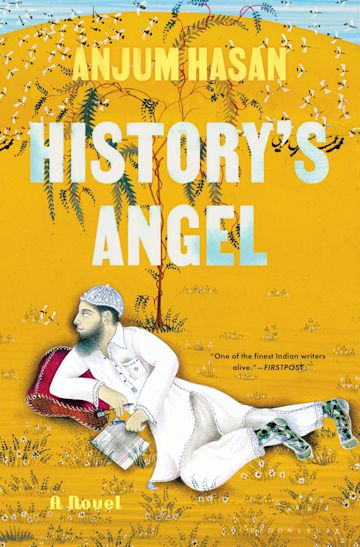
Alif, the protagonist of Anjum Hasan’s latest novel History’s Angel, is borne by historical forces into an increasingly catastrophic future for India’s Muslims, even as his face remains turned toward the “reputedly more enlightened” and accommodating past. By profession and temperament a scholar of history, Alif’s perspective provides both solace and a heightened sense of tragedy amid the maelstrom of rising religious fundamentalism and exploitative capitalism that beset contemporary Indian society. Alif himself becomes targeted by these forces when a seemingly innocuous incident—where he twists the ear of a student who abused him for being a Muslim—jeopardizes his career, even as his family and community are affected by violence. At the same time, Alif’s tender feeling for the past—and his enduring love of the poetry it produced—emphasize his human complexity and dignity in a world determined to deny these qualities.
A portrait of an individual as well as a nation in transition, History’s Angel traces the fading of the secular promise of the Indian nation—and the richness of its multifaith culture—under its current, Hindu nationalist regime, and the growing intolerance in society.
Anjum Hasan’s previous books similarly chart stories of marginalized outsiders in twenty-first India: her first two novels, Lunatic in My Head and Neti, Neti: Not This, Not This, trace the trajectories of migrants in multi-ethnic Shillong in India’s northeast, and a rapidly globalizing Bangalore, amid a time of growing communal tension. In History’s Angel, she explores this rising tension in New Delhi, the national capital—once the site of an idealistic, multicultural renaissance, and now the site of the erasure. Yet in chronicling this erasure, History’s Angel exemplifies and makes a case for the role of literature in preserving the marginal and diverse aspects of a society.
I spoke with Anjum Hasan over email about the growing narrowness of the present, and the ability of literature to preserve and restore some of that historical and cultural scope.
Pritika Pradhan: In History’s Angel, Alif consistently takes the long historical view of a given situation —envisioning, for instance, the multicultural history of Hindustan when faced with the Hindu nationalist idea of “Mother Bharat,” or the “New Learning” of early 19th-century Delhi, with its blend of English, Persian, and Arabic literatures, against the fundamentalist agenda of his school principal Mrs. Rawat. In what ways does his historical perspective enable Alif to deal with the present, while also making him more vulnerable to those wishing to suppress India’s diverse heritage?
Anjum Hasan: He likes to daydream about the pageant through the ages of India’s long past, a bit like Jawaharlal Nehru in Discovery of India, a book he admires. It gives him a way of insulating himself from the tawdriness of the desires that surround him. He also knows that the past is more complex and it effects more transformative then we imagine, that it cannot really be divided into conquerors and conquered, good guys and bad, as some of the current propagandists of the Indian past would like to think. This gives him a superiority that turns out to be redundant because he is a brooder, really, always getting caught on the wrong foot by “the forces of humourlessness,” in Martin Amis’s great phrase.
PP: The incident that marks the turning point for Alif—his twisting the ear of a student, Ankit, who abused him for being a Muslim—echoes India’s communal violence in relatively minor, farcical mode (Ankit’s calling the Mughal emperor Humayun’s tomb a Hanuman temple recalls the 1992 demolition of the Babri Masjid for allegedly occupying the site of a Ram temple). Could you tell us more about how communal violence has percolated in Indian society to the point where it is weaponized by a child—with devastating effects for Alif’s life and career?
AH: The child, Ankit, is definitely a bit of a scamp but Alif is also fond of him till he finds himself pulling him up—and later regretting it. Hanuman-Humayun could be a genuine mix up or it could be a ploy but in any case there is something untamable about this child. He comes from a poor family and shields himself from adults by channeling the rumors he hears into grand untruths.
PP: While imagining the past often stirs people to action, as the novel’s narrator says, Alif’s historical perspective does not stir him to action, but instead makes him an observer. In what ways are his acute perceptiveness and historical view connected to his outward inaction? What role do the non-action oriented, intellectual qualities of observation, imagination, and contemplation have in India’s narrowing and turbulent present?
AH: Alif would just like to be left alone to get his students fired up about the cross-currents that go into making history, especially India’s history. He can’t be roused into becoming a man of action, as his friend Miss Moloy’s hopes. Nor is he, unlike any well-meaning middle-class person, inspired to “make it”. And so, of course, he’s something of an anachronism.
Contemplation or, let’s say, an ambivalent soul, is quaint these days. Even in the arts, things feel like they’re becoming more outward-facing and certain of their message. So this sort of ineffectual, intellectual drifter has, perhaps, a romantic attraction for me. Even if it can mean, sometimes, not being up to doing much about the state of one’s world.
PP: Some of the novel’s most beautiful and affecting moments arise when Alif and his cousin Mir recall Urdu poetry, a legacy of India’s multifaith culture (such as Mohammad Iqbal’s “Hindi hain ham/vatan hai Hindustan hamara”). What is the relationship between poetry—and literature in general—and history as depicted in the novel? In what ways does literature complement history as a chronicle and a guiding force in society?
AH: That’s a great question. We need poetry to puncture illusions of grandeur and keep us from completely selling out, it’s a necessary safety valve. The little Urdu poetry I know seems suited to this ironical, humanist position. But what if literature is tied to an overt politics as in fact happened in Iqbal’s case, when he started to write about his vision of a modern, democratic and yet deeply spiritual polity based on God’s laws rather than manmade ones – and hoped to see such a thing come into being.
PP: While literature may offer subtle guidance in the form of contemplativeness and complicated questions, many characters are depicted as “seeking the certainty” of religious fundamentalism—such as Ahmad (Alif’s parents’ companion and help), or his friend Prerna’s increasingly devout Hindu family. What are the dangers of this search for certainty? In what ways do fundamentalisms mirror each other across religions, to the detriment of the country’s multi-faith heritage?
AJ: There is definitely a loss of imagination on both sides—a wish to cut out all the dynamism and doubt that faith implies. What sort of people does religion make us? It seems to Alif that a decent combination would be devoutness and humility, as in his grandfather’s case, or faith tempered with a “God-helps-those-who-help-themselves” briskness as in his mother’s. Neither would be thrilled about the more restrictive aspects of Islam. But there is also a way in which this live and let live outlook is easily corrupted. In uncertain times, it does not seem to take very much to make the hardline position seem like the ordinary one.
PP: The novel’s largely contemplative tone is punctuated by harrowing acts of communal violence. In both cases Alif reflects how individuals—being the wrong person at the wrong place—are rendered ineffective by larger historical forces of hatred and violence. What is the role of the individual in the face of historical forces? Are individuals condemned to be swept along, or do they have the capacity to resist, and affect change?
AH: One tries to explore the psychic landscape of violence and pull in both positions: sticking one’s neck out and keeping one’s head low. The inspiration is novels that are pictures of a society at large rather than expressions of just one stand. The great Russians, of course, were past masters of this—Brothers Karamazov reads like a very long conversation on justifying one’s philosophies and actions, for instance— but among contemporaries, writers like Orhan Pamuk and Yiyun Li fascinate me for their being able to show the individual as, even if not always made helpless by history, definitely conditioned by it.
PP: Despite his historical perceptiveness, Alif remains at a loss regarding how to connect with the women in his life—his ambitious wife Tahira, whom he identifies with the present world of commerce, and Prerna, whom he failed to “save” from an assault years ago, and whom he sees as “part of the history of womanhood.” Could you tell us more about the contrasting roles of these women in the novel? Do their complicated presences reflect the silencing or erasure of women’s voices in history, including the histories that Alif recalls?
We need poetry to puncture illusions of grandeur and keep us from completely selling out, it’s a necessary safety valve.
AH: The women are much more self-possessed and aware of what they want than Alif, who is often misreading them. But, yes, Prerna and Tahira are at odds, the first tied to her past, the second besotted with the future. I guess from Alif’s point of view these two represent two different kinds of contemporary disappointments. He sets up Prerna as a poetic character and Tahira as a worldly one but both make compromises that show them to be somewhat out of the grasp of his imagination.
PP: Ironically, Alif ends up having to join the world of commerce of his wife Tahira and his son Salim, in the wake of communal violence. Could you tell us more about this entwinement of commerce and religious fundamentalism in India? What does this mean in terms of the novel’s—and Alif’s—continuing engagement with history?
AH: It’s a commerce that feels both hollow and out of control—Ganesh gripes about how ridiculously fast skills get obsolete in the tech industry, while Tahira is unsure how to improve her job prospects. The cult of progress, as Walter Benjamin saw, can sever our link to the past. And so though we imagine we are rooted in that past and we constantly idealize it, our desires show we are all part of the same historical moment that is crazily and constantly projecting into the future.
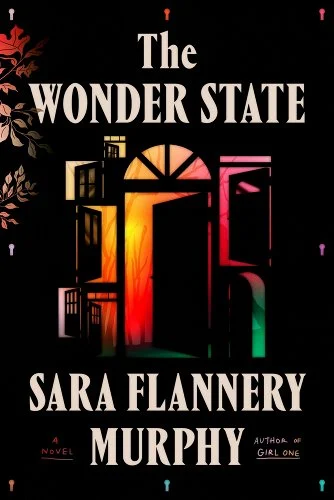
The Wonder State, Sara Flannery Murphy’s genre-bending novel, follows five friends as they reckon with a past betrayal. Brandi, now missing, has invoked (with a touch of magic) the oath they all made as teenagers. With her words ringing in their minds—”You promised”—the friends return to their small hometown in Arkansas.
While Flannery Murphy was influenced by the Nancy Drew series and The Chronicles ofNarnia, The Wonder State is darker than both. And yet the novel’s charm is strongest in its homage to the Ozarks, and to the nostalgia of being a teen at the turn of the millennium. With a plot that contains elements of fantasy, Murphy grapples with real and universal questions: Who gets to leave a dead-end town and who is forced to stay? What do you owe your high school friendships? For those without privilege or connections, is a career in the arts as inaccessible as a magical portal?
Murphy tells her story by transporting readers between two timelines. In one, a group of teens stumble into a friendship through a shared secret: They all know about Theodora Trader, a woman who designed magical houses in their town, one of which allegedly contains a portal into another realm. In the other contemporary timeline, one of the friends, Brandi, has disappeared in what appears to be a crime. The five friends, who escaped Eternal Springs through conventional means, have reluctantly returned, certain that Theodora’s houses are somehow responsible. As they try to find Brandi together, they grow distrustful of each other’s motivations. Murphy deftly moves between the two narratives, pulling the threads tighter and tighter as she propels readers toward an electrifying conclusion.
Over a series of emails, I corresponded with Murphy about portals into other worlds, viral tweets, the joys of writing teen characters, and Arkansas as a literary setting.
Sari Fordham: In 2021, you had a tweet go viral in which you wrote: “My husband shared his theory about portal narratives: if you go through a portal, it’s fantasy, if something else enters through the portal, it’s horror.” It’s such a clever observation and I thought about it a lot while I was reading; the portal in your novel leads out, but the story is a bit darker—or at least more complicated—than straight fantasy. Was your husband’s theory informed by living with someone who writes about portals? Do you agree with his theory?
Sara Flannery Murphy: I can’t claim much credit for that tweet! I was only the curator with a Twitter account. In my eyes, the traditional portal narrative is a deeply escapist one. It’s been fun to see readers describe The Wonder State as escapist, because that’s exactly what I wanted to explore: escape, as both a good and bad thing. There’s a fantasy that you’ll find this other realm, and, once there, all the traits that make you unlikeable or ignorable in your own world will be transformed. You’ll go from being an ordinary kid to being royalty, being a savior. It was an incredibly seductive idea to me when I was a child. What if changing my location also changed me? In Jay Carr, I have this protagonist who has a portal fantasy even before magic enters her life. She fantasizes about leaving her small hometown and finding success and a true identity in the “outside world.” And isn’t that as much a fantasy as finding a magical doorway in a wardrobe?
SF: For Jay, I felt like part of finding success in the outside world was not only leaving Arkansas, but also becoming an artist. I related deeply to her creative ambition and was struck by the scene in which she has the opportunity to talk with an artist. It leads to the practical question: “How do you make money?” In her reply, the artist, Ms. Garnet, shames Jay for commercializing art. Do you think purists create barriers for those who want to pursue the arts? Do you think those barriers are intentional?
SM: There’s this attitude in the US that it’s unreasonable to expect to make a living from the arts, and it’s a self-perpetuating myth: we don’t value the humanities, which means people with existing financial security are more likely to pursue an artistic life. Then we point to people struggling in a creative field without a safety net and accuse them of being self-indulgent, and basically bringing struggle upon themselves.
There’s also the reality that not every artistic pursuit needs to be a career. Monetizing your art so often comes along with external pressures, with compromising your desires for the demands of a market. Finding an identity beyond capitalism is deeply important.
In my book, Jay’s asking for career advice from an independently wealthy artist. For Jay, being able to earn an income is a pressing question, but for Ms. Garnet, it feels tacky and irrelevant. She’d prefer to hide behind art as a “noble calling.” Ms. Garnet deals in beautiful abstracts, but Jay’s stuck in the concrete.
Those two elements I mentioned—that art exists beyond capitalism, and that we devalue art to the point where it’s hard to make a living—can be combined and weaponized. For people who don’t want to contend seriously with the art world’s financial barriers, they hide behind the concept of art as being too “pure” to be commercialized. Which ends up leaving a lot of talented creators unable to pursue it because they need to pay the rent. It’s similar to what I see in fields like teaching: people pay lip service to teaching as a selfless calling, and then use that as an excuse to severely underpay teachers.
SF: I love how you transport the reader into the world of your characters. The Arkansas Ozarks have shaped them in such powerful ways—it’s impossible to imagine this narrativeunfolding anywhere else. Why did you choose Arkansas as your setting?
SM: The simplest answer is that Arkansas is my home state, and I’ve always wanted to set a book there—particularly in the Ozarks, where I lived as a teenager in a town called Eureka Springs. The forests are so beautiful and have these hidden bluffs, hot springs, winding rivers. A lot of the architecture is surprising, everything from Victorian homes that are now rambling hippie mansions to carefully converted school buses. There are McMansions and megachurches, and also these weird, gorgeous homes built by a few friends who care about the forest views more than indoor plumbing.
I grew up with this pervasive idea that I’d leave Arkansas and go somewhere else. Maybe because I absorbed messages—from books, movies, TV series—that your hometown is something you outgrow if you’re an interesting person (which I aspired to be). I distinctly remember conversations with friends in Arkansas who felt like their real life waited somewhere just outside of the state. It felt natural to slot this coming-of-age journey onto a state that’s already underrepresented in fiction.
SF: Did anything surprise you about writing a semi-autobiographical book, one that’s set in the town you grew up in and featuring teenage characters? Your previous novels have been more speculative and less connected to your past.
SM: Writing teenagers was a lot of fun because I felt less of a need to rein in their reactions or downplay their intensity. Teenagers can be more idealistic and changeable and intense than adult characters and still feel authentic on the page, and I loved that . . . every time I returned to the teenage sections versus the adult sections, I felt freer. Writing this book also gave me a chance to revisit my own teen years in the Ozarks in the Y2K era. I was more of an outsider as a teenager; I didn’t have a group like the six friends in The Wonder State. So maybe there’s a little wish fulfillment in this idea of being part of a ragtag group and breaking into houses and exploring the town so boldly, because I was much more on the fringes in reality.
Writing this book also gave me a chance to revisit my own teen years in the Ozarks in the Y2K era.
One moment of serendipity: my mom reminded me of a time in Eureka Springs when I was testing out my theater-kid chops, and I got to write and star in a sketch as part of a summer-long theater camp. The play was about a mysterious house . . . one that offered cryptic gifts to anyone who entered. And the narrator had a chance to go inside the house, and potentially turn her back on her town, but instead she decided to stay in her reality because there are so many tiny things she treasures about her day-to-day life.
It makes sense that the teenage me and the adult me would be obsessed with the same themes, and follow those themes in the same direction. But when my mom reminded me of that play, after having written the book, and I realized all the similarities between my teenage imagination and my grownup novel . . . it felt so powerful and surprising. Like The Wonder State was being approved by my past self.
SF: The Wonder State has echoes of both Nancy Drew and The Chronicles of Narnia, and both series are referenced in the novel. Did you read either when you were growing up? Did you intend your novel to be a grown-up version? Were you writing against the classics in any way?
SM: Oh my goodness, yes! It’s so funny to realize that loving the Narnia books is one of the biggest stereotypes of “Christian homeschoolers.” I was a Catholic homeschooler, and I didn’t do anything to dispel that myth. But as a kid, I didn’t even read the Narnia books as Christian fiction. I just loved the worlds and characters that Lewis created. Rereading the books as an adult, the moral allegories are tougher to ignore, but Narnia still feels like a place I once actually visited.
Nancy Drew was also a massive favorite. I was always scanning the library shelves for those little yellow hardcovers, hoping to find one I hadn’t read yet. The Haunted Showboat! The Witch Tree Symbol! My editor, Daphne, was the one to draw a comparison to Nancy Drew, and it’s a total delight. I feel so at home in stories about amateur detectives and people who are snooping around, breaking into houses, searching for clues. Nancy Drew is baked into my storytelling DNA.
Nancy Drew is baked into my storytelling DNA.
I’m not sure that I’m writing against these classics—not intentionally, since I find a lot of joy in familiar storytelling. The friends returning to a hometown they swore they’d never revisit is such a cliché, yet I’ll devour it every time. But I did approach the story from a slightly odd angle in that the story focuses more on the quest to find the portal, and not on the world beyond the portal—and I worry that readers won’t respond to that. Fortunately, so far, a lot of readers seem willing to go along with it!
SF: You’re touching on something that I particularly loved about this novel—that the plot is driven by the quest to find a portal. The search is so compelling because we encounter these magical houses along the way, each influencing the plot and characters in surprising ways. Which house did you find the most fun to write about and why?
SM: The Forever House was the most special to me. I purposefully let myself write a longer chapter during those scenes, so that there’s hopefully a subtle shift in the reader’s experience of time. I also liked exploring some of the character interactions that arose from that particular situation (no spoilers). This was actually the first house I ever imagined, and a lot of emotional weight happens inside those rooms—I can visualize that space so clearly. I mentioned that Narnia still lives in my memory as clearly as any actual place I’ve visited, and the same thing happens with my own writing. I feel like I could walk into the Forever House this moment, if I could only find it.
As someone living with a disability, and a scholar, I have always looked to literature for hope. I have always searched for works that depict the human experience of illness and the power of the written word to get us through life’s adversities.
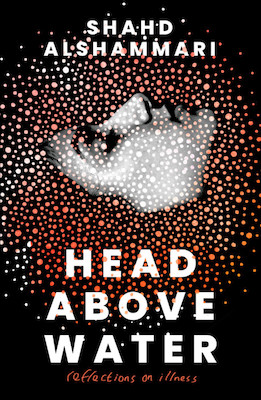
Literature anchored me as I sought to make sense of pain, loss, and life. When I wrote Head Above Water: Reflections on Illness (Feminist Press), I was reflecting on what keeps us afloat, what helps us survive, and how storytelling can be a tool that we use to keep going.
Here’s a list of the books that I carried on my journey, and would recommend to anyone thinking about the power of storytelling in our lives, whether we are affected by illness or not. Literature mirrors life, but even more so, it complements life. The following narratives epitomize the same belief: literature and writing are solace amidst the darkness of life. Whether confronted by illness or loneliness, the narrators in these books hold on only to the power of stories.
Azar Nafisi, the best-selling author of Reading Lolita in Tehran, writes about the necessity of literature in turbulent political climates by weaving together letters to her father, who taught her all about the power of literature in our lives. Nafisi structures the book in a very intimate and thought-provoking style, asking questions through reflections on powerful authors, including Margaret Atwood and Zora Neale Hurston. She composed the letters during the presidency of Donald Trump, asking necessary questions about literature’s capacity for resistance. In her book, she draws connections between Iran and the United States, her current home, making it well worth reading in the current climate.
I promise this one is worth it. This book changed my life—it is about Lorde’s diagnosis of cancer, but more than that, it is about redemptive love, transformational love and healing, and the connections that we make in life. It celebrates female friendship, circles of community, and the power of hope in the face of racism, sexism, and ableism. She wrote it when she realized that there were no stories representing black women’s experiences with illness, sexuality, and the body. In the book, Lorde addresses the body, doctor-patient relationships, and the persistence of hope in her life. Juxtaposing journal entries, reflections, and social commentary, this book is legendary in its chronicling of pain and survival. A classic that continues to be read and taught, it changed the way we think about illness and narrating pain through storytelling and agency.
Established and prolific writer Jeanette Winterson reflects on her childhood and traumas in this engaging memoir. Winterson’s only work of narrative nonfiction, Why Be Happy When You Could Be Normal? considers the loneliness of being rejected by family, society, and loved ones. Growing up in a small town in North England, Winterson chronicles her painful past and desire to reconcile with her biological mother, as well as her own self. She turns to fiction and poetry for consolation and a sense of belonging, searching for universal themes of survival. In many ways, the book is about other books, and the transformational power of stories.
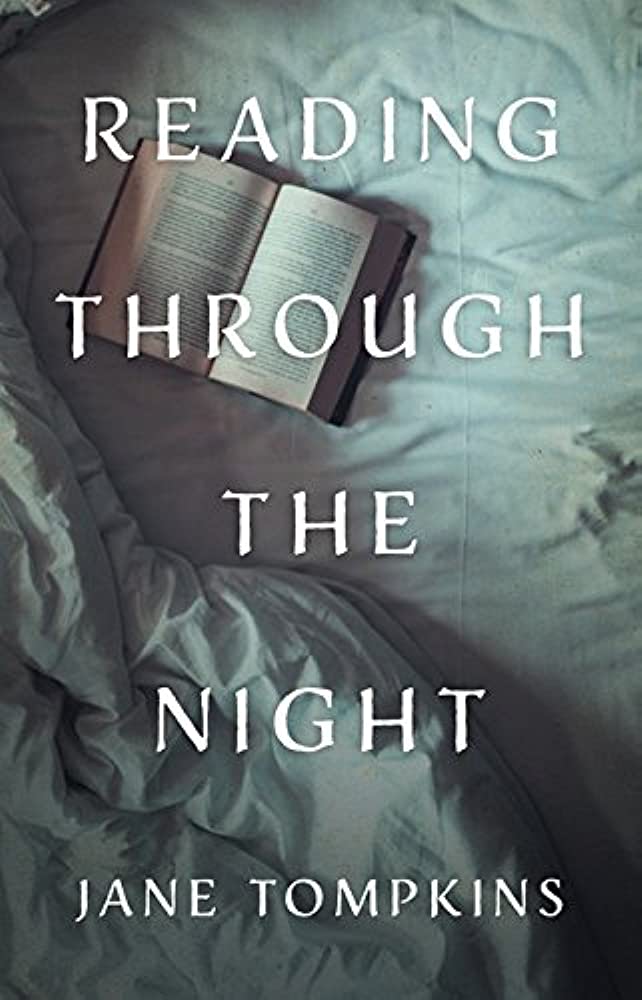
Jane Tompkins writes about her experience with chronic illness and reading in this captivating memoir. Tompkins, a literature professor, finds herself on the couch most of the time, unable to move, struggling with chronic fatigue—she can do nothing but read. She re-reads her favorite books and examines, along with the reader, the necessity of literary encounters, as well as the reactions she has while reading. Each narrative allows her to re-assess her life’s choices, her partnership, and her relationship with her mother. She finds literature to be a trigger for her memories, looking at authors like Henning Mankell, Ann Patchett, Elena Ferrante, and Anthony Trollope.
When Breath Becomes Air by American neurosurgeon Paul Kalanithi is an autobiographical work that considers the importance of finding hope and beauty in the darkest times. This one is beautiful in its exploration of the overlap between literature and medicine. As a trained surgeon, Paul has always had a love for literature (he did obtain a Bachelor’s in English literature), and he spends many chapters ruminating on how our lives are similar to grand literary narratives. The book was published posthumously and remains a best-seller. It draws on his experience living with lung cancer and his relationships to those around him. In this book, literature remains as a very necessary tool for survival (not just his, but his loved ones too).
For Sara Ahmed, a scholar of feminist theory and a queer woman of color, feminism is engrained within us, a life force that keeps us going. In her book, Ahmed moves away from the jargon of theory and argues that feminism is for everyday life. She looks at personal and painful examples of what it means to be a feminist today, how feminism can save us from loneliness and multiple losses, and how we can create toolboxes for survival in a patriarchal world. Along the way, she cites many examples of women authors, including trailblazing feminist Audre Lorde, who have helped her navigate the alienation she felt within society, her institution, and family.
This is a novel translated into English, originally written in Arabic by a Saudi author. The protagonist is diagnosed with cancer and is immediately shunned by his family, colleagues, and society at large. His only consolation is reading Franz Kafka’s works and he finds himself quickly developing an obsession with Kafka’s literary journey. As his illness progresses, he turns to Kafka’s diaries and summons strength from reading. Many other canonical texts are visited in this work as the protagonist tries to relate to authors and characters away from his painful reality. Mohammed’s book was shortlisted in 2018 for the International Prize for Arabic Fiction, known as the “Arabic Booker.”
You don’t have to be familiar with Shakespeare’s work to enjoy this one. Arthur W. Frank, author of The Wounded Storyteller, returns with a meditation on the necessity of “vulnerable reading,” a term that he coins to explore how literature requires us to be readers open to change, and acknowledges our pain and vulnerabilities. Frank chronicles his experience with cancer and the loneliness that he felt while trying to navigate the medical community’s biases, as well as society’s stigmatization of illness. In Shakespeare’s words, he finds value in expression, bitterness, and loss.
Midway through the semester, Rochelle stepped in to pinch-hit at the university for a teacher she’d never met, though she hadn’t taught before. CFS, the famous visiting writer claimed: chronic fatigue syndrome. How excruciating it had been, he’d reported, sitting on the edge of his bed, frustrated to tears at the exhausting prospect of pulling on his socks. (“Maybe he should have forgotten the socks,” Jeanette, who ran Creative Writing, said witheringly to Rochelle.) It was assumed by much of the faculty—at least, those who knew he’d been there—that since his new love had been his only topic of conversation, he’d flown back to Ireland to reunite with his girlfriend.
Rochelle Warner-Banks (her husband was the well-known lawyer Reggie Banks, who’d argued several times before the Supreme Court) had gotten Jeanette’s desperate call only the day before the abandoned class would next meet (“Please, please; just come once, see if you like it”). What a surprise! She’d hung up and immediately texted six women in her book group (Jeanette had belonged to it, until she got too busy) to say that she was sorry, but she wouldn’t be able to make her presentation on The Waves the following afternoon because she’d been called into service at UVA. She called Sage Versa, and asked—since she knew Sage had loved the book—whether she could step in. The world suddenly seemed like a merry-go-round of substitutions. Fortunately, Sage was very smart and didn’t fear public speaking. Forty-five years before, when Reggie was attending law school in Ann Arbor, Rochelle had worked at an ad agency and made monthly presentations to one of the firm’s biggest clients, because her boss considered her so “amazing”—and the client had been a New Yorker, by definition hard to please.
You can do it, you can alter the syllabus, you can find a way, she silently reassured herself, though the pep talk made her feel like she was talking to a horse.
For the first meeting, she’d worn a long-sleeved tunic over the regimental black winter tights. Everyone in town wore Arche shoes, and so did she. She’d entered the classroom accompanied by Jeanette, who’d introduced her and explained the situation. Apparently, most of the students never picked up email messages, and Jeanette wasn’t reassured by a smiley face in response to a text message. Jeanette’s husband was a stockbroker. She and Jeanette had played mixed doubles at the Boar’s Head a few times. They crossed paths at ACAC. Jeanette had brought a bunch of flowers to welcome Rochelle, which she plunked down on the seminar table in a vase improvised from a wide-mouthed iced tea bottle.
Her predecessor turned out to have been more than a bit odd. He’d asked, “If this character could be a twee, what kind of a twee would he be?” which, he’d informed them, was not an entirely joking question: it had been inspired by a lisping American interviewer who’d routinely asked such things of famous people on television. (Thank god television had improved; his imitating the lisp, though, had certainly not been PC.)
Surveying the students’ faces as they attempted to suspend judgment, she realized the other teacher’s eccentricities might work in her favor. Indeed, she did not care if a story offered clues about a character’s astrological sign.
She’d been forthcoming: She’d explained that while she’d had jobs that seemed to involve aspects of teaching, she wasn’t going to pretend to be an experienced teacher. “I majored in English myself. I belong to an excellent book group in town, and I do freelance editing. I used to work in advertising,” she told them. She added that in recent years, she’d more than once had to introduce her own husband at public events (“a well-known lawyer”)—and if they didn’t think that was intimidating . . . She’d let the sentence drift into its silent, implied meaning.
“Why couldn’t he introduce himself?” a round-faced student asked. Several bracelets on his wrist clanked when he raised his hand before speaking, though the gesture seemed more like a reflex—what a person would do if a door was about to slam in their face.
“I think because having someone else introduce you is a formality.”
“So, did you say what kind of a twee your husband would be?” (This was how she’d found out about her predecessor’s tic.) Her expression must have indicated that she didn’t get the joke. Most of the young women glanced tiredly at the questioner, who nevertheless smiled at his own witticism.
“Fritz always goes off-point,” a young woman sitting near her said.
She’d gotten through the first two meetings pretty well, and Fritz had gone silent. One of the girls who frowned most deeply turned out to ask thought-provoking questions. Reading the Cavalier Daily, she discovered that another of her students was organizing a protest in DC.
She began to fall into her new routine of teaching. She didn’t like the long walk to the building (barricades everywhere, even if you were on foot; if you were driving, forget it), but the students’ generally alert manner (eight were female, four were male) was encouraging. She told them she was happy to be there, because it had gotten her out of having to explain The Waves, a notably complex book by Virginia Woolf. After class, Lauren Li asked where she stood regarding Michael Cunningham’s The Hours, vs. Mrs. Dalloway. (Later, though she had assigned nothing by Raymond Carver, Lauren had asked what she thought about Gordon Lish’s “extreme” editing of Carver’s stories.)
Soon the semester was half over. (Her initial condition for continuing had been that she could add some books she liked and forget about The Executioner’s Song; no one could care what tree the murderer Gary Gilmore would be, and the book was interminable.) This day, when class ended, she’d started down the hall, when Fritz came up behind her. He wanted to know if he could ask her a personal question.
“If I don’t have to answer, or if I can lie,” she replied, straight-faced, pushing the elevator button. It seemed better than impulsively saying yes or no. Her husband, Mr. Always Give a Question Three Beats Before Answering, would be proud of her.
“The thing is, I teach karate in Staunton tonight, and I’ve got my brother’s car, but the tire’s sort of bald, and I got a warning. Like a ticket thing when the cop walked around kicking the tires? But, so, I’ve got to get there. Is there any way you could possibly loan me forty dollars?”
“Yes,” she said, simply. (He considered this a personal question?)
“Great! I can have the money back to you by the end of the month. I just got a job at Crazed, and the tips are good. At least, when certain bands don’t play.”
“What’s the relationship between tips and bands? Customers leave more if the band’s good?”
“No. I think, like, okay, for example, Nate, who used to be with Girlyman? So, everybody watching is whatever, transfixed, and everything else goes out of their mind: hooking up later, tips. They tend not to leave a decent tip because it’s not like Nate himself’s going to get it.”
“Ah,” she said—though what he’d said only further confused her. Her husband would have warned her not to enter the labyrinth of speculation. To wait and see what was revealed. “I’m afraid I’ll have to go to the cash machine, though. Can you walk over to Bank of America with me? And maybe you can give me a ride to my parking lot afterwards? I’m in K-2.”
“Oh, sure thing. It’s the least I can do. This is really nice of you. Thank you,” he said. “My roommate offered me fifteen bucks, but I already owe him twenty, and he’s down to eating oatmeal for dinner, so I just couldn’t.”
“That was kind,” she said, ignoring the oatmeal information.
“I live over in Belmont,” he said. “Near the Local. I have four roommates, but never see half of them. Nobody goes to the university. One guy, over the summer he moved in his girlfriend and she had fleas. We had to get the place exterminated. K-2’s the name of a notoriously scary mountain in Nepal. That’s where you said you parked, right?”
“What? Oh, the parking lot. Yes. Are you a climber?”
“It’s cool to think about, but I’m more into other stuff. I just want to say, we really lucked out. I mean, I could do without Alice Munro, but you see a lot there with how those women characters think one thing and do another, I get that.”
“You’re not persuaded, though.”
“Pizza and snails.”
“Excuse me?”
The office door closed. She pulled the handle to be sure it had locked.
“People prefer pizza, most do, but other people prefer escargot, which are snails.”
Again she noticed the bracelet collection when he crawled his fingers through the air.
“I’ve eaten snails,” she said. “Once, in Paris. Those were the best, but maybe it was the restaurant, and it was my first time there.”
He didn’t offer to help her on with her coat when she paused to put it on. She managed fine. She reached into her pocket for her cashmere hat with the two tiny moth holes and pulled it on.
“You were in France to introduce your husband, or something?”
“No. Actually, we were on our honeymoon.”
“Oh. Wow.”
“It’s my husband’s favorite place. He wanted to show it to me.”
He didn’t walk ahead of her to open the door as they exited the building.
“My mom’s had three husbands, or sort of husbands. The first one died. The second one was the brother of the guy she’d been living with. When she got pregnant with me, my father joined the army, but it turned out she got a thing going with his brother, and when my dad didn’t come back, Pete married my mom. Hey, that’s Lauren! You know her mother’s a famous pianist?”
“I didn’t know that.”
Lauren, walking toward them, faltered. She adjusted her backpack, shrugging it higher onto one shoulder. There was no way she could pass by without speaking, though, in spite of her contortions. In all the wide-open space, she looked cornered. She said, “Hi, Ms. Banks, I mean”—she blushed—“Ms. Warner-Banks. Hi, Straight Punch. That was an awesome class, Ms. Warner-Banks. I never thought about the beams of the house being like the scaffolding of the story.”
“I love it when something like that occurs to me after I’ve read a story many times. Munro does that: she finds something that seems ordinary, that you can point to, that actually carries clues about her story.”
“Like a mystery.”
“Exactly. They are mysteries, in a way, aren’t they?”
“Oh! I am so late, excuse me, goodbye Ms. Warner-Banks, bye, Straight Punch.”
“Later,” Fritz said.
Lauren had dropped a mitten. He picked it up. She thanked him profusely when he caught up with her, before she began running.
“ ‘Straight Punch’?” she asked, when he returned.
It was his nickname, he told her. It was a karate move.
“Her mother’s fighting to get custody of Lauren’s sister, this baby she had when Lauren was in high school? It’s in, what’s that place, Dabai?”
“Dubai?”
“Right. The husband works there. He kidnapped the baby.”
This seemed too complicated to pursue—more like a case her husband would tell her about. She prompted him: “You were telling me about your mother?” The path sloped steeply; she avoided an ice patch.
“Yeah. She married one guy when they were eighteen who died when he was twenty-one in a race-car accident. He was infertile due to German measles. When he died, though, she found out he’d only been seventeen when they got married. I guess they didn’t go to Paris on their honeymoon. She saw a snail then or now, she’d stomp it! The husband she’s got now was my dad’s, my biological dad’s, brother. Turns out I was one of two kids she had with my dad, but she’d sent the other one to Baltimore to her mother’s. Then she married Pete, and my brother came back. They were also business partners.”
“I’m sorry. Who were the business partners?”
They’d entered the crosswalk. Every car had immediately stopped.
“My father and his brother. Pete’s at Wintergreen now, running the lifts. He’s not afraid of heights. That’s why he climbed up the Stonewall sign. Before Wintergreen, he was assistant manager at a sporting goods place by the railroad tracks in Staunton, then he fell and had to get a hip replacement that got infected or something, and they let him go. He can still get stuff thirty percent off, if you want any North Face.”
She said that she’d never been to Staunton, but that she appreciated his offer. Reggie had a fleece North Face jacket, so she knew what they cost. She waited three beats, then said, “You mentioned Stonewall? Did you mean the bar in New York?”
“Bar? No. Oh, I get it. You’ve never been to Staunton. There’s a hotel called the Stonewall Jackson. Everybody’s saying it’s going to have to change its name because he was in favor of slaves, so the sign’s got to go. Somebody called Pete to inspect it. They sent him up in a cherry picker, over to a ladder that went to another ladder. Sucker’s really up there. Nobody knows what they’ll call the hotel.”
She nodded. Even in Charlottesville, there seemed endless complexities related to long-unfinished buildings, air space, height restrictions. Her husband’s pet peeve was that when a park was renamed, it then had a second renaming: “All right, it’s not Lee Park, that’s entirely understandable, but what was wrong with Emancipation Park? Now it’s Market Street Park. You know, one of my colleagues said that when his wife put their house on the garden tour, she was told that there were new nicknames— nicknames!—for the roses. Not to use their old-fashioned names.”
“Pete’s got two sons from a previous relationship living with them now, so I don’t much stop by. They’re always fighting. They know I do karate, so they leave me alone.”
Finally, the person withdrawing money from the cash machine stepped away, still staring hard at the receipt. She unsnapped her wallet, reaching into the pocket where she kept her credit cards. She slid out the red BoA card.
He stood far back from the cash machine as she withdrew two hundred dollars. A receipt curled out; she glanced at it and pushed it into her pocket, thinking: five roommates; two jobs, in addition to his class work; his father vanished, the man who would have been his uncle now his stepfather. A brother. Two stepbrothers. Could he always remember this without effort, like someone who’d long ago memorized “The Twelve Days of Christmas”? She turned and walked back to where he was standing. She held out two twenty-dollar bills, saying, “Here you go. Good luck with the tire.”
“My car’s right there,” he said, pointing toward an area where three cars could nose in next to a bicycle repair shop. “Let me give you a ride to your car.”
“Thanks. Do you know where K-2 is?”
“Yup,” he said.
The car was so old, he opened the door by turning a key in the lock. Once seated, he quickly lifted the lock and pushed open the passenger door. “Your chariot awaits,” he said. “Did I already tell you this is a loaner? From my brother? Like I said, my mother gave him to her mother in Baltimore before she had me. Apparently, when Pete married her, he thought that kid was out of the picture. Bro didn’t come to Staunton until I was walking. A year or so ago, he was an extra in a Netflix movie shot in Richmond. Now he goes on a lot of dates.”
“Amazing,” she said. Such an avalanche of information. Reggie, of course, would only have nodded slightly. He disliked stand-up comics because he never registered the conclusion of their joke as the punch line. When she pointed that out to him, he’d done a double take before admitting it was true, and cracking up.
“There, the silver car,” she said, pointing.
He said, “I heard there’s supposed to be more snow coming day after tomorrow. Nice car you got. Okay, thanks again. You’re totally saving me. I’m going to give Alice Munro another try.”
“Drive safely,” she said, getting out.
As he drove away, she beeped open the Lexus, got in, clicked on the seat warmer, and retied her scarf. No need to check her phone; she’d be home in fifteen minutes. Now that he wasn’t talking—now that there was lovely silence in the car (she decided not to turn on NPR)—she wondered if, in his agitated way, he’d been telling her what he took for granted, or if he’d meant to test her reaction. It was as if he’d wanted there to be some, what . . . some dissonance between them. Some acknowledgment that they were nothing alike. Every reality of his life clashed with hers: She was an only child and had had an almost idyllic childhood, except for kidney surgery. She had a stable marriage; no children. (Reggie’s son from his first marriage, Edmund, was an architect in Sydney, Australia. They spoke every couple of weeks.) What would Alice Munro write, if she wrote the story of Rochelle and Fritz? Too easy, to have the mismatched pair fall in love. Munro would never do the obvious. But maybe things could flip, and she’d be (as she was) financially secure, yet needy, and he, with no money, would turn out to be stable. Centered. That would be the word. But Fritz certainly wasn’t that. His gushing talk made him seem immature—friendly, but with an edge that scraped like a dull knife.
Every reality of his life clashed with hers.
She’d pulled out of the parking lot and began driving down Main Street—fortunately, no rush hour traffic yet—past the old Sears, whose building was now university-owned, used for shipping and receiving. Just beyond that was her former hairstylist, though the salon had moved off 29 North. The tire place was just past that building, and there stood Fritz, Straight Punch, in the lot, talking to a man: Saved by a mere forty dollars, she thought—ah, youth. She pulled in without thinking, as if they’d always intended to meet up. “Oh, hi,” he said. “Hey, this is my”—he paused—“friend, who really saved my ass,” he said to the man. The man wore a hoodie and an orange cap, pulled low. His glasses frames were rectangular, so smudged she didn’t know how he could see.
“This boy needs two tires, with them back ones rotated forward,” the man said matter-of-factly, without greeting her.
“He does?”
“You don’t want your son driving on tires with no treads,” he said. “We sell the best used tires in town. Them front ones gotta be replaced and rotated. That’s still just going to buy you another five hundred miles.”
“You said it’ll drive with one new tire,” Fritz said, sounding frustrated, embarrassed. Newspaper pages blew across the lot. A wind was whipping up.
She did not correct the man and say he wasn’t her son, though it seemed to her that he’d made quite an odd assumption. She said, “How much would that cost?”
“Forty plus forty’s eighty. Plus tax. No charge for tire rotation. If I said the seventy-two-dollar brand-new Goodyears were superior, you’d think it was a hustle, so best keep it simple.”
“Fine,” she said. “Two forty-dollar tires.”
“Oh, jeez, you can’t,” Fritz said. “No way.”
“Mama don’t want you skiddin’ off Afton Mountain.”
“That’s right,” she said.
The man said, “Why are we standing here? Step inside.”
Walking beside Fritz, she said, “Let me have the money back, and I’ll put it on my card. It’ll be easier that way.”
“I am so sorry,” he said, reaching into his pant pocket and pulling out the folded money, along with ChapStick that fell to the ground, and two pennies that rolled some distance apart, which he quickly plucked off the asphalt.
Would Reggie have picked them up? Only if he’d felt like he was littering, she thought. Would she have? No. Simply, no. “I’ll be glad to have the cash if the prediction about snow turns out to be right,” she said.
Inside, there was a space heater. Near it lay an old dog, sleeping atop a pile of newspapers. The dog never opened its eyes. She felt in her purse, found her wallet, removed her credit card, and said, “I’m running late. Would you mind processing this now?”
“Glad to. The faster I get paid, the better.” A landline—a red desk phone—was ringing. He ignored it. He ran the card and handed it back, the bill already curled into a tube. When he lifted his thumb, the piece of paper looked like a lavish shaving of white chocolate to decorate a cake. She took out her own pen to sign her name. The man gestured to a coffee can with a hand-lettered sign above it, stretched between two chopsticks: tips thanks. The can’s rim was covered with duct tape. She reached into her wallet again and took out two one-dollar bills. She folded them and dropped them into the jar.
“Thank you kindly, now to work,” he said.
“I really appreciate this,” Fritz said. “How did you know where I was?”
“I didn’t. I drive home this way. I live at the far end.” She gestured, and as she did, she realized that she could have been standing in a different town, the five or six blocks seemed so far away, where Main Street ended and you had to decide which way to go.
“You mean down by the Omni Hotel”—he pronounced it Om-i-ni—“where everybody’s suddenly got an objection to that Indian statue?” the man asked, snorting, as he rolled a tire into the garage.
“Nearby,” she replied.
“I guess General Robert E. Lee up on his horse Trigger”—was he kidding?—“ain’t enough to object to, you also got to get rid of two great American explorers because there’s an Indian girl’s bent over near them.”
“Sacagawea,” she said.
“Sack a whatever, sack a potatoes, sack a Scrooge McDuck’s gold coins, maybe. Personally? I’m hoping they object to all them one-way streets and make ’em run the way they used to. Let ’em fix that too, during their break from swinging tire irons and topplin’ statues.”
She bit her lip, raised a hand to signal goodbye to Fritz (Straight Punch; what move, exactly, was that?), and hurried outside. Why hadn’t she initially suggested he go to the tire store on Preston Avenue that Reggie always used? No matter. Now she really did have to hurry. Dinner would take a while to prepare, and Dr. Winston— David Winston and his wife, Dr. Bronwyn Winston—would be coming, to check in on how Reggie was doing after his knee replacement. No doubt, David would take in the beautiful view from their window (the part not obstructed by the tall building under construction, whose panes of glass turned lavender at sunset), which offered (not for long) one of the higher vantage points from which to see the rooftops of the houses and buildings that now seemed so small, so antiquated. As well as the wine, there’d be Reggie’s insistence on tap water (“Of course, others should enjoy Perrier, as they please!”). And she’d wear something a bit more dressy—did anyone call putting on a dress being “dressy” anymore?
“Best view in town,” David Winston always said, sipping his old-fashioned (minus the cherry), silently toasting the sky, the trees, the mountain, followed by his wife’s inevitable “Let’s not allow the green-eyed monster to take hold, David, darlin’!” Bronwyn, Reggie’s primary care doctor, was from Mobile, Alabama. Her husband had been born in New England. Years earlier, they’d relocated to Charlottesville from Brookline, Massachusetts.
Hunched against the breeze (how had the pansies in the big pots escaped getting frostbitten all winter?) she punched in three-three-three. Mary Ralston Cooper was waiting for the elevator. She had no coat, so she must have come down to check for mail. Mary Ralston lived on the fourth floor; Rochelle and Reggie lived in the penthouse. Again she took out a card, the one to slip into the slot to access their unit. Mary Ralston asked immediately how Reggie was doing.
“A little more pain than he’d admit, but he was up for company tonight, so I guess that’s an improvement,” she said. She liked Mary Ralston. Her indolent middle-aged son, who spent his days listening to conversational Norwegian with Bose headphones clamped to his ears, she could do without. Mary Ralston’s husband, twelve years older than she, had died the year before. He was always the elephant in the room or, in this case, the missing presence in the elevator.
“You have a wonderful night. Tell Reggie he can always call downstairs, you know. If he might need anything and you’re not here, I mean.”
“Very kind . . .” she was saying, as the elevator door closed.
Two dollars had been too little to leave in the tip jar, but she’d had to choose between that or a ten-dollar bill.
There were east and west penthouses. Theirs faced west, with a view of the mountains out the long row of sliding glass doors across the back, another bank of doors facing Main Street, and what had been the Greyhound terminal. During the past year, two attractive middle-aged women had bought the east penthouse, one a retired dental hygienist who was writing a mystery about a missing dentist (she’d learned this from Bronwyn), the other a mystery woman who left early in the morning, before 5 a.m. Bronwyn knew only that she was doing research at NIH she wouldn’t talk about. She and Reggie had twice invited their now not-so-new neighbors to dinner (the women had bought the other penthouse as a cash sale, in a bidding war), but they’d declined with regret, giving no specific reason, which Reggie maintained was perfectly fine. She and he disagreed about whether they were being brushed off.
“I’m back, honey,” she called. “I’m running a bit late. How are you?”
“Well, the damnedest thing,” he called back, elbowing himself up to a higher position in bed, still wincing as she came in, unbuttoning her coat. She draped it on the bedpost. He looked sheepish, registering her surprise at not finding him in the living room. He hurried to say that he’d taken a quick nap (she could see that; his hair stood straight up on one side). “I got a call this afternoon from Bronwyn. She said they’d had a terrible fight, and not only could they not come tonight but, she said, ‘Thanksgiving’s canceled.’ I said, ‘Bronwyn, we just celebrated that. Thanksgiving?’ and she said, ‘Reggie, you can be such a pedant. I meant Easter.’ ”
“Oh dear. I’m sure that was a difficult call for her to make.”
An orchid on a table caught her eye. Could the physical therapist have brought an orchid? she asked him.
“Yes, she did. Becky’s an angel. Infinite patience, and kindhearted. But get this: it seems David’s been keeping company with a woman he met at the Miller Center, all of it right out in the open. Bronwyn went into Feast, and there they stood, holding hands, surveying the cheese counter.”
“Really? What did you say?”
“I don’t remember. Can I help you put the groceries away?”
“I shopped yesterday. To be honest,” she said, stepping out of her shoes, “I’m relieved not to have to cook.” She slid into her sheepskin-lined black booties. She walked over to the plant. A tiny transparent butterfly clipped the stem to a green stake. The sinking light illuminated the flowers just so. “Lovely,” she murmured. “We can have the Thai place deliver. But I think we should still open that new French wine.”
“Sit down,” he said, patting the bed. “I’m not finished. I’ve inhibited your impulse to question. Wait till you hear the rest.”
“Oh no. What?” she said, sitting beside him. It was warm in the room. In a way, so much heat felt consoling. This seemed to be a day on which everyone could talk endlessly. The encounter with Mary Ralston, at least, had been mercifully brief.
“She said—and keep in mind that this came from a woman who didn’t know what month it was—she said David resented being asked to dinner here. That he’d said we were insincere—that was his word. Insincere about what? And apparently—this really surprised me—she found out he’d been negotiating with the women across the way to buy their condo, and they were entertaining the notion. One of them does commute all the way to Bethesda. But David and his girlfriend came to look at the place a second time last Saturday, and while they were there, he realized that he didn’t want to live near us. Us!”
“It sounds like he’s had a breakdown.”
“Yes. You’re right! But I could hardly concentrate when Becky was here, even though I know it can’t really have anything to do with us.”
The baseboard heating came on with a tiny pop they’d never understood. She thought of the tire store’s space heater, and the dog sleeping on the pile of newspapers.
“When I’m not at the office or in the courtroom, apparently I’m not at all prepared for daily life,” he said, clasping her hand.
She lifted their hands and lightly kissed his fingers. “You always feel such things can’t happen to you, right? But who knows? He and Bronwyn have been married, what, twenty-five years?”
“He’s clearly in no shape to be working at the hospital. I wonder what will happen—whether Bronwyn feels she needs to deal with it, or whether she’s gone off the deep end herself.”
“Should we call her?”
He looked skeptical. “That’s like asking if we should take in a cat in the rain.”
She did a double take. “Reggie!” she said. “The Hemingway story?”
He looked confused.
“ ‘Cat in the Rain.’ Were you thinking of Hemingway’s story?”
“I suppose I might have claimed credit for the allusion. I blew it.”
“It’s a mistake to pretend you know any story when you don’t. You always get caught,” she said, standing. She picked up her coat and draped it over her arm.
“Is his story as good as one by Alice Munro?” he asked. He was trying to gently, gently slide his leg off the bed. His hair made him look like he’d been electrocuted. His shirt was wrinkled. That morning, he’d let her talk him into wearing his gym pants, since they were baggier and easier to get on and off.
Was it as good? That was such an annoying question. Predictable, too, especially from people—such as her husband—who didn’t read fiction. She’d read him several Alice Munro stories during his recuperation.
She ignored the question and said, “It’s about a young couple in Italy, at the end of the war. It’s raining, and they’re in a hotel. But everything’s left unsaid. It’s all about displacement. And inference. The hotel looks out on a war monument. And the wife, who I don’t think has a name, expresses her sadness and frustration about being there by saying what she wants. Things like candlesticks. She’s meant to sound shallow, but also sort of desperate. There’s a hotelkeeper, who finds out what she wants—the candlesticks I mentioned, and a kitty. Eventually there comes a knock on the door. The proprietor has sent one of his employees with a cat slung under her arm. She’s there to give her what she wants, but of course it’s all wrong. It’s not a kitty. It’s a big, wet, ugly cat.”
“Those students are lucky to have you. Open some wine, why don’t you”—he’d managed to stand; it was best not to interfere, to let him do it on his own—“and I’ll toast your wonderful ability for description. If you can find that story, I’ll read it tomorrow.” He stood still for a moment to get his balance. She pretended she didn’t notice his frown and preceded him out of the room, thinking that soon she’d order her favorite rice noodles with extra mushrooms; he’d get at least three things. Reggie’s philosophy about food, slim as he was, was that more was always better (because of the medicine, though, he should really have only one glass of wine).
The sky was darkening. A streak of pink the same color as the orchid (did Becky have a crush on Reggie?) had slid across the sky. She listened to make sure Reggie was okay in the bathroom. In this case, silence seemed like a good thing. Her mind wandered back to the ugly tire store. There’d been something ominous about the way the man had mentioned, so casually, cars going over Afton Mountain—though, of course, that was a grim reality. On the other hand, she read too much, so that sometimes she found in banal daily life a foreshadowing of terrible things to come. Of course, there were many ways to think of everything—the sunset, for example—all involving projection. The sky might be sliced by pink. Tongued by pink. Flatlined with pink, as if the heavens were a vast ICU.
She uncorked the wine and poured two glasses, took down plates, pulled out the drawer to remove linen napkins. When next she looked, it had started to snow. It hadn’t been predicted for another two days. Wasn’t that what Fritz had told her? And hadn’t he said his mother had had three husbands? Well, technically two. Though it hardly seemed the woman had gotten to know the first by the time he died, and it was probably her good luck that when the man in the military disappeared, his brother stepped forward.
At a certain age, replacing a man—friend, lover, or husband— became less and less imaginable. That was why, if your husband died, as they tended to do, predeceasing their wives, women expected to be alone, so that anyone, simply any man who disabused them of that notion, was not only acceptable but a gift from the gods, a miracle. That was the way Sage, in the book group, talked, bringing her husband into discussions of characters not even remotely related to his existence. Sage never stayed for coffee, but raced home to this Apollo, unemployed, in debt, a daytime drinker, one of those men who counted on everything being forgiven when he bought her a heart-shaped box of candy on Valentine’s Day. Make that the day after, when it was half-price.
At a certain age, replacing a man—friend, lover, or husband— became less and less imaginable.
Reggie had changed into a fresh shirt underneath the cable-knit cardigan with leather buttons that his son had sent for Christmas. He’d combed his hair. His cheeks were razor-burned.
“You know, maybe you—”
He picked up the glass of white burgundy and raised it to peer through, so that to him, the lightly falling snow must be golden-tinged. She’d not yet taken a sip, she realized, and his lips had just touched the rim of his glass, so she said nothing about being cautious when mixing alcohol with pain medicine.
He said, “What were you about to say?”
“I thought better of it,” she said. “I guess we can’t get any reassurance about how you’re healing, can we? Not tonight, I mean.”
“You’re exactly right that David must be in emotional distress. Surely his colleagues know. Someone must be doing something. Though I was thinking as I was shaving that we should call her. She was so belligerent, so really irritated with me. I think she could use a friend.”
That was it. She needed a friend. Not Bronwyn; she herself needed a friend, because except for the occasional foray into the world, she did next to nothing—at least, compared to what she used to do when they still had their house. The Boar’s Head was so stuffy, her ACAC workout repetitive, and this place—this spacious condo—wasn’t Valhalla. You existed in limbo, regardless of all it overlooked: in one direction, West Main Street; in another, Carter Mountain. It was neither country nor city. (Why was she feeling sorry for herself? She’d never, ever admit that, just as no Alice Munro character would confess such a thing, though those women’s sorrow was like gum they’d stepped in, a hard little gray ball, the accident that had been waiting to happen, cringeworthy in spite of how ordinary it was—really, because it was so ordinary: a nub of reality that must nevertheless be dealt with.) It was the Southern way to de-emphasize everything: your penthouse was your “apartment,” your SUV your “car.” Your Arche boots were “these old things.” She could just imagine what the man at the tire store thought of her, driving in wearing her cashmere hat and her quilted down coat, a Charlottesville White Rabbit who was late, late, and had to leave.
“Why don’t you make the call?” she asked. She supposed it went without saying that she lacked the courage.
He pulled out his phone without a word, swiped up, tapped the phone icon, began typing, stopped when he found Bronwyn’s number, hit Home. She was near enough to him that she could tell he’d forgone splashing on the lemon verbena aftershave he liked so well. It was no longer available after the apothecary on Water Street closed.
If she could speak for Reggie? Among the things he wanted had been this iPhone 5000 or whatever number it was (it took great photographs); a glass of wine from the Rhône, by way of Market Street Wine. And she would like: a cashmere scarf to match her hat; Michelin radials (she’d immediately regift them); a first edition of In Our Time.
“Bronwyn, it’s Reggie and Rochelle. We’re concerned. We’re just sitting down to a glass of wine, and we wondered—weather aside—if you might want to stop by.”
“What part do you not understand?” Bronwyn screamed. “You’re so sensitive, you’re both so sensitive, but don’t try to tell me you never knew what was going on. They were going to be your neighbors! And—”
His finger—either accidentally or intentionally—had activated the speakerphone.
“Bronwyn,” she broke in, “David’s had a breakdown. He’s not himself.”
“Himself!” Bronwyn gasped. “You know who he is? He’s a man so hateful, he told me years ago to watch out for you, that you always sucked up—that you did, Reggie; he said it about you. Of course you wanted access to the great endocrinologist, and he might need your services someday too. Now I wonder, how paranoid was he? Who calls somebody back so soon after they’ve been hung up on? A glass of wine? Let him have that hussy, and all his important friends too!” She hung up.
“Good heavens! Well, she’s really in a state. Who’s going to intervene there? Though right now she’s exhausted me enough for one day.”
“It’s so awful, it’s funny,” she said. “What if she’s calling all over town? Remember Martha Mitchell, during Nixon’s presidency— John Mitchell, the attorney general, incapable of muzzling his own wife?”
“Yes,” he said. “Hard to believe there was a time when those antics seemed utterly shocking.”
“My mother thought Nixon was the devil, to her dying day.”
“She did? Well. In any case—we’ve done what we can.” His pink cheeks had turned pinker. Bronwyn had really upset him. “Let’s watch the snow fall and be glad they aren’t here,” he said.
“She was so loud, my ears sealed up like I was on a plane.”
“I had ringing in my ears today. I felt like I might get dizzy, but that passed. Maybe it was the fumes.”
“Fumes? Where were you?”
“At the tire store. Near where I used to get my hair done.”
“A tire store?”
“It’s a long story.” She poured more wine, unwisely refilled his glass, and sat in a chair next to his. “It’s boring. It turned out—oh, the problems young people have; we’ve forgotten how hard life is for them. One of the students needed a tire, it was as simple as that, so I gave him, loaned him, forty dollars, and then for some reason, when I saw he’d pulled into the tire store, I turned in behind him. It was good I did, too, because he actually needed two tires. Reggie, he has no money. He’s from a poor family in Staunton.” Was that right? Did anything suggest they weren’t poor? “He drives there in a broken-down car to teach karate.”
“Well. That was a good deed, then. He got his tires, did he?”
“Two. The man explained that the other front tire was almost bald too.”
“Without your even having to wear a Santa suit,” he said, raising his glass to her, much the way David—had he come—would have toasted the sky.
“I had a premonition something bad might happen to him.”
“A premonition? Based on what?”
“Based on, I think, poverty. The way things turn out when people have no money. And he was so guileless. It was as if he’d been betrayed when the man said he needed two tires. He all but said to the man that he simply wouldn’t do it. I told you this was boring. Let’s order dinner.”
In the drawer where the takeout menus were kept, she saw a tangle of more green rubber bands than they could use in their lifetime. He cared nothing about string, but Reggie could never part with a rubber band. A little fruit parer she’d given up on finding lay right in front of her, its Bakelite handle protruding from rubber bands. She thought: To my list of wishes, I could have added the tiny, irreplaceable, sharp little implement I’ve been missing—the one I’d convinced myself I’d accidentally thrown away.
She glanced at the restaurant’s flyer, but since she knew what she wanted, she handed it to Reggie. “Seems like a vegetable soup night,” he said, “as well as a night when it might be nice to actually nosh on something, so maybe the chicken satay, then crispy duck, if you might share some?”
“You can always have leftovers for lunch,” she said. The next day would be Wednesday. She would not see Fritz again (Straight Punch—it was good she’d omitted getting into that with Reggie) until the following Tuesday.
“That’s true,” Reggie said, bracing himself to rise out of the chair (that worked), picking up his phone, though it was almost comical, the way he hesitated, as if touching it might make Bronwyn’s voice explode again.
A cluster of lights below attracted her attention in the more quickly falling snow. He gave his name and placed the order (they’d know his address from the phone number; they ordered dinner every week or so). “Thank you. Twenty-five minutes,” he repeated, disconnected, and joined her at the window.
There were five or six people. No, more; two men threw open the back doors of a small car and jumped out. Someone else stepped off the sidewalk and ran up the middle of the street. People were once again congregating at the Lewis and Clark statue on the triangle by Main Street, a statue that had been in place for a very long time, now considered offensive because of Sacagawea’s subservient position. She was a tracker, that was why she knelt—though some people viewed it differently, objecting simply because Lewis and Clark were white men, no longer held in high regard.
“Here we go again,” Reggie said.
A light atop the truck arriving from the local TV station illuminated the statue. All these protests had begun after the white nationalists gathered at Lee Park in 2017, and would continue until every monument had been viewed in the most skeptical light. Someone carried a sign that jabbed the darkness, though it was raised and lowered too fast to read. Two figures linked arms and briefly danced in a circle, like a Cuisinart blade whose purpose was to turn everything to pulp. It was an open question as to whether the statue of Jefferson, the father of the University of Virginia, would remain standing on the Grounds. Her thoughts raced. It was certainly possible the sculpture would be taken down, even if Jefferson was not, at the moment, in complete exile. She couldn’t fail to see the situation from another perspective that was at once valid and ludicrous; maybe a dirigible with Sally Hemings’s face on the side could hover above the heart of the place as a reminder of the way things had really been, her visage looming above the grassy lawn that stretched between the Rotunda and Cabell Hall. She could look down on everything, like Dr. T. J. Eckleburg in The Great Gatsby.
Some of the talk below was audible: a shouted curse, a rhyming chant. Traffic slowed, as gawkers took in the scene. A tall man walked toward the statue with a baseball bat. That—a piece of wood—was going to effectively whack a bronze statue? Reggie squeezed her hand. When she looked again, she saw a man in an orange cap striding into the group.
“Reggie, that’s him!” she said. “From the tire store! In the orange cap.”
“Your student?” he asked.
“No, no—the owner. Or the employee. Whoever he is.”
Then she saw the dog jump up, nearly knocking the man over with its big paws. She’d never have suspected it had such energy. The man pulled off his cap and swatted it. The dog turned and ran, darting in front of a car making a right turn, whose driver didn’t see it. She and Reggie were too far above the commotion to hear the squeal of brakes (if there’d even been time for that). The cap lay on the ground. The man spread his arms and charged the car. She could look no longer. Reggie’s hand squeezed hers so tightly, she had to say his name to make him release his grip.
But then she did look again. Now there were more women; they were chanting, “Sacagawea shows the way! Sacagawea shows the way!” as police cars converged. Through a bullhorn, a man hollered, “Bring the fuckers down!” Was Sacagawea included in his indictment, or was he only focusing on the two towering male figures?
The flashing lights cast polka dots on her chair and Reggie’s. She felt sick. The dog had to be dead. It had run so fast. And yet, might that have been what she’d anticipated—not foreseen, she hadn’t foreseen anything—but might this be the bad thing she’d anticipated back at the tire store?
When the buzzer rang, she’d entirely forgotten they’d ordered dinner. She went quickly to the control panel to unlock the doors for the delivery person, hazily viewed on-camera. She stood in the open doorway, waiting. Tonight it was a thin, black-jacketed Black man, various scarves coiled round his neck. He carried two bags, though one would have held everything.
“Shitstorm down there, excuse my language,” he said, lowering his mask to speak.
“Yes, it certainly seems to be!” Reggie exclaimed, coming up beside her. He teetered slightly (she reached out instantly) as he removed his wallet from his sweater’s deep pocket and paid in cash, no doubt giving his usual generous tip.
“Okay, folks, thank you kindly, you have a good night,” the deliveryman said, offering Reggie a quick salute.
“He must have served in the military,” Reggie said, after he closed the door.
Atop the contents of each bag lay the same scattered detritus that was always included, even if they explicitly asked that it not be: plastic forks and an excessively large pile of already half-damp napkins, plastic knives that wouldn’t cut, packets of finger wipes that would reek of ammonia, spoons too shallow for soup. Under this foul plastic nest lay the recyclable boxes—small brown caskets filled with food, which she always emptied into serving dishes. Should they be having this feast, though, when everything that had created the opportunity for it had been discredited, when they were only ascendant because they hadn’t yet died out? She hated to think that way, even if others did.
“Have a seat, I’ll get bowls,” she said.
Someone tapped lightly at the door. Reggie didn’t react. He walked slowly toward the tiger maple dining table he’d been so pleased to buy at auction—how they’d laughed when he found a secret drawer in it, with a lavender thong stuffed inside. A thong and a penny and a dried-up pen. He pulled out a chair and sat down. He sat so erect, it looked like he was at church, or a schoolboy again. In winter they moved the table farther from the windows (cold did leak in), though the lights and the commotion below continued: the revolving lights atop the police vehicles, the (why had that come?) ambulance. Though since the ambulance was there, could they help the dog? Or was it possible—possible, if not probable—that the dog had escaped being struck by the car? All of it was happening in what now appeared to be a heavy snowstorm. And who was tapping at the door? It had to be someone from the building, because no one had rung them.
Rochelle put her eye to the peephole. She wanted it to be—though it could not be, it never would be—Straight Punch, alive and well, a present in himself, the mere sight of him compensation for anything otherwise lacking: candles unnecessary (she’d bought their candleholders, reproductions of the originals, from the gift shop at Monticello); no kitty wanted; of course he’d have no war wound.
She opened the door.
“I’m here to beg forgiveness. I was trying to work up my courage when Mary Ralston Cooper came into the lobby, poor thing, crying. Some protester said the nastiest thing to her when all she was trying to do was bring in groceries. These are terrible times, and I don’t doubt that’s a small part of why I’ve lost my mind, though nothing excuses what I said.”
Rochelle awkwardly embraced Bronwyn while simultaneously guiding her inside. Again, Reggie appeared at her side. Bronwyn thrust out her hand. Inside the bag she held by its fake leather handles were two bottles: premier cru Chablis and Sancerre (said Bronwyn), separated by cardboard. Bronwyn reached around her to hand the bag to Reggie. “Rochelle. Reggie. Please accept my apology. I got so upset, I forgot to take my medicine, though that’s no excuse for such rudeness.” Reggie stepped back, allowing Rochelle to take the bag, his pleasant expression calculated not to match his pain, or how taken aback he’d been by what she’d said.
“Bronwyn, we certainly understand,” Reggie said. “I must ask: Did Mary Ralston let you in?”
Rochelle and Bronwyn looked at him, each confused for a different reason.
“No, I came in, then I saw Mary Ralston crying, hurrying toward the front door.”
“But how did you get into the building, dear?” he persisted.
“I pressed three-three-three.”
“That’s our unit,” he said.
“Reggie, it’s the code for the whole building,” she said.
“It is? All this time, I thought it was our code.”
“Well, I’m sorry to disabuse you of that notion. You know, I have two other friends living here. And an acquaintance,” she added.
“Bronwyn, hang your coat over there,” Rochelle said, gesturing as she put the bag on the kitchen island. “Reggie, dish up a plate of food for Bronwyn. And, my goodness, should we check on Mary Ralston? I’ll just be a minute. I’ve got to make a very quick phone call, then I’ll be right back.”
“Please, Bronwyn, after you.” Reggie gestured.
“It smells divine, Reggie,” she heard Bronwyn say, as she walked down the corridor. Quickly she pushed open the bedroom door, then closed it. The orchid was lit by streetlights that also illuminated the falling snow.
She went to the bed, sat on one side, took out her phone, and silently rehearsed the question she wanted to ask. She tapped the screen. The phone was picked up on the first ring. Were there any reports of accidents tonight on Afton Mountain? she asked the policeman. There was a lot of background noise. “No, ma’am, not that we’ve heard,” he replied. She thanked him and disconnected, though she continued to sit there, not so much gathering her thoughts as letting them float freely, imagining herself to be Hemingway’s “American girl”—the unnamed young woman of his story. Young! So much for that!—a character who was in over her head, confused, angry, not knowing how to say what it was she really wanted. In time, you did find that out.
Fritz was safe. So, too, was she. And her husband. There was even a chance that Bronwyn would recover after a drink and some food.
She stood quickly. Instantly, something broke under her foot; she felt it through her thin-soled booties. Jewelry? No, her luck was not that bad. It was a one-winged, smashed butterfly—another of the orchid’s tiny clamps that must have fallen off. The potted plant had been given with such generosity, such good intentions: a lovely gesture, an instant cheer-up for an aging man who was part of the old order—in which she had to include herself; she was his wife, who held many of the same beliefs, even those infrequent times she wandered slightly off the beaten path, then dared to look over her shoulder to see people noticing her for what she was, and for what she was not.
Had she been gone for only a few minutes, or had she been gone longer? Racing down the hallway, reentering the room, she saw Bronwyn’s wineglass flash, filled with golden nectar. A more cheerful Bronwyn gestured as she spoke animatedly, and Reggie looked up and smiled, not so falsely.
“Ah! Here comes my love,” he said, as Rochelle dropped the broken bit of plastic into the trash. So relieved was she that it was almost day’s end, it mattered not at all that she’d pricked her finger.
Every work of fiction asks us to believe not only in the story, but also in the story’s telling. Even a seemingly unobtrusive third person point-of-view begs the question—Who is this speaker? Is she part of the story or just an observer? Why is he speaking the way he is? A translated work, too, is actually a leap of faith — we’re asked to imagine the narrator as she originally sounds in the language we can’t understand. So here’s the dilemma: Readers easily get distracted by the narrator’s voice if they don’t buy the style. But writers often want to do something fresh with the narrator’s POV, since it’s one of the few things that really sets literature apart from the rest of the creative arts.
When I was writing my debut novel Forgiving Imelda Marcos, I kept wondering how to tell the story of Lito Macaraeg. I knew I wanted him to be the narrator, since he was the fictionalized chauffeur to the late Corazon Aquino, and the only witness on her journey to meet Imelda Marcos, the flamboyant wife of the ex-Philippine dictator. But I also knew another thing: I did not want Lito to “sound” like a regular driver, especially one that would have a stereotypical Filipino accent or a presumed blue-collar vocabulary.
I remembered loving Kazuo Ishiguro’s The Remains of the Day, in which a blue-collar worker also narrates the entire story. However, unlike my character, Stevens is a butler of an English aristocrat. Cue in the manicured lawn, chandelier and fine china—and that seemingly gives him a refined language that evades being questioned. How can I give Lito the same kind of articulateness to allow him to express himself fully? And how can I make the readers buy it?
The list below are some great examples of narrators that defy our expectations of how they “should sound” given their societal, racial or other preconceived backgrounds. My takeaway: it’s best to err on the side of giving our narrators more range rather than less, even if it might mean turning some readers off. If fiction can make a few people rethink the way they imagine someone should sound, perhaps they can also reimagine what that someone should be.
The narrator of this novel is just nine years old when the story starts. To tell such a rambunctious and sardonic tale, McBride brilliantly uses a “frame” to allow us to suspend our disbelief in the narrative voice. We are told in the prologue that Little Onion was 103 years old when he related his experiences to a certain Charles D. Higgins, a congregational member, who then recorded the story in his diaries, which became the book itself. This creates the same kind of effect as a translation, because we are getting Higgins’ version of Little Onion’s narrative, and that allows for plenty of latitude and verve.
The narrator Balram Halwai writes a series of letters to the Premier of China on the official’s visit to Bangalore, opening the address with “Sir, neither you nor I speak English.” Like my novel, Halwai used to be a driver, and comes from a lower class family. We are told that he didn’t finish elementary, though he excelled while he was in school. The language is a mix of low and high registers, humor and pathos – the combination of which propels the narrative forward, even if some might question the believability of a narrator like Halwai essentially writing a book-length succession of letters in just seven days.
In these two examples, over-the-top humor can easily justify quirky narrators. At the very least, it can redirect readers away from policing “realistic narrators,” since realism is obviously not the point. Maximalist writing also achieves the same effect, as in the following novels:
When I first read Dogeaters a long time ago, my immediate reaction was that the narrator perfectly captured the frenzy of what it meant to be a young Filipino in the Eighties. Rio Gonzaga is a ten-year-old precocious kid observing everything that’s happening around her. Perhaps because she comes from a rich family that has access to many forms of media entertainment, we accept her witty and original descriptions. The name of the novel, and the nicknames of many of the characters (“Pucha Gonzaga,” “Boy Boy,” “Lolita Luna,” “Baby Alacran”), also point us to the direction of the absurd, even if Filipino names really do sometimes happen to be that colorful.
This fantastical novel employs an aswang, or a dark spirit, to tell us about Marina, a teenager who was brutally murdered. While aswangs come from traditional Filipino folklore and are ageless, Chadburn’s version sometimes sounds more like a vengeful Filipino-American relative who’s unafraid to cuss and reference pop culture while delving deep into history: “This man who strangled Marina was a pakshet trick who didn’t know how to be a trick — always fell in love with the wrong girl. Pure PoCo trash, drove around Vancouver in his van loaded with possibilities…”
But what if comedy or satire isn’t the novel’s genre? Can a more subtle narrator within the realm of realism still defy our expectations? Readers do seem to wholeheartedly accept a narrator who can tell stories with precise prose, even if it might strain some disbelief. Language, after all, is one of the things we enjoy in literature.
Robinson has become known for her prose, which often sounds like something from early Christian texts, rather than contemporary fiction. We’ve not only come to associate that kind of language with her writing, but expect it. Housekeeping, however, was her first novel. And the narrator, Ruthie, we’re told, isn’t someone particularly educated — she’s constantly missed school with her sister, as a result of troubles at home. Though she’s already an adult when telling the story of her childhood, the narrative voice really bends to the authorial voice: “[Edmund Foster] had grown up in the Middle West, in a house dug out of the ground, with windows just at earth level and just at eye level, so that from without, the house was a mere mound, no more a human stronghold than a grave, and from within, the perfect horizontality of the world in that place foreshortened the view so severely that the horizon seemed to circumscribe the sod house and nothing more.”
Another example of a writer whose prose has become synonymous with precision and insightful observation is Li. Though she often writes in the third-person POV, in this novel, she uses the first person to really good effect: “You cannot cut an apple with an apple. You cannot cut an orange with an orange. You can, if you have a knife, cut an apple or an orange. Or slice open the underbelly of a fish. Or, if your hands are steady enough and the blade is sharp enough, sever an umbilical cord.”
Lyricism and poetry also seem to suspend our need for realistic-sounding narrators, since style can be the point rather than realism, as in the next two novels told in verse:
This short but classic coming-of-age novel almost entirely uses the first person plural “we” as the narrative voice. Like good dialogue, the children in Torres’ book do sound like children, but their speech is already sifted for us, so that only the perfectest words make it to the page like music: “We were six snatching hands, six stomping feet; we were brothers, boys, three little kings locked in a feud for more.”
In the aftermath of a sudden death in the family, a father and his boys deal with how to cope. As if the grief is too much to handle, the narration breaks into three voices: Dad’s, the Boys, and a strange but wonderfully imagined Crow, who visits the family as a kind of trickster-therapist. Of course, it is Crow’s voice that is so pleasantly surprising. He can pretend to speak “crow” in one sentence (“Krickle krackle, hop sniff and tackle, in with the bins, singing the hymns”) but in the next sentence sound more human (“I lost a wife once, and once is as many times a crow can lose a wife”).
Open Throat wields its language both as a salve and scalpel. The novel follows its unforgettable narrator—a queer, lonely mountain lion living under the Hollywood sign—as they struggle to survive and discover their own identity by watching the humans around them. Observing passing hikers, young lovers, and residents of the nearby encampment from the shadows, the lion comes to understand that they live in a city they believe to be known as “ellay” and that their trauma resulting from their vicious father still resonates today. But while the words the narrator learns help them feel closer to the humans that fascinate them, they also deepen the gulf between who they are and who they want to be. As the lion ruminates, “I have so much language in my brain and nowhere to put it.”
In part elegiac and deeply existential, Open Throatis also full of humor and wonder. Henry Hoke, who himself is a humor editor at The Offing in addition to his work as a co-creator of the LA-based performance series Enter>text, weaves wit into every revelation and misunderstanding the lion has on their journey into the city. The result is a playful and gutting read, powered in part by the captivating voice of what may be one of modern fiction’s most memorable narrators.
I talked with Hoke about writing from the perspective of an animal, how language brings us together and pulls us apart, and the possible disparities between how people identify and how the world perceives them.
Michael Welch: The narrator of Open Throat—a lonely mountain lion living under the Hollywood sign—might be one of the most memorable literary voices I’ve read this year. Since there are notably few books narrated by animals, how did you begin writing this character and their perspective? Were there any inspirations you found yourself turning to?
Henry Hoke: This was the most organic, fluid voice I’ve ever written in. Nothing about inhabiting the animal consciousness felt alien: the confusion, the longing, the ferocity all made perfect sense to me. I think the unfettered expression (no punctuation, no reprieve from the monologue) freed me to locate a feral flow. I’d read maybe one other animal-narrated book for adults, and I avoided them entirely once this idea came to me. My guiding lights were two authors I admire for their fierce, unflinching voices: Susan Steinberg and Katherine Faw (I’d recently read their outstanding novels Machine and Ultraluminous). To access that direct approach in my own practice I had to get outside of a human headspace.
MW: This book grapples in part with the complexities of gender identity and the desire for connection. What was unlocked for you by exploring these deeply human experiences from a non-human perspective?
HH: These complexities are something I struggle with, and also find joy in, as a genderqueer person. By shifting into my mountain lion’s perspective, the absurdity and trauma of our binaries became both magnified and mutated in my mind, and the narrative bears that out, with the lion’s journey toward gender affirmation becoming central. I spent a large portion of my decade in Los Angeles home-bound by a panic disorder. My apartment was close to Griffith Park and the Franklin Hills, so these kind-of-wildernesses became destinations I’d push myself to reach in recovery. My lion’s isolation, its internal tremor (after an earthquake), its uncanny ear toward humans and their milieus, all reflect this compromised aspect of my daily life, one that kept me just outside of an evolving city scene, yearning to connect but wracked by my limitations.
MW: In addition to the attention you pay to these intimate, existential questions,the narrator finds their home consistently threatened by environmental catastrophes such as earthquakes and floods as well as human interference. In fact, it really feels like a uniquely LA novel in the way the factors of climate change and urbanization are coming together. Can you talk a bit about your experience living in LA and how you came to see this setting and its “kaleidoscopic chaos” as you describe in the acknowledgments as the right choice for this story?
HH: During my first months in southern California, I watched the hills above me blaze like the top of a volcano, and the next morning ash rained down and blanketed my car park. It was surreal, and smacked of uninhabitable. I knew that my lion—inspired by the real-life cougar P-22, who crossed the 405 freeway and roamed human-adjacent spaces for the same span of years I lived nearby—would experience these forces of nature with even more visceral peril. The acute encroachment on nature that urbanization brings, the inequality run rampant in a city with immense resources for only the very wealthy few, would all be magnified by my cat’s attempts at sense-making. I don’t belong here and neither do they, my cat says of the hikers discussing “Scare City,” (which is how she hears “scarcity”). The concept becoming a tangible place in the animal brain. Scare City was my way to process the sprawl, the uncertainty, and the fire danger of my ongoing encounter with Los Angeles, writhing with overwhelmed people and natural extremity.
MW:Something I really enjoyed as I read is how much humor you bring to the novel, such as how the narrator calls the city “ellay” because that’s what they hear passing hikers call it. I’d love to hear about your interest in humor writing.
By shifting into my mountain lion’s perspective, the absurdity and trauma of our binaries became both magnified and mutated in my mind.
HH: I feel like I’ve always been just outside of comedy, like I’m just outside of poetry. I love both genres and devour work in both, but stay devoted to my particular flavor of hybrid prose as an author. The harsh topics I gravitate toward seem to benefit from comic relief, so I never stop myself from acknowledging the absurdity of a moment or leaning into a jokey phrase. Humor writing is my favorite style to work with as an editor, so that’s why I love co-curating Wit Tea at The Offing magazine. It keeps me not only laughing in a rough world, but also opens my mind to the myriad unique perspectives our contributors bring.
MW:While the narrator in their search to understand themselves cobbles together some of the necessary language from others, it ultimately seems to create deeper internal turmoil. What ways do you see language both drawing us closer and pulling us apart?
HH: That’s a great question. For my lion, each new word that might offer salvation or sense-making (from “therapy” to “diznee” and beyond) slowly deteriorates in the face of abject need. And with no outlet for speech or writing, everything gets trapped within my big cat and roils: I have so much language in my brain, and nowhere to put it. Most days I find myself mourning language, because I love it, of course, but I think we’re in a death spiral. Our current era sees words emerge already distorted, in the deluge of info constantly entering and leaving our neural pathways. Signifiers of trauma are flattened by overuse. A progressive phrase, a reclamation, gets immediately co-opted by the fash and vomited back in our faces. I feel defeated, futile. I miss Instagram before captions. I try to scroll with blurred vision, to let language fly past me, wash over me, to have the meanings stop a little short, remain mysterious. I’m working to block out AI. My next book’s set in 1995.
MW: One of the novel’s most tragic aspects is that even as the narrator is trying to discover their own identity, they for the most part can only do so in the context of the humans and how these humans perceive them. Can you talk more about that tension between how a person identifies and views themselves and how the world too often sees them, especially when those two don’t converge?
HH: I don’t know anyone for whom those things line up exactly, so I think that’s a tension to which everyone can relate, and that we as a society could connect over and nurture, with affirming care, universally available. But the opposite is happening. People who are not threats to others are being perceived as threats by the state. The trans and queer community is terrorized by repulsive legislative and rhetorical assaults, oppressive and invalidating. But no person, no identity, is ever fixed. No identity is in need of fixing, only transforming. I’m in awe of the robustness of networks and communities of affirmation in the wake of governmental violence. As my lion says: if you feel alone in this world, find someone to worship you. I want us all to be goddesses.
In a work of fiction, place is a character, but unlike mortal characters and their short lives, places are seemingly infinite. Their beginnings are recorded in history books but are distant dawns to its dwellers. We are shaped by place. We fall in love in alleyways and conspire in cafés. We plant our fruits in dark fertile earth where roots take hold, and we bury our dead deep within so that we can stand in a single place to mourn.
When I wrote The Oud Player of Cairo, conveying the complexity of the city, its history, its architecture, and its cultural imprint was just as important as each character’s story. As Laila, a talented singer with a stunning voice, and her oud playing father, Kamal, navigate Cairo circa 1940, they are met with challenges unique to their place and time.
Literature abounds with stories that take place in Egypt’s capital city. The novels below are set in Cairo, and each offers varied vantage points from which a reader can see the city. Together, they create a complex portrait.
The Cairo Trilogy by Naguib Mahfouz, translated by William H. Maynard
Set in Cairo between 1917 to 1952, the Cairo Trilogy traces the evolution of a country and its people. It follows the life of a strict father who rules his family with the proverbial “iron fist,” but has a secret life of debauchery. The trilogy is often seen as a criticism of inequity between the sexes, and of an unrealistic set of ideals imposed upon women by men. Mahfouz won the Nobel Prize for a later novel, Children of Gebelawi, and is considered the godfather of modern Arabic literature. The Cairo Trilogy, among many of his novels, has been dramatized in Egyptian cinema and television.
The Open Door by Latifa Al-Zayyat, translated by Marilyn Booth
The Open Door is considered a landmark of women’s writing in Arabic. Written in 1960 by Latifa al-Zayyat, a feminist and activist, this semi-autobiographical novel is set in Cairo in 1946 and examines the relationship between feminism and nationalism. Themes of personal freedom, agency, and sexual awakening are intertwined with nationalist ideas. The novel offers a rich depiction of a city and country at a political coming-of-age moment from a woman’s point of view.
I Do Not Sleep by Ihsan Abdel Quddous, translated by Jonathan Smolin
Set in cosmopolitan Cairo, this novel was written by Ihsan Abdel Quddous in 1969. Quddous was shunned by the literati for many years, having been dubbed “the bedroom writer” for his liberal sex scenes and his exploration of female desire. Almost all his work—novels, short stories, and scripts—is written from a woman’s point of view. Considered lowbrow, his fiction wasn’t translated into English until 2021 when Jonathan Smolin published his translation of I Do Not Sleep. However, his work is a pillar of Egyptian literature and cinema. Also important about Quddous’s writings are the veiled political themes in the wake of the 1952 Nasser revolution. I Do Not Sleep is about a young girl who makes up a story of her stepmother’s infidelity to get rid of her. Later, when she sets her father up with a friend, she learns that the friend is only after her father’s money and already has a lover. This novel is an important read because it provides a deeper understanding of the modern Cairene women of the 1960s.
Distant View of a Minaret by Alifa Rifaat, translated by Denys Johnson-Davies
First published in Arabic is 1983, this short story collection by Alifa Rifaat is told from the point of view of a woman living in Cairo and within the constraints of an orthodox Muslim society. Unlike Quddous’s characters, Rifaat’s are not educated, cosmopolitan, or free. Instead, Rifaat offers a portrait of the sexual and emotional frustrations of the traditional Egyptian woman. Rifaat did not go to university, travel abroad, or speak English. Her work is considered uninfluenced by Western ideology and, therefore, an important piece of feminist literature written by an Arab woman for Arab women. Luckily, this collection was translated in 1987, and is now available in English.
Set in Cairo over two timelines, The Map of Love by Ahdaf Soueif follows the lives of Isabel Parkman, a divorced American journalist who is falling in love with an Egyptian-American conductor in 1999, and her grandmother, Anna Winterbourne. Anna moves to Egypt from England in the early 1900s, and she is captivated by the Egyptian nationalist Sharif Pasha Al-Baroudi. Isabel is on a journey to discover the truth of her own history as she retraces the footsteps of her grandmother in Egypt a hundred years prior. The reader experiences two versions of Cairo, new and old, in this romantic and political historical.
The Yacoubian Building by Alaa Al Aswany is a story about a building in old Cairo that was built before the 1952 Nasser revolution. The building is a clear representation of the sweeping changes that occurred in Egypt after 1952. The novel highlights the losses and the swift shifts in power that take place within the space of a few decades. It follows the lives of the residents of the Yacoubian building as they confront social, political, religious, financial, and sexual challenges. The Yacoubian Building offers a view of Cairo unlike any before it, and it homes in on the particularly tumultuous aftermath of a monarch being ousted. This novel was dramatized in Egyptian cinema and television.
In her novel, Chronicle of a Last Summer, Yasmine El Rashidi tells the story of a young Egyptian woman throughout three distinct periods of her life: youth to early adulthood, her time in college as an aspiring filmmaker, and years later, after Egypt’s President Mubarak loses power during the Arab Spring and she explores her own past. The reader visits and revisits Cairo as the main character and the country come of age.
An art historian, Yasmine is restoring a painting when she realizes that a lock of hair is embedded in it. There is no record of the mysterious painting’s transfer to the museum where Yasmine works, and she is propelled on an extraordinary journey to discover the painting’s history. Rasha Adly’s The Girl with Braided Hair takes its readers on a journey through modern Cairo and Cairo in the late 1700s, at the close of the French Campaign in Egypt. Originally written in Arabic and translated into English, this novel offers a unique perspective into the lives of two different women living more than two hundred years apart.
In Doma Mahmoud’s thrilling novel, Cairo Circles, the city comes to life as the reader follows six young Egyptians whose lives interconnect and collide over the course of a decade. Mahmoud explores the impact of class and privilege on society, from Zeina, the housekeeper’s daughter, to Taymour, who is wealthy but neglected by his alcoholic mother. There is also interplay and juxtaposition between Sheero, an NYU student from Cairo, and his cousin Amir, who makes his way to New York, becomes radicalized, and commits a tragic act of terrorism. This elegantly written story provides readers with an enthralling—and educational—view of modern Cairo and Cairene society.
This novel by Noor Naga offers an ultra-modern, gritty, and unflinching portrayal of an underbelly of Cairo rarely written about. An Egyptian-American graduate of Columbia University is having an identity crisis. She escapes her divorcing parents in New York and heads to Cairo to ostensibly find herself. There she is seen as “the other,” but she also benefits from the immediate high status that comes with being from America. When she meets an unemployed man from a poor village and enters into a dangerous liaison with him, Naga takes the reader on an emotional and intellectual journey. The story is told from two different points of view, and it challenges the traditional sense of hero and heroine. It is about colonialism, identity, class, sex, and politics, with Cairo as a major character.
The age of the boyfriend has ended. Give yours away. Donate him to charity or, if he doesn’t have too much wear and tear, maybe you can sell him on The RealReal. Your girlfriend can be a boyfriend, too. If I’m making proclamations about tired conventions then I’m definitely getting rid of gender. Whoever your boyfriend is, show them to the door.
Up until now, the quest for the perfect boyfriend has driven so much of my favorite fiction, both on the page and on the screen. How long I spent chasing Mr. Darcy, grumbly old Rochester, Edward (and Jacob, to be honest), every man (and a few ladies) in Hamilton, Heathcliff, any character played by Cate Blanchett, and even John Proctor. Don’t get me started on Jordan Catalano! These characters, and the other great boyfriends of fiction, balance beauty and danger, and we will follow our protagonist through every circle of Hell to find our way into his arms.
But a number of recent novels have pointed me in a different direction. In Amina Akhtar’s Kismet, Rafael Frumkin’s Confidence, and Matthew Binder’s Pure Cosmos Club, each of the protagonists comes into close contact with a cult, and now the cult is the new toxic driver of my literary obsessions.
After all, what is a cult if not a fuckboy persisting?
Cults, overt and implied, have always been stimulating fodder in entertainment. The change has been in me. I have a new understanding of the allure of the cult. I thought, being a thoroughly damaged queer person, that I could never join one—because I don’t trust anyone—but I’ve come to realize, through great recent fiction, that cults can account for that, too.
Other recent novels have considered cults – Bunnyby Mona Awad, Eleutheriaby Allegra Hyde, Godshotby Chelsea Bieker, Samuel J. Miller’s The Blade Between, and Rainbow Rowell’s Simon Snow trilogy are a few favorites—so if you’re looking to immerse yourself in literary cultdom, this is the time.
After all, what is a cult if not a fuckboy persisting?
Cults are sensitive topics, and for a good reason. Victims of cults aren’t simply naïve young people who were swept in by a charismatic leader. Many cults rely on psychological, physical, emotional, and sexual abuse to create complex systems that are impossible for those in the grip to escape.
But as a literary device, it’s hard to resist the appeal of the cult. Lately, I’ve found myself reading everything through a pandemic lens. And I read everything through a queer lens, because my eyeballs are 100% gay. Cults are appealing in both the “post” pandemic sense and in the queer sense. Cults offer a community of like-minded souls, a chosen family of sorts, while also offering security.
And who doesn’t want security? Adulthood is a scam. I’m tired of being in charge of my own life. It’s exhausting. I’m so isolated that I barely even call my closest friends because I worry that I can’t give the conversation the time it deserves. And now, as a parent, I find myself changing diapers and making chicken nuggets and wondering: if it takes a village to raise a child, then where is my village?
The United States of America, in some ways the ultimate cult, welcomes wayfarers with the famed Emma Lazarus sonnet inscribed upon the Statue of Liberty: “Give me your tired, your poor, your huddled masses yearning to breathe free…” I am tired, I am poor, and, after years of huddling and waiting to breathe free – after so many years of consistency, bone-cracking uncertainty – I would love for someone to tell me with absolute certainty what I need to do to persist. What I need to do to transcend. What I need to do to win.
Each of these novels begins with its protagonist cut off from the central figure in their life and searching for this same security that I myself currently crave. The paths they each take towards transcendence are dark, deadly, and preposterously funny, but it’s always understandable why they’re willing to go to such lengths in order to level up.
Ronnie, the complicated lead of Amina Akhtar’s second novel, Kismet, asserts that “real, honest-to-god change [takes] work,” as soon as we meet her on the sunbaked trails of Sedona at the beginning of the novel. Through Ronnie’s experiences, we witness that insidious, slippery path that real cults like Nxivm use to lure people in. In Ronnie’s case, she decides to take “leadership courses” under the wealthy life coach Marley, who encourages her to take the reins of her own life and leave everyone and everything behind. When she does so, however, she gives Marley control rather than taking it for herself.
Anyone who has leapt from a helicopter parent into a controlling relationship (or graduate program) will recognize Ronnie’s plight. As a self-described American-Born Confused Desi (ABCD), she is already an outsider. And when she cuts ties with the abusive aunt who raised her, she doesn’t know what to do with the freedom. White, wealthy Marley takes advantage of that, and she convinces Ronnie to follow her to Sedona, where the lifestyle will surely suit both of them.
Akhtar’s Sedona is a cult in itself, and one of the existential battles within the novel asks who and how many should have access to Sedona and all of nature’s splendor. Lives are dictated by yoga schedules, diets revolve around smoothies, and no outfit is complete without a crystal. And while this may sound satirical, Akhtar deftly resists making outright fun of the Sedona’s inhabitants (characterized by members of the Kismet Center), choosing instead to show the population through Ronnie’s eyes. As she sees it, they are privy to something that she cannot quite grasp.
In our age of extreme and instant comparison, thanks in part to the digitization of our lives (and particularly our achievements), I often feel like other people had an instruction manual that I never received. Because we so often only post about good news, it can seem as if everyone else is achieving instantaneous success while I toil away. And we see this in Ronnie, this yearning to be a part of a vague “something” that will fix everything and transform her into a real adult.
Lives are dictated by yoga schedules, diets revolve around smoothies, and no outfit is complete without a crystal.
Ronnie is also a woman of color entering into a bone-white space. Whiteness is, of course, the biggest cult of all, indoctrinating its members with a false sense of purpose and protecting all of its members. Akhtar portrays this subtly, both by imbuing many of the book’s wealthy white characters with reserves of confidence and entitlement that approach the absurd and by showing the ways that Marley treats Ronnie like an accessory (and the ways in which Marley feels justified in doing so).
There’s also an unkindness of ravens who make increasingly insistent demands, because of course there is.
Though Marley serves as Ronnie’s entryway into this space, Akhtar brilliantly places cult atop cult, each consuming yet containing the prior like the old woman who swallowed the fly. New Age is within Sedona which is within wealth which is within whiteness. Cults all the way down.
Rafael Frumkin’s second novel, Confidence,opens with our protagonist, Ezra, in jail and trying to recreate the success of NuLife, the cult he and his partner had formed previously, on the outside. When describing Synthesis, the central tenet of the cult, Ezra’s co-conspirator says that “your self-doubt goes into remission.”
Ezra and this partner, fellow cult leader, Orson, had met years before – in a bit of kismet – when both were put in the same youth detention center. It is their relationship, rather than the cult, that drives this propulsive novel.
Frumkin’s story follows the rise and fall of two queers who create NuLife, which vows to eliminate fear and raise self-worth, a beautiful inversion of how queer people, or at least me, are often made to feel in society. It’s also an inversion of the grim melancholy that overtook many during the pandemic, those creeping thoughts that nothing really mattered, that we were all going to die. The fear that we don’t matter.
Out of all of these questions, the most fun one is: if a really hot guy wanted to start a cult with you, would you do it?
Of course, this is complicated by the fact that NuLife is a lie—sort of. It works on a few people, so who is to say? Ezra and Orson take on the cult of American wealth and find, of course, that this is a cult that does not easily extend offers of membership. The 1% is a club in which lifetime membership is bestowed at birth, and yet it’s always looking to reduce its number of members. Frumkin cleverly skewers the idea that you can buy your way into happiness, but he also mixes in complex questions about the nature of love, friendship, and class.
Out of all of these questions, the most fun one is: if a really hot guy wanted to start a cult with you, would you do it? (Yes!) Especially if you throw some Robin Hood action in. Frumkin is interested in the ways that people use everything at their disposal to get ahead. For Ezra, that means being smart. For his business partner, Orson, that means being the man of everyone’s dreams. And we’ve all met this type in real life, haven’t we? The kind who feel like ASMR boyfriends who’ve come to life?
Pure Cosmos Club, Matthew Binder’s third novel, begins with two men arriving to clear out main character Paul’s home at the behest of his ex, Janie. On his own (aside from his dog, instant icon Blanche), Paul is the perfect mark for a cult. Though mostly oblivious, Paul is skeptical, but desperation trumps skepticism.
“I’m weary of this mystical voodoo,” Paul says, “and yet I have nowhere else to go.”
Just as Kismet’s Ronnie rejects her guru-roommate’s beliefs but finds herself working in a crystal shop and feeding magic ravens, and the boys of Confidence sell lies of self-actualization as they themselves self-actualize on the back of their sales, Paul sets out to reach Pure Cosmos Club’s Ultimate Level even as he fails to understand it.
“Life isn’t calculus,” he tells a young boy on the subway. “Not every equation makes sense.”
One thing that Binder does across throughout his terrific oeuvre is that, through heightened language and zany hijinks, he convinces the reader that he is writing satire while he is actually holding a mirror up to real society—real behavior perpetrated by real people.
As I age and as the world becomes more terrifying, I want that assurance of heaven while I’m still here on Earth
In the same famous essay in which he told us to never use metaphors, George Orwell rails against “inflated language,” particularly cases in which a “mass of Latin words falls upon the facts like soft snow, blurring the outline and covering up all the details.” He follows that with “the great enemy of clear language is insincerity.” Binder’s heightened style brings this to mind, as the wealthy deviants in his novels constantly manipulate others and obscure their true motives with honeyed words.
The last thing we hear from James, the guru at the center of Binder’s titular Pure Cosmos Club, he says, “It’s up to you now to create your own heaven on Earth…and I can no longer protect you.”
If anything explains my recent fascination with cults, it’s the thing James accuses Paul of letting go of. As I age and as the world becomes more terrifying, I want that assurance of heaven while I’m still here on Earth. I want protection. These literary cults are so appealing because they provide a salve to threats, both external and internal. I want to silence the voice in my head that says nothing really matters with the voice of someone who is absolutely certain of the afterlife. Preferably a heaven I can get to in five easy steps or four payments of $49.99. And I want protection from the world. Acceptance has never been freely given to me, so why wouldn’t I have to earn it? Why shouldn’t I have to Level Up?
While Kismet finds Ronnie slowly sucked into cult-like circumstances and Confidence follows the foundation of a cult from the inside, Pure Cosmos Club finds its main character constantly knocking on the door of the cult, wondering what it is that he has to do to reach nirvana. As a survivor of an advertising career and current member of academia and the writing world, I understand what it’s like to think that doing just one more thing will mean I’ve finally made it. But, of course, the mythical meritocracy that we live in is that there is no ultimate level. There will always be someone more successful, someone happier.
Spoiler alert! While these novels satirize cults and their surrounding behaviors, the cults also succeed. Ronnie finds the agency and belonging that has eluded her since childhood; Ezra and Orson improbably find a way to be together; and Paul breaks out of stasis and sets forth into the wider world (and Pure Cosmos Club itself Hale-Bopps itself right off the planet).
Who doesn’t love a good chase? While pursuing bad men used to be enough to drive my readerly tastes, men—particularly destructive men—are a dime a dozen. Give me the mystery of the cult. The potential. The community!
I have dozens of online boyfriends, and I’m kicking them all to the curb. I’m deleting Grindr. Evelyn Hugo can keep all seven of her husbands, Colleen Hoover’s toxic hotties can fuck off, and I’m finally letting go of George Clooney. Instead, I’m reading for cults. I want sun, sand, community gardens, and ancient esoterica. I want to ascend, level up, and self-actualize. I’m done caring about the color of my outfits because I want to focus on the color of my aura. We’re entering the golden age of the literary cult, and I’m diving right in.
Sarah Rose Etter loves to write women with surreal maladies. The Book of X, which won the Shirley Jackson Award in 2019, follows Cassie, a girl who was born on a meat farm with a knot—an actual, physical knot—in her stomach. The knot doesn’t represent any one specific thing, but rather serves as an off-kilter lens for Cassie to interrogate her relationship to her body and her body’s relationship to the world.
Etter’s second novel Ripe is about a young woman, also named Cassie, who has always been accompanied by a tiny, personal black hole that only she can see. The black hole doesn’t seem to be a threat in and of itself. At least, Cassie is able to live her life and show up for her fancy job at a shiny tech startup without visible interference. But it’s always there. When Cassie is able to have a moment of peace in an art gallery, or experience a connection with another person, it gets a little smaller. When she’s overwhelmed by the demands of her job, anxious about climate change, or dreading an unplanned pregnancy, the hole grows, sometimes blocking Cassie’s field of vision.
Ripe seems to be about feeling too big and too small at the same time. The novel draws on Etter’s own time working in Silicon Valley and her own experiences of loss and depression, as well as hours of research into the science of black holes.
In a Zoom interview, we spoke about the grief underpinning the novel, navigating systemic issues while dealing with your own mental health, and the potential to reclaim labels like “surreal.”
Shelbi Polk: Where did the story of Ripe come from?
Sarah Rose Etter: So, there are two layers. The big one is that I worked in Silicon Valley for about a year, and I would call my dad all the time and be like, “I’m seeing this crazy shit. It’s nuts here. I shouldn’t have come here.” And he would talk me down—a lot of what you see in the book is directly taken from his advice. He passed away right before we went into lockdown, but he always told me, when I was in Silicon Valley, “Write it down. You’re gonna write a novel about this, and you’re gonna make a million dollars.” After he died and we were in isolation, I didn’t really have anywhere else to go with the grief. So I thought, I’ll just write the book that he told me to write.
The Book of X, he really loved it. He would keep copies in the trunk of his car and hand them out, very proud papa. But this, I think, is more commercial and a little less crazy. And I think that’s kind of in service to him. I think he would have wanted me to write something a little more accessible, and that’s how it became what it is.
SP: I thought it was really interesting how Cassie’s father in the book loves her very deeply, he cares about her best interests, but he thinks that the money and the prestige of a Silicon Valley job are it. He truly believes working in tech is what will be best for her. I don’t know if that’s a generational divide, but it created an interesting tension—and it sounds like your dad was maybe not sold on Silicon Valley in the same way, which is great.
SRE: No, he was. I think it is generational. I think toward the end of his life, he started to realize that there was more than that. But I do think what we’re seeing right now is a direct response to being raised by a generation of parents who told us that if we get the degrees, if we get the jobs, if we do all the right things, we’ll get the house, we’ll get the life, we’ll do better than them. And although financially we might in some cases be making more than they did, it doesn’t matter because everything is still out of reach. And now, alongside that conversation, we’re also having conversations about pay equality and who actually makes money. We’re starting to revisit things like labor strikes and unions. So yeah, I think the reason this is more than a book about San Francisco, or even tech, is because the bigger issue is, if you bought into that, then this is the situation you are in: a toxic work environment without enough money.
SP: Yeah, it doesn’t have to be San Francisco—but I do think it was a perfect setting because issues like climate and class are so heightened and so obvious there. Cassie was relatable in that she acknowledges these issues, and she thinks about them enough to feel anxiety. But yet she can’t do anything about them, and she can’t find any peace either. I imagine you lived some of that?
SRE: Yeah, when I lived in San Francisco, I remember feeling very jangled, unsettled, at all times. I felt like I was living on the edge of the world and just watching the world collapse. And part of that was because I think I got there after the gold rush, just a little too late to actually get the money. And so, you have this kind of working-class person grasping at the ability to pull themselves up and just not quite getting there and a company exploiting that.
And then, in addition, there’s also the fact that these giant problems—like the insanely rapid pace in which we’ve increased the unhoused population, the climate issues—some of these things are beyond weekend volunteer work and a recurring donation. Let me tell you what most people with severe depression who aren’t making enough money are doing for the unhoused: their best. I wanted to be really realistic about how we are all operating in the world, which is at a remove from these giant systems that we don’t feel like we have any control over and which our elected officials are not trying to change.
SP: The jacket copy says Cassie is never alone because of her black hole. But reading the book, I felt like it was the exact opposite. I felt like having a black hole was the loneliest thing possible, that it was a symbol to emphasize her lack of connection. I guess it’s kind of a joke?
SRE: Yeah, it’s tongue in cheek, right? The black hole was a tricky one. That was probably what took the longest to figure out because in certain drafts it was talking to her. In certain drafts, it had a hum that had words in it. In certain drafts, it was eating all the techies because I was trying to personify something that we don’t understand. I kept thinking to myself, Sarah, you’re an idiot. Why have you tried to make a character out of this thing we can’t even explain in real life? But I also felt like I had done enough research on black holes that I could have spoken at a conference. In the basement, you know. I wouldn’t be on the main stage. But it was one of the most challenging things I’ve ever had to work through, and it looks really short and small on the page. But that is years of research. And then, we were discovering new things about black holes as I was writing the ending, so the ending kept changing. Is there a wormhole in there? Is there a portal? And so, for me, it felt nice to be able to give space to the depression I have faced my whole life, and [to acknowledge] how it never really goes away, but it does change. And the same is true of grief. Hopefully, it reads very similarly to the knot in The Book of X, which was kind of a stand-in for body issues, or anxiety, or whatever you’re carrying. The black hole is depression for Cassie. But for me, it might feel more like the way I’ve been experiencing grief, which changes shape and size.
It felt nice to be able to give space to the depression I have faced my whole life, and to acknowledge how it never really goes away.
SP: Another element that I loved was the religious imagery around the company. Cassie calls her coworkers “believers,” but I was fascinated by how well she mimics their devotion. She’s playing the game, and she’s doing it well. And it made me wonder how isolated she really was. How many others around her were doing the same thing? If she had just told the truth, would she have found allies?
SRE: My experience of San Francisco was that you could not dare to speak up because they would find out. I had a friend who—one of the girls in the book talks about this a little—signed an NDA that prohibited her from saying why she was stressed out. It was very much a place cloaked in secrecy. And if they catch, for even a second, a crack in the mask, you’re going to hear about it. Like when Cassie throws up in the bathroom, and then an hour later, she gets taken on a walk, and her boss asks if she’s sick. It would never be a direct, “Hey, I heard you throw up in the bathroom. Are you okay? I’m worried about you.” But they would know. I think the tension is actually that if she speaks, she’s done there. I think they just made it illegal to do this, but when I was there, at most tech companies, when you left, you had to sign the NDA. They would give you your final check on your last day, and they would sit there with the NDA and the check. And you didn’t really have time to go, “well, I need a lawyer to look at this.” That’s also why you see stories coming out about CEOs years later. It’s when the NDA ran out.
SP: Doing my research for this piece, I saw that you’ve spoken on surrealism as feminism before, and I would love to hear more about that.
SRE: I was at a dinner with some academic who was riding my ass about using surrealism as a term. I know that it’s a choice that comes with some tension because it’s traditionally been a word for white men, and I know a lot of women and people of color throughout time have rejected it as a label because it was created by white men. But I also think language is made to change and evolve. So, if we believe that language is allowed to shift and change, when surrealism is being used to deal with issues of gender or race politics, can’t we just take it back from the dead white guys? I can’t think of a better way to describe my work, because magical realism, that’s not what’s going on here. And then on top of that, I want to push back on the idea that we just have to hand the label over to these dead white guys. Especially when I look around me, and my peers are using it to drive home really important things that are underscoring inequality, that are underscoring body issues. So yeah, I do think we are in a place where we can redefine that word and rethink our use of it.
My son says you’re listening so you might tell us
what we want. If so, I want to know
what is lost under my fingertips
besides home? And whether you understand
that I googled postpartum depression
after the first year, & I’ve since been bombarded by ads
for crop tops, & pesticides, & sites that claim
breastfeeding is best. What have the dandelions done
to harm anyone? And what can you do about two sides of any argument
involving windows? Day or night, night or day.
If breath is an argument against failure, what is love?
What is love? What is softness
when my brother is my jailor? When my brother is
my employer, & work is this toxic place
I can’t escape in sleep. When I don’t sleep anymore. When
my life is dependent on a man for money. What year is it? Can you remind me
where the year went as I backslid into a ditch beside the highway
in freezing rain? I took a layoff. After I wasn’t refused
maternity leave, but it was insinuated that my job would not exist later
if I took time off. Did you know? I saw the 6 tools to cure PPD
& anxiety that you suggested. Of 5 tools, I am
uncertain. But I am certain about trees.
How long they will remain after none of this
matters. My son has had a terrible year. He too
sat in a dark room. He was bullied. I’ve tried everything
to get him to come out. He likes basketball
& bike rides. I can’t decide if the world is the reason
for unreason. Why I can’t get out of bed.
Why the body is imaginary after a baby.
Why I can’t hope. Or am I hormonal? I don’t know.
My son, too, has been hormonal. A teenager
now. The baby, a surprise. Could you not have
let me know? Let me down. Let down your milk so I can hear
the baby cry from another room. Or did your milk fail
to come in too? I read about the baby formula
shortage on my feed. Before what befell any of us
was called an accident. I read about the accident
last night. The baby, the mother. The red barn
lost in the field. What emerges from the shadow of another. How to see
with four sets of eyes? Or six? Do you know?
I gave birth three times. Sometimes, they all
lived. Sometimes, I’m in the field watching the horses graze on fog
through my children’s eyes. In each revision,
the cloud around the sun re-sees itself.
Admit it. No one knows what they will have
to survive. What truth. What lie.
To See Anything Clearly is to Acknowledge the Gap Between the Object & the Eye
	It’s hard to say what I’ve asked of my life—

someone dead sings on the car radio, another half

	   -slipped hallelujah. I pull the car over. The river there is high,

is a drunken whisper in the deadened

wood. The dreaded current crashes through me. It’s not that it could happen

		     to anyone. It’s that I can’t believe anyone dies

while there is still singing. A voice scraping the night

	from its hiding place. From water, its need. I don’t understand

			      if faith takes the shape of the body I was last

                held by, or if it is your dying that I’ve been

small inside. I don’t understand how to endure

        mercy, only that you were human in that fresh water, your boots too

                             heavy. I don’t understand love as you move in me

		      while I am alone here. I don’t understand how a river

can ask anything, let alone that someone wade inside it

  as though inside the night itself. I don’t understand the cry of that night

		       on my skin. As it calls you back. As it calls you back

	to water that closed your eyes. I don’t understand why water must first fall

to be whole. I don’t understand the dailiness of sorrow. This age. That my body said, yes,

    though I deny its sentences. The tiny eternities of the moth

flowers. That any choir might carry. That I might stand on these banks until

				     everywhere, even water, heaves up light.
DON’T MISS OUT
Sign up for our newsletter to get submission announcements and stay on top of our best work.
YOUR INBOX IS LIT
Enjoy strange, diverting work from The Commuter on Mondays, absorbing fiction from Recommended Reading on Wednesdays, and a roundup of our best work of the week on Fridays. Personalize your subscription preferences here.