I was a single parent when I got married on my lunch break. Taking a day off from my unruly job in foster care wasn’t feasible, plus I was pregnant and my health insurance was crap—it didn’t cover office visits or emergencies (or, ahem, birth control). So, after a quick exchange of vows at the courthouse, my new spouse went home alone and did laundry, and I went back to the office. Soon after, I scored my dream job as a school counselor—a small miracle given that I didn’t possess any of the required professional qualifications—but it didn’t last long. Before I even fully returned to work after my maternity leave, I quit because my employer said I wouldn’t be allowed to pump or nurse the day of kindergarten screenings. I went from being a single, working parent to a married stay-at-home parent in less than a year.
All of this was ages ago now, and my life is so different, it’s easy to forget the mounting frustrations that once consumed me. But reading Yamada Murasaki’s Talk to My Backforced me to remember.
The comics in Talk to My Back, serialized from 1981 to 1984 in the Japanese magazine Garo, feature a mother caring for her children and thankless husband, highlighting the aggravations of domestic life. Thirty years later, the first English edition is available from Drawn & Quarterly, translated by Eisner recipient Ryan Holmberg. To fully appreciate Murasaki’s work, you also need an understanding of its historical framework, but lucky for readers, the book includes an in-depth essay by Holmberg, which offers some cultural context, basic history of alt-manga, and an overview of Murasaki’s life (1948-2009).
Murasaki was, quite simply, a badass. In addition to her accomplishments within manga, she was the vocalist in a folk band, wrote poetry, and ran for political office. While “she’s rarely named among the leaders of ‘women’s manga’,” Holmberg describes her pioneering role as one of the first cartoonists in Japan who dealt with “the difficulties of womanhood in a realistic, critical, and sustained way, and outside the thematic and pictorial conventions of shōjo manga and its preference for fantasy.” And yet, he notes, she’s not often mentioned in literature about gender and women’s issues within Japanese pop culture, “even in Japan, where every serious scholar and fan knows her work.”
Like many artists, Murasaki’s work was shaped by her personal life. When she was twenty-four, she married one of the members of the folk band she’d sung in as a teenager. In a 1985 interview she said, “I really had big dreams about marriage. I was raised in a household without a father, so I was super jealous of normal families. Cleaning the house, doing the laundry, washing the dishes, and so on while living in a proper house—I couldn’t think of a better life. But once you get to doing it, then you realize how unnatural it is.”
As a single parent, I had harbored my own unrealistic ideas about marriage and domestic life. I shuffled to government offices and free clinics with staff who’d mumble about “freeloaders.” Some thought I was married, others assumed I was straight, everyone writing their own narratives about me as I juggled solo parenting, waitressing, and, eventually, graduate school. Before getting pregnant I’d been pursuing a degree in art therapy but dropped out of the program to attend a school closer to my support system, where I instead studied English and reading instruction. And yet somehow, I’d landed a counseling job—more than that, by incorporating art into sessions, I was essentially working as a (woefully uncredentialed and untrained) art therapist. My decision to quit was as impulsive as marrying on my lunch break. I didn’t discuss it with my spouse or talk to HR, didn’t look into my legal rights. Why? Because I knew how to live on very little money and, like Murasaki, romanticized the normalness of days spent cleaning and caring for babies.
The unnaturalness of domestic life is explored in Talk to My Back, which Murasaki created as a single mother after her first marriage ended. We see the inherent loneliness Chiharu Yamakawa, the protagonist, feels as she cares for her husband and two daughters, irritated by the unequal division of domestic labor and responsibility in parenting. But at its core, the work centers Chiharu’s self-worth and her relationship with herself. She wrestles with questions of who she is, independent of her roles within the home. Murasaki resists easy answers, playing with visual effects to complicate how Chiharu appears—in panels we often see her without a face, or with her features only half-drawn: a shadow of herself. It’s apparent in these small details what a master of the form Murasaki was. She understood how space and omission—of both details and words—could be leveraged in art and writing. She wielded these tools with sharp accuracy, and the result is a biting commentary on domesticity.
Holmberg explains that it was rare in Murasaki’s time for manga to dive into this domestic sphere. Talk to My Back was often described as “shufu manga,” a term that translates as “female head of household,” but that evokes images of “professional housewives.” He further clarifies that while Murasaki proudly self-identified as shufu, she “squirmed” when others labeled her as such. Holmberg also notes that at the time Talk to My Back was published, the labor demographics in Japan were quickly changing, with almost half of married women employed by the mid 1980s, and professional housewifery was “undergoing a new round of interrogation, under the pressure of radical feminist movements.” American readers—especially now, thirty years after the series debuted—may find the work anachronistic. And yet, the protagonist’s frustrations are relatable. Or, at least, I found them relatable, though it’s been nearly two decades since my life shared any similarities to Chiharu’s.
American readers—especially now, thirty years after the series debuted—may find the work anachronistic.
The collection opens with “Lonely Cinderella,” which takes place after Chiharu’s kids go to sleep. After briefly reveling in the night being hers, the mood shifts to a despondency many will find recognizable: “The TV is on, but I don’t watch it . . . I have a book open, but I don’t read it . . . Eventually I come to, and realize that I’m hardly here.” She doesn’t know what to do, then the clock chimes and the spell is broken. Time to wash dishes. The cartoon slips into the fantastical: a shadowy figure lurks behind her. The scare is interrupted by a call from her husband—he won’t be coming home after all. She hangs up the phone and makes peace with the ghostly figure, acknowledging that some days are “intolerably” lonely. The end panel is of Chiharu standing alone, embraced by a phantom partner. The image somehow manages to be both depressing and almost hopeful.
Murasaki holds space for conflicting emotions. Some comics deal with Chiharu coming to terms with her children growing older. She’s saddened by the realization that they are separate beings from her, but also bewildered; at one point, her internal monologue reads: “Sometimes, I find myself looking at my children and thinking . . . Who the hell are these kids and where the hell did they come from?!” When Chiharu talks to her husband about their kids leaving the nest, he expects her to be sad, but she notes that their daughters are growing up brave and strong—what’s sad about that? And yet, as readers, we’ve seen her anguish on exactly this topic in earlier pages, so we know she’s both sorrowful and proud. Showing only one of the emotions would come across as sentimental, even trite, but instead we see the depth and range of the complexity of parenting.
Later in the book, Chiharu gets a part-time job—a move that doesn’t shift her responsibilities within the home. Now, she works even more, but her work outside the home is remunerated. In many ways, her part-time job doesn’t dramatically alter her life; and yet, it does signal an internal change—she has something that’s hers alone. While panels continue to show her without all her facial features, the phenomenon lessens. She gets a haircut. She makes dolls and, after losing her part-time job, takes her saved earnings and rents space inside a boutique to sell the dolls. While Talk to My Back doesn’t confront the mindset that artistic endeavors don’t have value unless they generate income, it’s nice to see Chiharu get paid for her creative work, given that she’s not compensated for the other work she does.
Chiharu’s burgeoning financial independence through her creative endeavors echoes Murasaki’s own life. Murasaki stopped drawing comics after getting married, but eventually began creating them again in secret. She feared her husband would kill her and knew she couldn’t raise her children with him, but in order to leave, she needed money, which she knew comics could provide. She’d call editors from public phones, “smuggle” her artwork out of the home, and meet with editors in cafés. In 1981, she was finally able to separate from her husband. She stated in an interview, “Had my marriage gone well, I probably wouldn’t be drawing manga now, so I guess I have my husband to thank for that. Thanks for putting me through hell!”
One might expect Murasaki to have infused her work with bitterness, considering her history with her husband, but Talk to My Back doesn’t read that way. While it wrestles with the isolation of marriage and motherhood, Chiharu’s husband is arguably portrayed with complexity. He’s clueless and flawed, expecting Chiharu to make his coffee, even when she’s ill, but he also tries to surprise her for their anniversary (never mind that he messes up the date) and he cancels a “business trip” when he sees Chiharu is hurt. The work’s refusal to take a binary approach is one of its greatest strengths—one that nonetheless leaves room for criticism of the institution of marriage and the way it’s touted as a gateway to emotional satisfaction. All hail the nuclear family! Only the wife will be expected to stay monogamous, and she’ll iron her husband’s clothes and cook his meals! No gratitude required! No thank you, these pages retort. Damn the patriarchy.
The work’s refusal to take a binary approach is one of its greatest strengths.
Reading Murasaki stirred up old feelings I’d forgotten—how confining my life had been, how I’d resented and envied my spouse’s freedom, how achingly lonely I’d felt. But, thanks to Holmberg’s essay exploring Murasaki’s life and the historical relevance of Talk to My Back, I found healing in the centering of Chiharu’s quest to assert her own self-worth.
When I returned to the workforce, my resume was flagging. Degrees in English and education, but my only professional work experience was a year in foster care, followed by a few months as a school counselor, and then a big five-year employment gap. Oh, how I kicked myself for my hotheaded decision to quit, replaying my old coworker’s warning that I’d never find another job like this again. Not with my background.
She was, of course, right. Luckily, I no longer considered being a school counselor my dream job. Dreams change. We grow, sometimes outgrowing relationships. Reading Talk to My Back helped me move past my ill-considered choice to quit. Yes, I could’ve—should’ve—handled it differently, but I don’t regret standing up for myself. Yamada Murasaki’s life and work is unapologetic in its declaration of the importance of championing our worth, whether we do that by leaving a confining relationship, or quitting a dehumanizing job. Not all contemporary American readers will relate to Talk to My Back’s portrayal of the frustrations of domestic life, but probably most will recognize the inherent loneliness of not truly being seen. Perhaps the book will inspire some readers to finally draw the line and walk toward personal fulfillment. From what I’ve read about Murasaki, I imagine she’d like that.
Today, the Ursula K. Le Guin Literary Trust announces the shortlist for the second annual Ursula K. Le Guin Prize for Fiction. The recipient of the $25,000 prize will be chosen by authors William Alexander, Alexander Chee, Karen Joy Fowler, Tochi Onyebuchi, and Shruti Swamy from nine nominees selected by the Trust. Last year Khadija Abdalla Bajaber’s The House of Rust was awarded the prize in a ceremony on October 21st, 2022, Ursula K. Le Guin’s birthday.
The Prize was created to continue Le Guin’s legacy as an author who defied genre, interrogated capitalism, celebrated hope and possibility in her writing, and who encouraged artists to find intellectual and artistic freedom in their work. Theo Downes-Le Guin, the author’s son and literary executor, founded the Prize to honor his mother’s work, to shine a light on newer authors, and to offer money that will provide at least a measure of independence to writers of imaginative fiction.
Here is the shortlist for the 2023 Ursula K. Le Guin Prize for Fiction, followed by a brief interview with Theo Downes-Le Guin. Leah Schnelbach spoke with him about finding this year’s panel, finding hope in literature, and the challenges of carrying the Prize into its second year.
In Andrews’ second novel for young readers, a shepherd’s daughter, a wolf, an apprentice oracle, and a king are drawn together by transformation and prophecy. Inspired by the story of Romulus and Remus, Wolfish is a story deeply interested in place, in the way nature can be an agent of change, and in people can connect with each other and animals—or fail to.
In looping, linked stories that travel through generations, Campbell explores the effects of climate change on one slice of British Columbia: what might happen as the planet changes, and how regular people might remake their homes by growing together and reconsidering other, gentler ways to live in a drastically reshaped world.
Griffith’s fresh, queer rewriting of the Percival myth is the story of a young woman who grows up deeply in touch with her homeland, and whose skills take her to the court of Artos—not to simply triumph in battle, but to find herself, and an unexpected home.
Ten Planets by Yuri Herrera, translated by Lisa Dillman
Herrera’s sly stories, elegantly translated by Lisa Dillman, are subtle and brief: a gut bacteria attains consciousness; a detective studies his clients’ noses. Surreal yet familiar, his tales offer new angles on humanity and connection.
Jimenez’ structurally inventive second novel is the story of a kingdom being destroyed and—hopefully—rebuilt in a less cruel and violent form. Both epic and intimate in scope, it’s a tale told in many voices, from those of its central characters to some who appear for only a page, or a line, but still influence the world and the many stories it contains.
Three adopted brothers reckon with the past of their parents and the man who adopted them in Khalid’s debut novel, which stretches across decades in a sharp critique of patriarchy, blind faith, capitalism, and more. Through it all runs the specter of Brother, an invisible fourth sibling whose presence is inextricable from the trauma that shaped the boys’ lives.
After her mother dies, a young woman in near-future Queens begins translating a manuscript about a group of medical students facing drought and violence. Kumarasamy alternates the translator’s life—with AI, self-driving cars, carbon credits, art, and unexpected friendships—with the manuscript, weaving together a reflective story about survival, memory, and self.
Set in the author’s vividly imagined Birdverse, these poems and stories travel through different parts of its cultures and customs, from the creation of art to the scholarly leanings of goats to the different forms love and romance can take. Whether told in letters or narrative verse, Lemberg’s stories explore power, gender, art, and acceptance.
In her first story collection, Ndlovu melds folklore, myth, realism, and SFF elements into a cohesive whole, telling stories that cast new light on longstanding issues, from gentrification to assimilation, stolen ideas to stolen memories. Complex histories inform her fantastical futures (and present), as her characters struggle to be seen, and to be free.
Leah Schnelbach: This is the second year of the Ursula K. Le Guin Prize for Fiction. What did you learn from your inaugural year that you’ve carried forward into this round of submissions?
Theo Downes Le Guin: The first year was a remarkably smooth and joyous experience, for a new program. We were happy with the diversity of nominators and nominated books in year one, but subsequently we made small changes to encourage the broadest possible range of nominations, for example by reaching out to booksellers to encourage more reader nominations. We also increased the size of the group that reviews nominated books, again with a view to ensuring a range of interests and backgrounds as we narrow down to the shortlist.
LS: How do you choose people to invite onto each panel? What are you looking for in a reader/judge?
TDLG: We are seeking a balance of writers from different backgrounds, at different points in their careers and with varying levels of recognition. It’s important to me that we have at least one panelist who knew Ursula well. Eventually that will no longer be possible without having repeat panelists, but we still have years of friends, former students and peers to invite. For selectors who didn’t know Ursula well or at all, we’re looking for evidence of a relationship or affinity to her work. We’re not trying to create a partisan panel, but we need selectors who can assess the shortlist against the ideas found in Ursula’s work and against her standards of excellent writing.
LS: As we live in a culture of doomscrolling and terrible news, I love the emphasis you’ve placed on hope in the nominees’ work. Could you talk a bit about finding hope in Le Guin’s work, how you defined it for the books that were nominated last year, and how it’s reflected in this year’s finalists?
TDLG: Hope is never far below the surface in Ursula’s work, though certainly she is willing to take readers through periods of despondency, hard times, even violence. Ursula didn’t speak of hope and imagination interchangeably, but I believe they overlap heavily in her work, in that we can’t effect change or make our way through hard times without both. As for identifying hope in the nominated books, I have to cop out by paraphrasing Justice Potter Stewart: I can’t define it, but I know it when I see it. The hope expressed in these books runs the gamut from very specific, almost blueprint-like to highly conceptual or emotional, from buried and to on the surface, but it’s always there.
LS: You’ve mentioned the time put into hashing out eligibility for submissions, particularly the difficulties of defining “Imaginative Fiction”. Has that become any easier in the second year?
TDLG: We received relatively few nominations that didn’t meet the eligibility requirements, so I thank the nominators for that. And as nebulous a term as “imaginative fiction” is, I feel that nominators get what we’re after. We received a wide range from “classic” science fiction to realism with an element that might or might not be fantasy to all readers. I am delighted to see so many nominations that don’t give a whit for genre adherence. Some of these books pose some definitional challenges for us, but it is fascinating and healthy to repeatedly ask myself questions like, how much realism is too much? Because this reverses the question asked for decades whenever a fantasy element creeps into so-called literary fiction, that is, how much departure from realism is too much for a book to be taken seriously? Which in itself is a seriously silly question.
LS: Do you have a favorite work of imaginative fiction in your own reading pantheon?
TDLG: It is tricky, in my job as executor, to figure out when to draw attention to my mother’s work vs. other contemporary writers’ work, let alone pick favorites, so I tend to avoid this question. I’ll just say that I’ve been rereading Kipling. I read him differently now than I did decades ago, in the context of anti-colonialism. But talk about imaginative fiction coupled with craft! Part of his stories always exist in a dream state. And he is so generous of human frailties, aware of our non-dominant place in the natural world.
LS:In your announcement interview last year, you talked about thinking through ways to keep Ursula Le Guin’s writing in the public consciousness, especially for younger readers, and how that played into your work to keep a focus on women’s genre writing in general. I’m wondering if the process of working on the Prize for these last few years has presented any new strategies for that, or held any surprises in how that work is received by the reading public?
TDLG: Maybe the biggest surprise is how little I have to do. More than ever, I see my job as simply ensuring visibility of Ursula’s work from a variety of angles, so that readers of all ages, but especially younger readers, can find it easily. When people find their way to an Ursula book or poem that is right for them, it tends to lead to more of her work, and also to related work by other writers. I think she would be especially gratified by that last fact, that discovering her writing leads to discovery of other writers—often young, living writers—with shared interests and ideas.
LS: Were there moments that stood out for you during your first year of hosting the Prize?
TDLG: Two moments. First, I was nervous we wouldn’t be able to convene a panel that fit my expectations for the prize. Every writer I approached to serve on the selection panel said yes with alacrity. These are busy, accomplished people, who often have to say no, even to things they’d like to do.
Second, when we convened the panel to select the winning book. I was an observer, joining the video conference just in case any questions of interpretation or eligibility arose. All I had to do was watch this group of five formidably intelligent, literate, kind people talk about books and praise my mother for a few hours. I’d like to do that every week.
LS: Last year’s award ceremony featured a fabulous reading hosted by actor Anthony Rapp. What are your plans for this year’s ceremony?
TDLG: We’re sticking with the virtual ceremony for accessibility reasons, and also because we try to run this program very lean, putting as much funding into artist’s pockets as possible. As for the presenter, Anthony Rapp will be a tough act to follow, but we’ll do our best. Stay tuned.
LS: Finally, how can people best support the Ursula K. Le Guin Prize as it moves into its third year?
TDLG: Nominating books and encouraging others—especially fellow readers who aren’t in the industry—to nominate, spreading the word about the shortlist and the award recipient, and above all, reading the books!
At 5:15 in the morning, I tiptoe across my kitchen floor and pray it doesn’t squeak in that one spot where it always squeaks. I don’t pray often, but these are desperate times: I have a small child and forty-five minutes to write in solitary silence. With a baby monitor and a cup of coffee in front of me, I open my laptop. The cursor blinks as if to say, “Now what?”
I’m working on an essay about re-learning Cantonese, the language I grew up speaking. Of course, it’s about more than that. It’s also about the pain of losing your cultural identity. It’s about what’s lost from one generation to the next. At least, that’s what the essay would be about if I could write anything at all. When does writer’s block become an actual medical condition? Should I call my doctor if symptoms persist for more than six weeks? Stephen King says the best way to beat writer’s block is to write with the door closed—my door is wide open, and my audience, if you can call them that, doesn’t even bother to knock. I stare at the blank screen and realize I’m holding my breath and grinding my teeth as they stand in the doorway wondering what the hell I’m doing. They, my ancestors.
My mother immigrated to the United States from Hong Kong in the 1970s. If you ask her what she found most surprising when she got here, she’ll tell you it was the grocery stores. Aisles and aisles of mass-produced meat, snacks, and desserts, loaded up in buildings the size of airport terminals. It was so different from the open markets she grew up with in Hong Kong, where vegetables were laid out on rugs and ice cream was sold by the slice. Here, in the United States, she could buy a whole gallon of ice cream—enough to get a tummy ache. She’d throw the rest down the garbage disposal, another novelty my mother couldn’t believe. She has always loved to tell me things like this. Stories of life back in Hong Kong. How she and her siblings shared a tiny bedroom with another family because they had nowhere else to stay. How my great-grandmother’s home was ambushed during the Chinese Civil War. How my great-great uncle came here to build the railroads and was treated so poorly that he returned home to report, “Even if all you have is a sidewalk to sleep on in China, never go to the United States.”
. . . Do you see what I mean? It’s hard to not grind your teeth when it’s your job to tell a story, and these are the stories that came before you.
My family loved to neutralize my complaints with their own, which, of course, were always so much worse.
When I was a kid, I would pretend not to care about my mother’s stories. “You think I had it bad?” she’d say, “You should talk to grandma—now she had a tough life.” I knew I should pay attention, but when she talked, I would dig my nose deeper into whatever Baby-Sitters Club novel I was reading. I don’t know why I did that. Maybe I wanted to prove that I wasn’t impressed by her struggles because I needed mine to feel important. Who could blame me? My family loved to neutralize my complaints with their own, which, of course, were always so much worse. I’d complain about mowing the grass in the Texas heat, and my mom would say, “I used to cut grass with scissors.” I’d complain about not being allowed to shave, and she’d say, “Be grateful for your hairy legs—better than going to bed cold.” I once made the mistake of complaining to my aunt that I had to run four miles every day at soccer practice. “Kristin, just be happy you’re alive,” she said, as if death were the only alternative to junior varsity soccer.
Or maybe I didn’t listen because I was scared. The life my mother talked about in Hong Kong looked so different from the one I was planning for myself. She grew up hungry and poor; I watched Saved by the Bell and took gymnastics lessons. She worked minimum-wage jobs to put herself through night school; I was going to college someday. Her goal was to survive; mine was to find a career I loved. Even as a kid, I sensed the tension between preserving my family’s past and planning for my own future. It felt like a betrayal, and I wasn’t ready for those feelings back then. So, I pretended not to listen. My fingers hover over my laptop keys and I look up. My ancestors are still there, nodding as if they knew all of this all along.
“Ah, a writer. So you don’t like making money?” my uncle asked when I revealed my aspirations to him. We were at dim sum, and it was a family reunion of sorts. I hadn’t seen him since I was maybe . . . ten? Now, I was a teenager writing for my high school newspaper. He asked what I wanted to do with my life, so I told him. I was prepared for his response and knew not to take it personally—our family was very practical about these matters. Still, I protested. “Didn’t our family come to the United States for a reason?” I argued. “So we could have a better life? Don’t you want your kids to have the chance to choose what they want to be?” My uncle finished a mouthful of har gow and smiled. “Not really,” he said.
It’s hard for second-generation kids to tell their immigrant parents they want to be writers, actors, or illustrators. Or anything creative, really. By and large, our parents want us to become doctors and lawyers because that’s the most likely path to financial success. And you can’t really blame them. Our country treats immigrants like commodities. Even the most well-meaning policymakers argue that immigrants deserve to be here, not because they deserve a shot at survival, but because they’re good for the economy. So if your family immigrated here and you don’t earn six figures, you sort of feel like a guest who showed up to a party without bringing a bottle of wine.
It’s hard for second-generation kids to tell their immigrant parents they want to be writers, actors, or illustrators.
In a culture where people are only as valuable as their output, earning a ton of money can seem like the best way to gain respect. It’s why so many people believe that you can fight discrimination by getting rich. It’s also why children of immigrants feel isolated from their ethnic communities when they choose creative careers. If we’re not earning a ton of money, we feel like we’re letting down our ancestors. As one Big Law attorney put it in a viral TikTok video, “Yes, it’s fuck capitalism. But my family didn’t fly halfway around the world for me to be a broke bitch.”
I didn’t commit to being a broke bitch right away. After college, I took on a technical writing job at a Big Evil Corporation where I wore slacks and made lots of money. I had extravagant perks, like, you know, health insurance. But I couldn’t shake my desire to write for a living. So after a few years of living in luxury—treating my friends to dinner, going to the doctor when I felt sick—I decided to take the leap. I wanted to save up some money, quit my job, and move to California to be a freelance writer, maybe even write for television. It was a risk, but I saw myself as a “calculated risk-taker.” I told my therapist about my game plan; I created a whole spreadsheet with strict deadlines for every milestone I planned to hit. By the end of the year, I would save six months’ worth of living expenses. By the time I moved, I would have two freelance gigs secured. My therapist smiled at me the way you might smile at a puppy for stepping in its own shit. “Well, don’t forget to have fun,” she said. “Isn’t that the whole point?”
I can see my grandmother laughing in the doorway as I type this. “Who has time for fun?” she says in Cantonese. Another voice, I can’t quite see who it is, chimes in, “Somebody has to pay the bills.” An aunt, maybe. Or my mother. Maybe it’s me.
All of this might sound contradictory. If I’m such a stickler for playing it safe, why would I choose a creative career to begin with? That’s the thing about coming from an immigrant family, though. You are fearless and terrified at the same time. You feel scrappy enough to do ambitious shit, but you’re also terrified of failure. Most people are afraid of failure, but this kind of failure is different. As the child of an immigrant, you need to earn your place here, so if you’re bold enough to go down an unpredictable or unconventional career path, you sure as hell better get rich doing it.
Of course, there’s also the guilt that comes with being the offspring of survivors. “Survival” is one of those words that has evolved to mean just about anything. When my mother talks about survival, she means having enough food, having shelter—you know, not dying. For me, survival is getting through a particularly stressful day of click-clacking on my computer while I decide if I have the energy to go grocery shopping because we’re out of La Croix. “How was your day?” my husband asks. “Fine,” I tell him. “I survived.” Sure, my ancestors wanted a better life for their descendants, but is this what they had in mind? Honestly, I’m not even sure my ancestors would like me. I’ve been writing this whole time, and they’ve been sitting there with their arms crossed, shaking their heads.
As a kid, I had grand ideas about what a writer’s life looked like. It was plugging away on a typewriter in a remote cabin in the woods. Or scribbling down brilliant ideas at a retreat in southern France. As an adult, I know these are myths about writing that most of us don’t get to experience—but they’re alluring, aren’t they? For most of us, writing is jotting down notes in your car when you get a break at your day job. Or squeezing in time to write when your kid goes down for a nap. Sure, there are also those moments you wake up with a warm cup of coffee and a silent house and get to feel like Ernest Hemingway for thirty minutes before your kid starts crying or your husband wakes up and tells you how poorly he slept. Those moments are rare treats. By and large, though, the creative process is a struggle.
Maybe the more important question is: why write in the first place? I recently read that writing is a way to live forever—“little bids for immortality,” as the writer Elisa Gabbert put it. If we can find the right words to describe our thoughts, feelings, experiences, and histories, then it’s sort of like our consciousness will live on without us. The alternative, if we don’t manage to tell the stories we want to tell, is that our stories will disappear when we do. Our ancestors will die along with them. My son will look out of the car window on a road trip to Sacramento, see a train passing by, and not even know that his ancestors built those tracks. He’ll never know his grandmother shared slices of ice cream with seven other siblings. Or that his great-great-grandmother used to pluck grub worms out of her rice buckets and say, “Look at this fat bug, trying to eat all of our food.” It’s my job to tell these stories, even if he pretends not to listen.
My ancestors are harsh editors. They hover in the corner every time I sit down to write these stories. But like all good editors, maybe they just want to do the story justice, not only for the people who came before me but for the people who will come after. We are, in some ways, collaborators.
In two hundred years—maybe even fifty, maybe even now—no one will care about my little Cantonese essay. It will disappear into the infinite timeline of existence (or the internet). So why do I keep writing? Why do I sit here with the door wide open, desperately trying to tap into my creativity? I guess because, like my ancestors, I am trying to survive. And writing is the best chance I’ve got.
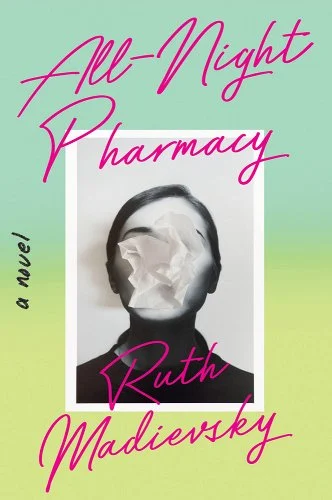
Set in Los Angeles,All-Night Pharmacy follows a young woman who both idolizes and resents her older sister, Debbie, for involving her in drug-fueled escapades that could either, “end with you, euphoric, tanning topless on a fishing boat headed for Ensenada, or coming to in a gas station bathroom[.]” After Debbie disappears, the narrator detoxes and forges a new path as an ER secretary, which leads her into the arms of Sasha, a psychic from the former Soviet Republic of Moldova who guides the narrator on the path of queer discovery and self-hood.
Like the three main characters in her debut novel, Ruth Madievsky is part of the Moldovan Jewish diaspora. And like many émigrés whose families have fled persecution, Ruth has a foot in two worlds. This biographical information factored into the appeal for me, having spent the past few years grilling my mother about her grandparents, Ukrainian Jews who fled pogroms and unrest around 1906, for the US. Unlike Madievsky’s family, mine chose to forget.
Inherited trauma can have outsized influence over a family’s ability to function. But sometimes we have no scapegoat for our own bad behavior. Or, we somehow rise above the hand-me-down anxiety and forge our own path. When we spoke over Zoom in March, Ruth was on the cusp of parenthood herself. As such, our discussion naturally touched on the novel’s themes: generational grief, Jewish mysticism, and ambiguous power dynamics within families, and between lovers.
Arturo Vidich: What made you want to write a book about toxic siblinghood in all its flaming glory?
Ruth Madievsky: It’s so funny—I definitely did not set out to do that. I never outline before I write, it always starts with a voice. And it had a lot to do with the books I was reading at the time where, you know, if there’s a plot, the plot couldn’t be more irrelevant. I wanted to write a voice that’s really sharp and confident and hyper specific. Specificity in other people’s writing is what really gets me, like when they can capture something about the human experience that slices you to your core because you know exactly what they mean. For me, it started with sitting down to a blank page and trying to harness this voice of someone who’s really opinionated, and the details of their life are almost a secondary concern. It’s more about how they describe it. I just love writing characters who have really bold opinions with no data behind it. And then one day I came up with that line: “Spending time with my sister, Debbie, was like buying acid off a guy you met on the bus.” That’s how a lot of it starts. I try to say something very provocative, very specific.
AV: To me, the bar the narrator and her sister frequent, Salvation, was like Plato’s Symposium. There’s a chorus of different voices you can bounce your identity off of and create new masks, new identities. Debbie appears to have mastered her own identity, but the narrator, perpetually in Debbie’s shadow, struggles to come into her own.
RM: I love that. Yeah, it’s pretty clear by the end that their sisterhood is not a match made in heaven. And then if they weren’t sisters, they’d probably fucking hate each other, or be bored by each other, or have no reason to keep in touch. But because they are bound by sisterhood, and by mutual, shared family trauma, I think that this is the best version of a relationship they could have, one that’s distant but friendly. One in which they’re not relying on each other. A non-codependent relationship where they’re not involved in each other’s decision making.
AV: Debbie says “all relationships are transactional.” I felt like there was no shame for her in anything that she did. Is she incapable of finding fault within herself?
RM: I think that she’s had it really rough. She’s taken a lot of their family dynamics harder than the narrator has, maybe because she’s older, and less naive when things were going down with her parents. For her, relationships have always been transactional. She doesn’t really have any close friends. Because they have this dynamic where Debbie’s the dominant one, for the narrator it’s like, Who are you to teach me anything about relationships? Debbie was a lot shittier in earlier drafts, and had fewer redeeming qualities. An editor who I talked to early in the process said, “Why doesn’t the narrator just cut Debbie off?” What’s keeping her attached to this really toxic person? And I think defensively I was like, Well,it’s her sister. I think, for people who have this legacy of the Holocaust over them especially, you don’t just abandon your sibling.
AV: That’s what had me reading to the last page. In the context of the novel, what does it mean that the narrator is “estranged from her own Jewish trauma?” That’s the direct quote, but then also, is Debbie also estranged? Does it affect her in the same way?
RM: That was one of the central questions that I was grappling with in the book. And one of the more controversial things when the book was on submission. Some editors felt like this book, at its heart, is just a sisterhood story, an addiction story, and anything related to intergenerational trauma—the Holocaust—that belongs somewhere else. I was really grateful to have found Alicia Kroell at Catapult who instantly understood that there wasn’t really a concise and paraphrasable thesis about the linear relationship between Jewish trauma and addiction and complicated family dynamics. But it was more about this idea that the legacy of the Holocaust and Soviet Terror is inescapable, I think, even for these people who are a few generations removed. It doesn’t just disappear. It’s part of how they grew up. It’s not something that’s spoken about. That was a thread I was interested in pulling at in the novel without hammering in some kind of unambiguous thesis about, you know, Debbie is the way she is because of “blank.”
AV: Like if you deny your own ancestry or cultural heritage, whatever you deny could still creep up on you. There’s this line that Sasha has later in the novel, in the Jewish cemetery: “They dump all this horror on you and then act affronted when it fucks you up.” To me, that speaks to Debbie’s personality. She does all these things to her sister, and then she’s like, What the fuck is wrong with you?
RM: I’ve thought about how this history affects Debbie as a victim, but it’s interesting to hear you phrase it as, well, the exact thing that people do to her, she does to other people, but doesn’t realize it.
AV: Where did this idea of a person being another person’s amulet come from?
The legacy of the Holocaust and Soviet Terror is inescapable, even for these people who are a few generations removed.
RM: I had a short story solicited for this magazine called 7×7. They paired a writer with a visual artist. I worked with Sarah Ratchye. Originally, it was that Sasha tells the narrator to spend time with this weird, artsy fartsy dude named Kenny and that he is her amulet. He had this creepy parrot who had these beady eyes that looked like they had been in someone’s mouth. The amulet idea got transposed onto Sasha because that’s the role she was playing in the narrator’s life anyway. And then you have amulets, this history of Jewish trauma and of needing something to protect yourself. For my family, superstition is a big thing, especially for my mom and kind of the maternal side of the family. It’s always a fight when there’s some large event and my mom wants me to wear a red bracelet and I don’t want to do it. When I told my grandparents I was pregnant, my grandpa immediately flipped all the glasses in his house upside down and closed the curtains, and didn’t want to talk about it anymore because he didn’t want to jinx it.
AV: Superstition as inoculation.
RM: Yeah. And to prepare yourself, to find out how you’ll react. I think it’s been personally helpful for me, as someone who deals with anxiety, this idea that anxiety is not intuition, that just because you have this feeling of doom that something is going to happen, you’re not onto something, necessarily. You’re just fucking anxious. And I think a lot of what superstition is is anxiety, this idea of trying to control something we can’t control. Even though I grew up with a lot of superstition around me, I find it mostly annoying. Having been through some tough times myself, superstition feels worthless to me as a way of protecting myself, like, Okay, try these things that don’t do anything. What’s the point?
AV: Right, superstition no longer holds the same power for most of us, yet people still knock on wood.
RM: I do that, actually. But it is funny how some of them become more culturally normal. We had a crazy one in my family: if you think someone put the evil eye on you, rub a pair of dirty underwear on your face. I am absolutely not on board.
AV: One of the things I felt like your novel does really well is the binding of queerness to the uncanny and the unexplainable, through Sasha. With Sasha, the narrator has her first opportunity to be in a queer relationship. Could you talk about the decision to make the narrator bi?
A lot of what superstition is is anxiety, this idea of trying to control something we can’t control.
RM: She was bi from the start, actually, from when I first started writing the book as stories in 2014. That was something I didn’t plot out beforehand. I collapsed a lot of stuff for the novel just to make it cohere better. I describe in the novel how the narrator is at the strip club, subtly ogling all the women. Originally that scene took place in— Have you ever been to a Loehmann’s? Before they went bankrupt? They were kind of legendary for these enormous group dressing rooms with no privacy. It’s just fluorescent lights, everybody’s naked. Originally, Debbie worked at a place like that, and the narrator would keep her company in the dressing room, but really she was learning a lot about her own desires. Even though the book is partly a queer coming-of-age story, the voice was not really interested in the coming-out process or queer trauma being the main source of conflict in the book. It felt more natural for it to be an important thing about her, and certainly something she’s navigating, but not the source of all the book’s tension.
AV: What do you think the narrator’s sense of her own queerness would have been if Sasha had never come into her life?
RM: That’s a really interesting question. The narrator already knows she’s bi before she meets Sasha, so Sasha isn’t exactly teaching her what her sexuality is, per se. What Sasha does is help the narrator learn how to exert more agency, and realize that’s something she wants. She wants a partner, wants to feel like equals. Sasha shows her that there can be happiness in her relationship, though theirs certainly has problems to it. The other relationship the narrator has before that is with Ronnie, which feels a lot more superficial. They’re not a good match, but also, the narrator is never open to them being a match in a real way.
AV: Right. Ronnie’s a futon.
RM: [Laughs] Yes, he is a futon. She needs someone who can actually challenge her, but not with these very fraught dynamics of like, they’re the boss. When she’s in these relationships, both sexual and familial, where there’s a very clear power dynamic of someone who’s really dominant, and she just follows along—that doesn’t work. But it also doesn’t work when it’s these two really passive people, like her and Ronnie, kind of play acting at a relationship.
AV: He’s pure, but he’s also really naive. The narrator says, “I was most attracted to him when he was telling me what to do.” Why do some of us crave being told what to do?
Humor can be a defense mechanism to avoid doing the hard work of self-reflection, but it can also be a way into the darkness.
RM: I mean, being a person is hard. She’s navigating this relationship with a super dominant, toxic sibling. She’s navigating her own nascent queerness. She’s navigating intergenerational trauma that she doesn’t really have the words for. It’s not something that presents itself in super obvious ways in her life, because she’s several generations separated from the family that, you know, survived Soviet terror and the Holocaust. It’s easier to not take responsibility for herself or for her actions. She just allows herself to be kind of swayed by these dominant people and dominant forces.
AV: Could you talk about how you use humor to address dark material? What purpose does humor have in post-traumatic realities, and why is it so effective for survivors?
RM: Part of that is being Jewish. Jewish humor and Soviet humor are often very dark, you know? Sometimes it’s more approachable to engage with really dark shit from a slant. Humor makes it feel more survivable. I remember being at a funeral—I was newly married at the time—and this very lovely rabbi saying, afterward, when we were all cried out and sniffling, that a cemetery’s a great place to walk around and get some inspiration for baby names. Which is especially funny in a Jewish cemetery where half the names are Semyon and Hymen.
AV: As I was reading your novel, I had the idea that if we never laugh again, we do disrespect to our ancestors. Or like the real tragedy is forgetting.
RM: I think so too. Everyone in my family has a really dark sense of humor. That’s how I was raised. Russian proverbs are often very dark, very vulgar and pretty funny. So it’s just kind of my worldview. Humor can be a defense mechanism to avoid doing the hard work of self-reflection, but it can also be a way into the darkness.
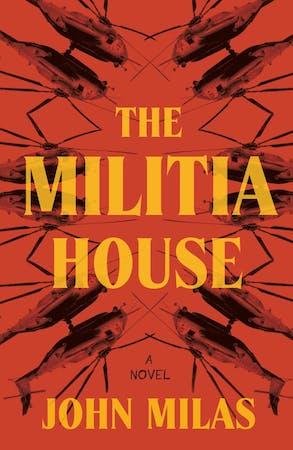
Many of my experiences in the Marines were equally as ugly and terrifying as a classic gothic haunted house. My book studies some of the parallels between gothic horror and the absurd terror of Operation Enduring Freedom, but The Militia House focuses on the experience of one individual. As I read other veteran writers, I encounter narratives that are different from mine yet just as terrifying in their own ways. The US military is a scary place, especially so for those of us who’ve borne witness to the realities of it.
Veterans who share stories through vulnerable and authentic writing will obliterate the propaganda and bold-faced lies that get us into war, an act of patriotism by my estimation. The following list includes writers whose books break the standard of sanitized, routine portrayals of life and war in the US military. Their work faces the truth head on. While some of these books help the reader understand or reflect, and others inundate with unforgettable, haunting images in order to allow the reader’s interpretation, they all demonstrate that scary is not exclusive to horror or combat.
The Short-Timers by Gustav Hasford
Gustav Hasford’s absurd and surreal novel, The Short-Timers, is terrifying between the nauseating violence and the voice of the narrator, Joker, whose ironic and sarcastic responses to atrocity will contrast sharply with the reader’s reaction, hence his nickname. The novel sees Joker, a United States Marine Corps combat correspondent, and his photographer, Rafter Man, roaming an urban battle in the city of Hue as they search for propaganda for the military newspaper. Along the way, they encounter unspeakably horrific scenes and unspeakably horrific people. Hasford punctuates the insanity of the Vietnam War by blurring reality with satire and even genre, sprinkling all kinds of surreal and exaggerated details throughout the book including a literal vampire in one scene. Hasford attended Clarion and was pressured to cut the werewolves in an early draft, but a trace of them remains in the form of haunting figurative language.
Unbecoming scares me because of the military’s willingness to turn its back on those who directly serve its best interests as leaders. If this is the precedent, then no one is safe. Anuradha Bhagwati demonstrates in her incisive, pointed memoir, that those in designated leadership positions can still be helpless in the face of longstanding misogynistic tradition and bureaucratic negligence. Bhagwati was nowhere near the bottom of the military hierarchy, but she describes scenarios in which she, as a commissioned officer who more than earned her rank in the Marines, is still disregarded for her gender, her sexuality, and even her ethnicity.
Unbecoming tells the story of a Marine Corps officer who finds loneliness, abandonment, and abuse within a community typically joined by people in search of purpose and belonging. The second half of Bhagwati’s book details her post-service efforts to better integrate women into the 21st-century military and to hold military leadership accountable for the widespread military sexual trauma endured by many veterans.
The term “no-no boy” was a pejorative for Japanese American men interned by the United States during World War II who did not forswear allegiance to the Emperor of Japan or agree to volunteer for military service against Imperial Japan. Not only were these men charged with crimes and further imprisoned beyond internment, they were largely ostracized post-war by the Japanese American community.
John Okada, who did in fact serve in the US Army Air Forces during the war, tells the story of Ichiro Yamada, who returns home from imprisonment after refusing to serve the federal government. The novel details Ichiro’s attempts at re-integrating into daily life while maintaining his relationships with family and friends, including his friend Kenji who did elect to serve in the military. Okada’s compassionate, but desolate and tragic novel, studies the consequences of Ichiro’s refusal to serve in the US military as someone who was never fully accepted by the U.S. to begin with.
Cherry is an upsetting novel with a lot going on, to say the least. Nico Walker was implored to write Cherry before his release from prison, and large swaths of violent imagery are transferred directly from the original BuzzFeed article that brought his true life story as a traumatized, heroin-addicted bank robber to public prominence. The section in Iraq portrays violence in vivid detail inflicted by an enemy whom the narrator never sees. The substance of Cherry, from beginning to end, is bleak and terrifying, but what I find structurally intriguing is that the narrator’s experience as a medic in the US Army feels limited mostly to the second act, bookended by substantial non-military sequences of his life. Many war stories are told in a vacuum, but Cherry portrays the reach that the US military can have on someone’s life not only during their service, but before and after.
The Lieutenant Don’t Know by Jeff Clement
Jeff Clement’s The Lieutenant Don’t Know partially covers the exact deployment that inspired The Militia House, as he and I were members of the same battalion, but in different companies and performing dramatically different roles.
At times, Clement’s book feels less like a memoir and more like reporting based on the detailed notes he took in 2010, but the book resonates in moments when Clement describes the ambiguous big picture of Operation Enduring Freedom in the Helmand Province of Afghanistan and the confusion many of us felt about the end goal. He calls out higher leadership for protocols that are inefficient or frankly a hindrance to completing a mission, and calls out his own peers who can’t be bothered to take a real life war more seriously than a civilian day job. Clement knows more than he thinks, otherwise I would not have chosen a sentence from his book as one of the epigraphs for my debut novel.
For a candid (read: brutally honest) experience of a young woman enlisted in the US Army, this is your book. Williams, a linguist who studied Arabic at Defense Language Institute, shares a range of stories about her time in the Army. Rather than summarizing from a zoomed-out perspective, she relays her experiences through intricate, intimate scenes.
Her own sergeants sometimes move beyond incompetent to being brazenly disrespectful to their subordinates. Her male peers seem to make innocuous small talk, but then close out these interactions by hinting at a sexual proposition or bluntly speaking them. Most disturbing early on: a lieutenant overseeing the search of a monastery, who refuses to interact directly with an English-speaking monk in Iraq, forcing Williams awkwardly to translate between two people who can see, hear, and understand each other. Love My Rifle More Than You does an excellent job of highlighting scenes and mindsets that are effectively terrifying in their implications.
The most affecting book on this list is the only graphic novel and the only infantry-based entry. Maximilian Uriarte served as a grunt in the Marines and deployed to Iraq twice, returning to create Terminal Lance, a hilarious comic strip very specific to daily Marine Corps life from the enlisted perspective. The White Donkey feels like a book-length culmination of Uriarte’s early work, retaining the same brand of humor while centering Abe (from the comic strip) in an extended narrative that follows an infantry unit throughout their deployment to Iraq. The humor of The White Donkey draws in the reader by building a fondness for the characters. Uriarte then juxtaposes, to maximum effect, our laughter against our reactions to the terrible events that unfold overseas. Uriarte’s candor and vulnerability turn what initially seems like a simple cartoon into a terrifying, but poignant tale of the Global War on Terror.
“The Difficulty of Getting Through to You” by Ren Arcamone
I was rematerializing in the garden shed when Cherie Katsoulas found me and said, “I heard screaming last night. Did you hear screaming?”
Well, this was a delicate thing to handle, because in fact I had heard screaming last night. This was due to the very noisy business of Mr. Dent, the next-door neighbor, murdering his wife. But Cherie is a gentle child, a sensitive child, easily affected by things. When I was alive, I had very little to do with children. It’s difficult to say what a nine-year-old should know, what she shouldn’t know. Just last week, Cherie watched a news video about a beached whale and cried for a good hour. On the other hand, she helped bury the family cat, Chuggo, with minimal anguish. I stalled.
“Screaming? What sort of screaming?”
“And crying,” said Cherie solemnly. “I think it was the man next door. I think he was screaming and crying.”
I said the screaming was due to Dent’s murdering his wife. But that’s not to say the screaming came from Mrs. Dent as Mr. Dent hacked her body to pieces with a butcher’s knife. Cherie’s two older sisters—Cleo in particular—watch television shows ostensibly concerning “law and order,” but which are usually about violent men who kidnap women and torture them or rape them or melt their dead bodies in vats of alkaline solution, and often the men are secret perverts with daytime jobs as solicitors or what have you. But Mr. Dent killed his wife by accident. Certainly, he hit her on purpose. But he wasn’t happy she was dead. Hence the screaming.
“Pick up that stack of pots for me, will you?” I said to Cherie.
Outside was sun and breezy Brisbane spring, the sky a high smear of blue. There were plastic gardening pots scattered higgledy-piggledy across the floor, some wedged inside of one another, which was no good to me; my arms were acting up again. Often, if I’m tired, my hands turn to mist, slip straight through whatever I’m attempting to grab, and I had already exerted myself a great deal this week, foraging the yard for dead geckos. Cherie, considerate child, picked apart a set of three pots and lay them upturned on the bench, as though readying us for a magic trick with an unlocatable ball.
“More, please,” I said. “Thank you, Cherie.”
Cherie clacked the pots one by one onto the table. I had hoped to hide the gecko corpses, fearing a beached-whale-style meltdown, but she saw right through me to the bundle of soft bodies and didn’t blink.
“It’s Cherry,” said Cherie. “Mum says it ‘Cherry.’”
“Nonsense,” I said. And I knew Cherie did not really expect me to change, and nor did I expect her to stop correcting me. I nudged the lizard bodies through the dust across the table, willing my hands to stay solid.
My plan was to place a dead lizard under each of the empty pots, leaving them conspicuously arranged along the length of the table, thereby frightening the unhappy discoverer. Possibly this would be Dina Katsoulas, or her husband, Nick, but with any luck it would be the potential property buyer scheduled to visit this week. I’d recovered about ten lizards, and though I would have preferred more—haunting is as much about scale as it is strangeness—this visit was an early one, a private enquiry, and if I needed to speed things along, then so be it.
I’d been thinking a lot about it, about how to haunt a residence. The Open House was scheduled for three weeks away, by which time I would hopefully have enough frightening phenomena to dissuade even the keenest buyer. The current long-term project was some carefully curated water damage: I was trying to spell out the words I AM STILL HERE on the master bedroom ceiling by arranging ice cubes on the ceiling’s reverse side. So far, this was going terribly. Only the first few letters were even faintly apparent, and I’d gotten the “S” backwards by mistake, so that if you were really looking for it, you could just make out the declaration I AM Z.
A good haunting ought to be a lot more magical than these small pranks. Blood bubbling out of the taps, fireless smoke filling a room, grandfather clocks winding themselves backwards. But I am just one ghost, and a not substantial one at that. My haunting ambitions fall within a narrow range: past “faulty wiring,” but not quite “demonic torture chamber.” I would simply like the house to be unsellable. The Katsoulases are young and full of life, and Cherie, remarkably, can talk to me. I’d quite like them to stay.
“Are we going to throw a funeral?” asked Cherie. “For the geckoes?”
“Yes,” I told her. “And we’re going to inter the bodies. That means we’re going to lay them to rest. We’re going to inter them in a mausoleum. That’s like a house for dead people.”
“Like our house?”
“No,” I said. “Ours is more of a shared residence.”
Together we placed a pot over each of the geckoes. I positioned them apart from one another; Cherie was curious but unwilling to touch the bodies. Some were quite fresh, still limp and juicy. The long-dead ones looked like hard little commas.
“Also I saw Marcus in the space under the house,” said Cherie. “Digging a big hole.”
“You saw Mr. Dent in the space under the house, digging a big hole,” I corrected her. “And you did not. I saw nothing of the sort.”
“Did too. He put a big plastic garbage bag in the hole and covered it up, like we did with Chuggo.”
“It’s very naughty,” I said. “To make things up like that.”
Cherie chewed her bottom lip. “Nobody ever believes me about anything.”
I considered this, poking a grey tail under the rim of a pot. The year I died, there was a new vogue for psychiatric terms: psychopathology, neurotic affect, catecholamine hypothesis. My husband was a doctor—not that sort of doctor—but nonetheless I had an interest in diagnostic terms. I am quite sound of mind these days. Still, I do experience these gaps, what one might call “involuntary dematerialization.” In the past, they could descend suddenly and for prolonged periods; the majority of the seventies, for instance, flew past without so much as a by-your-leave.
Last night—I’d assumed I had seen the whole event. Mr. Dent struck his wife. She fell backwards, hit the corner of the kitchen table, went limp, and Mr. Dent fell to his knees, howling, shouting, Get up, Lisa, get up. A dark puddle surrounded Mrs. Dent’s head, and Mr. Dent began to tremble. Afterwards—well. Perhaps Cherie had a point.
“He carried her under the house?” I said. The neighbor’s house, like my house, is a Queenslander, an old timber structure raised on stilts and enclosed by walls of widely-spaced slats. The Katsoulases had put in a floor and real walls, turning the space into a rumpus room. The Dents had left theirs untouched, although they kept a washer and clothesline under there. I imagined the dirt floor, upturned, a shovel stuck in the hard earth. I tried to remember.
“I saw it,” said Cherie. “Between the gaps in the walls. He turned the light on.”
Which does seem disappointingly in keeping with Mr. Dent’s character, burying a body in plain view of anyone who happens to pass by. This is the trouble with handsome men. They think everyone is so busy cooing over them that no one will notice if they act like perfect devils.
I examined Cherie’s face for signs of panic, but she was perfectly calm. “Get those pots in a neat row, will you, dear?”
Cherie straightened the pots. If I found more bodies, I could extend the row further. “Nice and cosy,” said Cherie, patting the last one.
“Were you frightened, Cherie?” I asked. “You see that Mrs. Dent is dead, don’t you?”
Cherie looked up at me with big eyes. They’re dark eyes, brown-black, like a muddy lake. Sometimes I see a flicker of light pass over the surface. I would like to think this is my reflection: silverly, a faint cloud catching itself in the water below. It has been so long since I saw my face. Whenever I set foot near a mirror I can barely make out my head: I look like I’m behind a shower curtain, or under a wedding veil. I think my eyes were blue. Only Cherie can see me in this house. No one else. She blinked slowly.
“She’s not really gone,” said Cherie. “Now you have a new friend.”
It was impossible to know this for certain, although I wondered the same thing, about Mrs. Dent. The hideous circumstances of her death seemed to prime her for an unearthly return—or so I suspected, having watched several episodes of Spectral Detectives, a favorite television program among the Katsoulas children. A so-called “reality” show, two young men visit supposedly haunted family homes to prove the presence or non-presence of ghosts. One of the men, Tom, a handsome young Asian man, is always convinced the house is haunted. The other, Brad, a handsome young Caucasian man, is always skeptical, and goes in with measuring equipment to detect drafts from the air vents or uneven floor surfaces. He often says, “I have a background in architecture.” Even though both men are beautiful, they are not intolerable; I put this down to the fact of their being inverts, or what my husband would have called “nancy men.” My husband was occasionally mistaken for a nancy man, being handsome himself. It troubled him terribly, and this, I have to admit, made me smile. Attention ought to have its drawbacks.
Anyway, these men, these ghost-detective men, spend a night together in the haunted house, preferably in the most haunted room, and are inevitably awoken by bumps and scratchings and sometimes whirrings from the ghost-detecting machines they’ve arranged in the hallways. Each investigation closes with Tom sitting at the family’s kitchen table, explaining that actually a little girl vanished from this house in the eighties, or that actually an old man had a stroke on this very floor. These explanatory stories are at the heart of the show. Everyone knows you need a good trauma to tie it all together.
I must confess that the bulk of my own understanding about hauntings is derived from these shows. Despite my circumstances, I’m no expert on the subject. What makes a ghost? How often are the dead required to remain?
Cherie is a devoted fan of Spectral Detectives, even though she is technically forbidden from watching it. Mr. Katsoulas lets her stay up and watch it so long as Mrs. Katsoulas is working late and Cherie promises not to tell. It doesn’t really give her nightmares, she says. She’s seen plenty of ghosts.
“There was one at the Buranda house,” she told me early on. “And at Indooroopilly.”
These are Brisbane suburbs. The Katsoulas family have lived in several houses over the years; Mr. and Mrs. Katsoulas are what the television program For Flip’s Sake tells me are “house flippers,” people who renovate old houses and sell for a profit. It has led the Katsoulas family to move houses roughly once a year. I was unsettled to hear ghosts were such a commonplace feature, if only for Cherie.
“Mum and Dad said he was a figment,” Cherie went on. “But there was a boy called Ron at Buranda. He always wanted to play tip. But it was boring and anyway Mum said I couldn’t run up the stairs. Mostly I just ignored him.”
The other ghost, at Indooroopilly, was a baby. They’d found a cot in an otherwise empty room. I thought perhaps Cherie had been shaken by this, or disturbed to find the ghost of a newborn, but when pressed she said only that it was annoying.
“It just cried,” she said. “And cried and cried and cried and cried.”
Cherie rarely speaks fondly of these previous playmates. No doubt it is tiresome to be pestered by the undead. Young Tom from Spectral Detectives reminds viewers that the continued existence of any spirit is centered upon “some real deep sorrow.” I don’t know about that, but I confess: before Cherie arrived, my days were dull indeed. You can only rattle the china cabinet for so long. It is refreshing to be addressed. To be seen.
Cherie didn’t know anything about how the boy or the baby had died. Babies die all the time, and probably the boy had tripped down the stairs, although for all I knew it was polio and the chasing game was making up for a sickly childhood. These assumptions tell me nothing about how ghosts become ghosts. Me, I took my husband’s penknife and slit my forearms open in the bathtub in ’64, went trembly and cold and floated out the bathroom window.
Cherie was right: Mrs. Dent did come back. It was evening. I was standing at the kitchen sink, trying to loosen the faucet, wondering exactly how I might get it to shoot into the air the next time someone turned the tap on. Through the window, I could see into the Dent’s living room, where Mr. Dent sat watching the television. The space under the house was so dark, it was impossible to make out the washing machine or the dryer or any sign of the makeshift grave, but I could see the faint shimmer of Mrs. Dent through the timber battens, curled up in the dirt, sobbing noisily. I went out and stuck my head over the garden fence.
“Mrs. Dent?” I said. “Mrs. Dent, I’m terribly sorry for your loss.” A chorus of bats chittered in the boughs of the paperbark overhead. I raised my voice. “Terrible business. A darn shame, about your husband.”
She had positioned herself directly underneath what I could see were the living room floorboards, so that her husband, if he were at all psychically aware, would hear the moans of her fury. But Mr. Dent, it seemed, was not the slightest bit preternaturally sensitive. He sipped a beer and fondled the remote. It’s difficult, getting through to the living. Mrs. Dent had not yet realized this.
Or perhaps I am too hasty in thinking he was deaf to her screams. Perhaps he heard her and thought nothing of it. My husband had certainly been that way, in my life. “Don’t be hysterical,” he would say, sternly, in response to my wailing. “I know you can help it, Cecelia, so snap out of it right now.” He would use his doctor voice. I said he was a doctor, didn’t I? Well, he was no psychiatrist, or even a general physician. In fact, he was a foot doctor, a chiropodist. But he had a lot of authority nonetheless, when he spoke like that. So I would—I would snap out of it.
Of course, it’s hard to fault him. I had nothing to wail about like Mrs. Dent. Gerald never hit me. I had several friends, I was on good terms with my mother and father, I had a very nice house and nice neighbors and was never hungry. In fact, I don’t know what it was, that ever came over me, why I ever wanted to cry like that. And Gerald was right, I could help it. There was always some sly part of my mind standing guard whenever I sank down into one of these low moments, some cynical and grounded part of myself that thought, Oh, I’m a fool for feeling this way, it’s not so bleak as all that. Sometimes I would try to shut that part of my brain off and really feel crazy, really hysterical. I would gulp air and hiss and let the shudders roll through my body, wait for the feeling to grip me completely. It never would, though. Not the way it was gripping Mrs. Dent right now.
“Mrs. Dent?” I said, louder. “Attempting a haunting, are you? I’ve been in this place a while. I could share a few pointers!”
The sobbing increased, as if in competition with the screeching and crunching of the bats. Given that my own attempts at haunting the Katsoulas family had so far gone unnoticed, I don’t know what tips I imagined sharing, but it would have been nice to talk shop with the new girl. I waved my arm at her, trying to make it look as arm-shaped as possible.
Her neck twisted very slowly as she turned to me. Her eyes were too big, as though they’d been magnified, or her head had shrunk.
“Oh!” I said, faltering. “Oh! Hello, dear.”
She crawled up to the wooden battens that enclosed the underside of the house and pushed through them with jerky, mechanical movements, her body flickering. She couldn’t come through the fence, surely. According to the television, ghosts are bound narrowly to the sites of their death. I myself have never left the perimeter of the property.
According to the television, ghosts are bound narrowly to the sites of their death.
But no one had told Mrs. Dent. Spittle flew from her teeth. She was at the fence, raising her body up, up, up, pressing herself into the barrier and then through it, her face spasming through the solid fence post, and screaming, screaming.
I shot up and backwards and in through the wall of the house, my eyes shut tight. I tried to collect myself. How stupid, to be afraid of Mrs. Dent. There was a buzzing in my head, distant, like a motorized fan. I felt like I was still in her presence, or in somebody’s presence, so I opened my eyes. That’s when I realized I was in the bathroom.
I don’t like the bathroom. I don’t go in there, haven’t since I was alive. Now I stood in the bath. I was alone, but it felt as though I had intruded on someone; I almost said, “I’m sorry” into the still air. Right at eye level, there was a ring of decorative floral tiles, green and orange, and a mirror at the sink, through which I could see the tiled wall behind me and no trace of myself. Panic overwhelmed me. I slipped backwards, pushing myself through the bathroom wall like it was tissue paper, kicking my way down through the floor until I was elsewhere, anywhere else.
I found myself in the rumpus room, waist-deep in the television. The Katsoulas family, all five of them, were sprawled over the black leather sofas, a bowl of Bolognese on each lap. For a moment it seemed like they were staring straight at me. But no—they were watching the television—all except for Cherie, who gasped and clamped her hand over her mouth, and looked, in this instant, so appalled I thought Mrs. Dent must be behind me, until I realized it was me, I was the cause for the shock. My lower body seemed to hum inside the machine, but the top of me was smoky, diffuse, like a ribbon of ink dropped in water. You poor dear, I thought numbly. It’s only me, it’s me. From a distance I heard Cleo, the middle sister, saying “It’s just the DVD skipping, Cherry. God. You’re so dramatic,” and I watched Mr. Katsoulas muss Cherie’s hair, and Cherie’s face harden into a frown, her lips forming the words, “Go away.” But I couldn’t gather myself. I was soft, I was wet meringue. Their voices came to me from the other end of a long tunnel.
“It’s the ghost,” Cherie was saying.
“Cali, hit the DVD player.”
“You do it.”
“Don’t hit the machine, anyone. Pause it and wipe the disk.”
“Mum, it’s the ghost.”
“Yeah Mum, tell the ghost to wipe the disk.”
“Cleo, don’t make fun of your sister.”
“Hey now,” said Mr. Katsoulas. He bundled Cherie onto his lap, spoke to her gently. In the soft blue of the flickering screen, they were lit up like specters themselves. “Maybe your ghost can watch the movie with us.”
“Nick!” said Mrs. Katsoulas. “Don’t encourage her.”
“It doesn’t work like that.” Cherie sniffed. “She can’t do anything right now. She can’t even talk.”
I was in the elsewhere, nowhere, for perhaps three days, perhaps a week. I couldn’t tell. There is nothing that happens inside that space. It’s like being dead, if being dead were the way I imagined it was going to be. It’s like being asleep, except no dreams.
During my life, I had often wanted to be the sort of person who could disappear inside a mania. I had a girlhood friend, Eunice, who was like that, beautiful and manic. She had nervous, narrow eyes and frizzy hair and a slim figure and an impressive record collection. Her husband moved her out to Broken Hill a year into their marriage, said the country air would be good for her, as though Brisbane were anything more than a big country town. An odd man, Mr. Maclean, very boring. I never understood why Eunice married him, although I wondered if his boring nature were a part of it. A tether to her kite.
Even at the time, before she was sent to the sanatorium, I knew it was wicked to be envious of Eunice. And it was envy, it wasn’t simply that I loved her company, although I did. During those early years, when Gerald and I were newlyweds, Eunice would come over for Devonshire tea and bring a small flask of gin and sometimes a record. We were obsessed with Patsy Cline and we would sing as we baked; our favorite was “Walking After Midnight.” I’d burn the scones, tipsy, giggling, giggling about everything, this strange wondrous home with the salmon pink refrigerator and Pyrex casserole dishes and the ocean of time stretched before us, my new handsome husband, beloved by every woman he met, and so impressive to my mother and father—a doctor! my mother told everyone—and so charming, kind even though busy.
Mostly Eunice found everything very funny too, although if she was in a bad mood she was rotten. Sometimes she came round only to sit out on the veranda, smoking, half-catatonic, and when she spoke she said queer things: “I’m an egg without a yolk in it.” Sometimes she stood me up altogether. She didn’t like me visiting her. If she was doing poorly her house was filthy, chicken bones and other food remnants scattered everywhere, not even on plates, kicked to the corners of the room. I would go over despite her requests and find her shaking or crying, in bed in her slip, not caring what Mr. Maclean would say when he returned home from work. He was patient with her, I must say. His eyes, fat with panic at the sight of her like that, his voice soft, like he was coaxing a bird into his hand.
My husband, Gerald, wouldn’t have handled it nearly so well. He pitied Eunice, he said, but he didn’t like me hanging round with her. “A troubled girl,” he said, in his doctor voice. But there was an edge of fear in there, like Eunice was contagious. He took her seriously. He took her sadness seriously. He would never have told her to snap out of it. He knew as well as I did that she simply couldn’t.
Sometimes I hated Gerald. When Eunice went into the sanatorium it was as though, for him, she died, but in a very awkward manner we ought not to talk about. If I mentioned her he would stare out the window, or pat his pockets in search of a cigarette. In company he would change the topic. He was quick on his feet, conversationally, and early in our marriage I had found this charming, but now it struck me as a tic, a cover, for either impatience or fear. I grew to despise him. Whenever anyone said, “Your husband’s a doctor?” I would correct them: “Actually, he’s a foot doctor.” My mother once witnessed this and called me ungrateful. She doted on him. Everyone did. Nearly eighteen months after I died he had a new wife, and they lived here, in our house, my house, with my salmon pink refrigerator, for six months, before packing up and moving all the way to Adelaide for god knows what reason. The house was empty for a while after that, I believe. I wasn’t altogether present for it. For nigh on a decade, I wasn’t altogether present for anything. Later, I heard the house was said to be haunted, so it’s possible I did something I don’t remember, to him or to her. But then again that’s just the sort of thing people say about suicides in old houses, or about widowers who remarry too quickly, and anyway, those stories never stuck, the neighborhood changed and anyone who remembered moved away.
I say suicide. The truth was—this is quite embarrassing—it was an accident. Gerald and I had been having an argument, about Eunice, in fact. He disliked my friendship with her; he found it worrying, although he wouldn’t call it worry; he was “being reasonable.” He’d found the letter I was writing her, picked a quarrel before heading off to work, and in the evening, still stewing, I thought: I’ll give him a good scare. I ran a bath and took the penknife—it hurt quite a lot. I wanted to make it look authentic. I was trying to make a point, I think. But I went too deep. The water was pink and then very red. It was almost funny. I remember giggling. I kept thinking he would wander in at any moment, and then time started passing in an awfully queer way and I was fluttering inside like a gassed bug; I was embarrassed, so horribly embarrassed, and then afraid. I was just going to have to go along with it, pretend this was what I had meant all along. Gerald would come in at any minute and I would say to him, See? I thought: I am making a point.
Looking back, it’s tricky to put into words exactly the point I was trying to make. But what did that matter. I doubt anyone realized I was saying anything at all.
By the time I was me again, the visitor who was interested in buying the house had come and gone, with or without seeing the arrangement in the shed, I couldn’t be sure. Still, somebody had discovered it, and Cherie was getting the blame. She threw a tantrum in the backyard as her mother shook the pots out, gingerly placing the dead geckos in a plastic bag.
“I didn’t do it!” Cherie wailed. “It was Mrs. Whittaker!” She beat the ground with her fists, sounding just as insane as Mrs. Dent.
“Lots of kids still believe in Santa Claus at this age,” Nick Katsoulas said, once Cherie had gone to bed. He and Mrs. Katsoulas were arguing at the kitchen table, partly about the living room furnishings, but mainly about Cherie, what her mother called “her ongoing obsession with the supernatural.” “Lots of ‘em still have imaginary friends.”
The table was covered in paint swatches from Dulux. Several shades of green punctured the cream and beige, candidates for what the television program You Bloody Flipper calls “the quintessential feature wall.” I was hovering about the cabinets, feeling nervy. Several weeks earlier, I had crayoned the words I AM STILL HERE over and over on the linings of several typically-neglected cupboards, imagining the distress of prospective buyers on the day of the Open House. Now, I could see this approach was futile. Each of my haunting efforts so far had only gotten Cherie into trouble. I needed a new strategy.
Mrs. Katsoulas spread her hands between Alpine Dream and Canopy Heat.
“You know what I don’t like?” she said. “I don’t like her lying. Last week we were repainting Cleo’s room and she smashed Cleo’s alarm clock against the wall. Bits of plastic everywhere. Had to repaint the section.”
Mr. Katsoulas sounded dubious. “You saw her smash it?”
“Well,” said Mrs. Katsoulas.
She was sitting right near the affected cupboards. For a perverse moment I really did want her to open one, not only to see the writing, but to know it for what it was, to turn to Mr. Katsoulas in alarm, sensing my presence. I tried to focus my mind like a fine silver instrument, like the hooked scalpel I remembered from my husband’s medical bag. But then—just as Mrs. Katsoulas was tilting her head in my direction—I realized, with no small degree of embarrassment, what Gerald would have said to all of this. I was being a fool. If they knew, truly knew, that I was here, they would simply sell the house as fast as they could.
Mr. Katsoulas was at the kitchen sink, turning the water on and off. “Have you noticed this tap feels looser?”
“Listen, Nick. I heard it smash. When I turned around she looked guilty as sin. And I go, did you break that clock, Cherry? And she goes, oh, my ghost friend did it.”
“She felt bad. Hey!” He stuck his hands up. “I’m not defending her, she knows she shouldn’t lie. But you can be a bit harsh on her, Dina.”
“And how convenient for you. That I’m the bad cop who tells her off.” Mrs. Katsoulas lowered her voice. “You’re the one filling her head up with this shit, Nick. Scary stuff on TV, horror stories, the bloody ghost hunting show—”
They weren’t going to discover anything. Rather than feeling relieved, I only felt tired, and a little guilty. I had absolutely thrown the clock.
I drifted up and through the roof to sit on the eaves. All down the street, porch lights warded off the darkness, casting dim halos around the houses, the lurching eucalypts that divided them. A family of possums sauntered along the tightrope of a power line. Some part of me wanted to apologize to Cherie, but I suspected a tantrum would ensue if I approached her too soon. I would let her cool off. Soon, things would be back to usual.
In the house across the way, Mrs. Dent was standing in the kitchen, smashing wine glasses, stopping only when her husband entered the room. I considered floating up to the fence and shouting out some tips, then thought again. How daft. Mrs. Dent’s haunting prowess now far outstripped my own.
At the third smash, Dent jumped off the sofa, paced down the house, turning the lights on as he went—kitchen, living room, bedroom, bathroom—appearing in each box like a figure in a flickering film strip. When he settled at last on the bed, gripping his knees, Mrs. Dent crawled along the ceiling, kicking dust from the cornices, the dull thumps sounding in each room. “Marcus,” she crooned. “Marcus.”
On Spectral Detectives, the hosts describe three kinds of hauntings: residual, intelligent, and inhuman, the last of which is a consequence of demons, rather than ghosts. Tom calls these inhuman apparitions “salt-the-earth-bad-guys.” “I think we got a real salt-the-earth-bad-guy on our hands here, Brad.” The implication is the deceased are never truly malevolent. “Lost loved ones” only ever want to pass on a message. But what if the message is “go to hell?”
That’s what I thought Mrs. Dent was trying to say, anyway. In life, she had been patient. She had spent a lot of time reassuring Mr. Dent that things would turn out all right. When he was angry she often looked scared; she flinched at his raised voice, the tightening cord of muscle in his neck. But at other moments a terrifying compassion radiated out from her, as though Mr. Dent were a child with a skinned knee, and she knew that she of all people was equipped to tend to the wound. But death had transformed Mrs. Dent. She was no longer patient, or loving, or beseeching. She was all rage.
But death had transformed Mrs. Dent. She was no longer patient, or loving, or beseeching.
Curiously, Dent, too, seemed transformed. In the early mornings, when the Katsoulas’ oven clock showed the dim hour before dawn and Dent was waking, he would sit up and almost immediately crumple. Watching, I felt a strange and terrible shrinking feeling, not only disgust but—forgive me—sympathy. Still, I am glad, viciously glad, that Mrs. Dent torments him.
I have this funny thought, sometimes. Every now and then I come over all queer, and I imagine there’s another ghost sharing this place with me, one confined entirely to the bathroom. That’s silly, of course. That’s simply a personal aversion I have towards the bathroom, on account of my death. I know to be rational about these things.
Nonetheless, it gives me a prickling feeling. Once, in the middle of the day, when nobody was home, I became convinced I could hear someone crying in there, and even though it was stupid I fled for the garden, yanked like a magnet to the shed at the bottom of the yard. Among themselves, the Katsoulas children speak of strange noises coming from the drains, although Mr. Katsoulas puts this down to the old pipes, which he has yet to get around to replacing, and anyway the girls really aren’t helping the matter, what with their long hair clogging the p-trap, whatever that is.
“What does your ghost want?” California asked Cherie one evening. Both Mr. and Mrs. Katsoulas were working late, and Cali, charged with babysitting, had them watching Spectral Detectives. If it had been Cleo, it would have been a mocking question, but California is a gentle child, especially, Mrs. Katsoulas tells people, for a teenager.
“Oh, I don’t know,” said Cherie, sounding like a world-weary woman of sixty. “Probably she just wants attention.”
I was in the wall behind the sofa, grateful I hadn’t announced my presence to Cherie. I felt sick, as though my stomach were turning, as though I had a stomach.
A week to go before the showing, the curtains had been decided upon. They were semi sheer, long and white, gauzy, tissue-paper-light. Despite my efforts, the Katsoulas residence had remained perfectly sellable. I would have to surrender; I would have to resign myself to solitude again. There was a stiff breeze, and in certain moments, the curtains looked much the way I imagined I did.
As if to spite me, Mrs. Dent grew stronger and stronger. Each night, she filled the kitchen sink with knives, overturned the furniture. The police swung by one Thursday evening to find Mr. Dent a wreck. They left without him, prompting a hail of lightbulbs from Mrs. Dent.
I wanted to ask Cherie about the Open House, but she wasn’t talking to me. Dina Katsoulas had found the markings in the cabinets, one of which read MRS.WHITTAKER LIVES. No one had yelled at her. It was past that. Mrs. Katsoulas had booked her to see a psychiatrist. I drifted into her bedroom while she was playing with the small yellow screen, the “game-boy,” and she ignored me. I called to her several times, even stuck my hands right through her middle, which normally produces a squeal, but she just pursed her lips and kept her thumbs on the buttons. Down the hall, Patsy Cline was playing from California’s foldable television, the “lap-top.” Something twanged in me, some mixture of nostalgia and horror. Patsy Cline was falling to pieces again. She had never stopped.
The night before the Open House, I perched myself on a lampshade in the dining room. California and Cherie and Mr. and Mrs. Katsoulas were playing a card game, Bastra. Cleo sat curled like a cat in a chair in the corner, immersed in the flickering of her phone screen.
“See?” said Mrs. Katsoulas. “See how nice it is to all hang out for once? Take a break from the idiot box?” She often said things like this: during dinner, or during pancakes on a Sunday morning, or the time the children helped knock down the dividing wall that once separated the kitchen from the dining room. She would talk about some time that was “quality,” and other times that were not. The times that were not were often the fault of the television, even though she loved it as much as anyone.
I was embarrassed by her, when she talked this way. But I understood. I had longed for quality-time. If my life had been a film reel with the non-quality parts cut out, the floor would be a mess of silver scraps and the ensuing film would run for perhaps a day. I am not trying to be morose. Perhaps I am simply forgetful. I do remember the bright parts: picnicking out at Kangaroo Point with Eunice and Margaret and Julie on a Friday evening, watching the sunset turn the Brisbane River grey-gold. I had finished school and gotten a job at a bank; I was no longer a child; the world was opening itself to me. Sitting next to Gerald for the first time at a dinner party—he was a friend of Margaret’s brother—and thinking he would never speak to me, he was too lovely for words—and then when he did my whole body was alight. The first time he kissed me, and I knew for certain I had him, and the way this knowing made me powerful and beautiful and perhaps cunning, like a story book sorceress. And stray moments that didn’t really mean anything. The first time I plucked a fig from my grandmother’s garden, early in the spring, before the bats had ravaged the tree. When the Browns bought a television set and invited the whole street to watch Alfred Hitchcock Presents. A particular New Years’ Eve, watching fireworks over the river, eating grapes. Moments I was properly alive.
Because there were many moments I was not. I would be moving laundry from the machine into the basket and something would come over me, something that felt very important, and I would have to sit down right there on the tiles and wait for it to pass. It could take an hour, longer. I can’t tell you what it was, it wasn’t anything. It was total emptiness. I was furious with myself, every time, for letting it settle in me, this emptiness. I couldn’t move. Sometimes I couldn’t even move my eyeballs; they were fixed to the thing directly ahead of me, or down. The grout in the tiles, pink, where the mold was creeping in. In my head I was shouting at myself: get up, get up, get up. I remembered my father’s cousin, who had been thrown from a horse and paralyzed from the neck down. Somebody was going to have to find me and pull me upright. But it was me, who did it, in the end. Eventually I would get up again and hang out the washing, still with the dim nothing in my head, but moving, moving.
And of course later, after they had finished playing cards, Mr. Katsoulas brought something out of his pocket, placed it on the table, and said, “You kids see what I found when I was replacing the bathroom cabinet? Looks antique!”
I didn’t kill myself on purpose. It was an accident. Gerald and I were arguing. He’d found the letter I was writing to Eunice, reminiscing about the good old times, a little about the bad times too. Oh, I wasn’t trying to spook her. I was too much in my own head. I had started out normally enough, but then I remembered some afternoon picnic we had taken in the yard, the two of us on a gingham blanket, cutting mangoes on a pewter tray and talking about aristocrats dying of lead poisoning, and suddenly I needed to know whether it still hurt, whether she still woke up brim full of hot ash, frightened and volcanic. It wasn’t only envy and morbid curiosity; I cared about her, I knew how sick it was to fancy myself in her place. But now, picturing her surrounded by nurses, watched, watched carefully, tended to, I felt a putrid longing. In a madhouse you had permission to be mad; it was required.
Gerald was furious. He wanted to know: had I been writing to her often? Did I know how hard I was making it for Eunice to get better? How terribly Maclean was struggling in her absence? Even in anger he looked beautiful: cold green eyes, his teeth white and straight. He said I ought to trust that the doctors had everything in hand, that Eunice was being treated well. I said what would he know about medical care, really? As though he were a real doctor! I won’t deny it: in life, as in death, I was petty. It was pettiness that drove me to it. Then I was in the bath.
The children admired the penknife, the varnish of the handle. The hinge was stiff with age. The blade appeared rusted. I went rigid, watching them. I wondered which of them would see it, would recognize the rust as blood, and panic, or burst into tears—Cherie, surely, and it would be awful, I would feel so guilty, watching her suffer—it’s too much to know, at that age. “Oh, Cherie,” I tried to say, when she said nothing. She was looking right through me. I wasn’t present for her at all—she didn’t know what it was—and again I was nowhere, or everywhere, nowhere in time but still stuck in the walls of the house.
“Did you hear that?” said Mrs. Katsoulas.
I was nowhere, I was in the bath. It was late afternoon, overcast. The sun streamed through the window in intervals, covered by clouds and revealed again, like a great eye opening and closing. I was angry and trembling and I made the bath as hot as I could stand it. I wanted to be warm. I wanted to be awake, properly awake. The truth is I adored life. I only ever wanted more of it. I wanted to be as close as possible to it, to feel it filling me. Gerald’s penknife was on the side of the bath, open. It hurt quite a lot because I wanted to make it look authentic, and at first I was grimly satisfied, and I giggled, I did. But then there was the trouble with my hands, with my right hand, especially. Something twanged. I had severed something, perhaps a tendon, and I panicked. I worried I had broken something irrevocably.
I was nowhere, I was in the bath. It was midnight. I stood up, watched Mr. Dent through the window, shouting in an angry whisper, shaking Mrs. Dent, her eyes wide and terrified. I was watching as she hit the table. He had hurt her. He had hurt her many times before. He was always sorry and this time was no different, except for the main difference. He knelt down and shook her, gentle at first, then rough. I was at the fence, then somehow I was past the fence, far beyond the bounds of my own house, hovering by his kitchen window, watching him. He was crying. I couldn’t help myself; I screamed and screamed and screamed. Mrs. Dent was limp, face slack, and Mr. Dent, gripping her shoulders, looked like a man trying to wake from a nightmare, but there was no reprieve, there is no reprieve that follows anything like that, never again. It was dawning on him that he had done something irrevocable. This is what happens, when you kill a person. It doesn’t matter that it was an accident. Death is not a negotiable state.
I was nowhere, I was in the bath. I wasn’t really giggling. I was sobbing. My right hand hung like a fish. I had not meant it. I needed someone to find me. Gerald found me but it was too late. He went pale and sat down hard on the tiles. He grabbed the body and tried to lift it up and the penknife skittered away, lost itself under the cabinet, water splashing out over the tiles, but the thing he was holding was uncooperative and he staggered, placed it back in the water, put two fingers to her throat, waited. He left the room. He telephoned the police. He went outside, stood in the yard, smoked a cigarette.
There were people filling the house, chatting idly. It was morning. The house was bright and freshly painted, the curtains sheer and wispy. A woman in a sharp suit was leading several couples up the stairs, gesturing to the mid-century molding on the ceiling, and one woman turned to her husband and said, “Did you hear that?”
Because I was rising, I was out of the bath, flickering like faulty wiring, pressing myself to the walls. The tiles were cool on my warm skin. Below me was the body, slumped like a doll in a bath of tomato juice, like a child asleep, insensible. Like a child! Something was squirming apart in me. I wanted to hold her but I couldn’t, I was trembling too violently, my forearms were opening like mouths. I dipped my fingers in the red and wrote FORGIVE ME above the tub. She was still and she wouldn’t answer but I kept going. FORGIVE ME. FORGIVE ME. The shower spurted on, so did the taps in the sink and the bath, and the water was not water but something thin and red and the steam was the color of fat, and it filled the room, damp and hot and thicker than my own body, falling from the shower nozzle to drown me, the other me, the poor girl still stuck in the tub. Now only her head was visible. Her face. Her eyes, still open, blue. At the door, a woman screamed. Others were gathering behind her, gasping and clutching their faces. I couldn’t stop, I wouldn’t. Forgive me, I wrote, on the gaudy floral tiles. Forgive me, forgive me, forgive me.
The house didn’t sell.
It was Tuesday night, and California, Cleo, and Cherie were watching Spectral Detectives. Tom and Brad were shimmying up a ladder to a long-abandoned attic. “You know,” said Brad to camera. “A lot of these creaking noises could be explained by the timber contracting in the cool, dry weather. But we’ll have to explore all the possibilities to know for sure.” His smile was Cheshire-white in the dark.
Cherie is allowed to watch Spectral Detectives now. Mrs. Katsoulas delayed her appointment with the psychiatrist, in light of the events that took place during the Open House. None of the Katsoulases were present at the time, so they are fuzzy on the exact details and frustrated with Angela, the real estate agent. There were no problems with the plumbing in the bathroom when they left in the morning, they told her, and there was no evidence of a burst pipe when they got home, so exactly what the hell went wrong? Angela has yet to give them a clear answer. But Susan Hadid, a neighbor who came to the inspection, had her own take on it, which she shared with Mrs. Katsoulas the following day: “Mate, your bathroom is bloody haunted.”
Mr. Katsoulas approached Cherie in the evening later that week. It was clear she had nothing to do with it. He brought her a Kit Kat by way of apology. His mother had always said she’d seen ghosts, he told her. Maybe he should have taken her more seriously.
Cherie left wafer crumbs over the carpet as her father spoke, and he told her not to be such a grot or she’d get both of them in trouble, and Cherie smiled a monkey grin. He’s a gentle man, Mr. Katsoulas. The house would never sell now, not with the recent upset in the bathroom, and especially not with the news spreading of that other nasty business, the woman found buried under the house next door. The police had come to collect Mr. Dent early one morning, bent his head into the back of the police car. He had, as they say, gone quietly.
On Spectral Detectives, Tom and Brad decide, on occasion, to perform a cleansing ritual. Sage, for purification, and myrrh, for protection, to prevent any new spirits from taking up residence. Whether this is a kindly farewell or an outright eviction has always been unclear to me. The men burn their fragrances with the solemnity of funeral mourners. “She’s somewhere better now,” Tom says, tears glistening in his eyes. “She’s decided to move on. She’s making that leap.”
It doesn’t feel like I’m making a leap, exactly. Still, Cherie doesn’t see me anymore. She asks for me sometimes, alone in her room. “Mrs. Whittaker? Are you still here?”
It’s not that I don’t want to go to her. I try, on occasion. Every day I am less and less substantial. I am coming to pieces, but very gently, the way that clouds do.
Poet Maggie Smith’s debut memoir, You Could Make This Place Beautiful, is about the end of her marriage, grief, motherhood, the pain that comes with change, and where she found herself in these moments. Her prose, like her poetry, is gorgeous and moving. The feelings conjured are flipped and turned and examined from underneath.
Divorce, although common, still feels racy, somehow. A little ominous, and taboo to write about. I’ve been divorced for a couple years, and people still don’t know how to talk to me about it. They jumble words. They awkwardly pause. They ask questions they don’t want truthful answers to. You just want to scream, “I’m the same person!” But this instinct is wrong. Because you’re not the same person. Like Smith says, you’re a nesting doll of yourself. The married person you were, inside the person you are now. Still, you want to be treated the same. You want to feel like you are the same. But you, and that usually well-intended person standing in front of you, know you will never be the same. And that is absolutely okay.
The truth of it is, it’s all just a mess. A beautiful, beautiful mess.
You probably know Maggie Smith from her viral 2016 poem, Good Bones, or her collection, Keep Moving: Notes on Loss, Creativity, andChange, or any of the six other collections she’s written. But you will definitely know her now from this powerful and tangibly raw memoir:
“I’ve wondered if I can even call this book a memoir. It’s not something that happened in the past that I’m recalling for you. It’s not a recollection, a retrospective, a reminiscence. I’m still living through this story as I write it I’m finding mine, and telling it, but all the while, the mine is changing.”
Hoda Mallone: You call yourself a “half-double—half a couple, half a whole,” when you begin the book, then get to a place where you feel “whole.” Do you feel like the process of writing this, helped you find that wholeness?
Maggie Smith: One of the narratives around marriage, it seems to me, is the story of finding someone who “completes you”—your missing half. According to that story, divorce is a halving, a split of a whole into two (diminished, lesser) halves. Certainly in the initial shock and grief of my marriage ending, I felt diminished. But of course that whole story—no pun intended—is a lie. We’re whole on our own. The process of writing the book helped clarify this for me, sure, but it was the process of living post-divorce that helped me see it most of all: I’d been there, whole, all along.
HM: Recently, I had an interesting conversation with authors about the “female protagonist.” Would you consider your character (you) a protagonist? Did you consider how she would be viewed by readers in this light?
MS: If I’m not the protagonist in my own life story, then who is? Or, maybe more to the point: If I’m not the protagonist in my own life story, then where could I ever have that agency? I mean, I’m certainly not the main character in anyone else’s life, even if I am a main character. But I also don’t see myself as a character in this book, I just see… me. I break the fourth wall in this book by speaking directly to the reader, as myself (the writer, the woman, the mother, the daughter, the friend). Maybe my consciousness is the protagonist.
HM: In the chapter, “An Offering,” you describe the idea of “possession.” You say, “The anger possesses you—owns—you.” How do you believe women being angry or expressing anger is regarded in our culture, in your experience?
MS: I don’t think there’s any acceptable way to feel or behave if you’re a woman, to put it plainly. If you’re angry, you’re cast as shrill, vindictive, out of control, even “hysterical.” If you’re calm, accepting, and forgiving, you’re cast as a doormat; you should be angrier! If you cry too much, you’re weak and overly sensitive. If you don’t cry enough, you’re cold and not “feminine” enough. If you’re unhappy, you’re a downer and lacking proper gratitude. If you’re happy, you must be dim or at least in denial about the world. There is no acceptable feeling if you’re a woman, so I say we give ourselves permission to feel our feelings, all of them. Can I say “fuck it” here, because that’s what I want to say: Fuck it.
HM: “Betrayal is neat.” Indeed, I agree. It gives an out to the other side, the victim, the betrayed. You could have taken that route in assessing your marriage. Why did you decide to do the opposite? To become more self-aware and exploratory with your introspection?
MS: Because I wanted to tell the truth, and the truth is never that uncomplicated. I wasn’t interested in writing a book in which I was the “good guy”—a victim, a martyr—and someone else was the villain. I knew in my heart that there were many, many hairline cracks in my marriage, not just one or two big fissures, and that I created, or at least co-created, some of them. Gina Frangello says that memoir has two essential ingredients: self-assessment and societal interrogation. I didn’t hear her say that until after I’d published my book, but I think You Could Make This Place Beautiful has them both. The self-assessment piece is critical.
HM: You talk a lot about the spaces between. The empty places. The quiet parts. What did you find when you looked into those?
There is no acceptable feeling if you’re a woman, so I say we give ourselves permission to feel our feelings, all of them. Fuck it.
MS: White space for me, as a poet, is incredibly important. The white space in a poem is literal breathing room—space for the reader to pause, breathe, sit with what you’ve just handed them, make connections within the book, and reflect on their own lives. A lot is possible inside that “empty” space, which isn’t empty at all, if you think about it—the reader fills it. I built a lot of white space into this book for that reason, to invite the reader to participate more. The “spaces between” in my life are places, too, where I was able to linger, listen, pay attention, reflect, and see things a little more clearly.
HM: After my divorce, I found that people in my life used it as an opportunity to examine their own marriages. Some were not so happy about this opportunity and often projected their fears or judgement onto me and my choices. It seemed like they were upset with me for making them think about the unthinkable. Did you find that to be your experience?
MS: I think divorce is still a taboo subject for this very reason. Divorced people are triggered, dragged back into the pain of their own experience. Happily married people don’t want to think that this dark shadow could fall on their house, too. I don’t think any of this is “unthinkable,” though, not really. Few things are truly unthinkable. What scares us most are the very painful “thinkable” things that happen all too often. Divorce is one of them.
HM: When you discuss making yourself small, declining work and income, withholding good news, it made me irrationally angry. Especially because all your sacrifice did not have the intended result: saving your marriage. Did you, at any point, find yourself angry?
The white space in a poem is literal breathing room—space for the reader to pause, sit with what you’ve just handed them, and reflect on their own lives.
MS: I was definitely angry at times, but I think beneath that anger was hurt and disappointment. Because if the person who should be your biggest cheerleader isn’t—well, you think, why not? I take a lot of comfort in the relationships that some of my friends have—people supporting one another, wanting the best for the person. As I see it now, I think we should want for our partners what we want for our children: the best lives possible. If we don’t want that, then what are we doing?
HM: What do you believe it means to be “good at being a wife?” In “Wolf in Sheep’s Clothing,” you question if you were. Do you still question that?
MS: No, I don’t. Relationships are challenging, but I don’t think they’re harder for me than for anyone else.
HM: I’d love to know more about the moment, after signing your divorce papers, when you looked down and saw your pen in your hand. Even though you weren’t married anymore, you always had writing. What did you feel in that moment of realization?
MS: It’s funny—I couldn’t have written that moment into a novel. It was too on the nose! But that’s exactly what happened, and so there you have it. I remember looking down, seeing the pen, and thinking yes. I still had—have—myself. I still have the writer I am. Joy Harjo has written about writing as sovereignty, and I love that. In that moment, it hit me that while a big part of my life was gone—not just my husband but my family unit, my sense of security, my sense of my own future—I was still there. The me of me.
HM: “The Intangibles” really hit hard for me. When a long relationship is over, so are all the small things (inside jokes, notes, made-up songs, knowing glances). Where does all the shared history go? Where have you managed to put it all?
I wasn’t interested in writing a book in which I was the ‘good guy’—a victim, a martyr—and someone else was the villain.
MS: There’s no place to “put” it. It lives inside me, and pieces bob to the surface now and then, and sometimes I’m able to smile and remember, but sometimes it just wallops me. And the walloping isn’t me missing my husband or wishing we were still together—it’s not that at all. The walloping is the cognitive dissonance of realizing all of that was real, and all of this is real, and it’d hard to square the past with the present. I can’t “put” that anywhere. I just feel my way through it, talk to my therapist about it, breathe, and write.
HM: You end the book talking about acceptance in lieu of forgiveness. I love this. But I still think forgiveness feels more healing than acceptance. Do you feel like you’ve come around to forgiveness as more time has passed? Or does acceptance suffice?
MS: Acceptance will have to suffice. Like, “We are humans, and humans sometimes hurt one another.” Like, “In a life many things happen, and these things happened.” I’ve come to terms with what happened, and I’ve even accepted the outcome, the divorce, as unavoidable. But I don’t think it’s my responsibility to forgive. I can let go without doing that.
HM: Your book is going to deeply touch many, many people, I suspect. Your story is relatable and honest and you. What advice can you leave for those who come to your work for clarity, or at the very least, to feel less alone in their situation?
MS: My hope for the book was a seemingly small one: that someone might read it and feel seen. That someone might read it and feel less alone. Some people may read the book as part cautionary tale, I suppose, and in that regard, I hope women in particular reflect on the space they feel permitted to take up, and the attitudes of their partners toward their work. I want us all to dream bigger and be supported doing just that.
I don’t know about y’all, but I love rewatching a performance after I learn that something catastrophic has gone down behind the scenes. Whether it’s the iconic 1997 Fleetwood Mac performance of “Silver Springs” in which you can watch Stevie Nicks put a curse on Lindsey Buckingham in real time, or a film like What Happened to Baby Jane, which featured an on-set rivalry between Bette Davis and Joan Crawford so legendary that Ryan Murphy had to make entire tv series about it.
When I began researching my debut novel Do Tell, I already had a longstanding love for the films of classic Hollywood. As I learned more about the backstories of the actors, directors, and studio executives of the era, I found myself revisiting the classics and pinpointing the intersection between performance and personal life. There’s something very satisfying about watching The Long, Hot Summer and knowing that Paul Newman and Joanne Woodward are about to destroy their respective marriages in the name of one of the greatest love stories in Hollywood history.
Do Tell follows Edie O’Dare, a gossip columnist who thrives in the gray area between personal and public when it comes to the stars of Golden Age Hollywood. Edie’s livelihood is dependent on her ability to piece together what’s happening off-set—which stars are sneaking off together, who’s feuding, or why that last-minute swap of leading starlets had to happen. I love novels that explore the disparity between what the public is meant to see and what really went down. If you’re like me and you live for the drama, here’s a list of my favorites that show us the mess off-camera, behind the curtain, and backstage.
Elizabeth Gilbert’s story of a rundown New York City playhouse during World War II is a delectable treasure. Vivian Morris has just been kicked out of Vassar, so she heads to the city to live with her eccentric aunt who works in showbiz. Not the Broadway kind of showbiz though—the Lily Playhouse is running on castoff showgirls, recycled costumes, last minute scripts, pennies, and prayers. At the playhouse, Vivian discovers a found family with her aunt Peg and her live-in “secretary” Olive, along with the eccentric cast of characters that inhabit their world. I love how unapologetic Gilbert is with Vivian’s exploits and mistakes, because, of course, she makes the sorts of mistakes any nineteen-year-old would make if given the opportunity to run amok in the bars and clubs of New York with a legion of beautiful actors and actresses. City of Girls is a perfect novel: transportive, entertaining, and empathetic.
Have you ever watched a reality dating show and wondered to yourself: Why aren’t more of these contestants queer? I have the book for you! Alison Cochrun’s The Charm Offensive follows Charlie, a high-profile tech developer hoping to do some PR rehabilitation by appearing on a dating show. There are dozens of women who are meant to be competing for Charlie’s affection, but, oops, he seems to have a lot more chemistry with the show’s producer, Dev. While Dev works to create a romantic storyline for Charlie on-screen, he also has to do a lot of one-on-one coaching off camera to get Charlie up to leading-man status. What follows is a tender-hearted story about navigating through love, sexuality, mental health issues—all in the spotlight of the public eye. It’s the perfect romance for anyone who’s ever binged a dating show and thought: maybe the best on-screen chemistry isn’t always hetero.
Lilliet Berne is the star of the 19th-century Parisian opera scene in Alexander Chee’s incredible Queen of the Night. Lilliet’s origins are vague and riddled with secrets that could cost her the spot on the stage that she’s worked so hard for. When she’s offered an original role in an upcoming opera, Lilliet identifies some alarming parallels to her hidden past in the character she’s meant to play. Chee’s expansive novel follows Lilliet through her many reinventions, both past and present, through war and political upheaval, through royal courts and patrons with ill-intent. Queen of the Night is my favorite kind of historical fiction—not oversaturated with research and facts, but always conscious of how the events and politics of the era shape its characters’ lives. It’s a seductive and enchanting novel that I return to time and time again to see what historical fiction can look like in the hands of a writer like the great Alexander Chee.
This absolute trip of a novel—it’s got gothic horror, it’s got romance, it’s got historical fiction, it’s got metacommentary, it’s surreal and strange and I adore it! In 1902, at the Brookhants School for Girls, a group of young ladies become obsessed with a salacious Sapphic memoir, and they become urban legends when two of the girls are found dead with a copy. A century later, a film crew is set up at Brookhants to adapt a breakout hit novel based on the events in 1902, with an up-and-coming queer it girl playing opposite a former child star. As the two narratives unfurl alongside each other, past and present intermingle, facts become stranger than fiction, and everyone questions both their reality and their sexuality. Plain Bad Heroines clocks in at over 600 pages, but trust me when I say you’ll want to read Emily M. Danforth’s intoxicating novel in a few gulps.
Give me a story about ballet drama and I’m always in—Meg Howrey’s They’re Going to Love You is one of the all-time greats. Set between the 1980s ballet scene and today, it follows Carlisle Martin, a trained dancer turned choreographer, and her father Robert, an artistic director for a dance company. When Carlisle receives a life-changing call from her father’s partner, she has to reckon with a rift in their family that she caused with one impulsive decision many years ago. I love the vulnerability of this novel, emphasized by how beautifully Howrey (a former dancer herself) writes about the physicality of ballet. They’re Going to Love You is about the dance world, but it’s also about being an artist in the modern world, the sacrifices we make and the people we hurt.
Leave it to the musicians to make a big ol’ mess of their lives—while actors and reality stars can clean things up in post, there’s always something very raw about the drama of rock stars. Dawnie Walton captures it perfectly in her debut The Final Revival of Opal & Nev, which follows a music journalist collecting the oral history of the unconventional 1970s duo of Opal Jewel, a Black woman with a voice so powerful it rivals the likes of Tina Turner, and Nev Charles, a white British singer-songwriter. After a race riot is incited by Confederate flag waving rock fans at one of their shows, Opal & Nev are broken up—Nev continues with a great career and Opal eventually fades into the background. Walton’s incredible novel chronicles the harsh realities of racism and misogyny in the music industry, while also offering up a page-turner filled with a chorus of captivating voices and secrets.
Look, fake-dating is my favorite romance trope and The View Was Exhausting is one of my favorite examples of it. In Mikaella Clements and Onjuli Datta’s debut co-authored novel, Win Tagore is an A-list film star who has a notorious on-again-off-again relationship with international playboy Leo Milanowski. What the public doesn’t know is that Win and Leo’s heavily publicized flings are all carefully orchestrated by Win: they just happen to be perfectly timed for when Win needs an image boost. Rather than lambasting Win for the superficial nature of her relationship with Leo, Clements and Datta dig into the world that necessitates creating these scenarios for the public—as a British-Indian actress, Win is subject to heavier scrutiny than her white counterparts. I loved seeing Win and Leo’s story unravel in this sumptuous novel of fame and riches.
I couldn’t do this list without a Golden Age Hollywood novel and Anthony Marra’s Mercury Pictures Presents is one of the greatest. The eponymous studio at the heart of Marra’s novel isn’t like the MGMs and Paramounts of the era—Mercury Pictures specializes in B-list films and is primarily run by a crew of immigrants and refugees from war-torn Europe. Among them is Maria Lagana, an Italian transplant whose father is still being held under arrest by the Fascist regime in their home country. Maria finds herself at the helm of Mercury Pictures as an associate producer, dealing with ego-driven men in power, attacks from the Production Code Administration, racist typecasting, and threat of bankruptcy. What I love about this novel is how deftly Marra moves between high and low brow art, revealing the underlying currents that shape B-list productions and the machine of propaganda in America. It’s always a pleasure to read Marra, and a delight to see him working in this era.
Electric Literature is pleased to reveal the cover for Jennifer Croft’s The Extinction of Irena Rey, which will be published by Bloomsbury Publishing on March 5th 2024. Preorder the book here.
From the Booker International Prize-winning translator and Guggenheim fiction fellow, a propulsive, beguiling debut about eight translators and their search for a world-renowned author who goes missing in a Polish forest.
Eight translators arrive at a house in a primeval Polish forest on the border of Belarus. It belongs to the world-renowned author Irena Rey, and they are there to translate her magnum opus, Gray Eminence. But within days of their arrival, Irena disappears without a trace.
The translators, who hail from eight different countries but share the same reverence for their beloved author, begin to investigate where she may have gone while proceeding with work on her masterpiece. They explore this ancient wooded refuge with its intoxicating slime molds and lichens and study her exotic belongings and layered texts for clues. But doing so reveals secrets—and deceptions—of Irena Rey’s that they are utterly unprepared for. Forced to face their differences as they grow increasingly paranoid in this fever dream of isolation and obsession, soon the translators are tangled up in a web of rivalries and desire, threatening not only their work but the fate of their beloved author herself.
This hilarious, thought-provoking debut by award-winning translator and author Jennifer Croft is a brilliant examination of art, celebrity, the natural world, and the power of language. It is an unforgettable, unputdownable adventure with a small but global cast of characters shaken by the shocks of love, destruction, and creation in one of Europe’s last great wildernesses.
Here is the cover, designed by Patti Ratchford, artwork by Inka Essenhigh.
Cover designer Patti Ratchford: “While I read The Extinction of Irena Rey, I immediately thought of a show I had seen a few years back by the artist Inka Essenhigh. It featured these fantastical portrayals of nature that I thought would be perfect for the surreal, lush setting of the book. But when I looked through her work, nothing quite fit. So, I moved on and developed other covers, but still I couldn’t get anything that fully captured the humor, mystery, and energy of the story. Just after abandoning another attempt, I heard that Inka was just closing a new show and, unbelievably, there it was: the cover. A fantastical primordial forest where the trees somehow look like people gathered around a leaf figure cradling mushrooms sprouting from the ground. What can I say, the art is as wonderous as the story.”
Author Jennifer Croft: “This is my absolute dream cover—Inka’s gorgeous painting is a perfect match for the dreamy forest atmosphere of The Extinction of Irena Rey! I love the twilight-blue trees that seem to be dancing, and I love the slightly scary way all of their branches tangle/intertwine. There are so many fungi in this novel, and I’m thrilled to see them featured in the foreground here, in addition to the lush, gorgeous greenery and those occasional, much-craved splotches of sunlight. I’m so grateful to the artist for trusting us with her exceptionally powerful and evocative piece!”
In 2019 Sarah Viren’s wife, Marta, was subject to a Title IX investigation for sexual misconduct. The allegations, which appeared via Reddit posts and emails, were that Marta had offered students wine during office hours, requested sexual favors, and threw wild parties. Viren knew the allegations were untrue—she’d never thrown a wild party with her wife, and the names of the accusers failed to line up with actual registered students at their university— and yet she couldn’t stop herself from occasionally doubting her reality.
At the time, Viren was on the academic job market, and she would later discover that it was an acquaintance, Jay, a finalist for a job that Viren had been offered, who had spread the lies to derail Viren’s career.
These events, it turns out, unfolded in Viren’s life as she was working on a book about conspiracy and truth through the lens of her high school philosophy teacher. Dr. Whiles was a man who was both inspiring and harmful, who taught students to think critically and develop their own set of values, but who also pushed religion and holocaust denialism.
Sarah Viren’s book To Name the Bigger Lie weaves the stories of Jay and Dr. Whiles together, using them to discuss themes of trust, doubt, and deception and to ask the question: how do we know what is real?
I spoke to Viren on Zoom to ask her about punishment, reckoning, and hoping for redemption.
Jennifer Berney: I came to your work through your viral essay in the New York Times Magazine and, like a lot of people, I found it fascinating because of the complicated ways it intersects with #MeToo. I’m curious about what you dealt with in terms of going public with your story, knowing that it might be used to undermine #MeToo or Title IX, to push the idea that false allegations are common.
Sarah Viren: One way of understanding what Jay did was that he weaponized Title IX and he used stereotypes about gay people to prop up the lies that he was telling. There are people who want to dismantle Title IX entirely as it relates to sexual assault and misconduct. And so I tried to make clear within the story that I think Title IX has value. But then, once the story came out, I knew I couldn’t control how it was used beyond just not giving interviews. Somebody wrote to Marta for Fox News, asking her for an interview. In the end, Marta ended up giving one interview to a Spanish newspaper, but we really talked to the interviewer beforehand. And then, after that we just had to let it go. I had to weigh: what are the costs and benefits of telling the story? It felt like the potential harm was that it would be weaponized—which it was—but I felt like the benefits were that it could create a more nuanced discussion of some of these issues.
JB: Does your decision to tell the story align with a philosophy of telling the truth simply because it’s the truth?
I had to weigh: what are the costs and benefits of telling the story.
SV: It feels simplistic to say let the truth out and everything will be okay. But when this article came out, I heard from so many people with stories, and a lot of them were women and people of color—people who are already struggling to have their truths recognized in the larger public sphere. They told of cases in which they had been similarly manipulated, and they didn’t have the clear proof that we did. And I thought that is the value of telling these stories, if it helps others make sense of their experiences or feel less alone.
JB: You write about how you initially wanted Jay’s identity to be revealed for accountability. But then other people found him and outed him, and it’s no longer what you want. But the book continues to long for him to take responsibility and redeem himself on some level. Can you speak to that longing?
SV: Yes, I’ve been thinking about that for a long time, probably even before that happened. One book that was really influential was Lacey Johnson’s The Reckonings. She visited Texas Tech, where I was doing my Ph.D. and people asked her in the audience “What do you want to happen to this man that did this awful thing to you?” and she thinks through that in The Reckonings. I’ve been interested in how we reckon with harm out outside of a simplistic view of punishment. I don’t think that punishment always allows people to reckon with what happened.
What I kept wanting from Jay was a confession. And so I was thinking a lot about confessions. Culturally we’ve gotten used to this idea that a confession brings us closer to the truth, and to a reckoning with. I thought if Jay would just say, “Hey, I did this. I’m sorry.” I really felt like I could forgive him.
JB: Do you think what we might really want through the confession is to feel like the person who harmed us has the potential to change?
SV: Yeah, it’s funny. I have this friend who I talked to a lot during that time period, and she would always say, “I want him to be punished and I want him to hurt.” I think a lot of people feel like if somebody harms you and is punished, it’s balancing something that was imbalanced. But no, I don’t feel that way. If I could know that Jay felt bad and was actually working to not do something like that in the future, that’s what would feel better.
I shouldn’t read comments online, but one person commented on the article something like: “Yeah, it’s fine for you not to name him. But how are you going to feel when he does this to somebody else?” And that does feel bad. That will feel awful. But I don’t know where he is now. I don’t know what name he’s using. I don’t have any ability to stop him.
JB: It seems like we have a cultural narrative about having a responsibility to others once we’ve been harmed by someone.
I’ve been interested in how we reckon with harm out outside of a simplistic view of punishment.
SV: I think that’s a complication of the way we imagine these roles. I was always uncomfortable with the idea of victimhood, because there’s a sort of passiveness to that. But the other extreme can also be this idea that you’re an accomplice if you don’t do enough. Marta was really helpful in thinking through it. Marta would say a lot of times,“If anybody’s responsible it’s these universities that allow this to happen.” Jay was eventually removed from his job in academia, but allowed to quit, so there’s been no public accounting for his actions, and that has to do with institutions not wanting to be sued. And so, there need to be ways that we hold people accountable in situations like this, but it doesn’t make sense to require whoever is victimized to do that. That doesn’t mean that you don’t feel bad. After he was identified on Twitter and elsewhere, a couple of people came forward, men who said they’d been harassed by him. And one of them said, “I feel really bad that I didn’t say anything because maybe this wouldn’t have happened to Sarah.” I think that’s another example of somebody being victimized, and then feeling like it’s their fault because they didn’t stop that person from continuing to victimize other people.
JB: How does this story about Jay connect to the story about Dr. Whiles, your high school philosophy teacher?
I had already started writing this story about my teacher in high school who taught us conspiracy theories but who none of us had really ever confronted. And in that process I kept thinking about how if only we had talked to each other earlier, or if only an adult had intervened and said like this shouldn’t be happening, we might have been able to at least understand it. My friend, who I call Gayle in the book, a Jewish immigrant from Latvia, got close to Dr. Whiles and ended up really confused, and, I think, a little depressed by him pushing her towards holocaust denialism. I often think: Wow, If she and I had just been able to talk, it might have helped her push back against some of the gaslighting that was going on in his classroom. And so I’d been thinking about that.
I felt like these two stories really spoke to each other, but I could not articulate how. When I sold the book on proposal, I couldn’t structurally tell how it was going to work. But rather than braid these two stories together, I wanted to show the interruption of the Jay story, and the way that often those interruptions in life will help us understand something. I think that so often something unexpected happens that we feel like is unrelated to whatever it is that we’re dealing with, and it ends up being the thing that brings clarity.
And so what happened with the Jay story was that there were moments in which I was doubtful of myself in a way that was very similar to how I felt doubtful of myself when I was younger, and there were moments where I felt like: why is nobody freaking out? And so that’s what I tried to write into. But then figuring out how to structure it was hard beyond the fact of starting a story, and then having the Jay story interrupt it. I did want to do something structurally different, and I thought about Plato’s Allegory of the Cave, where the cave has four parts and so that four-part structure felt essential to the story itself in the end. For the last part of the book, I started doing these imagined dialogues.
JB: In that last section you include real present-day email exchanges with Dr. Whiles, and I found myself feeling really nervous for you as a narrator in the book, navigating those email exchanges.
You know, I had the book mostly written, and I really thought, Oh, I’ll reach out to Dr. Whiles. I really didn’t want him to agree to the conversation because I didn’t want to deal emotionally.
JB: I was so surprised at that section because I wasn’t expecting him to become a real, present-day person.
SV: Yeah, I wasn’t either. I was thinking, I’ll just imagine him, and it will be okay. And he did initially say no and I could have left it at that. There was a journalist part of me that was like, no, you just don’t do that. You have to keep pushing. And I did. I think the people we write about, even when they harm us, they still deserve the respect of being fully-formed. Because nobody is a monster, right? And so I was really thankful that he responded, and I could see his pride and his vulnerabilities, and I was able to read some of his moves for what they seem like now—blustering, you know. I don’t think that I realized when I was a kid that he was sort of enamored with his own greatness. I just thought he was great, and so I think, seeing that weakness helped me to see him as more human. And when he finally cut off the interaction, I felt the same rejection and feeling of being shut down that I used to feel in high school.
JB: By the end of that section it feels a little unresolvable to me, the way Dr. Whiles was both a pivotal figure in your development and someone who did you great harm. Does that seem right?
SV: Yeah, I think that’s right. And I think it’s made that much more real by the fact that we get to see him in his own present day terms. It’s so much easier to think that those that harm us are just bad people, or to write them that way, but also in your life to create a narrative in which they exist that way, because it’s just easier to deal with them.
There are awful people in the world, but in these two cases—well, Jay is a complicated person I feel sorry about. I’m not sure that he himself helped me. But Dr. Whiles did. And so the idea is to acknowledge the complexity of it, and sit with it and exist with it, and then also to sit with the fact that he didn’t change. You talked before about me wanting to feel like Jay had changed. I think with Dr. Whiles, I was hoping for something similar.
When he became real, I was able to reckon with who he was, what happened, and the complexity of him in my life. But it also didn’t feel like he acknowledged or could acknowledge having harmed anybody else, or that he had necessarily grown.
I will say there was one person, a friend I had in high school. He was very religious. He wrote in my yearbook, something about how I was going to hell because I was bisexual. He’s now a pastor, and I interviewed him in the book. When I told him what I remembered he recognized that it was real, and he felt bad that he hadn’t recognized it at the time. He said, “You know, I’m sorry. I think I just didn’t have stakes in the kind of harm that Dr. Whiles was causing.” But the fact that he could acknowledge that—I mean it’s not the same as having the perpetrators grow, but it did feel like okay, there are people that are growing. We’re developing and changing. They’re just not necessarily the people we want.
DON’T MISS OUT
Sign up for our newsletter to get submission announcements and stay on top of our best work.
YOUR INBOX IS LIT
Enjoy strange, diverting work from The Commuter on Mondays, absorbing fiction from Recommended Reading on Wednesdays, and a roundup of our best work of the week on Fridays. Personalize your subscription preferences here.