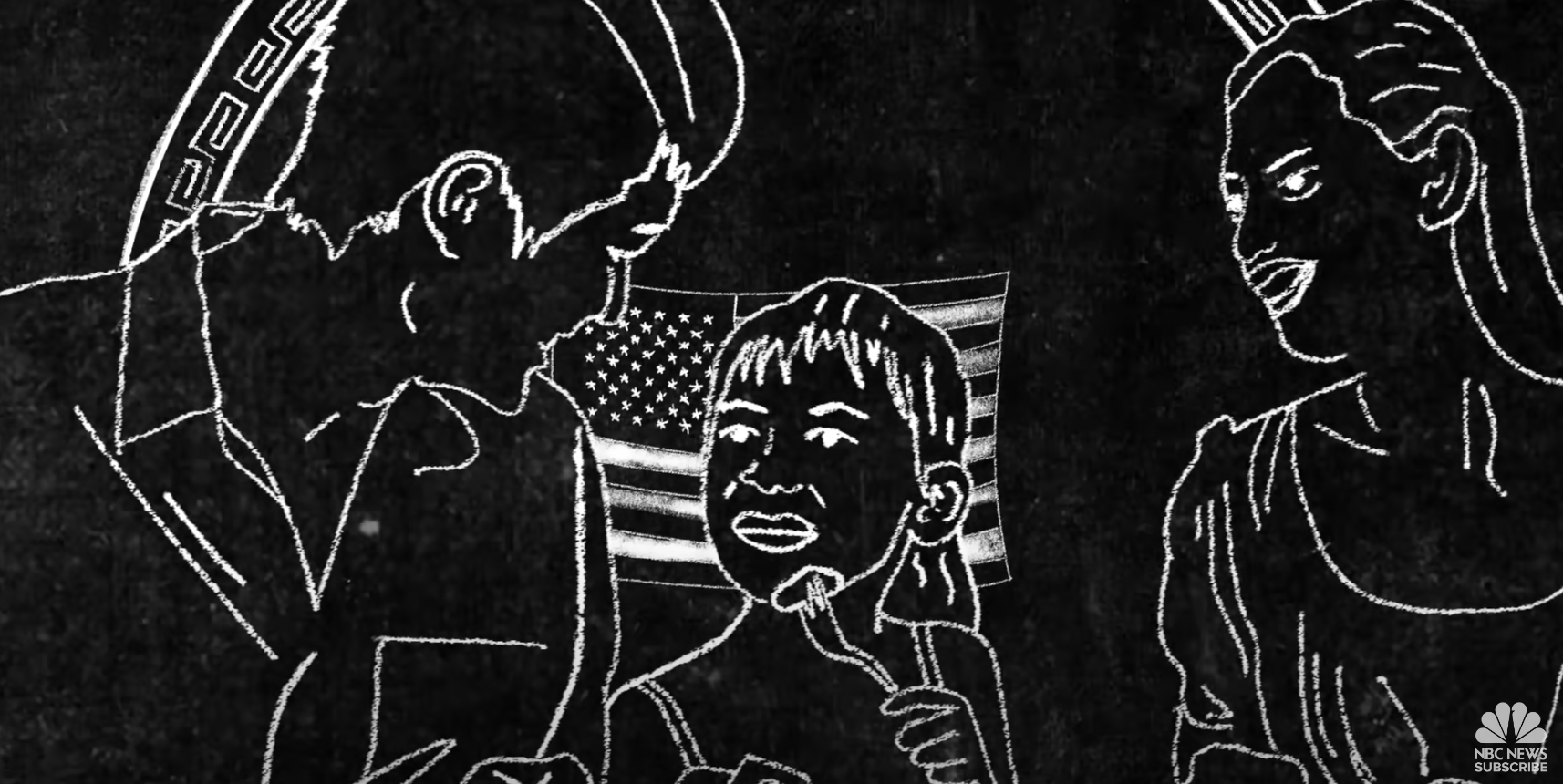
My Jewish Father’s Chinese Food Was Legendary

The cover of the cookbook shows a bamboo basket laden with bell peppers, asparagus, and broccoli. Surrounding it on the table are scallions, ginger, dried mushrooms, peapods, a red onion. A fish, an eggroll, some dumplings, a pair of chopsticks. In the background, a white ceramic soup tureen waits coquettishly to be opened. A long, seductive purple eggplant and buxom bunch of bok choy lean against a garden window, or maybe it’s a wall with flowery wallpaper. It’s such abundant imagery, you would never notice what’s missing: shellfish, for example, and pork.

None of the items on the book jacket are conspicuously kosher, nor does the design suggest so-called Asian fusion. Today, an equivalent cookbook might be titled Jew-ish Chinese and include dishes like Mission Chinese’s famous kung pao pastrami. The book is Millie Chan’s Kosher Chinese Cookbook, or Millie Chan, as it’s known in my family. It predates this trend, but encapsulates an older American culinary tradition: the Jewish embrace of Chinese food. 

We love [Chinese food] for the same reason everyone does: it’s fucking delicious.

I inherited my copy of Millie Chan from my dad, John, who borrowed it from our public library in Shaker Heights, Ohio when I was a child and never gave it back, and who died suddenly in 2021. My dad was an incredible cook, entirely self-taught and with astonishing improvisatory talent; he was equally at home barbecuing ribs, deep-frying cod, and baking cardamom poundcake. But his Chinese food was legendary, earning him acclaim from the friends my brother and I brought home, and from our extended family, who were treated to feasts that took three days to prepare. Our admiration was enriched by a keen sense of irony: Who would think a Jew from Cleveland could cook such good Chinese food!? 


“Why do Jews love Chinese food?” is a silly question. We love it for the same reason everyone does: it’s fucking delicious. The other questions—where, when, and how American Jews started eating Chinese food—are more interesting. The cross-cultural encounter began in New York’s Lower East Side at the turn of the twentieth century, where Eastern European Jewish and Chinese populations were surging. The neighborhood’s other significant immigrant groups, from Italy, Ireland, and Germany, established restaurants that served their own communities. Like any exilic gathering places, these businesses tended to reflect the communities’ religious practices; a 2021 article in the Forward, a still-extant publication that began as a Yiddish newspaper in late nineteenth-century New York, notes that Italian restaurants at the time often incorporated Christian iconography into their décor. The restaurants may have also expressed or enforced antisemitic prejudices. 

The Chinese and Jewish communities were alike in how they differed critically from the other immigrant groups: both communities were non-Christian. Jews’ practice of going to Chinese restaurants on Christmas dates from this moment in history: in the milieu of the Lower East Side, Chinese restaurants were the only businesses open that day. 

Now, the juicier question is, how did Jews justify eating at treyf, that is, non-kosher restaurants? Kashruth, the Jewish dietary laws, are, basically, as follows:

  1. Don’t mix meat with dairy.
    • No dairy ingredients in the cooking process (can’t sear steak in butter) or dairy served alongside (can’t sprinkle parmesan on spaghetti and meatballs);
    • Fish is not meat (hence bagel, cream cheese, and lox).
  2. You can only eat birds that:
    • don’t sing; and
    • don’t hunt.
  3. You can only eat fish that have:
    • scales; and
    • fins.
    • (That means no shellfish).
  4. You can only eat meat from land animals that:
    • have cloven hooves; and
    • chew their cud.
    • (That means no pork).

We’re off to a good start with Rules 1 and 2. Chinese food is largely dairy-free and as for poultry, chickens and ducks are neither musical nor predatory. It’s when we get into Rules 3 and 4, however, that we have to get a bit…creative. 

A new idea emerged under the moniker “safe treyf.” While the Jewish immigrants to New York would never order twice-cooked pork or—God forbid!—shrimp in lobster sauce, they might look the other way on dishes where the offending ingredient was finely minced or otherwise concealed such that they weren’t looking directly at it. In his book A Kosher Christmas, Rabbi Joshua Eli Plaut reminds us how much wontons resemble kreplach, traditional Ashkenazi dumplings which are typically served in soup. In what was essentially an act of cognitive dissonance, Plaut says that “Chinese food eased the transition from kosher to acceptable non-kosher eating.” Or, as rapper Action Bronson put it in his contribution to the book The 100 Most Jewish Foods, “In New York City, Chinese food is as Jewish as matzo ball soup.” 


I grew up about a century after this practice emerged, and while my family didn’t go in for safe treyf, we did have another workaround: keeping kosher in the house. Maintaining a kosher kitchen meant that we bought only kosher meat, never combined meat with dairy, and had separate flatware and cutlery for milchig and fleishig (dairy and meat, respectively, plus a whole additional set for Passover, when a special set of rules kicks in). Out in the world, however, all bets were off. At pizzerias, we ordered sausage pies. On vacation in Florida, I gorged myself on shrimp cocktail. And in Chinese restaurants, we went ham. 

At pizzerias, we ordered sausage pies. On vacation in Florida, I gorged myself on shrimp cocktail.

Keeping a kosher home was important to my dad. My mom is a second-generation American Jew, the product of an assimilated family, raised on cheeseburgers. But my father’s parents were European immigrants, Holocaust survivors. My babi and zayde met after liberation, in a displaced persons camp in Germany, and it was there that their first child, my aunt, was born—conceived, I think, more out of desperation than love. Their common language was Yiddish and, when they settled in Cleveland, their default religious practice was Orthodox Judaism. 

In his book The Holocaust in American Life, the historian Peter Novick addresses himself to a paradox that surprised the hell out of me when I first learned about it: 

Generally speaking, historical events are most talked about shortly after their occurrence, then they gradually move to the margin of consciousness … With the Holocaust the rhythm has been very different: hardly talked about for the first twenty years or so after World War II; then, from the 1970s on, becoming ever more central in American public discourse – particularly, of course, among Jews, but also in the culture at large.

We didn’t start to have the memorials, museums, movies—all that public evidence of events deemed significant—until the late 1960s; studies and commemorations of the Holocaust have increased exponentially since then. (Novick’s book came out in 1999, a few years after Schindler’s List and then Life is Beautiful won Best Picture at the Academy Awards.) Novick offers a matrix of explanations for the initial public silence, including political realignments in the Cold War, part of which was an unwelcome association of Jews with communism, and the lifecycle of collective memory. He also acknowledges that we don’t really know what people—survivors, their children, and those spared the horrors—thought, felt, or said amongst themselves in private. 

My dad told me what he knew about his parents’ experiences, but for the most part I learned about it in school like everyone else.

What I know is this: we never talked about it in my family. My grandparents never “shared their stories”; they weren’t the type of mentally stable, financially successful survivors who, by the time of my childhood in the 1990s, were invited to speak and show their tattoos at school assemblies for Holocaust Memorial Day (established in the United States in 1979). A friend I grew up with recently joked that, when you’re a Jewish kid in America, they teach you about the Holocaust as soon as you can spell your own name. My dad told me what he knew about his parents’ experiences, but for the most part I learned about it in school like everyone else.

In the aftermath of the war, my babi was a broken woman, young and suddenly the mother to two children in an unfamiliar country. What she went through in the camps annihilated her capacity to love. And so, among greater tragedies, she was basically a terrible cook. In her kitchen, she made pitiful attempts to recreate the food she knew, the humble dishes of her native Subcarpathian Rus, a region no longer designated on any map. Misguided and largely miserable were her home, her family, and her food: my dad was raised in a household of both emotional and gustatory famine.


I have no idea where or when my dad learned to cook, and now that he is gone, I regret that I never asked him. I know that, his whole life, he was curious and smart, hungry for culture. When I was growing up, my mom was always the primary breadwinner, but my dad was the primary cook. (She’ll be mad at me for saying this, but it’s the truth: my mom’s cooking repertoire is limited to about five dishes—all of which we love, Ma, honest!). In the early days of their relationship, my future-dad wooed my future-mom with elaborate meals prepared in a modest apartment where his kitchen consisted of a hot plate. According to family legend, they had their first fight when he came to her place to cook dinner and she didn’t have any salt. So throughout my childhood, although it was my mom’s paycheck that put food on the table, it was my dad’s cooking that made you want to pull up a seat. And Millie Chan, borrowed from the library, likely on a whim, opened up the world to him. 


Millie Chan, the Millie Chan, was born in San Antonio, Texas in 1933. When she was a child, her parents owned grocery stores and a restaurant that catered to the large Chinese-American community there. In the early 1960s, she moved to New York because her husband got a job working for I. M. Pei, who was a family friend. There, Millie started offering Chinese cooking classes, and her Jewish students taught her about kashruth. The Kosher Chinese Cookbook, which came out in 1990, is her only publication. 

It encouraged one of his favorite hobbies: sourcing ingredients from the many terrific greengrocers and neighborhood markets around Cleveland.

Millie was interviewed for the Houston Asian American Archive oral history project in August 2021, just three months after my dad died. In the interview she says, “And—oh, meanwhile, I did write this cookbook, which also was good for me to have done, about kosher Chinese because I think I’m the only Chinese person who has ever written about kosher cooking. And so that’s kind of interesting.” Millie Chan—not Jewish. But she sure sounds like one of us. 


Kosher Chinese home cooking became my dad’s greatest legacy, and Millie Chan turned out to be the on-ramp he needed toward this. It encouraged one of his favorite hobbies: sourcing ingredients from the many terrific greengrocers and neighborhood markets around Cleveland. Sriracha was a household staple for us 15 years before it became ubiquitous: my dad called it “Vietnamese,” no noun, and bought it in quantities that could supply a small restaurant. Millie Chan helped him refine and expand on his already impressive knife-skills. Bee Wilson’s chapter on knives in her book Consider the Fork includes this paean to the tou, the Chinese cleaver: 

With this single knife, Chinese cooks produce a far wider range of cutting shapes than the dicing, julienning, and so on produced by the many knives of French cuisine. A tou can create silken threads (8 cm long and very thin), silver-needle silken threads (even thinner), horse ears (3 cm cut on a steep angle), cubes, strips, and slices, to name but a few.

He made a deeply savory beef with leeks that simply could not be improved on.

My dad struggled with severe depression for his entire adult life, perhaps an inevitable outcome of his upbringing; his happiest moments were in the kitchen, cleaver in hand, cutting mountains of vegetables. He described this activity with a word I’ve never encountered in any food writing: “hocking.” It’s Yiddish, for chopping. Millie Chan allowed my dad to feed his family, a generally happy bunch who took pleasure in good food and each other’s company. It let him create a household of emotional and gastronomic bounty.


Just as Chinese restaurants eased the transition out of religious observance for New York’s Jews, so did my dad’s Chinese cooking outlast my family’s commitment to keeping kosher. Oddly enough, it was because of September 11th, which caused my ever-pedantic father to declare organized religion to be the greatest killer in the world. As a result of this revelation, he dispensed with kashruth in our home. I was in tenth grade. During the Millie Chan era, he loved to say that anything you did with pork, you could do with turkey or veal. But then, by late 2001, pork, shrimp, and scallops quickly appeared in our refrigerator. Still, it was everything he learned from his first cookbook teacher—just applied more broadly. The same local grocery stores, the same cooking techniques, the same feelings of delight and pride in the creations coming from his kitchen.

Some of his kosher dishes stayed in the repertoire. For Thanksgiving—which we celebrated with our extended family, many of whom are observant and keep kosher—he made turkey eggrolls. A perfect non-dairy appetizer, they immediately became everyone’s favorite dish on the holiday table, and, eventually, an absolute requirement for the festive meal. He made a deeply savory beef with leeks that simply could not be improved on, and he could casually throw together the most satisfying stir-fried vegetables with tofu you’ve ever had. My favorite thing was something he cheekily called Tender Tiny Turkey Balls: meatballs flavored with scallions and ginger, served over stir-fried shredded Napa cabbage and fat, slurpable udon noodles. When I went away to college, I asked him for the recipe via email but was too intimidated to make it myself—it turned out, the meatballs were so tasty because they were deep-fried. But I knew I could always request it when I came home for a visit.


He hallucinated that his hands were full of bread, and he was breaking off chunks and handing them to everyone.

For many years, my dad suffered gastrointestinal ailments that acutely compromised his quality of life. Some Thanksgivings, he wasn’t well enough to come to the dinner, but he’d always send a tray of eggrolls, knowing the family looked forward to them all year. During that time, he refused to alter his indulgent diet, for which I gave him no end of guff. He was convinced, fatalistically I thought, that nothing he tried would make a difference. Or maybe he just thought, as long as we’re alive, let’s really live.

Then, in the spring of 2021, he was diagnosed with lung cancer. It was Stage IV by the time they found it, and he died within a month. How can somebody be sick for so long, and then die so suddenly?

In his last lucid days he talked about literature—Kafka, Brecht—and food. He hallucinated that his hands were full of bread, and he was breaking off chunks and handing them to everyone in the room. When he offered some to the hospice nurse, she refused to play along, explaining impatiently, “There’s nothing there.” 

“Take some,” he insisted. “There’s plenty for everyone.”


He had been on disability for a while at that point, a result of his poor physical and mental health. In fact, he’d been unevenly employed my whole life—that’s why he’d had the time to cook those three-day Chinese feasts, and he accordingly had no fortune to leave behind. My material inheritance from him consisted solely of sentimental objects, chief among them Millie Chan, still bearing the telltale stamp from the Shaker Heights Public Library. I also took his wok, deeply and perfectly seasoned. But with time I realized the true wealth I had inherited from him, which I’d had all along: I embody Jewish history, for I am a miracle of survival. My practice of Judaism and expression of Jewishness result from forces larger than myself—politics and social mores—as well as whatever I do or don’t care to uphold. And I show love through food.

Part of mourning my father’s death was acknowledging the loss of my favorite dishes he cooked, which felt like such a trivial thing to get hung up on. But then, a few months later, we faced the first Thanksgiving without him, and one of my cousins brought a package of kosher frozen eggrolls. The tradition is enshrined now, and the very youngest generation of my family will grow up eating eggrolls on Thanksgiving without ever meeting the man who started it. I wonder, in a few years, will they be puzzled by the presence of this appetizer? Or will they chalk it up to Jews’ love of Chinese food?

I admit that I wept, literally wept, thinking that I’d never again taste those tender tiny meatballs.

But I realized, he didn’t invent that recipe, it’s Millie Chan. I flipped through my copy, his copy, until I found it: Sweet-and-Sour Turkey Balls. But Millie doesn’t include the noodles, which absolutely make the dish; those were my dad’s touch. And then I remembered that college email exchange, when he passed the recipe on to me. The recipe I now pass, in his words, on to you. I’ll leave it to you to puzzle out what are the requirements for how the recipe works versus what were just my dad’s preferences (and typos). He innovated the noodles after all. And I’m starting to adapt it, too. The last time I cooked these meatballs, I was cooking for someone I love, and I went with the best-looking meat I could find at my farmers’ market: pork. It still tasted like home.


John Weil’s Tender Tiny Turkey Balls

Alright. (with my refinements) Mix marinade

  • ½ cup minced scallions (practically an entire brunch)
  • 1 tsp. minced ginger
  • 2 TBSP light soy sauce
  • 1 TBSP corn oil
  • 1 tsp. kosher salt
  • 1 very big egg
  • 2 TBSP warm water

Mix all that stuff up in a big steel bowl with a whisk. Then plop in one lb of ground turkey and, stirring in one direction, mix it until you have uniform goop. (It will seem looser than it should)

Now shred a pound or more of Chinese cabbage. Throw a couple tablespoons corn or peanut oil in a wok and get it good and hot. And the cabbage and toss until it is entirely coated by oil. Then throw in ½ tsp. salt and ¼ tsp. sugar and toss. Cook until cabbage wilts. Pull out of wok and set aside.

Now, with your hands, scoop out walnut-sized balls of the turkey mixture and arrange them on a platter for deep frying. Heat t 1 ½ to 2 cups corn or peanut oil in a hot wok until it is super hot. Getting it to the right temp will take minutes. You’ll know its hot enough when you touch a bit of a meatball to the surface and it starts to bubble immediately. 

Drop the balls, by hand into the hot oil. drop in as many as will float to the top at one time. Fry for a couple minutes, periodically turn them in the oil. Put a sieve over a bowl and drop the fried balls into the sieve for the oil to drain off. Repeat until all those bad boys are fried up. 

Oh, and I forgot. Udon noodles are my own touch, but essential. I like the round fat ones. Cook up about a pound (don’t add salt) and combine with the cabbage in a large serving dish. Now add the cooked meatballs and

PREPARE THE SAUCE

  • Add 2 TBSP of the warm frying oil into a small saucepan. Now add
  • 4 TBSP sugar
  • 3 TBSP white vinegar
  • 2 TBSP soy sauce
  • 1 tsp sesame oil (must be “Kadoya” brand)
  • 1 TBSP cornstarch dissolved into ⅔ cup of water

Heat this mixture up over moderate heat, STIRRING CONSTANTLY, until sauce thickens and turns translucent. dump sauce over cabbage, noodles and balls. EH VOILA!!


Ukrainian Writer Artem Chapeye On His Decision To Fight for His Country

Listen to the local voices here on the ground, not some sages sitting at the center of global power. Please start your analysis with the suffering of millions of people, rather than geopolitical chess moves. Start with the columns of refugees …”

Last March, shortly after Russia’s renewed invasion of Ukraine began, the Ukrainian writer Artem Chapeye penned a short letter addressed to “some Western intellectuals.” In it, the 41-year-old took to task the idea that his native country somehow bore complicity for its larger neighbor attacking it. He understood his audience might need a refresher on what a just, violent resistance looked like and entailed: “I know other countries have faced their share of foreign intervention,” he wrote, “and right now you’re witnessing overt Russian imperialism … before ‘overthrowing capitalism,’ try thinking of ways for us Ukrainians not to be slaughtered.”

It was a searing indictment of a certain type of detached worldview, reminiscent, for me, of George Orwell’s writings in the thirties on the Spanish Civil War, imploring the wider world to care about what was happening there. And it came from a person not easy to dismiss: Chapeye’s an intellectual force himself, the author of five novels and four books of creative nonfiction who has translated the works of luminaries such as Edward Said, Gandhi and Noam Chomsky. (Chomsky got called out by name in Chapeye’s letter due to some of his positions regarding the war.) Chapeye is open about his left-wing politics and served as an activist during the Ukraine Without Kuchma and Orange Revolution protest campaigns, and witnessed the killing of protestors during the Maidan Uprising in 2014. He’s executed nonviolent resistance in practice, and, before Russia’s invasion, at least, considered himself a pacifist.

Blunt and candid though it is, Chapeye’s letter did leave out one pertinent fact: only days before, after evacuating his wife, two sons and the family dog from their home in Kyiv, he’d enlisted in the Ukrainian army as a private. Becoming a low-ranking soldier in a military at war would be quite the career change for any writer, let alone one already with a collection named a finalist for the BBC Nonfiction Book of the Year. (The Ukraine is forthcoming in the US in 2024 from Seven Stories Press.) But Chapeye had his reasons.

Last autumn, while in Ukraine reporting on the war for Esquire, I contacted Chapeye for an interview, eager to talk with someone who thought about his nation’s conflict through both a moral lens and a historical one. Reluctant soldiers seem uniquely qualified for this role, I’ve found, and Chapeye more than provided. He joined me on an encrypted video call from an undisclosed military base. Bearded, wearing a ballcap and earbuds, he looked like most any other soldier unwinding after a long patrol, all the while revealing a singular mindfulness. Questions he especially wanted to ponder were preceded by splintered eyes and heavy cigarette drags.


Matt Gallagher: Where are you now? Can you tell us what life’s been like since last February?

Artem Chapeye: I am on a base in western Ukraine, there’s a lot of military facilities to be protected here. I am not on the front line, I am rather far from it, as I am serving in a so-called military warrant order unit, which is basically something similar to military police, except we don’t really interact with civilians. Our main thing is making sure there are no diversion groups, making sure that Ukrainian military isn’t doing any crimes. So there’s no looting, no drugs, stuff like that. It’s not heroic work but I still find it very important.

What’s changed, other than everything? I remember the end of 2021, there was this talk that, “Okay, we all know that Russia is going to invade, we all know that the West will try to help, the only thing we don’t know is how Ukrainians will behave.” I must say that we didn’t know either how we would take it, I didn’t know how I personally would behave until the first day of war. Before, when it was theoretical, I was pretty sure I would flee because, well, family is the first thing for me. I never saw myself as a soldier.

Then everything changed in just one day because you realize there can be no nonviolent resistance to Putin’s missiles. When you wake up to the building rumbling, the choice is made on a primal level: I must protect my children.

MG: Has becoming a soldier, even a reluctant one, changed how you think about your country and the world?

Everything changed in just one day because you realize there can be no nonviolent resistance to Putin’s missiles.

AC: It’s very easy when you have money, or are part of the intelligentsia, people from the artistic professions like myself and even the doctors and stuff like that, to feel removed from the consequences of war. And I’ve been impressed, many have volunteered in some way. They had a choice, as did I. With most people, there was no choice at all, and so my basic reason for joining up was solidarity.

It was more of a class solidarity which had almost nothing to do with patriotism. Also there is this psychological reason of this existential choice. Like when you are talking about justice and fairness your whole life, and then, okay, here’s the time of injustice, and if you decide to not oppose it? That would feel like a betrayal of yourself. Well, I would die in that moment, I think I would die, being what I consider myself, or at least what I want to be.

MG: So enlisting was a bit of a moral decision, then.

AC: I have been much influenced by existentialists such as Sartre and Camus, French ones, and there was a very important thing, which I also believed before, that you are what you do. So there is no predestination, there is no essence before existence, your essence is defined by your existence and by your existential choices. For me, going to the army is one of these choices.

I believe this applies for the country as a whole, also. My older boy is 10-years-old and learning history for the first time as a separate school subject. When we talk about it on Zoom—it is very different now. When I was a kid thirty years ago, we were learning the history of our martyr nation, of a nation which was always oppressed, which was always suppressed, which was always abused in different ways. It was mostly a history of oppressed people.

Now, they speak of learning together the history of a heroic nation. It’s about more than suffering. We have changed what we are by our choice, by our choices not to succumb, by our choice not to suffer defeat, not to quit, not to give up, and by our choice to fight. I would say this is a defining moment in our history, and to quote [the historian] Timothy Snyder, “No people have to pay so dearly for becoming a nation.” But that’s what Ukrainians are doing now, and it’s drastically changing how we see ourselves.

MG: Before the war you considered yourself a pacificist, right?

AC: Especially since 2014 and Maidan, yeah, because, well, as a young person, I considered myself rather a revolutionary. And then when revolution happened in Ukraine, I was very much obsessed with people dying, and then I went to Donbas [in eastern Ukraine] as a journalist, and saw the war being fought there, and I hoped for another way.  

MG: And what about now?

AC: Well, I think that there are times when even pacifists have to fight. It was an interview of some relative of Tupac Shakur who was in the Black Panthers, and that’s what she said. Something like, “I don’t want to fight, I would like to be a gardener, a sculptor, whatever, not a warrior, but if I don’t fight, I would feel that I am compliant to evil and I would feel that I’m an accessory to evil.” So this is the situation right now in Ukraine. I still think that given other choices, I would be a pacifist but now we don’t have such an option.

MG: Is there a relationship for you between being a soldier and writer? 

AC: I would say I’ve put writing on hold for now. One of my problems as a writer is that my method is more description than invention … it’s something Jack London said about his own work, I am very much similar, dependent on real events.

We have changed what we are by our choices not to succumb, not to suffer defeat, not to quit, not to give up, and by our choice to fight.

And I don’t mean necessarily writing about the war, either, because well, I’m not on the front, but social writing needs to be based in reality. I’ve tried several times to start writing, but this precarious situation when you don’t know your tomorrow … it’s good for poems, it’s maybe okay for essays and short stories, but I mostly like to write novels. At the moment I only write essays, sometimes, and that’s on request, and that’s also very difficult to get yourself into, in terms of organization and finding time and also the psychological space.

I’ve written before about regular people living under extreme capitalism in the future, and I would like to again, someday. I’ve also been influenced by the works of Naomi Klein who has written about the world becoming divided into “green zones” and “red zones,” safe places and not. That was just one sentence from her but I became intrigued with it and it became the title of my first novel (2014’s The Red Zone). 

When I return to that type of writing, will my time as a soldier impact it? I feel that it must.

MG: Do your fellow soldiers know you’re a writer? If so, what do they think about it?

AC: I didn’t hide it, but I also didn’t tell anybody that I’m a writer because, you realize, people don’t know writers … in my unit of about 100 people, I feel like I’m the only person who actually reads a lot. Which is life. I have a funny story about people don’t know about writers. We were walking in the city on patrol, and I was telling the head of my platoon, “Okay, this is the building where one of the most renowned Ukrainian writers used to live,” and I named them, and he’s like, “Who’s that?” And later he shows me another building and says, “This is one of the buildings where this guy lived,” and I’m like, “Who is that?” And it was some kind of a criminal war lord from the nineties. So people have very different frameworks.

MG: Yet you seem fluent in, or at least conscious of, these various frameworks. Which is maybe part of being a social writer. Have you just learned to live with this sort of duality and friction in your new life? 

AC: That’s also one of the reasons why I cannot really write now. Because I cannot write honestly until the war ends, quite honestly, in details and showing the inside, that it’s not all roses and we are not elves as being presented by our propaganda. Which is of course necessary in a war of this magnitude, but it gets hard when I use the writer part of my mind. This is why it’s important to me that I’m serving in a unit that fights war crimes, including any by the Ukrainian army, so we are not like the other side, we are defenders of ideals and beliefs. Yet I still understand there’s also Ukrainian propaganda, and I realize that even as I talk to you, I am agent of it, because there are some things I wouldn’t say, even as I’m trying to be reflective and critical. 

MG: You covered the war in its earlier phase as a reporter. (Chapeye and journalist Katerina Sergatskova coauthored the 2015 book War in Three Letters, a collection of their dispatches.) What ethics do you maintain for writing about violence and war? How do you find the balance between telling people, describing to people what it’s really like, versus exploiting it, going too far, being pornographic about it?

AC: Yeah, I understand what you mean. So that’s also one of the problems. I don’t know now how to write about it now, this is one of the cases where words actually fail … I was kind of thinking about maybe turning this into sort of a fable, but I still cannot find words for all which is happening because, well, let’s face it, no one believed that such atrocities are possible. We are considering ourselves part of Europe, and nobody believed that such atrocities are possible in Europe, in the enlightened 21st century. 

Here’s another anecdote: maybe you remember there was a Russian military show of force in 2021. I’d planned a vacation with both of my kids, just the three of us, as my wife had to do some work. So we planned a vacation beforehand and we rented a small house in the countryside, near the border of Russia. Then there was their show of force, and I was like, “Okay, this is the kids’ school break and we already rented [the house] and I think we’d already paid half. Even if they invade, I’ll just say that I’m civilian and I will take my kids’ documents to prove that they are my kids and everything will be okay.”

After [the 2022 massacre in the small Ukrainian city of] Bucha, I realized how naive I was. After all the forced deportations of Ukrainian children to Russia, I realized how naïve I was. 

MG: You said earlier one of the reasons you joined up was you didn’t want to consider yourself a victim, but you wanted to be an agent who resists occupation.

AC: Yes.

MG: Could you go into that a bit more? I’ll be honest, my experience in the American military was that folks don’t always join with quite so much consideration. Though of course we weren’t under existential threat, so it’s a flawed comparison.

AC: Well, I’m distinguishing between the ideological and psychological. So basically my ideological reasoning was the solidarity with the common cause, that we don’t have a choice whether to fight this or not. Then one of my main psychological reasons was I hated this feeling, like when we were running away with our kids, I really hated this feeling of being a victim.

I don’t know where the term comes from, but in Ukrainian, we have the term of Spanish shame, which means being ashamed for other people. Here’s a moment that maybe combines the ideological and psychological.

On the first day of fleeing [last February], we traveled with an older man, a villager who served in the Afghan war in the Soviet times. I liked him a lot, for me, he was representative about what is right about our country. That evening we learned he was being mobilized [for this war] because of his experience. And his son, who I liked, too, and is more like me, of the urban middle class, the son was very relieved he hadn’t been [mobilized.] Later he refused to keep traveling because he’d become afraid that someone would ask why he, as a young man, was not mobilized.

And this reminded me of this great moment in 1984 by Orwell when Winston Smith was broken by one thing, when he was afraid of rats, and when he was presented with rats, which would torture him, he begged, “Don’t do it to me, do it to Julia,” his loved one. And I thought, I don’t want to be like this, I don’t want to be this kind of guy who would prefer his father is in danger and feeling relief it’s not him. In retrospect, this seems like the moment when I decided that I would definitely join.

MG: Are you reading anything interesting? Do you even have time for it?

AC: I do but it is very difficult to get immersed. Books that are more escapist can be easier. I recently finished The Three-Body Problem by a Chinese writer [Liu Cixin]. I read it in English, because it’s not translated into Ukrainian, or at least I couldn’t find a copy that has been. It’s an amazing book about an alien invasion … there’s some Chinese propaganda in it—well, not propaganda, but he, the author, is basically influenced by the Chinese framework of thinking as much as I’m influenced by a Ukrainian framework or some American authors are by the American framework. Sometimes it disturbs you to an extent, but if you remember their framework, I think you can better appreciate the writing, the thinking. This was my experience with Cixin and The Three-Body Problem.

I’m also learning German and French in bits, but it’s difficult to study because I’m almost never alone. This is part of a soldier’s life that maybe people do not know. To be by oneself now is like a dream.

A Taxonomy of Gay Animals

The owl wore my tank top.

The hippo swam in rice pudding. The tree was actually broccoli. The fish were made of wood. I’m lying, except for the part about the owl wearing my tank top. It’s a gay thing, and I’ll explain why.

In my world, we have an animal code. It goes way beyond the generic gay bears and gay otters. There are gay fish, gay hippos, and gay raccoons.

Raccoons eat anything. They are at the same time highly affectionate and highly independent. They need their cuddles and they also need their space. They often have dark circles around their eyes. They’re good with their hands.

Like raccoons, owls are more active at night than during the day. Owls are always asking who. Who’s going to be there? Who’s paying? Who’s lost weight? Who’s more popular? And when you answer them, they act like they don’t care. They can turn their necks almost all the way around. They also eat mice.

A mouse is small and hairy with a high-pitched voice. He often has big ears.

I met an owl at the White Horse Bar in Oakland like five years ago. I had never been at the bar before, so I went in, and my eyes adjusted to the light, and there was that owl, by the pool table, looking at me, staring me down, as owls do. He made a bee-line toward me, and we ended up at the bar, drinking gin and tonic, when he finally asked me, “Who are you?” (Typical owl.) “Are you a mouse?”

I had to laugh. “Yeah, guys always assume that I’m a mouse. But to be honest, I’m more of a kangaroo.”

I went to his place. I tried to convince him that I was a kangaroo, but he kept eyeing me as if I were a mouse. I did all that I could to prevent him from eating me. In the middle of all of this, I lost my tank top. I even looked deep down in my pouch. But I went home in a Lyft, shirtless.

I bumped into him in the Castro recently. I was totally embarrassed, keeping my hands in my pockets. He was unfazed, wiggling his neck around. I grabbed my now-boyfriend’s hand, a dextrous raccoon. As we walked away, I whispered in my boyfriend’s ear, “Oh my god, that owl’s wearing my tank top.”

Where There Are No Kangaroos

Queers can feel a bit lost. Like when I tried to explain it all to my mom, it was difficult to find the right words. First I was like, “I’m still your son. I’m still the same boy . . . but I’m also a kangaroo. You understand, right?”

My mother is an immigrant from Korea, and a Korean creation myth is told where humans are made from the bones of animals, like bears and tigers. Foxes turn into people, often women, or maybe it’s that women are possessed by fox spirits.

But my mother grew up Protestant Christian. Around 1900, Christianity swept across Korea and along with it, these animals and their spirits were apparently swept off the edges of the peninsula.

She guffawed and told me, “There are no kangaroos in Korea.”
I took my phone out of my pocket and showed her a video of all the Korean kangaroos getting iced coffee in Itaewon. She snatched my phone to take a closer look. I knew iced coffee was her favorite drink. Little did she know that it is the elixir of the gays.

In many ways, my mother should be a gay icon. She’s matter-of-fact, dramatic, and at times dismissive. One time when I was in elementary school, I told my mom that I wanted her to be my friend. She burst into laughter, “Your friend? I can’t be your friend.” And then just left it at that. See? She’s an icon.

I remember as a kid watching her put on lipstick. I would put her skirt on my head and walk around pretending it was my hair. Once I found her secret stash of jewelry in her closet. Every morning she would pray in the basement, and I could hear her crying. This wasn’t just one time. She would cry every single morning at 6 am. She was literally Tammy Faye Baker sans dripping mascara.

So flash forward again to me explaining how I was her son as well as a kangaroo and that there are many kangaroos in Korea, too. (There are also bears, otters, raccoons, and fish, but I wasn’t going to go into that just yet.) She was still watching the video about the kangaroos of Itaewon. She got to the part of the video where they interviewed protesters. There was a pastor holding a sign, saying, “These kangaroos are from America. They’re not native to Korea.”

My mom pointed at the pastor. “See? Kangaroos are from America. You are Korean, so no more kangaroo. Get me some iced coffee.”

I tried to explain to her that that son of a bitch pastor is probably an owl. But she just didn’t get it.

7 Novels About Selling Your Soul

Unlike the narratives created in both literature and film, selling one’s soul usually isn’t a literal Faustian bargain. Despite our devilish fantasies, it’s not Al Pacino leaning across a desk, asking us to sign away our innermost being for fame and fortune, scantily clad sylphs gyrating in the background, urging us towards our own temptation. While Faustian bargains certainly exist in the everyday world, they are generally much more subtle in nature. 

I have always been fascinated with the darker side of things., I consumed Anne Rice’s entire oeuvre at fifteen, then wandered the streets under the full moon, desperately hoping a vampire might appear in a dark alley to bestow “the dark gift,” as Rice puts it, with one sharp kiss. Throughout my life, I’ve routinely been called “intense,” “driven,” or “obsessive.” Many people might take offense to these descriptors, but the Scorpio rising in me positively swoons. Any person, place or activity that could be described as “too intense” or “too much” has always had a visceral pull. If I were asked to sell my soul to Lucifer himself, I’d probably scramble for a pen—just to see what might happen next. Like TikTok famous confidence guru Serena Kerrigan, I have always been a big proponent of doing things, “for the plot.” Of course, this has gotten me into my fair share of trouble of over the years—until I learned to assign the more dangerous arcs to my characters instead of enacting them in my own life.

My new novel, The Rise and Fall of Ava Arcana, explores the heights and pitfalls of fame through the story of two women, both destined for pop stardom. The irrepressible Lexi Mayhem, who will stop at nothing to reach the top, and Ava Petrova, whose loyalty to Lexi—and her own talent—may cost her not only her soul, but her very life itself. Here are 7 books about losing your way on the climb to the top, where the pursuit of fame and power beyond your wildest dreams may be the ultimate devil’s bargain.

Beauty by Brian D’Amato 

Welcome to the not-so-distant future, where human faces can be sculpted like putty by the right pair of gifted hands. A modern-day Frankenstein that interrogates our cultural obsession with beauty and youth, D’Amato depicts the glamorous and seedy world of Manhattan in the ’90s from the POV of Jamie Angelo, a marginally successful painter whose side hustle is performing amateur plastic surgery on the elite in his downtown loft. But when Jamie decides to “create” a celebrity, using his girlfriend Jaishree (whom he renames Minaz) as his muse, and becoming a surgical Svengali in the process, he descends down a rabbit hole of depravity and soullessness, turning Jaishree into not only a cultural icon, but a literal monster.

Look at Me by Jennifer Egan 

I have always been fascinated by celebrity, but even more so by imposters. Growing up, I devoured all of Highsmith’s Ripley books like candy. Egan’s Look at Me is, in my opinion, an overlooked masterpiece, light-years ahead of its time in prefiguring our current obsession with influencer culture. Egan’s novel is the story of two Charlottes: Charlotte Swenson, a model, who after a horrific car wreck, is left with eighty titanium screws in her face, and her namesake, the daughter of her best friend from high school, a precocious suburban teen coming of age in small town Illinois. Although the surgery model Charlotte endures after the crash succeeds in restoring her former beauty, she is now weirdly unrecognizable, a veritable stranger in the glamorous world she once occupied so seamlessly. Eventually, she becomes involved with an Internet start-up seeking to monetize the lives of both “Ordinary” and “Extraordinary” people, and her alter-ego becomes a viral sensation for viewers to obsess over, watching and cataloging her every move. The novel explores how and why identities shift throughout the course of a life, and how one’s teenage years are a catalyst for the person we will one day become. But most of all, it serves as a warning of the very real dangers of constructing an identity for the sole purpose of mass consumption.

The Vampire Lestat by Anne Rice

Full disclosure: I am team Lestat. Yes, I empathize with a callous monster. But who could blame me when he’s so charming, so depraved, so . . . terrible. Rice’s lush prose, like winding a long, velvet scarf around an exposed throat, invites the reader into a dimly lit world of decadence and decay. A snapshot of the glittering, demonic 1980s, campy as hell and the sexiest of all the Lestat novels, Rice explores what happens after the devil’s bargain has been made. Throughout the narrative, Lestat embarks on a kind of vision quest, interrogating his identity and origins (well, as much as any rock star vampire with a god complex the size of a Buick can), and through his music, catapults himself to world-wide fame. But ultimately, even from a self-proclaimed monster, sex, drugs, and rock n’ roll is no real panacea for the emptiness that lies within.

The Picture of Dorian Gray by Oscar Wilde

Wilde’s masterwork must’ve weighed heavily on her mind when Anne Rice created the character of Lestat, a manipulative charmer with the emotional depth of a puddle. No doubt that if Gray had managed to escape Victorian London and time traveled to the 21st century, he likely would’ve become a model or influencer—or perhaps even a rock star like Lestat. Sadly, he remains confined to the lavishly furnished, stuffy drawing rooms of salons, falling in love with one pretty face after another and bleeding them dry. Gray, a social vampire, is only ever loyal to his own beauty. But his rapidly aging portrait in a hidden room keeps the score, turning more repulsive with every misdeed, though Dorian’s visage stays as youthful and unblemished as ever. And in the portrait’s odious face, Gray must confront his own lack of morality, the horror of his truest and most hideous self. 

Sign Here by Claudia Lux

Everyone likes to complain that their job is hell, but for Peyote Trip, it’s a literal fact. Peyote works in the deals department on the fifth floor of Hell, where the coffee machine has been broken for a century. It’s a decent gig, but Peyote has set his sights higher, and getting the last member of the wealthy Harrison family to sell his soul just might be Peyote’s ticket to upward mobility, his one shot to climb the corporate ladder right to the very top. Lux’s darkly comic novel gleefully skewers corporate America, asking how much of your soul you’d be willing to sell for a leg up.

Lolly Willowes by Sylvia Townsend Warner

An aging spinster, wanting to escape her tyrannical family, runs away to the forest to become a witch. Published in 1926, Warner’s novel is a precursor to the work of later surrealist writers such as Angela Carter and Jeanette Winterson, and subversive and feminist as anything penned by Virginia Woolf.

Lolly takes a room in a hamlet called Great Mop, which she realizes later is inhabited entirely by witches, and adopts a feral black kitten as her familiar. But freedom comes at a price, especially for women, and so when Lolly’s nephew, Titus, tracks her down, imploring her to return home, it is only the devil himself who can grant Lolly the freedom she desires most. At the novel’s close she has a vision of the women “all over England, all over Europe . . . as common as blackberries, and as unregarded,” to which he has offered the lure of adventure, “the dangerous black night to stretch your wings in.” 

Flicker by Theodore Roszak 

Long before Night Film was even a glimmer in the eye of Marisha Pessl, there was Flicker, a 600-page love letter to the golden age of Hollywood and the secret history of the movies. Roszak’s epic novel depicts Jonathan Gates, a grad student in Los Angeles who becomes obsessed with the work of Max Castle, a legendary director of the silent screen who went on to make some of the creepiest horror flicks imaginable before disappearing from the public eye at the very height of his notoriety. Gates’ quest to find out what happened to Castle—and his lost film archive—takes him on a wild ride through the underbelly of Hollywood and into the heart of darkness itself. An homage to and exploration of midnight movies, X-rated skin flicks, and underground cinema, Flicker serves as a cautionary tale, a reminder that immersing yourself in the someone else’s story—at the expense of your own—might lead you down the darkest of paths, one from which there is no return.

Colorado, You Need to Look at Transgender People

I’m cat-sitting tomorrow for a friend, the one with the apartment right over R Bar. They’re out of town to visit their Californian partner, a children’s toy engineer with pastel blue hair. 

R Bar is the first place I think of when I hear about Club Q. R Bar and the cat I need to go feed. 

The R Bar and Lounge is a small venue in Fort Collins, Colorado. Situated in the corner of a university town, yet mostly ignored by students, the events hosted by the town’s LGBT+ bar are largely patronized by folks in their mid twenties and over.

When I took a gal there last month for a comedy show, the crowd of thirty did a pretty good job of filling up the space. I did my part in closing the distance between her shoulders and mine, and the laughter did the rest.  

The acts were bawdy, explicit, exuberant. Tall tales of threesomes gone sideways and blowjobs gone backwards had the audience cackling, rollicking in our seats. The headliner was bombastic, bisexual chaos incarnate. 

I hoped fervently in that moment for the chance to give her everything she needs.

After the show, the two of us went up to the bar to close out our tab. The bartender complimented my date’s necklace. She beamed and fawned, though I knew that she had spent the show annoyed by the way her braids kept catching on the clasp of the statement piece she wore. She told me on the walk back to her car that she wears the jewelry anyways, that after quarantine she needed all the positive attention she could get. I hoped fervently in that moment for the chance to give her everything she needs.

We made sure to thank the headliner on the way out, complimenting his set. He was endearingly bashful, peddling his poetry books to the patrons, doling out only the softest of “thank you’s” to the appreciative audience members. 


I learn about Club Q in my kitchen, from my roommate and one of his partners. They are brewing coffee, and I am brewing tea. Or I am brewing them coffee, and they are brewing me tea. It never seems to matter. It’s been cold for weeks now, and we are always heating up water and passing around mugs. 

I keep switching to decaf to push the jitters away. I don’t know how I keep switching to decaf.

My kitchen is about two hours from Club Q, or one hour, or an hour and a half, depending on if I, my roommate, or one of his partners is driving. We all have vastly different relationships with the speed limit. 

My phone buzzes, again and again and again. I hear about Club Q in my bedroom, in my living room, in my office, back in the kitchen. My community wakes up, brews coffee and tea and decaf, and reaches out. 

The gal I took to the comedy show texts me minutes after the coffee’s gone stale. Hi. Just checking in. There is rarely time to complete mourning one event before another. 

I sit with that thought and it fills me with unease. The mourning for the pandemic still roils in my gut, an unfinished plague still ripping through hospitals, still bringing a crumbling nation to its knees for a third winter. The grief I carry for my own losses hangs unfinished in my chest, a draft I’ll get around to writing an ending for eventually. 

But she’s absolutely right. The magnitude of the endless cycle of loss faced by my community as we suffer mass violence time and time again, the threat of it ceaselessly pressed to our throats, must be neutered in time for work on Monday. 

I watched from afar as my loved ones from back home had to prioritize the safety of the teenagers we once fostered and mentored together.

In September, my friends back in Illinois made a splash across national right wing news outlets for hosting a Youth Drag Show. The event had to be canceled as threats of violence poured in from across the country. I watched from afar as my loved ones from back home had to prioritize the safety of the teenagers we once fostered and mentored together. That was six weeks ago. 

That was six fucking weeks ago.

I get more texts about Club Q. 

We heard the news. 

I hope you’re okay. 

Sending love from back home. 

Do you need anything?

Others just say I love you.

I turn off the notifications from The Transgender Center of the Rockies altogether, the avalanche of grief I can’t handle on top of my own. I delete a handful of messaging apps off my phone for good measure, then seek out a handful of trusted voices. 

Rumors swirl, the grapevine shakes, we try to pass down information, try to understand what’s going on, what just happened to our community down the street before the national news seizes hold of what’s happened. 

It was a drag show.

It was a Transgender Day of Remembrance Event.

It was a murder at a funeral.

In the days to follow, the news will learn that the culprit was a Mormon man. I look, bleakly, at the plastic tackle boxes where I’ve stored my valuables since middle school. Nestled between suede necklaces from summer camps and cheap charms from dollar store bracelets lay Joseph Smith Jr. themed jewelry from my late grandmother. 

I carefully lift out my Young Womanhood Medallion, an award painstakingly earned over hundreds of hours of work in the Mormon church. I consider, for the thousandth time, throwing it away. Or perhaps burning it, like I did my carefully annotated Book of Mormon. Like I did my photographs of my parents. 

I hooked up with a fellow ex-Mormon last month. They kept trying to talk about Mormonism in bed. Every time they did, I threatened to walk out and leave them cold. We didn’t sleep together again, but I did bring them home to meet my roommates, to smoke joints on our porch to the chagrin of our neighbors with the yappy dog. 

I hooked up with a fellow ex-Mormon last month. They kept trying to talk about Mormonism in bed.

Their glasses hung crooked on their face the last time they came over, and we offered to take them to the eye doctor. They shrugged and said they’d think about it. Sure enough a few days later I got a text that their glasses had fallen apart. 

I know it’s the holidays, so no rush, they said. I’ll be fine for a while

Don’t be stupid, you teach reading to babies. You need glasses. I said. I got a sympathetic migraine just thinking about trying to introduce literacy to a six year old, let alone doing it while squinting. Let’s do it Monday. I’d just feed the cat after we got back. 

But I had forgotten about the snowstorm from last week, and the date I had to reschedule for the day I had off, Monday. And like hell was I going to reschedule with the stunning ginger entomologist again, and risk them thinking me flaky. So circles my mind on Transgender Day of Remembrance; tragedy, eye doctor, tragedy, feed the cat, tragedy, date night, tragedy.

I wind up mourning backwards. The names and faces of the deceased won’t start to circulate social media for another few days, so my mind latches onto a known quantity, the number of victims that passed—five. Five fewer of us

My mind obligingly fills in the rest, neatly. A pair of crooked glasses, a cat in an empty apartment, coffee gone stale on the counter. All the days those people should’ve had, all the nights they deserved to live. I look ahead at my calendar. My high school friend is flying in for Thanksgiving, and we’re having people over for hot pot. I try to wrap my head around that table standing empty. 


I used to live in Illinois, both in the suburbs of Chicago and in a handful of the rural cities in the central region of the state. 

As an out trans person in rural Illinois, I got a decent handle on what hate looks like. It was hurled at me from lifted trucks, spat at me from coworkers chapped lips. It found me on a walk around my neighborhood, once with a small mob forming to chase me home, a group of grown men screaming “mangirl” after a single young adult.

It was hurled at me from lifted trucks, spat at me from coworkers chapped lips.

It was explicit, loud, and visible.

I moved to Colorado, in large part, to be safer. For the most part, it’s worked. I’ve even been able to dye my hair bright yellow since moving here, something I would’ve never dreamed of trying back home.

Sure, the hatred of Colorado is much quieter. Until, of course, an explosion like the one at Club Q. 


That ex-Mormon friend and I wind up getting boba tea and spam musubi a couple days after the shooting. A massive flatscreen TV dominates the cafe, blaring tragedy directly into our wide eyes. 

“Musket fire,” they mutter. I sigh, and know exactly what they mean. 

Just about 14 months ago, a prominent Mormon leader released a statement, held in as high regard as scripture to believers, infamously known ever since as the ‘muskets talk’. Apostle Jeffrey R. Holland told devotees at Mormon college Brigham Young University to, literally, take up muskets against LGBTQ+ people. While there have been other, subtler condemnations of what Mormons so lovingly designate ‘the lifestyle’, this call to violence was direct and clear. Ever since the muskets talk, any gay person who knows Mormons has been holding their breath and bracing themself.

Barely a year later, a Mormon enacts a mass shooting at a gay club. 

“Musket fire,” I spit. It wasn’t the first piece of indoctrination the cult of our youth hurled at impressionable people. But any good ex-Mormon knows the leading cause of death of teenagers in Utah. Any good ex-Mormon knows the rates of PTSD in LGBTQ+ Mormon survivors. And any ex-Mormon worth their salt knows that for every time something’s said out loud, there’s a thousand times it’s been whispered. 

Hate lives in the glares of the public. I catch it on walks, in stores, at the library and the pharmacy and the post office. I’ve developed a litmus test, my own passive aggressive coping mechanism. I beam my widest smile at a suspected ‘phobe. If they scowl back, I’ve got confirmation that their day has been ruined by my continued existence in this Starbucks. My Denver high score is eight scowls over lunch, but I’ve got friends who can rack up over a dozen in an hour.

It’s gratifying to exist with trans people at your side and share that moment of knowing that you are unwanted, rather than shouldering it alone. Still, there lurks that unshakeable feeling that  congregation creates danger, that togetherness is a folly.

It’s gratifying to exist with trans people at your side and share that moment of knowing that you are unwanted.

Even in a university town like Fort Collins, groups of four or more of us have tugged hats over dyed hair, pulled coats on over blouses, pulled mittens on over painted nails before quick walks down the block after one too many adverse incidents threatened safety.

The persecution quietly pursues us into our workplaces. This summer I worked at a daycare for school aged children. My boss called me in to relay a parent complaint about me. One of the children had gone home and reported that one of their teachers was “not a boy or a girl.” 

Children ask me constantly what I am. In public, in line at the grocery store, on park benches, when I substitute teach, and most certainly when I worked at daycare. As a nonbinary person, I’ve perfected my delivery of the same simple answer. “I’m not a boy or a girl, I’m just a Kaia.”

My boss told me never to say that again and that I was not allowed to reference my gender at work. A flurry of emails, sobbing into my roommates’ shoulders, and discussions with human resources later and we may possibly, eventually, see a revision to a policy someday. Still, I kept telling the kids the same answer, and my boss just spent the rest of the summer avoiding eye contact with me. 

This fall, I received a near identical phone call from a high school administrator. He had received a parent complaint that I had introduced myself to a class of high schoolers with… the administrator struggled here.

“You use they/them pronouns?”

I confirmed that I did.

He continued haltingly. “The parent wasn’t…clear what the.. issue…was…” When it became clear that I was not going to confess to any overt acts of indoctrination, the conversation was apparently over. 

An educator friend of mine in a nearby town also got called in to several meetings with their boss this fall about pronouns in the classroom, including an attempt to forbid them entirely. Many local administrators, emboldened by legislature in other states, have been pushing for trans students, employees, and educators to, as the catchy saying goes, “Don’t Say Gay.” 

That quiet dismissal is not harmless, and not just because it contributes to an eventual explosion.

We get it constantly, the push and pull of staring and looking away in disgust. The awkwardly invasive questions glaringly paired with the silence on using our actual pronouns and correct terms.

That quiet dismissal is not harmless, and not just because it contributes to an eventual explosion. It’s dangerous in the present as well. 

Colorado, you need to look at transgender people. Not just visit us when you’re comfortable for the occasional outings to our safe spaces, not just marvel at us when we choose to perform for your entertainment. It’s not enough for you to gawk at your televisions. You need to look around you, and listen, and start asking questions. Question yourself, question one another, and then, finally, question what you actually know about us.

You already know a transgender person. I constantly correct well-meaning coworkers, peers, and allies when they effusively thank me for being the first trans person they’ve ever met. 

“No, that’s nowhere near the truth. I’m just the first one who came out to you. And, there’s even a chance that there were others before me who tried to tell you as well. I could just be the first one you noticed.” Even I, with a rotating wardrobe of They/Them t-shirts, nametags, and witty reminders still manage to slip under the radars of those who desperately want to avoid perceiving me. 

Transgender people have two holidays. One, mentioned earlier, is Transgender Day of Remembrance, occurring annually on November 20th since 1999.  Transgender Day of Remembrance was spurred by an overwhelming community response to the homicide of black transgender woman Rita Hester in early December 1998. 

Ever since, the transgender community and our allies have used late November as a time to honor those lost to the extreme violence and health issues that plague the trans community. 

The other transgender holiday, created in 2009 by trans woman Rachel Crandall-Crocker, is Transgender Day of Visibility, celebrated annually on March 31st. 

I include the dates as vital context; Transgender Day of Visibility was created a decade later as a response to Transgender Day of Remembrance. A spring celebration to contrast an autumnal memorial. Together they form twin pleas, twin prayers. See Us and Remember Us.

Transgender Day of Remembrance exists because violence against us is normalized and violence against us is normalized because we are not. We are hidden, we are othered, we are eradicated and erased. 

We are invisible.

When we are seen, we are in danger. We know this long before we step foot onto the dance floor at Q, long before we push past protesters at Planned Parenthoods. 

So notice us before we’re on national news. Look at us before we’re in body bags. As the trans adage goes, give us flowers while we’re here. Do you even know what a trans person is?

When we are seen, we are in danger. We know this long before we step foot onto the dance floor.

Look, Colorado, at the heroine of Club Q, storming a gunman down with her heels, ensuring that he would not leave unscathed, that he would not go forward unchallenged. 

I’ve sat at countless tables, in countless meetings, drowning in countless terrified group chats hand wringing over the possibility of a night like the one that happened at Club Q. Back when I lived in Illinois, preparations for the community Pride festival had me shoulder to shoulder with my trans brothers, sisters, and siblings preparing our contingency plans for gun violence at the headlining drag show. 

In rural Illinois, violent threats constituted a nigh reliable component of our lives as LGBTQ+ community organizers. We weighed threats against realities, possibilities against certainties, darkly joked about stoning kevlar. Some of the weekend’s performers were sandwiched between us, exhausted by their own preparations for the events, the phone calls to the city, the weight of these conversations happening again and again clear on their shoulders and in their eyes. 

Look, Colorado, at the caretaker coddling your babies at the daycares. Their glasses are askew. Their haircut is short and uneven, like their favorite attachment on their clippers finally snapped off halfway through the trim. They always dress in layers, the dragging side of the loose overshirts often serving as makeshift kerchiefs for your children’s messes. 

I know trans teachers and trans caretakers, trans nannies and trans tutors. 

We are wiping the dribble off your babies’ chins, and cleaning gravel from skinned knees. We are teaching them stage presence and decimals, we are teaching them sign language and Shakespeare.

Look, Colorado, at the healthcare worker, buckled beneath the weight of a pandemic. Her partners wait at home for her, hoping the roads are clear by the time of her commute, hoping that her mask staves off the worst from the air.

Do you see us as the nurses at your bedside, the scientists in your labs, the lifeblood of your hospitals? 

Transgender technicians process your blood tests, carefully settle out the sediment into neat little lines. Transgender researchers design safety protocols, keep the hospitals running years deep into a plague. Transgender scientists run your COVID tests, hour after thankless hour. I was one of them. Now I sneak leftover fortune cookies into my roommate’s lunchbox on her way to her shift at the lab, hoping that it bolsters my quiet wishes that she ‘stay safe’. 

Transgender scientists run your COVID tests, hour after thankless hour. I was one of them.

Look, Colorado, at the grad student, at the barista, at the engineer. Look at the blue hair, at the statement necklace, at the cat food. Look at the ginger entomologist and I giggling over the heart shaped rice at the Thai restaurant, splitting the meal and splitting the check and splitting our precious time with each other.

Look, Colorado, at my loved ones gathered over hot pot for Thanksgiving. We exchange pronouns as easily as we trade pork belly and bok choy. One of us, squinting, still waiting for their new glasses to come in, asks to go by a new name for the night. It slides into our vocabulary as easily as the enoki mushrooms my roommate dumps into the pot for us to share. 

Our transgender lives include rallies and parades and vigils. We go to protests and courtrooms and clinics. In the past year, between the eight of us we’ve protested the overturning of Roe v Wade, faced down transphobic bosses, come out at workplaces, marched in Pride parades, demanded fair treatment for ourselves over and over again. In the weeks to come we’ll mingle with our community as we process the tragedy of Club Q, candles cupped in fingers gone numb from the cold. 

And the rest of the time, our transgender lives find us breaking bread, going to work, and finding time in between to be human.

Colorado, you need to get used to transgender people, now. Not as a concept, not as a political belief. We are not something to grieve in the theoretical space. You need to know of the existence of transgender people as solidly as you know the earth. You need to understand our existence as fact. 

Transgender people are not a thought experiment, not a gotcha, not a talking point. We are not a demographic for cisgender people to show off their inclusivity, not a vocabulary term to include in a list. 

We are a simple fact of existence. Allyship is not theoretical tolerance for the concept of transgenderism.

What are you doing to engage with us? To feature us? To hear us? In the most well-meaning of spaces, to the most well-meaning of people, I am constantly having to explain who and what I am.

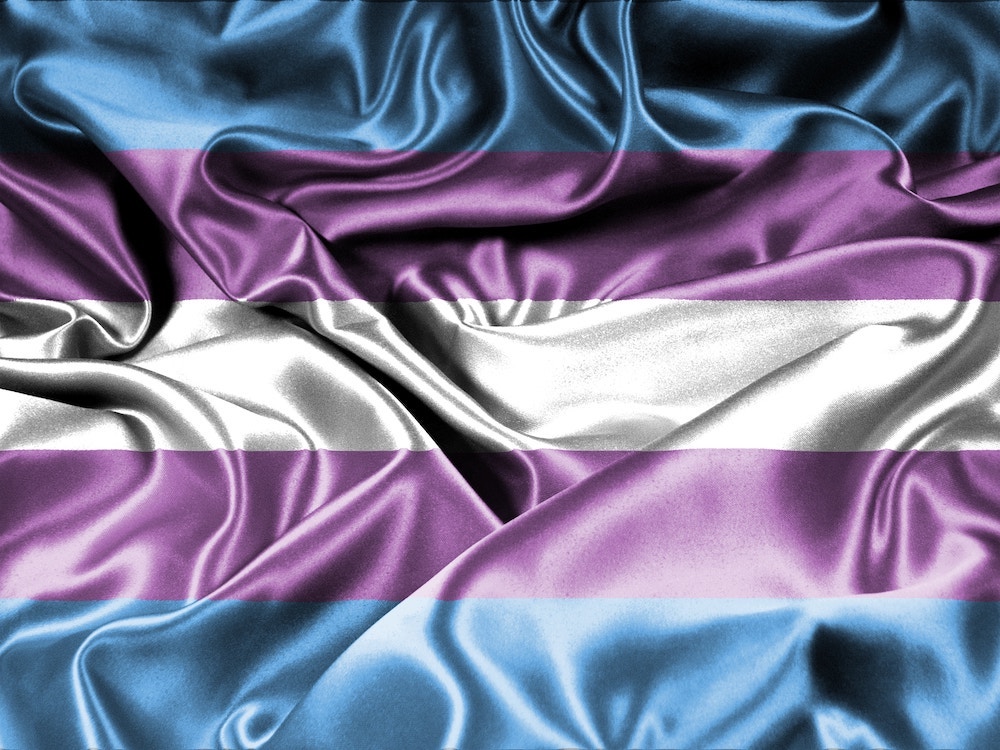
If you fly a progress pride flag, if you have a trans flag on your lapel or on a sticker on your office window, then can you define ‘transgender’? Can you define ‘nonbinary’? Do you understand the unique challenges that people with those identities face in your field?

Do you understand why the tragedy at Club Q happened? Do you understand what it will take to prevent the next one?

Come to our events. I know you’re probably scared to do so, but understand what we’ve been doing for decades, what civil rights activists for all groups have had to do for centuries now. We are gathering at vigils, at protests, knowing the risks, knowing the danger. Stand in solidarity with us.  

We are gathering at vigils, at protests, knowing the risks, knowing the danger.

Do your kids know their pronouns? Do you know yours? Do you introduce yourself with your pronouns? 

Introduce your kids to trans media. Check out books and other materials from the library on trans people, and ask the librarians to help you find ones you may not have heard of. Purchase what you can, give them away as gifts. Spread the good word. 

If you want to call yourself an ally, then start acting like it. If you’re appalled by this tragedy, then start acting like it. You’ve thought. You’ve prayed. We need action. 

The Colorado LGBTQ+ community spent Transgender Day of Remembrance 2022 mourning even more than the expected losses of the past year. These losses are untenable. 

Transgender mourning and transgender joy are two sides of the same coin. As a community, we suffer the depths of mourning for our lost transgender siblings when we recognize the joy they have been robbed of. So many of us already start living life as our true selves at a later age, taking on our true names and identities long after our cisgendered counterparts. Then violence continually cuts our lives even shorter.

We deserve so much more than to be censored, to be truncated, to be invisible. 

We deserve the full abolition of all legal precedent for discrimination against us. The law takes so many ugly shapes, especially against transgender people of color. From reproductive rights to prison abolition, almost all activist issues massively impact transgender lives. Laws that seek to kneecap our community outright are only the beginning of our oppression at the hands of the state. Allyship is directly confronting and challenging local, state, and federal legislation that threatens trans lives and championing the unambiguous guaranteeing of full civil rights for all. 

We deserve to move unimpeded through life, with fully guaranteed healthcare for all ages, including trans youth receiving the medical intervention that they desire. 

We deserve to exist safely in our communities, unthreatened by the hate and fear of those who seek to destroy our peace. 

We deserve to be seen as fully realized human beings, with lives worth fighting for. 

Colorado, what you do not see are the children who sidle up to me and whisper secret names.

Colorado, what you do not see are the children who sidle up to me and whisper secret names. They bequeath these treasures to me, a stranger, ask me about binders and hormones and how I got to be so tall. A young man, barely coming to my hip, tells me that he’s going to get a suit someday. A high schooler, dangly and lean, twists their hair nervously as they admit that they’ve never met a grown-up who uses pronouns like their own. A kindergartner, brash and bright, declares that she knew I was a boy-girl, that she could tell I was a boy-girl from my voice and my necktie, and that she’ll be a boy-girl tomorrow, probably, if her mom says that it’s okay.

Sounds good, I tell her. See you tomorrow. 

The new glasses will be here soon. The cat’s owner has returned to town. R Bar is holding their vigils and fundraisers. The hot pot has been washed and put away for next year. We brewed more coffee. Relit candles. Woke up again. 

I have given you, allies, your task. You have witnessed here a version of us, one of our stories, one single example out of millions. Make the choice to keep watching. Make the choice to not look away.

To my siblings, I offer this promise, prayer, and pledge: someday, we will not be defined by our invisibility and our grieving. We will be seen, and we will be known for our joy. 

7 Novels Narrated by Ghosts

Like many children, I grew up scared of ghosts. I imagined their bodies hovering above my bed while I slept or looked away, their faces translucent and menacing.  

But the more I grew up, the more I realised this made no sense. Ghosts are the soul of the deceased: why would I be their foe? And even more so, surely those who cared enough to visit me would be loving spirits. 

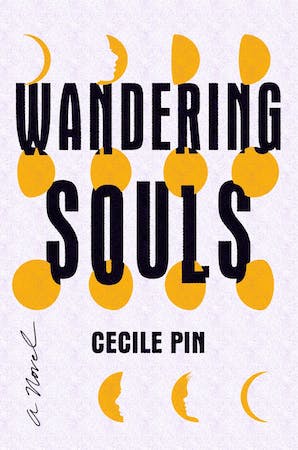
My novel Wandering Souls follows three siblings, Anh Minh and Thanh, who leave Vietnam after the war and settle in Margaret Thatcher’s United Kingdom, at a time of political and societal upheaval. 

Central to the novel is the Vietnamese belief that deceased people not given a proper burial in their homeland are unable to find peace and are instead left to wander for eternity as ghosts. One of the narrators in Wandering Souls is Dao, the little brother of Anh, Minh and Thanh, who perished at sea alongside his parents and three other siblings. He looks on from a place in-between the living and the dead, homesick for a place to belong. 

Below are some other novels that include ghosts as narrators, showing the wide-ranging ways in which they are represented and perceived:

Hotel World by Ali Smith

Divided into five chapters, Hotel World is centered around the death of Sara, a 19-year-old chambermaid who meets her end during a freak accident at the Global Hotel. Each chapter is narrated by a different woman, somehow linked to the event and each representing a different stage of grief. These include Sara’s sister Clare, the hotel’s depressed receptionist Lise and, of course, Sara herself, who delivers a stream-of-consciousness monologue as she transitions from living to dead. Smith manages to add light-heartedness to an otherwise tragic tale, and the result is a fast-paced, lyrical read. 

Human Acts by Han Kang

Like Hotel World, Human Acts is also told through a series of interconnected chapters and voices. The novel deals with the aftermath of a violent student uprising in South Korea in the 1980s. Its second chapter is narrated by Jeong-Dae, a young boy killed during the protests. His soul is still attached to his decaying body, piled up amongst other corpses in a military truck. Both frightening and gut-wrenching, the narration is effective at showing us the cruel horrors which emanated from the uprising. 

Lincoln in the Bardo by George Saunders

Winner of the 2017 Booker Prize, Lincoln in the Bardo is a novel unlike any I’d read before. Unfolding over the course of a single night, it deals with the death of William “Willie” Wallace Lincoln, Abraham Lincoln’s beloved eleven-year-old son. As his father visits his grave, Willie finds himself in the Bardo—a transitional space in-between life and death. We hear from a symphony of ghostly voices, other souls trapped in the Bardo, as various forces vie for the young boy’s soul while his grief-stricken father refuses to let go.  

The Enlightenment of the Greengage Tree by Shokoofeh Azar

Originally written in Farsi, The Enlightenment of the Greengage Tree is set in Iran right after the Islamic Revolution of 1979. It is narrated by the ghost of Bahar, a thirteen-year-old girl who was burned to death in a cellar. Through her eyes, we follow her family as they are forced to flee Tehran and move to the ancient forests of Mazandaran in northern Iran. We witness the grief-stricken family as they try to make new lives for themselves while caught in the tumultuous, violent midst of post-Revolution Iran. Inspired by Persian folklore, this is a powerful, lyrical work of magical realism.

Beloved by Toni Morrison

Set in post-civil war America, Beloved tells the story of Sethe, a woman unable to let go of her traumatic days at Sweet Home, the farm where she was enslaved. She is also haunted by the death of her firstborn, nameless child, whose tombstone is etched by a single word: “Beloved”. One day, she comes home from a Carnival alongside her daughter Sethe and Paul D, a fellow enslaved man at Sweet Home. Waiting for them on their porch is a young woman, who calls herself Beloved. Beloved narrates chapter 22 in a fragmented, haunting stream-of-consciousness monologue which delves into her past. A bewitching and frightening figure, she is a mysterious character. She is hinted to be the ghost of Sethe’s firstborn child—and a representative of all of the victims of slavery. 

Sing, Unburied, Sing by Jesmyn Ward

Sing, Unburied, Sing is the National Book Award-winning, intimate portrait of three generations of a family living in rural Mississippi, with some of its members gifted the ability to communicate with ghosts. The story is told through three narrators: thirteen-year-old Jojo, his absent and troubled mother Leonie, and Richie, an imprisoned man who died in horrific circumstances. As he struggles to accept his death, we follow him as he seeks answers that might bring him peace—and enable him to transition to the afterlife.

The Seven Moons of Maali Almeida by Shehan Karunatilaka

Winner of the 2022 Booker Prize, The Seven Moons of Almeida is set in Colombo during the Sri Lankan civil war. The narrator Maali Almeida is a war photographer, gambler, and closeted gay man, who is brutally murdered. In the afterlife, he is given seven days (or  “seven moons”) to travel between the afterlife and the real world to try and retrieve a series of photos that will expose the brutalities of the Civil War. Gut-wrenching but also filled with humor, this novel shrewdly explores Sri Lanka’s troubled past.

Our Favorite Essays and Books by Trans Writers

If you’ve turned on a TV lately, you’ve likely heard more than enough ‘opinions’ from certain conservative news outlets about the trans community. In the face of hate, misinformation, and violence, standing up for one’s identity may begin to feel like fighting an endless war rather than an act of power. At Electric Literature, we’re celebrating trans writers with some of our favorite essays, reading lists, and stories from the archives.


“Dumped at Brunch and Too Jaded to Care” by Imogen Binnie

In this excerpt from Nevada by Imogen Binnie, recommended by Jackson Howard, fed up Maria reflects on the right way to fake an orgasm as she is being choked by her girlfriend Steph. With cynical, sardonic humor, Binnie depicts the mundane realities of being trans.

Trans women in real life are different from trans women on television. For one thing, when you take away the mystification, misconceptions and mystery, they’re at least as boring as everybody else.

“How To Write About Trans People” by Eli Cugini

Despite an increase of trans characters in stories by cis authors, trans characterization is rarely discussed by cis critics. Eli Cugini interrogates what exactly cis authors gain from writing trans characters and uses contemporary examples to show how trans characters should and should not be written.

But talking about a complex and fraught phenomenon like transness means being honest about the roots of the discussion: what do trans characters do for cis people? What messages, anxieties, and ways of seeing are being encoded in trans rep today? And where does that need to change?

“Ask Me Whether or Not I’m Trans” by Addie Tsai

In late ‘90s Houston, before the era of YouTube, TikTok, and Twitter, Addie Tsai was convinced people like them–Asian, biracial, queer, and non-binary–did not exist. The only place they saw themself was the anime Ranma, in which the titular character existed as both boy and girl in one body.

We no longer live in a world where we’re relegated to the queer selves that are ‘obvious,’ or the one or two pieces of media that show us who aren’t cis white gays who we could really be.

“The Transformative Power of Writing Trans Motherhood” by Elanor Broker

As her wife’s pregnancy progresses, Elanor Broker feels alone in her impending trans motherhood. Broker finds guidance and solidarity in Torrey Peters’ Detransition, Baby and Maggie Nelson’s The Argonauts.

We humans rely on stories to make sense of overwhelming change, not just as practical maps for planning and preparation, but to expand our horizons, to envision new possibility.

“Who’s Afraid of the Gender Apocalypse?” By Katherine Packert Burke

In the instance of gender apocalypse, where do trans people fall? Katherine Packert Burke analyzes Afterland and The Men to discuss the disappearance of trans people in apocalypse narratives by cis writers.

References to these trans women, or to the trans men who survive, are fleeting and uncomplicated. But these are books about gender. They’re trying to reckon with something toxic in the structure of society. Why wouldn’t trans people be a part of that? What fears are they reckoning with that don’t include trans people?

“‘Miss Congeniality’ and Other Forced Femme Makeover Films Mirrored My Feminine Soul” by Christ

As Christ came to understand her own gender identity, she gravitated toward femme makeover films as a substitute for explicitly trans narratives. Through Miss Congeniality and Detransition, Baby, Christ comes to understand womanhood as a gift given and shared among women.

Boys who become men and girls who become women are rewarded with increasing returns the more any person commits to their assigned bit.

“The ‘Star Trek’ Episode That Helped Me Understand My Transition” by Elanor Broker

In an era that’s tearing down toxic masculinity, boys can do all the things we traditionally prescribed as feminine–so what makes a woman a woman, and how do we choose our identity? Years into her transition, Elanor Broker is still pondering this question, the answer of which she unexpectedly finds through Star Trek.

It’s a nervous tic, every time you try to explain this thing you suspect, this thing you think must be there — you try to relate some trait, some habit, some tendency, some aspect that feels gendered in a meaningful way, but out comes that inevitable ‘oh, but of course boys can totally do that, too.’

“8 Fantasy Novels by Trans and Nonbinary Authors” by Electric Literature

Electric Literature presents a list of fantasy novels written by trans and non-binary authors that celebrate and include gender queer characters, as opposed to the works of certain other transphobic billionaires.

Thank goodness the biggest-selling fantasy author of all time hasn’t thrown her lot in with a pack of weirdly genital-obsessed identity police! That would, after all, be an extremely weird choice…

“9 Books by Trans Authors Changing Literature Today” by Joss Lake

Joss Lake, author of “Future Feeling,” recommends new trans books that expand the once narrow narrative of what it means to be trans.

This is the problem with clutching a single portrayal of trans life. We—writers, trans folks, everyone—model ourselves on each other. We need nourishment: a vast range of narratives, styles, and lives.

“Trans Characters Are In Vogue, But Where Are the Thinkpieces?” By Eli Cugini

Trans characters have become more prevalent in cis literature–so why aren’t cis reviewers talking about them? Eli Cugini analyzes how avoidant cis responses to trans characters have harmed trans depictions.

Avoidance is disappointing, as is an uncritical, magnanimous ‘oh, how lovely’ attitude towards the mere existence of trans representation. Transness has the curious capacity to turn off cis reviewers’ critical capacities.

Finding Humor and Hope Amidst the Climate Apocalypse

To say that The Last Catastrophe is a dystopic take on humanity’s final hour is to miss the humor in these pages, as well as the tenderness in Allegra Hyde’s gaze. She is looking upon all of us—even those with the greatest culpability—as if she is sad to lose us and for us to lose ourselves. This places her squarely in the lineage of writers like George Saunders, as does the collection’s strip malls, experimental surgeries to consign youth, data points that “extrapolate likely outcomes,” zombie humans, humans with “eyes blank as chicken broth,” bee extinctions, white lies, immigrant detention centers, DNA market, and the discomfortingly familiar algorithm that knows what you want before you even ask, then drops it at your door by drone (“Praise be, we paid”). 

In these short stories, “America unfurls in every direction,” and we stand helpless before capitalism’s gaping maw. Hyde approaches her subjects with a naturalist view, reflecting back our foolish instinct to flex our power against nature, how it will kill us or conscript us to an unrecognizable existence. In these pages, we follow a caravan of motorhomes that are over a millennium swallowed into the earth’s core, embark on a doomed mission to save the last remaining moose, join a woman at a center for digital disorders (wondering, all the while, what ours might be), and remain alert to the predatory animals that are lurking.

The people in these stories are lonely, mystified by their own existence—especially by love—and seeking purpose in a collapsing world. There is the woman whose skin turns the color of the Gatorade she drinks after her husband leaves her, the woman who takes in foster husbands, the woman who needs “a little extra attention as she face[s] her own impending obsolescence,” and the émigré searching for his beloved in every surgically supplanted face. The last catastrophe might be our feral state, now that we’ve become unhinged at our own doing. Yet, despite herself, Hyde is not without hope. The writer reminds us that the human spirit has transcended our base self to invent language and pencils, and this same imagination has brought us twenty thousand leagues beneath the sea. Perhaps it is not too late for us to solve the problem of us.


Annie Liontas: These stories look to potential distortions rather than the concrete past, and make us feel as if we’re reading about ourselves in the not-so-distant future. If you’re right and the clock is ticking down, what do you want to say to humanity?

Allegra Hyde: I want to grab everyone by the proverbial shoulders and shake them and say, “Look around at what’s happening. We’re heading towards great danger and towards really difficult times. However, we do still have the opportunity to change course, to radically rethink what we value, and to have a better future.”

AL: You’re saying there’s still hope.

AH: I think so. I think even if we do face great challenges—and we’re facing those challenges already—there’s still the opportunity to find joy, to find meaning, to find connection. And I think that’s something to really hold on to. I’ve been walking around Oberlin, Ohio recently, and we’re having a really weird winter—it’s been like 60 degrees in February. That’s disturbing and that’s objectively bad for the environment and for us as a species, and yet there are flowers coming up. It’s kind of beautiful and charming, and it’s wonderful to walk around in the warm weather with loved ones. And so I try to balance my sense of anger and despair with holding on to what we have.

AL: Satire can be conflated with anger or scathing reproach, but I find it’s usually entangled with grief. Are you writing from a place of mourning? Are there other satirists who work similarly, and whom you admire?

AH: I am writing from a place of grief, both personal and as part of a collective. I think a story like “Frights,” for instance—which is told from the perspective of ghosts and is thinking about extinction and the end of species and ways of living—comes from a part of me that is grieving for the loss of those things. And yet that story is not necessarily all melancholic. It’s processing extinction in a playful, sometimes humorous way. And that reflects my own way of managing grief generally. I think other stories in the collection are also translating or transforming grief in order to cope. I draw from Barthelme in many ways, how he uses absurdity and how he creates emotion by taking unexpected turns and working with humor as a means to access pain and tragedy. This is not an example of a satirist, but I’d also say I draw from someone like Maggie Nelson and a book like Bluets, which is so loaded with grief, but we’re not always looking at it directly. We’re looking at it sideways and diagonally and refracting grief through objects and through ideas.

AL: There is so much humor in these pages, despite the existential grappling. In one of my favorite stories, “Loving Homes for Lost and Broken Men,” we’re told that “husbands without loving homes could end up on the streets, eating junk food, openly farting, harassing young women, impersonating dead celebrities.” Do you think of humor as a survival tool? Is it true in your own life?

AH: Telling jokes and transforming pain and frustration and anger into humor is absolutely a coping mechanism that I’ve used. “Loving Homes for Lost & Broken Men” is a story that’s very much expressing my frustrations with the heteropatriarchy. I think rather than writing a long screed, being able to write a story that invokes humor and that invites people in who would otherwise avoid such subject matter is a way to communicate what I’m feeling. I hope it’s more fun and creates more connections and openness, while also offering catharsis.

AL: What does first-person plural open up for you in a work that is about collective anxiety?

AH: That was a perspective that just kept coming back for me. I didn’t set out to write multiple stories in first person plural, but I found that point of view to be the most effective way to explore certain ideas. Whether I was writing about algorithmic dependence or reckless consumption, speaking as a collective and presenting this hive mind helped me get to the heart of what I wanted to say. The stories in this collection take on many different forms. Some are a couple of pages long, one could be called a novella. But the collection is held together by this larger exploration of what it means to live through the Anthropocene and how we might better understand our reality through metaphor, absurdity, and speculative premises. We are, on one hand, individuals living our specific individual lives, but we’re also very much all caught up in the fabric of society, we’re all part of this cultural consciousness. We’re all complicit in all kinds of collective decisions and actions that create catastrophe. Capturing that in first-person plural felt like another way to speak to that aspect of being human.

AL: I love how you take on the individual and the collective in “The Eaters,” which is about vegan zombies and survivors. One of the characters in that story, a historian and professor, talks about how it is a privilege to see the very last of anything, whether a species or a race. What is the relationship between the end and beauty? The end and the grotesque, the end and nostalgia? 

We’re all complicit in all kinds of collective decisions and actions that create catastrophe.

AH: Offering up the perspective that it is, in fact, a privilege to witness the end times might open up avenues for people to actually witness it at all. Because I think many of us, myself included—all the time—want to, and do, bury our heads in the sand. I have environmental news sites that I look at, but sometimes they’re just too horrible to read and I instead go on The Cut and read about makeup. I think reminding ourselves that it’s both a privilege and a responsibility to pay attention, to be informed, to hold onto what is happening in our minds and our bodies is important. It is a unique position that people in the future will, if they exist, recognize clearly.

AL: Though in these stories, we see the raw awareness of youth, and how they’re eager to participate. You write a young person who grows a mysterious horn, a young space traveler, and a teenager who is brave enough to do what the adults in the compound won’t do. We can’t help but admire how they meet the world.

AH: I aspire to be an adult who listens and pays attention and honors the perspectives of young people because my sense is that as many people get older, they really shut themselves off from hearing younger generations. But the truth of the youth has been proven over and over again. In this collection, I really wanted to honor the unique positionality of younger people. They often have to face situations and realities that they in no way created, and I wanted to show how they might cope with such situations in the near future. I’m continually impressed and inspired by youth out in the world today and the youth activism that’s taking place around the environmental movement, with responsible gun use, and elsewhere. Working as a professor, I’m constantly interacting with Gen Z-ers, and I try to continually learn from them and appreciate the position that they’re in.

AL: Marmalade is wonderful! I also love Karoline, who appears in one of the collection’s most innovative stories, “Colonel Merryweather’s Intergalactic Finishing School for Young Ladies of Grace & Good Nature.” In preparation for the space promenade, Karoline is taught the power of white lies as “a bridge between possibility and reality,” and is conscripted to tell them. The complication of what she has inherited and her position in the world is not unlike our own, and you push the reader to think about their own culpability and capitulation.

By lying to ourselves and each other about the overall functionality of our current power structures, we’re setting ourselves up to repeat the same mistakes.

AH: That story stems from my frustration with billionaires investing a gazillion resources into going to space and the idea that the answer to all our problems on earth is by leaving earth and settling a new planet in the galaxy. Besides being impossible, this “solution” perpetuates a classicist, colonial framework. My hope is that this story, which is set in the future, shows how the same oppressive frameworks that have created the crises we’re living through will continue unless we change them. By lying to ourselves and each other about the overall functionality of our current power structures, we’re setting ourselves up to repeat the same mistakes. We won’t solve our problems that way, even if we eventually have cool spaceships.

AL: If the apocalypse arrives tomorrow, does Allegra Hyde survive?

AH: It depends on the kind of apocalypse. I can be pretty crafty and resourceful, but at the same time I do wear contacts. That might be my downfall. If I was trying to gain admittance into a survivalist compound and I needed to demonstrate what I can do—all I can do is teach short fiction. I probably need to brush up on my skills. I used to be good at setting up tents pretty fast. 

AL: In a world of constant catastrophe, what is the last catastrophe?

AH: Your own death. Or is it nuclear apocalypse. Or is it when the internet finally goes down. It could be many things. I named the collection the Last Catastrophe because I hoped it would resonate in a glass half empty/half full way. It could be the last catastrophe in the sense that doom is near, or it could be the last catastrophe before we change course.

You Will Want Me When I Disappear

“I’d Never Felt So Light” by Thomas Renjilian

The night my boyfriend switched from when to if while he talked about our future, I said I’d eat nothing but boiled carrots and egg whites until I dropped twelve pounds. One for each month we’d been together, though I hadn’t planned that. I just picked a number. Twelve would make me small enough to please him. At that size, he could throw me around in bed, and when he finished, I’d be small enough that he could toss me over to a chair where he could ignore me until he needed me again. Now, at one hundred and thirty-five pounds, I was unavoidable.

I liked a lot about him, so don’t ask. I liked that he was a hobbyist metalworker. I liked his apartment with a view of a building that looked like but was not the Statue of Liberty. I liked that he liked some dogs but not all of them. When he ignored a dog, it broke my heart. I’d never empathized with a dog before. I liked how he showed me emotions I didn’t know I had. Sure, he probably served some metonymic function, too, alright? The way someone quiet and distant becomes who you imagine them to be, and in their silence, you become everything you fear about yourself, so you try to bridge the gap, attain a sense of self which you hope to be, but suspect is not, consonant with that person’s love. I was always grinning wide and saying, “Is there something in my teeth?” He’d never tell me. He’d say, Stop pretending I’m a mirror.

“If you only eat boiled carrots, what restaurants can we go to?” my boyfriend asked.

“And egg whites. Boiled carrots and egg whites. There are a million places with that.”

“Michael, I’m not going to watch you eat that.”

He was lying. A major problem I had with the men I dated was that I knew what they wanted better than they did. I know this sounds presumptuous, but explain this: the smaller I got, the more they fucked me. The cheaper my meal, the more they brought me out to eat. The quieter I stayed, the more they laughed and called me clever, even though they were the ones who’d made the joke.

If they admitted what they wanted, it would be considered abuse, and these were nice guys, so I just had to guess. I asked if he had a peeler. He went to the drawer and handed me one. I hadn’t even bought the carrots yet.


By the time the sun woke me up, my boyfriend had left for work. Everything in the room was white. I looked in the mirror. I was a stain on the sheets. He always woke up before me to jack off. The cum-filled tissues he left on the bed were already brittle. When I woke up feeling sexy, I’d jack off too, usually into the same tissue, to save trees. When there were no tissues left on the bed, I assumed he was planning to cheat on me during the day and was saving his cum for that.

I always woke up feeling sexy. His body drove me crazy, especially when it was gone.

After I came, always thinking of him, I felt sad and imagined a bunch of little scenes between me and my boyfriend. First, I imagined I’d said something that impressed him in a conversation, something about Flaubert, whom I’d never read but often pretended to know about in my daydreams. But my boyfriend only liked mystery novels and books that made new arguments for capitalism, so then I imagined I said something about Flaubert at the wrong time, like at a work event where everyone else was talking about pie charts or the world of politics, and where saying literary things looked pretentious in a desperate, grasping way. Then I imagined having a threesome with him and one of his friends, maybe Tony who was an amateur MMA fighter. In the fantasy, everything I did in the threesome got no response, but when Tony sucked his cock, my boyfriend came and said, “When you suck my cock, I’m afraid I’ll come forever.”

The problem was, I did not know what he wanted me to be. I tried so hard to be quiet when he wanted that, and sexually affectionate when he wanted that, and to affirm his ideas when he seemed to want that, but no matter how hard I tried to infer the partner he desired, my own traits kept seeping through. When they did, he did not like them. I’d say, “I read a new poem today,” and he’d groan. I’d have a horrible nightmare, and he’d wake up and say, “Maybe you’d be more comfortable out on the chair.”

I had this idea that if I became the willowy, weird anorexic boyfriend, he could know me as a trope, wear me on his arm, roll his eyes, and with my strangeness juxtaposed to his leading-man propriety, feel reassured of his own centrality in his life and our relationship. This seemed easier than any alternative.

For breakfast that morning, I gulped a little pool of coconut oil. I’d read it ran right through you, leaving nothing but pure energy and bright skin. I wanted to get better at letting loose what my body tried to hold. I ate a piece of bread for lunch, so I ran along the waterfront until I dropped to my knees and dizzily puked in the trash. People in Williamsburg threw away such nice things. Whole outfits! Nice suits and dresses damp with untouched delivery food. I opened a takeout container and salad dressing spilled out onto me. In this neighborhood salads were expensive. I could not afford this neighborhood, but my boyfriend could.

If my boyfriend did not marry me, or at least decide to stay with me, I would have to move to a bad neighborhood. What would I lose? Fake lady liberty, the leather furniture, the nicest bathroom I’d ever puked in. Most of all, the friends I’d made.

They were all bums. They’d all stayed in Williamsburg past when this was a place where bums lived. I liked them because I always stayed past the end of things too. I did nice things for them. I’d walk to the bodega and buy them canned drinks called Lime-A-Ritas. When they fell asleep in the sun I’d drag them to the shade under the BQE. I didn’t know their names, but I knew the feel of their underdeveloped forearms that I gripped like wishbones. I got real generous with my boyfriend’s card once and bought one of my friends a six-dollar ice cream cone. Then he told me he was lactose intolerant. I licked it and let it fall on the sidewalk.

After I puked in the trash, I noticed this same guy was lying there. He asked, “Was that bread? Bread would’ve gone good with the yogurt your roommate gave me.” Lactose intolerant my ass. I never knew when to believe my friends.

“Roommate?” I asked. “What do you mean.”

“That guy I see you up there on that balcony with.”

He pointed to our apartment. It hurt my eyes to look at the sun flaring where we lived.

“My boyfriend, you homophobe. That’s my boyfriend.”

“No homophobe,” he said. “Love fags. I am one. I was at Stonewall.”

He spooned a little yogurt.

Yeah right, I thought.

“He’s out of your league,” my friend said. “He’s a nice guy. Chiseled jaw. Like a Ken doll. Good musculature. Gives me yogurt and dollar bills. You don’t give me shit. You. You’re a menace. You’re a devil.”

He started cackling and hissing, a devil impression. I looked up at the balcony, the balcony where my boyfriend and I used to stand to look out at the world. He’d point at buildings along the waterfront and say, “I’ll buy property there and there and there.”

It was a major turn on for me, knowing he could have whatever he wanted. I’d imagine how he’d call contractors to come knock down walls, how he’d point and say “knock down that one” while I stood behind him nodding in agreement, feeling warm light come through the big windows. On the balcony, when he talked and I imagined and he put his arm around me, I’d blur my vision and let my body go limp and numb.

Under his winter coat he probably had a perfect body, a body that was barely there at all.

“Don’t talk to my boyfriend,” I said to my friend as I glared down at him. Under his winter coat he probably had a perfect body, a body that was barely there at all.

When I got home, my boyfriend was watching MMA fighting and jacking off so hard I knew he was about to come. When he noticed me, he groaned and stood, still holding himself. He said, “Where were you all night?” and went to bed. He was definitely going to leave me soon, and I had to do something to stop him.


I had another place I went, too. I taught ESL to recent immigrants in the basement of a church six stops east on the L train. I’d found the job online and signed up to prove a point to my boyfriend, something about my selflessness, but he didn’t care about my selflessness and neither did the students. Most of them had wandered in off the street looking for mass or confession or a bathroom and kept coming back because they had nothing better to do. A famous writer also volunteered there. Once I heard him ask a young black man which gangs he was in. I didn’t realize this guy was famous, and after I heard him say the gang thing, I was rude to him at the copier. We only had one book, so we had to make copies. I said, “Wait your turn,” like I was talking to a kid or a dog. Then I took a long time copying a list of “Ch” words: chubby, choke, chains.

My students were Claude and Jessica. Claude knew about fifteen words in English. Jessica knew English as well as I did. I taught them the same thing. Jessica was a single mom and a sales associate at DSW. When I went to buy shoes, I’d see her at the register and she’d say, “Hi shoe lover,” without an accent or any acknowledgment of who I was. She was white and said she came from Florida. I don’t think she knew where she was. Once, during a break, I heard her on the phone telling someone she was at college. Had I said something that made her think this was college? There were space heaters. All the chairs were folding chairs. There was only one book.

To teach them, I had them repeat whatever dumb sentences I thought of.

I said, “Let’s torch the church and go to brunch.”

They repeated, “Let’s torch the church and go to brunch.”

I said, “At every chance my boyfriend chokes the chicken.”

They repeated, “At every chance my boyfriend chokes the chicken.”

Claude only knew the sound and shape of words, not the words themselves, and Jessica just smiled. I think she thrived in situations where she knew exactly what to say, no matter what it was, and relished the absence of uncertainty. I related to this pleasure.

Sometimes I went on tangents. “This is not just about making the words legible, this is about making you legible.” I’d stand up at this part. “Legible to a system that does not want to see you as human, legible to the white heteropatriarchal State that quite frankly will never see you as human as hard as you try.”

When Jessica looked smug about being white, I’d add, “Even you, Jessica. You are a tool of empire.”

The speeches did not inspire. They clung to their insane dreams. Claude wanted to be an engineer. Jessica wanted to be a neonatal nurse. They asked me what I wanted to be. “Be!” I shouted. “You will spend your whole lives trying to be something and then the world will change what it wants from you.”


I lost four pounds in a week. The sentences I said made less sense to me but seemed to make the same amount of sense to my boyfriend: none. I looked at the yolks I cracked into the drain and said to my boyfriend, “Look, it’s the sun. An abortion of sun. Look at the albumen, the albumen’s the ghost of the sun. The ghost of the wasted days of youth!”

I cackled at that, the way my bum friends laughed when they saw rich kids struck by cars, but my boyfriend had already carried his laptop and its blood splatter sounds back to the couch.

I didn’t ask if he thought I looked better, and he didn’t try to fuck me more.


One morning, I brought my egg and carrots to the church basement in a Styrofoam container. Claude and Jessica kept pointing at it. Jessica called it “the sad breakfast.”

“My boyfriend makes me eat it,” I said. “My boyfriend is trying to fit me into clothes too small for my body.”

I’d assumed they were both homophobes, Jessica because she was so American, Claude because he was so not American. I felt bad about my surprise when Jessica said, “That’s not how a man should treat you. You’re the best teacher I’ve ever had.”

As if talent made someone deserving of love.

I was even more surprised when Claude said, “My boyfriend treats me right.”

“Who’s your boyfriend?” I asked with a kind of tone that implied, “Prove it.”

That’s when the experimental poet came in. An experimental poet volunteered at the church, too. He used to speak so quietly that you’d think you could ignore him, but he was so beautiful that you couldn’t help but strain to hear. Whenever I used to walk past the table where he sat to teach, I’d hear his students shouting, “What do you mean?” and “Speak up, please!” Recently, the director stopped giving him students because he was such a bad teacher, so he’d appointed himself as a sort of supervisor.

Power gave the experimental poet a renewed vitality. As supervisor, he would come around and listen to our lessons. He’d wait for us to make a mistake and correct our grammar even though in one of his poems he used the words “willow tree” as a verb.

“I didn’t know you were gay!” the experimental poet said to me. “You always just seemed depressed.”

I said I was both.

“Well then aren’t we just a bunch of homos?” the experimental poet said. “And you can be our fag hag.” He pointed at Jessica.

I hated the experimental poet because he was smarter than me and imbued his work with a quiet mystery, yet he could also fluently enact the tropes of gay male femininity, which made him outgoing, likeable, and unthreatening, even in his misogyny, to large audiences of morons. He had ten thousand followers on Twitter because he made jokes about anal bleaching and astrology, but I didn’t think anyone read his poems.

“I don’t have a boyfriend,” the experimental poet said, and I knew this did not mean “I’m lonely” or “I’m signaling availability.” He meant, “I fuck a lot of men.”

But maybe I could be one of them. He could probably tell fucking me would be good material for a sad poem. There was already one published poem about how sad sex with me could make a person. It had been nominated for, but did not win, a Pushcart Prize.

See, I had already begun to realize my diet was misguided. The more I saw my boyfriend jack off to MMA fighting, the more I realized he probably liked combative, muscular men. But this seemed unattainable. I could barely lift my pots of salty carrot water. If I tried to lift a weight I figured my arm would snap.

A few days earlier, I had asked some of my bum friends what they knew about boxing. I assumed most of them had at least done stints as boxers, but I was wrong.

“I only know about dog fighting,” the guy who lived in the trash said. “Do you want to know rule number one of dog fighting?”

“Yes,” I said. “That’s why I’m talking to you.”

“Punch him in the balls,” he said.

At home, I would playfully jab at my boyfriend. I’d say, “Think fast.” But I couldn’t squeeze my hand into a fist. I kind of pushed my half open hands into him. I felt like I was tickling him with a prosthesis that wasn’t mine.

“Would you quit that. What are you even doing?”

“Sorry.”

Maybe he resented that I could not hurt him and wanted to be with someone who could. I had gone about this all wrong. I had forgotten all gay men were masochists. Since I couldn’t hurt him physically, I could try to do it emotionally.

So, looking at Claude and the experimental poet, I had the idea. A double date. “Let’s all get drinks,” I said to Claude and the experimental poet. I felt light-headed as I said it. I’d never made a suggestion before.

“Bring your boyfriend,” I said to Claude. “And Jessica, I know you’ll probably have to watch your daughter or work at DSW that night, too bad.”

We agreed on next Thursday. I didn’t tell them I would invite my boyfriend. I wanted him to walk into the bar and see us already there. We would be having a visibly incredible amount of fun. He would not have a single word to say to Claude or the experimental poet. He would hate them both for their French accents. My boyfriend knew nothing of culture. In fact, he probably hated culture. He would not even realize that the experimental poet’s accent was fake. I doubted the experimental poet knew a word of French. My boyfriend would feel so uncomfortable. He’d see I was all he had, and he would see how easily I could have someone else.


We decided to meet in the West Village, where the experimental poet lived, even though Claude lived deep in Brooklyn. The experimental poet survived off of Amazon gift cards that older men sent him in exchange for short videos of sex acts, and Claude was poor, so we decided to meet at a cheap gay dive bar, the kind that had significance during the era of gay rights. Now though, it was too crowded and too sad, and though it was also too dark, the dim lights hung above each table revealed every blemish that had ever been on your face.

I got there first, ordered a martini and sat at the end of a semi-circular booth in the back. I was a little nervous. I wanted to look extremely hot. I’d worn a big sweater with a very tight shirt underneath for when we lost our inhibitions. All my tight shirts were not tight anymore. I bought a new one at H&M on the way. It was made for very hefty twelve-year-olds, and it fit me like a crop top.

I had one hour until my boyfriend would come. By then I wanted to be in my crop top and sitting in the experimental poet’s lap. I wanted to whisper poetry in his ear and to see how hard my warm, good breath and intellect made his cock. I was wearing baby blue briefs I’d had since I was in college seven years before. They were faded. The elastic was torn. They were the nicest underwear I had. I’d worn them for the experimental poet, or for my boyfriend, whichever wanted me that night.

I’d finished half of my martini and I was looking at myself in my phone camera when the experimental poet came in with Claude and Claude’s boyfriend. Had they come together? Had they gotten drinks somewhere else beforehand? Everyone was hiding something from me, cruel intentions and other attachments. As the experimental poet walked into the circle of light around our table, I saw that he had perfect skin. He probably drank more coconut oil than I did.

Everyone was hiding something from me, cruel intentions and other attachments.

“Oh my God,” the experimental poet said, more to the empty booth than to me. “Claude’s hilarious boyfriend is throwing serious shade on the government of Africa.”

“Wow,” I said. I knew the experimental poet was being ignorant, but I didn’t know anything about Africa either. I only read online descriptions of the nutrition in boiled carrots. My most recent internet searches were “how healthy are carrots” and “the newest sex moves.”

They crowded into the booth. The experimental poet took the seat beside me but did not gesture for me to climb atop his lap. Instead, he turned his body to Claude and his boyfriend. I yelled over his shoulder to make small talk. I asked Claude what he had for dinner. He thought for a while then said, “chicken and cheese.”

I didn’t know if this was true, or if these were the only words I’d given him to describe dinner, so I didn’t respond.

While the experimental poet kept asking Claude’s boyfriend questions, I just listened. The boyfriend had come to Brooklyn as a boy because of war. Now he was a bartender on the weekend and during the week he worked for Red Bull, leading focus groups. The experimental poet said there was definitely a poem to be written about that. He told us about his first poetry collection, My Diaspora, which was about leaving his childhood home to attend Sarah Lawrence.

“If the answer isn’t poetry,” the experimental poet said, “you just are not asking the right question.”

 I was starting to realize that the experimental poet considered this night to be more anthropological than sexual. He would probably mine Claude and his boyfriend for material to break into writing lyric essays that used the immigrant experience as a metaphor, and I would not get laid, and my boyfriend would still leave me. I went to the bar and asked for another martini. I asked for an olive, but they put a lime in it. I stood there sucking it, then I left the rind over my teeth, like a sheath of mold, and smiled at the bartender. He said, “Are you okay?” On the way back to the table, I tripped over a backpack. I said, “Watch it!”

When I got back to the table, my boyfriend was there. He’d taken my seat beside the experimental poet. He was in a conversation.

“I tried to find you,” he said. “I described you to these guys. They said you were together.”

How had he described me? How could he describe me if he hadn’t asked me a question in a week, if he didn’t even know I’d lost ten pounds? Had he even noticed the love my weight loss conveyed? He didn’t say anything about how he’d expected us to be alone. He didn’t try to pull me aside to the bathroom to say how much he’d been looking forward to an intimate date, where he could give me his full attention. I pulled up a chair and watched the four of them from across the table. My boyfriend turned back to the experimental poet and Claude and Claude’s boyfriend, and he said something in French. When had he learned French? It sounded beautiful. Everyone laughed, and then they each said something in French. I didn’t know French, and I couldn’t think of any English words either. When I tried to remember facts or stories or the types of questions people asked each other, I could only remember things no one wanted to know: the calories in an egg, the vitamin A in a baby carrot boiled in water with salt.

“I’m sorry we’re speaking French,” my boyfriend said.

“We?” I said. “We?”

Where did he get off being a we with my friends? I sipped my martini very fast to communicate something, but my boyfriend didn’t ever know what anything meant.

My boyfriend said, “I thought it would make Claude feel included. He seemed left out.”

In French, Claude was a real chatterbox, a life of the party. My boyfriend had brought him right out of his shell. I’d forgotten my boyfriend was charming, or that he could be. It made it all the more offensive that to me he was despotic and stifling. He held in all of his energy and humor and curiosity, so he could save it up and use it to charm other men in front of me.

I bet he’d saved up his semen and orgasms too. I tried to remember if there had been tissues on the bed this morning.

I tried to imagine what he was saying in French. The only French words I knew were ménage a trois and jouissance, so I was on the lookout for those. Other than that, I had to guess. I imagined he was complimenting Claude’s bravery and intellect, traits I was too stupid to even perceive in Claude, though surely they were obvious to someone as observant as my boyfriend. When he wanted to, like when he talked to Claude, he could see all the good in a person. In me he saw nothing at all.

I imagined what he was saying to the experimental poet. I imagined the experimental poet was blowing his mind with innovative ideas about language. I imagined my boyfriend now finally appreciated literature, even though I wrote poetry too sometimes and had shown him some. To me, he said, “I just don’t get poetry.”

Then why did he love the experimental poet’s poems, the ones I figured the experimental poet was translating into French for my boyfriend on the spot? The language of these poems was more abstruse, evasive, and yet, I could tell, as my boyfriend listened to the experimental poet recite his work from memory, he worked hard to understand it, and he came to new knowledge about life, knowledge he could never get from me. There was a new martini in front of me. I must have stood and gotten it. It was full of olives. Six of them. Floating there, an orgy of untouched prostates preserved in some scientific fluid.

That’s when Tony walked in. He was in a sweaty tank top. He was holding a gym bag.

“What’s Tony doing here?”

“Tony!” my boyfriend shouted. “Tony’s MMA gym is right down the street. He studied abroad in Paris, so I texted him to come on over. He’s been wanting to practice his French.”

Had they been practicing French together? Had they been whispering nasally French sex words to each other in gym locker rooms?

Tony slid into the booth beside my boyfriend. There was plenty of space in the booth for Tony. For Tony my boyfriend would defy the laws of physics.

“Tony, man,” my boyfriend said. “Your body is looking incredibly fit.”

He reached over and touched his bare bicep. My boyfriend hadn’t touched me in weeks.

“Bonjour, Michael” Tony said to me.

I did not respond. My boyfriend whispered something in Tony’s ear.

“Oh! I’m sorry. I mean hello Michael.”

“You,” I thought to my boyfriend. “You are an oppressive regime. You have skinned me alive, and you do not even know what I mean!”

But of course, he could not infer what I thought. Of course, he didn’t know how he made me feel. The words he and Tony said were getting quicker and quieter. They were huddling close together. I poured my drink and my olives into my mouth and chewed.

I could feel my chair rising from the floor. My body couldn’t keep it put. Then I was on the ground. Under the table I saw it, Tony’s bandaged hand on my boyfriend’s knee.

“Cheater,” I hissed from the ground. “Cheater!”

But Claude didn’t repeat after me.

“Bathroom,” I said, standing, backing away, watching all their bodies shrink and shrink until I knew I would look small to them too, until maybe they couldn’t see me at all, until I was outside and running. At a corner I watched the glowing red don’t walk hand. It was slapping me. Slap, slap, slap, but I didn’t feel it. That’s the last thing I remember.

I woke up on the sidewalk but not the sidewalk outside the bar. It was dark. My pants were gone and so were my wallet and phone and keys, which had been in my pocket. I was in my crop top. There were tiny rocks in my belly button. My baby blue briefs were dirty from the ground. I didn’t think I’d seen this street before. Had I taken off my own pants? Had someone else? Had my boyfriend come after me? Had Tony? Had I gotten in a fight with Tony? Had he knocked me out? I had no bruises. Had I been drugged and raped? My cock felt fine, not chaffed at all, and my ass didn’t hurt. I checked my legs and stomach and underwear for wet or dried cum. What happened to me and how long ago?

I must’ve gotten too drunk. I had a horrible sense of shame, which I only felt after speaking my mind, which I only did when I was drunk. I couldn’t remember what I’d said. Who had been with me? My boyfriend? 

A group of blond girls came up to me. They were wearing native American patterns sewn into crop tops. “Where are your pants?” they screamed. “This is the street! You need to wear pants in the street!”

“You’re bad ladies,” I screamed. “Bad ladies! Witches! You say you know the colors of the wind, but you don’t even listen to the wind!”

Then I hissed at them.

Then I was peeing my name onto the wall, or trying to, but I kept forgetting which letters my penis had to make, and anyway, I was too close to the wall. There was a lot inside me, but it came out slow. It made a dark descending stream. That’s when two guys in blue suits came up to me. “Someone had a good night,” one of them said.

“The experimental poet?” I asked. “What did he say about me? Was I good?”

I hoped I did the right moves and that he liked my body type.

“Once,” I said to the blue men. “My boyfriend said, ‘All your moves are from a list online.’ He read the same one, but he read it a long time ago. He had more practice with the moves. Plus he had new ones, too.”

The suit men didn’t understand. They pointed to their clothes, which were police clothes.

“Kid we’ve gotta arrest you or bring you to the hospital. You’re a menace.”

Yes, that’s it. That’s what I had been, but I said, “No, you’re a menace!”

They asked if I lived somewhere. I said, “No, but my boyfriend does.” I didn’t know if he was still my boyfriend. They asked where. I couldn’t remember where my boyfriend lived. I asked, “What if I know the neighborhood, but can’t remember the address?” I’d held onto it for so long. Was it gone? What about our bed? The chair where I’d hide? What about the MMA sounds? I missed my pots of tepid water I’d heat and reheat. What about my friends?

I said to them, “You don’t understand. You have to take me there. I still have carrots in Tupperware there.” I guess they didn’t hear me. “Please don’t let Tony eat my carrots. Don’t let him lose the weight I should lose.” I looked at my skin. I was glowing red. “This little light of mine,” I sang. “I’m gonna let it shine, shine, shine,” I sang. “I’m a lampshade from hell,” I said to the nice nurse when the ambulance came. “Jessica?” I said. “Jessica, my dear, I’m sorry I’m not who you thought I was.”

When they lifted me into the ambulance, I’d never felt so light. If only my boyfriend could see me. See me see me see me see me. I said it until the words merged together, and without space in between, neither meant anything at all.

Exclusive Cover Reveal for Vanessa Chan’s “The Storm We Made”

Electric Literature is thrilled to reveal the cover for Vanessa Chan’s highly anticipated debut novel, The Storm We Made, which will be published by Marysue Rucci Books in January, 2024.


Malaya, 1945. A family in harrowing danger: a missing teenage son, a youngest daughter locked away in a basement as the only means of preventing her from service as a comfort woman. An angry eldest daughter who can’t avoid drunken Japanese soldiers while working at the tea house, and a violent Japanese occupation that looms ever closer. 

It may already be too late for Cecily Alcantara’s family. She blames herself for a decade spent engaged in espionage, dreaming of an “Asia for Asians”, lured by the charming General Fujiwara’s promise of a life that would transcend British Colonialism. Her efforts to usher in a new regime, the even more merciless Japanese occupation, have finally caught up to her. As the war reaches its apex, Cecily’s family hangs in the balance, and she will stop at nothing to save them. 

The Storm We Made moves through a decade of pain, triumph, and wartime atrocities. You won’t soon forget the way these characters render the complicated relationship between the colonized and their oppressors, and the question of right and wrong when survival is on the line.


Here is the cover, designed by Vi-An Nguyen. 

“Vanessa’s novel is incredibly evocative and rich with detail, so there were many possibilities for this cover–from elements of the plot like a rain-soaked wheelbarrow, to intriguing visual symbols like a rooster or the moon,” says Vi-An Nguyen, the book jacket designer. “And of course the unforgettable characters and vibrant setting. We experimented with all of these ideas and more, but ultimately this gorgeous painting I found from the Malaysian artist Fadilah Karim was perfect. There’s a strong sense of character and movement and the surreal brushstrokes convey the emotional turmoil and scope of the story so well. There’s also a timeless quality to a painting, which makes sense for a novel rooted in history but also so relevant today. I’m so grateful to art director Jaya Miceli for bringing me onto the project.”

TAKSU Galleries, which houses the painting, jumped at the chance to be part of the project, says Judy Yuen, director. “Our gallery was thrilled when we got the request for Fadilah Karim’s artwork image Motion II to be a book cover written by Vanessa Chan. It strengthens the connection between Malaysian art and literature. It just made sense for us to be part of this. A first and significant achievement for TAKSU Galleries. It’s a perfect match when the artwork can complement the theme of the story. We’re proud to be part of this exciting launch and that we can promote Malaysian arts, culture, and history by featuring authentic and local artists.”

Chan feels an immediate, almost-fated connection to this cover, noting how much it personifies the novel’s title. “As soon as I saw this cover as an option, I knew. I felt startled, awakened, and remember blinking in wonder. The boldness, the person in motion – denoting, to my mind, a person who IS a storm, a reflection of the four main characters in the book who are all flashpoints to their communities, friends, and country. In fact, if you look closely, a fiery horizon is reflected in her face. I also love the directness of the font and how unquestioning it is. When I learned that the art was a piece by Malaysian artist Fadilah Karim, it felt meant to be – a Malaysian author, writing about Malaysia, with art by a Malaysian artist. Our team has fondly given the person on the cover a superhero name – Miss Blur, our perfect storm. I am beyond grateful to Fadilah Karim, TAKSU gallery, and Vi-An Nguyen, who found this personification of everything my novel represents. No questions, no edits – this was THE one.”


The Storm We Made will be published by Marysue Rucci books on January 2nd, 2024, and is available for preorder here.