In “Vintage Contemporaries,” A Young Woman Reconciles Her Idealism With the Realities of Adulthood in New York City

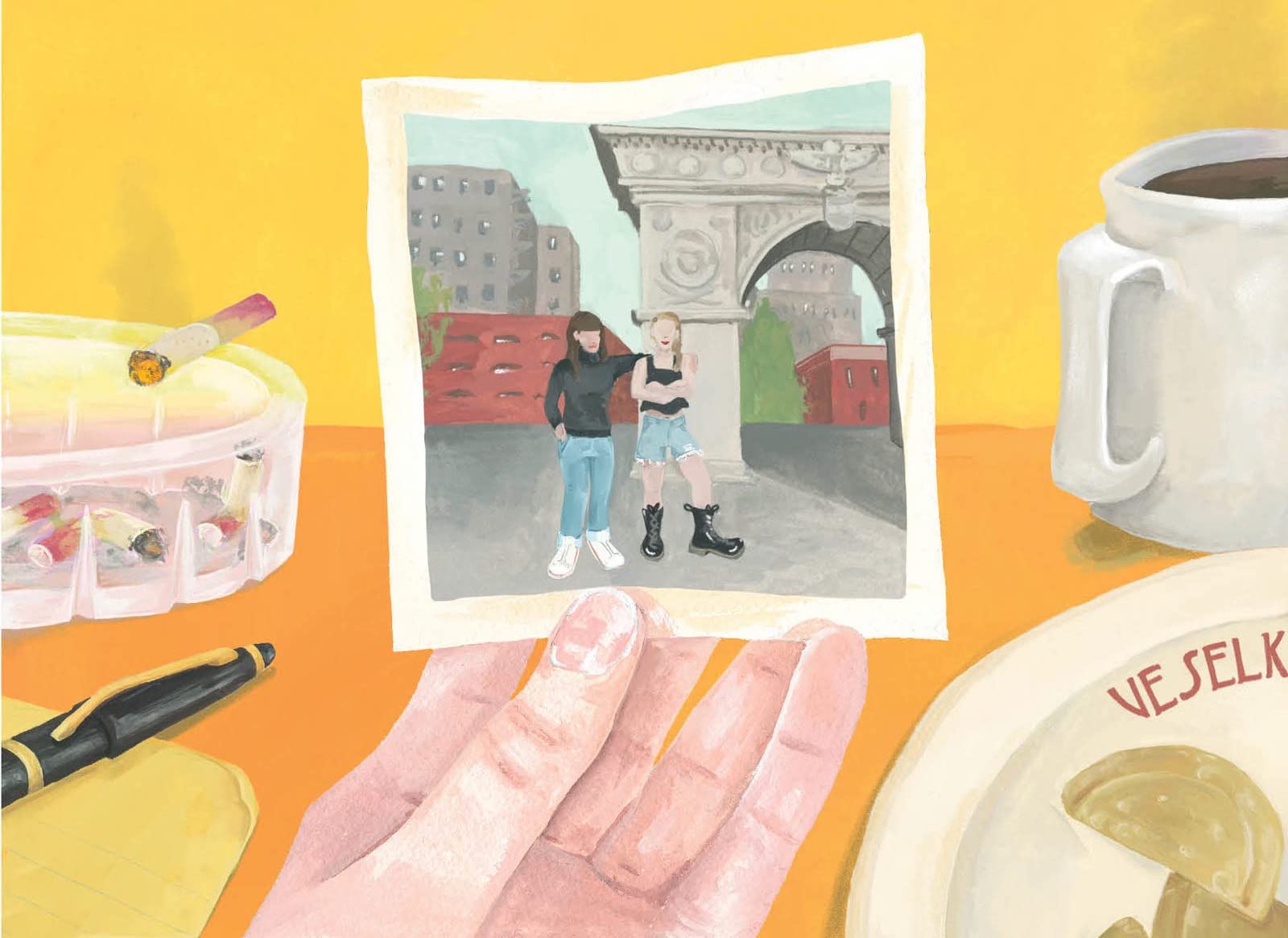
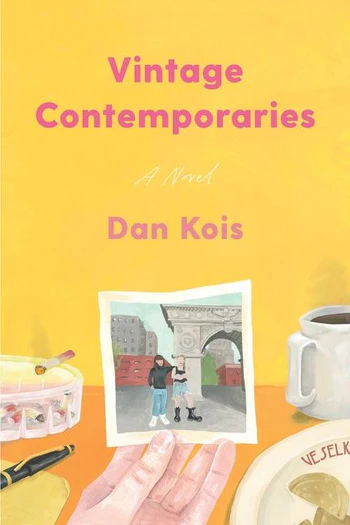
In 1991, 22-year-old white Wisconsinite Emily is the beleaguered assistant to a literary agent. She wants to be a writer, she loves Literature with a capital L, and she’s unimpressed by the feel-good writing of her mother’s college friend Lucy, who wrote a few novels for a small press. But Emily appreciates that Lucy is a real author who she might be able to take on as a client—and that Lucy acts as a sort of adulthood midwife, taking Emily to cocktail parties and teaching her to cook. Meanwhile, Emily becomes friends with another Emily, a brilliant, volatile, and effortlessly cool aspiring theatre director who lives in a formerly abandoned East Village squat that was rebuilt by its tenants, and that always seems to be just days away from being seized by the NYPD. In deference to her intense new friend, Emily becomes Em.
15 years later, Em is estranged from Emily, focusing her attention instead on her new baby and feeling simultaneously wondrous, panicked, and exhausted about motherhood. Em, who checked in with the office every day of maternity leave, goes back to work as a senior editor at St. Martin’s Press, trying to publish reprints of Lucy’s books and discovering the problems at her workplace, as well as her place in them—that a thick skin developed from crying in the office bathroom might not be the badge of honor she thinks it is. As Em ages and the city gentrifies, she figures out what she wants out of friendship, work, and art, and her responsibilities to each.

As a suburbs-to-NYC transplant who was an assistant at St. Martin’s in 2006, and as the mother of a young child, much of the book rang true for me—the shitty apartments, the alternating stress and excitement of being a publishing assistant, the pretension about what constitutes coolness and art, and the “I love my baby” mantra of a doting, flailing mom.

Dan Kois and I talked about writing Vintage Contemporaries, his previous career as a bad literary agent, the gendered assumptions in stories of female friendship and new motherhood, writing about race as a white person, and how the working conditions in publishing have only gotten worse.


Katy Hershberger: I really liked Vintage Contemporaries. One of the reasons that it resonated so much with me, I think, is because I worked in publishing for a long time, including at St. Martin’s at the time when Em was there.

Dan Kois: Oh my gosh. Please tell me what errors I made.

KH: You didn’t! I think that your descriptions of the [publishing] houses and those jobs was really spot on. Like St. Martin’s being less formal and less respected, more commercial, than a lot of other publishers. I’m curious how you captured all of that.

DK: It’s totally imagined. In terms of the very specific St. Martin’s of it all, I worked in publishing long, long ago and sort of have this image of St. Martin’s as a slightly scrappy, slightly less formal place where it might be a little bit harder to smuggle the literary into what seemed like a publishing mandate that was more commercial. But that was purely my external view. And so I was trying to sort of imagine my way into what it would be like to work there if you were a slightly literary person who also acknowledged the realities of commercial publishing.

KH: What was your experience in publishing? You worked as a literary agent?

DK: While I was doing an MFA in the late ‘90s, I was an agent’s assistant in Washington, DC. And then a junior agent sort of trying to get my own clients and my own projects. I had a few minor successes and one sort of large success that turned into an enormous personal failure. And then within a few years, I stopped working and publishing because it seemed clear that being an agent specifically was not for me, and I was not good at it. I took it too personally when I was unable to sell things that I really believed in. And I really struggled with the way that it required a certain kind of knowingness—a certain kind of always seeming like you are a step ahead of things and that you were constantly playing a game, and I felt like I was not good at playing that game. And I didn’t enjoy faking at parties that I’d read every book that everyone mentioned, or navigating lunches that were semi-social but also actually commercial. I just didn’t feel good at that. It made me unhappy. And also my clients were not that happy because I was not securing good deals for them, because it turned out I wasn’t a good agent.

KH: Do you feel like some of that feeling is specific to publishing or specific to agenting? Maybe it’s because I started out in publishing and I’ve done it for so long, but in some ways that sort of feels like all of New York or maybe just adulthood and business.

DK: Maybe, and I’m sure that there are aspects of any business environment you get into where there’s a certain amount of faking it ‘til you make it that is involved. But I think that I’ve been lucky enough to end up in a professional world now in which curiosity and a willingness to admit to stuff that you don’t know is actually an advantage rather than a liability. In the sense that journalism tends to reward that kind of curiosity. And also, maybe, I do wonder if the fact that the things that I was having to fake and the people I was having to disappoint were in the realm of literature and books, things that really, really, really mattered to me, made it harder for me to stomach the baloney that I had to go through in order to feel like I was making some kind of difference.

KH: That it might be a little bit too close to how the sausage is made?

DK: Yeah, maybe. I certainly was not good at writing. For example, when I was in that world, I really didn’t feel like I could write anything of my own because every day I felt like I was being exposed to this universe of people who are constantly engaged in analyzing and critiquing, and judging the worth of writing, and I couldn’t even bring myself to make something in the period when I was working in publishing. And that was very frustrating to a person who, I should add, at that time was in an MFA program completely failing to write fiction.

KH: It’s such a disconnect, trying to be a writer and then working with writers.

I didn’t enjoy faking at parties that I’d read every book that everyone mentioned, or navigating lunches that were semi-social but also actually commercial.

DK: Yeah. You know, in journalism I haven’t found it as hard, maybe because journalism is so specifically process-oriented. Like in journalism, there’s very little of “I am being precious about my precious words.” Because that is not the way journalism works and no one has the budget to be precious with your precious words. And so I’ve been able to make my own stuff while doing journalism in a way that I wasn’t able to while I was working in books.

KH: You’ve written about the awkwardness of publishing and promoting your book during the HarperCollins strike [which lasted 66 business days before reaching a deal with management], and your support for the union. Reading this book and being in this moment during the strike, publishing feels very “the more things change, the more they stay the same.” Employees are asking for the same things that they were asking for decades ago and that your characters are dealing with, or in some cases perpetrating. I’m curious about your view of this moment in publishing, in the context of the book.

DK: I don’t think it feels like “the more things change, the more they stay the same.” They seem worse. I don’t know if you noticed, but the characters in my book have their weekends off. They don’t really have to deal with a lot of email at night. So it kind of seems worse now. It certainly seems worse than when I was in publishing. And it is true that the things the young publishing characters in the book face—having their work feel unappreciated, and being underpaid, and facing low-level or high-level kinds of abuse in the workplace—are definitely not gone, but they also seem to have been added to, in the way that almost every job I know of has been made substantially worse in the last 20 years by having to be constantly available, and the shrinkage of every industry but the growth of every individual job so that everyone now is doing the job that once upon a time would be done by seven different people. So that all seems way worse. Sorry, that’s depressing.

KH: It doesn’t make it not true. 

I also thought a lot about how this book fits in with this long history of stories about female friendship, where there’s sort of one wild alpha friend and the other one’s more of a follower. Toni Morrison, Elena Ferrante, Julie Buntin’s Marlena… Do you think this kind of friendship is specific to women?

DK: I’m sure that can’t be universally true. I do think—and my agent made this argument to me when this book was in revisions—that thinking of these particular kinds of friendships, in the context of their literary precedents, is something that is somewhat unique to young literary women. That thinking to yourself, “which Ferrante character am I?”, thinking of yourself in the context of which one of this universal diametric am I that I’m intimately familiar with from the books that I’ve been reading all my life, does seem in some ways specific to women. At least I’ve never had that experience when I was in friendships that resembled these in different ways. So I don’t know that the friendship is specific, but I do think there’s something a little bit gendered about having these kinds of friendships presented to you over your cultural life, and then finding yourself inside one of them and having this way to contextualize the thing that you find yourselves in.

KH: So it’s more that women might be mapping their own experiences on to these kinds of narratives that they’ve seen.

Almost every job has been made worse in the last 20 years by having to be constantly available, and the shrinkage of every industry but the growth of every individual job that would have been done by seven different people.

DK: Right, or mapping the narratives on to their own experience. Finding in the narrative the way to contextualize an experience that they suddenly find themselves in.

KH: I have a similar gendered question about motherhood. Em’s experience of motherhood also felt very familiar to me. I have a toddler, and I think there’s a lot of writing about motherhood recently that kind of explains this feeling of love mixed with ambivalence and exhaustion, boredom and trying to figure out who you are in the context of this new role. Do you think that’s an experience specific to mothers, or is it similar within fathers?

DK: It certainly was my experience. I don’t know how it is for all fathers but that section, minus the very specific nursing complaints and the gendered return to work situation that she finds herself in, maps a lot of the feelings I had, the panic and anxiety and love that I felt during that time when my kids were really little. And which I think, in a lot of ways, my wife also felt and which tons of new parents feel. There are certain expectations and pressures that come in that time and remain incredibly gendered, and certain judgments that moms face that dads don’t seem to face. That’s very woman specific, I think, but this general sense of being overwhelmed with love and happiness, but also anxiety at the same time, definitely came from my own experience.

KH: That’s really interesting. I’ve wondered that a lot personally. There’s, blessedly, so much talk now about the challenges of motherhood and the sort of Nightbitch of it all. But knowing that that’s not necessarily specific to women is really interesting.

DK: I do think it’s like a lot of things: It is a universal human experience that is made 30% worse because of the patriarchy. But it’s nevertheless universal.

KH: I really felt like within this book, Em was sort of realizing her own whiteness, which comes in fits and starts. She starts out this uncomfortable girl from Wisconsin who’s never spent time around Black people, and then becomes closer to people who don’t look like her in this neighborhood, and then eventually marries a Black man, but has to be reminded that she’s still white and still makes white people mistakes. And I was curious about this part of her character and what that was like to write about as a white person.

DK: I think it has been a shared experience for many white people of my generation, coming to terms with the environments in which we were raised and our own discomfort with even talking about racism and our race even more broadly. I think it’s funny in a way to think about it as a bunch of old white people becoming woke. But in fact, for many, many people, one of the journeys into adulthood is truly understanding the way that other people live and view the world, or at least starting to, and starting to understand your own blind spots and shortcomings. 

I simply was not in a place in my life where I was willing to devote a lot of psychic energy and artistic work to shit that made me feel bad.

I was writing a book that was in some ways about starting out 20 and becoming older and learning about all the things that you didn’t understand when you were younger. And that’s been, I think, a really universal experience for a lot of people, that particular kind of learning and understanding. So it was fun for me to explore that and see what it means to grow at least a little bit on all these different fronts. It didn’t seem like you could write this book about this particular kind of generational change without thinking through that aspect of it.

KH: There really is so much of Em reconsidering a lot of her younger life and realizing her own missteps.

DK: Realizing the things that she was right about, and also the things that she was wrong about. And even reconsidering from the context of 38, the person you were when you were 33. A lot of her work experience in the later sections of the book is about her seeing her older self from the perspective of young people and coming to understandings that she didn’t think she would.

KH: Speaking of things that she was both right and wrong about, Lucy’s writing is something that Em didn’t respect a ton at the beginning. It wasn’t considered high art, and she eventually came around on it. And I was really struck by Lucy’s commitment to writing about good things. I’m wondering if that’s a philosophy that you share.

DK: It certainly was while writing this book. That was a pretty personal decision that I had to make in order to even get this book written. A lot of this book happened in very busy times in my life, when I had small and medium-sized children, when I was working hard jobs, and sort of fitting this into the cracks whenever I could. And I found, sort of like Lucy, I simply was not in a place in my life where I was willing to devote a lot of psychic energy and artistic work to shit that made me feel bad. And in some ways that felt a little bit like a cop-out to me, certainly to my 23-year-old self whose feelings about art were way more like Emily’s. I would have viewed it as a huge cop-out, but it was the only way I could do the thing that I wanted to do. And so I just decided that that was the kind of book that this was going to be. 

One of the things that made me happy while writing this book was embedding within the book that particular argument that books like this have value and are not necessarily lesser works of literature than books that reflect a different kind of anxiety or misery about living, or that confront an audience or even challenge an audience emotionally or psychically, in ways that this book simply was not interested in doing. I read a lot of challenging and confrontational books and really love them, but I also am coming as I get older to recognize the value in my life of cultural products that are about happiness, that soothe, that assuage, that don’t pander but that do meet an audience at the spot in their lives where they maybe are.

My Empty Ears Listen for the Shore

Windpipe

Most throats are more
drainpipes than foghorns.

Happiness mimics the horizon,
its clarity dependent on distance.

An estuary froths
with a language of its own.

In stranded abalones
stranded ears thrive.

No wonder the water’s instinct
to haul ashore. No wonder
a seabird’s life demands to fathom.

Like no other, glut.
Let the word test its wings
against your wind.


Mind on Repeat

We call emotion the ways
we didn’t choose to think.

Under the night sky–if countless,
if really countless, the stars don’t count.
You do, and does.

How long it’s been to want
from scratch. Without an echo
of the past want.

So many sorry’s must feel sorry
they’re not redeeming enough.

Sorry for those who, by a leap
of faith, made love
for meal after meal without anyone
to say enough.

What's held
back comes
back in waves.

Soon there's no emotion worthy
of articulating.


On a Lighter Note

To know each flower
is mostly a stem.

Insects–the field, for they are
one and the same
from a distance.

In place of late fruits, simultaneous birds.

The sun lashes out
on the pond full of tadpoles, most
born to feed watersnakes.

Clouds drive off its margins.

The world’s filling up with them.

Was it not heavier before.

A Jewish Girl’s Slow Transformation into An Anti-Semite in WWII France

entre chien et loup”

—French expression: “between dog and wolf,” i.e, twilight or dusk

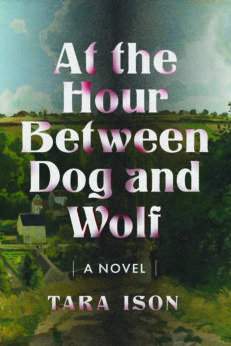
So opens Tara Ison’s newest novel, At the Hour Between Dog and Wolf, set in WWII France throughout the time of the French collaboration with Nazi Germany. The book follows the slow, horrifying transformation of Danielle, a twelve-year-old Jew in hiding with a Catholic family in the rural farming town of La Perrine. Over the years of the war, Danielle assumes the false identity of a French Catholic girl named Marie-Jeanne, embracing her new life so entirely that she loses hold of what’s real and what’s pretend, forced to live in the liminal space, the twilight, between two identities until her former self is all but consumed. By the end of the book—and the end of the war—Danielle is a devout Catholic and anti-Semite with fascist ideals that betray the very people she belongs to. 

At the Hour Between Dog and Wolf not only examines the calculated ease with which evil spreads and the ways propaganda perpetuates self-sabotage, but it acts as a timely warning in the midst of a global resurgence of fascist rhetoric and glorification of nationalism. Danielle is a character you cling to, even when it makes you sick, and this book is a harrowing reminder of how swiftly we can rationalize our own evil. 

“Maybe that’s the real reason for Confession,” Danielle thinks to herself in the final pages of the book. “Not for God, or priest, or anyone, to bless or forgive you, wash away your sins. Maybe they don’t ever wash away or disappear. But having to put yourself into words means you have to hear yourself. Look at yourself. Make yourself and who you are real.” 


Rachel Reeher: A pillar of the book is the process of performance becoming belief. At such a young and malleable age, Danielle, a Jewish girl, has to perform a level of anti-Semitism throughout WWII in order to stay alive. Can you talk about self-harming ideologies as an engine for the story? 

Tara Ison: Anyone forced to live under an assumed identity eventually struggles with this, especially when the stakes are life and death. Danielle is twelve when the war starts, a very precarious period of adolescence—the sense of self and identity are still forming, fragile. At the same time, she’s a somewhat bratty twelve-year-old, and when she’s first put in this situation, she has a naive arrogance that many adolescents have. She thinks she can handle it. She looks at it like a game of pretend, like she’s practicing for her future as an actress. But as the story goes along, she makes mistakes, she realizes she has to commit to this role, to take it seriously. 

Initially, she’s thrust into the world of a French Catholic family who have varying perspectives on the war. Her fake uncle and fake cousin believe that “foreign Jews,” or Jews who aren’t of French ancestry perhaps should be “returned to their homes.” They don’t see it as being taken away to be exterminated, per say, but there is an anti-immigrant, anti-Semitic feeling in the house. The person she’s closest to, her fake aunt, Berthe, is what I’d call casually anti-Semitic—we’re all children under God, they’re our brothers and sisters, but of course, they’re different from us. 

Danielle is able to brush that off for a time, but gradually she has to start transforming her own ideas in order to reconcile them in her mind. She tells herself they’re talking about other Jews, not her. It doesn’t take long for her own othering of Jews to begin. She knows she’s Jewish, but she’s begun the process of categorizing. There are the foreign Jews—the immigrant Jews who are taking jobs—and then there are French Jews, like her, the harmless ones. Once she starts down that path, the effects of it are insidious. The internalized anti-Semitism takes hold because it feels like a path to safety, to survival. 

It’s like holding a mirror to the French collaboration with Germany. France felt that choice was the only path to surviving as a country. For Danielle, performing anti-Semitism and later embracing it becomes her path to security. By then it’s too late.  

RR: There’s the tension between war and childhood, and the question of whether they can coexist. Danielle tries to remove all the childlike parts of herself, in order to be strong, to be an adult, to be capable. What was your approach to that dichotomy? 

TI: As Danielle settles into her false identity, the fear of making a mistake ceases to be a concern. It’s not a false identity for her anymore, there isn’t a mistake she can make because she really is this new person, this Marie-Jeanne, now. Responsibility becomes something entirely different for her in light of this transformation. She becomes a devout Catholic and starts to internalize the stories of the saint and heroine, Joan of Arc, starts to believe that not only does she, Marie-Jeanne, have a responsibility to save herself and her town, but in many ways to save her country, just like Joan of Arc.

Danielle’s responsibility is also invoked by Vichy propaganda. They were very clever at manipulating their children. Brainwashing, indoctrinating. They knew the children of today could be the fascists of tomorrow, and they wanted to instill in a young generation that responsibility to the state. To the point of self-denial, self-destructiveness even. Danielle buys into the message that she has a duty, an obligation as a young woman, to contribute to the regeneration of a new France. 

Finally, there’s the responsibility to her new family. She truly bonds with her fake aunt and uncle and she even grows to love them. The war continues and the scarcity grows—food is harder and harder to find, survival becomes increasingly difficult. This family took her in when she needed them, and as she matures, she feels it’s her responsibility to give back. 

There’s a paradox—she goes from being a bratty twelve-year-old to, in many ways, being a selfless, caring, responsible young adult, only it’s at the cost of so much. 

RR: At one point the narrative even says, “…but why did God punish them for her sins, make them suffer, all those innocent people? …why did he choose to save her?” Is it an inherently human tendency to place that kind of responsibility or blame on the individual? Is that line of thinking innately tied to religion?

TI: That moment happens late in the novel, when Danielle’s commitment to her new identity finally cracks and she’s forced to confront a connection with the people she’s betrayed and rejected. It’s survivor’s guilt, and the question she’s asking can be either a secular question or a question of faith. 

It can be hard to read books about the things we’re living, seeing on the news at night.

It’s easy to ask yourself why have I been lucky enough to have this job, house, resource, privilege, etc., when others don’t? For those committed to a faith, that question gets asked directly of God. It’s a short step from those questions of God to feeling a sense of responsibility yourself. If You’ve blessed me with life and survival when so many have died, it must be because I have a purpose. There is something You want me to do. Danielle doesn’t know what it is anymore. She convinced herself that she made choices that honored God, that honored the Catholic faith. Now, she’s seen that those choices didn’t result in “good,” that she herself was perpetrating evil. 

By the end of the novel, she’s having both a crisis of identity and a crisis of faith. She’s stripped of any moral certitude, any sense of self. She has nothing to believe in anymore. She’ll have to start all over, to reconstruct an identity for herself. 

RR: One of your epigraphs is from Aleksandr Solzhenitsyn, who says, “To do evil, a human being must first of all believe that he’s doing good.” We often hear about the role denial plays in the mentality of the aggressor, like Solzhenitsyn is pointing at—a concept that’s especially relevant when discussing Nazi Germany. But I’m interested, too, in the role of denial for the victim, where forgetting the “truth” or what is “real” might be the only way to survive, to move forward. That feels like a strong undercurrent in this book, too. Is it something you were thinking about?

TI: There are tiers of humanity that embrace evil for the sake of evil. But the larger tier of people, and the scarier one because it’s so relatable, are the people Solzhenitsyn is referring to. We don’t want to think of ourselves as monsters. So there’s a psychological process of denial, of transforming our belief system in order to support and rationalize our actions so we can sleep at night. 

But Danielle is in a sort of in-between—one foot in the world of the victim and the other in the world of the aggressor. She has to convince herself that she’s doing what has to be done to protect herself, her family, her village, France. We’re all susceptible to that kind of rationalizing. It starts with tiny steps, tiny acts of othering. In WWII France, it began with tiny acts. Jews being turned away from non-Jewish restaurants. Once you start doing that, you’re committed to the path. At what point do you draw the line? At what point do you say I’ve gone too far? By then, human beings are being packed into box cars and carried to extermination camps. 

After Danielle has fully assumed the identity of Marie-Jeanne and suppressed or rejected any part of her former self, there’s a scene where she’s writing a letter to someone just after the Jews in the southern zone have been required to wear the Jewish star on their clothing. Initially, the southern zone wasn’t occupied by the Nazis, and Jews there weren’t made to wear the Jewish star, but as the war went on and the noose tightened around France, eventually they were. In this letter, Danielle wonders why people are protesting the new requirement. She wonders how it’s any different than a Christian wearing the crucifix, why it’s not something a Jew would be proud to wear as a sign of their faith. Part of that is naivety of what it truly means, but part of it is willful ignorance. By then she knows on a subconscious level what it means, but it’s easier for her to think of it as benign, and not as another step in the perpetration of evil, forcing the victim to self-identify. 

RR: Were there moments that were especially challenging to write?

We don’t want to think of ourselves as monsters. So there’s a psychological process of denial, of transforming our belief system to rationalize our actions so we can sleep at night. 

TI: The ending. Finding the right psychological place for Danielle to land was difficult. I wanted to end on a note of hope, but I’m always thinking about Charles Baxter’s perspective on epiphany—that it rarely happens in real life. We may have moments of insight, of self-awareness, but the truer story is about the journey and not the arrival at revelation. 

I wanted the door to open for Danielle just slightly, a crack. For her to realize she couldn’t continue as the person she’d become, but have no idea how to reconstruct herself in the world. She just knows she has to try. Pushing her too far into self-awareness would have rung false. That final scene required more drafts than I can count. 

I also spent a lot of time on the two scenes between Danielle and Lucien, a Vichy official. Both are grooming scenes. Lucien is a very skilled manipulator who knows how to take this girl’s vulnerable mind, calculate her weaknesses, and lead her gently down a path that will get him what he wants. Information. Allyship. Once someone understands what scares you, that’s the entry point. That’s how he gets in. The trajectory of those scenes was a balancing act. Lucien isn’t a major character in the book, but I found him fascinating. 

RR: You’ve written a book about the mass tolerance of evil. Even though the story takes place almost a century ago, do you find that narratives like these are especially timely for our own cultural climate?

TI: When I first started writing the book twenty-five years ago, I was primarily interested in the psychological trajectory of Danielle. It wasn’t until five or six years ago that I realized how disturbingly timely the narrative is. We’re witnessing a global resurgence of fascist dogma, radical right-wing ideologies, anti-Semitism. Have we learned nothing? It was disturbing in recent years to re-read sections I’d written ten years ago and feel like I was reading a headline from today, or the words of a speech from a current world leader. 

But a contemporary novel about what’s happening in the world today might feel too close to home for some people. It can be hard to read books about the things we’re living, seeing on the news at night. Some people don’t want to spend their reading time going there. But a novel that’s set almost a hundred years ago can allow a reader to access the same issues from what feels like a safer distance. I hope the relevance, the timeliness, the disturbing truth of what we’re reliving does sneak up on the reader. I hope it offers clarity on how it’s happened in the past, how it’s happening now, how it could happen in the future. 

Unraveling the Myths White America Tells Itself

When David Mura’s parents were eleven and fifteen, they were forced, along with their families, to board trains from the West Coast to remote camps in Minidoka, Idaho and Jerome, Arkansas, where they spent much of World War II. A few years back I visited what is left of Jerome— the same “camp” where my father-in-law, aged four, was imprisoned during what became known as the internment. The 120,000 Japanese Americans who were forced to leave the West Coast lost all their land and possessions from before. They also lost their cultural identity. “My dad’s white teacher in the Jerome, Arkansas camp said to his class, ‘When you get out of here you should try to be not 100% American but 200% American,’ ” Mura explains, “So in both conscious and unconscious ways, my parents took as the meaning of their imprisonment that their crime was their Japanese ancestry—and this involved both ethnicity and race, since neither the Italian nor German American (i.e. white) communities were subject to mass imprisonment. Accordingly my parents raised me to assimilate into a white middle class identity as they did.” 

As a consequence, Mura learned to “think like a white person…what I wanted to be,” worshiping patriarchal white heroes like John Wayne and Robert E. Lee. However, in his twenties, “as a result of reading Black writers like Frantz Fanon, James Baldwin, and Toni Morrison, I finally admitted to myself that I was not white and would never be white.” Mura began a lifelong quest exploring his own racial and ethnic identity through essays, poetry, performances, and his memoirs, Turning Japanese: Memoirs of a Sensei and Where the Body Meets Memory: An Odyssey of Race, Sexuality, and Identity. Throughout his career Mura has been exploring the ways he had been taught by whiteness to think about race, only to realize that these stories were filled with lies, distortions and denials.

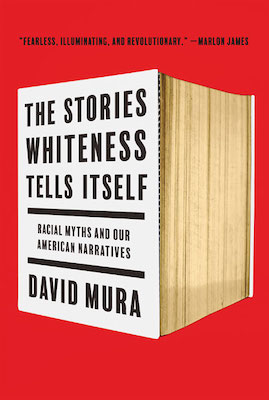
In his latest book, The Stories Whiteness Tells Itself, Mura examines works by Faulkner and Frantzen, popular films, as well as foundational narratives of white supremacy—Jefferson’s defense of slavery, the whitewashed history of Reconstruction, slavery’s re-creation via mass incarceration—to show how white identity is based on a shared belief in a false history which allows whites to deny their culpability in present and past inequities. Pointing out how implicit and explicit biases regarding Blackness lead to the murders of fellow Minnesotans Philando Castile and George Floyd, Mura demonstrates why we must as a culture change our internalized narratives regarding whiteness, because this ignorance, as most recently illustrated with the murder of Tyre Nichols, is literally a matter of life and death. 


Deirdre Sugiuchi: You live in Minneapolis/ St. Paul. You raised your family there. How did living in this community, the one time home of Philando Castile and George Floyd, inspire you to write The Stories Whiteness Tells Itself? Can you discuss the urgency you felt?

David Mura: I often drive the road where Philando Castile was murdered; I’ve even received a couple speeding tickets there (it’s a notorious speed trap). But as an Asian American I was never in danger the way Castile was.

George Floyd was also murdered a few miles from my home. My middle son, who works at a nearby high school, knows Darnella Frazier, the brave seventeen-year-old who took the video of Floyd’s murder. The demonstrations at the 3rd Precinct were close enough that I rode my bike there.  

When I began the essay about Castile’s murder in 2017, which started my book, I began reading widely about the issues of race in history, political science, economics, law, etc. I quickly realized how intricately the roots of his murder go back in our history—to the ontology of slavery and the division between whiteness and Blackness; to ideological defenses of slavery by Jefferson; to pseudo-scientific studies in the 19th century which viewed every crime by a Black person as evidence of intrinsic Black criminality (crimes by white people did not cast a stain upon white people but were regarded as the acts of specific individuals, often explained through socio-economic circumstances). The idea that the racism of the past—particularly the racist thinking of the past—has no influence on the systemic racism of the present is utterly false, complete nonsense, and is another example of whiteness gaslighting BIPOC Americans. 

That my book ends with an essay on George Floyd’s murder and a coda on the murder of Daunte Wright, is a tragic, cruel and telling irony— in the time since we have continued to see more murders and beatings of Black citizens. 

DS: Can you discuss how the prescriptions of whiteness, “the behaviors and beliefs that have served to protect and preserve the racial status quo since America’s beginning,” impacts the way white America narrates and interprets not just our racial past but also our racial present?

DM: America began with two contradictory goals: One was to establish freedom, equality and democracy. The other was to institute white supremacy and maintain white oppression of Blacks and Native Americans. White America is fine with telling its history through the lens of the first goal, but is decidedly not fine with telling its story through the second lens. In this, the experiences, consciousness and narratives of Black Americans are deemed un-American or too distant in the past for us to consider, unnecessary blemishes or accidents or even harmful, or at best secondary and minor.

Whiteness, as I define it, is a set of beliefs, ideas and practices which, from our very beginning, established white supremacy as a guiding ideology for white people. White people learn and practice this ideology both consciously and unconsciously—hence conscious or explicit bias and unconscious or implicit bias.

My book examines the epistemology of whiteness: white knowledge is always considered objective, valid, true and official; Black knowledge is considered subjective, suspect or invalid, untrue and unofficial—unless whiteness decrees it. You see this in the telling of our history, in Black patients telling doctors of their pain, and in the differences between the ways whites receive police accounts as opposed to Black accounts of police encounters (whether white or not, police uphold the rules of whiteness). In the past few years, it’s not so much that white America has started to believe the narratives of Black people about the police, but that technology—dash cams and cell videos—caught up with police racism. 

DS: In your chapter Philando Castile and the Negation of Black Innocence,” you discuss how since 1619, Blacks in America, as slaves, were regarded as property, as less than human or inferior human beings, and how viewing Black people as property led to viewing Black people collectively as criminals. How did this mindset, of viewing Black people as inherently criminal, impact how the police officer viewed Castile? How did such biases influence the way Castile was covered in the media after his death?

DM: My book takes sometimes difficult academic theories, synthesizes them, and tries to make them comprehensible to non-academic readers—Afropessimism, Hegel’s Master/Slave dialectic, DuBois’s double consciousness, the ontology and epistemology of race, Gates’ Signifying Monkey, Critical Race Theory. I explore these theories because they help us to understand how deeply racial bias and Whiteness are embedded in the American psyche and how complicated that process is. The simplification of race by conservatives and even liberal whites is partly a way to obfuscate the workings of racism and partly a way to silence any racial critiques of whiteness. And yet, BIPOC understand, see and know the reality of racism in America. As one older Black woman said to Wilderson when he addressed a community meeting in the Bay, “I’m not a scholar like you, I didn’t go to college, but when you talked about slavery, that is how I feel. Like a slave.”

The idea that the racism of the past has no influence on the systemic racism of the present is utterly false and is another example of whiteness gaslighting BIPOC Americans.

Officer Yanez, who murdered Castile, had attended a police training, “The Bulletproof Warrior,” which states that the first and primary duty of the police officer is to ensure their own safety and that that the officer’s role is like that of enemy troops in a foreign country—i.e., you are not protecting and serving your fellow citizens. To Yanez there was no possibility of seeing Castile as a fellow citizen, much less “Mr. Rogers with dreadlocks.” Castile was a priori cast in the tautology Black=criminal; whether this association was conscious or unconscious made no difference. Yanez was supposedly responding to his “feeling” that Castile, with his dreadlocks, looked like two Black men who had held up a local convenience store. But Castile was riding with his Black girlfriend and her four-year-old daughter—whom Yanez did not see. In other words, Yanez was incapable of seeing any of the Black occupants in the car. This inability to see the humanity of Black Americans goes back to the original ontology of slavery and white fear of Blacks. 

DS: Can you discuss the danger of proposed legislation like Senator Tom Cotton’s “Saving American History Act,” which prohibits federal funding from being made available to teach the 1619 Project curriculum in elementary and secondary schools, and the various attacks DeSantis has made on education in Florida including the retraining of librarians and refusing to approve AP African American studies. How is this related to racial backlash historically? 

DM: Cotton’s “Saving American History Act” is a prime example of what he purports to not exist—systemic racism. So is DeSantis’ recent attacks on CRT, his administration’s canceling of Florida’s AP African American history, and his working to ban the term “systemic racism” in schools. Both white politicians are trying to silence the experiences, consciousness and narratives of Black people—and this, again, is proof that white supremacy and systemic racism continue to exist, both in our education and government, but also at an epistemological level.   

White America keeps saying the problem is not that white people have abused Black people throughout our history; no, the problem is that Black people keep remembering this history and telling it to white people—which somehow victimizes white people. My verb choice is deliberate: what whites like Cotton and DeSantis exhibit and what whiteness often embodies is the psychology of an abuser, who blames their victim both for the abuse and for not forgetting the abuse. 

Now it’s no surprise that Cotton, DeSantis and white politicians like Trump are engaged in a backlash against racial progress. Obama’s election became a signal to white America of the growing political and cultural power of BIPOC Americans; it made concrete the fact that some time after 2040 white people will no longer constitute a majority. We will all be racial minorities then. And white people are freaking out about their loss of majority status. 

But the same thing happened after the Civil War when, for a brief moment, Black people could vote in the South and won positions in government and began to exercise their rights as citizens. In our schools, we rightly celebrate the Emancipation Proclamation and the 13th, 14th and 15th Amendments. What we don’t examine, though, is how, throughout the post-war South, there were society wide efforts to re-establish the norms and practices of slavery; this involved not only violence and white terrorizing of the Black population, but complicated legal maneuvers and theory, racial pseudo-sociology and medicine, government laws like the Black Codes, discriminatory economic practices, racist organizing and the creation of the myth of the Lost Cause. This myth pictured the ante-bellum South as a valiant, noble way of life; it argued that the true causes for the Civil War were Northern aggression and the defense of states’ rights and not slavery, since Black slaves were not exploited but treated well and were perfectly fine with their lot. Eventually this myth became accepted by the North as part of the bargain the North made to ensure white and national unity. You can see this in the success of Griffith’s The Birth of a Nation and in Gone with the Wind, both the novel and the film. 

Similarly, after the passage of Civil Rights laws in the 1960s and efforts to desegregate public schools, the South began a campaign of backlash and resistance to these laws. The North followed suit when these laws began to be applied to Northern school systems. There was the establishment of systems of religious or private schools, as well as efforts which continue to this day to publicly fund private schools at the expense of public schools. In the South today there are schools and areas as segregated as they were in the 1950s.

Again white America is fine with telling the American story through the lens of racial progress. But it is not fine with telling the tale of white racial backlash, which has followed each and every move towards racial progress. 

DS: What do you think about the Moms for Liberty, a right-wing affiliated group who claim to be “fighting for the survival of America by unifying, educating and empowering parents to defend their parental rights at all levels of government” and are leading book challenges nationally?

America began in the lie of white supremacy and it still has not abandoned that lie.

DM: In the recent controversies over CRT, conservatives like Moms for Liberty are so afraid of Black narratives that they believe the story of six-year-old Ruby Bridges desegregating a New Orleans school in 1960 in the face of a hostile, shouting, spitting white crowd will hurt their fragile white children— rather than leading to their children to be inspired by a brave young Black girl. And yet these white conservatives never seem to be concerned for the “fragility” of Black children and the fact that almost every Black parent must tell their children narratives of police brutality and killings in order to instruct their children how to respond when they encounter police. White children are oh so fragile and need protection, but Black children, why would Moms for Liberty care about them?

DS: You end your book with a call to white Americans to transform their thinking about race.  You once undertook a similar journey. Can you discuss the rewards? 

DM: We all must work on knowing more, on actively combating racial bias and thinking, both in others and particularly in ourselves.

Baldwin stated, “The question of identity is a question inducing the most profound panic, a terror as primary as the mortal fall.” To question one’s identity is as frightening as confronting one’s mortality. And yet, white America, and indeed all Americans in our increasingly diverse country, are confronting experiences and people in our society that challenge our racial identities, the ways we think about and understand race. For white Americans this involves confronting how the ideology of whiteness has shaped their thinking, their beliefs, their practices, and the conditions of their lives. 

In this process, white America must go through stages much like what Helen Kubler-Ross outlined in On Death and Dying: 1) Denial; 2) Anger; 3) Bargaining; 4) Grief; 5) Acceptance. Most white conservatives are in the first two stages; white liberals in the third. They all are in a state of denial, and this denial keeps them trapped in weakness and self-deception.

America began in the lie of white supremacy and it still has not abandoned that lie. When individual white Americans admit this lie, they experience a sense of grief at first—they’ve lost their sense of innocence about America and themselves. But with acceptance comes not just psychological strength and courage, but a sense of relief: Oh, I no longer have to continue defending against the truth, repelling the truth, and thus, I no longer have to push away the experiences, consciousness and narratives of BIPOC Americans. When a white American does this, they come to see that we have never had a pure white America, that the American story cannot be told without the narratives of all of us. 

The shame white Americans feel over being white can only begin to dissipate when a white American accepts the truth about the racism in our past and the racism that continues to function in our country. What should come up then is less about guilt but responsibility and acceptance that we all have a role to play in making this country live up to its ideals. And then that white person can finally admit that the greatness of our country is due in part to the work of Black Americans to make this country more equal. Black Americans have always been on the right side of our racial history—and yet white America has never turned to Black America and said, “You have always been on the right side of history and white people did not recognize this. So now, in the present, we’re going to listen to you, we’re going to follow your lead.” To use Baldwin’s phrase, part of the price of this ticket is learning what BIPOC communities can teach white Americans about what it means to be an American. 

When white America finally does this, when it abandons its loyalty to white supremacist epistemology and narratives, we’ll know we’re on our way to real change and racial equality. 

8 Novels About Complicated Queer Relationships

Queer fiction is experiencing a renaissance, with titles abounding across genres: literary, speculative, graphic, romance, YA. There are even a host of children’s books dedicated to introducing kids to LGBTQIA2S+ themes. Republican lawmakers hell-bent on legislating transness and queerness out of existence have (mercifully) no control over what gets published in our gay little corner of the world, and as long as these books keep getting published—and they will—LGBTQIA2S+ readers will continue to find themselves in fiction, a powerful antidote to heterenormativity and the conservative agenda. 

Happily, we’ve arrived at a time where books with queer characters aren’t just about coming out, getting bullied, or suffering dysphoria. That is to say, queer books aren’t always about queerness so much as they’re about queer characters getting up to the same kind of mischief straight characters have always been allowed to get up to. To be living in an age where queerness can be taken for granted in fiction is a true pleasure, because it means that the cishet experience is no longer the default. This opens things up tremendously: now we’ve got domestic fiction about lesbians and hard sci-fi starring trans people and all kinds of things in between. Instead of being the objects of pity, queer people are now allowed to be messy and complex, to travel to other planets, have situationships and exorcize spirits from haunted houses. 

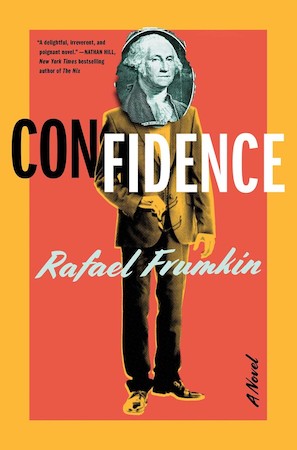
These eight books are about the perils and rewards of relationships—the queerness of those relationships is both incidental and important. Incidental because, like I said above, we’re finally allowed to take queerness for granted in fiction; important because representation both celebrates and normalizes queer complexity. With Confidence, I wanted to tell a story of love and heartbreak that could belong to anyone, but happens to belong to a gay con artist who’s head over heels for a charismatic and unobtainable huckster of a pansexual lover. All of these books inspired me as I was writing, and I know they’ll continue to inspire generations of queer writers to come.

These Violent Delights by Micah Nemerever

Set in the Pittsburgh of the 1970s, this book is like ice cream sprinkled with cyanide: delicious and dangerous all at once. Paul is a shy college student who develops an obsession with his classmate Julian, a lithesome Dickie Greenleaf type who need only walk into a room to become the center of attention. The two become secret lovers, longing to get out of Pittsburgh and start a life together without the nosiness of teachers and parents holding them back. But their love takes them in a truly toxic direction, resulting in an act of violence that had me gripping the book until my knuckles turned white. Think the creepiness of Leopold and Loeb meets the retro languidness of Call Me by Your Name meets the nerdy arrogance of The Secret History and you’ve got These Violent Delights.  

All This Could Be Different by Sarah Thankam Mathews

Mathews’s sparkling debut follows a group of twentysomething friends in late aughts Wisconsin trying their best to figure themselves and their lives out. Sneha, the book’s protagonist, is a queer first-generation Indian American who lands a consulting job at a Fortune 500 company based in Milwaukee. She graduates college and moves to the strange, tiny city, where she lives above her toxic landlord and struggles to infiltrate the local lesbian scene. When she finally does find her way in, she meets Marina, a beautiful dancer whose Americanness both annoys and fascinates Sneha. The two begin a relationship, and, despite the all-consuming sex, Sneha finds herself struggling to match Marina’s needs for commitment and affection. The book’s sentences are like freshly-tumbled gems, and Mathews is a master when it comes to exploring the millennial condition. It’s no surprise this book was a shortlister for the National Book Award.

Paul Takes the Form of a Mortal Girl by Andrea Lawlor

Lawlor brings the early ‘90s to life in this hilariously irreverent picaresque about Paul, a person who can shapeshift among genders at will. At twenty-three years old, Paul is a stud in the Iowa City queer scene whose conquests are too numerous to count. His ability to casually switch out his sex organs allows him to float among in-groups: he goes from holding court with the burly daddies in Chicago leather bars to having some folksy lesbian sex at the Michigan Womyn’s Music Festival. Lawlor certainly knows their queer theory: references to Barthes and Butler abound, and Maggie Nelson herself called the book “hot.” Although Paul regularly pines for his dead lover Tony Pinto, the complicated queer relationship in this book is Paul’s with himself— for all his bravado and Tiresian abilities, Paul is still learning who he really is, and that takes quite a lot of trial and error. This book is for anyone who wishes Middlesex had more mixtapes and fanzines.

Giovanni’s Room by James Baldwin

This is a well-known classic, and no list of books about complicated queer relationships would be complete without it. David is a young bisexual American living in Paris: when we meet him, his fiancée Hella has returned to the United States and his ex-boyfriend Giovanni is about to be executed. The slim volume is a book-length flashback to the events leading up to Giovanni’s death. David and Giovanni meet in a gay bar owned by the flamboyant Guillame: Giovanni is handsome and penniless and David is compelled despite himself. When the two start sleeping together in Giovanni’s barren and messy bachelor’s flat, David struggles with questions of sexuality and masculinity, ultimately sleeping with a woman to “prove he’s a man.” But Giovanni clings to David, and when Giovanni is fired from his job at Guillame’s bar he becomes desperate, resulting in the commission of the crime that will lead to his execution. Baldwin’s time as an expatriate in Paris clearly informed this elegant and devastating novel, as did the fact that he was a giant of American letters.

Written on the Body by Jeannette Winterson

In this captivating novel, a nameless and genderless narrator who has trouble committing to relationships becomes obsessed with the beautiful and dynamic Louise. The narrator leaves their partner to pursue Louise, whose physicality Winterson renders on the page in her trademark sumptuous prose. A problem: Louise is married to Elgin, a research physician who thinks he’s on the verge of a breakthrough in cancer treatment. Another problem: Louise has cancer. Elgin confronts the narrator about the affair, talking them into leaving Louise so she can receive the treatment she needs. Heartbroken but convinced they’re saving Louise’s life, the narrator retreats to a cottage in the woods and takes a job at a nearby bar. When a local lesbian convinces them to go back to the city in pursuit of Louise, our narrator learns that Elgin’s intentions were less than noble, and all hell breaks loose. Winterson is a genius when it comes to understanding the body as text, accounting for every detail of Louise’s body with a bookish lover’s tenderness. 

The Price of Salt by Patricia Highsmith

Many of Highsmith’s novels have been adapted for the screen, and it’s no wonder: the books are cinematic in their suspense and thematically timeless. The Price of Salt is no exception—it’s a story of lesbian love in a highly conformist era, when evidence of queerness was enough to lose custody of a child in divorce. Therese is a twentysomething loner in Manhattan with a job in a department store and a boyfriend she’s not attracted to. When Carol walks into the store, chic and self-possessed in her early thirties, Therese develops an instant crush. Carol gives Therese an address to send her purchases to and Therese sends her a Christmas card on a whim. Carol writes back, and an intense love affair begins. Unfortunately, neither of them accounted for Carol’s husband Harge, who’s onto the affair and wants a divorce, and who’s willing to wiretap a room to get it. Things get more turbulent from there, but Highsmith allows us the gift of a happy ending— all too rare in old school novels about queer love. 

An Unkindness of Ghosts by Rivers Solomon 

325 years in the future, a giant spaceship called The Matilda is carrying what’s left of the human race to an as-yet-unidentified new settling place. The ship is structured like a plantation, with Black and Brown people toiling below deck and white people enjoying the fresh air up above. Aster Grey is gloriously neurodivergent and queer—like all below-deckers, her body is essentially gender non-conforming, a fact that fuels much of the above-deckers’ policing and abuse of those below them. Aster is a healer, having trained with Theo, a mixed-raced (but ultimately white-passing) above-deck surgeon. Aster and Theo’s non-platonic relationship is strained when Theo asks her to help him save the ship’s Sovereign, who’s suffering from a mysterious ailment not unlike the one Aster’s mother suffered from before taking her own life. In helping Theo, Aster begins to piece together clues left in her mother’s engineering notebooks about The Matilda’s history, a project that fuels Aster’s desire for insurrection. The world-building in this book is exquisite, the essential queerness of its characters and their relationships is wonderful, and the brutality of Aster’s world—a space-allegory for the ravages of white supremacy—is brilliantly wrought. 

Notes of a Crocodile by Qiu Miaojin 

Set in the post-martial law era of late-’80s and early-’90s Taipei, this bittersweet cult classic is about a group of friends at Taiwan’s most prestigious university navigating love, queerness, and Intro to Chinese Literature. The book is structured as a set of notebooks written by a young lesbian who goes by Lazi: she’s head over heels for the resplendent Shui Ling but too lost in her internalized homophobia to keep up the relationship. Lazi and Shui Ling break up and Lazi goes on to graduate, get her first job, and date other women, all while keeping up with her very gay circle of college friends. But Lazi can’t get Shui Ling—who was her first love—out of her head. 

Intertwined with this fraught love story is a surrealist account of humanoid crocodiles that have begun to crop up all over Taiwan. They dress in human clothes and conduct themselves like humans, but they’re noticeably different— not unlike the queer people who populate Miaojin’s novel. There’s much to love about this book, from its punk epistolary style to its tender portrayal of queer friendship to the playfulness of its crocodile metaphor. 

I Dare You To Find the Joke in Pat Benatar’s Music

I grew up in San Antonio, a place forever stuck in 1999, where nu metal still thrives to this day. When I left for college in 2005, I met a lot of new people and became enlightened and got into real music. My new friends and I listened to Bob Dylan, Jimi Hendrix, The Doors—all that classic stuff from the sixties and seventies—and made fun of people who listened to music we deemed to be garbage. We listened to the radio ironically and especially liked to dunk on artists from the eighties. They seemed especially ridiculous. Our favorites included Don Henley, Cyndi Lauper, and Van Halen, but one stood out above all others. One woman pushed the boundaries of lyrical silliness: Pat Benatar. On her 1983 hit “Love is a Battlefield,” she sings “We are young. Heartache to heartache, we stand. No promises or demands. Love is a battlefield.” A year later, she gave the world “We belong to the light. We belong to the thunder. We belong to the sounds of the words we’ve fallen under.” We laughed and mimed belting it out.

There was something unique about her, and I found myself listening to her on my iPod on the way to class and watching her music videos on YouTube when my roommate was gone. I was afraid he’d catch me and wouldn’t understand that I was watching ironically. I couldn’t afford that because I’d recently become a serious intellectual and artist. You see, I was taking Intro to Creative Writing. We read classic literary short stories, stuff by giants of the form like Denis Johnson, Amy Hempel, and Edward P. Jones. We were taught the tenets of serious fiction. We learned that less is more with dialogue and figurative language, and to avoid adverbs at all costs. I used another elective spot on a fiction workshop and kept writing. I tried to make sure my characters’ actions were well-motivated and believable, tried to keep things tight.

I tried to make sure my characters’ actions were well-motivated and believable, tried to keep things tight.

After I graduated, I found little time to write but wanted to at least keep reading. Without my professors and classmates, I no longer had anyone to tell me what authors to read next. I started following different book blogs on Twitter and checking out the “Forthcoming” sections on publishers’ websites. In early 2010, I scrolled down my feed and saw a striking black-and-white photo of a woman in a striped shirt, a defiant look on her face. It was a book cover for Between a Heart and a Rock Place by Pat Benatar, a memoir set to be released the following month. I laughed. It’d been a while since I’d thought of her, and all the songs flashed through my head. It was hard to imagine her as a kid, almost like she just came into existence fully formed. After a few weeks, I gave in and preordered it.

When it came in the mail, I dug in right away. Benatar was born into a musical family. Her mother, Mildred, was an opera singer who gave up her aspirations when she became pregnant with Pat. From there, she put her energy into her daughter, involving Pat in choir and theater from an early age. Through the guidance of her high school choir director, Pat became classically trained as an opera singer. She was set to audition for Julliard when her boyfriend decided to enlist in the Army. She writes, “Dennis pleaded with me to stay with him, to just blow off the audition, asking me not to go. And so I didn’t.” They got married and were eventually stationed in the Richmond, Virginia area, and Pat took a job as a bank teller. “Music faded far into the past,” she writes, “something I’d done in another life.” 

I get the impression that well before she left New York, she’d begun to feel disconnected from classical music. She talks about listening to 45s on her Victrola as a teenager with her friends. She writes, “When we were a little older, we got into the Beatles, and became obsessed.” Something about rock music resonated with her in a way that opera didn’t. It was wild and visceral. It broke all the rules she’d been taught about music.


In 2019, I moved to Illinois to begin my MFA. I was excited to have more time and energy for writing after spending the decade after undergrad with hardly any of either. I was back in the workshop setting, but this time with nearly three-hour-long classes and only five other people to help fill them. The tone was more serious. I was also in a class called The Craft of Fiction, where we could spend hours dissecting a single flash fiction piece. 

I learned a tremendous amount from the professors, but the solemn tone of the classes, along with teaching composition, left me in need of a release. I was lucky enough to find that in Chris, one of the other fiction students. We shared a love of fast food, psychedelics, and horror movies. He’d come over to my place once a week, and we’d take turns choosing the movie. I’d go with campy stuff from the eighties and nineties, whereas he favored whatever the newest release was. We usually felt the need to preface our picks with some kind of apology—“I’m not saying it’s a good movie, but…” It was similar to the apology I gave friends before turning on pro wrestling. We talked about watching indie arthouse dramas and Oscar-nominated movies. We “needed” to see them, but we never got around to it. There were too many horror movies to get through first.

We shared a love of fast food, psychedelics, and horror movies. He’d come over to my place once a week.

We started exchanging short stories outside of workshop, stuff we felt would get laughed out of the classroom. I gave him a story about the ghost of a dead SeaWorld orca, and he sent me a 9,000-word story about ghosts who wanted to be more present. They were funny stories, full of camp. I finally had someone to bounce ridiculous ideas off. I came up with a premise involving both D.B. Cooper and Bigfoot, and Chris encouraged me to see it through. These stories were fun but stifled in a way, hard to get through for reasons I didn’t understand. I assumed the premises just weren’t believable and tried to scale them back. I could have D.B. Cooper or Bigfoot in a story, just not both. I eventually set them aside and went back to writing stuff set firmly in reality. I needed to reel it in.


Benatar wasn’t a big Liza Minelli fan, but when her coworkers invited her to come with them to the concert in Richmond, she thought it might be a nice break from the monotony of her life. But it ended up being much more than that. “Something miraculous happened,” she writes. She wasn’t impressed with Minelli’s singing but by her showmanship, the way she performed and held the audience in her palm. Benatar was blown away, but at the same time knew she could do it, too. The next day, she quit her bank job and began seeking out singing gigs.

These moments are some of the most pleasurable for me when it comes to interacting with art, when I suddenly realize what someone is doing and what makes it work. One of these epiphanies came to me one night, sitting on the couch with Chris, eating calzones. It was my turn to pick, and I chose the lesser-known John Carpenter movie Christine. “It’s about a possessed killer car,” I said, and we laughed.

The opening credits played to the sound of a revving engine, and we looked at each other and smiled. We giggled when Christine, the classic cherry-red Plymouth Fury, claimed her first victims at the auto factory, smashing a man’s hand with its hood and killing another for ashing his cigar on the interior. Christine spares Arnie, the unsuspecting teenager who fixed her up, but soon begins to infect his mind. He goes from a nerd to cool to eventually paranoid and violent. Christine becomes jealous of his new relationship with Leigh, the prettiest girl in school.

We giggled when Christine, the classic cherry-red Plymouth Fury, claimed her first victims at the auto factory.

I settled into the movie and found myself rooting for Christine to take vengeance on Arnie’s bullies, and by the final act, I was rooting for Christine to be destroyed. She needed to be stopped. In the movie’s closing minutes, Arnie is killed while trying to run Leigh over with Christine before Dennis smashes Christine with a bulldozer. We then cut to a junkyard where Dennis, Leigh, and the detective watch as Christine is condensed into a cube. The detective looks at the teenagers and says, “I wouldn’t feel so bad if I were you two. You two are heroes.” 

“A real hero could’ve saved Arnie,” Dennis responds. This is incredibly silly, but Chris and I didn’t laugh. We were too worried about Christine coming back. I thought about Arnie before Christine got ahold of him. This is how I choose to remember him.

The legend Robert Ebert writes, “Christine is, of course, utterly ridiculous. But I enjoyed it anyway.” He goes on to nail it down perfectly, writing, “One grin and the mood would be broken. But by the end of the movie, Christine has developed such a formidable personality that we are actually taking sides during its duel with a bulldozer.” 

Listening to Pat Bentar with this mind, I realized why her music works. Melodrama can transcend its genre by refusing to laugh at itself, thereby not inviting the audience to laugh along. We look to the artist’s attitude toward their art to tell us how we should feel about it. Pat Benatar does not wink at us. She isn’t Rick Astley dancing in a Canadian tuxedo or Cyndi Lauper leading a line of dancers through her house. You may still end up laughing at her, but it requires more mental effort to get there—you have to get there on your own. You’re just as likely to get lulled into the story.

Benatar does such a great job of coming off as a singular force of nature, but the truth is it took time for her to build up to this. Of her first demo tapes, she says, “They didn’t sound like rock and roll. My attitude, which I honed through performing, was solid, but vocal delivery was too controlled, too trained.” She wanted to take it further. She wanted to indulge. She only needed the courage to make the leap.

Acknowledging the absurdity of a piece is the creator’s way of preempting criticism, of taking a critic’s ammunition away, but it also places a ceiling on the work. A vision seen through without apology opens itself up to more criticism but allows for a greater experience among a portion of the audience. Benatar’s refusal to wink allows me to get into her music on a deeper level than I would be able to otherwise. It transcends the intellectual mind and taps into the part of me that takes romantic love very seriously.

One criticism I often received in workshop was that key points in my stories felt rushed through or skipped altogether. They were scenes where the reader expected some emotional climax or payoff. In my killer whale ghost story, there’s a point where the narrator and his girlfriend argue over letting a friend stay over, but the actual argument isn’t on the page. There’s the first hint of an argument coming then a section break. We pick up after the argument, with the narrator explaining that they aren’t on speaking terms. I tried to make up for this with humor—the hope being that if the reader is laughing, they can’t be thinking about whatever narrative issue came before. At the core of that hesitation is a fear of feeling exposed. I was afraid of openly trying to pull something off and failing. I’d avoided writing anything that might remotely feel contrived at the cost of being stilted and unfulfilling.

I was afraid of openly trying to pull something off and failing.

Confrontation and sincerity, for me, are the hardest things to write. My professors told me I needed more of it, but it needed to be done with a deft touch. A little bit goes a long way. I think this is great advice, but melodrama offers another option. Instead of dancing around a moment, you can push directly into it. In the video for “Love is a Battlefield,” a clearly not-teenage Benatar plays a teenager who gets kicked out of the house by her parents. “You leave this house now!” her father shouts. “You can just forget about coming back!” This is dialogue I could’ve never written. I would’ve dismissed it as cliche and generic, but the truth is, we use cliches when we’re angry. Regardless of the material, Benatar chooses to just sell the hell out of it.

Recently, I’ve been writing more genre-leaning fiction than purely literary stuff. Last month, I read the first volume of a shared-world anthology set in an eighties pro wrestling universe. It is not a book that aspires to literary acclaim. It is strictly for the enjoyment of wrestling nerds, wrestling nerds like me. I wasn’t sure if they were open to unsolicited submissions, but I knew I had to try. I sent them a noir short story involving an alligator wrestler who may have disposed of a body by feeding it to his gators. It’s a genre story full of genre tropes, set in the already-campy world of pro wrestling. The editors may laugh at it when they read it. They might screenshot segments and send them to their friends to dunk on. They may think it’s a joke, but I won’t help them get there.

Rebecca Makkai’s New Mystery Novel Is Anything But Cozy

I don’t know if we deserve Rebecca Makkai, but we certainly need her. The author of four novels and a short story collection, she’s been bringing range, depth, and humor to the literary world for at least fifteen years. She’s a regular among the pages of Best American Short Stories and was a Pulitzer Prize finalist for her 2018 novel The Great Believers . . . you have to wonder if there’s anything she can’t do. (Maybe, you suppose, she can’t publish a delightfully cranky writer newsletter that muses on Zillow mansions where the living room looks into the bathroom—but you’d be wrong.) 

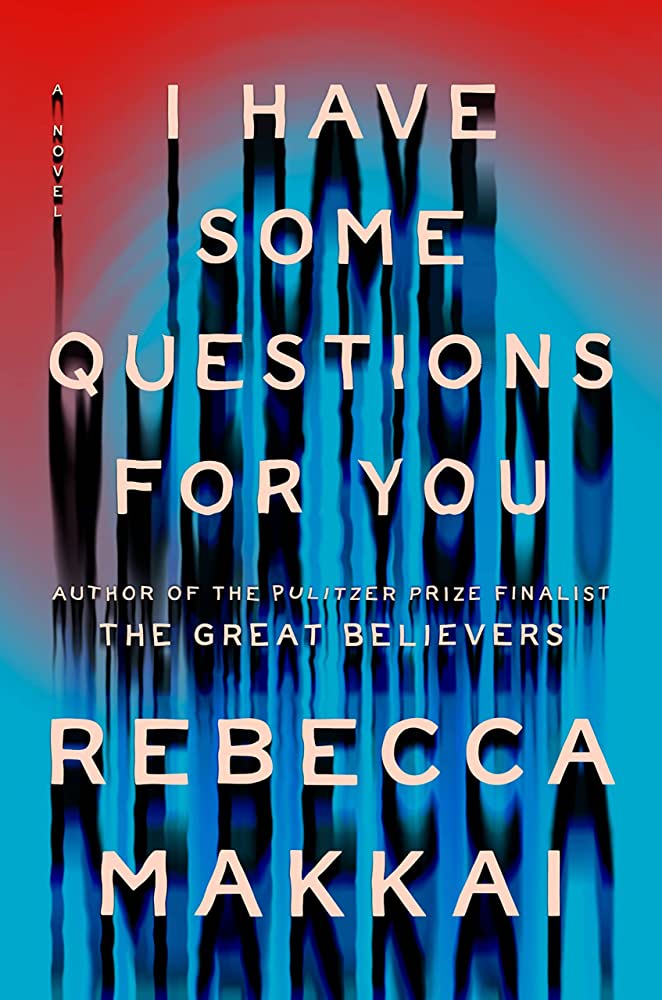
Her latest novel, I Have Some Questions for You, tells the story of Bodie Kane, a film instructor and podcast host who returns to teach at the boarding school she attended decades earlier. One of her students decides to give the Serial treatment to a murder Bodie happens to know a little bit about, that of her senior-year roommate, Thalia Keith. Thalia’s death in 1995 was pinned on the school’s athletic trainer, a man of color, and something about the conviction never sat right with Bodie. She wonders: Could she have done more to make sure the right person went to prison?

It’s a literary mystery, an examination of the power—and fickleness—of collective memory, and a fascinatingly frank attempt to reconcile recent shifts in the way we talk about power, privilege, and abuse with the way many of us grew up. There’s also a Twitter subplot, spot-on 90s references, and characters who feel so current, they might be texting you right now.

I video chatted with Rebecca about what it was like to write a mystery, what happens when she hits a writing wall, and how it feels to come face-to-face with your teenage self on a high school campus.


Kelly Luce: There are a lot of boarding school novels out there, but this might be the first written by someone who lives at one. What’s that like?   

Rebecca Makkai: I actually live on the campus of the high school I attended. It’s so weird: I met my husband in grad school, dragged him back to Chicago, and this happened to be where he got a job. It was originally going to be for three years. It’s been twenty-one years. I don’t teach here. I don’t have any responsibilities at all. I love it, and it’s been a great community for our kids to grow up in.

KL: How long have you been incubating this idea for a novel set at a boarding school?

RM: I think it was inevitable at some point. There’s a lot of movies and shows and books about boarding schools. There’s this aesthetic of like, it’s always October. The leaves are changing and there are ghosts. And everyone’s white and everyone’s in a secret society. All freshmen live in a single room with a fireplace. Everyone’s wealthy. Often these stories are written by people who don’t know what an actual boarding school is [like]. So, there’s always been an impulse to write one, partly from this corrective angle of: oh my God, you guys are doing it wrong.

Isolated groups of people are fascinating to write about. And then there’s the fact that this is where I went to high school. It’s interesting the way layers of memory can be tied to a specific place. I have been in this position of overwriting my relationship to this place. I walk around and see spots tied to things that happened to me as a teenager, but that same place now has new meaning because of something that happened to me there as an adult.

KL: Did you set out to write a mystery?

RM: Yes and no. It was always going to be a story about the past.

KL: I guess all stories about the past are mysteries, in a sense.

RM: Exactly. Now, that doesn’t mean it had to be a murder mystery necessarily, which is what it is.  But it did need to be current, and we’re in a wave of obsession over true crime. It’s been eight years since Serial came out and it’s only getting stronger. Of course, the obsession that the world has with true crime is absolutely not new. You can look back at people’s obsessions from the 1800s and they aren’t any different. Recently, there’s been a new wave of podcasts covering true crime and those have often been problematic. It felt worth exploring. So that made its way into the novel and then a million other things too.

KL: Everything feels so current in this book. What was it like to write something so present?

RM: The pandemic messed things up. I started the novel in 2018 and my original plan was to have all these characters reconvene for this trial. Up until the last minute, I was putting face masks on people, changing sentences from “she smiled” to “she seemed to smile.” Because of masks. It just didn’t work. I had to find a way to write around it, which ended up being what the story needed anyway.

KL: There’s this elegant layering of the main story, where Bodie goes back to her high school to teach a class on podcasting, with a character being canceled on Twitter. And there are lyrical interstitials about violence against women. There’s the occasional direct address to the killer that pops up—there are all these different modes of writing in one novel. I’m curious if that was part of the plan or if one started speaking to you and then the others had to kind of come in?

RM: I marinate in an idea for a long time before I begin to write. And so a lot of different things came together early on, just in my head, before I started writing. I have these “lyrical sections” that are kind of, you know, about violence against women. And the strategy of including those sections was really the solution to a problem. In the world of the novel, I really wanted there to be some big story in the news, something parallel to the Christine Blasey Ford testimony or the Stanford swimmer rape trial. One of those things that really gets everyone’s attention.

I wrote these contradictory sentences, like: “it was the frat guy one,” but no, “actually it was the swimmer one,” but actually, “it was the one where the senator did this thing.” And I realized that I could have those passages live in an alternate space where all those things could be true at once. And of course, they’re not literally all true, even within the framework of the book. It’s not like she’s actually asking us to imagine that all of these acts of violence against women are happening simultaneously. It’s more like: clearly there is one case that everyone’s talking about and she’s refusing to really say what it is because it doesn’t even matter what it is. Because there’s always one happening.  

KL: It sounds like instead of seeing it as a problem, you made it a strength.

RM: I feel like when we hit a wall in our writing, it’s never a sign that it’s a faulty project. There’s really no such thing, unless it’s offensive. Hitting a wall is just a sign that the writer needs to step back and do some analytical thinking. Often when writers get stuck, it’s because they need to stop and outline. But also, you could think your way through the problem by getting more creative. Come up with something weirder, a strange narrative move, something you didn’t plan. So I’m always grateful when I hit a wall because I’m not going to land on the really weird solution when everything is going swimmingly—I’m going to land on a breakthrough when things feel stuck.

KL: Since this is a novel about a true crime podcast, I have to ask, was the first season of Serial an inspiration for you?

RM: Oh, for sure. I was really interested in the logistics of that case. People needed to keep coming back together to testify in these various hearings, they were constantly revisiting these few days from 1999. But they all still seemed to live in Baltimore. And I was thinking, what would it be like if the murder happened in a place like a boarding school, where no one involved was actually from? They wouldn’t run into each other, and then they’d have to reconvene Big Chill style. But in this horrible, horrible way. The original idea for the book was going to be these high school classmates sequestered in a hotel.

KL: I love that. So much awkwardness.

RM: The first pages I wrote were this woman arriving at this hotel, back as a witness in this trial. And then I had to go back into what happened, not only what happened in the 90s, but [also], how did we get to this place where the case was reopened? It was so much backstory. So I said, I’ll write a couple chapters. But then prologue turned into the bulk of the book. Which luckily, like I mentioned earlier, let me avoid the pandemic.

KL: This is a story about kids but anchored in an adult perspective. I like how we’re invited to contemplate: how much can we even know, now, about ourselves as teenagers? Who was that person? And there are dire consequences in a case like this when you’re being called to testify about someone’s guilt or innocence.

RM: One of the weirdest sources of inspiration for this story was this episode of 30 Rock where Liz Lemon goes to her high school reunion. And she’s like, “Everyone was so mean to me. I was this outsider.” And then she talks to people and they’re like, “We were so scared of you. You were so judgmental.” And she just had this completely false impression, not only of herself, but of everybody else. And that touched a nerve. I think I was probably in a similar situation. I think a lot of us were like, “poor me, I’m a freak because I like . . . slightly different bands.”

KL: The teens in the novel are rendered so well—the way they think about relationships, or bodies, or technology, or art. As a non-teen, was that hard to nail down?

RM: Not really. I don’t teach high school, but I’ve visited many high schools to talk about my work and I’ve taught undergraduates. And teenagers really have an entirely different ethos now. A lot of that, of course, came out of what made us reexamine our adolescence and the things that happened to us. And the way that younger people will talk about something like consent on Twitter is one of the reasons that we’re able to look back and go, “Wow. We grew up so, so differently.”

KL: Do you read a lot of mysteries? Did you study mystery structure? How did you approach the question of tying up the plot versus being a credulous storyteller?

RM: I don’t read that many mysteries. I’ve certainly read some Agatha Christie. I would love to be more interested in so-called genre mysteries because I think they’d be very soothing. I read Tana French, Laura Lippman. They’re not formulaic. And you don’t always get the satisfying ending you want.

KL: Being soothed by a genre means, in a sense, knowing what’s coming. Like watching a Hallmark Christmas movie.

To write a tidy ending would have been to tell a lie about the American legal system, about the American carceral system.

RM: The mystery was not the be-all, end-all goal of the process, it was to write a good book. I’ve been telling people it is a murder mystery in the sense that, at the beginning you don’t know who did it, and by the end you probably know who did it. I was resisting some of the more satisfying payoffs that are the conventions of a genre mystery. I felt a little bit allergic to that.

A lot of it is a commitment to realism. If I’m going to write about conflict resolution, which is a big part of this book, and I’m going to write about the stupidities of our legal system, I don’t want to slap fake satisfaction onto that. Things take years and years in the legal system and there’s rarely a tidy ending. To write a tidy ending would have been to tell a lie about the American legal system, about the American carceral system. And that was very much not what I wanted to do.

KL: It was trippy to read this. I think I finished it on the day the announcement was made about Adnan Sayed from Serial getting a new trial. And I was like, oh—I know what a Brady violation is!

RM: It is funny. The whole country learned about it at the same time. It’s one of many cases I followed closely over the past few years. And it’s just so different from the Dateline version of things, where every story ends with the right person being in prison. There’s a sense of satisfaction about it all. And I was just blown away, in that case and in others that I followed, with how absolutely impossible it is to get someone out of a false conviction.

That, and how common false confessions are. I think anyone who’s followed that case or others like it has gotten this little legal education of the process. And it’s not one that makes America look good.

KL: Are you working on the next thing?

RM: I’m writing something historical that has to do with the era around World War II. (No, it’s not a Holocaust narrative.)

You know, The Great Believers was so research heavy. With this book, I told myself I’d write something close to home that I knew a lot about, so I didn’t have to do so much research. And of course, I ended up having to do this legal research—but at least it wasn’t a huge part of the book. With this new one, I’m like: Oh God, I’m back in it now. I’m going to have to look up every single thing. If I write, “this person put on socks,” I have to do research. Like, did they wear socks? What were they made of, what did they look like?

I do enjoy it. This is a big part of being a writer. And there’s a sense where you revert back to that kid who weirdly loved doing research projects in grade school.

Fate Is a Flask Spiked With Acid

“Queen of Heaven” by Joel Cuthbertson

No one was saying Kyle worshiped wolves. Kyle was especially careful on this point. Maybe he had some paraphernalia. A wolf mask for ooh-la-la, or whatever. He wasn’t crazy. He didn’t want to become a wolf. Chatting with Carolyn, he ran his tongue along his eyeteeth, circling and circling and being very human.

They were at the zoo; her suggestion. Did he need to say more? She understood him. Carolyn was his son Wesley’s second-grade teacher. A gift. A wonder. She was already half raising his boy, which meant Kyle didn’t need to squeeze his mysterious, heroic feelings into a speech for her. Clan. Blood. Fatherhood. Not that a speech would do justice. He wished he could jump in front of a car in Wesley’s stead or beat some bully to jelly. He had this great untapped valor, and packing the kid’s lunch or throwing a baseball once a week wasn’t enough. Give Kyle one school shooter to prove himself, and the world would know.

Sometimes, late at night, even when he was alone, he howled. Naked to briefs, honest in the starlight, he snaked into the yard and raised his head to worship the moon. Neighbors sometimes saw him. One tried to leave a note anonymously, as if Kyle’s doorbell was from 1970. A note, Brad? He’d had to look up “zoophilia,” all because Brad walked his dog every night and wanted to create a big, tough paper trail. Fuck you, Brad. 

“Do you want a swig,” said Carolyn. She was hiding a bejeweled flask in her purse. 

“Yeah. Okay.” The flavor was sugar and burning. Carolyn’s heart face, her billowy skirt, her sharp mouth, waited. He drank. “Oh, shit,” said Kyle. She winked, took some herself, and handed it back to him. He inhaled, the strength of the pull surprising. He almost howled. He checked himself. Later. Let the Alpha come forth on its own.

“What I want from an elephant,” she told him, “is for it to bend down to me. I want to climb its trunk and go for a ride.”

“Like the circus.”

“More like a fairy tale.”

They took a few more swigs. A mother passed them, her child on a leash. This made Kyle furious. How emasculating. How unmotherly. How—but he goggled as an elephant loosed its bowels. Carolyn giggled. The mother watched them, her eyebrows twitching a Morse code of superiority.

“We have to free that kid,” said Carolyn, and Kyle nodded. “There might have been some acid in that flask, by the way.”

He was in awe. Still he did not show her his tattoo or reveal his true wolf name, which he kept secret from the world. There was time.

Together, they stalked the mother, who was an idiot, prim to the point of parody, her hair a single organism, her t-shirt bust-tight. Great ass, thought Kyle. But he corrected himself. He was going to be better around Carolyn. He was going to be chivalrous, circumspect. 

His feet fell into puddles of anti-matter as he strolled. 

Uh oh, he thought. The sidewalk—it’s nowhere.

“Oh my god,” he said. “This is such a good date.”

They entered the reptile house. The fake rock stunk with human grease, its manufactured pores rubbed smooth by a thousand unthinking hands. Alligators. Cobras. Alcoves for the smaller creatures. A kingsnake whose colors rippled down its body, whose lines changed places, hummed. They were jingling at him. 

Kyle took a knife from his boot. He was his own movie. He was surprised that the knife hissed at him, but this wasn’t his first trip. Sometimes things hissed at you. Was he going to drop the knife because it was saying his true wolf name and hissing at him? 

“Fuck you, Brad,” he whispered.

“Here,” Carolyn bent down and collected the knife from the floor. She put it in her purse. Panamanian golden frogs glowed like squat, poisonous lighthouses behind her.

“What’s the worst thing you’ve ever done,” she asked.

Atelopus varius zeteki.” He was staring at the sign for the frogs, but also at her. He never told women the worst things he’d done.

“I grew up in the country,” he said. “Around real animals. I miss real animals.”

“In my undergrad,” she said, “a sorority made my friend walk barefoot for Chinese food in the middle of February. She got frostbite and lost two toes, so I burned their house down. They never caught me. They never even tried to catch anyone. The whole campus just knew: that house deserved to burn.”

“She only had eight toes?”

“Unless more fell off later.”

He listened to the song of the serpents in their glass homes. “I put a man in the hospital once.”

“Over a woman?”

“Yeah.” He was casual, but this was recently. This was about his last girl, Diana. This was something alive before Kyle right this minute. Diana’s brother hadn’t even known what he was getting into, the little guy simply lunged after Kyle dropped Diana off half naked. That wasn’t Kyle’s fault. They’d been in a parking lot. She freaked when he howled at the climactic moment and yelled at him to take her home. He didn’t know why she was surprised. He’d been wearing the mask. But fine. He took her home. People were always blaming him for things he did for them. That was the world. The brother flew from the porch. His tiny fists. There was hair in the kid’s eyes. Maybe not a kid. Maybe high school? Kyle didn’t hit him but twice. But that was with wolf thunder. He hit him with every morning, every 5 AM metal in his hands, lifted, dropped, re-set. He hit him with the power of routine iron and the kid just sank. Diana had called an ambulance and he’d left. Broken jaw, he’d heard. No police.

Around their heads, the blaze of the world was fading. He didn’t want to ask for the flask. More high wasn’t going to do anything. Carolyn walked her fingers up his thighs, made them skip. Everything she did was so damn artless. And beautiful. 

“Let’s do good,” said Carolyn. She seemed very powerful to him. Someone who could make him better. Kyle considered whether this was the moment to tell her he loved her. He knew it all of a sudden. He pulled his shirt up to reveal the wolf’s paw inked on his side.

“I’m an Alpha,” he said.

“Obviously,” she said.

He rose and pulled her with him and as the voids beneath his steps widened they also emitted soft heckles of laughter. He snubbed them. He was buoyant. There was a worse something he’d done which fell into the abyss as Carolyn walked beside him.

“Where the hell did I park?” 

“I drove,” said Carolyn.

He laid down in the back of her car. He nosed the cloth of the seat and mistook it for anything—it could have been everything, the whole earth. No matter what, he was determined not to vomit.


Carolyn wasn’t drunk. Carolyn was only putting the flask to her lips and winking a lot. She hadn’t known what was in the flask because she’d stolen it from her roommate. “Ah, shit!” her roommate had texted maybe two hours ago. “I put a little acid in that one!!” Such a coincidence was the work of God. 

She was the punishment of God.

On nights like these, rare nights of inspiration, a small corner of her mind remained in awe of herself. Singular with purpose. And lovely. Always more lovely than usual, somehow. She’d seen Kyle for drinks on Monday. Coffee on Wednesday. Both times the same. Both preparing for tonight.

She drove into Kyle’s neighborhood and Kyle nodded in the rearview.

“Yes,” he said. “This is exactly what I was thinking. You’re, like, in my head. This is the best date ever.”

She parked along his cul-de-sac and waited. 

Kyle staggered from the bright, tiny sedan and jogged up the driveway. He looked almost boyish. An unperturbed joy. He walked to the front door and she betrayed nothing when he unlocked it. Nothing surprised her. Not tonight. Not even—okay, she was going to enter his house. This decision happened to her. Even so, she remained resolute, a mercenary set upon the world. Such forbearance wasn’t so different from her work as a teacher, when little S-H-I-Ts like Wesley put their wet fingers in girls’ ears. Rape, she mouthed when they did it. The little rapists.

“Hang on,” said Kyle. He tucked part of her hair behind an ear. “Maybe, you know, straighten up a little bit.” He turned to the empty rooms and filled it with his voice. “Wesley!”

God, she thought. God damn it. 

“Did you really burn a sorority down?” Kyle asked.

She balanced her weight on the balls of her feet and breathed normally. “One girl almost died,” she said. “It would have been terrible if she had. They’d have done an actual investigation.”

Kyle shuddered. A pleasure shudder.

She fingered the edge of his knife in her purse, a long and thin blade, and followed Kyle upstairs.

“Wesley!” called Kyle. “That damn kid.” Not in the guest room or Wesley’s own room or in the bathroom or in the towel closet. “I love him, you know? But I’m gonna kick his ass when we find him.”

Carolyn wanted to ask how often he hit his son, the worst student in her class. She was positive that he beat women.

“It’s wild,” said Kyle, “I have never come down this calmly. I’m seeing snakes everywhere and it’s fine, you know? They’re not here. I understand that.” 

Carolyn’s own high, the pure heat of purpose that entered her like possession, was perhaps wilting. A little. She didn’t want to find Wesley. Wesley, Wesley. The boy filled her inner life. Students did that now and then. None like Wesley, who wasn’t exceptional in the least. Not too smart, not too talented, not thuggishly charming, not endearing. If anything, she hated him. She was scared by how much she hated him, some days. She’d asked out Kyle to understand Wesley and she thought she did. Wesley’s father could be summed up by his gym bag and the bruises he left on Wesley’s neck. Splotches dabbed along the nape were always a paternal pattern.

If she killed Kyle, should she adopt Wesley, to save him? Hm. She wasn’t sure she was enough of a kid person for that. Sometimes she daydreamed about remanding Wesley to a shelter one town over, to a commune with skinny women who smelled like the earth, who shoved kale into their spiritual gaps. Or maybe he could go to a military school. He was not a good boy.

“He could be anywhere,” Kyle said. “That’s what’s so scary about kids. You have so much less control than you think. Almost none, okay? I don’t know what the fuck he does when I’m not looking. I let him roam though. I want him to be strong. He could be doing anything out there. He’s doing it himself though, okay? He’s got time to even out.” 

The boy shouldn’t be here. He mustn’t be.

“Wesley!” Kyle yelled into the master suite. The boy emerged from beneath the bed. Carolyn wanted to sit down, wanted to go inside a dark bathroom for a few minutes to pray and perhaps arm herself.

“I was sleeping,” Wesley said.

“You little punk,” said Kyle.

“Why is she here?” the boy asked. “It’s weird that you’re here. This isn’t school, you know.”

“I don’t live at school.”

“Are you gonna bang her, Dad?”

“Watch your mouth.” Kyle clapped the back of his son’s head.

“Ouch!” Wesley kept speaking to her. “Why are you here?”

She must think less. Even less than thinking little. She must react. There was a boy. They were at Kyle’s house. God had put a knife in her purse.

“I need some water, man,” Kyle said, and stepped downstairs to get a drink.

Carolyn’s voice deepened with authority as she leaned toward Wesley. She was more than herself. “I’m sorry he hit you,” she said. She wanted to share how she was going to rescue him, but the words were evasive.

“I told my friends,” Wesley muttered. “I told them you were probably easy.”

What was admirable in Carolyn was her ability not to slap eight-year-olds when they deserved it. All decent teachers shared this prudence, and it was given to her now in excess. But she also began thinking, thinking, overthinking.

What was admirable in Carolyn was her ability not to slap eight-year-olds when they deserved it.

God maybe wanted her to leave. Who could say. Her mother used to speak with angels and taught math in California. Carolyn kept trying to rationalize to imaginary friends, to projections of real friends—she was loved by many. Why are you here, Carolyn? Why did you keep the knife? You are reasonably normal and we are very wigged at this entire fracas! was how her friends might sound. Wesley was sitting and pouting as if this tension, this terrible conundrum, were happening to him.

Kyle returned with a beer. Wesley ran past him, down the stairs, and out into the backyard. Crying, probably. Carolyn thumbed the knife in her purse as she settled with Kyle at the top of the staircase. She wondered for the first time whether this was simply a date. Maybe she was dating. The beer was shared between them. She’d chosen to be alone with this puppyish, dangerous man—he was ravaging her in his mind, she could see it behind the eyes, the undressing, the forceful imagination. And here she loitered, pondering what she wanted. A date.

“I hit a woman once,” said her date. The stairs were a lean, dark wood beneath them. “Yeah. More than once. Kind of a lot. And more than one woman. That’s the worst thing I’ve actually ever done. But I could tell you anything, I feel like. I need to tell you.” 

“I’d like Wesley to stay outside,” she said. “To give us some time.”

“He’d be nothing without me, you saw him, the little wiseass.”

“I worry about all my students. About Wesley especially.”

Kyle’s eyes glistened. “Me, too. I can’t even explain it. Fatherhood? I cannot explain its perfection, the amount of love I feel.”

“You know, I think all my students, all people, just deserve a chance. Everything is such a lottery. Our preferences, our weaknesses. How can we carve out our own chance?”

“I want to tell you everything. I can feel, you know, I can feel how close I am to being clean. This close. I can get Wesley where he needs to go. People have so many cute little ideas. They don’t believe any of them. Everyone’s a meat-eater at heart, everyone claws the faces from their brothers. Show me the last communist who wasn’t a careerist. Show me a rich man who’s not shitting out the bones of, you know, fucking people like me. Jesus. I’m seeing things. The universe, maybe. What I’m teaching Wesley is that he can survive anything. If he can survive me, he can survive the world. Everyone wants some fucking help, but no one’s strong enough to help themselves. But I’m so close. I’m so close to helping him.” He paused. “Honestly, you’re like a miracle.”

She was shaking, she wanted to say something, but that wasn’t possible. She taught second grade. She was wearing ballet flats. The knife was in her hand. More was happening to her, internal shifts, but Kyle was making too much noise for her to concentrate. He was standing and yelling and cursing and pointing at her hand. He was frightened, careless, aroused, and he slipped. He reached out, clutching, and caught nothing and understood he was falling down the stairs—his face fell first—nanoseconds before the crash occurred. The knife was in her fist. He carried his beer with him and made stains everywhere, himself and the alcohol. She waited for god. For the little god who answered only to the great God, and who spoke to her. He was real. He had taken care of everything. She was unable to bend her knees as Kyle bled in slow slugs from his skull. She closed her eyes, returned to her body, and waited.


“Wesley,” she said.

The boy jumped. Where did she come from? He was on the patio steps, shredding leaves from their stems. He kept failing to detach even one leaf perfectly and this made him want to claw the bark from the tree with his fingernails. Stupid freaking tree. Its stupid leaves. He ignored her.

“Wesley,” she said again. “I thought you and I could go somewhere, just the two of us. We could get some ice cream, yeah?”

No way he wanted that. He couldn’t believe his teacher was here. What if anyone found out? Collin lived two doors down. Even Collin wasn’t that stupid.

“Is Dad coming?”

When she didn’t answer, he followed her to her car and she let him sit up front, which even his father never allowed, and they drove to Dairy Queen. He was disappointed they didn’t go inside. She didn’t even let him order, but got two cones of the same kind, cookies ’n cream. They kept driving and she explained everything that was out the window. This was pretty odd, he thought. He could also see through glass. She explained every tree they passed.

“Why’s it called an elm?” he asked. It didn’t look like “elm.” 

“I have no idea,” she laughed. “It’s totally beyond me. Why are you called Wesley?”

He shrugged.

“I imagine it’s about the same for the elm.” She kept laughing and explaining everything they saw. The different highway signs, the church denominations and their ancient violence, the mountains in the distance, even the clouds, which he liked the least. They’re clouds. They didn’t need individual names. 

It wasn’t until he was thirteen that he asked about his dad again, and she didn’t tell him the truth, but lied kindly, and as often as he wanted to ask, she answered. It wasn’t until he was seventeen that she got caught, a speeding ticket of all things. She tried to explain that she carried a gun for her own safety, but her hands moved too fast and the state police shot her anyway. They had good aim for people who otherwise didn’t know how to use their weapons. He was twenty when he went into the force himself and he never shot anyone, never drew his pistol, never went beyond a uniform or a small-town dispatch. The ladies at the local library loved him, and gave him a fake award for tackling a vagrant who kept slipping lit matches into the book drop. Wesley: Defender of Literature.

What else do you want to know?

There was once a woman he took to Hawaii, and all she did was sit in the sand and complain about the brightness. After that, he lived alone in a white, clean condo. Everyone in the compound knew his story. But Wesley didn’t mind. Each morning, even before he retired, he lowered himself into the community pool and walked its length to the chatter of his own wake. Generations of barn swallows chided him from a nest on his porch, which he never removed. When a neighbor found him in his own bed at the age of seventy-eight, she was surprised he hadn’t killed himself. But he hadn’t. He hadn’t even been asleep. He was mesmerized by a stray memory of that old library award. “Our local hero,” they called him. “Our personal Wyatt Earp.” Kill himself? The thought never even crossed his mind.

7 Novels About Immigrant Mothers Who Defy Societal Expectations

There are no greater political pawns than immigrant mothers. In some circles, their bodies are seen as threatening. In other circles, they are spoken of as victims, fleeing circumstances, or subjected to state or legislative violence thanks to conflicts or draconian and cruel immigration policies. Around the world, wherever there are mothers traversing borders, despite their differences and individual experiences, immigrant mothers are flattened and stripped of their humanity.   

It’s in the retelling by first-generation children that we get closer to seeing a different side of immigrant mothers. Whole comedy specials are written about overbearing, opinionated, and excessively maternal immigrant mothers. On social media, first-generation kids impersonate or complain about their mothers who don’t quite see the need for personal privacy and professions in the arts, or understand the concept of depression. In literature, it seems that when immigrant mothers make it onto the page, they are often the tireless (or tired) parent who only exists for the sake of their narrator/protagonist child. 

I knew I was writing against the grain in my novel, A Country You Can Leave. It’s a story that centers on the lives of Lara, a biracial Afro-Cuban-Russian girl, and her Russian mother, Yevgenia. Lara, the narrator of the story, has to grapple with the fact that her mother is objectively a terrible parent in addition to being an ungrateful immigrant. Yevgenia is a woman who refuses the maternal role and is deeply dedicated to her sexual freedom, her intellectual pursuits, and going wherever the road leads her next.  

The list below takes seven novels that turn the trope of “sacrificial” mothering on its head. These are stories of immigrant mothers who refuse to play by the rules. 

The Son of Good Fortune by Lysley Tenorio

There isn’t a better novel to keep you company if you love the outrageous single immigrant mothers who defy societal expectations. Excel and his mother, Maxima, are undocumented Filipinos making their way ​in​ the U.S. While Excel does his best to stay out of the glare of immigration officials’ long reach, Maxima, a former B-movie action star in the Philippines, is now running an online scam siphoning money from men. The novel haunts their frayed relationship, where Excel blames his mother for the limitations in his life, especially as Maxima dominates the page with her humor and vitality. 

Brick Lane by Monica Ali

Unlike other books on this list, the mother protagonist of this novel, Nazneen, isn’t the object of longing by a child attempting to understand her. She is the narrator of her own story, making life choices that challenge the strict confines of being a stay-at-home mother in a new country, far from her family and former life in Bangladesh. And just when a reader starts to feel the walls closing in on Nazneen, the promise of freedom knocks on the door. And like all the mothers on this list, she chooses herself and follows her desires, while society and her children look on. 

The Leavers by Lisa Ko

In this novel, Deming Gou’s mother, Polly—a dynamic and sharp-witted woman with a foul mouth—doesn’t return home from work one day. For much of the novel, Deming, who gets adopted by a white couple, works hard to remember his mother—not as a woman who merely worked to make his life better than hers, but as a complex individual who had dreams of her own. In the chapters narrated by  Polly,​ readers see beyond the abandoned immigrant mother trope to get a fuller picture of the kind of life that has driven Polly’s motivations. 

Patsy by Nicole Dennis-Benn

This novel’s beating heart is an immigrant mother, Patsy, who refuses to be boxed into traditional roles or societal expectations. Patsy unapologetically chooses herself by leaving Jamaica for New York in hopes of reconnecting with her first love, Cecily. In order to truly be herself, Patsy leaves behind her daughter, Tru, who Patsy has mixed feelings about. She obviously loves her daughter and feels destroyed by their separation, and yet Patsy isn’t sure if she’s capable of being the mother Tru deserves. Though Patsy’s arrival in Brooklyn doesn’t turn out as she expects, there is a kind of coming of age for Patsy, one that asks readers to stop and pause before they judge a mother for leaving a child behind.   

Mother Country by Irina Reyn

This novel focuses on the life of Nadia, a Ukrainian-Russian immigrant living in Brooklyn, who has made the difficult choice to leave her child behind in a country torn apart by war. Nadia had hoped to bring her daughter to the U.S., but once her papers come through, her daughter Lassika is no longer of legal age to go with her. This forces Nadia to make the decision to pursue her own future, despite leaving her mother and daughter in a war zone. What makes this novel unique is the ways it represents parenting adult children when the family is apart. While Nadia chips away at American immigration laws to reunite with her daughter, she also grapples with the reality of living far from home while loved ones endure Putin’s war of “reunification.”  

The Last Story of Mina Lee by Nancy Joon Kim

When Margot’s mother Mina Lee dies mysteriously, Margot comes back to town only to discover she never knew her mother at all. It’s a novel that’s told in the alternating narratives of the daughter and the mother, and readers are made aware of the fierce and often sad experiences that shaped Mina Lee’s life and, ultimately, her death. Margot is a daughter who didn’t ask too many questions while her mother was alive, and yet it’s clear that Mina wouldn’t have provided the answers anyway. As a mother, her power rests with her ability to hold on to her hurts and control her own narrative, even if it means keeping secrets from her child. 

White Ivy by Susie Yang

This novel is a bit of an outlier on this list, but worthy of inclusion. Ivy’s mother is depicted like most immigrant parents: stern, a bit cold, and preoccupied with her daughter becoming a doctor. But it’s Meifeng, Ivy’s grandmother, who takes Ivy under her wing and teaches her how to get the things she needs—by stealing them. Meifeng’s lessons propel Ivy from yard sale theft to grand schemes and lies that place her at the heart of a wealthy white family who regret the day they opened up their lives to her.  

7 New Southern Gothic Novels by Women Writers

In the Southern Gothic, the horror is often just out of sight, masquerading as normal. Commonplace. Safe. There is often tension between what you’ve been taught to believe and what you learn to be true. In a sense, deconstruction is at the heart of Southern Gothic. 

Traditionally, this has been a male-dominated genre. The works from the Southern canon are grand sweeping odysseys about men’s failings and victories, which are often used as metaphors for the fraught and complicated region of the American South. 

But things are shifting. New Southern Gothic novels being published in the 21st century (especially those by women) are less concerned with the region’s position, failings, or significance and more concerned with the intimate realities of ordinary people. The conflict is often internal. The ghosts are private. The secrets run deeper. 

I can hardly imagine a more Southern Gothic setting than the defunct “bomb plant” hidden outside Aiken, South Carolina. It’s like the infamous Ferris wheel of Chernobyl: something so insidious and grotesque as a hydrogen bomb plant mere miles from a charming southern town.

In the first chapter of Atomic Family, one of the central characters recalls how she drove her husband, a scientist with top-secret government clearance, to the security checkpoint at the plant. 

“She thought fleetingly—childishly—of trying to follow, pushing her car through the rail just to see what was there…The plant has always been more than a physical barrier. It is the fourth member of their family, a silent and dangerous presence. It is the horror that haunts the town.”

The books on this list deal openly with the macabre, and all feature Southern settings with various elements of decay or despair—but in a way that is distinctly contemporary and the voices are distinctly women’s.

Revival Season by Monica West

Miriam has a secret. She is the daughter of a renowned Baptist preacher and faith healer—and during this summer’s revival season, something has changed. Her father’s powers don’t seem to be working. Instead, Miriam begins to suspect that she might have the gift of healing…even though the church has always preached that such powers can never belong to a woman. This coming-of-age story set in a Black Christian community in the Bible belt is both tender and haunting, a unique portrait of religious confusion.

The Body in Question by Jill Ciment

She is Juror C-2. He is Juror F-17. Together, they are sequestered with the jury in a sleepy Florida EconoLodge, granted no contact with the outside world as they serve on a high-profile murder case. As the grisly details of the case emerge (a rich white teenager has been accused of murdering her baby brother), the two jurors begin a secret affair. But tensions rise during deliberations when these lovers learn that they’re on opposite sides of the case.

The Book of Essie by Meghan MacLean Weir

Essie is 17 years old and pregnant…and her family isn’t happy. They’re the stars of the hit reality TV show Six for Hicks, which features Essie’s father, Jethro Hicks, and his megachurch damnation-style preaching. Everyone is desperate to keep Essie’s news secret. Except for Essie. She needs the truth to get out, and to do so, she finds someone else who’s just as desperate as she is, Roarke Richards. They both have secrets they can’t bear to hide anymore—and in this timely and spine-tingling debut, some walls are about to come tumbling down.

Sharp Objects by Gillian Flynn

Camille Preaker does not want to go home. She has long been haunted by the death of her sister, Marian, and she was recently hospitalized for excessive self-harm, carving words into her skin. But her work as a reporter sends her back to Wind Gap, Missouri, where she must investigate a recent murder. What she doesn’t expect is how her hypochondriac mother, Adora, and eerily effervescent sister, Amma, might be involved in the grisly business.

Florida by Lauren Groff

It would be impossible to write about the new Southern Gothic without including Lauren Groff. Florida is a short story collection exploring the wild, almost mythic, landscape of Florida—a place too southern to be the “South” but too weird to be anything else. The collection introduces readers to a range of haunted characters, including an unnamed mother who appears repeatedly. She constantly wrestles with the confinement of her life. In the opening story “Ghosts and Empties,” she takes off on a walk in the Florida night to avoid a fight at home. What develops is a book of contemplation and poignancy, a collection that reads almost like memoir and almost like a novel.

Salvage the Bones by Jesmyn Ward

Esch and her brothers are storing away food, just in case the hurricane brewing on the Gulf really does hit Louisiana. Their mother is dead, and their father is absent, content to drink himself to oblivion. As Hurricane Katrina gets closer, Esch’s brothers are concerned mostly with their prized pitbull, China, who’s just given birth to a litter of pups. China is a vicious dogfighter and the main source of the family’s lean income. As the storm crashes on land, it destroys everything in its wake, leaving behind terror and confusion and a new life to build from the wreckage.

The Gods of Green County by Mary Elizabeth Pope

Coralee is seeking justice for the death of her brother, Buddy, who was killed at the hands of the local sheriff. It’s 1926 in rural Arkansas, and the Great Depression is right around the corner. Everything changes for Coralee when she starts to see her brother’s ghost around town. Is she crazy? Is she gifted with the sixth sense? One part murder mystery, one part gothic historical fiction, Gods of Green County explores the effect one person has on a community marked by poverty and drought, revealing the impact of having power…and not.