Recommended Reading’s 10 Most Popular Issues of 2022

From weightloss pills and ghosts of preachers past, to trespassing and difficult mothers-in-law, Recommended Reading is EL’s acclaimed home to a wide array of masterful short fiction. We’re proud to be one of the largest free digital archives of short fiction featuring many of today’s (and tomorrow’s) most important literary voices. Today we are sharing our 10 most popular stories of the year, starting with the most read.    

“Ghosting” by Wendy Wimmer, recommended by Kristen Arnett

“Ghosting”, which comes from Wendy Wimmer’s new short story collection Entry Level, is Electric Lit’s most read story of the year! The story follows Grace as she deals with the process of hiring an at-home care nurse for her mother Evelyn, who is experiencing unexplainable onset dementia. At the same time, Grace is also trying out new weight loss pills. Wimmer’s writing is funny and unflinching in its portrayal of bodies and the people who reside in them. As Kristen Arnett astutely writes in her introduction, “Grace cracks jokes to deal with her pain—her rage at her mother, the world, and at her frustrations with her own body—and that is where we glimpse the light of vulnerability.” 

“The Sin Eater” by Jane Flett, recommended by Halimah Marcus 

“In this story, sin is salt, sin is sweetness, sin is umami—the flavor of life,” Halimah Marcus writes in her introduction for this deeply sensory story by Jane Flett, and she is certainly right. The narrator is a professional Sin Eater, a person who helps absolve the dead of sins by consuming bread placed on their corpse, which absorbs the evils they’ve committed. The hope is that by doing so, the dead will be let into the afterworld. After eating the sins of a client named Bat, the narrator starts to experience involuntary dark thoughts and cravings. Flett’s story is wildly original, suspenseful, and full of rich writing that feels like feasting on the pleasures of language. 
“Here Preached His Last” by Gwen E. Kirby, recommended by Rachel Yoder 

“Here Preached His Last,” which appears in Kirby’s vibrant debut collection Shit Cassandra Saw, is narrated by a woman who is having a loveless affair when she starts seeing the ghost of preacher George Whitefield, who has some, um, choice words about her behavior. In her introduction, Rachel Yoder praises Kirby for creating refreshing stories that “undo how a woman should be and instead articulate how women are, in all their greedy, horny, callous, messy, exuberant glory.” Kirby’s masterful story draws readers into the rich interiority of a woman who, more than anything, just wants to be.

“The Replacement” by Alexandra Wuest, recommended by Alyssa Songsiridej

A woman is at her office job when she opens her email to find a message written in all caps: YOU’RE BEING REPLACED. So begins Wuest’s “The Replacement,” a quirky story about a woman dealing with the fallout of being officially replaced in every realm of her life. Wuest’s writing is funny, surprising, and ultimately a bit destabilizing, leaving readers with a feeling akin to what the narrator experiences on a train ride home: “I stare out the train window and watch the landscape become more familiar and stranger at the same time.”

“None of That” by Samanta Schweblin, recommended by Lynn Steger Strong 

In her introduction, Lynn Steger Strong writes that “None of That” from Seven Empty Houses is “a masterclass in the many micro beats of subversion that makes Schweblin’s fiction so electric to be inside.” Narrated by the daughter of a woman who likes to orchestrate reasons to enter strangers’ homes, this story is certainly full of electricity. From the moment the mother’s car gets stuck in the mud in a wealthy neighborhood, there is a quiet eeriness vibrating beneath each sentence. Schweblin’s writing expertly tiptoes the line of normalcy and strangeness until this line becomes so blurred that what is left is Schweblin’s characters at the forefront, their deepest desires and startling impulses laid bare. 

“You Have A Friend in 10A” by Maggie Shipstead, recommended by Stephanie Danler

“Is it an accident that the same soil that fertilizes the fantasy machine of Hollywood is the home to so many religions that border on cults?” asks Stephanie Danler in her introduction, and as Danler goes on to answer, no, Maggie Shipstead knows there are no accidents. The titular story from Shipstead’s collection You Have A Friend in 10A vividly explores the connections between Hollywood and religion, belief and the desire to create the illusion of meaning. Narrated by Karr Alison, a movie star who recently left her Scientology-esque church, this story pulls readers into the world of the rich and famous while also exploring the deep hooks powerful institutions can sink into a person. 
“Smokes Last” by Morgan Talty, recommended by Isaac Fitzgerald 

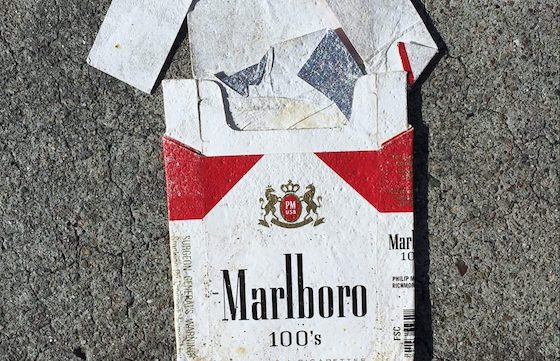
Morgan Talty’s debut short story collection Night of the Living Rez created quite the buzz this year, and reading “Smokes Last” certainly answers why. As Isaac Fitzgerald notes in his introduction, this story “gives you a sense of the dynamism and fabulous sense of place you’ll find throughout the entire collection.” The story follows David and his friends as they hang out in the woods, smoke cigs, and later have an encounter with men in town that raises tensions. By the end of this story, Talty’s characters will feel so alive, their dynamics so real, you’ll want to pick up the whole collection to spend more time with them. 
“Xífù” by K-Ming Chang, recommended by Bryan Washington 

“I don’t mean I want her to die. I’m just saying, what woman pretends to kill herself six times?” These are the opening lines of K-Ming Chang’s story “Xífù”, which explores the relationship between the brash, hilarious narrator and her judgmental mother-in-law. K-Ming Chang stories are difficult to summarize because one must experience a K-Ming Chang story to truly understand the scope of its brilliance. In his introduction, Bryan Washington speaks to Chang’s immense talent seen throughout her collection Gods of Want: “Chang not only accomplishes narrative reinvention in her writing—she builds upon what feels achievable on the page.” No two K-Ming Chang stories are the same except in this regard: they will surely awe you. 

“Moist House” by Kate Folk, recommended by Isle McElroy 

Perfect for fans of strange horror, “Moist House” from Folk’s collection Out There tells the story of Karl, a middle-aged man who signs a lease for a house that must remain moist via its tenant regularly applying lotion to its walls. You know, one of those houses. Isle McElroy wonderfully sums up the many strengths of Folk’s strange story in the introduction: “For all the surreal qualities, though, the terror of ‘Moist House’ exists firmly in its human elements. This is a tale of obsession, stubbornness, love, and regret: the hard feelings that make up our lives.”

“Sandman” by Kim Fu, recommended by Kevin Brockmeier

Kelly, who has a long history of insomnia, is visited one night by a faceless figure who pours sand from his mouth into hers, ushering Kelly into a rare night of refreshing sleep. So begins “Sandman” by Kim Fu, a story that beautifully blends the mundane with the magical. As Kevin Brockmeier writes, Fu “has an eye and a gift for phrasing that seems to kindle a light inside everything she describes, not transforming it so much as revealing it, so that it glows with its own exact oddity, the oddity it has always possessed.” If you love this story, read the entire collection, Lesser Known Monsters of the 21st Century.

The Hardest Part of Writing My Memoir Was Telling My Family About It

You should watch Euphoria, a friend told me while we were on a walk during our young daughters’ dance class. I wasn’t sure why she would suggest this. Particularly in the context of our conversation: I was confiding in her about the anxiety that felt like it had been boiling inside of me for weeks, as I started to realize time was running out to tell my family about Souvenirs from Paradise, my essay collection that was being published several months later. The book is about confronting the unspoken narratives of my life, most of which stem from the grief surrounding my mother’s death when I was young. My family knew I had been writing something for a while but had stopped asking about the book years ago, until I finally mentioned it was being published by a small press. I knew they wouldn’t expect it to include the details of their lives—particularly my father, who is an important part of the book and among the most private people I know.

Although I’d heard about Euphoria before my friend brought it up, I’d been hesitant to watch the HBO series currently in its second season. I knew it was a glittery, hyper-stylized portrayal of a group of high school students, much of the time centered on the narratives of its female characters as they navigate the expected high school fare: relationships, identity, drugs, and sex. Our daughters off in dance class were only four years old, but the show’s much-warned about content—brutal portrayals of drug addiction and sexual violence—held me back, not so much for the inherent explicitness, as for the fear that I would have to endure whatever those images might surface in me, in terms of what my own daughter’s future might look like, and how honest she would be with me about it.

Several weeks after this conversation, I came down with Covid. I thought, this is it. It was time to watch Euphoria. I also still hadn’t told my family about my book, but in the interest of my health, I told myself that the added stress of sending my essays to them could complicate my recovery as my body tried to heal from the virus. So, I decided to put off telling them until I tested negative.

Sending my essays to them could complicate my recovery as my body tried to heal from the virus.

I didn’t know the origins of the word “euphoria” when I began watching the show. According to Merriam-Webster, it derives from euphoros, a Greek term that means “healthy.” Its first English uses were in the realm of medicine, to convey the feeling of relief a sick person experiences following a successful treatment. If someone had told me this while I was simultaneously deep in Euphoria and Covid, I would not have believed them. Watching the show for hours in my bedroom, where I spent thirteen days alone while my spouse and daughter isolated, I found myself fully immersed in the show’s jewel-toned, emotionally wrought storylines revolving around Rue Bennett (played by Zendaya), a character living with a drug addiction tied to her grief surrounding her father’s death from cancer, the same disease that had taken my mother’s life. While I hadn’t become involved with drugs during my own childhood, there were echoes of a familiar loneliness that evoked a similarly difficult period in my past; at first, I thought this was why my friend had recommended the show.

But it turned out that another character would be the one that resonated with me most: Lexi Howard, played by Maude Apatow, who is Rue’s former close friend. While Lexi was mostly a demure, secondary character in season one, her story becomes a central plot point for the culmination of season two. She creates a memoir-like play for the school, which is slowly revealed through conversations with the compassionate drug dealer Fezco (played by Angus Cloud), as Lexi worries over how her family will react. Lexi asks, “But, what if they think my intentions aren’t good, when in reality they are good?” in a conversation that felt similar to the one I had with my friend on our walk.  Fezco aptly responds, “That’s what I call a quandary.”

I maintained a false sense of comfort that I had already accomplished the largest challenge—the writing.

The question of how to tell people something you’ve written about them is going to be published comes up all the time in relation to writing creative nonfiction. Since my book tackled what many would deem “difficult” subjects, such as dealing with death during childhood, and trying to understand the ways it affected many of the other relationships in my life, for a while, I maintained a false sense of comfort that I had already accomplished the largest challenge—the writing, especially after growing up in a family where we tended to avoid difficult conversations. But once the book was finished, having to initiate discussions in relation to what I’d written quickly became the most anxiety-inducing moment of all, and one I was far less confident I could accomplish. As my publication date came closer, instead of looking forward to it, there was a veil of dread shrouded over my experience. Could I really feel proud of a book about talking about difficult subjects if I was still hiding its contents? One of the reasons I had written it was to prove to myself that families can confront the hardest parts of our lives, and perhaps even come out better on the other side. And yet, I was shying away from that task.

I had tried sifting through what others had written for months, in search of advice that would make telling my family about the book feel easier. I found that the writers who had prioritized empathy over the artist’s vision sounded the most ethical. Melissa Febos discussed what she terms “the narrative truth” in the Kenyon Review (and included in her recent book Body Work) writing, “…I picture a prism, with as many facets as there are people affected. When a writer chooses to publish their version, that facet becomes the one visible beyond the scope of the people involved.”  I wanted to believe that I was absolved of this concern because my book was being published by a small press and my family likely wouldn’t stumble upon it on a table at Barnes and Noble, but that perspective misses the point of Febos’s analogy; my writing is still on a printed page in a way that takes it out of the conversational realm and into a “truth,” regardless of its specific readers. Reading this made it clear that I should tell them. But I still couldn’t do it.

Neither could Lexi, whose play is performed in the final two episodes of season two, “The Theater and Its Double” and “All My Life, My Heart Has Yearned for A Thing I Cannot Name.” The drama of the play’s reveal is maximized as all of its characters unknowingly file into the high school auditorium to see it, as well as Lexi’s mom. The episode is filmed in a way that the “real” footage of Euphoria fades into scenes of actors being directed by Lexi, creating visual movements between the “facts” of the television show and Lexi’s screenplay that felt exquisitely representative of the way memory and storytelling blend together to create the potent “narrative truth” described by Febos. 

Everyone in Euphoria reacts to the play’s characterizations predictably, with one notable exception. Lexi’s mother, who is often shown with a bottle of wine beside her as she engages in gossip with her daughters and their friends. In the play, she is flamboyantly performed by a boy in drag who plays up her alcoholism, which is met by much laughter by the audience.  Unlike many of the other characters, who cringe and balk at the unflattering moments the play captures from their lives, Lexi’s mother laughs along at her darkest moments, her shrieks of delight overtaking the laughter that fills the room. When others respond by calling out Lexi for hiding quietly in the background, only to suddenly unleash how she truly feels about everyone in her life through the performance, it’s her mother who gets on stage to support her.  As I watched this unfold from my bed, I felt a familiar tear at my chest, as I wished I could find such an ending upon the reveal of my book; I wanted to believe that my mother would have played the part of Lexi’s mom, were she alive, and protect me from the inevitable fallout I expected my book to cause, even if I didn’t do my revealing the right way, just as it was clear to me, as an onlooker, that Lexi had not.

I felt a familiar tear at my chest, as I wished I could find such an ending upon the reveal of my book.

The truth is, I don’t know if my mother would have reacted as Lexi’s mom had, or if she would have defended me, because I didn’t ever know her with that level of nuance. I can’t even say if I would respond so well, were my daughter to write about me; in many ways, that felt like an ending crafted for TV. Lexi was also in high school, and I’m an adult with my own kid. One of my intentions for writing my book was to create an avenue towards a more honest family life; wanting for an idealized savior is hardly a way to do that. But I also recalled Sari Botton’s writing on this subject, as something she also agonized about in her work—for a long time. In an essay for Catapult, she discussed her father’s upset response to an essay she published in the New York Times, and the way that experience caused her to change her approach to writing about her family; she wrote, “This shift, which greatly informed my memoir writing and revising, has been occurring in slow motion over the fifteen years since I published that essay…” She also references a similar change in Melissa Febos’s ethos that ultimately led to the insights I read in “A Big Shitty Party”. For both writers, there had been an initial approach to writing about others that changed over time into a better one.

The day I finally tested negative for Covid, I sent an email to my father that included the book, even though I knew this wasn’t a very good way to tell him. And, as expected, he responded upset and hurt, in the ways I feared he would. While I don’t have the excuse of being in high school, I’ve come to terms with the reality that this was my first book. Although I know I should have started the process of involving the people I wrote about much sooner, getting through this experience was, in some ways, necessary to my understanding it. I wouldn’t say the relief I’ve obtained is the preeminent feeling I have now, regarding my book, nor have I fully succeeded in finding an avenue to a more honest family. But I’m closer to a healthier way of being than I was before the book and everything it involved—and I’m determined to move closer to that desired euphoric state as I work on writing the next one.

A Queer Pakistani Teenager Forges Her Own Path in 1980s New York City

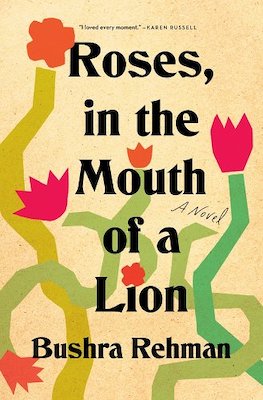
Bushra Rehman’s newest novel Roses, in the Mouth of a Lion  follows Razia, a young Pakistani Muslim girl growing up in 1980s Corona, a neighborhood in Queens, New York. Razia’s world consists of her family, her close friends, who are also Pakistani Muslim girls from her neighborhood, and her deep desire to have bigger experiences through the spiritual traditions of her religion, through the maze of New York City, and through her fascination with pop music—and her crush on George Michael. 

It is this desire for bigger experiences and a search for identity that opens her up to questioning aspects of her culture and faith, especially the expectations placed on young girls and women of early marriage and restrictions on career ambitions, and to questioning her own sexuality. But even as Razia blooms with each new experience she pursues, she risks losing her newfound freedom and queer identity if her community and family find out. In the world she comes from, there is a prescribed path and the question this novel asks and seeks to answer is, what happens when Razia, a young, queer Muslim girl, deviates from this path to pursue her own?


Kavita Das: As a South Asian American woman who grew up in Queens, New York in the 1980s as the child of immigrant parents, Roses, in the Mouth of a Lion feels like a love letter to South Asian American kids—and in particular, South Asian American queer kids. It also feels like a love letter to Corona, Queens and New York City in the 1980s. What was the experience like of evoking a childhood in 1980s Corona, Queens—how much did you draw on your own experience and how much did you draw on research?

Bushra Rehman: I grew up in Corona and it lives in me, imprinted in my deepest code. Most days it feels like a Technicolor dream that plays over and over in my mind. Roses is a work of fiction though, not memoir. When I was writing, the world of Roses was so much more real than my day-to-day life. 

The research mostly took place in my own brain, trying to remember what it felt like to be a child and then a teenager in NYC. Luckily, I was raising a child in the city at the same time I was writing, so I spent a lot of time in public parks and exploring the wilderness that does pop up in the outer boroughs. I was also working with young people in schools in Queens and throughout the city so I was aware that some things change, but much still stays the same when you’re an immigrant child in the city. 

Sometimes I’d take breaks to research Corona, itself. This wasn’t to put in the novel, but just as a reminder of its rich artistic history. Corona is where Louis Armstrong lived (that’s why one of his trumpets was in the hallway of my middle school!), where Ella Fitzgerald lived, Cyndi Lauper, Niki Minaj, Tribe Called Quest, Nas, Simon and Garfunkel. . .. Even Madonna lived in Corona where she had a harrowing experience that changed her life and made her decide she would never be disempowered again. That’s what Queens will do to you.

KD: This book is also a love letter to 1980s music, from Paul Simon’s musical homage to Corona, Queens, “Me and Julio Down by the Schoolyard” to George Michael, who embodied so many “schoolgirls’ pride and joy” and crush (and some schoolboys’ too), not to mention songs from iconic 1980s Bollywood movies, like “Silsila.” Why was the music key to evoking the childhood of Razia and her friends? Did delving into the music of that era help you evoke that time or did delving into that time send you into a wormhole of 1980s music?

BR: It definitely sent me into a wormhole. Especially watching the videos! There was a strange parental policy around music when I was growing up and I wanted this to be an aspect of the novel—Western music on the radio was forbidden (because of all the sex, love and drugs) but Bollywood was always playing in the background, even though there were also references to sex, love and drugs. I will be the first to say Bollywood is highly problematic, the misogyny, patriarchy, etc, but if I was just watching American TV, I would have been fed the same junk where Muslim people were only portrayed as terrorists. (Yes, even back then… all of this didn’t start on 9/11! Read Edward Said!) 

Being queer is not just about sex, it’s about who we choose to spend our lives with, who we make family and community with.

As terrible as Bollywood movies can be, we are the heroes, the villains and the lovers. When I revisit American movies from the ’80s, even a classic like Back to the Future (Michael J Fox, how could you betray me?), I realize how insidious these portrayals of Muslims are. Why is it that Marty McFly jumps in the DeLorean in the first place? It’s because he’s being chased by Muslim terrorists (speaking in gibberish and acting foolish). 

In Roses, I also wanted to place queer cultural icons front and the center. I love that you quote George Michael’s “Freedom.” George Michael was also an immigrant kid in London. His family was from Cyprus and he was teased and bullied. I mean this is England right? The OG of white purity, colonialism and racism. The whole time George Michael was super famous, he was hiding his sexuality from the public. Razia is drawn to him and she doesn’t even know how much they have in common.  

KD: As someone who is half Bengali and half Tamilian, when people talk generically about the Indian experience, I usually want to ask, “which one?” So, I appreciate the way the Pakistani community of Corona is depicted not as monolithic but with nuance and diversity. We see families that are more liberal than Razia’s family, like Taslima’s family and we see other families who are more conservative, like Bahar’s and Shahnaaz’s families. While Razia and Taslima are sneaking off trying to be typical American teenagers, Saima, her first childhood best friend, becomes more religious and her nemesis Shahnaaz gets married off and drops out of high school. Were you deliberate in wanting to create a narrative that showed the diversity within this community and its ripple effect on the next generation?

BR: Each of Razia’s friends makes a different choice, although choice may not be the right word. There’s not only one path to follow, contrary to belief.  

So much of my writing comes from simply honoring what I have witnessed, the complexity of the diaspora. In Razia’s world, I wanted to share the wide range of what being Pakistani meant even in this small community. The Pakistani families I knew created community across languages and even differing spiritual practices. They made community with people from all over the world, their neighbors in Queens. 

KD: This book also revolves around the complicated relationships between immigrant mothers and their American-born daughters embodied by Razia and her mother. There’s so much tension because they are at cross purposes—Razia is hungry for the experiences of American teen-dom while her mother wants to shield her from anything that goes against their Pakistani cultural traditions and Muslim beliefs. At the same time, Razia and her mother share a strong bond and even shared loves, like climbing cherry trees. There’s a poignant passage in the book that captures this underlying rift: “My birth had been only the beginning of our separation, the first time I was cut loose. From that moment until now, I’d just been going farther and farther away, my body a lifeboat pushing into the ocean.” Can you talk about this mother daughter relationship that is so central to this story?

BR: Razia loves her mother, and like all children is observing her mother’s every move. Razia’s mother is a fierce survivor, the aunty in the community who is beautiful and often cutting in her commentary. She’s protective of Razia and at the same time overwhelmed by her life as an immigrant. She thought she had left a life of poverty behind, only to find it replaced with a new form of poverty in NYC, one filled with danger and bugs such as cockroaches she had never experienced before. 

As terrible as Bollywood movies can be, we are the heroes, the villains and the lovers.

Trying to figure out the way to describe this relationship is what took me so long to write this book. So much of my feminism as a woman of color comes from trying to understand the mothers and aunties in our communities. To understand the ways patriarchy wounded them and how these wounds are passed down to their children. I wanted to create a story that contained this powerful and difficult dynamic but held it with compassion and care. 

KD: In this narrative, culture and religion are the foundation of the strong ties in Corona’s Pakistani community. But they also are restrictive to Razia and the other girls of her community. The tension of this duality is seen in Razia, herself. She finds solace in prayer and spiritual practice yet she finds herself in conflict with what her culture and religion demand of her when it comes to her gender and her sexuality. As she leans into her American and queer identities, she faces the constant risk of being caught and married off before she’s had a chance to finish high school, her life and ambitions curtailed. How did you walk this line when it comes to depicting the many facets of influence Pakistani culture and Islam have on the lives of these communities and their American-born/raised children?

BR: Razia is a character I’ve always wanted to see in literature: a young Muslim woman experiencing both her Muslim spirituality and her queer desires.

Like many Queer people before her, Razia is faced with a difficult choice: to stay in her childhood world and integrate or to strike out on her own. This isn’t something specific to Muslim communities. It’s important for me to say this because this book isn’t meant to fuel Islamophobia. I wanted to make it clear that she is not leaving an oppressive religious situation to enter the La La Land of freedom that the United States thinks it is. It’s not. 

In Roses, I wanted to share a loving and complicated portrait of Muslim-American families and communities. I’ve rarely seen three-dimensional portrayals of our families: our love, resilience and humor. Razia’s culture and religion form her being. She can no more reject them than reject her physical body. In Roses, I wanted to write of the early wound of breaking away from a religious, loving family and community and how difficult this decision can be.

I know not all families practice arranged marriage the way Razia’s family and community did, and many of these practices have changed over the last few decades, but I personally know there are still many young women who deal with this pressure and it’s for them especially that I’m writing this story. 

KD: Relatedly, as Razia falls in love with her Stuyvesant High School friend, Angela and begins coming to terms with her queer identity, she struggles with feeling like there is no precedence or reference for queerness in her Pakistani community. But through her conversations with her Pakistani aunties, who are the daily enforcers of culture and faith, she finally hears whispers of what is never talked about—that queerness exists amongst Pakistani women even if it is suppressed. This seems to give Razia strength to embrace her own queerness and resist the patriarchal expectations placed on her. But it also seems significant to me as a South Asian American reader that Razia learns about queerness not just from Western influences, like Angela and Western literature, but also from her own community, even as they seek to suppress it. Can you talk about your decision to include this corrective cultural queer history as part of this story?

BR: This is something we used to joke about in our queer desi circles. When some of us would come out to our parents, the response was often, “Well everyone does that!” It was just such a different spin than any of us expected and of course we found it hilarious. Our elders simply had a rule that at some point, we, like them, had to grow up and become straight.  

Humor is how we deal with the intensity of our pain and our desire to simply breathe free as we are, love who we want to love.

I remember one Pakistani friend, a fluidly gendered immigrant in the U.S, telling me, and I paraphrase: “Here, in the U.S. people are always talking about being gay, but they’re not having as much sex. Back home, we don’t talk about it, but we have way more sex.” Humor of course is how we deal with the intensity of our pain and our desire to simply breathe free as we are, love who we want to love. 

Of course, being queer is not just about sex, it’s about who we choose to spend our lives with, who we make family and community with. The truth is the reality of being a queer person is dangerous when our lives, our safety and our rights aren’t legally protected, both here in the United States or anywhere in the world. 

KD: I’ve lived across the iconic Strand bookstore for 15 years and it’s been a beacon to me as a reader and later as a writer, just as it is for Razia, an avid reader and budding writer. You used to work at The Strand and there seems to be a character in Roses, in the Mouth of a Lion who is an homage to Strand’s legendary bookseller Ben McFall, who passed away last year. Can you talk about your time working at the Strand, your impression of Ben McFall, and what the Strand meant to you? 

BR: It is truly impossible to fully explain what it meant to be in the vicinity of Ben McFall. Like everyone who loved him, I miss him. I was lucky to be loved by him, to be one of his Strand children. I worked at the Strand in the late ‘90s. With my shaved head, ripped clothes, and a clearly haunted look, no one else would hire me. I was lucky enough to be placed in the fiction section with Ben. 

It was a wild time in my life and I loved working there. I used to talk to Ben about my fears of hurting my family or offending people with my writing. The gist of what he always said to me was to not let the limitations of the imaginations of others limit my imagination. 

When I left the Strand, Ben and I kept in touch. I asked if I could write a character inspired by him. His response was: “I would be honored for you to use me or the idea of me anyway my darling Bear chooses.” That was his nickname for me Bear. 

I had plans for a long time to interview him, to record all of his amazing stories. I regret so much not doing so. In the way it is sometimes with incredible people like Ben, we just don’t believe they are ever going to die. When Ben passed away, his obituary took up as much space in the New York Times as Betty White’s  and I think he would’ve been tickled by that. 

The Roses book launch is taking place in the same room where his memorial was held. This reading is of course dedicated to him. I’m going to try not to cry, but I probably will. 

Drowning Under the Perfect Wave

Waves of the California Coast

Mavericks, where surfers compete to slide 
 	        inside the emerald room of the largest tube. 
Pescadero, where girls drip tinctures under 
 	        their tongues to sleep awhile, while boys 
hide bottles in glove boxes. San Onofre, 
 	        where a hushed shore conceals riptides, 
a low current counting down to danger. 
 
 	 	* 
 
What to collect at the ocean's edge: 
 
 	        the foam of the tide's lip; a cut that stings, then scars;
 	        brainless hour of surrender; a stone for skipping 
 
 	 	* 
 
I float the afternoon away,
a net the length of California
traps my tongue.  
 	        My crowned teeth
catch like metal fishhooks. I think
of the man, his veiny touch
in a room where ice melts.
A wave  
       breaks across my back hard 
as a sheet of glass. I'm not a surfer
or a swimmer, my skin uncaught
of rapture, 
 	        his wet mouth inside 
some grocery store, some elsewhere
orchard. Here, bubbles are briny 
flowers. Here, the current leads home. 


Surfing at Night

Midnight, into the sea, I paddle, divisions 
       between water and sky blurry
             as I navigate without horizon
shivering, searching for a heavy wave to surf
       before it breaks into whitecaps. 
 
I am scared of sharks, rip currents
       that threaten the night like thieves,
             and that breath could be my coffin
inside the naive sleep of the sea. I strip off
       my wetsuit, skin prickling in the cool.  
 
A wave curls me under. All the drowned
       before me spin, their voices gagged,
             airless bubbles that break  
without sound. They hold the quick tide
       like a rein in their hands, threatening  
 
to rush me to the sea floor. Above me, shadows
       vibrate, my legs twist in the spin cycle,
             the hour disappears, reappears.
At last, my head breaches, life unsunk. I hear
       my own voice trembling, and unashamed.


A Man on the Run Escapes His Life, but Not His Identity

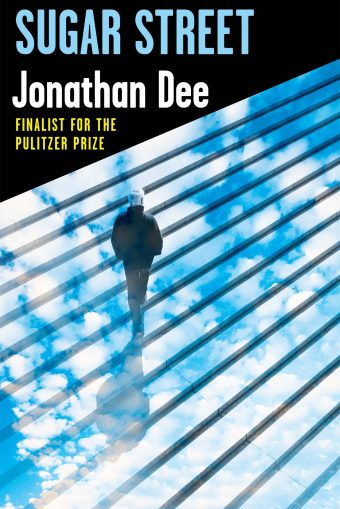
Jonathan Dee’s new novel, Sugar Street, is a fantastic subversion of an old American story. The nameless white man, sinful, remorseful, arrives in a new town with a hope to start again—except in Dee’s version, rather than westward, the man has gone east. He avoids the freeways—“full of libertarian possibility”—because he’s worried about cameras. He lacks the practical bravado of a Hollywood drifter, suffers various humiliations from his landlord, a physically imposing and ambiguously employed woman who refers to our hero as a cuck and laughs at his attempt to grow a beard, and his new moral life initially involves talking to himself in the library, eating candy bars in his room, and imagining the lives of children who pass beneath his window on their way to school. 

Most notable, though, is that rather than calculated silence, Dee’s narrator engages in a spectacular linguistic event: the rant. It is a form that seems tailored to the enraged white man. Because this is also the thing about Dee’s version: our narrator is a man of privilege who is spottily self-aware, but his increasing anger at the state of a Trumpian America—his anger toward what he perceives as colonial American military efforts, his anger at protestors who, despite being sympathetic toward their views, he finds presumptuous for their faith in their efforts—delivers him to a logical and radical conclusion.  

Just as satire can critique through its comedic exaggeration in representing systems of power, misanthropy in the novel can critique contemporary injustices through its ecstatic delivery of its barbs. This is what Dee has tapped into with Sugar Street: an entertaining and enlivening cynicism that belongs to the tradition of Celine, Bernhard, Gaddis, Williams. As a former student of Dee’s, I was eager for the chance to talk with him about his eighth novel, which is an aesthetic shift from his earlier books, such as his last, The Locals, and the Pulitzer Prize finalist, The Privileges


Alexander Sammartino: This book is different for you in a lot of ways. What inspired the change? 

Jonathan Dee: In my case, after you’ve been doing this for a while, some of your aesthetic choices are reactive. You wonder what would happen if you tried to do something you’ve never done. So that was part of it. But honestly, the other part is that these have been bad years. Bad years to be alive in a lot of ways. And it seemed to me that my usual approach—the panoramic, multiple POVs surrounding a single problem—seemed less and less representative of the current moment. One angry guy alone in a room, feeling trapped in that perspective, this felt like the way to go. 

The book started out as a point of view experiment. I wanted to begin with a first-person narrator who was on the run from something. Then I wanted that “I” to disappear from the book, to morph into something like a straight up objective third-person, and then you would have to keep reminding yourself that, no, there’s nothing objective about this. But I couldn’t get as interested in what this figure was supposed to be narrating as I was in the figure himself. 

AS: What about the character interested you so much?

JD: He’s a self-identified liberal white man, a right-thinking guy who thinks he’s evolved away from the worst aspects of his own demographic peer group, in terms of knee-jerk responses touching on masculinity and especially on race. He thinks he can step outside the aspects of his own identity that were historically bequeathed to him, so to speak. He discovers that he can’t, or at any rate that he hasn’t. He sees some disadvantaged, non-white children (surveils them, by the way, in exactly the way he objects to being surveilled himself), and he wants to “help” them, with the aid of an envelope full of money; what that money represents, where it came from, by what stretch of the imagination it is, or should be, his to be “generous” with at all: these are all classic white-liberal ideas that are more or less trampled by his excitement at the opportunity to feel good about himself. What it comes down to, mostly, is that, as a white man, he considers himself to be at the center of his own story, in the driver’s seat in terms of what’s happening to him, always. When he learns definitively that he is not—when the thing that he flattered himself he had “accepted” actually happens to him—he snaps.

As a white man, he considers himself to be at the center of his own story, in the driver’s seat of what’s happening to him.

Of course, if you want your likely reader to identify with a character like this, to find points of sympathetic contact with what he says or what he believes, you have to start with yourself. All such examinations, for a contemporary white writer, have to begin with self-examination, or else you’re just indulging in a kind of morally simplistic self-soothing, in what amounts to fan-fiction about yourself. There are plenty of heinous white people already running around in the world, you don’t need to invent fictional ones just so you and your readers will have someone to feel superior to. That’s artistic child’s play—worse than that, really. You have to lure the reader (and yourself) in the direction of a mirror, and then let them look into it. This is where the distinction between “craft” and “theme” becomes meaningless, by the way, because first-person narration is inseparable from the process I’m describing. Reader and writer have to cohabit, consciousness-wise, with this guy. The moment you let them examine him from the outside, you’ve given them a moral parachute.

AS: I’m curious: what initially brought you to these themes of whiteness, maleness, and extremism?

JD: There’s a lot of preaching to the choir in contemporary fiction. I don’t want to do it. You have to think about whom you’re writing for—I don’t mean in an abstract, ideal-reader way, I mean literally, who’s reading your stuff—and you particularly have to think about that if you’re a middle-aged cis-het white male novelist named Jonathan, for Christ’s sake. I wanted to write about white anger, that panicked white pushback, and I wanted to write a story about a somewhat ordinary man becoming radicalized. It’s so easy to other a character like that, to write an origin story about some Trump supporter that pretends to empathize with him while really manufacturing—and sharing with the reader—a sense of superiority to him, a sense of heroically overcoming one’s own revulsion. A book that confirms the biases (mostly correct biases, don’t get me wrong) of the reader most likely to pick up a book by me in the first place. No thanks.

AS: I remember back in your class on realism, we talked about the novel’s relationship to the moment in which it is written, and you mentioned the shitty times we’re currently living through. Do you feel there’s an unavoidable connection between the content of a novel and the state of affairs at the time it’s written? Like you as an author exist in a certain context, in a certain place and a certain time, so there’s something metaphysically impossible about removing yourself from that? Or do you think that, like, the responsibility of the novel is to capture what its current moment feels like? 

JD: The novel or novelist has no such obligations. In terms of myself, I’ve occasionally thought about writing something that steps outside of the moment in which I’m living. But it’s not me. I can’t do it. And that’s only gotten truer as things have gotten more, you know, horrible. For me, the reason to spend my life writing has always been that it’s a way to try to make sense of what it means to be alive in this time and place. 

AS: The narrator riffs on the line “silence equals violence.” He says: “Politically, I guess you could say that I’m a progressive. I firmly believe that everything about human society is progressing toward its end.” There’s a breakdown in the language that ultimately brings the narrator toward extremism. What does a distrust of language ultimately mean as the narrator becomes increasingly radicalized? 

You have to lure the reader (and yourself) in the direction of a mirror, and then let them look into it.

JD: Well, that was one formative, early idea I had for the book: to write about someone being radicalized. But most of the paths to that end, narratively speaking, are so simple or familiar as to not be worth pursuing. I wanted to find a different but still convincing way to get there.

Unsurprisingly, this narrator is full of contradictory impulses, if not outright hypocrisy. He talks a lot about the importance of being silent, but he continues to talk. He thinks he’s visualizing the world without him in it, but he actually can’t do that. Until the end, when he finally accomplishes what he sort of thought he was doing, or maybe just lacked the courage to do, all along. He embraces the idea of subtraction. 

AS: In removing himself from the Internet, which is the more likely route, as you said, toward radicalization, there’s this suggestion of something internal that can bring us toward the same sort of extremism. 

JD: The narrator thinks he’s decentralizing himself, but he still has a bunch of money, and he wants to give that money away. There’s an instinct, a reflex, toward control. It makes him feel good to give his power away. He can decide who gets it, and when, and how much; he’s still at the center, even though he imagines that he’s disappearing. This is where the book, I think, connects specifically to the idea of a certain kind of whiteness. The narration in the beginning of the book is self-flattering, right? He acts like he’s an outlaw, he thinks that he’s the mystery. But in the end, it’s the mystery that destroys him. 

Part of his inability to give up his centrality is embodied in the existence of the book itself. He says right at the beginning that he’s not making any written record of what he’s doing. So it’s a kind of real time self-narration for him. It’s him talking to himself. Even at the end, his “manifesto”—I imagine him just muttering that manifesto to himself as he walks through the parking lot. Given the fact that no one will ever know what he’s saying, his choice to withhold names—his own name, the name of the city he travels to, the last name of a child he meets—the withholding of information, as if he’s still being pursued, as if he’s still eluding people, that’s just narcissism. There’s no reason why he shouldn’t confess everything, because it’s never going to exist anywhere outside his head anyway. But even in his head, he depends upon the idea of an audience. 

AS: I want to ask about Celine. I don’t know if that was someone you had in mind, but I just couldn’t help but think of the comedy and the anger in Celine’s work. In Celine, that anger is more political compared to someone like Bernhard, I think, where the anger is more personal. I’m interested to hear what sort of aesthetic traditions you had in mind as you were working on Sugar Street. 

JD: Those Celine books were important to me a long time ago. The difference here is that Celine was fundamentally writing as Celine. I’m definitely not writing as this guy. I might use him occasionally to smuggle in critical attitudes toward things I don’t like. But in the end, I’m critical mostly of him. So there’s a little bit more of a divide. A far as the anger goes, Celine’s narrators are never in any real doubt about why they’re angry. One of the things I wanted to capture about my narrator is the sense that he doesn’t always know what triggers it or where it comes from. It often makes no sense. It’s stupid. And yet, it can’t be denied, that masculine anger. This guy has a residual reactionary pride that he insists he doesn’t have. But then when he’s put under duress, he’s shocked to discover that it’s still there. At first by choice, then later against his will, the layers of him get peeled back and these received notions of masculinity, these received notions of whiteness, etc., that he thought he had shed himself of, turn out to still be there inside him. 

An essential American idea is that you have the license to invent yourself, that you are not bound by what you inherit.

An essential American idea—maybe the essential American idea, particularly as it pertains to literature—is that you have the license to invent yourself, that you are not bound by what you inherit. In the world, say, that Balzac was born into, what you possessed was what your parents and grandparents had possessed, and to a significant extent, your fate, your very nature, was predetermined. The circumstances you were born into were exceptionally hard to escape. So the radical, new-world idea was that you weren’t necessarily defined by things that happened before you were born. This represented freedom and possibility: escaping your heritage, your legacy, leaving all that behind and deciding for yourself who you are. So suddenly, post 2016 or so, I felt like I was hearing that classic American idea expressed a lot—not in a classroom, but out in the world, only it was the other side of the coin: same language, same idea, but it had curdled into a reactionary, white idea. It was defensive. “I’m not to blame,” right? “It’s not fair to blame me for what came before me. You can’t blame me for my privilege, my inheritance, my legacy. I didn’t do any of that. That wasn’t me. I get to decide who I am.” Suddenly the idea is not forward-looking or freedom-embracing. It’s angry and self-pitying and divisive. 

 Writers—maybe other kind of artists, too—but for writers there’s this knee-jerk sense that hope is our brand. That we might be writing critically about the world, but in the end you have to wind up on a note of love, of optimism and belief in human nature. “I believe that man will not merely endure, he will prevail,” right? And you know what? I’m not feeling it. Maybe that will change. But I wanted to embrace the dark with this book. I didn’t want to write another book that circled back reflexively to faith in human nature, because I feel like we’re demonstrating that human nature is kind of the issue in most ways. Novels are anthropocentric., that’s pretty hard to escape. Maybe, if we fancy ourselves the solution, we can at least sit for a bit with the idea that we’re the problem. 

Don’t Make Pregnant People Cross State Lines To Make Decisions About Our Bodies

The train lurches into Penn Station. I check my phone: it’s noon, two hours before my appointment. I climb out of my seat, gather my belongings, and text my best friend, Meredith. We manage to locate each other in this grimy underground world. Her blond hair bounces as she walks toward me. We’re almost 30 years old, and have known each other since we were 11, so it feels reassuring to see her familiar face. 

“Thanks for being here,” I tell her.

“Of course.”

There is a beat. 

“You hungry?” 

We decide on Japanese. I sip miso soup, hardly thinking of anything beyond the next few hours. Meredith makes small talk. When the waitress comes to take our plates, I ask her to head back to the hotel. 

“You can get us checked in.” 

“Okay—if that’s what you want,” she nods. 

We split the check and she leaves.

I wonder: will today bring comfort or terror?

I map the route to the clinic and begin my walk. Above the towering gray buildings, the sky is bright and blue. The sun beats down, the wind blows, and I feel increasingly like a character in a movie who will soon meet her fate. I wonder: will today bring comfort or terror? When I walk through the clinic doors, will I find the lady or the tiger? 

The building comes into sight. No protestors. I step through the clinic doors where I’m greeted by light wood floors and a smiling receptionist in a sensible sweater behind the counter. There is a basket of pretzels and trail mix; next to it tiny bottles of water. 

“Hello,” the woman says. “Are you Emily?” I nod. “That’ll be 1200 dollars.” I pay the woman using the money my mother has given me, feeling sick with guilt that my mom is literally paying for my mistake. 

“Please have a seat.” 

I’m the only patient. 

“Where is everyone?” 

“We want to ensure your privacy,” she replies.


I nap at the hotel, then shower. Stepping into the water, I tell myself it’s a metaphor, that the water is washing these past few months away–but I emerge from it just as lost, equally relieved and sad. Meredith suggests we try the downstairs restaurant, where we share tacos and make our way to the rooftop bar. Throngs of people swarm about, the mood celebratory. It’s a warm July night. A slow breeze brushes my skin, and the Manhattan skyline stretches before me, black and empty. I drink a margarita, feeling guilty about the fact that I can drink again without guilt. 


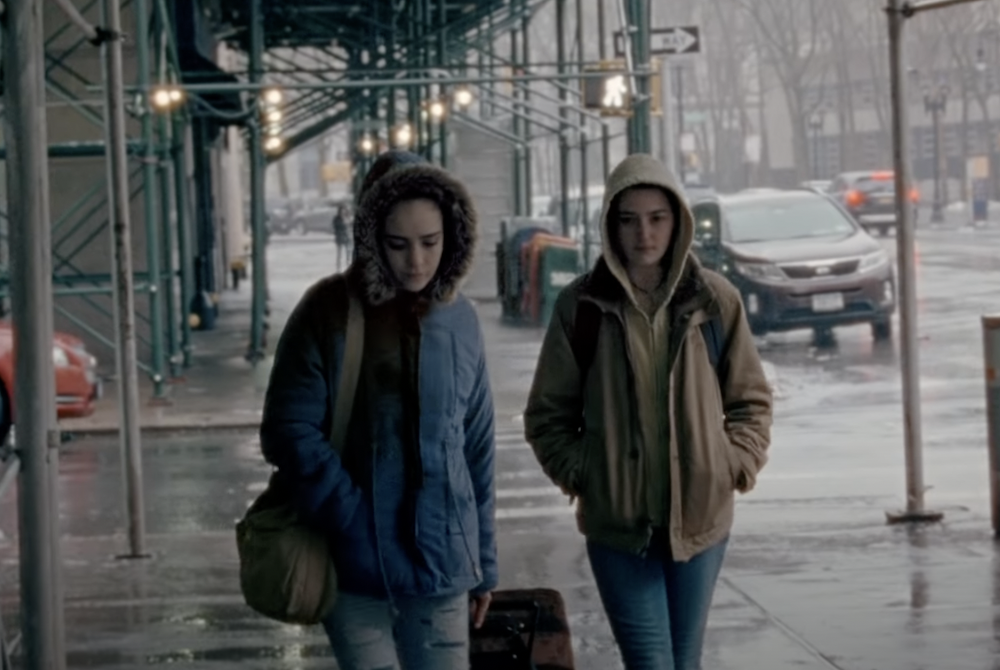
17-year-old Autumn and her cousin Skylar arrive in New York City on a bus, tickets paid for with cash stolen from their supermarket jobs. Stumblingly, they navigate the subway system, manage to make it to Planned Parenthood, and discover that the crisis pregnancy center Autumn visited in Pennsylvania lied about how far along she was. She’s 18 weeks, not 10. The office staff inform her they can only perform an in-house abortion up until 12 weeks, so she’s referred to their Manhattan branch the following day. 

There is no hip hotel, no rooftop bar.

Unlike me, Autumn, the main character in Eliza Hittman’s Never Rarely Sometimes Always, has told no one in her family of her predicament, so the girls have extremely limited funds and nowhere to stay. There is no hip hotel, no rooftop bar. Autumn has a little cash left in her pocket, which she will have to save for the procedure. The girls end up sleeping on the subway, where men touch themselves while staring. 

Eventually, day dawns and the pair makes it to Manhattan. Autumn has her appointment and learns that the procedure will take two days because she must have laminaria, or seaweed sticks, inserted on day one to dilate her cervix. After the first part of the procedure is over, a clinic volunteer offers to help them find a place to stay that night, but out of fear, pride, or shame, Autumn turns the assistance down. 

Now they have another night in the city with nowhere to stay—and also no more money for bus fare. So Skylar, who is very pretty, cashes in on her good looks and asks a guy they met on the bus if he can help them out. She makes out with him, he gives her enough money to get home, and in this way they eventually make it back to the clinic. 

Shortly after Skylar’s makeout session with Bus Boy, morning comes and Autumn has the second and final part of the procedure. Afterwards, she and Skylar go to a cafe where her cousin asks her if it hurt. Autumn shrugs and tells her it was mostly just uncomfortable.

Autumn’s assessment of the pain is crucial: it reveals one truth about abortion that the media doesn’t often portray. For some people, the pain level is more like bad period cramps than anything else. 

I’ve spent years working as an abortion doula. I’ve held the hands of many patients during their procedures, and I can attest to the range in pain levels. My own abortion hurt much more than Autumn’s did, but some of my patients had experiences comparable to hers. 

What matters is that the film shows abortion in a more realistic, mundane light.

What matters is that the film shows abortion in a more realistic, mundane light than most media does. Until recently, far too many films showed only women who didn’t have an abortion, like Michelle Williams in Blue Valentine, who changes her mind right before the procedure starts, or Miranda on Sex and the City, who does the same. 

The facts about abortion are distorted, very hush-hush. There are films that purposefully make it out to be a graphic, bloody situation, such as the anti-abortion propaganda film Unplanned, which purposefully twists medical reality to dissuade people from ending pregnancies. 

I have seen exactly one accurate representation of abortion on television, in 2015, when Shonda Rhimes decided to show Olivia Pope having one on Scandal. The scene was matter-of-fact. It was quick, it was boring—Rhimes didn’t inflate the moment. She let it be one fact in a woman’s life, a decision made, and one made without discussion. Another character of her creation, Cristina Yang, on Grey’s Anatomy, also goes through with an abortion, though it took Rhimes seven seasons of making the show to get comfortable and established enough to write such a storyline. She had almost done so earlier, in season one, but ABC’s legal team explained how infrequently writing an abortion into a script, and then showing it on television, had been done, and the kind of controversy it could create. Rhimes changed the plot so Yang’s first pregnancy turned out to be ectopic.  

Before Shondaland existed, I had seen only a handful of scenes depicting the procedure on television, or in movies, ever, in a lifetime spent consuming media. There was that scene in Dirty Dancing, where Penny the summer resort dancer gets sent off to “some butcher” as Baby’s father calls him. “The guy had a dirty knife and a folding table,” says a character named Billy who goes with Penny for her abortion. “I could hear her screaming…I tried to get in.” After the abortion, Penny lies in a bed, sweating and moaning, till Baby’s dad comes to save her. All we know about her situation is that she got “knocked up by Robbie the Creep,” who she thought loved her. The message here is clear: be careful who you sleep with. You, too, could end up quaking on the floor of the mess hall. 

I had also seen portrayals where a character finds herself pregnant and decides not to go through with it. Like Michelle Williams in Blue Valentine, who calls out to the doctor to stop right before the procedure begins, or Miranda on Sex and the City, who decides to have the baby she and Steve conceived accidentally in a “mercy-fuck.” Miranda makes it to the clinic but changes her mind once she’s there. “Is this my baby?” she asks her friend. 

These films and shows are most likely the reason I thought I too might change my mind at the eleventh hour. When I ended my pregnancy, it was 2013, pre-Shonda-Rhimes, and the hesitancies and no-I-can’ts were all I had seen. Except when I had seen women die—because I’d seen that too. The main female lead in Revolutionary Road, played by Kate Winslet, dies at home when she induces an abortion. Demi Moore’s character in If These Walls Could Talk bleeds out on a kitchen table after trying to end her pregnancy with a knitting needle. And the pregnant teenaged girl in The Cider House Rules dies while Michael Caine’s character, a doctor, tries to save her. “Should’ve come to me, dear child,” the doctor laments, all too late. 

I had never seen a show in which a pregnant person decided to terminate a pregnancy and came out okay.

At the time when I was faced with ending my pregnancy, I had never seen a show in which a pregnant person decided to terminate a pregnancy and came out okay. So the shame I felt—at the time—isn’t surprising. I felt like Penny from Dirty Dancing, who didn’t have her life together. 

Back then, I didn’t realize how this dearth of realistic representation of abortion creates a deafening silence where comfort could, and should, be instead. I clung to the stories I’d heard from friends and family who told me “I’ve had one too” when I shared that I might end my pregnancy—but these narratives were only a few weeks old in my mind. They came up against a lifetime of cultural silence and pre-absorbed terror. 


It’s wonderful that films like Rarely Never Sometimes Always exist—depicting a main character who goes through with the procedure, then comes out relieved. In this way, the film represents real progress. 

But that’s where the progress ends. 

Because even as we’ve come forward to the point where we’re beginning to break the tremendous cultural silence that surrounds the choice to end a pregnancy, the fact that this is no longer a safe, legal choice in every state constitutes a staggering retrogression. 

Roe v. Wade has fallen. As of this writing, 13 U.S. states ban abortion outright, and many more impose restrictions that severely limit access. Autumn in Never Rarely Sometimes Always should be one of the lucky ones, because she lives in a state where abortion is legal. But because she’s under 18, she can’t access the procedure unless she has permission from her parents, who she refuses to tell. 

She could obtain a judicial bypass, but that process involves submitting paperwork and going before a judge, which would likely intimidate many 17-year-olds, and certainly Autumn, who doesn’t even tell her friends. 

Instead, like many people who get pregnant unexpectedly and don’t have access to a safe, legal option, she initially tries to tackle the problem herself. She turns to Google and learns about several ill-advised, dangerous at-home methods. This includes taking extremely high doses of vitamin C and hitting herself in the stomach. 

Shortly after trying these tactics, she finds herself retching in the bathroom at work. Her cousin Skylar notices and decides to help her by stealing cash from the girls’ grocery store job so the pair can afford bus fare to NYC.

And thus begins their trek. 

The banning of the procedure in great swaths of states has expanded already existing abortion deserts.

Autumn’s journey is now going to be relatable because the banning of the procedure in great swaths of states has expanded already existing abortion deserts, meaning that someone seeking to end a pregnancy now needs to foot the bill for travel as well as the procedure itself, in addition to the cost of childcare for any children they already have. Someone in Louisiana, Mississippi, or Arkansas, for example, cannot turn to a single neighboring state for the procedure, as it is outlawed in all of the states that touch their boundaries. 

And the states that do still have relatively unfettered access to abortion are seeing greatly increased demand, reducing their ability to provide timely care. Illinois, for example, is an abortion oasis in the center of the country—and the wait time to end a pregnancy there is now often three weeks or longer. In the week after Roe v. Wade was overturned, the number of out-of-state patients went from 100 to 750, according to Planned Parenthood of Illinois. 

New Mexico has also become a beacon of hope and access for abortion seekers, with an announcement in September 2022 that it would earmark 10 million dollars to build a new abortion clinic near the Texas border, in anticipation of increased demand. 

And of course, as always, there is New York. New York, where Autumn went to reclaim her life. Where I went to extract myself from the mess I’d made of mine. Where countless others have gone ever since 1970, when the state legalized abortion three years before Roe was passed. Where they will go again, now that the Supreme Court has reversed it. 

Even as guilt and sadness washed over me on that stark Manhattan night when I stood on a hotel rooftop bar after ending my pregnancy, part of me felt lighter as I looked at the skyline. The blackness was a blank slate, telling me the future had been reset.  

I thought of that moment as I watched Autumn and her cousin Skylar laughing in a diner after her procedure. New York had freed her. 

The state’s governor recently pledged to make sure New York City remains a safe harbor for abortion. But it shouldn’t have to be this way. The Autumns of our country should be trusted to make decisions about their own bodies in their own states. Autumn reminds us of the perils pregnant people go through when seeking abortion. Many are left without money, shelter, safety, sleep, or food, and pushed to the limit. The film was made in 2020, two years prior to the reversal of Roe; how prescient it remains.

8 Books that Capture a Life in Motion

The world seems to be moving faster and faster, asking us to keep up and keep on with its changes. It’s dizzying. Between my general mental chatter and the noise of today, my desire for slow paths into quietude has increasingly grown. For the lucky and privileged, the pandemic served as a pause to reflect on pace. Hybrid work models offer the chance to recalibrate the flow of our days. I read and wrote excessively during the pandemic, after long daily rides around empty New York streets. Rides I suddenly needed as an escape from the confines of quarantine. Rides I now had time for in lieu of hours spent commuting. My pace—cerebrally and kinetically—has become synced with the pace of the bicycle.

I was not a sporty child (except when choosing Spice Girl allegiances). Despite trying my best at every school tryout, I never made a team. It was always the same kids making all the teams. Twelve years of straight-A report cards consistently featured the lone outlier of a passable PE mark. There was scant evidence that I would grow up to write a sporty book. And yet, my first publication is about my relationship to bicycles. Early into the book, I alert the reader that I am not a cyclist but a rider of bikes, almost as a preemptive defense against any gym teachers, jocks, or serious athletes that would inevitably find me out. It is also with this sense of alienation from those that sport that I hesitate to even describe my book as sport-adjacent, for fear of discouraging nonsporty readers. Perhaps my latent athleticism birthed this awareness of the impact of the physical on the mental, the interplay of stillness and travel, how my body sometimes needs to take over life processing when my brain is a jumble of questions.

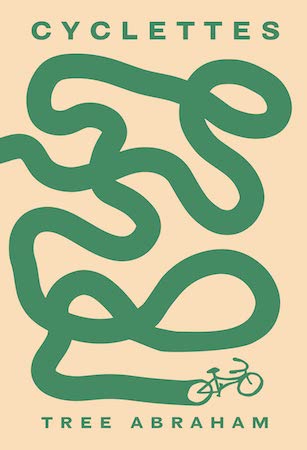
With freedom gained through the bicycle, Cyclettes traces my thoughts and movements through diverse cultures and ideas as I contemplate how to live a meaningful life. The narrative is recursive in its themes and fluid in its spiraling from one into the next with written and visual rhythms that simulate the sensation of riding a bicycle. This is a list of some of my favorite books that keenly track on the page the experience of a mind in motion.

What I Talk About When I Talk About Running by Haruki Murakami

Prolific Japanese writer Murakami’s memoir feels almost like dispatches from the road, a light stream of consciousness that comes while he is running in Hawaii, Japan, and New England in preparation for the New York City marathon. His history as a runner and long distance racer has spanned the length of his writing career. What Murakami talks about when he talks about running is running, but also writing, and also the distillation of self. His self is one of great solitude, whose persistent focus at a writing desk parallels his fixed gaze on a horizon during a long run. He revisits past successes and failures in both writing and racing, which are really competitions between his younger and older self, stamina sharpened by a mind that remains present one word or step at a time. Murakami calls himself a physical more than an intellectual person who needs to physically strain his muscles to near an understanding of anything. The secret to succeeding in one’s pursuits is maintaining a pace, he says. Reading the book is like slipping into Murakami’s shoes and lapping in time with him. 

Jonathan Livingston Seagull by Richard Bach

Bach said the idea for the book came to him as “a visionesque spooky thing”. This sleeper hit was hard to classify when it quietly debuted in 1970. Was it a children’s book? Animal fantasy? Religious parable? Nature? Photography? Whatever it was, Jonathan Livingston Seagull went on to sell over a million copies by its second year in print. Jonathan Livingston Seagull is living a typical seagull life when the story begins. Growing bored of his monotonous days, he is expelled from his flock and begins to push the limits of flight beyond his basic needs. Jonathan encounters other outcast gulls who share their wisdoms about a higher plane of existence, experiments with speed and aerial prowess, and develops a philosophy for an impassioned life. Dispersed throughout early editions are grayscale photographs of a seagull freezeframed against a stark sky or a vast seashore. In the centerfold, there is a sequence of filmy sheets capturing a seagull at multiple stages of flight. A previously unpublished fourth part was added to the story in the 2014 edition. The book remains a divisive text with some declaring it a spiritual classic, others finding it naïve. I read it a decade ago and still think of its windy heights every time I see a seagull.

Swimming to the Top of the Tide by Patricia Hanlon

The top of the tide is an intermission between flow and ebb. Hanlon writes that it is in that moment of reaching the top of the tide on a swim that a body is encircled by horizon, held at the apex of stillness, suddenly aware of the gravitational relationships at work. That moment becomes familiar to Hanlon and her husband over the course a book that documents a year of swimming in the tidal estuary of New England’s Great Marsh. They had made a pact to swim as often as they could for as long as they could before winter shut them down. But as the sun set earlier and waters cooled, they upgraded wetsuits and became more ingenious in their techniques to stay warm. Almost daily they swam after work, discovering new swimming spots in a locality they’d called home for forty years. Many areas were unnavigable by all other modes of transportation but a body shimmying through narrow hidden waters. Part how-to guide, part nature journal, part ecological call to action, this book inspires the reader to take a closer look at the everyday cycles in their own backyards.

Flâneuse by Lauren Elkin

Coined in the 19th century, a flâneur was a person (an affluent, urban, white man) that leisurely wandered the streets in aloof observation. Historically, women were largely excluded from such free rambling because of the male gaze, issues of safety, and domestic duties. By contrast, Elkin defines a flâneuse as a person (determined, resourceful, feminine) that walks the streets with purpose, searching for a metropolis’s creative potential. Weaving her own meandering insights with tales of women throughout history, literature, and the arts who shared the same streets in New York, Tokyo, Paris, Venice, and London, Elkin considers how women have engaged in complicated ways with public spaces. Walking is like reading, like map-making, like seeing the unseen. What can only be found on foot? Take a long walk and find out.

Bright Archive by Sarah Minor

In a combination of concrete poetry, interviews, memoir, and historical research, Minor’s experimental nonfiction collection is interactive architecture with directional force. Each essay demands the reader physically change perspectives to enter figurative and literal interstices that examine how people and places are shaped by one another. When Minor returns to her family’s old Iowa home, narrative is housed at an angle in and around attic trusses and soffits, numbered paragraphs serving as signposts for the eyes to follow as if the reader is also hunched over in the dusty rafters searching for squirrels. One essay requires the reader turn the book upside-down and back around as the story shifts from scenes in underground temples of the Damanhur commune, then back up for air. An essay written sideways and split down the middle recounts Minor’s journey down the banks of the Mississippi River as she considers the chutes that carry our refuse and where waste ends up. There’s an essay with sentences that knot like drawstrings on pants being pulled off, another that takes the shape of a log cabin from above as blocks of text interlock at 90-degree angles. From enclosure and release to falling and fleeing, the layouts transform each essay’s emotional core into a correlating bodily motion. 

Do Nothing by Celeste Headlee

Published a year after Jenny Odell’s How to Do Nothing and a week before the country entered COVID-19 quarantine, Headlee’s book is a more pragmatic dismantling of productivity. She charts the evolution of work culture—the rise of the 8-hour work day, how busyness became a virtue, careers got equated with identity, and people began working harder rather than smarter. Headlee challenges the foundation around which we assess the quality of our life, presenting research on how the brain reacts to technology, being overworked, and under socialized. She offers strategies for how to better perceive and make use of time, idle with intent, and enact daily habits to destress. The art of doing nothing is a trendy topic. This book is one accessible introduction to a greater consciousness around how and when to power down.

Arbitrary Stupid Goal by Tamara Shopsin

Illustrator and graphic designer Shopsin’s memoir about growing up in her parents’ infamous old-fashioned grocery story is told in fragmented anecdotes about the ongoings of neighbors, customers, and fringe people of Greenwich Village in the 1970s and ’80s. Her unconventional childhood is doled out in random, curious snippets of short paragraphs, drawings, and ephemera that feel like memories themselves. Told out of order, the assemblage almost presents time like a bouncy ball erratically bouncing without cumulation. At the heart of it all is her idiosyncratic father, constantly keeping busy with side musings and store upgrades. Shopsin’s father’s doctrine was that of ASGs. An Arbitrary Stupid Goal is something that “isn’t too important, makes you live in the moment, and still gives you a driving force. This driving force is a way to get around the fact that we will all die and there is no real point to life.” ASGs are like mini-preoccupations to get a person from one day to the next. This playbook for staving off tedium, depression, and existential despair is introduced and reinforced to the reader with every example of her father’s little motions.

So Many Olympic Exertions by Anelise Chen

In this work of autofiction, we meet Athena—a former swimmer seven years into her doctoral program with a yet completed dissertation on competitive sport—grieving a friend’s suicide, perseverating on what it would mean to keep going or give up. The narrative is formatted like a commonplace book of notes-to-self that meditate on progress and regress and the messaging on success defined in the world of sport. Each effort—to write a thesis, to play a sport, to live a life—acts as metaphor for the others.

The book is dripping with Athena’s languish as thoughts on desires versus goals are interspersed with descriptive clippings from sports media: interviews and footage of athletes quitting, collapsing, failing; a bruised limb; a perfect 10; commentator rhetoric on winners and losers; studies on the psychology of it all. So Many Olympic Exertions’ economical poeticism, curious collectanea, and introspective probing of modern stressors is reminiscent of Jenny Offill’s Weather about the anxiety of living in a time of climate emergency. Both ask, what now? Chen writes, “the daily resistance of living is a necessary exertion. Our musculature is designed to resist.”

7 Novels that Use Mystery to Examine Race

Unlike any other genre, mystery breaks the world apart. Sometimes this shattering comes from a death at a dinner party. Other times it happens when a family member goes missing in broad daylight. No matter how things fall apart, to solve a mystery, the pieces must come back together by the end. To do this, the genre often relies on systems of power that uphold the status quo: the good guys win, the bad guys lose and justice is served. To make it plain, the genre can look very white. 

When writing my debut novel, Jackal, I wanted to tackle difficult questions around history, race, and class by using a mystery. In the book, Liz Rocher returns home for a wedding only to uncover a disturbing pattern: young Black girls have been going missing in their predominantly white town for years.  

Mystery thrives on patterns and expectations. Readers expect the process of an investigation or the findings in a court room to reveal the truth because these are proven methods of righting an injustice. However, these methods assume the lens of whiteness. Examine these systems from the perspectives of people of color and they start to break down. Detectives dismiss leads because racial bias. Witnesses withhold testimony because they fear repercussions for cooperating with a system that has failed to protect others in the past. Victims aren’t believed because of assumptions around race and class. Bit by bit, these established rhythms of justice fall into discord. By the end, marginalized folks are left holding broken pieces of their lives with seemingly no way to put them back together. To center whiteness denies this brokenness. It also wastes an opportunity to do what mystery does best: solve things. 

In the list below, the writers disrupt the whiteness of the crime and mystery genre by centering BIPOC protagonists. Instead of relying on the same formulaic tropes, these books explore what it means to be a person of color navigating a justice system rooted in racism. 

My Sweet Girl by Amanda Jayatissa

My Sweet Girl follows Paloma Evans, a Sri Lankan adoptee. Having been adopted by white American missionary parents, she grew up with the best of everything. Now 30 and struggling to make the rent on her overpriced San Francisco apartment, Paloma sublets spare room to Arun, who recently moved to the United States from India. When she finds Arun dead, murdered in her apartment, she must face her past to fix her rapidly eroding present.

Paloma is charming despite being prickly, impatient and stuck in her bad habits. She is also as unreliable as they come. The story unfolds as she struggles to solve the mystery and navigate the racism she faces as a Brown woman, while reckoning with the tensions between her childhood in her birth country and her current life in her adopted country. 

All That’s Left Unsaid by Tracey Lien

Ky Tran, a young Vietnamese Australian woman, returns home after her younger brother is murdered. Once there, she notices how the circumstances of his murder don’t add up. After struggling to spur an indifferent police force into action, she sets out to track down witnesses. With each new voice, she begins to uncover a horrible truth rooted in violence, colonialism and the choices people make to survive.

A writer’s duty is to tell the truth and Lien doesn’t shy away from it. Fearless and unflinching when it comes to the immigrant experience, Lien crafts a story that deepens with each page and lands close to the bone.

Like a Sister by Kellye Garrett

When disgraced reality TV star Desiree Pierce is found dead in the Bronx in the early hours of the morning after her 25th birthday party, the authorities quickly declare her death an overdose. But her sister Lena Scott knows otherwise. Though the two are estranged, she knows her sister wouldn’t travel above 125th street. After being dismissed at every turn, Lena embarks on a search on her own to find out what really happened. 

The characters in this novel are deliciously complicated, imperfect and real. Additionally, Garrett utilizes how Lena and Desiree see themselves versus how society perceives them as Black women to drive this mystery through every twist and turn.

Your House Will Pay by Steph Cha

Your House Will Pay details the historical tensions between the Black and Korean communities in Los Angeles. While living with her Korean immigrant parents and working in the family pharmacy, Grace Park struggles to understand the distance between her parents and her sister Miriam. After a police shooting of another Black teenager, Shawn Matthews grapples with his relationship with his family while mourning the memory of his sister who was also killed by police and keeping his own demons at bay. When a shocking crime roils L.A., the Parks and the Matthews face a reckoning decades in the making. 

Cha deftly constructs a story where the personal is also political. Using real life events and beautifully drawn characters, the mystery breaks open and reveals the complexities of past and present racial tensions at every turn.  

Black Cake by Charmaine Wilkerson

A family saga told in dual timelines, Black Cake brings two estranged siblings together to uncover their mother’s hidden past. After their mother Eleanor’s death, Byron and Benny inherit her black cake recipe and a voice recording. Along the way, they untangle a legacy of murder, heartbreak, and betrayal that stretches from the Caribbean to California. 

Like Wilkerson and the characters in Black Cake, I come from an immigrant family. There are parts of my family’s past which are a mystery to me; who they were before they left their country and the circumstances that led them to leave are often wrapped up and kept close to the chest. Wilkerson uses the gradual unraveling of family secrets to challenge and question Black immigrant identity and relationships. 

Winter Counts by David Heska Wanbli Weiden 

A local enforcer on the Rosebud Indian Reservation in South Dakota, Virgil Wounded Horse serves as a source of justice outside of the American legal system and the tribal council. When a heroin epidemic overtakes the reservation, Virgil must learn where the drugs are coming from and how to stop them from poisoning the community.

Virgil’s biracial identity and struggling to find belonging is beautifully woven throughout this story. This is a novel that details many facets of life on a rez without shying away from hard truths.

When No One is Watching by Alyssa Cole

Sydney Green’s block is changing. Tendrils of gentrification are quickly uprooting her beloved neighborhood in Brooklyn. She starts a walking tour to retain her community’s history, but as she digs into the past, more of her neighbors begin to disappear and Sydney must figure out what’s going on before she vanishes next. When No One is Watching is an excellent blend of hidden history and fast pacing, by the end Cole captured all the unease of gentrification in thriller form.

During the Black Lives Matter Movement, A Korean American Mother and Son Spar Over Political Activism

In Which Side Are You On, 21-year-old Reed returns to Los Angeles, his hometown, to call on his ailing grandmother. But once there, he uses the opportunity to finally break the news to his parents: he’s dropping out of Columbia. Why participate in the neoliberal system that perpetuates white supremacy and inequity? He would rather devote his time to the Black Lives Matter movement, organize protests to get justice for Akai Gurley, a Black man, shot at the hands of Peter Liang, an Asian American police officer. 

As Asian Americans advocate for Liang’s innocence in the name of community, Reed, who is half Chinese and half Korean, feels an immense responsibility to play his part in redressing the social injustice and bringing the revolution he thinks is around the corner. To that end, he seeks to learn about his mother’s involvement in the Black-Korean Coalition of the 1980s, hoping it would give him fodder to keep the current movement alive and relevant, and to better organize cross racial solidarity into being. But as conversations between him and his parents ensue, Reed learns the harsh reality of activism and organizing in practice. 

Using electric dialogue, Wong gives the narrative its forward momentum, and expands its scope across time and generations by raising questions of morality and social responsibility in the face of injustice and privilege and by examining historical moments that speak to the importance of cross-racial solidarity.

Ryan Lee Wong was born and raised in Los Angeles—a fact visible in his debut which paints the city with intimate strokes. Wong dedicated two years to living a Buddhist monastic life at the Ancestral Heart Zen Temple. Currently, he lives in Brooklyn where he’s the Administrative Director of Brooklyn Zen Center.

We spoke over Zoom on a Thursday afternoon about the role of social media in activism and organizing movements, empathy as an avenue for understanding, holding space for intergenerational trauma and much more.


Bareerah Ghani: I find it interesting that Twitter comes up a lot in the novel as a source of “woke” news. The book also insinuates the idea of Twitter as an avenue to assert moral superiority and perhaps a proxy for taking actual action against social justice issues. What is your view on the role of social media, in particular Twitter, in opening dialogue on social justice issues and fostering a community?

Ryan Lee Wong: Just like you said, I think Twitter can be both. On one hand, when I was becoming radicalized in my politics, Twitter was a really quick and illuminating way to build up my critical vocabulary. I could log up to Twitter when something happened in the news, and I would get maybe a dozen really smart and interesting takes on something that were often left of what, you know, The New York Times would say about something or other mainstream media outlets, and that felt true to me, on an intuitive level. I thought that was really powerful, and so helpful for me. At the same time, this other thing could happen where I’d be reading those dozen takes, and sometimes they would disagree with each other, and then there would be takes on the takes, and I found it tended towards anxiety and critique; those were the tweets that did the best, those were the kinds of accounts that often got the most followers. And if you are in a world that pushes you towards anxiety and critique it’s actually very hard, I think, to have certain kinds of conversations in which you build relationships and a shared sense of belonging. I didn’t really find that kind of sustained community building on Twitter. I think some people are maybe better at thriving in that kind of environment than I was.

BG: Yeah, my experience with social media is kind of similar—perhaps why the book really spoke to me in how it critiques social media. Even when Reed talks about The Black Lives Matter movement, he says how the movement gained impetus, and essentially made being “radical” “cool”. I thought it was really profound. It got me thinking about this bandwagon effect we now often see after big tragedies such as in the aftermath of George Floyd’s death, everyone on Instagram began posting a black square on their timeline without realizing its significance or reflecting on their own credibility to partake in that action. I was wondering how you view the role of social media platforms and their rapid use in propelling liberal ideologies for social currency.

It actually takes a lot of sustained intimate dialogue to tell the difference between politics and performance; your actions in the world from what you post.

RLW: It’s a double-edged sword. I think that Reed is going through all this way before 2020 and had he been around then, he would’ve been very critical of juice bars posting Black Lives Matter signs in the windows without any kind of progress or social engagement. But then again, Black Lives Matter as a movement is hard to picture at all without social media so you cannot discount the importance of it, and the way that people were able to language and name an experience that was happening nationally and incidents in the country that previously had been seen as isolated incidents of police violence. At the same time, it gets very tricky once influence and celebrity culture get mixed in and there can often be a very facile engagement with politics that’s more about performance. At one point, Reed even says, for our generation it’s really hard to tell performance from your politics and being able to know the difference. And I think that’s one of the challenges of today—it actually takes a lot of sustained intimate dialogue to tell the difference between politics and performance; your actions in the world from what you post.

BG: I’m fascinated by how wide the scope of the narrative is because of its inspection of intergenerational differences. One instance that stood out to me is when Reed points out his mom’s inappropriate use of African American Vernacular English (AAVE), and she goes like, but that’s just how we talked, using AAVE terms was a display of endearment. And Reed says he understands but he could never take his mom’s case to Twitter for “fear of getting dragged.” What are your thoughts on this generational shift on how cross racial solidarity is envisioned now as a celebration of the differences between us, where previously it was about sharing language and culture? Could you speak to this in connection to the role of social media, cancel culture and cultural appropriation.

RLW: One thing that’s really interesting is how, what used to be coalition or solidarity building that happens on a very local, intimate, and geographically specific scale can now be transmitted out globally, almost instantaneously. So when Reed and his mother are having this dialogue about appropriation of Black language and African American vernacular, it’s a question of generational difference and social media, but to me it’s also a difference of geography, time, context and particular movements. So to be politicized in Oakland East Bay in the1970s and five, ten years after the Third World Liberation strikes at Berkeley and SF state, that’s a very different world than Brooklyn with social media in 2016, discussing Akai Gurley, Peter Liang. And it’s also a different world than LA 1980s, South Central and Black-Korean relations there. And so, I think it’s tempting to try to make broad statements about when it is and isn’t appropriate to share and borrow culture. But to me, the only way it’s actually been a constructive and interesting dialogue is when it’s focused in a very specific time, place and context. And so, to take those three moments, my impression is that, in the late ’60s, mid ’70s in the East Bay, there was a much freer sharing of those ideas and cultures—the Black Panthers were being influenced by Maoism, and then were in turn influencing Asian American activists whereas in my experience of Brooklyn in the mid 2010s, there was a lot more care and interest in making sure that non-Black protesters weren’t appropriating or misusing Black language and that also came out of a very real need, which is to think critically about when certain phrases or slogans developed by the Black community are not actually appropriate for non-Black people to use. So it’s all about context.

BG: For me, the heart of the novel lies in how it presents empathy as an avenue to understand one’s community. We see this in Reed’s mom and her being able to be there for her mother while holding space for the difficult emotions attached to that relationship. She teaches Reed to do the same; to understand his grandparents’ greed for money—something he detested—through empathizing with them and trying to feel the pain that led them to worship money. Could you speak to this idea of empathy as a powerful tool to heal and bridge gaps, in connection to your experience at the Ancestral Heart Zen Temple and the lessons you learnt there, in meditation, and community. 

RLW: So you could actually describe the entire movement of the novel as going from the head to the heart. So Reed’s big lesson is that in the beginning of the novel, he’s very cerebral. He’s very intellectual, good at applying theories. He’s kind of like a walking theory dispenser—whatever is happening, he has something to name it in a framework. And what he realizes is that it’s not something that’s going to get him far if his true goal is to build sustained community and movements. He has all these contradictions in his head, and he can’t really reconcile certain aspects of what’s going on, and the only space that can actually hold those differences is the heart. Because the heart does not have to divide the world into binaries, the heart’s more capacious and the heart’s a better listener. That is one of the big things that Zen practice has taught me. 

Of course you would want to try to alleviate all of the pain that we see and of course believing one could do that will absolutely lead to burn out.

The big misunderstanding around Zen Buddhism is that you sit there and kind of wipe your mind blank. But that’s not my experience at all. So much of Zen practice is actually sitting there in meditation and communal practice for long enough that your bodily wisdom actually starts to come forth. So it’s the opposite of what most people think where it comes from your head down. But actually, the wisdom and the grounding moves from the body up.

One of the big turns that happened for me was a very similar thing to what Reed experiences. I had all these ideas about how the world should be. The more I was able to drop those ideas for long enough to meet things with the heart first, the more I was actually able to feel more profound relationships with people, more compassion for myself and for others and more acceptance of the world as it is. And it’s not a passive acceptance as in oh, that’s just how things are. It’s an acceptance as the first step before trying to go out and change things; an acceptance of reality. The mind thinks it knows what’s going on but actually, I think it often has a hard time accepting reality.

BG: Do you think this acceptance of reality by listening to your heart helps in mitigating the burnout and emotional burdens we see Reed facing, as person of color striving to push against the white supremacist establishment?

RLW: Yeah, absolutely. One of the signs of burnout in my understanding is despair or nihilism. To me, Reed is very much on the cusp of that, if not already there. I think we as humans are not built to directly address all of the suffering in the world at the same time, even though I think for those of us who care and are paying attention that desire can arise, and that’s actually a very lovely, wholesome desire—of course you would want to try to alleviate all of the pain that we see and of course believing one could do that will absolutely lead to burn out. Self care is kind of the buzz word or popular phrase for this but actually what Reed starts to realize is it’s not about self-care in the sense that, I’m so important. It’s that you have to care for this body as an extension of a longer lineage. So part of what he understands over the course of the book is that he’s not just caring for him as this important person or not, he’s caring for an entire history that survived so that he could be there. And that helps to take away the egoism, the narcissism that can arise in certain self care circles. Once you start to understand the ancestry and the longer arc of yourself in history, that’s actually what you’re caring for.

BG: The novel also critiques the neoliberal order that we have, especially the college system that fits into and perpetuates that order by maintaining inequity and upholding white supremacy. We see Reed wanting to drop out of Columbia and his parents trying to convince him not to, even though they went through the same route. In this we see this precarious tug of war between Reed having to be practical or pursuing what he believes in. How do you consider the two in the face of wanting to change the world?

RLW: You know, I joked with my MFA Thesis adviser who read an early draft of this, that it almost seems like there’s something primarily human or evolutionary about being 18 to 22 and needing to burn things down, to do things completely differently. That’s why I think student movements have been so critical throughout history because they’re just willing to discard everything. At the same time, hopefully, those students grow up and realize it’s not necessarily the way to move the world for the rest of your life.

I think again and again what Reed’s parents are saying is not necessarily that he’s wrong, and not that this private university isn’t an institution that perpetuates inequality. They’re just saying that in order to actually change that fundamentally, it’s better to have the tools he will gain from staying. And you know, maybe this isn’t actually true of everyone in every context. But again, given where Reed comes from in terms of history, family and lineage, that is what makes sense for him. It was definitely the right way for some students in 1968, to take over university buildings, walk out and shut down campuses—that was really necessary. But that’s not the kind of historical moment Reed lives in. It’s not going to have the effect he thinks it will at the beginning of the novel.

BG: I love how the novel explores the dynamics between the immigrant parent and child. We see a certain kind of austerity alongside expectations held by the immigrant parent– Halmoni disowns Reed’s mother when she drops out of college, CJ’s mother is harsh on her about taking a semester break from Harvard. What are your views on the viability and fairness of such dynamics between the immigrant parent and child where the former considers the latter as an extension of self and thereby, a second chance, or a “do-over” in life?

RLW: As I was writing this novel, one of the really helpful frameworks was this theory of racial melancholia that David L. Eng and Shinhee Han put forth. They’re talking about the Asian American diaspora in particular, but this can be true of any diaspora—there is a perpetual unresolved mourning for the loss of their homeland and that mourning becomes melancholia, becomes kind of like a state. They actually say, unlike Freud, this is not necessarily a pathology, but it’s important to name.

I think one of the most radical things one can do in the first or second, or even third plus generations, is to really attend to and care for that melancholia because without that, we will project our unresolved mourning onto someone else in the next generation. That’s absolutely what’s going on between Halmoni, and Reed’s mother, and Reed and his mother.

Often first-generation immigrants don’t have the resources to do that care work, because they’re just trying to survive, trying to establish material security.

Often first-generation immigrants don’t have the social or financial resources to do that care work, to really start to attend to that mourning, because often they’re just trying to survive, trying to establish material security. So, of course, those feelings of grief and mourning get passed on in the form of needing the next generation to do something that they couldn’t. It’s a lot to hold and grapple with in that relationship. And so, by the end of the novel, what has to happen is that each side has to do its work, essentially—Reeds mother starts to realize some of the ways that she is doing that projection and Reed is more ready to receive the care his mother’s able to offer, and it’s just a small movement but for the purposes of this novel, it’s everything. 

BG: To what extent do you think there’s room for shared healing and holding space for each other?

RLW: When talking about intergenerational trauma and historic trauma, the term healing is used a lot but I’m still not sure what that means. When I think about this novel, and when I think about my own personal work in this area, to me, it’s much more about building the capacity to face those traumas, to really be still with them.

At the beginning of the novel, both Reed and his mother are being thrown around by their individual and shared traumas. They’re miscommunicating; can’t quite seem to ground themselves. And over and over again, Reed is forced to see the reality of his situation; his life, history, social context. As soon as he starts to really see that and develop an honest relationship with that, that’s what allows for real dialogue to happen. Similarly, in real life, my parents made a conscious choice not to talk that much about their past when they grew up. In many ways I think that was a wise choice because I don’t think I was actually ready to hear them until relatively recently. I had to have that emotional capacity and once I did, it all kind of clicked into place.

When we talk about starting to do the work of facing intergenerational trauma and opening a conversation, so much of the work to me is actually internal first. One has to be ready to meet those histories, and to be genuinely surprised by whatever that conversation brings, and that is what allows for a true dialogue to happen.

Ed and the Movies

“Ed and the Movies” by Robert Glück

Seven on a warm June evening. The glossy light is full, the shadows are mild. Little brown birds make thin music, weak metallic trills. I’m walking through Ed’s garden to his front door. It’s overgrown and orderly, the smell of damp earth and heavy roses. There are fronds and branches to duck, red and green marble-sized apples growing out of their flowers on espaliered trees. Something in pots, and the brugmansia, night-scented trumpets, sweet and sinister. I climb the wooden steps. The porch light is on already. I’m empty handed.

No, I hold the string of a white pastry box heavy with two lemon tarts and two chocolate éclairs that satisfy my greed under the pretense of fattening Ed up. He’ll probably eat one bite. I feel sleepy and itchy as though some emotional demand will be made, and what will I do then? I sense his death behind the door. I don’t need to knock, he buzzed me in at the gate. The door swings open, he’s very animated. Would you rather see me lifeless, he mocks. I hold up the pastry box and we moan with satisfaction. Death is too serious for us. I hug Ed and I want to say I love you but choke on the words as though I’m lying (I’m not).

I smell the Japanese half of Ed’s childhood—soy and ginger. He intends to perfect a recipe for barbecued short ribs as he did for lemon bundt cake and sushi rice. It’s Tuesday, my night with Ed, an ongoing joke of self-interest. I contribute to Ed’s welfare by eating complicated meals involving the stove, the oven, and the microwave, that take Ed all day to prepare. The table is set, the food is a picture. Roasted pig—I start chewing before it is served, imagining fat. I can’t get enough of the salty, burnt-sugar succulence. We dissect the flavors—more rice vinegar? ginger? Sophie, a small gray and brown tabby with a vexed expression, heedlessly scrolls against my shoes, burrows into my armpits, and vanishes.

Ed pokes at the meat with his chopsticks, takes a few bites of rice, praises himself for eating as much as he does. When we lived together, he could warm up to dinner with a double bag of potato chips. His voice is strong but the air is seeping out of his posture. He’s down to 120 and wears a disorganized expression. He brings me up to date on the daily horrors. He has neuropathy—the nerves along the soles of his feet strum like electric guitars. Some fungus looks like fur in his throat. He started a new med. Dr. Owen said if the new drug causes pain in his muscles it means they are disintegrating, so his body started pulling apart like taffy as the doctor spoke. Owen added that if Ed feels pain in his liver he should call him at once. Ed tossed and turned all night, a finger jabbing him there. I confess I don’t pay much attention to these sagas, which are, like his blathering when we were together, tedious and appalling. I hear myself recite the same stupid good advice I bestowed on Ed six years ago—and I hear my mother’s voice in mine, calming, distancing. Ed’s days are obviously precious but also lonely, threadbare, and twisted by fear.

What do I have to say? It’s still the eighties. I feel so intensely that the party is happening elsewhere you could call my distraction a disease. That is, I feel like I’m reading a bad translation, with the knowledge that a better one exists. Distance installs itself in me, from thrillingly difficult technical vocabularies to the ascendency of the grid on, say, Calvin Klein sheets. Distance replaces the excesses and heartfelt essences of the seventies. Meanwhile, Ed sustains losses, giving up job, travel, movies—increased nakedness before death. He fights a hollowed out feeling, hard to portray, not dramatic.

I feel so intensely that the party is happening elsewhere you could call my distraction a disease.

Last winter, flattened under the buzzing lights, Owen told Ed he had a few months left. Ed went home and planted a hundred and thirty tulip bulbs. When he worked in the park, he would bonsai two hundred chrysanthemums for Easter. I’m bloated and wan. My life does not seem to apply and resists being shaped into anecdotes. Striving seems vulgar. I’ve eaten too much fat. While Ed talks I actually dream for a few seconds: I can’t find my pen, and when I do it’s on the kitchen table laid out between knife and spoon. Eating words and writing dinner. My dream sees me this way.

What am I leaving out? I remind myself to tape some conversations with Ed. Is that too gruesome? Half asleep, I brew strawberry tea for Ed and black tea for myself in the blue and white spongeware mugs that belonged to Ed and me when we were lovers. I’m almost taking them down from my own cupboard. The clear flavor of the tea is so welcome that some of me goes into it. Ed opens a window—I’m surprised by his initiative because I expect nothing from anyone. He actually does eat his share of the pastry, which is a satisfaction. “You never cooked like this when we were together,” I complain good-naturedly.

As though explaining, Ed says, “Remember Marty?”

“?”

“Who lived next door?”

“That greasy little guy who always wore the same sportcoat?” I’m surprised Ed knows his name.

“We had sex. He’d just finished eating a can of sardines.” Ed exhales to show the sardines swarming in Marty’s breath.


I’m laughing and stung by this thirteen-year-old infidelity. I feel it more deeply because I’m single again. Denny and I broke up two years ago and my insecurity has new life. I experience my only moments of hope when I think of him. How to extinguish the useless surges? The action of the disease makes Ed’s body attractive to me again. Is my love for him realer than I know? I attributed intention to his beauty because it had power over me. I remember the tenderness of snuggling in bed, soft cotton t-shirts and naked below—the cotton erotic, the hot and cold of train stations, a mix of directions. Ed replies with a look, What do you see? The face that detained me for so many years. Galaxies.


Why is Ed telling me about Marty? Ed was not confined to beauty and safety. I used him to experience risk, as I do in this story. The rough desires passed around at night by guys in a park or an alley. I’ll bet Marty is where Ed discovered rimming. One morning Ed seemed to know all about it—what a surprise that was. Pleasure hidden like treasure in that scary place. I hid my face in simple justice of representation and my body made noises that meant it had instincts I’d never considered, like a school of salmon migrating up my butt.

These carnal updates from Ed and his primeval romps give our marriage a weird posthumous life. Since we are on the subject, I remind Ed of the evening fifteen years earlier when I cooked an elaborate birthday dinner for him. He turned up around midnight, explaining without remorse that he had been patiently guiding Sean into bed, a straight friend he was “liberating.” “Having a reason doesn’t mean anything,” I cried. I blinked like a flustered professor and my body stuttered. Ed laughed in alarm and mimicked my frantic gesture. Then he offered, “You’re just a victim of circumstance.”

Ed laughs and says, “Well, weren’t you?” He places a buttery crumb on a desiccated lip. He tastes, separating the flavors into a panorama. I ask him if he’s painting. “Every morning from my studio I see a nanny push a buggy up the hill. I think she’s Nicaraguan. She looks really young. She puts the brake on the buggy, climbs a long set of stairs, unlocks the door, and then goes down for the baby. That buggy points right down the hill and it’s held in place by a thin piece of aluminum. Every day I expect the baby to go flying down the street into traffic.”

We share an expression of horror. Ed lives on a very steep hill down which the buggy already careens. I say, “Someone has to tell that woman!”

Ed solemnly agrees. “One sentence could save that child’s life.”

“But Ed, why don’t you tell her?” I feel a surge of relief—finally I can save someone’s life. “All you have to do is walk across the street and tell her!”

It’s so easy, but Ed has a question. “You think I should tell her?”

“Certainly, tomorrow morning.”

Ed’s head falls forward, his eyes pop and his jaw drops in amazement. Once I thought that was gay body language, but then I learned it’s Japanese.

“Do you know how sick I am?” He’s thinking, Why should all of civilization rise to protect that stupid baby?

In self-defense I think, You are well enough to cook dinner, to paint, to dig in your garden. “You could do it—it’s your responsibility—as a neighbor. Ed, you still go out all the time.” I blanch at the word still.

Ed’s really angry. I’m a whirlwind in his head. The baby I can’t save will not grant me permission to save some other life. His face is rigid and his mouth works on its own. “I am not responsible for that baby. Don’t I have enough to worry about? I don’t know that baby. I don’t know those people. I am trying to stay alive!”

I grin in desolation. Ed is slightly revolting—I remember the absorbing spectacle of that jaw working against me, a perpetual motion of amazing insult, the smashed furniture, the wonder I felt when his fury jumped a quantum level, beyond caring, heedless. His thin body or anything could be thrown onto the blaze. I know when I’m licked. Giving up is hard work. The other baby must live or die without us. The buggy plummets and I lack the willpower to alter its course. I picture Ed by his window, the witness of this drama which inspires no call to action.


Like most of the world, I watch TV to be somewhere else without exerting myself. Exertion is the only way to go somewhere else, so dissatisfaction builds up. It’s hard not to be bitter overall, as though I’d actually seen all those daytime talk shows. The entire message of TV is that life is not fair, more daydream than nightdream, yet the victim has his faults.

Like most of the world, I watch TV to be somewhere else without exerting myself.

Not so with Ed—when we were together we watched TV with joy. In the early seventies, a cousin took pity on us and bought us a little black-and-white Zenith. We watched it through the night in Ed’s studio. Ed painted and I kept him company. I am describing hours of perfect contentment. We liked Fred Astaire and musicals in general, but horror movies were even more histrionic. Ed and I felt delectation for these images of mayhem.

In Ed’s bedroom, light is a translucent rectangle even though it’s almost nine. The white glass arrests dappled shadows. Ed lies under the heavy indigo blanket, wasting; I lie on top, succulent. I’m happy to be lying down and I feel perfectly relaxed on Daniel’s side of the bed. The disease leads some of us into a deeper engagement with the world. Denny became a science writer for AIDS Treatment News, and Loring joined Gran Fury. (At Bo Houston’s funeral, his mother says, “Thank you so much,” as though I’d done anything, and before I can stop myself, I say, “Thank you,” as though she’d done anything.) An epidemic is like a mystery with heroes and villains, but I drift from my bedroom to Ed’s bedroom, where light falls through frosted glass in a certain way. Above us the screen doles out images we love: the pre-WWII unknown lurches basso profundo through shadows and dry ice; the supersized zoo of spiders, locusts, snakes, ants, and lizards climbs out of the squashed air of the 50’s desert. Ed and I love bad horror films for the lyricism of their failed effects. We must be among the few to have twice seen Curucu, Beast of the Amazon, a film that couldn’t afford a visible monster or even gore. Branches twitch on the jungle trail, the mike slides into view, the victim screams from off-screen. Its very artificiality makes Curucu a convincing exploration of the afterlife, like a church service.

Tonight we watch a Mario Bava film in which moist decomposition replaces the genre’s earlier effects, as though a horror of decay is more germane to the present. It’s weird to be watching corpses rock back and forth in their own putrescence while lying next to Ed. The monster shows the world what she is: she throws open her robe with a triumphant expression to reveal a red chest cavity packed with roiling white maggots. Because of this image, I don’t look Ed in the eye, as though I’d accidentally seen something too personal. What does he make of the skeletons with rags of flesh? I am the only one who can ask him this question so I do. He rolls his head on the pillow and reminds me in a mild voice that he will be cremated, and that decay is not the same as death. He says, “My death is an emptiness that I can’t fill.” I am relieved, but why? We both know Ed will soon be reduced to ash. He’s dying in stop action like a good make-up job: the chaotic expression, the skeletal jeer, the pumpkin head wobbling with bon vivance on the broomstick neck, the pinched nose, the eyebrows pulled back, the eyes starved and hurt.

The monsters rise up while Ed and I sink into the pillows. But horror movies are actually comedies because death is reversible. Or it’s a consummation: the one taken by the monster experiences the full extent of his death. In his last scream, the victim faces the monster and dredges horror to the limit. Like a sexual consummation, he groans from the deepest place where his body (the world) begins.