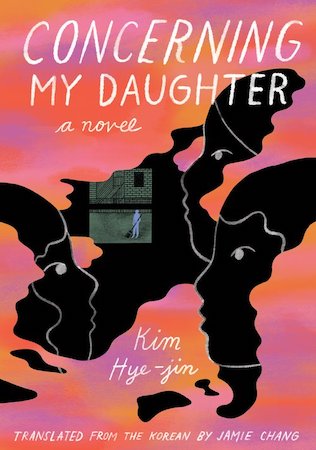
What do you say, when your 30-something daughter asks to move back into your small apartment? What do you say, as a person who isn’t comfortable uttering the word “gay,” when she brings along her long-term partner—another woman? What do you say, when confronted with new ways of living, protesting, loving, and taking up space? These are questions that the narrator in Concerning My Daughtergrapples with. Kim Hye-jin’s novel, translated by Jamie Chang,centers the experience of being the mother of a queer child.
The mother tries her best to live a socially acceptable life: she works as a caretaker in a nursing home, donates some money to church, and—crucially—feels that she has done everything to dutifully raise her daughter. Her daughter Green, on the other hand, is an adjunct professor and keeps getting involved with campus protests. Green’s choices are indecipherable to her mother, who desperately wishes for Green to get married to a man. Meanwhile, Green’s girlfriend, Lane, keeps attempting to make conversation; home tensions escalate quickly. At her workplace, the mother grows increasingly concerned and attached to Jen, an elderly woman left without any family. Concerning My Daughter is a fascinating look at the double-edged nature of acceptance: on the one hand, the mother struggles to accept her daughter’s sexuality and life choices. On the other hand, she also desperately craves others’ acceptance, so as not to be perceived as an outlier in society. Kim doesn’t offer straightforward answers, but instead presents differing perspectives with nuance and heart.
Editor’s note: This interview was translated by Jamie Chang and Jaeyeon Yoo.
Jaeyeon Yoo: You’ve mentioned elsewhere that the publisher called this work “a mother’s coming-of-age novel.” How did you decide on the narrator for this book? What do you think we learn about ourselves—and our capacity for change—as we grow older?
Kim Hye-jin: The novel’s main narrative is about the experience of a mother struggling to accept her queer daughter’s life, but broadly speaking, it is a story about understanding. It is also a question of if we ever fully understand one another. If I had chosen the daughter to be the narrator, it would have been much more obvious what the novel was trying to say. But I wanted to point out that not all processes of understanding are achieved as immediately, as easily as we think. I wanted to follow the process of having difficulty with understanding—of refusing, hesitating, fearing, being frustrated, and yet not giving up. Because everyone’s individual experience is different, I think that one also experiences change differently as we age. In my case, I’ve found myself getting a little more flexible as I age. When I was younger, I only recognized my life as solely my own, and believed that I could control my entire life through my own willpower and effort. But since accepting that this is impossible, there’s been an aspect of comfort. Whereas I was only focusing on myself until now, it seems to me like I’m gradually seeing more of the world outside me.
JY: I was so struck by the depictions of the nursing home facilities. They were very painful and vivid, forcing readers to confront scenes we’d prefer not to think about. What made you focus on nursing homes?
Is there any place that can show the life of the elderly as honestly and nakedly as a nursing home?
KH: Is there any place that can show the life of the elderly as honestly and nakedly as a nursing home? This is probably not a story only limited to South Korea. The nursing home in the novel is the mother’s workplace, and a place where she thinks of her own old age, worries about her daughter’s old age. The miserable elderly lives of herself and her daughter—I thought, isn’t this the most fundamental fear of the mother, perhaps? Korean nursing homes appear frequently in the media, [and] I remember visiting my grandmother in the nursing home with my parents. There are definitely nursing homes that exist outside this model, but I think that the majority of nursing homes do not fully respect or take care of/comfort the elderly.
JY: What drew you to write about the social issues in Concerning My Daughter? What roles do contemporary news and/or activism play in your work?
KH: Issues—such as elderly care, generational conflict, LGBTQ+ rights—are problems that people living in contemporary Korean society face directly or indirectly. I too can’t help but worry about these issues, and they affect my writing. Of course it differs amongst individuals, but I wanted to talk about how these social issues affect an individual’s life, and how complex and multi-layered they are. If you look at this novel from within, it is about a mother in her mid 60s wrestling to understand the life of her 30-something-year-old daughter. But if you look at the novel from the outside, it is also a text written by me in my mid 30s, trying to understand my mother’s generation.
JY: I noticed the use of nicknames in this book, such as “Jen,” “Green,” and “Lane” (which are written in transliterated English in the Korean original). Was there any significant reasoning behind the nicknames?
KH: Green and Lane are nicknames commonly used by women in their mid-30s within the community. There is much more of this type of tendency these days, where people no longer live by the one name they were given at birth. In this manner, Green and Lane are people who want to live by names they have chosen themselves, not the names given to them by others. The name Jen came from an abbreviation for the name “Jaehee” (Lee Jaehee). At some point, a reader told me that the symbolism of the Chinese character “jen” (禪) means “to head towards good” in Buddhism. I remember being surprised by how that symbolism was strangely similar to the novel’s Jen.
JY: Another theme in Concerning My Daughter is the role of food. The narrator often frames an inability to “digest” certain knowledges, and offering rice is her way of showing love. Could you talk more about your thoughts—and perhaps the connections between—the acts of digesting, caring, and understanding? How does the body offer up different ways of processing information?
‘Did you eat?’ is one of the questions that my mother most commonly asks me.
KH: “Did you eat?” is one of the questions that my mother most commonly asks me. My mother is always curious about where, when, with whom, what I ate; she worries about whether I might have skipped a meal. I know very well that this is one way of showing love. That this is the most natural and direct expression of love, from a mother who isn’t accustomed to saying “I love you.” In the last scene of the novel, the mother pushes the rice and banchan to her daughter and the daughter’s lover. I thought that this, in that moment, was the most care that the mother could express. It is a way of love that I have experienced, and also a realization that, sometimes, forms of expression other than words can reach much deeper.
JY: Speaking of different ways of expressing love, how would you define “family”?
KH: In the novel, Lane asks the mother, “What is a family? Family is people who support you and are always there for you. Why is that family and not this?” Like this question, shouldn’t the family now be defined and chosen by the individual, rather than being stipulated by society, laws, or institutions? I believe that family should include not only the fixed and immutable traditional forms of family, based on blood, but also the various forms that individuals choose. If the category of family can be expanded to be more flexible than now, I think that we could find solutions to many of the problems that our society currently faces.
JY: What were some of the challenges of translating this book?
Jamie Chang: This project generated more psychic rather than technical woe: I was unnerved by how much I was sympathizing with the mother character, often chiding Green for not having her finances in order and putting her mother and partner in an impossible position. I had to do some soul searching for residual internalized homophobia.
Korean literature is just starting to imagine lesbian lives situated in contemporary Korean life.
As for technical woe, romanizing “Lane” was a bit of a challenge. Her name is spelled in Korean as 레인, which can be romanized as Lane, Rain, Lain, Rayne, etc. I thought “Rain” might be too on the nose, as the partner character is the glue that holds the tottering mother-daughter relationship together, so I chose Lane, as in Jane Lane—slightly cooler but supportive nonetheless.
JY: What would you say is distinctive about Kim Hye-jin’s prose, and how did you try to achieve a similar effect in English?
JC: Kim’s prose reminds me of Park Soo Keun’s paintings from the 1960s. When you examine it up close, all you see is texture. But if you take a few steps back and look at the whole canvas, images emerge. Kim uses uncomplicated prose to tell a deeply nuanced story, so I tried to get out of the way and let the story tell itself.
JY: In a 2019 interview, you talked about the potential of literature to help LGBTQ+ communities. There’s been a surge—at least, in the US publishing market—for translated queer Korean narratives; I’d love to hear your thoughts on what you’ve noticed in current literary trends (both within South Korea and what is being translated), and queer Korean literature.
JC: I think, and Concerning My Daughter is a good example, the queer Korean narratives are starting to leave the realm of genre fiction and move toward literary fiction. With lesbian characters in particular, their narratives have been explored in the realm of young adult, fantasy, horror, or science fiction so far—teen lesbian succubus, post-apocalyptic lesbians, lesbians on Mars—as if it is inconceivable that lesbians would live down the hall from you, make your food, teach your children. I think Korean literature is just starting to imagine lesbian lives situated in contemporary Korean life, and that’s very exciting for me.
The premise of this book has all the ingredients for an excellent mother-daughter movie: impoverished lesbian activist moves in with her homophobic elderly mother and brings her partner as well. In the meantime, the mother plots to kidnap her favorite patient from the convalescent home… I really do hope someone adapts this story for the screen.
The first chapter of Daniella Mestyanek Young’s memoir Uncultured opens with a screech: It is 1993 and Mestyanek Young—then 5 years old—is inside a commune in Brazil, standing at the back of a line of children waiting to be paddled. As she explains, it’s a normal day in the Children of God, the cult founded by David Berg in 1968 and made notorious from allegations of sexual and physical abuse.
From that unsettling opening, the book follows Mestyanek Young through another decade of growing up in the notorious sex cult, a childhood spent moving from commune to commune while living in the shadow of near-constant physical and sexual abuse disguised as divine love.
At 15, she finally broke free and ran away to Texas, landing a job at Chick-fil-A and enrolling in a Houston high school before going to college and eventually joining the military. But the U.S. Army, it turns out, is grappling with problems not wholly dissimilar from those that plagued the Children of God: violence, misogyny and the constant fear of both. Not just the story of a harrowing upbringing and its aftermath, Uncultured presents itself as an exploration of group behavior, and the ways we are prone to programming and indoctrination.
When Mestyanek Young and I talked about that during a phone call, I reminded myself to make sure to avoid using the word “cult” in the casual ways people often do, as a descriptor for any group with the slightest tendency toward intensity. Saying that to a cult survivor seemed almost rude, an insensitive way of minimizing their pain. But in a book dedicated to exploring the parallels between cults and all other organized group behavior, it’s also kind of the point.
Keri Blakinger: By the end of the book you seem to come to a very cynical conclusion that there’s essentially no big difference between a cult and any other sort of organization with its own culture. Is that what you want readers to take away from this?
Daniella Mestyanek Young: I kind of agree with you that maybe the end is too cynical. But what I want readers to take away is just that when you see something we can all agree is evil—a sex cult that traffics children, except 100,000 people didn’t agree that it was evil—and you see such striking parallels with group behavior and echoes of rape culture in the United States Army, you are then invited to see that in your own life and ask, “Where are the parallels”?
I kind of jokingly say that I want readers to just walk into every group that they’re in and ask themselves: Is this a cult? Just because I do think that the fundamentals of group behavior are the same. I think groups come from a very similar DNA, and I also think that what people want to call good or bad values, for example, are sort of two sides of the same coin. You know, most people would never say love is a bad value, but David Berg weaponized love.
With this move into people-first organizations—which is definitely an improvement on profit-first—I think the potential to go into extremism is right there. We see it in the story of WeWork and the story of LuLaRoe, which are some of the best depictions of being in a cult that I’ve seen. And those are businesses.
KB: Constantly asking that question seems like such a lonely way to approach human interaction.
DMY: I think that for many of us cult babies, we do just fundamentally have a different view of group behavior, and human behavior. We didn’t get to form personal identities, so then you only have group identities. And then you get that taken away, or you learn to live without it. So I do think that for many of us, it’s hard to be in groups.
I study leadership, I study groups. Extensively. But I’m happy that I don’t have to be working at a corporation anymore, because I do think I’m quite cynical in how I look at groups and where the potential for toxicity is.
KB: If one of your takeaways is essentially that there’s no fundamental difference between a cult and any other organization, that seems in tension with the many chapters you spend delving into the abuses and trafficking in the cult and in the Army.
DMY: I guess it’s not that there’s no fundamental difference—it’s just that there’s no obvious and clear differences in the way that people think there are from outside these cults or these high-control groups.
Like I say in the book, people say to me all the time, like, you don’t seem like a cult survivor. I’m like, “Okay, how many cult survivors do you know?” And every documentary you ever see about cults, the only way we can talk about it as cult survivors is sensationalized. But what’s actually creepy about cults is that they’re so normal. Even the children that grew up trafficked in the sex cults can’t all agree that it was a bad thing. And that’s the same thing you see in many organizations.
I don’t know if you’ve ever heard the quote that human beings are all 99% the same, it’s that 1% of difference that causes all the world’s problems.And I feel like with groups, basically they all have 99% of the same DNA and the same potential trouble spots or potential great spots. But what that means is that no matter how great you think your group is, you’re also just 1% away from the sex cult that trafficks children. And even the Children of God didn’t start that way—they started as love, faith and Jesus and they went on a ten-year journey to become one of the most evil organizations.
KB: This book pretty extensively tackles misogyny as one of the prominent themes. Did you think of writing this book as like a feminist act?
There’s so much self-help and thinking about the individual in our individualistic society—but how much do we think about groups?
DMY: 100%. One version of how we thought of telling the story was going to be less focused on groups and much more focused on feminism. I think we ended up sort of blending, going through the process of telling both of those stories we ended up blending it a lot.
But I don’t think I realized how critical it was going to be of the culture in the military. I still saw myself as a proud Army captain. I mean, I didn’t resign my commission until last year. It was really hard for me to move on from being Army captain and understand that while I would hope everyone would agree rape culture is bad in the military, let’s fix it. But of course, I’m going to come under fire for speaking out against my family. So a lot of that was a journey for me and was surprising and the cover was reflective of that.
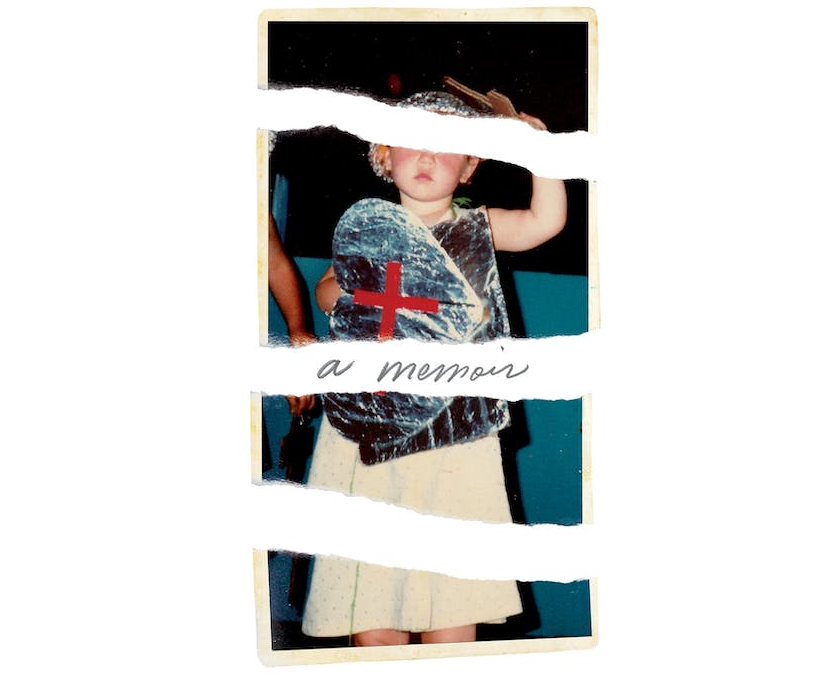
KB: Tell me about that picture of you that’s on the cover.
DMY: That’s me being trafficked as a child by a cult. A little soldier of God.
The cover was sort of the break in the identity for me. Like, “You’re really doing this, you’re really moving on from Daniella Mestyanek, U.S. Army captain, to that girl that wrote a book about cults.” And using this photo for me was hard too because the photo itself felt very exploitative.
All groups have the potential to become toxic, just like all people have the potential to become toxic.
This is me clearly at an age where I couldn’t consent to being filmed for stuff that we were then—all the children of the Children of God—were forced to sell on the streets all over the world. I kind of had this realization that part of the act of me writing this book and of telling this story was me taking back all of these things that happened to me and exploiting my stories for my own benefit and the ideas I want to talk about. So using this picture in a powerful way is kind of doing the same thing.
KB: What has the response been like so far? I’m asking this because I’ve seen some of your back-and-forths on Twitter lately, and I’m wondering how the fact that you are a woman writing about systemic misogyny in male-dominated spaces has influenced the response to this book.
DMY: I’ve gotten a lot of praise, a lot of applause, and a lot of, “You’re so brave.” I’ve also gotten: “Why are you lying about your service? Why are you a traitor? Why do you have to criticize the Army?” And I think I’m allowed to tell both the story of how I’m proud to have been one of the first women being sent out deliberately on those ground patrols and also how they were warning us to watch our backs and be prepared essentially for gang rape. I don’t think anyone wants me to tell those stories, but here we go.
KB: So what do you want people to get out of this book?
DMY: It is definitely a trauma survivor story and a recovery story. I wanted to write a book like the books that have helped me, so every time we vulnerably tell our stories, someone else is going to have these realizations. And I hope my story can be part of some other people’s survival guide. And also I want them thinking more about groups. And to clarify that cynical-ness—it’s not that I think all groups are the same. I just think all groups have the potential to become toxic, just like all people have the potential to become toxic. There’s so much self-help and thinking about the individual in our individualistic society—but how much do we think about groups?
In our society we have all these ways of isolating ourselves into one idea and everything is becoming more and more polarized, so I really do want people to stop and think about their group dynamics. You don’t have to compare it to a cult. I find that makes everyone uncomfortable, no one wants their organization compared to a cult.
At the end of the day, in no way am I saying the U.S. Army is as bad as the Children of God. But I’m saying here are all these exact same sorts of toxic structures that we see in both groups. And where can you look at those and then see those in your groups? And either, you know, help fix it or get out.
When people ask me about growing up in Northern Ireland during the Troubles, they usually want neat answers to questions like: how long did the Northern Irish conflict last? How many people died? Why did conflict break out? Who won? I can regurgitate some facts as quickly as Wikipedia: the conflict that became known as the Troubles broke out in the late 1960s and dragged on for about thirty years, “ending” in about 1998. More than 3,500 people died and tens of thousands were forcibly displaced. Nobody won.
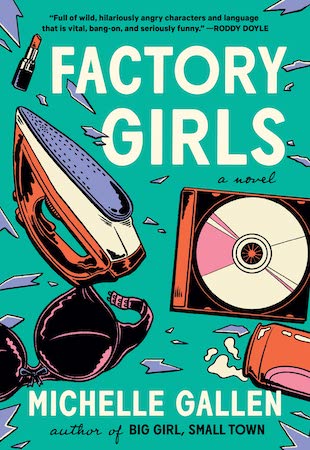
But it’s hard to encapsulate the Troubles in a few facts. Seeing the conflict as being a territorial dispute is overly simplistic. Class strife, capitalism, sexism, religion, toxic masculinity, poverty, intergenerational trauma, homophobia, and tribalism were all accelerants thrown onto a bonfire that burned fiercely for far too long—and they’re all issues I tackle in my latest novel, Factory Girls. I see the Troubles as yet another traumatic period in a long history of violence on the island of Ireland, from the brutal conquest of Ireland by the English, to the partition of Ireland, through the bombing of Belfast in World War II, and up to the post-Ceasefire suicides that now outnumber those killed in the Troubles.
Despite—or perhaps because of—this history, Northern Ireland has inspired many brilliant works of fiction, from Booker prize-winning novels to deliciously dark indie hits. I’m proud to be part of a literary community who weave a rich tapestry of human stories from what had been locked away in dusty history books or sunk deep in people’s memories. My favorite Northern Irish books illuminate the pain, hope and trauma of the conflict while using humor and black comedy in much the same way we did during the worst days—to push through anguish with laughter as a painkiller.
Awarded the Booker Prize in 2018, Milkman examines the impact of gossip, violence and surveillance on a community that chooses to be willfully ignorant to the harsh truths of their reality The story unfolds in an unnamed city that is both recognizably Belfast and yet also a dystopian everycity. The unnamed protagonist, middle sister, learned early on not to draw attention to herself, and so she takes refuge from the violence exploding around her by keeping her nose in 19th-century works of literature, even when walking. Middle sister successfully keeps her mother and other family at arm’s length, not divulging her maybe-relationship with her maybe-boyfriend, never mind her interior life. But when she attracts the “romantic” attention of a powerful “renouncer of the State,” middle sister lands in a world of trouble.
Burns dissects the impact of toxic masculinity in a bleakly funny, forensically impartial narrative. I highly recommend that non-Irish readers listen to Bríd Brennan’s narration of Milkman, which nails the accent but also gives listeners “permission” to laugh at the blistering humor while sorrowing for lives cut short, curtailed or stunted by violence, dogma, and fear.
Across The Barricades by Joan Lingard
Like thousands of other teens schooled in Northern Ireland, I first encountered Joan Lingard’s work because Across the Barricades was on our syllabus. The best-selling Young Adult novel features a teenage romance between Kevin, who is Catholic, and Sadie, a Protestant. Their religious backgrounds make their love affair a doomed and dangerous Romeo and Juliet story. Before reading Across the Barricades I’d never found anything that described the conflict I’d been born into. I became obsessed with Lingard’s Kevin and Sadie series about the early days of the Troubles, times when you might meet and interact with a Protestant long enough to fall in love.
Fire Starters by Jan Carson
Like lots of Northern Irish writers, Carson explores how the shadow of the Troubles falls now in Ireland. In Fire Starters, she exploits the border between fantasy and reality to highlights how toxic masculinity drives men to violence, to “solving” problems with fire and fury rather than with dialogue, compromise, compassion and empathy. Carson’s work raises the destabilizing question at the heart of trauma recovery: “how does my pain deserve time and attention? How do I dare take the time to heal and grow when so many other people have it worse than me?”
Kennedy left Northern Ireland at the age of 12 after the family pub was bombed. She grew up in the Republic of Ireland and spent three decades working as a chef. Her debut novel, Trespasses is set in 1975 and depicts a world before the systemic self-harm depicted in Milkman, before the cumulative weight of decades of violence and segregation that defined my own experiences in the Troubles.
Trespasses is an atmospheric love story featuring Cushla, a young Catholic school teacher who works part time in her family’s bar, and Michael, a Protestant barrister who defends young Catholic men accused of crimes against the state. Kennedy doesn’t try to to do anything stylistically outrageous in her novel, rather it’s beautifully written, giving the reader a sense of something distilled, something rich, deep and calm despite the turmoil of the times in which it is set.
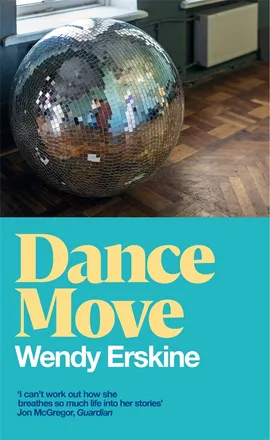
Dance Move by Wendy Erskine
Belfast-based English teacher Erskine writes stories that capture delicate shifts in mood and menace in a way that makes me feel like a teenager again, trying to sense if a pub or street is safe to enter. Funny and unsettling, using a trademark Northern Irish black humor alongside beautifully observed dialogue, her collection unravels the emotions and consequences of events from long ago.
Veteran peace worker Divin’s debut Young Adult novel Guard Your Heart explores how trauma affects three generations on both sides of what is still a divided society. Divin’s teen protagonists grapple with everything other “normal” teens are dealing with—from climate change and suicide to their sexual orientation—but they must also excavate and reckon with the past too. Funny, sad, fierce and brave, Guard Your Heart is a guide to forgiveness and moving on while not erasing the past.
Country is a retelling of Homer’s Iliad set during the Troubles which somehow manages to be so engrossing that Daisy Johnson has described it as being “like sitting in the pub listening to a good friend tell you stories.” The story is set after the ceasefire in “bandit country”—the lawless border area between the North and South of Ireland. A local woman has turned informer, enraging an IRA gang who storm a British army base. As in the Iliad, death and betrayal are plentiful, and yet Country manages to move beyond the tragedy and glory of war, nudging the reader to interrogate the classical narrative, to ask how we might move past the old ways.
The invented Western history of Thanksgiving, the one often perpetuated as early as elementary school and idealized in broader American culture, is a harmful myth. Here at Electric Lit, we want to use this day to draw attention to the many stories and experiences of Indigenous people and remember the true history and legacy of settler colonialism. One bright spot in another tumultuous year full of regressive politics and heartache is the great abundance of books by Indigenous writers published in 2022. Across all genres, Indigenous writers wrote stunning work that is vast and distinctive in its style and subject matter. Several of these books, which are included in the list below, are award-nominated and posed to leave a lasting mark on contemporary literature.
From intimate memoirs and poetry collections to gripping thrillers and sprawling coming-of-age novels, this roundup includes thirteen new books (nine of which are debuts!) by Indigenous writers across North America that you won’t want to miss.
Calling for a Blanket Dance is a remarkable coming-of-age debut that follows Ever Geimausaddle from infancy to adulthood. Ever, who is half Mexican, half Native American, grows up in a world riddled with violence and struggle. The novel begins with Ever, only a few months old, witnessing his father injured at the hands of corrupt police. After this life-altering incident, his mother struggles to keep her job while caring for her husband, and Ever faces obstacle after obstacle in a world that continually threatens his safety. As the novel unfolds, Ever’s Cherokee grandmother urges the family to move across the state of Oklahoma to be closer to her, and Ever and his family continue to search for and find strength in their familial identity and the supportive communities that celebrate their heritage. With beautiful prose and a deeply moving cast of characters, Calling for a Blanket Dance introduces Oscar Hokeah as an important and exciting new voice in literary fiction.
This beautifully curated poetry collection takes readers on a journey from Joy Harjo’s early work to reflections on our current moment. A three-term U.S. Poet Laureate, Harjo has become a cherished figure in American poetry, celebrated for her poems that are at once musical, political, intimate, and interwoven with ancestral stories and tribal history. With an introduction by Sandra Cisneros, this collection offers fifty gems by Harjo that feel both stunningly precise yet all-encompassing in their predominant themes: love, death, resistance. The poems are accompanied by notes that offer unique insight into Harjo’s process and inspiration, from sunrises and jazz to Navajo horse songs. Weaving Sundown in a Scarlet Light is a true gift, and, as Cisneros says in the foreword, the world is better for Harjo’s artistic evolution: “Once she was the quiet girl. Now she sings for the nation.”
In this powerful memoir-in-essays, Greg Sarris explores questions about home, connection, and belonging in vivid prose that is both humorous and profound. Sarris, who is currently serving in his fifteenth term as Chairman of the Federated Indians of Granton Rancheria, grew up the adopted son of a white couple in California and did not fully learn about his indigenous heritage until his twenties. Becoming Story gracefully moves between the past and the present to chart Sarris’ journey toward learning about himself, his people, and his homeland. Sarris reflects on the forces, both historical and personal, that shaped his early life and his later work as a tribal leader, uncovering the delicate interconnections between personal story, community stories, and place.
Set in the Penobscot Indian Nation reservation in Maine, Morgan Talty’s debut short story collection Night of the Living Rez is composed of twelve incredibly crafted stories that explore what it means to be Native in modern America. The stories are linked through the character of David, a Penobscot boy living on the reservation, and his brazen and loving voice that illuminates life and death in this changing community. Talty’s writing is heartbreaking and humorous, portraying the particularities of boyhood, intergenerational trauma, and grief with an eye that feels both fresh and deeply truthful. The braided stories create a vibrant portrait of this Penobscot community, exploring everything from infant loss to porcupine hunts, runaway daughters to weed runs. Night of the Living Rez teems with compassion and insight, offering a reading experience that will devastate and haunt its readers in the best way possible.
At the center of this sprawling, multiple-point-of-view debut novel is Ruby, a Métis woman in her thirties who is, more than anything, searching for herself. Adopted by a white couple who provided little affection or knowledge about her true history, Ruby is plagued by questions about her identity and sense of purpose, which has left her floundering. As the novel unfolds and Ruby’s story becomes ever more complex, the narrative dips into the perspectives of those in Ruby’s orbit: her birth parents and adoptive parents, past lovers, social workers, her children. The effect of this collection of perspectives is an intimate and nuanced illumination of Ruby as a woman surviving in the face of painful family history, colonialism, and patriarchy. Tender, funny, and brimming with the desire to love and be loved, Probably Ruby is a moving narrative about Indigenous identity and belonging.
A Calm and Normal Heart is a sharp and often-surprising debut story collection that illuminates the lives and desires of contemporary Native women. From Oklahoma to California, the twelve stories in this collection reckon with questions of belonging and home, asking what these promises hold, especially when one is of an identity that is constantly pigeonholed or overlooked. In one story, “THNXX by Alcatraz”, the young protagonist Mary finds herself at a Thanksgiving dinner and has to explain the true history of the holiday to her white host. Later, she states, “What I hate is that I feel like I live in a different country that’s here, inside this one, but no one believes my country exists.” The characters in A Calm and Normal Heart seek variations of home while traversing an unreliable and often inhospitable terrain, also dealing with histories of abuse and the effects of patriarchy. Riveting and full of imagination, Hicks is a writer whose smart wit and deeply tender characters pull the reader in from the first page.
In the town of Ada, the body of an unidentified Native woman is discovered after a snowmelt sends floodwaters into the town, washing the body up in its pull. The only evidence the medical examiner finds is tucked inside the woman’s bra: a torn piece of paper on which a hymnal is written in English and Ojibwe. This is the incident that begins Sinister Graves, a propulsive mystery set in 1970s Minnesota that follows 19-year-old Cash Blackbear as she attempts to discover the truth behind the disappearances of Native women and their newborns. Rendon’s mystery novel simultaneously grips and informs, depicting modern Native American issues and drawing attention to the violence committed against one of America’s most vulnerable populations. Powerful and haunting, Sinister Graves is a riveting character-driven mystery with the fierce and nuanced Cash Blackbear at its helm.
In the Hands of the River is a beautiful debut poetry collection that explores and affirms the connection between humans and the enivronment. Meadows gracefully weaves threads of personal narrative, ancestral history, and the natural world into stunning language that speaks to the experience of growing up a queer boy of both Cherokee and European heritage in Appalachia. The collection is filled with memorable imagery that allows readers to see the natural world anew, Appalachia a place where “mountains rub their shoulders blue.” With lush sounds and incredible emotional precision, these poems are both an ode and an elegy to the place in which Meadows spent his formative years.
Erika T. Wurth’s debut novel is filled with haunting. Set in Denver, Colorado and following 35-year-old Kari James who loves ripped jeans and Stephen King, this literary horror novel is dark, edgy, and deeply moving. When Kari’s cousin finds an old family bracelet that once belonged to Kari’s mother, the bracelet inadvertently calls upon her mother’s ghost, and Kari is plagued by visceral visions and dreams of her mother who went missing. Kari sets off on a mission to uncover what truly happened to her mother all those years ago. Part murder mystery, part ghost story, White Horse conjures a contemporary horror atmosphere through its love of dive bars, cigarettes, metalheads, and family secrets. Fans of immersive and thought-provoking horror will not want to miss this electric debut from Wurth.
This important and informative nonfiction debut details Indigenous American history, from the first humans to populate the Americas to the present. Krawec unpacks the harm and legacy of settler colonialism, interweaving personal narrative, history, scientific analysis, and myth to uncover and explore themes of creation, replacement, and disappearance. Throughout the book, Krawec gives voice to the pain and injustice experienced by Indigenous people but also asks readers, descendants of both Indigenous and European peoples, to imagine a better future through collective action. What would it look like to remember that we are all related? How might we become better relatives to the environment and each other? At its heart, Becoming Kin is a powerful invitation to remake the world into a place that is more equitable and hospitable for both its people and its natural environment.
Forthcoming in January 2023, this gripping horror debut follows Mackenzie, a millennial Cree woman whose haunting nightmares about crows lead her on a journey to discover the truth about the violence committed in the place she calls home. Mackenzie’s sister Sabrina is dead, but two years later, night after night, Mackenzie’s bad dreams return her to a time when Sabrina was still alive: a weekend at the family’s lakefront campsite. As the novel unfolds, Mackenzie is drawn deeper and deeper into the mystery of what really happened at the lake, and her visceral dreams begin to encroach upon reality, blurring the line between sleep and wakefulness. Bad Cree is a satisfying slow burn that explores loss, generational trauma, and violence through a narrative that is chilling yet, at its center, burning with a defiant resilience.
Set in the Pacific Northwest, this debut memoir by LaPointe is poetic and punk-infused, exploring questions about love, art, and home. At the start of the memoir, LaPointe offers a clear thematic trajectory for the narrative, writing, “What happens in the longhouse is not what this story is about, but this is a story about healing.” Healing is certainly a predominant thread throughout the memoir as LaPointe deftly moves between multiple timelines, offering stories about family history and personal experience and the ways they connect in the present. The memoir deals with large and painful topics such as colonialism, generational trauma, and loss, but also brings the nuances and particularities of LaPoint’s voice to the page, paying homage to the vibrant Washington music scene and her love for performance. Red Paint is a beautiful story about lineage, love, and what it means to reclaim one’s life.
Set in 1883 in the fictional mining town of Goetia, this dark fantasy novel follows the smart and passionate Celeste as she assumes the role of advocatus diaboli to defend her sister Muriel against murder charges. Muriel is accused of killing a member of the Order of the Archangels, the rulers of Goetia. In the world of Tread of Angels, society is split into two distinct classes, the Elect and the Fallen, with the Fallen largely discriminated against because they are descendants of the demons who chose Lucifer over God. Celeste and Muriel are both half Elect, half Fallen, but Celeste grew up with her father passing as Elect while Muriel lived in the slums with her mother as a Fallen. These complex social dynamics along with Roanhorse’s rich worldbuilding create an epic fantasy story filled with suspense, manipulation, and poignant religious imagery that serves as a searing allegory for our own world.
This holiday season as we reckon with what it means to live on a stolen land, let’s take the time to read Native authors in their own words. Here are highlights from our archives about contemporary Indigenous literature:
In his essay, acclaimed horror writer Stephen Graham Jones writes that his characters are Native because they’re Native, not because their Native-ness is going to let them save the world:
My characters had always been Blackfeet all along. There was never any reason to actually say it, but they always were. Just, I wasn’t hanging dreamcatchers and braids all over them, as that would be a lot like making them wriggle into loincloths so they could fit the limited expectations of . . . everyone, pretty much.
Empire of Wild is a novel steeped in folklore about a Metίs woman who searches for her missing husband and stumbles upon missionary revivalists with sinister motives. Native writers Melissa Michal and Cherie Dimaline talk about the ongoing struggle for Indigenous representation:
I write first and foremost for community. There’s no way I can remove myself from my world view, who raised me, who I am, where I come from.
Savannah Johnston’s short story immerses the readers in the worldview of a new father who wants to provide for his baby and his partner, but lacks the resources to do so:
Tommy wasn’t ready to go home. It had been six days since Donna and the baby were discharged from the hospital, and the house seemed to close up around them. For nearly a week, he woke with the sun and told Donna, doped up and perpetually naked, that he was going to look for a job. He didn’t tell her that there were no jobs, or that he spent the past four days with his uncles at The Office, a roadhouse off SH-54.
In Crooked Hallelujah, Justine comes of age in the Cherokee Nation of Oklahoma, surrounded by loving, but flawed matriarchs. Spanning the 1970s to the present day, the novel follows Justine as she leaves her community to raise her daughter in Texas amidst poverty, trauma, and fundamentalism. In the interview, Alexander Sammartino asks Kelli Jo Ford about mother-daughter relationships, displacement, and rejecting religion:
Coming from people who I’ve seen work hard their entire lives at the expense of their bodies and well-being, and then not being able to have a good life once you no longer have the body to sacrifice—seeing people breaking their backs and struggling, but still ending up in circumstances that are hard, despite a lifetime of hard work.
A mixed-genre collection of prose and poetry, The Beadworkers takes place in the Native Northwest, centering on the lives of contemporary Native Americans grappling with kinship, yearning, and belonging. Beth Piatote converses with Carrie V Mullins about stringing together the future of Native American fiction:
I created a story in which absolutely nothing bad happens to the Native character. She, like her ancestors, moves freely from one place to another, “carrying her roots with her.” The reservation and the city are seamless, though different, sites of indigenous life. She has a stable, ordinary life and while she shows compassion for a poor white woman fleeing a domestic violence situation, it is still through Indigenous eyes that the reader sees the white woman. That, in itself, is important.
Postcolonial Love Poem celebrates the bodies of Indigenous, Black, and Brown women, while fighting against erasure and reclaiming desire. Arriel Vinson talks to Natalie Diaz about the pain America has inflicted on Native people:
The American dream has always been in shambles, in pieces for my family, my community, and me. We never dreamed it. America never meant for us to dream it. And Mojave dreams are too strong for what is American. So they don’t match up.
Bury My Heart at Chuck E. Cheese contains bitingly funny autobiographical musings about Tiffany Midge’s life and identity as a Standing Rock Sioux woman, encompassing topics like offensive Halloween costumes to reclaiming Thanksgiving. In their interview, Julie Vick converses with the writer about why there should be thousands of great Native American novels:
Two things always present in classic Western literature are death and tragedy. And by that logic there should be thousands of great Native American novels.
An excerpt from her novel Crooked Hallelujah, Kelli Jo Ford’s short story “You’ll Be Honest, You’ll Be Brave” follows a Cherokee woman who returns home after a long absence to tend to her elderly mother:
Justine squinted into the photograph, trying to imagine her grandmother so young. She had been a maid in a big ranch house when she’d met Justine’s grandfather, a barn hand who Justine knew had been a terrible drinker. It wasn’t hard to imagine Granny’s strength. She was kind, but she was not soft. That’s where Lula got it, where Justine got it, and Reney, too, Justine figured, though she’d done her damnedest to keep Reney from ever having to access that kind of strength. Granny had been brought up in Indian orphanages and, later, Indian boarding schools. She’d never taught her grandchildren the language beyond basic greetings. She simply said that life was harder for those who spoke it.
Feed is a poetry collection that’s “an epistolary recipe for the main character, a poem of nourishment, and a jaunty walk through New York’s High Line park.” In their conversation, Arriel Vinson talks to Tommy Pico about what it means to live a full life:
Some things that were adequate nutrients in the past don’t work anymore. Some things you loved, you can’t really digest anymore. Today, especially, with the endless feed of the internet? Sometimes you need to restrict some streams of intake. Sometimes you need to log off.
Elissa Washuta’s essay collection “White Magic” reckons with the colonization of spirituality and what it means to be a Native witch. In the interview, Deirdre Coyle asks the author about confronting personal pain through tarot, pop culture, and magic:
Even though I don’t have the same methods as witches, the aims are ultimately the same as they ever were, and that’s the kind of witch I am.
The visit was proposed during a period in which I was suffering from the tyranny of time. Which isn’t to say I was suffering because I was getting older—I didn’t care about that. I was consistently underestimating how long it took to do a thing, to do anything, consistently believing that I could accomplish, say, five things in a given span of time when really, I could do just a single thing, maybe two. This disconnect began to emerge in my understanding as a failure, and through repetition—that is, over time—the failure became a pattern of failure, until the pattern, a thick, intricate brocade, became indistinguishable from me, from my life.
There were books, I knew, to combat this. Books and podcasts, TED talks and seminars, all of which sought to solve the time problem. I didn’t want to solve it. I didn’t want to “manage my expectations” or “be realistic.” I simply wanted to believe that I could accomplish a certain number of goals in an arbitrarily delineated period of time, and then, one day, accomplish them. And the next day, do it again, until a new pattern could be created, one of success and satisfaction, that would with no effort eradicate the previous pattern, unspool it until it was just a pile of thread that could blow away on a stiff breeze.
The issue, or at least a big part of the issue, was that I did not want to give anything up in order to meet my goals. I wanted to do exactly what I wanted to do, for as long as I wanted to do it, and also do the things I needed to do, either for work or for my own personal prosperity. I was a bookseller, and a large part of my job was to read. Not every bookseller, believe it or not, reads. But I was a serious bookseller, and I wanted to be able to talk about the books on the shelves, in order to better sell them. I would never run out of things to read, and while this fact may have agitated or overwhelmed certain kinds of readers, it brought me a lot of solace. There was so much, I would never read it all, but for as long as I lived, there would be new things to read. Books were a kind of eternity, to me. The fullest extent of time, or the complete absence of it. In the end, it amounted to the same thing.
What I liked to do, every morning without exception, was to sit in my big chair with a cup of coffee and my phone, and do several word games. It was one of those rare practices that was both luxurious and practical, the way many people felt—not me—about having their hair done. I’d sit and sip and punch in letters and feel my brain slowly come awake, the fog of whatever weird dreams had decamped during the night starting to lift, the first birds airing their first grievances outside the window. Sometimes, the cat would sit on my lap, which would necessitate a pause, a recalibrating of coffee mug and blanket, an obligation to set my phone down in order to dispense the required pets (ear, ear, neck, base of tail, never belly).
After my daughter got up and off to school, or to wherever she was going if it was summertime, I’d finish the coffee, the word games, the tidying up. I’d review my list, which was rarely written down, but always contained items like “finish x book,” “start y book,” “submit edits for z.” I was a freelance editor and consultant and worked for different companies and the occasional writer hoping to land an agent with their novel or memoir. The only reason I was qualified to do this was because I had read so many books, and knew grammar better than most. I made a website advertising my services and for seven months nothing happened. Then, someone asked to work with me, and agreed to my rates, and after that, it was steady going. That was twelve years ago, and I’ve rarely had less than three projects happening at once since.
So I triangulated my life among the bookstore, my family, and my freelance work, not necessarily in that order, because a triangle has no order. I started each morning in my chair, and also, before either going to the store if it was a store day or staying home to do freelance work if it was a home day, took a long walk, during which I’d alternate between listening to an audiobook and leaving voicemails for my best friend. My best friend and I had a decades-long arrangement: we would never pick up when the other called. We hadn’t seen or spoken directly to one another since we’d lived together in those punitively disorienting years after college. We moved to separate sides of the country, so it was easy to never see one another. Not infrequently we’d email, and over time, there were enough emails between us to fill a book twice as long as Infinite Jest and three times as long as Ulysses, more or less.
I felt bad for anyone who didn’t have a best friend they never saw. I felt bad for anyone who thought voicemail was an outdated, annoying technology. The perfectly left voicemail could take up the cellular phone standard of three minutes, or it could span nine minutes, fifteen minutes, each voicemail a discrete chapter that tantalizingly flowed into the next with the hasty tap of your person’s name. More than fifteen minutes was a lot to ask, six was the sweet spot, but when you were on a roll, describing, for example, the way your fourteen-year-old daughter still wrapped herself in a towel when she got out of the shower in the exact way she used to when she was five and had just climbed out of the public pool—Superman-cape style, with the same far-flung look she got back then from the cold, the abject stillness, the slightly pushed out bottom lip, the inability to do the precise thing that would make her warmer faster: dry herself, vigorously rub the towel up and down and all over. I didn’t routinely spy on my daughter during her showers or anything, but we had a stubborn bathroom door that wouldn’t close all the way, and once in a while, if I was walking down the hallway at the precise moment she was pushing aside the shower curtain, I could see her, stark still, towel around her shoulders, that middle-distance stare.
These were the moments worth transmitting to my best friend, the precise snapshots that would tell her both who my daughter was and who I was for taking notice. A friendship isn’t based on shared interests or sheer enjoyment of one another’s company. It’s based on time, pressure, and voicemails.
. . . he thought he felt better, but then he started feeling worse. So I took him off of it completely, and the doctor got mad at me. But what was I supposed to do? What are you supposed to do when your child is beside himself with rage one moment, and then the next hysterically crying, saying that he wants to die? Wait til Monday? Anyway, I hope you all are doing better than we are over here. It just feels like it has been one disaster after the next. I want to hear how it went with the volunteer thing.
I never saved her voicemails, even though there were more than a few, over the years, that deserved their place in the voicemail hall of fame. You could never plan them, but you knew when they were happening—just the right flow of language, zero stumbling or “umm-ing” into the next topic, a bit of spontaneous humor that you laughed at, right then, while leaving the message, knowing that she, listening on the other end, would be laughing too, that the past and present would be winnowed into the same instant, marked by your shared laughter. That was the whole magic of the voicemail: like a photograph, it captured a moment of attention, of bringing to light, out of infinite subjects and emotions that could be illuminated, the one or three that deserved preservation, an audience; the ones that merited the ear of your best friend.
Nothing was off-limits to the voicemail but there were matters that rarely came up—our jobs, for example. I wasn’t entirely sure what she did, something with numbers, in an office, but that’s about all I knew. Our spouses didn’t get much voicemail time. Parenting, however, was a big one. The loneliness of disliking it sometimes, sometimes more than sometimes. The decision-making fatigue. The constant worry about the encroachments of the internet, social media and predatory accounts and the loathsomeness of the phrase “screen time.” We weren’t made for the digital age, we’d complain, we weren’t made for this country, for this earth. Why did other parents seem tougher than us, less fazed than us, happier than us? What would be the reward for our vigilance and hypersensitivity? Early death? A heart attack? [Laughter.]
We also volleyed a fair amount about books we’d read, movies or TV we’d seen, articles we’d come across. We’d talk about our other friends, friends that the other would never know—good ones and bad ones, school friends and work friends, appalling behaviors at the neighborhood potluck.
She didn’t bring anything, which was fine, but then she took home someone else’s casserole dish? Like the dish was empty, and she’d come empty-handed, so what the hell happened there? Was it brazen stealing, or did she somehow convince herself she’d brought the seven-layer dip herself? Oh crap this is work calling, I have to go.
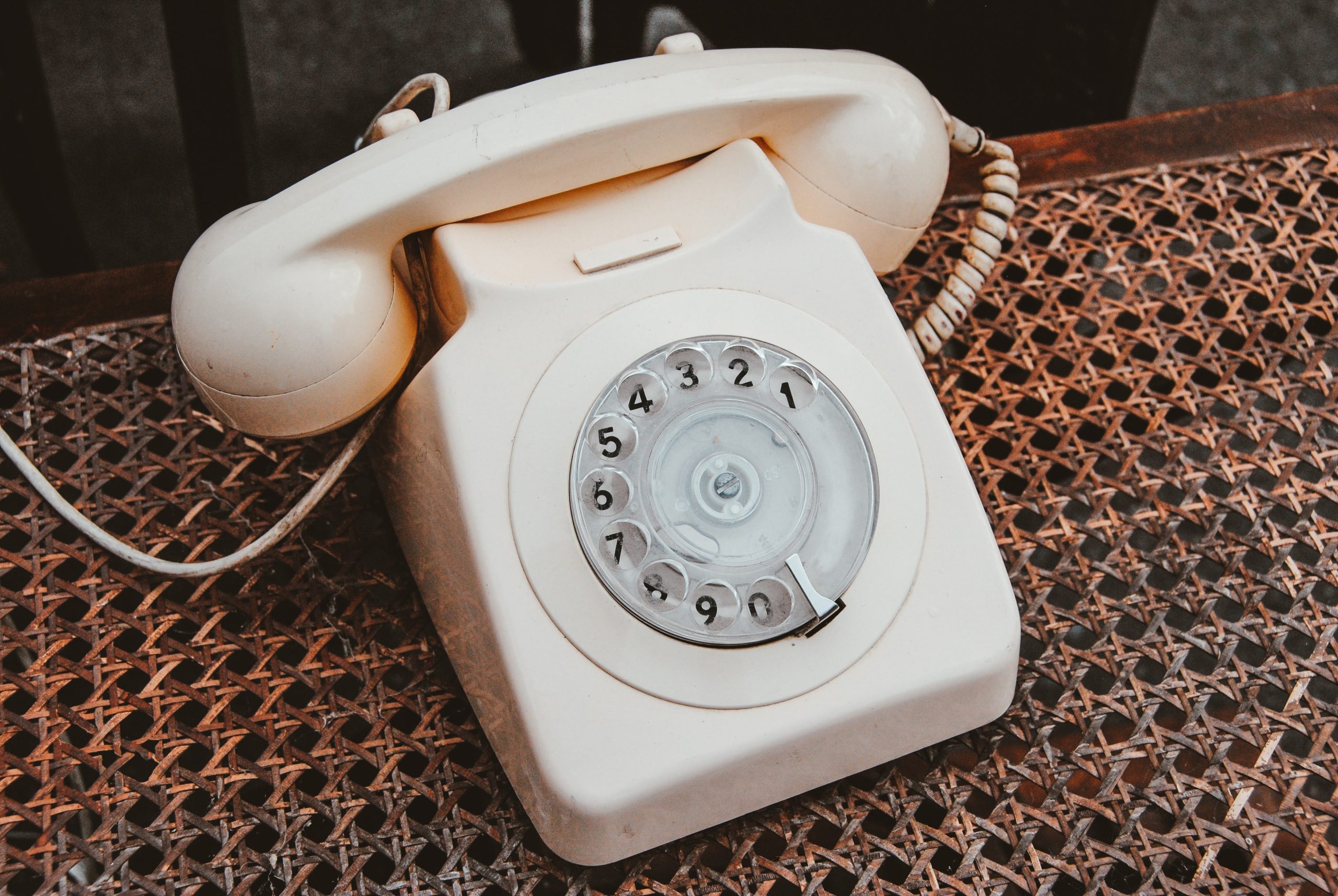
The arcane idea of the voicemail, its original purpose via the answering machine, was to simply let someone know that they’d missed a call from you, and to leave the barest information necessary to get a call back: name, time of day, phone number. Once in a while, a doctor’s office or other such service-related entity might confirm an appointment, such that no call back was necessary. Static data, as a note scrawled on a “while you were out” pad.
The new voicemail was a conversation, an art form. In all the years of perfecting our craft, we never mentioned it, never alluded to the fact that it was not merely holding our friendship together—it was our friendship. The body and blood of it. The currency and the sale. Without our five-day-a-week—weekends were for, it would seem, our lived lives, our families, our shifted routines—dialogue, we would not know one another at all, to say nothing of our most intimate details.
If I was honest, and why wouldn’t I be, I adored the arrangement because I found conversations in real time to be, more often than not, dreadful. The way I had to make sure my face was doing something neutral or appropriately reactive. The way I had to wait for my turn to speak, meanwhile enduring someone’s half-baked wisdom or boring anecdote or, god forbid, dream. The voicemail dispensed with all that. It was a monologue—no, a sterling, three-minute soliloquy. It floated between communication and rumination, letter and diary. A podcast for one. A very short play. A stand-up routine, a confession. We were so good at it, and it was ours.
You can maybe imagine where this was going.
I had my big chair, my word games, my voicemail and audiobook walks, my job and my other job. I was chronically late for nearly everything I needed to show up for, though I never missed a deadline. I punished myself by going to bed too late and waking up too early and being, always, more exhausted than I needed to be. And I talked about this a lot, on my voicemails to my best friend, this issue I had with time, something between denial and rebellion.
Every single day I imagine that I will get faster, that I’ll solve my puzzles faster and drink my coffee faster and take my walk faster and create, with my own efficiency, additional hours in the day, hours during which I could finish the two books I’m reading, as well as the manuscript I’ve been editing for weeks now. I just keep believing that there is a state of “being finished” that will last longer than it lasts, that can be permanent. That I can somehow fit all of my tasks and goals into a single day, and then be done forever? It makes no sense. I love what I do, but I seem to be striving for an endless nothing, the other side of whatever this side is, where time no longer exists and I can be in my chair or take a walk for as long as I want to, with no regard for whatever comes next. An eternal present, maybe? Do you ever feel this way?
Early one morning in February, after my word games and coffee but before my walk, I sat down to send an email that I’d meant to send the night before. I didn’t like opening my email before going for my walk; I didn’t like the reminders that awaited me there, crowding my thinking before the day was adequately underway. With some trepidation, I opened an email from my best friend with the subject line: April? For over a year, we’d used the same thread to write back and forth, whose subject line was, for reasons I eventually forgot, I give up lol. This was a fresh, standalone email, and its subject was the name of a specific month, a little over a month away.
J__ has a billion frequent flier miles and, as I keep rambling about, I really need to get away. What do you think? I could take a Friday and a Monday off, say, the 29th? I suppose I should be here for Passover, not that we do much, but J__’s family would be disappointed. I don’t think this conflicts with Easter? Let me know! Gah so excited to maybe see you for real. Would the universe even be able to handle it, or would we burst into flame?
My bowels churned; I felt as if I’d just read about a death. In a way, I had. I read the email three more times before starring it, my fingers on the trackpad of my laptop shaking, and slamming the machine shut. I used the bathroom like someone in the throes of food poisoning, the coffee and water I’d had earlier coursing out of me along with what felt like the past three days’ worth of nourishment. I was sweating, I was cold; my body seemed to be in possession of a knowledge that my brain felt too slow and curdled to grasp.
The phone had always been our medium, our chaperone, our interlocutor. Without it, we’d be as gross to one another as everyone else was to us.
Hurriedly, I put my sneakers on and my AirPods in and left for my walk. Ordinarily, I would have immediately listened to my best friend’s voicemail from the day before, and proceeded to leave her a voicemail in reply. But my finger hovered over her name for a full two blocks while I listened to silence. Why would she do this to me, to our perfect friendship? A visit? The disappointment I felt was catastrophic; the panic, annihilating. Would she stay in my house? Amongst my things? The dream of being in the school hallway in your underwear—this was worse. The phone had always been our medium, our chaperone, our interlocutor. Without it, we’d be as gross to one another as everyone else was to us.
Finally, I pressed play.
Hey, I just sent you an email about this but I’m so excited I had to call. Let me know! It’s the first non-work trip in ages and I feel zero guilt! I want to think of some fun stuff that we could do together—a spa day? A hike? I know you’ve talked about how there are some trails close by. And I can’t wait to meet all your people. Ahh ok I’m spinning out. Call me soon, I’ll actually pick up for the first time maybe ever?! Or send me an email or text or whatever.
I remembered with shocking clarity my mother’s cancer diagnosis from twenty years ago, the way my father told me that even with the most aggressive treatment, recovery was not possible, that she would die soon, within the year maybe, and how for weeks afterward, and really until her death, her death sling-shotting me into some other less chaotic realm of grief, I walked around feeling like a new person, because the news had changed me, had sliced my life across a perforation that I hadn’t known existed. Now, I leapt over a puddle and cursed myself for comparing a friend’s would-be visit to my mother’s illness, what’s wrong with you, what, truly, is wrong with you, but undeniably, I felt a similar level of disbelief and horror, a sort of suctioning out of my good, functioning self, and a taxidermizing of whatever was left.
I looked at my watch and noted where I was on my route and realized that I was, for the first time ever, perhaps, ahead of schedule, that walking while listening or leaving voicemails had for years, without my fully knowing it, slowed my gait. It’s hard to leave a voicemail of the caliber I was used to while walking quickly; one is much more likely to amble. I arrived home and took a shower and sat at my desk with the morning’s editing tasks and somehow completed all of them with enough time to wash the breakfast dishes and still be at work ten minutes early. Alongside my deep dread over the visit voicemail and email I felt a triumph akin to a scientific breakthrough, as though I had, by knocking over beakers and mixing forbidden agents, stumbled into the very solution I’d been seeking. I had discovered Time itself.
From work, I Googled “getting a new cell phone number.” Reddit boards teemed with stalkees, as well as regular folk who simply wanted to feel like they belonged in their new city by adopting their new area code. One person was hellbent on getting “69” and “420” in their new number, and Sprint apparently had made it happen. I could do this. It would be a pain but it wouldn’t kill me.
Driving home, I imagined calling my best friend and talking to her in real time. I imagined first telling her, I’m sorry, no, a visit just isn’t possible right now, we have far too much going on—and tried to imagine her accepting this, just this, with no further explanation. I couldn’t see it. We explained everything to one another, the most minuscule decisions of our lives, and the big decisions, too—anything I’d ever done, with few exceptions, had been sussed out via voicemail, or a volley of voicemails. Becoming a vegetarian, creating my website, changing my children’s schools, investing in crypto—my best friend was privy to all manners of decisions. How could I get away with, just simply, “no”? I imagined saying yes and then calling her two days before she was due to arrive and inventing an emergency—child in the ER, flooding in the basement—but I was far too superstitious.
So I imagined the conversation during which I said, I can’t wait to see you, this is too good to be true, please come whenever it works for you, and stay as long as you like. And my stupid eyes filled with tears at a red light because of course this was the right, true, correct thing. This was the “spirit of yes” we were always mooning about: opening ourselves, grabbing the conch from the Hecatoncheires of No that lived in our hearts and placing it in the hands of our better angels, that slim margin of self that desperately wanted more playing time.
Then I imagined her showing up at my door with her doubtless fashionable suitcase and traveling outfit, and my stomach lurched as it had earlier that day. In the months after my mother died, all I’d wanted was to call my mother to talk to her about how my mother had died. Turning onto my street, I was seized with the desire to leave a message for my best friend, detailing the acute anxiety brought on by the prospect of my best friend’s visit. Now I needed another best friend that I could leave voicemails about this best friend to. I pulled into my driveway and pressed my forehead gently against the top of the steering wheel. I’d hand-sold two copies of Moby Dick that day—a book about someone who got what they thought they wanted and died. Life was rife with contradiction.
When the doorbell rang, the house was pristine. I’d hired someone to come and clean, not just the regular parts of the house but the ceiling fans and baseboards and air vents. I’d taken the day, Friday, off of work, and cleared the weekend. The store was closed on Mondays, the day she would be leaving. She’d insisted on taking an Uber from the airport to my house, even though we lived less than fifteen minutes away. It’s fine! It’ll give me a little time to calm down from the flight, flying makes me so nervous.
We still hadn’t spoken in real time.
I’d set out a carafe of ice water with lemon, and a modest cheese board, and a bottle of rosé. I put a kettle on in case she wanted coffee or tea. The bunch of ranunculus I’d bought the day before was drooping prettily in its vase, the cat asleep in a shaft of sunlight on the rug. For a moment I allowed myself to enjoy the tidiness of my home, which too often felt threadbare and hodgepodge, stuck in the thrift store sensibility we kept meaning to leave behind us, periodically sizing up matching end tables and lamps online before abandoning our cart and using the money for something else we apparently cared about more. But today, the house shone, cozy and inviting, more ready for company than I felt myself to be.
I opened the door and my brain surged, ad hoc, into problem-solving mode. Nimbly leaping from my retinas to my photoreceptors to my optic nerve, the signals translated thusly: WHO IS THIS, THIS IS NOT MY FRIEND, WHERE IS MY FRIEND.
We spoke at the same time:
“Can I help you?”
“Ahhh!!!! I’m here!”
I don’t have the words to describe how not my friend this person was. My friend was petite; the woman before me was close to six feet. My friend was a brunette; this person was a redhead. She wore a long dress and a denim jacket and her sneakers were nondescript, nothing like the designer clothes my friend wore and had worn since I knew her, her outfits on social media regularly garnering comments like “you are so stylish” with six to ten heart-eye emojis.
“You look like you’ve seen a ghost!”
“I’m sorry–you just–I’m–you look so different than I remember,” I stammered. My stupid stomach started hurting. Nothing kept more reliable time than my oversensitive gut.
She laughed. “It has been so long. You look exactly the same! Are you going to invite me in, or—”
With clumsy words and gestures, I let her in, this stranger who was my best friend.
“Your house! I love it. It’s so you. Can I use your bathroom?”
I showed her to the bathroom where I’d put out fresh hand towels and placed a single ranunculus in a bud vase on the sink. My heart raced. I worried about my brain, convinced something had happened to it. The onset of the rotating possibility I had always feared, Alzheimer’s or Parkinson’s or schizophrenia or something not yet named.
At the kitchen table, my friend ate hungrily, pouring water, pouring wine. “I almost took a Xanax before I boarded the flight, but I didn’t want to be spaced out when I got here. I downloaded this meditation app for nervous flyers and I think it worked. A soothing British male voice repeatedly telling me to pluck a ‘blowball’ and blow the seeds, which I did, over and over,” she laughs. “It took me a minute to figure out that he was talking about dandelions. My seatmate must’ve thought I was nuts.”
I nodded. Even her voice was different than the one I knew so intimately from twenty years of voicemails, its pitch higher and more spirited.
“I just learned this year, from my son, that the yellow dandelion and the wishy puff thing are the same flower–did you know this?” She smeared goat cheese on a cracker and shoved it in her mouth.
“Yes,” I said distractedly. “They’re both dandelions, just at different stages. First they’re yellow, and then they turn into the puffs. My daughter told me that, too.”
“It’s weird that we never learned it in school,” she said. “I think this generation is going to be so much smarter.”
I thought of the many voicemails we’d left each other about how worried we were about our children, technology, climate change. About how burdened young people often seemed. The woman at my table seemed to have a rosier view.
“How is it going for Alex, being off the meds?” I ventured.
She frowned. “Who’s Alex? Oh, do you mean Adam? He was never on meds.”
I felt dizzy, not figuratively. The floor seemed to be moving.
“I swear, on the voicemails–”
“Here, do you want some water? You just got super pale.” She handed me a glass.
I took a sip, the slightest bit relieved that the water was water, tasted like water.
“You were saying? About a voicemail?” Her intensely blue eyes focused on me, the eyes of a stranger, but a stranger filled with concern for me, who was not a stranger to her.
I felt terrified of trying to explain, and being told that she’d never left anything other than a perfunctory voicemail in her life, if she’d ever left me one at all.
“I just was remembering a voicemail you’d left, about Adam, whose name I thought was Alex, and ADD medication,” I mumbled.
“Weird! You must be thinking of someone else.”
I am thinking of someone else, I wanted to say.
My daughter arrived home a short while later, pink-cheeked from her walk from the bus stop, and accepted a big hug from my friend, along with a set of fancy soap and lotion.
“My boys don’t get excited about stuff like this,” she said conspiratorially, and my daughter laughed and thanked her, giving me a look as if to say she’s great.
When my husband got home, I relaxed a little. Maybe, in his infinite reasonableness, he could make this make sense. He was so likable, so good with people. After a round of warm hellos, he grabbed a beer and began prepping hamburgers for the grill. I left my friend playing rummy with our daughter at the table and joined him in the backyard.
“I mean, what the hell is going on, right?” I asked him. It was a beautiful evening.
He looked at me quizzically. “With what?”
“With–are you kidding? That’s not her! It doesn’t look anything like her! I can’t figure it out!”
“What do you mean, that’s not her? Of course it’s her!” He started scrubbing the grill grate with the steel brush. “I mean, she looks a little different, but we all do. It’s called aging.”
I felt my insides collapsing, like icicles in a thaw. I hadn’t eaten much all day. It was the familiar burn of exhaustion that always plagued me when we hosted anyone at the house, the odious part of my personality that turned every fun, low-key hang into a strenuous big deal.
“What’s wrong with me,” I managed to say, before the tears came.
“Hey, it’s OK! It’s probably overwhelming to see her after all of these years! Of course you’re emotional,” he stopped scrubbing and hugged me, and I felt more angry than soothed, but I did feel slightly soothed.
“It’s not her,” I muttered into his good-smelling shirt.
“Well, her, you, it doesn’t matter. Reunions can be a lot,” he said gently.
“No, I mean, it’s literally not her,” I said, pulling away.
My husband turned his attention back to the grill, a disturbed look on his face.
I wanted, now, nothing more than to throw a tantrum, stiff-backed on the grass wailing a single syllable: no.
I felt the claustrophobia of having nowhere to go, a terrible fate in one’s own home. I remembered the feeling from childhood, laying on the ugly rug in my parents’ den, concentrating on the individual fibers, believing, on some level, that I could hypnotize myself out of it, disappear from my own prying brain. The ability, the will, to cope with my current situation seemed to slough from my body like dead skin, all at once, dramatically, all the cells that make a person calm and reasonable, just gone. The weekend stretched before me as an endless, odious task, and I wanted my chair, my privacy, my swathes of time to use and misuse as I wished; I wanted, now, nothing more than to throw a tantrum, stiff-backed on the grass wailing a single syllable: no.
Instead, somehow, I set the table. To an outsider I may have looked like someone who’d never set a table before, so slow and pronounced were my movements. Tiny mental calisthenics: by the time I finish folding this napkin, something will make sense. From the kitchen, I heard easy laughter, my daughter’s voice free from the strain she often bore in adult company. She wasn’t accustomed to visitors; we didn’t get a lot of them. Our families of origin, my husband’s and mine, were small and far away, real see-you-when-we-see-you types, a trait we’d both perhaps inherited. It felt ridiculous to me to get on an airplane to stay in someone else’s house, when we had technology to keep us both in touch, whatever that meant, and comfortable. To keep us, crucially, apart. My problem, I realized, as I carried condiments out to the table, was that I didn’t consider missing a person a problem to be solved.
The burgers were good but I had to keep reminding myself to pick mine up, take a bite, keep my face from going slack, participate in the conversation. During my husband’s story about the time a tree fell on our house, I excused myself. My friend’s purse was on a chair in the living room, her phone nearby on the coffee table. I touched her name on the Favorites list of my phone. After three seconds, her phone lit up and started buzzing. I let it ring until it went to voicemail. A recorded voice said “the voice mailbox you have called is full. Goodbye.”
“I missed a call from you,” she said later, when I was making sure she had what she needed for bed. She was scrolling through her phone, and her face looked happy.
“Weird,” I said. “Must’ve been by accident.”
In bed with my husband I feigned sleep because I did not want to talk about my friend. I was relieved that she hadn’t wanted to stay up late—she had, in fact, after we’d cleared the dessert dishes, asked if it would be rude for her to retire early. My husband squeezed my hand gently before rolling over and I was left with a solitude that felt precarious, surveilled. I calculated the number of hours left in the weekend. I interrogated my memory as if it were on trial.
The simple truth, though, was that everyone loved my friend. In the history of houseguests, a better one did not exist. My daughter asked repeatedly when we could go visit her, when she would be coming back. The irresistible charm that my husband emanated whenever he was around people he genuinely liked was emanating full force. At some point late on the second day, I felt myself giving over to the allure of this person, this new old friend. It was a loosening of some central scaffolding within myself that seemed to happen without me and without any warning. Suddenly I wanted her here. I wanted the now that she was in. I felt like she had become the familiar, and I had become a stranger in the best possible way.
We went out to dinner that night, just the two of us, and laughed until people turned around to stare.
“Should we order dessert,” she giggled, dividing the remainder of the bottle of wine between our two glasses.
“I’m so full,” I said, wiping tears from my eyes, “but yes.”
We did all the things my friend had hoped to do. Visited the Helen Frankenthalers at the museum, hiked along the river, went to the bookstore, where I showed her around and she bought all six books I recommended. We spent a half-day at the fancy spa that I’d never been to, sipping herbal tea before and after our hour-long facials in a heavily bambooed room redolent with mint and sandalwood, sighing in our plush robes. We loafed in the living room and backyard, drinking coffee and paging through magazines. We took my daughter to the record store and out for ice cream. The weather was a triumph, like no spring before or since. An incandescent ease had settled over my home, and I started to feel that I’d been given more than companionship, more than fun. Rather I was in a revised relationship with time, a romance with the present moment. For the first time, perhaps in my whole life, I wasn’t concerned about what came next, or how long anything took. We did more in one weekend than seemed strictly possible, as though the rules of time had changed, as though we were changing them with our very togetherness. Like being restored to health when I hadn’t known I was sick, like being given new lungs or better eyes, a completely different personality.
“You seem so happy,” my husband said, as we were getting ready for bed on her last night with us.
“I am happy,” I said. “She’s better than—” and I wanted to say my other friend, but I didn’t want to go back there, back to the self that refused weird, good, minor miracles—“than I remember.”
Still, I was me, and I knew I was me, and that I’d eventually return to myself, my baseline of trenchant narrowness, knowing exactly how I got in my own way and yet refusing to go around, to clear a path. Before long I’d be back in my chair, convinced I could get it right, knowing I would get it wrong, my life and how to order it, how much to exert on what, and when. On the morning of my friend’s departure, I woke up before the sun and went for a walk. I needed some way to say goodbye to her that would take into account my own experience of her having been here, having been real despite everything I knew, understood, remembered. I had to tell her about her time here, and about me. I said a prayer that her phone was on silent and pressed her name.
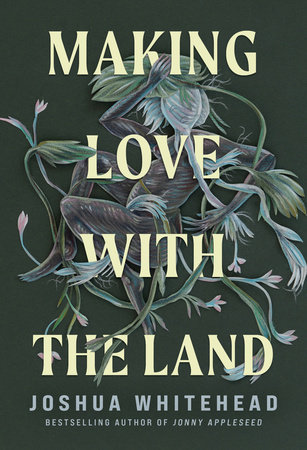
Joshua Whitehead can’t be held by genre. Following on the success of his Lambda Literary Award winning novel Jonny Appleseed and poetry collection full-metal indigiqueer, Making Love with the Land is Whitehead’s first full-length work of creative nonfiction. But to describe this book as merely an essay collection is limiting for the depth of emotion and reflection he brings to the page.
Instead, Whitehead describes the narrative form as “biostory,” a hybrid form rooted in oral storytelling that blends the best of the prosaic and poetic. The result is a truly rare reading experience, with his essays frequently shifting and taking shape in ways that seem to mimic the author’s own thought process as he mourns, copes, and heals from his past wounds. Whitehead explores topics ranging from indigeneity, queerness, loss, and the relationship between his body and the land as if he’s arriving at the right questions to ask as he writes. Meditative and wholly cathartic, Making Love with the Land is a book to savor; its words best experienced the second time after letting them fully wash over you.
Whitehead and I talked about the emotional power of storytelling that supersedes genre and process of writing through pain to find healing.
Michael Welch: This is your first official work of nonfiction. What was your experience putting yourself and your life on the page in this way?
Joshua Whitehead: Harrowing, to say the least—this is vulnerability as I’ve never known before. Freeing, as well. A kin of mine once said that when you lose nerve, when you’re no longer anxious before setting foot on stage, and I’d add the page, you’ve lost something along the way. My penultimate goal in writing is for the betterment of my communities and non-fiction was, at this point in time, the most stalwart motion of doing so. To remove the mask of character and step on stage, bloodlet and cauterize simultaneously—I had to put my theory into action lest it be petrified wood and aged into something merely aesthetic vs. utilitarian. I hope in showcasing myself, my body, my history, and my joy, that I’m making space and allowance for others to as well. That the page is a forge.
MW: Making Love With The Land is described as “biostory,” a form that reads as such the perfect blend of prose and verse. Can you talk more about how you define this way of telling stories and how it allowed you to better express what is a very intimate and personal narrative?
If I was to be decolonial on the land, I needed to do it on the page too
JW: What I named biostory for myself, here, was a way of letting me become an outlaw to genre. If I was to be decolonial on the land, I needed to do it on the page too. Often, I’ve found, Indigenous narratives are characterized by either: testimony (a synonym, perhaps, for residential school stories or a synecdoche for stoic historical accounts) and/or pulp (inasmuch as when our stories are not about that they’re called “simple,” “mystical,” or “magic realism”). Surely our stories can be these forms, but they’re rich with allusion and metaphor—of riotous joy and complex constellations of creation. I needed MLWTL to be as it ached to be: prosaic, poetic, theoretic, autobiographic, philosophic, futuristic. And so, biostory came to me as a way to pay homage to the oral stories of the peoples I come from as well as fully embedded within my physical body but also the layered textures of our bodies of water, land, and text too. I could not discount how a snake, meandering through the badlands of Alberta, too was not a poet of their own accord, the land, too, a page.
MW: In the book you argue that storytelling requires animation and life like lovemaking, as you write that the desire to “master” the craft of story is “wholly violent.” Naturally, this immediately made me think of the formalization of writing and its attempt to place rules that students can follow. What do you see is the danger of this approach and how we return to something more lived?
JW: When I’m teaching my creative writing students, what I want for them to take away from my pedagogies is that they are all storiers in their own rights. That the aestheticism of this thing we call literature need not be bound by borders, because we are always integrally tied, umbilically, with our bodies of text. A story is a leaking, not a container, and when we autopsy under the suspicion of preordained form—we are losing precious syllables and syllabics that ought to be there. I suppose what I feel I want myself, and others who find themselves inspired by my writing, is that the motoring noun of all writing is: the body.
MW: Now that you mention the body, I was really drawn to your relationship to video games growing up as not one of distraction but as a “medicinal tool.” Can you talk more about how giving yourself over to games helped you heal both physically and spiritually?
JW: Video games have always been a space of solace for me in my life. A refuge. A safe house. And they are rich with narrative. Primers in characterization and serialization. They allow you to craft an avatar of yourself and embed them into any landscape, any parable. I think back to the lockdown periods of COVID and how everyone was playing Animal Crossing: New Horizons and we were richer in connectivity for it—as our physical bodies waned from a starvation of intimacy (especially for those of us who lived alone) our digital bodies excelled in latitudes of reunion. How could I not find that a gifting? And of course, there are accessibility issues pertaining to the affordability of gaming consoles and the video games themselves, but I know, for myself, I am richer in experience for having been a gamer.
MW: Ultimately this book is as much about healing as it is about mourning and pain. How important was it to you to balance showing these conflicting experiences, and how did you work through on the page the messiness and ambiguity that often is the healing process?
JW: I think here of Vision in WandaVision who notes to Wanda, “What is grief if not love persevering?” What a beautiful line. What a gorgeous television show that centers around grief, loss, mourning, pain, love, heartache, isolation, trauma—all wrapped up within a witch who is one of the most powerful beings in the universe. To know some thing we might call god (or godly) can mourn and cry is a humbling reminder. For me, it was less about thinking about pain and love as separate entities, but rather as transformations of each other. Perhaps love is pain evolved. And pain is love that forgot it was never a closed circuit. I would be remiss that it took a village to write this book, both actualized and conscious decisions for help in writing and editing (of the many “you’s” denoted in this book, a good handful were very active participants) and that no writing, or writer, thrives in a vacuum. Healing is messy, it’s ambiguous, it’s confusing and bewildering, it’s cyclical—like all relationships are within a nêhiyaw (Cree) epistemology. So perhaps I return to the metaphor of the circuit, that when we place any emotional body within it, when we attempt to close it we invent finality, when means we strive for ownership, so in that healing and transforming, I had to leave the circuit open so that the spirits of each direction could enter, visit, breathe life anew into a rotting floorboard of memory.
MW:One thing I loved about Making Love With The Land was that even while it is quite an intimate story about your body, your grief, and your healing, you continually return to a larger narrative about the land and kin you come from. How do you see the personal fitting into this larger collective in your work?
Perhaps the point is not to unwind those tangles [of the human condition], but to let them thrive into a hinterland that is an emotional meadow of wildflowers that know no invasive species.
JW: Let me regress us a bit into the lockdowns again (I’m sorry, hah) but I want us to remember what we did, realized we took for granted, how we were in relationships with everything around us when we were at our most isolated and lonely: we went for walks. We walked with parks. We swam with rivers and lakes. We sat with mountains and hills. The land and water held us when we needed it. They are kin to us. They nourished us when we were starving (emotionally and physically). I am grateful beyond belief for the bodies of lands that held me. I think of Kim TallBear who writes about ethical non-monogamy, not only of partners, but more specifically (and I paraphrase here) how she is never single because she is always in relationships with that which we call kin, the non-human, around us. It is those relations that I tried to position as the epicenter of kinship within MLWTL.
MW: You write about your responsibility to your kin as to be “a pain eater.” In our modern era and its violence against Black, Brown, and Indigenous people, how do you make space for others’ pain and also your own pain in a way that has the potential to be restorative as opposed to traumatizing?
JW: There’s a line in my novel Jonny Appleseed where he and his partner/best friend/rival, Tias are discussing their relationship and Jonny notes, “It’s funny how an NDN ‘I love you,’ sounds more like ‘I’m in pain with you’”. Sometimes I think back to that book, and Jonny, and I am bewildered, I’m like, who wrote this passage? I don’t recall ever being that wise or observant. It frankly makes me laugh in awe and terror. Which, I don’t mean to exacerbate ego, but rather, humble myself to our characters who live with and share so much of ourselves that they become twins to us, almost, and offer us insights we didn’t know we had.
With “The Pain Eater,” I wanted to theorize how that is what so much of us do, for others, of ourselves, and it’s sometimes through our shared pain that we find connectivity and political mobilization. If pain is a closed circuit that love forgot, then to unlatch its closed door is to make it ouroboric: collaborative, communicative, and cyclical as we eat pain and expunge love. Of course, there are boundaries and limitations to this as a praxis of being—but to eat pain is really to share story. Narration beautifies it, beatific, and its passing lightens our kin if we so choose to enact this form of community care—it’s our role than to know when the well is enough and how to dispose of it properly and ethically. I’m still learning that, I believe I always will—the profound and profane eligibility of the human condition twisted into thorns from systemic injustice and violence. Perhaps the point is not to unwind those tangles, so as to straighten them, but to let them thrive into a hinterland that is an emotional meadow of wildflowers that know no invasive species.
In Allie Rowbottom’s novel, Anna is preparing to have an innovative, high-risk surgery known as Aesthetica™ that will reverse all her previous plastic surgery procedures, supposedly returning her to a truer version of herself.
At 35, Anna’s influencer career is long-ended, and she now works behind the counter of a department store selling beauty products to other women looking for self-love in the skincare aisle. Though it’s been said that “the only meaningful change comes from within,” like most of us, Anna isn’t immune to the allure of happiness promised by neatly packaged products whose price seems easier to pay than serious self-reflection. She knows from experience just how anesthetizing beauty products and procedures can be to the pain of human experience, but in the hours leading up to Anna’s last surgery she is forced to confront the traumatic events of her past that resulted in the end of her social media fame.
Told in a split narrative alternating between the chaotic moments preceding Anna’s surgery and her tumultuous coming-of-age as an Instagram model, Aestheticaexamines the lengths we go to in order to love ourselves. Anexploration of womanhood and aging under the influence of social media and late-stage capitalism, the novel examines how internet culture impacts bodily agency and gender. At its core, Aesthetica is about the desire to be seen as we want to see ourselves.
I spoke with Allie Rowbottom via email about social media’s impact on self-perception and the difficulty of connecting with others online and in real life.
Shelby Hinte:I’ve been waiting for a book to come out that addresses the relationship between social media and body modification in an original way, and I definitely think your book does. Can you share a little bit about what inspired you to write this novel?
Allie Rowbottom: I felt inspired to write Aesthetica for several reasons, not the least of which was desperation, shame, and a personal obsession with several Instagram models, their ever-changing bodies and insistence that puberty, not plastic surgery or Photoshop, was the reason for those changes. But mainly I wrote it because I was in the same boat as you in that I wanted to read about image culture, beauty standards, and the lengths many women (including myself) will go to attain and uphold those standards —and nobody was writing about it! Especially not without finger wagging. I suppose I generally just write what I’d like to read and hope others feel the same way.
SH: I like that phrase “finger wagging.” It feels like a lot of women, even women who promote lifting other women up, can be guilty of this (myself included)—especially towards women who go the distance to uphold so-called patriarchal female beauty standards. It is totally hypocritical to say that on one hand women should have full autonomy over their bodies while on the other hand discrediting certain choices, such as choosing to get plastic surgery, as antifeminist. Personally, I would consider myself a feminist, yet I often feel torn on how to make sense of both wanting to say “damn the man, you can’t tell me how to look,” and also wanting to feel attractive and desirable. Sometimes it feels impossible to strike a balance. Have you had any major insights on how to navigate this precarious territory?
Women fighting with each other is produced for the masses as entertainment [because] keeping us split is what upholds the normative power structure.
AR: Finger wagging is just another symptom of a culture that has a vested interest in splitting and disempowering women. We (all) do it because we’ve literally been trained from birth to do it. When women judge other women for augmenting their bodies in ways that appear to pander to the male gaze, or when women judge other women for not augmenting their bodies, they are making assumptions and reductions that actually serve to support a culture in which men dominate. That’s why women fighting with each other is produced for the masses as entertainment—keeping us split is what upholds the normative power structure (exhibit A: many reality TV shows, though I want to point out that some shows that start out this way turn into abiding portraits of women’s power against all odds, as is the case with The Real Housewives, in my opinion). But bottom line: we’re all human. When we see someone inhabiting a physicality that threatens us for one reason or another, we’re going to judge them for it. I’m as guilty of this as the next person. But I think what writing this book has helped with is softening that impulse, especially when it comes to judging myself. For a long time, most of the finger wagging I did was directed at myself.
SH: I’ve heard a lot of warnings against writing about the internet, and while some of those warnings feel dated or unreasonable at this point, I do find that depictions of the internet in literature sometimes come off as cringey or unrealistic. That wasn’t true with Aesthetica though. The way you write about the internet, and social media in particular, feels accurate. What sort of challenges did you run into while writing about social media?
AR: I think the key for me was not to try to write about the internet per se, but rather to focus on my characters, their core wants and woundings, and then incorporate the internet to the extent that it had any bearing on their lives. For that reason, I don’t think of Aesthetica as a book about the internet or social media. I think of it as a novel about a deep, human yearning to be seen, and how that yearning amplifies and augments under the pressures of contemporary patriarchy.
But I know what you mean. Why are writers hesitant to write the internet? Why is literary fiction about life online often so cringe? I think a lot of people who are publishing books now grew up at a time when the internet wasn’t so pervasive and are therefore hesitant (or unable) to chronicle it with authority. That will change as Gen Z grows up and starts publishing. The internet is also always changing, so there’s a question of relevance. Will my novel about an Instagram model still feel urgent and important in ten years’ time? I think so if only because the underlying principles of Instagram (scopophilia) are the same underlying principles of Seventeen Magazine twenty years ago, and they’ll remain the same underlying principles of whatever image-based platform comes after Instagram.
SH: One of the things I loved most about Aesthetica is it reveals the deep layers of manipulation that go into the images we see rendered on the social media accounts for public figures — both in terms of manipulating the bodies those images depict, and in the altering of the actual images themselves. It felt a little like getting to see the behind the scenes work of curating an influencer’s public life. What drew you to writing about this world?
In addition to leaning on old food and exercise rituals for comfort, I was getting really into Instagram, consuming images of super hot, thin, young women, and comparing myself to them.
AR: The experience of body dysmorphia has been a prevalent one in my life, as it is for many women. By the age of twelve I had an eating disorder. By the age of fourteen, that eating disorder was a serious one. I went to treatment for it when I was in college, which helped, but it stuck with me and when my mother died in my late twenties, I turned toward my old restrictive habits in a big way. I was aware I was doing it, but I was also in crisis. And to make matters worse, in addition to leaning on old food and exercise rituals for comfort, I was getting really into Instagram, consuming images of super hot, thin, young women, and comparing myself to them. Even before I fully understood the Photoshop and surgery going on behind the scenes, I could feel what the images were doing to my brain, so worrying what they would do to the brain of someone half my age was the logical next step. The next step was wondering what creating and disseminating those images would be like for the model herself, because I do believe that in addition to some truly evil content creators out there (The Kardashians), there are many young girls who despite their veneer of perfection are irreparably damaged by the images they post. Once you start to bend reality, either with FaceTune or surgery or restriction or whatever else, once you then receive praise for that bending, it’s hard to return. It’s hard to see yourself with any clarity. That’s a great tragedy of many women’s lives: that no matter how well they conform to beauty standards, they can’t see themselves clearly and can therefore never claim the power their beauty might entail. Another ruse of patriarchy, I’m afraid. And all the more reason to work toward alternative valuations of beauty.
SH: How do you work through the feeling of conflating the self with your work/success? Those feelings of pressure or discomfort?
AR: Conflating myself with the subject of my work is part of what makes the work any good. Conflating myself with my career is where the trouble starts. Even worse is conflating myself with the negative things people say about my work and career. But there will always be people saying negative things if the work/writer is any good. That’s just a fact of human behavior, the internet and challenging art disseminated on a certain scale. It also appears to me to be a fact of human behavior that we zero-in on the negative stuff and assign it more weight than the positive. Like, for some reason, the word of some random book blogger who dislikes my novel counts as much if not more as the support of a writer or critic I deeply admire. Someone told me recently that this response to negative feedback has to do with fight or flight, which makes sense, but I’m still doing my best to override it. My advice is this: as painful as it is to see a one star drag down on your goodreads page, you actually don’t want everyone to like your work. If you’ve made work everyone likes, it’s middle of the road and unchallenging.
SH: What were some of the difficulties you faced while publishing Jell-O Girls? Have you had any of those same experiences while publishing Aesthetica?
AR: Blissfully, not writing about real people has taken from me some of the difficulties I had publishing Jell-O Girls. Related to what I was just saying about goodreads and the internet’s democratization of book ratings and reviews, I found writing and publishing a personal narrative about my mother’s death and then having randos on the internet rate it on a scale of one to five, often including digs directed at her, deeply troubling. I also found the critical acclaim troubling and I still don’t know why. I think it just felt so exposing at a time in my life where my grief was really raw and unprocessed and my sense of self was somewhat obliterated. But I did learn a lot about the publishing industry. Later, observing and supporting my husband Jon as he went through the process of publishing his novel Body High also taught me a lot. So going into putting Aesthetica out into the world I think I have a good grasp on how to build off the books that came before. Number one takeaway is this: no matter who your publisher is, no one cares about your book as much as you do. It’s up to you to promote and push for your work. I realize a lot of writers are like that’s not my job, and maybe it shouldn’t be. But it is what it is.
SH: Earlier you mentioned that Aesthetica is about yearning to be seen, and I think that really comes across, especially in the scenes between Anna and her mother. To me, that yearning to be seen feels like a yearning to connect, and I think some of the work Aesthetica does is illuminating how difficult meaningful connection can be in our digital age (though maybe it’s always been this hard—I am a millennial so I only know this way). Why do you think it is so hard for us to connect with others these days?
AR: I mean, we are all addicted to our phones. That’s an automatic, fairly recent barrier to connection, though of course our phones and social media apps do connect us, also. But I think the constant rush of information is such an overwhelm to the system that it can be hard to sit down and think for ourselves or talk to others. Maybe I sound old saying this, but it’s also just a fact: people who have grown up on the internet are having trouble socializing irl and it’s causing real problems. Then there’s the Twitter mob thing, the number one reason I am on Twitter is solely to repost stuff and leave. I find it so depressing. People rush to weigh in on whatever topic du jour simply because other people are doing it; everyone seems so ready to cancel based on nothing but what some other person said. Why is that? I suppose it’s loneliness and a longing to belong, to prove oneself “good enough” to be accepted by like-minded others. All very wrenchingly understandable. But the outcome is often terrible. All to say I guess maybe we’re having trouble connecting because the tools we’ve adopted to do so are failing us.
In our series Can Writing Be Taught?,we partner with Catapult to ask their course instructors all our burning questions about the process of teaching writing. This month we’re featuring author and creative writing instructor Mila Jaroniec, who is teaching Catapult’s upcoming 12-month novel generator. We talked to Jaroniec about the importance of reading for writing, not doing things you don’t want to do, and the best beverage rotation for a workshop.
What’s the best thing you’ve ever gotten out of a writing class or workshop as a student?
Permission to create freely. When I took Frederic Tuten’s Radical Fiction seminar, I had already been in several writing workshops, where I heard a lot of do this/don’t do that that was making me doubt whether I even had any business trying to write fiction. But his approach was so refreshing. It was about taking risks and trust-falling your visions rather than writing a perfect book. He said things like, “Do what you want and don’t be frightened” and “Put everything in your first novel, even the kitchen sink. No one’s looking at you, no one expects anything.”
What’s the worst thing you’ve ever gotten out of a writing class or workshop as a student?
An anxiety disorder! No, I’m joking, I already had that.
What is the lesson or piece of writing advice you return to most as an instructor?
It reminds me to start at the roots and never be precious.
Faulkner: “Read, read, read. Read everything—trash, classics, good and bad, and see how they do it. Just like a carpenter who works as an apprentice and studies the master. Read! You’ll absorb it. Then write. If it’s good, you’ll find out. If it’s not, throw it out of the window.”
It reminds me to start at the roots and never be precious. And that a good book always succeeds on its own terms.
Does everyone “have a novel in them”?
No.
Would you ever encourage a student to give up writing? Under what circumstances?
I never have, but I can see myself encouraging them to take a step back if writing is somehow painful to them? If it causes great distress with no joy, zero return on investment, and yet they still feel pressure to produce, I would probably invite them to examine that. It wouldn’t be like “you suck and should quit writing” but more like, “you don’t have to write if you don’t want to.” We do so many things we don’t actually want to do, that we feel some weird inherited pressure to do. I remind myself of that first, when I feel like my head is on fire.
What’s more valuable in a workshop, praise, or criticism?
It depends. If the project is young, praise. You can’t trim a plant before it’s done growing (I think—I’m not a plant person, so maybe you can, but you know what I mean). Early drafts, if they’re being put in front of eyes at all, benefit the most from encouragement for what glows. If it’s several drafts in, I think criticism with the writer’s goals in mind is more useful. At that point it’s complete enough to really pinpoint what’s out of alignment.
Should students write with publication in mind? Why or why not?
It’s good to have a goal. Sometimes that’s publication, sometimes it isn’t.
It’s good to have a goal. Sometimes that’s publication, sometimes it isn’t. But I would encourage students—especially in a workshop/class situation, where their writing is being scrutinized—to get clear on their goals, whatever they are, so the feedback has a chance to be helpful.
In one or two sentences, what’s your opinion of these writing maxims?
Kill your darlings: Agree, but you have options! You can also “lovingly displace your darlings” or “cryogenically freeze your darlings.”
Show don’t tell: You have to tell a little, or else it’s experimental poetry.
Write what you know: Boring and limiting. I think it should be, write towards your obsessions.
Character is plot: I feel gaslit by this one, because we see evidence of it being true and yet, a lack of plot is usually the first thing that gets your manuscript booted.
What’s the best hobby for writers?
Anything that gets you off your ass and out of your head.
What’s the best workshop snack?
I don’t think I’ve ever wanted to eat during workshop, but I always have at least three beverages in rotation. Tea, seltzer, and (nonalcoholic) wine.
Shape of a shape,
foldable up
and able, in,
to open out,
stay put, collect,
beyond my notice,
riches I have no
further use of.
Latex or plastic
echo of cervix,
funnel without
an exit; held up,
a wine glass without
a stem but with
the wine-dark end
of an egg within.
Each month, washed,
scalded clean, ready
to capture the swell
and wane of me. Ten
years, one lasted,
of stable yet suspect
silicone, till
I overboiled it—
its modest, purposeful
self safe
on the shelf and in
again, ad in-
finitum, I’d thought,
reminded only
then that infinities,
too, end.
Instructions for Escape
For everyone it will be different. Bend
time to your will, bend your will
to the bitter need. Bite down
hard, tear through. So
I’ve heard, another
way is to cede:
open your face
upward,
allow
rain,
bright
light, too
bright to see
through but see
through it, let it
edge you into an expanse
you hadn’t known and knew,
even if rusty, even if ill at ease
with ease, realizing, realized, there for
the living. It’s yours. You’re its. Breathe.
DON’T MISS OUT
Sign up for our newsletter to get submission announcements and stay on top of our best work.
YOUR INBOX IS LIT
Enjoy absorbing fiction from Recommended Reading on Mondays, strange, diverting work from The Commuter on Wednesdays, and a roundup of our best work of the week on Fridays. Personalize your subscription preferences here.