Not Another Tragic Gay Love Story

Seán Hewitt begins All Down Darkness Wide in a graveyard with a brief encounter with a stranger. There, surrounded by ghosts and prayers, Hewitt and the man attempt to conjure memories of their past loves and attach them to what they feel at that moment. It’s an unforgettable opening image for what is ultimately a complex meditation on love, highlighting what truly haunts this story—one’s history, and the loneliness and fear threaded throughout a life.  

Hewitt, an award-winning poet, book critic for The Irish Times, and professor of modern British and Irish literature, tells his memoir as a love story with a man named Elias, and Hewitt’s experience caring for him through his struggles with severe depression and suicidal ideation. Drawing upon history, an astute eye for the community he was raised in, and the stories of queer figures that came before him, he carefully explores the ways our world tries to make queer life and happiness incompatible. He blends the rhythm and lyricism of poetics with deeply-felt prose to create a fully realized account of how to love someone so fiercely that their life and pain becomes yours. The resulting read is both heartbreaking and wildly beautiful.

Over email correspondence, Hewitt and I discussed how he looked back critically on his past self, the pressures of being a caretaker, and his path toward wholeness in loving himself and others. 


Michael Welch: Depression can be so difficult to portray on the page, and your memoir does an incredible job at showing it in its full complexity. How did you begin to approach writing about this subject? 

Seán Hewitt: It was important to me to preserve two things in this book: the present moment, and the unknowability of the minds of others. I didn’t want this to be a story told with hindsight. Instead, I wanted to plunge the reader into a world that slowly became more disorientating and uncertain, without overlaying it with knowledge gained after the fact. That means that, in All Down Darkness Wide, the reader comes on a journey with me, experiences it as I experienced it, and begins to feel the fabric of the world fall apart. Because I found it hard to recognize the causes of my own distress, and the distress of others, I left unknowable things throughout the story, because those things were unknown to me at the time. That said, I began to see writing as a sort of excavation, drawing connections, moving through time and experience as a way of showing the hundreds of tiny things that might predispose us to instability. The ghosts in the book also helped: I could draw on examples of depression from my own life and the lives of people I have never met, conjuring them up in spectral form, and turning to them as mirrors, guides, and warnings.

MW: One of the most emotionally gripping aspects of the book was how you cared for Elias and the resulting guilt and fear that emerged during the process. One passage I find myself returning to is when you write, “There is no morality to depression, no way to apportion blame for what either of us did, but every day I felt that weight crushing down on me, tightening my lungs, making my breaths quick and shallow.” Can you talk a bit about your experience as a caretaker, about taking on the weight of someone else’s life in addition to your own?  

I realize now that certain sorts of empathy can lead to transference, and also that it’s very hard to take care of someone when you yourself are not being cared for.

SH: The difficulty of this experience was compounded for me by a number of factors: being quite young at the time (around 22 years old), being in a country where I had no support network, and being in love. All of those things meant that I struggled to see myself outside of my relationship to the person I was taking care of, and I quickly became subsumed by the task, giving myself over to it, and taking it into myself. If I was to be tasked with it again, I would approach it differently, mainly because I realize now that certain sorts of empathy can lead to transference, and also that it’s very hard to take care of someone when you yourself are not being cared for. Because of the way depression works, it felt impossible to “solve.” Trying to “solve” it was the most exhausting part, for me. I learnt my lessons the hard way, and if I had to do it again, I hope I’d do a better job.  

MW: Your memoir at times seems haunted by the touch of Catholicism, not only in a physical sense with the long-standing graveyards and abbeys you lived around, but also with the spirit of its teachings. What effect did religion and being surrounded by its influences have on you as you were growing up?

SH: All Down Darkness Wide begins in a cemetery, with cruising in a graveyard, in fact. It also follows a pilgrimage to Lourdes, and tells the story of an encounter I had with a trainee priest. Gerard Manley Hopkins, one of the principal “ghosts” haunting the book, was a priest-poet, and a closeted gay man. These touchstones became a way for me to work out my relationship to Catholicism. I was brought up only loosely Catholic, but I leant into religion as a child because I thought it could protect me, and that it might confer a sort of moral “goodness” on me. My mind is still rinsed with Catholic imagery and tendencies: a love of ritual, of incense, of cool church buildings, and gory iconography. But I realized later that none of my loves were inseparable from the Church itself: I could free them, and myself, from its grasp. 

MW: Throughout the book you discuss your experience of reading poets such as Gerard Manley Hopkins and Karin Boye during this pivotal time in your life. In what ways did their work speak to you at that time? 

When writing All Down Darkness Wide, I wanted to make the vessel beautiful enough to withstand the darkness inside it.

SH: These two poets—a Victorian English priest, and a queer modernist Swede—gave me and those around me a language for thinking about mental health, and about spirituality, that had eluded me until that point. They gave specificity to emotions, and the sense that someone else had been there before me, had felt similar things. When language evaded me, I turned to them as intercessors. They also acted as warnings not to repeat the cycles of history, and in doing so, they showed a pathway to breaking through the cycles. Karin Boye, perhaps the most severe ghost I have to confront in the book, made me think about two sorts of freedom: the freedom of invisibility and the freedom of distinction. For many years, I had chosen the former, making up fictions, making up lies in order to conform, to be invisible. The freedom of distinction is a difficult path to take, but I’ve found it’s the truest and most sustainable one. 

MW: You also explain how these poets as people were important to you. You write about how Hopkins went to great lengths to hide his sexuality and how Boye died by suicide after realizing she was in love with her dying friend Anita. How did you see the inner lives of these literary icons interacting with your own story as you were putting it on the page?

SH: These poets came into my life at different times: Hopkins, when I was much younger, and Boye when I lived in Sweden. I had never known that Hopkins was gay until I read his diaries, and I saw in those pages the lengths he went to to hide himself, to atone for his “sin.” I recognized something of myself in those diaries, though Hopkins was more extreme in his shame. After a time, I realized that we had taken similar geographic routes through life, too: he had lived in Liverpool, and then moved to Dublin, and I had done the same. So I encountered his presence as a sort of spectral glance, meeting him in various places, as though for a moment, time might collapse and bring us together. I had escaped from living the sort of life he had, but there was a guilt to it too, and part of me has always wanted to reach out across the years and save him.

Boye, as I say, is the most severe “ghost” in the book. Her story ends in a triple suicide. Her poems are brilliant, sometimes painful and hallucinatory, other times crystal clear in their vision of nature, and she too came as both a comfort and a warning. Both of their lives, and their writings, are like mirrors of my own mind at certain times, but they also act as guardians, showing me ways forward. I think of them as a sort of “chosen family” of ghosts—people from the past who are speaking to me, urging me forward, showing the path. 

MW: As I was reading, I began thinking about the depictions we often see in media about the tragic gay love story, a trope that predisposes unhappy and traumatic endings upon its gay characters. But even in its darkest moments, I found that you were writing toward hints of beauty. How important was it to you to weave in these elements of intimacy and love? 

SH: Part of me, in the early stages of writing this book, was concerned with writing another “sad” gay story. But the thing is, I couldn’t change life to suit the memoir. Still, I am always fundamentally concerned with beauty, with finding hope, knowing that these are things that are lost when our world is upended. If I don’t show you the romance, the light, the way things could be, then perhaps you don’t know how it feels to lose them. Likewise, if I don’t show you a path back into the light, you get lost in despair. I think it was Wordsworth (though I might be misremembering) who said that one of the things that the music of poetry makes possible is that it allows us to suffer things that we could not suffer in bare, stripped language. That idea was in my mind, too, when writing All Down Darkness Wide: I wanted to make the vessel beautiful enough to withstand the darkness inside it. 

MW: Toward the end of the book, you write about how you took on the homophobia you faced and made it your own. You also wonder, “How many times had I squirmed at [Elias’s] exuberance, afraid of him bringing us to the attention of straight people?…What had I passed on to him, what hurt had I caused? What if everything, all of it, was me?”

I found that passage so heartbreaking. Can you talk more about what it was like revisiting who you were at that time for the book, and whether it changed your view on that version of yourself?

SH: There were weeks, months even, in that time when I thought that I was the cause of all the distress myself and my partner was suffering. Partly, it was because I did not know the actual cause; but also, it was because I couldn’t see why my love wasn’t strong enough on its own to lift someone out of depression. Looking back, I understand that earlier version of myself more fully, and can extend empathy to him. Understanding him has also helped me to understand this new version of me, too. Revisiting that earlier version of myself was difficult, emotionally. All the experiences that had sedimented in my mind had to be disturbed, and for a long while I just had to sit in those murky waters and experience them again. However, after a while, I began to see patterns, to put those experiences into form, and to make something of them. That process has cleared my mind somewhat, and I hope that the book might offer a way for other people to do that too.  

MW: How do you begin to form conceptions of genuine, full-hearted love when queer life and happiness is often put at odds?

SH: It’s a tough question, and I’m not a guru on love by any means, but I think that the process of understanding ourselves, and empathizing with ourselves, is fundamental to loving other people. In the book, I talk about the armor that queer people have to build as young people in order to protect themselves, to help them “pass.” I also think we split ourselves in two: there’s the public version of ourselves (which is often straight-passing), and the truer version of ourselves. In an ideal world, dismantling some of that armor, and bringing the truer version of ourselves to the surface, is the first step towards wholeness, and happiness. Perhaps that’s the best place to begin loving from. 

A Doctor and a Scientist Write to Remember

Under a microscope, a virus looks like nothing; it’s too small for a conventional microscope to see. Under an electron microscope, coronaviruses look like a crown: a wide circle of membrane as the base and ornaments of spike proteins sticking up like precious jewels. Indeed, these proteins are precious to the virus; they bind to our cells and let the virus in.

A crown of sonnets, or sonnet corona, is a collection of sonnets where the last line of one poem, or a variation thereof, opens the next. Sonnets are poems 14-lines long, traditionally in a tightly controlled meter and with an end-rhyme theme; sonnets often invoke a volta, a shifting of tone or meaning, roughly halfway through, often after the 8th line and before the 9th or before the final couplet. The form is ancient, and subject to modern play and reinterpretation, such as the brilliant, playful, and devastating American Sonnets for My Past and Future Assassin by Terence Hayes.

So, it’s July 9th, and I’m sitting on my roof, a cool day in peak summer. I’m in the shade, and I’ve brought up a bottle of bubbly. There’s a good enough breeze, and my dog lies dormant on my leg. In the elevator, on the way up, a couple in my building asked, spotting the bottle of wine, if I was having a party.

“Just me, a bottle of bubbles, and a book of poetry. My favorite type of party.”

The book of poetry: This Costly Season, A Crown of Sonnets by John Okrent, announces itself pink and floral and full of natural beauty on its cover.

I’m part way through the book, my fifth or six reading of the collection, after having read a few of the poems published here or there.

I push my leg harder against my dog, and look out into my own perfect blue sky.

I open the book on the roof to the lines, “I toss my daughter / higher and higher into the faultless air / like any father.” I push my leg harder against my dog, and look out into my own perfect blue sky, the skyline of New York interrupted by the green of Prospect Park and the white of slow-moving high clouds. The air used to just be the air; now, in spaces like this, outdoors and alone, it has become faultless, as safe as air can get, and I take a sip of my wine.

John Okrent is a family doctor with a practice in Tacoma, Washington, about 90 minutes south of where I grew up in a small farming town. His crown of sonnets are titled with dates, if these can be called titles, evoking a journal, informal writing, or writing to the self.

The first poem: March 17, 2020.

The last: September 28, 2020.

Remember those days, those months? We may well not want to. We may want to enjoy our precious hours in our faultless air on our Brooklyn rooftops. Those times held so much beauty and loss: “And in all the dooryards, the smell of lilacs. / It was a gorgeous day today, and marked the fifty-second death / in the Evergreen State.” This incoherence of death and natural beauty flows through Okrent’s collection. It’s almost as if the beauty is there to spite the death, the death there to pollute the beauty.

Throughout, Okrent uses his linebreaks to destabilize, a reminder of those destabilizing days. “This may be the end / of irony,” comes on the next page; “and so tired / of the dead,” comes days later, April 4. Near the end, Okrent and his family dance in the rain until, he writes:

we were too drenched to distinguish
between bodies of water and bodies of air, ourselves
and our absent ones.

“Ourselves / and our absent ones.” Even in this moment of joy, laughter, lightness, the next line reminds us that those we lost are here too with us, grief within joy we have to accept otherwise all joy we have is a half-lie anyway.

Okrent was among the many essential workers who never were able to protect themselves from harm by staying and working from home.

As a doctor, Okrent was among the many essential workers who never were able to protect themselves from harm by staying and working from home. “Droplets cover me, probably,” he writes on March 18. On the 19th he remembers coming “Home from clinic” he “throw[s his] clothes / straight in the wash and get[s] in the shower / before he touches [his] wife and daughter.”

The tension between caring for others and caring for oneself, especially as a professional caregiver, extend and amplify the questions laid out before us all. “What I bring home with me: mortality / and an empty thermos.” The humdrum of daily life, the thermos that needs washing, heightened by the unknowns of a novel pandemic. The rest of us might well have clapped from windows, but what did it feel like on the other end of that applause? We often see Okrent on his commute to or from “clinic,” entering or exiting his world of care. In one arresting pair of poems, Okrent mourns the loss of an employee at his clinic, a guy who worked at night, cleaning, who “caught the virus, and died on his couch / last weekend.” Here, he reminds us that class and race render not all essential workers identical. Okrent, as a white doctor, is not at risk in the same way as the people of color who clean the clinic where he works.

So, it’s August 10th, and I’m back home now but not on my roof. I’m in my little home office, and work, after a cute lil Lisbon vacay, hit me like a train. Every day for the last 11 days one or two people in my larger social network have reached out to me for help getting tested, or after testing positive for monkeypox. They are in pain, unable to get help. I can help. In New York, at least, I know the places to get tested and who to email for treatment; activists and advocates and friends and lovers learn when vaccines will become available before the appointments go public, and the phone number to call for appointments after they run out. A friend who hosts a kinky party heard from another friend that community organizations release unused appointments back to the city at 5pm every day, so you may get lucky then. We, a coalition of advocates, mostly people of color, are trying to ensure the Black and Brown and Indigenous folks in our network are first in line for this info, because they’re been so shut out of access so far.

I think about John as a caregiver, and I think about my own history caring for friends, lovers, and family.

I’m tired, but I’m caring. Okrent is a family doctor, and he’s become something like a friend. In his book, we see him caring. Caring for his patients, caring for his young child, taking her on walks, playing, doing small domestic tasks that are required of a parent, or at least a good one. I think about John as a caregiver, and I think about my own history caring for friends, lovers, and family; I wonder if more men can lift into this care, can do some of this labor so typically expected of women.

I write to John, asking how he’s holding up. He writes back: “I haven’t seen any [ monkeypox patients ] yet but have a lot of patients who are concerned about it and I feel awful telling them, ‘no, we don’t have the vaccine yet,’ and ‘no, we don’t have effective treatment available to us here…’

I think about how many doctors who, in the face of a patient marked with skin lesions, didn’t care, didn’t test, or worse, ran out of fear. In the face of all this, poetry, writing, and care give me something akin to hope.

We look back to look forward. There’s something about the immensity of loss in early 2020 – and beyond it – that makes a full understanding of it seem impossible. Not just life was lost; how much did we all sacrifice? On May 24, 2020, Okrent writes of the New York Times headline naming 100,000 dead from COVID-19: “I can only read ten of their names before reaching / for abstraction.” The line break here, again, shifts the meaning precipitously.

And what is Okrent’s abstraction or distraction: The natural world. Throughout Spring, especially, the world is turning green, coming out of hibernation, blossoming, even as our lives turned internal. “New deaths” he writes, “like cherries filling up the trees,” on July 4. Flowers and trees show up again and again: “The wide cups / of the calla lilies are filling with rain”; “small trees / whose blossoms take a deeper shade of fuschia by the day”; “chartreuse of spring on the trees”; “wild poppies on the side of the road / like tiny monks in saffron robes”; “You are entering the medical record / of a patient who has died – red letters alert me from the screen. / The red of the rhododendrons this spring.” Even the book’s cover explodes in pink flowers.

Already in the lines I’ve cited above for other reasons, we see another of Okrent’s choices, one that places his work, I think, in a long lineage of pandemic poetry collections: playful rhyme, including half-rhymes, in his case nearly always internal rhyme. From the lines above: “road / robes” and “screen / spring” and “droplets cover me, probably.” Circling all the rhymes and half rhymes on the page leads to a book pocked with pen marks. Given the seriousness of the subject, these playful turns confound. And yet we did laugh, and play, even in those times.

The playfulness of his horror reminds me of the work of HIV-positive poet Thom Gun and his book The Man with Night Sweats. Gun was a formalist, writing intensely controlled lines with repeated number of beats and strict end rhyme patterns:

I wake up cold, I who
Prospered through dreams of heat
Wake to their residue,
Sweat, and a clinging sheet.

My flesh was its own shield:
Where it was gashed, it healed.

They ask to be read out loud, to find the rhymes and meters on the voice, and readers should indeed do this

While Okrent’s rhymes fall most often in the middle of lines, and his meter is varied throughout the poems, his sonnets maintain a similar sing-song quality when writing of the worst horrors a body or mind can experience. They ask to be read out loud, to find the rhymes and meters on the voice, and readers should indeed do this; feel the words on the body, and let the body release some of what it holds from those horror-filled months.

I wonder about Okrent’s writing process: how much of these poems were written on the day advertised, and how much of that writing was worked and reworked later in revisions. This playfulness may indeed be a product of both, I imagine, projecting my own sensibility as a writer onto the page. But in those original moments in 2020, why even write, if not to play at the end of the long day of caring for others?

I hope Dr. Okrent allowed himself that joy, even in those dark floral months of that first spring.

He gives us a hint, on a poem from July 18, that some things were just too hard to write in the moment, because writing something terrible can make it fully real in a way we aren’t yet ready to accept. “Today we euthanized our dog. / And by today I don’t mean this one but another / now distant enough that I can write it: he is dead.” When I first read these lines, they knocked the wind from my chest. I have a dog too, and although he is only two years old, I think every day about how loving a dog also means that you will have to mourn him when he goes, as he’s almost certain to go before we do. The lines are remarkable, the ones describing the dog’s death, in their simplicity amongst a book lined with rhyme and enjambment. “Today we euthanized our dog,” and “he is dead.” No play here. The sentences simple, declarative. Devastating. The lesson: if you can’t write what you need to write on July 18, 2020, you can always write it later. And grief, laid out in plain, sparse language, is enough to communicate grief in all its horror.

Life doesn’t stop, until it does.

Another horror: The way this pandemic keeps on coming. Still. Today. And Okrent’s crown, or corona, is essential here. The movement between poems is never arrested, as the last line of one day starts the next. The reader is invited, constantly, to keep going, to keep going, to wake up, to live another day here on these pages. Like life. Like catastrophe. Life doesn’t stop, until it does.

Okrent asks what exactly the sonnet can hold. His crown plays with first and last lines, and many poems don’t have a formal volta, but actively resist one, doubling down on the original meaning without the relief of a change in glace, a punchline, a reconsideration. These are often poems of the first consideration, an embodied place we are not allowed to escape from. One poem, from May 24, has only 13 lines, and so breaks even the 14-line rule. The last word of that poem? “Nothing.” He writes, “But look up: small birds breach the everywhere surface of the air, sing, and want nothing.” With this virus, the air is our danger. How beautiful would it be to sing and want nothing? And the answer, an impossibility, is the last missing line of the poem, one I think we as readers are asked to write in its empty place: How did you live in this time? How will you live in its wake?

Here is my confessional moment in an essay reviewing confessional poems: Dr. Okrent – John, as I know him now – reviewed my own essay collection for the New York Times. Wait: is it confessional poetry when a man does it, and a doctor? I was nervous to read his review, and had to remind myself where I’d seen his name. Ah yes! A pandemic poem published in Ploughshares, posted on Twitter. I was expecting the review to be mixed, or to read a book I hadn’t written, which happened more than once in the trade reviews we received. But no. Dr. Okrent, John, read exactly the book I’d written, with precision, with grace. And when I read his collection I understood. Our books, kissing cousins. Poetry by a doctor. Prose by a scientist. Asking us to remember. Imploring us to see. Looking out at the beauty of the world. Looking in at the beauty of our lives, where they were full of love. And so, to complete the echo, I write to him here.

A doctor and a poet? What a long history there is of this pairing. I will mention William Carlos Williams, but I will quote Rafael Campo’s poem “SILENCE = DEATH”:

Today, I see his T-shirt and I think
he isn’t taking all his antiviral meds,
the countless pills he piled on my desk
to silence me, my T-cell counts and viral loads
detectable at greater than one hundred thousand,
the silent viral particles that swell
to numbers more than even we will count—
I pause, and shift a moment in my chair;
I ask, “How many loved ones did you lose?”
“I can’t count them” is his response. “But one
left me this stupid T-shirt when he died.”

All we have is a doctor and a patient, two humans facing one another.

Both Okrent and Campo write about the limits of human medicine: pills don’t work if you don’t take them, vaccines don’t work if they don’t exist. All we have is a doctor and a patient, two humans facing one another. “Our logic is love-flawed” writes Okrent. Campo’s work reminds us of the aftereffects of a pandemic: the trauma that stops you from saving your own life. Okrent writes the original trauma, to help us recover from it.

“I can’t wait,” Okrent writes, “for a time when I say ‘this’ / and you don’t know what I mean.” We’ve had a few this-es since then. This: virus, invasion, inflation, war, no sleep, another virus. It’s books like this that try, at least, to show us what our this-es mean; without searching for meaning, we can never heal from pain.

So, let’s go back in time: It’s July 18th, and I’m sitting outside at a seafoam green table sipping a cold brew with whole milk and catching a breeze here too. I’m in Portugal, in Lisbon, at a coffee shop that has 2 euro cold brews and 2.5 euro pints of beer. I want to work out later, so I’m drinking the former. The day after we arrived, the US dollar reached parity with the euro for the first time in 20 years. It’s all coming together! It’s hot today, but not uncomfortably so. The 11 days of messages and DMs from friends are days in the future. I’m not yet back from vacation, not yet hit by a train of work that I know is coming. This is my first trip outside the country since late 2019. I’m answering texts from dear friends, one about COVID rapid tests and how the test signal intensity estimates infectiousness (probably fairly well, with caveats) and another about trying to get a MPV vaccine. I’m supposed to be on vacation. I am on vacation. I’m writing about coronavirus. I’m writing about poems. I’m writing about the Spring of 2020. All that really happened, and is still happening. Reality is ruining my vacation, but it’s better to live in reality. And there’s plenty of joy here too. Squawking, five parrots fly by, cutting from the left of my vision and away at my right, just below where the horizon meets the sky. Today, I will drink wine. Tomorrow, I’ll go to the beach, turn off my phone, read another depressing and beautiful book about the world we find ourselves in. It’s not fair. It’s all we’ve got. Tomorrow the sun will shine on my shoulders, and it will feel good, just like any other sunny day, on the ocean, facing a light salty breeze.

Lust, Rivalry, and Ambition Culminate in a Betrayal at an Elite Art School 

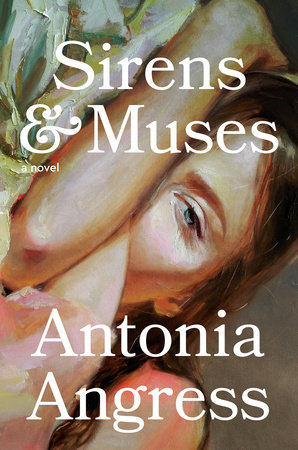
Set on the idyllic New England campus of an elite art school called Wrynn, and situated against the backdrop of the Occupy Wall Street movement, Antonia Angress’ debut novel Sirens & Muses is an exemplary depiction of what can occur at the intersection of art and adolescence. This coming-of-age novel follows the lives of four main characters on a journey of love and lust, desire and rivalry, ambition and betrayal. Louisa Arceneaux, the timid but observant scholarship student with real potential, doesn’t know what to make of her new roommate, Karina Piontek, the striking but intimidating prodigy of wealthy art collectors. But Louisa can’t help but be enticed by Karina when she discovers her own face drawn within the pages of Karina’s notebook. On the other side of campus, Preston Utley, the anti-capitalist blogger who’s not afraid to ruffle a few feathers, can’t resist goading visiting professor and political painter, Robert Berger, whose own reputation is hanging by a thread. After Preston puts himself on Robert’s radar through a social media shit post, the washed-up artist is determined to not be upstaged. 

In time, each of their paths are unexpectedly thrust out of Wrynn’s sheltered college campus and into the cutthroat art scene of New York City, where they find themselves fighting not only against the art world’s elite and the grinding gears of capitalism, but also each other in order to make a name for themselves. 

I had the pleasure of connecting with Antonia Angress over Zoom where we discussed what it’s like to exist in liminal spaces, how class impacts art and who gets to create it, the complexity of bisexuality, the queer female gaze, and more.


Sam Dilling: In a class assignment, the Wrynn students are instructed to “paint home.”Louisa Arceneaux, one of the novel’s main characters, who has just left her home of Louisiana only twelve days prior, paints a somber scene of Lake Martin at dusk. Later in the novel, Louisa looks back and grapples with the fact  that she’s had to move away from home in order to be able to “see it clearly.” Have you had a similar experience?

Antonia Angress: That question is interesting to me because home, to me, feels very complicated. I’m an American citizen but I grew up in Costa Rica and I attended a French international school from K through 12. Growing up, I was constantly shifting between three different languages and three different cultures. As a result, I’ve always felt rootless and, in a way, stateless, even though I am a citizen of a country. I’ve lived in a lot of different places, but nowhere has ever really felt like home. I think home, to me, is more people than it is a place. Added to that my family is Jewish, and my grandparents were Holocaust refugees. Jews are notorious, historically, for being this stateless, rootless people—this ethnic group that’s always having to flee and is never able to put down roots. 

That experience is obviously different than for someone like Louisa, who does come from a persecuted people but whose family was able to put down roots and become embedded in a place. But I do think that, regardless of whether you have a strong sense of home, it’s this universal experience to grow up and leave your family and begin to see them differently than when you’re a child. For Louisa, that’s true.

SD: A large portion of the novel is set against the backdrop of the Occupy Wall Street movement while America is in a recession. This movement informs the lens through which the novel is viewed, particularly as it relates to the student body of Wrynn College and who gets to create what. The Occupy Wall Street movement is also the point around which one of the main rivalries in the novel orbits. Did you always know you wanted to include the movement as part of the novel? Was there something about that movement specifically that appealed to you?

AA: It happened pretty organically. Occupy Wall Street happened when I was in college—in 2011, I was a junior. [The movement] was my first experience with American protest culture. It resonated with me because it encapsulated a lot of the anxieties that I and my peers [were] feeling as we came of age into the great recession. Even though it fizzled as a movement, I think it had and continues to have enormous impact on today’s progressive politics. I think we wouldn’t be talking about things like universal health care or universal basic income were it not for Occupy. Occupy pushed a lot of people to the left, myself included. 

As I wrote the story, Occupy became a bigger part of the narrative. Partly because at the time, it felt all-encompassing. A lot of the Occupy stuff that I saw on campus was, in a lot of ways, juvenile and performative. That was something I tried to put in the book for the comedic factor, but also because I wanted to illustrate different aspects of the movement as I perceived it. 

There were people participating who made it feel very urgent and important and compelling; and then there were people who were just camping out at the university where their parents paid $50,000 a year for them to attend.

SD: That economic inequality is on display throughout the novel. Louisa is on scholarship and works in the school cafeteria, where we see her weighing the cost of art supplies against the cost of meals, while Karina Piontek, Louisa’s roommate, and Preston Utley, Karina’s boyfriend, both come from wealthy families. For Louisa, money, or the lack thereof, impacts her potential future as an artist. It becomes obvious early on who gets afforded the opportunities to create art at all.

AA: I think art is hugely informed by class. Art takes time. In the case of visual art, it takes material resources: paints, canvases, sculpture materials, paint brushes. Most people who go to art school have had some prior instruction. Those are all things that cost money. To me, it seems disingenuous to leave that at the door. Add to that, the art world itself is driven by money [and] the spending power of collectors, who are often millionaires and billionaires. Many collectors, I’m sure, deeply love art, but sometimes you’re buying this painting because it’s a stock pick. It’s an investment. I think it’s a problem when culture is produced by one group of people. When marginalized people can’t access the space, or the resources that they need to create, It makes for a culture that’s flat and homogenous and that ultimately results in an echo chamber.

I also think it’s connected to geography, which is connected to class. You can probably tell through the novel, I get very annoyed at this idea of regional art or regional literature. I think art and literature in the U.S. are very coastal. Art coming out of New York or LA is considered art with a capital A, but art coming out of New Orleans, which is a place where I used to live and has a very vibrant art scene, gets called “regional art.” But New York and LA are regions, too. All art is regional. That bothers me because New York and LA are some of the most expensive cities in the world, so the people who can access them, those social networks [and] professional networks, are people who have the capital to do so. It comes back to class, and an elitism that at its core is provincial. 

When I was a younger writer, I struggled with the idea that I needed to be in a certain place to be a writer, and that real writing came out of certain places and not others. If there’s one thing that [I hope] people [take] away from this book, it’s the knowledge that there’s no right way or place to be an artist. I say this is a writer who has been able to forge a writing career in the Midwest, which is decidedly unfashionable. Minneapolis is not what people think of when they think of the capital of art or literature, but it’s a place that has been nurturing for my work, because it’s a place where I don’t feel like I’ve had to struggle to forge a career.

SD: At the core of this novel is a bisexual love triangle between three of the novel’s main characters—Louisa, Karina, and Preston. The POV weaves us into and out of these relationships, which begin on the Wrynn college campus and progress through the later acts of the book which take place in New York City. Did you always know you wanted to explore this type of relationship in a novel?

AA: That was another thing that evolved over the course of the novel, I definitely didn’t sit down and say, “I’m gonna write a bisexual novel.” I identify as bi, but I didn’t publicly come out until I was in my mid-20’s. For a long time, it was something that I had a lot of shame and anxiety and confusion about. The period of my life when I was working on the novel—the first half of my 20s, and inching up to 30—was also a time when I was coming to terms with my sexuality. It felt very natural to me to explore the feelings I was having, and the questions I was asking, through my characters. 

There’s no right way or place to be an artist. I say this is a writer who has been able to forge a writing career in the Midwest, which is decidedly unfashionable.

Once I decided it was going to be a bisexual novel, that was a creative breakthrough. I was interested in writing about that experience, because there’s not a lot of fiction that directly addresses bisexuality. I feel like we’re living through a boom in fantastic queer fiction right now, but there’s not a ton of writing about not being quite straight, and not being quite gay. I’m someone who spent a lot of time in liminal spaces—between languages, between cultures—just because of my upbringing. I was interested in excavating it and naming what I felt on the page. 

When I was younger, it literally did not occur to me that you could be bi. You either liked boys or you liked girls, because those were the only two depictions I’d seen in literature and movies.I was living in a very Catholic country. My family is pretty liberal and we’re Jewish, but I was in that shame-y environment. I honestly think if I had read one book with a bisexual protagonist where it was presented as not something shameful, then that would have saved me many years of grief and anxiety.

SD: Your novel was recently featured on Electric Lit’s list of “The Most Anticipated LGBTQ+ Books for Summer 2022,” but even on that list, none showcased  bisexuality so specifically as your novel does. Is there anything you hope your novel lends to that conversation?

AA: I hope more people who privately identify as bi talk about it, because there’s no one way to be queer. One thing that’s been interesting to me, as a straight-passing queer person, is I’ve met many other women who identify as queer and also ended up in very happy marriages to men, but feel like there’s this part of their identity that’s hidden. Which is a way I think a lot of bisexual people in straight relationships feel. I hope there’s more conversation about that experience and how strange and disorienting and joyful it can be.

SD: On the page, we see that stark difference in these relationships. The romantic dynamic between Lousia and Karina is much different than the romantic dynamic between Karina and Preston. What was important for you to depict? 

AA: Being attracted to a man and being attracted to a woman are different experiences, at least for me. They feel different. I think when you’re bi and when you’re in a relationship with a man, which I am, it’s easy to follow a script. We know what a heterosexual relationship is supposed to look like because we’ve been bombarded with cultural depictions of it. It’s easy to fall into a role that’s already been written for you. 

That’s something Karina struggles with in the novel. Between two women, there’s less of a prescribed narrative. Or at least the narrative hasn’t been etched into the collective consciousness as deeply as straight narratives. There’s a lot more freedom there and a lot more negotiating power dynamics, which I wanted to depict. These two women who, at various points in their relationship, have a different kind of power over the other and where the power dynamics are constantly shifting.

SD: We see those power dynamics on display  when Karina eventually sits as  Louisa’s model. When that relationship is explored with a male character and a female character, the dynamic is much different than when it involves two females. I’m curious how that applies to what we refer to as the  male gaze. What happens when we look through a woman’s lens instead?

AA: A lot of it goes back to what I was saying about prescribed narratives. If you’re a woman growing up in the West, the male gaze is ingrained into your consciousness. There’s this quote by John Berger that I love that goes, “Men look at women. Women watch themselves being looked at.” There are many moments in the novel where Karina, in particular, is experiencing herself through a man’s gaze. It’s constricting, but she gets pleasure out of it. 

‘Do I want her? Or do I want to be her?’ That’s a dynamic that is embedded in the female gaze and, particularly, in the queer female gaze that can be as fraught as it is pleasurable.

With regards to the female gaze, I think it’s untethered from that straight-men-look-at-women narrative. There’s a lot more freedom in it and it takes for granted the woman’s agency. That’s why a movie like Portrait of a Lady on Fire—which was hugely influential for me and for this book—is so powerful because it illuminates an alternative to all these narratives that we’ve been fed. 

[I’ve] been a model for my husband and many of his art pieces. For me, it’s never been anything but a joy to be able to collaborate with him like that. But that male artist, female model narrative is something we’ve seen 1000 times before. It’s easy to inhabit that role, because I know what it’s supposed to look like. One thing I wanted to explore with the female gaze is experiences that I’ve had with women where I look at them and I’m attracted to them. But there’s also this rivalry or jealousy or competition that’s mixed in with the attraction. Like, “Do I want her? Or do I want to be her?” That’s a dynamic that is embedded in the female gaze and, particularly, in the queer female gaze that can be as fraught as it is pleasurable. It’s what I wanted to explore and contrast with the male gaze—what it’s like to experience both. To feel joy and pleasure at both, but also feel scared or constricted by both.

SD: Speaking of that duality, I feel like we also see that in how you explore male ego versus female ego. In the novel, the men’s egos, particularly Preston’s and Robert’s, seem to be more on display externally, whereas the women—Louisa, Karina, and even Ines—are much more subtle and reserved and nuanced in their displays.

AA: Sometimes I wonder if part of that is because it is socially acceptable for men to be outwardly egotistic. But when women do it, there’s a backlash. I can think of women writers, or women artists, who’ve been accused of being arrogant or egotistical for being secure in their abilities. I wonder if women’s ego often turns inward-facing because there’s no socially acceptable outlet for it.

Our Decades-Long Friendship Has Become a Liability

“Pre-Existing Conditions” by Katie Moulton

I got the house off Natural Bridge Road for a great price, especially for spring when everybody wants to move. The previous owner had died in the recliner in the back room I planned to make my home office and company headquarters. I didn’t mind the traces of solitary old lady between the floorboards. I loved the tall old windows and original casings, the northwestern light—the potential, the bones, as they say. 

But I used the fact of Miss Lunelle’s passing to my advantage in negotiations with her grandniece, who always sported a dismal aqua windbreaker. I handled her, asked well-timed questions and poured enough honey to drown a hive. I called on the ghost of my own mother in central Illinois to warm up the folksiness of my cadence. When we discovered a gaping hole in the plaster behind the upstairs toilet, I just said, well lookee here. I emphasized, with sympathetic eyebrows, how the house just needed some love. Then I leveraged the need for a new HVAC against the closing costs. If I felt the grandniece gaining ground, I tilted my head and stage-whispered, So is this where she…? By Easter, I was moved in. It looked like the houses on either side in this 1940s development—a brick cube with sloping eaves and a screened-in porch—holding out in its neat respectability while the streets all around went to hell. And it was mine. 

A single middle-aged lady moves into the house where a single old lady had died. In any case, I needed a new city along the Midwestern interstates. I’d been passing through St. Louis for almost two decades for work and for my best friend Wendy, and now I lived fifteen minutes from her. We could team up, be single middle-aged ladies together. We would hit the bars, we’d brunch, we’d join a rock-and-roll crafts circle or whatever. We’d shoot the pilot for our own HGTV home makeover series. To my eye, she hadn’t been getting along so well on her own, ever since Bridget went to college and Scott abandoned them. “He didn’t leave, Rhonda,” Wendy complained more than once. “He died.” To which I said, same difference.

Then before I even fully unpacked, I got sick. And suddenly Wendy was mission-leader for Operation: Keep Rhonda Above Ground. The irony was pretty much too much. Who wants to be the butt of a punchline?


Radical double mastectomy. The words were technobabble to me. The phrase that really frosted my tits was the next one: TWENTY-FIVE THOUSAND. Dollars or dirty martinis, that’s too many of anything. 

For the last decade-plus, I’d run my business as an independent sales rep for luxury décor and gifts, things like vases, crystal, china, which I presented as “jewels for the home.” While there are plenty of people out there who still have money to burn on beautiful objects, the recession wasn’t exactly friendly, and lately the level of discerning taste had dipped along with the economy.

All to say, money was tight, and I had scrimped on health insurance. 

Wendy went with me to those preliminary doctor’s appointments. She took a personal day—which she never did—from her job in human resources at Houseware Warehouse to attend the meeting with the hospital’s in-house Health Care Decision Counselor and Insurance Liaison. Same person. Wendy and I sat side by side in faux-wood, polyester-backed chairs and listened as a woman in head-to-toe khaki explained my “options.”

“With the insurance level you currently maintain,” she said, “the development of this health issue could be considered related to other health conditions…”

“Excuse me, what other health conditions?” I asked.

“Well, your age has to be considered a risk factor.”

“My age is a pre-existing condition? Guess I forgot to die at forty.”

“And you don’t have children, which slightly increases—” 

I turned my glare toward Wendy, who clasped my hand in a comforting talon. She cleared her throat like a teacher’s pet and said, “But surely, ma’am—”

“In any case,” the Liaison continued, “the procedures that Dr. Purohit recommends are not fully covered at your level, as you are not a Full Choice-Plus member. Meaning that if you choose to undergo the procedure, you may incur significant costs. After reviewing your documents, it is also possible that filing this claim with your provider might result in rescission—”

“Recession?”

“—rescission, wherein your policy would be cancelled. That is, unless your partner’s employer-funded insurance provider contains an option to add a dependent, which I believe in your tax bracket may be a possibility. Now I am aware that many employers do not yet recognize full benefits for same-sex partners, but I believe—”

A week before this meeting, my doctor had called with concern over my most recent mammogram. Four days later, I was diagnosed with cancer. Today, I was being reminded that not only could I die—single and poor—but I also appeared to have a love life unrecognized by the state. Wendy and I had been mistaken for Bridget’s “two moms” at her college orientation, but in the hospital, we laughed a lot more. We cut off the Liaison and slapped our knees. “Wouldn’t that sort things out?” I howled. My jaw hurt. 

We saw ourselves out of the beige office and across the off-beige lobby. As we passed the threshold of the automatic sliding door, Wendy said, “How the (fuck) are you going to pay for this?” Wendy only used the f word around me, and never at full volume.

I put a hand under each of my breasts, jostled them up and down. “Maybe I can sell them on the black market,” I said. 

I pulled up my narrow, shared driveway, halfway under the painted-wood carport. We climbed the back steps into the kitchen. It was still musty and wallpapered and not so long ago I had plans to gut the whole damn thing. I heaved my purse onto the counter and gave a loud sigh. 

“I’ll get the vod-ka!” Wendy sing-songed. She was once captain of her freshman cheerleading squad. 

“Hook up the IV,” I said. “I’m taking off my shoes.”

Packing cases and cardboard boxes were scattered all over the living room. I sank into a chair near the front windows, and it formed around me. I’d hung new curtains as soon as I arrived, billowing linen in a color called timeless eggshell, and now I left them closed. 

Wendy came in and handed me a brimming glass. She settled onto the rug with her white wine. “Cheers,” she said. I was already taking a drink.

“Now we need to get you fully in,” she said, peeling back packing tape with a fingernail. “Really, I just wanna go through your goodies.” The boxes were full of vendor samples: tea services, hand-painted platters, a terrine crowned with a porcelain fish. “You know what I found the other day? The silver rattle you gave us for Bridget. God, when I held it, I just cried and cried,” she said, laughing. 

I met Wendy twenty years ago, just before she became pregnant. That was back in Springfield, closer to our respective hometowns. We both grew up in rural Illinois, from town families in former farming communities; the regional difference was that my town picked up Cubs radio broadcasts, and hers rooted for the Cardinals. In Springfield, we both worked at the mall, me in the jeweler’s, Wendy the manager of the prom-dress chain store. According to mall gossip, she had fired a friend-of-a-friend for being “unprofessional.” I formed my opinion: corporate goody two shoes. Timid, hiding behind other people’s rules, and probably tacky. 

One lunch break I strode into the dress store to scope her out, but there was just a gloomy salesgirl steaming crinoline behind the register. Then I heard an outbreak of giggles, which I followed back to the fitting rooms. In the mirrored hallway, there was this Missy Manager: Wendy, about my age, bright voice, chestnut perm, big-shouldered skirt-suit in the right shade of burgundy. She was fussing around a teenager, gathering a sash in her hands. “Hi!” she called when she saw me in the doorway. “You’re just in time for the bow-tying demonstration! Now everyone, step back, I’m a professional.” She flitted around the girl’s outstretched arms, wrapping and measuring the strands between her taut fingers. Gather, thread, wipe imaginary sweat from her brow, wink, then one precise pull. A final fluff. “Voi-la!” 

I remember the girl’s mother and sister clapping. Wendy gave a little bow. “It’s perfect,” the girl sighed, smoothing the symmetrical ribbon-end, a docile wing. “But how will I do it as good as you before prom?”

“Just as long as you can undo it after prom, sweetie.” I said it under my breath, but somehow Wendy heard me. She cracked up and said, “Oh, you are bad!” then turned her most wholesome gaze on the customers. “We’ll practice as many times as you need.” She smiled up at the girl on the pedestal. Her eyes flicked to the mother and back. “Soooo, what are we doing for gloves and shoes?”

Now there’s a saleswoman, I thought. I could respect that. What’s more, she seemed to mean it. 

In my living room a hundred miles and many years away, I cracked my toes against the rug. Wendy unwrapped a bone-china serving tray—hexagonal, in a royal blue-and-white design, floral, vague chinoiserie.

“Can you believe I saw Spode at T.J. Maxx the other day,” I said.

“Fakes?”

“Nope.” I sipped. I explained that luxury-goods companies, even legacy brands, will sometimes sell versions of their well-known designs at discount stores. “The old high-end manufacturers knock themselves off before somebody else does.” Another sip. A clean, pure bite.

Wendy turned the dish over in her hands. The process for making it had hardly changed in more than two hundred years. The English porcelain refined to the extreme, the underglaze blue transfer printing. “You just don’t see things like this, this quality,” she said. “It’s priceless.”

“It definitely has a price,” I said. “That’s what’s so great about it.”

Wendy’s pale eyes brightened. “We could have a hell of a yard sale,” she said. “Raise some funds?” The glossy dish reflected light onto her face. “Or, you know I don’t do the internet, but what about…eBay?” 

I sucked a vodka-soaked ice cube. Apparently, Wendy thought that all these treasures belonged to me. Some did, sure, some I had paid for, some I’d received as gifts. But most of the items were samples. Sent to dazzle clients at point of sale. If a pattern was retired, or a client needed a bejeweled rooster stat—back in the box they went. They were only mine for now. 

That’s not how Wendy thought about life or possessions. It’d been years, but she still only used one side of her closet; the other side was stocked with every collared shirt or jersey that Scott ever owned. They were already married when we met, and I tried to keep him on the outside of our fun. I badgered him for being a filthy smoker, ahead of my time always. But as with Wendy, he won me over big time. A shy engineer, he looked like a sandy-haired, willowy Burt Reynolds and had a wicked sense of humor. Sometimes we’d sit out on their apartment’s patio, me with my stiff drink and he with his cigarettes. If Wendy wasn’t scolding us in mock-prudery, we’d tell raunchy jokes until we ran out. I wanted to convince her that the man who wore those clothes was long gone, and she deserved a whole closet for herself, but there was no telling her.

“I’m not sure this neighborhood is the best market for this product,” I said. 

“Well, I think better when my hands are moving,” Wendy said. “Let’s fix something!”

“Take your Houseware Warehouse propaganda somewhere else, lady.”

Wendy started humming the big-box store’s jingle, Renew, Redo, Re-you! and I held my icy glass against my forehead. But she cajoled and cheerleaded until I was on board: While we figured out how I could afford to stay alive, we would renovate my upstairs bathroom. 


I spent the next morning trying to make sense of my “options,” paging through the brochures and insurance policy fine print and medical records. After a few hours, I felt like I was stranded and starving on one of those floating islands of human garbage, so I took a break. In the bathroom, I looked in the mirror and combed through my roots, made an appointment to get them touched up. I remembered a few years ago, the day before Scott’s wake, I had to do it myself in a rush and my typical ashy blonde bob came out of the wash an almost sherbet pink. “Usually she’s the blonde,” Wendy had said, introducing me to other mourners. 

I’d almost forgotten about the greenlighted renovation project until Wendy showed up in the evening. I hid the mess of my office and answered the front door. She looked like a pack-mule, bundled with her toolbox and plastic buckets and freshly bought supplies. She walked in mid-conversation, “So I asked Ange and my guys in building materials about the best approach to patch the drywall, if the drywall is maybe plaster, and if the patch is more of a gaping hole…”

“How’s Ange doing?” I asked.

“Oh, you know,” she smiled. “He’s Ange.”

Ange was Wendy’s boss at Houseware Warehouse. I’d met him once at a company-volunteer day Wendy had recruited teenage Bridget and me to carry water-logged trash out of a house after another flood. Ange was around my age, burly, pale for a guy with Italian heritage, nearly bald. He had an easy, creasy-eyed smile and strong white teeth. A wink. He and Wendy were pals since she started working there. She didn’t talk about him all the time, but when she did, she took on the twinkly blushing tone of a girl with a crush. 

“Will you go for him already or what?” I said as we climbed to the second floor. 

“I am not going to ‘go for’ him!”

“Why? Because he’s your ‘friend’?” I was ribbing her, but pressing. “You love him.”

“We just have a special bond,” she said. Good girl a little pleased with herself. “Besides, even if, I mean, it would never, but it would be against the rules since he got that district promotion.”

“My mistake,” I said. “Forgot I was talking to a nun.”

Wendy could hear the edge in my voice. “Rhon-da,” she said plaintively. “I’m not—you know—”

“Teasing,” I said.

We squeezed through the guest bedroom and into the upstairs bathroom. “Now about this hole,” Wendy said.  

The space was tight, nearly every inch of wall lined with the toilet, the vanity cabinet and mirror, a narrow linen closet, and the low-rimmed tub. Its thick porcelain looked like a stick of butter half-melted into the floor. The tile, everywhere, was pink. Not salmon and not Pepto-Bismol; more like a long-forgotten stick of Big Red dug out of the bottom of a purse. Above the toilet in the corner, there was a wall, painted a dingy mint. In that wall was a hole. We could see the pipes, the studs, and the blackness between. The hole had a ragged edge. Wendy reached her hand out and touched the opening. The wall crumbled a little more.

“Oh my,” she said. “Maybe, for now…a curtain?”

I laughed and left the room. I came back with a large metal picture frame and a piece of thick silk, embroidered by somebody, somewhere, with dark geese flying in loose formation, backlit by a waxing moon. Impressionistic, eastern, not cheesy. “Something like this?” I framed the image, then folded and tucked the silk. 

Wendy gasped in delight. “Of course, you wouldn’t just use a dish towel.”

“If I have to look at it, it better be on purpose.” 

We tacked tight around a spare scrap of foam, secured it to the frame with the baby nails Wendy had brought. She moved it against the wall until I told her to stop. She measured the spot with her finger, hammered in a nail, balanced the frame. She stepped back to admire it. 

“Pay no attention to the hole behind the curtain,” I said. “A start.”

“Are our wheels turning yet?” she asked. She got comfortable on the toilet.

I settled onto the twin bed in the adjacent bedroom so we could talk through the doorway. “I’m thinking about calling Keith,” I said. Wendy made a face. “He’s actually good with practical advice. And money.”

Keith was the man I’d been involved with the longest and most seriously, on and off through years and complications, still back in Chicago, I thought. I’d had other short-term boyfriends and people I met up with on the road between clients, but Keith was the closest I ever got to what Wendy recognized as a real relationship. Still, she’d only met him once and never liked what I relayed to her. The older she got, the less intrigued she seemed by my dalliances.

“Don’t call Keith,” she said. “Unless he’s a totally different person.”

“He could be. He’s old, you know. He had that heart stuff.””

“Listen, I had an idea. You need to get a job.”

“Pretty busy at the moment, Wend.”

“No, you need to get a job at Houseware Warehouse.” She laid it out, growing giddy with the steps. I would get hired—full-time but low-level—work long enough for the insurance to kick in, then take a medical leave of absence for my surgery. The company would assume I’d be back when I’d recovered.

“And maybe you will!” she said.

“You let people do this?”

“Well…I hire people who go on extended leaves. I’ve got people with cancer, everything, and maybe they know about it before I hire them, maybe they don’t, but it doesn’t matter. Once they’re in, it’s all covered. You could get hired as a cashier. The pay isn’t what you’re used to, but it’s temporary. The insurance is kinda unbeatable.”

After many years, Scott had dropped the cigarettes. I took some credit for all the shit I’d given him over the habit. Wendy had given him an engraved money clip to mark the occasion. But how long had they both let warning signs slide? How often did he sneak out for a cheeky drag? He still got sick. He went fast, got smaller and smaller, like he’d spent himself in tiny pieces, without even noticing. I was still living up north then, in between dogs and ready to put some distance between me and Keith. I knew nothing about being a widowed mother, but I could be there for Wendy, show her how to care for herself after only caring for others her whole life. I stopped in whenever possible. I taught Bridget six ways to tie a pashmina, how to arrange a modern centerpiece, how to properly shake a cocktail. We toured colleges all together and Wendy and I both encouraged her to choose the one where she could see herself, even if it was half a country away. I poured Wendy’s wine in the best glasses and tried to make her laugh. 

Wendy had moved to the carpet, sat cross-legged. Houseware Warehouse was a big regional chain, but still family-owned, and prided itself on being employee friendly, she said. I rolled my eyes. “The point is, benefits start in six weeks. You’d never get that at Lowe’s.” I told her we’d have to see if I had that kind of time to burn. “First week or so is training and shadowing anyway, so you won’t be in too deep before the procedure,” she said. “You’ll have to put on a show of good faith, of course, for the sake of—you know.”

“Legitimacy?”

“I have to keep reminding myself that people do this all the time,” she said.

Was she going to hire me? No, she couldn’t do that. There were policies against hiring family and close friends, but she was sure I could get hired on the spot by her district manager, Ange. 

“Always takes care of me,” she said. “We just won’t mention anything like a diagnosis until you’re in the door.”

She was trying not to sound nervous. Wendy the goody-goody. Play-by-the-rules, even-if-it-hurts-me gal. Human Resources! In the good name of all that is tedious. But she took it all seriously. I understood what risk this held for her.  

“And if it doesn’t work,” she laughed a little, “it might be considered, they might call it something like, well, insurance fraud.” 

Maybe this was the answer. And maybe this risk would even be good for Wendy. She was magical like this—a little dream maker, so ready to MacGyver your fantasy into a reality: the perfect prom dress, a bathroom for a queen. As the light got low in the house, we sat with our drinks, looking into the bathroom, the hole now covered with a beautiful picture that wasn’t even meant to be a picture, brainstorming all the improvements we’d make. For a moment, I pictured the two of us, a more wholesome Thelma and Louise, on a highway that keeps rolling. 


At the interview, I shook Ange’s hand firmly. A bionic woman kind of shake, but make it sexy. Every interaction as a sales rep is like an interview, less a transaction, and more like a special bond. I’ve got to convince clients they want me around. This time, I had to pretend to want to ring up caulk for $7.50 an hour. 

Ange’s office was a large concrete closet behind the lumber department. Before he recalled my face, he introduced himself as Angelo. He was taller than I remembered, younger looking. He leaned back in his chair as I spieled off my experience—a version of it, anyway: many years in various sales positions (mall jewelry), and recently as a small-business owner. “Nothing at this scale, of course,” I said. 

Ange nodded, glanced over my resume. “Obviously you’re qualified. How does Houseware Warehouse fit into your future plans?”

I told him I loved the problem-solving and self-starting of running my own business, but I wanted to make the shift to regular hours and stable benefits. “And, I’ll be totally honest, I would like to stay local, less time on the road. That’s part of why I moved here, to help Wendy out.” I leaned forward a little in my seat. “It’s been hard for her.”

Ange uncrossed his legs. “You’re a good friend.”

“Well, that’s just what we do,” I said.

Ange’s smile warmed. “Since you applied at a general associate level…well, I’ll leave it to you. Which position do you prefer?”

“That’s a bit of a personal question, isn’t it?” We both laughed, very chummy. Ange rocked forward in his chair, and almost imperceptibly, gave my breasts a glance. Beneath my royal-blue sweater, I’d worn one of those flattering undershirt bodies that squeezes in your sides and puts the goods on a platter. I could be imagining it, but I was pretty sure. Well, lookee here. I knew about Wendy’s crush and her closed door, but did that door need to stay closed for me too?

In fifteen minutes, Ange offered me a job at a store near my neighborhood, starting right away. He stood from his desk and said, “I’d bet Wendy should be about done for the day. Should we call her? Slow Teddy’s for a celebratory beer?”

“Make it a vodka tonic and absolutely,” I said.

I shouldered my purse. Watched him dial. I could hear the beep-beep of a forklift, voices echoing off mile-high shelves of sheet metal. 

A couple days before, Wendy and I had lunch at a no-frills café on Natural Bridge. The building was a house like mine, complete with screened-in porch, just full of metal tables. Afterward, in the parking lot, she stood beside me as I called Bridget. 

“Well hello, Auntie Rhon!” She had sounded surprised but happy. A little out of breath, taking long strides somewhere. She had chattered a few minutes about her astronomy class, how they met at a planetarium on the edge of the wooded campus. How somehow that had led to going deep into her Zodiac birth chart with a roommate. 

“Listen, kiddo, I’ve got some news—” And launched in, stayed steady. “We didn’t want to worry you until we knew more.”

“But what does that mean?” The girl’s voice rose and broke over the word “mean.” I could hear a breeze around her phone. Pictured her standing outside a gothic building, chin tucked into a lightweight scarf, spring later there. “Stage three out of four? Jesus, sorry—shit, I’m outside my seminar—”

“She’s crying,” I’d mouthed to Wendy and handed her the phone. 

“Bridge?” she’d said. “Honey, it’s okay. Rhonda is going to be fine. They caught it. They’re going to do everything possible for her. Yes, I do know. She’s just fine.”

But what Wendy had said wasn’t true. Maybe it would be true, but not yet. If that lie was for anybody, it wasn’t for me.

In the cold office, I adjusted my sweater. I could imagine Wendy feeling delighted at Ange’s invitation—and then jumpy at the idea of all of us having a drink together. She didn’t want to draw attention to my hiring. Maybe she’d even feel a little jealous, maybe she’d do something. “Come on,” I practiced saying, “it would’ve been suspicious if we didn’t go.”


I found a new doctor on the other side of the city. I called Wendy after the next appointment, the new mammogram, the new diagnosis. This doctor recommended the mastectomy stat. We scheduled the surgery six weeks and five days from my start date. 

I spent four full days sliding around on a plastic chair in a drop-ceilinged break room at the back of my local Houseware Warehouse. I clicked through multiple-choice quizzes on an ancient PC while my riffraff colleagues came into guzzle Big Gulps without spilling on their aprons. Then I spent three shifts “shadowing” employees, from the hard-ass broads who held down Returns to the 26-year-old department head with sparkly nails who had me powerwalking on that polished concrete floor. They didn’t teach me to use the saw to cut lumber for customers, but I liked cracking wise with contractors about their beam lengths. I even exchanged contact info with a couple interior designers. But in slow moments, nobody down my echoing end of the building, I found myself reaching for my breasts under my apron. What was roiling inside, expanding, multiplying, about to explode? I watched the clock, watched the calendar. Watched the phases of the moon and wondered if I’d ever felt its supposed tides and cycles before. Or if I would again. I’d take my break and hightail it to Garden, where there was air, at least.   

My sister with the pinched mouth came up from Florida. Greeting Wendy, she instructed her that there would be “No tears, absolutely none.” Wendy planned to stay awake worrying in the waiting room for as long as it took.

“It’s my body and she’ll cry if she wants to,” I said.

We gave my sister a tour of the house, and just couldn’t resist. I told her to say hello to the house’s previous owner, Miss Lunelle, and Wendy pointed out the items that periodically slipped off shelves. 

“There’s no ghost,” my sister said. “And if there were, for Pete’s sake, don’t talk to it.”

We showed her the bathroom. We went on about our reno ideas: vintage French tiles, vessel sink, beveled mirror, double the shower head, double the window, paint the cabinets black. “Or near-black,” Wendy said. “Off-black?”

“I might knock out the whole wall and turn the guest room into a goddamn spa,” I said.

  “Knock out your whole 401K—oh, wait…” My sister’s eyes roamed around the room. “Is there a draft coming from behind the toilet?”

“I think she and I are going to become really close,” Wendy whispered to me.

We told her we had a “work thing” and went to Slow Teddy’s. It was a Wednesday, when Ange and other manager-types sometimes gathered there. Ange lit up when we arrived, ordered us a round, and we all stood crowded at high-top tables near the dance floor. A cover band was playing, and a middle-aged couple was two-stepping immaculately, no matter if the song was country or Def Leppard. A manager from a different store asked Wendy to dance, and to my shock she went, shaking her head in protest. Then, to my greater shock, she was a totally competent dancer! She clutched her partner’s hand and let him swoop her around, her little suede boots intuiting what direction his feet might lurch—deft in their own way. She was grinning to the ends of her cheeks. 

Ange nudged me and pointed his beer bottle. “Check out ol’ twinkle toes!”

“To a new era,” I said and clinked my glass to his. 

Then, I’ll admit, I got after it. One vodka tonic, two. A manager man bought shots, and I took one to be sociable. Ange was laughing at all my jokes, asking how I was settling in. Another man proclaimed I must be on the fast track to management, here at happy hour already. I was up and I was down. Then someone lit up a cigarette; you could still do that some places then. I started in with my usual line, and the good-natured man laughed, “But I’m quitting, I quit!”

Then I told them something a European colleague told me once, on some vendor’s trip in Cologne or Copenhagen. “They said, ‘Do you want to know why there’s so much lung cancer in America, but we Europeans smoke all our lives and don’t get sick?’” I noticed Wendy was back at the table, but now I had to finish. “It’s because Americans always get pressured to quit, and then the body doesn’t know what to do. The key is to never quit!” 

“To never quitting!” Ange toasted, and we all drank. I couldn’t catch Wendy’s eye. 

“Let’s take a poll,” I said loudly. “Boob jobs—yay or nay?”

Laughs and rumbles. “Her body, her choice,” one of the men said, “but I would be as supportive as possible.” 

I told them I was considering a boob job, which drew every eye to my chest, perched lightly as it was on the cocktail table. Innocent, but a nice warm glow. I said I was accepting cash offers for preferred nipple tattoos. “Let’s get creative, fellas!”

Ange laughed, leaned in. “Come on, you’re not serious—”

“Sure I am!”

“You would never. I’ll bet you five hundred—” 

“You’re gonna be sorry you doubted me, boss, when I have to—”

“Have to?” 

“She wants to,” Wendy said, sliding closer. “I mean, she’s thinking about it. I tell her no.”

“There, the voice of reason!” Ange put his arm around her shoulders. “Keep that shit out of your body. And if you ever need to, just pull ’em up.”

Later, she pulled me into the hallway by the restroom. Wood paneling and near-fluorescent lights.

Boob job? That was so reckless,” she whispered, a hand around my forearm.

“It’s just fun,” I said.

I put my neck out,” she said. “You made me lie for you.” 

Here we were, finally, at the edge of some action. We were supposed to be in this together, but here she was, trying to keep her perfect nose clean. I said slowly, “But you already lied.”

“Not to his face,” she hissed. “Not because you forced me to. What were you saying back there?”

“You’re just worried that he won’t think you’re perfect.”

She straightened herself. “His opinion is important to me.”

“Well, he’s never gonna screw perfect,” I said. “Never gonna screw a martyr. And you wouldn’t let him anyway.”

Then Wendy walked out of the hallway, said a smiling goodbye to the men, and left the bar without me.


We didn’t speak for a week. I sent her a text, then didn’t try again. It had never happened like that before—on purpose. Any other time, we would have been distracting ourselves with tile options and full glasses. We would have been strategizing about timing and wording for the call. She would’ve reminded me to sound “gracious.” Instead I picked a day on my own and called Ange after hours, when I was sure to get voicemail, to announce that I needed to take a leave of absence. Feeling lousy, went to the doctor. Totally blindsided. Unendingly grateful for your support.

On mastectomy day, Wendy showed up to the hospital, right on time. In the prep room, my sister reminded her to keep my heart rate steady. “No silliness,” she said. “It doesn’t help anybody but yourself.”

My sister stepped out for a Coke, and Wendy looked like she wanted to follow her. The room had a window that looked inward, into the hospital. I touched its stiff curtains.

“I know I’m not supposed to ask, but how do you feel?”

“Hungry.” I hadn’t been allowed to eat in twelve hours. “And numb.”

She was fiddling with a remote, couldn’t tell whether it was for the TV or the bed. 

My irritation got shot with tenderness: I knew how much she hated hospitals. What the word cancer did to her. Then the other voice: And what about what it’s doing to me.

“So, did everything go through okay with your LOA?” she asked.

“I think so. I got a voicemail from Ange. I haven’t listened to it yet.”

“Me too. I mean, me neither,” she said, her voice brittle. Tears, but I couldn’t tell which kind. “Don’t worry about anything except this thing right now. You’re going to be fine.”

My sister came back. Then the nurse arrived and pushed them out. Tight, vibrating hugs. I changed into a paper-napkin poncho and sat on the bed. A bra strap dangled from between the folds of sweater and jeans stacked on a chair. My eyes outlined every tiny hook and millimeter of silk. One moment, I felt next to nothing. I was just waiting for an appointment. The scratchy smock felt more real than my body, just a swimming pool for my psyche.

The next moment, my heart was constricting. My breath retreated like a cloud of cockroaches. Jaw locked. 

I’d lied to Wendy. Maybe she’d lied to me too. The voicemail from Ange was long. He had hit all the marks of concern: shocked by the news, we’re here for you, everything they can do for breast cancer these days. Then his voice stiffened as he got to the point: “Rhonda, you haven’t been an employee here long, so there are a few benefits protocols we need to run through whenever possible. The company will request records of when you received your prognosis, for example.” A pause on the line. “And we should talk soon about whether you plan to return after your recovery, should your health allow. We’d hate to lose you”—okay, that was too much— “especially since Wendy vouched so strongly for your character. And that’s why we could bring you on so quickly—on the strength of her word.” Another pause. A little frustrated? The voicemail box is an unsatisfying object for calls to the carpet. 

I listened to the message, then placed my phone face down on my desk in the home office, boiling. I dared Ange, the corporate boy scout he revealed himself to be: Just try to fire me for this. I didn’t ask for this, goddamn. I didn’t even smoke. My habits were manageable, balanced even. My behavior was individual but decent. And here I was, getting mutilated, possibly dying, for some fluke of timing. And this asshole tried to shame me in the name of his mid-year bonus. In the name of company commandments and stock-option scraps and some sort of sacrifice-reward system that people like he and yes, Wendy, especially Wendy, clung to. I could call him back now, as I get on a gurney, and proclaim, it was Wendy’s idea, dumbass! 

But, of course, Ange probably already knew that. And that job—could Wendy handle another constant shattered? Where else could Wendy believe she was needed like that? I could never tell her any different.

I knew Wendy would wait through the surgery and come back to the house with me. She would take the late shift and stay up scraping at the bathroom wallpaper with a putty knife, even if I told her I wasn’t sure I wanted a new bathroom anymore, that maybe I could live with a hole in the plaster. She’d be mad at me but would work hard to turn the feeling inside out.

It wasn’t Scott’s fault that he died either. He probably did quit for good. But you can do the right thing—eventually, or from the start—and you can still die. You can also do the wrong thing and survive. But you can’t survive and stay the same. I knew that then. I sat in the hospital room, and my heart fluttered and steadied. That’s what this was for. That’s what Wendy didn’t get. That she couldn’t go all the way with me, keeping watch. We both had to change to keep breathing. That was the last thing I thought as I went under, and even then, I knew I wouldn’t be able to explain it to her when I woke up.

7 Books That Vividly Capture Hospitalization

I used to think I was afraid of death because it is the only problem in life you can’t fix with a good retelling. My own death, I mean—the potential dying of my loved ones did not grip me so tightly; such deaths seemed remote in a way that the sudden failing of my own heart, lungs, or other vital organs did not. I was not a generous phobic. The first time I went to the hospital with early nervous collapse, I had been searching for discount high-end sheets at an outlet store in Union Square. Out of the blue, I was electrocuted by nothing: a shock from behind my eyes shot down my arms and legs, leaving me frozen, with ringing ears and broken eyes that saw from somewhere far away and dark, like the bottom of a hole in the ground. What is this? I thought. Then it happened again, and then I couldn’t breathe, so I went to the hospital. 

What did I hope to find there? Relief, which at first means diagnosis and treatment, a cure, though in time we learn, the chronically ill, that our best hope is palliation. A visibly annoyed doctor gave me an Ativan and told me to go home. I was confused—wasn’t the hospital the ideal place for someone always about to die? In the Hospital was the working title of my first novel, now called A History of Present Illness, in homage to how much the protagonist wanted to be there, admitted and considered, cared for and cured. But the hospital is not that kind of place. I know that now, and I am there all the time, at the bedside as a doctor showing up to palliate the worried unwell. 

The following seven books stretch across genres to capture the confusion and powerlessness of being subject to a body, subject to a hospital, subject to life and death.

The Two Kinds of Decay by Sarah Manguso

The effect of illness on the self is central to this poetic memoir of living with a protracted nerve disease related to Guillain-Barré syndrome. If being in the hospital is always a profound surrendering of volition, the trap in this case is emphasized by literal paralysis. There are no triumphs here, as the dissolution of Manguso’s mind and body advance in an unforgiving medical atmosphere, all rendered in precise and cutting prose. The Two Kinds of Decay is a startling account of which injuries can heal, and which cannot, and how long it takes to find out what matters. 

Dear Friend, from My Life I Write to You in Your Life by Yiyun Li

Li’s is a personal history of language, literary friendship, and incidental hospitalization, as well as a chronicle of self-dissection. The complicated sequelae of chronic despair suffuse this brief and generous memoir, which includes little in the way of solace. Once an aspiring research scientist, Li describes her turn to writing as a compulsion toward circling the unsayable. Her chapters are letters from deep within the isolation of personhood in all its limitations, from a thinker so obsessed with self-effacement, it is a gift that she was driven to write to us at all.

My Happy Life by Lydia Millet

A place like a hospital provides a frame for the recollections of a vagrant woman, unwanted since birth, found abandoned as an infant in a shoebox. The woman recounts with a tone like wonder her bare life of trauma and isolation. When finally she is locked away and forgotten, left to eat toothpaste and plaster dust until the world dissolves around her, she leaves us at least half-enlightened (and fully grateful for life) on the right side of the walls. Grim and surreal, this singular novel is a haunting meditation on optimism in a violent and senseless world.

The Hospital by Ahmed Bouanani

The Hospital depicts the instant unwinding that comes with protracted illness and confinement. In a delirious dream of time and memory, the narrator, unclearly tubercular, finds himself stuck in a dirty hospital somewhere in the Magreb, his fellow patients all wild men who cling to stories of sex and violence to imitate the vigor of the lives they once led. Set apart from the rhythms of regular life, these men face the degradation and debility of the ailing body—true for us all, but starkly revealed by the enforced humility of medicalization. 

Little Pharma by Laura Kolbe

A debut poetry collection from a practicing physician and medical ethicist, Little Pharma is the product of a clinical mind finding art in the bulky lexicon of hospital medicine. Here we find compassion for a vanishing cadaver, and reverence for the farness between self and other, self and lover, self and self. Kolbe’s speaker comes to seem like someone on whom nothing is lost: the smell of a coat, the shape of teeth marks, toad-sized human hearts. Kolbe takes great pains to make the hospital new, even to those of us who live there. 

Obit by Victoria Chang

A read for remembering that we will all be made to give up what we have—all of it. This collection recounts the loss of the poet’s parents, fast and slow: her father’s stroke, which left him aphasic, her mother’s death from pulmonary fibrosis. Writing in the form of dozens of obituaries, Chang circles grief meticulously with language, refusing to yield to the sense-destroying force of loss. Despair is not where this book ends but where it starts, levitating from there toward something beyond hope, something more like communion. 

A Personal Matter by Kenzaburo Oe

A cram-school teacher feels his dreams foreclosing as his wife goes into labor with their first child. His tepid fears of responsibility are blown away by what comes next: the infant is born deformed, likely brain-damaged, with few future prospects beyond life as “a vegetable person.” The new father spends the bulk of the book avoiding the hospital in hungover regression, waiting for a phone call announcing his young son’s death. Oe crafts a complex moral landscape to elevate the question: When we give up youthful dreams of permission and escape, what is left?

Aimee Suzara Wants You to Own The Fact That You’re a Writer

In our series “Can Writing Be Taught?“, we partner with Catapult to ask their course instructors all our burning questions about the process of teaching writing. This month we feature Aimee Suzara, a poet, playwright, and performer whose book, Souvenir, was a Willa Award Finalist (2015). Check out her 6-week online workshop on archival materials and research in poetry. We chatted with Suzara about popcorn, bearing witness, and three-dimensional joy.


What’s the best thing you’ve ever gotten out of a writing class or workshop as a student?

This allowed us to both feel witnessed and to feel the confidence needed to keep going.

My first poetry class in college was with the great Ishmael Reed, who, though having such laurels of his own, made sure my, our, writing felt heard. The young poets in our class had such different styles and themes, but he heard and drew out our developing voices, could tell their promise and strength, and this allowed us to both feel witnessed and to feel the confidence needed to keep going. 

What’s the worst thing you’ve ever gotten out of a writing class or workshop as a student?

I was in a class where it felt that the instructor was just talking to himself, not really listening to us, and this felt more about ego than about our voices.

What is the lesson or piece of writing advice you return to most as an instructor?

“You are a writer” – one of my beloved teachers Elmaz Abinader said in a workshop.  I was a writer already, but it felt powerful to affirm it.  As simple as this seems, claiming and reiterating that statement can be extremely necessary and empowering. We could write for years but still have difficulty owning that title, that role, as though it must be earned a certain way.

Does everyone “have a novel in them”?

Sure!  I don’t teach novel writing, but I do write plays and stories, and believe that each person has an interesting life or story their imagination could invent that could lend to a novel.  Now, whether the person has or will do the steps to gain the craft skills to put that to paper is another story.

Would you ever encourage a student to give up writing? Under what circumstances?

No.  Writing is always helpful.  Perhaps someone could re-direct their writing in terms of genre or take some time to write for themselves instead of submitting, but I would never say to give it up.  If you have the drive to write, you must write.

What’s more valuable in a workshop, praise or criticism?

That’s a trick question!  Both are equally important.  AND I do lean a bit towards making sure there’s praise, regardless of how “good” the work is — because we already live in a world that’s so challenging, so discouraging, and most of us are subject to so much criticism that to receive a bit of positive witness for our creative work could be a necessary boost.  I also remind myself to offer praise because I can often jump too quickly to the criticism and forget how essential that bit of positive witness can be for someone to even receive or stomach the criticism.

Should students write with publication in mind? Why or why not?

Generally, no.  Publishers are just one category of audience, and we can forget that behind every publication are just human beings with tastes, with opinions, with favorite authors and styles and aesthetics.  I notice that students who get too focused on publications also get too focused on the rejections that are a necessary part of submission. Write first for yourself, then for your intended audience — those readers for whom you write, those readers whose lives may be changed, or opened up, or who may feel witnessed when you read.  As for me — when I think of an audience, I think about young Filipinas and girls of color who may see some bit of themselves in me.  I can only imagine growing up believing that my story could be central, could be not “strange” and outsider and exotic, but could be important, or even normal.  So in that way, publication is just one means to getting to those audiences.

In one or two sentences, what’s your opinion of these writing maxims?

You must care enough about the lives you wish to approximate to decide if, first, it’s really what you want to or should write about.

  • Kill your darlings: This works for me often; when I feel too attached to a character, or a line, but I know intuitively it’s not working, sometimes its best to take them out.  Perhaps they return, but “killing” them, even if they are to be resurrected again, could be what saves the piece.
  • Show don’t tell: Usually I tailor this to be “show, more often than tell” — in poetry.  Specificity, palpable, precise details, are indeed what give poems life.  However, if taken too far, it can lose sense.  If you’re writing a letter in first person, or a monologue, sometimes telling is better.  So I think it’s really an entry point, especially for those beginning poetry, to notice where they’re telling us something that really needs to be illustrated, needs to be offered by way of the senses so that the reader can feel/hear/taste/smell for themselves.
  • Write what you know:  I don’t often say this upfront, but I do use it as an internal compass when encouraging students to draw from their experiences and knowledge AND to do really good research.  So if you don’t know something, get to know it.  Writing without doing the hard work of getting to know your subjects, the human beings, places, circumstances that are the content of the writing can lead to stereotyping, misrepresentation, or superficial writing.  So it’s not to say that you must write about your own life, but you must care enough about the lives you wish to approximate to decide if, first, it’s really what you want to or should write about, and then render those stories or poems well. That humanization and empathy can only improve the writing.
  • Character is plot: This one I’d tailor to say “character drives plot” or “so much comes out of character” when it comes to playwriting or short stories.  Even in poetry, narrative poems can come out of strong understanding of character.  Studying, sketching, understanding, internalizing your characters will often help you to develop plot, because it will have everything to do with how they react to events and pursue their goals.

What’s the best hobby for writers?

Anything that brings you joy!  If it’s dancing, drawing, photography, or knitting, making sure you have something palpable, three dimensional that gives you joy is wonderful.

What’s the best workshop snack?

Popcorn.

A Novel that Reckons With German Colonialism in East Africa

In 2021, Abdulrazak Gurnah, author of ten novels, including By the Sea, Paradise, and Desertion, was awarded the Nobel Prize in Literature “for his uncompromising and compassionate penetration of the effects of colonialism and the fate of the refugee in the gulf between cultures and continents.” Gurnah’s newest novel, Afterlives, which captures the devastating effects of German colonial rule in East Africa, is enriched by his deep knowledge of the subject, which he became familiar with both through firsthand stories from friends and family and through his own subsequent years of research. 

In Afterlives, Gurnah tells the story of intertwined characters who seek connection despite the ways that colonization has ravaged—and continues to destroy—the landscape, their lives, and their futures. There is Ilyas, who is stolen as a child by German colonial troops and forced into the war. When he returns to what was once his home, he finds that his parents are gone and his sister, Afiya, has been given away to a different family, where she is beaten and forced to work for no pay. There is Hamza, who voluntarily joins the Schutztruppe and goes to war, “a nightmare.” Hamza is taught German by an officer who shows him kindness laced with a cruelty that taints every interaction. When the characters meet, they all bear scars, both visible and not, from a war that has inflicted harm upon them, even if they are not on the frontlines or even of the same generation.

I spoke to Gurnah over Zoom about writing into history, balancing hopefulness with the weight of harm, the power of story, and what winning the Nobel Prize has meant for him and his work. 


Jacqueline Alnes: This story is set in a landscape ravaged by countless violences; colonization harms people, relationships, the earth, bodies, entire towns, industries, futures. Everything seems so intertwined. How did you approach writing about colonization and its effects in Afterlives, in particular?

Abdulrazak Gurnah: It was the nature of colonialism to be overwhelming. Essentially, suddenly a group of strangers arrives and says, “We are running this place. We are running the show.” This means that everybody, sooner or later, will say, “You’re not.” Sooner or later, they have to be slapped down or otherwise subdued. Because of the political structure of many of the places—not all—that were colonized, certainly in that part of Africa, the European nations that arrived with their military forces weren’t dealing with a nation. They were not dealing with a state. They were working with groups of people who were competing or negotiating or getting on or not getting on. So, in a way, they could actually deal with one group at a time. 

In the case of somewhere like Afterlives, that landscape, the Germans were at war from 1886 or 1887, whatever year it was that they decided to claim that part of the world, they were at war from then until, literally, the territory was taken away from them in 1918. In other words, that state was coercive and violent and, generally speaking, unwelcome. The appearance of the Germans in East Africa was, from the beginning, a military operation, an invasion. It was a little bit like the Spanish people arriving in Mexico, or something like that. 

There was no conversation; it was conquest. It’s not surprising that the entire episode is just so full of violent anger, given also that the Germany that existed in that period was already a militarized state. 

JA: In an interview with The Guardian, you talk about the lack of knowledge that British people hold about “less glamorous histories,” meaning they are aware of their own geography, but have very little knowledge of places outside that. Though I’m in the U.S., while reading Afterlives, I’ll confess that I was made very aware of my own lack of knowledge about the presence of Germany in East Africa. The book itself alludes to the idea that there is an extensive history chronicled, but many of the documents and records are from the colonizers, the Germans. What does inhabiting history through your work mean to you? 

AG: All colonial history is written—or at least what’s available to the general reader—in the West, would be the ones of the colonizing powers. Very little from the colonized. But I grew up there. I grew up with these stories from relatives who had, in some respects, been involved either as conscripts or later on in the second world war as volunteers with the colonial forces. And these are stories that were always around us, some of them mythic: the Germans were like this, the British were like that, and so on. But this is how stories are translated. To me, it wasn’t new to people in our modern-day Tanzania, it wasn’t news at all. This is not something unknown. This is something fully known. In some cases, in the area in particular in the Southern part of what was German South West Africa, where the Herero people lived, you may remember from the book. After they were defeated, their leader was beheaded and brought back to Germany as a trophy. Well, just a while ago, that head has been returned to its place of origin. 

This is still a living history. It isn’t something so far distant that people are unaware of it. A museum has just been opened in that part of Tanzania in Iringa, which is to commemorate the German presence in that part of Tanzania. So my point is that it isn’t news. It’s something that bears revisiting because details are also worth looking at again, even if you know the story. It’s very good to know more. For other people, in Germany, Britain, the United States, Argentina, this is news.

I guess that’s what makes writing interesting and worth doing, that you are able to say, “Let me tell you about this.” Literature is about pleasure and challenging certain ideas or injustices, but it’s also about bringing the news and telling us about things that we didn’t know about at all or knew very little about. That’s one of the fun things about reading about other places.

JA: This book, as much as it chronicles the violences of colonization in real time, also foreshadows the long shadow of harm still to come. What do you hope present day readers take away from reading this account? 

AG: I’ll mention that I hope they enjoy it.

JA: Which I did!

AG: Excellent. I want it to be engaging because I hope it makes the world smaller, in a sense. I remember reading Goethe, the German poet, when he was launching himself on his project of world literature, read a novel written by a Chinese writer and said, “My god, they’re just like us!” He was kind of surprised at this possibility that they weren’t so different. It doesn’t have to be that dramatic, but that’s one of the things you get from reading about these things we don’t know. We think: they’re just like me, or I am just like that. I hope that these things don’t seem outlandish, like something that would happen on the moon, but that people would read this history and think that now they understand something about the period, about the episode, about how colonialism works and I guess it’s contemporary meaning. 

There are still people in denial about what happened or want to see that colonialism was a wholly beneficial or benign project. Or want to believe the myth of civilization rather than self-serving greed and violence. And, also, complicity. What does it matter to us if this had happened? Do we bear any responsibility? Clearly, Germany does. The British are more reluctant about it, but the German state has embraced this idea and is paying millions in reparations to southwest Africa—Namibia now—for the Herero people. It doesn’t repair lives, of course, but it’s a symbolic gesture to say we take responsibility for what we did. There is a contemporary dimension to all of this, to say that these are not just things that happened; they are things that still have to be accounted for and how people understand themselves and their history and their responsibility to others. 

JA: While thinking about this book in the weeks after reading, the glow of love between characters and a certain sense of hopefulness stuck with me, despite the fact that this is such a devastating portrait of the effects of colonization. For you, what is the balance between our capacity to love and bear the weight of harm? 

AG: We can’t escape harm, unfortunately, sooner or later. Maybe lucky people or people in peaceful or lucky states or societies can, but in your rich and prosperous country, every day we hear stories of mass shootings and various other harm going on. State harm is different, of course. Harm, at least in that period, in that episode, is not escapable entirely. It does seem to me that we, human beings, have a capacity for retrieving something from this harm. You see it in the way that victims of war and violence are able to rebuild their lives. You see it in the way that people who individually, or in small ways, suffer psychological damage and can retrieve something from that. I admire this and I have written about this in many of the books that I have written. This is an example, I suppose, of Hamza and Afiya are two people who have gone through traumatic experiences and are able to retrieve something from that. They are able to do it because of love and generosity. That’s how it is. Despite violence and cruelty, there is still an ability to get something out of it, somehow, and come away with something that allows life to go on. 

JA: Stories play such an important role in the lives of many of these characters; they serve as a form of shared joy on the porch, allow for agency, enable escapism sometimes, and contribute to a greater collective narrative as well. As someone who has written so many books, what do you think is the power of story? 

All colonial history is written—or at least what’s available to the general reader—in the West, would be the ones of the colonizing powers. Very little from the colonized.

AG: If you are reading something that engages you, then what engages you is a degree of involvement with people’s minds and lives and dilemmas they face and how they resolve them, and that kind of thing. One aspect of story is how we live ourselves, simply because that’s how we think. We think and narrate lives to ourselves. And the other thing is that stories are a way to express a world view, especially in a storytelling culture, that is to say one that is not fully dominated by a TV, say. Or one that is not fully dominated by image. People talk to each other. People sit around, outside and inside their homes. In that respect, that’s what I mean by expressing a world view. As people tell stories, that’s how they view the world, that’s how they understand what’s going on around them. They don’t read newspapers—I mean, maybe now they do more, but in the period I was writing about in Afterlives they wouldn’t have been reading about the news. They would hve been telling each other about it and comparing stories. 

Stories do that; they express a world view. They are very important. We are assimilating that world view, sharing it, solidifying it, and creating a communal resource, a way of expressing solidarity. Stories work to make culture, make society. And then also, they are entertaining. It’s important as a way of passing on literature, by which I mean if you don’t have libraries, or if people are not literate, as they probably were not universally in that period that I’m writing about, then what we call literature, poetry, storytelling and the pleasure we get from that, is conveyed orally by a storyteller. There are all sorts of ways that stories are essential to human society, whether we read them in books, tell them to each other, or watch them on TV. They are all stories.

JA: What did you learn from telling this story of Afterlives, in particular? 

AG: For myself, I learned that I enjoyed writing, still.

JA: Always good to figure that out.

AG: Yes, it was good. It was pleasurable to write, partly because I had just retired from my academic life, so it was the first time that I was actually able to do nothing but write, if I wanted to. I could work at a good pace, without rushing.

The other thing is I got to do a lot of reading. I knew quite a lot about this material because of my work, but I was able to do some focused reading and I found out a lot of things I didn’t know as a result. For example, about the diseases and health programs that were brought in and carried out. European medicine was still something quite new and miraculous. In some ways, it was miraculous because there were so many advances in medicine in that period. In a way, if you’re thinking about the benefit of colonialism—incidental, not intentional—then that was one: the arrival or introduction of medical discoveries. Germ theory, for example, various forms of epidemics that were identified, like cholera. 

I found out a lot more about the processes of German colonization, most interesting was that I found the story with which the book ends. Some people say, “Don’t tell me, don’t tell me,” so I won’t, but it was more or less a real story. It was interesting to discover other stories by former soldiers or people who became stranded in Germany during the Nazi period. It was a good book to write and a very interesting book for me to research. 

JA: When you were talking about the incidental benefits, something that crossed my mind is that there was the potential for so much connection and shared experience through Hamza learning German. On the surface, in a different situation, learning a shared language seems like it could be such a beautiful space for building community cross-culturally. But instead, for Hamza, his knowledge of German is sometimes weaponized against him. 

As people tell stories, that’s how they view the world, that’s how they understand what’s going on around them.

AG: My idea in the officer teaching Hamza German and leaving him with a copy of Schiller is that there is a sort of tenderness in his embrace of the boy. Some readers have wondered whether there is a sexual interest there, but it doesn’t matter if there is or not. What I think I was after there is that even agents of such violent or ideologically driven violence like colonialism, even agents of that are divided themselves. They can recognize the humanity of those who they are subjecting in this way. This division cannot be acknowledged because to acknowledge it is to say: I can see that this person is just as human as I am but I am still going to treat them terribly. That would be a very difficult thing to think about or to say. The acts of kindness, then, are disguised as something else so they don’t seem like weakness. They don’t seem like an admission of guilt or being involved in an unworthy project. This was also trying to tease out the officer’s relationship with Hamza. He can’t quite say I look after you as well as I can, but at the same time he does.

JA: I would be remiss not to ask one last question: What has it been like to win the Nobel Prize? 

AG: It’s been really wonderful, of course. For any writer, its reception is global, which means everybody, whether they are big readers or not, gets to know about it. For some reason, perhaps because of who has been awarded it in the past, it has such enormous respect. Nobody says, “Oh, what a load of rubbish this thing is.” Everybody is aware of it. For that, it’s great. I feel very honored and proud to be included in the line of many writers I admire. 

The other brilliant thing about it is that people want to publish the books in their own languages. There are new editions in many, many different languages and places where I never thought anyone would want to read my books, but they are going there. That’s wonderful. And readers, all the people wanting to talk, like you, about the work. Finding new readers, books getting around, books coming back for reprinting. For a writer, what can be better than that? 

How to Build a Dad Out of Bricks

A riddle in which were they heavy or were they bright

My father was a bag of bricks 
my mother carried around, 
stone enough for foundations 
but stubbornly refusing  
to become a building. 

My father was a right pallet of bricks  
of the opinion that buildings  
were corrupt, ugly, and foolish— 
so better make a ring of stone  
for a cookfire, better make a circle  
at the lakeshore for the fish  
we caught, out all night  
by flashlight with the hooks  
catching in our arms. 

My mother was heavy, too, 
with sleep, forgetting to drink 
water, remembering to drink  
too much to forget and sleep—
the twin fish of her moods 
tugging against herself, 
and she was light, too, a kite torn  
needing a third cord 
to ground her, who found 
my father, lovely bricks, 
to hold her down. 

My mother tied me, too,  
for flotation, to a story  
she’d anchored at the heavypoint— 
possible suitor, lost career— 
her vessel backwards 
through hardship toward 
a wider story or wilder fruit  
than the fallow years: she would 
unharvest me, unhusband 
into a more musical life, no  
baby floating in the front-row  
cloud of smoke at a truckstop cafe. 

They were heavy, here, 
at the balancepoint—still possible— 
between tragedy to come and the past; 
they might yet rescue themselves and each other.

They were radiant, too, lit from within 
the binary gravity they made, 
the tight dance of interlocking pulses—look: 

my mother is here, relishing 
my father in a tuxedo, cooler than omar sharif, 
descending the grand stairway, 
of the mafia restaurant where they both work—
his every step lighter than her hopes 
as she walks, heavy with worry, up, 
and she is then more girl than I am now 
or perhaps have ever been. 

She has not seen him in three days, 
not since confessing what she’s survived, 
and he asks, as she collects her last paycheck, 
        Are you going to be home tonight? 
and she says–all she can say–is:  
        Yes.


Fathers Named by Sons

My father talked so often
about how glad he was
not to have a son
that it became clear
how badly he wanted one
who would take from him
his given name and've given him
another one, baptized him
as the father of the son
so named by the father,
Abu ibni, and in this way
my father could become
a self-named man.

What a son I became
first-born, j-turn
on a dirt farm road,
tall girl, gun-comfortable,
I threw my body over gaps to bridge
a divide that would not die.

And my father kept his name--
the one his father gave him--
on paper only: 'Abd, a servant
to no one, and gave himself
to everyone as Hadi,
the peaceful.

9 Books About Monstrous Transformations

I have always been drawn to the uncanny, to the strange that doesn’t feel strange, to the stories that can frighten us at the same time that they reveal the brutal truths of our realities. As Lydia Dietz says in Beetlejuice when asked why she can see the spirits of the dead, “Live people ignore the strange and unusual. I myself am strange and unusual.” 

Stories that are considered strange or surreal, where fantastic, magical or even horrific things happen to disrupt accepted realities, often feel strange because they force people to experience the very real strangeness of everyday violences. These stories can be doorways to imagine both what is possible and how the effects of trauma, violence, displacement, and illness change the most vulnerable people. Speculative storytelling is expansive, incorporating horror, science fiction, and surrealism to help readers confront what we are most unwilling to see and highlighting how systemic oppression breaks open and creates new realities.

My first book, Las Criaturas, began for me in 2016 while I was supposed to be writing a novel towards my thesis in my second year of my MFA program. During that time of stilted writing, I would leave my novel manuscript to write stories, poems and strange little hybrid works and zines. These stories and poems were moments of catharsis and reactions to the racist rhetoric of the Trump presidential campaign, the microaggressions that I experienced from people in my program and navigating the beginnings of a chronic headache condition that was unlocked by the stress of my life. My body felt out of my control, and I began to look to other writers who were exploring characters becoming unruly creatures in the face of trauma and change. 

These are stories and words that I come back to again and again, to read, to learn from and to teach in my own workshops and programs to help others unlock and recognize the beautiful strange inside themselves and their own work. 

Women and Other Monsters: Building a New Mythology by Jess Zimmerman 

In Women and Other Monsters, Zimmerman seamlessly blends cultural critique of the Greek myths that have shaped Western cultural consciousness with personal reflections on the times in her life that she has been made to feel “monstrous.” In each chapter, Zimmerman delves into different female Greek monsters who are considered grotesque, ravenous, fearsome and altogether meant to be punished by the heroes of Greek myth, most of whom are men. She discusses these stories in the context of what these monstrous traits historically have to say about how women are socialized, and connects to the journeys she has undergone over the course of her life to embrace these traits. Rather than allowing monstrousness to become patriarchal limitations, Zimmerman invites us to consider how letting ourselves be more monstrous means allowing ourselves to be free. 

Women Who Run with Wolves: Myths and Stories of the Wild Woman Archetype by Clarissa Pinkola Estés

This book can be described as memoir, storytelling aid, poetic missives and academic study of the archetypes and stories that depict the wild and monstrous feminine. Dr. Clarissa Pinkola Estés incorporates traditional stories and archetypes across cultures to illustrate how women have strayed from their instinctual inner guides through the continuation of oppressive systems and why we need to embrace these archetypes to remember what makes us strong and unruly.

The author, who is a Jungian psychologist, as well as scholar and poet, uses these archetypes from a psychological perspective to remind women and femme peoples that our innate wisdom should not be silenced. The text has endured since its publication over thirty years ago and continues to be a touch point for scholars and poets alike. 

The Low Low Woods by Carmen Maria Machado, illustrated by Dani 

Machado’s collection, Her Body and Other Parties, was a big influence on my work, but I wanted to highlight one of Machado’s newer works for how it continues to explore the violence against women, especially women of color. In a small mining town, two young women, best friends, are navigating the next steps in their lives while also trying to solve the mystery of mass memory loss among the other women in their town after rampant sexual violence perpetuated by the men of the town. This beautifully illustrated graphic novel depicts the physical transformation caused by unresolved trauma and how survivors of violence can become the most potent allies. 

Nightbitch by Rachel Yoder 

In this debut novel, Rachel Yoder depicts the extreme physical and mental exhaustion of motherhood as well as the loss of personhood and identity experienced by the main character. The book depicts the mother’s transformation into Nightbitch, a hybrid version of herself that becomes more and more doglike as she embraces her rage at how her labor as a parent is treated and taps into her instincts as mother in her dog state. I read this book as voraciously as the mother consumes red meat and it made me feel connected to the disparities of how parenthood and feminine labor are valued in our society. 

Itzá by Rios de la Luz

I have loved Rios de la Luz’s short stories and zines for some time, and her novel, Itza, is no exception. In Itza, the narrator tells the intergenerational relationship of water brujas in her family from her great grandmother to her mother, and how their relationships shape the way that she moves through the world and navigates racism and the way that her young body is treated and sexualized. When she sexually assaulted by a parent figure, she struggles with her relationship with her body and with her mother as trust is lost. Rios de la Luz writes with a tender fierceness and shows that healing from trauma is a process of returning to one’s truest self. 

Eat the Mouth That Feeds You by Carribean Fragoza 

In her collection, Eat the Mouth That Feeds You, Fragoza writes about Mexican and Chicana women who are navigating intergenerational relationships, abuse, and the way that the body changes and ages over time. Several of the stories address the violences done to women and femme peoples bodies and the labor that is often taken for granted in families. These characters give and give of themselves until their body becomes something entirely different, transforming into rock, dissolving away, or even becoming a living saint. It is a collection of unique narrative voices, but also feels very cohesive, showing how love, bitterness, rage and freedom can exist in one person’s experience. 

Freshwater by Akwaeke Emezi

Sometimes you read a book that challenges and changes what you imagine is possible in your own writing, and Freshwater is one of those books. In this debut novel from Akwaeke Emezi, the main character Ada is born as a gateway between earthly and spirit realms. From childhood, she becomes a volatile and strange child that her parents struggle to understand. As she grows older, Ada attempts to control the inhuman parts of herself, but when she goes to college in the United States and experiences a traumatic and violent event, her psyche and sense of self fractures and the Ogbanje—spirit gods of Igbo origin—take over to protect her, forming multiple selves. Ada’s becoming is sometimes violent and painful, but depicts the indefinable nature of being inhabited by gods who defy categories of gender and psychological diagnoses. The poetic descriptions of Ada’s experiences and the different voices that burst forth from Ada’s body are vicious, bloody and beautiful.

Wound from the Mouth of a Wound by torrin a. greathouse

This collection of poetry is a devastating and beautiful depiction of disability and trauma as they intersect with gendered bodies. Greathouse is a poet that weaves devastatingly compelling images with forms that evoke the stories that a trans disabled body holds. Their poems depict the effects of sexual violence, abuse, medical trauma when a disabled person’s body is treated as an object that is both hyper visible and disposable. In some poems, greathouse invokes the voices of the body, allowing the blood and the skin to peak, while other poems reflect on the body through the story of Medusa and the violences done to her. As someone who writes frequently about the body, this book continues to be a touchpoint for me and can help anyone who wants to explore the ferocious and tender creature that is their bodies. 

Tiny Nightmares: Very Short Stories of Horror, edited by Lincoln Michel and Nadxieli Nieto  

This collection of very short horror stories is a wonderfully unsettling read that will definitely inspire you to write your own creepy flash fiction stories. Each story explores a different idea of what scares people across cultures and experiences, utilizing tropes and traditional stories that readers might be familiar with, including ghost and monster stories. The book is organized by parts of the body such as head, heart and limbs, and some of the most frightening stories, like “Fingers” by Rachel Heng, in which a village is threatened by an unseen creature pulling children into the ground, and “#MotherMayem” by Jei D. Marcade, in which a viral challenge depicts the mutilated body as a rite of passage, reach into our deepest fears of what is lurking beyond our reach, or what we might lose should we venture too close to the edge.

Booktails From the Potions Library, With Mixologist Lindsay Merbaum

In Helen Oyeyemi’s novel Peaces, Otto and Xavier set off on a non-honeymoon honeymoon aboard a gorgeous old sleeper train crossing Europe, a veritable antique in motion with a library car and a greenhouse, but no other guests. The locomotive is owned by the theremin-player Ava Kapoor, whose ancestors hid their ill-gotten fortune in some as-yet undiscovered place. Ava now stands to inherit an absurdly large fortune from another source entirely, a former patron whose gift comes with a curse: a test of her sanity. To keep the waters of her mind still, Ava lives aboard “The Lucky Day” with only two other women and her pet mongoose for company. It just so happens Otto and Xavier also have a mongoose of their own, named Árpád XXX, among other strange coincidences, some far too particular to be accidental. The couple soon realizes that on “The Lucky Day,” nothing is as it seems. 

In this delightfully surprising Calvino-esque novel from a magical realist master, lead characters become observers, and the observed can be unseen: “You run the gauntlet without knowing whether the person whose favour you seek will even be there once you somehow put that path strewn with sensory confetti and emotional gore behind you. And then, by some stroke of fortune, the gauntlet concludes, the person does exist after all, and you become that perpetually astonished lover from so many of the songs you used to find endlessly disingenuous.”

Darjeeling tea-infused vodka serves as the base of this booktail for the library car’s “double bed-sized fainting couch upholstered in brocade the colour of Darjeeling tea in the fourth minute of brewing…” and for the vodka found in the Xavier and Otto’s carriage, among other goodies like white wine, champagne, Kentucky bourbon, and crispy pieces of salted egg fish skin, the couple’s favorite snack. Lemongrass soju honors Shin Do Yeon, Xavier’s wealthy and formidable aunt, who gave the pair the train tickets as a gift and enjoys many soju milkshakes in their absence, plus “gin rummy parties with extra gin.” Lemon and simple syrup evoke a fateful moment recounted by Ava’s girlfriend (also the train operator) who watches as Ava drinks Pimm’s and lemonade, completely unaware of her patron’s son–a pivotal though largely invisible figure in the novel–as he makes himself ridiculous in an attempt to capture her uncapturable attention. 

This booktail is presented atop sumptuous waves of green velvet fit for an old fashioned seat cushion or fainting couch. The background is papered with a single black and white sketch of a train interior, the second row inverted, mirroring the first, while the third row alternates between right side up and upside down, a symbol of varying levels of awareness and alternate states of consciousnesses. Violets adorn the velvet around the glass for the violets in the garden car. The drink itself is served in a vintage martini glass, with a short stem to mitigate spills suffered over the course of this rollicking ride. 

Peaces

Ingredients

  • 1 oz Darjeeling tea-infused vodka
  • 1 oz lemongrass soju
  • 1 oz simple syrup
  • 0.5 oz lemon juice

Instructions

First, prepare the vodka by adding 1 cup of vodka and 1 Tablespoon loose leaf Darjeeling tea to a jar. Cover and shake, then set in a cool, dry place for five hours. Strain and discard the tea, then add the infused vodka to a shaker, along with a large cube or chunk of ice. Pour in the soju, simple syrup, and lemon juice. Agitate vigorously until the ice begins to break up and the shaker turns frosty. Strain into a martini glass.