For as long as I can remember, I’ve been fascinated by mother-daughter narratives in literature. At times, it bordered on obsession. I consumed anything and everything that promised to explore the distinctive and singular ways that mothers and daughters can hurt each other. It is the tug-and-pull nature that intrigues me most—the mother’s ability to simultaneously repulse and inspire, the daughter’s craving for both closeness and freedom.
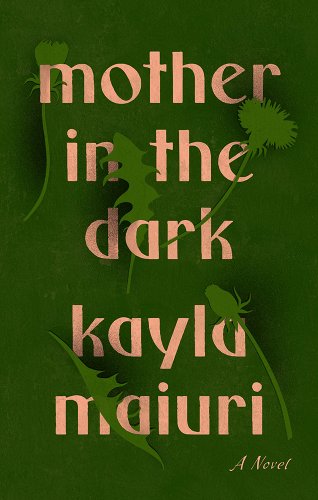
In my debut novel Mother in the Dark,Anna is estranged from her family and living in New York when she receives a phone call from her sister. Knowing it is about their mother, guilt-ridden and consumed by grief, Anna doesn’t return the call. As she reflects on her childhood, she must confront the reality that despite the distance she’s put between them, she is more like her mother than she has allowed herself to believe—and she never left her past behind. In order to move on, Anna must break down the walls she built as a child to survive.
While writing my novel, I devoured stories about unraveling mothers and resentful daughters, negligent fathers, and siblings fending for themselves. Below are eight books that explore the ways mothers and daughters can love, wound, and haunt.
In kaleidoscopic, fragmented prose, Clemmons tells the story of a young woman, Thandi, who must halt her life and a semester at college to care for her mother as she dies of cancer. It is a heartrending reflection on the dizzying process of grief—the slow pain of losing a mother before one’s eyes, and the ache of things left unsaid in a mother’s absence. “The pain was exponential,” Thandi writes, “because as much as I cried, she could not comfort me, and this fact only multiplied my pain.” What We Lose is a moving and thought-provoking account of suffering and the road to healing.
Set in Depression-era Glendale, California, Mildred Pierce follows a mother-daughter pairing fueled by competition and jealousy. Cain centers a single mother, Mildred, who loves in a well-intentioned but smothering way, “acting less like a mother than like a lover who had unexpectedly discovered an act of faithlessness, and avenged it,” and a reptilian daughter, Veda, who seems determined to break her mother’s spirits. The novel reveals the emotional manipulation that can exist amongst mothers and daughters, and the dangers of a parent stifling their own needs for their child’s. I’ve read many novels about mother-monsters; the monster-daughter is rarer. You will be haunted by Veda’s horrific acts long after you’ve finished.
Lost and reeling after their mother’s suicide attempt, Edith and Mae leave their Louisiana home to live with their estranged father in New York City. The Deeper the Water is ahorrifyingly visceral portrayal of mental illness and inherited grief, and Apekina beautifully captures the complexity of siblinghood as Edith and Mae emerge from their shared childhood with entirely unique scars and perspectives.
Hotel Irisby Yoko Ogawa, translated by Stephen Snyder
Slim and thrilling, this novel is narrated by Mari, a 17-year-old girl who’s been forced to drop out of high school to work at her family’s rundown seaside hotel. Mari is lonely and starved of affection, overworked and tormented by a callous and demanding mother. One night, she witnesses a middle-aged hotel guest chastising a prostitute who’s been staying in his room. Marie is immediately drawn to the man’s commanding voice, and soon falls into a dangerous affair. Hotel Iris masterfully explores the violence and pleasure of intimacy, and how our relationship to our parents might affect the romantic relationships we seek.
This heartrending play begins when the patriarch of an Oklahoman family vanishes in the night. His three adult daughters return home to care for their volatile mother as the details of his disappearance come to light. With hilarity and heart, Letts explores the complex dynamics of a family as they unite and unravel beneath one roof. August is a stunning portrait of shifting loyalties, and what it means to break free of one’s family.
A Girl Returnedby Donatella Di Pietrantonio, translated by Ann Goldstein
Without warning, a 13-year-old girl is torn from the family she’s known all her life and sent to live with her “real” family. Abandoned first by her birth mother, and then by her adoptive mother, the unnamed protagonist fights through fear and alienation as she strives to find a place in her new world. Di Pietrantonio imbues this story with sadness but also resilience, all while skillfully capturing the weight of a mother’s absence.
In cold, precise prose, Doshi explores a poisoned relationship between an aging mother, Antara, who is losing her memory and the adult daughter, Tara, who has been called to care for her. But Tara cannot forget her mother’s willful harm and neglect. “I would be lying if I said my mother’s misery has never given me pleasure,” the novel begins, “. . . And any pain she subsequently endured appeared to me to be a kind of redemption.” This is an evocative tale of betrayal and resentment, and one woman’s search for peace.
Lucy is feverish and isolated in a hospital room as she recovers from a mysterious illness after surgery. Her husband is unable to visit due to his fear of hospitals, and she’s not seen her young girls in weeks. One afternoon, Lucy wakes to find her estranged mother at her bedside, who begins to comfort her with stories of her youth and hometown gossip. Much of the novel carries on this way, becoming a tender portrait of the inextricable bonds between mother and daughter as sharing stories allows them to heal.
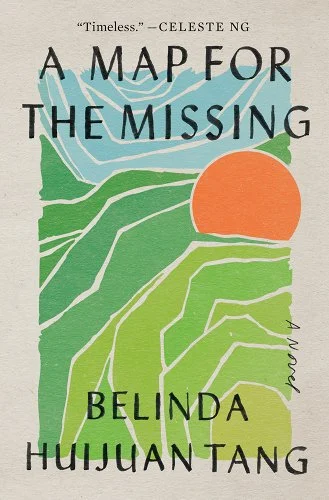
Belinda Huijuan Tang grew up listening to her father’s stories of his ancestral village in Anhui, but as she writes in the author’s note of her debut novel, it wasn’t until she moved to China in 2016 that she began to think seriously about the one story he never told: “how the man who’d raised him went missing when [her] father was seventeen.”
Tang turned to fiction to try and fill in the gap in her family history. Though A Map for the Missingisn’t autofiction, it does contain autobiographical elements. The story follows a Palo Alto-based mathematics professor, Tang Yitian, as he returns to China to search for his missing father. Yitian arrives in a village he doesn’t recognize and struggles not only with a home that has become unfamiliar, but with a family and personal history—especially with his first love Tian Hanwen—whose facts change the more he examines them.
I chatted with Tang over Zoom about what home means to diasporic communities that are constantly urged to go back to the countries they have left, the impermanence and unreliability of memory, the subjectivity of history, the uses of topology, and more.
Elyse Martin: Your book focuses a lot on the idea of home. “Home” is such a fraught concept for people in the Chinese diaspora right now, with the uptick in racist violence and assaults, and the all-too-common insult of: “You should just go home.”
Belinda Huijan Tang: I had no idea when I was writing this book that America would look like this right now. I couldn’t have expected that. And that phrase, “you should go back to China,” is so interesting, because I think for many people who are part of the diaspora, that’s not what they want. They don’t necessarily view China as a place of home or belonging when they’ve been in America for this long. My parents have been here for three decades, and I think that time has created such a distance for them, from their “home” place. It’s really, I think, shocking to them, or shocking to other people like them, who have decided to make their home here to hear phrases like that—to hear, “you should go back home”—because that home is a place that they willingly chose to leave, and they’ve willingly tried to make their new home in America.
At the same time, I think for people like them, there has always been this kind of acknowledgment that they didn’t feel a sense of total belonging here. I don’t think they ever felt that their lives were completely free from small violences in the US. This moment is really bringing out a lot of the contradictions of diaspora and immigration that have always been there.
EM: That idea of “the home that they knew” reminds me of how my grandfather and his brother immigrated from China—so the China I know is the China from their stories, which is pre-Cultural Revolution China, not contemporary China. It also reminds me of the jumps between timelines in your book; it undergirds this idea that the home or the homeland becomes fixed in your mind as the home you had at the point when you left it. So it’s not just a location, but a time as well.
BHT: Yeah, as I was writing this book, I began to think of the idea of home as a place in your memory, more than a physical location. And this home was referring to the specific set of ways that you remember living life at a certain point in time, and a place where you felt belonging, rather than something that stays fixed.
A huge part of the sadness of being an immigrant is accepting the fact that you are leaving this place, and you will forever have to hold it in your memory.
Yitian has this idea of home as the place that he had come from; this place that was set back in the past and hadn’t developed. And then when he returns, he finds the place has moved on, in many ways that he would not have anticipated. People are going to the city, there are signs of development in the village that he would never have expected. A huge part of the sadness of being an immigrant is accepting the fact that you are leaving this place, and you will forever have to hold it in your memory, as a home, rather than as a place that exists that you can still be a part of.
EM: Exactly! You brought that out in the very beginning of your book, when Yitian’s trying to recognize his childhood home by the broken tiles around the roof. But in the time that’s passed, and due in large part to his own success in America, those tiles have been fixed for years.
BHT: He has, as you said, been instrumental in creating the changes that have taken his home away from the place that he once recognized. That’s interesting—that the image of home that existed for you is the one that your grandparents told you about, and it’s one that’s decades in the past. That was also very much the case for me, too. I had always imagined this ancestral village as the place that my father told me about from the 1970s and ‘80s. I had this very rustic image in mind. And when I visited as a student researcher, I did encounter some of those things. It certainly wasn’t developed like a big city. But it also was very evident that the place that my father was recalling to me no longer existed. And I had to confront that distance between what I expected and what was when I visited.
EM: You mentioned in your author’s note that that trip reshaped your understanding of home. Could you talk a little bit more about that?
BHT: My father was the first to leave China and come to America, so I grew up without any knowledge of what it was like to have family around. Going to China as an adult, and being so warmly received by so many members of my extended family, people who are very far off in the branches of the tree for me, was the first time that I had experienced that sense of belonging outside of my immediate nuclear family. I understood what it felt like to have a community that you can rely on in times of need, and what it felt like to always have support around you and that someone always has your back.
It felt like an immense load off my shoulders, not to have to do everything alone. It was just such a relief in a way that I didn’t really understand or anticipate: to live in a place where everyone just looked like me. My face was taken as a given for what people from this place look like. I’ve never been someone who’s really felt like an outsider in the US. I didn’t think I struggled with questions of identity in that way. But it became apparent to me that there was something in my body that just felt more at ease and comfortable when I was living in China.
EM: Using topology and mathematics, versus geography, was an interesting and unusual choice. What led you down that particular path?
BHT: I studied a lot of math in college and when I made Yitian a math professor, it was an opportunity for me to explore subjects that I really hadn’t looked at since college. The origin of the phrase “map for the missing” was this idea of trying to define an object in terms of the parts of it that are missing, rather than the parts of it that are there. When I read about it as a mathematical concept, it felt like such a perfect fit for some of the things that I was thinking about, like how Yitian is conceiving of the losses in his life. I felt like I had to put it in the book.
EM: Your book really explores absences and gaps, sort of like lacunae in texts. Did that make it at all difficult for you to write the novel? Because you’re writing around things so much?
The origin of the phrase ‘map for the missing’ was this idea of trying to define an object in terms of the parts of it that are missing, rather than the parts of it that are there.
BHT: That’s an interesting craft question that originates out of an interesting life question, which is: “How do we fill spaces when there are deaths in our lives, or when we have people in our lives who don’t give us the answers, or who don’t give us the clarity that we’re looking for?” That’s something that most people have to reckon with at some point in their lifetimes: creating meaning for themselves out of a lot of missing spaces. I tried to give space for the two major characters, Hanwen and Yitian, to do a lot of thinking around making meaning of their lives when there’s so much they don’t know. In fact, we, as the reader, know more about Yitian’s life and his family than Yitian ever finds out himself. We see that he has to make closure and meaning for himself through imagining, “What must my father have felt like, going through these sets of situations? What must my brother have felt like? And in what ways can I extend empathy to try to understand them?” It began as a difficult craft question but I think it ended as an opportunity for me to engage deeply with how we make meaning in the world when we don’t have that sense of closure.
EM: I thought this was particularly interesting given the Alzheimer’s subplot that appears later in the book.
BHT: Right? Alzheimer’s is something that I’d wanted to write about because it’s something that runs on both sides of my family, and it’s something that I’ve seen up close quite a lot. What was most striking in seeing people in my family go through it, was how Alzheimer’s is the loss of memory—but with that loss of memory came the loss of relationships, because all of these relationships were based in memory. And once that was gone, there was really nothing to keep those relationships or families together, because there was no history on which to base it upon. I was really curious about what happens when memory is lost. It can be tragic because obviously all that history is lost, but in the case of Yitian, who’s had such a difficult relationship with his father, it also presents a kind of freedom because all of that tragic history is lost. That sense of being wronged is also lost. That’s what happens between Yitian and his father at some point, the loss of memory almost provides the opportunity for the other parts of the relationship to rise anew.
EM: I’m struck by your saying that relationships start changing with the loss of memories, because when Yitian leaves, obviously, he stops making memories with his neighbors and the people in his village. When he comes back, he’s always telling people that he’s from the Tang village and trying to establish connections based on that, but people keep assuming that he’s American and trying to interact with him based on their own assumptions of who he is now.
BHT: When Yitian returns to the village, it’s shocking for him that people aren’t seeing him as the person that he once was. His identity, as he conceives of it, has been lost, and it’s been crafted anew by the people he once thought knew him intimately. They don’t see him any longer as one of them. They see him as an outsider. I wanted to play with that, in showing how these people who were once a part of him; how, when their conception of Yitian changes, it also really changes Yitian’s own conception of home.
EM: I think that ties into the way history is examined and played with in the book, because Yitian’s understanding of history is shaped and changed by the people who are presenting it to him, and also by the Cultural Revolution and its aftermath. What was it like writing with a sense of history that was not fixed, but rather is constantly changing and constantly being edited?
BHT: That really informs my writing, both in terms of the actual history in this book, and this idea of family history. As I was doing research, I had to really question a lot the sources that I was reading, because reading a Chinese government account of what life was like for the “sent down youth” was very different from reading a memoir published in the US, and that was different from reading a memoir published by a Chinese blogger. There are all these ways that people who are speaking are constrained by their understanding of history, and by how they should speak about history. The research process became quite fraught because I had to find the truth between what was allowed to be said and what wasn’t allowed to be said, and I had to try to come to an understanding of what reality I wanted to present in the book.
The idea of a fluid national sense of history was helpful for me in thinking of what it means to have a fluid sense of a personal or familial history. Yitian starts the book with one idea of what the history of his family is and why he’s estranged from his father. What he finds out throughout the course of the book is that a lot of the things he took for granted in his family were actually not true, and were assumptions that he had developed as a child. He then has to undergo this process of understanding the flaws in his conception of his family history.
EM: Let’s talk a little bit about Hanwen, then, because her understanding of her past relationship with Yitian is very different from his own.
BHT: I think that becomes really obvious when they come together again in the 1993 timeline after not seeing each other for fifteen years. Yitian views Hanwen as his first love. But because of the opportunities he’s been granted, he’s been able to put that story with her aside and say, “This was formative, and it’s also a time that has passed.” Whereas Hanwen has come to associate that time in her life with Yitian as representative and symbolic of something more meaningful, which was this great missed opportunity: “This was the moment where I could have gone to college and begun to determine a life for myself.” Even when we come to her fifteen years later, she’s in many ways still engaging with that memory as a point when her life really changed. Watching those two conceptions of how they’re holding the relationship clash was a point of conflict that I really wanted to explore.
EM: Anything else you’d like to add?
BHT: I’ve read a lot of a kind of book that has been really meaningful to me, which is the immigrant novel that’s set in the US about how life in the US is fraught because of feeling like an “other.” I really learned a lot from and love those kinds of books—but I wanted to write a book that was the opposite of that. I wanted to geographically center a different part of the world, because that’s a relationship that’s just not talked about as much in literature. I think part of it is because when we see immigrants come to the US, we make the assumption that where they’re from is a place they want to leave behind. But as we discussed, it’s still something they hold onto. What does it mean to have an idea of home that just is not there anymore because of the decision to emigrate?
they wouldn’t’ve been able to hoist him up on that cross / all the paintings got his ribs showing, the contours of his stomach undulating from emptiness / a growl heard through centuries of canvas / enough to make you hungry just looking at him / if he’d had meat on his bones, ate good like mama mary wanted him to he would’ve been better off / might’ve pulled that cross right down, popped that flimsy piece of lumber from the ground & said i am thy god

imagine dying on an empty stomach / could’ve been like buddha but chose to be a vacuum, a chasm instead / then have the nerve to make a rule about gluttony when there’s nothing about the sin of denying your own body / like it doesn’t carry you through this world / like it isn’t the one thing that’s with you all your days / the one thing they cannot take away / how am i supposed to believe this skinny bitch can do anything / how can he save me when he can’t even save himself
hide and seek
No one told me you could be forgotten
by your cousins playing hide and seek.

No one told me the light in the fridge goes out
when you climb inside and close the door.

No one told me how the grate on the shelf above
presses into the ridges of your spine, compressing you

and how your legs folded underneath your torso
fall asleep, going numb as the chill sets in.

No one ever tells you the inside of refrigerators
smell like kitchen cleaner spray, arm & hammer powder

and salad greens wilting in plastic bags, or that
your grandmother’s homemade yogurt tempts from the top shelf.

No one ever tells you how impatient you grow and how your breath slows as you breathe the little oxygen you allowed inside with you.

No one tells you how light your head feels, how loud your blood thunders, how desperate your heart screams, louder than the muted world outside.

No one tells you the door suctions shut and you might be folded so small you don’t have the space to push yourself out.

No one tells you that you’ll have to thrash, pound, and flail against the plastic walls until there’s a burst of warm outside air––

No one tells you you’ll roll out gasping, cramped and claustrophobic, victory chilled into your bones when your cousins ask “Where were you?”
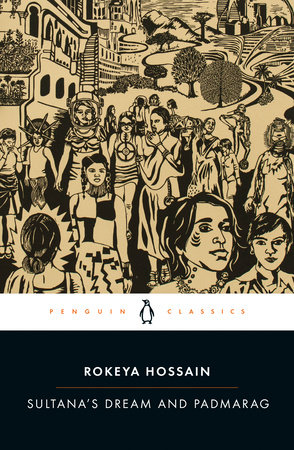
Solar power. The end of war. Gender role reversal. Dirigibles. First published in 1905, Rokeya Hossain’s short story “Sultana’s Dream” is steampunk avant la lettre, strikingly advanced in its critique of patriarchy, conflict, conventional kinship structures, industrialization, and the exploitation of the natural world.
Notably speaking to the concerns of our contemporary world as much as its own, it is also striking for being a parodic critique of purdah by a Muslim woman. At a time when British colonialism was using the treatment of women in India as justification for colonial intervention there (a rhetorical strategy still in use by the West today), Hossain’s story imagines a world in which men rather than rather women are kept inside, thus framing her protest against Islamic patriarchy within a larger feminist vision that takes on Western as well as Islamic forms of gender hierarchy.
“Sultana’s Dream” is not just one of the first science-fiction or utopian stories written in India by a woman; it is an integral part of the emergence of sci-fi as a form of speculative fiction at the turn of the nineteenth century, more often associated with male Western writers such as H. G. Wells, Jules Verne, and Arthur Conan Doyle. At the same time, it is one of the first feminist utopias in modern literature, published a decade before Charlotte Perkins Gilman’s Herland (1915), and part of a wave of fin de siècle utopias that includes Edward Bellamy’s Looking Backward (1888) and William Morris’s News from Nowhere (1890). It is also one of the first literary works in English by a Muslim writer in South Asia. In all these ways, Hossain’s story is an important part of Anglophone literary history that has yet to be fully recognized as such.
It is all the more remarkable, then, that ‘Sultana’s Dream’ was written in her fifth language by a woman who was denied a formal education.
It is all the more remarkable, then, that “Sultana’s Dream” was written in her fifth language by a woman who was denied a formal education (she also knew Urdu, Persian, Arabic, and Bangla). The Muslim community in India at the time largely did not approve of education for women, and the colonial government, though it had a college for Hindu women, did not open one for Muslim women until 1939, close to the end of the British imperial rule in India. Promoting education for girls and women was thus Hossain’s passion, as evidenced by the stories and essays collected in this volume; it also shaped her career and political work and is one of her enduring legacies.
Rokeya Hossain (1880–1932), known by the honorific Begum Rokeya, is widely recognized in South Asia today as a pioneering educator, feminist, writer, and activist. Because she lived and worked in a region of colonial India that is now part of independent Bangladesh, she is a particularly revered public figure there and is celebrated every year on December 9, otherwise known as Rokeya Day.
India was ruled by Britain from 1857 to 1948. The idea that the English language and literature was superior to Indian languages and literatures, and should therefore be taught as widely as possible, was a racist justification for Britain’s prolonged rule and a tactic of governance: many desirable government jobs required an English education, so it came to be seen as crucial to social, economic, and political advancement. This is part of the reason Hossain educated her children in Britain, wrote “Sultana’s Dream” in English, and argued that Muslims should pursue English educations so they would benefit from the vocational advantages that accrued to those who could speak and write in English. But she was also deeply critical of British rule and its imposition of cultural norms on India; in Padmarag, Tarini Bhavan, a women’s school, workshop, homeless shelter, and hospital, offers a broad and Indian- centered education so that its students would not be “forced to memorize misleading versions of history and end up despising themselves and their fellow Indians.”
Hossain’s story [frames] her protest against Islamic patriarchy within a larger feminist vision that takes on Western as well as Islamic forms of gender hierarchy.
Hossain grew up in a traditional Muslim family. Her father had four wives, favored education for his sons but not his daughters, and imposed purdah: a Muslim practice, also employed in some Hindu communities, where women live in separate quarters to conceal themselves from men, and sometimes unknown women as well, and use veiling to cover their bodies when in public. As a result, Hossain had to largely educate herself by reading on her own, though she was helped by her brother, who taught her English (and to whom she gratefully dedicated Padmarag), and her sister, who taught her Bangla, the language in which she published most of her writing. Like many women at the time, she was married young, at the age of sixteen. It was an arranged marriage, but her sympathetic brother deliberately helped match her with a man, Sakhawat Hossain, who he knew to have more progressive views about women’s education than their father. Her husband ended up not only being supportive of her writing—he encouraged her to publish “Sultana’s Dream,” for example—but also left her money when he died to set up a school for girls, thereby paving the way for her autonomy and ability to pursue her ideals.
“Sultana’s Dream” was first published in 1905 in The Indian Ladies’ Magazine. Edited by Kamala Satthianadhan, it was the first English-language periodical in India run by, and targeted at, Indian women; Satthianadhan’s daughter, Padmini Sengupta, wrote for the magazine and later served as its assistant editor. Both a Christian and an Indian, Satthianadhan saw herself as a syncretic blend of East and West and imagined her magazine this way as well, blending sympathy for Indian nationalism with expressions of friendship with Britain. Thus while hers was one of the first magazines to publish the poems of Sarojini Naidu, who would later become a prominent figure in the nationalist movement, it tended to shy away from publishing the kind of overtly anti-imperialist articles that came to dominate the Indian press by the early twentieth century. But like Hossain’s story, The Indian Ladies’ Magazine was more explicitly part of the burgeoning conversation about women’s rights and published the work of several influential feminists and activists. As well as Hossain and Naidu, it showcased writing by lawyer and reformer Cornelia Sorabji, socialist and politician Annie Besant, and educator-reformer Pandita Ramabai.
While Hossain is celebrated in the present day for her contributions to feminism and education, she endured bitter criticism in her own lifetime.
Satthianadhan’s gender politics, like her nationalism, were cautious; on the one hand, she promoted the idea that women should stick to the domestic sphere, on the other, she was interested in women’s rights and strongly believed in their education and right to participate in public discourse, as evidenced by her own path and that of her daughter. She was also, like Hossain, against the strictures of gender segregation and purdah, which no doubt motivated her inclusion of “Sultana’s Dream” in The Indian Ladies’ Magazine. But in a move consistent with the political balancing act typical of her journal, she went on to publish a satire of the story, “An Answer to Sultana’s Dream,” in the next issue of the magazine, which ends by restoring the gendered division of labor that Hossain’s story so gleefully subverts. The fact that this counterargument may have been authored by her daughter (the author’s name is listed simply as “Padmini”) suggests how radical Hossain’s story was and how careful Satthianadhan felt she had to be in disseminating it.
Although it was one of Hossain’s first published pieces, “Sultana’s Dream” would end up being her most famous. But she wrote for a number of contemporary periodicals and in a range of genres, including essays, stories, poems, and reportage, most often in Bangla. Her choice of language was an intervention in itself. Bangla was a regional language, whereas Urdu was considered the proper language of educated Muslims; as a girl, she had had to learn Bangla on the sly to skirt her father’s disapproval. But she developed a passion for the Bengali language, and since her goal was to shift public opinion in Bengal about women’s rights, she used Bangla as a way to address her community directly; she also made a point to teach it to her students. Her influential works written in Bangla include Motichur (translated as “A String of Sweet Pearls”), a collection of feminist essays in two volumes, and Padmarag (translated alternately as “The Ruby” or “Essence of the Lotus”), reprinted here. Though published in 1924, more than twenty years after “Sultana’s Dream,” it reprises many of that story’s themes, focusing on the injustices of gender disparities, on utopian female community, and on women’s education.
Another influential work by Hossain, The Secluded Ones, was published in 1931. Initially serialized in the periodical Mohammadi, it was later released as a single volume. Audacious both in form and in content, it documented the adverse effects of purdah on women’s lives by gathering together forty-seven anecdotes of absurd and/or tragic situations resulting from inflexible approaches to gender segregation. Hossain drew from her own experience as well as that of other women; for example, one of the anecdotes describes how as a small child she once had to hide under a bed in a dusty attic for four days so that visiting maids, who wandered freely around the house, wouldn’t come across her. The Secluded Ones was not only a significant feminist intervention but also important for having been written by someone who had both experienced purdah herself and who celebrated her Indian and Muslim identities, since many of the accounts of purdah that circulated before this were exoticized traveler’s tales by Western writers who often held derogatory views of Islamic culture and relied on second- or third-hand accounts of gender seclusion.
The protagonist, a Muslim woman living in contemporary India, wakes up in a transformed future world: a utopia in which women are free to explore at will and pursue an education.
The bulk of Hossain’s writing, as we have seen, promoted the cause of women’s education, either directly or indirectly. In an essay included in this volume, “God Gives, Man Robs” (1927), for example, she invokes the Prophet Mohammed to support her arguments. Since he commands that all men and women should acquire knowledge, she contends that it is wrong for men to stand in the way of the education of their wives, daughters, and sisters: not only is this a disservice to women and to Islam, she notes, but it also puts Muslims at a further disadvantage relative to the Hindu community (the dominant religious community in India), which was at the time engaged in a number of reforms related to women’s rights, including increased access to education.
“Educational Ideals for the Modern Indian Girls” (1931), meanwhile, spoke of uniting the religious and moral emphasis of traditional Indian education ideals with the secular knowledge important to twentieth-century life: “We must assimilate the old while holding to the now.” She advocated for a diverse and well-rounded curriculum that included art, physical education, science, horticulture, and health care—a pedagogical vision that is reflected in the utopian communities depicted in both “Sultana’s Dream” and Padmarag. Education for women, considered a break from tradition, is associated with modernity and thus with “the adoption of western methods and ideals.” But as in Padmarag, Hossain argues in this essay against the “slavish imitation” of the West and contends that domestic duties and older forms of knowledge should be integrated into female education, along with the kind of vocational training passed on from parent to child. While her appeal to the importance of feminine duty may have been in earnest or may have been an attempt to harness more widespread support for women’s education, this essay also contained an unambiguous and bold statement: “The future of India lies in its girls.”
Alongside this writing, Hossain devoted much of her relatively short life to hands-on educational work. In 1911, not long after her husband’s death, she founded the Sakhawat Memorial School for Girls in Calcutta (now Kolkata). A letter she wrote to the editor of the periodical The Mussalman appealing to the Muslim community for support shows how challenging and potentially controversial this undertaking was, despite the money left to her for this purpose by her husband.
By forming a collective, the women free themselves from the need for support from husbands or family: entities that the story often depicts as selfish, abusive, or uncaring.
Though Hossain ended up starting the school with only eight students, she persisted against bias in the Muslim community and had over eighty students in her school by 1915. Even while teaching and running the school, she was engaged in other forms of activism to promote women’s rights. In 1916, she founded the Bengali Muslim Women’s Association to cater to less privileged women (since women at her school tended to be from the middle and upper classes); much like Tarini Bhavan in Padmarag, it provided a variety of forms of aid, including shelter, community, financial help, and literacy. She was also involved in the organization of an All India Muslim Ladies’ Conference in Calcutta in 1919, where women’s education and polygamy were debated in the context of modern Muslim community; in a letter to The Mussalman in which she publicized the conference, she demonstrated her commitment to female solidarity by proposing to meet women traveling to the conference from remote areas at the train station and offering them free room and board at her school.
While Hossain is celebrated in the present day for her contributions to feminism and education, she endured bitter criticism in her own lifetime. Many members of the Muslim community, especially religious leaders, deplored her feminism and declared her irreligious and overly Westernized, even though she remained a practicing Muslim and dedicated her life to helping Indian women. But she also inspired a younger generation of activists, who used works like The Secluded Ones to campaign for women’s rights, and her activism and writing helped to change public attitudes toward women’s education. Shortly after her death at the age of fifty-two, her school for girls started receiving government funding. It still exists in Kolkata today, evidence of Hossain’s work and lasting effect on Indian education. And her influence continues to spread—though Hossain’s crucial contributions to feminism are still not that well known outside of South Asia, “Sultana’s Dream” is increasingly included in Anglophone literary anthologies. In 2018, it was also the subject of an art exhibit by South Asian American feminist artist Chitra Ganesh, “Her Garden, a Mirror,” that illuminated how eloquently and urgently Hossain’s utopian visions continue to speak to the crises and injustices of the present.
Because it could be labeled both utopian literature and sci-fi, “Sultana’s Dream” is perhaps best described as speculative fiction, an umbrella category that includes these genres as well as horror and fantasy. Speculative fiction encompasses any form of imaginative literature with nonrealistic elements: objects, situations, places, or beings that have never existed in the past, and don’t exist in the present, but—in the case of much sci-fi and utopian and dystopian fiction—could potentially exist in the future. Margaret Atwood, for example, uses the term to describe her dystopian novels, such as A Handmaid’s Tale, because they present worlds that might emerge out of present-day political conditions. But the term has also been used more broadly to describe fiction, like that of H. P. Lovecraft, that is nonmimetic but also nonpredictive. While some critics argue that this definition is too broad to be helpful as a description of a literary genre, speculative fiction as a label for a wide variety of works has emerged more prominently in recent years, partly because nonmimetic genres have proliferated and partly because it captures the way that the genres encompassed by it tend to intersect and overlap, particularly in the work of contemporary writers of color like Octavia Butler.
The sci-fi elements of ‘Sultana’s Dream’—electric flying cars, the use of science to harness the power of rain and of the sun—are particularly notable for their prescience and innovation.
In “Sultana’s Dream,” the protagonist, a Muslim woman living in contemporary India, falls asleep and wakes up in a transformed future world: a utopia in which women are free to explore the world at will and pursue an education. Their society is peaceful and just, run by a queen who uses scientific principles to put an end to war, conquer disease, harvest clean energy from the sun, and live in harmony with nature. The sci-fi elements of “Sultana’s Dream”—electric flying cars, the use of science to harness the power of rain and of the sun—are particularly notable for their prescience and innovation. Hossain draws on other genres as well, namely satire and parody, to accentuate her critique of purdah. If satire works through poking fun at its object in order to lambast it, parody imitates the form of its object of critique but incorporates a key difference that indicates why the object is worthy of ridicule. The parody of “Sultana’s Dream” operates by replicating the conditions of purdah in Sultana’s utopia but reversing the gender roles, so that men, rather than women, must stay indoors and take care of the home and the children, while women run society and roam the streets happily, free from harassment and exploitation. The unlikeliness of male seclusion is part of the story’s humor, but this detail also draws its strength from the logic of purdah; if women need to be covered and cloistered because of their own weakness and because of male desire, as supporters of purdah believe, then this desire and male strength (or physical aggression) is the problem that needs to be contained. To the degree that the story seems to hold a low opinion of men—who are held responsible for the prior woes of the world and, more comically, are depicted as lazy and hapless—it does so by leveraging and rearranging real-world assumptions about gender.
More pronounced than its sci-fi or satiric elements, though, is the story’s utopianism, and the way it uses those elements as building blocks. The utopian tradition spans most of literary history; it has been traced back to Plato’s Republic (375 BC) and Thomas More’s Utopia (1516), among other influential texts, and has long been an occasion for feminist imaginings. Christine de Pizan’s The Book of the City of Ladies (1405) builds an imaginary city of famous women (both real and fictional) in order to advocate, as Hossain does, for female education. Millenium Hall (1778) by Sarah Scott is also similar to both “Sultana’s Dream” and Padmarag in its vision of female community as crucial to the advancement of both the self and society.
Influential theorists of utopia, such as Ernst Bloch (see Suggestions for Further Reading), argue that utopian thought is a key component of human aspiration. Since the word “utopia” means “no place,” utopias are not necessarily meant to be direct road maps to social transformation. Instead, they are designed to show us what’s wrong with the current world and ask us to imagine it differently; they strive to startle their readers into the perception of new possibilities. “Sultana’s Dream” does just this in its reversal of gender roles and in its transformation of the world into Ladyland: a safe and joyous space in which women are able to live productive lives and nature and culture are harmonized. If the fact that this vision entails keeping men separate and inside the home is the story’s most unrealistic element, it is also its most poignant in its indictment of both purdah and gender-based violence.
Hossain is careful to wrest the critique of gender roles in India away from Western commentators by showing how British colonialism itself perpetuates oppression.
When is the time of utopia? Generally, both utopias and dystopias are associated with the future; “Sultana’s Dream” seems like futuristic sci-fi because of its visionary space-age details. But according to the Queen of Ladyland, her country exists alongside India, which she refers to as “your country” when addressing Sultana. Sultana’s dream world, then, is a parallel world; one that might be accessed, the story suggests, via female education, since this is the key reform the Queen instituted that allowed for the radical transformation of society. Hossain’s novella Padmarag is similarly utopian in its depiction of female community; the institution at the center of the story, Tarini Bhavan, functions as a home for widows, a school for girls, and also as a “Home for the Ailing and Needy.” It welcomes women of all ages, ethnicities, and religions and supports them equally, giving them the opportunity to become self-sufficient by supplying work training or allowing them to work on the premises. By forming a collective, the women free themselves from the need for support from husbands or family: entities that the story often depicts as selfish, abusive, or uncaring. The intentional community of Tarini Bhavan, on the other hand, is one of mutual care and sustenance, both material and emotional. The utopian component of the story, then, inheres in the overcoming of differences between women and the success of their enterprise, but there are also many realistic elements to the story. Rather than occurring in “no place,” Padmarag seems to be set in contemporary India, and the depiction of the school and ancillary institutions that make up Tarini Bhavan clearly draw on Hossain’s experiences running both her own school and the Bengali Muslim Women’s Association (such as the letters of complaint from parents that Tarini reads out loud to her friends in chapter 19). If in “Sultana’s Dream” the utopian Ladyland contrasts with the imperfect state of contemporary India for women, in Padmarag, Tarini Bhavan is a small island of utopian community within a real world of grossly unfair gender disparities. As we learn the stories of the different women that live there, we also learn of the different forms of exploitation and bondage to which women can be subject.
Yet Hossain is careful to wrest the critique of gender roles in India away from Western commentators by showing how British colonialism itself perpetuates oppression. Helen, the British member of the Tarini Bhavan community, demonstrates that women in Britain are subject to similar forms of discrimination, while one of the central villains of the story is a British indigo planter whose greedy machinations lead the heroine Siddika (aka Padmarag) to Tarini Bhavan to join the other women who are seeking refuge from patriarchy there. At the end of the story, Siddika foils both the romance plot that would have her reconcile with her true love, Latif, and a utopian ending, by leaving both Latif and Tarini Bhavan behind to return to seclusion in her hometown. Her motivations, beyond a sense of duty and a desire to determine her own destiny, are not adequately explained, but the story as a whole seems determined to flout expectations of both genre and gender in order to show us both a deeply flawed world and people struggling to carve out a better one. As one of its inhabitants puts it, Tarini Bhavan exists to redress the injustices of the society it inhabits: “Come, all you abandoned, destitute, neglected, helpless, oppressed women—come together. Then we will declare war on society! And Tarini Bhavan will serve as our fortress.” Seemingly disarming in their innovation and humor, both the utopian stories collected in this edition are formidable as well, presenting themselves to the reader as mental fortresses against pernicious gender ideologies and other conventional ideas.
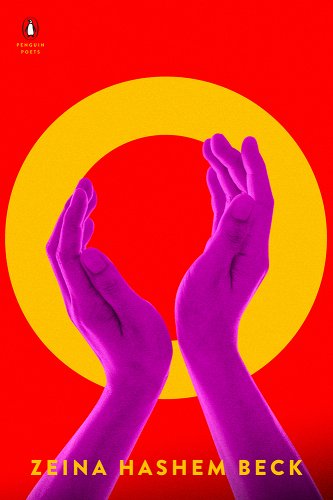
Words can, and often do, fail. For Zeina Hashem Beck, a poet and polyglot of three languages, words can, and often do, fail—threefold. This, she says, isn’t a dead end. It’s an invitation. “The words will come when it’s time. And I trust that,” she tells me via an email from Dubai.
Hashem Beck’s newest volume of poetry, O, liaises with language in a way that strays from her previous works. Collections like Louder than Hearts(2017) focus on externality and setting, while O, which she calls “quieter,” preoccupies itself with the body as it oscillates between continents and cultures. Raised in Lebanon, Hashem Beck was educated at a French school before matriculating to American University of Beirut, where she received her bachelor’s and master’s degrees in English Literature. After living in the United Arab Emirates for a decade, Hashem Beck and her family moved to Northern California in the final weeks of 2021. The poet’s myriad experiences are apparent in both her quotidian exchanges—Arabic (“the Lebanese dialect”), with some English thrown in for good measure, is spoken with friends and family—and in her poems. “Bulbul,” for example, elaborates on multi-ethnicity: “I forget the order of your alphabet though I know all the old Egyptian plays by heart.” “I dream in Lebanese. I count in French.” “The students turned their umbrellas to a Sinatra song in Beirut & here I am writing to you about pining for New York City.”
Like many of her contemporaries, Hashem Beck’s poetry mingles with memoir, as well as with more essayistic and less staggered forms. Through multiple emails and direct messages, she spoke with me not only about how language affects her writing and personal life, but also about how the amalgamations become one.
Arya Roshanian: Where in California did you move to? I was born and raised in a suburb of Los Angeles, so I love talking about California.
Zeina Hashem Beck: Ah, then we need to speak after this; I want to learn more! You’re not the first Californian who tells me they like to talk about it. We moved to the eastern Bay Area in December 2021, and though I didn’t expect to like California, I think it’s quickly growing on me. It’s only been six months, so I don’t know much about it, but it instantly helped that the landscape and the weather reminded me of Lebanon. I hate to admit that I love staring at the mountains and trees, since I’ve always defined myself as a city girl. This afternoon, I picked peaches from our front yard; I’ve never had this kind of relationship with nature before (I’m still scared of spiders, bees, and the squirrels who beat me to the peaches). Perhaps California’s distance and quiet helps, on some level; so much has happened in the past two years both in my personal life and back home in Lebanon (the October 2019 revolution, the economic collapse, the August 2020 Beirut explosion) that part of me needed to be at the other end of the earth. The other part wakes up some days and wonders, “What the hell am I doing here?” I was already “away” from Lebanon while in Dubai of course, but California is a totally different kind of away.
AR: New cities can bring out sides of ourselves that we may not have known existed. Was there something you thought would change for you that’s been more or less the same?
ZHB: By the time the decision was made to move to California, I was so exhausted I didn’t even have the energy to think about what might or might not change. And that’s very out-of-character for me, because I plan and I like control, but I think that transition period forced me into surrender. I was taking it day by day, hour by hour even. It was the only way; it would have been too scary for me otherwise.
AR: You moved to California from Dubai, and I’m hesitant to ask how you plan to “establish your roots,” because that idea seems like a fallacy—I feel like we plant seeds of ourselves everywhere we go, rather than setting firm roots. In what ways are California, Dubai, and Lebanon in harmony when you think about yourself?
ZHB: When you’re in Dubai, you’re still pretty close to Lebanon and you’re surrounded by Arab friends, so you somehow feel “rooted.” On the other hand, since you can’t become a citizen, you’re always aware there’s no permanence for you there. Here in California, it’s a much deeper degree of separation, and this time I felt I had really left. When we were kids, my mom always said, “Those who go to America never come back.” My brother left to study in the US when he was seventeen. At the time, I was twelve, and I resented the US for taking him away from me—it felt like a kind of theft, and I promised myself I’d never live there. I recognized a very similar anger, the anger at a place taking your people away from you, in my daughters and their friends as they said goodbye in Dubai. I never thought I’d end up here, but here I am, staring at beautiful maple tree leaves and cursing at squirrels. As for Lebanon, what can I say? It’s home, and it’s a home I seem to constantly be estranged from. To go back to your question: not only is there no harmony, but more importantly, the discord is necessary.
AR: Speaking of harmonies, many of the poems in O are bilingual, which you classify as “Duets.” You do this cool thing where both languages are utilized separately in a single poem, yet they form their own poem when read together. From a craft perspective, how did that come together?
ZHB: With much difficulty, but I like this kind of difficulty. Sometimes the Arabic came first, sometimes the English, and sometimes both of them came together from the start. The most challenging thing was making the poem flow whichever way you read it, whether in English, Arabic, or both, while also keeping some contradiction between the two languages. This took a lot of reading and rereading out loud, a lot of revision.
AR: The irony of being bilingual, or a polyglot, is that words, regardless of the language, can still fail to express our state of mind. How do you navigate the limitations of language in your poetry?
We write poems because we feel there’s something beyond language that we want to reach with language.
ZHB: The urge to write poetry springs from this limitation; we write poems because we feel there’s something beyond language that we want to reach with language. My way of navigating this is to keep writing, to foolishly seek out that impossibility.
AR: What happens if/when you run into a dead end? How do you work around that?
ZHB: It just means you have to slow down and listen. You have to wait. I remind myself that I’m not a machine, that writing is a slow practice, and that I don’t have to prove to myself or others that I’m being “productive.”
AR: Are there times when you feel the “writer” part of yourself speaks its own language? Do you ever have trouble communicating with others outside the written form?
ZHB: Our different selves speak different languages, for sure, while constantly intersecting. That’s part of the beautiful discord, to go back to that! It all depends on context—I definitely don’t walk around speaking lyrically all the time, or speaking in ghazals, though I love intense conversations with friends about the meaning of life, love, friendship, marriage, desire, motherhood. I also love dancing with friends to really bad pop Arabic music and talking about haircuts, nail color, clothes. Any close friend of mine has endless photos of me in different outfits on his/her phone, with questions like, “This one? This size? This color? You like? What do you think? Where are you? Answer!” To return to your beautiful question: no, I don’t think I have trouble communicating with others outside the written form.
AR: What’s your writing style in non-creative outlets? For example, when writing an email or text, how much of your “poet” side are you imbuing into those mediums?
ZHB: I used to read emails a few times before sending them out, and I think that’s the editor in me, but I do that a lot less now, because fuck it, life’s too short. My texting style is super informal, filled with lots of exclamation marks and a wide repertoire of Whatsapp stickers, which are their own genre.
AR: Tell me about the collection’s title, O. An entire collection reduced to a single letter. Could you explain your decision behind the title?
ZHB: I would first like to apologize to anyone who’s read another interview about O because I’m about to repeat myself. So, the collection was initially titled “Ode to the Afternoon,” after one of the poems, with the afternoon being, for me, a period that’s always made me feel uneasy. But then one day, it made sense to reduce it to just that letter, the “O” of lyricism, surprise, wonder, pause. The “O” of God, body, home, mother, ode, love, and joy. The shape that’s present in the body itself, in its openings.
AR: There is a line from one of your poems I keep going back to. It’s the opening to “Everything Here is an Absolute”—it’s, “Look at where this nostalgia has brought us.” Nostalgia can be both beautiful and dangerous. Has nostalgia ever failed you, or set you back?
ZHB: As you say, nostalgia can be beautiful (as a teenager, one of my favorite Lebanese radio stations was a French one called “Nostalgie”), but I have to necessarily write against it, even as I write from it. I’m not saying there is zero nostalgia in my poems, but imagine if it were the only lens? My God, it would be disastrous. The poem you mention recognizes, from the first line, that nostalgia has already separated the speaker from the city she’s describing/longing for. Working on the Duets, by the way, it was interesting to notice that the Arabic seemed less nostalgic for me than the English. In one of the Duets, for example, the speaker still “worships” the city in English but swears to stop doing this in Arabic.
Finally, I want to distinguish between lyricism and nostalgia; I love a lyrical voice, one that’s grounded in the real, the uneasy, the humorous even. As for nostalgia ever failing me, I’m not sure—I don’t think so, because I always had, with whatever nostalgic feelings I’d go through, a simultaneous doubt about those feelings. Perhaps growing up in Lebanon trains you for this.
AR: What are you reading these days? And who are the writers you return to the most?
ZHB: I co-host, with Palestinian poet and friend Farah Chamma, a podcast in Arabic about Arabic poetry, titled “Maqsouda.” In preparation for season 2, we’ve been reading Dalia Taha, Golan Haji, Qassem Haddad, and Riad al-Saleh al-Hussein, among others. I just finished Noor Naga’s If an Egyptian Cannot Speak English, am finishing bell hook’s All About Love,and want to start Hayan Charara’s These Trees, Those Leaves, This Flower, That Fruit. I return to Mahmoud Darwish, Badr Shaker as-Sayyab, Wislawa Szymborska, Audre Lorde, and many more.
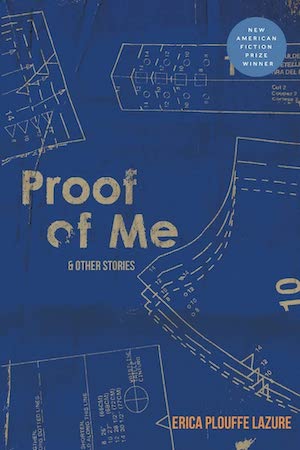
One of the central questions I had when shaping my story collection, Proof of Me, was how to invite into it a unified feel, how to place each story to be in conversation—geographically, thematically, linearly—with what follows. I also sought for each story to stand on its own, offering a microcosmic glimpse into the lives and experiences of my characters, feeling the fullness of their stubbornness, shortcomings, and unrequited bids for redemption. Thus, once each story found its narrative footing, the big-picture connective tissue that often drives novels—the sense of sequence and pacing, the curiosity factor of “what happens next” often surfaced in my own efforts to revise and craft this collection, especially as the themes of the different sections, and the story arcs of the Weaver sisters, Cassidy Penelope Turner, and Sissy Saunders (the infamous Shad Queen), emerged.
So it got me thinking about the relationship between short stories and novels, and the way writers draw from similar patterns and themes in both short and long forms. How does a sense of place, or a magical element, or social commentary, or a character’s motives emerge not only in a compact story, but also over the course of a lengthy novel? How do these elements both introduce and sustain themselves in short and long forms? What can writers learn from short stories to parachute into a specific voice and perspective, and yet find connection and continuity within an ever-advancing storyline found in the novel?
Perhaps these paired titles below might not only help a writer to begin to answer these questions, but also cross-pollinate our reading list and convince both short story writers and novelists alike that there’s a story (or novel) worth digging into.
Read “Flor” in Recommended Reading by Natalia Borges Polesso, translated by Julia Sanches
Offering a rich backdrop of the patterns and complexities in the neighborhoods where Smith’s Irie and Polesso’s narrator live, White Teeth and “Flor” call attention to how their young narrators’ curiosities tease out the biases embedded in their respective communities, whether in Willesden Green, London, or in a tiny, close-knit village near Campo Bom, Brazil. Remaining squarely in the narrative voices of their characters, each author embeds their storytelling with social commentary about sexuality and bigotry, and how children both learn from and challenge long-held assumptions made by people they love and trust. While Smith’s longer form enables her to explore these themes through an entire cast of characters, timeframes, and locations, Polesso’s succinct story encapsulates the various voices and flavors of this Brazilian community, from dancing daily to Xuxa, or conveying the complex dimensions of its residents, and making good use of its reliably faulty power transformer that signals, with pitch-perfect timing, the transformative power of innocence.
The energy and antagonism in Foote’s storytelling as she recounts a story of a gaggle of young cousins’ efforts to “kill” their grandmother feels reminiscent of a story Janie Crawford Starks herself might have heard (or told) sitting on the porch of her second husband’s general store. Foote, whose creative work melds family legend, regional history, and her own imagination, steps right into the mindset of her child narrators as they plot to chop off their grandmother’s “good” hair and recount with building frustration each of their foiled plots. Like Hurston, Foote’s style mixes weighted, gorgeous prose (“The silence is thick enough to step on”) with an ear that knows how to capture the bounce and phrase of the spoken word.
Read “The Bad Graft” in The New Yorker by Karen Russell
In both The Tiger’s Wife and “The Bad Graft,” a bit of magical intrigue entangles the protagonists of an otherwise ordinary road trip, taking each of them on journeys that metaphorically and literally encompass their whole being. In The Tiger’s Wife, Natalia’s search for her grandfather’s belongings in the Balkan countryside transforms her from a hard-nosed skeptic into a believer in the supernatural, whereas in “The Bad Graft,” Angela and her boyfriend’s vacation to Joshua Tree leaves them with an unexpected souvenir. An intriguing narrative “shift” into the consciousness of tigers and plants, respectively, incorporates a mythic and magical realism element amid these already rich landscapes and storylines.
Set in the deep South, and under the influence of an ever-present ghost of William Faulkner, both tales give voice to the stark challenges of siblings growing up in poverty, with an added element of overlapping personal and natural disaster, absent mothers, hapless caretakers, and the care and neglect of (sometimes wild) dogs. Both told from the perspectives of a perceptive child, Salvage the Bones and “Strays” offer up a strong sense of place and the musical twang of local voices, and transport the reader into a time and space where growing up fast is just a part of life, and required for survival.
Anyone who loves the solitude of the sea and shoreline, the stories of those who live there, and a bit of magic shot through for good measure, would fall in love with both The Plover and “The Shell Collector.” The narrators in both stories draw from the gifts of the sea—its shells, its brine, its inhabitants—to find in them both harm and healing. Beautifully rich storytelling offers the message that nature’s beauty is as potent as its poisons, and their Hemingway-esque narrators eventually learn that any effort to find escape from the past in the ocean’s salty waters will inevitably receive its comeuppance.
Read “The Other Man” in The Refugees by Viet Tanh Nguyen
Set in San Francisco, Nguyen’s story “The Other Man” could easily serve as yet another of Hamid’s nameless characters in Exit West, as he zeroes in on one of many voices and eras embodying the refugee experience. One might imagine that the magical “doors” that frame Hamid’s novel transport the reader into an apartment of Nguyen’s design, where (just like Nadia and Saeed of Exit West) the possibilities of reinvention, of economic stability, of finding love (or something like it) in this city are all within reach.
Read “Paraguay” in The New Yorker by Donald Barthelme
Steeped in the fabulist tradition and embracing the modular story form, both Calvino and Barthelme’s respective efforts craft a “guided tour” through an imagined landscape, borrowing from travelogues, geographical terrain, historical facts and documents, and the peculiarities of the human condition to convey a strong sense of what makes a place unique. Calvino’s novel especially invites a consideration of how folkways, values, and cultural norms of a specific place are part and parcel of its geography, and Barthelme, in a clear homage to Calvino, emulates this sentiment on a much smaller scale.
On the day that Jimmy arrived, I was convinced that I was going to die. I caught H1NI three days before my thirteenth birthday, and it was early enough in the Swine Flu epidemic that my small-town Ontario doctor hadn’t seen it before and wasn’t sure how to treat it. Stomach bug symptoms came first. Funfetti cake in and Funfetti cake back up and out. Then, my muscles atrophied, locking my arms and legs and jaw in place.
My memories from that time are merely fragments. Hot pink pillows soaked with sweat. Flat ginger ale. Nicolas Cage’s voice as the dad in Astroboy, playing from down the hall. A bedroom door on the bottom floor of a green and white Duplex. A fist-sized hole in its center.
I have no way of explaining the exact moment in which I split. There is simply a before: immobile and afraid. And an after: a new voice inside my head. Not my own. Someone else.
You’re okay.
I felt faint, like floating, like falling, and I could see myself, my body, separate from where I was, in front of me, like a video game, and I wasn’t afraid, and I wasn’t in pain.
I had been writing little stories and poems for years beforehand. I thought I knew how to create characters.
A week later, I was allowed back at school. I had missed a provincial literacy test while I was ill, so my eighth-grade teacher assigned me a short story project to write in its place.
I had been writing little stories and poems for years beforehand. I thought I knew how to create characters. Describe settings. Craft dramatic and angsty thirteen-year-old sentences. At the very least, I knew what it was like to consciously create something from nothing.
But when I sat at the desktop computer in my bedroom, equipped only with Open Office, Microsoft Paint, and minesweeper, I felt a tug on my brain—physically, like the light-headed sensation that follows whiplash.
And I heard the voice again. And instead of pushing it back, and creating new words, I listened.
Dissociative Identity Disorder is one of several dissociative disorders officially classified in the DSM-5. Formally known as Multiple Personality Disorder, DID’s diagnostic criteria are as follows:
A. Disruption of identity characterized by two or more distinct personality states, marked discontinuity in sense of self and sense of agency, accompanied by related alterations in affect, behavior, consciousness, memory, perception, cognition, and/or sensory-motor functioning.
B. Recurrent gaps in the recall of everyday events, important personal information, and/or traumatic events that are inconsistent with ordinary forgetting.
C. The symptoms cause clinically significant distress or impairment in social, occupational, or other important areas of functioning.
I didn’t know about dissociative identity disorder at thirteen, but I was old enough to know that something was wrong with me.
Dissociative Identity Disorder can only develop after overwhelming experiences, traumatic events, and/or abuse occurring in childhood in a person whose brain is more susceptible to dissociation: a mental process of disconnecting from one’s thoughts, feelings, memories or sense of identity.
Most psychologists agree that DID only develops when these overwhelming experiencesor traumatic events are consistent, paired with disorganized attachments to primary caregivers, and take place before the ages of 5-9 years of age. However, traumatic events after the age of nine can trigger the splitting off of additional alternate states of being, or alters. When someone with DID is traumatized, their brain essentially creates a new person to hold the memory of that trauma, to hide it from the person who is conscious in the body the most, or the host.
Unlike its portrayal in movies like Split, DID is typically a covert illness, created so that the host and the people around them are unaware of the traumatic events that certain alters experienced for them.
Because of this, DID is often diagnosed later in life. You’ve likely met someone with DID and had no idea.
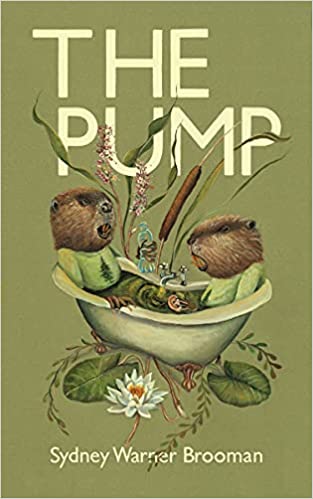
If you’ve met me, either as a friend, a co-worker, or the author of The Pump, then this is a certainty.
By 2021, I was an entirely different person—not just by growth, but by fusion. I had personality traits and memories that I didn’t have in 2017.
I was first diagnosed with a dissociative disorder in early 2019, and my first fiction book was published in Fall 2021. I mention these two facts together because, though being a writer and being a DID system are different aspects of who I am, I will never be able to separate them.
Long before I was an author, I was still a writer; long before I had a DID diagnosis, I still had to manage the symptoms of DID and its complex post-traumatic comorbidities.
When I first became aware of Jimmy, I didn’t know that I had dissociative identity disorder. All I knew was that he wasn’t a character I had consciously created.
Jimmy has a voice that is distinctly not my own. Internal—never from an external source. There were other voices before him. Stephen. Claire. Each distinctly their own. When I was younger, I thought that they might be guardian angels. I didn’t know about dissociative identity disorder at thirteen, but I was old enough to know that something was wrong with me.
I kept Jimmy to myself, but I wrote about him. Thousands and thousands of pages that I will never share. He spoke. I wrote. And we processed his existence together.
After I wrote about Jimmy, I wrote about the other voices as well. There was a difference between writing fiction and writing about the people in my head: fiction required creation—this was listening.
Imagine writing while handcuffed to someone—someone who you’ve been handcuffed to for most of your life, who knows you more intimately than anyone else. Imagine that, while you write, they tell you about themselves. You copy down what you hear. You try to understand things about them—things that are really about you. Memories. Preferences. Motivations. When I write fiction, I’m creating all these things from scratch. When I’m listening to an alter, trying to understand who they are, I’m not creating anything at all. Slowly, year by year, word by word, I learn how to communicate with who I’m writing about.
I can connect with a fictional character I’ve created on an empathetic level, but when I am done writing, I can disconnect from them as well. I can’t disconnect from my alters. I can’t change things about them to make them more interesting, or change their backstories, or cut them out of the narrative of my life altogether. Each alter exists for a specific purpose related to my life experiences, and all of them exist to keep me alive.
Communication within my system continues to take a tremendous amount of effort. I have some alters who I have no communication with. When they switch out, I have no awareness, and when I’m back, I don’t remember anything they’ve experienced. I only came to learn about these alters because one of them started leaving me notes. Sometimes just reminders of things like where I was or what I had been doing; sometimes long paragraphs about the trauma they had experienced.
When I was finally diagnosed, it became clear to me that communication between me and the rest of my system was necessary for living a functional life.
My short story collection The Pump was a way for me to process my childhood and adolescence growing up in Grimsby, Ontario: the isolation of being queer and living below the poverty line; the hypocrisy of municipal governments advertising our area as the Greenbelt while polluting the land; the strangeness of leaving the place I grew up in and returning a completely different person.
Writing the book was an incredibly cathartic experience, but in 2020 and 2021, my dissociative disorder made editing it one of the most difficult things I’ve ever done.
My personal healing trajectory includes something called fusion: when two or more alters fuse together and become a single alter through increased communication or healing. I wrote the first draft of The Pump in 2017, but by 2021, I was an entirely different person—not just by growth, but by fusion. I had personality traits and memories that I didn’t have in 2017. Editing my work included having to write new sentences, and in some cases, entirely new chapters, in the exact same style. This was close to impossible because I was—quite literally—a different person.
Editing The Pump was also difficult because it required me to read and reread descriptions of the town that I grew up in. This process was incredibly triggering for me, often inducing flashbacks, and worsening dissociative symptoms. For other alters that held different trauma than I did, rereading the book was impossible. I had to go slowly, carefully, and communicate well enough to ensure that certain alters were farther back in my mind.
Writing my newest book involved a lot of note writing: both notes for myself, from myself so that I didn’t forget my ideas, and notes from me to any alter who might switch out, to help them understand what I was doing.
Better communication between alters can sometimes increase something called co-consciousness: when two or more alters share consciousness—the front of the body—at the same time. Think of it like a race where two runners have one of their legs tied together, and they must learn how to walk as one person, rather than two separate people.
Through writing, I’ve managed to connect to my alters, facilitating empathy and understanding.
Two of my alters—Jimmy and Stephen—have learned throughout my life how to act exactly like me, how to communicate with me when they’re out and I’m not, and how to continue writing something that I started. But there are other alters in my system who have no ability to mask. They can’t act like me, let alone write like me. When those alters are more active, or ‘closer’ to the front of my mind, I can’t write at all.
I wrote this piece with Jimmy close by. Most of my DID involves something called passive influence, where an alter’s memories, emotions, or thoughts can influence whoever is fronting in the body. I can identify when certain emotional reactions or memories are not my own, but I will get hints of them in my awareness regardless, like drinking vitamin water that tastes faintly of fruit, almost as if the flavour is far away.
Jimmy remembered more of my thirteenth birthday than I did. I often had to pause my writing and battle intense dissociation. Eat. Rest. I cannot force my brain through work that could force it to split. We reorganized my desk in a state of wavering co-consciousness. I had a flashback. Fought my telltale signs of an appending switch: headache; nausea; dizziness; vertigo; blurred vision; confusion. Switched anyway. Sat in the driver’s seat of the car of my body while Jimmy took a bath. I consider this a good writing day. We did what we could.
Through writing, I’ve managed to connect to my alters, facilitating empathy and understanding. Privately, in the comfort of my own home, writing about my system has been a practice of healing.
Writing may not be your healing practice. You might find solace in singing, or cooking, or simply giving yourself the time and space in a safe place to listen to the parts of you that need to be heard—regardless of whether you have DID. Whatever your practice is, hold onto it. In her new book Body Work: The Radical Power Of Personal Narrative, Melissa Febos says “There is no pain in my life that has not been given value by the alchemy of creative attention.” You do not need to suffer for your art—to choose between your creativity and your healing. Search for the place where the two of them meet. I can’t promise you that you’ll find it. But the act of searching will change everything.
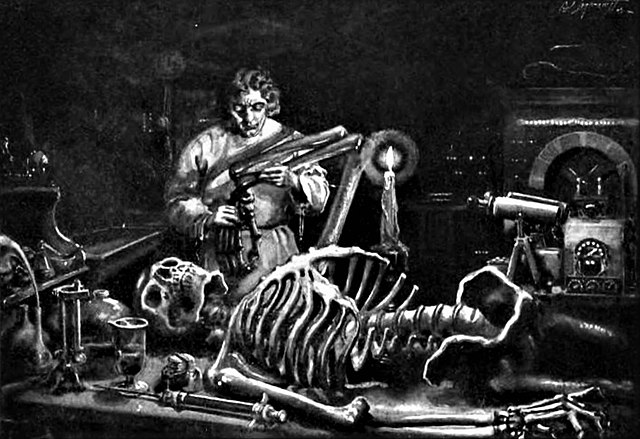
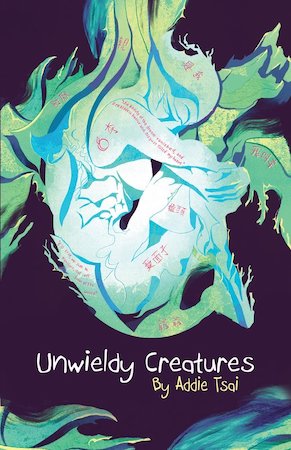
Addie Tsai’s novelUnwieldy Creaturesis a queer, contemporary retelling of Mary Shelley’s Frankensteinset in Indonesia and the American South. The novel explores the transgressive nature of existing as a queer body, an “unwieldy creature,” in a society whose obsession with bodily perfection and beauty serves as a tool for reinforcing heteronormative standards of behavior. Shelley’s Victor Frankenstein becomes Tsai’s Dr. Frank, a queer biracial woman whose dysfunctional experiences of parental affection at home lead her into becoming obsessed with creating the perfect creature birthed from the bodies of two same-sex partners: herself and her female lover named Hana. What starts out as a queer scientist’s striving to birth a creature that is perfect to behold—which Dr. Frank envisions as a means for her and Hana to gain acceptance in a world that rejects queer bodies like their own—results in tragedy. Hana gives birth to an ugly giant that Dr. Frank finds herself incapable of loving, upending Dr. Frank’s mission of creating a being out of her own unwieldy body that she can love as her own.
Critics often speak of Frankenstein as a cautionary tale about human ingenuity as it goes several steps too far in reshaping natural laws, but Tsai brings to our attention an aspect of Shelley’s Frankenstein that has become overlooked, and that is our ability as a human race to love and care for beings that fall outside society’s norms. Are beautiful and perfect bodies that conform to social norms of presentation and behavior the only bodies that we are capable of loving? I talked to Tsai, over email, about how the retelling of a classic tale can unearth such overlooked questions that are especially relevant today.
Monica Macansantos: In an essay you wrote for Columbia Journal, you talked about connecting to Frankenstein at multiple points in your life. How has your relationship with Frankenstein grown since your essay’s publication in 2018, which (if I’m not mistaken) was before you started writing Unwieldy Creatures?
Addie Tsai: In 2019, I began the process of IVF (in vitro fertilization) with my former partner. I never actually made it to the procedure itself—I would end up going through an incredibly fraught divorce not long after I believed the treatment would begin—but it was through learning more about that process in full that I began to think about the rise of access in reproductive technologies and how Frankenstein, I felt, would be the perfect classic text to explore some of the ethical concerns as our technology evolves faster and faster where reproduction is concerned.
In other words, I went from considering and relating to the point of view of the Creature as an abandoned child, as Othered, to thinking more about what a Victor Frankenstein would be like in this rise of reproductive technologies and ethical concerns around creation.
MM: Dr. Frank, like Mary Shelley’s Victor Frankenstein, is a complicated and oftentimes unsympathetic character. What makes Dr. Frank’s character flaws particularly interesting to me is how they arise from her own grievances as a queer biracial person who has struggled to find love and acceptance from an early age. Could you talk more about your experiences of writing a deeply flawed queer and biracial character, as well as the challenges that this may have brought?
AT: There is a subplot within the original Frankenstein that I’ve often felt had much potential but was rarely addressed, which I wanted to address here, but obviously with new complications under a racialized and gendered framework. To me, it is significant that Frankenstein sets out on a quest to create life not through living things, but through dead ones. Did he imagine that if he were able to accomplish this, then perhaps he could also bring his mother back from the dead? If we go backwards and look at Victor’s childhood with these aspects in mind, I wanted to address what else could cause the kind of narcissistic avoidance of responsibility and obsession with one’s own ambition. Instead of whiteness and masculinity being assumed, I wanted to use these ideologies to inform how Dr. Frank’s flaws could rise from the abuse and violence of toxic white masculinity. Certainly, because Dr. Frank is not a cishet white man, it was very important that she was cast as Dr. Frank very intentionally, from a defensive reaction rather than an offensive one, if that makes sense.
All of us “marginalized” writers are writing in a time in which more attention is being given to issues of race, gender, sexuality, disability, class, etc. This is great, but what it’s also done is cause a kind of hypervigilance around the kinds of characteristics that are “allowed” on marginalized characters. I think the goal is not to tokenize or put these characters on a pedestal, but to write through them in complicated, thorough ways. I knew that it was a risk writing through a Frankenstein figure who was not white, straight, or masculine, but I felt it an important and interesting experiment to work through. I think my Dr. Frank is a bit more sympathetic than Victor Frankenstein, but she still manages to chase her own ambition rather than considering those around her. If only she’d gone to therapy! Alas.
MM: Dr. Frank is half-Indonesian, and your novel often draws upon the culture and language of Sulawesi. What drew you to Indonesian culture, and could you talk about your experiences of researching and working it into your retelling of Frankenstein?
AT: Honestly, I’m not sure what drew me to rely on Indonesia and Indonesian culture. I had dated someone in my early twenties who was Indonesian Dutch (his father was Dutch and his mother was Indonesian and raised in Singapore) and so I had a tiny amount of knowledge from that time and experience, but not much. I knew I wanted to focus on an Asian character, but I wanted to expand my writing to try to write through an Asian country and culture that I hadn’t personally experienced. I wanted the land that Dr. Frank came from to feel a bit less familiar and written about than Taiwanese or Chinese culture. That was part of it.
I read an article at some point about the different gender categories of the Sulawesi, which is why I made a decision to bring those into the world of the novel. I don’t really plan or outline novels, and this was the first novel I’ve written that was truly fictional, with no parts of it based on my personal life or experience. I know this sounds silly, but it’s true: the novel led me where I needed to go. I started each day by reading the particular part of Frankenstein I planned to retell, and went from there. I think the most in-depth research I did was on the wedding scene. Of course, I also hired an Indonesian sensitivity reader to make sure my research hadn’t led me astray or that I wasn’t saying anything that would be considered offensive or inappropriate in one way or another.
MM: Much of your novel grapples with the power dynamics that come into play in romantic relationships, as well as in the parental relationships that come about when these fraught romantic relationships result in children. Dr. Frank’s parents have a difficult and unwieldy marriage due to a power imbalance resulting from differences in class, culture and race. The product of this unwieldy union, Zoelle or Dr. Frank, is also an unwieldy creature whom her white father finds difficult to love. Could it be that our own failures to love these “unwieldy creatures”, even when they’re of our own flesh and blood, stem from an imbalance of power in the way we relate to people? Does power hinder our ability to love?
Instead of whiteness and masculinity being assumed, I wanted to use these ideologies to inform how Dr. Frank’s flaws could rise from the abuse and violence of toxic white masculinity.
AT: I love this question. Absolutely. I think we tend to consider power in obvious places (and then, still not as much as I would like or would argue for): mostly in terms of physical power differentials, or power in terms of professional positions. But it’s my belief that power shows up a lot more often than we’re willing to admit. I’ve observed more often, for example, that there seems to be a refusal (I use that word deliberately) of parents to see their position as one of power. Or all of these other aspects that the book addresses that you mention: class, race, culture, and, I would add, age (at least where Zoelle’s parents are concerned). It’s my belief that it’s not just the imbalance of power that’s to blame, but also a refusal to confront that imbalance of power.
I think in terms of the idea of failing to love our “unwieldy creatures,” it has a lot to do with some aspect of the relationship that we, ourselves, do not want to confront. Something it activates within ourselves about our own selfishness, ego, power to abandon. If we never face what’s most monstrous in ourselves, then we can never truly be present for another person. In terms of your final question, oh, what a good one! I would say that the higher the power differential, the harder the love is to access.
MM: To circle back to my question on power, much of this novel deals with issues of power and consent. We see this when Ezra intrudes on Dr. Frank’s research, surreptitiously tainting an embryo that Dr. Frank then knowingly inserts into Hana’s uterus without informing Hana about its tainting. Could you tell us more about how these scenarios were birthed in your head in an era of #MeToo? Were these issues that you saw in the original Frankenstein that you sought to further explore in your retelling?
AT: This took much headwork to get to. I knew that, because Dr. Frank is queer and also because in a modernized version the idea of Dr. Frank and Ezra actually marrying would not work, that Dr. Frank would never be able to go through with marrying Ezra, which she was forced to agree to at her father’s deathbed, just like in the original Frankenstein. I knew that, because he was an abused and entitled figure, that Ezra would not accept this rejection. I also knew that we had to see Dr. Frank’s narcissism come to full fruition. For me, the clearest way that all of these aspects could be addressed was for Ezra to interfere with Dr. Frank’s life work. What we ultimately learn is that Dr. Frank, at a crucial moment, chooses her own ambition over a kind of integrity, and over the feelings of her partner.
I hadn’t even considered the implications of #MeToo, but I do think that there were different ways I wanted to address the idea of consent. Aside from the fact that I don’t think that, based on the circumstances of how she ended up with the family, Elizabeth was in a position to consent to her union with Victor, I don’t think Frankenstein explicitly addresses consent. However, I think part of what upsets the Creature so much is that not only could he not consent to being born (nor could any of us), he is just left to roam the Earth since his only creator refuses to take responsibility for his existence.
MM: Much of your novel takes place in Texas, a state that has been in the news for its restrictions on reproductive rights, and which isn’t particularly known for being friendly to queer people. You were born and raised in Texas, and you still live in the state. I’m curious about how it was like, as a queer author, to write a novel centering queer bodies and experiences in Texas, at a time when the rights of women and LGBTQ+ people in the state have come under increasing threat.
If we never face what’s most monstrous in ourselves, then we can never truly be present for another person.
AT: Oof, this is a big question. When I started writing this book, Trump was still president, and we were starting to see reproductive rights threatened in a major way in the south. I wrote this in the midst of an endless period of anti-trans bills being brought forward. So, of course, the climate in Texas was very much on my mind as I wrote this. Since that time, we’re seeing even more attacks against LGBTQIA+ children and adults in a multitude of ways. There is a vast community of LGBTQIA+ people throughout the south. We have always been here. It is important to me to create Southern queer characters in complicated and thoughtful ways, if only because it has been important to me to read the works of queer Southern writers who fight to represent us in fiction.
MM: Unlike the Creature in the original Frankenstein whose death is implied, Ash of Unwieldy Creatures is allowed to live, and that is in spite of dia’s (Ash’s pronoun) own crimes. Ash is a morally ambiguous character, just like Ash’s creator, Dr. Frank. What guided your decision to allow Ash to live?
AT: It was important to me that Ash lived. For all of the pain that is in this book, I wanted to end on a moment of joy for this creature, who only wanted to be acknowledged and loved. Ash is able to find a new way, because dia is finally able to connect to a community that is truly able to receive and cherish dia. I would not see Ash as morally ambiguous as Dr. Frank, but that dia required a familial and community connection to heal and transform.
Her fine white hair stood out around her head like a gauzy halo framing the sunburnt face. A lifetime of African sunshine had left so many creases in her skin that she looked as though her tiny body had been only partially inflated and even the back of her skinny neck was creased. I had looked for that when she limped out onto the veranda where I had been waiting while my father examined her in her bedroom. She smiled at me then and said, ‘She’s getting big, Doctor,’ while she bent over a large wicker chair and then sort of collapsed sideways into it. From deep within the wrinkled eyelids two pale green eyes peered out at me as she bent forward to light her cigarette to the flame my father held out for her. She inhaled deeply, throwing her head back and then puffing the smoke upwards.
‘Sit down, child. Sit down,’ and she waved her free hand towards me. My father was sitting in the wicker chair opposite hers and that left the swing seat for me. This was as big as a small sofa and full of soft cushions and suspended by two chains from a metal frame. I loved sitting there but felt an irresistible urge to swing on it which I thought I was probably not meant to do. I had tried it out while I had been waiting. I often accompanied my father when he was on call and had to visit his patients in their homes but I knew I had to be on my best behavior. This was not hard for me. I was by inclination an obedient child and I relished the approval I could earn in this way.
‘We’ll have some coffee. And you’d like a cool drink.’
I nodded. ‘Yes, please.’
Ma Lindsey’s ancestors had been born in Ireland. She was the seventh child of a seventh child and she was born in a caul, and that made her a soothsayer, my father had told me.
I had known about the creases in the back of her neck from my mother who had said to my father, ‘You know even the back of her neck is creased, Jim. And she smokes so much. She looks somehow, smoked, like a kipper.’ And then they had laughed together, which I was glad to see, and he said, ‘Like a kipper! Oh Nora, that is brilliant. She is, she is as smoked as a kipper!’
I had never eaten a kipper and was not sure what a kipper was except that it was a fish and people had them for breakfast back home in England. Of course, I had read about them. All my books were about people ‘back home’. England. Or Scotland or Ireland. The places we came from and to which we would return one day. However, Ma Lindsey’s great-grandparents had emigrated to Africa years and years ago and she would never leave. ‘She will die here,’ I had heard my father say.
So I looked with added interest at the old woman as her cigarette smoke curled around her like a snake and at her dried-up hands and face and sniffed to see if she smelt like a fish too. Her chickens scratched the dry earth around the veranda where we sat and I watched them through the wire netting. One looked up at me holding its head to the side and eyeing me as though it understood everything I was thinking. Did Ma Lindsey talk to them? My father had told me she was a wise woman and could understand animals, and the stars, and she could tell the future and read people’s palms. I was handed a glass of orange squash with a straw. My mother, I knew, would worry about the water. We only drank boiled water at home. My father, however, seemed to be untroubled so I sipped it warily. It was too strong. In fact, I began to wonder if it was diluted at all.
It was peaceful sitting there, swinging ever so slightly, sipping through the straw, watching my father and Ma Lindsey smoking and chatting about the weather. This was October, getting towards the end of the dry season, what my father called ‘the suicide month’ as tensions on the mine between the managers and the miners grew and even families began to fight and men drank too much and beat their wives and children. Only when the storms came would the air be cleared as the rain poured down turning the red earth into streams of swirling red mud and lightning cracked overhead and great thunderheads smashed together and the rain beat down on the corrugated iron roofs of our bungalows with a sound like horses’ hooves. A mangy old dog appeared and walked through the cluster of chickens who ignored it. I heard Ma Lindsey say my name.
‘Come here, child.’
I climbed down off the swing seat and put my drink down on a small table made out of an elephant’s foot. She took my left hand in hers and turned it over and peered down at the palm.
‘Aagh, look at this, Doctor. You’ve got a clever girl here.’ She stroked my palm with her other hand which felt like a soft warm paw and ran a nail down one of the lines on my palm. It was almost but not quite painful but I did not draw my hand away for I had learnt not to show when things hurt. She spoke with a thick Afrikaans accent, like the one that would characterize my voice when I and my parents would finally return home. Then these guttural tones and flattened, shortened vowels identified me as a foreigner and I am still sometimes told by very perceptive people that there is a recognizable echo of this in my voice. This pleases me for I like to know that the traces of our past are irreversibly woven into our current lives and are there for those who can, to see.
‘You’ll go far, my girl, you’ll travel. Travel a lot. A lot of car journeys, but you’ll be safe on the roads. I see two men, one fair, one dark. Both important. You’ll have a long life, and a good one. You’ll be successful. But you’ll die alone. Much loved, you’ll be much loved, plenty of people to love you, but you’ll die alone.’
The green eyes twinkled at me through the creases of her lids and her mouth widened in a grin so that I could see her few tobacco-brown teeth. ‘But that won’t trouble you much, will it? You’re a brave girl and we’re all alone in the end, aren’t we, Doctor?’
My father, who was a bit of a philosopher, nodded. ‘We’re all alone in the end.’
I like to know that the traces of our past are irreversibly woven into our current lives and are there for those who can, to see.
My father’s car was a bright green Hudson Rambler: one of those enormous American cars like a Cadillac in which I would learn to drive one day when I was sixteen. When that time came I often drove too fast on the long, empty roads between the townships for had Ma Lindsey not told me that I would be safe on the roads?
From her place it was about eight miles back to the township down the single strip of tarmac which represented the Great North Road. On either side were wide stretches of red earth and beyond these lay the African bush, the tangle of low trees and grasses and dambos and anthills and animals and snakes that I had been taught never to venture into alone.
As we travelled, I reflected that throughout my life I had been warned that being alone could be risky. I was only allowed to ride my pony in the bush with my father and I had to stay close to him and always be aware that at any moment our horses could be spooked by a snake.
‘Is Ma Lindsey very wise?’ I asked as we munched on one of the chocolate bars he always had stored in the glove compartment.
‘Yes, but she has some pretty wild ideas too.’ My father always talked to me as though I were an adult. I liked that. It made me feel clever and grown up but when I got home I told my mother that Ma Lindsey had said I would die alone.
‘Much loved but alone,’ was what she said.
As I knew would happen my mother was then cross with my father. ‘How could you let that crazy old woman tell the child things like that?’
‘Don’t worry,’ said my father soothingly, ‘She’ll forget all about it.’ But my father who was very clever and philosophical and took me out in the garden at night to look at the Southern Cross through his telescope and treated me as an adult understood me less well than my mother who said, ‘No she won’t, Jim. It is the kind of thing she will remember all her life.’
And she was right, as she usually was. I believed I had been ascribed a certain fate and I needed to understand what this meant. I had always known it was important to stay alive, if only for the sake of my parents, and being the diligent little philosopher I had been brought up to be, I began to ponder on the meaning of being alone. There was a rich seam to mine here, a fault line running through my character, for I am, by nature, solitary. What that effectively means in practice is that a joy shared is a joy halved and a trouble shared is a trouble doubled. And if I look back now through all the years of the long life that Ma Lindsey had accurately promised me I can see that I was always calibrating the relative merits of being alone or not. As a child I already knew that I needed, craved, bathed myself in solitude. Being alone was my best place. As I grew through my teens I began to understand it better. I narrowed it down to a fear of belonging. Belonging to me meant losing something, not gaining anything. Losing individuality, losing, dare I say, specialness. I was a secretive and isolated child and I feared being identified with any other child as some people might fear the plague. Did I sense some contagion in intimacy with others? Yes, I think so. I reflected long and hard on the implications of my tragic destiny.
And then, what was being alone? Being the other side of a room? The other side of a wall? The other side of a country? Of a continent? I read Larkin’s ‘Best Society’ and quoted the last lines to myself with a tremor of recognition.
When I was eighteen my father’s contract came to an end and we returned to England. Once there I found a curious reversal took place. Although I had spent all my conscious life longing to return to the romantic image of foggy, lamplit pavements which for me characterized London, once there I began to feel a kind of nostalgia for my part of Africa.
‘What’s it like?’ I was asked and I stumbled for words to describe it. I tried to imagine Ma Lindsey in Surrey and failed.
Then I went off to university. This was the first time I had left home and everyone told me I would feel lonely. However, I doubted that would be the case. I had, of course, by this stage trodden the well-worn intellectual paths around the question of aloneness versus loneliness. I was not concerned. I knew that fortune tellers did not really exist. I was looking forward to proving that I was still a clever girl and then there were the boyfriends, of whom there were suddenly quite a lot. I tried to work out whether sharing a drink or indeed a bed made one more or less alone and concluded that both situations were irrelevant. Aloneness was something one carried within oneself and there was no getting away from it. So, my reassessment of Ma Lindsey continued and I decided that she might have been crazy but she had seen something in my palm that was true.
From time to time I still wondered how to identify the two men she had promised would be part of my fate. As it happened, while I was at university, I met them both and I married the fair one soon after I graduated. My father and mother had by then responded to a call from the Red Cross for medical assessors in a war-torn country and I was suddenly in need of a home. My intellectual competence had not equipped me for managing my own affairs after all and a home was on offer and so I married the fair boy although I was fervently but secretly yearning body and soul for his best friend. Yes, he was the dark one. Fortunately, as in the best fairy tales, the fair one was also kind, honorable and trustworthy. We all know there is a common assumption that marriage brings companionship although we all also quote Chekhov along the lines of, ‘if you fear loneliness, never marry’. I was alone in my marriage and it suited me. Or I thought it did. We had two wonderful children and gave dinner parties and joined clubs and played tennis and had friends around to play Monopoly. We looked like a couple but I was never there. We lived alongside each other for eighteen years at which point we realized there were better ways to live and we split up, with honor and without too much acrimony. I collapsed back into a solitary way of life with gratitude. The former best friend, who had apparently not loved me when it mattered, came calling and we established a distant but passionate sexual conspiracy during which my bodily yearnings were fully satisfied although I believe my soul remained neglected.
During this time I also downsized, found a new home and put a lot of energy into my career which, surprisingly, flourished. I wrote historical novels. I was not proud of them but the proceeds paid the bills. A reviewer called the first one, ‘staid but pleasing’ and the fourth novel was described as ‘formulaic’. It stung but they were right. I had hit on a formula that worked. I would have preferred, of course, to have written a Mrs Dalloway for our times. But when I was alone with the screen in front of me my courage failed. And yes, I have asked myself since then whether this was the literary version of being afraid to go into the bush alone? Maybe it was. However, I did not explore that question any further and I proved very successful at being self-sufficient during those years. An onlooker would have said I was flourishing. Could I be described as being alone? Definitely. Was I worried? No. Ma Lindsey’s green eyes lurked at the back of my mind although I looked back at the credulous little girl I had been with a degree of fondness and disbelief. But everything was about to change again.
Aloneness was something one carried within oneself and there was no getting away from it.
I had bought a small house on the outskirts of the city in an area that possessed the convenience of a suburb and the charm of a village. My house stood on the top of a hill and there was a long row of similar houses all down the street to a little bridge across the river with a view of the water-meadows beyond. One day my eldest granddaughter asked if she could come and live with me as she had a place at a local sixth-form college. I have always believed that the signs of successful mothering are that the children can leave home but, my granddaughter wanting to move in with me, well, that was an unexpected gift. We were in the car one day, I was driving her back to the bus station after a visit, when she said, ‘Granny, can I come and live with you?’ And I, without hesitation, heard myself say, ‘Yes.’ It was so simple. Yes. No questions, just yes. From my heart. For two years she lived with me and I with her. There was all the usual teenage stuff. Driving to parties, collecting at midnight, meeting friends, hosting boyfriends, providing money. Worrying. Dropping her off at her insistence in what seemed to me undesirable neighborhoods, asking her if she did not want to take a coat on a cold November evening. Lying awake, listening for the front door. Trying not to intrude. Finding out what she liked to eat. Once I cooked her lamb’s liver. Never again. Once she made me a card for Mother’s Day. I still have it. She wrote inside, ‘Because you look after me like a mother’. I was in my late sixties by then and I look back on those times with such fondness. I believe we were a unit. I cried when she left but she never looked back. This is how it goes. The love I gave her she will hand on. It trickles down, not up. That is how it should be. And I was arrogant enough to think that I had this being alone stuff sorted. Until the strangest thing happened.
It was October again and that year it stole some of March’s thunder and came in like the proverbial lion. And, like a lion, it terrorized the village and everybody felt scared and overwhelmed and talked about little else. Its winds roared around us, whipping the still leafy strands of the willows along the river into a frenzy as though they were long fronds of seaweed beneath breaking waves; it tore some trees down and leapt upon the storm clouds crushing the rain out of them so that oceans of water fell onto the land, already wet from September’s incessant drizzle. The rivers filled up and some flooded their banks. Our river rose above the level of the bridge and although the arch in the center of the bridge remained just clear of the water level the road either side of it was impassable. The last cottage in the row now had several feet of water surging through it as the swollen river lapped at the foot of the lane. I had seen the woman who lived there when she was working in our local charity shop. I walked down while she was struggling with the help of some of her neighbors to replace the useless sandbags and asked if she would like to move in with me until her home was habitable again.
She was a skinny, nervous woman, with very dark brown eyes and a thin anxious face, rather bird-like in many ways, like the birds she looked for and fed every day. She fed them and I fed her. I take after my mother’s side of the family. Plump people, thick-necked and double-chinned, shrinking in height into a round ball with age; they were robust in many ways, but needed to be pampered. She was like a small bird, she brought out in me all those feelings that are nurtured within children when they carry around a doll or a teddy bear, for what else is that caretaking attitude but a determination to feel large and powerful as you lend your larger size and greater strength to care for these dependent creatures. It helps that the toys are immobile without us and can be discarded at a whim, unlike our later human dependents, although to my shame I had, in the course of my life, cherished my ability to discard people, lovers, friends, colleagues, when in my eyes they had outlived their usefulness or their desirability. Hence, perhaps, the inevitability of dying alone but Miriam brought out something different in me. By calming her I felt my own calmness. She began to feel like a part of me.
My house has two bedrooms and a bathroom upstairs and a little junk room. She moved in for an indeterminate time, a few weeks or months, I suggested, until her house could be dried out and refurbished. She spent a lot of time down there as the water receded and she got it professionally tanked and painted. She was a passionate gardener and she rescued many of her best plants and brought them up the hill to my garden.
‘You don’t mind, do you? I’ll take them back when everything is back to normal.’ Naturally, I didn’t mind.
We rapidly developed a new normal. We shared the bathroom. She was extremely orderly and I grew quite fond of the presence of the extra toothbrush and the tidily folded towel on the towel rail. She helped me discover an interest in birdwatching and we went on a nature weekend to the Highlands and we liked it so much we decided to plan another. It was unduly expensive to reserve and pay for two single rooms so eventually we decided, I forget when, to share a room when we traveled. By this time her house was in excellent condition and we decided it would be simpler to let it. Very soon it was providing us with a good income. As the months went by I found a new happiness in the knowledge of her proximity and in the confidence of her presence at night and it became clear to both of us that Miriam and her plants were here to stay. She was a good cook and after finishing the day’s writing I soon got into the habit of looking forward to sitting down with a glass of wine, or sometimes a gin and tonic, to talk over the day. Often we would go out into the garden and she might show me a sick plant, or a new one, and I would let her know how the latest chapter was progressing. Then, perhaps, in winter, a steak and kidney pie or a roast chicken and some vegetables from the garden. In the summer she made lovely salads. I would look at her and wonder what it was that had drawn me to her. She was no beauty. Her dark hair hung untidily across her thin face like a schoolgirl’s but I loved the seriousness of her expressions, the slight indentations between her eyebrows which never went away even when she was smiling. When we lay together at night I found such peace in holding her twitching, restless body in my arms. I smoothed her hair and murmured to her as she fell asleep. And so three years passed. How happy I was. How happy we were. Now and again, I asked myself if I was alone? Company I had long ago disqualified as a measure of aloneness for I had learned in the past that even sexual intimacy did not banish aloneness. And I was proud by now of my capacity to carry my essential aloneness everywhere. Of course I will die alone, I said to myself, after all I have lived alone all my life. And I felt again the soft warm touch of that wrinkled little hand and the sharp pain of Ma Lindsey’s nail as she drew it across my palm.
And then the weekend came when Miriam told me that she felt she had to go and visit her sister. They were not close, she had hardly seen her for many years, but her sister was very ill. She lived in Inverness. Miriam had heard from a nephew that she was close to death. She had asked to see Miriam. My first impulse was annoyance. What had we to do with them? What had she to do with us? However, reason quickly intervened and I said, with as good grace as possible, ‘Of course you must go, Miriam. I’ll be fine here for a few days.’
‘Are you sure?’ she asked. I looked at her. The two indentations deeper than ever. ‘I don’t really want to leave you.’
And as I looked at her I wanted to scream, ‘No! No! Please don’t go! Don’t leave me! I’ll die without you!’ But I had never ever, in my whole life, said there was anything I could not manage. I could survive anything, even if it hurt. I had never begged for anything in my life. I simply did not plead. Hesitantly, she looked away and said, softly, ‘You could come too, if you wanted.’
But that was the last thing I wanted. I could imagine an unfortunate scenario of family wailings and embarrassing intimacies.
‘You go,’ I said. ‘For God’s sake, I’ll be fine.’
As I watched her get into the taxi for the station I felt a terrible sense of doom again.
‘I’ll be back soon. If you need me sooner just ring.’
‘I will.’
She had gone for four days and three nights and I would be alone again except for the cat. I have not yet mentioned the cat who has a significant part to play in this last chapter of my life. When she had scrambled up the hill from the flooded house Miriam had brought an armful of cat with her. Susie was an enormous cat. Furry, fluffy, tufted all over, with large, pointed ears and a scornful demeanor. She had been rescued from the river by Miriam. Advertising brought no response. So she stayed. She showed no interest in the birds which Miriam took as a sign of her superior intelligence.
That first evening Miriam rang to say she had arrived safely. It was all pretty grim but her nephew was grateful to her for being there. She was not sure that her sister had recognized her but she was glad to have come. My heart raced. I longed for her to return. I was beginning to recognize that in truth I had never ever, in my whole life, been alone. To be alone you need to need someone who is absent. The need, the belonging was what did it. You had to admit that you depended on another. You needed to need that other like life itself. I am an old woman and evidently a rather foolish one since this was a new thing for me. As I went to bed that first night I thought, when Miriam comes back I must tell her this. And I must never, ever let her go away without me again. Was this why Ma Lindsey had twinkled at me that afternoon so long ago? Had she seen something I had no idea of at all? She had said I would be brave. Well I was trying to be brave but I had never known such unhappiness and I cried like the child I once was and buried my head in the pillow. The second night I managed better. When she called I told her everything was OK but that there was a terrible storm blowing up. There was a warning of ice. I put Susie’s supper out, as per instructions, but she was not there. Normally she would hang about in a rather dog-like way. I listened to the wind outside and checked the cat-flap. I had noticed earlier in the day that the lid of the rain barrel had been blown off. I put it back on again but maybe it had again been blown away and I was seized with a terrible and ridiculous fear that Susie had fallen in and then, suddenly, the cat-flap clicked and there she was. Wet and cross but alive and well.
I was beginning to recognize that in truth I had never ever, in my whole life, been alone. To be alone you need to need someone who is absent.
The storm continued all the next day. I couldn’t write. I sat at my desk and stared at the screen and there was a miasma of grief where there should have been images and ideas. The hours passed. I thought of ringing Miriam but she had no reception where she was and so it had to be the landline. I found her absence unbearable and did try ringing her once but there was just the infuriating BT answerphone and I didn’t leave a message. Once again, Susie was not there for her supper. I had checked the rain barrel during the day and had tried to secure the lid, which was definitely loose, but I knew it would not hold. I am not practical. I listened to the monstrous gusts of wind and once again became gripped by the conviction that Susie had fallen in. Furious with Susie and furious with myself for my absurd fantasies I stormed out of the house, leaving the kitchen door open so that the light shone down the narrow paved path that led around the corner of the house to the barrel. The wind screeched through the tangled branches of the trees above me and I had to struggle to keep upright. The onset of the night’s freeze was already apparent. Sure enough, when I got there the lid was gone but at that moment the wind blew the kitchen door shut and I could see very little. Pointlessly, I patted on the surface of the inky black water, my fingers freezing, squinting at it to make sure Susie was not there. And then suddenly she appeared from down the path and shot past me as a massive blast lifted the tops of the trees up and then bore down upon me and knocked me over. Falling, I grabbed at the rim of the barrel which fell on top of me, the weight of it pinning me to the ground as the ice-cold water flooded everywhere. My head hit the path hard. I lay there in the darkness, trying to breathe, water curling over and around me, frozen with shock and fear. The barrel was now lodged against the wall beside the path and the full weight of it was on me. I moved my head and a dreadful shaft of agony flew down my spine and into my pelvis. I began to cry. No-one would see me here. No-one would hear me and I was not even sure I had enough breath to call. I tried not to move to avoid that agonizing spear of pain. My mind drifted. I shall die, I thought. Could I last the night? No. I couldn’t. What would Miriam do when she rang and found no answer? Would she call a neighbor? Would anything be in time? My feet were numb and I realized that in falling I had trapped one arm behind my neck. It was suddenly agonizing and yet I couldn’t move it. I wondered if I was paralyzed. I felt my chest trying and failing to cough out some of the water that had covered my face. I wished that I had lost consciousness and then I wondered whether I had. I had no way of knowing how long I had been there. There was no light and my watch was on my trapped arm. All I can remember was the soaring wind, the icy water and the creeping terror.
And then, a shaft of light. I looked up at the frantic movement of the branches overhead, their leaves glistening in the sudden glow from the kitchen door. A voice, Miriam’s voice, shouting, calling, crying, and someone was rolling the barrel away, pulling at me, dragging me up the path. I may have blanked out for a bit for I next remember lying helplessly on our kitchen floor. Towels, warm towels, my dripping clothes tenderly removed, terrible pain. Blankets, duvets, pillows. I was sipping warm milk with, was it whisky? Miriam kneeling beside me, whimpering with fear and anxiety. Oh God. Oh God.
I have abandoned philosophy. And I have stopped trying to make sense of things. I didn’t die that night but I had fractured my pelvis and dislocated my shoulder. And I was suffering from hypothermia. They kept me in hospital for almost a week. I had probably been unconscious for over an hour when Miriam found me and dragged me inside and called an ambulance. She had come back early because, she said, she had heard signs of distress in my voice the previous night. For months I was horribly disabled. We had to install a stairlift and I consider I aged ten years overnight. Sitting at a keyboard was impossible but that did not matter for I now found I had nothing to write. Certainly none of the usual stuff.
I had recognized that, on my way to death on that garden path, frozen and in agony, I was alone in a way I had never known before. I wanted time to think about that.
I am sitting today in the shade watching Miriam as she bustles about the garden in the early summer sunshine and I marvel at her energy and skill. The birds are busy about the feeders. I love her more than she knows; maybe more than even I know yet. I am new at this game but thanks to her I have a second chance. I might still die alone one day and she might die first and I know that and she knows that, and maybe that is the way it goes, but today we have this. We have talked about Ma Lindsey and her predictions and, since I am still without my keyboard skills, I am writing this longhand as Miriam has asked me to. She thinks it is a story that should be told. And then, maybe after some others, I plan to try my own Mrs Dalloway. I probably lack the talent but maybe I will find I am brave enough to attempt it after all.
When my best friend and I first saw the apartment, we loved it. We thought it a little strange, a tad bruised, but overall it felt right – and it was a good price and we needed to move quickly. When you rent a basement apartment in New York City for the price, you don’t think that a global pandemic will force you to spend so much time inside of it. We expected to eat some meals there, sleep there, but mainly be at work or otherwise out. So, the issues that were apparent – it was a basement after all – didn’t seem like red flags. Maybe tiny yellow ones. And that price!
During lockdown, we noticed everything: the cockroaches living in the drains, the lack of natural light, the leaks in the exposed pipes throughout the apartment, and the dampness that turned into mold under my bed. Eventually, my roommate realized the apartment was illegal, which she told me by waking me up at 3am and showing me documents she had found online. The icing on the cake. We were both going through it – locked down in a basement without sunlight will make sense disappear.
The only thing I remember is that my mom called to tell me she had wrapped him in a blanket so that he could be comfortable.
During this time, I was teaching online and socializing online and dating online, which kept me somewhat busy. When I didn’t turn on the news and ignored the ambulance sirens and the 7pm clapping, I could pretend that everything was “fine.” But then my grandmother died. Later, my cousin, in that strange period when we were not out of the woods, but we were not longer in the house. Earlier in the year, my great aunt. Sometime during lockdown, my family dog died. I can’t remember at all when this happened; the only thing I remember is that my mom called to tell me she had wrapped him in a blanket so that he could be comfortable. This is how time moved in lockdown: slow, long days all morphed into one so that even time of death failed to stand out. None of them died from Covid; they all passed from other sicknesses that I forgot existed: old age, cancer, aneurysm, doggy old age. Suddenly, somewhat busy was not holding me together anymore. I wanted to escape.
In college, I had played the Kim Kardashian game (Kim Kardashian: Hollywood) and the Demi Lovato game (Demi Lovato: Path to Fame) for a few weeks each. The ads were all over social media. They had similar plots. You played your own version of the up-and-coming star and you rose to fame in either Kim or Demi’s orbit. I would play for a while and get really into it; then I would get busy or bored and move on.
I found these kinds of games again in Lock Down. In Digital Interactive Fiction apps, reality is flexible. It lives under your thumb, because of your thumb; you move the small, predictable world along. You have power. When I downloaded Choices, I did so because I wanted to feel immersed in something, but I suspect that part of it was that I couldn’t control what happened in a book or a show like I could in Episodes or Choices or Chapters. Just like in life at that moment, I was along for the ride.
Interactive Fiction Apps let the player influence the plot and their character through the decisions they make. It is part literature, part video game. These kinds of games emphasize that your choice affects the ending. Your choices can determine who likes you, who you end up with, if you die, or if you succeed. I don’t know if your character is pre-destined to win Love Island: The Romance Game, but you play a part in how you get there and who you get there with.
You want a slammin, expensive looking outfit that all the other characters will comment on? You need diamonds.
My first story was A Courtesan of Rome, in which you play a courtesan who gets mixed up in the fall of the Roman Empire. I chose it because it was so far away from my present day and I like history. I read through this first story with vigor and, yes, paid for the extra diamonds (the money in these worlds) so I could get better clothes and better story choices. You want to go on a date with the new bombshell? You need diamonds. You want a slammin, expensive looking outfit that all the other characters will comment on? You need diamonds. I became just as obsessed when I found Love Island: the Romance Game, which is influenced by the real reality TV show it is based on, with which I’m equally obsessed.
Even though these are technically games, getting all of Britain’s votes or toppling the Roman Empire is not the point. While it was important for my mental health that for some amount of time a day I was at a beachside villa and not in my bedroom, what kept me wanting to play was my curiosity at how the story might unfold. Or, more specifically, how I made the story unfold. I gravitated towards the games with plots, and clear endings. I liked playing, but I wanted a closed circle. The Kim and Demi games seemed never ending. I don’t even know if they have conclusions, because I’ve never played long enough to get there. Playing through these different stories in Lock Down was like reading a juicy novel or watching the real Love Island, except I could influence what happened inside the story. It was amazing, powerful.
Interactive Fiction is not new. Choose Your Own Adventure (CYOA) Fiction has been around since the late 70s/early 80s. I remember reading CYOAs as a class in grade school in the 2000s. During lunch, one of the lunch moms – the hot one – would read us R.L Stine books. He had his own series of CYOA books with his signature creepy twist. The lunch mom would read until she hit a decision point and then we would vote. In R.L. Stine books your character can die or get eaten by a clown or something horrible, but it was still fun. High stakes, but fun. We eventually stopped because some kids complained about being scared.
I was always more invested in my plots and my plans and the story of the story in my head.
Maybe this is where my love of choice came from, but I always thought this way. When other kids imagined themselves as Hermione or Harry Potter, I imagined myself—a character— into their world as an essential part of that world and also as a mysterious person who everyone really liked. I was always more invested in my plots and my plans and the story of the story in my head. Can you believe I became a writer?
With technology, Interactive Fiction has gone digital, which has opened a whole new visual world for readers to play with. Not only can I influence the plot, but I also make the character. For example, I always use the name Leo for Love Island. My favorite iteration of her has curly red shoulder length hair, green eyes, and ivory skin. I remember her entering the villa in a gold bathing suit and leaving everyone else breathless. In A Courtesan of Rome, they suggested a name, Arin, and I took it. I did the same with Arin’s look: long orange gown, brown curly hair half up-half down, and brown skin. I used to keep my own name, but it felt strange during lockdown. I didn’t want to play as myself. I already was myself. Designing your avatar is essential to immersing yourself in the game. There are a set number of aesthetic options and fun things like tattoos are extra diamonds, but, generally, you can be whoever you want. It’s your story. You can be yourself or the hot lunch mom or someone entirely from your imagination.
During the worst of the Covid Pandemic, in a sickly basement apartment in New York City, I stopped being able to imagine myself out of reality. It was everywhere and no plot for the world I imagined in my head would satiate me. Love stories on my phone, though? They did. They had a calming, focusing effect. I would zone in on Leo or Arin and just be them. When I was playing, I wasn’t myself. I made bad decisions – like murdering my boyfriend so that I could hook up with Marc Antony – because I could. I could just have fun. And fun that didn’t feel mindless. I was doing something: I was reading and choosing and playing and being entertained. I don’t know where my sanity would be without these story game apps. I don’t know what I would have done if I didn’t have a place to go.
In the virtual world, I had the power. I decided what things happened. I could go places, see people.
There were many things that pulled me toward these games, but one of them was definitely power. Who doesn’t want to control their own narrative? During lockdown, we were all so powerless. The only thing we could do was nothing, and there was no security in sitting tight. In the virtual world, I had the power. I decided what things happened. I could go places, see people. And no one died unless I wanted them to. If they did, I could just start over, find another route through the story where they survived. I no longer felt helpless.
When I asked my friends if any of them played apps like Choices or Episodes or Chapters, most of them politely said no. One asked “No. Do you?” in that way. And a couple admitted they did or had but knew how “bad” they are. And, listen, I know how bad they are too. I will admit that there are romance cliches, sometimes objectively bad writing, and some soft-core porn (which I never complain about to be honest), but this is just a part of the fun. The indulgence in cringe is alluring. It is the same reason I watch Netflix’s The Christmas Prince with my friends each holiday season: these “trashy” stories are terrible and so engrossing.
When I started to reflect on how these games made me feel less alone during Lock Down, I went searching for other people who felt the same about them. I found a whole community of people like me, who unabashedly love these games. Most of the platforms have their own reddit pages where people post their thoughts, jokes, and questions about different stories or books on each app. Small time story creators and narrative designers hired by the companies have significant followings on social media. Episode even shouts out their small- time creators on their Instagram page. (On Episode, anyone can design and publish a story.) So many people connect on social media to talk about their experiences. It’s like a book club.
In my search for validation, I also found research on Interactive Digital Fiction. For example, Dr. Leigh A. Hall studied how one interactive fiction app, Delight Games, made people with negative experiences of reading enjoy reading again (published in 2019 and 2020). Dr. Astrid Ensslin and her team at Writing New Bodiesare developing a Digital Fiction app to be used in body-image bibliotherapy.
The fanbase and the conversations I had with both Dr. Hall and Dr. Ensslin made me rethink my experiences playing Interactive Fiction apps. I keep thinking about how happy I feel playing Love Island. I also keep thinking further back to reading and writing fanfiction about a band I obsessively loved when I was teenager. In both, I found an escape from the world around me, which doesn’t ask any of us what we want and a community who not only felt excited about writing, but also felt that our subject was just as important as any other. I love literary fiction and I love a juicy romance game. I think they both have value; they’re just different modes that scratch a different itch. All stories can make us think and wonder and feel. And if the story puts a smile on your face or makes you feel in control when the world seems like it’s imploding, I think it’s okay to indulge and enjoy. Isn’t enjoying it the best part of reading anyway?
DON’T MISS OUT
Sign up for our newsletter to get submission announcements and stay on top of our best work.
YOUR INBOX IS LIT
Enjoy strange, diverting work from The Commuter on Mondays, absorbing fiction from Recommended Reading on Wednesdays, and a roundup of our best work of the week on Fridays. Personalize your subscription preferences here.