8 Literary Friendships Told Through Letters

In 1995, I left the Elliott Bay Book Company in Seattle to teach English in Vietnam. Around that time, my friend and fellow bookseller Janet Brown traveled to Thailand to teach as well. There was no email then, and overseas phone calls were a luxury. So we wrote to one another, meditating on the countries we lived in, the books we read, the books we wrote, and the people we fell in and out of love with.

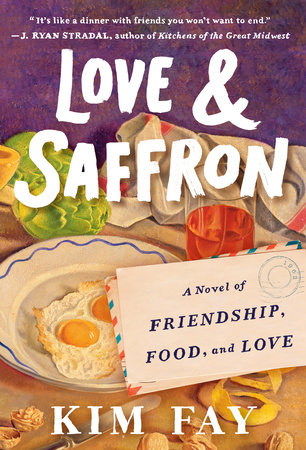
Love & Saffron by Kim Fay

Four years later I moved to L.A. and Janet moved back and forth between Seattle, Thailand, and China. Rarely were we in the same city at the same time, let alone the same country, but through our devoted missives, we created a shared spiritual plane. When I wrote my epistolary novel, Love & Saffron, we had been corresponding for 25 years. In the story, one character writes to the other: “When a new experience comes into my life, it doesn’t feel real anymore unless I’ve shared it with you.” This is Janet and me. 

We owe our bone-deep kinship to our correspondence. I am certain this is why collections of letters between friends are my favorite. I chose these in particular because each one captures a unique way in which letters can establish profound and unbreakable bonds.  

As Always, Julia: The Letters of Julia Child and Avis DeVoto edited by Joan Reardon

There is plenty of food in these letters, of course! For that it’s worth the price of admission. But what I love most about the exchanges between Julia Child and Avis DeVoto is the way they crafted a rich friendship before they ever met. When Child writes to DeVoto’s husband in 1952 about his article in Harper’s criticizing American stainless steel knives, DeVoto is the one who responds, and in the first letters, it’s clear the two women have an instant rapport. They are unselfconsciously funny. They aren’t afraid to be affectionate with one another. And because of the timing, DeVoto becomes crucial to the success of Child’s Mastering the Art of French Cooking.

Sister Love: The Letters of Audre Lorde and Pat Parker 1974-1989 edited by Julie R. Enszer

Audre Lorde and Pat Parker were Black, lesbian, feminist poets, giving this collection significance in a historical context. But what moves me is the way they constantly encouraged one another. They were both striving as artists and activists, struggling to claim space for themselves, but they never competed with one another. In exchanges about race, politics, motherhood, and cancer, all framed by their writing lives, their mutual trust is unequivocal. When Parker wants to quit her safe job to write full time, Lorde replies: “I support you with my whole heart and extend myself to you in whatever way I can.” To me, this captures friendship in its truest form. 

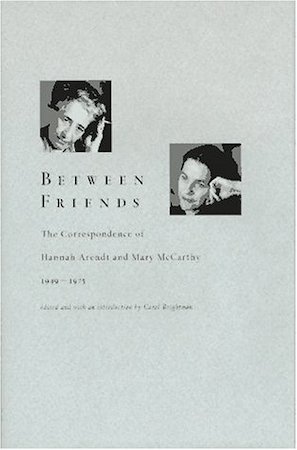
Between Friends: The Correspondence of Hannah Arendt and Mary McCarthy, 1949-1975 edited by Carol Brightman

Granted, I first heard Hannah Arendt’s name in the wonderfully subversive Party Girl starring Parker Posey. But does it matter how we come to read someone, just so long as we do read them? An admirer of Arendt’s The Origins of Totalitarianism and Mary McCarthy’s Vietnam, I find their correspondence fascinating. Their letters illustrate why they were two of the most important (and controversial) thinkers of their time. They are also a reminder that even the most formidable of people need close friends—that person they can discuss everything honestly with, from the dissolution of a marriage to the definition of Truth with a capital T. 

The Letters of Denise Levertov and William Carlos Williams edited by Christopher Macgowan

Denise Levertov used to come into the bookstore where I worked to chat with one of my co-workers. I was envious. I wanted to have conversations with this serious, surprisingly playful poet. The next best thing was the publication of this book, which begins with the young Levertov’s fan letter to literary great William Carlo Williams. Throughout the 1950s into the early 1960s, the two poets became friends on equal footing. While they share details of their personal lives, their letters sing when they discuss poems; threaded through their correspondence is a master class on writing poetry.

The Delicacy and Strength of Lace by Leslie Marmon Silko & James Wright

I remember first picking up this book because of its physical beauty. A slim objet d’art. I just wanted to hold it. Then I read it and understood what a treasure it truly is. It is yet another correspondence begun by one artist admiring another—in this case James Wright moved to tell Leslie Marmon Silko how her debut novel Ceremony made his life more meaningful. Over the course of 18 months, until Wright’s death from cancer, the two open their hearts to one another with evocative, and often breathtaking, depictions of their lives. 

Always, Rachel: The Letters of Rachel Carson and Dorothy Freeman, 1952–1964  - Kindle edition by Carson, Rachel, Freeman, Dorothy E., Freeman, Martha.  Literature & Fiction Kindle eBooks @ Amazon.com.

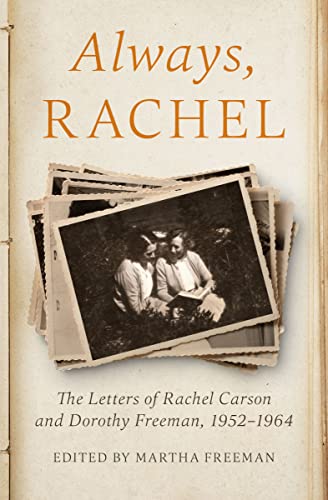
Always, Rachel: The Letters of Rachel Carson and Dorothy Freeman, 1952–1964 edited by Martha Freeman

My admiration for Rachel Carson began not with her classic Silent Spring, but with her earlier nature writing about the sea. Her scientific prose as fluid as poetry made me want to know more about her, and I read these letters eagerly. They reveal the genuine love Carson had for the natural world, as well as the tenderness of her heart. She and Dorothy Freeman became summer neighbors in Maine in the early 1950s. During their seasons apart, they wrote to one another often. Their romantic tone has caused endless attempts to define their relationship, but I feel what’s important is the authentic beauty and strength of their bond, which for the two of them was the meaning of life itself.

A Different Distance by Marilyn Hacker & Karthika Naïr

Written during the first year of the pandemic, this exquisite book is an exchange between two poet friends both living in Paris but unable to visit one another. Using the renga form in which the first line of each new poem takes a word from the last line of the previous poem, Marilyn Hacker and Karthika Naïr sent poems back and forth, distilling those early Covid days. Hacker wrote of phone calls and texts that replaced “wine-flavored exchanges in the public privacy of a café,” and Naïr, going through cancer treatment, managed to discover that “something steelier than hope lights the heart once more.” Of the many books written during and about the pandemic, this deserves to be a classic.

84, Charing Cross Road by Helene Hanff

I don’t care that this collection shows up on nearly every epistolary book list. It is a sublime example of how letters can grow a friendship. New Yorker Helene Hanff wrote to Marks & Co. booksellers in London in search of an obscure book. As she and the shop’s chief buyer, Frank Doel, corresponded, their messages about books blossomed into a friendship both tender and fierce, as well as a study on everything from post-WWII rationing in England to the Brooklyn Dodgers. Hanff is especially appealing with her gruff sense of humor and no-nonsense—and occasionally vicious—love of books. Great gaps of time prove (at least to me) why letters make such satisfying reading. They always leave room for the reader’s imagination to play a role in the relationship as it unfolds. 

The Chickens Will Inherit the Earth

“Ark” by Zoë Ballering

On the 152nd day, after a spate of double-crowing at the crack of dawn, Naamah appeared in my doorway. Although she was a normal-sized woman, I had a shoebox-sized cabin, the smallest among any of the handlers, and I had the sense that if she took another step her bulk would pop me out into the passageway. Rain caught at the ends of her eyelashes. Her hair frizzled. She looked mad as a wet hen, which would have solved the chicken fiasco, but she remained defiantly human. 

“Karis?” she asked in a tight little voice. Naamah was Noah’s wife and first lieutenant. She prowled the decks from gray dawn to gray dusk, soaked from her rounds and reliably ill-tempered. The ark carried eight Covenants—Noah, Naamah, three sons, and three wives—and five handlers tasked with overseeing each of the main animal groups. I was in charge of caring for the birds, along with handlers for mammals, amphibians, invertebrates, and reptiles. There was no one for fish, because the fish were doing fine without our help. And even though we advised the Covenants on how to properly care for all of the animals, Naamah bore us a special hatred. If God ever gifted her the right to conduct a secondary selection, she would have bagged us up and tossed us overboard in the time it took for the rain to fill a thimble. 

“Is something wrong, Matriarch Naamah?” It was the honorific she preferred, a means of reminding us that she would become the progenitrix of the whole human race after God finished drowning the world. I suspected she hated the handlers because we threatened the purity of that line. Nothing would make Naamah madder than if Eliph from Invertebrates had a fling with Tersa from Reptiles and they produced an entire second lineage, so that the children of the Covenant would be forced to share the earth with a bunch of accidental boat babies. According to Noah, God had forbidden copulation during the flood, and the punishment for breaking His commandment was expulsion from the ark and the subsequent extinction of the species. So far the animals had listened, even the rabbits and a particularly randy donkey that had a reputation in antediluvian times for his readiness to stud. But humans were different—we could recognize a bluff. 

“Have you checked the chickens recently?” demanded Naamah.

I’d coaxed the eastern rosella to take a nut from between my teeth, I’d petted a collared dove that cooed when I rubbed the slippery feathers at the base of her neck, and I’d taught a rose-ringed parakeet to curse the downpour in language so colorful that it surpassed her plumage. In short, I had really worked my keister off, but I had not checked the chickens, no. 

“Have you noticed—” began Naamah, and then the world really turned against me, what was left of it, anyway, because at that moment the two roosters crowed at the exact same time. I could almost have convinced myself that it was one rooster really cockadoodling his delight in life, but then they crowed again in quick succession—two separate, overlapping notes—and it became impossible to deny that there were two of them.

There was nothing to say. I followed Naamah out of my cabin. Everything smelled briny, dirty, dingy, full of dung. We passed the two large avian compartments that housed most of the birds, though I had chosen to cage some of the more aggressive raptors. I’ll give it to God—He had really struck fear into their fluttery avian hearts, and in addition to copulation, grounds for expulsion included feeding on one’s fellow animals. Still, I could never quite be sure. Sometimes the Cooper’s Hawks got a look in their eyes like they were willing to forfeit all future generations for the pleasure of ripping out a pigeon’s gizzard. 

But the other birds—the ones who ate grasshoppers and walked on lily pads and built blue bowers to woo a mate, the ones who snuck their eggs into other birds’ nests and balanced on a single leg above the swirl of water—those birds sang. 

“What a racket,” muttered Naamah, wrinkling her nose. They clucked and cooed and tweeted and shrieked and drummed their bills and clacked their beaks and the blue jays made a sound like a rusty gate swinging open. I suppose she had a point. Not every utterance could technically be called a song, but I still counted it—they sang for me, an act of celebration. I thought of my mom and how her flock of chickens always clucked when she came near, a deep and satisfied burble. Once I found her in the kitchen feeding sugar water to a weak chick. She held the spoon; he dipped his beak and drank. He had black feathers and shiny black eyes and he cheeped for his mother in the yard. “Very nice, very sticky on your beak,” my mother murmured. She taught me this—to always answer. So I sang too, a slurry of nonsense and liquid notes to greet the birds that I had chosen.

My cabin was so far from Noah’s state room that we walked for twenty minutes before Naamah led me topsides at the stern. It was 7am, the Open Air Hour for Reptiles, so snakes, crocodiles, turtles, and lizards lay strewn across the deck, attempting to warm themselves in the nonexistent sun. I spied Tersa sitting on a deckbox feeding a pair of blue-tongued skinks a scrap of dehydrated apple. I met her eyes and shrugged, trying to convey the dubiousness of the case against me, though in truth I worried that Noah might treat the rooster debacle as an expulsive offense. 

I liked Tersa, but I detested snakes. My heart pounded as I walked past a clump of them, some drab, some jeweled, sliding their smooth, scaled bodies across the smooth, scaled bodies of their fellow snakes. The chill made the reptiles sluggish, and several times Naamah nearly crushed one of the smaller lizards beneath the heel of her rain boot. She didn’t seem worried, though. If she flattened the last remaining female blue anole she’d find a way to blame Tersa. Sometimes I suspected that the Covenants had brought us on to fill the quota for that final, most essential species: scapegoats. So great was our value that Noah had selected five instead of two. 

Noah’s state room had a full bank of windows. He was standing when I arrived, gazing out at the invisible seam where the sky, undifferentiated, met the ocean. He had started shaving his head at the beginning of the flood and his scraped pink skin reminded me of the turkey vultures in the avian compartment. On the ark they subsisted on a diet of fish and pumpkin, but in non-flood times their bald heads kept them from dirtying their feathers as they feasted on rotting flesh. It pleased me to imagine that Noah followed the same laws of hygiene. 

“The Patriarch will see you now,” said Naamah before she retired from the room. 

Noah turned. His eyes passed up and down my body. 

“Sit,” commanded Noah. I sat in a chair pulled up across from his desk. He was silent, glowering. I was silent, studying the room. Twenty of my shoebox-cabins could have fit inside. He was trying to convey a level of austerity appropriate to God’s most devoted servant, but certain details gleamed luxuriantly. A Cross pen shone on the raw wood of his desk; the claw foot of a bathtub peeked out from behind a curtain. 

“First, Karis, I want to express how much I appreciate the work you did while my sons and I were readying the ark. You were instrumental in bringing on the birds. That being said, I think we both know that my family is capable of caring for the animals ourselves. Ham and his wife could handle your job quite easily, maybe even split their time between Reptiles and Birds. So you might be asking yourself, ‘Why have God and Noah blessed me with a spot on the ark?’ Before we talk about the issue with the roosters—a very serious issue, I might add—I want you to understand that I brought you on as a favor to your mother.”

I caught myself midway through the act of rolling my eyes, right when I was looking up at the overhead compartment, and then I lowered my gaze and pretended to fan myself, hoping that Noah might believe that my immense gratefulness had almost made me faint. Certainly it’s true that my mother is Noah’s first cousin once removed, making me Noah’s second cousin, making me also distantly related to the other handlers in some complex way I can’t remember. But Noah has never acted altruistically; he has never acted for the sake of anyone but God. The birds might be tractable and eager to survive the flood, but they still needed someone sensible to care for them, not that hamhead Ham, or Shem, whom I had once caught licking a banana slug in the Invertebrate compartment, or Japheth, who looked like what would happen if God breathed the breath of life into a potato. 

No—Noah picked me because I had a bachelor’s in wildlife biology and because, unlike my cousin Hiram, who holds a PhD in avian management and conservation, I had agreed to host the tapeworm. Hiram responded squeamishly when Noah raised the possibility of a human custodian serving as a secondary ark. I was more open to the idea. It seemed like a pretty good deal—tapeworms contain both male and female reproductive organs, which meant I only had to carry one. 

“Karis, tell me honestly—did you even try to verify the sex?”

“I did! Patriarch Noah, I swear I did.”

How to explain? All those birds luxuriating, squawking, promenading, trying to show themselves off, and me with the power to grant passage. God had ordered them to assemble in the fields around my mother’s house, and I was given five days to pick the most ark-worthy pairs. My mom was packing up while I was conducting the selection, and every time I came inside, the house looked a little barer. And I remember feeling guilty because it was Hiram, not me, who would help her move to higher ground.

At dinner each night before I left, she asked about the birds and while I described them she closed her eyes and gave a hum of satisfaction. I didn’t always want to talk—it was hard work searching for white ibises with the bluest eyes and peep wrens with the brightest spots—but I tried to stay upbeat to please my mother. 

On the morning the ark was scheduled to depart, my mom asked about the chickens. It was an innocent question—she wanted to know what breed I had chosen, because she hated those poofy-headed ones that other people seemed to like. And sitting there, with a spoonful of muesli halfway to my mouth, I felt my heart sink into my rainboots. 

In truth, I’d been so caught up by the exotics that I’d barely paid attention to the ordinary species. The previous afternoon, after a final, frenzied selection, I’d sent the remaining birds home and they’d flown and hopped and harrumphed away—including all of the chickens.

“Oh, Karis,” said my mother. It was the phrase I dreaded most in all the world. 

Of course she let me take her chickens. She wanted to keep the hens for their eggs and the rooster for breeding, but she let me choose two hatchlings from her flock. I did check. I tried the venting method, the one where you squeeze the feces out of a chick and then inspect the open anal vent for an “eminence”—a pimple-sized bump that indicates a male. I determined that I had one male and one female chick. Admittedly, I read all this in my mother’s poultry manual five minutes before I gave it a try. Admittedly, it did not work out. 

 “And you never noticed in the past, oh, one hundred days or so, that you had two coxcombed roosters wandering around?” asked Noah. 

“Well, you can’t really tell the difference between a male and female till the two-month mark, and I’ve seen the adolescent rooster quite a lot lately, but I never saw both roosters at the same time. And then of course they don’t start cockadoodling till five months and I just assumed that all was well until Naamah pointed out the double-crowing.”

Noah pounded his fist on the table. The Cross pen jumped like a gleaming silver fish. 

“Do you understand,” demanded Noah, “that you may wind up responsible for an extinction event?”

“Patriarch Noah,” I said in my quietest, most feminine voice, him being very into these types of distinctions, “I think this apocalypse scenario is a little overblown.”

At which point I thought he might pick up the Cross pen and stab me in the throat. He intoned the Word of God: “And every living substance was destroyed which was upon the face of the ground, both man, and cattle, and the creeping things, and the fowl of the heaven; and they were destroyed from the earth: and Noah only remained alive, and they that were with him in the ark.”

Whenever he quoted God he got that voice people use when they read poetry, quivery and overdramatic. I couldn’t say what I was thinking, which was, hold on, old man, calm down. Noah has always been a blowhard. Whenever he tells a story, you must prepare yourself to divide everything in half. If he says he caught a ten-pound tilapia in the Sea of Galilee, you have to assume it was a five pounder that he pulled from a tank. If he tells you that his grandfather lived for 969 years, it was more like 450. If he says God is so wrathful that He’s going to wash corruption off the face of the earth, you have to figure that God is ticked off and sending a moderate deluge. 

But there was still this niggling voice in the back of my head. Plenty will remain after all this rain, but did I really have faith in the chickens? They’re like feather-covered footballs with dumb, sparkly eyes. I doubted they had the sense to survive a once-in-a-millennium flood. Suddenly I imagined all of my cousins eating quail egg omelets at a family reunion and yelling “Chicken extinctor!” as I tried to hide beneath a table. And I thought about the language that would go extinct, or, even worse, would continue on without a referent, so that no one would remember exactly what it meant to chicken out, or to run around like a chicken with its head cut off, or to choke the chicken, though I honestly wouldn’t miss that last one. 

I panicked just a tiny bit and my mind raced like the female gazelle that used to gallop across the deck. Then one day she slipped and broke through the lifelines and fell overboard. That, too, was almost an extinction event, but Ophir managed to fish her from the water.

Oh God, I thought, what would my mother think? It was her cockerel that I’d mistaken for a pullet. She’d loved birds my entire growing up, always kept chickens, always given them fanciful names. She was the reason I’d majored in wildlife biology with a special focus in ornithology. She’d even encouraged me to apply for a spot on the ark. My day-to-day duties mostly involved mucking the avian compartment and scrubbing guano off the deck, but my official job title—Diluvial Bird Handler—conveyed a high level of prestige. 

The truth, of course, was that I didn’t have much skill as an ornithologist. I lived at home and worked as a waitress after I got my degree. Every few months I’d shoot off an anemic application to an avian preserve, halfway wanting it, halfway not. I liked the tips. I liked being on my feet. I liked going home and not worrying about the harm that chewing lice caused to birds with damaged bills. I had no ambition other than to make ends meet. I even liked how it sounded, that phrase. Making ends meet, taking the tails of my life and lifting them up into a smooth little circle. A modicum of success seemed to me like the perfect measure. The only time I ever felt bad was thinking of my mom. She, too, had a smooth little circle of a life. She was a baker, a keeper of birds, and although the smallness of her circle never shamed me, one day I realized that I filled its center completely. 

I thought I could bear being called a chicken extinctor for the rest of my life, but I didn’t think I could bear for her to hear it. And I thought of my mother high up on the side of Mount Ishtob, and I thought how much I missed her, and it was at that moment that I formed my plan.    

“Patriarch Noah,” I said, “My mom has a whole flock of chickens. She took them with her when she and the rest of the settlement evacuated to higher ground. If we could circle back for a quick second, I can dash up the mountain and grab a hen, just to be sure that we can repopulate the earth if God really drowns all the chickens.” 

“Karis,” he said, “when God has finished there will be no seedtime and no harvest, no hot nor cold, no summer nor winter, no day nor night, and no more chickens.”

“Right.” 

“Very well,” he grumbled. “God commanded me to save two of every animal, a male and a female, and I shall fulfill God’s will. Bring back a hen or you lose your spot on the ark.”


Ten days later, we dropped anchor half a mile from Mount Ishtob and Tersa and Ophir lowered me down on the rowboat.

“You have until nightfall to reverse this extinction event!” screamed Naamah from above. “We’ll leave without you if you don’t come back in time!”

Either I was anxious or the tapeworm was turning somersaults inside of me. Regardless, I felt ill. I grasped the oars and rowed. I was not, however, a very good rower, having never manned a rowboat in my life, and for a while I got caught up in the current and drifted farther out to sea than the ark itself. 

I glanced at the sky. The clouds made it hard to gauge the time of day, but I guessed I had four hours before sundown. I could hear Naamah shrieking, also the animals making all of their animal sounds. 

“Well what do they expect?” I complained to the tapeworm. “I’m not a rower, I’m an ornithologist.” I swished my oars through the murky water. Only the sea creatures had flourished in the flood—I imagined fish flippering insensibly beneath me, one world expanding as the other shrank. 

 Eventually, I righted myself and developed a rhythm, a way of throwing my shoulders into the oars. Naamah’s shrieking died away. It took maybe forty minutes to reach the flank of Mount Ishtob. When the boat finally scraped against the shore, it made the sound of pebbles pouring from a pitcher. I was hungry. My stomach and my tapeworm clamored for food. It was that time on the ark when Shem’s wife summoned the Covenants and handlers for an afternoon snack—hardtack with a dollop of honey. I thought of my mother waiting at the apex of Mount Ishtob. She didn’t have much, but she was still my mother. She always fed me when I came home.  

I jumped out and dragged the boat inland, well past the edges of the makeshift beach. I wanted to make sure that the waves couldn’t steal it away, because although I didn’t believe that God would wipe all life off the face of the earth, the worst-case scenario that Noah had depicted—a chicken-less, Karis-less world—struck me as unspeakably sad. I gazed at the ark. It was long and dark against the gray. I saluted, blew a kiss, made a face, turned my back. I had to bushwhack, but after a while I came to a path I recognized that wound up the side of the mountain.

Was path the right word? Once it had been a hard pack of dirt, but now it channeled excess water. Except that all water had become excessive—it washed over my rain boots in a muddy swirl, moving downward. My mother had lost her home in the first forty days of the flood. The old settlement was somewhere close, east and below, but it unnerved me to see so little debris. I spied a door that had washed up with the skeleton of a dog on top of it, a stroller, a washboard, even, in the midst of ruin, an intact light bulb on a heap of netting. For the most part, though, the world had resolved into water: everything soggy, swallowed, sunk. 

The trees that still stood had died in the first rounds of rain. Perhaps they lost their leaves reluctantly, one by one, or all at once in a great denuding. However it happened, those leaves had sunk or disintegrated or swirled into the ocean, so that an angel who only visited the earth in flood would form such false opinions: that trees had no leaves, that gray was the only color, that humans were subordinate to mold. It bloomed all across the land but also up, so that it climbed tree trunks and telephone poles and barbed wire fences, so dense on the barbs that they became like cotton balls and I could have swabbed my face without a scratch. 

I was forced to admit that this was more than a moderate deluge. Not that we were being wiped off the face of the Earth, but that God had decided to make his point more pointed, us heathens being so obtuse.  

“God,” I cried, looking up at the heavens so that the rain needled into my eyes, “I get your point.” 

Not that I was planning to stop eating meat or rest on the seventh day, but I promised to be kinder to my mother. She drove me crazy—how she scrunched up her face when she couldn’t think of an answer or half-finished one story and started on another without any indication of the switch. When she cooked she touched every knob, appliance, and serving utensil with soiled fingers, so that after the production of a meatloaf or a pork chop the kitchen looked like a crime scene, and I would follow her huffing with a wet paper towel and take her hands in mine and firmly clean them. I found her even more exasperating than Noah, if I’m being honest, but she was also the person I loved most in the world. Sometimes when I was doing something mindless, lying in bed or scattering birdseed, shame would wash over me, and I would vow to be a better daughter—more loving, more ambitious, more sincere.

The path curved around a patch of bare pines and then the new settlement stretched out before me, a scattering of tiny, tin-roofed cabins. By the quality of the light I guessed I had two hours before sunset. The air was thin here, but thick with rain, and the moisture stuck in my throat like a velvet sock, half soft, half suffocating. Mount Ararat was technically a few hundred cubits taller, but the original settlement had existed at Ishtob’s base and no one wanted to schlep to the top of a whole other mountain. I could see my mother’s cabin down the puddled path. Hers looked just the same as all the others, except for the chicken coop that leaned against its side. 

I marched up to her door and knocked and knocked. It occurred to me that she might not be home, and for a moment I felt my heart skitter in my chest. But then—where else could she be? There was nowhere to work, nowhere to walk, and I was sure she was sick of her neighbors. I could feel myself on the edge of tears—that itchy, hysterical feeling that struck me whenever I came home. So I pushed open the door in a fit of panic and there she sat, playing a game of solitaire at her kitchen table. 

“Karis,” said my mother, so composed that she took another sip from the glass by her elbow. “I thought I imagined the knocking.”

“Mom,” I said.

“Are you real?”

“Of course I’m real.”

“Last week the rain delirium convinced your Uncle Talmin that his drowned dog Dodo had shown up with a tennis ball.”

“I brought you a feather,” I said. I held out the only gift I had—a green iridescent tail feather that I had plucked from the golden-headed quetzal. 

“That is so much better than a tennis ball.”

She came around the table and hugged me and I felt how small she was, like a doll with two enormous breasts. I was taller but equally endowed, so that the shelf of her chest ended right below where mine began and we fit together like two buxom pieces of a puzzle. 

When I tried to break free, she pushed me away but didn’t let go. Her hands clamped down on my shoulders.

“Did Noah kick you off?” she asked in her sternest mother voice.

“It’s a long story. I have to get back before sundown.” 

“Thank God,” she said, and we both winced at the phrase. It was one of God’s most successful ploys: language so ingrained that it betrayed us into gratitude.

Then she released me, stuck the feather in an empty jar, and puttered around in the kitchen. I sat down at the table. Her cabin was maybe 10 by 16 cubits, with a cooking area in one end and a cot in the other. There were various vessels spaced across the room to catch leaks from the roof. She hadn’t brought much in the way of decorations, and I guess as a workaround for loneliness she had started doodling on napkins and taping the napkins to the walls. The one closest to me showed a wiener dog standing on top of an overturned canoe and baying at the sky with a little speech bubble that read, “I miss you, moon.” 

“Are you hungry, Karis?”

“Yeah, a little bit.” I knew I didn’t have time to linger, but what I wanted most was for my mom to spoil me like she used to do when I came back from college.  

“I’m sorry I don’t have anything special to give you. I just used my last tin of meat.”

“Aw, too bad,” I said. “We’re vegetarian on the boat. I guess God forbade us from eating meat. That’s what the Covenants say—it’s one of the reasons He’s supposed to be so mad.” 

She filled a pot with water, laid a single, speckled egg inside, and lit the stove. Then she came over and sat across from me. It was such a tiny table that our knees touched. 

“You’ve been okay?” I asked. 

“Oh, sure,” she said, right as a drop of water plinked into the glass that was sitting on the table. “A lot of solitaire. A lot of solitude. I guess I didn’t think it would go on for quite so long.”

“No one did. Folks were guessing forty days at first.”

“Well, Noah did try to set us straight.” We rolled our eyes in unison.

“He’s really very pompous,” I said.

“All the men in this family. You never even knew Methuselah.”

I grinned. Nothing felt better than shit-talking the Patriarchs at my mother’s kitchen table. It distracted me from how the Covenants were almost certainly shit-talking me on the ark. 

Outside the window, I could perceive a slight change in the quality of light, luminous grey shading towards a greater darkness. 

“How are the chickens?” I asked. 

“Gone. A few of them drowned. A few of them stopped eating. The rooster got an infection on his comb and died.” 

I felt like I was about to choke. “But there must be some left,” I stammered, and I reached out and took a gulp from her glass of endlessly replenishing water. A black circle Sharpied on the wood marked the place to put it back.

“Just my favorite hen, Mizzy. That’s her egg you’re about to eat. You remember her, the buff-colored orpington with the—”

“Mom, listen, I know this is a huge favor to ask, but I need to borrow Mizzy till the end of the rain.” I explained the chicken sexing disaster and how Noah claimed he would throw me off the ark, and the more I talked the more my mother seemed to crumple, till she was resting her face in her hands. I knew that I was asking too much—that I was leaving my mom with nothing but a wiener dog baying soundlessly on a scrap of napkin. The Covenants weren’t much company, but I had Tersa and Ophir and the other handlers, not to mention 10,000 mating pairs who sang when I passed by. There was no one to sing to my mother. She was alone in a leaky cabin with a passel of irritating neighbors and only the sound of the rain.

“Oh, Karis,” she said. 

“I can stay if you want,” I blurted. I meant it. I would stay, if she asked. “We can forget about the chickens.”

She shook her head. “You have to take Mizzy. You have to go back to the ark.”

“The birds would be fine without me. Ham’s a dummy, but he can keep them alive for a while on his own.”

“Karis, I’m asking you to take things seriously, for once. The rain isn’t stopping. The water keeps rising. Folks are saying God really means to drown us.”

She had started believing her pessimist neighbors, but I knew it didn’t make sense. How was it possible? How could God make the world and then just wash it away? 

The egg timer beeped and my mom stood up and went to the stove. She returned with the egg, peeled and steaming and slick.

“Eat,” she said.

I grabbed a knife and cut the egg down the middle. It fell open on the plate. The yolk looked as orange as the missing sun, nestled tightly in the saucer of the white. It was perfect, creamy and hot, with just a hint of jelly at the center. I handed half to my mother. 

“You’re sure you’ll be okay?” I asked when we had finished eating.

And she smiled at me so that her eyes crinkled and I could see her crow’s feet.  

“I’m sure,” she said. “I gave you life. I can give you Mizzy.”


Mizzy was so used to being touched that my mom didn’t even have to chase her. She just gave her a few caresses and scooped up the hen into her arms. Buff-colored orpingtons are famed for their plumpness, but Mizzy had shrunk and some of her buffness had faded to a sickish cream. She was missing a good chunk of feathers and I could see her goosepimple flesh peeking out, angry and pink, revealing the thinness of her neck. 

“Shhh,” said my mom as she rubbed Mizzy’s head with her thumb. “Mizzy’s a good girl.”

We were huddled in the covered part of the coop. The floor was a mess of mud and straw. Months of rain had softened the wood so that it felt like standing on a biscuit. My mother showed me how to zip Mizzy up so that her body pressed against my chest and her head stuck out from the top of my raincoat. I supported Mizzy’s weight with one arm and hugged my mother with the other—an awkward hug, our shoulders touching and our bellies angled out so that we didn’t crush the chicken between us. Our raincoats rubbed together with a plasticky swish.  

“Be good, Karis.”

“Always.”

“Do as Noah asks.”

“Most of the time.”

“And make sure to eat enough. You look so thin and pale.”

I bobbed my head. I had never told my mother about the tapeworm and I never would. I wanted her to keep believing that I had been chosen for the ark because of something exceptional inside of me—something unrelated to the worm.  

“I love you,” she said. She looked at me with the biggest, saddest eyes. My mom always hated goodbyes.

“I love you,” I answered. “And I’ll see you on the other side of all this rain.”

Then I ran down the hill, following the stream of water and trying not to slip. I dragged the boat into the ever-rising ocean and hopped aboard and rowed like a maniac, till I could make out the corkscrew of Naamah’s curls as she marched around keeping order on deck. I had a few minutes to spare before the sun sank below the horizon, and for a moment I just sat there, resting my hands on the oars. I looked down at Mizzy’s amber eyes, the flag of her comb like a red flare in the grayness, a sign that the gray had not won. She chortled, then made a sound like a koo koo koo. I revised my estimation of her intellect. She didn’t look dumb. She looked infinitely wise, a feathered football with dinosaur feet, having taken the form of a bird to survive that first extinction. 

She was, I decided, the most beautiful chicken I had ever seen. I wondered if this was what God intended all along—partial terracide to shift our love to the leftover bits. Maybe He wanted the same: to start again, loving deeply what remained. I thought He was wrong, a big God baby who knocked down the blocks when He noticed an error in the stacking, but I couldn’t deny that I felt different now. Once I loved cypresses. Now I poured that love into any tree that still existed. Once I found Gold Laced Wyandottes the most pleasing breed of chicken. Now I loved Mizzy. And my mom, I had always loved her more than all the trees and chickens, but the end of the earth made that clear. 

“Is that what you’re up to, God?” I demanded, but God, of course, did not answer. 

Then Naamah’s head poked over the side of the ark and I raised up the chicken as proof that I had carried out my mission.

“Bring her up,” Naamah ordered.

I lashed the rowboat to the lifts and Tersa and Ophir hauled me back aboard the ark. The  boat jerked upward. Mizzy clucked and shook her head.     

“Wait till you meet the roosters,” I whispered to Mizzy, trying to calm her down, and I explained how they showboated along the taffrail and put the peacocks to shame with their confidence. 

The tapeworm twisted in my intestine and Mizzy pressed against my chest. I imagined all my cousins in the gazebo at the family reunion, dragging their forks through piles of scrambled eggs so fluffy they seemed like they might rise up from the plate. Trees rustled above our heads and the poppies bloomed with tissue-paper redness. The sun was shining and the moon would return in the night. Everything gray had taken life and God saw, again, that it was good. Far away, a tame sea broke quietly against the rocks and the passerines sang from the trees, the thrushes especially for us, song and countersong, a net of notes falling from the sky, but not like rain. I thought of my mother and how everything that was good in me had come from her, and how someday, when we gathered once again, I would not have to hide my face. We would sit side by side at the table, and when my cousins came up to greet us they would call me the Savior of Chickens, and my mother’s cheeks would pink with the pleasure of my name.

Jason Schwartzman Believes Everyone Has a Piece of Flash Nonfiction In Them

In our series “Can Writing Be Taught?”, we partner with Catapult to ask their course instructors all our burning questions about the process of teaching writing. This month, we’re featuring Jason Schwartzman, an essayist, and fiction writer, and author of the memoir No One You Know: Strangers and the Stories We Tell. Check out the 4-week online non-fiction seminar Schwartzman is teaching about wielding the power of brevity and crafting nonfiction that continues to surprise from beginning to end. We talked to him about observation and the value of a good notebook, the intimacy of ping pong, and the enormously delicious Torres Black Truffle Chips. 


What’s the best thing you’ve ever gotten out of a writing class or workshop as a student?

A while back, I signed up for a Memoir workshop mainly because my life was feeling vacant and I needed a jolt. When we had to turn something in, I was insecure because I didn’t have a Very Big Thing that all memoirs seemed to be made out of. What I had were all these random, surreal-ish, sometimes-poetic encounters with strangers that were filling in the space where my life used to be. When the piece got workshopped, the big-time enthusiasm I received was a shock, especially since I’d been so down. The exact best thing was a phrase someone said. They said they didn’t really know what it was they were looking at but they “would read a whole book of this.” On the walk home, my body was a riot of endorphins and purpose. I created a playlist called “a whole book of this” and then I spent a year writing the whole book. That’s how No One You Know happened.

What’s the worst thing you’ve ever gotten out of a writing class or workshop as a student?

In a fiction workshop, one dude HATED a story I wrote about a celebrity profile gone wrong. This dude took real glee in trying to tear the story down, which felt like the unforgivable sin (rather than how deeply he’d misunderstood it, which happens!). At one point I remember he said something like “The only interesting thing in the entire story is this one line,” which was just a description of a shower drain. It got to the point that the instructor felt a need to step in and defend it (which helped). While the dude was talking, I wrote a free-form haiku, which I also remember: 

“Bludgeoned by a buffoon
The whacks are hard
But do not hurt.”

I was lying though. It did hurt!

What is the lesson or piece of writing advice you return to most as an instructor?

Raise your alertness by keeping some kind of field notebook (pocket, digital, mind palace, whatever works) for observing.

For nonfiction writers, my bedrock advice is what the tour guide and poet Speed Levitch once called “taking notes on the present tense.” The idea is to raise your alertness by keeping some kind of field notebook (pocket, digital, mind palace, whatever works) for observing, remembering, and riffing. I think it works like writing down your dreams: the more you do it, the more you remember. The more you write in your notebook, the more you’ll observe. 

Recent gleanings from mine: (1) when I asked someone how they were doing, they responded: “I’m rusting” (2) the mystery of how solitary wasps seem to be spontaneously generating in our apartment, each living the exact same life over and over (3) meeting a man who carries around some kind of lube to maintain his ping pong paddle. 

Many of the gleanings might not amount to anything bigger, but some will. Even for the ones that don’t, there’s often a joy in rediscovering them later.    

Does everyone “have a novel in them”?

I’ll let the novelists duke that one out. Everyone definitely has a piece of flash nonfiction in them, though! A single uncanny moment or anecdote or observation or idea is enough to get going. While brevity comes with its own challenges, on the whole, short nonfiction is a highly accessible form to try out. It’s practical (takes less time) and can be a productive distraction from longer projects while still being extremely powerful in its own right. I enjoy sending flash pieces I love to my friends who “aren’t readers” because even they can be seduced by something that’s just a page or a few.  

Would you ever encourage a student to give up writing? Under what circumstances?

No. That doesn’t feel right to me. 

A fruitful workshop combines a mix of what’s working and what’s not, always with a spirit of kindness.

This is very different, but I do think it’s helpful sometimes to remind students (and myself) that there are so many other worthy, wonderful goals besides, beyond, or in addition to a White Whale they’re chasing. I’ll mention small presses, which cracked open a whole world for me, self-publishing, lit journals, open mics, and the oft-forgotten but pure delight of sharing something you wrote with a friend, reading it out loud, and them hearing it.  

What’s more valuable in a workshop, praise or criticism?

A fruitful workshop combines a mix of what’s working and what’s not, always with a spirit of kindness. It’s really hard to choose because I think they need each other, but gun to my head, I’d say praise!

Should students write with publication in mind? Why or why not?

I like a hybrid approach. I tend to do my best work in the darkness of the cave, without any expectation and just seeing what happens. That takes the pressure off. But sometimes when I’m in a rut or not writing or I’m worried I’ve got the yips, a journal’s submission window opens up, catches my eye, and becomes a prompt in itself. Writing with an outcome in mind lights the match once again. 

In one or two sentences, what’s your opinion of these writing maxims?

  • Kill your darlings: Hilariously macabre. I do think it’s a good idea to ask yourself whether a particular piece of a story is distracting or serving the whole, but I also advocate “preserving your darlings” in a dump doc.  
  • Show don’t tell: Showing is artful and great and often recommended, but telling gets a bad rap and deserves its day in the sun. This is especially true in flash nonfiction when you frequently need to condense or abbreviate in the name of focusing the camera on something else. 
  • Write what you know: Generally sound advice, though I’ve found George Saunders’ comments on disentangling writing from Big Personal Experience liberating and useful.
  • Character is plot: This one feels less relevant in my corner of essayistic nonfiction, but I did just watch a roundtable interview with the writers of “Breaking Bad” and they swore by this maxim. Whenever they were lost, they’d come back to the question: “Where’s Walt/Jesse/Skyler’s head at?”

What’s the best hobby for writers?

Showing is artful and great and often recommended, but telling gets a bad rap and deserves its day in the sun.

I would recommend hobbies that get you away from your screen, out of your house, and out of your head. Long gallopy walks in stimulus-rich urban areas have always been my warhorse, though maybe that doesn’t quite rise to the level of “hobby.” Ping-pong works well for me. It’s social, intimate (due to the small table), conversational, and time and again steers me toward new friends.   

What’s the best workshop snack?

Anything someone’s willing to share, because that subtly primes and reminds everyone that the workshop is a community and we’re in it together and here to help each other. If we’re talking specifics, Torres Black Truffle chips are the way to my heart. 

A Love Story About Outsiders Set During Trump’s Presidency

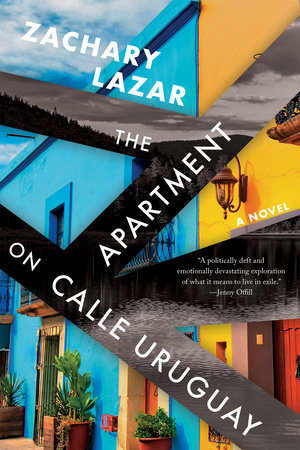
In the biblical Exodus story, before the enslaved Israelites escaped the Pharoah, Moses had his own personal exodus. After striking and killing a sadistic Egyptian slave driver, Moses, terrified, ran away, exiling himself to the desert. He struggled with his identity, feeling othered and alienated while away from home, so much so that he named his first son “Gershom”—a stranger in a strange land. It is Gershom who painter Christopher Bell declares himself to be at the beginning of Zachary Lazar’s new novel The Apartment on Calle Uruguay. 

The Apartment on Calle Uruguay by Zachary Lazar

If anyone is to be a stranger, Christopher Bell is a compelling one. A brown-skinned American Jew and the child of Israeli immigrants, Christopher is difficult to categorize, so he confuses people—at one point he says he looks like Osama bin Laden. Like Moses and Gershom, Lazar’s characters are wandering, lost and looking for home in places ready to spit them back out. The Apartment on Calle Uruguay tells Bell’s story as he attempts to put his life back together, retreating from New York City to a quiet cottage near a pond after the death of his girlfriend Malika and his complete detachment from his painting career. “I had lost some part of myself a long time ago, even before Malika died”, Bell recounts to himself.

Lazar’s work is concerned with the reverberations of violence, from the immediate to what is passed down through generations. His last novel, Vengeance, blended genre in what he calls “fake nonfiction”—a journalist reporting at Louisiana’s Angola State Penitentiary befriends Kendrick King, an imprisoned man who claims he was coerced by police into falsely confessing to a murder. 

The Apartment on Calle Uruguay is an American story told through a distinctly Jewish lens—Lazar is able to deftly weave religion, politics, and history to create a vivid portrait of immigrants and exiles building, moving, and grieving home amidst the turbulent Trump presidency. By connecting his novel to the biblical Exodus and the Israelites wandering through the desert, Lazar is able to tap into a lineage of exile and tenuous belonging. This confusion over where home is, it’s the central engine to Lazar’s writing.


Jonathan Dale: Your novel begins with the 2017 Charlottesville Unite the Right rally and Heather Heyer’s death. What about that event felt like the novel’s entry point for you?

Zachary Lazar: I wanted to write the novel in real time. So whatever was happening in the story had to correspond with whatever was happening in the news. I just was like, that’s where the first scene of the story starts. And this love story that I’m starting to tell has to be very much impacted by this story in the news, because both characters would be very preoccupied with it.

I knew that I wanted to write a love story, and I wanted it to have something to do with the border and people feeling like they wanted to leave the United States, but I’d planned that before Donald Trump was even elected. And once he was elected, I wasn’t going to do that. Because it sounded like it was too topical.

JD: When we meet Christopher, he is in a very low, anhedonic place. His girlfriend was killed in a car accident and he’s lost his artistic spark. He is an interesting protagonist to me because at the beginning, he seems defined by what he lacks—he’s grieving. 

ZL: It’s challenging to have a character that starts at zero and to see what you can do to a story to bring him back. Revitalize him without it being sentimental without it being, you know, ridiculous or artificial.

William Blake talks about this cycle that we are always going through. Which starts with spring where you feel like you are very vital, and things are going well. And then you enter into the summer, and that’s life kind of going along. And then you start to get old, and then you go into this winter period that he called the “ulro”, where you’re disillusioned, and what you do is you turn in on yourself in this posture of self-regard and self-pity. And what I liked about it when I read this from some guy who’s writing in the 1700s, is that wow, okay, he felt like this was just sort of a cyclical thing that everybody goes through. Because it’s a kind of psychology that I can identify with, that’s how life has always felt to me. What you need to do when you’re in the ulro, this dark place, is to somehow summon up a new outburst of creativity, creative energy, even if that’s just being outraged. In the case of my book, I think it’s romantic love, he falls in love with this woman and doesn’t expect her to be there. Which sounds corny, but when you’re in that place, you don’t want to be out of that place. You want to stay in that place, because it’s stable. It’s kind of like a womb, he compares it to the womb. So it’s this kind of a comfort zone, it’s a way of being dead while you’re alive.

JD: I was very interested in Christopher, the protagonist, being a non-white Jewish Israeli-American. What led you to Christopher as a protagonist?

ZL: My work has always been about a kind of exile from some sort of home. Whether that’s literal or metaphorical. And I wanted this character to not be able to comfortably fit into any ethnic group. I wanted this person to be misperceived all the time. I have been in Israel enough to have a firsthand experience with the Jews from different parts of the world, which was something I didn’t know about either until I went to Israel. I mean, I knew about it, but I didn’t have a good grasp of how diverse the whole Jewish world is.

JD: I feel the same way— as an Ashkenazi Jew, my Jewish world has been very white. So to explore the multifaceted Jewish experience is cool, it changes your understanding of who you are.

ZL: Well, I think Ashkenazi Jews have been so assimilated into America now that it’s hard to write about Jews in the way that someone like Philip Roth or Saul Bellow was able to. I don’t think there’s enough of a distinctive difference between us and every other white person in this country. Although many would disagree I’m sure. I think that there’s a lot of things about Israel and Judaism that people simply don’t know. 

Since I was in my 20s, I’ve been very influenced by this book called The Thirteen Petalled Rose by Israeli rabbi Adin Steinsaltz. It’s about Kaballah, the Jewish mystical tradition, dating back to Isaac Luria. Luria was a Sephardic Jew who in the 1500s wound up living in Safed in what is now Israel. Jews had been expelled from Spain In 1492. 1492 was quite a year. You had this colonialism happening in the Americas, and you also had the expulsion of the Jews from Spain. And some of them went to Israel. And they created this mystical tradition which is all about taking their exile, their real political, physical sort of exile and thinking of it metaphorically as an exile from God. And thinking that this is sort of a universal condition that everybody faces. And then they find ways to talk about that, but also to talk about how we are not exiles from God. One of their famous concepts is Tikkun Olam, which means repairing the broken world.

JD: Christopher is the children of exiles—his Polish mother’s family moved to Israel after the Holocaust and his father, who’s Tunisian, moved there due to anti-semitism in North Africa after the creation of Israel. I’m attracted to the idea—and I don’t know if this gets lost in the conversation or not—that Israel is not monolithic, but that it’s composed of all these people that come from everywhere.

I’ve always been interested in this idea that Israel is a beautiful metaphor. That when it becomes reality, it becomes something that is quite a bit more complicated.

ZL: And race is very interesting in the way it plays out in Israel. A lot of the same problems we have in America exist in Israel. I’m not talking just about Jews and Arabs, I’m talking about light-skinned Jews and dark-skinned Jews. It’s a huge part of the political equation over there. And it doesn’t always play out in ways you might expect. What I’m interested in is pointing out the diversity of Israel, pointing out the diversity of Jews. Jerusalem has always been a metaphorical place.

JD: Right, but Israel as a state and as a metaphor are very different things.

ZL: I’ve always been interested in this idea that Israel is a beautiful metaphor. That when it becomes reality, it becomes something that is quite a bit more complicated. To go back to William Blake, one of his central ideas is that our task on Earth is to build Jerusalem, which he thought of as a purely imaginary place. But he also thought you had to be active in a world, you’re supposed to play a part in the world around you. And so that’s a paradox. And I don’t I don’t know what to do that information.

I wrote a whole book about Israel called I Pity the Poor Immigrant in 2014. Things have only deteriorated since then from my point of view. I’m still not particularly interested in having a political conversation about Israel, because I know that conversation’s not going to go anywhere. But I think that one of the things that anybody has to think about is that it exists. Whatever you think of it, it does exist. And that makes it more complicated than an idea. Even if you wanted to unwind Israel, walk it back, so to speak, how are you going to do that? But let’s face it, politics in Israel have moved even further to the right.

JD: There are similar themes between this novel and your last one, Vengeance, specifically, with the character Jesse, who’s incarcerated. What is it about prison that has kept you compelled to write about it?

ZL: I’ve become close friends with a few people who are either in prison or were in or out as part of my daily life, so it’s how I see the world now. It’s not a peripheral subject. It is part of the central subject for me, the central ambience of my life.

I think Ashkenazi Jews have been so assimilated into America now that it’s hard to write about Jews in the way that someone like Philip Roth or Saul Bellow was able to.

I’ve gotten to know more about this paradoxical aspect, I guess. I’ve gotten to know more about my friends who are or were in prison. And I still feel like I have very little understanding of how it would feel to be in prison. I can talk about them all I want but it’s a world I’ve never actually been in myself. But with this book, I felt much freer to write. I had done Vengeance, so I had confronted a lot of questions and political issues that one would have to confront about that subject. And this book was pure fiction. And I had more confidence about it. And I had gotten to know Quntos KunQuest and Layla Roberts [two formerly incarcerated people to whom the book is dedicated] a lot better.

JD: Like you said, themes of exile and violence exile run throughout your body of work, especially considering your book Evening’s Empire: The Story of My Father’s Murder. Do you find yourself gravitating toward stories about violence? 

ZL: It’s a thing that I don’t like to write about, but I keep having to write about it. It’s the central energy of my work, for better or for worse. It would be pointless to resist that at this point.

JD: Has your understanding of violence and how people react to it changed over the course of your writing career?

ZL: Has it changed? No, it’s a mystery. There’s political violence and there’s economic violence. My father was murdered for very rational reasons about money. But there’s still the mystery of the ruthlessness of somebody doing it and causing it to be done. That is kind of fundamental, and in this new book, the violence makes no sense. And yet it does make a kind of sense, I think. But I think for me, violence is the baseline and we’re just lucky that it’s not a constant. I’m working through my fear.

The Garden of Pain Needs a Good Hard Freeze

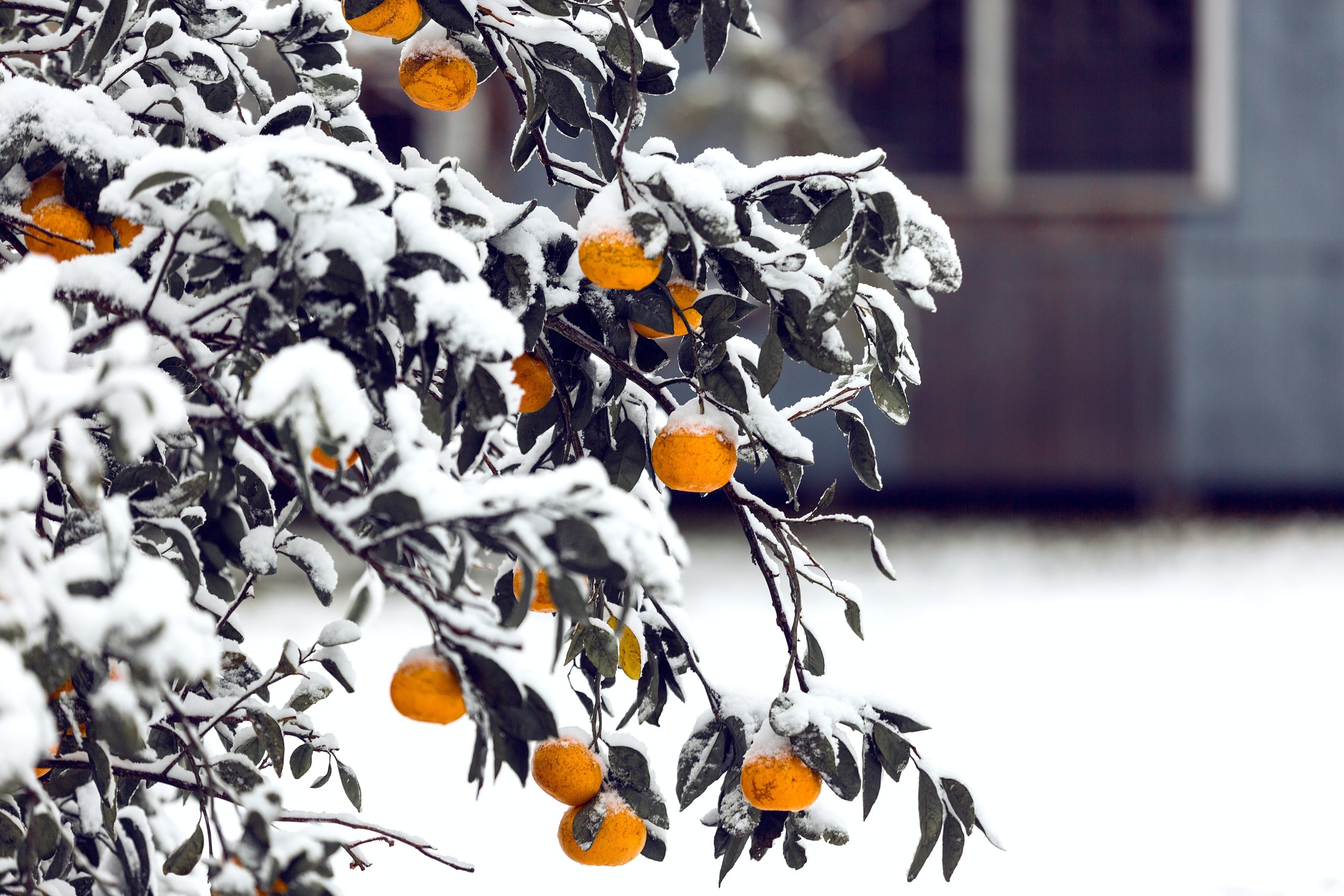
A Snowy Day

The snow fell first as childhood
longing, small as a soap doll’s Ivory curls,
blown from paring knife to floor.

A few crescents was all there were:
on eyelashes, making it impossible to see,
another landing bitterly on the tongue,

hushing it, dissolving like medicine
as roses erupted on the trellis—grown up,
unafraid of the coming disaster. 

Gradually, it shocked the pine and maple,
birch and black walnut; it seemed
the world was being washed, 

like an infant in the sink, astonished
by a butterfly before it traipsed away: flake
of the first felt moment, a heart-

in-the-throat one, like those holy seconds
before that one door opened or 
the glossiness of a gaze before a kiss.

A rake, forgotten in the garden, 
is powerless as a child left alone, sat close 
to the television, pressed against pixels

to find the rainbow in the glass. 
The birdbath, gone solid, X’d by the robin 
and chickadee, stepping quizzically,

becomes the memory of the ice rink 
where a girl in Dutch braids spun and couples
do-si-do’d to the organ, while watchers

stood outside the circle, heavy in earth-
bound shoes, as the dead assemble to watch
us, ringing our every happiness.

Burrs

Burrs spangle a garden that cannot be 
anymore called such. In autumn, once plot of innocence 
overrun with seed gone to seed, waiting 
unmet, ghost-children crying somewhere to be lifted. Ignored, 
they withered or crawled away. Was I sleeping 
or reading in a hammock when softly they dissolved? 
Soon the crisis will be over. Drawing close the liquor 
and bread, I’ll think I’m in pain. How strange to have lived 
long in that state and not uttered the word.

Poetry About Being a Taxi Driver in New York City

Sean Singer’s poetry collection, Today in the Taxi, could easily be described as as a vivid portrait of ride-sharing in New York City in the years leading up to the pandemic. At heart, however, these poems read like unaddressed letters sent to help us navigate an unsettling modern world.

While driving a taxi in New York for six years, Singer is carjacked, has a baby left in his car, drives a nearly dying young man, gets stiffed, berated, hit on, and cried to, and drives a few celebrities. What carries him through is what also moves this book beyond a compilation of anecdotes and into a significant book for our time: Singer’s lyricism unveils a voracious mind at work, a mind enriched by books and music and shaped by many kinds of grief. Singer considers Kafka, Wanda Coleman, Jacqueline du Pré, and various jazz musicians both invoked and found in his actual backseat. The thread of jazz in this book will be of no surprise to previous readers of his work, which includes his debut collection, Discography, winner of the Yale Series of Younger Poets prize and the Poetry Society of America’s Norma Farber First Book Award. Singer is also the recipient of a National Endowment of the Arts fellowship and author of the collection Honey & Smoke, and he writes the daily newsletter The Sharpener: thinking through poetry.

We spoke over email about writing a poetry collection inspired by his cab-driving experiences.


Rebecca Morgan Frank: Where and when were you driving a taxi?

Sean Singer: I drove the taxi from fall 2014 until the pandemic started in March 2020.

RMF: It’s hard not to think of Jim Jarmusch’s film Night on Earth when picking up this collection, and of course you address this directly with the poem “Night on Earth (Dir by Jim Jarmusch, 1991)”—Winona Ryder gets a part in your poem, too. How did this film influence this collection?

Because of the danger of driving itself, and the risk of violence from passengers, the driver has to be constantly scanning and evaluating then dismissing most of what happens.

SS: I like the film, but it’s more of a fantasy than something that shows what it’s actually like. The movie shows the strangeness of the characters and the attentive nihilism, or calm risk-taking involved with taxi driving. Because of the danger of driving itself, and the risk of violence from passengers, the driver has to be constantly scanning and evaluating then dismissing most of what happens. The job is 90% boredom and 10% sheer terror.

RMF: Jarmusch’s soundtrack featured Tom Waits: what were you listening to in the taxi? What would the playlist for this collection include?

SS: I mostly listened to WQXR, which is New York’s classical station. I find that classical music has a very calming effect on people. But if there was a playlist for the collection, it would include Arvo Pärt’s “Tabula Rasa” and of course the music of Charles Mingus, who is one of the “main characters.”

RMF: Let’s talk about another main character: Kafka appears throughout the book. How did he end up in your cab, so to speak?

SS: Kafka, Mingus, and the Lord (who is a female voice) appear in the book as guides through the Styx that is New York City. Kafka is the most important writer for me. He’s simpatico because of our backgrounds, family dynamic, and psychodynamic attitudes. 

Each of the trips is a transition into a passenger’s little world; the driver is present, but ultimately an outside observer.

The period during which I was driving was a time of considerable upheaval in American life—intensification of culture wars, a rise of totalitarianism—and a time of great loss in my own life. These poems reflect my living- and thinking-through the problems of this time. Three main themes emerge: what it means to work in the gig economy in a time of sharply intensifying income divide, watching my home of New York City transform through time and history, and charting my relationship to Jewish experience in a time of rising anti-Semitism.

Kafka was a figure who could address some of this material that allowed me into these conflicts in a less head-on way.

RMF: As you mentioned, there is also the presence of “the Lord,” throughout the book: she cleans, rescues plastic bottles from trashcans in Williamsburg, and is at times prophetic. How and when did she find her way into the book, and what do you see as her role?

SS: The Lord in the poems is a guide, an ethical GPS, allowing the reader to bear witness along with the driver. She is an Old Testament Lord because one of the tenets of Judaism is uncertainty, or questioning, and I believe these poems try to present the situations described as questions above all else. The relationship between the speaker and the subjects of the poems—often the city itself—is one of questions. These questions are often not resolved or answered definitively. 

She is a force of empathy, but also sometimes is vengeful, merciful, or a force of justice. Since a poem is a public space, the personal memory of a city becomes the public expression of a city. Since identity is tied to memory, I aimed for poems that showed the connections between the driver’s private world and a shared world with the strangers in the car. I wanted my poems to ethically describe urban space, but as justice-seeking poems, rather than aesthetic objects. 

Justice is love and the figure of the Lord in the poems is a steady beam, the lines on the road that tell us what the right path is. She has a female voice I think for several reasons: She is unexpected, confounds tradition and expectation, and is a way into balancing a ratio of relief and loss. My mother died of a brain tumor as I was writing the book, and I suspect the Lord having a female voice is a way to preserve her guidance and belief in me. 

RMF: You really do make some incredible turns in these poems—at times dark, at times funny, at times transcendent. These seem to perfectly reflect the dissonance between the outer life of the job and the inner life of the driver, including your personal grief. Can you talk more about how you found your way to these sharp swerves?

SS: Poetry’s metaphorical power is about connecting unrelated things. It also has a metabolic power, which is physical and involves the ear and the breath. Finally it has a metamorphic power, which is about the transformation of the self. The turns in the car are a little of all these because you have to avoid not hitting anything: bicycles, dogs, horses, cars, buses, trucks, people, objects; part of driving is physical of course, but most of it is mental. Alert attention has to be met with calmness, but also—especially in New York City—aggression and defensiveness. I also had to wrangle with my self-image. Was I a writer, a failed academic, a driver, or what? 

The turns in the poems allow the self to move in and out of these states and spaces. The poems are filled with contradictions because the task is so contradictory: sitting and moving, calm and assertive, looking ahead but having to talk to someone behind you, listening to intensely private moments but being invisible.

I wanted to convey the spontaneity and the inevitability of the interactions I had. I wanted to find ways to connect the immediacy of my embodied experience to the electricity of language. I felt each of the poems in my body because I was there doing the driving day in and out for five years. I lived each of those poems, and a lot of that was physical.

RMF: Jazz has informed your previous work, and this collection is no exception. How do jazz structures and rhythms continue to influence you?

SS: Jazz is about being joyful in spite of conditions, and about rhythm. Rhythm is a way of splitting up and organizing time. Part of the form in the book is the phrase “Today in the taxi” (or some variation of that depending on the time of day), so the cumulative effect is that of a kind of endless recurring series of trips that have a constant element and a variable element. The quick turns of the poems are like those of the car, and those surprises come from my interest in the freedom of jazz.

RMF: This condensed chronicle of so many years comes to us as readers as a liminal space, a timelessness shaped by continual transitions, yet that rhythmic repeated line, “Today in the taxi,” also grounds us in each particular dateless and hourless present. Was there a daily record that the book emerged from?

Anything can and does happen in New York City, and the car is a little version of that.

SS: Yes. I kept a notebook in the car and while I was driving I was able to remember every trip I took. Over 8,000+ trips, I could remember each person, where I picked them up and where they were going. The constancy of that line reiterates the sameness of every trip, and allows the driver to be like Charon, a cosmic ferryman, whose boat carried the souls of the dead across the river of death.

Each of the trips is a transition into a passenger’s little world; the driver is present, but ultimately an outside observer. The odd anonymous intimacy also means the driver’s inner monolog and what he’s reading and hearing can permeate his entry into those little worlds. 

RMF: Is there a story from your taxi experiences that never effectively made it into a poem, but you wish had?

SS: Once this drunk man came up to the car and said “I need a taxi.” I said: “I’m waiting for another passenger.” He said, immediately enraged: “Who? Who the fuck are you waiting for?” I told him Alexandra because a young woman had called and asked me to wait in a particular place.

Then I was thinking he was drunk and would leave, but he got into the car. So, I said again: “I can’t take you. I’m waiting for another passenger.” He screamed: “I’m Alexandra’s fucking father! Don’t, don’t fucking tell me you’re waiting for another person! You’re going to Berkeley Heights, New Jersey!” 

That kind of abuse was common. There were other times when women tried to flirt, pick me up, or invite me up somewhere.

A third moment happened on New Year’s Eve when I was hijacked by a guy who demanded I take him to Coney Island. He told me to stop somewhere on Surf Avenue so he could pee at a construction site and I drove away and left him there. 

Anything can and does happen in New York City, and the car is a little version of that. 

7 Korean Novels Set in Seoul 

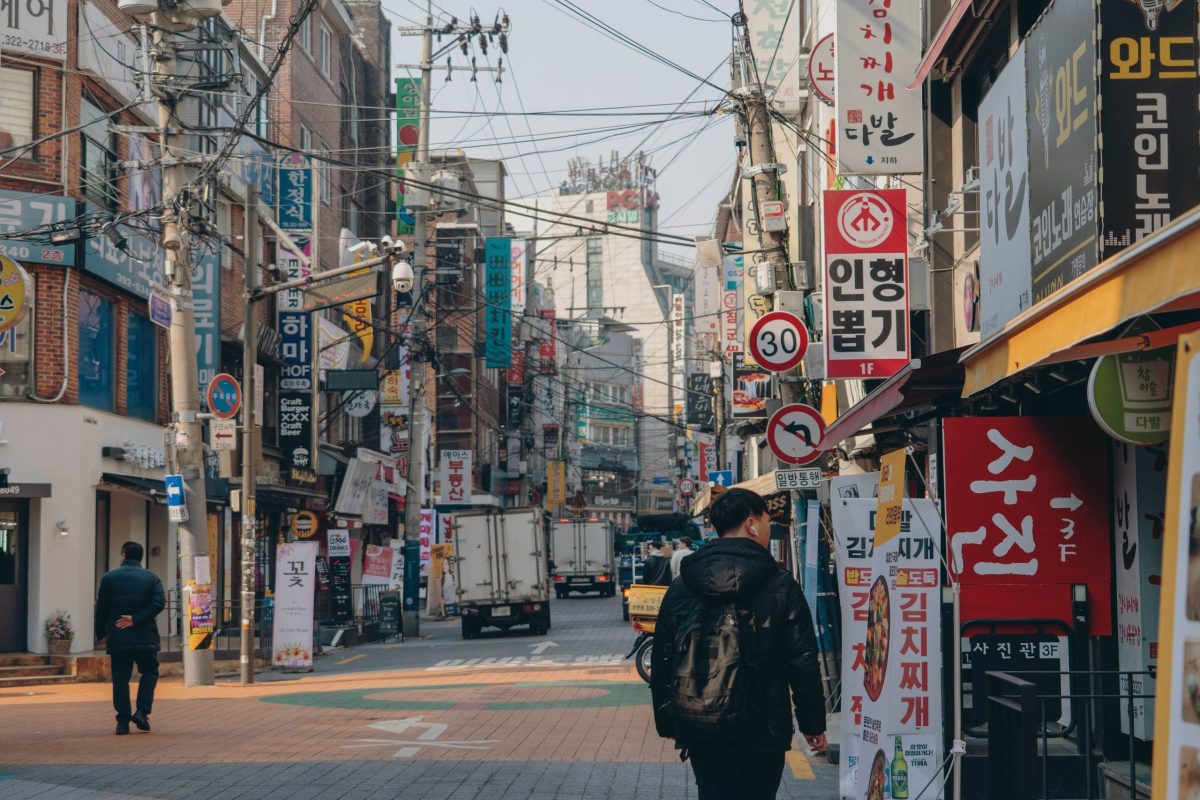
For those that might still think of New York as “The City That Never Sleeps,” I have some bad news: that title should most certainly belong to Seoul. You see, there is no last call in Seoul. And while the capital of South Korea might only have around one million more residents than New York City, it’s the population density where there’s simply no contest. New York City has roughly 27,000 residents per square mile. Seoul? Try 42,000. The city doesn’t just bustle, it roars. 

When We Fell Apart by Soon Wiley

When I started writing my debut novel, When We Fell Apart, I was only certain of two things: it would follow a young man’s search for questions following his girlfriend’s mysterious death, and it would be set in Seoul. Having lived there for a year, I knew first-hand what a rich and textured backdrop the city would be for my characters. From its glitzy high-end shops and all-night karaoke rooms to its world-class art museums and palatial street markets, Seoul isn’t just a cosmopolitan metropolis; it’s a writer’s playground. The city provided the perfect place for my characters to come of age while searching for answers. 

I didn’t read any books that took place in Seoul while I was writing When We Fell Apart; I wanted to capture the city as I remembered and imagined it. When I finally finished the novel, the first thing I did was make a stack of the books set in Seoul that I’d been meaning to read. These novels provided me escape and insight; they transported me into that fictional dream we love as readers. Here are those same books. I hope you’ll discover what I did while reading them: Seoul is a character in unto itself.  

If I Had Your Face by Frances Cha 

A captivating exploration of modern Seoul and Korean culture. Frances Cha channels the perspective of four young women as they struggle to find success and fulfillment in a city and society obsessed with unattainable beauty standards, K-pop stars, and familial expectations. With masterful prose and nimble structure, Cha weaves these four stories together, creating a nuanced and deeply satisfying depiction of female friendship. 

At Dusk by Hwang Sok-yong, translated by Sora Kim-Russell 

In his novel, that at times reminded me of Kazuo Ishiguro’s The Remains of the Day, Hwang Sok-yong tells the story Park Minwoo, an elderly businessman who begins reexamining his past. A rags to riches tale, Park was born into abject poverty and raised in one of Seoul’s poorest districts, only to ride Korea’s rapid modernization to wealth and success. But when his company is the target of a corruption investigation, and he receives a message from an old lover, he begins to reassess the cost of his success. 

Everything Belongs to Us by Yoojin Grace Wuertz

A historical novel set in 1978 Seoul, Yoojin Grace Wuertz’s novel follows the lives of two women from distinctly different economic means as they struggle to make a life for themselves under Park Chung-hee’s oppressive and industrialization-obsessed regime. Astounding in both its epic scope and intimately drawn characters, Wuertz weaves a tale about friendship, loyalty, and betrayal against the backdrop of national upheaval. This novel will leave you reaching for a history book on one of Korea’s most tumultuous time periods.

 Love in the Big City by Sang Young-Park, translated by Anton Hur

A novel that feels like a throwback of sorts, Sang’s first book to be published in English is a humorous and heartbreaking story about Young, a hard-partying university student searching for love in Seoul. When he isn’t attending class and meeting up with his Tinder matches, Young is hanging out at bars with his best friend and roommate, Jaehee, where they drink away their anxieties about their love lives and families. Through boisterous and unadorned prose, Sang explores the intricacies of queer life in Korea, with all its joys and complexities. 

Kim Ji-young, Born 1982 by Cho Nam-Joo, translated by Jamie Chang 

A global sensation when it was published in 2016 and translated into English in 2020, Cho’s novel charts the steady and alarming mental decline of a woman as she struggles to retain her dignity within Korea’s patriarchal society. Having quit her job to care for her newborn, as most women are expected to do in Korea, Ji-young spends her days in a small apartment on the outskirts of Seoul. With no one to keep her company but her infant daughter, Ji-young begins exhibiting “strange” behavior and impersonating the voices of other women. Blaming her for her own mental illness, Ji-young’s husband sends her to a male psychiatrist. Told in clinical and matter-of-fact prose, this novel stands as one of the most important contemporary Korean novels yet. 

The Plotters by Kim Un-su, translated by Sora Kim-Russell 

An alternate take on Seoul, Kim’s sizzling and thrilling novel imagines a city overrun with for-hire killers and assassin guilds vying for business. The novel follows Reseng, a skilled hitman who was an orphan until he was found and raised by an old man named Old Racoon (yes, you read that correctly). Everything is going just fine for Reseng, until he uncovers a devious and astonishing plot, forcing him to choose between his job and a higher calling. Part existential philosophy and part Quinten Tarantino film, this novel will take you on an unforgettable ride. 

Please Look After Mom by Shin Kyung-sook, translated by Kim Chi-young

An international bestseller and winner of the Man Asian Literary Prize, Shin’s brilliant novel tells the story of a family’s frantic search for their missing mother. In a crowded Seoul metro station, 69-year-old So-nyo gets separated from her husband. What follows is a fevered quest to discover her whereabouts and a family coming to grips with their untold secrets. Shin masterfully utilizes four perspectives—mother, husband, daughter, and son—to paint a universal and authentic portrait of contemporary Korean life. 

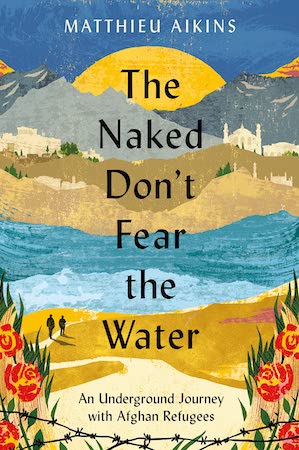
A Canadian Journalist Goes Undercover as an Afghan Refugee on a Journey to Europe

Matthieu Aikins’s olive complexion, dark hair, and ambiguous features means that he is often mistaken as a local in Afghanistan and the Middle East where he has lived since 2008. In his non-fiction book The Naked Don’t Fear the Water, the Japanese Canadian journalist goes undercover as an Afghan refugee to accompany his interpreter and friend Omar on a treacherous journey across land and sea to seek asylum in Europe. Aikens, to his credit, does not purport to speak for the Afghans around him and nor does he lionize the westerners around him. He is a voluntary participant in this journey, a role that comes with culpability and steep risk. 

Aikens compels us to follow him on a journey to a land besieged by conflict and corruption, where justice is somewhere under the rubble and love can mean letting go. He brokers an honest conversation on the hypocrisies and unintended consequences of war. But he also invites us to see through the gun smoke and past the toxic global inequalities to the heart of the book, a larger-than-life love story complete with stolen kisses, unanswered phone calls, and tall promises.

I was no stranger to the intrepid and award-winning journalism of Matthieu Aikins. As an Afghan American, I’ve read his reporting from Afghanistan with deep appreciation. In the 2011 Atlantic article “Our Man in Kandahar,”, he shined a flashlight on the relationship between American generals and a corrupt and violent warlord. He witnessed the fall of Kabul firsthand in August of 2021 and wrote about it for the New York Times. He uncovered evidence of grisly war crimes in “The A-Team Killings” for Rolling Stone and broke the news that American drones wrongfully killed an innocent Afghan aid worker and nine members of his extended family, seven of whom were children.

I spoke to Aikins while he was in Paris, making tour stops for his book, about passing for Afghan, witnessing the difference between how Afghan and Ukrainian asylum seekers are treated in Europe, and whether there is a tangible solution to the migration crisis.


Nadia Hashimi: In writing about the connections with the artists and the culture, you did an incredible job of exposing the humanity of the Afghans around you, and how simple the desires that drive the displaced are. And this isn’t the typical story told about Afghans or Afghanistan, at least not the type that hits the Western media. Do you feel the stories that the American public are receiving are a fair representation or is something missing? 

Matthieu Aikins: I wanted to write a story that would show the complexity of people in a way that literature really can do, and often fiction. And I think because very often stories about refugees are told by a certain kind of observer—often a journalist who’s trying to report on the injustice and suffering people are experiencing, which they definitely are—it tends to be written in a certain register, sometimes like a litany of misery. 

But of course, people go through these experiences and they have all sorts of different moments, moods, complexities, and they are neither victims nor saints—most of them at least.  And I think being among them and sort of having people talk to me as if I was a refugee, I think I had the benefit that I often was able to observe conversations and everyday life in a different register that perhaps brought out some of those complexities.

NH: What was the most difficult part of your journey? 

MA: During the years I spent living and reporting in Afghanistan, I had often passed as a local in order to avoid attracting attention to myself in dangerous areas, but this trip was a far deeper commitment. I had to live an alternate identity for months on end. The hardest part was probably when we were trapped in the camp on Lesbos. We didn’t know how long we’d be forced to endure the filthy conditions there.

NH: In this journey, you did pass yourself off as an Afghan refugee. You’ve also spent a good amount of time in Afghanistan. You’ve eaten the food, you’ve made Afghan friends. You’ve learned the language and you wrote beautifully about your ability, because of your phenotype, to pass for an Afghan. Do you feel a tiny bit Afghan and is that even possible for anyone? Is there any amount of time and any amount of immersion that would allow one to cross that line? 

MA: It’s a very interesting question and a sensitive one. I often have Afghan friends tell me half-jokingly, that they consider me Afghan or that I’ve somehow become part of their community even though I’m still an outsider. I don’t consider myself Afghan but I am certainly a Persophile, an Afghan-phile. I have a deep love and respect for the culture. The act of passing as an Afghan, it takes place across a yawning gap in terms of the wealth, of the socioeconomic conditions and privilege that I grew up in, compared to most people in Afghanistan and that’s not something you can erase really no matter how well you can pass. 

And so, in that sense, I think that’s something I’m conscious that I’m not ever going to eliminate. Of course, there are Afghans who are wealthier than I am, who are more cosmopolitan than I am, who speak more languages than I do, who have more advanced degrees than I do. I don’t want to oversimplify here but we’re talking about that particular Afghan who would be traveling, who were generally migrants. I don’t claim to be one of them. 

NH: I could envision people who have spent time with you kind of dubbing you an “honorary” and I believe that comes from a place of trust established.

MA: I think people give you credit for spending the time and effort to learn the language first and foremost.

NH: And to see them in their full light, as three dimensional and flawed, which is, as you said, very, very human. The path of the migrant is a treacherous one. But you decided to part with your passport and, as you call them, the levers of privilege. Did you worry along the way that you had maybe ventured a step too far and taken on too much risk? 

Unless we are willing to radically change our political and economic systems in order to more equally redistribute the world’s wealth, then I don’t see an end to the violence that’s happening at borders.

MA: Well, we realized we were risking our lives so I was prepared for the worst as much as you can be. But my whole career has been about risk and taking calculated risks. It’s ultimately a subjective question because everyone’s risk tolerance is different. With regards to my own, I’ve worked in war zones in Syria, Afghanistan, Yemen and we were talking about much greater risks in terms of danger there, which is why people from these countries are willing to risk their lives on the migration trail. They’re fleeing dangerous wars. So the risks of this story were more complex than that. There was a dangerous part of it. There were also legal risks and other people were getting involved, risks with this kind of crossing lines, and I didn’t want to get into situations which we couldn’t get out of. I also felt responsible to Omar and his family. 

NH: And in the time since you’ve written this, as seems to happen with stories sometimes, this book has become timely in a way you may not have anticipated when you wrote this. You’ve been watching I’m sure, like everyone else, Ukrainians fleeing a new conflict. The reception that they have been receiving has been a beautiful reception and one that I think we’re all glad to see. What have you been thinking as you’re watching how the crisis has been handled by the international community as compared to other crises? 

MA: Well, a lot of people pointed out the severity of that—how Ukrainian refugees are being treated well in the European Union compared to how Afghans and Syrians are being treated and how that’s connected to race and religion. I think that’s absolutely true, and one of the things I try to show in the book is that the question of refugees is part of a bigger problem with global migration and the very unequal world we live in. So I think what’s true is that Ukraine is not being caught up in some kind of web of barriers that exist to prevent people coming from the global south to Europe. And so on that alone, what Ukraine shows us very clearly is that refugee crises, migration crises, are not only the result of wars or other disasters, but also are produced in part by borders and a system of laws that we’ve constructed around them. And so Ukrainians have been able to flee the country. They’re allowed to travel to Europe. They’re allowed travel to the EU without visas. They can drive a car and drive to Poland, across the border. They haven’t been obliged to trek across the mountains and forests with smugglers or risk their lives in tiny, little boats, which is of course a good thing. But that’s the situation that Afghans and Syrians face. And that’s primarily because Afghans and Syrians are just not legally allowed to leave their countries without passports and visas, which are almost impossible to get. And so the suffering that Afghan refugees face, again, it’s not just the result of the war, it’s a result of our border system. 

NH: During your time in Greece, you were in the City Plaza Project, which sounded like a wild social experiment—like a co-op for refugees and diehard activists living in community. You wrote: “The City Plaza project called for open borders, but it wasn’t easy to see how that would work.” Do you think there’s a way to get to a practical place of solutions for the displaced— somewhere between the total skepticism and the total idealism—where we can find some tangible solutions?

MA: I think that the migration crisis and the violence that’s inflicted on desperate people trying to cross borders to reach the global north is the result of a world where there’s a drastic inequality in wealth as well as wars and other catastrophes. And unless we are willing to radically change our political and economic systems in order to more equally redistribute the world’s wealth, then I don’t see an end to the violence that’s happening at borders. So in that sense, I am skeptical that there’s a clear solution or reform. 

The migration crisis is the result of a world where there’s a drastic inequality in wealth as well as wars and other catastrophes.

But I think that it’s important, first of all, to be conscious of how the system, that we are the beneficiaries of living in this part of the world, requires borders that are violent enough to keep out desperate people. So we have to be honest about that. And if we’re not willing to at least try to imagine a different world, then we have to accept our willingness or complicity in those borders and that’s the kind of, I think the very difficult structural perspective that could be one of skepticism. 

But there are two ways to look at this. One is we don’t have to make a situation worse. Very often these calls to further militarize the border and expand surveillance and criminalize migration are not actually benefiting anybody. They’re cynical political strategies. There’s no reason for these kinds of policies. We don’t need to make borders more violent. They could be less violent because there’s no evidence that these border crackdowns solve problems. They actually increase the profits of smugglers. And two, that we also can act as individuals in our own communities. That is what interested me so much about City Plaza: it was an example of people acting in a very concrete way to make the lives of the people around them better while doing that with the utopian political vision in mind. There was a relationship between what they were able to do in their real lives and in their political vision. And it definitely made it easier, though it still wasn’t easy for people with very different backgrounds to get along. We had this egalitarian vision that everybody has the right to move rather than this kind of NGO mindset where people are deserving clients. 

It’s a very big issue with no easy answers and yet it can actually be quite simple when we want to, we can reach out and help. For example, we could work in solidarity with refugees in our own communities, and make individuals live better, make our own lives better. We can change ourselves. That’s actually not that complicated. 

NH: My last question is about your broader perspective on journalism which had been flourishing in Afghanistan for the last couple of decades and was probably one of the most vital institutions. But it seems to be going a bit dark now, with the Taliban pushing out some Western news outlets and, of course, making horrific attacks on Afghan journalists. Do you see any way to continue those important stories? What do you see happening with journalists in Afghanistan today? 

MA: Well, there’s a whole generation of skilled and experienced Afghan journalists who now find themselves in exile and who absolutely should be supported. They are going to be a very valuable voice about what’s happening in the country. But I think it’s also important that they and we and everyone who’s reporting from outside the country, work with people still inside the country, as difficult as that is and will continue to be if the Taliban continue to crack down on freedom of expression, because there’s a danger of the situation in Afghanistan being represented mostly from the outside. There’s also a lot of room for partnerships between people who are on the ground, the next generation of Afghan journalists coming up in their country, and those who’ve gone abroad. 

Modern Horror Is the Perfect Genre for Capturing the Black Experience

When I was in my early twenties I watched the movie “Annabelle” with my cousins and brother. It did its job in discomforting me, but I’ll never forget what my brother said as he watched, bored, eating popcorn, and checking his phone. “After all our ancestors went through, there is no way they’re just going to sit by and watch us get tortured by some white ghosts.” We all laughed and endorsed his sentiment and while I still had a little trouble sleeping that night, I do think I slept easier with my brother’s words on my mind.  

Most of what we consider classic horror was created by white men.

Horror, as a genre, has always fascinated me. As a child I watched the screen adaptation of Stephen King’s IT and wondered why someone had to go so far outside of reality to make something that was considered scary. Why invent an evil clown when there are plenty of real life clowns making decisions about legislation and running corporations that bleed the earth dry?  We don’t even have to think that broadly: Have you ever been the only Black girl at a pool party and gotten your hair wet? Are you a woman walking alone to your car at night? Have you ever been Black or Brown and pulled over by the cops? That’s all horror, too. 

Are you a woman walking alone to your car at night? Have you ever been Black or Brown and pulled over by the cops? That’s all horror, too.

Most of what we consider classic horror was created by white men. The genre, both in film and in literature, is plagued by the same white male gatekeeping that most entertainment disciplines are subject to. Algernon Blackwood, Joseph Sheridan Le Fanu, W.W. Jacobs, and Edgar Allan Poe all had a part in shaping how we understand classic horror today. The creation of supernatural forests, beings, objects, and obsessions sets a precedent for horror to focus on the invention versus observation. Part of horror’s beauty is its responsibility to invent and create. Where would we be without characters like Frankenstein, Pennywise, or even Chucky? They are beloved, and important. However, the tragic outcome of this gatekeeping for horror, as a genre, is that it’s given us finite access to a limited imagination when it comes to source material. White male writers’ ability to explore the monster in themselves is stunted, at best. I’m not anti-invention, I’m anti-invention without accountability. The aforementioned writers wrote groundbreaking work in so many ways, but the centering of whiteness has never been groundbreaking. 

The years surrounding Blackwood’s The Willows were ripe with tense race riots. Le Fanu’s Carmilla came out the same year as the bloody Colfax Massacre. Jacob’s The Monkey’s Paw came out at the same time as the Filipino War, and Poe’s The Tell-Tale Heart was published the same year as the 1843 Cuban Slave Revolts. I am not of the expectation that white men would be able to write anything insightful about the horrific current events that existed during their lives. White people have demonstrated over and over again that while the systematic prejudices white supremacy has created might be embarrassing to them, if they are even aware of them at all, as far as they are concerned they don’t qualify as horror. I am of the expectation that non-white folks, LGBTQIA folks, disabled folks need to write it themselves. And this is not to erase any previous brilliance a white man may have happened to create, but to stand beside it. Racism is a horror and should be explored as such. White folks have made it clear that they don’t think that’s true. Someone else needs to tell the story. 

Cherish Farrah by Bethany C. Morrow

Usher in the needed present era of social horror. Bethany C. Morrow’s new novel, Cherish Farrah is a slow burn social horror that explores race from a multitude of angles: how white liberalism—despite its performative commitment to “the work”—continues to perpetuate dangerous and harmful ideologies rooted in classism and white supremacy, the ills and complicated legacy of transracial adoptions, and the barriers to social mobility for Black families, even those who do everything right. 

The story follows two teenage Black girls, Cherish Whitman and Farrah Turner. Cherish Whitman is the product of a transracial adoption: she is Black and both of her parents are white.  Blue-blood white, the kind of white that acquired its wealth, at least in part, off the oppression and disenfranchisement of Black people. There are family heirlooms, different houses for different occasions, relationships with powerful and influential people, like judges, that go back decades. Despite this truth, Cherish’s parents are deeply committed to her. Upon finding out that she was going to have a Black daughter, Cherish’s mother, Brianne Whitman, was “… of course … mindful enough to take a class. Not just in Black American studies, either. On hair care, on skin and makeup, too. She wasn’t going to bring home a baby who looked nothing like her and act like her love was enough. That’s not who the Whitmans are.”

Throughout the story we are repeatedly posed with the same question: can the Whitman family work to dismantle systemic injustices while also benefiting off of it? Morrow gives us a conclusion of sorts and the extent to which it will surprise the reader will likely be in direct correlation to their understanding of racism in this country.

White liberalism continues to perpetuate dangerous and harmful ideologies rooted in classism and white supremacy.

Cherish’s relationship with her parents is where the novel explores the power dynamics inherent in transracial adoption. They spoil her to the point of oblivion. Cherish, for all intents and purposes, functions at the same naive and privileged level as her white peers—this point is driven home by Farrah’s nickname for Cherish, “white girl spoiled.” When it comes to the subject of Cherish’s race and the sobering realities that accompany being a young Black woman in America, the Whitmans take the approach that many liberal white people take—they treat systemic racism as a thought experiment. There’s little, if any recognition of racism as a real lived experience that every Black person, including their privileged daughter, must navigate. Their tactics are bizarre and harmful and ultimately end up being their demise. Cherish, the one they want to protect the most, suffers greatly because of it.  

Farrah’s horrors, in part because she comes from a traditional Black family, are another reflection of the systemic racism that BIPOC folks are used to. After being hit by financial hardships the Turner family is forced to abandon the cushy lifestyle they were hardly able to afford in the first place. Farrah gets a rude awakening when she asks her parents if they can just “move a few things around for awhile,” meaning money, the same way she saw her classmates’ parents do when they seemingly lost everything. She says: “One year, someone’s family ‘lost everything’—but everything didn’t include houses or boats or memberships. Everything was a feeling, a state of being … how was I to know it wasn’t the same for us?”

The Whitmans take the approach that many liberal white people take—they treat systemic racism as a thought experiment.

When Farrah is invited to stay as a guest at the Whitmans’ house, her obsession with appearances and control clouds her ability to see reality. She thinks she can manipulate the situation, and position herself to take a place beside Cherish on a matching white girl spoiled throne. Her need for control drives her to do some pretty gruesome things, including assault and battery, biting someone’s tongue off, and driving a nail through her foot. There are many times throughout the story where the reader may find themself trying to figure out who is the victim, and who is the victimizer, but it is repeatedly clarified that despite how much power and control Farrah thinks she has, or tries to exhibit, it is nothing compared to the system—represented by the Whitmans—she is up against. The unrest she experiences at the hands of the Whitmans is imaginative and fanciful, but the isolation and self-denial that came with it is an all too real and accurate portrayal of everyday life under white supremacy.  

When I was in middle school I was a member of a performing troupe. At any given time I was the only Black person out of forty kids. Everyone else was white. While the public-facing persona told a family story—that we all lovingly worked closely together to ensure that our performances went off without a hitch—that wasn’t always true beyond the facade. There were your standard early-2000s aggressions: asking if my skin got darker in the sun, or if the ponytail piece my mom purchased to make show hair easier was actually my real hair, or even the director of the troupe once telling me—completely out of the blue—that he was part Cherokee. But there were also outright moments of torture: one member calling me a nigger over AIM, and other members’ younger siblings refusing to play with mine because he was Black. Seemingly unprovoked, shortly before I quit, I cried and cried in the dressing room— almost missing my cue. All of my cast mates felt deeply for me: we hated to see each other upset, but they were also confused. They couldn’t possibly comprehend that they were the source of my anguish.

I loved being in that group. It was my introduction to theater and musicals, things I continue to have a relationship with to this day. It was the first time in my life I had permission to pursue something picked by me, as opposed to my parents, and I took it seriously. I practiced dance moves even after rehearsal was done. Oftentimes rehearsing in my basement was the last thing I did before I went to bed. I was good. I was one of the strongest singers. Though I was only twelve, I was often cast  in the more advanced numbers with the seventeen and eighteen year olds. This is how I exhibited control. This is how I thought I would secure my throne. But alas, one Black girl’s determination will never be bigger than white supremacy. 

My parents, like many Black boomers, had a healthy amount of faith in respectability politics, a mindset I imagine Farrah Turner’s parents might carry as well. Why else would they put their child in such a white environment? My parents went to great lengths to ensure that my siblings and I were distinguishable from the other Black kids in our school district, in part by their achievements. They hoped their exceptionalism would protect us. My mother was the first Black elementary school principal in our school district. She worked her way up to Director of Teaching and Learning, making her the sole Black face in the district office, and as a result, I became the token Black girl. Solid grades, prom court, track records, college scholarships, I did it all. But it didn’t stop two of my white male classmates from threatening to hang me from a tree. It didn’t stop my brother’s classmate from telling him to go back to his slave master. It didn’t stop my sister from being pulled over on her bike. And it definitely didn’t stop any of the daily microaggressions that made those macroaggressions possible.

The dangers of existing as a Black or Brown face drowning in a sea of white is a trope the founders of classic horror could never capture. As Cherish Farrah and my lived experiences demonstrate over and over again, Blackness surrounded by whiteness sometimes evokes the kind of terror that renders you rageful and confused—in my case—or plotting and vengeful, in Farrah and Cherish’s case. All of it is justified. Using the horror genre to examine the everyday cruelty that Black people experience at the hands of white supremacy is perhaps the metaphor we need, and I’ll gladly consume it for as long as I can.

7 Feminist Poetry Collections About Gender and Identity

Spring is the sweetest time to discover new poetry. Lingering daylight and blossoms, the chance to open a book on a park bench and be transported, briefly, to a heightened world. Each spring, I find myself gravitating towards collections, both intimate and bold, that wrestle with identity and history, desire and self-definition. Poetry opens up space for us to explore a feminist vision free from the lens of judgment or rational discourse, making imaginative leaps that awaken possibility.

Here are seven new poetry collections that consider intersectional issues of gender and oppression. These poems got into my head, under my skin. Read them and let your world expand.

Refusenik by Lynn Melnick

A fierce, feminist page-turner of a book, Melnick’s third collection is a riveting follow-up to Landscape With Sex & Violence. “You can only hear you look like a hooker so many times/ before you become one,” she writes, recounting the story of babysitting for the rabbi’s son as a teen, a chilling parable about survival under patriarchy. With her signature wit and candor, Melnick reckons with a history of misogyny and anti-Semitism, war and atrocity, sexual and domestic violence, myriad abuses of power—and yet there is humor and hopefulness in her voice, a perpetual sense of discovery. These poems reclaim the power of mother-love and female pleasure, searing rage and desire, as they navigate layers of generational and personal trauma and rework them into art. Refusenik rewrites what it means to live in America today. On July 4th, Melnick insists: “I recognize my own fireworks.”

As She Appears by Shelley Wong 

Shelley Wong is the poet-queen the world needs right now. Her visionary debut, As She Appears, centers queer women of color in shape-shifting poems of becoming and knowing, seeing and being seen. Wong uses white space and silence to pose questions about identity and interiority, femininity and power: “women are familiar with surrender/ & the appearance of it,” she writes, letting the lines float free on the page. Subversive and sensual, Wong’s poems take us from the solitary salt marshes of Fire Island to Pride month in New York, dancing “in strobing summer heat.” She mourns a lost relationship, writes odes to Frida Kahlo, contemplates being a “not-mother,” appraises the rites of courtship and fashion, wanders Golden Gate Park in the pandemic spring. These gorgeous poems are alight with flowers, birds and longing, making a new world in their wake. As She Appears is a stunning feat of self-creation: “As a girl, I never/ saw a woman/ who looked like me./ I had to invent her.”

Mother Body by Diamond Forde

Forde’s audacious debut won the Saturnalia Books Poetry Prize and offers surprise and delight at every turn. In visceral poems that get up close to the Black female body, its blood and breath and hungers, Mother Body follows the journey of the fat girl as she nicks herself shaving, endures a pelvic exam, savors post-coital bliss, dances, eats, orgasms, exercises. A poetic descendant of Lucille Clifton, Forde writes with femme swagger and fine craft, her language rhythmic and lush. In “Ode to My Stomach,” she revels in naming: “You are/ honey dome. Power house. Piston/ of digestion pump-pumping.” At the beach, fat girl studies “a jellyfish’s rainbowed remains:/ luminescent dew, a gelatinous porkbelly of blues…” These unapologetic poems are full of wonder, refuting a legacy of shame and unworthiness. Mother Body dances with pain but claims joy as a birthright, a coming home to self-love and wholeness. 

The Man Grave by Christopher Salerno

I confess I expected to dislike a poetry collection about the male experience, written by a straight, white cis-man. Instead, I was captivated and deeply moved by Salerno’s agile poems, which wrestle with masculinity in its complex forms. With tenderness and precision, The Man Grave interrogates the privileges and vulnerabilities of boyhood and manhood, from schoolyard memories of the epithet “fag” to sperm viewed under the microscope at the IVF clinic. Salerno’s speakers try to “leave manliness behind” but can’t stop seeing brutality everywhere, recalling the violence of male relatives, watching an osprey hunt its prey. Shame and anger simmer in a series of “Sports No One Follows” poems: “To learn how to shut another man’s mouth/ you must point at him with the fat end of the bat…” Taut with wordplay and irony, The Man Grave finds sorrow inside laughter, redemption in the act of empathy. A gentle poem about shaving a mustache nearly broke my heart. 

Useful Junk by Erika Meitner 

Erika Meitner’s sixth collection blazes with eroticism and curiosity. These passionate poems teem with incisive observations of daily life, from night-swimming at a Holiday Inn to buying a pregnancy test at CVS. “I’ve got years in my mouth too, waiting to be fished out,/ laid across a table, and gutted,” she writes. Useful Junk explores memory and the body with relentless lyricism and nostalgia, writing in praise of female pleasure and discovery at midlife. Meitner’s poems want to inhabit everything, and do: perimenopause, infertility, friendship, motherhood, family trauma, sexting, trying to take a selfie of one’s own ass. There is an infectious, headlong energy to the lines, a vision “multitudinous and wild” akin to that of Walt Whitman. I felt these speakers were looking into my own heart, revealing the wonder and vulnerability of its yearning: “Can I ask you again to tell me about my body,” Meitner urges, “to introduce me to my own numinous skin?”

All the Flowers Kneeling by Paul Tran 

Paul Tran’s astonishing debut is balm for survivors everywhere. Their collection investigates sexual violence and generational trauma while forging a bright path of resilience and healing. Tran is a queer and trans descendant of Vietnamese refugees whose innovative poetic forms reflect the shifting, nonlinear experiences of trauma survivors. Resisting the urge for closure, their poems cycle through memory and recurring imagery; the song of a passing ice cream truck, heard during an assault, replays in the lines. But Tran finds strength in breaking apart language and exposing its trickery, naming slippery homonyms, dancing around the unspeakable act of violation: “Reap. Pear. Pare. Aper. / These are versions of the word/ I won’t say.” The poems recast a legacy of war and abuse, critique the imperial gaze of Renaissance art and the scientific method, retell the tale of Scheherazade until it becomes a story of survival and love. All the Flowers Kneeling affirms poetry’s transformative force: “A poem is a mirror/ I use to look/ not at but into myself.” 

Glass Bikini by Kristin Bock 

The much-anticipated second collection from surrealist poet Kristin Bock explores dystopian dreamscapes, myths, and spells. Glass Bikini channels Barbarella in her silver spacesuit and Mary Shelley in her prophetic brilliance, illuminating our nightmare world. These poems travel from ashen Pluto to the day-glo Dollar Store, populated with robots and rabbits, mannequins and monsters, mirrors revealing what makes us human. Bock mixes deft prose poems with her signature lyricism to heighten emotion. Buttons shine “like opals buried deep inside the moon;” “grief is a boat/ exactly the size and shape of the sea.” And hope exists in the redemptive power of the feminine. The final sequence, “Copilot,” recounts the last days of a doomed planet, a reverie of violence and survival where tenderness between women becomes a promise we can hold: “I want to tell her shhh, I’m here where you left me, in the blue basin, waiting to catch your analogue heart like an egg from the sky.”