8 Books About Women’s Rage

On a particular afternoon, I drove my minivan through the rainy streets with the radio on, my 15-year-old daughter sitting at anxious attention next to me. We were at the tail end of a particularly dreadful Supreme Court nomination hearing, and I, like many women in America, felt a crushing sense of ominousness and doom. My daughter and I listened, barely breathing, as Christine Blasey Ford resolutely testified to the details of her sexual assault to a room full of senators who did not seem particularly inclined to listen to what she had to say, to say nothing of altering their vote. I gripped the steering wheel and watched my child shake her head, realizing with a start that I was her exact same age when Anita Hill testified to another similarly disinclined group of senators. I remembered how galvanizing that moment was for me at 15. How enraged I felt. I remembered the looks the senators gave Prof. Hill, and their dismissive and diminishing and offensive comments. And here we were, an entire generation later, facing the same goddamned thing. Nothing had changed. I pulled over and felt my anger and frustration expand within me, igniting my bones and blistering my skin. 
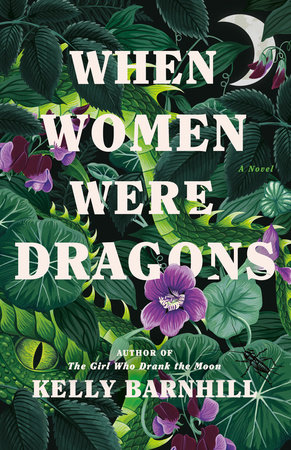
When Women Were Dragons by Kelly Barnhill

I decided right then and there that I was going to write a story about dragons and rage. That I would write a story about a bunch of 1950s housewives who turn into dragons, whereupon they possibly eat their husbands, or former teachers, or physicians, or youth group leaders, or camp counselors, or anyone else who had wronged them once. Men who grasped where they should not grasp, or who felt entitled to claim what was never his. I’ve met men like that in my life. And maybe so have you.

Rage isn’t meant to stay in one place. It moves us from one state to another—like a refiner’s fire, or a catalyst. Rage brings heat, light, and clarity. It burns the chaff away, leaving that which is essential behind. Growing up as a woman, I was raised to mistrust my rage. To feel ashamed of it. To distance myself from it and pretend it never existed in the first place. 

I don’t feel that way any longer.

As I wrote, I quickly realized that I wasn’t writing a short story at all. It was a novel, perhaps. Or a series of historical documents. Or the musings of a scientist. Or a memoir. Or maybe all these things at once. I wasn’t sure, but knew enough to trust the story. It would tell me what it wanted to be eventually. As it asserted itself on the page, I started exploring other books that walked through this same territory—rage, feminism, memory, and maybe dragons too. I hope you like them as much as I did.

A Natural History of Dragons, by Lady Trent by Marie Brennan

A Natural History of Dragons is written as a memoir (albeit of a fictional person, in a fictional world) of Lady Isabella Trent, the world’s most famous dragon naturalist. Though her interest in science and natural observation was tolerated as a child, as she grew it became very clear to Isabella that her future was limited by her gender and social status, and that her duty to her family was to make an acceptable matrimonial match. How vexing! And how unacceptable. This is a story about dragons, obviously, and science, and the practice of biological research, as well as a play on manners and expectations and the ridiculousness of society. But it is more besides: persistence, curiosity, attention to detail, a refusal to be dominated, and a profound sense of that deep joy of learning, and wonder. The way that Lady Trent pushes on the boundaries of her society, and deftly steps beyond them, was a thrill to read.

The Parable of the Sower by Octavia Butler

A story of collapse, chaos and perseverance. Taking place in Butler’s imagined post-apocalyptic 2020s, we enter the world of 15-year-old Lauren Olamina, resident of a gated community that offers a thin safety from the ravaged world outside. Her preacher father, along with the rest of the community, stubbornly cling to the truths that once kept them safe, but our perspicacious and pragmatic heroine sees dangers that the adults in her life cannot, and imagines a future that the past itself could never dream of: a new path, a new religion, the birth of a new world.

This is a book I have returned to many times in my life, and every time I find something new. Butler engages furiously with the threat of climate change, the moral injury inflicted by late-stage capitalism, the assault on democracy, the rise of demagoguery, and the generational plague of racism. What emerges is a character so singular, and a vision so profoundly hopeful. There is no other writer who sees so clearly the purpose of rage, and the utility of harnessing the resulting energy from rage as it transforms the self, the community, and indeed the world. 

The Red Clocks by Leni Zumas

Searing. Terrifying. And utterly believable. A near-future novel about an America that has outlawed abortion, contraception, in-vitro fertilization, and  single people adopting children—all of which is couched in the syrupy, maudlin moralization of “won’t you THINK of the children”. We don’t have to look very far to see the rhetoric that could potentially usher us into this particular possibility. I wish this book wasn’t necessary for all of us to read, consider, and fight against. But here we are.

Just as I Thought by Grace Paley

A memoir-in-essays, Paley provides space for the reader to occupy her incisive, agitated, and often furious mind. Paley’s vision is as sharp as razor blades and her gaze is unrelenting. She dissects the world around her with the precision and brutality of a biology teacher, cutting open the guts of the still breathing frog and showing the class the full gamut of what’s inside, leaving nothing unremarked. 

Dread Nation by Justina Ireland

This book is a sweeping, searing, riveting exploration of the violence and corruption embedded in the very flesh of the American body politics—clear-eyed slice into the heart of the matter delivered through the slant of alt-history. We meet our heroine, Jane McKeene, on the day of her birth, as a squalling, gooey infant, the Black child born in secret to “the richest white woman in Haller County”, just as she is about to be murdered by the midwife to prevent scandal to the family. Instead, she is rescued and grows up in Ireland’s imagined version of the Reconstruction South—a landscape where the Civil War dead have scrambled and crawled out of their battlefield graves, and are now ravaging the barely-healed nation. They are called the Shamblers, zombies with memories and absolutely out for blood, and they are terrifying.

To protect white families (and by extension, white supremacy), Jane, along with other Black and Native children, are rounded up and sent to re-education camps, where they are taught the art of battle, and to sacrifice their own well-being for the continuation of white society. She trains at Miss Preston’s School of Combat, where she grows into an adept, ambitious and furious fighter, and an unapologetic and incisive young woman—personality traits that get her into trouble. “It’s a cruel world,” Jane muses. “And people are the cruelest part.” Indeed.

Dread Nation is a dense novel, and it doesn’t shy away from the complex and layered permutations of the scourge of racism, the weight of history, the complications of complicity and betrayal coming from both without and within, and the boot of misogyny standing on the necks of every woman, across the social spectrum, no matter how hard they try to move it. At the center of this stands Jane, her talents and her fury, her intellect and her resourcefulness and her unwillingness to suffer fools, and most of all her courage as she battles the creeping, groaning, shambling horrors pouring unrelentingly forth, threatening to destroy them all. Have you read this book yet? Well. Get on it.

Circe by Madeline Miller

How is it that a novel that spans generations, centuries, and even millenia manages to feel so intimate, immediate and brave? Is Madeline Miller a sorceress? I’m starting to think she is.

Miller takes on on a journey through the landscapes of Greek mythology—war, death, betrayal, castle intrigue, lust, possession, dissolution, the insufferable snobbery of gods and the heartbreaking frailty of humanity. This is the story of Circe, a disempowered daughter of a careless god, unappreciated and disparaged by her own kind; she lives in exile among the animals, where she cultivates her skills in witchcraft and discovers a wellspring of power that even the gods don’t understand. Both diminished and demeaned, Circe discovers the roots of her own anger, and both the power and possibility presented by that rage. She is both startled and transformed—as are we, the reader. Rage in this story acts as a fire—it burns away the lies that she has been told and the lies she tells herself. It clears away the debris and clutter, allowing her, at long last, to see a new path, a new self, a new way forward.

How many times have I read this book? I shan’t say. How many more times will I read it? Oh my dears. Many.

Mechanique: a Tale of the Circus Trisaulti by Genevieve Valentine

This book is dark, lush and profound. An astonishing circus, populated by performers with augmented bodies (bones replaced by lightweight copper; spines embedded with springs; clockwork lungs that gently wheeze out melodies—all possible thanks to the strange magicks of an enigmatic woman known as the Boss), moves through the margins of a world that has lost its mind. The cyborg performers, once upon a time, subjected themselves to the Boss’s knife willingly, often when they had no other options. They are now capable of such beauty, such grace, such astonishments of movement and possibility, all of which came at such a price. So it goes.

There is a war (there is always a war), but the Boss—who is, to the performers, a combination of ringmaster, guardian, and mostly-beloved tyrant—protects her circus, her magic and her autonomy as fiercely as she protects her own secrets. She is larger than life, judicious, fair, beloved, and absolutely terrifying. When the troupe is waylaid in a city known for fomenting trouble, a Government Man proposes a bargain with the Boss—an offer she can’t refuse, as it were—in hopes of regaining what is lost. Or so he says. What results is a death-defying battle of wits, will, and circus acts so marvelous you’ll have to stop and catch your breath. A story of loyalty, truth, commitment and hope set against a backdrop of a grim, post-disaster world. And wings, too. Oh! The wings!

When Women Were Birds: Fifty Four Variations on Voice by Terry Tempest Williams

This memoir begins at the deathbed of the author’s mother, who in her last moments, tells Williams, “I am leaving you my journals, but you must promise not to look at them until after I am gone.” But in the aftermath of the death, funeral, and countless tasks that must be done after our mothers leave us, Williams finds the journals—and discovers that they are all blank. So what was her mother trying to say? And why did she ask it at all? The result is an exploration of nature, voice, female presence, marriage, the unnatural rigidity of gender roles, and the particular (and peculiar) language of silence.

Williams unpacks the cultural silencing of women, the promise, joys and predictable failures of orthodoxy and communal faith, the voice of nature and the intelligence of the land, and the thousands of ways that our parents fail us—just as we fail our own children. Willams is a gorgeous writer—each sentence rings like a bell—but more important here, she creates space in the narrative for the reader to stand next to her. She guides us, step by meditative step, through the landscape of own sorrows, loss, frustration and fury, all in the context of her boundless and persistent love. She forces us to pause and breathe, to open our eyes, to bear witness to the mountain, the desert, the gasping, dying cancer patient, the mirror, the marriage bed, the empty page, the words never uttered.

This is the book that made me interrogate the utility of memory, the purpose of image and metaphor, the redemptive potential of righteous rage, and both the process and the gift of motherhood. It is a book that communicates in silence. It is a book that speaks loudly upon the heart. 
People Love a Story Where Someone Almost Dies

Party Stories

I saved someone’s life once. A woman drowning in a river, and good thing because it’s my go-to party story. People love a story where someone almost dies. Really, that’s the part they love–not that a hero stepped in to save the day. People are morbid fucks when it comes right down to it. But I was that hero. Me.

And I’m skinny as a rail, so people get even more excited when I tell them I saved a drowner. People look at my scrawny ass and think, if she did it, so could I. If it’s a man, he adds in my being a woman and probably thinks he could save a boatload of people. 

But me, I just saved the one. Briana, a visiting cousin of Tonya’s who came with us to swim after our shift was over. In the summer, we swim at the Holy Hole, which is what we call our part of the river. It’s dark and cool by the water, and the moon is fat and beautiful, like Tonya. She thinks she’s too big because her ex-husband made her feel ugly. Pete used to call her a cow, and I think he socked her around. She never said so, but you can only come to work with so many black eyes and klutz stories before people catch on. Pete’s the kind of guy whose party story involves group sex, and he tells it with pride. That’s Pete. Tonya left him two years ago—it took her years to work up to it, but she did because Tonya’s strong. Strong in a quiet way, which is why most people don’t see it. Except me. I know she’s strong. 

So anyway, we like to swim in the river after work. We’re sweaty, smell like grease, and are dead tired, but nothing feels better than dunking under that cold water, feeling the current rush against our throbbing legs, wiping clean a night of customers. Tonya treats every customer with kindness, even the rude ones. Once, when I told a pushy trucker that my number was 1-800-nevergonnahappen, she said I was brave. I wanted to tell her that talking brave isn’t the same as being brave, but I just shrugged. When she’s working, Tonya hums to herself softly. Listening to the smooth, low rhythm of her voice reminds me of being in the water—effortless and cool. 

Briana, the cousin, hangs at the bar waiting for Tonya’s shift to end and takes advantage of the free drinks she’s getting because Duane, the bartender, thinks she’s cute. Briana’s not fat and beautiful like Tonya. No, Briana’s got muscles everywhere—almost like a man. Her biceps pop when she raises her beer for a swig, and her legs look strong enough to crush someone between them. I wonder what it might feel like to have muscles like that, for people to see how strong you are just by looking at you. 

After work we head to the river—me, Tonya, Briana, Duane, and Mickey, one of the dishwashers. We sit on the big rock where the current picks up, and I can feel Tonya next to me, even if we’re not touching. Out of the corner of my eye I see those gorgeous, thick thighs of hers and I want to touch them. But I just run my hands over the cool rock beneath me, look up at the swollen moon above me. 

Duane howls like a wolf and cannonballs off the boulder into the cold, rushing water below. The Holy Hole is about twelve feet deep and then gets shallow, real quick, on either side. Come on in, Tonya’s cousin, he yells over to Briana.  I don’t want to watch this mating ritual go down, so I jump off the boulder into the water. 

I let myself sink until I feel the silky, cold mud and smooth stones at the bottom of the river. Everything is muted and cool and dark, and I can’t feel where my body ends and the water begins. It is my favorite feeling in this world. When I can’t hold my breath any longer, I shoot myself up to the surface to fill my lungs. 

Briana tiptoes into the river from the bank instead of jumping off the boulder like the rest of us. It’s strange to see such a muscular creature move so tentatively through the shallows. She hugs herself with her huge biceps and whimpers about the cold. As she baby steps closer to the hole, I yell, “Watch it. It gets deep fast and the current picks up.” Idiot is what I’m thinking. Get in or get out, but stop making a show of it. 

And then Briana slips under. One minute she’s standing and holding herself with her big ole guns, and the next, she’s under. It’s almost graceful, except for what comes next, which is that Briana breaks the surface, hair pasted over her eyes, gulping and yelling before the water swallows her again. I think she’s playing, that someone who can’t swim wouldn’t be dumb enough to go past their ankles. But then I hear Tonya’s voice ring through the night, “She can barely swim!” So I dive down for Briana.

Even though the water is murky, there is no way to miss the thrashing close to the river bottom. As I swim towards Briana, she pushes off the riverbed flapping wildly upwards, so I surface with her and give her my arm for her to grab. I know that isn’t what you’re supposed to do now, but it’s all I know in that moment, so I do it. 

Does Briana grab my arm like she’s supposed to? No! She grabs my shoulders, clamps down hard, and pushes me under like some kind of human raft she’s trying climb aboard. She’s thrashing and kicking me in the gut, and then we’re fully submerged and she’s sinking us both. It feels like she weighs three hundred pounds, and all I can think is that this bag of muscles is gonna drown me. She’s gonna kill me. 

 Nothing has ever struck me as clear as the fact that she was going to drown us both. That’s when I start punching and pushing Briana’s rock-hard abs until I finally break free and swim to the surface. I’m gasping for air, hoping she has the sense to push off the bottom again ‘cause there’s no way I’m going back down for her. And then there she is, sputtering and reaching for me. I yell grab my arm, and push back from her so she can’t reach any other part of me.  I use my free arm to paddle, and kick hard toward the riverbank.

Briana sits in a heap on the bank, sobbing, and Tonya hugs her, shushing her like a baby. I wait for Tonya to check on me, but it’s Duane and Mickey who huddle around me telling me I’m a hero. They say they were about to dive down but it looked like I could handle it. Why in God’s hell would you think that, I want to ask, but I stay quiet ‘cause who doesn’t want to be called a hero? I watch Tonya hug Briana until Briana gets up and walks over to me—all unsteady and snotty like some kind of monstrous toddler. I know it’s mean to describe her like this ‘cause she was scared down there, but I was too, and you don’t see me blubbering all over everyone. 

“You saved my life.” Briana crouches next to me and keeps repeating this. I pat her on the shoulder and say it’s okay so she’ll stop. Tonya comes over and looks at me with her big, brown eyes, little flecks of gold shot through. “Thank God you were here, Holly.” She jerks her head at Duane and Mickey. “Those two are worthless, and you know how slow I am. You saved her, Holly.”  

I want Tonya to keep going, but she trudges up the bank behind Briana to leave. Mickey and Duane drive me home and I tell them how Briana felt as heavy as an iron anchor, how tight her grip was, how I punched and pushed at her underwater to free myself. I tell them she was going to drown me and admit that I wanted to save myself more than anything. 

What I don’t tell them, what I don’t tell anyone when I tell my best party story, is that I needed to survive because I had to hear Tonya’s voice again—the silvery sound of it when she hums at work. I tell myself that I leave this part out because I know what makes a good party story. People want to hear about slipping beneath the surface, about punching and thrashing: They want to feel death come close. They want to break the surface and be called a hero, so I give them what they want. 

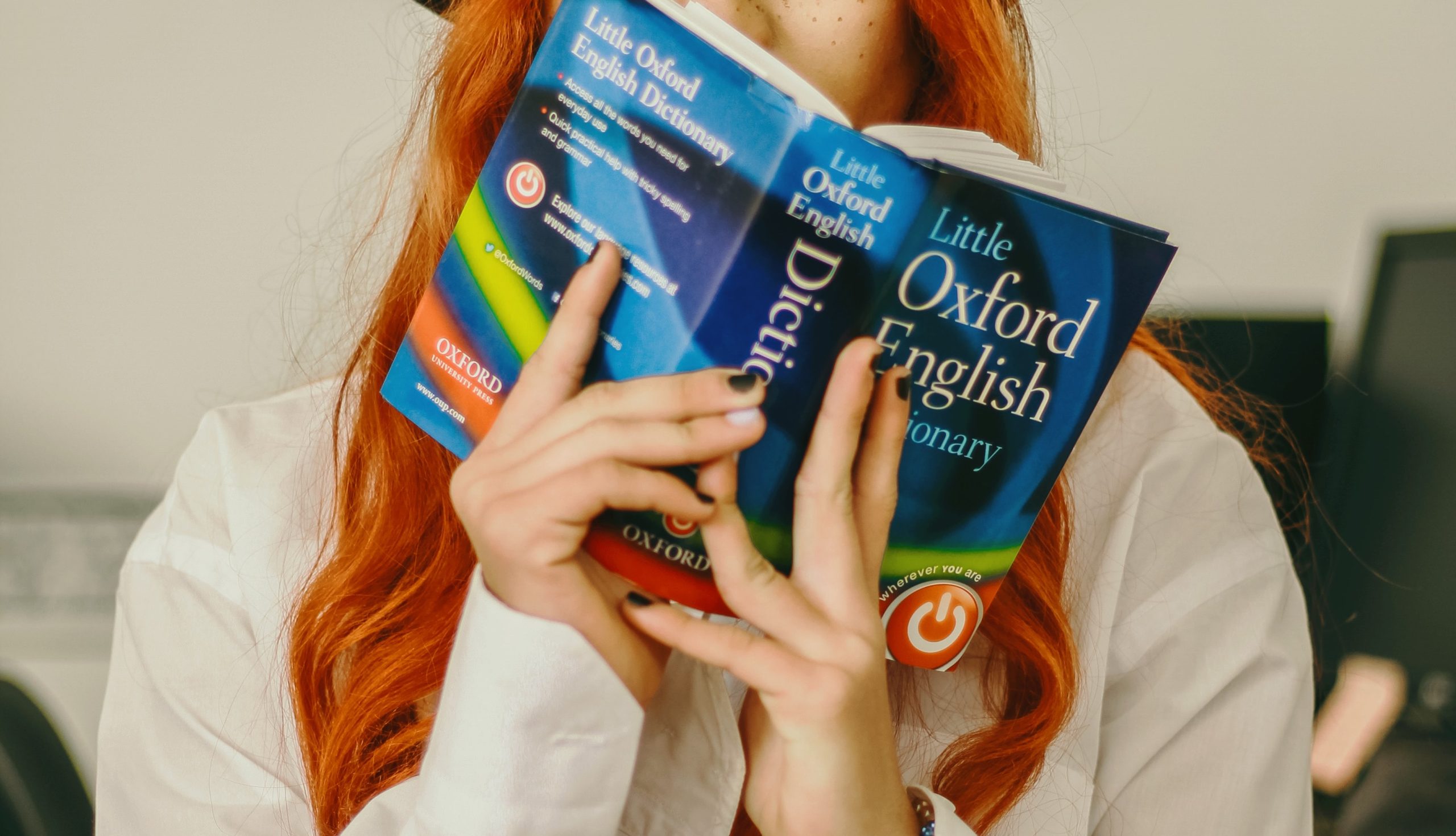
7 Books Inspired by the Dictionary

I’m barely on Twitter, but I can appreciate an excellent tweet. There are some standard characteristics of the best—they are terse and clever, and, even better, they are well-worded and cutting. It’s no wonder that one of my favorite tweets, a triumphant quip, was drafted by a dictionary account: It’s the tweet from Dictionary.com referencing a particular definition in a quote tweet from Forbes naming Kylie Jenner the youngest “self-made” billionaire.  

Perfection.

Now, the account is only a brand personality for the dictionary created by an impressive team (looking at you, social media manager heroes). But it still makes it clear that Dictionary.com, like other dictionaries, takes some stances. It can be tempting to see a dictionary as a completely objective text, a collection of words and their meanings that exist separate from the day-to-day, but we know that’s not the case. Our language evolves, and new words and new meanings arise, so dictionaries need to be paying attention and actively involved. And we do too. 

So whether you’re already following all your favorite dictionaries on Twitter or you’re looking for more word-play fixes after Wordle, this list has some required reading. Here are seven books that explore the dictionary and its cultural impact as a scholarly pursuit, as a place to find purpose, as a text to be challenged and changed, and a way to find meaning.

Wordslut: A Feminist Guide to Taking Back the English Language by Amanda Montell

I was in a women and gender studies class in grad school when it finally clicked that referring to a text as a seminal work of feminist literature was, well, wrong. And that’s just one of so many phrases, words, and even grammatical rules with built-in biases. In this work of nonfiction, Amanda Montell explores this sexism inherent in our language—and how we think about “correct” use of language to this day. 

Because Montell is a linguist, she deals not only with words but how, when, and why we use them. She covers everything from vocal fry to discourse markers to female pronouns for inanimate objects to the six different forms of like (all of which, Montell argues, you’re free to use.) But Montell’s chapter on insults might be the most entertaining in this book—if also one of the most infuriating. Montell walks you through studies about perceptions of women who swear, as well as the different types of swear words and how often being likened to a woman is an insult. Plus, she leaves you with some feminist suggestions for additions to your cursing vocab.

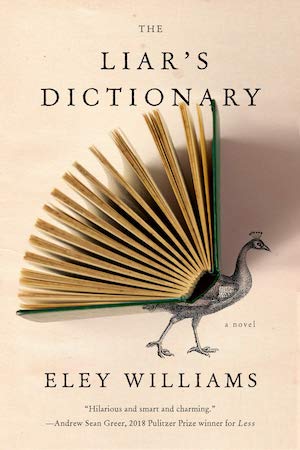
The Liar’s Dictionary by Eley Williams

Eley Williams’ debut novel follows a fictional dictionary during two timelines. In the late 19th century, Peter Winceworth is a lexicographer working on “S” for the Swansby’s dictionary when he decides to enter his own words into the work. In the present day, Mallory is interning at Swansby’s Dictionary for what she thinks might be too long when her boss, the last in a long line Swanby editors, tasks her with finding all of these fake words and removing them before the dictionary is digitized. Mallory commits herself to the project, despite her boss’s general neglect and an anonymous caller threatening the dictionary headquarters. 

This book is a delightful glimpse into the lives of two compelling characters who are questioning their vocation and their purpose while working for the dictionary. Even more, the writing is beautiful, with charming, energetic wordplay perfect for a dictionary-based book.

The Great Passage by Shion Miura, translated by Juliet Winters Carpenter

This novel also explores the dictionary as a purpose and a workplace. When Kohei Araki is ready to retire from his role as  dictionary editor, he needs to find his replacement to work on the next project, The Great Passage, a new, inclusive, complete Japanese dictionary. Araki finds Mitsuya Majime, a younger colleague in the sales department  who is awkward, unsure of what he wants to do, and fascinated by language. He takes the job.

The novel follows Majime over the next 15 years as he falls in love with his landlady’s granddaughter, hires a young editor to join his team, and spends his days poring over the words to include in the nearly 3,000-page, updated edition. The story is sweeping in nature, but the book is short, with compact sentences and, of course, careful, precise wording.

The Dictionary of Lost Words by Pip Williams

In this sweet, historical novel, Esme is just a kid when she starts collecting words. Her father works as a lexicographer for the Oxford English Dictionary project, and Esme collects the paper slips that her father and the other employees collect, curate, and consider for the first editions of the dictionary. As Esme gets older, she becomes more concerned about the words that she doesn’t see in the published dictionary or on the slips of the men working on the next letters. So she starts keeping records of words that she hears in conversation in the kitchen, at the market, in letters from her aunt—words that women use.   

This book reimagines the creation of the OED during the suffrage movement for white women and in the years leading up to World War I. Williams explained that she was inspired to write this novel after hearing about an early critique of the OED that admonished the editors for leaving out bondmaid, such a common word at the time but one that didn’t refer to men, let alone men of means. Williams uses Esme’s project to explore both the intentional and unintentional excision of words from the OED, with the heightened tension from the political movements. The result is a moving novel that not only follows the OED through publication and revision, but follows Esme beyond her childhood as she becomes an adult—one who never loses interest in collecting words.  

The Professor and The Madman: A Tale of Murder, Insanity, and the Making of the Oxford English Dictionary by Simon Winchester

Like The Dictionary of Lost Words, The Professor and The Madman focuses on the creation of the Oxford English Dictionary. Unlike Williams’ novel, this is a work of nonfiction—dramatic and twisty and thrilling nonfiction, that is.

While creating the OED, Professor James Murray, the editor, solicited and accepted words, definitions, and excerpts from many members of the public in order to accomplish the significant undertaking. Dr. William Chester Minor was an American surgeon who submitted thousands of these words to the project and corresponded with Murray personally for more than twenty years. The entire time he was contributing and declining invitations to visit Murray in Oxford, Minor was in Broadmoor, a criminal psychiatric facility. Simon Winchester unravels the mystery of who exactly Minor was and traces the relationship between Minor, Murray, and the OED. 

(N.B. There is a movie adaptation, but it’s starring Mel Gibson. Shame.) 

Word by Word: The Secret Life of Dictionaries by Kory Stamper

In her memoir Word by Word, Kory Stamper, a lexicographer who worked at Merriam-Webster for more than twenty years, offers an insider’s look at the day-to-day tasks involved in writing dictionaries for a living. Stamper dispels some myths right away—that dictionaries moralize language, that they make the final call on what words make the cut. She provides behind-the-scenes details, like how she and her colleagues answered complaint emails, as well as facts that I can’t forget. (Irregardless was a word long before it was whole-heartedly rejected as not a word? The more you know.)

The best part of this memoir is Stamper’s warmth and enthusiasm. Her excitement in describing everything from her high-school insults to the coffee maker in the disappointingly drab Merriam-Webster offices is palpable, and it makes for a lovely read. 

Americanon: An Unexpected U.S. History in Thirteen Best-Selling Books by Jess McHugh

Admittedly, this book isn’t exclusively or primarily about dictionaries. But it does explore the impact that seemingly un-biased reference texts have on our society and one particularly eye-opening chapter on a dictionary that originated American mythology we still see today. Journalist Jess McHugh shares the history of Merriam-Webster’s Dictionary, which was first written by Noah Webster in the 1780s. 

Webster’s project was to standardize a distinctly American English language. As McHugh explains, that included dropping the “u” in words like “color” and providing pronunciation guides that matched Webster’s own Connecticut accent. It also included using the right examples to illustrate the uses of these words, drawing from Protestant beliefs and American literature. 

Even from its inception, the reference text was anything but neutral. Pick this one up for McHugh’s exploration of this American dictionary, but keep reading for how other benign texts like The Betty Crocker Cookbook and The Old Farmer’s Almanac contribute to our understanding of American identity today.

The Met Gala 2022: Here’s What Your Fave Literary Characters Wore

On Monday night, fashion’s favorite night of the year (part 2) returned with stars and designers coming out to celebrate the Met Gala – The Sequel, as I like to think of it. Officially, the dress code of this year’s famed bash, hosted by Anna Wintour, was “Gilded Glamour,” white tie for the men and floor-length ball gowns and gloves for the women. Unofficially: anything goes (well, almost).

Picking up where September’s installment, titled “In America: A Lexicon of Fashion,” left off, this is the first time the event returned to the first Monday in May since the pandemic (when I last covered the red carpet for Electric Lit). Part two suitably upped the drama. 

As someone who worked as a fashion editor for the better part of a decade, I’ve always viewed the Met Gala as an ideal event, marrying stories, sartorial psychology and statement-dressing (otherwise known as three of my favorite things). As stars made their way down the red carpet, I couldn’t help but wonder what literature’s most memorable muses would had worn.

Invitees, numbering 600, were instructed to “Dust off Edith Wharton’s Age of Innocence and The House of Mirth… and embody the grandeur — and perhaps the dichotomy — of Gilded Age New York.”

So that’s where we’ll start.

Old-school glam

Originally coined by Mark Twain, the “Gilded Age” refers to the period from 1870 to 1890, when the country was coming off the high of the Industrial Revolution, and the low of the Civil War; American innovation was booming– a fine time for myth-making. Nowhere was this more apparent than in upper crust society, which found a credible author in Wharton herself, who documented the excesses, entanglements and pitfalls of her class, most notably in The Age of Innocence.

So who was giving off Countess Ellen Olenska vives on the red carpet? That honor belongs to several attendees – no surprise, here– who embodied the unconventional, impassioned fashion sense for whom Wharton wrote: “She was dressed as if for a ball. Everything about her shimmered and glimmered softly, as if her dress had been woven out of candle-beams; and she carried her head high, like a pretty woman challenging a roomful of rivals.”

Tapping into the Countess’ irrepressible grandeur was Blake Lively, one of the night’s hosts, in an embellished Atelier Versace gown, which featured a scene-stealing reversible train inspired by the patina of the Statue of Liberty. Adorned in head-to-toe sequins, Jessica Chastain’s oxblood-colored Gucci gown and matching turban could have come straight out of Ellen Olenska’s wardrobe.

Gigi Hadid in a hooded, corset jumpsuit and puffer-coat by Versace certainly scored points for originality and devil-may-care theatrics. See also: “ “Madame Olenska, heedless of tradition, was attired in a long robe of red velvet bordered about the chin and down the front with glossy black fur.” 

Then there was Billie Eilish in custom Gucci, who nailed the mood Wharton seemed to have in mind when she wrote: ““What can you expect of a girl who was allowed to wear black satin at her coming-out ball?” But the starlet who best captured the opulence and drama of Countess Olenska? Kaia Gerber in a silver tassel Alexander McQueen gown. 

Wharton’s earlier tome, House of Mirth, opens with its heroine, Lily Bart, on the decline. At 29, Lily’s is fast-approaching spinster territory (kind of amazing-depressing-hilarious). However, when the novel opens, potential suitor Lawrence Selden is “refreshed by the sight of Miss Lily Bart” and then: “he could never see her without a faint movement of interest: it was characteristic of her that she always roused speculation.”

Enter: Sarah Jessica Parker, in a strapless ballgown by Christopher John Rogers with a fitted bodice, cascading skirt, and opera gloves –  inspired by the work of Elizabeth Hobbs Keckley, a former slave who went on to become Mary Todd Lincoln’s dressmaker. (Dressing the First Lady made Keckley the first Black female fashion designer in the White House.) 

Parker’s fastidious attention to theme is a well-known thing in Met Gala lore, as is her knack for extravagant headpieces. Head art, decorative crown, whatever – this year’s black tulle and fuchsia-flowered confection by Brit milliner Philip Treacy was straight out of the pages of House of Mirth. Throughout the novel, Lily relies on hats as an accessory, later turning to millinery work as she spiraled out of society’s good graces. 

“A woman is asked out as much for her clothes as for herself,” Lily quips. “The clothes are the background, the frame, if you like: they don’t make success, but they are a part of it. Who wants a dingy woman? We are expected to be pretty and well-dressed till we drop–and if we can’t keep it up alone, we have to go into partnership.”

Surveying her wardrobe, reflecting on her life near the novel’s end is a scene that could have come straight out of an episode of Sex And The City:

“The remaining dresses, though they had lost their freshness, still kept the long unerring lines, the sweep and amplitude of the great artist’s stroke, and as she spread them out on the bed the scenes in which they had been worn rose vividly before her. An association lurked in every fold: each fall of lace and gleam of embroidery was like a letter in the record of her past. She was startled to find how the atmosphere of her old life enveloped her […] every hint of the past sent a lingering tremor along her nerves.”

Good-time girls

There were plenty of dancing-til-dawn statement looks that would have suited the female friends in Happy Hour, by Marlowe Granados. New to New York, the narrator Isa says: “There is only one rule when we get dressed: if it makes you feel good and there’s a pinch of fear that while in public someone may throw a comment your way or think it’s too much, wear it.” The celebs bringing Isa-levels of glam included Kim Kardashian (in the shimmering slip Marilyn Monroe wore to sing Happy Birthday to JFK), Megan Thee Stallion (in gold feathered Moschino)  and Lizzo, who told reporters it took 22 hours to make her embroidered Thom Browne dress, adding that she felt like “a piece of art.”

As for Isa? New York nightlife is only as fun as the outfit you wear to greet it. “You never know if someone else may be emboldened to do the same! If you’re going to put something on your body, why not make it look good? People think clothing is frivolous, but it can really instill courage, and that’s a good thing.” 

Giving a glimpse of what’s underneath and revealing just enough truth to add intrigue is the skill of a great artist. Kerry’s Washington’s stunning sheer corset gown by Tory Burch illuminated the fine line between show-and-tell that Raven Leilani’s artist narrator in Luster tiptoed. Met Gala-worthy mention: “But the beauty of disco is the too much.” Quite.

“I was dressing for someone in those days and I liked to believe it was me,” says Joan, the narrator of Lisa Taddeo’s carnal novel Animal. In the first few chapters, Joan describes herself as depraved and things are only exacerbated from there. She stews on being judged, and envies those who judge her. “I knew the precise color I wanted my coffee and how to have an orgasm in under thirty seconds. I needed everybody in the world – including waiters – less than they needed me.” Peeling off a red Dior blazer to reveal her gold-painted torso – pasties and all – Cara Delevingne was all Joan. There’s a part midway through the novel where Joan’s going to meet a man she’s having an affair with, wearing a leather top that seemed like an aggressive outfit choice until Irina Shayk stepped out in a head-to-toe black leather look by Burberry, which was pure heat. 

Singers Olivia Rodrigo, in a violet Versace stunner, and Phoebe Bridgers, in Jonathan Simkhai, glimmered in the New York night, reminding us of Luz Dunn in Gold, Fame, Citrus, running through a Hollywood starlet’s empty home, pulling out wildly impractical gowns to go traipsing through the water-less abyss. “In the dream Luz had worn every dress all at once, her breasts bestudded with rhinestones and drenched in silver dust, her ass embroidered with coppery alleyways of sequins, pleated plumes of satin fanning from her hips, pale confectioners’ tulle floating like spun sugar at her feet.”

Understated elegance

But it wasn’t all over-the-top, gold-plated everything. Eva Chen, in a chic pale champagne suit jacket that spilled open to reveal a pleated skirt by Peter Do, looked smart and composed, in the vein of the unnamed narrator in Katie Kitamura’s Intimacies. “But a narrative becomes persuasive not through complexity but conviction.”

Taking a subtly refined approach, like Miranda Kerr in Oscar de la Renta or Mindy Kaling in a simply breathtaking lilac gown by Prabal Gurung, seemed befitting of a Salley Rooney character, perhaps Eileen in Beautiful World Where Are You? Who writes: “I could always think of something nice, and sometimes I would even do things for the purpose of putting them in the book like taking a bath or going for a walk.” She describes the pleasures of journaling in a letter to her best friend Alice. “At the time I felt like I was just absorbing life, and at the end of the day I never had to strain to think of anything good I had seen or heard….There was something delicate about living like that. – like I was an instrument and the world touched me and reverberated inside me.”

Fast-forwarding a few decades, Emma Stone, in a short silk, feather-hemmed dress by Louis Vuitton, was giving sleek Great Gatsby style. Effortless in design, yet still party-perfect, the look called to mind a description of Daisy Buchanan’s tennis-star friend, Jordan Baker. “I noticed that she wore her evening dress, all her dresses, like sports clothes–there was a jauntiness about her movements as if she had first learned to walk upon golf courses on clean, crisp mornings.”

Another Gatsby reference? It’s to be expected when we’re talking gilded glamour. Lena Waithe arrived in an ornate blue Versace suit that would have done his Great-ness proud. 

Men in the mirror

Jared Leto and Gucci designer Alessandro Michel upped their game in matching cream suits with black lapels, crystal hair clips, scarlet bowties and bronze velvet bags – an ensemble that seemed to have walked right off the pages of The Picture of Dorian Gray, gesturing to the interplay between art and artist. Who was the muse here, anyway? Or in Oscar Wilde parlance: Dorian or Lord Henry? “Nowadays people know the price of everything and the value of nothing”

Another fine interpretation of the Met Gala’s theme? Joshua Jackson, in Gucci, proved he understood the remit. This year’s dress code called for white tie, which according to a G.Q. style guide, required a black tailcoat and dress pants with a white shirt, vest and matching bow tie. Instead of white gloves (also prescribed for men), Jackson opted for a pinky ring, as you do, in the style of Tinker Grey from Amor Towles’ Rules of Civility

“His face was flush.The cold New Year’s air emanated from the fabric of his tuxedo. He was grasping a bottle of champagne by the neck and grinning like a truant holding a fish by the tail.” Set in 1930s New York, Towles’ novel is all style, tracking the highs and lows of the Katey Kontent and sly, two-faced Tinker uptown and down. “[His coat] struck me as a bit of a pose—a born and raised New Englander dressed like the hero in a John Ford film. But the smell of the snow-wet wool made it seem more authentic. Suddenly, I could picture Tinker on the back of a horse somewhere: at the edge of the treeline under a towering sky . . . at his college roommate’s ranch, perhaps . . . where they hunted deer with antique rifles and with dogs that were better bred than me.”

Jackson’s better half Jodie Turner-Smith was giving full flapper in a glittering Gucci number. 

In The Theory of the Leisure Class, published at the turn of the 20th century, Thorstein Veblen writes: “Elegant dress serves its purpose of elegance not only in that it is expensive, but also because it is the insignia of leisure. It not only shows that the wearer is able to consume a relatively large value, that it argues at the same time that s/he consumes without producing…Our attachment to the skirt is based on this premise: it is expensive and it hampers the wearer at every turn.” But does any of it matter if you can still dance? Till next year, Met Gala!

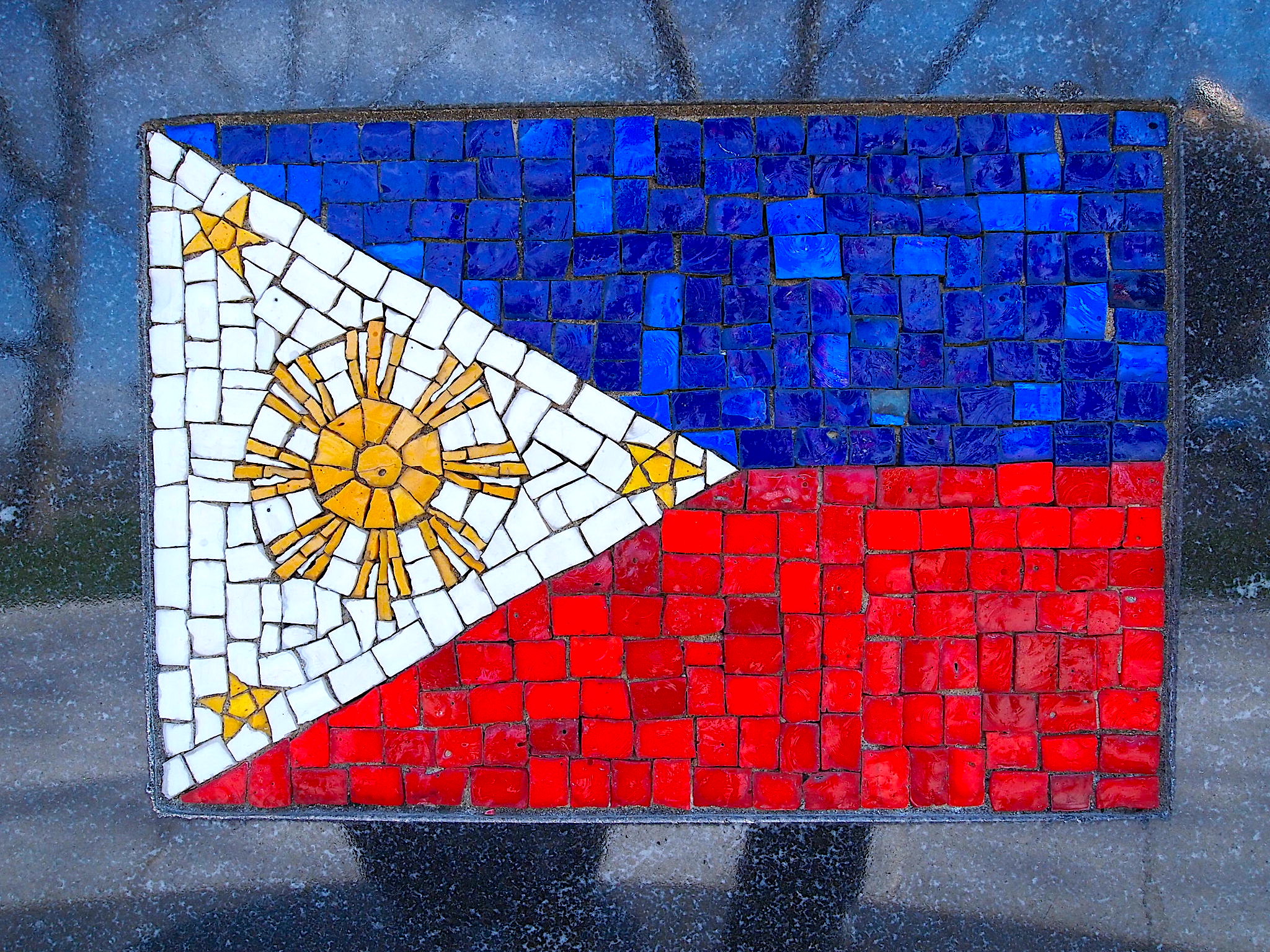
11 Books by Filipino American Authors You Should Be Reading

The first time I read a book about a person who even minorly resembled me, I was 19 and teaching at a creative writing summer camp. My coworker Sophie Lee’s YA novel What Things Mean tells the story of a young Filipina girl named Olive who uses reading to cope with feelings of loneliness and estrangement. As a Filipina-American who grew up within the monotonous landscape of white suburbia, I, too, had used books to escape my reality, oftentimes ditching invitations to ride my bike around the block for the chance to dig into a pile of newly-borrowed library books. 

Though some might have me believe that the lack of representation I experienced is because of the absence of Filipino American writers in American literature, that couldn’t be further from the truth. With Filipino settlements in the U.S. dating as far back to 1783, when Filipino fishermen built a village on Saint Malo off the coast of Louisiana, Filipinos and Filipino Americans have been integral to shaping American culture into what we know it to be today. Farmer, activist, and writer Carlos Bulosan wrote what is known as the first Filipino American novel in 1943. America is in the Heart is only one of many works of literature that stand testament to how fully Filipino Americans have shaped the political, economic, and artistic landscapes of the United States. 

The following Filipino American authors and their work continue to weave legacies of assertion, of resistance, and of artistic cultural diversity into the fabric of American literature. 

Dear America: Notes of an Undocumented Citizen by Jose Antonio Vargas 

Through his signature clear prose and vulnerable storytelling, Jose Antonio Vargas brings us into the inner life of an undocumented immigrant in his memoir, Dear America, Notes of an Undocumented Citizen. Having found freedom in writing, Vargas walks us through 25 years of his life, from his hurried departure from the Philippines to his arrest in Texas, all the while redefining what it means to be an American and to love one’s country.

Exploring feelings of unbelonging along the lines of race, citizenship, and sexuality, Vargas breathes a three-dimensionality not often granted to those we deem outcasts in society. “America was like a class subject I’d never taken, and there was too much to learn, too much to study, too much to make sense of,” he confides. With stories marked by novelty, confusion, and of course, terror, Vargas paints a complex portrait of the painstaking efforts it takes to fit in where you are repeatedly told that you don’t belong.  

Fairest by Meredith Talusan

It only takes one day in Manila for someone to realize that colorism is one of the Philippines’ most pervasive problems. From commercials, to billboards, to whitening products themselves, it is difficult not to notice how the Filipino people hold the quality of light skin in such high regard. The importance ascribed onto her whiteness is one of the many challenges that Meredith Talusan grapples with in her debut memoir Fairest.

Spanning her childhood in the Philippines as a young boy with albinism, to her undergraduate days at Harvard University as a gay man, to her journey as a nonbinary individual, and finally, her life as a trans woman, Talusan’s journey home to herself proves how our self image is inescapably dictated by the importance placed on our different attributes and identities. Crossing borders of land, acceptance, and belonging, Talusan juggles the shifting senses of safety her white skin affords her—though in Manila, her fairness brought her fame and praise, Talusan soon learns that in America, her whiteness as a queer person of color grants her a false sense of inclusion that broods feelings of dishonesty and anxiety within her. Through generous confession and sharp critique, Talusan analyzes the constructed natures of race, gender, and sexuality, and how one can find grace both within and beyond its bounds. 

All Heathens by Marianne Chan

Marianne Chan’s All Heathens explores how it feels to be a castaway: always searching for a soft place to land against the impossibility of homecoming. The poems in this collection illustrate methods of how to conjure up senses of belonging in places that are foreign—the harsh winters of Michigan, the markets of Germany, the parking lot of Seafood City. The poem “When We Lived in Germany” concludes with these lines: “[…] Our children are now the clocks at which / we glance to measure how long, how distant, how cruel,” pointing to the moments in which this practice of home-making still falls short.

In her poetry, Chan speaks to the things that we make sacred amidst exile: holding a mother’s hand, the all-American songs belted at karaoke, the warm homemade dishes of our youth. Challenging the perfect legacies of saints and the ones erased by colonizers, Chan interrogates how we come to revive all that we have lost to death, to time, and to the sea.

The Farm by Joanne Ramos

The stereotype of the Filipina domestic worker is not an uncommon one—the Filipina migrant is often nicknamed as the best and biggest export that the Philippines has to offer. In her debut novel The Farm, Joanne Ramos takes the character of the Filipina care worker and inserts her in a Handmaids Tale-esque dystopia that challenges ideals of motherhood, fertility, and American meritocracy.

Desperate to provide for her own daughter, the novel’s protagonist Jane finds herself as a “host” at Golden Oaks, a “baby farm” in Massachusetts. As the surrogate of a wealthy white fetus, Jane loses autonomy over her body—at The Farm, her every move is surveilled, from her eating habits to her emails. Intimately familiar with the capitalism constraints and familial duties that Filipina migrants face, Ramos writes, “Because in America you only have to know how to make money. Money buys everything else.” Conflicts of class, race, and integrity are all up for the taking in the world Ramos has carefully crafted—one that, while at times hard to wrap one’s mind around, isn’t entirely different from our own.

The Body Papers: A Memoir by Grace Talusan

For the undocumented person, their body might be the only place where they feel at home. For those who have experienced sexual assault, their body might be the one place from which they are constantly running away. It is these feelings of sanctity and alienation that Grace Talusan delicately navigates in her memoir The Body Papers.

Told through a series of interconnected essays that include excerpts of legal documents and photographs, Talusan explores how her body shifts and changes—to both herself and those around her—as she traverses thresholds of continents, kinship, and memory. Spanning explorations of her own singular body and the collective body of the Filipino people, Talusan makes a daring argument for all that a body can hold: its traumas and its triumphs, its secrets and its histories.

In a new afterword published in 2020, Talusan writes, “From readers, I’ve heard that my book is a balm. My publisher was also right. A book is a bomb.” The Body Papers is undeniably both: a salve for the hurt that others have caused us and an explosion of the parameters of how we reckon with our past, how we come to tell our most harrowing truths.

ESL or You Weren’t Here by Aldrin Valdez

Aldrin Valdez’s first poetry collection ESL or You Weren’t Here is situated at the edge of various thresholds—perpetually desiring to traverse, always threatening to withdraw. The work orbits around three overarching meditations: the loss of the poet’s grandmother, their immigration to America in their youth, and their journey through accepting their own queerness. Through hypnotic verse and jarring confessions, Valdez paints a dynamic portrait of the self housed in fluidity, occupying the middle-grounds of time, geographical space, and understanding. Meditating on the body’s physical absence and its impact on memory, Valdez proposes in the poem “Her Hand:”

“but each organ remembers.

Perhaps. Each organ has

a soul”

By experimenting with the ever-moving boundaries of language, sex, identity, and death, Valdez holds generous space for the shapes each one takes up in the face of insufferable loss.

Patron Saints of Nothing by Randy Ribay

Randy Ribay’s untraditional coming of age story Patron Saints of Nothing tells the story of a 17-year-old Filipino American Jay and his quest for justice, truth, and healing in the wake of his cousin Jun’s murder. After hearing about Jun’s death at the hands of Rodrigo Duterte’s War on Drugs, Jay flies to the Philippines, his father’s homeland, to try and unearth all that his family has adamantly shrouded in secrecy. As he pieces together the truth behind Jun’s tumultuous last few years filled with drug addiction and familial conflict, Jay grapples with issues of identity, morality, and whether there is such a thing as pure good or pure evil. As he comes to terms with Jun’s past, Jay learns that embracing one’s heritage isn’t only about its food and tourist destinations, but about owning its complex histories of injustice and corruption. In prose that is as captivating as it is accessible, Ribay has created an opportunity for difficult and often polarizing conversations around politics and secrecy to come to the fore. 

Documents by Jan Henry Gray

In his mesmerizing poetry collection Documents, Jan Henry Gray meditates on how certain bodies within the United States are reduced to papers and legality—or lack thereof. Creatively reimagining immigration documents—both its contents and its implications—Gray interrogates the line between surveillance and intimacy, between disclosure and admission. In a poem titled “I-797-C,” Gray critiques United States Citizenship and Immigration Services’s [USCIS] probing nature and how marriages involving non-citizens are approached with suspicion. It ends with these damning lines:

“do you love him

supporting evidence

why do you love him

Tuesday March 17, 2015 8:00a, USCIS Chicago, IL

don’t mention citizenship 

talk about love, how you got married for love.”

Whether through moments like these, or through the Maid Poem series about the plights of housemaids and domestic workers, or in tender notes of love and longing, Gray argues for Filipinos’ right to be seen as whole people by shining a light on all that cannot be encapsulated on a piece of paper.

Insurrecto by Gina Apostol

In her mind-bending novel Insurrecto, Gina Apostol interrogates the notion of history itself: who has the right to claim it and how do we make sense of narratives that grate against one another? More importantly, who is in charge of which stories we remember, and from which perspectives are they told?

Two worlds collide when Filipino American writer and translator Magsalin and American filmmaker Chiara embark on a roadtrip to collaborate on a film about a notorious Philippine-American War massacre that left 300,000 Filipinos dead. Bothered by the fact that Chiara has chosen tell the story from the perspective of an American war photographer, Magsalin tries her hand at rewriting the script and retelling the story from the point of view of the true historical figure Casiana Nasionales, who was considered an “insurrecto.” At once questioning the merit of objectivity and exposing the power of subjectivity, Apostol dares to explore the nuances and legacy and how writing ourselves into our pasts can serve as a way to heal present wounds. 

The Galleons by Rick Barot

“At a certain point I stopped and asked

what poems I could write, which were different

from then poems I wanted to write, with the wanting

being proof that I couldn’t write those poems, that they

were impossible.”

Early on in his poetry collection The Galleons, Rick Barot cuts his work out for himself, as seen through the opening lines of “The Flea.” Faithful to the wandering mind, the poems in this book leave no stone unturned when it comes to the musings of a writer and everything that comes to make up a life. Speaking on everything from literary inspirations like Virginia Woolf and Frank O’Hara, to young loves lost to the constant movement of time and space, Barot samples a wide expanse of human feeling in language both devastatingly specific and painfully universal.

The collection’s namesake, “The Galleons,” is made up of a series of ten poems which work to expand the meanings of odyssey—the states-long rides of long-distance truck drivers, a soul’s passing into death, and of course, the Spanish galleons that traveled to and from the Philippines. Over the course of The Galleons, Barot takes us on a journey himself—through history, through memory, through different planes of knowing.

America is Not the Heart by Elaine Castillo

America is Not the Heart’s protagonist Geronima “Hero” De Vera is a tried and true risk taker—this much is apparent from the book’s epigraph, a quote from Carlos Bulsonan’s America Is in the Heart which reads, “I knew I could trust a gambler because I had been one of them.”

When she moves in with her uncle Pol and his family at their home in Milpitas, California, Hero not only migrates countries, but universes. Fleeing to the only place that will have her after she spent a decade as a doctor in the New People’s Army and as a war prisoner under the Marcos regime, Hero must relearn the ropes of community, care, and family in this strange new land.

In America is Not the Heart, Elaine Castillo explores the terrains of American suburbia, Philippine martial law, and the American dream—their crossroads and intersections, their contradictions and incompatibilities. As she begins to form new bonds with her little cousin Roni and her love interest Rosalyn, Hero fearlessly learns to negotiate the traumas of her past with the unfamiliar norms of her present. Expertly told through a challenging yet enjoyable mix of English, Spanish, Tagalog, Pangasinan, and Ilocano, Castillo uses this family saga to delve into the unexpected people and places we make new havens of, and new lives with, in a land not our own.

7 Books That Deliver Unexpected Mystery

Having been raised by my grandparents and great-aunt, my early years were predominantly filled with oral storytelling. Many tales my family shared bordered on the fantastical and incorporated magical elements or hinged on the unexpected. In one story, crickets were transformed into silver coins while in others people levitated or shapeshifted into human-animal hybrids.

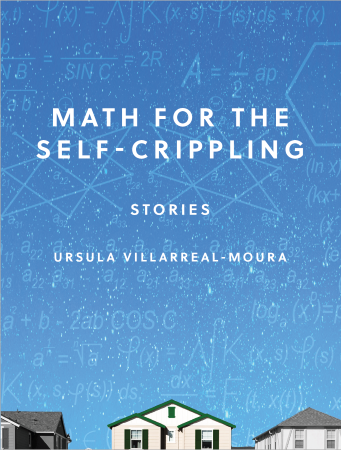
When setting out to write a book, my aim was to capture some of the wildness of my childhood. In the twenty-five flash fiction stories that compromise Math for the Self-Crippling, the reader is invited to witness the mysterious coming-of-age of Tatum Vega, a Chicana living in San Antonio, Texas. The book explores mysticism, loss of home and family, dream travel, romance, and self-agency all at a slant. In order to shape my book, I had to dwell deeply in my imagination and embrace surprises. 

Imaginative narratives still enrapture me. The following books excel at creating mysterious spaces for the reader to explore.

Hell of a Book by Jason Mott

Winner of the National Book Award, Hell of a Book is stellar on many fronts. Most appealing to my sensibilities are the parallel narratives. One is rooted in the everyday reality of a famed author on book tour. The other narrative is a more cerebral examination of childhood, which fluidly interacts with time and space. The blurriness of the story makes the reader feel semi-drunk and question what is real.

Drive Your Plow Over the Bones of the Dead by Olga Tokarczuk

The narrator of Olga Tokarczuk’s Drive Your Plow Over the Bones of the Dead is unlike any protagonist I’ve encountered in literature. An older woman, living alone with dogs in rural Poland, the protagonist’s action are guided by astrology and her love of animals. It would have been easy for a character fixated on celestial objects to be frivolous, but instead Tokarczuk upends the reader’s expectations and delights with a thriller that feels like a beautifully strange dream about karma and revenge.

When the Reckoning Comes by LaTanya McQueen

Among the most informative and original books today are those that blend racial tensions with ghostly spirits from the beyond. When the Reckoning Comes is a story about a wedding weekend that cleverly explores how everyday life cannot function without a reckoning of historical tragedies. McQueen deftly offers mirages of the past that inform the present and characters who dare not speak the full truth aloud. It is a riveting novel about what people of color sacrifice in order to maintain their sanity and provide for themselves in an unjust system.

Leave the World Behind by Rumaan Alam

No book in adulthood has unsettled me as much as Alam’s Leave the World Behind. A catastrophic event occurs in this novel, but the reader and characters are left to piece together what exactly has happened. Life as we know it has ended but we’re left speculating how much time is left. While reading the first thirty pages, I was convinced someone was trying to break into my apartment. Reader, they were not! Even still, I couldn’t sleep because Alam understands the fringes of the imagination almost too well. 

The Only Good Indians by Stephen Graham Jones

The Only Good Indians opens on the anniversary of a tragic hunt and follows four characters in different states. This horror novel explores family legacies, a cultural relationship to animals, and how past actions haunt future generations. Jones masterfully builds suspense to the point where I felt my heart in my throat while a character dribbled a basketball. The rhythmic echo of the ball felt like a threat. The novel’s pacing and mystery hooked me to the very end.

The Perfect Nanny by Leïla Slimani

This thriller about a nanny in France was ubiquitous upon its US release. Undoubtedly it landed with so many readers because it tackles many societal ills within such an engaging narrative. The nanny and mother who employed her are an exquisite protagonist and antagonist duo. Tensions arise between them dealing with domesticity, ageism, racism, class, power, and ambition. The first line of the book spells out the horrible ending but yet the novel offers so many satisfying surprises while astutely examining the boiling point of people society merely tolerates.

Confessions by Kanae Minato 

In the opening pages of Confessions, a schoolteacher reveals that not only has her only child been murdered, but that the killers are sitting among the students in her classroom. Sentence by sentence, the author carefully strips the reader of comfort while weaving a hypnotic tale of mischief. In less skilled hands, the opening reveal would deflate the tension of the novel, but Minato only ratchets up the intrigue as the novel shifts points of view and the reader begins to learn that everyone has a different truth.

Calling a Woman Selfless Isn’t a Compliment

I first met Courtney Maum in 2011 when she was writing the “Celebrity Book Review” column for Electric Literature. Through the medium that is Courtney’s mind, iconic pairings such as John Mayer reviewing The Marriage Plot and Anne Hathaway reviewing The Woman Upstairs ensued. Despite their obvious farcical nature, occasionally readers and sometimes publicists mistook them for real, became embarrassed upon realizing they weren’t, and wrote us angry emails about it. Somewhere amidst forwarding these angry emails back and forth, Courtney and I became friends. 

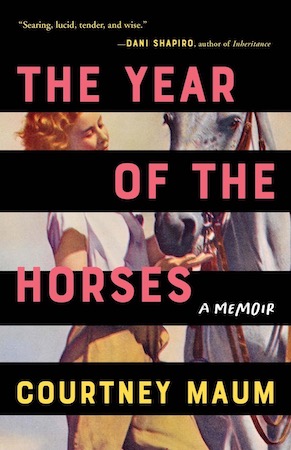
Since then, she has written three novels—one contemporary, one slightly speculative, and one historical—a guide to publishing, and now a memoir, The Year of the Horses. Through these books, she has exhibited extraordinary talent and enormous range. Who amongst us can channel John Mayer, fictionalize Peggy Guggenheim, envision a touchless society, explain publishing, and write an exceedingly vulnerable, heartfelt memoir about healing oneself through horses? Courtney Maum can. 

The Year of the Horses chronicles the author’s bout of, and tentative recovery from, debilitating depression and insomnia. She also examines the sources of these struggles, including marital rifts, childhood wounds, and the burdens of caregiving. Horses play a key role in her recovery, but Maum extracts larger lessons about the expectations of motherhood and the soulful value of acting just for pleasure, and just for yourself, especially as a woman. 

Like Courtney, I’m a horse lover and amateur equestrian, but the story of healing in The Year of the Horses will resonate with anyone who has ever put themselves last, and given up what they love for underexplored, “selfless” reasons.


Halimah Marcus: Until this point, you’ve been primarily a novelist, with three novels and one book on publishing. How did you decide that this book and these stories needed to be a memoir? 

Courtney Maum: Well, the answer is by trying to write it as a novel. I tried it in all different iterations, and it just wasn’t working. And to be honest, I just abandoned the project. It wasn’t until it was in 2017, when I wrote an essay about trying to learn polo as an almost 40 year-old for The New York Times. The correspondence in response to that essay really surprised me. I got these really tender emails from people that said, thank you. That gave me the courage to put myself first, and ultimately gave me the courage to explore. 

I do see this book as a celebration of doing something you love, but at which you’re not necessarily super talented. Our culture really works against that. You’re encouraged and sometimes forced to pick the part of yourself that can be turned into a brand, and that you can make money off of. 

HM: You write about trying to sneak a horse subplot into another novel. You even refer to riding and writing as “church and state,” as in, they needed to be separated for you to finish the novel. I felt this was such an interesting choice of words. I was wondering if there was something that was difficult about pairing your writing life with your riding life. Can you talk about how they are separate, and the process of integrating them? 

CM: I really tried to write this book for people who don’t know anything about horses. You don’t necessarily need to know what it feels like to be on a horse, or around a horse. But you do need to feel what it is to have wanted something and not gotten it right away. Maybe it’s love. Maybe it’s something you’re really striving for professionally. This visceral drive and very hard work towards something that you want for reasons that maybe don’t make total sense to everyone around you. To me, it’s very similar to what writers are doing on the page, especially writers who are not yet published authors. You know, it’s a weird thing for a lot of people to hear: “Oh, you’re getting up at four or five in the morning before your day job to work on a book that no one’s asked you to write, to work on something that you’re not getting paid for. You’re taking yourself away from your family or friends on the weekends to make up characters in your head.” It doesn’t make sense to people unless you are in that world, right? Writers understand the hustle and the struggle and the yearning and the feeling that you are not quite sane in your head because you want something that is sort of make believe. I find riding such a similar quest, because ultimately, riding matters to us equestrians more than it’ll ever matter to anyone else. Just like our writing matters to us more than it’ll ever matter to someone else, even when we get lucky enough that readers start to connect with our work. 

HM: I really responded to this definition of joy that you borrow from Sally Swift’s Centered Riding, which describes the particular kind of joy that’s able to occur when “the right brain is allowed to take over the responsiveness of your body with no interference from the left.” 

CM: That actually brings me back to your question about the overlap between horseback riding and creative writing. The flow state on a horse is very hard for me to achieve. I am nervous rider. I still struggle with the worst-case scenarios that I explain in the book. But I do achieve it, not for long periods of time. I’m talking about maybe 30 seconds or a minute. I will hit that state of flow where there’s no fear and there’s no worry. I’m one with the animal, and we’re just going into whatever the future brings with joy. Thankfully, I am still quite able to reach that place in my writing. I think all of us writers know what it feels like when you hit that vein, in any kind of genre. Nothing else exists. The apartment could be on fire, and you probably still try to reach the end of the paragraph because you’ve hit something totally life sustaining. It really feels like that. To me, it’s more than the joy. It’s like elation. 

HM: We don’t think of physicality as having to do with creativity as much, unless it’s dance, for example. But I love the idea that flow state is kind of the marriage of physicality and creativity. 

Sitting in front of your computer is not always going to get the words written.

CM: I’ve always questioned this positioning of writing as a sedentary activity, and that that’s romantic or sort of idyllic. It’s a privileged thing, to sit and write. But you know, perhaps we should celebrate the weird: walking, running, dancing around the bed, sex, masturbation; the physical things that us writers do to get to a place where our bodies can actually stay in the chair. Because it’s not easy. It’s actually quite hard, physically. I do most of my breakthrough thinking—not on a horse, because I need to be focused on a horse—but running very short runs. And I just have these breakthroughs. I’ve got some plot problem, or a character that needs a new profession. Whatever the hell it is. Normally, I’ll go for a 15-minute run, in my work clothes, by the way. My poor neighbors. Because I don’t want to take the time and add pressure on myself by making it some big thing. I’ll literally cup my breasts because I don’t have a jog bra on when I’m working, and I’ll run around town until I solve the problem. Sitting in front of your computer is not always going to get the words written, actually. 

HM:  You write that “sadness was the first big secret you kept from your mother.” Secrecy is a theme that runs through the memoir. Secrecy and silence. When you were a teenager and began to restrict your eating, everyone around you could see what was going on, but no one was willing to confront you about it. I’m wondering if you can shed any light on why eating disorders have so much silence around them, particularly when it comes to parents talking to their children? 

CM: Gosh, I wish I could shed light on it, but I don’t see the light yet. You know, there’s a pretty pivotal scene in the book where my therapist is trying to encourage me to just accept that I had some really painful experiences in my past. He suggested that I had neglectful parents, and I got a little hung up, like, “How could they possibly have neglected me? I had everything a child could want for.” And then I remembered, “Well, shoot, you know, actually, I was sitting right there in their house, starving myself, and no one ever said anything.” 

I truly have no answers. I think there’s a lack of courage for some people. Maybe it’s a generational thing. You know, I certainly grew up in a culture where it was expected that you would be thin, and it was expected that you would watch your calories, that most of your calories would come from vodka. All of these things were sort of jokes. When I was going through my period of unraveling [in my mid-30s], there was only one person who called me out on it. He just sort of grabbed me and was like, “What the hell is wrong with you? You look awful. You’re like a skeleton.” That felt so terrible in the moment, because I realized that I hadn’t been hiding what was happening, but that in fact, none of my friends had the courage to take time out and ask me if I was okay. 

HM: We’re revealing that this memoir is not just about riding, it’s about your relationship with your family, your parents’ divorce, your brother’s health struggles, depression, marriage, motherhood, a miscarriage. One theme that runs through all these struggles is silence. Was this book a counterbalance to that silence in some way? 

CM: I didn’t think of it as that. I think of it as an outreach of hands. I would really like to think of this as a connection tool. I actually did not write this for catharsis. What was nice about this book, is by the time I sat down and finally started to get it right, I was well. I already had the horses in my life. Through the revision process, I started excavating things, and I did start to touch upon things that got me really angry. But yet I didn’t write it in a fit of wanting revenge or to have my side of the story told. I just reached a point in my life, as a woman in my 40s, where I thought, “Oh my god, enough of all this. Enough of this selfless woman trope.” If I hear or read another thing about, “Oh, happy Mother’s Day, the most selfless woman in the world,” I’m going to light my hair on fire. 

It’s no longer the time for women to be selfless. We have to get rid of this notion that we pretend it’s not there—but it is still there—that women can do everything.

It’s no longer the time for women to be selfless. Whether you’re a woman who has children, or has aging parents to care for, whatever your situation is, we need to put ourselves first. It’s more than self care. I’m not talking about bubble baths. We have to get rid of this notion that we pretend it’s not there—but it is still there—that women can do everything. That we can spin all the plates, and come through shining, without any damage to our mental health. We get our figures back after having babies, and all this shit. No. The fault lines are expanding, and enough already. We deserve to let people know, and show them what it looks like when we are cracking. To me, it was like an act of sisterhood, this memoir. The best thing I could possibly hope for is that this encourages people—women, men, people of all genders—to start admitting to people around them, “I’m not okay. Actually, I could use some help. I could use some support.” 

HM: One subject that I think women are reluctant to talk about publicly, or with one another, is the experience of having a miscarriage. You write, “The realization I must return to horses came under the hands of the all male doctors who removed the lifeless fetus from my body with little respect for the person still residing inside it.” And then one of the doctors makes a joke about “when you can get back to hanky panky” and then tells you to “just make another one.” And then you continue: 

“I remember yearning for a horse with all the might I had within me when the anesthesiologist said this. Yearning for that power and that synchronicity with an animal who had also been misjudged and mistreated and handled like an ornament. I remember thinking, I am going to gallop over your fucking face you moron. And then he knocked me out with something that he shot inside my arm and I was wheeled into a cold room and then I wasn’t pregnant anymore.” 

Can you talk about your thinking here, how you identified with horses as a woman in this passage? 

CM: I had recently just started riding again that year, and then had an unexpected pregnancy. I was in the second term, so I had decided to stop riding, and it was something I was actively missing. It felt a little bit like a sacrifice that I did not want to make. It was just another thing women have to take on, putting aside certain things for nine months, two years, whatever the hell it is, right? So I really did lie there thinking, “I will have the horses again. I will go back to that. That is my gift to myself when I get out the other side of this.” 

When he said, “just go make another one”—I mean the man had my chart in front of him. He could see my age. He didn’t know if we’d struggle to conceive. I mean, unbelievable. And again, I’m a white woman. This is a fancy town. 

I just pictured these angry horses, especially in the world of polo, who are only used for their bodies,  their speed, their reproductive ability, and then just sort of discarded. The mares, especially. They’re just used for their bodies and their beauty. I just felt like a similar vessel. I felt this bond with these animals that we have objectified as a society for so long. And like I said in that passage, I truly wanted to be on a horse at that moment and make him ride straight over that guy. I really wanted that. I still do. 

How To Bring a Living Being Into a Dead House

They sat across from one another on the train, and there was nothing special about either of them. They weren’t the kind of people your eyes would land on if you tired of staring at the usual scenery, which appears to rush toward the train from a distance and then stand still for a second, creating a calm picture of soft green curves and little houses and gardens, whose leaves vibrate and turn grayish in the smoke streaming back from the train like a long billowing pennant. You wouldn’t guess if they were married or not, whether they had children, how old they were, their occupations, etc., just to pass the time. You could see marriage and office work in their expressionless eyes. The man hid his face behind the newspaper, and the woman appeared to have fallen asleep. They sat there every morning and evening, at the times office and factory workers commute. Usually in the same seats in the last train car. Recently there had been a few days when she wasn’t there. Maybe she’d been sick. So he had sat alone, and to an observer it didn’t make any difference. He had spread his newspaper wide and read it carefully, folded it together neatly, and left it on the seat when he got off. A completely regular office worker in his thirties. It was the cold time of year, so maybe she had had the flu. 

He lightly touched her knee. ‘We’re here,’ he said.

It wasn’t necessary, because she wasn’t sleeping. She got up and took her bag out of the baggage holder, straightened her hat and walked in front of him off the train. He looked at her from the side as they continued down the road toward home. She appeared tired; she always did. She wasn’t sick, and she didn’t do any more than other women who worked while simultaneously taking care of their houses – less, in fact, since they had no children. But she had taken on the attitude that she carried the burdens of the world. At least that’s how it seemed to him, and it bothered him. Recently he had been easily irritated. He tautened his lips to a narrow line and cleared his throat: 

‘Is the cat still at our house?’ he asked. 

‘I think so,’ she said. ‘I wasn’t going to chase it out into this freezing cold.’ 

He wrinkled his brow and grew silent. The animal had slowly sneaked into their lives. They had come home one evening to find it meowing outside their door. So she had given it a bit of milk and sent it off. The next morning it was back, and he threw a rock at it when they left. But in the evening she let it inside, because it was below freezing, and it seemed to have no other place to go. In the morning the entire house smelled of cat urine; the creature wasn’t even housebroken. It purred apologetically at their legs, and she ran around cleaning up after it, spraying ammonia to get rid of the smell. 

Then disagreements started over the cat. He let it out, and she let it back in. When they lay in bed in the evening, they heard the faint meowing outside their front door, and she got up to give it something to eat, while an incomprehensible resentment arose in her husband. ‘Don’t let it in,’ he yelled to her. But in the morning there it was down in the living room, jumping elegantly up onto her lap. She babied it. ‘Little pussycat,’ she said, ‘if only you were housebroken.’ The smell made her face go pale as they sat and drank coffee. While she was in the hospital, he was able to get rid of it. Every time he caught sight of the cat near their house, he threw a rock at it, frustrated that he could never hit it. But when she came home, the first thing she asked about was the cat. She stood outside the house calling, ‘Here pussycat, come here, baby. Mommy’s home again.’ And it actually did come when she called, as if it had been nearby the whole time waiting for her. She scraped the snow away from around the front step and brought the creature into their warm living room. As she put her cheek to its fur she had tears in her eyes. ‘You sweet little kitty,’ she whispered. He hated sentimentality, and he hated dirt and disorder. She could put her energy and care into other things. Inwardly, he was glad she had had a miscarriage. That child would have turned their lives upside- down. Things had progressed so steadily in the six years they had been married. They had a house and nice furniture, fine friends, the boss over for dinner once a month. A child would have meant she would have had to stop working, their standard of living would have gone down, their social standing too. He saw it as something to be avoided, and he tried to get her to see the sense in his reasoning. But she harbored a gentle expectation, living in a dream world where dry numbers and computations did not enter. ‘A real live little baby of our own,’ she said solemnly. ‘The house? It’s just a dead thing.’ 

He had thought she was betraying their mutual eforts; she had withdrawn from him and was alone with this strange, foreign body. It was as if she were getting younger and more beautiful because of it, and he felt a kind of jealousy, because he wasn’t part of her happiness. In his childhood home there had been six siblings, and he remembered it as one continuous crying fit and quarrel about money, of which there was never enough. Children make people poor. 

When did the cat show up? It must have been right after they realized she was pregnant, but apart from that, the two things had nothing to do with one another. One morning she was sick and was driven to the hospital in great haste; the whole thing only took a few days, and then he felt relieved. It wasn’t anyone’s fault. If they had had the baby, of course they would have figured it out. But it was better this way. He picked her up from the hospital, with flowers, bought out of a vague sense that she needed consoling. But she didn’t really register the flowers, holding them awkwardly and tensely in the car on the way home. She let him pat her hand, but it was like a foreign, dead object in his. ‘Did you chase away the cat?’ she had asked, and he thought it was a strange question, but women didn’t really have a sense of proportion. For a few days he took special care above and beyond the usual. He helped her with the dishes in the evening, and he let the cat come around. Once he even removed its refuse personally. But when she didn’t seem to notice his efforts, he stopped and went back to the way he was before. They didn’t mention the baby. Just once, while she sat with the cat in her lap, she said, ‘So I guess you’re happy again?’ He defended himself, feeling aggrieved, and over time it seemed to him that in fact he had been the one who wanted to have a baby, and that he was the only one grieving for the loss. Since it didn’t work out, he could allow himself to be sad about it. As long as she had her cat, she was happy. But he would put an end to that soon enough. The constant filth.

The smell hit them as soon as they stepped inside. He demonstratively opened all the windows. Now that creature had to go. He kicked it off the chair while she was in the kitchen, and it bolted out to her. He could hear her babbling to it as she poured milk in its saucer. He lay on the divan when she came in with the bucket and ammonia, a scarf around her hair. Cleaning woman, he thought, furious. 

But a sudden warmth coursed through him at seeing her bent, flexible back, which surprised him. It had been quite a while. ‘Grethe?’ he said. 

‘What is it?’ She didn’t turn around. 

‘Come over here.’ 

He got up, standing motionless and abashed before her clear, questioning look. Jesus Christ, he thought, we are married after all. But she walked by him on her sensible flats and suddenly seemed so unreasonably foreign, as if he had never held her in his arms. But it’s not my fault, he thought, with a smoldering, helpless anger. Was it my fault it didn’t amount to anything? 

He stared at the closed door and then noticed the cat under the desk, following him with its predatory stare. It was lying there as if hunting for mice, motionless and inpatient suspense. He stood totally still in the middle of the floor, feeling the same preying watchfulness f ll his own senses. He took a step toward the creature, which hunched its back and hissed quietly. Then he looked for something to smack it with, but just as he took his eyes off it, the cat raced over and jumped out of one of the open windows. He shut the windows in all three rooms, one after the other, and then walked out to check if the front and kitchen doors were locked. Leaning against the kitchen counter he watched his wife. She was putting meat through the grinder and catching it in her hands, and leading it into a bowl as it came creeping out of the little holes like long, bright worms. 

Keeping her eyes on her work, she said, ‘Where did the cat go?’ 

He shrugged: ‘How should I know?’ 

She looked up quickly: ‘You let it out,’ she said. Her voice trembled slightly with anger. 

‘Oh, you have cat on the brain,’ he said, attempting a laugh.

She washed her hands and dried them carefully, finger by finger, as if she was putting on gloves. 

‘Go and get it,’ she said calmly. 

He glanced away. He wanted to say something. There was a lump stuck in his throat, as if he was about to cry. What is the problem? he thought. It’s almost like she hates me. With a helpless look he walked past her and out of the kitchen. 

‘Kitty,’ he called. ‘Here, kitty.’ If the cat comes back, he thought, then everything will be fine. But it didn’t come. He searched the yard, and all his anger was chased away by something overwhelming and unknown for which he didn’t have the words. He looked between the trees in the snow-covered grass; he was searching for a little cat which brought a load of trouble and no joy; it didn’t make any sense. He was a man who always had been led by reason, and who had advanced step by step because of this. He had never had urges to do meaningless things. He had married a pretty girl from a good family; in a few years he would be a manager, and then they might be able to allow themselves to have a child. Grete could stop working – ‘Here, Kitty, Kitty’ – he pleaded for his life and didn’t know why. He was afraid. He was moving in unknown territory; he didn’t recognize the woman who was standing in his kitchen anymore, demanding he return with a mangy, untrained cat. He wanted her the way she was before, when he could talk to her about everyday things. He would hold her in his arms and feel the pride of ownership again. Maybe he could buy her with that cat. 

It was sitting in a corner of the shed, hissing as he approached. ‘Kitty,’ he whispered gently. ‘Don’t be afraid. Come inside to your Mama, come on now.’ 

It slipped between his legs and jumped in through the open kitchen door all by itself. She had it in her arms when he came in. Tears were falling on its fur. She kissed it on the head, on the paws, and gave it long smacking kisses on its ears. He could see her body trembling. ‘Grete,’ he said, frightened. Suddenly she let go of the creature, as if she had been awoken from a deep sleep. Then she stared at her hands, which had just been caressing the cat so lovingly. She lifted her head and took a wobbly step toward her husband. Then she stopped and wiped her forehead with the back of her hand. 

‘Well,’ she said, ‘I guess I’d better finish making dinner.’

He felt something in his mind soften, and he wanted to go and put his arm around her shoulder, to be close to her in some way. Maybe she expected it; maybe she needed it. But then it occurred to him that the neighbors had probably seen him lying on the ground and crawling around between the bushes, meowing. 

He straightened his tie and walked back into the living room. The cat followed, its eyes riveted to him. And though he didn’t show it, he was aware of its presence all the time.

The Long Legacy of Abortion in America

It’s difficult to process the recent news of a leaked draft decision from SCOTUS; what’s even more difficult is that the draft decision, should it become a ruling, will overturn Roe v. Wade, rolling back decades of work fought on behalf of human rights. I say human rights, as opposed to women’s rights, because abortion is, first and foremost, a human right. 

An argument can be made that overturning Roe v. Wade would represent the single greatest political victory of the American far right movement. Abortion has long been their rallying cry, but it’s important to remember that the scope of this decision would reach far beyond a person’s right to choose—simply because there will always be a subset of women (and powerful men) who have access to abortion, whether or not it’s legal. This distinction is crucial: if the very people who claim to want to end abortion will maintain private access to it, then why should it be criminalized in the first place? If safe and legal abortion is taken away, the consequences will reverberate throughout American society. Low-income families and women of color will be disproportionately affected, and cycles of poverty will continue for generations. What this really comes down to is power—who has it, who doesn’t, and the far right’s effort to maintain the socio-economic status quo. 

At Electric Literature, we believe that storytelling has the power to shape public consciousness. It breaks down barriers, offering a forum for deep and sustained critical analysis. To that end, we have assembled a list of books we hope readers will explore. They cover a vast, and still evolving story: the history of illegal abortions in America, the impact of reproductive rights and bodily autonomy on Black women, and the right wing assault on abortion in the years since Roe v. Wade was first passed. Collectively, they tell America’s abortion story—where we’ve been, where we are, and where we are likely headed.

Yours,

Denne Michele Norris
Editor-in-Chief

Editor’s note: The literary guide below was researched by Lauren Hutton and Alexandria Juarez and written collaboratively by Lauren Hutton, Alexandria Juarez, Jo Lou, and Katie Robinson.

Pre-Roe v. Wade (1973)

When Abortion Was a Crime: Women, Medicine and Law in the United States by Leslie J. Reagan

Leslie J. Reagan’s account of pre-Roe America was the first-ever study on the history of illegal abortion in the United States. By thoughtfully and unflinchingly detailing the experiences of those who sought and provided illegal abortions up until the Roe v. Wade decision in 1973, Reagan proves that criminalizing abortions has never stopped them from occurring—instead, it only causes significant risk to both patients who seek help and the doctors who provide it. An unsettling illumination of what happens when abortion rights are nonexistent, this book is a reflection on where we came from, a warning of what might lie ahead, and a chilling reminder that history repeats itself.

The Girls Who Went Away: The Hidden History of Women Who Surrendered Children for Adoption in the Decades Before Roe v. Wade by Ann Fessler

Fessler turns back the clock to what was once a heartbreaking reality for single, pregnant women before Roe. From 1945-1973, over 1,500,000 newborns were placed for adoption, often due to extreme familial and social pressure. Young women were pulled from school, sent to maternity homes with judgmental and cruel medical staff and clergy, and required to give their newborn babies away. Sharing first-hand accounts from these birth mothers, the long-term trauma of this severance is uncovered.

Under Roe v. Wade

Killing the Black Body: Race, Reproduction, and the Meaning of Liberty by Dorothy Roberts

Professor Dorothy Roberts’s meticulously researched book is about the reproductive rights and bodily autonomy of Black women and the violence, trauma, and shame that they have endured throughout centuries in America. Starting from the beginning of slavery to 1997, Roberts takes readers on a journey to examine the systematic oppression and commodification of the Black female body. The book delves into the racist history of birth control advocacy and the ways it intertwined with the 20th century eugenics movement, how Reagan’s War on Poverty impacted Black single mothers, the anti-Black reproductive policies rooted in Clinton’s Personal Responsibility and Work Opportunity Reconciliation Bill—which was enacted in response to the welfare queen stereotype, and how anti-abortion laws disproportionately affect Black women. Killing the Black Body is as necessary today as when it was written 25 years ago.

Impossible Motherhood: Testimony of an Abortion Addict by Irene Vilar

An unflinching memoir about a woman’s abusive marriage and the fifteen abortions she would have in seventeen years. Vilar paints the full portrait of her life: her mother’s suicide, her brothers’ addictions, her infamous grandmother Lolita Lebrón, and her affair with her former professor. Vilar’s prose is heartbreaking, as she tries to answer why fifteen abortions, acutely aware of how she is perceived and hated. “By the time I lay in an abortion clinic waiting for the procedure to begin, I would feel nothing but disgust and shame… I always said to myself, ‘This has to end.’”

This Common Secret: My Journey as an Abortion Doctor by Susan Wicklund

Susan Wicklund details her own experience of having an abortion as a young woman in rural, working class Wisconsin, and how it led her to become an abortion health care provider in the Midwest. As much as this is her own story, one that sees her wearing a bulletproof vest to work, it is also a nuanced and intimate account of her patients and the difficulties they endure. While this memoir tackles the harassment healthcare providers and people seeking abortions face, it also spotlights Wicklund’s love for her profession and the crucial role women’s clinics play in providing reproductive care.

Reproductive Justice: The Politics of Health Care for Native American Women by Barbara Gurr

Because the Hyde Amendment prevents federal dollars from funding abortions, the Indian Health Service—a federal program—cannot provide abortion care to the Native populations it serves. Sociologist Barbara Gurr looks into how South Dakota’s Pine Ridge Reservation navigates abortion and contraception access as well as pre-natal and post sexual assault care. A particularly apt portrayal of the lived consequences of far-reaching government policy, this book highlights the stories Native Nations are telling about their own bodies, communities, and fights for reproductive justice. 

The Turnaway Study: Ten Years, a Thousand Women, and the Consequences of Having—or Being Denied—an Abortion by Diana Greene Foster

Over the course of five years, Diana Greene Foster, PhD and her team of psychologists, epidemiologists, demographers, nursing scholars, and public health researchers, followed 1,000 women from over twenty states. These women either had abortions, or wished to and lacked resources or were denied. Throughout the years, the research team studied the economic, professional, romantic, familial and other impacts the women faced depending on their various decisions. Statistical evidence proves that in almost all cases, the women who were granted abortions fared better over the years, and 95% did not regret their decision. Some of the data can be found, for free, here.

Post-Roe v. Wade

The War on Choice: The Right-Wing Attack on Women’s Rights and How to Fight Back by Gloria Feldt

Gloria Feldt, the former president of Planned Parenthood Federation of America, chronicles the history of anti-choice assault on reproductive rights, sex education, and family planning and how religious dogma has seeped into public health policies and slowly eroded the right to a safe abortion. Intertwined with personal stories of women impacted by anti-abortion rulings, the book also details the concrete steps that ordinary citizens can take to enact change.

Handbook for a Post-Roe America by Robin Marty

Robin Marty’s guide to fighting back and planning ahead in a post-Roe America is no longer about preparing for the worst—it’s now a crucial guide for our current moment. With practical advice from where to seek funding or get involved on a state-by-state level to tips for safe, self-managed abortion care, this is essential reading for anyone who might find themselves in need of an abortion and allies and accomplices alike. Marty rightly saw what was coming and sought to prepare us for it, and while we wish it hadn’t come to this, we’re lucky to have such a detailed resource already available.  

Bodies on the Line by Lauren Rankin

At the front lines of ensuring abortion access are the escorts who guide patients safely to the clinic, away from screaming protestors who are often belligerent and occasionally violent. In Bodies on the Line,  Lauren Rankin delves into the fraught public space that surrounds the American abortion clinic and the “pro-life” disruptors who occupy that small stretch with signs and megaphones in order to manipulate, coerce, and shame women from even entering the clinic: “Their goal? To make it as difficult and traumatic as possible to access an abortion.” Rankin weaves personal testimonies from patients and volunteers with historical research, from the 1970s to the present day, about abortion providers and the violent, deadly attacks on these institutes. A must-read to understand the physical and emotional labor that comes with the fight to ensure that abortion is both accessible and a human right.

The Pandemic Completely Redefined My Relationship with Nature

To weather the early days of the pandemic, I went back to my parents’ house in Southern California. I had lost both of my jobs and, after applying for unemployment, had nothing to do but wander through the neighborhood. In those days we didn’t know about the improbability of outdoor transmission, and many of my neighbors were afraid to go for a walk. So I was alone with the occasional coyote and, of course, the plants. It was spring. Many of us will remember this contrast: while death loomed over the human world, more-than-human life, as Robin Wall Kimmerer calls it, flourished with what seemed, from the outside, like ecstasy. The birds could not stop singing. The sage blossoming in the nature preserve behind my house donned its glossiest shade of green. Same with the statice: the deep, purple shade of artificial grape, it bloomed so vibrantly as to appear surreal. Even the sky shone a deeper and more confident blue. It was as if the plants had put on their Sunday best to say goodbye to us. And so while there was comfort in witnessing their celebration, there was also grief. The thriving of humans appeared mutually exclusive with the thriving of everyone else. The plants had never announced this so explicitly. What would happen when we returned to a pre-plague pace of life and consumption? The world would dim again. 

While death loomed over the human world, more-than-human life flourished with what seemed, from the outside, like ecstasy.

I have always enjoyed being among plants. When I was in high school, my favorite time of day was walking my dog through the brown and amber hills behind our house, though then its perimeter was wider, the mustard and sage had space to stretch. Then, the hills for me were only a setting in which, alongside my black fluffy dog, I could forget the stress of standardized tests and the soccer team. But I felt no sense of belonging among the beings that surrounded me. In fact, any sense of belonging I had—in my city, in the United States, on Earth—felt precarious. 

Irvine, the city I grew up in, operated on exclusionary and destructive values in managing the land and the people that lived there. Real estate development eternally encroached on our nature preserves, while housing discrimination or racism within the school system either kept Black and brown families from moving in, or forced them to move out and into more supportive, inclusive communities. Growing up in a multiracial, diasporic Black family, I felt keenly aware that we, like the ever-shrinking preserve, were unwanted in my city. We weren’t the image of progress, cleanliness, or sophistication that people wanted to see. 

In the same way it took me years to value the vibrant love that my Nigerian extended family bestowed upon me—to remember with gratitude that my grandmother had carried me on her back, that my grandfather had killed a goat to say goodbye to our family the last time we visited—I came belatedly to appreciation of more-than-human life. It is difficult to value what you are taught has no value. It is difficult to treat as alive what you are taught to objectify. And so, although my dad has always spoken to the plants in our garden, it took living in lockdown to make me feel as though time spent in nature was not, in fact, time spent alone. In an abandoned rose garden I passed on my walk, I built a little ritual of rinsing my hands in the old fountain and greeting the wild oranges that hung above its spout. 

It is difficult to value what you are taught has no value. It is difficult to treat as alive what you are taught to objectify.

The pandemic, too, amplified the looming sense of panic about climate change that, occasionally, over the years, has licked up like a flame: in the summer of 2019, I was living in Brazil when the Amazon caught fire. Even in my state in the south of the country, we could see black smoke fill the sky, funneling in from thousands of miles away. This was distressing. But the pandemic forced me to care much more loudly. I wanted to read about climate change, I wanted to see how I could shift my relationship to the natural world. I wanted to restore my relationship with the beings that restored me. 

There were quite a few books, fiction and nonfiction, on my list, but only a few challenged me to think more critically about my relationship with nature as an actual relationship. The first worth noting here was Aimee Nezhukumatathil’s World of Wonders. I was convinced by Kiese Laymon’s recommendation that the volume “was about to shake the Earth.” I was also taken in by Fumi Nakamura’s artwork, reminiscent of the illustrations in children’s books. The collection had a soft, nostalgic aesthetic: Nezhukumatathil offers her childhood memories of the plants, animals, and insects that surrounded her as she moved frequently to different regions of the U.S. and visited relatives in Malaysia and India. It was the more-than-human world that kept her company through so much change, and each story is titled after a beloved creature.

While Nezhukumatathil treats the natural world with deep tenderness, and offers perfunctory accounts of her grief about the destruction of climate change, I felt she treated the beings she described with dissatisfying distance. The book’s cover itself offers an apt illustration of this: the title is centered on a white background, surrounded by vibrant drawings of foliage and wild animals. The sense I had while reading was that the narrator’s relationship to the natural world could be illustrated in the same way: that she stood within some safe enclosure observing nature, which she appreciates as a cherished possession, a work of art. 

Nezhukumatathil aims to inspire in her readers wonder at the non-human world, and still, she does so by engaging with other species only as objects of her gaze. She closes the collection with an anecdote about how, teaching a college class one day, she discovered that the vast majority of her students had never seen a firefly and knew almost nothing about the species, even though they lived in a city where the insects proliferated. Sharing her sorrow at this fact, she asks, “What is lost when you grow up not knowing the names for different varieties of fireflies?” In response to her own question, she lists, in the book’s final paragraph, a series of memories that “a single firefly” can illuminate: “It might make me feel like I’m traveling again to a gathering of loved ones dining seaside on a Greek island,” she writes, or “send me back to my grandmother’s backyard to listen for whip-poor-wills.”

While, on the one hand, her affection for the fireflies is touching, on the other, the centrality of the human experience as an observer of a changing climate, rather than as instigator and, increasingly, a victim of it, feels outdated and a bit unsettling, a reminder of our dangerous fantasy that we exercise dominion over Earth and all its creatures. The real cost of environmental degradation in human lives is absent from World of Wonders. We are to “cherish” nature because of its beauty, and the main consequence of not doing so is that we will live in a less beautiful world. 

By the time I was reading World of Wonders, it was fall of 2020. I couldn’t reconcile reading these strange essays written from this distanced perspective with my reality: smoke from local wildfires seeped through the cracks in my windowsill, I couldn’t go outside for weeks on end. Meanwhile the deadly virus loomed imperceptibly in the air we breathed. I had never felt less like an observer of the natural world in my life, had never felt more vulnerable to it. The pandemic made me feel like part of the world in the humblest possible way. At home with my aging parents, I was keenly aware of the need to protect myself and my family from the manifold threats the “environment” hurtled against us. This had never before felt necessary: growing up from a planned community, I had always felt safely (and prohibitively) insulated against threat, against danger: Irvine kept out “crime.” Irvine cops drove unhoused residents to shelters in nearby cities. Irvine residents called the cops on their Black neighbors for entering their own homes.

We are not on the other side of the glass case. We are touchable, penetrable, eatable, burnable. 

Even marked as a threat to be protected against rather than a girl deserving of that protection, I had trusted that rhetoric. It conditioned me to believe I would always be safe, imbued me with an adolescent sense of invincibility—one that was completely at odds with my dad’s own immigrant sense of precarity. A future microbiologist growing up in Nigeria, he put his toothbrush in the refrigerator at the age of four to ward off germs. He had come to Irvine seeking the fulfillment of dreams, the protection against illness and suffering and poverty that the American state promised and propagandized. I took the security he and my mom had given me for granted; I rode motorcycles without a helmet and until last year ate anything that had fallen on the floor. I never felt my safety was truly at risk. Whatever the risk was, we had the technology to fight it. So many of us feel that way about the environment. But we are not protected. We are not on the other side of the glass case. We are touchable, penetrable, eatable, burnable. 

I don’t mean to say that I expect all contemporary nature writing to speak directly to this vulnerability, or to address the full scope of climate change’s increasingly devastating impacts on humans. But the absence of real relation between the Nezhukumatathil’s narrator and “nature”—the fact that she never really seems situated within our changing environment, but rather securely outside of it, like an aquarium visitor standing on the right side of the glass separating her from a great white shark—feels indulgent, a train of magical thinking about our own position on the planet that we can no longer afford. 

It is the same magical thinking that allowed me, too, to treat the nature in my neighborhood as aesthetic. As a teenager in the preserve, I hated how poorly protected it was: new houses sprouted up each year like mushrooms after a rain. When I longed for solitude, I would frame my eyes with my hands like a blinkered horse. I wanted to look at the land as I imagined it used to be: only amber sage and yellow mustard as far as the eye could see. Once, when I was doing just this, I walked straight into a cactus. The spike drove into my shin. What peace in pretending the world is for looking, that the world does not touch. 

As a teenager in the preserve, I hated how poorly protected it was: new houses sprouted up each year like mushrooms after a rain.

Knowing that separation does not guarantee protection, I began to feel my life in Irvine was like a failed simulation. (Of what, I can’t be sure—probably the simulation of some ideal, an ideal of absolute newness, cleanliness, and orderliness.) So much of Irvine was designed to keep people out, humans and other species. The many privileges that the middle class secure at the expense of poor and working-class people manifest precisely as this separation, the real and imagined insulation against threat. While I recognize the extent to which I have benefitted from these policies and practices, the motivation to put in place boundaries that keep out so much of the world is what leads to the over-consumption and violence that creates greater environmental and human harm. And so, another interpretation of my blinkered eyes is the following: rather than romanticizing nature as a safe and pleasant backdrop against which I lived my life, I was instead acknowledging the more-than-human creatures as precious. I was seeking to witness nature as something to be kept in—held within the parameters of my gaze—rather than pushed, perpetually, out. 

Several nature books I read reflected this sense of turning towards rather than away from what surrounds us. Robin Wall Kimmerer’s Braiding Sweetgrass stands out for its emphasis on relationship with the Earth, mutual giving and receiving. The chapter “Witnessing the Rain” specifically invites comparison to Nezhukumatathil’s position of observation. Kimmerer recounts her experience of being stuck in the rain, torn between seeking shelter indoors and staying, getting soaked in the forest. “I could not bear the loneliness of being dry in a wet world,” she writes. “Here in the rainforest, I don’t want to just be a bystander to rain, passive and protected; I want to be part of the downpour, to be soaked, along with the dark humus that squishes underfoot.” 

The barriers we’ve constructed between ourselves and nature are rapidly eroding.

What we see here is not an account of witnessing at all, but instead of participation. While the experience of being unprotected, as Kimmerer presents it, is a romantic one—ostensibly, she can handle, and even desire, getting soaked because she knows she has access to a warm, dry shelter later on—we might extrapolate from this passage a new way of interacting with our changing environment. None among us would choose to be unprotected from climate change-related natural disasters, but they do force us to recognize that we are, already, unprotected, that the barriers we’ve constructed between ourselves and nature are rapidly eroding. We need to find new ways of being together with the environment rather than trying to maintain the artificial and ultimately impossible separation we’ve constructed.

Additional literary allies writing against separation from the natural world are Shruti Swamy’s A House Is a Body and Jenny Ofill’s Weather. Swamy’s short story and Ofill’s novel felt to me like they were telling the truth about our inextricable link with planet Earth, and our vulnerability to the threat of its expunging us. There’s a sense of our inability to escape a trap of our own making, and the threat climate change poses to humanity is figured as a crisis of care. 

In “A House as a Body,” a California mother is told she has half an hour to evacuate with her feverish child during a wildfire. She sets an egg timer; she puts snacks and a change of clothes in a backpack. Her daughter’s forehead is burning up, she runs a warm bath. The egg timer dings. She resets it. Her enemy is not time, but distraction, which manifests as her delusion that she can manipulate time by manipulating the device that “keeps” it. Another generous ten minutes won’t slow down the fire, but it gives her the impression that she is acting with responsibility—that she is on schedule—when in reality she is perilously disorganized. Her use of the timer offers the illusion of order in the midst of chaos—“I am responsible,” she thinks, “I set an egg timer.” The greatest chaos of the story is not the impending natural disaster, but rather the internal chaos of her distracted mind and its avoidant strategy of reframing death as distant, rather than immediate, as a possibility rather than a near certainty. 

These accounts offset the paradigm of the planet as mother, an inexhaustible well of resources.

Distraction, then, figures as the antagonist; heat applies rigorous pressure. For Swamy’s narrator, the world is burning and her daughter is, too. Everything is on fire. Ofill, interestingly, also includes a narrative about a burning child: one character dreams that he leaves his baby in the car while shopping. His cart full of future trash, he wanders the aisles looking for that last thing. Meanwhile the baby can’t breathe. When he gets out, his car is surrounded, firefighters smash through glass to retrieve the tiny corpse: still soft, but not for long. 

Ofill and Swamy’s harried, exhausted parents are always attending to the less important of two crises, which leaves their babies to burn like the Earth. These accounts offset the paradigm of the planet as mother, an inexhaustible well of resources, a being perfectly suited to take care of our needs. While figuring humans as the caregivers of the Earth places us in an indisputable position of responsibility, it also emphasizes the relational nature of our connection with our planet. Ultimately, the failure in both stories is one of caretaking, of stewardship. The irreparable flaw is the inability to maintain precious, fragile beings. 

The gift of my greater attention to nature, born of alienation from other people, is to expand the knowledge I carry in my heart of what and who is alive. Who and what, indeed, is a precious, fragile being. What and who is worthy of protection. I have since learned and become involved in community gardening projects. It feels empowering to assume even a small amount of responsibility for tending plant beings, for tending my local environment. This is a very small thing to do. I do not mean to romanticize or bypass the death toll of epic proportions that inspired this small change in me. This is only to say that keen awareness of our permeability to the world around us, paradoxically, reminds us of the responsibility we carry to steward and surrender to it in the best ways we know how. Vulnerability is the only thing that makes relationships possible, among humans and beyond.