Literature and film are replete with characters living double lives, and no wonder: Who among us doesn’t muse upon the road not taken? Whether it’s a character making a detour from one life to live an entirely different one, a con artist pretending to be someone they’re not, or a sci-fi heroine swept up in an alternate timeline, there is huge appeal in watching a character reinvent themselves and make a leap most of us are unable or unwilling to do.
I didn’t set out to write about double lives when I started my novel Last Night at the Disco. My initial interest was to explore a time and place—the late 1970s in New York City—that was a nexus for many different forms of music: glam rock, disco, early punk. As I created characters who were part of these different music scenes, I realized that most of them turned to clubbing at night as an escape from day jobs, families, or even personas they wished to leave behind.
It quickly became clear that my grandiose narrator, Lynda Boyle, would have to live a double life to tell the story I wanted to tell. This headline, from a fictional 1980 New YorkMagazine article mentioned in my book, sums young Lynda up: “New Jersey junior high school teacher by day, coke-fueled disco queen by night.” In developing Lynda’s retrospective narration—she tells the story of her youth from the vantage point of 2019—a double life emerged in the 2019 time frame as well. As Lynda herself would be quick to tell you, she contains multitudes.
One of the benefits of working with a character who leads a double life is the inherent increase in stakes and tension. The climax of most double life plots is when the two lives intersect or the hidden life is revealed and the character is forced to make a choice—or, in a third option, walk away from both lives. The female protagonists in the following seven novels are all very different characters, but the one thing they share is being trapped between two worlds, even if that trap is of their own making.
Grace Jefferson, a highly educated and deeply unfulfilled stay-at-home mom, begins laying the groundwork to pursue a new life shortly after she and her family move to an upscale Boston suburb for her husband’s new job. I could leave them. Grandmother did, she thinks in the opening scene of this unflinching look at the sacrifices of motherhood and exploration of the continuing legacy of slavery. Grace is haunted by thoughts of Rae, the grandmother who abandoned her family, and whose story is woven throughout the novel. As Grace tests out a life free from family obligations, leaving her daughters and husband for increasing periods of time, Rae’s story so consumes Grace that she sets out to find her. McLarin sustains the tension so well that I truly did not know which life Grace would choose until the final pages.
Third grade teacher Nora Eldridge announces her duality on the very first page of The Woman Upstairs, in a voice that’s a masterpiece of female rage: “It was supposed to say ‘Great Artist’ on my tombstone, but if I died right now it would say ‘such a good teacher/daughter/friend’ instead; and what I really want to shout, and want in big letters on that grave, too, is FUCK YOU ALL.” Having long ago sublimated her desire to be an artist, Nora finds that life re-emerging as she gets to know the mother of a new student: Sirena Shahid, an acclaimed conceptual artist. When Sirena suggests they rent a studio together, Nora starts a new project, feeling alive and inspired by her double life as an artist and by how deeply that life is enmeshed with her growing feelings for the Shahids. Stumbling deeper into her new life, Nora crosses boundaries with both Sirena and her husband, leading to betrayals involving her two greatest passions: love and art.
A common trope in mysteries and thrillers is the imposter: a character pretending to be someone they’re not, living a double life by stepping into another’s identity. Often these imposters are criminals, but The Likeness approaches the genre in a different way: the imposter is Dublin police detective Cassie Maddox, who bears a startling resemblance to a young murder victim and slips into her life to try to solve the crime. As Cassie gets drawn into the young woman’s tight-knit group of college friends—one of whom she suspects might be the murderer—she develops feelings that threaten not only her ability to solve the case, but her own life. Much more than a standard detective story, Cassie’s yearning for this other life of closeness and camaraderie is deeply moving to the end.
The demands of motherhood and the trap of the heteronormative family are central themes in All Fours, July’s novel about a 45-year-old artist who takes a detour on a road trip and never quite goes back to her old life. As the book’s narrator transforms first the shabby motel room she stays in, and later her sexual life, she is finally able to confront the traumatic birth of her child, Sam, who survived a condition that is often fatal. After examining and discarding all of her beliefs about limitations in the kinds of lives women can lead, the narrator tries to construct a new life that is not so much a rejection of her first life, but rather a revision.
A harrowing birth is also at the heart of The Possibilities, in which a new mother sees disturbing images of what might have been, and to save her son must confront not just a double life, but a multiverse of outcomes. Eight months since the difficult birth of her son, Jack, narrator Hannah can’t shake the feeling that her thriving infant might not have survived. As visions of this other life where she loses her baby destabilize Hannah, Jack disappears from his crib, and Hannah must tap into an ability to visit alternate worlds in order to save him. I loved the way this novel flipped the script on the double life plot: Instead of making a permanent shift into a different version of her life, Hannah has to fight for the life and child she already has.
“Everyone who is born holds dual citizenship, in the kingdom of the well and in the kingdom of the sick,” Susan Sontag famously wrote—and in All’s Well, college theater professor Miranda Fitch experiences both worlds. When the novel opens, Miranda lives with chronic pain from an accident that ended her acting career. She uses opioids to cope with pain and loss, and to help her face a cohort of students she considers beneath her. When Miranda meets three mysterious men at a local bar, she makes a Faustian bargain to rid herself of her pain and regain her old life. As Miranda shifts between two versions of herself in this novel, the book’s play-within-a-play structure—Miranda is mounting a student production of All’s Well That Ends Well—mirrors her doubling.
Predators lead double lives by necessity. Celeste Price, the sociopathic narrator of Tampa, uses her job as an eighth-grade teacher as both cover and hunting ground for her sexual obsession with fourteen-year-old boys. Unlike Lolita’s Humbert Humbert, Celeste doesn’t offer justifications for her actions. She knows she’s a monster, but that knowledge doesn’t stop her from pursuing her horrific double life. Because of the disturbing subject matter, Tampa might not be for everyone, but it has important things to say about the impact of sexual abuse on its victims, and how predators are often able to keep their double lives going for far too long.
Disability is serious…or so we’re told. We are supposed to expect stories of disability to be tragic, sad, sentimental, or inspiring. No laughing allowed. It’s not funny! We’re supposed to want “lived experience” without the indulgence of imagination or invention. No fiction. No joking around in disability stories. Get real.
But comedy—specifically the comic novel—can be a powerful lens to represent the disabled experience. It celebrates play, incongruity, and contradiction. The subject matter might be depressing—illnesses and hospitalizations, altered embodiments and losses—but the comic tone is buoyant and dynamic. Comedy is a survivalist aesthetic. It highlights how life after a diagnosis doesn’t end but keeps going. Comedy can disarm ableist prejudices by making people more comfortable imagining lives they previously thought were tragic. It’s also the best genre for writing into discomfort, exploring the anxiety and confusion of how to feel about something as complicated as disability.
My novel, Range of Motion, is a comic novel about disability. It follows twins Michael and Sal as they grow up in suburban Ohio. Like my own twin brother, Sal has cerebral palsy, intellectual disabilities, and can only say a few words. He is also funny, charming, mischievous, and loves to give his brother crap. Part of my goal was to dramatize the surprising ways people like my brother show their sense of humor, whether it’s mediated by family members or even transmitted nonverbally. I wanted to reflect the comic rhythm of caregiving: the silly songs, the banter while feeding or showering, the bathroom humor. I wanted to show disabled people and caregivers not as angels and saints but as complex and flawed human beings…who are often hilarious.
The novels on this list are all comedies about disability. While there are comic memoirs, I lean toward the novel because it’s a form that allows the writer to escape the narrow road of “what really happened,” and use the full force of their imagination to reach beyond literal truth and find emotional, dramatic, and comic truths. Each author on this list has lived experience as either a disabled person or a caregiver—and each chose the novel and the comic mode to tell their tales.
The Magic Kingdom is the fearless comic masterpiece about disability that you need to read first. Elkin explored his multiple sclerosis in The Franchiser, but it’s in this epic novel that Elkin takes on American sentimentality, eugenics, telethons, death, and the very idea of “normal.” Englishman Eddy Bale, insane with grief from the tabloid-covered death of his only child from cancer, plots a Make-a-Wish-Foundation-like trip to Disney World for seven dying children. Once in Florida, chaos ensues. Bale’s four chaperones all have ulterior motives—one nurse wants to steal Disney’s animatronic technology. Another, in order to calm her nerves, keeps slipping off to a secret hotel room for bouts of self-pleasure. These adults have no idea what their disabled charges actually want. The real heroes of this book are the disabled kids, who are all dying of absurd diseases but still thrum with life. Most don’t even want to go to Disney World. They want to go shopping, cause some mischief, and hang out in that secret hotel room. With his full-throated, language-drunk voice, the maximalist Elkin makes a profound case for disabled quality of life.
Longlisted for the Booker Prize and winner of Japan’s prestigious Akutagawa Prize, Ichikawa’s Hunchback tells the story of Shaka Izawa, a wealthy disabled woman in her early 40s who lives in a care home outside Tokyo. Like Ichikawa herself, Shaka has myotubular myopathy, a rare genetic disorder that causes severe muscular weakness. She uses a power wheelchair and ventilator to survive. She is also hilarious and possesses a mordant wit and perverse imagination. Shaka writes erotica and anonymously tweets transgressive thoughts, such as a wish to get pregnant so she can have an abortion like a “normal woman.” When a male aide reads her tweet, Shaka offers him a sum he can’t refuse to impregnate her, provoking a sexual encounter that will change both their lives. Filled with strikingly vivid details of embodied self-care, Ichikawa defies expectations of pity and sentimentality in this dark satire about the erotic power of imagination.
Jillian Weise’s The Colony is a sharp, inventive dystopian satire on eugenics, medical ethics, and mixed-up love. At Cold Spring Colony (named after America’s real life eugenics center…look it up), five people with “renegade genes” are paid to live on site and undergo genetic experimentation to cure their defects. The narrator, Anne Hatley, is a congenital amputee like Weise herself. She was born with a gene that caused her leg to stop growing at the knee and uses a computerized prosthetic leg. Anne is witty, sexy, and sarcastic…and she doesn’t really want to be cured. She falls for a bartender with a “suicide gene” and eventually consents to stem cell treatment to grow a missing limb. But the experiment goes awry with surreal side effects. As Anne’s leg starts to grow, Weise grapples with the cost of cure, the legacy of eugenics, and unintended consequences. While the satire is thrilling, my favorite sections are the whimsical chapter digressions, like a treatise on phone sex and Anne’s conversations with the ghost of Darwin at Applebee’s. Spoiler alert: he’s still got the beard and he’s not happy about the whole eugenics thing.
You don’t find much fiction narrated by Direct Support Professionals, a job Jonathan Evison did while launching his writing career. In this 2012 buddy comedy, former stay-at-home-dad Ben Benjamin is reeling from his impending divorce after a tragic accident kills his two children. He begins caring for Trev, a foul-mouthed, sex-obsessed 19-year-old with muscular dystrophy who has been coddled by his overprotective mother. Ben pushes Trev out of his comfort zone and encourages him to explore the world. They embark on a cross-country road trip to visit Trev’s hapless and estranged father. Hijinks ensue. A cast of misfit hitchhikers come along for the ride, including a sarcastic and spunky runaway who falls for Trev. There’s rich caregiving details ripe for awkward comedy: lifting, showering, and assisting with bathroom functions. But what I love most about this sardonic and big-hearted novel is the laugh-out-loud banter between Trev and Ben.
Plotwise, this 2020 novel sounds like a tough sell: a young Australian woman in Melbourne gets ready for a Christmas party, goes to the party, observes people, meets a cute guy near the bathroom, and goes home with him. But Ryan’s narrator, who is on the autism spectrum like Ryan herself, is well-worth following into the night. Written in 60 short chapters, the novel’s special pleasure is the comic digressions that follow this neurodivergent character’s thoughts on everything from Heath Ledger to rules for witches. She feels disconnected from her own species, prone to getting overwhelmed, and more at home alone or with animals (especially her cat, Porkchop). Ryan’s character is a Allistic anthropologist, dissecting “normal” social situations with observations that are acerbic, whimsical, and profound. While Ryan dramatizes its social challenges, autism is not a pathology in this novel. It’s an alternative way of thinking—a vehicle for revelation and, yes, humor.
Written in a tragicomic minimalist style that evades sentimentality, Akhil Sharma’s semi-autobiographical Family Life is the rare book about a family member who requires total care. Eight-year-old Ajay moves from India to America along with his father, mother, and older brother, Biju. Early comedy comes from encounters with cultural difference as Ajay flounders and Biju shines. But soon, Biju suffers a severe traumatic brain injury that requires 24/7 nursing care. Ajay is a sharp-eyed witness as his family struggles with their new reality. They care for Biju at home and navigate the absurdity of America’s broken social safety net. Even as the father descends into alcoholism and the mother goes to surreal lengths to “wake” Biju to his former self, comedy arrives in how people bizarrely respond to Biju and his family’s caregiving, and how Ajay confuses love with the performance of it.
Aaron John Curtis blends humor and pathos in this inventive tale of self-inflicted wounds, colonialism, healing, and returning home. Like Curtis, the book’s central character, Abe Jacobs, is an enrolled member of the Saint Regis Mohawk Tribe and, like Curtis, he has a rare autoimmune disease that creates sores all over his body. In Jacob’s case, the prognosis is fatal. He returns to his Rez on the Canadian border and starts “healing” sessions with his Uncle Budge, a foul-mouthed recovering alcoholic who wears punk rock and Taylor Swift t-shirts. The novel is narrated not by Jacobs, but by his more provocative alter ego, Dominick Deer Woods, who mixes in poetry, history, bitter jokes, profound meditations, and gleeful asides. Is Jacobs healed in the end? I won’t spoil it but Curtis certainly dramatizes the absurdity of suffering, how a body and culture can turn against themselves, and how language and humor might repair it all.
In Brad Listi’s 2022 autofictional novel, a writer and father named Brad Listi attempts to come to terms with his son’s cerebral palsy diagnosis while trying and failing to write a novel. He goes on a trip to Israel for research but realizes midway through that the novel won’t work. He ruminates on his past and the absurdity of modern life while trying to be a good father and husband. Told in the sharp meditative monologues that he is known for on his Otherppl podcast, Listi dramatizes the absurd in-process thoughts of a special-needs parent: the despair, the self-conscious guilt about the despair, and the waking up to the marvelousness of your own child. Knowing that his grief is ridiculous, the protagonist embarks on a surreal and bracing psychedelic experience that transforms his perspective. Listi portrays grief as a material thing—there one moment, gone the next—spotlighting the tender moments that appear in its shadow.
In Will There Ever Be Another You, Patricia Lockwood (author of one of my favorite memoirs,Priest Daddy) writes a hilarious and surreal autofiction of disability arriving in mid-life. At the beginning of the pandemic, a writer on a family trip to Scotland comes down with long COVID. She develops mind-altering brain fog and loses the ability to write, yet chronicles her thoughts anyway with fragmented, absurd entries in what she calls the “mad notebook.” She feels alien to herself, cleaved between “I” and “she,” and hears the song “What is Love” emanating from her floorboards. She attempts to relieve her migraines by taking mushrooms and tries to recover her reading ability with deep and hilarious meditations on Tolstoy. This is also a caregiving novel: the writer’s husband develops an intestinal blockage and requires open surgery, creating a wound that they refer to as “the vagina.” Lockwood’s character takes us along for the ride as she is altered by this journey into illness. Few writers are as sharp line-by-line or as funny.
23 Questions is EL’s new interview series aimed at getting to know established authors as people, thinkers, and creative practitioners, while having fun along the way.
I found Brandon Taylor’s work three years ago, when he wrote in his Substack about trauma plots and the controversial, oft-discussed (brace yourself) A Little Life by Hanya Yanagihara. While we didn’t agree on whether the book was good or not, what we shared was both a frustration with certain, eclipsing preoccupations swirling around the literary world—the supposition that minority (particularly queer) writers were being forced to cull to the “TenderQueer” aesthetic concerns of a select few—and a willingness to talk about such hard stuff (even if it meant biting the hand a bit). Following his Substack and researching his career thereafter, I found more similarities between us: both Black and gay, and writing about it. Both enjoy our own contrarianism. Both worked/still work for Electric Literature. Both really enjoy museums, sweaters, tennis. All this to say—yes, Taylor’s writing is cool, but I’ve also long thought the person behind it was too. He won’t know this until he reads this introduction, but Brandon Taylor has always been a leading example of the type of writer I strive to be.
I was excited to sit down and talk with him ahead of the release of his latest novel, Minor Black Figures, for Electric Lit’s 23 Questions to get to know more about the author behind the book(s)!
– Jalen Giovanni Jones Social Media Editor
1.Describe your publication week in a six word story.
Brandon Taylor: Hope I don’t miss my plane.
2. What’s one book everyone should read growing up?
BT: The Redwall books. It’s amazing. Feasts. Battles. Animals talking. Conquest. Arthurian legends. It has everything.
3. Write alone or in community?
BT: That’s very tricky. If I’m writing actively, alone, preferably behind the door so no one can see all the weird faces I’m making. But writing as a practice? Always in community, for sure.
4. How do you start from scratch?
BT: I make a list of things I want to do. It always starts with making a list. Every single time, make a list. When you’re overwhelmed, boom, it turns out a list solves everything.
I do that too! Literally everything has a list: each setting, every character—
BT: That’s how I wrote my first book—made a list, made a bunch of lists, and then just like rub them together. You crank that out quick—five weeks. That’s the power of a list.
5. If you were a novel, what novel would you be?
BT: Right now, this book called The Tennis Handsome by Barry Hannah, which I just found out about. It has a gay tennis coach in it, and that’s really my aspiration in life at just this moment.
6. Describe your ideal writing day.
BT: 11:45am: A huge cup of coffee. Like huge, comically large. Every device on Airplane Mode. Wi-Fi off. A cool 68 degrees. Open window. And I’m good to go.
7. What’s a piece of writing advice you never want to hear again?
BT: Make it weird.
8. What’s a piece of writing advice you think everyone needs to hear?
BT: It’s just a draft.
9. Realism or surrealism?
BT: Realism all day long. Get that surrealism out of here. Get it out of here. Mm-mmm—grow up. We’re done with that! Realism.
Didn’t you just recommend books with talking animals a minute ago?
BT: Well, yeah, but that’s different. It’s in a deeply realist historical mode.
I see.
10. Favorite and least favorite film adaptation of a book?
BT: My favorite is The Age of Innocence. Martin Scorsese’s—perhaps the best movie adaptation of any adaptation ever. Worst? Probably Jane Campion’s Portrait of a Lady. It’s so bad, it’s sooo bad. You wouldn’t think it would be, with Nicole Kidman, but it’s sooo bad. And yet I watched it all the way through.
I mean, Nicole Kidman’s in it.
BT: It’s a crazy movie, it should be so much better than it is.
Worth the hate watch?
BT: I think it’s worth watching. I just think it’s a bad adaptation of that novel, and it’s a bad movie—but it does have its charms.
11. Edit as you go, or shitty first draft?
BT: Oh, shitty first draft. I always tell my students, draft by any means necessary.
12. How did you meet your agent?
BT: At one of those five or ten minute speed-dating rounds at Tin House.
13. Best advice for pushing through writer’s block?
BT: I struggle with this myself, but whenever I have writer’s block, I just tell myself nouns and verbs. Just keep it super simple—write some nouns, write some verbs, short declarative sentences, until you get going again.
14. What’s your relationship to being edited?
BT: I love being edited. Please edit me. Get in there. Just tear it apart. Let’s go. I’m not precious. I love it. I need it. I crave it.
15. Write every day, or write when inspired?
BT: Listen, if I had my pick, I’d write every day. I love writing. I’m never happier than when I am writing. But often these days, it’s more write when I sort of have a critical mass of time, and also the impulse to write.
16. What other art forms and literary genres inspire you?
BT: I love procedurals and procedural crime dramas, specifically British ones and French ones, and Irish small town shows. They’re so atmospheric. And then the usuals: French film and painting. I love painting, and classical music.
I was on the lookout for painting. That’s what Minor Black Figures has throughout.
BT: I love nothing more than going to museums and just staring at huge Turners, or Caravaggios, or small little Bertha Morisots or whatever. I love paintings, but I mostly spend my time watching procedurals. I love a procedural. It’s the atmosphere, the coats.
Favorite procedural, and favorite painting?
Favorite painting, probably Ivan the Terrible and His Son Ivan by Ilya Repin. I just ordered a phone case with that painting on it that should arrive sometime today. Favorite procedural—I don’t know about favorite, but one I am thinking about the most right now is this one called Unforgotten, about cold cases in Britain. The Brits called it historical cases, instead of cold cases. It’s so good.
17. Book club or writing group?
BT: In my heart of hearts, book club. And the best writing groups are book clubs. So book club, for sure, I’m a book club girly. I love to read and gossip about made up characters.
18. The writer who made you want to write?
BT: Pat Conroy is responsible for that. He wrote this book called The Prince of Tides, which was sort of like the Anna Karenina of the South. It’s so sweeping and beautiful and lyrical and lush and gorgeous.
19. How do you know when you’ve reached the end?
BT: When I’m just moving commas and periods around, and just, like, deleting things. And also, when the most useful drama is over and I’m just dragging it out.
20. How do you know when an idea is a short story, versus a novel?
BT: When it’s just one idea, it’s a short story. You can’t write a novel with one idea. A novel needs many different ideas at many different levels, different registers. When there’s only the evolution of one situation, as opposed to the situation giving birth to many different situations and scenes and dramas, then it’s a story as opposed to a novel. I’ve seen many people try to turn stories into novels not knowing that, and it just is one long short story. And I’m like, why have you written a 400 page short story? Ideally, an editor will stop you from doing that. But some editors don’t.
21. How do you keep your favorite writers close to you?
BT: Constantly rereading. I’m almost always rereading Edith Wharton or Jane Austen or Henry James or Tolstoy. Lately, I’ve been rereading Faulkner. And I have certain of their quotes that I look up and look at again, and I always know where they are. It’s always rereading and revisiting.
22. Go-to activity when you need to take a writing break?
BT: Tennis all day, every day. I’m playing six days a week. It’s endless. Although right now, I’m playing a video game that one of my students recommended called Disco Elysium, because they figured out that if they make recommendations to me, I’ll feel so moved that they did it that I will take the recommendation.
23. What does evolving as a writer mean to you?
BT: Surprising myself as much as surprising my readers, but surprising myself and finding new questions, new styles, new techniques, or new voices. Being receptive to the world and changing as I grow as a person.
Sex Writing: the Good, the Bad, and the Assault by Sam Herschel Wein
1.
You are 30 and driving through Florida; a long, long state. In Orlando, you pull into a cul-de-sac where they are living, briefly, with their mother. You put water to boil to make tea but hours pass while it gurgles, thrashes. You are thrashing too. Your bodies, less clothed with every twenty minutes, the time it takes you to feel, squeeze, lick, smell, get lost in the smell. Every step forward, you both get a little more nervous. You feel their body mildly, almost invisibly, shaking.
But you know shaking. You have been/still are a sex shaker. You drop their legs, lay on top of them, make a joke. The two of you giggle, and kiss, roll around laughing. You can feel relaxation spread through them, like the color returning to a body that’s been holding its breath. You wait for them to reinitiate the sexy out of the laughter. You squeeze their body against yours and remind them they feel so, so good. And, after a short break, they kiss longer, more ferocious, start gripping with hands, and the bodies get sweatier.
2.
You realize as you drive away from their house how much growing you’ve done. How you’ve waited your entire life for someone to notice you are shaking. How, instead of that, you have just learned to notice it for someone else. But never for you. You’ve been flipped over and over, like you’re basting. Like someone is preparing you for a feast.
3.
A body can bend with its legs in the air but the mind is traveling to the kitchen.
A body can feel far away. A body can bend with its legs in the air but the mind is traveling to the kitchen, trying to turn the burner off. A body can slouch on the couch while a slimy boy dances on your lap, pulls off jockstraps to thongs, but your brain is back on the street, thinking how he said, ew, you have anxiety about sex? Sex is so fun. Don’t you just like, have fun?
4.
For a year, your body was in the swim team locker room, naked high school boys jaunting around, peeing on each other, making butt jokes, and then they all went home, and it was you and the football star. From there, a habit developed.
Except, like all habits, you couldn’t decide if you wanted it. You couldn’t decide if you enjoyed how his soap tasted in the back of your throat, if you liked how he’d cum on the floor or on your face, then tell you if you ever told anyone, he’d ruin your life. And he’d leave you, naked on the bench, the showers still running on the yellow, tetris floors.
5.
You kept a Super Secret Binder as a kid, where you wrote thoughts that were even more secretive than your regular diary. And the main thought, one of the few things you wrote in there, was that you liked to “SPB,” an acronym that you somehow came up with at age nine.
But your sisters found the Super Secret Binder, and one of them sat on you while the other read its contents aloud for your entire bedroom to hear. “SPB?” She asked the room, looking at you. Which followed a monthlong onslaught of different possibilities. “See People’s Boobs!” “Sex Porn Basement!” “Suck Pubic Bush!” “Sticky Peanut Butter?”
And the game went until one day she said, “Smell People’s Butts?” which is, in fact, what it stood for. That, at nine, you loved to shove your face in other boy’s butts, and inhale, and smell, and smell, and smell.
6.
In your early internet years, on the dial-up, most of the porn websites were blocked, so you would read erotica on various “children-safe” forums. You learned to sexy chat with strangers at fourteen, your friend signing you up for a website with little sims that get taken by older men to private rooms. You learned to get naked on Skype for people you never heard from againafter they finished, called you a good boy, clicked the video chat closed.
7.
It is fun to write sex scenes. The horny, young person inside you smiles wider with every line. Every tug, the nipples. Every tongue, the toes. Have you ever described the way you can get lost in the huff of an armpit, shoving your entire face there, inhaling like you’ll never breathe oxygen in this life, ever again?
8.
In Brokeback Mountain, famously, the cowboys eat beans and then use nothing but spit to shove it in before the camera cuts. But in real life, the camera doesn’t cut. In real life, your insides feel on fire while he holds his hand over your mouth, grunts that you are being too loud, slamming an entire world inside of you. He whispers you know you love it into your ear, which he begins to nibble. No, it isn’t a nibble. He begins to bite. And he leaves marks.
9.
The marks on your brain, for weeks after. You end up at stop signs you’ve never seen before. You don’t remember what you ate for lunch. You can’t recall if you paid your rent, and it is already the 11th, even though yesterday was the 3rd.
You turned to writing when you got like this: your best poems written in crisis, in emotional havoc. In altered mental states. The feelings bursting out from you. You didn’t know how to outlet. You didn’t talk to a soul about it. But the poems saved you. They’re saving your life, you would think, in your room. Alone.
10.
You have normalized this, your longtime therapist finally says, after five years of working with you. You are twenty-eight years old and about to move into your third Chicago apartment. This being the anxiety that swallows you whenever you tried to have sex. This, being the four-way stops, your dinners with parents, the stressful work meetings; all the places you would freeze, couldn’t speak, couldn’t think.
It isn’t normal, you said back. So why would I normalize it? And that question hung in the air for minutes of silence, no, for months after, no, for the rest of your time working together, patterned onto pillows, blocking light from windows, suffocating the air.
You learned to get naked on Skype for people you never heard from again.
11.
You try group therapy—queer group therapy specifically for trauma involving sexual assault. Once a week, you and six others meet in a room with markers, colored pencils, two facilitators, essential oils, lit candles, and a giant tray of snacks. You had been writing about sexual assault for years, but you had not yet learned the power of your voice in a room. You say out loud that you didn’t realize how bad it was, how everything in your life was just what other people wanted, in every avenue. Your career. Your sex. Your relationships. You made yourself have sex with so many people, for so many years, because you thought you had to. Because you didn’t realize you were allowed to want something different.
But you want to change. You want to be something that is only for you. Something that can only be shared when you decide to share it. You name this want, out loud in that room. And briefly, it feels possible.
12.
But the group therapy shuts down early. After five weeks out of the intended ten, the pandemic arrives in the US like a burning truck through a factory of mines, setting off explosives everywhere around you. You had just started to understand what healing could be. You had just begun to name it, speak it out. You had the best sex of your life in the three weeks before you were shut in. But, as life goes, there is little time to process a trauma before the next trauma comes rumbling through, barreling, bringing down every house.
13.
Two years pass, slowly. You are on your computer, on Zoom, in your little bedroom. An interviewer calls you a sexy writer. You work up a nervous laugh. You are always charming. You are always charming even when you are so uncomfortable you want to die.Your poems are sexy, sure, but they are also deeply traumatic. You try to reason with yourself; the trauma doesn’t detract from the sexiness, but is it fair to mention the sexiness without the trauma?
You swirl in your head about this for days. Justin Torres says, “To comment is not necessarily to compliment,” which feels like it relates to this and every part of you, all this unturned skin, all those gums above teeth. You feel like an internet comment section. You feel like you’ve heard it all. Everyone puts their fingers in your mouth, placing comments down your throat.
14.
You had one person, right before the pandemic. He saw in your eyes that you had vanished while he was inside you. He called for you, like you were stuck in a forest. All the world, silence. Then, slowly, your name, repeated and repeated. Sam, Sam are you there? Sam, Sam my love. It is just you and me. It is just you and me. It is just you and me as if to say, everything before you doesn’t have to come with you for this. Everything before doesn’t have to be in this penetrative place. Everything before is not in the pressing of his penis into you. And it worked. And it brought you back, back to yourself, a body beneath him. You said, please, you need to stop. The first time you had said that out loud, during sex.
15.
You cried during the second season of Fleabag, when the priest looked into the camera. Asked, who are you talking to? Like, for the first time, you watched something that happened in your life happen on a screen. You didn’t realize you’d been turning to the camera your entire life. You’d kept everyone, everything away from you. At least you tried to, until someone understood you well enough to look at your fourth wall, to break into your audience. To tell all the people in your mind, hey, I’m going to save this person. I’m going to stop them from being so fucked up.
16.
But he couldn’t save you from being fucked up. He helped you trust him enough, helped you feel safe enough to start unfurling. He pulled out forks that were stabbing in arteries. All those sacred, scary thoughts, bubbling out.
But the problem was, once they came out, he didn’t know what to do with them. It was too, too much for him. Which is ok. He didn’t have to be everything. He just wanted to be.
17.
Eve Sedgwick writes about her constant anxiety about childhood spanking and relates it to her obsession with enjambments. Your fiction class friend said every therapist she met with didn’t believe her, that she couldn’t remember her entire childhood. You spent your childhood keeping every part of yourself a secret. Your sexuality. Your sadness.
You take a purple crayon and you draw the line; as an adult, you could not tell men no. You could not talk about your assaults. But you could write about them, somehow. It was your only avenue out. But still, people would read your poems and they wouldn’t bring them up. How could they? “Hey, that poem about getting raped! Pretty cool, right!”
You realize you had spent all your twenties waiting for this. Instead, you had to say it out loud. You had to say, “I am really not ok, about any of this.”
18.
Right before you road-tripped through Florida, you spend two nights with a cutie you met at a karaoke queer baby fundraiser. They are up front with their preferences: They simply want to jack you off, but take their time, and get as many loads from you as they can. They spend nearly an hour smelling the small patch of hair between your balls and your asshole, the magical taint, they huff between inhaling. You feel immediately safe with them, and you realize, it’s because the limits were clear from the beginning.
You want to think of yourself as someone who can set limits like this. Like sex can be measured, a formula. You try it with a chunky babe who talks in a thick southern accent. You say, we aren’t having anal sex. And you feel calm, while you undress him, while you lick his belly up to his nipple, to his lips, kissing him. But when he feels your bulge pressed between his legs, he keeps guiding it to his ass, keeps begging, every five or so minutes, please, just push it in. And even though you don’t, you still feel like you lost something. You still feel like you were trying something new and he threw it out the window.
19.
You keep trying. Back to the Florida babe. You take so many breaks in the sex: to laugh, and check in, and make sure everything is at a place that feels comfortable for both of you. You start to recognize that the communication helps you stay level, helps you stay in your body, instead of flying away.
20.
What do you want to write about? a lover asks you. You had just said you’ve been writing the wrong poems. All the poems you write escape from you like they’re allergic to your skin. They are wild and untamable. You don’t necessarily want to write something controlled. But you want to write something you’ve decided on. You want to think over what to say for weeks and then sit down to orchestrate its shape.
You made yourself have sex with so many people, for so many years, because you thought you had to.
In your graduate class, a peer asks how you decided on your line breaks, whether it was based on some rule or just intuitive genius, which feels like the kindest thing anyone has ever asked. The class has already made it clear: this poem is a knockout. This poem is a first draft. You say intuition, that you were trying to focus on where the lines felt finished as you wrote. That you listened to the sound of their endings.
You get quiet. You realize, though you didn’t say it to the room, that you were conscious while writing the poem. That you had decided what the poem would say, and you wanted to assist it getting there, with every winding line.
21.
The boy who taught you how to open, the first one you asked to stop, during sex, wants to fly to Tennessee to visit you. He says, we need this, to have sex freely again. But sex with him wasn’t free, it was just wild and passionate, which are feelings you don’t want with him anymore. And the breakthrough happens: You want sex that is regimented. Sex that is overly discussed and very clear. You convinced yourself that super emotional sex would save you from your anxiety but actually what saves you is firm, crisp boundaries. Very clear rules. A line so sharp you could file your nails with it, and do, preparing your little toes for a mouth.
22.
In the final episode of I May Destroy You, Michaela Coel as Arabella lives out, in her mind, three alternate endings of a book she is writing, writing and rewriting in her mind what she would do if she found her rapist, returning over and over to the scene of his crime, looking, obsessively, for some kind of ending. The obsession. The looped ending of possibilities. The forever this and that of how you will confront them, of how someone else will respond once you do. You understand this episode because ever since you were raped, all you do is play different scenarios in your mind. You know exactly what you’ll do when you run into him, BIG him with purple curtains, college him, high school football star him, early 20’s him, writing mentor him, and so many other hims at parties, one plan for each of them. What you could’ve said to get each of these hims to go slower on you, or get off you like you wanted. You are sure you tried to give some bodily signal. You wonder if people don’t understand the language of your limbs.
And just like that, you’ve entered the spiral again. You are throwing yourself into spheres. The brain is never quiet like this. Eventually, you have to decide to jump. To become a splat mark on the moon. It takes a mega-engine to break a cycle. You need so much acceleration, you must become a confident moose, smashing your way through an ice bank. You have to believe in the grass that arrives when the snow melts. You have to believe you’ll survive to see it.
23.
You are scared you will freeze under someone’s body, won’t have the voice to say stop, wait a minute, you need a minute. That you’ll disappear into your mind, never come out.
You are scared you will never write the projects you dream of. That you’ll be stuck, forever, in what comes out from within you whenever you ache. Do you actually know how to tell a story? Or are you just trying to gargle your painful bits, spit them up?
You wonder how long you can be scared before you must, simply must live anyways. You wonder and wonder and wonder. And the answer doesn’t fall from a single tree, from a single living thing.
24.
You spend more time with the living, with your body that is a dense little beast. Your poems can’t be the only way out. You must also talk with people about your assaults.
You try to stay in your body when hard things happen: when you confront people and say what you need, when people demand things that you won’t, just won’t do. You practice this in your room. You decide ahead of time what your poems do, try writing in form, ask for little controlled exercises. You write sixty pages of your novel, even create this essay, an idea you wanted to share. Like your voice was always there but it was beyond your reach. Like your fingers are getting closer, ready to grab it.
25.
You wonder if people are at fault for assuming you knew how to stand up for yourself. You try to take accountability that you didn’t tell a lot of people how you felt. How could they know? How could they know they were hurting you? Did they pay enough attention? Or were you so good at hiding, no matter how much they noticed, it would never be enough?
How could the poems know where to break themselves? How does the subconscious know anything? You realize it knows a lot. But still, it’s stronger, that it’s mixed with your consciousness. That you are decisive in how you are portrayed, in how you are treated. You have a role in your own life, which feels completely brand new. Which makes you start to cry, as you type it. And you type it here, as a little boost.
26.
You are ten. You and a boy, your family friend’s son, lay awake at 1 a.m. in his basement, both his parents asleep. “It’s called a blowjob, I think?” he says, explaining what you should do. You put your child mouth around his semi-hard penis, and you blow, and you blow, the air bursting out the bottom, like you’re filling up a beach ball, like blowing strawberries is the world’s fruitiest gift, like you could do this all day, and still, you’re not finished until you are empty.
Jaquira Díaz’s debut novel, This Is the Only Kingdom, begins with an epigraph drawn from Aracelis Girmay’s poem “Elegy”: “Listen to me. I am telling you a true thing. This is the only kingdom.” Girmay’s “kingdom” is not the afterlife or some promised utopia but the world as it is—the one we make and unmake together. The line is a plea to recognize the reality in front of us, the life we can touch, shape, and be held accountable for. Díaz makes this idea the moral engine of her novel, portraying characters who, despite living in a world steeped in tragedy, choose to inhabit it with the fullness and attention of those who understand how fragile it is to be alive.
The novel follows Maricarmen and her daughter Nena across decades as they reckon with loss, violence, and the harsh realities of life in a working-class barrio of Puerto Rico. Split into two parts, the first half focuses on Maricarmen and her forbidden love affair with the neighborhood’s Robin Hood-like figure, Rey. When he is killed by the police, Maricarmen is left to raise their daughter Nena alone. The second half, set fifteen years later, finds Maricarmen and Nena reckoning with the fallout of another brutal act of violence. Nena is forced to flee to Miami, where she must grow up fast and come to terms with her queer identity against the backdrop of the AIDS epidemic. Despite the weight of her circumstances, Nena begins to carve out a life of her own, finding in Miami’s queer community a model of care and connection that redefines what family means for her. Through all the grief and upheaval, Díaz’s streets and neighborhoods are alive with music, celebration, and the messy, often painful rhythms of life. This Is the Only Kingdom is an audacious debut that weaves intimate stories into the raw histories of homophobia, racism, poverty, and state violence.
I spoke with Díaz via Zoom about truth-telling, colonial legacies, queer family, and more.
ER: Your novel takes its title from a line in a poem by Aracelis Girmay, which serves as the book’s epigraph. What drew you to that line, and how does the idea of the “only kingdom” shape the world and the lives of the characters you inhabit on the page?
JD: I returned to this poem after having read the poetry collection years ago. I came back to it after my mother’s death, which happened as I was writing this book. I was thinking a lot about interconnectedness and what it means to be alive and embodied, to have a physical body that we can touch and feel and embrace. That’s what we’re really grieving when we lose someone. That’s what I was grieving when I lost my mom: that I could not hug her, that I could not talk to her, that I could not be in her presence anymore. Our protagonist, Nena, is grieving someone she loves and is feeling that painful moment of I will never get to touch them again. I will never get to be in their presence again.
That moment of understanding—of seeing something the government or the book banners have tried to hide—is the beginning of freedom.
But the phrase also takes on other meanings. One has to do with the Catholic Church and how much it uses the word kingdom as a way of controlling people—explicitly telling queer people they’re not going to make it to the kingdom of heaven. The other has to do with colonialism and the U.S. relationship with Puerto Rico, and how the U.S. has become this power that controls Puerto Rico. People talk about Puerto Rico being a territory of the U.S., but this is all a myth. Puerto Rico is controlled by the U.S.
This book isn’t just about this family and these relationships; it’s also about the colonial relationship in which the U.S. controls Puerto Rico and every system within it, including the colonial project of el caserío—the housing projects in Puerto Rico—and how this system of poverty was designed and controlled by the U.S.
ER: In both your memoir and this book, you often return to the question of survival within broken systems and colonial legacies of poverty, family violence, structural violence, and displacement. In many ways, your work refuses the myth of escape from those realities—again, recalling Girmay’s line, “this is the only kingdom.” Instead, your work insists on staying with the truth of lived experience—no matter how difficult—and on finding beauty and meaning within it. What allows you to keep writing toward that truth, even when it’s painful?
JD: Writing has been a way of freeing myself. Rejecting the publishing machine’s ideas of what I should be writing has also been freeing. It’s been a way of knowing myself and navigating the world. Ordinary Girls and This Is the Only Kingdom have forced me to look at myself with curiosity and humility, at how I exist within my own family, within these systems, and in the world. I’ve had to acknowledge the ways I’m complicit in these things: the way I live in the U.S., get to return to Puerto Rico, and spend time with my family who have to live with the real-life consequences of colonialism. I get to return to my home in New York and write about it. I acknowledge all the ways I have more power and more resources than they do. Yes, it’s a privilege. But I also don’t want to be in the U.S. I want to live in Puerto Rico. I want to make a living and raise a family there. Displacement is very real for me. It feels like a kind of exile. Even though I can return, the life I want isn’t the one I have here. I want the life my family has over there and to live fully in my community. And yet I don’t feel like that’s possible. For many of us in the diaspora, there’s always this longing, this nostalgia to go back. I’m always contending with that as I write.
The work itself, particularly This Is the Only Kingdom, which is mostly set in Puerto Rico, feels liberating. It’s a kind of compromise: I can do work that’s meaningful and important to me and write about things that matter to my family and community. It allows me to create something real and honest. For now, while I can’t fully be there, that must suffice. But even when I’m writing about Puerto Rico, a place I love and adore, I’m critical of certain systems. I’m writing about how colorism and racism are very real, even if we’d like to ignore them. I’m critical of the Catholic Church, which occupies so much space in Puerto Rico. There’s a Catholic Church in every town, often at the center of the town, around which everything revolves. I’m being honest about systems of power and the ways they hurt all of us. That’s the lens I try to bring to this work.
ER: Your work analyzes these systems of power across decades. Your novel captures violence, police brutality, poverty, and homophobia from the 1970s to the 1990s with an unflinching gaze. We’re still seeing these systems at work today: from ICE violence and deportations to the ongoing targeting of queer and trans communities. What do you hope readers take away from seeing these realities set in the past? How can that perspective help us recognize or challenge the structures that still harm our communities today?
JD: I think it’s part of my job as an artist to write about this—to create space within a work where a reader might recognize something and think, Oh, wait a minute. I understand something about this that I didn’t see before. Maybe a reader sees themselves in a character or finds themselves rooting for a queer person when they never thought they would. Art has incredible power. Books have so much power. They can change the world, start conversations, and immerse readers in cultures and lives they might never otherwise encounter. I think that’s why books are being banned, why there are efforts to silence writers. They know books are powerful. There’s a reason they don’t want children reading books about queer people, or books by BIPOC people. And when readers come to a book and begin to understand something about the world that they didn’t before, that’s where liberation begins. That moment of understanding—of seeing something the government or the book banners have tried to hide—is the beginning of freedom. That’s why this is my most important job, and I will keep doing it forever. This is my life’s work.
ER: That idea of books as revolutionary feels deeply hopeful to me. And while your novel grapples with trauma and violence, I ultimately found it very hopeful. Was that something you set out to achieve?
JD: In 2019 and 2020, I was living in the UK. Watching the U.S. from abroad was enlightening. Getting out of the U.S. and seeing it from afar was a turning point for me. I could begin to write without feeling like it was a sacrifice, without driving myself into the ground, without taking a toll on my mental health and my body. I could just write and experience joy—the joy of writing and making art. Everything didn’t have to end in disaster. There could be some joy in the end.
Writing changed for me after that—I realized I had things to say. I stillwanted to address these systems and talk about homophobia, transphobia, racism, and colorism, but I didn’t want the machine to steal my joy. I wanted to continue to be someone who experiences joy and centers joy in her life. I thought, if that is real for my life, why can’t it be real in the book for these characters? I wanted my characters to strive for something better than what they had before. Even when I was writing about violence, I wanted to show the ways Puerto Ricans celebrate each other and celebrate in community. When we were struggling, because we were poor and over-policed, we still had a party for everything. Parties were never just inside people’s houses. They were always communal. They were outside—block parties, street parties, barbecues—and the whole community participated.I wanted to capture how, even when we are failing, struggling, and being targeted, we still take time to find joy.
ER:For me, Nena embodies the book’s hopefulness. She’s able to find solace and belonging through her chosen family and queer community. Could you talk about what that idea of chosen family means to you in your writing and why you chose for Nena to find this community in Miami?
JD: Community and chosen family are always in my work. As much as I love my family of origin, and as much as we’ve evolved and gotten to a place where we can now love without hurting each other, I don’t know that I would have survived if I hadn’t had my chosen family. That has a lot to do with all the things I was struggling with as a young person—mental illness, addiction, and queerness. I grew up in Miami Beach, in a community that was about 95 percent Latinx, and yet the one thing everyone seemed to have in common was that they were hella homophobic and hella transphobic. Even though Miami Beach itself was a place where queer and trans people came to find community in the middle of the AIDS epidemic, the broader community around them made it clear they didn’t want them there. The homophobia and transphobia were explicit, and I lived that. I felt that.
I wanted to capture how, even when we are failing, struggling, and being targeted, we still take time to find joy.
When I wrote the pharmacy sections of This Is the Only Kingdom, I had to think deeply about that time in my life. Those sections came directly from my own experience. I worked in a pharmacy that primarily served queer and trans people, most of whom were living with HIV. Over two or three years, many of them—if not most—died. I had to live through that as a sixteen-, seventeen-, eighteen-year-old and somehow make sense of how it was possible that queer people I saw every day, just trying to live their lives, could be ignored by the government and denied the help they needed.
And yet, within that small community in Miami Beach, there was so much love and connection—so much chosen family. That’s one of the reasons I wanted to write about that experience. I finally felt like myself there. I didn’t have to come out or explain who I was.I didn’t have to say, “Hey, I’m queer, I hope that’s okay.” I was simply seen.
ER: In order for Nena to find her chosen family, she first has to experience abandonment by her mother, Maricarmen. Abandonment recurs throughout the book—Maricarmen is abandoned by her mother, Blanca, and later Nena is abandoned by Maricarmen. What draws you to exploring this pattern across generations?
JD: I struggled with the idea that Nena’s mother could abandon her. Maricarmen loved her so much. I didn’t think it was realistic. I wouldn’t abandon someone I love that much, at least not without saying, “I have to go for a while,” or actually having the conversation. Then I thought, well, that’s exactly why she can’t say it. For Maricarmen, it’s so impossible that she has to leave that she can’t even put it into words. We fail and fail again, and I wanted a character who embodied that.
Nena had a journey like her mother’s when Maricarmen was left behind. Maricarmen’s abandonment taught her how to live in the world, how to be a mother, and how to do all the things her own mother hadn’t done. For Nena, the same was true. She found herself and her strength because her mother wasn’t there. She had to become a different person or maybe grow into the person she was always meant to be.
ER: Sticking with Nena—she holds many identities. She’s Black, Latina, queer, and comes from a poor background. How did you think about her negotiating all these aspects of herself, especially in contrast to her mother, who is white?
I didn’t have to say, “Hey, I’m queer, I hope that’s okay.” I was simply seen.
JD: I wanted it to be clear that Nena understands something about the world that her mother doesn’t, even though she’s very young. A lot of mixed kids, a lot of Black children with white mothers, grow up in a very different world and their mothers don’t realize it. I have a Black father and a white mother, and I understand now that there were things my mother could never teach me. I realized as a kid that there were things about the world she had no clue about. I wanted to speak to that experience.
ER: Both Maricarmen and Nena have to deal with so much death and violence. What made it important for you to confront these forms of violence directly in your storytelling, rather than soften or obscure them?
JD: While I was writing, I was looking up how many instances of homophobic or transphobic hate crimes had happened in the U.S. and in Puerto Rico, and the numbers are staggering. It’s shocking to think that this is still happening, and that the people who are supposed to protect us often do not. Queer and trans people today are still feeling the effects of this violence. Even though we like to imagine that things are better than they were in the 1990s they really aren’t. Some people may be more accepting, but for queer and trans people, particularly trans people, things don’t feel safer or easier. I wanted to confront this reality directly. I didn’t want to sanitize it. It was important to have the violence right in our faces and say, this is real. In fact, what happens in the book is not even as violent as what actually happens to queer and trans people in real life. In many cases, reality is far worse.
ER: The book feels attuned to questions of what we leave behind, especially through art. What do you hope someone takes away from your work?
JD: I hope readers see that we are real people, neither heroes nor villains, capable of both cruelty and compassion, and shaped by the systems around us—the systems that create poverty, despair, and crime. My work focuses on working-class communities, and I hope it prompts people to think about dismantling these systems, about how poverty is not inevitable, and how people can be given resources to move beyond it. In terms of literature, I hope what endures is a Puerto Rican literature that engages people both emotionally and intellectually, and that readers approach it as literature—not just a book on an airport shelf.
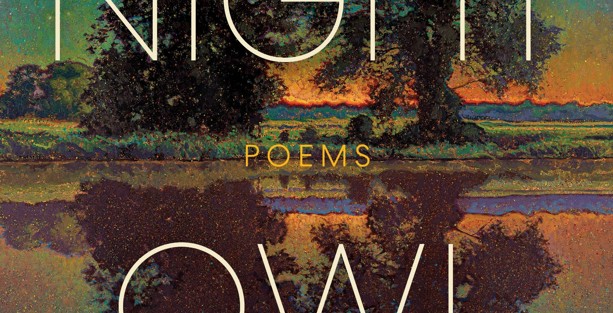
Electric Literature is pleased to reveal the cover ofNight Owl by Aimee Nezhukumatathil, which will be published on March 21, 2026 by Ecco. You can pre-order your copyhere.
From the New York Times bestselling author of World of Wonders and Bite by Bite, Aimee Nezhukumatathil’s fifth collection of poetry explores love, nature, and the transformative powers of the night.
In her latest poetry collection, Aimee Nezhukumatathil plumbs the depths of nighttime, crafting a series of nocturnes that explore the magic, sensuality, and life that emerge as the rest of the world goes to bed.
Night Owl navigates questions and concerns for the environment that envelops us. It meditates on our connections to family and beloveds, and explores our position within the broader beauty of the planet. Just as the night transforms how we see things, so too does love in its many forms transform our understanding of togetherness and the natural world. And these poems are deeply suffused with love—each an expression of Nezhukumatathil’s captivating responses to the animals, plants, and people who have her heart and enliven her world.
Night Owl presents a dazzling vision of nature that celebrates the beautiful noises and silences of this planet, as well as its many complications. Nezhukumatathil provides a singular contribution to writing on the natural world, calling up our sense of love—even in the face of increasing violence to one another and the environment—by focusing on the transformative impact of the dark.
Here is the cover, painted by Charlie Buckley:
Aimee Nezhukumatathil: Our sleepy little college town of Oxford, MS, boasts a bounty of artists and writers. I’ve been a fan of Charlie Buckley’s landscapes for years, often staring perhaps uncomfortably long at his magnificent and giant paintings that are wider than my outstretched arms. But it was always his paintings of night time landscapes that I found especially moving and ethereal.
I simply don’t know another artist who can paint the stars so they seem bright-hot, shimmering off the canvas, you’d almost swear the paint was still wet. I chose his painting, “Flooded Nocturne,” (48”x41”) and when I first saw this cover from the design team at Ecco, I gasped. The painting feels like a secret kept between sky and water, where dusk leans into darkness and a whole new world of possibility begins to hum and chirp with cricket and frogsong. I love how the trees stand both rooted and reflected—echoes of themselves—suggesting the way our inner lives often double and deepen when the sun slips away. That wash of color at the horizon seems to me is neither day nor night, but the charged threshold between, a space where transformation can take hold, much like in the poems and myths of ancient Greece.
The mirrored trees, doubled and glowing, carry the same tenderness and mystery I hope these poems hold: how the world shifts when most are asleep, but for night owls like me, that’s when I work. And of course there are so many plants and other animals that really come alive at night too, so it’s another reminder— especially during these trying times— we’re not alone.
My poems in Night Owl circle around what it means to be a woman with brown skin, a mother, a daughter, and someone who loves the outdoors, especially at night. I also never saw too many poems about the outdoors featuring a woman who cherishes the outdoors and who actually enjoys spending time with their children and/or with their husband. Who is a daughter who loves spending time with her parents. And has her own communities of friends too. I wanted there to be something positive shown about these kinds of relationships. We see so often publishers churn out these books featuring awful family members, and those are important, but dang, it’s also important to show happiness and love and desire and contentment sometimes too, no?
The stars scattered across the sky remind me that what glitters in the dark is not absence but presence, like a chorus of ghosts and memories and wishes waiting to be faced and considered. I wanted to include curiosity and wonder about the night sky. I wanted to showcase that the night is not something to be afraid of, that it could be a place of transformation and wonder. That’s what the ancient Greeks viewed it as before it became associated with criminal activity and scariness. It was actually a place where metamorphosis happens. This is exactly the kind of magic—the kind of noticing and listening— and the kind of astonishment I hope readers will bring with them into these poems.
Allison Saltzman: The cover process started in a very different direction, with me creating a cut-paper owl. I was inspired by several of Aimee’s poems, whose lines were arranged to form animal shapes. I also experimented with images of climbing vines, because one of her poems described her love as leaves that continue to “grow and grow.”
Aimee was enthusiastic about all the covers we shared, but then she visited an art gallery in her hometown, saw this gorgeous painting by Charlie Buckley, Flooded Nocturne, and knew she’d found her ideal book cover. I was unfamiliar with Charlie’s work, but grateful for her introduction. The painting is a perfect match for the wondrous mood of Aimee’s poems.
Riddhi meets Ridhi on a dating app. Ridhi’s name is actually Ridhima but no one calls her that. They laugh about how funny it would be if they were a couple. Hahahah, types Riddhi. Lmao ded, types Ridhi. Our friends would DIE, Riddhi says.
For their first date Ridhi takes Riddhi to a park with her new dog. The dog is not like other dogs, it’s a cool dog. It’s also a dog’s dog; it gets along with the other dogs at the dog park. This dog runs gracefully, long-legged like a hound, with short ears. Riddhi feels all this reflects very well on Ridhi. The only thing is, Ridhi says thoughtfully, she hasn’t been able to decide upon a name yet.
They go to a dog-friendly restaurant with elegant hardwood seating and thousand-rupee eggs in yoghurt on the menu. It’s Turkish, Ridhi says, you have to try it. She’s right, it’s sublime. S-U-B-L-I-M-E. Riddhi spells it out. Ridhi thinks uh-oh, I’m falling in love. Oh no, I’m falling in love again. These are not original thoughts, these are the stupid lyrics of a stupid song she doesn’t even like. Ridhi wishes with some irritation that the scrim of pop culture would not mediate her feelings before she is certain of what she feels.
Riddhi says, what about Cat? Ridhi is in love, now she’s certain of it.
Their friends do indeed think it is very funny. Here come the Ridhs, they say, when they arrive together. Neither enjoys being called Ridhs but they are both aware there is not a better bastardisation of their name. Rids is worse. Rudy sounds like they have internalised postcolonial racism. What’s in a name anyway. In bed they call out: Ridhi. Or is it Riddhi? It doesn’t matter. Riddhi is about to come. So is Ridhi. YES.
They wear matching pajama sets, they wear matching housecoats. Their sex life is adventurous. They are exploring shibari. Ridhi ties Ridhi up. Then they are exploring knife play. Riddhi makes tiny cuts on Ridhi’s soft upper arm, and Ridhi’s eyes roll back in her head. Ridhi opens her mouth and Riddhi grabs her long, long curls and pushes her tongue into Ridhi’s warm, waiting mouth.
They cannot tell who is who anymore. Is this Ridhi’s hand or Riddhi’s? Whose hand is wrapped around whose delicate throat? Who has made that ring of teeth on a shoulder blade? Riddhi and Ridhi are spent. After sex they spend some time slow-breathing in unison. Inhale, exhale, inhale . . . exhale, Ridhi says. Or was it Riddhi?
They have funny arguments about who is the better Riddhi. The real Ridhi. Riddhi argues it’s her because Ridhi is one letter short. Ridhi argues Ridhima is superior because in total it has one more letter. The second d is superfluous, she says. They fight. At first it is a joke, but then Ridhi slashes Riddhi’s left arm with the knife she was using to cut an apple. Ow, Riddhi says, and her face darkens. She says nothing, but at night Ridhi wakes up in terrible pain. Riddhi is drunk and has chopped off her little toe.
They go to the hospital together, carrying the little toe in a Ziploc bag on ice and frozen bananas. Ridhi doesn’t cry, but she keeps mumbling something over and over. Riddhi bends closer to hear. That was my favourite downstairs finger, Ridhi is saying. They sit in the waiting room. My downstairs finger, Ridhi says.
The toe is reattached. For the next month Ridhi is totally reliant on Riddhi. Riddhi helps her go to the toilet, she bathes her tenderly, she cooks all their meals. She even throws away all the whiskey in the house. From now on she will be a teetotaller, she says. She is toxic, she is sorry, she weeps. If Ridhi leaves her she no longer knows who she would be. Is that why you cut off my toe, Ridhi asks her. So I would be with you always? So I would depend on you? No, Riddhi says. I wish it was that, but I was motivated by childish revenge. When I was a child I used to tie up my younger brother and lock him on the balcony. I told him it was a game, but I was just jealous. It was that evil side of me. By the end of the month she is so remorseful, she insists they make it even. Ridhi must choose an appendage to cut off.
It must be something inessential but inconvenient. The tip of her earlobe, Riddhi suggests. The pinnae.
Ridhi is not keen on this plan. Blood makes her nauseous. Besides, she is tired of teetotaller Riddhi. Sober Riddhi is less daring, less bright, less funny, less horny. I don’t care about my stupid toe, she says. Can we please move on, she begs. But Riddhi won’t listen. When I look at you, all I see is a toe, she cries. Ridhi tries to wear sexy lingerie, rolls a giant doob for the both of them to reignite their sex life, but Riddhi is too regretful. She takes off Ridhi’s bra and then she just bursts into tears. Sitting in a thong that is surely cutting into her rectum, Ridhi thinks about what her life has come to. How ugly Riddhi looks crying. Her nose is red, and her cheeks and eyes are swollen. Ridhi thinks with some satisfaction, I am the superior Ridhi.
Okay, Ridhi says, let us compromise. It has been two months since the toe incident. Ridhi can now walk around with a walking stick. She is a freelance content writer, working from home anyway; she gets ChatGPT to write articles on luxury watches for different magazines. They pay her exorbitantly. She is the number three luxury watch specialist in her field. She is the one who has been paying for their drinks, their flat, the dog food. Now Riddhi must walk the dog after she returns from school and before leaving (she is a primary-school teacher). Ridhi stretches out on the couch with her laptop and yells, Riddhi . . . Riddhi . . . Riddhi . . . Riddhi, until Riddhi responds. I need my water refilled. And Cat has peed right outside the litter box again.
What makes everything even more unfair is that Cat loves Ridhi more. He spends most of his time sleeping beside her on the sofa. Riddhi used to think being a primary school teacher made her a better person than Ridhi, but since the toe incident this has changed. The dynamics of their relationship are altered. No longer does Ridhi hold an unspoken resentment about how Riddhi clearly thinks but does not say her work is more important than Ridhi’s. Now she holds an unspoken resentment about how Riddhi has become less fun since she stopped drinking. Ridhi begins to microdose Riddhi with alcohol in her coffee. She insists on doing this one thing—making coffee for them both. At school Riddhi is softer, kinder. She laughs more easily, the kids love her. She gets promoted.
After six months of this Riddhi develops liver problems, and the doctor does not believe her when she says she doesn’t drink. Her eyes have that telltale yellow, and her brain is soft as plasticine. She has become both stupider and nicer than she used to be. Doctors do not mind nice people, they are easier to dismiss. Ridhi holds Riddhi’s hand. Makes eye contact with the doctor, unspeakingly confirming yes, yes she is a drunk. What can I do, you love who you love. Riddhi’s remaining friends have an intervention for her. They are concerned that she always seems drunk. Riddhi is convinced that nobody understands her except Ridhi. She decides that Ridhi is right, she is clearly the superior Ridhi. She drops the second d from her name. She dresses exactly like Ridhi now.
You can see them both on Sunday on either end of the couch. Two braids, a flowered kaftan and round black glasses. Between their feet sits Cat. He is the only non-Ridhi here.
People have been telling me the early aughts are back in style with this gleeful look in their eyes that tells me they must remember the era very differently than I do. Sure, there’s something to be said for the slower, gentler relationship we had with tech in the pre-algorithm, dial-up internet days, when we weren’t constantly being surveilled or sold to. At the same time, I can’t be alone in thinking the Y2K years were pretty messed up. If you were a kid then, you spent half of 1999 being warned that the world would end at the stroke of midnight on January 1. Then midnight came and went, and the life you hadn’t planned for just . . . kept going?
For those of us who survived this imagined doomsday only to go barreling towards the personal apocalypse that is puberty, the aughts live in our memory as a time of dark, unsupervised chaos and the creeping, elated sense that we’d gotten away with something. My debut story collection, Tell Me Yours, I’ll Tell You Mine, captures this feeling through the bizarre rituals of a Y2K sleepover. Children have a folklore all their own that exists outside the realm of adults: games, riddles, superstitions, and rhymes that’ll chill you to the bone if you think about them long enough. In my book, these look like coded jump-rope songs, cootie catchers that tell you who you’re destined to marry, and summer camp pranks every bit as terrifying as the monsters rumored to roam the grounds.
All these secretive games we played under the cover of night, trying to understand our lives better, or to challenge the forces that threatened to take them from us—the forces that dared try to control us at all. Some of the books below explore this post-lights-out world through speculative fiction, like mine does; others in the form of a realist novel, an essay collection, or a book that isn’t even book-shaped. All of them are shot through with the spirit of the Y2K sleepover: caught between centuries, between dusk and dawn, between childhood and adulthood, between the magical and the mortifying everyday.
This is one of the mixed-genre story collections I read to convince myself that I was allowed to write a mixed-genre story collection, everything I knew about publishing trends be damned. These thirteen stories weave horror, fantasy, sci-fi, and folklore together with exactly the kind of urban legends you might hear at a slumber party. A number of the stories are set in schools where girls behave badly, weather betrayals and betray one another, and try desperately to make up for it. “Good Girls” tells of a manananggal, a mythical creature in Filipino folklore who detaches her upper torso from the rest of her body to fly at night, battling a taboo hunger. Another favorite, “Hurricane Heels (We Go Down Dancing),” features five friends trying to have a regular bachelorette party until the celebration takes a turn. Some stories, like “How to Swallow the Moon,” are so gorgeous and atmospheric, they read more like a magic spell.
A voice-y, big-hearted novel told in LiveJournal posts, Log Off opens on an entry dated Tuesday, September 5, 2000, with the words: “Hello, people of the Internet. Let it be known that today, 9/5/Y2K, my legal guardian Brian finally joined the modern world and connected our computer to the great World Wide Web.” The book follows sixteen-year-old Ellora Gao, who lives in a Western New York suburb with her emotionally distant former stepfather and memories of her estranged mother, and goes online in search of the close relationships she feels are missing from her life. I love the intimacy of Ellora’s friendships, and the humor and tenderness with which they’re drawn. One memorable entry contains a choose-your-own-adventure flowchart of an interaction that members of certain diasporas will recognize as the “But where are you from from?” question.
This collection of thoughtful, accessible essays assembles seventeen viewpoints on the social and cultural impact and lasting nostalgia of the American Girl universe. First released in 1986, the American Girl dolls evolved into a full-on craze by the mid-nineties to early aughts. By tapping into multiple disciplines and research areas, this collection manages to cover a lot of ground—from the historical recipes associated with each of the girls, to the dolls’ role in “tag yourself” memes (I’m Samantha), to the struggle to find Asian American representation in the Pleasant Company catalog. Contributors look toward the past, by turns fondly and critically, all while keeping an eye to the future, as the first generation of American Girl devotees become parents themselves.
Imagine getting to hear the freakiest fairy tales from your childhood for the very first time. That’s what reading Nethercott feels like. One of this collection’s fourteen stories follows a pair of teenage girls working a summer job at a mysterious roadside attraction. Another throws us into the midst of conspiratorial middle schoolers as they harness various divination methods, from alomancy (divination by salt) to zoomancy (divination by animal behavior), to get rid of a new classmate. Formally playful, the book also includes a story in the shape of an illustrated bestiary; I feel closest to the Yune, a bog creature who joins a game of spin-the-bottle with disastrous results. Through lush prose, fearlessly out-there premises, and a romantic sensibility, Nethercott explores the venomous, feral nature of girlhood, and why we might refer to a group of girls not as a clique but a pack.
The first Samatar story I ever read was “How to Get Back to the Forest,” and when I heard it was being included in this collection, I knew I had a new title at the top of my TBR. These twenty stories are organized into two sections—Tender Bodies and Tender Landscapes—and range in setting from past to near future, more distant future, and alternate present. “How to Get Back to the Forest” is a dystopian tale in which kids are separated from their families at a young age and sent to a strange summer camp. Dread mounts as the details of the camp are gradually teased out: mood-tracking metal bugs, inanimate objects meant to serve as parental figures . . . It’s a reminder of what any reformed camp kid already knows: Sleepaway camp is like a sleepover with no morning. You don’t get to go home so easily, and the night feels like it might never, ever end.
Set across two timelines, one in 1998 and the other in 2016, this novel follows three queer friends from the time they met online as teenagers and created the video game Saga of Sorceress. Eighteen years later, their lives look very different. Once scattered across the country, Lilith, Sash, and Abraxa now all live in and around New York City—though they still haven’t met in person and fell out of touch long ago. None of them knows the others are nearby, but they haven’t forgotten the game, which remains unfinished in the confines of their respective drives. I appreciate how insistently this book challenges the false dichotomy between “real” friends in the “real” world and “online” friends online.
What says slumber party more than sitting in a circle, sharing scary stories with your friends? The Family Arcana is the story of a doomed family trapped in their decaying farmhouse, told across fifty-two playing cards and designed to be read an infinite number of ways. Which characters you meet—and which of their obsessions, problems, and idiosyncrasies you’re privy to—depends on how the cards fall. The deck is packed with sharp, striking images that linger, like ghosts, long after you’ve read them. There’s the sister “born with dirt under her nails,” the aunt “who cuts pictures of horses from the newspaper,” and the grandfather who says, about the importance of mustaches, “You must have something to tug on when you are wrong, to make it look like you will not be swayed.” The cards are suitable for use in all standard card games and definitely scratch the analog itch. There’s also an audio edition featuring fifty-two different readers.
I’m clearly a sucker for unconventional story structures, and this collection of sixty-one delightful, nervy pieces of flash fiction delivers. It reimagines what a story can look like, just as it interrogates how society teaches us what we, based on ideas about gender, should be. One story, “Vagabond Mannequin,” appears on the page as a crossword puzzle, while another, “So Many Clowns,” takes the form of a letter to a nail-polish manufacturer. Other stories are set in diners and among the cardboard cutouts of the last Blockbuster on Earth, and imbued with the language of girlhood, as is the case with “I Double-Dog Dare You.” They’re filled with dolls, piggy banks, hair ribbons, Sunkist, and secrets, and together feel like sixty-one sparkling gems in a treasure chest.
This essay collection focuses on the past, present, and future of video games, as considered by writers who are also gamers. The list of contributors includes heavy hitters Nana Kwame Adjei-Brenyah, Charlie Jane Anders, Alexander Chee, Elissa Washuta, Hanif Abdurraqib, Larissa Pham, and comic MariNaomi tackling topics of grief, power, language, race, illness, bodies, and technology through the lens of video games. However, this book isn’t only for gamers (I’m not really one—not of the digital variety, anyway), and should appeal to anyone interested in thinking more deeply about the way interactive virtual realms inform how we see and navigate our physical world. I was particularly moved by Jamil Jan Kochai’s reflection on being an Afghan American teenager targeting Afghan insurgents in Call of Duty.
Made up of nine stories linked through the appearance of locked doors and keys, this collection feels a bit like sneaking out past curfew: that sense of mischief, bordering on danger, that comes with being somewhere you shouldn’t be. Many of these stories exist at the threshold between spaces—a library, a garden, the front cover of a diary—and dare you to proceed. If spooky puppets were the subject of your nightmares growing up, you’ll be drawn to (and/or terrified by) “Is Your Blood as Red as This?,” a tale that’s set in a puppeteering school and deals with questions of agency, autonomy, and control. I love surprising, audacious titles that hint at the personality of the story that follows, so “If a Book Is Locked There’s Probably a Good Reason for That Don’t You Think” is a standout for me.
Writer-director Zach Cregger’s Weapons opens with a mysterious and unsettling event: At 2:17 in the morning on an ordinary Wednesday, 17 of the 18 students in Justine Gandy’s suburban Pennsylvania third-grade class run away from home. While we witness the disappearance in flashback, an unseen child narrator assures us that this is a true story, that we’re about to see a lot of people die in “a lot of really weird ways,” and that we’ll never find any mention of it in the official record. The incident has been erased from history, the narrator tells us, because the powers-that-be were “like, so embarrassed” by their inability to solve the case that they covered it all up. “Embarrassed” is a curious word to use in relation to the abrupt disappearance of seventeen eight-year-olds and multiple related strange deaths, and it’s our first clue that the film’s true horror might lie somewhere beyond its jump scares. I walked into Weapons expecting some spooky, paranormal fun; I walked out with a warning about what happens to the children of a society too preoccupied with its imagined enemies to recognize the real threat operating in plain sight.
The film’s central riddle isn’t about what happened. The kids’ eerie departure was captured by multiple families’ alarm systems and outdoor security cameras. We (and the parents, and the authorities) know from the start that each child left home at the exact same time, in the exact same way, seemingly of their own accord. We’re shown the departures at the outset: Each child opens their own front door and runs out into the night, arms pitched down and out to the sides like little airplanes, alone and ostensibly free. The question is why these children have vanished, and whether there’s anything anyone can do about it.
I walked out with a warning about what happens to the children of a society too preoccupied with its imagined enemies to recognize the real threat operating in plain sight.
Weapons circles this question via six overlapping points of view, each from the vantage of a different community member whose respective distance from the disappearance varies. We start with Justine Gandy, the headstrong young teacher whose students vanished; followed by Asher, a middle-aged, hypermasculine construction boss who can barely contain his rage and despair over his missing son, Matthew; Paul, a cowardly and unscrupulous local cop; James, an affable unhoused twenty-something who lives in the woods somewhere downtown; Marcus, the school’s well-meaning, rule-bound principal; and lastly, Alex Lilly, the only child in Ms. Gandy’s third-grade class who didn’t disappear. Each perspective contributes to a mosaic-like reveal of what’s really going on, and the literal fragmentation of the storytelling reflects the fragmentation of the community, offering a close-up view of the various forms of bias and blinkered-ness that both emanate from and are directed toward each character’s particular identity. As this intertwining narrative structure winds toward the film’s shockingly gory conclusion, it spins out a portrait of 21st-century suburban U.S. life more akin to ambitious character-driven opuses like Magnolia and Pulp Fiction (both of which Cregger has cited as influences) than anything in the existing horror canon.
The physical and social isolation built into this suburban milieu is crucial to the plot: The film’s mystery could not hold in a community less marked by separation. Maybrook, Pennsylvania, is itself a fiction, but it’s the kind of indistinct, distinctly American suburb you can find plunked down in metro areas from coast to coast. At pick-up time, the parking lot of its low brick elementary school is filled with top-selling neutral-colored SUVs. The school’s students and administrators live on quiet cul-de-sacs in stately single-family homes with two-car garages and neat green lawns, while its teachers and cops live on shabbier, more densely residential blocks. Its downtown core, presumably once a bustling center of commerce and community, is now home to boarded-up buildings, a pawn shop, and the police station. Meanwhile, the liquor store and the gas station, both situated on busy multi-lane roads, are the closest things to a town square—everyone drives everywhere here, and these two businesses are the only places we see Weapons’ characters casually cross paths.
In the families of the lost children, we see how spectacularly the antiquated 20th-century promise of the suburban good life has failed. Their affluence cannot ease their grief. They’ve bought into a security apparatus that not only failed to prevent their greatest fears, but has in fact hindered the search for the eight-year-olds’ return; because their departures were observably uncoerced, the authorities chalk the disappearances up to voluntary “abandonment” and have little appetite for further investigation. In reality, the children are in desperate need of the adults’ help. They’ve been abducted by an evil old witch named Gladys, who cast a spell that drew them out of their homes and into her enchanted army without ever having to lay a finger on them.
Gladys is the great aunt of Alex Lilly, the only child who didn’t disappear from Ms. Gandy’s class. With her bright orange Emo Phillips-esque hairdo, candy-colored clothing, clown-like makeup, and off-kilter affect, she comes across more like an eccentric buffoon than an agent of terror. But this bumbling persona comes off with her wig: Behind the darkened windows of the Lilly house, she’s barefaced and bald, a shrewd and merciless tyrant whose only interest is accruing strength. Every person she enchants increases her power, and every body becomes a “weapon” in her quest for even more. Once in her thrall, those she bewitches become instruments of her will; she can turn them against their loved ones, and even themselves, with a snap. She starts by mesmerizing Alex’s parents, but their energy isn’t potent enough. So she presses her undersized, bullied great-nephew into her service, demanding his assistance in spellbinding his third-grade classmates.
A despot’s fiendishness becomes palpable to the vulnerable long before it becomes tangible to those closer to power.
Gladys’s garish looks and bizarre rhetoric are so allusive (who’s the first person that comes to your mind when you hear the phrase “orange clown”?) that it’s hard not to see her mystical takeover of this ordinary suburb as an analogue to the current administration’s almost-supernatural sway over a sizeable chunk of the American electorate; and her metaphysical method of capture as a potent metaphor for the insidious effects of algorithm-driven indoctrination. The children’s decision to leave home might appear to have been undertaken freely, but their minds were not their own. The physical and social isolation baked into their (and so many of our) lives are fertile conditions for psychological exploitation, and young people are especially vulnerable to workaday witchcraft of the internet, which can infiltrate even the sturdiest fortress without any outward signs of attack. Indeed, when we’re first shown the moment of “abandonment,” it’s underscored by the film’s most notable needle drop, George Harrison’s 1970 “Beware of Darkness.” Alongside the song’s wistful melody and heartfelt vocals, the surreal, dreamlike image of the children vanishing into the night elicits something closer to melancholy than terror, and the spiritual warnings in its lyrics (“Take care, beware of greedy leaders / They take you where you should not go”) would give the whole game away in advance if only we knew where to look.
Gladys leverages her understanding of Maybrook’s social norms to evade the community’s defenses. She babbles her way past investigators and weasels into the homes of some of her targets by performing the part of a harmless, doddering old white lady. By-the-book bureaucracy is inadequate in the face of such a slippery menace, and much like the machinations underway on Pennsylvania Avenue, her greatest advantage lies in the fact that her aims are simply unimaginable to ordinary, reasonable people. Even those who do notice something is off—like school principal Marcus—aren’t able to apprehend the full scope of the peril she poses, and their reliance on norms of due process and decorum leaves them quickly outmaneuvered. As such, the peril she poses remains unrecognized for too long by those outside her immediate sphere.
And yet, there are signs that the community has some sort of inchoate awareness of the nature of the danger in their midst. Although we don’t meet the evil Gladys head-on until principal Marcus’s penultimate segment, she appears as a disorienting, lightning-quick jump-scare in every other POV (except self-serving policeman Paul’s, which is telling given his occupational proximity to the type of institutional authority she represents, since a despot’s fiendishness becomes palpable to the vulnerable long before it becomes tangible to those closer to power). Grieving father Asher even crazily, but correctly, points to witchcraft as an explanation for his son’s disappearance, although at first he points his accusation at the wrong target.
The vacuum left behind by officials’ inertia leaves Maybrook to find somewhere to lay the blame for what’s gone wrong in their community. The parents find an all-too-easy target for their suspicions in Justine Gandy, the young, single, childless, unruly spitfire of a woman teaching who-knows-what to their kids. Law enforcement focuses their energy on quashing the type of “threat” they can see by relentlessly harassing unhoused meth user James. Meanwhile, administrators like Marcus fall into the self-soothing rituals of procedure and paperwork.
Despite being cast out by the community (or perhaps because she already has nothing left to lose), Justine is the only person who refuses to stop searching for her students. She has a hunch that Alex Lilly holds a clue the authorities have missed, and she won’t stop speaking up about it. But her voice can’t penetrate the wall of misogyny and respectability politics that surrounds her. The men who lead Maybrook—many of whom purport to care about her—are constitutionally unable to take her concerns seriously. Their disregard for her perspective isn’t personal; they’re simply products of a system that has taught them since birth that women are more emotional, less credible, and less competent than men. They believe that their responsibility as leaders is to uphold hierarchical order while keeping rogue elements like Justine in check. When Justine prods pusillanimous policeman Paul for information about the investigation, he scolds her for straying out of her lane. When she finds proof that something strange is indeed going on at Alex Lilly’s house and rushes to Marcus for help, he bats her evidence aside and gives her a lecture on obeying the chain of command.
Asher’s refusal to rationalize the children’s disappearance creates an aperture for change.
Unhoused meth user James takes Justine’s proof a step further when he discovers the missing kids in the Lillys’ basement mid-petty-theft. James’s history of harassment and abuse at the hands of the cops makes him reluctant to reach out, but he swallows his fears and reports what he saw. Instead of leading to a rescue, though, his attempt to collaborate with law enforcement gets him chased, beaten (yet again), and dragged straight back into Gladys’s clutches by the authorities themselves—another gesture that speaks to the disjunct between the priorities of law enforcement and the concerns of the communities they’re supposedly sworn to serve.
Devastated father Asher turns out to be the bridge between the entrenched worldview of the men running the show and the messier, riskier, more interdependent approach that Justine and James instinctively understand is required to save the children. In public, he’s tough and angry—accusing Justine of somehow brainwashing his son and demanding answers from the authorities—but at home, we see him huddled, hollow-eyed, in his missing son’s twin bed, highlighting the disjunct between Asher’s inner anguish and the narrow band of emotions he’s culturally permitted to express. Asher’s turmoil sets him apart from the other men in Maybrook (the powerful ones, at least). Although skilled in his performance of rugged individualism and conventional masculine values, these myths are no balm for the loss of his eight-year-old son. His refusal to rationalize the children’s disappearance as a matter of personal agency—to compartmentalize and move on—creates an aperture for change. When a nightmare leads him to articulate his own guilt, fears, vulnerabilities, and the magnitude of his love for his missing son, Asher becomes able to move from recrimination to productive action. He activates his community, reaching out to other parents, and eventually to Justine. Only when Justine and Asher recognize that they’re fighting against the same set of obstacles in pursuit of a common cause and begin to pool their knowledge are they finally able to pinpoint the monster in their midst.
The film’s climax brings a kind of catharsis, but one that comes at incredible cost. In a moment that feels unnervingly close to the one our democracy is facing now, Justine and Asher are confronted by how difficult it is to combat Gladys now that she’s consolidated so much power. Alex, having witnessed Gladys’s method of enchantment, recognizes that their best chance to defeat her is to mimic her own actions and redeploy the weaponized children against her. They scream wildly as they hunt Gladys down, cannonballing through their neighbors’ windows and smashing through sliding glass doors in hive-minded pursuit. We get a peek into the interiors the children are destroying as they tear through the once-quiet cul-de-sac; the reactions of the occupants (some terrified, some exasperated by their home’s sudden implication in the chaos) remind us that many of the town’s residents’ domestic lives have retained their normalcy until this moment, when the reality of what has been taking place in their community comes (literally) crashing in on them. It’s almost comical—until it reaches its staggeringly brutal end. When Asher catches up to the children, they’re no longer enchanted, yet they’re still standing the same way they did in the basement: stock still, silent, awaiting new instructions.
Ultimately, the film’s greatest horror is that Gladys was able to get as far as she did with the help of Maybrook’s social division and structural complacency. The unthinkable traumas these people have endured could have been prevented if the community had been less fractured, cooperated more, listened better, acted faster. Instead, their children have to carry the memory of living under Gladys’s spell for the rest of their lives, and their elders will reckon forever with the horrors that were allowed to blossom in their blind spots. To heal, they’ll have to confront that reality together. The film’s final line, delivered in voiceover as Asher carries his blank-faced boy home, offers a fragile filament of hope in that regard—the child narrator tells us that after two years, some of the missing kids have finally started to remember how to speak. One can only hope that once they regain the full power of their voices, they’ll never be rendered mute under another’s spell again.
Lily King is interested in love in all its forms. Her seventh book, Heart the Lover, beautifully captures the thrill of a first love, but it’s also about the love between friends, the love between parent and child, and the love of a long-married couple. It’s the perfect companion to her New York Times bestseller Writers and Lovers, but King was actually working on a different book when the idea for Heart the Lover came to her. “I escaped into this novel,” she shared. “And I was so relieved to be in a different place with different people.”
As a reader, you feel that initial joy King experienced while drafting this novel. Heart the Lover is about a young woman called Jordan in her final year of college, and the love triangle that develops between her and two young men: Sam and Yash. Sam and Yash are intellectually ambitious, reading Saint Augustine and James Joyce, and in their company, Jordan begins to find her own voice as a writer. There’s a great pleasure to these sections, in the characters’ whip-smart banter, their infectious curiosity, and the magnitude of their love and heartache.
But as graduation comes and goes, and the characters make decisions that will ripple through the decades to come, their story deepens and complicates. And like many novels that feel effortless, Heart the Lover was actually incredibly complicated to write. The final draft is King at her best: a wise, exquisitely written tale of loss and love.
I spoke with King about the allure of the campus novel, our disappearing canon, and what it takes to write a remarkable love story.
Rowan Beaird: This book perfectly captures the overwhelming nature of first love, but there’s also a depth to the relationship at the novel’s core that makes it impossible to categorize as only that. Why did you want to tell this particular love story?
Lily King: I had two similar relationships when I was younger. Big loves that, for reasons I’d never quite understood, just didn’t work out. And actually, both of these men—who didn’t know each other—died in 2019, a month apart.
It is amazing how the moment you start writing dialogue and characters, they become other people.
I was looking through my notes recently, and I was really struck by how in the first draft of this novel, I was trying to work through all kinds of things. It began with sort of an autobiographical pulse, but it changed really dramatically in the writing and the rewriting of it, and the shaping of it, and the understanding that these emotions alone don’t make for good fiction. It is amazing how the moment you start writing dialogue and characters, they become other people. They leave any sort of real life behind. But the emotions! You know, that’s what I try to do in my fiction—I’m trying to find the fictional form for all of these emotions that I’ve experienced.
RB: The three central characters meet during college, studying literature and religion and philosophy, and throughout the book, there are countless references to all three. How did you want this shared language to function in the book?
LK: As a shared language! Yes, that’s exactly it. It is such a thrill when you encounter someone who speaks the same language and responds to the same things—whatever that may be, whether it’s the mechanics of a car, or a symphony, or literature. And when you can speak that same language, particularly when you’re young and you’re absorbing so much—it’s so exhilarating. I really wanted to capture that feeling.
RB: I sometimes wonder if we as a society, as readers, are losing those points of connection, through no longer having a collective canon. What do you think it means to no longer have common points of reference?
LK: Yes, I fear that now, the shared canon is whatever we see on our phones, and it’s dividing us. It’s not bringing us together in any way, and it’s also not bringing us to a higher level of—I don’t want to say morality—but a higher level of being and thinking. And by higher I certainly don’t mean academic or intellectual or anything like that. I just mean closer to the great pleasures of life, the things that are really important.
RB: The campus novel is its own genre, in certain ways. This book is about much more than that, but why do you think we’re drawn to this particular chapter of life and place?
LK: I’m so surprised by this term! It’s so funny. I mean, initially I thought that the characters would be in college for about 20 pages. I had a whole different concept of how this book would work, but now, suddenly, it’s a campus novel.
I’ve never written about people in college before, and I didn’t know if I could do it. It was the same way I felt with Writers and Lovers—it had been so many years since I’d worked in a restaurant. But it was so fun to go back there, and I didn’t realize how much the language would change and the feel of it would change when you’re writing about a time like that. It was pleasurable for me to go back to that time without cell phones. When everything was new, and the future felt bright.
RB: How did you go back to that chapter in your life? Did you have any journals, or did you read books that you read during that period?
LK: I kept no journal in college, which just wrecks me. I kept a journal every other time of my life. I can’t really account for that except that I was really happy. I think what I was trying to capture in this book, what I was really interested in, is how a person can meet a couple of people, and their life can be transformed by them in ways that they really don’t recognize until years and years later. And I think college is such a great time for that. During those years, you’re formed enough, but you’re not formed completely.
There are also these emotions that we have—particularly close friendships and romantic love—that are so powerful at that time of life. I really wanted to capture how overwhelming a person can be to you at that age, in a way that they really aren’t as you get older and you get more in possession of your full self.
RB: There is a large time leap that happens roughly halfway through the book, and at one point in the novel, a professor mentions that what grants a character revelation is time and distance. Was it difficult to know when to leave these characters and meet them again?
LK: Initially, I was writing those college classroom scenes just to show how the characters met. And then when I started writing them, it just took over. And then, finally, I was able to make the leap of 30 years—the whole reason for my writing the book—and it just kept feeling flat.
I don’t dwell on people’s bodies and on physical attraction. I just try to imply it so that the reader supplies the rest themselves.
I kept on trying to increase the tension and tighten the timeline, to rev up the engine, but I didn’t even have an engine. I revised and I revised, and then I read the last section again, and it was still flat, despite everything I had done to try to make it better. And I remember saying to my husband—twelve days before I had to hand in the draft to my editor—that it still wasn’t working. And he told me something that he told me for a year, which was, “She needs to go to the hospital with a secret.” And I kept on saying, “No, no, stop saying that,” but that day, I just stood up, and I went into my study, and I rewrote everything with that engine.
RB: I never would have guessed that was an eleventh hour edit.
LK: I feel like I need to proselytize now around the country—do not give up. Keep going!
RB: Without giving too much away, this is a book that’s as much about death as love, which is true of many of your novels. Why do you think they feel so intertwined for you as a writer?
LK: I think death has probably always been a preoccupation of mine. I’m really interested in loss, and loss just isn’t as powerful if there is no love, so they are intertwined. And as I get older—I’ve lost a number of people who have been so, so important to me. So I think it’s only going to get stronger in my fiction. I remember, actually in college, reading The Odyssey and The Iliad, and talking about Greek mythology, and how there’s nothing at stake for the gods because they don’t die. That’s such a basic concept, but it is a striking difference. Everything about our own existence is fragile.
RB: Well, there’s that beautiful scene toward the end where Jordan is asked about the role love plays in her books, and it’s posited that she sees love as the ultimate form of hope. Do you think it functions the same way in your books?
LK: I think love works in so many different ways in my books, but I do feel that the strongest strain of it is hope. Our only hope of survival is love.
RB: What is the most difficult part of writing a love story?
LK: I think it’s just getting the characters to connect. You just want to find the chemistry between them so that the reader wants them to be together. I suppose I try to get at it mostly through dialogue. You know, my relationships are mostly verbal. There are little moments of physicality, but I’m not really a descriptive writer in that way. I don’t dwell on people’s bodies and on physical attraction. I just try to imply it so that the reader supplies the rest themselves.
I remember asking Tessa Hadley, who is one of my favorite writers, how she made the attraction between her characters so strong. She has these men that—they just walk in and you’re immediately drawn to them. And she said that one trick was—it’s not necessarily writing about them, but writing about how others are drawn to them. I thought that was really interesting.
RB: I’m always hesitant to ask this question because I’m very conscious that it’s rarely asked of male writers who are fathers, but as this book deals with motherhood, I’m curious if and how being a mother has influenced your writing?
LK: It’s such an interesting question. I feel like being a mother has been so much more important to me than being a writer, to be honest with you. I’m conscious male writers would never say that, but that is where so much of my emotional energy goes on any given day. And I think that my love for my children infuses everything about my writing.
Weirdly, my novel that was most about children was my first novel—when I didn’t have children. I certainly haven’t and will never write directly about my children, but I feel they’re often sort of on the outskirts of my fiction. Motherhood is a completely different form of love, and I’m so interested in all of these different forms of love, and that’s really what I was trying to write about in this book.
DON’T MISS OUT
Sign up for our newsletter to get submission announcements and stay on top of our best work.
YOUR INBOX IS LIT
Enjoy strange, diverting work from The Commuter on Mondays, absorbing fiction from Recommended Reading on Wednesdays, and a roundup of our best work of the week on Fridays. Personalize your subscription preferences here.