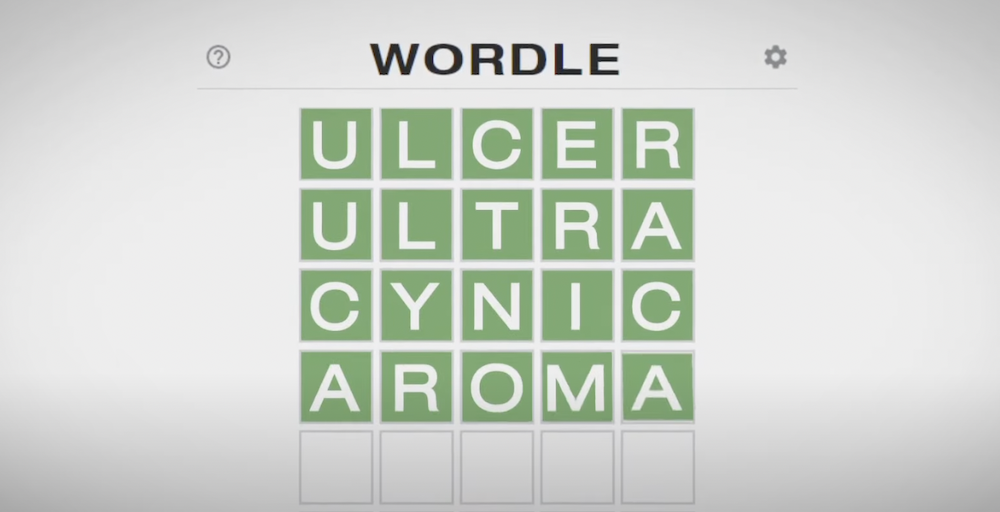
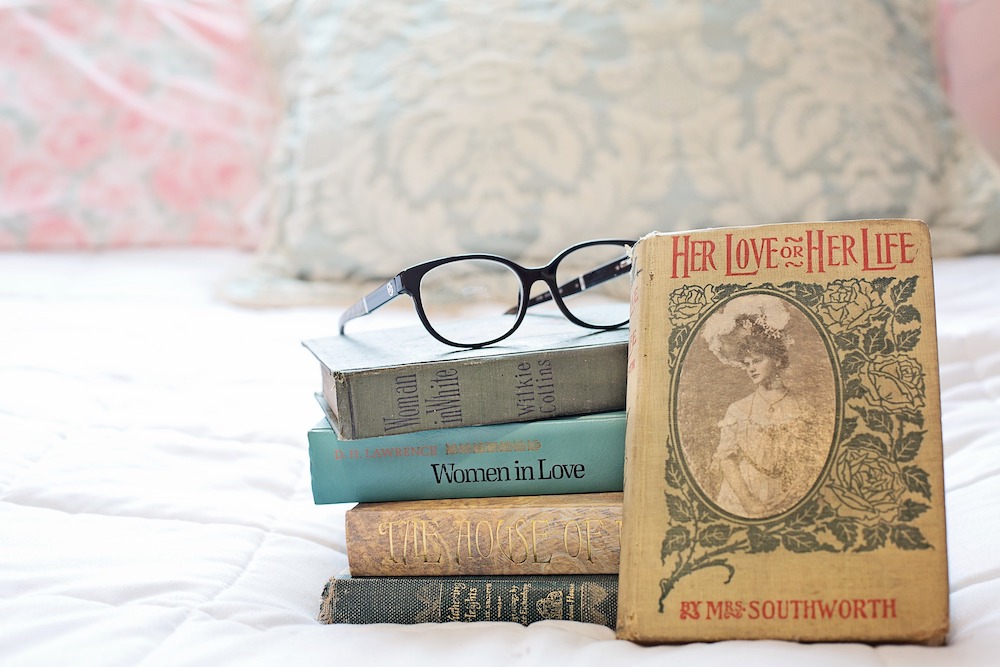
With so many amazing Wordle spin-offs out there, it can be difficult to keep track of them all! Here’s a helpful guide to some of the very best and most popular iterations.
Girdle just came out last week, but it’s already all the rage! Who knew there were so many different types of female undergarment? Just be careful not to confuse it with Girldle, which is exactly the same as Wordle, but instead of turning green, the squares turn pink.
By now, I imagine you’ve tried Meowdle. But no spoilers in the comments, please! I haven’t found today’s onomatopoeia.
In Lordele, you have to sing the right mystery lyric from “Royals.” It’s almost as fun as Lordle, in which all the answers are names of famous British lords. If that’s a little too highbrow for you, I recommend the daily Curdle to test your knowledge of cheese.
Daredevils are absolutely loving Russian Roulettle. But be careful! If you guess the wrong word, it fries your phone.
And for hybrid dog breed fans, might I suggest the Labradoordle?
You probably haven’t heard of Hipstertle yet, even though it actually came out before Wordle got popular.
I’m also addicted to Prime Nerdle, which features a new 5-digit prime number every 2nd, 3rd, 5th, and 7th day of the week.
For men who find the whole Wordle experience a little too feminine, you’ve got options! I highly recommend Brodle, Testosteronle, or Wordle Max.
I can’t in good conscience endorse Kafkardle. I had a few friends who got really into it, but now they’re trapped in the basement of an unnamed Czech courthouse.
You should also steer clear of Passwordle. Sources have confirmed that it is a phishing scam.
Fans of jump scares are raving about Startle. Just don’t play with headphones on, or if you’re prone to seizures.
Iconoclasttle is making a big splash among the counterculture crowd. It changes the Wordle URL, so you can enjoy the game without acknowledging that it was bought by The Times.
If your current sleep app isn’t doing the trick, Snordle can help. Yesterday, I fell asleep in two minutes!
Maybe you’re looking for something a little more tailored to your interests. Seltzer lover? There’s LaCroixdle. Old-school basketball fan? Give Larry Birdle a try. Objectivist? You’ll love Ayn Randle.
And, of course, for those who don’t understand this obsession and want to abstain, there’s always the daily Boycottle.
When I first read “Girl”—Jamaica Kincaid’s well-anthologized short story featuring a mother instructing her young daughter how to behave and carry herself—I heard my own mother’s voice saying, “If you can’t cook, your husband will send you back, you know.” My mother said it from time to time, exhorting the young girls in her care—her three daughters and the high school girls who boarded with my family while attending neighborhood schools—to learn the proper way to clean and cut up a chicken, cook cornmeal or banana porridge without lumps, steam rice that wasn’t mushy.
In Kincaid’s “Girl,” set in Antigua, there are contradictions in the mother’s warnings. She warns her daughter against becoming a slut, while telling her how “to make a good medicine to throw away a child before it even becomes a child.” She tells her daughter to “always eat your food in such a way that it won’t turn someone else’s stomach,” while also instructing the girl how to spit up in the air if she feels like it and move so the spit doesn’t fall on her.
Likewise, there were contradictions in my mother’s actions and her exhortation that us girls learn to cook to keep a man. My mother, a life-long educator, was fiercely independent and she expected her daughters to be the same and to master education and careers, while still knowing how to keep a home.
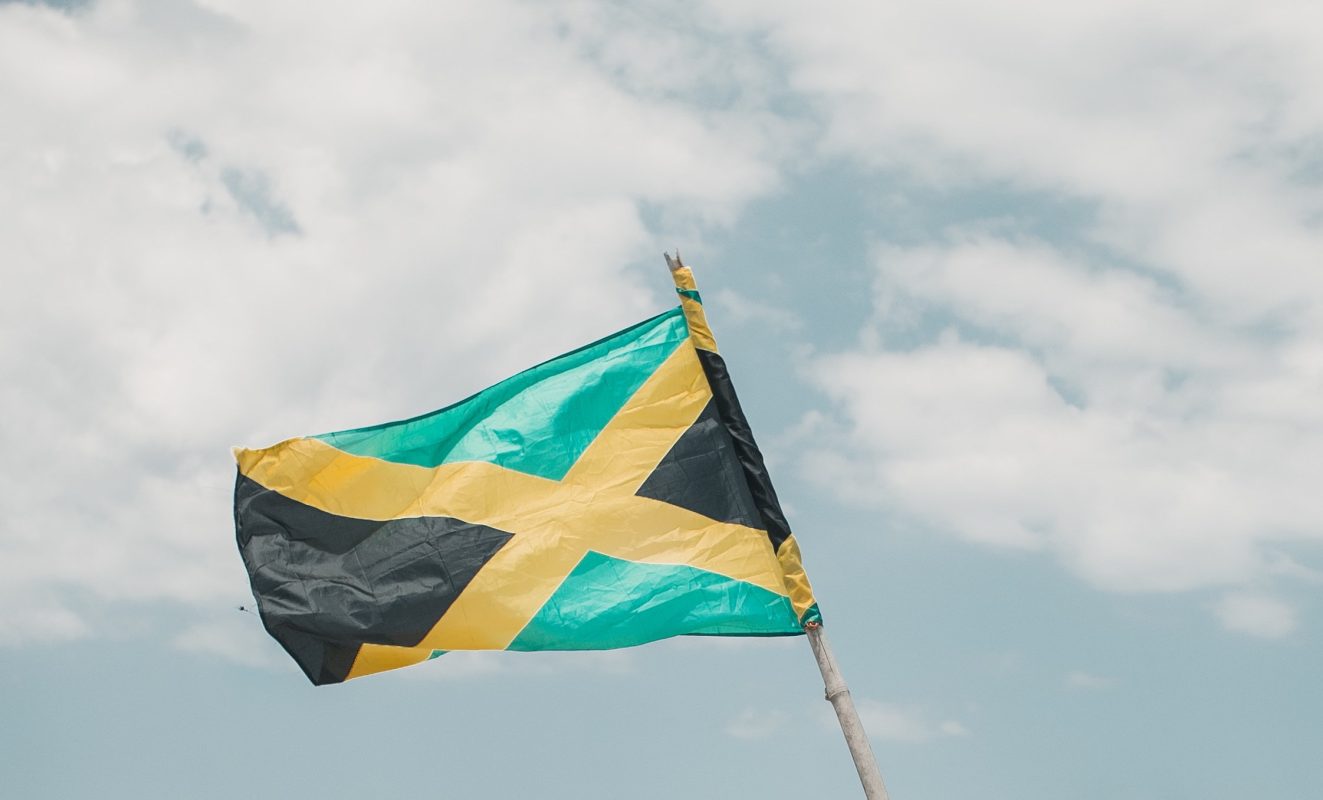
The contradictions in both mothers’ words reflect the complexity of a Jamaican girlhood and womanhood bound by cultures and traditions tainted by a colonial past, and the duality of being both a conservative nation and a land of free-spirited people.
Here are the 8 Jamaican women writers who interrogate the complexities of Jamaican girlhood and womanhood in both poetry and prose, tackling subjects such as parental and patriarchal expectations, morality, and class consciousness:
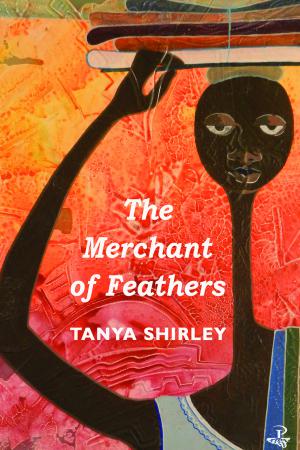
So ends “The Alphabet of Shame,” the first poem in Shirley’s collection. In the poem, a father proudly shows off to his new circle of friends the house he has acquired and its spectacular view. His bright ten-year-old corrects his mispronunciation of “orbit” and the embarrassed father punishes his daughter by sending her away from the party to her room—punishing the child for exactly what he wishes her to be: educated and bright.
Shirley’s work navigates the many contradictions of the outer self that we present to the world, which she again does deftly in the last lines of “What We Do Not See:”
“She will walk with a bounce and a swing and the world
Part fairytale and part exploration of alternative histories, A Tall History of Sugar is the story of Moshe Fisher and Arienne Christie, two distinctly different children who consider themselves “twins.” Moshe is born with pale and translucent skin and, having been abandoned as a baby, is raised by a childless couple. Arienne, a darker-skinned girl, takes on the role of Moshe’s protector, and from early on sets out to protect Moshe from the social and emotional consequences of his physical differences. Through Moshe and Arienne’s unconventional love story, Forbes explores the legacy of colonialism: its effects on childhood and its ongoing impact on the Jamaican way of life.
This futuristic novel set in 2084 explores the impact of climate change. The sun’s intense heat reverses the way inhabitants of Bajacu, a fictional Caribbean island, live; the residents sleep during the day and work at night. A young Sorrel finds it hard to adapt to daytime sleep and the dire conditions of their city. She convinces her mother to head to higher, cooler terrain where groups of residents called Tribals have found a way to survive. Sorrel’s relationship with her mother is a key part of this work of science fiction.
Lorna Goodison’s collection of short stories include characters from all walks of Jamaican life—wealthy employers, street children, domestic workers—all of whom contemplate love in its various forms. With societal expectations and class consciousness running through many of the stories, Goodison asks and answers moral questions about love and relationships.
Poet Safiya Sinclair’s work is obsessed with postcolonial identity, which she looks at through interrogating Jamaican childhood, mythology, and race relations as an immigrant in America. She writes about the contradictions of the female body, which is both fertile and uninhabitable, spiritual and objectified, and an object of shame. In “Autobiography,” she writes:
In the early 1970s, Abel Paisley fakes his death, steals his friend’s identity and lives his life as Stanford Solomon in America. Older and wheelchair bound, he reconnects with Irene Paisley, the daughter he abandoned in Jamaica as he remade his life with his new identity. While Stanford Solomon lived a good life, Irene’s life has not been easy, and her father’s revelation upends her life. These Ghosts Are Family interweaves the stories of multiple generations of the Paisley family, and the lingering effects of race and lineage.
Based in Toronto, Reid-Benta writes about second-generation immigrants and their experiences with Jamaican culture. The connected short stories in Frying Plantain center Kara Davis’s efforts to be a “true” Jamaican, as well as the challenges of being a Black girl in a majority white country. These stories—which follow Kara from elementary school to young adulthood—reflect the tensions between mothers and daughters, and the parental expectations that their children achieve more in life than their parents.
In Dennis-Benn’s sophomore novel, five-year-old Tru is left behind in Jamaica when her mother migrates to America and becomes an undocumented nanny. Once in America, Patsy remakes her life with no communication with her daughter. Abandoned by her mother, Tru has to learn how to navigate a strained relationship with her father while trying to define her identity and sexuality.
Black horror has come of age. It began as oral tales Black folks would tell each other to pass down cultural warnings and taboos during enslavement and post-Emancipation. In its pubescence, the genre unfurled and infiltrated the written word, as seen in Charles W. Chessnutt’s The Conjure Woman in 1899; and invaded Hollywood only a few decades later, as seen in Oscar Micheaux’s lost film, A Son of Satan in 1924. For far too long, Black horror was seen only as a domain for Black men as Black women’s contributions to the genre were actively overlooked and ignored.
Bethany C. Morrow bursts onto the scene with the unapologetically dark novel Cherish Farrah embracing a lineage of Black women’s horror writing that spans from Zora Neale Hurston’s “Sweat” to Tananarive Due’s The Living Blood to my own co-edited volume of short horror stories written by Black women, Sycorax’s Daughters.
Cherish Farrah revolves around the friendship of two Black teenage girls enmeshed in a world of wealth and privilege. But things fall apart as Farrah’s family begins to face economic hardship. Cherish finds herself willing to do almost anything to keep her friendship with Farrah even as it dawns on her that Farrah will go even further in her pursuit to remain in Cherish’s life
Our conversation below is a celebration of Cherish Farrah’s beautifully insidious ability to weevil itself under your skin, imbuing you with growing dread as it unravels in unimaginable horror.
Editor’s note: This interview was hosted virtually by Loyalty Bookstore on February 10th 2022.
Dr. Kinitra Brooks: I specialize in Black women and the horror genre, and I like to highlight that Black women have long enjoyed, and created within, the horror genre. We have simply been erased and willfully ignored. Horror is our thing. When Black women write horror, it often pushes the boundaries of what is considered horror. We literally change the definitions of horror as we create it.
There’s a critic-philosopher, Noël Carroll, he divides horror and gives it an ability for us to speak about it or define it more easily. He talks about horror, as in the horror associated with enslavement, with Jim Crow, and, in the other sense, he talks about art horror, which is the horror that focuses on social critique. And the thing about Black horror is that we do both. We do not simply wallow in the trauma as a lot of the supporters of “all Black horror is only trauma” claim. We also get to explore, to play, to push back, and to be subversive in the realm of art horror.
One of my goals is to show that expansiveness of horror and that horror has sub-genres because it is also a business based on consumerism, and the audience wants to know what horror conventions to expect. What are the conventions of social horror and what should the audience expect in encountering it?
BCM: Of course, we’re gonna be the most familiar and, by “we,” I’m being really generous and, and making it sort of like “our society”; obviously Black people usually know better, but I think that we are gonna be most familiar with Jordan Peele’s Get Out as the thing that seemingly brought social horror to the fore. And so we recognize it as almost sociological horror. It’s a type of horror that is very much based on an awareness, and an acknowledgement of, the institutions and the systems of inequality and oppression that actually exist in our own world. And because of that, it finds itself being either led, dominated, or entirely encapsulated at this point by Black American creators because of that awareness that it requires. So I don’t know what that looks like on the page, in terms of, are you gonna have jump scares? Are you gonna have body horror? It can encapsulate any of that. I think the reason that I feel drawn to it, and I think if you are familiar with my collection of work, you’ll see that the thing that crosses over all of it, that umbrellas sort of all of it, is this indictment of the American imagination and of American mythology.
The thing that I love about social horror, and the reason that it was really important to me that my publisher referred to this as social horror—of course people are gonna say psychological thriller and people are gonna say a lot of different things—because social horror, for me, demands acknowledgement of something that a large portion of our society has been allowed to deny. Part of the horror of white supremacy is the gaslighting, the claiming that what you are actually experiencing, what you are going through and what is being intentionally done to you, isn’t actually happening: That’s actually already been resolved. That’s not even happening anymore. You’re being a victim. You’re living in the past. That’s not real anymore.
What I thought was brilliant in Get Out is that the final scare is police lights and that’s the final scare for the entire audience. This is presented as a scare for the audience. It’s not just a scare for Chris, the main character. And the reason that that’s brilliant is because it comes out in a time where, just like during the height of the Civil Rights Movement, when they would interview white people and be like, “Do you think that Negroes suffer from..?” and then some white woman on her way to the grocery store would be like, “I don’t think that they are, I think that we are all equal and I don’t know what they’re talking about.” That’s what we’re still dealing with. We’re still dealing with people pretending not to understand state violence, specifically against Black Americans, and the terror and the brutalization that comes from that. So the fact that the final scare in this horror film is simply police lights requires that the audience understand and acknowledge that threat in order to experience that. And I watched it in the theater. So I know a lot of you did experience it and understand it and it’s like, gotcha. That’s what social horror does. It basically forces the audience to tell on themselves, you know: this is real, you know exactly what I’m talking about. Cause if you didn’t, you couldn’t enjoy this. You couldn’t partake. Social horror to me is genius because it requires people to acknowledge something that they have been gaslighting us about.
KB: I love how you talk about the specificity of social horror and yet still there’s so much room to play, and to explore the other different types of horror, because it is not excluding horror and the joy of the horror genre, it’s actually encompassing. Horror has often had an underlying social critique. How does Cherish Farrah add to the conversation about social horror?
BCM: In the same way that I have to do this with all of my work. If you think about the follow-up to A Song Below Water, which was A Chorus Rises: when I wrote A Song Below Water, because it came out in June 2020, the audience was primed to wrap their arms around this perfect victim of a Black girl character. This girl who very clearly is suffering from self-doubt and all of these sort of vulnerabilities. And they were primed to accept her and really rally around her. But what I found, and the reason that I wrote A Chorus Rises, is because of the way that that same audience responded to another Black character. I’m always gonna have many Black girls and women in my stories, of course, because that’s my target audience. That’s who I am trying to write to, and for. And because she wasn’t one of the vulnerable girls, because she wasn’t one of the girls who was stuck between a rock and a hard place, because she wasn’t a girl who was struggling with her identity and her self-worth, she got called the antagonist in a book that was about white supremacy. How is the antagonist in white supremacy a 16-year-old girl?
So the reason I wrote that book was because we’re getting out of this 101 discussion, we’re getting out of this this liberalism that says, I absolutely am here for your liberation, And then the quiet part is, as long as you do it this way, and you look this way and you behave this way and just, you know, try to be kind… No. Liberation means we get to be our full and complete self. We get to be fully fleshed out. I want to see that messiness. And if I don’t ever see that messiness, that means we’re still playing respectability politics. We’re deciding that there is a right protagonist, a right Black girl who gets to be center stage. And if you don’t look like her and you don’t sound like her and you don’t act like her, we don’t have any space for you. So what I want to do with social horror and what I hope to have done with Cherish Farrah is [challenge] something that people are accustomed to with social horror right now. Especially things like Get Out, and the things that have come after it, is this sort of almost sanitized main Black character who makes it really easy for you to understand that they are not doing anything wrong.
That’s really important to understand, that they couldn’t possibly do anything wrong; in the case of Chris from Get Out, almost because he doesn’t have a personality. We don’t know very much about him at all. We know that he smokes. We know that he feels guilty over his mother and we know he’s a photographer and that’s pretty much it. That plays beautifully in the film because it doesn’t give the audience a chance to apply that anti-Blackness that we know is ingrained in them. It doesn’t give them a chance to decide whether he deserves sympathy or not. But my thing is, I’m not satisfied with that. I’m not satisfied with having to be the perfect victim for people to see what’s being done to you. So I didn’t want a blank slate character. And particularly for a Black girl, I don’t want a blank slate character.
Something’s wrong with Farrah, guys? I think we can just be honest. It’s not a secret. Something’s wrong with her. She is actually, um, a budding psychopath. I want to allow this girl who is very obviously manipulating, very obviously using people; she’s pressing down on wounds. She is not a good protagonist. She’s not a good victim. Does that mean that she’s not a victim of anything? And so she was a really wonderful character to lead with because she in herself is sort of like the red herring. You think this story is about the fact that she’s a villain. She cannot undo or discount the reality of systemic oppression and the ongoing campaign of anti-Blackness and misogynoir in this country. If you get distracted by the fact that she is a psychopath and can’t acknowledge that other stuff is happening… it’s that kind of challenge. I’m always pushing the conversation out of this need for Black people to be anything in particular, in order for people to be able to metabolize their story. Like, no, she’s a problem.
KB: I love that you are exploring these spectrums of Black girlhood and that we’re getting this complexity. We see that with your construction and characterization of Cherish, as well as Farrah. And for me in my head, they blurred a lot, even though they’re totally different. They don’t look alike, anything like that, but they blurred together a lot. Are they doppelgängers of each other, or is something more complex going on?
BCM: This is an interesting thing that does absolutely have to do with race and also has to do with individuality and the multiplicity of Blackness, because if you look at it through the lens of how we are reduced as Black people and particularly Black women: my picture has been credited to Dhonielle Clayton, Dhonielle Clayton’s name has been attached to pictures of Tiffany D. Jackson, L.L. McKinney has been called Tracy Deonn. We are accustomed to this and these are things that you can easily, with a cursory Google, figure out that we are different people, aside from the fact that I am taller than all of my beloveds. And I don’t know how I keep getting confused with my tiny girls. My first reaction to people feeling like they’re doubles or their doppelgängers was like, I wonder what goes into that. My thinking when I first was seeing this was like, I know that I don’t describe my characters very much. It just doesn’t occur to me that that’s important. So there’s nothing on the page that says they look alike. Why are they being referred to as doubles or doppelgängers?
[Black social horror] is based on an awareness of the systems of inequality and oppression that exist in our own world. And because of that, it’s led, dominated, or entirely encapsulated by Black American creators.
With the nuance and complexity that we could talk about, there is a way that it doesn’t matter what they look like, because they become so intrinsically a part of each other. That’s a part of what Farrah is talking about with this void. She literally fills the center of Cherish, meaning Cherish is indistinguishable and cannot survive without Farrah and, arguably, vice versa. They have such a toxic intimacy. Even in their world, nobody challenges this relationship. And part of the reason I did that also was because that part has nothing to do with the psychopathy. That part doesn’t necessarily find all of its roots in being Black girls, living in a a white nationalist country. Because having been a teenage girl, I remember those extreme, dramatic, toxic relationships. You’re talking about a time developmentally where you’re not fully complete, and won’t be for a long time. Your brain chemistry is completely outta whack. If you have reproductive behavior, you are going through something that we treat as normal, that actually should really be devastating. We should be taking sick days.
You are in a period of your life where you’re in a demographic that is constantly dehumanized and diminished and devalued and anything teenage girls like is useless and is a joke. Nothing about your existence is taken seriously. It’s all about either consumption or puritanical oppression. That’s how the world treats you. It makes sense to me that at this time, the only other people who really understand you and really understand what all of that is like is another teenage girl. We have sometimes troublingly close relationships at that age. I witnessed a lot of them. I experienced one of them. That part that you’re seeing isn’t because this is horror. That part is real. We should probably look at what we are doing as a society to necessitate those types of attachments. Or we could just wait and see how many of them turn into Farrah.
KB: Those relationships are complex and can be dangerous on their own, but they become really dangerous when one of the folks in that relationship is a psychopath. I really love the way you talk about Farrah’s psychopathy. How it coils and it undulates. At first, I thought you were commenting on how white supremacy affects us all and turns us into monsters and these sorts of things, but that’s not what’s going on with Farrah. What is going on with Farrah that you want us to take into the book?
BCM: Farrah is exactly who she appears to be. And the fact that nobody can see who she is speaks to the reductiveness of the way that Black girls and women are treated by this country.
KB: Speaking of Black mothers, Nicole Turner is my favorite character in the novel. Yet there’s a purposeful isolation of her character that is very different from her lived experience. Would you mind speaking a bit more about her characterization?
Liberation means we get to be our full and complete self. We get to be fully fleshed out. I want to see that messiness.
BCM: It’s simply the way that she’s being portrayed for various reasons, potentially by Farrah. You see Cherish’s mother, Brianne, speak to Nicole as though Nicole is the stronger party and the one who has to make decisions, and as though she shouldn’t really be trying to make things easier for Ben [her husband], because she’s the one who has to shoulder everything, and that’s not even necessarily true. That’s just something that’s just a part of the narrative that Brianne, that the United States, that our culture has decided, is that when women are Black, women are “strong” and “resilient,” they want us for all of these other purposes and none of those purposes speak to our needs. None of those purposes speak to our desire for love. And we go from either being strong, independent women who don’t get love, to—at the first sign that we would actually like to experience love, we would actually like a partner— suddenly being treated like we are desperate. And it’s a pathetic look, the expression that we would like to be in love, that we would like to have love in our lives. Despite that it’s fine for anyone else to say that, for Black women, because this culture has such a use for us in our isolation, as their mules, as their nursemaids, it’s treated as though it’s a failing of ours to desire love. And so this woman who actually has a husband and is a partner and is doing life with someone, she’s treated in this book and she’s represented as though she is in isolation when she’s not.
KB: What I find so galling about this is Brianne herself is very clearly the H.B.I.C. [Head Bitch in Charge] in her marriage. She occupies that power role in her marriage, but she purposely puts it all on Nicole because it’s okay for it to happen with her in how she operates.
BCM: That can just be something that Brianne wanted, but Black women don’t get to have that sort of autonomy and that personhood to have these personal desires and individuality. And so we get reduced down to some stereotype: in her mind, Black women are strongest alone. She’s got to seemingly encourage Nicole to operate as though she is a single mom, even though she’s not, she’s very clearly not.
KB: So many characters create a narrative and they stick to it, no matter what evidence there is to the contrary. So can you discuss a little bit of the dangers of the myopia in the ways in which these characters relate to each other?
Words that were meant to terrify us and brutalize us that we among ourselves might use, it becomes a term of endearment, it becomes something that we take control of.
BCM: Well, Brianne has an air about what it means to be a good white person and what it means to be a good white mother of a Black daughter. She has only one way of seeing Black girls and it’s vulnerable and in need of coddling. And, as though that’s good, because it’s the opposite of the active, brutalization that teenage Black girls have experienced even recently, but, because of that, she is completely incapable of seeing the reality of any of these girls. She’s completely incapable, especially though, of seeing the reality of Farrah. If at any point in the early part of this story, anyone other than Nicole Turner had looked at Farrah and seen Farrah and been like, this is not a normal person at all, this whole book could have been avoided. But the point is that there are these reductive attempts to operate within the construct and the confines of white supremacy in a nicer way. It’s like kinder supremacy. We’re not dismantling it. We don’t need to dismantle it. We just need to be nicer. So that results in, okay, a kinder stereotype, but that’s still dehumanizing because, what if that’s not me?
KB: Can you say a quick word about white girl spoiled?
BCM: “White girl spoiled” was actually quoted today in a review [by Anita Felicelli at Alta] that I really, really enjoyed because it was in Farrah’s words. And she’s talking about the fact that it’s infantilization to the point of coddling, to the point of incompetence, to the point of arrested development. It sounds like a sort of harmless, benign thing. You kind of have to understand Black culture to understand why people would hear her say this over and over and not take offense to it. The way that terms of endearment sometimes work; we can repurpose, and have repurposed, a lot of things that were meant to be hurtful, to be dehumanizing. And we have taken them into our community and turned them into something else. Words that were meant to terrify us and brutalize us that we among ourselves might use, and it becomes a term of endearment, it becomes a colloquialism, it becomes something that we take control of.
While you would think, like, okay, her saying, you’re white girl spoiled… as critically thinking as Farrah is, and as cutting as she is, you probably should assume that it’s not some silly, benign thing that she’s saying. She’s literally saying, almost to Cherish’s face, why Cherish can be inhabited by Farrah, why Farrah can sort of own Cherish, because she has this void that comes specifically from the fact that she has a type of privilege and a type of coddling and a type of arrested development that is dangerous for a Black girl to have, that was never intended for a Black girl to have, and means that, outside of this little bubble that her parents have created, she won’t survive. She can’t survive without somebody like Farrah.
The cousins are supposed to spend the day at the lake. Summer vacation, 1980, and the radio is saying hazy, hot, and humid. Their mothers pack a cooler with sandwiches and cans of soda and tell them to be home in time for dinner. Hours in the sun, swimming and wrestling in the shallows, is what the boys want, and an easy, exhausted bedtime for the whole pack of them is what their mothers need. But at ten o’clock in the morning the parking lot at the lake is already full. Their youngest aunt—their favorite aunt—idles in the lot and when she says, who wants to go to the ocean? the boys think she is kidding. Still, they yell me! and me too! and me three! She noses her sister’s station wagon away from the lake, and it isn’t until they merge on to the Mass Pike that the boys realize that she is serious. She reaches into her bag for a pack of cigarettes, lights one, and sends the first jet of smoke out the window. The boys have never seen her with a cigarette but even they recognize the dexterity of an experienced smoker.
They play license plate bingo and the alphabet game. They sing On Top of Spaghetti. The Cat Came Back. Ninety-Nine Bottles of Beer on the Wall. They sing until they lose their voices. They take turns sticking their heads out the window, blasting back their hair and boxing their ears, until their aunt tells them to cut it out. She tells them she has to return them in one piece, and letting them splatter their brains on the highway isn’t part of the deal. Her sisters—the mothers of these boy cousins—treat her like a baby but now that she’s graduated from high school they’ve started to realize that she can be useful. This morning when her sister turned over the keys to her new car, a massive wood-paneled thing, she had only one condition: take the boys for the day. They are noisy but she is good at tuning out people she doesn’t want to hear. She is the youngest of five and it comes with the territory.
They eat the sandwiches, drink the sodas. By the time they reach the Cape it is almost two o’clock. The boys want to swim as soon as they cross the Bourne Bridge but their aunt insists on driving to the National Seashore. If they are going to drive all this way, they deserve tall dunes, cresting waves. She wants them to feel the real ocean. She says the bay is just a big bathtub.
They park in a lot at the top of the dunes. The boys sprint down the path to the beach, where they shuck off their canvas sneakers and the sand scorches their feet. They dump their towels and t-shirts in a pile and race to the water. The first cold blast of the Atlantic sends a shock up their bodies but they don’t stop until they are submerged. They taste salt and bob in the water as each wave rolls in, lifting them and setting them down. The chorus of WAVE! goes up whenever they see a rind of white foam. They ride in front of the best waves, but when they mess up they get pummeled, scraped against the bottom, pushed against rocks and shells and sand. They come up gasping and dripping and go back for more.
Their aunt sits on the beach with a fat paperback. One of the cousins picked up the book at their grandparents’ house. A hollow-faced girl peeked out from a hole cut into the cover, and when he opened it, a family of pale, empty-eyed ghouls stared back at him. He asked his aunt why she read books like that and she told him sometimes it felt good to be scared. That it was better than being bored. He thinks about the book cover as he and his cousins challenge the waves. It is one thing to look out among the heads of his cousins and chatter about the next wave and the best strategy for riding it up the beach. But it is another to imagine them all from below the surface, to see a mass of spindly legs dangling in the water like baited hooks and to wonder which one will get yanked down, and what they will do when one head disappears and a sudden welter of blood colors the water. Everyone talks about sharks, but what if it isn’t sharks below the surface, but the children from the book cover? What if they are like ghosts, drowned but still half-alive, reaching their cold fingers up to snatch at the feet of the living? He treads water and looks from face to face: his cousins are laughing and talking, immune to fears of sharks and sea ghosts. He forces himself to plunge beneath the surface and swim farther from the beach, farther than anyone else has gone. As the next swell carries him into the middle of the pack, he sees some guy, older but not old, standing over their aunt. She is using her book to shield her eyes from the sun, and the guy leans back laughing, like she’s said something hilarious. She looks out at the water once, quickly, as the cousins call out WAVE! It’s the biggest one yet, and they paddle frantically to get in front of it before it sweeps them all out of the water and scatters them on the foam-slick sand. None of them see their aunt scoop up her bag and walk away with guy.
The cousins rise up gasping and coughing, scraped by stones and broken shells. One of them has the back of his trunks yanked halfway down, his white ass cheeks blazing beneath a line of bright red skin. He staggers on the sand and before he pulls up the waistband, one of the other cousins points at him and yells NUDE BEACH! The others echo him. NUDE BEACH! they laugh and NUDE BEACH! they cry again. Even the cousin who mooned them takes up the chant, wagging his butt and laughing so hard he almost falls when the next wave hits. It becomes a game of tag: tap someone on the shoulder or slap them on the ass and say NUDE BEACH! and then scramble out of the way. The cousins chase and tag from the tide line to the soft thick sand that sprays with every step. By the time they wear themselves out they are gritty and exhausted. They plod for the last time into the water, rinse themselves, and stagger out, looking for their aunt, for their towels and t-shirts and any scrap of food still in the cooler, but they let themselves drift with the current and all of the landmarks are gone. They left their towels between a blue beach umbrella and a rainbow umbrella but both have been folded up and taken away. Though they scan the beach, they cannot find their aunt. Back and forth they walk, waterlogged and sunburned and starving. They find two towels spread out, a beach bag that maybe looks familiar, a pile of sneakers and flip flops that could be theirs. No one is willing to say for sure until they see the fat paperback half-covered by one of the towels. There is the pale glass-eyed girl but still no sign of their aunt. They snap sand from the towels, collect their shoes and shirts, and trudge up the path toward the parking lot.
They want relief from the sun, though it’s too late to stop the sunburns that are already blooming across their shoulders.
The station wagon is unlocked but inside is like an oven. The hot creamy smell of vinyl seats. The chemical tang of carpet fibers. They open all the doors and the rear gate and crawl in. They want relief from the sun, though it’s too late to stop the sunburns that are already blooming across their shoulders. Moving in and out of the car gives them something to do while they wait, but they are so itchy, and their t-shirts feel stiff as sheet metal. Maybe they are in the wrong car? Maybe this only looks like their station wagon? Or maybe their aunt has gone to the wrong car and is waiting for them? It’s just the kind of thing she would do: one of the parents said she’d lose her own head if it wasn’t attached to her shoulders; another said she needed to get her head screwed on straight.
Two of the cousins reconnoiter the parking lot. All they find is a public drinking fountain—really just a spigot rising on a long pipe from a concrete pad—but they are as excited as sunbaked legionnaires stumbling on an oasis. The water tastes like hot pennies but they gulp it until they think they’ll burst, then run back to the car to share their discovery. One waits at the car while the other acts as guide for a return trip to the spigot. They try to think of this as a game. Hide and seek. Scavenger hunt. Find the aunt. They all hope that by the time they return to the car, their aunt will be waiting for them, and she’d tell them they’ve won the game and the reward is hot dogs and tall cups of Coke full of crushed ice.
None of them know how long they’ve waited, only that it is getting dark when their aunt returns. A car prowls into the lot and rolls to a stop near the station wagon. When their aunt sees them lying on the bench seat, with their legs hanging out the doors, and lying in the way-back, with the rear gate wide open, and lying on the hood, with their faces turned toward the darkening sky, she says shit and pushes open the car’s door. She slams it behind her, the engine splutters, and the car cruises out of the lot.
They don’t notice that their aunt’s lips are swollen from kissing, that her cheeks are flushed and not from the sun. They can’t smell the alcohol on her breath, sticky and sweet. She is wearing a t-shirt but they don’t know that her bikini top is wadded up in her bag. They can’t see how she smothers a stab of guilt—she left the boys for how many hours?—and how it is followed by the sudden shock of the hell she’ll face when her older sisters find out: you left our boys for how manyhours?
Before the boys can say anything, she says it first. Where have you been? I’ve been looking all over for you!
The cousins gape at her, a stranger to them. They always thought of their aunt as One of Us, and not One of Them. Not part of the army of parents, teachers, and grown-ups who say no, who say why haven’t you cleaned your room and put that back where you found it and don’t touch that, it’s filthy. But now she is using their language, and worse, trying to twist them up with adult logic, making them doubt the hours they waited in the parking lot. And she is angry—so furious she can barely look at them. So mad she is shaking. Do you have any idea what could have happened to you, she says, if I hadn’t found you? She orders them into the car and with clumsy hands she fishes the keys from her bag and guns the engine. They ride in silence.
After passing the third seafood shack, the night air heavy with the smell of fried clams and burger smoke, the bright lights pulsing like a weekend carnival, one of the cousins says in a voice that borders on tears: can we get dinner?
Their aunt stares straight through the windshield and says, I’m still waiting for an apology.
I’m sorry, they all mumble.
Sorry for what? she says.
They start to say for…and stall. What are they sorry for? For finding her gone, for carrying all of their things up from the beach, for waiting at the car, for taking turns getting a drink in case she returned, for wondering what happened to her? They get in trouble all the time and usually they have no idea why. There are rules that adults enforce but the only way you know the rule exists is by breaking it: don’t drink milk out of the carton, you can’t dig holes in the yard, those aren’t play clothes, those aren’t church clothes.
For making you worry, one of them says, and this seems to be the right answer because she says, I was worried sick—she practically spits out the words. It is such a grown-up thing to say.
Restaurant signs announce Lobster Night and Belly Clams and All You Can Eat. They pass motels and a mini golf course and without saying a word their aunt turns into a parking lot that fronts a dairy bar. Glass windows are filled with pictures of hot fudge sundaes, dip cones, hot dogs, clam boats, lobster rolls. Their aunt hands the oldest cousin a ten and a mess of singles and says make sure everyone eats. The boys scramble out of the car and up to the window to order. The Meal Deal is two hot dogs, fries, and a drink for two dollars. They wait, tortured by the smell of the fry-o-later and the hum of the soft-serve machine, and when their order comes up, their trays are heaped with food. The hot dogs are served in soft silver bags. The fries are crinkle cut, sharp and salty. They eat quickly and without speaking; this is possibly the best meal they have ever had. Their aunt sits in the car, window rolled down, staring over the top of the dairy bar, and when she finishes one cigarette she flicks it into the gravel lot and lights another. The cousins are each on their second hot dog when she appears at the table and says I hope you guys saved me some fries. She looks at the boys and laughs and says you are all so red and they feel the heaviness lift and even though their skin feels stretched and ready to split, they laugh and start chattering about the beach and the waves and how one of the cousins almost lost his bathing suit and they all started yelling NUDE BEACH! and the people must’ve thought they were crazy but they didn’t care. They even show her the butt-wagging dance they made up. Their aunt tells them they’re lucky they didn’t get arrested and she says you guys are maniacs and she says somebody get me a cup of water, will you? She eats slowly and the cousins hold their remaining fries between their fingers like cigarettes, the tips glowing with ketchup, and they tap them against the paper boats like they’re ashtrays. Their aunt says that the old couple at the next table, wordlessly demolishing their twist cones, is going to think she’s corrupting a bunch of minors. She tells them if they ever want to go to the beach or the lake or anywhere with her again, they should keep quiet about disappearing today. Their parents are sure to be mad and—
But we didn’t, one of the cousins says, before the others cut him short with stares and gritted teeth.
You were supposed to wait for me at the beach. The edge has returned to her voice. That’s why I had to look all over for you. She tells them to clean up the mess and get in the car.
The boys collect wrappers, cups, lids, napkins, straws, and spent packets of ketchup and all of it goes into the big trash can on the edge of the parking lot. All around them moths hurl their bodies against the dairy bar sign and spin corkscrews around the streetlights. The cousins pile into the station wagon while their aunt looks straight ahead, starts the car, and shifts into drive.
She drives, the radio so low she can barely hear it. A Cape Cod station, then one of the Boston stations, then the mush of static along the Pike. The boys sleep. One is a sleep-talker whose half-sentences and garbled words bubble up from the way-back but are never loud enough to wake the others. She rolls the window down just to hear the roar, hopes it will keep her alert and awake. She does that on winter nights driving back from parties in the woods where she huddles around fires, her hair thick with wood smoke, passing around a bottle looted from some parents’ liquor cabinet: Irish Mist, Canadian Club, peppermint schnapps. Those bursts of cold air are just enough to get her home and to bed, fuzzy headed and buzzed. But now, midsummer on the Pike, the wind roars but it’s warm like blood, like a body-temperature bath that calls her to sleep. She leaves the window open just a crack and lights another cigarette. The last in the pack. When has she ever smoked so much in one day? She is wiped out and wired, like a city on the edge of a blackout. On the far side of Worcester, she turns up the radio, hoping for something she can sing along with. Jackson Browne is running on empty and she smiles in the darkness because it is a message the deejay is sending her, an inside joke shared by all the drivers on the Pike who have their hands locked on the wheel at ten and two while their heads bobble on their necks. Jackson Browne sings sad songs for old people about getting even older but she is desperate to be more than she is: eighteen and living at home with no end in sight. She talks about community college in the fall as a way of avoiding the bigger decisions about finding a job that is more than a summer job, but she doesn’t want to be a student and she doesn’t want to be a secretary or a grocery store clerk and despite what she reads at the checkout line on the covers of Ms. and Cosmopolitan, she is not going to have it all. Right now all she wants is to feel alive. She wants memories to look back on when she is older—when she is one of the people in a Jackson Browne song wishing to be young again. She hasn’t done anything worth remembering, so when that guy stood over her towel and she said, hey you’re blocking my light, and he laughed and said something funny about a solar eclipse, she stopped being annoyed and started being interested. She could feel a magnet pulling them together—it was that easy—and she wondered why she’d never felt that magnet before. She is shy or stuck up, take your pick, around the boys at home, boys she’s known her whole life, because if she ever does more than kiss them the story will be everywhere and no one will ever forget it. Her friend Melissa still gets called BJ for that one time, three years ago, but no one ever made up a nickname for the boy. Melissa said she wanted to do it but if she knew it was going to follow her forever then she would’ve just let him suffer. He could’ve sucked his own dick for all she cared. But there on the beach everything was so easy. He was cute and funny and she saw the way he looked at her in her bathing suit. Not creepy, just interested. And maybe also hungry in the same way that she was hungry. The only thing holding her back was the nephews, but they’d be fine. They were playing in the waves and shouting like maniacs and they’d be at it for hours. They didn’t care if she was on the beach or on the moon. So when the guy said hey, do you wanna go for a ride she didn’t say no and she didn’t say where she just said sure.
They drove along the beach road, climbing and dipping down the hills like a roller coaster. The radio played “More Than a Feeling” and she’d never really liked the song but with the sun shining and the wind in her hair, the salt smell of the ocean and a stranger at the wheel, she started to feel like it might be her favorite song of all time. They hadn’t even done anything yet and already she had goosebumps on her arms. Where they were going was a mystery, but she was willing to surrender to the not-knowing because it was exciting and when was the last time she was excited? About anything? Her friends will say she’s crazy, but they’ll also be jealous. They’ll wish they were her, and she’ll tell them about the magnet and how good it felt to follow its pull.
Her other personality was some kind of maniac who did whatever she wanted and didn’t care what anyone thought about her.
They drove to a bar that sat on a bluff overlooking the ocean. Bob Marley and Jimmy Buffett pumping through the speakers. Blenders whirring nonstop. Beer came in cans, in bottles, in plastic cups. The place was packed with girls and boys her age, locals and college kids on the Cape for the summer, everyone tanned and skimmed with sand. The guy who’d driven her here nodded his head at the bar and she said Jack & Coke because she thought it sounded cool and because at her friend Lisa’s they’d mixed Jack Daniels and Tab and it had tasted pretty good. He whistled and said expensive tastes and when he reappeared he had a plastic cup for her and another for himself so full of beer that the foam slid down the side. Friends of his came in—girls and guys in tank tops and cut-offs, all tans and Ray-Bans. She told herself that she was only going to stay for one drink and then get back to the boys but she didn’t want to be the first to leave, and didn’t want to make him leave, and that first drink went down so fast. She had a second drink—rum and Coke like the other girls, with lots of limes—and when the guy slung an arm over her shoulder and played with her hair she was okay with it. More than okay. It was late in the day when they left, probably later than she would guess so she didn’t bother guessing. Before she could get in the car he walked right up to her and said hey and she said hey what? and then he kissed her and she kissed him back. He pressed her against the door and she yelped and almost bit his lip—that’s how hot the car had gotten, roasting in the sun. He said I know a spot that’s a little more private and then the car rumbled and they were on the beach road and he pulled down a side street that dead-ended near a stand of scrubby pines. When he parked beneath the trees she thought about how dark it was getting, though there was still a pale light in the sky. Not night but getting there. In the car they kissed and when his hands went beneath her bikini top she untied the knot at the nape of her neck and let the top fall open and he said oh yeah under his breath and kissed her harder. She was leaning halfway out of the passenger seat, one hand on his leg to steady herself, and when he stopped palming her breast and moved her hand to his crotch, she was okay with that too, feeling how hard she’d made him, but when he plunged his hand between her legs she pulled away and moved his hand back up her body. He tried again and she said hey, cut it out and he said cocktease and she said oh really, because her hand was still on his crotch. She squeezed harder and he gasped and she laughed like those girls in the bar, wild and a little too loud, and she popped the button on his cutoffs and slid the zipper open. She was daring herself and her answer was yes. She saw the white flash of his briefs, her fingers under the waistband, and she went down on him right there in the car. He made gasping noises and when he came he said oh shit oh shit oh shit. It didn’t take long, but when she sat up it was dark—like dark-dark—and she said oh shit and told him she had to get back to the beach right now. She found her top in the footwell and instead of tying it back on she reached into her bag for a t-shirt and shrugged it on. Her whole body was buzzing from the kisses and his hands and the heat of his skin but beneath was an acid mix of adrenaline and fear: What if something happened to the boys? What if they’d called their parents?
On the drive to the beach he said maybe they could get together sometime, but she was already changing back into someone who would never disappear with a guy when she was supposed to be watching her nephews. Maybe she was crazy. Maybe she had a split personality, and one personality was the youngest in a big family who no one ever paid attention to unless they wanted free babysitting. Her other personality was some kind of maniac who did whatever she wanted and didn’t care what anyone thought about her. This personality would meet a guy on the beach, hook up with him in his car, and as soon as he started babbling about seeing her again, she could flip a switch and look at him like, oh, do I know you? She wasn’t even sure if his name was Mitch or Keith or something like that, but not that. By the time they reached the parking lot he had stopped talking about seeing her again because he must have realized that he was embarrassing himself. She saw the station wagon with all its doors open and for a split second she thought the car had been robbed and stripped for parts but then she saw legs poking out here and there and she knew it was the nephews and all she said to Mitch or Keith was here is good and then she was out of the car. Whoever that girl was who’d gone down on him, now she was just a ghost in his car. As the nephews’ faces appeared in the rear windows and from the back seat, she stifled the urge to apologize or play the flighty aunt who had lost track of time. She spawned another personality, and this one was fueled by righteous anger, and all she had to do to make her real was to say it before the boys could: where have you been? I’ve been looking for you for hours!
Nighttime on the Pike. The road, the headlights, the ticking of the tires. The sign tells her she’s twenty-two miles from her exit, but she feels like it will take years of driving and never a moment of rest to get there. The radio has been no help. Nothing but soft songs about love and heartbreak but none of it is about her or who she wants to be. She’s not in love; she’s not heartbroken. There are things bigger than love that she wants from life but she does not know how to name them.
Her head bobs, the car drifts—and as she snaps awake, her foot stabs the gas pedal.
The station wagon shudders. She laughed at her sister when she bought this car; her sister, who had driven a Karmann Ghia in high school, now behind the wheel of a parade float. But she let the wood paneling fool her: under the hood, the car is seething, desperate, and she can tell that it wants to go fast. The needle sweeps past seventy, eighty, ninety before the car hesitates—she can feel that, too. Are you sure? it asks, and she is. There are no taillights in front of her and no headlights in the rearview. The boys are asleep, unaware. She is alone in the darkness. She pushes it past one hundred but she is not showing off. She wants this only for herself. She has been up and down this stretch of highway all her life, but it has never felt like this before. The road is the same. The difference must be in her.
The car seems to float, the ticking of the seams on the highway coming faster and faster. Like her pulse, racing. Like a clock, counting down to zero.
When the car crunches into the gravel driveway, her sisters shamble out of the house and extract their sons, sweaty and limp, and lay them down on the sleeping bags upstairs. Tomorrow the boys will wake up burned and blistered and by the end of the day they will peel their skin in papery sheets, like snakes. Their aunt is becoming someone new—this is what she hopes, desperately—but that night as she brushes her teeth and spits in the sink, she’s not sure who that is. In the morning she tells her sisters the truth: how it was a perfect day, how they were all a bunch of maniacs, and her sisters say how lucky the boys are to have an aunt like her, and how lucky she is to be young, and free to do whatever she wants.
Years later, when she’s older—thirty or forty or fifty—one of the cousins asks her about the time she ditched them at the beach: where’d you go, anyway? And wasn’t there a guy? In a car?
And she says, what are you talking about? I would never. And she means it.
Or she says, oh god, you remember that? I was such a bad influence!
Or she doesn’t say anything. She tries to remember but so little comes back: beer and sweat and Coppertone and salt, but not the rum and Coke, or the kiss outside the bar, or scorching her leg against his car. Not driving home on the Pike, the songs on the radio, the needle sweeping past 100.
She remembers the station wagon, its doors wide open, and she catches her breath just thinking about it. Sometimes she pictures it empty. A shell, abandoned. Sometimes she imagines it on fire, and herself, alone in the parking lot, the heat full on her face. But mostly she sees it as it was: full of nephews and sisters and parents and strangers, staring back at her like they don’t even know her, waiting to see what she does next.
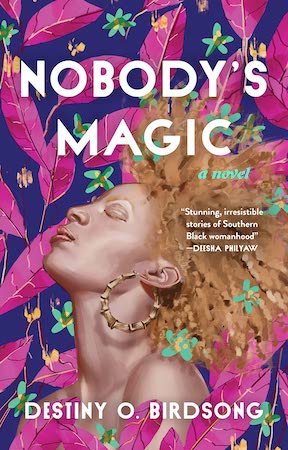
Destiny O. Birdsong’sNobody’s Magic is, despite its title, completely imbued with the stuff. It is a book that transfixes and mesmerizes, so much that you find yourself staying up until the wee hours of the morning so enthralled you can’t put it down.
Birdsong gives us what she likes to call “messy” characters in three interconnected novellas. Each character is on a journey of self-discovery. Suzette is precious to her father. Protected and shielded from a world he forbids her to see, Suzette works to find a vision for herself. When Maple tragically loses her mother, she is forced to find who she is outside of her being her daughter. Academic Agnes must find a way to determine her own fate as opposed to letting a man and the job market do it for her.
Nobody’s Magic is about three Black women with albinism on a journey of personal freedom, but where we, the readers, find them is at that precious moment of precipice, where change is both exhilarating and frightening—where, by the time you see it through, you wonder if maybe there was a little bit of magic involved after all.
Birdsong’s debut poetry collection, Negotiations, published by Tin House in 2020 was longlisted for the 2021 PEN/Voelcker Award. Nobody’s Magic is her first novel but her prose can be found in Catapult, The Paris Review and elsewhere.
I spoke to Birdsong via Zoom and what follows is less of an interview and more of a conversation about AAVE in (capital L) Literature, albinism and good endings.
Tyrese L. Coleman: I’ve been finding that I feel a lot of thankfulness toward Black women writers who are—instead of capitulating to some sort of standard that doesn’t really exist—are writing with their heart what they know.
And it’s funny because I just read, for a podcast called Book Fight,The Coldest Winter Ever by Sista Soulja. And when we were talking about the book, one of the hosts of the show brought up a review of the book when it came out in the mid-late 90s that said her prose was undisciplined. And I was surprised because it didn’t sound undisciplined to me at all. I thought “This sounds actually really meticulous, like she’s really stepping into this voice.”
The way that most Black women writing now—with a certain voice, with a certain articulation of regionality and things like that—what that shift was between someone saying something like Soulja’s work is undisciplined (because you know what they’re talking about) and how now it feels like “this is what they want.” I don’t know. It’s not really a question, but—
Destiny O. Birdsong: You know, I have never thought about that, like when that shift happened. You know, and I think it certainly had to also be socio-political.
It’s interesting that you bring up Sista Soulja. I think maybe an org. had posted a clip of one of her interviews on Instagram. She was so ahead of her time, and I think that she was deeply misunderstood because of that. And I am almost certain that some of that misunderstanding played into the reception of her work. I mean, it may not have been for that particular review, but I do feel like she was just doing and saying things that feel like very much part of the moment now, or we’re not part of the moment when she was doing and saying them.
TLC: It feels like something happened. We always are stuck in the middle between wanting to live up to some literary standard and wanting that critical acclaim, right? Wanting to have that recognition from the white, westernized literary whatever, and then also wanting to stay close to who we are and representing the voices that we hear not only from ourselves, but the people around us that we grew up with, being authentic to that experience.
I feel like we’re somewhere in the middle. Especially when you are writing literary fiction or literary fiction that is about Black folks. Tell me if you agree or disagree, but those folks over there that are like, “literature must sound like this” have started shifting towards where we are instead of us going in the opposite direction.
DOB Yeah, yeah. You know, I’d like to think that they just sort of came to their senses and came to understand that our literature is good, that it’s interesting, that it’s hard to put down. Because that is a response that I’ve gotten from readers and from white readers: “I couldn’t put this down.”
I was a little worried because the first story is in AAVE. I taught literature that was in AAVE, and sometimes my white students were like, “Well, I can’t access it because I don’t like the language. It’s hard for me to read. It’s hard for me to read because I can’t hear it or like, it’s not familiar to me” Or whatever, right?
If the unfamiliarity was the block back then, part of that has changed just because of the co-opting of Black culture. That is no longer a thing. Queer culture too. Like some of the idioms that we often use just sort of on a daily basis. Those are coming from cultures that have now become commercialized, which I think is a good or bad thing, depending on where you stand and how you look at it.
But maybe once those kinds of cultural veils were kind of lifted a little bit, then those readers did start to look at our literature and think, “Oh, like, well, this is also really interesting. And it’s also, yeah, and I think this is really well crafted.” And it’s offering stories beyond like, you know, wealthy family loses money and, you know—
TLC: Man buys a boat—
DOB: Yeah. Maybe that’s it. I think it’s a good shift. I think there’s still more work to be done, but I’m here for it. I’m here for it as a reader and also as a writer.
TLC: Yeah, I am too. I’m happy to see it. It feels fresh and new and exciting.
Maple’s mom in “Bottled Water” says, “You ain’t supposed to find love, you supposed to make love.” I dogeared that page because I feel like that is a central theme in this book for your characters. I feel like she was right. And also, she contradicts herself because I feel like in some ways they all find and make love. So I wanted to ask you how Suzette, Maple and Agnes find and make love for themselves?
DOB: That’s a good question, and I hadn’t thought about that quote being one of the central themes of the book.
You know, I do think I think you’re right that it’s a little bit of both. I think specifically of the end of Suzette’s story. I think that she sort of finds out some truths about their desire for her. But then she also understands that she has autonomy now, right? That she can actually sort of decide what she wants for her life. It’s not going to be easy, but she has this new found sense of agency. And so she is finding love with other people, but also making it.
I think maybe the same is true even for the end of Maple’s story. I think Agnes is a bit more tenuous. Like, it’s not clear what’s going to happen to her. It’s clear that she needs to be where she’s going, but nothing else is clear. I think the characters are unpredictable, so we don’t quite know what Agnes is doing right now.
I think it’s a little bit of both. Maybe it should be that way. I see Black love as world building. From a craft standpoint, I have to build a world in a work where it can exist, if it so chooses, and where the story of that love can exist in ways where it is not always being intruded upon by the white gaze.
I feel my safest when I am around Black people who I know love me, whether it’s romantic or otherwise.
But then also the love itself is world building. I feel my safest when I am around Black people who I know love me, whether it’s romantic or otherwise. And we might not be safe in the meta sense, right? Like we could die at any time. But, while I’m in the presence of that love, I feel endless. I feel like I’m in a world where I have agency, I feel like I’m in a world where I’m protected. I feel like I’m in a world where I can be expressive and that those expressions are not policed or looked askance at or anything like that. So yeah, it’s a little bit of both, making the world and also finding that world and other people.
TLC: One of the things I enjoyed about Nobody’s Magic is that the endings did not feel like endings but they felt—oh, I don’t want to use the word resolved either—ready for the next part of their lives. There’s not really a question around that, but can you talk about that sense of readiness—how these stories end and what made you land there?
DOB: As a poet, I often tell people that the best piece of advice I ever got was from a poet named Chiyuma Elliot. We were in workshop together at Cave Canem, and I was like a baby poet. And I loved these grand finishes like “THIS is what the poem is about,” and, she very lovingly said, “you know, at the end of the poem, you can leave the door open.” That fundamentally changed how I wrote poems and I think when I began writing these stories, I also wanted that.
I think about my characters as real people. So I often wonder what they’re doing right now. But I think just from a creative standpoint that the possibilities for the characters remain endless, even as there’s like resolution at the end of their particular sections.
TLC: But that’s like real life.
DOB: In thinking about them as people in real life, your story doesn’t stop after you get in the car and leave. There are different stages. I like endings that are kind of messy, and sort of open. I love that in poems too.
TLC: But it’s not a low-feeling open. Literary fiction sometimes gets a bad rap for being melancholy. And this is—I don’t know what happens to their characters a hundred percent, but I feel like whatever happens next is going to be OK.
DOB: Yeah, that’s what I wanted. I wanted their stories not to feel neatly resolved, but you have the sense that things were gonna be alright, that they were going to figure it out. I definitely wanted that.
There’s so many things about literary fiction that I chafe against because I do think that some of those things—and I’m actually writing about this right now—some of those things are actually anti-Black and anti-people of color.
I wanted the characters to not try to live up to these impossible standards of virtue and goodness.
There’s this push for so much interiority and these characters who are self-analytical. And I’m just like, “you know, sometimes we learn about who we are in concert with other people.”
And particularly because these characters have albinism and people with albinism both, in sort of the larger cultural narrative, but also within literature itself, have often been seen as on the outskirts of communities, on the periphery. To have these characters be in deep community with the people around them while coming into themselves as they interact with those people, for me, it was really important in terms of representing those characters as Black women with the condition of albinism, but just as Black characters. We learn about who we are communally. And there is self-reflection and all of these things. But for me, some of the richest moments are when the characters are interacting with each other and they are sort of coming into a greater understanding of where they stand in relation to the people around them and the people they love.
TLC: I think what happened when we were colonized is that our ancestors were taught to suppress emotion. The expression of emotion is looked at as a savage thing, an uncivilized thing. And so that’s translated throughout time to our art and things like that and we have always been taught to suppress emotions, suppress your feelings, et cetera, et cetera. And to me, I agree that’s very anti-Black. You know, I don’t have time to be sitting around thinking about my feelings all day long and then carefully describing the furniture in my room.
And, in terms of your comments about albinism, how does that translate among your characters? How does albinism connect your characters not only physically but connect them emotionally?
DOB: I want to go back to what you were saying about the suppression of emotion. If we think of slave narratives or even just more broadly, poetry or literature written by enslaved people, which would include the poetry of Phyllis Wheatley, they had to suppress emotions because they were trying to prove that they were human. I was thinking about Incidents in the Life of A Slave Girl, and that title is polite because those were not incidents. Those were crimes. She could not say that because in many states at the time, you could not commit a crime against property. I think that external white gaze requirement has always been an essential part for successful African American literature. Like, Charles Chestnut was doing it. It’s an intergenerational kind of thing.
I think that actually relates to what I’d like to say about the characters and albinism and how that connects them. Again, I wanted them to be messy? Was I interested in doing the cultural work of introducing readers to characters with albinism who are more complex than the characters I’ve seen? Absolutely. But in the process of doing so, I didn’t want to make them martyrs for the cause. I wanted them to be complex. I wanted them to be trifling. I wanted them to do things that in some cases made you dislike them. I wanted them to be fully fleshed out human beings. You know, like Maple’s sarcasm and when she threatens to push her grandma into the lake. And Agnes’ destruction of property. And even Suzette’s self-absorption in the early pages of her story. I wanted those things to be there because I wanted the characters to not try to live up to these impossible standards of virtue and goodness. And I didn’t want that to be the thing that humanized them. I wanted their regular, trifling selves to be the thing that humanized them. And so I think for me that that’s the connection between them.
Shruti Swamy, who wrote a really great review of the book for The New York Times, said that these are also coming of age stories, even though Agnes is in her mid-30s, I think that also connects them. They have been living lives that in some ways have been really controlled by other people, even Maple, who deeply loves her mother. I think that so much of her identity was attached to this other person, I don’t know that she would have ever been able to fully be herself if that attachment had not been severed. I mean, it’s unfortunate that it was, but it’s also true that I think that the journey she embarks on might not have been one she would have been interested in taking if she didn’t have to. All of them are coming into themselves in some really important ways that will hopefully speak to the balance of their lives and change the balance of their lives for the better. Unfortunate circumstances create those necessities. I feel like that has certainly been true for me in my life.
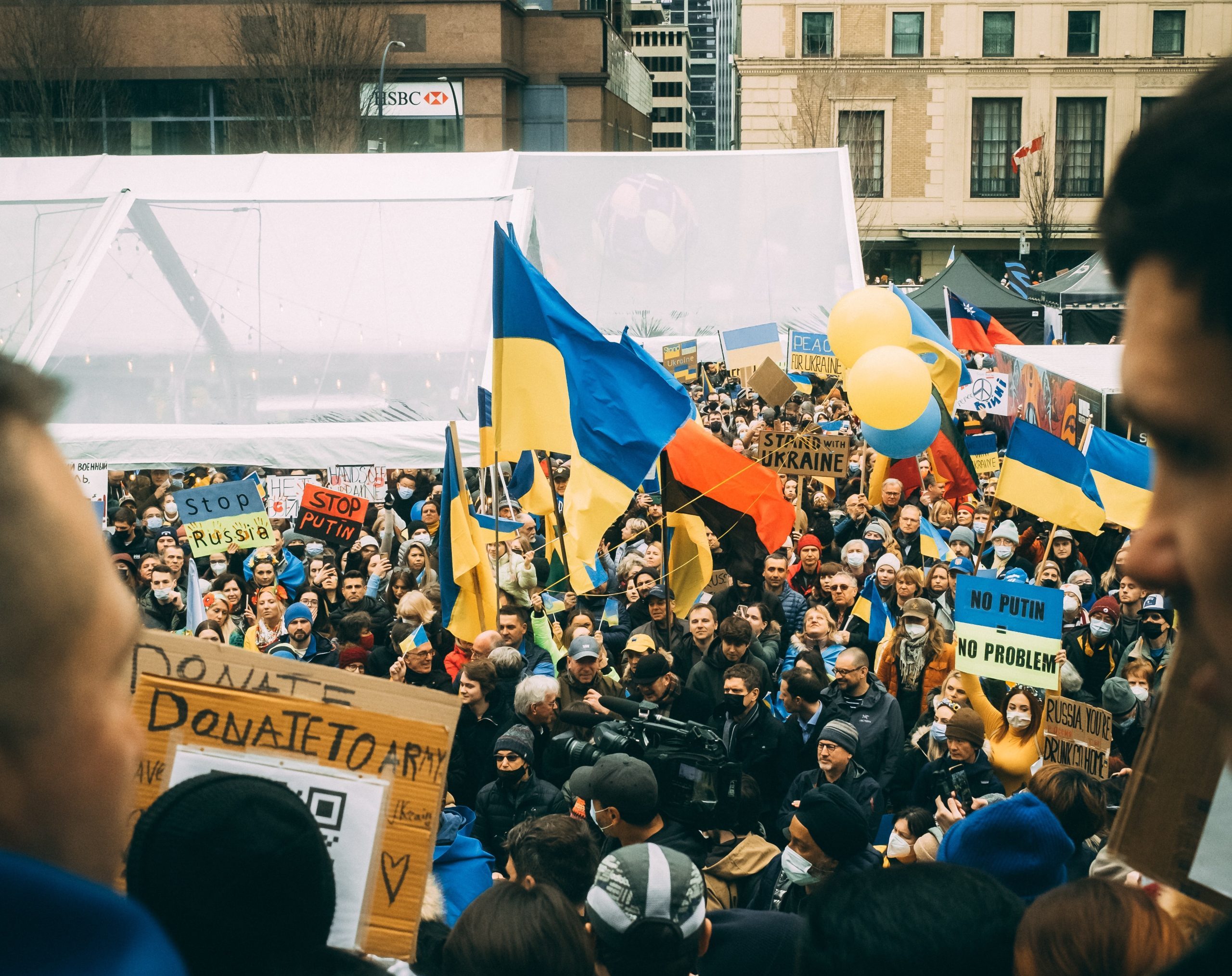
When I was approached to write this article, Ukraine’s battles for sovereignty were in the eastern parts of the country against Russian-backed separatists, where they have been since February 2014. In a few short days since, the Russian troops that had amassed around the border of Ukraine for months invaded the democratic country and initiated air strikes and attacks on Ukrainian forces and civilians—hundreds of lives have already been lost. The Ukrainian president, Volodymyr Zelenskyy has refused to leave the capital of Kyiv, telling the United States government, “I need ammunition, not a ride.”
The world now watches as Ukrainian civilians take up arms alongside their army and hold “cocktail parties” where they make boxes of Molotov cocktails that will be used on Russian forces entering their cities. The mayor of Kyiv, Vitali Klitschko and his brother, Wladimir, two boxing champions, have said they too will take up arms alongside the men and women, young and elderly, who are prepared to defend their homeland.
Ukrainians have long-prepared for this moment. Their rich land has been invaded many times before and their people have suffered innumerable losses for generations. The Ukrainian language and culture has nearly been eradicated at multiple points in their long history, and they’ve been fighting an active war for nearly ten years against a Russian president whose intent is erasure. Today, many people around the world are witnessing for the first time the immeasurable patriotism, loyalty, courage, and grit that makes Ukranians so singular.
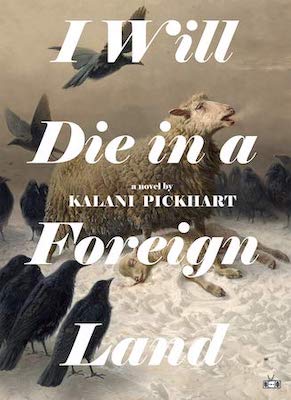
In order to write I Will Die in a Foreign Land compassionately and correctly, I knew I had to become a de-facto scholar in Ukrainian history and culture. I started the first draft in 2016, two years after the Euromaidan protests in Kyiv and the Russian annexation of Crimea and Donbas. I relied heavily on the work of a few dedicated journalists and incredible documentaries. The deeper I went into the story, the more realized I was not going to be able to simply write about the Maidan events—I found I had a responsibility to contextualize Euromaidan and Donbas for an American audience that would be largely unfamiliar with Ukrainian-Russian relations, that Ukraine is a sovereign nation despite once being a part of the USSR, and that Vladimir Putin himself is a tyrant akin to Stalin and not a true representative of the Russian people. It was when I began to dig into the Ukrainian language, literature, art, film, and music that the spirit of the novel, about four individuals whose lives are changed by the Euromaidan protests, emerged. [Editor’s note: Kalani Pickhart will be donating all of her proceeds from I Will Die in a Foreign Land to the Ukrainian Red Cross and ICRC Ukraine.]
There are many lists like this one being shared out there on social media by Ukrainian writers and translators, as well as independent bookstores and booksellers. I encourage interested readers to seek multiple resources. Here, though, are mine:
Grey Beesby Andrey Kurkov, translated by Boris Drayluk
This beautiful, heart-wrenching book follows a beekeeper in the gray zone of Eastern Ukraine, where the war has destroyed most of the village and driven out most residents, except the beekeeper and his frenemy. This is a story about survival, friendship, and the powerful significance of home. A must-read to understand life in Crimea and Eastern Ukraine.
“To understand the trends underlying current events in Ukraine and their impact on the world, one has to examine their roots.”
In The Gates of Europe, Harvard professor Plokhy gives a comprehensive history of Ukraine, starting in 45,000 B.C.E and ending in the war in Donbas, that highlights the long battle for sovereignty and identity. Complete with maps, a glossary of Ukrainian terms, and a “Who’s Who” section on major historical players, this book is a critical text for understanding Ukraine’s intricate and complex history.
The effects of the 1986 nuclear disaster on Ukrainians and Belarusians cannot be overstated. Alexievich’s Nobel Prize-winning book compiles a tapestry of real accounts from those who were closely affected by the blast. Haunting and gripping, this book provides additional insight into the gritty, survivalist nature of the Ukrainian people.
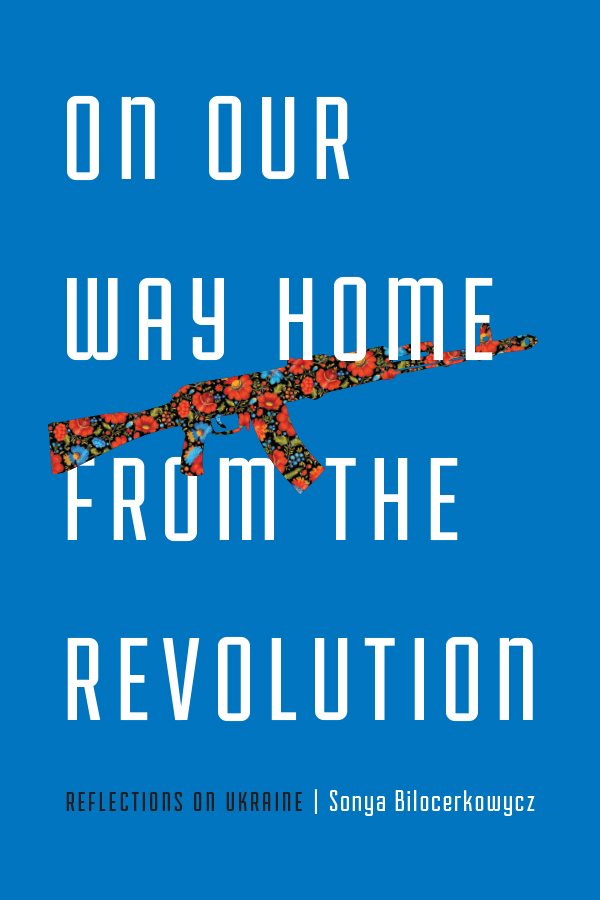
This compelling and affecting essay collection is an honest reckoning: shortly after the Euromaidan protests in Kyiv, Bilocerkowyz returns home to the US.
Patriotism runs in the veins of Bilocerkowyz, the granddaughter of politically active refugees and the daughter of a scholar of Ukrainian dissidents. She moves to Lviv in 2013 to teach at a university, but also to bear witness to the revolution and to gain a deeper insight into an ancestral history defined by oppression. Through these intimate reflections, Bilocerkowicz interweaves post-Soviet narratives and family mythology, creating a tapestry of interconnected essays that illuminate the complexity and responsibility of being a child of the Ukrainian diaspora. A tender and fearless read.
Pulitzer Prize-winner Anne Applebaum is one of the foremost writers and political commentators on the influence of Russian and Eastern European politics in the United States and Western Europe. Red Famine takes readers inside what Ukrainians call the Holodomor, a genocidal, man-made famine that ultimately killed 5 million people. The famine was implemented by Josef Stalin shortly before WWII in order to eliminate the rise of Ukrainian uprisings and identity. A must-read for those seeking to understand the deeply embedded generational distrust and trauma of Ukrainians against the Russian government.
This list or any list concerning Ukrainian literature would not be complete without Serhiy Zhadan, a prolific poet, novelist, and philanthropist. A finalist for the PEN America 2021 Translation Award, A New Orthography is a powerful portrait of Ukrainian citizens during wartime, and speaks directly to this current moment and the national psyche:
“Eastern Ukraine, the end of the second millennium.
The world is brimming with music and fire.
In the darkness flying fish and singing animals give voice.
In the meantime, almost everyone who got married then has died.
In the meantime, the parents of people my age have died.
In the meantime, most heroes have died.”
Composed of selections from Zhadan’s earlier books as well as stand-alone pieces, all from 2016 to 2020, the poems grapple with the perilous future of Ukraine and the destruction that has transformed both the people and the land itself:
“Let’s start with what’s most difficult—with singing
Perhaps lesser-known than Zabuzhko’s monumental feminist manifesto, Fieldwork in Ukrainian Sex, The Museum of Abandoned Secrets takes its readers through 60 years of Ukrainian history, interweaving the stories of three women: Daryna, a modern-day journalist, Vlada, her artist best friend who dies tragically under suspicious circumstances, and Olena, an insurgency soldier in an old post-WWII photograph Daryna discovers. A lyrical tome that slips into stream-of-consciousness, this 700-page novel may not be for the casual reader, but it is absolutely one of the most rewarding and incredible books I’ve ever read.
This translation of Shevchenko’s poetry is the go-to concerning the Ukrainian national hero. An artist, political figure, folklorist, and ethnographer, Shevchenko is memorialized around the world as the father of modern Ukrainian literature and language. He spent many years in exile for criticizing the Russian Empire through his works, and continued to write despite multiple arrests. Shevchenko was originally buried in St. Petersburg, but his remains were eventually transferred to Ukraine where he was buried near the Dnipro River—a wish he expressed in his poem Zapovit (“My Testament”). For readers interested in getting to the heart of Ukrainian literature, reading Shevchenko is a necessity.
Remember when Trump got elected and people started buying all the copies of 1984? It was like that, apparently, for Emily St. John Mandel in 2020 when the COVID-19 pandemic hit and her 2014 post-apocalypse novel Station Eleven started once again flying off the shelves. The book isabout a flu-like virus that kills almost everyone on earth, and a troupe of actors playing Shakespeare to scattered settlements in the aftermath. Six years after Station Eleven was published, its author suddenly found herself comforting her fans about a deadly virus in real time. “If it helps,” Mandel tweeted kindly to one sleepless reader, “as alarming as this moment is, I remain certain that this isn’t going to end with a traveling Shakespearean theatre company traversing the wasteland of the post-apocalypse.”
Her reader tweeted back: “That’s the part I was looking forward to.”
Hope. That’s what HBO tells me its new Station Eleven adaptation is all about: “an apocalypse that just might make you feel good,” in 10 episodes that cross the end of one pandemic year, and the beginning of yet another one. But what does it mean to look forward to an apocalypse? What does it mean to feel good about the end of the world?
The word “apocalypse” in the vernacular of early 2000s American pop culture means ending: end of civilization, end of ethics. It means grizzled men with no feelings aside from paternalism and revenge shooting their way through hordes of zombie cannibals. It means surviving, whatever it takes. The apocalypse-as-ending fantasy looks forward to a world in which any violence is justified by the fear of one’s own end. Some Americans already live there—are quite comfortable in the world of stand-your-ground defense laws against the nebulous threat posed by Black teenagers walking home with candy in their hands.
That’s the apocalypse Station Eleven inherits. Still, the root of the word, as I’ve often been reminded these last two years, is not “end” but “unveiling.” Sometimes when we talk about apocalypse what we’re looking forward to is the idea that there’s something different on the other side. “It [the pandemic] is a portal,” Arhundati Roy wrote in a ubiquitous-at-the-time essay from April 2020, “a gateway between one world and the next. We can choose to walk through it, dragging the carcasses of our prejudice and hatred and dead ideas …. Or we can walk through lightly, with little luggage, ready to imagine another world.”
The apocalypse-as-ending fantasy looks forward to a world in which any violence is justified by the fear of one’s own end.
It’s that second kind of apocalypse that reviewers and readers saw in Station Eleven back in 2014. “Unlike most postapocalyptic works, it leaves us not fearful for the end of the world but appreciative of the grace of everyday existence,” wrote Anthony Domestico in TheSan Francisco Chronicle. The gracefulness of the novel begins with the type of apocalypse it imagines. Quick, and relatively painless, without fallout or flattened cities, the novel’s agent of the end is “the Georgia Flu.” It kills 99% of the people who contract it. Mandel describes it as “like a neutron bomb,” but the effect is much less disruptive. Within a few weeks, the world is simply emptied out. Think of it: there would be 80,000 people left in New York City. No one would ever have to stand in line again. Remember how the skies cleared two weeks into quarantine? Remember the animals dancing in the empty streets, and how we thought we caught a glimpse of the world freed from the pressure of our existence? #Wearethevirus started circulating in my leftwing Instagram feed. Indigenous activists pushed back: not all humans are equally responsible for the poisoning of earth. Who is this “We” you’re talking about?
In most fictional apocalypses, the survivors are the most competent, the smartest, the best prepared. In the real world it comes down to infrastructure, power, and urban planning. Take, for example, that neutron bomb Mandel mentions as a comparison for Station Eleven’s Georgia Flu. In the almost-apocalypse of the Cold War, Russian nuclear missiles were trained on American cities. As Dean MacCannell wrote back in 1984, that was one reason urban planners started building suburbs, and white people with the means started moving away. Black farmers, undermined by racist USDA policy, lost their farms, but the new suburban neighborhoods were closed to them. These new communities were often governed by tacit or explicit restrictions on race. As MacCannell puts it, “Every reflex is to keep the big city black.”
In most fictional apocalypses, the survivors are the most competent, the smartest, the best prepared.
In her book Infrastructures of Apocalypse, Jessica Hurley notes that at this same time, the federal government pulled funding from cities and spent instead on building more bombs. Cities started to crumble from within. Urban blight led to white flight until major cities such as Philadelphia were majority-Black in a country where Black Americans made up 12% of the population. Who else lived in cities in the 80s? Most Indigenous people, relocated to cities after U.S. “termination” policy ended land trust programs in the 1950s, mentally disabled folks kicked out of institutions the government wanted to close, trans people, immigrants, and queers. Futurelessness was a stark almost-reality: Historian Manning Marable writes that had Russia set off its nuclear bombs in 1984, more than 80% of Black Americans in the whole wide world would have been dead before the sound waves hit the suburbs. So much for luck. So much for being prepared.
“It’s a story where civilization collapses, but our humanity persists,” Mandel said about her novel. Shakespeare makes it. So do newspapers. So does classical music, a little bit of jazz, high-heeled shoes, corporate reports, celebrity gossip magazines, and the speeches of Abraham Lincoln. The novel’s main cultural curators are both old white men. There’s Clark, a gay corporate consultant who curates “the Museum of Civilization at the Severn City Airport,” deciding which objects to preserve from the past. Then there’s Dieter, the senior actor in the Traveling Symphony, who claims the troupe only plays Shakespeare because “people want what’s best about the world.” Over and over again the novel tries to make white wealthy culture feel universal, with extended reveries about what humanity has lost: “almost everything, almost everyone.” Yet even those eulogies betray their singular perspective. “No more diving into pools of chlorinated water lit green from below … no more fire departments, no more police. No more road maintenance or garbage pickup.” It’s a book that aims to speak to our shared humanity, but its perspective is only ever that of people who swim in backyard pools, who trust the cops, whose water flows lead-free through well-maintained municipal pipes.
In the novel’s most explicit moments of erasure, the book’s two disabled characters quietly exit, each preferring to die rather than burden other survivors.
Everyone else’s culture is, more or less, erased. It’s not that queer, Black, Brown, and disabled people aren’t in this novel at all, it’s just that they’re either supporting the imperative of dominant culture’s survival or they’re neatly put back in their box. In one scene, we meet the novel’s only Black male character, a guy with cornrows whose wife has been shot. All we learn about this man is that he works in the fields of a Virginian plantation. Even Clark—the book’s one explicitly gay character—makes it all the way through the end times and into his museum only, apparently, to never have sex again. The novel is full of characters who are described with black skin or Arabic or Korean names, but as games studies scholar TreaAndrea Russworm has noted is common in post-apocalypses created by white folks, none of them seem aware of their own race. In the novel’s most explicit moments of erasure, the book’s two disabled characters quietly exit, each preferring to die rather than burden other survivors. It’s the classic bait and switch of white supremacy to tell us that on balance, losing everyone, losing everything else to apocalypse is a fair price to pay for what’s “best” about the world.
“What I was really interested in writing about was what’s the new culture and the new world that begins to emerge?” Mandel told NPR. But in this most graceful of apocalyptic tales, the new world we end up with is an unsullied reflection of the dominant culture of the old. Twenty years pass, newspapers re-emerge, and Clark collects a copy of the New Petoskey News. Sitting there in the museum with the first post-pandemic paper in his hands, he remembers the experience of sunrise seen from an airplane back when those existed: “there was a moment in the flight when the rising sunlight spread from east to west … and although of course he knew … that it was always night and always morning somewhere on earth, in those moments he’d harbored a secret pleasure in the thought that the world was waking up.” Not everything was lost, not everyone. As culture re-emerges after the pandemic, an old white guy gets to re-experience the glorious sensation of seeming to be at the center of the world.
How do we get to a future that is hard for us to imagine?
And yet, in spite of everything, marginalized people do survive. Plenty of viewers and readers dislike that fact when they encounter it in fiction. As a one-star review of HBO’s queerer, browner, blacker, adaptation of Station Eleven put it, “none of these characters seem like they would survive a pandemic.” And yet this strategy of persisting in spite of every form that genocide takes is an old one for people whose futures white cis patriarchal culture views as collateral. “There Are Black People in the Future,” read a billboard by Pittsburgh artist Alisha B. Wormsley, part of her project called Shaping the Past. The neighborhood around the billboard gentrified until finally developers had the phrase wiped out to make way for their new condo frontier. In the rest of Shaping the Past, “There are Black People in the Future” is printed on other objects: railroad spikes, crumpled Newport packs, tea cups, crosses, cassette tapes, and empty bags of sunflower seeds. In many ways Shaping the Past feels like a parallel project to the novel Station Eleven. Created around the same time, its collections of objects do some of the same things as Mandel’s lists of the lost comforts of a much-reduced white upper class. Wormsley, too, gestures towards both apocalypse and eulogy, but her phrase revives. There always have been, there always will be. There are real stories of escape, of care, of hiding, waiting, fighting, compromise, and grief behind this persistence, which that reviewer does not want to understand.
“It is a portal,” Arhundati Roy wrote in 2020. Since then, so much has changed. I don’t mean everything, and I don’t mean nearly enough. But I wanted to see what Station Eleven had to say for itself 8 years after its publication, after the election of Trump, Hurricane Maria, COVID-19, a flowering of mutual aid, so many dead, and the uprisings after the murders of George Floyd and Breonna Taylor. I wanted to see if the HBO series would still try to defend the book’s “realistic” apocalypse, in which nothing but whiteness is imagined to survive.
The HBO adaptation starts out with an essential worker walking off the job. A supermarket cashier in a Santa hat, tipped off about the virus by our hero Jeevan Chaudhury, walks right out the sliding doors and goes home. In many ways, the series Station Eleven is at the tip of what will certainly be a tidal wave of art to come out of the pandemic. It’s far from perfect, but right from the start, it’s filled with lessons learned. The moment I begin to build some trust in the series’ vision of the future, though, is when we meet the series’ August. In the book, August is a white, cis, violin-playing Trekkie poet. In the show, he’s played by Prince Amponsah—a Ghanaian-Canadian actor who lost both his forearms in a house fire in 2012. The sight of a Black, disabled actor living his life, using his arms, laughing with his chosen family, told me right away that this is an entirely different future than the one that the novel is able to imagine.
Differences multiply from there, and while some of them might be chalked up to a greater appetite for diversity among HBO’s viewership, others deeply change the significance of the story. For starters, the novel’s central text, the comic book Station Eleven,is written by a Black woman—meaning that this version centers an artifact of Black art passing on into the future in this world. The Chaudhury brothers speak Hindi together. Their sibling family, two brothers, a lost sister, an impromptu white kid, parents missing or dead, offer an echo of the series’ later explorations of alternative family in the forms of a jerry-rigged maternity ward, a band of feral kids called the Undersea, and the queer as fuck Traveling Symphony, less of a wagon train now, and more of an arts loft party on wheels that rolls into town with a marching band playing Parliament on baritone horn. Tellingly, too, the Museum of Civilization is no longer a bastion of hope and memory. It’s a sinister, cloistered community led by an autocratic triumvirate of patriarch, matriarch, and cop. This is a fact that points to how the whole weight of the series has shifted—from a book about how art can bridge the rifts that crisis tears in time, repairing the white Western culture that it claims was our world’s “best,” to a series about the need for rupture, if we are to leave a murderous and fearful past behind.
How do we get to a future that is hard for us to imagine? Changed as it is, the new Station Eleven doesn’t have any answers for that. It does have questions. At the end of the series, our new old, white autocratic Clark watches the Undersea leaving the Museum of Civilization, scattering across the fields beyond the Severn City Airport runway. Hundreds of children he never even knew were there. His question is, “What the fuck?” and it’s the last line he gets in the show. The most interesting thing about this moment is that we don’t know any better than Clark how to make sense of the Undersea. They’ve never been satisfactorily explained. What the fuck are these children? Are they sinister little terrorists? Where are they going? Where did they get those silly hats? Clark’s WTF directs our attention to everything we don’t understand about the needs, configurations, and solutions the future may find for itself. That’s the part I’m looking forward to, and here it is: everything I can’t yet know about how we will survive.
The train is lost. Halted in the middle of a grassland, it seems no one knows where we are. Ma says the clouds have shot the sun so it’s hard to tell the time of the day or the direction. I gaze at the string of rail cars disappearing into the horizon as if searching for their beginning. Ma raises the glass window, coal and sand on the sill. Papa’s standing outside on a grass patch next to our coach, the smoke from his cigarette blurring his face. Ma flings her hand through her long hair, knots it into a bun, raises a bottle of water to her mouth.

We are back from Ma’s sister wedding, where everyone dressed up and group danced. Papa drank with the men and chewed on roasted cashews and chips. He shrugged a lot as if he didn’t want to upset anyone by having an opinion. Uncle and aunts who resembled Ma and who didn’t patted me on my head–oh how tall you are now, or we saw you when you were a baby or what grade are you in, beta?

I want to grow up beautiful and gloomy like Ma. Everyone pays attention to you when you are lost in your world. At home, Papa keeps following Ma, and she goes about her day like it’s nothing. I watch the water disappear in the tunnel of her neck, the fake pearl necklace (because we’re traveling on a train) shifting on the edge of her collarbone.

A hawker comes by with packets of biscuits and cold drinks. Perhaps he got on the train at the last station. Ma signals him to go away but he stays for a few seconds, a cola bottle condensing in the grip of his fingers. Ma shakes my shoulder and I immediately regret staring at the cold drink. She has this way of looking at me that I feel I must apologize for wanting. In distance the clouds are shape shifting. Switchblade light and sound explosions. A few seats away, a little girl keeps bubbling her saliva.

Outside, the light dims quick like fast forwarding a movie. Mostly I’m waiting for the train to move, the first push that will startle me so my fear of being stuck here forever remains unspoken the way Ma doesn’t talk about the names she picked for the baby who didn’t live. Papa says at idle times like these we leaf through all our failures. I stare at his silhouette in the darkening day, trying to understand what it means. If he’s thinking he should have married someone other than Ma. If he’s forced to love me no matter how careless I am like when I lost the LED from his circuit board or spilled ink on his research paper. Ma peels an orange, its rinds curled at the edges. Her fingers tug the white strands from the slices, dig the seeds out like a secret. How snug and odd this betrayal–the way things separate from what they’ve known and protected all their life.
In one, the detective is a constant. They march through the mystery at hand, gathering information, forming hypotheses, arriving at conclusions. These detectives are cleanly drawn, with distinctive habits and mannerisms and turns of phrases and sartorial choices, with lines that do not change. They serve the purpose of solving the crime; who they are beyond that doesn’t really matter.
In the second kind of detective story, the detective matters as much as the mystery itself. Arguably more: the mystery matters because it matters to the detective. Part of the delight in reading these stories is getting to know the detective, understanding why solving the mystery is vital to them, and appreciating how they change and grow throughout the narrative.
I grew up reading detective stories of the former category, but when I realized that my debut novel The Verifiers was going to be a murder mystery—albeit one examining the implications of Big Tech, data collection, algorithms and AI for how we make romantic (and other) choices—I knew I wanted my detective to belong to the latter. The sleuth I created, Claudia Lin, is a 25-year-old second-generation Chinese American who rebels against model-minority expectations and hasn’t told her mother she prefers girls (with the result that her mother is perpetually on her case to find a nice Chinese boy). She lucks into a job at a boutique agency called Veracity that helps its clients investigate the truthfulness of potential romantic partners they meet on dating platforms; when a client with an unusual request goes missing, Claudia decides to investigate that as well, and ends up uncovering a maelstrom of intrigue and deceit. Along the way she navigates her complicated family dynamics, finds a fulfilment in the work that she does, and even, maybe, starts to consider the possibility of dating herself.
Below are seven novels I read over the course of writing The Verifiers that feature wildly different detectives—a Cold War spy, an Scottish journalist in the 1980s, and a multiverse traveller, to name a few—all of whom have deeply compelling voices and personal stories. Plus, most of them are series, and so if you enjoy these books, there is more to be had.
Set in Buenos Aires during the Argentine Revolution of 1966, Who is Vera Kelly? follows the eponymous CIA spy—and closeted lesbian—as she wiretaps politicians, infiltrates a Marxist student group, and, once the coup takes place and she finds herself stranded, plans her escape. At the same time, this is as much a coming-of-age story as a spy thriller. The present-day chapters are interspersed with Vera’s backstory: her fraught relationship with her mother, her love for her high school best friend, her prior life in New York City.
There is so much I love about this novel. The quiet, assured elegance of the writing, the descriptions of Buenos Aires and New York City, the subversion of the Cold War spy story; and Vera herself, intelligent, wry and resourceful, at once masterfully self-sufficient and achingly lonely. At the end of it all, the most important mystery is the one suggested by the title, which the reader unravels along with Vera herself as she tries to find her way home.
Detective Elouise “Lou” Norton is a Black LAPD homicide detective whose sister went missing as a teenager. When, years later, the body of another teenage girl is found in the same neighborhood, Lou becomes convinced that the two crimes are linked and that by solving this murder, she can finally learn what happened to her sister. Lou’s voice pulls you along from the very first page: she’s smart and snarky and driven, her observations spot-on and frequently hilarious, someone whose toughness makes her vulnerability even more poignant. Plus, I love how fully Lou’s life is portrayed—she may be focused on solving a crime, but she also has a circle of close friends, a philandering husband to worry about, and colleagues who respect and also challenge her.
All of Tana French’s novels are wonderful psychological studies of her detectives, but The Likeness is my personal favorite. Ex-Dublin Murder Squad detective Cassie Maddox is persuaded to impersonate a murder victim, Lexi Madison, to whom she bears an uncanny resemblance (and who in fact was living under one of Cassie’s aliases from an earlier undercover assignment). She moves into the house where the victim lived with her four housemates, who are now suspects in the murder, and gradually the boundaries between her life as Cassie Maddox and as Lexi Madison begin to blur. The premise is completely outrageous but French pulls it off, in my opinion, because of how compelling Cassie is as a character: she is in deep, and we as the reader are right there with her.
Paddy Meehan is a teenage copygirl at the Scottish Daily News in Glasgow circa 1981 who desperately wants to be a journalist and to have a bigger life than what her tight-knit working-class Roman Catholic community expects of her, which is to get married and start raising children. When the newspaper publishes an article about one of the suspects in the brutal murder of a toddler, who is her fiancé’s young cousin, Paddy’s family and community shun her, believing that she betrayed them to advance her career. This impels Paddy to start investigating herself, and she becomes increasingly convinced that the police are on the wrong track.
Field of Blood is the only book on this list to be written in the third person, which creates a bit more distance between the reader and Paddy as the primary narrator (and allows for other occasional viewpoints), but Paddy emerges, in all her insecurities and recklessness and longing for things she is aware she’s not supposed to want, as a most vivid character.
Sherlock Holmes as a female scholar (abrasive still, because it wouldn’t be Holmes otherwise) and John Watson as an ex-military transport mindship with PTSD called The Shadow’s Child, reluctantly teaming up to solve a murder in a Confucian galactic empire inspired by Vietnamese culture: need I say more. This novella is an inspired recasting of the Holmes-and-Watson pair, but one centred by The Shadow’s Child’s efforts to come to terms with its past and finally move beyond it.
As a writer who gets pretty attached to her characters, I have to admire how Steph Cha destroys her amateur-detective protagonist’s life over the course of a few days. Juniper Song, self-described “half-employed twentysomething”, has been adrift since tragedy befell her younger sister while Song was away at college, for which Song holds herself to some extent responsible. Now she lives in Los Angeles, where she grew up, reads Raymond Chandler novels (she’s obsessed with Philip Marlowe), and hangs out with Diego and Luke, her two best friends from college. Then Luke asks her to investigate whether his father is having an affair, as Luke suspects, and Song’s life turns into its own noir novel—a fact she notes more than once—complete with dead bodies in car trunks, threats from menacing strangers, femme fatales, and once again losing those closest to her.
Song is a second-generation Korean American, and the passages describing her upbringing and her family—as well as what it’s like to move through America as a young Asian woman—are among the most affecting in the novel.
I had to find a way to shoehorn this book in, which was one of my favorite reads of 2021. In The Space Between Worlds, humans have cracked multiverse travel, but you can only visit a world if the version of you on that world is no longer alive. This means that the poorer and/or less privileged you are, the more valued you are as a traverser, someone who moves between worlds to collect data—and that makes Cara, who is only alive in nine of 381 identified worlds, the perfect traverser.
There’s a bona fide murder mystery: one of Cara’s eight remaining doppelgängers dies under mysterious circumstances, and Cara has to figure out what happened (which, needless to say, blows up into something far bigger than she ever imagined). But Cara herself is just as much of a mystery, because the Cara who is our narrator is in fact an imposter—she’s Cara from another world, who took the place of this world’s Cara when the latter died during her first traversing assignment. The ways that Micaiah Johnson deploys that setup to inform and surprise the reader—and Cara, as she learns the truth about her own past and her relationships on this world—are deeply satisfying.
Picture a romance novel. Are there heaving bosoms and swaggering poses? Is the word “trashy” one of the first to pop into your mind? If so, your stereotypes are decades out of date. Recent years have seen a marked shift away from shirtless ab shots and “clinch covers” that feature a passionate embrace toward bright, flirty graphics. Modern romance covers are opting for graphic illustration in a bid to outrun the sexist stigma that has dogged the genre since its inception and repackage the books for new audiences. This evolution reflects changes within the genre and broader attitudes toward it as well.
Romance cover art first took off with the increased availability of cheap mass market paperbacks after World War II. The popularity of pulp fiction influenced dramatic covers that often carried, at best, tenuous connections to the plot within a book. Through the 1970s, a “chocolate box pretty” style predominated, favoring distant, longing gazes rather than overt lust. A few groundbreaking clinch covers heralded a shift into the Baroque 1980s, along with a cult of popularity surrounding male cover models like Fabio. Ripped abs and ripped bodices abounded in lush, turbulent scenes that cover artists typically painted from photographs. This fantastical style evolved into the rococo 90s: a softer, dreamier version of the painterly scenes. By the 2000s, digital artwork had transformed the landscape and photography, with its promise of edits and filters, and became accepted as a method of projecting romantic fantasy on covers.
Ripped abs and ripped bodices abounded in lush, turbulent scenes that cover artists typically painted from photographs.
Since then, the market has cycled through various trends in an ever-shorter cycle. “Romance reinvents itself every five years,” says Jeanne DeVita, a writer, editor, and founder of the Romance Academy. While covers continue to vary by subgenre, graphic illustration reigns supreme in contemporary romance, with flat, iconic designs that tend to convey “cute” rather than steamy. “I don’t think I could find a trade paperback that actually has [photorealistic] people on it right now,” DeVita says.Larger-format trade paperbacks also lend romance novels more weight—both literal and figurative—than mass market volumes.
A sampling of recent books like The Heart Principle, The Worst Best Man, or Love Her or Lose Herproves DeVita’s point: each features a playful, graphic illustrated cover with visual cues to the book’s characters and plot. While they convey romantic tension, no one’s clothes are being ripped off. Or take the cover of The Roommate, which is fairly sedate for such a hot book. The main characters are seated separately on a couch, the neon title font the only nod to one of the main character’s work in the porn industry.
“A cover’s job is to make someone pick up the book and [want to] figure out what it’s about,” explains Colleen Reinhart, Associate Art Director at Penguin Random House and designer of The Roommate’s cover. The challenge for designers is to communicate the conventions of romance while also standing out from the rest of the shelf—hence the trend toward vivid colors and plot-related illustrations that convey details without customers even having to read the jacket copy.
Playful illustrated covers don’t always make it obvious that explicit sex scenes could be in store. “Because they can look very fun and young, they sometimes can look innocent. I’ve had friends of mine read books that I’ve done the cover [for] and have been surprised that they’ve been so steamy,” Reinhart says.
Leaning toward an aesthetic that’s more lukewarm than sizzling is one way that contemporary illustration has captured converts to the genre.
Leaning toward an aesthetic that’s more lukewarm than sizzling is one way that contemporary illustration has captured converts to the genre, seducing modern readers by removing the embarrassment of being seen reading something obviously titillating. As artist Nicole Linh Anderson wrote in a 2020 edition of her newsletter: “I would rather be caught dead than to be seen toting around a paperback copy of The Duke and I on my lunch break at my entirely male workplace.”
Close to half of the respondents of a 2014 survey of romance readers said they disliked traditional romance covers, finding them “cheesy” or “embarrassing,” and only 13% said that they had never hidden a novel. The expanded use of step-backs in the 1990s—covers with a demure top layer that cover the overtly romantic or sexual imagery of the page below—and the launch of e-readers in the 2000s were saving graces for many who prefer to keep their reading material to themselves. But there are counterpoints, too: “I don’t care if people see me reading romance,” says author Talia Hibbert.
Changing the look of the book is, perhaps, an imperfect solution to the larger problem of societal judgment of female desire. According to the Romance Writers of America, 82% of the billion-dollar industry’s readers are women. “It’s one of the few industries that feels very women-focused … both the creators and audience are [primarily] women,” says Reinhart. But sexist attitudes have meant that it is often denigrated and dismissed precisely because is seen as a ‘women’s genre.'”
“The stigma has been … lessened by using the illustrated covers,” Cindy Hwang, Berkley VP and Editorial Director says. But “I think there are still certain attitudes towards romance that will be very hard to eradicate completely.”
“I think we still really fight that perception publicly that romance is ‘trash’ or ‘mommy porn,’ that there isn’t great writing … and wonderful stories, and really diverse life experiences,” DeVita says. Non-romance readers who judge the genre based on over-the-top covers, she says, miss out on the “humor and heart and community in romance.”
Covers are integral to how these stories are perceived. “Covers are marketing, and covers have to do a lot more work to do in a very crowded market,” says Sarah Wendell of the romance website Smart Bitches, Trashy Books. Canny marketers recognize that books are status objects, part of how readers present their tastes and identities online as well as on shelves. “There’s a new generation of readers who are so acutely aware of social media and how to use it, and illustrated covers just scream ‘photo op,’” adds bookseller Amanda Diehl of Belmont Books in Massachusetts. “The illustrated cover is more covert in saying, ‘This is a romance, maybe even a really sexy one!’”
Leah Koch, owner of The Ripped Bodice bookshop in Los Angeles (where I previously worked as a bookseller) says that illustration often “makes [romance books] more respectable to people who are not traditional fans of the genre.” She finds that particularly “cutesy” illustrations can be “infantilizing” or “come off as very, very PG,” toning down and perhaps missing opportunities to celebrate the genre’s innate sexiness.
Enticing new readers without conceding to sexist disdain about depictions of women’s desire is a difficult proposition. “Tricking people is changing attitudes. Because I think some people are only going to understand if they give the genre a chance,” Hibbert says. “The purist in me might be deeply offended by that approach, but there are some upsides … this newfound diversity in the range of cover options has made it so that queer romance novels, for example, can have much more interesting and maybe more accurate covers.”
Published romance is still overwhelmingly straight and white: The Ripped Bodice’s most recent industry diversity report showed that only 12% of books published by major imprints in 2020 were by authors of color. But illustration offers more opportunities to reinforce that thin, white, and heterosexual is not the only look of love.
Illustration offers more opportunities to reinforce that thin, white, and heterosexual is not the only look of love.
Hibbert is happy with the illustrated covers Avon designed for her Brown Sisters series, which depict her main characters as described, with diverse bodies and backgrounds. For her prior self-published books, Hibbert says she struggled to find accurate and representative stock photography. Illustration allows for a broader representation than can usually be found in stock imagery, as it is limited only by the imagination rather than the boundaries of historical privilege. “Illustrated covers are the answer to a lot of our prayers,” says DeVita, because they can challenge entrenched marginalization and accelerate inclusive depictions of all kinds of characters. After decades of offensively exoticizing covers, for example (see the entire “sheik” oeuvre), the illustrated cover of Ayesha At Last features the strong profile of a hijabi heroine—as do its contents.
In addition to their broader visual appeal, covers also reflect changes within the pages of romance. Historical romance covers have trended toward strong solo figures, but the illustration craze has penetrated the subgenre on covers like To Love and To Loathe. Both kinds of covers indicate a textual shift in which increasingly modern values about gender and racial equality are translated into what is most often a vaguely Regency past (perfectly encapsulated by the podcast Heaving Bosoms as “England-times”). Now in both historical and contemporary romances, “pop feminism is part of the foreplay,” says Linh Anderson. Because in our times, she says, “there is nothing hotter than a ripped white man quietly absorbing an extremely rudimentary explanation about racial justice.”
Rita Frangie, Senior Director of Art and Design for Berkley, thinks that the way covers are “evolving and changing” will help tackle the stigma and marginalization that have hindered romance as designers take into consideration modern mores, relationships, and diversity. “I think more representation is being done and that’s probably one of the allures, how people are more open to romance these days,” she says.
The popularity of the Netflix show Bridgerton, based on Julia Quinn’s hit romance series, has also proved the prestige that a mainstream streaming platform can confer. Straight male colleagues who wouldn’t be caught dead reading a romance novel have unblushingly admitted to enjoying the show. New covers for the books were also rolled out after the series’ release featuring torso photography that straddles the needs of screen-driven realism (by alluding to the characters in the show) and fantasy projection (by not showing faces, so readers can imagine their own). No illustration necessary.
Straight male colleagues who wouldn’t be caught dead reading a romance novel have unblushingly admitted to enjoying the show.
“Our primary goal now is not to let people assume that [things like Bridgerton] are isolated events, because the leadership and the respect has always been there, and to keep on pushing forward,” says Hwang.
In many ways, the illustration trend is helping to open up romance, allowing for greater representations of diversity and encouraging broader acceptance of the genre despite sexist stigma. But covers cannot solve pervasive problems; they simply visualize them and make them comprehensible. Covers will continue to evolve as attitudes do, using new techniques to attract readers to the world of romantic storytelling and welcome those already in the know.
“The language of [covers] has changed,” Wendell says, “but the goal is the same: to tell a potential reader, ‘This book contains happiness, so come on over and take a closer look.’”
DON’T MISS OUT
Sign up for our newsletter to get submission announcements and stay on top of our best work.
YOUR INBOX IS LIT
Enjoy strange, diverting work from The Commuter on Mondays, absorbing fiction from Recommended Reading on Wednesdays, and a roundup of our best work of the week on Fridays. Personalize your subscription preferences here.