No One Knows if Joan is Okay

Weike Wang’s witty, moving new novel tells the story of Joan, a thirtysomething ICU doctor. The daughter of Chinese immigrants who have since returned to China, Joan is not only incredibly good at her job—she loves it, finding a deep sense of purpose in the long hours, grueling shifts, and day-to-day routine of her busy New York City hospital, despite her family’s attempts to shape her to their own expectations and worries that she is overworking herself. 
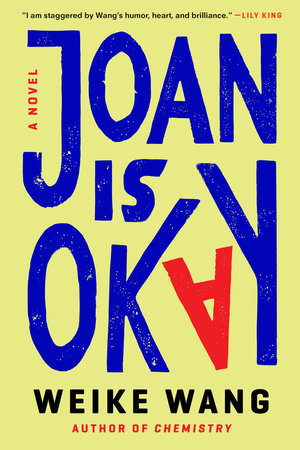
Joan Is Okay by Weike Wang

When Joan’s father suddenly dies and her mother returns to America, Joan is shaken out of her comfort zone as she reckons with the sacrifices that her parents have made for her and her brother, the cost of migration, and the unbridgeable gulfs between families. Into this mix comes Mark, an overbearing white neighbor whose cast-off belongings begin finding their way into Joan’s apartment as he offers her unsolicited advice and recommendations. Joan wonders how to live life on her own terms and grapples with her unresolved grief, just as her hospital, her city, and the world are upended by the COVID-19 pandemic. 

I spoke with Weike Wang over Zoom during the last days of 2021. We discussed the origins of Joan Is Okay, gendered double standards in the sciences and in the humanities, misconceptions around the model minority myth, and the drive to feel useful. 


Gina Chung: How did you decide to incorporate the pandemic into Joan Is Okay?  

Weike Wang: I had been writing a failed novel right at the end of Chemistry. It was about two friends, and I was tracking their trajectory from college onward. I was having a lot of trouble with the book, until one of the characters started to interest me a little bit more, and this character eventually morphed into Joan. I found that I was more interested in this doctor figure and thinking about the forces that created her. I just knew so many of these characters in real life. I came from a pretty intense STEM background; most of my friends are attendings now. 

I had finished the novel in February 2020. Then obviously, stuff hit the fan, and my editor was like, “We have to have a discussion about this, and how you’d incorporate present-day events.” Given that I had created Joan as a pulmonary specialist, it just seemed like either a missed opportunity or like I would be making an intentional choice to exclude it, and I didn’t know if I wanted to do that. Realistically, it would make sense that she is engaged in this situation. 

GC: While working on the book, did you learn anything about how doctors and nurses were coping with the pandemic that surprised you? 

WW: It depends on how the person approaches medicine. If they approach medicine like a job, they’re almost clinically detached from it, because you have to be. My aunt’s a nurse, and she was dealing with some of this. Nurses are just more hands-on. They have to be there all the time. They’re seeing a lot of things that doctors don’t see. I imagine the burnout comes from physician assistants, nurse practitioners, nurses, residents, who are there doing the grunt work of what the doctors assign. But the actual attendings themselves are probably just trying to organize everything. 

And then I had friends where their calling is medicine, so they just wanted to be on the frontlines. They really, really wanted to prove themselves. So I also saw some of that as well, this desire to be there because your utility cannot be denied. You are irrefutably useful, and that must be a good feeling. As a writer, I’m totally useless, in many ways. But to be totally useful, that’s somewhat of an ego-boosting feeling, and I think some people do enjoy that. 

GC: Why do you think no one else in the book believes that Joan is mostly content with her life?

WW: I think when you make certain choices that other people wouldn’t make, there’s a sense of projection. One of the things about Joan is that she is so taken with medical training, and she’s so willing to be edited down at work, to be the most efficient worker that she can be. And that’s taken a lot of her personhood, and that’s true—when you go into medicine, you’re told you’re going to be standardized. She’s very good at that, and I think in doing that, she just closes the door to so much of her other choices. I think her neighbors, her coworkers, and certainly her family have this mantra of “You could have it all,” and as a result, be this “fuller person,” instead of maybe a person that’s pulled in multiple directions.

Joan has this admirable focus. She’s able to focus for a very long period of time, and be okay with it, whereas others, I think, can’t see themselves being happy with that choice and so assume that she must not be and say, “You must be like this because it was forced upon you, or because society told you that you had to be a model minority, or because of some terrible trauma.” I was trying to play with that a little bit, obviously playing with the cliches and tropes, but also playing with a character who could lean into this in a baffling way that could create some absurdism. 

GC: A lot of the characters surrounding Joan are preoccupied with appearances. Her brother Fang and his wife Tami are very focused on the trappings of material success, while her neighbor Mark is obsessed with consuming the right kinds of media, having the right furniture, etc. What do you think that indicates about their worldviews, versus Joan’s?

WW: Joan needs rules. She loves the ICU because she has total control over this very, very small area of space, and that’s really all she needs. As long as she has control there, she doesn’t need to impose her will on everyone else. I think I wrote these characters because I’m also exploring this: why do some people have this deep desire to push their own sets of standards onto you? With the family, I get it, because you’re related. Fang is also older, so there’s this sense of “I need to take care of you. This is out of love,” but it’s very oppressive, because family is very oppressive. 

If you’re an authority figure in the sciences and you’re too nice, they just think you’re soft. If you’re too mean, they just think you’re a bitch.

With Mark, it’s gendered, like maybe he’s mansplaining certain aspects of life. He sees how empty her apartment is, how emptiness must mean that she lacks any sort of personhood, and he finds that completely unacceptable. He feels that he’s doing this out of a sense of kindness, and he’s trying to save her. I was also trying to play with this sense of “distributing culture,” exploring who owns culture, who decides culture, the control of culture. I think I wrote this because I’ve experienced this, not coming from a background where I grew up watching Seinfeld and Friends every other day. If you’re watching different things, you’re told, “How could you not know this?” and that if you didn’t do so and so, you’re not a New Yorker, you’re not an American. Who decides these things? No one, actually. 

GC: There are many insights in the book on the challenges that women face in the workplace, even in fields as seemingly “merit-based” as medicine. Joan is also seen as having certain advantages because she is a woman and a minority. Can you talk a bit about your own relationship to those challenges and assumptions, as someone who’s worked in the sciences and is now a writer?  

WW: It’s very prevalent. Being told “You’re very ambitious” can be either a compliment or an insult for women. That’s true in the sciences, definitely. If you’re an authority figure in the sciences and you’re too nice, they just think you’re soft. If you’re too mean, they just think you’re a bitch. The standards are just not set for a certain type of personality, because they’re so defined by men. There’s this assumption that if you are choosing your job, you must not be choosing family, and that makes you a terrible person, because all women choose their family. Some of the measures of how good you are at a job are just defined by your hours of work, and I think that’s just quite black-and-white, and not inclusive. 

In writing, I think, it is certainly gendered—like this sense of, “This is a female story,” or “This is about domestic issues,” or “This is not about ideas.” Ann Patchett even said she always gets asked why she doesn’t have children, and one time I think she asked this radio announcer if he would ask Jonathan Franzen this, because he doesn’t have children. Men are just able to be asked about their work, but if you ask women purely about their work, you have to factor in “They gave up on family,” and I don’t even know why that’s in that equation. 

In terms of race, that’s almost a separate issue. You worry that, “Am I capitalizing on these identity issues, or are these things that just naturally make sense for the story?” I’ve gotten a lot of feedback questioning my success: “Did you get here because you were writing this at the right time, at the right moment?” instead of, “Maybe you just worked hard, and luck and timing matter, but you also have to work hard for something.” Having your success questioned is a bummer. It really is. But I do think that women get that so much. You always have to talk about what you gave up to achieve something. 

GC: You also write about the racism and discrimination that Joan and her family experience in her childhood, as well as the anti-Asian violence that occurs during the pandemic. Can you talk about what writing about that felt like for you? 

There’s this assumption that if you are choosing your job, you must not be choosing family, and that makes you a terrible person, because all women choose their family.

WW: It’s hard. The easy solution is to not write about it, to sweep it under the rug, which is, I think, how I personally and maybe people in my close community have actually dealt with racism—you just pretend it doesn’t exist, or you just take it as an inevitability. My choice to mention it in this setting was my first attempt to say, “This is a problem that she is actually dealing with.” She’s dealing with this weird stereotype “boost” at work, that she’s this great worker. It is very insidious. This compliment of “You’re such a good worker” can be pretty racist, in terms of deciding what she is and what she isn’t. 

Asians represent—I just saw a statistic on the Association of American Medical Colleges (AAMC) website—23% of all upcoming residents, even though we’re like 5% of the population. We’re a force of the medical field. That’s huge. And to go to work and to hear what the virus was being called—you go into this field hoping that essentially erases your identity, which has its own kind of assimilation problems. I think there are subtle things at hospitals that doctors just think are normal, like you have to make sure to let them know that you speak English; if they really don’t want to be treated by an Asian doctor, you have to stand aside. So I knew I had to put that in here, just to question this path a little bit, of what we give up to achieve this jump. 

GC: I found the book’s explorations of grief and trauma particularly poignant, in great part because of how understated they are. Much of Joan’s grief over her father’s death has to do with the things that were left unsaid between them. Was it your intention to keep that grief understated?  

WW: Yes, a little bit. One of my favorite books in college was The Stranger. I really liked the idea of this death of the father catalyzing this apathetic person. Obviously Joan’s not a murderer, but I was interested in the idea of this one huge event that really starts to tear this character apart. Fang is grieving in his own way by trying to throw money at the problem, and Joan is just thinking, “My mother is here, I should go see her.” She’s trying to figure out how she feels with her dad gone, because they didn’t really talk that much. She might have only talked to her father once a year, every few months. Him being permanently gone—she doesn’t quite realize it, except as more time goes on, it does sink in. There are no more memories of him. There are just past memories of him. I think the more she starts thinking about these memories, the more it makes her think about, “What did my dad mean at that time? Why was he saying that? Why was he like this?” And that reflection makes her a little bit more self-aware. 

GC: The book is also very funny, and there are a lot of discussions about humor and how culturally specific it is. For instance, in the scene where Mark throws a party for Joan in her apartment, her Korean neighbor says that she learned English by watching Friends, and that “you had to be funny in English. . . or else it was no go.” What is your own relationship to humor as a writer? 

WW: That line was taken from my mother, when she first started watching television. American commercials always have this sense of humor to them, whereas Asian commercials just sell you the product in this very specific voice. My development of humor has mostly been a coping mechanism—if you can make someone laugh, they’ll like you better, or they won’t be so threatened by you. Given the background that I’ve had, I think people would think “You’re too intense, you’re too scary,” especially guys. Like, “You’re smarter than me.” That’s all true, maybe, but if you can make them laugh, they think you’re a real person. 

My development of humor has mostly been a coping mechanism—if you can make someone laugh, they’ll like you better, or they won’t be so threatened by you.

One of the nicest things about learning to write was that humor was not something that I had to be taught, which was a relief, since writing humor is hard. Teaching how to write humor in workshop is almost impossible. When I first started writing, one of the reasons I got into it was because having the ability to be funny on the page was nice. I didn’t know I could be funny on the page. I didn’t know that people cared about writers who are funny on the page, because you want writing that has gravitas and ideas. There’s this sense that humor is a cheap shot, in writing. But humor makes so many things better. It adds lightness to the tragedy, otherwise there’s just no way to bear it. 

GC: There’s also something so powerful in being funny as an Asian American woman—since people don’t expect you to be funny. 

WW: They expect you to be sad. Or quiet and sad. Sure, you go through a lot of crap, but you can also laugh about some of it. 

GC: How does it feel to have this book coming out now, in January 2022? 

WW: I was like, “Well, what if it gets totally better? I guess it’ll just be a relic and be dated.” But I don’t know. It’s not March 2020, but there is still this fear. I don’t think this virus is going to go away, and I’m sort of despondent to say that I don’t think the borders of Asia are going to open anytime soon, so I think that we’re in a standstill, until something changes. Everybody’s in this depressed place, because the world’s just falling apart, world leaders kind of suck, and now we all have to be at home all the time again. And no one knows anything. I just feel like I’m being gaslighted. That’s just the perpetual feeling now, that “Is this real? Is this not real? I guess it’s real.” 

GC: What do you hope readers will get from the book?  

WW: I guess I hope that a reader will read a character like Joan and come to an understanding of what created her, but not have this judgment of “She’s definitely A, B, and C” the way her counselors are like, “She definitely needs to get diagnosed with something or be on this medication.” Or not compartmentalize her by saying, “She’s just this model minority” or “She’s just this blank slate,” and see a little bit of her interiority, and not just assume that when you see your doctor and they happen to be Asian, that they’re just this vacuum of feelings, like they have no emotional life, no landscape. 

A “model minority” can be a myth, but it’s also a reality. If we never write about that kind of person, so many people disappear. I think about my parents, who worked really hard to get me here. They were model citizens, and I don’t think that I would have been able to do the luxury of writing—which is a complete privilege—if they didn’t do what they did, to give me that chance. If I don’t write about these characters, I’m also erasing them, and I’m pretending that they don’t exist when they do. 

GC: I’m thinking now of a moment from your first book Chemistry, when the character is watching a cooking show and she sees a Chinese American contestant being praised by the judges for rebelling against her parents’ expectations by becoming a chef. For many Asian Americans, there’s this idea that you have to repudiate where you’ve come from to be successful. It feels like Joan is a response to that.

My parents were model citizens, and I don’t think that I would have been able to do the luxury of writing—which is a complete privilege—if they didn’t do what they did, to give me that chance.

WW: It’s something I think about a lot. I love the arts. I love the humanities. I love creating art. But sometimes being around writers is kind of strange. I love them, but sometimes there’s just this sense of impracticality with writing. It’s just such an inefficient system. I feel like I’m always straddling the middle place. I have no desire to write this character that’s a repudiation, because that in and of itself is a stereotype. That is defined by white marketing, I think—the dominant race marketing whatever they think “good Asian people” or “cool Asian people” are supposed to be. I don’t want it to be that tidy. I don’t want people to dismiss Joan—I want them to really stay with her and see how she’s managing this difficult year in her life. 

GC: Lastly, what do you think Joan would make of where we are now, in terms of the pandemic, and do you think she’s okay? 

WW: I think she is. She probably took on a lot of shifts. She was built for this. And I think because I modeled her after three of my closest friends, I’m thinking about how these three friends are doing, and they’re kind of thriving in certain ways, and obviously not thriving in other ways. I do think this is Joan’s moment. This is almost what she wanted, this continuous work, and no time off, and no thoughts about wellness. She would have loved it—not because it’s heroic, but because she’s thinking about utility, what she can do. And maybe during this time, no one’s asking her about getting married or having kids. 

But obviously she’d be a little bit sad, since, if her mother left the States, and I do think she would have, I don’t think her mother would be coming back anytime soon. There’s a certain sense of loss in the family that she’s just now more aware of, not that she can do anything about it. She lost her mother before, when they went back. She’s just more aware of that absence now. 

7 New and Forthcoming Books by Writers Over 60

Time passes stunningly; perhaps never more so than in the last two years of the breakneck movement in global events, as well as the unending, stop-start pace of our collective anxiety and fear. Still even in normal years, you might wake up one day and find yourself past the age requirements for certain clubs, awards and/or lists. Maybe it’s 26 or 31. Perhaps it’s 46. Or 70. The literary world, much like the broader one, is obsessed with youth and genius, but everyone (if lucky) grows up (and arguably, writes way more textured books than they ever could at say, 22). 

As someone who is deeply suspicious of peaking early and chronological age mandates, I was thrilled to discover these fully grown-up writers with thoughtful, diverse books out in early 2022. Their subjects are both fiction and nonfiction, and include outstanding women from other eras living well outside the society’s prescribed lines, difficult historical moments (Australia’s aboriginal family separation policy and World War II), and contemporary senior lives in Philadelphia and Covid-hit New York. Collectively, they’ve had careers in the literary world and out of it, some only got their literary starts well over the age of 30, and two are writing luminously in their eight and ninth decades! Age seems rather irrelevant and “it’s too late” might just be a fictional construct. 

The Great Mrs Elias: A Novel Based on a True Story by Barbara Chase-Riboud

Sculptor, poet, and novelist Barbara Chase-Riboud has had a career that is mind-blowingly productive for just one lifetime. One of the first Black female artists to show work at the Whitney and subsequently showing at the world’s great museums, Chase-Riboud entered the literary world with a collection of poetry edited by Toni Morrison, and proceeded to win multiple awards. Her 1979 best-selling, first novel Sally Hemings came at a time when the relationship between Thomas Jefferson and Hemings was still officially unacknowledged.

Now 82-years-old, Chase-Riboud’s latest novel The Great Mrs. Elias is based on a true story of a Black businesswoman in early 1900s New York City, which feels so palpable and jumps off the novel’s pages. I am hoping that Chase-Riboud is working on a memoir of her own expansive, transatlantic, character-filled life.

Wildcat: The Untold Story of Pearl Hart, the Wild West’s Most Notorious Woman Bandit by John Boessenecker 

A historian of the American West and in particular its criminal elements, John Boessenecker (68-years-old) narrates the story of Pearl Hart, who in 1899 robbed a stagecoach in Arizona, and became the most infamous woman in the country at the time. From her Tucson jail cell, she conducted interviews and crafted her image as “The Bandit Queen.” She smoked cigarettes, wrote poetry, knit, used morphine, and read books. In short, a total bad bitch of her time, when most women, with some exceptions, were rarely allowed outside the domestic sphere. In Wildcat, Boessenecker investigates the true stories behind the Hart myths, and offers a different portrait of the women of that era. 

Today a Woman Went Mad in the Supermarket by Hilma Wolitzer

If you’re worrying about being too old (a trap, and a voluntary one!) for anything, least of all, writing, then take note that the now 91-year-old Hilma Wolitzer wrote her first story at 36 and published her first novel in her 40s. Since then she’s published a bookshelf of nine novels and one craft book. A self-proclaimed “late-blooming novelist,” Wolitzer also created a novelist—Meg Wolitzer.

This collection includes that very first published story—and a new one “The Great Escape” which has the pandemic as its main frame. In real life, Wolitzer recovered from the illness, but her husband did not. The story will probably crack your heart in multiple ways.

Our Gen by Diane McKinney-Whetstone

68-year-old Diane McKinney-Whetstone’s novels have charted Black Philadelphia lives from previous historical moments, but in her latest, she takes on the contemporary—and how to live now, beyond a certain age. Cynthia enters Our Gen (short for Sexagenarian), a retirement community where she becomes friends with two Black residents and an Indian woman. They hang out, smoke weed, dance and talk politics, as if they were back at their college dorms. McKinney-Whetstone takes on the coming of (older) age trope in a humorous fashion, and moves back and forth between different eras of the women’s lives. Figuring out how to grow up is apparently eternal. 

The White Girl by Tony Birch

In the rural Australian town of The White Girl by Tony Birch, Odette Brown tries to save her light-skinned granddaughter from the government’s forced family separation policy. It’s the 1960s and the policy would continue for another decade—in this time, Aboriginal Australians are not yet “recognized” as citizens. One of Australia’s leading contemporary literary voices, Birch, who is 64 and of Koorie descent, portrays the harshness of the time and intense racism experienced by the family in understated prose. An absolute (and unsettling regardless if you are unfamiliar with the country’s shameful recent past or not) page-turner, Birch’s novel, his third, gets its American debut in March. It was published in Australia in 2019 and bestowed multiple awards; read this review by Indigenous novelist Claire G. Coleman for an idea of the novel’s resonance there. 

A Hard Place to Leave: Stories from a Restless Life by Marcia deSanctis

“A person who is able to measure life in journeys taken is a lucky one,” writes Marcia deSanctis in her collection of her global wanderings, which begins in early 1980s in Moscow, and proceeds to travel through France, Rwanda, New England, Cape Town, and elsewhere. An experienced news producer, de Sanctis did not publish her first essay till she was 50, and did so fabulously (and brutally and beautifully about her marriage surviving her infidelity) in Vogue and is part of this collection. Now in her early 60s, deSanctis meditates on travel and why we do it, but also the nature of staying home: “​​there are such enticing mysteries everywhere, even at home. The world is full of them.”

Blood and Ruins by Richard Overy

The Second World War and its traumas are the focus of 73-year-old Richard Overy’s Blood and Ruins. In it, the renowned British historian argues for a reconsideration of the narrative of the War in a more global frame to include the Asian and Pacific fronts, as well as, to view it as a war of many different civil conflicts. The “last imperial war” was seeded almost a century before, Overy writes. The why question—of why did it happen when it did—is treated engagingly, probably more so than most might recall from high school. A (refreshed) look back to another traumatic global moment could prove to be instructive—on how the War was viewed and re-seen, and perhaps, the different ways that we might view the stories of our current worldwide tumult. 

Good Boys and Girls Look Away from Death

Elegy with New England Roadkill

In good towns, good houses mourn what dies 
outside by closing windows. 

Bullfrog caught in a mower black-red. Driveway 
chalk gray-red. Tire-tracked doe red-red. 

Under a sycamore my throat whirls from pity to 
nausea. The suburban sky does nothing, sees less. 

Another small chest deflates at the edge of my vision 
before gas tank heaves & gut tries to follow. 

The angel on my left shoulder finds something of 
interest in the windshield blur of road then red, 

body then blood. He bites my ear, pulls hard 
my lashes. Look, he insists, where I point. 

Where shells split. Where color leaks. Look, he 
demands. My own palms spangled with crime. 

He walks across my blades & drags a fleshy bone 
behind him. In lurid dreams I resurrect them all, 

or they refuse to leave, guilt dressed as clemency. 
A frog or my fingers, the blade always a blade. 

In good towns, good children collapse 
snake holes, heel away ant hills for sport. 

Above us, a grey-necked warbler shrieks & shrieks, 
trills a humdrum dirge for these ordinary deaths. 

I drive on, bound by time. He sings, knitted 
to his perch on a telephone wire, eyes 

fixed to each body I blur past, blooming car 
after car like poppies on pool water, red.


Photo Op at Antelope Canyon

Where light passes through 
Where light is most mercurial 
Where light flees the ingress of deeper water 
Where light works best on an iPhone, vivid warm 
Where light, a certain slant of hibernal Light, oppresses 
Where light praises the canyon of water-whipped stone 
Where light fails to detect the mercury in nearby water 
Where light leadens in my arms, a crowd forming Where 
light, poisoned, rasps of the mercury in the water Where 
light paints the evening wall & I take 
          an expected photograph 
Where light probes my polluted skin 
Where light harbingers a kiss or cancer 
Where light illumes the days of 
          the dictator, actor, & poet 
Where light or night triumphs 
Where lighght 
Where light boasts an illustrious vocabulary 
Where light brightens the graves of those righteous 
Where light flees from the mercury in the water 
Where light comes to coax color from my eyes 
Where light is a technology that allows looking 
                    to control looking 
What light shows me & I look away 
Where the light of God is the same light that allowed mercury 
          in the water 
Where light, what light 
          is liable 

          —is light liable 
          for mercury, the water? 
          Before the light flees I take 
          a photograph, 
cluck, what a shame, all that mercury in the water.

7 Books About Navigating A Post-Pandemic World

I’ve noticed a trend on social media where readers (and writers) have said they don’t want to engage with pandemic fiction. As a writer who is releasing a book with a plague thread, I’ll be honest that I both understand these posts but am also deeply hurt by them. I understand this reaction because we are of course living in our own pandemic. Many of us (including myself) have had our own losses, have had to lock down and cautiously emerge only to lock down again, perhaps just as fearful of the actions of our fellow human beings as we are of contagion.

In the early days of Covid, I fell into a malaise—a combination of lack of sunlight, fear that a book I had worked on for over ten years might never be published, and, even for a somewhat introverted writer, coming to the realization that writing in a café, going to a movie, or even visiting family was not an option. And yet despite these realities and in the wake of welcome escapes like The Queen’s Gambit, The Tiger King, and a newfound hydroponic gardening hobby, I saw people re-reading novels like Station Eleven because, after all, a novel like that isn’t really about a virus but about people, community, and our capacity to dream. The process of selling How High We Go in the Dark helped me articulate that a good deal of pandemic and post-pandemic fiction (more than I realized) isn’t really about a virus, but about our emotional, societal, and cultural reaction to it—the way we come together (or not), how we continue to love, how we are forced to reimagine grief, how we hold onto hope and memory in the face of a changed world. 

I started writing the seeds of How High We Go in the Dark partly as a way for me to explore my own grief and lack of closure regarding the death of my grandfather in the early 2000s. Living in Japan at the time, I was fascinated by how an aging populace—in a country where technology and tradition rub elbows—was addressing issues of space and cost (and yes reimagining traditions) when it came to saying goodbye to loved ones. These funerary explorations organically evolved as plague and cosmic/speculative narratives were incorporated during the following years, thinking about the beating heart of franchises like Star Trek and the humanistic messages of Carl Sagan. And while my novel was drafted pre-pandemic, I edited the novel in 2020 and 2021, faced with the realities of just how much a world altering event would is forcing us to reimagine our relationship with not only death and grief, but also how we choose to live. 

While reading any kind of pandemic narrative might be difficult for some to varying degrees, there are so many books that never privilege the trigger or cause of trauma, but seek to enter into a dialogue with what comes after—How does grief become a part of our history? How do we as individuals and as a society use a difficult moment to reimagine our future? How does a pandemic act as a lens to inspect climate change, racism, and other important issues? These books aren’t beach reads or stories to be taken lightly. And they aren’t supposed to be. You’ll cry. You’ll think about your own past. You’ll think about how the human species navigates this planet in both beautiful and highly problematic ways.

The following novels all deal with a world changing event (a viral pandemic or something just as significant), but for all the background nods to cataclysm, these wildly inventive and deeply affecting stories ultimately focus on what it means to be human, what it means to be part of a community and the world at large. And in that way, perhaps pandemic and post-pandemic fiction, regardless of if you choose to engage with it now, is an important part of our journey as we move forward. 

Death With Interruptions by Jose Saramago

Like Blindness, Saramago entertains another world altering/inexplicable event. But instead of exploring humanity when something is taken away from them, Saramago plays with the idea of how an unnamed country might respond if everybody simply stopped dying. Ranging from financial consequences for hospitals and funerary homes to philosophical issues for religious leaders to the dilemmas of the elderly, the novel interrogates how important death is as a biological process and as a spiritual and philosophical concept in how we define humanity. But beyond this larger scale exploration is also another narrative of a personified Death who is undertaking this experiment, which takes up much of the latter part of the novel. Her own fascination and infatuation with a cellist who refuses to die once the deathless experiment ends allows for Death herself to experience humanity. 

The Illuminations by Kevin Brockmeier 

Imagine a fantastical affliction that didn’t make you ill, but laid bare whatever physical, emotional, or even spiritual malady you had through glowing light. This is the general premise of The Illuminations. The book is structured with independent sections each following another character, although a diary appears in all of them lending a loose overarching structure.

I debated about including The Brief Histories of the Dead here, but that seemed like a too obvious choice for this list, and I wanted to share the quiet beauty that shines through these pages. If you could see a co-workers secret illness glowing within them, how would you behave? What would you say (if anything)? What if you walked down the street and everybody’s heads were glowing b/c nearly everyone was dealing with some kind of depression? It is the acknowledgement of pain, the living with pain, the community of pain that makes the snapshots of lives in this collection of character studies resonate beyond the fantastical premise. 

The Book of M by Peng Shepherd

In a collapsed world where large segments of the population have lost their shadow (and with it their memories), war has emerged between those with shadows and the shadowless, who have also developed the ability to shift objects into weapons. Much of the novel focuses on an interracial couple, Max and Ory, simply trying to survive in this upturned world, with Max suddenly leaving when she loses her shadow, fearing herself to be a danger, and Ory searching for her. Unlike the first two entries in this list, Shepherd’s Book of M is less quiet (full of twists and apocalyptic tension) but this does not mean she sacrifices smart, layered (and notably diverse) character work that digs at what it means to live and hope when the world is spun into chaos. For fans of literary speculative thrillers like The Passage, Station Eleven, and Angelology. 

The Companions by Katie Flynn

Although there is a pandemic in this novel, the virus that has decimated large segments of the populace takes a backseat to the technological wonder of uploading your consciousness into artificial companions (everything from very robotic-like contraptions to models that could potentially replace you). The primary thread of the novel focuses on the companion, Lilac, as she ventures to find out who killed her in her real/original life. We soon meet other primary POV characters that help both Lilac and the worldbuilding of this future. As the pandemic subsides, questions of mortality are understandably present but the technology also raises questions about the fundamental nature of identity/self and humanity. Readers who liked Ishiguro’s Never Let Me Go and Klara and the Sun should check this out. 

A Beginning at the End by Mike Chen

Set in a world six years after a devastating pandemic, the novel starts with three characters in a recovering San Francisco: a widowed father raising a daughter, a famous musician whose fame is kept under wraps, and a wedding planner. In this world, trauma and anxiety (Post Apocalyptic Stress Disorder) take center stage where people are not ready or willing to seek out new connections and form families to the degree that a Family Stability Board is created to protect a precious resource: children. When this Board threatens to take Sunny (the daughter) away from Rob (her father), hard truths about the past are revealed which leads Sunny to run away. The following journey of the book’s primary characters in search of Sunny provides a post-apocalyptic canvas for interrogating each character’s past and how they are moving through trauma through their newfound connections. 

Find Me by Laura Van Den Berg

At times, I almost forgot there was a pandemic in this novel due to Van Den Berg’s beautifully written and layered exploration of life in a hospital ward. But this isn’t One Flew Over the Cuckoo’s Nest. The book is split in two primary parts: The first focuses on the life of Joy and the other “inmates”, members of an experiment, often ending in death, on those who appeared to be immune to an epidemic of memory loss. The second focuses on the protagonist’s escape from the hospital in search of a woman she thinks is her mother. Like much of Van Den Berg’s work, there is an ethereal, fabulist quality to Joy’s journey (and this is a novel that is happy to reside in the ether of belief). And although Joy herself has not been afflicted by the strange memory loss, her journey is about reclaiming an uncertain and coveted past (and future), breathing it into life through hope and story. 

100 Apocalypses and Other Apocalypses by Lucy Corin

Okay, there’s not really a central pandemic here, but I need to include this one for the short story lovers. As the title promises, there are a lot of narratives (some more traditional in arc than others) in this book and each showcases the genre blurring and defying acrobatics of Corin. The first part of the book comprises of three short stories with the latter half being taken up by the aforementioned apocalypses. What I love about this book is that many of the apocalypses don’t fall within the realm of zombies or viruses or asteroid impacts but are entirely mundane. There are divorces and breakups and family losses (outside of a pandemic) that are juxtaposed with the more stereotypical (but often self-aware and intentional) images of the post-end times. Many readers might come to a collection like this thinking they’ll read out of order. I don’t trust or like those people. Read as a whole, Corin gives us a kaleidoscopic and compounding vision of how the world and people react when the chips are down that is often both funny and heart wrenching. 

8 Books by Queer Writers Who Came of Age in the 90s

The ’90s are back, as if they could ever truly peace out. Between Fear Street and Captain Marvel and the Alanis Morissette musical, the last mostly-offline decade is getting a gargantuan nostalgia polish.

For my memoir Sticker—an exploration of my childhood in Charlottesville, Virginia via 20 stickers—I immersed myself in the sparkle of Lisa Frank binders, the whiff of clove cigarettes, and books by friends and kindred spirits. Queer authors in all genres—’90s kids or those who came of age in that era, who carried the detritus of a gritty analogue world into the seismic event that was the internet—are reflecting on this formative decade in brilliant recent and forthcoming works.

Here are 8 of my faves, because you can turn the number 8 on its side to make infinity, and the ’90s are 4ever.

People I’ve Met from the Internet by Stephen van Dyck

This essential gay coming-of-age memoir—cataloguing everyone the author met from the internet from 1997-2009 —perfectly captures the flashpoint moment when AOL entered the lives of queer young people, opening the world in delightful and dangerous ways. Van Dyck’s epic in micro-meetups—thoroughly indexed by year, location, screenname—is an unflinching odyssey of sex, loss, and liberation.

Margaret and the Mystery of the Missing Body by Megan Milks

A vital experimental novel, Milks’ queer/trans reimagining of ’90s YA is packed with nostalgia bombs, from Fiona Apple to The Babysitter’s Club to The Magic School Bus. Margaret unfolds via a bold range of forms—case files, gender theory, ghost stories—and vacillates between the surreal fun of middle school and the stark brutality of high school, deftly chronicling the protagonist’s bodily struggles. 

A Strange Loop by Michael R. Jackson

This Pulitzer prize-winning meta-musical takes its title from the closing track of Liz Phair’s ’90s staple Exile in Guyville. In the same way that album used the structure of The Rollings Stones’ Exile on Main Street to dismantle the male-dominated rock star persona, Jackson’s protagonist—struggling writer-composer named Usher, gay and Black and from a conservative Christian family—threads his play-within-a-play with odes to his inner white girl—a mashup of the icons of his youth, like Phair—who helps him find catharsis.

Mean by Myriam Gurba

Equal parts true crime narrative and survivor memoir, this harrowing hybrid is awash in the attitude, the rage, the defiance of the era, all linked to Gurba’s formative experiences as a mixed-race queer Chicana in California. A rallying cry for meanness as defense against a homophobic, misogynist world, voiced by one of the most riveting prose stylists of our time.

In Full Velvet by Jenny Johnson

Jenny Johnson is a writer and teacher to whom I owe an immense debt of gratitude, who at the tail end of the ’90s introduced teen me to queer theory, Sadie Benning, and the Velvet Underground at the UVA Young Writers’ Workshop. A prescient poetry collection, In Full Velvet assembles an alternate ecology of desire and queer formations, dappled with evocative early memories of difference. Celebrations of endless variance in animals and odes to gay elders give this canon-worthy sequence the rich texture of timelessness, and crystalized scene-poems like “There Are New Worlds” and “Ladies’ Arm Wrestling Match at the Blue Moon Diner” capture tiny, infinite moments.

I Have Devoted My Life to the Clitoris by Elizabeth Hall

A powerful organ gets a powerful exploration in Hall’s bullet-point nonfictional cacophony. Embedded throughout the graphic and gratifying clitoral history, science, and theory are fragments of Hall’s isolated rural upbringing and metropolitan adulthood, vivid ruminations on sexuality and the body, pain and pleasure intersecting and laid bare. An exhaustive-yet-all-too-brief wonder of a book-length essay.

Long Live the Tribe of Fatherless Girls by T Kira Madden

The warring privilege and precarity of Madden’s childhood in Boca Raton (“the rat’s mouth”), Florida glitter in her skillful authorial hands. Late ’90s hallmarks—the celebs, the products—become closely tied to queer kid awakenings and traumas, all presented with transcendent honesty and rapturous style. The epic third part “Tell the Women I’m Lonely” spans eras of deep secrets, and what unfolds is a striking family saga, as layered and revelatory as any classic novel.

Rainbow Rainbow by Lydia Conklin

Conklin is a true virtuoso of fiction, showcasing a brand of humorous and always surprising realism all their own in this deep and rewarding debut collection. In the mix are youthful ’90s gems like the title story, in which two teens arrange a meetup with one’s adult lesbian AIM crush, and “Pioneer,” a sharp exploration of trans identity, as a 5th-grader refuses to conform to an assigned gender role while reenacting the Oregon Trail, instead choosing to play an ox, and to survive.

I Dedicated My Book to My Mother, But I Can’t Tell Her I Wrote It

A little over a year ago, I was working as a cocktail server at a gay bar in Hell’s Kitchen, putting my MFA to good use by writing what I could on my cell phone between rushes. One night, I had an idea for a story and dashed into a bathroom stall to jot down some quick notes. Once inside, I saw I had a new WhatsApp message from my mom. Apparently, she’d been watching late-night TV and this ad came on she thought I might be interested in: one of those companies my professors had warned me about that tries to convince writers to pay them thousands of dollars to publish their book. 

For a long time, I kept large parts of my life hidden from my mom. After I came out to her in high school, she’d reacted in unpredictable ways. At times, she was seemingly accepting, playing Madonna around the house or patting the empty seat next to her on the couch so we could watch Ellen. But there were other moments when I was certain she thought I was a monster: the afternoon she tackled my locked bedroom door after looking through my phone and  finding a photo of me taken with a drag queen. Or the day she stopped me as I left the house to go out with friends and warned me not to get AIDS. As a teenager, I felt safer, and easier to love, when I withheld anything that might trigger her anger. Essentially that meant avoiding all personal details that would remind her I was gay. I didn’t talk to her about my confusing relationship to gender, about boyfriends, or even about my regular friends, who were mostly queer. 

But now that we weren’t under the same roof and she had no control over how I lived my life, as a test I’d begun to share little things about what I was up to, including that I was writing a memoir. She might not have known much about the publishing industry (like that it’s usually the publisher who pays the writer, not the other way around), yet standing in the bathroom stall at the gay bar, reading her WhatsApp message, I felt the kind of support I’d always wanted from her. Could it really be this easy? I wondered. I imagined us as a perfect sitcom family, sitting together at the dinner table, asking her advice about crushes, my career ….

Just as quickly, another thought brought that fantasy crashing down. Thank you, I messaged her back in Spanish, but I gave up on the book. I’m thinking of trying teaching. At work. Call you tomorrow! 

I didn’t. Instead, I waited for a week to pass before dialing her number, hoping it would be enough time for her to forget the publishing ad, and the memoir I’d foolishly told her I was writing, and every memory she still carried with her of me begging her to drive us to the library as a kid.

In Manhattan, I carried trays of whiskey sours over my head while dodging messy, heartbroken twinks flailing their arms to Dua Lipa.

My mom worked as a barista at the Orlando airport Starbucks. In Manhattan, I carried trays of whiskey sours over my head while dodging messy, heartbroken twinks flailing their arms to Dua Lipa. Despite the obvious differences, my mom’s life and mine are quite alike: we served expensive drinks to people on vacation. I suspect that when I shared with her my plan to give up writing, my first love, all of the dreams she’d had to give up because of money flashed through her mind: doing hair, opening a Nicaraguan restaurant, traveling—her job at the airport a constant reminder of how little of the world she’s gotten to see. I suspect this because, ever since I told her I was through with the book, she’s done anything but forget. Several times a month, she calls to ask me if I’m writing anything new. When I say no, she says, But you’re the artist in the family! I remember when you were little you were always reading. You have to follow your dreams. And, when you’re rich, you can buy your mama a Jaguar. 

I try my best to change the subject. How’s the garden going? You ready for hurricane season? What’d you have for breakfast? Anything to avoid telling her my dreams have already come true. 

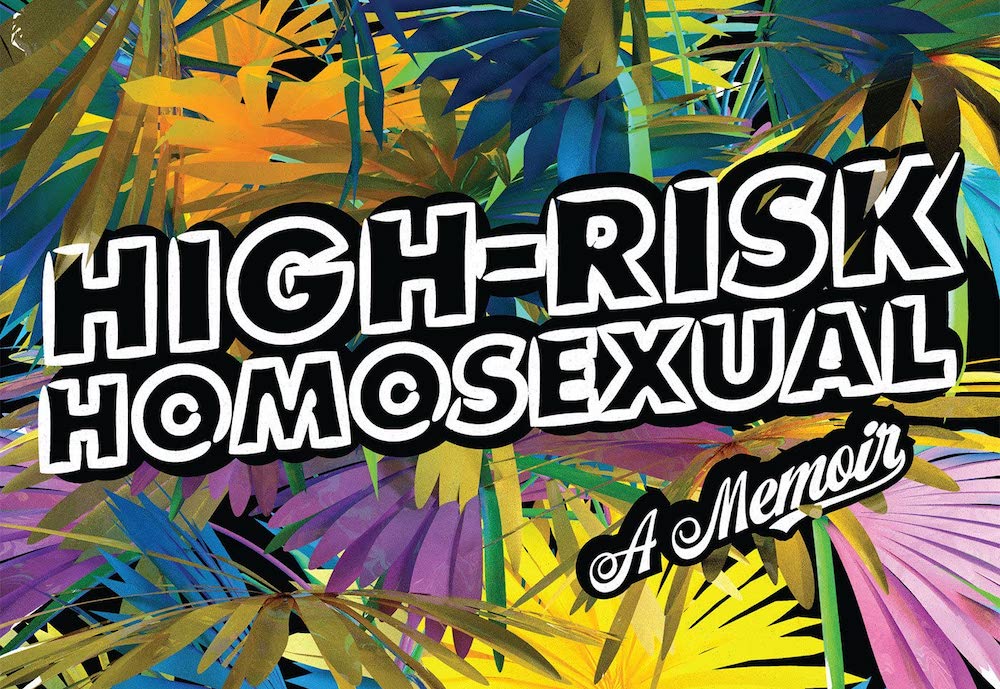
Not long before I started working at the gay bar, I sent my memoir, High-Risk Homosexual, to a literary agent, who agreed to represent me. The title was meant to be ironic, a phrase I’d borrowed from the doctor who diagnosed me a high-risk homosexual when I asked to be put on PrEP, a medication that reduces your risk of HIV infection. After the pandemic hit New York and I lost my job, I realized how risky my life had actually become: I was unemployed, on Medicaid, unsure how I was going to support myself, or my mom if I had to, because she also lost her job. We were in quarantine, under curfew. Every day I woke up to the sound of ambulances carrying COVID victims to the hospital and fell asleep listening to police helicopters circling the sky. 

With an unexpected amount of free time, I threw myself into editing my book, burying my anxiety under the hope that once it sold, I’d have some level of financial security. When I had a solid draft ready, my agent sent it around to some publishers. One by one the rejections started pouring in. I sat alone in my cramped Brooklyn bedroom laughing despairingly as I read about the six-figure book deal a white woman had gotten for writing a novel about Mexican cartels, at the thought that I’d ever be successful, at how silly my dreams were. And then I got an email from my agent: SOFT SKULL LIKES YOUR BOOK! The following week, I signed a publishing deal with an independent press. My advance was hardly enough to buy my mom a Jaguar, but it’s kept my fridge stocked throughout the pandemic. Suddenly my life was slightly less risky. 

I’ve wanted this from the moment I discovered being a writer was even a thing. My mom might want it for me even more. The trouble is: I don’t know how to share the news. 

My advance was hardly enough to buy my mom a Jaguar, but it’s kept my fridge stocked throughout the pandemic.

Although her message about the publishing ad sent me into a panic, it also reminded me how far I’d come as a writer, even if I paid most of my bills cocktail serving. Throughout graduate school, despite being confident in my abilities and knowing I had a good story, I’d always been skeptical about my memoir selling. I’d had the statistics about what books get published shoved down my throat enough to know it’s rarely the coming-of-age story about a queer child of a Central American immigrant. Strangely, it was those statistics that kept me going. While writing my memoir—in particular the chapters that deal with family—I didn’t feel inhibited by how they might react to the book, because I figured no publisher would ever buy it.

Reading my mom’s message, it occurred to me that I didn’t need to piece together thousands of dollars to get my memoir out in the world through a company that aired ads between episodes of Telemundo novelas. By then, I had an agent. She’d read and liked my book! She had a fancy office in Manhattan because she was good at selling books! Maybe my memoir would sell, I thought. I might really become a published writer. Yet any validation that might have brought me didn’t last, because it meant my book might actually find its way into my mother’s hands. 

There are certain things my family doesn’t talk to anyone but God about. We keep our problems within the walls of our house. Perhaps that’s in response to the narratives that are pushed on us as immigrants, as Latinx people, as the working poor. The world demands our suffering, so we smile. Even amongst ourselves, admitting that anything is wrong is out of the question. Should I foolishly bring up trauma, my mom will quickly let me know I’m confused: The only mistake she made raising me, she’ll say, was when she put too much salt in the empanadas for Christmas. 

My book is not sad. My mom is not a villain. But I am honest about the complicated journey we shared regarding my life and my queerness. Part of the reason I wrote this book was to untangle the messiness of my upbringing and give meaning to the memories that haunt me. I’m done crying over the past. It’s time to move on. I don’t believe writing is therapy, but spending hours attempting to understand why people did what they did, their motivations, and how they impacted me, helped me reach a place of acceptance and forgiveness. I dedicated my book to my mom because writing it reminded me why I love her and want her to be a part of my life. Maybe if I hadn’t, I would still be angry about the day she tackled my bedroom door. Maybe I would still resent that, after the shooting at Pulse Nightclub a half hour drive from our house in Orlando, the only thing she asked me is if I’d seen the news, as if my universe hadn’t just imploded. Writing my memoir, while not a substitute for therapy, helped heal our relationship.

Part of the reason I wrote this book was to untangle the messiness of my upbringing and give meaning to the memories that haunt me.

I’ve always been purposefully vague with my family about my writing. They’re not big readers, and even if they were, they would read in Spanish, and they likely wouldn’t pick up a memoir. Compared to poetry and fiction, in Latin America, memoir isn’t a hugely popular genre. The combination of those things and my not believing I’d ever get published allowed me to write freely in graduate school without worrying that I’d ever have to deal with the repercussions. 

I didn’t wonder if my family seeing themselves reflected through my eyes would put a strain on our already complicated relationships, or if they’d take my attempt to discuss the afflictions that plague many Latinx folk—homophobia, machismo, addiction, violence—as a betrayal. I didn’t wonder, to put it simply, if my uncles or my brother or my mom would be mad at me. And if so, would they forgive me for telling strangers our business? Or would they ice me out like they did when I came out at 16? Over a decade later, there are still relatives who don’t speak to me beyond the obligatory hello at family gatherings, others who constantly tell me I’m in their prayers. It took years for me to learn how to navigate conversations about my queerness with my family. Would my book reopen old wounds and force us to start from scratch?

While I was getting my MFA, the problem of writing about people you know came up often in my memoir classes. If they did something bad to me, I should at least be able to write about it, a classmate of mine once said regarding a story she was working on about sexual assault. A woman who was going through a divorce worried that her memoir would be used against her in a custody battle. I can’t do that, she countered. I could lose my kids. Don’t ever let anyone tell you what you can and can’t write about, another chimed in.  

Everyone had an opinion: Always try to find one good thing to say. Change their descriptions a bit and just deny it’s them. You have to ask yourself if writing the story is worth sacrificing the relationship. 

Writing the story is what helped me rebuild those relationships, and now having it published might put them in jeopardy again.

I listened with interest, but these conversations always seemed irrelevant to me. I could write whatever I wanted because what I wrote wouldn’t end up anywhere. The moment my book sold, I realized how wrong I had been, and worse, that it was too late to ask myself whether the story was worth sacrificing the relationship. Even if I had asked myself that, there was the added catch-22: Writing the story is what helped me rebuild those relationships, and now having it published might put them in jeopardy again.

Terrified after reading her WhatsApp message about the publishing ad, I did the only thing I could think to do. I told my mom I was quitting writing to pursue teaching. Maybe she wouldn’t Google me. Or walk into a bookstore and see my name on a bright, beautiful cover with the words HIGH-RISK HOMOSEXUAL. Maybe I could publish my memoir in secret. Perhaps I still can, but a side-effect I didn’t expect is that instead of letting the subject go, she’s only become more supportive. It breaks my heart, because whenever she writes me a message asking if I’m doing okay, I want to be able to tell her: Guess what? I did it! I made it. You don’t have to worry about me going hungry anymore. I want to tell her: I wrote about our lives, Mom, and yes, there are some things in this book you might not like, but there is also so much tenderness, like how after you kicked down my door that day and I thought you would kill me for being gay, you climbed into my bed and told me you loved me, te quiero, perdóname.

I want to say: I didn’t write this book to hurt you. I wrote it because I didn’t know what else to do with my hurt. I wrote it because I love you, too. La quiero más. Perdóneme. 

I want to say: I didn’t write this book to hurt you. I wrote it because I didn’t know what else to do with my hurt.

I’ve made my career out of words, but right now it feels impossible to speak them. One day, I hope I’ll have the courage to take her to a bookstore, open my memoir to the dedication page, run my finger down to her name, and say: Look, mami, here you are. At the very front. For you. 

Until then, I have to think about what’s best for me. My mom had to set her dreams aside because of money, to feed our family. Am I going to set aside my dreams for her, for anyone? 

If I could go back and give my teenage self a piece of advice, it would be to wait to come out of the closet until I’d reached a place of safety and didn’t have to depend on my family’s support. I can’t change the past, but I can follow the same advice now: I lost my family once for being gay. I want to wait a little longer before I risk losing them for writing about it.

Cassandra Has Seen Some Shit And She is Mad

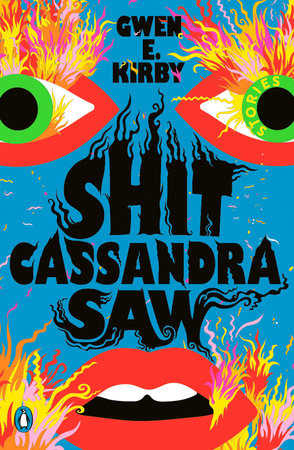
Gwen Kirby’s collection Shit Cassandra Saw is structured around a handful of women lost to the annals of history, with a modern twist added. There are ancient warrior queens turned contract hitters, cross-dressing pirates, and lady duellists in a Seurat-like tableau. 

Like its cursed prophetess namesake, Kirby’s collection is obsessed with the act of seeing as witnessing, but also how the narratives of history obscure the people trapped within it. In most cases, history and the structures it seeds shun those who choose to live beyond its borders, like women hanged for witchcraft or adulterous professors haunted by dead preachers. 

And in the case of these unruly women, all dead, do they exist if they remain unrecorded by history? For Kirby, the answer is yes. 

Shit Cassandra Saw by Gwen E. Kirby

The collection’s electrifying opener is instructive: Cassandra offers a rambling list that starts with lightbulbs and washing machines before peeling off into hilarious, bittersweet spite. The Trojans who damned Cassandra are nearly an afterthought—she remains with us to the end. Dead but holding onto the last word, even if it belongs to no one but herself. 

What you need to know about Kirby is that she’s deeply invested in hope. That might not be obvious if you only have the title of her debut collection to go on, but look closely and it’s right there in the marrow. 

Sometimes, Kirby’s brand of hope looks like teenage potential of the female variety: in “Casper,” summer swelters with theft and convenient but transient friendship, while the protagonist of “The Disneyland of Mexico” yearns for love in all the wrong places. Other times, it’s the gritted determination to endure a baseball game to the end, embodied in the players of “Mt Adams at Mar Vista.” And, often, hope is a rage hot enough to burn a city to the ground. 

As 2021 drew to a close, Kirby and I talked over video call about the ways in which women use narrative to reclaim their inner lives, the limits and propulsive power of form, and her ambivalent love for young teenage girlhood. 


Samantha Cheh: Aside from the obvious stuff, do you think much has changed for women since Cassandra’s time?

Gwen Kirby: I think not as much as changed as one might wish, or as much as we would like to tell ourselves that they have—while at the same time recognizing how much they’ve changed and how grateful I am for all the ways that they have changed. 

I think the story “Shit Cassandra Saw” is really trying to get at that. There’s so many things now, like vibrators and washing machines, all this great stuff—but at the same time, so much still has to be done. A lot of the stories in my collection are contemporary stories about women who are still angry and frustrated, who are still taken advantage of and not allowed to be themselves. 

When I wrote “Shit Cassandra Saw,” it was right after the 2016 election. I just sort of let it rip. I let myself play with a historical figure in a way that I never had the confidence to do before, but I started to realize that I was so hungry for stories about women in the past. For women in the past who were like me: angry, funny—just normal people. 

SC: I love how the women talk to each other across history. You chose to write about less obvious figures from history. I mean, Cassandra is one and maybe Boudicca, but Gwen Ellis Ferch? That’s pretty left field. 

GK: I wish I could say I did all this research and whatever, but I just love history so I try to constantly expose myself to it. I was listening to this podcast where they talked about the first woman hanged for witchcraft in Wales was named Gwen and I was like holy shit! I have this little folder full of women from history, fighting pirates and things. I felt like the historical spine could kind of hold the collection together in a way that it had been missing before. I could lean into my own playfulness, passions and enthusiasms. 

SC: It’s really interesting the way in which these women have this deep wisdom, but it’s a wisdom that they know has no place in the world that they inhabit. 

GK: I really wanted the book to feel like I had opened up a space for that wisdom. Before, no one was asking that Welsh prostitute what she thought of the world, or how she felt about how men treat her. I just wanted the book to be my own little world for them to speak.

SC: You allow these women to narrate these inner selves within the story, but there’s no impulse to share or explain them to the other characters in the world. Cassandra sees all these things she doesn’t bother to tell the Trojans; Boudicca has this unstated wish to be a man, while Gwen Ellis Ferch has this rich inner life that she keeps secret from her mother and the world. 

GK: I don’t think it’s that they didn’t want to share their thoughts and feelings, but there’s a certain feeling with all of them that you would have to earn that from them—and the people around them haven’t earned it yet. 

SC: Your characters wield significant control over their stories and their anger, but it’s hard to ignore the fact that most of these women can’t escape death in their stories—Nakano dead from gunshot; Gwen Ellis Ferch hanging at the end of a rope. Even as she describes it as a glorious fight, Mary Read still dies in childbirth. History can’t seem to change. 

You can be as empowered, angry or self-aware as you want, but you are still a part of the world. Your choices are still circumscribed—not just by our future but by being alive.

GK: I think that all of those stories get at a melancholy truth, which is that even as these women own themselves, they’re not independent of history. They’re not independent of society. As much as I feel that you can be as empowered, angry or self-aware as you want, but you are still a part of the world. Your choices are still circumscribed—not just by our future but by being alive. 

The paths narrow before you as you go through life and there is a kind of sadness but also strength in that they are owning their own lives. In telling their own stories, they are liberated from them. I talk about women so much with this book, but I think that feeling that all the paths behind you have closed is very universal. 

SC: Oddly enough, the few men who are in the stories are also trapped by the form and structure of your stories, especially in the hermit crab pieces. 

GK: I really enjoy writing stories that feel like they circle back on themselves and accrue meaning, which flash can do really nicely and quickly. You set up this structure that is like a little tiny watch—Boudicca goes up to bat three times and it accrues; or Cassandra just lists objects and it accrues by itself. I like how tightly wound those stories are. They can capture a single moment in a story. 

The other thing is I love watching form pushed to its limits and fall apart, like a character starts out retiling a bathroom or writing a Yelp review and it just spirals out of control. That feeling of pressure that lives inside all of us—pushing up against the self and form—that’s pretty central in all the stories. 

SC: I defo see it in “A Scene in A Public Park at Dawn” where you have this high octane duel with big emotions and guns going off, but it’s also very tightly controlled. Everything seems choreographed.

GK: I just feel like that’s what life is like. You look at the insane the way the world is right now—how frickin’ hard everything is—but we still move through the world in all of these prescribed forms. We go do our jobs and act a certain way. We act a certain way in our marriages, towards our parents, even as it can feel like everything is falling apart. 

In “Scene”, there are all these emotions that are chaotic internally but they’re also going through this dance that’s been choreographed for centuries that allows them to express anger. It’s an outlet and a constraint. I feel that way about form but also life. 

Some days, it’s absolutely, freaking maddening to have to go to work while the planet is burning and there are fascists everywhere—but also, thank God I have to go to work! Because if I just sat at home, I would lose my mind. There’s that tension in a lot of my stories between the comfort that form and ritual can give us, and also how much we can feel trapped in that—how much we are trapped in that.

SC: Sort of how your young teenage girls in “Casper” have jobs and shared experience to give structure to the shapelessness of summer, but also the individual wants and desires they never speak aloud. 

GK: Yeah, those three girls weren’t together because they were destined to be best friends—it was just sort of a quirk of fate in this small town, for this summer. And they’re also so, so afraid of the things they’re learning about themselves. There are things they really want from one another, but don’t want to have to admit to because to admit that you want a friend or love or someone to like you—it’s to expose themselves in ways that they maybe don’t really have the maturity to do. Or maybe they see that they’re not each other’s right confidant. 

SC: Your affection for young teen girls is palpable throughout your work, especially in “The Disneyland of Mexico.” You deal so tenderly with the very specific experience of growing up uncertain of who you should be—not just as a young adult but a female one. 

GK: I think those stories are me working and thinking through what my own young adulthood was like. As someone who developed a woman’s body long before she was one, you get this feeling that suddenly you are something to the world that you are not to yourself. Something that you’re not ready to be yet. That was a time that I felt like I had a lot of cognitive dissonance: I wanted so badly to be grown up and the world was treating me that way, but at the same time, I was 12. 

You look at the insane the way the world is right now—how frickin’ hard everything is—but we still move through the world in all of these prescribed forms.

I have a very vivid memory of just turning 15, and I was sitting outside after driving training and this group of men just came over and—under the guise of flirting—wouldn’t leave me alone. I was definitely scared, but it’s weird because I was also flattered.. Which is, you know, ridiculous but I wanted to be a woman and I was not. I remember wanting to reach towards the next thing and being really scared and unsure of what that even meant.

I’m fascinated by coming of age stories about girls and the way in which our bodies are changing. Our ambitions are changing. That’s maybe when we first start to really hit some of the hard and fast expectations about womanhood. There’s something kind of pure, wonderful and fascinating and messy about that time of life. I think it’s just really good fodder for stories.

SC: In stories like “Disneyland,” “Mt Adams at Mar Vista” and “We Handle It,” what is very clear is the resilience that young girls have in face of very difficult scenarios. I think it’s a resilience that is very particular to the female experience. 

GK: I think those girls at that time in their lives have something of the cynicism that we acquire as we go—or at least, they pretend to wear it. But I also feel like at that age especially, when you see something that’s not right, it’s followed by a desire to change it. There’s this feeling of hope and possibility and potential in the face of the world, which I think is just also a feature of being young,

All of those stories also speak to the way in which teenage girls and women are there for each other—the way in which those friendships are where we find that resilience and hope. We get to have relationships that help us, especially in times like teenagerhood when we’re lost. I do think that’s one of the ways in which patriarchy is worse to men.  

SC: There’s a very deep hopefulness and those stories. I always feel that lit fic about young women tends to be characterized by a very deep sense of unhappiness—but there’s so much tender hope in the way that you approach those kinds of moments.

GK: I’m full of tender hope! But there’s a lot to be said for knowledge, as well. When you’re growing up, there’s things about that that are lost forever, but there are also beautiful things that you gain. I’m a hopeful person and when I write, I want that for my characters too, even when they go through things that are hard. That’s how I live with feeling angry and still avoid becoming embittered. 

A Notebook is No Place To Keep a Secret

“Kenji’s Notebook” by Jean Chen Ho

Tuesday evening, Fiona rode the 6 train downtown after seeing Kenji home from the hospital. She’d tucked him into bed and made sure the packet of OxyContin lay within his reach on the nightstand, next to his notebook. He looks terrible, Fiona had thought. Like a wilting jack-o’-lantern left out long after Halloween, a face falling into itself. She didn’t want to admit that she felt afraid. Kenji was thirty-two, six years older than she was. He had cancer of the mouth and throat. On alternating Tuesdays, she and Jasper, her boyfriend—her ex-boyfriend, that is—took turns sitting with Kenji while the chemo drained into his arm. He was on his second round of six-weeks, and skeletal from it. Kenji was Jasper’s best friend, but Fiona had grown to love him, too. Four months ago, Kenji got the prognosis: surgery to clear out as much of the cancer as they could manage, then radiation and chemotherapy. A month and a half later, Fiona learned that Jasper had been sleeping with a woman in his writing program at Hunter. She’d read about it in Kenji’s notebook, snooping around one night while he slept. 

It was July now, and Fiona was biding her time. She’d survived her first year at NYU Law, on top of everything else. It had been the most punishing eight months of her life. She and Jasper had come to an agreement about living together through the end of their lease. Neither one was in a financial position to move out before then. Fiona claimed the queen bed; Jasper took up residence on the futon. He owned full access to the TV, but she had the window-unit AC in the bedroom. They exchanged information about Kenji’s recovery and not much else.

The humidity hung nearly solid on her walk from the Canal Street station to her building on Mulberry and Hester. In the lobby, Fiona checked the mailbox marked Lin & Chang. It was empty—Jasper must’ve picked up their mail already. She climbed the five flights up to the apartment, considering how she would tell him that Kenji needed another surgery. He’d lost too much weight. His doctors wanted to put a tube in his stomach so that Kenji could feed himself protein shakes through a plastic funnel. She heard the TV blaring from the hallway. Fiona imagined Jasper parked on the futon, staring vacantly at the extra-wide flat-screen, that outsized monstrosity he’d insisted on buying last fall. He needed it for “research”—plus the Netflix subscription, DVDs in the mail every week—narrative structure, beats and silences. Four o’clock in the morning on Black Friday 

he’d camped out in front of Kmart on Astor Place to get the deal that included a free DVD player. She put her key in the deadbolt and waited a moment, gathering herself before she turned the knob. 

A soccer match played on the TV, the field a million light pixels of blinding, verdant green. Jasper turned toward her, his face in profile backlit by the brilliant pitch. He asked how it went with Kenji tonight. 

“Can you not get crumbs everywhere?” She cast a weary glance toward the bag of Utz chips in his lap. “I saw two roaches last week.” 

“Big ones?” He scanned the floor around his feet, as if searching out evidence of the roaches she accused him of attracting. “I haven’t seen any since the exterminator—” 

“I have to tell you something, but don’t freak out.” She was still standing by the door with her flats on. “They said he needs to have another surgery.” 

“The hell?” he said. “They found another—” 

“No, no,” she said quickly. “You know it’s hard for him to swallow anything now.” Nudging her shoes off, Fiona leafed through the pile of mail on the small table next to the door. The Con Ed bill, a couple preapproved credit card offers, a reminder for a teeth-cleaning, and—what’s this? A save-the-date postcard for her friend Amir’s wedding in October, upstate in Woodstock. 

Fiona explained what the doctor had said about the procedure Kenji needed.

“A feeding tube?” said Jasper. “Jesus.” 

“Are you free Friday? He’s scheduled for ten in the morning,” she said. “Or else I could ask to take off work—do a half day.” Fiona was clerking for an appellate judge this summer, a coveted internship she’d won over other 1Ls in her cohort. The work was demanding and joyless—not that she’d expected anything different—but she was glad for the solid hours of citation research, memo drafting, and proofreading, which kept her from feeling like an object unraveling in six different directions.

“I can do it,” said Jasper. “I’ll go.” 

“Okay,” she said. “Thanks.” 

“Yeah.” He turned back to the TV. 

Clutching the save-the-date in her hand, she brushed past the futon and into the bedroom. She shut the door and flipped on the AC, then sat down to study the postcard. Amir, her law school buddy, in a white shirt with the sleeves rolled up, lavender silk tie. He grinned sheepishly, as if aware of and slightly embarrassed about his disarming handsomeness. His arm was curled around his fiancée’s waist: Khadijah, a glamorous Black woman who stood half a head taller than him. She was a pediatric resident at a children’s hospital. They were perfect together. Fiona crushed the postcard in her hands.

“Oh shit!” Jasper shouted from the living room, startling her. “Fuck yeah!” She realized he was yelling at the TV. Fiona shook her head. She knew Jasper was scattering potato chip crumbs everywhere. Well, he could sleep with the roaches crawling all over him. She didn’t care.

All she wanted now was to make it through the end of the lease in peace. Less than two months. Fiona didn’t know where she would go, but she would find some place. She’d have to put out feelers soon to see if anyone she knew needed a roommate, to ask for leads on upcoming vacancies. By September, Kenji would be done with the chemo. She’d be back in school, her second year. Maybe she could move into Kenji’s apartment, just for a while. He had a place in Harlem, a spartan bachelor’s studio he’s kept since his time at Teachers College. They could help each other, thought Fiona. Both of them, in remission. The fact that Jasper would hate it made the idea more delicious. 


In March, Kenji had told them the news after finally getting what he thought were swollen lymph nodes checked out. The three of them were standing outside a crappy midtown sports bar where they’d just witnessed Cal massacred in the first round of March Madness. There was a Japanese American boy on the starting five, a lanky shooting guard whose last name also happened to be Mura, and Kenji had told everyone at the bar that he was the player’s cousin, spinning a story about youth league booster clubs, aunties who pounded and sold exquisite mochi back home in Gardena. Fiona and Jasper had gone along with it, because every time Mura put up points, someone sent them a round. In the end, however, Mura’s offense wasn’t enough to save the team from elimination. As they were saying goodbye, Kenji headed uptown and Fiona and Jasper downtown, he’d slipped in the news in a quiet, by-the-way voice. 

Fiona wasn’t sure she’d heard him right. “What? What did you say?” 

“Throat and mouth cancer,” Kenji said. 

“What?” she said again. “But you don’t even smoke.”

Kenji shrugged. They were all quiet for a few moments.

Jasper had been the one to break the silence. “What happens now?” 

Kenji told them his surgery was already scheduled for the following Thursday. 

“Where? What hospital?” Fiona shoved him. “Why didn’t you tell us sooner?” 

“I’m sorry,” Kenji said after a moment. “I didn’t know how— what to say—” 

“Bro.” Jasper hesitated. “You scared?” 

The night traffic coursed down Seventh Avenue, flashes of light in the dark. Fiona was glad for the buzz she felt from all the shots. 

“Kenji, do you want to—I don’t know—come over to our place?” she said. “Get another drink somewhere?”

Kenji shook his head. “I still have to finish grading some papers tonight.” He glanced up the street and folded his wool beanie down over his ears, raised his arm to hail a cab. One pulled over for him. “Mura out.” He bumped forearms with Jasper and then submitted to a tight hug from Fiona.

They made love that night with a tenderness they hadn’t shown one another for months, in bed or otherwise.

She didn’t want to let him go. His long black hair, which he wore down that night, spilled over her shoulders. She breathed in his shampoo, but underneath it, behind his earlobes, she thought she smelled something murkier, darker. Even after he dropped his arms, she held on to him, and she only let go after he made a show of prying himself loose from her grip. 

The subway ride back home was quiet. Fiona looped her arm into Jasper’s on the walk from the station and felt him squeezing back with his elbow. They made love that night with a tenderness they hadn’t shown one another for months, in bed or otherwise. She felt guilty for only having noticed its absence now. “I’m sorry,” she murmured in the dark, after they’d finished. “I’ve been so busy, trying to keep up with all my school reading—I haven’t been around for you.” 

Jasper’s back was turned to her. Fiona pressed her breasts and stomach against him, nuzzled his neck with her nose, her lips. “How are you, baby? What’s going on with your writing?” He didn’t answer her—she figured he was asleep.

“I love you,” she said softly. “Jasper Chang. I love you.” 


The soccer match over, Jasper pulled the futon out flat for the night. Lying down, he listened to the sounds coming from behind the bedroom door. The moan of the blow-dryer told him Fiona was perched on the edge of the bed—she never went to sleep with her hair wet, an old superstition she’d made him follow, too—probably wearing one of his ratty T-shirts that she’d long ago claimed for pajamas. Then, the asthmatic rubbery sound of the window being thrust open. Fiona ducking out for a smoke on the fire escape. 

Jasper clicked off the local news in the middle of a report from the Bronx—a brick factory spewing orange flames from its windows—and waited for his eyes to adjust to the dark. He lay there, cramped, bitter about the unfairness of it all. So he’d made a mistake. Was she so perfect? He’d never confronted her about it, but he suspected Fiona and her Pakistani friend from law school—what was his name?—liked each other more than the normal amount. Late-night study sessions and whatnot. Had he ever said anything? No way. Wasn’t his style to be so petty, register every little concern. Point being that he, Jasper, could overlook certain things. How could Fiona be so ready to toss out the whole relationship, these past six years? She didn’t mean it. She couldn’t mean it. It was a mistake. A big misunderstanding. They were getting back together, he knew it. She knew it. Kenji knew it, too. 


Helen Park. He’d been resentful that their classmates assumed the two struck up an alliance because they were the only two Asian American fiction writers in their year. In fact, Jasper had intentionally ignored Helen’s friendly glances during the orientation events. He’d also made a point to steer clear of Phuong Ly, a poet in the year above, to combat the stereotype that all Asians stuck together. Jasper wasn’t going to be pigeonholed.

He thought Helen was a lesbian at first. She wore her short black hair gelled into spikes, a rotating uniform of loose chambray shirts topped by colorful fringed scarves, and always, some clown lipstick was painted on her mouth, bright tangerine, sparkly purple, and, occasionally, goth- metal black. He made it through the fall without engaging her much, but a month into the spring semester, she’d plopped down next to him at the bar where everyone congregated after workshop and called him out: “You’re avoiding me, right?” Though her lips were parted in a smile, she delivered the line as if lobbing an insult, her eyes glittering. He’d noticed then that Helen had a tooth on the side of her grin shaped like a fang. 

“I have a girlfriend,” he blurted out. 

Helen snorted. “Relax,” she said. “Girlfriend. Cool. Well, what is she?” 

“What do you mean, what is she?” he said. “She’s a law student.” 

Helen shook her head. Her hair didn’t move. “No, I mean, like—is she Asian?” 

“She’s Taiwanese,” Jasper said. Helen raised an eyebrow. “So what?” 

“Why don’t you ever invite her out with us? Everyone else brings their boos and randos.” 

“I don’t know, she’s busy.” He didn’t want to tell her that Fiona would find their conversations—about books, writing, their professors—insufferable. 

Jasper had long suspected that Fiona wasn’t totally on board with his writing ambitions. The program was designed to accommodate working professionals, but Jasper had insisted on quitting his day job—communications department at a charitable foundation—to fully immerse himself in the MFA. He had some savings and took out a student loan for tuition and living expenses. He’d wanted to chance a higher amount, max out both the subsidized and unsubsidized federal limits, but Fiona had advised against it. What about all your law school debt? he’d said. That’s different, she replied. After I finish I’ll actually— She didn’t finish the sentence, just let the words hang there. He’d been stung by her frankness, though he knew she was only being pragmatic. 

“Why’d you ask if she’s Asian?” Jasper said. 

“You seem like—I don’t know.” Helen shrugged. “Your stories in workshop—” 

“What?” 

She shrugged again. 

Helen was only a year out of college, the same age Jasper was when he moved to New York with Fiona. That night at the bar, she told him to stop writing stories about white people. He’d scoffed and then they’d argued—“Just because I don’t indicate what race the characters are doesn’t automatically mean they’re white!” “Um, yeah, dude, it reads like that, sorry to break it to you.” “Not true. That’s your own racist reading bias. Not my problem!”—until Jasper realized their raised voices had attracted everyone else’s attention. The others from their workshop stood around the bar clutching PBR cans, staring at them.

Jasper stood suddenly, knocking over his barstool. He tossed down a few bills and stormed out. Helen followed him. They shouted at each other out on the sidewalk. Frustrated, he grabbed her hard by both arms—he thought maybe he would shake her. An alarmed expression crossed Helen’s widened dark eyes. Jasper remembered himself. Then, she was leading him to another bar, where they took shots and kept arguing, but there was laughter in it now, and something else; something more dangerous, Jasper recalled. Later still, when he followed her up the stairs to her apartment on Delancey—Helen was going to lend him her copy of Theresa Hak Kyung Cha’s Dictee—Jasper thought: Nothing’s happened yet, and nothing might happen, anyway. Pull yourself together, Chang.

When he got home that night, Jasper took a scalding shower before falling into bed with Fiona. Six years together: Fiona wasn’t the first girl he’d slept with, but she was pretty close to it. Jasper promised himself it was only going to be that one time, with Helen. The sex wasn’t anything spectacular, and her room smelled vaguely like cat piss. The next Monday after workshop, however, they fucked again; then another time, another day of the week, until Jasper couldn’t remember why it mattered, as though he’d somehow believed that cheating on Fiona, if done on a Monday, gave him moral immunity. For whatever reason, to whatever ends, he wanted Helen, and he had decided to let himself have her. 

By the time Kenji told him and Fiona about the cancer diagnosis, Jasper had been hooking up with Helen for three months. That week, Jasper couldn’t help but feel pulled back from some precipice he hadn’t known he was standing on. Kenji was his best friend, and Fiona was his girl, still. One day, he was certain, she’d be his wife. He had to stop seeing Helen. There was no romance between them, only the intoxicating fumes of mutual derision, which each accepted for erotic intrigue. That, and their mutual loneliness. Helen made no complaints when he ended things. He returned the copy of Cha’s poetry to her, unread. 

The faint line of light under the bedroom door snapped black, and Jasper heard Fiona settle in, the comforter rustling. An image of Fiona’s bare legs, her inner thighs brushing softly against each other, passed through his mind. He missed her, and the missing was tinged with anger and shame. The beginning of a dream cast its net over him: Fiona straddling him on the futon, the gray outline of her body in the darkness of the living room. Her fingertips on his nipples, teasing. They hadn’t touched one another since somewhere near the end of April, when Fiona had found out about Helen, after everything was already over. Kenji’s fault, punk ass with that notebook. But Jasper couldn’t even be mad—dude was fighting cancer, right? 


Jasper startled awake at four in the morning, the world still dark. The apartment was suffused with the smell of melted butter and hot sugar, as it was every morning, rising from the Italian bakery that occupied the ground floor. He rubbed his eyes and yawned, tried to float back to sleep, but felt suddenly chilled by the sensation of being watched. 

“Fiona?” Jasper rubbed his eyes again. “You okay?” He sat up on the futon. A figure stood by the bedroom door.

“What if,” she said, her voice barely a whisper. “What if Kenji doesn’t—” 

“He’s doing so good,” Jasper said. “You can’t think like that.” He patted the space next to him. She stepped toward him on silent feet and sank down. After a moment, he put an arm around her. 

“Are you crying?” 

She shook her head and turned her face toward him, as if to prove she wasn’t, even though it was dark and he could barely see. He shifted, enough to close the small distance between their mouths. Fiona met him there. 

They kissed a few times before he pulled the T-shirt over her head. Jasper cupped his right hand over her breast, found her nipple between his fingers, and pinched it, hard. She gave a small gasp. With his mouth on hers, Jasper moved his hand to her neck. Under his thumb he felt her pulse jumping. Her hands were tugging at his shorts. He pushed her down on the futon mattress. All of a sudden Jasper remembered how it was, the frenzied pleasure of sex with someone you loved and who you knew loved you back. He wanted to call her a bitch for how she’d been treating him. He fought the urge to say, I love you— 

Jasper stayed silent and kept thrusting, the palm of his hand pressed against Fiona’s neck. He was only doing what she liked—to be brutalized, just a little. Made to acquiesce, pinned down, her vagina slapped and bruised. And afterward, he knew she liked to be held. He tightened his grip around her throat. She whimpered and moaned, writhing underneath him. They moved together in the dark, as one. They generated heat. The air seemed to buzz in Jasper’s ears, the sound of honeybees. He held his breath. He waited for her to come. In another minute, she arrived. 


Friday morning, Jasper was dressed and downstairs before nine. Kenji’s surgery, scheduled for ten at Mount Sinai uptown. Outside, the vendors on Mulberry Street were setting up for the day. He strolled past a fruit stand piled high with lychees, clusters of longan, bright pink dragon fruit the size of his fist. 

Earbuds in, an old DJ Shadow playlist keyed up, he passed one stall after another on Canal Street selling junk souvenirs: miniature jade figurines, knotted red rope ornaments, novelty lighters and keychains, and those conical bamboo hats. Maybe they were all storefronts for illegitimate businesses. Knockoff designer handbags, miniature turtles, bootleg DVDs. Or something more sinister? Poor girls imported from China, some trained to work at massage parlors, jerking out perfunctory happy endings, others assigned to long hours crouched at the gnarled feet of hardened Manhattan women, scrubbing calluses and sawing off toenails. 

He swiped through the turnstile at Lafayette, recalling the time he and Kenji had staggered into one of those shady massage parlors south of Canal with a neon-lit OPEN sign. Three in the morning, they were both faded as hell, elbowing each other forward and knocking over shit in the small front room. An older woman who reminded Jasper too much of his mother ushered them into a dim hallway behind a red beaded curtain. In the end he had backed out. He smoked several cigarettes on the sidewalk while he waited. Kenji swayed out half an hour later, the red from all the tequila shots drained from his cheeks. He laughed, and threw an arm around Jasper’s neck. “Worth it,” he muttered. “God damn. You’re a pussy, you know that?” Then he ran for the gutter and vomited into it, bent over with one hand pressed on the sidewalk. 

Jasper came above ground a half hour later at Ninety- Sixth and Lex. Two blocks west, and two blocks north. The surgery building was brand-new and clean-looking. Upstairs, a set of blue chairs lined the waiting room, and a yellowing philodendron relaxed in one corner. Only two of the seats were filled. An Asian man in his seventies, his face sallow and dotted with large brown spots, sat beside someone who must be his son, because the younger man had the exact same face, without the liver marks. Neither one looked up when Jasper shuffled past them up to the glass window at the back of the room. A young white nurse sat typing into a computer. Jasper asked if Kenji had arrived and checked in already. 

“Last name?” 

He told her, and she thumbed through a stack of papers next to the keyboard. “Philip Mura for the gastroendoscopy?” She looked at him for confirmation over a set of seafoam-green reading glasses. 

“The what?” He’d forgotten that Kenji used his English name for official records. “It’s for his stomach.” 

The nurse told him the procedure would be done in about an hour and a half. 

Jasper sat down at one of the blue chairs. He glanced over at the father and son. If they gave him an opening, Jasper would gladly explain the story. Was it wrong? The thrill he got from telling people his best friend had cancer, and then waited for the glimmer of sympathy in their eyes as he nonchalantly elaborated that he was Kenji’s primary caretaker—well, one of them, anyway. 

Jasper planned to write about the whole thing: how the surgeon split open Kenji’s neck to scrape off the tumors, cut out a third of his tongue, and then stitched in a circle of flesh from the inside of his left forearm. Next, the radiation treatments that burned purple scars into Kenji’s chin and throat. That was when he’d stopped talking—hurt to use his tongue, hurt to swallow down spit—and started using the notebook to communicate. 

The chemo bags were supposed to be the last thing, poisoning any chances of future growth. But now, while Jasper sat waiting, Kenji was on a table back there. A hole, two inches below the sternum. A plastic tube for funneling liquid food. Weird, Jasper thought. Weird, gross, and sad. A winning trifecta for a short story. Maybe he’d weave in a backstory about the Japanese American internment during World War II. A wound in the chest . . . he groped for a metaphor. 

That would show Helen he wrote fiction with Asian American characters. He’d prove her wrong. 

He considered calling Fiona. Jasper hadn’t seen much of her after what happened early Wednesday morning. She’d made herself scarce the last couple nights. 

The handsome young man in the hospital waiting room peered out the window with his intense brown eyes . . . An intentionally bad line. Jasper smiled, and then looked toward the clock on the wall. 


Jasper didn’t expect the wheelchair escort. Kenji had on a Team Japan jersey—the World Cup semifinals were broadcasting later tonight. The shirt hung on him like how it might look draped on a coatrack. Jasper probably had a good forty pounds on him, since the chemo. Even Kenji’s head had shrunk, the most disconcerting part of the weight loss. 

“You good?” Jasper asked. Kenji raised a thumb in the air.

Downstairs, Jasper hailed a cab crawling north on Madison. Kenji sat waiting in the wheelchair, squinting against the sun. The cab pulled to the curb, and Jasper took a hold of his friend’s elbow to guide him into the back seat, then shut the door for him. He walked around to the other side and got in. 

“Where to, chief?” the driver asked. Jasper gave him the block.

Months before, when he’d confided in Kenji about slipping up with Helen, he hadn’t considered the possibility that Kenji would be angry with him. They were supposed to be boys. Homies for life. They’d been floormates in Unit 3 when Jasper was a freshman, Kenji a third-year transfer at twenty- four—he bought everyone’s beers. Jasper never thought for a second that Kenji would take Fiona’s side of things—he’d been the one to convince Jasper the massage parlor didn’t count as cheating. It was like watching porn, or going to a strip club, Kenji had said about the place on Doyers. Strictly professional. Jasper needed a friend to talk to about the Helen situation. Kenji had scolded him, like he was some immature kid. 

And then, Kenji had done the worst: he leaked the secret to Fiona. He swore it happened by accident—Fiona had opened up the notebook and read it without his permission. There was a confrontation, then retreat, which led into Jasper and Fiona’s present stalemate. 

He wondered if Kenji liked the chemo days with Fiona better than the ones with him. Did they laugh? Did she tell stories to entertain him while his body swallowed up all that medicine?

Kenji said he was staying neutral; he loved them both. Still, Jasper couldn’t shake the feeling that Kenji had been irretrievably lost to him. He didn’t know when it happened: Kenji belonged to Fiona now. 

In the back seat of the cab, Jasper glanced over at Kenji dozing. He wondered if Kenji liked the chemo days with Fiona better than the ones with him. Did they laugh? Did she tell stories to entertain him while his body swallowed up all that medicine? A maddening thought: What if after all this, Kenji and Fiona got together? One time at the gym, Jasper caught a glimpse of Kenji’s dick in the locker room—uncircumcised, and fucking huge. 

The cab lurched to a stop in front of Kenji’s building. Upstairs, he helped get Kenji settled into the bed. Jasper checked the fridge: nothing but a Brita pitcher and bottles of vanilla-flavored Ensure. An old stick of butter in the door. He glanced back at Kenji’s sleeping figure before he slipped out quietly. 

Jasper called Fiona from the sidewalk outside Kenji’s building. “I want to talk,” he said. He asked what time she’d be home tonight. 

“About what?” she said. “Is Kenji okay?” 

“About me and you.” Jasper paused. “The other night—” Fiona sighed. She said she’d be home at six. 


Fiona met Jasper at the apartment after work, as she promised. She asked how it went with Kenji’s gastroendoscopy this morning. 

“Fine,” he said. 

“I’ll go up there tomorrow,” she said. “I’m going to ask him if I can stay with him—” 

“Fiona.” Jasper’s voice was shredded. “I want to work things out. You know that.”

“The lease ends after August,” she said. “I can probably be out before then.” 

“What do I have to do? What do you want me to say?”

“You’re not listening to me.” 

They sat on opposite ends of the futon. Fiona faced the giant TV screen, refusing to give Jasper her eyes. 

“There’s nothing to work out,” she said. “We already talked about this.” 

“Whatever you want me to do, I’ll do it. Couples therapy. Anything.” 

“Two months ago, we decided this was what needed to happen—” 

“What about the other night?” he said. “You barely say two words to me for how long, then all of a sudden—”

“What happened to you?” Fiona examined her hands. Her voice was quiet. “You used to be different.” 

“I said I’m sorry about— I made a mistake. I told you, it didn’t mean anything.” 

“I don’t care about her,” Fiona said. “I don’t care what it did or didn’t mean to you. It doesn’t matter to me.” She stood and paced the room, because she couldn’t sit next to him any longer. 

“I’m so confused.” Jasper’s eyes were wet. “I don’t know what you want from me. I don’t understand—I’m still me. I messed up. But I’m still the same—” 

“I want this to end. I want to move out and be done with it,” she said. “I don’t know what the other morning was.” She hesitated. “It wasn’t . . . anything.”

“You’re lying,” he said. 

She watched him cry, the whites of his eyes turning red. Fiona felt a bitter satisfaction at his suffering, and a tinge of pain for him. She felt embarrassed that she was enjoying this. She didn’t want to enjoy it. She didn’t want to be cruel. But the feeling was there, all the same. 

“Don’t do this,” he said now. “Please, baby. Don’t give up on me—what we have—” 

Fiona didn’t answer. She stood there with her arms crossed, as still as anything. 

“The other morning,” he pleaded. “I know you felt something.”

Fiona shook her head. 

“Look at me.” Jasper waited. “Please.” Fiona turned her head toward him and met his gaze. Over the back of the futon, he reached out for her hand. 

“I used to think, there had to be nothing left, for me to leave.” Fiona stayed where she was, arms crossed. “And I thought there was nothing left between us. Only Kenji. Taking care of him. Making sure he’s going to be okay.” 

“There’s a lot left—there’s us. Me and you.” Jasper let his arm hang down over the back of the futon. 

“Not enough,” she said. 

“Don’t say that,” he said. “That’s not true.” 

She sat back down on the futon, next to him. They were silent for a while. She curled her legs up and hugged her shins. “Can you do me a favor?” She paused. “Can you help me shave my head?”

“What?” 

“Kenji’s been so down lately, I think it’ll cheer him up.” She paused. “Help him get through the rest of chemo.” Jasper didn’t reply. He sat leaned forward, his elbows resting on his knees. 

Fiona glanced over at him. The way Jasper looked at her then, like she was a wonder, something magic, Fiona knew that she would always love him. She’d forgotten that feeling, the pleasure of being seen by someone you loved and who loved you back. For a moment, before she stepped into the future on her own, and the past—their past—closed for good, she reached for him as if through a door, and she held on to his hand. How soft the skin of his palm against hers, how warm and familiar his fingers. How dear he was to her, after all. Jas per had been her first love. He would always be that. 


The next morning, Fiona headed uptown to check on Kenji. When she got above ground at 125th, she reached for her cigarettes. Her knuckles brushed against a crumpled ball of paper and it fell out of her purse, landing on the sidewalk at her feet. The save-the-date for Amir and Khadijah’s wedding—she didn’t know why she’d been carrying it around. Fiona bent down to pick it up. She unfolded the postcard, smoothing her thumbs over the wrinkles creased in the paper. When Amir had announced his engagement in an email to their clinic last quarter, she’d replied with her congratulations, and he’d sent back: “You’re next!” 

In the last six years, she and Jasper had talked about marriage, and kids, in a vague way. Last year, they’d agreed to wait until after they both finished their degrees before getting engaged. Fiona had once been able to imagine the wedding with confidence. Jane, her best friend, standing up there by her side. Kenji next to Jasper, of course. Now she wasn’t sure about anything anymore. What would happen to her this September, when she turned twenty-seven, without him in her life? A long time ago, she’d pressed Jane for her honest opinion after she’d met him at Fiona’s graduation at Berkeley. “Honestly? You won’t get mad?” Fiona braced herself. “Just kidding—he seems great, Fi. Is he really writing a novel? What does that even mean?” Fiona’s friendship with Jane in the last four years had lapsed into something dormant—last they talked, months ago now, Jane had been dating a woman named Carly, though Fiona couldn’t get a read on how serious things were between them. 

She strolled in the direction of Kenji’s building, the sun on the back of her neck, her newly shorn crown. She felt self-conscious and kept touching her head. Were people staring at her? Did they think she was some kind of escaped Buddhist nun? When she passed Kenji’s brownstone, her feet kept moving. She was still smoking the cigarette. 

Fiona thought about the notebook. When she’d leafed through the pages that night while he slept, Fiona knew it was a violation of Kenji’s privacy. Still, she felt it was her duty as a friend to monitor his state of mind from week to week. The notebook was part communication tool, and part journal. Kenji had lines copied from Neruda love poems, quotes from Kant and Hume on existential meaning, a series of zen koans and his earnest attempts at answering them. A few entries of recorded dreams. A list of medications. Then she’d come upon a page, just a few lines: Enough about me, what’s up with you? Did you stop seeing that girl? How’d she take it? You okay? 

She’d touched Kenji’s shoulder to wake him. Showed him the page. “I’m sorry,” she said. “I shouldn’t have—but what is this? Is it Jasper?” Kenji had brought his hands up to his face. He took the notebook from her and then he’d thrown it across the room. It had hit the wall with a dull thud.

Who Decides What Makes a Good Mother?

The novel The School for Good Mothers begins with Frida Liu–a single working mother who is at her wit’s end–having a bad day that culminates in her losing her daughter to protective services. As her punishment she will be part of a new program to rehabilitate bad moms and if she is successful, then and only then can she get her daughter back. It’s a shocking, scary and biting satire of a culture that will not stop surveilling women’s bodies and minds. It’s the kind of book you interact with–yelling What?? Nooo! then curling into a ball or having your stomach drop at the drama. Tearing through the pages then slamming it shut, afraid of what comes next. Laughing and then snorting because it’s also wildly funny which I’m still so amazed by because how can it be all these things at once?

There is no book I’ve been yearning for longer than Jessamine Chan’s debut novel. I met Chan in graduate school more than a decade ago. She’s the reason MFA programs exist. She’s that mythical person you’re told to find in your graduate program. The one who builds exciting and inviting communities wherever she is. That writer and reader you can share work with forever. Since then, I have been privy to all the ups and downs that come with writing a novel. Then add into the mix having a baby when you weren’t sure you were ready for a baby, when in fact you were writing a dystopian novel about not being sure about having a baby, and it makes sense this book needed time to gestate. But holy shit was it worth the wait.

Chan and I talked over Zoom about parenting, art, identity and power, and just who gets to decide what makes a good mother in an inequitable world. 


Diane Cook: Were there questions about motherhood or the future that you were trying to get at by writing The School for Good Mothers?

Jessamine Chan: It’s really hard to put the why of it all into words, because for a really long time, I feel like I was just working out personal questions with the story, because the fear that was driving the writing of the book was really just me being really afraid of having a baby and becoming a mom and taking on that responsibility and changing my life. So I definitely felt like the book was a way to process all that fear and pressure. 

I think I also just felt really troubled by modern American parenting culture. Like, even as someone who wasn’t a parent and who was just observing it through my friends who had children, or reading about it in the media, and then reading books about it when I was doing novel research, it just felt so oppressive.

There’s this external cultural pressure, but also all this internal pressure to feel loving and joyful and grateful and patient at every single moment, which just felt so stifling in a lot of ways.

And then I had my baby, and then I was actually living in this hyper-intense parenting culture that I had been satirizing. 

DC: And did having your baby affect the direction of the book? 

JC: Well, the good thing about being a very slow writer is that it’s almost like the book grew alongside my baby, because I was revising the chapters so slowly that eventually the book and my child were around the same ages. So I could write about babyhood when she was a baby.  

And then when she was a toddler, I stole tons of dialogue and also learned about how much a toddler of that age talks, or eats, or how they move. And so, that all got folded into the book. So many of her toddler and infant milestones and memories of her babyhood are woven into the book, I feel like I built a baby memory book within the book. So, instead of finishing her first year baby album, I’m giving her a dystopian novel.

DC: There’s this moment in the book I want to talk about. When Frida is awaiting the verdict on her mothering the Judge–Frida’s judge!—tries to console her by saying basically, Hey I have two kids and four grandkids so, I understand how anxious you are right now. It’s such an awful moment. The kind of thing that slices so deep and is so insidious; this idea that because we have had the umbrella experience–being a mom!—that we understand the ins and outs of every other mother’s experience. She assumes her experience is everyone else’s experience, and if it isn’t, well that’s on them.

This whole dystopian apparatus you’ve set up in this future world comes from a total lack of empathy for, or the ability to relate to, people with different experiences than your own. It struck me as one of the basic building blocks of the book—this inability to see mothers as individuals and only see them as robots that can be programmed to care for their children. 

JC: I think what I was trying to get at, with this dystopian school and these oppressive new rules, was the idea that it’s possible for anyone to know better. A lot of people in power believe that they know better, or they know best for a particular family, or what’s best for the child in a particular family.

One inspiration for the book came from a Rachel Aviv article in The New Yorker called “Where Is Your Mother?” which followed a single mom who left her toddler at home alone and then never got him back again.

But what struck me about the article was that the woman was an immigrant. She wasn’t American. And they were judging her parenting, her personality, her way of communication, and her depth of feeling by very American, Western standards—this Western ideal of how a mom is supposed to behave and how tender she’s supposed to be. I just felt so angry on that mother’s behalf. There was this other system coming in and telling her what the standards were supposed to be and why she was a failure. And they weren’t taking into account that she was from a different culture or any details of her personality. She was a person who deserved a second chance, but never got one.

What surprised me—once I started reading about the issue of termination of parental rights and kids who get taken away from their parents—was that it was so much more pervasive than I thought, which was just shocking because it feels like the greatest nightmare of all to have your kid taken away by the government. But that’s happening all around us.

DC: When Frida gets to the School, she notices mostly Black and Brown moms, a few white moms scattered in. So, in this dystopia, mothers are being surveilled, but not all mothers. Like, every mother has done something that they are not proud of or that they regret, right? But not every kind of mom is represented in that place. And so it made me think about who gets surveilled and who are the ones that the state or this governing power thinks needs intervention?

I haven’t had many chances to read about Asian American women being messy on the page… Just being flawed in all the ways that make people more real as characters.

JC: I wanted the book to gesture at the fact that the way that we are surveilled is different depending on race and class. And that we don’t all face the same amount of monitoring from the government or the police. What I learned in the reading I did was that the circumstance of getting caught up with Child Protective Services and potentially losing custody and being dragged through the courts primarily happens to poor Black and Brown women.

DC: She also notices that she’s the only Asian American or Chinese American mom there. 

JC: In reality, someone of Frida’s race and class would not typically be caught. So she’s alone and the ultimate outsider. And so that gave me, as the writer, a much broader perspective. 

And I feel like I haven’t had that many chances to read about Asian American, or Chinese American women, being messy on the page, and not making the right decisions or being selfish. Or being self destructive and desiring or even having anxiety and depression. Just being flawed in all the ways that make people more real as characters. I wanted Frida to get to be messy. 

DC: Do you think that’s partly why she gets caught? She doesn’t fit into a flat stereotype and maybe that made the world take notice and surveil her more?

JC: I don’t necessarily think that was it. I mean, I’ve had white friends whose children are sitting in the car, who run back into the store to pick up their wallet off the counter that they forgot and they come back to the car, having been gone for 30 seconds, and there’s someone standing at their car door saying, “I was about to call the cops on you.” And that is in suburban Connecticut. I wanted Frida to have her very bad day in a world where there’s a lot of those good samaritan phone calls to the police, but not have support in her community.

DC: No one is rooting for her.

The way that you judge a person’s fitness as a parent is always gonna be informed by your experience of race, culture, and class and what you think good and bad parenting is.

JC: I wanted her to be not at ease in her community. Throughout my whole life, I’ve often been the only Asian person in the room. And I guess I wanted to speak to that in some way. It’s so ingrained in my experience of being a person in the world to be the only person who looks like me in the room. Sometimes I’m in a crowded space and I’m sometimes the only person of color. And it’s been like that since childhood. It’s an experience of always being an outsider and always having the slight discomfort of not seeing people who look like you.

I never imagined giving Frida any Asian allies in the School. I guess I wanted to write about race in a way that asked more questions rather than me making any grand statements.

DC: It’s so interesting that the mothers in the book end up taking care of robot babies as a stand in for their real children, because it feels like they’re being taught to be robotic moms. Like, you cannot be a mother without fluctuations and feelings. You cannot be a mother without making mistakes and having to apologize to your kid. I apologize to my daughter often because I do something that I know was human but kind of shitty. You know what I mean?

JC: But I think the feeling bad about the shitty moments is something from today’s parenting culture.

30 years ago, moms had shitty moments and didn’t apologize. They just got on with their day because there wasn’t a culture. Which is part of the culture of motherhood that I’m satirizing—where you not only have to have a perfect house, perfect career, and perfect marriage, you also have to be 100% on point for your child at every moment of the day and love it every moment of the day. And I feel like that’s really oppressive.

The idea of reeducation and parenting classes [in the book], that is from real life. The version I wrote is insane, but there is a kernel of truth in real life where there are court mandated parenting classes and parenting coaches and manuals. And your progress is judged in order to get custody of your kids again. I thought it was so bonkers, but it’s just part of our system.

DC: Even if we all agree there needs to be more room for mothers to define what good parenting is, it seems impossible there won’t still be a limit or line that moves someone from the acceptable to unacceptable category. And so there will always be people whose actual job is to judge and then inform others of where they fall. 

In some sectors of American culture, once you’re a mother, that role defines you and negates the rest of your personality or anything that came before.

JC: This book is not proposing answers and I’m not proposing answers. Do I have a way of fixing a flawed system? No. But I think I wanted to call into question whether or not any of those decisions can be made free of bias. Because individual judges and individual social workers are making decisions that will potentially change a family’s life or a person’s life forever. But how can those decisions be made in a vacuum? How can those decisions ever be fair? Because the way that you judge a person’s fitness as a parent is always gonna be informed by your experience of race, culture, and class and what you think good and bad parenting is.

DC: There’s this section early in the book when Frida is waiting to hear about what will happen to her, and she fully expects to get Harriet back because there really is no other possible reality in her mind and she’s describing how she’s gotten her room all ready for her and—

JC: You sent me an email saying, “She stocked her fridge. No.”

DC: It fucking destroyed me. Because, I mean, I’m not spoiling anything by saying she doesn’t get Harriet back then. She has to go to the School to be reeducated. But there’s a couple pages where we learn what exactly the counselors and case managers observed and reported about her. It’s all so contradictory and reading it you get this sense like water funneling and going down a drain. You realize there was no way she could ever do anything “right” in the situation. Because it’s all in the eye of the beholder who already has a judgement or a perspective in which Frida is bad. 

JC:  There’s this premise that these decisions are gonna be objective, but how can it be anything but subjective?

DC: One thing I loved though is that these characters, who are being punished for their bad mothering, sometimes push back against the idea that they are bad. They think, “There must be something good about me… right?” The only way they get their kids back is to conform to these state sanctioned standards which are totally out of reach, and yet they defiantly hold onto pieces of themselves even though the stakes are so high. Can you talk about balancing their sense of self and their role as moms?

JC: I wanted to explore how Frida holds onto her integrity while being indoctrinated. In some sectors of American culture, once you’re a mother, that role defines you and negates the rest of your personality or anything that came before. The oppressive state standards were my way of taking something that bothered me about our culture and making that feeling literal. So instead of saying, yeah, mothering should be your first priority, the School says “All you are is a mother. You should have no other thoughts or desires besides your child’s safety and well-being.” Which makes the mothers desperately cling to what remains of their identity and keep some part of themselves secret and out of reach.

DC: We talk about being art moms sometimes. Why do so many art moms have such a hard time justifying their work? Do lawyer moms and doctor moms and teacher moms have just as much angst as I do about the time I want or need to spend working versus being with my children? 

JC: For me, what’s hard about being an art mom is that the art requires complete immersion and devotion and concentration and so does the human child. And I think what’s hard about the balance is that there’s no set structure for it. I’m sure it’s also very, very hard to be a professional in most anything right now. I’m sure just parents in general are having a hard time. But I think what’s hard, for me, about being an art mom is that I could technically be working on the art all the time.

DC: Yes, me too.

JC: It just requires a different conversation in your head to prioritize the work when the work is art, because the world treats that as not real work. I have found it hard to ignore that message that what I’m doing is a selfish pursuit. And so I constantly have to have the conversation that it is okay to do this thing that the world sees as maybe selfish or foolish and unworthy and to take time away from my child to do that. So it’s a whole other layer of pep talks. It’s just hard to get rid of the guilt. Like I don’t want to feel guilty, I just do. And I can see why all the messages from society are wrong, but the guilt—it’s still there.

DC: What’s amazing is that I found myself succumbing to suggestions in the book about how I should behave as a mother. The school is so certain of their standards that I would start to think they’re right. I’m reading as a mom and thinking to myself, “Wait, I don’t do that–should I be doing that? Like, I don’t talk to my kids in motherese, should I be???” And I’d have an anxious moment before I remember this is satirizing this absolutist thinking about what mothers should be. It’s incredibly potent. 

JC: The satire was my way of processing my thoughts, feelings, and anxiety about a generally upper-middle-class and white American parenting culture and all the pressure. I found, and still find, the sheer number of instructions about any parenting task or decision to be overwhelming, so part of the satire was taking the idea of instruction and making it insane.

Through satire and using speculative elements, I wanted to call into question who is making those rules and whether it’s possible to ever have a set of universal standards that’s separate from the influence of race, class, and culture. How can the teaching of parenting ever be truly objective?

Hot, Medium, or Mild? Jenessa Abrams Values How You Want to be Critiqued

In our series “Can Writing Be Taught?”, we partner with Catapult to ask their course instructors all our burning questions about the process of teaching writing. This month, we’re featuring Jenessa Abrams, an essayist, fiction writer, literary translator, and practitioner of Narrative Medicine. Check out the 4-week online non-fiction workshop Abrams is teaching about decentering the reviewer, and instead reviewing books through a social and political lens. We talked to her about good and evil, chocolate caramels, and why baking is a writer’s ideal hobby.  


What’s the best thing you’ve ever gotten out of a writing class or workshop as a student?

Hot, Medium, or Mild

At the start of a nonfiction workshop in college, Cris Beam said: “Before we talk about your work, we need to know how you want us to talk about it. Tell us, on a scale of hot-to-medium-to-mild, what level of intensity you’re ready for.”

The sound of my relief was audible. The suggestion that my feelings mattered, that bleeding out on the page might affect me psychologically, that I could be serious about bettering my craft without sacrificing my safety, was nothing short of life changing. Her care gave me permission to write into experiences of danger with the knowledge that, in her hands, I’d be treated with respect and dignity. 

What’s the worst thing you’ve ever gotten out of a writing class or workshop as a student?

I would not have guessed anyone could misunderstand this assignment so thoroughly.

I would never encourage a student to give up. Writing can save you. It saved me.

A college professor scrawled that on the last page of my weekly creative writing assignment (I photographed it). His prompt instructed us to tell a story from a collective perspective. Usually, weekly assignments were brief sketches, the seeds of something, a few pages at most. But that prompt unearthed something inside me. A story I’d been circling around, really hiding from, emerged when I wrote it from the vantage point of two children instead of one. I turned in an eight- or ten-page story. My professor didn’t comment on a single moment, word, sentence, or phrase in the piece besides his closing assertion that I’d misunderstood what he wanted. 

Writing isn’t for your professor. Writing is for yourself and for your reader and for the artform.

What is the lesson or piece of writing advice you return to most as an instructor?

The first draft of a novel is you telling yourself the story.

I read that advice shortly after finishing the first draft of my debut novel. I’d sent the draft off to my agent in a flurry, working on a two-month deadline that meant the draft was really hundreds of pages of ideas, bones, sketches of who my characters were, slivers of what they wanted. The novel was stuck behind fogged glass. You could see the shape of something if you looked closely, but so much of it was still blurry. I so badly wanted that advice to be untrue, but it wasn’t. Very often, our first drafts are singular, magical, delicate sketches of what our stories or novels or memoirs will become, but in the beginning, we’re writing them to figure out what the story is. In some ways, that’s the hardest part. Once we know the story, once we have distance from it, then we can shape it into something meaningful for our readers.   

Does everyone “have a novel in them”?

To me, that question is a bit like the question: Are people born inherently good? Maybe. Maybe not. But I certainly don’t have the power to determine that for someone else (frankly no one should). I do think everyone has a story inside them. The story of why they are who they are. Of what happened to them. That story isn’t justification for violence or cruelty, but it can help us understand them better. I wish more people had the privilege of time and space to tell theirs.

Would you ever encourage a student to give up writing? Under what circumstances?

In my senior year of college, I had a professor (see question 2) who, during our final workshop, which doubled as a holiday party at his home, announced to the class that I was not talented enough to be a real writer. Then he coaxed my classmates along, encouraging them to say disparaging things about me. I sat on his sofa, pinching the fat on my thigh, trying not to cry. Then he placed a chocolate caramel—a caramel I’d brought him as a gift—into his mouth and smiled. So, no. I would never encourage a student to give up. Writing can save you. It saved me. Not everyone will get published. But writers don’t write for the sole purpose of publication. At least they shouldn’t. Writers write to tell a story, to make someone feel something, to help them understand themselves better, to figure out what they think and who they are.  

What’s more valuable in a workshop, praise or criticism?

The moment you let someone else into the room, the room stops being yours.

At its worst, praise can artificially inflate a writer’s ego, discouraging them from probing their work and trying to make it better, but at its best, praise can make a vulnerable writer feel like they matter, like their perspective is valid, like even if they don’t conform to an arbitrary style or writing exercise or way of expressing themselves, that doesn’t mean their art is any less important. The best workshops begin with praise, then move into criticism.

Should students write with publication in mind? Why or why not?

See question 3.

Fear is the crushing weight on the keyboard. Preventing us from facing our shame, our anxieties, our darkness. Write without thinking about how anyone will feel when they read it. The moment you let someone else into the room, the room stops being yours. Stay in that room by yourself as long as you can. Make the thing that only you can make. Then revise the hell out of it.

In one or two sentences, what’s your opinion of these writing maxims?

There is no one size fits all. In anything. Writing or life. Take the advice that speaks to you and discard the rest.

  • Kill your darlings: Some sentences sound like velvet, but don’t make you feel anything. Cut them, but save them in a separate document. Tell yourself you’ll use them later. Maybe you will. Maybe you won’t.
  • Show don’t tell: There’s no shame in saying something plainly. Abstraction often creates distance. Go ahead and just name the thing.
  • Write what you know: Write from an emotional truth, but let that truth lead you into spaces that are unfamiliar to you.
  • Character is plot: I used to refuse to let anything happen to my characters. Their stuck-ness was the story I was telling. It turns out that we’re always feeling and changing and growing and regressing and backpedaling even when we’re depressed and unmoving. 

What’s the best hobby for writers?

For me, the answer is baking. I think the best hobbies are ones that allow writers to complete a task from start to finish, preferably with tangible results of their labor, like coarsely salted pretzel rolls or sugared rhubarb tarts. The writing process, from draft to-revision-to-submission-to-rejection-to-re-submission-to-eventual publication is so long, so shapeless, and so often lacking in hope, that having proof, something one can hold in their hands, makes the journey a little easier.  

What’s the best workshop snack?

Anything that helps make you feel safe or more comfortable is advisable. My favorite is a box of chocolate caramels (see question 5).