I’ve always had a thing for strangers. I’m that person who can’t mind my own business at an airport gate, who strikes up a conversation with whoever looks as famished for connection as I feel. I love the gaping sense of aperture you feel among people in transit—how safe it is to tell a cab driver things you’d never tell your sister, your mother, any recurring figure in your life.
I have my list of sacred strangers, fleeting characters whose words and gestures are firebranded into my memory: the Dominican cab driver who chased down the bus on which I’d mindlessly left my luggage; the little girl who lived upstairs from me in Havana, whose maturing voice marked the passage of time over the many years I returned to visit Castro’s Cuba; the South African woman who steered me away from a fool’s errand of a hike up the Cape Town foothills and brought me to her flat instead, for a soulful chat about how to craft a life on your own terms.
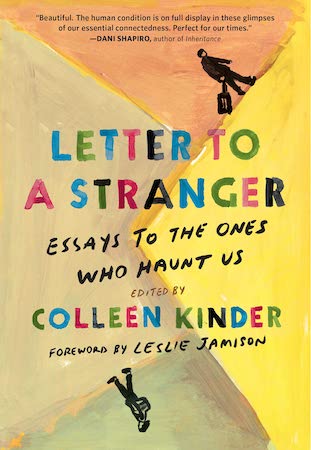
It was with these haunting strangers in mind that I schemed up the “Letter to a Stranger” column at the literary magazine Off Assignment, challenging fellow writers to pen a letter to a stranger they couldn’t shake. 65 of the most extraordinary responses to this writing prompt will be released in the anthology Letter to a Stranger: Essays to the Ones Who Haunt Us, a collection that spans every continent and delves into the intimate histories of a crew of exceptionally soulful and peripatetic writers. These stranger stories collectively upend assumptions about who counts as a pivotal voice or a major player in the narrative of our lives.
For this reading list, I asked some of the book’s contributors where in literature they’d witnessed the sorcery of strangers. They came back to me with recommendations for books featuring strangers who throw everything into a tizzy, who act as surrogates, who unearth beauty, who enable epic journeys, and more. This motley list reminds me of the simple truth that strangers embody possibility. They contain the full, wild multitude of our unspoken hopes for how our lives might change at any moment—who might hear us out, dare us to walk away, and who might beckon us into an entirely new storyline. Naturally, they make for great protagonists and supporting characters, even when lacking a name.—Colleen Kinder, editor of Letter to a Stranger: Essays to the Ones Who Haunt Us
Structured as a series of vignettes revolving around a character known only as The Woman, The Ballad of Big Feeling captures the spontaneous intimacy that can arise between strangers on a local, daily level. In the opening scene, we see The Woman cradle a teenage girl having a seizure in the seat next to her at the cinema, the two of them striking “an inadvertent posture of care.” Later, she does the grocery shopping for an elderly neighbor, and has a conversation with a man lying on a mattress in the park about parakeets while walking her dog, through what, she realizes, is his bedroom.
Published during the socially distanced summer of 2020, the collisions of public and private in The Ballad of Big Feeling made me recall what it was like to live in a big city before the pandemic. While novels tend to focus on the plot of a select few, Braverman positions The Woman in relation to a wider cast, and her interactions with the people in her community are often more tender, surprising and revealing than those with her live-in lover or her family. Reading it reminded me that we are always part of a larger social constellation, and how crucial these “minor” interactions are to our experience of being alive.—Madelaine Lucas (“To the Boo Radley of My Childhood”)
I read The Beginners the week after I moved to New York City, when I was staying in my friend Graham’s glass-walled apartment, suspended above traffic on Flatbush Avenue. It was August. I felt like I was on the precipice of starting my real life.
In the novel, Anna, who has lived happily for 20 years with Guillaume, meets a stranger named Thomas Lenz in town one day. This encounter upends her life. Like most things, the upheaval happens both gradually and suddenly. Serre paints a picture of Anna’s incredible yearning, set in motion by this stranger who reminds her unaccountably of Jude the Obscure.
“How strange it is to leave someone you love for someone you love,” Serre writes. “You cross a footbridge that has no name, that’s not named in any poem. No, nowhere is a name given to this bridge, and that is why Anna found it so difficult to cross.”
I too have found this bridge difficult to cross, and I too have had the furniture of my life unsettled by single encounters. I too have dropped, suddenly and gradually, out of a series of ordered lives. The Beginners felt like a balm, or even a talisman, as I sat reading and watching a storm blow in across the skyline, waiting for my life to start and wondering if it would stick.—Sophie Haigney (“To the Son of the Victim”)
After discovering a lost address book in the street, the writer and artist Sophie Calle reached out to the book’s listed contacts as an oblique means of getting to know the book’s owner. The resultant encounters and conversations she has with these contacts (those willing to meet with her, that is) are documented in The Address Book and help Calle to sketch a detailed, intimate, and transgressive portraiture of the book’s owner–who was wildly displeased when he learned about the project, which she had originally published as a serial in the newspaper Libération.
Of course, the investigative curiosity at the heart of this book displays in equally revealing detail Calle herself, whose obsession with strangers and boundaries drives much of her thinking and artistic work (see also: Suite Vénitienne and The Hotel). Ultimately, whether you view this work as invasive or exciting—or both, as I do—Calle’s desire to understand the subject of her chance encounter makes for an absolutely electrifying read.—Julie Lunde (“To My Steadfast Danish Soldier”)
WEby Yevgeny Zamyatin, translated by Bela Shayevich
At the heart of Russian author Yevgeny Zamyatin’s dystopian novel WE is a sexy stranger named I-330. Sensuous and rebellious, I-330 is the antithesis of D-503, a spacecraft engineer and cipher for the state. She smokes and drinks, indulges in unsanctioned sex and is part of the rebellion. When D-503 first encounters her, he can’t bring himself to turn her into the police.
What happens next is his gradual awakening as I-330 introduces him to a lush world beyond the forbidden Green Wall. Zamyatin, a trained engineer himself, finished the book in 1921, combining his knowledge of math, science and literature, as well as his experiences living in a totalitarian state. Written in the form of a confession, the book electrifies through brief, exultant diary entries. The prose is immediate and full of symbolism, the syntax often odd, but delightful.
First published in English in 1924, WE influenced a cadre of early science fiction writers, including George Orwell and most likely Aldous Huxley. The manuscript was copied by hand and secreted reader to reader during Samizdat. Sadly, the author never saw his book in print in the Soviet Union, where he was imprisoned several times before emigrating to Paris and later dying in near obscurity. Today, WE continues to enjoy a wide readership and near cult-like admiration by writers and science fiction fans alike.—Rachel Swearingen (“To the Woman Who Found Me Crying Outside the Senate”)
A young writer moves into a new home and takes on an old woman, Emerence, as her housekeeper. This is the premise of Magda Szabo’s The Door. You could hardly imagine a less exciting concept, but the glory here lies in this housekeeper. She is about as unlikeable a person as you can imagine: proud, rageful, secretive, controlling, at times, almost vindictive. In telling her story, however, Szabo does what we should all do more often, in writing and in life. She takes a stranger and finds what is beautiful in them. “A writer doesn’t necessarily need to die for the sake of truth,” Szabo said once. “But they must serve it at all costs. This is what all honorable writers do.”—Cutter Wood (“To the Seller of the Breadcrumbs”)
A 33-year-old American woman arrives in Casablanca, where she is, almost immediately, robbed. The police say they’ve recovered her stolen bag, but when she goes to retrieve it, she realizes it’s not hers at all. Our protagonist—in a haze of jetlag, grief, and recklessness—takes the backpack anyways and, with it, its true owner’s identity: Sabine Alyse. This will be the first of five pseudonyms she adopts. We never learn her real name.
The Diver’s Clothes Lie Empty is a novel of proliferating doubles. (The protagonist, a twin, gets a job as a stand-in for a movie star, for whom she is later mistaken by paparazzi.) But places double, too: Police stations, buses, business hotels. We visit a neighborhood in Casablanca called California, that looks like Beverly Hills, and a bar called Rick’s Café, a recreation of the Rick’s Café in Casablanca, a film shot entirely in California. Morocco, our protagonist observes, often seems to be playing “Morocco” for the benefit of tourists like herself. It is also a novel populated entirely by strangers; the protagonist encounters nobody in Morocco who knows her from her life back home—with one harrowing exception. And they mistake her for somebody else.—Meg Charlton (“To the Woman With the Restraining Order”)
On a “miserable afternoon” at a women’s club in London, two lonely strangers—Mrs. Wilkins and Mrs. Arbuthnot—chance upon the same advertisement in The Times. It begins, mysteriously, “To Those who Appreciate Wistaria and Sunshine.” On impulse, they respond to the ad together, and two months later travel to a villa in San Salvatore, Italy, to spend—you guessed it—an enchanted April. Together Mrs. Wilkins and Mrs. Arbuthnot, along with newcomers Lady Caroline and Mrs. Fisher, get their proverbial groove back after the hardships of World War I, some mediocre marriages, and a dreary English winter.
Von Arnim relishes in providing lush sensory detail—strong coffee, bright sunshine, abundant flowers—and poking gentle fun at this unlikely quartet, whose personalities vary just as much as San Salvatore’s topography. And while there’s more than a little romance in this novel, the primary romance is between these characters and themselves, as well as their blooming friendships with one another. It’s an enchanting reminder that sometimes a change of scenery is in fact the best medicine, and that nourishing relationships can spring from the most unexpected circumstances.—Sally Franson (“To the Keeper of the Fawn”)
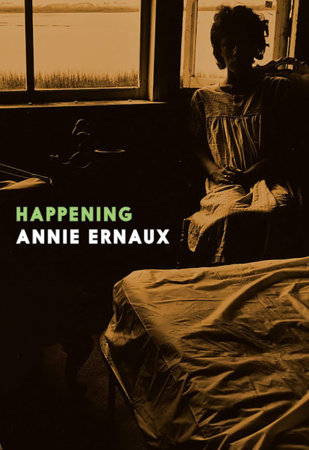
Happeningby Annie Ernaux, translated by Tanya Leslie
Annie Ernaux’s memoir Happening is framed by the author returning, 35 years later, to the alley where she received an illegal abortion in France in the 1960s. We journey alongside Ernaux as she reinhabits her younger self and revisits the people and places woven deeply into that period of her life. In the early days of her unwanted pregnancy, Ernaux becomes a stranger to the world. Her body is foreign to her and everyone she encounters seems confined to a reality dominated by trivialities. She finds herself disclosing her pregnancy to a number of strangers and casual acquaintances, for reasons of practicality and for the purposes of speaking the truth of her experience into existence:
“I realize now: I had to reveal my condition, regardless of people’s beliefs or possible disapproval. Because I was so powerless, the act of telling them was crucial, its consequences immaterial: I simply needed to confront these people with the stark vision of reality.”
H.P. Lovecraft isn’t exactly a name you want to invoke as an influence—Lovecraft was a deeply racist, xenophobic Providence man. And acclaimed author Victor LaValle has flipped the script on Lovecraft’s most notoriously racist story, “The Horror at Red Hook.” In 2016, LaValle published The Ballad of Black Tom, a novella that directly confronts Lovecraft’s brutal racism via its early-century Harlem setting and its Black protagonist named Tommy Tester—a street musician, hustler, and aspirant.
One day on the street, Tommy meets a stranger: the reclusive millionaire, Robert Suydam. Suydam convinces Tommy to come play at an exclusive party he’s hosting. Unbeknownst to Tommy, Suydam is trying to make Tommy a key participant in dark spells. With the Supreme Alphabet, Suydam wants to open a portal and summon The Sleeping King and The Great Old Ones (creations from the Lovecraft Mythos).
At the party, Suydam tells Tommy, “Some people know things about the universe that nobody ought to know, and can do things that nobody ought to be able to do.” It sounds like a horror-tinted warning about the dangers of curiosity, but more importantly it carries the deeper fire of an oppressor speaking to his oppressed: “We, the tyrants, know things you shouldn’t ever know. So don’t even go trying to learn them.” Suydam quickly becomes enslaver and Tommy becomes the trapped man trying to escape Suydam’s cosmic enslavement. Later on, because of his connections to Suydam’s portal attempts, Tommy is killed in a hail of 57 rounds, all shot by police officers.
As many know, it’s through fantastical stories that we better perceive our own realities. In The Ballad of Black Tom, LaValle widens that fantastic aperture to the point that early Harlem could be contemporary Minneapolis, MN, Louisville, KY, or Aurora, CO. And Tommy himself, swindled into believing a manipulative system that promises deliverance, isn’t simple allegory or reductive metaphor. LaValle treats his flawed protagonist with insightful compassion. At the same time, he attacks with bile and bite the systemic racism Tommy faces on the regular in Red Hook. Lovecraft would never approve of LaValle’s version of the story, and that’s exactly the point.—Alexander Lumans (“To My Arctic Vardøger”)
Mohsin Hamid is a magician: his books slim, structurally daring feats of literary devilry. The Reluctant Fundamentalist, his second novel, is my favorite for its audacity and its power. The book details an encounter between a Pakistani man named Changez and a burly American, who looks like he “bench presses regularly and maxes out well above 225,” unfolding as a conversation in a Lahore tea shop. Though monologue may be a more accurate descriptor, since we only ever hear Changez’s voice, the American’s presence is acknowledged cleverly through described reactions, or questions repeated back to the inquirer.
In the hands of a lesser writer, this self-conscious framework might ring false, too stagey for fiction. Yet Hamid manages to make the staginess natural to a story that is not really about two men meeting by chance in a tea house, but rather two countries—supposed allies—regarding each other with suspicion across a cultural chasm. Changez is a mesmerizing narrator who unfurls the story of his American miseducation with the flair of a court poet, by turns funny, coarse, infuriating and touching. The brilliant ending challenges our assumptions and biases as we are left to parse whether we have just witnessed a casual exchange between strangers or a set-up. —Keija Parssinen, “To the Source Who Kept Changing Costume”
A few years ago I started writing this novel called Be Here to Love Me at the End of the World, which is a love story set in a bad dream about America, and you can, if you’d like, guess how it ends. At the time, I kept thinking about the idea of the world ending, not as this dramatic thing with a lot of buildup, but just in the background, as we all went about our days. And the more I kept working on this, the more that, y’know, seemed pretty plausible.
There’s this song I hear my partner listen to almost every night while she scrolls TikTok: why you working so hard, it asks; the world is ending! yay! it’s the apocalypse! take a day off, it entreats us; it’s all meaningless!
It is all meaningless, the world is ending, we should all take a day off, because, like this song assumes, the world’s done, the end has come, why are you getting ready to go to work? Why not, I don’t know, read a book?
So here’s a list about books in which there is, or recently was, an apocalypse. And we’ll say for the purposes of this list that an apocalypse occurs any time our world ends. When the world ends, the angels come. When the world ends, the great bird descends. Everything is drowned in light, even your dreams.
These days, I’m concerned with considering just what, to you, is the world? And what would it do to you to watch it end? The world, to each of us, is a personal thing, and its loss is our own personal apocalypse. Your own tiny apocalypse at the end of the world of the day. Has any of this been on your mind lately? If so, then, dear reader, read on.
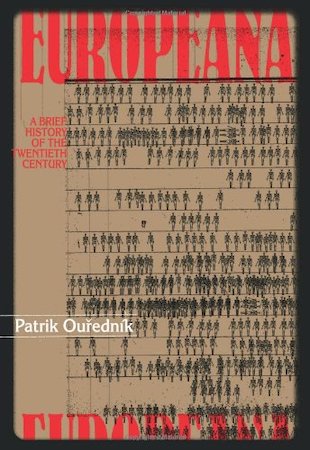
Eureopeana by Patrik Ouředník, translated by Gerald Turner
Eureopeana is about the world after World War I. The book opens by telling us the average height of the people in several nations participating in World War I and how far the bodies of those fallen troops would span laid head to toe, then it tells us about the invention of chemical warfare (gas attack!) and how everyone hoped they’d be home for Christmas. I’m not certain I’m doing this book justice here. It moves fluidly across the 20th century, showing us how it sprang from a war that broke the world, something so vast and terrible millions thought we’d never come out of it alive, only to see it happen again and again, and it talks about this the same way it talks about the invention of the bra, and of Barbie, and of the way movies showed sex. Everything happens at once, in an order dictated organically by the author. Worlds and lives and wars and hopes and dreams collapse over and over only to be born again and die again. I’ve never read anything like this.
One Hundred Apocalypses and Other Apocalypses by Lucy Corin contains one hundred apocalypses and 3 stories that are, in their own way, about very personal apocalypses. t’s funny, it’s heartbreaking, it’s breathtaking, it’s only scary if you think you might survive the end of the world, I for one do not plan to, and anyway: one apocalypse involves zombies, one is a list of reviews for a movie called BABY ALIVE, one involves a truly beautiful dinner where everyone eats an angel food cake, one is in smaller font, one involves circuit city, one involves the library, one involves ghosts, every single one is about what we do when the world ends, and when you get through them all, your life will be different.
Something New Under the Sun is a very different sort of apocalypse. For one thing, California is, eventually, on fire. For another, California is full of this artificial water called WAT-R that may or may not cause a very specific sort of dementia that may or may not be treated by the same people who created, marketed, and sold WAT-R, and all of these are their own apocalyptic processions, but the real world-ending here involves the main character: the author of a novel being adapted into a movie starring a reportedly troubled former-child actor, who was paid nothing for the movie rights but was instead offered one single slot as a Production Assistant, to be given to whoever he wants, in this case himself, leaving his wife (who once removed all the grass in their yard and part of the neighbors in a future state) and daughter (possessed of apocalyptic and occasionally prophetic visions) back east before they themselves hightail it to a bizarre extinction-morning-focused commune upstate of somewhere, and he loses himself in a wild mystery and reddit threads and if I tell you any more, I’m gonna spoil the whole thing. On the one hand, it’s an indictment of capitalism and our utter indifference to the world we burn in its name, and on the other, you watch a man’s world crumble around him, suddenly and without warning, switching perspectives around to watch it in ways that left me absolutely breathless.
In Elect Mr Robinson for a Better World, Donald Antrim tells the story of a coastal town’s apocalypse in one single unbroken paragraph lasting for, roughly, depending on your copy, 192 pages. The voters have defunded the schools, the mayor has been drawn and quartered by an angry mob and their hatchback sedans, Turtle Pond is stocked with claymores, Pete Robinson has painstakingly constructed a violently accurate 1:32 scale model of an inquisition dungeon in the basement of his house that he has been attempting to turn into a school, while his wife, at the Rotarian luncheon, channels the ancient coelacanth, bringing the town closer to the sea, and the sea closer to the town. Pete Robinson wants to open a new school. Pete Robinson wants to become mayor. And if we elect him, he has promised us a better tomorrow. This is another thing you can do, when the world falls apart, the oceans slowly rise, every lawn is a defensive perimeter and every defensive perimeter is a death trap, and the love of your life spends her days dreaming of the Cretaceous Sea.
Hiroko Oyamada’s The Factory follow three employees of a factory. You can read a bunch of good summaries on the internet: one shreds documents, one proofreads documents, one studies moss. Black birds begin to gather all around. Their days lose sense. Time becomes lost. Day by day, the world changes to accommodate their job, their productivity, while their lives are subsumed. How long can you do a job that makes no sense, whose demands and scope become wider and more-consuming by the hour? The minute? What happens to your dreams? And what happens to the rest of you once your dreams are eaten up by questions you could never articulate? When the birds come, does the end come too?
On the one hand, every single book Ben Marcus writes is an apocalypse. And on the other hand, every single book Ben Marcus writes is an apocalypse. In The Flame Alphabet, the language of children can kill any adult who hears it. Children, whose language is so different, so grasping and expansive, now poisons anyone who hears it. Language as an epidemic, parents faces shrinking, hardening, listless and mute. What do you do when your daughter can kill you like that? When you can’t speak? Are your own thoughts language?
It’s a wild book, and I’m assuming that part of being a parent gives you the drive to see things through as the narrator does, as I, personally, childless and 36, have no interest in fighting for a better world. I am beaten down by the world. This is a book for people who aren’t, or would like to no longer be, sort of.
The Age of Wire and String is a dictionary and instruction manual for a new world. The old one is gone! Language is twisted into new shapes to try to encompass feelings and sights and sounds we’ve never before borne witness to. This is the ordering of the fever of what comes after the world ends.
Meanwhile my personal favorite, Notable American Women, takes place in reckless Ohio of the mind, wherein a young Ben Marcus is prepared for the world to come, once cleansed through stillness and silence, by the cult lead by Jane Dark. His father imprisoned, his dog his only companion, Ben’s world remains one he has to struggle to define as parts of him are lost and stripped away. What do we become before the apocalypse? What is it that really dies when the world ends?
Life is what dies when the world ends. Not to skip to the end, or anything. But that’s loosely what Peter Brannen’s The Ends of the World is about. Loosely, it is a (non-fictional) attempt at understanding Earth’s past mass extinctions.
I learned that the early trees bled acid into the bedrock to make soil. I learned that when the asteroid that killed the dinosaurs hit, it was going so fast that the atmosphere ripped open and the crater already formed long before it hit. I learned that the impact and the tear could have thrown dinosaurs all the way to the moon. I learned that it wasn’t just that a giant asteroid hit so much as India was basically a giant volcano covered in volcanoes and when the asteroid hit, India erupted and if it wasn’t the meteor, it was the volcano the size of India and I learned that what happened when it hit was that if you could see it hit, you were already did and if you couldn’t, then the sky would go white, and then you’d die. Death is about as personal as life, is one way of looking at all this. The earth’ll be fine. It’s everyone you’ve ever loved who’s fucked. Anyway it’s an incredible book.
In Chilean Poet, Alejandro Zambra’s main character Gonzalo goes from being an acne-stricken teenager in love with Carla and poetry to a middle-aged professor. Along the way of this intensely energetic novel, translated by Megan McDowell, we see Gonzalo reunite with Carla, who at this point has a six-year-old son, Vicente, an adorable little fellow dedicated to a cat named Darkness. The three become a step family (though “step” doesn’t exist in the same way in Spanish), and just when things start to solidify, a loss of a baby results in the family falling apart, and Gonzalo moving to New York.
Time moves forward and we meet Pru, an American journalist in Chile on an ambiguous magazine assignment. After flirting with the idea of writing about the country’s stray dogs, she settles on an investigation of Chilean poets. Here the novel turns into a hilarious catalog of the Chilean poetry landscape:
“Being a Chilean poet is like being a Peruvian chef or a Brazilian soccer player.”
The country of under 20 million people has long been known for its impressive roster of poets including two Nobel Prize winners, Pablo Neruda and Gabriela Mistral. Zambra fills Pru’s notebook and introduces to real living poets in the novel:
“I get the impression that Chilean poets love to give interviews. Some of them told me ‘write this down’ or ‘this is important’ or ‘you can use this.'”
The muse of her poetry article is Vicente, now 18 and an aspiring poet himself. They land in Pru’s hotel room after they meet when Vicente rescues her during a late-night vomiting fit. The incident leaves Pru, who is 31, wondering about the age of consent in Chile. Meanwhile, Vicente becomes unbearably infatuated with her. Into this mix, Gonzalo reappears in Chile and walks into a bookstore at which Vicente works.
Hilarious, touching, and a phenomenal jumping off point for deepening your knowledge of Chilean poetry’s varied, mercurial characters, Chilean Poet dives into what families are, fathers and sons, and literary pretensions.
Via email and through the gracious translation of Megan McDowell, I talked to Zambra—who lives in Mexico City with the writer Jazmina Barrera and their son—about living the writing life, being an insider looking through the eyes of an outsider character, and his hopes for a new Chile with the Gabriel Boric administration.
J.R. Ramakrishnan: I am curious to hear about your methods for writing and living, especially since your wife is a writer too. Do you and your wife share work with each other? Is your son showing any signs of being a poet?
Alejandro Zambra: Yes, Jazmina and I share our writing with each other all the time. As for my son—we’re all poets when we’re kids, aren’t we? Later we gradually turn into novelists, unfortunately. Still, so far, at four years old, he has only declared his intention to become an astronaut, a singer, and an epidemiologist. Although a few days ago, when we were eating lunch, he told us that he was also a writer. We asked him what kind of books he wrote, and after thinking for a second, he said, with utter surety: “books for grownups.”
JRR: It was incredibly easy to fall in love with Vicente. I was especially charmed by his determination to drink espressos, and to save Darkness. I am assuming you’ve stolen all the adorableness from your own son! Do you expect he will read the book in the future?
AZ: I’ve always had cats in my life, but during these recent years, sadly, I haven’t had one. And my son is very young, he was only two when this novel was published, so much of Vicente’s cuteness is unique to Vicente. I suppose someday my son will read my books, but there are millions of books better than mine in this world, so I would rather he read those. And I’d like him to use the time he would spend reading my books on coming to visit me in the nursing home.
JRR: The plot of the novel turns on Gonzalo’s secret application to do a doctorate in the US, which is a decision made after Carla’s assertion that they would not try to have another baby. Is there a literary pursuit vs. being a parent dilemma (one perhaps normatively associated with women’s choices) here? Surely, he couldn’t have really thought Carla was going with him?
AZ: People have believed much crazier things than that! People can convince themselves of many things, if they want them badly enough. I’m on Carla and Vicente’s side here, but I’m still friends with Gonzalo, so your question puts me in a very uncomfortable position… About that dilemma you mention, I think all things can be worked out if there is a huge amount of honesty. But I’m not a couple’s therapist. If only!
JRR: Pru is an outsider looking in. You have lived outside Chile for a while. Could you talk about imagining her, and seeing and observing as her, even though you have deep intimacy with the scene yourself? Her impressions are quite spicy and her final article has some strong reactions from the poets. I wonder what the contemporary Chilean poets think of your novel? Do they still talk to you?
[Writing] is not a better job than others, it is just a position you had the beautiful luck to choose.
AZ: Of course they do. I’ve lived outside Chile for five years and writing this novel was somehow a way of recovering my country that I miss so much. So finding Pru was maybe a way of dealing with my own homesickness. We are all so stupid and smart and funny and boring when looked at closely. And Pru is able to really watch us. She is at a disadvantage, because she is a woman in a male dominated world, and because her Spanish is good but not good enough for reading poetry. Plus, she has never really been interested in poetry, not U.S. and obviously not Chilean poetry. And yet she writes that article and puts all her heart into it. What I like most about her is that she is really watching that world, she goes beyond her prejudices and makes an honest, self-critical effort to comprehend its atmosphere. This is a novel about playmates and about the moment when playmates become family. I think that moment is very important: when your friends become as important as, for example, your family, so you forget that your friend is not your biological brother.
JRR: There is a lot of meditation on artistic failure (and precarity) but I was most amused by Leon (Vicente’s biological father) and his harmonica aspirations. By the end, Gonzalo doesn’t even identify as a poet. What is your experience with dealing with failure, which must contrast to this moment of being lauded as the next Latin American “breakout” literary star in the US with this novel?
AZ: Well, I would hope that I and the people I love could go beyond the failure/success dichotomy, I just don’t think it’s useful for understanding life. A book just published seems to be an example of something “done,” but writing is about failing. I mean, writing is writing badly. I write a lot every day, mainly terrible sentences, and maybe once a month I’m able to write a full sentence that I cannot erase. And for that not-totally-erasable sentence to exist, I had to write all those previous, apparently useless words. That’s what this job is about. Sometimes you decide to publish things, sometimes you decide to burn them and forget them. Sometimes you get some praise, sometimes you don’t. It is not a better job than others, it is just a position you had the beautiful luck to choose. And there is certainly a deep satisfaction when you love your job. Most people hate their jobs, but I love mine. That’s not the same as success, but maybe it’s a better metric.
JRR: A more general question: Are you hopeful (or exuberant?) for the future of Chile with your new president who is 35?
The coming years [in Chile] are going to be crucial and hard, but I do have hope.
AZ: Yes, I am hopeful and exuberant, for a thousand reasons, although hope is not a simple feeling these years and especially these days that remind us the world is still stuck in the 20th century. There are many signs of hope in my country—we are about to toss the Pinochet Constitution into the trash, just for starters. And there is a new generation of politicians who are envisioning power differently. The coming years are going to be crucial and hard, but I do have hope.
JRR: Which new (or new-ish) Chilean writers do you think should be translated as soon as possible for the English-speaking world?
AZ: Like one hundred! I mean, there are so many good writers in my country, it would be unfair to name only a few, or even a lot. Take the case of Juan Emar, one of the most important Chilean writers in history, who has just been translated into English by Megan McDowell in a beautiful edition published by New Directions. It was the first book that Megan ever translated, but it took her 15 years to find an editor. I’m so happy that some friends of mine who don’t speak Spanish are now able to read him. I think I wouldn’t have written a word without his daring and refreshing company.
In 1982, Alice Sebold, an 18-year-old freshman at Syracuse University, was brutally attacked during an evening walk in Thornden Park. Though Sebold reported the crime to the police, they were unable to identify a suspect until five months later, when Sebold spotted Anthony Broadwater while walking down Marshall Street—not far from the scene of the crime. Sebold recognized him as her attacker and immediately notified the police. Though she was later unable to identify Broadwater in a police lineup, he was taken into custody and charged with eight felony counts, including rape and sodomy. Sebold remained steadfast in her belief that Broadwater was her attacker. “I could not have identified him as the man who raped me unless he was the man who raped me,” she later testified.
After a trial that lasted just two days, Broadwater was sentenced to 8⅓ to 25 years in state prison. Seventeen years later, Alice Sebold published Lucky, a searing account of the attack and its aftermath. The memoir vividly details her experiences working with the police as a victim, testifying in the trial, and struggling with hyper-vigilance, drug and alcohol abuse, as well as PTSD in the years following her rape. Published in 1999, Lucky went on to sell over a million copies and helped to launch Sebold’s successful career as a novelist. The memoir served as an inspiration for many feminists and survivors who seldom saw the ongoing traumas of sexual assault written about in such a raw and unflinching way. To an extent, Lucky also offered a unique sort of comfort to readers. Despite the violence and pain it depicted, it was a heartening example of the criminal legal system working:a victim endured a horrible crime, police arrested a supposedly dangerous suspect, and the guilty party was swiftly convicted and punished—except for one thing: Broadwater wasn’t guilty.
Despite the violence and pain it depicted, it was a heartening example of the criminal legal system working.
In January 2021, almost two decades after the memoir’s publication, a film adaptation of Lucky entered pre-production. One of the film’s executive producers, a disbarred, formerly incarcerated Michigan lawyer named Timothy Muccainte, noticed shocking flaws in the case, flaws that should have been obvious from the beginning. Broadwater’s conviction rested on an all-too-common confluence of discredited forensic science, rampant prosecutorial misconduct, and faulty eyewitness misidentification. The hair comparison testimony used to connect Broadwater to the crime is now widely considered “junk science,” and cross-racial identification, especially five months after the crime, is notoriously unreliable. Plagued by these suspicions, Muccainte left the project and hired a retired detective, Dan Myers, to investigate the case. Myers later connected Broadwater with a team of lawyers who were willing to represent him.
On November 22, 2021, a New York State Supreme Court Justice exonerated Anthony Broadwater, now in his sixties, on the grounds that the case against him had been deeply flawed, making Broadwater just one of 132 wrongfully convicted individuals exonerated in 2021 alone. Broadwater, who maintained his innocence over the years, will no longer be categorized as a sex offender, a status that had severely limited where Broadwater could work, live, and travel in the years after his release from prison in 1998. As a registrant, Broadwater was forced to abide by a strict curfew. He struggled to find stable employment, instead taking temporary jobs doing yard work, bagging potatoes, and scavenging for scrap metal. Because his computer was closely monitored after his release, he felt it easier not to learn how to use it. When the Justice announced the decision, Broadwater released an audible gasp, bursting into tears. The case was covered in major outlets and sparked justified outrage on social media. Broadwater’s story offered a sobering reminder of the ways in which rape accusations have historically been weaponized as a tool of white supremacist violence. Though Broadwater was not murdered like Emmitt Till or the Scottsboro Boys, his wrongful conviction is still a modern product of the same hateful, racist legacy—one that is still alive and well. According to data from the National Registry of Exonerations, a Black man serving time for sexual assault is 3.5 times more likely to be innocent than a white man.
Broadwater’s story offered a sobering reminder of the ways in which rape accusations have historically been weaponized as a tool of white supremacist violence.
Though many understandably criticized Sebold for the clear role of racial bias in her misidentification of Broadwater, the case also brought renewed attention to the ways in which police and prosecutors casually mishandle and manipulate traumatized victims in pursuit of a conviction. As the Black Lives Matter movement and other activists across the country continue to bring much-needed attention to the many failures of policing and prisons in the United States, the saga of Alice Sebold and Anthony Broadwater served as an upsetting example of how the criminal legal system so recklessly and routinely destroys the lives of people of color, often in the name of “justice.”
It also highlighted publishing’s complicity in this broken system. Despite the memoir’s obvious flaws, the white-dominated publishing world found nothing questionable or unsatisfactory about the narrative Sebold presented in Lucky when it was published, nor did the millions of people who read the memoir during the seventeen years it was in circulation. Perhaps this shouldn’t be surprising. The vast majority of people who sell, acquire, edit, and market books are white, and despite a recent upsurge in demand for books like Just Mercy or How to Be an Antiracist, the industry has largely been uninterested in books that tackle racism or criticize our criminal justice system. Lucky, a book by a white woman that consciously or unconsciously panders to white assumptions about Blackness and criminality, was in fact right at home in this environment. It took a curious outsider with his own criminal record and no links to the literary or publishing worlds to spot the problems waiting in plain sight on the memoir’s surface. The story of Alice Sebold and Anthony Broadwater is a case study in how the publishing industry champions white writers and their stories, often at the explicit expense of communities of color.
After the story broke, Sebold issued an apology to Broadwater via Medium. Simon & Schuster announced they would cease distribution of Lucky pending a possible revision. The film adaptation of the memoir was also dropped. The literary world, it seems, is at a crossroads. In the years since the #MeToo movement jump-started a national reckoning, memoirs of sexual assault and harassment have become commonplace. From celebrity memoirs like Brave by Rose McGowan to literary accounts of campus rape like Know My Name by Chanel Miller and Notes on a Silencing by Lacy Crawford, stories of sexual assault, once niche, have found increased visibility and marketability. The news about Lucky and the racist harm its publication perpetrated has further amplified calls for change in the literary and publishing worlds. What do revelations like this mean for the steadily growing body of literature focused on sexual harassment and assault? How can one write about their experiences of sexual violence without contributing to the many harms caused by policing and mass incarceration? What happens when #MeToo and #Defund inevitably collide? And what role can publishing play in ensuring that what happened to Anthony Broadwater never happens again?
What role can publishing play in ensuring that what happened to Anthony Broadwater never happens again?
Simply considering these complex questions may be a radical act, albeit an uncomfortable and challenging one. It requires one to question the long-held societal assumption that policing, prosecutors, and prisons are the solutions to our every social ill, and to begin to imagine a future where we respond to serious harm in ways that do not further perpetuate it.
Throughout the late 1960s and 1970s, radical feminists were doing exactly that. During this time, many second-wave feminists, particularly Black feminists and other feminists of color, sought intersectional solutions to gender-based violence that did not exclusively rely on the exisiting structures provided by the state. Rather than turning to the police and courts, they advocated for grassroots rape crisis centers, domestic violence shelters, abortion networks, and other community-based support organizations. In 1974, the New York Radical Feminists published Rape: The First Sourcebook for Women, which firmly stated, “We do not want to make rape laws more punitive.” Rather, it called for a total “transformation of the family, of the economic system, and of the psychology of men and women” in order to create a world where domestic and sexual violence was “unimaginable.” Groups like the Combahee River Collective demanded a complete revolution of the “interlocking” political and economic systems that simultaneously bolstered racism, poverty, and sexual violence, writing in 1977: “We struggle together with Black men against racism, while we also struggle with Black men about sexism.” The Combahee River Collective acknowledged that the social problems driving gender-based violence would not be remedied by simply punishing so-called bad men.
These radical ideas were quickly sidelined by mainstream white feminism, which focused instead on opening up spaces for women in the workplace and pushing for harsher criminal penalties for gender-based violence. The movement both influenced and was influenced by the tough-on-crime, law-and-order politics of the 1970s and 80s. By 1981, when Lucky was published, mainstream feminism had begun adopting what Aya Gruber in The Feminist War on Crime: The Unexpected Role of Women’s Liberation in Mass Incarceration calls the “propolicing, proprosecution” stance that helped to drive our current mass incarceration crisis. Though Sebold’s story was a bit of an anomaly–only about 25% of sexual assaults are reported to the police and the rape kit backlog remains a major obstacle to proper investigation and prosecution–it perfectly embodied what sociologist Elizabeth Bernstein describes as “carceral feminism,” the belief that increased policing and harsher prison sentences will help achieve feminist goals. Ultimately, the police and the courts sold the traumatized Sebold on a promise of justice—a promise that proved false.
Though we might like to think the majority of people in our prisons are like the dangerous stranger who beat and raped Alice Sebold in a park in 1981, the truth is more complicated than that. The system ensnares women and survivors of sexual violence and abuse. It ensnares the poor, the marginalized, and the mentally ill. It ensnares parents and children. It ensnares the guilty and the innocent alike. As Amia Srinivasan writes in The Right to Sex: Feminism in the 21st Century, “Once you have started up the carceral machine, you cannot pick and choose whom it will mow down.”
Writers like Ashley C. Ford, Jeannie Vannasco, and Lacy M. Johnson are now breaking with the pro-carceral Alice Sebold mold by considering the system’s failures and seeking new solutions. These writers explore the pain and trauma they endured while also troubling the knee-jerk assumption that punitiveness is always the best answer to violence. Writing about sexual assault is a brave and vital feminist act. However, if writing about sexual assault is to be truly transformative and reparative, it should engage with these complex tensions and explore solutions that heal rather than propagate harm.
If writing about sexual assault is to be truly transformative and reparative, it should … explore solutions that heal rather than propagate harm.
In her memoir Somebody’s Daughter, Ashley C. Ford describes her experience growing up in Fort Wayne, Indiana with a father serving a 30-year prison sentence. Ford is just one of more than five million children in the United States with a parent who is or has been incarcerated. Ford’s father was sent to prison when she was too young to know or understand the crime he committed. Likewise, Ford withholds telling readers her father’s crime until several chapters into the book. Instead, readers first see the way the young Ford loved, idealized, and missed her incarcerated father. She writes of praying for her father and trying to turn him “into a memory” she could hold onto forever. She clings to a picture taken of her family before her father went away and describes her recurring dream that her family would one day “dance out of the prison doors together” and become whole again. Ford brilliantly conjures a child’s aching mixture of confusion and longing for an absent parent. This pain is compounded by Ford’s complex and often volatile relationship with her single working mother, a woman exhausted and overwhelmed by the struggle to raise a family without the support of a partner. Incarceration, Ford shows, does not just impact the individual forced to live behind bars for months, years, or decades.
Ford’s moving and heartfelt image of her father is complicated when both Ford and readers learn that her father was incarcerated for raping two women, a revelation that is further complicated by the fact that Ford is also a survivor of sexual assault and emotional abuse. In Somebody’s Daughter, Ford navigates the intricate landscape of both having survived sexual violence and knowing firsthand the cascading toll incarceration takes on families. She steadfastly details the way it destabilizes, stigmatizes, and creates lifelong feelings of confusion, pain, and shame. In writing about her complicated relationship with her father, Ford’s memoir complicates the narrative around perpetrators of sexual assault. She reminds us that those often dismissed as criminals or even monsters are also parents, partners, children, siblings, and friends. Ford does not absolve her father of his guilt. Instead she shows how love and accountability, forgiveness and consequences, pain and joy can coexist.
Jeannie Vanasco completes a similar project in her innovative memoir Things We Didn’t Talk About When I Was a Girl. She interweaves a vivid account of her sexual assault and its impact on her life with transcripts from an interview she later conducted with her rapist, whom she calls “Mark.” Mark and Vanasco were close friends when Mark sexually assaulted her at a party. Vanasco’s story is far more common than Sebold’s: 74.5% of rapes are committed by someone the victim knows: family members, current or ex-partners, and friends. Though Mark and Vanasco’s friendship quickly dissolved in the wake of the assault, Vanasco was left with many painful and unresolved feelings about its significance to both their lives, an open wound she hoped to heal years later by interviewing Mark over the phone.
Things We Didn’t Talk About When I Was a Girl breaks with many previous memoirs of sexual assault by actively involving the perpetrator in the narrative-making.
In Things We Didn’t Talk About When I Was a Girl, Vanasco brilliantly captures the many complex and often contradictory emotions she wrestled with after the assault and in the days leading up to her interviews with Mark. Vanasco admits to her husband, “I want to hate [Mark] but I can’t.” Her memoir breaks with many previous memoirs of sexual assault by actively involving Mark in the narrative-making, incorporating his voice and his thoughts alongside Vanasco’s own. Mark becomes an active participant, almost a collaborator, in Vanasco’s text. In interviews after the book’s publication, Vanasco expressed concern that feminists would see her decision to directly include Mark’s voice in the project as anti-feminist. However, this decision—usually considered solely on the basis of craft—should also be viewed as an act of restorative justice, a space in which both parties meet and work towards healing without automatically turning to the criminal legal system.
The resolution of Vanasco’s project, however, remains profoundly imperfect. Vanasco admits that her nightmares about Mark continued after the interviews concluded. “So much for resolution,” she writes. Coming at the very end of her memoir, this admission is a bit of a shock. It upsets and complicates what many readers want and expect from this sort of narrative—a clean arc from trauma and pain to healing and happiness. Even years after her rape, Vanasco’s journey towards healing remains open-ended and incomplete. There is no closure or triumph. Though readers might find this ending unusual or even unsatisfying, it mirrors the experience of many survivors. Healing after trauma is a complicated, life-long process with no clear end point or solution.
Writer and professor Lacy M. Johnson explores life after sexual trauma in her 2018 essay collection The Reckonings. Johnson was twenty-one when her ex-boyfriend kidnapped, raped, and attempted to kill her before fleeing to South America. In her 2014 memoir The Other Side, Johnson grippingly recounts their abusive relationship, the kidnapping, and the decades-long mental and physical suffering she experienced as a result. In her follow-up book, The Reckonings, Johnson unpacks the common reaction many people had to The Other Side. Much to Johnson’s surprise, readers assumed Johnson would want her rapist dead. Some even offered to kill him for her, viewing their offer of violence as an act of feminine solidarity. When Johnson tells such readers that she does not in fact want her ex-boyfriend to die, or even to suffer, they are often “confused.” Johnson writes, “It is not the ending to the story anyone expects—not even the one they want, because they want a return, a redemption, a retrieval of all I had lost for my part in the story; they want suffering for him. They want blood, guts, gore.”
Healing after trauma is a complicated, life-long process with no clear end point or solution.
Revenge narratives are everywhere in American culture and Johnson dissects these stories with brilliant precision, tracing their evolution from the Old Testament to Quentin Tarantino to Game of Thrones. She writes, “There is a story we have each heard from birth that when someone does something bad, something bad should happen to that person in return and that this turnabout is justice.” Johnson then references the lex talionis, or the law of retaliation, which states, “If a man has put out the eye of a free man, put out his eye.” However, the lex talionis, as Johnson explains, was not a mandate, but rather a notion “meant to put a limit on vengeful action, to curb what humans understood to be our baser instincts.” If a man steals his neighbor’s cow, that neighbor should not respond by killing that neighbor’s family. It was designed to encourage proportionality and mercy, not bloodthirst.
Rather than revenge, Johnson wants what she calls “a reckoning.” She questions the commonly held belief that punishment equals justice. Is revenge inherently satisfying, cathartic, or healing? Not for Johnson. She doubts that seeing her ex-boyfriend suffering in prison would put an end to her nightmares, her panic attacks, and her need for medically prescribed and self-prescribed treatment. She writes, “More pain creates more sorrow, sometimes generations of sorrow, and it amplifies injustice rather than cancels it out.” Now, when asked what she wants to happen to her ex-boyfriend and rapist, Johnson answers, “I want him to admit all the things he did, to my face, in public, and then to spend the rest of his life in service of other people’s joy.”
Not all survivors will feel the same way as Johnson. The meaning of accountability is both vast and specific. While some may believe no one deserves to be harshly punished for their wrongdoing, others may believe that punishment in some cases is necessary or deserved. Some may think a lengthy sentence is appropriate for someone like Ashley C. Ford’s father who raped two women, or decide they do not need to hear the thoughts and feelings of men like Mark from Things We Didn’t Talk About When I Was a Girl. As Srinivasan writes in The Right to Sex, “Feminists need not be saints … but [they] must ask what it is they set in motion, and against whom, when they demand more policing and more prisons.”
Not all survivors will feel the same way as Johnson. The meaning of accountability is both vast and specific.
Much has changed since Alice Sebold published Lucky at the tail-end of the 90s. The need to confront all forms of sexual violence is well known, and more people are writing about and publishing their experiences than ever before. At the same time, the United States has reached an inflection point about the outsized role of policing and prisons nationwide. Though these two things may seem at odds, they need not be.
Now is the time to start imagining a future free not just from sexual violence but from the racist violence of our broken criminal legal system. Writers and publishers are uniquely equipped to do this important work. Writers and publishers must acknowledge the unique power they have to shape how Americans think about race, crime, and prison, a power that has often bolstered rather than questioned the pro-carceral status quo. Through storytelling, writers can complicate existing narratives and build better ones. They can transform both individual and societal suffering into a thing of beauty and meaning, and they can tell powerful and nuanced stories that help us to reframe our understanding of “justice” and what it looks like in today’s world.
Publishers must also be willing to select these kinds of narratives for publication, and support them with the marketing and promotional practices that will help them to reach a wider audience. Halting the publication and distribution of problematic books, as Simon & Schuster did with Lucky, is not enough. The industry must actively confront its long-held, unquestioned focus on white writers telling white stories edited by white editors for white audiences. Hiring more people of color, publishing writers from marginalized communities, and implementing more robust review practices for books that directly or indirectly involve policing and prisons is a strong place to start. When planning to publish a major book like Lucky, publishers can hire sensitivity readers from impacted communities to bring their insight and experiences to the work. Perhaps restorative justice experts or legal activists should also be brought into the acquisitions and fact-checking processes to ensure that glaring errors or misrepresentations like the ones in Lucky are not shrugged off or ignored. The most obvious solution is to publish the work of incarcerated and formerly incarcerated writers—important voices that, like those of survivors, have been silenced for far too long.
The industry must actively confront its long-held, unquestioned focus on white writers telling white stories edited by white editors for white audiences.
Publishing cannot do the work of the criminal legal system, but it can act as a critical check on its tremendous power. Through diversifying their staff and authors and changing the way stories about crime are acquired and published, the industry can begin to combat the historical exclusions, biases, and blind spots that allowed a flawed book like Lucky to be published in the first place, and that helped the suffering of a man like Anthony Broadwater to go completely unchecked for close to twenty years.
In the months since his exoneration, Broadwater has received an outpouring of support from people across the country, including over $160,000 from a GoFundMe Campaign aiming to raise money for his housing and legal fees. Broadwater is currently seeking financial compensation from New York state for his wrongful conviction, and he hopes to one day have enough money to buy a farmhouse in the country with his wife, Elizabeth. Toward Sebold, he remains forgiving and empathetic, telling the New York Times, “She went through an ordeal, and I went through one too.” With time, Broadwater has set up his own email account and is slowly learning how to use a computer and navigate the internet. Timothy Mucciante, the lawyer and producer who helped bring attention to the story, is interested in partnering with Broadwater to make a documentary film about his life. Soon, Broadwater may get the chance to share his own story with the world.
The novel Groundskeepingtakes places in the months around the 2016 presidential election. Aspiring writer Owen Callahan moves back home to live with his Trump-supporting uncle and grandfather in rural Kentucky where he takes a job trimming trees at a local college. In exchange, he enrolls in a free writing course. Over the semester, Callahan falls in love with the writer-in-residence, Alma Hazdic, the daughter of liberal Bosnian immigrants, whose familial support, Ivy League education, and early success seem to illuminate everything Callahan lacks.
As the election looms nearer and the two grow closer, Callahan wrestles with the impact that religion, class, and identity play in an increasingly polarized America.
Author Lee Cole was born and raised in rural Kentucky and is a recent graduate of the Iowa Writing Workshop. Cole and I spoke about growing up white Evangelical, loving and loathing the South, and how the political landscape has shifted since 2016.
Deirdre Sugiuchi: It shouldn’t be revolutionary for a literary protagonist to be a tradesman in 21st-century America, but here we are. Can you discuss writing this character?
Lee Cole: My favorite writers have always been people who toiled away in obscurity, working dead-end jobs, and all the while they were holding on to this dream of writing. Lucia Berlin is one of my favorite writers. She worked a long string of odd jobs, when she died was relatively unknown, and then fortunately in 2015 A Manual For Cleaning Women came out. Tom Jones worked for years as a high school janitor and was writing these gorgeous short stories all the while.
My time working those jobs pales in comparison but I wanted to capture that feeling, because to want to be a writer while doing those sorts of jobs, you almost have to have an insane, demented optimism or something, because everyone around you is telling you to move on with your life and get a day job.
You almost have to have an insane, demented optimism [to be a writer], because everyone around you is telling you to move on with your life and get a day job.
I worked for almost three years at the UPS air hub in Louisville, working nights, unloading freight from planes, because they had a program that would pay for tuition. I worked as a tree trimmer for a year, and a lot of the notes and diary entries that I took ended up finding their way into this project. I don’t know how many writers out there are following the same track. When I was teaching, when my students asked me if they should pursue something like this, I could never recommend my own life trajectory because it involved so much luck. I just put all my chips on this and it panned out.
DS: Your narrator begins this novel with this predicament, which is his love and loathing of the South. Can you discuss writing into that feeling?
LC: I started this book during this period when I was having a hard time fathoming what topic or emotional question or issue could sustain me over the course of possibly years to write a novel. In this moment of desperation, I was like, “Okay, I’m just gonna try to distill it down to one sentence, what is the emotional question or issue that troubles me in my own life? What is the perennial problem that I keep coming back to?”
What I came up with was the first line of the book “When I’m home, in Kentucky, all I want is to leave. When I’m away, I feel homesick for a place that never was.” Everything that came after that was inflicted by that predicament.
A lot of people that I know who come from the South struggle with that, because it’s a place of so many contradictions and so many dark undercurrents and a lot of beauty. It’s a very complicated feeling. All of that reached a fever pitch during Trump’s presidency, and for me, especially around this time last year, after January 6th and the height of COVID, it was, at least with my own parents and my family, pretty tense.
DS: Your narrator comes from a Trump supporting Evangelical family… people who are largely unrepresented in literature, even though Evangelicals are 40% of the population. How do you think that this lack of representation has contributed to the red-blue divide in today’s political landscape?
LC: For lack of a better term, the MFA pipeline tends to deliver writers who are coming from coastal cities. They’ve gone to elite colleges. You’re more likely to have access to the resources to make you have a good writing sample if you’ve gone to an elite college.
It took me a long time to find Kentucky writers, to find writers who I could read their stories and recognize myself in them, or recognize my family members in them.
I was lucky to have grandparents who were always buying me books and people who were reading to me and encouraging me to be creative, but I’m not sure that that’s always the case in the South. I know my parents and some of my family members, and I’m sure this is true of other families too, they don’t want their kids to go to these elite schools, they don’t want them to get too far away from home, because then they might get ideas that run counter to the Evangelical “values” that they were raised with.
It’s hard to say how much representation in literary fiction contributes to the broader cultural conversation at all, because not many people read literary fiction. I think it’s the same forces of exclusivity and people being maybe kept out of certain spaces that is causing resentment on some level, and that contributes to the divide. I don’t know exactly in the literary world how that’s contributing necessarily, except to say maybe that if somebody growing up in rural Kentucky is made to read a piece of literary fiction in school or they go to their library and they pick up a book that’s literary and they don’t see themselves in it, if they don’t see the kinds of landscapes that they recognize, or the kinds of people that they recognize, or the kinds of vernacular that they recognize, then they might be more likely to put it away and not be interested in it. It took me a long time, way after college, to find Kentucky writers, to find writers who I could read their stories or their novels and recognize myself in them, or recognize my family members in them.
DS:One of the main characters identifies as Black and is impacted by actions of the white protagonist. Can you talk about writing his character?
LC: I wanted to write about an insidious form of racism. On the one hand, there’s this sort of overt racial prejudice coming from some of the characters. I wanted that scene to illustrate how someone who superficially is a good progressive and has all of these laudable values is just as capable of this ugly eruption of racism.
I wanted to look at that issue of race from multiple angles in the run-up to the election. I didn’t just want to be writing about the overt racial prejudice of rural folks. I wanted to be writing about how racism plays out among people on the left.
DS: You address stereotypes of the South and how the narrator finds himself falling prey to the same stereotypes about the South, how it is a continuation of his predicament— “My desire to both honor and criticize, to be of a place, and to merely be in it, as a visitor.”
LC: My aspiration as a writer is to try to remember that there are no two-dimensional people in the world and that everybody contains multitudes and that perhaps even for difficult characters, people who I disagree with, they need even more generosity on my part as a writer, so I’m not reducing them or re-charactering them. But in practice, I’m human, and if I’m in a situation where someone is making me uncomfortable or saying something ugly, then it’s hard to live up to that aspiration sometimes. I wanted to be able to write about this narrator who is not this noble person, who’s still able to lapse into these periods of judgment.
When I’m around people in a city, for example, who are criticizing the South or a rural place, my instinct is to say, “Well, hold on. Have you been there, do you know what you’re talking about?” But when I’m around my parents and around my family in the South, and they’re criticizing “liberals” and New York or whatever, I’m saying the same thing like, “Well you don’t know what you’re talking about, you haven’t been there, you don’t know these people.” I find myself defending different people based on the situation that I’m in, if that makes sense.
DS: I liked the way you were playing into that divide.
LC: Trump’s most damaging legacy is that he’s undermined what we think, what is true, what is reality, and it’s so hard too because I know the extent to which people back home are immersed daily in right-wing propaganda. Fox News is on all day. When they’re in their cars, they’re listening to right-wing radio, and then when they go home to surf the internet at night, they’re watching weird anti-vax YouTube videos or whatever. All the time they’re being bombarded by this manipulative propaganda. So this question keeps haunting me.
At what point can I say, “Well, this has gone too far, this is no longer just a political quibble, it’s not something that we can just agree to disagree on.” It’s a constant negotiation.
DS: The narrator watches westerns, like The Magnificent Seven or True Grit or The Searchers, with his grandfather. How did you use Westerns to illustrate certain American narratives?
LC: What’s interesting about a lot of those Westerns is they reinforce this false nostalgia, this American myth of the strong man with questionable morals or methods who can step in to save the little guy. I saw that as a metaphor for what was happening with Trump. But on the other hand, some of those movies, especially The Searchers, are complicated because they are also a critique of manifest destiny or American imperialism, and I don’t think that the people who lionize them, at least on the right, realize that.
I’ve been meaning to watch the Errol Morris documentary, American Dharma, where he interviews Steve Bannon and they watch clips from these old Westerns that are Bannon’s favorite movies. I’d be willing to bet that he likes them because they seem to enshrine these kinds of John Wayne figures.
How anybody like Trump who lived this pampered life with the silver spoon could ever be likened to some of these strong man figures; It’s just such a strange, strange thing to me, why people in rural places whose lives are often difficult and who have these real struggles, how they can identify with him, but that’s a tangent.
DS: Yeah, I struggle with all that constantly. You’re like, “Why? Why? This guy, he’s such a loser and he’s gross in every way, shape, and form. Why is this the hill we’re dying on?”
I’ve been thinking a lot about whether it’s appropriate to be a pessimist or an optimist, at the moment, about the future of the country.
LC: The world view of Evangelical Christianity is fundamentally exclusive. When I think about it, it’s not hard for me to see how somebody who’s this Messiah of narcissism and selfishness would be appealing to people who have been caught up in a religious, political world view that’s based on thinking of yourself as part of this chosen group who are God’s favored people. It leads to such bigotry—us versus them, in-group out-group kind thinking. Even though maybe biographically Trump isn’t very similar to them, he’s giving them permission to feel that selfishness, to feel that they are special or that they are God’s chosen. And some people like to feel that way.
DS: This novel is a novel of 2016, but I found myself just wondering how the character would change. Because the landscape of 2016 is so different from that of 2022.
LC: Yeah, I’ve been thinking a lot about that myself and whether it’s appropriate to be a pessimist or an optimist at the moment about the future of the country. I think that there’s an optimistic note in this book. I still do believe that if we are striving to see people as complicated and containing multitudes, then it would maybe alleviate a lot of these divisions, but it is worth noting that I wrote this book before a lot of the COVID conspiracies came to a head, and before January 6th. I don’t know if I would write it the same way now.
Raymond Brown hears the sound of laughter. He puts down his book and looks out the window.
Here they come now, children of the ancient ones, the hewers of wood, the cutters of cane barreling down the sidewalk on their Huffys and Schwinns. Little legs pumping over fat rubber tires, brakes squealing as they pull into the drive, standing on tiptoes as they straddle their bikes and stare at the house with their mouths hanging open.
Just like before. Some of them he still recognizes. He made out with that girl’s sister in the seventh grade, played basketball with that boy’s uncle in high school. This one was all right until his brother joined the army, that one was okay until her daddy went to jail. And you see that girl in the back? The chubby one standing by the curb, next to the brand-new Schwinn? She hasn’t been the same since the invasion of Grenada, nine years ago, in 1983.
The Spice Island. When the Marines landed, she was three years old, living in St. George’s near the medical clinic with her mother, the doctor and Aunt Ruby, the nurse. The power went off, the hospital plunging into blue darkness while machine gunfire cackled in the distance like a bag of Jiffy Pop bubbling up on a stove. Oh no, Aunt Ruby said. Just like before.
It’s all there, in the book on his lap. Colonizers fanning out across the Atlantic like a hurricane, not exactly hungry but looking for spice. They claimed the land, they built the plantations, they filled the Americas up with slaves. Sugar kept the workers happy, distracted them from grief. And four hundred years later you have your military invasions and McDonald’s Happy Meals, your Ho Hos and preemptive strikes. Your Oreos and Reaganomics, your Cap’n Crunch.
And Kool-Aid. These kids can’t get enough of it. They sit in the driveway, they shift in their seats, they grip the plastic streamers affixed to their handlebars. One of them kicks a kickstand and steps forward, fingers curled into a small tight fist as he knocks on the kitchen door.
“Flip Lady? You in there?”
Just like before. They roamed the entire earth in search of spice so why not here, why not now?
“Flip Lady? You home? It’s me, Calvin. . . .”
For the past few weeks they’ve been coming almost every day.
Raymond closes the curtain. He shakes his head and turns towards the darkness of the back bedroom. “Mama? It’s those fucking kids again.”
2.
The squeak of old mattress coils, a single bang of a headboard against a bedroom wall. The Flip Lady wills herself upright, sets her feet on the floor, sits on the edge of her bed and stares at the chipped polish on her left big toe. She stands up, reaches for her slippers, straightens out her green housedress, and walks out the bedroom door. The Flip Lady shuffles into the living room where her nineteen-year-old son, Raymond, sits on a low couch, reading. Long brown body hunched forward, elbows resting on his knees as he peers at the page of the book on his lap. In an instant his life flashes through her mind in a series of fractured images, like a VHS tape on rewind. She sees him at sixteen, face hidden behind a comic book, then at seven when his feet barely touched the floor. And before that as a chubby toddler, gripping the cushions with fat meaty fists, laughing as he hoisted himself onto the couch. Without breaking her stride, and for want of anything else to say, she mutters, “I see you reading,” and passes into the kitchen.
The Flip Lady lifts a pickle jar full of loose change from the counter and looks out the kitchen window.
“That you, Calvin?” she says to the little boy standing on her porch.
“Afternoon, ma’am.” Calvin smiles.
She twists the lid off the jar, opens the kitchen door, and squints at the multitude assembled in her backyard.
Calvin plunges his hand into his pants pocket and pulls out a fistful of dimes. He drops them into her jar with a series of empty pings.
“Well, all right then,” the Flip Lady says.
Calvin glances over his shoulder and winks.
She walks towards her refrigerator while Calvin stands in the doorway. He cocks his head and peers past her into the living room. Glass angel figurines and the tea set on the lace doily in the cabinet against the wall; bronzed baby shoes mounted on a wooden plaque; framed high school graduation photos and Sears portraits of her two sons sitting on top of the TV set; a stack of LPs lined up on the floor. A dark green La-Z-Boy recliner and the plaid couch where her younger son sits with a book on his lap. Calvin turns his head again and sees the Flip Lady standing in the middle of her bright yellow kitchen, easing two muffin trays stuffed with Dixie cups out of her freezer.
The Flip Lady studies Calvin’s face as he scoops the cups out of the trays, licking his lips, eyes lit up like birthday candles. She smiles. Her boys were the same way when they were that age, crowding around her back door with all their friends, giddy with excitement as they sucked on her homemade popsicles. She used to hand them out when their friends came over to play after school and on weekends; it was a way to keep them in her backyard where she could watch them from the kitchen window. A good mother, she wanted to get to know how her boys passed their time and with whom. She wanted to memorize their playmates’ faces and study their gestures until she felt confident that she could tell the clever from the calculated, the dreamy-eyed from the dangerous, the quiet from the cruel. She hadn’t done it for money. No one had to thank her, although her neighbors told her many times how much they appreciated her looking out for their children that way.
The Flip Lady frowns. Of course, everything does change, eventually. There comes a time when a mother has to accept that the promise of sugary sweets has lost its ability to soothe all grief. They don’t want your Kool-Aid anymore. They busy, they got other things to do. One day you find yourself standing alone in the kitchen, hand wrapped around a cold cup, melting ice dripping down your fingers as you wonder to yourself when exactly the good little boys standing on your back porch became the big bad men walking out your front door.
She looks at Calvin. “How was school today, son? You studying hard, being a good boy? Doing what your mama tells you?”
“Yes, ma’am.” Calvin walks around, passing out Dixie cups to his friends.
“Well, all right then,” the Flip Lady says.
3.
What you get for your money is a hunk of purple ice, a Dixie cup full of frozen Kool-Aid. The girl in the back stares at hers. It’s not quite what she was expecting, given how far they have come to get it. According to the black plastic Casio attached to her left wrist, they’ve been riding for a full twenty minutes in the opposite direction from where she was trying to get to, which was home. One minute she was in the schoolyard unlocking her bike and the next they were standing over her, the whole group of them saying, Come with us. She knew it wasn’t an invitation but an order. They were taking her to wherever it was they went when they sprinted off after class, their laughter echoing in the distance long after they’d disappeared past the school gate. How could she say no? She lifts the cup to her open mouth and runs her tongue along its surface, absorbing flat sweetness and a salty aftertaste.
“It’s just Kool-Aid,” someone says.
The girl closes her mouth. She looks around the parking lot of Byrdie’s Burgers, where they have parked their bikes to eat. Everyone is pushing the bottoms of their cups with the pads of their thumbs, making those sugar lumps rise into the air. They’re tilting their cups to the side and pulling them out, melting Kool-Aid dripping down their hands as they flip them over, then carefully placing them back in the cups, bottom sides up. They’re sucking on their fingers, they’re licking their lips, their mouths pressed against homemade popsicle flips.
“What’s the matter? Don’t they have Kool-Aid where you come from?”
The girl looks down at her cup. She pushes her thumbs against the bottom but presses too hard; the hunk of purple ice pops out too fast and soars over the rim. She tries to catch it, but her hands fumble; it dribbles down the front of her shirt, then lands with a thud on the pavement.
“Now that’s a shame.”
The girl wipes her hands on the front of her shorts, palms already sticky. She blames her upbringing, all those years spent stuck on that rock, how to flip a homemade popsicle was just one more thing she should have known. She got the exact same looks from the kids on Grenada, after she moved there with her mother and Aunt Ruby all those years ago: What you come here for?What you want with this rock, when everybody trying to get off it? As if only white people were supposed to spin in dizzy circles like that, as missionaries or volunteers or tourists on extended leave. She can still see her former playmates in the eyes of her new school’s handful of immigrant kids, with their high-water pants and loud polyester shirts, huddling and whispering to each other as they move down the halls. They look tired, fagged out from the journey, but at least they have an excuse. She’s not even West Indian. Everyone knows her uncle Todd lives right around the block from Henry’s Bar and has been living there for at least twenty years.
“What a waste.”
When her mother said they were moving back to the States she’d been like everyone else she knew, picturing New York or LA like she saw on TV, not some narrow sliver of southern suburbia wedged senselessly in between. Instead she is surrounded by a whole parking lot full of distracted sucking children who don’t like her anyway.
“Go get another one,” someone says. Calvin, the boss around here, although sometimes they take turns.
“It’s only ten cents. Ain’t you even got another dime?”
“What’s the problem? You scared to go back by yourself?”
“What’s the matter? Don’t you want one?”
Of course she wants one. But she wants that one there, already dissolving into a pool of purple ooze at her feet. If she can’t have it then she wants to go home, sit on the couch, eat leftover Entenmann’s cookies from the box, and watch Star Trek reruns until her mother gets home from work at the hospital.
She looks back at the Flip Lady’s house, now halfway down the block. She’s tired of traveling the wrong way, dragging herself in the wrong direction without real rhyme or actual reason. But she also doesn’t want to cause trouble, doesn’t want to make waves. She reaches for the handlebars of her bike.
“Naw, leave it.” They lick their lips and smile. “We’ll watch it for you.”
But they lie: in a few minutes they are going to teach her a lesson about realness, about keeping it. Because even her accent is fake. Because she rides around on a Schwinn that is just like theirs, except it is brand-new.
“Go on, girl.”
Plus, she’s fat.
The girl nods her head. She knows they are going to start talking about her as soon as her back is turned. They’re a mean bunch; she’s seen them do some terrible things at school. She’s already figured out that it does no good to wander in and out of earshot of this group. Either you’ve got to stay knuckle to knuckle, packed tight like a fist, or else give them a wide berth and do all you can to not draw attention to yourself.
She turns around and starts walking. She can hear them whispering and laughing behind her, a hot humid jungle of bad moods circling her footsteps, gathering in strength with each step she takes. A flash of fear tickles her nose, like when you’re swimming and accidentally inhale water. But she does not stop walking, somehow convinced that to turn around midstride will only make things worse.
She knocks on the Flip Lady’s door, expecting to see the kind face of the woman who answered it not a half hour before. Instead it’s a man, dressed in a pair of sweatpants and a blue T-shirt, a little brown Chihuahua shivering in the palm of his left hand. She stares up at flaring nostrils, dark eyes, eyebrows arched.
“What do you want?”
“I dropped mine.”
Raymond shakes his head. “No. I’m not doing this. Mama’s not here. Understand? Flip Lady gone. She went out. Shopping. To buy more Kool-Aid, most likely. So why don’t you just come back tomorrow. . . .”
A harsh peel of laughter cuts across the horizon. The girl puts her head down and reaches into her pocket. She holds out a dime like a peace offering.
Raymond recoils. “I don’t want that. What am I supposed to do with that? Girl, you better just go on home.”
He squints into the distance behind her. “Those your friends? Little heathens . . .”
The girl hears the harsh scrape of metal against concrete as the man steps past her, onto the porch.
“Hey, girl. Is that your bike?”
She winces at the sound of rubber soles pounding on the spokes and stares down at the mat in front of the door.
“Hey, girl . . . What the heck are they doing— ”
She shuts her eyes, feels a stiff pressure in her groin, like a sudden swift kick against her bladder, then a sharp tingling sensation between her legs.
“Hey, girl, turn around. . . .”
The girl looks up. “May I use your bathroom please?”
Raymond looks at the child breathing hard with her thighs clamped together, shifting her weight from side to side. He bites his lip then nods and points down the hall, watches her sprint past his friend Tony, who is standing in the middle of the living room grinning from ear to ear.
“You from Jamaica?” Tony says as the girl rushes past. She runs into the bathroom and slams the door.
Raymond shakes his head. It’s all there, in his book, he thinks. It’s always the weak and the homely who get left behind. Stranded on the back porch, knees shaking as they quiver and dance, thin rivers of pee running down their ashy legs.
4.
The girl sits on the toilet in a pink-tiled bathroom, staring at a stack of Ebony and Newsweek magazines in a brass rack near the sink. She’s thinking about her bike, about how much she’s going to miss it. She’s only had it for a few weeks, but still. It’s something she begged and pleaded for, something she swore she needed to fit in at her new school. Now she doesn’t even want to look at it. A few minutes before the Flip Lady’s son knocked on the door and told her he would fix it so she can ride home, but it’s too late. It’s already ruined. She’s already peed herself and run away.
Everybody’s always so busy running, so busy trying to save their own skins, she remembers her aunt Ruby telling her. That’s what’s wrong with this world. We’ve got to stand together if we’re going to stand at all. The girl had liked the sound of that even if she sensed that it didn’t really apply to her. She’d seen her aunt and mother working in the clinic, stood numb and mystified by the deliberateness with which they thrust themselves into other people’s wounds. Stitching a cut, dressing a burn, giving a shot, connecting an IV. It was intimidating, the steadiness of her mother’s hand sometimes. Even now, in the midst of grief. Like some nights when her mother stomped into the living room and cut off the TV in the middle of the evening news, her voice damming the flood of silence that followed with the simple statement: “They lie.”
The girl reaches for the roll of toilet paper and wipes off the insides of her legs. She pulls up her damp panties and zips her shorts. When she opens the door she finds Tony alone in the living room, crouched down on the floor, peering behind the stack of LPs lined up against the wall.
“You feeling better?”
When she doesn’t say anything, he puts the records back. He stands up, shoves his hands into his pockets, and smiles.
“So, what, you from Jamaica?”
The girl shakes her head. “I come from here.”
“Not talking like that you don’t.” Tony walks past her and then stops. He crosses his arms in front of his chest, puts one hand on his chin and stares down at the couch.
“I lived on Grenada for a time but— ”
“What’s that?”
She watches as he kneels in front of the couch. He lifts the cushion and runs his hand underneath it like he’s looking for spare change.
“Another island,” she says.
He puts the cushion back and sits on top of it, bouncing up and down a few times to force the cushion back into place.
Tony nods. “Y’all smoke a lot of ganja down there too?”
The girl shrugs awkwardly. She wonders what about her appearance might remind this man of a Rastafarian. Rastafarians wore dusty clothes, had calloused feet and thick clumps of matted hair. They sat in the waiting room, making the clinic smell like salt and homemade lye soap. Her mother checked their charts while Aunt Ruby rubbed their arms with cotton pads dipped in alcohol. When they saw the needle, Aunt Ruby smiled and told them it was just a pinprick. Don’t worry, it will be all right, she promised. Just look at me.
But, no, she didn’t smoke a lot of ganja.
“That’s all right,” Tony says. “You still got that sweet accent, huh?” He pulls a bouquet of plastic flowers out of a white vase, peers down inside it, and holds the flowers up to his nose.
“I like things sweet.” Tony puts the flowers back in the vase and reaches underneath the table, running his hand along the wood panels underneath. The girl stares down at the books stacked on top of it. And next to the table is an open cardboard box with still more books tucked inside.
The kitchen door swings open. Raymond walks back into the living room, tossing a wrench onto the table, next to the books.
“How far away you live?” He can already see her starting to blink rapidly. “I mean, I tried. But the body’s all bent. You’re going to have to just carry it or drag it or something, I don’t know. . . .”
“Damn.” Tony shakes his head. “What’s wrong with these fucking kids today? Why you think they so evil?”
Raymond looks at the girl: short, stiff plaits of hair standing up at the back of her neck, dirty white T-shirt with a pink ladybug appliqué stretched across the stomach, plaid shorts, socks spattered with purple Kool-Aid stains. He used to feel sorry for awkward, homely girls like that. But now sometimes he thinks maybe they are really better off. “I tried.”
“Why they do that to you, girl?” Tony says. She just stands there, hands clasped behind her back, swaying from side to side.
“You gonna be all right?” Raymond nods towards the front door. “You want a glass of water or something, before you go?”
“Hey, Ray, man, you remember us? You remember back in the day?”
Raymond shrugs. All he knows is that the girl is not moving. She just stands there staring down at the stack of books on the table.
“I think we were just as bad,” Tony says.
“Let me get you that glass of water.” Raymond disappears into the kitchen. The cabinet squeaks open, followed by the sound of crushed ice crumbling into a glass.
She started making those fucking popsicles again almost as soon as he came back to hold her hand at his brother Sam’s funeral.
“And your mama with them flips,” Tony yells from the living room. “When’d she start up with that again? I haven’t seen those things in years.”
“Well, you’re lucky,” Raymond calls back. Just thinking about all those little kids crowding around his mama’s yard is enough to make him wince. She started making those fucking popsicles again almost as soon as he came back to hold her hand at his brother Sam’s funeral. He’s convinced there is something wrong with it, that it is unhealthy somehow, an unnatural distraction from grief. And look at the kind of hassles it leads to. He puts the glass under the faucet and pours the girl her water. All he wants is to get the child out of his house before she has time to pee herself again.
“When did she start charging people?” Tony asks. Raymond closes his eyes and shuts the water off. He knows Tony doesn’t mean anything by it but, really, that’s the part that bothers him the most, all those jars of fucking dimes. He walks back into the living room.
“Man.” Raymond shakes his head. He hands the girl her water. “I don’t want to talk about fucking Kool-Aid.”
Tony shrugs. He looks at the girl.
“They used to be free.”
5.
There are too many people in the house, Raymond thinks. That’s what the problem is. He can sense that, Tony and the girl filling up the space, making him feel crowded and cramped. For the past five days it’s been just him and the books, the box he found hidden in the back of his brother’s closet. And it shocked him because he’d never actually seen his brother read anything more substantial than a comic book. But he knew they were his brother’s books and that his brother actually read them because he recognized the handwriting scribbled in the margins on almost every page.
The girl lowers her glass and nods her head towards the stack on the table. “Are all those yours?” she asks Raymond.
“Naw.” He shakes his head. “They belong to someone else.”
“Just a little light reading to pass the time, huh, Ray?” Tony says.
He picks up a book and glances down at the cover, assessing its weight. “Looks dry.”
Raymond shuts his eyes. The word “fool” bubbles up in his mind involuntarily, before he can force it back down with guilt. He’s known Tony for twelve years, ever since they both got assigned the same homeroom teacher in the second grade. Somehow, when Raymond went to college, he’d imagined himself missing Tony a lot more than he actually had. He opens his eyes and looks at the girl.
“Why did you ask me that? About the books? I mean, what difference does it make to you who they belong to?”
She points to the one lying open. “I know that one.”
“What do you mean you know it?”
“I mean I’ve seen it. I read it.”
“That thick-ass book?” Tony glances down at it, then back up at the girl. “Naw. Really?”
“Parts of it,” the girl says. “Aunt Ruby gave it to me.”
“Now you see that?” Tony says. “Another one with the books. Now we got two. . . .” He stands up and walks to the kitchen.
Raymond squints at the girl in front of him, rocking slowly from side to side as she drinks her glass of water.
“Look, girl. You’ve been here for almost an hour now. What’s the problem? Don’t you want to go home?” He studies her face. “Are you scared? Worried your daddy is going to beat you or something, for letting them fuck your bike up like that?”
“I don’t have a daddy.”
“Then what is it?”
“It’s the bike.” The girl shakes her head, lower lip popping out in a pout. “I don’t want it.”
“What do you mean you don’t want it?” He winces at the sudden loud clatter of pots and pans being pushed aside in one of his mother’s kitchen drawers.
“You don’t want to take it home?”
The girl nods.
“Well, leave it then. You just go home and I’ll keep it in the garage and you can come back for it later, like when Mama’s here or something.”
A drawer slams shut in the kitchen.
“Hey, man, what are you doing in there?” Raymond yells.
“Where she keep it?”
“What?”
“The Kool-Aid. I’m thirsty.”
Raymond frowns. “I told you she went to the store,” he yells back. “What the fuck is the matter with you?”
Tony steps back into the living room, squints at Ray.
“There is no fucking Kool-Aid in this house,” Raymond says.
“I hear you.” Tony nods. He frowns. “Just relax. Hear me? Don’t lose your cool.”
Tony keeps his eyes locked on Raymond’s as he walks backwards to the kitchen, then disappears behind the door.
Raymond looks at the girl.
“I’m trying to be nice.”
6.
Tony stands in the middle of a bright yellow kitchen, staring at the dimes in the pickle jar on the windowsill, thinking about Raymond losing his cool. Baby brother is clearly not well. Tony could see that as soon as he walked into the house, sensed it just from talking to Ray on the phone. Something about his big brother, Sam, having all those books in his closet really tripped Ray up for some reason. Maybe Ray forgot other people could read, had a right to read a fucking book when they felt like it.
Ray just needs to get out of the house for a little while, Tony thinks.
Ray just needs some fresh air. Have a beer, smoke some weed, take a walk around the neighborhood and relax. Tony has it all laid out in his mind, the speech he’s going to give Ray about how fucked up everything is, how Ray needs to get back up to school before it’s too late. Anybody who likes reading books as much as you do needs to be getting a college education, can’t be fucking up a chance like this. He’ll shake his head and tell Ray he understands wanting to be here for your mama and all, but sometimes you got to just put shit aside and go for yours because how you supposed to help anybody else if you can’t even help yourself? Sam would have wanted him to say all that. Would have said, Listen to Tony, you know Tony got plenty of sense, always has.
He’s going to tell Ray about how proud of him Sam always was. Tell him that as much as Sam rolled his eyes, everybody could see how much he liked saying it. Naw, that doofy herb ain’t here no more. He up at school. The eye-rolling was just reflex. My baby brother, up at college . . . He’ll make up a little lie about how one night he and Sam actually talked about it, tell Ray how ashamed Sam was for hitting him, especially that last time. Knocked his books on the floor, slapped Ray across the face. Now pick it up. And really there was something pitiful about it, big man like Sam hitting a little boy like Ray. Tony could see that even then.
But of course, Tony wasn’t the one getting slapped. Tony was the one standing on the sidelines watching, the one who had his hands out when it was over. The one who dusted him off, handed him back his book, said Here you go, Ray and Damn, that motherfucker is mean. And Ray cut his eyes and said, Oh, that son of a bitch is probably just high, he don’t even know what planet he’s on half the time, which Tony knew wasn’t true. But he let Ray say it because it made him stop crying and sometimes people just say things.
Tony spins around, opens the door to the pantry. Ray’s mama has got all kinds of shit in there: baked beans, Vienna sausages, Del Monte canned peaches, SPAM, a half-full jar of Folgers crystals that has probably been sitting there for years. Tony sucks his teeth, thinking how his grandma is the same way. Can’t throw anything out, no matter how nasty or old. Jars of flour, baking powder, baking soda, cornstarch, cornmeal, sugar. He can see how someone might get confused in a pantry like that. If they were crazy, say, or couldn’t smell nothing because their nose was too stuffed up from crying all the time.
Ray’s mother is not taking very good care of herself these days. That’s what Tony’s mother said when he told her he was going out to visit Ray: Saw her shuffling around the supermarket the other day, poor thing with her wig on all crooked and walking around in that nasty house-dress. Just grieving, poor thing. She not taking very good care of herself these days, looks like. If Tony’s mother hadn’t pointed it out to him, he might not have even noticed. To him, Ray’s mama just looks old. But she always looked like that, even when they were kids.
Tony stands there for a minute, looking up at a jar of what appears to be powdered sugar. He glances over his shoulder and decides that if Ray walks in and asks him what he’s doing he’ll just shrug and tell him he’s got a sweet tooth. He twists the top off the jar and opens a drawer near the sink, looking for something to put it in. He is pulling out a plastic Ziploc bag when he hears a knock on the front door.
He walks back into the living room and sees Raymond peeking out the front window.
“I told you, man,” Tony says. “It’s the changing of the guard.”
Raymond nods. “Just wait here. . . .”
7.
The girl watches Raymond walk out the front door and shut it behind him. She puts her glass of water on the table and stands by the window. She sees Raymond heading out to a car parked by the curb. An arm spills out of the driver’s-side window and it is a man’s arm, thick and muscular, fingers outstretched to clasp Raymond’s hand. Suddenly Raymond looks different to her: thin and awkward, like a boy.
“That’s his brother Sam’s friend, Sean.” Tony shakes his head and sits down on the couch. “Everybody’s cool now, but let’s see how long that lasts.”
Another man’s hand appears, dangling out of the rear window, holding out a forty-ounce bottle of beer.
“Somehow they got it in their stupid heads that Sam took something that belonged to them and hid it somewhere, maybe right here in his mama’s house.”
The girl watches Raymond take the bottle, twist off the cap, and spill a sip onto the pavement before raising it to his lips.
“And you know what’s fucked up? I mean really fucked up? I’m starting to think that too.”
When the girl turns around, Tony is staring at her from the couch. He lowers his eyes, looks down at the book.
“Hey. You really read this? For real?”
The girl nods. “Aunt Ruby gave it to me.”
“Well, who the hell is Aunt Ruby?”
“Mama’s friend. She came down with us to Grenada, as part of the Creative Unity Brigade.”
Tony picks up the book. Somehow this makes sense to him. Of course there is a Creative Unity Brigade. Somewhere. Full of the righteous, marching proudly, two by two, with their fists in the air. The book is a call to action; he can tell that just by looking at the cover.
“That why y’all moved down there, to that island? Help the needy, feed the poor? That kind of shit? What, you part of a church group or something?”
“Not really.”
He flips the book over and stares at the back cover. Outside he can hear the revving of a motor, music blaring through the car’s open windows, the screech of brakes as it pulls away from the curb.
“Why did you stop?” he asks the girl. “I mean, why did you all come back?”
The girl stares at him. She has to think for a moment about how to answer because in truth, no one ever asks her that. They ask why she went but never why she came back. Most people she has met here don’t even know where Grenada is, except when they sometimes say, Didn’t we already bomb the shit out of that place years ago? And everyone who hears about the Brigade seems to assume that it was bound to fail simply because it did.
“Aunt Ruby. She gone now.”
“Gone where?”
“In the kitchen. She take a bottle of pills.”
Tony turns away from her. Tries to picture the woman, Aunt Ruby, but can’t. So instead he thinks about Sam, someone he had known all his life, someone he loved, truly. He rises to his feet and as he walks across the room he thrusts an abrupt finger towards the cardboard box. “You see all them books? The one who left them for Ray? He gone too.”
He peeks out the front window. He can see Ray still standing on the sidewalk, staring down the block. He has already figured out that Ray is different, that something is not quite right. Him and his mother both stuck in the righteous purging of grief. One had history, the other had Kool-Aid, and from where Tony stood he couldn’t see how either was doing them a bit of good.
He looks at the girl.
“Hey, girl. Look what I found.”
Tony reaches into his pocket and pulls out the plastic bag full of white powder. He opens it up and pokes it with his finger.
“You know what this is?”
One had history, the other had Kool-Aid, and from where Tony stood he couldn’t see how either was doing them a bit of good.
The girl stares down at it, then up at him. If she had to guess, she’d say sugar.
“It’s medicinal is what it is,” Tony says. “Like what the doctor give you when you got a cavity. Like Novocain. Rub it on your gums and the next thing you know, you can’t feel a thing.” He stands beside her and holds the bag open. “Go ahead and try it.”
The girl stares back at him while he nods. She dips her finger inside the bag and rubs the powder onto her teeth.
“You see what I mean?”
A dry, metallic taste stretches up from her tongue, shoots through her nostrils, and clears a space for itself in the front of her brain.
“You see what I mean?”
All of a sudden she’s dizzy. She sits down in the La-Z-Boy, struggling to keep her eyes open. Tony stands there, studying her face. After a moment he backs away from her slowly and sits down on the couch.
“I like you, girl. For real.” He nods. “You just keep your head up. You’ll be all right. You know why? Because you’re cool. I could tell just as soon as I saw you, standing out on that porch.”
He winks.
“That’s why I want you to listen to me, okay? I’m gonna tell you a secret. And don’t tell Ray I told you either. Because I love Ray’s mama and all . . . she’s like an auntie to me. But she also silly simple. You know what I mean?” He twirls his finger in the air near the side of his head. “Something not quite right. And if I were you I wouldn’t drink any more of that woman’s nasty Kool-Aid. You understand? Because I wouldn’t . . .”
Tony shakes his head.
“Not even if you paid me.”
8.
Raymond stands next to the curb, watching his mother’s car pull into the driveway. When she opens the door and the light clicks on he can see the frantic look in her eyes, lips moving as she mutters to herself. She can’t help him, he knows that. It’s all she can do to keep herself upright, drag herself out of bed in the middle of the afternoon, open the door for her little flip babies, collect her parcel of dimes.
He helps his mother unload her grocery bags from the car and listens to her talk to herself. Blaming herself, trying to make sense of what happened. How could she have lost her son? How could things have possibly gone so wrong? What could she have done differently if only she had tried? She looks at Raymond, a quiet hysteria animating all her gestures: “Help me get these bags in the house. I’ve got work to do, I’m running out of time.”
That is what is needed more than anything, he thinks. Time. So much history to sort through, struggling to make room for itself, scribbled in the margins of every page. The books he found in the back of his brother’s closet are full of secrets, the private truths of a man talking to himself, whispering things that Raymond could scarcely imagine his brother saying out loud. Clearly Sam was standing on the precipice of a new understanding when he passed, and now there is no one to finish his thoughts but Raymond. He doesn’t want to be interrupted. Not yet. He still needs time.
“Is that Tony sitting in my living room? Go tell that fool boy to come out here and help me with these bags— ”
When Raymond walks back inside the house he takes one look at the girl sitting with her mouth hanging open and Tony shoving a plastic bag into the pocket of his jacket and knows that something is very wrong.
“What the fuck did you do?” he says, and Tony laughs. Tony laughs, even as Raymond pulls him up by the collar, pushes, and then hurls him towards the front door. Even in the midst of grief, Tony is still laughing.
“Remember what I told you, little girl. . . .”
A door slams. The girl can hear them scuffling out on the porch. She leans back in the La-Z-Boy and stares up at the ceiling, trying to negotiate the shifting rhythms of her own heartbeat. She is in the present, she is in a suburb of the south, and everything is quieter than before. There is no fist in the air, no promise of the Creative Unity Brigade. When she looks up she does not see the words from a book or her mother’s hands or Aunt Ruby’s face or the kids in the yard or the Rastafarians in a clinic waiting room. She doesn’t see a needle or blue lights or even the little brick house across the street from Henry’s Bar, where her uncle lives. When she looks up at the ceiling, she sees something even better.
A blank page.
And just as she is about to smile Raymond appears, hovering above the chair. She stares up at his pursed lips, dark eyes, eyebrow arched. He reaches around, takes her by the arm, and gently pulls her to her feet.
“Little girl? It’s time for you to go home.”
9.
The Flip Lady stands in her bright yellow kitchen, unpacking a bag of groceries. She takes out a large pot, fills it up with water from the sink, and sets it on the counter. She empties a canister of Kool-Aid and stirs. She adds a cup of sugar, watching the powder swirl through the purple liquid then disappear as it settles on the bottom. She thinks for a moment, then scoops out another cup.
“Little heathens.” She chuckles. Just like Tony, always thinking she can’t see past their smiles. But she watches everything from the kitchen window and she has seen it all. Nothing has changed. It’s just like before: she always could tell the good from the bad.
“Bet y’all sleep good tonight,” she mutters to herself. She doesn’t do it for the money. No one has to thank her.
She smiles, thinks about all the little flip babies in this world. It doesn’t last, nothing does. But for now they still come running, gather around her back porch, hold their hands out for the promise of something sweet.
In the new year, during a period of great upheaval in my personal life, amid the many great upheavals in all of our lives, I told my wife that I needed to watch The X-Files again.
For my money, The X-Files is the most important show in the world. Not the best—the most important. When I first watched The X-Files it was a lifeline, a map with which to begin to understand what had happened to me, what was happening around me in the world. I’ve returned to it again and again over the years, when I’ve needed to touch my finger to the pulse of the truth.
We had recently bought DVD box sets of the second and third seasons, which ran from 1994-1995 and 1995-1996 respectively. Our projector, bought cheap for Christmas the year before, only plays DVDs. The projector went on top of a pile of leftover boxes and library books on the bedside table; it splayed bright light against the bare opposing wall until the first episode began to play, at which point it went dark. The X-Files isn’t shot in black and white (with one notable exception), but it might as well be—scenes are framed in shadow, faces cast in profile, secrets hidden but palpable in every corner and every breath. Through the low-resolution lens of our projector, the grainy, filmic quality of the cinematography, its emphasis on negative space, became rich, textured, replete with meaning.
The second season of The X-Files opens with agents Mulder and Scully separated and exiled to opposite corners of the FBI world: him to a scuzzy motel to transcribe surveillance tapes, and she to Quantico to teach. Their investigations into paranormal phenomena in the first season led them to an international government conspiracy that may or may not be collaborating with an extraterrestrial force; obviously they had to be silenced. I will confess that the season two premiere, “Little Green Men,” had bored me on past viewings, because Scully (played by a very pregnant Gillian Anderson) barely features in it. Instead, we follow Mulder to an observatory in Puerto Rico, where he finds evidence that renews his faltering faith in his long-held belief: not only that aliens exist, but that, decades ago, they abducted his younger sister right in front of him.
The episode begins in the darkness of space, with Mulder narrating in a low tone. “We wanted to believe,” he says. “We wanted to call out.”
In the dark of our bedroom, I felt a prickle at the back of my neck, a yanking in my chest, near my heart. It’s the feeling I associate with those moments in life when we are approaching a crucial truth that we have not yet realized.
A satellite—one of the Voyagers, Mulder tells us—tears into frame. The Voyagers carried a message from us, the people of Earth, far out into space in hopes of a response.
The satellite speeds off, becoming smaller and smaller, until it is gone.
In that moment I grasped something I hadn’t before, or perhaps something I had only forgotten. In the quest for the truth, for any truth, we can only get so close. The relationship between objective truth and the meaning we make of our lives is asymptotic. But in seeking—in calling out, in trying to believe, in flying out into the dark—we may depart from the plane of what is conventionally known and achieve something greater: a peace with the unknown, with the hidden and vanished, from which all things are possible.
Almost thirty years ago, The X-Files pilot opened with the case of Karen Swenson, whose body was discovered in the Collum National Forest in Bellefleur, Oregon. (The episode alleged in a title card that the events that follow were “inspired by actual documented accounts.”) Under her nightgown, officials discovered two small bumps in the skin on her lower back, just above the elastic of her underwear. The detective and the coroner exchanged a glance over her inert body, which lay face-down, faceless, in the dirt. Covering her up, the coroner said, “It’s happening again, isn’t it?”
Yes: again and again and again. Karen Swenson, the first dead girl of The X-Files, is an often-overlooked but establishing figure in the series. Her discovery in the pilot’s cold open sets the tone and theme for what follows, over three decades, fourteen seasons, and two movies.
The detective and the coroner exchanged a glance over her inert body, which lay face-down, faceless, in the dirt.
The X-Files is, in many ways, about violence against women. I would struggle to name a show that isn’t, in part, about violence against women, this being one of the defining logics and mechanisms of our world since the invention of television and well beyond; but The X-Files is not only a show about trauma, but one that is inherently, structurally, narratively traumatized. Beyond all sense or reason or widely-accepted rules of storytelling, the show returns irrepressibly to the site (or sites) of injury. In doing so, it tells a different story than some recent critics of trauma theory and its adherents have sketched: a story about a traumatized world, haunted by its own historic violences, and the people in it who, though harmed and violated and betrayed by this world themselves, try to do something, anything, against the tide regardless.
The X-Files pilot aired on the Fox network in 1993, in the aftermath of a war many Americans no longer believed in, in the aftermath of a recession, in a crisis of violence as women spoke up about the violence in their homes, and a crisis of memory as accounts of childhood sexual abuse, Satanic ritual abuse, and, yes, alien abduction proliferated. A deeply postmodern show, The X-Files’ relationship to truth was as fraught as America’s at large. In the pilot, Mulder, an FBI agent who believes in extraordinary phenomena against all reason and institutional pushback, explains to Scully, his new partner, that his sister was taken from him as a child. Regressive hypnosis therapy later reveals what he understands to be the truth of his experience: “I can recall a bright light outside and a presence in the room. I was paralyzed, unable to respond to my sister’s calls for help.” Scully, a medical doctor and inexhaustible skeptic, replies, “But how do you know—” Mulder interrupts. “The government knows about it, and I’ve got to know what they’re protecting. Nothing else matters to me, and this is as close as I’ve ever gotten to it.”
Already we have some hallmarks of the emergent field of trauma theory: repressed memories and regression hypnosis unlocking a violent event, so unexpected and paralyzing that it cannot be assimilated into the survivor’s previous understanding of the world and themselves. Cathy Caruth’s 1996 literary and psychoanalytic treatise on trauma, Unclaimed Experience: Trauma, Narrative, and History, outlines a formula: there is an encounter, like a train crash, or an assault, or a genocide. Something so world-shattering that it cannot be held by the conscious mind, and therefore cannot be reconciled and healed. The memory is repressed, or never even made. Because the conscious mind cannot hold it, the injury must try to make itself known and heard in other ways. The wound “cries out”—but because the mind, or soul, or psyche, or whatever you would prefer, is not ready or capable of perceiving it, the wound must continue to cry out, over and over again, a tree falling in a forest with no one to hear.
“It’s happening again.” In the third episode of the first season, “Conduit,” a little girl vanishes in front of her brother. Mulder and Scully investigate; as Mulder becomes more and more convinced that this is history repeating itself, going to greater and less legal lengths to uncover what really happened, Scully tells him, “Stop running after your sister. This won’t bring her back.” But Mulder can’t stop. A superior hands Scully a tape recording from Mulder’s regression hypnosis therapy. In the session, he tells the therapist that he can hear his sister: “She’s calling out my name, over and over again.” He tells the therapist that another voice, an unknown one, is reassuring him that no harm will come to her, and one day she will return. As Scully listens to the tape, we are shown Mulder sitting in a church pew, crying. Slowly, he lowers himself to his knees, and begins to pray.
If this all sounds a little hokey to you, you are not alone. Recently, the author Will Self argued in Harper’s Magazine that trauma has become an integral part of modern consciousness, a way that we try to explain the extraordinary circumstances in our own individual lives, but that really only captures the ordinariness of our shared experience of the modern world.If everyone is traumatized, is anyone? Self explores a history of trauma wherein new technologies such as trains and photography created fissures in the commonly held and felt notions of time, of past and present and future. (In this sense, trauma has always belonged to the speculative realm of science fiction.) Our present moment is, in a word, fractured: technologies have proliferated, phones and computers and cars and cranial imaging and diagnoses and the Cloud, and our minds have fractured accordingly.
Self acknowledges that the psychology we call trauma or post-traumatic stress disorder exists, inasmuch as “the symptoms associated with modern conceptions of trauma are the psychic correlates of physical processes to which the individual psyche cannot consciously adapt: you either repress the posthumous shock … or you rise up giddily into psychosis.” Where he finds fault is in the belief that “a timeless phenomenon […] has affected people in different cultures and at different times in much the same way.” Self points to the “suddenness” of modernity as the root of what we now call trauma. Here he is at least in partial agreement with Caruth, who attributed trauma to “an overwhelming experience of sudden, or catastrophic events” (emphasis mine.)
Self points to the ‘suddenness’ of modernity as the root of what we now call trauma.
Parul Sehgal also took on trauma theory in The New Yorker, arguing that the trauma plot has taken precedence in contemporary literature, while also creeping invasively into the literature of the past to reframe it for our modern, traumatized eye. “Trauma came to be accepted as a totalizing identity,” she writes, and as such, became the fulcrum for a defined literature. Sehgal sketches the defining characteristics of the trauma plot: a protagonist who is limited to “profile or bare outline,” who is “self-entranced, withholding, giving off a fragrance of unspecified damage”; a formal thinness, limited to the traumatized protagonist as lens; a structural reliance on confession or flashback. Recent examples of such damaged characters include A Little Life’s Jude; Wandavision’s Wanda; Fleabag’s Fleabag. This ubiquity “[exposes] the creakiness of a plot mechanism” rather than any deep and hard-won truths about life, or humanity, or whatever. Trauma becomes a cultural script explicating all ills of all severities, and also explicating the behaviors and actions of all traumatized persons. There is no agency, no autonomy or individuality, only trauma. There is no plot, unless the plot is trauma.
In some regards, both of these essays are convincing. Trauma is pervasive in our contemporary discourses on wellness and mental health; and admittedly, its history in such discourses is short. These essays may provoke in you, as they did in me, a sense of defensiveness. Their undertone does occasionally veer toward clichés about the younger generation: that we are overly fragile, prone to solipsism and an emotional porosity that blinds us to the greater world. The author Brandon Taylor argues that Sehgal’s analysis of trauma is actually representative of a larger problem with the literature of identity; and, moreover, that if a book, or a Marvel show, is bad, that is not the same as trauma narratives themselves being bad. Also, as he says, “that kind of is the way it is sometimes, no?”
Trauma is pervasive in our contemporary discourses on wellness and mental health; and admittedly, its history in such discourses is short.
Self, to my mind, goes even further astray in his concerned disdain for the younger crowd. TikTok, he argues in closing, is one arena where trauma discourses have proliferated, while the application itself is a medium of the traumatizing, which is to say fracturing, present. “Social media is inherently traumatogenic,” he writes. Our codependence on technology is so intense that “It’s estimated that 2015 was the first year in which more than a trillion photographs were taken.” The circulation of images, and selves, and the reliance on timelines, is part and parcel of the suddenness, the in-and-out-of-timeness, that has traumatized the world. But this diagnosis feels as reductive as the traumatic pathology itself has apparently become.
Reading these essays, I was reminded of the sixth season episode “The Ghosts Who Stole Christmas,” in which two psychotherapeutically inclined ghosts explain to Mulder and Scully what’s wrong with them. By their reckoning, Mulder is a “narcissistic, overzealous, self-righteous egomaniac,” not “single-minded” but “prone to obsessive compulsiveness workaholism, antisocialism,” “a lonely man chasing paramasturbatory illusions that you believe will give your life meaning and significance.” Scully suffers from “an awful small life,” “conflicted yearnings,” “a subconscious desire to find fulfillment through another,” and “intimacy through codependency.” Is this the truth? Maybe. What is the truth, anyway?
Like Self, Sehgal, and Taylor, I’m not interested in any kind of trauma determinism. As Indigenous scholar Eve Tuck notes, it is all too easy to position damage as the endpoint in a conversation, rather than the beginning of it. To my mind, trauma is most useful as a way to conceive of the consequence of a reprehensible act or event which otherwise cannot be spoken of, admitted to, or acknowledged, even to oneself. Whether this is a history that has been institutionally suppressed or a category of violence, such as rape, that is socially stigmatized and denied to the point of illegibility, trauma—the body and mind rebelling in the aftermath—insists that something has in fact occurred. In this way, it also becomes a locus of possibility within impossibility. Trauma is an injunction: a call to action, to reach out, to find something-to-be-done.
Mulder’s dilemma is my own: a desire to seek and quantify, to provide evidence of, the unquantifiable unknown.
Mulder’s dilemma is my own: a desire to seek and quantify, to provide evidence of, the unquantifiable unknown. There is a photograph I took of myself, dead-eyed, on a particular day in 2015 that I return to occasionally. I took it because something horrible had happened, and also because I had gotten a haircut, with bangs, and I didn’t know if I liked it or not. I hold onto emails, texts, screencaps, snippets of poetry, anything that might someday be important when I am taken to task for my understanding of my own experiences—all of which may in fact be worthless, unconvincing, or lost sometime between then and now. And yet it doesn’t matter. What matters is the search. The effort to, as scholar Avery Gordon writes, make “common cause” with the erased and disappeared. In other words, the wanting to believe.
What’s interesting about The X-Files is the way the show seems to compulsively return to the foundational violences which have defined the United States as a country. In this way, the show not only paints a holistic, structural picture of trauma, but actually enacts it: form following function, the narrative bends into the shape of “the wound that cries out,” the “often delayed, uncontrolled repetitive appearance of … intrusive phenomena.”
The show’s twists and turns often defied comprehension or common sense, from both a viewer’s perspective and a writer’s. I would never claim that this effect is intentional, but it is thematically effective. The show folds over on itself, revisiting Mulder’s sister’s disappearance, Scully’s season two abduction, trying on alternate explanations, holding them up to different lights. Mulder’s sister was abducted by aliens; or, perhaps she was an alien, one of many alien clones; the alien clones are medical specialists working in secret labs that forcibly impregnate women and harvest their infants; or the clones are mute, agrarian drones, endless little girls working secret fields in southern Canada, that have something to do with smallpox vaccinations and an alien disease; or else maybe Samantha was abducted by a serial killer of little girls; or maybe she died alone in a hospital as a child, and Mulder never even knew.
Meanwhile the alien conspiracy unravels—backwards, as well as forwards. As the show progresses, we learn that the international conspiracy was birthed in the aftermath of World War II, when Nazi scientists were welcomed into America to conduct experiments involving alien-human hybrids. An extraterrestrial entity that looks like black oil and causes radioactive burns becomes trapped in the body of a Russian-American agent of the conspiracy, who then becomes trapped in a missile silo left over from the Cold War. In season two, Mulder finds a train car “packed floor to ceiling” with alien bodies. In season three, Scully finds a camp full of, apparently, leprosy victims, who were subjects of the Nazi-affiliated experiments; outside the camp she discovers pits where “death squads … [dumped] the bodies on top of each other like they were garbage.” The fictional events echo and stretch real historical ones: experimental vaccines are tested on the unknowing; samples of human tissue are taken and registered without consent as part of some secret eugenic scheme. All of this in preparation for the day when colonization arrives: when some of humanity will survive, and most of it will not.
The fictional events echo and stretch real historical ones: experimental vaccines are tested on the unknowing; samples of human tissue are taken and registered.
In French, The X-Files was called Aux Frontières du Réel, “at the frontiers of the real.” It is in many ways a frontier story: of intrepid heroes running up against unknown space, of secrets buried in the emptiness of the desert. But The X-Files recognizes that the desert isn’t, and never was, empty. In the season two finale, Mulder follows an encrypted government file to so-called New Mexico, where he meets members of the local Navajo community, including Code Talker Albert Hosteen. Albert has his grandson show Mulder the train car, telling him, “nothing vanishes without a trace.” According to Albert, the aliens made contact with Indigenous peoples 600 years ago—the first abduction event. The X-Files’ preoccupation with alien invasion echoes a wound that is not modern, not limited to the twentieth century as Self and Sehgal would have it. The ripples date back to the original American sin: the colonization and genocide of Indigenous peoples on this land.
The X-Files is a deeply imperfect show. It is often racist and almost methodologically sexist. The less said about the final seasons, the better; it would take more words than I have here to tie their thematic failures to the originals’ thematic successes. Yet even so the pattern recurs: in the revival, which aired from 2016-2018, we revisit World War II, we revisit America’s eugenic regimes, Scully’s pregnancy, Mulder’s sister’s abduction. “It’s happening again.” It will happen, forever.
I hesitated to writemyself into this essay, and yet the work would not move forward without me, without my own incomplete memories. In “Conduit,” Mulder tells Scully: “When I was a kid, I had this ritual. I closed my eyes before I walked into my room, ‘cause I thought that one day when I opened them my sister would be there. Just lying in bed, like nothing ever happened. You know I’m still walking into that room, everyday of my life.”
That’s what it’s like.
I am sixteen, being introduced to The X-Files for the first time. Mulder looks at Scully with an expression of revelation and tells her, “I think I know who killed Karen Swanson.” A feeling of precipice, of proximity to something enormous and unfathomable, tingles at the back of my skull.
I hesitated to write myself into this essay, and yet the work would not move forward without me, without my own incomplete memories.
I am twenty, writing my senior undergraduate thesis. Recent events, and old ones, have forced me to go part-time in my studies in the hopes of forestalling a complete breakdown. I work at the library until close, clicking between episodes, transcripts, PDFs, and my own draft. I forget my credit card at the fried chicken place on the corner at 2 AM. I begin to cry as I write my concluding thoughts on a friend’s couch:
“The truth will save you.” Setting aside the idea of a single truth, and setting aside the idea that there is only one way to be saved, I find this to be true. … I do not know everything that has happened to me and I never will, but the absences in my memory and the rebellions of my body bear their own meanings, and I work to live with those ghosts. In doing so, I “[interfere] precisely with those always incomplete forms of containment and repression ceaselessly directed towards us” (Gordon, 2008). In doing so, I haunt, and I find my way.
I am twenty, and it is 6 AM, and I walk out into the cold spring Toronto morning, heedless of my lost credit card, breathing in the pink sky, aloft on the high of catharsis, my pain left momentarily behind.
I am twenty-seven. The past has once more become present. Like Mulder, I am looking back at an event that is distant from me now; my former self is almost like a different person, like a little girl who has gone missing from me. I tell my wife, I need to watch The X-Files again.
On-screen, two satellites hurtle into the void of space, seeking the unknown. The show flashes back to the night Mulder’s sister was taken; he watches, paralyzed, as her small body floats into the air and disappears into the light. Evidence burns and is lost, and yet, back on wiretap duty, Mulder tells Scully, “I still have my work. I’ve still got you. And I still have myself.”
Even before its publication, Body Work: The Radical Power of Personal Narrative, Melissa Febos’ fourth book and her first on craft, has reignited conversations about the impulse to write—and silence—stories of violation and trauma. But Body Work is not a manifesto for literary suffering. It is an articulate call for understanding writing, especially autobiographical writing, as part of a larger liberatory politics, one that relies as much on deep personal introspection, as on collective and aesthetic engagement. For Febos, writing begins with waking up to the oppressive histories that inform our preconceptions of genre, aesthetic quality, creativity, and, perhaps most importantly, what kind of story is worth telling.
I read Body Work much as I read her third book, Girlhood: feverishly, drinking up the frankness and nuance with which Febos documents the subtle and secreted pains of living in an unequal world. Though I was already familiar with her work when I first read Girlhood, I was at the time writing about—and therefore unearthing—memories of how my own body had been taken and abused by boys and men. Girlhood felt daring in its simplicity—the courage it had to say, of ordinary and everyday experiences, that is violence.
I corresponded with Febos during the long first month of 2022. We discussed representations of sex and trauma, and how teaching, writing, and the lifelong work of examining how powers structures live within our bodies, are all interconnected practices.
Amanda Montei: In “The Return,” you describe the title of your book Abandon Me coming to you so clearly and certainly that you understood “why the Greeks assigned such moments to the will of powers beyond the self.” You write that despite this feeling that title “was not a gift from any muse” but rather “an intention, a decision come from deeper than my conscious mind, a wish, a prayer.” Can you share how you arrived at the title Body Work for this collection?
Melissa Febos: Tucked inside every book title is another story, invisible to readers, of the journey the writer took to arrive at those few but important words. Each of my book titles has a really different story.Body Work is sort of the least interesting, I think. It came from essentially spitballing phrases that suggested the right mood. I wanted to signal to potential readers that the book was not a typical prescriptive craft book, that it was less about how to deploy any kind of technical skill than how to integrate craft into the other fundamental processes of our lives, and how I’ve done that.
It’s often been taboo to talk about craft in terms of the personal—our psychology, our wounds, our politics, and perhaps most of all, our bodies.
We don’t talk about writing that way in classrooms, or at least that’s not the tradition historically. It’s often been taboo to talk about craft in terms of the personal—our psychology, our wounds, our politics, and perhaps most of all, our bodies. Of course, we bring all of these to our work, it is all in the work, but it’s considered sort of gauche to talk about in terms of craft, as if craft can and should exist in this intellectual vacuum that isn’t subject to the lower concerns of our beings. Referring to the body seemed to me the most direct way of signaling that I wanted to do an opposite kind of work. I almost titled the book after the first essay in it: “In Praise of Navel Gazing,” but I thought, why just the navel?, let’s step all the way into this exploration of process, let me bring the whole body right onto the cover of it.
AM: You write in detail in your essay “In Praise of Navel Gazing” about how the feminization and trivialization of personal writing is built upon the presumption that a woman who thinks is oxymoronic. Do you think there are elements of these sexist standards in the genre of craft writing as well?
MF: I think sexism and the false binary between what we associate with the “female” (domestic, emotional, corporeal) and “male” (intellectual) is baked into every element of our society, so, yes, it is certainly lurking within the genre of craft writing. The western canon, which is what most informs our literary methods and standards, is almost entirely populated by white men. How could that not create a masculinist ideal, a hierarchy that reflected the social values that elevated the work of those men?
Women (along with many other groups of people) have been summarily classed as inferior and anti-intellectual for longer than we have not. There are lots of people who have been writing about this for longer than I’ve been alive—I’d point to Helene Cixous’s écriture feminine as a good example, and obviously Virginia Woolf. This has shifted some in the past decade, and that shift is speeding up, as evidenced by the work of writers like Matthew Salesses, Felicia Rose Chavez, and Jane Alison.
AM:I love the section in “Mind Fuck” in which you describe coming to the realization that one “may need to be awake to their own sex” to write an awakened sex scene—a thesis, you say, you were hoping to avoid. Can you share a bit more about why you were hesitant to come to such a conclusion?
MF: I think people get the impression from my writing that I really enjoy and am drawn to processes of psychological awakening. Like, therapy is my idea of fun or something. In a way, it’s true, but almost entirely relegated to writing. Most of my god-given instincts tell me to box up my feelings and shove them into a storage space in my psyche. They suggest that eating candy and smoking cigarettes and watching Netflix is a far superior experience to excavating my own psyche and experience to draw insight that might transform me and liberate my mind and body from patriarchal structures. Those are the same instincts that would have me (and for a while a long time ago, did have me) shooting speedballs and engaging in various criminal activities. Heeding them would have had me dead years ago. So, I have very conscientiously cultivated an alternate set of instincts, ones that direct me to pastimes that will keep me alive. Getting sober at 23 was really the start of it, though I think I was much younger when I understood the artistic process as one of refuge and recovery, a place where I could say the unsayable and tease apart the concepts and beliefs that I otherwise took for granted.
Many writers never get far because they don’t learn how to counter the internal voices that want to silence them, whose refrains are about self-indulgence and navel-gazing.
All of which to say that the intelligences that I rely upon in my work translate directly to my life. If I want to be empathic in my work, I must ultimately be so in my living. If I want to write about liberation in my work, I have to do that work in my life. And writing is often the route to it. It is one of the main reasons why I will never stop writing, because for whatever reason, I am willing to do that work in myself for art, and not much else. Otherwise, I might sink into a life defined more by disassociation than integration, or awakening. But that doesn’t mean I don’t dread it, you know? My other instincts still cry out for Netflix and jellybeans. That’s what I meant by that dread. It’s the dread I feel before every therapy appointment. Like, ugh, can’t I just float three inches outside of my body forever and never look at anything? But then I go to therapy, I write the essay, I transform myself again and nothing is more important or valuable than the freedom that follows.
AM:You write that “social justice has always depended on the testimonies of the oppressed” and that it is subversive to write about trauma, “the resistance to memoirs about trauma is always in part… a resistance to movements of social justice.”
Is there a line in your mind between what you call the “emotional confrontation with the self” and autobiography that is gratuitous in its representation of trauma?
MF: Oh, sure. When I was a younger writer, I had this powerful urge to just write it all out, to say the worst and hardest thing and kind of force-feed it to the reader, rub their face in it a little. I think I came by this honestly, and that the desire was twofold. One, I wanted to defy all the messaging I’d received that my worst experiences were tedious, unremarkable, shameful, boring, navel-gazing, attention seeking, unsightly, whatever. Two, I really needed to spell it all out for myself, to reconstruct the story of my own woundings, or simply the most confounding parts of my own experiences. Those desires were valid, right? But they had nothing to do with making good art.
I think some folks, especially early on in their writing lives, don’t get very far past that stage, particularly of needing to spell out what happened, to simply put words to it. But this kind of storytelling can be rough for a reader. It’s often not worth it. For me, if it isn’t offering something beyond the facts of the trauma, I’m not really interested in suffering through the description of it. It might be compelling, but it isn’t really worth adding to my psychic collection of trauma stories, which is already stuffed. What I look for and value in such stories is the story that comes after the events that drive it; the story of the writer’s survival, how she learned to move through the rest of her life with the legacy of it. How she was shaped by it, or exorcised it. This is not to say that I want every writer to be healed before I’ll read their story, but I do want them to make something out of it. That can be done through narrative, but also through lyric means, through all manner of aesthetic methods combined with the psychological and intellectual. And I’m not interested in universalizing my own limits: my line between worth it and not worth it is simply mine; every reader learns soon enough where theirs is.
AM: You dedicate this book to your students. Can you talk a bit about how your teaching practice informed the development of the essays in this book?
MF: This book would not exist without my students. It is really my side of a conversation I’ve been having in the classroom for 15 years. It is the book I wished I could give them, but could never find. Which is, I guess, the drive behind every book I’ve written—a desire to create the thing I need most.
When I started teaching memoir to college students I was like 26, and just talking to them about voice and plot and why to restrain our use of adverbs, but as the years passed, the deeper challenges of the genre came more into focus, in myself and in my students. They could learn plot structure, how to “omit needless words” (as Strunk and White advise), and even hone their metaphors, but the elements of craft as I’d learned them did not account for or address or even acknowledge their greatest challenges. Nor had they addressed mine. These challenges arose not from lack of skill or experience but from a lack of confidence, and to a certain extent, a misunderstanding of the artistic value of personal writing. What impeded their work most, what prevented them from even delving into the more technical craft concerns of memoir, was their internalized belief that their stories had no value. That they would be condemned in some way for even trying, for the belief that art made from their own lives might be worth a stranger’s time.
So, over time, the things I talked about in class began to include instruction not only in metaphors and narrative structure, but the more intimate work of discerning whose beliefs were preventing them from even starting. Many writers never get far because they don’t learn how to counter the internal voices that want to silence them, whose refrains are about self-indulgence and navel-gazing. What I have tried to explain to them is how those voices are so often the internalized voices of social structures that benefit from their silence. The idea that their story isn’t interesting or valuable doesn’t come out of their own experience—they often love personal narratives of lives like their own—but rather, the white supremacist/patriarchal/compulsively heterosexual/ableist/transphobic ethos that we all grow up swimming in.
AM:The book closes with you writing, so tenderly, about the memoir as monument, as a return to the past to make something new of what was, a redemption, a freeing from “old harms,” and a change of heart that occurs on the page. How did writing Body Work heal or transform you?
MF: Because it’s sort of a meta-work, it functioned differently for me than my other books. It was less about healing than about clarifying my own thinking, and constructing the story of my own becoming as a writer. It was an exercise in making my own motives and insights explicit, both to the reader and to myself. We are always operating on a set of beliefs, sometimes conflicting ones, but we needn’t be aware of it. The work of writing nonfiction is so much the work of becoming conscious. In this sense, it was the most essayistic of my essay collections—I was very consciously working my way through a set of ideas and their origins to figure out what I believed, and how I got to it. The consequence is that it has further freed me from my own insecurities as a writer. There is no way for me to ever doubt again that writing has been the site of immeasurable change, has grown me more than any other single pastime. Also, that my best work is almost inevitably that which most transforms me, and in which I have most challenged myself.
Flint, my hometown, and Detroit, where I live now, are both underrepresented in literature and disproportionately burdened with the narratives of outsiders. The usual story, the dying city narrative, goes something like this: cars, white flight, deindustrialization, poverty, blight, undrinkable water. This story usually comes with familiar illustrations: ruin porn pictures of abandoned houses picked clean by scrappers and the elements, the graffitied shells of automotive plants, crumpled water bottles. Occasionally a singular plucky, hopeful story breaks through this expected gloom. Resilience can seem like a backhanded compliment.
Seldom are these cities treated to full and nuanced portraits. Their rich histories, their contradictions, how privilege and inequity, pride and grief, hope and rage, can all live next door to each other. As someone who’s spent her life in these cities, and as an avid reader, I’m always craving this: a story that both affirms the community around me and teaches me things; that makes me sit with uncomfortable questions and question my positionality. That’s the kind of story I hoped to tell in Chevy in the Hole, a novel that follows two families in Flint from the 1937 Sit-Down Strike at General Motors to the ongoing water crisis.
There are many books that speak to particular facets of Flint and Detroit’s histories: the rise and fall of the automotive industry, the musical legacies of Motown, garage rock, and techno. There are memoirs of renovating those abandoned houses and delivering water through the crisis. There are novels that anchor themselves in specific moments in time, like Tim Lane’s 1980s bildungsroman Your Silent Face, the historical children’s novels of Christopher Paul Curtis, and Detroit fiction from Joyce Carol Oates and Elmore Leonard to Desiree Cooper and Michael Zadoorian.
The seven books listed below, both fiction and nonfiction, all speak to a greater sweep of history and put the people of Flint and Detroit at their centers.
A history of Detroit through the lens of the Black community, the book begins in the 18th-century with enslaved Black people living as property of French colonizers, then moves through the Underground Railroad, the emergence of the Black middle class, the Great Migration, the uprising of 1967, and the shifts of deindustrialization. Throughout, Boyd weaves labor history, pop culture, sports, and politics. There are especially stirring portraits of some of Detroit’s most celebrated figures, including Motown founder Berry Gordy, Aretha Franklin, and Mayor Coleman Young.
This book set itself a seemingly impossible task: to give a comprehensive study of the water crisis as the news was still breaking and damage still being assessed (indeed, four years after this book was published, the pipes are still being replaced in Flint). Clark’s thoughtful handling of the crisis makes it an invaluable guide to understanding the crisis. She provides the historical context on environmental and institutional racism in Flint, lead and water infrastructure in America. She untangles the Emergency Financial Manager system, wherein the state appoints someone to run the city and strips it of its democratic rights. Her eye, too, is on the activists, from pediatrician Dr. Mona Hanna-Attisha to mothers with sick children, speaking out against the state’s culpability and inaction.
In this memoir, Davis tells the story of her family as part of the Great Migration, leaving Nashville for Detroit, figuring out how to “make a way out of no way.” With an ailing husband and three children, Fannie, the author’s mother, lifts her family into the middle class by running numbers. Davis recounts coming of age in the Black community of the ’60s (the Supremes lived in her neighborhood), but at the core of the book is a portrait of Fannie: a generous, sharp, devout woman who believed in providing the best for her children and in “self-care—long baths, naps, vacations, spending money on herself.” As the backdrop of this family history, Detroit is richly detailed, capturing the swank department stores and glitter of Motown to the tensions of the 1967 uprising and policing.
In Eugenides’ saga, a family leaves a tiny village on Mount Olympus for Detroit and in the trauma of war and migration, brother and sister become husband and wife. For Calliope to become Cal, that secret moves through generations of the Stephanides family on the east side of Detroit and into Grosse Pointe suburbia. The book sweeps across the 20th century, with Detroit vividly realized at each point, from Ford’s River Rouge plant to the Nation of Islam’s Temple No. 1. Flint even makes a fleeting appearance:
“When a Greek Orthodox church in Flint burned down, Milton drove up and salvaged one of the surviving stained-glass windows.”
As widowed Viola Turner’s health declines, her thirteen children have to decide what will be done with her east side house. The novel largely follows the oldest Turner, Cha-Cha, who’s confronting the return of a haint that visited him in childhood, and the youngest Turner, Leah, who’s struggling with addiction, homelessness, and a fraught relationship with her daughter. In flashbacks to the 1940s, we learn Francis Turner left Arkansas and arrived in Detroit with his only pair of shoes and $15 in his pocket, with the terms of Viola following him uncertain. Detroit and generations of Turners each cycle through grief and healing in a story that is told with tenderness and humor.
Ben Hamper is perhaps best known as the autoworker in Michael Moore’s Roger & Me who describes having a panic attack after being laid off from and hearing “Wouldn’t It Be Nice” by the Beach Boys. In Rivethead, he writes of coming from a long line of General Motors shoprats; of drugs and booze and classic rock radio while working the line; the constant lay-offs; the sorrows and hilarity of being down and out in Flint:
“Detroit as seen backwards through a telescope. The callus on the palm of the state shaped like a welder’s mitt.”
Highsmith’s comprehensive study of Flint takes its title from a sign that hung on the razor wire fence at Chevy in the Hole, the Chevrolet factory complex in the middle of Flint that since has been turned to a state park. An analysis of capitalism and public policy in Flint, the book chronicles the city from the birth of General Motors to 21st-century activists working to revitalize communities. It illustrates “the interlocking histories of racial and economic inequality, mass suburbanization, and deindustrialization in modern America.” A dense read that is both intellectually and emotionally demanding, but brings a complex city into clearer focus.
                                                                             Hear me out:

I watched the... presentation?
            performance?
thing?
             What do you call that there?
                         Is there a name for what you do?

Anyhow, it’s good stuff. Really feisty.
                              One could even say.....
                                     “powerful.”

I’d like to capitalize
on your....
            “feminism.”
“Strong” woman-hood.
            I’d like to bring you in, have you...do....?
                        “perform” the thing
and then use it to discuss
this notion of “feminism”
            with my inmates.

Here’s why this excites me:
These men are a mix of violent
and non-violent offenders.
            Some are even in for violence against women!
Full of backwards ideas, misogyny.
Some are even bigots.
And you’re, well, you know.... look at you. (Wink).
I want you to be the spark
to ignite...

Conversation.
Lively Conversation.

                                                 I will be there to lead the discussion, of course.
This is Portland Theatre
“We Denounce White Supremacy”

A white actor performs in blackface.

Shuckin’ n jivin’ to

the vociferous applause

of an all-white audience.


This is their favorite part.


                                                                       Devouring blackness.

the closest they will come

to entering blackness.

But still safe enough away

to laugh at

to enjoy the spectacle they make

of our misery.

***

“We Unequivocally Support Black Lives Matter”

In his office, on the bookcase, next to

his other trophies, collectibles, and accolades,

a white artistic director proudly

displays a plaque that reads

“honorary black person.”

To him, this is admissible

even bragging territory

I am almost black – black adjacent – honorary – I direct all the black shows – I devour blackness for my own gain and thus – I know what it is like to be you – I am almost more black than you are

***

“We Have Far to Go As A Nation”

a child’s birthday party.

               We are the only black family.

                          We are getting looks.

constantly having to explain

why we are there...

how we know the family.

***

“We Are Poorly Educated About the Truth of the Black Experience”

“diversity,” “equity,” and “inclusion”

buzzwords when seeking funding

                                                     suddenly we are marketable en masse

***

POCs are so HOT right now.

***

                         POCs are sooooooooo HOT right now.

***

                                POCs are so HOT right now.

***

                                                  POCs are sooooooooo HOT right now.

***

“We Support Black Artists Demanding Change”

Hyperaware of my blackness

                                                            claustrophobic
                                                                     in Portland.

contrasted

        struck against

               made discordant by

                                                   the stark whiteness around me.

I am on display. I am trying to... I am fitting in? Am I? I am not. I don’t fit. I don’t belong. I am sticking out... I am the only one... again... I am being judged... labeled difficult... demanding...sassy... exotic... I begin to grown silent... microaggressions... the fucking microaggressions...this place will never feel like home.

***

“We Choose to be Actively Anti-Racist”

I am on a plane to New York.
The man sitting in the window seat is named Will.
We share pictures of our kids, laugh about them growing up too fast.
I spill knowledge of the British Monarchy. Wow, you do know your history, he says.
We laugh – just two people 35,000 feet up in the sky.
DON’T MISS OUT
Sign up for our newsletter to get submission announcements and stay on top of our best work.
YOUR INBOX IS LIT
Enjoy absorbing fiction from Recommended Reading on Mondays, strange, diverting work from The Commuter on Wednesdays, and a roundup of our best work of the week on Fridays. Personalize your subscription preferences here.