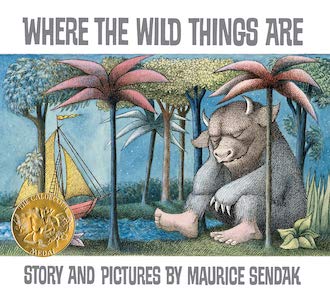
Maybe you’re familiar with this story: A young boy in a white wolf costume is sent to his room after he runs around the house, terrorizing his family, screaming at his mother, “I’LL EAT YOU UP!” After being sent to bed with no dinner, the boy finds himself in a strange new world, filled with vines and trees and terrible creatures he calls the “Wild Things.” He becomes the king, the wildest thing of them all.
When Where the Wild Things Are was first published in 1963 by what was then Harper & Row Books, no one predicted how it would take the world of children’s literature by storm. Adults were puzzled as their children, once reluctant readers, dragged them to the library over and over again to read this story, one that was unlike any other at the time. Within the realm of children’s books, a space previously marked by the conservative, didactic messaging of Dick and Jane stories, Sendak was a breath of fresh air, having written a child protagonist who was as messy and loud and chaotic as he longed to be.
Maurice Sendak broke new literary and artistic ground by turning to the darker realities of childhood, illustrating a blend of anger, frustration, and other complicated emotions among the monsters he painted. Rather than patronizing his young readers, painting an illusion of childhood “innocence,” he respected them by acknowledging the terrifying reality of what it meant to be a child, someone who existed on the margins of life, who possessed both intense vulnerability and incredible insight, unfiltered by adult biases. Sendak, along with literary innovator and legendary editor Ursula Nordstrom, created a book that would become emblematic of the richness and depth of children’s picture books. He explored his own past, and mined and reflected upon his own experiences as a queer, Jewish child learning to grow up in the world. Sendak was, himself, the real deal “wild thing.”
Born and raised in Brooklyn, New York to Jewish Polish immigrant parents, Sendak occupied an “outsider” status in multiple senses of the word. Whether it was a physical “outsidership,” gazing upon the world outside from his bedroom window while sequestered from illness as a child in his home, or an internal one as the descendent of immigrant Holocaust victims and a gay adolescent in an extremely heteronormative world, Sendak could never quite blend into 20th century America’s idea of “normal.”
Sendak was, himself, the real deal ‘wild thing.’
While it is debatable how early Sendak became aware of his own queerness, he understood how his “difference” was perceived by others, saying in an interview, “You know what they all thought of me: sissy Maurice Sendak.”In addition to his attraction to men, Sendak’s natural early queer sensibilities—including his love for art and storytelling, as well as his physical departure from the Western athletic masculine ideal defined by Superman (whose Jewish immigrant/refugee origins have often been erased or “goy-washed” by American media)—created a sense of unease and “otherness” that carried into his work.
It should be noted that when it comes to fantasy and speculative fiction, queer readers and writers have always gravitated toward this medium. For instance, in an interview with Geeks OUT, author and illustrator, Ethan M. Aldridge (Estranged series) states:
There are so many themes and tropes in fantasy that resonate with the queer experience; outsiders finding their way through a strange world, transformations, hidden identities. People find impossible loves, change form and gender, escape from inescapable isolation into a world wider and more strange than they ever imagined. Fantasy is all about a life and a world outside of what we are told is possible, and I think that sense is something that speaks to a lot of queer people. We grew up with those feelings in us, so we gravitated to the stories that told us those feelings meant something true and important and beautiful. From changelings to voiceless mermaids to love-lorn princesses locked away in remote towers, queer people have been using fantasy as a way to express feelings of queerness for a long time.
While Max isn’t explicitly queer in the sense of sexuality or gender exploration, his “queerness” may refer to the older 19th century definition of queer as something “strange” or “peculiar.” As we see in Where the Wild Things Are, Max is considered a stranger to his own family. He is “cast out,” banished to his room for excessive and wild behavior. And like Dorothy Gale from The Wizard of Oz (another icon of children’s media that maintains a significant queer following), Max finds himself in a wonderland that simultaneously terrifies and welcomes. It is in the land of the Wild Things where Max finds the space to experiment, identify, and play. He learns how to be a new version of himself, braver and louder than he was ever allowed to be at “home,” while finding a new sense of self and chosen family—an also inherently queer theme— along the way.
It is in the land of the Wild Things where Max finds the space to experiment, identify, and play.
And speaking of family, like Sendak’s queerness, and his own familial roots, his Jewishness is something also inherently inescapable from his work. As an artist, Sendak frequently turned to his family for inspiration, even modeling the faces of his characters after the ancestors he found in family photo albums. This is seen in his illustrations for Zlateh the Goat and Other Stories, a collection of stories by the Jewish writer Isaac Bashevis Singer.
Yet the inspiration did not stop at transcribing from photos. Sendak also drew symbolically from his family, modeling his Wild Things after his Old World Yiddishist immigrant relatives.
In the piece titled “Moby Dick, Creativity, and Other Wild Things,” Sendak describes a typical day with his family:
They were a huge bunch who would roughly snatch you up at any moment. They’d jabber loudly in a foreign tongue—kiss, pinch, maul, and hug you breathless, all in the name of love. Their dread faces loomed—flushed, jagged teeth flaring, eyes inflamed, and great nose hairs cascading, all oddly smelly and breathy, all dangerous, all growling, all relatives.
In writings such as this, readers can see an obvious connection between the creatures in Max’s story and the “Wild Things” in Maurice’s life, otherwise known as his relatives. If you’ve ever had a relative come up to you and say something along the lines of, “you’re so cute, I could just eat you up!” then you’ve encountered a very Sendakian line of thought, a familial love that is both overwhelming and consuming (sometimes even literally). Yet in early 20th century America, when the model of the emotionally bland nuclear family was aggressively showcased, and conservative assimilation meant purging many “ethnic” modes of family behavior and flavor, Sendak’s family’s vibrant Jewish distinctiveness was likely considered “non-normative.” Perhaps his relatives’ own aggressive mannerisms and affections could even be mistaken for monstrosity.
Golan Y. Moskowitz, literary scholar and author of Wild Visionary: Maurice Sendak in Queer Jewish Context, had this to write about Sendak’s family: “In their inability to express love without eliciting terror, the Wild Things, whom Sendak called ‘foreigners, lost in America, without a language,’ are also like queer people experiencing love and attraction in ‘wrong’ ways, according to a prejudiced society.”In the context of xenophobia, antisemitism, and queerphobia, the different elements of Sendak’s life, the ones he himself regarded with both exasperation and deep love, were demonized, lending further weight to the sense of the “other” encountered in his stories.
Within children’s literature, there’s often a legacy of depicting marginalized groups as monsters, symbolic liminality illustrating the emblematic “other.” A more obvious example of this can be seen within early fairy tales. In her piece “Can I Still Love the Antisemitic Fairy Tales That I Grew Up With?“,Jewish writer Aleksia Mira Silverman notes that many of the classic Grimm Brothers’ stories she grew up with and loved contain a hostile legacy, writing, “I struggle to reconcile how much I love Grimms’ fairy tales with their reliance on antisemitic tropes and the deadly impact they’ve had on Jewish communities throughout history.” Taking in the archetypical witch model within the illustrations of many children’s books and fairy tales, it’s easy to identify the antisemitic tropes taking center stage: the curved noses, the wild, frizzy hair, all of which are classically stereotyped features for Ashkenazic Jewish women.
Consuming these narratives in story after story, it’s no wonder how any child lacking fair skin, reading how their other features, like hair and noses, are described as ugly and evil, might internalize feeling like a monster. Yet there are those like Sendak who have seen this wildness, this “monstrosity,” and turn towards it with compassion and empathy. Unlike most fairy tale stories, where those marked as “other” or different are considered the villains, in Sendak’s stories those marked as the “other” are capable of both loving and receiving love in return. As we see in Where the Wild Things Are, the Wild Things don’t hurt Max, but instead play with him, joining him in a “wild rumpus.” And toward the end of the book, when Max feels ready to return home, his mother, originally presented as the most antagonistic force in the story, is shown to contain multitudes. She leaves a warm meal waiting for her child. And what’s more Jewish than food as a symbol of our love?
And what’s more Jewish than food as a symbol of our love?
In their book, Craft in the Real World: Rethinking Fiction Writing and Workshopping, writer Matthew Salesses writes: “To be a writer is to wield and to be wielded by culture. There is no story separate from that. To better understand one’s culture and audience is to better understand how to write.” Salesses believes the act of writing is never created in an apolitical or neutral vacuum. It is never fully separate from the elements that affect our own lives and stories. While this does not mean every writer’s story is based on their life story, i.e., sometimes a story about talking cars is just about a story about talking cars, it would be limiting to say there is never any influence at all.
Growing up, one of the most useful lessons I learned came from a teacher who suggested that when reading, one should always turn to the back of the book and read the author’s page first. I was initially puzzled by this, wondering how knowing about the author in real life had anything to do with reading their work. Yet over the years, as I learned more about myself as a writer, I also started to learn to read between the lines. By doing so, I saw the richness of the stories I was reading, and the richness of where these stories came from. Sendak’s complicated and intersecting identities are intimately tied to his work as an artist. At the heart of Where the Wild Things Are lies Sendak’s heart: a boy like Max who was pulled between worlds, between his old Yiddishist Jewish immigrant heritage and the hostile, homophobic American landscape he was navigating. He embraced those who were considered “monsters” by the outside world, and in them he found his chosen family. He taught an entire generation that “wildness” need not be tamed by the artificial boundaries of society—that children like Max could simply be themselves, wild hearts and all.
I met Rax King outside of a bar on the first truly cold autumn night of the year, for which we both underdressed. We were wearing identical faux-fur lined denim jackets—albeit in different colors—and, weirder still, had both accidentally inflicted minor-but-nagging injuries to the thumbs on our left hands. From there we wound up on the topic of interior decor and affirmed that, although we do both have animal print duvets, they are at least different animal prints.
From there we landed on a new decision/dictum/lifestyle change that Rax recently committed to.
“I’m only going to wear outfits where at least one thing is an animal print, and preferably more than one, and preferably two different animal prints from different animals.”
She continued, “And the night that I made that decision, I spent $200 on used animal print clothing on eBay. And then the next day, I woke up just like, ‘What did I do?’ And then I had like 10 emails, congratulations on your animal print purchase. And then I was kind of regretting it and then everything arrived and I was like, ‘No, this was right. This feels right.'”
To say Rax demonstrates commitment to the bit here would be to imply that anything Rax does is ever less than completely sincere. As we discuss in our interview below, and as Rax lays out in her remarkable debut essay collection Tacky, the bedrock of tackiness is utter un-selfconscious sincerity. That sincerity might garner ridicule—including, obviously, being labeled “tacky”—but it also leads to a sense of, this feels right. And, sometimes, it also leads to a cool leopard print bedspread.
Rax and I spoke about virtuous shoplifting, identifying the kernel of an essay, “Notes On Camp,” the first-person industrial complex, and of course, Guy Fieri.
Calvin Kasulke: So the subhead of your book is “Love Letters to the Worst Culture We Have to Offer.” But a lot of the culture you discuss is from your adolescence and coming of age. Why that section of culture?
Rax King: Primarily because it’s personally important to me. I grew up with Creed, I grew up shoplifting from Bath & Body Works, these were formative experiences for me.
As I got a little older, it became obvious that these things I liked so much were not cool at all. Other people, who seemed smarter and more worldly than me, who I really wanted to impress, they did not like any of the same stuff as me. And it was a moment of forced reeducation, like I needed to get on board if I wanted to make friends with the cool smart people—which I did, because I was 16 and shallow.
And after long enough time passed and I was no longer in high school, I felt comfortable revisiting all this stuff I used to like, and it turns out all of it is still awesome. So I was right, everyone else was wrong. You can quote me on that.
CK: What were your shoplifting techniques?
RK: I wasn’t super brave with it most of the time, like—nothing with a security tag. I liked anything I could slip into my purse. I really liked the sample makeups from Sephora and whatnot because it was not only easy to steal them but I also felt pretty virtuous about it, like “This is something nobody else is going to want. It’s got 500 people’s other mouths all over it already, I might as well.”
CK: One of the things that you’re really magnificent at is making small moments feel really resonant. I think the average person telling a similar anecdote would leave their audience feeling like, “That’s it? That’s all? That’s what you were driving at?” but you have a gift for making them land. Do you start with those moments and then build an essay around it, or do you start writing about a thing and stop when you hit one of those moments?
RK: No, the little stuff is usually where I do start actually. I feel like the reason we hear so many of those disappointing anecdotes that fizzle out into some tiny little nothing, is that those moments are important to people. Those moments are the ones that stick, I think. Big picture stuff fuzzes out over time, but I’m always going to remember the color of the tracksuit that my dad wore all the time—stuff like that. The stuff that colors in memories is what I think is most important for coloring in a story.
For the Jersey Shore essay about my father, the thing that I remembered first was him calling me every week when I went off to college to tell me, play by play, what had just happened on Jersey Shore that I had just missed. Which is such a boring thing to describe, but it was really meaningful to me and to him both—and I think that if you try to excavate why something is meaningful, you’ll be able to unlock some of that magic in those tiny little instances.
CK: Your essay about a date you had at the Cheesecake Factory achieves something that’s similarly difficult to convey, because you’re telling a story about an event that was ultimately disappointing and kind of boring. Which, by the way, what is your go-to order at the Cheesecake Factory?
RK: All right, settle in. Gotta get the avocado spring rolls to start—and a mojito, because not everybody has them and the ones at the Cheesecake Factory are huge.
Avocado spring rolls as the starter, the Louisiana chicken pasta as the main, and then at that point, you’re going to want to tap out early and get a box for leftovers. They give you two chicken breast patties and you want to save one, plus a bunch of pasta, because you don’t want to fuck up dessert. Then for dessert, peanut butter fudge ripple cheesecake, usually to go, and then I eat dinner all over again when I get home.
CK: That’s beautiful and perfect. Okay, so I want to try and put together a unified theory of tackiness, and I’ve got a couple of questions to hopefully help us get there. The first one is: Who gets to decide what’s tacky?
RK: So I thought about this a lot in terms of camp actually, because one of the things I read as research was “Notes On Camp.” The way camp is described in the essay is as something fairly ordinary, if over-the-top, that you, the viewer, have a private, extraordinary experience of. You decide that the thing is camp.
And for me, something that is tacky is something that you would decide is campy, but you’re too embarrassed about it. It’s not quite out there enough to be campy or to be kitschy, it’s too ordinary for that. So you’re uncomfortable with liking it and rather than make a big deal over how much you like it, the way people did with The Room—you can’t really do that with Creed. Creed is not quite bad enough to be “so bad it’s good,” so you just bury it deep and then it comes out when you write a collection of personal essays.
CK: It’s the wrong kind of gauche or outré.
RK: Right. It’s something gauche that you don’t think you could get a bunch of people on board with. People get together to go see The Room in theaters, there’s a whole culture of it now. There is no such culture with going to see Creed live to watch Scott [Phillips] play that weird ass song he wrote about the [Miami] Marlins. He wrote a love song to the Marlins.
CK: Why are some people repelled by tackiness and why are some attracted to it?
As I got older, it became obvious that these things I liked were not cool. It was a moment of forced reeducation, like I needed to get on board if I wanted to make friends with the cool smart people.
RK: I think it comes back to being, again, embarrassed. It’s more a statement about yourself, to be repelled by other people’s taste, because if you’re not too self-conscious about it then you like your thing, they like theirs. That comic, “Let people enjoy things,” people are very annoying with it now but it had a point. People should be able to enjoy harmless things—they do their thing, you do yours, everybody’s theoretically happy. I think when it comes down to being repelled by other people’s taste, whether the taste is tacky or gauche or too highbrow, all you’re talking about is yourself.
That repulsion is just a function of something you don’t like about yourself, probably, something that you’ve tried to suppress. I’m honestly a little bit repelled by anything too highbrow—I really have to fight the instinct towards anti-intellectualism in myself. And frankly, it’s because smarty-pants types have been really shitty to me my whole life long, it’s got nothing to do with the stuff they like. It’s all my own insecurities and my problems and the reasons they were shitty to me is probably down to their insecurities and their problems and everybody’s just awful all the time. And I think that the thing to do is to just go your own way and mind your own beeswax.
CK: Is tackiness the providence of femininity?
RK: Maybe less femininity than the high femme as an article of being.
CK: Say more about that.
RK: I think it’s possible to partake of femininity in a fairly highbrow way. Little corduroy skirts and all that Madewell shit. That feels totally feminine, but I also feel like that person has no interest in shotgunning beers with me and listening to Puddle of Mudd—that’s not what I’m going to do with that person, it’s two separate femininities.
Looking back on the relationships that I’ve had with women, both platonic and not, I’m consistently attracted to super high femme types who take like an hour and a half to do their hair every single day, who also love dogshit stuff and aren’t the least bit self-conscious about it. I want to party with that person. That’s a fun person. It’s not the providence of femininity, it’s the providence of doesn’t-give-a-fuck high femmeness.
CK: Do you have any tacky icons personally, or just people who you think are icons of tackiness?
When it comes down to being repelled by other people’s taste, whether the taste is tacky or gauche or too highbrow, all you’re talking about is yourself.
RK: I don’t think you can do much better than Fred Durst. Like him or hate him, he made his vision come true for the entire world. Everybody knew “Nookie,” everybody knew “Break Stuff” for a time. That’s tacky power.
He was just—I’m so sorry Fred Durst if you read Electric Literature for some reason, but you are kind of an ugly motherfucker. And he just showed up leaning into the ugly with that terrible facial hair and the baseball caps and the gym shorts, not giving a shit, essentially in fuckboy drag, and people were into it for a short time. He did that. He made that happen for folks. I think that’s a tacky icon for me.
DJ Pauly D from Jersey Shore I would say has a similar, not that self-aware vibe. I guess at this point he’s been making money off that persona for so long he’s got to be much more self-aware than when he first got started—but that hair, and the gold chains, the Ed Hardy, I was like, “Sign me up. This guy is leaning in.”
CK: For some of the people you’re listing also it feels sort of compulsive, it feels like it’s more than sincerity. It feels like they couldn’t stop if they wanted to.
RK: I think that’s important actually. Tackiness, even when it’s diametrically opposed to your own self interest, you can’t stop. Fred Durst cannot stop Durst-ing. He’s going to be that guy until the day he dies. He’s kind of trying to pretend he was always in on the joke now and nobody buys it because we’re all like, “We have affection for you now. Enough time has passed. But come on, you were that guy, you were the guy who didn’t understand why we were laughing.”
I think that at this point, enough people look at me as a person with a compulsion that I’m pretty safe in it now. Nobody thinks I’m doing a bit anymore. For years and years, all I’ve talked about is the disappointing dudes I’ve had sex with and weird conversations with neighbors and the very mundane but also out there shit that happens in the course of a day. And there was a stretch when everyone was like, “You’re making this up for retweets.” And then it just kept going and they were like, “Oh no, she’s a diseased person. Something’s not right.” And they’re right, something isn’t.
CK: Speaking of, you post a lot of autobiographical tweets that are fairly personal, and now you have a collection of personal essays. Did you grapple at all with having an extant semi-public persona, and then writing a book that was going to augment or contrast that persona in some way?
RK: I developed this paranoia that there would be a weirdo, and that weirdo was going to go through everything I’ve ever tweeted in my time on the internet and then cross-check it against my book and find one discrepancy, maybe. And somehow that weirdo and that discrepancy were going to ruin my life. And I don’t even think it exists and I don’t think anybody’s paying that much attention to me, but it’s sort of the process of turning the matter of your existence into content.
I’m consistently attracted to super high femme types who take like an hour and a half to do their hair every single day, who also love dogshit stuff and aren’t the least bit self-conscious about it. I want to party with that person.
The memory is a stupid thing and you’re going to get stuff wrong once in a while, you’re going to harp on stuff until people wonder why you don’t talk about anything else. It becomes a little more personal, I think, than when you’re writing fiction. So I feel very exposed a lot of the time and I have to take steps to make sure the things I write don’t feel extractive to me, because that’s the big gripe that everyone has with personal essays—it’s the lowest paid form of media writing but it takes the highest toll on the person writing it, theoretically.
I’ve never really found that to be the case, it doesn’t necessarily take a toll on me to write about myself, but to have it all come out in a cluster like this, a dozen personal essays—plus I’m tweeting all the time because I’m a diseased person—it’s just a lot of content about myself for people to pick at, should they want to do so. I just have to cross my fingers and hope that nobody’s paying attention to me that closely.
RK: I just think it’s one of the prettiest things I ever wrote. I’m very proud of it. I want to go out on a high note so that if somebody hates the rest of the book, they will hate it less. I hope.
CK: Why do you think that essay resonates with so many people?
RK: I wish I knew. Obviously a lot of people have been in abuse situations themselves. And obviously Guy Fieri has a lot of fans. So I guess I just captured the little crossover circle of the Venn diagram. But it’s not just that, because people are really devoted to it in a way that always surprises me. Every time I post it, it goes viral. And I don’t know, to toot my own horn a little, I do think it’s a good piece of writing, but people are much more into it than I expected when I published it. So I’m always just like, “Yeah, good for you, Rax.”
CK: Are there any essays that almost made the cut that you dropped or that you didn’t finish writing?
RK: Yeah, there was one about blowjobs—like very explicitly about blowjobs—that I wound up cutting and publishing on my Patreon instead. And I’m really glad I did because in the course of recording my audiobook, I realized that I have six essays explicitly about sex all in a little cluster, all in the middle. And it was just like me reading out loud to this very pleasant, very polite sound guy, and we were the only two people in the room, and I don’t think I could have gotten much more explicit without wanting to blow my brains out. So that one didn’t make the cut, and I’m glad.
CK: You saved yourself from having to get extremely, extremely explicit with the sound guy.
RK: In that essay, I referenced a now-defunct porn website called “milk my cock,” and I don’t think I could say the phrase “milk my cock” to a stranger. It’s too much. I have my limits.
CK: Is there anything you’re surprised people have been asking you about over the course of your interviews and events so far?
RK: I guess I was expecting to end up talking more about sex. It comes up so often in the collection, to the point that people on Goodreads are mad at me. They’re like, “This book has too much sex,” and I’m like, “You’re telling me? Buddy, that’s my life that we’re talking about. Absolutely, it has too much sex,” but it just hasn’t come up once. People mostly want to talk about Creed and my dad. And Guy Fieri.
My surprise isn’t just because there’s so much sex in the collection, because whatever, we’re all adults. But for me, sex is kind of the ultimate tacky thing. It’s largely unmentionable, you’re not supposed to have too much of it, you’re certainly not supposed to talk about it in mixed company. So in that way, it is much like Creed.
For me the connection is inextricable between sex and the weird little relationships that I’ve had with various pop culture franchises. One informs the other, inextricably. And it just hasn’t come up and I’m like “Okay, that’s fine, let’s all be comfortable,” but it is surprising.
CK: Were any of those essays difficult to write?
RK: There’s an essay in the book about an affair that I had with a married dude. And that was recent enough that it was still somewhat raw when I was writing it. I was still so pissed off, so angry. But most of the time, sex isn’t really fraught for me. I’ve had enough of it and much of it just friendly like, you shake someone’s hand, you have sex with them, it’s normal. But anything where there’s unfinished feelings business? It felt like summoning a demon to write about it.
It’s pretty common advice to not write from an open wound, and I think that’s mostly good advice—maybe not “don’t write from the open wound” but certainly don’t publish from the open wound, because you’re going to be feeling things during that open wound that you’re not going to feel the same way in six months, and publication is forever.
In terms of how it feels to write from that open wound, it’s really not that different. Either way, I have to access the way I felt about something when it happens, I have to recall what I was thinking and what the other person was doing with their hands.
I think something that personal essayists tend to do is get really precious with the insights that they want you, the reader, to take away, and hammer them home in this self-serious way that I don’t think works most of the time. You want to get there in a more organic way. I don’t think you want the diary approach or the therapy approach, both of which are death for personal writing.
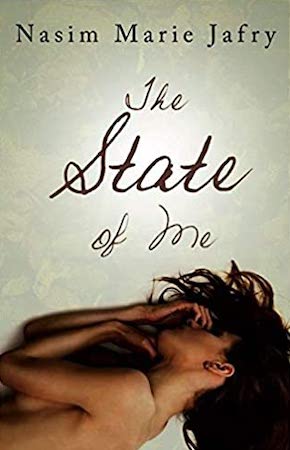
What my head was like in 1991 was a rollercoaster. Thoughts went chunk, chunk, chunk, slow, then they shot down fast and flew around in a loop. At the end of each day I was dizzy. Reading became impossible for me, not just books but things like street signs, too. I knew something was wrong, but I didn’t know what.
Back then I lived with my boyfriend in the second-story apartment of a sagging Victorian. It came furnished with stained library chairs and an iron patio set covered in a layer of greasy dust which we had no interest in cleaning off. I had a job in the back of that donut place on 4th Avenue. All day fruit flies divebombed the deep fryer. I guess that’s what Freud would call a Death Drive. My boyfriend was always telling me about things like the Death Drive and I was always forgetting them, so I was perpetually surprised by what he said. My surprise made him very happy. That was the only way we were a perfect couple, except for our sexual chemistry.
At night my boyfriend and I screwed copiously. He was sexually excited by the burn marks freckling my arms from deep fryer backsplash and my long hair, which he liked to wrap in a knot around his fist, pulling me to one side. But he did make me come, which I guess proves he was good at something. When the sex was over he read Marcuse and made remarks about the revolution, watery after-semen soaking the front of his boxer shorts. He always put his underwear back on afterward, claiming that it was more natural for people to wear clothes. “How?” I asked him, but I don’t remember his justification. He had taken a couple of sociology classes at the local college and had theories about nature and society. He spent a lot of “thinking time” in bed, staring at the planetary rings of a large water spot next to the light fixture. “There are twenty obvious solutions to the national debt, but no one listens to me,” he said. He also had some creative ideas about peace in the Middle East and collective living. He wanted to start a commune, but he was in the wrong decade and couldn’t build anything with his hands.
While my boyfriend was thinking, I smoked weed. When I smoked I could dismiss the surges in my brain as a side effect of being high. I’d pack and light a bowl in my lucky pipe, then stand on a chair in the bathroom and blow skunky smoke out the porthole window. From there I had a God’s eye view of the vacant lot behind our apartment. A spotlight shone on it day and night, but that didn’t deter people or raccoons from doing their business. They all rummaged the garbage; the people also used smokeable drugs, mostly meth. No one ever interfered with the happenings in the lot, and I guess that’s how we all liked it. In those days I wasn’t aware that things could be intervened in or changed. For example, the light from the vacant lot shone into our bedroom all night and made it hard to sleep, especially with my brain going all kinds of chunk-chunk and whooosh. But it never occurred to me or my boyfriend to buy curtains, or even tack up a sheet. Just like it never occurred to me that I could quit my donut job, or leave my boyfriend. There’s something miraculous to this kind of helplessness. It gives you a constant sense of doomed grace. Back then all I had to do to experience miracles was allow for the possibility that I would suffer uncontrollably. As I learned later, even when you think you’re in control you suffer. But then suffering doesn’t feel miraculous at all.
Soon my boyfriend realized there was something wrong with me. I began forgetting the names of animals and colors. I experienced a cool mist pouring from the cracks in the floorboards. When I looked down into the deep fryer, joyful faces shifted in the dark oil.
“What’s happening?” my boyfriend said once. “Why are you making that noise?”
“What noise?”
“You’re like a cat,” he said. “Yowling.”
I hadn’t known I’d been making a sound. I’d thought the screeching was inside my head.
“Don’t you want to screw?” I flapped my legs open so my boyfriend could see up my skirt.
“Don’t try to distract me,” he said, but then of course we had sex. Though he meant well, he had failings.
I was at work when the ambulance came to get me. The faces in the oil had been telling celestial jokes. Then I fell asleep. I woke up a long time later in the hospital with a male nurse standing over me and repeating my name. The nurse said I’d had an aneurysm, something with lesions. They’d carved my head like a pumpkin, pulled the top right off to go in after the clot. They took out all kinds of flotsam while they were in there: short term memory, gobs of my childhood. I lost the peripheral vision in the right side of both my eyes. They left behind some pointless things, like Sigmund Freud.
After that I had to work just to do ordinary things other people never think about. I didn’t even remember how to tie my shoes. Every word I read or spoke was a knot I had to loosen.
A neighbor brought me flowers. My boyfriend visited and ate the pudding cup from my lunch. His car had broken down, so he was riding a bike. “Cars are slavery,” he told me. “Now I’m a free man.” He’d been reading Gramsci’s Prison Notebooks and they’d inspired him to keep a similar journal “where the prison is metaphorical.” I didn’t show him my own notebook, which contained pages of shaky transcriptions of mysterious words I’d once known. That was in the rehabilitation center. The nurse told me I was lucky to have this rare condition because the state paid for my treatment. “Most people get dumped out on the street,” she said. I saw an image of myself as a tumbleweed blowing around the pavement while my boyfriend lectured me on the plight of the worker.
Once the physical therapist was quizzing me about simple numbers while I tried to walk backward. I kept telling her I didn’t know any answers. “Reach,” she said, “You have to want it.” That’s also what I told my boyfriend, just before we broke up: “You have to want it.” “Want what?” he said. He was still wafting up toward the ceiling, powered by his thoughts. With all the brain power I had left I could barely crawl. He was predictably depressed by my shaved pumpkin head and hospital vibe. I was too tired to open my legs. So between us there was nothing left to like. “You have to want it.” What did I want? I picked my direction and ran. The direction I ran in was away from him. I want to say it was upward, but I’m not sure there’s such a thing. With parts of my brain missing it was hard to tell direction. Sometimes I forgot whether my eyes were open or closed. But maybe there’s not much difference anyway.
The millennial voice in fiction has been oft-discussed now for some time. Some have argued the voice is best seen in the sparse prose of Sally Rooney. Some, that it’s in the more voice-driven work of Lauren Oyler, Halle Butler, and Ottessa Moshfegh. It’s a voice that can resemble anything from a resurrected Jean Rhys, Marguerite Duras, or Kathy Acker contending with the modern world—one that reveals a person (often in the age range of “millenial”) who may be morally dubious and cerebral, tender but barbed. She talks sex candidly, and can be called selfish and unhinged. She is my favorite. She’s also almost always white.
I was in college when I first started writing fiction, and I was often told that my work had too many “different” themes going on. It’s true that my favorite books were two different sub-genres: the intergenerational, diaspora novel and the alienated, flawed, and cerebral female narrator. In the former, my cornerstones were Julie Otsuka, Sandra Cisneros, Jhumpa Lahiri, Ruth Ozeki, and Amy Tan. With voice-driven works, my shepherds were Mary Gaitskill, Aimee Bender, Amy Hempel, Sheila Heti, and Lydia Davis. I became extremely frustrated that there was no Venn diagram between these two circles, especially as my workshop classmates told me that my focus on identity and my narrator being Turkish and American “crowded” the other themes in my work, which were often these gently manic narrators contending with modern-day New York City, their families, and their sexual desire. Choose one, people would write to me. Especially if a story included a single mention of Islam.
This was between the years of 2012 and 2015. Today, I’m delighted that an intersection has begun to emerge in this venn diagram, an intersection that pushes against the idea that a “millennial” and “relatable” novel has to feature a white, strictly-American or Western European narrator.
In this stellar list, the narrators are similarly dubbed a range of darkly funny, irresponsible, or obsessively analytical. These narrators, kids of immigrants or immigrants from a young age, resist the intergenerational diaspora narrative that is often expected of them, while also reading as different from the more popular, white millennial narrator. Parents are ever-present, race is explored with a razor-sharp eye, sex and dating is really, very compromising—especially if it’s with a white American—as is any behavior that jeopardizes your chances of both assimilation and success. Identity has no easy answer and is instead an ongoing question. There is always a deeply rooted tension regarding home and belonging, and narration can easily slip into another time and across the map to the character’s respective motherland. Most notably, there’s duty and guilt: the expectation that you have to do something worthwhile with the life that your parents gave so much up for.
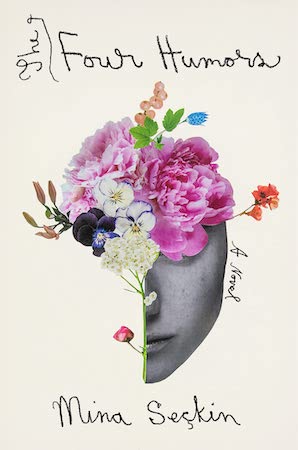
In my debut novel The Four Humors, I write towards this tension. My narrator, Sibel, is in Turkey for the summer to care for her grandmother, grieve her father’s unexpected death, and study for the MCAT. Her white American boyfriend tags along. The big problem is that Sibel has a chronic headache, and all she does is obsess over ancient medicine and watch soap operas with her grandmother. She’s an alienated, millennial narrator telling an intergenerational diaspora story—and it isn’t until she stumbles across a family secret that she’s able to shed her delusional skin. Does she find out how to live her life better? Hmm. Does anyone?
All of these narrators are asking this same question: what the hell are we supposed to be doing? Where do we belong? How, as Sheila Heti wrote, should a person be?
Candace Chen is a first-generation 20-something who is still working at her office in New York City when the Shen fever-induced global apocalypse is well underway. Severance is zombie apocalypse meets dystopian pandemic meets corporate millennial horror show, told through the candid voice of Candace. Whereas most dystopian narratives serve up an run-of-the-mill, “relatable” (white) hero, Ling Ma gives us the very unique Candace, whose complicated understandings of home and belonging underpin this richly layered, prophetic novel.
Jane is 18 and pregnant in Los Angeles when she delivers pizza to Jenny, a woman who wanted pickles as a topping, a woman with whom Jane promptly becomes obsessed. Jane’s also living with her devoted mother and smothering boyfriend, Billy, while grieving her late father’s death—and yeah, she’s drinking while pregnant.
Pizza Girl is a propulsive and sublime ode to the unexplored taboos inherent in coming-of-age, seen through its explorations of motherhood, addiction, queerness, and grief. Hope is the pulsing heart in this idiosyncratic, spectacular debut, seen most heartrendingly in Frazier’s description of the Korean phrase “han”:
“Han was a sickness of the soul, an acceptance of having a life that would be filled with sorrow and resentment and knowing that deep down, despite this acceptance, despite cold and hard facts that proved life was long and full of undeserved miseries, ‘hope’ was still a word that carried warmth and meaning.”
An epic and terrifically funny love letter to literature, Call Me Zebra follows self-named Zebra, an Iranian refugee and émigré, who is on a quest to write a manifesto of every book she has ever read in order to make sense of her chaotic life. Zebra, who was in-utero when her parents fled Iran, traverses from Barcelona to New York City—all while questioning exile, identity, literary theory, history, and mortality in a wonderfully-increasing histrionic and obsessive tone: “I thought to myself, I am among the loneliest of this pitiful world; all the other Hosseinies are dead.” She’s also stumped by love—especially when she meets the charming Ludo and his clique of fellow exiles. Her best friend? A “mongrel” bird she steals from a professor’s apartment.
Obscene and heart-rending all in one, Sour Heart is a frank and kick-ass example of the kind of hell you can experience being a kid of immigrants. The collection of stories highlight the experience of first-generation Chinese American girls growing up in New York City in the 1990s; their dedicated parents, professionals and artists back in China, share tenement housing and one another’s dress shoes—even if four sizes too small. The devotion paid to coming of age is unparalleled—the supposedly gross, weird, and ugly, it is all turned beautiful in this collection.
Dryly funny, whip-smart, and heroine-addicted, Maya’s candor on the page about sex and addiction is groundbreaking. Just one page after Maya’s having sex (“He fucked me from behind. Felt like a baseball mitt, stretching.”), she’s describing her identity with bluntness and veiled conflictedness:
“I regularly told people my father was white. Not because of some deep-seated issue with being Indian, but because I didn’t know much about Indian culture, and I felt more American than anything else.”
Thandi is in college when she loses her mother to cancer, inheriting an emotional and intellectual burden of how to carry on while experiencing profound loss. In powerful and lucid vignettes that incorporate visual art, photography, charts and graphs, What We Lose explores questions of grief, identity, race, and love with a poetic and analytical eye. Identity is an ongoing question in this novel, as Thandi, raised in Philadelphia to an American father and a South African mother, feels like “a strange in-betweener.”
The unnamed narrator of Chemistry is a Chinese American graduate student studying synthetic chemistry, but her research is not going well, she doesn’t know whether to accept her boyfriend’s marriage proposal, and she is really disappointing her parents. Balancing dry wit and delectable shards of information on anything from the composition of minerals to the belief among Chinese mothers that babies pick their own traits in the womb, Weike Wang’s intimate debut is a neurologically-charged and fiercely meditative story of how an emotionally and professionally unmoored young woman navigates a world where science no longer holds the answer.
Raw and obsessive, Dreaming of You is a novel in verse that feels like a macabre sex education manual taught by your best friend. Melissa is a young Latinx poet who decides to bring popstar Selena Quintanilla back to life—all while experiencing panic attacks on the F train and receiving calls from her father about whether she’ll consider becoming a doctor now that NYU medical school has waived its tuition fees. This genre-defying novel is alive and spectacularly horny, with chapter titles like “I’m So Lonely I Grow A New Hymen” and “What If Selena Taught Me How to Fake Orgasms.” Family is as central to this narrative’s skeletal system as millennial angst and Internet culture: they fuse together and create a magical, death-defying body.
You Exist Too Much opens in Bethlehem with our unnamed narrator, 12 years-old at the time, walking by a group of men drinking tea. She’s with her mother and uncle, and she’s wearing shorts when one of the men calls out, “haram!” Haram means forbidden in Arabic, and Zaina Arafat’s debut novel deftly probes the constraints and bounds that society imposes on a queer Palestinian American woman who has always been told—even and especially by her mother—that she desires too much, and too much of the wrong thing.
Jing Jing, a recent college graduate with an infectious and understated sense of humor, works as a technology reporter in Silicon Valley, where she’s one of the few employees of color and is trying to get a raise. When she decides to move to Ithaca with her white boyfriend for his graduate school, she begins tracing the history of racism against Asians Americans in the United States through archival research and exploring the subtleties of her own interracial relationship and complicated family story. The result is a probing and exceptionally wise story of a young woman in search of what she wants.
Yeah, okay! Technically Selin—The Idiot’s idiosyncratic, charming, and cerebral narrator—is not a millennial. But Batuman’s depiction of a Turkish American’s first year of college and foray into the world wide web in 1995 serves as a modern-day manual on how to navigate language—especially when you have an all-consuming crush on a senior with a girlfriend and you’re communicating via the digital landscape.
Selin’s quest is understanding language: she takes Russian, teaches ESL in Spanish, buys a new coat because it reminds her of Gogol’s, and ultimately follows her crush to Hungary for the summer. For me, Elif Batuman’s fiction was the first time I saw my own identity as a Turkish American person in literature, and The Idiot—a stupendous novel of ideas and observations that will make you laugh and nod in universal recognition—will always serve as my foundational text.
I love writing in the wintertime, but what I love even more is when that winter is sunny and brisk, no snow or polar vortices, and I can take walks to rejuvenate and stay productive. Pray, tell, where can a writer be assured of such an experience? Why, Florida, of course—where locals call this time of year “snowbird season.” Temperatures won’t be warm enough for you to swim, but remember, beaches and pools would be too much of a distraction. You’re there to write, possibly in an outdoor café under a heat lamp, thus avoiding a nasty slip on ice outside of your apartment.
But what’s urgent, in particular, about coming to Florida to write? (After all, if it’s merely the warm sun you seek, you might just as well book a hotel in Tulum). Consider how many titles by Florida-based writers have leapt to prominence in recent years, from the wild and strange realms of Jeff Vandermeer’s Area X trilogy, to Lauren Groff’s Florida, to the gritty, dream-like zones of the urban subtropic in Dantiel W. Moniz’s Milk Blood Heat and T. Kira Madden’s Long Live the Tribe of Fatherless Girls. Such authors join a long list of prize-winning literary forebears, including Marjorie Kinnan Rawlings, Zora Neale Hurston, and Harry Crews.
Since colonial times, Florida has brimmed with opposition, not just politically but environmentally—only today the divide between its ecological wonders and the encroaching man-made sprawl grows evermore stark. Compelling stories arise out of opposition; perhaps this very conflict seeps into the writing of those who seek to capture that experience. Between January 2020 and April 2021, over half a million people have moved to Florida—and that’s just the data available from those who have changed driver’s licenses. At the same time, the head of the Everglades Foundation has stated that Floridians face “the last decade to restore the Everglades.” As the influx of new residents shows no sign of abating, water remains just one area where the tensions are poised to become more fraught. How might creative writers respond—what kind of confrontations and repercussions might you imagine, as humans and ecosystems collide?
Here’s a list of Florida residencies to get you started, with opportunities for professional writers from emerging to mid-career:
This residency takes place in the bungalow where Jack Kerouac penned the Dharma Bums, and was living when his iconic novel On the Road was published to wide acclaim. Each year, four emerging writers are selected and each given a three-month-stay in the house, free of charge, and a $1000 grocery stipend. The bungalow is located in a charming neighborhood of Orlando called College Park, and in the wintertime, central Florida offers an abundance of arts and culture activities going on. Applications are accepted January 1, 2022 to March 20, 2022.
Several times a year, the Atlantic Center for the Arts in New Smyrna Beach offers three-week Residency Programs in different disciplines under renowned Master Artists—including recently, US Poet Laureate, Joy Harjo. The Master Artist in each discipline decides the basic structure and requirements for the session and chooses the eight Associate Artists who are invited. Residencies are process-based, and participants may work on individual or group projects, including interdisciplinary collaborations, in a collegial environment. It’ll be too brisk to jump in the Atlantic—unless perhaps you’re Canadian—but beach strolls in crisp weather, free of crowds, are unparalleled (and sure to make Northern friends jealous). The Center itself is located on a 69-acre ecological preserve, near the incredible Canaveral National Seashore, arguably one of the most magnificent beaches in the country. Application deadlines vary.
This residency takes place on the heels of winter, but with climate change, who knows anymore? If you’re in the Midwest, you may want to plan on escaping that inevitable spring blizzard by applying for this two-week residency in St. Pete, near Tampa. The fellowship recipient will receive accommodations for two weeks at the Craftsman House on Central Avenue in St. Petersburg, lead a brief Master class or workshop, give one public reading, and write a blog post about their experience. St. Petersburg itself is a hip, artsy area with lots of cafes, galleries, and night spots, and funky, longtime Florida wonders to explore such as the Dalí Museum and Sunken Gardens. As with the Kerouac Project, LitSpace is keen to support writers early in their career. The residency is two weeks long, from March 28 to April 10, 2022, and the application deadline is February 1st.
What could be more fitting for a writer-turned-snowbird than a residency in South Beach? How about a hotel with a book collection in every room, a curated library, and a writer’s desk that once belonged to a three-time Pulitzer Prize finalist? The Writer’s Room at The Betsy Hotel serves as a working studio space for professional writers and artists to create work and share with the community. The residency was founded in honor of acclaimed poet and Pulitzer finalist, Hyam Plutzik, who was the father of The Betsy Hotel owner, Jonathan Plutzik. Writers stay in the room free of charge, usually Sunday through Wednesday (sometimes longer), in exchange for writing a guest blog post, presenting their work to the community, and donating a copy of a recent book to one of the hotel’s libraries. If the cold snaps stay away, you can relax and write on the beach.
For what may be the wildest writing residency in Florida, the Artists in Residence in Everglades (AIRIE) program invites professional writers to live and write in the Everglades for up to one month in a furnished apartment near the Anhinga Trail, Royal Palm area, and Park Headquarters, a short drive from Homestead. Residents are responsible for their own food, must give a public presentation about their work, and donate a piece created during their stay to the park for their collection, and/or one-time rights for the publication of a literary work. Residents are chosen based on merit and how a candidate’s work can advance the mission of Everglades National Park and the National Park Service. Head’s up to prospective snowbirds—the applicant pool is competitive, and winter being the cooler, drier season is the most highly sought after. You may want to try for November, March, or April to immerse yourself in alligator-watching and python-spotting. Since Florida Governor Rick DeSantis recently stood on the edge of the Everglades with a snakeskin football, calling for people to hunt and kill as many of the invading pythons as possible in what’s now been dubbed the “Python Bowl,” you can rest assured you’ll have no shortage of material. Applications are accepted annually from April 1 to June 1.
Can you imagine yourself exploring and writing on 450 gorgeous acres overlooking Biscayne Bay? This lesser-known but competitive studio residency program is open to artists across disciplines, literary writers included, and poses a unique opportunity for those who’d like to experience an inspiring, extended immersion in the Miami-Dade area. The award includes a studio space on the historic 1920s estate of Charles Deering, which is listed on the National Register of Historic Places; the extensive natural preserve and two-house museum is one of South Florida’s major cultural sites. Studios are air-conditioned with private bathrooms, and residencies are awarded for a period of one month up to one year. The program states that “non-local, traveling, out-of-state, and international artists are welcome to apply,” however, applicants should note that the award is for day use of studio space only, and does not include local accommodations, transport, and funding. Applications are open annually in the fall.
Perhaps you know you’ve made it when you’re invited for a stay at The Hermitage, a historic beachfront homestead (i.e., idyllic beach cottage) on Manasota Key. Fun fact of its history: in the 1930s, the property operated as the Sea Island Sanctuary; a brochure boasted “the isolation of our location permits the practice of nudism 24 hours a day, if desired.” Today, the restored cottage is about tranquil retreat, and nothing getting between writer and pen. There is no application process, and selection of mid-career and established writers is by nomination only—this is one of those residencies you ought to put down on your wish list. As for the nudism, if one is so fortunate to be awarded a residency fellowship, perhaps that’s left up to you.
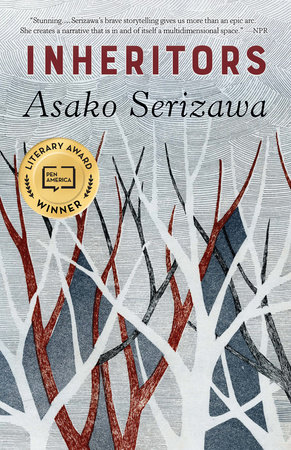
Take a kaleidoscope, peer inside its lens and turn the dial: the jeweled-mosaic pattern within deforms and reforms anew. Asako Serizawa mirrored her debut short story collection Inheritors after this complex design. Out of chronological sequence, the thirteen short stories locate twelve related characters across 1868 (the Meiji Restoration) to 2035. A grandmother wanders the streets of California, marking her past by the kinds of tomato plants she’s grown, as her memory takes flight. Then, a young daughter witnesses the dissolution of her parents’ marriage when her father’s identity is completely overturned during their family trip to Japan.
Other stories experiment with form, mimicking official historical documents. A one-sided transcript about comfort women supplies only the subject’s answers; a police interrogation file stacks evidence against a boy for a Communist assassination plot; the last flight log of a young pilot records his last days, hours, minutes.
At first, their connections are unclear, so each rereading offers a fresh revelation about a character glimpsed or refracted through the memory of another. The family tree of five generations included at the beginning is helpful to orient oneself and navigate the timelines, connections, and perspectives scattered across the globe.
“Yet the fully enlightened earth radiates disaster triumphant,” wrote Theodor Adorno and Max Horkheimer in the aftermath of the Holocaust and Nazi fascism, a consequence of the Enlightenment’s seductive notions of human progress and superiority. This quote serves as the epigraph to Inheritors, which grapples with Japan’s fascism, among other things.
Given the fraught relationship between Japan and the countries it occupied—Korea, Malaya, Manchukuo, and islands across the Pacific Rim (for context on Singapore and Malaysia, Tash Aw reviewed the collection for the New York Review of Books)—as well as the US and its global hegemony, Serizawa’s Inheritors is a welcome corrective and a deeply-considered, impressive debut. Serizawa complicates the cut-and-dry categories of victim and perpetrator by showing how one can so easily slip into being either. Oddly, for a book on horrific human violence, the collection gave me hope for the possibility of reparations, restitution, and light. With its myriad voices, Inheritors opens space for more stories effused with empathy, repelled by rather than bound to triumphant resolution.
Esther Kim: I first heard of Inheritors from my partner, who came across your book atLit Books, an indie bookshop in Petaling Jaya, Malaysia during the early pandemic days. He texted me a photo of the author’s note at the end, which immediately made me want to borrow it.
So I want to start with a question at the end, the bio that mentions you grew up in Singapore and Jakarta. Can you tell me about your childhood in the cities, and how they may have shaped your thinking on this subject of World War II?
It’s difficult to talk about the trauma of a perpetrator because you don’t want to end up excusing their actions. And yet, these are people who have done these things, and they live with this thing.
Asako Serizawa: Because of my father’s job, we left Japan when I was one. And I lived in Southeast Asia until the middle of high school. I think my parents assumed that we weren’t going to be there very long, and this was an opportunity for me to learn English. When kindergarten started, I essentially entered the British-based international school system and got this colonial type of education, so my knowledge and understanding of the history of the region was general and pretty vague until we returned to Japan. This was also the height of Japan’s economic dominance, so I never really got confronted with this history even though I spent my early years in Southeast Asia.
The region is disfigured by American, European imperialism and colonialism, and more recently, Japanese imperialism and colonialism and certainly invasion and occupation during the Second World War. When I started to learn this history when we returned to Japan, it was shocking to realize that I had lived in this area for so long, and I had the privilege of not really knowing that much about it.
That experience of finally learning about this history stayed with me and really got me thinking about institutional, systemic, or structural collusions that allow for this muting of certain stories.
In Japan, World War II is a ubiquitous topic. Growing up, we returned to Japan to visit my grandparents. The war was such a reference point, especially for that older generation, and so it was always a topic. It was always on TV—and it’s a fraught history—so it’s always on the news. Yet there’s this curious silence around it. My grandparents lived through the war, and my parents grew up during the American occupation, but they never talked about that history. They’ll mention things like, “Oh, you know, war is bad,” but they never really talked about their experiences.
EK: You’ve mentioned in an excellent interview for Asian Books Blog that this collection took 12 years to write. In your author’s note, the line I really loved was where you say, “What I can say is my concern was less to capture a time, place, or event than to responsibly represent that time, place, or event.” And that word “responsibly” really stuck out to me because that suggests there’s also an irresponsible way to write this. What was it like to apprehend these stories?
AS: This book was written as a counter-narrative to several different kinds of official historical narratives: the sort of triumphalist American narrative on a successful democratizing mission; the Japanese ultra-nationalist narratives that tend to downplay or outright suppress atrocities to really create a streamlined, convenient history. All of these things have this way of presenting a history with a clear beginning, middle, and end that serves their particular political viewpoints.
That experience of finally learning about [the history of Southeast Asia] got me thinking about institutional collusions that allow for this muting of certain stories.
So this is partly why I wrote my book as an interconnected collection, rather than a novel to resist that representation of history. Because in the end, this history isn’t necessarily linear, in the sense that there isn’t a clear beginning, middle, and end.
A huge question for me was how to access the various stories and narratives within the history. Some stories didn’t emerge until much later, for example, or certain stories are the voices that are suppressed or repressed. The question then was how to access and represent these stories and how these are all interconnected.
The other part I have an investment in centering—trying to get as much of—the complexity of the context into these stories because I think there’s a way in which this history—or any history—is streamlined, which means that there’s a lot of omissions. I have an investment to get those back in and also create a space for more stories because I think that there are many, many, many, many stories to be told about this time that have been omitted, suppressed, silenced, or repressed. When you have a collection, with discrete pieces like this, hopefully, it’s invitational for other people to add their stories around this history.
EK: I found I learned so much through Inheritors about certain darker aspects of Japanese Imperialism, such as the experiments on humans in Manchuria (“Train to Harbin”) and the Korean miners who tunneled through Japan (“Luna”). Were certain characters’ minds more difficult than others to enter or write?
AS: I try to find characters that allow me to explore the complexity of the situation, and so, it’s funny, each character had their own challenges. Perpetrators are always tricky to write because I certainly didn’t want to end up inadvertently justifying or excusing war crimes, for example, but for me, it was imperative to lend that humanity to the character.
Going through all of this material, you realize it’s really a privilege to think “We wouldn’t do these things. We wouldn’t commit these crimes” or “How can one do such horrible things to another human?” And we can sit here thinking, “Oh, we would never do this.” But that’s really not the case.I mean, there are definitely sociopaths. There’s no doubt, but I think that many people were just ordinary people who would have never imagined doing these things. And I think one thing that you hear over and over again is these people’s astonishment at themselves.
There was a documentary featuring interviews with all these Japanese war criminals that came out a number of years ago. I think it was called “Japanese Devils.” It was really disturbing, not only because you’re hearing all of these horrible and really inhuman things that people were doing to each other, but the other part was just how blank these people were when they were talking. They look completely stricken. Done stuck in a particular place. It was one thing I didn’t expect to see, and I realized that there was a trauma there. These were traumatized people who had basically bifurcated themselves.
It’s really difficult to talk about the trauma of a perpetrator, the war criminal, again because you don’t want to end up excusing or justifying their actions. And yet at the same time, these are people who have done these things, and they live with this thing. And what do they do with this, these stories, these experiences, these memories? There’s really no room for these people’s stories in the aftermath. Yet it’s crucial to understand them because it’s so easy for a society and for all of us to scapegoat these people and feel like, “Well, you know what, we’re done with these criminals,” and the society is safe. It’s easy to do that, but any of us could occupy that position, given the pressures.
EK: The collection excels at complicating the cut-and-dry categories of “the oppressed” and “the oppressor” (or perpetrator and victim). For me, the short story “Pavilion” illuminates this with the discovery of Seiji and Masaaki’s shared parents and their discussion of fate in Borges’s The Garden of Forking Paths. What were some of the questions you hoped to explore with this pair of characters?
AS: It gets at one of the book’s gravitational cores for me: the issue of individual agency, alongside personal and collective responsibility, and the entangled intergenerational consequences of imperialism, colonialism, and war. The gnarly family tree that makes up the spine of the book is, in my mind, an expression of this history and its violent cleaving, together and apart, of people, families, nations, and their indelibly etched psychic spaces.
Is genuine healing possible? What would it look like, and what would it entail? And where do we start, not just collectively but individually—personally?
And “Pavillion,” which brings together two strangers, seemingly from opposite sides of the oppressed/oppressor divide, who, as you said, discover their shared parents, is, on one level, an exploration of their gridlocked connection, and the violence, as well as the unresolvable cruelty, inherent in their “blood” ties, their inseparable “familial” roots. On another level, “Pavillion” poses, and the characters attempt to answer, the unanswerable question that haunts not only this story but the book as a whole: is healing, genuine healing, possible? What would it look like, and what would it entail? And where do we start, not just collectively but individually—personally?
EK: Lastly, there’s a short story writer, South Korean writer Choi Eunyoung, who I wanted to recommend to you because she has a similar aesthetic and wrestles with similar questions. There’s one short story “Xin Chào Xin Chào” in her collection Shoko’s Smile in particular about South Korea and Vietnam from a child’s perspective I’m reminded of.
AS: Have you read Elaine Chiew’s The Heartsick Diaspora? She’s a Singaporean Malaysian British writer. It’s one of the short story collections I read during the pandemic that I really enjoyed. I hope that more stories emerge from this period, especially from Southeast Asia, and enter the US and the western part of the world.
The world of children, aburst with animal energy, strikes only children like me as strange and perhaps a bit vulgar. So we observe. Our lack of siblings makes us unlike our peers. We feel pride and embarrassment at our exceptionalism. Our relationships with our parents tend to be more intense. In nuclear families, our parents outnumber us. We form one leg of a love triangle, and usually we have a favorite parent. We vie with the other parent for our preferred parent’s attention. We know that if both parents are angry at the same time, we have no friend in the home. Only children, if we’re lucky, float through childhood on a double-cloud of parental love. But then, as only children age, we survive our close family. We might find ourselves alone in the world.
Miriam, the main character in my linked story collection Mad Prairie, loses both her parents while she is still in college. She is left vulnerable to bad ideas—her own and those of others. Only children have a reputation for softness, but I’d argue that’s untrue. We engaged with the world of adults early, and that leaves us, if anything, too knowing. Miriam’s greatest mistake is outsize faith in herself. When confronted by structures she can’t understand, in a small town filled with secrets and supernatural energies, she is slow to reach out and find help.
The following seven novels spotlight facets of the experience of the only child—fierce and complicated relationships with parents, friends so close they resemble family, premature adulthood often followed by regression. A good main character is self-possessed, they look at the world around them with a measured gaze and can comment on events in the narrative to add layers of complication or elucidation. Only children make great main characters.
As Jamaica Kincaid’s Annie John opens, the titular character is a child who lives on the island of Antigua. She loves her mother more than anything, and nothing pleases her more than her mother’s care for her. Her father, she could take or leave:
“When my eyes rested on my father, I didn’t think very much of the way he looked. But when my eyes rested on my mother, I found her beautiful… what a beautiful long neck, and long plaited hair…”
The novel tracks Annie’s growth from childhood to adulthood, which also, both surprisingly and astutely, reads like the end of a long love affair with her mother. Annie’s father works all day as a carpenter, leaving Annie and her mother to tend the house or bathe together with medicinal bark and leaves.
Annie’s harmonious relationship with her mother is disrupted when Annie’s mother encourages Annie’s independence. She encourages Annie to pick her own fabric for a dress, saying, “‘It’s time you had your own clothes. You just cannot go around the rest of your life looking like a little me.’” Annie views this suggestion as a brutal betrayal, but then, on her own, she begins to find her mother’s love suffocating. Annie enters school and develops interests beyond her mother—secret friends and possessions her mother would disapprove of, like a collection of marbles won in unladylike competition. As Annie grows up tall and long-limbed and beautiful, she uncannily looks more and more like the mother from whom she desperately seeks liberation.
Bee, the 13-year-old only child who narrates Maria Semple’s Where’d You Go, Bernadette, is brilliant, which is no surprise considering her parents. Her father, an engineer at Microsoft, delivered the “fourth most-watched TED talk” of all time about a tiny wearable device he invented that lets users move objects with their minds. Her mother, Bernadette, won a Macarthur award for her work in sustainable architecture but now lives a reclusive, phobic existence in the family home, a decaying girls’ school she had planned to renovate. Blackberry brambles poke through the floors, and Seattle’s rains penetrate the roof. After a failed intervention, Bernadette disappears, and Bee determines to locate her.
Just as Bernadette combined readymade materials like salvaged steel beams, trimmings from landscaping, and discarded doorknobs in her buildings, Bee presents her narrative as an assemblage of gossipy emails from parents at the private school Bee attends, meeting notes, press releases, letters, and magazine articles. Where’d You Go Bernadette moves propulsively due to the mystery at its heart, suggested in the title: Where is Bee’s mother? Is she alive or dead? Bee is convinced she knows the answer, and we readers fly through the pages to see if she is right.
While Bee and Annie find love and undivided attention at the center of their small families, Patrick Melrose, the main character in five of Edward St. Aubyn’s semi-autobiographical novels, faces a much thornier situation. As the first in the novel series, Never Mind, opens, Patrick’s father is methodically torturing ants in the garden of the family’s fancy estate in the South of France. Five-year-old Patrick courts death by jumping on the rotted wooden cover of a well, as vulnerable to his father’s predations as the drowned ants. Patrick’s mother mixes alcohol with pills and buzzes away in her enormous Buick.
Patrick’s father carries his noble title to the marriage, and his mother brings the wealth. Neither offers love. Unhappiness fogs the scene: these are rich people we don’t envy, and we see in hideous detail how alone and vulnerable Patrick is in his home. Never Mind takes place over a single day, during which an act of unspeakable horror committed by Patrick’s father follows Patrick through the decades, and novels, to follow.
The unnamed young adult narrator of Ottessa Moshfegh’s My Year of Rest and Relaxation finds herself at loose ends. Her parents, her only family, died while she was in college, and now, she’s been fired from her job at an art gallery due to frequent naps in the supply closet. She believes in the power of sleep, not merely as a side-effect of depression, but as a goal all its own. She maintains unconsciousness or semi-consciousness for longer and longer periods, with the help of a psychiatrist who makes free with the prescription pad.
Her only friend, Reva, is also an only child, and Reva’s mother is dying of cancer, just as the narrator’s father did. The narrator calls herself an orphan and says of Reva, whom she doesn’t like: “I imagine this is what having a sister is like, someone who loves you enough to point out all your flaws.” The novel takes place on the cusp of 9/11, where the narrator’s personal tragedy and desire to cocoon and emerge reborn is soon to be overlaid by national tragedy, as the sleepy United States of the early aughts wakes up to pain one morning in September.
Nothing to See Here by Kevin Wilson also pairs two young women in their twenties who have a faux-sisterly bond, “something weirder” than friendship. Lillian, the only child narrator, earned a scholarship to a fancy prep school her single mother never could have afforded. Her roommate Madison, heir to a department store fortune and only daughter in a family of four boys, gets caught with drugs. Madison’s father swoops in to offer Lillian’s mother money if Lillian takes the fall for Madison. Lillian cops to the drugs and gets expelled.
Lillian has remarkably low expectations of her loved ones, so she doesn’t take her mother’s, or Madison’s, betrayal personally. Lillian and Madison have stayed in touch through the years, as Lillian landed unceremoniously back in her mother’s attic, working two low-paying jobs, while Madison married a wealthy senator with presidential ambitions and a grand estate. Improbably, Madison now requires Lillian again, this time to help address a unique situation: Madison needs a nanny for her stepchildren, who burst into flames whenever they are angered. This trait is incompatible with her husband’s goal of higher office. Voters like their elected officials to have a normal, non-incendiary family. Will Lillian put aside her own best interest to help Madison? The novel includes an exquisite scene of one-on-one basketball, where years of resentment get worked out on the court.
Mexican Gothic by Silvia Moreno-Garcia is, as the title suggests, a contemporary Gothic novel, complete with a huge yet claustrophobic house haunted by a bloody history, young women in peril, and an evil patriarch whose noxious presence seems to seep from the walls. The main characters, Catalina, an only child and orphan, and Noemí, are cousins. Catalina’s aloneness in the world has made her uniquely vulnerable to landing in bad situations. Luckily, she has Noemí on her side.
Noemí travels to the damp, dismal house of Catalina’s new husband’s family and suspects that Catalina’s ill health, originally diagnosed as tuberculosis, has a psychosomatic component. The truth is even darker and wilder. As Noemí’s own dreams grow more and more powerful, she is convinced that she must get Catalina out of the house, but the young women find it extremely difficult to depart. The house, the site of the deaths of hundreds of silver miners, holds supernatural power over its residents. Some families are impossible to escape.
Gary Indiana’s Depraved Indifference is third in a loose trilogy of true crime novels. The first two, Resentment and Three Month Fever, follow the parricidal Menendez brothers and Andrew Cunanan, killer of Gianni Versace, respectively. Depraved Indifference tracks two lesser-known miscreants, Sante and Kevin Kimes, who, fictionalized by Indiana, become Evangeline and Devin Slote.
If in Nothing to See Here, the only child Lillian is victim of her mother’s low expectations for her, in Depraved Indifference, Devin is his mother’s willing accomplice as she grifts her way across the country in a “circus of locomotion and calamity.” Though Devin lives without siblings, he is not technically an only child. He has a much younger brother, Darren, whom Evangeline stashes with various relatives so she can maintain her peripatetic agenda of passing bad checks, faking cancer, setting fires to collect insurance money, and abducting foreign workers to serve as unpaid servants at her homes. The bumper crop of crimes is hard to trace and prosecute, because Evangeline and Devin move so adeptly across jurisdictions. We hear little about Darren because he isn’t useful to Evangeline, and what we learn about Devin shows how lonely it is to grow up alone in the radioactive glow of a brilliant, toxic mother, and how easy it is for the son to follow in the mother’s crooked footsteps.
Sally Rooney breaks new ground for herself in her recent release Beautiful World, Where Are You, when two queer characters finally have sex on-page. Famous novelist Alice and warehouse worker Felix, who are trapped in a typical Rooney will-they-won’t-they, concede to their mutual lust about halfway through the novel when he unexpectedly shows up at her house after ghosting her. They are both bisexual. This scene has a funny little prelude that caught my attention: after work, before going to Alice’s, Felix pulls off into a parking lot at the side of the road, lights a joint, and checks an unnamed dating app on his phone. A man has contacted him: you around tonight? Felix considers responding—types it out, even, might be, whats up?—but ultimately does not, getting back into his car and hitting the road again. Then Rooney writes:
“Approaching the village, he hit the indicator, and then picked his phone up off the dashboard and squinted at it again. There were no new messages. For no apparent reason, he switched off his indicator light and continued driving straight.”
On he goes to Alice’s.
What to make of this short consideration, the implicit question in that almost-turn? Here we have an even bigger first for Rooney’s novels: the first time a man considers having sex with another man on-page, although, of course, “for no apparent reason,” he does not. The sequence above serves as a microcosm of the problem of Beautiful World’s queerness, and exemplifies the problem of queerness in Rooney’s larger body of work: namely, that while the novel flirts with certain queer questions, theories, and antecedents, and casts longing glances after what-might-have-beens, it largely carries forward in the most heterosexual manner possible, deciding against the turn toward more interesting narrative territory, investing and reinvesting in straightness—to its detriment—until the very last page.
This claim may seem unfair, given the identities of the characters in question. But I’m hard-pressed to describe it otherwise. For instance, consider this later scene in the novel, after Alice’s best friend Eileen, and her sometimes-boyfriend and childhood love Simon, have joined Alice and Felix at the rectory where Alice is convalescing after a recent breakdown. Felix asks Simon about his sexuality, whereupon Simon allows that he’s only liked girls “so far.” After, Felix goes upstairs and teases Alice: “You don’t think the three of us could have a little fun together, no?” Alice inquires as to where Eileen would be in all this. Felix tells her, “I wouldn’t rule her out.” They have sex. Meanwhile, Eileen and Simon look at photographs from a recent wedding and then (and I say this with deep regret) make love. “Sometimes I wish I was your wife,” she confesses to him. There’s never any real doubt as to who will end up with who, or even how. But the queer fantasy adds a certain flair, a je ne sais quoi, which contrasts, heightens, and enlivens the heterosexual behavior that follows.
Regarding Rooney’s novels, critics seem to slyly wink at this particular phenomenon without engaging with it, much like the work itself. Reviewing Beautiful World, Where Are You for The New Yorker, Lauren Michele Jackson writes that “as in Rooney’s previous novels, there are … characters who pair off in a heterosexual fashion but profess a casual queerness.” Ciaran Freeman also describes the protagonist of Rooney’s debut Conversations with Friends as “casually queer.” Reading these reviews, you are left to wonder what exactly it means to be casual about one’s queerness—and yet it is apt. Alice herself writes, in an email to Eileen, “I know I am bisexual, but I don’t feel attached to it as an identity.” In another, she writes, “Everyone is understandably attached to particular identity categories, but at the same time unwilling to articulate what those categories consist of, how they came about, and what purposes they serve.” Well, I am willing to articulate it! Rooney has described herself in the past as “imaginatively limited” in her plots and characters; this is never clearer than in Beautiful World, Where Are You, where queerness is stripped of substance, history, culture, and purpose, enabling Rooney, despite all these firsts, to tell the story she already knows how to tell—i.e., a straight one.
There’s never any real doubt as to who will end up with who, or even how.
This goes deeper than a few aborted gay almost-liaisons. Beautiful World, Where Are You is rife with convenient intellectual and narrative gaps that permit the novel to ask queer questions and resolve them with heterosexual answers. For instance: one of the primary concerns in Beautiful World, Where Are You is how to live a life in the crushing unknown of a futureless future. With climate change and mass societal implosion pending, Alice and Eileen often turn to each other with questions about how to go on: “Considering the approaching civilizational collapse, maybe you think children are out of the question anyway,” Eileen writes to Alice, while later Alice muses, “Isn’t death just the apocalypse in the first person?” In such passages, the novel achieves a real sense of urgency and passion that is elsewhere missing. However, these are not contemporary concerns, and yet they are presented by these otherwise brilliant women with no hindsight, no historicity—the straightness of the novel requires that they be infants to so much of the world.
In No Future, Queer Theory and the Death Drive, Lee Edelman argues that straight society’s obsession with the future justifies and maintains the status quo. Marriage, houses, and babies are the machinery, and the rhetorical basis, by which the present condition (e.g., white supremacy, capitalism, the nation state, etc.) reproduces itself forward forever. By Edelman’s analysis, queerness is then the end of all futures: think of the panic over queer parents, the paranoid spectre of the pedophilic gay man, and the world-ending impact of AIDS at the end of the millennium. “Apocalypse in the first person,” indeed. Yet for Edelman, the end of the world is not a bad thing. He writes that queerness is “the force that insists on the void (replete, paradoxically, with jouissance),” pointing to the pleasures, politics, and power that become possible under conditions of impossibility. There’s void and jouissance aplenty in Beautiful World, Where Are You, where Eileen gets Simon off over the phone, and then, by “the artificial orange glow of urban lighting pollution,” touches herself until she comes. While reading this, I noted in the margins: straight people really just want to be us now huh! they want to fuck with the anvil of incoming death hanging over their heads!
It’s as if Rooney is attempting to write straight stories queerly. In queer theory, queerness is understood as a liminal, amorphous, unknowable, ungovernable, and even fearful quality, in opposition to the safety and certainty of straightness. What I’ve described above, a sort of queer subterrane overlaid with the rote architecture of straight romance, occurs again and again throughout Beautiful World, Where Are You. The women grapple over a sense of discontinuous present and disrupted time reminiscent of Elizabeth Freeman’s theory of queer temporality; they question what “a relationship with no preordained shape” might be like, seemingly unaware of Sara Ahmed’s work on straightness as a pre-ordinance or mandate for women that shapes, molds, and directs us into particular courses of life. Lauren Berlant characterized this as a rule of genre, wherein heterosexuality, as a genre does, promises its audience certain unfoldings, futures, and endings. When critic Jane Hu writes that “Rooney takes the novel, which necessitates closure—physical books always have to end[ ]—and tests its capacity to narrate inconclusiveness and uncertainty,” she is in a sense ascribing a queer sensibility to Rooney’s greater project as an author. Claire Jarvis, writing about the sex in Normal People for Post45, agrees: “she writes straight characters in a queer world.”
And yet Rooney’s world, which constitutes the form and content of the novel, shows an inexorable tendency toward that most straightening device—resolution.
And yet Rooney’s world, which constitutes the form and content of the novel, shows an inexorable tendency toward that most straightening device—resolution. The prose of the first half or so of Beautiful World, Where Are You is written in a terribly distant objective-leaning third perspective. Spare, choppy paragraphs describe action more so than intent, refusing us access to the characters’ thoughts. They are unknown to us, and each other. Halfway through the novel, when Alice and Felix have sex for the first time, the staccato quality of the writing falls away. The sex scene is written in one single paragraph that goes on for four pages. This formal shift recurs as Simon and Eileen attend her sister’s wedding, and again at the end of the novel, when the two couples finally come together and hash it out. Entire chapters flow without break, every action melting into the next, the previous distance between the characters closing. There is a sense that this is what the characters have been seeking all along—certainly in their trysts, where much of the eroticism derives from fucking without condoms and coming inside one another. If they could physically crawl inside one another, they would. It’s sexy, but it unravels the complexity and possibility of what was previously unknown. There is nothing inconclusive, uncertain, or even unpredictable about the ending of Beautiful World, Where Are You. Spoiler alert: Alice and Felix, and Eileen and Simon, (separately) make it work. There are houses and babies and marriage on the horizon. The messy, queer parts are wrapped up and packed away.
Such pat endings are a recurring problem for Rooney and her queers. In her debut, Conversations with Friends, the protagonist Frances has a close, fraught friendship with her high school ex-girlfriend, Bobbi, though it is conveyed mainly in brief touches, flaring tempers, and old instant message exchanges. Like Alice’s unnamed ex-girlfriend, mentioned only once in Beautiful World, Where Are You, these brief glimpses are rare. Frances remarks to Nick, her love interest, that she has never had sex with a man; I confess that I as a reader did not believe that she’d ever had sex with a woman, either—nor did I believe Bobbi had, as she does not appear to have exes, hookups, or community in general. In the end, they are evolved enough to be “not girlfriends” but something better, “sleeping together” but not having sex, at least not on page. Rooney writes this so confusingly that Hu describes them as “best friends who sleep in the same bed.” In a 2018 profile in The New Yorker, Rooney defended the choice not to give Frances and Bobbi a sex scene, in contrast to the multiple such scenes allocated to Frances and Nick, stating that, “Frances, in her narrative, is exercising a sort of mastery over the people she writes about. She has so much respect and adulation for Bobbi that it felt like she wouldn’t have done that to Bobbi, in some way.” This is of course what every lesbian wants to hear: that one simply respects her too much to admit to having sex with her in public.
In the final chapter of the novel, after a brief period of queer hand-holding, Frances reconnects with Nick. Whether it will go well or not is beside the point; heterosexuality, like all other forms of closure and foreclosure, is more about promises than the actual keeping of those promises. Hu writes that ending Conversations with Friends and Normal People “with lovers separated but always with the specter of future reunion enables Rooney to have it both ways.” After three books, there appears to be only one way. Queerness becomes the feint-of-hand, the trompe-l’oeil, the mechanism by which Rooney’s will-they-won’t-they turns. Which is, frankly, too fucking bad, because straight people are already convinced that queerness exists primarily at their service. In Beautiful World, Where Are You, Alice writes that “markets preserve nothing, but ingest all aspects of an existing social landscape and excrete them, shorn of meaning and memory, as transactions.” Heteronormativity is the same.
Queerness becomes the feint-of-hand, the trompe l’oeil, the mechanism by which Rooney’s will-they-won’t-they turns.
Rooney has been described—and has described herself—as a writer of “nineteenth-century novels dressed up in contemporary clothing.” Perhaps this explains the ascetic, verging on prudish, way in which sexuality between women is written in her novels. Certainly there is a lineage here. In Chloe Plus Olivia: An Anthology of Lesbian Literature from the Seventeenth Century to the Present, Lillian Faderman writes that “beginning in the seventeenth century… there is a tremendous literature that focuses on love between women in the form of ‘romantic friendship,’ women who ‘wrote passionate love letters’ to each other, who may even have lived together—such as the Ladies of Llangollen, two Irish women who lived together in the late eighteenth and early nineteenth centuries, who referred to each other in journals as ‘my sweet love,’ ‘my Beloved.’” At the time, such romantic friendships were socially acceptable so long as they were too pure, too sacred for lust or sex.
In the nineteenth century, women entering the first women’s colleges discovered that they could “become heroes—socially, athletically, intellectually—to one another and thrive in each other’s regard.” Faderman writes that “such admiration and desire often led them to love.” In contemporaneous realist novels like Emma, Lisa L. Moore writes in Dangerous Intimacies: Toward a Sapphic History of the British Novel, “the heroine’s renunciation of her intimacies with other women is the price she pays for the ascension to domestic female power.” It is impossible to read about these women and not think of college friends Frances and Bobbi or Alice and Eileen, who sign their emails to each other “Love, love, love,” “all my love,” and so on. But if the heterosexual couples of Beautiful World, Where Are You can fuck for some 22 pages of the novel, a sure departure from the 19th-century novels to which Rooney’s are compared, then why can’t her queers escape the confines of liminality, suggestion, gesture, and posture to which they are relegated?
What are queer credentials? How does one get credentialed?
It all begins to feel a bit cynical. There are moments in the novel where queerness feels like little more than a rhetorical lever—such as when Nick asks Alice if he’s put her off men, and she replies, “Oh, not just men. People of all genders.” As if nonbinary people exist in Sally Rooney novels! Sure enough, all later conversations between these two revolve around men and women only. This begs the question: what machinery is at play, between Sally Rooney, her publisher, the industry, her readers, and society, that placed that “people of all genders” there on the page? Publishing has garnered something of a reputation in recent years for professed progressivism that serves to mask an absolute minimum of progressive action. A glowing review of Conversations with Friends in The New Yorker claimed, “With her queer credentials and radical politics, Frances is an unlikely protagonist in a novel of adultery, that most clichéd of genres.” What are queer credentials? How does one get credentialed? To me, this carries a whiff of marketing about it. And when we consider the market, it makes sense that lesbian sexuality, queer sexuality, does not exist in Rooney’s novels—it is just a cool thing about you, a queer woman who does not have queer thoughts or desires or hookups, like being a Marxist who does not organize or protest or sabotage or even so much as attend a Marxist book club meeting on campus.
But then, this game of flags and signifiers is exactly what feels most Of The Moment about Rooney’s work. Straight women’s fiction, its adaptations, and its interpretations are increasingly inflected by queerness. At the same time, we are increasingly aware that queernesssells. The question arises of whether queerness is something you are, something you do, or something else entirely—and while this question may feel like splitting hairs, or even like an attack, it has greater political repercussions for queerness as a movement.
There is a certain sense of defensiveness when Eileen writes, in the final chapter, that she wants “to prove that the most ordinary thing about human beings is not violence or greed but love and care.” She continues, “To prove it to whom, I wonder.” Good question! Who out there is railing against heterosexual love and care, against the ordinariness of baby-making and marriage? The feminists? The lesbians? Who does Eileen—or perhaps Rooney—imagine reading over her shoulder, pointing out the cracks and seams, the moral or ethical or political failings, in her life’s work?
I’m being combative. Perhaps because it’s me, there, leaning over her shoulder, casting a long shadow. But it’s hard to stomach when queerness is used as a buttress or even an alibi for straightness, propping up effectively straight narratives and effectively straight women, waving flags over a wall to suggest a queer, feminist, and radical existence. As Caleb Crain writes in The Atlantic, “I came to think of [Felix’s] bisexuality as a bay leaf that was said to have been added to the soup, but hadn’t been.” But I like to think that queerness has more to offer than psychosomatic flavor, than small talk, than nostalgic remembrances, and the rare, painful frisson of potential alternity. Do not mistake this as an argument of representation. What I’m describing is a failure in Beautiful World, Where Are You to fulfill its own premises, answer to its own bones, attend to its own ghosts. Perhaps you’re saying to me now, but it’s not that kind of book! You’re right. It’s not.
Imagine that kind of book. Imagine a book where, after Alice, despondent, tells Felix that Eileen cares about her but “it’s not the same”—after Eileen sobs to Simon that “she doesn’t love me … with Alice I’ve ruined everything”—after they appear to each other, atop and at the foot of the stairs, “each like a dim mirror of the other”—imagine a book where, after Eileen says, “I just want everything to be like it was … and for us to be young again and live near each other, and nothing to be different,” they do not go off to move in with a boyfriend and write another novel, or get pregnant and marry their childhood love. Where this moving-in-with, this refusal to turn off or aside from the expected road, does not constitute growing up. That sounds like a beautiful world, in another book, in other pages than the ones we were given. If only we’d been allowed to find it.
On the first day of work, I sat at my desk in the bedroom and put on my company-issued Office of the Mind (OotM) glasses, earpieces, and haptic gloves. Immediately I was transported into an office again, in a half-cubicle, a new clean desk, a 55-inch HD curved monitor at my workstation, with coworkers chattering all around me in their cubes, like the old days. All of us wore work clothes, and the pop-up tutorial prompted me to customize mine with a few taps of my index finger and thumb tips. In reality, we were likely in the clothes we slept in, inside our various homes, hiding from all the diseases.
“Welcome aboard,” said my cubicle neighbor, a sales engineer named Murray, a middle-aged white gentleman, who added that he was based in Mozambique, originally from the UK. He had moved to Maputo after getting fed up with Brexit and earned citizenship. “Wanna get coffee?” he added.
“We can get coffee?!” I squawked.
He laughed and beckoned me to follow. We walked across the virtual cubicle floor, turned the corner at the elevator bank, and waited for the elevator to take us down. In my apartment, I had traversed my bedroom and turned into my closet. I could feel my hanged clothes brushing against my face.
“Where did you work before?” Murray asked.
“I was a freelancer for a long time,” I said, taking a step back. I left it at that. I had been a little shocked I got the job. But every multinational needed readable content these days for the search engine algorithms.
“A lover of freedom, eh?” Murray said.
“Until it became too much.” I kicked myself for saying that. It made me sound like a layabout instead of what the freelancer life was really like: doing fifteen assignments one day for $30 each. Then doing zero assignments the next week and eating packaged ramen for dinner. I just felt lucky to have health insurance for the first time in a decade.
The elevator doors opened. The interior was gold-plated. I felt the familiar unbalanced feeling as we descended. How did my OotM hardware simulate those sensations so accurately?
“It’s the earpieces,” Murray said, as if reading my mind. “They emit electrical pulses that mess with your sense of balance.”
“Wild,” I said with childlike wonder.
“They even sent me a roomier set of glasses because I wear these,” Murray said, pointing to his tortoiseshells. “I’m definitely buying stock in Office of the Mind when they IPO.”
When the elevator doors opened, we walked out into a bustling café. Our coworkers communed, sitting at tables, drinking espresso drinks. Tears came to my eyes. I used to love cafes. Murray and I walked up to the barista stand and ordered cappuccinos.
“How does this work?” I asked.
The barista, a man-bunned and willowy twenty-something white fellow, handed us our virtual drinks, and Murray and I walked over to a table round and sat. In my bedroom, I was on the corner of my bed.
“Try it,” Murray said.
I raised the fake cappuccino to my lips and fake-sipped. The buzz and the taste felt real!
“Whoa.”
“Pretty cool, huh?” Murray said. “It’s all in the earpieces.”
I raised my virtual cup. “I’m going to love working here.”
OotMs were all the rage now. After Nicole was fired from her editorship at that magazine-turned-clickbait-factory, she started in entry-level PR at The Bank, and those larger, more institutional companies were slower to adopt new tech. She was still doing her same old video conferencing and phone conversations. She and I had started dating before The Shutdown and moved in together about a year ago when we couldn’t afford our own places anymore. Our apartment was only 500 square feet so all of my blind roaming while in the Office of the Mind had me bumping into Nicole and/or our things frequently.
“That’s just my partner again in his Office of the Mind,” she’d tell her coworkers on video conference, while pushing me in the direction of our living room, where I would then nearly trip over our coffee table or armchair. The end of my workdays would be filled with random bruises on my shins, elbows, and knees. One time, I went ass over couch and was lucky not to lose a tooth—or worse, break my OotM glasses. These challenges were worth the experience of being part of an actual office work culture, part of something larger than myself. Nicole and I lived in a place with no central heating and drainage so bad that we wore galoshes in the shower and couldn’t even flush TP in the toilet. Our neighborhood had a serious vulture problem from all of the pandemic deaths. We were both supposedly well-employed, highly educated knowledge workers but our $500 espresso machine was our nicest possession. Getting a full-time job with benefits felt like being dragged out of the open ocean onto a rescue ship.
“I’m loving my job,” I told Nicole, taking off my OotM glasses at the end of an especially invigorating workday, both professionally and socially.
“I’m really going to need for you to watch where you’re going and to pay attention to me every once in a while,” she said.
Getting a full-time job with benefits felt like being dragged out of the open ocean onto a rescue ship.
“We could try looking for a bigger apartment,” I pointed out. “It’s only a matter of time before you’re going to be working in an Office of the Mind.”
Sure enough, a month later, The Bank shifted to OotM. Within the hour, she understood. “I love not being in our shitty apartment while being in our shitty apartment,” she said. “I love not seeing you at all during the day even though I live with you so I can focus on my work.”
“Me too!”
I’m not going to lie; our OotMs affected our home life in some deleterious ways. The most obvious one, of course, was that we were both now injury-prone, walking around blind in our tiny apartment, bumping into walls, knocking into each other, flying over furniture. We looked for ways to ameliorate the household danger and found that there was already a sizable and growing repository of online content on the topic. Some were instructional videos from the OotM team like the “How to Person-Proof Your Home” series, which already had dozens of videos, each with millions of views. There were also many listicles like the ones I used to write, with headlines like “27 Things You Need to Do Right Now to Avoid OotM Head Trauma.”
We opted to have padded walls installed like the ones in psych wards. Expensed to our employers, they’re more elegant and fashionable than they sound. There were boutique online businesses that made wall padding in all kinds of colors and textures. We chose shiplap, which looked like wood but felt like down pillows when you slammed up against them face-first. We also got rid of our glass and metal coffee table and replaced it with a bean bag that you could just kick out of the way if it happened to be in your path. (Always humorous to see your colleagues suddenly do a kick in the OotM while they’re walking the halls with you.) Finally, we child-proofed our dining room table, kitchen counters, anything with a hard edge or corner, and we wore elbow and knee pads and bike helmets with our OotM gear.
Despite our stylish, new home mods, when we took off our hardware at the end of a long workday, our apartment looked impossibly drab, our various screens tiny. Our wall-mounted TV was a meager twenty-seven inches. In the Offices of our Minds, they were all at least twice as large, we complained to each other. My work cubicle felt like half the size of our apartment. All the appliances in the office were brand new. We had free food in the kitchen that, even if it didn’t give us actual sustenance, tasted great to our brains. When I’d cook dinner for me and Nicole after work, real food just tasted bland. I wanted the virtual foie gras pasture-raised egg breakfast sandwich from my Office of the Mind. We both began to lose weight.
One night, around 1:00 a.m., thinking about work and trying to get a head start on the next day, I left Nicole in bed and pretended to use the restroom. In our bathroom, I put on my OotMs. The office was at least two-thirds full.
My cubicle mate Murray was there. It was 6:00 a.m., Central Africa Time.
“You’re here early,” I said.
“I can say the same for you.” “Lots to do,” I said.
As I walked around the office, filling my fake water cup in the kitchen and getting a fake bowl of muesli with fake oat milk, all the while doing circles in my bathroom, I noticed tons of people I’d met who said they lived in The City, which meant they were also working at 1:00 a.m.
“You must be on deadline,” I said to Casey, a marketing coordinator who lived in two neighborhoods over.
“Not really,” they said. “I just can’t sleep.”
“Me neither,” I said.
Casey and I went for coffee downstairs. We both knew our fake cappuccinos would keep us up all night.
“My life isn’t great,” they admitted. “I’m single. The pandemics. My brother just died last year from the emu one.”
“Gosh, I’m sorry,” I said, not saying that I was partnered because Casey was a looker. “Hopefully work can be a distraction from all the horrible things going on outside. For me, it’s nice to know I can come here and be part of something. My life isn’t great either.”
“So you’re liking your role?”
“I am! I got tired of writing those ‘eighty-nine reasons its unhealthy to pee sitting down’ listicles.”
Casey laughed and laughed, the OotM version of their face turning red. Tears were in their eyes. I wasn’t even trying to be funny; I was being honest.
“I was doing deliveries and rideshare driving before the androids,” Casey said.
“It’s all for the best, I suppose.”
“Things worked out the way they were supposed to.”
“Where are you right now?”
“In my bedroom,” they said.
“Pajamas?”
“Been wearing them for months,” they purred, mock-flirtatious.
Even though I knew they were joking, I grew hard. Casey looked great in that fake pants suit and those black ankle boots.
“What about you?” they said, looking down into their fake coffee.
“Seated on the lip of my bathtub.” I didn’t mention that it was still draining the murky water from my nightly shower.
Casey tittered. What a titter.
“I’m sorry,” I said, taking myself out of the moment. “I’m just thinking how weird this is.”
“I know, right?”
We laughed.
I heard my name in the distance. From outside the bathroom door.
“Who are you talking to?” Nicole said.
I flipped up my smartglasses, autopausing the OotM, and opened the door. “I’m on a work call.”
Nicole’s brows rose. “Okay.” She didn’t buy that even a little bit. I shut the door in her face. By the time I put my OotMs back on and rejoined Casey, it just didn’t feel right. My heart was beating really fast. I knew I had hurt Nicole’s feelings and that things would be chilly around the apartment for days, if not weeks. And Casey’s feed was jittering, their mouth moving with no audio coming out.
“Hey, I should get back to work,” I said. “This was fun!” Then I turned off my glasses.
When I got to the bedroom, the lights were on, and Nicole was perched on her side of the bed, her back turned to me.
“Sorry to wake you,” I said, sliding under the covers. “I should turn off work notifications.”
She didn’t respond. I reached over and put a hand on her shoulder. She turned around, startled.
Nicole was wearing her Office of the Mind glasses.
We didn’t talk about that night as I expected we would. Instead, we both started using the Offices of our Minds almost twenty-four-seven. When we streamed movies after a long workday, we snuck peeks at our smartglasses, darkened when at rest, save for the green lights on the temples. When the lights flashed, that indicated a medium-priority-or-above work message.
At night, I continued to have trouble sleeping, so I retired to the bathroom more often, inviting Casey for late-night coffees. I learned a lot about them. They had grown up in Y— and had always dreamed of living in The City, but now found it disappointing. They wanted to move to S— and was saving up to buy the relatively low-cost real estate there.
Their true passion was music, and they shared a link to their artist page, from which I streamed their songs while I was working. The tunes were a little folksy and twee for my tastes, but they had a lovely voice. They also made and sold jewelry online. They said the time it took to walk to the post office to ship their products was their designated time to be away from the Office of the Mind, when they could see the world with their own eyes. I was impressed by their creativity. Nicole and I weren’t creative. I’d tried to start a novel at least a dozen times, but didn’t have the guts to finish. Nicole was into all kinds of trendy pandemic-borne crafts like mask-masking and goggle-blinging, but she liked to start things and never complete them. I admired Casey for their confidence, their perseverance, their ability to make actual objects and send them out into the real world where they were touched and enjoyed by other humans. For Casey, this company was just a waystation to some better, bigger future. For Nicole and I, our OotMs were it for us, sucking off the teat of companies creating value for society, rather than us making anything worthy ourselves.
One night, Casey gave me a handcrafted gold bracelet, of which they’d snapped a photo with their OotMs. Cool feature: hold your thumb and pinky tips together and the virtual office disappears and your smartglasses turn into a camera. Take a picture of any object from your real life, and OotM converts it into virtual form so you can drag and drop it into your office environment. I wasn’t much of a desk decorator, but Murray, for instance, had framed photos of his family and running medals and all manner of personal memorabilia in his cubicle. I wore the bracelet with my work outfit, and my wearing the gift made them smile.
Casey had become my work spouse.
I suppose I should have noticed that after she got her OotMs, Nicole wasn’t particularly present in our lives either. We were ordering more takeout than ever, sometimes twice in one night if one place was dissatisfactory. Often I would say I had a meeting during dinner when I didn’t, or she would say she had a meeting, and there was no way for me to know if she did. I would hide in the bedroom behind my smartglasses and just be at work, walking back and forth to the fake printer. I went to virtual meetups in conference rooms for channels like #cookingtogether and #socialimpact.
Our OotMs were it for us, sucking off the teat of companies creating value for society, rather than us making anything worthy ourselves.
Casey would be at the channel gatherings too, and we would make fake sushi, bake fake cookies, and feed them to our fake selves. I’d never been so happy. I couldn’t believe that I’d waited ten years to latch onto a legit corporation, wearing my freelancer’s liberties like a badge of honor, instead of what it was: a financial albatross. The company paid me well and gave me community in a time when we weren’t allowed to have community in real life. The degraded state of my home life felt like a small price to pay.
Nicole and I asked each other about work happenings. Higher-ups quitting or getting fired. Re-orgs and their implications for our roles. But the reality was: I didn’t care about her Office of the Mind, and she didn’t care about mine. The only time we seemed to be together was right before we went to bed, and we were both exhausted, eyes bloodshot from being on the glasses all day. We’d now both started to gain weight from all the takeout we’d been eating and the exercise we weren’t getting. We’d stopped grooming because the OotMs automatically groomed our virtual selves. Our avatars were delightfully outdated, fifteen pounds ago. In real life, our hair grew long, all over our bodies. I was sporting a scraggly, patchy beard, which Nicole openly hated to kiss, and she was an incredibly hirsute woman, I’d come to discover. Luckily, we only looked this shitty to each other. I felt horrible about my actual body. I was still attracted to Nicole, but when we made love, I couldn’t help but see Casey in their digitized pants suit and ankle boots, and when Nicole moaned, I couldn’t help but hear Casey’s falsettos and see that smile they gave me when I put on their fake gold bracelet.
After six months at the company, I was promoted. My boss said he’d never seen anyone so committed to our culture and reported that everyone on the team loved me, and I was doing a great job. Nicole wasn’t promoted, but was transferred to a role she liked better: in Corporate Social Responsibility.
On the rare day off for her, Nicole wanted to go for a Plexiglas-covered scooter ride (one of those pandemic impulse buys that we rarely used). Winter in The City had broken, the sky was lavender instead of the fiery orange we were used to. We’d been outside a half a dozen times all year, on each occasion taking care to wear our respirator masks, protective eyewear, gloves, and utility belts that shot out six feet of measuring tape at a press of a button. Nicole understandably felt nostalgia for the outdoors and asked me if I wanted to join. I told her I was too busy at work. After she left, I slid on my OotMs and messaged Casey to meet up for coffee.
They suggested we meet in the #cookingtogether channel conference room instead. Since I had the apartment all to myself for once, I didn’t bother to hide in the bathroom or bedroom. The conference room had been fully decorated with Casey’s jewelry, like the room was their own store. The fake office tower windows gleamed with sunlight from a clear white sky that I didn’t think I’d live to see again in real life.
“Do you like it?” Casey asked.
“It’s amazing,” I said. “You’re amazing.”
We started kissing. I could feel their lips (and the little buzzes from my earpieces). In the living room, I reclined on the couch, lowered my sweats, and fondled myself with my haptic gloves as Casey laid down on the virtual conference table. We were both fully clothed in the Office of the Mind (a bit of a bummer, for sure, but naturally, solid HR policy). I hovered over them and kissed their neck. I was impressed with how real it all felt. I could feel Casey’s hands on my chest and then down at my hips. Too bad touching each other’s nethers was out of the question. When I tried, my hands disappeared, and I felt nothing but air.
I’d later find out that Nicole had received a work message that brought her back to the apartment early. I heard the door open and her saying: “Where did I put my glasses?” and then a squeal as she saw me with my sweats down, OotMs up.
“What the fuck?!” she shouted.
I ripped off my glasses, took off my earpieces, and pulled up my sweats. What could I say about myself? Nicole stood there in our tiny living room, mask below her chin, goggles off. Her scooter, bared of its Plexiglas hood, was parked near the kitchen counter, which was festooned with takeout boxes that neither of us had bothered to bag up and lug to the trash because it required us to put on our various forms of PPE. Our apartment with the padded walls like a psych ward was nearly empty of furniture because we had gotten rid of most of it. How had we come to this bleak place?
Nicole just shook her head and snapped up her OotM glasses, which were encased in their brushed chrome cylinder on the counter. “I have to take a call,” she growled, before putting on the OotMs and storming toward the bathroom. But with her eyes covered, she didn’t see the scooter she had forgotten to put away and went flying over it. She landed with a thump and cried out.
“Are you okay?” I said, rushing over.
“Oh, oh, oh!” She got to her knees and held her right forearm as it spurted blood. Her still-gloved hand and wrist stuck out from the arm at an unnatural angle. Her glasses had flown off, and one of the lenses had cracked against the hardwood floor near the entrance, the only area of the apartment we had neglected to pad.
I dashed into the bathroom and ripped all our bath towels off their hooks and used them to contain the bleeding. I fired up the rideshare app on my phone and fingered a self-driving car because the ones driven by androids were insufferably rude. I reaffixed Nicole’s mask and goggles, and then wore my own, before rushing us downstairs into the car, which said hello and drove itself to the hospital, which needless to say, no one wanted to visit during multiple global pandemics.
As one might imagine, there was awkward silence on the way. The towels had slowed the bleeding but were sopped through with red. In the back seat, Nicole was on her cracked OotMs leaving a message for her team, telling them that she had broken her arm and was on the way to the hospital and would log in later when her arm was set. She said, “Log off,” and the glasses cleared.
“Take them off me,” she said icily.
I did as told and put the glasses and earpieces in the case and into my sweats pocket, before sliding Nicole’s goggles back over her eyes.
“Look, I’m sorry,” I said, figuring there was no hiding what had happened. “There’s a colleague at work. Casey. We’ve been having a . . . thing. It’s not real.”
“Shut the fuck up,” Nicole said. She was blinking slowly, and her breathing was ragged and audible. I worried she was in shock.
“Do you need to lie down?” I asked.
“I said: shut the fuck up!”
When we got to the urgent care unit, the medical workers were mostly androids, except for the ones managing the androids. The robots were all muttering expletives under their breaths, and two laughed hysterically as they wheeled out a gurney with an uncovered corpse of a woman whose eyes looked like they’d been taped open, and whose mouth was forced agape by a pair of those big forceps they use for childbirth. Behind their face shields and masks, the human medical workers had dark circles beneath bloodshot eyes. They all looked like they hoped we wouldn’t ask them for help. At the front desk, a young woman in scrubs wept while typing something on her tablet with nitrile-gloved hands.
“I’m sorry to bother you,” I said to her. “But my partner has a broken arm. Compound fracture.”
The nurse plucked tissues out of a box and lifted her face shield to dab her eyes. “Oh, that’s it?” she said chirpily. “That’s the easiest thing we’ve had to deal with all week. I’ll call an android.”
Just then, one passed by singing, “‘It’s murda. It’s murda.’” Nicole and I watched in horror as it stared back at us with its dead-eyed metal head while its body continued to walk down the hall.
“Can we request a human for this job?” I said to the nurse.
“Oh, that one is a big fan of rap from the 2000s,” said the nurse. “Follow me.” She led us into a closet where she uncovered Nicole’s arm, disinfected the wound, padded the area, and applied a vacuum splint. After the nurse shot Nicole up with a painkiller, we waited in the hallway for X-rays. There weren’t even any chairs. We leaned against a wall. Nicole swayed from the anesthesia.
“Do you want your Office of the Mind?” I asked her, trying to get her to talk to me about anything.
She shook her head, eyes glazed. She just drifted away from me without a word, like we had drifted away from each other.
“Where are you going?” I asked.
“Bathroom,” she said without turning around.
Her Office of the Mind case vibrated. The lights on the hinges flashed red, indicating an urgent work message. What else could these people want from her? She already told them she was having a medical emergency. I opened the case and put on the glasses. A message bubble slid across my field of vision and disappeared.
“Ok, I’ll leave her,” a fellow named Liam had written. “Will u leave him?”
My legs grew weak. I snapped off Nicole’s OotMs and saw her frozen in the hall, cradling her broken arm, staring at me. For a moment, I thought she was jittering on my OotM feed like Casey had. From the look on her face, Nicole seemed to know exactly what I’d seen.
“I—” she began. Then she just sagged and rejoined me against the wall while I put her Office of the Mind glasses back into their case.
We avoided looking at each other. I watched more corpses being transported down the hall and back. Who knew where they were all going? Probably to the empty meatpacking plants outside The City. I thought of my OotM glasses back at the apartment. How I wanted to put them on and escape into that simpler virtual existence instead of the ever-narrowing one in which we lived. The desire throbbed in my ears and punched out of my ribcage it was so intense. I looked into Nicole’s eyes, and she looked into mine. I suspected we were thinking the same thing although neither of us would ever know for certain.
She put her head on my shoulder and asked, “When do we get to retire?”
For a very brief period of time, I wanted to be a doctor. My medical aspirations were not, however, borne of so noble a desire as to ease suffering—frankly, what I was really interested in was job security. As a pragmatic (if not especially altruistic) college student, it was clear to me that illness, pain, and disability were not aberrations of the human condition but, rather, sizable components of many individuals’ lived experience. Indeed, today, in the United States alone, six in ten adults live with chronic illness, and that number is much higher globally.
And yet, chronic illness and disability are something I see far too infrequently on the page, particularly if what I’m seeking are accurate depictions. Am I just supposed to believe that the characters in my favorite novels are never in ill health? For readers as skeptical as I am—readers, perhaps, interested in more nuanced and realistic reflections of life lived in a human body—these books don’t pretend “healthy” is the default.
When Edie, a 23-year-old Black woman living in unaffordable Bushwick meets Eric online, she’s not discouraged by the red flags: he’s much older than she is, and he’s married. The implications of these facts are the meat of the story, but threaded throughout is the reality of Edie’s body. She’s been diagnosed with irritable bowel syndrome, an amorphous chronic condition that influences her life in small, but disruptive ways. For example, Edie prepares for a date with Eric by not eating for 10 hours beforehand. “I cannot anticipate the overreactions of my stomach,” she says, “so if I think there is even the slightest possibility of sex, I have to starve.” Though Edie’s strange interpersonal relationships take center stage throughout the novel, her health is always present—the background to her romantic foreground. An excerpt of the novel was published in Recommended Reading.
Miranda Fitch is a theater professor living her post-perfect life—that is, after a freak accident steals her successful stage career and leaves her mired in chronic pain, she muddles through her days in a fog of painkillers and resentment. When her student production starts going off the rails, taking her life with it, Miranda meets three strange men in a bar and her horrible luck takes a miraculous turn. But what does a life without pain cost? All’s Well is a dark, painfully funny look at chronic pain and our desire in erasing it.
The protagonist of Catherine Lacey’s second novel, Mary Parsons, is ill and Western medicine has failed her. Her symptoms are excruciating and unmanageable—until suddenly, they aren’t. In desperation, Mary tries an experimental therapy that miraculously works. The catch? It’s unaffordable. In a desperate attempt to pay for her treatment, Mary accepts an acting role as the “Emotional Girlfriend” in a famous actor’s elaborate research experiment. As the gig becomes increasingly demanding, Mary is forced to face uncomfortable questions about love, art, and how much one should reasonably be willing to pay for the absence of pain.
If you haven’t read the book that spawned “the cult of Sally Rooney,” you’ve probably at least some idea of what it’s about: introspective young people in complicated relationships. Two female 20-somethings, Frances and Bobbi, are best friends and former girlfriends who become physically and emotionally involved with Melissa and Nick, a married couple in their 30s—cue drama. But against the backdrop of the quadrangle’s spiraling interpersonal dynamics, the novel is also about Frances’ struggle with the increasingly acute symptoms of endometriosis, as well as depression and self-harm.
Though Megan Cummins’ debut is divided into six sections, each named after various parts of the body (“Heart,” “Eyes,” Lungs,” etc.), it is very much a linked collection. Marie, a woman in her 30s with a chronic autoimmune illness (lupus), is the centerpiece around which the narratives orbit. While many of the stories grapple with the body’s limitations, “Skin” is a particularly compelling look at illness and the difficult choices people with illness often confront. The stories in If the Body Allows It, winner of the Prairie Schooner Prize in Fiction, clarify the impossibility of divorcing oneself from the physical.
The State of Me by Nasim Marie Jafry
Based on the author’s own experience with myalgic encephalomyelitis (also known as chronic fatigue syndrome), The State of Me is unadorned autofiction that follows the protagonist, Helen Fleet, from her diagnosis at age 20 through the aftermath of her illness. Jafry has described her novel as “the antithesis of sick lit,” and indeed, it would be impossible to describe Helen’s experiences as anything approaching romantic. But as much as the novel is an honest, sometimes ruthless exploration of chronic illness, it’s also a story of everything else that might populate a person’s life: love, sex, relationships, and all the “life bits” in between. Helen’s voice, quirky and sardonic throughout, makes for an immersive and compelling read.
Yanagihara’s doorstopper (it clocks in at over 700 pages) is nothing if not an in-depth examination of chronic pain and trauma-induced illness. Technically, the novel follows four male friends over three decades, but Jude’s life—particularly his mental and physical well-being—is the metaphorical glue that binds the quartet together. As the victim of ghastly and vicious abuse, Jude’s adulthood is permanently and profoundly marked by the trauma of his childhood. A Little Life is a difficult read, to be sure, but if you’re looking for an absolutely unflinching look at a life in an injured body, Yanagihara delivers.
DON’T MISS OUT
Sign up for our newsletter to get submission announcements and stay on top of our best work.
YOUR INBOX IS LIT
Enjoy strange, diverting work from The Commuter on Mondays, absorbing fiction from Recommended Reading on Wednesdays, and a roundup of our best work of the week on Fridays. Personalize your subscription preferences here.