Actually, I Want To Go Where Nobody Knows My Name

Leave signs of struggle. 
Leave signs of triumph.
And leave signs.

-Cheryl Clarke


I seek out gay bars in every city I visit. In Denver I find myself lighting one cigarette after another at a bright lounge with the writers Vi Khi Nao and Steven Dunn. Vi and I are in town for a reading, the last stop on my book tour. After the event, we pile into Steven’s car and drive towards the highway. The bar’s parking lot is flooded with muddy yellow light. The tarmac empty save a few SUVs with stickers that say “I’d rather be Climbing” and “Who Rescued Who?” 

Inside we stand in line at a wide wooden bar flanking a deserted dance floor. Clots of men in khakis and fleece vests lean against mirrored walls and abandoned Plexiglas cages where dancers once writhed under the blue and white lights. I stare up at the motionless disco ball and try to picture the bar as it might’ve looked during its heyday: a fog machine pumping white clouds obscuring a smorgasbord of bodies, bottles, powders sniffed and swallowed on the floor. In this scene, I root through the night with my mouth, awash in blue lights. Every pore an orifice. 

I don’t tell her that I’ve always wanted to live in a different world.

When the bartender hands me my gin, I snap out of my daydream. I remember I’m not at that bar tonight. I’m in this one, and there are cornhole boards in the corner. Flat screen TVs blast reruns. Outside by the picnic tables, an oiled tequila ambassador is handing out free shots. I down one as Vi tells me about her many nights at lesbian bars in Vegas in the mid-2000s. “Another time, another world,” she says. I don’t tell her that I’ve always wanted to live in a different world.  “Escape,” she says. “The tourism industry in Vegas meant you never saw the same woman at the same bar twice.” A dyke scene without cliques! I lean in. Vi mouths the words, “cowboy boots,” “acrobat,” and “ropes.” I listen until the lights click on. Perhaps I’ve always preferred the story about The Bar to the thing itself.

Like many queer women in my generation, I encountered the lesbian bar first through books. I swallowed whole the boozy opening pages of Michelle Tea’s Valencia, set in the Lexington Club, the last remaining lesbian bar in San Francisco when it closed in 2015. I watched documentaries like Last Call at Mauds with a distinct sense of saudade. The oral histories I devoured centered the pre-Stonewall era when bars were key gathering places for lesbians in an otherwise hostile society. For many lesbians, the emergence of bar culture in the 1920s and 30s marked a shift from domestic isolation to public social life. The bar’s primacy waned only in the 70s when new avenues for queer socialization opened up thanks to the successes of gay liberation and feminist movements. At this time, many women also established feminist publishing collectives, small presses, bookstores, and newsletters. These materials were often distributed directly through lesbian bars and increasingly offered an alternative to bars as the primary source of information about lesbian culture. By the late 1980s, the lesbian bar was a declining institution. I still mourn this loss. 

Most of the bars I visit no longer exist. There are in fact no lesbian bars left in Los Angeles, a common phenomenon in U.S. cities. I tour abandoned parking lots, take pictures of locked doors. In Laguna Beach I eat tacos at Avila’s El Ranchito, the chain restaurant that occupies the building that formerly housed two different gay bars. As I tour these spaces, I begin to wonder why exactly I mourn their loss when I have no personal connection to them. More important, why do I struggle to imagine an authentic lesbian culture outside the bar? To find out, I sleuth the only way I know how: I open one book then another. 

For weeks I hole up in bed and read pulp paperbacks from the 1950s. The pages yellow with age. They come unglued as I read. The books, like the stories themselves, were disposable by design. Their ephemerality encouraged experimentation. Enter the lesbian pulp novel

While most lesbian pulps were initially marketed to a straight, male audience, their authors and readership were increasingly gay and women-identified. As sales increased through the 50s, a subgenre of pro-lesbian pulps emerged. In 1957 Ann Bannon’s Odd Girl Out was a best-seller, and it concerned two sorority sisters, Laura and Beth, who fall in love. Despite Laura’s desire for Beth, Laura doesn’t fully realize, or admit, she’s a lesbian until she walks into her first lesbian bar in the next serial I Am A Woman. In the pulp universe, the bar represents a threshold: Laura’s evolution into a barfly marks her transition from confused sorority girl to certified dyke. 

The Bar in lesbian pulps is synonymous with transgression and risk. A place where police raids, voyeurism from heterosexual tourists, and drunken rows between lovers are all pressing threats. A place where desire itself is often experienced as both liberation and violation. Under the red lights, our heroine might discover any number of uncomfortable facts about herself, such as whether she desires women, another gin, or to go home alone after all. Any of these realizations can be unwelcome, disorienting, or freeing. One synonym of risk is possibility.  

The pulp novel’s framing of lesbian dives as clandestine sites of risk contrasts sharply with modern depictions of the bar as a safe space. In nostalgia-tinged documentaries like Last Call at Mauds and The Boy Mechanic, the lesbian bar of the 60s and 70s is a place set apart from homophobic society, free from judgement, abuse, and the lecherous gaze of men. “I felt the bar was the most open, honest, free place a woman could be,” Rikki Streicher, Maud’s owner, told filmmakers in 1989. Patrons likewise call the bar “a kind of home,” “support system,” and “a place to be together.” An emphasis on community also pervades more recent bar tributes. In a 2015 essay Lauren Morrell Tabak describes The Lexington as a “beacon of hope…THAT MYTHICAL PLACE of openness and acceptance, where you could find friends, lovers, community.”  

I spend years trying to find these bars. I give up the search when I find a copy of Jane DeLynn’s Don Juan in the Village at a swap meet. As I wait in line to pay, I read the opening page: “I could never quite decide whether going to The Bar made me feel better or worse, and until I had made this decision there was no reason not to go.” I read on. Through fourteen interlocking tales of sexual conquests and failures, the unnamed narrator recounts the many nights she’s spent in lesbian bars over three decades. In Don Juan, the narrator’s love of The Bar is metaphysical. What matters is not what happens in The Bar, or who she meets there, but the stories she tells herself about her nights out. 

We need places where we are not only welcomed but desired.

“Disillusionment had already begun to set in,” says the narrator as she approaches yet another gay disco on vacation. She finds the club through a guidebook. Guidebooks were then one of the only resources for the uninitiated to find lesbian-friendly spaces. Inside The Bar she is met with disinterested looks. When she asks a woman to dance, the woman laughs at her and her gold pants. Nonetheless, she persists. “I was dying to leave,” she says, “but I forced myself to go back to the bar and order a drink.”

For Don Juans narrator, The Bar is not a site of automatic community but deep ambivalence. Like the other barflies, the narrator assesses the women she meets based on their wit, physical fitness, class position, drug preferences, and other petty things. This impulse disgusts her. Her disgust alone does not stop her. DeLynn shows how toxic social hierarchies, rooted in racism, classism, ageism, and ableism, do not disappear in the lesbian bar of the 70s, 80s, or 90s. As Audre Lorde has pointed out  – the society within The Bar “reflected the ripples and eddies of the larger society that spawned it.” In Zami Lorde complicates easy narratives of unity and exclusion within the lesbian bars of New York in the 1950s. While Village bars were the only places where Lorde saw black and white women making “any real attempt to communicate with each other,” those spaces were “only slightly less hostile than the outer world.” Lorde describes discriminatory door policies and her invisibility as a black woman in largely white barrooms, highlighting how places shape not only who and how we desire but also our conception of our own desirability. As Lord and DeLynn remind, we need places where we are not only welcomed but desired.

Desire is why we walk inside. Desire to be seen. Desire to lose ourselves in a drink, dark room, crush of bodies. Perhaps this is why the most thrilling part of The Bar is often the drive over. When the air is thick with possibility. I admit: many gay bars are disappointing. Whether deserted outposts in edge cities or slick cocktail lounges bathed in lasers. I still go. Of going out, Jeremy Atherton Lin says, “It’s not about holding out for a good night, but rather, a letting go – accepting the gay bar’s unconvincing promise of escape.”

I didn’t go out to be myself so much as to discover who else I might want to be.

While some prefer a dive where everyone knows their name, I like spots where I can be anyone. I didn’t go out to be myself so much as to discover who else I might want to be. This was especially the case when I started cruising dating apps in my early thirties. I had recently ended a ten year relationship. None of the bars or coffeehouses where I met dates were designated queer spaces. The port town where I lived, once a popular cruising spot for sailors, was now home to a handful of shotgun dives with names like Rebels. I met my girlfriend at the latter. I took many dates to this bar. The woman bartender wore knuckle rings that spelled out B-I-T-C-H. She never acknowledged me when I sat down on the stool, even when I saw her five nights in a row. 

Much has been written about the rise of apps and the decline of gay bar culture. For some critics, apps represent a hostile tech takeover of the most sacred of human experiences. I’m sympathetic to this line. Yet, as Michael Warner has noted, the institutions of culture-building in the gay and lesbian movement have always been market-mediated from bars and resorts to magazines and bookstores. It’s possible to have genuine, life-altering experiences in hermetic corporate spaces, apps or discos: that’s the power of human experience. The body roots out connection wherever it can. 

My date spots were places I had visited countless times since moving to L.A. a decade ago. All were transformed when my date walked in the door. The cracked tile floor of the Cha-Cha’s bathroom was no longer the place where I puked while roofied, it’s where my date pulled my hair until I said uhhhnnn. The Santa Monica Beach and Pier was no longer a grid of luxury condos and restaurants but a deserted stretch of sand where I put my fist inside my girlfriend while the Ferris wheel spun red and blue in the distance. I wondered if I would one day write about this time in my life as a “peak.” Would I forget about the date who asked if I had considered eliminating dairy from my diet to cure my cystic acne? Or the brand consultant who spent the first thirty minutes of dinner trying to discern if I rode the bus for ethical reasons or because I couldn’t afford a car? I doubt I’d cut a word. Nostalgia helps me dream, but candid reports from the field help me survive. In the cracks of our disillusionment, we discover what else is possible. 

Will these nights one day become the starstuff of our personal and collective queer archives? Our future dreams?

The enduring need for designated POC and working class lesbian bars like Redz in L.A. betrays past and present fractures within lesbian bar culture along race and class lines. Despite the fraught legacy of The Bar, nostalgic takes often stress unity. While the interviewees in Last Call at Mauds acknowledge the presence of prejudices within bars and the larger gay community, their criticisms spotlight gay men. “We were building a movement,” one bartender says. “They were having a big, white frat party.” In Don Juan, published around the same time as these documentaries, DeLynn turns the critical gaze back on herself: white, upwardly mobile, urban lesbians. In this sense, the novel can be read as both a sober homage to The Bar and a nod to the challenges of building communities based solely on identity. 

Although the narrator’s nights at The Bar are often disappointing, her dissatisfaction does not stop her from pursuing connection. “With the right attitude,” she says, “anybody could be perceived as the most desirable in the world.” Emphasis on attitude. After one tryst, she writes, “I had invented a story for myself about the awkwardness between her body and mine that I had used to convert this awkwardness into something exciting and powerful.” For the narrator, the most interesting part of a night out is the story she tells herself after the bar closes. Her stories not only rescript her experiences in real time, allowing her to feel desire in the face of persistent rejection, but also help her imagine what else she might want from The Bar and the women she meets inside. 

Freed from the burden of preserving the legacy of a specific place or scene, literary accounts of The Bar like those in Don Juan and Zami offer unique anthropological portraits of dyke life. In the fictional dive, good times are shot through with bad ones, and we read on, not in search of another fun night, but to discover what might happen next.For me nostalgic portrayals of lesbian bars express not so much a longing for what’s been lost as a dissatisfaction with current offerings for public socialization. In the mythical safe spaces of the past, we find our contemporary desire for such spaces in the future. Yet, as our cities become increasingly unaffordable, and the gap between elites and non-elites widens, we’re left wondering how we’ll preserve space for the most vulnerable among us. “Identity is articulated through the places we occupy,” says Jeremy Atherton Lin. “Both are constantly changing.” Like lesbian identity itself, the meaning of The Bar is not fixed. If there is one constant, it might very well be The Bar’s psychic role as a site of possibility. “It felt like anything was possible in the bar,” says writer Kat Yoas of her five years bartending at the Lexington. In a recent Zoom chat, Yoas tells me she was offered the job after a performance with Sister Spit, the iconic feminist literary tour formed in 1994. Its current iteration is both a throwback to the transient pop-ups of the pre-Stonewall era and part of the ongoing trend towards queer performances and parties at otherwise non-queer spaces like Dynasty Handbag’s Weirdo Night. Will these nights one day become the starstuff of our personal and collective queer archives? Our future dreams? I hope so. I hope there’s also a surly raconteur on the edge of the crowd, their eyes open, drinking it all in. 
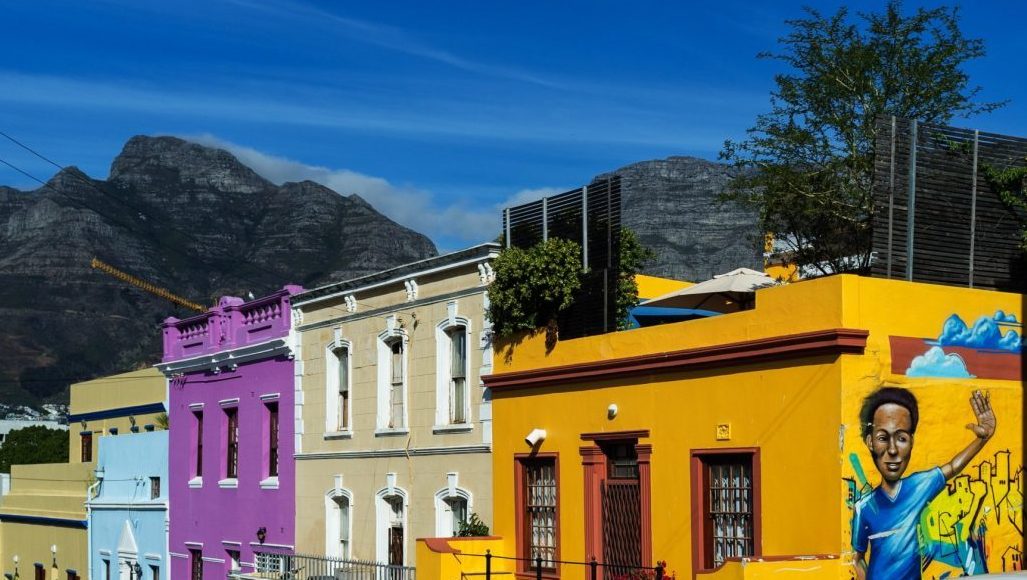
A Rwandan-Namibian Millennial Tries to Find Himself in Cape Town

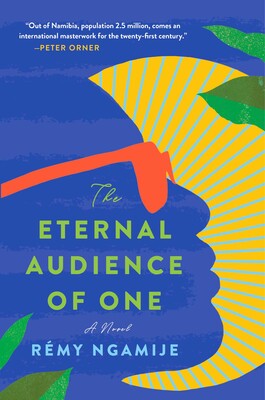
Rémy Ngamije’s novel The Eternal Audience of One is a coming-of-age story about identity, family, race, and migration set mainly in post-apartheid Cape Town. 

The Eternal Audience of One

Séraphin Turihamwe doesn’t feel at home anywhere. His family fled the Rwandan genocide for Kenya, before settling down in Namibia. He’s hoping that his move to South Africa for university will let him find a new sense of self, and of course, lose his virginity. 

Ngamije weaves Séraphin’s story with those of his classmates in Cape Town, his family in Windhoek, and his ever-changing array of love interests, creating a tapestry of voices who are all searching for a sense of belonging and meaning. Relying heavily on sarcasm and the emotionally cathartic experience of curating and sharing playlists, Séraphin tries and often fails to form connections—romantic or otherwise—in the places he lives, but is not sure he can call home. As Ngamije tells me about his characters, they might be more comfortable in the search for home than in any particular destination they find themselves in. 
The Eternal Audience of One shares a patchwork of stories—ranging from Rwanda to Paris, from millennials to their parents—filling out the world of Séraphin, the nerdy, cool, playlist-making student in search of his place in society.


Frances Yackel: Can you tell me about the genesis of your book?

Rémy Ngamije: The start of the story—the hardest question first, huh? Fair enough.

It is hard to pick out one particular “Let there be light” moment. Rather, in my case, different but connected events helped to usher the narrative from dream to draft—so my genesis story is more like ambient lighting slowly growing brighter than an almighty thunderclap followed by, boom, creation.

I really wanted to write a story about immigrant life in Africa. Most of the books I read had African immigrants moving to the West.

When I was at university in Cape Town, I really wanted to write a story about immigrant life in Africa—specifically, Rwandans in diaspora. This was quite intimidating because most of the books I read had African immigrants moving to the West. Not being afforded that opportunity, I did not think my story was relevant. By 2009 the idea of Séraphin had come to me and taken root. I could hear his cocky voice and I understood his worldview. But that was all—a voice, no narrative.

Around 2011, I wanted to write a story about navigating the complex and confusing world that was student life in South Africa. It proved to be quite hard, though, to write about something I was personally living through; I did not have the necessary distance from the instances of life that were busy unfolding—it was all experience but no reflection.

Then, in 2013-ish, I really wanted to have a multilayered narrative about immigrant struggles, hustles, university life, love, and attraction—you know, all of these grand themes that look wonderful when you list or cite them. I did not have the skill to put them on paper so I just let them float around in my head, in my notes, journals, and voice notes.

Finally, in July 2016, I became frustrated enough with myself to write something. I collected all of my notes, my vague plots, and character sketches with the intention of choosing one to write about at length. Looking at everything, I realized all of them existed in the same universe—all I had to do was arrange the timeline. And that, really, is how it all came together.

But the source, that chaos before time, I really cannot remember the exact moment when I knew this was the story.

FY: As a Rwandan-born man, raised in Namibia, going to school in South Africa where he is frequently racially profiled, Séraphin left me deeply moved by his constant search for a sense of belonging and acceptance: 

“Home, to him is a constant source of stress, a place of conformity, foreign family roots trying to burrow into arid Namibian soil which failed to nourish him.”

In fact, all the characters in the novel seem to be on the search for the same thing, as the novel takes us all around the world with auxiliary characters. Can you tell me more about this?  

RN: Migration of any kind, really, is moving from one clearly defined source of home to search for another. That search, sometimes, becomes “a home” because everything else is never perfect, never enough to stop the search in the first place. There is this strange phenomenon when the search provides a sense of home because, at least, the search has a certain regularity and certainty attached to it (moving around, adjusting and acclimatizing, realizing that the current milieu is not enough, looking for better—it sound strange, but that search for better, for more is sometimes more constant than anything else) as long as the “new home” has not been found. Séraphin, I think, is the clearest example of the person “in search of”—but every other character is also trying to find their own places in the world, places in which they can be themselves, where they are permitted to live in the full dignity of their respective essences.

FY: What is the significance for you of writing a contemporary novel about young middle-class African millennials, trying to find themselves and their place in society?

RN: I think, as a storyteller, I needed a group of people who were not adequately explored in literature. I know, for example, that Western millennials are the focus of quite a few long-form essays and social commentary. They are, in accordance with the existing structures of representation and recognition, afforded generous spaces in art and literature.

I found African millennials to be a rich source of storytelling. They also allowed a freedom of exploration because they are not regular literary occurrences.

For me, as characters in a story, I found African millennials to be a rich source of storytelling because I could understand their motivations, aspirations, and frustrations—they provided me with some sense of certainty in that regard. But they also allowed me a freedom of exploration because they are not regular literary occurrences. As a strange alloy of old world and new school—with not enough of either characteristic to claim an authoritative place in their respective worlds—they were interesting people to write about. As a work of African literature, I am excited to have The Eternal Audience of One adding to the understanding of the breadth and depth of continental writing and, hopefully, being a compass guide for other contemporary works.

FY: I was fascinated by Séraphin’s interest in and talent for creating playlists. I love the way he sees them as a way of telling a story, or rather, of bringing the listener on a journey. Does music impact or influence the way you create stories?

RN: Songs have moments in them that I wish I could capture through writing—like the opening notes of Sadé’s “King of Sorrow” or the Buena Vista Social Club’s “Chan Chan”. The feeling of those sounds, the emotions they stir immediately upon hearing them, I really wish I could put that into words. I fail, but I try. When I write—even something as seemingly simple as an email—I do not listen to music because it is quite distracting. I need to focus on the work and words in front of me. But before writing something like a short story or a chapter, I spend quite a lot of time listening to music and trying to place myself in the right emotional state of mind to write the narrative I am working on. And once a piece of writing is done, I compile a playlist for it just to see if I captured the general mood of the work. If I can find a rudimentary soundtrack for a story, I am usually on to something.

FY: Do you make playlists yourself, and if so, does your philosophy on playlists mirror that of Séraphin’s?

RN: In many ways, yes. I make playlists for everything. Gym, cooking, cleaning and laundry days, braais (cookouts), games nights, pensive walks, sunny days when university nostalgia is high, cold days for dreaming—I have so many playlists.

Séraphin’s philosophy is that playlists must take you into a mood and take you out of it. I agree. He also believes that a playlist cannot just have “bangers” on it—those are facts, no cap. It is not curating, for example, if all one does is go for what is known or popular: there has to be a sense of exploration in a playlist and the chance for a listener to discover a new song, and there has to be nuance in it, in the sense that a playlist needs to be thought about. What is it trying to achieve? Who is it for? When is it for? That kind of thing. I used to have a rule that any one song could not appear on more than three playlists—just so that I could curate as many songs as possible—but I have bent that rule on occasion. Then, Séraphin also considers it a cardinal rule never to have more than two songs by the same artist on the same playlist. I respect that. Makes making a playlist more challenging. The only exception, really, is when compiling an entire playlist curating an artist’s work—the challenge lies in ordering the songs in an interesting listening order. Trust me on this: there is a way of arranging Britney Spears’ songs that will narrate the sad situation in which she finds herself with regard to her conservatorship, and there are so many ways of arranging Alanis Morissette’s catalogue to tell different stories. I consider playlist-making to be an artistic process. If you consider it as an act of curation, it really changes the way one thinks about music—and any art for that matter.

FY: How has your experience of moving to Namibia informed your career as a writer? Could you talk a little about founding Namibia’s first literary magazine Doek! Literary Magazine?

RN: If there is anything that living in Namibia has bequeathed me, it is a sense of humor. This country, sometimes, feels like a joke without a punchline. There are moments when I cannot help but break the fourth wall and look off to the side, at the camera, and Morse Code blink at the audience, “Save me.”

As a citizen, I hope for better; as a writer, I am thankful for the canvas.

For the longest time, being a writer in Namibia was quite discouraging, because writers from here never appeared in literary magazines or prize shortlists.

For the longest time, being a writer here was quite discouraging because writers from this part of the world never appeared in literary magazines, anthologies, or prize shortlists. Namibian writers, quite simply, do not share the same level of representation that Nigerians, South Africans, Zimbabweans, and Kenyans enjoy in the literary world. Doek! Literary Magazine was an answer to that problem: what and where are Namibian writers, poets, and visual artists, and how does one share their work with the world?

Since 2019 the magazine has been injecting local writing into the national and continental consciousness. It has been hard, exhausting, and rewarding work—now there is a national and international curiosity about the stories that come from this place, and the writers, poets, and visual artists who tell these stories.

FY: What is the literary scene in Namibia like? Has the literary scene in Namibia changed since you’ve moved there? Where do you see the future of the literary scene heading?

RN: The prevalent fact of artistic life in Namibia is that it is harsh, more so than in many other places because the arts—especially the literary arts—are not supported well enough for any one practitioner to make it their sole activity of enterprise. Of course, this is true anywhere—but in Namibia this fact is law.

But even for such a challenging and limited arts scene, very little stays still here. Deserts, for all of their stillness and bleakness, can be quite active sites of life. Thus, there are more participants in the literary scene now than there were when I was in high school, for example. The hard part lies in keeping various artistic circles stable and rewarding to the artists.

There are reasons for optimism, though. Doek, the arts organization that publishes Doek!, launched the Bank Windhoek Doek Literary Awards, the first such awards recognizing literary artists in Namibia. There are also creative writing workshops that seek to nurture promising Namibian writers and poets. In time, with more funding and institutional support, perhaps we can produce anthologies and host festivals. Perhaps these are dreams, but if The Eternal Audience of One can go from Windhoek to the world, then hope remains.

An International Student Trapped in Her Own Injured Brain

“Stars” by Ye Chun

It’s a swirling, crackling kind of pain, as if an electric eel is twisting inside her skull. Luyao saw such an eel in the St. Louis Aquarium during the winter break: the tank lit up every few seconds with lights powered by the eel’s own voltage charges. The flashing lights had, for some reason, felt like blips of pain, and now, they are in her head, silvery, frantic. She clutches the edge of the podium and sees her students’ eyes all set on her, keenly, like some high-pitched chorus. She falls silent, realizing with a sinking heart that she hasn’t been making sense. She has been speaking not in English, but in Chinese, or more likely, a jumble of the two.

“I’m sorry, I’m not feeling well.” She says the English words, but what comes out of her mouth sounds warped, writhing, even to her own ears. She puts a hand to her head, trying to trace the contours of the phrase “class dismissed.” But as her tongue moves to its supposed position, there is nothing left to trace: the words have vanished from her brain.
Luyao does not quite remember what happens next. Only the image of the eel hunting inside her tight skull, its electricity turning words into puffs of smoke.


The diagnosis is a stroke. A blood clot is killing the brain cells in her left frontal lobe—specifically, the region that controls speech. Luyao, at thirty-seven, third-year doctoral student in economics, and mother of a six-year-old, has lost her ability to speak.

When her husband, Gaoyuan, arrives at the hospital, with one of his jacket collars tugged under the neckline, all she can say is one word, hao. The mellow-voiced doctor asks how she feels, she answers hao; asks her to name pictures of dogs, dolphins, and roses, she replies hao. Good, yes, okay. The most common word in Chinese, which must have been so imprinted in her memory it alone has escaped the calamity. She says hao even when she is shaking her head and slapping her hand on the threadbare sheet of the hospital bed.

She wants to ask Gaoyuan where their daughter is. She can voice her daughter’s name in her brain, Xinxin, a name she picked, meaning happy, flourishing, thriving, homophone to the word for heart and the word for new. “You can’t find another sound with so many good meanings,” she’d said to Gaoyuan. But her mouth has forgotten how to make that sound as well.
Gaoyuan does not read her mind. He’s telling her what the doctor has told him. That she’d passed out, her students called 911, and an ambulance took her to the ICU. It could have been much worse. She could have lost her muscle function, or her language abilities altogether. She can still understand what others say, can still read in her head, albeit slowly.

“Xinxin is with our neighbor,” he says finally. “I’ll bring her tomorrow.”

“Hao,” Luyao says, and means it this time.

When she is alone again, encircled by a beige cubicle curtain in a corner of the hospital room, she moves all her body parts and all of them are still movable. She is lucky, they were trying to tell her. She closes her eyes and wonders if she can still cry out loud, or scream. The patient on the other side of the curtain is turning in bed, trailing long sighs with each toss. Luyao covers her ears to focus. The sound of her daughter’s name. Xinxin. Her body quivers, her mouth fumbles, her tongue queries. But no sound except the accursed hao makes its way out into the air.

The next day, clinging to her father’s leg, Xinxin looks at Luyao as though unsure if she is her real mother. The little girl once told Luyao where she had been before her birth: “I was so small,” Xinxin said when she was around three. “I was invisible. I was sneaky, hiding from you. Then I jumped out in front of you.” Luyao had felt both chill and momentary illumination. There seemed to be truth in her daughter’s baby talk—this jump from being invisible to being in front of her, this will to be born and seen. If only she could think it out. But she had no time to dwell. She had been constantly busy since she went back to school, mentally absent from her daughter’s logic and riddles and inventions. Only the afternoon before the stroke, Luyao stretched out an arm to stop Xinxin from climbing onto her lap: “Don’t interrupt me, please. Go read a book or draw a picture.”

“Mama?” Xinxin asks tentatively.

“Hao, hao.” Luyao opens her arms.


Scott, a young speech therapist with perfectly aligned teeth, is singing “Row, Row, Row Your Boat.” He asks Luyao to hum along and swings her arms with his to match the rhythm. He looks at her mouth closely as if expecting something miraculous. When he finishes the song, he moves on to “Happy Birthday.” But nothing comes out of Luyao’s mouth except more off-tune humming.

Scott says that it was an experiment. Rhythm and melody are controlled by the right side of the brain which is not damaged in Luyao’s case. People with her condition can sometimes blurt out the lyrics when they hum along with nursery songs. “But it probably only works for native speakers,” he says.

Luyao learned those songs roughly the same time she started learning English—in middle school, in a small town in China where all her English teachers had learned their English from someone who was also Chinese. With each new teacher, Luyao inherited a different set of mispronunciations and accents, and had to unlearn and learn again. Though she was never particularly interested in English, her father had decided that she would major in the language. He predicted it would be useful, foreseeing more trade between China and English-speaking countries. He himself had majored in Russian when the two countries had called each other brothers. Luyao’s pronunciations and accents continued to morph according to the professors she studied with, most of them also Chinese. She continued to learn the language perfunctorily, memorizing rules and combinations to pass exams. But in her junior year, when she was able to read unabridged literature in English, the language started to make sense to her. What seemed to be randomly arranged letters were able to generate views of far-off places she couldn’t otherwise see.

After seven years of administrative work at an American pharmaceutical company in Shanghai, Luyao decided that was not what she wanted to do with the rest of her life. She applied for schools in America and got a student visa to pursue an MA in literature. She met Gaoyuan, a graduate student in math at the same East Coast university. After they graduated, neither of them could find a job, and legally they had only one year to stay. Gaoyuan applied for computer science programs and was accepted by a midwestern university. Luyao was pregnant. She moved with Gaoyuan to the college town, changed her visa from F1 to F2, and took care of the baby while applying for graduate study at the same school. This time, she too had to change majors. Business administration? Economics? Accounting? Management? Marketing? Finance? Gaoyuan made a list.

After gaining an MA in economics, Luyao was given a speaking test at the beginning of her PhD program. A computer voice asked her to open a pamphlet to page one, study a map, and give directions from a gym to a restaurant. It asked her why smoking was harmful, and what her favorite album and TV program were. Luyao had not expected to be asked such irrelevant questions and was irritated by the male voice that kept interrupting her before she could finish. “I have no TV,” she half-yelled at the computer. “Even if I had one, I wouldn’t have time to watch any programs.” The next day, she was informed that she had failed the test. Not only was she not allowed to teach, she had to take speaking classes.

The language instructor, Vickie, spent the next two semesters training her and other international prospective teaching assistants to speak like native speakers, which involved frequent self-recording and redoing until she and her fellow students believed that every syllable they pronounced sounded native. There was also a weekly tutorial during which Luyao sat in front of Vickie and her computer and spoke. According to Vickie, when native speakers spoke, all the words in a sentence were linked together, forming an unbroken purple line on her computer screen. “Focus,” Vickie would say. “If you focus all your energy on the sound of the words, you will be able to do it.” But Luyao would false-start, stumble, stutter. From time to time, she even had the paralytic feeling that she didn’t know any of the words at all—they looked like alien codes, disconnected from any neurons in her brain.

Now the feeling is no longer metaphorical. As Scott dramatically shapes his mouth around the word hello, the words how are you, and thank you, and see you, words Luyao had learned at the age of twelve, with her first English teacher who spoke English as though smacking her lips on candy—Luyao is angry.

She has compromised and strived for nothing.

She is angry that her father had made her major in English, when she could have majored in Chinese and in that case would never have thought of coming to study in America, where a stroke would be waiting down the road. She is angry at Gaoyuan for persuading her to switch majors. How many times when she was reading an economics textbook did she wish she were reading a novel or a book of poetry. How many sleep-deprived nights had she spent writing papers of little interest to her. She is angry at Vickie, whom she was still running into from time to time on campus and, each time, Luyao could see the words she spoke manifest themselves as broken lines on Vickie’s computer screen. She’d fear that Vickie would say to her, “Let’s give it another try. Let’s stand here and do this till you make all the words link.” Luyao is angry that during the year and half when she was finally teaching, she couldn’t help but think that her students were younger versions of Vickie, listening intently, with hidden dissatisfaction, for the unlinked words staggering out of her mouth.

Now she will never teach again, nor will she earn a PhD. She is now a disabled person who can speak no words. Except hao. Which is a mockery. It must have survived to tell her that she has ruined her life by saying hao when she should have said bu hao. She has compromised and strived for nothing.


“How was the therapy?” Gaoyuan asks at dinner.

Luyao says nothing because she doesn’t want to say hao. He continues to look at her, so she gives him a nod. “What words were you practicing today?” This is his final school year: he’s applying for jobs and preparing for defense at the same time. Before the stroke, Luyao had been helping him edit cover letters. Their dinner conversations often had to do with the job market. Now, he doesn’t talk much about it.

Luyao shakes her head, looking away.

“I learned the seasons today,” Xinxin says in English.

Xinxin began speaking English to them soon after she started preschool. Luyao wanted her daughter to be a natural bilingual, an uncompromising one, able to switch between Chinese and English effortlessly, as she herself couldn’t—and most certainly cannot now. She had only spoken to Xinxin in Chinese since her birth, but a few months into preschool, Xinxin began to respond in English, asking why she needed to speak Chinese—no one else at school did. Luyao told her because it was easier  to be bilingual now than later, but oftentimes, she found herself speaking English with her daughter, too tired to switch back to Chinese. She tried to make it a rule that the family would only speak Chinese at home, but more and more, she and her husband caught themselves pulled into English by their daughter, who had also started to correct their pronunciation.

“Good, what are the seasons?” Gaoyuan says in English, with a reinforced interest.

“Spring, summer, fall, winter.”

“Very good. What do you know about them?”

“Spring is tornados and kind of warm. Summer is next to sunset. It looks like lots of suns. Pink is fall. Fall means leaves turn colors and the rain is kind of cold. Winter is snow. I like winter the best. No, actually I like every season the best.”

“That’s great, Xinxin.” Gaoyuan rubs her hair.

Luyao wants to ask her daughter to repeat what she has just said. She tries to say the words in her head so that she won’t forget them: Summer is next to sunset…Pink is fall…I like every season the best. So strange and lovely. If only she could stay inside her daughter’s words and never come out.


In the morning, after dropping off her daughter at school, she walks to the park and sits down on a bench. A magnolia is in full bloom, its large pink flowers open deep, like sturdy throats caroling a celebratory song. A robin flits between the branches, warbling away without giving it a second thought.

Yesterday, Scott also taught her to say “My name is Luyao.” His pronunciation of her name was so off it sounded like someone else’s name. Still, she mimicked him. She was learning to say her own name in the wrong way.

During her first speaking class, Vickie had come in one day wrapped in a white sheet, a spiky cardboard crown on her head, a flashlight in her hand. She handed out copies of Emma Lazarus’s “The New Colossus” and read it out loud. Then with more emphasis, she read again the verses containing the words “tired,” “poor,” “huddled masses,” and “wretched refuse.” “You’re the ‘wretched refuse’ in this poem,” Vickie then said to the class. “But this is a great country and we’re here to help you.”

But she was too sure. She had forgotten the Eastern wisdom that the only certainty is uncertainty.

Luyao had to let it go, the way she let go many of those little darts thrown her way. She had to grow thick-skinned, she told herself, and her second-class status was only temporary. In five years, she would get her PhD and become a professor. But she was too sure. She had forgotten the Eastern wisdom that the only certainty is uncertainty. Now, she has indeed become the “wretched refuse.”


The hospital bill comes. Despite her student health insurance coverage, her portion is still five figures. She tears up the bill and throws it in the trashcan. Her and Gaoyuan’s combined stipends could barely make ends meet. Now with hers gone, they won’t be able to pay rent for this one-bedroom apartment, where all three of them are still co-sleeping, on one mattress that covers just about the bedroom’s entire floor. They will have to ask for loans from their families back in China.

She wants to go back to China. She and Gaoyuan had talked about going back many times, and the agreement was to do it if they couldn’t find a job here even with a PhD. They didn’t want to go back defeated, but they were nostalgic. Gaoyuan said the first thing he would do after his defense was to reread all of Jin Yong’s wuxia novels. What Luyao wanted to reread was Tang poems, and she wanted to have the right mindset to read them, which she didn’t foresee having anytime soon. They both knew what they were nostalgic for was not exactly the present-day China, as the country had changed so much in the last decade they could hardly keep up. Nor was it what the country had been when they lived there. But it must be there somewhere.

If it were up to her, Luyao would like to have her Chinese back. She would give away all her hard-earned English just to be able to speak like a normal Chinese again. She forms a conversation with Gaoyuan in her head:

“Can you just get a job in China so we can go back?”

“Are you sure now is a good time?

“Yes, I’m sure. I don’t want to live here another day.”

“But how will living in China be different?”

“I’ll try to get my Chinese back. We’ll be close to our families.”

“Do you really want to go back in your current condition?”

“What do you mean? Am I a disgrace now? Am I making you lose face?”

“You know that’s not what I mean.”

“What do you mean then?”

“I’m just being practical. What jobs do you think are available in China for people who can’t speak well?”

“The same kind as here: cleaning dishes, mopping floors, wiping toilets…”

“Do you want to do that kind of work in China?”

“Why? Do you think people will judge me, making me a cautionary tale for those who go abroad?”

“I just don’t see you doing that kind of work in China, with two master’s degrees and…”

“That person no longer exists.”

“Besides, one gets paid higher for that kind of work here than there.”

“I’m not going to be your dependent, if that’s what you’re worried about.”

To that, she can’t imagine how Gaoyuan will respond.

He will probably just shake his head and walk away.

Luyao has waitressed at Chinese restaurants during almost all her summer breaks and has never told any of her friends or family in China about it. It is true that no one will judge her here, as she hardly knows anyone except other Chinese students who are more or less in the same boat—minus the stroke. She will ask the owner of the restaurant she’s worked for the last two summers to let her do the cleaning work that even Chinese students won’t do. Maybe she can bring leftover food home to save on grocery costs. Maybe she will even learn how to cook those greasy Americanized Chinese dishes. “Wretched refuse” or not, she will survive.


Her daughter’s bedtime routine has changed. Now, Xinxin reads a book to Luyao before sleep. She points at each word and reads it out loud, modeling patiently for her to mimic, to work her lips, tongue, and vocal cords into mechanical sounds. Xinxin’s favorite book is A House Is a House for Me, which Luyao had bought at a library sale before her stroke. She’d read it night after night to Xinxin, to the extent that one night after she finished reading, Luyao asked Xinxin to make up verses to the same effect. “What is a window a house for?” she asked.

“A window is a house for outside,” Xinxin said. 

“Wow, that’s beautiful…What is outside a house for?”

“Outside is a house for future.” 

“Hmm, I like it. And future?” 

“Future is a house for everyone.”

“That’s really nice. What about everyone?” 

“Everyone is a house for bones.”

Luyao felt her bones rattle, like those skeletons hung in people’s yards on Halloweens. But her daughter’s face was tranquil. The lines had all come out of her mouth without a pause, like she’d known them all along, known them intuitively. And she said the word bones without the least aversion, as if it was as neutral as, say, water or air.

Now, mimicking her daughter saying words from the book, Luyao thinks of Xinxin’s poem again: Future is a house for everyone. / Everyone is a house for bones. She repeats the lines in her mind, and the paradox seems to be making a clearing in its thickets. A small clearing, but nevertheless she feels that as long as she can squeeze in and lie down there, she’ll be all right for a while.


One night after a long day at the Chinese restaurant, about two months post-stroke, Luyao lies on the mattress with her daughter, waiting for her to fall asleep so that she can get up and finish cleaning. That’s all she does now, cleaning. Her forearms shoot pain. Her knee joints feel like two handfuls of nails. The cracks on her fingers never close. Earlier, she wasn’t paying attention to Xinxin’s speech tutorial. She put the book away and gestured her daughter to sleep. She feels sore to the bone. Each of the bones she houses complains.

Xinxin turns in bed. Luyao can tell something is bothering her. Her daughter has not confided in her since her stroke—must have figured that her mother can offer no words of comfort anyway. Luyao pictures what could have happened to Xinxin at school. Maybe another boy walked over to her while pulling down the corner of his eyes, saying, “I’m Chinese, I can’t see.” Or another girl told her she couldn’t be her friend anymore because she didn’t believe in God and would go to hell. Or the girl who told Xinxin that the Easter Bunny didn’t bring her anything because he didn’t recognize her as an American said another damaging thing. Back then, Luyao was able to tell Xinxin that those children were ignorant, that she was born here. She is every bit as American as any other child.

She would give away all her hard-earned English just to be able to speak like a normal Chinese again.

Now Luyao has about thirty words she can form with her mouth. She still has no spontaneous sentences. She draws Xinxin to her arms and kisses her head. Xinxin sighs, and then starts to sing a lullaby. It is the lullaby Luyao had made up for her when she was a newborn. It’s in Chinese. A simple melody with lyrics all about something or someone falling sleep, starting with the stars, then the moon, the trees, the birds, or the streets, the streetlamps, and after every seven lines is the refrain “Xinxin ye yao shui jiao le”—Xinxin is also falling asleep.

Now Xinxin is singing it, improvising, inserting Chinese nouns she knows in the lyrics. Then, she stops. In the quiet, Luyao hears her own voice, clear and supple like water, singing the refrain, “Xinxin ye yao shui jiao le.” Unable to believe it’s true, she sings it again. For the first time since her stroke, she is able to say a sentence, and her daughter’s name, effortlessly.

Luyao and Xinxin are both laughing when Gaoyuan appears at the door. Luyao sings it to him.

“Hao, hao, tai hao le,” Gaoyuan says.

Luyao says hao too, and for the first time, it seems, she feels the immense goodness in this word.


Later that night, after her daughter falls asleep, Luyao cleans the kitchen and takes the trash out of the apartment to the dumpster. On her walk back, she counts seven stars above her head. She knows there are countless others up there, only that the night is not dark enough to reveal them. Like the words in her mind, they are there somewhere, none missing. She keeps her face raised and says Xinxin ye yao shui jiao le to the seven stars.

She looks around the sky and sees more. With care, she says the words she has relearned so far one by one. She says each word quietly, slowly, as if dedicating them to each of the stars. Hello. Thank you. See you. More stars emerge from the infinity.

When Yes Doesn’t Mean Yes

This is how the story goes: Jake and I were having a playdate. We were at his house. I have no memory of where his parents were. My parents were at work, miles away in the city. Jake and I were young enough to both unabashedly adore Barney and I hadn’t yet been taught what could happen when girls and boys played alone together. My legs were scrawny and my cheeks were chubby. Jake was much, much taller than me. At some point, Jake led me into a bedroom—the bedroom belonging to his parents—and locked the door. Then he grabbed my tiny shoulders and forced a kiss on my mouth. 

My parents like to tell this story because it never fails to entertain at a dinner party. People laugh and sometimes blush and almost always raise a glass to what they call: ‘Jake’s gumption’.  

After all, we were children.  

I flinched the first time I let someone kiss me.

I recently watched Miranda July’s Kajillionaire. The film ends with what I interpret as the protagonist’s first consensual kiss. That kiss feels transformative because it’s the first time this emotionally stunted twenty-six year-old allows herself pleasure. It’s the first time she acknowledges her sexuality without feeling like it’s wrong.  

Days later, the intensity of my feelings hadn’t waned. I felt confident that the protagonist, Old Dolio was the victim of sexual abuse. My certainty was guttural. There was something in the way she held herself that was familiar. Watching her felt like looking into a mirror.  

Kajillionaire explicitly depicts the psychological abuse Old Dolio experiences, but the presence of sexual abuse is left up to the audience. Early in the film, Old Dolio attempts to return a one-hour massage certificate for cash and instead reluctantly accepts a twenty-minute massage. Before the masseuse’s hands even make contact with her baggy top, Old Dolio’s whole body flinches, recoiling at the prospect of touch. The masseuse makes the tiniest impact and Old Dolio yells out that it’s too much. The scene ends with the masseuse holding her hands above Old Dolio’s back, keeping them there, suspended in the air, giving Old Dolio the only amount of intimacy she can bear.  

I flinched the first time I let someone kiss me. He was thirteen and his eyes were the color of ice. I said yes. And yet I was terrified. My body was already programmed to anticipate violence. My mother says that as a baby I couldn’t be soothed. That I cried and cried and cried and nothing she did could end my sobbing. She went back to work soon after my birth and shortly after that, was diagnosed with breast cancer. In every photograph we have from that time, she and I cling to each other. On some visceral level, we understood how little control we had—that safety is imaginary. When you’re deprived of comfort, your body accommodates. Old Dolio’s shoulders slouch throughout Kajillionaire. Her hair hangs almost over her face. She’s trying to make herself disappear. She’s trying to protect herself. 

For as long as I can remember, I’ve hunched. Sometimes I tell myself it’s because I want to make myself smaller, other times I acknowledge what feels truer: there is safety in invisibility.  

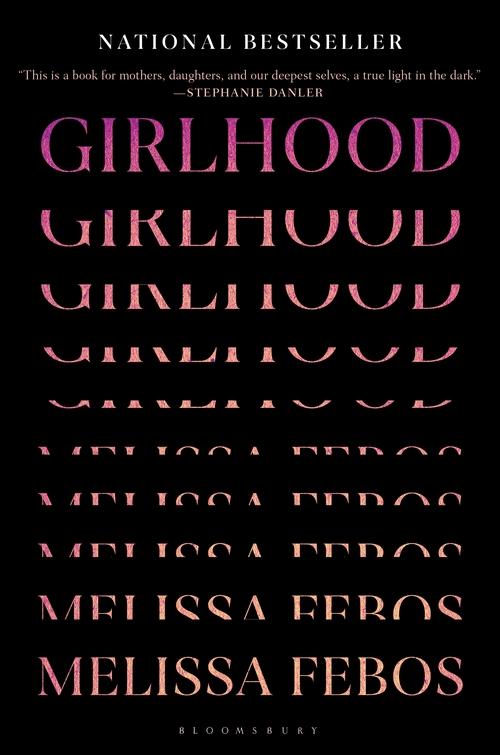
When Melissa Febos’ latest essay collection, Girlhood, showed up in my mailbox, I hid the book under my couch cushion for a week. It was too hot for my skin. I’d read her second book, Abandon Me, the year I blew up my life, the year I left a six year relationship that was headed toward marriage so I could travel around the country. That book forced me to acknowledge that I was horribly unhappy. The prospect of Girlhood dislodging another piece of my certainty terrified me.   

Since the #MeToo movement began, I’ve licked my wounds quietly, unsure of how to engage with the cloudy intrusions that haunt my body. I didn’t have the language to name what happened to me. I didn’t know whether my experiences counted for anything. What I did know was that every time I entered a new space, I sought the exit; anytime I got stuck on a crowded subway car, I panicked; most nights, if I fell asleep, I’d wake from nightmares shaking; even with partners I trusted, a surprise touch unraveled me.  

When I finally read Girlhood, I learned I was right to be worried. Febos holds a mirror up to the violence of being twelve years old and having “a body like those women in the magazines.” She recounts the many men who were compelled by her because of what they wanted to take from her. “Eventually, I understood the strength that was no strength, that was a punishment no matter what I did or did not do. So I let my friend’s older brother close the closet door. I let the persistent older boy dig under my clothes and between my legs. My once-strong body became a passive thing, tossed and splintered, its corners rounded from use. Unrecognizable.” 

I became preoccupied by Febos’ use of the word let: to cause, to give an opportunity to, to permit to enter. To me, that usage meant she was confronting her responsibility, that she was acknowledging the role she played in allowing these intrusions to happen to her body. No one forced themselves upon her.

And yet.  

On some visceral level, we understood how little control we had—that safety is imaginary.

The first person I invited to touch me took advantage of me. The irony is not lost on me. The first person I said yes to took my yes to mean permission for anything and everything he wanted. This is common. Over 1 in 3 cis-women and 1in 4 cis-men will experience sexual violence,  physical violence, and/or stalking by an intimate partner in their lifetime. Those statistics don’t account for people who are transgender, a community who experiences intimate partner violence 2.5 times more frequently.

The boy I let harm me is the first boy to tell me he loved me. Our relationship began in a park that faced onto a busy street. He set the time of our meetings. One day, I arrived late. In his fury, he took hold of my wrist, snaking his knuckles around my veins. I’d made him look stupid, he said. I apologized until I ran out of ways to say sorry; without a word, he let go of me. We didn’t speak for a week. The silence was agony, but I took his anger to mean care. A pattern developed: I’d show up early and wait in that park for hours, sitting on a bench with my back to the entrance. Either he would appear or he wouldn’t. When he did, he’d approach from behind and put his hands in front of my eyes. I found this romantic: The uncertainty, the intensity of newness; I was sick with anticipation. Now I understand this to be the cycle of abuse. He controlled our meetings. He controlled how I spent my time when I wasn’t with him. Later, in his bedroom, with all the shades down, he controlled what I did to him.  

He’d start by turning up the volume on the television. In my memory, COPS was always playing.  I can still hear the shrill sound of the sirens, the static of the police radios, the particular panic of someone being chased. Then he’d summon me to his mattress. It was a twin bed with camouflage sheets. His father was a veteran with a drinking problem who had taught him to value strength. I don’t remember the first time the boy instructed me to go down on him. I only remember the way it felt when he yanked my hair, the imprints his nails left in a horseshoe around my neck. It was easier to do what he asked. I wanted to make him happy. 

The first person I said yes to took my yes to mean permission for anything and everything he wanted.

I turned my body into a vending machine. He paid with promises of love and then selected what he wanted from me. 

“Not speaking of a subject can turn it into a secret. Secrets, if initially a source of power to their keepers, often transmute into a source of shame over time. If you act as though a happening is  unspeakable, then you begin to think of it as such.” That boy and I were barely fourteen when he knelt on the ground in the park and proposed to me with a Ring Pop. I pretended not to notice that his bright eyes had become bloodshot—that his skin stank of alcohol. The promise of a love that would not abandon me compelled me to disregard the pain and truth of what was happening. I slid the enormous red sucking candy onto my finger and promptly lost myself completely.  

At twelve years old, Febos is invited into a bathroom by a group of older boys and subsequently asked to choose one of them. She chooses strategically. Instead of picking the one she has a crush on, within whom she recognizes the mark of violence, she picks a boy with a girlfriend, hoping that his relationship will serve as protection. Predictably, it doesn’t. He takes exactly what he wants from her—well, almost; she artfully negotiates him down to a hand job. Afterward, she reflects: “I felt deeply embarrassed, not only for myself and what I’d consented to but also somehow for him, because I knew he’d done wrong.”

Sexual negotiation ripples throughout Girlhood and is dissected most explicitly in “Thank You For Taking Care of Yourself” an essay that encompasses almost half the book. It centers around Febos attending a Cuddle Party: a social event designed to allow touch-deprived adults to engage in safe, nonsexual physical contact. Before the party begins, the organizer walks the attendees through a strict set of rules, the most important being: “You must ask permission and receive a verbal YES before you touch anyone.” If a person says “No”, the requester is instructed to respond, “Thank you for taking care of yourself.” 

The promise of a love that would not abandon me compelled me to disregard the pain and truth of what was happening.

Regardless of this clearly defined framework, once the party begins, when Febos is approached by a man she has no interest in cuddling with, she immediately consents. “I did not hesitate to assess if I really wanted to [cuddle] with him. I had no lucid thoughts about it at all. I simply agreed, and we settled on the chenille-blanketed floor…. I did not think: I do not want this man’s body curled around me. My uneasiness did not occur as a thought at all. It was more like a shift  in temperature, a change in the light, a texture inside me that roughened.”

As Febos described the unwanted caresses of this strange man, my entire body tensed. I pulled a blanket up to my chin and cradled my legs against my chest. The moment she said yes, but really meant no, I heard myself saying yes—or, not saying yes, but walking to that boy’s bed when he told me to, slipping underneath his camouflage sheets, unzipping his jeans, opening my mouth, not feeling anything but the dull threat of what might happen if I stopped—what he would do to me, or what I would have to acknowledge about myself.  

Febos refers to this as empty consent and understands the imperatives that encourage it as, “the need to protect our bodies from the violent retaliation of men and the need to protect the same men from the consequences of their own behavior, usually by assuming personal responsibility. It is our shame, our embarrassment, our duty alone to bear it.” I’ve never named the boy who abused me. I took responsibility for what happened between us. It wasn’t until my mid-twenties that I began to redefine our relationship. I was silent for so long because of my shame. I never told him no. I let myself turn into an object, a source of pleasure that could be poked and prodded until it emptied of value because I believed he loved me. I failed to see that love for what it was, undercutting the possibility of my safety.  

I let myself turn into an object, a source of pleasure that could be poked and prodded until it emptied of value because I believed he loved me.

I made the calculation that sharing my hurt wasn’t worth the potential of his destruction. Along with other violence, he threatened suicide when I initially left him. In school he was belligerent, high on pain pills, intoxicated from his father’s whiskey— a father who was likely emotionally and physically abusing him. When the boy started a drunken fight in the gymnasium, I was terrified of what his father might do if he got suspended. I pushed the boy outside and wrestled him onto the grass with the help of our school’s soccer coach.  

Afterward, no one asked me if I was alright. I don’t blame them. I never let on that I was breaking.  

A part of me still cares for that boy, cares for the broken pieces I know he’s made of. I recognize his fault lines. But if he harms another person, I have to live with my complicity. I google him every few years, mainly to make sure he hasn’t overdosed. His drug abuse is the reason I finally found the courage to leave him—not because of the harm he was doing to me—I left because I couldn’t bear to watch him destroy himself. Last year, when I typed his name into the search bar,  I discovered that he saved a toddler from drowning while working as a lifeguard. He trained for his lifeguard certification in the pool at my childhood house.  

The primary reason I’ve had trouble talking about what happened to me is because my experience doesn’t fit any description. I know I wasn’t raped. If I brought my allegations to a court, the court would say that I’d consented. 

Unlike what we’re taught in sex-ed, saying no does not ensure our safety. On the contrary, saying no invites the possibility of cruelty.

Now, I’ve come to understand that my consent was empty. Febos describes empty consent as “the legacy of centuries of abuse and oppression,” meaning that unlike what we’re taught in sex-ed, saying no does not ensure our safety. On the contrary, saying no invites the possibility of cruelty. Women have been conditioned to appease men, to accommodate their preferences, to use our bodies to provide them service: to cook, to clean, to fuck, to birth their children, to care for those children, to be silent, to make their lives easier by placing ourselves in a secondary role and conforming to their desires. 

After reading Girlhood, I finally asked myself: When we were children bonding over a purple dinosaur, why did Jake lock his parent’s bedroom door? Did he anticipate that when he approached my small body, I might say no? Did he consider that his mother might find us—that she might open the door before he could get what he came for? When did he begin seeing me as an object, as something he could possess, as something he could control?  

Jake and I wound up at different elementary schools. It was only after puberty that I saw him again, still much, much taller than me, in the halls of our high school. By then, I was already beholden to the boy with the Ring Pop. I once asked Jake if he remembered what happened between us and he looked at me with innocent eyes and said no.  

I believe him.  

Watching her on-screen, I felt a piercing awareness deep inside my body. When you’ve been mistreated, sometimes the smallest compassion can undo you.

In the writing class I teach, I give my students the option of submitting work I won’t read if they don’t feel ready to share it. I’ve never quite known how to respond to students when they choose this option. I usually write an email telling them that I respect their choice and that I’ll honor their privacy, but it’s never felt like enough. Now, I’ve finally found words that will mean something.  

Thank you for taking care of yourself. 

In Kajillionaire, Old Dolio is played masterfully by Evan Rachel Wood. She embodies what it means to hold trauma inside you. She’s always stiff with tension, hunching her shoulders and covering her face with her hair. Her voice is emotionally level, evoking a numbness that’s meant to mask her pain. She tries to present herself as unfeeling, but the moment she encounters someone who treats her with kindness, the rawness of her hurt unravels.  Watching her on-screen, I felt a piercing awareness deep inside my body. When you’ve been mistreated, sometimes the smallest compassion can undo you.  

After the boy with the Ring Pop, I built a wall around myself. Intimacy became an impossibility. When someone I cared for tried to kiss me, I jerked backward. The prospect of being touched, even tenderly, awoke my raw nerve endings. What looks like affection can quickly escalate to violence—I had learned this lesson. So, I closed my body off, depriving myself of pleasure in the name of protection.  

Intimacy became an impossibility. When someone I cared for tried to kiss me, I jerked backward. The prospect of being touched, even tenderly, awoke my raw nerve endings.

It’s likely that the intense connection I felt for Evan Rachel Wood’s Old Dolio was magnified by the knowledge that offscreen, Wood had recently come forward with her own experiences of horrific emotional, physical, and sexual abuse from an intimate partner. I’d read every line of her testimony and I understood, in some small way, what it meant for her to speak against her abuser, a man in an enormous position of power. 

About the experience, Wood has said “I used to think being strong was not being affected.” For years, I held the same definition. I thought by not acknowledging the countless afternoons I  spent letting that boy claw his fingers into me, that they would lose meaning, that their hold on me would weaken. But they didn’t. My resistance was twofold. I wanted to be powerful enough not to let the intrusions disarm me. I was also acutely aware that what happened to me was not that bad, as coined in Roxane Gay’s anthology of the same name. My abuse had an amorphous shape. Yet the toll it took on me, physically and mentally, followed the same path of trauma that so many survivors of violence walk. I’m finally beginning to claim my experience. To name it. But this is only a start.  

As Kajillionaire played, projected against a blank wall in my apartment, I watched Old Dolio’s stilted movements and felt Evan Rachel Wood’s movements, and also my own, tip-toeing through a world that has taken so much from us. For the first time in a long time, I let myself sit inside the pain. I didn’t turn away from it. At the end of the film, I felt the heaviness of the hurt  temporarily lift when I watched that body—what had become our shared body—find its first true  source of comfort.

A Seven Year, 9,000-Mile Journey Along India’s Contested Land Borders

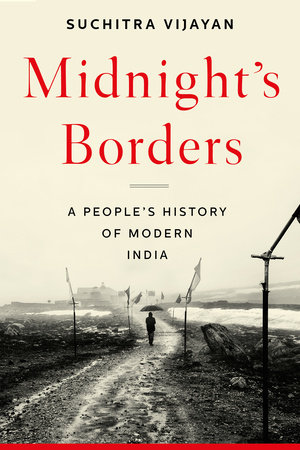
Suchitra Vijayan’s debut book, Midnight’s Borders, is a genre-bending book of nonfiction—made of stories, encounters, vignettes, and photographs—about home, belonging, and displacement. The book recounts the author’s recent journey across India’s land borders covering 9000 miles over a span of seven years.

Midnight's Borders by Suchitra Vijayan

In addition to being a writer, Vijayan is an award-winning photographer and a barrister by training who has worked for the United Nations war crimes tribunals in Yugoslavia and Rwanda, and co-founded the Resettlement Legal Aid Project in Cairo which provides legal aid to Iraqi refugees.

Even if Vijayan’s debut book centers South Asia, its focus on borderlands as sites of state-sanctioned violence mirror a rising nationalism and consolidation of borders across our increasingly globalized world. As the author says in her book:

“…borders around the world are enclosing and suffocating their people rather than guaranteeing their freedom. What happened in Bosnia was a repeated in Rwanda, and what happens in Palestine is happening in Kashmir.”

The stories within her book hold immense pain, yet they are of a global urgency because they herald a new world order. 


Namrata Poddar: What first drew me to Midnight’s Borders was the book’s title, its reference to ideas of home, displacement, nationalism and transnationalism. Also, the title is an obvious nod to Salman Rushdie’s canonical book of postcolonial fiction, Midnight’s Children, that talks about the making of India as a nation space and the Partition as the subcontinent’s painful, colonial inheritance. What was your reasoning behind the book’s title? 

Suchitra Vijayan: When we decided on this name I was very aware of the comparisons to Rushdie’s magnum opus—a book that continues to cast a long shadow, especially if you are an author from the subcontinent. Rushdie’s Midnight’s Children is older than me; the book not only created a new kind of writing, it changed forever the way publishing will encounter South Asians, especially Indians writing in English. “To understand me,” says Rushdie’s Saleem Sinai, “you’ll have to swallow a world.”  I think this is true of all the people who appear in the book. 

Having said that this is not a literary ode to Rushdie. The years after 9/11 firmly changed that. The Rushdie I loved and cherished is gone. Not just him, so many men and women I respected as literary and ethical figures became willing and eloquent voices of the empire. For instance, a few months after 9/11 he wrote, “America did, in Afghanistan, what had to be done and did it well.” That essay hasn’t aged well.

It is like Nabokov’s lament: “My Gods died young.” Rushdie’s support for the war in Afghanistan and Iraq, and his refusal to confront the tyranny of the American Empire now puts us in very different political spaces. 

There is a clear distinction between speaking against the powerful and claiming to speak on behalf of the ‘voiceless.’

Jawaharlal Nehru India’s first Prime Minister’s speech “Tryst with Destiny” was delivered to the Indian Constituent Assembly in the Parliament, on the eve of India’s Independence shortly before midnight. “At the stroke of the midnight hour, when the world sleeps, India will awake to life and freedom.” While Nehru was still declaring this victory, the slaughter began. Not everyone rejoiced in these new freedoms. Not everyone lived to see its broken promises. 17.8 million people lost their homes in the aftermath of the Partition of the subcontinent, and what consequently became the world’s greatest migration.  In the book, I say we were ambushed halfway to freedom. That question of lost freedom and possibilities still haunts us. 

Nehru’s speech ends with, “There is no resting for any one of us till we redeem our pledge in full, till we make all the people of India what destiny intended them to be.” The pledge however was never redeemed. More importantly, as Babasaheb would argue, the political revolution was never accompanied by a social revolution. He writes about how when the Constitution was adopted, “We are going to enter into a life of contradictions. In politics, we will have equality, and in social and economic life, we will have inequality. … How long shall we continue to live this life of contradictions?”

So here, “Midnight” functions as a moment of violent birth, but also perhaps the foundational violence that becomes codified in various ways, especially in the bodies of people farthest away from power.

NP: 150 million people, or almost half of the USA’s population, live in 111 border districts along India’s borderlands and many don’t have any ID cards to prove their citizenship, your book tells us. I imagine these numbers make India the largest “democracy” that’s increasingly manufacturing foreigners out of its citizens, although as you well remind us, this colonial inheritance of border-making, state surveillance and violence is a global phenomenon.

As an Indian American reading your book, I kept thinking of Trump’s administration, the ICE, detention centers, caged children, and all that’s been happening at the US-Mexico borders for a while now. Given your extensive work in international war crime zones, what drove your narrative decision to leave sustained comparisons of India’s borderlands with other parts of the world? Especially with your current home, the United States, that’s known as one of the biggest military powers of the world.

The idea of ‘bearing witness’ is very problematic. With the phone armed with a camera, everyone is a photographer; we are all witnesses.

SV: The global border regimes are inexplicably connected. For instance, the devastating story of the six-year-old Sikh girl, Gurpreet Kaur, who died in the Arizona desert in 2019 tells a story of another wave of refugees and others leaving South Asia, particularly India, and traveling to South America and making the dangerous journey to the US southern border.

There are also other threads that connect migration, and refugee flows globally. I realized early on that the material I had on the American borderlands needed more time and work. American borderlands don’t begin or end with the Southern border; its tentacles and walls span the globe. I also felt that the story, the history, and genealogy needed to be told through a different lens, the lens of carceral history, slavery, and Jim Crow that connects Attica prison riots to Abu Ghraib.  

NP: In the second half of the book, your narrator shares with the reader what prompted her lifelong interest in questions of state violence and justice. She shares an incident from her childhood where her father is brutally attacked within her home city, Madras (now Chennai), and nearly killed by what’s rumored to be state-sanctioned violence. Later on, the twelve members of a gang who assaulted him are acquitted by the Madras high court. 

On one hand, I loved your book where the narrator disappears to center stories of people living in Indian borderlands—forgotten subjects of both Indian and global history. On the other hand, the reader in me kept wanting to experience more intimacy with the narrator, to experience more moments like the one where your narrator shares about her father, and connects it to the people and stories within the book. Why was decentering the narrator and her interiority within the book important to you? 

SV: The choice of decentering the narrator happened in multiple ways. The first is political. When there is a right-wing authoritarian regime ruling India, as a writer I had an ethical responsibility to respond to the present. What moral and political stands should we as writers take in the face of ongoing oppression? That clarity led to specific form and narrative choices.  

In both popular and literary culture in the West the subject—the self is almost always the center. I think there is a reason why we lived through the kind profoundly vacuous personal essay culture that flourished in the last decade and in some ways has returned with a vengeance through other means. It is the capacity to write about the self and reduce everything, even the zeitgeist of our times to a cameo. 

One of the things I was told often by editors and agents who I pitched this book to was that I needed to put more of myself in the book. That suggestion, no matter how well-meaning, always made me deeply uncomfortable.  As I traveled, I was very aware of these inherent power differences. I came with my privileges, also let’s not forget, prejudices. I write in the book:

“It is not my goal to ‘bear witness’ or ‘give voice to the voiceless.’ Such writings have long been implicated in the history of colonial ethnographic practices, where native informants are poised to become the voices of the empire. The people in this book are eloquent advocates of their history and their struggles. My role, then, and this book’s role, is to find in their articulations a critique of the nation-state, its violence, and the arbitrariness of territorial sovereignty.”  

For instance, writing about my father happened only in the final round of edits just before we locked the edits on the manuscript. My editor, Ryan, specifically asked why this work and this book are so important to me. He flagged this in the Kashmir chapter. Even as I wrote about this, I wanted to be very clear that what I witnessed, or the violence inflicted on my father, are not the same as what over eight million Kashmiris have endured. It’s not comparable, and should not be compared. While that incident had a profound impact on me, my politics, how I think about violence, its relationship to justice, or the lack of it, this is not the same kind of violence Kashmiris have been subjugated to. I have never lived under military occupation, curfew, or a looming threat of violence. Check posts or bunkers were not part of the landscapes of my home. Finally, there is a clear distinction between speaking against the powerful and claiming to speak on behalf of the “voiceless.” The former is an essential act of dissent, even resistance, especially in these dark times. The latter is an act of violence against people whose voice you are appropriating.

NP: In another poignant moment within the book, when you’re traveling the India-Bangladesh border zone, you witness two young children playing with a kite and a little girl plucking wildflowers within a site that’s notorious for state violence against India’s Muslim minorities. You reach for your camera then refrain from taking a photograph of the children for your book, “an archive of violence.” Why was putting away the camera here important to you as a writer? 

SV: Our visual and political culture regularly elevates the storyteller above the stories. The idea of “bearing witness” is very problematic as a concept, as a rhetorical tool, and as a literary device. With the phone armed with a camera, everyone is a photographer; we are all witnesses. We live in a surveillance economy where we are constantly just bearing witness—we are record keepers, unwitting spies, and voyeurs. This means that the capacity to see does not automatically become the capacity to act. Or even a road map to justice. 

Representing people on film, photographs or paper is a political act. We need better, more thoughtful responses to the question: what is the function of seeing and documenting? I’m not just talking about the ethics of documenting, but also the limits of stories and images, and their place in our social worlds. As I wrote this book, it became very clear that I wanted to use photographs for a very specific purpose. 

This past year, Magnum came under fire and was forced to re-examine its archive after accusations that it held and made available photographs that showed the sexual exploitation of minors. Some important conversations and critique emerged around the function of an archive that holds images of violence and exploitation.

In March this year, the court ruled that Harvard University can hold on to the daguerreotypes depicting enslaved Africans, despite objections from the subject’s descendant, Tamara Lanier. The judge ruled that the “photos belonged to the photographer, not the subjects.”  The lawsuit made important arguments about the image, archive and who these images belong to, and who has the moral right to the image shot without “without consent, dignity, or compensation.” 

NP: Speaking of power and representation, I was deeply disturbed yet unsurprised when you share stories of poor teenage men who join the South Asian army across its borderlands and learn to kill with impunity because a gun in the hand predominantly means an escape from hunger. This story is so different from the narrative of toxic masculinity we often associate with the military (and rightly so?), a legacy hypervisible in Hollywood and Bollywood too, both within and beyond war movies. Were there any other moments while traveling through India’s borders that enlarged your perception of masculinity within the military?

If we are to survive as a people and as a community, we need to radically reimagine our world, a world where we center human dignity and freedom as the cornerstone.

SV: Absolutely. The military-security-media complex in India grew rapidly in the years following the Kargil war. We also saw civil-military relations change. During the same time, we saw movies and series that construct a new kind of hyper-masculine soldier who is essential to guarding freedom and homeland security. As India became increasingly militarized, it also had to manufacture perennial existential threats. But in reality, the Indian army, like society, is not free of caste, class, or the cruelties it produces. You definitely see toxic masculinity play out with the officer cadres. One story I heard repeated over and over again was stories of suicide. As per official data, in 2018, a total of 173 BSF guards had committed suicide over the period of 5 years. 

Second, even while these men join the army for many different reasons, ideas of militarized masculinity definitely structure their social worlds. They are products of a deeply unequal society. 

NP: I loved how your highly dystopian narrative ends on a note of hope, on the recent student-led protests across India that are resisting Modi administration’s obvious agenda of promoting Hindu supremacy within the country’s multiethnic, multi-religious reality. It’s a moment, your narrator suggests, that heralds a borderless world, one we must all co-create for our children. Can you share more about your vision of a new world, free of borders? What does freedom in this context look like to you?

SV: This is the age of erosion of citizenship rights, a kind of ongoing attrition against human rights, civil liberties, and in the case of India, an accelerated dilution of fundamental rights. It’s a dangerous moment where the figure of the rights-bearing citizen is being reduced to a consuming subject. The new world we must fight for is not a utopian one, instead if we are to survive as a people and as a community, we need to radically reimagine our world, a world where we center human dignity and freedom as the cornerstone.

Second, freedom and dignity cannot be tied to a state. What I mean by that is, the state should not be the final arbiter of what rights you and I possess. Certain rights are inalienable and exist because we are human. Without that struggle, what awaits us is a world emptied of citizenship rights. 

Finally, I want to end the note of gratitude to the women of Shaheen Bagh and the hundreds of thousands of students who took to the streets in the aftermath of the citizenship laws in India. It was a remarkable moment that taught me what an act of community can do in the face of state repression. 

It’s our duty to remember, fight and never give up. 

9 of the Worst Jobs in Literature

The doldrums of corporate culture are a touchstone of contemporary art. For one thing, normal nine-to-fives sustain writers, keeping us afloat; and as the adage goes, writers write what we know. For another, readers love seeing themselves reflected in the books they consume. What’s more appealing than knowing you’re not alone in having a god awful boss? Reading stories that remind you how much worse it could be.

But these books can be hopeful, too. Most protagonists in terrible-boss narratives escape their Faustian jobs. Or they negotiate a way to get what they need out of an occupation they didn’t necessarily want. Whether it’s the conflict between vocation and avocation, boss and underling, or individualism and collective office hive-mind, these texts tackle the clashes inherent in everyday work environments and demonstrate that there can be a light at the end of the tunnel.

Such a Fun Age by Kiley Reid

Normally, you wouldn’t see the phrases “page-turner” and “scorching examination of race and privilege” together in the same sentence. But that’s exactly what this novel is. When Emira, a young Black woman, is accused of kidnapping the white child she babysits, her boss Alix—the child’s powerful, well-known mother—resolves to make things right. Though Alex is well-intentioned, Emira doesn’t quite trust her to navigate the conflict. Ultimately, the unintended consequences of Alix’s goodwill change both women’s lives. This beautifully-written novel about work, ambition, and white saviorism is a must-read.

Fear and Trembling by Amélie Nothomb

In this satirical novel, a young Belgian woman named Amélie signs a year-long contract to work as a translator for a prestigious Japanese firm. Her new boss’ friendly façade disappears almost immediately, and Amélie spends the year sliding down the corporate ladder, stumbling through a series of cultural and workplace misunderstandings that land her at the bottom of the shit-pile—literally. At once rollickingly funny and deeply insightful, Nothomb’s novel takes on the sexism and Sisyphean tasks inherent in corporate culture. 

Empire Falls by Richard Russo

Russo’s Pulitzer Prize-winning novel follows Miles Roby, who manages the most popular restaurant in the decaying mill town of Empire Falls, Maine. His manipulative employer has promised to leave the restaurant to him when she dies, but Roby is suspicious. The restaurant isn’t the only thing rooting him in Empire Falls—there’s his weed-growing younger brother, his equally ne’er-do-well father, his almost-ex-wife, and his teenage daughter—an unforgettable cast that slowly reveals Roby’s troubled past and his secrets. This character-driven opus examines America’s blue-collar towns through the lens of work, duty, and family.

The Brainstorm by Jenny Turner

For anyone who loves a good journalism novel, consider this book by Jenny Turner, in which the protagonist arrives at a towering office for her glamorous newspaper job having completely forgotten what she does. She spends a good chunk of this novel trying to figure it—and, in turn, herself—out. Ultimately, though, it might not matter what she does; this is the point of Turner’s acerbic comedy, crafted with a distinctly postmodern sensibility and an air of constant defamiliarization.

The Beautiful Bureaucrat by Helen Phillips

This novel is an incredible blend of black comedy, thriller, and love story. Josephine has just moved with her husband to a big city, where she finds work putting strings of meaningless numbers and letters into a database. The agency responsible for the database is monolithic and perplexing, but Josephine had such difficulty getting a job that she doesn’t question it until strange things start to happen: her husband disappears overnight, and a series of “delivery failed” notices appears on her door, though nobody has her new address. If such a mystery sounds tantalizing, you can read an excerpt here.

There Will Be No Miracles Here by Casey Gerald

You might remember Casey Gerald’s viral TED talk. His memoir is even sharper, even more stunning. Gerald’s writing is strikingly honest, seldom self-aggrandizing in the way that so many successful businessmen’s memoirs are. He takes readers from his difficult, devout childhood in Texas to his stint as a football player at Yale to his time at Harvard Business School, examining the ways in which Americans treat work with the same blind reverence typically reserved for religion. From Wall Street to Washington and beyond, Gerald reveals how the elite perpetuate mythologies that keep others from rising.

There’s No Such Thing as an Easy Job by Kikuko Tsumura

After a stress-induced meltdown, the protagonist of There’s No Such Thing as an Easy Job goes looking for employment with the following criteria: no reading, no writing, and, ideally, very little thinking. From there, she embarks on a series of increasingly meaningless temp jobs that toe a fine line between freeing her and confining her within a sort of self-imposed exile. As her quest for an alternative to a standard nine-to-five existence progresses, she discovers the price of searching for meaning beyond capitalist fulfillment.

Everyday Life by Lydie Salvayre

Suzanne has worked as a secretary at the same company for thirty years, so when a new one is hired, she’s reasonably upset. But over the course of this novel, her chagrin morphs into an obsession. As she worries about becoming obsolete, resisting every change the new secretary brings to the office, Suzanne’s internal monologue grows increasingly frantic and menacing. Is the new secretary really a threat, or is it all in Suzanne’s head? This novel brings workplace competition to new levels of intensity, exploring how age and habit impact the rhythms of an office environment.

The Caine Mutiny by Herman Wouk

Another Pulitzer-winning work of autofiction, The Caine Mutiny is based on Wouk’s personal experiences during World War II. Willie Keith, Wouk’s protagonist, is a naïve Princeton graduate who’s commissioned as an ensign in the Naval Reserve after signing up for midshipman school to avoid the draft. He ends up on the Caine, a derelict minesweeper with a strict, by-the-book captain who uses his commanding persona to hide the fact that he has no idea what he’s doing. When Captain Queeg orders his crew to flee a battle area, the men decide to mutiny. This novel is widely hailed as the first work of American fiction to grapple with the moral complexities and consequences of World War II.

10 Books by Malaysian Women Writers You Should be Reading

When I first started working on this list, I didn’t have a list of titles so much as I had a list of problems that would make it very difficult to cobble one together. 

Firstly, while Malaysia doesn’t lack for women writers, but most write in local languages—Malay, Tamil, Mandarin—many works remain inaccessible to English-language speakers, and thus, the world. The second issue is economic: because Malaysia’s small industry is reliant on the sales of educational textbooks, there is little room for non-fiction, let alone fiction. To hedge their bets, publishers tend to prioritize work by writers with established followings (i.e. prominent politicians, pugilistic journalists, rich businessmen) most of whom are men—and so we have our third problem, systemic sexism. 

The lack of opportunity in local and international traditional publishing has enabled the flourishing of an indie scene. These indies and a persistent (if not robust) self-publishing industry have surfaced some of our most important women writers like Shih-Li Kow and Chuah Guat Eng—but it’s not enough. Many women writers publish as part of anthologies, but most never go on to produce book-length works. And the danger of going the route of indies and self-publishing is that there are many books that will never exist beyond the first print run. I will always mourn the loss of Dina Zaman’s seminal work, I Am Muslim, more or less impossible to find these days.

So no, I was not optimistic going into this. But when I began to really look, I was surprised by what I found. There are bold adventures, political mysteries, and stories about our uneasy cohabitation with the supernatural. Many experiment with the boundaries of genre, and span a range of mediums, perspectives and styles. There are books based in Malaysia, abroad, and beyond. All were written within the last 10 years, and eschew the colonial fictions that tend to sell well on the international market. 

The thing is that colonial stories are expected of our writers—but while colonial history is important, it is not our only history. In many ways, our fixation with the past belies an inability to reckon with it, and doing so we are unable to imagine different, possible lives. These writers’ works suggest a hidden richness that has been poorly acknowledged, and a courageousness to break with those old expectations. 

It’s the honest stories—the ones that speak to our country’s messy, unjust history and the calamities in their aftermath—that have long been missing from the conversation. These Malaysian women writers are changing the game by insisting on the value of their stories and perspectives:

9781936932160_FC.jpg

Though I Get Home by YZ Chin 

The loosely connected stories orbit around Isabella Sin, an inadvertent prisoner of conscience in Kamunting Detention Centre. Kamunting became notorious for its role in Operation Lalang crackdown in the ’80s, which ended with the government’s current stranglehold on the press. While Though I Get Home doesn’t directly reference this political history (likely no coincidence that Isabella is nicknamed “Isa”, the shorthand for Internal Security Act), its influences are obvious: characters are constantly dissembling, and the danger of exposure shadows every step. There is the hovering sense of a world on the cusp of transformation, as small-town Taiping reluctantly gives way to shiny, plastic Kuala Lumpur. Through the stories’ fragmentary, circular quality, Chin dives into the murky margins where the personal meets the political—hints and secrets abound, scattered like breadcrumbs leading to some unknowable past that no one wants to give voice to. 

Food of the Gods by Cassandra Khaw 

Rupert Wong—a cannibal chef with a knack for turning unsuspecting tourists into food—has been enlisted to investigate the brutal murder of a dragon’s daughter in exchange for his vampiric girlfriend’s freedom. The first in a series about the Seneschal of Kuala Lumpur, Khaw deftly conjures a plot out of bureaucratic deadlock—what’s more Malaysian than that?—and riffs on cross-cultural mythologies. From beginning to end, the novel is steeped in the gory, fetid underworld of gods, bad spirits, and even worse bargains, its prose sliding easily between languages and space. The Kuala Lumpur of this novel isn’t neatly subdivided between the living and the not-quite human; it is a city rife with supernatural and manmade chaos.

The Seat by Geetha K.

The 14th General Election, to put it mildly, changed the trajectory of Malaysian history and rewrote what is possible in our politics. While the events of 2018 have more or less passed into the realm of myth, The Seat offers an opportunity for readers to re-immerse themselves in those heady days by blending memoir and story into a kind of “verbatim” fiction. The fight for Segambut—a parliamentary constituency in Kuala Lumpur—really happened and the speeches by political characters can be accessed online. A clarity of place grounds the novel: Geetha devotes long stretches of prose to descriptions of the geographies and textures of Satya’s life in vivid detail, charting where the old where meets the new, speaking to each across time. 

Taboo: Poems by Melizarani T. Selva

Taboo by Melizarani T. Selva 

Spoken word performance has had an inordinate influence on the most recent generation of Malaysian poets, thanks in part to the form’s physicality, which allows poets to navigate communication in a country where most people are at least bilingual. Taboo, Melizarani’s first collection, probes the liminal space between the physical and linguistic, asking what life is possible (or permissible) in a place that can be suffocatingly restrictive for someone who is both Indian and female. Rejecting any neat conclusions about the incongruity of taboos with the modern era, Melizarani picks fights with tyrants and bad politics in language that is physical but playful, probing and self-possessed. Her narrators are always speaking with their mouths open, tongues wagging in defiance. 

Onkalo by Bernice Chauly reviewed by Jennifer Mackenzie

Onkalo by Bernice Chauly 

Chauly’s entire body of work is obsessed with locating individual meaning amid senseless decay and corruption. Onkalo (Finnish for “small cave” or “cavity”) is a slim volume full of chthonic and restless energy that first accuses, then whispers. The first poem, “Jerit” (Malay for “howl”) opens with a scream of barely-leashed anger at Malaysia’s many injustices, a thread that recurs throughout the collection. At times, the poems slide into a haunted quest for the “right to write,” that parallels (and, at times, is dissolved by) the narrators’ longing for a lover’s constancy. However she may search, though, the writer retains supremacy: 

“I deserve this
I deserve to be known again
no longer a lost continent
no longer lost.” 

The Girl and the Ghost by Hanna Alkaf 

Malay Muslim women novelists writing in English are a rare breed, and rarer still are Malay Muslim women characters whose narratives aren’t driven in some part by their identities as Muslims or as women. The Girl and the Ghost’s main character, Suraya, is a revelation armed with a rich interior life that Hanna marshals to explore ideas around the hard work required to connect across gaps of time, distance, and feeling. Throughout the novel, Suraya navigates an unlikely friendship seeded and shaped by loss with Pink, a ghostly inheritance from her grandmother. Narratives about women trying to reconnect with absent mothers of all kinds are the locus of Hanna’s work, as are her depictions of a heat-swamped Malaysia—a distinct setting that is both familiar and strange.

Lake Like a Mirror by Ho Sok Fong, translated from Chinese by Natascha Bruce 

In Ho’s award-winning short stories, feminine interiority offers an escape from a life stifled by male chauvinism—right up until the moment it can’t. Then we get revenge, bloodthirsty pontianaks, and stepmother-shaped puzzle pieces. With a specificity that belies their familiarity, Ho maps a vision of Malaysia’s sleepy small towns characterised by absence and presence: the wilderness at the margins, and those lost to them; the old people who decay in place, and the young gone to big cities. Here, nothing and everything seems to change: a young girl gets stuck in a time loop between her lovelorn aunt and a mysterious visitor, while an old woman loses herself in loneliness amidst a cluttered sundry shop. She writes: 

“Sometimes, people carried on living even after a part of them had died. Then that dead part started to reincarnate.”

Spirits Abroad by Zen Cho

Zen Cho is perhaps best known abroad for her Hugo Award-winning Regency fantasies, but her 2014 collection—first published by local house Fixi Novo, and soon to be reissued by Small Beer Press—is a criminally-underrated gem that weaves paranormal interruption into mundane Malaysian life. The collection offers a kaleidoscopic vision of a society living cheek-by-jowl with a community of ghosts, spirits, and mythical creatures, in a state of not-quite harmony. At turns unfazed by their presence and annoyed by their mischief, Cho’s characters move through the world with an enviable understanding of their place within it. In the logic of the Spirits Abroad extended universe, “magic” isn’t a force to be wielded or feared—it is air itself, as powerful and common as dirt. 

Recalling Forgotten Tastes: Of Illustrated Edible Plants, Food and Memories by Syarifah Nadhirah  

Part botanical record, part sociological census, part oral history, and part memoir, Recalling Forgotten Tastes seeks to center the environmental and culinary knowledge of Peninsular Malaysia’s indigenous Orang Asli communities, specifically the Semai and Temuan peoples. Far more than just a compendium of plants and their uses, Syarifah’s delicate illustrations are accompanied by accounts of each community’s displacement, how they have been continually robbed of their land. In doing so, she has inadvertently created a new geographical history of where the Orang Asli live, and how, in spite of it all, they remain startlingly resistant in the face of widespread deforestation and loss.

The Carpet Merchant of Konstantiniyya: Volume I by Reimena Yee 

Zeynel—the titular carpet merchant of this Eisner-nominated work—is a man of faith left unmoored from life and love thanks to a chance encounter with a vampiric djinni. Inspired by Gothic romances, vampire fiction, and Victorian detective stories, The Carpet Merchant duology is rendered in a rich visual language inspired by Turkish motifs and techniques that spill across the page and beyond the border. Yee’s painstaking research, intricately woven into the plot’s treatment of Turkish artwork and the Islamic faith, makes a subtle argument that it is possible to depict cultures that are not your own with sensitivity—but only if you’re willing to put in the work. 

It’s Too Hot to Be This Close to My Family

Ode to the New York Heat Wave

My family discovered each other in a house
during a heat wave. The five of us,
 
on the bare floor, trying not to touch
each other, breathe too loud, and

inching closer to the window. My sister
is the youngest and won’t stop crying.

She asks if we’re poor now, if she has to go
get a job. We laugh, congratulate her

for being able to see the bigger picture.
At night, my dad orders buffalo chicken pies,

vodka pies, a classic pepperoni, and as many
cold 2 liters of Coke we want, keeping our mouths

full and quiet. We speak again as we determine
the bathroom order like strangers

having met for the first time seeing
each other differently every morning.


Bowl of Fat

She rattles the oxtails in the milky
yellow soup with a wooden spoon.
 
The humid garage fills with a smothering
of garlic, pepper, and gasoline.
 
The portable gas burner wobbles every time
she stirs. With steady hands,
 
she skims off the yellow fat from
the surface and dumps it into a bone
 
white rice bowl. She calls for me
once she is finished. Before I carry
 
this brimming offering inside, ask
why she bothers to skim the fat when it takes so long.
 
She says it’s healthier this way and asks
if I want this yellow gunk inside my body.
 
Before I can answer, she snaps
for me to close the door quickly to not
 
waste the cold air inside, for me to go
straight to the bathroom and wash my feet
 
because the floors are clean—
she is barefoot.

7 Queer Romantic Novels

I can say with certainty that my first love was romantic comedy fiction. While the past few years have born some wonderful queer romantic comedies, we need more. 

When I set out to write my debut, All Are Welcome, I wanted to write a rom-com teeming with gay characters that anyone could relate to. I wanted these characters to be funny and complicated and tortured, with none of that humor, complication, or baggage coming from being gay.

What would happen if the main characters, two women who identified as lesbians, were perfectly comfortable with their sexuality, but their families were the ones trying to keep up? Would it be too on the nose if these characters came from a world that eschewed talking about anything real, lest it offend? It was worth the risk: a lesbian destination wedding goes hilariously awry in Bermuda, and a new book can be added to the queer rom-com bookshelf. 

The Guncle by Steven Rowley

The Guncle by Steven Rowley 

We should all be so lucky to have a Gay Uncle Patrick. Rowley is the author of two other novels, Lily and the Octopus and The Editor, and he returns here with The Guncle, a heartfelt and deeply funny novel about what happens when you’re thrown into the driver’s seat of a car you never expected to drive. While Patrick has always adored his niece and nephew, he’s also loved his life of independence in Palm Springs, California. He looks forward to their visits, and he looks forward to their return home. But when a tragedy and a health crisis calls for Patrick to become his niece and nephew’s primary guardian, he realizes that what works as a Guncle does not work as a Dad. Patrick rises to the occasion, and in the process, becomes his truest self. 

When Katie Met Cassidy by Camille Perri

When Katie Met Cassidy by Camille Perri

The author of The Assistants returns with a workplace romantic comedy fit for any beach reading. When Katie Daniels—fresh off a break-up with her fiancé and transplanted to New York from Kentucky—first meets Cassidy Price at the law firm where they both work, she’s not sure what to make of it. Cassidy is all confidence in a men’s suit, unlike any other woman Katie has met. Cassidy is equally skeptical of Katie, thinking she’s met plenty of straight women in New York before. And yet, when their paths keep crossing, a mutual attraction grows, and soon both women realize they should never let first impressions win the day. Equal parts humorous and touching, this one should be adapted for the screen! 

Juliet Takes a Breath by Gabby Rivera

Juliet Milagros Palante has just come out to her family, and whether they speak to her again is up for debate. She leaves her hometown of the Bronx for Portland, Oregon determined to get this “Puerto Rican lesbian” thing. First up? An internship with a famous author named Harlowe Brisbane who is an expert in all the subjects Juliet needs to learn: feminism, women’s bodies, and all that other stuff gay people are supposed to know. As Juliet embarks on finding herself, she realizes maybe the answers to all the questions she’s asking other people are questions she needs to ask herself. 

Red, White & Royal Blue

Red, White & Royal Blue by Casey McQuiston

We’ve seen this set-up before, but we have not seen this set-up with these characters before. Alex Claremont-Diaz is pretty much American royalty as the son of American President Ellen Claremont. He spends most of his time with his sister and the Veep’s granddaughter, and together they form a dynamite millennial marketing team. But when Alex finally hashes it out with his nemesis, Prince Henry, and photos leak to the international press, damage control goes into full effect. Alex and Henry stage a friendship tour in efforts to mend American/British relations, no easy feat for these foes. Luckily for them, and for us readers, their fake tour soon turns real, and we sit on the edge of our seats as these two young men figure out what (and who) they really want. 

Honey Girl by Morgan Rogers

For anyone who has struggled to marry who they are with who their parents want them to be, Honey Girl is for you. Grace Porter is any parents’ dream: straight As, a Ph.D. in astronomy by 28-years-old, the type of kid who worked every summer. But when Grace goes to Vegas and drunkenly marries a woman she’s just met, and then moves to New York with her new wife, Grace realizes there is a lot of her she’s been trying to ignore. This is at once a finding yourself tale and a story about how love still pops up and demands your attention. 

Something to Talk About by Meryl Wilsner

Something to Talk About by Meryl Wilsner

A will-they-won’t-they for the ages. Jo is a Hollywood powerhouse director. Emma is an aspiring director and Jo’s assistant. When they’re photographed on a red carpet looking awfully couple-like, the tabloids have a field day and rumors abound. At first it’s unequivocal denial. They have a working relationship, and that’s it. But as Jo’s newest film is ready to launch, the pair are spending more and more time together. Sure, two people can get along and speak honestly and laugh through the crevices of the day. But what’s the line between a good working relationship and something much deeper? For Jo and Emma, they’re about to find out. 

Mostly Dead Things by Kristen Arnett

Comedy and pain have always gone hand-in-hand. That’s absolutely the case for Jessa-Lynn Morton, a young woman who steps in to run her family’s failing taxidermy business after her father’s suicide. While Jessa tries to get the business up and running again, her family continues to fall apart around her: her brother completely withdraws, her mother starts to create increasingly provocative animal art, and her brother’s wife—the only person Jessa has ever been in love with—walks away without a word. However, every action demands a reaction, and Jessa soon sees her world opening up in ways she never imagined. This is a story about family and love and how we weave loss into our paths forward. 

Tara Campbell Doesn’t Think You Need to Fix Every Critique

In our series “Can Writing Be Taught?” we partner with Catapult to ask their course instructors all our burning questions about the process of teaching writing. This month we’re featuring Tara Campbell, author of a novel, TreeVolution, and four collections: Circe’s Bicycle, Midnight at the Organporium, Political AF: A Rage Collection, and Cabinet of Wrath: A Doll Collection. Campbell teaches introductory Catapult workshops on speculative fiction: check out her profile to see her upcoming classes. She talked to us about restraint, ambiguity, and writing vs. publishing. 


What’s the best thing you’ve ever gotten out of a writing class or workshop as a student?

The concept of restraint, and the idea that I can trust my reader to put more things together. I’ve pared back my use of adjectives over the years, and I’m also experimenting with a dash of ambiguity as a spice.

What’s the worst thing you’ve ever gotten out of a writing class or workshop as a student?

At first, I felt like I wanted to “fix” every issue that came up in a workshop. It took me a while to realize that I wasn’t supposed to be answering all of the questions in my manuscript–they were supposed to help me define what I wanted the work to be doing. That’s something I wish I’d heard explicitly from instructors earlier on.

What is the lesson or piece of writing advice you return to most as an instructor?

I wouldn’t want a student to feel like a failure just because they’re not getting anything published.

I find myself returning to these questions from David Mamet again and again: “Every scene should be able to answer three questions: Who wants what from whom? What happens if they don’t get it? Why now?” I find them helpful not at the beginning of the writing process, but when you get to the muddle in the middle and start to question why you’re even writing this thing.

Does everyone “have a novel in them”?

Great question. I know there’s tremendous pressure toward novels, but I don’t think everyone has to write one. I’ve gotten swept away by short stories and flashes that have stuck with me longer than many novels I’ve read. I want to read your truths, whatever the word count. The connection is what I’ll remember.

Would you ever encourage a student to give up writing? Under what circumstances?

No, never. I might, however, encourage a student to focus on writing and not worry about publishing right away. Those two aren’t the same thing, and I wouldn’t want a student to feel like a failure just because they’re not getting anything published.

What’s more valuable in a workshop, praise or criticism?

I don’t think anyone should write with publication in mind.

Stepping back a bit, I’m a fan of starting with a brief synopsis to clarify what I’m seeing on the page, which helps me determine what the author’s intention might be. Without that clarity, any other praise or questions/suggestions (my preference over the word “criticism”) may not be of use to the author. It’s hard to help someone get to where they want to be when you’ve misread where they want to go, and it’s important for the author to know if multiple folks are having the same problem.

Should students write with publication in mind? Why or why not?

I don’t think anyone should write with publication in mind. The story is going to come out of you, but whether it ever sees a submission queue is another matter. You might be inspired by a call for entry, which is great, but I’d caution against letting the call and the submission deadline squeeze the story into a shape it doesn’t want to take. There will always be more calls, and I find it freeing to focus on the story itself rather than who might accept it.

In one or two sentences, what’s your opinion of these writing maxims?

  • Kill your darlings: Don’t kill them, just cut and paste them into another document to live another day.
  • Show don’t tell: All absolutes are flawed. (See what I did there?) I like to say show more than tell, to give your reader a chance to participate in creating meaning, but also keep them on the right path when absolutely essential.
  • Write what you know: Or research the hell out of what you don’t know. And even then, depending on what it is, know that you may have to find a different way to tell the story.
  • Character is plot: Okay, I’m down with this one—mostly. Actions do reveal character, but it can also be helpful to peep into a character’s thoughts to know whether they’re conflicted about what they’re doing, and if so, why.

What’s the best hobby for writers?

Anything that doesn’t involve thinking about reading or writing. When I was stressed out by the pandemic, I turned to knitting, because I could let my mind wander and still feel productive—if this can be called productive. Exercise is great too, especially after sitting at our desks for so many hours. And gardening has been a gift, digging my hands in dirt and eating tomatoes from my own little balcony garden months later.

What’s the best workshop snack?

Almonds. They’re my go-to. They don’t stink up the workshop room and you can shovel them into your face endlessly while still pretending to be healthy.