This spooky season, we’ve curated a reading list for every type of reader. Craving the adrenaline rush of a horror novel full of jump scares? Looking to be spooked on a journey through the dark, haunted woods? What about a twisted retelling of classic Russian fairytales? Here are the books you should immerse yourself in this Halloween:
In a rundown mansion in the English countryside, Frances Jellico discovers she can spy on her downstairs neighbors—Cara and Peter—through a peephole in her bathroom. Lonely and unmoored, Frances soon becomes enmeshed in the lives of the glamorous and mysterious couple, attending decadent dinner parties and drinking her cares away. But as sinister, unexplained happenings start to unfurl, she soon finds that she doesn’t really know her new friends quite as well as she thinks.
Set in the 1880s Manhattan,witches Adelaide Thom and Eleanor St. Clair own a tea shop selling potions and palm readings, offering a refuge for their female customers who are seeking control over their lives. But the arrival of 17-year-old Beatrice Dunn who has the ability to commune with the dead brings grave danger.
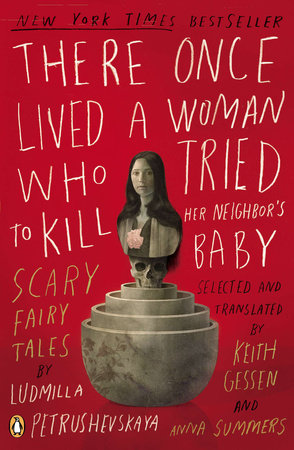
A jealous roommate sets up deadly traps for her former friend’s baby in their communal apartment. A hitchhiker on a cold night meets a mysterious woman who offers her life-changing matches for warmth. News of a deadly pandemic knocks on a family’s door. In these dark and strange fairytales, Ludmilla Petrushevskaya paints a bleak portrait of life in Soviet and post-Soviet Russia.
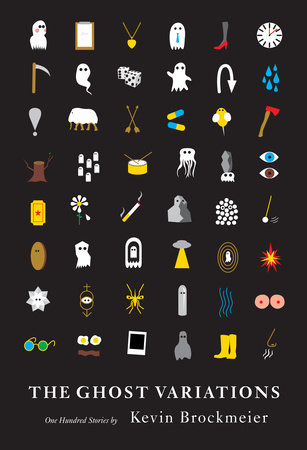
What happens after you die? These 100 miniature short stories, at turns humorous and haunting, imagine the multitudes of the afterlife. More hell than heaven, each uncanny microfiction is two pages long and can be read within two minutes.
Spirits Abroad is a short story collection that infuses Malaysian folklore with the pressures and anxieties of modern-day life. Set in Malaysia, England, and “elsewhere,” the stories feature mythological creatures from Malaysian lore: in “The House of Aunts,” a teenage vampire falls in love with a human boy, much to the chagrin of her deceased aunts; in “First National Forum of the Position of Minorities in Malaysia,” an invisible creature from the Borneon jungle demands his right to affirmative action; in “One-Day Travelcard for Fairyland,” Malaysian students newly arrived at a British boarding school must battle English faeries.
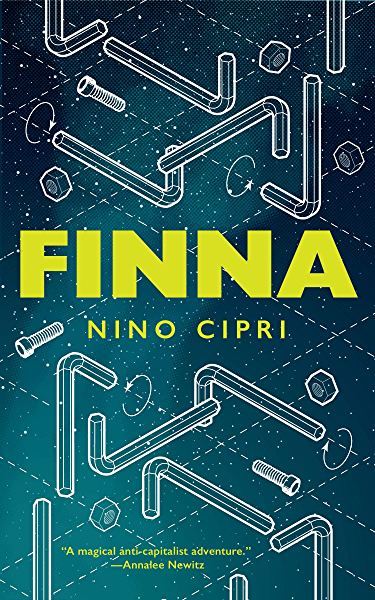
Finna is a darkly humorous satire of working a dead-end job for minimum wage at a giant corporation, a must-read for its biting critique of late capitalism. When a grandma falls into a wormhole while shopping at a superstore specializing in low-cost particleboard furniture, it’s up to two minimum-wage employees to save the day. And no, they are not paid enough to traverse across a different dimension while fuzzy chairs are trying their darn hardest to eat them; but sadly the in-house multiverse rescue team was laid off due to cost-cutting. Can the two former lovers hurting over their recent breakup remain cordial for long enough to survive showrooms full of blood-drinking Hive Mothers? Well…
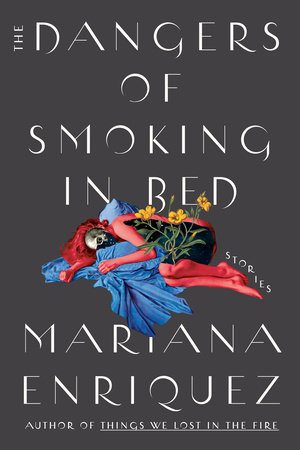
Known as a “South American Shirley Jackson,” Mariana Enriquez’s macabre collection looks at Argentina’s sociopolitical issues through a supernatural twist inspired by Indigenous folklore, the occult, and urban legends. Spanning modern-day Bueno Aires, Barcelona, and Belgium, the stories all feature women—whether it’s teenage girls conducting an Ouija board seance or groupies robbing the grave of their rock star idol—struggling with inequality, gendered violence, and powerlessness.
Stalking the pages of Those Fantastic Lives are teenage werewolves communicating via a lengthy email chain, polygamous merfolk dealing with the turmoil of a new addition to their already-crowded marriage, and children who mysteriously sprout wings and fly away as their parents try to cling on. Bradley Sides uses magical realism to imbue everyday moments in his stories with a sense of eeriness and dread, but the true hauntings aren’t the ghostly apparitions with sharp bared fangs, but the emotional ghosts that we’re trying to outrun.
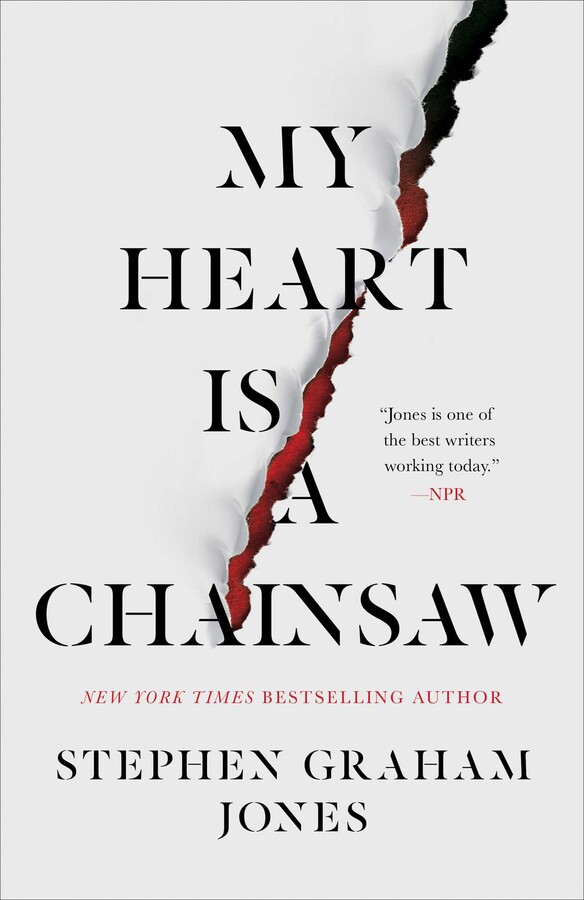
Jade Daniels is a half-Native teenage girl full of angst, loneliness, and rage. Her life-sustaining anchor is an obsession with horrors movies; slasher flicks provide her with much-needed solace and companionship as she navigates high school as an outcast in small-town Idaho. When dead bodies start piling up (in sandwich bags), Jade feels primed to be the one who uncovers the masked killer. A love letter to classic horror films, Stephen Graham Jones’s novel is a whip-smart commentary soaked in blood and gore about institutionalized violence against Native Americans, gentrification, and displacement.
I’m interested in monsters both literal and symbolic:
Cosmology of Monsters is a Texan horror novel about the secrets and the resentments we harbor as a family. Patriarch Harry Turner’s magnum opus is an elaborately hand-built haunted house in his backyard called the Wandering Dark. Monsters lurk in the shadows of the Turner household, tormenting them with orange eyes leering in the dark and the sound of scratching on windows at nighttime. With shades of H.P. Lovecraft, Stephen King and Ray Bradbury, the book slowly unravels back and forth in time as loneliness, illness, and financial precarity slowly tear apart a family.
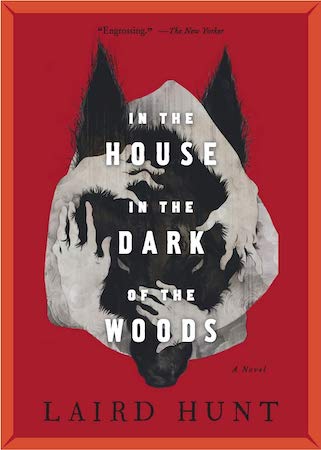
A nameless woman leaves the Old World behind for a new beginning with her husband and son, only to lose herself in the haunted woods of Puritan New England. Straying from the path while berry picking, she meets three witches and discovers a game in which she must embody the role of each character in a dark fairytale:
“Their favorite had been the game of the wolf eating the little girl. They had gnawed on each other’s ribs and gobbled each other’s entrails and torn out each other’s hearts.”
To get out of the woods alive, she must master the game and embrace the darkness.
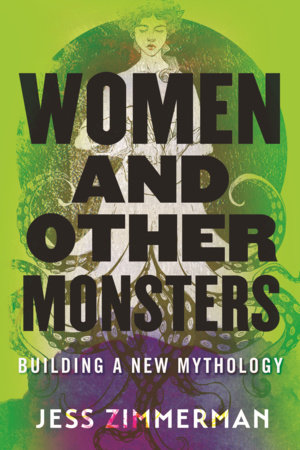
In her book, former Electric Lit editor-in-chief Jess Zimmerman argues that it’s time for women to reclaim their monstrosity. She explores eleven female monsters from Greek mythology to show how their monstrosity subverts patriarchal constraints of femininity that seek to diminish and erase women who dare to be loud, ambitious, hungry, and too much.
If I were to list the topics the poems in my new collection Machete dig into, that list would include colonialism, faith, fascism, racism, parenthood, and police violence against the BIPOC community. That’s a lot! But what unites them all is my ongoing exploration on the page with how a person endures suffering that seems endless. If I count my other poetry collections, a book I translated, and my forthcoming memoirLet Me Count the Ways, then the first five books I’ve published have all been my attempt to answer that question: how do we endure?
No surprise, TheBook of Job has always been my favorite part of the Bible. That tale of one man with a mountain of misfortune heaped upon him is one of the presiding spirits of my book. The epigraph of Machete is the old Spanish proverb, “Dios apriete, pero no ahorca.” While the English equivalent is “God never gives you more than you can handle,” my literal translation strikes a different note: “God squeezes, but He doesn’t strangle.” As a survivor of childhood trauma, this question has been at the center of my art from day one. Not surprisingly, as a reader I’m drawn to books about survival in all its many forms. Here are a few books that kept me company while I wrote Machete, and a few that have made it onto my nightstand recently.
The poems of this collection chart how women navigate the violent waters of machismo without drowning. While she writes about women along the U.S. border with Mexico, these women could have just as easily been from my South Texas hometown. How these women find ways to thrive, and not merely survive, is nothing short of heroic.
In this 17-part poem, after the snow leopard sees one of his brothers fall to a hunter’s rifle, he implores us to change our violent ways before that violence corrupts us and the Earth we all share.
What could go wrong on a North Atlantic cruise? If you were on the Viking Sky with Chaney Kwak in 2019, then the answer is everything. With humor and intelligence, Kwak shares what went through his mind, and how he kept his wits, when the engine failed and the storm-battered ship went from nearly capsizing to slamming into the coast of Norway.
In “Time to be the fine line of light,” Fountain writes:
“There are so many things
that destroy. To think solely of them
is as foolish and expedient as not
thinking of them at all.”
While one could say the backdrop of these wise, muscular poems is the Trump presidency and the pandemic, the way they examine parenting small children during times of great upheaval is timeless.
This memoir charts a young and idealistic Cantú’s journey into the ranks of the Border Patrol in order to try and change the agency from within. What results is a harrowing tale of violence and callousness as Cantú mentally suffers in the belly of the beast that refuses to be anything but what it has always been. This is a powerful book about the strength of the human spirit.
These witty, off-kilter poems celebrate missing out on a broken world whose technology encourages us to make it the focus of our obsessions. In “#JeSuisCVS,” Božičević writes:
“Turn around and sleep my love
And I’ll hold you.” I actually
Said this to a body
On this planet where
There are such things as forks
And gods, and police cars on fire.”
The surprises in these poems don’t fade upon rereading, they deepen.
These poignant essays take a scalpel to the moments when racist stereotypes are forced upon us, and how people respond when we refuse to perform the role they’ve given us. In essay after essay, Walker wanders the line between anger and laughter, and in doing so, makes room for them both. These essays sing with all the power and healing spirit of the blues.
In the spring of 2003, I was directing a play in a park in Toronto. I was twenty-five. During a rehearsal break, one of the actors, also queer, made a melancholy comment about the lack of representation for queer people in film or on television, how laughably bad most of it was, how limited in scope. I argued that there was an advantage to barely registering in pop culture. Yes, we were largely invisible, but wasn’t there something to be said for that? Invisibility also meant a kind of freedom to imagine yourself, to not have your emotional and erotic life come ready made, an over-processed and sanitized product that could be sold to you. The world was clogged with popular images of straight life, and I thought it would be disorienting, to have all this directed at you all the time, to have so many models in front of you. These models, these relentless images, didn’t truthfully show anyone’s “real life,” the secret, inner life we all carry in our heads, because pop culture, by definition, is not capable of representing the granular precision of living. It’s just an advertisement for living, showing those to whom it is directed who they ought to be, what they ought to want. Not being advertised to, I insisted, fervently and patronizingly, meant we didn’t have to fit uneasily into a plastic model of ourselves. We were free to make ourselves up, and no one cared, or noticed.
This seems naïve to me now, of course. A luxury. My world was city-dwelling, largely made up of the educated middle class, and largely secular, and while I was cobbling together artistic work and making fun of people with career plans and a thirst for pop culture representation, that was itself a privilege of my time and place. Among other things, mine was the last generation to experience the relatively cheap rent that made it possible to patch together an artistic life in Toronto and still live well—frugally but with time for thinking and making. And while I was familiar with certain kinds of offhand prejudice, I had grown up with basic legal protections that others had fought for at immense risk to their livelihoods and their lives. I dismissed the desire for representation because I was young enough, and lucky enough, to feel very little need for it.
I had been with my girlfriend since university, but we both considered marriage and monogamy capitalist and patriarchal.
One of the most significant things that happened in 2003, shortly after this conversation, was equal marriage; the first queer marriages legally recognized in Canada were performed in Toronto that June, and federal recognition followed in 2005. I remember glancing at a picture on the cover of a newspaper when I went to buy cigarettes. Two couples, hands joined, weeping. I was happy for them, but thought they had nothing to do with me. I had been with my girlfriend since university, but we both considered marriage and monogamy capitalist and patriarchal, a bid to be recognized by the state that was wrong headed at best. I didn’t want the state to bless me. I didn’t appreciate the years of work that had gone into this moment: the setbacks, the derision, the effort of imagining something into being that had once been unthinkable to many people. The figures in the photograph seemed middle aged, hopelessly conventional. Touching, perhaps, but deluded.
Only a few years later, my girlfriend and I sat in a coffee shop in Philadelphia and realized we wanted to make plans, and that our plans were entirely predictable. We were performing at an anarchist puppet festival and staying in a punk house that smelled of raw sewage. We were on a break during the tech rehearsal. I remember the steam on the windows, the smell of the coffee, and what a relief it was to say that we wanted to move in together, figure out how to have a baby, and admit that we, like most people, wanted an ordinary, banal, domestic life in which we could be, some of the time, happy. Happiness was not a bourgeois delusion, or if it was, we wanted it anyway.
We found an apartment and we made plans, which included asking a close friend to be our donor. We took advantage of what was available to able-bodied white people from middle class backgrounds living in large urban centers just before the housing market went haywire. Eventually, we had a baby, got married in our donor’s living room, bought a house, had another baby, went on a detour which involved my wife being a surrogate for our donor and his wife (but that is another story), had another baby, and now find ourselves in our early forties raising three children, ensconced in a neighborhood that was once working class but is gentrifying at breakneck speed. We shake our heads at our obscene good fortune, living in a place where we could no longer buy a house, not in a million years. We are settled in our lives.
We know a number of our neighbors well, ranging from a cohort of other queer parents to the three generations of Portuguese Catholics in the bungalow next door, who have moved, in their attitude to us, from suspicious bafflement to an odd kind of affection. We gossip over the fence. We exchange Christmas presents for the children. My youngest and theirs sit on the curb, talking about basketball. This relationship feels as surprising as anything else my life has given me.
My children live in the knowledge that they can define themselves however they want.
This brings me back to my younger self and my high-handed dismissal of representation. In the time between glancing, a little scornfully, at the picture on the front page, and chatting on the sidewalk with my neighbors, I have found my private life completely and thoroughly advertised to, with the usual airbrushed inanities of all advertising. My children live in the knowledge that they can define themselves however they want. They see this, to some extent, reflected in the images around them. These images skew heavily towards straight-appearing and gender normative, and represent mostly white and improbably affluent people. But at least it’s there. Something vaguely resembling their life is not shown as either a punch-line or a sinister force, if it is shown at all. It’s possible that this helps them to feel real, in some way unimaginable to me, having grown up in a time when the idea of queers raising children was, in the mainstream, outlandish at best.
This brings me to The Kids Are Alright, which I saw for the first time the weekend it came out, with my wife and our second child, who was two months old and came with us to the theatre, where he helpfully slept, though we did change him in the aisle halfway through. I watched it again a month ago. That child is now eleven years old. My wife was working an overnight shift. The children were asleep downstairs. I watched it again partly out of love for Annette Benning and Julianne Moore, and partly out of curiosity, wondering whether I would loathe it as much as I did the first time.
A small recap: The Kids Are Alright is the story of a middle aged lesbian couple with two teenaged children who decide to make contact with their donor. Complications ensue, involving, among other things, one of the moms sleeping with the donor. It is a comedy about extraordinarily self-involved adults, and while it has a satirical edge, I’m not sure, having seen it twice, whether the creators are quite aware of how self-involved these characters are. The two mothers seem entirely conventional in their aspirations for their children, wanting to enclose them in a bubble of their own meticulously curated milieu. I don’t fault that as much as I did on the first viewing, not because I don’t still think it’s a vicious tendency, but because I would be dishonest if I didn’t admit to feeling this myself, some of the time.
There’s a phrase of Zadie Smith’s about privilege being institutionalized luck, and I would be lying if I said that I didn’t want to pass some of that luck on to my children. And I do pass it to them, every day, and it would be ridiculous to claim otherwise, or to claim I wished it otherwise, not as an abstract political conviction but as an act (for instance, one of many, my mother-in-law puts aside some money for their education, every month, though there are a thousand other things we could give that money to instead, and we don’t).
I realized what troubled me, the first time and even more the second time, what was missing from the film, from this representational watershed: Where are the neighbors?
On second viewing, I also didn’t feel as strongly about the affair with the donor, though I still think it’s not a betrayal of the partner as much as it’s a betrayal of the children, who are desperately trying to navigate a confusing new relationship, and I wasn’t sure the writers had considered this very much. But on the whole, I’ve mellowed. I no longer loathed it. But I realized what troubled me, the first time and even more the second time, what was missing from the film, from this representational watershed: Where are the neighbors? The acquaintances? All the people one encounters in the daily course of a life? It’s too much, of course, to demand that every little interaction be shown, but for representation to rise above animated cardboard, the viewer needs to be convinced of the reality of the characters, their texture, and that of the life around them. I don’t think anyone is convincingly real who appears to have no broader reality, beyond their family pod.
The film makes a few stabs at showing friendships that this family has, but I was left puzzled by their context, by what exists around them. They don’t seem, even in passing, to live in a neighborhood, or a city with many different layers, as all cities have. They work, they attend school, they go to restaurants and to parties. But they exist, for the most part, only in relation to one another. And I realized, watching the film after a decade had passed, that what seems to me to still be missing from cultural representation of queer families, is context. Where are the neighbors? Not as antagonists or allies, but as people in themselves, with their own complications, opinions, thoughts. The characters in The Kids Are Alright live in beautiful houses with sunny kitchens and comically large bathrooms (I have never, to my knowledge, met anyone with a double sink so they can stand beside their spouse, companionably brushing their teeth at bedtime), and speak in a kind of shorthand intelligible to members of a very particular segment of a very particular class (“I’m not being my higher self,” “He seems a little untended,” “It hasn’t risen to the point of consciousness for you,” and more of the same), but do not, other than Julianne Moore’s character being casually racist and deeply unfair to a gardener she’s hired, appear to ever, in their lives, speak to someone outside their boundary (unless they are buying something).
This seems to be related to what a family is supposed to be, and how the family, even reconfigured, is imagined. It’s a truism that we—and I use the word loosely, I’m never sure who we is, really—don’t want to simply replicate the nuclear family, so historically and culturally specific, so arid. In the struggle to insist that we are “as good as,” we risk becoming, ourselves, a kind of caricature of the pop culture vision of the middle class straight family: in the fortress, hermetically sealed, smugly and anxiously defending our borders.
Of course, the nuclear family, as depicted in pop culture, is a bogeyman and a mirage. Bluntly, I don’t know any, and not because my social world isn’t full of middle class straight people who are married to each other, apparently happily, raising their children in relatively tidy houses and driving their cars to work after dropping the kids off at the local school. But scratch the surface of any family at all, and complexities emerge. Different arrangements, different histories. No one is an advertisement. When I look at my neighbors, especially the ones who are enmeshed in my life in various ways but are not my friends, I realize there is so much about them that I don’t know.
It’s whoever is around you, and those people may be profoundly different from you, in background but also in belief, in politics, in taste.
Since we began to make our own family, I have thought a lot about that overly malleable word “community” and what it means. Affinity? Identity? Politics? Agreements of taste? It is all that, of course. I would be indulging in a fairytale if I didn’t say I had a “community” of friends with whom I share a bedrock of belief and understanding, and the comfort of shared histories and shared points of reference. But community is also proximity. It’s whoever is around you, and those people may be profoundly different from you, in background but also in belief, in politics, in taste. Some of these differences are overt, and some are not, but they run very deep all the same. And if we want to live together, the strange compromises we make with one another are the sinews of our shared lives. And as I get older, I become more and more impatient with representation that is not interested in context, meaning the relationships between neighbors and acquaintances and people chatting haphazardly in the street, who do not agree with each other, who have very little in common except the proximity that makes them maintain their civility, their awkward truce, which becomes, itself, an important kind of agreement.
I still feel uneasiness about marriage and domestic life, what it means, what it is. The acceptance of my neighbors makes me wonder what we have acquiesced to, who or what we think we are, to them and to ourselves, as we discuss work schedules and pack lunches in little zippered bags with superheroes embossed on the flap. I have done an almost complete about-face from the person who dismissed the couples in the photograph. I have become them. I hope, of course, that there is something radical in the ordinariness of our life, that we, in being married, queer the notion of marriage, which has adapted to us as much as we have adapted to it. That we are not an optimistic mock-up of this institution, but a transformation of it. Yet I’m uneasy with that idea, too: too much, too grandiose, too idealized. I don’t want to represent anything, because isn’t that the point of this normalcy, that we don’t need to be representational, ambassadors or apologists for our own lives? Perhaps my unease is actually a kind of embarrassment with my leap in status, my wholesome respectability, the apparent security and centrality of my social position, which my younger self could not have imagined. I am firmly on the inside. It feels permanent, and solid, so why do I intermittently feel unsure, as if I might be deluded, thinking my life was acceptable? I don’t know if this is a hangover from spending my youth and early adulthood assuming my own invisibility, or if this sense of precariousness is in fact a common experience, a human predicament that no one fully escapes. I suspect it’s both things.
I like to think that we both know that the other one is real, and that part of knowing this is not needing to agree.
There’s a Sam Lipsyte short story which has the line “either everyone is real, or no one is,” which I pedantically copied onto a slip of paper and taped to my desk as a useful piece of advice for anyone trying to write fiction. I think of it sometimes when I watch my neighbor, the grandfather of the family in the bungalow next door, walking up and down our street, which he often does, a bit aimlessly. He is retired, and many of his friends on the street, people who moved here in the wave of Portuguese immigration to Toronto in the seventies, have sold their houses to people like me and moved to the suburbs, or they have died and their children have sold their houses (to people like me). I watch him and think about what it means to be seen, to be represented. Surely this man feels that his neighborhood has become unfamiliar, that he has become invisible? Surely he must at times feel that the world he knew is vanishing? Surely he must often feel at a loss, on the outside? I don’t want to romanticize him or his family. He is sometimes a very angry man, and has terrible fights with his wife, who is often also very angry. Our two families, from experience, tend to avoid politics, and they have expressed opinions I find bigoted and sometimes, if I’m honest, just stupid. I’m sure they feel the same way about me, as is their right. Instead, we say it is a nice day out, or that we’re going to have rain, or I ask how his granddaughter is liking high school, or we complain about the number of houses under renovation, all the noise and dust. I like to think that we both know that the other one is real, and that part of knowing this is not needing to agree.
When I airily denied any desire for representation in 2003, I was an outsider. I could not marry, and when I could my marriage was not recognized when I travelled (and still isn’t, depending on where we go). I sometimes felt unsafe holding my girlfriend’s hand in public. There were numerous hurdles to starting a family, and my girlfriend and I were wary of presenting as a couple when we talked to prospective landlords. Much of that has changed. When my partner gave birth to our daughter, the court decision that meant I could go on the birth certificate without going through an adoption process was less than a year old, and even then we still had to lie and pretend our donor was anonymous. I am keenly aware that the protections we have are very local and very fragile. But with all that, I am now on the inside, and wondering what that means. Wondering if “insider” and “outsider” are as much of a mirage as the nuclear family, a kind of provisional placeholder for something that doesn’t actually exist. I find my relationship to the desire for representation has changed. I am reconciled to being advertised to. I am grateful for it, even, realizing that the relative tolerance of some of my neighbors has been helped by pop culture giving them a sense that we are normal, and commonplace. I sob at the scene at the end of The Kids Are Alright when the daughter leaves for university, because I see our daughter a few years down the road, getting ready to leave us and start her own life, and I see my wife and I, now, like the characters, middle aged, though we are in a different tax bracket and will never have, or want, a double sink. I watch Modern Family with our children, a show I find retrograde in so many ways that I couldn’t list them here, but they love it and I try not to overanalyze it in front of them because it ruins their enjoyment, and I want us to agree to disagree. But I’m still looking for representation of a queer family that is unsentimentally interested in the neighbors, in the web of people who have no affinity, in all the encounters between people in proximity who will never be in agreement. Either everyone is real, or no one is.
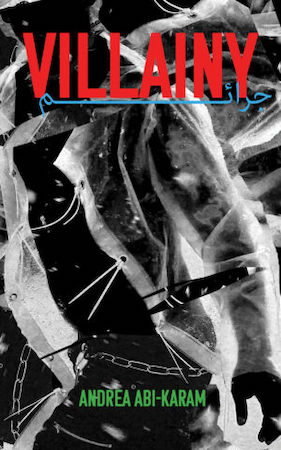
Andrea Abi-Karam’s second poetry collection, Villainy, rises out of their grief in response to the 2016 Ghost Ship warehouse fire, which claimed 36 lives in Oakland, and the 2017 Muslim Ban that banned refugee and immigrant entry into the United States from certain majority Muslim countries. Abi-Karam interrogates the precarity of the queer body in the American imaginary, the possibilities of queer desire to combat grief, the trans Arab American body as an artefact, and the intersection of queer joy and precarious living.
In this anarchist poetic manifesto, the theme of survival in the face of surveillance coexists with queer desire and joy in public places. Queer sex in public—like a dance floor, a museum room, etc.—in particular, becomes a way to articulate rebellion in the face of state surveillance. Abi-Karam’s work is specifically interested in the healing and empowering nature of collective work and co-existence, whether that’s in their personal politics or creation of art.
Abi-Karam and I spoke on video chat, and discussed reclaiming the trans queer body through poetry, as well as connections between their work and real-world dilemmas within America.
Sanchari Sur: The overarching theme seems to be the process of questioning archives, both national as well as personal, and how the trans Arab American body exists within and outside those narratives. Can you speak to this overarching theme?
A huge part of this desire around public sex and public protests are overlapping; this need to be ‘I’m a queer freak, deal with it’ while grappling with the fact that it’s dangerous to be visible in these ways.
Andrea Abi-Karam: I’m interested in your interpretation of the book as one of questioning archives, because something that I’ve thought and written a lot about is wanting things to exist in the present like queer cruising, temporary autonomous zones and I think “archive” is a loaded concept. But I was inspired a lot by the works of Ana Mendieta and David Wojnarowicz as people who died really young—because of the patriarchy, the state, queer erasure, brown erasure—and wanting to re-enliven them, and think about what it would be like to be in community with them, and make art, performance, and write alongside them. So I was trying to bring them into the present. I wanted to be in conversation with them, and simultaneously think about my own grief that I’ve experienced both on a micro and macro scale.
SS: In your opening pages, you write about sex, both as unbecoming as well as a reclamation of the queer body. I’m interested in the specificity of that fleeting moment of being perceived as the other while having public sex. I’m thinking of that scene on the dance floor, where the speaker is with a person who they’re pleasuring in a crowd and this person starts moaning, but then the crowd thinks that this person is going to faint. It’s a cool moment of dissonance, and these kinds of moments keep coming up. Can you speak to how you reconcile sex as unbecoming and reclaim the queer body?
AAK: In my own trying to survive the experience of losing so many friends to the Ghost Ship Fire, one of the main things I turned to was queer sex, and this very desperate desire to feel connected to other people. In these fleeting, revelrous pleasurable moments, the lines were blurred between me and the person that I was with, or us and the larger crowd, and this need to melt into the crowd simultaneously. A huge part of this desire around public sex and public demonstration in protests are overlapping; this need to be “I’m a queer freak, deal with it” in public while simultaneously understanding and grappling with the fact that it’s dangerous to be visible in these ways.
I am working on a poet’s novel project right now, and I was working on a scene this morning where I was taking the BART from Oakland to San Francisco to do a performance, and I had done my makeup before getting on the train. And then, this man was following me from the train through the station, and I was very freaked out and was able to find a cab and hopped in the cab even though the venue was one block away. And I was unpacking this moment. And I was like, “What is it about this moment? Was it the fact that I was being perceived as feminine? Or, was I being perceived as a disgusting freak?” There was both an attraction and disgust coming from this man and a need for him to get me or whatever. That was a moment I was alone in public, displaying my queerness visibly, and what the repercussions of that were. So, a lot of things in the book, in public around work or sex, on the dance floor or at Pride, were kind of enmeshed in queer collectivity and resiliency, and strength and survival, that’s possible when you’re working together. If I in that moment, when I was trying to escape the pursuit of that man, if I had been with a huge crew, it would have been a totally different experience.
SS: Can you speak to that temporary space, that space where there’s both pleasure, as well as being perceived as something else? It comes up when you write about cops kicking the speaker and their friends out from a park, but the group uses the cops’ lights as a stage. It also comes in that space in the museum, where the speaker is having sex with another person, but is interrupted by a guard. I think these moments are extremely empowering slippage.
What do you do between having been permitted space and the moment when that changes?
AAK: Both of those moments are around trying to construct in poetry of what it feels like to be part of a temporary autonomous zone, whether it’s with one other person, or whether it’s with a big group of people. And you’re picking up on an interesting point: What does it mean when there’s the perspective of the state, or the surveillance state? For example, the security guard keeping an eye on the museum, or state security like the police being “it’s cute, you had your little dyke march and now it’s time for you to go.” What do you do with those moments, between having been permitted space, and then the moment when that changes? I am thinking of the power of collectivity, because that was the one weekend a year when queer people are allowed to be hanging out in the street for a couple of days. There’s always the clear block of Pride, which is the most fun part of Pride, but it’s still not enough. It’s a few hours a year when we’re able to take over this type of space in this particular way.
There’s a thing that happens in poetry around self-reflexivity, and it’s not something that I’m that into as a poet in my own work, but having these multiple perspectives and the awareness around the danger of existing as visibly other in these types of spaces that are maybe temporarily controlled by us. “What can we achieve in those temporary moments?” is the question of materiality and imagination that Villainy is working with.
SS: In the first section, “The Aftermath,” the speaker seems to negotiate how poetry or the arts can accurately be a form of militancy, as you write about the “fanonian poem” that would be “fire.” How do you negotiate arts as militancy while living marginally, eking out space that was otherwise withheld?
AAK: To quote Audrey Lorde, “to transform language into action,” and that’s something that I’m constantly thinking about when I’m writing. When I was younger, I used to think that poetry alone could affect some sort of change. And now I have a much more complicated and nuanced perspective which is that militant, radical poetry arises alongside social movements. And so, there’s some sort of participation happening by the writer, whether it’s the potluck, the protest, the meeting, whatever, there is some sort of direct participation happening in contributing towards uprising, which is where militant poetry arises from, intertwined like a helix.
SS: Singularity as a theme exists throughout your work. I’m really interested in what it means to embody or try to live or articulate a truth outside the hegemony of singularity.
Militant, radical poetry arises alongside social movements.
AAK: I’m talking about “whatever singularity,” a phrase I lifted from Tiqqun, a French-Italian radical collective. They’re a group of French authors and activists. So, this phrase means a subversion of the idea of singularity. And I’m thinking about singularity as singleness. The type of poetry that’s written in the lyric I register that’s only referring to the author, or the projected identity of the author in the work. And the unravelling of ‘whatever singularity’ is fracturing of the idea that there is a single self that can be disconnected, can exist in a vacuum, can be disconnected from community. It’s one of those phrases that’s become meaningless at this point where this person is a “singular” artist. It’s like they have made something new and they’ve done it all on their own and they didn’t have friendships or collaborators. So, I’m breaking down these two things simultaneously that art or writing can exist detached from its social and political moment; one wanting to slide from singular to collective as a form of empowerment.
SS: So, this idea of articulating a truth outside the hegemony of a singularity; is this what it means to be a villain for you?
AAK: One of the many things of being a villain means being some sort of threat to the state, the status quo, US nationalism, US military, rising new fascism, white supremacy. And I have thought a lot about what it means to be a queer villain in public, and how aggressive queerness is both empowering, but also quite dangerous. And what does visibility mean during a hyper surveillance state—like we are living in today—where if you do something temporarily that provides a collective moment of liberation, what is the aftermath of that? Are you on the FBI watch lists? Do all the cops in the city have your photo? I mean, this is how the surveillance state operates, and then begins to chip away at strong groups of activists.
SS: Can you speak to your relationship as a poet to the art of Ana Mendieta as it plays out in Villainy?
AAK: I went to see Mendieta’s films, probably five or six weeks after the Ghost Ship Fires. So I was still kind of existing in this intense space of grief. And I was very, very receptive to being able to experience the wholeness and incompleteness of the show, because she was killed so young, and she could have created so many more works, but never had the chance to. And it was her film work that I saw specifically, but that foregrounding of the body, and that foregrounding of her own body, and thinking of her visceral commitment to her work foregrounding her own body in something like the earth and the river surrounded by rocks, and outlined by gunpowder. I felt moved by both her commitment and also the duration of the works. It probably took her hours and hours to dig out the shape of her body in the literal cracked earth. I felt very moved by the ways that she gave herself entirely to the work.
SS: Your speaker talks about looking upon their disfigurement and hope others notice it too. This comes up in relation to Mendieta’s work as well. What does it mean to look upon one’s disfigurement?
Queer liberation means a life not living in fear of retribution by the state, police, prison, or constructing one’s time around being of service to capitalism.
AAK: I came to know the word ‘disfigurement’ by looking at Mendieta’s film works. There were a lot of images of her where her body was quite contorted in the camera. There’s one in particular where she’s lying face down in a river. And so, thinking about what was that experience of creating that work, and also thinking about disfigurement as a tool of power for queer people being able to get plastic surgery as a trans person and being able to autonomously disfigure yourself for your own pleasure and your own vision of variations of what bodies can look like. Disfigurement also relates to the experience of surviving trauma with scars, and scars being a kind of disfigurement.
SS: You write “queer liberation means a world without prisons.” This reads like an anti-prison manifesto, where queer freedom cannot exist without dismantling prisons. Can you speak to this idea of queer freedom?
AAK: It means abolition of the police, of prisons, and borders, because those are all things that serve to contain, divide, and isolate the other. It means a life not living in fear of retribution by the state, police, prison, or constructing one’s time around being of service to capitalism; so, the ability of total self-determination of your body and time.
SS: What did it mean for you to write this book in the context of what’s happening in Lebanon with Beirut being shut down, or Palestine being under attack, or conditions in Afghanistan; events that are unfolding in real time?
AAK: I wish the issues that I raised in Villainy were no longer relevant, and that we’d make progress to a point where we’re doing something different with the world. But I’m sad to say that that’s not the case. I mean, the problems that are happening in Lebanon, right now in Afghanistan, and in Palestine are ones of colonialism, and border and empire, which are all things that I am reckoning with in trying to tear down in Villainy.
How can I help being based in the US? I can donate, contribute to mutual aid, donate airline miles, things like that. And those are all things that exists as part of mutual aid networks, which are grassroots organising tactics against empire as ways to survive living under colonialism. As a long way of saying, I wish we didn’t have the same problems. It’s quite disturbing to me that how relevant this book feels now even though I began writing it five years ago.
Listen to those blue collars. All slab bellies and seed-and-feed hats. Screaming my name in their gut-deep, cig-scorched voices. Heard a stat that the most prone to playing sad sax solos are ag hands. Farmers. Laborers. Ranchers. If I can bring them a little Wednesday-night joy to stave off any self-inflicted sad-sack shit, well then, watch me hop the ropes and fly.
I’m pacing in the belly of Sokol Auditorium. Slapping the concrete-walled hallways that work underneath and around and eventually lead to the center-set ring. Sokol has a stage and a balcony, and close to fifteen hundred people can cram in, max. Outside the squared circle, lean one way or the other too hard and you’ll feel so many fingertips you might as well be the cutest goat at the petting zoo. The exterior of Sokol reads all church, with its brick facade and high, arching windows. A stone eagle also presents majestic above the entrance, with an actual cloth-and-dignity American flag waving overhead. Backstage is all business. A couple of rusty folding chairs. Banquet tables. A fruit plate. When we get the call, we emerge from behind a set of heavy purple drapes, a cheap programmable electric sign jerry-rigged to sway above us buzzing our names as the announcer calls us forward and the crowd roars. My name doesn’t fit within the word limit, so it always reads RICKY2HAT, confusing the newcomers, because I’m not even wearing a hat.
Ricky Twohatchet is my name, although the government recognizes me as Richard Powell. I run half-Apache and half–Euro mutt: a mix of Irish, Scottish, and Polish. While fifty percent of the blood that courses through my veins is Native, I came out looking like I could model Scandinavian activewear. I’m naturally blond-haired, blue-eyed, with a smile so white it could run a Fortune 500 company. To help the sell, I dye my hair black twice a month at a boutique where the stylist can never shore up the sideburns, but she’s a good listener and spends extra time on the complimentary shampoo, so I tip well. I also hit the tanning booth weekly, but that’s more for muscle definition. Pops the lats. Lines the delts.
Seven years of making the rounds has led to this moment. From backyard wrestling to bar brawling in Seattle on a bunch of scummy mattresses to middling start-up conferences to this: I’m one level away from being one level away from the big leagues. And tonight is supposed to be my big hurrah. Here, in the belly of Sokol, surrounded by loved ones and onlookers ready to bear witness.
Only I’ve got to deal with 240 pounds of pissed-off Mexican before the ticker-tape parade.
Picture a preteen boy, sugar-sick off mainlining Mountain Dew, who spends too many hours on a video game and has amped all his character’s stats to max to create this Uncanny Valley–looking cartoon version of a man shredded to the high heavens. That’s Bojorquez. All brawn. He looks like he had back-alley surgery in Venezuela to fill all major muscle groups with motor oil. I only wish they were filled with fake fluid and weren’t solid slabs forged by testosterone and effort.
I sidle up to the purple curtain, finger the folds. Wait for my cue. Under my breath, I say, “I am a tender man. I am a tender man. I am a tender man.” My own little prayer cribbed from a quote by Mr. T about toughness. But don’t peg me as a Bible thumper; prayer to me is only pleading words on air. Something we all have in common, whether you’re Christian, Muslim, wide-eyed child, or wizard. I am a tender man. I am a tender man. I am a tender man.
Now, two ways generally exist to enter the ring. The slow go: the my-balls-are-so-big-I-have-to-walk-wide-legged-being-a-dude-so endowed. Under deposition, Terry Bollea, better known as Hulk Hogan, said Hulk Hogan’s dick is ten inches. Terry Bollea is not ten inches. Big difference. Flourishes include a finger point or a head turn toward different sections of the audience—always acknowledge the cheap seats. Or the full-out, Ultimate Warrior–perfected sprint so fast toward the ring that the announcer barely gets to finish your intro and there’s zero chance the audience could Shazam your theme song. Sure there are other variations, but in general, there’s fast and slow. Little in-between.
Under my breath, I say, “I am a tender man. I am a tender man. I am a tender man.”
Now I’m back to full sprint. But I took a few years off. Switched tempo. Not out of any marketing gimmick; I was scared.
When I first started, seven years ago, I’d run hard, but once I slipped on a rubber, nonslip mat, skidded across the slick concrete, and ate it into the stairs. The audience gasped and I let out a weird, little, high-pitched yelp. Back then, I went by a different name, a whole different persona, so nobody except a handful of basement-dwelling, hard-core wrestling brains knew it was me when it went semiviral. This was also back when YouTube barely had walking legs, so viral then was about fifteen thousand hits. Still, the fewer people that know I was the “KISS THE STAIRS ZOMG!!!” guy, the better. It hasn’t made it to Botcha mania, a YouTube series that highlights wrestling fuckups or “botches,” and for that I face Coral Gables and say a short prayer to the neon god, Macho Man, on a daily basis.
But I’m not scared anymore. I jaw on fear like bubble gum.
Once my music goes, I’m gone. No easy-does-it. Full-on adrenaline dump run. “Run to the Hills” by Iron Maiden has a tough-talk last half, and these fans are not the type to reflect on their great-great-great-grandfather Clovis’s role in slaying Natives during the New World migration west.
Cue the Maiden. I go running.
As I make my way ringside, one voice rises above all others. Frankie, my love, my dear, my heart, carrier of my kid. Frances Rae Dillashaw. Being from North Mississippi, she has a slight Southern lilt that is more pronounced when she’s drunk and also when she lucks into decent Keno payouts. It floats above the din. Above the flat, nasal tones of my fellow fly-over crowd. Like brown butter on plain toast.
She is sporting denim overalls that I once accused her of wearing as a sarcastic knock at Midwesterners. Although she told me they were legit and that she was volunteering part-time at an urban farm, I’ve never even seen her cradle a rutabaga, so I’m skeptical. Still, she looks stunning in a white shirt and overalls.
Frankie is at every show. She’s a support system, a lifeline. Even if she doesn’t do signs.
“Where the hell do you put a sign when you’re in the bathroom? While you’re waiting in line for a hot dog?” she asked me once, mimed a whole routine where she wrestled with a poster board as big as a flatbed truck, and I never brought it up again.
Frankie is playing neighbors with Mom, because she’s always next to Mom. They’re so close they even have a secret handshake that involves kissing thumbs and a quick whisper to the wrestling gods that I emerge unhurt.
Arlene “Lena” Powell. One of those sports moms who show at their offspring’s every game and wear their child’s jersey along with some oversized sign or hat or other show of I’m-the-one-who-pushed-him-through-the-meat-curtains. The loudest to whoop and holler. She yells, “You’ve got this, Ricky! Kick their dicks in!” Usually in the vicinity of another parent covering her kid’s ears with her hands from whatever else might come out of this strange lady’s foul mouth; it’s embarrassing, but that’s Mom. You can’t earmuff that kind of energy.
It’s only been Mom and me for the past twenty-five years. Mano a momo. Pops is a goner. Never showed. Never mailed a card. Never phoned. Over the years I got accustomed to the seat beside her being empty, or else it was occupied by one of her latest dates. Few of the dudes cared enough to show, and if they did, it wasn’t in good faith. None really tried. No attaboys. Life tells me I’m supposed to feel a pang of dad absence whenever I see that empty seat, but mostly I’m thinking, Damn, that could’ve been a good place to rest a sign. Maybe that’s a deflect, but I prefer that alternative, otherwise I’d have to take on all two and a half decades of complicated dad abandonment issues, and sans therapy and popping pills it’s easier to adopt the give-zero-fucks act.
When I make it to the ring, I hop up on the apron, center myself. I exhale loudly through my mouth, inhale through my nose for four seconds, hold my breath for seven seconds, and then exhale for eight seconds. It’s a focusing technique Mom taught me. Next, I grip the top rope with both hands, and do a front flip into the ring to wild applause. A child could do it with the proper training, but it’s a move that always wows. As they cheer, they can’t hear me mutter to myself. I say my prayer and stomp down into the mat, because I need to feel grounded; I need to feel my weight in the balls of my feet. Something is off, though, because I don’t feel the brunt of my body in my legs; everything below my knees feels floaty, like I sat down crisscross-applesauce-style for a long stretch and stood up right before stumbling out here.
Bojorquez comes out to mariachi music. All up-tempo brass and strings. He’s dressed in his bad-guy getup: black tights, black boots, black pads, black bands. His hair slicked back into a wet ponytail. He used to wear brighter colors. More on the Roy G. Biv scale, in line with most Mexican wrestlers. Until his manager, Facundo, in an inspiration binge off peyote and old Mike Tyson YouTube videos, decided to redo Bojorquez’s whole demeanor. Gives him the air of someone who does downtime at funerals. Goth jock vibe.
Before he even enters the ring, I snatch the mic from the announcer. Bojorquez’s music comes to a halt. It’s all preplanned, but he probably hates that the top brass okayed it. Bojorquez stops in his tracks fifteen feet from the edge of the ring. The audience noise simmers to a low roil. A few bold-faced drunkos scream obscenities at me. Tell me things they’d like to do with oblong fruit and my mother. It’s expected. Bojorquez is the people’s champ. He’s been the reigning and defending king. I’m the new dude—fresh meat.
I’m hit with the spotlight; I clear my throat. “History lesson, folks. Apaches and Mexicans have had a long-standing hatred for each other. Before we knew the first names of every member of the extended Kardashians. Before 3D printers. Self-driving cars. That handsome mallard. Go way back. Sixteen hundreds to early nineteen hundreds. Three hundred years of warring. Bloodshed. Rivers and hills ran red. My people irked the Mexicans so much that Mexican governments even offered mucho pesos for an Apache scalp. Well, I’m here tonight to turn the tables,” I say. “After I win, I’m coming for that head.” I pull out a wig that looks like Bojorquez’s, only it’s a ratty renter that would never pass for his real sheen up close. It works for my purposes. I throw it on the ground. I stomp on it with my boot. The crowd loses it.
Bojorquez has heard enough. He comes flying full keel into the ring, and I see that Mexican meathead shoot at me with his forearm, the size of the barrel of a Louisville Slugger, aimed at my neck.
People always wonder how thick or thin between kayfabe and real life. Who really dislikes whom? Which marriages were even legal? Which friendships were for show? Like in any other sport, fans love it when there’s real dislike on the line. Tyson vs. Holyfield. Bulls vs. Pistons. Red Sox vs. Yankees. You can notch us up among the all-timers. Because Bojorquez fucking hates me.
Probably has to do with the fact that when Bojorquez and I first met backstage, six months ago, we had a minor miscommunication. It happened around a fruit plate. Donnie Deutch, our racist ringleader, for all his deep-seated hate, believes in the roster maintaining high Vitamin C levels. Not to pardon Donnie’s dumb takes, but I never saw him actually treat anyone different. Hell, he keeps his roster stacked in absurd amounts of slightly bruised fruit. Figure he does back-alley delivery deals; probably pays high school kids to dumpster-dive for ditched Edible Arrangements. But he definitely gripes. He gripes every chance he gets to gripe, to anyone who is in the room. And they’re always antiquated in nature. Donnie is like your racist uncle’s racist uncle.
On this particular day, I kept pronouncing Bojorquez’s name wrong. I’d throw a hard J, followed up with an even harder Q, and it came out “Bo-jork-quez.” Then he’d say it right. Then I’d repeat it wrong. And on and on. Partly because I failed high school Spanish, and so I never wrapped my head around the subtleties of their tongue. Also because fuck him.
Truth is, I have no valid reason to dislike Bjork, except he and I have the same goals and it’s easier to psych myself up by inventing overblown motives.
For those who might be wondering who’s the heel and who’s the face, the answer is we’re both heels. Takes two to dance. If you’re looking for a face, a do-gooder, someone as American as Superman swigging Coca-Cola with a bald eagle taloned on his arm, look no further than Johnny America. Big Boy Scout, Johnny Proper. He’s a sunglasses-wearing, American-flag-pants-festooned goober. He smells like saddle leather and sweat. Comes out to the ring waving the Stars and Stripes to a backing track of Springsteen. You can’t get more American than this motherfucker, except for the fact that he’s actually German.
When I first made my way onto the Pro Magnum circuit, America was the first one who showed me the ropes. His real name was Johann Ammer, but I called him JA or America. America was actually a German immigrant who could only fake an American accent if he did a big Texas twang. He’d only been in the States for five years, but had such allegiances to the red, white, and blue way of life, he’d shout down anyone who didn’t stand correctly during the national Anthem: full-on facing the flag with right hand flat over your heart. Even if his version of the American Dream was an old-timer’s pipe dream, he believed so fervently, he decided to hop a plane at twenty-three with zip in the way of savings and fly to a city he randomly pointed to on a map. Wrestling was just a means to an end. He dreamed of zany neighbors rushing into his oversized apartment in a nineties sitcom America.
But I’m not scared anymore. I jaw on fear like bubble gum.
After matches, we’d grab Double Pony Burgers or Pork Tenderloins at Bronco’s. Drunk, we’d hit back nines at night or sneak into hotel swimming pools for quick dips. We were each other’s emergency contacts. We lifted, ate, and practiced together.
He and I were tag-team champs and actually good buddies beyond kayfabe, but two weeks ago he was asked by higher-ups to take a new angle, and he was paired with Bojorquez. When we ran the tag-team division, we were known as the Trail of Terrors. When Bojorquez and America teamed up, they called themselves NATO: Naturally, Allies Take Over.
When he told me that he was going to have to screw me and switch sides, I was rightly upset. Business is business, but if Donnie wanted America on Bojorquez’s side, he was saying something without saying something. It was a not-so-subtle dig to say, You’re not tops. This was after weeks of them whispering in my ear that I was the next man up. I’d been outselling Bojorquez and America and Roscoe Smoke ‘Em and everyone else on the roster in apparel and merch. My tomahawks were flying like tomahawks. Plastic headdresses were popular. Not sure if the white kids who copped them were fans or folks who wanted to wear them to sweaty music festivals. T-shirts with my face and bold logo were draped as seat coolers in old Corollas all over Omaha. I was resonating, as they say. Or said.
Before the match, Bojorquez and I went over the ins and outs. Figured out what’s going to happen to who when. I told him to watch my neck. I’d been hit with a stinger two nights before and it was still a bit sore. Plan was I’d lose to Bojorquez after a fifteen-minute back-and-forth. Lots of action. Figuring out our spots. We’d set up a monthlong rivalry that’d lead to our big event, MagFest, which sounds like a convention for gun nuts. Right before we split to get things going, Johnny walked into the backstage area and told us that he’s going to illegally ring Bojorquez with the bell. This will disqualify me, setting me up for MagFest, send some sympathy toward Bojorquez, and allow America to come back to my stable. We all agreed. Had a handshake deal.
But now, in the ring, I’m questioning everything. Not only the wrestling-related. I mean every turn, every door, every meal order that led me here, staring at this behemoth of a dude who is so yoked that it looks like his kneecaps have abs. Really only wrinkles, but the point stands. Did I mention how much hate he harbors for me? In truth, I’ll be fine in the broader, cosmic sense. But there’s no guarantee he doesn’t put a little mustard on his punches. No matter what, I have to sell them. This is my time to deliver.
Only, our flow is all off. Sometimes you grip a hand, kiss a girl, high-five a stranger, and it all goes wrong. Like in another dimension, you have aced it, but this version of you is two beats late, an inch left. There’s a natural ebb but very little flow. Kicks, flips, ropewalks, flying splashes. Our two styles should mesh well. But it’s no classic. No Macho Man vs. Steamboat. Hitman vs. Heartbreak Kid. But we’re doing our part to appease the greasy patrons. Bojorquez really sells the chest slaps. Rings my ear for real with an elbow to the head. I reverse his hold, send him flying across the ring into the ropes. What we do was long ago repackaged as sports entertainment. It is now universally acknowledged that the end results are arranged. But it’s still murder on the body. Cactus Jack getting his ear ripped off. Droz getting paralyzed after being dropped on his head. Sid Vicious snapping his leg. Sometimes you get a weird sense that there’s a bullet with your name on it, a supernatural nod that you’re next. I feel that shiver deep in my bowels when I Irish Whip Bojorquez for the third time and see Johnny America crawl into the ring with the bell in tow.
You know those old fogeys who watch the same whodunits and expect to find different culprits? They’d be the only audience surprised to find I’m fucked. There is no hitting Bojorquez. I’m the target. And although I don’t think Johnny means to make as much contact as he does, the bell rings me good. So much so, I jerk and hear something snap in my neck. When I go down, I actually black out for a few seconds. When I come to, I hear a scream from a stranger that’s so loud, the response is instant silence. People can tell this is no act. I broke something. Bojorquez stops. Johnny lets the bell drop. Facedown on the canvas, I try to move my neck, but I’m in so much pain that I’m sure I’m paralyzed. The ref calls it. Bojorquez’s mariachi music gets cued in to cover up the silence. The rest is Vaseline over my memory. The shock numbs me crazy, and I try to wiggle my pinkie toes, because I saw it in a movie once. Mom and Frankie are in the ring and asking what the hell is wrong with my ankles, because my feet keep doing weird flexes and points like a bad ballerina, and I say, “My pinkie toes! They won’t move,” and Frankie has the wherewithal to tell me that almost no one can wiggle their pinkie toes. Paramedics rush to my side, a stretcher in tow. They turn me over and snap a temporary brace on. I’m lifted by four men in blue polos and powder-blue latex gloves. As I’m wheeled out, I’m almost dropped, so they have to lift me and right me again. As I’m taken away, I see Johnny America out of the corner of my eye. He gives me this bullshit grimace and tries to touch my hand. I scream, “Fuck you, America! Fuck you!” as loud as I can. Adrenaline courses through my body. I’m spitting, I’m so amped. One of the paramedics puts his hand on my chest and tells me to calm down. I keep screaming until they wheel me into the ambulance. People have their phones out, documenting the whole ordeal.
Alice Walker opens her epistolary novel The Color Purplewith a silencing threat. “You better not never tell nobody but God. It’d kill your mammy,” fourteen-year-old Celie’s sexually abusive stepfather warns her. From her childhood through her adulthood, Celie writes letters to God, and later, to her sister Nettie. In them, she tells the truth about all she’s endured, and in the process, she saves her own life. Celie’s stepfather and her cruel husband, Mister, rob her of her childhood and any justice she might have gotten for the crimes they committed against her. But they could not take her voice, not completely.
Maya Angelou wrote about silencing her own voice, in her first memoir, I Know Why the Caged Bird Sings. At eight years old, she stopped speaking because she thought her words had killed a man, her mother’s boyfriend who had raped her. She spoke, testifying at the trial where the man was convicted and sentenced, but then released from jail. Four days later, he was found murdered, likely by Angelou’s uncles. For nearly five years after, she only spoke to her brother Bailey.
At eight years old, she stopped speaking because she thought her words had killed a man, her mother’s boyfriend who had raped her.
In “Peach Cobbler,” from my short story collection, The Secret Lives of Church Ladies, a girl understands without being told that she must keep silent about her mother’s decade-long affair with the pastor of their church — even and especially after she is volunteered to tutor the pastor’s son, at his house, under the watchful eye of his mother, the pastor’s wife and First Lady.
In worlds real and imagined, what grows inside Black girls’ and Black women’s silences?
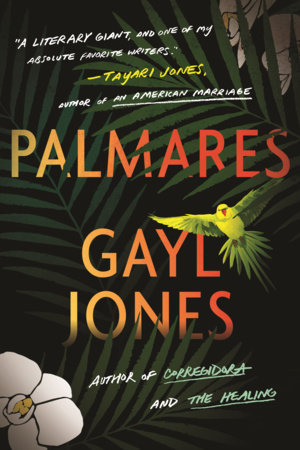
In a brilliant essay for The New York Times Magazine, Dr. Imani Perry, the Hughes-Rogers Professor of African American Studies at Princeton University, had questions for Gayl Jones, the writer who publicly went silent 23 years ago and whose latest novel, Palmares, was published last month. Perry, the author of Looking for Lorraine: The Radiant and Radical Life of Lorraine Hansberry and six other books, asked:
What does it feel like, 46 years after the first, to have a new novel coming out? Why did you step out of view? Did it make you a more honest writer? Did it serve your soul? I would not get answers. I would not be able to charm her into laughter. I know she is brilliant, obscure, irascible. I imagine her smile is still wry. But does she still wear her head wrapped in 2021? Is she still adept at putting a nosy questioner in her place?
I can’t know any of this because in 1998 she disappeared from public life. Since then she has refused all interviews and photographs.
Toni Morrison, Jones’ editor from 1975-1982, said of her debut, Corregidora, “No novel about any Black woman could ever be the same after this.” In the book, the lives of four generations of Black Brazilian-American women are overshadowed by the incestuous rapist enslaver whose surname they carry. The eldest of the four, Great Gram Corregidora, insists that they all must “bear witness” and “make generations,” or bear offspring, who will memorize and then recite the old enslaver’s atrocities at Armageddon.
The novel’s main character is the youngest Corregidora woman, Ursa—a blues singer. Some scholarship about the book highlights the blues as a conduit for Ursa’s empowerment and the “valorization of voice,” while other scholars emphasize the role of literary silence. Writing in the National Women’s Studies Association journal in 2001, Jennifer Cognard-Black “looks to the mute, missed, and stifled in Corregidora that form a rhetoric of silence.”
Silence figures prominently in Jones’ Palmares, too. The title refers to an actual place, a community of freeborn and escaped, formerly enslaved Africans in 17th-century colonial Brazil. In the book’s first chapter titled, “Mexia,” we meet a beautiful “half-Black and half-Indian” woman who never spoke to anyone, not even Father Tollinare, the Franciscan priest whose concubine Mexia is rumored to be. He calls Mexia, “Silent Spirit.” In this chapter, we also meet our spirited, literate narrator, an enslaved girl named Almeydita, who defends Mexia’s silence in the very first paragraph:
I had never heard her speak even to the Father. Perhaps if what people said was true, she spoke when they were alone together, at those intimate times, but what if not then? What if she did not speak even at those moments? What of it?
Here, Jones could be defending her own silence, responding to critics from the 1970s, who, as Perry observes, considered Jones to be difficult and alienating, simply because she was shy and soft-spoken. She dared to eschew the spotlight, even at the expense of promoting her work. Perry further notes that a graphic, sensationalized media account of Jones’ husband’s suicide in 1998 was the ultimate violation of her carefully guarded privacy. With that final straw, she withdrew from public life.
In Palmares, as in Corregidora, “silent,” “silence,” and “said nothing” are ubiquitous throughout the text. These silences are attributed to Almeydita (who, as an adult, is called Almeyda) and to other Black and Indigenous women characters. Questions, requests, and demands routinely go unanswered, confounding and sometimes angering the people around them.
They know better than to explain themselves, their powers and their origins, their beliefs and reasons, their magic.
These women’s silences should not be interpreted as a lack of understanding or awareness, but rather as an abundance of both, most especially the knowledge of what to keep close to the vest, and the implications for failing to do so. They know better than to explain themselves, their powers and their origins, their beliefs and reasons, their magic. These women are silent not because they don’t know anything. They are silent because they know better.
The day after her essay about Jones appeared in The New York Times Magazine, Imani Perry tweeted:
There are some folks who responded negatively when I said “you don’t tell all the secrets when you’re trying to get free.” Gayl Jones deepened my commitment to that formulation. Strategies in private are sometimes the most important. Don’t go telling all your business…
Right up there with the reminder that every shut eye ain’t sleep, “Don’t go telling all your business” is wisdom handed down from our grandmothers and grandfathers. At the same time, as Black women, we rightly encourage our daughters and each other to speak up and speak out. We heed Zora Neale Hurston’s words: “If you are silent about your pain, they’ll kill you and say you enjoyed it.”
We follow Audre Lorde’s example. She said, “If I didn’t define myself for myself, I would be crunched into other people’s fantasies for me and eaten alive.” Because the stakes of silence and self-determination are high. But it is also true that whether we are silent or silenced, all manner of metamorphoses can happen inside a Black woman’s closed mouth.
Tellingly, some of the most loquacious characters in Palmares are white women. In a long, fragmented, experimental passage within the larger story, the first-person narrator is a white Portuguese woman, Madame Froger. She is consumed by bitterness and jealousy after walking in on her husband having sex with an enslaved Black woman. Froger is so resentful her extended internal monologue returns to this Black woman over and over again — frequently in the middle of sentences that are about something else entirely. Froger refers to the enslaved woman as her husband’s “lover” and doesn’t acknowledge that the sex between them was nonconsensual. She tells her husband repeatedly to “Go to the devil” and prattles on and on about various perceived social and cultural slights for more than 30 pages in a stream of consciousness. She is further annoyed by the frivolousness of Mrs. Florence Pepperrell, a chatty white woman writer visiting Brazil from London. And if that isn’t the teapot with a tempest in it calling the fine china white, I don’t know what is. (I’m reminded here of Black poet, abolitionist, and suffragist Frances Ellen Watkins Harper’s 1866 speech at the National Women’s Rights Convention in which she said, “I tell you that if there is any class of people who need to be lifted out of their airy nothings and selfishness, it is the white women of America.”)
Fortunately, white women are not centered in Palmares. Rather, they are on the margins of a series of short, related tales embedded in a sprawling central story that follows Almeyda through childhood to Palmares and beyond. With the ever-present brutality of slavery as foundational, the worlds Jones creates feature dense landscapes and mystifying dreamscapes. These worlds exist between reality and madness, spirit and flesh, and are, to borrow one character’s phrase, “a fantasy of history and imagination.”
With the ever-present brutality of slavery as foundational, the worlds Jones creates feature dense landscapes and mystifying dreamscapes.
The best stories, like Palmares, always make me fall in love with their writers. They make me deeply curious about the minds that could conjure such beauty or horror or knowing. Decades ago, before I was comfortable calling myself a writer, I would track down email addresses and send messages to Black writers, praising their work (genuinely) and asking for professional advice. I cringe at this memory now, at how vague I was in my queries for guidance, and at the intrusion. I cringe, even as I do my best to be responsive and helpful now that I’m on the receiving end of such messages from emerging writers, even as the desire to write Gayl Jones a love letter burns strong.
Palmares, this epic novel Jones has given us, is plenty. It is overflowing, and it will have to be enough. I respect Jones’ silence, and I appreciate her for inspiring me to sit with my own.
As a teenager, I was a chatterbox, part of my performance of Black womanhood as I understood it: a confidence and an unshakeable self-love, neither of which I actually possessed; and strongly worded (if not well-informed) opinions on current events and social issues. My deep insecurities and even deeper sadness lived in quiet places, so I avoided silence. I even joked that I was prejudiced against shy people. The truth was, they made me uncomfortable. I resented them for making me fill a void with noise to drown out my fear of what they thought of me and the truth of how I felt about myself. Didn’t they know I had a part to play? I had already begun to believe the hype of the Strong Black Woman archetype, and it would be decades before I, wrung out to an emotional husk, let that shit go. But for a long time, too long, I faked the funk, I talked the part.
After a lifetime of being a talker who mostly kept silent about things I shouldn’t have, like my pain and grief, I’m overdue.
And now, after nearly 300 virtual and in-person book tour events and interviews since late summer 2020, in support of my short story collection, I’m overdue for some restorative quiet. After a lifetime of being a talker who mostly kept silent about things I shouldn’t have, like my pain and grief, I’m overdue. Big awards are celebrated out loud, but it was second nature for me to hold the pains of the last 18-plus months mostly in silence. But slowly, I coaxed myself to speak the truth, that I wasn’t okay when I wasn’t okay. This, I learned, is how healing begins.
Last month, on the day after my 50th birthday, I began what would be a 10-day hiatus from Twitter, Facebook, and Instagram. After more than a dozen active years on social media sharing both my personal and professional lives, the silence was glorious. In it, I grappled with my fears and loneliness, fueled in part by the pandemic. I slept better. I leaned into my friendships more. New story ideas blossomed.
But I’m no Gayl Jones. I don’t have the juice to release a book and not actively promote it. So now I’m back on Twitter and Instagram, but only for a few hours each Sunday to share my upcoming events, celebrate the successes of my friends, and give thanks. I say far less these days, and it feels right, and good and healthy.
Ann Petry’s life and words are instructive and aspirational here too. Petry’s 1946 debut novel, The Street, was the first by a Black American woman to sell more than a million copies. After becoming a literary star, Petry retreated from public life, in response to McCarthyism, in part, but also because she found celebrity to be a threat to her as an artist. “Continuous public exposure, though it may make you a ‘personality,’ can diminish you as a person,” she told an interviewer in 1996. “To be a willing accomplice to the invasion of your own privacy puts a low price on its worth. The creative processes are, or should be, essentially secret, and although naked flesh is now an open commodity, the naked spirit should have sanctuary.”
I hope silence is a sanctuary for Gayl Jones, and for all of us who need it to be. The stories I write are usually forged in silence. I go through many drafts before anyone else hears my characters speak or wanders around in the worlds they inhabit. I’m eager for my naked spirit to take hold, grab the reins, and lead us through.
I wanted to leave on Friday. I’d been gathering supplies—gallons of drinking water, boxes of soup—things I could load my car with. I thought I would drive to Houston if it came down to it. Catch a flight to New York, to the only other city in this country I ever called home.
I forgot about my body. I forgot it can’t drive anymore, not for the hours evacuation takes. It can’t bear the weight of a pet carrier with Güs inside while pushing through an airport packed with frightened people trying to leave a city before it drowns. I haven’t been able to navigate an airport without being in a wheelchair for about a year now.
Last week, I fucked up and wheeled a trolley of luggage from one terminal to another in JFK. By the time I got to the check-in desk, my body was seizing visibly, forcing short bursts of sound past my gritted teeth as my torso caved and convulsed. The ticket agent expedited me through security and called a cart to get me to my gate. When I got downstairs, the information agent—an older white woman—told me the cart had left without me. I tried explaining that I could not walk to the gate unassisted without going into severe convulsions, but as I spoke, I began to stutter. My words slurred as the muscle spasms spread to my throat and face, and I choked back helpless tears. I’ve lost my ability to speak before, and it horrifies me each time it happens. On the other side of the counter, the woman panicked and started making phone calls. I listened as she told whoever she was speaking to that she had a passenger in distress, and then she suggested calling the police.
I’ve lost my ability to speak before, and it horrifies me each time it happens.
I couldn’t panic. I couldn’t afford to panic. I’ve had breakdowns in airports in various countries before, been detained and threatened by soldiers, had airport personnel deliberately try to make me miss my flights so I would be stranded away from home. Sometimes it was because of my passports, sometimes it was because of how I dressed or sounded, or because tattoos cover my arms, or because my disability is invisible—there are so many permutations of punishable deviances in a space as heavily surveilled as an airport. I could not imagine what cops would do to me for being Black, for the way my speech was glitching, the way my body was folding, the way my mind was about to break. The information agent asked me if I wanted the police, an unhinged question, and I replied as sternly as I could that I did not. I asked her to call the gate to let them know I was delayed, and she told me no one would hold the plane, not for me.
In the end, she gave me a chair and I sat in it and cried and cried. I cried when the wheelchair finally arrived, and all the way to the gate, not caring who stared. They always stare when you’re in a wheelchair anyway. My mask got damp from the steady tears, and I didn’t care. The world is violent—I will say it over and over again, in as many books as I like, as many times as I like. The pain in my neck and shoulder kept escalating. Even now, as I type, it is a stinging octopus latched onto my right clavicle, deep aching tentacles winding all the way down to my bones. I got home last Monday and cried when I stepped through my front door. I was housebound for days afterward, all for walking from one terminal to another.
If I break in an airport, no one will protect me.
The hurricane is coming and there were no flight itineraries that would work, not with my disability and an accompanying pet. Every direct flight was sold out. I searched for hours, gave up and cried, woke up on Saturday morning and searched for more hours, gave up and cried again. Some flights opened up and the seats were gone as soon as I tried to book them. There was a time when I could drive, before my body landed in this much pain. What a difference it makes, between being able to leave as the storm fixes its eye on your shores, and where I am now, writing this from a pile of duvets on my closet floor as the roof of my house creaks from the wind.
What a difference having a family makes—when someone can drive you, when you feel safe enough to enter a car with them, knowing you might be trapped on the packed freeways for many more hours than you anticipated. I have nobody here to help me leave. I cannot go with strangers. I cannot imagine doing that trip with anyone I need to stitch a performative mask to my own face for—there are many things that can break me, and my body is not the only one. I would, quite literally, rather risk my life in this house.
I would, quite literally, rather risk my life in this house.
My preparations are incomplete, I know this. There’s only so much I can carry and secure before I have to sit down and rest because blunt agony is grinding into my muscles. The pain medication does a little, but not enough. I refuse to take opioids—I only use them right after a surgery, but certainly not when a hurricane is coming and I am alone.
My sister Yagazie keeps me company over the phone, reminding me to close all my interior doors so the house is better supported if my doors and windows get breached. My sibling Ann double checks that I’ve charged all my electronics and listens to the twenty minute voice notes I send her as I process the choking feelings that encompass me. I tell her about the people who have shown up and the people I considered family who have disappeared as the hurricane spins her brutal arms towards me. I would never feed silence to someone I cared about while they were afraid in a swamp, in the path of a storm that could kill them, but people justify the wildest things these days. I’m not interested in listening to them. Ann and I talk about performative solidarity and the way my nervous system is shattered right now, how annoying embodiment is. We talk about our books, about filling shelves with her series, about rainmakers and gold. We talk about God.
I close all my doors and curl up in the closet with Güs. I check the official Twitter accounts that the city is using to give updates. Life-threatening storm surges. Curfews are being put in place. A Black woman on Twitter named KD Minor (@ineedja_kadeeja) is coordinating direct cash assistance for families in Louisiana using the hashtag #ForeverCalcasieu. People will continue to need help long after the storm passes.
I am so tired of aftermaths.
Sunday, 1:40 PM
The power is out.
It came in a few times, the lights flickering, before finally leaving. All the appliances have fallen silent, and now there is just the wind, nonstop and shrieking. The wifi is gone but I still have data on my phone. I should download more books from the New Orleans Library while I can. I don’t know how many days it’ll take for the power to be restored. This morning I ran the AC much colder than I usually have it, hoping the house will hold the cool air even after the storm has passed, while we wait for the power. We’ve been getting heat advisories all summer and I’m worried about when the storm passes, what the heat will do then. I should’ve bought a small fan while I was running errands on Friday.
My neck is spasming. I swipe an extra strength CBD balm over my trapezius muscle to try and soothe it.
Something keeps beeping; I have no idea what.
I leave the closet to make lunch and my sister frets about me moving around the house. I’d only stocked the closet with snacks because it’s hard enough to plan what to eat on a good day. In a crisis, my mind goes entirely blank, as if I’ve never thought of a meal in my entire life. Luckily, a past version of me stocked my freezer with food, so I pull Singapore noodles out of the silent fridge to reheat on the gas stove. I use matches because there is no electricity to spark the fire alive. As the noodles steam warm under a lid, I make sandwiches with roselle jam and almond butter, cutting them into neat halves and packing them into Ziploc bags.
The wind sounds terrifying this close to the outside walls and windows. It is an unholy howling, like a great spirit has its mouth wide open above and around us. A sharp crack lights the air outside in a brief and brilliant blue, power lines perhaps. I wonder if this is what an explosion looks like. I should’ve made food earlier but I am doing everything as quickly as my body permits, which is not very. I peel two plantains and laugh to myself because somehow, here I am making dodo in the middle of a Category 4 hurricane. As the slices fry in avocado oil, I wash the dishes in the sink while there’s still running water. Every second, I half expect the kitchen windows to blow in, spewing glass everywhere and letting that wildness into the house. Güs leaves the closet to find me. He crouches sleepily on the hardwood floor by the dining table, staring at me as I flinch from the sounds outside. It does not sound like a storm, or like wind, or any of these little words that fail to contain what is happening. It sounds like hell itself is roaring out of the sky.
I should’ve made food earlier but I am doing everything as quickly as my body permits, which is not very.
The fear I feel is primal, disconnected, deadly stimuli striking a separate bargain with my nervous system. I gather all the food, sling Güs over my shoulder, and we retreat back to our little emergency nook.
Sunday, 4:52 PM
Something just crashed outside, something heavy. The house has been shaking all day, but now it feels like it could be from an impact. I’m worried it’s a window or the front door being breached, but I can’t decide if I should check. How much of this is beyond my control? How much can I mitigate as the day progresses slowly? It will be utterly dark in a few hours.
Sunday, 7:22 PM
The main transmission tower that feeds New Orleans has collapsed into the Mississippi River.
There was something I kept trying to remember about how the house is shaking, and now it comes to mind. It feels like an earthquake, like the force is bucking up from beneath the floor. I didn’t know a hurricane could feel like this.
I can hear rain now, accompanying the endless wind. My sister told me to download some TV shows yesterday, so I’m watching a baking show on one of my phones, interrupted by update texts from the city and the power company. Due to catastrophic transmission damage, all of Orleans Parish is currently without power.
The sunshine is almost entirely leached from the sky. I can hear the silence ringing in my ears when I pause the show. There’s an icepack propped behind my shoulder blade, pain relief that will fade as everything in the house thaws, all my other ice packs turning into plastic bags of blue gel. I know I will forget all of this, how the individual moments feel, so I write as a tethering. I’m never really here. I’m floating a pace away from my body, making clinical observations about my nervous system. I am as invisible as my disability.
I know I will forget all of this, how the individual moments feel, so I write as a tethering.
I like being with the house. It was so lonely when I first put in an offer on it—I used to bike over just to hang out with it before we closed. Last week when I was returning after convulsing in multiple airports and planes, the house was a beacon, a homing light. Most of me had sloughed off with the tears and all that was left was a thread of survival—if you can get home, you will be safe. Just get home. I’m not joking when I say the outside world is uninhabitable for me, that what is normal for other people is shattering and violent for me, that it makes me want to die, moving amidst all these cruel humans.
So I retreat to the godhouse, the land I’ve worked with, an entire reality unto itself. The only home I’ve ever had where I could call it safe and it wouldn’t be a lie, where there’s no clock, no departure date, where no one has screamed at me, or touched me in sick blasphemy. We are together in this storm, the godhouse and I, and there is some comfort in that. I am not exiled while it’s battered in my absence, not anxious while I wait to return and see how the hurricane hurt it. What happens to us, happens to both of us, now.
Sunday, 9:53 PM
The heat is already climbing.
Everything is dark, but I know this from another bungalow two decades and an ocean away, the warm nights, sweating by the light of a candle with a book to take me somewhere else. The compulsory dark is familiar, an old friend visiting in a new house, but I am not fooled by nostalgia. I know that the dark turns sour, that staying here for too long will trigger my C-PTSD with old decades of enthusiasm, so I remind myself that this time, it is different.
This time, there are marble floors that retain coolness and the water is still running, for now. I smash frozen spheres of orange juice into a teacup, cold mint leaves clinging to my spoon. The light from my emergency torch burns a cold halo into the ceiling. My shoulder is screaming at me and I hear it, but I am too tired to hunt down a silicone cup to make a suctioned ring on the muscle, or to start assembling my electrode pads and lead wires. A few people are texting to check in. Güs is asleep in his blankie, after an hour or two of trying to run through the house to play.
I’m going to try and sleep, even though it seems dangerous to jump realities while the storm is collapsing buildings and peeling off roofs. I don’t know what this patch of world will look like when I wake up. I know it will be different. I know I am already different, in the way catastrophe can force clarity, stripping away your capacity for anything that is not vital and necessary. Wheat and chaff. My heart breaks in the thrashing and rebuilds itself, because what is stripped by the hand of God is stripped by the hand of God. There are quiet blessings in what remains, in the community that does show up, in the ways I show up for myself. I let the translucent shells of old things be whipped away on the wind—why hold them? My hands overflow with what God gives me. Take away whatever you wish.
I know I am already different, in the way catastrophe can force clarity, stripping away your capacity for anything that is not vital and necessary.
Expect severe weather to continue throughout the night. Stay put & stay safe.
I read through the text from the alert system and even though I know it’s automated, the next line makes me cry because I am scared and my family is not here so I couldn’t get out in time and I am alone in a dark closet with ghosts of my childhood waiting in the humid wings. I worked so hard to make a home and now a storm could rip it away from me, and worst of all, I am alone, I am alone like my oldest fear, I am alone like a nightmare, but even though the hurricane has not passed, someone still wrote this automated message and sent it out, a small light floating like a firefly between the crashing trees and collapsing buildings, finding its way through the baying dark.
Goodnight, NOLA, it says. We’ll get through this together.
Even though the news cycle has moved on, hundreds of people in Louisiana are still reeling from the impact of Hurricane Ida. In solidarity, please consider making a tax deductible donation to House Of Tulip New Orleans, who have been distributing mutual aid to community members in need. We are all we’ve got.
Kalani Pickhart’s novel I Will Die in a Foreign Land takes place in Kiev during the Revolution of Dignity in 2014, a time when Ukraine was at a crossroads—citizens were protesting the president’s close ties with Putin and failure to sign a referendum with the European Union. The protests were being violently put down, with military police shooting into the crowds of peaceful protestors, killing over 100 people.
The book is told in short fragmentary chapters, integrating historical documents and following the lives of the four main characters. Katya, a Boston-based doctor who emigrated from the Ukraine as a child, comes back to her homeland after suffering a tragic loss. She treats the others in the makeshift medical clinic in the St. Michael’s monastery. One of her patients, Aleksandr, is a former KGB officer who plays piano during the protests. Another patient, Misha, is an engineer whose life was profoundly shaped by the atomic disaster in Chernobyl. And his friend, and former lover Slava, a blue-haired protestor who survived sexual trafficking and is being persecuted for being in a same-sex relationship.
The book is gripping, the stories of the characters wrap around each other like vines, and around the reader–choking and pulling them through. Pickhart uses the device of the Kobzari folk singers whose lyrics function like a Greek chorus, weaving together the pain of the individual characters and placing it in a broader cultural context. I was surprised to learn that the story did not come from Pickhart’s own family history because it felt so assured and well researched.
I talked with Pickhart about the political situation in the Ukraine, the impossible desire for a home that doesn’t exist, the Kobzari folk singing tradition that inspired her, and the ethics of writing fiction about recent historical events.
Katya Apekina: For people reading who have only a vague sense of what was happening in the Ukraine at the time your book is set, could you give a basic overview/primer?
Kalani Pickhart: This is a complex political situation, but the elevator version is that essentially, the former president of Ukraine in 2013 promised to sign a referendum with the EU and didn’t end up doing so. There was talk of him signing a trade agreement with Russia, which caused non-violent protestors to show up in the street—most of them young, college-aged people, and later, all walks. Things were fine for a while, until the government unleashed the military police force on them, beating the protestors with iron batons. The police response escalated to gunfire as protestors became more determined to stay out in the city center, resulting in a significant number of deaths and injuries. Ultimately, the former president fled to Russia and a new election took place. In the interim, Russia took the opportunity of civil distrust and unrest to invade Crimea as well as eastern Ukraine, where there is an ongoing war. That’s where we are today.
KA: What drew you to writing about Ukraine and about the protests that were happening in Euromaidan and the Revolution of Dignity?
KP: I was moved by the documentary, Winter on Fire: Ukraine’s Fight for Democracy, which I happened to watch while I was in a novel workshop in the first year of my MFA. It was all synchronicity: I was reading Kundera at the time, and I was struck by the fighting spirit of the Ukrainian people against their government. There were just a number of echoes calling me toward this one direction and everything seemed to fall into place. I was also writing this novel during the 2016 US Presidential Election, which was a significant election for Ukrainians as well.
I was struck by the fighting spirit of the Ukrainian people against their government.
More specifically, in the documentary, it’s explained that the bells at St. Michael’s Golden-Domed Monastery all rang at once for the first time since the Mongols invaded Kyiv in 1240AD. It was a means of warning the people that the city was under attack. So you have this foreign threat the first time pillaging the city; then 800 years later, they are sounded against the police force meant to protect its people. That haunted me—I watched footage of the bells many times for this book. Seeing St. Michael’s in person was probably one of the most emotionally powerful moments in my life.
KA: What are the challenges of writing about a place and political conflict that most American readers probably know very little about?
KP: The research I did for this book was intense. I didn’t feel right writing the book without feeling as if I were an expert—I am not Ukrainian or Russian, so I took examining multiple perspectives on the conflict very seriously.
My editors, Eric and Eliza from Two Dollar Radio, helped me set up some context before the reader even gets into the book. Simple logistical things to act as a guide. There’s a timeline, a map. There’s also an “article” right before the initial narrative section that contextualizes the Euromaidan by describing the first deaths. Everything is provided in a bite-size, collage-like way in order not to overwhelm.
All of those things are important tools for the book, but as far as keeping a reader invested in the story was to have the initial narrative of the story through the perspective of an outsider. Keeping in mind that many Americans would also be unfamiliar with the conflict as well, it allows the reader to digest everything that’s happening as they might if they were there.
In this case, Aleksandr and Katya are the outsiders of the Revolution of Dignity, while Misha and Slava are the Ukrainian protestors. Katya’s perspective in particular was a conscious choice on my part: she’s a Ukrainian-American who grew up in New England. She’s familiar with stories about Ukraine from her adoptive parents, she understands and can speak Ukrainian and Russian, but she’s very much a Bostonian. When we meet Aleksandr, he has a slip of paper in his pocket with an address from Los Angeles, and these are all things an American reader can easily access and become intrigued by. Bit by bit, more context is provided, which helps readers who are unfamiliar with the environment and political landscape become more comfortable and settled in the story.
KA: When writing fiction around real historical events (particularly recent ones), what are the do’s & don’t’s you felt ethically when fictionalizing things?
KP: I think when writing about traumatic historical events, it’s important to be as true to the facts as possible. There is always some reaching you do when you’re writing fiction, but for the most part, in my mind, it’s possible your audience will be survivors, especially if the event happened in recent history.
When writing about traumatic historical events, it’s important to be as true to the facts as possible.
So much of the research I did on this project was reliant on news articles, journalism, and documentaries, so it felt integral to the work itself as things were falling into place. It seemed impossible to write the book without mentioning the real-life people who told its story. There are news articles about Oleg Sentsov, a Ukrainian filmmaker, as well as the stories of real-life journalists who were abused or disappeared during the protests. The names of the victims of the Revolution of Dignity and the Malaysian Flight MH17 are also in this book to remind the reader that there have been real lives lost throughout this conflict. For an American audience, it’s likely they are learning these names for the first time. It felt important to me to honor them, to share their names and stories, not only for Americans to learn about them, but for the families and survivors who have been affected in Ukraine and around the world.
KA: The theme that I felt really connected to as an immigrant is the idea of home—there’s no place like home and you can never come home again—the way the character Katya from Boston comes back to her ancestral home, but is an outsider there, or the way that Misha’s mom and some others come back to the area near Chernobyl where they lived in before the disaster, because even if it’s radioactive, it was still their home. Is this something that resonated with you in particular?
KP: It’s not at all the same thing as immigrating or being a refugee—my dad is a first-generation American, and he doesn’t often talk about his transition to American life from Austria. I can’t conceive of the psychological and emotional impact immigrating has on an individual, or a collective.
The way I do relate to this, though, is during the 2008 financial crisis, we lost my childhood home. Well, it was our home for about 10 years—I grew up lower-middle class, so it was the first home my mom and stepdad actually owned. Before, it was a series of apartments, moving in with grandparents off and on, etc. I never had my own room. We slept a lot on couches and floors. I remember when we got the house, sleeping in my room for the first time. I was so excited to paint my own room: I painted it bright blue, and then years later I painted it bright orange. It was the first time a space felt like mine. When they lost the house, the family was split up: my mom, stepdad, and my much younger “half” brother and sister went up north where my stepdad had work; meanwhile my “full” sister and I went to live with our dad full-time for the first time in our lives. I was 22, the first in my family to graduate from college. Things were supposed to be taking off, but they were falling apart. I was always hearing from my mom that we were going to lose the house—we would miss bills, water would get turned off. It didn’t occur to me that it would really happen, that we would be evicted. That same year my grandmother died of Alzheimer’s and that comfort was gone, too. It was probably one of the most traumatic periods of my life, and for my siblings. On the flip side, I grew to have a much closer relationship with my dad, which I am extremely grateful for. Fathers and daughters are a huge part of this book, too.
While I was writing this book, I was also living semi-nomadically. I went through a breakup with a boyfriend I was living with for four years, and I moved in with what I believed to be a close friend in my MFA program. The friendship revealed itself to be toxic within a few months, so I moved out quickly and back in with my ex, who remains one of my dearest friends. After I recovered a little financially through the holidays, I moved into an apartment on my own for the first time in my life, and it was a little taste of that childhood joy of having my own room again. I was so proud of it.
I’m currently in-between places again due to the high cost of living in Arizona, so this question really resonates with me right now. The complexity of emotions around having lost a home are still very present, and every one of the people in the book is affected by “home” and what it means to them. I think I am still trying to figure out what that means and looks like for me, too.
KA:For me writing about people who have no autobiographical similarities to me was both scary because I worried that I was getting it wrong/not an expert, but also really freeing because it allowed me to write about personal things in a way that didn’t feel exposing,like I could transpose my emotional landscape onto totally different situations. Did you feel this way?
KP: I think there’s a lot of freedom and catharsis in being able to write through the perspective of someone completely different than you. It’s this liminal space where you’re able to protect the truth of your own circumstances and the open wounds you’re working on healing, while also being able to access the truth of someone else. It’s another layer of reality that exists despite the book being a work of fiction: my whole heart is in it.
KA: The book had Kobzari folk singers working as a sort of Greek chorus? Can you talk about what inspired you to do it that way? I loved it.
KP: I was doing so much research, especially while reading this invaluable book, The Gates of Europe: A History of Ukraineby Serhii Plokhy, that while I was writing there was this peculiar slippage into this omniscient voice that started telling folk stories and narrating portions of the Euromaidan. It seemed to me at first that it was Aleksandr, but there was just no way he would know certain things it wanted to tell, and it wasn’t his place as a Russian to tell them. Once I learned more about the kobzari, the bards in Ukraine, I felt these portions finally had a name.
Some of my favorite parts of the book, though, are when the kobzari slip into one of the main narratives to provide larger, historical context. They do function like a chorus: they can see what the POV sections cannot, almost like they are breaking a fourth wall, and they can comment.
KA:Can you talk about the title?
KP: At Maidan, the protestors sang several Ukrainian folk songs along with the national anthem. Some pop and rock artists, like Ruslana and Okean Elzy, also made appearances at the protests and lifted the spirits of the people by leading songs on stage. Music, like journalism, is critical when telling the story of the Euromaidan.
The title comes from an English translation of a lyric from a Ukrainian lament, “Plyve Kacha” or “The Duckling Swims.” It’s a conversation between a young soldier going to war and his mother, asking who will bury him if he dies in a foreign land. This is an important song for survivors of the Euromaidan, as it was sung and played at a mass funeral in Kyiv, where the caskets of the victims of the police shootings were carried through the streets. The song is beautifully overwhelming even if you don’t understand the lyrics, and it’s a song I listened to often while writing.
Beyond the historical significance, there are thematic ones as well: exile and home: all the primary POVs in the novel have been orphaned by one or more parent at least, and by the end of the book, none of them end up in the place where they were born. The only one who intends (or is able) to return to their homeland is Slava, though it’s unclear how long she will stay. Meanwhile, the kobzari stories, which are folkloric in nature, intentionally echo Taras Shevchenko (the most influential poet of Ukraine and considered the kobzar), whose poetry often celebrated kozaks who went off to fight battles in foreign lands.
As I was testing it out, it became a guiding light. It reminded me why I was writing the book, the historical importance, the lives lost at Maidan, and the fact that it was a song—it was far and away the only title for the book.
In 1951, experimental composer John Cage entered an anechoic chamber at Harvard University. The room was small, with walls covered in foam pyramids, and designed to be totally silent. But when John Cage went inside he heard two tones: one high, one low. Afterwards he asked his guide what the tones were and he was told that one was the sound of his blood, the other the sound of his nervous system.
No one stays in an anechoic chamber for long. It’s said that if you do you lose your shit. Complete silence can induce nausea, claustrophobia: it’s a loud and unwelcome look inward, for many, an inability to tolerate what echoes inside one’s own body.
A few years before my daughter is born, my ears begin to ring and won’t stop: a playable note twinned with the high-end whine of an old TV. At first, I can only find relief with my cheek pressed against the refrigerator. Its low electrical ohm-ing fills all the spaces so my tones become two stones in a solid wall, which is its own form of silence.
A doctor warns me that the volume could rise in pregnancy, something about hormones, but instead the sounds, and the fear, both lessen. I’m a vessel now, an adaptable structure, a ship that, through some ancient, mystical process, can build itself as it sails across the ocean.
In the first year of my daughter’s life the sound roars back, waxing and waning with my changing moods, quieting for days and then demanding attention, like a bone broken in childhood acting up when it rains.
It is during this time that the quietest room in New York City arrives on the top floor of the Guggenheim Museum. It’s not an actual anechoic chamber, but a “semi-anechoic chamber.” Training wheels for insanity, I tell my partner. We buy tickets.
We remove our shoes before entering. No phones allowed. We shed our possessions. We agree not to speak. We pass through a room between two heavy doors as if prepping in airlock before a space walk.
Like John Cage, we have a guide, a delicate-looking man with wire-rimmed glasses.
He tells us Doug Wheeler created this room, named it PSAD Synthetic Desert III. Wheeler first had the idea for it in the ‘60s, so long ago he can’t remember what PSAD stands for. Also, as far as anyone knows, there was never a I or a II. Wheeler learned to fly from his pilot parents, grew up in the Arizona mountains.
I wonder, listening, how it might’ve altered me to live in wild spaces, instead of the world’s first suburbs, then the world’s most examined city. Doug Wheeler thought to himself, after landing his prop plane on a dry lakebed in the Mojave, waiting for the “tink-tinking” of its engine to die down: “I’m hearing distance. I’m seeing distance.”
We advance, five in total, to our final destination, our synthetic desert, our semi-anechoic home for the next fifteen minutes. We sit on a white platform surrounded on three sides by a forest of white fiberglass pyramids, seen from above. Maybe it’s the feeling of standing on the edge of something, but the view seems vast in this smallish room, the gray-lit peaks both spiky and soft. I could see someone saying they looked like rows of shark’s teeth, if that person were afraid. But I’m not afraid.
The five of us have nothing to fear: we will not lose our minds in the fiberglass forest because we’re being protected by pink noise, pumped in by Wheeler.
The pink noise here is desert wind, but pink noise is also the pattern of hearts beating, the hush of far-off traffic, a fan’s oscillation, interstellar gases light years away, hissing as they approach a black hole.
A sound like the color inside a shell, an ear-shaped hollow for hot secrets, the color of everyone’s first home inside a mother. Am I getting to vaginas? Who isn’t, ever? It’s the only way out for so many of us, though not my daughter. My daughter was airlifted, rescued. Her pink noise heartbeat was losing its color. She had inched too close to the black hole.
The most notable thing about the quiet room is that everything in it that is not itself sounds very, very loud. My own ears: deafening, five-alarm fire. Every pants-swish or footstep a record scratch that halts the whole world’s turning, makes you whip your head around to discern its source. We walk slowly, make small movements. We peer over the edge of the platform at the landscape of triangles: look up, look around.
At some point everyone sinks to sitting. At some point, we all lie down. At some point, the guide takes off his glasses and it’s the loudest sound I’ve ever heard, like a million people tearing apart the sealed flaps of a million cardboard boxes. He curls himself into a fetal position and rests on the floor with the rest of us. He closes his eyes and I can hear my heart breaking: we are all so safe and vulnerable here, so brittle outside in the loud world. When my stomach rumbles a few minutes later, everyone feels the earthquake.
I wonder if they sometimes return to this room in their minds, like I do. I wonder if they were hungry, too.
I’ve probably said it more times than Randy Newman: I love L.A. And to prove it, I pay homage to my city in my three novels, Esperanza’s Box of Saints, González & Daughter Trucking Co., and my latest, L.A. Weather, where I tell the story of a Mexican American Angeleno family making sense of their complicated relationships, crises and ordeals as drought and fires close in on them throughout a momentous year in Southern California.
But I’m not the only writer infatuated with the incomprehensible and fascinating sprawl that is Los Angeles. As Scott Timberg and Dana Gioia explain in The Misread City, we’ve had “the gumshoes, the wisecracking Englishmen, the Boosters, the Beats, and the boozers, after the despairing heroines of Joan Didion and the cocked-up rich kids of Bret Easton Ellis,” all attempting to give us their own version of L.A., however disastrous, devastating, uplifting or irreverent, but always so L.A.
When looking at this city, no writer should use a telescope. A kaleidoscope is a far better instrument, with its multifaceted prisms projecting endless configurations. In this selection of books, I offer you a few of those sparkles in the understanding that we’re not even getting started.
A literary icon of the L.A. counterculture movement, Joan Didion portrays a devastating vision of 1970s Los Angeles in the story of Maria Wyeth Lang, an actress living in Beverly Hills, who suffers an emotional breakdown at a psychiatric ward. When asked by her doctor, she tells of her distressing and lonely life as a Hollywood socialite. Neglected by her film director husband, Carter, she spends her days driving around the city, attending pointless parties, using drugs, and engaging in risky and self-destructive behavior. After her husband forces her to have an abortion (the result of an affair), she divorces him. And to illustrate the notion that the rich also cry, she fantasizes in the psychiatric ward about reuniting with her institutionalized mentally ill daughter. This is the story of the self-inflicted collapse of a life.
Carolyn See starts this social satire when her lead character, Edith, returns to Los Angeles with her two daughters after a less than positive life in New York—both personally and professionally—and settles in Topanga Canyon surrounding herself by a tribe of locals. Soon, her life makes a turn for the better, developing relationships with eccentric characters (a madcap guru, a television evangelist, you get the idea) that eventually launch her into success and paradise, until the nuclear war darkens her blissful life. But, unlike other gloom and doom apocalyptic novels, Carolyn See portrays a renewed and hopeful human race emerging from the scorched rubble—never mind the absence of the infamous “nuclear winter” and other related devastation—as a testament of L.A.’s perpetual optimism.
This is a novel of reinvention, of giving the world a chance and a place in your heart. Based in Los Angeles with its corresponding weather calamities and cultural idiosyncrasies, the story tells of how Richard Novak—a homebound securities trader—is launched out of his home office and personal treadmill into the outside world by happenstance. He discovers the wonders of being a community hero (composed of a cast of very L.A. characters like Anhil, a doughnut-shop owner) by solving crises (saves a horse from a huge sinkhole in front of his house). A.M. Homes is known for her extraordinary ability to write psychological and intense stories, social satire, and black comedy, and if you’re into this, you won’t be disappointed.
Your House Will Pay is Steph Cha’s powerful, haunting exploration of a decades-old crime and its far-reaching effects on two Los Angeles families—one Korean American, and one African American. This thriller follows Shawn Matthews, a black Angeleno who is still reeling from the murder of his sister by a Korean woman in the early 1990s, and Grace Park, who lives a quiet life with her immigrant parents until she discovers that her mother might be hiding a dark secret about her past. Inspired, in part, by true L.A. events, Your House Will Pay is a story of loss, injustice, trauma, and reckoning that captures the complicated history of two Los Angeles communities.
Born in Los Angeles and with a profound connection to this city’s psyche, Wendy Ortiz delivers a map of the city transformed into words: a fragmented memoir of hurt, love, loss, and reinvention. What does a young writer (one of thousands) living in this city and trying to make it worry about? Joblessness. Rent. Bills. Riding the metro. Alcohol. And yes, sex and publishing too, of course.
Kate Braverman lived in Los Angeles for years and set many of her stories in this city, like Frantic Transmissions To And From Los Angeles or Palm Latitudes. In Lithium for Medea, Braverman tells the sad and dark story of Rose and her dysfunctional family, a love-hate relationship with her mother, her dying father, and drugs, lots of them. It is a disturbing, cruel and irreverently poetic story. I survived her writing workshop in the early ’90s. Kate taught me the weight of words and I thank her for that. My copies of her books are yellow from the excessive use of my highlighter. If you enjoy reading poetic prose, Kate Braverman is the master to go to.
If You Lived Here You’d Be Famous By Nowis a debut novel by Via Bleidner, a young writer who reports her experiences living in the L.A./San Fernando Valley enclave of Calabasas and attending Calabasas High School. Calabasas—for those who might not be in the pop cultural know—is home to the Kardashians. Bleidner writes about the world she has inhabited as a reporter. She participates, but she also is able to maintain a certain writer’s detachment describing the shenanigans the natives engage in: lip surgery, social media, and dog celebrities. But there is humor in this slice of the L.A. experience. Bleidner not only describes, but also tries to understand and reflect.
Malibu Rising is a novel that captures the glamour, the empty façades, and the excesses of a celebrity-oriented surfing family. Malibu is part of the L.A. scene: a mix of money, sport, beach culture, and make-believe in approximately equal parts. Jenkins Reid focuses on the events of a single day when four siblings, children of a famous crooner, are throwing the end of summer party that every partygoer wants to attend. Hundreds show up and the party catalyzes the individual and family tensions until excess turns into mayhem and disaster. The four siblings are surfers and one can gather that the waves and their consequences are a proxy for lives lived on the edge: on the edge of financial, existential and emotional disaster, when the beauty of catching the perfect wave can be followed by a tumble into the angry ocean.
DON’T MISS OUT
Sign up for our newsletter to get submission announcements and stay on top of our best work.
YOUR INBOX IS LIT
Enjoy strange, diverting work from The Commuter on Mondays, absorbing fiction from Recommended Reading on Wednesdays, and a roundup of our best work of the week on Fridays. Personalize your subscription preferences here.