At age five people called me precocious, at twelve promiscuous, and now, at twenty, every Jim and Tom I walk by calls me Mamacita as if my ass could save the world. They say it like they are desperate for One Good Thing, as if my ass promises to take up room in their empty lives like an expensive couch in their dingy apartment. Something for them to press against, anyways. My boyfriend Joey says my ass is saving the world. He says it like, hey hot shit, if we go broke, we’ve got your ass. He says it like it’s a secret weapon I can pull out of my back pocket at any moment, and he isn’t wrong.
Already been down that road, I remind him, and then depending on whether or not he’s had a hard day at the station, he asks me to detail the highlights of my year at The Cha Cha Club in breathy whispers when all I want is to eat the egg salad I’ve just made while I leaf through The New Yorker.
I would go whole weeks longing to be a table, or a rock, or a little metal paperclip.
Why do you read that shit, he asks when he finds one of my magazines lodged between the Penny Saver and overdue bills. You think you’re someone else, don’t you? He rolls up the mail and whacks me lightly, a puppy in training.
Before we met, I was in a bad way, and I don’t mean doing all the stuff in the back room that can make a stripper rich. I mean I would go whole weeks longing to be a table, or a rock, or a little metal paperclip. Even after I moved into Joey’s apartment, even after I’d quit dancing, I couldn’t seem to shake old habits.
Mamacita, they still say as I run a few errands. I turn my head, take off my sunglasses, and ask where they eat their lunch. We go behind buildings, inside cars, into public restrooms.
“You’re pussy is perfect,” Anthony, or Mario, or Chuck will say. They will say anything.
“How perfect?” I ask.
“Like heaven.”
“Like a fucking Greek goddess.”
“Like a teenager’s.”
“Better than your wife’s?” I ask.
The good ones are practiced and say who? The first-timers look worried like I’ve babysat their kids or scrubbed their toilet. Like I’ve experienced their wife using that tone that’s brought us both here, the one where the wife knows everything and is exhausted by everyone else’s stupidity. Sometimes the men are so grateful they open up their wallets and unload every last bill. I let them be kind. It gives me a chance to take Roxy somewhere nice, somewhere we don’t belong where she can annoy me with questions about why I keep doing this shit. Depending on my mood, I might tell her to can it and enjoy her twenty-dollar shrimp cocktail, but sometimes I’ll put my hand on hers. Till my tits give up? Till the whole world stops telling little girls they are beautiful?
“You’re such a downer,” she says and then orders us both another Tito on the rocks, a drink we usually sip from a plastic cup but comes now in a glass tumbler. Roxy works at the local gardening center and it shows. She speaks with a big-picture long view and isn’t scared to deadhead a few feelings for the sake of a thick, full future. “Forget them,” she says. “There’s more for you if you can forget them.” We’ll make-out a bit on our way home, nothing big, just some feel-good vibes before we each go back to cockroaches fleeing the stovetop.
On a day where no one has looked at me, a day where I’ve emptied the bottle of mouthwash before noon because the gin’s all gone and I don’t know what else to do, I text Roxy. She comes over and tells me to quit being the stupidest person she’s ever met. It’s hard to explain my aching to transform into a lamppost or doorknob, so I say, “I wish I didn’t have a body.”
“He hurting you?”
How to tell her that shit hurts without anyone’s interference? I lie and make choking motions with my hands around my neck.
She puffs around the apartment and goes to the closet, rips some clothes off their hangers, and tosses everything in a garbage bag. We’ve done this dance once before, hiding from our boyfriends in some motel where we talk like sisters and then fuck like we’re praying the apocalypse would claim us already. Like, enough. Like, show us the worst thing so we can stop being scared.
But today we aren’t going to a motel; we are going to Roxy’s mother’s.
“Gladys doesn’t take bullshit,” Roxy says. “She’ll set you right.”
Gladys all but raised me while my own ma came and went, and I don’t want her to see me in this state. I’ve only seen Gladys angry twice before, once when Roxy fell off her motorcycle, and once after we’d thrown a party at her house while she’d been in the hospital for her heart. Both times, Gladys slammed her dimpled hand onto the nearest surface and told anyone who would listen that her daughter was a fucktard.
Before we leave, I dip my hand into the breadbox where Joey keeps the rent and slip the cash into my bra.
When we arrive at the tan ranch on Willowbrook, Gladys is on the porch in a mui mui fanning her cootch with a postcard.
I unfurl my body from the car, my legs shaky like a colt’s, but Roxy grabs a Bud Lite from the cooler next to her mom and begs me to drink it slowly. I sit cross-legged on the grass and pop the tab. The birds are talking in the birch tree, and I can see them set against the clouds, fragile and free.
“What’s wrong with her?” Gladys asks.
“She’s just tired,” Roxy says.
Gladys says, “We’re all tired.”
Sometimes, it’s hard to stomach that women aren’t being brought peeled grapes all day every day. It feels isolating thinking about all the work we must do just to stay sane, but then a fat woman with greasy hair says we’re all tired like she’s seen what I’ve seen and worse, and while it doesn’t make me feel better, it makes me feel like maybe some of us are in it together.
“Put her in Brian’s room,” Gladys says and gives me a wink. “You have two days, and don’t ask me for nothing.”
We go into the kitchen, and Roxy digs her hands into my bag and comes up with my phone. “Call him,” she says. “Tell him you’re not coming back. Not tonight, not ever.”
“It’s not like that,” I say. Joey’s the sort that gets to work on time, calls his mother, and occasionally throws a can of soup in the donation box. And yet.
“It is like that,” she says and squeezes my hand. Ever since eighth grade, Roxy’s been squeezing my hand. Sometimes, when I feel like it, I squeeze back. “We can leave,” she says. “You just say the word.”
“I have money,” I say. “Almost a thousand dollars.”
“Look at you,” she says, grinning. “Well, where are we going? What is it that you want?”
Truth be told, I just want to find a way to get ahead. Once, when I was in sixth grade, I won the school poetry competition. When the principal handed me the award in the cafeteria, she’d said into a microphone—a microphone!—that we’d all be seeing my name in print someday. But then seventh grade came, my tits and ass arrived, and the English teacher, Mr. Zaber, let me know with his hands that I possessed a different kind of potential.
Truth be told, I just want to find a way to get ahead.
Roxy stands, hands on hips. She’s been waiting a decade for me to declare myself.
“I’ve always dreamed of driving out to Pennsylvania and joining one of those Amish towns.”
“I’ll get the buggy ready,” she smirks.
After we eat some lunch, I tell Roxy I need a nap and step into Brian’s room, which hasn’t changed in years. Lots of motorcycle paraphernalia and broken electronics, but with odd feminine touches, as if Gladys tried her best to raise a boy without hard edges by slipping in an eyeleted dust ruffle and lace curtains. For the whole of eighth grade, until Brian went off to college, I’d sneak into his room when Roxy fell asleep. Brian welcomed me inside his closet, where he’d spread a blanket so the carpet couldn’t rub raw our thrashing bodies. It always looked like some makeshift camp site, as if the flashlight’s glow dancing off my body in playful rhythm was something I could stop wanting any moment I pleased.
I know I was young, but I never did anything with Brian I didn’t want to do.
After he moved out, he’d leave me little gifts in the closet. Once he left me a picture of him holding a kitten, another time a shot glass. The best: a gold-plated bracelet that turned my wrist green. The worst: a note that read I got nothing for you, kid. Even worse still: nothing. Last I heard Brian had taken a trip out west, and when I asked Roxy why, she’d looked at me as though no one around here ever needed an excuse to go any damn direction they pleased.
Now, I open the closet and graze my hand against Brian’s outdated, forgotten clothes. I’m fingering the toothy zipper of a cracked leather jacket when I see a little shoe box. I open the lid and find a bag of drugs, a hunting knife, and some photos of a tortoise the size of a boulder. There’s also some fireworks, nothing too big, just some Roman Candles and sparklers, but it reminds me of that Fourth of July smell—that summer moment where rain might come after a heatwave and make the air into a warm, soft beginning. Then, wrapped in a paper towel, there’s a studded strap-on, and I’m curious as to the occasion where Brian, with a dick of his own, ends up needing this.
My buzz is fading. I’m feeling soul-tired, feeling like going back to The Cha Cha Club, but I hear the front door slamming and then Joey’s voice in the hallway.
“Where’s she hiding?” Joey asks.
“I told you she’s not here.”
“You break it, you bought it!” Gladys shouts from the yard.
I can hear Joey going through the house until he’s in Brian’s room. The door to the closet is only half-way open, and I quietly move to the back to hide behind Brian’s funeral suit.
“Whatcha gonna do? Hit her again?”
“Jesus, what’s she telling you?” Joey asks.
I’m wondering if it’s still possible for me to enter the room casually. Like, Oh hi! I was just thinking of you! Like, I wasn’t planning on being born, but oh well! I open the box again, the one with the drugs, and think maybe if I’m high enough, I can wait for Joey to wear himself out and go home. But maybe the knife is a better bet? Maybe I should take the lighter in my pocket and set off some fireworks? Instead, I fasten the strap on right over my jeans.
This is how Joey finds me: sober and dicked.
“What are you doing?” Roxy asks.
Joey tries to be mad. He tries so hard. He’s red in the face, and his fists are clenched, but he is speechless. He just keeps looking at my face and then my dick. He’s waiting for me to speak. I walk toward them, strutting a little, the rubber dildo flowing with the gyrations of my body, and I think of Brian, of all the things he once taught me about how to do the right thing in the wrong way.
“I’m not doing a thing,” I say.
Roxy laughs, and Joey—finding himself—grabs at my dick and pulls me forward to whisper in my ear. “I’m done messing around. Come home, now.”
I tell him I’m staying, and Roxy gives me the once over. Joey takes a step back, his hand releasing its grip on my shaft. His eyes rove my body, and when he meets my gaze, I try to send a psychic message: If I go back to our apartment, I’ll die.
Joey says, “Keep the cash,” says he doesn’t need it, doesn’t need me, but I know he’s just trying to find one last way to be kind.
After Joey leaves, I lay down on Brian’s bed while Roxy gets busy packing snacks from the kitchen. Gladys shouts, “Leave the chocolates!” and then we’re back in the car.
“Where are we going?” I ask, and Roxy looks at me like I’m nuts.
“Pennsylvania,” she says, and we head south. We take the scenic route and it becomes the kind of car ride that warrants a hand catching air out the window, the kind of telephone-wire-stretched-across-the-sky trip that makes a girl wonder what a life other than hers might look like. I imagine Roxy churning butter by candlelight. I imagine the clothes—dresses up to our necks—that we joyfully dirty making jams and then wash with a homemade lye until our hands grow rough. I imagine the smell of meat cooked on an open fire, the freedom of spending so much time outdoors that fireflies become a religion.
Who in God’s name will look at me when there are barns to raise and gardens to weed?
And yet, we’re not even half-way there and I’m bored out of my mind listening to the same five radio hits. I’ve counted and recounted the money and find myself wondering how long it will last. Who in God’s name will look at me when there are barns to raise and gardens to weed? In those frumpy frocks, who’s going to notice my ass?
“I don’t know, Rox,” I say. “It’s going to be hard to get work out here around all these decent people,” I joke.
“Don’t worry,” she says. “They’re always a job for a reliable woman.”
“Is that what we are?”
I picture bearded men gazing at my child-bearing hips, bearded men listening to my breathy whispers with the hope that I can discipline a child with grace. Roxy lets me go far off, to that place inside my mind that gets me in trouble, before she squeezes my hand. I squeeze back.
When I first meet a writer on the page, I pose a simple question: What don’t you ask permission for? In Yiyun Li’s case, the answer is her freedom. Individualism might seem inevitable for a woman who was born in China and whose early work responds to authoritarianism, but—reading Li—one senses that these are among myriad forces that have shaped such insistence. Dissent, evasion, what a person does when they are cornered, how a person refuses to be known and thus never contained—these have been Li’s obsessions over the last 20 years.
Li was on the verge of becoming a doctor at 22, having immigrated to study immunology at the University of Iowa, when she decided instead to become a writer. In her nonfiction, she is in conversation with great thinkers like Søren Kierkegaard—though this feels true of her fiction as well. Yet beneath the intellectual grappling, there is great warmth.
Li’s entire body of work—beginning in 2005 with her award-winning collectionA Thousand Years of Good Prayersand followed by four novels and one very un-memoir memoir—might be understood as a dialogue with no plans for a last word. Li might be saying to us, “I am as mystified as all of you.” Not that she will be satisfied in this. Li continues to ask the questions most of us in our waking lives shy away from. This is true, especially of her recent work. Dear Friend, From My Life I Write to You in Your Life relays Li’s experience with suicidal depression and attempted suicide over a two-year period. Where Reasons End, her third novel, written over three months, occurs between a mother and her dead son. Li lost her own son, Vincent, to suicide in 2017. Must I Go is at its heart an accounting of grief and what remains unspoken.
Any chance I get, I seek Li out as a teacher and master. Thousands do. At the start of the pandemic, when we were all befuddled, Li hosted a virtual book club on War And Peace through A Public Space. (Readers can join her this fall for the encore.) The experience, like all of Li’s writing, serves as a reminder that literature is a place where we meet, and if it cannot give solace, it can offer communion.
Annie Liontas:Last year during pandemic, people from around the world joined you and A Public Space to read the epic novel War and Peace at 15 pages a day, and then tweeted about it. In the words of The Economist, “Thousands of isolated souls are on the same page.” What inspired you to make that offering?
Yiyun Li:Part of the reason I chose War and Peace: even at the most difficult times of my life, I could read it 30 minutes a day. I knew from my experience that a solid structure always helps. That’s the most important thing, you just have to move from one day to the next.
Certainly, Tolstoy would not have imagined me as his reader. He is flawed, as a writer, as a human being. I’ve been looking at his diaries—he got addicted to gambling, he lost all the money. But even as a flawed man, he could produce such a body of work. Let me put it this way: if I don’t judge him, I learn so much.
At the beginning of the pandemic, I was thinking people would have a hard time, not knowing what we were going into. I actually imagined maybe ten, twenty readers would read with me. War and Peace was a big, big book that could move the days forward. What I learned for myself—having hundreds of readers commenting, all of a sudden I can see my own blind spots. I can see my own judgmental opinions about characters, with other readers coming from other angles—it’s just lovely! It has taught me how people read the same text differently, but every reading is legitimate.
AL: Many readers discovered your fiction through The New Yorker, where you’ve been publishing since 2014. I assign “A Sheltered Woman” each semester, asking students to map one element (they graph Auntie Mei’s moods, what remains unsaid, “Where is baby?”). Like Auntie Mei, most of your characters resist confinement, perhaps because they cannot bear to be known. How do you get close to a character who is as intent on her own freedom as you are on yours?
We do want to be known, but also we’re risking being misunderstood or misread. There is always that dichotomy, both wanting to be seen and also wanting to be invisible.
YYL: I do believe characters are like us. We do want to be known, but also we’re risking being misunderstood, or misread, or misinterpreted. There is always that dichotomy: both wanting to be known, wanting to be seen, and also wanting not to be known and to be invisible. You’re right, all of my characters share that.
That is the most fascinating thing about being a writer. My whole struggle with myself is no longer there. That tension between me and my characters—I push them, they push back—that’s the fun. It’s all about getting to know them better, being pushed away, coming back day after day. I can never say I know them a hundred percent, I just know them a little better after I finish a story.
AL: So how do you build intimacy with a character who keeps secrets? And once you’ve finished—once you are no longer looking in on your characters day after day—how do you carry your characters?
YYL: I think the intimacy—it’s almost a competition of who can be more transparent. Characters are never transparent enough with us. But if I am transparent—which means I am nowhere, I am immersed completely in their lives—I feel they let their guard down at moments. We get attached to those moments when our characters are less opaque. Those moments, when they’re vulnerable or when they’re cracking a little, you squeeze yourselves into their lives a little better. Characters are like us, they don’t want to be known, but they have this desire, and sometimes the most difficult thing is they don’t want to admit—we don’t want to admit—that we’re grateful for being known. But we are.
I don’t think I can carry all the characters. They go back to their lives. Sometimes I run into them in real life, and I think, Oh, I have written you before. How do I carry my characters? I think sometimes maybe they carry me!
AL: Your family lived through three regimes in China, two world wars, two civil wars, famine, and revolution. When you were six, you were brought to a ceremony for an execution and recall seeing one of the prisoners, a woman, you still think of her hair. How did such images and stories—even the stories that perhaps went untold but could be felt—imprint on you?
YYL: Those memories are about China, but they’re also about being a child and not knowing the world. To me, memory is about going back and making sense of what you’ve absorbed. As children, we don’t know what’s happening to us. For instance, if you’re six and you’re watching these things, there is no continuous narrative. There are only glimpses or fragments of images; someone said something to you that you can’t figure out.
Writing is about making the most sense out of the things that make no sense. All sorts of things—injustice, cruelties. It’s good to come back as an adult, as a writer, to sort those out. It doesn’t make the memory easier, but it brings the picture into sharper focus.
AL:You write in English instead of Chinese. You’ve talked about this conscious decision as both liberation and “a kind of suicide.” How does writing in English help you reinvent or reclaim?
YYL: It’s about making every word a word. I don’t know if you have that experience with English, but I have that experience because I grew up with Chinese. Every time I write, I want to make sure every word carries meaning. Even cliches to other people are not cliches to me. I want to know the origins of the expression. People say water under the bridge. What bridge? What water?
I do think that fascination with language is twofold. One, I want to express things as precisely as possible. And two, it’s the awareness that I will never get it right. I can get close, but I can never get every word to align perfectly. I cannot get the sentence to say exactly what I mean. I like that tension between myself and the language. I think that’s everyday struggle, but it’s also everyday joy.
AL: Have you always felt that way? Or is this something you discovered along the way?
YYL: Yes—I would say it has changed. As a new person to the language, I didn’t even know my limit—I felt limitless. Which is an illusion, right? I was actually most limited when I first started. But I have written for twenty years, and the longer one writes the more one questions oneself. Every single word I put down, I look at it again. Language is no longer just a tool to tell the story, it’s part of the storytelling.
AL: For much of your career, you’ve resisted being seen as an autobiographical writer. In recent years, you’ve called that impulse false. What did that lie grant you when it felt like a truth?
Writing is about making the most sense out of the things that make no sense: injustice, cruelties.
YYL: For the longest time, I refused to be called autobiographical. Part of that instinct was to hide. This was a major motivation for me when I became a writer, which doesn’t make sense because when you write, you put your work out there—you put yourself out there for people to judge.
The first phase of my career was to find a good hiding place in the characters. Oftentimes, the characters were totally different from me—older man, older women. But you can only hide for so long! It’s such a good lesson. You cannot hide forever. Hiding becomes a limitation to the work. At some point, I have to say, This is me, and this character has my experience.
AL: Language seems maybe the worst place to try to hide, like a forest without any trees!
YYL: Isn’t that funny? We’re trying to bare our souls while hiding!
AL: I’m thinking of Lillia in your recent novel Must I Go. She is as much in conversation with those who have died as with those she will leave behind—most poignantly her daughter Lucy, who she lost to suicide. Lillia tells us that words are of no help to memory. “I keep people,” she says. “Not out of greediness…I keep people because I like living among them. They don’t always know that.”
How do you think of keeping? Is writing Lucy a way to keep Lucy alive?
YYL: Lillia has a lot of blind spots. She’s like one of her ancestors running to the Gold Rush, not knowing if there is a bear or a rattlesnake, just rushing forward. What makes life interesting is you can walk straight ahead but all those things that grab onto your shirt, your hair—they’re always going to be there. The other part of her is she does not allow herself to show she is vulnerable. She is grieving for this child all her life. The posthumous letters to her lover are really about grieving the daughter she doesn’t know well.
Keeping people…that is such a good question. Maybe we should just write a story called “Keeping Lucy!” That’s all we can do for characters, keep them alive for a moment. It’s the same as a mother with a dead child. That urge—it’s why we love writing. The book is about record keeping, all these journals and diaries—and in life, we keep stuff, objects, pictures, whatever. But they’re all just approximations of keeping someone. You can never keep that person. We get as close as we can, keep a little bit, so not everything slips away.
AL: I understand that you interrupted writing this book to write Where Reasons End. You talk about the novel after your son’s deathas the funniest book you’ve written about the saddest thing in your life. What did it give you, even as it only let you keep so much?
[The online book club] has taught me how people read the same text differently, but every reading is legitimate.
YYL: I was in the middle of writing Must I Go when Vincent died. I did wonder if I should give up the novel. I think my instinct was that I could not write it. It was an odd matching of Lillia’s life and mine. My mind got a little foggy, I couldn’t tell the difference between us. At that time, Where Reasons End felt like a book that needed to be written. I spent maybe three months on it. I remember talking to my agent. I said, This is a book that is never going to end. There are 16 parts, but I could write 60. She said, You’re right, you just have to decide when to finish it. The book ends here, but life does not end here. Ten years from now, I will probably still be writing that book. Afterwards, I realized of course I can write Must I Go. After Where Reasons End, it became obvious that Lillia was Lillia and I am me.
AL: What did it mean to you re-issue of W-3, Bette Howland’s 1974 memoir?
YYL: At the time of her hospitalization, Bette Howland was the mother of two young boys, and I’ve often felt an uncanny connection to her, as I had my own suicidal struggle and hospitalizations when my children were young. The experience she had written in W-3 felt close to mine—being a mother to young children and being a daughter to a complicated mother, finding time/space/energy/sanity to write, being on a mental ward with many people suffering for different reasons. What she wrote in that book, as I mentioned in the introduction, is something I couldn’t imagine myself writing, and yet she did. The reissue of W-3 means a lot to me, and I believe to many women artists who have struggled with similar issues.
AL: You’ve said that it’s impossible to keep a novel clean while writing it, that you have to make a mess before you can clean it up. What advice about making messes can you give?
YYL:War and Peace is a big mess! Hundreds of characters. But one thing that is very clear is the scaffolding—war, peace—a very arbitrary, solid structure. When I say make a mess, I don’t mean to make things complicated, rather to make the work complex, which comes from characters, emotional depth, intellectual depth. The best musicians don’t make complicated music, they make complex music.
YYL: Is there anything about your work you’d like us to know, 20 years out?
AL: I am less impatient. Patience is always the best in writing. All of a sudden, I realize there are more stories to write! There are more books to write!
A while back I put together a Literary Stunt Index for Electric Lit, which garnered some responses from EL readers. Some of those responses were even positive! The negative ones, however, tracked to one of two primary complaints.
Complaint #1: “That isn’t an index, that’s a matrix.”
Rebuttal: Whoops! You’re totally right, it is more of a matrix; I am not great at graph taxonomy. That admission aside I am totally not going to rename it, both because it’s too late now and because the connotations of the word “Matrix” are more aligned with the iconic film trilogy than with charts.
Complaint #2: “Hey, I like [BOOK], why did you include it on this chart?”
Rebuttal: Hey,I probably like [BOOK] too! Or at least someone working out of the EL office at that time liked that book enough to finish reading it, otherwise how would we have known to add it to the index?
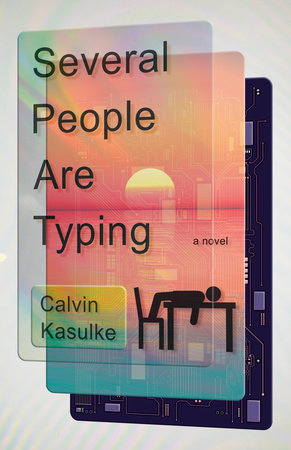
A book’s presence on the Literary Stunt Index (that’s really more of a matrix) doesn’t mean it’s a garbage book; again, some of my favorite books are on that graph. Asserting a book has a stunt-y central conceit or device is a neutral observation, not a detraction—or I certainly hope that’s the case, anyway, because my debut novel, Several People Are Typing, is written entirely in Slack chats and definitely belongs somewhere on this chart.
In lieu of updating the Index and having to photoshop a whole new chart, here are a few more titles with bold, audacious, or conceits that dominate the form and/or content of the book:
LIFE+70[REDACTED] by David Moscovich
The narrator, who is (probably?) David Moscovich, published an ebook online for the price of $249,999.99, which he admits was kind of high but was also kind of the point. A hacker managed to download the book without paying, as hackers are wont to do. Moscovitch manages to track down and contact the hacker, and the two correspond about the cybercrime and the value of the ebook which is not contained in this book *about* that ebook, though I can’t imagine I’d derive more pleasure from reading that highly exclusive ebook (if it ever actually existed) than I did from reading this one.
This anthology is precisely what it says on the tin: a collection of the 365 one-act plays that Parks, one of America’s greatest playwrights, wrote each day for a year. The collection is worth it for her introduction alone, but it’s a thrilling experiment to read—it’s a diary, a testament to a dedicated writing practice, and a collision between the one-act play and flash fiction, and a stunning display of Parks’s skills. Put this one firmly in the “flex” quadrant.
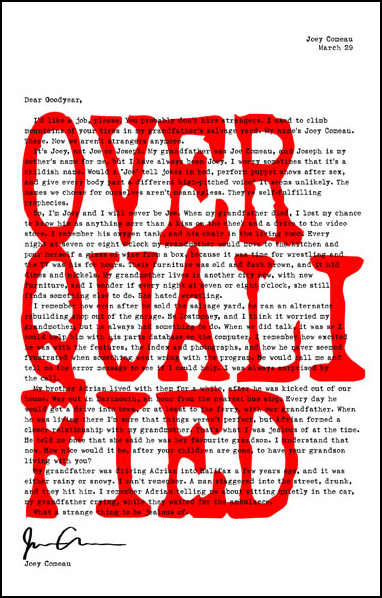
Readers of a certain age might know Comeau as the co-creator of A Softer World, though he’s written a number of books over the years across multiple genres. Overqualified is an epistolary novel written entirely in cover letters and I don’t wish to describe it in more detail, lest I spoil the experience of reading this book in one sitting and letting it transcend what you might imagine a book of cover letters can accomplish.
A hallmark of the successful literary stunt is, I think, either going above and beyond the expected limitations of the book’s central conceit, or otherwise using the stunt-y premise as a distraction before surprising the reader with something they weren’t expecting, caught up as they were with your stunning ‘e’-less oulipo prose. Found Audio falls into the latter category. Campbell uses an overarching framework of, well, found audio to weave an adventure story that evolves into full-on fantasy. The more fantastical the story becomes the more crucial it is to unlock mystery of the recording; the more engaged the reader is with the mystery of the recording, the more urgent the need becomes to dive deeper into the stories contained within the tapes. Sometimes what appears to be a big swing is in fact a skillful sleight of hand; this is one of those times.
This one’s on the chart already but I’m entering it here a second time for emphasis. I mean, come on: “Furo Wariboko, a young Nigerian, awakes the morning before a job interview to find that he’s been transformed into a white man.” (Except for his ass.) It’s everything “Kafka in Nigeria” promises to be and more.
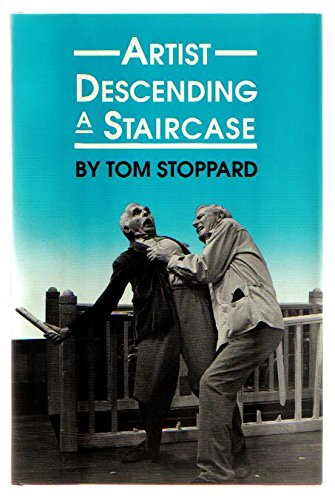
This, too, is a play, but I’m a sucker for an interesting chronological conceit. Time itself is a staircase in Staircase, where we begin at the beginning of the end, then jump back in time to the beginning of the penultimate scene, etc. This continues until we reach the earliest event in the play’s chronology—the inciting event of the entire show—and then begin to move forward in time again, completing the second half of each of the first three scenes. The structure, then, plays out like so: D1, C1, B1, A, B2, C2, D2. It’s a mathematical way to break down one of Stoppard’s most affecting shows, but of course Stoppard’s usually at his best when his formal innovations align with the emotional worlds of his characters—and I’d argue Stoppard’s working at the apex of his powers with Staircase.
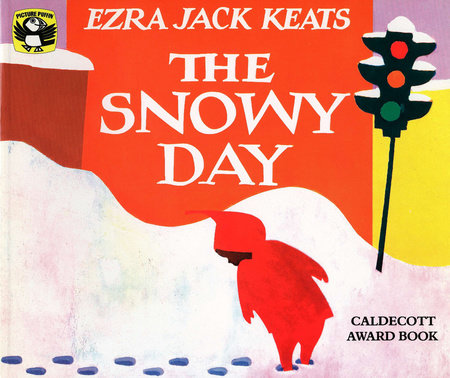
There is an error in The Snowy Day by Ezra Jack Keats that I didn’t see until some point reading it to our second child. On the fifth and sixth pages, Keats writes that Peter “walked with his toes pointing out, like this,” and then, “He walked with his toes pointing in, like that.” The footprints below the text are angled accordingly. In his bright red snowsuit, Peter stands at the far right, looking back over his shoulder, one of several quiet, thoughtful moments in this beautiful book.
But how could I have read over this so many times: The footprints in the picture are side-by-side, two-by-two. Peter didn’t walk. He hopped. (Curiously, the cover image of the book is also Peter looking back at his footprints, but those are alternating and facing forward, evidence of ambulation.)
Why care? It wasn’t noticeable when I read right over it—and over and over it—to my oldest child. But Peter is a child who notices and reflects, which is much of what I love about this book, so I want to respond in kind, especially considering how loved this book has been—by us as a family, and as part of a wider readership. What made The Snowy Day a groundbreaking “first” when it won the Caldecott in 1963, and what makes it noteworthy on our bookshelves as a white family almost sixty years later, is that Peter is Black.
I had noticed Peter’s race, and I imagine my kids did too, but we never talked about it. What I had been reading right over, and repeatedly, was what Peter’s race meant. Can it mean nothing? Clearly not—it is noteworthy and groundbreaking. Yet I was reading colorblind. Why? Was this what the author intended?
The footprints in the picture are side-by-side, two-by-two. Peter didn’t walk. He hopped.
Keats was white. Born in Brooklyn in 1916 as Jacob Ezra Katz, he was the son of Jewish immigrants from Poland. As a young working artist, Keats was a muralist for the Works Progress Administration, a background illustrator for Captain Marvel comics, and, in WWII, a camouflage designer. In 1947, in response to anti-Semitism, he changed his name to Ezra Jack Keats and became an illustrator for newspapers, magazines, and eventually children’s books. “Then began an experience that turned my life around, working on a book with a black kid as hero,” he said, as recounted on the Ezra Jack Keats Foundation website. “None of the manuscripts I’d been illustrating featured any black kids—except for token blacks in the background. My book would have him there simply because he should have been there all along.”
Diversifying children’s literature was a cause for Keats. His first book, which he co-authored with Pat Cherr in 1960, My Dog Is Lost!, stars Juanito as its main character, a Puerto Rican immigrant who speaks only Spanish. Of the twenty-two books Keats went on to write and illustrate, seven starred Peter and his family. Other recurring characters in Keats’ oeuvre are Archie and Amy, who are Black, and Roberto, who is Latinx.
‘Then began an experience that turned my life around, working on a book with a black kid as hero,’ Keats said.
The diversity was much needed. In her landmark study “The All-White World of Children’s Books,” published in The Saturday Review three years after The Snowy Day was published, educator and scholar Nancy Larrick found that only 6.7% of children’s books published between 1962 and 1965 included a Black character, even in the background.
In the sixty years since, progress has been made, but, alarmingly little, and only very recently. According to a study by Professor Sarah Park Dahlen, based on data from The Cooperative Children’s Book Center at the University of Wisconsin-Madison School of Education, 23% of children’s books published in 2018 “depicted characters from diverse backgrounds.” It was 14.2% in 2014, so it is encouraging to see the number go up, but for at least 20 years before this, according to Professor Philip Nel in his 2017 book Was the Cat in the Hat Black? The Hidden Racism of Children’s Literature and the Need for Diverse Books, it hovered around 10%. (Nel answers his question: Yes, the Cat in the Hat was Black, both in the visual language and themes of minstrelsy.) What should the number be? If it were to reflect the current U.S. population, it would be about 40%.
Scrutinizing an industry is one thing, but what do I offer my own kids? It’s important to my wife and me to talk to our kids about identity, including race. Books prompt and support these discussions. For example, The Colors of Us by Karen Katz celebrates the multiplicity and beauty of skin colors, centering on a child discovering what color to use in a self-portrait. (She decides on cinnamon; my youngest most recently settled on “peach.”) Other family favorites honor culture, like Bi-bim Bop!by Linda Sue Park, which includes a recipe for the Korean dish, and Feast For Ten by Catheryn Falwell, a counting book that features a Black family shopping and cooking.
It’s important to my wife and me to talk to our kids about identity, including race.
In raising awareness of others, these books, visually and textually, also raise awareness of ourselves. Another recent favorite has been Bedtime Bonnet by Nancy Redd, who writes in her author bio that she was “inspired by the lack of resources” for her daughter about Black hair. The book begins, “In my family, when the sun goes down, our hair goes up!” In our family, it stays down, so, in addition to learning about wave caps and durags—it’s a resource for us, too—we talk about the care that different hair types require. It feels like part of a good foundation for conversations in the years ahead about all that hair represents, and has represented, in issues of identity.
But back to my question in light of the statistics: what do I offer my own kids—in numbers? Just like not noticing Peter’s footprints, a true audit of my own bookshelf was something I had overlooked.
My study was not terribly scientific. I took my tally by walking my fingers across book spines and pulling them half-way out one afternoon while I was watching my three-year old, and I know there’s at least one other box in the attic filled with books that I didn’t dig out. I mention these limitations to my research because this is how inequality in the 21st century can persist. For as much as I imagine myself to be forward-thinking in matters of parenting and social justice, while in the throes of everyday life, it is all too easy to slide into historical patterns of underrepresentation, if not complicit prejudice. Of the 426 picture books I counted, which we have accumulated for three kids over 13 years, 53 have a main character that is human and not white. I was fearing it would be something like 5, so I am relieved, but in terms of our proportions, it comes out to 12%, a very 20th-century library.
The Snowy Day was a member of the 53 (I passed over our copy of The Cat in the Hat, blushing), but my audit raised further questions about how much, or how well, these books advance the causes of inclusion, equity, anti-racism—causes that motivate my attention. For example, I counted Taro Gomi’s lovely books, originally published in Japanese, but are people and culture of East Asia “represented,” in the sense of promoting diversity? Yes, I decided, compared to Emily’s Balloon by Komako Sakai, also translated from Japanese, in which Emily looks white (so I didn’t count it as part of the 53).
As for Keats’ books, other than Juanito’s Spanish, the stories never call direct attention to ethnicity or race. His images do, but also not really: they show skin color, but not anything that would suggest culture or identity. If any identity is explicit in Keats’ stories of apartment-dwelling and alleyway adventuring, it is working-class urban culture. It is also noteworthy that none of his characters are identified as Jewish. Keats does take up religion in his 1966 book God is in the Mountain, but to make something of a universalist statement: it is an illustrated collection of passages from religious texts spanning the globe.
If Keats sought to diversify picture books, it was to depict the ideal of the melting pot, and when The Snowy Day was published, reviewers were correspondingly colorblind. According to Kathleen T. Horning’s 2016 article for The Horn Book magazine, “The Enduring Footprints of Peter, Ezra Jack Keats, and The Snowy Day,” the book was widely and favorably reviewed, but only three publications acknowledged Peter’s race. The Saturday Review commented on race to dismiss it: “that the boy’s skin is brown is never mentioned in the text, so it is for all children.” This aspect of Keats’ work also drew criticism. While the civil-rights advocacy group the Council on Interracial Books for Children put Keats’ books on its recommended books list, it also criticized Keats for presenting children of color who might as well be white.
The tension here is echoed in my own reading: is it a beloved family favorite because it never calls attention to race—Peter’s or ours? As Keats said of Peter, “he simply should have been there all along” in children’s literature, and I agree—we all agree—but only if he “might as well be” white?
Is it a beloved family favorite because it never calls attention to race—Peter’s or ours?
Keats himself was outspoken about his cause of diversifying children’s literature—except for when he wasn’t. In his essay “The Right to Be Real,” published in The Saturday Review after The Snowy Day won the Caldecott, Keats writes that “[w]e are now entering a new era of children’s books,” one that will “relegate to the past the kind of books, both trade and text, in which an entire people and a great heritage have been deliberately ignored.” When he won the Caldecott for The Snowy Day, however, in his acceptance speech given a month before the 1963 March on Washington, he opts to deliberately ignore it. He suggests its significance in his concluding sentence—“I can honestly say that Peter came into being because we wanted him”—but he doesn’t once mention Peter’s race.
This mixed messaging continues through today. Deborah Pope, Executive Director of The Ezra Jack Keats Foundation, which, among other initiatives to honor the artist, gives an annual award to promote diversity in children’s literature, told National Public Radio on the 50th anniversary of The Snowy Day that Keats didn’t mention Peter’s race in the book because it “wasn’t important. It wasn’t the point. The point is that this is a beautiful book about a child’s encounter with snow, and the wonder of it. […] Was he trying to make a ‘cause’ book, was he trying to make a point? No.”
Again, before my attention gets fixed on what other people say and don’t say, do and don’t publish, I have to acknowledge that, in my countless readings of The Snowy Day as a white father to my white kids (Peter appears against a blanketing whiteness indeed), I had never talked about Peter’s race either. What would there be to talk about? It is, as Pope suggests, crafted as a universal story, which makes it doubly remarkable on our bookshelf: not only does this book star a Black child, this Black child represents universal childhood.
…I had never talked about Peter’s race either. What would there be to talk about?
But if race is not acknowledged, if this “remarkableness” is not remarked upon, how visible, or present, is Peter? How present, or realized, is the childhood he represents? How present are we, when we read it?
In all of our appreciation of The Snowy Day, the blizzarding wonder for me is in how race appears in the book, then disappears when it is reviewed, awarded, honored 50 years later, and when I continue to read it. It makes me further wonder whether, in our collective white mind, the feat was—and is—the appearance of race or its disappearance. It recalls Toni Morrison’s 1988 essay “Unspeakable Things Unspoken: The Afro-American Presence in American Literature”:
I can’t help thinking that the question should never have been “Why am I, an Afro-American, absent from it?” It is not a particularly interesting query anyway. The spectacularly interesting question is “What intellectual feats had to be performed by the author or his critic to erase me from a society seething with my presence, and what effect has that performance had on the work?”
My performance of reading of The Snowy Day, which is also a performance of parenting, is what gives importance to Peter hopping.
I tried it myself, one snowy day last year. Crunch, crunch, crunch, my feet sank into the snow. While playing with my toddler after a new snowfall in the mostly white, suburban alleyway behind my duplex, I took twelve walking steps and looked back, then twelve hops and looked back. They made for very different moments of reflection. Walking allowed me to carefully place my footsteps; a dozen hops took the wind out of me.
Here is where my mistake of not noticing is costly: I had always seen this moment as one of quiet introspection. I thought I knew what Peter was thinking and feeling, how he was looking and breathing. I thought I knew Peter, in other words, and that The Snowy Day knew Peter. But I don’t think we did.
I thought I knew Peter, in other words, and that The Snowy Day knew Peter. But I don’t think we did.
What else am I reading right over, and repeatedly?
I have to stop modeling colorblindness, in the name of the universal, when I read this book—and really, any book. The avoidance of race amounts to its erasure, even as I honor its presence on my bookshelf. It models for my kids that, as white people, we talk about race when it is somehow advantageous, or called to our attention, as in (most of) our 53 books that feature a main character of color, but otherwise, we don’t have to worry about it, as in our other 373.
And what of these other 373? Feast for Ten is a “raced” counting book; what about Counting Birds? The books about science? The narratives that star animals by Richard Scarry, Sandra Boynton, Mo Willems—they don’t “depict race,” but in what ways, or to what degree, do they express whiteness, the absence of color, a defaulted position of power? And in what ways do I reinforce, or recreate, our own defaulted position of power as a white family if I avoid thinking or talking about race when I read any of the 426 books my kids and I cuddle up and share?
Perhaps a timeless virtue of The Snowy Day is that it offers a choice. I can “read colorblind,” a choice I had been making without noticing, or I can have a conversation about race with my kids, a conversation which, like Peter, also “simply should have been there all along.” I want to make the latter choice now; what I have been struggling with, simply, is how to start.
I have faith in literature: a book this good teaches me how to read it, or in this case, to read it better. If there is not a clear and obvious way to address race in The Snowy Day, it’s my responsibility to find one.
Peter himself is a model for learning. After he looks back on his footprints—made by hopping—he then learns about the snow and what to do in it, dragging his feet “s-l-o-w-l-y to make tracks,” and making snow angels and a “smiling snowman.” He also learns about himself in relation to others: “He thought it would be fun to join the big boys in their snowball fight, but he knew he wasn’t old enough—not yet.” Peter sits in the foreground, a snowball splattered on his torso. Apparently, he learned this the hard way. Peter also conducts two experiments. He hits a snow-covered tree branch with a stick, learning that snow then falls on his head, and upon returning home, puts a snowball in his pocket “for tomorrow.”
“It will melt!” my toddler exclaims when we get to this page. She knows this not only because we’ve read the story countless times, but because last winter she replicated his experiment.
She knows this not only because we’ve read the story countless times, but because last winter she replicated his experiment.
At the end the book, another snowy day begins, but this time there is a big difference. Instead of going out in the snow alone, “After breakfast he called to his friend from across the hall, and they went out together in the deep, deep snow.” The last page shows the two of them in the distance, walking away.
What else have I been reading over?
“Do you know what this means,” I asked my daughter, under the covers for bedtime stories, “that his friend was ‘across the hall’?” For as much as the book is “universal,” here is a detail from Peter’s world, and Keats’, that places them—and us—in the world together.
My daughter kept her thumb in her mouth and shook her head. I briefly explained what an apartment building was. To my memory, she had only been in two. She didn’t remember either.
What else?
Another time, after reading the book at breakfast, I said to my daughter, “So, Peter has brown skin, like Doc McStuffins,” a current favorite cartoon. “What about Peter’s friend?”
She looked. “His coat is brown.”
“So, yes? Or we don’t know?”
We both stayed quiet, looking.
“Do we know it’s a boy? It only says ‘his friend.’”
“I think he’s a girl.” She smiled. “I think he’s a boy.”
Why did she switch back from “girl” to “boy”? Was it the force of the gendered pronoun? Was it her flexible toddler mind? Either way, there it is, on the very last page, the point of entry I had been reading over, and repeatedly. It’s Peter’s friend that can engage me in conversations about identity—beginning with our assumptions, and the question of whether we see ourselves alongside Peter or not.
And suddenly you find yourself standing in a different corner of your home, another room perhaps, no longer certain of why you had come here in the first place, to get something perhaps—but what it was you can no longer recall, and so you stand a little while longer. Perhaps you partially retrace your steps, recrossing the threshold, replaying your thoughts as best you can, trying to substitute faithful reenactment for remembrance. At last, if the stars have aligned, it hits you—ah, scissors, I came here to get a pair of scissors…
For something we trust so implicitly, memory too often fails us. We forget faces, miss appointments, lose car keys. Luckily, our individual memories do not have a monopoly on our access to the past. We safeguard the vanished past with objects, texts, tools. In doing so we create a constellation of remembrance, an inscription of our past upon the present.
These questions—of the past, of history, of the fallibility of memory—loomed large in my mind as I researched and wrote The Thousand Crimes of Ming Tsu, a Western set in 1869 featuring a Chinese American protagonist fighting his way west. Tens of thousands of Chinese laborers worked for the Central Pacific Railroad Company; many died in the process. And yet in the celebratory Golden Spike photograph, commemorating the completion of the Transcontinental Railroad, not a single Chinese worker is visible. Though their presence has been until recently largely ignored, their memory has not vanished. Traces of their labor still linger today, exerting ghostly force over our lives.
These 7 books explore these questions of memory and loss through a variety of lenses—fiction, nonfiction, and poetry. They represent remarkable examples of differing approaches to the vast issue of how our pasts propagate forward into our present.
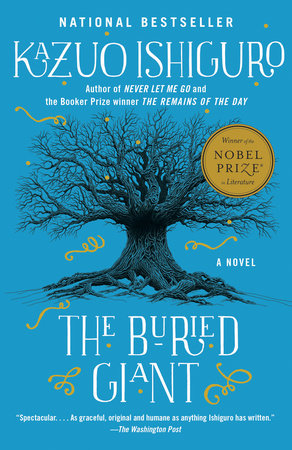
Published two years before he received the Nobel Prize in Literature, Ishiguro’s novel follows an elderly couple, Axl and Beatrice, as they move through a medieval Britain beset by an amnestic mist. With enormous difficulty, people remember: wars, lovers, children. Axl and Beatrice know they have a son, but struggle to remember much beyond this bare fact. They embark on a quest to find him once more, encountering relics, residues, artifacts of memories without remembrances. Ishiguro’s prose is rhythmic, placid, profound; this book took him ten years to write, and it may well stay with you for longer.
The neurologist Sacks, two weeks before his death in 2015, outlined a collection of essays on the human experience and science that was to become this book. In ten essays of varying length, Sacks interrogates subjective experience and personal identity using lenses ranging from botany to neuroscience. One of the essays, “Memory,” discusses remembrance and the fallibility of human recollection; alongside its peers in this collection of essays, however, and in the wake of his death, all of Sacks’s musings seem to point towards some larger set of questions, where science and philosophy begin to feather into one another. Sacks’s affable voice and unmistakeable brilliance shine throughout.
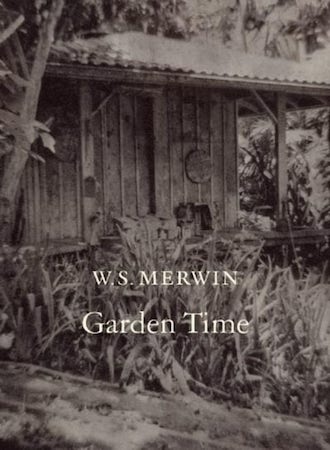
A slim volume of immense power, and also the last collection of new poems Merwin published in his lifetime. In lucid, sparkling lines, Merwin raises the shadowed past and asks it to stay awhile, just for a moment longer. Garden Time is Merwin at his absolute best: humble, poignant, and shining with love for living, and remembering. The circumstances of the book’s creation share in its profundity—Merwin wrote these poems as his eyesight deteriorated, and when he was no longer able to see, he dictated poems to his wife, to whom the book is dedicated.
A housekeeper receives her new assignment: a brilliant mathematics professor who, 17 years prior, suffered anterograde amnesia after a serious car accident. His memory is intact up to the moment of his head injury; beyond that, for 17 years, he has lived in a moving window of 80 minutes of short-term memory. Being a clever man, however, he’s devised certain coping mechanisms—clipped to his suit are dozens of slips of paper, each reminding him of something he cannot remember. “New housekeeper,” reads one, accompanied by a little sketched portrait of the new housekeeper in question. The housekeeper and the professor, along with the housekeeper’s ten-year-old son, develop a friendship as close as it is strange. Rendered from the Japanese into an even-handed and clear English by Stephen Snyder, interspersed with mathematical formulae and diagrams, Ogawa’s novel deftly explores the limits of memory, personality, and care.
In the space of 100 pages, Winik pays poignant and often funny tribute to people in her life who have died. The book is a masterclass in character. Winik resurrects these memorialized dead as epithets—an occupation, a demonym, a relation—and pairs them with finely-wrought prose portraits that run two or three pages at most. In terms of pure word count, this book can be easily finished in a single sitting; in terms of weight and breadth, however, you’ll want to slow down, read and reread, if only to give these remembered phantoms a little more space to breathe, a little more time to linger.
A finalist for the 2020 Pulitzer Prize, Ruefle’s Dunce hums with the tension between the intensity of living and the certainty of dying. In Ruefle’s lines the ordinary finds itself alongside the numinous. Lines seem to torque and shift imperceptibly along their length, one after another, their net effect transporting you from a holiday party to a contemplation of a single moment of absolute presence. With a rhythm and cadence that calls to mind the subtle, yet inexorable power of a river current, or an incoming tide, Ruefle generates moments of vertiginous delight and startling beauty against a backdrop of mortality and its affordances.
For those who are already acquainted with Krasznahorkai, this is 700 pages of the Hungarian luminary at his most apocalyptic and most hypnotic. For those encountering him for the first time, a warning: Krasznahorkai’s writing is demanding. Single sentences run on for pages. A litany of commas and more esoteric combinations of punctation carve up streams of consciousness into a thumping rhythm of quip and rejoinder, observation and derision, lunatic phantasmagoria and mind-numbing banality.
The novel is ostensibly about the Baron Wenckheim, who returns to his childhood town in Hungary to escape his gambling debts. There, he hopes to reunite with his childhood sweetheart, a woman named Marika. Also in the mix are a professor leading his field in moss research, his daughter, a neo-Nazi biker gang, the staff of the local newspaper, and what might be the physical manifestation of evil itself on Earth. None of this really matters; Krasznahorkai’s free-flowing sentences and disregard for conventions are the main draw here, as he grapples with the political and the historical—that is to say, with what kinds of memories our present might become for our future.
i.

Reverse salmon. How to un-swim a fish.
Dewater it. The future unfolding a dead
octopus splashed back to life.

ii.

The journey of my diary
is always one-sided. I never could
read that telling of the story,

of the present. I never could truly
go back to that day the three of us found a squid,
and you called it a turtle. One-third of us
later calling it happiness.

iii.

All life from the ocean, is a sure thing.
Even when time divides us, (please)
laugh triumphantly and call them waves.

Sometimes, even at the grocery store in Newark,
a gale blows over, stronger than that tornado I saw in Ohio,
carrying the memories of strangers
at sea. For this, I shall cry. Only this.

iv.

I am waking from that dream
that another swimming history gave me.
Father, where am I? Says the old crab
to his one and only sea.

v.

They will find him so far,
in another land. They will ask his name,
and he will only whisper
from the sand of his dry mouth
all the names of his fallen,
and ones that touched him gently.
Quintet For Harvard Square
i.

I am a grand thief tonight at Harvard Square.
My hair will grow twice as fast,
like tendrils true at sea. My shadow mixes with twelve
columns, stretched thirteen feet long each

way. To the new silhouettes made by streetlamp,
What does it mean to be the youngest student
at the oldest school? Flicker, then sway.

ii.

Beautiful. The animals trade spots with the grass.
Meanwhile, a hare crosses the long library,
unnoticed, with his hind legs faster than his front.

iii.

Sever Hall, with the dimly cast entrance,
a huge square with only one hole,
like a trick, like a wall with a tunnel

drawn on it. Interesting to pick here to piss,
but sometimes — we see so clearly
what is to be seen, only at dusk.

iv.

Under the earth, the men's shoulders
touch so briefly, like stars kissing,
and the lights color over two paintings of boats.

Someone remarks how odd it is, that so much was drunk
in thirst. How odd it is that this
is the happiness we've always had.

Later he reaches his hand up, without stretching
to touch the old and scratchy ceiling
where one light had landed by accident.

v.

At the pharmacy, I remember my shoplifting
days. But it is past that now. When I see
how much security is watching the check-out,
relief flushes through me.

I'll pay slowly, watching each coin
drop into the hand of another.
From an age that was often too young to be anywhere, I found myself in closed-off rooms. They ranged from green rooms at concert halls to back rooms at parties. By the time I was 21, I had known my purpose in those spaces, how and why I was invited into them, and what was expected of me. I was a seasoned party girl who flitted in and out of metropolitan cities with seemingly few resources. People had seen me around. They would say, “Oh her, I’ve known her forever!”
The politics of the Party Girl have always been of interest to me, simply because of the way she moves within a world that warns her to be careful. To watch her behavior, her tone, her drink. She exists on a precipice of seeking out fun, when also too much fun, she’s warned, is dangerous. The prevailing image of the Party Girl has historically been white—of course, non-white Party Girls have existed, but how much space do we lend them in its canon? How much fun are they allowed to have? My characters come from a lineage of flappers, demimondaines, and society girls, where what unifies these archetypes is how they attempt to rise ranks with charm as their only currency.
My debut novel Happy Hour follows Isa Epley and Gala Novak, two young women in pursuit of pleasure at whatever cost—and usually on someone else’s dime. They traverse New York’s social scenes with disarming aplomb—wily, mischievous, and irreverent. Isa, being of Latinx/Asian descent, structures her delicate world of fun with a kind of alertness that her white counterparts need not have. Keeping sinister outcomes at bay, Isa gets away with it all. Her forebears are sometimes not as lucky. Each of these titles share a glittering character who pursues pleasure, freedom, and beauty in a world that does not want them to succeed.
Mr. Right is Dead by Rona Jaffe
The titular novella in this collection follows a playgirl named Melba Toast who gathers men and gifts without a touch of malice, “She takes quick flights of fancy and quick flights across the country in quest of someone she had two dates with a month before.” The narrator is a willing accomplice to Melba’s schemes and comes to the realization that though she makes it look easy, a playgirl’s life is often hard work.
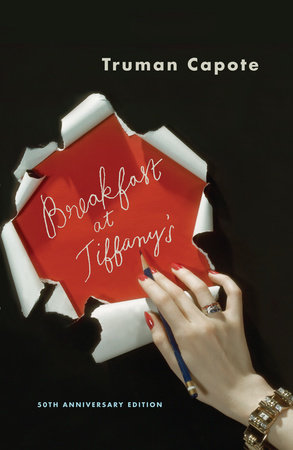
This list would be amiss without Holly Golightly. The glamorous call girl who left men wanting more. She has some of the best Party Girl pedigree—a secret marriage, a mob connection, and a casual grasp of French. I often find myself repeating her aperçus—“Certain shades of limelight wreck a girl’s complexion.”
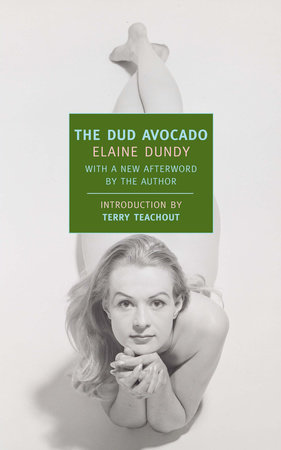
Dundy’s protagonist Sally Jay Gorce feels like the original American in Paris. “I could have never got out of him a single fur, or a single jewel, or a jar of fresh caviar,” she says while contemplating how rich men are suspicious of those who orbit them and have lesser means. Djurna Barnes once wrote a short story called “The Woman Who Goes Abroad to Forget,” Sally Jay Gorce could very well be that woman. Dud Avocado is for those who need a beginner’s guide on how to live.
Lily Bart is, in a way, the martyr of Party Girls. A woman who loves the beauty and luxury of the world she grew up in only to be punished by the cruel mores of her very class. As she desperately tries to marry a man of means to cover her growing gambling debt (chic!), she is sabotaged at every turn and dies in poverty.
The search for extravagance and luxury lands this contemporary novel on my list. The protagonist Mathilda fixates on a photograph of a Black modernist poet and finds herself at an artist residency in the same town the poet was known to live. The novel displays the critical importance of tracing a history of decadence that has long been forgotten.
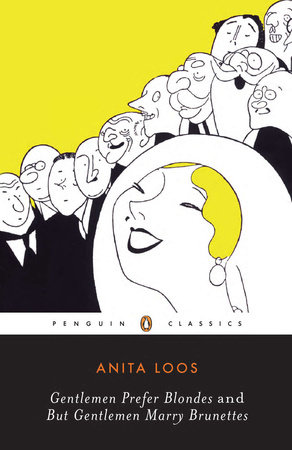
Two charming flappers cause mischief across New York, London, and Paris. Written in diary form with clever malapropisms sprinkled throughout and a faux-naïf narrator in Lorelei Lee, nothing bad could ever happen to these women, and that’s a design of their own making.
Much like the fluid identity of a “Hot Girl”, the Party Girl lifestyle is an ethos, and nothing says Party Girl more than a roving landscape of lovers. Short, first-person vignettes follow the unnamed protagonist on a revelatory, queer misadventure meeting boyfriend to “boyfriend”.
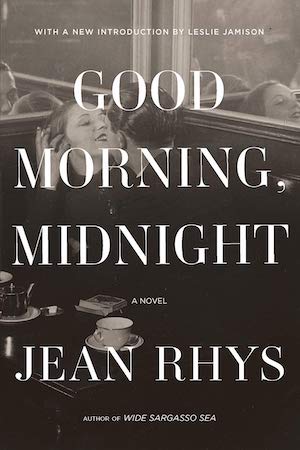
When I think of a Rhys novel, I envision scenes of a lone woman drinking Pernod at a café she can’t afford and gazing at shop windows for a dress she’ll spend the last of her allowance on. Good Morning, Midnight follows a middle-aged Sasha Jansen as she returns to Paris and is haunted by memories of a life that she’ll never return to. Rhys’s talent is in painting a scene that at turns is tragic, but cut through with moments of humor and lightness.
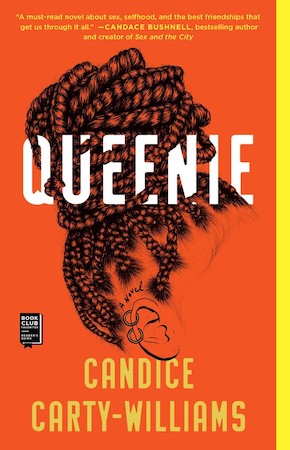
After a long-term relationship detonates, Queenie Jenkins careens around London in a never-ending spiral of bad decisions and sexual foibles. Wrestling her mental health, heartbreak, and a prudent Jamaican British family, Queenie attempts the clumsy journey of trying to achieve independence through sexual encounters.
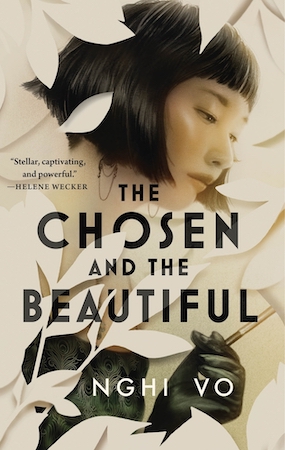
A retelling of The Great Gatsby from the eyes of Jordan Baker—this time queer and Vietnamese. Vo reinvents the Fitzgerald classic into one that is filled with magical realism and a recognizable decadence. For those that always thought Jordan was the unsung heroine.
“Do you think the problem of the contemporary novel is simply the problem of contemporary life?”
This is the question Eileen poses to Alice, in one of the email exchanges that pepper the pages of Sally Rooney’s new novel Beautiful World, Where Are You. Alice, a successful novelist struggling to pen her third title, has fled Dublin for a small coastal town in the west of Ireland following a nervous breakdown. Eileen, Alice’s friend from college and now an editor at a literary magazine, is six months out from the break-up of a long-term relationship, and navigating complicated family dynamics in the lead-up to her sister’s wedding. Alice and Eileen immediately appear to be on good terms, if a little aloof, but there is tension bubbling beneath the surface, particularly over when (or whether) they will see each other again in person. But despite this, the emails flow, and in particular, the question of the usefulness of novel is one to which both women frequently return, though neither emerges with a satisfactory answer. When climate change, an increased turn towards far-right politics, and now a pandemic, threaten the future of our entire world, can fiction sustain any meaning, particularly fiction revolving around love and relationships?
Alice self-deprecatingly occupies the anti-novel position, while Eileen defends it. Novels, Alice claims, work by “suppressing the truth of the world…If novelists wrote honestly about their own lives, no one would read novels.” Eileen believes that “breaking up or staying together” is the stuff of life, the only thing people on their deathbeds are interested in talking about. For Alice, the contempt for contemporary literature manifests a form of self-loathing: “my own work is the worst culprit in this regard. For this reason I don’t think I’ll ever write another novel again.”
This is only one of several debates that occupy these meandering, cerebral email conversations; other topics include the Bronze Age collapse, the artistic depiction of the Muse, and Audre Lorde’s theory of desire. But for all this erudite debate, Alice and Eileen are only human, and what they really want to discuss is the precarity of their own relationships. For Eileen, the preoccupation is Simon, the older, resolutely-Catholic parliamentary assistant whom she’s known since childhood, and with whom she’s had an on-off sexual relationship for almost a decade. Alice, meanwhile, is intrigued by Felix, the sometimes-cruel, sometimes-softie warehouse worker she met on Tinder.
Rooney has put Beautiful World, Where Are You in the paradoxical position of having to defend its own relevance and worth.
The email debates, then, prime the reader to view the story of Alice, Eileen, Felix, and Simon as a test-case for whether novels of love and relationships are sufficient, whether the distraction they offer is comforting or problematic, and whether the ideas contained within this novel can offer solutions to real life. Like Alice, Sally Rooney is an adherent of the “sex and friendship” novel, and as such, Rooney has put Beautiful World, Where Are You in the paradoxical position of having to defend its own relevance and worth.
Implicit in Rooney’s inquiry into the problem of the contemporary novel is whether she can—or should—continue to write the same kind of novel as her two previous, which earned Rooney the kind of fame Alice bristles against. Readers fell in love with Conversations with Friends and Normal People precisely because they found a glimmer of recognition on the page, whether the topic was teenage love, the emotional minutiae of sex, or the subtle interplays of class in relationships. “Relatability” is a crude marker of the success of a piece of art, but Rooney’s novels have clicked with so many readers for precisely these reasons.
What matters here is not who occupies which position, but rather, the way in which this interaction plays out on a social and interpersonal level.
The relationship between Sally Rooney’s novels and her personal politics is one over which much ink has been spilled. (Like Alice, I recognize my own complicity in adding to this ink-spilling, and like Alice, I’m probably not going to stop any time soon.) As a self-described Marxist, Rooney is keenly aware of the social power dynamics between people, and indeed, her novels are often constructed around socio-hierarchical thought experiments. Frances, the protagonist with Conversations with Friends, is constructed to have immense social privilege—she’s white, thin, extremely intelligent, and a top student—with few material advantages. Her fees are paid with assistance, she lives in an apartment owned by her uncle, and even her MacBook is a hand-me-down from a cousin. In Normal People, Marianne and Connell’s relationship is based around an imbalance of power. Connell’s mother may be Marianne’s cleaner, but he exercises greater social capital in school among their peers, and he uses this to ask her to keep their relationship secret. When they move to college, the tables are turned: Marianne’s wealth allows her to fit in more easily among the privileged of Trinity, while Connell finds himself more constrained by his class and background.
Rooney’s novels revolve around inherently political premises, and her characters, too, are political beings. Take this paradigmatic scene from Conversations with Friends, Rooney’s debut. Frances and her champagne socialist ex-girlfriend Bobbi are staying in France, with the older Melissa and her husband Nick (who Frances is sleeping with), and their friends Derek and Evelyn. In a boozy after-dinner conversations, they discuss the refugee crisis:
Derek interrupted Evelyn to say something about Western value systems and cultural relativism. Bobbi said that the universal right to Asylum was a constituent part of the “Western value system,” as if any such thing existed. She did the air quotes. The naive dream of multiculturalism, Derek said. Žižek is very good on this. Borders exist for a reason, you know. You don’t know how right you are, said Bobbi. But I bet we disagree about what the reason is.
What matters here is not who occupies which position, but rather, the way in which this interaction plays out on a social and interpersonal level. It’s emblematic of the way Rooney employs the socioeconomic context of her characters to flesh out a scene, deftly weaving in tensions over who sticks up for who, and generational mismatches. It’s also the kind of scene for which her novels have been criticized, for offering up complex global issues as set-dressing, in what is essentially a comedy of manners about (mostly) privileged people.
An important consideration when assessing the privilege or lack thereof of the characters in these novels, is the particular Irish context in which Rooney writes. She alluded to this in a 2017 interview with Michael Nolan of The Tangerine: “I think that when Americans are reading the book [Conversations with Friends] they think Frances is incredibly privileged.” This assumption feeds accusation, and not only from US readers and critics. Just last month, Jessie Tu in the Sydney Morning Herald asked, “Surely there are better literary heroes for our generation than Sally Rooney?,” claiming that “her works are less literature and more cultural product,” a “shameless reassertion of white individualism.” The common complaint that her protagonists all studied at Trinity College Dublin, a “private” college, is unfair; the Irish system certainly isn’t perfect, but fees (for which financial support is available) here are around €3,000 a year, a far-cry from the cost in other countries. Meanwhile, the scholarships won by Marianne and Connell in Normal People have been regarded by some as a deus ex machina which allows Connell to conveniently sidestep his financial problems. Trinity Schools are a quirk of the system, but they do exist, all perks as described. And Marianne and Connell are exactly the types to win them, just as Rooney herself did. In Beautiful World, Where Are You, the fact that Eileen spends most of her salary on rent is a depressing reality for city-dwellers the world over; but that city being Dublin (one of Europe’s most expensive cities) gives it an added sense of despondency. Notice how much time Eileen spends attending her friends’ leaving parties? This is now an unfortunate reality for many in the city.
Privilege of all kinds (class-based, social, financial) is deconstructed in Beautiful World, Where Are You; although, by virtue of its protagonists being older, the question sometimes feels more settled, while the stakes are higher. Alice worked in a coffee shop before securing the book deal that made her a millionaire, while Eileen graduated magna cum laude and sailed straight into a competitive job at a literary magazine, which she has been stuck in ever since. Alice makes frequent complaints about the demands of being a successful novelist, many of which are entirely sympathetic, though it’s difficult not to cringe when she addresses them to Eileen, whose salary has remained at €20k for ten years, three-quarters she spends sharing an apartment she doesn’t like with a couple she doesn’t care for. Eileen’s one pushback against this, prior to the denouement, feels weak-willed— “I’m not trying to make you feel that your horrible life is, in fact, a privilege, although by any reasonable definition it very literally is…”—but there are many indications Eileen is the more emotionally robust of the pair. When the novel opens, Alice is recovering from a breakdown that kept her in hospital for two months.
Beautiful World, Where Are You may be Rooney’s most overtly, or self-announcingly, political novel.
Neither of the men feature as fleshed-out characters to the same degree that the women do; but even between the four of them, there are complicated interpersonal dynamics, particularly where Felix is concerned. Whether he is the novel’s only working class character is a point of contention; Eileen identifies as working class, because she doesn’t own property and spends most of her paycheck on rent. “No one here is actually from a working-class background,” a man at a party tells her. “It’s not a fashion, you know. It’s an identity.” “Jesus,” Eileen replies. “I have a job, in other words. Real bourgeoisie behavior.” Later on, Felix expresses his surprise that he earns more than Eileen does: “How do you even live?” he asks her, a question which is never satisfactorily answered. Nevertheless, Felix’s manual job and his lack of interest in intellectualism makes him a fascinating oddity in a Rooney novel, albeit one whose story is underexplored. Alice scorns other writers who know nothing about “ordinary life” but write about it anyway; and yet there is something voyeuristic in the way that she latches onto the almost aggressively ordinary Felix. She can’t return to ordinary life by dint of her success, and we’re left wondering whether the second-best option is to achieve this partially through a relationship with Felix.
Beautiful World, Where Are You may be Rooney’s most overtly, or self-announcingly, political novel; it is, in its title alone, concerned with the world on a global scale. But the ideas expressed within Alice and Eileen’s emails—which is where we find most of the Themes of the novel, though not necessarily the Meat—are more significant for how the characters relate to them, rather than as independent pieces of writing, or as statements of political intent or positions in themselves. The ideas in the emails are also significant for how they reflect on the reader, and how the reader reflect on them. In Beautiful World, Where Are You, the emotional beats of the plot are conventionally wrapped up, but the reader is left to come to their own conclusions about the intellectual questions it poses. Is it sufficient for us to find fulfillment in a novel about pleasingly intelligent and relatively privileged characters? Is it moral? Are “sex and friendship” novels enough on their own terms?
Alice and Eileen discover their own conclusions to these questions. But their emails function equally as dialogues between the reader and the novel itself, such that you can’t shy away from confronting yourself, your own preferences and biases in literature, as you read it. Rooney doesn’t feed her reader easy answers: she asks us to question the importance of the novel, and the place of readers, from first principles. Whether or not you find the answers comforting, believable, or realistic, is a personal matter. For practicing novelists, the answers to these questions may be more challenging and troubling. But as readers, we can appreciate the artistry, be led along by it, caught up in solving the same problems as the characters, and perhaps their author, in (almost) real time.
On August 15th, the Taliban took control of Kabul and assumed the authority they’d claimed to hold from their exiled posts. Afghanistan had been free, almost completely, of their brutal regime for 20 years. We spent a week watching hordes of people rush to the Kabul airport in the hopes of escaping a bleak future, one that would have been a return to the past.
The past is now the future, time and politics being circuitous creatures. I typically describe Rahima, a protagonist from my first novel, The Pearl That Broke Its Shell, as a girl living in post-Taliban Afghanistan. I will have to find a new name for those years. My second novel, When the Moon Is Low, followed the journey of a widowed mother and her three children as they fled a Taliban-controlled homeland and sought refuge on foreign shores. It was called timely then. It is timely now.
I was recently asked if I would write a story about what the Afghan people are experiencing now, in this fresh torrent of hardship. I am in no rush to step into these puddles of pain. In so many ways, I’ve already written this story. I’ve been pulled away from writing anyway by the urgencies on the ground, by the possibility that if I can just deliver the right names to the right inbox, I might re-write someone’s fate.
Besides, I’m too angry now as I listen to suited men peddle narratives that will save their political careers and their campaign dollars, instead of Afghan lives. They are a unique breed of storytellers, spinning fiction out of talking points and diverting attention from unsettling truths. They talk about how much money was spent building Afghanistan without mentioning the bulk of it fattened the profit margins of American corporations. They do not discuss the strange geopolitical bedfellows or the fact that the Taliban have morphed from friend to foe and back again, like a cliched twist in a drama series. Drug traffickers and corrupt politicians have made their way to the CIA payroll. The United States has had a presence in Afghanistan well before 2001, a presence I touched on in my latest novel, Sparks Like Stars.
The fiction I write is inspired by truths and in Afghanistan, perhaps more so than anywhere else in the world, truth is stranger than fiction. In a previous reading list, I offered a few books that centered the voices of Afghan women writing across genres. Here are a few non-fiction books that will make you squirm, protest, and ache. These are growing pains, dear readers, and we must endure them if we intend to be good neighbors and true allies.
A Pulitzer Prize finalist, No Good Men Among the Living traces the rippling effects of America’s war on terror on three Afghan individuals: a Taliban fighter, a housewife with no good options, and a US-backed warlord. This inside-out narrative offers an absorbing, enlightening and startling perspective of the conflict that highlights the avoidable missteps that resulted in America’slongest war.
Historian Tamim Ansary chronicles Afghanistan’s tumultuous past and failed interventions from 1840 to today through an insider’s lens. His book takes an incisive look into the five “Great Powers” that tried, with varying levels of success, to invade Afghanistan over the past 200 years. Written in an accessible manner, without complicated jargon, Ansary starts with the old Afghanistan—a land of self-governing village republics and tribes—and then zooms out to delve into the turbulent 21st-century period of factions, tribes, and outside forces jostling for power.
This is a great starting point for readers curious about the country but don’t stop here. In addition to his non-fiction work, Ansary, a stellar and versatile writer, has also written a memoir and novels.
Published in 1973, Louis Dupree and his wife Nancy—both sociologists and renowned experts on Afghanistan—made immense contributions to the archiving of Afghanistan’s history. This book is a must-read for anyone seeking to understand the history, culture, and politics of both ancient and modern Afghanistan, pre-Soviet invasion. The book also dives into the disastrous and reverberating consequences of British imperialism in the region and false borders that geographically separated the Pushtun people in half. Nancy Hatch Dupree, director of the Afghan Center at Kabul University, lived in Kabul until her passing in 2017.
Omar’s coming-of-age memoir offers an intimate view into the story of a family fleeing a battered homeland, including unforgettable nights spent by the Buddhas of Bamiyan. His writing is soulful and fluid, a reflection of Afghanistan’s poetic culture. This isn’t an analysis of geopolitical dynamics, but it is a revelation about the devastating impact of geopolitics and foreign policies on the everyday lives of Afghan families.
Winner of the 2005 Pulitzer Prize, every page of this book is packed with distressing discoveries. Coll’s deep dive reveals the CIA’s fingerprints on the conflict in Afghanistan and the roots of Islamic militancy. Take a break and then move on to Directorate S: The CIA and America’s Wars in Afghanistan and Pakistan by Coll to follow the tangled web post-9/11.
Gall’s coverage of Afghanistan and Pakistan over the past decades comes together in this book. She reported from the frontlines during the Soviet withdrawal in Afghanistan and she was there to witness the US Forces defeat the Taliban. In her absorbing personal narrative of the war, interspersed with intimate accounts of the struggles of Afghan citizens, she pulls back the curtain on the elements that have subverted the efforts to achieve peace and progress in Afghanistan.
Award-winning investigative journalist Craig Whitlock of the Washington Post interviewed over 1000 individuals and, through court order, obtained internal government documents not intended for public viewing. The release date for the culmination of this research was August 31st, coinciding with the final day of the American military withdrawal from Kabul. As Americans, especially veterans of the war in Afghanistan, reflect on the end results of our interventions there, Whitlock’s revelations become all the more devastating. The euphemistic language used by three presidential administrations was meant to distract and deceive from a mission that had become less and less defined with every passing year.
Land of the High Flags: Afghanistan When the Going was Good by Rosanne Klass
In the 1950s, Rosanne Klass spent two years teaching English to young boys in rural Afghanistan. In this memoir, she records her observations and interactions with people and a culture she had little understanding of before she, rather reluctantly, stepped foot on Afghan soil. Originally published in 1964 and reissued in 2007 with a fresh author’s note, this textured memoir takes a reader back in time to meet Afghanistan during a time of peace. Though packed with information, it is not an academic work. It is a travel diary rich in detail and personal perspective. Klass herself wrote that the book was only meant “to tell how things were for one particular person at one particular time.”
My mother always told me that to be a girl one must be especially clever.
Before landing at JFK, I had three Bloody Marys and an extra piece of cake that fell apart in my mouth. A person should never take on a city with an empty stomach, and I am always hungry.
Leaving London didn’t bother me much because one should always be making moves. When asked, “What made you come to London?” I would say, “I didn’t want to go home.” That, to me, is always enough.
People think coming to New York is an answer, and that’s where they go wrong. It was Friday night and the sun had already set. At each subway stop, large groups of friends came on the train. Down the car, someone played a disco medley off a phone. I felt my own night stretch out before me.
By then, Gala had landed in Newark; it was only her second time on a plane, so I had asked Nicolas to pick her up from Penn Station. She did not trust her instincts to find Brooklyn. Nicolas is a prince for doing things for us when we have nothing but friendship to over him. He’s known Gala and me since we were young. It is so gentlemanly of him to take us under his wing. Nicolas answered his phone after a couple of rings and said, yes, he had eventually found Gala, and they’d been sitting on a stoop waiting for me to call.
Gala was thinner, newly blond, and coughed that same dry cough she’s had since high school. Seeing her, I was reminded of all the times we sat in bars we were not legally allowed to be in, saying things like, “Of course I believe in Destiny.” Nicolas was handsome like always, the kind of handsome everyone agrees on. He still swoops his dark hair back before speaking. He has the habit of creasing his forehead when he is listening to someone talk, which gives him a look of discernment. Nicolas and Gala gave me hugs and said things like, “Have you found yourself yet?” which is their idea of teasing. They said my accent was affected. Gala says I sound like I’m always running out of breath.
The station was a straight twelve blocks from our new house. The sidewalk on the way was littered with broken glass and plastic bags. It was dark already. Gala had brought a sizable suitcase. “We could probably live in it if we can’t pay rent,” she quipped. She thinks it’s funny to make jokes about doom. Nicolas said the neighborhood is fine, but for girls there are certain pockets to avoid. And I said, “Like all neighborhoods.” Nicolas is in advertising but has more sense than to believe in it. His work transferred him to New York, and he’s been here for six months. “It was about time,” he said. He had grown out of the city we came from and had seen all he wanted to see. Plus, he wanted to succeed as a bachelor, and there are simply more girls in New York.
A person should never take on a city with an empty stomach, and I am always hungry.
A couple of boys who looked around our age were smoking on the front steps when we arrived. The house was a pinkish, clay-colored brownstone with fat hearts engraved above the windows. Bikes were chained all along the railing, and two small lamps lit up the doorway. I was the first to go up the stairs with one of my bags, but none of the boys moved for me. I had to delicately maneuver around them saying, “Excuse me, sorry about that.” Gala, on the other hand, pushed right past, hitting their shins with the sides of her suitcase. “Can you get out of the way? We’re moving in.” One of them, who was wearing a Brooklyn Nets jersey, shrugged. “But what are you doing here?” You could tell they thought they’d earned a little clout by living in New York for one or two years. Some people acquire brutishness in the laziest way. I laughed and looked to Nicolas, who was at the bottom of the stairs. He raised his eyebrows. He never thinks it’s necessary to be curt. Gala did not like the Nets guy’s tone and said, “What the hell are you doing here? Do you even live here?”
Apparently our roommates forgot we were moving in that night and had decided to throw a party. Our downstairs neighbors too. A small Rubenesque girl stopped in the hallway and asked Nicolas if he was moving in. I piped up and said, “No, no, that’s us!” She looked a little disappointed and led us through the house for a tour. Her name is Alex. She gave us one cold “welcome” beer each and said, “Don’t get used to this. I don’t really like to share.” She gestured to the collection of items in the fridge marked with her name. She walked us through the party, as though the gathering itself were an impressive feat. I tried to keep an open mind about the crowd. Many of them looked like art-school graduates who had yet to nail down a personal style.
Maybe it was because we were weathered from travel or because of Nicolas’s charismatic good looks, but people eyed us whenever we entered a room. They stared as though it was obvious we were strangers. Gala said she didn’t mind, she didn’t want to be part of this milieu anyway. Music was blasting loudly in the dimly lit basement, where at most twelve people were dancing. Everyone else was either out back smoking or crowding the hallways. I overheard a boy with shaggy blond hair saying, “The Gowanus Canal is so underutilized. I think people exaggerate how polluted it is. Like, you can probably swim in there.”
Our apartment is on the top two floors of the house, while unit B is the ground floor and basement. As we made our way up and down the stairs, people’s eyes still lingered on us. The walls of our room are dark teal, and there is a fireplace that is just for decoration. It smells like old dust that was once settled but now rises through the air with the heat. We have an adjoining bathroom that connects to the hallway. You have to push the door with some force to shut it at all, and even then, it manages to spring open. Nicolas looked at the small double bed. “You guys gonna be okay sleeping next to each other?” Gala put her arm around my neck. “Just like old times. Like sisters!” She was referring to the six months I lived in her bedroom when we were sixteen. She would call me her “boarder” at school. I rolled my eyes and got out from under her grasp. Nicolas gave me a look I interpreted to mean “You can always stay with me.” I am ahead of Gala in Nicolas’s heart. Even chosen families have favorites.
Alex left us to unpack, running downstairs to the party, where the music had grown louder. “She’s kind of odd—not in a good way,” Nicolas said, smoothing down his hair. We looked out our window to the backyard, which was full of people. Pieces of conversation bubbled up so that we could hear, “I’m loving cassettes right now,” “Making fun of crystals is so easy,” “Don’t talk to me like I don’t know where Ridgewood stops and Glendale begins!” Alex said we should get to know our downstairs neighbors so they would give us access to what she called “a nice herb garden.” I doubt the people at the party noticed any kind of vegetation.
The girl we rented the room from is called Maggie, and her jewelery box contains only rocks and shells. She is a friend of a friend of a friend. Isn’t everybody? She has an apartment in Rockaway, where she is going to spend the summer surfing. We have never met, but every month I am supposed to leave an envelope with the rent money in the mailbox for her. Gala looked through the closet and let out a sigh. “There’s nothing in here we’d even want to borrow.” Maggie owns quite a lot of faux-bohemian dresses that are long, flowing, and highly flammable. Her shoes were covered in dust, especially in the crevices.
I was beginning to feel tired from the flight. Flying west across the Atlantic is always more difficult than flying east. I lay across the bed, over the thin blankets, and tried to relax. It’s funny how quickly a place can become yours. It never takes much, at least for me.
Gala started to unpack her things. “Don’t you want to take stuff out of your bags? Everything’s gonna get wrinkled.” I kept my eyes closed. “It’s not like we’re going anywhere. I have time.” Luckily it’s summer. I was able to fit at least sixty thin articles of summer clothing in my suitcase. I am an expert at packing, but also at coming and going. Gala and I secured a vendor stall at a street market on the weekends, so most of what I brought could be considered “stock.” Naturally I was worried I’d be inspected at customs because, I guess, I am in fact an importer.
The door to our room not being the most secure, people from the party kept coming in. It became clear I would not be able to rest. Nicolas was getting increasingly concerned about the way guys were coming into our room while we were getting ready for bed. They would burst in saying, “Oh, we thought this was a bathroom,” and loiter in the doorway as though waiting for an invitation. Before he left us for the night, Nicolas said that at this rate we should charge some kind of voyeur fee. Really, he thinks we should get a lock. Directing people to the bathroom next door, Gala rolled her eyes. “We’re so unlucky. Of course we move into a house where not one of the boys who come through is even cute. They look like they’ve never seen the sun.” They seem to find hardship fascinating—dirty hair but suspiciously straight teeth. Because they begrudgingly accept allowance from their parents, they think they’re not upper-middle-class. There are, of course, slummers in every generation.
There are, of course, slummers in every generation.
When I was initially organizing our renting situation, Maggie asked me whether I could pick up a certain type of British shampoo for our other roommate. “He will thank you endlessly.” I unpacked it and put it on the shelf in the bathroom. A boy my height and of a brown complexion similar to mine poked his head around the corner. “You must be the girl who brought my toiletries.” He introduced himself as Lucian (pronounced like Freud) and said he was once a French-literature major but now investigates for the private sector. He asked me about my background because, he said, we could pass for siblings. When I told him, he said, “We’re what they call exotic! That’s good. We can stick together, have each other’s backs and all that. I can trust you. You know,” he leaned into me and whispered, “the girls who live here are nice and all, but I just do not trust white girls. You never can—that’s a security measure.” I had to laugh because I knew Gala was listening from the adjacent bedroom. I opened the door. Lucian crossed his arms and said if she was with me, she was fine. I told him, “Anyway, Gala is former Yugoslavian, so she’s familiar with sufferring in ways that other white girls are not.”
May 20
You should always keep old friends happy because they know more about you than you’d like. On Saturday night Gala and I were enlisted to entertain some old acquaintances who were in town for a long weekend. They travelled here as a group of nine; I only know some of them—James, in particular, because Gala used to throw rocks at his bedroom window. They’ve rented a one bedroom. I’m not entirely familiar with New York realty, but that seems like insuffcient space for nine grown men. I guess that’s why they started putting stickers all over the city advertising their virtues. The stickers read:
SHORT-TERM BOYFRIENDS AVAILABLE. MAY 17–MAY 23, 2013. EXPERIENCED. HANDSOME. SEEKING LADIES FOR ROMANTIC RENDEZVOUS. MUST HOST EVENINGS. SERIOUS ENQUIRIES ONLY.
I’m not sure how successful these advertisements have been because the guys seem to be counting on our maternalism towards them. In some ways, they’re far worse off than we are, since we haven’t resorted to placing ads. But there is always a danger in counting on us, especially for feelings. After a couple of drinks, Gala has her own agenda.
The boys ushered us to the front of the line for a bar that was at capacity. This particular bar had their ideal clientele—girls raised on milk and television who, in the interest of having a weekend-long diversion, might take one of them in. I appealed to the bouncer to let Gala into the bar. He agreed but said there was no way the whole group could gain entry because the bar was “actually full.” Gala was inside for only about twenty minutes before the boys started to get impatient. James came up to me while I was chatting with the bouncer about New York’s noise codes and said, “Hey, Isa, how about we leave, huh?” I can’t tell you how much pressure is put on girls like me and Gala to give other people a good time.
I assured the boys that Gala would pull through, and soon enough a group of ten left. I don’t know what exactly Gala said to them, but I feel like it was something along the lines of, “There’s a much better party across the street. You should come with me,” or “You’re the most interesting person here; you deserve better than this dive.” Gala has a certain rough-and-tumble charm that can, in some situations, be advantageous. People will leave if they’re convinced they’re too good for something.
The later it got, the more Gala forgot about our initial plan. We were to pawn off the boys so we wouldn’t have to be responsible for them anymore. From what I gather, while I was innocently waiting in line for the washroom, Gala spotted two of “our boys” in the throes of flirting with some girls she described as “timid and barefaced.” She has never been kind to those she deems easy to talk to. Gala believes conversation should be brimming at argument. She says, “Anything less than difficult is a copout.” Fully subscribed to this mantra, she decided the boys’ flirting was an affront to our generosity as hosts, and she really worked herself into a frenzy. One of the boys, John-Henry, had been following me all night, buying me gin and tonics, feigning gratitude and admiration. I didn’t care because usually if I have a drink in my hand, I’m at peace. But Gala believes I choose to suffer in silence, and she says that’s why she’s always fighting for my pride. In this case, she thought I’d be hurt by John-Henry’s deception.
Apparently this was reason enough for her to whip a beer bottle at one of the Plain Janes. Can you imagine? It could’ve all been avoided if she had spoken to me about it first, but she finds details boring and irrelevant. It’s hard to blame her. Loyalty has manifested itself as violence throughout history, and, honestly, I think she thought it would make me laugh. Had I been a first-hand witness, I would have. John-Henry did not find it so funny and went straight for Gala, chasing her out of the bar. No one was hurt; Gala is not known for her accuracy. Being a good friend, I went outside to monitor the situation. I asked for a cigarette from a bystander while Gala hid behind a couple of bicycles. John-Henry approached her, brandishing the offending bottle, and Gala stood with her hands up. “It was a joke! It was a joke!”
Gala is the only person alive who can get two strangers to blindly defend her when she is so clearly the delinquent.
The bystander and I observed the scene quietly. He turned to me. “Aren’t you going to save her?” I laughed. “Believe me, she’s not waiting for me to jump in.” Just as predicted, two boys, who interpreted the scene as a kind of domestic dispute, interrupted it. “Leave her alone, man. She’s not interested.” I’ll bet Gala is the only person alive who can get two strangers to blindly defend her when she is so clearly the delinquent. The bystander laughed to himself as Gala sat perched on a ledge praising her “heroes” while each one tried to get her to accompany him to a different party. The bystander could not see how two girls with such opposing demeanors could be close friends. I told him diversity is good business and develops one’s sense of taste. He said, “Maybe that’s true, but listen, I’m gonna head out in a sec.” I asked him where he lived, and he pointed down the street. “Hold on.” I called for Gala. She loves making a scene but knows the only way to recover from one is to abruptly take leave. As we walked with the bystander, she pulled on the cuff of my shirt and whispered, “Who’s he?”
The apartment was dim, red, and felt like a saloon. Gala suggested we get a bull’s skull like the one that hung above the sofa. The bystander’s name was Benjamin Elvis. He wore his hair slicked back and had a variety of tattoos, including “REGRETS?” across the knuckles of both hands, which Gala and I found especially entertaining. Tattoos are funny because if you have enough of them, people get the impression you are tough. I guess they show you can endure pain. Benjamin Elvis shared the apartment with a Russian man named Vlad, who would not be back till “much, much later” as he was a man of late-night business. Benjamin Elvis put on some crooner music and filled three tumblers with whiskey, each with a single ice cube. I had to compliment him because I found this gesture elegant. I barely had a look at him when we were outside the bar, but now I found he was not unattractive. His eyes were a little close together, and he had a weak chin, but his overall effect was admirable.
Sitting on the couch was a chubby, grizzled dog named Pugsley. He was, in fact, a pug. The dog seemed overwhelmed by our company. He leapt off the sofa and, in his excitement, immediately made a mess on the floor. Benjamin Elvis was embarrassed and hurried to get wipes. Gala was largely sympathetic to Pugsley.
Benjamin Elvis had been working at a bar around the corner and was cut early. He had been hoping to take it easy tonight, but then we came along. I danced with Gala in the middle of the living room, while he counted his tips. We became a little overzealous, and when Gala tried to twirl and dip me, she let me fall to the floor. I can feel the bruise developing on my side. Gala took the wad of cash Benjamin Elvis had been counting and threw it over me, letting it fall like confetti. A real spectacle. She thought it was the funniest thing in the world. Pugsley enjoyed it as well. After the moment passed, Gala apologized profusely and picked up each bill from the floor. Despite some of her behavior, she hates mess, a real neat freak. She handed him the money and asked him if he could get us both jobs. “We were only joking about summer diets. We don’t really want to starve!” He asked whether either of us could make a whiskey sour or an old-fashioned. Gala said she could surely discern what was in them after having consumed so many. Benjamin Elvis was not convinced. I had to plead, “Wouldn’t you be so nice as to teach us?” He looked at me in a way that wasn’t exactly brotherly and said, “Maybe.”
It takes practice to have restraint, and we are not yet at an age to try it out.
Benjamin Elvis’s room had mirrored closet doors and a couple of guitars that looked like large violins, with the f carved into them. His bed was dressed in sheets that were a sunburnt-orange color, which I thought was an interesting aesthetic choice. A fan emitted a low buzzing sound that made the street seem quiet. Benjamin Elvis slept in the middle, with me and Gala on either side of the bed. We would’ve gone home, but putting a cap on an evening of adventure can be tough. It takes practice to have restraint, and we are not yet at an age to try it out. Once Gala hit the pillow, she fell straight to sleep. I hate the anxiety of a late-night journey home, especially when the trains come so irregularly. Though it was night, it was still a little too warm. I turned my head to see if Benjamin Elvis was awake.
I woke up to the sound of someone coming home. A man opened the door and was shocked to see me there. Clearing his throat he said, “Uh, hello?” I sat up, realizing I was no longer in Benjamin Elvis’s room. I extended my hand to the man. “I’m sorry. You must be Vlad. I’m Isa Epley.” He seemed uncomfortable at first, I think because he had a bit of a scare when he saw me. I got out of the bed and sat on a chair at the desk. I explained that I must have sleepwalked into his room. (It is only natural for me, as an only child, to seek a bed for myself.) It was becoming light out, and I asked whether he always came home at this time. He opened his window and lit a cigarette. He had sort of a sad, weathered face and distinctly Russian tattoos. He told me he didn’t mind coming home at daybreak. “It reminds me of home, in summer, when it gets light earlier and earlier.”
I clapped my hands together, which was a little loud for the hour. “Like night in Dostoevsky!” That’s a line I read from Frank O’Hara once. I got up to return to the other room (where Gala and Benjamin Elvis surely did not notice my absence), and as I stood in the doorway, Vlad said softly, “I won’t go to sleep for another couple of hours…If you wake up again, come join me for a drink.” I whispered, “Why, of course,” and gently closed the door behind me.
Benjamin Elvis woke up and went to work. He left me with little instruction besides, “The door will lock behind you.” Pugsley slept at Gala’s feet in direct line of the fan. I tried to wake Gala but she wouldn’t move. The room was unbearably hot from the midday sun, and I started getting restless. I tried to sit in the living room, but it had no windows and the air was stale. I returned to the bedroom and began to snoop.
Gala awoke while I was skimming a pile of notebooks I’d found under the bed. There was hardly anything good in them. Just dates and notes like, “Drove to Baltimore to see Dad. Forgot his fishing rod. Next time remember to bring it.” Perhaps Benjamin Elvis was a man of transparency. Gala laughed. “Maybe he’s got nothing to say.” I mean, if someone would think to snoop through my things, I could at least provide some amusement. And right at that moment I found the most ludicrous note of all. Gala grabbed the notebook out of my hand and shrieked, “Wash Pugsley + Brush him!” We both laughed so hard we began to cry. The heat was really getting to us.
We left the apartment, and the door locked behind us as promised. It was even hotter outside, especially for May. Gala shielded her eyes from the sun. “God, I’m so dehydrated.” I handed her a banana from my purse. She stared at me bemused. “Did you take this from their fruit bowl?” I shrugged, taking a bite of an apple. “You know, I’m worried about you. I think you’re anemic or maybe you have worms.” Gala called me a Real Piece of Work. I hope she meant artistically. We took two wrong turns but eventually made it to the subway.
May 25
Love is in some ways like fascination. And in my twenty-one years, I have had the pleasure of knowing many interesting people. So many, in fact, and of all types, that Gala says I definitely do not discriminate. She says it’s a shame I didn’t go into anthropology. I don’t think it’s ever too late to try, and I am always learning. The thing about fascination is once you realize there is nothing left to discover, it quickly wears thin. When I first got to England, at eighteen, I dated a man who was very “British” in character: cold, ignored me more than half the time, and a true dipsomaniac. His family was rich in London dry gin. It all began with one distillery at the height of the gin craze, and two hundred or so years later, the gin was still pouring seamlessly. He’d tell me he inherited his drinking habit—four generations’ worth— and if he gave it up, what would that mean for his family’s dynasty? He liked to run in a circle of handsome friends who also had legacies to maintain. I stayed friends with a few because of their casual regard for money. He stood out from them in a way I found particularly appealing. All I wanted was to put him back together. He was ten years my senior, with the most charming sneer. Only during late nights sat at bars or on the tail end of a bout of drinking would he reveal himself to me. How he admired me, how he had feelings for me that were at the very least “fond.”
In the mornings he shuttered himself back into being who he was to everyone else, unbothered and hard.
I would stay up late with him just for a glimpse of that warmth. Maybe he would reach for my knee in a moment when he forgot himself. These tepid exchanges, few and far between, always felt like victory. I was under the impression that I loved him, simply because I never knew what he was thinking. This mystery formed an almost palpable ache. I would lie around my room waiting for a sign that he in some way cherished me. In my defense, I had trouble distinguishing between brooding and insipid.
Seeing someone you used to love is like visiting a house you once lived in. Everything about them is familiar yet strange. The greater the distance between you, the more unbelievable they seem. Maybe I have always been involved in some kind of fieldwork.
Gala and I have been going out every single night, and now I can refer to it as research. We’re racking up expenses, especially considering the twenty dollars we need for a cab ride home each night. I was hoping our reserve would last us at least three weeks. I suppose we should be taking the subway, but sometimes when it’s late at night, a girl turns into a moving target. Often you can’t even trust a taxi to take you exactly where you want to go. These are the kinds of things you have to worry about when you’re out in the world. Hopefully with all this fieldwork we will learn something we can really use.
On Tuesday we attended a photography show and met plenty of people. Everyone kept asking us what we were doing in New York, what we were working on, and what our general story was. When Gala told them we were doing “absolutely nothing,” she was met with raised eyebrows. They would add, “Do you have internships at magazines?” No one seemed to understand what Gala was saying, and I thought perhaps she wasn’t enunciating to their liking. I know she sometimes warbles. So I repeated emphatically, “Nothing! Nothing at all!” After that, people were not so interested in telling us what they did. They would politely list their own accomplishments then cross the room to talk to someone they already knew was doing something of great importance. Before leaving, they’d come back to shake our hands and say we had “good auras” and were “very refreshing.” To that, Gala said, “These poor suckers.” I am quickly learning New York’s social currency.
We went to plenty of art-related things, but we never got to see much of the art. I surmised that perhaps five years ago, plenty of young, successful models from the middle of Nowhere migrated to New York, and now, having aged out of the tight bracket spanning the years between fourteen and twenty-two, they realize modelling is not the best outlet for their talents. Maybe they figure the easiest shift would be to contemporary art. And I can’t hate them for it. Saying things like “I really wanted to explore the themes within so-and-so” must be agonizing. My one complaint would be that gallery openings are mostly occupied by people who are five-eleven and up. It is not a surprise, with this kind of height differrential, that Gala and I have not seen the art.
There is comfort in getting ready to go out. I relish it. Gala will put on music that gives us a sense of excitement—not excitement directed at anything in particular, but about the unknown. What may or may not happen.
One must always leave ample time to get ready, so there is a slow, incremental rise in joy. These are our rituals. We dance around our room. I cut a lime into wedges and keep it on a small plate on the bedside table. They are for us to squeeze into the lip of a beer. We take stock of the clothes we have access to. Because Gala fancies herself a stylist, she gives educated suggestions. I’ll hold a netted floor-length dress with daisies embroidered into the fabric, and she’ll say, “You couldn’t climb a fence in that.”
There is only one rule when we get dressed: if it makes you feel good and there’s a pinch of fear that while in public someone may throw a comment your way or think it’s too much, wear it. You never know if someone else may be emboldened to do the same! If you’re going to put something on your body, why not make it look good? People think clothing is frivolous, but it can really instill courage, and that’s a good thing.
There is a dance club that we have stayed at till four in the morning almost every night. It’s called Enfin. The drinks are expensive, but on the first night, when we were outside, a man asked Gala for a cigarette in exchange for drinks. Gala said, “Why can’t you afford your own smokes if you can buy us a round?” Gala is sometimes indelicate. He said he was the club owner and hadn’t had time to go to a bodega. He introduced himself as Michael Morgan. I said, “Oh! Alliteration! Your parents must’ve been thoughtful when they named you.” He said he knew what I meant and in the end made good on his promise. Whenever he saw us empty handed, he would order a gin and tonic for me and a gin and soda for Gala. Gala always says, “If he doesn’t know your drink order, he doesn’t know you!”
The club is quite beautiful, filled with mirrors, crystal lamps, and a light fog from a smoke machine. The mirrors are placed so you can view what’s happening in every part of the club no matter where you stand. It’s a useful feature, especially if one is looking to be seen. The ceiling even has gilded crown moldings, which, I think, is a reference to the Beaux-Arts. It’s almost similar to the club in Georges Bizet’s house in Paris, but that place is actually historic and deserves its elitism; after all it’s where he wrote Carmen!
Enfin is our favorite place in New York so far because they are always playing the right song. It’s important to know whom the music is for, and it was the girls and gays who invented parties. That’s who keeps the best clubs open, along with the people who always have enough money to forget their misfortune.
I am more comfortable being a Fixture than a Possibility.
Gala trained professionally as a dancer from age four, so she believes she has the expertise to critique. She says my dancing looks like dancing on an empty stomach. (I prefer “insouciant.”) Her critique reminds me of this Catalan man I once had an encounter with. He was fluent in four languages and would say, “What about your heritage, Isa!” I’d told him I was both Pinay and Salvadoreña, and he thought my lack of languages was shameful. It was not my fault my father left before I could learn and my mother was too busy being young, divorced, and raising me. The Catalan man was rather handsome, but he chewed hash like bubble gum. This gave his mouth a yellow hue that seemed Victorian. He had taught me a dance for a commercial, and each time I made a misstep he clapped his hands near my head and shouted, “Do you have anything running through your veins! With blood! With blood! Precision!” I really should’ve developed an aversion. But no, Gala and I have been dancing at places like Enfin since we were fifteen years old, so we’re practically veterans. Michael Morgan says “it isn’t possible” for us to have been doing anything for very long. (I suppose he is referring to our age, and in that case, Gala and I must be seen as industrious.)
It is difficult to explain the euphoria I experience when I go dancing. It is kind of like breathlessness or hypnosis. You can be absolutely nothing if you want to be. That can be terrifying, especially if you’re always trying to be something or somebody. But for me, dancing is the time I feel most carefree. And it’s not that we dance to attract anyone to join us—rather the opposite. I am more comfortable being a Fixture than a Possibility, and Gala and I always need a certain amount of space on the dance floor for ourselves. We have tried to make it a habit to leave right before last call because it really is sobering to be at a place when the lights come on. The dream is over, and it’s time to go home, wherever that is.
Gala and I have spent most of today preparing for our first stall tomorrow. We are happy to have a night of rest before our first day of real work.
DON’T MISS OUT
Sign up for our newsletter to get submission announcements and stay on top of our best work.
YOUR INBOX IS LIT
Enjoy absorbing fiction from Recommended Reading on Mondays, strange, diverting work from The Commuter on Wednesdays, and a roundup of our best work of the week on Fridays. Personalize your subscription preferences here.