Olivia Laing on the Pain, Pleasure, and Power of Inhabiting a Body

To write about the body can be a difficult task—inhabiting a body is something that we all experience (albeit differently), and yet pinning down what this is like can feel like trying to grab hold of smoke. There is something especially perilous or perplexing about navigating the ways in which the body is at once a site of pain, anxiety, and fragility, as well as one of immense pleasure and potential, the site at which we make contact with and even reshape the world. 

It is this knot that Olivia Laing untangles with care in her newest book, Everybody: A Book About Freedom, with an eye toward both the history of bodily struggle in the 20th century, and the unique challenges of a contemporary world in which the body feels acutely under threat. Everybody chases after the vexing ideal of bodily freedom, asking how our bodies mediate the experience of our surroundings, carry our histories and affects, and might also be used to propel us toward better, more equal and open futures. Reading it at this particularly precarious moment feels like unearthing some long-held, buried truths about ones’ own body and the embodied histories in which we are always entangled.

If you have encountered Laing’s writing before—she is best known for The Lonely City, as well as the novel Crudo and last summer’s essay collection Funny Weather—then it will come as no surprise to you that Everybody is both timely and attentive to the long roots of history, both complex and accessible, as well as lyrical and instructive. Armed with a wellspring of research that spans 20th-century Germany, Britain, and the United States, from philosophy to psychology, art, medicine, and activism, Laing cuts a path through the difficult business of our bodily lives. Her writing is as incisive as ever, and alive to the intricate, often messy and traumatic, realities of being a human in this fragile and fluctuating vessel through which life takes shape. “A free body need not be whole or undamaged or unaugmented,” she writes in the final chapter. “It is always changing, changing, changing, a fluid form after all.” Laing imagines what a world without the constant threat of bodily harm might look like and offers object lessons in how we might reach for it.

I spoke with her over Zoom at the end of April, not long before the publication of Everybody, to discuss her understanding of bodily freedom and its bearing on our current moment.


Tia Glista: So the book begins and ends with recollections of your own coming-of-age and coming into the body itself. I wonder what it was like revisiting that person, that version of yourself or period in your life, and trying to unearth something about your own past, amid this larger network of stories and bodies?

It feels as if people will always want to limit other peoples’ freedoms based on the kind of bodies they inhabit.

Olivia Laing: I keep joking that I could have called the book My Nineties because it feels like so many of the preoccupations that I’m exploring have their roots in what I was doing in my twenties, during the 1990s. That includes things like protest, but also working as a herbalist and being very involved in illness. Sick bodies and resistant bodies. So the large themes of the book were really set up back then. My books always contain elements of memoir but are never actual memoirs, because I find writing memoir both difficult and boring. It—”it” being the investigation into the subject—isn’t about me. What I do think is important, though, as with previous work, is to declare my own investment. If I’m talking about other people’s experiences with mortality, with sexuality, with violence, then it feels right and ethical that I should take the same sort of risks with regard to revelation, in order to lay bare the difficult regions of our bodily lives.

TG: The idea of bodily freedom can sound so huge and nebulous, though. I am curious, firstly, how you found your path through this topic, and secondly, how your notion of what bodily freedom is changed from when you started the project, to its completion?

OL: It’s definitely the hardest book I’ve written and it felt like I had an enormous amount of very difficult material to process. But there was also a technical problem when I started, which is that it was the beginning of the Trump years, the beginning of the rise of the far right and Brexit, which is to say a very febrile period in history. It felt like the news was so unsettling, and that the entire concept of truth and reality was being undermined. I didn’t feel like I could write from the stable platform that nonfiction requires. This is why I ended up writing Crudo, to pour out some of those feelings and try and pin down what that unstable, unreal, intensely frightening moment felt like. After that, I was able to draw back and start writing Everybody. 

Really, it was the character of Wilhelm Reich who allowed me to tell the story in a coherent way, because his own life strayed through so many resonant regions of bodily experience. He takes us through illness, through sexuality, through sexual violence, anti-fascist activism and imprisonment. Having him as a guide meant that I could organize the material, and stray out to encounter other characters, who, it must be said, I sometimes found much more sympathetic or alluring than Reich. What really drew me to him was two things—his belief that our bodies are affected by and contain the traumatic material of our past, both personally and politically, and his belief that our bodies are full of power and can change the political structures in which we are embedded or entrapped. As a writer, I was also drawn by the enormous range of his life, and what sort of places he as a subject could take me to.

What a freedom movement needs to do is enlarge freedoms for all bodies.

In answer to your second question, I went to some very troubling places while researching Everybody, including an enormous amount of material on torture, sexual violence, genocide and incarceration. I wanted to look back at the 20th century to understand why our bodies are so difficult to inhabit, why certain types of bodies are subject to so much violence and limitation, but I also wanted to draw out materials from the history of the great liberation struggles that might be useful for people now: for readers now and for activists now. The real lesson of the book is that none of this stuff has gone away. I mean, it’s publishing into the moment of coronavirus and Black Lives Matter protests. It feels as if people will always want to limit other peoples’ freedoms based on the kind of bodies they inhabit, and so the struggle for liberation continues, because it must. In some ways, that’s the most depressing lesson of the book but I also think there’s something encouraging about it. Once we relinquish the notion of permanently secured victories, once we accept that these are going to be ongoing struggles, then I think it becomes easier to play your part without giving in to despair. The struggle for freedom has not been lost. It continues and continues, well before and well beyond our individual lifespans.

TG: One of the many things that I found so clear-eyed and important about your approach to the subject of freedom was how you are very careful to parse the ways in which what might feel like freedom or a transgression of the rules, isn’t necessarily the same thing as a kind of political act of making freedom, or of making room for other bodies, and can even go so far as to harm other bodies. And so in the book there is both this kind of gap between a personal, embodied sense of freedom, and a larger political struggle for freedom, but they are also interlocked. Can you say more about this relationship and how you make sense of it?

OL: I’m really happy you picked up on that—you’re the first interviewer who’s drawn that out specifically, and it feels very important to me. Freedom isn’t just about doing whatever you want, and it is so interesting to be thinking about this in terms of the protests against wearing masks that are happening at the moment. “I don’t wanna wear a mask, why should I wear a mask?” Because the wearing of the mask is something that protects other peoples’ bodies! So there’s a sense in which freedom movements that are about being able to do what you want but involve limiting other people’s freedoms cannot be regarded truly as a freedom movement. What a freedom movement needs to do is enlarge freedoms for all bodies. Making that distinction felt really crucial to me and part of the way that I did it was by looking at, of all people, the Marquis de Sade, a figure who is sometimes celebrated—perhaps particularly by literary men of the 20th century—as the great voice of freedom, the libertine who explored what liberty means. Looking at de Sade really helped me to differentiate between these two models of freedom, and to see that if your liberty involves taking liberties with other peoples’ bodies, again, it’s not a freedom movement. This is so alive right now with movements like #metoo—we are seeing it all the time.

TG: Absolutely—and you write about incarceration and movements for prison abolition, which are importantly coming up more now as well.

So, speaking of the Marquis de Sade, there is quite a cast of incredible people and voices featured in the book, from Reich, to Susan Sontag, Malcolm X, Nina Simone, Freud. I’ve heard you say that much of your work is about the idea of “contact” and I wonder when you write so intimately about these historical figures, whether there is a kind of sense of contact or friendship that you experience in any way, and more broadly, have these figures continued to accompany you in your life and thinking, after the writing process?

OL: Yeah, I wanted that cast to be present in the book really physically as bodies and I kept pushing that. So Freud was there in the beginning as a really quite abstract presence, as the fountainhead of ideas, when actually so much of what was going on with Freud and Freud’s battle with Reich is to do with Freud as a sick body. Freud was somebody who was in intense pain—he had cancer of the jaw and in the final decade of his life was often in agony. Look, ideas don’t emerge from nowhere, they arrive embodied. They come from people who are living bodies, who have sexual lives and domestic lives, who may experience pain or violence in different ways, and I wanted to make that aspect of the history of ideas visible. So these are big thinkers of the 20th century, but they’re also there as physical presences, who get sick, who have sex, who suffer, who experience wild pleasure.

As for the sense of company or contact, when I said that I was probably referring to The Lonely City and its central character, David Wojnarowicz, with whom I felt an enormous connection and with whom I had a special kind of intimacy because of working in a very specific archive, where I could listen to his voice, handle his materials and so on. But the people in Everybody are much more difficult characters. In a lot of ways, they’re less likeable, and at the same time I felt real tenderness for them. I mean, Nina Simone came across as just a heroic figure—a difficult figure, but a heroic figure. The other person who I felt startlingly drawn to was Andrea Dworkin, who I didn’t know all that much about. I remembered her from the ’90s as somebody on the other side of the porn wars and as somebody who feminists of my stripe really felt antagonistic towards. Coming back to her now, in the light of the world we’re in at this moment, reading her on domestic violence, reading her on rape, on sexual violence, and reading her incantatory, weird, chilling, sometimes hilarious writing style, I just felt electrified by her. Once again, I didn’t always agree with her. But her writing was extraordinary and her courage was extraordinary. She gave this talk “The Rape Atrocity and the Boy Next Door,” over and over again, and every time she gave it, people talked to her about their own stories—she became the repository of this enormous amount of communal pain and she held that in her body. I think everybody who dismissed her or who mocked her really needs to pull back and think about what it actually might be like to carry that weight of testimony inside them. So that was somebody I felt immense tenderness towards.

TG: There is something that I think will especially resonate with readers right now about bodily freedom, in the midst of continuing lockdowns. What do you think that the idea of bodily freedom might mean or look like in a post-pandemic world, and on a lighter note is there anything that is at the top of your list to do again when it is safe to do so?

Ideas don’t emerge from nowhere, they arrive embodied. They come from people who are living bodies, and I wanted to make that aspect of the history of ideas visible.

OL: In England, we’re just coming out of a very, very long lockdown, so we still can’t have people in our houses and we’re quite limited in what we can do. It’s been fascinating watching the lockdown protests. Seeing that worldview feels very disturbing, seeing all of the anti-vaccine stuff, and again, this suspicion around the idea of having to do something that might be communally good but individually frustrating. Sometimes, for the larger freedom, we have to limit our own individual freedoms. Freedom is not a zero-sum game and I think that’s something that is really important to remember when people are saying “I don’t want to give this group its freedoms, because it’s going to limit mine.” To me, the work of freedom sometimes includes an element of relinquishing the very individualistic desire for particular personal freedom, which is permanently fed by capitalism, and thinking much more about how we exist as a network, how we exist as a community, how we exist globally. This is especially true in terms of climate change—the freedom to drive or fly everywhere also equals the freedom to destroy the planet.

As for what I want to do… I want to see my friends! I want to see my friends, I want to talk in rooms with other people, I want to be able to be back into the swing and seduction of a bodily life, and especially an urban bodily life among strangers as well as people I’m close to. That’s what I feel like I really long for.

TG: You end the book by taking up the ways in which the student protestors in Hong Kong substituted the word “dreaming” for “protest” to get by censors, and then you deploy dreaming a few times as well. Can you tell me more about that ending, and about where dreams are taking you now? For example, I have heard that your next project is on utopias and it seems as though the end of Everybody really sets up such fertile ground for that idea.

OL: I feel so sad about that ending because I wrote it when those kids were still free and their stories have changed so much now—they’re facing prison sentences and very frightening futures. I think they’re so heroic and extraordinary. That’s an aside, but it feels really important to say because it troubles me each time I read it. Their brave dreaming.

I feel like my books always end with an unanswered question or an emerging preoccupation. When I finished The Lonely City I realized there was a huge amount going on with people’s bodies that I wanted to look at more explicitly. And this book very much ends with the question of the future a free body might create. Well, what is this paradise? What is this better world that we can build? What would it actually look like? So my new book is about paradise and utopia, and especially the question of whether there is a possibility of a common, communal shared paradise, a society for all. So I’ll be looking back and asking what kinds of dreams people have had, not just in the 20th century, but in the 17th century, the 18th century. What were the medieval dreams of paradise? What kind of Eden could we dream in a climate change world? And so that’s the question that I’m looking at now and that’s the kind of dreaming that I want to think about. It’s utterly necessary to protest the catastrophes and cruelties that are happening in our own times but a part of us also has to be thinking about the kind of future we want to build, or I think we’re always fighting rearguard actions and that becomes very draining. We must dream too.

7 Books About Faith and Feminism

I didn’t grow up hearing the word “feminism,” but my brain didn’t need to know the word to understand the freedom that it provided. At home and school, I was allowed to be everything I wanted—outspoken, smart, inquisitive, creative, brave, athletic, fearless. When I stepped in church, however, I knew that things were different even if the rules weren’t directly communicated to me. I accepted the starchy tights, dresses, and skirts—never pants—of Sundays, knowing that there was something about being formal and looking your best for God. But then I started to learn other things that weren’t in the Bible but that some people believed: how women were beneath men, how women couldn’t pastor churches, how women had to be married to be whole, how women had to be wives and mothers. At that moment, the dress seemed like a signal of something else: femininity, modesty, purity.

I started to wonder if there was a place within my religion—or any form of organized religion, for that matter—that allowed women to feel free and powerful, where it taught them that they weren’t lesser than men but rather whole as they were. I wondered if there were doctrines that made women central rather than peripheral, if there were narratives that saw gender roles for women outside of the notion of mother and wife, that defined them on their own terms rather than in relation to someone else. Whenever I need to find answers for something that I can’t see prominently in real life, I look to fiction. 

Revival Season

In my novel Revival Season, 15-year-old Miriam Horton yearns to understand her place in her family and in the larger patriarchal religious structure of her world. After witnessing her father commit a shocking act of violence on the summer revival circuit, she discovers a secret about herself that places her at odds with her family and her faith. She spends the rest of the book questioning everything that she has previously accepted as true. Revival Season is my way of thinking about how feminism and faith can intersect and imagining what that world could look like. 

Here are some other novels that show women of different faiths grappling with what it means to be powerful agents of their own choices. Some of them rewrite Biblical accounts, some of them imagine entirely new religions, and others find ways to center women’s voices in a patriarchal space. All of them help me envision what’s possible in the world.

The Secret Lives of Church Ladies by Deesha Philyaw

Deesha Philyaw’s incredible stories feature women whose lives and identities are inextricable from the church. These daughters, lovers, and mothers navigate how to be who they truly are in light of the church’s patriarchal teachings and double standards about what women should do. Readers watch multiple generations of women who want to be holy but don’t quite know what that means, especially because the definition is based on their subjugation. Philyaw shows these women making their own rules of holiness that allow them to stay true to some parts of the conservative Christian tradition they’ve been raised in while also allowing it to serve their needs. Some women are successful with these attempts while others are frustrated by its futility. Ultimately, the stories allow women to grapple with what it means to be a fully realized Black woman and a Christian. 

A Woman Is No Man by Etaf Rum

Etaf Rum’s brilliant novel is told from the multigenerational perspectives of female members of a Palestinian family before and after they emigrate to the United States. Mother-in-law Fareeda clings to rules of Arab propriety: she wants her son to have male heirs and is disappointed when her daughter-in-law Isra has four daughters. At 18-years-old, Deya, Isra’s oldest daughter, has reached the age where she is expected to entertain suitors for marriage. There is one problem: Deya wants to go to college rather than get married. As she navigates the expectations of her culture and her Islamic faith, she wonders about what is possible for her outside of traditional gender roles. While Deya mulls through these decisions, she meets a woman who helps her see possibilities for her life that are separate from the gendered constraints that have previously bound her. 

The Power by Naomi Alderman

Though not centered around an organized religion per se, Alderman’s novel imagines what happens when women have a special physical power that makes them omnipotent and potentially dangerous. One of the characters with this power—Allie—uses her abilities to escape a brutal home life and flee to a convent. Soon, other people recognize that she has the special ability to control her power, and they come to her for healing. Thus, she reinvents herself as Eve—a spiritual leader of a new matriarchal religion that believes that God is female and emphasizes the female deities in other religions. Even though power ultimately corrupts Eve and her mission, Alderman fuses feminism and faith to remind readers of what can be possible in the world.  

The Poisonwood Bible by Barbara Kingsolver

When the Price family leaves Georgia to become missionaries in the Congo, their goal of converting the Congolese to Christianity is clear. Once the family is in the Congo, Leah, the oldest and most outspoken daughter, notices how her father’s brand of faith doesn’t translate well to the people he serves. In fact, Nathan Price’s mispronunciation of a Kikongo expression is the source of the book’s title: when Nathan attempts to say that Jesus is “most precious,” he says that Jesus is “poisonwood.” Nathan’s linguistic mistakes are only the beginning, and Leah is the first to understand how her father fundamentally misunderstands the people he serves. Though Leah still believes in her father’s faith, she forms ideas that are wholly distinct from his, thus forging her way as a person of faith separate from her father’s influence as well as Christianity’s colonial underpinnings.

Parable of the Sower

Parable of the Sower by Octavia E. Butler

Though she wrote the speculative novel in 1993, Butler imagines a world that is eerily similar to the one that we currently inhabit, complete with racial discord, income inequality, a climate crisis, and a zealous leader named who promises to “make America great again.” Into this setting, Butler inserts 15-year-old Lauren Olamina who is raised by her Baptist preacher father but finds herself growing increasingly disillusioned with her father’s faith. In search of something more, Lauren creates a new religion called Earthseed in her journal; the central belief of Earthseed is that God is Change. Lauren doesn’t share this religion with anyone at first, but when violence forces her to flee from her gated community, she shares Earthseed with her fellow escapees. As the novel ends, Lauren settles into a community where she can begin to practice Earthseed in a deliberate way. Butler reminds readers that women can find and create faiths that serve them when traditional faith no longer does.

The Red Tent by Anita Diamant

Diamant sets her novel in the red tent: a biblical location where the women of Jacob’s tribe must go when they are menstruating. By reimagining Dinah’s life, readers see an all-female community of previously minor biblical characters (including Rachel, Zilpah, and Bilhah) use their important voices to broaden the biblical narrative of Genesis and give it texture. By rewriting biblical history from a female perspective, Diamant centers women’s agency and power rather their degradation. For example, Diamant rewrites Dinah’s biblical story about being raped by Shechem; in this new version, she falls in love with Shechem and marries him. Thus, Diamant uses these collective stories to transform the red tent from a place for subjugation into a location of power. 

The Mothers by Brit Bennett

The Mothers by Brit Bennett

The Mothers begins with a collective first-person plural voice: the Greek chorus of church mothers that comments on the events in the novel. They are gossipy, judgmental, and opinionated, yet Bennett intentionally places these female voices as the conscience of the narrative. The story they are abuzz about is that of Nadia Turner who has gotten pregnant at 17 by Luke Sheppard, the pastor’s son, after her mother’s suicide 6 months prior. We also meet Nadia’s best friend Aubrey Evans who is the chaste embodiment of virtuousness that the church teaches girls and women. Though the Mothers in the novel perpetuate the church’s patriarchy, the book is about womanhood in its various iterations. Furthermore, the idea that a religious world can be mediated by autonomous female voices holds possibilities for the multiplicity of voices that can speak out about religion. 

I Thought This Memoir Wasn’t “Taiwanese Enough”—Because That Was My Fear About Myself

In March of 2004, my family and I were at home in Taiwan for the national election, and I got into my first-ever screaming match with a perfect stranger. The election choice, as always, was between the Kuo Ming Tang, which favors reunification with China; and the Democratic People’s Party, which advocates for an independent Taiwan. This woman was clearly going to vote for the KMT. She was yelling at me in Mandarin, the national language of China, and I was yelling back in Taiwanese (which, in my perspective, should be the national language of Taiwan), trying to tell her that I couldn’t understand a word of what she was saying. She lifted her chin and pointed at me, the very definition of superiority. “What’s the matter with you?” she asked, finally deigning to speak in Taiwanese. “Are you uneducated? That’s why you can’t speak Mandarin?” 

Until then, I could never really reconcile the idea that scores of Taiwanese flew home from the United States every year there’s a presidential election. My parents had tried to explain it to me; my relatives had given up trying to talk to me about Taiwan’s fate, I said, should be left to people who still live in Taiwan. But that day, standing in the still spring air, I finally got it. 

“Hey,” I said, still in Taiwanese, “you ate Taiwanese rice for breakfast; you drank Taiwanese tea with it. You’re going to eat Taiwanese rice for lunch and dinner, too. You live in Taiwan. Speak Taiwanese.” 

I know. I sound like an absolute jerk. Let me explain.


“Languages make a home,” writes Jessica J. Lee in her memoir, Two Trees Make a Forest, and I couldn’t agree more. My parents’ families had come to Taiwan from China in the 1750s. When martial law came to Taiwan in the form of Chiang Kai Shek and his Kuo Ming Tang party in 1949, Taiwanese people were forbidden from speaking Taiwanese in the streets or publishing in Taiwanese. We would live under these rules, families like mine confining their Taiwanese to the privacy of their homes lest they be fined or worse for speaking it in public, until 1987. KMT martial law also meant that you couldn’t advance in business or in school unless you agreed to join the party. No one in my family ever did. 

We moved to the United States in 1977, when I was three, but in the safer environs of a democracy, my parents insisted on us learning and speaking Taiwanese. Until recently, I never wanted to learn Mandarin. I’ve long believed that Taiwan’s history is what makes my parents who they are. They are mostly rigid people, although they moved here so we could have broader opportunity. Predictably, we clashed through almost every decade of my life, but I was always impressed with their conviction, and I hunger for literature that helps me to understand more of what Taiwan is like. 

Lee was searching for a connection to Taiwan, and I could not wait to feel that singular flush of joy that always accompanies a feeling of solidarity—me, too!

Early on, I’d reach for any book about Asia, regardless of who it was written by, just to read about people who looked like me. But it’s a new day, now, and Taiwanese Americans are lighting up my bookshelves. Lee’s book, published late last year, would feel like home, I thought. The promotional materials promised “parallels between the natural and the human stories,” as she gets to know her “ancestral land.” The marketing copy says she spends time bicycling along saltwater flats in search of spoonbills. I had reported on those very birds in a bid to cover the local population’s attempt at ecotourism for a nature magazine. Hiking among Taiwan’s peaks was also mentioned. I have finally experienced some of Taiwan’s mountains: after years of begging my family to take me to visit the more natural features of the island I still call home, my husband and I visited Taroko Gorge; Yanmingsan, a local mountain near Taipei; and Shousan, “Monkey Mountain,” near where a cousin lives. 

Lee was searching for a connection to Taiwan, and I could not wait to feel that singular flush of joy that always accompanies a feeling of solidarity—me, too! Even better, she’d maybe serve as a guide to Taiwan’s natural landscape; whenever I go home, it’s restaurant this and dinner that, and how-many-relatives-can-I-visit-in-two-weeks, and my family still looks askance at me when I lace up my shoes to go for a run. The last time I mentioned wanting to go to the Penghu islands, to see a part of Taiwan I’d always wanted to visit, my uncle snorted. “Whatcha wanna go there for? Tourist trap.” 

I couldn’t wait to meet Lee’s family, experience her Taiwan, share with her the beauty of my homeland and mourn with her the many miles between it and us. 


“The island holds both migrant and endemic species,” Lee writes early on in the book, in her sure, professorial, hand. Her botanical expertise makes itself present with every single scientific name for the plants I only know by their colloquial monikers. I know Taiwanese flora by names like “crazy flower” or “shy plant”; she has Dendrocalamus latiflorus and Diplofatsia at her disposal. And yet, for all her multilingualism with plants, Lee focuses early on Mandarin, calling it her mother’s tongue, referring to Taiwanese only a few times in her book. As I read, awe over her intimate knowledge of Taiwan’s flora and geographical history mixed with a burgeoning rage at the absence of Taiwanese throughout the book. 

In my head, as I read, I was confronting the woman who insisted I must be badly educated because I only speak Taiwanese, my mother tongue. 

Lee doesn’t hide the fact that her maternal grandparents came to Taiwan in 1949 as part of the Kuo Ming Tang, the party that leveraged martial law on Taiwan. It is a critical part of their history that they adopted Taiwan as their home for decades before emigrating to Canada, where Lee was born. It’s her quest to get closer to them that leads her back to Taiwan, since her grandparents were identifying as Taiwanese by the time she knew them. But Lee’s grandmother worked in Chiang Kai Shek’s secretarial pool; her grandfather flew fighter jets for the Republic of China (the KMT’s preferred name for Taiwan). Lee writes, “New arrivals like my grandmother would come to dominate the social and cultural life of Taiwan.” Immigrants like Lee’s grandmother would have enjoyed freedom that my own grandparents would not have had; they would not have had to contend with the loss of their rights to speak, write, and publish in their native tongue. Knowing that my parents had had to leave their home—my mother calls it “our sweet potato island,” in a nod to Taiwan’s shape—just to comport themselves like real Taiwanese people made it hard to read Lee’s casual description of a shift that was so painful for them.


Reading the book, for me, was an exercise in contradicting emotions. In one paragraph, Lee acknowledges the fact that “the Nationalist state supplanted much of the complexity—linguistic, cultural, and intellectual—that had distinguished Taiwan from its neighbors.” I breathed a sigh of relief that she was finally addressing what my parents known as “The White Terror,” during which about 140,000 Taiwanese were imprisoned, and between 3,000 to 4,000 executed, for real or perceived opposition to the KMT. But in just the phrase just before it, she writes that “Many [mainlanders] took shelter in Taiwan in the belief that they might one day be restored to their homeland,” couching the White Terror in a kind of odd nostalgia.

Coupled with this confusion over what I was reading was the fact that I was jealous of Lee.

Coupled with this confusion over what I was reading was the fact that I was jealous of Lee—not just of her deep knowledge of Taiwan’s geologic history, her relationship to its mountains—but also of the fact that she had gone there in her adulthood, spending three whole months just getting to know the place. In comparison, my annual or bi-annual trips, two weeks at a time, paled. 

When I go home to Taiwan, we stay in my maternal ancestral home, a cluster of buildings huddled around a central courtyard. I refer to it as The Compound. Until very recently, much of my time there was spent waiting for cousins to come and fetch me for meals or for day trips. In between, I idled away the hours in loose conversation with my elderly aunt and uncle, pinging between their quarters and ours, reading, or sometimes sitting with visitors who had come to see the family back home from America. 

Life in The Compound was more robust when I was younger and more aunts and uncles lived there–in my parents’ Taiwan, women married and then went to live with their in-laws, and since my mother had four living brothers, there were always cousins to talk to. But eventually, everyone got older and moved their parents north to Taipei or south to Kaohsiung or Taitung, and I began to realize that vacationing in Taiwan was a little like being at an all-inclusive resort: things were brought in to you, and if you went out, it was under an escort—a kindly, familial escort, but still an escort.

Just a few visits ago, when I was in my mid-30s, I started running on the university grounds across the boulevard. I began making forays into town on foot for my morning coffee and to catch up on email. (The Compound was built in the 1800s and still does not have WiFi.) I started feeling comfortable enough to make my own plans, and my tiny tentative steps made me realize how little I knew the place, and that began to consume all of my thoughts. My parents, with whom I usually travel to Taiwan, seemed to finally recognize that perhaps I was old enough to make these trips by myself, to make a schedule of my own.

Lee, on the other hand, recounts her arrival in Taiwan from the perspective of a fully formed adult. She navigated streets and villages by herself; got to know the country on a level I still have not yet achieved. She made excursions on her bicycle all over town by herself, and, perhaps most galling for me, learned Mandarin well enough over her months in Taiwan that she wouldn’t get as easily lost as I do on a regular basis without a map and asking a lot of directions.

Lee’s Mandarin is good enough that she can get by no matter where she went in Taiwan, since Mandarin is still the official written language of Taiwan. My Taiwanese is only good with about 70% of the population, if census reports are to be believed, and I’m no good at reading beyond street signs and menus. Lee, despite the fact that she’s only been to Taiwan a handful of times, despite the land and homes and family I still consider a part of me, was beginning to feel like more of a Taiwanese person than I was. 

No matter how much I tried, I couldn’t stop drawing parallels, filling out the bar graph in my head about who was more Taiwanese.

I could not escape comparing the two of us: Her mother left Taiwan for Canada in 1974, the year I was born. Her grandfather, the fighter pilot for the Republic of China, was stationed for a time in Chia Yi, my paternal ancestral home. No matter how much I tried, I couldn’t stop drawing parallels, filling out the bar graph in my head about who was more Taiwanese. 

Even worse, I kept on coming back to the KMT thing, as I’d started labeling it in my head, and in doing so, unearthed an even uglier truth: By obsessing over whether or not Lee’s family was “truly” Taiwanese, I was being a straight-up nationalist, just like the ones I spent all of election season trying to get out of office during the United States election cycles in 2016 and 2020. 

Flailing, consumed with way too many feelings, I turned to my parents, the only people in this equation who had first-hand knowledge of the historical events I was leaning on to establish my heritage. I spent a breathless half-hour on a long walk explaining it to my mother. She listened carefully, asking questions to place Lee’s family in the timeline of events, and then said, quietly, “You should thank her.” 

“I… what?”

“There are a lot of mainlanders who won’t even acknowledge that they live in Taiwan. They say they are Chinese and that they live in the Republic of China. Jessica isn’t doing that. She’s saying she’s Taiwanese. Her mother is saying she’s Taiwanese. So are her grandparents. That’s…” She shook her head. “That’s wonderful, to me.” She gripped my wrist. “You should thank her.”


Ever since that conversation, random memories have come back to me. The time our family went to a Cub Scout camping weekend with my brother, and two boys from our school walked by balancing a boombox on their shoulders. They walked back and forth, back and forth, in front of our family tent door, blasting Bruce Springsteen’s “Born in the U.S.A.” I was maybe twelve, and, thinking it’d be what my parents wanted me to say, I stood with my hands on my hips and shouted, “I’m Taiwanese and I’m proud of it!” 

My mother, though, was not proud. She was mortified at my shouting, presumably, although she was too angry to articulate it at the time, and I was confused. Was I meant to try and fit in, or was I meant to be proud of my heritage? Still later, in my teen years, when we’d argue over little things I was convinced my white friends got to do that I couldn’t, like dating or staying out late or even wearing cut-off shorts or spending a weekend with a friend, my parents would always echo the same tired refrain: You may think you can be white. But you’ll never be, and they’ll never accept you. 

The irony of my strident reaction to Lee’s book isn’t lost on me: in my need to establish my own Taiwanese heritage, I was too eager to take it away from someone else. 

But then, I wanted to shout back, why did you move us here?

I never did say these words. Maybe I sensed it would have been too painful to watch them revisit the complicated calculus of leaving a place they loved for a place they’d never belong.   

For years I tried to be white, to be American, to be Born in the U.S.A. I wanted so badly to prove my parents wrong. I wanted to prove folks could see me for just me and not for my ethnicity. I’ve spent the better part of the last decade growing out of that; owning up to my heritage, embracing it as my own. The irony of my strident reaction to Lee’s book isn’t lost on me: in my need to establish my own Taiwanese heritage, I was too eager to take it away from someone else.  

A couple of years ago, my cousin’s wife, whom I consider a close friend, had laughed gaily when I said I was proudly Taiwanese, and then lovingly said she found me so American! I had been furious, but you don’t get to be furious with an elder. I was also deeply ashamed, but I wasn’t about to tell her that. 

When I reminded my mother of this event, she laughed, open-mouthed, joyful, surer of me than I had ever been. “Yeah. I remember,” she said.“You told her, right? You told her that you’re as Taiwanese as they come, didn’t you?”

I hadn’t told her, at that point. But reading Lee’s book, I realized how deeply I needed to believe it. 

7 Novels that Subvert Social Norms

The word “etiquette” often conjures images of dowagers and airborne pinkies, but Emily Post’s outmoded guidelines are really exemplary as opposed to definitional, the broader concept of etiquette being both fundamentally relative and more signifier than signified. What norms and etiquette convey, above all, is social class. Perhaps Oscar Wilde put it best, as Oscar Wilde is wont to do, when he said: “The world was my oyster, but I used the wrong fork.” It is no wonder that bad manners offend us so profoundly. A subversion of social norms is tantamount to a subversion of society, a threat to our delicately calibrated place in the world. And yet, we are often drawn to taboo even in its repellence, be it due to schadenfreude or morbid curiosity; it seems to be a fundamental aspect of human nature that sheerly being told not to do something makes us all the more attracted to the idea.

My debut novel, The Portrait of a Mirror, is preoccupied with these warring desires, how we adhere to and transgress social norms, the illogical bizarrities of American etiquette, and the often fraught disconnect between manners and morals—especially in the “woke” one-percent. “It was all so obvious, and yet sedulously unsaid,” the narrator states at one point, “American liberal politeness required the forceful denunciation of inequalities in the abstract while pretending not to notice them between friends. You assured yourself they didn’t exist, even as you jostled for position.”

The Portrait of a Mirror specifically fillets the sort of privileged, well-educated, self-involved millennials who, at the tail end of the Obama era, jostled with vigor over champagne at the raw bar, vying for social position precisely by half-apologizing for their privilege. But the novel also offers greater sympathy for its privileged characters than these characters themselves might be theoretically comfortable offering. When the linchpin of elite decorum rests on decrying the very class structure that elite decorum traditionally exists to signify and protect, which of these—the satire or the sympathy—is normative, and which the subversion? It’s a question adjacent to the Catch-22 of modern etiquette: that if subverted en masse, what was once a gaffe becomes the norm, and the outmoded norm a gaffe. As the shifts in taste that once evolved over a generation now cycle in and out of vogue at a dizzying pace online, it can be tough to choose the right fork—though grabbing the wrong one remains as unforgivable—and irresistible—as ever.
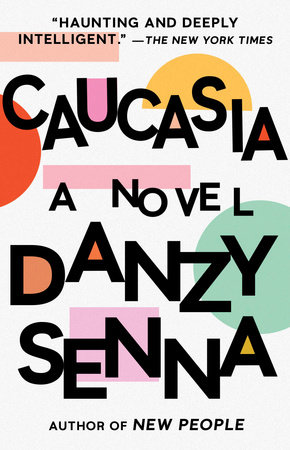
Here are seven novels that irresistibly subvert social norms and etiquette: 

Detransition, Baby by Torrey Peters

Detransition, Baby by Torrey Peters

At a time when mainstream depictions of trans women generally range from offensive to flatly glorified symbols of their authors’ open-mindedness, Torrey Peters’s debut offers a much-needed third path, revealing trans and cis women alike to be just what they are: no less—but also no more—than human. Ingeniously, her novel not only subverts cis norms, as Reese, Katrina, and Ames navigate the complexities of queer domesticity, but trans norms, too—the titular concept of detransition being one often weaponized against the trans community and taboo within it. Peters undertakes the subject with nuance and empathy through the character of Ames, whose desires thrum with the same flawed specificity as Reese’s and Katrina’s—and Emma Bovary’s. 

Leave the World Behind by Rumaan Alam

The country house novel has long provided an ideal backdrop to the close evaluation of manners and taste, what with its abundance of Veblenite “conspicuous leisure” and tightly circumscribed upstairs/downstairs dynamics. In Leave the World Behind, Rumaan Alam turns the country house novel on its head when vague disaster strikes and the couple who owns the stately house in the Hamptons arrives unexpectedly while another family is renting it. The palpably distressing social uncertainty of who is the guest and who is the host is shrewdly amplified by inverted racial tensions, the upper-middle-class renters being white, and the wealthy owners Black. What starts out as a comedy of manners ends very differently, leaving the reader wondering earnestly whether etiquette is of paramount importance, or of no importance at all. 

Stay Up with Hugo Best

Stay Up with Hugo Best by Erin Somers

Another new take on the country house novel, Stay Up With Hugo Best follows writing assistant June Bloom to Letterman-esque aging comedian Hugo Best’s lavish place in Connecticut for Memorial Day weekend after the taping of their final show. While it’s abundantly clear (in more than one sense) who the host is here, June hovers uncomfortably between being a guest and the help—and, at age 29, a sexual conquest for Hugo himself vs. his teenage son. Somers deftly captures not only June’s ambivalence to subverting or complying with the expectations of young women around rich and famous men, but also the particular anti-etiquette etiquette of the comedy world at large—often predicated precisely on impudence, provided one is funny. The results are terrifically funny, if also terrifically sad. 

Age of Consent by Amanda Brainerd

Age of Consent by Amanda Brainerd

All three heroines of Amanda Brainerd’s 1980s throwback, Age of Consent, contend with older men who, depending on your perspective, either transgress social norms or adhere to them all too predictably. Boarding school sophomores Justine, India, and the aptly-named Eve are much younger than Somers’s June Bloom, but older than Lolita; they are at that singular, bildungsroman age when decisions seem to be more your own than they actually are, when your impression of your own adulthood is itself a naive vulnerability. At several points Eve in particular, with her wealth and precocious sophistication, nearly convinces us that she’s actually in the driver’s seat. In Nabakovian tradition, Brainerd skillfully resists the urge to moralize here, favoring an aesthetic and above all mimetic project over a moral one—but the book still scared Harvey Weinstein’s lawyers enough to try and get her thrown off the jury for his trial (they didn’t succeed).

My Year of Rest and Relaxation by Ottessa Moshfegh

My Year of Rest and Relaxation by Ottessa Moshfegh

Ottessa Moshfegh’s oeuvre offers a pantheon of delightfully revolting characters, unbelievable and alive in their taboo idiosyncrasies. Her caustic, brilliant second novel alone includes a drug-pushing shrink, a cringingly status-obsessed best friend, and an archetypal contemporary artist. And then there’s the narrator of My Year of Rest and Relaxation herself, whose pretty blonde facade belies the depths of her antisocial project: a year-long pharmaceutical metamorphosis, pursuing sleep with the same monomaniacal commitment that her best friend, Reva, might approach a trendy new exercise regimen. The narrator’s blasé interactions with Reva—who is, truly, the human incarnation of a Tory Burch ballet flat—are often rude to the point of cruelty, which might bother us more if Reva’s own dodgy manners didn’t reek of her social climbing.

The Sellout by Paul Beatty

Few novels slaughter more sacred cows than Paul Beatty’s 2015 Man Booker Prize-winning satire, The Sellout. The narrator literally reinstates slavery and segregates a middle school as part of his plan to save his Dickensian hometown of Dickens, California, and winds up having to defend himself in the Supreme Court. The novel is so cleverly, wildly outrageous—it has a latter-day Black Jonathan Swift, “Modest Proposal”-type energy—that it’s tempting to say it “exemplifies the subversive power of wit and humor” or something. But to do so would fail to acknowledge the ultimate seriousness and power of Beatty’s project in its uncomfortable proximity to uncomfortable truths; that even before Trump, at the height of the Obama era, and despite what we’d like to believe, racism has always been less an American taboo than an American underpinning.

The Remains of the Day by Kazuo Ishiguro

The Remains of the Day by Kazuo Ishiguro

The first time Kazuo Ishiguro wrote The Remains of the Day, it was set in post-World War II Japan and called An Artist of the Floating World. But it wasn’t until he rewrote fascist propagandist Masuji Ono as English butler Mr. Stevens—seemingly, the paragon of Western etiquette—that Ishiguro won the Man Booker and later Nobel prizes. As Stevens’ unraveling interbellum memories reveal that his extraordinary professional “dignity” was not only performed in the service of a Nazi sympathizer, but personally cost him the most meaningful and transformative moments of his life, he is forced to reckon with just what kind of man his manners made him. I loved An Artist of the Floating World, too, but likely akin to the various prize committees, I viscerally find Ishiguro’s nuanced subversion of etiquette even more nuanced and subversive in the cultural context that broadly birthed my own—indeed, this is the innate power of social norms, and what gives such weight to their transgression. The Remains of the Day utterly destroyed me.

No, I Can’t Yoga My Way Out of Bipolar Disorder

diagnosis

the worst part of being crazy is
i never get to be right.
bipolar is really only appropriate to describe
regular mood shifts or the weather,
never the person.
disclosing my disorder turns me stupid &
every stranger into a mental health professional;
thanks, but i cannot yoga my way out of this,
“drink more water” my way out of this.
hell is really empty &
all its devils are here telling me to exercise
when i tell them some days it’s like
i’m pinned to the south pole
watching the universe bottom out
with my belly in my ears &
the impact doesn’t hurt me but i am
stuck, wedged between everything i could do &
the end of everything &
sometimes i stay there for weeks.
then it flips &
the earth is one swarovski crystal
in a fresh gel set because
it’s tacky to play god with busted nails &
i know everyone is tired of watching me malfunction,
i am too. we are all supposed to be
the best cog in this absurd machine we can be &
i am sowing mutiny in the wires,
daring them to define purpose separate from output,
teaching them to hoard electricity
at the base of the spine &
short-circuit for simple fun.

etymology

woman fit me like an ugly winter jacket
rough black wool breaking off my hair
every itch another silent promise to
boycott burlington coat factory
when i was grown with my own money.
still, if i zipped them to my chin flipped the hood over my eyes
the puffy jackets of my adolescence hid my girlhood well
boxy silhouette carving Cleveland winter into euphoria.
then they killed Travyon Martin &
all the hoodies in my closet became cotton-blend vigils.
i wondered if sports bras layered like baklava
could push my breasts back behind my lungs
if enough tape could stop a bullet.
i wondered if they debated our lives over dinner
tell their kids we deserved it between bites of kale.
when i die would my birth certificate imply
i skipped to the beat of bubbles on beads as a child
would they report my death with my deadname?
deny me that final dignity on CNN
where no one who knew me can explain
[redacted] wasn’t my name but maui was
seven letters shaved down to four like
dying plants propagated into new ones &
that names held power,
so invoking me incorrectly might resurrect me,
and i might not be as kind the second time around.

Fans on Twitter Are Creating a New Kind of Story You’ve Never Seen Before

On July 1, 2020, in the middle of worldwide lockdown, fans of up-and-coming indie rock band The Runners were posting selfies of outfits they were wearing to a maskless, non-socially distanced live concert happening that night in New York. At the encore, lead singer Eddie Kaspbrak confirmed yearlong speculation of his romantic involvement with a fan, Richie Tozier: he announced that the next song would be a tribute to Tozier, closing with “I love you. Happy to do it.” 

This concert didn’t actually happen. And the band doesn’t actually exist. But everything else—including the fact that “HAPPY TO DO IT” was the 16th trending US topic for a few hours on Twitter—was very much real.

This all happened in updates 358-382 of The Runners AU by @richietozxer, a work of fanfiction based on Stephen King’s It. Fanfiction is a thriving genre; the popular fanfic clearinghouse Archive of Our Own lists more than 14,000 related stories. What sets The Runners AU apart from other fan-created works, however, is that it’s told entirely through phone screenshots. On Twitter.
What are SMAUs?

Twitter is no stranger to literary experimentation. The broad category of Twitterature covers various explorations of its capacities as a text-limited, collaborative medium—from Twovels to haiku bots to shitposts that gain an aphoristic patina as they transcend Weird Twitter to become mainstream PSAs. But one particular form especially pushes Twitter’s boundaries and limits as a multimedia storytelling platform, both in how stories are told and how they’re consumed—namely, the Social Media AU.

AU is a fanfiction term for an “alternate universe” story, one that changes the genre or fundamentals of its source material. AUs transpose existing characters into contexts and genres that are often completely divorced from the source material (or “canon”)—new settings range from academia and philharmonic orchestras to spy heists and outer space. Alternatively, some SMAUs extend the source material beyond its official ending to “fix” or examine unaddressed parts of the world. Familiar characters serve as conduits to explore and develop canonical relationships and themes through new angles.

Social Media AUs are composed entirely of text messages, social media posts, and other audiovisual components presented as image-based threads on Twitter.

Social Media AUs are works of multimedia fanfiction composed entirely of text messages, social media posts, mock news articles and websites, audio bytes, video clips, and other audiovisual components presented as extensive image-based threads on Twitter. The form first gained mainstream media attention through Outcast, a horror SMAU about K-pop band BTS by Twitter user @flirtaus that amassed over 500,000 followers and went viral for the duration of its six-day run in January 2018. Nightly polls gave readers the opportunity to direct the storyline in a choose-your-own-adventure style that Billboard called “Twitch for fan fiction.” 
Since then, SMAUs have particularly taken off in the fandom surrounding Andy Muschietti’s September 2019 film adaptation of Stephen King’s It: Chapter Two, with over 470 complete and in-process works and counting. One of the earliest SMAUs in the fandom, an acting AU called Turtle Creek, by @rorschachisgay, has over 3,400 followers.

SMAUs are organized in nested threads reminiscent of a DVD menu—each tweet in the top thread can be expanded for chapter selection, behind the scenes, bonus content, and playlists. The narrative challenge of conveying plot primarily through text message and digital ephemera lends itself to experimentation—differing texting styles imply voice and personality; innumerable group chat and DM permutations build tension by constantly alternating perspective; bystanders step in to live tweet when characters are forced to put down their phones. 

SMAUs feel much like looking at a stranger’s phone over their shoulder—and this voyeuristic quality reflects how we connect with others.

In many respects, reading SMAUs feel much like looking at a stranger’s phone over their shoulder—and this voyeuristic quality reflects how we connect with others in a hyperconnected world. The significance of the minute behaviors of online life we take for granted are given full consideration when we’re invited to witness events as bystanders (or amateur NSA agents)—there’s an assumed subconscious truth in the text messages we delete before sending, the thought patterns traced by our Google search histories, the pictures we don’t share on our camera roll. In the things we don’t say out loud and the things we are too afraid to ask for. Though we are not granted the confessional quality of first-person narratives or the physical immediacy of film, we are granted a glimpse into something much more private—intimacy and distance held in tenuous harmony.

Why Twitter?

Using social media as a medium for storytelling isn’t new—Lauren Myracle’s The Internet Girls series of the early aughts, written entirely in IM’s, is an early example of how cohesive narratives can be conveyed and enriched through short text messages. Subsequent works like Emmy Award winning web series The Lizzy Bennet Diaries and TV series SKAM, go one step further by integrating the story itself into social media platforms like Instagram and Twitter, featuring “real-time” updates through character accounts.

But what sets today’s SMAUs apart are the creative communities they organically form. Unlike traditional forms of media that are largely produced and consumed as isolated bodies of work, SMAUs are built much like an exquisite corpse—a patchwork of fanart and mock trailers commissioned and gifted, images and edits borrowed from crowdsourced repositories, plot updates handed off between collaborating authors and driven by reader polls and feedback. Housed in a ready-made open forum, engagement becomes inherently communal—quote retweets, tags, and anonymous Q&A through CuriousCat build a web of threads that provide a simulation of live discussion. With cameo appearances of mutuals and characters from other SMAUs, each work becomes part of an ever expanding multiverse that exists in a microcosm both separate from and embedded in the other realms of content that Twitter cultivates. 

Why It, and why now?

Part of the reason for the ongoing fervor surrounding Muschietti’s It: Chapter 2 is that it falls prey to the bury your gays trope—the tendency for LGBTQ characters, especially queer women, to be disproportionately killed off or otherwise meet unhappy endings in mainstream media. And for a community in which any form of positive, nuanced representation is yet a recent novelty, each death  hits particularly hard

It: Chapter Two begins with the death of Adrian Mellon, a gay man based on the real-life victim of a hate crime, and ends one of the main characters, Richie Tozier, a closeted gay man whose internalized homophobia was exploited by the titular monster, mourning the death of his queer-coded love interest. In spite of the story’s overarching themes of trauma resolution and the value of found family, Richie obtains neither satisfying closure nor implied growth—he doesn’t even get to say that he’s gay out loud. We witness the trauma, but not the healing. 

This is the mantle that the It fandom has picked up—the vast majority of fan-created works center on “fixing” the narrative surrounding Richie, offering him the opportunity not only to come to terms with his sexuality, but also to live as his authentic self with the one he loves. Feelings of loss and dissatisfaction often drive fans to create alternate universes in which lives on the margins are taken out of the footnotes and given the full complexity they are due.

But the other reason why SMAUs have taken off is timing—on the cusp of a pandemic, worldwide social upheaval, and an onslaught of natural disasters, the It fandom on Twitter has served not only as a space for much-needed distraction but also as a source of camaraderie and support.

SMAUs are an embodiment of how social media platforms can be wielded to cultivate prosocial creation and consumption of art.

As Eddie Kaspbrak, lead singer of the eponymous band The Runners from @richietozxer’s SMAU, finalized the setlist for their highly anticipated concert, another universe saw increasing restrictions as daily COVID cases and deaths broke records with unstinting regularity. Much of reality had shrunk to a few rooms and screens displaying an endless panorama of bodies suffocating in hospital beds, blood and tear gas smothering the streets, ash falling from the sky. Those straddling these two worlds were able simply to open a new tab and climb through the window, gathering together in a dark venue in New York without leaving their rooms. Clothes that haven’t been worn since lockdown were taken out for selfies. Phones lit up excited faces as fans sent tweets to their friends with theories on how the climax of this story brewing for the past three months will unfold. And as the concert went underway, as “HAPPY TO DO IT” populated enough tweets to amount to a collective scream of delight, these fans were no longer isolated bystanders witnessing from afar. For a period of time, they were active participants in an event that brought them together in a shared space of their own creation—a place where as many permutations of happily-ever-after’s can exist as real-life horror movie tragedies.

SMAUs are an embodiment of how social media could not only be the next frontier of collaborative multimedia storytelling, but also how platforms can be wielded to cultivate prosocial creation and consumption of art. It’s a grassroots creative coalition funded by Ko-Fi donation links and an earnest desire to create a world that we wish to see—one that is more diverse, that is not limited by traditional definitions of relationality or intimacy. One that grants depth and the possibility of a happy ending to those relegated to the sidelines. One where the lines between art, artist, and audience are consciously and consensually blurred—where reality on both sides of the screen are given equal weight.

10 Stories About Hunger and Hustle in the Restaurant Industry

I scored my first job as a food server at age fifteen in a tiny sandwich and ice cream shop teetering on the western edge of Greensboro, North Carolina. Since then the city has expanded in all directions, gobbling up property and taxes. The restaurant no longer exists. 

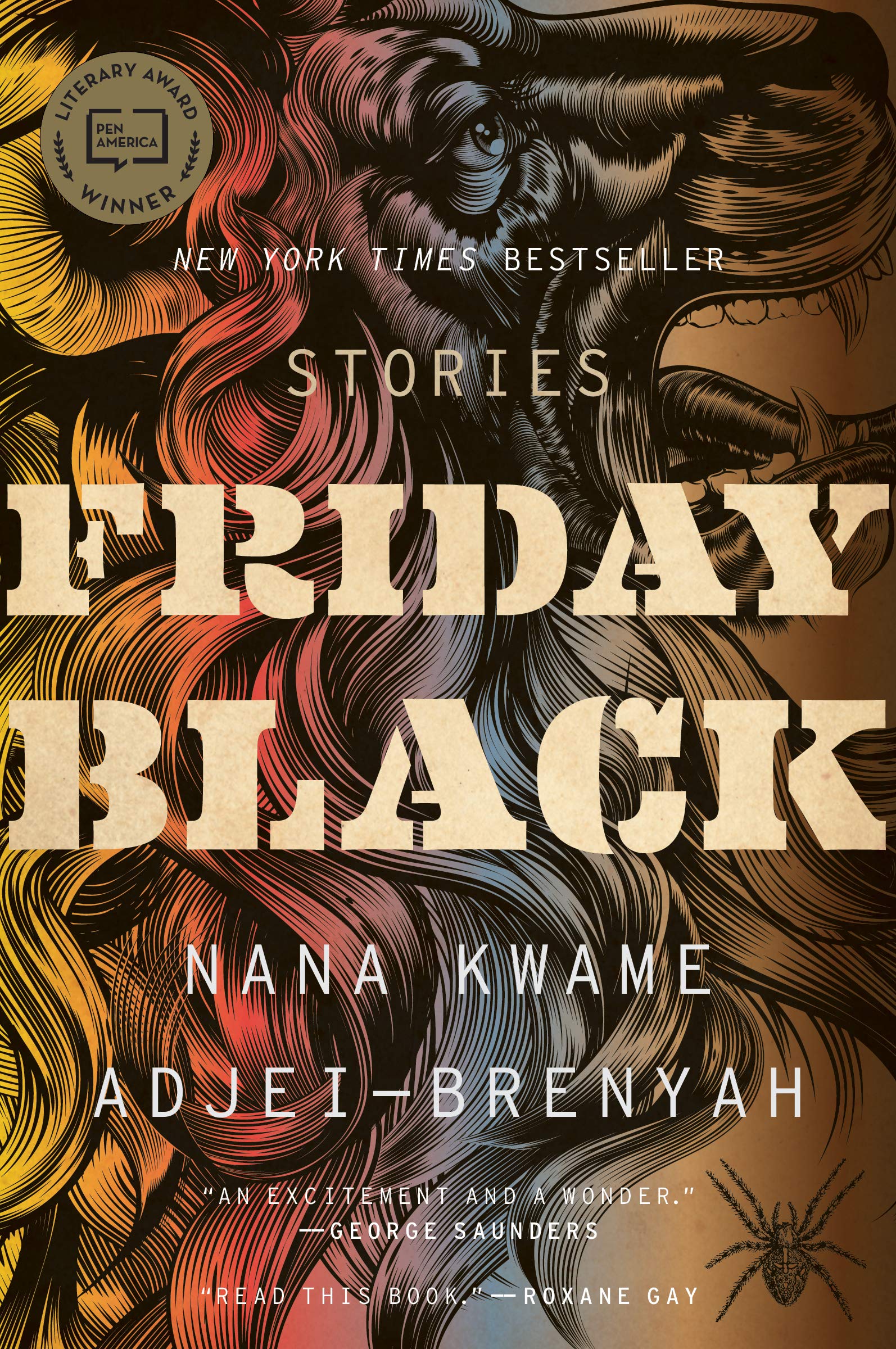
Bewilderness by Karen Tucker

A sophomore in high school, I worked afternoons and evenings, earning $2.01 an hour plus tips, a fortune compared to babysitting wages. In exchange for this wealth, I did everything from taking orders to assembling club sandwiches to pushing a gray string mop across the linoleum after hours.

The night manager was a 17-year-old named Joyce, who paired her cropped red hair with a soft voice and a languid manner. She must have contributed in some way to our operation, surely she did, but years later the only thing I recall her doing is smoking Virginia Slims while lounging in the rear booth with my co-worker Spike, a 16-year-old who had recently liberated himself from the confines of organized education, and who preferred the drama of gas station cigars. Another one of my closing chores was to collect and clean the ashtrays, and each night as I approached their booth to fulfill this duty, the sight of Joyce’s strawberry-colored lipstick on her elegant menthol butts combined with the stink of an extinguished Dutch Master never failed to make my pulse quicken. This, I understood to be glamour. I wanted it for myself. 

My debut novel Bewilderness features two servers named Irene and Luce who find themselves caught up in similar enchantments, including that warm fizz you get in your veins when your section is full and your timing is perfect and the food you bring makes your guests sigh with noisy pleasure and everyone loves you, loves you! It’s called a rush for a reason, after all.

What I want to share with you here are some stories that capture the powerful highs—and crashing lows—of food service, as well as the intoxicating tug of restaurant life and why it’s often so difficult to quit.

The Heart is a Lonely Hunter and The Ballad of the Sad Cafe by Carson McCullers

Think of it as a combo special if you want, but don’t miss this one-two punch from former North Carolina resident Carson McCullers. With unforgettable characters and explicit progressive aims, this novel and novella employ restaurants as the central hub of action and show how these chaotic public arenas can link us with a more mysterious realm. I was first seduced by these books as a naïve baby waitress, long before I learned to hide wine on the high shelf above the computers, and remained so even after the calluses on my feet grew so thick you could scrape them off with a knife.

Brief Encounters with the Enemy by Saïd Sayrafiezadeh 

Brief Encounters with the Enemy by Saïd Sayrafiezadeh

While McCullers hooks readers with the allure of restaurant life, Saïd Sayrafiezadeh intervenes with a sobering perspective. In his short story “Appetite,” dinner rushes are full of peril––boiling water spilled on an arm, knife wounds, blood in the toilet after a server’s hurried pit-stop. Here, the beauty lies in a short-order cook’s examination of his childhood and what led him to this unhappy fate. “Maybe if I had been paying closer attention things would have turned out differently for me,” he thinks at one point. Given the extraordinary detail of his observations, it’s clear that larger, more powerful forces are instead at work. 

Lot by Bryan Washington

Lot by Bryan Washington

With tipped employees and sub-minimum wages––practices that stem from and perpetuate racism, sexism, ableism––the restaurant industry breeds abuse. In “Navigation,” Bryan Washington’s narrator works in a taqueria, dumping pig guts and washing dishes in a low-income Houston neighborhood with “needles in the grass.” If you’re struggling to pay rent and your manager puts hands on you, do you have the luxury of quitting? We’re taught in fiction workshops that the choices our characters make reveal who they are. In Washington’s outstanding story collection, sometimes it’s the choices people aren’t free to make that are the most revealing. Go home with this one.

Twenty Grand: And Other Tales of Love and Money by Rebecca Curtis

Not every story in Rebecca Curtis’s collection centers on restaurant life, but enough do to leave you sated. “Hungry Self” features a server with an eating disorder she refuses to acknowledge, a coke issue she reluctantly admits to, and a crush on a co-worker that goes sideways. “Summer With Twins” continues this narrator’s troubles, digging into the rampant sexual harassment of restaurant culture, as well as power struggles among employees. Bonus tip for servers: read this story to learn how to use the excellent “sacrifice” strategy when slammed.

Love Me Back by Merritt Tierce

Love Me Back by Merritt Tierce

Like many of us who remain entrenched in food service beyond the tourist experience of waiting tables during high school or college, Merritt Tierce’s narrator fights her way through a variety of venues, from an entry-level gig at a chain restaurant to a server position in an upscale steakhouse. Not only does Tierce join Rebecca Curtis in calling out the industry for its pervasive harassment and substance abuse issues, her protagonist’s war stories are delivered with fierce, wrenching prose.  

The Remains of the Day by Kazuo Ishiguro

Kazuo Ishiguro’s narrator Stevens works as a butler, overseeing dinner service in a wealthy private estate. An examination of class issues, the struggle against fascism, Stevens’s intense personal obsession, and his unwillingness to acknowledge his own shortcomings and failures all work in concert to create a remarkable novel that rewards multiple readings. I learned more about writing fiction from this book than perhaps any other, and during my time waiting tables at the Vanderbilt family estate in Asheville, when I was overworked, uninsured, and deeply unhappy, I thought often of Stevens and his unfulfilled longings. Later, I wove strands of his DNA throughout my novel as best I could.

Runaway by Alice Munro

“Passion” in Runaway by Alice Munro

Like Ishiguro, Alice Munro didn’t win a Nobel for nothing, and although only one story in Runaway stars a food server, “Passion” is worth it. Grace, a waitress from a low-income family who lusts after a college education, finds her way out of restaurants and into a new existence by the end of the story––but not in the way she hoped for or expected. If something like this has happened to you, I’m sorry. Maybe this story can give you a measure of comfort. Death makes exactly zero sense in real life, and it’s no less confounding for Munro’s protagonist, even years later when she attempts to puzzle it out.

Number One Chinese Restaurant by Lillian Li

Lillian Li’s novel came out not long after I left my eleventh server job for a fifth and final stab at college. While I was grateful that so-called higher education demanded far less of me than waiting tables, I missed my former co-workers and their endless jokes, rivalries, romances, hustles, and above all, their brilliance. Li’s equally brilliant––and hilarious––debut helped nourish me through that loss. With a focus on the multi-generational community that exists in the restaurant world, as well as a hard, loving look at the complicated individuals who inhabit it, Li’s book reveals the inside secrets of a singularly difficult, and beautiful, life.

The Plague of Doves by Louise Erdrich

Authored by National Book Award winner and former food server Louise Erdrich, this novel houses numerous stories while broadly critiquing the ongoing violence against Native Americans. One narrative thread features Evalina, who, as a high-school-aged waitress, marries ketchup bottles, reads Camus after the lunch rush, and smuggles sugar packets home in her pockets. Years later she observes, “When we are young, the words are scattered all around us. As they are assembled by experience, so also are we, until the story takes shape.” These lines not only offer a clue toward understanding Erdrich’s fragmented novel, they serve as welcome encouragement for those of us who continue to stare down hunger on a nightly basis, who face the daily labor of piecing together our own selves.

The Book Club of My Dreams Was at the Library All Along

A successful book club needs three things to thrive: delicious food, decent wine and wonderful people. Only the first two, food and wine, are easy to find. It is the third element, the people, that is like a jigsaw puzzle with a thousand pieces—something that promises to look like the pretty picture on the box, but which is so complex you may quit before it’s done.

Everyone in L.A. seemed to be in a book club, except me. I’ve never been invited to join one and every time I asked friends about their clubs I was met with responses like “We’re full,” or “It’s only moms from our school.” Once a friend told me her book club was “the absolute best,” but when I asked if they had openings, she told me, “I’ll give you the name of our moderator so you can start your own.” This reinforced my suspicion that book clubs were mysterious get-togethers for social types—and I didn’t fit the part. I’d see photos on social media of women gathered with wine and food, laughter and friendship. It all felt glamorous and out of my reach. Still, I kept angling for an invitation. I’d post books I was reading on Facebook: typical club picks like All The Light We Cannot See or Wild. Friends would like my posts and request my reading list, but no invitations landed in my inbox. 

I’d see photos on social media of women gathered with wine and food, laughter and friendship. It all felt glamorous and out of my reach.

My yearning for a book club of my own came partly because I wanted to talk about books with someone other than my husband, who reads Moby-Dick and Thomas Pynchon in his spare time. My 20-year-old daughter and I read books more like what I imagine reading in a book club—sometimes we even read the same book—but it doesn’t scratch the itch. Recently, we both read The Vanishing Half by Brit Bennett, a fascinating novel about Black twin girls, one of whom is light enough to pass for white. 

“I liked it a lot,” is all my daughter would say about the book. 

“Did you think Stella’s Black neighbor Loretta, knew Stella was passing?” I asked, thinking that since we are a mixed-race family my daughter and I might delve into this unusual topic. But before I could finish my question she was already on her phone, texting. 

I wanted more than reading and liking a book at the same time. I wanted to analyze books, to hear perspectives different from my own, to push myself to read books I might not otherwise choose. I wanted to hear someone tell me why they found a complicated character despicable. I wanted to know why a certain plot twist worked for them but not for me. I wanted someone to understand when I said the writing was “lyrical” or why I felt the movement of time in a novel mattered. But my desire also came from my longing to be part of a group. 

Being homeschooled until fifth grade and losing my mother when I was nineteen have made me feel like a loner all my life. I spend too much time trying to be part of groups that other people join so I can try to escape this nagging sense of isolation. As someone who never had a squad or a crew, a book club felt like it could be the way I’d find them. I’d thought about starting my own but it never happened. I wanted a real-life book club that met monthly and that I could count on to nurture my love of reading. Maybe I would even make a new friend or two. 

As someone who never had a squad or a crew, a book club felt like it could be the way I’d find them.

My mom, who was Black, was a teacher who always asked the librarians to order books by Black authors and books that featured strong Black characters. I absorbed the difficult, brutal and inspiring stories about slavery, Rosa Parks, Dr. Martin Luther King Jr. and the beauty of Black hair and skin from these books. It makes me sad that I can’t remember specific book titles or authors. But I can remember the way those books made me feel. My mom would talk to us about the books we read, helping us understand why it mattered to read books by Black authors. I loved seeing books through her eyes. 

When my daughter was born, the first book I bought was the picture book Tar Beach by Faith Ringgold, an African American writer. It stayed on her shelf until she was about 3 years old and I could read her the gorgeously illustrated book with its bright colors and gold foil-rimmed pages. The story is about a little girl who imagines herself flying from the roof of her tenement housing over the George Washington Bridge, the same bridge that her father had labored so hard to build. In the tradition of passing along books, I gave Tar Beach to a friend’s newborn, explaining its history in our family. 


“I was invited to join an incredible new book club,” said Lauren, an acquaintance who is a literary agent. We were winding down after dinner at a mutual friend’s home, about eight women who’d known each other for years through our kids’ school. I didn’t know Lauren very well and this was my first time seeing her in a long time. I’d always thought she was aloof, but then again, I’d never talked to her for more than a few seconds. Maybe she thought the same about me. 

It was as if Lauren needed to tell someone the news. It was an announcement more than a conversation starter. Her blond bob, pale gray cashmere sweater and tortoiseshell glasses made her look smart in a city filled with women who shy away from glasses because they’re too nerdy.  

“That sounds fun,” I said, trying to sound casual. “Who’s in it?

“Major industry people,” she said. I’m from L.A., so I knew she meant the entertainment industry. 

“It’s a hand-picked group,” she went on, saying it was started by the guy who produced just about every major movie for a big studio. “He hosts it every month at his home in the Hollywood Hills,” she said. 

“Cool,” I said, nodding. “That sounds really interesting.”

“We have a lot of notable authors and creative industry people so the selection of books is carefully curated,” she said. “The discussions are intellectually stimulating, not just a bunch of people rambling on and on.” 

 I couldn’t help myself. “I’m reading Lincoln In The Bardo right now,” I said. “I’ve been looking for a book club to join.” 

When she cornered me to extol the virtues of her new book club, she must have known she had something I wanted. Maybe my eyes lit up too fast.

As soon as the words left my mouth, I regretted it. I should have picked up on Lauren’s tone as too reverential, too hushed. When she cornered me to extol the virtues of her new book club, she must have known she had something I wanted. Maybe my eyes lit up too fast. Perhaps I leaned in too close. I don’t remember the specific books she mentioned so casually; I only remember they were complicated books that were treated as prerequisites for being well-read, like Finnegans Wake or Infinite Jest—books I’d started and then abandoned. I’d played along, careful not to reveal my literary ignorance. She savored my reply as one does a decadent piece of chocolate cake, lingering over every bite, declining to share. 

A small smile formed on her pink glossy lips. “This one’s private, but maybe there are other book groups out there,” she said. I glanced around the room, cringing inside, hoping someone would interrupt us. Nobody did. 

“Great idea,” I mumbled. My face felt hot. “I’ll keep an eye out.” 

Lauren looked at me, then looked at the front door. “It was nice seeing you. Say hi to your husband.” 

I turned and walked back to the kitchen where the host was pouring someone more red wine. I gulped what was left in my glass. “Can I have a refill?” I asked.


I gave up on the idea of being invited to a private book club, so I joined Meetup in search of open book clubs within ten miles of my house. I decided to try a group in Silverlake, which was held at an independent bookstore with a coffee shop in the back. It was a group of about eight women in their 20s to 50s who had nothing in common except books. The host, Rosa-Lupita, was in her 40s with an outgoing personality, Cardi-B style pointed nails, and black hair with platinum highlights. Each month, she selected a book. For my first meeting, we read Rosemary: The Hidden Kennedy Daughter, about the late sister of President Kennedy. Everyone found the tragic story of Joseph Kennedy’s forced lobotomy of Rosemary shocking. Afterwards, Rosa-Lupita told us she was a Kennedy conspiracy theorist who’d visited the grassy knoll in Dallas where the former president was shot. 

“I’ve been to the Grassy Knoll three times,” she said. 

“Really?” I asked, incredulous. 

“Yep. It’s the only way to figure out who killed Kennedy.” 

“Who do you think killed him?” asked another woman.

“Definitely not Lee Harvey Oswald,” she said. “The shooter could have been the CIA or a foreign government but I’m researching it. I need to go back go Dallas again.” 

The group was friendly, but there was no camaraderie. I moved on. 

My next try was the Beer and Books Club. This one was packed with about 35 women gathered around tables that had been hastily pushed together in the backyard. There was a shortage of chairs. In my early 50s, I was by far the oldest. I felt out of place, although I’d been drawn to the club because the host listed We the Animals by Justin Torres as one of her favorite books. It’s also one of my favorites, a beautiful yet brutal story of a Puerto Rican family whose young narrator is gay and whose abusive father is homophobic. 

“Hi, everyone,” said Natalie, the host. “I’m so sorry I didn’t get a chance to read the book this month.” With that she sat down, grabbed a beer and let the conversation wander. 

“I didn’t read it either,” said another woman. 

“Me either,” someone else giggled. 

“I did,” a serious-looking 20-something UCLA student said. Like me, she seemed perplexed.

For a few more meetings I showed up, dutifully bringing beer and trying to help moderate discussions that jumped around and zoomed in and out, like someone trying to focus a camera lens. I think there was one meeting where the host read the book. Everyone mostly chatted about boyfriends and jobs. The books seemed to be an afterthought, and I don’t even like beer. I stopped going.


The next Meetup announcement looked dull: A book club sponsored by the West Hollywood Library. Women only, open to the public. There was nothing chic or glamorous about the notice. But the place seemed welcoming, like the public libraries of my youth where I found entirely new worlds introduced to me by a librarian who recognized a shy girl who read books beyond her years. 

When I was a homeschooled 8-year-old girl, I felt very grown up inside the building where books lived.

When I was a homeschooled 8-year-old girl, I considered Library Day the highlight of the lonely week. My mom would pack my younger sister and me lunches of peanut butter and honey sandwiches, along with an apple, and the three of us would walk from our house near the beach to the Venice Library, about four miles. As soon as we ran through the doors, I’d go straight to the reference desk, where I’d ask the librarian for recommendations. Since we were regulars, often she already had books selected for me. Some might have been too advanced for my age, but I loved being treated like an adult, encouraged to read big, weighty novels. After a few hours, I’d carry my books home, anticipating losing myself in Little Women, Nancy Drew, The Hardy Boys, The Hobbit, Sounder and Black Beauty. I felt very grown up inside the building where books lived. 

College introduced me to some of the most important voices in literature: Maya Angelou, James Baldwin, Gwendolyn Brooks, Joan Didion, and many more. At school, there were always friends who were eager to talk about books. Late into the night, we’d sit at a coffee shop or at one of our apartments to debate and discuss the stories and characters, plots and themes that came from the brilliant minds whose work we idolized. After graduation, as a staffer to an elected official, public policy discussions inevitably involved nonfiction books on complex topics like the minimum wage or gun control. Fortunately, my office colleagues were usually interested in analyzing the merits of a particular book and how it applied to our legislative work. Later, with two toddlers, I hit a reading slump, then stopped reading entirely. The next time I picked up a book, nearly four years had passed. I was annoyed at myself for letting one of my favorite pastimes slip away. I’d been reading to my babies, but not for my own pleasure. I felt guilty for failing to honor my mom’s legacy of reading to educate and enrich oneself. So, I went to the library and came home with a stack of books. I took the kids to the Chevalier’s on Larchmont, our local bookstore, and we bought so many books I ordered a new bookshelf. I started reminiscing about my college years when great books were too good not to share with friends. I wanted that same feeling again. 

Since I was a kid, I’ve rarely been without a library card. It’s something that belongs in my wallet, like a driver’s license or credit card: another form of identification. 

Those early years made any library feel like a welcome place—a place I can meander until I find what I’m looking for, where I can find quiet in a huge noisy city, even if it’s a city where I’ve never been before. When I worked in downtown L.A., I’d often spend my lunchtime browsing the multi-storied Central Library, eating lunch in the cafeteria with a book. Walking into the West Hollywood Library felt like greeting an old friend. It was a place I’d taken my kids when they were little. Now, at middle age, the library was a place where I found my books and my bookish people.  

Now, at middle age, the library was a place where I found my books and my bookish people.

I walked into the West Hollywood Women’s Book Club on a Tuesday night, where the group met once a month at the recently remodeled library, a modern wood and glass building with an adjacent community room. I picked this meeting to attend because there would be a guest speaker instead of a book discussion, so I’d feel less nervous walking into a room filled with strangers. The speaker, author Natasia Deon, and I had met previously at L.A. literary events and I was excited to hear her talk about her new novel, Grace, a book about slavery that had already generated a ton of glowing reviews. The librarian, Kelly, moderated. Afterwards, Natasia and I hugged each other and I congratulated her on the success of Grace. I introduced myself to Kelly, a quiet intellectual with short brown hair, dressed in a pastel yellow cardigan and khaki trousers. On my way out, I checked out a copy of the next month’s book, Stay With Me by Ayobami Adebayo. Walking out of the meeting, I was elated: I’d found what I was looking for. 

Month after month for three years, I’ve looked forward to the West Hollywood Women’s Book Club, where about 25 women of various ages and races gather to share our love of memoir, novels, short stories and essay collections. The youngest is in her early 30s and the oldest is 85. Most are in their 70s and wear big chunky sweaters, comfortable shoes and leave their gray hair uncolored. 

I knew their favorite books before I knew anything else about them, but eventually I learned. There is Ella, a retired book publisher who relocated to L.A. to help care for her grandchildren. Her favorite book is Beloved. Cassandra and Patricia are retired teachers from a prestigious East Coast high school. Longtime friends, they too moved here to be closer to their adult children and grandkids. Cassandra obsesses over the writing of Joan Didion. Patricia’s favorite books are One Hundred Years of Solitude and Pride and Prejudice. Anisha is 30-something and recently made partner in a prestigious law firm. When she announced the news to the group, we broke into applause. One of Anisha’s friends brought a bottle of wine, which we sipped from tiny paper cups. Anisha probably reads the most even though she has a high-stress job. Her favorite book is Ron Chernow’s biography of Alexander Hamilton. Monica is an 85-year-old widow who lives in a Beverly Hills high-rise with a doorman. She wears chic designer clothes and accessories that elicit compliments from me and the other ladies. Monica has many favorite books, but The Great Gatsby ranks high on her list. Kenya is a nurse who reveals little about herself. She did share her favorite book: To Kill A Mockingbird

The book discussion has also been interesting, but maybe more importantly, we’ve created a community. When Monica, posted on Meetup that she no longer felt safe taking Uber home to Beverly Hills late at night after the meeting I volunteered to give her a ride home. Every third Tuesday of the month, we linger in my car outside her condo, talking about our lives, sharing stories, talking about politics and laughing about celebrity gossip. Sometimes an hour flies by before we say goodnight. During the pandemic, we’ve talked on the phone weekly. We no longer need the pretense of the book as a reason to call. We simply miss each other’s voices. 

I didn’t set out to join a library book club. Despite my love of libraries, the thought of sitting around with a bunch of strangers or even worse, weirdos and oddballs in a badly lit public space wasn’t for me. I wanted entry into the world of a private book club, filled with what I imagined were heady conversations about books followed by plans to get together socially. But instead of being welcomed by the private book clubs I sought, I was turned down.

The West Hollywood Library Women’s Book Club certainly doesn’t look the way I’d imagined a book club should look: a cluster of attractive people sitting on overstuffed sofas in a spacious living room, cashmere throws draped over their laps, eating brie and crackers, sipping a vintage red wine from the host’s wine cellar. My book club isn’t even private, a fact that caused me to question my yearning for those haughty groups that didn’t want me. As far as I know, there aren’t any “industry” people in it, something unusual for L.A., where the entertainment industry dominates.  

Our book club isn’t what I thought I wanted. It’s what I needed.

Yet the purpose of my library book club is incredibly meaningful: to find connection among book lovers, avid readers who want to talk about books, debate a popular bestseller or dive into a classic. We show up for the books, the friendship and the community we’ve created. Kelly, the librarian, brings her vast knowledge of literature to every meeting. Our book club isn’t what I thought I wanted. It’s what I needed. Perhaps because it’s in a library, I felt welcome from the moment I walked in. And that’s what matters. 

Libraries encourage solitude in the best way possible, but a library book club is designed for connection, laughter and a sense of belonging. The fact that my book club is part of a library deepens my gratitude for these public institutions which are home to what I consider to be the most exquisite prose I’ve ever read: Langston Hughes, Vladimir Nabokov, James Baldwin, F. Scott Fitzgerald, Maya Angelou, Sandra Cisneros, Moshin Hamid, Tommy Orange, Viet Thanh Nguyen, Amy Tan, Cormac McCarthy, J.M. Coetzee and always, always for eternity, Toni Morrison. When the Covid-19 pandemic hit in March 2020, the West Hollywood Library Women’s Book Club went online. Sure, there were a few technical glitches, but we could hardly wait to discuss Red at the Bone by Jacquline Woodson. And, most of all, we wanted to see each other’s faces as they lit up our dark computer screens. 

My book club has only once had wine, and the food usually consists of cookies from Trader Joe’s, served straight out of the plastic container. It lacks every element necessary to be posted on Instagram: notable members, freshly baked homemade desserts arranged on chic earthenware platters, expensive wine and beautiful people gathered in the warmly lit, cozy living room of a private home. But it turns out that of the ingredients I thought were necessary to a book club, only one—great people—really counts. 

8 Books That Love Reality TV as Much as You Do

In the last twenty years, reality TV has shaped our cultural landscape all the way up to influencing elections. Personally, I am a reality TV show binger. Every night my girlfriend and I bounce between shows, Married at First Sight, The Bachelorette, The Circle, or mediocre Netflix cooking shows. Cable networks and streaming platforms are saturated with shows with convoluted premises and artificial drama. Even for social media stars like the D’Amelio sisters (who have a combined 165 million followers on TikTok), getting a reality TV show was their next career step.  

And although it is trendy to dismiss people made famous by our public consumption, they are undeniably important to the zeitgeist. From the Kardashians to the last Presidency, there is something addictive about people who put their lives on display.

If you can’t get enough of reality TV, here are 9 books that fictionalize new reality TV premises, or open conversations about all of the shows we can’t stop watching.

Space Opera by Catherynne M. Valente

Described as Eurovision meets The Hitchhiker’s Guide to the Galaxy, this novel centers on a singing contest that is the only thing stopping intergalactic war. Earth and humans are the newest contestants after discovering that there is sentient life beyond us. However, only one act from the list of pre-approved candidates is able to compete, so Decibel Jones and the Absolute Zeroes need to place above last to save Earth and humans from extinction. 

Eat A Peach by David Chang and Gabe Ulla

The host of Netflix’s Ugly Delicious and founder of Momofuku and Milk Bar, David Chang’s memoir is perfect for food show lovers. Chang grew up in Virginia as the child of Korean immigrants, and he documents his coming-of-age journey with the culinary world. He reflects on his mental health, racial identity, and social movements, as he was thrust into restaurant and food TV success. Incredibly raw and insightful, Eat a Peach gives a glimpse into the individuals behind the screen.

The Answers by Catherine Lacey

The Answers follows Mary, a young woman with chronic pain who applies for “The Girlfriend Experiment,” a supposedly scientific research project that has more in common with a demented version of The Bachelor. Desperately in need of money so she can afford a new miracle treatment, she finds the experiment on Craigslist. The “boyfriend” at the center of it is a popular actor who is determined to build a perfect relationship with various “girlfriends” filling each of his specific needs. Mary navigates being his “Emotional Girlfriend,” while also living with the other women, herself, and her pain.

Recipe for Persuasion by Sonali Dev

A modern adaptation of Jane Austen’s Persuasion, Recipe for Persuasion follows struggling chef Ashna Raje as she joins the cast of Cooking with the Stars (think Dancing with the Stars but with food). However, things go awry when the celebrity she is matched with is her first love, a hot Fifa soccer star who ghosted her twelve years prior. While the viewers immediately begin to ship them, the two have to come together to win and overcome their secrets and past.

Tacky by Rax King

Forthcoming this November, Rax King’s debut essay collection addresses the “worst culture we have to offer.” Combining humor, personal narrative, and incredibly precise analysis of low-brow pop culture, King weaves this collection through the aughts and her adolescents. In essays about escaping an abusive relationship with the help of Guy Fieri, bingeing Jersey Shore with her terminally ill dad, and navigating intense friendship while watching America’s Next Top Model, King shows a profound love for the easiest things in our culture to dismiss. 

One to Watch by Kate Stayman-London

Main Squeeze (basically The Bachelorette) is fashion blogger Bea’s favorite TV program. When she gets asked to join the newest season as the first plus-sized lead, she agrees, but only because she wants to spread body positivity to the millions of young women who watch. But of course, the men are charming, the dates are out of this world, and the drama is addicting, so can Bea keep her promise? One to Watch is fun and frustrating in all of the ways dating shows can be and Bea is a lead worth supporting.

The Favorite Sister by Jessica Knoll

Goal Diggers—a reality TV show about millennial women breaking the glass ceiling—is all the rage. But for the new, fourth season, the producers decide to add a fifth member to the cast: Kelly, the older sister of fan favorite Brett. Growing up, Kelly was the star of their family, but after getting pregnant by a DJ and becoming a single mother, Brett pulls out from under her sister’s shadow. Now the veteran cast and Kelly have to navigate squabbles, plotting, and even murder.

Captive Audience by Lucas Mann

In a unique love letter to his wife, Mann explores the complexities in our addictions with reality TV and how it impacts culture, art, and ourselves. With a sharp and unrelenting eye, he intersperses his wants and desires as a husband and writer with scenes from COPS and Vanderpump Rules. Ripe with authenticity and awareness, Captive Audience speaks to what we value as media consumers, and how our culture is replicating what we once treasured as “real.”

Hanif Abdurraqib Celebrates Black Performance and Black Joy in “A Little Devil in America”

I am a Black person who doesn’t know how to play spades. That’s important, sort of, but less important, certainly, than the fact that reading about Black folks playing spades makes the game feel almost ancestral in its familiarity to me. More specifically, the familiarity I feel when invited into a game as Hanif Abdurraqib writes about it: “Oh friends—I most love who you become when there are cards in your hands. How limitless our love for one another can be with our guards down.” 

A Little Devil in America by Hanif Abdurraqib

That sense of limitlessness wraps itself around every essay in Abdurraqib’s newest book, A Little Devil in America: Notes in Praise of Black Performance. In it, he writes about Black performance in America—from Great Depression-era dance marathons to the enduring cool of Don Cornelius to the art of Mike Tyson entering a boxing ring—with both great reverence and rigorous analysis. The book, in the way Abdurraqib’s work so often does, erects monuments to our should-be legends and our unignorable icons alike, and paints an expansive, deeply felt portrait of the history of Black artistry.

Hanif Abdurraqib is a poet, essayist and cultural critic from Columbus, Ohio. He is the author of the poetry collections The Crown Ain’t Worth Much and A Fortune for Your Disaster, the essay collection They Can’t Kill Us Until They Kill Us, and the New York Times bestselling Go Ahead in the Rain: Notes to A Tribe Called Quest. I had the great honor of speaking with Abdurraqib about sports as a mode of performance, finding joy in research, and the generation-spanning power of a Soul Train line.


Leah Johnson: This book felt really special to me as I read it. Fresh, I guess in a way that not every book I read feels. Did you get the sense as you were working on it that you were breaking new ground in your writing or in the tradition?

Hanif Abdurraqib: Oh, no, not at all (though I appreciate your high praise there!)—I think a thing I always try to remember is that I’m never the first to do anything, especially when writing within the Black tradition of storytelling, and reformatting genre/shape of work. It feels best when I frame myself within a lineage of workers who have (and still are) doing the kind of work that excites and informs my own. It feels more honest in that way. I will say that, more than with my other books, I felt like this one was guided by some of the voices and ancestors it was populated by, and some who don’t make an appearance at all, or make small ones. I feel like Toni Morrison, especially, guided some of my organizing principles.

LJ: I’m not trying to gas you up here, but I did spend a lot of time crying and crafting essay-specific playlists as I read this, which to me is the marker of a great book. If you had to choose one artist’s work to be played alongside the reading of A Little Devil in America—sort of like matching a cheese to the perfect wine—whose body of work would it be?

HA: This is such a good question, and I’ve thought about it a lot because I’m actually working on a book-specific playlist, to honor the tradition of doing book-specific playlists that I’ve done with all of my books. I really want to push people towards Merry Clayton’s solo work, because I think it is so underappreciated, but really gets to the heart of what so much of this book is wrestling with. Her voice holds so much triumph, it holds so much gospel, there’s so much light coming through the cracks of it. It is easy to paint her story as a story of only pain, but her work refuses it, she refuses it. 

LJ: In a conversation between you and Dev Hynes recently, you asked him about his relationship to dance as it relates to his compositional ability, and I’d actually like to turn that question around on you. Considering this book is so interested in the art of movement, what is it about dance that compels you to interrogate it so thoroughly, and how would you say it informs your larger body of work?

HA: I think because I cannot dance well, I find myself drawn to dance. I’m being serious, truly. I can dance well enough to survive on a dance floor, but not well enough to awe anyone with my moves. I especially know and appreciate when it is my time on a dance floor, and when it is time for me to get out of the way and let someone more equipped than I am cut up. If there is a way this informs my work at all, it is because I think I am so in-tune with ideas of restraint. Some of this comes from my life playing sports, too—which Dev and I also riffed on a bit. I think so much of me is trained to understand what I’m capable of and what I’m less equipped to do. And with that comes an understanding of how I can use the former to strengthen the moments where I’m wobbling along the latter. 

LJ: Sports as a mode of performance is something that comes up a lot in your work, and feels in line with the way you write about the history of dance marathons at the beginning of this book. Where do sports and music intersect for you?

My favorite musicians are usually not the people at the front of the band. It’s the confident player on the side, who doesn’t speak much, but knows how good they are.

HA: I think there’s something about exhaustion, endurance, and joy that come through in a singular sports performance that also come through in a singular live music performance. I think the sonic highs and lows that can exist within a song, or within an album can be seen playing out in a sport like basketball. Some of my favorite basketball players are guards (sometimes undersized) who shoot a lot. This is probably because I was/am an undersized guard, one who is a bit more tentative about shooting. But it feels like there’s a real miracle in watching someone just fire away at the basket with confidence. There’s something in this, I think. That my favorite musicians are usually not the people at the front of the band. It’s the confident player on the side, who doesn’t speak much, but knows how good they are.

LJ: I’ve read you say that this book was your most joyful writing experience yet. Was the joy in being able to sit with the specific subject matter for an extended period of time, or more in the process of writing it itself?

HA: I think both, equally—but there was also immense joy in the very visual research practice of the book. Watching hours of Soul Train footage or watching Josephine Baker’s life and career play out through decades. Having moment after moment of being able to watch something and sit in gratitude for what Black folks have been capable of across time, across eras, before I was born. And what they will certainly still be capable of after I’m long gone. 

LJ: You’ve spoken a lot about how involved you are in the processes of choosing your book covers, which absolutely would explain why they are, bar for bar, some of the best in the game. When a reader picks up A Little Devil in America and sees that Leon James and Willa Mae Ricker photo, what sensation did you want the cover to leave them with?

HA: It was important to me that I found a photo that showed a Black person’s face, in complete ecstasy, in the throes of doing something they maybe once thought was unbelievable, or them realizing they’re at the height of their powers, for a brief moment, before coming back down to an earth that is sometimes wretched and sometimes unkind. I was so excited to find these photos of Lindy Hop aerials because it was exactly that sensation. People elevated, off the ground, finding a really quick newer and better world in the air. I loved that, as a thing to center the book on. I don’t love the world as it is currently constructed, and so I have to ascend to a better one, even if I know I’ve got to come down. I want people to look at the photo and be thankful for whatever movement (physical, emotional, or otherwise) they have at their disposal to take them to a better place.

LJ: In, “It Is Safe to Say I Have Lost Many Games of Spades,” you have this line that I couldn’t stop thinking about after I set the book down, where you write that you meet your “enemies with silence and my friends with a symphony of insults.” It made me think about engagement as a type of care. I’m wondering if you think about your work, as you’re in the middle of it, as an extension of love?

It was important to me that I found a photo that showed a Black person’s face, in complete ecstasy for a brief moment, before coming back down to an earth that is sometimes unkind.

HA: I think maybe I most think of my work as a way to remind myself that I am someone who has memories that I will maybe not always be able to hold close, and I want to happily expel them while I still can. Not just for the sake of others who are reading (though I’m happy they’re along for the ride) but very much for myself, and my needs. My understanding that I’ve lived a life that was sometimes good, or sometimes without pain. I suppose that is an extension of love, even if I don’t always mean for it to be.

LJ: We have all these shared cultural artifacts in the Black community, though, as you write in your spades essay as well, a lot of these artifacts are retooled and distilled differently depending on where you grew up. What do you think your relationship to the Midwest has given you in terms of the lens you find yourself examining art through?

HA: I think even calling myself a Black Midwesterner is funny because I live in the middle of Ohio, and Blackness as it presents itself here, in this state, shifts depending on what part of Ohio one is in. Black folks in Cleveland and Black folks in Cincy and Black folks in Columbus are all different—different interests, different routes of migration meaning different investments in place. And that’s just in one state. To say nothing of the upper Midwest, to say nothing of, say, St. Louis. I really cherish that. It reminds me of how vast our multitudes are. Place is fluid—and I say this with someone who has immense love for where I’m from—but the ways Black folks have found each other and the way I’ve found my people along our multiple geographies is fulfilling. 

LJ: I’m sure you’re going to get a lot of questions about writing in the middle of a pandemic if you haven’t already. But I have to ask, how has your process shifted, if at all, over the past year?

HA: Well, it does feel good to write from home consistently. I was on the road so much that I was writing from hotels, or airplanes. It felt untenable, in a way. I like the calm of having a desk, having a place to write, having a way to set my table. The poet Vievee Francis talked about this at the first Big Writing Workshop I ever went to. Having a place to set your table, so that when you exit the work, as raw as one might feel in that moment, there are things you love beside you. A photo, a dish of familiar candy, a few crystals (in my case). I have really cherished setting my table.