Make sure to keep the broth. No melons, just broth. It’s Christmas and I am writing the recipe for my favorite food. My mother is cooking the melons, boiling the seeds over the stove to make egusi soup, a red-orange thick stew with a chunky, gritty consistency—or what I, a terrible no-good African daughter with no good cooking skills, mistakenly thought to be “African peanut soup.” What I would like to do is to produce a heartfelt story that will precede my recipe for egusi soup.
My goal is to tell you how to be a terrible no-good African daughter before I get to the actual recipe.
My goal here is not to be one of those cooking blogs like “Casey’s Cooking Corner” (a name I make up for a clever take on clunky alliteration). Casey’s Cooking Corner would tell you all about my seven-year-old son and our day making my famous Casey’s Chocolate Cupcakes before I get to the actual recipe. Instead, my goal is to tell you how to be a terrible no-good African daughter before I get to the actual recipe.
1. Allow Toto to kill your dreams of Africa.
Never in my life did I hear the song “Africa” by Toto until I moved to Ohio. After that, I heard it more times than I could count. Once when I was at a small Midwestern dive bar, the song played in the background as a friend of mine (knowing that my parents were Nigerian immigrants) asked me how I felt about it. Since I hadn’t heard the song much until then, I had never paid much attention to the lyrics.
I hear the drums echoing tonight The wild dogs cry out in the night I bless the rains down in Africa Gonna take some time to do the things we never had (ooh, ooh)
At first, I wasn’t sure what she was getting at by asking me what I thought of it. A way to capitalize on the mythical nature of Africa? Perhaps I had bought into the whole thing, joining my white friends in humming the tune. When I hear the song on the radio I can’t help but think of that conversation, one that pretty much sparked my latest identity crisis.
2. Allow your killed dreams to manifest in a need for approval by possible Toto fans.
In one of my literature classes, we read Nnedi Okorafor’s Who Fears Death. Days before, I sit across from a friend who speed reads the first 20 chapters in two hours. Meanwhile, I am only reaching chapter 10 or so. I don’t tell my friend that the reason for this is because I struggle to read the names of the Nigerian characters. I go syllable by syllable, making sure to pronounce them the way my dad would in his thick accent—though it’s waned after 30 years spent in the United States. I often tell people how I wish I, too, had an accent where I call for my “bruddah” to bring up a plate of Insallah from downstairs.
While we discuss the book, I’m conscious of being the only person in the room with a direct connection to an African heritage. My white classmates stumble over Okeke and Binta, Mwinta and Onyesonwu. Mwinta is also always a struggle for me. I trip between the “m” and “w.” After a few attempts, I realize that the “m” makes an “mmm” sound and the “wi” reads as “we.” “Mmm-we-tah,” I say slow and steady.
While we discuss the book, I’m conscious of being the only person in the room with a direct connection to an African heritage.
My name is pronounced “Free-duh Eyy-poom.” For my entire life I have pronounced my last name as “Eee-pum.” It was what I was instructed to do when I was a kid. My dad would answer to “Eyy-poom” in our house, but outside it just felt more natural to me to go by “Eee-pum.” It was easier for non-Africans to say and since they were who I interacted with on a daily basis, that’s how it was. I never questioned it. I never felt any sense of whitewashing. I never felt like I was lying to myself or disrespecting my parents until I heard actress Uzo Aduba speak about her mother and the pronunciation of her name: “I went home and asked my mother if I could be called Zoe. I remember she was cooking, and in her Nigerian accent she said, ‘Why?’ I said, ‘Nobody can pronounce it.’ Without missing a beat, she said, ‘If they can learn to say Tchaikovsky and Michelangelo and Dostoyevsky, they can learn to say Uzoamaka.’” Having read and studied Michelangelo, I knew that I did not want to be a Zoe or an Eee-pum. At an awards ceremony, they called my name (pronouncing it correctly) and all of my friends noted how the announcer called my name out incorrectly. Perhaps that was how much I unconsciously was ashamed of my culture. My curly-haired other half would kiss my hand and call me “Free-duh Eyy-poom,” earnestly knowing how much it meant to me. Still, when I leave messages on the phone, the Eee-pum escapes like a Freudian slip. I bet you know how to pronounce Freud.
3. Add in a few pleasant adolescent memories based on interactions with the children of Toto fans.
I flashback to high school and middle school where boys and girls in English class study the Iliad, play tetherball in gym class, and eat the circle-shaped pizzas. Then I hear it loud and clear: “CLICK.” The Xhosa language of the Bantu people in South Africa is oh-so-very-humorously adapted by sweaty seventh graders as a follow-up greeting after I tell them my parents are from Nigeria. It’s made to represent all Africans in America. If a sweaty seventh grader happened to be a bit more worldly, he’d ask me if I “speak Nigerian.” No, I do not “speak Nigerian,” TJ, because in Nigeria alone there are over a hundred languages given the diversity of each tribe. No, I do not speak the language of my parents, grandparents, or great-grandparents. It is quite possible that my language will die with me, as I am unable to extend it to my children or children’s children. I become an island with no bridge to other generations.
4. Allow your killed dreams to manifest in an Identity Crisis ™. Leave with an idea for a new band name— Identity Crisis ™.
No, I do not ‘speak Nigerian,’ TJ, because in Nigeria alone there are over a hundred languages given the diversity of each tribe.
Months ago, I travelled to Boston after I was awarded a scholarship to attend a conference on getting your book published. I spent much of the three-day conference alone, too shy to ask many questions after embarrassing myself in front of an intimidating type-A agent from a large agency.
“I’m a nobody MFA student trying to get published. Where do I start?” I had asked.
“Your first mistake is describing yourself as a nobody.”
As she made this remark, adding that putting oneself down first was the type of thing that only women do, her biting confidence stung. Just a little. She was beautiful. A self-assured Black women who I wanted to stand closer to so I could better smell what must have been some expensive brand of perfume that I hoped I could purchase at the nearest #blackgirlmagic store in hopes that a little bit of the magic would rub off on me. I would soon find that this trip would reveal a lot more than my lack of publishing knowledge. It revealed a different sense of lack that I had in myself. A lack of blackness. A lack of Africanness. A lack of proximity to community.
A few days ago I was reading about the late Kenyan author Binyavanga Wainaina. I had only heard of him after his death upon reading his piece “How to Write about Africa,” a satirical critical examination of the way the continent is often shrunken down to a country filled with tropes of “taboo subjects: ordinary domestic scenes, love between Africans (unless a death is involved), references to African writers or intellectuals, mentions of school-going children who are suffering from yaws or Ebola fever or female genital mutilation.” A critique that could only be written by a real African, I thought to myself.
My entire life I have been plagued by the question of what makes A Real African™ and how can I become one. I found myself often relating to other first-generation immigrants like myself, often not of African descent. There weren’t many families that spoke with the recognizable Igbo accent of my parents while I was growing up in Arizona. By the time I reached 25 years old, I had no friends with whom I could share my life experiences without having to explain nearly every aspect of myself. I felt different from my friends who were Korean American, Japanese American, Taiwanese American, Mexican American, and Palestinian American, all of whom had deep ties to their places of origin through language, food, living relatives, or community. I had none of these things. I could not speak Igbo, I could not cook Nigerian food—not fufu, jollof rice, egusi, insallah, puff-puff. I had no living grandparents to connect me to another generation, I did not grow up around other Nigerians or other Africans, I had never walked the same land my parents walked for the first 22 years of their lives. When I meet others, I often say that “my parents are from Nigeria.” It took the insistence of a stranger for me to actually say: “I am Nigerian.” Maybe because when I hear these three words that declare my Naija pride, I also hear another set of three words: I could not, I had none, I am not.
How could I ever possibly write about Africa when I couldn’t possibly be a real African?
After all, wasn’t I just like the people that Wainaina was critiquing? “Always use the word ‘Africa’ or ‘Darkness’ or ‘Safari’ in your title.” How could I ever possibly write about Africa when I couldn’t possibly be a real African? Was I still the same little girl that would play in her dad’s wicker hat pretending to be on a safari because that’s all she knew of Africa?
5. Thank Toto for allowing you to wax lyrical about your relationship inspired by Mark Zuckerberg.
I thought of how different my racial upbringing has been from that of my parents. I thought of my dad who told me that the first white man he ever saw was a Christian missionary in church when he was about six years old. Yet here I am fucking what Black Panther’s Shuri would call a colonizer. And yeah, love is love and all of that crap (good crap, but crap nonetheless) they tell you in the West, but I still couldn’t stop wondering what it would be like if I brought my avid jort-wearing, Pokemon Go enthusiast, Mark Zuckerberg-look-alike boyfriend to the motherland.
A possible future mini Zuckerberg-Epum’s 4th grade family tree project would have to begin with Tinder. And though a mini version of the two of us was not yet a blip in the radar, now two years into our relationship, we were making plans to deepen our commitment to one another by moving in. I’m a bit of an obsessive media consumer, and it just so happened that our planning coincided with my recent binge-watching of the new Netflix show Tuca and Bertie, about two anthropomorphic animal BFFs in their thirties going through life together. Bertie, a bird (unsurprisingly), had just moved in with her boyfriend and was having a bit of a crisis as she was forced to come to terms with the notion that she was settling down. And so as I watched this talking songbird struggle with the idea of marrying Steven Yeun, I was forced to come to terms with the realities of my own interracial relationship.
Blended families, like all families, are beautiful, though I struggled with the idea that maybe my children would face their own inner turmoil over their “lack.” I struggled with the idea that I would somehow feel as though I was the one who erased Nigerian culture from my own lineage. Little Zuckerberg would be gaining a life filled with goetta breakfasts and Midwestern manners, but would they too feel “I am not?” If my siblings and I all grew to have white partners (not yet a reality, but a possibility), what would that say about us? Is there any real point in trying to place blame on the situation? Shouldn’t I just be with the individual that makes me the happiest? But then again, even Bertie only dates other birds.
I had a friend who also indulged in colonizer-fucking (though I would not say this out loud myself, sometimes humor helps). She was about to marry her white fiancé, an adorable nerd like my Mr. Zuckerberg. Interracial dating had always been a strange occurrence for me. Somehow I ended up dating white people from the least diverse states in the U.S. While on a trip to Philadelphia, walking hand in hand with a white boy from Iowa, I walked past a group of Black men who broke into applause. Were they clapping for him? A very masculine congratulations on getting with a “pretty Black girl.” Was it for me? For assimilating to whiteness (in bed, I joke in my head)? Was it for both of us given the hypothetical situation of producing a mixed-race child? It wasn’t the first time that I had heard the narrative that mixed-race women were better—“good hair,” “light-bright,” “redbone.” All of the rappers sang of their conquests with mixed-raced women. I think back to my friend and her relationship. She, too, was on the street holding hands with a white boy when a man walked up to her to say: “You will ruin your family.” As I am getting older, I suddenly am thinking about babies. There are fucking babies everywhere now. My uterus is about ready to jump out of my skin and pop out a slimy little freeloader while walking down the street. Is it true that my friend and I would be ruining our families? Lightening our deep roots to the homeland of our parents? To the ephemeral home of myself?
Mr. Zuckerberg and I were starting to get pretty serious. It had been months since we said the big “I love you,” after deciding to get an apartment together in Cincinnati. Him, one night apparently when I was sleeping. Me, during an argument about the prospect of me moving away after finishing my graduate degree. I was used to difference in my relationships. Him, a German, Scott-Irish, American (read: white). A nerdy small town boy from Kentucky with dreams of becoming a rich and famous writer. Me, a Nigerian American from Arizona who had already left home by seventeen.
I felt resentment towards my parents, grateful for their sacrifice but resentful for what I felt deprived of: a sense of self.
During one late night drunk with nose kisses, uninhibited burp contests, and flirty smiles, I once asked him if he would come with me to Nigeria for a year. It had become a part of my five-year plan, to spend a year in Nigeria hopefully on a Fulbright scholarship to work on my next book project about a girl’s trip home for the first time. To my surprise, he said yes, with a sharp nod that pushed his full head of curls forward. Our love was some pretty good crap.
When I talked to my mom on the phone about my plans of going to Lagos and possibly to the villages where she and my dad grew up, she sounded concerned. Her tone of voice was of perpetual concern. Whether I had graduated from college or gotten my first job, always a hint of concern. “Why would you go back if you don’t know anyone there?” That stung, more than a little. I felt resentment towards my parents, grateful for their sacrifice but resentful for what I felt deprived of: a sense of self. I asked her: “How would you feel if you knew nothing of the place your parents were from? If you always felt disconnected wherever you went?” She was quiet for a beat. “I don’t know.” Though it felt fruitless to try to explain what I knew she would never understand, her concern-tinged voice still comforted me as I laid in my bed 2,000 miles away from the only home I had known and 6,000 miles away from the home I had never known.
6. Cook your recipe for delicious egusi soup with the intensity of 1000 Arizona summers. Somehow email Toto the recipe so they too can be terrible no-good African daughters.
But what was I even hoping to find there? Was I like every other Black American that claimed a desire to go to “the motherland,” the ever-expansive land that was taken from them? I joke with Mr. Zuckerberg that it’s his job to grab the umbrella during our trip to the beach while I’m too lazy to do so because it’s my reparations. The joke lands and we both laugh at the taboo whilst glossing over the fact that my family would be unlikely to receive reparations due to the fact that we haven’t endured generational racism. A Black American friend’s teasing over my lack of real Blackness (the kind attached to the Transatlantic Slave Trade) rings in my ear. Again I hear the “I am not.” I remember Wainaina’s words: “Readers will be put off if you don’t mention the light in Africa. And sunsets, the African sunset is a must. It is always big and red. There is always a big sky. Wide empty spaces and games are critical—Africa is the Land of Wide Empty Spaces.”Oh, how I wished to see an African sunset just like the Arizona sunsets I watched growing up. Blending maroon with red hot orange with pale pinks. Maybe that would be the only place I felt real, with the sun.
Egusi Recipe
Ingredients: Egusi (melon seeds) from the African market; bell peppers; chicken broth; diced can tomatoes; onions; habanero peppers; beef (cut into small portions); chicken thigh; salsa; spinach
Directions: Cook and add the sweat of one terrible no-good African daughter while listening to the musical sensations of Toto.
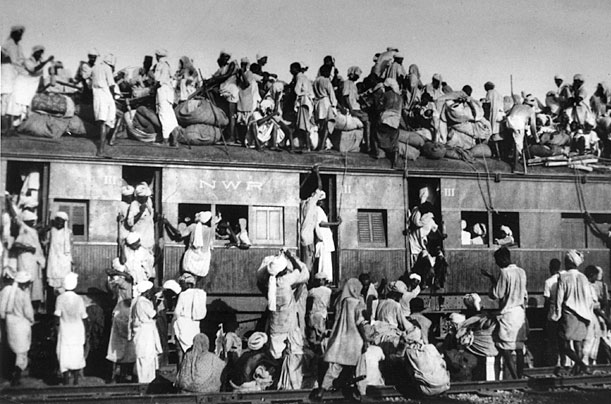
In 1947, after 200 years of control, the British finally quit the Indian subcontinent. Before leaving, the colonizers drew a line in the sand that formed two new dominions: Muslim-majority Pakistan and Hindu-majority India. Some 15 million people migrated (the largest human migration in history) and one to two million perished in the communal violence that followed.
Several decades passed before a widespread effort was made to document survivors’ testimonies about their experiences. One of the first, the Oral History Project by the Citizens Archive of Pakistan, began collecting stories in 2007. A few years later, others, like the 1947 Partition Archive, followed.
Thankfully, there were also books. Partition literature encompasses a wide variety of fiction and nonfiction published in multiple countries and multiple languages. They capture some of the most harrowing events of the era, but also the courage, sacrifice, and generosity of the human spirit.
“How do we know this event except through the ways in which it has been handed down to us: through fiction, memoirs, testimonies, through memories, individual and collective?”
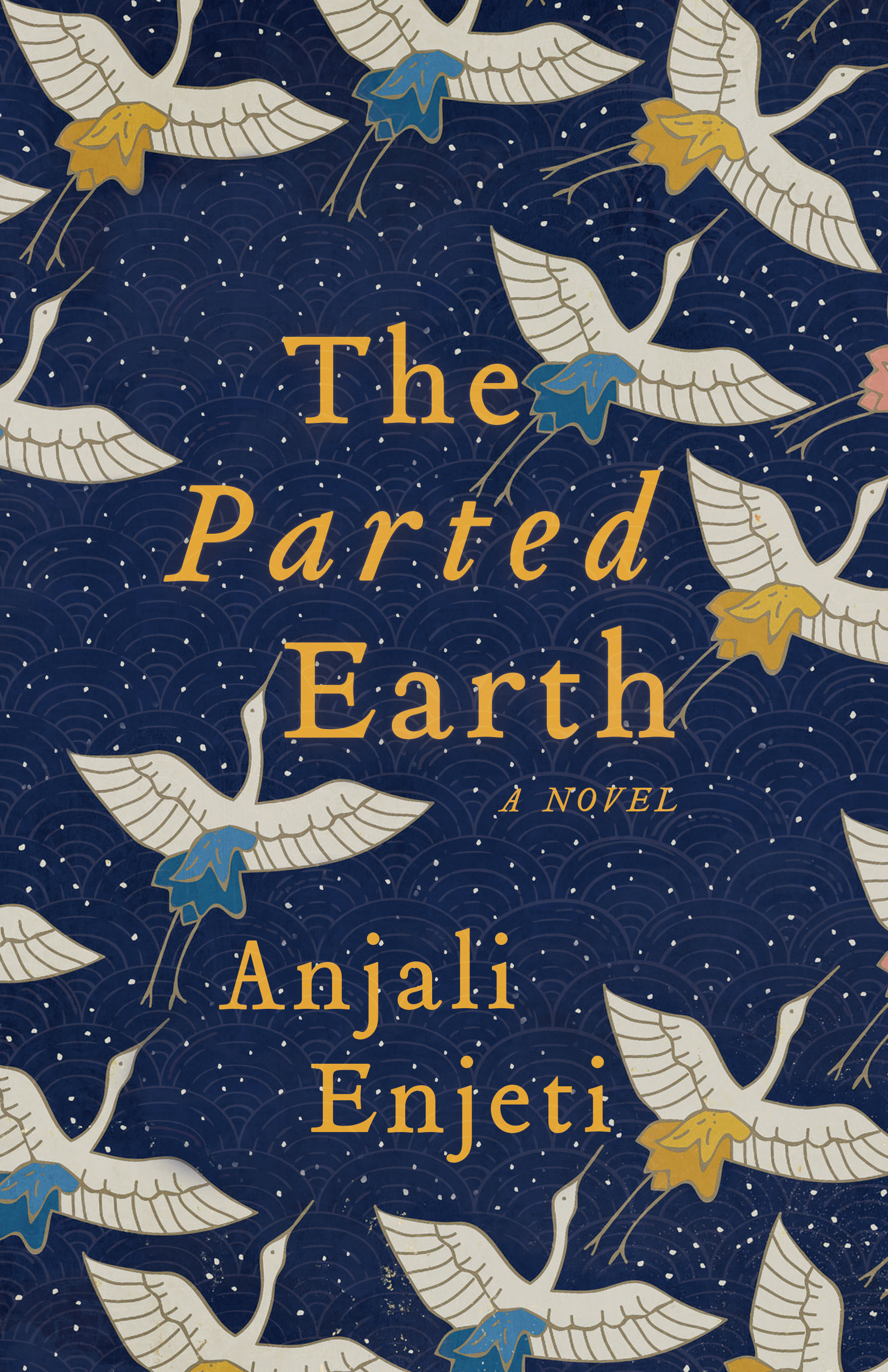
The focal point of my own debut novel, The Parted Earth, is about how survivors’ stories are either passed down or forgotten, and the importance of preserving them. The book spans 70 years, from 1947 to 2017, and centers two main characters: Deepa, a 16-year-old living in Delhi in 1947, and Shan Johnson, her estranged 41-year-old granddaughter, living in Atlanta in the present day. What I hoped to convey is how Partition has lived on. It is not so much an event in the past, but one that continues to influence the descendants of those who survived it.
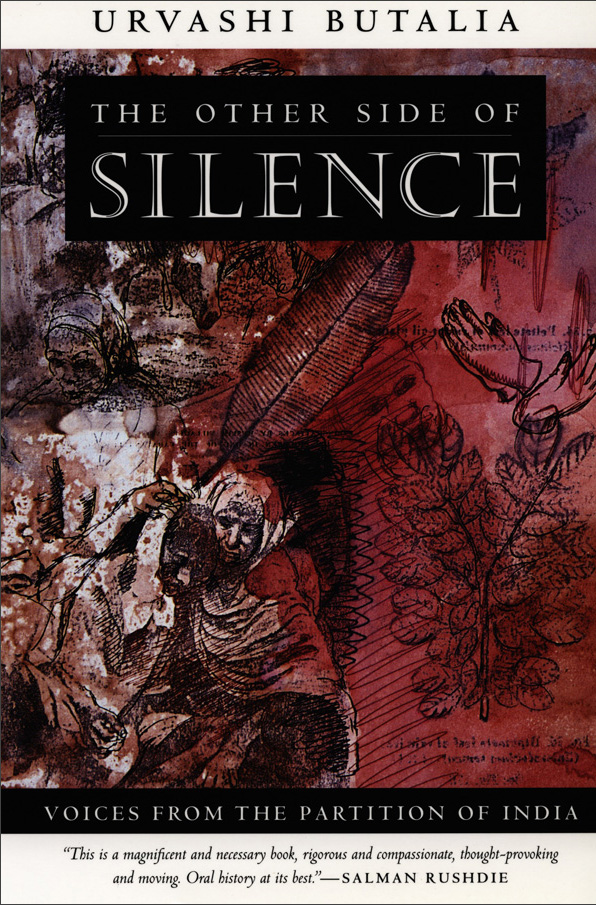
This groundbreaking book was one of the first I came across with in-depth firsthand testimonies of Partition survivors. Butalia’s family members were Sikh refugees from Lahore, a city in the new Pakistan, who were forced to escape to India. One of the survivors she interviews is her own uncle who stayed behind. Her family did not have contact with him for 40 years until she reached out.
Butalia is a feminist activist and scholar, and in the book, she highlights the violence against women during Partition. Some 75,000 women were raped, she writes, though some sources put this figure closer to 100,000. In order to keep them from being kidnapped, raped, and converted, men killed the women in their families to “martyr” them. Butalia writes about the fustrating silence around Partition’s gendered violence, and the inaccurate ways it is often described:
“Killing women was not violence, it was saving the honour of the community; losing sight of children, abandoning them to who knew what fate was not violence, it was maintaining the purity of the religion; killing people for the other religion was not murder, it was somehow excusable…seldom has a process of research I have been engaged in brought me more anger, and more anguish.”
This engrossing debut novel begins in 1950, three years after the formation of what was then East Pakistan (now Bangladesh). Amala Manna and her younger brother Kartik owe their lives to a local Muslim family who hid them when rioters were roaming their village. They escape only to be separated at a train station in Calcutta. Amala must build a new life in a refugee camp in the new India with strangers who share similar, unimaginable losses.
Ghosh is a journalist, a translator of Bengali and English, and the granddaughter of a Partition survivor. In an interview with The Rumpus, the Canadian author talked about the general lack of awareness about how Partition played out along the eastern border: “There was tremendous loss on the eastern border, too, perhaps not the same in scale but definitely huge psychological and sociocultural losses, the effects of which continue to impact subsequent generations.”
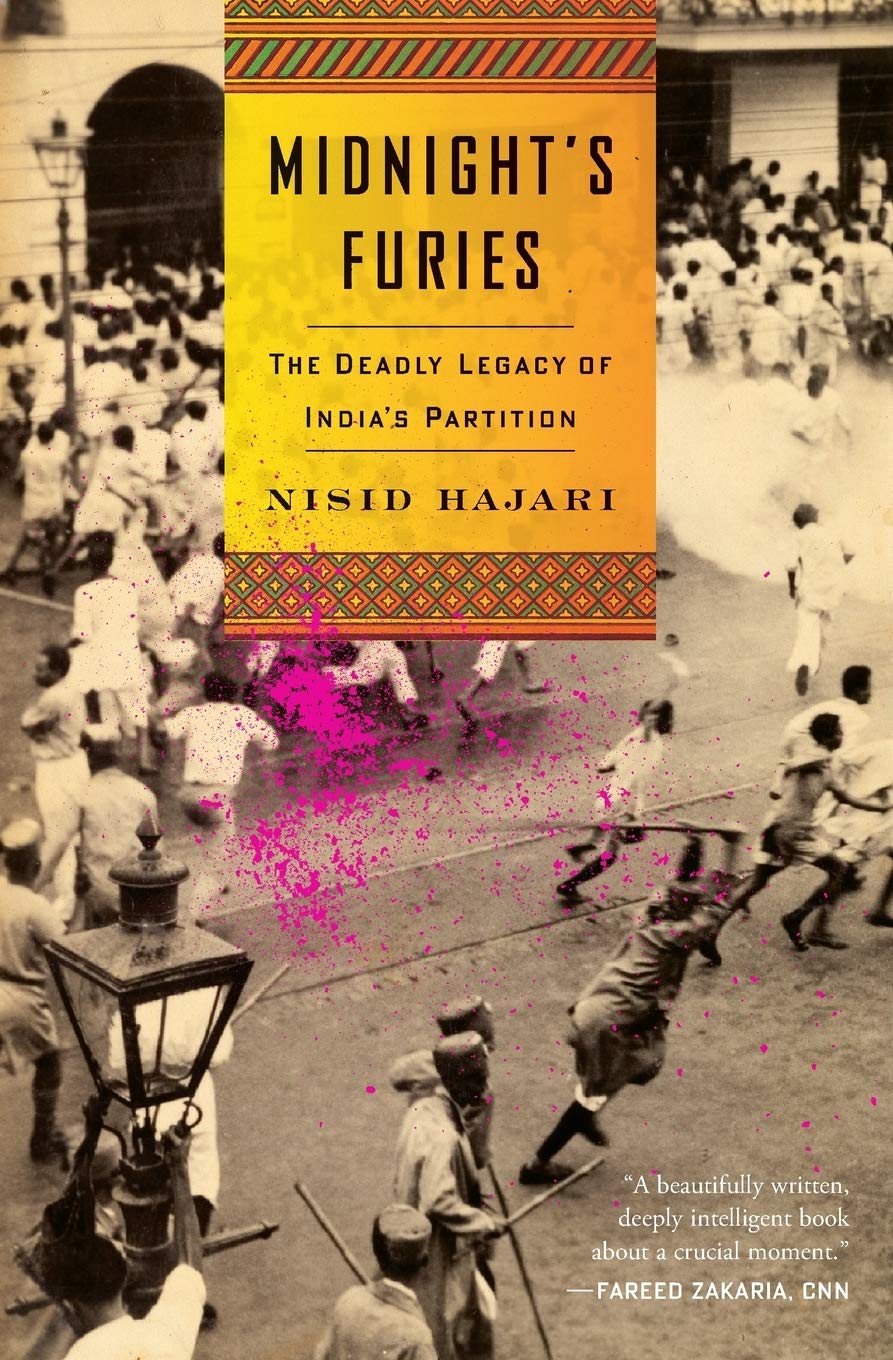
Hajari’s book is a who’s who of political operatives leading up to the cracks and fissures of the subcontinent. The author deftly dissects the intentions and flaws of the nations’ first two leaders, India’s first Prime Minister Jawaharlal Nehru and Pakistan’s first Governor-General Muhammad Jinnah, both of whom were ill-prepared for what was to come.
Hajari asks an essential question of how two nations with so much in common become enemies so quickly. He answers it by piecing together personal correspondence, including notes, letters, and diaries of political and military leaders, as well as reports of spies, economic data, and governmental gossip.
There may be no more prolific a writer of Partition fiction than Saadat Hasan Manto, whose short stories captured every aspect of Partition, including the irony of it. One of the most translated Urdu writers, Manto fled to Lahore in the new Pakistan during Partition. His 700-page collected stories, Bitter Fruit, can be purchased through second-hand sellers. It’s well worth the effort to locate a copy.
If you’re looking for a less hefty read, and one that can be more easily purchased in the U.S., try Jalal’s engaging biography of Manto, which examines Partition through the lens of his letters, essays, and short stories. A Pakistani American historian at Tufts, Jalal nimbly spotlights the seemingly limitless creative energy of a writer who produced over twenty short story collections, a novel, and several plays, before his death at only age 42.
“With his no-holds-barred critique of society and his unshakable belief in the inherent goodness of people, however lowly and despicable they may seem to others, [Manto] makes the postcolonial moment come alive in all its ambivalences and contradictions.”
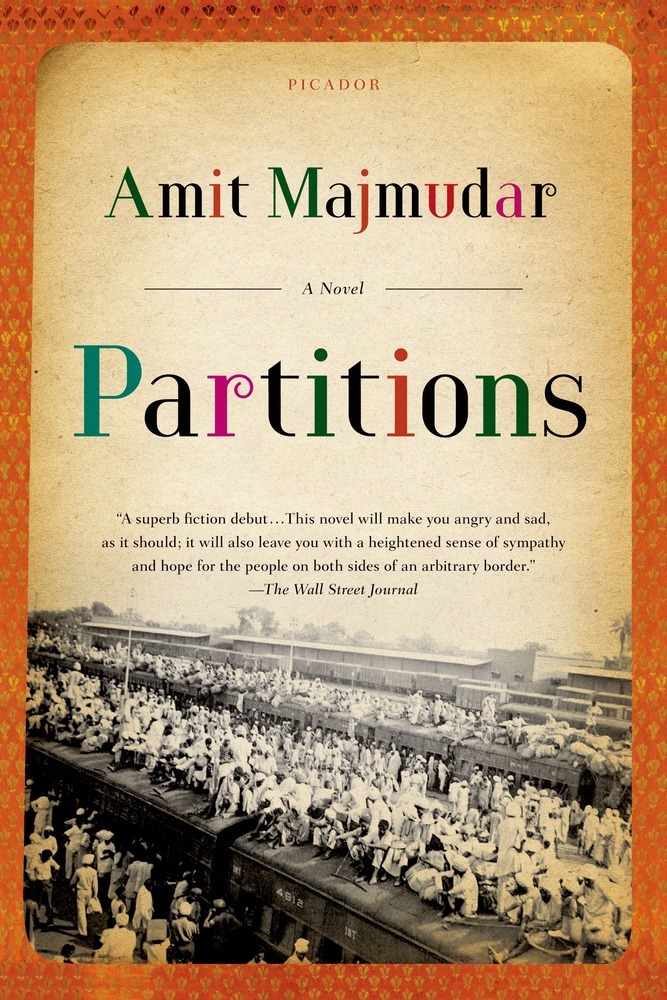
Poet Amit Majmudar’s debut novel is a sweeping story about four characters uprooting their lives to cross the new border. They include Keshav and Shankar, six-year-old twins who become separated from their mother when boarding a train to Delhi; Simran Kaur, a teenage Sikh girl whose survival depends on her first escaping her own family, and Ibrahim Masud, a Muslim doctor, who, while trying to make his way to Pakistan, heals others along the way.
The urgency of their journeys is conveyed through the twins’ long-deceased father who has seen the future and knows what awaits the fates of his sons and his widow. He is present not as a guide, but as a witness in the afterlife to their grief and suffering, and help them feel less alone. Majmudar’s dazzling novel highlights the very best of human nature in the midst of the horrific violence.
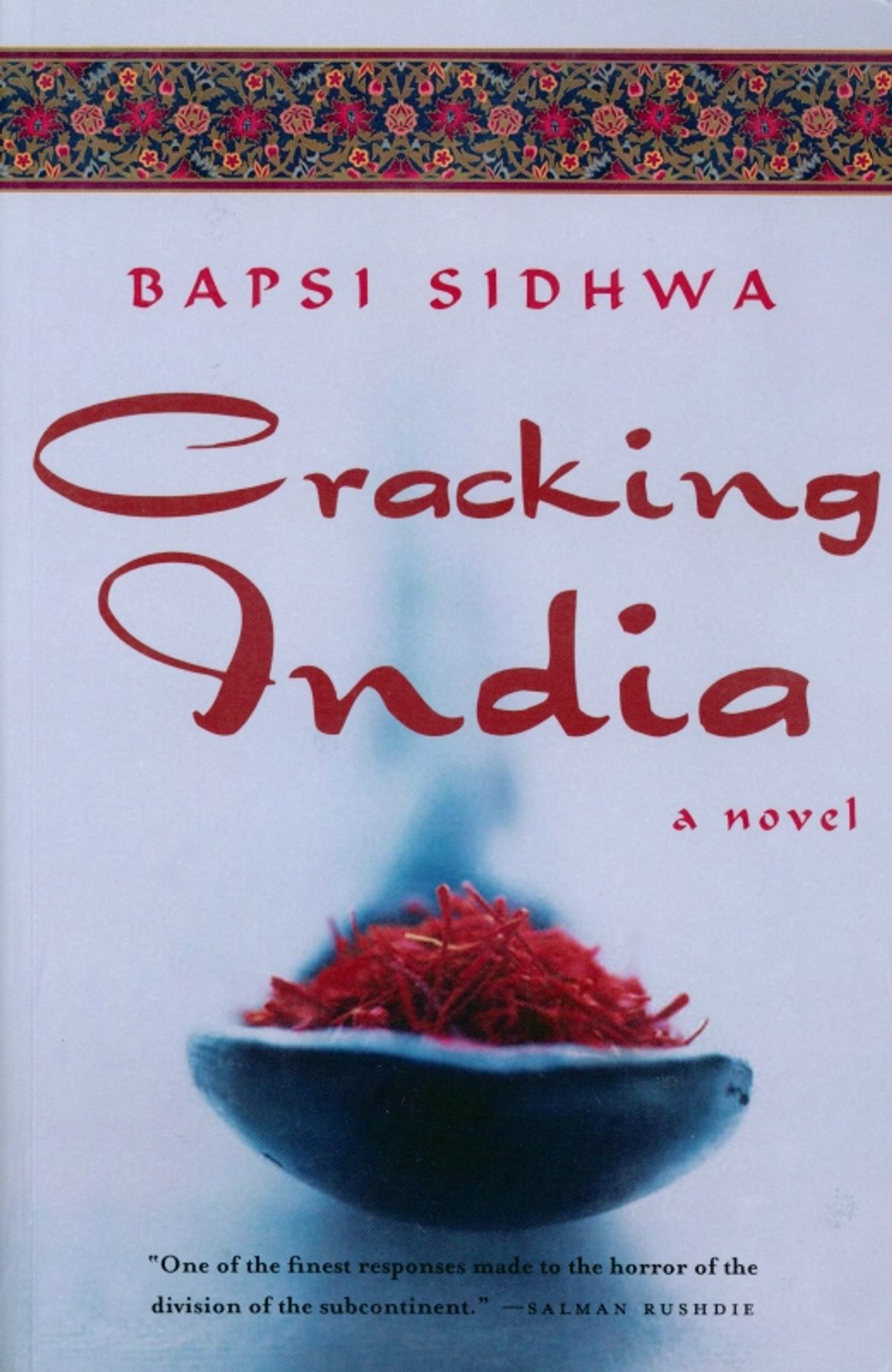
Originally entitled Ice Candy Man, Cracking India is told through the eyes of eight-year-old Lenny, a polio survivor, who lives in Lahore with her Parsi family when her nursemaid is kidnapped. Sidhwa adroitly unspools how Lenny comes to understand the escalating violence between Hindus, Sikhs, and Muslims, and what people who once lived together peacefully are capable of doing to one another.
TheNew York Timesdeemed Sidhwa, born in Karachi in 1938, “Pakistan’s finest English language novelist.” Like her character Lenny, she is a survivor of both polio and Partition. In an interview for Dawn, she recalls a memory of that time:
“I was seven or eight. And I remember the roar of the mob from a distance. I couldn’t make out the words. But later, I was able to decipher the ‘Hare Hare Maha Dev,’ the ‘Allahu Akbar’ and the ‘Sat Siriye Kaal.’ Even back then, I could understand that they are killing each other. I knew it was evil.”
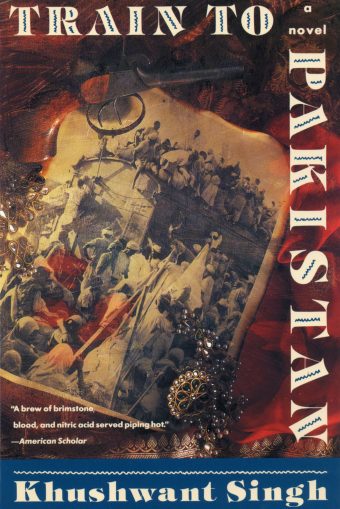
Singh’s classic novel was first published in 1956, only nine years after Partition. It takes place in Mano Majra, a predominantly Muslim and Sikh village that sits near the northwest border. The communities have been living in harmony for generations, but eventually, the villagers—who have always treated one another like family regardless of faith—are suddenly thrust into a bloody socio-political war that threatens to rip their village apart.
A lawyer in Lahore during Partition, Singh escaped alone via car to India, eventually settling in Delhi. As a journalist and editor of the Hindustan Times, he reported on the long aftermath of Partition. And though he lived to see the reissue of his novel in 2006 at age 91, he died before a memorial or a museum devoted to Partition was established. Singh’s wish, the same wish of many other survivors of this era, was that the stories of Partition would never be forgotten. “People should know this thing happened,” Singh said in a New York Timesinterview. “It did happen. It can happen again.”
 There you were on my ancient doorstep, late, or early, unannounced,
 in the thick black coat I bought you for Christmas. Of course,
 you were on your way, but when would you arrive? As always,

 no phone. Me, no extra-key or place to hide it, only two days into
 my teaching abroad, Florence sodden, dark, full of shadows
 and confusion. But you convinced the smoking college students

 on the cobblestone street—who knew me as professor mom—
 to let you through the first two doors, and then you were at mine,
 a one, two knock. Bearded, cold, smiling. It was February, and you’d

 landed at Heathrow, taken a bus to the City of London airport.
 Then the flight and travel path went something like Frankfurt
 to Macedonia. Macedonia! You huddled on a frozen hill in the coat

 and in a down sleeping bag. Then to a rickety communist era train
 to Thessaloniki and on to Athens. Next a port town I can’t remember,
 maybe Patras, and a night ferry to Ancona and another train

 to Bologna and back to Florence until you found my building
 with directions jotted on a ragged scrap of ferry napkin. Long ago,
 you and I were alone together in the small house, your father student

 teaching in another town, coming home on weekends. It was you
 and me, day after day, me too young to mother properly, me
 in charge of you, already smarter with a wicked baby smile.

 But there we were in the dark mornings, the slog of the day.
 We went to every free Wednesday at the merry-go-round, every
 park. You and me together in the nighttime with fevers. Here,

 in Florence, in the medieval building, in the odd apartment, you
 and me again, planning meals of roasted eggplant and
 brocolo romanesco, walking to the store pulling the cart

 behind us. You and me in Pisa, Lucca, Roma, and Napoli. The ferry
 trip to Procida, the walk across the island to eat at the restaurant
 where Il Postino was filmed. Then the journey around and back

 to the dock, the man who opened the bag of oranges, beckoned
 us to take one, two, more, both of us eating while we strolled
 to the boats. Wandering Florence’s churches, the nunnery,

 that half hour of echoing song. The Zeffirelli Museum, no other
 patrons on that rainy afternoon, we two sitting in Dante’s Inferno, an
 animated show drawn by the director. Hell was wild with color, fluid,

 beautiful. The Uffizi, Boboli Gardens, finally getting you a phone.
 One Sunday walking up the hill to Fiesole, each of us eating a whole
 pizza at the crossroads bar. Walks before bed to get the water

 from the Piazza della Signoria spigots, fresh and con gas, talking
 about free will and metaphors. You are a man now, not a baby,
 grey in your hair, a man caught up in his life. Italy could never

 happen again, me free for months, without husband, you free, always,
 throwing off rules, our expectations, searching only for love.
 Late in the trip, that day in April, you brought your newly beloved

 to the apartment, we three hiking to the Piazzale Michelangelo,
 you both looking out toward the city, your arm around her thin
 shoulders, me behind you now, taking the shot. Me still behind

 you, remembering, holding this precious cup of time, you, as you’ve
 always been, so unique, so impossible, so wonderful, you and me
 over there, you and me over, you over there, you.
It’s our families of origin that usually know us best. After all, we share decades of history that accommodate a hundred minor, and sometimes major, offenses. We have plenty of chances to observe each other, to know exactly where the other person’s weak spot resides, to know how to manipulate them if needed, and, more happily, to know the right thing to do at the right time if our family members need help. One of the things I love about dysfunctional family novels is that we join a story like a stranger walking into a party where everyone else already knows each other too well. Not only do we get to watch the party unfold, we get to slowly understand what led each of the characters there—a central mystery amplified exponentially.
My novel Olympus, Texas was sparked by this idea: wouldn’t it be fun to combine Greek myth and its bold and troublemaking pantheon of gods with Texas, a state besotted with its own mythology and its larger-than-life sense of self? It was only after working on the book for a couple of years and fleshing out my fully human iterations of Zeus and Hera and their offspring that I realized what I had on my hands was really a novel about a rowdy dysfunctional family. It shouldn’t have been a surprise, though, as so many of my favorite novels fall into this category.
And though, before writing my novel, I had never specifically thought of the Greek gods as being a big dysfunctional family, they really aren’t that different than the families in my favorite novels below. (Well, aside from their transforming people into animals, and smiting those that displease them, and, you know, being immortal. But honestly, doesn’t Athena push Hera’s buttons in the way only a daughter can?) Here are some of my favorite families and favorite tales of them making each other miserable:
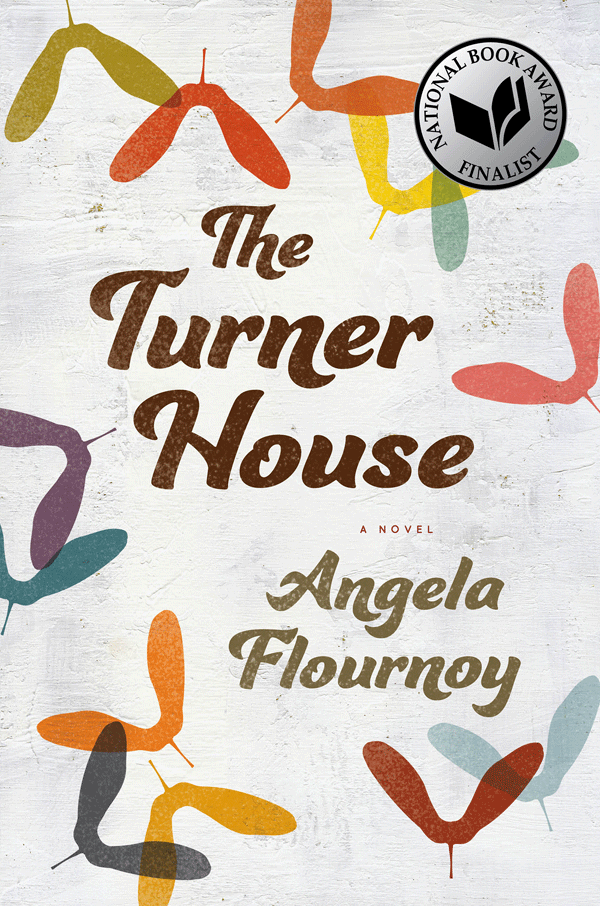
Another novel in which the large size of the family plays a prominent role is Flournoy’s brilliant structured The Turner House. In this novel, which begins with a helpful family tree, we move not just between multiple points of view but multiple time periods, getting inside the heads of three of the 13 Turner children while also seeing their father’s life forty years earlier. Set in Detroit, this book illustrates how while we have problems rooted in the baggage of our past, we also have all new problems solely related to our present. Eldest son Cha Cha crashes the truck he is driving after being visited by a literal ghost from his childhood while his sister Lelah struggles with her gambling addiction and his brother Troy, a policeman, considers involving his family in real estate fraud. Their childhood home, though it sits empty, still plays a pivotal role in their lives in this beautiful evocation of family ties.
Emily Dickinson wrote, “If I feel physically as if the top of my head were taken off, I know that is poetry.” When The God of Small Things debuted, my B.A. in English was just a year or so old, and all my classes in Shakespeare and the Romantic Poets and even British modernism didn’t prepare me for this kaleidoscopic puzzle-box of a poetic novel, with its leaps in time and explorations into the politics, religions, and caste system of India. It did indeed feel as if the top of my head were taken off, even if I still recognized the complex organism of the dysfunctional family that was at its center.
We follow the fraternal twins Rahel and Estha, at both age seven and as the adults they have become almost 25 years later, and we track the shifting path of events that lead to their cousin’s drowning and the further tragedies inside the family estate they shared as kids with their mother, uncle, grandmother, and great-aunt. Roy is a marvel at depicting moments of despair alongside moments of great joy.
Jane Smiley takes one of Shakespeare’s dysfunctional families, mad King Lear and his daughters, and updates them to modern Iowa in this 1991 novel. Instead of his kingdom, father Larry is dividing one thousand acres of farm land between his three daughters. Caroline, like Cordelia, questions her father’s plans and is cut out, and a chain of events leads us to a secret hidden in the family even darker than the themes found in Shakespeare. There are complicated ambiguities in how our narrator, Ginny, sees her and her sister Rose’s lives:
“Since then I’ve often thought we could have taken our own advice, driven to the Twin Cities and found jobs as waitresses, measured out our days together in a garden apartment, the girls in one bedroom, Rose and I in the other, anonymous, ducking forever a destiny that we never asked for, that was our father’s gift to us.”
Jim Thompson matches, and perhaps surpasses, Smiley’s depiction of amoral parenting with Lilly, a tough-as-nails con artist mother to salesman son, Roy. Roy has a sideline in short cons, but unfortunately for him, he is surrounded by women—his mother and his lover, Moira—who are always playing the long con. In this chilling noir (adapted by director Stephen Frears into an equally compelling film starring Angelica Huston, John Cusack, and Annette Bening), an injured Roy tries and fails to keep his mother out of his life, with disastrous results for both him and Moira. As a child, Roy “had no liking for Lilly, but he came to admire her. She’d never given him anything but a hard time, which was about the extent of her generosity to anyone. But she’d done all right. She knew how to take care of herself.” The novel is a fascinating look at how being a survivor and being a good parent can be mutually exclusive traits.
While there is a dysfunctional family at the heart of Sing, Unburied, Sing—Leonie takes her two children, 13-year-old Jojo and toddler Kayla, on a drug-running road trip to Parchman Farm, the Mississippi maximum security prison that is set to release their father—this novel’s reach expands so much further than that single scenario. Jojo and his sister have been living with Leonie’s parents, and the ghosts of both Leonie’s brother and Richie, a boy that Jojo’s grandfather knew during his own time at Parchman Farm, come to life in the pages of the book, both victims of violence too large and too cruel to not seep forward into the lives of the still living. Ward gives us insight into racism past and present in America, and the strength of love and family in the face of it.
Though Jane Austen novels are most often labeled as ironic social commentaries, they’re also loaded with dysfunctional families. Granted, the dysfunction never gets them booted out of polite society. From Anne’s family in Persuasion, whose obsession with rank puts a wrecking ball to her life, to the brother of Elinor and Marianne, whose greed kicks them to the brink of poverty in Sense and Sensibility, Austen’s plots are often put in motion by relatives behaving badly. Pride and Prejudice drops us into one of her most boisterous families. More than a story about the evolving relationship between Elizabeth and Mr. Darcy, Pride and Prejudice has always felt like a portrait of a family who does a marvelous job of magnifying each other’s faults. From Mrs. Bennet’s nerves to Lydia’s heedlessness to Mr. Bennet’s abdication of care for his family members most in need of guidance, Elizabeth’s family is the gift that keeps (dysfunctionally) giving.
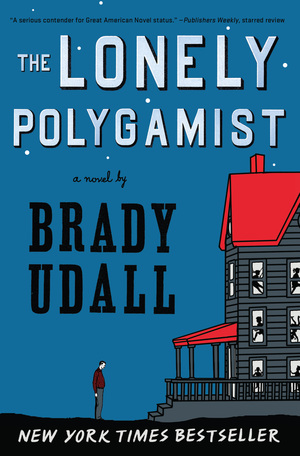
The Bennets, with their five daughters, may seem like a teeming family to modern audiences, but it’s downright tiny compared to Golden Richard’s family. The titular polygamist, Golden has four wives and almost thirty children. (In addition, one of the points of tension in the novel comes from a wife encouraging Golden to take an additional spouse and have even more kids.) This multiple perspective novel delves deeply into this family, one both very different and strikingly similar to an average American one. It’s also remarkably funny and compassionate, especially considering it also contains this bleak familial insight:
“…when it comes to humans, pain and suffering are passed through the generations like that unfashionable Christmas gift no one wants: disease and mutation, anger and despair, failures of intellect and character, all of it genetic damage in one way or another, all of it nothing less than the curse of the father upon the child, a curse inevitably repaid in kind.”
In the introductory essay of White Magic, Elissa Washuta—a Native American author and member of the Cowlitz Indian Tribe—examines the colonization of spirituality, as well as her own reticence to describe herself as a witch:
“I just want a version of the occult that isn’t built on plunder, but I suspect that if we could excise the stolen pieces, there would be nothing left… I am not a medicine woman or a healer. I am a person with an internet connection and a credit card I can use to buy candles and charmed oils to cast the kind of spell that might rip a little hole in the world.”
The essay collection traverses heartbreak, trauma, videogames, Twin Peaks, and the spirits of Seattle (Washuta also discussed trauma and magic at a recent Electric Lit virtual salon). They are bracketed by epigraphs and tarot cards, by footnotes addressing the reader directly. “There is something I’m missing,” she writes. “Without it, I can’t exit the time loops teaching me through pain…When I pull the ten swords from my back, when I die to myself, when I am transformed—I think I will feel the snap of this riddle’s answer, and I’m close.”
The penultimate essay, “The Spirit Cabinet,” feels like an answer. Spanning over 100 pages and roughly two years, it catalogs time loops in Washuta’s life—parallel experiences occurring on the same dates, but years apart—as well as their intellectual parallels in Twin Peaks, The Prestige, and works of literature.
Reading White Magic felt like a time loop for me as well. In 2015, when we briefly met at small press book expo in Seattle, Washuta had inscribed “Wishing you beauty and magic, resilience and truth!” in my copy of her memoir My Body is a Book of Rules. We have not met in human form since. But six years later, I was fortunate enough to talk with her again. Over the phone, we discussed the Devil, Stevie Nicks, and what happens when an epigraph becomes a spell.
Deirdre Coyle: Let’s start at the end. So while reading White Magic, I was also playing Red Dead Redemption II, the subject of your final essay. While I would really like to ask you about your favorite horses and outfits in the game, I’m trying to restrain myself—
Elissa Washuta: Well that’s easy, the white horse and The Gambler.
DC: I love The Gambler. I could never capture the white horse, though. It ran away from me so hard that it fell off a cliff and died.
EW: Oh my god.
DC: It felt like a horrible metaphor, so I gave up. My actual question is, why did you decide to end the collection with this essay?
EW: I had all these unexplored research areas, things that people had recommended to me, or things I had come across, and one of those was Red Dead Redemption II.
I also knew that I needed to do something with my free time, or I had to make myself some free time and stop working around the clock, which is what I used to do. I got a Playstation so I could relax in the evenings and play games. I didn’t have any serious, substantial intentions for the way I wanted [Red Dead Redemption II] to figure into the book; I didn’t think it was necessarily going to be the subject of its own essay. I thought it might fit into the research somewhere else. But as I was playing it, I saw all of the motifs that had been important to me in the process of writing the book—the motifs, the symbols that had been showing up for me again and again in various places, at various points in the process and at various points in my life, and everything felt like it was converging in Red Dead Redemption II. And at the same time, I was starting to feel different around then. I was starting to feel like I was getting over something, and getting out of some old patterns that had not been serving me. So I took notes on the lines of dialogue and the moments and symbols and images that struck me, and then arranged them all into an essay.
DC: There were a few moments, particularly where you talk about explaining the game to your therapist and your competing desires “to be loved by a dangerous man and to live” where I was just like, “Oh no, I relate to this too much…”
EW: [Laughs.]
DC: Jumping back earlier in the book, there are two epigraphs—an Alice Notley poem and a Louise Erdrich poem—that show up a number of times. In a footnote, you say, “If you don’t like my epigraphs, let me play devil’s advocate: What if you don’t actually know what an epigraph is for? Or, at least, not here, where I am the center.” Am I cheating, as a reader, if I ask you what an epigraph is for?
There’s a process of failing to get closer to the answers to my narrative questions, and the epigraphs signal that we have not reached the answer yet: here we are again, we’re back.
EW: No, you’re not cheating. I think in this book, I don’t have a full answer for that. But I think, ultimately, epigraphs are for me. Epigraphs are enjoyable for me to choose and to apply and to see as accompanying the work I’ve done—and after I’ve done all that work, don’t I get to have a little epigraph as a treat? First and foremost, I think that’s what they’re for. But I wanted something else from them as well. Part of the reason I have them opening most of the essays in the book is to be a little bit annoying. I kind of added them as a reaction to seeing yet another conversation about epigraphs on Twitter where the general consensus was that they’re bad, and that good work shouldn’t need epigraphs, and everybody skips over them anyway. So I thought, well, if you’re just going to skip over them, I’ll put the same ones over and over, because it doesn’t matter to you, and I like those two. I like them a lot. So why don’t I just see who’s paying attention? That was how it started, as a joke. But I began to realize that they had a structural function as well, in that I had started to understand what the structural movement of the book was going to be. The structural movement of the book is looping. There’s a process of failing to get closer to the answers to my narrative questions, and I think the epigraphs signal that we have not reached the answer yet: here we are again, we’re back. There’s a pattern happening, and still we are not breaking free from it—until we do. After the entire thing was done, I did realize that by including these repeated epigraphs, in a way, I was using them like a spell.
DC: The epigraphs are often immediately preceded by descriptions of tarot cards opening some of the sections. How did you decide which cards you were going to use—did you pull them?
EW: I chose them intentionally. I looked at the essays in each section that I was creating and tried to match cards to them based on where I was on the Fool’s Journey in asking and working through these questions of the book. Of course, it doesn’t really line up like that because it doesn’t begin with the beginning of the Major Arcana [The Fool] and end with the end [The World]. But if I were thinking about my own journey in this book, there is a way to chart it in a linear way, similar to how the Major Arcana moves forward through a journey. It’s just that the pieces are scrambled; they’re not in the same order.
DC: I liked the part where you pull The Devil card for a man, and you say, “This is about fucking.” I actually laughed out loud. I was like, true enough.
EW: He was so offended.
DC: People get freaked out by that card.
EW: When he got back from his trip, he made sure to tell me that he still didn’t know what The Devil card was all about. Like, okay, it’s just tarot, dude.
DC: In “White Witchery,” you describe your reticence to call yourself a “witch,” particularly as you examine colonization of spiritual practices past and present. How do you approach a personal definition of “witchcraft” now?
Even though I don’t have the same methods as witches, the aims are ultimately the same as they ever were, and that’s the kind of witch I am.
EW: When I finished the book, it was obvious to me that even though I’d lost interest in spells along with tarot and astrology, that was irrelevant, because through the process of becoming open to the synchronicities that propelled my writing process, I had tapped into the power I was looking for, and so I still considered myself a witch. That’s still where I’m at. My magician friends consider me a magician because our aims have so much in common; in the same way, even though I don’t have the same methods as witches, the aims are ultimately the same as they ever were, and that’s the kind of witch I am.
DC: You write that while unable to schedule an appointment with a therapist during a crisis, “I google spells to take the PTSD out of me. But is that what I want? To stop my brain from thrashing against the wickedness America stuffed inside?” Why do you think so many of us turn to prayer or spellwork as paths to coping with trauma?
EW: For me, in that moment, it was somewhat of a last-ditch effort to find some relief when forms of treatment were unavailable to me because it’s basically impossible to find a therapist in this city who can work effectively with PTSD sufferers and takes my insurance. There was nothing I could think to do but appeal to whatever force might be out there beyond my understanding.
DC: There are some meta moments where you describe what you could do with an essay, and then explain that you aren’t going to because it’s boring. My favorite was in “Little Lies,” where you say that the essay “could end with a look back at my entire drinking history and my triumphant recovery, but that’s boring. Anyway, I only want to talk about Stevie.” So let’s talk about Stevie. Which of her songs would you put on the soundtrack to White Magic and why?
EW: Let me look at my playlist, because I actually made a little soundtrack and then abandoned it in ADHD fashion. First and foremost, “Silver Springs.” That song was so important to me at the time when this book really started to get on its true course, and I knew what it was going to be, and I began writing really quickly after years of struggling. That song is such a subject of that essay, “Little Lies,” and is so much about a failed romance and not letting go of the idea of it and the idea of the person who’s gone away.
That’s what my essays are about, my thoughts. And all of my thoughts are about the internet now. That’s where I live, as many of us do.
“Stop Draggin’ My Heart Around” is another one that is in the book, because I sang that at karaoke and it was very on the nose as far as what was happening at that time with the now-ex-boyfriend—or, then-ex-boyfriend, too—the ex-boyfriend who is the subject of so much of the book—was draggin’ my heart around.
“The Chain” was a really big one, as a—I think that was, part of it was written by Stevie, and part of it was written by Lindsey.
I really like “Wild Heart” as well. The line in the chorus, “Don’t blame it on me, blame it on my wild heart,” really speaks to the problem that was driving the writing of so many of these essays. I was writing them at a time when my irrational heart would not let me get over this person, and logically, I certainly should have moved on from him as soon as he broke up with me, or even before then. But, you know, my heart isn’t a thinker. It’s wild and it’s irrational. And this book was really an attempt to explain that, to show why that happened and why I was acting in confounding ways.
DC: And how it led you into becoming a powerful witch, right?
EW: It did, surprising myself and everyone else. Something good came out of all of this heartbreak.
DC: The internet is an important character, especially regarding its many opinions about witchcraft and things like ancestral healing and hedge witches. How did falling into internet holes shape your work on this collection—if it did?
EW: It absolutely did. It’s a central element of my process at this point. You know, at some point, I began letting my curiosity really drive my process. I think it was in writing “Little Lies,” as I started finding more and more things. That really picked up in writing “The Spirit Corridor” which I wrote right after “Little Lies.” I had no idea where that essay was going to go. I really had no sense of anything that was going to come out of it, I just had the starting point and kept putting things together and following Wikipedia links to Wikipedia links to Wikipedia links.
This is still part of my process as I’m moving into writing other things, following my curiosity through the World Wide Web is just what’s most interesting to me. I’ve gone over the same old events of my life so many times now, and it’s not bad subject matter—it’s not that it’s stale or that I can never write about it again. I write about things multiple times all the time. But when it comes to some of the things in my past, some of my trauma, I’m not having any new insight about it. It’s not completely resolved; I haven’t totally moved on from it, but I don’t have any new thoughts about it. And that’s what my essays are about, they’re about my thoughts. And all of my thoughts are about the internet now. That’s where I live, as many of us do. All of my thoughts are in some way related to the internet.
DC: Very relatable. When you were working on “The Spirit Cabinet,” where so many different time loops are spiraling together, were you folding things in as they came to you, or did you begin with a baseline of things you wanted to include in the essay?
EW: I started that essay sometime around July 17th, 2018, when I got back from Seattle. I had just spent a pretty good amount of time with Carl [the aforementioned “ex-boyfriend who is the subject of so much of the book”]. He was both interested in me and not at all interested in me. During my time there, on that visit—maybe during the previous visit, too—we both noticed that things were happening that had happened on or near the same date a year before, or two years before. So I thought that seemed like something I should investigate in writing—how does it really line up? I wanted to write out these events and see if there was anything there.
I started putting really short phrases on index cards and putting dates on them, and started researching: gathering events and dates from my calendar, from old emails and various places where I could find my trail of breadcrumbs back to my old self from the past few years. I just wrote down everything that was significant in my memory from our relationship and when everything happened. At the same time, I kept thinking about quotes from Twin Peaks and The Prestige and Carl Jung, and I wrote those on notecards, too. Partway through and then at the end, I looked through all of the index cards to see what the shape of the whole thing looked like if I were to make it a narrative starting on January 1 and ending on December 31 with the years overlapping. It was much more interesting than I even expected. So everything that happened in the last half of 2018 I was noting as it happened. That makes for a little bit of entanglement between book and life, but really, that was the case for all of this.
DC: In your essay about being writer-in-residence at Seattle’s Fremont Bridge, you talk about wanting to tell a story linking the present and the past—and you’re talking about, of course, what you’re working on while you’re at the residency—and you ask, “Does the collecting of details get me any closer to meaning? What is my research question? How will I know when I’m done?” So in this collection, how did you know when you were “done?“
EW: It was when I got to that line that you mentioned earlier, “I go back to my house-cave and talk to no real men until I can resolve these competing desires in me: to be loved by a dangerous man and to live.”When I got to that line, I remember feeling that epiphany feeling, that I guess had been obvious from the outside. I mean, I knew that I was choosing the wrong men, and I knew that I was choosing men who were not good for me, and I knew that the men that I was with didn’t, ultimately, care that much about my well-being, or care at all. But that realization was what put the brakes on that happening. That came to me while I was writing. I knew I just had to finish that essay, and then I was done. I was going to exit.
When I was thinking of pursuing single motherhood, I sought out books—fiction and nonfiction—about motherhood and parenting. What I ran into, again and again, were variations on the same story: white woman (most of the time), partnered or married (always to a man), usually upper-class, who gets pregnant easily and is more or less happy about the outcome. The stories typically end happily, with no prolonged rounds of IUI or IVF, no worries about insurance or tens of thousands of dollars spent and not winding up with a viable pregnancy – these stories were mostly absent six years ago. The boundaries of what we think of when we think about motherhood can be exclusionary and narrow. What we need are new representations of what motherhood—parenthood, really—is, and what it can look like.
Recently I read two books that especially got me thinking about this: Detransition, Baby by Torrey Peters, and The Natural Mother of the Child: A Memoir of Nonbinary Parenthood by Krys Malcolm Belc. Belc in particular dissects the motions and intricacies of parenthood and all of the societal constructs around it. He carried his son Samson, and the experiences of conception, pregnancy, and nursing helped to clarify his gender identity as a nonbinary, transmasculine parent. Yet on the birth certificate, Belc is listed as the “natural mother of the child.” We haven’t yet made the space for parents who don’t fit the assumed binary. (You’ve probably gotten a hundred emails about discounts and promotions for Mother’s Day this weekend, but I bet you didn’t get any for the nascent Nonbinary Parents’ Day in April). And we haven’t made room for other motherhood and parenthood narratives that don’t fit our assumed ideal, or the conventional paradigm. These books are starting to turn the tide.
Shortly after turning 40, Myriam Steinberg decided to pursue single motherhood. After picking a sperm donor, she figured the rest would be straightforward. This engrossing graphic memoir details Steinberg’s journey through procedures, pregnancies, losses, and all of the cultural and societal taboos we have around these things. Without language and shared experience, these are harder and more isolating—but Steinberg found solace in the support she did have. This book takes an unflinching look at how we frame motherhood and loss, and is a quiet call for more openness, while providing camaraderie for those who have gone through something similar.
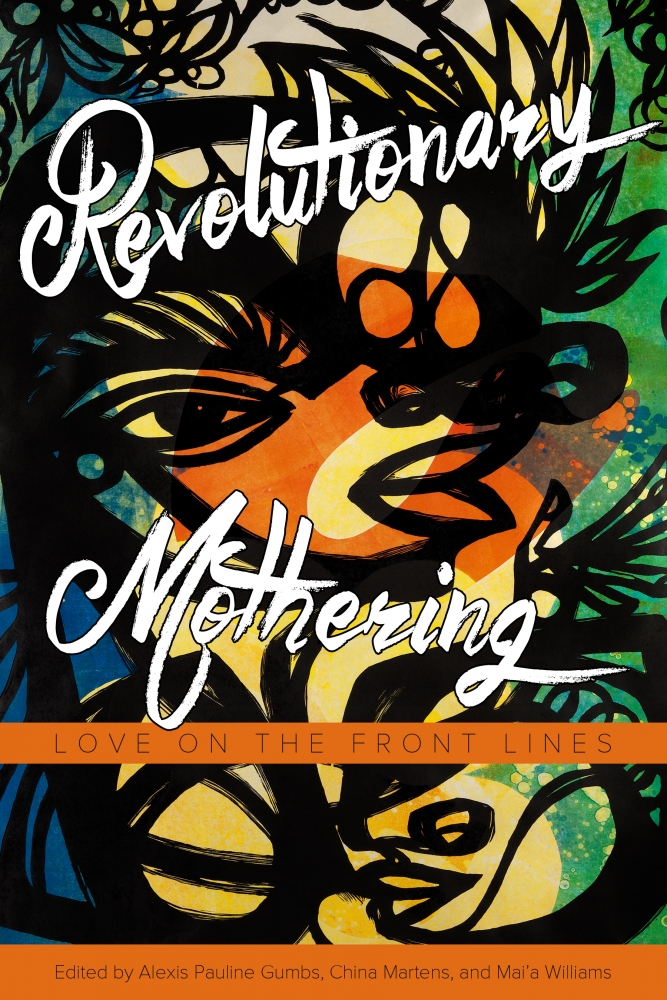
This anthology, centering marginalized mothers and mothers of color, focuses on those recreating the motherhood space. These mothers discuss capitalism, revolutionizing the practice of motherhood, single motherhood, queer motherhood, collective mothering, adoption, teen motherhood, and more. These pieces dare to imagine and set forth a new look at what mothering and parenting can be, and how we can work together to get to that place.
When Jennifer Berney and her wife Kelly decided to start a family, they assumed they’d go to a fertility clinic and proceed from there. When they went, they realized that medical facilities just didn’t know how to handle couples that weren’t heterosexual. There was no space on the forms for them, the doctors and nurses were uncomfortable or downright rude, and the process didn’t take them into account. Turning to alternatives, Berney researches fertility and family-building in the LGBTQ+ community, and pursues her own path to starting a family with her wife.
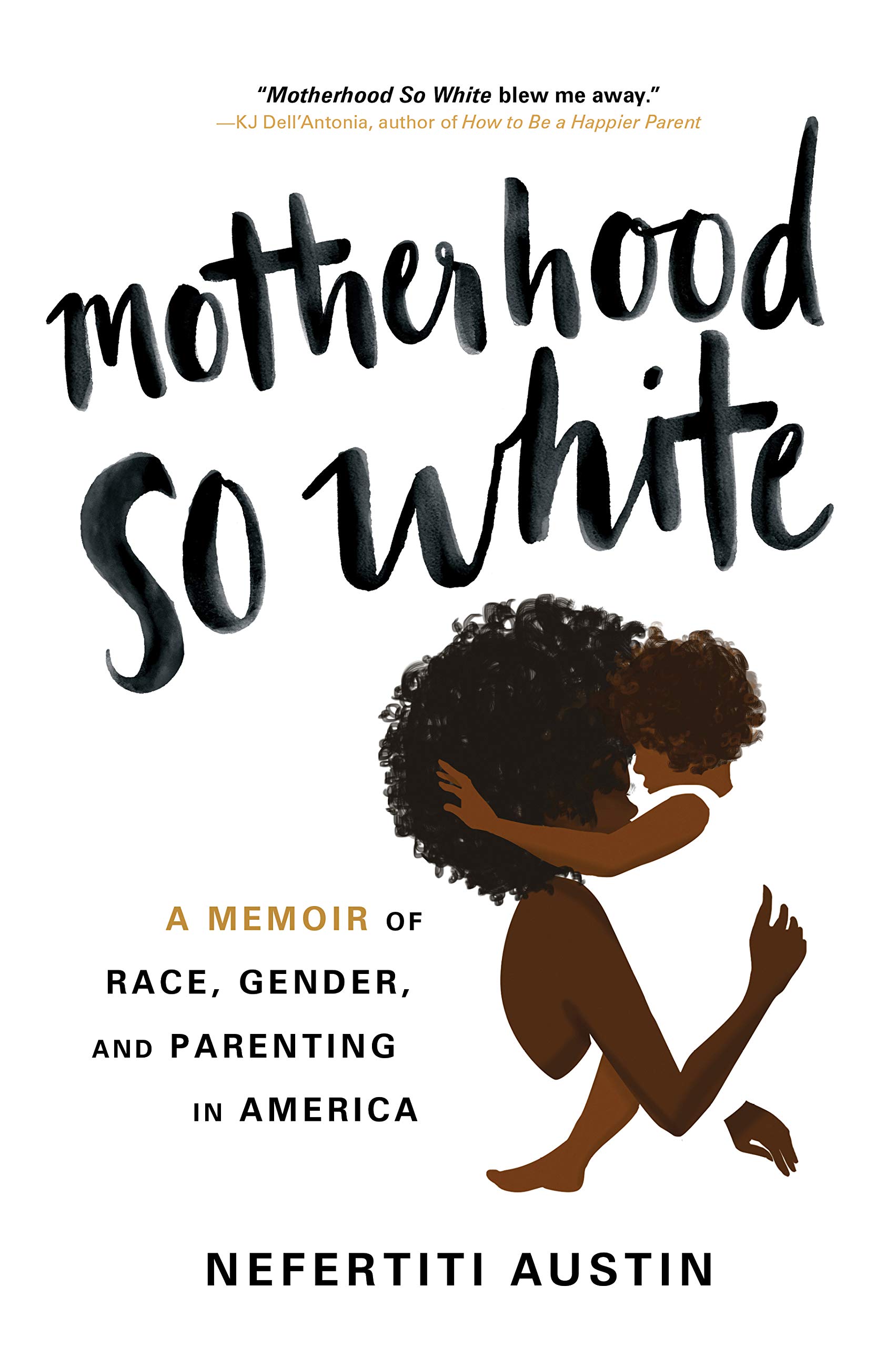
In this hybrid memoir/cultural exploration, Nefertiti Austin tells her story about adopting as a single Black woman. She looks at the history of adoption, especially in the Black community, breaks down the stereotypes and assumptions of single mothers—particularly Black single mothers—and writes about what it’s like raising Black children in today’s world. It is an honest look at her experience of single motherhood and the intersections of race and parenting, which all-too-often are ignored in most parenting books.
Sammie and Monika are raising their son Samson, and motherhood isn’t quite what Sammie expected. She is downright scared of her son, a sullen boy prone to outbursts and creepy behavior. Working from home, she tries her best to manage her life and mother Samson, but starts to resent her wife Monika. As the years go by, Sammie’s frustration keeps building and her relationship with Monika starts to unravel. When Samson’s aggression can no longer be ignored, Sammie is confronted with her own responsibility in the situation. What follows in this story is a look at the shifting roles in a family, the changing dynamics of marriage, and the narratives we tell ourselves.
Spector describes herself as “an infertile, high-femme, low-income, non-biological Jewish mom, dyke drama queen and ectopic pregnancy survivor.” This oversized, lush graphic memoir draws you in to follow Spector over a decade of her life, including trying to get pregnant, infertility, her father’s illness and death, and relationship dynamics. It is a brash, personal look at Spector’s story, reminiscent of getting a peek into a chaotic and beautiful personal sketchbook.
Pregnancy isn’t part of every parenthood story, but for many people who have wanted to become parents by giving birth, miscarriage is a common but underdiscussed experience. Zucker is a psychologist who specializes in reproductive and maternal mental health. She’s seen countless women struggling with infertility, miscarriage, pregnancy and parenthood, and everything in between—but when she miscarried her second pregnancy at 16 weeks, home alone, she wasn’t prepared for just how much it would change her life. She found that people didn’t know how to react afterward. There is still a stigma around miscarriage, and Zucker realized how important and necessary it was for people to start speaking up. She uses her own story, and those of others, to create a call for change.
The editor-in-chief of electricliterature.com drives the editorial vision of the website and is responsible for all content on electricliterature.com, excluding our weekly literary magazines, Recommended Reading and The Commuter. The EIC reports directly to the executive director, and will work with the ED to ensure that every piece published on electricliterature.com contributes to Electric Literature’s mission to make literature more relevant, exciting, and inclusive. This will include expanding the purview of what constitutes literary work, fostering lively and innovative literary conversations, elevating emerging writers, and making extraordinary writing accessible to new audiences.
The EIC is responsible for maintaining levels of journalistic professionalism, content quality, and site performance established with the ED. This includes but is not limited to scheduling, budgeting, visual presentation, and editing, developing, and promoting content. The EIC is the direct supervisor of a small team of editors and will ensure the web editorial team fulfills their responsibilities and follows best practices established by the EIC and the ED.
This is a full-time remote position with a salary of $57,000 depending on experience. Fridays are “no meeting” days, with minimal Slack and email messaging, reserved for editing and reading as well as personal projects, time permitting. This position is eligible to enroll in any company-adopted benefits plan. Electric Lit, Inc. is an independent, 501(c)3 non-profit.
APPLICATION
To apply, please send a cover letter, resume, and published writing sample via Submittable by midnight EST on Thursday, May 20. In your cover letter, please also include links to three pieces of literary criticism or personal writing that you admire, published outside of Electric Literature.
At least three years of online editorial experience, including experience recruiting freelancers, managing a publication schedule, and maintaining an editorial calendar and budget.
At least two years of management experience and demonstrated leadership ability.
A regular reader of work by contemporary authors, as well as literary publications/cultural and news.
In-depth knowledge of electricliterature.com and the work we publish.
Online publications of your own non-fiction and cultural criticism, and an educational background in literature, media studies, or journalism is prefered but not required.
Non-profit and grant writing experience is also a plus.
CHARACTERISTICS
Avid reader
Skilled writer and editor
Challenges oneself and continues to set high standards
Believes in EL’s mission and has a vision for how the site should best achieve it
Organized and motivated
SKILLS
Experience using social media in a professional capacity (Twitter, Facebook, Instagram)
Familiarity with WordPress
Skilled at writing informative, enticing headlines
A keen visual eye and a knack for selecting compelling images
Knowledge of Google Analytics, SEO, and Google Ad Manager
Familiarity with Adobe Design Suite or other design programs
RESPONSIBILITIES
EDITORIAL AND LEADERSHIP
Work with the executive director to shape the editorial vision of Electric Literature, and to make strategic decisions about staffing, content, and programming.
Acquire and edit 2 to 4 essays per week; assign additional articles to editorial interns and contributing editors.
Regularly recruit new writers for the site; commission and edit work by freelancers; review freelancer pitches and member submissions.
Maintain an editorial schedule of 2 posts per day, and allocate funds to freelancers on a monthly basis according to a budget set by the ED.
Hold weekly editorial meetings with the web team to discuss short-, mid-, and long-term editorial plans and provide feedback on the topic, content, and angle of proposed articles, brainstorm new content ideas, strategies for improvement, review best practices, and note problem areas.
Top edit all articles prior to publication (excluding lit mags); rewrite headline and select new images when necessary.
Maintain a centralized document of best practices—including but not limited to images, tags, headlines, formatting, house style, and correction policy—and communicate them to and enforce them with the web team.
Closely track site analytics and discuss site performance with the executive director on a monthly basis.
Contribute regularly to the site, at least one post per month. This can be a mix of short form and long form pieces.
Supervise social media editor to coordinate promotion across platforms, brainstorm and execute promotional strategies, respond to analytics.
Work with the executive director and social media editor to evaluate social media performance and set goals and strategies to increase audience engagement.
FUNDRAISING, EVENTS, AND SPECIAL PROJECTS
Work with ED and contributing editors to brainstorm for project-based funding opportunities.
Provide information and language for grant applications that concern electricliterature.com.
Along with the rest of the staff, help to plan and promote fundraising and other major events.
Contribute to other special projects as needed. This may include project management on a case by case basis.
By the end of elementary school in 2008, I was awkward. I hit puberty in the fourth grade; my doctors blamed hormones in KFC or suggested I would wind up being 6’2 (I didn’t). My mom was in and out of rehab and AA and my brothers were sending letters from jail. In all honesty, there isn’t a lot I remember from those years. Most of my recollection comes from stories of others. I scribbled out my own face in my sixth grade yearbook, and gave myself thick downturned brows and highlighted acne in my seventh.
I didn’t like myself, but I wanted to be liked. I would practice complimenting the popular girls’ outfits, in hopes they would return the favor. I let anyone copy my homework and bought souvenirs for my entire class when I went on vacation. And in my mostly-only-child loneliness, I turned to the internet.
I didn’t like myself, but I wanted to be liked. And in my mostly-only-child loneliness, I turned to the internet.
If the first messaging board for millennials was AIM, for “zillennials” (1995-2000) it was Yahoo! Answers, the community knowledge market that was deleted this week after more than 15 years (much of it spent being famous for hilariously wrongheaded questions). As a sad and nerdy preteen, I didn’t think there was another person alive who could relate to me. I thrived in my English classes, often stating that my dream was to be a writer. J.K. Rowling or Stephen King were the only alive writers I knew, but they were old and had been famous my entire life. Still, there had to be other young people out there who loved reading and writing. Meeting them in college seemed likely, but that was a future hypothetical, and it seemed just as mystical as being a writer. No one I was related to had ever gone to college, but the media assured me it was filled with writers and artists.
Still, I wanted to find a community in the moment, and I had access to an iMac G3, thick and blue and stored away in my family’s “computer room.” My mom had believed the internet would be a fad that would pass like car phones or technicolor, but my dad had worked his way into an office at a massively growing energy drink company that gifted him with a desktop and a laptop. So, after I left school, I would head straight to the desktop and onto Online.
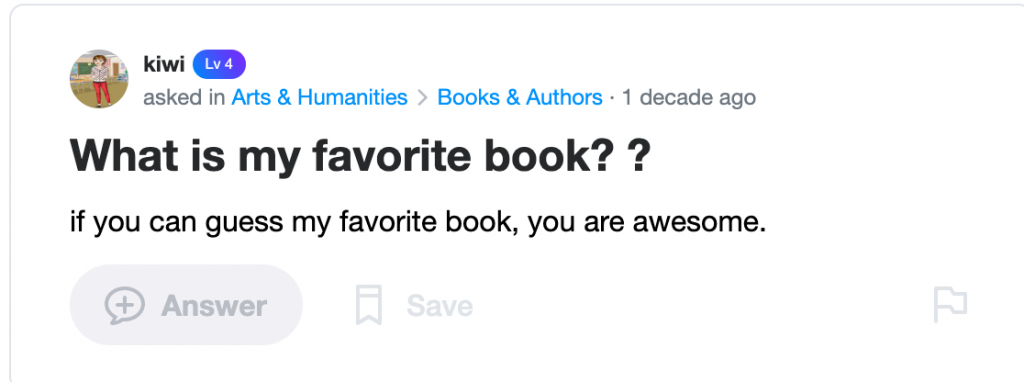
Yahoo! Answers was one of the only sites I knew. It was attached to my email, and although it said 13+ no one checked. I branded myself as “Kiwi,” a nod to a fruit I had tried once and a viral YouTube video. Now, I understand why so many people asked if I was from New Zealand, but at 11, I only knew to not use my real name.
I frequented multiple subsections. Under Gaming, I asked about Nintendo releases, trading shiny Pokemon, and the best methods to beat gym leaders. In Relationships, I ranted about my school crushes or how to stop having dreams about kissing girls.
I also linked to PhotoBucket images of myself, a preteen, asking if anyone thought I was pretty. On one occasion, I linked an image of my friend group and asked the strangers to rank us. I gave us fake names and ages and interests. I created an alternate world where I imagined I was well-liked and popular, but I was still begging for someone real to put me first.
In Books & Authors, I forged the perfect version of myself, cemented in my own creativity and honesty.
But in the Books & Authors section, I shone. Here, I forged the perfect version of myself, cemented in my own creativity and honesty. Although I would still lie about my age, I did read the commonly referenced books and short stories. And I was creating the poetry and short stories that propagated my love for writing.
In Books & Authors, I waited to be discovered. I thought a publisher would email me after reading the plot for my book. They would sign me immediately, lifting me out of my small beach town and into New York City. Because that’s how it happened in shows or movies. I imagined being published in The New Yorker or The Paris Review and wearing chic pea coats and scarves.
The subsection was the home for students who didn’t want to read The Great Gatsby, or for those seeking the next Harry Potter. But it was also filled with wannabe writers looking for a community. In these early days when social media was MySpace and maybe Facebook, finding other people who valued your interests still seemed daunting.
I’m sure there were forums and niches across the Internet, but Yahoo! Answers was right there. And unlike fanfiction websites, you could talk about your original characters, poems, or grandiose novels with plot twists and magic.
All ten responders guessed Twilight. The answer was Twilight.
I wasn’t actually writing these books, of course, and I doubt any of the other posters—who were probably also 11—were writing theirs. But Yahoo! Answers gave me a space to imagine the possibility of writing, and to treat it like a potential reality. I used the site to test out ideas about plot and character and setting. I would ask questions like, “What is the best name for my main character? She is 17 (like me) and has long dark hair and has a crush on her best friend but he likes the pretty blonde girl. The main character dies at the end.”
Or I would ask “Would you read my book?” and share a paragraph or two of text or the main events. Usually they were all about some tormented and sad girl who never “gets the boy” and always is surrounded by death.
But people would answer. They would respond with genuine enthusiasm and encouragement. These strangers with no icons would make good suggestions. I imagined them in their computer rooms across the world typing, “Your idea sounds so awesome! I can’t wait to read!” And then I imagined one day sending them all copies of my bound book.
Of course, I was on the other side of that desktop too. I would follow people who gave the best tips or had beautiful fully-formed visions for their novels. I refreshed the Books & Authors page, waiting to give advice, hoping I would be crowned as “Favorite Answer.”
This form of internet anonymity, and the storytelling that accompanied it, felt genuine—maybe even more genuine than my imaginary novel-writing.
The point of Yahoo! Answers wasn’t to develop a following, though. There was no attempt to add people I knew from real life. Instead, I invented this older version of myself, who wrote books and had boyfriends and took French in high school. This form of internet anonymity, and the storytelling that accompanied it, felt genuine—maybe even more genuine than my imaginary novel-writing. I wasn’t photoshopping myself or “lying for clout.” I used my questions and answers to embody who I wanted to become, who people listened to and respected.
Over the last few years, I’ve tried to access my old account. I would almost get in, but would get stuck on the security questions. The answer to “What’s your favorite fruit” was, oddly enough, not kiwi. In the erasing of my puberty—deleting my middle school Facebook account, burning old photos and throwing away my diary—my account on Yahoo! Answers was one of the only things that could tell me what I was thinking back then. I never got in.
Instead I searched keywords where I knew I’d find myself. I forged a collection of misassembled queries all dating back “a decade ago.”
The search for “What do you think of my story” drew over 830,000 results. “What do you think of my book” was almost 740,000. Hundreds of thousands of queries for poetry, next reads, and literary interpretations. An outlet for writers of all ages to pass around advice on a tiny and imperfect place on the Internet. Where you could be anyone, and people didn’t look at your followers before giving earnest opinions.
Now that Yahoo! Answers shut down, the archive of that moment in time is gone. The Internet adapted in the last decade, producing better question and answer sites, community forums, and baby naming groups.
Now that the site is gone, it takes with it the proof of my first real steps towards writing.
The naiveté of Yahoo! Answers and the stories it allowed us to craft, not just under Books & Authors but across the site and with ourselves, cemented it into infamy alongside MySpace and Chatroulette. But its ability to produce genuine interactions, regardless of following, feels lost in time. It can exist in pockets, here and there, but for a site to let users be themselves—not commodities, not chasing clout or influence—doesn’t seem feasible anymore.
With our entire identities and data existing online, true anonymity is harder to access, maybe impossible. In any event, it’s not the default, like it was on Yahoo! Answers, where everyone chose what name they wanted to give to the world. And while on a hand that inability to hide has benefits (holding cyberbullies or racist trolls accountable), it also means kids and teens have one less place to explore being a different version of themselves. In middle school, there is nothing more terrifying than being authentic and vulnerable, and on Yahoo! Answers no one judged you for asking ridiculous questions or telling your most private secrets—or for trying to learn what it meant to be a writer, and make your creative dreams come true.
This often silly and informative platform allowed every awkward tween to dip their toes into cultivating their digital image, not curated or for likes, just for themselves. And now that the site is gone, it takes with it the proof of my first real steps towards writing, along with all of our poorly typed and embarrassing questions.
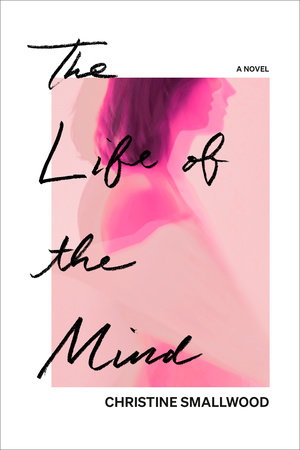
In Christine Smallwood’s debut novel The Life of the Mind, protagonist Dorothy escapes the stifled environment of an academic conference for one she finds even more depressing: the slot machines. There, she runs into her former dissertation advisor, Judith, a woman who caused her significant emotional distress. Beholden to the complicated tangle of relationship etiquette that academia breeds, Dorothy follows Judith poolside, where she reflects, “Judith was a teacher and a foster mother and employer, and more than that, she was a node in a large and impersonal system that had anointed her a winner and Dorothy a loser.”
Dorothy, for much of Smallwood’s novel, is trapped in a dance of power dynamics. As an adjunct at the university where she teaches, she is severely undercompensated and unsupported by her department. She prints her papers at the library, where a member of the staff asks her to use the faculty printers instead. She attends conferences due to Lauren Berlant’s theory of “cruel optimism,” in which people “remain attached to fantasies and aspirations” even when those hopes begin to hurt them. She is stuck in a system that fails her again and again.
In addition to bearing witness to the collapse of academia, she experiences a more personal, bodily loss: a miscarriage, around which the book is structured. Interrupting the hushed rooms of conference panel ballrooms and the library is blood. This tension between the physicality of Dorothy’s loss and her cerebral interpretation of myriad different endings—academia as we know it, the baby she might have had, her graduate school career—reverberate throughout the book.
Over Zoom, I spoke with Smallwood about the way language shapes our perception of the body, the adjunct crisis, the energy in a library, and intellectual posturing.
Jacqueline Alnes: Dorothy is suffering a miscarriage throughout much of the book. It’s a pain she keeps secret from her best friend and therapist. I feel like historically women have often held this experience as a private one. What about writing a character miscarrying interested you?
Christine Smallwood: The easiest way to answer it is that it was my experience. I had a blighted ovum and a miscarriage that is very similar to the one described in the book. When it happened to me, I didn’t tell a lot of people. I wound up telling people after the fact or later, but right when it happened, I felt shame and a sense of secrecy. Later on, I was curious about that.
Intellectually, I know it’s not something to be ashamed of. It’s an incredibly common experience, yet why did I feel like I couldn’t talk about it?
JA: There’s such a deep personal shame associated with it for so many people. Or failure. I’ve heard friends talk about feeling like their body has failed them in some way.
CS: It did feel like a failure, or like something had malfunctioned. Dorothy is not me, but some of the thoughts she has in the book were also my thoughts. I didn’t feel grief, I didn’t have a religious idea that a life died, but something was happening that isn’t happening any more and I didn’t know how to feel about that.
JA: The language you are using is interesting, and mirrors what Dorothy uses in the book. She is having this deeply human experience and the doctor uses the word “blighted.” You also used the word “malfunction.” Those words seem so sterile and clinical compared to what Dorothy experiences in the novel, which is bleeding, everywhere, all day, at conferences, while teaching, at parties. It’s pervasive, and feels so oppositional to the language doctors use to classify our bodies.
CS: That’s right. We have these very medicalized relationships to our bodies. Anything revolving reproduction, even if it’s just menstruation, the actual embodied experience can feel gnarly and feel far away from the language that you’ve used ahead of time to anticipate it.
JA: It strikes me that bodies in academia become distant in similar ways. My body in front of a classroom is a thing that I view as more of an object than a body. I pick out the outfit that I will wear, think about how I will speak, think about the way I move through the room. There is so much that’s constructed, even if I try to remain accessible. Was it interesting for you to explore this body, especially in these academic settings?
Intellectually, I know a miscarriage is not something to be ashamed of. It’s an incredibly common experience, yet why did I feel like I couldn’t talk about it?
CS: A thousand times yes. There are all of these different performances. You are in front of your students, you are at a faculty meeting. I was reminiscing about grad school with a friend the other day and he was reminding me that there had been so much private conversation about women’s bodies in the department, like “Oh, so-and-so dresses like this.” It was something that was talked about and dissected. I don’t think I took in at the time how much conversation and discomfort there was around on how people presented themselves physically. And then, of course, during office hours, you are often alone with another person. Your body is always there.
JA: There is something about academia that encourages this facade of productivity or like you have it all together. I have found that on Zoom, I’ve found it strangely easier to be more open in situations, like when a family member of mine passed away. I don’t think I would do that in person because of how embodied that grief might be.
CS: I don’t know how it compares to other kinds of workplaces.
JA: True.
CS: I think in every work place, there is probably body anxiety about doing presentations or turning around in front of people or picking something up off the ground. I think you’re always aware of that. But I do think in academia, everything is just a little bit extra. I wonder if it has something to do with the pretense that we are all there to be intellectuals and to talk about things that are fairly disembodied and then to bring our bodies into that space might feel an extra disjunction.
JA: It encouraged me to think about what parts of myself I hide on a daily basis, and about why I do that. Some of it is the precariousness of student evaluations and how students might view me as a woman—and I know even in saying that, I have so much privilege as a white woman who appears able-bodied. There are so many layers of power in academia.
CS: You’re getting evaluated in a customer service kind of way by students and then also being evaluated by people above you. Until you are actually tenured, you are in a precarious position. You are open to judgement.
JA: Do you think that academia encourages people to outwardly show their intellectual capacity in some way?
CS: Well, that is the business that academics are in, so it stands to reason that you would be expected to perform in a certain way. Intellectual posturing can also be fun. A kinder way to say it is that we are there to talk about ideas and so let’s talk about them. I think it gets tricky only when someone probes too deeply into another person’s ideas and then it feels tactless. If someone were to be too aggressive in asking about a reading or ask a question that could expose you haven’t read a book, I feel like in a department, you’re always walking right up to the line of calling people out.
It’s been a while for me, though. I left grad school in 2014.
JA: Dorothy struggles with power dynamics between her advisor, her former cohort, and feels like a failure in so many spaces. It is such a striking representation of the way the current system fails so many people. What was it like writing into those relationships?
CS: It was depressing. I got discouraged at one point and put the book away for a while. I decided I was going to write a TV pilot set in academia about a manipulative senior faculty member. I wrote this pilot script about a character who wound up being Judith. The whole time I was doing it, I thought I had left my book behind, but after I finished the script, I realized I had successfully tricked myself into continuing on with the book. It involved a lot of rewriting.
JA: I was really into Dorothy’s course, called Writing the Apocalpyse, which seemed way too fitting for the world we’re living in. I read it now, a year into a pandemic. Why this course? And what about it informs the way Dorothy sees the world?
I think it’s really unethical for departments to continue to accept graduate students when there aren’t jobs for them.
CS: I knew that the book was going to be about endings and what endings mean, and so I decided to give her a class to think about that. It seemed plausible to me that she would design this class. Adjuncts do so much teaching of composition or first year writing but they are allowed to design the course around themes. I did that for a couple semesters, and if you pick different interesting readings you can kind of convince yourself that you’re not teaching first-year writing.
JA: We are privy to Dorothy’s precarity as an adjunct on a granular level: she decides whether she can afford to spend money on therapy and, while talking to a friend, she expresses that her job is “real” before realizing many people don’t have to insist on the validity of their career. The adjunct crisis is so real. What do we do about it?
CS: I’m not an expert. I have not thought about this in the way that other people have. My gut sense is that there are too many people enrolled in graduate programs. I think it’s really unethical for departments to continue to accept graduate students when there aren’t jobs for them. Graduate students are used as a labor force. For example, at Columbia, where I went, there were a very large set of English Ph.D. candidates. The reason they had so many was because they used them to staff the university’s required writing classes, the freshmen comp class. Why were they doing that? Why were they churning out so many PhDs who couldn’t get jobs? Oh, I know why, to staff their writing program. That is really unethical.
There are some people who say, “Graduate school is great. You study, you read a lot of books, it doesn’t matter if there’s not a job at the other end.” But, I don’t know. You enter at a certain age, you leave six to eight years later, you’ve acquired no capital, you’re economically behind, and you’re not trained for any other type of work. I actually don’t think it’s okay to pass that risk onto students.
JA: In the programs that I attended, there was very little formal training on how you might market skills outside of academia.
CS: Can you market your skills outside academia? I don’t know if it’s really true. I think that you can switch careers, but you can have those careers without having your Ph.D. I don’t think there are actually that many jobs outside of academia for which a Ph.D. is such an advantage. Some of the alternatives to academia stuff is an alibi for the university to avoid saying the truth, which is that graduates are kind of screwed.
The other thing is that I believe there should be different tracks within Ph.D. programs. I don’t think everybody needs to write a dissertation. Not everybody needs to be on a track for that. The weird thing about academia is how many things you’re supposed to be good at. You’re supposed to be a good teacher, a committee member, a mentor, a writer. It’s a lot of different jobs that have been compressed into one job. Academics should figure out how to separate out some of that work. If you’re someone who wants to teach at a liberal arts college, you don’t actually need to write a dissertation.
JA: The training would look wildly different. There are some parts of the job for which you receive zero training and then you’re expected to excel.
CS: I don’t know what your program was like, but we were never really taught to design a syllabus or a curriculum. There are things you are just expected to figure out for yourself.
JA: What was your program like?
You enter at a certain age, you leave six to eight years later, you’ve acquired no capital, you’re economically behind, and you’re not trained for any other type of work.
CS: I finished my PhD. I don’t necessarily think that the skills are transferable. I don’t regret it, but I definitely am someone who looks at life as a series of decisions that have led to me being me. I wouldn’t be me if I hadn’t gone through that program. It was very difficult and I was very unhappy at different points. At other points, I was happy.
The thing about my book is that I hope people understand that Dorothy wants to have this life. She loves books, loves talking about them, loves thinking about them. She’s an intellectual. I am too. There really aren’t that many places where you can immerse yourself in reading and talking about literature with intelligent people.
JA: Dorothy lives so much in her mind. I love that scene where she is on the subway and she is literally hearing from the book. I thought it was a nice way of putting something into words that is so often intangible—like, how do I express to people that sitting in a room alone reading is magic? But in other scenes, like at a party, Dorothy is present, but devoid of the experience itself. She is so trapped with her own thoughts that she doesn’t seem to enjoy the sensory parts of the world.
CS: One way to think about writing is that we have these experiences and then we go away to our private place and analyze them. Dorothy does that writing in the moment. That is what I think feels odd to a reader. You have no delay there. She is always already writing the experience while she is having it.
There is also a question I have about Dorothy, which is how much of this is the miscarriage, and how much of this is who she is? If we could pluck Dorothy out of this book and put her into a different one, would she still exhibit this inability to inhabit her experience? Or not? I don’t know the answer to that question. Is the point of the book that the miscarriage is responsible for this disjunction? Or not?
JA: I was going to ask the same question about her apocalypse class. Is it the precarity of her situation as an adjunct that’s forcing her into thinking about endings and the world as a dismal, burning place? Or is part of it her, too? Would she work a corporate job and also be inclined to think the world was ending?
It was Saturday night and the four of them were sitting around the dining room table at Sasha’s house, telling stories. Do you remember, do you remember?—that was the song they were singing. Nils and Anna hadn’t seen Sasha for years—they’d missed the wedding, and didn’t know Karen, his third wife, at all. But there were no hard feelings; they drank, had some mood-loosening hash; it was like no time had passed. At dinner, Sasha had clapped and rubbed his hands together, blown through his fingers as though he were holding dice. He’d sung of the friends they’d had in common and spoke of their great adventures. He’d told the stories of their youth in such luxurious and precise detail that the episodes began to seem new, as if they’d happened to someone else.
Dinner had been delicious, ram and ewe, heaping platters of food. Now they were into the wine, and it seemed no one wanted the night to end. At some point, Karen stood and wandered around the kitchen, where she spent half an hour opening and closing drawers as Sasha held forth. “I feel like a sultan,” Sasha said. “This is Homeric. We’re riding the lightning here. Pass the lute, for this has been the best night yet.” He reached for his cup and began talking again.
“He never listens,” Karen said from the kitchen. She had the refrigerator open and was staring into its gray light as though it held some sort of secret scroll.
“Have mercy,” Sasha said, and clutched at his heart.
The house was deep in the country, and it had taken Anna and Nils almost an hour of driving narrow, winding roads to find it. When Nils had tried to apologize for being late—trouble with the kids, a new babysitter—he’d been waved off. “Old friends,” Sasha said, wrapping him in a bear hug so tight his neck hurt. “And Anna, still so beautiful. Welcome.” He’d made them little paper hats, which he placed on their heads as they stepped through the door. “Remember these?” he’d said.
“Of course,” said Anna. It was something he’d done when they were in grad school. Each hat, when unfolded, revealed some sort of blessing or fortune you would take with you into the good, cool night. It was, in fact, how Nils and Anna had met.
“I see you’ve got your hats,” Karen said.
“We’re playing along,” Anna said.
Nils folded his and put it in his jacket pocket.
“Fine, fine, you don’t have to look now,” Sasha said. “Save it for the drive home. But don’t forget. Or it’ll never come true.” He shut the door and began pouring drinks. This was how things had always gone between the three of them. They took themselves to the dining room, and the night unfurled like a dark sail around them.
Karen returned to the table as Sasha was winding down. With some shock, Nils and Anna had come to realize that a number of the old friends they’d been talking about—not close friends, but still—were now dead: one or two heart attacks, a ski accident, cancer. A great spin on the roulette wheel, the marble magnetized, succinct, final. Sasha pushed out his chair and walked down the hall to the bathroom. “It’s unendurable,” he said when he came back. His cheeks were flushed, and Anna thought he might’ve been crying. “They stand on the banks,” he said. “They’re in this very room.” A thick, heavy silence fell over the group. As though recounting a dream, Sasha then began to list his own reversals in fortune, which had been great—he’d built and lost companies, an accident had left him unable to have children—and what he had learned from them, which was almost nothing. “Except for this: if you find a beautiful woman, you hang on, you hang on, you hang on,” he said, looking at Karen, “and you never let go.”
The effect that these stories had on Nils and Anna was immediate and strange. As their old friend spoke, each scene, familiar and not, had emerged as though from some shrouded, timeless woods, taken physical shape on the table in front of them, and said: study me for the clues to your life. And what did they see? Only that they, themselves, had been lucky, happy; they’d been content. They were not dead, they’d had their children. There was nothing wrong with celebrating that, but that’s not what stories were supposed to do, and the idea that they’d arrived at some point where all had been said was, somehow, horrendous. Who would want that?
Karen reached out and rested her hand on the crook of Sasha’s elbow. Anna and Nils reluctantly folded their napkins. Outside, the wind picked up and blew little gusts of snow against the kitchen window, and for a minute it seemed as though no one would ever speak again.
“Karen tells stories,” Sasha finally said. He coughed into his hand. “It’s what she does for a living.”
“Translates,” Karen said.
“Really?” Anna said. “I didn’t know that.”
“Why would you? I’m the odd man out.”
“We haven’t asked you a single question,” Nils said. “We’ve been rude.”
“She’s incredibly smart,” Sasha said. “You, I mean. You are incredibly smart.”
Anna turned to Karen. “Perhaps you could tell us a love story,” she said.
“Yes,” said Nils, and patted her hand. “If you have one, it’s the best way to end.”
“They aren’t really love stories,” Karen said. “They’re more like fables.”
“Surprise us,” Sasha said. “We can switch gears. I think that’s something we’re ready for.”
They cleared the table, and took themselves to the spacious living room, where they sat on an L-shaped couch that faced an enormous gas fireplace.
“This is our first time out in who knows how long,” Anna said. She sat close to Nils on the couch. The night was approaching its natural end, of course, but Anna felt as though something important was on the verge of passing between her and Nils, and in that sense the evening didn’t feel finished. She took his hand. Their babysitter would be wondering where they were, but she knew to call if something was wrong.
Karen returned from her office with a stack of loose paper, which she arranged messily on her lap. She read silently for a few minutes and no one said a word. “This one,” she finally said, “is new. It doesn’t fit with what you were talking about earlier.” She rubbed her belly with an open palm. She was frowning slightly. “But it’s been bothering me, and I’d like to try it out.”
“Is it a love story at all?” Anna said. “Will we be scared?”
It begins as a love story, but it becomes something else, too.
“Yes,” Karen said. “No. It’s about a forest, and two foxes, and a wolf.” She hesitated. “And a woman,” she finally said. “You might find it upsetting because you have children. But it is about love. It begins as a love story, but it becomes something else, too.”
“Okay,” Sasha said. He was fiddling with the fire. He couldn’t get it to work, and there was a brief silence as Karen regarded him. He quit fumbling and sat down. Then she began.
“Once upon a time,” she said, “in a tall, thick forest that grew next to a northern village, a small fox lived with his wife. For many years they’d been content, their days together long and full. But when it came time to have a child, and they found they could not—for each child they conceived arrived stillborn, some fur but no breath, and left a stain of blood upon the snow—they were visited by great sadness. Over time this sadness bloomed a shadow, and soon grief hung on their door. The forest fell dark, the nights became long, and the joy they’d previously felt in each other’s company could no longer be found. Days passed with no words of comfort. When, at night, they reached for each other, it was like touching air. This cannot go on, thought the fox. And so, one day he left his tired wife sleeping and returned only as the sun was going down with a human child they could call their own.
“His wife met him at the door. He handed the bundle to her as though it were a great gift, and the small child seemed to glow in her arms. He cried softly, he cuddled, he burrowed directly into his wife’s neck. He was unafraid. She let out one happy sob and brought the swaddled child inside. That night, they fed him milk and meat, poured water from a basin, bathed him with their tongues. He grabbed playfully for their bristly fur. They made a bed out of branches and sang him asleep in a tidy corner of their den.
“In bed that first night, she reached for her husband. I didn’t know what I’d do, she said quietly. Before long, she stole from their bed and returned with the sleeping child in her arms. They listened to the wind outside. It began as a whisper, then grew louder and more fulsome. Boughs cracked and fell. Then it stopped, and it seemed the forest was as quiet as it had ever been.
“In the morning, the child stirred, stretched, and opened his eyes. Welcome, she said. We have been waiting for you our entire lives, and we have so much to tell you.”
Karen cleared her throat. “However,” she said, “bringing this child into their home did not come without complication. For in doing so the fox had broken the oldest rule in the forest, which was this: the separation between the village and woods must always be maintained. This meant that no matter how happy they were, they would always have to hide this child. Any transgression, even a slight breaking of this rule, meant death.”
“By whom?” Anna said.
“Wolf,” Karen said. “He patrolled the woods and kept its boundary. He’d been around in one shape or another for a long time, and killed whomever he pleased, including, years ago, the fox’s father. And the second complication was this,” she continued. “The fox had not found the small child by the river, abandoned for the nuns, as he had told his wife. He’d stolen him from a small house near the edge of the forest. This was not an impulse. He’d watched for weeks from the woods. He’d heard the child’s cry, seen his mother soothe him, and waited patiently until one day, as he knew she would, the woman left her child alone on a blanket on the porch. The fox didn’t hesitate. He slipped on his father’s magic cloak, took on the form of an old man, and, breaking the rule, stepped quickly out of the forest. As he ran away with the child in his arms, he heard the woman calling for him; her cries were like the screaming wind. It was the most desolate sound imaginable.”
Here Karen paused. Sasha had started fiddling with the fireplace again.
“He’d taken the child and left the woman, who had no one else, no husband, no parents, all alone,” she said. “But he thought: what is her unhappiness, compared to ours? This was something he could never tell his wife, for she was kind and knew something of loneliness, and would not forgive him for his cruelty.”
The child grew quickly. He learned to turn over, and soon he was sitting by himself. Wherever the fox’s wife went, the child followed her with his eyes, and if she was ever out of sight, he balled his fists and cried quietly until she returned to him. Goodness, she’d say, and sweep him into her arms. I’m not going anywhere.
Each morning, the fox woke before the sun, warmed milk on the stove, brought the sleeping child to his wife. Just a little longer, she’d say to him with the child in her arms, and then I will come help you gather wood and wool for the winter. As the sun went down, he’d return to their den in time to hear his wife humming the child to sleep. They clipped his fingernails, put them in a jar, cleaned the wax from his ears. They bathed him in the brook, sopped the folds of his legs. Gently washed behind his neck, wiped him clean and dry. They sang late into the night. Soon he fell ill with his first fever, and a fearful stillness descended on the home: perhaps, they thought, this was how they’d lose him. But the fox’s wife dipped a cloth in cool water, spread it across his uncreased forehead, hushed his cries, and waited for him to return to himself. Soon he did. Now you are ours, she said.
And so their early days as a family passed. They were careful, they kept to themselves. There was no before, only after. They were as dear to each other as could be imagined.
“But nothing lasts forever,” Karen said, “and soon the weather turned and a sharp feeling began to nag at the fox. He didn’t know what it was. Or, he did know— he had lied to his wife, and he dreaded being found out; and he was afraid that Wolf, who had killed his father, would hear of what he’d done and come for him. No one in the forest had seen Wolf in ages; that didn’t mean he wasn’t there.
There was no before, only after. They were as dear to each other as could be imagined.
“But there was more to it than that. There were days when he spoke to no one, and no one spoke to him; when the child would cry if he held him; when his wife became impatient with him. He felt excluded, and soon began to feel sorry for himself. He wanted to say: you should be grateful for what I’ve done! I put my life in great danger for your happiness! But then, of course, he would remember that he’d lied to his wife and told her he found the child by the river.”
Karen turned a page and continued. “She too noticed the distance growing between them. There’s no such thing as too much happiness, she told him one night. She picked up the sleeping child’s arm and dropped it gently. Everything else sorts out.”
Nils adjusted his legs. It seemed that the couch had grown softer, and now curled around them in the dimly lit room. Anna had her eyes closed. Suddenly, the fire whooshed to life, and Sasha sat down next to Karen. He put his arm around her. “There,” he said. In the low firelight, and sitting beside her, he looked older than he had during dinner. “That’s better, isn’t it?”
“Yes,” Karen said. “Much.”
With winter came darkness and snow, the sense of an ending, but also the turning and blossoming of something else, and one cold morning the fox wandered a great distance from home. He stepped lightly, followed a path cut by a frozen stream through the woods. He had no destination in mind. Bare branches, encased, glistened with ice. There was no sound that was not muffled, and the gray winter sky felt dense and close.
Soon, and for reasons he couldn’t understand, he began to feel light-headed. He paused to catch his breath. Suddenly, he had a vision of the forest from a great height, as though he soared above it. He shook his head. Next, he smelled summer grasses, though they were buried in snow. This is strange, he thought. I must be very tired. He found a small hollow under a great oak tree and soon fell into a deep sleep in which he dreamed he was wandering the forest, looking for a handful of berries he’d lost. Then he dreamed of his wife before their child—he saw her in bed, waiting for him. His body began to quiver. It was not a dream he wanted to end. But soon the image of his wife began to drip at its edges, and he felt fear rise in his throat. His wife gave way to a vision of Wolf, lurking in the forest, watching him with his viscous, yellow eyes. He could smell Wolf’s decaying breath. His father was there.
When he woke, it was to the sound of anxious chirping. What have I done? he thought. When he arrived home, his wife met him at the door. Where were you? she said. I was worried. Nowhere, he said. Well, she said, we have news. With this she stepped aside. The child sat in the middle of the floor. Then, with one chubby arm, he reached for a stool, pulled himself standing, and began to take his first steps.
He’s been working all day just to show you, his wife said. She was beaming.
The fox knew it wasn’t true, and that she’d said it only to include him. She rested her head on his shoulder.
He will want to go outside, the fox finally said. It’s too dangerous.
I know, his wife said. I’ve thought of that.
She stood and retrieved a child-sized vest she had sewn from the fox’s own cloak, and with a flourish she draped it gently across the child’s shoulders. Now, rather than a human child holding on to the stool, there appeared a small fox. My father would not have liked this, the fox thought. Then he said so to his wife.
Your father isn’t here, she said. And no one will ever know.
“The child grew,” said Karen. “His hair was black and knotted, his eyes were like little dark stones. He was sweet-natured, curious about every little thing.” She coughed and adjusted the pages in front of her. “Every morning, before leaving their den, they dressed him in his vest, and every night upon returning they hung it near the fire to dry. They were wary of the magic contained in this cloak, but it allowed them to leave their den, and with the child appearing to all like a fox, perhaps they wouldn’t even warrant a second glance. The child clung to the fox’s back, and they ran through the cold in the falling snow. They trotted, they gamboled, they hunted together. The forest in winter was beautiful, and there were mornings where it felt to the fox and his wife as if the trees and sky and rolling hills, the blue-lit afternoons and evenings, had been created for them alone.
“But still there were some nights the fox could not sleep, and on those nights he found himself wondering about the child’s real mother. Sometimes she appeared to him in his dreams, walking through the forest, calling for her child, heartbroken, bereft. In these dreams, she moved through the woods, looking behind every tree, in every den. Other times he imagined her as a pale, long-fingered ghost who came into the forest not to find her child but to kill whomever had taken him. She moved like the wind; she would not stop. Often, he’d wake just as she had found them, and he would go and stand at the door and listen to the night sounds in the forest until he calmed down.
“This small, small child,” Karen continued. “His wife could not be without him, nor he without her. He would not eat unless it was she offering food. When the fox held him, singing, he would not sleep until his wife gently took him back into her arms. Time passed; they were content.
“But one night, looking directly at the ceiling while his wife slept, he thought: she is wrong, there is such a thing as too much happiness. If it announces itself too garishly, someone will come to snatch it away.”
Sasha stood up to get a drink.
“What do you do with a story like this?” Nils asked. “When you’re done, I mean.”
“I suppose that when I have enough of them, I’ll put them all together and make a book.”
“I read these stories when I was a kid,” Anna said. “I couldn’t get enough.”
“Right,” said Karen.
“I’m back,” announced Sasha, and sat down near Nils.
“So,” Karen said, and looked down at the pages in front of her. “He can’t stop thinking about this woman, the child’s mother. There are some days when, for reasons he can’t quite explain, she enters his every waking thought. It’s alarming to him, and unexpected. He doesn’t know what to do.”
“Right,” Sasha said. “We got that.”
“No,” Karen said, “like, he really thinks about her.” She stopped here and looked at Anna. “This isn’t a children’s story. It’s something else.”
“I’m sorry,” Anna said. “I didn’t mean to upset you. Excuse me,” she said, and stood. She walked down the hall to the bathroom. While she was gone, no one spoke. The fire was blue at its base, and licked the fake logs in a hypnotic, predictable way. When Anna returned, she sat near the edge of the sofa, close to, but not touching, her husband.
“Where were we?” Karen said. She looked at the page in front of her for where she’d left off.
“He’s thinking about the woman,” Nils said. “The child’s mother.”
“Yes,” Karen said. “Right. Time passed, and this unsettled feeling did not go away. It felt to the fox as though the woman were reaching out to him across some other plane, some dark dimension he couldn’t quite see. He was deeply bothered by this feeling. It would not let him go. And so one day, even though he knew it was not a great idea, he left home and went in search of her.”
Though he knew where the woman lived, the fox was apprehensive about returning. He walked for most of the day and then paused at the edge of the woods. With a backwards glance, he drew the cloak over his shoulders. He felt the transformation in his chest, painful but quick. The child’s house was as he remembered: red door, peeling shutters. The garden grew untended and wild.
Dry sticks lay across the brittle lawn and he was careful with his steps as he approached.
It appeared that no one was home. He looked in one window, then another. He saw the woman’s bed was unmade. The kitchen smelled of rotting food. The child’s room was untouched, as though he were expected back at any moment.
Then he saw her: thin and dressed in her nightclothes, she sat alone in front of the fireplace. He couldn’t see her face. He cupped his hands to the window, and then, as if she knew he was there, she stood and made her way across the room. She moved slowly and gracefully, walked as though she were the ghost he’d seen in his dreams. Leave, his thoughts commanded him, but he could not. She pulled at him with a strange gravity, and he found himself wanting to speak to her. Her hair was matted and rangy, the hem of her nightgown was stained with mud. She had been in the forest, after all.
He retreated to the woods until night fell. He tried to clear his head but could not: it felt as though his brain had become gauze. When it was dark he returned, stood by her window, and watched as she lay down in her empty bed, closed her eyes, and slept. He did not know what to do. Finally, he wrapped the cloak around his shoulders, climbed through the window, and slipped into the bed next to her. She smelled like an animal at the end of its life. Her very breath was sorrow. Even in sleep she must’ve known he was not her child, but nonetheless she curled around him, pulled him to the hollow of her rancid chest, and fell into a deeper dream, the deepest there was. She called to her child, wanting only him. He remained in her embrace and listened.
Finally, he pulled away. He left through the window, closed it, and swept his footprints from the garden’s bed. On the front porch, he left the child’s blanket, and on top of that a pile of small bones. It would hurt at first, he knew, but it was better this way.
“Time passed and the fox just…did nothing,” Karen said. “Now and then he returned to the house and lay with the woman, but that soon stopped, and soon he found he could live with the pain he’d caused, and the lie he’d told his wife, simply by pretending he hadn’t done anything wrong. In fact, it was a secret he liked keeping. Occasionally, a vision of the woman haunted him, but mostly she didn’t, and the fox family lived happily for a while. They kept to themselves, but their old friends understood, and soon stopped visiting. All families turn inward over time. It is what happens when a child arrives. Habits are broken, and new habits are formed, clung to. It’s one of the old stories. It’s how you stay safe.”
There was a loud sound from the kitchen, followed by a rush of water. “That’s just the dishwasher,” Sasha said. “It’s a piece of garbage.”
“Anyway,” Karen continued, “soon the leaves began to change and the days grew cold and short, and the fox, in his state of contentedness, forgot about the woman in the village and what he’d done. But one winter morning he woke early and knew something wasn’t right: the forest was a little too quiet, the sun late in rising. He crept out of bed and went outside. When it should have been light, it was dark. Where he should’ve smelled a crisp winter morning, he smelled something animal and foul. He blinked his eyes and swatted at his nose to clear the stench. And when he looked up, he saw that Wolf had come, and now sat near his door.
“Wolf was enormous and lanky. He moved rarely, and only when he felt like it. His eyes were yellow and depth- less, unblinking; he thought in a slow and deliberate way. The fox hadn’t seen him in years, and he felt his stomach drop in fear.
“It’s so strange, Wolf finally said. A human in the woods.
What is she looking for, I wonder? The fox shook his head. He could not speak. I know you’ve seen her, Wolf said. And I know where you go at night. Then he stood. His mouth was a black gaping pit. It’s not something we can have, he finally said. It just isn’t.
“The fox felt urine stream down his rooted leg. He was remembering his father. He closed his eyes and prepared for his own life to end. But when it didn’t, he slowly uncovered his head. He opened his eyes and with relief realized that Wolf hadn’t mentioned his wife or the child. He nodded at Wolf and said he would not see the woman again. At this, Wolf laughed. And then he opened his mouth and commenced with a great yawn. We’ll see, he said. And with that, he turned and walked slowly back into the forest.”
“Hmm,” Sasha said. “That was easy.”
“No, no,” Karen said. “A visit from Wolf is never that simple.”
That morning when the child woke he was unhappy and listless, wan, full of complaint. Soon, he caught a cold and slept for two days. When he woke, it was like something inside him had shifted; as though the little machine of his heart fluttered here and there irregularly, and as a result different chords were pulled in his mind, and the song he sang changed its key. Some days, he was content to play on his own. Other days he was inconsolable. On these days, the fox could feel his wife’s sadness returning. It was like a low fog sifting over the forest floor, pushing at the windows of their den, trying to get in. Month after month passed, and they became exhausted, short with one another, angry themselves.
If the child cried for more than a day, sometimes the fox’s wife took the cloak from its peg and transformed into a young woman. Her paws became fingers, her brown eyes turned blue. From the door she would glide to wherever the child was and take him in her arms, sing softly, wipe his tears with her thumb. This always calmed him. And once he was asleep, she would remove the cloak, lie down next to her husband, and quietly weep on his shoulder.
“For months,” Karen said, “this sadness afflicted them. They began to feel…helpless. There was nothing to be done. The forest was heavy with snow, the light was flat. The child wanted nothing to do with either of them. He sat cross-legged in a corner, stared at the wall. He walked in small circles in the center of the room. When picked up, he thrashed and screamed. Sometimes he would cry for hours, and the crying would make him vomit. He stopped eating.
“And then one day,” Karen said, “they woke up and the child was gone.” She paused. “They looked everywhere,” she finally said. “They had not left their door open, and the child could not unlatch it. There were no windows left ajar. A child like that could not just disappear, but that seemed to be exactly what had happened. For a week they walked the woods, calling his name. They left the door open at night in the hope that he would return on his own, left food in places around the forest, they begged and cried and prayed, but he didn’t return. Soon a winter storm arrived. The temperature dropped, and the wind picked up, and the forest floor was covered even more deeply with snow. It was the worst storm they’d seen in years. Neither would say it, but they knew all hope of finding the child was lost. Soon, his wife took to their bed and would not leave it. When the fox tried to talk to her, to reassure her, it was like talking to an empty box. She’d gone vacant. When he brought her food, it remained uneaten.”
Karen cleared her throat. “When the storm relented, he left her and resumed his search in the woods. He crossed the stream and traveled farther than he ever had, to the darkest parts of the forest, asking everyone he met about the human child. The answer was always the same. He knew the woman had not found and taken the child back—every night he ventured to her house to peer into her windows. She sat alone in her living room, staring into whatever dark space unfurled in front of her. The child had not returned.”
“He just disappeared?” Sasha said.
“You need to stop interrupting,” Karen said, and looked at him with what appeared, to Anna and Nils, to be genuine anger. “The three of you have been talking all night,” she said. “You asked for a story, it’s almost done.”
“Sorry,” Nils said,
“Yes,” said Anna, “please continue.”
Eventually, with his wife still sick in bed, the fox went in search of Wolf. After two days of walking and calling for the child even though he knew all hope was lost, the forest opened, and he found Wolf standing at the mouth of a great cave. Near the entrance, a heap of blanched and cracked skulls were stacked like stones. Enormous worms wound around his paws. Wolf nodded to the fox. He grinned, then dropped his head and returned to licking the pile of bones at his feet. I have, he said, no idea why you’ve come.
The fox was struck dumb. The darkness that orbited Wolf stretched its living fingers and beckoned to him. But then he felt anger surging from his shoulders like an old thought. He crossed the distance between them and lunged.
Oh, ho! said Wolf, surprised and even slightly pleased at the fox’s stupidity. He bit again and again at Wolf’s neck while Wolf stood to his full height and did nothing at all. The fox felt the large worms wrap around him. They squeezed his legs, his hips, his chest. Your pain is the breaking of the shell that encloses your understanding,
Wolf finally said. Tell me when you are tired, and then I will show you something. Eventually, the fox could no longer stand, and with great heaving gulps of air lay down. With a yawn, Wolf turned and stepped into his cave without a backward look.
The fox felt as though he’d left the earth. He no longer cared about anything at all. The walls of the cave were wet and putrid, and as he followed Wolf, the sounds of the forest receded behind him. It was as though he were slowly entering a cold and unforgiving afterlife. With some sadness, he realized his memories of his own father had been wiped clean: when he tried to think of him now, he saw only a dark and bending absence. Finally, the tunnel opened up to a great cavern, lit by torches. He was met by the smell of decomposing leaves. There was no sound at all. The floor was piled high with bones. You see? Wolf said, and shrugged. There are no children here.
Karen adjusted herself on the couch and looked quickly around the room.
“His wife did not recover. In the morning he brought her tea, breakfast. She refused to eat. She refused to leave the bed. She refused to allow him to move the child’s belongings—the cloak she’d made, the toys. His clothes. In the evening, he crawled next to her and sometimes it was like sleeping with a statue. Other times, she talked in her sleep, thrashed, and nested; she roamed her own unconscious, dark roads that did not end. One night, she opened her eyes, looked directly at her husband, and said: That’s not true. The fox didn’t know to what she was referring. He knew that he had brought her great pain, but he had not said anything for days.
“And so they moved carefully through the fraught and fragile months. They searched the forest out of habit. They took no pleasure in the passing hours. During the first year, the child visited them both in their sleep, and in these dream visions the fox saw a young man standing near the edge of the forest, one arm raised in greeting. His wife saw him running through the woods, with sunlight at his back. Neither saw him for what he was.
“As time passed, the fox found he could no longer remember what the child looked like. When he tried to imagine him, all he saw was a large white stone that gave off a shimmering light and vibrated with hatred for him and what he’d done. His wife remembered, though. She could describe the child’s chubby legs, and the constellation of his birthmarks, his thick black hair, the feel of his toothless gums on her outstretched wrist. His smell. She removed the cloak from its peg, transformed into a woman, and sat in the middle of the room for days as if to call him back. But it was for naught. The boy, the fox felt, no longer existed, and after his disappearance they’d invented and replaced him with a different child made from memory—it was this they were mourning, and warming themselves by. It was not enough, but it was what they had.”
“And so,” Karen said, “that was how they aged.”
“And he never tells her,” Anna said. “Not about Wolf, not about the woman, not about the child.”
“Well,” Karen said. “It’s complicated. One of the things he’d seen in the cave were the small bones of their stillborn children. So he was shaken, and he tried hard to forget that, and did his best to keep that knowledge from his wife. If you keep one secret, you can’t tell another—eventually all of it will come out. Many years passed, however,” she said. “And finally, when they were old and near death themselves, and all of this was a distant memory, and perhaps he thought he’d be forgiven, the fox confessed to what he’d done. He began on the day he brought the child home, and he told her about the woman, and his visits to her house, and how, one spring morning, he’d opened the door and seen Wolf. She listened patiently. Her face made no expression he recognized. He felt unburdened, like a weight was off his neck and shoulders; but he also felt deep shame at the way he had kept this from her. She did not rescue him from this feeling.”
“Good,” said Anna. “That seems about right.”
The next day, he woke to an empty bed. He sat up and saw she’d cleaned their den. Everything was in its place: the floor swept, the child’s toys tucked neatly in the corner, the clothes she’d sewn for him years ago folded and stacked. She stood near the fire. Take me to her, she instructed her husband. She opened the door and stepped out.
If you keep one secret, you can’t tell another—eventually all of it will come out.
By the time they got to the village, the sun was going down and the sky was gold-streaked and orange. They shared the cloak, now old and moth-bitten, and felt the quickening of their transformation: a short old woman and a fat, ugly old man, shuffling together, arm-in-arm. No one paid them any mind. They passed husbands, wives, children; through open windows they heard dinner conversations, spoons on plates, the sounds of family happiness. Finally, they reached the house they were looking for. It was as he remembered it.
The woman answered. She’d had little company over the years, and her face betrayed neither shock nor recognition at the sight of this odd couple at her door. She was polite and invited them in. She led them through the small house, and they sat facing one another in ratty and dirty chairs as the sky dimmed, banded blue, then went dark.
I’d offer you tea, but I have none, the woman finally said. She was old now. Her features were like carved wood, and her eyes were as dark as night. She studied them closely, violently cleared her throat, and resumed staring. I’ve been waiting for you, she finally said, and I know why you’re here. Then she said the child’s name. The fox’s wife began to cry. Are you here to bring him back? the woman asked.
When neither the fox nor his wife spoke, she had her answer. She sighed and looked out the window. She composed herself and dabbed at her cheeks with a large square of blue cloth. The fox recognized it as the blanket he’d left on her doorstep years ago.
Finally, the fox felt his wife tug at the cloak, and saw the woman startle at their change in appearance.
His wife spoke first. She described their den in the forest, the light of the seasons, where they lived and how. She described how they’d made the child’s bed, taught him to run and burrow and hide. She talked of the long nights when he had a fever and the relief she felt when it broke. The woman listened closely. Was he very happy? she finally said. Did he sleep through the night? Did he pull his ear to soothe himself like he used to?
This is some sort of trap, the fox thought. He tried to look for her teeth, to see if she’d sharpened them, but she kept them well hidden, and he found that he could answer these questions, and that talking like this settled his mind. The woman leaned forward in her chair.
You’ve brought him back to me, she said.
No, the fox’s wife said, and let out a soft cry. No, we haven’t. He’s gone.
The woman spread her arms.
You’ve brought him back, she said. She seemed to grow in her seat. It was the not knowing, she said. It was imagining the darkness, and his pain. That’s what it was. That’s all it is. This is the end of your life. That’s all it could ever be.
And then she wept too.
“And that’s the end?” Sasha said.
“Yes,” Karen said.
“They just cry?” said Nils.
“Well, there’s another version,” said Karen, “in which there is no reunion. And another version, where the woman reaches for the fox and squeezes him to death with her bare hands for what he did. And a third version, where the child returns, now a man.” Karen was sweating slightly. She seemed relieved to finally put the story down, ready to go to bed. She had one hand on her belly and rubbed it as though it might bring her luck. “The three of you. You should see your faces,” she said. “Do you want to hear what Wolf originally said? It’s an old poem. He said: Your pain is the breaking of the shell that encloses your understanding. And could you keep your heart in wonder at the daily miracles of your life, your pain would not seem less wondrous than your joy. Pain is the bitter potion by which the physician within you heals your sick self. Trust the physician and drink his remedy in silence and tranquility. I didn’t include that this time, though. Even though I like it.”
“Huh,” Sasha said.
Karen was looking out the window now. “This is the end of your life,” she said.
It was late. The fable had taken them long into the night, and there would be no more stories. Anna and Nils knew their babysitter was most likely asleep on their couch, the television quiet and casting a blue light across her tranquil, young face. For a long time no one moved, and the four of them sat as though rooted to the couch. To someone standing outside the house, peering in, they would’ve appeared as a still life in which each solitary figure was lost in thought, flat-lipped, as though on the verge of hearing the answer to some private riddle. But of course, they had heard the answer. Finally, someone coughed and the spell was broken.
“Did you ever open your hats?” Sasha said.
“We didn’t,” said Nils. “I forgot mine completely.”
A young snow began pelting the roof. They would need to leave soon; they should’ve left hours ago. Perhaps now, Anna thought, they would never leave. But just then, there was a thunderous crack, and the lights in the kitchen cut out. The fire sputtered, hissed, and went out as well, and the room was plunged into complete darkness.
“Here’s the scary story you were asking for,” Sasha said. He stood. “We’ve got candles somewhere.”
“Don’t bother,” Nils said. “Our eyes will adjust.” But Sasha was already knocking into furniture as he crossed the room.
“I liked that story,” Anna said. “Very much.”
“Thank you,” Karen said.
Nils reached for his wife in the darkness, but when he grasped, he felt nothing but air. Had she moved? He heard noise from the kitchen, cabinets being open and shut. It sounded like an animal was rooting around. “Anna,” he said, but she didn’t answer. Finally, he saw her and was struck by a pale fear, though he didn’t know why. She had stood and was at the window. “Anna,” he said again, but she was thinking of something else. An image had come to her: their first child, in her arms, in the early morning, both of them lost in those tired happy days that never seemed to end but could not be remembered, and would not come again.
“I’ve got one,” Sasha said from the kitchen. “I’ve found a candle. Hang on, hang on, hang on. Nobody move. Soon there will be light. Nobody move a muscle. I’ll be right there.”
They waited, but he never came.
DON’T MISS OUT
Sign up for our newsletter to get submission announcements and stay on top of our best work.
YOUR INBOX IS LIT
Enjoy strange, diverting work from The Commuter on Mondays, absorbing fiction from Recommended Reading on Wednesdays, and a roundup of our best work of the week on Fridays. Personalize your subscription preferences here.