The mother and son relationship is complex—fraught with pain, hurt, love and triumph.
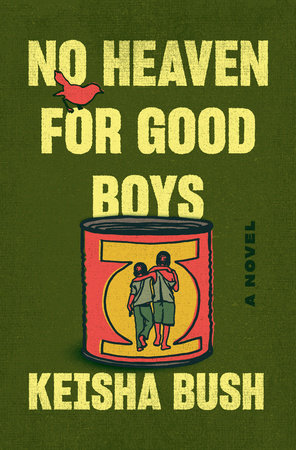
In my debut novel, No Heaven For Good Boys, the protagonist’s mother, Maimouna, loves all of her children—but when her only son, Ibrahimah, is taken from her, she spirals into a sea of hopelessness and depression. Maimouna and Ibrahimah’s journey is hard and painful, and the entire family struggles to weather the storm, but with love and perseverance, they are both able to find their way back to the path of hope and faith. Love, not hate, saves both mother and son, and offers a lesson for us all in these stricken times.
In the stories below, mothers and sons do not always prevail over the obstacles, but for most, it is love that illuminates the path to redemption. Maternal love is the elixir, of sorts, for the grief that can too often define the stories of our lives.
In this narrative, a son is trying to grow into a man, and his mother, forced to carry the burden of the strong Black woman, struggles to release the reins for fear that her son is not ready to face the harsh repercussions of an unjust world. When his mother finally loosens her tight grip, the son learns that being a Black man in America requires more pain than he anticipated.
This novel, structured as a son’s letter to his mother, pulls the reader headfirst into the complicated experience of coming of age with a broken parent. Vuong explores how generational trauma and pain—in this case, the Vietnam War—are handed down from parent to child. The experiences of his mother become his own, so much so that he cannot say where the wounds of his mother’s body end and the wounds of his own begin.
Freeman’s poems weave through time and space, heart and emotion, in a constant flow of dualities and multitudes. To cause pain and receive pain. To lose what we hold dear, only to one day be the one someone else loses. Is it one’s duty to participate in the acquisition and loss of things and people we hold most dear? Freeman grapples with this question throughout this epic journey that centers around the life and loss of his mother, reinforcing that the love of a son for his mother is boundless and complicated.
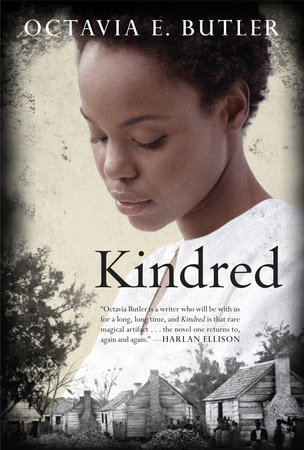
This time-travel story traces the complicated shared history of mother, son, and great-great-great-granddaughter and the tragedy that lies in wait for them all when love and possession cross boundaries into obsession.
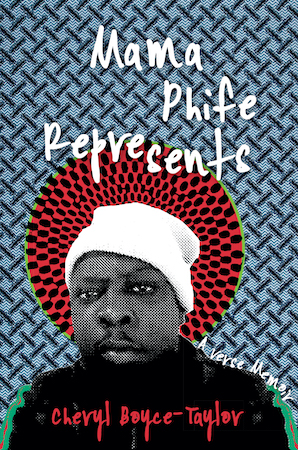
A mother grapples with the loss of her son, and reflects on motherhood. In the way Maps is an ode to Freeman’s mother, Mama Phife writes to the son she has lost. “Grief is a dangerous widow,” she states and at one point poses the question, “honey when will the sun return?” In the scarce pages of this epic poem, we come to understand and see the writer’s grief in a way that anyone who has lost a loved one can recognize but may have struggled to put into words, and allows the reader to acknowledge that grief is universal and does not play favorites.
After his mother disappears, a son searches for understanding of the life he’s supposed to make without her. Raised by a white family, he struggles to make peace with his love for his birth mother, whom he hasn’t seen in ten years, and the ideals and wants of his adoptive mother and father.
Films
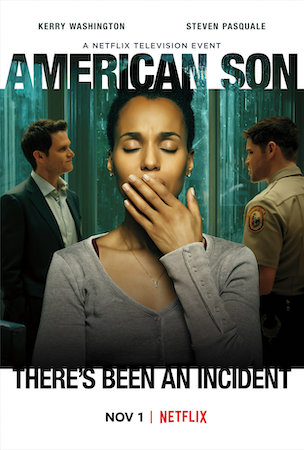
American Son, directed by Kenny Leon, screenplay written by Christopher Demos-Brown
The experience of Black motherhood in America is a very specific and solitary terror. In this visceral portrayal of a mother’s love for her Black son, we never need to meet Jamal to know how desperately his mother loves him, how complicated their love is, and the tragedy of that love in an unequal world where not all boys can be boys. Everyone is implicated in this story, as we all should be.
Mother, directed by Tatsushi Ohmorir, screenplay written by Takehiko Minato, Tatsushi Ohmori
Mothers are never without their faults and shortcomings, yet in this story Akiko’s abuse of her son Shuhei is irredeemable. There are no moments of joy or relief in this mother and son story, but their relationship does pose the question of whether or not people who are unfit to care for themselves should be allowed to have children. Akiko is not just irresponsible or erratic—she seems to be suffering from mental illness, needs to be in the care of others, with a long-term treatment plan. The tragic end of this story only solidifies how costly abusive parents are to the greater society, and why the right to procreate needs to be earned.
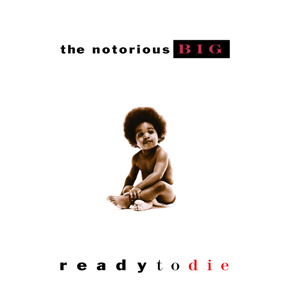
The Notorious B.I.G. weaves a tale of growing up poor, Black, and male in America, but throughout so many of these tracks is his relationship with his mother, who raised him on her own. Through the days of thugging, feelings of depression and hopefulness, and the shine of celebrity, the listener cannot deny that Biggie’s mother was a rock in his life and that he loved her dearly. His premature death felt by so many fans across the world can never compare to what his mother felt losing her child.
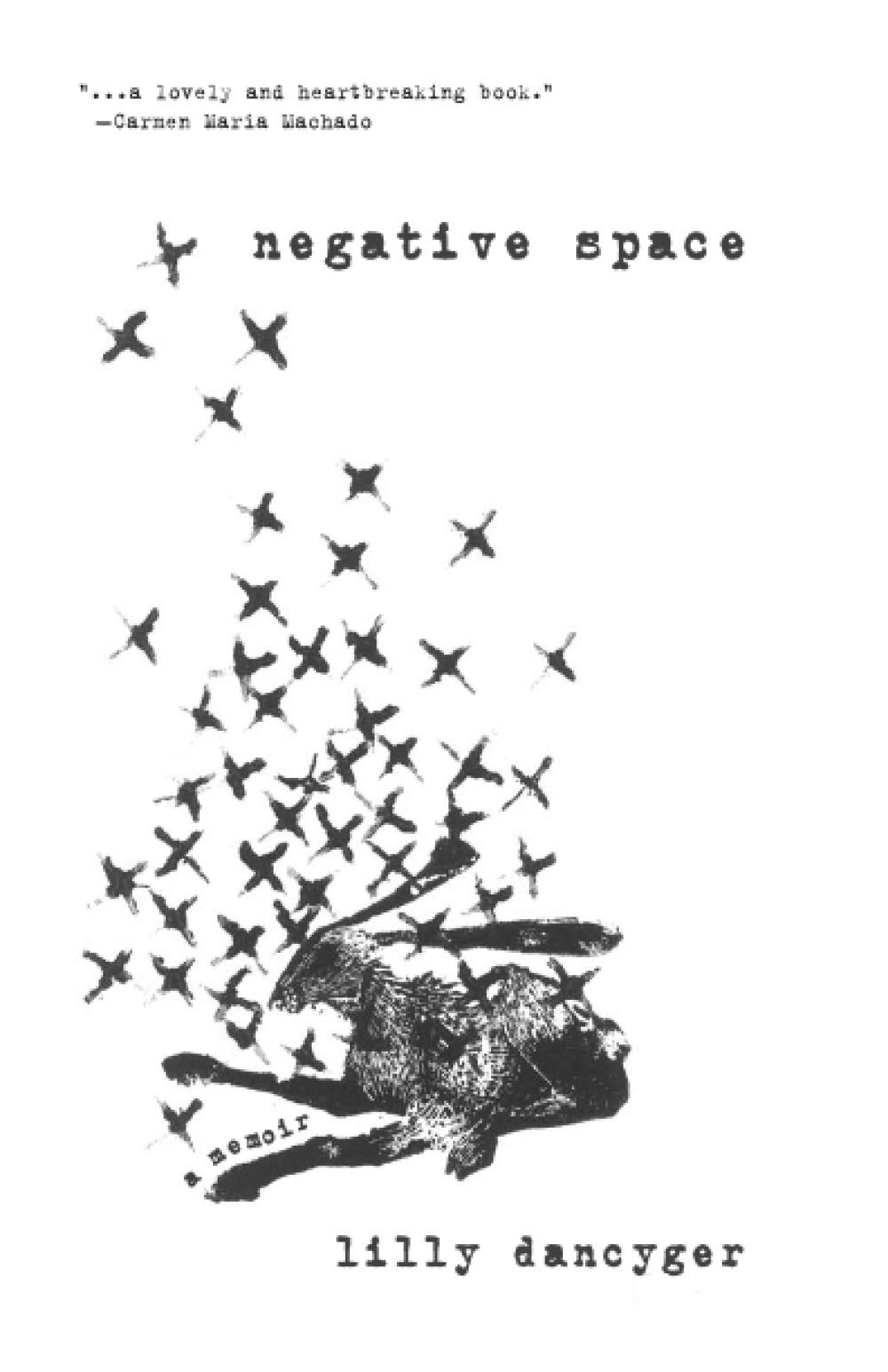
When Lilly Dancyger was twelve-years-old, her beloved father Joe died. Theirs had been a tender, playful, stalwart relationship full of intellectual banter, cunning life lessons, sand drawings awaiting the waves. And drugs. In addition to being a part of the thriving East Village art scene in the early ‘80s—creating beautiful yet troubling sculptures from roadkill, human hair, and paper-mache—Joe Schactman had a serious heroin habit. So did Dancyger’s mother, Heidi. While her father didn’t die from an overdose, his addiction left an imprint on Dancyger ’s heart and spirit. Along with her grief, unwavering adoration, and pieces of his artwork, it became her inheritance.
After spiraling into and pulling herself out of her own drug addiction, Dancyger sets out to get to know her father in ways most of us rarely are privy to. She reads through his old journals, love and hate letters between her parents; she interviews old friends of his and, most extensively, her own mom with whom she’d had an especially tumultuous relationship. Her memoir Negative Space is the result of this hard work, an exquisitely intimate unveiling of not only her father, but of her mother and herself. The language is elegant, precise, boney with wisdom and devotion. Each sentence is a finely wrought work of art unto itself. “Never be embarrassed by your ability to make just the right sentence, with all the exact words you wanted and needed,” Joe wrote in his last letter to Dancyger. And so she has.
Jane Ratcliffe: You note that in the process of writing this book you learned there is no “the truth” about your father’s life. Letters, people you interviewed and your own memories would contradict one another, so you set out to write “a truth.”
Lilly Dancyger: My background is in journalism, so I was very aware when I was interviewing people that they were only going to give me a little piece of the story. The deeper I went into it, the more I realized that no matter what version of the story I told, there was going to be somebody who disagreed with it.
It’s unavoidable that all parental figures are going to impact us and likely damage us in some way, despite their best efforts.
LD: I think it’s unavoidable that all parental figures are going to impact us in some deep way and likely damage us in some way, despite their best efforts. Even wonderful parents. In some ways, both of my parents were really wonderful and did a lot of things right. But they also did a lot of things wrong.
I don’t want to speak in sweeping gendered terms, but just from my own perspective, the mother-daughter dynamic is so fraught, and that’s what a lot of that mother wound conversation tends to be about. In my childhood, my relationship with my father was simpler; and even in my adolescence, the fact that he wasn’t here made it easy for me to just love him and not resent him and not push back against him in the way that I did with my mother. My relationship with my father kind of stayed static in this idealized, adoring version of a relationship. But that also was the impetus for this whole project in that that became insufficient. It started to feel thin and too simple. As my relationship with my mother evolved past that initial, teenage rupture, and we started to find more depth, I started to see how one-dimensional it was to hold on to just this perfect idea of my father. So I went digging into the father wound; I was looking for where that rupture was, because it was under the surface, and it was maybe more scar tissue than wound. But sometimes for scar tissue to heal, you have to first rip it open.
JR: Beautiful and true. After your father’s funeral, you go into an extended period of mourning. Could you tell us about your mourning process then and possibly now?
LD: I grew up with witchcraft and the occult around me, from my mother and her friends. And it wasn’t long after my father died, that I started getting into all that on my own and made an altar. Mourning him was the first impetus for my wanting to connect to something bigger. I never believed in God or an afterlife or anything like that. But I also wanted to feel like he was still somewhere, still existent in some way. Grappling with what that might mean was the start of some spiritual exploration for me. I had a lot of really vivid dreams about him soon after he died that felt very much like visits and made it hard for me to ignore this feeling that there was something.
JR: After you drop out of school, you wandered the streets and got high most days. You write “I wanted to get out of my body, to find the limits and see if they would finally make me feel calm.” The drugs and all-nighters didn’t provide this for you. Can you talk about your relationship with your body these days? And have you found calm?
The fact that my father wasn’t here made it easy for me to love him and not resent him. My relationship with him stayed static in this idealized, adoring version.
LD: I definitely am a much calmer and happier and more level-headed person than I was back then, for sure. I also have unexplained chronic pain, which I’ve come to understand is very likely connected to a lot of the material in this book, to unresolved emotional issues and trauma. It took me a long time to even consider myself a person who had trauma. I went to therapy and started writing and realized, okay, not everybody has these experiences. Unresolved emotional things can manifest as physical pain. So that feeling of wanting to get out of my body…I don’t have the same version of that feeling that I did then, but I do still sometimes have a fraught relationship with my body where I wish it would leave me alone and relax sometimes.
JR: When it comes to drug use, your parents set the bar high for suffering. So much so that despite your daily hankering for coke as a teen and waking “every morning with my sinuses burning and the taste of death in my mouth,” you didn’t consider yourself addicted. It can be tricky to calibrate suffering and resilience from our own perspective rather than in comparison to those who raised us. Have you found your perspective now?
LD: It takes time. It’s a weird, difficult process. I think that’s a big part of why I didn’t think of myself as a person who had trauma for so long, because I had it pretty good compared to my mother’s life. She went through a lot of things that are very obviously traumatic. It took me a while to recalibrate that. I’m realizing that there are gradients to trauma and to addiction and to resilience. I always have thought of myself as a very resilient person. But then you dig into your past and your experiences and realize that a lot of resilience is sometimes also masking things.
JR: Your father hitchhiked a lot and as a teen you longed to, as well, but knew it wasn’t safe to do alone. You write: “But I like to imagine my father’s travels, thinking that they’re in my DNA and that maybe what I felt back then wasn’t desire, but memory.” There is so much talk about intergenerational trauma these days, perhaps the same is true of longing?
LD: I always knew that I was a lot like him, but writing the book, I realized that I’m a lot like him, in even more ways. So it just made sense to me that, Oh, yeah, of course, he did this thing that I always had this intense pull towards. I don’t know how much of that is just a similarity in personality type or was his stories or his attitude that was passed down to me. Or if there was some kind of more deep-seated, ingrained whole. It makes sense to me that if trauma can imprint your DNA, other things can too. They say that your gut biome is dictated by your parents’ and even your grandparents’ diets. I think there’s so much to all of that that we just don’t really understand. And inclinations, desires, all of that. I’m sure, it’s passed down like that.
JR: It can be so hard to allow our parents to simply be people, we want them to be protectors and role models, et cetera. But in the process of writing this book, you learn some hard truths about both of them—and very much humanize them.
LD: I was able to embrace the idea of my parents as people intellectually, and able to write about it. But I still definitely feel that indignation sometimes on a human level as a daughter about both of them. It’s an ongoing endeavor to actually just allow them to be people and understand that they aren’t required to be any more perfect than anyone else just because they’re my parents. But that still is a hard idea to let go of, because there’s so much that you want your parents to do and to be for you and to be able to provide, even now. It’s one thing looking back and embracing past versions of them as people, but then also as an adult in my 30s, this is an ongoing thing happening. And I still want more from both my parents, even my father, who is not here and can’t possibly do anymore at this point.
JR: You also had to acknowledge them as sexual beings. For one thing, your mother’s naked torso appearing in some of your dad’s artwork; and then your dad’s interpretation and presentation of her body and women’s bodies in general. Plus, all that you learned about their life together. We’re back to the intimacy. What was that experience like?
LD: That was definitely one area where I found myself kind of shying away. I don’t really need to know all the details, but a lot of it is just so right out there on the surface if you look at the work. And, also, my mother was a stripper for a lot of my childhood. So sexuality was not taboo or hidden. She was a stripper and a lot of her friends were strippers, and they were all my friends. My godmother was somebody who she met at a club. I remember she explained to me at a very young age, what she did for a living and she just said, well, women’s bodies are so amazing that sometimes men will pay money just to look at them. I was like, okay, yeah, makes sense.
JR: You write: “I’d been thinking of truth as something stronger than memory, something that could—and even should—erase what I remembered if they didn’t match up.” Can you elaborate on this?
LD: That was a part of my grappling with truth as you mentioned in the beginning—is there a true version of this story? There were a couple of points where my memory didn’t match up with what people were telling me in very clear irreconcilable ways. I kept waiting for this shattering moment, or this shift, where this whole understanding of my father would change, but it wasn’t like that. It was layering and deepening and broadening but the memories I had are still there, unchanged, they’ve just been added to. I’m realizing that was one of the big aha moments of this process. At first, I felt like I was failing. I felt like I had denial mechanisms I had to fight through, that I was holding on to something and I had to surrender myself to the story. But I realized that multiple things can be true at once: He could be sexually aggressive with his wife and stealing from his friends and doing all of these unsavory things and still be just as wonderful as I remember him. That was a big relief.
Clever, irreverent, and with a deliciously anachronistic soundtrack, Dickinson, the Apple TV+ comedy about the life of poet Emily Dickinson (played by Hailee Steinfeld), dropped its second season in early 2021. When the show debuted in 2019, no one could have predicted how viscerally audiences, now a year into wearing nap dresses and baking sourdough bread, would eventually identify with Emily’s cloistered life in nineteenth century Amherst, Massachusetts. But as much as the show supplies coziness, comfort, and humor to a pandemic-weary audience, it also does something far more daring.
Season 2 of Dickinson opens with the following note:
The records of Emily Dickinson’s life up to and including Sue and Austin’s marriage are full and factual compared with what lies ahead. Over the next few years, just a handful of letters survive. The truth, perhaps, is hidden in her poems.
With that, the season plunges into what showrunner Alena Smith calls “experiments with surrealism.” As a graduate student of history at Yale University, I’ve been trained to probe for evidence, contextualize facts, and avoid ambiguity. But something about Dickinson’s methodology—its audacious embrace of historical fuzziness—is appealing. So what if we have limited archival records of Emily’s life? Can’t we, as Dickinson suggests, seek truth outside the traditional historical record?
Women’s history, and especially the history of women of color and LGBTQ women, is frequently based on scant and nontraditional archival evidence.
Women’s history is notoriously absent from high school textbooks and common cultural knowledge. I once performed an experiment in an Ivy League classroom in which I asked about 20 undergrads to name five American women from before the year 1900, excluding First Ladies. No one even came close. In high school, my AP English class took a three-hour bus ride to traipse through the Massachusetts homesteads of Henry David Thoreau and Ralph Waldo Emerson, bypassing the nearby homes (and ignoring the literature) of Louisa May Alcott and Emily Dickinson. For all of these reasons, when I started graduate school I decided to focus my research on uncovering women’s stories. But it isn’t an easy task. Women’s history, and especially the history of women of color and LGBTQ women, is frequently based on scant and nontraditional archival evidence. As such, it is often looked down upon by traditionalists in the academy.
For centuries, white men almost exclusively wrote, read, and were the subjects of history. Leopold von Ranke, the celebrated father of the modern historical profession, used words like “penetrate,” “master,” “conquer,” and “dominate,” to describe the historian’s relationship to archives—mirroring in his language the patriarchal values espoused in his work. Von Ranke died in May 1886 (coincidentally, the same month and year as Emily Dickinson), but not before defining history as objective, scientific, and, implicitly, sexist. As women’s and gender historian Bonnie G. Smith writes, “the language of science, just as historians began to make copious use of it, was already the language of gender and its hierarchies.”
Up until the mid-20th century, any woman’s contribution to the historical profession was written off as amateurish. But women couldn’t professionalize even if they wanted to.
Up until the mid-20th century, any woman’s contribution to the historical profession—beyond the invisible but invaluable hand of a wife or daughter organizing, transcribing, and even researching on behalf of a male relative—was written off as amateurish. But women couldn’t professionalize even if they wanted to. Throughout the 19th century, women were excluded from most major universities, as Dickinson notes in Season 1 when Emily and Sue (Ella Hunt) sneak into an Amherst College lecture dressed as men. Unsurprisingly, the writers and subjects of history were one and the same. Alexis Coe, the first woman biographer of George Washington in four decades, dubbed these navel-gazing dudes the “Thigh Men of Dad History.” But for a few conspicuous outliers (think: Joan of Arc, Marie Antoinette), women were widely overlooked until the second wave feminist movement in the 1970s. And even then, male historians derided women’s history as emotional, partisan, and biased.
At the Seneca Falls Convention in 1848—Emily Dickinson would have been 17 years old at the time—activists like Elizabeth Cady Stanton and Lucretia Mott protested the exclusion of women from public life. In the Declaration of Sentiments, signed in Seneca Falls by 19th-century celebrities like Frederick Douglass, Stanton explained that men “made [women], if married, in the eye of the law, civilly dead.” Stanton and others would take it upon themselves to write a six-volume, 5,700-page History of Woman Suffrage, knowing full well that without such a voluminous record, male historians would undoubtedly ignore their movement. As Stanton argued throughout the 19th century, the American legal system enshrined the patriarchy. A woman’s identity was literally subsumed by that of her husband upon her marriage. She had no right to property, not “even to the wages she earn[ed],” and of course, she was deprived of the right to vote.
The patriarchal power structures upon which our social and political institutions were constructed allowed male historians to justify their omission of women’s stories. Citing a lack of traditional evidence, these men noted that women were absent from legal documents, property deeds, and voting rosters—the very types of archival sources that document and thus legitimize men’s history. Indeed, since women were excluded from so much of public life, their words and lives could only be preserved in letters and diaries. Far too many of these valuable sources have been lost to time, if they existed at all. For all but the most elite women, like Stanton and Emily Dickinson, literacy itself was a privilege. Emily, as the show is quick to acknowledge, was a wealthy white woman. One wonders whether the show would exist at all if it was instead about Phillis Wheatley, an enslaved Black poet.
For women of color, the fight for legal (and historical) recognition of their humanity was even more fraught. In 1913, when thousands of suffragists marched on Washington to demand the right to vote, anti-lynching activist Ida B. Wells refused to comply with Southern suffragists’ segregationist demands. Even among suffragists—women who fought for equality of the sexes—racial hierarchies remained entrenched. Rather than marching in the “colored” section at the back of the procession, Wells placed herself in the white delegation up front. A photograph of her integrated section made the front page of several newspapers. Wells successfully inserted herself, and her fellow Black women in general, into the political narrative and the historical record. Her boldness is a reminder that women’s, and in particular women of color’s, erasure in history was never simply due to a dearth of archival sources. Rather, these absences exist because white male historians defined the archives in contrast to, and with the aim of excluding, these groups.
It has always been up to women ourselves to make sure our stories are not forgotten. And Dickinson knows this; it’s why the show proceeds on the basis of just a few surviving letters, why it embraces speculation and the speculative, sexuality and seances. Combining context and conjecture, it reveals the realities of racial and gender oppression while delighting in taboo subjects like death and desire. Indeed, it is through embracing conjecture that the show, counterintuitively, achieves reality. Dickinson is a revolutionary reimagining of what we as writers, artists, and consumers can do with women’s history. The show conjures a rich and textured life in 19th century New England, portraying tensions between progress (railroads!) and tradition (county fairs!). We gain insight into financial realities for women, such as when Louisa May Alcott (Zosia Mamet) gives Emily publishing advice: “Bawdy is good for commercial,” she instructs in a Season 1 guest appearance. “That shit sells.” But most importantly, Alcott warns, “never get married.”
It has always been up to women ourselves to make sure our stories are not forgotten.
Today we recognize Emily Dickinson as one of the best American poets, but few know that she never published in her lifetime. One of Dickinson’s most crucial plot elements is unraveling why an ambitious and talented woman decided not to publish her work. At first, her father forbids it. But later, when the editor of TheSpringfield Republican gets his hands on her poetry, Emily realizes that she does not want fame. At the end of Season 2, Emily fights to get her poems back from the editor, and thus retain her anonymity. This plotline stares into the archival gaps—the fact that Emily’s poems were never published—and says, so what? There’s even more of a story here: the story of Emily Dickinson and the mystery of why she did not publish her work. Indeed, the show uses Emily’s poem, “I am nobody! Who are you?” as a launch point to explore this very issue.
Another unanswered question leads to Dickinson’s exploration of sexuality. Counter to the conventions of the era, Emily never married. In its attempt to find out why, Dickinson reads between the lines of Emily’s poetry. There, in poems like “Wild nights—Wild nights!” and “One Sister have I in our house,” Emily’s relationship with her best friend/sister-in-law comes to light. An affair with Sue was never going to emerge explicitly in the archives. The word homosexual did not even exist in English until 1892, years after Emily’s death. But just because the terminology did not exist in the mid-1900s does not mean that people weren’t queer. Emily wrote:
I chose from this single star From out the wide night’s numbers— Sue—forevermore!
If we don’t dare to consider that what is unsaid might actually have been unsayable, we aren’t writing good history; we are perpetuating erasures.
Beyond Emily and Sue’s relationship, Dickinson combats Victorian notions of female frigidity through the other women in the Dickinson household. Emily’s sister, Lavinia (Anna Baryshnikov), experiments with desire in a way that would have been taboo at the time, and as such, would not be visible in traditional archives. From sketching her own nudes to her hilarious attempt at a seductive spider dance—inspired by the 19th century dancer Lola Montez—Lavinia’s playful and experimental sexuality feels completely familiar and inevitable to modern audiences. Meanwhile, Mrs. Dickinson (Jane Krakowski) rhapsodizes about the pleasures of domestic life. Ever the perfect housewife, Emily’s mom claims to love hosting tea parties and cleaning so much that she resists hiring a maid. Yet by Season 2, she expresses frequent frustration with the emptiness of her life—from her husband’s lacking libido to her own limited agency. Eventually, she fantasizes about a dead sea captain, based on a grainy lithograph in the local newspaper, in order to find some fulfillment. Though middle-aged women’s sexual longings are rarely apparent in archival sources, the series brings audiences closer to historical accuracy than a footnote ever could by imagining Mrs. Dickinson’s desires.
So much of our cultural memory is not contained in textbooks; it’s in the films and shows we watch, the musicals we sing along to, the stories we read.
So much of our cultural memory is not contained in textbooks; it’s in the films and shows we watch, the musicals we sing along to, the stories we read. Although the wild popularity of recent productions like Bridgerton and Hamilton reveal an appetite for popular history, they both have limitations. Bridgerton is a work of pure fiction, and Hamilton’s subjects, the Founding Fathers, are among the most highly archived figures in U.S. history. (Meanwhile, Hamilton definitely does not pass the Bechdel Test, cartoonist Alison Bechdel’s 1985 standard that stories must include at least two women who talk to each other about something other than a man.) As creators and consumers of popular history, we should use the Dickinson model to bring more intersectional feminist stories to the forefront of cultural conversations. We need a film about Black women suffragists in Chicago’s Alpha Suffrage Club; we should make a musical about Jewish labor organizer Rose Schneiderman. How about a TV series about Mabel Ping-Hua Lee, a Chinese-American women’s rights activist at the turn of the 20th century? Or perhaps a biopic about Christine Jorgensen, one of the first openly-transgender American women?
Instead of omitting stories because of a lack of traditional evidence, we should put those stories front and center, acknowledge their ambiguities, and decide that they are important enough to tell anyway. Dickinson proves that this kind of reimagination is possible—the series is as much an ode to overlooked women in history as it is an anthem for ambitious creators today. Leopold Von Ranke and the dudes of “Dad History” must no longer define the stories we consume. From Seneca Falls to the suffrage movement—and the myriad moments before and since that rarely receive mainstream attention—we can, and should, use imagination to fill in archival gaps and bring these essential stories to life.
Growing up, my parents never told me anything about their immigration story to the United States. I knew we were Vietnamese, that there was a war and then a great exodus. But the hard details were left silent. Trying to figure out what happened from other sources was likewise difficult given the lack of written stories by Vietnamese people. All my searches at the library brought up only war memoirs by American veterans or thick history books written by white men. And then there are the Vietnam War movies centered on the American experience, where the Vietnamese stayed voiceless.
It wasn’t until college that I encountered a book by a Vietnamese American writer. From there, I tried to read every book by a Vietnamese American I could find, learning that unspoken history along the way, often waiting years until another book was published. Reading and writing about Vietnamese diasporic literature for the last eight years as a contributor and now editor of diaCRITICS, I can confidently say the landscape of publishing has changed dramatically. Indeed, it almost feels as if we are in a Vietnamese diasporic literary boom, that our voices and stories are finally being heard, something I could have only dreamt of as a young Vietnamese American.
So it’s particularly delightful to have my debut novel Things We Lost to the Water published at this time.Things We Lost to the Water follows the experiences of a family of refugees who settle in New Orleans after the Vietnam War. There, they learn to make a new home while mourning the disappearance of an old one. It’s an exploration of immigrant lives and the various ways the past can haunt us. But more than this, I hope the book will remind people that Vietnamese Americans—and more generally Asian Americans—are part of the American South, its story, and its history. But this book wouldn’t have been possible without the growing canon of Vietnamese American writers telling stories that defy expectations of what it means to be Vietnamese American.
Here’s are some of the books I think are essential to understanding not only the Vietnamese American experience, but also Vietnamese American literature, its diversity and complexity.
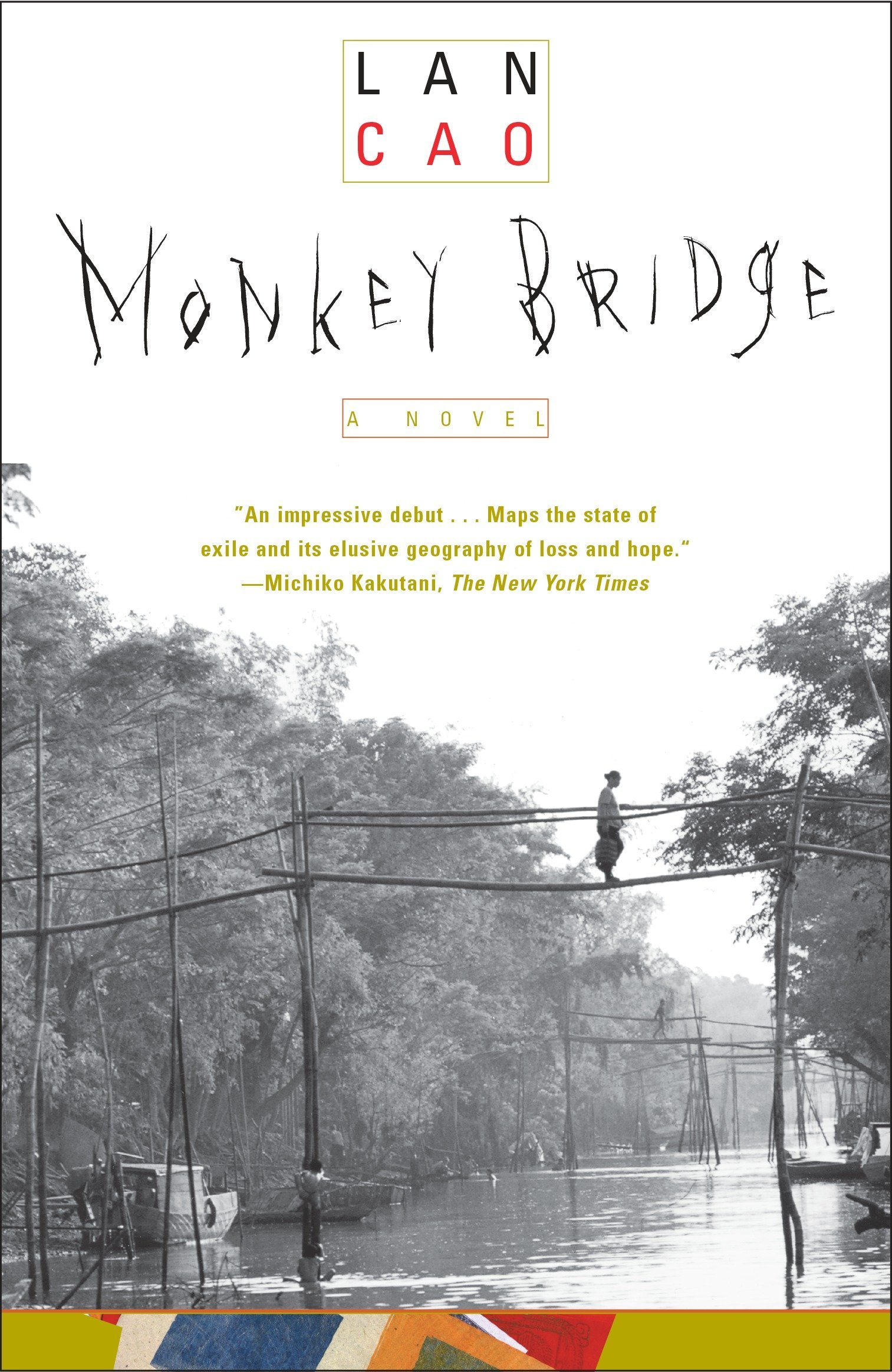
Monkey Bridge follows the dual narratives of Mai, a child when she leaves Vietnam as the War ends, and her mother Thanh, through letters addressed to her daughter. Also central to the story is Thanh’s father Baba Quan, a mysterious figure whose secrets threaten to unravel everything Mai thinks she knows about the Vietnam War and her family’s role in it. The titular monkey bridge is a type of passway made of thin bamboo used to cross streams. Crossing it takes balance and bravery. Metaphorically, the monkey bridge is the path that Mai walks as she comes to learn more about the truth of her family’s history, on the cusp of obliterating everything she’s ever known.
Truong’s debut novel introduces readers to Binh, a gay Vietnamese chef in Paris, serving Gertrude Stein and her companion Alice B. Toklas. Through Binh’s eyes, we see Stein’s private life and her literary salons in addition to his past in Vietnam, how he came to be in exile, and his current life as a nearly invisible servant. The book touches on big themes of colonialism and power but also identity and the search for love. In enthralling prose, Truong shows us that the history of the Vietnamese diaspora doesn’t start at the War. It goes further back and that history has a richness worth exploring.
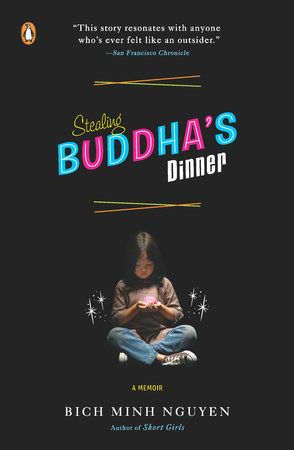
Using food as its compass, Stealing Buddha’s Dinner navigates Nguyen’s alimentary desires as a young refugee. Nguyen grows up with Vietnamese staples such as chả giò, bánh xèo, and gỏi cuốn, but in very white suburbia she longs for Pringles, Toll House Cookies, and 7UP. Food becomes a way to fit in, which is what the young Nguyen wants desperately. More than a coming of age story, Nguyen’s memoiris a thoughtful exploration and deconstruction of American identity and dreams. It also shows a thoroughly modern, blended American family that is Vietnamese, Mexican, and Midwestern.
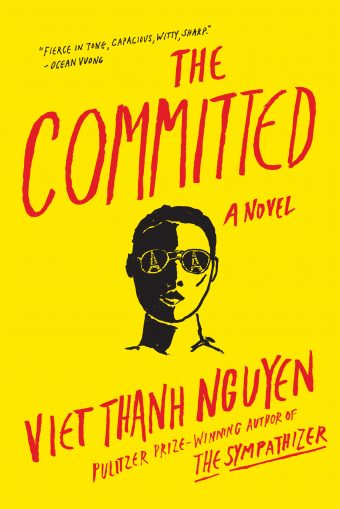
Told as a flashback in a confession, Nguyen’s Pulitzer Prize-winning novel The Sympathizer is, on one hand, a refugee story of an unnamed narrator who leaves Saigon during its fall and settles in Los Angeles. But things quickly get wonderfully weird. There’s the fact the narrator is a spy for the Communists; an Apocalypse Now-esque film shoot that goes wrong; and an attempt by exiled troops to return and overthrow the Communist government (to say nothing of the infamous squid scene!). All the while, the narrator’s sympathies—for his communist brethren as well as his new American ideals—hangs in the balance. The Sympathizer is a bold book of big ideas, but it’s also a spy novel and a rollicking metafiction. And though it doesn’t attempt to be realism in any sense, it gets to the heart of the complexities and politics of Vietnamese American identity.
Using prose, poetry, photographs, and songs, We Are Meant to be a Gentle explores creation myths, word etymology, and historical documents in the author’s attempt to find where she stands in the story of the Vietnamese diaspora as the daughter of a South Vietnamese journalist with a Danish stepfather, growing up in the Sierra Nevada with a biological father that stayed behind in Vietnam. This is an interrogation of the language we use to describe our experiences and an act of resistance against any neat idea of a singular Vietnamese refugee narrative.
To speak of the Vietnamese American experience is to, at some point, remember the violence that led many away from their country of birth. The title of Ocean Vuong’s debut, Night Sky with Exit Wounds, alludes perfectly to that. Vuong writes of that violence in the titles of some of his poems—“Aubade with Burning City,” “Deto(nation),” “Self-Portrait as Exit Wounds.” Still, Vuong is cognizant of the tenderness that is distinctly Vietnamese and queer. This powerful collection deals with the inheritance Vietnamese Americans are given as well as the love we are handed over to nurture. And through that—a way towards healing.
There is always that gap of experience between parents and their children, but it seems larger for families who have gone through historic trauma. Thi Bui fills that gap in the graphic memoir The Best We Could Do. Often reticent about their own experience, Bui’s parents hardly ever opened up about what happened. But the birth of her son gives the author and illustrator the impetus to explore their journeys—from Vietnam to the US and through parenthood. Using oral history style interviews, Bui illustrates the pain they were subjected to and the sacrifices they made—from French occupation to the aftermath of the War. Revelatory and heartbreaking, TheBest We Could Do felt like the book I was waiting for all my life.
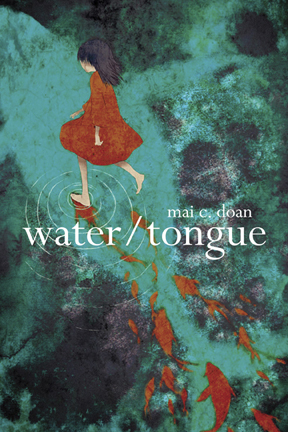
Moved by the suicide of their great-grandmother, doan charts the trajectory of intergenerational trauma that goes back as far as Vietnam’s ancient history (the Trung Sisters who drown themselves after defeat) and the gendered impacts of occupation, colonialism, patriarchy, and capitalism. Significantly, water/tongue is about bodies—particularly the femme Vietnamese diasporic body—and not just when it suffers at the hands of oppression, but how it survives. Spare, daring, and haunting, doan takes a radical look at history and systems of oppression and asks readers to reimagine it as something alive and living on our bodies.
If I Had Two Lives begins in 1997, long after the War. The daughter of a prominent activist, the unnamed narrator is sent to live in the United States with relatives where she lives a lonely existence until she meets a mysterious and seductive woman and her husband. The woman reminds the narrator of a childhood friend and soon their lives become inextricably intertwined. Though it touches on many of the themes seen in other Vietnamese American literature—such as Americans’ general misconception of Vietnam and Vietnamese people—If I Had Two Lives opens up the possibility of postwar Vietnamese American narratives and lives. We are, after all, not a war.
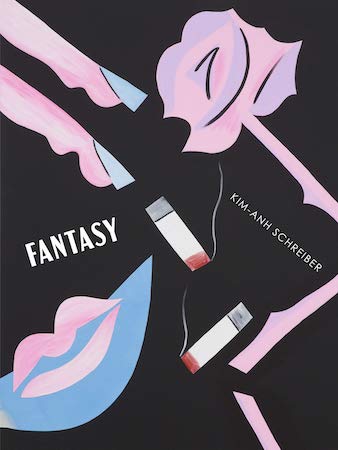
If Rosewood signals a new frontier of Vietnamese American narratives, Kim-Anh Schreiber and her book Fantasy imagines new ways of telling these stories. Part film criticism, part narrative prose, and part unstageable play, Fantasy focuses on a biracial Vietnamese German American woman’s distant relationship with her Vietnamese mother, who abandons her after coming to the States. The result is a haunting of the narrator’s life by the figurative ghosts of her mother and her Vietnamese heritage. Which makes the essay about Nobuhiko Obayashi’s horror film House that takes up a third of the book more poignant, a frame through which the narrator can view her life. Schreiber represents a possible future for Vietnamese American literature—one that is rooted in a shared diasporic experience yet unbounded by convention. In doing so, Schreiber tells a unique story that defies any expectation of what it means to be Vietnamese American.
The costume maker could turn you into anything—a bird cage, a piano, a plant—but she made no guarantees that you could return to the way you were before the transformation, and she wasn’t gentle. There was the quilting incident, for example, when the client was so affected by the flattening that she’d run out of the costume maker’s apartment trailing a blanket of blue where her right arm should’ve been. And there had been more than one missing person, when the transformation had gone so well that there could be no going back.
But the costume maker was good. The best. Once the costume had been made, there was no way to know which common household objects were wood and metal and glass, and which were neatly-disguised humans keeping watch over the house and its inhabitants. Yes, the costume maker could turn you into anything, but when a woman came in asking to be another human, her brother, the costume maker drew the line.
“I don’t do humans,” the costume maker said. They were sitting across from each other in the costume maker’s Boston apartment, the walls of her home office bordered with brightly colored fabrics, springs, cedar planks, yarn, glass. Noise from the city street below drifted through the open window, the summer day still morning-cool.
“That’s just it,” the woman said. “Hen isn’t a human. He’s a ghost.”
The costume maker was intrigued. To make a ghost, she had to make death and then unmake it. But why? There were plenty of ways to haunt as a windowpane or a radiator.
The woman pinched the coarse brown hairs of her eyebrow and pulled. “My dad is dying,” she said. “I was washing the dishes last night, and I thought: I have to tell Hen. I asked him to visit my dad in a dream or something, because it would mean a lot to him to see Hen again now, at the end. But then I got worried my dad would take that as an invitation to cross over, so I told Hen, keep him company, but don’t let him die. And that’s when I thought of you. If you could make me Hen, then I could tell Dad to keep living, and maybe then he would listen.”
The costume maker drank her coffee from a small clear glass and watched the man in the brownstone opposite hers lean out the window to remind his son to fill up the tank after work; you know how your mother hates when you bring it back empty. The woman bit her nail, tearing a whole half-moon free.
To make a ghost, the costume maker didn’t just have to make and unmake death. She had to cut the singular shape of Hen and fill it with everything he had been. Who he had loved, and how. How he moved when he danced and what he did with his hands when he lied. What words did he mispronounce? How did he keep his hair?
“This is going to take a long time,” the costume maker said, thinking of all the threads spiraling out from the web that is a body, all that silk scaffolding between you now and you yesterday and you the day before and everyone else, too, along the way.
“My dad is dying,” the woman reminded her, pulling a sliver of torn nail from her tongue.
The costume maker finished her coffee. The man in the brownstone opposite hers watered a jade plant that must have been older, even, than the costume maker, and the excess water fell to the street like a small and gentle storm. “Tell me everything,” the costume maker said. “Leave nothing out.”
The woman wore a smock dress and chewed the disks of ice that had collected at the bottom of her cup. She wore high-waisted jeans and ate a coconut macaroon. She wore a corduroy skirt and licked pistachio salt from her thumb. It rained some days and sunned others, and when the costume maker was finished, the man who walked across her lamp-lit living room was just as real as the woman who had folded her linen blouse and draped it over the back of the costume maker’s chair not so long before.
“Is it believable?” Hen asked, his voice deeper than the woman’s had been. His cheeks softer.
The costume maker leaned against the open window, letting the night-air cool her sweat, her glass half-full of whiskey. She had used everything for this. Her best materials, her best tricks. She had transformed the woman into death and pulled her back as someone else, and she knew then that there would be no going back. “You tell me,” she said.
Hen considered his hands, his elbows, his feet. He cleared his voice and pressed a palm to his heart. “Good enough,” he said, and walked, duck-footed, out the door.
The costume maker considered the spent materials strewn about her apartment. The woman’s handbag still hung from the chair, her clothes, her shoes, everything just as she’d left it, and the costume maker knew the woman would not come back for them. She would spend the rest of her days as Hen, with his bad teeth and sensitive stomach and penchant for selfish women. The costume maker didn’t ask if it was worth it. She picked up the woman’s linen blouse and pulled it on over her own skin.
Across town, around many corners, Hen walked up three stone steps and into his parents’ apartment, where his mother dropped the electric tea kettle on the kitchen floor to cover her mouth from speaking her dead son’s name. Still it came out—“Hen”—caught in the cup of her hand.
Hen grinned, sorry for having startled her, but proud, too, for having found his way back after all this time. He pat-patted his heart, as though to say here it is, it’s here, I’ve kept it. His mom shook her head. Hen pointed down the hall to where his dad was dying, asking permission to go keep him company, and his mom canted her head like she was listening for the answer to a question she didn’t dare to ask.
The narrow hall was lined with photographs: Mom and Dad dancing at a wedding by the sea. Hen walking down a cobblestone street, his mouth hooked open in speech. Soph on the swings, her body pitched forward through the chains, her toothy smile half erased by the sun. In the picture, she is at the forward-most point of the pendulum, the farthest she’ll ever go, right before the backwards fall.
Soph.
In the room at the end of the hall, Hen’s dad coughs. He is close to the end. Hen, having been to the end, can hear it. “I’m here,” Hen says, and he takes his sister’s photo off the wall.
April 30, 1975—the day Americans helicoptered out of Saigon and Communist forces rolled in their tanks—goes by many names: the Liberation, the Reunification, the Fall. In the U.S., the day marked the end of two controversial decades of guerrilla warfare and the start of a reckoning for veterans who returned home with what would soon be named PTSD. In Vietnam, it launched the flight of hundreds of thousands of refugees on flimsy fishing boats, the beginning of skirmishes with Cambodia that would climax in the invasion and occupation of Vietnam’s neighbor, and the first attempts to rebuild a nation that even today bears the legacy of Agent Orange.
For people who exist thanks to the small successes of those fishing boats (between 10 and 70 percent of refugees died at sea), the day is suffused with nostalgia for an expired yellow-striped flag and the eerily steady voice of Khánh Ly, who sings, much like Fairuz, of a beloved city left behind. Khánh Ly recorded “Em Còn Nhớ Hay Em Đã Quên” (“Do You Remember, or Have You Forgotten?”) two decades after Communist victors renamed Saigon as Ho Chi Minh City. Since then her lament has been covered by womenandmen alike; there are multiple karaoke videos for those who wish to warble their own yearning. Such music can be heard at gatherings of Việt Kiều, or Overseas Vietnamese, in Sydney and San Jose, Montreal and Berlin, even though the city they dream of has since been swallowed by a hypercapitalism that sprouts skyscrapers from dust.
This year is rich in new books from those who bear the legacies of that day: who can hear, even in pain, what Khánh Ly calls “the language of poetry.” These are my picks from the diverse writers shaped by the conflict in Vietnam.
Nguyen dedicates her latest poetry collection to her mother, who raised Nguyen after her American father’s desertion. Nguyen calls her “Diệp / Linda,” a nod to the bifurcated identities of people who depart Vietnam for America. In a black-and-white photo, Diệp slings a leg jauntily over a motorbike’s handles. The poems circle around Diệp’s life as a stunt motorcyclist in a Vietnamese women-only circus and the other dangers she skirts, such as the napalm developed at Harvard and manufactured by Dow Chemical that rains in:
8 million tons of bombs in Vietnam Burns at 1,500–2,200°F (1/5th as hot as the surface of the sun) Very sticky stable also relatively cheap
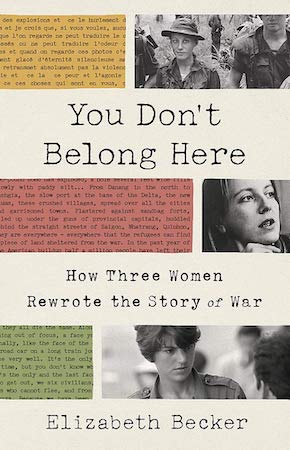
Becker, who began her journalistic career covering Pol Pot’s rise to power in Cambodia, turns her focus to her female colleagues in Vietnam, plucking out the stories of an American, an Australian, and a French journalist. Becker draws on letters and interviews to tell the stories of women plunged into a mostly male world, where they encountered Western sexism in equal or greater measure than that which they’d already known in their home countries. Becker points to her own flight from sexist academia and into a war zone:
Soft spoken and to the point, she asked, Why had I crossed the ocean to cover a war?
The short answer was a nightmare I was all too keen to leave behind. My master’s adviser had rejected my thesis on the Bangladesh War of Independence after I refused to sleep with him. He said the one was not related to the other.
One of the greatest living makers of the persona poem, Komunyakaa began writing as a journalist embedded with American forces in Vietnam. His forthcoming compendium of the past two decades flips between war and sex, showing them to be two opposite expressions of domination. They are also linked to each other, as the arrival of GIs in Vietnam, like that of many colonial or neocolonial forces in other nations, spurs the rise of local sex work. An excerpt from the sonnet sequence “Love in the Time of War” reveals the thin line between violence and love:
Bull’s-eye. Maggie’s drawers. Little Boy. Fat Man. Circle in the eye. Bayonet. Skull & Bone. Them. Body count. Thou
& I. Us. Honey. Darling. Sweetheart, was I talking war in my sleep again? Come closer. Yes, place your head against my chest.
Komunyakaa’s home state of Louisiana is today the site of a thriving Vietnamese diasporic community, mainly settled in the humid heat of New Orleans that recalls the climate they left behind. Debut novelist Nguyen follows one of these families as they cope with the memory of people and places they may never see again. That sense of loss is compounded with the arrival of Hurricane Katrina. In the nonfictional world, one of the symbols of Katrina’s destruction was the shotgun house, a narrow ranch in which each room doubles as a hallway to the next; they clustered in areas most vulnerable to flooding, and, before the storm, were primarily occupied by the city’s poorest residents. Nguyen’s family moves into one such place:
The wife told Hương it was called a “shotgun house.” Ngôi nhà súng, she clarified. “See?” she said. She placed the suitcase down and mimed the shape of a gun with one hand. With her other, she held her wrist. Closing one eye, she looked through an invisible scope and the appearance of intense concentration fell onto her face. For a few seconds, she stood silently, so focused on something in the distance that Hương looked toward where the wife stared, too. Then “Psssh!”—the imitated sound of gunfire.
The Truffle Eye by Vaan Nguyen, translated by Adriana X. Jacobs
The cover of this bilingual poetry collection is a shifting blue-green, appropriate for a language in which xanh can mean either color. But The Truffle Eye is in fact translated from Hebrew, the language of a poet born to two of the 360 Vietnamese refugees to enter Israel between 1977 and 1979. On facing pages, the poems grow right-left in Hebrew and left-right in English, pressing out from an unwritten and unreachable Vietnamese spine. In her introduction, Jacobs (whom I know and who gifted me the book), writes of Nguyen:
Her connection to this history is understandably complicated. In her words, “Whenever a humanitarian crisis pops up, I’m approached by various media outlets that want to interview me about the refugee experience, but the only thing I can do is read poetry at one of Maayan’s flash readings, because I am a poet who does not feel like a refugee.” Although her parents spoke Vietnamese at home, Nguyen feels most at home in her native Hebrew.
So died in December, a half-year before the release of his debut fiction, a collection of short stories that illuminates the lives of Cambodians who escaped the Khmer Rouge, as well as their descendants in the United States. The sadness with which So’s death was mourned is contrasted by the humor of his writing. Afterparties’ opening story, “Three Women of Chuck’s Donuts,” circles around fried dough and Khmer identity:
Being Khmer, as far as Tevy can tell, can’t be reduced to the brown skin, black hair, and prominent cheekbones that she shares with her mother and sister. Khmer-ness can manifest as anything, from the color of your cuticles to the particular way your butt goes numb when you sit in a chair too long, and, even so, Tevy has recognized nothing she has ever done as being notably Khmer.
Nguyen’s sequel toThe Sympathizer races through a thriller plot while administering doses of postcolonial theory (discussed in my interview with the author for this publication). But its jewel is its prologue, a lyric account of fleeing Vietnam that is subtitled We and narrated from this plural point of view, demonstrating how the terrifying act of migration renders differences in class, religion, and other vectors temporarily insignificant: all are bound to the same odds of survival.
We were the unwanted, the unneeded, and the unseen, invisible to all but ourselves. Less than nothing, we also saw nothing as we crouched blindly in the unlit belly of our ark, 150 of us sweating in a space not meant for us mammals but for the fish of the sea. With the waves driving us from side to side, we spoke in our native tongues. For some, this meant prayer; for others, curses. When a change in the motion of the waves shuttled our vessel more forcefully, one of the few sailors among us whispered, We’re on the ocean now. After hours winding through river, estuary, and canal, we had departed our motherland.
In our series “Can Writing Be Taught?” we partner with Catapult to ask their course instructors all our burning questions about the process of teaching writing. This time we’re talking to Ingrid Rojas Contreras, who will be leading a year-long novel generator—apply with the first chapter of your novel in progress, and leave with a completed draft (or the skills to get to one), plus an understanding of what’s ahead of you in the publishing process. Rojas Contreras talked to us about reading aloud, eating gummy bears, being the only writer of color in the workshop, and why audience is political.
What’s the best thing you’ve ever gotten out of a writing class or workshop as a student?
I did my MFA at Columbia College in Chicago, back when the program was using oral storytelling as a model to teach creative writing. Our in-class pre-writing involved telling a scene to the workshop circle aloud. It sounds terrifying, and it was. But I learned so much about tension and traction and keeping the reader’s attention in that way. It’s very obvious when you’re telling a story to someone and you’ve failed to frame it the right way! (I should say I was also working on experimental stuff and more traditional-narrative forms, and the process worked for both.) As someone who didn’t grow up reading but did grow up around family storytelling circles, I appreciated this intersectional entry point into writing.
What’s the worst thing you’ve ever gotten out of a writing class or workshop as a student?
This was both a good and a bad thing—I was often one of two writers of color in a workshop. I got a lot of feedback that was consciously or unconsciously asking me to tailor my stories to the white gaze. It really sent me for a loop. For a while, I tried to meet those insatiable requests. Then I realized the politics of it, and the experience taught me to stay the course on my own vision and inclinations. I began to think deeply about who I was writing a particular piece to.
What is the lesson or piece of writing advice you return to most as an instructor?
I think it has to do with the above! I think audience is the first political decision you can make as a writer. The intended audience for a piece and the author’s vision should be what guides the writing and crafting of a piece. I do many exercises to help writers get clear on this.
Does everyone “have a novel in them”?
I believe that.
Would you ever encourage a student to give up writing? Under what circumstances?
If a writer’s heart is no longer in it, that’s the only circumstance I can think of! It’s also possible to take a break from writing, and give up on it momentarily. Nothing has to be forever. Fluidity is important to any creative process.
What’s more valuable in a workshop, praise or criticism?
Neither! The most valuable thing in my opinion is helping a writer arrive to an artistic statement of purpose which then implies stylistic, structural, and poetic decisions. A workshop’s effort in critiquing a piece should be about echoing back to the writer the parts of their work that are aligning with their visions, which are misaligned, and helping to peruse what the state of a piece might imply to the writing/re-framing/editing of a work.
Should students write with publication in mind? Why or why not?
I would say in a first draft, it’s best to put thoughts of publication off. In putting words on the page for the first time, chasing after a story should be an act of discovery. In a second draft, when the writing can become more conscious, that’s when I bring thoughts of publication in.
In one or two sentences, what’s your opinion of these writing maxims?
Kill your darlings: Against it. My dear friend R.O. Kwon wrote a piece against this maxim, and I agree with her: “I want any novel I write to be full of darlings. If possible, all darlings. I don’t want any published novel of mine to include a single line that bores me, that hasn’t been shaped, pressed, and attentively loved into the most truthful, living version of itself.”
Show don’t tell: Against it as well. My imagination of what writing can be includes a myriad of cultural approaches to story. There is an art to telling, and there is an art to showing. I want to preserve the artistry of the voice in the workshop, and maxims like these dictate writers engage an anglo-american style.
Write what you know: I think this one is a good guiding principle for beginning writers, but there’s a political nuance which I think this maxim obviates. What of otherized writers who are expected to tell a story? For many of us this maxim feels like an airless, claustrophobic command.
Character is plot: Character is plot in some stories, and character is not plot in others. We do study characters as agents of narrative, but not of plot per se. Books are a collection of pages in which a writer is considering a specific and complex question. In class we work toward enunciating this existential/pivotal question and look at characters as embodiments of that preoccupation.
What’s the best hobby for writers?
Being weird. I think that’s a great hobby to cultivate.
What’s the best workshop snack?
This is such a hard question… I’m going to go with gummy bears? They’re sweet and bite-sized. Is there a right answer?
When I reckon up my exes, it’s not the boys I dated who I count—it’s the girls I didn’t. The ones I couldn’t admit to wanting. Being out and bisexual in the toxic ‘80s wasn’t an option for me, not in our small-town high school where the king of the jocks wrote AIDS KILLS F*GS DEAD on the chalkboards and never even got detention. Someone erased his hate and life went on.
My first relationship was a secret love affair with my seventh-grade best friend, cloaked in shame and manipulation. We never uttered the word “lesbian” or talked about our identity. After my parents found out and forbade me to see her, I shut down my desire and became manically boy-crazy—obsessed with my crushes, reckless with my body, cyclically depressed.
And I stood by in silence as the slim theatre kid suspected of gayness was taunted. It had nothing to do with me, like the white football player who harassed Black students in the cafeteria with a confederate flag belt buckle. I never spoke up on behalf of my classmates and I never spoke the truth about myself.
If I could do it all over, I imagine I’d be braver, bust out of the closet and start an LGBTQ alliance at my school, become an ally to kids of color. Sometimes I lie in bed and rewrite my personal history. Who would I have been if I’d come of age in Gen Z, where 1 in 6 adults identity as LGBTQ? I imagine offering my younger self the outspoken queer artists who inspire youth today, from Halsey and Janelle Monae to Hayley Kiyoko and Lilly Singh.
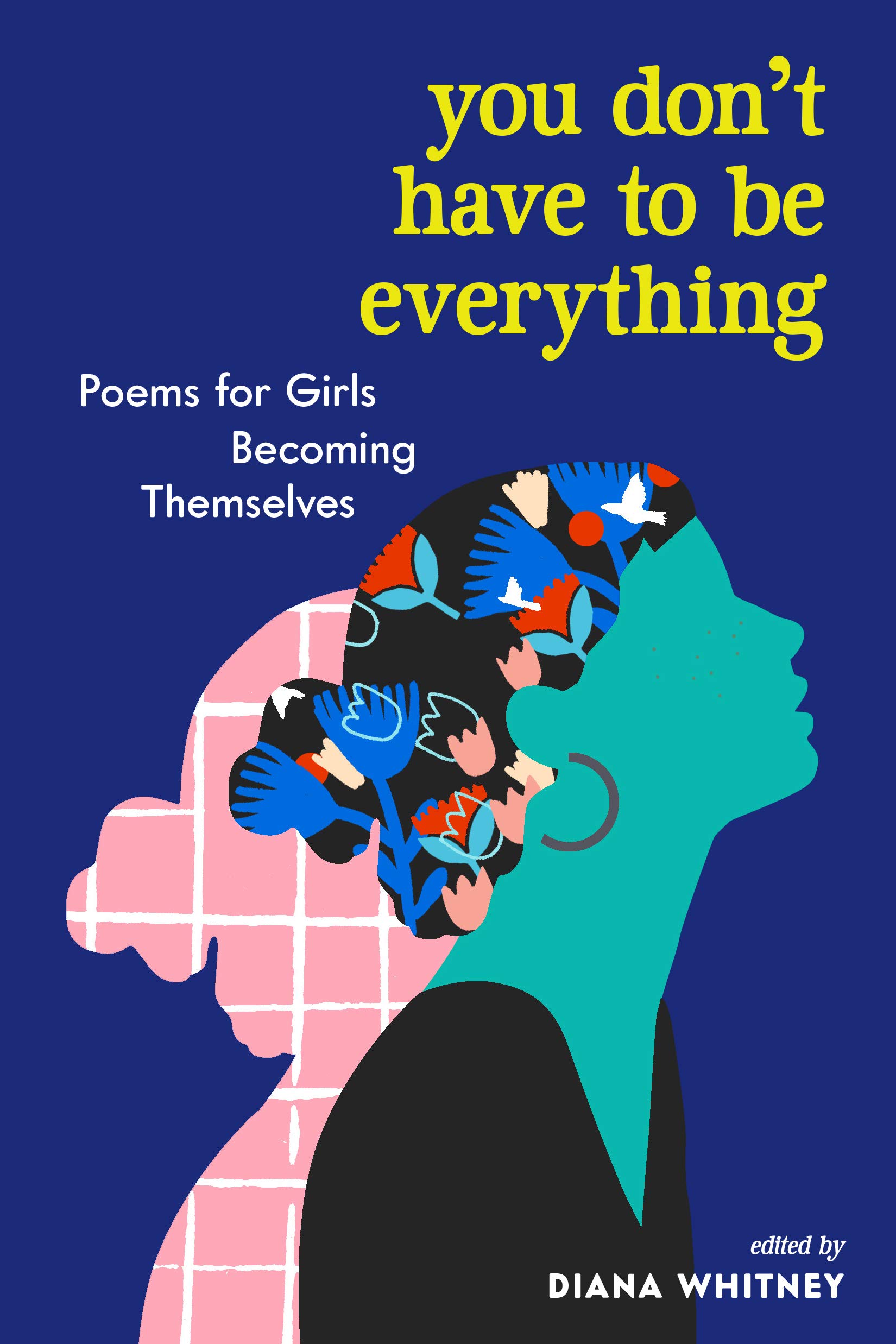
But what I want most is to give that closeted bi girl a pile of queer poetry books. In my new anthology, You Don’t Have to Be Everything, I’ve collected the diverse voices I wish I’d read as a teen, poets who speak honestly about gender, sexuality, bodies, mental health, and much more. The seven books on this list offer a similar sense of permission and possibility. Reading them helps me embrace my own queerness, heal my internalized biphobia, and set down the shame I’ve carried for too long.
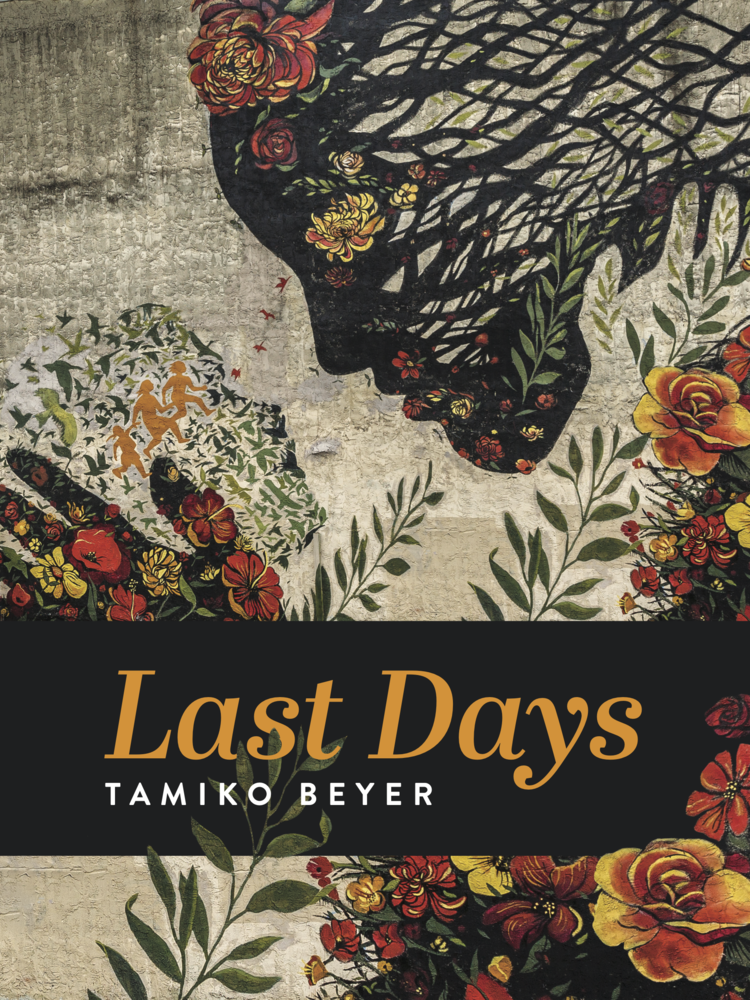
Tamiko Beyer spends her days writing truth to power, working as a social justice communications strategist. Her courageous new collection is a radical act of world-building through poetry, a book of “queer defiance” that embodies hope. Imagining the “last days of the empire,” Beyer’s spare poems explore the forces of heteropatriarchy, white supremacy, and capitalism while crafting a feminist eco-poetics in the tradition of Audre Lorde and Adrienne Rich. Invoking her ancestors and lovers, the mystery of birds and seeds, Beyer sings of women warriors and revolutionaries who crack the corporate code, “unraveling language and building what comes next.
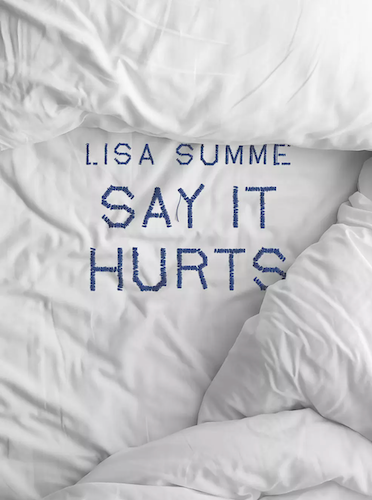
I lived vicariously through the coming-out poems in Lisa Summe’s stunning debut. From sleepovers to selfies, breakups to buzzcuts, Summe’s lines are bold, intimate, and deliciously readable. “We knew what lesbians were only in the context of high school/ social hierarchy & Catholicism,” she says early on, making it more marvelous when the poems soar out of secrecy and validate queer love. Lyric poetry is a vehicle for self-discovery in Say It Hurts. Summe captures how her own experience of worship became “tangible”: “It was soft/ & easy. It became bodies./ There is something reverent/ about being on your knees & so I will/ always pull a girl closer to my face/ by her thighs.”
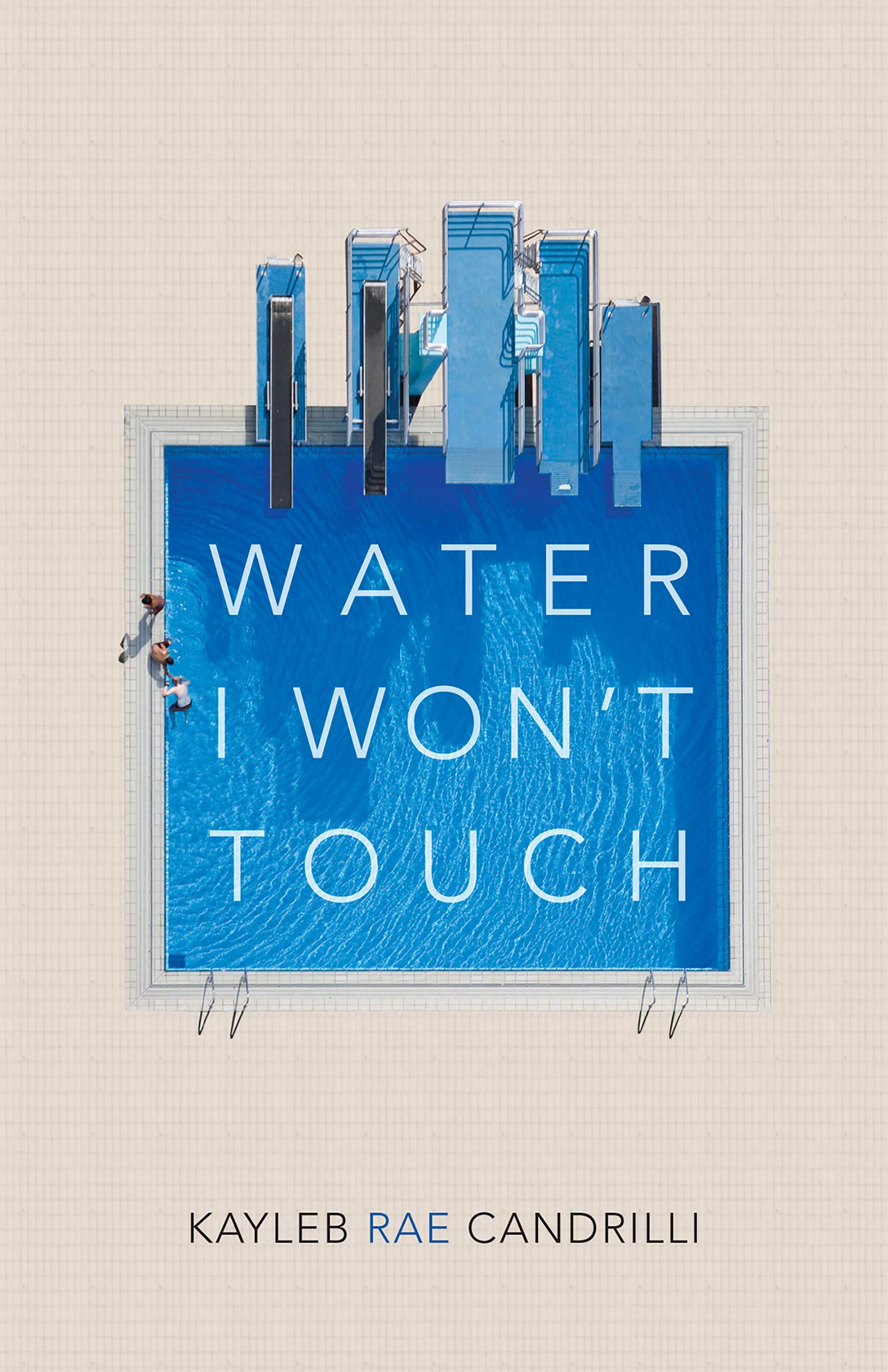
Candrilli’s new collection is a tender book, told in vivid, plainspoken language. Their poems sing of queer love, the pain of family addiction, the vitality of trans people, and the earth’s brokenness—while making space for joy. I read it breathlessly in one sitting, then read it again, imagining a better world through language. Candrilli asks questions, crafts sestinas and sonnets, and gets right up close to the body after top surgery, offering a vision of resilience and self-blessing. The book resonates with a longing for home, an awareness of the violence inflicted by humans—on each other, on the planet. In the face of loss, Candrilli insists on survival: “Watch me/ build a life and feel fed.”
I was riveted by the mythological reinventions in Kelly’s debut, Bestiary, but her forthcoming second collection delves deeper into themes of survival and transformation. “The home I’ve been making inside myself started/ with a razing…” writes Kelly in searing poems that reckon with child abuse and racial violence, the haunting of generational trauma, the end of a marriage. Formally adept, she crafts memory into couplets, sonnets and erasures, creating space on the page for us to experience woundings remade through language. Kelly’s gift is lyric precision, the spare, emotional image: “The trees were all women once/ fleeing a god whetted with lust/ until their fathers changed them…” Her personal mythologies build resilience and claim power.
Fariha Róisín’s poetry debut is dedicated to survivors. “You are not alone,” writes Róisín, a queer, femme, Muslim multi-disciplinary artist who has also penned a critically-acclaimed novel. I wish I could have read this book after being sexually assaulted at age 18, after having an abortion the following year. Róisín’s radiant poems are interspersed with illustrations in hues of blue and purple (a collaboration with artist Monica Ramos), conjuring a mood of introspection and healing. “it’s ok to be messy, i tell myself, impatient,” she says, writing through and against shame, invisibility, and trauma, finding renewal and self-love: “the process is about letting yourself in.”
The most erotic love poetry I’ve encountered, hands down. The Mojave poet’s remarkable second collection was a National Book Award finalist, and Diaz received a MacArthur genius fellowship for her work. Her poems sing of desire and the body, awakening a connection to the earth, ancestors, water and land. Her language embodies stories and histories, queer love and environmental destruction, revealing the myths and violence of American colonialism while affirming the power of longing and dreams. She writes of nights “wandering the desire field,” of “the witched hours of want.” Wounds become gardens where pleasure can bloom: “… we harvest the luxed Bosque/ de Caderas, reap the darkful fruit mulling our mouths,/ separate sweet from thorn.”
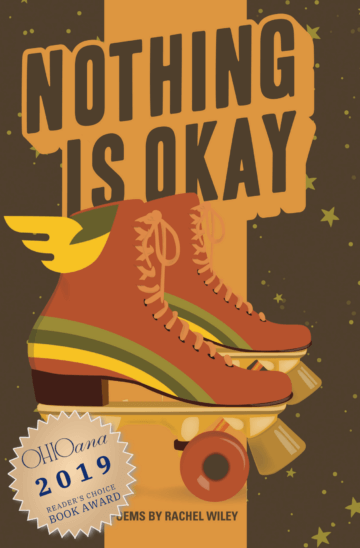
Rachel Wiley burns up the page in her fierce second book. In poems of self-exploration and feminist wit, Wiley writes her desire unapologetically, claiming space as a femme and a “Queer, Fat, Mixed Girl.” She wields her keen humor in “Fat Joke” and a clever sequence of “How to Eat Your Feelings” poems. In “Notes on Depression,” she writes: “I have clawed my way to okay and it will/ just have to do for now”—a mantra for my teen self and anyone of any age suffering from mood disorders. This book is a potent mix of grief and rage, playfulness and longing, charting the battle for self-love while refusing silence and self-loathing.
As a country, we seem far from acknowledging that slavery and racial violence have consequences in present-day for living Black Americans. Despite new focus on long-term material and psychological costs of slavery and its aftermath, for most Americans, lynching exists in a Coen Brothers movie or a middle-school history class. But lynchings lasted well into the 20th century. For some Americans, it is tangible family history.
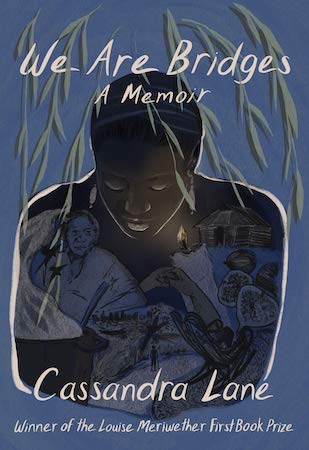
Cassandra Lane grew up knowing her great-grandfather, Burt Bridges, was lynched. When she found herself pregnant, she began to research family history for the sake of her son. Her debut memoir We Are Bridges shuttles between contemporary Los Angeles and the South, recounting the grief and terror experienced by survivors and reclaiming family history from violent erasure.
Winner of the Louise Merriweather First Book Prize—praised by Jericho Brown as “a love story, a book of how,” by Dana Johnson as “a blazing kaleidoscope of legacy and memory”—We Are Bridges explores how lynching ended the life of Burt Bridges and changed the lives of his widow, child, grandchildren, and great-grandchildren, who survived in a haunted border between silence and whispered fact. An exploration of both national and personal history, this book insists that enduring is a fervent wish, the only option, and a heavy burden.
Debra Monroe: Cassandra, tell us how did you first begin thinking about this book.
Cassandra Lane: Years ago, I set out to center this book on my great-grandfather, Burt Bridges, because I became obsessed with the fact that this kind of racial violence had happened so close to my generation. As a kid, I would sit and watch my grandfather crying about his “real daddy,” and it baffled me, but I see now that trauma that happened to his father was something I could have touched simply by touching his skin, or hearing him in a deeper way.
DM: And yet in the final version, the most compelling threads of the story are the lives of the female descendants. What did you discover about Black women’s lives?
CL: Yes, while his pain and loss were the impetus, it was the women—my grandmother, my great-grandmother, and my mother—who started popping up in, first, small ways, and as I continued to write, as the focus. I felt I knew them so well. Their working and cleaning and child-rearing. Their romantic pain and disappointments—all that I wanted to be free from. But what I hadn’t considered was their strength, their survival, and their creativity for survival.
DM:Psychologists have posited the idea of intergenerational trauma—that hypervigilance our ancestors cultivated—is, for us, learned, reflexive. Recently, epigenetic studies have found that parental trauma leaves a mark on genes. Can you talk about this research?
CL: It was already something many of us sensed when we thought about ills in our families. We’ve all talked about family “cycles.” Growing up in a deeply religious family, I remember being fascinated by that scripture that talks about the sins of the father and considering all the “begats” and how histories connect. An emotional breakdown I had over race while on a visit to a nightclub in NYC when I was in my 20s caused me to want to examine the rage I felt inside. It felt ancient. I knew it was bigger than that moment. When I saw my first article about epigenetics, it felt so affirming.
DM: In what way?
CL: In a I’m-not-crazy way. It connected me to the pain of my ancestors, but also to their resilience. It was more eye-opening when I worked for a time for an early education nonprofit and learned about ACES.
DM:ACES, or Adverse Childhood Experiences, which makes people more likely to develop depression, risk-taking behavior, even reduced life expectancy. Right?
CL: Yes. Learning how we carry invisible baggage was freeing. Biology mirrors the emotional experiences. Science gives it a why.
DM:I think Isabel Wilkerson’s The Warmth of Other Suns is important because many people know about American slavery but little about the decades after, when thousands of Black Americans were lynched or fled the South to escape lynching. White people tend to draw a line under 300 years of slavery in 1865—done, over. Wilkerson’s book is about slavery’s aftermath, Jim Crow. Your book is about Jim Crow’s aftermath. If there’s one insight about your book you hope readers take away, what is it?
When I started writing about my family’s lynching story, it seemed that so many had moved on from these issues, because so many Black families physically moved.
CL: The Warmth of Other Suns is brilliant, revelatory. I only wish I’d had a book like it when I was growing up, when I was in college and, later trying to find my way in the world as a young Black woman newspaper journalist. My family was one of the ones that stayed. For the most part, they did not migrate to the West or North. I moved out of Louisiana for the first time when I turned 30, a kind of modern-day migration. When I started writing about my family’s lynching story in the early 2000s, it seemed that so many had moved on from these issues, because so many Black families physically moved. I remember a young white writer coming up to me after a reading in our MFA program. Her eyes were wide and full of something I couldn’t quite name. “That couldn’t have happened to your great-grandfather,” she said. “I had family in the South. I can’t believe it.”
DM:What did you say?
CL: I wanted to say, “I wish I were making it up, but I’m not!” I was taken aback by her shock. We were part of a group of writers and artists getting to know each other through literary events and hanging out, laughing it up, sharing our hopes and dreams. Little did they know I was harboring this past. But artmaking is going beyond the surface of what is pleasant and comfortable and bringing it to light, crafting it to present as connection and conversation. I turned that lens on my family, and that made that friend uncomfortable. There was a Filipino friend, too, and I know Black people who say: we’re more than that now. And throw around phrases like “pain porn” and “struggle porn.” More silencing.
But we carry this baggage. People feel a safe distance looking at slavery artifacts in a museum or watching a film about slavery. But when you think about blood that was shed in the 20th century, we’re not talking about ancestors we cannot name. We’re talking about living, breathing people. My mother and grandmother. Other people’s mothers and grandmothers. My mother was born in 1953 and never attended a school that was not segregated. When my family gets together, we have in the same room someone who couldn’t drink from a white-designated water fountain, and my brothers who are in their 30s and were some of the only Black kids in their suburban schools. When you go back one generation beyond my mother’s, there is my grandfather, who never met his father because his father was lynched. As a kid growing up in the 70s and 80s, I was fascinated and repelled by his pain. I was nursing my own absent-father wound. I’d think: why hasn’t this old man gotten over this?
DM:It takes a big cognitive shift to get past our experience and understand someone else’s.
When you think about blood that was shed in the 20th century, we’re not talking about ancestors we cannot name. We’re talking about living, breathing people.
CL: Yes, and as a culture, we’re like I was back then: Why can’t they/you/we get over the past? This question is asked a lot about Black stories. But you can’t without acknowledgement, reparations. What I think my papa wanted was for someone to listen. This book is my reparation—an offering to my ancestors. In attempting to listen to my grandfather, to each of my elders, I started hearing myself. I then cleared a passageway to listen to my unborn child. And to other people’s children. I hope never to silence or shame anyone. My great-grandfather was lynched, Grandma Mary said, because the white folks thought he was too “sedity” or “uppity.” When I think about how a lynched person is cut off at the throat, the vocal chords, I think the murderer is intentionally squeezing the life out of that vessel of expression. He had a right to live, to not be silenced. The implication in telling Black writers to get over the past because there’s some exploitive or sensational form of pleasure in pain couldn’t be farther from the truth.
My grandmother used to say: “I pray for my children and my children’s children and my children’s children—that none of these evil things come in their day.” What we call evil keeps coming, but we keep praying. And writing. Highlighting what’s wrong—in us and around us.
DM: You feel tacit pressure to stay affirmative in a phony way.
CL: Yes. But writing about my great-grandfather’s lynching doesn’t take away from #BlackBoyJoy or even my own #BlackGirlMagic. In considering Burt Bridges as a flesh-and-blood human being, I found a young man full of hopes and dreams as well as a murder victim. I tapped into his joy and desires and my own. The full spectrum is sometimes light, sometimes heavy.
DM: You’ve been immersed in your family’s darkest history a long time. Did you ever feel an estrangement from the present that seemed like too big a risk?
CL: The first thing that comes to mind is a conversation I had with my mom. She never seemed too thrilled that I was obsessed with Burt Bridges. I remember her gently egging me to write about her mother’s side of the family. I was taken aback. “That’s not the story I’m trying to tell right now,” I said. She wanted to leave the past in the past, perhaps. I wondered, “Should I?” But my ancestor’s tragedy led me to understand my issues. Eventually, the story became about so much more than Burt. Motherhood—mine with my son, my mother’s with me—became a counterweight to the heaviest parts of the story.
DM: Do you feel any closure after years of exploring this subject?
This question of ‘why can’t they/you/we get over the past?’ is asked a lot about Black stories. But you can’t without acknowledgement, reparations.
CL: I had to narrate the book to record it as an audio-book. I had to read it aloud in front of strangers start-to-finish, with all the feelings that came with that process. It was hard. It was also cleansing. I still plan on seeing a therapist again, just to work with me through the process of bringing this long-held story out into the public. I don’t believe anyone is ever completely healed.
DM: Can you describe how you could tell when you were on the right track, following your instincts to tell this family history?
CL: Debra, those old Southern women who raised me went so much on whether things were “sitting right.” Today, we call that “energy” or “vibes.” I grew up in a household where there was always talk of visions and prophetic dreams and sightings of ghosts and spirits, so there is nothing strange about those other worlds to me. We were also surrounded by nature—trees of all kind, nearby woods, and all the sounds that come from the woods—so I get quiet and listen for all of that even in my super urban neighborhood in Los Angeles. I am always listening for sounds of the past.
DM: It’s not much of a leap to say that violence inflicted on Black men’s bodies a century ago has evolved into violence against Black Americans today. We still don’t talk about survivors. They appear in news stories as the person who recorded the video, the person telling us what happened. Has your understanding of survivors changed?
CL: The survivors! It was one thing to relive the lynching of Burt, but once I turned my lens onto Mary, I began to wonder what the day of lynching was like for her. Was she a witness? Did she find out later? Yet Mary went on to live for another eight decades. She farmed. She raised Burt’s child. She fed people who were poorer than she was. She repressed what happened by not talking about it, and yet when she was on her deathbed in her 90s, she reminisced and wept about his beauty and his spirit and how much she loved him. We talk about how strong Black women are, and that trope can be too much. We should not have to carry the weight and make it look easy. I admire survivors, but what more can we do as a nation, as communities, to give survivors what they need? Back then, there was faith, the church family, but not the kind of psychological supports that encouraged talking about trauma. What I learned about the survivors is the damage that silence inflicts on a person, a family. We need to tell more survivor stories. We do.
The baby arrived as all babies do: screeching and struggling from within a duffle bag carried by a deliveryman from City Hall. When Brian opened the front door that Monday afternoon, the deliveryman thrust the thrashing bag forward with a relieved grin, as if he couldn’t wait to get the carrier as far away from his body as possible.
“Congratulations,” he said. “It’s a boy.”
Brian tried to peek at the baby through the mesh ceiling of the bag, but the creature was wriggling around too frantically to settle into any single shape. For a moment, Brian thought a fire alarm had gone off somewhere, but he quickly realized that this was only the sound of the child’s cries, as rhythmically desolate as an air-raid siren and just as distressing. He felt the distinct urge to run for cover.
“He’s a feisty one,” the deliveryman said, pushing his way past Brian into the house. “I think you have an athlete on your hands. A wrestler, maybe.”
It was still snowing—had been snowing, in fact, for days, the street a cluttered labyrinth of gray slush—and the deliveryman shook the gathered flakes from his hair with the good-natured vigor of a golden retriever. He looked like the sort of person who loved his job, which made things considerably more awkward when Brian fluttered a hundred-dollar bill in front of him and said, “It is indeed a lovely child. It would be a shame if something were to happen to it.”
Pity arrived on the deliveryman’s face like an old friend; it was clear he’d heard this request many times before.
“First kid?” he asked. “Everybody’s nervous their first time. But raising a baby is easy. It’s like jumping into a cold lake. Things go pretty much like you’d expect once you take the plunge.”
The deliveryman seemed so proud of the metaphor that Brain refrained from telling him he didn’t know how to swim.
‘A baby is not an idea,’ the deliveryman said with great conviction.
“The baby was my wife’s idea,” he said instead, which was a lie. The baby was entirely his idea. Patricia had only agreed to parenthood, he was sure, because their marriage had been careening towards failure, and the baby had struck them both as a straightforward and diplomatic way to nudge their relationship back from the brink.
“A baby is not an idea,” the deliveryman said with great conviction. He removed a small package of vacuum-sealed gray squares from the side of the duffle and handed it to Brian. “Food for the first week. Just soak them in water.”
Then, the deliveryman gestured at the bag, still rocking from the baby’s frantic efforts to free itself. “I’ll let you do the honors,” he said.
“Couldn’t I just keep it in there for a while? Until it settles down?”
The deliveryman elbowed Brian toward the bag. His voice grew soft, almost grandfatherly. “This is one of the most important moments of your life. Getting to hold your child for the first time? You’ll never forget it.” He glanced back through the door at his brown van, humming tuffs of exhaust into the cold air. “Also, I need the bag for my other deliveries.”
Brian, who shuddered at the thought of all the other babies prowling around their cages in the van, unzipped the duffle with shaking hands. The baby settled for a moment, as if calmed by the promise of escape, and Brian was able to get a good look at it: the smushed pig nose, the tiny fangs, the tufts of fur that sprouted erratically from its flabby pale skin. The baby’s eyes, two dark coals pressed into the folds of its snarling face, met Brian’s, and for an instant they seemed to glitter with some recognition, father and son united by their mutual understanding of this ancient pact. Then, the baby reared back, hissed, and sunk its teeth into Brian’s hand.
Brian jerked away, stumbling over his feet. The baby bolted free and slunk into the shadows beneath the living room couch.
“That thing isn’t human,” he said, suckling the blood that dribbled from the two puncture wounds on his thumb. The deliveryman gathered up the bag and headed for the door.
“Of course it isn’t,” he said over his shoulder. “It’s a baby.”
Brian tried to call Patricia to tell her the news, but she was in meetings all day, so he spent the next hour trying to coax the baby out from its hiding place. While he cooed and clucked on his knees in front of the couch, the baby just stared at him, pupils reflecting the beam from his phone’s flashlight like silver coins in the dark.
He took one of the food squares from the package and dunked it into a bowl of water, just as the deliveryman had directed. The square evaporated in the liquid, melting into an ashy smudge that smelled like mulch. He placed it on the carpet in front of the couch, hoping food might coax the baby out, but the creature didn’t budge.
Brian was ready to wait beside the bowl for as long as it took, already feeling a vague glimmer of pride at this proof of paternal commitment to his child. Then he heard the electronic chime from his laptop, a signal that a customer was trying to get in touch with him.
Brian worked as an online “building consultant” for a remodeling company. This mostly involved answering frantic messages from people trying to renovate their kitchens who’d somehow installed their cabinet doors the wrong way or torn down a wall in their bedroom without checking to make sure it wasn’t load-bearing. Today, the little text box on the webpage read SINK LEEKING PLZ ADVIZE, and Brian went about the mind-numbing work of getting the make and model number of the submitter’s utilities so that he could type out a step-by-step guide on how to rectify the problem.
He used to do this work in person, and he’d enjoyed it—the simple pleasure of encountering a problem and knowing exactly how to solve it. Day after day, he drove around the city with his partner Clay, entering people’s homes with all the pomp and confidence of Valkyries descending to the battlefield to collect the dead. There was something heroic about showing up at a young couple’s first home to replace the ugly teal carpet with wine-dark floorboards after they’d tried and failed to do it themselves or installing a screened-in porch for a widowed old woman who wanted to drink margaritas outside at night without worrying about mosquitos.
Most of their customers treated him and Clay with a sort of awe—these men who could step through the thresholds of their lives for a few hours and then exit, leaving sturdy granite counters and polished water fixtures in their wake. This was mostly on account of Clay. The man struck an imposing figure: just a little over six foot with the muscled arms and the potbelly of a silverback gorilla. There was something comical about watching the customers take him in when he and Brian first arrived—their eyes running fearful circuits over his greased-back mullet and the bestiary of tigers and serpents tattooed on his biceps—a terror that lasted only as long as it took for Clay to begin speaking. He had the gentle, innocent voice of a choirboy, and his insistence on ending every sentence with “sir” and “ma’am” put even the most suspicious homeowners at ease.
They’d been working together for nearly four years when, the previous winter, they’d been in a car accident, their truck slipping on some black ice, and Clay died. Brian had been at the wheel. As the truck swerved, he overcorrected and sent it spinning into the freeway’s shoulder. A rod of steel piping in the back of the truck pierced the back window and plowed straight through Clay’s head, killing him instantly.
After a few days off for his own minor injuries—a sore back and a cut on his forehead—Brian was expected to return to the houses alone, to tear up unwanted carpet and swap out old bathroom faucets as if nothing had happened. Except, when it came time to leave, Brian found himself struggling to open the front door. And when he’d finally forced himself out of the house and into his truck, he sat there for what felt like hours, hands clenched tight around the steering wheel, unable to move. That night, he asked the company if he could work from home.
The problem, he thought, was that he could no longer think about his work without immediately returning to that night and the unceremonious way in which Clay was transformed from a living, breathing human into a skewered cadaver. Though they weren’t very close, Brian had liked him. Their relationship was free of the insecure jostling he’d encountered with other men in his profession: the embarrassing tales of sexual conquest, the sad pride in one’s drinking prowess, the complaints about every unforeseen setback. In fact, they barely spoke to one another on their jobs, operating together with the silent, optimized efficiency of machines. On the few occasions when they stopped for a beer on the way home, Clay, who was in his early thirties, dropped ambiguous references to the time he’d spent in prison—never going so far as to explain what he’d done—and how his wife, a local veterinarian named Barbara, had helped set him on the right path. His quiet voice, and the slow, deliberate way he moved his hulking body, as though perpetually afraid of hurting those around him, struck Brian as the qualities of a man who’d just barely survived his own life and was thankful for whatever extra time he’d been granted.
Halfway through his reply about the sink, he heard a slurping sound behind him. When he turned, he saw his baby squatting on its haunches over the bowl of gruel, its snout stuffed deep in the sludge.
“You’re eating,” Brian said. “My son is eating!” He stood quickly from his chair, fumbling with his phone to take a photo for Patricia. But the baby, frightened by his sudden movements, squealed and tipped the bowl over, splattering food all over the carpet as it retreated beneath the couch.
Later that night, when Patricia finally Facetimed him, Brian brought the phone down under the sofa and turned the camera toward the baby.
“Are you sure it’s ours?” she said.
“Look at the face. Those are my eyes,” he said. “And those hands. Builder’s hands. Nice and strong.”
Only after he said the words did Brian realize that connecting himself to the baby—and its unquestionable hideousness—might not be the most successful tactic for putting Patricia at ease. When he flipped the phone around, he found his wife frowning at him from the little screen. Even now, with her face weary and worn at the end of another long day, the sight of her unmoored a tender vessel within him.
“You look beautiful,” he said.
“I feel like a toilet.”
“Meetings went well?”
“Who knows. These people carry themselves like Grecian friezes. Totally inscrutable.”
Brian didn’t understand Patricia’s job. He knew that it involved large sums of money and companies so massive their financial maintenance required more bureaucracy than most small nations. She’d tried to show him once, presenting him with a dozen or so Excel spreadsheets on her laptop, each page stuffed with numbers which added and subtracted and divided themselves when she pressed different keys. It had only served as further proof to him that he’d been lucky to marry her—that fate had dealt him a fortuitous hand four years ago when he arrived to install a new shower head in her old apartment. After he’d finished, she slipped him her phone number along with a check, as if romance were as straightforward a transaction as any other.
He refrained from mentioning that he’d offered the deliveryman a bribe. This, he knew, would not inspire confidence.
“Have you decided on a name?”
“I was thinking Clay.”
Patricia looked at him as though he’d recommend Adolf or Lucifer. Brian wasn’t surprised. Clay’s death, after all, was the primary reason they’d decided to get a baby. After the accident, some fundamental mechanism within Brian gave way, and he’d found himself incapable of talking or thinking about anything else. For weeks he wouldn’t even leave the house; the outside world seemed suddenly full of incalculable danger. Even a brief trip in the car filled him with white-hot dread, every curve and bend in the road a possible disaster.
And then there was the matter of Barbara. He trembled at the thought of running into Clay’s wife while he was at the post office or waiting in line at the movie theater. Though she had been kind enough to send him a note after the funeral—which Brian had been too much of a coward to attend—thanking him for the flowers he’d sent along, and lamenting the fact, with excruciating politeness, that he’d been unable to come, he was still terrified at the prospect of seeing her in person.
After a month Brian noticed that whenever he mentioned Clay’s name, Patricia’s eyes glazed over, not from cruelty, but from exhaustion. She’d heard him describe dozens of times how different the day might have been if he’d taken another route home or tied down the pipes more securely. She had said all the things one might expect a good partner to say—allotted him the largest possible parcel of her care and attention—but eventually she’d been reduced to platitudes: It’s not your fault. There’s nothing you could have done. You have to keep living.
Grief, he learned, was like a two-way mirror: you could peer out at someone else, gesturing frantically to convey your own unraveling, but after a while all they saw was their own frustrated reflection.
Patricia started traveling again, her time away from the house lengthening from a few days to a week at a time. At a certain point it became clear to Brian that a crisis was imminent. So one night, after yet another of Patricia’s short, joyless visits home, he asked her if they should get a baby.
“I think it would be good for me,” he’d said. “To have a project.”
She’d never shown any interest in children—neither of them had—and he’d expected the question’s outlandishness to be the terminal crack that sent their whole marriage careening down the hillside. But she’d surprised him by agreeing that, yes, a baby might be a good idea. She treated the suggestion with the same matter-of-fact certitude with which she treated her business dealings—she would not change her work schedule, she said, so the day-to-day necessities of child-rearing would be left to him.
“If you can agree to those terms, I’m game,” she said. “We certainly aren’t getting any younger.”
After they filled out the paperwork, hope tentatively roosted in their lives. They went for long walks around the neighborhood, discussing who their baby might become once its fur turned to hair and its fangs plopped out of its mouth. Would it have Patricia’s confidence? Brian’s eye for detail? Would its little muzzle grow to resemble its mother’s aquiline nose, its bushy brow sloping into Brian’s handsome forehead? Their dreams gurgled and giggled with hypothetical babies. Baby politicians and baby poets and baby submersible pilots.
But the border between dreams and nightmares is a tenuous one, and it wasn’t long before Brian was imagining the baby’s body crushed under falling bookshelves, smothered by pillows, pierced by clumsily dropped knives and scissors. He’d never considered himself an anxious person—had always been a bit proud of how easily he fell asleep each night, freeing himself of the day’s worries as easily as he kicked off his boots at the front door. Yet after he and Patricia decided to become parents, he kept himself up late thinking of all the ways a baby might be murdered—how, even after it had grown up, danger would skulk at the edge of every action. A bullet for the baby politician. A heroin addiction for the baby poet. A slow, drowning demise for the baby captain in his underwater tomb. By the time he realized the baby had only exacerbated his new anxieties, it was too late. They’d signed all the necessary documents.
Naming the child Clay, then, was perhaps not the best way to extricate the baby from thoughts of death. But it was the first name that came to Brian’s mind.
“Maybe,” he said. “We could name it when you get home? Which is when, again?”
“Should be soon,” Patricia said. “This weather is cause for concern.”
Brian looked out the window to the backyard, where the snow continued to pile itself into sloping hillocks, their curves burnished to gold by the porch lights. The sight might have once elicited feelings of homey comfort if not for the miles of iced runways and clogged airports it now implied, the hours Brian would have to spend alone with the baby.
“Well, don’t take too long,” he said, adding with an attempt at conviviality that sounded only a little deranged, “Your family misses you.”
“I’m sure you two will do just fine without me,” she said.
“We can handle a few days to ourselves,” Brian said, trying not to put too much emphasis on “days.”
Patricia sighed. “I’ll probably be back by Friday. I need some sleep before I face the friezes again tomorrow. Not that they’ll be able to tell the difference. Best of luck.”
Brian turned the camera to face under the sofa again. “Say goodnight to Momma!”
The baby, still coiled in the corner, bared its teeth.
“Right,” Patricia said. “Love you too, kid.”
Brian swiveled the camera back to himself. “A real firecracker.”
“Please get your baby into a normal bed tonight.”
“Our baby,” Brian corrected. But Patricia had already ended the call.
Brian used a pair of rubber oven mitts to extract the baby from under the couch. It struggled in his hands, gnawing and clawing at the gloves, but the material was too thick to pierce. Brian rocked him at arm’s length, a movement which only increased the baby’s rage, its wails growing so loud Brian’s temples began to throb.
“It’s alright,” he whispered.
He carried the baby down the hall to the nursery. The room was unfinished, it’s half-painted walls and piles of stuffed animals a pitiful echo of his early weeks of preparing for the infant, when he’d decided to convert the office into a playroom. As his fears proliferated, he’d spent less and less time on the room’s aesthetics and turned his attention instead to building the crib: a hulking structure of plywood and plastic, with heavy legs bolted to the floor so the baby couldn’t knock it over in the night, and an interior puffy with padded walls and cotton blankets. He’d even installed a latticed lid that could be clasped shut to stop the baby from escaping at night, when it would presumably try to drink all the chemicals under the kitchen sink.
The baby didn’t like the crib. The moment Brian set it inside, it began to scramble up the walls, its claws surprisingly proficient at climbing. When Brian shut the lid, the baby gripped the wooden bars, a jeering prisoner.
“Wonderful climbing, Baby,” Brian said.
The baby, as if sensing the sarcasm in his tone, launched a glob of spit upward, the sticky fluid striking Brian in the cheek.
“Great aim,” he said, gagging.
The baby continued to cry. Brian tried a number of different tactics to make it stop, singing “Old McDonald Had a Farm” in a cracking falsetto and dropping colored foam blocks into the crib for him to play with. The baby refused them all: drowning out Brian’s voice with its shrill squeals, tearing apart the blocks with its teeth until they resembled curdled wedges of feta cheese.
“Sleep,” Brain pleaded. “Please sleep.”
The benefit of slumber, Brian realized, was a lesson he would have to teach the baby. The thought overwhelmed him; he’d forgotten just how much rudimentary knowledge was required to become a functional human being. Before the baby learned language, or math, or geography, it would first need to be taught how to properly wield utensils, how to stand upright, how to keep one’s eyes averted from the sun. If Brian failed to impart the importance of these things, the baby would remain feral. He would end up like one of those parents who is awoken in the middle of night to find a tiger-sized child on their chest staring at their soft bodies with hungry curiosity.
He’d forgotten just how much rudimentary knowledge was required to become a functional human being.
He stayed up for hours trying to calm the baby down. He walked to one corner of the room and ignored the baby, thinking it might wear itself out, only to find that it was capable of a constant pulsating scream not unlike the screech of some terrible predatory bird. After a while, the noise was so loud Brian worried that the baby’s little vocal cords would snap, and he hurried back to the crib, removing the baby with the gloves and rocking it again. He repeated the process more times than he could count, until he and the baby seemed locked in a delirious dance, time passing like a tarry sludge, slowing and calcifying in places and dripping with unexpected speed in others.
Before long dawn peeked under the blinds. Brian marveled at himself for having passed this test—already, he could hear himself explaining to Patricia over the phone how, despite his exhaustion, he kept watch over their child all night. He opened the shades and let the morning light flood orange warmth into the room. “Look, Baby,” he said. “Your first sunrise.”
The baby, though, had finally gone quiet. Brian’s mind cycled through all the violent events that might have silenced the baby: a heart attack, an aneurism, a screw Brian hadn’t properly secured, which the baby had choked on while its father admired the dawn. Brian flung open the crib’s lid, already expecting to find a tiny corpse. Instead he found the baby squatting in the center of its sheets, a wet stream of shit piling up between its legs.
Brian told himself the baby’s disposition would improve. This was, after all, what he’d been expecting: the sleepless nights, the endless crying, the time spent untangling dried feces from the fur around the baby’s ass. It’s no different than fixing a house, he told himself. Hard work, certainly—but once it was all over, you could step back and admire what you’d built with your own hands.
But if the child was a house, it seemed always on the precipice of collapse. It proved itself an endless reservoir of stinking excretions: mucus dripped from its weeping nostrils, forming a glistening mustache above its sneering lips; urine spurted forth at random and inopportune times from the frightening device between its legs. Diapers proved laughably ineffective. The moment Brian secured one around the baby’s waist, it wiggled free, an act of contortion Brian might have been impressed with if it didn’t mean he’d spend the afternoon on his knees spraying the rugs with carpet cleaner.
Worse than the baby’s behavior, though, was Brian’s growing disdain. He expected to become weary with the child—it was the much-beloved lament of every parent, how tired it all made them—but he didn’t expect to hate it with such visceral conviction. He found himself glaring at it all afternoon, gritting his teeth as it gobbled up its food, burning with the knowledge that it would wait until the moment Brian picked it up later to puke the meal’s sloppy remnants onto his shirt. This was the only time, vomit strung about its lips, the baby did anything like smiling, contorting its features into an unpleasant smirk and burping in a manner that suggested wet mirth.
He scoured parenting forums online, typing out questions with the frantic urgency of his own customers. BABY WON’T SLEEP. BABY WON’T BE QUIET. BABY CLAWING THE FURNITURE. His pleas for help, if they were answered at all, elicited condescending responses from people who told him this was all part of the process. No one said raising a child would be easy, they wrote. Others reminded him he should be grateful, that not everyone was lucky enough to qualify for a baby.
During his nightly Facetimes with Patricia, Brian tried to mention these problems in a casual way that might suggest—though he was handling things just fine on his own—he needed her help. But while he recounted his harrowing episodes with the baby, she only nodded her head absently, as if listening to a song she found increasingly annoying despite its catchy tune.
“I’m just not sure what to do with it,” he said Wednesday night, gripping the baby firmly in his lap with gloved hands. “I’ve tried playing, and singing, and watching TV. It just cries. I think it hates me.”
“Why don’t you go for a drive? Maybe it has cabin fever.”
“You know I can’t do that,” Brian said. He hadn’t driven a car since the accident. Every time he got behind the wheel, he froze. He couldn’t even turn the ignition. It felt as though someone had carefully scooped out the section of his brain responsible for tricking him into believing that controlling an explosion-fueled death trap was just another mundane human activity, no more suicidal than brushing one’s teeth.
“So, what, you’re just never going to drive again? What happens if you need groceries? What about soccer practice, parent-teacher conferences? Will you just keep it locked in there with you until I get home?”
“We can go for a drive when you come home,” he said. “Friday, right?”
“Yeah, Friday’s looking good,” she said. “Though, with this weather, it’s hard to be certain.”
“It’s just a little snow.”
“Right. But you never know.”
“Never know what?” Brian made a sound like laughing. “If you’re coming home?”
“All I mean is that you need to get used to operating without me around. That was part of our arrangement, as you’ll recall.”
“I know that. But aren’t you excited to meet your baby?”
Brian held the baby aloft, hoping this might be the moment it chose to reveal some hidden grace—that it might stare at Patricia with surprising candor, or murmur the word “Momma.” The baby showed no interest in helping him, though, choosing instead to unleash a particularly powerful belch, the smell of which made Brian wonder if fish was the primary ingredient in its food squares.
“Not really,” Patricia said, grinning. Brian laughed. It felt good to hear her say it—to know he wasn’t alone in his distaste for the baby. Maybe, he thought, this was how parenting really worked: a mutual loathing that slowly blossomed into something like love.
All Thursday, he thought of Friday. He repeated the word in his mind as he struggled to wash the baby in the sink, suds splashing into his eyes. He chanted it like a mantra while he typed answers to customers’ questions about sagging floorboards and slanted porches, turning his head every few seconds to ensure the baby hadn’t spontaneously combusted.
On Friday all of this would become manageable. Patricia would return and set things straight. She was not one to be bullied.
When Patricia was fifteen, she’d been in a bicycle accident. As a result, she spent an entire year wearing a rigid plastic brace around her torso. Her parents were in the midst of a grueling divorce at the time, a separation that reduced Patricia’s role in the house to another possession over which they might ruthlessly struggle for ownership. She’d explained this all to Brian on their second date.
People started to treat her differently around this time, she said. They tempered their expectations, talking about her future like it was a crystal figurine so delicate it might break if handled too long.
She told him about the pain of that year, how it stalked her so doggedly that it seemed to imbue certain objects—a yellow rubber ball in the backyard, a pair of raggedy sneakers beside the door—with a kind of resonant hostility, as if the objects were directing a pulsing, red hatred in her direction.
“That’s terrible,” Brian said when she told him this.
“No, it isn’t,” she replied. “It taught me a very valuable lesson.”
Her unwillingness to elaborate on this lesson had lent it, in Brian’s mind, even greater authority. He’d faced no such formative trials in life, gently ushered into the world by kind, affable parents, who nurtured his love of building by allowing him to tackle odd jobs around the house, even if this often meant hiring an actual professional later on to fix the damage he’d done installing crooked flood boards or failing to reassemble the AC unit after taking it apart. He had spent so many years certain that every problem had a workable solution that when he met one that didn’t—Clay’s death—he’d crumpled with all the grandeur of a papier-mâché sculpture left out in the rain.
He asked Patricia once why she’d chosen him—why she, whose mind was as sleek and decisive as a fighter jet, had spent five years married to a clumsy handyman who still used his fingers to count.
“You’re dependable,” she said without a trace of irony.
Since then, he’d clung to that verdict. He tried to be, above all else, dependable. When Patricia was away, he kept the house in working order, installing stainless steel appliances, replacing the shingles on the roof, oiling hinges and swapping out lightbulbs. He made certain that she returned to a home free of all evidence of decline, as if the structure’s sturdiness might remind her of their own firm foundation.
He’d stopped doing these things after the accident. While Patricia was away, their home fell into disrepair: the door leading to the garage began to creak, a lip of water dribbled from the bathroom’s faucet, one of the burners on the stove took longer and longer to reach optimal heat. Patricia pretended to ignore these things, but Brian knew she must be keeping track, tallying up the home’s imperfections so she might one day present them all to him in a laminated folder.
Which was one of the reasons why he’d asked to get a baby. What better way to prove his dependability than to raise a child? Yet here he was, terrorized by a creature barely bigger than his foot.
Patricia would not be intimidated. He knew that once she arrived the baby would civilize itself whether it wanted to or not. Brian would help her drag it, snarling, into the realm of childhood, where they’d shape it into a bright, beautiful boy who knew the difference between right and wrong, who said please without being prodded, who understood that the world, though beautiful, was also painful and arrived at sorrow with all the necessary protections.
That night, when he called Patricia and listened to the phone ring, he found himself so overwhelmed by the image of their child, cherub-faced and docile, returning from school with macaroni paintings and report cards praising his good behavior, that when the ringing ended and Patricia’s voicemail began to play, he started talking immediately. It was only when he finally stopped speaking and was met with silence that he realized she hadn’t answered the call.
Brian reminded himself that this wasn’t the first time Patricia had missed one of their evening check-ins. Some nights she was simply too exhausted to talk. Brian made three more calls, just to be sure, and then texted her a series of question marks. When she failed to respond, he put the baby to sleep—or rather, its approximation of sleep, which involved an hour or two of hostile silence in the crib, followed by an eventual outburst that would bring Brian sprinting into the room—and tried to go to bed.
Patricia was due to arrive in the morning. Daybreak brought nothing but a glittering landscape of ice outside. She didn’t call or text to tell him she’d be late. Maybe her phone had died, he thought, or she’d accidentally left it in her client’s office. There were all kinds of reasons she might not arrive on time, all of which avoided the awful possibility swirling in Brian’s mind: that Patricia wasn’t coming back at all.
Brian often had this thought when Patricia left for one of her trips, especially in the months following Clay’s death. It was an unfortunate side effect of what he loved about her: the sense that he wasn’t essential to her life. He found it deeply romantic that she—whose wardrobe was composed of four or five formal outfits she could easily fit in a carry-on, who sometimes even forgot to unpack between trips—had decided Brian was worth settling down for, however briefly.
Even after they got married, she insisted on keeping her own bank account. She’d seen how disputes over money turned her parents’ divorce into a bloody campaign, where every fork and spoon, every roll of toilet paper, was accounted for and divvied up. “Better to keep certain things separate from the start,” she told him, and he found no reason to disagree. Only later did he consider the broader implication of her words: how she took for granted that sometime in the future they’d need to disentangle themselves.
Now, he imagined her dipping into that account to prolong her stay at the hotel. He thought of her taking careful stock of their relationship, running her algorithms, with their vague numerical mysteries, to decide just how high her marriage measured up in the balance sheet of her life.
As the hours passed and she failed to walk through the door, he began to wonder if the baby had been his final test. His chance, after the accident, to prove he was capable of self-sufficiency. Perhaps that’s why she’d agreed to it so readily. She’d watched him floundering through the week, heard the baby waling on the other end of the phone, and realized her husband had changed. He was no longer a dependable man.
While Brian paced through the house, the baby mimed his anxiety, sprinting from room to room, scrambling up onto counters and knocking off everything that wasn’t screwed down. Eventually it bumped Brian’s cup of coffee off the kitchen table, sending scalding fluid and shards of ceramic across the kitchen floor. Brian grabbed the baby, not even bothering with the gloves, and hurried it out the front door.
Brian tried to tell himself he fled the house because he needed to get the baby away from danger. Some other voice inside him, though, suggested a more disturbing explanation: that the moment the coffee cup shattered against the floor, Brian wanted to harm the baby, hurling its body against the wall or stuffing it in the trash. He’d felt some primal need to silence the baby at any cost. So he’d escaped, terrified of what he might do if they stayed inside any longer.
A cold gust buffeted Brian and the baby the moment they stepped outside. The street sparkled with fresh powder. Standing there, gazing up at the clouds, as gray and unyielding as cliffs, Brian felt strangely at ease. He hadn’t left the house all week—hadn’t smelled anything but bodily stink, hadn’t squinted his eyes at the bright reflection of sunlight on the icicles hanging from the edge of the roof. He stood there, overwhelmed by the silence of this crystal world, the only sound the quiet shuffling of the snow that crested, in lacey wisps, off the lips of the dunes in the front yard.
The baby, he realized, had stopped crying.
When he looked down, the baby’s dark eyes stared skyward in wide astonishment. A snowflake slowly drifted onto its snout. The baby snorted softly to dislodge it.
“Outside,” Brian said. “We’re outside.”
Patricia, even from afar, had known exactly what to do. All the baby needed was a walk.
He carried the baby down the street, his crunching footsteps plowing a path in the unblemished sidewalk. They crossed over the road into the park, where the boughs of the pines bent stoically beneath their snowy burdens. While they walked, Brian whispered words to the baby: tree, sky, bark, stone. The baby peered up at him, as if in understanding, and Brian wondered if it could be this simple; if just a few monosyllables were all the baby really needed to know.
When they came to a bench, he wiped the snow off its iron seat and sat down. He watched the flakes gather in the baby’s fur, caught in the thick follicles like tufts of cotton.
“I don’t think I’m very good at this, Baby,” Brian said.
He was struck, now, by how foolish it was that the baby still lacked a name. He watched the slow rise and fall of its naked chest. “Maybe I’ll call you Snow,” he said. “Can you name a baby Snow?”
The baby responded by curling in his lap. Seeing it there, eyes closed, a single claw tucked tenderly into its mouth, filled Brian with sudden warmth. He didn’t even feel the cold wind anymore, just a flash of heat. Odd, given how much his arms were shaking.
“Clay loved the snow,” Brian said. “On the night he died, he was talking about the snow. When he was a kid he used to drive up to a cabin with his mom every winter. She’d try to get him to go outside and play—to build snowmen with the neighbors or sled down the driveway—but all he wanted to do was sit inside and watch the snow fall.”
Brian stared at the trees while he spoke, pondering their sturdiness—how defiant they appeared, bark stark against all the white. “He wanted to build a cabin just like that out in the country and fill it with babies. He wanted a bunch of kids. Talked about it all the time.”
Someday, Brian thought, he would tell the baby about Clay. About how his death proved that the world was not a solid thing—not a rigid bit of plaster or wood one could repair at the first sign of failure—but something far more unstable. Something you could drown in, if you didn’t have the foresight to learn how to float.
And maybe, when enough time had passed, and Brian could talk about it without feeling like the ground was crumbling beneath his feet, he would tell the baby about that night. The way Clay’s blood pooled dark on the dashboard, as if impenetrable to the light. How the steel pipe was lodged so deep and firmly in his head that it looked like it had always been a part of him. Brian could tell the baby what it felt like to sit there, the world so quiet he could hear the snow plinking down on the hood of the smoking truck, and realize that he’d passed a certain threshold; that he would never feel safe again.
The snow was falling so heavily that the trees had transformed into vague shadows in the distance. Brian didn’t know how long he’d been sitting there, but the baby’s body was swaddled in a few inches of powder. When Brian went to wipe it off, he discovered the baby’s body was cold. Much colder, in fact, than he thought a baby’s body should ever be.
He gave the baby a nudge, but it didn’t move. He shook the baby, but it remained still.
An immense calm settled over Brian. The baby was dead. In a way, he was relieved. The worst possible thing had happened, and it felt like proof of a fact he’d known since Clay’s died: that he could no longer be trusted. He did not deserve the responsibilities that came with being alive.
Then, he felt the baby’s heartbeat. It was weak, but it was there—a faint pulse beneath its thin skin. Brian rushed to his feet but lost his footing almost immediately, slipping to the ground. His legs were unnaturally clumsy, as if they were receiving signals from his brain one second too late. He fell two more times before regaining his footing.
“Jesus, Brian.”
A figure was marching towards him through the snow, arms crossed in a puffy blue parka. Brian briefly wondered if it was god, or maybe one of his angels, the disappointment in their voice the final sound he would hear before he was consigned to hell. But then the figure stepped closer, and he saw that it was Patricia, frowning from underneath a knit cap.
“What are you wearing? It’s freezing.”
Brian looked down: he’d left the house in nothing but his thin pajama pants and a t-shirt. He hadn’t even bothered with boots. The soaked gray fabric of his socks clung to his toes.
“The baby,” he said, holding its limp body out before him. “It’s freezing to death.”
Just as he spoke, the baby began to cry. Loud, horrible sobs that blended with the howling wind, as though the baby had hijacked the atmosphere to give voice to its displeasure.
“Sounds alive to me,” Patricia said. She reached out and plucked the baby out of his hands, stuffing it under one arm and hooking Brian’s armpit with the other, like her husband was an elderly woman who needed to be escorted across the street. “Let’s get you two back inside.”
“Where have you been?”
“Flight was delayed.”
“You didn’t return my calls.”
“Forgot my phone charger at the client’s office. Didn’t think you would go all Jack London on me if we didn’t speak for a few hours.”
They trudged back to the road. Brian couldn’t feel his feet.
“You came back,” he said. “You actually came back.”
Patricia stopped and looked at him. Brian thought of what she saw: her husband, drenched and trembling beside her, eyes sunken from lack of sleep. He’d barely made it a week without her, and he could tell, from the question struggling on her face, that she was performing her private equations, adding and subtracting the variables, estimating the odds of whether she might raise a human being with this man. But then her expression changed. Brian was wrong: there was no calculation there. Just disappointment. And hurt.
Their child wrestled in her grasp while they stood there, desperate to flee whatever these two people planned to do with it.
“Of course I came back,” Patricia said, her voice weary with all the miles she’d crossed to arrive here, at her home. “Where else would I go?”
DON’T MISS OUT
Sign up for our newsletter to get submission announcements and stay on top of our best work.
YOUR INBOX IS LIT
Enjoy strange, diverting work from The Commuter on Mondays, absorbing fiction from Recommended Reading on Wednesdays, and a roundup of our best work of the week on Fridays. Personalize your subscription preferences here.