8 Historical Fiction Novels About War-Torn Love

Every love story is built with inherently high stakes. After all, a heart can be the ultimate prize, and courtship a most dangerous risk. And love, as we all know, won’t stop for much. Our hearts pay no attention to timing or impediments, and logic falls by the wayside as we feel the anguish of lost love, or the triumph of love realized. 

All by itself, love is tense and wondrous. But add in war, the threat to our very existence and humanity, and those stakes fly through the roof. For me, novels that explore love affected by war are the ultimate page-turners; books that might break or—surprisingly —mend your heart. After all, when the world is bleak and harsh, and a heart still finds the ability to soar, what could be more beautiful?   

In my novel Take What You Can Carry, an American woman and her Kurdish boyfriend visit Kurdistan of Iraq in 1979, a time when the government tried to break the Kurds and their will, when friends and neighbors were pitted against one another, and a simple night out could end in devastation. I knew from the politics and the setting that the struggles would take them to the brink, and either make or break their love. 

Here are 8 novels about war-torn love:

Berlin-Peck Memorial Library

The Things We Cannot Say by Kelly Rimmer

This World War II novel captures the heart-rendering love of a couple in Nazi-occupied Poland who are not only trying to survive, but are striving to make a difference. Split between two time periods, World War II and modern-day, we also see the result of their story decades later and the secrets they carried silently through the years.

Exit West by Mohsin Hamid

Exit West by Mohsin Hamid

A nameless place under siege, and a love story amidst the chaos. Exit West is about two students who fall in love and try to find refuge through a series of magical portals that transport them to various locations around the world. In spare, exquisite language, this book shows the horrors of war and the refugee crisis, yet manages to be surprisingly hopeful.   

The English Patient by Michael Ondaatje

The English Patient by Michael Ondaatje

It’s the end of World War II and a mystery beckons: Who is the burned “English Patient” and what is his story? What unfolds is a beautifully written exploration of the aftermath of doomed love during war-time.

Cold Mountain by Charles Frazier

At the end of the Civil War, an injured soldier, who has just deserted the Confederate army, makes the dangerous journey home by foot to reunite with his love. But what changes have they endured in their separation, and what toll has life taken?  

The Tattooist of Auschwitz by Heather Morris

In 1942, Lale Sokolov, a Slovakian Jew, is forced into the role of tattooing his fellow Jewish prisoners in the Auschwitz-Birkenau concentration camps. When he meets Gita, Lale discovers a new purpose and a reason to survive. Based on a real story, this is truly love against all odds.

A Single Swallow by Zhang Ling, translated by Shelly Bryant

A Single Swallow follows three men—a missionary, an American soldier and a Chinese soldier—during the Japanese occupation of China. The men all have starkly different viewpoints, allegiances, and lives, but one thing binds them together: they loved the same woman. 

This Is How I'd Love You by Hazel Woods

This is How I’d Love You by Hazel Woods

Set during World War I, This is How I’d Love You is about a young woman who takes over her father’s mail correspondence with an American soldier abroad. 

In Another Time by Jillian Cantor  

Told in alternating viewpoints and timelines, In Another Time is about an enduring love between a bookstore owner and a Jewish violinist in Germany whose relationship is imperiled with Hitler’s rise. 

“Nomadland” Helped Me Realize That I’d Grown Up Homeless

I set a calendar reminder for the day Nomadland would be available to stream. My anticipation came partly from the chatter of film nerd friends, but mostly because I knew this was a film about people living in nontraditional housing—vans and recreational vehicles—just like I did as a kid. Though I had no idea the film would eventually win Best Picture—it wasn’t being heralded as the “one to beat”—I was not going to miss my chance to see a story that reflected my own experiences growing up. It had the arthouse promise of characters, not caricatures, living in homes that sit on wheels instead of foundations. 

Nomadland, written and directed by Chloé Zhao, tells the story of Fern, played by Frances McDormand, who has recently lost her job and decides to live a nomadic lifestyle in her van (which she names Vanguard). The film is based on Jessica Bruder’s book detailing the lives of a real subculture: older adults who travel together in vans and RVs to find opportunity and community. In an early scene, Fern bumps into a family she knows from her life before Vanguard. After some pleasantries, the young girl that Fern used to tutor hangs back to privately ask Fern if she’s homeless like her mother says. 

“I’m not homeless,” Fern says. “I’m just… houseless. Not the same thing, right?”

In her reluctance to accept the term ‘homeless,’ Fern echoes the broader cultural antipathy towards anything that looks like failing—or opting—out of capitalism.

In her reluctance to accept the term “homeless,” Fern echoes the broader cultural antipathy towards anything that looks like failing—or opting—out of capitalism. (Even as a nomad by choice, Fern’s life is dominated by work.)  For many of us, “homeless” is a word that first brings to mind sleeping on the street, the literal opposite of the American Dream, a failed state of being. In the game of American capitalism, being homeless is the blinking red and large font, punctuated by aggressive sound effects: YOU LOSE. Rarely does one get to play again. 

Fern skirts the deeper shame for a more palatable, perhaps even aspirational, terminology: houseless, as in not constrained within walls. But the audience can see through this semantic trick—and for me, a question was already reverberating. My body tensed. I couldn’t concentrate on the story. My ears rang dully and my abs contracted in pulses like they were reacting to electronic stimulators. 

Is it possible, although it surely can’t be, that I grew up… homeless?


From kindergarten to middle school, I lived with my parents in a 200-square-foot “fifth wheel” towable RV parked on a piece of Florida scrubland between my aunt and uncle’s small ranch-style house and a wall of oak trees. I’m not sure why it’s called a fifth wheel—it sits on four wheels and is meant to be towed by a truck, which would make it eight wheels. I never saw ours towed.

Only recently did I start talking about growing up in an RV. I was already married when I told my wife. School friends and college friends, people I’m close to even today, still don’t know. I lived in England for six years, a country where hiding the class you were born into means completely changing your accent, and sometimes your mannerisms and clothing. The amount of work to “play it posh” isn’t worth it, for most people there. But in the United States, a country that struggles to agree on whether class is determined by birth or bank account, it is easier to hide your roots. I don’t recall ever being asked what type of house I grew up in, so I didn’t have to lie—I just chose not to offer the fact that my home wasn’t a house. 

In America, shame for being poor, for not being able to take advantage of the promised Dream, quells our chance at building a culture of working-class collectivism and pride.

But not talking about the home I spent many years growing up in made it too easy to stop thinking about it. When you don’t share your memories, even with yourself, you risk losing them; certainly you crush the opportunity to find pride in them. In America, shame for being poor, for not being able to take advantage of the promised Dream, quells our chance at building a culture of working-class collectivism and pride in what is, over what could be. Just because you can hide it, doesn’t mean you should. 

I was prepared for Nomadland to force me to confront this chapter of my life. In fact, I wanted it to. In the past couple of years, I’ve tried to use my experience as a personal tool for building empathy with others from working-class backgrounds, without generational wealth or financial privilege. I’ve mostly shaken off the shame of growing up in a situation outsiders might consider “poor white trash.” But homeless? If I was once homeless, surely it would be a defining chapter in my life—and besides, could I identify as “homeless” when other unhoused people clearly had it worse? I didn’t sleep rough or live in a car. I always had access to a bed and a shower with warm water. Then the shock turned into more questions. If I had written about this in my college essay, would I have been accepted to a better school? Will my friends resent that I never told them this crucial nugget of backstory? If I was homeless, why wasn’t my family allowed to access social services? 


Since my Nomadland-triggered confrontation with my past, any traces of shame have metamorphosed into nostalgia. I am letting my memories in, at last. When I think about that RV, I think about who may have lived in it before me, using it for recreation as intended. The mustard-and-rust ribbed plastic exterior hinted at a 1970s past life: perhaps a beautiful family with a mustached dad, trying to hit all the national parks, or a newly retired and fully pensioned couple who drove it down to sunny Florida and left it parked next to their new house, unused, when they accepted their declining bodies couldn’t handle the work of hitching and unhitching and climbing the two steps inside, two steps to the bathroom, and two more steps to the half-bedroom. 

I say half-bedroom because that’s how I think of it, but that sounds like it means “half as much square footage as a standard bedroom.” The room—the only bedroom in the RV—is in fact small in floor space, but more importantly it’s half as high, designed to hover over a truck’s bed like the head and neck of a dinosaur. It’s smart design for a traveler, but for the stationery resident it’s waste, a shadow-giving overhang for snakes to retreat from sunlight. My parents let me have that bedroom, the bedroom, which I like to think is something most parents wouldn’t do. I don’t think the height of my bedroom ever entered my mind, even though in the pre-pubescent later years there I wasn’t able to stand up straight.

A wood-colored (everything had a “wood look”) sliding door, expandable like a xylophone, separated the bedroom and the bathroom, the central of the three divided areas, which was small but could almost pass as a house bathroom except for the toilet. In lieu of flushing, you stepped on the lever by the floor that released water into the bowl and slid open a hole as your shit trap-doored into a holding tank. Over time, you learned to do this quickly so the stink from the tank was minimal, but too fast and your shits got decapitated on the way down, and you had to do it again. 

A couple steps down from the bathroom put you in the main body of the RV, with the kitchen on the right, a diner-style booth on the left, and a sofa bed just beyond where my parents would sleep. I remember racing in from an hour or two of humid outside play to grab a Sunny-D or to suck frozen colored punch from long plastic sleeves. Like most families, we never sat at the booth, preferring to squeeze in tight on the groovy-patterned sofa bed and watch the small TV my dad was able to force into the built-in bookshelf with some minor carpentry. 

My eyes widened at the families living in big, beautiful homes on the morning cartoons and daytime soaps and evening sitcoms. Although I was a young child, I should have been able to notice my own experience in the white working-class shows of the ‘80s—The Simpsons, Married… with Children, Roseanne—but instead, I saw these families as aspirational: two-story homes, moveable furniture, bedrooms tall enough for wall posters, and an address. 


Late that night, after the Nomadland credits and union logos scrolled their way up my screen, I typed words into the search bar expecting a clear answer: does living in an RV make you homeless? 

Result 1: “RVs are indeed not fixed and we do park them at campgrounds. You could make a good argument that we are homeless.”

Result 2: “A person with an RV is considered homeless if they don’t have amenities that make it a suitable place for habitation.”

Result 3: “If they are living in an RV, they are one step from probably being homeless.”

Result 4: “Technically yes, but it’s a few steps up from living in a tent or in a car.” 

Result 5: “So the local government says it’s illegal to live in an RV permanently, but being totally homeless is perfectly okay with them.”

Then the algorithm started to bring in articles from the “tiny home” community and traveling retirees. Not the same thing. I found out that the government defines homelessness, and classifying a child as homeless falls under the guidelines of the McKinney–Vento Homeless Assistance Act of 1987. Although the law doesn’t specifically say “RV = Homeless” in a large font, it draws lines between those living in an RV to travel, and those “stationary” living in an RV due to financial problems. That was us. My dad was finding any pilot work he could while studying for expensive commercial flying licenses that might have given him access to fancier jobs in fancier planes, while my mom was temping as a secretary at a cancer hospital. The serious money problems came when my mom—who, like all the family, had no way to access affordable health insurance—needed emergency sinus surgery. Outside of our home, we probably passed for middle-class, but inside the RV, we were a legally homeless family who didn’t even know it. 

If my parents had been able to move past their own shame and ask for help, would we have received assistance?

Trying to figure out whether I would be considered homeless if I lived in an RV today was almost an intellectual exercise. More important was the question of how my childhood could have been different if I, or someone, had been willing to accept that designation at the time. Maybe my family could have been supported better? If my parents had been able to move past their own shame and ask for help, would we have been flagged in the system to receive assistance with living expenses, medical care, food subsidies? To get the answer, I sent an email to the homeless liaison of my old public school system, the person tasked with identifying students who might qualify as homeless, determining their homeless status, and offering support to the student with reduced or free lunch programs, free transportation, and other social services. I explained my childhood housing situation, and asked: would I have been considered homeless?

Her response came back: “the short answer is yes.” 

So there it was. Throughout the period of my life where The Letter People taught me the alphabet, where I peed my pants during Duck Duck Goose, saw creased Playboy centerfolds in the bathroom, sat with a class full of shocked children watching a Space Shuttle explode, daydreamed during the repetitive orders to “just say no,” refused to give the Pledge of Allegiance because my family was Jehovah’s Witnesses, debuted on a lunchroom stage in a white Benjamin Franklin wig, and where during homeroom my co-host and I would go live on closed circuit television with a “Welcome to W-G-A-T-O-R,” I was also homeless. 

The homeless liaison also sent me a few links so I could do more research. These helped me understand a few things. It isn’t easy to get parents to admit to homelessness, so much of the language of these pamphlets is there to ease the shame and help a parent to understand that it’s okay to accept help. It feels like a very American problem to have to convince a struggling family that it’s okay to accept government aid. This was the 1980s and Reagan was still ranting about “welfare queens” while successfully dismantling the social safety net. I expect my parents were not desperate enough to accept financial assistance which came with even more shame. I vaguely recall a childhood conversation:

“Do you want me to apply for a lunch card?” said my mom. 

“No, it’s embarrassing,” I said. “Everyone sees you take it out in line.”

I’m not sure how most schools logistically handle food assistance today, but I hope for the sake of all those children that they never have to pull out a brown card printed with the bold and all caps FREE LUNCH CARD, holding up their hungry classmates as a cashier hunts for the stamp. 

Also in the email: a link to a video called “Elmo’s Message to Children and Parents Experiencing Homelessness.” This was clearly meant as a way to communicate with children on their level, but to me it was a belated reckoning with a past I never confronted. Elmo explained to me that no matter where I lived, I deserved an education. Elmo said that Elmo is thinking of everyone out there that’s having a hard time. Elmo blew me kisses. 


One outcome of this period of poverty is that I don’t have any videos of me as a child—video cameras were expensive. To verify and stir my memories, I turned to the street view function of digital maps. I went on a virtual walk around where the RV used to be parked. I was hoping to see at least a small patch of off-white sand peeking from the grass, a legacy for the home that kept my family sheltered. I wanted to find anything that proved my experiences were real, that I didn’t dream it. Maybe four little marks of discoloration where the tires once rested, a monument to the good times spent there, like the dance parties where we stuffed pillows in our pants to poke fun at the large butts we all had in common. But the grass was thick and emerald and there was nothing. 

It feels like a very American problem to have to convince a struggling family that it’s okay to accept government aid.

A few feet away, across the property line, there used to be an infinite open field with a handful of horses. Now the barbed wire fence has been replaced with a tall wall on the periphery of a new housing development of squeezed-in McMansions with Spanish tile roofs. Zoning laws pushed poor white people into this semi-rural area, where they could find land that allowed trailers. 

Now, the growing middle-class subdivisions, filled with young families yearning to be commuting-distance to the city, are eliminating one of the few advantages my family had to living here: space. But even worse for those on the wrong side of the wall, those ugly, hulking houses are now an unavoidable reminder of what isn’t, and may never be, attainable. 

I heard that when the McMansionistas go into their backyards, only a few feet from the dividing wall, my aunt and uncle get a kick out of mocking them in loud, posh British accents. It’s endearing to me that to them the young, middle-class family walking into their ratio of an acre, is deserving of the vaudevillian accent for “rich.” 


I’m not Fern. I may have lived it, but she lives it. She is working class. She is homeless. 

Nobody who met me would assume I was working-class, and they might be surprised to learn I once was; the New York City media world is not assumed to be spilling over with the formerly homeless. But I think it’s important that people like me tell their stories. Even if the United States does, finally, create a strong safety net that can help people struggling financially, it will still be one of our nation’s great challenges to convince those in need to raise their hands and ask for help. My family was able to hide our homelessness, after all—and we hid it because we felt like we had to. We need to educate citizens that the American Dream is now the American Illusion: it’s not true that anybody can achieve a middle-class existence just by working hard. “Grit” and “bootstraps” are false narratives. We need authentic working-class stories to unshackle us from shame, and undo the damage of Reagan’s nonexistent “welfare queens.” 

Sharing our stories of poverty doesn’t just help society. It helps us as individuals. I’ve been able to forgive my parents for the shame that kept them from seeking help. That little camper was regularly filled with joy. By remembering being homeless, I’ve recovered memories almost lost. Joining them on the annoying errands of RV living–trips to the hardware store with my dad to refill propane tanks, doing loads at local laundromats with my mom–gave us routine bonding times where we could talk and tell our stories of the week. They worked hard and did everything they could to give me some normalcy, and it breaks my heart that they’ll probably never stop thinking it was somehow their fault. America. 


Sharing our stories of poverty doesn’t just help society. It helps us as individuals.

I don’t know where the RV is now. But I miss it. It wasn’t a house, but it was my home. 

After we left it, an uncle towed it 30 miles away to the country’s most popular skydiving center, at an airport in Central Florida, amongst various other RVs. In Nomadland, a group of nomads travels together from town to town, taking up odd jobs to get by, while still taking advantage of the mobility inherent in mobile homes. The skydiving center housed a similar group: adrenaline junkies who traveled around to find work as skydiving instructors, videographers, and jump pilots, moving from airport to airport in order to afford to do something they loved. I’m happy to know the RV had another chance to travel, fulfilling what it was born to do. 

As I was entering middle school, my dad was getting regular pilot work dusting crops for farmers and towing banners for the beachside sunburned. My mom’s temp job turned into a full-time job—with health insurance for the entire family. We emptied and locked up the RV. We drove a rented moving truck a few miles away to a double-wide trailer, in a small trailer park full of mostly single-wides, across from a large open field that now is a Walmart. Finally, we climbed our way up to “trailer trash.” 

When I first stepped into the thousand-plus square feet of double-wide, I just ran. I ran down the hallway, in and out of the four bedrooms and two bathrooms, through the separate kitchen and the separate dining area. After years in the RV, I was thrilled to live in a trailer. I finally had an address. I finally had a bedroom that let me stand up straight. 


My experience with Nomadland is an example of the importance of storytelling that has specificity—specificity that can only come from lived experience. Sure, the creative team of the film is not made up fully of people who escaped poverty; director Chloé Zhao is the daughter of a steel executive and step-daughter of a famous comedic actress. But I believe actress and producer Frances McDormand was able to pull from her proudly self-described “white trash” upbringing: abandoned by her birth parents and adopted by an ultra-religious couple that lived a nomadic lifestyle moving from church to church. Nomadland would not have been possible without the real stories from the book it’s based on, including those of the film’s cast members and real-life nomads, Charlene Swankie and Linda May. Because of Nomadland, I was inspired to share my own story—but more than that, because of Nomadland, I finally understood what my story was.

Stories Based on Jewish Folklore and Magic

When I was a little girl, I spent hours upon hours reading fairy-tales and folktales, and as I grew older, I turned to fantasy novels. I read numerous renditions of European tales and milieux, of Celtic fairies and their doings. I loved them then, and I still love them now. As a white, Jewish girl growing up in New York City, it was easy for me to read European fairy tales and folktales without realizing that the clever sons and beautiful daughters, the spinners and millers, were never meant to include me. But I ran up against that reality as an avid reader and scholar of fairy-tales when I ran into some of the now lesser-known antisemitic stories, and it led me to wonder, if that magic, that fairyland was not originally meant for me, what magic was? Where was my fairyland? Where is Jewish magic to be found? Can the protagonists of fantasy, the magic workers, the magic itself be Jewish? And what would that look like?

When I began writing the stories that are collected in Burning Girls and Other Stories, I did not have those questions in mind. I was interested in writing feminist revisions of fairy tales, punk-infused, grimy, New York City stories—and I think I did that. But Jewishness crept in, in unexpected ways. One early story, “Lily Glass,” is very much about (re)naming, a staple of the Jewish magic tradition, and at one point the protagonist reaches for the malakh ha-mavet, the Jewish angel of death. When I wrote a roman a clef about Nancy Spungen, the very young and self-destructive girlfriend of the very young and self-destructive Sex Pistol Sid Vicious, I indicated her Jewishness in a couple of lines referring to rugelach and what it means to be a “nice Jewish girl.”

And then I had an idea for a short, light-hearted, comic retelling of “Rumpelstiltskin” set in one of the sweatshops on the Lower East Side at the turn of the century (the last one, not the most recent one). I had a decent amount of background knowledge, and thought I could quickly acquire what more I needed. That idea evolved into the dark, tragic narrative of “Burning Girls” itself, with its protagonist Deborah, a Jewish witch who must survive a pogrom, immigration, and the attacks of a demon on her family. With “Burning Girls” behind me, I decided it was time to take the most antisemitic fairy tale I know of head-on, and wrote “Among the Thorns” as a response to the Grimms’ “The Jew in the Thornbush.” It’s a simple story, really, of a young Jewish woman coming back to the town in 17th-century Hesse that killed her father and with the help of a long-neglected Hebrew mother-goddess, wreaking revenge.

Where is Jewish magic to be found? Of course, I’m not the only one answering this question. On this list are authors exploring the intersection of magic and Jewishness, and just as for every two Jews, there are three opinions, the magic is in the multiplicity of answers. 

The Red Magician by Lisa Goldstein

Kicsi is an eleven-year-old girl living in a small Jewish Hungarian village on the eve of World War II when a strange magician named Voros arrives, prophesying the horrors of the Holocaust. The village’s wonder-working rabbi doesn’t believe him, but Kicsi does.

The History of Soul 2065: Krasnoff, Barbara, Yolen, Jane: 9781732644014:  Amazon.com: Books

The History of Soul 2065 by Barbara Krasnoff

A series of connected short stories that begin when two girls, one from Germany and one from Russia, meet in a clearing in an enchanted woods at the beginning of the 20th century. They promise always to be friends, and their lives and families continue to be intertwined, even with the shocks of the following 100 years.

King of Shards by Matthew Kressel

Daniel Fisher learns that he is one of the Lamed Vav—the 36 righteous souls who uphold the world—only when the demon Ashmodai kidnaps him on his wedding day because the demon king has been dethroned and needs help. Another demon Mashit is hell-bent on killing the 36, destroying not only Earth, but also the billions of shattered worlds called Shards that rely on the sustenance of Earth to survive.

The Autobiography of God

The Autobiography of God by Julius Lester

The Torah of a small Polish village destroyed by the Nazis finds its way to Rabbi Rebecca Nachman, and she begins to receive visitations from the spirits of its dead. After a visit, they bring to her a Hebrew manuscript claiming to be the autobiography of God.

Spinning Silver by Naomi Novik

Spinning Silver by Naomi Novik

Miryem is the daughter of the local moneylender, and her father is terrible at his job, so bad that the family barely has anything to live on. Miryem takes over the business and proves herself to be so adept that she tells her mother she can spin silver out of nothing. Unfortunately, the local fairy-folk are listening and decide to take her up on her boast…

Jewish Magic and Superstition by Joshua Trachtenberg

This study, published in 1939, is the essential reference work for anybody interested in the history of Jewish magic. Divided into sections based on topics such as amulets, divination, dreams, and names, the book begins with a discussion of Christian beliefs about Jewish magic, before delving into the magic traditions that Jews actually practice(d) and believe(d) in.

The Golem and the Jinni by Helene Wecker

The beauty of this book lies in its gorgeous descriptions of two turn of the 20th-century communities in New York City: the Lower East Side, its streets teeming with Ashkenazi Jewish immigrants, and Little Syria, a community at the southern tip of Manhattan. The female golem, whose master died en route to America, and the jinni find themselves adrift from everything they know, trying to make their way in New York.

The Light of the Midnight Stars

The Light of the Midnight Stars by Rena Rossner

This novel is about three magical sisters, descendants of King Solomon, working wonders in the Hungarian woods. Facing rising antisemitism, they are forced to flee their village and leave behind their traditions. But danger has followed them to Wallachia and their new names won’t keep them protected for long.

Daniel José Older Bio - Literary Arts

Ballad and Dagger by Daniel José Older

This isn’t coming out until May 2022, but I’m already excited. It concerns two teenagers in New York City, both part of a diaspora from a sunken Caribbean island (and one a rabbi’s daughter), who acquire magical powers when gods and magical creatures appear at their neighborhood’s annual party, and must use those powers for the common good.

I Want to Be a Bad Bitch Cat of the Bronx

Ode to Bodega Cats

In the window of my grandfather’s corner store,
a cat dressed in my hijab. I feed her titans 
of war, pluck Muhammed Ali out her chest wound,
 
sharpen her a legend in the lake at midnight. 
Outside, a wave of Yemeniyat beat a man 
 
after he gropes someone’s daughter
in the crowded street. They do it all in abayas. 
Full-veiled niqabs. Unstoppable ninjas with 
 
a hundred power-ups. And I know each one 
had a bodega cat as a sibling. We learned 
 
the ecology of courage, how to weave one
into our biology, the kind with a third-world 
gut and claws out for the cops. What’s the word 
 
for a bodega cat’s disciple? Vroomed exhaust, 
indecent daughter, gray impression on the grid, 
 
ruthless? We keep our scars. They throb 
when we pass their glowing eyes, invasive 
as a second language. If anyone has taught us 
 
to fend for ourselves, it’s the cats on Tremont Ave. 
The cats here are made from nothing. One day, 
 
nameless limbs, small square of sidewalk, like a fig 
fallen too soon. The next, a gang member’s mascot, 
beast born from an Arab’s love and coked-up rats. 
 
A woman in tragedy also grows that fast,
turns from whimpers to wind in seconds 
 
with the right kind of violence, and after, 
makes herself a home for the lost who look 
for it. Even the drunks that enter can sense 
 
these cats are off-kilter. They take her on anyway, 
leave with one less eye and night terrors. 
 
She gobbles the glass bottles they swing, spits
them out as bullets, laps their blood like 
a creature of darkness. She conflates the brute 
 
with the hero. She kills her kids with calmness, 
knows how these streets latch on to anything 
 
too green. Bodega Cat Sensei doesn’t give a single 
fuck. What is there to fear when you’ve already 
licked the edge? I want to be that baddie. 
 
That bitch. That witchy intuition wrung tight 
as my braids. Won’t find me frozen in the woods 
 
with my scarf stuffed in my mouth. Won’t find me 
as a scraggle scaled salmon swimming upriver, 
flung into a muddy ditch and left to rot. I’ll be funnel 
 
of yellow heat who goes running into a field. 
All I want is to be an adequate ancestor 
 
to the Yemeni women who come after. Who visit 
my grave with bundles of nut meat for their great- 
auntie with the immortal hips, that, myth says, broke 
 
high facility fences and let out all the paperless. 
Future long-haired girls gliding above all 
 
that had happened before them. Who will salt 
their stories with my own living and become 
part of it. So after this lunch break, I’ll head to work 
 
and whistle back at the guy who shouts, Nice tits 
because it’s true. I do have nice tits. And a nice 
 
peach emoji, and a birth story, a Khaleesi 
walking out the fire. Let them find me dressed 
only in leaves, bathing with bodega cats 
 
and their panther mothers, breasts wagging 
akimbo. I can’t forget those women who clapped 
 
back. Who did not wear worry with each black 
layer. Did not let things happen as they usually do
then drop like rotted fruit when it was over.

8 Books for Lesbian Day of Visibility

When I came out as a lesbian at nineteen, I had never kissed a girl. My only representation was pirated streams of movies and shows like Carol, The L Word, and the uber-popular Orange is The New Black. In these (mostly mediocre) forms of media, I envisioned my future, filled with a large sapphic friend group and love that would hopefully transcend the cheating, violence, and death that followed every fictional lesbian.

Now, only five years later, I am in awe of the beauty and creativity that stems from the lesbian community. Being a lesbian has been an overwhelmingly rewarding and fruitful experience that I’ve shared with such diverse and incredible people from varying cultures and with differing relationships to their gender.

Lesbians, bisexual women, and queer women share so much experience and history, and I’m grateful to be living in a time where we can support each other while telling our own authentic stories. From the revitalizing of The L Word to shelves upon shelves of realistic and award-winning lesbian and queer tales, the broader queer community has showed up for the next generation in miraculous ways. 

Sexuality is a unique and sometimes fluid experience, but the authors below have referred to themselves as lesbians in interviews, bios, or tweets. As a lesbian writer, I find that these books and authors make my world brighter and less lonely. So for Lesbian Day of Visibility, a day I will be spending happily in love with my girlfriend and surrounding by the queer friendgroup I once imagined, cozy up with these tales of lesbians discovering themselves, their bodies, and their futures.

Cover of Bestiary by K-Ming Chang

Bestiary by K-Ming Chang

This rich and luxurious novel follows three generations of women from a Tawainese-American family. The majority of the book is from the Daughter’s perspective, as she navigates her relationships to her Mother and Ama, as well as her own body (that is growing a tail) and her enchanting neighbor, Ben. Daughter and Ama begin communicating via letters that emerge from holes in the yard. It is easy to get lost in K-Ming Chang’s intensely lore-driven prose that reveals family secrets, desires, and histories.

Cover of With Teeth by Kristen Arnett

With Teeth by Kristen Arnett

Forthcoming this June, Kristen Arnett’s new novel follows a married lesbian couple with a troubled son. Sammie is a stay-at-home mother who has rearranged her career to take care of her son, Samson, even though she is not naturally very maternal. Her wife, Monika, is emotionally distant and doesn’t provide much reprieve to Sammie’s monotonous and silently growing fear of her son. The book begins when Samson is a toddler and jumps to his teenage years, where their problems are still ever-unfolding and growing. A crooked portrait of dysfunctional partnership, parenthood, and resolution within oneself. 

Cover of Here Comes the Sun by Nicole Dennis-Benn

Here Comes the Sun by Nicole Dennis-Benn

In the pristine tourist paradise of Montego Bay, Jamaica, lies a sordid reality for the natives of the island. Delores is the mother of Margot, a hotel worker by day and a sex worker by night, and Thandi, a precocious student who her family will do anything to support. Although Margot is potentially a lesbian, she uses her managerial position at the hotel to gain clients so she can send Thandi to a private school. Thandi, however, feels desperately out of place at the primarily white school. Nicole Dennis-Benn’s use of native dialects and dynamic characterization make her world feel dazzlingly haunted.

Cover of The Tiger Flu by Larissa Lai

The Tiger Flu by Larissa Lai

Set in post-apocalyptic Vancouver, Kirilow lives in an exiled community of women, some of whom can clone themselves (“doublers”) or regrow their organs (“starfish”). Then a mysterious flu sweeps through the town and her lover, a starfish with terminally ill clone sisters, dies. Kirilow, eager to save her community, leaves and finds a new starfish. But before they can save anyone, they’re kidnapped by a group of powerful men who are being detrimentally impacted by the new flu. In this cyberpunk novel, Lai creates a fever dream of a world made from the remnants of the one we know.

Cover of Little Fish by Casey Plett

Little Fish by Casey Plett

When Wendy, a trans woman with a group of trans friends and a Mennonite family, discovers evidence that her late Opa might have been transgender, she ignores it. Between her recently deceased Oma, and her and her friends’ addictions, dives into sex work, and mental illness, there is plenty on Wendy’s plate. This novel looks unflinchingly into the breadth of experiences trans women can and do face, while never losing sight of the love within their community. Plett’s new collection of short stories, A Dream of a Woman, also focused on queer trans women, is forthcoming this September.

Cover of Funeral Diva by Pamela Sneed

Funeral Diva by Pamela Sneed

A hybrid memoir of essays and poems, Funeral Diva mourns for a generation of gay Black men and queer people who died during the AIDS epidemic. Looking back to New York City during the late 1980s, Sneed reflects on coming out and losing so much of the Black queer community, as well as focusing on today’s crisis of police brutality and the Covid-19 pandemic. With other prose tackling her childhood, commentary on media, and navigating the world as a Black lesbian, this collection is concentrated and devastating.

Cover of Long Live the Tribe of Fatherless Girls by T Kira Madden

Long Live the Tribe of Fatherless Girls by T Kira Madden

The daughter of two addicts in a tumultuous marriage, Madden recounts growing up as a lonely Jewish, bi-racial, gay girl in the late ‘90s Boca Raton, Florida. With a captivating voice and gravity, this memoir in essays brings you into her world at full speed, complete with the trauma, confusion, and heaviness of addiction and assault. Years later, when her father dies, Madden reckons with how to grieve someone you never fully had.

Cover of Without Protection by Gala Mukomolova

Without Protection by Gala Mukomolova

In this collection of poems, Mukomolova explores her identity as a Russian Jewish lesbian New Yorker through the folk tales of Baba Yaga and Vasilyssa. While some poems embody the woods and lore, others are grounded in a fast-paced New York with Craigslist missed connections and lots of lesbian sex. Sometimes these worlds meet and cross over each other in outstanding ways. 

It’s Time to Reckon With Everything Girlhood Did to Us

In an early essay in Girlhood, Melissa Febos describes a pond that she used to frequent as a child: “Despite its small circumference, our pond plummeted fifty feet at its deepest point.” This could be a metaphor for female adolescence, the overarching theme of Febos’s book. Through the interconnected essays of this collection, she reveals the seeming small circumferences we often place on our girlhoods or those which are imposed on them. As she plumbs the depths of her coming of age, we see horrors more ordinary than we think, pleasures less desirable than we might realize. 

Girlhood

The author of Whip Smart and Abandon Me, Febos is both an essayist’s essayist and a writer who transcends the very concept of genre. Girlhood’s researched reportage is intimate, poetic, and revelatory as the personal narrative itself. The book seems to listen as much as it talks. In this way, Girlhood does what an essay collection should do at its best: offer the reader a companion, fellowship beyond the aspirational profit economy models of self-care. Girlhood is our girl, there for us, sincerely and enduringly, as we begin to reconsider the circumferences we may place on the stories we tell of ourselves. 

Febos and I talked via email about opening up closed cases, writing as an act of appreciation, and what we really mean by care.  


Nina Sharma: I remember hearing you at AWP DC 2017 at “Candlelight Vigil for Freedom for Freedom of Expression,” fifty or sixty writers speaking up just as darkness of night was settling over DC. We were processing Trump’s inauguration, all the feelings of grief and helplessness that came with it, and  you said, “then I woke up the next day and I realized I am not a child.” This makes me think about how being a child, being a girl child, is something that, even as a woman grows from girlhood, is a label or script she is asked to never outgrow. What was it like to be in touch, if not in conversation, with your girl child self continuously through the course of working on this collection?

Melissa Febos: Oh, it was so uncomfortable! In many ways, this book is an anthology of the girlhood experiences that I sought to exile for many years. Not in a deep, repression kind of way, but just in a this-case-is-closed kind of way. I had a story about what happened and how it affected me, and I didn’t really want to reconsider it. Except it wasn’t the true story, or at least the whole story, and so I kept circling back to that time, like picking at a loose thread. I had already learned that the only way to be free of the past is to face it, but I still sometimes return to the hope that there is another way. It was painful to go back to that younger version of me and really listen to her—sometimes it did feel like an actual conversation!—but the reward has been so profound. It was through writing this book that I became more able to love that young self, acknowledge the full breadth of her experience, and respect the ways that she’d succeeded at surviving. 

It was painful to go back to that younger version of me and really listen to her—sometimes it did feel like an actual conversation!

NS: We have a guiding Febos-ism in our two-writer household. My partner often references a lesson you offered your students: “the story you told yourself to get through it may not be the story you need to tell on the page.” This sentiment crops up in “Kettle Holes”: “We don’t need the truth to survive, and sometimes our survival depends on its denial.” Can you talk about the process and perhaps pleasures of cracking into those things which we have survived?

MF: Ha! I love that. What an honor, to get quoted regularly in a household of two other writers. This sentiment has proved true for me, over and over, and this book is certainly no exception. “Kettle Holes” was the first essay I wrote of this collection and in a way it was a catalyst for the rest of the essays. I had this experience of remembering a terrible experienc of being bullied as a kid, and then went and found my description of it in my childhood diary and saw that I had rewritten the experience as totally benign, as if I had been playing with a friend. It was chilling, and heartbreaking. I knew that I had done a similar revising on a lot of the hardships of my girlhood, and basically decided to go find those revisions and undo them.

There was a moment while writing every one of these essays when the familiar narrative of an event—that I wasn’t bullied, it was no big deal, it didn’t affect me much, etc.—cracked under my closer examination and the truth spilled out. It was always a bit chilling, but also so satisfying, because in that moment, the truth that I’d been carrying inside me all of the intervening years was finally acknowledged. 

NS: I really loved the ways your partner, Donika, comes into the narrative. Donika holds up a mirror for you but not in the “mirror test” way, nor the testing that follows through girlhood. It’s more like Velvet Underground’s “I’ll Be Your Mirror:” “I find it hard to believe you don’t know the beauty you are but if you don’t let me be your eyes and your hand to your darkness so you won’t be afraid.” As someone who writes about their beloved a fair amount, I really appreciated the ways you did.

I think we need people to serve as mirrors in order to build a more accurate and generous picture of ourselves.

MF: I love that song so much! Nico’s little husky voice—I’m going to have to listen to it after this. And yes, I think there’s a lot of belief out there that we have to love ourselves in order to love well, and while I get the logic that undergirds that thinking, it also hasn’t really been borne out by my experience. Being loved by folks who know how to do so well—my mother, Donika, many close friends of mine, even dogs!—has taught me how to love myself. I think we need people to serve as mirrors in order to build a more accurate and generous picture of ourselves. It’s not sustainable to depend on others entirely for our self-esteem, of course. We have to be willing to step up to do that work in ourselves, but to have someone there to model it for us is so precious. Maybe one of my secret (or not so secret) hopes for this book is that it models a path to self-love, functions as a kind of mirror that shows how the pains of the past can exist on the same continuum as a more generous relationship to self.

NS: Something I always think about is the more I write into the realities of my relationship with my partner, the more, paradoxically, we become characters on the page, telling a story both about and beyond us. How do you think writing into personal relationships informs a narrative of personal growth? And how might the story of you and Donika outsize that work? In other words, how does personal becomes political? 

MF: I relate to that a lot. It’s funny, because you’re right that when I write about us, we become these characters, playing out a single story or set of stories, with a weird kind of integrity that is distinct from that which we have as actual people. But also, it’s through writing about us that I more closely examine our interactions and relationship. Externalizing the familiar can make it more visible, you know? Over the course of the day we might have any number of interactions that are sweet or challenging, or whatever. Like, there’s a scene in one essay where Donika compares me to a baby tiger, sort of reframing my view of my body in a different, more positive way. In the moment, I was like, aw, thank you, but also a little dismissive, maybe, because it felt too vulnerable. But when I wrote about it, I was basically bawling. To see a moment like that located in the structure of a particular narrative, in this case that of my relationship to my body, it suddenly becomes clear how meaningful it is. I could give so many examples like this! Of all kinds of relationships, too. In this way writing is really a practice of appreciation, of truly looking at the people and experiences that are so familiar we can neglect to see them fully. 

NS: While your essays always feel intersectional, differences within girlhood were made explicit in this collection. There is attention in particular to differences of racial and cultural backgrounds throughout the narrative. I notice Girlhood uses the term “collaborate”: all the various collaborations we engage in throughout girlhood and how they may follow, and revise, as we grow. Could you speak a bit about what “collaboration” means to you and the power of interracial collaboration in particular?

MF: It’s such a big job, undoing the harms of patriarchy and white supremacy! I don’t think we can do it without immense collaboration. It was really important to me when writing this book that I didn’t neglect to acknowledge the variations in experience for women of different races (along with other kinds of difference), when we are talking about everything from slut-shaming to consent. I also didn’t want to speak for anyone else’s experience. That’s one of the reasons why I brought so many other voices into these essays. In terms of interracial collaboration, well, I believe we need it and that it’s possible. I grew up in an interracial family, have a multi-ethnic background, and also identify as white, so I’ve always had an awareness of it. 

At this point in my life, care is really an action more than a feeling. Care is the work of love.

When we are talking about feminism, I think it’s entirely the work of white feminists to address their own whiteness and internalized racism so that we can become safe collaborators for BIPOC feminists. This goes back to the suffragists, right? Further, even. Audre Lorde famously said, “I am not free while any woman is unfree,” and it’s an attitude that still needs to be taken up by folks of all kinds of privilege who call themselves activists or leftists or liberals or whatever. For me, this work has meant taking on the lifelong project of understanding how racism and white supremacy have informed my own consciousness and behavior, and undoing it so that I can be a better collaborator.  

NS: Something I always have to remind myself is that there is no being “good at” healing but this book feels like a sincere act of healing, for oneself and as an offering to the reader. Maybe it’s because you don’t make a catchword out of healing. What does care mean to you?

MF: I’ve thought a lot about this. I have had a thorny relationship to receiving care for a lot of my life, and have also sometimes thought that feeling a sense of care was enough to call love.  At this point in my life, care is really an action more than a feeling. I can have affection or sympathy for someone, recognition of their situation, but if it stays in me, a passive experience, it isn’t care. Care is the work of love. It is the conversation, the gesture, the march, the cooking, the play, the work of art, the slow building of a consciousness that holds all of myself, and more than myself. 

Books That Imagine a World Without Men

What would the world look like without men? How would countries function with governments led by women? Would workplaces become less toxic and hostile? What would the cultural shift in what we read, watch, and listen to look like? The speculative exercise of imagining the world with only women made me think in a different way about the gender dynamics at play in our patriarchal society today. 

The End of Men by Christina Sweeney-Baird

My debut novel The End of Men explores a world in which a pandemic quickly kills 90% of the world’s male population while women are immune. Set between 2025 and 2031, the book follows Amanda Maclean, the Scottish doctor who treats Patient Zero and is trying to keep her husband and sons safe; Catherine Lawrence, an anthropologist who is determined to tell the stories of those who are lost and left behind; and Lisa Michael, a virologist trying to create a cure. 

Truly memorable speculative fiction blends the practical and the emotional. In The End of Men, I wanted to show a hyper-realistic speculative vision of a world in which only 10% of men survive and the world must reshape and rebuild in a totally different way. But I also wanted to dig into the emotional ramifications of this new society. What does it feel like to be widowed or lose your partner when almost every other woman in a straight relationship has also experienced that loss? How do you recover from the loss of sons and brothers and fathers and friends?

Here are seven books that show, in some way, what a world could look like without men.

Outlawed

Outlawed by Anna North

This short, perfectly-plotted novel follows Ada as she is forced to leave her town and becomes an outlaw. Set in the 1800s, decades after a plague has killed the majority of the population, it’s a woman’s ability to bear children that determines her value and safety in this new world. Ada finds a gang of outlaws—all women and non-binary people—who have created a safe oasis for themselves outside of the confines of this dystopian world. 

Wilder Girls by Rory Power

Wilder Girls by Rory Power

This intensely creepy YA novel follows a core trio of three friends at a school taken over by “the Tox,” a terrifying disease that causes their bodies to break apart. The three main characters— Hetty, Reese and Byatt—have lived like this for two years. Their girls-only boarding school is on an island, with only a few female teachers to keep them sane and safe (or so you would hope). When Byatt goes missing, Hetty does everything she can to find her. Men are introduced later in the book, but the central core of a group of women—physically falling apart, isolated, but with close, twisty, dark friendship bonding them—is what drew me in.

Invisible Women: Exposing Data Bias In A World Designed For Men

Invisible Women: Exposing Data Bias in a World Designed for Men by Caroline Criado-Perez 

This isn’t technically a book showing a reality without men, but it is an extraordinary piece of non-fiction that shows how different the world would look if it wasn’t built by and for men. Covering everything from the lack of testing of drugs on women which puts our health at risk to how cars are more dangerous for women to the fact that entire cities are designed without women’s needs in mind, this book both enraged and galvanized me.  

The Mercies

The Mercies by Kiran Millwood Hargrave

After a storm kills the grown men of a Norwegian island, Vardø, only women and 13 boys and elders are left. From the first pages of this gorgeously written historical novel, my heart was in my mouth. The gripping aftermath of the storm shows how the women have to reform their identities and relationships that have been defined by their husbands, fathers, and sons. The exploration of women’s power and resilience is brilliantly done, and its intersection with witchcraft and indictment of men who fear women make it one of my favorite novels. 

The Water Cure: A Novel: Mackintosh, Sophie

The Water Cure by Sophie Mackintosh 

Three sisters live on an eerie island, looked after by their parents in a world that is post-apocalyptic and unexplained. After their father doesn’t return from a supply trip, the girls start to break apart their mother’s explanations and things become stranger. An insular, claustrophobic novel in which the few men who appear are out of place and unwelcome in this female world, The Water Cure is an exploration of control, sisterhood, family, and what it means to be “safe” as a woman.

50 of the Best Science Fiction Books Ever Written

The Female Man by Joanna Russ

A sci-fi classic, this weird and spiky novel uses multiple, parallel universes to explore gender, reproduction (children are born through the merging of ova), and radical ideas of childcare. One of the four worlds of the novel, Whileaway, is a female-only utopian society in which men supposedly died many hundreds of years ago (starting in “PC 17,” PC being Preceding Catastrophe) from a plague to which women are immune. 

Wonder Woman: Year One by Greg Rucka and Nicola Scott 

It would feel remiss not to include the ultimate, fantastical women-only world. Wonder Woman’s homeland—Paradise Island, also known as Themyscira—is an island from which men are banned under the penalty of death. The comic, a favorite of mine, follows Diana’s first year protecting the earth.

Can This Two-Week Program Make You a Better Reader—And Do You Want It To?

At some point in the past few years, I’ve noticed that a certain kind of wildly popular self-help guru—male, young, obsessed with optimizing one’s life—has gotten particularly intense about reading. James Clear, the author of Atomic Habits, reads 20 pages of a book every morning and maintains several “Best Books of All-Time” lists, including a list of “Books with the Most Page-For-Page Wisdom.” Mark Manson, author of The Subtle Art of Not Giving a F*ck, lays out in one of his blog posts how to read faster and remember more of what you read. “Scan for important words only,” he advises. “You get 90% of the meaning with about 50% of the words.” Manson, too, maintains his own lists of “Best Books of All Time.” 

The king of reading as a form of self-improvement, though, is undoubtedly Ryan Holiday, the author of Ego Is the Enemy, The Obstacle Is the Way, and Stillness Is the Key, as well as books on marketing, “media manipulation,” and the trial that ultimately took down Gawker Media. He’s also a vocal proponent of Stoicism—as in, the ancient Greek school of philosophy. He runs a website called The Daily Stoic, which publishes articles on “How to Plan Your Day Like Marcus Aurelius,” and from which you can buy a pewter bust of Seneca or a medallion that says “Memento Mori” on it. Holiday writes about his own reading habits with messianic fervor. He advocates reading extremely long books, buying books over borrowing them from libraries, and taking extensive notes by hand on index cards, which he then files away into categories. “Wisdom, not facts,” he writes. “We’re not just looking [sic] random pieces of information. What’s the point of that?” 

What would I be like when I emerged from this 13-day course a fully optimized reading bodhisattva capable of absorbing a book’s infinite wisdom with a single glance?

Ryan Holiday is also the creator of Read to Lead: A Daily Stoic Reading Challenge, a $50, 13-day course developed in 2019 whose promotional page promises that the course will teach me how to “Remember more of what you read to reach your true potential” and “Make more time for reading by replacing dead time with reading.” The page features no less than four red “Buy now” buttons. Months into a pandemic that seemed to have no end, I stumbled across this course and wondered: How exactly would a self-help bro teach me how to read better? Might I gain some clarity on what life-improving benefits we actually derive from reading? And what would I be like when I emerged from this 13-day course a fully optimized reading bodhisattva capable of absorbing a book’s infinite wisdom with a single glance? I got out my credit card.

Day 1: Start A Commonplace Book

You may be wondering what on earth I—someone who, insofar as I’ve made a professional name for myself, has done it as a book critic—was even doing in this part of the internet. Mostly, it started with a bad relationship. Circa 2017, I spent day after day reading shitty blog posts that doled out relationship and self-improvement advice—guiltily, by myself, and in an incognito tab, the way most people consume porn. Eventually, I stumbled across a whole ecosystem of self-help bros telling me how I might fix my life, and started reading them religiously. Something about the way they looked at life resonated with me, probably because I was dating an extremely troubled tech bro who was also constantly telling me how I might fix my life (and his). 

Back then, in those miserable days of 2017, I had also started writing book reviews. Maybe if I just read more, I thought then, I might get closer to figuring out what it is I actually wanted to do with my life, or at least more closely align the disappointing external trappings of my life with what I felt inside (sad and literary). 

If the purveyors of self-help are talking about something, it’s a good bet that the subject has become a source of guilty, deep-rooted despair.

These days, I no longer read articles dispensing relationship advice in a private tab on my phone late into the night, but the way gurus like Ryan Holiday think about reading—as a “habit” to be “optimized”—has lingered. If the purveyors of self-help are talking about something, it’s a good bet that the subject has become a source of guilty, deep-rooted despair in American life. And the way Holiday has talked about reading for years now seems to have been prescient: he, and this course, tap into the fact that reading is something we’re now all deeply anxious about.

Consider that the internet now seems to be filled with advice on how to read (more mindfully, more diversely, more quickly, more lengthily, more weekly, but mostly just more), and with people writing about their monumental pandemic reading projects and far more people beating themselves up because they can’t bring themselves to read anything at all, which means they’ve failed in some vague but definite way. All these lists and tips—“Read during commercial breaks!”—don’t make sense unless we’re haunted by an ambient conviction that however much we’re reading, it’s not enough. (Unless you get to 100 books a year, upon which I hear you instantly attain enlightenment.)

And there are all those vexed questions about format: do audiobooks “count”? Do e-readers “count”? Despite the lists’ assurances that actually there are no rules when it comes to reading, we can’t shake the feeling that there’s something simply more virtuous about glue bindings and dog-eared pages. That reading is now an oddly sanctified and protected activity, something that exalts and improves the person who can muster up the willpower to crack open a book.

I consider myself an earnest book-reading type as much as anything else, but something about this blunt insistence on reading as an undifferentiated good doesn’t quite sit right with me. Isn’t it an oversimplification to say that reading any book, regardless of its content, is a good thing—and even, as these tips suggest, the best thing one can do with one’s time? I worry that the way we talk about reading now has taken a turn for the sentimental: it’s reading as lifestyle signifier or personality indicator, reading as a fetishy idea, instead of something that people just, you know, do. 

I suppose what I’m skeptical of is the notion that the mere act of reading can “improve” anyone. It feels a little more complicated than that. Back in 2017, I started reading books for money out of a vague sense that I might gain a clearer idea of myself and my own mind—that I might, in some way, become better. So, if anything, I’m the perfect counterexample: If reading a lot is really supposed to improve and exalt us, why do I still feel totally inadequate all the time?  

I get an email from “Read to Lead: A Daily Stoic Challenge.” It is festooned with pithy quotes, generic book-themed line drawings, and illustrative anecdotes about great men of history, a regular sausage-fest: Ronald Reagan, Marcus Aurelius, H.L. Mencken, Charles Darwin, Beethoven, Mark Twain.

The email itself provides unobjectionable advice: start taking notes on the books you read and collect those notes in a single place (your “commonplace book”) for easy reference. I do this already—I’ve developed a byzantine yet highly technological system that involves the notes app on my phone, my email, and an inordinate number of text files—and so the email tells me I should “make a commitment to refresh how you use your commonplace book.” 

“If you don’t find anything in your current book multiple days in a row,” the email continues, “consider discarding it and picking a new book, one that you’ve chosen specifically because it promises to impart lessons. Think of specific topics you want to cover: devote the next ten pages of your book to leadership, or examples from history, or the price of arrogance.”

There’s something off to me about the idea that anyone would choose a book “specifically because it promises to impart lessons,” as if the keys to life could be neatly extracted, lifted clean out of a book’s pages to be dutifully copied down. Obviously books can teach us things, but it seems to me that often this type of learning—“wisdom, not facts,” as Holiday himself puts it—is a slower, more difficult process, one where insights arise from the way a book’s language and plot and grammar act on your mind. I think of that highly-shared Lauren Michele Jackson piece about anti-racism reading lists, which themselves are explicitly compiled to “impart lessons.” These reading lists, Jackson writes, fail the very people who ask for them, “for they are already predisposed to read black art zoologically.” In a very real sense, actively looking for “lessons” might fail precisely because of how ham-handed the looking is.

Day 2: Calculate How Many Books You Have Left To Read in Your Life

After answering questions in a handy worksheet about whether anyone in my family had heart problems before 50, and whether I know my blood pressure, and whether I always buckle my seatbelt, I am given an estimated life expectancy of 90 years. That means, given my current rate of book consumption (around 60 books a year, if you must know), I have about 3,720 books to read before I die. 

Counting the number of books one reads has always felt like a bookworm’s version of a dick-measuring contest.

This number is supposed to frighten me into reading more—it’s a “Stoic memento mori exercise,” Ryan Holiday tells us in an accompanying video. Looking at it, though, I don’t really feel much of anything, though I also sincerely doubt my 89-year-old self will be reading 60 books a year. Counting the number of books one reads has always felt beside the point and slightly suspect to me, like a bookworm’s version of a dick-measuring contest. It’s what you do with the pages that counts. 

Day 3: Re-Read a Book You Love; Day 4: Read a Work of Fiction; Day 5: Read a Banned Book

Day 3’s email tells me I need to pick a favorite book and give it another go. (“It’s only through true study and depth of knowledge that one builds expertise and mastery.”) Day 4’s email is about the benefits of reading fiction—gaining insight into the human condition, understanding other perspectives, empathy, etc.—and it includes a quote from Adolf Hitler: “I’ve never read a novel. That kind of reading annoys me.” Day 5’s challenge is to read a banned book. Or rather, it’s to “pick a book that has been banned, and ruminate on its ideas. Take notes on the messages its author intended to send. Absorb its knowledge, knowledge that was forbidden by certain people; fight back against their censorious urges.”

I’ve decided to reread Madame Bovary, which checks all three boxes. When I first read the novel, I was subletting a dingy but incredibly cheap room in a Chicago apartment the summer after graduating college, with no real plans for the rest of my life. Every night before I went to sleep I’d lie on my thin, lumpy mattress and crack open Flaubert. I might have been paralyzed by the thought of my own appallingly vacant future, but my problems paled in comparison to Emma Bovary’s. I read with delight as she marries a disappointing man, takes two very different but equally disappointing lovers, and then—after some mind-blowingly gorgeous passages about the nature of fantasy and reality—dies. 

When the novel was originally published, it was considered obscene enough by the French government to be put on trial in 1857, mainly for its frank, impersonal depiction of adultery without helpful moralizing from the narrator to show readers the errors of Emma’s ways. (Flaubert was eventually acquitted, and he dedicated the novel to his lawyer.) As a fallen denizen of the 21st century, I find it easy to dismiss this attempted censorship as futile pearl-clutching. What I’m more interested in is that Madame Bovary is just one of many instances of literature that plays on the dangers of consuming literature. Along with books like Don Quixote and Northanger Abbey, it gestures towards fears that novels were in fact so seductive that they could seriously confuse a person, render them incapable of discerning what was real and what was fantasy. Which stands in stark contrast to the soft-focus image that “reading is our compass, our guiding light” and that “it’s what we owe our ultimate devotion.” Which are actual quotes from a “Read to Lead” email.

Day 7: Review A Book Like A Critic

I am, for better or for worse, a professional book critic, and today I received a worksheet that renders my profession obsolete.

Each little sheet—which prints four to a page and looks a bit like the tiny surveys you get at fancy restaurants asking how the service was—says “Read Like a Critic!” in flowy script at the top, flanked by two drawings of open books. There are spaces to fill out the book’s title, author, and genre. The question afforded the largest amount of space (four blank lines) is: “Sum up the book in one or two sentences.” Below that is “Do you agree with the author’s thesis?” with two Scantron-type bubbles labeled “YES” and “NO.” Then there are questions about what the author’s strongest and weakest points are, and what they got wrong, and what they could’ve improved. On the very bottom is “Rating:” and five blank stars you can color in. I can’t decide if I find the whole thing adorable, as one would a child’s crayon rendering of the interior of the Sistine Chapel, or appalling, as one would if everyone thought that was actually what the interior of the Sistine Chapel looked like.

Mostly my notes are me copying out deliciously snarky or luminously precise passages and writing ‘whoa’ next to them.

To be fair, it’s not like reading as an actual critic is particularly glamorous. Certainly not the way I do it. I have finally begun to reread Madame Bovary, and mostly my notes are me copying out deliciously snarky or luminously precise passages and writing “whoa” next to them, or recording brilliant witticisms of my own devising, like “if I ever became a rapper my rapper name would be Flow-bear.” 

But I also have a lot of unresolved questions bouncing around in my head. What’s with that weird first person plural the book starts out with, and why does it just fade away? Why does Emma’s perspective start so late; why do we get the life story of her boring husband in so much detail first? There’s page after page of description so crystalline that everything else I read feels vague and baggy for a while, but why is it written that way? Does it have anything to do with the act of looking or seeing (“His own eye would lose itself in these depths, and he could see himself, in miniature, down to his shoulders, with his scarf on his head and his nightshirt unbuttoned”)?

What I’m mostly trying to do is figure out what exactly Flaubert is up to, to try to understand the novel’s language and plot and grammar. Simultaneously, armed with index cards, I’ve been dutifully scanning Madame Bovary to extract “information that strikes you, quotes that motivate you, stories that inspire you for later use in your life, in your business, in your writing, in your speaking, or whatever it is that you do,” as I was advised to do in that first email about commonplace books. But I’m not quite sure what to write down to save for myself for posterity. Every sentence seems both incredibly stylish and completely meaningless taken out of context. Flaubert isn’t going to come out and drop some hard-earned truths on us outright, it turns out. Whatever lessons there are, they seem baked into the style itself—and nearly impossible to articulate on a worksheet.

Day 8: Replace Screen Time with Book Time

Today’s task is: read all the goddamn time. “When you sit down with your coffee and some breakfast, don’t watch the news. Read a book. When feel [sic] the urge to reach for the phone, don’t open Twitter. Open the kindle app. When you’re commuting to the office, or you’re at the gym, or you’re on a run, don’t listen to music. Listen to an audio book. When you’re eating lunch, don’t catch up on your social media feeds. Read. When you’re waiting at the airport, waiting at the gate, waiting to takeoff, waiting for the pilot to permit electronic devices, don’t just sit and kill time. Read. When you get home from work or when you have spare time on a weekend, don’t binge-watch Game of Thrones. Binge-read it.”

We’ve agreed that reading is categorically better than the way we’re actually spending our time, which is mostly dicking around on social media.

In some respects, this email directly addresses the main reason we’re so anxious about reading: because we’ve agreed that reading is categorically better than the way we’re actually spending our time, which is mostly dicking around on social media. Reading is “hard” now, something we have to convince and/or trick our lazy animal selves into doing instead of shopping online or looking for fulfillment at the bottom of an endless newsfeed or letting the “Next Episode” button on Netflix fill rightward with unstoppable speed. Reading is now seen as precisely the opposite of dicking around on social media, something that might just save us from the forces of the corrupting internet/everything that makes us dumb. It’s the argument Nicholas Carr articulated a decade ago in his book The Shallows: that we’re slowly forgetting how to read and grapple with difficult texts, and that our dwindling attention spans put us at risk of losing a grand but infinitely fragile intellectual tradition at the core of everything that makes Western civilization great.

When I was a kid, I would have made Ryan Holiday proud. I read on the toilet, I read in the moments immediately before and after showering, I read while I was supposed to be practicing the piano (I’d put my book in front of the sheet music), I read during meals. My sister and I even brought books to restaurants to read while our parents talked to each other, and it took me a long time to realize that this was something other people didn’t do. I did become a very good reader, but I was also an awkward shy kid who remained completely clueless about the state of the actual world well into my twenties. 

Which is why I’m not convinced that reading is strictly more valuable than, like, the vast breadth of all other human activities. How exactly is reading better than staying informed or listening to music or talking to your friends or parents or a stranger or just having a silent moment to yourself? It makes no sense to consider reading the “opposite” of any other activity; doesn’t it all depend on the experience of what you’re actually doing and what you’re getting out of it? Exclusively exalting one category over another means ceding your own judgment to mere differences of form—and I’ve seen TikToks that contain more poetry than some books. I get that mindlessly scrolling through Twitter or watching people yell at each other on cable TV can corrode one’s soul. But surely you need some sort of healthy mix. The ancient Greeks were always going on about moderation.

I’m not convinced that reading is strictly more valuable than, like, the vast breadth of all other human activities.

“You’ve converted minutes and hours that you used to spend passively into something else: time spent acquiring wisdom,” the email says. But this line of reasoning presumes that there’s only one correct way to read, i.e. to acquire wisdom, instead of perhaps to experience beauty or joy or a certain heady pleasure, which I’m beginning to realize is why I read. (And anyone who thinks all books are founts of wisdom clearly hasn’t read enough books.) The aggressive pursuit of “wisdom,” in fact, strikes me as a distinctly unwise, almost naïve way to go about your life. Aren’t there profound truths you can’t glean from books, things you can really only learn from experience and the passage of time? I think of a line I read once in a Geoff Dyer book: “How can you know anything about literature if all you’ve done is read books?”

Day 11: Read A Book That’s Above Your Level

“You’re here because you’re a good reader,” today’s email begins, encouragingly. “But you want to become a great reader. Well there is a harsh truth at the center of all improvement: you will not get better by doing what is comfortable and convenient. Progress demands conquest.” 

That “conquest” is triumphing over books we’re intimidated by because we think they’re intellectually over our heads or too long to actually make it through. I decide to read Edward Said’s Orientalism, a book that’s been on my list for years, and then I feel extremely uncomfortable about the notion of “conquering” Orientalism

I’ve been thinking, in any case, about reading not as conquest but as something quite the opposite: freedom. I find it depressing that so many people feel a sense of obligation about reading—something they “should” do because it’s “good for them”—because part of reading’s appeal to me is that it feels fundamentally not coercive, an escape hatch from social pressures and other people’s expectations. Reading lets me make my own quiet decisions about whether I agree with an idea or not; I can vacillate in indecision (my typical state) for as long as I need to without anyone demanding that I come down on a side. Forcing yourself to read almost feels like destroying the spirit of the whole enterprise. Read hard books, by all means, but do it because you actually enjoy it, not because of some underbaked sense that it will turn you into “a gladiator of the written word” (gross; actual quote).

Day 12: Build and Organize Your Library; Day 13: Start Your “Anti-Library”; Wrap up Day (plus bonus content)

The email helpfully suggests a list of books that are designed to be worked through one day at a time, starting with two books by Ryan Holiday.

I organize my books (“You want everything about your library to facilitate your future use of it as a developmental tool”), buy ten more books on the internet (“An anti-library ensures that our weaknesses, our island of ignorance, is always in plain sight”), and the course is over. The next day, I receive an email that contains three extra, longer-term challenges, one of which makes me roll my eyes so powerfully that I’m in danger of pulling a muscle. It’s to “pick a book of wisdom and read one page per day.” The email helpfully suggests a list of books that are designed to be worked through one day at a time, starting with The Daily Stoic: 366 Meditations on Wisdom, Perseverance, and the Art of Living by Ryan Holiday and Stephen Hanselman and The Daily Stoic Journal by Ryan Holiday and Stephen Hanselman. The Daily Stoic consists of quotes and themed meditations for every day of the year, with headings like “Be Ruthless to the Things That Don’t Matter” and “Cut the Strings that Pull Your Mind.” 

“One of the reasons we wrote The Daily Stoic,” reads the email, seamlessly transitioning into an advertisement, “was that we thought it was pretty remarkable that despite more than two thousand years of popularity, no one had ever put the best of the Stoics in one book for ease of study.” The idea is that day by day, the reader focuses on integrating a tiny aspect of Stoic philosophy into their own life. If that works for you, great! Meaningful direction on how we should live our lives is hard to come by nowadays. But I find it hard to accept that wisdom is simply a series of injunctions that sages came up with thousands of years ago, a list of “do this, do that” that can be catalogued in what is essentially a desk calendar masquerading as a book. If wisdom were that easy to access and simply difficult to put into practice, why struggle through War and Peace at all? 

I have finally finished rereading Madame Bovary. I didn’t remember it being so accessibly funny, nor so dark at the end. I also didn’t remember identifying with Emma quite so much, which says something about how I’ve spent the six intervening years between readings. When I read it for the first time back in 2014, I saw a clear-cut distinction in the novel between fantasy (bad) and reality (good), and was astonished by the way Flaubert used the way he was writing, his style, to make his point. But now I kept noticing that coexisting with the narrator’s scathing irony was sympathy and identification—I got the sense that Flaubert was able to so completely skewer Emma’s delusions because he had experienced them, in some form, himself (“Madame Bovary, c’est moi”). The descriptions of Emma’s pastoral surroundings, the ones she scorns, are crisp where her fantasies are vague, but they now seemed to me tinged with their own kind of romance. 

What reading-forward self-help gurus miss is that reading great literature is perhaps the least efficient thing you can do.

But I still feel like I’m barely scratching the surface of this novel. What reading-forward self-help gurus miss, I’ve come to conclude, is that reading great literature is perhaps the least efficient thing you can do. I keep coming back to the word “discernment.” Unlike self-improvement books, literature isn’t full of common sense injunctions that get straight to the point, that give you the answers outright, that tell you exactly what you need to do to change your life. The books I love the most don’t give you very much direction for your own life at all. They show you different ways of looking at human problems—they teach you how to see. That’s the lesson I’ve taken, at least, from the clear and unforgiving narrator of Madame Bovary, who fillets every character and presents them to us for our own judgment. And through that, through a long period of slow discernment that might take as long as life itself—and might, in fact, be life itself—is how I think you might gain wisdom. 

Which, it occurs to me, is also why I still feel totally inadequate all the time, despite all my reading. Because honing your capacity for discernment actually requires that you feel totally inadequate most if not all of the time: because what you’re doing is a ton of self-questioning, constantly reevaluating what you think you know, existing in a state of doubt that might let the nuances in. It was an old Greek dude, after all, who noted that true wisdom means realizing that you know absolutely nothing.

Japanese Breakfast on How Writing a Memoir is Like Making Kimchi

In Crying in H Mart, Michelle Zauner—also known as the indie-pop musician Japanese Breakfast—writes of her mother’s battle with terminal cancer and the caretaking process. The mother-daughter relationship is the beating pulse of this memoir, presented in all of its uncomfortable complexities. But if this relationship is the main melody, there are countermelodies and harmonies that add to the depth of Zauner’s memoir: the trickiness of negotiating a mixed racial identity in both America and South Korea, of constantly straddling two lines. The preparation and consumption of food, and what it means to cook for someone. The desire to be a musician, to find one’s own path in the world. The implications of being someone who needs to record, to reflect, to process grief in a creative manner. These all come together to create a polyphony of themes, held together by Zauner’s sincere prose. 

Crying in H Mart by Michelle Zauner

Like her music, Zauner’s memoir is filled with verve, lyricism, and those little everyday details that craft a visceral reality. Pitchfork’s review of Zauner’s album, Psychopomp, notes how “Zauner’s gift for connecting specific details to simple metaphor [is] uniquely affecting”—the same could be said for her writing. She has a way of extrapolating poignant meaning out of commonplace objects, whether those are H Mart groceries or old kimchi fridges. My favorite passage in Crying in H Mart, perhaps, is when Zauner compares her grieving and documenting process to that of fermenting kimchi: 

“The memories I had stored, I could not let fester. Could not let trauma infiltrate and spread, to spoil and render them useless. They were moments to be tended. The culture we shared was active, effervescent in my gut and in my genes, and I had to seize it, foster it so it did not die in me. So that I could pass it on someday.”

Through her memoir, Zauner not only passes on and articulates her grief, but also creates a space for that grief to transmute, develop, ferment—into something deeply poignant and beautifully insightful. I’m certain I won’t be the only reader to cry from the first 10 pages onwards. After I finished, I washed my face—then opened my fridge to make myself a midnight snack of kimchi fried rice. Later on, I was grateful to have the chance to chat with Zauner about the memoir-writing process, as well as discussing our favorite Korean dishes. 


Jae-Yeon Yoo: First of all, thank you for sharing this book. I’ve been feeling really homesick for Seoul during the pandemic, with all the mixed homesickness of being a Korean who’s spent most of her adult years in America, and this book really resonated with me. 

Michelle Zauner: Oh, I’m so glad to hear that. In a way, I’m the most scared to see what other Koreans will have to say about this book. 

JY: How come?

This was the first time I’ve felt like, ‘Oh my god, am I not Korean enough to write something like this?’

MZ: Because I think that we’re not often used to seeing our story be told, and so, of course, it’s gonna either resonate with them the most, or they’ll be the most critical of what I got wrong [or] if it doesn’t mirror their experience, you know. I also never wanted to write a book that pandered to a white audience in any way, so I’m just, you know, always nervous of both sides. [Writing this memoir] was the first time I’ve felt like, “Oh my god, am I not Korean enough to write something like this?” There are a lot of people that have very strong opinions on the internet that don’t feel like I’m Korean enough to talk about certain things. So I’m very, very glad you liked the book. 

JY: Yeah, I think—for writers of marginalized identities—there’s this total burden of trying to be authentic, to get everything “right” and speak for an entire population. When really, at the end of the day, we all have the right to tell our individual stories. Your point about not pandering to a white audience ties into something I was curious about; you directly address the reader throughout the book, such as how you use “you” and “us” pronouns to describe the H Mart community. Who is Crying in H Mart written for?

MZ: Oh, it’s for me [laughs]. I feel like I don’t think too much about it. I’ve been really lucky that I’ve had the experience of writing about a very specific personal thing that feels like only I can relate to, yet finding out that specificity is what makes something so moving and detailed and universal. So, I try not to think too much about [my audience], though there are certainly fans of my band who I’ve met—that to me is the ideal audience, because they were who I wanted to reach. You know, in the same way that Karen O hit me as a teenager, I hope to have that kind of effect on young Asian Americans that struggle to see themselves or hear their stories told. Those readers are really personal to me, but I tried to just write from a very personal place that I hope that anyone can relate to.

JY: The way you tackle grief and food is definitely universal. I also love the way you negotiated multiple languages in this memoir; not only the obvious ones of Korean and English, but how you crafted food as a language in it of itself. Could you talk more about this interplay between language and food for you? 

MZ: For me, growing up with a family that I struggled to communicate with, food became a very natural vehicle for, you know, tenderness and expression of love. It is also a very simple language; when you travel, one of the first things you learn how to say—beyond like hello and thank you—is, “That’s delicious!” For my family, a replacement for language was sharing a meal together, communicating our shared love for it.

JY: Yeah, your book beautifully articulates how food is what defines you as an individual, while simultaneously being something that ties you into a broader community. You talk about your mother, for example, and her sharp memory for others’ food preferences.

Growing up with a family that I struggled to communicate with, food became a very natural vehicle for tenderness and expression of love.

MZ: Yeah, that’s something that stuck with me too. I am a little obsessive about which one of my friends is vegan or gluten-free, or can’t have mushrooms. So, for me, those types of preferences are so important. I remember meeting my friend’s fiance, and she asked him, “Do you like cilantro?” You’ve loved each other for three years and you don’t know if your partner likes cilantro?! Those things just hold a—I don’t know—heavy weight in my relationships. 

JY: Absolutely. I feel like you must throw great dinner parties. 

MZ: Yeah, I used to! 

JY: As someone who also grew up with Korean culture before it was considered “cool” in America, it’s been strange to watch Korean food become hip (like gochujang and kimchi)—not to mention the skyrocketing popularity of K-pop, K-drama, and skincare. In Crying in H Mart, you mention how you started hiding your Korean identity in middle school in order to fit in better. What’s it like, to watch it become so “in vogue”?

MZ: It’s strange, but it’s exciting. I think that our generation is maybe a bit more protective about it than our parents’ generation. But I remember when PSY and “Gangnam Style” were a big thing, and how proud and excited my mom was about that, or that more American people knew of what bibimbap was. I think that there’s some sorrow that I didn’t get to experience that appreciation when I was younger, but there’s also a real excitement that kids—who maybe would have felt out of place growing up—have this culture that is being celebrated now. It feels really exciting to me that they get to have that.

JY: Music is obviously a huge part of your artistic journey and identity, and is mentioned throughout Crying in H Mart. I’m curious to hear about the connections or differences between the memoir-writing process and your songwriting process. 

MZ: I did study creative writing in college, but I’ve been writing songs and albums since I was 16. Songwriting affords the opportunity to be a bit more ambiguous; it’s sort of essentially just writing a series of poetic fragments.

The big lesson that I took away is that [the book-writing process] is a long haul. One of the best pieces of advice from my editor was, “I want to hear more about the weather.” I just learned so much about everything—describing place, dialogue, pacing. I also learned just how important perspective is: to just walk away and not think about something for months at a time, knowing that you’re going to return and rework something. Coming back with a fresh brain is incredibly, incredibly important. I rewrote the second chapter of this book probably 12 times, before I just deleted it. The process was learning to take a cold, hard look at yourself, and seeing what sticks.

JY: You’ve talked about how your past two albums, Psychopomp and Soft Sounds From Another Planet, explored your mother’s passing through different frameworks; how does this memoir relate to your albums?

MZ: They all encompass the same period of time, in a way. My two records explore a lot of the same things. Psychopomp was such a raw experience, written right in the time about what had just happened and immediately after my mother had passed. I think a lot of the book covers the same kind of stuff; some of the lyrics are borrowed from Psychopomp [and used in Crying in H Mart]. Like, “the heavy hand” [a chapter title] is a lyric from the song “Rugged Country” and is about my mother’s wedding ring. The song “In Heaven” is about this frustration with people using God as a crutch to get over grief, and [me] not having that, also about my dog mourning—those are all things that get covered in the book. For Soft Sounds, that record was so much about the disassociating process that I went through and enduring trauma—calling it by that for the first time, recognizing that trauma as a kid in the caretaking process. Obviously, the book shares a lot of those same themes as well.

JY: I was really struck by one of your last chapters, which talks about your childhood photos being sent to you via the kimchi fridge. You talk about fermentation and not letting memories fester, transforming that so—cliche as it is—it does seem like it’s a continual process and not about an end goal. Can you talk a bit more about this idea of kimchi-making and (metaphorical or literal) fermentation? 

MZ: Well, I highly recommend kimchi-making as an activity! Especially right now, when some people have more time on their hands than others. I think that it’s a really beautiful thing, and it takes such a long time. It requires a lot of patience and it’s such a tactile, immersive experience. It feels very meditative and special. And after waiting, there’s a wonderful end product to have—especially if you eat a lot of kimchi, like I do. I also think it helps you appreciate food so much more in the same way that baking your own bread or growing your own food can. You really appreciate something more, once you know what exactly goes into it.

JY: The way you just talked about the kimchi-making process echoed what you were saying earlier about the revision process for your memoir. The importance of time—of being really viscerally immersed, then letting something sit and coming back to it. 

MZ: Mmm, yeah! But, you know, (laughs) there’s no revising kimchi, if you fuck it up early on.

JY: One moment of linguistic analysis that was very powerful for me was your description of “yeppeu,” [which can mean both “pretty” and “good” or “well-behaved” in Korean]. You note how “this fusion of moral and aesthetic approval was an early introduction to the value of beauty and the rewards it had in store.” Beauty—and the upkeep of it, through makeup and clothing—is a sub-theme that runs throughout the book, highlighted by your mother’s physical decline. I’ve long admired your aesthetic and fashion choices; could you talk a bit about how your morals and aesthetics fuse (or clash)? 

MZ: Yeah, it was a real arguing point of contention between my mom and I. When I was growing up, I went from aspiring to be “yeppeu” to shirking “yeppeu.” I really went through an ugly things phase where I wore oversized t-shirts and ugly sweaters. I don’t know why I gravitated towards those—I guess I felt like I needed to dress that way to be taken seriously as an artist, or even as a person, as a woman. It was also just the aesthetics of the age, I guess. But now it’s nice, because I’ve grown to appreciate fashion—in a way that my mom would be rolling in her grave about. It’s been really fun to come to [fashion] on my own terms. It was funny because my mom, like many Korean moms, was obsessed with Chanel. I actually just did a shoot for Harper’s Bazaar, where they put me in a Chanel suit to be photographed in. And they were like, “Okay, we want to see more of your arms; we love the juxtaposition of your tattoos and the Chanel luxury suit.” Hearing that was such a wonderful full circle moment.

JY: It does sound like your mom was someone who voiced her opinions strongly. In the memoir, you contrast her “brutal, industrial-strength[,] sinewy” love against the “Mommy-Mom,” this ideal American housewife and mother figure. Simultaneously, a leitmotif that surfaces throughout the book is one of your mother’s coined idioms, about always “saving 10% of yourself” in every relationship. Familial love, in the terms it’s described in Crying in H-Mart, seems to present love as a currency—or something numerically measurable (percentage-able). Can you talk more about this portrayal of love, especially as juxtaposed against the American Dream model? 

Mothers have the ability to cut you down yet lift you up in a way that no one else can; that relationship is so intense and special.

MZ: I think that, for a long time, I just didn’t understand the way that my mother loved me and it was a very confusing relationship for me—for both of us. A line that sticks out to me in the book is when my mother tells me, “I’ve just never met someone like you.” That was a huge moment for both of us because, all this time, I had really felt how cruel and critical and judgmental she could be, and thought they were very idiosyncratic parts of her personality. But, as I became older, I realized that it’s really rooted in the culture in which she was raised and the way that her mother loved her. I didn’t have very many Korean friends growing up, and, as I’ve gotten older and had the opportunity to have more Korean or Asian friends, I realized that’s a thing that really unites a lot of us. I don’t know a lot of American moms out there, who say, like, “Honey, you’re really breaking out” or be really critical. That was just a really confusing thing for me. But then, as I got older and exposed to more people who had similar upbringings to me, I realized, “Oh, your mom also hates everything you bought her for her birthday? I should also accept that’s a normal thing.” A lot of my mom and dad’s relationship was lost in translation; I don’t think I really knew that until I was older and I’m still learning a lot about that now.

JY: Yeah, I appreciated how you didn’t try to sugarcoat anything; the family dynamics were presented in a nuanced, complex, and sometimes illogical way—because familial love doesn’t work logically. 

MZ: I think that you’d be hard-pressed to find like any person who’s had a completely frictionless relationship with their parents. A lot of people’s relationships with their moms is that [mothers] have the ability to cut you down yet lift you up in a way that no one else can; that relationship is so intense and special. And I think that was a really important part for me to include. It had to be this complicated good with the bad, otherwise, it wouldn’t have been real for anyone. 

JY: And I can’t leave this interview without asking a bit about food. What’s a Korean dish that you can’t recreate at home that you really wish you could? 

MZ: Mmm. That’s a good one. Oh—pajun [scallion pancake]! I’ve tried to make pajun, or any kind of jun [savory pancakes]. My husband loves them. And I always want to make them really ba-sak ba-sak [extra crispy]. But I never can get it; it’s just never crispy enough. I don’t know what I’m doing wrong.

JY: For pajun, we’ve also been trying; my sister tried putting in starch.

MZ: I tried starch! It didn’t work, so I gave up for a while.

JY: Speaking of jun, I think we were actually planning on making minari-jun tonight for dinner. 

MZ: Oh, did you see the movie?

JY: I did, did you? What did you think of it?

MZ: I loved it. And I really adored [the grandmother]. I have so much respect for a woman of that age who is still challenging herself, artistically and creatively, putting herself in a situation she doesn’t have to be in to make art I really admire. And obviously her acting was just fantastic in that movie. 

JY: It’s really exciting to see all these different depictions of Korean American life coming out. Minari is obviously very different from Crying in H-Mart, and I think it’s great to have this range and space. Can you talk about the scarcity mindset around Asian American performers? You mention this attitude in the book, when your younger self reflects, “if there’s already one Asian girl doing [rock music], then there’s no longer space for me.” Do you feel like that’s changed at all or is changing?

MZ: Well, I think it is changing because we have a word for it now. But I still have that feeling all the time—I’m jealous of my peers that are doing similar things, and it’s just one of those things that you have to remind yourself to constantly fight against. It’s the same thing with internalized misogyny; I feel like I am up against that all the time. Or internalized racism. I think that it’s something that exists in all of us that you have to actively fight against all the time. Just because things are getting better, it doesn’t mean that [these systems] just go away automatically.

Win a Round Trip to Complete Oblivion

“That Old Seaside Club” by Izumi Suzuki 

Sunlight floods the bay.

Boys and girls sit on benches beneath the canopy of trees lining the walkway, lapping at ice-cream cones. Others cut zigzagging paths down the walkway on their roller skates. Red and white parasols shelter hot dog stands.

I begin whistling, both hands shoved into the pockets of my denim skirt. The low notes blend together. If I try to whistle too hard, I veer off-key. I can’t properly separate the notes of fast songs like this, so they end up merging into each other.

Doesn’t match my mood, but I change to the blues. This way, you see, it doesn’t matter if the tune wobbles a bit—you can still make it to the end.

Oh, each day is such a gift.

I’m having so much fun that I can’t hold back my smile.

But what manner of idiot just stands there grinning all the time? So, I sing these songs all day. I’ve been like this ever since coming here.

A bus pulls up from behind, letting off Emi. She gives a big wave and runs up to me. “Where you off to?” She smiles, and a warm breeze teases her curly hair. Then, the scent of the sea.

“The Seaside Club.”

“Oh, same here!”

The sign outside of this bar on the outskirts of Yokohama actually reads “Serenity.” Kind of sounds like somewhere you’d go to “die with dignity,” to be honest, so we’ve chosen our own name for it. And everyone here just calls this area “the seafront.” Some folk go for “coastal promenade,” but who knows what they’re on about. Emi and I walk along by the pier, looking at the Hotel New Grand off to the side.

The melody in my head goes on, coming out as a hum now, not a whistle.

“What’s that one called?” Emi looks at me.

“Can’t say. I’d have to get back around to the hook first.” I’d stopped following the lead guitar to answer her, but I pick it up again straight away. Emi joins in with an organ-like tone. Our jam continues, on and on.

And there’s no stopping us, not even now we’ve reached the Seaside Club. The mood of the piece has become quite melancholy, or serious, but it’d be no fun to cut it off, so we stand there, carrying on. Finally, we find a chance to get back to the hook. She seems to know the song too, and we really get into it. And, like an avalanche (or so we think), we slide into the ending. The End. Or not—I decide it was a pause, and then add one last phrase. If I had a guitar, I’d be playing a trailing solo that lingers through a slow fade before disappearing, like a whistle in the darkness.

“What was it, again?” I ask, pushing open the glass door of the bar.

“‘I Can’t Keep from Cryin’ Sometimes,’” Emi answers quietly.

Can’t help but cry. True that. But I wonder why a song with a title like that came to mind.

Anyway, we make for the bar stools as usual, without giving the song any further thought.

“It’s just beautiful outside,” I say to the bartender.

“It’s always like that here. Everyone’s so content at first,” he replies, coolly.

“What’s that supposed to mean? You can live a life of absolute leisure here.”

I’d won my place in a lottery. The ticket came with some tissue paper I’d idly bought . . . I think. (My days here are like tissue paper too, I suppose—I float around, dazed, and any memories of the past are blurred and hard to pin down.)

“Oh, but you’ll tire of that. If you’re a committed sort.” This barman likes to get up on his high horse.

“We can stay here as long as we like, can’t we? And we’re free to go back to Earth any time,” Emi says, fiddling with her paper napkin.

“Technically, I suppose. Do you want to go back?”

“No, no,” she shakes her head, “I’ve only been here half a month.”

“Wait!” I turn to her. “Didn’t you say it was half a year, before?”

“I never said that.” She pauses a moment and adds, more sweetly, “You must’ve just misheard.”

One wonders. I mean, I’ve been here around a fortnight, and seeing as she was here before me . . .

“A beer, perhaps?”

“Oh, forgot to order. Yes,” I reply to the barman, “in a small glass, please.”

He places a delicate fluted glass on the counter, and then a freshly opened bottle. Emi glares as he performs this routine. She’s always like this when I drink.

“It’s the middle of the day, so . . . I’ll have something soft,” she says, slowly.

Emi didn’t win any lottery—she’s here for therapeutic reasons, a change of scenery. Apparently the air on this planet does you good. She says she’s twenty-five years old. I’m not sure what she was doing before coming here.

“Go pick some music,” she says quietly, her mind elsewhere. Stood beside the jukebox, I touch the screen and begin scrolling down through an endless stream of song names and numbers. There are enough records in this thing to fill an entire radio station’s back catalogue. I get sick of sifting through them all, so I just choose three tracks without much thought, and head back to the bar.

“What did you go for?” Emi props her elbows on the bar. 

“Some rhythm and blues.”

“Nice.”

A shrill, tinny voice sings “Lucille”—could be a woman or a young boy. I spend a moment captivated by their strange enunciation, which wraps around the lyrics as if the words were the singer’s own. I take a sip of beer and put my glass down again. Emi glares fiercely at my hands.

“My mum, she . . .” After a pause, she breaks the silence. “She’s an alcoholic. Drinks from the morning and right on through. She doesn’t care, as long as she has her sauce. And it’s not about the taste—she says she never even liked it. But being a little tipsy helps take the edge off her pain, she says.”

The barman listens to her words attentively. Well, I suppose he always takes his job seriously. But once Emi started talking, a slight tension seemed to draw across his face.

“She’s always trying to quit, but she winds up reaching for the bottle again. One time, she went to throw away all the booze she’d stored up. Took me with her, too, all ceremonial. And when we got home, she was so happy—“Now I’ll never drink again!”—all of that. But just two hours later, she was getting restless. ‘I should’ve kept a little drop,’ she’d say. ‘Just enough for a little nightcap before bed.’ And before long she was out buying her bottles again.” She lets out a long sigh, her brows furrowed, and wipes her palms with a tissue pulled from her sleeve.

“And?” I ask, trying to sound as casual as possible. “Did she ever do anything to you?”

The color drains from her face. That seems to have unsettled her.

“I’m sorry, I didn’t mean . . .” Didn’t I? Well, then, what did I mean?

“It’s fine, I don’t care. You mean, did she hit me, right? Like some drunken guy on a rampage? No, nothing like that. But when my dad left for work, she’d grab a bottle and a glass and head right back to bed. When she was in a bad mood, she’d be like that all day long. Towards the evening, she’d start thinking about preparing dinner—but it’s dangerous, isn’t it? Cooking when your head’s all over the place—spilling, scalding, dropping knives everywhere. So she’d make something up about feeling unwell and go back to bed again.”

Emi wipes her forehead with the tissue.

“Shotgun” plays through the speakers, breaking the silence between the three of us.

“I wonder why I blurted all that out,” she whispers between the phrases in the music.

“Because of this.” I gesture to the beer before me. 

“Yeah, that’d be it.”

“I’ll never drink in front of you again.” 

“Oh no, that’s going too far.”

“But it reminds you of your mother, doesn’t it?”

“Yeah. It’s weird. A little while after I’d arrived here, she started really playing on my mind.”

A door opens and a young barmaid enters the room. The older barman takes off his apron. He only ever works extremely short shifts. I guess it’s enough to keep the place ticking over.

“What are you up to tonight?” I change the subject.

The barman begins clearing his things up.

“I’m going to Friday’s Angels,” Emi replies, mentioning the name of a kooky nightclub.

“Oh, great idea! Maybe I’ll come along.”

It’s my kind of place, old-fashioned interior. There’s a thickly carpeted floor, raised in bumps here and there for people to sit. And they don’t just play the charts—you hear some outrageous tunes in there. The other day they started playing some novelty song called “Don’t Feel like Doing Anything at All”, and I couldn’t get over it. And there are no kids on the scene.

“And hey, in that case,” Emi adds, “you might run into Naoshi. He’s always there.”

I feel myself blush. The sound of his name alone sets my heart racing.

“He’s cute, isn’t he?” She laughs. “Have you spoken to him, at least?”

“Not yet.” I shake my head, bashfully.

“Reckon it’ll take a while to get something going?”

The barman adjusts his scarf and leaves. I stare at my hands, gripping my beer glass.

“Well, who knows. Things can shift all of a sudden.”

I found him pretty much straight after I arrived on this planet. He’d come to the spaceport to meet some other girl, as it happened. And, oh, the wariness I felt then, and still now—and yes, that’s right. It was wariness, I’m certain. Not excitement.

I’d seen him before, somewhere. But how?

There’s no way I’d ever forget someone so beautiful. And, actually, rather than having seen him before, it’s like I’ve been involved with him.

“When I first laid eyes on him, I felt like he’d been someone close to me,” I say, absent-mindedly, “but I also felt this sense of coldness towards my own self; a distance from the version of ‘me’ that had been close to him. It’s a weird way of putting it, I know.”

“Hey, how old are you?” Emi sips her lemonade.

 “Nineteen.”

“Right. So phrases like “I wanna live again” won’t have crossed your lips yet. She used to say that all the time at one point, my mum. ‘I wanna live again.’”

“That was a song, wasn’t it?”

“Oh, you can find a song for anything, you know. There’s even a song that goes, “This isn’t real love, it’s just a song”.”

Emi grows silent and starts picking at the peanuts set out by the barmaid.

“When did your mum say that?”

“When she was thirty-six. It was a dreadful age for her. All she wanted was to hit reset and start everything over again from twenty-five.”

“Twenty-five? Why so specific?”

“That’s how old she was when she got married.”

We fall silent again.
At some point the barman comes back. Music continues playing from the jukebox. Next up is “Love’s End Does You Bad.”

“I’m sorry. I’m all over the place at the moment,” Emi says, after a pause. “I keep remembering all these things from the past, without meaning to. And these memories—they’re so vivid. This stuff about my mum, I mean, it’s as though I went through her suffering myself.”

“It’s because you’ve got all this time on your hands.” I play with my silver bracelet. Emi’s wearing the same one—they have little discs on them that work as a sort of cash card. While we’re on this planet, nothing costs a penny. But neither the barman nor the barmaid wear one.

“You’re right. It’s so easy to end up imagining stuff when you’re idle.”

Seems like she’s got her mind on other things today.

A languid song, almost dripping with despair, comes on the jukebox. I check the screen—”I’ve Got a Mind to Give Up Living.” Paul Butterfield.

“Can I get you two anything else?” the barmaid asks.


We take the bus out of Yokohama as dusk nears. “What’s the next stop?”

We sit towards the back, and I gaze outside. “Yokosuka.”

“I want to go shopping,” Emi says, quite out of the blue.

“Shall we get off, then?”

“But we only just got on.”

The sky grows an ever-deeper blue; it’s almost too exquisite to watch. I gaze out the window, eyes glued to the view. The sides of the buildings lit by the sinking sun all glow a uniform gold, subtle yet intense. It’s as if rectangular shapes have been cut out of the sky, revealing this shining layer beneath.

“I didn’t know the city could look like this.”

I feel something drop onto the back of my hand. Tears! Shocked, I turn to face Emi.

“This is the first time I’ve cried over a little scenery.”

“It seems like everyone starts being honest with themselves about their feelings, once they come here.” She takes a tissue from her pocket and puts it to my nose. “Well, it’s different for the workers, of course.”

She seems troubled. I blow my nose. Come to think of it, this must be the first time since I was a child that I’ve cried in front of another person.

It seems like everyone starts being honest with themselves about their feelings, once they come here

“Apparently there’s something in the air here that gets you all wistful and nostalgic. Hey, are you glad you came?”

“Of course I am!” I answer, ardently.

I haven’t told Emi about this yet, but I had absolutely no friends before this year. It was a serious problem—and not one that could be easily explained away by shyness or introversion. I did have an idea of why people didn’t like me, but I just wasn’t prepared to admit it. I consoled myself by deciding that I hated other people and had no desire to love anyone.

But I’m drawn to Emi now, after only meeting her a couple of times. And there’s Naoshi, too.

“We shopping, then?” 

“Oh, right.”

“Let’s get off here.”

And the magic doesn’t wear off, even after we leave the bus. It’s actually painful how beautiful even the ground is, and how the air is laced with the sweet scents of spring.

The last of the sunlight gives an even coat to the tops of the buildings. I can see the start of Chinatown a little down the road.

“Ages ago, I used to go out with this boy from Hong Kong. What was his name? Law, something like that.” Whose words are these coming out of my mouth? There’s no way that could’ve happened to me. On Earth, all I did every day was trudge back and forth between class and home. Are these someone else’s memories?

“What was he like?”

“Good at looking after money, but I don’t mean he was a cheapskate! He was very orderly. And extremely romantic.”

“Hmm, well. Bet he was a pretty randy bastard then, wasn’t he? Often the case with those outwardly rigid types.” Emi never ceases to impress me with her insight.

“Yeah, he was! Feels like an age ago now, though.”

“Bet he was always posing, right? And almost too protective.”

“Uh . . . Well, he didn’t love me much, so I never had the benefit of any protection like that.”

And it was aged twenty-four that I lost myself to Law’s almond eyes . . . Just when did I take over someone else’s life?

We’ve arrived at an area lined with brash American-style boutiques.

“You know, I was hoping for something grungier.” 

“How about those punky places over there, then?”

I buy a stole made of yellow netting and a rose to wear around my neck. Still not quite there. Then, a black suit from a less racy shop—with a tight skirt, mind, not trousers.

“Want to come round to mine for dinner?” Now, I’m only inviting Emi over because I hate being alone with CHAIR. This is a chair that sits in the middle of my apartment and talks to me—and only ever to say mean things! It’s pretty ridiculous for a piece of furniture to have a personality, but that’s just how it is. And it talks just like my mother.

“I’m kind of tired. It’s been an intense day. I want to take a break and digest it all, by myself.”

The fact is I’ve had my fill of her already, so I’m secretly quite glad. But where’s my sense of agency? It makes me sick, seeing myself so limp-willed.

Emi raises her hand in the darkening blue light, and I sigh as she turns and walks away, as though the words “free will” were written across her back. 


Once I get home, I take tonight’s clothes out of my wardrobe and lay them on the bed.

I sit down beside them and light a cigarette, and CHAIR pipes up. “What about the new outfit?”

“Oh, the black one?” I lay out the black suit, too.

“Why did you go and buy that?” She has a rough, raspy voice, husky yet piercing—she sounds just like my mother, and I hate it.

“I thought maybe Naoshi could be into plain girls. And it makes a statement, doesn’t it?”

“Do you know why you’ve become so obsessed with that boy without even having spoken to him yet, by the way?”

“Because he’s bloody gorgeous, right.”

“Wrong!” CHAIR gives an evil cackle. “You already know him, child.”

She shakes with laughter, her balding velvet cover trembling with its greyish floral pattern, and her armrests wobbling, too.

Now, I’ve never sat on this CHAIR—she started jabbering away at me the day I took this room. Anyway, you can tell her springs are probably broken just by looking at her.

“Look, Naoshi is someone you used to know. That much is true.” She takes a few steps to the side.

“Why did I forget him, then?”

“Because your long string of failures begins when things start going to pot with him. It takes you a whole decade to even realize he’s serious about you.”

“Does he dump me?”

“No, child.” CHAIR strides about the room.

“So . . . You mean there’s some misunderstanding between us and we split up. Is that it? I mean, there’s no way I’d be the one to leave him.”

“What if you are?” She lets out a snigger.

“No, I’d never—”

“Oh, come on, I just wanted to scare you a bit!”

“But, look—that’s not something that happens to this ‘me,’ here, right? It’s not me that makes that mistake.”

“Well, I suppose we could say so,” CHAIR says with a speculative air, before shimmying back to her original spot.

“That’s something done by another ‘me,’ in a parallel world, right? How old am I there now?”

I realize it’s a stupid question as soon as I’ve said it. Which “now?” How do you even define that?

“You’re in your thirties, probably. You’ve realized your mistakes and you’re stuck in a whirlpool of despair. You’re in a state, like that last song you put on at the Seaside Club. Seems like you’ve actually gone a bit mad.”

“Oh, cheers.”

“No need to thank me, dear.”

“I seem to be wrong in the head here, too.”

“How come?”

“I mean, a chair’s talking to me.”

“You get doors and microwaves that talk, don’t you?”

“That’s because someone’s made them that way!” It’s gone seven o’clock.

Cooking can be a pain when I’m on my own. (CHAIR doesn’t eat anything, you see.) And my diet is horrific. I suppose I hate fresh fruit and veg because my mum was always telling me to get my five-a-day in. She’d always be saying, “It’s good for your looks. Ugly girls need all the help they can get!”

So, three pieces of stale cake it is—straight in my gob.

“Aren’t you going out?” She knows everything.

I take a bath, which makes me sleepy. I put my pajamas on and lie in bed. The clock by my bedside reads a little before eight.

“Get dressed, do your make-up!” 

“I’m shattered. Be quiet for a bit.”

“You’re scared, aren’t you? That’s what it’s really about. You’re worried you’ll mess it up again.” I hear mockery in her voice.

“Sure, maybe. But why did it happen before?”

“Because you had no self-confidence. Naoshi’s always surrounded by girls, looking bored, right? And you were just too damn proud to let anyone know how that made you feel. You hid it from him. Never even occurred to you that he might doubt himself too.”

“What did you say?” I ask, leaping up.

I’d heard CHAIR’s words, though—we both know that. So she says nothing more.

It’s way past eight o’clock.

Emi must’ve left by now. I consider calling her . . . But only consider. I don’t actually do it.

“How long are you planning on staying on this planet?” asks CHAIR after about half an hour has passed.

“I want to stay here forever.”

“Everyone says that, dear. But you can’t, can you? You have to live your life. You have to cook, clean, look after the kids when they’re sick. You have to go out to work.”

“Why do I have to keep on living that life?”

“Well, I’m not sure why.” Her voice strikes a gentler chord, all of a sudden.

And I repeat that phrase in my head. “I’m not sure why.” I fluff my pillow, turn off the lights, and chant a spell. Sleep, sleep. Make the world disappear.


Two days later, and I’ve made it to Friday’s Angels. “Heroin” is playing, which is a major plus—but no sign of Naoshi.

“Apparently he was just here,” Emi yells. You have to shout to be heard. “He came in with that girl there,” she says, pointing to a blonde dancing centre stage. A different girl to the one he was with at the spaceport.

I go to the bar and order a 7Up.

There’s a strobe light pulsing, and people’s movements skip between each flicker. It could be a time-lapse video, with a fresh troupe of frozen corpses searing every flash-lit frame.

The lighting becomes more psychedelic. I cut through the middle of the dance floor (keen to get a good look at this blonde) and make for the door. Not particularly pretty. (Not that I’m particularly pretty, either.)

Naoshi’s there, sitting on the stairs.

“Aren’t you coming inside?” I ask, standing still.

He keeps his head down and says something back. I don’t hear him.

“What?”

He repeats himself, but the sound coming from inside the club swallows his words, and I can’t make out what he’s saying.

I sit down beside him. He’s repeating, I think, the same words again, and with great patience.

“This girl said she wanted to come, so along I came . . . But I just hate people looking at me.”

I say nothing.

Apparently he came to this planet around the same time Emi did, whenever that was. And he’s famous, so I knew his name straight away.

He cuts a very striking figure and there’s a distinct aura about him. Some would say he has a sort of ethereal beauty, and you can’t help but know he’s only half human.

He was one of the first alien “blends” and, well, his almost completely green head of hair is hard to overlook.

Expressionless and gloomy, he has these severe, empty eyes that seem to say he’s long given up on any kind of hope or ambition.

I take a sip from my bottle and pass it to him. He looks back at me with that wide, unsettling stare—it’s like looking into the glass eyes of a creepy doll. His eyebrows are also a deep green and bushy around the sockets.

Meekly, he sips the 7Up.

“I don’t get it. Girls always want to come to these crowded places. I just wanted us to be alone together, somewhere quiet.”

“Well, it’s because they want to show you off.”

He runs his long fingers through his hair.

I can hear some popular song playing through the door. The dry superficial performance sounds pretty funny to me now. The melody is so monotonous, and the phrases are excessively long. Grand old golden-ratio tunes just don’t seem to suit this era.

“You know, lately,” I begin, slowly, “I’m finding it hard to identify what happiness and pleasure are.”

He looks up.

“Well . . . Does it matter? If something feels good, that’s pleasure.” He gives a weak laugh. “Nothing more to it.”

“Seems like you live a pretty straightforward life.”

“Oh, I’ve got my problems. You know, I used to comb over and pick apart every single day. Then, all of a sudden, I stopped thinking—I became ill . . . My brain cells took some damage, and I lost the ability to, I dunno, think like I used to.”

It’s as if he’s talking about someone else entirely. “What do you mean, you’re ill?”

“I’m a drug addict.”

He looks up at me after giving this blunt answer, trying to gauge my reaction. I fight the muscles in my face, trying to keep from expressing anything.

He gets up.

I follow his line of sight to find a boy standing at the bottom of the stairs, seemingly fixed to the spot, looking like a glitch in the scene. He’s an absolute fashion victim, with a bandana tied around his calf. Brilliant. Doesn’t suit him at all, sadly.

The boy makes his careful way up the stairs, step by step. He’s smaller than Naoshi height-wise, but sure makes up for it in width. One of those baby gym-rat types.

“Need to have a word with you, pal,” the boy says, with a cracked voice.

Here we go, I think to myself.

“I don’t think I know you,” Naoshi says, apparently racking his brains.

“About the girl.” He glares at me. “Her, there.” 

“Sorry, what?” I step closer.

“Don’t be moving on other people’s girls, you hear me?” He looks at us both.

“Since when am I your girl?”

“Look, there’s no sense in pretending. We met twice before, out there, and you made them moves on me, remember? ‘The world’s gonna end soon,’ you were saying. ‘Let’s watch it go, together.’ And I’ve been preparing for it! But here you are, spilling all the fucking beans to this one.”

“He’s a nutcase!” I say.

Naoshi lets out a long sigh. “Everyone’s messed up here.” The boy tries to grab my arm.

He falls down the stairs. Naoshi yells something. The boy hits the landing hard.

Seems I’d kicked him over with my very own boot. I say “seems,” because my body moved before I’d even thought about it. I stand very still, surprised by my own actions. “Is he knocked out?”

Naoshi is intolerably calm. “It’s fine. He didn’t hit his head.” The boy gets up, clumsily, trying to recover his dignity.

Emi comes out through the door. “Fancy getting something to eat? Oh, dear. That blonde girl’s looking for you, you know.” Naoshi makes to leave, but pauses and asks me, timidly,

“Mind if I come see you tomorrow?”

“What time?”

“Just after noon.” And he heads indoors before I can even nod my head.

I lean against the wall. “I wish he’d stop this.”

“The fighting?”

“No, no, that was me. That’s not what I mean.”

“You’re shaking.” Emi gives me a hug.

I open my mouth to say something, but close it again.
“Let’s go.” She leads us out, and as we approach the landing, the muscly boy is still there, staring dumbly at me.


Cloud covers the night sky.

We walk along, blown by a warm and balmy breeze.

Wide streets, dark buildings—now and then, a peaceful haze will soften the neon lights of the drive-ins and the nightclub doors.

“Doesn’t this town make you feel all nostalgic?” Emi voices what I’d been thinking. 

“You know, I’d always assumed I just wasn’t capable of seeing myself with real emotional clarity.”

“Well, without that clarity, you’ll never make it to the big leagues. You’ll just spend your whole life stuck among the amateurs.”

We cross the bridge. Chains of boats line the river. The road by the edge seems to be part of some big construction project, with cranes overhead casting their dinosaur-shaped shadows. The lights of cars following the curves of a distant motorway are joined like a necklace.

A desolate scene, quite apart from the seafront. Yet I still feel a similar sense of nostalgia.

“But recently, you know, I’ve been having these moments of shining coherence. I really mean it.”

“So until now you’ve just been laying on emotion for show when you’re with other people?”

“I suppose so. Hey, how about that place over there with the orange curtains?”

It’s an all-night cafe with poky windows, a cheap air and a sparse scattering of customers.

Emi and I sit at a table by the wall, and a waiter approaches with a lengthy menu. Can’t be bothered with that, so we just go for the set meal and drink.

“What’ve you been seeing so clearly now, then? People say all sorts of things, don’t they, like: ‘I’m turning into my mother,’ or ‘I’m really feeding the weak woman stereotype.’”

“There’s not much difference really, is there?” Emi’s mouth creases into a smile. “Everyone thinks they’re unique when they have these moments of clarity. Kind of like how you felt when you cried in Yokohama, perhaps. I don’t know. I find those moments allow me to forgive myself, even if it’s just a little bit . . . And I forgive my mother, too.”

“Things gets easier once you acknowledge the situation.”

“That’s right. Even if you don’t solve anything. It’s the same with my own illness, too. It might flare up again once I’ve gone back to my life on Earth. It might not. There’s no controlling that. It’s not a good habit, to want to solve everything.” Emi gazes elsewhere as she speaks.

My meal arrives. There’s the main dish, a salad, and also a small glass of rosé.

“Is this included? It wasn’t on the menu.”

Emi wraps her handkerchief around her finger. Before long, her order comes too. And, sure enough, another glass of wine. “They’re really testing me.” The handkerchief, tied like a rope, turns her finger white.

“Come on, it’s fine—” I begin, only to be shocked by Emi’s intense glare, seething with energy. I thought her gaze would pierce right through the glass. She looks away and wraps the handkerchief tighter, until it hurts. Her hands are shaking.

“Hang on, was that . . .”

She looks up. Resentment wells in her eyes and spills out with her tears. “That’s right. The stuff about my mum—that’s me. And no, I didn’t mean to lie about it. I just couldn’t acknowledge that part of myself. It was too painful, so it had to be smuggled in under the guise of my “mother.” They put us to sleep before we came to this planet, right? They must’ve manipulated our minds along the way, somehow.”

I stand up, shuffle round the table, and sit down next to Emi. Though they’re both types of addict, there’s a stark difference between an alcoholic and a dope fiend. The boozer clearly needs other people. They’re clingier than junkies. Now, if you’re hooked on tranquilizers or painkillers, you may be less bother because you become so passive, but you’ll inevitably be cold, distant and unfeeling.

But how do I know all this? Emi continues sobbing.

“You know, I’m not sad at all. I did just realize that this alcoholic mother of mine is me. But these tears, they aren’t because I’m sad.”

I grab my bag and pull out a handkerchief. Emi uses her own to blow her nose, then thanks me and reaches for the new one.

“Do you mind?”

“Not at all.”

Her tears subside. She dabs at her eyes and tries hard to smile. “Feels good to cry.”

“Yeah.”

“I’m going back to Earth tomorrow. That’s my illness: I’m an alcoholic. I think I’ll make it through.”

“Wait, hold on! Tomorrow, that’s—”

“The sooner the better. Let the Seaside Club barman know, will you? He’s been a great help.”

I’ve come to depend quite heavily on Emi, so I feel a bit dejected. She knows what I’m like. You end up completely hooked on people who indulge you. Naoshi, though—he hardly seems the dependable type.

“We’ll meet again, I know it.”

I listen to her words, crestfallen. I stare at those glasses of wine, as if they harbored destiny itself.


I can’t have slept more than a few minutes before a faint knock wakes me up.

“The sun’s barely up, you know,” whispers CHAIR.

I go to the door in my pajamas, barefoot. There’s no intercom. And there stands Naoshi. He stretches his long neck, his hair covering his eyes. “I thought you might be out,” he smiles faintly, with his big lips. 

“Why?”

“’Cause it’s so early in the morning.”

I really don’t see his point. He smiles again. It’s a bit of a grimace, actually—he seems slightly unhinged. Exhausted, too.
“Come in.”

He moves to the sofa.

“How did you know where I live?”

“I just ran into Emi. She had a suitcase with her. Pretty thing.”

“Have you been up all night?”

“Don’t worry, I’ll go home soon.”

“Do you want tea or coffee? I’ve got jasmine tea, too.”

He lays on the sofa, his eyes on my bare legs. Then, a moment later: “Coffee’s not very good for you, you know.”

“Says the drug addict.” I put the kettle on.

This isn’t about ‘redoing things.’ There’s no starting over.

“I’m sick of these reboots,” he murmurs, facing me, as I open the can of jasmine tea. “I’ve had so many already, redoing things over and over again.” I can see only his green hair from the kitchen. “This is maybe my fourth time coming here.”

I take the mugs out of the cupboard.

“Correct,” announces CHAIR.

I almost drop the mugs.

“This isn’t about ‘redoing things.’ There’s no starting over,” she says. “You go through some similar experiences every time—it’s about letting go, basically.”

I cower at CHAIR’s shrill voice, but Naoshi doesn’t seem bothered by it at all.

I quiver as I make the tea.

“Reboots are about letting go, and accepting things,” CHAIR emphasizes, more quietly.

Naoshi opens those cold, unsettling eyes and watches me settle his mug on the table. He sits up and lets out a sigh long enough to carry his whole soul.

“You’re growing on me,” he says offhand, with a shrug of his thick eyebrows, “I’ve come to like you now, having met you so many times here on this planet.”

“Here he goes, blabbing on again.” More mockery from CHAIR.

“It’s simple really. So this is my fourth reboot. Now, for some reason you didn’t turn up on my third—I guess they try mix it up a bit.” I don’t think he can hear my speaking furniture. “Well, it’s made me believe in fate anyway. I always end up the same no matter what path I take.”

“Can you time-travel, is that what you’re on about?”

“Nope.” He shakes his head.

I sit on the bed, drinking my tea.

“And if you really think about it,” Naoshi says to himself, “it’s not so bad.”

“No thinking needed,” quips CHAIR.

“You know,” I say, “I thought you’d be more introverted, a man of fewer words.”

“I am, when I’m out there. And I’m pretty loaded right now, too.”

I get up and sit by his feet. “Hey, what exactly are these ‘reboots’ all about?”

“It’ll become clear, soon enough,” he replies quietly, sounding a little weary.

“Now then, look at this old scene,” CHAIR begins, “you’re hoping to get him to say he likes you again, aren’t you? But you needn’t bother. He could say it a hundred times and you’d still never be satisfied. Not even a thousand times would work. And it’s because, child, you just don’t love him. Not one bit!”

The nerve of this CHAIR, using a word like “love”? Has she no shame?

All the same, I get my sweet and coy act on (tilting my head to one side, etc.) and ask him, “What’s love?”

“This, surely?” He reaches out and places his hand on my shorts, on my crotch, before immediately taking it away again. He did it so casually I couldn’t even jump. “I’m a horribly direct guy, aren’t I?”

Oh, but if I showed some force, he’d bend to my will. You see, Naoshi had long ago disembarked from his life, had withdrawn and shut himself away in this pillowy narcosis. And now, he’s merely watching himself drift on—watching, wholly numbed, and without emotion. I doubt he could even muster the energy to try and understand anyone else. In that head of his, there probably isn’t much difference between me and his old guitar. And he isn’t trying to hurt anyone—no, not at all. He’s just . . . checked out.

But who cares if he objectifies us? It’s all fine with me. “Well, he’s not exactly ‘fine,’” CHAIR says, in my head

I want to make him mine.

“And you reckon you’ll bring an end to your endless string of failures that way?”

I know, I know. But the reason I want him is something more urgent than love.

To me, you see, Naoshi is . . . a symbol of a certain time. And the voice in my head is no longer CHAIR’s. A make-believe time. I made it up, all by myself.

“Mind if I stay here a bit longer?” He seems more relaxed all of a sudden. And then I remember. He asked the same thing before. Back when I was twenty years old. An endless age had passed since then.

“Why don’t you sleep in the bed?”

“Okay.” He begins taking off his clothes.

I open the curtains slightly to look outside. A new day—fresh, luminous—is already starting. I imagine I’ll head back to Earth eventually. Once I manage to let go completely. I no longer care about happiness or unhappiness. I just hope the scenery’s pretty, wherever I am.

“Aren’t you going to lie down, too?” Naoshi calls out to me from the bed. I lift up the covers and get in beside him.

He wraps his arms around my neck. And he speaks now, in a gentle voice, to no one in particular. “Don’t worry. The world won’t stop spinning. It’ll keep going, even if you don’t want it to. On and on, until you’re absolutely sick of it.”


The barman from the Seaside Club is staring into my eyes when I wake up.

“How’re you feeling?”

“Not too bad.”

He’s a doctor, and we’re on Earth.

“You didn’t get what you were looking for, though.”

What a serious look on his face!

“I’ve come to accept that it just might not be possible.”

I can see a dull-colored sky through an open curtain. Weak sunlight is coming through the window.
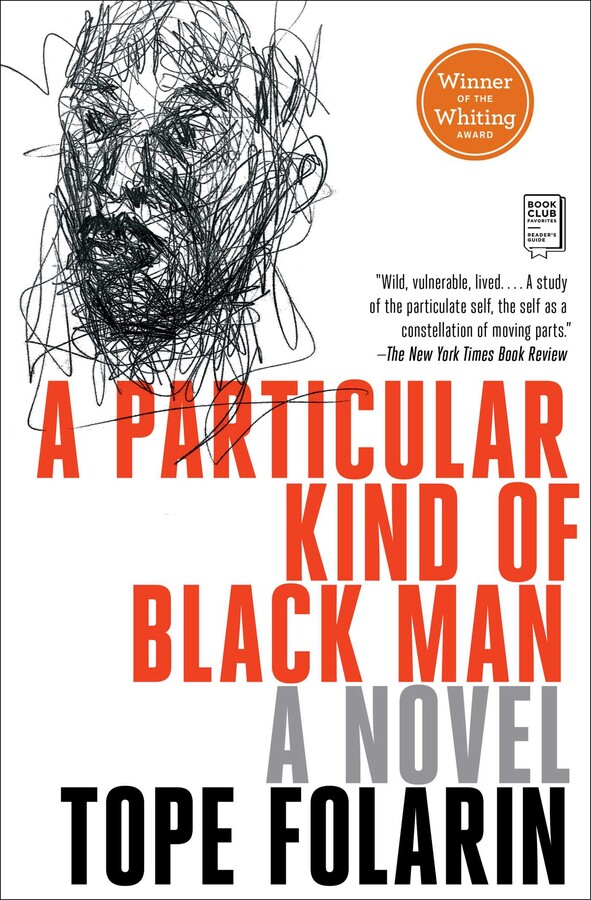
“That planet isn’t real, is it?”

“That’s correct. Everything you experience there has been programmed and transmitted to your brain. We didn’t want to create a fantasy world, you know, where everything’s just as the patient wants it.”

“What if they never want to come back?”

“We forcefully wake them up, which can be quite painful, psychologically.”

“And the travelers with silver bracelets were all patients, weren’t they? So everyone else must’ve been fabricated, imagined . . .”
“Emi, who we discharged a little earlier—she left her contact details. Seems she wants to meet up with you.”

She must be thirty-six years old, in this world. Naoshi must be out of the facility too, then. He took off from that planet three days earlier.

I get up.

No need to look in a mirror. I already know the score: I’m a dejected housewife, in my thirties—impatient and frustrated, yet too limp and lethargic to do anything about it. And I live in one of those hideous, uniform, low-rent apartments I can see out the window.

The doctor has left.

I change into my clothes.

Waiting for me in the corridor is my husband.

Naoshi’s grown so shabby and unsightly, a goblin next to his past self. Silently, he steps towards me.

I take his hand, for the first time in forever. “Please, let’s not go to that planet anymore. Do you realize what these reboots are doing to us?”

He issues some vague sounds in response. And outside, the day turns to a swampy night.