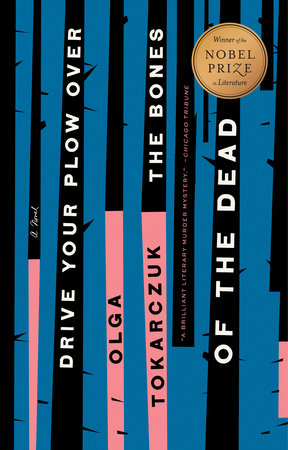
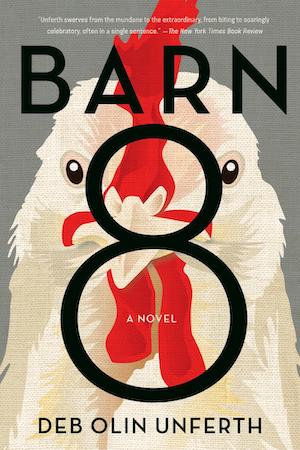
If you’re like a lot of people, you thought of Maxine Hong Kingston or Amy Tan, maybe Gish Jen or Celeste Ng—wonderful writers, all. But there’s a whole new wave of Chinese American fiction writers that should be lighting up your radar.
In the past few years, an impressive number of Chinese American writers have burst onto the scene with novels and short story collections on a wide range of subjects—Beijing slackers, the Wild West, queer love, and yes, a global pandemic, to name just a few—in a dazzling array of styles and subgenres. Taken together, these works of fiction offer a complex portrait of the Chinese diaspora.
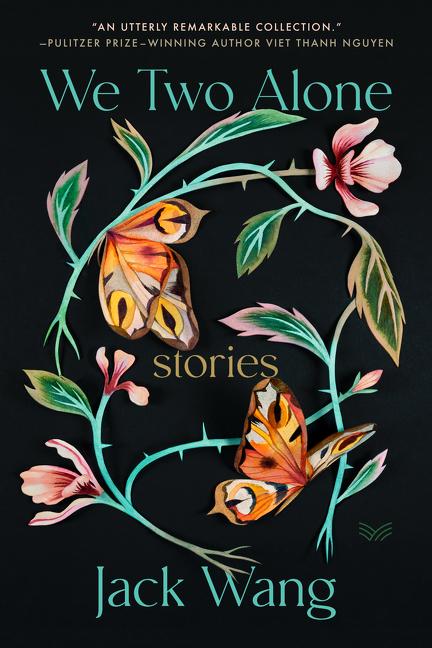
My own debut story collection, We Two Alone, adds to that portrait. Set on five continents and spanning nearly a century, We Two Alone tells not the story but some of the many stories of the Chinese immigrant experience. In one, a laundry boy risks his life to play organized hockey in Vancouver in the 1920s by pretending to be a girl. In another, a family struggles to buy a home in a white neighborhood in Port Elizabeth during the era of apartheid. All of these stories, mine and others’, help us understand the myriad ways of being “Chinese,” especially in America.
Here are eight recent works of fiction—all debuts—from the Chinese American New Wave:
Candice Chen moves from Utah to New York City, trying to outrun millennial ennui and the expectations of her dead parents. When a fungal infection turns most of the world into zombies, a pregnant Candice falls in with a misbegotten band of survivors. Like Candice herself, who continues at first to work in an empty office building, even as the city hollows out, those who get infected are doomed to repeat mindless routines, which suggests the ways that late capitalism might be making zombies of us all.
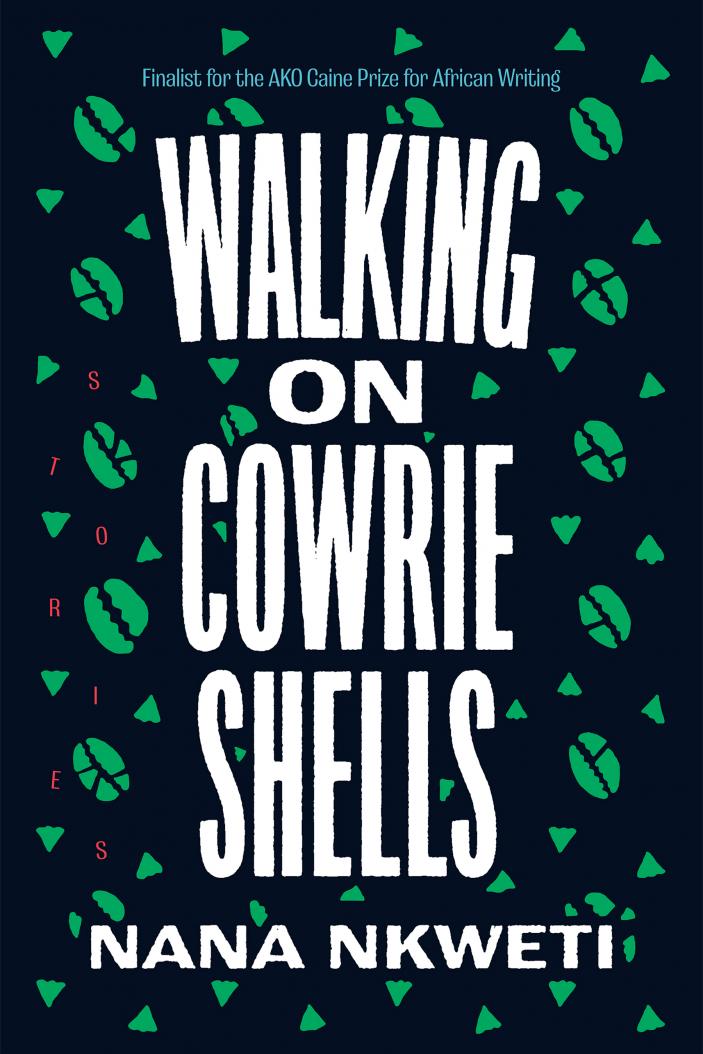
A fraternal twin endangers herself when she begins to post pro-democratic messages on social media. A woman who takes calls for a government helpline is tracked down by an abusive ex. A group of subway riders in Beijing acquiesces to authorities while trapped underground for months, in what might be a perfect allegory for social and political apathy—and ways to resist. Ranging from tender and mournful to gently absurd and dystopian, the stories in this collection are razor-sharp frontline reports on the paradoxes of contemporary China.
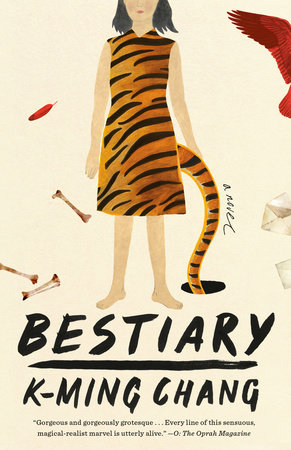
After hearing her mother’s story about a tiger spirit that wants to be a woman, Daughter grows a tiger tail, becomes lovers with a girl named Ben, and unravels the mysteries of her matriarchal line from Taiwan to Arkansas and beyond. This is a fabulist novel in which men can fly and women give birth to geese, rendered in fearlessly carnal and inventive language. Bestiary came out last year, when the author was 22. If you think Beth Harmon in The Queen’s Gambit is a prodigious young talent, wait till you read K-Ming Chang.
Unbeknown to their parents, Jack’s five-year-old sister Annabel is sleepwalking at night through their neighborhood in Plano, Texas, and bullying a girl at school named Elsie, but it’s not until Elsie makes confused Atonement-esque accusations against Jack’s father that the Cheng family is truly upended. Part dream and part nightmare, with an epigraph from Dracula, this lyrical, meditative, and nocturnal novel trawls some of the real monsters lurking beneath the placid surface of America’s tonier suburbs.
This elegant collection of stories is often about the fuerdai, the second-generation rich. In “Fuerdai to the Max,” a couple of louche characters run back to Beijing after tormenting a schoolmate in the US. In “Days of Being Mild,” a ne’er-do-well and his motley crew try to shoot a music video in Beijing for a band called Brass Donkey before his father sends him to a respectable job in the States. Like the Bei Piao—twentysomethings who drift to Beijing—these stories are “very good at being young.”
If Home Remedies is about the well-off, Sour Heart is about the down and out, those who live in the crumbling apartments of Bushwick, Flatbush, and Woodside. The first story opens with a memorably long, gut-churning, and hilarious sentence about the challenges one family faces anytime anyone needs to take “a big dump.” Whether the subject is a clingy younger brother, a menacing girl at school, or sexual exploration gone awry, these seven stories capture both the humor and the terror of girlhood in bawdy and bracingly honest prose.
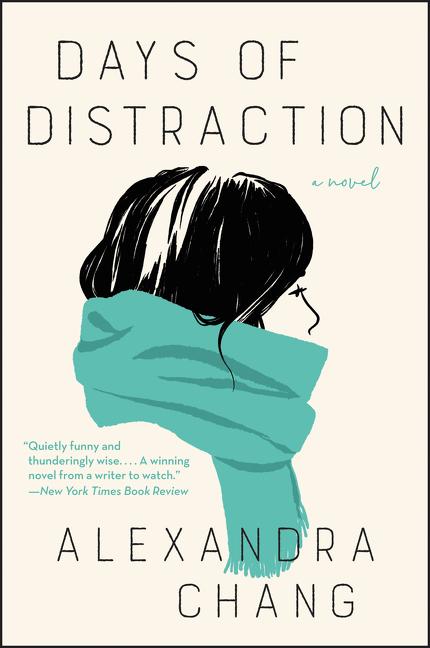
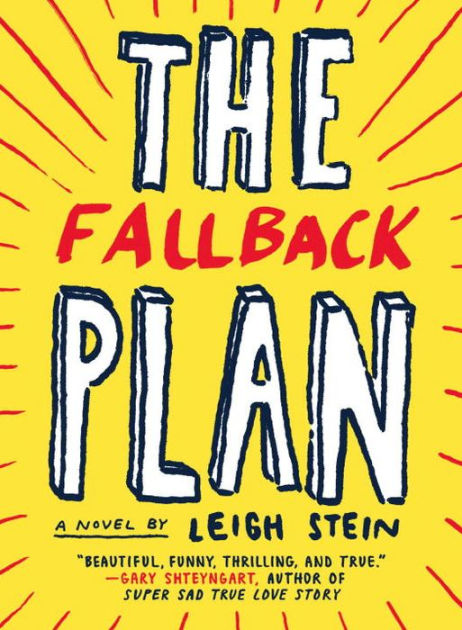
25-year-old Alexandra is a tech reporter in San Francisco who’s overlooked at work, so when her boyfriend J, who’s white, gets accepted to a Ph.D. program at Cornell, she decides to go with him. But their unsettling road trip through Middle America, and her ensuing loneliness in Ithaca, make her question her relationship with J, who’s often oblivious on matters of race. The novel’s artful blend of fiction and nonfiction produces an incisive meditation on interracial relationships. Autofiction may be fiction’s subgenre du jour, but this novel is built to last.
When Ba dies in the night, 12-year-old Lucy and her androgynous younger sister Sam set off to give him a proper burial and to make their way as orphans on the scabrous American frontier. As they take divergent paths, we learn of the family’s ill-fated search for gold in the hills of California. Like recurring chapter titles such as “Mud,” “Wind,” “Water,” and “Blood,” the story feels elemental, and Zhang is a stylist through and through. This is a novel that reminds us that Chinese people helped build this country and have been in America for a long, long time.
Katharina Kepler is a witch, or so her neighbors think. She’s also the mother of brilliant Johannes, mathematician, and author of the planetary laws of motion (you may have heard of him)—not to mention, an odd woman, an herbalist with a frank disposition who tries to serve cures, who doesn’t quite fit in. Rumors say she served her neighbor a bitter drink that made her ill, that a pig died after she touched its hoof. But is she a witch?
Rivka Galchen’s latest book, Everyone Knows Your Mother is a Witch, is about fear, suspicion and the ways we make each other into monsters. A reimagination of the trial of Katharina Kepler, told in her voice, it’s a novel about the power of narrative over rational, or factual, truths that plays with layers of belief. In all of these ways, it’s a 17th-century witch novel that feels especially relevant for our fractured, divided, complicated times.
Funny, imaginative and laced with a sly, knowing charm, as one can expect from Galchen, the novel looks at who we are in times of hysterical fear with refreshing empathy. After all, this isn’t just the story of a witch trial—it’s the story of us.
A few days before the publication of her novel, I talked over Zoom with Galchen, my friend and former writing teacher, about alternative facts, misfits, astrology, and the paradox of writing historical fiction to understand our current moment.
Carianne King:How did you discover Katharina’s story? What was the spark that made you think it could be a novel?
Rivka Galchen: I actually came across her totally by chance. These past four years have been stressful for everybody in different ways, and I think it’s affected their reading in different ways. I found that I was reading a lot of nonfiction scientific biographies. I know that sounds like a random genre. But I found it really comforting.
In retrospect, it was a way of processing the present, overwhelming political moment by reading about past political moments. Almost all of the scientific biographies I read were about people who were bullied around by politics and history. So, I think, subconsciously, that was part of what was going on. I was reading about past political moments, but without reading about politics.
I really wanted to read about Kepler, but there really wasn’t anything in the English language. I looked everywhere.
I bought this book by the scholar Ulinka Rublack called The Astronomer and the Witch. It wasn’t even about Kepler, but I thought, “I’ll learn something about Kepler.” I didn’t really know anything about the story, but when I read the book, I was thunderstruck. It just seemed like the most interesting thing to learn about, the most interesting time period, and she just seemed like the most interesting character—and that was it, that was how I came to her story.
I noticed when I was reading the book, this scholarly book, I was reading it with a lot of suspense. Like, “I wonder if she is a witch or not!” I observed that emotion in myself, and that was part of it, too.
I also connected Katharina to women in my life—older women who don’t read the room, who are really smart, really capable, but who rub people the wrong way, or who people process weirdly because they have their own norms and their own way of doing things. I’ve thought of Katharina like that. She was almost the oldest woman in town, she’d been making her own living for decades and that was just not normal. Her child was very exceptional. I thought that she must seem strange to people. And that did connect to women, and men, in my life who are more susceptible to being misunderstood.
CK: The novel reimagines the depositions of Katharina’s neighbors, based on real historical documents. How did that fill in a picture of who she was?
RG: I think what I found most moving and touching and sort of sad was that Katharina was someone who was outgoing—someone who felt like she had quite a bit to offer. She was that person who gives you advice maybe when you don’t want it, or maybe you don’t want it at the time, and then it goes badly. Or, maybe, sometimes, it’s bad advice!
What I found moving is that you can actually see, in the deposition of the tailor, for example—he didn’t want to throw her under the bus, as we would say today. He knew he didn’t really know what the truth was, and he was also a man who had suffered terribly. He was like, “Well, maybe, maybe if we looked into it…” and I found that to be such a human moment.
When I was first writing this, I thought, how do you write this story? Because if it’s just a bunch of evil people persecuting an innocent person—that’s a nonfiction story, that’s not a novel. But there were these moments where I saw a human trying to contend with something beyond that.
I actually think it’s really hard to write about positive feelings. It’s often more fun to write about anger and rage and anxiety and paranoia.
CK: Do you observe that women who go against the grain, both back then and now, in 2021, are often the ones to be called witches?
RG: I think “unrelatable” or “unlikable” are the more modern witch terms. Maybe with a dash of “ambitious,” though I feel like that is maybe more of a 1980s slander used for women. Today, at least in my mini-world, I’d probably feel pretty good about being called a witch. It does remind me, though, of watching reruns of the sitcom Bewitched every morning before school as a kid. Right before it, there was I Dream Of Jeannie. Both shows were about women with, literally, extraordinary powers. It’s interesting to think how those shows “worked.” Both of the powerful women were very likable! Thinking on those shows, I wonder if in some ways we’ve slid backwards, even if in other ways we’ve progressed.
CK: Reading the novel, I was reminded, of course, of “alternative facts” and the Trump era we just witnessed. How much was this on your mind, either subconsciously or explicitly, as you were writing?
RG: It definitely was on my mind, but the way that I work, it had to be at the back of my mind and not the front. I really wanted to escape the present moment. I think we all found it stressful. I started to hate my laptop, because that was where I read the news.
I think it’s really hard to write about positive feelings. It’s often more fun to write about anger and rage and anxiety and paranoia.
Katharina, she’s the mother of an amazing mathematician, and she has this almost childlike, sweet sense that if you can prove something, people will listen because you’ve shown why it’s the case. I find that quite moving because it’s so incorrect. It’s not the way humans seem to work. And so that was part of the connection to the present moment—it was just the folly of thinking, like, if you just run a fact-check on this, it’s going to go away.
That was part of it, and also, I’m still one of those people, who felt like we’re watching the end of American democracy. In a funny way, to go back and read about the Thirty Years’ War and find out that it ended. I think there was something comforting about traveling back in time where these becamestable horrible things instead of suspenseful horrible things.
CK: I read that Donald Trump used the term “witch hunt” 300 times on Twitter during his presidency. What do you notice about how the term has been appropriated today? Is Donald Trump a witch?
RG: The man, devastatingly, has powers. But his powers seem so human—in their origins: extreme selfishness, extreme greed, extreme aggression, extreme cowardice. I don’t think he merits the aura of the supernatural.
But in terms of that phrase, “witch hunt,” it has been terrifying to see him convince millions of people that the perpetrator of injustice is the opposite: a victim of injustice. We see how the spell is cast, yet remain vulnerable to it.
CK: Simon, Katharina’s legal guardian, who helps transcribe and tell her story, is told, “People don’t like an old lady story.” Do you agree that the perspectives of older women are often sidelined in fiction?
RG: One of my favorite books is Memento Mori by Muriel Spark—it’s about a bunch of octogenarians, but she wrote it in her 30s! They’re all getting these phone calls that one day, they will die, and so it’s like a mystery or a murder mystery, but it’s actually true. They’re all old and they are going to die.
It’s not like there’s no books with older people and older women in particular. It’s not none. There’s just very few. And then it always stayed with me that Spark wrote that book when she was in her 30s, that it was actually a relatively early book for her. And she’s such a strange human being, and I thought that part of that strangeness that worked for her was that she could take these people seriously when most 30-year-olds would be writing about love and marriage—or whatever it would be.
CK: Speaking of stories we tell ourselves, many people I know are either earnestly or ironically obsessed with astrology today. What do you make of today’s astrology trend?
I think ‘unrelatable’ or ‘unlikable’ are the more modern witch terms.
RG: When I was trying to learn more about astrology, I connected to this feeling of being underserved by the knowledge-gathering tools around you. Like, feeling underserved by self-help and neuroscience and even just in terms of your own life and your relationship to all those things covered in astrology—like love, work, money. I feel really sympathetic to those tools being inefficient. I can’t make the same leap into feeling like this random, other cockamamie thing out of nowhere is somehow sufficient. But I can connect to the emotion of why people do.
There are details in the novel about how it’s a time of scarcity, and so you do empathize with how the characters are grasping for something that would help them make sense of their suffering.
RG: It would feel like a persecution if the crop failed! You sort of feel like, “The crop failed me.” And if you don’t want it to be because of an angry or indifferent god, you’ve got to find some evil out there.
CK: Katharina weighs how much to engage with her accusers. In fractured times, given the choice between getting into the middle of the hysteria, which could be maddening, or staying impartial and letting things play out, do you think there’s a better choice? To me, it seems like a lose-lose!
RG: I wish that I knew! That’s my big question. It does feel like a lose-lose. I feel that in the contemporary moment, whatever the issue is—it just seems really obvious that you talk to someone who is anti-vaccine, they’re only going to be more anti-vaccine after the conversation, and you’re only going to be more pro-vaccine, or whatever the issue might be. I almost never see a model where you reasoned it out with someone and share your different views and come to something—I just never see that happen. It actually always seems to be other things that shift people.
CK: For Katharina, her witchiness comes from being a misfit, or misunderstood—but I think it also connects to her power, her ability to see things others can’t. Could it ever be a good thing to be called a witch?
RG: Definitely! Being at an angle from whatever setting one is in—that confers insight. So does being vulnerable.
On my easiest days as a gastroenterologist, the work makes exquisite sense. Maybe a woman comes back to my office just to say thanks, those antibiotics I prescribed a few months ago fixed things right up. Maybe in the endoscopy suite I examine a man with rectal bleeding, find a large precancerous polyp and remove it cleanly with an electrocautery snare. At such times the body seems as legible as it is in medical textbooks, its various compartments laid out in cross-section.
Many days aren’t so easy. My practice focuses on the muscle and nerve of the gut, where dysfunction often evades conventional diagnostics. For lack of obvious testing abnormalities, the most common disease entities I deal with—irritable bowel syndrome, functional dyspepsia, esophageal hypersensitivity—are defined on the basis of patterned symptoms, which I rely on patients to describe. The language used in my conversations with patients becomes increasingly important, both to characterize their distress accurately and to assure them that I take it seriously.
Credence, I’d like to think, is woven into the fabric of my subspecialty, depleted as it is of opportunities for hard proof—telltale biopsies and revelatory scans. We purport to squint a bit farther into the distance than our colleagues, locating pathology on landscapes that have yet to resolve themselves completely. Part of the satisfaction of my work, I suppose, is the self-satisfaction that comes with leaning into a certain romantic vision of the good doctor: radically sympathetic and deeply curious, keen to take suffering at face value, unintimidated by the prospect of a thousand-piece puzzle.
The skeptical physician becomes a stock character in these narratives—conceited, distracted, and possessed of terrible bedside manner.
And yet I know more than a few patients who would object to that description of me. To them, I’m just the latest clinician to whom their illness has proven illegible. Sometimes they make it obvious that I’ve failed to meet their needs by throwing up their hands or storming out of the exam room. Other times I get the sense of it indirectly, months later, when my offer of a follow-up appointment turns out to have been quietly declined. Still other times I feel the tension brewing in my own gut—a quiet restlessness, the creep of doubt—in the face of a story so intricate or circular that it offers no real point of entry.
For want of a capable provider, patients looking to make sense of a complicated illness experience are left to do so on their own. The emergence of long Covid, with its shifting constellation of non-specific symptoms like fatigue, brain fog, and migratory pain, has catalyzed this conversation, making it harder to ignore. But published narratives from individuals stranded in these biomedical borderlands were already proliferating in the years leading up to the pandemic, documenting the twofold misery of debilitating illness and its dismissal by the professional orthodoxy. I’ve followed that work with interest, compelled by my field’s reflection in such an unflattering mirror.
The skeptical physician becomes a stock character in these narratives—conceited, distracted, and possessed of terrible bedside manner. He (it’s often, though not always, a he) encapsulates the tunnel vision of conventional medicine, its steady undercurrent of hubris. He’s the story’s most obvious villain, more nefarious even than the sickness itself, which seems to smolder as a direct result of the doctor’s belittlement. I’m well aware of the stereotype, which makes me wonder why I find myself still hewing to its script.
Blaming the system feels like a safe place to start, designed as it is to shunt certain patients to the periphery. In her 2020 memoir The Lady’s Handbook for Her Mysterious Illness, Sarah Ramey offers up an early rebuke of the capitalist drumbeat that guides contemporary clinical practice, privileging pathology that can be addressed quickly, procedurally, and at scale. “Virtually every problem in the health care system can be understood by following the money,” she writes, and the critique rings true to me too. The aforementioned snare polypectomy nets my employer more than an office visit that takes three times as long. Commercial incentives tend to predict which inexplicable diseases become, over time, explicable.
It’s also a critique that offers us clinicians some cover, to whatever extent we can identify alongside patients as objects within that system rather than its operators. That’s not always an easy distinction to make. Biomedical rhetoric tends to valorize doctors, pervading our professional lives with the illusion of authority. The power of my prescription pad obscures the role of pharmaceutical and insurance companies in deciding who actually receives treatment. Exhaustive diagnostic work-ups elide the compulsion not to miss anything with the fear of getting sued. The complex arrangement of subspecialty medicine implies that the knowledge among its branches is encyclopedic, which helps us exclude whatever strains of suffering fall outside their span.
Biomedical rhetoric tends to valorize doctors, pervading our professional lives with the illusion of authority.
Chronic illness narratives sometimes feature physicians who seem to lean into the cruelty of the system. In an episode of Bodies, the Los Angeles public radio show, a woman named Melynda describes a pelvic surgeon who repeatedly denies that a piece of implanted mesh might have led to post-operative pain. In her documentary Unrest, Jennifer Brea shares the story of a woman in Denmark with chronic fatigue whose doctor forcibly hospitalized her for over a year after calling her condition psychosomatic. Anecdotes like these, in which patients’ symptoms are explicitly contradicted, come to emblematize biomedical disbelief by manifesting it so starkly.
More often, though, doctors’ cruelty in the face of ill-defined distress reads as thoughtless, automatic, almost circumstantial. In her 2019 memoir Sick, Porochista Khakpour describes the common experience of being referred from one ineffectual expert to the next. “They seemed as clueless as I was, my body a mystery they couldn’t solve,” she writes, gesturing toward modern medicine’s utopian ideals as a kind of unkept promise. “I started to feel rejected by them, sensing their dread when they’d greet me, feeling the frustration in their bodies as they pored over yet another batch of bloodwork.” In her account of this demoralizing cycle, I’m struck by what sounds like an edge of empathy for her doctors and their collective shortcomings. Arrogance softens into ignorance; what they lack more than belief is bandwidth.
Given the standard configuration of doctors’ office visits, empathy usually runs as a one-way street. Illness sets the balance of power between patients and physicians, but framed diplomas on the wall and cash transactions at the checkout desk reinforce it. That asymmetry leaves little room for speaking frankly about the external constraints on our time and attention. There’s no elegant way to describe to a patient how thousand-piece puzzles become a different sort of exercise when there are a thousand others to assemble, each in an hour or less. So the pressure we feel finds cruder modes of expression: a raised eyebrow, a tapping foot, a barely muffled sigh.
Almost every chronic illness story ends with a call for change. Sometimes it’s aimed broadly, at the various structural biases that skew medical attention away from vulnerable populations. In her 2017 book Doing Harm, for instance, Maya Dusenbery attributes medicine’s antagonism toward women to a “knowledge gap” involving research skewed toward male bodies and a “trust gap” born of the long history of diminishing female complaints as some version of hysteria. These sorts of rubrics are helpful for scrutinizing patterns of injustice that infiltrate the entire profession.
Given the intimacy of first-person illness narratives, however, the injustices they detail often feel quite personal. Each patient dwells on the particular loneliness of suffering internally in the absence of external signs, of appealing for help again and again but never receiving it. Nested among medicine’s larger flaws is the more immediate crisis of a misunderstood diagnosis—from the myalgic encephalomyelitis at the center of Brea’s work to the chronic Lyme at the center of Khakpour’s to the series of others (postural orthostatic tachycardia syndrome, mast cell activation syndrome, complex regional pain syndrome) that cycle through Ramey’s.
Reading these books as a physician, I’m sometimes lulled into believing that the change they call for could begin in individual clinical encounters.
Reading these books as a physician, I’m sometimes lulled into believing that the change they call for could begin in individual clinical encounters. Even if I can’t spend days parsing out every patient’s pain, I can control how much effort I put into investigating it—by ordering diagnostic tests at the boundaries of conventional practice, recommending experimental assays that claim to clarify diagnoses otherwise clouded in uncertainty. If money and lab data constitute the lingua franca of the medical-industrial complex, maybe they’re also the best available means for doctors to take chronic illness in good faith.
But beyond basic questions of resource stewardship, it’s hard to justify seeking out speculative information when you don’t know what to do with it. Independent laboratories across the country, for example, have begun offering stool tests that profile the gut microbiome—that is, the trillions of bacteria residing in our bowels. Some of my patients with unexplained abdominal symptoms bring their results with them to office visits, having paid for them out of pocket, laying out the pages for my expert interpretation. I glance over the various pie charts and bar graphs before confessing that I can’t make sense of them either. The frontiers of medicine double as its limits.
If the doubting doctor is a staple figure in chronic illness narratives, so too is the freethinking practitioner. She’s rooted in an alternative health framework, rejecting the subspecialty silos of conventional healthcare with the language of integration. She doesn’t take insurance, probably, but offers fees on a sliding scale. She chooses the route of radical affirmation, looking beyond the distorted lens of evidence-based medicine, walking confidently with her patients out on a limb. Why can’t I?
Sometimes I think I’m looking out for my patients in holding back, hoping to keep them from inadvertent harm. That harm might manifest physically, through unstudied cures that prove toxic in their own right; financially, through the stockpiling of snake oil; or philosophically, through heterodox wellness beliefs that lead, like rabbit holes, further and further toward the fringe. Less flatteringly, I’m also looking out for myself. Chronic illness narratives showcase how the experience can pull people outward, like the tide, risking their disappearance over the horizon, into the depths. Biomedicine serves as a convenient sort of mooring in that regard—a beacon light, however broken, leading me back toward solid ground.
Around ten minutes into her episode of Bodies, Melynda relates a parallel crisis around her erstwhile Mormonism, invoking feelings she holds on “a cellular, deep, spiritual level.” I paused at this phrase when I first heard it, struck by the arrangement of these words as synonyms, the way molecular physiology could abut matters of faith. Her conflation of the cellular and the spiritual felt careless to me, the sort of throwaway verbiage that leaves just enough space for pseudoscience to bloom.
But it also recalled the lyricism of certain pathology lectures in medical school, when my professors spoke to the body’s ongoing ability to astonish us despite our increasingly powerful ability to understand its functions at the microscopic level. It’s at that level especially that the body seems still to work in mysterious ways. It happens regularly enough, even in the most hallowed hospitals—doctors humbled by mild illnesses that end suddenly in death, or by dire prognoses inexplicably thwarted.
When my clinical conversations hit a wall, I try to remember that I might just be too dense to pass through it.
In general, I’m not a man of faith. On the rare occasions that patients’ families have asked me to join hands with them in prayer by the bedside, I’ve done so begrudgingly. I respect the devotion behind the request, but it’s a bit of an imposition. Still, among patients whose religious beliefs I don’t share, I try to swap atheism for agnosticism. It’s true for chronic illness too: when my clinical conversations hit a wall, I try to remember that I might just be too dense to pass through it.
Maybe that strategy is just another cop-out—one that gets us to a kind of decency but still falls short of mutual understanding. Agnosticism remains easy to confuse for apathy. Chronic illness advocates rightly argue that more research is needed to demarginalize these disorders and entrench them in reliable therapeutic paradigms. Until then, though, when I engage with these narratives and see myself in the figure of the doubting doctor, it’s hard to come up with a better defense than humility to the boundedness of my practice, deference to unanswerable questions.
I sometimes wonder to what extent authors like Khakpour and Ramey have clinical readers like me in mind. Biomedical resentment often carries the tenor of deliberate instruction, but it would lay bare my own bloated clinical ego to presume myself as their target audience, to imagine talking to me as their primary goal. Listening to a chronic illness story for hundreds of pages without interruption, without even the possibility of interruption, is an experience that could never be replicated in my office, and not just for the sake of time. There’s no opportunity to validate or refute the reality of these prolonged accounts, and no real need for it either. Skepticism loses its teeth; truth is in the telling. The standard configuration between physician and patient gets inverted—here I’m the one on the outside looking in.
There’s a building under construction outside my window, close enough that when it’s finished, there will be nothing but building in my line of sight. Progress has been slow and therefore mesmerizing. One morning, I watched two men assemble half a dozen floors of scaffolding. They were acrobats in metal-lined boots and many types of vests. The scaffolding came down recently, after so many months, and revealed a huge grey wall without a single window. The wall is what I’m looking at now—what I look at nearly all day long.
My first memory of you is sitting at the table in Nicole’s kitchen, writing a story that was going to get you in trouble with your girlfriend. Later, you remembered this—the kitchen, the story, the girlfriend—but you didn’t remember me being there.
I was just stopping by, because spontaneous visits were a kind of proof of loyalty to Nicole, especially when she was lonely—when she was in between girlfriends or in between shows. I don’t think I ever took my coat off. One of the black puffy coats that everyone was wearing at the time, its puffiness and its ubiquity a precious insulation. I was skinnier than I should have been, and I was always cold.
You were sitting at your laptop, drinking straight from a gallon jug of water and tugging nervously at your beard. The story was for a class you were taking in the evenings, taught by a well-known writer. A writer with enviable success, a kind of fame that seemed to befit a different profession: people knew his name and his face, they got sentences from his books tattooed in visible places. There were a few political issues the writer had decided to care about, and when he spoke out about them he was treated, strangely, as an authority. Your girlfriend liked his novels more than you did, and she agreed with his political opinions.
That afternoon, you told me the story wasn’t really fiction.
“Oh,” I said, “one of those,” and in my memory you smiled. You’d changed names, switched a few things around—the usual partial disguise. In the middle of the story, you’d copied and pasted an email from your girlfriend. At first, you’d intended to alter it in little ways, maybe even in meaningful ways. But then you kept writing, and it became impossible to dismantle.
“You can’t improve the truth,” I said, which I meant as another joke. You frowned.
The way I remember it there was silence, the three of us looking off into different vacant spaces. Eventually, Nicole took over. She told us a story about her friend the professional hockey player. All her stories were about her friend the. The hockey player, the speechwriter, the glass blower. (I wondered sometimes how I appeared in these stories, or whether I did, since I wasn’t the anything. I had a nonspecific job, a vague creative ambition, a family that sounded interesting only if I told the right anecdotes.) The hockey player had been married for years, even though he was only twenty-five. He and his wife had known each other since they were kids. They were more in love, Nicole said, than anyone she’d ever met. And yet the wife had never attended a single one of his hockey games. It was a matter of principle. She’d seen a brawl on the ice once and had never gone back. The punching, the yelling, the hands made grotesque in their huge foam gloves. It was even worse when the fight was over. She could feel the satisfaction in the stadium, in the men on the ice and the men in the stands. It was the pleasure of spent energy, like a room after sex. Then the game went on as usual, except she couldn’t stop thinking that on the bottom of every skate was a knife.
The two of you kept talking, eating from a large bowl of popcorn until it was the kernels you were eating. I could hear them crack between your teeth. Nicole went into the kitchen to refill the empty bowl and for a while you looked at your computer screen. There were a few stray pops from the stove. Without looking up, you said, “The story doesn’t really matter.”
It would be read by no more than twelve people, and only because they were required to. Your girlfriend would ask to read it, too, and there was no question that she would recognize her own words. You said she looked for herself in everything you wrote.
“Does she find herself?”
You nodded. “Even when she isn’t there.”
There was a crescendo of popping, faster and louder, and it seemed to me as though we were defying something by sitting still, by thinking and speaking slowly. And then the popping stopped.
“Maybe,” you said, “the thing I’m most afraid of is that she won’t be angry at all.” Nicole appeared with the bowl. You grabbed a handful, then let it go, surprised by the heat. “That she might even be pleased.”
I wanted to say something—the right thing. Instead, I left in my zipped-up coat, my tongue worrying the shard of a popcorn kernel in between my teeth. And it felt good—like the mortifying pain of a period cramp or a sudden spasm in the arch of my foot—that you looked up only briefly, that my departure was unremarkable, that I could be certain there was nothing I had left behind.
I’ve been looking for mailboxes lately, wondering if this is a letter I’ll ever send. In my neighborhood, half of them have been painted green and padlocked. I guess they’re empty, though sometimes I picture a stack of envelopes trapped inside, each one licked shut and Forever-stamped.
I was never a writer the way you and Nicole were. I never took classes or entered contests or learned to like the readings where everyone squinted while they listened, where every plastic cup was filled with half an inch of wine. I never sent out my work, which meant I never had it returned: the package addressed in my own handwriting, a form letter with no signature.
When I imagine all the things I’ve written, I imagine them piled up in the kitchen, the mess of an old woman who can’t bear to part with her Tupperware—flimsy plastic in every imaginable size, because someday it might be just the thing she’s looking for. The beginning of a story, the title of an essay. The journals, the text messages with lowercase i’s, the emails signed yours or yrs, the ones I’ve started signing xx because someone British started doing it first, someone who is at once forbidding and kind, one x blown into the ether and the other erected like a shield.
To find the nearest mailbox, I pass the construction workers on a break, sitting in whatever shade they can find, their legs stretched out across the sidewalk. In the morning, when I feel cool and light and younger than I really am, they are already sweating and eating lunch. Their helmets are empty bowls on the sidewalk; the hats underneath are white with their bodies’ salt. They have earned their rest, their sandwiches in Saran Wrap, their huge containers of rice. And then there is nothing interesting in the words I have written and refused to throw out. I want muscles and a big appetite. I want to make a building and leave it outside someone else’s window.
Three days a week, I’m a dog walker. The dog-walking company is owned by my neighbor, Konstantin. His best friends are successful entrepreneurs. Until recently, they all lived together, hatching ideas in the kitchen, vaping and tapping notes on their phones. The friends live in Manhattan now. They have it made, Konstantin says. I suspect this is an exaggeration, but I like the expression. Is there a difference: making it and having it made?
The dog-walking company is Konstantin’s attempt at madeness, and I am in no position not to help. Most of my jobs—odd jobs, they used to be called—involve being alone in front of a computer, sending emails to people I will never meet. I proofread their résumés, correct typos in their letters To Whom It May Concern. A woman who signs every text sincerely pays me to Skype with her daughter—in college, a major she made up—whenever deadlines approach.
Is there a difference: making it and having it made?
There were six or seven dogs at the beginning, but now there are only two. A pair of elderly Labradors in a studio apartment. Roommates, their owner says. They have grizzled white snouts and bad hips. They can hardly squat to take their shits. At least, Konstantin says, they have each other.
More than a year passes between my first memory of you and my second. Your girlfriend was gone by then. The famous writer had incurred the wrath of certain people online, which didn’t stop him from writing books and didn’t stop the tattoo-getters from reading them. The new books were less popular than the old ones, but he’d started dating a celebrity—a real one—and in this way his fame did not diminish.
We were at a party at the end of the summer, in the mosquito-infested backyard of someone Nicole had recently decided she loved. I arrived late, you arrived even later. Paper plates were being swept into a big trash bag, the embers in the grill had turned grey and dusty, and this belatedness seemed like a kind of intimacy. We stood next to a plastic bucket of beers that had once been filled with ice and now was filled with water, which was where we met Nicole’s friend the evangelical. His name was Josiah.
He was the kind of evangelical who likes beer—also mushrooms and salvia; the celestial-feeling stuff, he said— and he plunged his hand into the bucket alongside ours. We stood there, our forearms dripping, while he explained that the reason God’s love is better than everyone else’s is that it’s unconditional. There were, he admitted, human replicas that strove for the same steadfastness. Maternal love, say, and the kind of marital love that actually lasts. But it was only divine love that could really be said to have zero strings attached.
I slapped a mosquito and got blood on my hand. I told Josiah that sounded awful. I told him I wanted conditions—as many, preferably, as I could get.
“Why is being let off the hook a form of love?”
I told him—I didn’t look at you—that I didn’t want to be loved in spite of: my mood swings and my neck pain, my secret arrogance and my secret laziness, my bad dental hygiene and my leftovers molding at the back of the fridge.
Josiah was a little drunk already, and his evangelism made him seem drunker. He scraped the label off his beer bottle a little too vigorously. He rocked back and forth on his heels. He was in the middle of a sentence when a woman came up beside him, tugging on his arm the way a little kid might, saying something excitedly. His whole body came alive with her urgency, as if all this time he had been waiting for someone, maybe anyone, to arrive with that childlike command: come look. The commotion spread through the yard, and gradually all the remaining guests followed them inside.
We stayed where we were, the warm beer in the warm water in between us. In the silence, I cataloged the things I had revealed to you. My dark moods, my dirty teeth. With Josiah, they had been effortless to divulge, as if they were merely evidence in an argument, as if they didn’t really have anything to do with me.
“Quite a character,” I said.
“Yeah.”
You shook your head, as if trying to shake your hair away from your face, but it was slicked to your forehead with sweat. “I’m afraid one day I’ll use him,” you said, finishing your beer.
“Use him?”
“You know, it’ll come up in conversation. Love, or faith. Or maybe it won’t, and I’ll just see a way to fill the silence.”
“For the sake of a story,” I said, and you nodded.
“Would it be so bad?” I asked. “Is he really so sacred?”
You put the empty bottle back in the water, where it bobbed on the surface.
“Maybe not.” If we had been sitting down, our knees might have touched, or our shoulders. Standing up, the distance between us couldn’t be bridged by accident. “Or maybe everyone is?”
And so we vowed that evening not to use Josiah. I haven’t told anyone about him, but I think about him often. I wonder what will happen to him, or what already has. Eventually, he’ll tell someone he loves them no matter what. In sickness and in health. Till death—or, I guess, beyond it. I wonder if together they will have agreed to total devotion, or if they will acknowledge the taut but not unbreakable strings that bind them, the promise they will always be making: to sway with the force of something unseen, to love and also to believe.
When the party was over, we met Nicole on the front steps.
“Oh good,” she said, “you found each other.”
This spoiled something for me, as if she had predicted whatever had transpired between us. Her hair was unbrushed and I remember the strap of her dress slipping down her shoulder. She made a point of always seeming a little undone. She told us that the commotion had been about a bird’s nest wedged in the corner of the kitchen windowsill, twigs poking through the screen and into the rack of drying dishes. Inside the nest were three tiny birds, pink and unfeathered. A consensus had emerged that they were in danger of falling. The sill was narrow, the nest was lopsided. Everyone crowded around the sink, arguing among themselves about what to do, when suddenly a man in the group opened the window and pulled the nest inside. Nicole paused in her telling of the story. Her face fell, she sighed heavily.
“So that’s the end of that,” she said. You and I looked at each other uncertainly, and our puzzlement seemed to exasperate her.
“Everyone knows,” she said, “that a bird won’t come near her babies if they’ve received a human touch.”
There is nothing stopping me from hand-delivering this letter. There were many mornings, years ago, when I walked from your house to mine. It was a long walk—there was a bus I might have taken—but I was trying to postpone my arrival, to let the feeling of being with you languish. Back then, this seemed to me like a necessary condition for being in love: to be immune to, or ignorant of, the waste of time. In fact, that was the last time I experienced it, though I have been in love since, as I hope you have, too. On one of those mornings, the sun burned the part in my hair, and for the rest of the day I was consumed by the image of my scalp, white and unknown, streaked with one perfectly straight pink line.
We fell in love and Nicole fell apart. Is that an unfair way to tell it? It had happened before, we knew that much, even though neither you nor I had been there. She had long since turned it into a story: coming undone. The story was unoriginal, and I was ashamed to realize that I held the generic details against her. Sleeping too much, eating too much, drinking too much. A grey cloud descending.
We were in a movie theater when Nicole called and wouldn’t stop calling. It was October, but already turning cold, and I wore a new coat. Not warm, but elegant. The saddest film of the year, we’d been assured, which was the only kind I ever wanted to watch. I explained the catharsis of this to you—being hollowed out by something that had nothing to do with me. Sounds like a fun date, you said, smiling.
And so I was crying when I ignored Nicole’s first call, and then the second. The third time, we went out into the lobby and I called her back. Everywhere we looked, the faces of famous actors stared out from posters. There were crumbs flattened into the carpet.
At Nicole’s apartment, I went inside and you waited on the sidewalk, as she had instructed. I apologized too many times for this. You had known her so much longer. You’d met her dad, her sister, even one of her second cousins. You were the first one to read her first story. Together, you took mushrooms at the botanical garden, wondering at the alien armor of cacti, the secret language of tree bark. I couldn’t even remember which floor she lived on.
Nicole was lying on a shaggy white rug. Her crying proved that I had never really cried. In her chest was what sounded like a broken motor, revving and wheezing. When she looked up at me, her face was liquid, snot shining on her chin. We lay there on the rug for a while. I said stupid things like breathe, and she nodded, still sputtering. Eventually, when there was quiet, she closed her eyes and gestured toward the next room. She had peed in her bed.
Nicole watched me strip sheets. The urine was a fierce and unexpected yellow.
“I’m always thirsty,” she said. “But I can’t get up.”
The fitted sheet snapped into a heap.
“I just can’t get up.”
The naked mattress was mortifying. Sweat stains and bloodstains and long strands of hair. Grey specks of lint everywhere. I tried to think of something trivial to say, something distracting.
“Is what they say about dust true?” Nicole looked at me blankly. “You know, it’s all just dead skin?”
As soon as the sheets were gone, she lay down again, her face pressed into the pillow without its case. She looked up when my phone rang, and when she saw your name, her body curled in on itself, like a cat, or the kind of bug that can turn into a ball. No, she said. Or maybe she didn’t have to. From the kitchen window, I could see you on the sidewalk, your phone between your ear and your shoulder, blowing into your hands for warmth. When the buzzing in my hand stopped, you looked up, but the lights were off and you couldn’t see me. You stood like that, your face tilted up, as if basking in the streetlamp’s glow, and then you turned and walked away.
Nicole kept detergent in a quart milk container. The man who owned the Laundromat lent me a cap for measuring. I watched the other customers absorbed in their tasks, peeling socks away from shirts, shaking polyester until it let its static go. I tried to follow the same navy blue something as it whirled inside one of the machines, but I lost track of it right away, my blue blurring into all the others.
The day after Thanksgiving, Nicole checked herself into the hospital. She stayed for more than three weeks, until Christmas Eve. In those weeks of waiting, the city turned ugly to me—all its seasonal rituals cold and meaningless. Snow fell overnight and was grey by noon. The subways were crowded with shopping bags, dripping boots and dripping noses. In the morning, Christmas lights were just green plastic wires, strangling every arm of a tree.
We visited twice a week, with clean clothes and snacks. The nurse reminded us of the rules each time: laceless shoes, zipperless coats, no visitors after six, no calls after nine. Half of the time, Nicole declined to see us.
When she checked herself out, Nicole didn’t call you until she was at the airport. That night there were carolers in the park across from my apartment. I could hear you on the phone in the hallway; I could see the candles cupped in their hands. She was flying across the country. She said this as if it were the most normal thing in the world. Homefor the holidays.
You refused to be angry.
“You’re allowed—” I said, and you cut me off with one look.
In the morning, we drove north to your parents’ house, at the end of a potholed road, with a view of nothing but trees. Everything went right that trip: four feet of snow and something always in the oven. But you were quiet and distracted—the smoke detector reminded you there were cookies baking—and I surprised myself by filling the space that you had withdrawn from. I was a new audience for traditions that were getting old. I’d never decorated a Christmas tree, couldn’t believe eggnog was really made out of eggs. Everyone was grateful for me, without quite knowing why. Someone’s dog lunged at someone’s niece and I swept her up in my arms, just in time.
When we got back, the day after the first day of the year, Nicole had so much to tell us. She was writing poetry. A TV pilot, too. She was done with doctors. She was dating a curator. She was better. She wanted us to pretend nothing had ever happened.
For months, every time we saw her—we kept seeing her, we kept worrying about her—the first thing she did was tell us about her latest change. She painted her bedroom walls, then her bedroom floor. She lasered the hair in her armpits, pierced her tragus, asked her dentist to remove all her fillings. There were so many people, she told us, carrying mercury in their mouths. I wasn’t sure any of this made her happy—her ear swelled and oozed—but telling us about it did.
When her sister’s wedding invitation arrived in the mail, Nicole insisted we attend.
“You’ll be my dates,” she said, wrapping one arm around each of our shoulders. The curator was already gone, hardly missed.
The wedding took place at a summer camp. It was the beginning of June and the cabins were empty, but we found a raincoat and a vibrator in the bunk room where the guests slept, which was how everyone started talking about teenage romance. We all wanted to remember it—the special thrill of what we’d called summer love, the hot months in which it had seemed we were sweating away one self, becoming another.
When it was Nicole’s turn, she told the story of kissing a girl for the first time. It had seemed like magic while it was happening.
“Magic,” she repeated. “I know it sounds dramatic.”
But that’s what it was. Late at night, on a dock, when the water and the sky were the same unmoving black. Their lips touched and then their chests—not breasts really, not yet— and Nicole could have sworn she heard the sound of a fish leaping in the air.
And then in the morning the magic was gone. Just like that. The flag on the flagpole was limp, the oatmeal at breakfast was congealed. The girl sought out Nicole’s foot under the table and it wasn’t thrilling; it was clumsy, unbearable. Everywhere she turned, this ordinariness was an accusation. What have you done?
That night there was a dance. Nothing special: acoustic guitars and chaperones. Nicole found the tallest boy and pulled him into the center of the crowd. They kissed under a cheap disco ball. His tongue was muscular and wet. She closed her eyes and her head throbbed with what might have been pain, a vague heat that was easy enough to pretend was desire.
She ignored the girl for the rest of the summer. On the last day, everyone gathered on the hill that led down to the lake, hugging and crying and vowing to stay in touch. Nicole saw the girl looking for her, craning her neck in the crowd.
She let the girl find her. She let their eyes meet for a second, just long enough to be sure that they were dull, desperate eyes, and then Nicole turned away. They never spoke again. A dozen years went by, and then the girl—a woman now, like us—opened a restaurant in Nicole’s neighborhood. Her name appeared in the newspaper, a rave review. The restaurant served food with “feminine energy.” There was a pink sign out front, the name of a goddess in neon script. Nicole told us it was impossible to avoid. Every time she passed by, she crossed the street. Through the window, she saw the waiters’ harried grace, the tables crowded with plates and elbows, the laughter that seemed all the more ecstatic because she couldn’t hear it. Once, Nicole thought she saw the woman— hair pulled back, her hands doing something deftly above a frying pan—and the old shame clenched inside her. She was sweating, or else shivering. Either way, she was trapped, her new self immobilized inside her past self. Like a bug, she said, in amber.
Some of Nicole’s friends insisted she should face her fears. Make a reservation, introduce herself, leave a generous tip. Right the wrongs.
“But I can’t,” she said. “She might never let me forget.” The other wedding guests nodded.
“That’s how I feel about my mother,” one of them said, and the laughing resumed.
I smiled a fake smile because I didn’t believe Nicole. She had told other, more outrageous lies, but their implausibility had never bothered me before: they were good stories. And yet this one seemed invented just for me.
“But it doesn’t have anything to do with you,” you said when I told you.
“Of course it does.” I pictured the amber before it was amber, when it was just sap, dripping or flowing or moving too slow to be seen.
It was a story Nicole knew I would see through. She and I had been to that restaurant one afternoon in the spring. It was raining, the piles of pear blossoms along the sides of the street a soggy beige mass. Inside, the tables were all empty, and the owner served us herself. She was probably in her fifties, the sort of middle-aged woman who didn’t make an effort to seem younger than she was: undyed hair and a plain, leathery face. We drank tea from individual-size pots, and when we left, I said to Nicole, Do you think we’ll grow up like that?
The wedding ceremony was about to begin. We took our seats in the last row, with the guests who had brought their babies or forgotten their ties. The music started. We stood up and sat down as instructed. A velvet bag of rings was passed down the rows, so that it could be warmed by all our hands. I held the bag too long, tracing each ring through the fabric, listening for the slight scrape of metal on metal. You had to take it out of my hands.
Nicole found us after the toasts, her eyes glistening. Her cheeks, too.
“Tears of joy,” she said, with a note of pride. Her dress was darkened with sweat.
“Do those really exist?” I asked.
You glared at me, and Nicole ignored us. She was smiling, tugging us toward the dance floor. I did what she told us to, even though my feet were heavy and my wine spilled and my clothes would need dry cleaning. You danced away from me, spun Nicole’s teenage cousin around and around in circles, her head tipped back, her face frozen with the thrill of almost letting go. When it was all over, when I was lying on the top bunk, imagining that I could feel you staring up from the bottom bunk, then worrying that I couldn’t—feeling, instead, the empty chill of your closed eyes—I said it to myself again and again: it has nothing to do with you.
If I could choose the story of how I found out about Nicole’s book, it would appear for the first time behind the glass of a bookstore’s display window. I would stop in the middle of a bustling sidewalk, like a rock interrupting the stream. Then the book and I would be two objects.
Instead, I found out about it online. It was the middle of the night and all the windows had turned into mirrors. On the website where I bought the book, there was a picture of the cover, a blue background with blocky, old-fashioned letters. When I hovered my cursor over the image, an invitation appeared: see inside! It seemed like a dare, or a taunt, so I didn’t click. I didn’t look for her photo, but I imagined it, her head tilted the way authors’ heads always are, the background blurred into something indistinct but elegant. I turned off all the lights and lay there not sleeping, the laptop faintly humming beside me, waiting for the sun to come up, for the construction workers to arrive.
I read the book twice. First in bed and all at once, and then again in the world, in snatches of pages, not caring where I started or finished. (I remember being interrupted while reading as a child: just let me get to a good place.) I read it on the train and on a bench with the two Labradors breathing damply on my legs. I read it in a park surrounded by a squadron of empty strollers and at another park observed by elderly tai chi practitioners. I let strangers read over my shoulder. I left it, briefly, at the Laundromat, and when I went back and found it on top of the rumbling dryer, the dust jacket was warm with the machine’s heat.
We’re not the only ones in Nicole’s book. The hockey player and the hockey player’s wife, or ex-wife. Half a dozen of her girlfriends: the model, the piano tuner, the disgraced politician’s daughter. Two or three Christians, so it’s a little hard to figure out who’s who. There’s her friend who got me my first real job, who turned out to be sleeping with my first real boss. Nicole’s brother, the one with a farm, and Nicole’s other brother, the one with a car that drives itself. She has not changed names so much as shuffled them. Mine has been reassigned to the nurse at the psychiatric unit, who confiscated Nicole’s notebook and fountain pen and box of a hundred paper clips. She is neither the good nurse nor the bad nurse, so I can’t tell whether to be offended. She disappears after a few pages. Nicole’s father is called Josiah. His own name is given to a teenage patient who slits his wrists: Bob.
You are the only one who remains unchanged. Your name is your name.
For a long time, I wasn’t sure what this made me feel. Your name, over and over again. Your name and your beard, your name and your sneakers, the ones you’ve always worn, your name and your thin gold bracelet, the one you started wearing right before I never saw you again. Your name and the things you said. The things you said to me. The things you said to Nicole you’d said to me.
I considered that I might be angry, and for a while I was sad. But above all I was envious. Not envious that Nicole had known you better. I had long since accepted that the intimacy between you and me would be eclipsed, that love is only ever singular in the details—the popcorn, the bird’s nest—never in intensity, rarely even in longevity. What I am really envious of is that she captured you.
I have never been especially interested in writing stories like Nicole’s, but I’ve tried it here and there, plucking people and things out of life and putting them down on the page. For the most part, it isn’t too hard. It’s a kind of guilty pleasure, to see how efficiently one person can take shape: the slope of a nose, the shriek of a laugh, the joke they won’t stop telling, the boyfriend they bring everywhere. But with you it’s impossible. Hundreds of times I have tried to write what you look like, to remember exactly the words you said, and because it isn’t perfect it’s all wrong. I have sat for hours thinking of what name to give you instead of your real name—your name is common, anything would do, nothing would—and never once did it occur to me to simply keep it the same.
Was the book a success? I never checked, though not because I wasn’t curious. That kind of envy is so much smaller, so much less frightening.
We broke up a few weeks after the wedding. Nicole had been admitted to an important writing program, and we went to the celebrations in her honor—too many of them, everyone eager to make her good fortune official, to prove that whatever had come before it was an aberration, a wheel briefly skidding off the road. We rode the subway to the last party in silence. There was a stroller in the aisle in front of you, and the baby kept trying to meet your gaze—a coy, precocious smile. You didn’t notice, so I elbowed you, but it was too late. The baby had looked away. The party was at a bar with a fireplace. The summer was in full swing, and the logs were untouched and somehow ominous. Nicole’s sister was there—married, pregnant, though we didn’t know it then—and Nicole leaned in to her, bickering pleasantly over the bill. Someone grabbed it out of their hands, insisting.
You and I walked home, even though it was a long walk. You said you couldn’t bear to go back underground. Did we already know what was happening? We took the bridge, but we didn’t stop in the middle, halfway between the islands, above the loud cars and the dark water, because that would have been too symbolic. We said goodbye on the other side, in a park where the trash cans overflowed and the trees were heavy with leaves. We kissed and apologized and clutched futilely at each other’s clothes. I didn’t tell you that Nicole and I had found ourselves in the restaurant bathroom, looking at each other in the unclean mirror, that she said how sorry she was that you hadn’t been admitted to the program. How much you deserved it, how sure she was that one day it would all work out for you.
I didn’t ask why you hadn’t told me. I watched you walk away and let myself imagine that you were resisting the urge to turn around.
I never saw you again, although I bumped into Nicole a few times before she left the city. We always said we’d get coffee, and I’m surprised that I can’t remember if we ever actually did.
In the middle of the book, Nicole and I stand side by side at bathroom sinks. I know it’s me, although my name is the name of a girl I met once or twice, at a dinner party or someone’s birthday in the park. Nicole doesn’t speak. The only sound is the automatic soap, the hand dryer that won’t stop drying. I have avoided her eyes all night, but now, in the mirror, I look.
In everything I’ve written, you are only ever there in pieces, or in flashes.
I can remember the smell of the hospital—like an airplane, plus dry-erase markers—and the sound of the nurses’ sneakers on the just-mopped linoleum. I can remember the worn-white spines of detective novels in what was called the library, which was just a few bookshelves. I can remember the sticky cartons of juice and packages of shortbread cookies. I can remember the afternoon I brought a five-pound bag of sunflower seeds, because the brand’s motto was: Eat. Spit. Be happy. I can remember that Nicole was helpless, and I was not enough help.
In everything I’ve written, you are only ever there in pieces, or in flashes. (Am I putting you there or finding you there?) The softness of your voice, the softness of your hair. The time we stole a peach from the bins in front of the supermarket, just because we’d always been tempted. The only time you cried. You cried and cried; you lay on the floor and I lay on your back and our bodies heaved up and down until, little by little, they didn’t.
I imagine one day I’ll read Nicole’s book again. By then, I won’t know where you live and won’t have a way of finding out. Even if I did: will mailboxes still exist? By then, I’ll be remembering remembering. Two characters will stand in front of a mirror in silence, and I—a person who does not yet exist, a person I have yet to invent—will wonder anew at all that is left unsaid.
Anew.It’s a small form of alchemy. It’s worth waiting for. Like building a building, like finding God, like getting old and stacking Tupperware and wishing for your life, at last, to be contained.
I’ve been watching the Extremely Sad Show for Extremely Sad People for a few months now. I only learned this a few weeks ago, though.
At an editorial meeting for the literary magazine where I’m a columnist, someone said she was watching “the extremely sad show for extremely sad people.” Another editor immediately asked, “You mean The Leftovers?” Though she wasn’t watching the series, I was, and everyone agreed that this encapsulated the show’s ethos. The HBO adaptation of Tom Perrotta’s 2011 novel The Leftovers tracks the lives of people in small town Mapleton, New York after 2% of the world’s population spontaneously vanishes on October 14, in what comes to be known as the Sudden Departure. Both the show and Perrotta’s novel follow an ensemble cast, documenting how an array of people respond to the disappearance of their friends, neighbors, lovers, children, entire families.
The Sudden Departure explodes in visual chaos. Drivers disappear, horns honk, cars crash, people scream, fires ignite. A mother screams that her baby is gone. But the Garvey family, comprising the majority of the show’s central cast, remains intact. Nobody vanishes on October 14. Yet, through the chaos they splinter; the mother, Laurie, to a cult called the Guilty Remnant; the son, Tom, to Holy Wayne, a man who claims he can hug away people’s pain; the daughter, Jill, to the bad kids at school; and the father, Kevin, to nowhere in particular, trying to hold on but struggling, blacking out at night and shooting feral dogs with another man from town.
The Leftovers exists in a world of bleak magic. At first, those left behind wonder where those lost went—did god bring them home? Are those who departed sinners or saints? Are they coming back?—but as time without them accumulates, everyone must find some new organizing logic, a higher principle to explain the disaster. Seeking to compartmentalize the chaos—the ineffability—of the Sudden Departure, communities turn to drinking, cults, and Holy Wayne. In Mapleton, members of the Guilty Remnant take a vow of silence, dress in all white, and chain smoke in pairs, watching–or, more accurately, stalking–people that return to some semblance of ordinary life. These acts of theater are meant to force the public to remember that those lost are not returning. The show becomes this cross-section not just of the wreck but of the community picking through it. What will each person latch onto to find a way through this world where the rules they understood no longer apply?
What will each person latch onto to find a way through this world where the rules they understood no longer apply?
While coping responses to disaster in The Leftovers are spectacular, those that rose to the surface of social media last March were overwhelmingly banal. People at home turned to the mundane to respond to the highly explicable but still unexpected Covid pandemic: sourdough, banana bread, Animal Crossing. These were concrete, snow-day activities, things to do to wait out a few weeks on pause. An extrovert, I found myself lying on the floor with no idea what to do. My world had shrunk to my boyfriend and me. We taught classes asynchronously and watched case numbers rise. At the end of April 2021, the New York Times reported close to 574,000 deaths from Covid-19 in the United States. We lived through day after day when the lives lost surpassed casualties in hurricanes, war, and attacks. This wasn’t so sudden, but a year of adjustment.
I only began watching the show in December. At my parents’ house for the holidays, I was convalescing from a pandemic breakup. Somehow, I found myself in the basement with my sister, doing a puzzle and watching The Leftovers. My old roommate had binged the entire series while I was traveling for work for two weeks. When I returned, she was in some sort of funk. I bookmarked the show, but it fell from my mind. Drifting through my parents’ house, crying, barely eating, I thought of it again; what I knew of the show seemed to match my newly single emotional landscape. Beginning the series was some sort of decision I could make for myself.
The pilot portrays a bleak, sexy what-if of a world making sense of disaster. Jill Garvey goes to a party where they use an app to play a masochistic spin-the-bottle, challenging friends to self-harm or pair off and hook up. A strange cult dressed in white protests a local memorial leading to a town-wide brawl. The pilot had me hooked.
Beyond its edginess, though, The Leftovers provided me with something for myself. My relationship had guided me through the pandemic. How would I weather the rest of this time in isolation alone? Navigating the aftermath of the Sudden Departure, the residents of Mapleton illustrate various roadmaps through unexpected loss. This is how to be alone. This is how to pull through chaos. This is how to determine who to become next.
This is how to be alone. This is how to pull through chaos. This is how to determine who to become next.
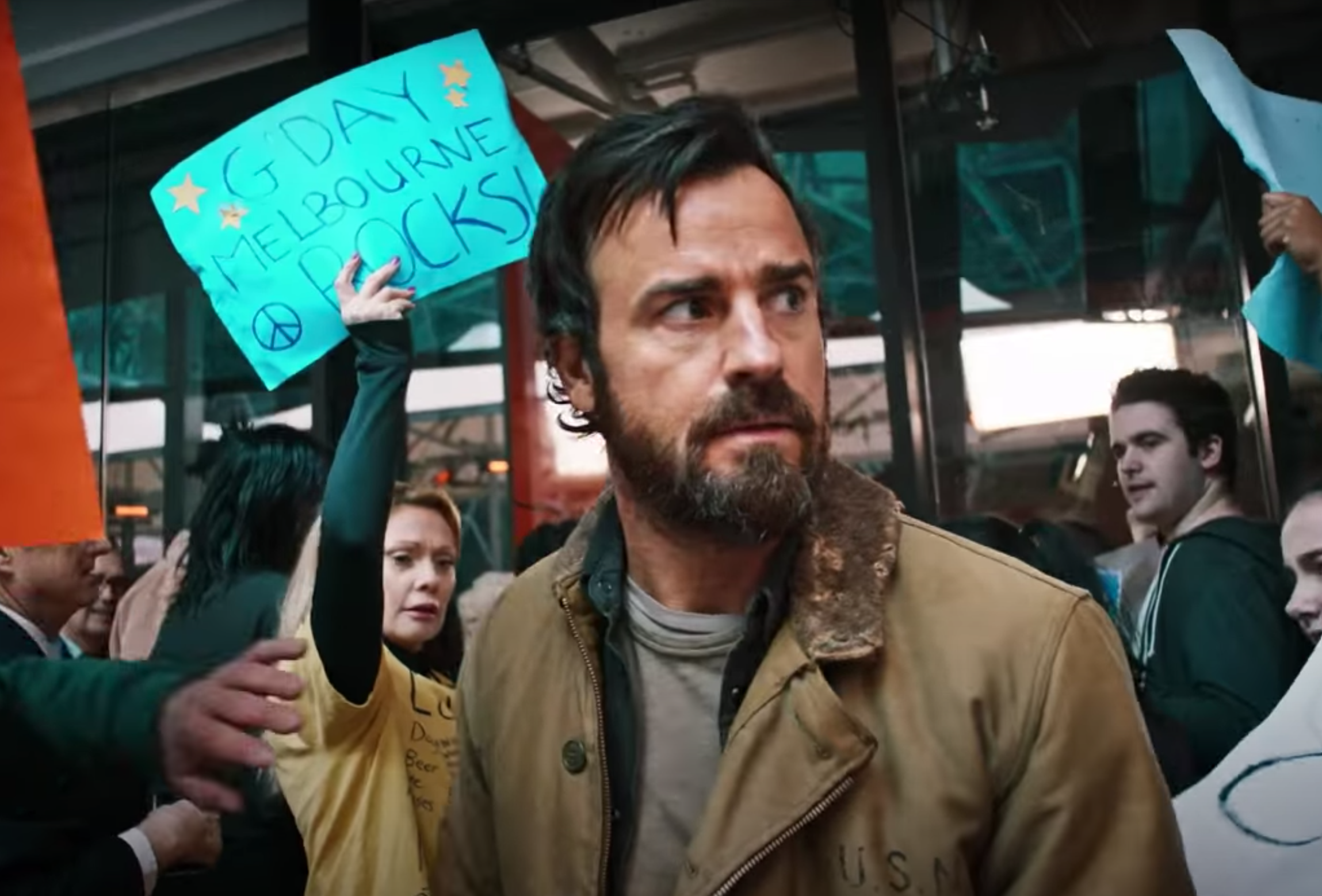
I was magnetized to Kevin Garvey. Sure, Justin Theroux is at his best in the series, and maybe he became my newfound fashion icon and celebrity crush. Whereas everyone else in his family makes clear changes to metabolize grief, Kevin is adrift.
When we meet him, we can see that he has struggled attaching to a new guiding logic. Kevin holds onto the past. He honors the memory of those lost when he teams up with the mayor. He lashes out when Laurie serves him divorce papers. His life is riddled with dreams, spectral dogs, blackouts. Is he coming to reckon with the schizophrenia that seems to afflict his father or are there cosmic beings, ghostly impressions that haunt him through his unraveling? It’s a common horror trope—is the haunting “real” or is it a manifestation of psychological distress? Yet in The Leftovers, there’s a blurry duality to everything: it might be both. People live in dialectics. Maybe we do have reason to believe in higher powers. There could be something cosmic, magical organizing destruction with a vision we cannot perceive. In the show’s first season, Kevin doesn’t find any answers. He finds himself divorced and sinking deeper into the tangles of his mind. His family members appear resolute in their new decisions, but Kevin seems to accept how he doesn’t have it together. He has already come to terms with how he’s not a good person. At the show’s beginning, he’s not much better, just more aware of his faults. Loss forces him to see himself again.
In an early episode, he meets Nora Durst, a woman who lost her husband and two young children on October 14 (and played by a cool and guarded Carrie Coon). She reveals that her departed husband cheated on her, and Kevin admits he also cheated. When she asks why, he says that there’s never a good reason. Shortly after, they start seeing each other. He and Nora have both lost so much and try to find a way to be intimate, to connect closely with another person once more. Kevin is someone who depends on others: Jill for human connection, Laurie for eventual psychiatric support. Maybe Nora will give him a new guiding purpose, a challenge. She pushes him in ways he doesn’t expect. For Kevin, this relationship could be significant. Embracing romantic possibility with Nora, he can take the next step into this uncertain future.
In therapy, I’m working through the ways I’m codependent with others. Life through the pandemic and my recent breakup brought about a more acute realization of my tendencies. My therapist gave me an inventory of codependent behaviors. I looked back on everything. There were times last winter when I’d go to yoga by myself, opening my eyes at the end of class and feel fundamentally alone. Some days, I can’t give myself permission not to go for a run, texting my sisters and brother-in-law first. I consult eight friends on decisions big and small. My friend Bri and I joked in college about staging a breakup in the campus dining hall. So entwined, we thought people assumed we were together, and we were thus perpetually sabotaging each other’s romantic prospects. Isolation has made me examine the ways I relate to, and depend upon, others.
An extrovert, out of the relationship that had provided me comfort and stability through much of Covid, I couldn’t find a way to reorganize my life. Who had I become since the pandemic began? What did I believe in? I haven’t reattached like the rest of the Garveys. Like Kevin, I’m in the thick of it, looking for someone to help me through. Now with talk of pandemic off-ramps, I find more questions. Who will we be once we emerge? What will guide us back into a world waking up? How will I return to a world I’ve forgotten how to be in alone?
In April, Twitter users made a meme of the New York Times Opinion piece “You Can Be a Different Person After the Pandemic,” coupling the headline with extravagant and outrageous characters from movies and TV. Scanning through these photos, I kept thinking of Kevin Garvey. We’re at the precipice of a return to some kind of normalcy. As we return to jobs, campuses, friends’ houses, how will we have changed in the meantime, weathering the year’s disasters apart? We’re going to come out of this period differently. What choices will we make as we do so?
The Leftovers portrays all the ways this return is abnormal, messy. The show’s outlook is somewhat pessimistic: maybe we’ll never go back to the way we were. Yet I find comfort in Mapleton, watching people muddle through their new normal.
The show’s outlook is somewhat pessimistic: maybe we’ll never go back to the way we were. Yet I find comfort in Mapleton.
In part, this stems from seeing where everyone began their journey. The show takes stock of characters’ pre-disaster lives in a breathtaking way. In a chilling flashback before the Sudden Departure, the episode “The Garveys at Their Best” examines the state of affairs prior to October 14. The family is still together, Jill a bit dorky, Tom the goofy playful older brother. Laurie runs her own therapy practice. Seeking deeper connection with Kevin, who goes off on long runs to sneak cigarettes, Laurie wants to adopt a dog.
Kevin is aloof, terse, short. Laurie, who we’ve known to be monotone and inaccessible in the Guilty Remnant, overflows with emotion and compassion. She’s the one holding it all together, rebuffed by Kevin, who skips their appointment with the dog breeder. Thus, the scenes of departure reexamined are even more chilling than in the show’s beginning. Jill and Tom participate in a school science experiment, holding hands with a circle of kids to conduct electricity and light a bulb. The light goes out when one of the children vanishes. Instead of the car crashes, here is a slow welling of unease.
Laurie and Kevin meet the Sudden Departure in even more harrowing ways. Alone at a secret doctor’s appointment, Laurie watches her new fetus disappear through a sonogram. Kevin has an affair with a woman who evaporates from the motel bed. This family that was so seemingly united a night before crumbles as each person processes the trauma differently. The depth of their disconnect before the Sudden Departure fuels the fallout.
Kevin was a different person before October 14. A liar, a cheater, a bit of an asshole. Yet, in the aftermath of October 14, he doesn’t suddenly have answers. He has recognized his shortcomings and tries to atone for his past through the ensuing days, months, years. It doesn’t happen all at once. Maybe everyone else in his family makes bold, identifiable changes. They reinvent themselves. Yet these reinventions are processes of renegotiation for everyone, not just Kevin. Jill, Laurie, and Tom evolve as the show progresses. They weather the aftermath differently over time. Kevin attempts to hold onto his family relationships while grappling with his psyche. As a result, these relationships with his family and Nora transform over the show’s three seasons. They move through his life in unexpected ways. Jill rebuffs his advances for connection but later prioritizes her family bonds. Laurie leaves the Guilty Remnant and offers Kevin psychiatric support. The Leftovers offers a web, characters with intersecting evolutions, changeable desires. We cannot find solutions all at once. We have to adapt when the road becomes a river, when people disappear, and pandemics strike.
If The Leftovers is teaching me anything, it’s that I don’t have to—can’t—know everything as the world slowly opens.
I feel the allure of old habits, finding it deeply unsettling to resist the urge to text somebody else for reassurance, permission, company. Codependent behaviors are highly, positively reinforced. We like when people depend upon each other, rewarding these behaviors without recognizing the habituation of them. I can’t yet wear all my decisions confidently, alone. If The Leftovers is teaching me anything, it’s that I don’t have to—can’t—know everything as the world slowly opens. Maybe we can throw our faith behind a cult or an ideologue to guide us forward, or maybe we can accept all the parts of ourselves we don’t like and muddle through moving forward. And as the show evolves, so too does Kevin. He embraces the parts of his mind that scare him. He tackles his problems head on. Here I find some peace, a radical acceptance of uncertainty.
Who will we be when we wake up? Who will we become when the period of disaster has ended and what we have—what we live—is aftermath?
Two weeks after my second dose of the vaccine, I returned to yoga. In the week leading up to it, I dreamed of my return to the studio, talking Covid precautions and modified studio logistics with the owner.
Returning to the heat was a sort of ecstasy, the thing I missed the most when I tuned into virtual classes from my apartment. And when the theme from The Leftovers played, and when my teacher said it’s all about process and not the end result, and when I opened my eyes at the end of class, stirring from savasana, I found myself amidst a patchwork of everyone who’d been here, marking all those who’d stayed, those who’d left while I’d escaped into my own head.
In the late 16th century, rumors of an impending pogrom swirl around the Jewish ghetto. Rabbi Judah Loew ben Bezalel, the Maharal of Prague and an expert in the Kabbalah capable of bringing life to inanimate forms, decides to protect his community with a golem, a figure made from earth and animated through religious ritual. Golems do not speak and do not think for themselves. They have super strength, a dogmatic allegiance to their creator, and little else. In other words: they are perfect bodyguards. Under the cover of night, the Maharal gathers clay from the Vltava river to build a humanoid figure. When Rabbit Loew carves “emet,” the Hebrew word for “truth” on the golem’s forehead, his work is done; the golem is alive. The golem curbs the violent threats against the Jewish ghetto and serves as a valuable handyman for its neighbors, completing chores and fetching water. However, the creature loses discipline. It runs amok, threatening the community it was created to defend. Rabbi Loew must destroy his monster. To do so, he erases the first letter of “emet,” leaving “met,” meaning “dead.”
The Golem of Prague is perhaps the most famous story of the golem, but Jewish people have crafted golems—in stories, at least—since long before the 16th century. Our clay creatures wind their way through religious texts, stories of rabbis, and Jewish folklore.
Our clay creatures wind their way through religious texts, stories of rabbis, and Jewish folklore.
These tales aren’t always by Jewish writers and artists. German-Christian writers throughout the 1800s and the early 1900s examined Jewish communities and their golems. Famously, The Brothers Grimm include an iteration of the golem tale in their collected stories. In this version, the rabbi who creates the golem is killed, suffocated by the falling clay of his monster.
Once you know the monster you are looking for, golems are everywhere.
But why? All things considered, golems are rather unassuming monsters. They are (canonically speaking) not very flashy; the word “golem” is used in modern Hebrew to mean dumb or helpless. And as far as Jewish representation goes, the golem’s unintelligent and potentially destructive nature directly contrasts with Judaism’s focus on learning, wisdom, and religious law. Yet even today, golems lurch through pages of novels, movie screens, and video games. In Prague, the legend of the golem thrives: Golem Biscuits cafe bakes golem cookies, nearly every gift store sells posters of Rabbi Loew and his golem strolling through cobblestone streets. And the appearance of golems in recent literature and media allows us to explore both experiences of Jewishness and popular perceptions of Jewish culture.
In Jewish diasporic writing, the golem appears during moments of crisis: the pogroms of the 16th century, the heavy flow of Jewish immigration to the U.S. during the 1800s, and the Holocaust. The golem, it seems, is needed at points of crisis to alleviate Jewish pain.
Golems present a powerful model for Jewish resistance against antisemitic violence, especially in historical novels. In Alice Hoffman’s 2019 novel The World That We Knew, Jewish parents seek the help of a rabbi to create a golem to defend their daughter, Lea, against Nazi terror. Hoffman introduces golems as nearly omnipotent: communing with fish and birds, seeing the future, and speaking with the dead. It is necessary to kill the golem once it has fulfilled its purpose. The rabbi’s daughter accepts the task and builds a golem from river mud and menstrual blood. Hoffman’s golem is named Ava, “reminiscent of Chava, the Hebrew word for life,” signifying both Ava’s new life and the continued existence that Ava’s protection grants Lea.
The golem, it seems, is needed at points of crisis to alleviate Jewish pain.
Hoffman spins a funhouse version of 1930s Europe—a kaleidoscopic world of magical herons and Nazi soldiers and Jewish resistance fighters. Lea and her golem cross borders and fight for safety. Ultimately, Ava begs Lea to deactivate her—because if the Golem of Prague has taught us anything, it’s that golems must be unmade. When Lea protests, Ava says: “‘It doesn’t matter. You know what I am. My kind are always destroyed.” To which Lea replies, “So are mine!”
For me, Hoffman’s connection between Ava, an omnipotent being, and Lea, a 12-year-old refugee, brings to mind the ways in which real-life Jewish people protected themselves and preserved culture during the Holocaust. Additionally, while most traditional golems are male, Ava’s gender draws links between this Jewish mythical figure of protection and female resistance fighters. I think also of images of women baking Matzo in the Warsaw ghetto, or seated around Seder tables in post-war displaced persons camps in Germany. While Ava participates in violent resistance, her kindness is another type of rebellion, against the charge of inhumanity brought against her kind.
The Golem and the Jinni by Helene Wecker, another relatively recent golem novel, imagines a jinni and a golem as recent immigrants to New York at the end of the 19th century. Like Hoffman, Wecker blends Jewish mythology with the lived experiences of Jews. We begin with Otto Rotfeld, a Polish man who longs for a wife. He takes his quest to Kabbalist scholar Yehudah Schaalman and requests a golem. Again, the golem is described as base, unthinking: “It’s a beast of burden. A lumbering, unthinking slave. A lumbering, unthinking slave. Golems are built for protection and brute force.” Chava, the golem-wife, is brought to life aboard a steamship to America, destined to be a submission and docile companion. Rotfeld dies en route to New York, leaving Chava without a master, and with an individual identity to contend with. In New York, Chava meets a freed jinni, Ahmed. The pair—new to America and new to life as sentient, terrestrial beings—navigate their neighborhood, and their personhood.
Hoffman and Wecker both announce the supposed soullessness of golems at their novel’s openings, only to deliberately undermine these assumptions by the end. These golems are compassionate, empathetic, and sensitive. Indeed, the word “soul” appears consistently throughout the two texts, and both golems search for the nebulous combination of factors that make up identity, consciousness, and freedom. While classic golem tales tell us golems must be unmade, these golems ask: how do I continue to exist? Moreover: how do I exist as a Jewish person?
While classic golem tales tell us golems must be unmade, these golems ask: how do I continue to exist?
While Hoffman and Wecker insert golems into historical time periods, other Jewish authors probe intimate and personal explorations of identity grounded in a contemporary context. In Sarah Matthes’ poem “Golem,” she focuses on a variety of golem myths, including the Golem of Prague, Solomon ibn Gabirol, and even Adam, the first man. However, Matthes also tackles another meaning of golem, a slur to demean women without children: “Sometimes women like me are called golems, too. / Not human until another human beats inside of us.” In an interview with Alma, Matthes details her efforts to examine “the repercussions are within a Jewish lineage to not have my own kids.” By bringing forth the golem’s heritage, Matthes directs the reader towards how Jewish culture may be continued other than (or in addition to) flesh-and-bone descendants. Many acts, Matthes reminds us, result in creation.
In her 2020 memoirGolem Girl, painter Riva Lehrer explores growing up as a disabled person and discovering and integrating herself into disability culture. Lehrer probes our society’s nature to view the disabled body as “a symbol of evil” and describes herself as a golem, writing: “I am a Golem. My body was built by human hands.” Throughout the memoir, Lehrer uses phrases like “a golem refuge” and refers to herself as “a golem among golems.” In this way, the word golem, and all its accompanying assumptions, becomes a way Lehrer explores perceptions and realities of disability.
In Golem Girl, the pairing of the figure of a golem with Lehrer’s art is also significant. Lehrer intersperses her portraits in the pages of Golem Girl. Each portrait features a subject set before “disability-meaningful backgrounds [and] accessories.” In one, her subject, Mat Fraser, stands naked before a patchworked circus tent (a “reference to Sealo the Sealboy, and sideshow”). The final painting in Golem Girl is a duo of self-portraits—one of Lehrer’s feet clad in orange socks and shoes, one of Lehrer from the neck up, wearing silver glasses and a braided tail. On her forehead, the Hebrew letters of “emet” peek out from below her bangs. Lehrer’s paintings both underscore autonomy and representation, and emphasize a deep relationship between creator and art. As the golem is brought to life through a rabbi’s actions, Lehrer’s art brings to life her explorations of sexuality, Jewish identity, disability culture, and the definitions of human.
For these Jewish writers, golems are symbols of hope and resistance, a means to explore embodiment, disability, and art, and a way to understand inflection points of Jewish history and bring forth threads of culture preservation. Above all, the golem is adaptable, as malleable as the clay of the Vltava river. And by refashioning the golems to explore personal and historical contexts, these artists partake in the grand Jewish tradition of golem-making. As the rabbis of Jewish lore crafted golems, these contemporary Jewish American artists participate today by responding to, and continuing, the golem myth.
Golems always felt like our monster.
I understand the impulse to make the golem an empathetic, positive figure, as these contemporary writers do. To me, it says there’s a longevity to the survival of Jewish culture, which I find comforting. Golems always felt like our monster. But golems turning on their creators is also an important part of golem lore.
In fact, it’s the only part of the golem story that many contemporary tellings consider. The protective golems of Hoffman’s world do not seem to populate pop culture. Instead, golems are often villains. In these adaptations, the second half of the story, the violent confrontation, seems to obscure other facets, including the power of language to animate the golem, and the golem’s initial charge of protecting the Jewish people.
In The Limehouse Golem, for instance, a 2016 murder mystery film adapted from a novel, detectives race to find the identity of a brutal serial killer nicknamed “The Golem.” This Golem has nothing to do with Jewish lore (though a Talmudic scholar is one of the victims), or with protecting the Jewish people; the sobriquet comes instead from the killer’s mindless violence. Golems even get a feature, of sorts, in Quentin Tarantino’s Inglourious Basterds. Donny Donowitz, known as “The Bear Jew,” who wields a Louisville Slugger emblazoned with the signatures of Jewish heroes (including Anne Frank), is referred to as “the golem” by Hitler. Here—like in Hoffman’s work—a golem rises to the challenge of Nazi terror. However, in Tarantino’s hyper-violent revenge fantasy, this golem does not come from the European Jewish communities under siege. It is Nazi soldiers, not Jewish people, who give Donny his nickname.
This, too, may be a factor of the inherent Jewishness of the golem, when filtered through non-Jewish creators. After all, why use a golem? Why not use another monster? The golem is a distinctly Jewish figure. (I’ve sometimes heard golems described as “The Jewish Frankenstein”—although of course, the golems of Jewish folklore predate Mary Shelley’s novel, so more accurately, Frankenstein is a gentile golem.) We may thank its many appearances in centuries of Jewish and non-Jewish art for this. When we ask what a golem is, we cannot only discuss clay and creator, protection and destruction, language and silence. The answer must include the golem’s ethnic lineage. The golem is a Jewish monster, even when its form doesn’t hew exactly to the genre-defining Golem of Prague.
Another question, then: Is there something extra-spooky about a Jewish monster? Alt-right leader Richard Spencer has used the word “golem” to criticize “the mainstream media,” saying: “One wonders if these people are people at all, or instead soulless golem animated by some dark power to repeat.” So, again, it is important to ask: why does Spencer use the golem? I think the answer may lie in the underlying assumptions behind the “dark power” animating golems.
Another question, then: Is there something extra-spooky about a Jewish monster?
In Judaic studies scholar Michael Weingrad’s 2017 essay “Brave New Golems,” he describes the golem as “a classically negative Christian imagining of Judaism itself: unlovely, slightly threatening, and hopelessly literal and earthbound.” Inscrutability and otherness are classic tropes used to stoke antisemitic sentiment. Take The Protocols of The Elders of Zion, a falsified document detailing a meeting of Jewish leaders in which they plotted world domination. Stateside, Henry Ford distributed half a million copies of The Protocols via his newspaper, gaining him praise from Hitler. Today, The Protocols remains widely dispersed and read through alt-right channels and is still treated in some circles as a legitimate document. This modern-day usage suggests that its depictions of Jewish people still resonate, and it’s easy to see how these sentiments are expressed—either intentionally or unintentionally—with golems. Indeed, golems have fueled antisemitism for nearly as long as they’ve embodied Jewish protection. The Grimm Brothers’ golem story, where the rabbi is accidentally crushed by his creation, was likely not intended to celebrate Jewish culture or Jewish acts of resistance. Instead, for a 19th-century German audience unfamiliar with Kabbalistic practices, Grimm’s golems could present further proof of dark magic practiced by Jewish people.
This schism between Jewish representation and Christian representation appears in many ways, including the manner by which the golem is operated, according to academics Edan Dekel and David Gantt Gurley:
All Christian accounts follow Grimm in identifying the utterance of holy words as the key to the animation process. The Jewish versions, on the other hand, emphasize the act of writing the secret name and inserting it into a cavity of the head (usually the mouth), an act which by definition defies pronunciation.
Of course, it is not a matter of villainous golems being “bad golems.” Instead, the use of a golem without a contextualization of the golem’s historical significance may point towards perceptions of Jewishness and Jewish culture.
When I visited Prague, I bought no fewer than four golem-themed souvenirs. I keep a golem postcard on my desk. On it, the rabbi and a terra-cotta-colored golem walk side by side. Rabbi Loew (bespectacled, a book tucked under his arm) is turned towards the golem, a palm placed on the golem’s massive leg. They’ve always seemed intimate to me, like best friends.
Most versions of the Golem of Prague story do not end with Rabbi Loew destroying the golem, breaking its human form, and returning its body to the earth. Instead, once Rabbi Loew transforms the inscription on his creature’s forehead, he places his creation in the attic of Prague’s Old New Synagogue synagogue. It is there when you need it, ready to be made again.
Identity is anything but simple in Nana Nkweti’s short story collection, Walking on Cowrie Shells. In “Rain Check at MomoCon,” teenager Astrid Atangana—an aspiring graphic novelist—hides her acceptance letter from Princeton from her Cameroonian parents, quietly rejecting the mold of the high-achieving child of immigrants that her parents expect her to inhabit. In “The Devil is A Liar,” a middle-aged first-time mother, Temperance, struggles to feel like she is an acceptably good daughter to her deeply religious Cameroonian mother, while also maintaining her own hyphenated identity as both American and Cameroonian. And in “Dance the Fiya Dance,” Chambu must contend with constant judgment from her Cameroonian family and community, who deem her too American to be a proper woman for a good man, even as they simultaneously pressure her towards finding one—preferably from Cameroon, of course.
In the stories of this effervescent debut collection, the protagonists find themselves at once wanting to meet and subvert the expectations set upon them by their surrounding communities. From gender identity, to ethnic identity, to family roles, the stories’ main characters both long to fit in with and to break the bounds of those ideas. Ideas about what Blackness is in these stories are particularly multifaceted and full of tension—from animosity between African Americans and Cameroonians in “Schoolyard Cannibal,” to competition in a relationship for who is most authentically African in “Kinks,” what it means to be Black in the American settings of these stories is constantly being negotiated by the characters and within the narratives themselves. Ultimately, the question of embracing complexity is the force propelling these stories forward: embracing complexity in order to be fully human.
Nana Nkweti is a Cameroonian American writer, Caine Prize finalist, and graduate of the Iowa Writers’ Workshop. Her writing has been published in journals and magazines such as Brittle Paper,New Orleans Review, and The Baffler, amongst others.
We discussed the struggles of negotiating multiple cultural identities at once; the ways in which returning to our home countries in adolescence indelibly shaped us; and the ongoing work to resist the pressure of the myth of monolithic Blackness in our work and lives.
Michelle Chikaonda:Many of the Cameroonian American protagonists of these stories are characters who seem to feel like misfits in their worlds, with the stories then mapping out their paths toward making places for themselves within those worlds. How did this come to be a theme that you ended up meditating on?
Nana Nkweti: There are some leitmotifs I consciously incorporate into my writing. For instance, I am a hyphenated-American, multi-cultural woman with roots in Africa and the United States, so I naturally gravitate toward depicting characters who have hybrid identities. I can easily identify that authorial impulse coming to bear on my texts. Now the fun part begins as readers engage in their own meaning-making, decoding themes and patterns embedded like secret codes between sentences, unbeknownst even to me.
Are my characters misfits? I can’t rightly say. I do know they are humans trying their best to “human” and some Mami Watas and zombies too! They are all evolving and yes, sometimes trying to puzzle out where they best fit in the world. In that regard, aren’t we all misfits? Who hasn’t been a teen on that angst-riddled road to adulthood like Astrid Atangana in “Raincheck at MomoCon?” Who amongst us hasn’t grappled with God/Allah/Buddha/Vishnu, questioning one’s faith in times of hardship as Temperance Ealy does in “The Devil is a Liar?”
MC: I know that, as a continent of 54 countries, Africans are far from culturally monolithic. That being said, I felt so many resonances with these stories that, for the purposes of this question, I’m going to temporarily disregard that understanding.
In reading your work I was reminded of how African girls are so often raised with a very heavy-handed push toward the notion of “goodness”—serving community, obeying parents, choosing family over love and personal ambition. As an African woman myself—from Malawi—the spirit of quiet rebellion emanating from these stories’ female protagonists is jarring, but in a great way.
What pushed you to write the boundary-breaking women in your stories? Were there times in which you foresaw other ends they could have come to than what eventually happened in each of the stories?
NN: Sometimes the rebellions are quiet. Sometimes they are thunderous, as is the case of the young heroine in “Their Girl,” who has all the finesse of an Uzi!
Women are complicated. African women are complicated. It was important for me to portray us in all our complexity, in the fullness of ourselves. There have always been specific societal norms and pressures on women. Even in our fourth wave of feminism, even after Tarana Burke’s #MeToo movement and Chimamanda’s We Should All Be Feminists, there is still so much “boundary-breaking” work to do. A quick glance at online discussions of women in the public sphere can attest to that.
Why do we still need women to be likeable, sugar and spice and everything nice? Why are women still so incessantly shamed as too fat/too thin/too old/too sexual/too unmarried/too smart for their own good?
Why do we still need women to be likeable, sugar and spice and everything nice? Why are women still so incessantly shamed as too fat/too thin/too old/too sexual/too unmarried/too smart for their own good? Add intersectionality to that and we get stereotyped as Mammys, Jezebels, Sapphires aka Angry Black women. Now add another layer of African identity in the mix, and yet another layer for those born in the West like me. All those layers of societal tip-toeing, walking on cowrie shells so you don’t come across as too Americanized as in “whey, you don’t cook fufu, you’re not married, you don’t want kids, you have your own bank account?”—enough is enough. And of course, this is a gross exaggeration.
African identity is as multivalent as the cultures of the 54 states on the continent and the people in the cities and villages within. But I’ve found folks like to whip out this mythical notion of traditional African womanhood as a cudgel to enforce conformity sometimes. The characters in my book submit to, embrace, tolerate these ideals or reject them wholesale. No one choice is “the right one.” What I explore is these women tackling the notion that the “choice” is theirs to make.
What pushed me to write into this? I myself have been a feminist for as long as I can remember. The dearest wish of my 10-year-old self was to earn a degree from Oxford and have three girl-children—husband optional. Was I anti connubial bliss back then? Not really.
I just remember having this deep sense, even as a child, that the world needed to do right by women—equal wages, equal educational opportunities, equal everything. Even if my Mom had never taken lil’ me to an ERA [Equal Rights Amendment] march—which still has yet to pass by the way—I could already see inequities in the books I voraciously read. Why did only boys get to have the adventures, for example? At the same time, I still was myself a “good African girl”—in the Olympics of the Mind and Gifted and Talented in America, attending home economics classes and carrying water buckets on my head as a teen in Africa, then later dutifully pursuing degrees as is our way. I embraced this identity while also noting its strictures, the stresses attendant in maintaining that perfect façade. My female characters are allowed to be themselves—warts and all.
MC: One question that haunts these pieces is the question of “enough”—specifically, of whether or not the lead characters can ever be Cameroonian enough or American enough. What do you perceive as the nature of the friction between those identities—both in your stories and in life, if we have time to go there—and why does the oppositional energy between the two feel this strong?
NN: So my collection has a range of lead characters—some quite comfortable in their cultural skin, some not. That “enough” question is complicated and different for each of them. For instance, in “Kinks,”Jennifer’s mother gave her “the blondest of names,” she was raised as “one of two Black girls in a Scarsdale elementary,” and then went to Yale, a PWI [predominantly white instutite]. She has been disconnected from “Black” culture—African and African diasporic. Her arc involves a struggle not to lose herself in her romantic relationship even while simultaneously folding in “being African and Black” into that very “self,” figuring out what those identities mean without the gatekeeping notions of “authenticity’ imposed upon her by Kwame and his ilk.
I would say that if there is an “oppositional energy” it often comes from without. As a hyphenated person myself, I totally love being able to draw on two cultures, taking the best (to me, at least) and eschewing the worst. Even I had to grow into that acceptance though because all too often people feel the need to categorize and police you. I remember submitting my writing to African fellowships and awards for consideration. and some required I establish “Africanness” by supplying my parents’ passports. Now intellectually you rationalize that this is all admin and eligibility language. But still, it’s yet another moment being reminded that you are Other.
MC:In a related vein—there is a lot of tension between varying representations of Blackness in each of these narratives. What was your experience of rendering these on the page, especially given the larger cultural myth of monolithic Blackness that often creates real pressure to oversimplify Blackness to a few known dimensions? Was there anything in particular driving your narratives’ investigation of this tension?
Global Blackness is not a monolith. Africa is not a monolith.
NN: Global Blackness is not a monolith. Africa is not a monolith. At times the “tension” occurs in my book as the work instinctively bucks against lazy stereotypes and reductive categorizations—received by Western culture, yes, yet also prevalent amongst Black folks ourselves due to issues like tribalism, national identity, or class. Witness in “The Devil is a Liar,” Andrew Ealy chastising his wife Temperance for being “elitist” as she privileges her own middle-class path to motherhood as “the right” one. Tensions further arise due to internalized anti-Blackness like in “Raincheck at MomoCon,” when Astrid Atangana being “complimented” as “pretty for a dark-skinned girl”—a moment emblematic of the colorism, featurism, texturism issues in our communities. What partly drives me is a hope that we can all see ourselves and move past these arbitrary divisions that keep us from unifying.
What happens sometimes is you come across some people who wants to be cultural gatekeepers, because they try to use their notion of authenticity, to enforce conformity of what their ideal of Africanness is. And that also happens when you’re in African American culture sometimes; there’s a sense of “This is what it means to be Black in America.” I try to complicate those narratives as much as I can. Because while they can be true in some instances, many times they’re not. And I think that continued reliance on those narratives is problematically reductive. So the more I can help illuminate us to ourselves—to all Black people in the diaspora, to the point where we can get over all these misunderstandings and false ideas of each other—the better we will all be.
MC:You really zoomed in on the lives of women in these narratives—not just the young women protagonists, but their aunties, their little sisters, their frenemies. Men don’t get nearly the airtime that women do in these pieces, and when they do get roles they are decidedly secondary roles. Could you discuss in more detail your effort to complicate the notion of womanhood in these stories?
NN: Regarding the roles of men in the book—it really just depended on the character. There are men in this collection I absolutely delighted in writing and two stories that feature male leads—“It Just Kills You Inside” and “The Statistician’s Wife.” Yet I acknowledge that I revel in centering female protagonists and depicting them in all their complexity.
The notion of a singular African womanhood serves the purpose of perpetuating gender inequality, but it’s not necessarily what actually existed in Africa. Maybe someplace, maybe somebody’s village, but it’s not a monolith, it’s not every village. Growing up, for example, I was that girl who was the one who was carrying water on my head and who naturally has a nurturing disposition; I’m the firstborn of many children. So I was always that kid with that sense of responsibility. But I was also that girl who was with my mom at ERA marches when I was just a baby. At a very young age, I had a sense of wanting more for women than what we were getting; my idea of myself and what I wanted for women was more power, more equality, even then. And all those things are things that I find interesting to explore on the page: to give my female characters the fullness of life. They’re flawed, they’re anti-heroines, and I still love them, all of them. They make choices that I wouldn’t make, and sometimes they make choices that I would make. And I think that’s what the breadth of humanity, of our humanity, looks like.
MC: One thing I noticed was the absence of extensively narrativized trauma, in any of the stories. Even in 2021, it often feels as though Black stories are not legitimized unless they also comprise profound trauma—racialized trauma, violent intra-familial trauma—but none of your stories played into that expectation. Even in “The Statistician’s Wife,” a story whose main thread is domestic violence, the violence is just that: a single thread in a larger, vibrant, non-violent narrative. Could you discuss this decision, if it was a conscious decision, in greater depth?
NN: Trauma depictions in Black narratives are so ubiquitous, and hard to completely get away from. Even when I wrote one story which was veering into that stuff—in “Night Becomes Us,” Zainab is dealing with the violence of Boko Haram in the north part of Cameroon—I address that violence, certainly, but I don’t want that to define her entire life and that entire story.
The notion of a singular African womanhood serves the purpose of perpetuating gender inequality, but it’s not necessarily what actually existed in Africa.
I think that personal stuff is very political, and that showing us our humanity beyond that huge trauma is not just personally important, but politically so. People sometimes behave as if the only stories that need to be told about us are the ones where the only way our humanity is acknowledged is when a gun is being pointed at our heads. Do those stories need to be told? Yes, of course. But should they be the only stories that you get lauded for, or get seen or get seen as the “real” Africa story? No, and I think that’s what I’m always consciously pushing against.
In “The Statistician’s Wife,” for example, it was a very conscious choice that Victoria was more alive, on the page, than she is dead. She’s dead in the beginning, yes, but then you see her, vibrantly, throughout the rest of the story. Because that was what was important to me: how she lived, not that she died. I did not want to have Black women actively traumatized on the page, and I didn’t want to have a Black person traumatized in that way. Because it’s just too easy to show us being mutilated, burned, shot, tortured. Again, it’s not that these things don’t happen—of course they do. But do they have to keep on happening over and over again, narratively speaking—does a protagonist’s raison d’etre have to lie on the bones of my body?
Why do we always have to see these continuous stories where the origin myth of the protagonist’s journey is for a wife and child to be brutally murdered, and for the reader to be almost offered that brutality to feed themselves on? I constantly interrogate those notions, of the function of Black trauma in narrative, in my work.
MC:You made the decision not to translate any of the non-English dialogue, only to italicize. Why? To be clear I believe this was a brilliant choice, but I’ve participated in many conversations with writers around the question of translation and/or italicizing, and I would love to hear your perspective on this.
NN: American English a living language, an amalgam of calques and loanwords reflecting all the people who immigrated here to call this country home. These words are never translated. You come to understand their usage from the context. It’s why an African woman like me has tons of Yiddish vocab—the language of European shtetls—having grown up reading Roth and hearing “schlemiel” and “schlimazel” in the Laverne and Shirley tv show’s theme song. I particularly love celebrating the contributions of BIPOC cultures to the English language literary canon as Hurston does in Their Eyes WereWatching God.
Yes, I know that mainstream canonization is not the be and end all of everything, but I love to see it. There is an understanding of the beauty in the words we create, that they should be immortalized. Me, unapologetically inserting our words in my texts comes from a knowledge that they deserve to hold space. As for the notion of italics, I think it’s a personal choice for the author. Some writers like Junot Diaz, who says he is writing for (his) six best friends, choose not to. For me, aesthetically I love the look of italics and feel like they make people wake up and pay close attention—they add flavor, the peppeh to your sauce.
Like many millennials, I’ve spent a lot of my adult life being unemployed and underemployed, either stringing side gigs and internships together in a frantic attempt at permanence, or else sitting forlorn at my laptop scrolling job boards and flinging résumés into the swirling abyss. Almost everyone has experienced unemployment at some point in their lives, and yet it’s a topic that isn’t much addressed in fiction. As I’ve written before, I think this is because unemployment doesn’t actually make for great fiction. You apply for jobs, send emails, go to networking seminars, have an interview, never hear back, and rinse and repeat, usually for months. Not really the kind of action that can propel a plot.
Because it’s such a difficult experience to get down on paper, I’m always appreciative when writers do it well. In different hands, unemployment can be a sword hanging over a protagonist’s head, it can be a slowly devouring monster, it can be a gift disguised as tragedy, or it can simply be the soup in which the characters find themselves swimming… or drowning.
In my novel, Mona at Sea, I suppose unemployment is a little of all of these: my character, Mona Mireles, finds herself unemployed and rudderless at the outset of the Great Recession, and though she eventually finds a job, she has to learn that meaningful work, for her, will have to come outside of the 9 to 5. It’s a realization that I suspect will resonate with many readers. And with income inequality and opportunity hoarding rampant across the United States, I sadly venture that unemployment and underemployment will soon see a new heyday in literature.
Temporary is a funny and surreal novel about a temp who finds herself in increasingly bizarre job placements: pirate, witch, ghost, human barnacle. As we watch the unnamed protagonist try to do her best in her rapidly changing work environment, it becomes clear that the novel is a razor-tipped critique of the modern gig economy, and lays bare all the costs of living a temporary and precarious life.
The Great Recession was a huge blow for recent college grads, and in The Fallback Plan, we meet Esther Kohler who has moved back home after graduation and must fight ennui and a bad economy in order to figure out what she’s going to do with her life. Esther’s mother arranges a regular babysitting job for her, and through her increasingly complicated interactions with this new family, Esther sees that she can no longer drift, and that she needs to take charge of her life.
George Saunders is kind of the master of the sad sack: middle-aged middlemen with middling lives who are in the process of being ground down into existential dust by an uncaring universe. In his first short story collection, his characters have jobs, but they’re usually horrible and demeaning, and his characters are bad at them. With tragicomic wit, Saunders exposes the many lies at the heart of capitalism, all with empathy for the people just trying to make it work.
Matt Prior has sunk all his family’s money into the failing venture, poetfolio.com, a dubious concept linking free verse poetry with financial advice, and now he faces imminent ruin. So he does what any middle aged unemployed man does: he starts selling pot. Walter uses self-deprecating humor and a critical eye to skewer late-stage capitalism, and the kind of lunacy that would drive someone to marry poetry and finance.
Ignatius J. Reilly wouldn’t say he was unemployed, but rather lacking “some particular perversion which today’s employer is seeking.” Forced by his mother, Reilly takes a job as a file clerk at a pants company, only to incite a walkout and cause a $500,000 lawsuit against the owner. Then he takes a job selling hot dogs, but can’t stop himself from consuming all of his product. Reilly’s experiences with unemployment and underemployment are torture for his mother, but hilarious for us.
Part memoir, part poetry collection, part workbook and part rant, Mase’s book gives readers permission to feel all of it, and even encourages screaming directly into the pages if that will help. J Mase III takes an unflinching look at the work we do, the work we give away for free, as well as beautiful and heartbreaking meditations on grief and pain, and the way forward to healing.
Toru Okada is unemployed and innocently boiling a pot of spaghetti in the morning, when his phone rings and he is propelled into a Tokyo underworld, darkened by shadows from WWII and filled with prostitutes of the mind, ruthless politicians, and disappearing cats. Okada’s unemployment is only incidental to the plot, but it does allow him unlimited time to sit at the bottom of a deep, dark well, which he does a lot. I’m sure there’s a metaphor there.
Grand Central Publishing reissued this classic dystopian novel in 2019 because *gestures to everything* the general state of the world was looking a lot like the post-climate-apocalypse hellscape Butler envisioned in 1993. Set in the 2020s in California, the book follows Lauren Olamina as she struggles to survive in a world with no jobs, no social order, little water, and little hope. But Lauren not only survives—she begins devising her own religion called Earthseed, with the belief that human destiny lies in the stars, far beyond the wastelands of Earth.
This account of Orwell’s time being desperately poor and homeless in the late 1920s is vivid and startling and frighteningly timeless:
“In practice nobody cares if work is useful or useless, productive or parasitic; the sole thing demanded is that it shall be profitable. In all the modern talk about energy, efficiency, social service and the rest of it, what meaning is there except ‘Get money, get it legally, and get a lot of it’?”
Here’s what you need to understand: we all needed a win that summer.
By we I mean me, the boys, my girls and our parched country, our

sulking land with its hands under the table, crushed knuckles and tanned, twitching knees, a nervous laughter capable of lasting through

overtime. The hands become fabric become flags calling for the final
whistle, for joy’s uncontained shrill. And when it finally happens, we

leave all our things on the floor and exit with just our beating bodies.
And someone’s voice asks where we should go, and the men on the

radio clench their microphones, say anywhere, anywhere but home.
Reprise
And when it finally happens—because it has to, because, like most things, it is not a mistake, not the wrong call made by the referee’s hands but a real win—the city cracks itself open to me. But I don’t stay. I don’t hop on the bike and sit by the pier until dawn, watching morning creep up in layers of blue, then yellow, then orange. I don’t walk down an expensive avenue making guesses at the price of things, killing time until the first train home, or the next one. Not yet. I go home with the boys, who spend the last half hour searching for me, and who, when they finally find me at a crossroads with a shadow and said bike, the public garden a midnight stage, will absolutely not leave me behind, a girl in the mouth of adventure. On our way back to the suburbs, we weave through fireworks and TV crews and people raising statues for all of us winners. I lay down on the backseat with my eyes closed, the way a child would just to be carried into bed. Nothing costs us the game and there is still time.
My aunt Lisa is the first female scientist I ever knew, the only one I knew for years. One of my mother’s eight siblings, she is an ornithologist who has had research gigs at Point Reyes and Mono Lake, among others, and leads private birding tours on the California coast. I come from a large family that trends conservative, often overtly suspicious of environmentalists, and while Aunt Lisa prefers birding to debating her ecological convictions, her whole life is, to me, a statement. She helped me realize that a career could be as much a form of activism as a protest march, and after that, I started to see activism everywhere—in caregiving, in gardens, in cooking, in fashion choices.
For me, the challenge of this small-scale, hyper-local activism is believing it can deliver the global systemic changes we need before it is too late. In my collection, Site Fidelity, the characters face environmental catastrophe and economic injustice—some take direct action, some work for change through their careers, some through the ways they care for the members of their families and communities—but they are also forced to grapple with what, if anything, their actions achieve. When a Catholic nun pours bleach into a bulldozer’s oil pan on a fracking site, nothing happens—no public criminal report, no visible work stoppage. A woman converts an old quarry to an urban natural area only to see it destroyed by a flood. A scientist dumps a rancher’s diesel fuel to prevent him from burning a Gunnison sage grouse breeding lek, knowing full well the cans can be easily refilled.
I don’t always feel particularly hopeful about our collective ability to solve climate change, or even the efficacy of my own attempts at activism, but the idea that people all over the world are engaging in small acts of resistance every day buoys me. Aunt Lisa had no intention of being any kind of role model. And yet.
Here are nine novels about activism of all kinds, all written by women:
Based on the true story of the Mirabal sisters, known as Las Mariposas, this heartbreaking book explores the costs of living under and resisting a repressive dictatorship while also bringing the sisters, its heroines, fully to life. The women fall in love, pursue education, bear children, and try to live fearlessly in a world of torture, disappearances, and political murders. Alvarez writes their courage and ferocity as well as their vulnerability and their fears.
The Dunbar sisters—already struggling to manage their family’s western Colorado ranch after the death of their father—begin to suspect that an accident at a nearby natural gas well is causing their neighbors’ animals to miscarry and has possibly poisoned the stream that runs through their own ranch. The sisters, each facing their own life challenges, work to overcome their own disagreements about how to proceed in the face of a community divided over the ecological costs and perceived economic benefits of natural gas development.
Set at a small college in Arizona known for its radical environmental politics, Hot Season follows four young women involved to various degrees in a local dispute surrounding water rights for a local housing development in the post-9/11 era. With beautiful, thorough descriptions of desert riparian ecosystems and rich explorations of female friendship and rivalries, Hot Season explores activism as a complicated source of youthful idealism and identity construction.
When Helen invites Karen and Lily and their son Perley to live on her small acreage in Appalachia, they become a tight family that includes their neighbor, Rudy, who establishes a fruit tree nursery on an oil and gas pipeline easement along the property’s edge. The women’s self-sufficiency and willingness to live outside the demands of modern capitalism is activism in its own right, and while the novel explores the ways society suspects and punishes poverty and refuses to stand up against extraction mentalities, it’s the intelligence and warmth of the characters that makes this an unforgettable story.
The fictional character of Libertie’s mother, Cathy, is based on the first real-life Black female doctor in New York State, and while activism is only one of the finely woven threads in this beautiful story, it is one source of the conflict between mother and daughter that frame the book. Cathy is a nuanced and complicated character—her efforts to heal the people who need her sometimes fail, and the compromises she makes to keep the operation running alienate other members of her community and Libertie herself. The exploration of intergenerational expectations and misunderstandings about what it means to be responsible to one’s self and one’s community is especially brutal and brilliant.
Desperate for a job, Jane begins producing a show called My American Wife! that exists to promote American meat exports to Japanese housewives. As she travels across the country for the features and interviews, Jane, increasingly disturbed by the impact of meat production, secretly begins to film the darker side of the industry. Meanwhile, in Japan, Akiko’s abusive husband orders her to cook and eat every recipe in Jane’s show to increase their chances of conceiving a child. The women’s stories converge at the end of the book in complicated and satisfying ways.
A group of Mennonite women meets in the aftermath of unspeakable violence—the men in their remote village have been drugging, torturing, and molesting them—to decide whether to take action, and what such action might look like given their linguistic and cultural isolation from the world around them. The women contemplate and discuss the requirements of their faith, their responsibilities to their own bodies and souls and to those of their daughters and their sons, the limits of forgiveness, and the possibilities of peace after such horrors. The book highlights the women’s sorrow and rage and, most memorably, their compassion, as they seek to change their community.
When a series of deaths occur in the rural Polish village where she lives, Janina Duszejko is convinced that the wild animals in the area have turned to murder as revenge against the local hunters. Her efforts to convince her neighbors, friends, and most memorably, the local police force to take her theory seriously explores the violence that results from humanity’s belief in its superiority to animal life, the ways religion and cultural conservativism are barriers to any real questioning of this hierarchy. This is more often classified as a literary crime novel, but Janina’s actions throughout the book are rooted, like all activism, in her conviction that change is necessary for a just society.
Barn 8 is a novel about a direct-action protest in which a group of activists—including Janey and Cleveland, both auditors for the American egg industry—try to liberate all of the chickens on a single egg farm in one night. The story is told by a variety of narrators, some central to the plot, some more peripheral, allowing a wide range of perspectives and judgments including those of the chickens themselves, whose consciousness and eventual transformation outlasts the human fallibility the botched heist reveals.
DON’T MISS OUT
Sign up for our newsletter to get submission announcements and stay on top of our best work.
YOUR INBOX IS LIT
Enjoy absorbing fiction from Recommended Reading on Mondays, strange, diverting work from The Commuter on Wednesdays, and a roundup of our best work of the week on Fridays. Personalize your subscription preferences here.