7 Books About Long-Distance Relationships

A year ago, I abruptly moved from New York City back to my parents’ house in Southern California. Suddenly, after spending years living with my closest friends and loved ones, I was thousands of miles away. But mine isn’t a unique story—since the start of quarantine roughly a year ago, almost everyone has been separated from the people they care about, from neighbors to favorite coworkers to their closest friends or partners.

But at the same time, over the last year, plenty of new relationships have formed. From starting new jobs to falling in love over TikTok, we are still finding ways to reach out to each other, albeit remotely.

If you feel like you’ve reached the limits of Zoom and Netflix Party, there is a rich history of stories that show ways to persevere through separation. Here are seven books about staying connected across the intervening miles.

Patsy by Nicole Dennis-Benn

Patsy by Nicole Dennis-Benn

When Patsy, a queer Jamaican mother, sees an opportunity to move to Brooklyn, she takes it, leaving her young daughter, Tru, behind in their working-class neighborhood in Kingston. Once in New York, Patsy dreams of finally being together with her childhood best friend and crush, who has married a man and adapted to a new life. Across the sea, Tru struggles with her own feelings towards her mother, whom she desperately misses, and her relationship to her identity.

This Is How You Lose the Time War by Amal el-Mohtar and Max Gladstone

This Is How You Lose the Time War by Amal el-Mohtar and Max Gladstone

This epistolary novel is split between authors el-Mohtar (writing Blue) and Gladstone (Red), whose characters take turns sending threats and boasts to an opposing agent in a time-traveling war who they are sworn to kill. Amid a world torn apart by collapsed timelines and chaos, Agent Red of the Agency finds a letter from an enemy Garden spy, Blue. The spies poetically weave through time, history, and war, slowly realizing that the soldiers of war have more in common than the powers behind their commands.

84, Charing Cross Road by Helene Hanff

84, Charing Cross Road by Helene Hanff

In 1949 New York, Helene Hanff struggled to grow her collection of antique and rare British literature. Then after seeing a newspaper ad, she started writing to Frank Doel, the chief buyer of Marks & Co., a London-based bookstore. What follows is 20 years of recorded letters. The correspondence of Hanff and Doel may start as stiff, but over the years melts into passionate discussions about obscure authors, a life-long loving friendship, and a testament to finding community an ocean away.

Ghost Forest by Pik-Shuen Fung

Ghost Forest by Pik-Shuen Fung

Pik-Shuen Fung dives into the tale of an “astronaut” family in her forthcoming debut novel. The unnamed protagonist grows up with her mother and grandmother in Canada, while her father stayed in Hong Kong for employment. Years later when he passes, she has to navigate the landscape of grieving for someone who she barely knew both because of his physical and emotional distance. While trying to find answers, she connects with her family through their combined sorrow and love.

Little Eyes by Samanta Schweblin

Little Eyes by Samanta Schweblin

Kentukis, remote-controlled stuffed animals, are ubiquitous and potentially dangerous in Samanta Schweblin’s Little Eyes. Location is not an issue for these creatures as they are connected to an online network, meaning anyone can buy one and become a voyeur across the globe—from Oaxaca to Berlin to Tel Aviv. The characters in these stories navigate this new, almost adorable, form of mass surveillance and discover what it means to be the one watching, and the one being watched.

Swimming in the Dark by Tomasz Jedrowski

Swimming in the Dark by Tomasz Jedrowski

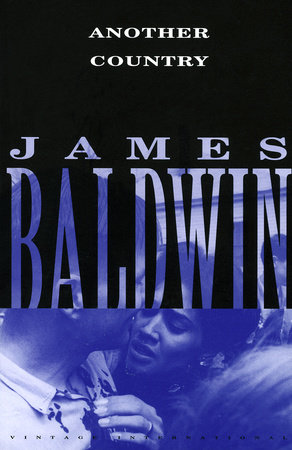
Ludwick is a gay Polish man who has recently fled to New York from the Polish People’s Republic. A few summers before while working at an agricultural camp, Ludwick met Janusz, a student and staunch believer in the Communist Party as a way out of debt. The two bond over James Baldwin’s Giovanni’s Room, and over time fall in love in a country that has outlawed their relationship. Told in second person, this novel acts as a letter of reflection to Ludwick’s lover who remains across the world.

Love at the Speed of Email by Lisa McKay

Love at the Speed of Email by Lisa McKay

When Lisa McKay received an email from Mike, a humanitarian worker in Papua New Guinea, she wasn’t surprised. After her nomadic childhood and finishing her degree in psychology, Lisa developed a career of coaching and aiding humanitarian workers globally. What Lisa didn’t expect from Mike’s email is that their relationship would blossom into something more and would finally teach her what “home” really means.

Tracy Clark-Flory Is Horny on Main

Without want, there is no personhood. Whether the flush thrill of sex, or the gratification of a good meal (or both, and then some!), our desires constitute and catalyze us. But while the act of desiring might seem automatic—something both feral and essential—understanding why we want what we want can be a fraught endeavor.

Want Me by Tracy Clark-Flory

Erotic desire, in particular, seems to bewilder most everyone it inhabits. What is it about that person, that touch, that kink? And how do we embrace what gives us pleasure without turning on ourselves with shamefaced scrutiny? There’s a certain ineffability to our erotic inclinations, and perhaps, for this reason, they preoccupy us all the more. And so they always have, from the far-flung age of antiquity, when Sappho committed her agonies to lyric poetry, until today, when nearly every cultural entity celebrates or curses the niceties of erotic life. For all desire’s inconvenience and even, sometimes, misery, we can neither stop wanting nor trying to master it. 

Sex writer Tracy Clark-Flory is both a student and a philosopher of want. It is the province of her intellectual enthusiasm and, most recently, it is the organizing concept for Want Me, a memoir of her sexual desires and a topography of straight women’s erotic culture. Clark-Flory understands sexual want as an exquisite conundrum. On the one hand, it is a site of possibility: for pleasure, for play, and for the enduring work of self-knowledge. But it is, simultaneously, territory occupied by culture. As Clark-Flory argues in her book, it is impossible to detach our desire from the influences of our milieu, thick as it is with normalized ideologies, all of which tell us stories about how we ought to engage our libido. As she sifts through the archive of her own sexual coming-of-age—comprised of naively salacious internet chats, Baz Luhrmann’s Romeo and Juliet, and of course, grainy internet porn—Clark-Flory considers her personal history with the compassion of an elder sister, the intellectual curiosity of a social critic, and the ethical rigor of someone pushing towards progressive clarity. 

I recently caught up with Clark-Flory about Want Me, self-disclosure in internet writing, and the various pernicious impacts of normative sexual culture.


You’ve been writing about sex on the internet for over a decade, a beat that entails a significant amount of self-disclosure. The internet has also shaped our respective careers—we’ve both even blogged for Jezebel! So, we are both familiar with the tricky negotiation between personal boundaries (what am I comfortable sharing about myself?) and the awareness of certain mercantile realities endemic to internet writing (will sharing intimate details help my career?). And we are familiar with the frequently-relitigated debate about the Personal Essay Industrial Complex: women-identified persons are so often asked to bleed onto the page, to narrate our traumas.

I am curious to know how this context has shaped the way you write about sex, particularly when it comes to personal testimony. How do you make decisions about what stories to tell?

Tracy Clark-Flory: Early on, I had a mentor of sorts tell me, “I know you’re capable of so much more” with regard to my covering the sex beat, as well as writing about “women’s stuff.” Meaning, as I interpreted it, you could be writing about important topics. I’ve long resented the idea that sex, and “women’s stuff,” are not important topics. At the same time, I think the media’s devaluing of sex writing places an overemphasis on quick turnaround personal writing that is either clickbait or service-oriented. I was well into my career before I was given the support to develop my reporting skills and approach sex as the important topic that it is. 

That shift gave me greater power to decide when, and how, to publish personal writing. So far, it seems I’ve decided to mostly save the personal writing for longer, bigger projects—like this book.

RVC: Towards the end of Want Me, you recount a conversation with your husband in which you share a deep-seated wish: “Sometimes…I want to step outside of our culture, or to pretend for a few moments that I can.” I’m sure that yearning resonates with many readers; after all, it’s noisy out here! In fact, one of the many things your book does is make manifest the work—the exhaustion!—involved in cultivating and holding fast to one’s sexual subjectivity, especially in a world that flagrantly caters to straight white cisgender men. How do we learn to differentiate ourselves from our context, which so often annihilates sexual nuance, rendering it, as you say “one size fits all”?

TCF: This question speaks to the conundrum of sexual authenticity, which I wrestle with throughout the book. Sociologists like Erving Goffman argue that basically everything in social life is a performance, that we’re always gauging other people’s reactions to ourselves and managing impressions within cultural norms. He would say that there is no authentic self, really—the self only exists through these unending performances. Of course, Judith Butler has made related arguments around gender. If all of social life is a performance, if sexual scripts are adapted from cultural norms, then what the heck is authenticity?

I don’t think that there is a pre-cultural self. We’re all the result of cultural and social influence, and our sexual fantasies in particular so often draw upon cultural and social meaning and symbolism. I spent a lot of time interrogating my fantasies for authenticity, but ultimately I arrived at an interest in my own bodily feeling and pleasure as being an important measure of authenticity. The most basic measure being: Does it feel good? Are you in your body? Feminist scholars like the developmental psychologist Deborah Tolman talk about subjectivity in terms of girls being in touch with their own embodied sexual feelings, even as “a variety of contexts constrain or make their expression dangerous, difficult or even impossible for girls themselves to discern.”

Unfortunately, I think sexual subjectivity and authenticity, whatever you want to call it, requires sitting in that ambiguity.

RVC: Public discourse about sex and sexuality is generally pinned to cisgender, able-bodied experiences, thereby excluding the myriad genders and bodies that exist in the world. How can we effectively chisel away at these normative structures, and—once and for all—unhook our understanding of sexuality from an illusory gender binary, with its tethered assumptions about what all bodies should and can do?

I’ve long resented the idea that sex, and ‘women’s stuff,’ are not important topics.

TCF: So much of my book depicts my struggling against normative assumptions about sexuality within the gender binary. There are my assumptions about “straight men’s desire,” which are incorrect, because there is no “straight men’s desire,” there are just men and desires, emphatically plural. There are my own insecurities and uncertainties around my own desires and whether they are “normal” for a woman. Normative assumptions are most of what we’re fed around sex—and those assumptions are almost always a tragic misdirection. I don’t exactly know how we unhook from that, but I do know that over the years the best sex advice I’ve encountered has nothing at all to do with gender, and everything to do with context, connection, and creativity. It has to do with letting go of those normative injunctions and reaching for unscripted territory. 

RVC: As a teenager, I watched porn every now and again, but more often than not, I turned to Cosmopolitan’s famous listsicles—10 Ways to Suck His Toes, or whatever—in order to learn about straight male desire. Seemingly, we are inundated with this sort of information from the moment we’re aware sex exists until the day we die. It’s the ultimate quest—to learn what men desire, what women desire. But oftentimes, this information says so little: for all my poring over Cosmo, I don’t think I retained one useful lesson. What if we just didn’t worry about it? Is it possible to reach a place in the realm of human sexuality where we no longer treat desire like the conclusion to a detective story, or a fossil to be excavated?

Sex education should begin at birth.

TCF: Those questions around what men or women desire are so endlessly fruitful because they don’t have a real answer. It’s incredibly appealing to imagine that you can master desire, just grab the key and unlock the secret. We want to believe that desirability is something that can be bought and sold, learned and taught. Ironically, that grasping for generalizable expertise takes us away from the vulnerability of exploration. It forecloses intimacy and discovery.

RVC: In Want Me, you refer to the shameful state of American public schools’ sex education programs, and it occurred to me that you are the sort of person who should be designing these curriculums. Please humor me: what does a robust, progressive sexual education program look like? What age does it begin? What are the most important things for kids to learn about this unwieldy realm of human experience?

TCF: This would make for quite the clickbait headline but: Sex education should begin at birth—but not in the way we usually think about it. I’m borrowing here from countless feminist academics and sex educators whose ideas I have absorbed over the years, but: sex education should begin with age-appropriate lessons about bodily autonomy, boundaries, consent, and biology. I have a 3-year-old, so at that age it can mean everything from naming body parts accurately to never instructing him to hug or kiss such-and-such relative. 

We’re so afraid that young people will have sex that we drain all the good from it in our telling.

As for adolescents and teenagers, the feminist academic Michelle Fine noted the “missing discourse of desire” in sex education, in which an emphasis is placed on avoiding risk. We have to talk with young people about desire and pleasure, too. Adults discredit themselves not just by overemphasizing the dangers of sex, but also by oversimplifying the act into a biological event. There is a whole wide world of sex beyond basic anatomy diagrams—one that encompasses fantasy and community, play and experimentation. 

I want to see adults talking with kids about sex with… excitement and wonder. Can you even imagine? We’re so afraid that young people will have sex that we drain all the good from it in our telling. We turn ourselves into unreliable narrators. Kids know when they’re being lied to—and they will seek their information out elsewhere.

RVC: Writing about sex means writing sex. How did you learn to narrate the experiences of desire and pleasure? What writers or books have served as models or inspirations for what sex writing can be and what it can achieve?

TCF: I cherish Sallie Tisdale’s Talk Dirty to Me and Lisa Palac’s The Edge of the Bed for numerous reasons, including their poetic and unflinching honesty about their own desires, as well as their feminist sense of conflict around those desires. I like sex writing that allows for a sense of turmoil and conflict. This also more generally makes for good personal writing—Mary Karr writes of the importance of depicting the “inner enemy.” I’ve also been deeply inspired by Cheryl Strayed’s treatment of sex as a vital part of emotional life, especially in her essay, “Love Of My Life.” More recently, Garth Greenwell’s Cleanness—well, I bought the e-book, and then immediately after finishing, I rush-ordered the physical copy because I needed to hold this beautiful piece of art in my hands.

The work of resisting normative injunctions, the reaching for unscripted territory, doesn’t just impact our sex lives. As Melissa Febos wrote, “I suspect that to write an awakened sex scene, one may need to be awake to their own sex. “

7 of the Best Mystery Novels Set by the Sea

I might argue that the sea is literature’s greatest character, living as she does among the best mysteries ever written. And yet she is modest. She rarely takes center stage. Instead, she washes around the drama’s edges, an ever-present, ever-changing companion. She is a shining, shifting backdrop, quietly reflecting all that’s worth knowing about the story and its players.

The Lamplighters by Emma Stonex

There is no better setting for a mystery than the sea. I once read that we know more about outer space than we do some regions of the ocean. The sea represents the unknown, her depth and darkness calling us on a voyage of discovery. Her changing moods harness the breadth of our own emotions: she can be calm, brutal, quiet, monstrous, peaceful, passionate. Her presence in literature invites the imagination in a way little else does—the sea exists on a curious plane between the thinking and the unconscious, a place where dreams and nightmares surface, where invented shapes can form and dissolve.

A few years ago, I came across the real-life disappearance of three lighthouse keepers from the Outer Hebrides, Scotland, in 1901. Immediately, I was hooked. The vanishing alone spooked and thrilled me, but the sea setting deepened the magic. What happened to those men? I had the uncanny sense that only the sea knew the truth. My new novel The Lamplighters moves this event to 1972, as we follow the keepers and their wives on a path to unraveling what happened.

Here are my top seven mysteries set by the sea, in which the seascape plays as important a role as any in the story:

Light Between Oceans

The Light Between Oceans by M. L. Stedman

A tale of love, loss and sacrifice set on an Australian lighthouse, where Tom and Isabel make a harrowing decision that will ripple through generations to come. The sea acts as a foil for the couple’s troubled conscience, as they come to accept that some lies can never be drowned.

The Lifeboat by Charlotte Rogan

The sea represents the highest stakes in this haunting suspense novel about a group of strangers forced together after their ocean liner sinks on passage to New York. Newlywed Grace faces a struggle to survive—not just against the ocean but the people she’s with, in an elegantly horrifying work that asks how far we’ll go to protect ourselves.

The French Lieutenant’s Woman by John Fowles

Writers have long used the sea as a metaphor for yearning, its tides and cycles returning desires as fast as they sink them. Here, Sarah Woodruff stands on the famous Cobb—a stone jetty in Lyme Regis, Dorset—staring out at the indifferent water and awaiting her lover’s return. But what tragedy has befallen her, and can she ever pursue the freedom promised by the sea?

The Beach by Alex Garland

The Beach by Alex Garland

Backpacker Richard follows a map to a mysterious Thai island in search of paradise—only to discover that the sea can hide the worst secrets. Lord of the Flies meets Heart of Darkness in this stylish ’90s thriller, which captured a moment in time and served as a warning for traveling 20-somethings everywhere.

The Talented Mr. Ripley by Patricia Highsmith

Glamour and deception weave an intoxicating web in this gripping tale of murder and mystery, played out against the glittering Mediterranean. The sea holds a mirror to Tom Ripley’s slippery identity and uncertain motivations, as well as one of the most memorable boat scenes of all time.

Rebecca by Daphne du Maurier

A young unnamed narrator is swept into romance with mysterious widower Maxim de Winter—but what happened to his first wife? And why is Manderley, his home, steeped in secrets? Du Maurier is the queen of the Gothic romance novel, and here she uses the rugged, atmospheric Cornish coast to exemplify her narrator’s vulnerability and isolation.

Life of Pi by Yann Martel

Both a survival story and a modern fable, this is the unforgettable tale of Piscine, a young boy stranded on a lifeboat in the Pacific Ocean with a Bengal tiger. Martel employs the sea to devastating effect: under his pen it becomes a magical, illusory, all-seeing pool from which miracles surface and truths become fluid.

The Pandemic Made Me Feel Removed from My Body—This Book Put Me Back

For years, I convinced myself I couldn’t grasp the sense of a sentence without paper and ink. The same letters, flashed on a screen, never seemed to hook their way into my brain. I’d scan whole books’ worth of grad school readings at the campus library just to print them out again. When I worked my way through them, I’d crease and crimp the pages with restless hands.

Now I read on my Kindle app, sneaking a few paragraphs between inbox refreshes and desultory tweets. On my phone, the words look manageable enough—each about as small as the pale moon-edge of my thumbnail, hovering just to the right of the screen.

I’ve dropped my phone so many times by now, but I can only see the cracks on the screen against the white of simulated pages. At certain angles, lines of gray score their way through sentences, cleave words in two, and lop the serifs off some letters. It’s my only reminder that reading this way is corporeal too, an interaction with something that has substance and can be broken. But when I turn the page, the scarred glass is almost frictionless underneath my thumb.  


There’s a scene in Kristin Lavransdatter that made me think about reading physical books again. The titular protagonist—already, unknowingly, near the end of her life—thinks back on a book she once saw as a young wife. It was a thick volume in Latin, filled with the words of the thirteenth-century theologian Bonaventure. 

Illuminated in gemmy ink, this book was “written on such thin and dazzling white parchment” that Kristin couldn’t believe “calfskin could be prepared so finely.” Her memory of that vellum, so fine and so white, now sounds to me like an apt description of my phone screen, a foreshadowing of the smooth glow I hold at my fingertips when I read. 

Kristin Lavransdatter, I: The Wreath by Sigrid Undset

Set in fourteenth-century Norway, Kristin Lavransdatter is a trilogy that follows one woman’s life from childhood to death, unfolding it at the scale of historical epic. True to its setting, it makes the rarity and value of every book clear. We learn that Kristin’s father, a wealthy landowner, owned five of them, which passed into her possession after his death. Her husband gifts her with another three. For Kristin, who learned to read in both Latin and the Norwegian vernacular as a girl, access to this library—lavish for the time—signifies her place among “the land’s best lineages,” like the meat at her table and the gold adorning her hands.

Written by Nobel Prize-winning author Sigrid Undset in Norwegian, the trilogy was published a century ago: volume one, The Wreath, came out in 1920. The digital omnibus I borrowed downloaded within seconds—in print, those megabytes would have come out to over a thousand pages.

I can picture that physical copy weighing down the empty space on my bookshelf, a volume with a scriptural heft. But on my phone, translator Tiina Nunnally’s language slipped into my head easily enough. Each paragraph felt finite and possible, like text from a friend I hadn’t seen in months. As I went, I found myself reading continuously for longer, instead of toggling to a different app every few swipes.

At certain points, Kristin Lavransdatter felt more real than the life I was living. I started thumbing through it last October, when I’d already been in my apartment for five months. The local library that sent the .mobi file to my phone was less than five minutes away on foot. I’d strolled past it before, on the walks I took my first few weeks in town, but I’d never been inside. It had been closed to physical patronage since before I arrived from the Bay Area.

Minnesota, where my partner’s family lived, seemed like a good place to wait it all out. And so we packed our stuff into cardboard boxes and sat in a socially distanced plane with an empty seat between us, breathing nervously into surgical masks while the chilled air circulated around us. Before we left, I got rid of so many books, abandoning them inside the glass-doored hutch of a Little Free Library that stood up the street from our apartment in Berkeley.

Reading Kristin Lavransdatter took me back to a time when my body wasn’t just an automaton but organ of feeling.

This was in the early days of the pandemic, when gloves seemed much more de rigueur than they are now—at least, people mentioned wearing them on Twitter, even if you rarely saw them on anyone in the street. I had a box of blue rubber ones that I used to rub purple coloring conditioner into the bleached ends of my hair, and I wore a pair of them to drop off my books. When they no longer fit in the Little Free Library vertically, I started stacking them horizontally, just a few slim volumes stacked over the top. I stacked the last of them on the grass, around the post that held up the little birdhouse that I’d stuffed with books.

I left well-thumbed foreign language dictionaries and textbooks spidery with annotations, readers I’d used to teach undergrads, and novels that I’d loved. A slick coffee table volume on Japanese street fashion, culled from the Half Price Books in town. This work didn’t pain me as much as I thought it would—I became just a body, jittery with energy, muscles strung too tightly for any other feeling. All I wanted was to be done with it quickly, so I could get back inside where the air didn’t seem ambient with potential harm. I remember the powder on the inside of my gloves mixing with sweat, forming a paste that made the rubber cling to the backs of my hands. 

By the time I started reading Kristin Lavransdatter, the fearful, high-wire intensity of the move had faded to a dull memory. My adrenalinated gratitude at pulling it off safely had calcified too. What remained was a sense of roteness, as if the nerves had been abstracted out of me. I wasn’t scared anymore, or sad, or anything—I was a wind-up toy. I tried to take care of myself, drinking eight glasses of water a day and marking each of them in an app. I cycled between a series of easy Instant Pot stews and ate without tasting them. Three days a week, I made time to exercise, dancing along to ballet barre videos on YouTube without feeling whether my legs were turned out or my feet made the right shape. I stopped often between combinations to check my phone.

Reading Kristin Lavransdatter, though, took me back to a time when my body wasn’t just an automaton but organ of feeling. That’s because Undset clings so closely to the concerns of her protagonist, reporting her every sensation with tactile precision. Across her three volumes, Kristin’s existence unfurls in densely textured detail. From the lusterless quiet of my sealed apartment, the vividness of Undset’s language disoriented me, like a bottle of too-strong perfume.

Partway through the book, I ordered fragrance samples online, little vials filled with the smell of balsam and incense.

As Undset tells it, Kristin’s maiden years are wind-dried reindeer meat and the cool touch of golden-yellow silk—then, when she meets the man who becomes her husband, the feel of ardent fingers sliding into her hair. Later, marital life emerges as an accumulation of rough textures, muddying over the smoothness of her pampered girlhood: coal-black dung on her hands, the itch of her homespun wimple, her arms going knotted with muscle from farm work. Even her emotions are rendered in thickly corporeal language, sentences prickly with feeling. Thinking of her grown sons leaving home, Kristin grieves that they “would take with them bloody threads from the roots of her heart,” an image that made the skin at my breastbone physically itch. 

Inside Kristin’s exhaustively rendered world of cotton and tallow, mud and sweat, I found myself remembering the reach of my own senses. Partway through the book, I ordered fragrance samples online, little vials filled with the smell of balsam and incense. I wore them in two dashes on my wrist when I read, sometimes bringing the inside of my arm to my nose. But then, inside the story, the Black Death entered Norway on an English ship.


I know I’m lucky. My parents were vaccinated last month, and I’ve been able to keep working from home, running little errands in a succession of floral-printed masks. Throughout the pandemic, I’ve drunk my water and eaten my stew, danced without feeling the strain or the joy of dancing. I can imagine myself holding still in this pattern, for years if necessary. I’ll almost certainly be safe at the end of that waiting.

From the beginning, I knew that Kristin Lavransdatter ended with the heroine’s death from plague. In truth, I started reading it in the vague hope that I could use it as a narrative mirror for these strange times. Instead, I found escapism into a more vivid life, a body that felt more precisely and deeply than my own. As I read, Undset’s thickly textured descriptions of Kristin’s sensory experience brought me back to a détente with my own senses. But then the Black Death slashes the story wide open. 

Kristin Lavransdatter renders the physical reality of death in its usual, unsparing detail. Feverish and vomiting, the dying Kristin slumps, “soaked with sweat,” inside her convent dormitory, feeling “a sharp, stabbing pain” on every breath. Yet after weeks nestled inside her perspective, I felt strangely unaffected by her death. Her last, fevered hours felt abstracted to me, in a way the small sensations of her life never did. They were unfathomable from my place of safety.

I found escapism into a more vivid life, a body that felt more precisely and deeply than my own.

As Kristin’s body burned away from the inside, it became closed off to me. Instead, what undid me was Undset’s account of the early plague—the collective disorientation, not the individuated pain. When the Black Death first arrives,  the narration disentangles itself from the nerves threading Kristin’s singular body for paragraphs at a time, hovering above to survey the anonymous mass of bodies instead. From that distant vantage, we see people, undifferentiated and unmoored, attempting to make sense of “a world without time”: “No more than a few weeks had passed, if the days were to be counted, and yet it already seemed as if the world that had existed before the plague and death began wandering naked through the land had disappeared from everyone’s memory — the way the coastline sinks away when a ship heads out to see on a rushing wind. It was as if no living soul dared hold on to the memory… nor was anyone capable of imaging that things might be that way again….”

When I encountered that passage for the first time, it left me reeling from recognition. Nothing else I’d read—not first-person essays, or reportage, or other pandemic novels—nothing had captured that early shock so precisely. But here, Undset gets at what it feels like for the impossible to take hold of your own small life and break it open, emptying out your sense of futurity like yolk. 

Afterwards, I had to stop reading. I set my phone down to pace the length of my apartment—just a few strides from window to wall, from wall back to window. There  was the same view I’d been looking at since I moved in May, adjusted incrementally by the shifting of the seasons. 

This is the only view I can imagine having for months, a year, longer, as the snow slushes off the ground and the spiny trees grow back their leaves. In this world without time, there’s nothing else to look at—except for the pages on my phone, smoother and more dazzling than the finest vellum. 

Once a Sarah, Always a Sarah

“Sarahland” by Sam Cohen

You’ve read the story, but there’s no forest here, no wolf. No subterfuge is necessary; the boys are everywhere, out in the open, an infestation. Like cockroaches, they’re most visible at night.

We stiletto them in the bellies and elbow them aside to clear a path down the hallway. We roll our eyes at their begging or pout and wag our fingers. We invite them in or pretend later we invited them in or slam the door in their faces or slam their fingers in the door. We grab one by the hand and continue down the hallway because he’s cute or because we want to fend off other boys or because we want to make someone jealous. We pretend to be angry at them or we pretend to like them or we feel angry or we like them.

We have time to kill so we’re watching a movie. The movie is Heathers. We’re in sweats with the school’s initials on our butts, and Sarah A. is eating broccoli that was once frozen but is now microwaved with yellow I Can’t Believe It’s Not Butter spray pooled in its florets. Last quarter, Sarah A. was bent on gaining the Freshman Fifteen, dousing her cafeteria fro-yo in chocolate syrup and gummi worms, ordering three a.m. pizza and saying, eat girls. College was supposed to be fun, and the Freshman Fifteen was proof you were having it. This quarter, though, Sarah A. was poking at the slight curve of her belly above her low-rise jeans and proclaiming, “I’m o-beast!” In this new phase, Sarah A.’s room smelled perpetually of microwaved broccoli and Febrezed-over farts.

It is a time when I have, without trying, fallen into a group of Sarahs—Sarah A., Sarah B., plus me. I am also a Sarah A., but no one calls me that. They call me Dr. Sarah, kind of mocking my premed major.

“Are you serious, you’re so pretty,” said the real Sarah A. when we first met in line at the frozen yogurt machine in the cafeteria. “You really don’t need to do all that work.” Sarah A. was always very certain about what you did or didn’t need to do. But after she said it, I looked around in chem class and saw that, yeah, I was prettier than everyone.

No subterfuge is necessary; the boys are everywhere, out in the open, an infestation.

“We’re just here for our MRS degrees,” Sarah B. spun around and added. Sarahs A. and B. were both five foot zero and bird-boned, with dark hair. Sarah A.’s was glossy and long and Sarah B.’s was poofy and pyramid-shaped. Next to them, I was a giant: four inches taller, salon-blond, an obvious nose job. “Ambition’s attractive to guys, though,” Sarah B. said. “You have to show them you’re not like other girls or whatever.” She popped her lips, pocketed her gloss, and pulled the fro-yo lever. “I’m going to be prelaw until I get engaged. I’ll go to law school if I have to, but hopefully I’ll never have to practice.”

It was a weird plan, so weird I wondered if Sarah B. was lying, like, was she stating her deepest fear as her goal so it would feel like success when it came true? My own secret plan was to be premed until I could figure out how to be one of those ocean scientists who spends a bunch of their time swimming naked in a pack of dolphins. It seemed like the beginning was the same—introductory bio, o-chem, et cetera and then somewhere a secret level unlocked, and you underwent a series of quests you didn’t know about yet, and boom: dolphins.

We lived in a privately owned off-campus dormitory where 90 percent of the girls were named Sarah, or else Rachel, Alyssa, Jamie, Becca, Carrie, Elana, or Jen. The other 10 percent were named Bari, Shira, and Arielle. The whole dorm was Jewish. I never understood how these things happened. Nowhere on any of the dorm’s advertising materials, which had succeeded in making me so excited to live with no parents in a building of studious eighteen-year-olds with a frozen yogurt machine, did it say the word Jewish, but it seemed wherever I went in my life, everyone was Jews. While I might think I was making independent choices and moving around freely in the world, it was as though a secret groove had been carved, and some invisible bumpers were going to push me gently back into that groove, the Jew groove, Sarahland, and Sarahland would trick me and trick me into thinking it was the entire world. It was confounding when I learned Jews were only 3 percent of the country, because, where was everybody else?


“We’re like Heathers, but Sarahs,” Sarah B. says.

“Sarahs are just Jewish Heathers,” says Sarah A., touching up her manicure with a stroke of light pink.

“Sasha’s totally the Winona Ryder,” Sarah A. loud-whispers.

Sasha’s phone rings a few minutes later and she springs out of bed and cups her hand over the mouth part as she sidles into the bathroom.

Sasha is Sarah A.’s roommate. She wears black leggings and tank tops and when we’re there at ten p.m. flat-ironing and measuring shots of vodka into our cranberry juice or back in the room at three a.m. holding each other’s hair back for puking and/or eating baked ziti pizza, Sasha is locked in the bathroom, on the phone with her boyfriend who goes to some other school in some other state. Her eyes are always puffy around the bottom, but she’s skinny with naturally straight black hair and she doesn’t seem to give a shit about us or what happens during our nights out and this makes her glamorous. I’m stuck in a horde of Sarahs but Sasha’s on her own, crying alone in the bathroom or smoking alone on the dormitory’s front stoop like someone’s divorced mom.

“I want to be Winona Ryder,” I say. 

“You’re so weird Dr. Sarah,” says Sarah B.

“The Heathers are who is cool in this movie,” says Sarah A. “Winona Ryder is demented. She’s friends with the fat girl in the end.”

It isn’t the right way to even watch the movie I was pretty sure. You’re supposed to want to be Winona Ryder, attached to a cool boy in a leather jacket who shoots up princesses and jocks and thereby shoots up culture itself. There seem to be only two options in Heathers and probably everywhere—either you’re attached to a group of girls and obsessed with diets and clothes or you’re attached to a boy and obsessed with freedom and killing people. Sasha seems to be breaking the rule: she’s attached to a boy, I guess, but he’s an absent boy, a phone boy.

I am feeling unsure about my own level of pleasure, being subsumed into a Sarah horde but I’m also unsure how to extricate myself, where I would even go. My own roommate Shira clearly wants a bestie with whom to flat-iron while trying on clothes and taking vodka shots, but she’s desperate and therefore a worse version of the thing I already have. The Sarahs at least have an ease with which they flat-iron and match shoes to outfits and take vodka shots and when something comes easily you can shrug it off like you barely even want it, and then you’re more or less cool at least.

I ended up in this group partly because my best camp friend Ayelet was best friends with Sarah B. in high school. Every time I look at Sarah B. I remember how Ayelet and I swore to each other that camp was the only time/place that counted as Real Life, how we promised that our real selves would hibernate for ten months and only reemerge upon entry, next summer, into the North Woods. We held each other each August in the Minneapolis airport like a couple about to be separated by war, and wept.

Sarah B., I’m realizing as I watch her smash her eyelashes between those medieval-looking metal clampers, is only best friends with Ayelet’s non-camp self, her impostor self, the shell of Ayelet. But now I’m stuck. Sarah B. invited me along on an early Bed Bath & Beyond trip based on our mutual Ayelet friendship and later invited me to sit with the Sarahs and soon Sarah A. made a laminated chart of all our schedules so that we could only walk to and from class in a group and suddenly, without getting to fully decide, I was a Sarah.

The Nice Jewish Boys live in the dorm across the street, but for some reason, they are always in our dorm, leaning on hallway walls, sprawled across furniture, lying ghoulishly under our covers when we return from nights out. This is no grandma/wolf situation because there’s no trickery—instead, the NJBs are in plain sight, drunk and wanting. They pound on our doors and shout our names, scrawl WHERE ARE YOU SARAHHHH on our dry-erase boards in all caps, materialize next to us while we’re passed-out drunk. We wake, sometimes, with their slobber on our faces, their shoes in our sheets, their palms clawed around our boobs in a way they didn’t try that hard to make look accidental.

Sarahs A. and B. are excellent at fighting the boy infestation. They spray disinfectant constantly, are always wiping things down. Possibly it’s their pack mentality that keeps the boys away. They are clicked into each other, satisfied with doing nothing but taking cab rides to TCBY, working out on the elliptical downstairs, making popcorn and watching rom-coms until they meet their husbands, who certainly aren’t going to be any of the infesting boys. The infesting boys aren’t ready to be met yet, as husbands. I have a wandering eye though—I’m not looking for a husband but I am looking for something and, for the boys, my curiosity is like a small glob of peanut butter on the countertop in the summertime must be for ants. It makes them swarm.


Going Out is something we have to do every Thursday, Friday, and Saturday night. I’m not sure if any of us like it, but we show up for it like we show up for class, like we would show up for a job if we had one. I’m not sure how everyone found out about Going Out, how everyone discovered it will make these The Best Years of Our Lives but at eight p.m. on Thursdays, my roommate Shira starts automatically flat-ironing her hair and Sarah B. sends out a group text saying, What are we doing tonight? and Sarah A. says, Meet in my room at 9.

We walk down icy streets in high heels with peacoats covering our almost-bare skin and arrive at a bar where drinks are expensive and sit in a crowded judgey room and talk mostly to each other or else to people we like even less. In the best case scenario, Sarahs A. and B. feel that we might meet our husbands when we Go Out because the older boys are there, too, but this is a real outside chance so mostly we just go spend nine dollars apiece on cosmos and stand around in uncomfortable shoes.

We try on halter tops, tank tops, boatneck tops, cowl-neck tops, scoop-neck tops, cold-shoulder tops, tube tops, sparkly tops, sheer tops, stretchy tops, and silky tops. We use little paint brushes to cover our zits and freckles. Every time we look at ourselves in the mirror, we jut our lips forward and gaze serious and sexy like we want to fuck our own reflections, and I wonder if any of us know what our actual faces even look like. We measure shots of vodka into cups of cranberry cocktail. We line up in a row and set our camera timers to take photos.

We lean over Sarah A.’s digital camera to scrutinize our looks. We can see ourselves a little differently in the camera’s display screen than we do in the mirror. We’re smiling now, convincing the viewfinder we’re having the best time.

Sarah A. grabs the camera and pouts at it. “I hate my nose,” she whines. “When I get my nose job, I’m totally taking photos of Dr. Sarah with me.”

Sarah B. laughs, leaning over Sarah A.’s shoulder to look, too. “Good plan, I’m going to also. Dr. Sarah you truly have the best nose job in the whole dorm.”

“Thanks,” I say.

The truth was, I didn’t even want my nose job. My parents had returned from Vegas “up fifty thousand” as they said. They pulled up in a limo, champagne-drunk and ecstatic, and announced their plan to divvy the money toward projects they’d been meaning to attend to: spider vein removal for my mother, a dining room table finally, a nose job for me.

I cried and slammed my bedroom door and refused to go but somehow I ended up in the surgeon’s chair shot up with drugs anyway and when I woke up my face was black and blue and three weeks later everyone agreed I looked like a shikse.

We put finishing touches on our looks and sing “Dancing Queen” while flat-ironing the bumps out of the backs of each other’s hair.

“Come here, Dr. Sarah, you always have schmutz on your face,” says Sarah A., clutching my jaw between her thumb and middle finger and turning my head from side to side for inspection. She licks a finger from her other hand and swats my cheek. We all check our little silver snap cases for our fake IDs and then we go to the bar.


The bar is called Stillwaters. Everyone calls it Stills but I think of it privately as the Stagnant Pond. The Pond’s packed with Jewish girls from our dorm and Jewish boys from the boys’ dorm plus all the kids who have ever lived in those dorms.

The boys are at the bar, but they barely talk to us there. At the bar, they’re busy doing boy things—taking tequila shots and clapping each other on the back, shouting. We stand at the bar checking out other groups of girls and the truth is everyone looks like there was a memo: dewy skin and dark eyes, lightly glossed lips, hair meticulously flat-ironed, one of two models of jeans.

I chose this college because of a barista during my campus visit, I think. The barista’s head was shaved on one side and she had piercings all the way up her ear. She seemed angry in general but like she liked me and I thought I would come to know girls like her here. But since Sarah A. created the Excel schedule chart, I only ever went anywhere in a pack. If it was blizzarding excessively, Sarah A. demanded we take a cab. The cab would go on streets we didn’t normally take. I’d see a group of kids with Kool-Aid hair and fingerless gloves standing around outside a coffee shop smoking, probably talking about deep things. I felt like they might know the locations of some of the keys to the levels I’d need to pass through in order to be a dolphin scientist. But I was destined, it seemed, only to ever get glimpses outside the Jew groove from a cab window.

Tonight, it’s blizzarding excessively. Luckily we have scarves with us, which we wrap around our heads and necks, like babushkas, Sarah B. says, and run screaming in our stilettos through the wind and snow into the pizza place. Sarah A. gets a white spinach slice, I get a baked ziti slice, and Sarah B. gets margherita, which she daubs with napkins until there’s a pile of see-through napkins on the table and the cheese looks putty-dry.

Everyone who was at Stagnant Pond is in here now, drunk and eating various permutations of cheesy complex carbs. After pizza comes the worst part, which is the part where we have to stand out on the street corner in our stilettos with two hundred other people, all of whom were in the Stagnant Pond with us, and then the pizza place. Here is where we start to talk to other people for the first time. An older boy named Jon approaches and says, “Hey, how you been?” and I say “good” and he says “Cool wanna come over?” The thing is I’d gone home with him the week before and I was starting to understand that this is how it went: you gave someone a blow job and then once you gave the blow job and they never called, you felt rejected and a little sad even if you hadn’t liked them very much and so then you stood outside the next week with wind whipping snowflakes in your face in case they wanted another one. I’m not looking forward to trying to make my way through the boy infestation in my dorm and also I’m freezing and don’t want to stand in the snow anymore, so I say okay, and we run two blocks to his apartment, where I get under his covers, give him a blow job, and fall asleep.

When I wake up, I hear a voice say to me, To thine own self be true! I collect phrases I like, like this, in my quote book and eventually they become internal voices, reverberating in my head as though they’re my conscience or spirit guides. I feel guilty about giving a blow job I knew in advance I’d find unpleasant, to a boy I knew would never call, and then I feel, I am a social animal! We’re hardwired to form complex societies, so why should I be some loner animal that is trying to resist everything asked of me? I can stand around in the freezing wind and then give boys blow jobs if that is the ritual of my society! I put on my tank top and jeans from the night before and walk out of the older boy’s apartment in my stilettos, headache searing behind my eyes, in the snow.


I thought college would be exactly like summer camp, that there was a magic formula where you put a bunch of girls in an enclosed space without parents and we’d become Real. But, I deduced after major sleuthing, two factors were getting in the way: money and boys.

Neither existed at camp and here both were everywhere. The annual social we’d have with the nearby boy’s camp was the worst day of the year: everyone unearthed makeup and flat-irons stowed under bunk beds for the other fifty-eight days of camp. Normally we spent our days and nights sailing and tie-dyeing towels and weaving macramé wall hangings and trying to get up on one water ski and singing along to Joni Mitchell and the Indigo Girls around a literal bonfire but suddenly on the day of the social we only cared about having the straightest hair and the clearest skin and someone was always being a cunt to her best friend and someone was always crying.

Here we had the boy infestation, and money that came in seemingly endless forms. One form was the purses that hung on everyones’ doors, Pradas and Kate Spades and Louis Vuittons. I didn’t understand these purses, what they meant, but I sort of understood they had something to do with the Holocaust. These girls’ grandmas wanted them to know that here in America they could not be turned to soap, and these bags proved it. The bags were a display of patriotism; American flags might be goyishe and tacky but Prada bags were little markers of belief in liberty and the pursuit of happiness in the land of the free. Granddaughters could send pictures of themselves standing in a row of flat-ironed and haltered girls, each with a Prada bag, and their bubbes would feel, these girls were so safe.

I don’t have a Prada bag. My own mother celebrates her freedom by finding excellent deals at Loehmann’s on purses she swears look expensive but, I can see now, do not. My Loehmann’s purses are one of the reasons the other Sarahs feel like they need to teach me how to live.

“Dr. Sarah,” Sarah A. says. We’re sitting at a lunch table eating salads. It’s the day after the blow job. “I’ve been paying close attention. You actually eat super healthy foods, so I think you’re just eating too much of them.”

Embarrassment blooms rosacea-like all over my skin. Eating is the world’s greatest shame. I just learned the word slut-shaming from a flyer posted to one of the student union bulletin boards, but as far as I can tell, you can swallow dick in any quantity and no one cares. It’s true that if you were bad at fighting the boy infestation you were known as a slut, which I was. People thought being a slut made it ridiculous that I also planned to be a doctor, but I was a science major and I didn’t see how the two were correlative. Anyway, food and not sex was the real source of humiliation.

“Maybe try just eating half of whatever you were going to eat,” says Sarah A.

Sarah A. is putting me in an impossible position. Either I’m going to eat half and act like I didn’t know how to go on a diet by myself or I’m going to keep eating the same amount and make Sarah A. think I have no self-control.

I’m fatter than the other Sarahs, but I haven’t always been fat. Fourteen transformed my thighs into Spanish hams that spread out wide and flat, sticking to bleachers and peeling off painfully in summertime. My chest sprung overnight C cups. At fifteen, I reduced my calorie count to 400 daily. Four hundred seemed like enough for basic metabolic processes, yet few enough to strip the meat from my thighs and breasts, to make me less like a bucket of chicken and more like a super skinny girl. On 400 calories, I could wear crop halters and black leggings to musical practice. On 400 calories, my mom rewarded me with shopping trips. On 400 calories, I no longer went poo, which was nice because poo had always disgusted me and I no longer bled from my vag, which was also nice because I had been praying not to bleed from my vag ever since I read Are You There God? It’s Me, Margaret and really really didn’t identify with Margaret but did learn about certain kinds of negotiations you could make with God. Four hundred calories made it difficult to hang out with other people, but this, too, was okay, since only camp was Real Life. I could go home and sit in my room and record tape-letters to Ayelet and listen to tape-letters from her, especially the mix tapes she’d make at the end when she was done talking, Tori and Ani, Fiona and Liz. I listened to her tapes like they were church, or what I imagined church would be like. I listened for secret meanings, for lines about me. At open campus lunch, I could drive home in order to eat one microwaved frozen veggie patty. After musical practice, I declined fro-yo invitations from the naturally skinny girls for whom sugar-free was promise enough. When the taffeta dress I was meant to wear as my costume for the musical arrived, the entire top half fell off my shoulders and down to my waist where it gathered in ripples around my hips. “Did you send in the wrong measurements or did you shrink?” the woman fitting me joked. “You girls are so tiny,” she said. She went to find an extra, smaller dress somewhere, and I beamed.

At camp, we bonded by sneaking chocolate into our cabins. In the dorm, though, chocolate’s allowed so we have to sneak vodka. One tiny shot glass is 100 calories and then you have to chase it with some kind of juice, and at three a.m. you’re starving and when you get to the pizza place, spinning with vodka and a snow-blasted face, it’s impossible not to devour the whole slice.

It’s Sarah A. who has, in the first place, encouraged us to get burritos, beer and vegan hot wings, Doritos and wine. Sarah A. with her long black hair and super selective smile and overall tininess is convincing. And while the other girls are still petite even with their fifteen pounds, I am fat now and trying to distract from it with glitter powder on my eyes and décolletage. While the other girls stay in their packs, puking and having snacks, I am bent on being independent. I relish the time after two a.m. when there’s no laminated information about where I should be and I’m suddenly free. But I’m also drunk, even after puking and/or snacks, and terrible at fending off my own boy-infestation—I wake with them lying on top of me, breathing into my mouth.

This is what eating leads to. You start recklessly putting things into your body and you just become permeable. When I become a dolphin, I will eat only raw fish, catching them in my teeth as they swim by.


Even though all the kids in the private dorm have a list of the easiest classes the university offers and enroll en masse for Scandinavian Literature in order to meet their Comm B requirement, I care about learning and do not care about Scandinavia. I am a rebel in this small way. So spring quarter I enroll in a class called Integrated Liberal Studies, which promises to “imagine a method of critical thought that produces writing with the potential to change the world.” This is exciting—I’ve been discovering the pleasure of getting stoned and writing in my journal under the covers—and secretly I guess I do want to change the world, to make it void of money and boys at least.

For the first day of Integrated Liberal Studies, I wear my edgiest outfit, a kelly-green minidress over jeans, and let my hair dry wavy instead of flat-ironing it. Still, I feel like an impostor, an obvious JAP, when I see the other looks in the lecture hall—dreadlocks and pants held together by patches; cropped hair dyed yellow. Leaving class, I see Sasha, in a gray V-neck and skinny jeans, putting a notebook into her brown leather bag, which looks like the kind the professors have. Sasha’s hair falls to mid-back, straight without being flat-ironed, just a few choppy layers in the front. She looks like a celebrity photographed at Starbucks in the “Stars—They’re Just Like Us!” section but also like a serious philosophy student.

“Hey,” she says. “How’s it going?”

I have never been someone who knew how to answer this question. I nod enthusiastically.

“I’m surprised to see you here,” she says. “I didn’t know you cared about philosophy. No offense.”

“I don’t know,” I reply.

“Wanna get lunch?” Sasha asks. I do. I text the Sarahs: Have to meet with my TA; I’ll see you guys later, but I worry that they’ll wait at our meeting spot anyway, so I lead Sasha down a side street where we’ll miss them. We walk to the Mediterranean place where you get a plate of whatever combination of vegetarian things they’re serving that day for $5: spinach pie, olives, hummus, rice, cucumbers. We start arguing about the thinkers from class. I love Jean-Jacques Rousseau, who wants us to live free of society, to throw off our JAP-y chains and roam wild like bears or geese.

Sasha rolls her eyes, pours hot sauce into her soup. “Rousseau is just some clueless dude with a dumb romantic fantasy of living like the savage brown people,” she said, using bouncy single-digit air quotes around savage brown people. I’d never heard anyone talk like this, in a way that could make me feel like the Great Men were just dudes we could know. It makes so much sense though. What other kinds of dudes would they be? “It’s all about Rawls,” she insists. “The original position. We have to design our morality imagining we’re all sitting in a boardroom, all starting over, and we don’t know where in society we’ll start out.”

Rawls is boring to me. I hate boardrooms. I don’t need society, I tell her—I can roll around in the dirt and eat fruit from trees.

Sasha rolls her eyes. “You’re such a white girl,” she says. Sasha was raised in a Jewish suburb, but she was born in the Caribbean. This is part of what makes her a little exciting, I know: you look at the Jewish girls and just see your own issues, your same mom trauma, a little fun-house-mirrored but still. The white kind of goyim are mysterious, too, but not in a way we care about—we mock their taste for mayonnaise and floral print, for promptness and guns. We avoid them in our classes without even trying.

“Let’s get a drink,” Sasha says once we’ve eaten every single thing on our plates. It seems like Sasha can eat whatever she wants, like eating involves neither shame nor calculations, and she still ends up a super skinny girl. We go into a bar with our fake IDs, where Sasha orders a dark-colored microbrew. The bar is dim and empty, we sit on stools. I somehow hadn’t realized you could just wander into a bar in the daytime. The possibilities for interacting with the world feel expanded and I don’t know what to order. I’ve never been in a bar except for Going Out on Thursday through Saturday nights, and it seems like it would be weird to order a Cosmo here. I ask for what Sasha has. It feels cool to drink something heavy and bitter on purpose.

I tell Sasha about the boy I’ve now given two blow jobs to, only I don’t phrase it like that, I say, hooked up with, and how I can barely find anything special about him to like, except that now that he’s not calling me I feel like I’m not special and want his attention. And I start thinking, well, he does have a really cute smile and he plays the guitar, which is cool, and he talks so little that he’s probably secretly really smart.

“I’m going to read you bell hooks,” Sasha says, and fishes a book from her professor bag, opens it. She reads an underlined sentence: “If any female feels she needs anything beyond herself to legitimate and validate her existence, she is already giving away her power to be self-defining.”

“I guess,” I say. I only feel real, I know, as a reflection, as part of a Sarah horde. I feel like Sasha’s full of shit also because what is she crying about in the bathroom, then, if she doesn’t want to be legitimated.

“I want to at least not have to be legitimated by anyone in our stupid dorm,” Sasha clarifies, as if reading my mind. “Or by boys, generally.”

I feel a surge of very intense feeling in my chest because I’ve never heard anyone acknowledge that our dorm is stupid or that boys ruin everything.

“You think our dorm is stupid?” I say. “I do, too.”

“It’s a Jewish marriage machine,” Sasha shrugs. Sasha has this cheery nihilistic vibe that makes it seem impossible that she spends her evenings crying in the bathroom.

“I think boys are stupid, too,” I blurt.

“Yeah. I made out with my girl TA last weekend,” Sasha says. I don’t know what to say to that; I feel shocked in a way like the world has exploded open and anything on earth is possible, like I could be a dolphin after all.

“What about your boyfriend?” I ask.

“I think I’m done with him,” Sasha says. “I’m over Jewish boys.”

She says it as though I haven’t heard her crying in the bathroom over and over, as though she’s the coolest person on earth.

“It’s not like they’ll ever be serious about me anyway,” she adds. “I’m, like, a fun island vacation before they find their Jewish wives.” What she’s describing sounds painful, but she is smiling, so I don’t know what to say.

A pasty bearded dude in a beanie and flannel next to us asks Sasha what she’s reading.

“It’s bell hooks,” says Sasha, “but we’d like to be left alone to enjoy each other’s company please.”

The guy looks startled, and when Sasha turns back to me, he mutters “Bitch” under his breath but loud enough that we can hear. I look at the way Sasha’s hair curves around her elbow, the way a combination of smoking and crying has made her look so sick-good in her V-neck tee tucked into high-waisted jeans.

We walk back to the dorm sharing a clove cigarette and talking about bands Sasha likes. She promises to burn me CDs. It’s my first clove and it makes me feel like we’re art kids in some movie in the ’70s instead of 2000s JAPs, like with Sasha I can time travel. When we get back inside, boys are seeping from wall crevices and popping around corners. Sasha waves her Longchamp tote around like a dangerous wand and the boys seep back into the walls.


The following Thursday night, Sarah B. IMs us: Hey girls, what’s the plan?

Sarah A. IMs back, My room at 9? Everyone’s going to Stills. Sarah B. sends back a sideways smiley. Fun! See you girls soon! I feel a sick fluttering feeling. I feel weird about being in Sarah and Sasha’s room in my halter and glitter décolletage, weird about Sasha watching me take vodka shots with the Sarahs, or else only seeing her as she slams the bathroom door behind her, revealing her over-it-ness to be a lie. I need to do what I can to preserve our idea of ourselves as girls who day drink, arguing about philosophy. I write back, I’m feeling kind of sick, I think I’m gonna stay in.

Are you really sick, Dr. Sarah, or are you just being weird?

The Sarahs are always calling me weird and it’s oddly effective. I don’t want to be weird. I hesitate. I’m going to stay in, I type.

She’s being weird, Sarah B. IMs. I roll my eyes and shut my computer.

I sit on my bed with the Bible open in front of me. We’re reading it for the Integrated Liberal Studies class, focusing on the red parts, what Jesus said. It’s my first introduction to Jesus. Jesus is all right. I always thought Jesus was tacky because I’ve mostly seen him rendered in pastels made out of cheap-looking plastic or all boo-hoo anorexic and tacked up for display. Along with reading, I’m sitting on my purple flannel sheet watching Shira straighten her hair in her vanity mirror with adjustable zoom and lighting. “Do I look okay?” she asks, watching me watch her in the reflection. Shira is slightly too fat to ask if she looks fat; it’s embarrassing, I think, for the word fat to even come out of her mouth. The best she could try to make you say was okay.

“Yeah,” I say, not really wanting to say anything more, even though I think she would look actually pretty if she didn’t look so anxious and sad. She has the right brand of jeans and the right pointy-toed boots, a good haircut and highlights, heavily mascaraed yellow-green eyes. Somehow I can’t be nice to Shira, though. She wants so badly this thing that I feel stuck in. The dorm’s Shiras didn’t cluster the way we did and even though Shira has friends of camp friends in here, too, none of them seem to want to hang out with her. “Where are you going?” I ask, deadpan and staring like she’s probably going somewhere dumb.

“I think people are going to Stills?” she says like a question. “Jenny’s coming to get me.”

Jenny is Shira’s one friend and it’s clear they don’t like each other that much, just both failed to work their ways into the group of girls they’d wanted. It’s sad to see them together— Jenny has curls cut into a bushy shape, a too-obvious nose job, and darting owl eyes that make her look like she wants to gouge yours out. She arrives, and after she and Shira greet each other awkwardly, they leave. I lie on my bed and read about Jesus.

Like an hour later there’s a knock on my door. I don’t want to deal with any of the infesting boys. SARAHHH one yells. I don’t respond. He keeps banging. I realize that the boys aren’t slithering through the crack in the bottom of the door or emerging from the walls: Shira’s just opening the door and letting them in. She’s so desperate to be a cool girl, I think, and the way to be a cool girl is to be in cahoots with the boys. I feel mad at Shira and then smile a little at the loyalty of the boys, who wait just for me.

The knocking stops finally and then starts again and persists and I hear a decisive voice say, “Sarah!” but the voice is female. It’s Sasha’s voice. I’m wearing sweats with the school’s initials on the butt and even though she’s seen me in these sweats countless times in her room, I feel embarrassed by them now. “One sec,” I call. I throw on a floral baby-doll dress that covers my butt. Is a baby-doll dress with sweats cool and arty looking? I’m not sure but I look in the mirror and the overall impression is: cute. I gather my unstraightened hair into two giant buns, with fuzzy waves dangling from each. I open the door.

“Hey,” I say.

“Hey,” says Sasha. “I was wondering if you felt okay.”

“Yeah,” I say. “I just didn’t feel like Going Out.”

“Cool, I figured,” she says, walking past the threshold and into my room, just like the boys do. “Wanna listen to music?”

She’s brought Jameson. I’ve never tried whiskey and I feel, like, how did she come across these things in this vodka cranberry dorm? It tastes like men, I think, or it tastes like we’re men. We sit side by side on my bed and she opens her laptop and plays songs from Napster. Portishead, Zero 7, Radiohead, Erykah Badu. The Sarahs like Billy Joel and REO Speedwagon and with whiskey and Portishead swimming through my head I feel new.

“What do you want to be?” I ask her. It seems like this should be the obvious question of college because ostensibly we’re all here to become something but people mostly don’t talk about it, acting instead like we’re just going to be here in college forever.

With Sasha I was becoming not a Sarah but just Sarah, the only Sarah, Sasha and Sarah.

“Civil rights lawyer,” she says. “What about you?”

“Ocean scientist,” I say, “but only secretly. Publicly, I’m premed.”

Sasha laughs. “But probably you’ll be a middle school biology teacher and marry a doctor, right?” She swigs whiskey and then passes me the bottle.

“What?” I say.

“I mean ultimately you’re a Sarah,” says Sasha.

I feel stung. I felt like we were connecting, like she was seeing me in a way that was different from how the Sarahs see me, like with Sasha I was becoming not a Sarah but just Sarah, the only Sarah, Sasha and Sarah. I say, “I’m not.” I sip from the whiskey bottle.

We’re silent after that, sitting against the wall and smoking weed and listening to a whole Radiohead album and sometimes commenting on it. There are two colors in my head, it says, and says it again. The voice sounds too fast, all over the place, like it can’t get a grip on something important. It’s kind of how I feel, stoned and sitting on my bed with Sasha, who feels I’m ultimately a Sarah. She can’t see the other color, I think.


The next day the Sarahs IM to meet in the lobby at eleven. We get breakfast like we always do on Fridays and then we go to the town’s expensive jeans store. Sarahs A. and B. somehow know how to talk to the perfect-looking girls who work in this store that has clearly hired a multiethnic staff of girls who each look like the Barbie version of their ethnic group.

“What washes do you have in the new Citizens of Humanity?” Sarah A. asks. “I’m looking for something with a medium wash but I’m short-waisted,” explains Sarah B. I stand there feeling weird as the other Sarahs chat with the girls who work there using terminology I seem to have failed to learn. “Look at this white V-neck, Sar,” Sarah B. says to Sarah A., ignoring me. I look at the V-neck, too, even though I haven’t been invited to. “It’s sixty-eight dollars for a T-shirt?” I whisper loudly. Both Sarahs glare. “Here, Dr. Sarah,” Sarah A. says, passing me a purple halter. “This would be cute on you for Going Out.”

“I don’t know,” I say. The truth is the store is so expensive that it feels pointless to look at anything.

“Come on,” she says.

“It’s cute, Dr. Sarah,” says Sarah B. “You need to show your boobs more.”

I try it on. Both Sarahs and two of the salesgirls gush and gush and gush and I can’t see what’s so special about the purple halter, but it begins to feel as though I’m stupid for not being able to see what’s so special about the purple halter, and without the ability to discern whether it is or is not special, I have no language with which to defend my disinclination to buy it.

When the salesgirl swipes my debit card for $61.48 including tax, I feel like she’s stealing my money.


Still, I wear the halter to Sarah A. and Sasha’s room that night for Going Out and Sasha says “That top looks amazing on you” and I blush. Sasha keeps looking at me and while she’s looking she says, “I want to go out with you guys.”

“Sashy!” Sarah A. says. “Yes, come.” She doesn’t say it fakely but in a genuine way because they’re friends, too, Sarah A. and Sasha, even if Sarah A. makes fun of Sasha and thinks she’s totally weird.

Sasha puts on a yellow T-shirt from Urban Outfitters that says Blondes Have More Fun, which is funny, I think, and then flat-irons her already straight black hair and does her lip gloss and eyeliner.

“Where are we going?” Sarah B. asks and Sarah A. says “Stills?”

Sasha says, “I hate Stills.” It’s so brave I think, to say that.

“I kind of hate Stills, too,” I try.

Sarah A. stops mid brushstroke, hip cocked, one side of her hair stretched all the way out in a diagonal. She meets my eyes in the mirror. “Fine,” says Sarah A. She’s not the type to fight when her authority’s not respected, which is part of why, I realize, I like her. If you don’t know what you want, she’ll definitely tell you, but if you do, she’ll roll her eyes and then lay off.

“Let’s do something more chill,” Sasha says.

Chill, I realize, means boots instead of stilettos. I stop in my room and change into tall brown boots, a knee-length denim skirt. I can’t find tights so I wear thermals underneath, thick wool socks with snowflakes on them. I keep the purple halter on and it’s a good outfit, I think. I put on my labradorite necklace to signify to the chill people of wherever we go that even if I don’t look like it, I have a connection to the universe, that I am available for a conversation that might be called “deep.” I throw a puffy on over the whole ensemble and we meet in the lobby.

It’s almost 40 degrees so we’re comfortable walking downtown in our scarves and hats. We check out the people standing in lines, look at what brand their parkas are and how they stand and how their laughs sound. We peer into doorways. Sarah B. gets intrigued by a blue-lit martini bar full of adults.

“Come on,” Sasha says, “I know a place.” We follow her down a set of stairs into a bar in a basement with a dirty checkerboard floor and a pool table.

“We are definitely not going to meet our husbands here,” Sarah B. says, brows hoisted, and Sasha and I exchange a look that feels so intimate, we both break out laughing.

“We’re just here to chill,” Sasha says.

“I don’t know how to chill!” Sarah A. confesses. Her eyes bug out and then she cracks up. This is why I like her, too, her solidity, the way she never tries to pretend to be someone she’s not.

We get drinks and then Sasha wants to play pool. Of course Sasha knows how to play pool, which of course is also shocking since she spends most nights crying in the bathroom. Sasha has a secret day life, I realize. Sarah A. weirdly knows how to play, too, and coaches Sarah B. while Sasha coaches me, standing behind me and talking about angles and ricochet. I do all right and Sasha is like, “fuck yes,” low-fiving me and clinking beers and I feel amazing.

Two guys come up, hippies, in my mind, because they’re wearing cargo pants and T-shirts, because they have scruffy beards and one has a necklace made out of some kind of fibrous material, with beads.

“You girls are skilled,” one says. 

“Yeah we are,” says Sasha.

The other Sarahs stay huddled at the corner of the table as though these blond boys are strange animals.

The guys introduce themselves and immediately I realize I haven’t retained their names—Sean or Steve or Seth and Mike or Matt or Jeff.

We introduce ourselves and then I glance at Sarahs A. and B. at the other corner of the table. They’re engaged in conversation, like, they’re not going to bother.

Sean or Steve asks where we live and we tell him.

“Whoa, you girls seem too cool for that dorm,” he says. “You don’t seem snobby or stuck up at all.”

“Thanks,” I say.

“You girls want to dance?” asks Seth or Greg.

“Sure,” says Sasha and she tilts her head back and downs the rest of her beer. The boys are practically drooling because it’s all boys want, someone skinny with heavy hair that curls around her elbows but who doesn’t act like whatever they think of as a girl. 

We all go over to the dance floor and the Sarahs kind of follow but stay huddled and apart. They’re wearing 7 for All Mankind jeans and Michael Stars T-shirts but they might as well be wearing pastel coats and pillbox hats and have their hands shoved in muffs. Bon Jovi is playing and we’re singing and pumping our hands in the air and I think, We’d never be doing this at the Stagnant Pond. The boys come back with shots and we swallow them.

Then “River of Dreams” comes on and the Sarahs can’t help themselves. They slide their Prada baguettes up beneath their armpits and jump around and sing. They stay and sing through “Sweet Caroline” and “Don’t Stop Believin’.”

Sasha stands and watches, laughing and shaking her head. “This music is so terrible,” she says.

Sarah A. motions for us all to huddle and we do.

“This was fun but I think we should go,” Sarah A. says.

 “I’m gonna hang for a little bit,” says Sasha.

“I’ll stay, too,” I say.

“With these anti-Semites?” Sarah B. demands. 

“They’re not anti-Semites,” I sigh.

“Oh really? Did you hear what they said about our dorm being snobbish?”

“Our dorm is snobbish.”

“Okay, but you know that he means something different than you when he says that, right?”

I roll my eyes. “I’m not going to marry them,” I say, “I just want to jump around and sing and stuff.”

“Fine,” Sarah A. shrugs. “Be careful and stay with Sashy though, okay?”

“I will,” I say.

“Promise?” Sarah B. asks. “Don’t get drunk.”

Both Sarahs kiss my cheek and leave the basement and the boys go get shots and come back and we take them. This happens a few times. We get drunk.

Sasha and I dance to Outkast’s “Hey Ya,” which kind of moves us away from the boys, because we’re moving our arms like robots and just vibrating our bodies all crazy like they’re being controlled by a remote somewhere outside of us. We’re crashing our bodies into each other only it’s not us doing it, it’s the music making us crash and vibrate and run each other all the way into the wall and laugh hysterically and then this horrible thing happens: Sasha looks up and locks eyes with this other girl right behind me and her jaw drops and she leaps past me and I spin around and they’re embracing. The girl has a little golden fro, a septum ring and black overalls, and she is so so pretty. How does Sasha know this girl? Her secret day life? No one in the dorm has a septum ring. And then I realize they’re still embracing, embracing longer than I’d ever embrace either other Sarah, and kind of rocking, and I realize she’s the girl TA Sasha made out with, she must be. She looks sophisticated, like she knows things. Sasha introduces me, This is Shay!, but their arms stay wrapped around each other, right around each other’s hips and Shay is rubbing the bare skin of Sasha’s shoulder blade with her hand, with its opal and tourmaline rings and lavender nails.

For some reason my face heats up and my eyes start burning. “I have to go to the bathroom,” I say. I lock myself in a stall and sit on the toilet. I ball my hands into fists and push my fists against the wall, and then kind of let my body fall to the side, gravity helping the side of my face, my shoulder and arm, connect with the plastery wall. I fall again and again, each time a little harder than the last, the time between falls lessening. I don’t know why, everything just feels really intense and it feels like I have to meet that intensity with something equal. When I’ve collided with the wall enough times, I stay sitting on the toilet and sort of gulp air.

I look in the mirror and see my face is flecked with red on one side, I’ve coaxed the blood out, made it rise, in dots, to the surface. Oh well, I think. It’s dark out there, and everyone’s drunk. The skin isn’t broken. I wipe away the black smear under my right eye and head back out.

Sasha and Shay are standing at the bar, Shay’s arm around Sasha’s waist and her fingers tucked into one of Sasha’s belt loops. They call me over and say they got us shots. It’s Jägermeister, all licorice and gross.

Sean or Seth or Jeff appears out of nowhere and grabs my hand, says “Let’s dance.” I’m obviously a third wheel and so I go with him to the dance floor and we’re dancing, kind of grinding. Sasha and Shay appear next to us, staring into each other’s eyes and doing robot dance type stuff and laughing. I feel my face starting to burn again.

“Hey, I’m gonna head out,” I shout to everyone.

“Sarah, stay,” Sasha says.

“I’m tired,” I say. “It was nice to meet you,” I tell Shay.

“It was nice to meet you,” says Shay sounding legitimately full of joy, which makes sense because she’s some sort of poli sci genius who is getting to study as like a job and is also making out with Sasha.

“You gonna be okay walking back?” Sasha yells. 

“It’s like two point five blocks away.”

“Okay, yeah.”

“I’ll walk her,” says Seth-Sean.

“No need,” I say.

“Come on,” he says. He grabs my hand and we walk past the dance floor, up the stairs, and out to the street.

“So your friend’s, like, a lesbian?” Seth-Sean asks.

“I’m not really sure,” I say. “I think she’s just experimenting, as they say.”

“That’s cool. You really are a very cool girl,” Seth-Sean says. “It’s surprising that you live in that weird dorm.”

“Thanks,” I say. I feel like he’s just now picking up on my labradorite necklace and believing in it, believing that I’m connected to the universe.

“Do you want to come home with me?” he asks.

It feels sudden. I look at him and realize that maybe I am not that chill, not chill enough to go home with non-Jewish boys, or maybe it’s just that after seeing Sasha and Shay together, the idea of this big mannish person touching me feels gross.

“No,” I say. “I’m tired. I just want to go home.” 

“Okay,” he says. “That’s totally cool.”

“Thanks,” I say, and then wonder what I’m thanking him for. “So what do you study?”

“Environmental science,” he says, “It’s great. I’m going to Costa Rica next year to study the cloud forests.”

“That’s so amazing. I didn’t even know environmental science existed. I’d love to do something like that. Cloud forests!”

He laughs. “It exists. Yeah, it’s pretty cool. Are you sure you don’t want to go home with me? I can show you some really amazing nature videos.”

“Yeah, I’m sure,” I say. I smile. “Nice try, though.” 

We get to the doors of my dorm.

“Can I come in?” he asks.

“No, no,” I say. “I really am tired. Just take my number.” This feels like an effective way to fight off an infesting boy that I am well practiced in—give him hope.

“It’s okay, I’ll just find you Out somewhere,” he says. “Good night.” He hugs me and I hug him back. I let it be a long hug, let him pull me in close and bury his face in my neck and let his hands slide down to my waist but then they slide down to my butt and from the butt, he lifts me, pushes me into the entrance vestibule of the dorm and against the wall. I’m not practiced in saying no so instead I say “What are you doing?” and “Hey put me down” or maybe I don’t say that and what’s coming out is a confused unghhh sound and then my skirt’s scrunched up around my hips and my thermals are down, so easily, like he’s done it all, lifted me and unzipped and slipped right in, in a single move and I try wresting free but I can’t and all I can think is someone might walk in. It smells like a clashing blend of expensive perfumes that in their combination have lost all subtlety and become something nauseating and then it’s over. He drops me, and says “I’m really sorry.”

“It’s okay,” I say.

And it is, I think, okay. It’s like everything. I reenter Sarahland.

In my room, there’s an infesting boy lying in my bed, looking dumb with the bill of his baseball cap curved like a duck or whatever and eyes closed and mouth open, periodically snorting up at the ceiling. His dumbness seems kind of sweet, I think. I change into pajamas my mom sent in a care package, pink flannel covered in cartoon lipsticks, and get in bed. I turn the boy on his side and push him toward the wall. He whines “Sarahhhh” but I just say “ssh” and then he resumes snorting and I crawl in, avoid touching him as much as possible, and try to sleep.

Lolita, Fashion Icon

From LOLITA IN THE AFTERLIFE, edited by Jenny Minton Quigley. Reprinted by permission of Vintage Books, an imprint of the Knopf Doubleday Publishing Group, a division of Penguin Random House LLC. Essay copyright © 2021 by Robin Givhan. Compilation copyright © 2021 by Jenny Minton Quigley.

The image of Lolita embedded in our memory is not the Lolita of Humbert Humbert, but the idea of her as etched by a fashion industry obsessed with nubile femininity.

When we think of Lolita, we see baby doll dresses, Peter Pan collars, tartan skirts, and insouciant pouts. We see long-legged, gangly young girls in short skater skirts who are a wind gust away from indecency. We see adolescents costumed in billowing evening gowns sashaying down international catwalks—rosy-cheeked representatives of an industry engaged in a billion-dollar game of dress-up and make-believe.

Lolita in the Afterlife by

Lolita is both a noun and an adjective. Lolita is both oppressive and freeing, exploitative and exploited. Lolita is complicated.

With the rise of the Youthquake movement in the 1960s, the modern fashion industry first embraced Lolita as a style icon. Youthquake, coined by editor Diana Vreeland and defined by miniskirts, model Jean Shrimpton, and the music of the Beatles, originated in England but was of a piece with the hippies and the don’t-trust-anyone-over-thirty ethos that took hold in the United States. Fashion turned its attention to the massive impact of a generation of fresh-faced baby boomers, with their cultural influence and their buying power. Before then, youth was not so much an exalted state as it was a rite of passage.

Before Youthquake, there really wasn’t much of an adolescent style—not a codified one, at least. A girl went from childhood, through a brief period of teenage angst, before turning into a miniature version of her mother.

Lolita is both oppressive and freeing, exploitative and exploited. Lolita is complicated.

In fact, the baby doll dress, which has come to represent impish sexuality, was popularized in the 1950s by Cristóbal Balenciaga—that most sophisticated of Paris’s couturiers. At the time, it was hailed as an empowering frock, one that freed women from the constraints of girdles and corsets. But the 1960s turned the baby doll dress into something else entirely. When it was worn by the era’s iconic model Twiggy, with her scrawny frame and doe-like eyes, the dress’s message became more complex. It was feminine freedom enmeshed in youthful rebellion and the sexual revolution. Young women were laying claim to their personal agency, and that included the pleasures
of sex.

In the ’90s, young women used the baby doll dress for subversive purposes. Alternative rock performers such as Courtney Love embraced it as a counterpoint to the accepted narrative about women, power, propriety, and sexuality. If the culture insisted on infantilizing women, on treating them like lesser humans, performers would turn the symbols of girliness upside down. They took to wearing all manner of babyish gear while spewing profanities and declarations of strength into a microphone.

The popular culture of the ’90s painted Lolita as knowing, as self-aware—rather than as a victim. Lolita the feminist. She is not the innocent schoolgirl; she is the manipulative one. She is Britney Spears in a modified school uniform—mid-thigh pleated skirts, midriff-baring white shirt, gray cardigan, blond pigtails, and more makeup than a drag queen—wielding an invisible whip in a dance video as she sings the yearning lyrics from “. . . Baby One More Time.”

My loneliness is killing me (and I)
I must confess I still believe (still believe)
When I’m not with you, I lose my mind
Give me a sign
Hit me, baby, one more time.

If Madonna used her adult sexuality as a powerful, feminist provocation, then this early version of Spears announced that young girls have sexual yearnings that are both natural and volatile. If we consider a young girl as a full person, those desires should be addressed head-on instead of covered up, dismissed, or admonished. Spears was speaking to her young fans in a way that they understood and appreciated, but she was also exploiting the stereotypes promulgated by the male gaze. Lolita, when taken up by adult women as a public identity, can be a declaration of strength. The fascinations, frivolities, and lusts of girls deserve consideration and respect.

In Japan, Lolita girls costume themselves like Victorian dolls—like hyper-feminized children. Their play on identity
comes out of a fascination with cute culture. They eschew grown-up sexuality and the way it demands that most every aspect of their physical being be sexualized. Japan’s Lolitas situate themselves outside the realm of adulthood, using giddy girlishness as armor. When they take on this identity, it’s hard not to view them as hiding in plain sight, as hiding from the complex beauty of their own sexuality. They have ensconced themselves in another time, another age. They are giving themselves an opportunity to simply be.

Lolita, when taken up by adult women as a public identity, can be a declaration of strength.

We can’t see ourselves in a vacuum; it’s always juxtaposed with the way in which we are seen by the world. And so there is a powerlessness in the Lolita archetype, too. She is the naive child stalked by a predator, the child whose innocence has been snatched away. Recall the Calvin Klein Jeans advertisements from the mid-1990s, when adolescents were sprawled on the floor of a wood-paneled rec room. The models stared glumly into the camera, their legs akimbo—giving the viewer a glimpse of their underpants. What separated a scene of child pornography from the so-called artistic depiction of the rebelliousness of youth? Answer: A Justice Department investigation that found all the models were of age.

I have always viewed the Lolita archetype from a distance. I didn’t envy her preternatural body confidence. I didn’t wring my hands over the sexualization of her ruined innocence. I certainly never dressed up like Lolita for a Halloween party or attempted to channel her luminescence during the years when I was feeling my way toward maturity. Lolita was never a part of me mostly because she was not portrayed as Black or brown—like me. She was pale with knobby knees and rosebud lips. She was a character as disconnected from me as Snow White.

A young woman in a long blonde wig, floppy red hair bow, and a very flouncy and lacy red and white dress, doing a small curtsey
An example of Japanese “Loli” fashion. (Photo by Red Envelope Photos)

Lolita was verboten. She was not written within the context of what it meant to be a young Black girl. The culture does not see Black girls as having a fragile, dangerously irresistible beauty. And if a nymphet of color is boldly manipulative with her sensuality, willing to flaunt it with a devil-may-care attitude, she is seen as liberating herself as much as playing into historical tropes about oversexualized Black bodies. She isn’t viewed as an icon; she is a scourge.

Race is intertwined with the cultural interpretation of Lolita. She is debated and dissected because her particular beauty is valued. And the greater the value placed on it, the more I am reminded of how brown-skinned girls are discounted.

Lolita is an expression of whiteness just as surely as she speaks of youth, gender, and sexuality.

Fashion’s iterations of Lolita force a conversation not just about the way in which we treat children, allowing them—
impelling them—to grow up more engaged with a salacious world. We fetishize their immature physiques: their hipless silhouettes, breasts that are mere buds, tummies so flat as to be nearly concave. That is the shape that defines womanhood, and to grow beyond that is to grow beyond desire.

Lolita is the vehicle by which fashion truncates childhood.

Lolita is the vehicle by which fashion truncates childhood; it’s how fashion feeds off the loose-limbed lightness of youth, hollowing it out. And yet, fashion’s obsession with Lolita is detrimental to adulthood, too. It transforms adulthood into a state of stultifying obsolescence.

Lolita has 30-year-old women considering cosmetic surgery and 20-year-old women relying on social media filters to make their self-portraits more palatable. Adulthood is a kind of purgatory. Youth is a fleeting marvel.

Lolita is the emblem of one of the many style tribes that connect us around the globe. She shape-shifts based on context and consciousness. She is a reclamation of girlhood in all its complexities. She is a destroyer of innocence. She slays. She is a victim. She is fashion.

The Problem with Pop Culture’s Love of Wrongful Conviction Narratives

Wrongful convictions are a particularly American horror story. In no other country is the possibility that you might one day be incarcerated for a crime you did not commit such a pervasive and deeply entrenched part of the criminal justice system. In the United States, such convictions are not only possible but frequent. According to data from the National Registry of Exonerations, there have been more than 2,750 exonerations in the United States since 1989, adding up to a startling 24,596 years of life lost to wrongful imprisonment. In the past decade, 1,447 men and women have been released from prison on the grounds that their conviction was false, reaching a peak of 181 exonerations in the year 2016 alone. 

In recent years, countless television shows, movies, and podcasts have taken on the problem of wrongful convictions. Shows like For Life on ABC, Proven Innocent on Fox, and the Innocence Files on Netflix all center around the stories of men and women serving time for crimes they did not commit. Films like Just Mercy and Trial by Fire, as well as the popular podcast In the Dark, also focus on wrongful convictions. As more and more people begin to grapple with the crisis of mass incarceration in the United States, it makes sense that stories of wrongful conviction would capture the lion’s share of our national attention. Wrongful convictions are perhaps the most blatant example of the cruel, unreliable, and racist nature of our broken criminal justice system. They also make for unquestionably good entertainment, offering readymade narrative arcs filled with all the drama, suffering, and human redemption that audiences crave. These stories provoke necessary outrage in viewers as much as they inspire hope. At their center is the innocent hero who stoically endures unimaginable hardship only to emerge, often decades later, resilient, triumphant, and free. 

Stories of innocence and exoneration are undeniably important. But they are not the only stories that need to be told.

At a time when many Americans are coming to see policing and prisons as pressing social ills that must be seriously reformed and reimagined (if not outright abolished), stories of innocence and exoneration are essential. Exoneration narratives shed light on the startling number of false convictions plaguing our criminal justice system and bring renewed attention to the junk forensic science, institutional racism, and rampant prosecutorial misconduct that allow a wrongful conviction to happen in the first place. They can even build public momentum behind high-profile cases that might one day result in exoneration and release. Exoneration narratives encourage viewers to question the long-held belief that our criminal justice system is a finely tuned machine that functions without bias, discrepancy, or flaw. They are undeniably important. But they are not the only stories that need to be told. 


Starting with the podcast Serial in 2014 and the Netflix series Making a Murderer the following year, exoneration narratives have perhaps been the dominant story we’ve told about the criminal justice system for over half a decade. The popularity of Serial and Making a Murderer paved the way for an impressive number of other shows, films, and podcasts centering on wrongful convictions. The 50-Cent produced ABC drama For Life, which premiered in February of 2020, is based on the true story of Isaac Wright, a Black man who was sentenced to life in prison under New Jersey’s punitive drug kingpin laws. While incarcerated, Wright became a prison paralegal, representing many of his fellow prisoners and eventually getting his own sentence overturned, a reversal that rested largely on the testimony from a police officer who admitted to misconduct. The podcast In the Dark explores how racism in jury selection and the highly questionable conduct of District Attorney Doug Evans and lead investigator John Johnson kept Curtis Flowers on death row at Parchman Prison for 22 years. Ava DuVernay’s 2019 Netflix limited series When They See Us focuses on the Central Park 5, paying special attention to the infamous prosecutor Linda Fairstein, whose tough-on-crime carceral feminism helped send five innocent young Black boys to prison. Documentaries like The Innocence Files, also on Netflix, have helped to counter the prevalent “CSI effect,” or the misguided belief created by popular TV shows and movies that police officers solve rapes and murders swiftly, easily, and without error. Produced by esteemed documentarian Alex Gibney, this nine-part series slowly dispels that myth, showing the ways that debunked forensic science, unreliable witness testimonies, and deeply entrenched prosecutorial misconduct have been sending innocent people to prison for decades. 

Insidiously built into the exoneration narrative is the argument that while the innocent person clearly should not be in prison, everyone else should be.

There is a problem, however, with framing mass incarceration solely as a matter of guilt versus innocence. Mass incarceration didn’t happen because the United States imprisons too many innocent people. One wrongfully convicted person is, of course, too many. But the real problem is that the United States incarcerates far too many people, period, and incarcerates them for far too long. The truth is that most people incarcerated in the United States today have indeed committed crimes, often very serious ones. This does not make their incarceration just. Even if the United States released every person with a valid innocence claim from prison today, we would likely still be the most carceral country in the entire world. 

Most mainstream exoneration narratives, especially those on cable TV, seem progressive but are in fact only progressive up to a point. In reality, these shows, movies, and podcasts do not question the whole system of mass incarceration but rather focus on the obviously broken part of that system that allows the innocent to languish in prison while the guilty go free. Insidiously built into the exoneration narrative is the argument that while the innocent person clearly should not be in prison, everyone else should be. While vindicating the innocence of the wrongfully convicted, these narratives can also work to reaffirm the inherent guilt and badness of the incarcerated men and women who did indeed commit the crimes they are incarcerated for. 

Exoneration narratives often do very little to question the overall efficacy of extreme prison sentences or explore the various societal factors, including lack of access to meaningful employment, education, or mental health services, that might lead someone to commit a crime in the first place. Stories like For Life, In the Dark, and the Innocence Files seldom reckon with any of the major drivers of mass incarceration, such as the omnipresence of tough-on-crime political rhetoric or the rise of harsh sentencing legislation. While these stories succeed in portraying the daily brutality and inhumanity of prison life, their critique is often limited. In many popular exoneration narratives, the horrors of incarceration are portrayed as horrors only for those we have been deemed innocent of their crimes, not for all people who must suffer behind bars. Mass incarceration will continue in this country until the United States rolls back its discriminatory and excessively punitive sentencing regime and begins to see incarcerated people not as intrinsically dangerous criminals who should be condemned to perpetual punishment and suffering but as human beings who deserve a shot at redemption. 

What new stories can we tell about how and why our country punishes both the innocent and the guilty? How can we start to trouble the concept of ‘guilt’ itself?

Adnan Khan, an activist for Re:Store Justice, has denounced the presence of true crime stories in pop culture. On the night of Brandon Bernard’s execution in December, Khan tweeted, “I swear these crime shows and podcasts have perverted the hell out of society’s mind and worse, their hearts. The death penalty isn’t about the intricacies [of a] person’s case or even what they’ve done. It’s about the morality of society and our heartless need to kill people.” Khan served sixteen years in prison under the felony murder rule and has since become a vocal advocate for all incarcerated men and women through his work at Re:Store Justice. As Khan notes, podcasts like Serial take a purely procedural approach to their stories, turning listeners into investigators who can use the carefully presented evidence to decide for themselves who committed the crime.  By viewing crime through a solely procedural lens—did they or didn’t they do it?—these stories all too often fail to reckon with the morality of excessive punishment itself. 

We have always consumed stories of innocence with fascination and rage, especially when the innocent person is white. Think about Amanda Knox, or Andy Dufresne from the Shawshank Redemption. As we continue to watch, listen to, and read about wrongful convictions, it is important to ask ourselves whether this new wave of stories represents an evolution in our thinking about the criminal justice system or is simply maintaining the status quo. How can we further expand our understanding of mass incarceration in ways that work to dismantle the system as a whole? What new stories can we tell about how and why our country punishes, confines, and all too often kills both the innocent and the guilty? How can we start to trouble the concept of “guilt” itself? 


While there has always been at least some necessary fear and outrage about wrongful convictions, we have yet to see many mainstream stories where a truly “guilty” person is given the complexity and deep humanity that exoneration narratives give the innocent. Individuals who have committed serious crimes should obviously be held accountable for the harm they have caused, but society is doing itself a grave disservice when we continue to portray these individuals as irredeemable monsters who can only be stopped by a life sentence or worse. Shows like Orange is the New Black and The Wire, documentaries like The 13th, movies like Claire Denis’s death-row-in-space drama High Life, poetry collections like Felon by Dwayne Reginald Betts, and novels like the Mars Room and Riots I Have Known are a great start, but we can go further. We need more movies, television shows, documentaries, and podcasts showing that the “criminals” our country has long taught us to hate and fear are in fact complex human beings with the capacity to grow, change, and make amends. One does not surrender their humanity at the prison door. Furthermore, we must make space for more directly impacted people to tell their own stories about the criminal justice system, regardless of their crime. Elevating  these kinds of stories will complicate our understanding of violence and help us to view crime in a more complex and morally nuanced way, not as the result of some intrinsic evil or corruption but often as the result of larger societal problems—economic deregulation, generational poverty, systemic racism, the shrinking social safety net, toxic masculinity, the legacy of trauma and abuse, and so on—that a prison sentence will never cure. We might even learn that we are culpable too. 

Mass incarceration is of course a problem of policy, but it is also a problem of storytelling.

If ever we have needed a reckoning with our system of punishment in the United States, it is now. More than 380,000 incarcerated men and women have been infected with the coronavirus since the start of the pandemic. Over 2,300 of those people have died, as have more than 190 prison staff members. What’s more, thanks to harsh sentencing laws and ineffective clemency processes, our prisons are filled with men and women over the age of 55, the demographic most vulnerable to the coronavirus. Though most of these men and women no longer pose a threat to society, they remain behind bars. More of them will die before the pandemic ends.  

Mass incarceration is of course a problem of policy, but it is also a problem of storytelling. We desperately need more stories that counteract our deep-seated collective belief in the value of punishment and that show the humanity and complexity of all incarcerated people. By focusing so much of our recent storytelling on wrongful convictions, we have neglected many larger questions. This isn’t to dismiss or discredit the incredible value of exoneration narratives but rather to encourage more writers, filmmakers, and creators to expand beyond this limited framework. Our entire criminal justice system is broken, for the innocent and for the guilty. Let’s start telling that story too. 

Correction: This piece originally conflated activist Adnan Khan with Serial subject Adnan Syed.

Healthcare Workers Are Not Okay

One day, when we are finally back to normal life, the Covid-19 epidemic will stay with us as a mosaic of images pieced together from things lived and things seen. For me, that will include a photograph of a nurse taken in March 2020, her face rubbed raw from constant contact with the personal protection equipment (PPE), which she was nevertheless lucky to have. The pandemic has shined a light on the intense, relentless, herculean efforts of the healthcare workers too many of us have taken for granted. It is this overlooked labor that Emma Glass asks us to consider in her new novel, Rest and Be Thankful

The narrator of this slim and haunting work is Laura, a pediatric nurse at a historic children’s hospital in London who is suffering from insomnia and the emotional strain of her job.  As time goes on, Laura becomes so worn down that doctor’s instructions mingle with Victorian ghost stories in her sleep-deprived mind. While it may be clear to the reader that Laura is burnt out, she doesn’t consider taking a break and presses on, dutifully showing up for work and caring for patients even as her grip on reality frays. 

Glass—whose first novel Peach was long-listed for the International Dylan Thomas Prize—is a practicing nurse, and she describes life at the hospital in rich, almost palpable detail. Such intimacy creates empathy for Laura and her fellow nurses, ultimately leaving the reader to ask if they falter, who is to blame?


Carrie Mullins: In Rest and Be Thankful, Laura is a pediatric nurse in London. Her job is intense, her relationship is breaking down, she’s sleep-deprived, and she starts to see weird things. I read that you were inspired by a ghost story?

There’s always somebody in the comments that says quit your whining, you are paid to do that job, get on with it.

Emma Glass: Yeah, the inspiration for the story came from a ghost story that I was told as a newly qualified nurse. My first job was in a children’s hospital in central London, which is where I’m working again now, actually. For the first day or two, you sit in a big lecture theater with all the newly qualified nurses and they tell you about the kind of the kinds of treatments that are done at the hospital and the history of the hospital, which is really interesting. During that presentation they told us a story about a nurse who worked at the hospital in Victorian times. She was on a night shift feeding a baby, she fell asleep and dropped the baby. The baby died and she wasn’t ever able to forgive herself, so she threw herself off the top of the stairwell of the old nurses’ home and committed suicide. The story goes that she is on patrol and if she ever encounters a nurse who’s falling asleep on a night shift, she pinches them on the shoulder to prevent them from making the same mistake that she made. There’s been lots of sightings of this Victorian nurse ghost who wanders through the hospital at night, with all the ruffling of skirts. 

CM: That’s a really intense story to tell new employees on day one.

EG: Yeah, it really struck me as odd and I had to go back and speak to some other people, just to make sure that I hadn’t imagined it because it was sort of a strange time to tell this story. But nurses are very superstitious and hospitals are very atmospheric. So that’s kind of where it started, and it shaped the book. 

I set out to write a ghost story. But of course, it never just turns out to be one thing, it turns out to be a hundred, and you sort of go along with it. And so yes, I really was intending to write a feminist perspective on emotional labor in the workplace.

CM: It’s funny you say that because I did think Rest and Be Thankful dealt with feminist themes. I actually just interviewed Avni Doshi about her novel, Burnt Sugar, in which the protagonist is also a woman who also sees things that may or may not be real.

Reading both books back-to-back made me think about how it tends to be women who question our own sanity. I think it comes from the practice of telling women they’re unstable; there is a lot of gaslighting —oh you’re just being crazy, you’re just being emotional, you’re not seeing this rationally—and that leads women to question their very sanity.  

EG: Absolutely.

CM: I felt like it was also part of your exploration of the nature of perception. For example, when Laura is on the subway, and people are looking at her, and she’s looking at them, and there’s this very poignant moment of “we can see each other but we have no idea what the other person is really going through.”

EG: One of the things that I was taught when I was training was that you’re supposed to have this professional front, you’re supposed to have very clear boundaries between yourself and the patient. It’s to protect us, but it’s never that clear-cut. How can you look after a family for twelve hours a day, five days a week, and not show them glimpses of yourself as a person? You have to look at them as more than just the illness they present with. So there’s inevitably this crossover. And yet women are still often blamed for that intensity of emotion. 

In the U.K., there is still this perception that nursing is a vocational role and you really don’t need much intelligence or learning to be a nurse.

Something that I really like to explore in writing is how can you possibly have that kind of feeling over a career and not have some sort of impact or some sort of damage? When you go home, you’ve got to put that somewhere. And we do not get free psychology appointments or spaces or counseling to be able to deal with that. It’s just kind of a done deal, that that’s what we sign up to, and we have to deal with it in our own way. That’s something Laura doesn’t do very well, she doesn’t put it anywhere—it’s ever-present, to the point where she’s on the brink of madness, essentially, because there’s no room left for anything else. It’s not a healthy way to live or be and yet, particularly in the NHS, they want 30 to 40 years out of their nurses. 

CM: That line strikes me as incredibly difficult to maintain. My younger son had neurosurgery at ten weeks old and when I was staying overnight in the PICU, I relied on the nurses so heavily for emotional support. Like every time I had to use the bathroom, I’d turn to the nurse stationed in the room and say, “I’m just going to go to the bathroom, okay?” in this kind of desperate way. I really needed her to say, no problem, in other words, you’re okay to go for five minutes, he’s okay, it’s all okay.  To be a receptacle for that kind of emotional intensity every day must be incredibly difficult.

EG: It is and it’s part of the job, and it’s actually part of the joy, having those glimpses into other people’s life. There’s an inherent trust when someone comes in and says, I’m taking care of you and your child today.

Where Laura is working is based a little bit on my experience of nursing children who were immunocompromised and had very, very serious illnesses. One patient was nursed in a single room for eight months and the parents were there all of the time. And, you know, it’s that whole thing about reassuring someone going to the bathroom, even saying to the parents, we’re here if you guys want to go out for dinner.

In Rest and Be Thankful, I go to the very dark places where things don’t always work out so well, but often it’s happy stories: we treat illnesses, we make people better, they get to go home, and you get to share in that joy. When you say you’ve been discharged today, and the kid’s so excited because they get to go home and see their brothers and sisters, and the parents are grateful, because if it wasn’t for something that you have done, their situation would be really different. To be in the room when a doctor says your child is disease-free, there’s nothing that beats that. So with all of the sadness and the pain, there is a happy side of things as well

CM: I really appreciated how the book pushed the reader to consider those two sides of the coin, like the chapter heading: “It was better than I thought/It was worse than I thought”—I loved that. In fact, the whole exercise of putting myself inside the life of a nurse was refreshing because we don’t often see those jobs represented in literature. When you consider what literature can do—invite us into lives that we haven’t experienced and imagine what they would be like—it’s actually kind of shocking how many books are about a writer dicking around versus people doing essential jobs.

EG: Ha, yes. I wanted to show the real skill that goes into nursing work.  I’m not sure how nurses are perceived in America, but in the U.K., there is still this perception that it’s a vocational role and you really don’t need much intelligence or learning to be a nurse. Often that perspective comes from, dare I say, male doctors. I wanted to shed some light on the fact that it’s really hard work, and you have to have a level of expert knowledge.

CM: It’s crazy because if you’ve ever stayed in a hospital, you realize you interact with nurses 90% of the time and doctors about 10% of the time. The nurses are doing all this technical work, and you show it well in the book: how physical it is, the smells, the textures. Your writing is almost tactile. You know, when a mother in her grief vomits on Laura, and she just stands there, and it’s in her pockets. And that leads back to the question of how long can someone handle such an intense job?

EG: When people started talking about it being a novel about burnout, I really didn’t realize that that’s what I had written until I found myself in a position where I was burnt out. I just started a new job back at my old hospital, and I’ve had four weeks to kind of think about what we’ve just all been through and what we’re all still going through, but I genuinely do not know how I coped doing the work that I was doing in the middle of the pandemic. Plus, you know, life doesn’t stop, people still get hit by cars, children are still at risk of different things.

I genuinely do not know how I coped doing the nursing work that I was doing in the middle of the pandemic.

It’s only now I can see burnout as something that is terrifying. It’s something that we need to have an awareness of, to prevent people from getting to a point where they’re not able to function any longer. And of course, it’s not just nurses suffering from burnout, it’s everyone, it’s everywhere, because we don’t have the same opportunities to free ourselves from our situations, we don’t have the diversions, and that’s really hard.

I think what I’m showing is that burnout is an everyday scenario for people working in those highly pressurized environments, and what I hope it will do is to open people’s eyes, and perhaps people will be a little kinder now. We still get shouted at by angry parents and angry family members and we have to just stand there and, to an extent, take it because we know that the person is in a highly emotive situation, but it wears people down.

I think there are more nurses leaving the profession now, which is really sad. That’s something that I have also thought about more than once, that perhaps there is not enough support, and certainly not enough understanding of what it’s like. One of the heartbreaking things that I’ve seen through the pandemic is how there was a lot of support in the first days for the NHS [National Health Services, Great Britain’s public healthcare system] and for nurses and lots of outpourings on social media—you know, thank you to heroes, although I don’t really agree with that term—the thank yous and the donations and the kind thoughts that have gone to health care workers, and then there’s always somebody in the comments that says, quit your whining, you are paid to do that job, get on with it. And that’s true, we are paid to do it, we’re not forced to be there. But at the same time, I hope that there’s a little more understanding and kindness towards people who are in these kinds of positions.

CM: Absolutely, and to me that’s part of what a book like yours can do—open people’s eyes and generate sympathy. And to that person in the comments, I would hope if they end up in the hospital, they don’t get a nurse who’s just doing the job for the income. 

EG: Me neither.

Spring’s a Love Note and I’m Lonely as Hell

Bouquet #1

Violets bloomed from sidewalk cracks on my walk
west this morning and I thought of you, how
if you were here too I’d pick one slim stalk,
touch it to your face, then mine. The blooms bow

to the passing of each hour, held aloft
briefly by their beauty, an offering -
spring’s reward after hard frost, earth’s softer
lines returning in greens and blues, bright wings

that winter kept still and secret, each one
a tiny flight suppressed by storms and black
nights, until some wheel began to turn, sun
burning overhead again, taking back.

There is joy in all of this, and pure need -
spring’s a love note, a glance we gladly read.

What I Have Tried to Say to You

The streets are foreign now, the sidewalks wet
with autumn rain, the lake with its thousand
thousand green eyes holding onto the edge
of summer. Nothing has been as it was.
That Sunday night, I went outside to look
for my hands in the mist. I could drop a rock
and almost hear it sinking. In the garden,
I saw a cloudburst had beaten down the stalks,
savaged the fruits. There was the threat of a thunderstorm.
I faced west, taking it all very seriously. In someone’s
tiny book, this all made sense. It meant people should
live miles or years apart, that distance is best
measured by silence or the swiftness of rivers
or how far one can pitch a stick across a canyon. 
You walk through one door and then another. I can
see your back, the way you hold your head. I see you
and cannot imagine ever seeing the last of you.
It is the farthest shore, the one that no map ever shows.
Still, there is a way to know what’s coming,
to understand why some people collect stones
or write in block print or suddenly become happy
after a long time of barely getting by.

10 Novels That Revolve Around Paintings

The portrait has long been fertile ground for novelists, offering insights into the characters of artist, subject and viewer, not to mention the power-play unfolding between all three.

What can a portrait tell us? What can’t it tell? Is there any such thing as a “true” portrait, and who is entitled to judge? How far may the artist him/herself remain invisible? How is it possible for a man-made object to be so demonstrably inert, and yet so uncanny?

My new novel, The Whispering House, begins with a twist on that old gothic trope: the discovery of a framed portrait hanging on the wall of an old house. Portraits, and portrait making, are central to the development of the story, in which an aspiring artist’s desire to capture his female models on canvas and put them on display teeters over into obsession. 

Here are ten novels that revolve around portraits:

Amazon.com: People Like Us (9781789545005): Fein, Louise: Books

People Like Us by Louise Fein

When the novel opens Hetty is a child and—as the daughter of a high-ranking official in Hitler’s Third Reich—a committed Nazi. By the end of the novel, she is a young woman, deeply in love with a Jewish man named Walter and deeply out of love with Nazism. Throughout much of the book a portrait of the Führer hangs on Hetty’s wall, and her changing perception of the picture provides a neat way of charting the internal revolution of her ideas. At the start, it’s all gushing hero-worship (“He gives me courage!”), but as Hetty’s understanding matures, adoration turns to disgust (“We stare at each other, eyeball to eyeball. I loved you once”). It’s proof, if proof were needed, that reading a portrait is a complicated business. What we see depends, to a large extent, on who we are. 

On Beauty by Zadie Smith

On Beauty by Zadie Smith

This comedy of manners, about the awkward integration of two conflicting families, is a re-imagining of E.M.Forster’s Howards End. In both novels an item of great value is handed over from one side to the other, giving rise to anger and embarrassment: in Forster’s novel, it’s a house and in Smith’s novel, it’s a painting by Hector Hyppolite of Maîtresse Erzulie—the Haitian-African spirit of love, beauty and dancing. In a novel that sets out to explore ideas around value and identity, the portrait of the Afro-Caribbean spirit stands as a powerful witness to the strength and beauty of the Black, female body.    

Pride and Prejudice by Jane Austen

Pride and Prejudice by Jane Austen

Elizabeth Bennet comes across Mr. Darcy’s portrait when she is being shown around his beautiful house, Pemberley. Both Elizabeth and the reader are acutely aware that the last time she and Darcy met, she curtly refused his proposal of marriage. The portrait bears a “striking resemblance” to its handsome subject, and looks back at Elizabeth “with such a smile over the face, as she remembered to have sometimes seen when he looked at her.” No wonder she gazes at it earnestly for several minutes and returns to it before leaving the room. This is the pivotal moment of the novel. Towards the end of the book, Jane asks her sister how long she has loved Mr. Darcy, whom she used to hate so fiercely, and Lizzy replies—humorously, but truthfully—that it began on that visit to Pemberley. 

Emma

Emma by Jane Austen

In this novel, Jane Austen employs a portrait-painting scene for sly, comic effect. Emma Woodhouse persuades Mr. Elton that he would like her to paint Harriet Smith, but, as ever, our heroine’s intentions are hilariously wide of the mark. Emma believes that she is drawing Mr. Elton’s attention to Harriet’s marriageable charms; Mr. Elton believes that he is engaging in a mutually-agreeable flirtation with the artist herself. The pair’s arch exchanges on the subject of poor Harriet’s portrait—how very lovely it is, with what great care it must be taken to London for framing—mean one thing to Emma, and quite another to Mr. Elton. Cringe! 

Jane Eyre

Jane Eyre by Charlotte Brontë

There is a poignant scene, towards the middle of the novel, where Jane decides to get tough with herself. She is in love with Mr. Rochester but believes he is attached to Blanche Ingram, and by way of a cure, she draws two portraits: one of herself (“Portrait of a Governess, disconnected, poor and plain”) and one of the lovely Blanche. Once they’re finished, she tells herself sternly, “Whenever, in future, you should chance to fancy Mr. Rochester thinks well of you, take out these two pictures and compare them…” As the reader suspects, however, and as the best fairy-tales teach us, true beauty lies within. The comparison favors soulful Jane over soulless Blanche—if only she knew it.

The Picture of Dorian Gray by Oscar Wilde

The Picture of Dorian Gray by Oscar Wilde

In this sinister novella, Wilde plays with the ever-debatable notion that the face is the mirror of the soul. Beautiful Dorian wallows in a life of cruel sensuality, year upon year, whilst retaining all his boyish charm and good-looks. Impossible? Ah, but Dorian Gray is the subject of an enchanted portrait, which bears the scars on his behalf. The more horrors he commits, the more repulsive his portrait grows, until “the rotting of a corpse in a watery grave was not so fearful.” No wonder he hides it behind a curtain in the attic.

Daughter of Time

The Daughter of Time by Josephine Tey

I think of this novel as a sort of reverse Dorian Gray because, like Oscar Wilde’s story, it relies on the (dubious) notion that the face is a reliable mirror of the soul. Scotland Yard’s Inspector Alan Grant, who prides himself on his skill at reading faces, puzzles over a portrait of the 15th-century English King Richard III. How could such a notorious villain—best known for having murdered his own young nephews—have such an anxious, sensitive, likeable countenance? Grant proceeds to prove history wrong, in what is—despite its dodgy premise—an enjoyable and erudite take on the detective story.  

Rebecca by Daphne du Maurier

Rebecca by Daphne du Maurier

A fancy dress ball is to be held at Manderley, and the new Mrs. de Winter yearns to stun her husband with the beauty and originality of her costume. At Mrs. Danvers’ suggestion (cue a sense of impending doom), she takes one of Manderley’s ancestral portraits as her inspiration, and orders an outfit to match the 18th-century painting of Caroline de Winter. When the evening arrives, she appears at the top of the stairs in her flouncy white dress, curled wig and wide hat… and a horrible silence falls over the gathering. “What is it?” she demands, understandably. “What have I done?” Later on she finds out: Rebecca wore an identical costume to the last fancy dress ball, “the same picture, the same dress.” Everyone thought they’d seen a ghost.  

1984 by George Orwell

1984 by George Orwell

In Orwell’s dystopian novel, the gaze becomes a symbol of total, brutal state control. In the crumbling London of Airstrip One, Big Brother’s image appears on screens and posters at every turn, and Winston describes how his dark eyes seem to follow you around, searching deep inside your mind and soul. In 1984, the power-play between subject and object, viewer and viewed, is chillingly reversed. You’re not watching Big Brother. Big Brother is watching you.  

Girl with a Pearl Earring by Tracy Chevalier

Girl with a Pearl Earring by Tracy Chevalier

Griet is a Protestant, and a mere servant, in the busy Catholic household of the 17th-century Dutch artist Johannes Vermeer. The two belong in different spheres, but a shared understanding of color, form and beauty threatens to unite them. The love affair at the heart of this novel is conducted, not via physical or verbal intimacies, but via mutual observation. Vermeer portrays Griet as the peerless “Girl with a Pearl Earring.” The model holds the artist’s eye, and vice versa, and their silent communion is recorded on canvas, in all its tension, sadness and longing.