In the last twenty years, reality TV has shaped our cultural landscape all the way up to influencing elections. Personally, I am a reality TV show binger. Every night my girlfriend and I bounce between shows, Married at First Sight, The Bachelorette,The Circle, or mediocre Netflix cooking shows. Cable networks and streaming platforms are saturated with shows with convoluted premises and artificial drama. Even for social media stars like the D’Amelio sisters (who have a combined 165 million followers on TikTok), getting a reality TV show was their next career step.
And although it is trendy to dismiss people made famous by our public consumption, they are undeniably important to the zeitgeist. From the Kardashians to the last Presidency, there is something addictive about people who put their lives on display.
If you can’t get enough of reality TV, here are 9 books that fictionalize new reality TV premises, or open conversations about all of the shows we can’t stop watching.
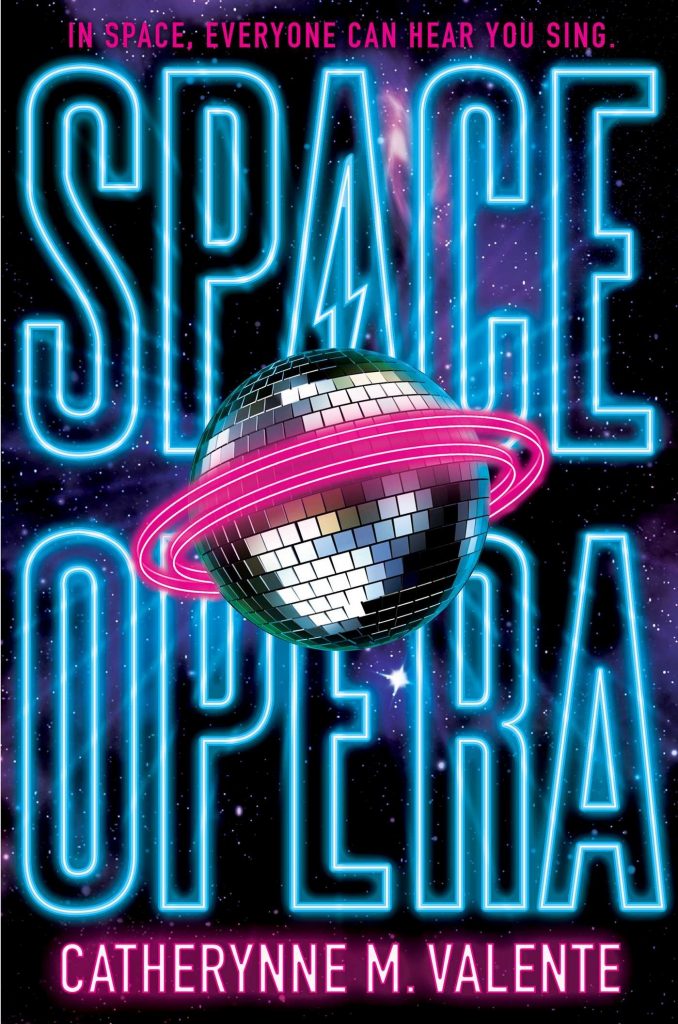
Described as Eurovision meets The Hitchhiker’s Guide to the Galaxy, this novel centers on a singing contest that is the only thing stopping intergalactic war. Earth and humans are the newest contestants after discovering that there is sentient life beyond us. However, only one act from the list of pre-approved candidates is able to compete, so Decibel Jones and the Absolute Zeroes need to place above last to save Earth and humans from extinction.
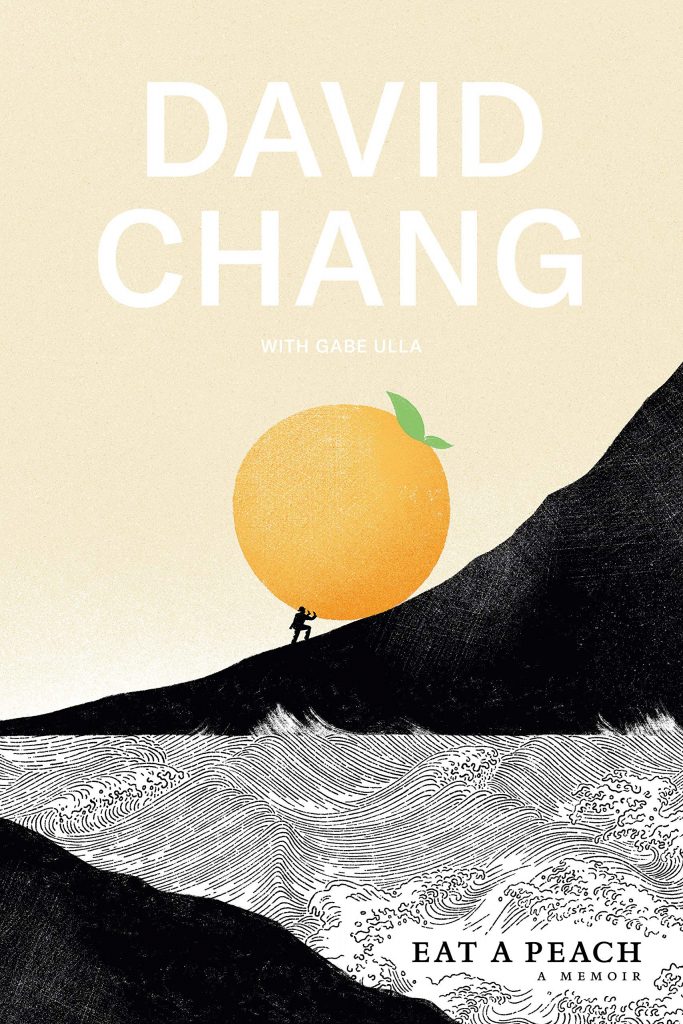
The host of Netflix’s Ugly Delicious and founder of Momofuku and Milk Bar, David Chang’s memoir is perfect for food show lovers. Chang grew up in Virginia as the child of Korean immigrants, and he documents his coming-of-age journey with the culinary world. He reflects on his mental health, racial identity, and social movements, as he was thrust into restaurant and food TV success. Incredibly raw and insightful, Eat a Peach gives a glimpse into the individuals behind the screen.
The Answers follows Mary, a young woman with chronic pain who applies for “The Girlfriend Experiment,” a supposedly scientific research project that has more in common with a demented version of The Bachelor. Desperately in need of money so she can afford a new miracle treatment, she finds the experiment on Craigslist. The “boyfriend” at the center of it is a popular actor who is determined to build a perfect relationship with various “girlfriends” filling each of his specific needs. Mary navigates being his “Emotional Girlfriend,” while also living with the other women, herself, and her pain.
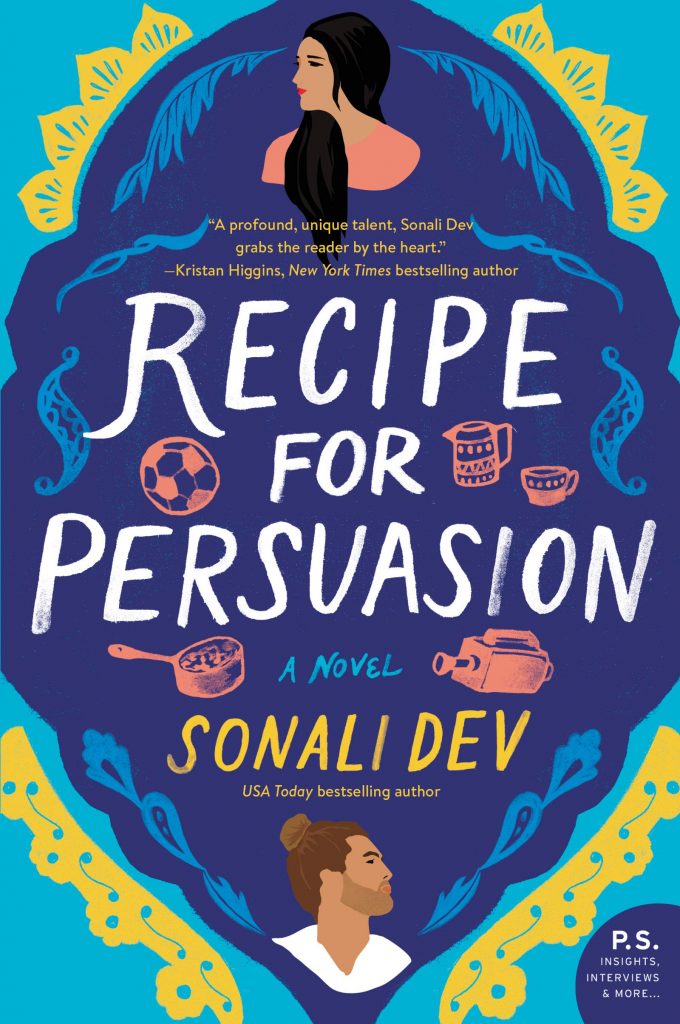
A modern adaptation of Jane Austen’s Persuasion, Recipe for Persuasion follows struggling chef Ashna Raje as she joins the cast of Cooking with the Stars (think Dancing with the Stars but with food). However, things go awry when the celebrity she is matched with is her first love, a hot Fifa soccer star who ghosted her twelve years prior. While the viewers immediately begin to ship them, the two have to come together to win and overcome their secrets and past.
Forthcoming this November, Rax King’s debut essay collection addresses the “worst culture we have to offer.” Combining humor, personal narrative, and incredibly precise analysis of low-brow pop culture, King weaves this collection through the aughts and her adolescents. In essays about escaping an abusive relationship with the help of Guy Fieri, bingeing Jersey Shore with her terminally ill dad, and navigating intense friendship while watching America’s Next Top Model, King shows a profound love for the easiest things in our culture to dismiss.
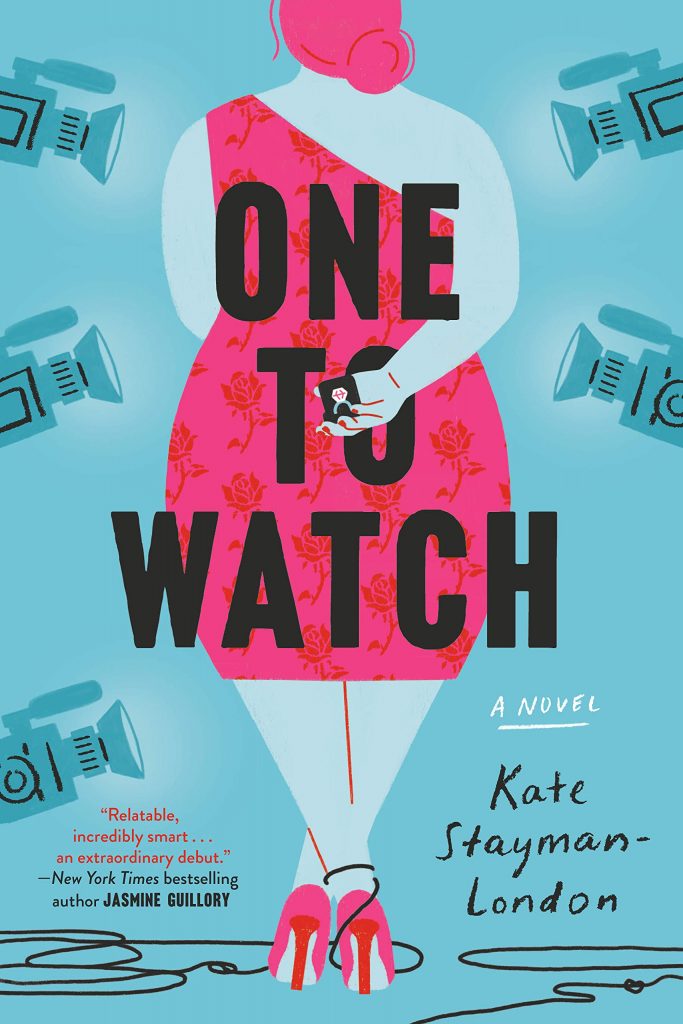
Main Squeeze (basically TheBachelorette) is fashion blogger Bea’s favorite TV program. When she gets asked to join the newest season as the first plus-sized lead, she agrees, but only because she wants to spread body positivity to the millions of young women who watch. But of course, the men are charming, the dates are out of this world, and the drama is addicting, so can Bea keep her promise? One to Watch is fun and frustrating in all of the ways dating shows can be and Bea is a lead worth supporting.
Goal Diggers—a reality TV show about millennial women breaking the glass ceiling—is all the rage. But for the new, fourth season, the producers decide to add a fifth member to the cast: Kelly, the older sister of fan favorite Brett. Growing up, Kelly was the star of their family, but after getting pregnant by a DJ and becoming a single mother, Brett pulls out from under her sister’s shadow. Now the veteran cast and Kelly have to navigate squabbles, plotting, and even murder.
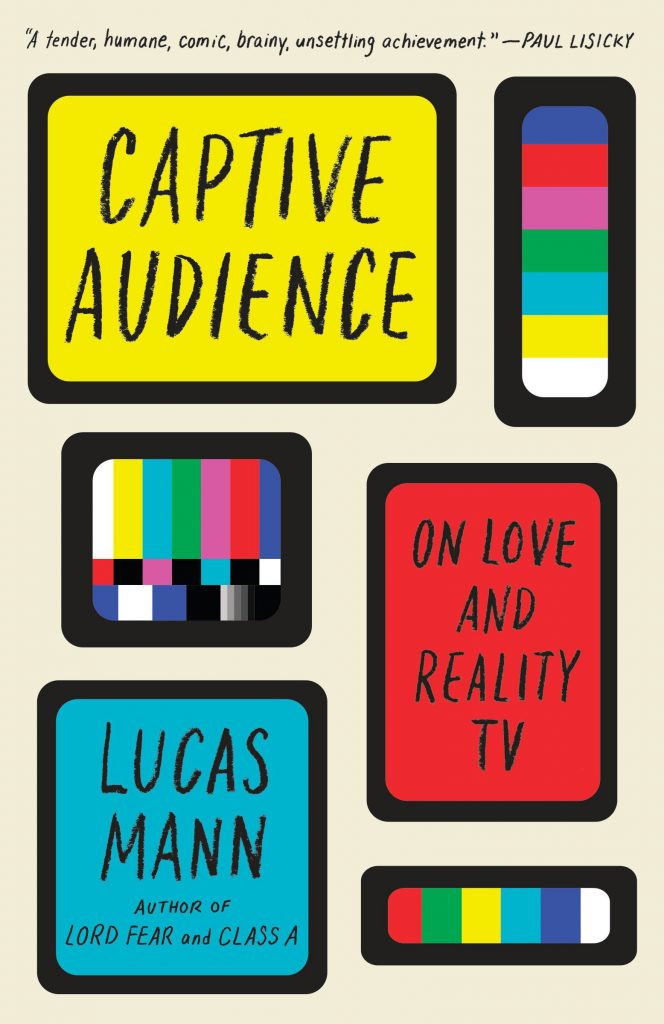
In a unique love letter to his wife, Mann explores the complexities in our addictions with reality TV and how it impacts culture, art, and ourselves. With a sharp and unrelenting eye, he intersperses his wants and desires as a husband and writer with scenes from COPS and Vanderpump Rules. Ripe with authenticity and awareness, Captive Audience speaks to what we value as media consumers, and how our culture is replicating what we once treasured as “real.”
I am a Black person who doesn’t know how to play spades. That’s important, sort of, but less important, certainly, than the fact that reading about Black folks playing spades makes the game feel almost ancestral in its familiarity to me. More specifically, the familiarity I feel when invited into a game as Hanif Abdurraqib writes about it: “Oh friends—I most love who you become when there are cards in your hands. How limitless our love for one another can be with our guards down.”
That sense of limitlessness wraps itself around every essay in Abdurraqib’s newest book, A Little Devil in America: Notes in Praise of Black Performance. In it, he writes about Black performance in America—from Great Depression-era dance marathons to the enduring cool of Don Cornelius to the art of Mike Tyson entering a boxing ring—with both great reverence and rigorous analysis. The book, in the way Abdurraqib’s work so often does, erects monuments to our should-be legends and our unignorable icons alike, and paints an expansive, deeply felt portrait of the history of Black artistry.
Leah Johnson: This book felt really special to me as I read it. Fresh, I guess in a way that not every book I read feels. Did you get the sense as you were working on it that you were breaking new ground in your writing or in the tradition?
Hanif Abdurraqib: Oh, no, not at all (though I appreciate your high praise there!)—I think a thing I always try to remember is that I’m never the first to do anything, especially when writing within the Black tradition of storytelling, and reformatting genre/shape of work. It feels best when I frame myself within a lineage of workers who have (and still are) doing the kind of work that excites and informs my own. It feels more honest in that way. I will say that, more than with my other books, I felt like this one was guided by some of the voices and ancestors it was populated by, and some who don’t make an appearance at all, or make small ones. I feel like Toni Morrison, especially, guided some of my organizing principles.
LJ: I’m not trying to gas you up here, but I did spend a lot of time crying and crafting essay-specific playlists as I read this, which to me is the marker of a great book. If you had to choose one artist’s work to be played alongside the reading of A Little Devilin America—sort of like matching a cheese to the perfect wine—whose body of work would it be?
HA: This is such a good question, and I’ve thought about it a lot because I’m actually working on a book-specific playlist, to honor the tradition of doing book-specific playlists that I’ve done with all of my books. I really want to push people towards Merry Clayton’s solo work, because I think it is so underappreciated, but really gets to the heart of what so much of this book is wrestling with. Her voice holds so much triumph, it holds so much gospel, there’s so much light coming through the cracks of it. It is easy to paint her story as a story of only pain, but her work refuses it, she refuses it.
LJ: In a conversation between you and Dev Hynes recently, you asked him about his relationship to dance as it relates to his compositional ability, and I’d actually like to turn that question around on you. Considering this book is so interested in the art of movement, what is it about dance that compels you to interrogate it so thoroughly, and how would you say it informs your larger body of work?
HA: I think because I cannot dance well, I find myself drawn to dance. I’m being serious, truly. I can dance well enough to survive on a dance floor, but not well enough to awe anyone with my moves. I especially know and appreciate when it is my time on a dance floor, and when it is time for me to get out of the way and let someone more equipped than I am cut up. If there is a way this informs my work at all, it is because I think I am so in-tune with ideas of restraint. Some of this comes from my life playing sports, too—which Dev and I also riffed on a bit. I think so much of me is trained to understand what I’m capable of and what I’m less equipped to do. And with that comes an understanding of how I can use the former to strengthen the moments where I’m wobbling along the latter.
LJ: Sports as a mode of performance is something that comes up a lot in your work, and feels in line with the way you write about the history of dance marathons at the beginning of this book. Where do sports and music intersect for you?
My favorite musicians are usually not the people at the front of the band. It’s the confident player on the side, who doesn’t speak much, but knows how good they are.
HA: I think there’s something about exhaustion, endurance, and joy that come through in a singular sports performance that also come through in a singular live music performance. I think the sonic highs and lows that can exist within a song, or within an album can be seen playing out in a sport like basketball. Some of my favorite basketball players are guards (sometimes undersized) who shoot a lot. This is probably because I was/am an undersized guard, one who is a bit more tentative about shooting. But it feels like there’s a real miracle in watching someone just fire away at the basket with confidence. There’s something in this, I think. That my favorite musicians are usually not the people at the front of the band. It’s the confident player on the side, who doesn’t speak much, but knows how good they are.
LJ: I’ve read you say that this book was your most joyful writing experience yet. Was the joy in being able to sit with the specific subject matter for an extended period of time, or more in the process of writing it itself?
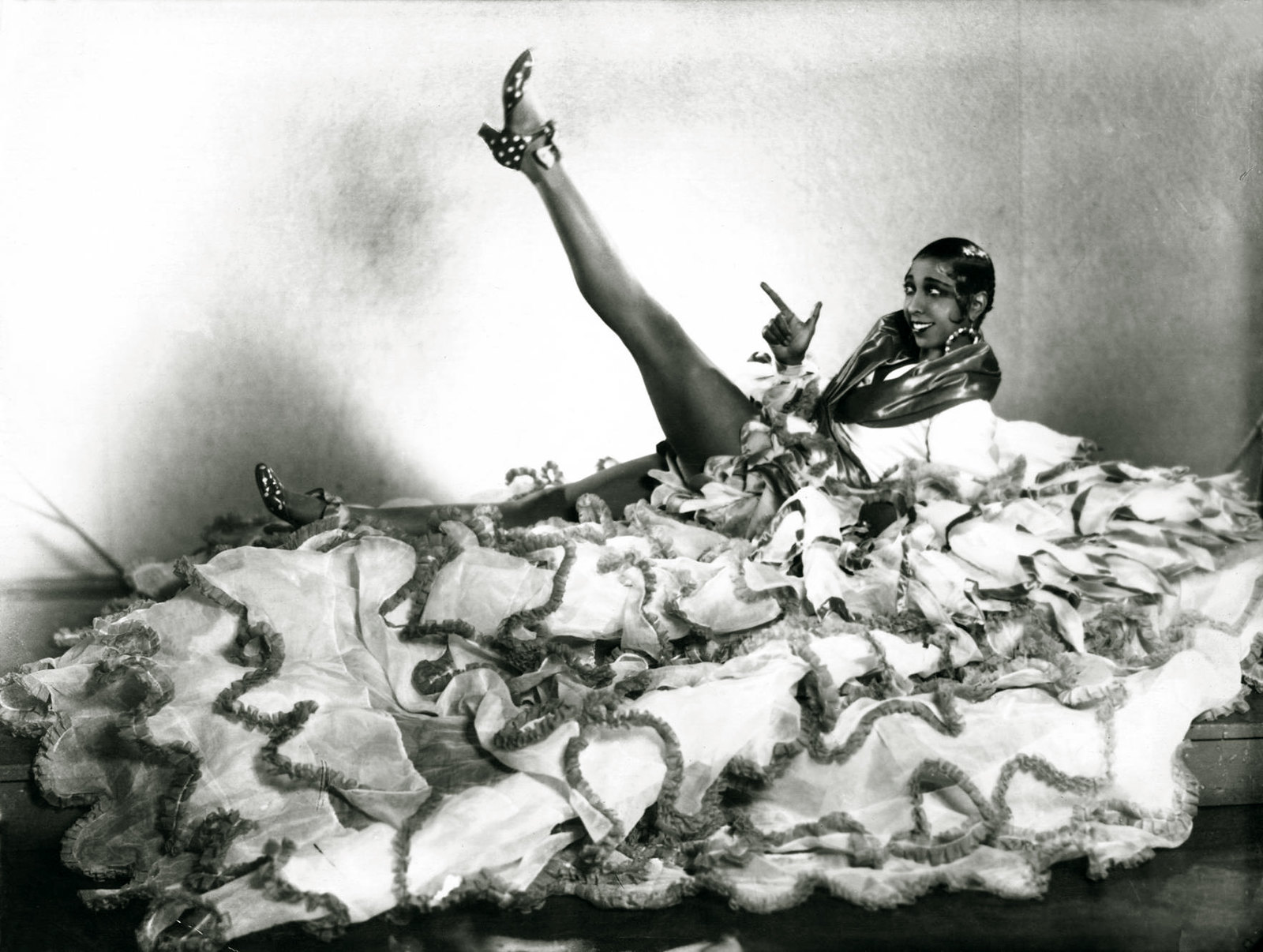
HA: I think both, equally—but there was also immense joy in the very visual research practice of the book. Watching hours of Soul Train footage or watching Josephine Baker’s life and career play out through decades. Having moment after moment of being able to watch something and sit in gratitude for what Black folks have been capable of across time, across eras, before I was born. And what they will certainly still be capable of after I’m long gone.
LJ: You’ve spoken a lot about how involved you are in the processes of choosing your book covers, which absolutely would explain why they are, bar for bar, some of the best in the game. When a reader picks up A Little Devil in America and sees that Leon James and Willa Mae Ricker photo, what sensation did you want the cover to leave them with?
HA: It was important to me that I found a photo that showed a Black person’s face, in complete ecstasy, in the throes of doing something they maybe once thought was unbelievable, or them realizing they’re at the height of their powers, for a brief moment, before coming back down to an earth that is sometimes wretched and sometimes unkind. I was so excited to find these photos of Lindy Hop aerials because it was exactly that sensation. People elevated, off the ground, finding a really quick newer and better world in the air. I loved that, as a thing to center the book on. I don’t love the world as it is currently constructed, and so I have to ascend to a better one, even if I know I’ve got to come down. I want people to look at the photo and be thankful for whatever movement (physical, emotional, or otherwise) they have at their disposal to take them to a better place.
LJ: In, “It Is Safe to Say I Have Lost Many Games of Spades,” you have this line that I couldn’t stop thinking about after I set the book down, where you write that you meet your “enemies with silence and my friends with a symphony of insults.” It made me think about engagement as a type of care. I’m wondering if you think about your work, as you’re in the middle of it, as an extension of love?
It was important to me that I found a photo that showed a Black person’s face, in complete ecstasy for a brief moment, before coming back down to an earth that is sometimes unkind.
HA: I think maybe I most think of my work as a way to remind myself that I am someone who has memories that I will maybe not always be able to hold close, and I want to happily expel them while I still can. Not just for the sake of others who are reading (though I’m happy they’re along for the ride) but very much for myself, and my needs. My understanding that I’ve lived a life that was sometimes good, or sometimes without pain. I suppose that is an extension of love, even if I don’t always mean for it to be.
LJ: We have all these shared cultural artifacts in the Black community, though, as you write in your spades essay as well, a lot of these artifacts are retooled and distilled differently depending on where you grew up. What do you think your relationship to the Midwest has given you in terms of the lens you find yourself examining art through?
HA: I think even calling myself a Black Midwesterner is funny because I live in the middle of Ohio, and Blackness as it presents itself here, in this state, shifts depending on what part of Ohio one is in. Black folks in Cleveland and Black folks in Cincy and Black folks in Columbus are all different—different interests, different routes of migration meaning different investments in place. And that’s just in one state. To say nothing of the upper Midwest, to say nothing of, say, St. Louis. I really cherish that. It reminds me of how vast our multitudes are. Place is fluid—and I say this with someone who has immense love for where I’m from—but the ways Black folks have found each other and the way I’ve found my people along our multiple geographies is fulfilling.
LJ: I’m sure you’re going to get a lot of questions about writing in the middle of a pandemic if you haven’t already. But I have to ask, how has your process shifted, if at all, over the past year?
HA: Well, it does feel good to write from home consistently. I was on the road so much that I was writing from hotels, or airplanes. It felt untenable, in a way. I like the calm of having a desk, having a place to write, having a way to set my table. The poet Vievee Francis talked about this at the first Big Writing Workshop I ever went to. Having a place to set your table, so that when you exit the work, as raw as one might feel in that moment, there are things you love beside you. A photo, a dish of familiar candy, a few crystals (in my case). I have really cherished setting my table.
Mrs. Jones was my twelfth-grade biology teacher, whose husband had left her for the ninth-grade English teacher after twenty-two years of marriage. It happened early in the fall, and Mrs. Jones often came to work tired and distressed, often plucking a tissue out of a box and pressing it to her eyes during class. Some students grinned or snickered, but most pretended not to notice as they studied the division of chromosomes and how much energy and labor it took to grow a life. Mrs. Jones didn’t have children, but she nodded and occasionally corrected us, drawing intricate beehive charts on the board. It was my senior year at F. W. High; I lacked friends and had just begun to get acquainted with the surroundings. I was new to the area, new to the country, new to the people.
My mother and I had moved to Virginia from Moscow, after fifteen months of her correspondence with Bill, whom she’d met online, through one of the international dating services. I’d translated their emails word for word because I’d been studying English from the age of seven, unlike my mother, who’d taken one year in college. The emails, though not passionate, were full of detailed descriptions, as well as questions, some more personal than others. Hers: How big was Bill’s house and the town of Salem, where he lived? How many women did he date in the past? Why did he never marry? Did he like children? What was his favorite book? His: Could my mother cook? How often did she use beets in her cooking (because he wasn’t “a big fan” of the vegetable and he heard it “turned one’s bowels pink”)? Did she like to have a garden and grow her own tomatoes in the summer? Did she make preserves? Did she drink alcohol? From the emails, I’d also found out that both Bill’s parents died from cancer and that he never married because he didn’t think he wanted children, and most women he knew did. Later, of course, he had changed his mind, but good single females were hard to come by at his age—fifty-six. One of the employees in his garage suggested that Bill seek a Russian bride because he’d heard that Russian women were pretty and earnest workers, and because they took care of their men.
Also, from the emails, I understood that my mother hadn’t had an intimate relationship with a man for years, which of course I suspected but hadn’t given much thought to. She wasn’t that old—forty-four—but in Moscow she spent most of her time working (she was an accountant at a small trading firm), or taking care of me and our flat. She did everything herself—replaced bulbs, fixed commodes, painted windows, glued wallpaper, hung curtains and mirrors. She also sewed and did laundry by hand because we couldn’t afford a washing machine, and we had no place to put it unless we got rid of the bathroom sink or the tub or the kitchen table. On weekends, my mother and I tidied my grandparents’ place. We bought their groceries, cooked, washed and ironed clothes because my grandmother had arthritis and her fingers looked as though they’d been broken in many places and had grown back together in strange, impossible ways.
Every September, my mother took a one-week vacation, which she usually spent baking pies from tart Antonovka apples and reading books she didn’t have the opportunity to read the rest of the year. She was a healthy-looking woman with a trusting smile and full hips. Her hair was short, flaring at her ears and colored magenta red, so from a distance her head resembled a flower, one of those large shiny asters I always gave to my teachers on the first day of a school year. After my father had left us, my mother tried to grow out her hair and went on a few dates with local men, only to discover that both pursuits were equally frustrating. Neither my mother nor I had ever travelled abroad (even though after the collapse of the Soviet empire, Russian people could finally see the world), so when the international dating agency had arranged our visas, we packed our suitcases and got the tickets in less than a month. Bill had agreed to pay all the expenses, and my mother had agreed to stay for a year, until the visas ran out. She hoped that by that time she’d know enough to either marry or leave him, and I hoped that I’d have a chance to apply to American colleges and continue my education.
Fall blossomed with colors. The grass was still thick and green, but the mountains looked ablaze—mulberry-red, blood orange, crimson. I made a few acquaintances at school but still didn’t talk to anyone much, self-conscious of my accent and the fact that I usually had to repeat whatever I said. Despite my mother’s rudimentary English, Bill had no problem understanding her, and after just a month, they no longer needed me to interpret. Bill seemed hardworking and trustworthy, and she seemed content, if not happy. On weekends, they took off driving to nearby towns, browsing through antique stores and flea markets, eating out or going to late movies, perhaps trying to make up for all the dates they never had. I, on the other hand, devoted myself to my studies since I had to work twice as hard to be able to keep up with my classes, relearning things in English.
Mrs. Jones stopped crying during class, but she looked exhausted and resembled a hollow, stripped-of-bark tree. Sometimes, I saw her walking to school ahead of me, along the Roanoke River and across the railroad tracks, taking a shortcut through the tall brush and a deserted playground, where she would sit on a swing and smoke a cigarette, holding it far away from her face as though afraid it would harm her skin.
One late October morning on my way to school, I spotted Mrs. Jones on her knees, bent over a dog lying on its side across the tracks. It was a red-and-brown mongrel, not too big, not too small. As I approached her, I could see that the dog was intact and perfectly still, as if stretched out for a nap; its eyes half-closed, the black pupils glistening between the hairy lids. One paw was oddly flat and folded under like a rubber flapper. There was no blood or torn fur anywhere, but the piece of the dog’s ear was missing, chewed off.
Mrs. Jones drew her finger along its ragged edge. “Some animal took a bite,” she said.
“What animal?” I asked.
“Could be anything. Could be another dog.”
I sighed, squatting next to her and dropping my gargantuan schoolbag on the ground. “What happened to him?”
“Got hit by a train, probably. Let’s throw him in the river.”
“Is it legal?” I asked. Since we arrived in America, my mother had underscored more than once that the country we now lived in was so unlike the one we’d come from; the laws were different, so were the people, who actually obeyed them.
Mrs. Jones gave me a long stare; she raised one of her eyebrows, and the skin on her forehead puckered, resembling a wrung cloth.
“We can’t bury him—we have no shovel. So, I think, under the circumstances, we can let the water take care of it.” She threaded her hands under the dog’s body, and I did the same, from the other side. Together we lifted the animal (stiff and much heavier than I anticipated) and hauled it toward the river. It was still early, the air cool and misty, enveloping us like a shroud. Everything smelled of mud and rotten leaves, and my foot slipped a few times as we trudged along the bank.
“This is good.” Mrs. Jones stopped. The portion of the bank was significantly elevated, and the river seemed deep enough, its surface black and glassy. We swung the dog lightly from side to side and let it fall. It plopped in the water and disappeared from view, leaving a mesh of circles until they, too, faded away, and the river became unruffled once again.
“You’re probably late for classes,” Mrs. Jones said as she wiped her hands on her pants and then pulled on the sleeves of her dark-brown turtleneck. Her clothes often looked as though she’d outgrown them—her pants too short, her shirt sleeves too narrow. Her shoes, however, were large and square, with thick flat soles.
“The math teacher asks us to write notes if we’re late,” I said, adding the words together before actually pronouncing them. “Do I tell about the dog?”
“That’s fine. Or you can just say that I needed your help.”
We picked up our bags and walked in the direction of the school. A gust of wind combed through the trees; a few raindrops pocked the river.
“How are you getting along, Pa—” She paused. “I’m always afraid I’ll mispronounce your name.”
“Pavel,” I said. “Sometimes Pasha.”
“I’ll try to remember. It must be hard for you. So much change.”
“It’s O.K. Sort of like time-travelling. Like in here,” I said and tapped on my head. “I’m still there, in Russia. But really, I’m here—in America.”
“I think I understand what you mean. Makes perfect sense. This new life, it has been forced upon you, and you’re trying your best to adjust. Seems impossible, doesn’t it? When everything you know and love is back there, in that other life.”
“Except my mother.”
“Yes. Of course.”
This new life, it has been forced upon you, and you’re trying your best to adjust.
Two people, a man and woman, stepped out of the tall brush on the other side of the tracks, their faces tight with worry. The man held a plastic bag in his hand, and as he walked, he’d stop and take out a sock and lay it under a tree or drape it on a bush. He was a bear of man, with gray hair and a moustache. The woman was short and thin and seemed much younger, wearing blue jeans and a red-and-black plaid shirt, her hair twisted in a choppy bun. She was calling out to someone.
When the couple was directly across from us, the man said, “Our dog is lost. Have you seen him? A brown mutt?”
“No. We haven’t,” Mrs. Jones answered without the slightest pause, and I turned to look at her, puzzled. I remembered my mother telling me before we left Moscow that in America people didn’t lie—they didn’t have to—which was why they’d been able to build such a powerful country.
“He’s really sweet,” the woman said, her voice filled with tears. “Got loose last night. We’ve been looking all over. If you see him, please call our number.” She handed me a flier. I glanced at it, embarrassed to have been made an accomplice (if only in disposing of the body). There, on a large floor pillow, the dog reposed, alive and content, a pink rubber bone at his side.
“Sorry about your dog,” Mrs. Jones said. “He might still come back.”
“You think so?” the woman asked, wiping tears.
Mrs. Jones nodded and resumed walking, her shoulders low, a weary shuffle in her step.
I folded the flier and put it in my pocket, scurrying after her. They were long gone when I dared to ask, “Why did we tell not the truth?” I couldn’t bring myself to say “lie.” The word seemed too short and too definite, permanent even, like a cutoff finger.
We arrived at the old playground, and she took out a cigarette, inspected it and then lit it, again holding it awkwardly far from her face. She was like a teenage girl or a novice smoker, not inhaling but taking sporadic nervous drags and exhaling with an exaggerated force.
“It wouldn’t have solved anything,” she said, narrowing her dark, joyless eyes. “As far as they know, their dog is just lost. After a while, they’ll get used to being without him.”
“But they’ll worry and look for it.”
“And hope.” She smiled, but only with her stretched lips. The rest of her face didn’t move. She dropped the cigarette in the grass, behind the swing, put it out with her foot, then picked it up and hid it inside her small pale fist.
By Thanksgiving, the ninth-grade English teacher, whom everyone now called Mrs. Jones Two, was growing new life under her loose soft shirts. Her breasts sat on top of her distended belly like fruit on a platter, like those juicy cantaloupes I used to buy with my mother at one of Moscow’s bazaars at the end of summer. Surprisingly enough, no one gossiped about the situation but rather accepted it, as though this new baby had somehow legitimized the mother’s involvement with another woman’s husband. Mrs. Jones didn’t show any signs of distress either, except that she stopped walking to school. She colored her graying hair golden-brown and bought new oversized clothes. She began wearing long skirts and bright silky blouses hanging around her body like curtains, all that excessive, bunched-up fabric. But her shoes remained the same, brown and sturdy and too wide. She made no references to the dog and treated me no differently than any other student in her class.
My grades improved, but I still struggled with writing. Bill offered to help and read my essays with care, concentrating hard, elbows on the table. He corrected articles and prepositions, a few idiomatic expressions, but very little beyond that, scratching his forehead—deep in thought—and occasionally leaving his greasy fingerprints on the margins (for which he always apologized). My mother couldn’t help me at all. To hide her frustration, she concentrated on turning Bill’s house into a home, dusting and rearranging furniture and obtaining new pieces—an oak rocker and a love seat, where she sometimes curled up in the afternoon, reading. She framed a picture of my grandparents and displayed it proudly on her dresser. Before leaving Russia, she’d rented our apartment and hired a neighbor to clean and cook for my grandparents twice a week. She called them regularly and looked out the window when she talked to them, squinting and squinting, as though she might discern their faces amidst the clouds or the mountains.
As I continued to battle school, my mother and Bill continued to build a family, disclosing each other’s talents as well as secrets. Bill was kind and patient and never raised his voice. A car mechanic, he could fix anything in the world, which was how my mother had described him to my grandparents. Also, Bill had finally agreed to taste borsch and even took a pot to his garage, where he shared the soup with his coworkers, demanding they add a spoonful of sour cream before eating. He never drank hard liquor, but he bought a bottle of vodka one day, on the way back from work, and offered a shot to my mother. She agreed to have a drink if he had one too, but he refused. Later that evening, as we were finishing dinner, he admitted to my mother that his parents hadn’t died from cancer—both had been alcoholics, had drunk and smoked themselves to death. He didn’t want to tell it to my mother before she got here so as not to scare her off. My mother took his hand in hers and stroked it as she did mine when I was little and didn’t understand any pain other than the physical. I waited for my mother to divulge her secret, too—that my father had multiple affairs before finally dumping her for a younger woman, who also had a son by him, that he’d often forgotten our monthly visits, my birthdays, and child support payments while my mother and I had struggled to piece our life together. But my mother never said a word. Or perhaps she’d already opened up to Bill when they’d been alone, while driving to other towns or browsing through antique malls, surrounded by other people’s possessions, rugs and lamps, musty furniture, old clocks. When I finally went to bed that night, I could hear my mother and Bill whispering in their bedroom and then laughing and shuffling and laughing some more.
In early December, we had a tall fat tree decorated with old ornaments Bill had dug out of the basement. The ornaments were his parents’, most of them made from soft faded cloth or weathered cardboard. There were a few glass balls and tin stars, an airplane with bent wings and a snowman, whose loose carrot nose my mother glued back in place. At the bottom of the box, we found three knitted socks with the names Bob, Mary, and Bill crocheted in dusk-blue. Mary’s sock had an angel cross-stitched on the front, Bob’s a sleigh, and Bill’s a gingerbread house. Before Bill could fetch his toolbox, my mother had already hung the socks on the back of the entrance door instead of the Christmas wreath. “Memories,” she said. “They are us until we become them.”
On Christmas Eve, my mother stuffed a turkey with herbed breadcrumbs, nuts, and baby onions using a local recipe. She also made gravy for the first time and decided to bake an apple pie, complaining that American flour was too soft and the apples were not green or tart enough. Bill called his neighbor and asked her advice on using a different brand of flour or another apple variety. My mother smiled and said in Russian, “Sometimes it isn’t such a good thing to have so many choices. One can become frustrated.” I started translating my mother’s words to Bill, so he didn’t feel left out or think that we were talking about him, but he told me not to worry and that he was going to Grant’s to search for greener apples. I asked to tag along, and he seemed grateful for the company.
Snow drifted across the paved driveway, filling in the cracks. Flurries spun in the air, thousands of tiny fuzzy creatures. I opened my mouth and caught a breath full. I felt like a big fish gulping a school of minnows as they swam by, ignorant of their fate. I thought how my mother always told me that we made our own fate and that it made us, too. Perhaps that was the main difference between humans and other species, what made a man a man—being responsible for what happened to himself and what he did to others. But I still had no clue as to when a man should start making such fate-determining decisions.
It was snowing heavily when we pulled up to Grant’s and got out. There were only two cars in the parking lot. The store was deserted, the shelves mostly empty—everyone had come and gone, stocked up for the holidays and bad weather. They had plenty of green apples, though, which Bill picked one by one and smelled (imitating my mother). We proceeded to the checkout when I spotted Mrs. Jones loitering by the register. It seemed that she’d lost even more weight and resembled a long willowy shadow on the wall. She wore a heavy black coat, a gray scarf and a hat. In her pale, almost transparent hands, she held a head of lettuce, hugging it close to her chest. She must have felt my stare because she turned and looked directly at me, blinking and blinking, as though she had snow in her eyes. I waved, but she didn’t wave back. Instead, she dropped the lettuce in her buggy and scurried toward Bill.
“Hi, I’m Pavel’s biology teacher. Could you, please, give me a lift home? I didn’t expect it to start snowing so soon. I’m a poor driver. But I need to get back. I’m having company,” she said in quick, forced sentences.
Bill nodded, and I waited while she paid, then helped load her bags in the truck. She climbed in the back seat and turned to face the window.
The ride was mostly silent, except when Bill switched to the weather channel on the radio, where they announced twelve inches of snow by midnight.
“How much is twelve inches?” I asked.
“A foot,” Bill answered.
“Foot? Whose foot?”
Bill chuckled.
Mrs. Jones didn’t say anything at first, but then breathed out a heavy sigh, adding, “Unbearable. All that snow.”
Neither Bill nor I replied but watched the wipers beating wet powder off the windshield. It piled on the bottom of the glass in soggy lumps before sliding off and falling on the road, a thick gray mush. Ahead, the mountains had fused with the horizon, and I could barely discern their hunched shoulders draped in soft fuzzy pelts.
When we arrived at Mrs. Jones’s house, all was a spool of snow inside of which we moved slowly as though in a dream. She trudged up the steps, a square imprint of her shoes along the path, and I trailed after her, bloated grocery bags in each hand. They were more bulky than heavy, and I tripped a few times, slid sideways, but managed to balance. She didn’t offer to help or acknowledge my clumsiness in any way. Or maybe she just forgot that I was there, loaded with her produce. Without shaking snow off her feet, she pushed the door open and walked inside, and the door swung shut. I had to place the bags on the porch to be able to turn the knob and let myself in.
Hers was a one-story brick house, wide and weathered; it smelled of burned wood and something else, something acrid, like paint or varnish. The odor reminded me of canning season at my grandparents’ place, when everything stunk of vinegar, walls and rugs and even our hair. Yet, unlike in their flat, disorder reigned in Mrs. Jones’s home. It had the feel of an abandoned den men had fled in the dark. Pieces of clothing—sweaters, shirts, jeans, a robe—scattered on the floor. I crossed the hallway, where a chair lay on its side and an empty frame hung on the wall, a torn corner of an old picture remaining. The absence of Christmas decorations made me think of the times in Russia when we weren’t allowed to celebrate the holiday.
In the kitchen I found Mrs. Jones still in her coat but without the hat, heating water in a tea kettle. “You want coffee?” she asked, lighting a cigarette. “I think I have one of those to-go cups.”
“No. Thanks,” I said.
With her dry, chafed hand, she swept a disarray of envelopes and books against the wall, and I was able to set the grocery bags on the table, next to a pile of pencils, finely sharpened.
“Sorry,” she said. “It looks awful, but I’ve been rearranging.”
“It’s O.K.,” I said. “I understand.”
The kettle was steaming up the window, and she reached for a cup, then paused—hand mid-air—and wiped the glass with her coat sleeve.
I suddenly recalled the days, weeks, after my father had left, how my mother would become disoriented in our flat, as minuscule a space as it was. How she’d pick up one thing from a kitchen shelf and hold it in her hands for a long minute, as though forgetting its intended purpose or why she’d needed it. Or how she’d begin things—sewing a button onto my shirt or peeling beets for borsch—and never finish; the shirt would remain on the kitchen table for weeks, the beets wither and mold in the pot. I wasn’t quite seven and didn’t know loneliness as a state of mind, but somehow her sadness had affected everything she touched, be it food, or water, or my face. Back then, I still had no idea my father’s absence in our flat was permanent or that another child had already replaced me. I thought that my father was gone on a trip overseas, and there was no way for him to contact me. At night, as I lay beside my mother, where my father used to sleep, I would imagine growing taller and heavier by the hour so I could fill in all the emptiness his disappearance had created. I dreamed about him too, coming back home with flowers and ice cream, scooping us against his wide muscular chest, those mountains of bone and flesh. I dreamed about riding his shoulders and touching the ceiling, the tiny teardrop crystals of our chandelier. And then I would wake up and find my mother hovering on the balcony, smoking and drinking coffee, peering into the trees, their stark silhouettes almost human, beckoning and waving their arms.
“Your guests, when will they be here?” I asked and took the kettle off the stove.
Mrs. Jones turned and leaned against the sill, her gaze distraught, heavy with doubt and all the snow that kept falling over the yard, burying our tracks.
“Oh, I don’t know. Impossible to tell in such weather.” She blew out a stream of smoke, then dispersed it with her free hand.
“You want to come to dinner?” I asked. “We live close by. My mom is baking a turkey. She’ll make an apple pie too.”
“Men love pies, don’t they?”
“Sure.”
“Maybe your mother can teach me how to bake a good pie.”
“Yes. She’d be glad.” And then I heard Bill blowing the horn, so I scurried out.
Mrs. Jones didn’t come for dinner that night. Yet, we did make room for her at the table. Each time I heard floorboards moan on the porch or the wind knock at the window panes, I glanced at the door, imagining her spindly shadow, the sway of her shoulders haloed in brittle winter air. After dinner, we sat in front of the TV and drank tea and ate my mother’s apple pie, which sagged in the middle, but which Bill claimed to be the best pie he’d ever tasted, American or Russian. On our Christmas tree, a few new ornaments my mother and I had bought at Walmart dangled strangely among the old ones.
In the spring, Mrs. Jones Two had her baby boy. The official announcement was posted on the school’s webpage, next to a tiny red-faced infant with a tuft of black hair and sparse brows. I, meanwhile, had caught up with my studies and was accepted into a few community colleges, where Bill and my mother had encouraged me to apply. If I managed well the first year, I could transfer to a university of my choice. Bill had offered to pay my tuition if I helped him at the garage on weekends, and my mother had offered to bake apple pies for as long as he’d eat them. They both laughed when she said that, and I did too, a wave of gratitude sweeping over me like sunshine over the mountains.
One day I organized books at the school library and came home later than usual. I found my mother and Bill sitting at the kitchen table in mournful silence—hands folded, lips pinched—staring at the muted TV.
“Who died?” I asked, attempting to joke.
“Nobody,” my mother said.
“Someone is sick?” I prompted.
“No one is sick. Somebody stole Mrs. Jones’s baby,” Bill said.
“The English teacher’s baby?” I asked, imagining the helpless little person placed inside a duffel bag and smuggled away in a stranger’s car.
“It’s very sad,” my mother said, and Bill reached for the remote and turned off the TV.
“Whoever did it probably wants to sell it to some childless people and make lots of money,” I said.
My mother and Bill scrutinized my face in disbelief, as though such things never happened and I was making them up.
“What are you saying, Pasha?” my mother asked. “Like you have no soul.”
“I have a soul,” I protested. My mother compared souls to soft places on babies’ heads. As we grew older, our souls hardened and closed up. She said only special people got to keep their souls forever. “Why did she leave the baby alone?” I asked.
“She didn’t. Someone came into her home while she was taking a shower. The door wasn’t locked. We never lock doors here. They think the ex-wife did it,” Bill said.
“The biology teacher?”
“The one we drove home from the store. The police went to her house, but no one is there.”
I didn’t know how to respond, so I just sat at the table and stared at the black TV screen. After a while, my mother got up with a heavy sigh and started cooking. Bill went to the basement, and I focused on homework. But all I could think about was Mrs. Jones Two and her missing baby. I imagined him staring at a strange face and blinking in frustration, unable to recognize the one he’d known all his short happy life. The baby’s lips protruded, his face shriveled as someone’s finger drew along his small ear and chin. I paused, replaying the scene over and over.
“I’m going out,” I finally said, standing up and zipping my sweatshirt.
“Now?” my mother asked. “It’s dark, and supper ready soon.” She still called lunches dinners, and dinners suppers (that would never change).
“I’ll be right back.”
She didn’t answer and continued to flip the fish in the skillet with a fork.
It was dusk outside, the moon’s full face cut out of the sky. Mountains stood jagged against the horizon. They made me think of life and how it could be like that—a broken line—one year giving way to another, happiness yielding to sorrow and vice versa. And how you could only see that from a great distance.
I took a mouthful of cold sharp air and sprinted up the path, crossing the railroad tracks and running toward the playground. It was empty. On the swing, I found a man’s sock. I picked it up and held it between my fingers, then placed it back. There was no wind, and it seemed as though the entire world had paused for breath. I stood still, peering into the tangle of tree limbs entwined like arms and legs. There was a rustle and another, a cooing sound, and then everything became quiet. Not too far away, the river glinted, black like oil, and I followed a crooked, barely visible path along the bank.
The earth was so soft, it swallowed all sounds. I imagined Mrs. Jones sitting on the ground, leaning against a tree, the head of a sleeping infant nestled in the crook of her arm. I imagined her looking fragile and disheveled, but also proud, like a new mother as she rocked the baby to sleep, her body folded over his, the weight of another life against her own.
My mother had once said that children weren’t to blame for their parents’ faults, yet they felt punished just the same.
Somewhere, next to my shoulder, a twig snapped, and a bird flapped into the trees. I thought I smelled cigarette smoke and halted; my jaw trembled, the pulse of my heart behind my eyes.
“Mrs. Jones?” I called out into the darkness. “Mrs. Jones? It’s me, Pavel.”
There was no answer, and I continued to stand, surrounded by shadows, rubbing my arms up and down, a taste of salt in my mouth and also disappointment.
I remembered how the day we’d left for American, I sat on top of my suitcase, reluctant to leave the flat, hoping for my father to call or show up at the door, all the excuses he would invent, all the valiant reasons. How he would pick me up and drive me away and make room for me in his home and his heart. At the airport, we’d almost missed our plane because I kept straying off and wandering around the terminal, kept pushing through the crowds, searching for my father’s face, his ogre chest and long thick arms that would shield me from heartache and loneliness. My mother had once said that children weren’t to blame for their parents’ faults, yet they felt punished just the same.
I didn’t find Mrs. Jones that evening, even though I’d searched for hours. But the next day, as I sat on the living room couch, eating my mother’s potato salad and watching local news on TV, I learned that Mrs. Jones had been arrested leaving town late at night. The baby had been recovered from the back seat of her car and returned to his parents, unharmed. Next, there was footage of a young woman, Mrs. Jones Two, holding the baby to her chest, smiling and cooing into his soft, dreamy face. The baby waved his arms and legs, then opened his mouth, but no sounds came out, just a drool of saliva. People crowded around her, school teachers, friends and neighbors; yet she didn’t seem to notice anyone but the sweet helpless creature pressed against her heart.
For a moment, I shut my eyes, the way my mother used to do while hugging me so tight each time my father had cancelled or forgotten our monthly visit. She never cried but disappeared into the bathroom, turning on the water, or scooped snow from the balcony and rubbed her face until it hurt. I was afraid to talk to her then or wrap my arms around her, afraid to upset her even more. Years would pass, slip and fold between us like rain between the mountains. I would grow up, move away, and forget the pain my father had caused us, but I would always remember her embrace—the tenderness in it, the longing.
Narrative twists have gripped audiences for centuries, from the devastating filicidal revelations in Medea to the operatic B-movie theatrics of Showgirls. We love to be shocked, surprised, and transported by narratives that turn in wildly unexpected directions. But there is a difference between a good twist and a bad one. Does this twist feel earned, emotional, does it bring us catharsis? Or does it feel ridiculous, improbable, and make us laugh with derision?
Oftentimes, when we’re discussing contemporary “genre fare,” those bad narrative twists feel inauthentic because there is some cliche at their core. In the most overheated erotic thrillers, for example, we see toxic stereotypes repeated over and over again, whether it’s the “psychotically vengeful female victim” (see Fatal Attraction, Single White Female, etc.) or the “queer villain” (see Psycho, Silence of the Lambs, Basic Instinct, etc.). Yet despite their irresponsible ignorance, these popular narratives have power; they teach us to see victims as deserving of harm (instead of justice), they teach us to view queer people as villains (instead of humans). And while we may roll our eyes at the campy ridiculousness of these narratives from the comfort of our couches, it is also important to examine the ways in which they have contributed to the oppression of many vulnerable people.
It is because these genre tropes carry such great power, that I’m deeply interested in subverting them through my own work as a novelist. I like to use genre as a bait-and-switch—to hook the reader with recognizable story elements and then completely upend those tropes to draw the reader into something much deeper, surprising and transgressive. In this context, the concept of a narrative “twist” can be used as a powerful tool to explode harmful ideas we’ve received from countless movies, books, and other forms of entertainment.
In the case of my debut novel, Yes, Daddy, I hope to engage my audience with a set-up that might feel familiar to readers of contemporary thrillers—a “rags-to-riches” romance with dark underpinnings. But soon, the central twist of the book steers the narrative into more urgent depths. Ultimately, Yes, Daddy explores subject matter that we don’t see in conventional “genre” fare—sexual violence among gay men, spiritual abuse, and the ramifications of trauma across a lifetime. I want to shock the reader—but not with cliched twists that are unrealistically over-the-top or exploitatively lurid. I want to shock them with reality—to say, “these horrific things happen, these issues matter, so wake up and pay attention.”
When writing my novel, I found inspiration from quite a number of other queer books with heart-stopping twists. These books play with genre, but defy its conventions. These books elevate the idea of a “twist” to the level of profound revelation and emotional catharsis. These books are among my favorites, and I hope they resonate with you as well.
Alexander Chee’s contemporary classic, Edinburgh, is a novel that follows Fee, a young boy who is abused by the director of his local boy’s choir. As the novel hurtles forward through time, we see the shocking ramifications of Fee’s trauma throughout his life. The story is operatic, unpredictable, and profoundly moving. In his essay collection,How To Write An Autobiographical Novel,Chee describes how he utilized mythic story structure to create catharsis that would challenge anti-victim prejudice:
“As I remembered the way victims were met with condescension, disgust, and scorn, I knew if I told our story…I had to construct a machine that would move readers along, anticipating and defeating their possible objections by taking them by another route—one that would surprise them.”
In The Dream House is a powerful memoir that brilliantly experiments with narrative tropes in order to tell a story of queer abuse. Each chapter is written in the style of a different genre; The Haunted House, the Soap Opera, Noir, Queer Villainry, and even Stoner Comedy are utilized as lenses through which to process her own personal history. Endlessly inventive and deeply moving, this book redefines what the memoir can accomplish.
In a book described as a “nonfiction novel,” the queer French writer Édouard Louis recounts the devastating story of his own rape, while also upending the conventions of the traditional novel. It is a work that is both intimate and epic; Louis is unafraid to explore both the personal and the political. He offers his own brutal account as a challenge to the oppressive forces of racism and homophobia within French society.
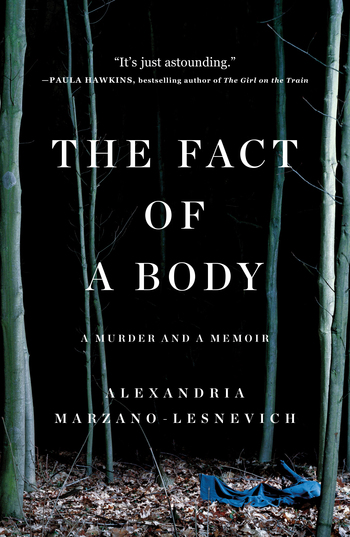
The Fact of a Body brilliantly combines the literary genres of true crime writing and memoir to create a heart-stopping book that follows Marzano-Lesnevich as they explore the depths of a horrific murder case and the ways in which it forced them to examine their own personal history. Marzano-Lesnevich’s riveting narrative style will leave you absolutely breathless; I will be forever in awe of this book’s intensity, poetry, and courage to venture into dark territory.
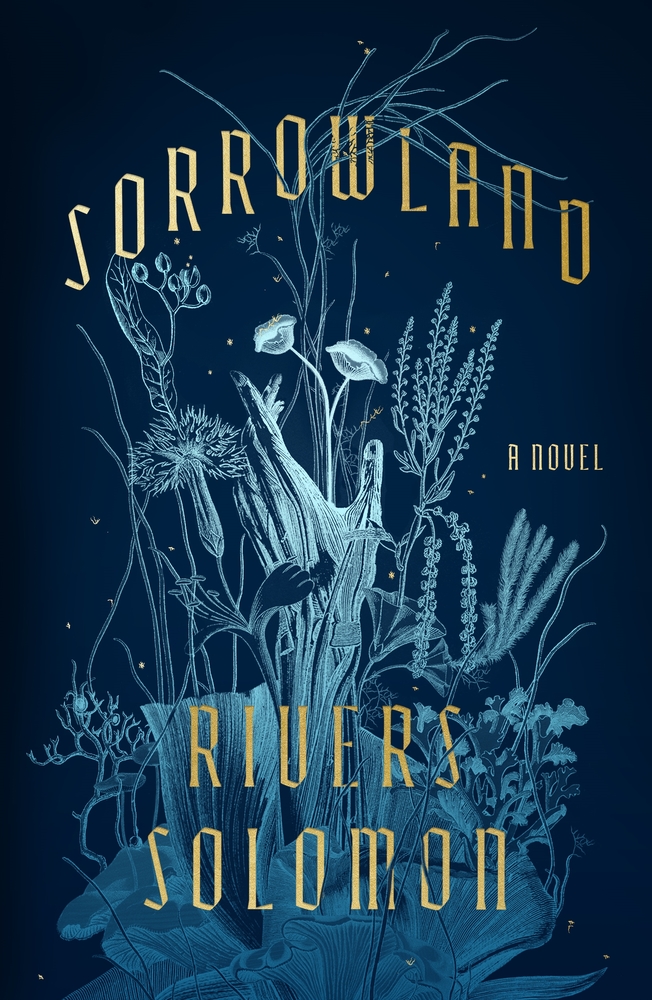
Rivers Solomon’s visionary novel ingeniously melds elements of Gothic horror and science fiction to create a work of genre-defying brilliance. The story follows Vern, a queer Black pregnant woman on the run from a religious cult. After giving birth to twins deep in the forest, she embarks on an unforgettable journey through a fantastical world which has terrifying parallels to our own. There is incredible wisdom in these pages; Solomon boldly tackles issues of identity, religion, systemic oppression, racism, and the power of queer love.
Hanya Yanagihara’s novel has garnered its fair share of controversy, but its cultural impact is undeniable. The novel is a sprawling, relentless, and maximalist portrait of a man tortured by his own trauma and the group of friends who support him as he grapples with a life marred by tragedy. Some find Yanagihara’s narrative techniques to be manipulative, some find them moving. Regardless, this is a novel worthy of debate.
Tom Ripley is one of our most fascinating, complex, and enduring queer literary characters. There is a reason people continue to be drawn to this dark narrative; it says something deeply truthful about ambition, status, desire and the lengths to which people will go in order to get what they want. If you’ve not read the book, or only seen Anthony Minghella’s stunning film adaptation, do yourself a favor and pick up this classic.
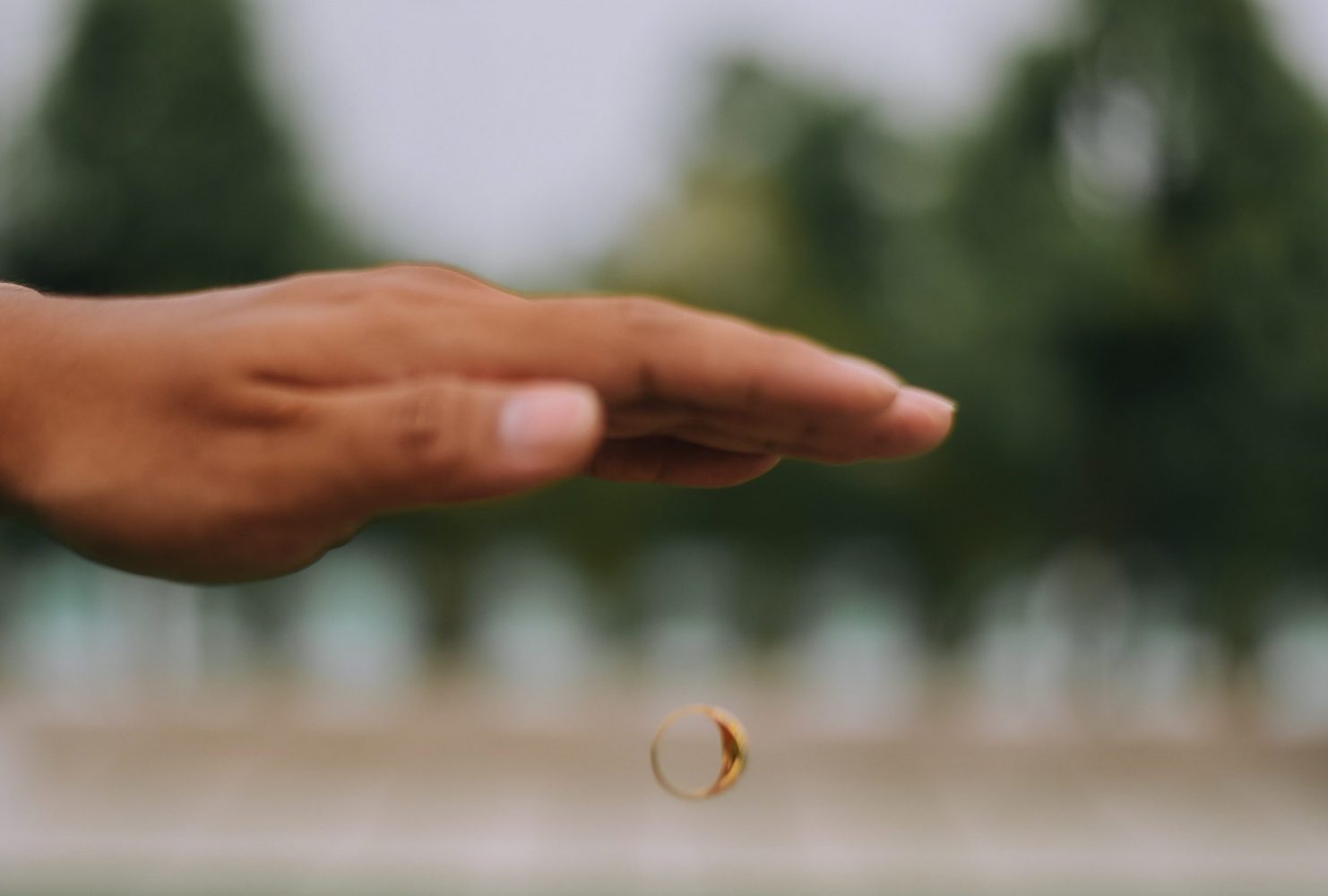
Cynthia D’Aprix Sweeney’s second novel, Good Company, begins when Flora Mancini opens an envelope in her garage and finds her husband’s long-lost wedding ring tucked inside.
Learning about Julian’s infidelity splits Flora’s life in two parts; before the discovery, when she believed she was in a rare happy marriage, and after, into a future whose contours she is struggling to see. Flora’s discovery also forces a reckoning with her best friend Margot, an aging actress who’s starting to wonder if she’s happy with her career as Dr. Cat on Cedars, a long-running medical drama.
Sweeney has a knack for capturing modern life, though she couldn’t have anticipated how readers coming out of the COVID-19 epidemic would relate to Flora’s shock at undergoing a sudden, life-changing event. Unexpected change was something that Sweeney already knew about intimately; at the age of 54, she sold her debut novel The Nest for seven figures, and it spent over a month on the New York Times best seller list.
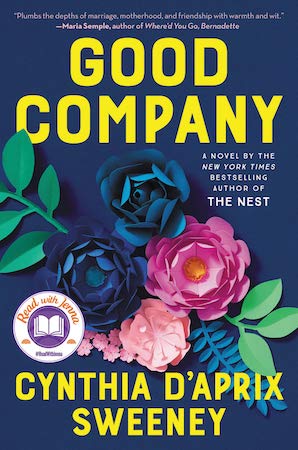
Ultimately, Good Company looks at the bonds we build with the people in our lives, and when—and if—we should cast them aside. I had the pleasure of connecting with Sweeney from her home in Los Angeles to speak about marriage, reinvention, and the reason she’ll never forget the smell of Cool Ranch Doritos.
Carrie Mullins: Good Company starts when Flora finds her husband’s wedding ring in an envelope in the garage. I read that was inspired by your own experience losing some important jewelry?
Cynthia D’Aprix Sweeney: Yes. I went on a business trip with my husband and we were in a hotel, and I did something I’ve never done in my entire life which was leave my engagement and wedding ring behind in the hotel when we checked out. I never got them back and it was very devastating because it was my grandmother’s wedding ring. When I got home, I started telling everyone, and it seemed like everyone had a story for me about a lost piece of jewelry. It was almost always a ring, and it was often from a grandmother.
I was having trouble figuring out how Flora was going to make this discovery, especially since it was something that took place in the past, and I didn’t want it to be like she saw a text or came upon an email, things we’ve seen before. So then I just thought well, maybe it’s a wedding ring that resurfaces, and that really helped me get into the book.
CM: Objects have a special kind of power, don’t they?
CDS: I’m very obsessed with how objects work in fiction—it’s what I gave my MFA graduate lecture on. I was excited to think that I was going to have this object that would accrue some sort of symbolism for both the reader and for the characters. It becomes a sort of touchstone.
CM: I definitely felt the way that objects resonate throughout the book. It could be jewelry, but it could be anything our mind has attached memories to—for example the way the smell of Noxzema cream takes Margot back to being a young actress. I have young kids who eat an ungodly amount of mango and I feel like 20 years from now, I’m going to open a container of mango from the deli and it’s going to take me back to their sticky, sweet, kind of gross mango hands. Do you have an object like that, your own Noxzema?
CDS: I think that’s one of those things that sometimes takes you by surprise. There are definitely smells from when my kids were little that take me back. When we were taking long car trips, they were allowed to have snacks that they didn’t normally have at home, fruit roll ups and chips and things. I think I said to my husband, this is going to be our madeleine in old age: Cool Ranch Doritos.
CM: Exactly—those objects become portals to a specific moment. It reminds me of how, throughout the book, you explore the idea that there are certain moments in your life after which everything changes. I think this way of framing certain events as “before and after” probably resonates with a lot of readers right now because of COVID. What drew you to that theme at the time you were writing?
CDS: I’m always obsessed with that moment when everything changes that you didn’t see coming. And whether it’s a car accident or finding something that brings a new piece of information into your life or, just like you said, COVID. There’s an Ian McEwan book which I read in my 20s about a father who is in a supermarket with his small son who’s sitting in the shopping basket. The father turns around and turns back and his son is gone. A lot of his fiction centers around that pivot point, the thing that makes you desperately think to yourself, if I could only go back two minutes in time, then I could change this thing. I think it just made such a huge impression on me and really burrowed in.
I’m always obsessed with that moment when everything changes that you didn’t see coming.
I also think if you’re a certain type of person, you are going to linger in “the before” for a long time, which layers the present in a way that is difficult. There are other people who are just going to move forward. That’s always interesting to me; it’s interesting as a marriage dynamic and as a friend dynamic.
You know I really changed my life with The Nest, so I don’t think it’s a coincidence that this kind of “before” and “after” is a part of this new book. I also moved to Los Angeles after living in New York for my entire adult life, so in the past few years, I’ve had a lot of those demarcations in my life. They’re great and they’re hard, and people respond to that emotional break and logistical break really differently.
CM: Flora in particular is always trying to work out what these defining moments are, and sometimes they’re obvious, like when she was sitting in therapy with her husband and he could have used that moment to tell her about the ring. But I think what trips her up is that there are these smaller, more tangled decision trees, for example, when exactly did she decide that she wasn’t going to go back to work in the theater after having a baby?
CDS: I think Flora and Margo are at that part of their lives when you have to accept that not everything is a possibility anymore. Your decisions have had repercussions and you are somewhere where not everything is an option and not everything is open to you. In the acting world, the very common trope is that you only need one part to change your life. I’ve heard so many friends of mine say that and at a certain point, I think to myself, really? It can, but only for a very tiny number of people. As you get older you realize that that window of possibility isn’t closing, but it’s certainly narrowing.
CM: Did having such success with The Nest in your 50s change your take on that possibility?
CDS: It did. Though I wrote my entire life so in some ways it felt like a natural evolution. When we moved to Los Angeles, I was really no longer satisfied with the work I was doing, and my kids were getting older, and I thought if I’m going to do something, I better figure it out fast. And I did. But I have the luxury of having a husband with a really great job and not having to contribute a certain amount of income to the household, and I had kids who were old enough, and a partner who’s very supportive. Everyone was like yes, go back to school, we think that’s great, we’ll help however we can. That was huge. And then so much of it is luck.
[At a certain point in life], your decisions have had repercussions and not everything is an option and not everything is open to you.
I happened to get teachers who I really loved and who were very supportive of me. I could not have imagined what was going to happen to me. I had tried writing fiction in my 20s and was very easily scared away from it. I thought that if it didn’t come easily to me, then I must not be good at it, and I gave up very quickly. The good thing about being older was that I could look at what I was writing and say, okay, well, a lot of this isn’t working, but you can figure out how it works. Or someone can help you figure out how it works. You have to ask for help.
So, yeah, I guess my perspective has changed. It’s one of the great things about living in Los Angeles—this is a town where everyone’s always reinventing themselves over and over again. People come here to do things they think are possible here that are not possible in other places. That is very true in many ways.
Having friends who are performers, it doesn’t matter how big of a TV show you are on—when that TV show ends, the following Monday, you’re back at the beginning. You’re auditioning all the time, and you’re sort of having to reinvent yourself within that profession all the time. That was really inspiring to me. I just thought, if all of these people I know are constantly experiencing rejection, and the percent of the time that they get the job is so small and they’ve been doing it for decades and they are still optimistic about the exciting things that could happen, then there’s no excuse for me not to try this thing where I’m in my office and no one’s even watching me. I didn’t have to explain it to anybody if it didn’t work out.
CM: I think in America we all feel that pressure to have success at an early age, and it’s interesting to imagine a different model. My husband and I went to Denmark a couple of years ago and we started talking to an American man who was working in a coffee shop there. He’d married a Danish woman and he was about to go back to grad school in his late 40s because the Danish government was paying for it. They also subsidized his kids. I thought man, this is amazing, this is the model we should be following!
CDS: We could talk about for hours is how this country doesn’t support artists in any way. There’s not even a National Theatre! And it’s really a shame, because the realities of life keep a lot of people who would otherwise be making interesting things from making those things, which is a complete failure of one of the wealthiest societies in the world.
CM: Absolutely, and I really appreciated how Good Company was very honest about the financial aspects of being in the arts. It’s not just dollars, as Flora knows, it’s the space in your apartment, the contents of your trash, and your ability to go to therapy.
CDS: Yeah, that was very important to me. It’s easy for people to glamorize professions like acting when we only see like the little tip of the iceberg, the people who are super successful, or character actors who are working all the time. But you don’t see what that entails and you really don’t see all of the people who couldn’t make that compromise work.
It’s easy for people to glamorize professions like acting when we only see the people who are super successful. But you don’t see what that entails and the people who couldn’t make that compromise work.
I’ll always remember during my graduate program, there was one night when Jeff Dyer was supposed to speak and he couldn’t come at the last minute because there was someone in his family who was very ill. So they put together this ad hoc panel of teachers in the program and they just opened it up for questions. People were asking questions as basic as how do I get health insurance? And at one point, one of the faculty members on stage said, um, well you know none of us sitting here have kids, and that’s not a coincidence. I felt that in the marrow. It was a low residency program that tends to have a lot of writers who have families, people who can’t just take off and go to Iowa for a couple of years, and I thought, what are you telling probably 60% of the people in this room? That they’ve already messed up? But it was brutally honest.
CM: What did you need to show in order to chart the evolution of a marriage?
CDS: And a friendship. I’m very lucky that I have a great marriage, and I have a husband who is totally supportive and understanding. But you know, in every couple you disappoint each other—it’s just inevitable that things happen in life that put pressure on a relationship. It’s inevitable that everyone’s expectations cannot possibly be met in every situation. And so you have to detangle them and figure out what is reasonable.
I think it really comes out when you have kids, and when you are figuring out what your parenting styles are. For us, it really came out when we moved to Los Angeles. I moved here six months before my husband because he had to stay back and plan, and that was a really horrible time because our styles of dealing with what was kind of a traumatic circumstance were so completely different. My way of dealing with stress is to put one foot in front of the other—like we’re not even going to acknowledge what’s happening here, it’s too upsetting. And he wanted to talk about how upsetting it was, and I was like I can’t, I’m here with the kids! I had a graduate teacher who always used to say, put your characters in a situation that puts pressure on them, and how they behave or what decisions they make will reveal their character. And so that’s also something I thought about a lot when I was writing Good Company: at every little pressure point in the marriage, who went which way?
The opening pages of Kazuo Ishiguro’s new novel Klara and the Sun promise to take us into a future we haven’t yet realized. Narrated from the perspective of an “Artificial Friend”—a robot with true artificial intelligence, designed to serve as a companion for elite children—the novel presents readers with the internal world, memories, and consciousness of a machine. And not just any machine, but one designed to serve the social and emotional needs of humans, to adopt the deference and selflessness expected of the best servants, caretakers, and service workers.
Klara, an especially observant “girl AF,” discovers a world beset by existential threats and torn asunder by violence. Pollution blocks the Sun, which solar-powered AFs, and perhaps even humans, need to survive; increased automation and robotic technology have resulted in mass unemployment and extreme wealth inequalities; many of the “postemployed” form fascist communities that stand in antagonistic relation to both racialized “others” and the elite, the “high ranking” men and women who have genetically edited, or “lifted,” their children to a dangerous level of super intelligence. Though she faces trials which threaten to corrupt her, Klara stays true to her mission: to learn about her teenage companion, Josie, and protect her from loneliness. In the end, although Josie has grown up and moved away, the AF is contented by her decisions. The memories which comprise the novel’s pages assure her that she fulfilled her commitment to serve the family well.
But what at first glance appears a bittersweet, perhaps even sentimental ending has darker implications. As I was reading the novel’s conclusion, I couldn’t help but think of Klara’s literary historical predecessors—those caregivers, domestic servants, nannies, and even “Mammies” (racist caricatures of Black women who work as caregivers for white families) who, in fiction, have often been represented as lesser, sometimes even less than human. Perhaps because they share a name, I was reminded of Clara Lane, a Mammy character in the 19th-century “servant’s tale” novel Live and Let Live, Or, Domestic Service Illustrated by Catharine Maria Sedgwick. The protagonist, a young white girl whose family has fallen on hard times, is “sent out to service,” where she encounters a variety of employers and coworkers, both good and bad. The didactic novel, treated by literary historians as an agenda-setting text, was intended to teach mistresses to treat their servants with compassion, and servants to adopt the “self-denying benevolence” the job required. It may come as no surprise that the servant most idealized in the world of the 1837 novel was a Black woman, who is described as perfectly benevolent, tolerant, and self-sacrificing. Of this servant, the novel explains:
Clara had lived with Mrs. Hyde from the time of her marriage. She had taken care of all her children, from her firstborn to the youngling of the flock—the present little pet and idol of the house. Mammy had knit herself into the hearts of the children. She had watched them by night and by day through the diseases of childhood. She had been patient and gentle in all their impatience and irritability. She had overcome their little selfishnesses by the example of her generosity and self-denial. She had shown to all a steady and equal kindness; in short, she had been a second mother to them.
Like Klara the AF, Clara the imaginary Mammy lives by a code of “self-denial,” performing what Arlie Hochschild might have called “emotional labor” in order to sustain good feelings in others, while absorbing whatever abuse or indifference comes her way. A marker of her success as a servant was Clara’s ability to “knit herself into the hearts of the children,” to perform the hard work of making herself lovable. Although a racist fantasy, this image shaped a pervasive set of attitudes and expectations among employers. Treatises on domestic economics, educational pamphlets for housewives, and even philanthropic organizations such as “Society for the Encouragement of Faithful Domestics” transformed the fantasy of the self-sacrificing servant into an actual job requirement. It became an ubiquitous expectation that domestics convincingly act as their employers’ loving and devoted friend, a lifelong “part of the family” who asks for little in return.
It was servants’ duty to accept affection instead of proper compensation and autonomy, and to perform their labor out of affection for those they served.
Although novels, movies, and other cultural forms might appear to be peripheral to labor history, images and fantasies about working women have long influenced policymakers, the labor movement, and even the public perception of what counts as work in the United States. In the 19th century, the cultural fantasy of Clara Lane, the docile Mammy, was a thin cover for the exploitation and violence that Black women endured, whether as enslaved or free domestics. Pro-slavery advocates like George Fitzhugh argued that the slave-master relation was most akin to a parent and child, and domestic educators like Catharine Beecher figured housewives as the “missionary mothers” of their servants. Their proclaimed affection and pseudo-kinship gave masters and mistresses a claim to some moral high ground. Here they were, they believed, doing the good work of caring for ungrateful servants, who so took for granted their employers’ generosity that they dared to seek higher wages elsewhere, request time off, or pursue an autonomous life. By the logic of the employing class, it was servants’ duty to accept affection instead of the proper compensation and autonomy enjoyed by other wage workers, and to perform their labor out of affection for those they served. They were required to complete the manual and physical labor associated with maintaining a home and caring for a family, while also adopting a convincing smile. In one way or another, this fantasy shaped the lived experiences of domestic workers for at least another century.
The image of the Mammy and the notion that Black domestic workers could be “part of the family” was never uncontested. From its inception, domestic workers recognized that this mythology did not work to make domestic work more valuable or respectable, but in fact reinforced the very harmful idea that service work should be understood as a voluntary expression of care. In spite of Reconstruction-era efforts to professionalize domestic service, by the mid-20th century, domestic work was increasingly casualized and workers found themselves in places like the “Bronx Slave Market,” as Marvel Cooke called it. Following economic downturn, Black women waited on street corners for white housewives to hire them by the day or even the hour. At the same time, images of Aunt Jemima and “Mammy” characters in television and movies maintained the fantastical image of domestic workers as one beloved by her white employers. Radical playwright and activist Alice Childress spoke to this contradiction in her 1951 novel, Like One of the Family: Conversations from a Domestic’s Life. In the opening chapter, the novel’s protagonist and narrator talks back to her employer, who fawns over her during a dinner party, saying, “In the first place, you do not love me; you may be fond of me, but that is all… In the second place, I am not just like one of the family at all! The family eats in the dining room and I eat in the kitchen.” But even today, whether in film, television, and fiction, or in conversations among labor organizers, politicians, and even workers themselves, it remains common practice to refer to domestic workers and caregivers as “part of the family,” a phrase meant to signal the intimacy and level of appreciation that employers have for their workers, but which is nonetheless rendered fraught by its history.
Across industries, classes, and social identities, the expectation to love work has emerged as a standard.
At this point, the expectation to “do what you love” and “love what you do” is so ubiquitous that fantasies of good service may seem like heartwarming descriptions of reality. In her new and groundbreaking book, Work Won’t Love You Back: How Devotion to Our Jobs Keeps Us Exploited, Exhausted, and Alone, labor journalist Sarah Jaffe shows us how, across industries, classes, and social identities, the expectation to love work has emerged as a standard. While it takes different forms, the prescription that workers conceive of theirs as a labor of love has become central to many people’s relationship to work. Like Klara, and the Clara before her, teachers, retail workers, domestic workers, artists, workers at non-profits, adjunct professors, and many others are evaluated in terms of their ability to serve their customers or students out of a sense of duty rather than for a paycheck. The rubric once applied to domestic servants—which cast them as ungrateful, disloyal, or greedy if they dared transgress the image of the perfect servant—is now applied to today’s workers by employers, media, and labor boards. During the pandemic, teachers have often been accused of being selfish for refusing to work in unsafe conditions, a charge that implies that their service to children and communities should be self-sacrificing to the point of death. Service workers have been offered praise, tribute, and even the title of “essential,” but politicians still debate whether theirs is labor deserving of a living wage.
If we continue to accept love and wages as interchangeable currencies, Jaffe warns us, we’ll end up “exploited, exhausted, and alone,” a fate that befalls Ishiguro’s Klara in what we may realize as the not-so-distant, not-so-hard-to-imagine future after all. In the end, as she sorts through her memories, putting them in order to give shape and meaning to her existence, Klara has a profound realization. The novel’s most troubling conflict revolves around the question of whether the AF can successfully substitute for an actual human, whether humans’ essential human-ness can be mechanically reproduced. Engineers, artists, and parents of the elite anxiously seek out answers to this question, searching for what it is that makes humans human, particular, or special. They fear that there may be nothing in them that can’t be substituted. Klara, too, initially believes that if she observes well enough and long enough, she might be able to pull it off, to seamlessly “continue” as a real person. But by the end, after her employing family moves on to live their lives without her, Klara realizes otherwise. She explains that there is something very special, but it’s not inside humans, as, say, a soul might be. Rather, Klara explains, the special thing is inside those that love us. Maybe Sedgwick would put it another way: Klara learns that her own humanity is not determined by any quality particular to her, but by the extent to which she is able to successfully “knit herself” into the hearts of those she serves. Read in light of the Claras of the past, Klara’s realization reads as deeply ironic. An invention of the elite, Klara gives voice to the fantastical love that they have always sought.
In this context, the conclusion of Ishiguro’s novel seems much more darkly ironic than many early reviews have supposed. Klara may appear to readers as the perfect servant. She is the solution to the historical servant problem—the difficulty of finding good help these days—and the solution to the ethical complications and social discomforts that have long shaped service relationships. In this sense, Klara might, at last, embody an ideal long sought after by housewives, mistresses, and other sorts of employers, even slave owners: she is an entirely selfless, empty vessel that exists absolutely and only for the family that she serves. Klara is the invention of a society that demands its workers become lovable and perform love, however artificial or inauthentic, and then discards them when they’ve exhausted their social utility. A vision of a rather dystopian future, it’s also an apt description of the pandemic present which has seen the recognition of many working people as “essential,” yet disposable. Even in Ishiguro’s novel, Klara’s service, her role in the family and broader, broken society, seems like an almost futile endeavor. While she is able to successfully protect her charge from harm, and do so through methods of her own imagination and more impressive social-emotional skills than many of the novel’s characters, her work does little to mend the deep social ills that produced a need for AFs in the first place. Even after she’s saved Josie, little community exists among either adults or children, pollution continues to do harm at a rapid rate, class inequalities are reproduced by a new generation, and fascists stay fascist.
There’s more imaginative work to be done, Ishiguro’s novel seems to suggest, to stave off the disasters to come and repair those that are already here. Since the pandemic began last year, new vocabularies have emerged to give visibility to forms of labor long regarded as “non-work”: Governor Tom Wolf of Pennsylvania invented the category of “life-sustaining businesses”; the federal government put forth the CARES act to administer economic and social relief; lawmakers and employers have grappled with which employees may be considered “essential” to our survival. For perhaps the first time ever, economists are referring to the “care economy” as part of societal infrastructure. Ours is a moment for revisiting and revising the fantasies, myths, and flat out lies that have rendered work an act of love and used service workers as a temporary solution to existential problems. To tell the story of labor anew, we’ll need to reckon with the long literary and cultural history of service, work, and love. Only then will we be equipped to root out the “labor of love” ideology that is ever expanding its reach.
Dark humor. Wry, mordant. Frame it however you want—yin and yang, chiaroscuro, tragedy and comedy—nothing is more life-affirming, nothing makes me feel more connected to humanity, more humbled by the resiliency of the human spirit, than a person’s ability to crack a joke at a low point.
The women and girls in my collection, Love Like That, are all screwing up: they’re in the wrong jobs, in the wrong dress, the wrong shoes. They’re on the wrong vacation. They’ve made the wrong plans, the wrong friends, the wrong move. They’ve said the wrong thing. They’re with the wrong men. But they possess, I think, the self-awareness to understand this, and it’s at this intersection of self-awareness and pain where a certain kind of humor is born. For me, there is nothing more generous than the gift of someone else’s messiness laid bare, of someone else’s vulnerability and frankness, especially about themselves. And what better terrain for rawness and honesty, for the simple admission that life can be really fucking absurd, than relationships?
Here are a few books that break up the dark with some light, whose characters make me laugh and wince with recognition.
The book is essentially a novel in novellas, each dedicated to a member of the Lambert family—Alfred and Enid and their adult children, Chip, Gary, and Denise. While the whole thing is, I think, a masterpiece—darkly, darkly funny—the one that really kills me is about Gary. It’s the roller coaster of domesticity at its best:
“To feel nothing, not the feeblest pulse in the dead mouse from which his urine issued, for three weeks, to believe that she would never again need him and that he would never again want her, and then, on a moment’s notice, to become light-headed with lust: this was marriage as he knew it.”
Moore’s latest collection is a beauty, but even if you just read the first story, “Debarking,” about a divorced guy trying to date a woman who, among other red flags, wrestles in bed with her teenage son and habitually carves little naked boys out of wood, you’d have got your money’s worth. I laugh, in that sick way, on every other page. At this, for example:
“He thought about the moment, just the night before, at dinner, when she’d said, “I love your mouth most when it does that odd grimace thing in the middle of sex,” and then she contorted her face so hideously that Ira felt as if he’d been struck.”
This novel’s narrator and her observations are so exquisitely mordant that my mouth kind of waters the whole time. You can close your eyes, drop your finger onto a random page, and pull up an example. Like this:
“Sometimes I find myself having little conversations in my head with the punk rock kids upstairs.
Anne Tyler is a master of the dark/light thing. The backdrop of this novel is deeply sad—Macon Leary’s young son has been killed in a robbery, and in the opening pages his wife asks for a divorce—but a warm, humorous quirkiness soon fills the pages of the book, whether it’s Macon’s adult siblings, who organize their pantry alphabetically, or Muriel Pritchett, the eccentric dog-trainer he falls in love with. One of my favorite scenes is early in the book when Macon, reeling from his recent separation, devises a ridiculous housework system:
“What he did was strip the mattress of all linens, replacing them with a giant sort of envelope made from one of the seven sheets he had folded and stitched together on the sewing machine…At moments—while he was skidding on the mangled clothes in the bathtub or struggling into his body bag on the naked, rust-stained mattress—he realized that he might be carrying things too far. He couldn’t explain why, either.”
I’ve been hearing the term “unlikable women” a lot and wondering what people mean by that, and sometimes all I can come up with is that it has something to do with a sharpness, a bite, that we seem to have a problem with women who don’t mince words. But these are my favorite kind of women, and Olive Kitteridge is one of my favorite characters: incorrigibly honest, often wickedly funny, strong and fearless, her big heart beating. Here is a little taste of her:
“She must not hear him because of the water running into the sink. She is not as tall as she used to be, and is broader across her back. The water stops. ‘Olive,’ he says, and she turns. ‘You’re not going to leave me, are you?’
‘Oh, for God’s sake, Henry. You could make a woman sick.'”
OK, I suppose Barbara Covett, the narrator of this novel, is kind of unlikable, and the way she carefully cultivates a friendship with her sensual colleague, Sheba Hart, reads anywhere from simply desperate to sinister. I’m nervous the whole way through. But she is human and she is hurt, and our uglier but no less human emotions—jealousy, obsession, vengefulness, pettiness, despair—are all on the table in this wickedly, wickedly mordant account of her obsession with Sheba, and Sheba’s affair with her 15-year-old student:
“Connolly is not pretty in the slightest. He is a coarse-looking fellow, with lank hair the colour of pee and a loose, plump-lipped mouth. His nose, owing to a childhood accident (an ardent game of kiss-chase, an unanticipated pothole) is quite badly off-centre. His eyes are heavy-hooded and so downturned as to bring to mind a tragedy mask. Sheba insists that he has superb skin, and it is true, I suppose, that he has been spared the sort of suppurating carbuncles to which boys of his age are prone. But what she refers to as his olive complexion has always struck me as rather dingy. I can never lay eyes on the boy without wanting to give his face a good going-over with a hot flannel.”
I know, but it is actually really good and Helen Fielding is actually really funny. This personal account is on the lighter side, but Bridget suffers a fair amount of blows to her self-esteem, which she relays in her droll, wry, self-deprecating diary entries. She flops around like the best of us, and it’s the kind of book where you think, if Bridget can muscle through that kind of day, so can I:
“Completely exhausted by entire day of date-preparation…Sometimes I wonder what I would be like if left to revert to nature—with a full beard and handlebar moustache on each shin, Dennis Healey eyebrows, face a graveyard of dead skin cells, spots erupting, long curly fingernails like Struwwelpeter, blind as bad and stupid runt of species as no contact lenses, flabby body flobbering around. Ugh, ugh. Is it any wonder girls have no confidence?”
The following story was chosen by Joshua Ferris as the winner of the 2021 Stella Kupferberg Memorial Short Story Prize. The prize is awarded annually by Selected Shorts and a guest author judge. The story, performed by actor Kirsten Vangsness, will premiere as a part of the final Selected Shorts of the year on June 2: Virtual Selected Shorts: It Takes Two with Cynthia Nixon.
Reality
I have been chosen for reality television. I will compete to marry George, a retired NFL lineman. My sisters shout that I’m crazy. But I would thrive as the wife of a retiree—no suspicious sexy secretaries, no more financial despair. My sisters insist that shortcuts are a figment, that the world belongs to those who wake each morning and perform honest work. They say that what matters in the end is one’s FICO Score. Babies on hips, they caution against the trappings of minor celebrity—namely, that it’s nothing like major celebrity. They say viewers will pray I do something pathetic.
I quit my retail job mid-task, leaving a gown half-hung on its mannequin, and fly to an undisclosed tropical location.
I live in a cabin with mosquito netting and 24 other suitors. Most are women because George prefers women. A few are men because George is open-minded, or perhaps because the show has been panned for undue straightness. The producers separate us from our phones. The host conducts one-on-one interviews late at night. The interviews feel like therapy, or at least how I imagine therapy. When I tell the host, “I’m poor,” he asks, “Do you ever feel rich?”
I admit that I don’t.
“Even here? Now?”
“I mean, here, yes!”
“Complete sentences,” he reminds me gently. “Subject (I), predicate (feel)…”
Tears puddle my vision. “Brandon,” I say, “the truth is, I’ve never felt like this in my life.”
He nods, looking as though he’s really thinking. A little current runs through me. He says, “I’m sorry, Robin.”
Time drips like water color. We sleep in bunk beds and dream of George. Sometimes producers measure our waists and busts and thighs. Among the suitors, a general spirit of camaraderie, punctuated by occasional violence, persists. We have no contact with the man we might marry, but we glimpse him through our window—standing as though crucified for a tuxedo fitting or posing with his bicep flexed. The Southern suitors hold prayer circle by flashlight, cross-legged and barefoot, asking God to open George’s heart to them.
When the big night arrives, each of us receives evening attire. My gown is silvery, satiny, floor-length; it feels like a lover’s caress. We plug in so many hair irons, the electricity blows.
For my First Impression, I stand before George on the red carpet. I’ve never seen red carpet in person. I’m surprised by its rough texture, like fake grass on a miniature golf course. George has a chest like a wall and a wide, symmetrical face. He dips his enormous head to kiss my knuckles. I want to ask him what it’s like to be large, to be a person whom strangers respect. But too nervous to speak, I embrace him. Who could stand before such a giant without vanishing into his mass?
Before I can enter the cocktail party, Brandon says, “Follow me, Robin.” He leads me behind a palm tree. “How are you feeling?” he asks.
It is not a question to which I’m accustomed. I touch the bark. I wonder if palm trees are beautiful or tacky; I’ve never been skilled at discerning. Brandon’s hair poofs back off his forehead. In his bow tie he resembles a wrapped-up present.
It occurs to me that my sisters were wrong, that everyone was wrong, that I am, unexpectedly, the master of my destiny. “Amazing,” I say.
He scoops my waist and kisses me.
In a few months, I will understand: I am the contestant sent home on Night One for “cheating on George” with the host. Through the cracks of my fingers, I’ll watch the patched-together rejection scene:
Brandon, I say, weeping, the truth is,I’ve never felt like this in my life.
I’m sorry, Robin, Brandon says, looking sorry.
Prior to appearing on television, I never considered myself naïve. I considered myself well-versed in the world. Though I suspected the future would confirm my secret greatness, I always kept my head on straight.
Behind the palm tree, I kiss Brandon back. He tastes of top-shelf bourbon. I think I whisper, “Thank you.” I think he says, “You bet.” I float through the tropics, margarita in hand, stealing glances at Brandon who desires me and George who might marry me. My hair frizzes in the humidity, a hard nut of wanting pressing my throat. I am so alive, I don’t foresee it—bed stripped to its mattress, silver gown hanging empty in a room that was never mine.
Randa Jarrar’s memoir Love Is An Ex-Country focuses predominantly on the years leading to the 2016 election, a period, which, like now, was characterized by heightened Islamophobia, misogyny, homophobia, anti-immigrant sentiment, and racism. Jarrar embarks on a road trip inspired by Tahia Carioca, an Egyptian actress who married a white man 20 years before Loving v. Virginia. Like Carioca, Jarrar is privileged and light skinned. However, despite being white passing and privileged, Jarrar is frequently exposed to casual racism and dehumanization, as an Arab American of Egyptian and Palestinian descent, as a fat queer woman. As Jarrar travels across the country and around the globe, she meditates on joy, sexism, violence, single motherhood, surveillance, and kink, through the perspective of a body reclaimed through art.
Recipient of numerous grants and fellowships, including a Creative Capital Award, Jarrar is also a director and a performer who is currently writing a feature film. She also is the author of the novelA Map of Home and the story collection Him, Me, Muhammed Ali.
Jarrar’s work has appeared in the New York Times, Salon, Bitch, and elsewhere. We spoke about misogyny and surveillance, badass Egyptian feminists, and how to remake society.
Deirdre Sugiuchi: Can you discuss the urgency of addressing dehumanization, casual racism, and erasure of Arab Americans and people of color?
Randa Jarrar: Honestly, it’s gotten to the point now where people of color and marginalized communities are constantly asking for white supremacy to stop asserting itself in everything, when the only people who are going to be able to do that are white people. I think this year—the pandemic, the BLM uprisings—they’ve shown us that the world right now is not working for human beings.
There’s this idea that we can pick and choose when we as a larger culture stick up for people or to not erase people. We should all be treated with dignity, with respect.
There’s this idea that we can pick and choose when we as a larger culture stick up for people or to not erase people or to not dehumanize people. We should all be treated with dignity, with respect.
With Arab Americans, even inside this conversation, we tend to be invisibilized because we are West Asian and we are North Africa, so Arab is just a catch-all phrase. It indicates a culture and a language, but it doesn’t encompass everyone from the region. It’s a constant erasure. Just stop anyone on the street and ask them what an Arab American is, and chances are they’ll be “like a Saudi Arabian.” There is just a complete willful ignorance about it.
DS: You wrote that “the main problem with Palestinians is that they continue to exist.” Since we spoke, full-scale hostilities have erupted between Israel and Palestine. Israeli forces have killed more than 200 Palestinians, including over 60 children, using weapons such as precision-guided missiles. Recently the Biden administration notified Congress of its intention to provide $735 million worth of precision-guided weapons to Israel, which has received more money in U.S. foreign assistance than any other country since WWII, with the U.S. pledging to provide $38 billion in military aid from 2019 to 2028.
How have you responded to the current conflict? How should those who are concerned respond?
RJ: I’ve responded by grieving, resisting, and weeping. Those who are concerned should do the following: make a public commitment to the Boycott, Divestment, and Sanction movement, call on their institutions, representatives, and governments to end their support for and place sanctions on Israel, pressure the U.S. government to withdraw aid to Israel, hold protests in solidarity with Palestinians, and join the prison and police abolition movement.
DS: You became a mother at an early age, yet you became this person, one who writes, “I write what I like. And say what I like. And fuck whomever I like.”Can you talk about becoming this? Please. Tell me how you did it.
RJ: Growing up, I saw women being doctors, being mothers, being housewives, being every single thing under the sun, because in the Middle East in the ’80s, the late ’70s, women were multi-faceted, owning businesses or just staying home and taking care of five kids. There were so many different types of ways of being a woman, but there was also a highly restrictive and shaming climate around women, where men were just free to do so much, and women’s sexualities were hyper-policed.
In general, in academia, if you do take a class with a man, it’s liable to be a cisgender white man. Stay away from those. Find strong women to mentor you.
I was really obsessed with growing up and getting to live whatever life I wanted to live, and noticing the ways that being sassy got me into trouble, but also infuriated people, which meant I was doing something right. If everyone was pissed, maybe I’m hitting a nerve or something. But also being nerdy and constantly going to school, so avoiding 9-5, and applying to as many grants, scholarships, fellowships and graduate programs constantly. The university is a huge financial structure you can draw from.
I never had a male creative writing teacher until after I wrote my first book. I got one to get my MFA course. I think if I had had male creative writing teachers as a young person, I don’t know if I would be who I am because the criticism was so unkind when I did have white, male straight professors; they were just cruel in their evisceration of their students’ work, not just mine. Not that there aren’t amazing queer male writers or trans men professors or stuff like that, but in general, in academia, if you do take a class with a man, it’s liable to be a cisgender white man. Stay away from those. Find strong women to mentor you.
DS: One of the ways you explore patriarchal culture is through the lens of the family. You wrote, “My parents were obsessed with me.” They loved you but they felt they owned your body. They were abusive. Your neighbors witnessed the abuse, and did nothing.
However, later, as an adult, you’re at this conference, and the panelists are discussing feminism, and your friend has to say, “It’s not Western to want to be treated equally, to want full rights to our bodies.”
Why do we have to say this over and over? Can you go into this?
There are so many people willing to discredit you on all sides, people from the global South who want to hold on to patriarchy, who will say, “Oh, you’re just copying white folks and their idea of feminism.” Then white men will say, “Well you’re from an oppressive culture.” There’s always a critique of the other rather than taking responsibility to dismantle patriarchy itself.
The same thing ends up happening with white feminists. I was at this conversation between Roxane Gay and Erica Jong. I asked, “When will white feminism understand that it doesn’t include and it actively harms women of color?” and Erica Jong lost her shit. She just put her foot in her mouth. Mari Noemi made a cartoon about this for Electric Lit.
Any time the oppressed are like, “This thing is mine, stop trying to take it from me,” the other side, the oppressor, is going to be like, “What are you talking about?” There’s an unwillingness to let go of power.
RJ: I love her work. I love the way that she talks about patriarchy. She was in our audience, where the guy was basically saying, “This is Western feminism.”
DS: I was raised in white Evangelical culture. Mona Eltahawy’s books caused me to recognize the similarities between how women are policed in Eastern and Western cultures. It drives me crazy listening to white evangelicals objectify Islam or their alleged abuse of women, because white evangelicals are just as abusive.
RJ: And also as a Palestinian, knowing how harmful Christianity is to my people… That Palestinian Jews, Palestinian Christians, and Palestinian Muslims haven’t gotten together and been like, “Fuck you guys, let us live and peace and stop trying to colonize us, mainly because you think Jesus is going to come back and we’re all going to go to hell except for you.”
DS: You write about fatphobia and policing and women. You describe how policing women’s bodies has been normalized, along with police brutality, military rule, dictatorships, ceaseless presidential terms, corruption, job and housing discrimination, criminalization of premarital sex, and dominance of patriarchal and white supremacist beauty ideals. You’re referring to the Middle East, but you could be talking about America. Where do you see us in the U.S. going from here, in regards to body policing in this culture?
RJ: The first thing we have to do in America as a culture is recognize that we are a sex negative culture, that we have a rape culture. We need to talk more about consent. We need to talk more about our bodies. How do our bodies work? Having a sex ed class is not going to cut it. We need to, from the very beginning, talk about consent with kids.
Because we don’t really have the tools, we don’t really know how to get people to take responsibility for their own bodies and their own actions. We’re also inundated by images of sexual violence and violence. In so many different ways, we need to have a cultural shift, admitting that our culture is sex negative, instead of saying, “No, other cultures are very prudish or sex negative. Ours is advanced.”
Our culture is very Puritanical. It’s harmful to men and women, to non-binary folks.
The way things are right now are not sustainable. There are people in power who don’t want women to have control over their bodies because they think that women having access to safe abortions is immoral or unethical or against the word of God.
DS: It’s normalized to police a woman just because she’s a woman, right?
RJ: Absolutely, because we don’t see the women’s bodies as independent but as part of the bigger community, the family. We also police what a woman’s body should look like and be, which is why there’s so much transphobia, just people who are very intent on the fact that biological sex or assigned sex is the only one that matters. That’s not how gender works.
We are constantly at a time where we have to remind each other, ‘This has happened before. It didn’t work. Who is this benefiting?’
How amazing would it be if all of us in America went through a re-education about our bodies, about how to take care of ourselves, about what gender actually is, and how it’s separate from assigned sex. Really understanding what race is and what our history actually is. What if we could just start over, and if it could all just be free?
Then you would have bodily autonomy. We would have to start talking about the police. We would have to start talking about medical apartheid. We would have to start talking about education, who gets to be “educated.” Fat people, Black people, and Latinos are dying at a high rate. Why is that?
But then there are people who are so threatened by this because their whole thing is like, “No, America is the best country in the world, and you accept that Jesus is it, and that this country is the best, or you’re a terrorist. If you don’t like it here, just leave.”
And it’s like, “No, actually, we have bases in so many countries, we’re the ones who are constantly expanding and who should be leaving places.” It’s not the people who are here that need to leave, but the people here critiquing who we all need to be listening to in order to grow. If we don’t grow and adapt as a society, as a culture, as a country, we’re not going to make it.
DS: Your book concludes in the aftermath of the 2016 election. What suggestions do you have for American society at this moment?
RJ: Before Trump, before Obama, we had eight years of Bush. I don’t think we reckoned with those years at all. We need to continue looking back and seeing the ways that we historically make these mistakes. If we’re not going to be honest about how it happens and what we lost, the ways that we have and continue to harm others with our American project, I don’t think that we’re going to be able to grow from here.
A big part of my book is about the amnesia of America. We are constantly at a time where we have to remind each other, “This has happened before. It didn’t work. Who is this benefiting?”
We can’t individually make change. We have to make it as a community.
In interviews about my book abroad, nothing bothered me more than the clichés about Iranian women’s lives. A German woman asked me, “Did you publish your book in Iran? Are women in Iran even allowed to publish books?” Or a man in Italy who told me, “Your writing is not real because women in Iran have to obey their husbands and do whatever their husbands tell them.”
I thought about it a lot and realized that when people’s only source of information are stereotypes from popular culture, they are obviously misled. But when they draw on art, especially literature, for knowledge, they can go much deeper. Most works of fiction have roots in the real condition of the society where the author lives, and literature, especially realistic literature, is a context for discernment of that society.
My novel I’ll Be Strong for You, translated into English by Poupeh Missaghi,follows three young women who are trying to make their own paths in modern-day Tehran. The characters sprung from my mind, but the context in which the story takes place is real. I started writing this book two years after the Iranian Green Movement, which protested the 2009 election, and I tried to capture the atmosphere we breathed.
In Iranian literature, women have written important books that document and reveal the lives of women over the last hundred years. Here are seven novels, translated into English, that present the real lives of Iranians:
Being Forty by Nahid Tabatabaei, translated by Amir Marashi
This book’s protagonist has a midlife crisis. A former cellist, Alaleh works at an opera house, coordinating performances. She is outwardly successful, but not on the inside. On the eve of her 40th birthday, she reflects on her life—thinking about a former lover and about the dreams she once harbored. The midlife crisis is a universal trope in literature, but the ways in which we deal with it are unique to our societal conditions.
Some critics consider Sauvashun to be “the first Persian novel.” The novel is set in Shiraz, during the British occupation between 1941 and 1946. What better context to describe the oppression that existed in Iran in the 1940s? Zari aspires to be more than a wife and mother. Zari’s husband is a landlord who doesn’t want to do business with the British and is killed because of his resistance. The story is symbolic while still being realistic and is inspired by the story of Siavash’s mourning in Shahnameh. Some events also refer to the Iranian coup d’état of 1953, although the author could not write about it directly due to censorship at the time.
Goli Targhi is known for her short stories. Written before the revolution, Winter Sleep is made up of ten interlinked stories about a group of old friends who have seen strange years in the history of Iran. An old man and his school friends made the decision to always be together, for the rest of their lives. But now they live far apart. Each chapter of the book narrates the life of each friend, the multiple voices painting a comprehensive picture of the lives of the people of that time.
The protagonist of Don’t Worry is not interested in getting out of her traditional role, like in the previous books. This young woman—an addict who lives in Tehran in the 2000s—is free and wild. There is an earthquake and the city falls into chaos. The woman leaves the house, searching for drugs and wanders through the semi-ruined city. The world created by the author in these pages is unique and feels true to the current situation of the youth of Tehran.
This story takes place in the 1960s. An Armenian family lives in Abadan, a city in southern Iran, in a private neighborhood that has been built for the employees of an oil company. The mother, Clarice Ayvazian, is bored and tired of her monotonous lifestyle and is hungry for change. In her dreams, she imagines having an affair with her neighbor. Meanwhile, the fraught and complex political and social situation is brought home by her husband.
My Bird by Fariba Vafi, translated by Mahnaz Kousha & Nasrin Jewell
What can a woman do if she has a strong desire to stay while her restless husband is constantly thinking of leaving? Submit. The unnamed central character is modest and has never fought for anything. Her greatest joy is the small house she bought with her husband. But now, when her husband wants to sell the house and emigrate, she wants to set aside her marginal presence in their life. My Bird is a short and powerful novel full of brilliant sentences.
The Drowned by Moniro Ravanipour, translated by M. R. Ghanoonparvar
In The Drowned, Ravanipour writes of a world very different from the reality in the previous books on this list. The women in this book are not urban middle-class women with their specific concerns. The Drowned is about the lives of the residents in a seaside town in southwestern Iran, a year after the Iran-Iraq war. This region was most affected by the destruction of the war. People who live in this rich and strange culture are under the influence of the magic of the sea. The book is written in the style of magical realism and brings the readers to the magical world of the legends of southern Iran and the women who live there.
The woman at the heart of this novel is strange. Volga, an educated, art-loving homeless Iranian-Armenian Christian, wanders Tehran in the late 1990s and sleeps in an office, a library—anywhere she can. The novel is structured as her diary. From her notes, readers can discern her relationships, the way she earns money, the society in which she lives, and centrally, why and how her life fell apart.
DON’T MISS OUT
Sign up for our newsletter to get submission announcements and stay on top of our best work.
YOUR INBOX IS LIT
Enjoy absorbing fiction from Recommended Reading on Mondays, strange, diverting work from The Commuter on Wednesdays, and a roundup of our best work of the week on Fridays. Personalize your subscription preferences here.