An American Goes Abroad, Chaos Ensues

“I won’t say where I am in this greatish country of ours,” begins Tiller, the 20-year-old narrator of My Year Abroad. Tiller views himself as an utterly mediocre college kid, one who grew up in the affluent suburbs of New Jersey and is about to start his semester studying abroad. However, he finds himself swept up by Pong Lou, a Chinese immigrant entrepreneur that takes Tiller under his wing for a whirlwind business trip around Asia. My Year Abroad juggles two narratives: one of Tiller’s globe-trotting adventures with Pong, and one showing the aftermath of those adventures, as Tiller finds himself settling into a suburban American lifestyle with Val, an older woman with a questionable past, and her young son Victor Junior.
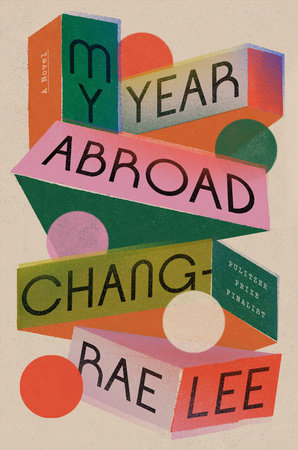
My Year Abroad by Chang-rae Lee

Reading My Year Abroad feels like watching a master juggler at work; Lee, the author of five other novels, highlights his accomplished literary skills within this kaleidoscopic, dynamic narrative. He tackles 21st-century “hot button” topics with aplomb, often within the span of a paragraph: globalized consumerism, class systems in the US, mixed-race identities, Western perceptions of the East, the constant commodification of culture—like our obsession with “healthy” lifestyles, wellness drinks, and yoga—and mental health issues, only to mention a few. Not only that, Lee’s prose is a similarly high-powered balancing act, alternating between anything from laugh-out-loud satire to intense emotional pathos. My Year Abroad plays on the traditions of past canonical American writers and adventure novels, while also re-defining and making fun of what it means to be an “American” traveling abroad in the 21st century.


Jae-Yeon Yoo: While reading, I kept picturing Tiller as a “millennial Holden Caulfield” figure, with his balance of flippancy and vulnerability—except, of course, that My Year Abroad deals with race, consumerism, and globalization in a way that Catcher in the Rye does not. How did you decide this was the voice to tell this particular story? 

Chang-rae Lee: Well, I’m glad you mentioned that, because Tiller’s narration was something that was actually a secondary conception. You know, my original idea was to tell the story either through third person narration or through Pong’s voice. Pong was the character I started out with, and he was the inspiration for the book. His character is loosely based on an acquaintance of mine, and other newer immigrants that I’d met, people who are very resourceful—a lot of pluck, brains, entrepreneurship, all that kind of stuff. But after a while, I asked myself: why am I so interested in Pong? I guess I was equally interested in my appreciation of someone like Pong and, in some ways, my desire and need for someone like Pong. I came to this country when I was three years old; but even though I started out as an immigrant kid, of course I’ve settled—over the years, I’ve become established, I work at these long-standing cultural and academic institutions. I kind of lost that… I don’t know, that verve or zest, that kind of yearning and ambition. So, maybe that’s why I was enraptured by the idea of Pong. 

So I sort of fell back on the idea that, no, I need to tell someone else’s story, who’s trying to break out of a rut. Someone who’s trying to live life a little bit more on a larger scale, and to feel that pop and spark about life again. Just describing that, I immediately thought, “Oh, would it just be a contemporary, middle-aged person?” But then I thought, “No, actually I think I’d like to tell the story of a kid, maybe a millennial, or just on the cusp of that.” Who is himself feeling very stuck in ordinariness. And so I decided, okay, I’m gonna let myself try. I always try things before really committing to them with a novel, and I tried out his voice for a couple of chapters and I liked it. So I thought, “You know what? I’ll just go with it.”

Then the other thing that probably influenced me is that I have two daughters in their early 20s. I’d just been seeing them and their friends hanging out. I picked up a lot of certain kinds of mannerisms, styles of thought, and expression. And I thought Tiller’s 20-year-old voice could maybe keep up the energy of the novel, rather than telling the story of some middle-aged guy who’s down on his luck. [At the same time,] I hope that he’s got enough sense of reflection about him that it’s not just all “push push push, energy energy energy!” I didn’t want it to be a straight-up adventure story or picaresque story. There are elements of that, but I had no interest in just writing that kind of story. I thought, okay, maybe I could come up with a strange little combination here of a coming-of-age story, but also maybe kind of a midlife crisis story. 

JY: The satire in this book was so smartly done. How was it to write an intentionally “funny” book? Do you think satire and humor are integral to this narrative? 

CL: In my other books, I have not been funny at all. But I think my wife will tell you that I’m actually a fairly humorous guy, and maybe this is the first book in which I kind of let that part of me come out. In my life, not as a writer, I would say I’m much more like Tiller and always have been. And it always surprises people, because my other books are focused on fairly serious themes. [Readers] would always be surprised that I wasn’t, you know, really stern and brooding and ponderous and all that, because I’m not really that way at all. I don’t know why it’s taken me this long to write like this, but (laughs) I found my voice, I guess. 

JY: Actually, I know you said that My Year Abroad doesn’t deal with as serious of issues as your other books, but I thought that Tiller’s satire allowed the novel to tackle some really serious and problematic issues in our world today. American consumerism and capitalism, obviously, but also various stereotypes like this privileged college kid’s “year abroad,” or this white American guy who teaches English all across Asia. Some of the novel’s satire is very funny but also some of it’s pretty horrifying; I’d love to hear more about the stereotypes and cliches you were thinking of as you wrote this piece.

CL: I was definitely trying to look intentionally at certain stereotypes, the ways we look at each other and make assumptions. [One of the characters] Pruitt, for example, is sort of that classic white guy backpacking through Asia. But at the same time, I didn’t want him to be a total caricature and just a target. I did want him to have his own humanity, desires, and consciousness, even if he’s trapped in a lot of tropes. Tiller also talks about his own part-Asianness, the way people treat him. The book is not centrally focused on that, but I definitely wanted certain strains of a certain kind of worry and anxiety, through Tiller, about his hybridity. I wanted him to reflect on his privileged place in the world, his lackadaisical attitude—a sense of comfort and security, or wanting nothing bad or wild to happen in his life.

I didn’t want the book to be only satirical, because I do think that with Tiller there is a deep, deep core of this affection and sadness in his life; [Tiller’s] yearning isn’t just about wanting crazy experiences. And obviously, there’s satire about consumerism. I guess I wanted Tiller to be caught up in a lot of the things that are going on today, in my view, that are kind of backward and wrong—to poke fun at, you know, like the whole “wellness” trend. But I also wanted to recognize these are things that we need, or at least live within. Even if you know they’re 70% kind of silly, or wrong.

JY: Speaking of satire about consumerism, I was fascinated by the book’s take on our current societal obsession with “wellness,” such as how you make yoga and jamu [a health drink], central plot points. Could you elaborate more on what you were hoping to critique?

We tend to go overboard in our hope that [wellness] can save us, make us whole, when it’s systemic stresses and deficiencies in our society that are the root causes of our ills.

CL: Well, it’s not a huge concern in the novel, but I did want to poke gently at how furiously we in industrialized nations pursue “wellness” and “calm”; of course it’s inevitable, given how infirm our modern lives are, overtaxed as we are with information and consumerism and junk diets. It’s not that yoga and health drinks are silly pursuits—they’re perfectly wonderful and worthwhile, but I think we tend to go overboard in our hope that these things can save us, make us whole, when it’s systemic and structural stresses and deficiencies in our society that are the root causes of our ills, and why we need all these supplements.

JY: In that vein, globalization, late-era capitalism, and thoughtless consumerism are themes that clearly drive these characters and plot. I’d love to hear if you had any more thoughts on how we’ve come to commodify and fetishize certain cultures, identities, etc. in our era of globalized capital. 

CL: Globalism has given all of us incredible reach, as we can access an almost unlimited range of cultural information and production, but I’m not sure that capacity has really translated into more sense or wisdom. Especially about an originating culture, even if we think we know something more about it, say, through an “authentic” curry recipe. It’s so easy now to sample, to taste, and yet I wonder if it’s all surface, a kind of costumery to don, for shallow pleasures. I suppose I wanted my hero Tiller to have to endure his travels as much as delight in them, in the hope that he’d find out something deeper about the world at hand and himself. 

JY: Absolutely. I think these ideas of shallowness versus depth really come across in the novel. Could you talk more about the societal representation and vision of “culture”—both American and Asian—in My Year Abroad

CL: In Tiller, who is “1/8 Asian,” I felt I had a protagonist who could function as a kind of go-between for East and West, as he could bring up as well as engage and embody all sorts of cultural types and practices. He’s not sure himself, of what he is, where and how he fits, but like all of us he’s heavily larded with positive and negative stereotypes about business-savvy Asian men, “seductive” Asian women, Westerners in Asia, et cetera. I enjoyed putting him and us through the paces, however cringy or retrograde or weird they were, in the hope of some little bit of enlightenment at the end.

JY: One throughline in both narratives was the importance of food; food, of course, is also an integral part of the “wellness” lifestyle we were just discussing. I’d be curious to hear more why food plays such a crucial role in tying this novel together—between Pong’s fro-yo shop, which is how Tiller initially gets involved with Pong’s enterprises, and Victor Junior’s burgeoning chef career. 

We’re food for fate and history. We like to think we have control, that we are the ones tasting, choosing, curating. But in fact, it’s really much the other way round.

CL: I was thinking about what kinds of things Tiller could get interested in. In my conception, he starts out as, frankly, a little bit flavorless. He doesn’t have this urge to savor things, and everything’s kind of vanilla for him. Pong literally introduces him to flavor. I originally thought food was just one part of Pong’s businesses—the fro-yo shop, the hot dog shop, whatever. But then I realized that I wanted to get into the corporal experience of what Tiller’s gonna go through. Because to me, it’s so important—not just with Tiller and Pong, but in general—that life’s not just intellectual, even for those of us who spend all day trying to think cerebrally. It makes no sense to me. Maybe it’s the way I grew up, maybe it’s my own love and associations and connections with food, but I cherish life so much when I can taste things—literally and figuratively. That’s when I feel most alive, that’s when all the cognitive stuff, intellectual stuff, and everything else all seem to fall into place. Otherwise, it’s kind of airless and bloodless; it just doesn’t feel real to me.

I wanted something there for Tiller to sink his teeth into. Then, at the same time, have that sink its teeth back in. So he does have to taste the world, but there comes a responsibility with that, and a maturation process. The world wants to taste you back—what are you willing to risk, how far are you willing to go? Maybe that’s the more philosophical side of food for me. Aside from just liking food, it’s the idea that we are food for the gods; we’re food for fate and history. We don’t like to think of it that way. We like to think we have control, that we are the ones who are at the helm. We are the ones tasting, choosing, curating. But in fact, it’s really much the other way round.

JY: Yes. I think if this past year has shown us anything, it’s that we’re still figuring a lot of things out, and we’re at the mercy of a lot of different things outside our control. 

CL: Right, exactly. And so I thought that this [cooking and eating] could be a way not just for fun and crazy stuff to happen [in the novel], but also of learning, a way of understanding who we really are. So it made sense to me to make Victor Junior this prodigy child chef. And I just like the flow and the energy of them being so Epicurean.

JY: Jhumpa Lahiri writes about how your work has continued to re-define the “Great American Novel.” To conclude, do you have any thoughts on how My Year Abroad engages with—or subverts—this idea of the “Great American Novel”?

CL: Certainly My Year Abroad could be read as another “American innocent heading abroad” novel, to discover “newness” and exotic peoples and practices to thereby force a reckoning and gain a deeper measure of “wisdom.” Yet all along, I think the novel also can’t help but question that enterprise, lampoon it, and maybe enact its own destruction, just as what nearly happens to Tiller. So maybe this is where we are now, when things have shifted, the privilege of perspective most of all, so that he’s the one being examined, he’s the object of inquiry.

11 Fictional Hotels for Your Fictional Vacation

In the epic words of Phoebe Bridgers: “I want to live at the Holiday Inn, where somebody else makes the bed.” Don’t we all, Phoebe—especially after months of various travel restrictions and working from home on top of crumpled sheets that need to be washed. But if it’s looking tricky to stay in a real-life hotel anytime in your near future, there’s fortunately an overwhelming number of books suitable for your fictional getaway. 

It’s not surprising that the hotel novel has become a literary genre in its own right—hotels have proven to be fascinating settings for fiction: a mixture of the intimately private and corporate conglomerate, the foreign and the mundane. Going beyond well-known classics like The Shining and Grand Hotel, here are 11 novels to immerse yourself in the world of hotels, hospitality work, and bed-making. And you won’t need to check out of these fictional hotels by 11 a.m.

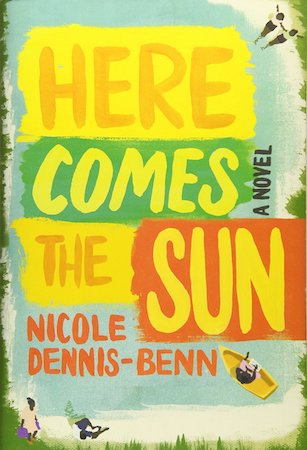
Here Comes the Sun by Nicole Dennis-Benn

What does it cost to craft a pristine hotel experience at an “exotic” location? Here Comes the Sun takes place at a luxury resort in River Bank, a fictional Jamaican town. 30-year-old Margot is a worker there, trying her best to support and protect her artistic younger sister. Although she has sex with the wealthy white guests for extra income, Margot is forced to keep her love for Verdene, the village’s ostracized lesbian, undercover. However, Margot and her community must reckon with imminent destruction when developers plan to build another resort that will put many villagers out of work. Dennis-Benn’s unflinching yet compassionate debut is a searing look into the tourism industry and its effects on women’s communities. 

The Third Hotel by Laura Van Den Berg

This psychological thriller skulks through ghostly hotel bedrooms and Havana streets, written in Van Den Berg’s signature propulsive, elegant, and unsettling prose. A recently-widowed American woman, Clare, travels to Cuba to attend a horror film festival in memory of her late husband, Richard, who was a horror film scholar. When she arrives in Havana, however, she finds the allegedly dead Richard standing outside of a museum—setting off a chain of surreal events as she attempts to track him down. If you love The Shining and Psycho, this contemporary hotel novel is a must-read. 

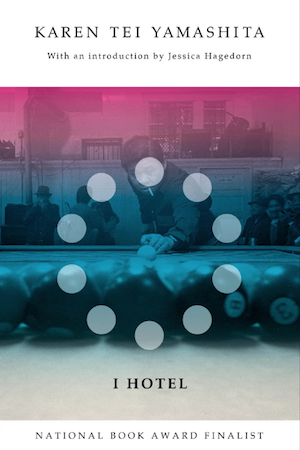
I Hotel by Karen Tei Yamashita 

The I Hotel (short for “International Hotel”), a Bay Area landmark in San Francisco’s Chinatown, is the centerpiece of Yamashita’s kaleidoscopic novel. Separated into ten novellas on different groups of Asian American activists from 1968 to 1977 (one novella for each year), I Hotel is an ambitious exploration of the Yellow Power Movement, when Asian Americans fought for representation and economic equality. Yamashita uses a diverse array of narrative and structural choices, including forms such as graphic art, stage dialogue, and philosophy; her cast of characters is as equally diverse, including a whole range of hyphenated Asian identities. (And for another book that connects hotels with historical Asian American events, check out Hotel on the Corner of Bitter and Sweet by Jamie Ford, which addresses Japanese internment camps during WWII.) 

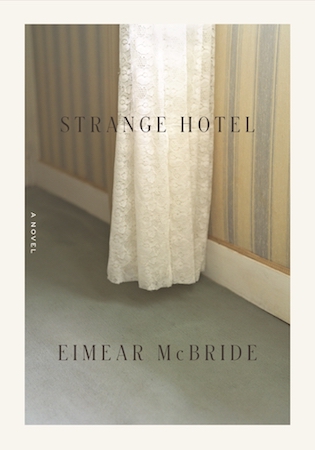
Strange Hotel by Eimear McBride

Strange Hotel addresses the strange, surreal feeling of uniformity in hotels, of how one big hotel somehow feels exactly the same as another. Check-ins, check-outs, room service, one-night stands, buried memories of home—all blur together for McBride’s unnamed narrator, a middle-aged woman constantly hopping from one hotel to another. Along the way, she grapples with her sense of identity. McBride, as always, is inventive and challengingly illuminating with her use of language; in modernistic, fragmented prose, she probes at the connections between words and bodies.

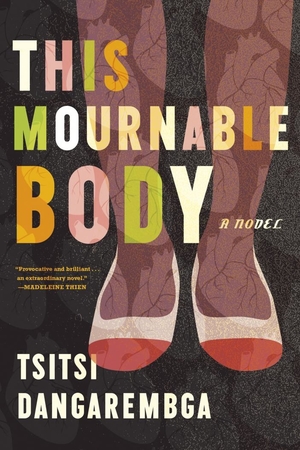
This Mournable Body by Tsitsi Dangarembga

This 2020 Booker Prize nominee starts in a run-down youth hostel in Harare, Zimbabwe. Tambudzai (or Tambu), Dangarembga’s protagonist from Nervous Conditions, has just left her stagnant copywriting position and a stable place to live. After various jobs and one humiliation after another, Tambu winds up working in ecotourism in her childhood home; she must constantly deal with both the pressure of imminent poverty and the claustrophobia of Harare society. Dangarembga points out the acute effects of capitalism and colonialism, showing how this toxic combination seeps into every element of Tambu’s fight for survival.

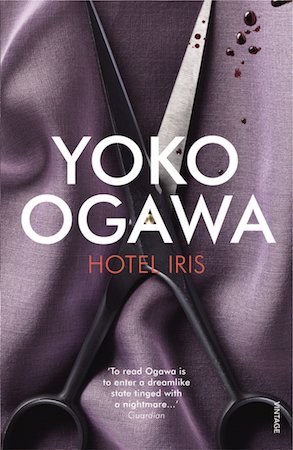
Hotel Iris by Yōko Ogawa, translated by Stephen Snyder

Ogawa’s 1996 novella centers on a sadomasochistic love affair between a teenage hotel receptionist and an older foreign guest, exploring the many ways of articulating—and translating—desire, power, and control. 17-year-old Mari and her mother run a dingy seaside hotel in coastal Japan. One evening, they have to eject a guest and his prostitute from a room, and Mari becomes captivated by the guest’s voice. He turns out to be a mysteriously widowed Russian translator, and the two fall into a complex relationship of pain and pleasure. Through Mari’s sharp observations and gritty details of hotel service life, Hotel Iris shines a spotlight on the grotesque, macabre nature of human relationships.

Hotel World

Hotel World by Ali Smith

A hotel is both the main catalyst and the setting for Smith’s postmodern novel about grief, in which five female characters, each with a differing relationship to the Grand Hotel, all end up spending a night together. Sara, a chambermaid who falls to her death in a dumbwaiter, is still lingering there as a ghost; her younger sister Clare has come because of the tragedy; Else is a homeless woman who is invited to stay one night in the hotel by Lise, the receptionist; Penny is an established journalist who is reviewing the hotel. Smith’s inventive novel uses the idea of “hotel”—a homogenous corporate entity that people are constantly checking in and out of—as an extended metaphor for our society and life. 

When All is Said by Anne Griffin

Inspired by a real-life hotel conversation, Griffin’s debut novel takes place exclusively in a hotel bar in Ireland over the course of one night; sitting alone, 84-year-old Maurice Hannigan raises toasts to five people from his life: his children, his relatives, his wife. The five individual monologues, which tell the story of his entire life in conversational, engaging prose, are connected through the precious Edward VIII Gold Sovereign Coin, which Maurice unthinkingly took from his abusive employer in his youth and never gave back. Griffin paints Maurice as a flawed but deeply honest character, crafting a warm-hearted portrait. 

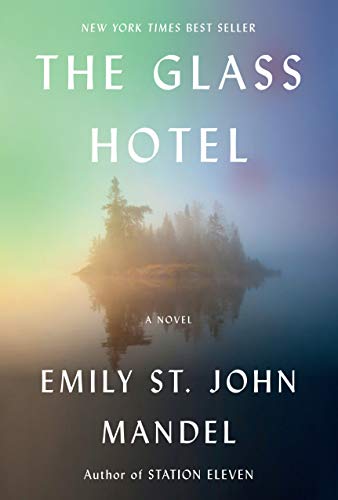
The Glass Hotel by Emily St. John Mandel

The Glass Hotel’s protagonist, Vincent, takes you to the other side of the bar–her story begins as a bartender at a luxury hotel in Vancouver Island. One night, shaken by a message scrawled on the hotel lobby’s glass wall (”Why don’t you swallow broken glass”), Vincent chooses to leave the hotel for the “kingdom of money.” She becomes involved with an international conman, Jonathan Alkaitis, posing as his wife. But when Alkaitis’s schemes collapse, Vincent also disappears. Mandel’s intricate narratives blur the lines between the past and present, living and dead, reality and self-delusion.

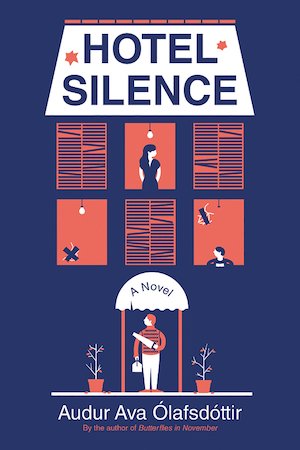
Hotel Silence by Auður Ava Ólafsdóttir, translated by Brian FitzGibbon

Winner of the Icelandic Literary Prize, Hotel Silence is about a middle-aged man who flies away to a mysterious hotel. Jónas Ebeneser, after finding out that his daughter is not his biological child and reeling from a recent divorce, is contemplating suicide. However, he gets caught up in the logistics (what if his daughter finds his body?) and decides the best course of action is to disappear. Hence, a reservation at Hotel Silence, located in an unnamed country that is recovering from the aftereffects of a brutal war. Jónas travels with just one change of clothes and a toolbox, intent on ending his life. However, his stay at Hotel Silence leads to an unexpected turn of events, as he winds up as the resident handyman of the ravaged town. Ólafsdóttir’s novel is a touching meditation on new beginnings, both as an individual and as a community. 

The Girls Of Slender Means

The Girls of Slender Means by Muriel Sparks 

This classic focuses on a group of young girls living together in a ladies’ hostel in war-devastated London, 1945. Their temporary home, the May of Teck Club, is a hostel established for girls underage 30 with “slender means” in Kensington. The girls try their best to act as if everything is as it was before the war; they gossip about love interests and practice their posture. In true Sparks style, though, the novella is layered with flashbacks and hiding a tragedy that the girls are trying to forget, framed by a research storyline set in 1963. 

11 Thrillers Set in Toxic Workplaces

“So I bit a coworker yesterday. Obviously, I’m mortified.”

This is the opening line of a legendary letter written to the advice blog Ask a Manager, which I read religiously despite the fact that it’s been ages since I worked in an office. The infamous “I bit my coworker” letter is a case study in the lengths to which people may be driven by a toxic work environment. Work is where we spend the majority of our waking hours. When a job is miserable, we adjust ourselves because we have to, but those adjustments can change us in unexpected ways. I love that Ask a Manager letter because it shows an otherwise rational human being becoming suddenly feral, childish, and violent, in a way that’s all too easy to imagine.

Well, I can imagine it, anyway. I’ve had a lot of jobs in my life: waitress, high school teacher, receptionist, drugstore cashier. I’ve been a fraud detector for online reviews. I’ve temped everywhere on earth, from glossy ad agencies to libraries, media conglomerates to fire alarm vendors. I’ve been a fashion writer and a seasonal gift-wrapper and once even posed nude for a life drawing class (I threw out my back and never did it again). Each workplace had its quirks, but only a few truly qualified as toxic. The most toxic of all, for me, was grad school, where I set my latest thriller, Bad Habits.

What makes a workplace toxic? There are a few common factors: A rigidly enforced hierarchy, with a huge gap between the well-being of the top and bottom workers and significant obstacles to advancement; an emphasis on the “good of the company” over workers’ health and safety; poor boundaries between personal life and work life. In a toxic workplace, “bad apples” are coddled rather than kicked out; bosses are allowed to become petty tyrants, passive-aggressive co-workers hold the supply closet hostage, and harassment and abuse are swept under the rug rather than punished.

Thrillers set in toxic workplaces will always fascinate me, because they illustrate what we already know from that Ask a Manager letter: that a corporation doesn’t have to be operating outside the law to drive its employees to desperate acts. The books on this list aren’t like the eponymous “firm” of the John Grisham novel; for the most part, there are no massive, company-wide conspiracies or cover-ups. Instead, these books show the toxicity so ingrained in company cultures that most people never even question it. Unsurprisingly, many books on this list were written from the points of view of women and minorities in the workforce, for whom “business as usual” frequently means discrimination and marginalization.

These books revel in the dirty details of how people get and stay ahead, expose the hypocrisies of corporate power structures, and imagine what would happen if the grunt in the next cubicle really meant it when she said she’d kill for that promotion. I like to think that if she did, her story would start: “So I murdered a coworker yesterday. Obviously, I’m mortified.”

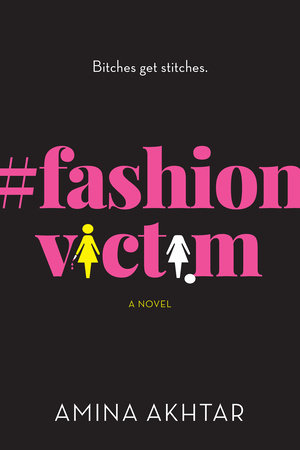
#FashionVictim by Amina Akhtar

Fashion Magazine: #FashionVictim by Amina Akhtar

Thanks to The Devil Wears Prada, we all think we know a little something about the nastiness of the fashion world, but La Vie—the fashion mag in Amina Akhtar’s darkly comic debut #FashionVictim—makes Miranda Priestly’s viper pit look like a safe space. A former Elle editor herself, Akhtar’s book echoes recent revelations in the New York Times and Andre Leon Talley’s memoir The Chiffon Trenches that at top fashion magazines, beauty, wealth, thinness, and whiteness are prized over talent, and outsiders are kept firmly in their place. It’s enough to make you want to murder someone—especially if you’re a little hangry from skipping lunch to fit into sample-size Prada. Assistant editor Anya understands that in a workplace this toxic, only a sociopath can make it to the top: “God, there was always so much work to do. Update this, kill so-and-so,” she complains. An editor’s work is never done. 

Law Firm: Whisper Network by Chandler Baker

Four women working at the same corporation—three as in-house lawyers and one as an office cleaner—are shaken to the core when their serial-harasser boss, the head of General Counsel, seems set to take over as CEO of the whole company. The multiple POVs, mom woes, and snippets of depositions and police interviews in Chandler Baker’s debut recall Big Little Lies, but the Greek chorus of working women’s voices describing the endless maze of small and large indignities they have to navigate in corporate life make it feel almost like a manifesto at times. More than just the sleazeball partners whose names circulate among the women via a secret list reminiscent of the Shitty Media Men list that made news in 2018, it’s the interruptions, the chronic undermining and credit-stealing, and the delegation of secretarial tasks to female VPs that render this particular brand of toxic workplace all too believable.

The Herd by Andrea Bartz

Co-Working Space: The Herd by Andrea Bartz

A trendy co-working space painted #GirlBoss pink is the perfect backdrop for a brand-optimizing Instagram pic—or a murder. The flawless, “lean-in”-style CEO of The Herd—an exclusive all-women’s workspace about to go public—vanishes just when she’s supposed to be announcing the big news to the shareholders. Recalling news stories about a rash of women CEOs accused of creating toxic work environments and exploiting their female employees’ labor like the best (or worst) of their male counterparts, Andrea Bartz’s The Herd points up the hypocrisy of corporate feminism and asks whether co-opting “girl power” as a marketing strategy can ever be anything but a sham.

Necessary People

Cable Newsroom: Necessary People by Anna Pitoniak

There’s something about newsrooms that makes for riveting drama, and the rise of cable news is particularly enticing—maybe because the idea of pulling back the curtain on the people who craft the narratives carries an extra frisson right now. Anna Pitoniak’s NECESSARY PEOPLE, though at its heart a classic story of toxic friendship, shows how the feverish ecology of the newsroom—a delicate balance between the talent (clever, hotheaded, a little shallow), the producers (Machiavellian behind-the-scenes types) and the money (new or old, the buck stops here)—fans the flames of jealousy and magnifies inequalities. 

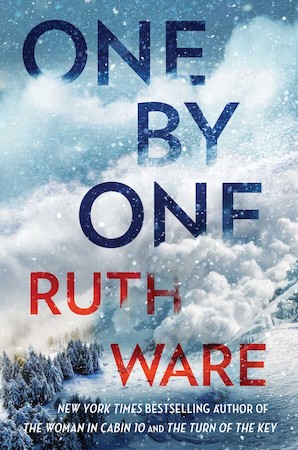
Tech Start-up: One by One by Ruth Ware

Tech companies, as all viewers of Silicon Valley know, are their own special brand of toxic workplace. Nerdy brogrammers, buzzword-juggling VC-magnet CEOs, upbeat influencers, and early stakeholders who just happened to be in the room at the right time make for a heady mix of personalities. Add the notorious chauvinism of the tech world and the high stakes of multi-million-dollar buyouts, and you’ve got a perfect setup for a murder. Ruth Ware’s One by One brilliantly isolates the employees of a hot new music app in a luxurious, remote ski retreat in the French Alps for a working retreat—itself one of the indignities-disguised-as-perks of the modern workplace. The scene quickly devolves into the kind of addictive, locked-room, Agatha Christie-plus-action thriller for which Ware is famous. 

Out by Natsuo Kirino

Factory: Out by Natsuo Kirino

The women of Natsuo Kirino’s thriller Out all work the night shift at a depressingly dull factory that makes pre-packaged lunches, and the descriptions of their unappetizing and repetitive work on the assembly line bring home to the reader how little leeway or control they have in their personal lives. Each of the women is desperate in her own way, or else she wouldn’t be there; and when one cog in the machine snaps, the ripple effect throws everyone’s lives out of sync. By turns exhilarating and horrifying, Out presents its female characters’ lives as chillingly circumscribed, and murder as just one more reason to feel exhausted at work the next day.

Medical Research Center: Lakewood by Megan Giddings

Where I went to college in Austin, there was a giant billboard for a medical trial center right next to campus. The message was simple: need cash? Be a lab rat. I knew lots of people who took them up on it. (Ask me about the guy who got his wisdom teeth taken out for free—and was given a placebo painkiller.) Megan Gidding’s sly debut Lakewood not only capably explores the creep-factor inherent in such exchanges, but also the racial inequalities that it exploits. Tapping into real anxieties about America’s history of using Black bodies as unwilling guinea pigs, Giddings manages to create not one toxic workplace, but two—the sinister lab itself, and the hilariously generic front company, where protagonist Lena and her fellow lab rats are forced to pretend to work in cubicles and have fake arguments about who’s stealing yogurt out of the break room fridge. It’s a tour de force of grim, absurdist office satire.

Temper

Theater Company: Temper by Layne Fargo

Theater people are the orchids of creative types: gorgeous and hotblooded, flamboyant yet fragile. But where personalities are larger than life and dedication to capital-A “Art” is the only thing that matters, boundary-crossing behavior can be justified in the name of “genius”—especially if the genius is a man. Layne Fargo’s debut—loosely inspired by a Chicago theater director who rained psychological, physical, and sexual abuse down on his colleagues for years—skillfully dissects the intense dynamics in a group of people who’ve fallen under the sway of a real-life art monster.

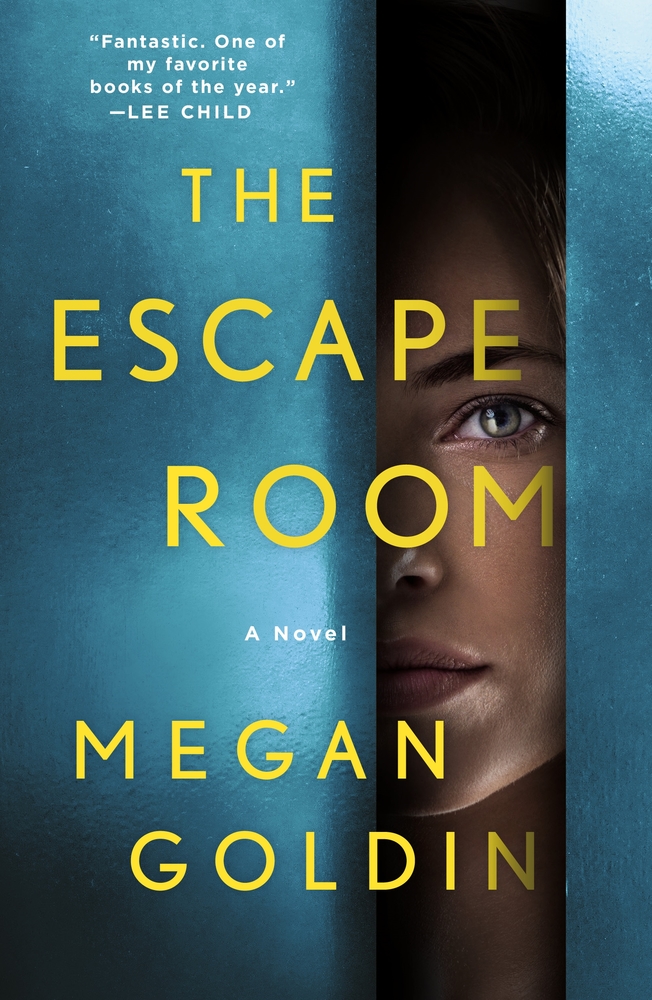
Wall Street Bank: The Escape Room by Megan Goldin

Is an all-day meeting your personal version of hell? Try a team-building exercise where you get trapped in an elevator with backstabbing colleagues, and your only goal is to make it out alive. Goldin’s full-throttle locked-room thriller has a grabby premise, but it’s the depictions of the cult of rampant, amoral greed at a top Wall Street firm that make this book compulsively readable. 

Upcoming Titles

Other Black Girl

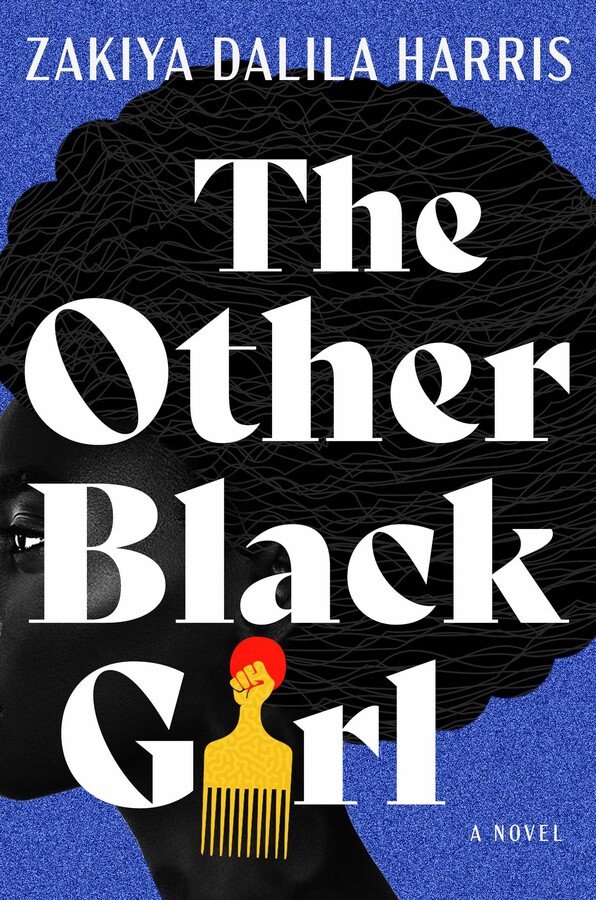
Publishing House: The Other Black Girl by Zakiya Dalila Harris

In this deliciously scathing send-up of the blindingly white world of New York City book publishing, a big house hires their second Black editorial assistant, and chaos ensues.

Law Firm: All Her Little Secret by Wanda M. Morris

Okay, there just might be a conspiracy in this twisty psychological thriller set in a corporate law firm. But unlike The Firm, the main character of Wanda Morris’s debut is the only Black attorney at her company—and, unlike Tom Cruise, this gives her a reason to be paranoid before the first gunshot.

Gloria Naylor Showed Us the Quiet Monster of Classism in the Black Community

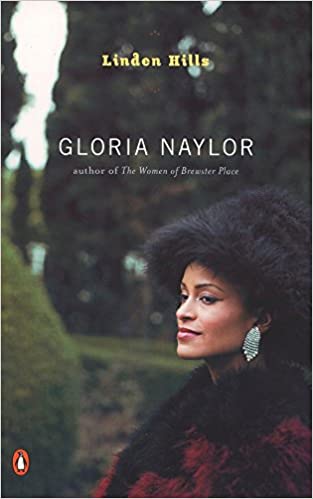
I wish I’d discovered Gloria Naylor’s Linden Hills earlier in life. The acclaimed novelist’s 71st birthday would’ve been on January 25, and I’ve realized her book, which calls attention to the modern-day classism rooted in Black culture, probably would have saved me a lot of anxiety and heartbreak if I had first encountered it as a teenager starving for acceptance in a Black middle-class neighborhood. 

When I was 17, I found my place in the world through clothes. A passion for fashion pulled me out of my shell as a shy, awkward girl. I was no longer the kid in middle school who retreated into books to cope with the realities of an “ugly duckling” stage. 

I strayed from my bookworm-ish tendencies and placed more importance on my appearance to fit in. I ditched the eyeglasses I’d been wearing since first grade for contact lenses. I got dental braces to close the gap between my two front teeth. I started getting perms that straightened my hair on a regular basis. 

Finally, I felt what it was like to be accepted and I was terrified of having that feeling taken away.

My physical makeover helped me develop friendships with a small group of girls who were popular. They introduced me to my first boyfriend who was a football jock, which further grew my social circle. Finally, I felt what it was like to be accepted and I was terrified of having that feeling taken away. 

On weekends, I started using the money I made from my evening jobs to buy stylish, expensive ensembles. I loved the thrill of browsing clothes in stores, smelling the crispness of new fabric as it went over my skin, and absorbing the compliments from other people in the hallways of our high school. 

My fashion fetish was more than a vanity tool and means of self-expression; it was a way of adapting to the social hierarchy in my neighborhood. Having brains didn’t matter unless your Honor Roll status put you in good standing with one of the Big Four families in our community. You weren’t special for having your first car if it was the average hand-me-down Honda; you were applauded for having a Lexus or Mustang convertible, vehicles that implied your parents were straddling a different tax bracket. Similarly, wearing the right clothes from the right stores signaled that you were poised to mingle with the right folks who were going to the right places. 

Despite the difference in decade and location, Naylor thoroughly examines the same egregious class code in Linden Hills. The book contains the author’s signature poetic lyricism and biting insight, as first seen in her claim-to-fame novel, The Women of Brewster Place, all the while serving as a critical reminder of how classism remains an understated issue in Black communities. 

I believe the dilemma concerning Black America’s class divide doesn’t get enough attention for several reasons. For one, many people—including a number of Blacks—think fighting against one injustice at a time is sufficient. Sometimes a focus on combating classism gets avoided because it’s assumed that the issue will undermine the fight against problems that are perceived to be more threatening, like racism and misogyny. 

To some, success is success, no matter how one attains it, or at what costs.

Another cause could be that many people still don’t see the socioeconomic hierarchy as harmful to our communities. To some, success is success, no matter how one attains it, or at what costs. The majority of Blacks in the U.S. have suffered deprivation and inequality for so long that some of us are willing to endure the drawbacks that come with financial security and a high social status. 

Naylor continually points out this indifference to the dangers of classism in Linden Hills. Set in the mid-1980s, the novel centers a fictional upper-middle class suburb that, for over a hundred years, has prided itself on becoming a symbol of Black wealth. Luther Nedeed, a ruthless third-generation real estate mogul and mortician, rules with an iron fist, much like his great-great grandfather who established the town in 1837. 

The story’s context aligns with Naylor’s belief in Black-owned businesses and social progress. In her lifetime, she also advocated for land ownership as a way for African-Americans to gain equal footing in a world that doesn’t always have our best interests at heart. 

“Don’t be running after white folks for a few crumbs, “said Naylor in an interview. “Build your bakery. Build your own house. Get yourself some land and a basic profession so that people will have to come to you. If Black folks had taken that advice, the texture of the Black community would be very different today.” 
Naylor shows the negative effects that can spawn from Black enterprise when it meets unchecked financial privilege.

Still, in Linden Hills, Naylor shows the negative effects that can spawn from Black enterprise when it meets unchecked financial privilege. The author writes the novel through the lens of two poets, Lester Tilson and Willie Mason, who barely straddle the line between have and have-not. In an effort to make extra money during the Christmas season, Lester and Willie decide to work odd jobs in Linden Hills, discovering firsthand the hypocrisy, vile secrets, and generations-old tradition of “selling out” that riddles a community preoccupied with upward mobility and affluence. 

From the dialogue to the character descriptions, Naylor takes the reader on a journey that highlights what Linden Hills residents are willing to risk in order to maintain their power in a town where self-worth is determined by who they know and what they own. 

Maxwell Smyth, a business executive, is one of the locals painted as a composed and calculating individual who’s overly concerned with his reputation and determined to leave no room for error on his quest to live the good life. He tries to convince his friend and subordinate, Xavier Donnell, that marrying Lester’s sister, Roxanne, is not good because she’s a Black woman who’s not as socially adept or financially well off as Maxwell thinks she should be. 

“But, you’re going to have to face some hard, cold facts,” Maxwell tells Xavier, “there just aren’t enough decent ones to choose from. They’re either out there on welfare and waiting to bring a string of somebody else’s kids to support, or they’ve become so important that they’re brainwashed into thinking that you aren’t good enough for them.” 

Naylor also addresses intraracial issues, like homophobia and colorism, which further complicate relationships and the class divide among residents in Linden Hills. She highlights the tendency for locals to involve themselves in image-hungry, loveless marriages steeped in convenience and tradition. 

Lester and Willie, for instance, witness the wedding of a groom that Luther convinced to abandon his same-sex liaison to marry a woman and start a traditional family, the more socially acceptable choice for a young man climbing the success ladder. 

“No one’s been able to make it down to Tupelo Drive without a stable life and family,” Luther tells Winston, the groom-to-be.

On the other hand, Luther’s great great-grandfather, the town’s founder, was rumored to have brought his “octoroon” child bride with him when he first set out for Linden Hills in the 19th century. An emphasis on his spouse’s light skin is continually emphasized, which drives home the point that a fair complexion was, and often still is, viewed as more valuable and a symbol of privilege. 
To me, the genius of Naylor’s story lies in what many considered a play off the allegory of The Inferno by 14th-century writer Dante Alighieri. Like the main character in The Inferno, Linden Hills residents confront more inner demons and a loss of identity as they aspire to move further down the hill of the decadent neighborhood. The closer they get to the bottom, the more success they’ve attained, along with misery and corruption. 

“You know, my grandmother called it selling the mirror in your soul,” Lester says in the novel. “I guess she meant giving up that part of you that lets you know who you are. So you keep that mirror and when it’s crazy outside, you look inside and you’ll always know exactly where you are and what you are. And you call that peace. These people have lost that, Willie. They’ve lost all touch with what it is to be them. Because there’s not a damned thing anymore to let them know.” 

She helped me describe the isolation, the insensitivity, and the hyper-awareness of class differences that shaped the psyches of youth like me.

Reading passages like these, I often felt like Naylor wrote Linden Hills just for me. She helped me identify the language that describes the isolation, the insensitivity, and the hyper-awareness of class differences that shaped the psyches of youth like me in search of acceptance. As early as high school, and without fully realizing it, I’d learned how to navigate the community politics of my neighborhood and how to treat people based on who I thought they were, in terms of economic and social standing. My fashion addiction eventually led to a superiority complex and helped me fall further out of touch with reality as I nursed my own delusions of what constituted Black success. 

It wasn’t until I won “Best Dressed” during our Senior Superlatives contest that I recognized my foolish behavior. I remember feeling elated that I’d beat out every other so-called fashionable student in my class, but when I showed my mom the small trophy I’d won, all she said was “Is that it?” with a look of sincere disgust on her face. Her words stung because they allowed me to see myself for who, or what, I was turning into, and I hated that person.

In college, the allure of being part of the “it” crowd that fueled my fashion fetish eventually waned, and I reclaimed my love of reading and creative writing. Had I not felt compelled to make a change for the better, chances are I wouldn’t have picked up Linden Hills and discovered Naylor’s in-depth examination of classism in our community. 

Like racism and sexism, class division isn’t a new phenomenon impacting Black culture. With each generation, “keeping up with the Joneses” gets packaged differently to the masses, but a deeper look shows that it’s the same hurtful actions meant to keep Blacks in needless competition for material gain at all costs.

There’s plenty of work to do when it comes to bridging the gap between classes in our communities. I believe one way forward is to diversify our networks. It’s crucial to resist echo chambers and silos that encourage groupthink and closedmindedness. To meet and interact with those who think, work, move, and live differently.

In recent months, we’ve been inundated with charged political rhetoric and attacks on democracy that should make all of us, regardless of class, race, or sex, re-examine the role we play in harming each other. I believe Naylor’s Linden Hills is one of those timeless works that urges us to do better, if we want better. 

Anna Karenina and Madame Bovary Discuss Their Suicides

“Anna Karenina and Madame Bovary Discuss Their Suicides” by Pauline Melville

Of the many invisible cities described by Calvino, there is one remarkable city that is missing. If you approach this city by road you can see the main station on the outskirts. A handful of people loiter on the platform. It is only when you enter the missing city that you understand it consists of nothing but linked waiting-rooms: private waiting-rooms, public waiting-rooms, foyers, lobbies, public waiting spaces. The entire city is constructed for the sole purpose of waiting.

In high-ceilinged rooms with crimson silk wall-coverings and elaborately embossed carpets, ambassadors and dignitaries wait to be presented to the emperor or caliph or president.  Liveried servants hang around waiting to usher the chosen elite into the hallowed presence but, of course, that moment never arrives.  Then there are dentist’s and doctor’s waiting-rooms where patients flick through magazines but no-one is ever called in to see the consultant.  Passengers wait in the dank, badly-lit waiting-rooms of railway stations with old benches and dated posters where, naturally, no train puts in an appearance. People mingle in theatre foyers for drinks before a show which they will never see. Students gather together and talk a little as they wait outside the examination room. Through the window they can see the invigilator laying out exam papers meticulously, one on each desk, for an exam they will never sit. And, of course, two actors, costumed as tramps, wait endlessly in the wings ready to step onto a brightly lit stage whose set is nothing more than a country road and one tree.

Rooms on different floors are linked by moving escalators where people wait to progress from one level to another, slowly rising or descending until they can resume waiting elsewhere. From a distance the city appears to be full of people moving around meaningfully occupied, but this is not the case.

Some people believe that the city is really an enormous art installation where people wander from one period of history and from one experience to another but in reality the experience is always the same, the experience of waiting. All the same, there are no signs of serious discontent in the population. Hope keeps people quiescent. Expectancy is all.

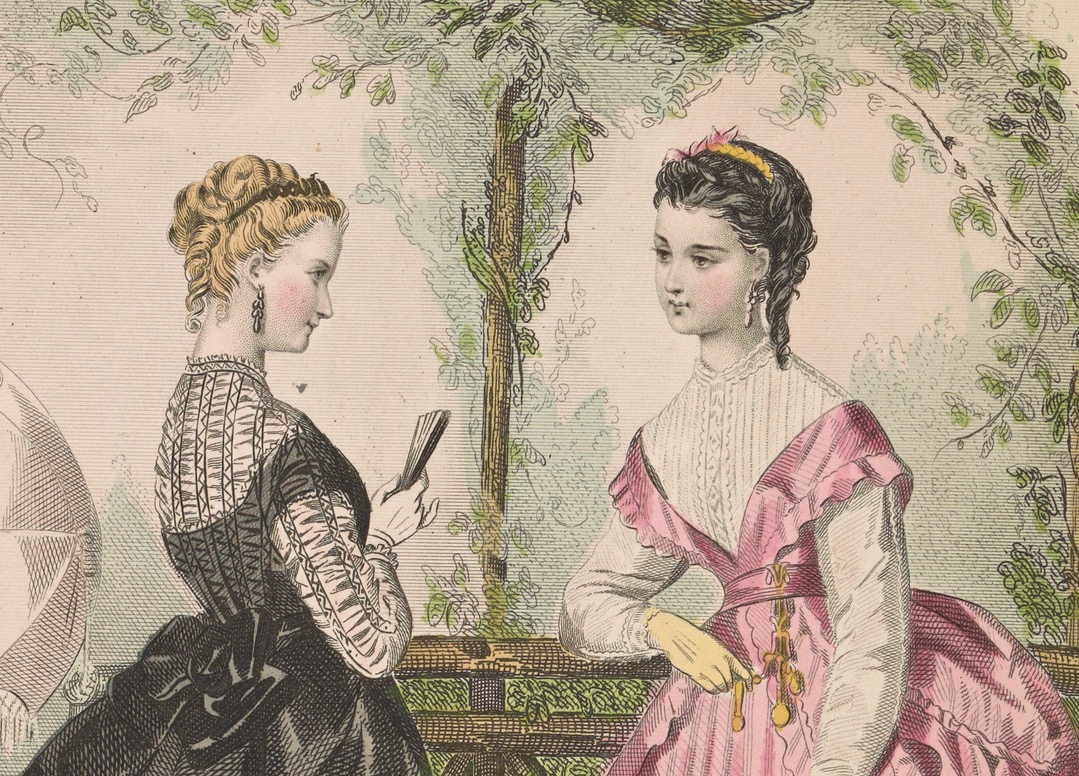
The meeting between the two women took place in a spacious room on the second floor of a large four-story house. They were seated, engrossed in conversation, on a high-backed oak settle which also served as a storage chest. Anna Karenina was in a light-hearted frame of mind. Over her blue dress she wore a pale cashmere shawl embroidered with thin wool in a floral pattern round the edges. Her face was animated, her grey eyes alight with surprise and curiosity as she turned to Emma Bovary:

Do you mean that your husband never suspected anything?

Emma Bovary, the shorter of the two, had a sturdy body suggesting peasant stock. Her shiny black hair was styled a la Chinoise, parted in the middle with a neat knot on top. She wore a cream cotton dress that fitted tightly over her plump breasts and smart black boots that showed off her ankles to advantage. Mistaking Anna’s curiosity for admiration, Emma cocked her head to one side and gave a small smile of satisfaction:

Charles never had any idea. Not a clue.

How did you manage that? Anna managed to suppress a hint of disapproval.

Well, in some ways I always thought Charles was an imbecile. He had absolutely no ambition. I would have liked our name to be famous. He was just content to bumble about as a country doctor. I was furious once when he botched an operation that could have made our names. Anyway, my beloved Charles never noticed a thing. I even used to slip out of bed early in the mornings to meet my lover, Rodolphe, in the arbour at the end of the garden and Charles never knew. Emma giggled. Oh yes. And he never knew about Leon either. Heaven knows why he didn’t spot what was going on. Didn’t your husband ever suspect anything?

Anna raised a disdainful eyebrow as she recalled the early days of her affair with Vronsky:

Oh Karenin – he sniffed something from the first moment. He didn’t exactly suspect anything himself but he noticed that people were talking about me and Vronsky and he didn’t like that. It was all a matter of appearances for him. I think he just refused to believe it was possible that I should do such a thing. But anyway, in the end I told him.

Emma looked appalled:

You told him?

Anna nodded and smiled:

I really don’t like living with that sort of deceit. And Vronsky hated being involved in lies. He was too honourable. He couldn’t have tolerated it for long.

Emma looked directly at Anna, and the freshness, openness and self-possession she saw in that lovely face made her feel inferior and a little cheap. Perhaps Anna was not capable of being sly or duplicitous? And what was all this about honour? If confessing the truth to one’s husband was the price of honour she could do without it. But perhaps this was how the aristocracy always behaved, Emma wondered. How odd. She had been thrilled to find that her new friend was a member of the Russian nobility and listened enthralled as Anna talked about Prince This and Princess That and casually referred to footmen and servants. Oh, was your Vronsky a count? Emma had exclaimed in awe. And Anna had shrugged and laughed as if it were nothing.

Feeling that she had not been completely straightforward about her confession to Karenin, Anna hastened to explain:

Well actually, I was pregnant with Vronsky’s child. I had to tell him.

Oh how awful. Thank heavens that never happened to me. One child was bad enough. Emma lowered her voice to a whisper. Did you find that once you had fallen for someone else you suddenly couldn’t stand your child? I remember shoving my daughter away and thinking she was an ugly little so and so. But then I was obsessed with Rodolphe.

Anna was a little taken aback:

Oh no. I still loved my son with Karenin…at least I think I did. In fact, I once risked everything to visit him secretly on his birthday. But I know what you mean. When things were going well with Vronsky I never gave my son a second thought. And I do remember coming home at one point after I’d been with Vronsky and thinking what a disappointment my son was. He just seemed so tedious and unexceptional. Vronsky occupied my thoughts entirely.

Emma nodded in sympathy:

Children get in the way, don’t they? When Rodolphe and I were planning to run away together he asked what we should do about my daughter. Without thinking I just said ‘We’ll take her with us’. Emma shook her head in exasperation. That was my big mistake. It must have put him off. I should have said I’d leave her behind. Emma straightened the long skirts of her dress and pushed her lips out in a defiant pout:

Anyway, my husband ate slowly. That drove me mad.

My husband was stubborn and aloof. A shadow crossed Anna’s face and she twisted her hands together as she blurted out:  To be honest, when my daughter was born, Vronsky’s child that is, I just didn’t take to her. I felt bad about it but I never really liked her. Not even when she was ill. I think I was scared because I knew Vronsky had always disliked family life and here I was trapping him into domesticity. Worse still, according to Russian law I was still married to Karenin and so the child had to take the name Karenin unless my husband agreed to give me a divorce so that I could re-marry. That disturbed Vronsky no end. Besides, after the birth I nearly died. Vronsky was so distraught he tried to shoot himself.

Emma was impressed and a little envious. No-one had ever tried to kill themselves on her behalf. She searched for a comparable experience of her own: I was desperately ill too. I nearly died when Rodolphe sent me a letter saying the elopement was off. In fact, I was just going to throw myself out of the window when Charles happened to call me down to supper. It would have been better if I’d done away with myself then. Better that way than arsenic, I can tell you. Anyway, I had a nervous collapse that lasted for months.

The two women lapsed into silence, each of them caught up in her own thoughts.

After a few minutes, Emma got up and crossed to the window on her side of the room. Calico curtains hung there. The canary-coloured wallpaper around the window was peeling with damp. She leaned her elbows on the window-sill and looked out over the market square of Yonville l’Abbaye. Nothing had changed. The plaster figure of a Cupid with his finger on his lips still stood on the gate of the notary’s house opposite. In the distance she could see the flat and characterless landscape typical of that region of France. Before long she was overcome with the familiar feeling of suffocation. She was stifled with ennui. ‘Oh why, dear God, did I marry him?’ she repeated again and again. Down in her soul Emma Bovary was waiting and longing for something to happen. That was the enduring image of her existence. The summary of her life. Waiting and longing. After a while she broke away and returned to her conversation with Anna:

Was it love at first sight for you? Emma inquired, inspecting the heel of her boot as she settled back down beside her companion. I always thought love should strike like a clap of thunder.

Anna Karenina gave the matter careful consideration: 

Well no, not really. I met Vronsky in a railway station. Nothing happened at the time although I could sense I had made an impression on him. There’d been an accident. A guard died. Vronsky very generously offered money to the man’s family. I knew immediately that he’d done it to impress me. I saw him later in the house….there was something. But nothing really happened until the ball that was being held for Kitty my young sister-in-law. I shouldn’t have behaved as I did. Anna turned to Emma and made a slight grimace. Vronsky was more or less betrothed to Kitty. But what happened between me and Vronsky that night was irresistible. It was overpowering. We were both incapable of withstanding it. Anna rolled her eyes and threw her head back and for a moment Emma looked at her and saw in her eager face something strange and diabolical and enchanting. But when I was leaving Moscow the next day to catch the train home to Petersburg I remember thinking ‘Thank goodness that bit of excitement is over and from now on my life, my nice everyday life, will go on as before.’  But half way home when I got off the train for some fresh air, Vronsky was there on the platform. He’d followed me. Anna’s eyes were shining as she leaned against the high back of the settle.

Not to be outdone, Emma chattered on:

I went to a ball once. We were invited to the home of the Marquis de Andervilliers. Charles had cured his abscess. I wore the loveliest pale yellow gown with flounces on the skirt and three little pom-pom roses pinned to the neck. Charles sat to one side all evening but I danced the night away. It was after we got home that I looked around and realized my provincial life was dull, dull, dull. I longed to go to Paris and mix with…well…a better class of person. The day after the ball I bought myself a street-map of Paris and imagined shopping there.

But Anna Karenina was not listening. At that moment, she left the seat, frowning, and hurried towards the window on her side of the room. The tall leaded window was set in wooden panelling. It overlooked a Moscow courtyard which had its gates already wide open to receive a carriage. Anna glanced out of the window and then began pacing up and down. Why did Vronsky always have to stay out so late? He was growing cold towards her, no doubt about it. He must know how miserable she was in Moscow. And there was still no news from Karenin about a divorce. She thought she heard the sound of carriage wheels on the cobbles and hurried back to the window. No sign of him. This is not living, she thought. Waiting for a solution that never comes is not living. I know he’s getting tired of me. Why doesn’t he come? It doesn’t even matter if he doesn’t love me. As long as he’s here. The strain and anxiety of her situation caused a permanent change in Anna’s characteristically cheerful temperament. She bit her lip, shook her head and returned slowly to where she had been sitting.

Emma could not help noticing how graceful Anna was when she walked:

How do you keep that lovely figure? I had to drink vinegar to keep slim.

Anna ignored the question and posed one of her own as she sat down:

What happened anyway with your Rodolphe and your Leon? There was something sharp in the tone of her voice. Emma sighed:

Well Rodolphe was rich. We went riding together. Charles encouraged it – he thought it was good for my health. We started an affair. I became really bold. I couldn’t stop myself. One morning when Charles was at work I ran all the way over to the chateau and burst in on him. Emma held her hand to her mouth and her eyes flashed with amusement as she recalled her own behaviour. It was lust, she admitted. I couldn’t keep away from him.

Anna found Madame Bovary entertaining and a welcome distraction from her own thoughts. She could see how men would be attracted to this pert creature with her red lips and wayward manner. Emma rattled on: 

After that I went to the chateau whenever I could although he warned me that I was becoming reckless. Now I realize I gave him too many gifts, expensive riding-whips, cigar cases, that sort of thing. I became over-sentimental, talking to him in baby language which got on his nerves. And I was borrowing money like there was no tomorrow, ordering clothes and traveling bags for myself, thinking we were going away together. Then, out of the blue, he did a bunk. How despicable is that? Emma let out a hiss of disgust. She took some eau de cologne from a small bottle in her bag and sprinkled it on her arms.

Go on. At that moment Anna chose to be a listener, fearful of what she might reveal about herself if she talked. Feeling flattered, Emma continued:

Well then, Leon was somebody else I’d taken a fancy to. You’ve no idea how boring life is in the country. But Leon moved away to Rouen before anything happened. Then after the disaster with Rodolphe, I bumped into Leon again. He was sweet. We had this amazing ride in a horse-drawn cab. We just pulled the curtains and got on with it. I’d been worried that he’d be too timid. But he wasn’t. I don’t know why but after that I became more careless, sort of slapdash. I didn’t really bother about anything anymore. I paid everything on credit. Signed promissory notes. Spent a lot on clothes. I forged bills for the piano classes I pretended to Charles I was having – my excuse for going to Rouen. I was getting into huge debt. Trying to dodge bailiffs. Now I can see that everything was going to pieces.

Were you jealous? Asked Anna.

Emma held her hands in front of her to study the nails she had shaped so carefully. She thought for a moment and then replied:

Not really. But I was pushy. I see that now. I demanded Leon write me love poems. I kept turning up at his office and he didn’t like it. I’d made the same mistake with Rodolphe. Were you jealous of Vronsky?

Anna stared straight ahead with a brooding look in her grey eyes:

I was jealous of everything. I was even jealous of my child’s nurse. I wanted total possession. ‘Love for man is a thing apart. ‘Tis woman’s whole existence’. Have you read any Byron?

Emma shook her head:  I used to read Walter Scott at the convent. And I loved all those romances and the stories about martyred women. Passion. That’s what I wanted.

Anna gave a wry smile:

I wrote a little myself. Children’s stories, mainly. And I once re-wrote the first sentence of that famous novel by Jane Austen. My version went:  It is a truth not universally acknowledged that all married women, even when they are reasonably contented, are still looking for a husband. It’s a sentence almost as famous as the one at the beginning of my own life story. She pointed to the Penguin Classic copy of Tolstoy’s Anna Karenina that lay beside her on the bench

Emma gave a puzzled shrug and pulled her own Penguin Classic copy of Madame Bovary out of a draw-string bag. She frowned at the cover:

I don’t know why they’ve put me in that weird outfit. They could have shown me in the gorgeous yellow ball dress I wore with my little bouquets of pom-pom roses all trimmed with green. And I had satin slippers. That would have been a lovely picture.

Emma flicked through the pages:

Oh I’m such a fool. I hadn’t realised that Leon held such a candle to me for all that time. I should have guessed and done something about it before he left.

She came to the part of the book which described her long drawn out death. Her lips puckered with distaste:

Why did he have to say my tongue was protruding like that? And black liquid was coming out of my mouth? Sometimes I wonder if Flaubert even liked me.  

Anna felt a surge of affection for her:

Why did you do it?

Kill myself? Emma took a deep breath:  Debt. It was poverty that did me in, not adultery. I was desperate. Always fleeing debt-collectors. Running from bailiffs. I just rushed into the pharmacy, grabbed a handful of arsenic powder and that was that. What about you?

Anna Karenina took a while to reply. She played with a loose strand of her curly black hair before turning directly to Emma, a strange gleam in her eyes:

Vengeance. A vague fury and a craving for vengeance. She shuddered as she remembered the heavy iron blow of the train’s wheel on her head. That was more or less my final thought. Of course, I was upset and confused too but if men knew our capacity for vengeance they would tremble in their socks. Never have I hated anyone as I hated that man. Love turned to hate. I can still see his stony face when we began to quarrel. All I wanted to do was hurt him. Death was my way of reviving his love for me, punishing him and finally gaining victory in the contest.

Emma was slightly shocked. For the first time she felt a little superior to her new friend. She did not think she had it in her heart to be as ruthless as Anna. She closed Flaubert’s novel and laid it on her lap. Anna looked at her in surprise:

Have you stopped reading? Do you not want to know what happened after you died? I do.

Emma, with some reluctance opened her book again and turned to the last few pages. She reached the point when her mother-in-law moved in to comfort Charles after her death:

Oh I see the old bat got him back after I’d gone. She was always jealous of me.

Anna laughed:

Vronsky’s mother hated me too. He’d given up a prestigious military career for me. She adored me at first then she thought I’d ruined her son’s life.

How do you mean? Emma tried to hide her prurience. The colour rose up through Anna’s neck and into her cheeks at the memory: 

Well Vronsky and I chose to live together without my being divorced. That meant we were social outcasts. We were refused invitations. Spurned by old friends. Nobody would visit us. And once I was at the opera when the wife of a couple in the next box ostentatiously rose and left rather than be seen to be sitting near me.

For a few moments Emma was quite glad she did not move in those circles. It crossed her mind that maybe the French revolution hadn’t been such a bad thing. She read on:  Oh it seems that Charles really did love me. He kept a lock of my hair and gave me a very grand tombstone. Then her hand shot up to cover her mouth. Oh no. She looked up in horror at Anna. He’s found all my love letters. The ones to Leon and the ones to Rodolphe. Now he knows everything. She continued to read:  Shit. Now he’s actually bumped into Rodolphe in the market at Argueil. This is dreadful. She covered her face with her hands and then peeped back at the book:  Oh and now he’s died. Just as well, probably.

Anna was studying the last pages of the Tolstoy novel with great intensity:  Good. I’m so glad I was looking beautiful when Vronsky came to see my dead body at the train station. She put the book down and said with some sarcasm:  I suppose we have to be thankful that Kitty and Levin carry some hope of happiness in the world. She explained to Emma:  Kitty couldn’t get Vronsky so she had to make do with Levin. Vronsky always thought Levin was a crackpot with his communist ideas. Anyway, I got what I wanted. Vronsky rejoined the military and went off to war. He would almost certainly have been killed. At least nobody else would have him. She snapped the book shut with triumph and offered it to Emma:

Do you want to read mine?

I don’t think so. Not if it doesn’t have a happy ending. Emma continued to gripe about her author:   I don’t think that Flaubert could have approved of me if he gave me such a long drawn out, unattractive death. In the books I read when I was at the convent death was romantic and brought tears to your eyes.

I’m not sure that Tolstoy liked me either. Anyway apparently Tolstoy was a complete pain in the neck but look at what he created. Anna’s eyes flashed with humour and she pulled the cashmere shawl around her shoulders in a shiver of delight.

Do you think people will remember us? Asked Emma.

Oh yes. Said Anna, smiling. People will remember us more vividly than they remember their own relatives.

But soon the women were drawn back to their respective windows. As long as they were residents in that city of waiting they spent most of their time at the window re-living certain short but very particular moments of their lives.

In “Milk Blood Heat,” The Body Keeps the Score

Proximity to self, the body, and womanhood is encapsulated in every story in Milk Blood Heat, the debut collection from Dantiel W. Moniz.

From the intrigue and connections of marine life in “Feasts,” to the unspoken yet palpable conflict between siblings trying to put the ashes of their deceased father to rest in “Thicker Than Water,” to the deep love and protectiveness of an older sister for her developing body and those she loves in “Tongues,” Moniz’s stories launch readers into the depths of emotions we may not be ready to face—especially since these characters aren’t equipped to go there either. What remains is the relatability in every story and a closeness and beauty in the fault lines within ourselves. 

I had the pleasure of speaking with Moniz about the connective threads in her stories, her creative approach to expressing her characters without judgment, and how the pieces inspiring her fiction become whole. 


Jennifer Baker: I think when we think about collections in general, we tend to look for those thematic ties. What are all the things that keep coming up for us? And I don’t want to prescribe what those are for your book, but I personally felt a lot of disconnections occurring in Milk Blood Heat. It felt like people were clamoring for connections in these pieces yet kept hitting a wall. Even in stories that stand on their own, were you searching for a level of cohesion in the collection? 

Dantiel W. Moniz: That’s actually a really good insight about connection or the want of connection. Or thinking that you’re doing it and it’s absolutely something else. We tend to present ourselves in public the way we would like to be observed. I think that has a lot to do with this stigma of not being able to be fully human and what all that entails a lot of the time. We have to always be positive and good. And what does goodness even mean? What does it look like? Is it really positive and good if we’re not fully who we are, which does include darkness. A part of what my project was for this collection was to explore what those terms we think of  as absolutes—good, bad, right, wrong—are actually subjective. Based on perspective. And they don’t mean anything when not pinned up against their opposites. We need both things, we need that fullness. I think I’m trying to get the reader to look at who is doing the defining in any one moment. Who is that privileging and who is that disprivileging? I definitely see all the stories as cyclical and connected even if they’re not all the same characters. I think people think it can’t be a linked story collection unless the characters are the same but that’s leaving out thematic ties and voice and location and all that stuff. 

JB: You also get into the body. Your work tends to be very much rooted in sensory detail and I love that. I’m thinking of the stories “Feast,” “Tongues,” and “The Loss of Heaven,” about how characters question other people’s perspectives of their bodies in relation to figuring things out. And we come back to the opposition and these dichotomies of what’s the expectation versus “who am I?” Can you talk a little about those stories or perhaps talk about one in pursuing those ideas of visibility? 

DM: Let’s do “Loss of Heaven.” Obviously that one stands out because it’s the only one where the protagonist is male. But even in that male gaze I’m still really focused on how the women are operating in this space. You have Hilda and you have Gloria, his wife, who’s going through a recurrence of her cancer. There’s a little bit of a layer between that, but I’m still thinking, how are women being seen? A lot of the time, you know how it is when it comes to women of color, especially Black women, owning their bodies. When you start out as your body being property through slavery and then your body being property through patriarchy. It’s a very cringeworthy process of getting to “Oh this is my body. This is something that is for me that carries me through this world.” 

If you’re thinking about your body as static, as a product, it’s very easy to disconnect from your entire world.

I’m glad you said that the stories and characters feel very in the body. That was something that was important to me. I wanted the stories to be felt in our physical bodies. Kind of like our emotions, right? Sometimes people can think of emotions as this thing that you’re projecting or just happening to you. But emotions happen in your body. You can physically feel euphoria and grief and all that kind of stuff. So, I’m really concerned with the body. The way capitalism does us, it’s very easy for us to think of our bodies as static or our bodies as products. When in fact we’re moving and changing and it deserves our care and attention, but it’s hard to do that sometimes in this world. And it’s hard to do this outside of capitalism. Self-care is “I need to buy like bubble bath or all these things.” But I wanted to be focused on our real-life bodies—and we aren’t our bodies, we’re what lives inside our bodies. And what does that mean? I think that’s always the question I ask myself, “What does it mean to have a body? Why do we have one? What do we do?” But our bodies are ways we connect to others too. So it’s this singular thing for you, but it’s also how you connect with other people in your life. If you’re thinking about your body as static, as a product, as something you’re not comfortable in or you don’t like, it’s very easy to disconnect from your entire world. 

JB: It’s interesting to think about that even more now. We’ve been in isolation for what feels like years but has been months (as of this conversation).

DM: And then March is in three months again, how?

JB: Right! It’s interesting to read a collection like this and especially a story like “Feast” where I felt the most in the body. That one felt like we’re dealing with so many things and the marine life correlations in terms of loss/pregnancy/life. But I felt even more isolated because I feel disconnected from my body even though I’m with myself all the time. And as writers we’re isolated too. Technically we are by ourselves. When you’re writing this how are you going about capturing those moments that are so internal?

DM: For “Feast” in particular, I had this image. Somebody that I know had posted a prompt “Somebody’s sick. There’s an aquarium,” and then I was like “What can I do with that?” And then I started thinking about “Feast,” and I read a piece about how an octopus, if it’s injured, it will start to eat the injured limb, so it can regenerate. It made me think of ouroboros and the phoenix rising from the ashes. But as far as getting into that character’s head, I just put myself in the bed. When there’s the moonlight coming in the window. I tried to ground it in these very real sensory things. The atmosphere this character lives in, and then once I got the environment down I can kind of pinpoint how the character would feel. Because for me, going through my life, I’m very much “This is where I live. This is my apartment. This is what my apartment feels like to me.” And then I’m able to use kind of an echolocation for the rest of the world in this story.

JB: The writing process is so unique in itself, right? It is never one thing. Sometimes you write in your most relaxed state or your most heightened state. 

DM: Just like it’s not the same for every book, whatever your writing process is, with a collection it’s not the same for every story. A lot of people will say “I had all these feelings/emotions when I was reading your piece.” I didn’t have those emotions while I was writing it the same as the reader might feel. I think I need to have this distance for me to be able to realistically portray [those emotions]. If I’m super in my feelings, trying to get the feelings that I want people to feel while they’re reading it, I’m probably less likely going to get that. When you’re in your emotions, you’re away with your emotions. So there’s a little bit of distance that I have to feel. I have to see it from outside the boat, kind of, instead of being in it. 

When you’re in your emotions, you’re away with your emotions. So there’s a little bit of distance that I have to feel.

JB: I’m similar in that way. I think you can capture the most emotion when you’re an observer, which I feel is our job.

DM: Exactly! It’s observation rather than participation. There has to be a certain level of coolness. Because if you’re participating, and it’s important to you, you’re missing things. But if you’re watching something play out then you’re watching everyone’s faces, what are the details going on? And you can see it all. I really like that about being a writer. 

JB: And as writers from that observational standpoint it really feels as though you cannot judge your characters. 

DM: You can’t! If you already have your biases towards someone or something you’re already creating with that lens. So it’s going to be harder for you to make a character or a world that feels whole. It’s going to feel stunted because your ideas about whatever that is feels stunted. Like, my characters judge each other. And that’s their world and that’s fine. And a reader will come to judge. But as a writer I didn’t want to put that in the text before [the reader] got there. My place is to show: here’s what the situation is. I feel tender towards all my characters. Like, oh, look at you, you little thing you. But at the same time I can’t judge them and effectively do my job. And I can’t protect them and effectively do my job. 

JB: You said you felt tenderness about all your characters. And I think about “Thicker Than Water.” With that story it’s very interesting how much it was obvious but also underlying the tension of what people were refusing to talk about. When writing the dynamic between the two siblings dispensing of their father’s ashes as supposedly a form of closure. How did you approach this story and the layers to it? 

DM: I’m the type of person who collects ideas and interesting things in my phone and after a while I’ll be like “Oh this idea connects to this idea connects to this idea and it’s a story.” And then I put them in a folder. I had wanted to write about siblings for a little while, siblings who had a complicated relationship. But I wasn’t sure how that was adding up. 

I feel tender towards all my characters. Like, oh, look at you, you little thing you.

With the way that story is presented, there’s enough in the story by the end to understand what happened. But I thought it was important to not just go out and say “this happened” because the main character, and this is a first-person story, has not resolved the complications of her relationship with her father. She is not at this moment ready to resolve that. So you have this wall. And I wanted to make sure that wall stayed in place. If you have a character who is in first person who is not ready to do this, how would [the reader] do it? So I had to rely on atmospheric clues about that kind of thing. I think it’s very interesting too, the way that, like you said, the trip is supposed to be closure. But really what the trip is is their mother being like, “I don’t want you all to be fighting.” And maybe this mother doesn’t have a full understanding, or has blocked her own self from having a full understanding, of what the problem is between her two children. And so I just really wanted this story to be about love, honestly, and the love for your own family. But how is that mixed up and really difficult? How are love and harm conflated a lot of the time and what does that look like in real time between these two characters? And you have this sister saying “This is your fault” and the brother saying “It’s not my fault, but we’re not all being real here. And now I have to strike out to make my own family and these connections.” What does that feel like between the two of them? 

JB: I’m really glad you brought that up. I felt that evasiveness is a way of trying to preserve love and that happens a lot throughout this collection too. 

DM: Yeah, you have to actually sometimes be honest with yourself about the people that you love. Would that love still exist in this kind of spotless, pure way? Our ideas of what constitutes love… or I can’t love you if you don’t XYZ. It’s about our conditional relationship with love all the time. I didn’t want the evasiveness to be coy like, “Oh, this person withheld this information for a twist at the end.” But it felt more natural for it to be a layer underneath what’s happening. 

JB: My last question is: what are some story collections you’ve learned the most from? 

DM: Obviously, Danielle Evans. I had a workshop with her when I was at UW and she was my professor. Every single thing she says is just genius. I’m super excited to get into the new one, but Before You Suffocate Your Own Fool Self was just doing things that back then were new and exciting. I was really into Julie Orringer’s How to Breathe Underwater. The way she handles darkness is very interesting to me because I’m always interested in what’s stigmatized or what we can’t talk about. Antonya Nelson’s Female Trouble was instrumental to me in writing these stories because it was: here’s a whole encapsulation of being female, of being a woman identifying in this world, which I felt was really true in a way that felt like “I want to do this.” 

If I Don’t Go to Heaven, at Least I’ll Have Mariah Carey

I kept a tally on the wall calendar in my bedroom: four bars and a strikethrough for the days I prayed all five times. I marked my streak of fasts in the month of Ramadan with a yellow highlighter. I wasn’t trying to go to heaven, but to avoid hell. 

Temptation was everywhere in suburban America: sleeveless shirts and short skirts, boys I wanted to be alone with, the glee of being gossipy and unkind. In Islamic Sunday school in Silver Spring, Maryland we read accounts of hell: hot lead poured into the ears of eavesdroppers and backbiters, burning ropes tied around the necks of those who were cruel to the Prophet Muhammad (peace be upon him). We learned about the sin of looking at yourself naked in the mirror, of jealousy, of impure thoughts and immodesty. Nothing promised in paradise seemed better than my life. Nobody I loved had died; I had no yearning for reunion. I never went hungry. I didn’t have anything urgent to pray for. Honey and nectar didn’t seem extraordinary; America was full of sugar. I prayed to be saved.


Almost suddenly, hell seemed a long way off and not worth worrying about. Mariah’s heaven was right here.

I was fourteen in 1995 when Mariah Carey was at the top of the charts with “Fantasy.” The chorus: I’m in heaven with my boyfriend, my lovely boyfriend. Maybe it was puberty awakening my desire—maybe following all the rules became too hard. Maybe it was that my eldest sister, who made the religious fervor somehow fun, left for law school. Maybe I outgrew my friendships with the Sunday school girls. But when Isabel laughed at one of my jokes in World Studies and decided I was cool enough to hang out with, I shed my preoccupation with the afterlife. I discovered what it felt like to hug boys and sit close enough to them for our baggy-jean-clad thighs and bare elbows to touch at lunch. I expanded my potential crush pool beyond Muslim boys to include Dark-Haired Boys Who Read Books, and Dark-Haired Boys Who Were Funny. Almost suddenly, hell seemed a long way off and not worth worrying about. Mariah’s heaven was right here. 


The 1994 Bollywood movie “Hum Aapke Hain Koun?” (which translates to “who am I to you?”) opens with young adult Nisha, played by stunning megastar Madhuri Dixit, roller skating through the halls of the university where her father works. She is immature and childlike and impulsive and loveable, playing pranks and fulfilled by chocolate. Her serene older sister Puja receives a marriage proposal from a well-to-do family, gets married, moves to her in-laws’ mansion in another city. Nisha falls in love with Puja’s husband’s younger brother, Prem. In a musical interlude, she dances around her bedroom (decorated with posters of desserts) and wonders in song about what has happened to her, how her preoccupation with chocolates has suddenly disappeared, replaced with a longing for Prem. She trades her western clothes for traditional garb and waits impatiently to be rescued by him from the childhood she’s outgrown.

The story takes a sudden, tragic turn: after Puja is told about the love between her baby sister and beloved brother-in-law, but before she can tell anyone the delightful news, she dies, leaving behind an infant son. To step in as a mother to her nephew, Nisha is engaged to marry her sister’s widower. The formerly childlike, impulsive Nisha resigns herself. This is the trajectory to adulthood: wonder and freedom in childhood, a brief bloom of erotic desire, sacrifice and resignation. In Nisha’s case, the gods (acting through Tuffy the dog) make her true love known, and the family swaps grooms so Nisha and Prem can be together. I watched the three-hour movie more than 50 times by the time I was fifteen. As I typed the above account, I could pause, rewind, replay the entire movie in my head with less effort than it would take me to recount the steps of prayer. Though the family portrayed is Hindu, and Nisha’s clothes are more revealing than I was allowed, my parents encouraged my obsession with the wholesome movie and my connection to their culture, my heritage. They ordered me (modest) reproductions of the outfits, bought me an enormous poster of the beautiful Madhuri-as-Nisha looking over her shoulder in a backless blouse through thick eyelashes. I worshipped her.


At school we separated ourselves: the Brown and Black kids from the white kids. We (but really they—I was soft, young for my grade, babyish, pampered, and goofy) were tougher, badder, ready to fight. After school I got high with a few girls in the creek behind McDonald’s, smoking mostly stems and seeds from the flattened side of a Coke can. We went back to Isabel’s house and painted our fingernails and watched MTV on the television in Isabel’s frilly bedroom. Boys would stop by, calling through her first-floor bedroom window facing the street. They were never there to see me, but I usually didn’t mind. Boys were alien, sublime, rough creatures, a little dangerous, fascinating. I regarded them with universal interest, and they laughed at my jokes, regarded me with little-sister affection. 


She isn’t waiting, doesn’t choose between fun and erotic, doesn’t wait to be chosen.

In the video for “Fantasy,” Mariah rollerblades on screen, cleavage perfect, crop-top stopping a few inches above her belly button. “Mmm, baby, I’m so into you/Darlin’, if you only knew…” the love she sings about exists only in her mind. Her bangs falling perfectly, hair wavy behind her. She isn’t waiting, doesn’t choose between fun and erotic, doesn’t wait to be chosen. Her heaven is immediate and all her own. My breasts were small and my hips were already wider than hers. I was still outgrowing a haircut like the wig ODB dons comically for a few seconds in the video: a thick bob like a helmet with bangs, except I’d cut the bangs myself and they were crooked. That year, an oral surgeon cut into the gums on either side of my four wildly-spaced and jutting incisors, pulled up the flaps, and affixed braces to my shy adult canines. At monthly visits over the next two years, my orthodontist dragged the reluctant teeth into place using rubber bands attached under the gum. For much of 1995 I had only vast space around my front four teeth. I covered my mouth when I laughed and pushed my lower lip up over all my teeth when I smiled. I sat at the white wicker dressing table in my suburban bedroom and stared at my face disapprovingly for what felt like hours. Too-pointy chin. Too-short eyelashes. A mustache. Blackheads on my nose. There was nothing redeeming about it. From the wall, soft-focus-perfect Madhuri looked back at me. 


I got my braces off when I was sixteen. Met my second-ever boyfriend at seventeen, married him at eighteen, had my first child at nineteen. My second at 25. Divorced at 30. Had a bout of disordered eating and obsessive exercise and went on a rampage. Every other weekend, I was kidless and completely free. I worked hard and I played hard. Made up for my wasted early academic potential by sharpening my focus and doing. Made up for my wasted youth by refusing to settle. For each year of my life after the divorce, there is a list of accomplishments: publications, degrees, art exhibitions, speaking engagements. There is also a shadow list, one that my close friends know: people I was entangled with, who I loved and didn’t love me, or who loved me and suffered for it. People I disappointed by wanting different things than them.


The hope is that one day, if we’re good enough, if we achieve enough, we might be able to finally stop apologizing.

On the 2016 New Year’s stage at Times Square, revealed from behind a fan of feathers, Mariah in a beige bodysuit is escorted around the stage by male dancers clad in black. She makes mild efforts to sing along until finally, over pre-recorded back-up tracks of herself hitting the high high notes in the song “Emotions,” she says, defiant in her low speaking voice, “Whatever. This song went to number one.” She does not apologize. Even when performing badly, even when she has clearly messed up. The hope is that one day, if we’re good enough, if we achieve enough, we might be able to finally stop apologizing. I watched the New Year’s Eve performance from a sleeping bag on a mattress on the floor of a living room in a brownstone in Philadelphia. On mattresses around me: my sons, two dear grad school friends and their partners. At midnight, we popped open a bottle of champagne and passed it around, took little sips and then turned out the lights and after a bit of giggling and whispering to one another, went right to sleep. In the morning, we took a family portrait—all seven of us, plus Newton the dog. Then my sons and I piled into our little car and drove the two hours back to Maryland. With money I earned, I paid for the gas, and the tolls, and the car, and the denim shirts we all (including Newton) donned in the pictures.


I dedicated that year, my 35th, to fulfilling the quietened desires of my thirteen-year-old self, the one who counted her sins. When making decisions about what to wear, what to buy, I thought of her. More eyeshadow. Redder lipstick. A sparkly case for my laptop, strapless dresses, a sequined jacket, dazzling gold leather boots to celebrate my own accomplishments. Dangly earrings all the time. When feeling miserably not-enough, I reminded myself of how proud my thirteen-year-old self would be of my dinner dates with fascinating people, nights alone in hotel rooms, lunch meetings in the city. How impressed she’d be by my driving effortlessly at high speeds, by how often my phone rings. The stacks of books I’ve read. The books I wrote. Deadlines. Bylines. An apartment in a high rise and no one to answer to but myself. That year, I stopped removing my facial hair. There wasn’t any time. Or rather, the money was better spent at yoga, or sitting on the couch ordering groceries and any book I wanted. The time was better spent reading. Writing.

I would like the moral of the story to be: out of the depths of self-loathing emerges a woman who is exactly who she’s supposed to be.

I would like the moral of the story to be: out of the depths of repression and self-loathing emerges a woman who doesn’t care what anyone thinks, who is exactly who she’s supposed to be. Who eats what she wants and wears what she wants and loves every photo taken of her, because she has earned her place. Because how she looks is the least interesting thing about her. I wanted to say that I outgrew the vise grip of fear when I stopped tallying my fasts and prayers, and outgrew a culture that taught me marriage as ultimate accomplishment. I wanted to point to Mohammed or Madhuri as the source of the equation: Sacrifice + Devotion = Good. But even without those deities, the theorem rests inside me.


In a 2018 Genius Level interview, Rob Markman compliments Carey on directing the iconic video for “Fantasy” herself. He shows a photo of her standing in the black crop top and jean shorts, pointing with authority, directing the video. She rolls her eyes. “I hate that picture, but yes. I directed it.” I scroll the bar back, pause on the photo. I can’t see what she sees. Here’s what I think I’m trying to say: When someone tells me how impressed they are by how little I care what anyone thinks, I am surprised and uneasy. I am trying so hard. The truth is, I am still keeping count. I think about my stomach with some disgust within hours of waking. The hairs on it, the way it folds over itself. I have written two books, I pay my own bills, I make very good coffee, write very good sentences. My chicken korma would rival anyone’s grandmother’s. I’d be better if my arms were less flabby, if my breasts were a cup size larger. The judgment I am still trying to learn to outgrow is my own.

China Is Too Big to Fit Inside One Reality

As a college student, I traveled to China for the first time in my life. Growing up, I frequently visited relatives in Hong Kong, then under British colonial rule before its handover.

But setting foot on the mainland, a place my maternal grandparents had fled and died without ever returning to, I was not at all prepared for what I would encounter. I had to concede that I, in fact, knew very little about the country of my family’s origins. 

Chinese American author Te-Ping Chen seeks to make sense of this so-called Land of Big Numbers in her debut short story collection. She draws on her real-life experience as a journalist who spent years on the ground in Beijing, while also playfully gesturing to the surreal nature of living in the world’s most populous nation. I dove into her book as if reconnecting with a long-lost friend. Later, over a video call, Chen and I traded stories about our time in China and discussed what it means to commemorate a sense of place in fiction.


Mimi Wong: When I was in China, it definitely felt bigger than life. There was this very hyper-real quality about being there. I really appreciated that, interspersed between the more realist, slice-of-life fiction, you had these speculative satirical stories that had magical realism and absurdism in them. What motivated you to write these tonal shifts?

Te-Ping Chen: I think China is just a place that demands both genres. The surrealism, the hyper-realism, as well as the realism. It’s a place where the government literally will decide when it’s going to rain. It can control the weather, which seems like a detail straight out of a science fiction novel, but it’s real life in Beijing. That would happen so often when it was really polluted before a big political event. We would just wait for the government to fire up those cloud-seeding implements and make it rain, so the skies would turn blue again. There’s just that incredibly rich, visual lexicon of things that you would never expect to see.

When I was living in China, I just had a sense of propulsive-ness about the place. Like the sense that anything could happen at any moment and often did. And so, I think when I was living there as a reporter, I was so much engaged in the headlines and the day-to-day and the news. But at the same time, also feeling like you’re right on the edge of things happening. One of the cliches is: if you want to visit the future, you go to China. I think some of that does inflect the stories in the book.

The different mixing of genres for me also came about because I just wanted to play in some ways and have fun writing them for me. So many stories would start with a little kernel of something and then your imagination starts running away. One of the stories, “New Fruit,” is one of my favorites.

MW: Mine, too.

TPC: You visited Beijing during your time there, so you’ll know the kind of neighborhood that I was trying to evoke, one that I lived in for a number of years when I was in Beijing. It was the kind of neighborhood and community that I loved so much. On weekends, I really loved nothing more than just walking through these narrow hutongs and people-watching and seeing all the vegetable and fruit vendors coming in and out, and the old men and women playing chess and gossiping. I loved it. At the same time though, you would just look around and think, “My god, what these people have seen, what they’ve been through.” Whether we’re talking about the Cultural Revolution or other historical tragedies that the country has been through. I was looking around and the kernel of the story for me started there. But then I was thinking, “Well, what if a fruit arrived in the neighborhood that made everyone start to remember things that they wanted to forget?”

So many of the stories in the book have had that sort of genesis, when you wonder what if, and then the stories start. Then everything falls from there. Side note on that story: there’s a particular kind of nectarine that is everywhere in the summer, which is the fruit in that story is based on. I loved it. I just would eat bagfuls every day. The story is an ode to that neighborhood in Beijing and also to the fruit that I loved eating.

MW: I’m glad you brought up this feeling that visiting China is almost like going to the future because I feel like time really operates differently there. I just felt like life was really sped up and things moved really fast. I’m sure you witnessed this in that time you were going in and out, but I felt like every time I returned, everything would change. All the buildings would be brand new. The one restaurant I used to go to would be gone, replaced by something else. They’re just moving so fast. As you were reporting or writing about China, were you aware that things were happening faster than you could record it?

When I was living in China, I just had… the sense that anything could happen at any moment and often did.

TPC: Absolutely. I think you’re really conscious of that as a reporter, certainly just the incredible speed of events in China. I think that’s partly what prompted me to write the stories, just the sense that what I was being immersed in every day was so precious. It could be something mundane, just someone biking down the street with their dog and kid on the bike. All these little vignettes that you’d see as soon as you stepped outside your door. Just fast forward a year, and these things will vanish or be changed in some way. Like this neighborhood that I was describing in “New Fruit,” that really special community that in so many ways makes traditional Beijing what it is and has been. When I was living in Beijing, they started this campaign to break up all of these small shops that make up the fabric of hutong life. And it was the most surreal thing because one day you would walk down an alley that the previous weekend had been this incredibly bustling street with jianbing carts out and people selling temple incense and fruit and vegetables, everything. And then the next week, you’d walk down and they had all been bricked up, all these shops. It was as though it had never existed, and it was the saddest and most eerie experience. That kind of change, you would just see at a granular street level so frequently when living there.

MW: It’s pointed out in the story “Gubeikou Spirit.” I remember the first time I went to Shanghai, there were only two subway lines. The next time I went back, there were 14 or more lines. That’s very real, how rapidly that happens.

TPC: Thinking back to what we were saying before about the realism, hyper-realism, surrealism of China, it makes me think of one of my favorite details in the story, “Flying Machine.” It’s one story that I love so much partly it’s because it’s a story that’s told in a realist fashion, but it has certain elements that sound utterly made up. Like the funeral stripper, or this robot that makes noodles. And yet, those were some of the pieces of the book that actually were taken most directly from the headlines. Robots that make noodles, they’ve been a thing for a while. I actually wrote a news story about them for the [Wall Street] Journal because I just love them so much. Ditto, funeral strippers, which is just such a surreal thing but is actually something that happens. I was just like, “Oh my god, that’s amazing.” I would have loved to write a 10,000-word news story about them. Obviously, it was not exactly a new story, but I wanted to use it somewhere. That’s how it wound up in that story.

MW: At the same time, there’s a darkness that pervades a lot of the stories, too. The threat of violence underlies a lot of the narratives, whether it’s perpetuated by the characters themselves or it’s happening to them. I was wondering where that darker impulse comes from.

One of the cliches is if you want to visit the future, you go to China. I think some of that does inflect the stories in the book.

TPC: I’m trying to think now how much of that was the product of the environment I was living in and how much of it was just me. It’s hard to say. The darkness was specific to the environment in a lot of ways because at the end of the day, as a reporter, I was spending so much time talking to people who were in horrifically dark situations—wives of men who had been railroaded and thrown into jail, and human rights lawyers who were being persecuted. I think it’s really hard not to live in China and not feel struck by that environment and also moved, too. I think a number of the stories are trying to grapple with some of that and some of that duality. On the one hand, it is this place where it’s so wonderful to get to live there. It’s such a rich experience. At the same time, there is just that vein of incredible darkness running through events. I’m glad you asked the question. It’s a hard question. I don’t quite know how to answer it, but I do think a lot of it did emerge from just the reality of the place.

MW: Something else I picked up on was the constant sense of competition that’s happening, where the characters are often under extra pressure because they’re comparing themselves to other people. There are a lot of class issues, but I also noticed this recurring figure of the model student, which felt really relatable to me growing up in a large Asian American community. You always know who the model student is, and that’s always the figure that you’re chasing.

TPC: I hadn’t noticed, but I think it speaks to the broader themes that come up in the stories, which is that of people striving and trying to make meaning for themselves and make an identity for themselves. To find their place in an environment where it feels like incredible demands are being placed on you and incredible strictures. Just how do you make meaning? It’s a theme that, whether you’re in China or not, we can all relate to, especially this year when it’s very easy to feel like you are living life where forces are beyond your control.

MW: You’re writing about China from the perspective of being Chinese American, and writing in English. Who was the ideal reader you were imagining when you were writing these stories?

I hope that the stories offer a bit of a window into a country that’s become increasingly hard to access.

TPC: No one because I didn’t think anyone was necessarily going to read them. That’s one thing that’s hard now that the book is coming out, and I’m trying to figure out how to talk about it. I didn’t know anything was going to get published. I think I was really writing [the stories] because there was just so much that I wanted to try and capture what I’ve seen. It came from that place and that impulse. There was a bit of a sense of trying to wrest beauty from the environment around me, too.

MW: Who do you hope the stories reach?

TPC:
I hope that the stories offer a bit of a window into a country that’s become increasingly hard to access. Not long after I left China, China kicked out a lot of my colleagues from the country, as well as from the New York Times and Washington Post. If I had stayed much longer, I would likewise have had to leave the country. It’s a hard place to have a window onto and getting harder. And so, I hope it does offer that to readers. I hope that for readers, too, that there’s a feeling of being surprised. I think China is a place where you can feel like it’s a headline. It’s 1.3 billion people. I really hope that what comes across in the stories for people is a sense of specificity and some of the detail and surprises that you do get from living in the country, which I got it. It’s a harder and harder thing to do these days, especially as a reporter.

There’s a lot of good food in the book, too. I hope that, especially for readers who are stuck at home as so many of us are right now, the stories also offer a sense of transport and being taken away, which so many of us do crave right now.

MW: Something I personally struggled a lot with when I started writing fiction was negotiating the white gaze. A lot of writers of color have to confront this at some point. I was wondering how you thought about it, as you’re writing about this place that is often misrepresented, othered, exoticized. How did you grapple with trying to get it right?

TPC: I was wanting to tell a fuller portrait of this place that I had spent so much time writing about, grounded of course in events of the day and the headlines and all that. But I just felt like there was more to say, and fiction offered a different kind of canvas. In terms of thinking about how to negotiate that gaze, I guess the answer is I wasn’t thinking that hard about it. That was probably what was so wonderful about the experience. When you’re a journalist, there’s such scrutiny on the words, and that feeling of every single line and word being weighed, and thinking so much about audience. What was so wonderful about the process of getting to write these stories was just this feeling of getting to play and luxuriate in this really private sense of being. Just being awake early in the mornings and writing on my couch and not thinking that these would be published and, therefore, not having that sense of self-consciousness or pressure to think, “Am I conveying this in a way that’s going to be more readily parsed by readers in America?” I wasn’t thinking about any of that. I was really just trying to just capture this moment that I was seeing around me.

MW: What were the challenges of writing from the point of view of Chinese characters? What kind of research went into that? What steps did you take?

TPC: I think it really was just the experience of living there for so many years. Of course, in my day-to-day work as a reporter, my job was just talking to as many people as I could across China and in different walks of life. So when I was writing these stories, a lot of the time I would have something in mind, who I’d met. Maybe it was my next-door neighbor, or maybe someone I’d met in the course of an interview. There were little things tucked in here or there, but I would have the voice of somebody who I’d met in my head.

In the story “Lulu,” there are a couple of instances that surface that [the character] writes about. One is the case of a woman whose mother died, beaten to death by the police, she says, and she had kept her mother’s body in a cooler to preserve the evidence for years. And that was just something that stuck in my head. I had met her in the course of reporting another story. She didn’t surface as part of that story, but I couldn’t stop thinking about it. She was somebody whose voice was in my head when I was writing that part. There are lots of moments like that throughout the book, thinking about people who I had met in real life.

Why Don’t You Keep Your True Nature to Yourself


Ode to Boy

 Boy’s a murder of boys circling overhead, black feathers fluttering down the lens for
        effect, their appropriately creepy caws if pressed against your cheek cold or when
        boy rests his calves on your shoulders in indolence, rehearsed till perfected. 
  
 Or before boy, your true nature was something that could’ve come later, a point in the
        future unsure as a boy who intends to drop by but is deterred by another boy, the
        gate hasn’t opened and when he barks the neighbours overhear the night. 
  
 You could’ve kept your true nature to yourself. 
  
 Because the age of revolutions is irretrievable as an orgasm, boy thanks you with the
        sweetest shrug, throws in a story about his unstable father. When it’s your turn to
        share, boy butts in and spins a different trauma from a different parent. 
  
 Such a boy is hateful except when he’s beautiful.
  
 And Jesus, you’d have to look away after looking at him, and after he spares you a boy
        glance he’s at once all the holes your hands have made, boy’s the great flame that
        rises from your body, why’s he so bright he casts no shadow. 
  
 Boy when he flies lands on your thigh and the wind his wings make is three-ply. 
  
 Get on it, it says, the sonnet about the crisis of self that gives you purpose when boy
        enters through a sliding door, beauty preceding him the way sunlight opens a hurt
        in your eyes, a pack of him surrounding you, boys howling at daytime. He wears
        a plum-blossom kimono and bares his torso at the slightest request. 
  
 When boy’s too much, as he always is, there are other boys you could’ve always liked
        the best: the first boy, the third, fifth and sixth at the same time, ninth boy with
        bushy armpits, twelfth with research credentials, each boy its own particular
        charm and amulet. Especially delightful is the first week of every other boy, when
        mists so often shroud the otherwise universal sky: 
  
 while you’ve yet to wear the sky, boy’s already its IG-worthy image. 
 
 Boy proves his tyranny by switching allegiances from week to week, which dragons must
        you slay, layers of rust on your armour, although his real talent lies in having the
        world on his side, like a jagged tooth of a boy who’ll die young, and from a deck
        boy picks another queen. 
  
 Boy’s the big mistake, as expected, but taking the stairs on your way down, you feel your
        soul so gagged it’s no longer its own voiceover. Boy when he swims meets the
        crests, boy whose smirk you have to shake off, boy
  
 who fixes your quiff when he presses down, his body that’s acrid as wine in the forgiving
        night inspires mythic ideas: boy’s all Tadzio hair and bare feet, blue-and-white
        striped cotton and thin-lipped amusement, north star of a boy, boy with a
        reputation for virtue, old boy who’s lived to be too boy, frivolous boy, 
  
 mud boy who’s begun to crumble, you’re a pillar of salt, knowing boy can only do you
        boy harm, your boy in his boy voice tells you your boy future, inexorable, while
        he holds a boy pillow over boy you, not uncruel boy with potential, nothing’s
        broken yet.   

Author’s note: This poem borrows from Death in Venice by Thomas Mann, translated by Stanley Appelbaum, as well as the autobiography of Teresa of Avila, translated by J.M. Cohen; “In Search of the Real Tadzio” by Gilbert Adair; The Confusions of Young Törless by Robert Musil, translated by Shaun Whiteside; “Who Is the Butcher, Jovito Palparan?” by Patricia Evangelista; “A Hymn to the Name and Honour of the Admirable Saint Teresa” by Richard Crashaw; “Artillery” by George Herbert; and The Pillow Book by Sei Shōnagon, translated by Ivan Morris.

10 Spy Novels With Women Protagonists

For the first time in the agency’s 74-year history, women dominate the upper ranks of the CIA. Since 2018, Gina Haspel has been the Director of Central Intelligence, and three of her top five directorates (support, analysis, and science & technology) are also headed by women.  

Women played key roles in espionage operations during World War II, but peace and the Cold War relegated women to largely secretarial or administrative jobs. Cold War fiction tended to mirror the gender roles that were available to women in the real business of spies—books were filled with dedicated secretaries and pretty girls with whom flirty romances might yield intelligence.  

Stella Rimington, the former head of MI5, and the first woman to hold that position (from 1992-1996), reflected on the role of women in spy fiction in her introduction to the reissue of Graham and Hugh Greene’s collection of spy fiction, The Spy’s Bedside Book. “The true spy story resembles real life as we all actually know it,” she wrote about the stories in the book, all of which were written before 1957. Her only complaint about the old stories in the book is that, except for a nod to Mata Hari, women are of little consequence.   

Fiction’s espionage genre has long been a boy’s club. Wikipedia’s list of top living spy authors still only contains two women among the seventy names: Stella Rimington and Gayle Lynds. But as women rise in the rank of the CIA, spy fiction too is changing. The realistic spy novel has always tried to hold up a dark mirror to the wider world, so it is only fitting that as the world changes, that mirror reflects more women as central characters in spy novels.  

Gayle Lynds’s Masquerade, published in 1996, became the first spy novel written by a woman to become a bestseller, and it helped open the genre for other women. Kate Atkinson, a literary author, entered the spy genre with Transcription, and recently a new group of talented young writers, including Lauren Wilkinson (American Spy) and Rosalie Knecht (Who is Vera Kelly?), have written well-received works.

There’s also Natasha Walter, a British feminist author and human rights advocate, who published a debut spy novel, A Quiet Life in 2016. At the time, she made a plea in The Guardian for more women spies in fiction. She wrote:

“I have often felt alienated by spy fiction because it has often seemed so rigidly masculine….Reading or watching spy narratives can feel claustrophobic when it means entering a world in which it is so often men who see and women who are seen – and seen as sexualized bodies above all.”  

My new novel, The Mercenary, is part of this movement in spy fiction, featuring a young KGB officer who defects when she becomes disenchanted with corruption in 1980s Soviet Union. Here are ten spy novels (seven by women, three by men) where women are strong central characters. 

Restless by William Boyd

Eva, a young Russian woman, is recruited after her brother’s death to work for the British secret service in London during WWII. She falls for her mentor, Lucas Romer, who works as a double agent, and his betrayal leads to Eva’s attempted murder. The tale is interlinked with the story of Eva’s daughter in the 1970s and how she comes to terms with the discovery of her mother’s secret life as a spy. 

Hannah’s War by Jan Eliasberg

Dr. Hannah Weiss, a Jewish nuclear physicist who escaped Nazi Germany in 1938, works with American scientists on the atom bomb in 1945 Los Alamos, where she fends off chauvinistic flirtations from male colleagues. Hannah’s colleagues circulate a petition about her background, causing military intelligence to open an investigation into possible subversives on the team. The lead investigator wants to know whether Hannah is spying for the Nazis. Keenly developed characters add substance to the intrigue in this debut.

The Lost Girls of Paris by Pam Jenoff

A story of friendship and courage centered around a ring of female secret agents during World War II. The action opens in Manhattan in 1946 when Grace, a young American war widow, discovers an abandoned suitcase in Grand Central Station. Upon opening it, she finds an envelope of photographs of a dozen young women. Grace sets out to uncover who they are, and what happened to them, soon learning that the photographs are of young British women recruited and sent behind enemy lines in the final months of WWII to serve as clandestine messengers and radio operators supporting the efforts of a British spy network.  

Who is Vera Kelly? by Rosalie Knecht

Knecht, a Center for Fiction emerging writer fellow, introduces readers to radio host Vera Kelly. Kelly is recruited by the CIA to work undercover in Argentina, where she becomes close with a group of student activists. Knecht has sly, intelligent fun with the idea that the mindset necessary to live as a closeted queer woman transfers seamlessly to high-stakes espionage work; a spy and a not-yet-out lesbian are both undercover—both accustomed to subverting identity with coded language and comfortable with covert action.   

Sweet Tooth by Ian McEwan

Sweet Tooth by Ian McEwan

Serena Frome, daughter of an Anglican bishop, is admitted to the University of Cambridge. While at Cambridge she becomes romantically involved with her professor, Tony Canning, who before abruptly ending the affair, secures a low-level position for Serena with MI5, British domestic intelligence. The job gives Serena a chance to take part in a new covert program codenamed “Sweet Tooth,” in which the agency counters Communist propaganda during the Cold War by offering financial assistance to young writers, academics, and journalists with an anti-Communist bent. The story explores the relationship between artistic integrity and government propaganda. 

The Expats by Chris Pavone

The Expats by Chris Pavone

Kate Moore and her husband, Dexter, move to Luxemburg where unknown to each other, they work as spies for different parts of the US government—and their lives as spies and spouses are braided together in a suspenseful tale. Before moving to Luxemburg, Kate was busy in Washington where Dexter thought she did something for the State Department. As far as Kate knew, her husband did something involving computer technology. The novel hinges on the idea that neither spouse knew what the other was up to. It ends with a string of head-spinning revelations, as layer after layer of deceit is peeled away. 

The Alice Network by Kate Quinn

In 1947, pregnant Charlie St. Clair, an American college girl banished from her family, arrives in London to find out what happened to her beloved cousin Rose, who disappeared in Nazi-occupied France during the war. She meets a former spy who, torn by betrayal, agrees to help her on her mission. These two women—a spy recruited to an underground network and an unconventional American socialite searching for her cousin—are brought together in a story of courage and redemption.

The Moscow Sleepers by Stella Rimington

A Russian immigrant lies dying in a hospice in upstate Vermont. When a stranger visits, claiming to be a childhood friend, the FBI is alerted and news quickly travels to MI5 in London. Liz Carlyle and her colleague Peggy Kinsolving unravel the events that landed the man in the hospital, and Liz confronts a network of Russians and their plot to undermine the German government. 

Liar’s Candle by August Thomas

Penny Kessler, a likable and reluctant American embassy employee wrongly accused of terrorist sympathies, goes on a non-stop adventure across Turkey in a quest to clear her name. The tension and relentless action ratchet higher from the very first chapter to the climatic ending as one terrifying escape follows the next and everywhere friends and foes change places. Thomas has eerily evoked not only the intrigue and brutality of terrorism in Turkey, but the country itself. 

American Spy by Lauren Wilkinson

American Spy by Lauren Wilkinson

Wilkinson’s elegantly paced debut novel follows Marie Mitchell, a former FBI agent, who has been recruited by the CIA to go undercover and seduce a radical leader of Burkina Faso, who is visiting NYC. The well-worn trope of red-blooded American white men trying to save the world from the Soviet Union’s evil empire, long a spy novel cliché, is turned on its head; Wilkinson provides a unique spin on the Cold War spy thriller. American Spy explores the moral ambiguity of American adventurism in the 1980s.