43 Books By Women of Color to Read in 2021

This is the fifth year I’ve put together a list of books I’m anticipating by women writers of color, a catalog I started assembling because, in 2016, I found I had trouble finding such upcoming books. It occurred to me that if I published this list, others might find it useful.

The list turned out to be one of Electric Literature’s most shared pieces for the year, and, to my surprise and delight, I’m often told it helps inform school syllabi and other publications’ books coverage. My extravagant hope is that, one day, publishing will be so inclusive, so much more reflective of an increasingly and splendidly diverse country, that we’ll have no need for such a list. Today, plainly, is not that day; as recently as 2018, white people wrote 89 percent of the books published by major publishing companies. 

One day, publishing will be so inclusive that we’ll have no need for such a list. Today, plainly, is not that day.

A few words on methodology: this is one list, necessarily incomplete, of books I’m personally anticipating. If you see a book missing and want to support it, a good way to do so is by preordering it from your local independent bookstore, requesting it from the library, shouting about it from social-media rooftops, or hey, all of the above. 

In the past couple of years, I’d expanded the list to nonbinary writers; this year, though, I’ve increasingly heard from nonbinary writers that it can be preferable to avoid grouping nonbinary people with women. Accordingly, though I’m eagerly anticipating 2021 books from nonbinary writers of color including Akwaeke Emezi, Rivers Solomon, and Emery Lee, this year I limited this list to forthcoming books from women. The term “of color” is also a flawed, complex label with ever-changing valences—one increasingly replaced by the more specific “Black, Indigenous, and of color,” or BIPOC—and I imagine these categories will keep adapting to better suit our rapidly shifting world. 

Please join me in rejoicing over these 43 upcoming novels, memoirs, and collections by women writers of color: though the year ahead looks terribly uncertain, we’ll have these books, and hallelujah.


January

Nadia Owusu, Aftershocks

I’ve been looking forward to this awhile: a memoir and first book from the Whiting Award-winning Nadia Owusu, one that traverses countries and languages. Nana Kwame Adjei-Brenyah says Aftershocks is “a majestically rendered telling of all the history, hurt, and love a body can contain.”

Eman Quotah, Bride of the Sea 

This debut novel is about a newlywed couple in Cleveland whose marriage ends shortly after their first child is born. When the father returns to Saudi Arabia, the mother, afraid of losing her daughter, disappears with their child.

Danielle Geller, Dog Flowers 

I first read Geller’s work in a striking New Yorker piece in which she annotated the first page of the first Navajo-English dictionary with her history. In this memoir, Geller returns home after her mother dies, finds eight suitcases filled with her mother’s life, and sets out to better understand her family history.

Koa Beck, White Feminism 

From the former editor-in-chief of Jezebel, this book examines the history of feminism. Patrisse Khan-Cullors—cofounder of Black Lives Matter—says Beck “illuminates the broad landscapes of systemic oppression and demands that white feminism evolve lest it continue to be as oppressive as the patriarchy.”

FEBRUARY

Dantiel W. Moniz, Milk Blood Heat

O, The Oprah Magazine says that, in this debut story collection, “like Danielle Evans and Lauren Groff, Moniz is unafraid to expose the darkened corners of the Sunshine State, and of female desire.” Moniz’s work has appeared in The Paris Review, McSweeney’s, and elsewhere.

Patricia Engel, Infinite Country 

I’ve admired Engel’s writing a long time, and her new book deepened that admiration. An exquisitely told story of family, war, and migration, this is a novel our increasingly divided country wants and needs to read.

Isabel Yap, Never Have I Ever 

A debut collection from Small Beer Press, Never Have I Ever combines fabulism, horror, and science fiction. Charlie Jane Anders says that “these gorgeous stories will help you to glimpse a world that is both stranger and more immense and varied than any you’ve visited before.”

Randa Jarrar, Love Is an Ex-Country 

I love Jarrar’s writing, and Love Is an Ex-Country is a memoir about a cross-country road trip inspired by an Egyptian belly dancer’s 1940s journey across America. The book is also, wonderfully, about claiming joy. Carmen Maria Machado calls it “a perfect, unforgettable howl of a book,” and Myriam Gurba says Jarrar is “the Arab femme daddy” of her dreams. 

Leesa Cross-Smith, This Close to Okay 

This Close to Okay is about two strangers, a therapist and a man on a bridge, who share a life-changing weekend. Cross-Smith’s writing is reliably a delight—Roxane Gay has called her “a consummate storyteller”—and in a time of such isolation, a novel about strangers coming together seems especially appealing.

Rebecca Carroll, Surviving the White Gaze 

Carroll, a WNYC cultural critic and podcast host, has previously published interview-based books; now, she’s written a memoir about growing up as the only Black person in her New Hampshire town, and about adoption, belonging, and racism. I would pick this book up based on the title alone.

Te-Ping Chen, Land of Big Numbers 

A debut story collection about people in China as well as the country’s diaspora, from a Wall Street Journal reporter who was previously a correspondent in Beijing and Hong Kong. Madeleine Thien says that “Te-Ping Chen has a superb eye for detail in a China where transformation occurs simultaneously too fast and too slow for lives in pursuit of meaning in a brave new world.”

MARCH

Naima Coster, What’s Mine and Yours (Hachette) 

From the author of Halsey Street comes an explosive saga about two North Carolinian families on different sides of a high-school integration initiative. An unfailingly generous and compassionate novel.

Mary H.K. Choi, Yolk

In my household, we are such admirers of Choi’s fiction that we tussle over who gets to be first in reading advance copies of her books. Yolk is about two sisters carving out lives in New York City, and about the evolution of their complicated relationship after one of the sisters receives a cancer diagnosis. Moving and funny and trenchant.

Kaitlyn Greenidge, Libertie 

If you’re not already reading Kaitlyn Greenidge’s writing, you’re missing out. I remember first hearing Greenidge read a decade ago at the Sunday Salon reading series in New York, and knowing I had to keep following her work. Libertie, Greenidge’s second novel, is inspired by the life of one of the first Black woman doctors in the U.S. during Reconstruction-era Brooklyn.

Angeline Boulley, Firekeeper’s Daughter 

A young-adult thriller about an Ojibwe teenager who becomes involved in an FBI investigation of a lethal drug, Firekeeper’s Daughter has drawn comparison to books by Angie Thomas and Tommy Orange.

Gabriela Garcia, Of Women and Salt 

Another book I’ve anticipated for a while, Of Women and Salt is a debut novel about the daughter of a Cuban immigrant, Jeanette, who takes in the daughter of a neighbor detained by ICE. Garcia has worked as an organizer in migrant rights movements, and Terese Marie Mailhot says Garcia’s novel is a “true and profound work on migration, legacy, and survival.”

Helen Oyeyemi, Peaces

In Oyeyemi’s new novel, a couple and their pet mongoose get on a sleeper train called The Lucky Day, and it seems as though they’re the only people on the train. Mysteries and improbabilities abound; if you’re familiar with Oyeyemi’s wildly inventive fiction, you know it’s impossible to know what happens next.

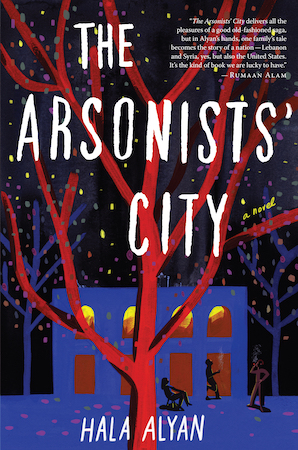
Hala Alyan, The Arsonists’ City 

I’ve been on the lookout for Hala Alyan’s work ever since I read an unforgettable poem of hers last fall. From the winner of the Dayton Literary Peace Prize and the Arab American Book Award, The Arsonists’ City is a story of a far-flung family that returns to Beirut when the patriarch decides to sell their ancestral home.

Layla AlAmmar, Silence Is a Sense 

Silence Is a Sense is a novel about a Syrian woman left mute by the trauma of war and migration. She leads an isolated life in an English city until she begins writing for a magazine and venturing into surrounding communities.

Jamie Figueroa, Brother, Sister, Mother, Explorer 

A ghost-beset, angel-haunted novel, Brother, Sister, Mother, Explorer is about a woman trying desperately to help her sibling. Tiphanie Yanique says the book “begins in prayer and does what prayer does–gives us hope, reveals our deepest griefs, and sometimes even redeems.”

Imbolo Mbue, How Beautiful We Were 

Set in a fictional town in Africa called Kosawa, Mbue’s expansive, suspenseful new novel is about a community that fights back against dictatorship and environmental pollution. A saga told from the perspective of a generation of children, as well as the family of a girl who grows up to become a revolutionary.

APRIL 

Michelle Zauner, Crying in H Mart (Knopf)) 

I’ve been waiting for this book since reading Zauner’s incandescent short piece about grieving her mother’s death. Zauner, who is also known as the indie rockstar Japanese Breakfast, has written a memoir about food, mourning, race, music, and Koreanness.

Anjali Enjeti, Southbound; also, in May, The Parted Earth 

You might have seen a lot of Enjeti’s name lately, as she’s the co-founder of They See Blue, a grassroots organization focused on South Asian American voters. They See Blue has been heavily involved in the elections in Georgia, and a good way to thank Enjeti for her work would be to preorder her first book, Southbound, a collection of essays about social change and identity. She’s also publishing her first novel, The Parted Earth, in May.

Elissa Washuta, White Magic 

A new book from the formidable Elissa Washuta, this time an essay collection about land, colonization, and witchery. Melissa Febos says it’s “a bracingly original work that enthralled me in a hypnosis on the other side of which I was changed for the better, more likely to trust my own strange intelligence.”

Kirstin Valdez Quade, Five Wounds 

I’ve loved Quade’s writing for years, and her first novel, Five Wounds, is about five generations of the New Mexican Padilla family and a new baby. “All the fabulous mess of humanity is, somehow, in these pages,” says C Pam Zhang. 

Syan Rose, Our Work Is Everywhere

In this graphic nonfiction book, subtitled as “An Illustrated Oral History of Queer and Trans Resistance,” queer and trans organizers, artists, leaders, and others speak in their own words about their experiences with resistance and justice.

Yang Huang, My Good Son 

Huang’s second novel is about a tailor living in post-Tiananmen China who hopes to send his son Feng to the U.S. to study. He asks an American customer for help sponsoring Feng, and what results for the tailor and his family shines a light on vast, abiding disparities in opportunity.

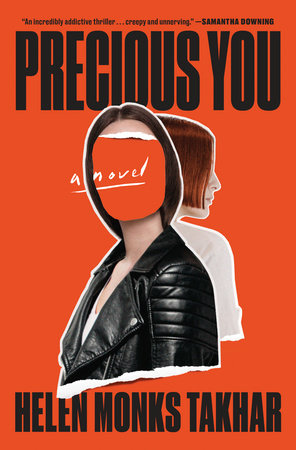
Morgan Jerkins, Caul Baby 

A woman who desperately wants a child, and whose previous pregnancies have ended in sorrow, turns to magic in the form of a powerful family’s healing abilities. Caul Baby is a debut novel from Jerkins, who has written two previous nonfiction books and is a contributing editor at Zora.

Jhumpa Lahiri, Whereabouts 

Whereabouts is the first novel in almost a decade from the Pulitzer Prize-winning Lahiri, and it’s about a woman who both wants to belong and has trouble forming lasting ties. Intriguingly, Lahiri first wrote this book in Italian—a language she started learning relatively recently—then translated it into English.

MAY

Stacey Abrams, While Justice Sleeps

The incredible Abrams has not only devoted herself for years to voting rights in Georgia and elsewhere, but she also has written nine romantic-suspense thrillers under the name Selena Montgomery. While Justice Sleeps will be the first novel she’ll publish as Stacey Abrams, and the book is centered on lifetime appointments to the U.S. Supreme Court, and on what can happen when one person has too much control over the country. May this book absolutely thrive.

Larissa Pham, Pop Song 

A debut memoir-in-essays about love and art, featuring the work of Anne Carson, Frank Ocean, and Agnes Martin, among others. “There are so many times in my past when reading Pop Song could have saved my life,” says Esmé Weijun Wang. “It may very well save yours.” 

Linda Rui Feng, Swimming Back to Trout River 

Feng’s debut is about a ten-year-old girl in a small Chinese village in 1986 whose parents live in America and have promised to return by her twelfth birthday. A novel about longing and secrets and immigrant compromises, one Garth Greenwell calls one of the most beautiful debuts he’s read in years.

JUNE

Ashley C. Ford, Somebody’s Daughter

I’ll jump to read Ford’s writing, and this is her first book, a memoir about her childhood with a father in prison. Her writing shines with extraordinary insight and grace, and Somebody’s Daughter is a book so many of you will want to read.

Zakiya Harris, The Other Black Girl 

A debut novel about two young Black women who meet in the predominantly white world of publishing in New York, from a writer who’s worked as an editor at Knopf. Attica Locke calls The Other Black Girl “the funniest, wildest, deepest, most thought-provoking ride of a book.”

AUGUST

Kat Chow, Seeing Ghosts 

This is another book I’ve been anticipating for years, as I’ve long admired Kat Chow’s work with NPR Code Switch. Chow’s memoir is a debut centered on her mother’s death, and Jacqueline Woodson says it’s “a love song to loss, to family, to the power of writing things down and remembering.” 

Carolina De Robertis, The President and the Frog 

The President and the Frog is about the former president of an unnamed Latin American country, and a long conversation he has in his lush presidential gardens with a journalist. De Robertis’s large-hearted fiction is always a boon, and I’m so glad we’ll have more of it soon.

Anna Qu, Made in China

In this debut memoir, Qu tells the story of how, as a teenager in Queens, she was sent to work in her family garment factory, and was punished for doing her homework. Qu alerted the Office of Children and Family Services, and what resulted had lasting consequences she explores in what Alexandra Chang calls “a sympathetic, brave portrayal of the confusions, difficulties, and hurts that come with growing up between worlds.”

Fall onwards

Imani Perry, South to America

Perry is another writer whose work I’ve loved following for years. She is the Hughes-Rogers Professor of African American Studies at Princeton University, and her remarkable writing and scholarship mostly focus on Black thought and imagination. The nonfiction South to America takes readers on a trip through the American South, which, Perry argues, is the American heartland.

Munroe Bergdorf, Transitional

Transitional is the first book from the groundbreaking Black trans activist and model Bergdorf, who was named Changemaker of the Year by Cosmopolitan. Described as a gender manifesto arguing that everyone experiences transitions of many kinds, Transitional also examines the history of gender throughout the world.

Natashia Deón, The Perishing

NAACP Image Award Nominee Natashia Deón’s first novel was a revelation, and she returns with The Perishing, a portrait of a Black immortal woman in 1930s Los Angeles trying to save the world.

Zeba Blay, Carefree Black Girls

This collection of essays by culture writer Blay celebrates influential Black women throughout history, including Josephine Baker, Rihanna, and Cardi B. 

Chibundu Onuzu, Sankofa

From the writer of the moving Welcome to Lagos, this novel follows the life of a biracial woman who learns that her father was a radical who became a controversial leader of his West African country.

I Will Never Watch “Children of Men” the Same Way Again

I was 23 the first time I saw Children of Men. I had graduated from college and was working an administrative job and trying to figure out how to be a writer. I lived in a little house with my boyfriend; we had a clothesline and a garden; sometimes I felt very old, but I was very young.

For those who haven’t seen it, Children of Men is about the end of humanity. Women have become infertile, so no new children are born; as the human race ages into obsolescence, society breaks down. Misery reigns and a suicide drug called Quietus becomes a popular way out. Amid all this, Clive Owen’s character, a disaffected former activist named Theo, takes on an impossible task: shepherding a young pregnant woman—the first in decades—past phalanx after phalanx of men with guns to a ship off the coast of Britain that will take her and her baby to safety. Along the way, nearly everyone he has ever loved is killed before his eyes.

It’s a dark film, to say the least. But I left the theater with a sense of lifting joy.

The apocalypse was a crucible, I felt, for heroism. I loved to write stories about ordinary people showing extraordinary strength at the end of the world.

Why did I love the end of the world so much? Part of it was the privilege, surely, of growing up white and middle-class in pre-9/11 America. I was safe in my home and my city as a child, my life was orderly, and so I had the luxury of seeing danger as excitement.

But there was also something specific about stories of apocalypse that appealed to me, starting when I was very young. When asked to explain it I would say that when civilization begins to fall, when humanity itself is on the brink, that’s when we will be morally tested as people. The apocalypse was a crucible, I felt, for heroism. I loved to write stories about ordinary people showing extraordinary strength at the end of the world. These people were always girls: girls riding through ruined cities on horseback, or captaining boats across a poisoned ocean.

Now I think those girls were the heroes I thought I could be, if called upon. Some part of me thought it would be thrilling to be called.

That thrill sizzled in my brain as I watched Children of Men in the fall of 2006. It was around that time that I began to write my first novel, about a girl who becomes a leader in a world ravaged by climate change. 

I knew the climate was already changing. That same year, I visited a research station in the rainforest and listened to a scientist talk about the trees he measured. As the nights grew hotter, the trees shrank, and as the trees shrank, the nights grew hotter. I asked him what he would say to people who didn’t believe in climate change. He looked at me like I was from outer space.

“I live in the rainforest,” he said. “Everyone believes in climate change here.”

But I did not live in the rainforest. I believed, but that belief was abstract to me. I went to graduate school. I wrote and dreamed and marched with the rest of humanity towards our end.

I can’t tell you exactly when I started being afraid. Maybe it’s not interesting: the moment when someone who’s felt safe all her life realizes she’s just the tiniest bit unsafe.

Maybe it’s not interesting: the moment when someone who’s felt safe all her life realizes she’s just the tiniest bit unsafe.

But what I can say is there came a point when my dreams of the end of the world began to change. A few years ago—it’s almost embarrassing to talk about 2016 but sure, around then—I started writing about farmers. 

These farmers lived at the edge of the forest, in quiet country. Far away, the cities lay empty, the highways overgrown. Sometimes my characters made mention of a great war. Other times the tragedy went unnamed.

But whatever had happened in their past, these people were not fighting any longer. They were growing vegetables and canning them for the winter. They were raising sheep and goats. Sometimes they had a dance with dandelion wine.

My farm stories were post-apocalyptic in a sense. But they were not dystopian. They described not a hell on Earth but simply an Earth, a place where, after terrible pain, people go on living. 

After a while I started writing a novel from those stories. As happens, almost everything I started with, I later winnowed away. But what I kept was an idea about fiction in dark times, or fiction about dark times—that it can serve as a laboratory of different ways to be. After the world ends, before it became the way it is. The infinite variety of ways to make a life, a town, a world’s worth of lives.

There’s a girl on horseback in my novel—old habits die hard. But I don’t know if she’s a hero. I’m older now and I’ve been, as have we all, morally tested by a pandemic and an administration that separates parents from their children and sends troops in unmarked vans to hunt down Black people in American cities. I don’t know how well I’ve done on any of these tests, and I’m certainly not excited for more of them, though they come every day. Living in what can feel like the end of the world, I have no illusions about my own heroism.

Living in what can feel like the end of the world, I have no illusions about my own heroism. But I do want to think about how we will survive together.

But I do want to think about how we will survive together, and how we humans might care for each other after modernity, or late capitalism, or whatever you’d call the blasted era in which we live. These are the stories I want to tell now, not dystopias but simply topias, stories of people making a place for one another in the world.

I rewatched Children of Men the other day. I’m 37 years old now; I have a two-year-old son. We put him in a little mask when we take him to the park, so he doesn’t give or get a deadly virus. My appetite for dystopia has never been lower—at night I want cooking shows, or dramas about the English landed gentry. Still, I was curious. I wanted to see how the end of the world hit me now.

Turns out I’d forgotten almost everything about this movie. Spoilers follow: the world’s youngest person, age 18, dies at the very beginning. His baby pictures, splashed across TV screens within the TV, nearly destroyed me. Also, the main character has lost his only child, a little son, to a flu pandemic. Upon learning this I had to disengage and look up biographies of the actors on Wikipedia. Clive Owen, it turns out, is a fan of the soccer team Liverpool FC. Julianne Moore writes children’s books.

As I acclimated, I could see glimpses of what I’d loved so much back in 2006—the intrigue of the plot, the code names, the way Theo makes contact with the underground through posters reading “Have you seen this dog?” I remembered the humor and ease with which Clare-Hope Ashitey plays the pregnant Kee, a light in the darkness.

And then there were things I’d never seen. I’d always thought of Children of Men as a movie about Theo and Kee, persevering against all odds, heroes saving a fallen—or at least falling—world. What I saw this time was the way that world comes toward them, gathering around them and embracing them, even and especially when the danger is greatest.

What I saw this time was the way that world comes toward them, even and especially when the danger is greatest.

There’s the old activist, Jasper—Michael Caine in long hair and a Fair Isle sweater—who gives his life to save Theo and Kee. There’s the midwife, Miriam, who cares for Kee and ends up giving her life, too. There’s Marichka, the woman in the refugee camp who helps Theo, Kee, and Kee’s tiny baby get into the rowboat that will take them to safety.

And then there are the men who pause in their shooting and shelling to let Kee and her child go past. The refugees who reach out to them in adoration even as a battle rages. The animals—cows and sheep and, in particular, dogs—who seem to draw near to them as though called.

Children of Men is a hero story, sure. And it’s a dystopia, most definitely. But it’s also a story about community—people who come together, even if briefly, to protect those among them most in need of protection.

I’m not going to be naive and say this kind of community is going to protect us, in the real world, from what’s coming or what’s already here. But it’s where my eye goes, as a writer and a person, at this time in my life and the life of the world. It’s what allows me to look at all that’s falling and try to see what might rise.

10 Feminist Retellings of Mythology

Truth be told, I loathe re-imaginings of myths. The impulse feels reformist rather than revolutionary. I find these renderings on the whole stale and striving, hubristically clever, empty adaptations overly attached to their sources. They trip over their own longing for narrative’s initial hit of euphoria or devastation and slip misty-eyed into nostalgia. Maybe that makes my list invalid, or maybe that makes the books on it exceptional, which they all are. 

With that out of the way, I’ll start all over. At the end of story-telling is myth-making: exhausted, stripped down narrative, pure grammar crystalized into affect. And when it’s good, it’s very-very good, a risk with the added danger of feeling safe. Myth-structure holds the power to awaken us to our own history and also to make ourselves into strangers. In Saturation Project, I adopted myth in the first section as a way of finding a repressed girlhood. The story of Atalanta, broken and re-set askew in tiny cages of self-conscious self-mythologizing, led me into my own memory and located a specialized knowledge that accommodated both unruly wildernesses and intense interiorities. 

Though my book is memoir, fiction immediately comes to mind for the epic task of feminist re-mythologizing. Margaret Atwood, Pat Barker, Madeline Miller, Sarah Ruhl, Natalie Haynes, and Emily Hauser, for instance, all retell the Trojan War from the perspective of the women in the background. Hashtag we love to see it. Moving in and out of myth though offers writers a little more room to play and to surprise.

Image result for jesmyn ward salvage the bones

Salvage the Bones by Jesmyn Ward

I exchanged letters last year with a writer incarcerated in Texas (through Deb Olin Unferth’s marvelous PenCity Writers Program) about Salvage the Bones by Jesmyn Ward. He was especially vivid at accounting for the way Ward uses fractured and recombinant myth (ancient Greek, biblical, American South) to pick up narrative speed.

Triptych: Texas Pool Party” in Triple Canopy Magazine by Namwali Serpell

My students in a text image class gravitated to a breath-taking moment in Namwali Serpell’s “Triptych: Texas Pool Party”  that adopts the Perseus myth briefly to economize the narrative. The piece—a three-part fictional re-telling of news story captured on video of a Texas pool party in which a white police officer assaulted a 15-year-old Black girl in 2015—shifts point of view midway, pivots into heroic rhetoric, its tyrannies and fallacies, to reveal the real monsters in our midst (despite the grand jury declining to indict the offending officer).

Antígona González by Sara Uribe, translated by John Pluecker

Two weeks before the end of 2020, I listened, rapt, to a bilingual choral zoom reading of Sara Uribe’s Antígona González by Rosa Alcalá, Susan Briante, giovanni singleton, Carmen Giménez Smith, and Anna Maria Hong. Antigone is already feminist, but this updating of her story concentrates thousands and decades of missing bodies, missing family and friends, in Mexico into a singular grief, a singular search and standing before the law. I rely on communal contexts because they signal conversation like a counterpunch that explodes into a contrapuntal extended dance remix. In other words, these books, equal parts inventive and disruptive, aim to take back patriarchy’s tools in order to dismantle its house (versioning Audre Lorde, an autopoetic myth-maker herself).

Under Everything by Daisy Johnson

Daisy Johnson’s Under Everything hijacks the Oedipus cycle with fairy tale riffs and fingerings. Her Jocasta-figure steps from the shadows into a visceral presence; her Oedipus is trans. The novel’s gorgeous prose immerses us in fluidity—gender, sexuality, memory, language—yet that very mutability, its queer, abolitionist currents, determines “everything” eternally. 

Fablesque by Anna Maria Hong

All of Anna Maria Hong’s books feature fabulous feminist retellings—I name her Queen and King of the genre! —that disenchant narrative form as a vector of cultural myths. Her latest, Fablesque, features détournementsof Siren, Ouranus, and Kronos, from the Greco-Roman tradition, along with fairy tale and fable refigurations. This book and her sharp, animist Age of Glass share a poetic interest in mythological beasts, human monsters, and mutated half-gods with Donika Kelly’s delicious debut Bestiary, marvelously questioning the shapes our identities take. 

For Her Dark Skin by Percival Everett

For Her Dark Skin, Percival Everett’s satirical treatment of the Medea myth adopts a common enough idea, that myth is always related to questions of origins: how, why, and what things are the way they are, but renders it terrifyingly hilarious and cruel. When Everett turns this idea on gender and race, he refers us back to our linguistic and narrative frames, which become an endlessly reductive and recycled fate. We live in myth/language because it lives in us. If I’m making it seem more like an argument than a joyride that unexpectedly overtakes us, I’m Deadalus wrong. 

Cassandra by Christa Wolf, The Cassandra by Sharma Shields, and Choke-Box: A Fem-Noir by Christina Milletti

While the re-activation of specific myths gathers tension in the distance between the contemporary world and the ancient one, the opposite is also true, often simultaneously. Christa Wolf, Sharma Shields, and Christina Milletti give the best voice to Cassandra, whose story seems especially resonant right now. Cassandra prefigures our current gaslighter-zeitgeist and instantly imbues it with tragedy. Women, especially Black women, are mocked, belittled, and ignored for speaking the truth—about sexual violence, racism, the climate crisis, and the pandemic. Sharma and Wolf focus their warnings on the industrial military complex. Milletti’s Choke Box: A Fem-Noir is a more subtle, inter-textual retelling than Wolf’s Cassandra: A Novel and Four Essays and Sheilds’ The Cassandra. And Milletti catches us in half-complicity, stuck between sympathy and judgment. We question both the Cassandra-figure’s reliability as a narrator and the over-confidence of male authority, undermining her at every turn. 

Image result for trail of lightning by rebecca roanhorse

Trail of Lightning by Rebecca Roanhorse

If climate catastrophe is our present and apocalypse is our future, Rebecca Roanhorse’s Trail of Lightning makes vivid that the end of the world is also our colonial past, where America’s beginning was the Dinétah’s (traditional homeland of the Navajo tribe) demise. In this heart-racing, Navajo-myth-meets-urban-post-apocalyptic-fantasy, however, the badass protagonist makes clear “This wasn’t our end. This was our rebirth.”

You Can’t Hoard Your Way into the American Dream

Son

In terms of helping people throw out unnecessary shit before a big move, my father’s my crowning achievement. His garage. Ziggurat of yogurt containers. Six-foot pyramid of Folgers cans. Worm farm. Dollhouses, boxes of bullets with no gun, three passenger doors (all different colors) for a 1993 Toyota Camry. No need for the full catalogue.

He cried when I held up can after can and pronounced them dead, things devoid of spirit and history. Like a plastic surgeon wielding a scalpel, I excised his memories from the objects I’d excised from his garage with an expressionless slash.

My amateur diagnosis, unkind: You have succumbed to the capitalist nightmare—prevented from earning anything of value, you cling to the useless like a child to its reeking security blanket.

As a child, he lived in a shack on stilts, near a reeking shore in Hong Kong, sharing canned corn with six siblings. Now he is an auto mechanic in the state of Maine who eats seconds for every meal and eats too many meals besides. It’s that old saw, the immigrant story.

The muchness is the problem, I try to explain. Listen it’s sad about the corn and the filthy water, but if you carry that everywhere, you’ll die of sepsis. Corn does not digest in the human stomach. Realize you can’t strap stability to your back. You can’t trade Toyota doors for a new house when yours gets ruined in a flood. You can’t pack your wife’s clothes into yogurt containers after the chemo stops working.

I’m ruthless because I’ve seen the other way of doing it. My (white) friends’ parents never hoarded cans, car parts. The stability is invisible. How much space does a bank account occupy? A will? A trust? 

Make friends! I say. A friend at the movie theater can get you a ticket. A friend in the police can erase your tickets. Friends store themselves, very space efficient. Call them with your expensive string-and-can and ask them for a favor. If they’re rich (the right kinds of friends) they’ll give you what you need. Everybody I know who’s anybody (and that’s everybody because I make the right friends) has friends and their friends have friends and they’ve all got money.

Please meet these kinds of people? Before you’re too old to be conveniently stored.

When I finally throw everything out and drive the moving truck to the new house, I give him commandments: Keep the garage clean. Inside of it, store a new-used (Volvo) sedan. Smile at passersby from your driveway. Accept invitations to drink at the Irish bar with your co-workers. Yes, it starts with drunks. Even drunks have connections—the right kinds.

Despite all I’ve done, tried to do (for him!), he slumps his shoulders at me.

“How did I make you so ashamed?” he asks.

I can only cluck my tongue:

Not shame. I know I’ve told you things like the air we breathe is commodification and the water we drink, Eurocentric hierarchy, but I learned that in my liberal arts college. Our president wore a bowtie. My roommates’ grandfather invented the fucking barcode! I nearly lost my scholarship money for mispronouncing Goethe, but I endured such humiliations to get here, this level of clarity. If only you could see the cornlessness of my digestive tract.

Where I live, the auto shops are tucked tastefully away. Where I live, they don’t sell canned vegetables at the grocery store, never mind corn.

No, no shame on my end. Only care. A desire to see you…progress.

Go now. Was that a Lion’s Club bumper sticker on your neighbor’s Volvo? And the name of the little pub on the corner? O’Sullivan’s? You are the horse and this neighborhood, your water. I can’t do it for you. The point is, these people will be here when I can’t. And I don’t mean it cruelly, but I will not be here.

I also migrated. And like you, I’m lucky if I make it back on holidays.

As the Pandemic Drags On, “Zone One” Warns Us Not to Hope

Hope is irresistible. A dozen years ago hope got us a president, and against all logic we’ve continued hoping ever since. But Colson Whitehead’s 2011 novel Zone One dumps a bucket of ice water over those who dare to hang on to hope as a pandemic unfolds around them. The denizens of the zone live minute-to-minute dodging zombies, securing rations, and scouring Manhattan to find an abandoned pied-a-terre in which to crash, just as we’ve all been living minute-to-minute in the face of indifferent leadership, traumatic grocery runs, and the endlessly punishing newsfeed of our own catastrophe. Whenever humans are in constant peril, hope is a life-threatening distraction.

Zone One by Colson Whitehead

Mark Spitz, Zone One’s protagonist, loves to call himself “mediocre,” the consummate B-student—but Spitz (a sobriquet, and the only name we ever get for him) is first and foremost a survivor. The central command he has for us is to stop dreaming of a better tomorrow. No one knows when or if the plague will end, and the sooner Zone One’s residents accept that situation, the better equipped they’ll be to put their heads down, kill the “skel” in front of them, power through their night terrors, and do it all again in a few hours. You don’t waste precious mental resources reliving the glory days of punching a time card, eating at chain restaurants, or commuting to Chelsea, because even a moment’s distraction can make you a victim.

In the old world, Spitz’s mediocrity took the forms of doing lame jobs in lieu of having a career, ducking out of relationships at the slightest hint of vulnerability, living with his parents, and maintaining a social schedule consistent with these life choices. It’s fitting that Spitz spends his last night before the monsters come in the most humdrum way possible—playing table games in Atlantic City, then enduring hours of traffic to return to his Long Island home. When, post-zombie apocalypse, Spitz and his fellow grunts are tasked with clearing the undead out of New York City, he finds that his previous indifference to his own future makes him enormously qualified to succeed in pandemic life.

The central command he has for us is to stop dreaming of a better tomorrow.

There’s a name for those in Zone One who, against all odds, continue to believe that the zombie apocalypse will soon disappear: “pheenies.” As in “phoenix,” as in oh yeah, we’re definitely going to rise from the ashes and get everything back the way it was. Better to fall in line and be content with the “MRE bacon-and-eggs paste” in front of you. The novel tells us point-blank that “you never heard Mark Spitz say, ‘When this is all over’ or ‘Once things get back to normal.’” As someone accustomed to getting by on the bare minimum, Spitz quickly learns the only lesson he’ll ever need: “If you weren’t concentrating on how to survive the next five minutes, you wouldn’t survive them.” 

Most of the zone’s zombies are of the usual raving brain-eater variety, but roughly one percent are “stragglers.” These poor saps spend their undead days haunting the mundane places of their former lives, silent and immobile. Even with their entrails dangling or jaws missing, Mark Spitz can’t help but look upon these macabre flesh sculptures and see his former elementary school teacher, his old drinking buddy, an erstwhile lover. In these moments, Spitz comes as close as he ever gets to experiencing nostalgia, and thus he is nearly eaten. Our past is just as dangerous as our future. For my part, I don’t dwell on the hugs I used to give, or how the air around me used to be breathable without a cloth filter, and Spitz doesn’t dwell on the friends and relatives he’ll never see again, or how losing money at blackjack might not have been the best choice for a final blowout blast. But memories persist, perhaps more so than fantasies, and even the best of us can have lapses.

When I caught myself trying to conjure up a nation where we lived up to barely acceptable standards, it seemed so utterly impossible that I only got more depressed.

I reread this novel for a book club a few months ago, in the doldrums of the Trump presidency as COVID continued its national assault on prisons, on nursing homes, and on some of our most vulnerable citizens. At the time, the specter of a permanent authoritarian regime perpetuating these conditions forever seemed very real, and Spitz’s never-look-forward mantra spoke to me. Indeed, it was the only advice that made any sense. What else was there to do? Pretend that not only would we defeat the virus but also stop locking our fellow humans in cages, start giving everyone health care, and restore science to its proper place as one of the foundational pillars of our society? Please. How could I negotiate hand-washing, mask-wearing, social-distancing, and pretend enthusiasm for Zoom calls while deluding myself in this way? Maybe imagining a better world constituted self-care for some people (vaccinies?), but when I caught myself trying to conjure up a nation where we lived up to barely acceptable standards, it seemed so utterly impossible that I only got more depressed, more likely to say screw it and invite 20 of my closest friends over for karaoke. 

But a few scant weeks later, I don’t know what to think. Just when I had trained myself to be content only getting through this, my one lifetime, all of a sudden the usual doomscrolling turned into the end credits of our horror movie. While I remain in mortal fear of experiencing anything that could be called joy, now COVID’s number one abettor will  be removed from office on  January 20, and an effective first-generation vaccine is already finding its way into our immune systems. Even as we set the record for new cases of the virus, the urge to smile has fought its way back from the brink, bubbling up in my gut and threatening to appear unannounced instead of restricting itself to a prearranged digital happy hour. I can’t help it—I’m turning into a pheenie after all.

27 Debuts to Look Forward To in the First Half of 2021

Last year was a difficult one, but there were at least 40 up sides: debut authors, with fresh voices and viewpoints, whose work offered us perspective or escape. As the calendar turns over, the problems we faced last year still linger, but a new group of writers are set to introduce their work to readers across the globe.

Whether you’re seeking a revealing memoir about family secrets or a short story collection about women all named Sarah, the first half of 2021 offers something new for everyone.

January

The Prophets by Robert Jones, Jr.

The Prophets by Robert Jones, Jr.

Robert Jones, Jr.’s debut novel is about a forbidden romantic relationship between two Black men enslaved on a Mississipi plantation during the Antebellum. Jones explores queerness through a new lens that has rarely been explored in literature. The Prophets is one of the most powerful Black queer historical novels ever written.

Detransition, Baby by Torrey Peters

Detransition, Baby by Torrey Peters

Torrey Peters’s first full-length novel is about searching for connection and family while navigating the challenges of gender. Ames thought detransitioning would give him a happy, unremarkable life, but it may have wrecked his relationship. His partner Reese wants a child, but doesn’t know how to have the family with Ames that she envisioned with Amy. The result is a domestic drama filled with tangled lives for modern times.

Hades, Argentina

Hades, Argentina by Daniel Loedel

A decade after leaving Argentina, a man returns home under less-than-ideal circumstances: the first woman he loved is dying. His return isn’t a rosy homecoming, but one where he must confront the ghosts of his past while grappling with the man he has become in America.

The Divines by Ellie Eaton

Set in present-day Los Angeles and a 1990s British boarding school, Ellie Eaton’s book carefully examines the destructive relationships of teenage girls. At the center is Josephine, a freelance writer who was one of the private school’s biggest bullies. Revisiting the shuttered school in her 30s, she begins to dig into her own past and grapple with the decisions she made decades ago.

Aftershocks by Nadia Owusu

In her debut memoir, Nadia Owusu invites readers into her globe-spanning childhood and young adulthood. After her mother abandoned her as a toddler, Owusu’s father, a U.N. official, brought his children and his new wife from continent to continent, until his death when the author was 13. This memoir follows her to Rome, Dar-es-Salaam, London, Kampala, New York, and elsewhere as she comes to term with her family tragedies and her own identity.

Dog Flowers by Danielle Geller

Dog Flowers by Danielle Geller

After her mother dies during alcohol treatment, Geller returns to the Florida Navajo reservation where she grew up and finds a suitcase packed with photos, diaries, letters, and personal ephemera. Using her experience as a librarian and archivist, Geller digs into her family history, mixingher own narrative with the story she derives from her mother’s documents.

February

Milk Blood Heat by Dantiel W. Moniz

Throughout these sublime stories, Dantiel W. Moniz explores love and loss with grace. The stories center on Floridian women and girls trying to find their place in the world—from a teenager resisting her restrictive church to two sisters transporting their father’s ashes.

Fake Accounts by Lauren Oyler

Just after the 2016 election, a woman’s relationship falls apart when she discovers her boyfriend is an anonymous online conspiracy theorist. Her own truths and beliefs begin to unravel after she flees to Berlin and catches herself becoming more secretive and manipulative with those around her.

Land of Big Numbers by Te-Ping Chen

Te-Ping Chen’s story collection is an expansive look at modern China, as it struggles with the influence of the past and envisions a new future. Chen offers both realism and magical realism throughout the collection, which allows her to tackle her vision of Chinese culture with both clear-eyed practicality and dreamlike allegory—for instance, a strange new fruit that brings on troubling memories of the Cultural Revolution when eaten.

As You Were by David Tromblay

Novelist David Tromblay’s debut memoir investigates his relationship with his alcoholic father, and the long shadow cast on his family by the boarding schools in which Native American children like his grandmother were indoctrinated and abused. He explores his family legacy of anger and trauma to figure out how he survived to become the man he is.

product image

Let’s Get Back to the Party by Zak Salih

Sebastian Mote is a 35-year-old gay high school teacher who just wants to settle down and have kids and maybe a white picket fence. Why is that so hard? At a wedding, he runs into his childhood friend Oscar Burnham, also a proud gay man, who dismisses Sebastian’s yearnings for a marriage and babies as heteronormative. Oscar is upset at the rise of bachelorette parties at gay bars and the mainstreaming of queer culture. Sebastian and Oscar are both attracted and repelled by each other’s life choices, both struggling to find their place and to envision a meaningful future for themselves. Set in the weeks after the Supreme Court ruling legalizing same-sex marriage, Let’s Get Back to the Party is an insightful novel about what it means to be a gay man in a rapidly-changing America. 

March 

Abundance by Jakob Guanzon

Jakob Guanzon’s novel follows a down-in-their-luck father and son who are evicted from their trailer and living in a truck. Abundance takes a critical and unsentimental look at the harsh effects of poverty in a country that’s seemingly teeming with abundance.

Brother, Sister, Mother, Explorer by Jamie Figueroa | Penguin Random House  Canada

Brother, Sister, Mother, Explorer by Jamie Figueroa

A brother and sister come together in their childhood home after their mother passes away to pack things up and move on with their lives. The brother is on a self-destructive path and the sister tries everything in her power to save him, including coming up with a bet that may save his life.

The Recent East by Thomas Grattan

The Recent East is a multigenerational story that starts with a family who escapes East Germany for upstate New York. After the Berlin Wall falls, their daughter Beate Haas is told that she can reclaim her parents’ abandoned house in their hometown of Kritzhagen. 

Who Will Pay Reparations on My Soul?

Who Will Pay Reparations on My Soul? by Jesse McCarthy

In this essay collection, for readers of Ta-Nehisi Coates and Jia Tolentino, Jesse McCarthy covers topics ranging from trap music to Kehinde Wiley’s paintings. Who Will Pay Reparations on My Soul? highlights his keen eye as he observes the intersection between art, race, literature, and politics.

Women and Other Monsters by Jess Zimmerman

Women and Other Monsters by Jess Zimmerman

“Beware their ambition, their ugliness, their insatiable hunger, their ferocious rage.” What does it mean to be a monstrous woman? To be a woman who is too ambitious, too hungry, too angry, too ugly to fit into the societal norms dictated by our patriarchal society? In her book, Electric Literature’s editor-in-chief Jess Zimmerman analyzes feminism through eleven female monsters from Greek legends to build a new mythology: one where the hero is a monstrous woman with power and agency.

Sarahland by Sam Cohen

Sarahland is a queer experimental reimagining of selfhood; nearly every story in this collection is about a woman named Sarah. Sam Cohen tackles so much in this wide ranging book of Sarah origin stories, as one Sarah plays dead for a wealthy necrophiliac while another uses her Buffy fan-fiction to process her emotions.

Of Women and Salt by Gabriela Garcia

Set mainly in present-day Miami, Gabriela Garcia’s novel is about Carmen who harbors ghosts from her past and her daughter Jeanette who is struggling with addiction. The two make decisions—including taking in the daughter of a neighbor who was detained by ICE—that begin to tear their relationship apart. Their relationship implodes when Jeanette travels to Cuba and learns unforgivable truths about her mother from her grandmother who stayed behind.

April

Low Country by J. Nicole Jones

Low Country by J. Nicole Jones

Pitched as The Glass Castle meets Midnight in the Garden of Good and Evil, this Southern memoir follows J. Nicole Jones as she grows up in a family that swings from extreme wealth to extreme poverty in South Carolina. On the outside, their family is perfect, but behind closed doors, violence and anger erupt.

What Comes After by JoAnne Tompkins

What Comes After by JoAnne Tompkins

The sudden death of two teenagers reverberates through a small town in Washington State. The mystery deepens with the arrival of a pregnant 16-year-old stranger who might be the key in solving what happened. 

May

The Parted Earth by Anjali Enjeti

A multigenerational novel that spans decades and continents, The Parted Earth looks at how the Partition of India and Pakistan left an indelible mark on three generations of women. Enjeti crafts a compelling story about the search to uncover ancestral secrets and the quest for belonging. 


The Atmospherians by Alex McElroy

In their satire about social media, Alex McElroy provides a darkly humorous dissection into public personas. The novel follows a failed social media influencer and a struggling actor who create The Atmosphere, a cult-like rehabilitation center for toxic white men hoping for absolution. However, like their careers, things don’t go as planned and take a turn for the worse almost immediately.

Negative Space by Lilly Dancyger

We all have mythologies that we build around our parents. Lilly Dancyger (editor of the anthology Burn it Down: Women Writing About Anger) worshiped her father Joe, a brilliant East Village sculptor in the grip of a heroin addiction. After her father’s sudden death when she was a young girl, Lilly becomes self-destructive. Years later, she uses his artwork to reexamine the mythology she built about her father and to understand who exactly was Joe Schactman.  

 June

The Other Black Girl | Book by Zakiya Dalila Harris | Official Publisher  Page | Simon & Schuster

The Other Black Girl by Zakiya Dalila Harris

Zakiya Dalila Harris tackles #PublishingSoWhite in her novel about two Black women working in book publishing. Editorial assistant Nella, the only Black employee at Wagner Books, is thrilled at the prospect of finally having a kinship with a fellow Black colleague when Hazel is hired and becomes her cubicle-mate. But not long after Hazel’s arrival, threatening notes start appearing on Nella’s desk. 

Ghost Forest by Pik-Shuen Fung

Ghost Forest by Pik-Shuen Fung

In this introspective Hong Kong-Canadian novel about grieving and difficult familial relationships, an unnamed narrator examines the ramifications of growing up in an “astronaut” family with a father who stayed in Hong Kong as a breadwinner while his wife and children moved permanently to Canada. 

Bewilderness by Karen Tucker

Bewilderness by Karen Tucker

Bewilderness follows Irene and Lucy, coworkers in a pool hall in rural North Carolina. The two young women, already magnetically attracted to each other, form a bond after an impulsive plot to exact revenge on a customer who was being a creep to them. Their codependent friendship intensifies over the highs of popping opioid pills and scamming drug dealers to fuel their growing addiction. But what happens when the person who has been enabling your addiction wants to get clean and leaves you behind?  

Yes, Daddy by Jonathan Parks-Ramage

Struggling playwright Jonah Keller is living in a shitty Bushwick apartment and barely getting by on his menial restaurant pay. But everything seems finally to be going his way after Jonah carefully crafts a “chance” meeting with a Pulitzer prize-winning writer so he can further his ambitions. As their torrid affair spills over into the summer in the Hamptons, Jonah begins to notice all might not be what it seems with his older lover. The predator quickly becomes the prey in this tense page-turner. A riveting queer novel, Yes, Daddy takes a critical look at the way power imbalances play out in relationships. 

7 (More) Literary Translators You Should Know

Translating novels, short stories, and poetry into English in a way that remains true to their original form can take years, even decades of dedication. And then there is the job of persuading the Anglophone publishing world to take chances. Translators’ labor is ultimately rewarding for readers who are able to embark on these previously-unknown literary journeys. 

The second part of our list of contemporary translators features award-winning translators who are also novelists and poets, who work from Korean, Telugu, Tamil, Portuguese, and Bulgarian to English, and one who renders contemporary American literature into Japanese. I spoke to them about the anti-imperialism of translation acts, the numerical abundance (also the economic precarity) of BIPOC translators, and the joys and challenges of translating swearing and grammar that doesn’t exist in English. 

Don Mee Choi: Korean to English

Seoul-born Korean American poet Don Mee Choi includes translations of South Korean poet Kim Hyesoon, and her recent book, Autobiography of a Death. Choi’s radiant and supremely-thoughtful (references include Walter Benjamin, Ingmar Bergman, Korean shamanism, and her own personal history) in her treatise, Translation Is a Mode=Translation Is an Anti-Neocolonial Mode, certainly will have you considering language, translation, and life in general, from a different perspective. Choi’s own collection of poetry DMZ Colony won the 2020 National Book Award for Poetry. 

On non-poets being translators of poetry: “Reading translation is an extension of translation. It’s an opportunity for poets and non-poets to practice curiosity and dislodge themselves from whatever cultural greatness they were taught to believe in. So reading translation is about not making things great again. It’s an anti-nationalist, anti-imperialist act. Therefore, I think translation is always possible.”

Translating a chain letter: “I pretended to write in English when I was a little child because I thought that my father was a foreigner. There is a poem about this in my collection, Hardly War. I was convinced that my father had to be a foreigner because I never saw him more than a few times a year. As a war photojournalist, he was in Vietnam and other war zones. I wanted to know the language he spoke outside of South Korea. After we moved to Hong Kong, I couldn’t play piano anymore, so I played with my father’s typewriter instead. One day, I received a chain letter in English—this was popular way back when—and I typed all 91 letters. When my mom asked me what I was typing, I translated the letter to her, overly exaggerating that something terrible might happen to my father if I didn’t type all the letters. My father is almost 91 this year. I can’t take credit for it, but I can’t help wondering.” 

Madhu H. Kaza: Telugu to English  

Born in Andhra Pradesh, India, New York City-based Madhu H. Kaza’s translated works include stories by the feminist writers Volga and Vimala Devi. She edited Aster(ix) Journal’s Kitchen Table Translation, a wondrous investigation of the pathways of translation and migration. The volume features John Keene, Teju Cole, Don Mee Choi, and many others. In her terrific introductory essay, Kaza writes:

“For me, with all its predicaments, all the violence it may carry on its back, translation is an act of hospitality. Hospitality, conceived not as charity, not as condescension or even merely tolerance. A hospitality that recognizes both the dignity and the difference of the other.”

An early act of translation: “There’s a big difference in my relation to the words mamidikaya and mango, which are equivalent. When I arrived in the U.S. as a child I kept asking my mom for mamidikaya and finally in exasperation—because these fruit were not available anywhere in Michigan at the time—she presented me with a round, red, mealy item and said, “Here, this is an apple-mango.” I can’t tell you how furiously I hated apples into my adulthood. The word ‘mango’ was also ruined for me.”

On the challenges that face BIPOC translators: “It took me more than 20 years from my first attempt to learn to read Telugu to the time when I began translating Telugu fiction. One reason it took so long is that I never had access to any institutional support for this work, and working on Telugu was never my primary occupation. I take translation seriously, but it’s still very much a small side project for me. Of course, we need much more support for emerging BIPOC translators and translators working in under-represented languages, but I’m wary of most diversity efforts, well-intentioned as they are. We need people to get together and think deeply about this, and not get self-congratulatory about adding one new diversity mentorship to their ongoing programs. We need to think about how mentorships can be more dynamic and less isolating for the mentees. I was talking with the wonderful translator Katrina Dodson about the idea of creating a retreat for BIPOC translators, a gathering where people could build community, share ideas and resources, discuss translation, and, crucially, also be given some time to do their own work. If someone wants to offer space and fund such a project, I’m here. BIPOC translators are here and we have so many more ideas about this.”

Meena Kandasamy: Tamil to English 

To her renaissance woman resume, which includes poet, novelist, and activist, Meena Kandasamy added her first translated book in 2020, the Tamil language novel, Women Dreaming by Salma. Her translation wish list includes Malathi Maithri’s poems (“definitely want to do them before I turn 40”) and the novelists Sivakami and Bama. (“my dream will come true if I translate a novel each from them”). She’s hoping to finish her decade-long labor of translating the love poetry in the classic Tamil text, the Thirukkural in 2020. 

Story-crafting in English and Tamil: “English is my second language, so when I write in English I do labor twice as hard, but sometimes, the hard work involved itself adds to the artistic dimension. I am much more fussy and exacting because I want to choose the precise word in a second language, I pay far more attention to how it sounds off the page because the rhythms of my ears are still attuned to Tamil almost as a reflect. I personally think I’m more successful writing in English than if I were in Tamil because it allows me to be twice removed—once as a writer (standing outside, writing in), and secondly as someone very conscious that this is not her mother-tongue. There is a sense of strangeness that remains, and that perhaps makes all my English writing very much my own.”

On swearing: “I loved the women swearing. It is a very Tamil thing—women might appear very pious, religious but when you rub them the wrong way, you hear things come out of their mouths that will shock you. I kept feeling—will the English reader get this? So, there’d be a character who will implore Allah, and say, ‘Allah why don’t you punish this cunt-son?’ The extreme religiosity marries so easily with coarse profanity.”

Natascha Bruce: Chinese to English

Natascha Bruce studied Chinese at Cambridge but only started taking translation seriously when she entered a Chinese translation competition while working for an NGO in Jerusalem. Soon after, she moved with her partner to Hong Kong, where she met Chinese-language writers, read their works, and began her career as a translator of Chinese novels. She is currently working on Dorothy Tse’s first novel, Owlish and the Music-Box Ballerina, and her other translated works include Lake Like a Mirror by Ho Sok Fong and Lonely Face by Yeng Pway Ngo. Bruce, who now lives in Chile, says she has “a meaningful relationship with Chinese, Italian and Spanish, although these relationships are wildly different to one another.” 

On the cultural specificities of translating Malaysian Chinese: “I’ve only been to Malaysia twice: once to Genting Highlands when I was doing research for my translation of Yeng Pway Ngon’s Lonely Face, and once to visit Sok Fong in Kampar while I was translating Lake Like a Mirror. Sok Fong introduced me to her cats, took me around her local pasar (market), showed me the coffee shops where she goes to write, read my palm, described the different places she had been while writing the stories, told me about books she liked. At the start of the project, I worried constantly about not having access to the specific cadences of Malaysian English, and about upsetting the careful balance of Sok Fong’s stories by not even knowing what I didn’t know about their context. As I came to know Sok Fong, though, and felt a deepening intimacy with her and her writing, I had a growing confidence that I could trust my responses to the words she had put on the page.”

On Hong Kong’s trilingual protest slangs: “In the past year I’ve been awed by the ingenuity of Hong Kong protest slang—the way protesters have shifted between Cantonese, Mandarin, and English to adapt to new restrictions, using the enforced trilingualism of Hong Kong to their advantage. They’re merging characters to create totally new ones, appropriating police insults, making extensive use of homophones both within and across languages, playing on the different pronunciations of characters in Cantonese and Mandarin, often all at once. The speed, the adaptability, the mixture of playfulness and defiance, the bravery: it’s phenomenal.”

Izidora Angel: Bulgarian to English 

Chicago-based Izidora Angel’s next book is Nataliya Deleva’s debut Four Minutes. Her first effort was Hristo Karastoyanov’s The Same Night Awaits Us All. Her next fairy godmother-ing adventure (which includes playing agent, PR person, social media guru, grant writer, and branding expert) is Yordanka Beleva’s Keder (“some of the most beautiful, heartbreaking and almost magical writing to come out of Bulgaria in the last few years.”). Check out one of her stories published in the Los Angeles Review. Angel is the co-founder of The Third Coast Translators Collective

The “Inferential Mood” in Bulgarian: “This is what I love and loathe about translating the Bulgarian. It’s got these crazy 37 moods and tenses. Can you imagine studying this? So really the richness of the tongue is all in the grammar, in the way a verb is conjugated to relay so much potency. The inferential mood alleges something has happened while acknowledging that the teller of the event was not there to witness the event, so… did it actually happen? It’s the perfect gossip tense! Honestly, Bulgarian newspapers get away with murder by employing it. On the whole, though, the inferential mood demonstrates how analytical and uniquely structured the Bulgarian is and this tense is, naturally, impossible to render into English. In English, you can say ‘allegedly’ a couple of times but that’s too burdensome to employ for the duration of a novel, so you have to choose: did it or did it not happen—and run with it.”

On the fight against erasure: “I’ve found that the collective’s mission ebbs and flows with the times. We may have come together as language artists looking to create community, but lately, we’ve zeroed in on some pretty serious battles: the massive underrepresentation of women in translation, the erasure of the translator from the very work they have translated, the ghastly financial conditions we work under, the preservation and protection of endangered and Indigenous languages. 

Next time you read a review of a novel in translation in a mainstream outlet, see how long it is before the translator is even named, and count how many words are used to review the actual translation. This is what I mean when I say it is a tooth and nail fight to combat our erasure. It is somehow presumed that a translator churns out a text word by word. Outlets like The New York Times are really leaving half the story on the table when they dedicate zero space and intellectual curiosity to who reverse-engineered the novel and put it back together and how. Of course, doing this would inevitably shake up their reviewer shortlist.”

Katrina Dodson: Portuguese to English 

When Katrina Dodson returned from her first trip to Brazil in 2002, she began learning Portuguese by listening to cassettes on her Walkman. Her experience of Brazil, especially of its music, was so expansive that she wanted to share the country’s many faces by becoming a translator. Dodson is the translator of Clarice Lispector’s The Complete Stories, she also speaks (and studied) her mother’s ancestral tongue, Vietnamese, and teaches translation at Columbia University. 

Katrina Dodson in Vietnamese vs. Katrina Dodson in Brazilian Portuguese: “It’s a source of anguish and something of a mystery to me that my life trajectory has led to a point where I can sometimes pass as Brazilian—with no family relationship to the country—whereas I speak Vietnamese like a child. My Brazilian persona is brighter and more open than my American self, with bigger hand gestures, probably in part because I love speaking Portuguese, so it automatically puts me in a better mood. Plus, there’s this element of escaping the same old self I grew up with, so it makes things lighter; the language is less saturated by time. 

In Vietnamese, I feel so small and tentative, always worried that someone won’t understand the words I’m struggling to pronounce or will start laughing at me (like my relatives), or even worse, start talking so fast that I can’t understand. I grew up hearing Vietnamese and actually studied it in college and spent a semester living with a family in Hanoi, but the language is so different from English, with six tones, so I lose it quickly when I don’t practice.

It’s funny, being a heritage speaker should in some ways embolden you to reclaim your roots, but for me, every time I make a mistake in Vietnamese, it reminds me that I’m only half, and that I didn’t grow up speaking it with both parents at home. When I say something wrong in Portuguese, it’s just a momentary lapse in my performance without any heavier consequences for my sense of identity. Reading Vietnamese American writers like Vi Khi Nao and Ocean Vuong brings up a lot of memories and sensory associations for me, and their bold imaginations inspire me to reshape my relationship to Vietnamese.”

Translating a Brazilian classic: Macunaíma is about as far from The Complete Stories by Clarice Lispector as you can get, in many ways, so I am very curious to see who will get excited about Mário de Andrade’s 1928 modernist classic. Lispector is a master of conjuring emotional landscapes and complex psychological states, and readers can dive into her writing without any awareness of Brazilian culture or history. Andrade’s experimental novel, on the other hand, is something of a Brazilian national epic that weaves together a patchwork portrait of Brazil based on an encyclopedic array of sources, including Indigenous myths, rural folktales, Afro-Brazilian syncretic religious practices, and Iberian troubadour ballads. As with epic and folklore, there’s no interiority—it’s all episodic action, and the complexity lies in the novel’s inventive language, as well as in Andrade’s recasting of collective storytelling in this roving narrative about the trickster hero Macunaíma. 

Translating Macunaíma has led me to completely reinvent my approach to translation, especially in considering what is untranslatable, in part because the book mixes various regional forms of spoken Brazilian—as opposed to written Portuguese—with dizzying lists of flora and fauna in Tupi, the major Indigenous language, as well as words from other Indigenous languages and Bantu languages. There’s a common misconception that translating means making everything comprehensible, but the best works of literature often produce deliberate ambiguity and sometimes outright illegibility. So in determining which non-Portuguese words to leave in the original, I think about the music of these list poems that conjure the abundance of the Amazon rainforest, the ethos of using local, non-European naming conventions for the natural world in the Americas, as well as which non-Portuguese phrases function as incantations or bridges back to certain histories that would lose their power if I substituted them with words in English.”

Aoko Matsuda: English to Japanese

While all the translators on this list deliver books from the world’s many languages into English, Aoko Matsuda translates English books into Japanese. She has translated works by contemporary American writers such as Karen Russell and Carmen Maria Machado. In addition to her translation work, Matsuda is also a fiction writer. Her latest short story collection, Where the Wild Ladies Are, translated by Polly Barton, is a feminist reimagining of classic Japanese ghost stories.

Reading the English translation of her book: “One thing I learned by being translated is that the act of translating is not a one-way process. It’s always an interaction, and even when we don’t actually communicate during their process of translating, I can see that interaction from their texts afterwards, and see how they understand me and my stories. The feeling when I read them is electrifying.”

The popularity of American literature in Japan: “It is not easy to come up with a name of a contemporary American writer who is as famous in Japan as Murakami is in the U.S., but the publishers and translators in Japan have always been passionate about introducing the works of American writers, as well as the works of the contemporary writers of other countries. There are a certain number of Japanese book lovers who are especially fond of foreign literature, and they always look forward to reading the books of newly introduced writers. One thing I love about Japanese readers is that they empathize and love the strange and compelling stories written by the contemporary American female writers, like Miranda July, Kelly Link, and all of the writers I’ve translated.” 

Mom’s Ex-Fiancé Makes a Bad Boyfriend

“That Old Country Music” by Kevin Barry

Hannah Cryan waited in the Transit van up in the Curlews. Setanta Bromell had parked so that the van was secreted in the shade of the Forestry pines and could not easily be seen from the road. He had taken the dirtbike from the back of the van then and headed down to Castlebaldwin pissing smoke. His morning’s ambition was to rob the petrol station there with a claw hammer. Setanta was her fiancé of these recent times and, despite it all, the word still rolled glamorously to her lips.

It was the second Monday of May. She was a little more than four months pregnant. The whitethorn blossom was decked over the high fields as if for the staging of a witch’s wedding. Already the morning was humid and warm, and snaps of wind cut from the hillsides and sent the blossom everywhere in vague, drifting clouds. Even with the windows shut, her eyes streamed, and she could feel sore pulses in her throat like slow, angry worms. Setanta was thirty-two years old to her seventeen and it was not long at all since he had been her mother’s fiancé.

That’s the way it goes sometimes with close-knit families, he said.

Don’t even fucken joke about it, she said.

Setanta’s plan—if it could be held up to the light as such—was to get into the petrol station just after it opened, show the claw hammer and start roaring out of himself. As she waited on the mountain, Hannah jawed helplessly on her gums and tapped her phone for the time—it showed 7:17 a.m. and then died.

Fuckwad, she said, and threw the phone to the dash.

Castlebaldwin was a ten-minute scramble away and he’d been gone for more than twice that. The van had laboured to climb even the low mountains of the Curlews and she tried not to think deeply about its viability for escape. The drone from the N4 down below was becoming more steady, the morning traffic thickening to a stream. It was difficult to believe that just last night she had laughed with excitement as she took the first baby bump photo for her Insta and Setanta’s needle buzzed jauntily as he tattooed a lizard on his left calf. He told her in a voice scratchy with emotion that he loved her and that their souls were made of the same kind of stuff. She licked his earlobe and showed him the selfie and he cried in hard, gulpy jags. She did not remark that the lizard looked more like it had frog dimensions, really, nor that the rapid blinking effect had returned to Setanta’s left eye.

She had asked him to leave the keys of the van but he would not. When he had a plan worked out his mouth fixed into a tight hard rim like a steel toecap. In truth, she knew well that Setanta Bromell of Frenchpark was not making solid decisions lately. She sneezed and reflexively laid a hand to her belly to reassure the visitor. High slants of sunlight now breached the top of the Forestry pines and showed a stretch of scarred hillside rising to Aghanagh bog. The gorse on the higher hills was lit from the inside out an electric living yellow. Dead for half a year the Curlews were like some casual miracle reviving. Setanta Bromell said that May, always, was the number one month of the year for going mad.

Passing through the narrow kitchen of her mother’s house, four and a half months previously, he had placed a hand to her skinny hip and turned on the cow eyes and that was enough. Her mother when she’d been drinking slept like the dead. By night, it had become the custom that Setanta and Hannah would talk. She liked to listen to his stories about work. He told her about the man with the huge swastika on his back that Setanta had remodelled into the ancient flag that showed in quadrants the symbols of the four proud provinces of Ireland: the red hand, the triple crown, the hawk and dagger, the harp.

Better a ‘Ra head than a Nazi, he said.

There was a quick russety shimmer athrough the yellow gorse as a fox moved for her den. Hannah’s lip moved softly at the sight and made a wordless murmuring. Now the birds were going dipshit unseen in the hedges, in the pines. Setanta Bromell owed her mother, like, four grand? His eyes rolled up as if to see the stars when he came.

She waited. The Transit van smelled like a stale morning mouth. She listened for the growls of the dirtbike climbing the backroad but no sound rose above the birds, above the N4’s sea-like drone, above the hot wind in gusty snaps from the hillside.

Her hands lay folded loosely across her belly. She tried to do what the lady doctor at the clinic had told her to do in the panic times—she felt out her breaths on an individual basis. You had to get yourself on intimate terms with every breath that passed through your body. You had to listen to each breath as it travelled and smooth out its journey. In the Transit she sat and concentrated as well as she could but still her breaths came short and wildly.

Now the sunlight broke fully across the canopy of pines and came starkly through the van. Hannah closed her eyes against it to see dreamy pink fields on the back of her lids. She clawed at the greasy vinyl of the seat. She listened, and in the gaps between the wind it was just the birds in conference, in the high springtime excitedly, a vast and unpredictable family.

Still on the air there was not a whisper of Setanta Bromell’s dirtbike.

He did not drink much. She’d say that for him. He would sit up late while her mother slept. For a long while, they had sat at opposite ends of the L-shaped sofa, as far apart from each other as they could get, which in itself had signaled a situation. He said that particular stretches of ground had for him a lucky vibration. He said the Curlews most of all. Once a prime buck had skittered from the ditch and lurched into the side of the van and dropped stone dead of the shock and all Setanta had to do was haul it home and hang it to be skinned.

These are the type days I get in the Curlews all the time, he said.

He spoke often of fatedness and of meant-to-be’s. Then came the 3 a.m. of his soft, slow hand in the kitchen, and it was a case of smoochy-smoochy and throwing each other up against the walls before anyone knew the fuck what was going on.

She pulled down the sun visor for its mirror. She had a face on her like a scorched budgie. She detested her new self. By nature like a stick, she was taking on weight with the pregnancy. Beneath her breath, she made the words of a Taylor Swift song for distraction but the song did not take.

News headline: there was no sign of Setanta Bromell on no fucking dirtbike.

She saw him with his limbs splayed on the petrol station floor. She heard the ratchety cruel tightening of the cuffs. Or maybe the Belarussian who worked the morning shift had just hopped the counter and grabbed the hammer and laid Setanta out flat with a single bop to the broadside of the head. The Belarussian was a massive fuck who must have weighed about as much as a cement mixer. Setanta’s plan had gaps and weak spots.

Hannah Cryan climbed from the van and walked from the Forestry pines onto the backroad. By now the morning had clouded over and the vast spread of the whitethorn blossom across the hillsides and the high fields and the ditches made an ominous aura as it moved in the wind. Once, as a child, she had been slapped across the face by her mother for bringing an armful of the blossom into the house. The whitethorn flowers so much as passing the threshold was a harbinger of certain death in the family. By about the Tuesday of the next week. She had meant it as a gift for her lovely young mother.

As she sat on a five-bar gate up in the Curlew mountains the great meanness of the morning descended on her. She hummed a string of four or five notes against the meanness, not knowing where they came from nor how.

The plan was that they would drive through the day and the north to the ferry at Larne for Stranraer, and from there descend through Scotland and the Borders— she watched his lips move as he recited solemnly the steps of it—through Cumbria to Yorkshire and to his cousins in the city of Wakefield. Over the nights, as they conspired, the word “Wakefield” had taken on the burnish of legend. She saw the city lights spread out. She imagined a child with a North of England accent and a neat little flat in a tower block. She saw herself and Setanta in the bed eating toast and taking photos  of each other—his muscles flexed; her eyelashes fitted— and the toddler gurgling along in pure happiness on the rug on the floor. Setanta Bromell might soften his cough in Wakefield, she believed, and think harder about his decisions, and forget all the nonsense with the lizards and the claw hammers.

The day was up and about itself. The fields trembled.

Catastrophe was a low-slung animal creeping darkly over the ditches, across the hills.

Her mother had found her one careless morning under the throw on the sofa, topless and asleep in the hot, emotional clutches of Setanta Bromell. That had made it a morning for the annals. Since then, they had slept in two sleeping bags zipped together at his King Ink studio. The studio was located over a butcher’s shop in Boyle. It reeked of their wild love and animal death. Setanta was 18 months behind on the rent and had a notice to quit and lately this involuntary blinking in the left eye.

But desperate times, he said, very often turned out to be disguised opportunities.

Wakefield, as a shimmering prospect, was held aloft before her like a priest’s chalice.

By now she knew that he would not come back from Castlebaldwin. On the five-bar gate of a tiny farm high in the Curlew mountains she again closed her eyes for the pink fields. She went into a dream. If the moment was never-ending it might not even exist. She felt the presence of something very old and uncaring on the air. An insect’s steady keening from the ditch was incessant like a hopeless prayer or the workings of his needle. He had tattooed on her inner thigh a swallow in flight.

In the black times make you think of summer, he said.

In the black times, she thought, it’d take more than a badly-drawn swallow aiming for my fucken gash.

He was probably in the holding cell at Ballymote already. He was already on first name terms with every guard in the vicinity. Setanta Bromell was—and here the words came unbidden, as if from an old ballad recalled—already in chains. The new life within twitched with nervous expectancy. As if it knew already of all the disasters to come.

Hannah Cryan came to ascend from herself. Above the green fields and the whitethorn blossom moving in the morning wind, above the stone walls and the Forestry pines, above the inland sea of the grasses, above the broken drone of the motorway, above all of this she measured out the stretch of her seventeen years. They had been mean and slow-feeling years. She was almost as old as the century and felt it. Her man in jail and a child at the breast—it was all playing out by the chorus and verse.

Her legs weak, her step uncertain, feeling lightheaded and frightful, she trailed back to the van and climbed into it. She sucked the last warm dregs from a bottle of water on the dash but her thirst was not sated. Often he kept six-packs of sparkling water from Aldi in back of the van. For his digestion, he said, which was at the best of times troublesome.

They had been mean and slow-feeling years. She was almost as old as the century and felt it.

She got out and opened the back doors and rooted around among her fiancé’s astonishing detritus. She found no water but she did find the ten euro claw hammer from Simons Brothers hardware.

The scales of the morning fell away.

She stood by the side of the van with the claw in her hand.

She swung it hard and precisely to extract the eyes from the brute, lying face of Setanta Bromell. That the sockets might dangle and his lively tongue loll.

She hadn’t the strength to climb back in the van. She sat on the ground on the pine kernels and cried for a short while. A few months ago she had been skin and flint and edges and points—she had been hard—but now she was softened and plush like a lazy old cat. It was foreign to her. She felt slowed and mawkish with it. He had softened her merely with glances, his touch and words. More than softened, she had been opened.

On the mountain time loosened, unspooled. The fields blinked.

The gorse whispered. Morning?

It must have been coming by now for noon. If she had the legs to carry her, they might take her the five miles down to Boyle. But if she did not get past this moment, she would not have to face the next.

She looked out across the high fields. Just now as the cloudbank shifted to let the sun break through the whitethorn blossom was tipping; the strange vibrancy of its bloom would not tomorrow be so ghostly nor at the same time so vivid; by tacit agreement with our mountain the year already was turning. The strongest impulse she had was not towards love but towards that old burning loneliness, and she knew by nature the old tune’s circle and turn—it’s the way the wound wants the knife wants the wound wants the knife.

Now she heard before its sound even broke on the air the scratch and meek resolve of her mother’s Corolla. It was neither taxed nor insured. It was taken out only at moments of high emergency. These were not yet so few as her poor mother might have hoped.

And yes, here it came, inevitably, around the bend from the backroad into the Forestry pines, and Hannah felt a volley of tiny kicks within.

Lou-Lou Cryan was a hollowed woman now. She was like a reed from the drink and the nerves. She stepped from the Corolla and came soft-footed and stoically through the gloom of the pine trees to take her daughter in her arms.

Oh you poor fool, she said. Oh you poor sweet fucking fool.

The Secret Society About Pug Dogs That Was Brought Down by a Book

The grand master put a brass collar around the new member’s neck, a symbol for dogs’ servitude towards their masters. Taking the new member by the right hand, he guided them around a designated area nine times. Thus the new initiate joined the Order of the Pug, a secret society of Freemasons in Germany who celebrated and acted like the ugly-cute scrunch-faced dogs. 

While pugs are known for their loyalty, the Order of the Pug was started as a rebellion against authority, specifically the Catholic Church. In 1738, Pope Clement XII banned Roman Catholics from participating in Freemasonry and other secret societies following an inquisition into this practice. Shortly after, Archbishop Clemens August of Bavaria formed the Order of the Pug with other dedicated Freemasons and would-be initiates, allegedly including two German princes. The Order of the Pug was a direct rebuke to Pope Clement XII’s prohibition: it was a Freemason-associated secret society that you had to be Roman Catholic to join. 

But the Order of the Pug only lasted around ten years, less than the average lifespan of the real dogs. This is likely due to the publication of the French book L’Ordre des francs-maçons trahi et le secret des Mopses révélé (1745)—“The order of the betrayed Freemasons and the secret of the pug revealed.” The exposé, written by Catholic abbot Gabriel-Louis-Calabre Pérau, detailed the Order’s pug-related traditions and its flouting of Catholic law. Pérau never fulfilled his goal of becoming a priest; perhaps the tell-all was his way of currying favor with the Church.

A woman being inducted into the Order of the Pug

Whether you are a dog person or a cat person, the Order of the Pug’s practices, as described in Le secret des Mopses révélé, come across as very weird. Pérau, who learned about the Order of the Pug while researching the subject of Freemasonry, described the rituals in detail. Even before wearing a brass collar, people interested in joining the Order of the Pug would have to “scratch, as dogs do,” the door three times, and if there was no response, they would “start scratching more.” The grand masters were also referred to as the Grand Mopse at these ceremonies, which translates to Grand or Great Pug. 

Strange practices aside, not just anyone could join the Order of the Pug, even if they were down to wear brass collars in front of a group of people. There were rules, and they mostly had to do with a member’s personality. According to Pérau’s exposé, Order of the Pug members had to have the following characteristics: “Loyalty, Trust, Discretion, Tenderness, Sweetness, Humanity; in a word, all the qualities that are the basis of love and friendship.” Basically, to be a part of the Order of the Pug, you had to have many qualities of a pug. If those interested in the Order of the Pug failed to perform the rituals or did not have the character of a dog, they were kicked out of the building before the festivities began. Pérau also reported that the Pugs claimed to be thumbless, like their dog namesakes; what might look like a thumb was in fact “a little finger.” 

Unsurprisingly, the initiation ceremony and reception featured glass pug statues, which were also depicted in the illustrations of  Pérau’s exposé. Pérau wrote that a pug statue was placed at the table of the master of the lodge where the ceremony was held, as a “symbol of society.” At this table, there was also a sword and a toilet. The sword’s placement at the table was logical: Freemasons have long used swords in ceremonies. But the inclusion of a toilet was a bit strange. Not even Pérau seemed to be able to make sense of it. 

To be a part of the Order of the Pug, you had to have many qualities of a pug.

While the Order of the Pug tried to embrace both Catholicism and Freemasonry, their practices seemed to conflict with both. Unlike most Masonic groups in the 18th century, the Order of the Pug allowed women to become members. As people become Pugs during the initiation ceremony,  instead of calling everyone Brothers—a norm in some Freemason groups—the Pugs referred to new members as Brothers and Sisters. At the reception, men and women sat together based on their position in the secret society’s hierarchy. Pérau wrote that the seating arrangements  “alternated between a man and a woman” until the table was full. 

At the end of the night, the group always pledged secrecy, promising that they would “never discover, nor verbally, nor by sign, nor by writing, their secrets, and their mysteries”—although some of them must have broken this promise, since Pérau was able to learn details about the Order’s practices. When L’Ordre des francs-maçons trahi et le secret des Mopses révélé was released in 1745, the Order of the Pug was all but finished. 

When L’Ordre des francs-maçons trahi et le secret des Mopses révélé was released in 1745, the Order of the Pug was all but finished.

The fact that Pérau’s exposé was able to end a secret society speaks to the power that the Catholic Church had in Europe in the 18th century. Did the Pugs die out so quickly after the book’s release because of the weird practices of Order of the Pug members—or because their practices violated, by design, the rules of an authoritarian leader? The former Pugs faced punishment, like excommunication from the Church, if the Pope decided that was appropriate. Unlike Freemasonry, which had existed since the fourteenth century, the new Pug-centered secret society had no competing authority to offer its members—it only had the thrill of secrecy, which the book destroyed. What the church said was true must be true, what it said was shocking must be shocking, what it said was unacceptable must be destroyed. Today, when any group can create its own authority, one book could never take down the Order of the Pug—they would just turn to Facebook groups and YouTube videos, and probably grow. 

To the public of 18th century Europe, though, it did not matter whether or not Pérau’s reporting was entirely accurate; what mattered was that the Pugs’ actions were so shocking and a violation of the Catholic Church. The Order of the Pug fell because people trusted – with the faith of a pug – that  Pérau told the truth.

It’s Okay If You Didn’t Read This Year

The last thing I did on my last day in the office, March 11, was try to figure out which books to bring home. I wasn’t sure how long we would be closed, but I reasoned that it was at least a week or two. Which of the dozens of books piled up on my desk would keep me entertained without overloading my tote bag on that last walk home?

I brought home three or four. I didn’t read any of them. I also didn’t read any of the books I had at home already. As stores closed, I made some supporting orders from indie bookshops, then didn’t read the books when they were delivered. My schedule was thrown off—I had previously spent every lunch hour reading, but now my lunch hours were the same as every other hour. More than that, though, I simply couldn’t gather my mental skirts up to get anything done.

It wasn’t that I didn’t try. I opened some books, but my attention beaded up on the page and slid off, like rain on siding. But also, it must be admitted that I didn’t try especially hard. The very concept of reading seemed out of step with the crisis we were living through—too pleasurable, too cozy, too optimistic. Bleary-eyed TV binges and grim, rote pursuit of Animal Crossing bugs felt more in sync with the world.

I could only manage to read if I was tunneling away from the world.

The first book I got all the way through was Charmed Life, the first of Diana Wynne Jones’s Chrestomanci novels, which I’d bought (the whole seven-book series, in three paperback bricks) from one of those threatened indie stores. The second, third, fourth, fifth, and sixth were the rest of the Chrestomanci books. This was possible only because they were lightweight, fantastical, and pitched for children. Sitting down to read still felt like a grotesque parody of normalcy, but once I started, the actual content was a welcome escape—a parallel realm with other parallel realms inside it, all of them laced with magic. I could only manage to read if I was tunneling away from the world.

At this same time, other people were plowing through Station Eleven and The Plague, out of ghoulishness or masochism or a desire for some kind of homeopathic inoculation to horror, I wasn’t sure. I didn’t get it. I didn’t get the people who actually used their previous commute time to read books instead of staring dead-eyed at Two Dots. Reading the Chrestomanci series jiggled enough stones loose in my mind that I could get reading done when I had to, and I started making my way through some audiobooks on the traditional pandemic Stupid Little Walks, but I never even got close to my pre-March capacity. Even genuinely fun reads like Wow, No Thank You spent weeks sitting fallow on, and sometimes under, the coffee table. Every piece of bad news felt like a heavy new weight pierced through the surprisingly tender flesh of my brain. Who can make use of something so shot through with holes?

For someone who has never had any distinctive skills beyond reading and writing, this was a real knock to my self-concept and self-esteem—not least as it became clearer, towards the end of the year, that SOME people had maintained a locomotive momentum of literacy even over nine bleak months. But the low-level hum of anxiety this year, though often drowned out by larger and louder griefs, has vibrated down more edifices than we may realize. Vox just rounded up all the physical changes this year has wrought on those who stayed otherwise healthy: our hair is falling out, our periods are weird, our skin absolutely sucks. Should it even be remarkable if sustained reading is beyond the capacity of our stress-blurred brains?

Reading reduces stress levels—there’s scientific evidence for that. But stress levels also reduce reading.

Reading reduces stress levels—there’s scientific evidence for that. But stress levels also reduce reading. Anxiety ruins your focus, wipes out your short-term memory, makes you thick-headed, makes you jittery. You can’t keep track of who’s who or what they said or what it means. Stress, maybe especially the kind of stress we’ve all been going through where everything seems like the end of the world, also wrecks your equanimity and sense of proportion: being unable to read, if you’d previously thought of yourself as a reader, makes you feel monstrously guilty for what seems, to your addled brain, like a towering failure. You can’t read, so you are ashamed, so you can’t read, so you are ashamed. 

Which is why it feels important to say this: there’s a viral pandemic and a corresponding economic crash, the wounds of racism are being reopened or made visible to people who once had the privilege to ignore them, an amoral kakistocracy is attempting a desperate flailing coup, capitalist exploitation of workers is proceeding with cruel indifference to all of the above, and it’s okay if this made it hard for you to sit down with a good book.

I got through two novels this past week, my first time finishing anything at even that modest pace since those Chrestomanci books (which, again, are for children). Eventually, little green shoots start to poke through the blackened underbrush, no matter how big the fire. But you wouldn’t expect a productive, functioning orchard right away. It’s all right if it takes a little while for the scorched earth to bear fruit.

Maybe you could read this year, in which case, good for you—do a Twitter thread about it or something. If you couldn’t, though, listen: it’s fine. It’s fine even if you used to read a lot, even if you grew up marked out as The One Who Reads, even if you aren’t sure what your identity is without reading. Books will be back for you, like one of those old friends where all the old jokes and habits and intimacies bubble up within minutes of seeing them even when you haven’t talked for years. 

Until then: it’s Christmas in Animal Crossing. Get cracking.