The Problem With White Feminism

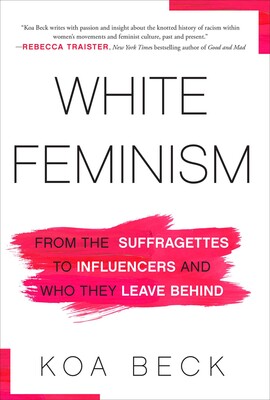
I interviewed Koa Beck not long before the coup attempt in Washington. I am writing this one week after that historic, horrific event. In the intervening period, a flurry of media coverage has focused on whiteness in America—its myths and privileges, its erasures and echo chambers, its facilitation of violence and oppression. In her book White Feminism, Beck, who among other prominent media roles was previously the editor-in-chief of Jezebel, examines the impact whiteness has had on the crusade for gender equality. What she finds is as pervasive as it is toxic. 

“When I trace the phrasing ‘pro-woman’ through the length of my editorial career,” Beck writes, describing workplaces, policies, and groups that claimed the mantle, “I always end up in the same place: white feminism… stealthily positioned as being all-encompassing.” 

According to Beck, white feminism is a “practice” and “state of mind” in which gender equality is a matter of “personalized autonomy, individual wealth, perpetual self-optimization, and supremacy.” Instead of questioning power structures, it embraces them, “replicating patterns of white supremacy, capitalistic greed, corporate ascension, inhumane labor practices, and exploitation, and deeming it empowering for women to practice these tenets as men always have.” (When I caught up with Beck after the assault on the U.S. Capitol, she emphasized that “white feminism has inherited a deliberate and structural lack of racial literacy from white supremacy.”) With its narrow focus on the self, white feminism is also seductive. “It positions you as the agent of change, making your individual needs the touchpoint for all revolutionary disruption,” Beck writes. “All you need is a better morning routine, this email hack, that woman’s pencil skirt, this conference, that newsletter.” 
White Feminism

Beck is talking, of course, about Lean In, The Wing, the commodification of feminist slogans, wellness culture, Girl Boss, and so much more. But white feminism isn’t new—far from it. Her book details, for instance, how white feminism shaped the fight for women’s suffrage, rendering it less radical and less inclusive than it could, and should, have been. As is so often the case in the story of America, the people negatively affected by the forces of white feminism are people who aren’t white. “Women of color are poor people are being left behind, and yet the trappings that uniquely target us”—Beck is a queer woman of mixed race—“like poverty incarceration, police brutality, and immigration, aren’t often quantified as ‘feminist issue.’”

White Feminism mixes criticism with reporting, history with memoir. Ultimately, though, it is a manifesto: Beck is calling for collective action to demolish white feminism and build something better in its place. We talked about how that might happen, and when. With its unprecedented combination of devastating events (a pandemic, right-wing insurrection) and positive ones (Black Lives Matter), there’s no time like the present to start pushing for meaningful change. 


Seyward Darby: This book is in part about who has power over language and ideas—for instance, who gets to decide what feminism is. You note that white feminism has become the most dominant form of the concept because white women have had the power to make it so. What distinguishes it from other forms of feminism? 

Koa Beck: Feminism as an ideology has been explored, advocated, organized, and lobbied for by a lot of movements of people. I really wanted to make sure to underscore that that Native people have had their own gender rights movement for a long time, same with Chicanas, same with Black feminism, and same with Black lesbian feminism. The only ideology arguably that isn’t aware of that is white feminism.

I don’t think white feminism is feminism, but when I was doing archival research, reading reports from suffrage meetings, you would think that they thought they invented feminism. In fact, there had already been a lot of efforts by women of color and working-class women, especially immigrant women around the turn of the century. They were working in laundries and factories and pushing against being exploited with low pay, no bathroom breaks, no emergency exits. It was very much a feminist uprising to challenge their powerful employers with a union presence and walk-outs. 

But a lot of the mechanisms by which we can challenge power on a structural level white feminism does not advocate for. That was true in 1920, and it’s also true in 2020. 

SD: That leads me right to my next question. Can you talk about the ways in which white feminism has never been interested in seriously rocking the economic and social boat?

KB: White feminism always wanted to partner with consumerism. One of the P.R. challenges for what we think of as modern suffrage—so women in 1915, ‘16, ‘17, who were white and middle to upper class—was that women who spoke publicly about their opinions were often considered deviant. They overcame that challenge by signaling that suffrage didn’t really challenge what women were supposed to be. A suffragette was white, thin, able-bodied, and middle-class. If she was not a mother already, she wanted to be. A lot of early suffrage representation is of a woman either clutching a baby or holding a child. She also aspired to shop. White suffragettes saw that they could use companies like Macy’s, which sold a branded outfit for women who supported the vote, to relay their messages for them: They weren’t advocating for women to be too autonomous. Women would still shop and support the economy, still have children, still be a mother and a wife.

SD: So what’s changed since then? 

White feminism has always aimed to partner with power, as opposed to re-interpreting it, dismantling it, or redistributing it.

KB: The scale of the corporate endorsement of white feminism. White feminism as an ideology and a practice has always aimed to partner with power, as opposed to re-interpreting it, dismantling it, or redistributing it. It’s reached new heights in my lifetime and career. In newsrooms, covering gender and gender rights, I would weirdly find myself in these lanes with the Lean In crowd. And that [white feminism] was supposed to be the extent of my beat or what the story was. 

SD: Various entities and individuals come in for criticism in your book, including The Cut, Sheryl Sandberg, The Wing. You also describe Beyoncé’s performance at the 2014 MTV Video Music Awards, where she had a huge sign that said FEMINIST behind her on stage. You write that initially, like a lot of people, you thought it was a progressive moment, but that you later changed your mind. I’m hoping you can explain why. Do you see Beyoncé as practicing white feminism? 

KB: We need many books on Beyoncé’s feminism. I encourage other writers to go there. I feel like I can’t comment on her feminist politics, mostly out of respect for her, but also because I know so little about the infrastructure of her enterprise. She operates culturally so differently than other public figures I cite the book. I will say that, as powerful as that moment was, my skepticism grew not so much from watching Beyoncé than it did from seeing how the performance seemed to set in motion a lot of white-feminist mechanics, specifically for marketers and P.R. people. Because Beyoncé had made this declaration, it took on the tenor of a trend, which is always kind of dangerous. Unfortunately, people try to capitalize on a moment regardless of their own ideologies, whether they’re overtly feminist or not.  

SD: Is a more revolutionary, inclusive version of feminism incompatible with American capitalism? Put another way, if a young woman aspires to lead a corporation, can she really be a feminist? 

KB: From a historical standpoint, a lot of movements led by women and people of color have been clear in their belief that the revolution for gender equality can’t happen under capitalism.

As for me, thinking about a lot of corporate environments that I’ve walked in and out of throughout my career, I think that the hard and fast rules of capitalism need to go. What I mean when I say that is this endless, endless more that has to be accrued. It is the force that maintains a lot of oppression. Whatever you achieve as a performance metric is never enough. In interviewing women, what I’ve encountered is that there needs to be a scaling back of that idea. So if a company is willing to lower performance metrics so that parents can take paid leave, I would consider that to be a good thing. If it were willing to scale back production expectations so union members can actually have time off, I would consider that a good thing. I would put the question to the companies and corporate people who are engaging with this book. If you can square the dynamics of capitalism specifically with people’s needs, I invite you and dare you to do it. 

SD: Let’s talk more about solutions then. What can institutions do, and what can individuals do? 

KB: One of the key components of a lot of these broken systems that we’ve been talking about is that they individualize us. They award us accolades to distinguish us from one another or, as we saw with the stories that came out of the #MeToo movement, they issue personal threats, all to maintain the system as it is. The best frame of mind, then, is to not think as individuals. Think more collectively with other women, actually approach and work with them to dismantle narratives and power structures or thinking of ways around them. I don’t think the answers are individualized.

SD: You talk about ways in which in various leadership roles in media you worked to change systems or policies supported by white feminism. I’m wondering if you have any regrets—situations where, looking back, you realized you were falling back on white feminism to guide you.

A lot of movements led by women and people of color have been clear in their belief that the revolution for gender equality can’t happen under capitalism.

KB: I definitely regret, towards the earlier part of my career, not thinking in terms of union organizing. I wasn’t a part of a union until I was at Jezebel. Prior to that, my strategy for going up against power was basically saying, I will not ask the staff to do that. Or, I don’t think that’s an appropriate use of resources. I would go to a meeting and assert myself, puff myself up really big to say what I wouldn’t do. I do think that is a very white feminist narrative, thinking, I’m the executive editor, so I will just go in there and say no, and that will be the end of that. 

At Jezebel, the dynamic was different. I would say, I’m going to talk to the union and I’ll be back. There was a whole organized body with me that makes decisions and weighs out scenarios for everyone. It was extremely helpful and more successful. And history bears that out.

SD: You started working on this book before COVID-19 happened. How has the pandemic shaped the way you think about white feminism? 

KB: I turned in my final draft right before COVID struck. I saw the writing on the wall very clearly—the patterns of who gets exploited, especially in times of crisis, whose lives have no value, whose lives have a lot of value, who has the money to insulate themselves. My editor and I basically had like a very long email where we established that COVID needed to go into the book it takes so much of the material and puts it right in your face. 

While I was waiting on definitive data, I was assessing: OK, if this if this is what the government is saying an essential worker is, I know those fields are predominantly made up of women of color. I was basically just sitting around, waiting for The New York Times article that said that. There were also a lot of gender differences at the top of the pandemic, in terms of assessing the threat. Women were surveyed as being a lot more scared and concerned, even though men had much higher fatalities from it. My assessment of that is women are very familiar with circumstances jeopardizing both the health of their families and themselves and their economic security. That’s true from lack of paid parental leave to getting a chronic illness and your disability not covering it. Women are already very attuned to this reality because of the way that we do not see them and their labor and their lives. 

I’ve always been struck by how deeply, deeply, deeply sexist economics are. The way that we have envisioned our country in terms of money and value does not factor in a huge portion of how we all live and how we need to live in terms of caretaking for others, whether it’s children or elders or disabled people or the chronically ill. With COVID, we’re seeing that in a hyper-distilled way. I think there’s a good opportunity to rebuild something better that holds businesses and the government accountable.

A New Graphic Novel Shows the History of the Black Panther Party

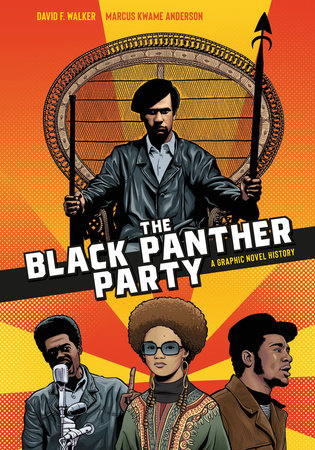
David F. Walker and Marcus Kwame Anderson’s graphic novel The Black Panther Party may be the first introduction to the revolutionary party for some. For others, it will provide additional context to the history. The graphic novel spans from the founding of the party by Huey P. Newton and Bobby Seale in the mid-’60s to its unfortunate demise when members were murdered, ostracized, or imprisoned. It covers the constant government attacks to the Party—cue J. Edgar Hoover, who stated the Black Panthers were the “greatest threat to the internal security of the country”—and its internal strife, against a background of increased racial tensions throughout the nation.

The Black Panther Party

Walker and Anderson’s collaboration reveals that the Black Panthers weren’t without faults, yet the organization’s focus from the beginning was always giving Black communities the strength and power to be informed of and fight for the rights they deserved. From food pantries to educational programs to a newspaper circulating relevant and under-reported news affecting Black people, the Black Panthers served their community first, which seemed radical to those who never thought Black people deserved basic rights in the first place. 

I spoke with the author and illustrator about the challenges of bringing forth more rounded information about the Black Panther Party, and the cyclical ways social justice movements have fought not only for our voices to be heard but for survival. 


Jennifer Baker: David, in the afterword you spoke pretty poignantly about having conflicted feelings about writing a book about the Black Panthers. What was your approach in regards to this graphic novel? Did you and Marcus think about what existed already or did you primarily think about what you wanted to do?

David F. Walker: I went arrogantly into it thinking “I know a lot.” Thinking this would be easy. And that was my first mistake because I didn’t know as much as I thought I did. When I went into it [it was] with the attitude that this book would be for people who knew nothing about the Panthers. I didn’t dumb it down in any capacity, [but] I felt like if you never heard of the Panthers or if all you know is the name or had seen an image or know about Bobby and Huey, that this would be sort of the Panthers 101 History as a great jumping off point. And even then it was still a challenge—despite what seems like a lot of material out there, there’s not really as much as you would think, and some of it is sort of one-sided and at times even unreliable in its information. It was definitely a big challenge, and I think that also for myself there were definitely people in the Party who I didn’t have as much of an understanding of, [and] I began to understand them more. And at times [this] was conflicting because these were actual people. We learn about them as iconic figures, but they were people who made some really great decisions and some not so good decisions.

Marcus Kwame Anderson: Not dissimilar to what David was talking about, I was going in with a good amount of knowledge. I came up in the ’80s and the ’90s and I remember “It Takes a Nation of Millions to Hold Us Back” [by] Public Enemy, there was just all kinds of Panther references. And I remember them talking about being a supporter of [JoAnn] Chesimard (Assata Shakur). So it was at that time when I was in high school in the ’90s where it sprouted the interest to learn more. But like what David was saying, no matter what you know there is so much more, so I was coming in with information but David is very humble about what he does. When I was reading the script I was impressed with how much he did get in there and how much of a big picture it gives. I was excited, and for me it was a very huge task but also felt like a task that I was kind of meant to do, just in the sense that my interest in work that deals with the African diaspora and social commentary and all that and my love of comics, they really merged on this project in a way even before I knew about this project.

JB: Marcus, can you talk a little bit about your artistic approach? There’s a softer element to your work. There’s not as many hard edges and there’s a great attention to hues and how they balance out on the page.

I grew up reading comics back in the ’80s, ’70s, and before, and there was one brown for Black people, period. I’ve never gone to a default brown.

MKA: I always try to draw what I want to read. When I read comics I’m a fan of people that are inventive when it comes to page layout and panels. One of the things you’ll see if you read the book is oftentimes I’ll break the panels with borders, not necessarily just to do it, there’s always a reason for that. I grew up reading comics back in the ’80s, ’70s, and before, and there was one brown for Black people, period. I’ve never gone to a default brown, so I would look at it like Huey’s complexion is darker than Bobby’s. And then you have Angela has her complexion so I tried to really be true to that. One of the challenges is I was working from a lot of black and white reference images. But for a lot people who are still around I was able to find some color images for color references. And David and I had also talked about coming up with simpler color palette and some colors that could be found in the Panthers’ newspaper because the newspaper was a huge part of the Party and the design was very dynamic. A big part of the color theme was orange and blue, that’s my favorite complementary color combination, so I kind of built a lot of the color around that. But then you’ll see there are pages where the murder of Fred Hampton, scenes that depict racist violence, are in more red hues and that was a very deliberate choice. But for a lot of the scenes that were less violent I went with some softer colors like you were talking about.

JB: I also want to get into the women that are featured. I haven’t amassed as much Black Panther history myself, but there’s a lot that was revealed to me. Because of how information was unraveled I had a deep appreciation for seeing women like Erika, Kathleen Cleaver, and Tarika Lewis actually discussed. 

The leadership roles were primarily men, but the Party lasted as long as it did because of women.

DFW: Thank you for bringing that up, because I honestly feel like if there’s one part of the book where I fell short it’s this particular part. I actually wanted there to be more about the role of women and specific women in the Party. When I went into this [I was] thinking “I know all about the Panthers, this is gonna be easy,” but then the more research I did it seemed like it was impossible. It really felt like women were written out of the history. And I really had to dig deep to find stuff. In some cases I had to talk to people who were in the Party to get a feel for it. Elaine Brown’s memoir, her autobiography, is probably one of the key publications that deals with women in the Party, but that’s only one person’s story. Kathleen Cleaver has yet to produce anything along those lines and Angela Davis, she doesn’t talk as much about the Panthers. And I was getting really really frustrated and I was committed to having something in the book. 

It was one of the last sections of the book that I finished writing because I was still conducting the research. And I think more than anything else, where I talk about the stuff that I learned and how incomplete the history of the Party, the women and the role that they played is the thing that stands out in my mind the most. And I feel like that definitive book has yet to be written. That story has to be told, because when you look at the numbers more than half of the party was made of women, rank and file women. The leadership roles were primarily men, but the Party lasted as long as it did, it survived and did all that it was able to do because of women. I don’t know that it would be me [to write it] but it really needs to be about the complexity of gender, gender identity, and what women have to do just to survive. And not just survive but get acknowledged for the work that they’re doing. 

JB: You’re right that there’s such a dearth of Black women in our history books and in their connection to the Party. Even your intro of Civil Rights and reading more books, I’ve learned how PR driven some movements were. 

DFW: When I look at … history or Black history, the role of women—I didn’t realize this ‘til I got older and began taking my work more seriously—I didn’t realize how much the role of women was diminished. And now that I see it I’m more aware of it all the time. To the extent that I feel like okay, as I move forward in my career and my life, one of my life battles has to be to help level that playing field and to help find opportunities for creators who might not get the break that they need and for stories to be told that might not have been told.

I would love for people to start talking to their families and recording their stories. That’s how we’re going to understand the Party.

I remember reading just a paragraph of how Tarika was the first woman to join the Party, and Marcus can talk about this too, figuring out what she looked like was so hard. ‘Cause there were pictures of her, but there’s only three or four and none of them were labeled correctly. And so it took forever. There are several women who I have pictures of. There’s one woman whose name escapes me at the moment. But I had 30 or 40 pictures of her with her name and there were enough pictures that I thought “Okay, she had to be somebody if someone took this many pictures of her.” But I couldn’t find her name in a single book. In the back of my mind, I’m thinking, “There’s the story here.” I want to know her story. She has this dynamic look about her. There’s pictures of her in the newspaper and a couple other photo essays but nobody took time to write about her. And that to me, when we talk about the Panthers and when we talk about people in general, the rank and file, that’s where the true story of the Panthers is. Some of those rank and file members are still with us, they’re our parents or grandparents, our aunts and uncles. I would love for people to start talking to their families and recording their stories. That’s how we’re going to understand the Party, what they went through and how to learn from what they went through.

MKA: What David mentioned with Tarika Lewis is really important. Because … there were more recent pictures of her when I was researching her, so I found myself really trying to cross reference her pictures with older pictures to try and de-age her. But it really was a challenge. Speaking to David’s earlier point of the importance of someone following this work, I’m just thinking about the fact that a lot of the people in the Party and the people we’re speaking about aren’t here, and the people who are right now I do think it’s important for as much of their story to be told both in our book and otherwise, because they’re not going to be around forever. And I don’t want some of the lesser known aspects of the history, especially about the rank and file people, to be lost.

JB: With this contribution to literature about the Black Panther Party, is there a conversation you want us to engage in or dissect a bit more when it comes to social justice parties and grassroots work for us and by us?

Look at what happened to the Panthers, and know that those same tactics are being used against you right now.

DFW: There was a moment when I was working on the book where I realized that the age that I am right now, right this very minute I am old enough to be the father of any founding member of the Panthers. Bobby was the oldest when he formed the party, I think he was 25, 26. Bobby Hutton was only 16. Huey was in his early 20s, and there were moments when I was reading about what they did and things that happened to them and I realized I was reading it from a middle age man’s point of view, where I don’t have the same fire in my belly that I had in my early 20s and my late teens. And what I was thinking about was, how do we keep that fire in our bellies, the thing that drives us the way it drove the Panthers? How do we keep that going as we get to middle age and how do we survive long enough to do something with it? One of the worst tragedies of the Panthers is that all the people who were killed, most of them were killed before they hit 30 years old. And when Huey died he was in his 40s, but he might as well have been in his 80s in terms of all the things he’d been through. And so it was just really interesting to me because I thought about what would it take for me now as a man in his 50s to take arms? And more importantly, what would I say right now today to young people? I look at what’s going on with the BLM movement and I see people out in the streets and there’s part of me that’s like, “Maybe I should go out there with them, but I got a bad back. And I don’t want to fall and break a hip.” I really would like to see more people my age think about how we can help educate and mentor young people. But I would like young people to look too, as they wonder why nothing has changed in their mind, look at why it hasn’t changed. Look at what’s happening. Look at what happened to the Panthers, understand how they were infiltrated, how they were turned against each other. And know that those same tactics are being used against you right now. 

MKA: When I started working on the illustrations it was last spring or summer of 2019, so this is pre-George Floyd but post many other travesties of justice. And as I’m reading about these things all these uprisings that happened in history into the 20th century, some of them you could’ve just changed the names and it would’ve been any headline that we could speak of in the last ten years. Then the tail end of my work directly overlapped with the deaths of George Floyd and Breonna Taylor, so those uprisings were fresh in my mind. There was a surreal moment this past May where you would see a lot of people who had previously been very uncomfortable with the phrase or idea of BLM becoming more comfortable, and all these companies getting their graphic designers to put statements about. And I don’t want to make light of it too much because I think even incremental progress for people, the idea of BLM being less vilified is positive. But I felt reinvigorated living with the Panthers for a year. I had read about them and learned about them, but to create this book I felt like I was living with them this past year and it really did help reignite a fire within me. I also think it’s important for this story to be out there so it can inspire people, but they can also learn from the ways it didn’t work. I really think that’s what progress is. We stand on the shoulders of others and you take inspiration from the things that worked and then you try to rebuild from the things that didn’t. 

10 MFA Programs for the Budget-Conscious

It’s well-worn advice by now that you shouldn’t go into debt for an MFA. But how can you avoid it? Every year, the limited fully-funded programs—think Michener Center for Writers, Rutgers, Cornell, Brown, Purdue, Iowa, Johns Hopkins—receive a flood of applications. Fully-funded MFA programs at Syracuse University and Hunter admit around 6% and 2% of applicants, respectively. 

Statistically, it’s a simple fact that not every writer who feels committed to completing an MFA will find a seat in a fully-funded program—and those application fees add up. For example, Vanderbilt’s fee is $85 and Boston University’s is $95. Plus, even at full funding, location matters, as living on a graduate student’s salary has wildly different implications in different housing markets; some “fully funded” students do end up taking out loans to bridge the gap between stipends and what it means to pay rent.

Highly selective programs with extensive funding can be a gift for writers, but you also need a backup plan. This isn’t about thinking of MFA safety schools, but rather applying widely to programs that are a good fit both academically and financially. There are over 160 residential MFA programs in the United States, all of which have a different mix of aid and aesthetic. Even if full funding is not advertised, at some schools, you may still get it.

No matter what you get from the Registrar’s office, for any offer of admission, prospective students should ask to speak to current enrollees and recent grads and do as much vetting as possible. No program is perfect. 

With that in mind, here are 10 programs for the cost-conscious to get started with, based on the institution’s financial transparency and publicly available data. 

Butler University

Indianapolis, where Butler University is located, boasts a low cost of living in what is still a relatively major city, Indiana’s largest. As a private school, residency conditions do not apply, and Butler’s tuition and fees run about 16K a year. The MFA was established in 2008 and matriculates upwards of 15 students annually. There are a wide variety of scholarships available, including many that are not linked to instruction. Butler offers some paid teaching positions for second year students; in any given cohort, about half of enrollees would be eligible. As a university founded in a Christian religious tradition, Butler may not be right for everyone, even though its mission and degree programs (including the MFA) are firmly secular. However, with funding, this very small school can be an economical choice in a Midwest capital.

Eastern Washington University 

Founded in 1978, the Eastern Washington University program offers full and partial funding for many students in poetry, fiction, and nonfiction. A land-grant institution in Washington state that is closer to Idaho than Seattle, the MFA is housed in Spokane, a small walkable city with low living costs. A two year program, students who are not fully funded in their first year through a teaching assistantship have a chance to get second-year funding and stipend through community-based programs and publishing, including with the literary journal Willow Springs Magazine. EWU’s tuition is on the lower end, at $12,704 a year. Through a western states partnership, those who reside in Alaska, Arizona, Colorado, Hawaii, Idaho, Montana, or Nevada do not have to establish residency. A unique aspect of EWU is that classes are largely held in the evenings, making it possible to hold a day job if needed.

University of Florida, Gainesville

The University of Florida, Gainesville MFA program is a fully funded three-year program, and receives upwards of 500 applications a year. It admits only six students in each genre of poetry and fiction. Founded in 1949, UF is a well-ranked, established program and has maintained the very low application fee of $30. The town of Gainesville, in the central panhandle of Florida, is an inexpensive place to live, making it likely that a stipend will in fact cover living costs. UF is a very pedagogically focused school. It prioritizes permanent faculty rather than visiting writers or temporarily appointed professors to deliver instruction, and the admissions statement is clear that applicants are selected on what the committee sees as potential to develop through the course of study. The program emphasizes world literature, and over half of its faculty are bilingual and born outside America.

Long Island University

If you absolutely have to be in New York, take a look at Long Island University. Located in Brooklyn, this school has ample paid internship opportunities at PEN World Voices Festival, the National Book Foundation, and the Brooklyn Academy of Music, among others. LIU also offers teaching assistantships that will offset costs. Tuition is half that of other NYC-based schools like Columbia, which is highly relevant for those students who may pay some out of pocket. As a private school, state residency requirements do not apply. Founded in 2007, LIU’s MFA has programs in poetry, fiction, playwriting, creative nonfiction, and cross-genre projects. New York is, of course, extremely expensive, so applicants must balance funding against cost of living. With a $50 application fee, for those who feel strongly about being in the epicenter of American publishing, LIU may be worth the relatively low initial cost. 

McNeese State

Established in 1982, the McNeese State University MFA offers all who are admitted some level of funding, though it does not provide free rides. By their own metrics, MSU students enrolled in the MFA pay about $1,500 per semester for three years. The application process begins at no cost—prospective students are not asked to contribute any application fees or paperwork until after they are accepted. This is a positive model that helps students understand if they are a good fit before committing to fees or devoting time to formal applications. Prospective students should send in their work in poetry or fiction, their statement of purpose, and an additional letter spelling out one’s interest in teaching introductory composition. MSU is in Lake Charles, Louisiana, a gulf town about halfway between Houston and New Orleans with a very low cost of living. Demographically, Lake Charles is nearly 50% Black. MSU as a university enrolls more female identified students and employs more female identified faculty than average, making it a highly diverse option.

University of Mississippi 

Founded in 2000, the fully-funded program at the University of Mississippi Oxford is free to apply to, and the phased application is very low stakes. Email in a writing sample along with a statement of purpose essay, and the first part of the application is done. Much like other Gulf schools, it’s only once these initial materials are reviewed are some students asked to move to Phase II, which requires filling out the graduate application and providing letters of reference. In many ways, applying to UM is like submitting to a literary magazine or pitching agents. Applicants will only hear back and be asked for additional materials if the committee is interested. UM offers funded positions that do not involve teaching, and specifically earmarks financial aid for students of underrepresented groups. Oxford is a diverse city that is approximately 22% Black.

University of New Hampshire 

The University of New Hampshire’s program is newer, founded in 2007. It is very small and also very selective. Graduate school tuition rates were $14,170 in 2020. Residents of Rhode Island receive a discount. UNH has a reputation of being very community-minded, the kind of school where students celebrate on another’s successes. An advantage of UNH is the availability of paid internships in research and communications, and stipend positions at the literary magazine, Barnstorm. Top applicants will receive tuition waivers and a stipend through teaching fellowships. Durham, New Hampshire, has a high cost of living for such a small city, but in contrast, the housing costs in Boston, about an hour away, are 60% more than this college town.

Texas State University

The Texas State University MFA, founded in 1991, is a large program, with upwards of 70 candidates enrolled at any given time. The cost of living in San Marcos, located between San Antonio and Austin, is slightly lower than the national average. While TXST is technically only partially funded, 90% of applicants receive full funding, a hefty percentage. In-state tuition rates are $8664 annually, but essentially no students pay the full balance. While 75% of candidates are from outside of Texas, the university has a generous out of state waiver that is not contingent on residency. In 2019, this applied to 100% of students, suggesting that while not guaranteed, getting a waiver is highly achievable. If not offered full funding, note that TXST is a 3-year program, which could potentially increase costs and delay entry into the job market by a year. The university is designated as a Hispanic Serving Institute, with 25% of enrolled students identifying as Hispanic or Latinx. 

University of Texas, El Paso

University of Texas, El Paso has both a residential and a fully online program; this section covers the residential course of study. Since 1992, UTEP has enrolled a cohort of a dozen MFA students, and like other Texas-based programs, it is a 3-year course of study. That said, this program has the lowest tuition of any program on this list, at $6600/year. Graduate stipends pay $1200 per month for ten months, which is fairly average, but put in context of El Paso’s extraordinarily low cost of living, those dollars will stretch much farther than in other cities. UTEP is distinctive in that it offers a bilingual English/Spanish MFA, though bilingualism is not required of any applicant. Classes draw on both Spanish and English texts, and the program offers support for student matters like housing and financial aid in both languages. The campus is located near a shared border crossing with Ciudad Juarez, Mexico.    

St Mary’s College

The St. Mary’s College program refreshingly focuses on life after an MFA and publishes statistics on the careers of its graduates. All incoming students are funded at 40–50% of tuition in their first year, and a smaller percentage in their second year. This brings tuition costs at this private school down to something that is more in line with a public school, with no penalty for not having California residency—although note that attending SMC means living in San Francisco, which is more expensive than New York. All students are invited to apply for graduate teaching assistantships, which offer an additional stipend. SMC is an option for students who are interested in interdisciplinary work, as there is funding for dual-concentration students who may take three years to complete their degree. The college also provides paid internships with Lambda Literary, Kearny Street Workshop, Hedgebrook, and is notably LBGTQIA+ friendly. Without a full portfolio of funding, St Mary’s can be unreachable for many, but because it has a free application process, it’s worth seeing where an application shakes out in the funding hierarchy. 

A comprehensive list of MFA programs from Poets & Writers can be found here.

All These Houses Full of Opinions

The doves were moaning crying cooing calling

The doves were moaning crying cooing calling
Inside their houses the people were moaning crying cooing calling
A damp hot air    A person shouldn’t be allowed to write a poem
kept cool in a cake of conditioned air
What are your opinions?      A person might be proud of their opinions
Like polishing ordinary rocks and collecting them in a box
Some advice:      Or not
I take off the voice of a prophet
I sink my opinions into the sea
What sound is there now in the hot damp world?
Some advice:      Who cares      say the shaggy globes of white clover
Who cares sing the doves      Who cares says the damp blunt air
boiling with the odor of our choices

My new blue kitchen cabinets painted blue

My new blue kitchen cabinets painted blue
Black countertops, black granite flecked with dirty starlight
And saltillo tile from Saltillo, Mexico, baked, glazed earth and still some little imprints from the foot
of a dog who passed probably 50 years ago
When the earth had fewer dogs probably but more species, fewer people, but more thick forest,
more dark trees and the webs strung between the trees, clumps of sticks pushed into nests with the
vulnerable blue, white, or cream eggs inside, speckled, warm, the squirrels’ nests that contain two
entrances that are also two exits, a burrow in the sky, warm and dry
A bird singing with its narrow throat, its voice a slender stem
The legs of the insects slender as stems
The stems numerous and dense moving in quick ticks
My thoughts numerous and dense
Thickly sprouting, dumb

Reading the APPENDIX TO THE JOURNALS OF THE HOUSE OF REPRESENTATIVES 
OF NEW ZEALAND. SESSION I., 1884

H.B. Sterndale to Hon. J. Vogel, “concerning the resources of the greater number of those islands of
the Pacific upon which I have at any time resided or with which I have been engaged in trade”

“Beginning with the dark hour just before dawn, the stars are shining with an intense brilliancy,
reflected on the steel-bright surface of the calm lagoon. The sandy pathways seem like snow. The
heavy forest of towering palms and banyans, interlocked with trailing vines, assumes weird and
fantastic shapes, and shows a black outline against the clear blue sky; under their dark shadows
twinkle innumerable points of light—the lamps of great glow-worms and luminous grubs.”

………….reading and relishing (as Sterndale was writing and relishing) the precise prose used to
describe what could be plundered, what could be eaten, what could be taken, what could be
converted into such a thing that it could be transformed (like melted tortoise shell or chopped and
canned bêche-de-mer), shipped, sold and bought, several times over, until it found a temporary
resting place, in an establishment or a home, with a creature in a far part of the world intent upon
bringing what is lush, vibrant, and tasteful into her home

Offbeat European Children’s Books For Adults

I have a confession to make: with nearly half a century behind me, I still read children’s books. The best are truly ageless—think Alice in Wonderland, The Little Prince, Winnie-the-Pooh. No other genre, to my mind, is as consistently capable of reawakening our sense of wonder and joy, of brushing the dust off our somewhat faded vision of the world.

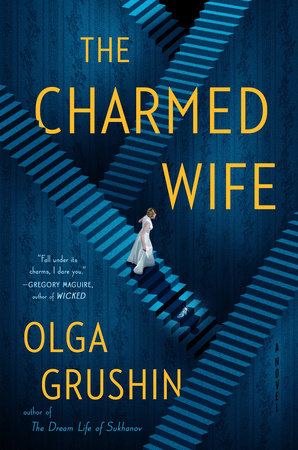
The Charmed Wife by Olga Grushin

In fact, I drew on my lifelong love of fairy tales and nursery rhymes in my own fourth novel, The Charmed Wife, a genre-bending mix of fantasy and realism that plays with storytelling conventions as it upends the familiar narratives of Cinderella, Sleeping Beauty, Bluebeard, and many other childhood favorites. True, my book features talking mice and divorce proceedings alike, and is decidedly not for the little ones, but I myself continue to find something deeply soothing in settling down with a cup of tea and a proper children’s book—and even more so now, during these anxious days of health worries, political unrest, and isolation.

So, if, like me, you gravitate toward more innocent pleasures as your comfort reads but have already exhausted all the old staples, here are some lesser-known offerings that may appeal both to the children in your family and to the child in you. Fair warning: many of these are darker, sadder, or odder than your regular boy-wizard, unicorn-princess fare. All are very good.

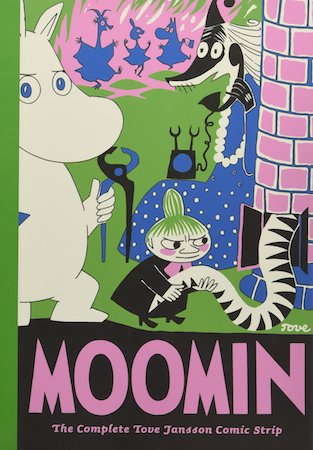
The Moomin Series by Tove Jansson

Quite simply, these are the best children’s books I know. I grew up in Russia, and the Moomin trolls were a vital part of my childhood, as they have been for every child in Scandinavian countries since their appearance some three-quarters of a century ago. They are beginning to gain a devoted following in the U.S. too, but are not a household presence yet. By all rights, they should be.

Written and illustrated by the Finnish Tove Jansson (1914-2001) and inspired by her bohemian upbringing, these books—eight novels, a collection of short stories, and a number of picture books and comics—cover the adventures of the easy-going, fun-loving Moomins and their quirky friends. The stories celebrate family, openness to new things and new people, love of nature, simplicity, hospitality—the most important things in life, in short—and they do so with subtle humor, charm, and wisdom.

The earlier books (Finn Family Moomintroll, Moominsummer Madness) are filled with summery pleasures, as delicious as strawberries savored amid carefree laughter at a June picnic. The later (Moominland Midwinter, Moominpappa at Sea, and Moominvalley in November) are more somber in spirit, with a distinct vein of wintry sadness running through them, but, in my opinion, they are the most rewarding of the lot. Oh, and whatever book you choose to start with (and once you start, you will read more), it is very important to remember: Moomins are NOT hippos.

Mio, My Son by Astrid Lindgren

Mio, My Son by Astrid Lindgren, illustrated by Ilon Wikland, translated by Jill Morgan

The Swedish writer Astrid Lindgren (1907-2002) is celebrated as the creator of the spirited Pippi Longstocking and the mischievous Karlsson-on-the-Roof, but she wrote many other books besides. In Mio, My Son, an orphan boy is whisked off to a faraway land where he discovers that he is a long-lost son of the king and it is his destiny to fight the sinister Sir Kato with a heart of stone.

Published in 1954, the same year as The Fellowship of the Ring, it too features a struggle of good versus evil and a villain who lives in a fortress with the evil red eye roaming over the land, but it has the singsong rhythm of a folktale. Children will enjoy an ancient well that whispers fairy tales every night, a forest full of flying horses, and a flock of bewitched birds, while adults will doubtless see that the story is not as straightforward as it appears and will appreciate the courage of a boy who uses imagination to escape his life of loneliness and heartbreak.

The Milk of Dreams by Leonora Carrington

The Milk of Dreams by Leonora Carrington

Leonora Carrington (1917-2011) was a British-born surrealist painter of starlit gardens, bird-filled mazes, and magnificent horses in bloom, a one-time partner of Max Ernst, and a writer of wonderfully enigmatic stories. At the age of 26, after a bout with madness, she moved to Mexico where she eventually married and had two children. This slim volume is filled with fantastical drawings Carrington painted on the walls of her sons’ nursery and fragments of dreamlike tales she told them, with math-minded monsters, headless boys, and just the right amount of nasty scatological humor to make you gasp and giggle.

Gallows Songs and In the Land of Punctuation by Christian Morgenstern

The German writer Christian Morgenstern (1871-1914) wrote haunting, pensive poetry in the vein of nonsense rhymes of Lewis Carroll, Edward Lear, and Mervyn Peake. His immense popularity in German-speaking countries has not waned to this day, but he was long considered untranslatable here. Today he can be found in several different English editions.

For a quick introduction, pick up the short picture book In the Land of Punctuation. A witty story of commas and periods going to war against semicolons, it is ostensibly aimed at younger readers, but adults will not fail to discern sinister political overtones in the plot. A longer collection of poems, Songs from the Gallows, is overall less gruesome (its name notwithstanding) and wildly inventive. You will meet creatures walking on their noses, the mysterious moonsheep, a cold that catches people, a lamp that darkens the daylight, an architect who has built a house out of empty spaces, and many other delirious creations. And if you happen to stumble upon an illustrated vintage copy, you will see that Morgenstern’s poems inspired, among others, H. A. Rey (famous as the creator of Curious George) and—drumroll, please—Paul Klee.

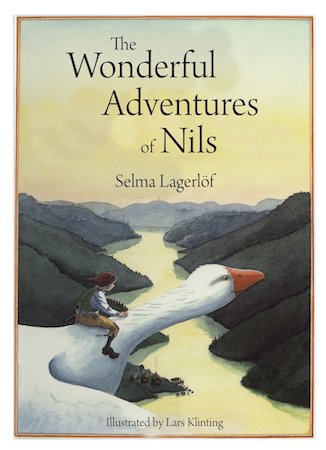
The Wonderful Adventures of Nils by Selma Lagerlöf

Another Swedish writer on the list—just what is it, I wonder, about those stark Scandinavian seascapes that predisposes one toward the best kind of children’s writing?—Selma Lagerlöf (1858-1940) was the first woman to win the Nobel Prize in Literature. This book was commissioned by a teachers’ association and intended as a geography lesson for Swedish children: Lagerlöf used the narrative to introduce various provinces of the country. If this sounds didactic and tedious, it is not. The story is simple. A boy is unkind to an elf, the elf punishes him by shrinking him to a tiny size, and the boy then joins a flock of wild geese in their seasonal migration.

This tale of growing up (both metaphorically and literally) glows with a great love of nature and is filled with much excitement—rat battles in medieval castles, wooden statues of old sailors that come alive, enchanted towns at the bottom of the sea, stately bird dances, and, best of all, the stern and wise leader of the geese, the old Akka from Kebnekaise. A childhood friend of mine used to say that she wanted to be Akka when she grew up. Because Akka is that kind of goose.

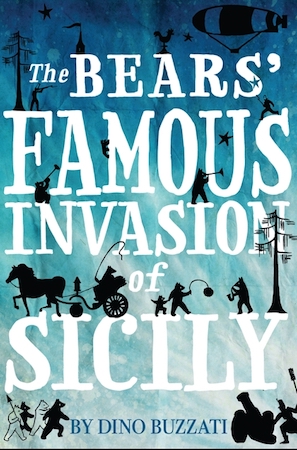
The Bears’ Famous Invasion of Sicily by Dino Buzzati

The Italian author of the existentialist masterpiece The Tartar Steppe, Dino Buzzati (1906-1972) also wrote a strange children’s book about a war between bears and humans that features a great snowball fight, a kidnapped cub, a bevy of ghosts, some ursine gambling and carousing, terrifying Marmoset the Cat, and enchanting illustrations by the author. Oh, and much of the narrative is in verse. It is certainly eccentric and quite dark in places, but it is also very moving and unlike anything else on your shelves.

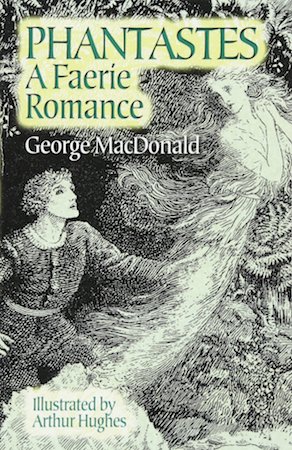
Phantastes, “The Light Princess,” “The Golden Key,” and other fairy tales by George MacDonald

George MacDonald (1824-1905) probably needs the least introduction of anyone on this list. The Scottish poet and minister was a pioneer of modern fantasy and, as such, a great influence on C. S. Lewis and J.R.R. Tolkien, among others. True, many of his stories seem rather old-fashioned today, their symbolism a trifle heavy, their overtones preachy, the poetry, generously sprinkled throughout the texts, clumsy and sentimental; but the best of them—“The Light Princess” and “The Golden Key,” to name but two—are still striking in their beauty, and the experience of reading Phantastes: A Faerie Romance for Men and Women (1858) is much like a dreamlike, meandering sojourn along the hazy border between the mundane and the magical, absolutely worth undertaking.

King Matt the First by Janusz Korczak

A classic in its native Poland, this book was written in 1922 by physician and educator Janusz Korczak (1878-1942), who for years served as the director of a Jewish orphanage in Warsaw and, during the Nazi occupation, refused several offers of sanctuary and perished at Treblinka along with all his students. The story of an orphaned child who becomes a king and tries to change the world for the better reflects the harshness of its times and is not for the faint-hearted, filled as it is with ten-year-old cognac-swilling soldiers, grim depictions of war, and much grief. Also, while undoubtedly generous in spirit, it does suffer from some cringeworthy stereotypes borne of the period. That said, it takes children and their rights with the utmost seriousness, brilliantly explores the themes of personal responsibility and social justice.

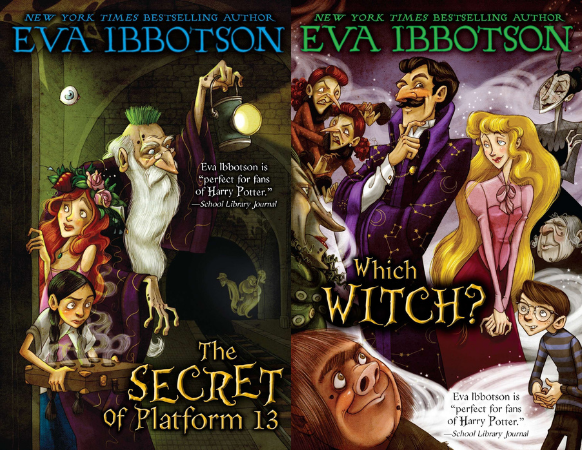
The Secret of Platform 13 and Which Witch? by Eva Ibbotson

Everything I have read by Eva Ibbotson (1925-2010) has been delightful—charming, lightly told, but with plenty of serious issues lurking beneath the fun. My personal favorites are the hilarious Which Witch?, about a dashing dark wizard’s tournament-style search for a bride, and The Secret of Platform 13, in which the old trope of an ordinary child transported to a fairy-tale kingdom is turned on its head. Here, a magical boy finds himself trapped in the mundane world of London for nine years, and the rescue party—consisting of an invisible giant, a batty fey, an old wizard, and a girl hag—set out to find him and bring him back to his royal parents. 

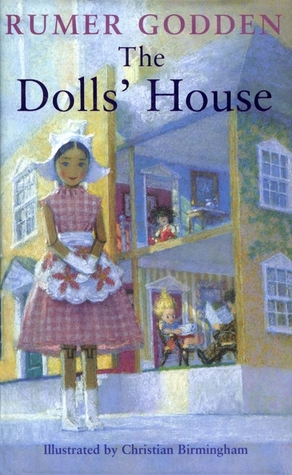
The Dolls' House by Rumer Godden

The Doll’s House by Rumer Godden

“It is an anxious, sometimes a dangerous thing to be a doll. Dolls cannot choose; they can only be chosen.” Rumer Godden (1907-1998) was a prolific English author who wrote both for children and for adults. The Doll’s House, published in 1947, concerns a mismatched family of dolls that belong to two little sisters who inherit an old dollhouse, and a precious but cruel china doll to go with it. Told with great sensitivity and beauty, the tale celebrates mindfulness toward the weaker and the less fortunate, and will appeal even to readers who—like myself—do not care for dolls at all. And you will never look at dolls the same way again.

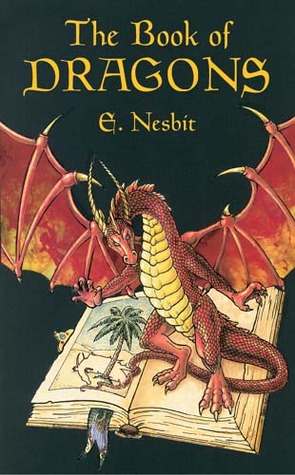
The Book of Dragons by E. Nesbit

The Book of Dragons by E. Nesbit

E. Nesbit (1858-1924) wrote over sixty children’s books, including such classics as The Railway Children and Five Children and It. Her complicated life has not only been the subject of a couple of excellent biographies but also served as the inspiration for A.S. Byatt’s luminous novel The Children’s Book. This whimsical collection of eight stories, all united by the theme of dragons, is not particularly deep, but it is highly amusing and can be enjoyed in small doses. My twelve-year-old daughter, who has been prone to nightmares of late, keeps it under her pillow along with a flashlight, and swears it is the best remedy she knows for calming down after a bad dream. Sometimes you can ask nothing more of a book.

6439013

Bambi, A Life in the Woods by Felix Salten

If you thought the Disney movie was overly sad, do not pick up the original book, written in 1923 by the Swiss writer Felix Salten (1869-1945)—it will break your heart. If you do brave it, however, it will stay with you as one of the most powerful coming-of-age stories you are likely to read, as a child or an adult. A true classic.

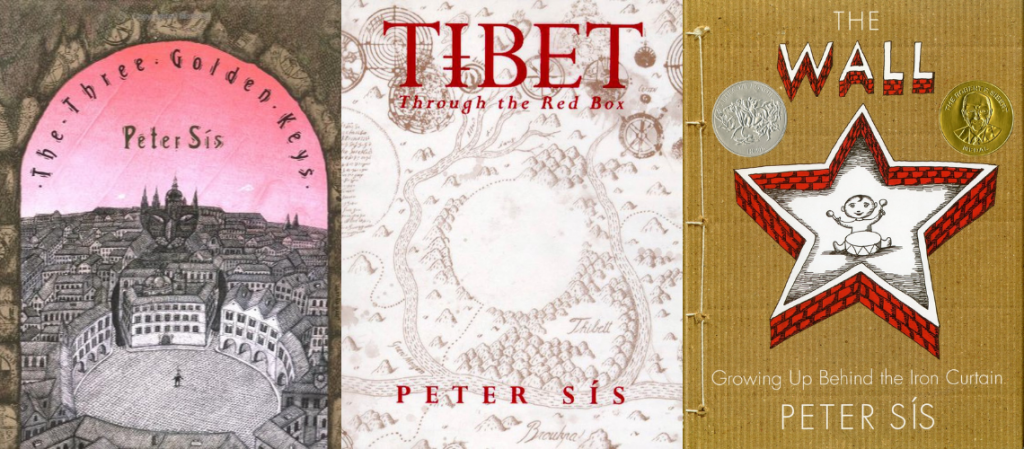
The Three Golden Keys, Tibet, and The Wall by Peter Sís

Since it seemed wrong to conclude the list without someone currently alive being included on it, here is Peter Sís, a wonderful Czech artist and writer. Among his many picture books, The Three Golden Keys (1994)—about a man’s walk through his deserted childhood city much like Prague—and Tibet: Through the Red Box (1998)—about a fantastical Tibetan journey that starts with a father’s diary and its secrets—are visually arresting, intricate, and atmospheric. The Wall: Growing Up Behind the Iron Curtain (2007) is very different in mood, and will introduce younger readers to what it was like to be a child in another place and at another time—a vivid lesson in both history and empathy.

Let Us Be Negative Role Models for Each Other

For me, reading Torrey Peters’s debut novel Detransition, Baby is akin to listening to your favorite hometown band headlining their first stadium concert. You end up marveling over how experiences you thought you knew well are rendered in utterly unexpected ways, and realize how patterns from your own life are deeply enmeshed in the concerns of a much larger world around you.

Detransition, Baby by Torrey Peters

Yes, Detransition, Baby is centrally about the complex relationship between two trans women, Reese and Amy, as the latter detransitions and renames himself Ames, then gets his boss Katrina pregnant. The trio ends up trying to figure out whether it’s possible for them to form a family together, as they also navigate the limits and expanses of their genders. What may seem like a niche, insider-baseball trans narrative ends up being a novel that simultaneously nods toward and hilariously subverts the central concerns of classic cis, white, middle-class American fiction: the relationship between genders, the aftermath of pregnancy, the meaning and composition of family. As a result, Peters performs the kind of magic trick that’s the hallmark of great art, writing a novel that feels simultaneously familiar and utterly new at the same time.

Peters and I sat apart in our own spaces and typed in a Google Doc for an hour together, which felt like an erudite version of another familiar experience for many trans women of a certain era: typing anonymously in chat rooms as we try to figure out who we are. Though unlike back then, we now live in the world where it’s increasingly possible for narratives and ideas such as Peters’s not just to belong in the open, but to be admired and celebrated.


Meredith Talusan: So how are you dealing with the irony that as a person who had such a public position of trans authors not being served by mainstream publishing is now also the author who is arguably bringing trans women’s fiction into a particular kind of mainstream by working with a major publisher? How has your position with regards to these issues evolved in the time that you wrote and went through the editorial process for Detransition, Baby?

Torrey Peters: It is something of an irony! When I gave away my novellas for free (or pay what you want) online to trans women because I believed that “the publishing industry doesn’t serve trans women,” as I put it on my website, I was largely correct in holding that belief. But! A lot has happened in five years. A couple years ago, I looked around at the media landscape and Transparent was on TV, POSE was on TV—there were trans editors at major publications. I remember, Meredith, when you were named the editor at a new Conde Nast publication. How could I go on and on about publishing not serving trans women, when, like, here’s Meredith at THEM? I would look out of touch! So, I thought about it and I took a chance at One World and Penguin Random House. They listened to me and they treated me well. Trans writing is in an interesting place—there’s the potential for a renaissance, and if I want to be part of that, it means getting my work into the hands of readers in the most efficacious way for a particular moment. Earlier it was free novellas, now I think it might be a big press. 

MT: It is true that publishing has evolved and yet it’s also true that particular kinds of narratives still raise eyebrows even among the trans community. Detransition, Baby is coming at a time when the conversation around the “realness” of trans women is very much live with J.K. Rowling and her TERF crew. How do you see this novel in terms of those discussions that are going on right now?

TP: I remember that Toni Morrison said something like “the serious work of racism is distraction.” And something similar is happening with transphobia and the conversations of TERFs. The fight they want to have is a distraction. It is shallow. If I even acknowledge the terms they set, I walk into a distraction. Trans women are out here making really incredible art—I know so many trans artists doing mind-blowing things, making profound statements about what it means to be alive—and you’ve got this crew going “BATHROOM! TRANS! WHERE U GO POOPOOPEEPEE?” Or whatever they say. That is a distraction. Even as a fight, it is frankly a boring and undignified fight. I’ve got better things to do. I cannot control the conversations that other people insert Detransition, Baby into, but I can control my own participation, my own liability to be derailed by a bad faith distraction, you know? 

MT: Right, absolutely, and the thing is that what makes those conversations so difficult are the imbalances of social power, and how cis women aren’t used to seeing themselves as oppressors, especially when they’re positioning themselves in relation to “former men.” One of the things that really struck me about Detransition, Baby is precisely this way that it’s very much a political book, but its politics are not immersed in the cis-centered conversations that the Twitter-Tumblr Industrial Complex, as you call it in your book, are having. I love how for the space of the novel it really does feel like the political fights are between trans women and the people who care about us. To what degree is that deliberate and to what degree does that just come out of your own unconscious?

TP: I see Twitter encouraging a particular type of politics. An attack or defend mindset. Fiction is a space for a different kind of mindset. A slower more meditative mindset which may still be political, but in a different mode. When politics are slower and more personal and there is less need for rapidly deployable defenses, I sink into my own way of seeing the world.

I know so many trans artists making profound statements about what it means to be alive—and you’ve got this crew going ‘BATHROOM! TRANS! WHERE U GO PEEPEE?’

I say things in this novel that I would never air on Twitter, and then I get to watch how those statements land with different characters. So it becomes very personal, very open. It was less a deliberate thing or an unconscious thing, just that I think fiction as a mode allowed me to not be anticipating my attacks and defenses. I could write a sentence or joke and know that no one would read it for years. And that space and time allowed for watching and feeling. And because my vantage is a trans vantage, that became the natural vantage of the book—I didn’t choose it for political reasons, but because it was simply the vantage from which I see, although that has political implications, of course. But the emphasis on that vantage arose from a mode of fiction that encouraged an impulse to share and see what happens, rather than an impulse to attack or defend politically. Long-form fiction has been for me, in the age of Twitter, a refuge of honesty and openness and even a different kind of humor.

MT: And there’s also this wonderful way that seeing something represented in fiction allows readers to be able to think through issues and actions that have a relationship to reality. For instance, with the central relationship of the two trans women in your novel (one who subsequently detransitioned), I just really love how messy Amy and Reese’s relationship is, and how you gave them so much space and complexity to both love and dislike and compete with each other. I wonder how you think of messiness operating in your fiction, and whether you think all types of trans messines are productive to depict especially to a broader audience or if there are some types that might be tougher? I was thinking actually of the scene where the characters see a poster for [the Laura Jane Grace memoir] Tranny and the narrative perspective criticizes it for not being helpful for trans women. Do you think of that as an instance of unproductive mess? 

TP: Hmm. That’s an interesting question. I think for me to answer it, I’d like to define a couple of different sorts of messiness, because I think they work differently. When I wrote the book, I felt pretty emotionally messy, and that reflected in the characters—but in order to examine that messiness with clarity, I felt like I needed to figure out ways to write it in a technically orderly fashion. So writing their relationship was about finding orderly techniques and schemas to lay out their emotional messiness for examination. That process, the choice of how to order messiness, what to emphasize, and in what sequence, has, of course, political repercussions.

When the characters (somewhat separate from my actual feelings) lob a critique of the title “Tranny,” I think their complaint is that it’s not a technically orderly understanding of an emotionally messy word. The word was thrown at them in a jumble, with no context or order, no map for figuring out how it was meant. It was a technically messy deployment of an emotionally messy word. I prefer when people do the work to pair emotional messiness and technical clarity. Or at least some technique at all. 

MT: Right. And it’s a different manifestation of trans as spectacle I think, especially when it’s performed for a broad audience. It’s wonderful that you brought up technique because even though I’m not particularly steeped in American minimalist fiction (Carver, Hemingway, etc.), my professors did try to indoctrinate me during my MFA.

I don’t know if you would agree, but there’s this wonderful way that Detransition, Baby subverts a particular kind of American domestic novel, which I haven’t read too much of but I’ve heard talked about in hallowed tones by many people, except that instead of divorce or alcoholism, the central issue is still the birth of a child, but one that involves a very different type of family than one would associate with such fiction. I know that you got an MFA at Iowa. Did that exposure affect the book and how or am I overreading even though you do refer to Hemingway’s “Hills Like White Elephants” hilariously in the book at a certain point?

TP: I think you are correct to feel that! I self-consciously wrote this novel as a bourgeois domestic novel in the grand American tradition. I don’t write minimalist sentences, and I like to think of myself as having a sense of humor, but otherwise, totally.

I saw the domestic novel as a place where artistic form and politics could meet up. Like, what happens when you write about the preoccupations of Franzen or Eugenides or whomever—and practitioners of the grand domestic novel certainly also includes women—Mary McCarthy or Elizabeth Strout or Annie Proulx etc—, only you put trans women at the center? What are the repercussions for basic domestic concepts like the nuclear family? Motherhood? Adultery? I think many readers don’t think of trans people belonging in those novels. But we have families, and often (given how many married men I know who have slept with trans women) those families are in fact the very same families as Cheever/Franzen/McCarthy families. We’re not actually siloed separately. It’s only in art that I see that siloing. So I was like, why not write them together as we all actually are? Using the same form in which families have historically been addressed in fiction? 

MT: And I have to say, it was fascinating for me to also see how much the novel acknowledges the racial divisions within the trans community and how hard they are to get over. There’s this way that the novel circumvents a racial critique by being open about how tough it is for trans women and femmes of different races to be in community a lot of the time, in large part because cis, white supremacist society converges upon us differently and so our experiences end up being so different. Were you at all concerned about primarily depicting white characters given the plethora of issues surrounding trans folks of color?

TP: Yes, I am very concerned about issues of race in the trans community. But I think for me the question you’ve asked deals with what gets addressed inside the text and outside the text. Inside the text, I feel comfortable telling my story as a white trans woman. And in fact, I think most trans women of color are not that eager for me to attempt to represent their experience inside of my texts. They write their own stories and can represent themselves just fine without my help. The problem occurs when my story, as a white woman, becomes the story of “being trans” full stop. When my voice occludes other voices or represents them. This is obviously terrible for Black trans women and other trans women of color. But it is also terrible for me as a white woman writer. Because it means that I don’t get to be a bitch, or make jokes, or air dirty laundry—because those statements will all misfire. Making fun of trans white girls who feel sorry for themselves lands really badly when that same joke gets applied to black trans girls. It’s a question of ethics and politics, but it’s also a question of art. Me making white girl jokes which are also understood as applying to Black trans girls is most often simply bad art. The distinctions are necessary for the jokes to be good. 

So the work I do on race occurs largely outside the text. The more other voices stand on a stage with me, the more my voice has the freedom to simply be itself. The more my voice is seen to represent simply my own idiosyncratic vision. Therefore, I won’t go on a panel which is made up of only white trans girls. I won’t read at a reading with only white trans girls. I try to help trans women of color get published. (Any Black trans girl reading this interview that might like a blurb from me—let me say it now: ask me, I will write you one). I do these things because I know some immensely skilled trans women of color, but also, because if their voices aren’t out there, my own white voice lands wrong: too loud, cumbersome, and arrogant. As a voice in a cacophony of published work, however, it lands well. 

MT: And to a large extent we all have limited abilities as individuals to affect generations and centuries of minority oppression. Speaking of potentially oppressive tropes, one of the things that struck me reading the book is that the trans characters it depicts, including the two central characters, are for the most part attractive, even if they’re not always necessarily attractive according to established cis standards. I was wondering if that was something you thought about (it’s something I think about in my work) and I’m wondering if you think of that as in any way an issue to think through, and whether there can be more space to depict, not even ugliness, but ordinariness of appearance in trans literature? 

I saw the domestic novel as a place where artistic form and politics could meet up.

TP: I agree with you. Some of my choices had to do with the genre I was working in: domestic bourgeois fiction. There are constraints to that. However, that is not to dodge the question by claiming genre as a defense. Often when I hear how people—including other trans people—speak about the attractiveness of a trans woman, cis-passability and attractiveness are deeply linked. That’s an incredibly complex linkage and one that is very emotionally fraught for me. It’s a painful thing to contemplate: trans people can’t see themselves as attractive on their own terms. I think I could write a whole book about that. There is so much to parse, and so much of that parsing is hurtful and requires care. When I address attractiveness, I would like to address it head on—and to do so in Detransition, Baby it would have hijacked a lot of the story. However, I would like to contemplate it, and soon. Actually, I have written some chapters of a story that takes on the question of passability and attractiveness. A Western! But since Detransition, Baby is merely my debut, I don’t think that I yet have the eminence necessary to be a writer who charmingly contemplates in interviews her unfinished works, and I’ll stop there. Suffice to say, I hope I get a chance to write more books! 

MT: I’m confident you will! Okay, last question: It strikes me as we’re discussing these questions of attractiveness and relationships between trans women that your book also discusses how hypercompetitive we can be and how so many of us did not come into our transness with any meaningful mentorship (I certainly didn’t). I went through a semi-stealth phase when I didn’t hang out with trans women for a while, and then emerged from it in 2014 with a sudden sense that the climate had changed while I was away, that there was much more of a culture of mutual support and trans women being really happy for each other’s accomplishments, etc. I was wondering what your experience has been around those issues and also who were some of the trans folks who helped you along your path to being the fantastic author you are.

TP: In 2014, I met Casey Plett, Sybil Lamb, Imogen Binnie, Morgan M Page, Jackie Ess, and other writers in the Topside orbit. That scene totally imploded. However, I think they articulated an ethos that lived on after. Roughly, that ethos is just what people now call t4t. Topside people didn’t call it that, the word arose a little adjacent to it (in literature, and for me personally, I think T Fleischmann) but I think the Topside social scene articulated the contours of the concept extremely well. They addressed how most problems we have as trans women aren’t unique or special to us as individuals, and that any of us isn’t likely to be the first person to think about how to solve those problems. That actually, confronting the problem of how to live as a trans woman needs to be a group endeavor in the most concrete, non-abstract sense. It’s a series of logistical solutions that we can just hand to each other, and that can’t be compiled by any one individual. Although in literature, one individual author can write the vibe or context. The context being the collective knowledge of a group. Go to this clinic. Hang out at this bar. Buy this kind of jacket. Do your makeup like this. Don’t talk shit about each other in these ways. Avoid this kind of man. Etc. etc. Like, basically, spare yourself the pain of making all our mistakes. Let us be negative role models for each other. And then, when we were negative role models for each other for long enough, we became positive role models for each other. 

10 Climate Change Novels About Endangered and Extinct Species

Imagine a postcard of rural New England at the peak of fall foliage, the forest alight with color so bright your mouth waters for a stack of syrup-soaked pancakes and a mug of hot cider. That’s my farm you are imagining, nestled among the mountains and lakes of New Hampshire. Now imagine those maple trees are gone, dead because slowly rising summer temperatures forced the trees to move north. Welcome to the very probable future. Welcome to my nightmare.

I built my farm from scratch during the same years I wrote my debut novel Waiting for the Night Song, set in rural New Hampshire. By day, I dug in the dirt, observing a bump in local temperature, invasive species sneaking in, and native species, like my maples, slowly being nudged north by our changing climate. In the evenings, I worked on my novel. I imagined a story about the quiet ways a slowly shifting habitat would impact a small agricultural town—how an invasive beetle moving in and a tiny songbird disappearing—would affect the ecosystem and the people who live in it.  

The unfathomable loss of species due to the climate crisis should terrify us all, not just because of the potential loss of picturesque foliage or a missing songbird, but because of food insecurity, forest fires, land erosion, loss of habitats, climate migration, and so much more. From a tiny insect to a large mammal, every species we lose leaves a void in the ecosystem. Everything else must shift to accommodate for the missing member. My farm is in flux. So is your community, even if you don’t see it yet.

I’m not the only fiction writer fixated on the movement and loss of species due to climate change. This list brings together a wide range of novels from science fiction to literary fiction to romance, all with an eye on how the loss of species affects how we imagine the future of life on planet Earth.

The Effort by Claire Holroyde

The Effort imagines an alternate present with mass extinctions caused by climate change and habitat loss. This reality also features a comet on course to collide with Earth and possibly wipe out all species—including humans. As world leaders flee to their bunkers, scientists rise up as heroes who join together to save the planet. The Effort offers a vision for how humanity could avoid an existential crisis with international collaboration while also highlighting the environmental threats created by humans.

Hummingbird Salamander by Jeff VanderMeer

Hummingbird Salamander follows the main character Jane through a heart-pounding adventure which begins when she opens a storage unit to find a taxidermied hummingbird. Jane follows clues that lead her to a taxidermied salamander—and a lot of questions related to climate change, ecoterrorism, endangered species, and the fate of the world.

Migrations by Charlotte McConaghy

In her moving novel Migrations, Charlotte McConaghy imagines a near-future world in which most animals have gone extinct. The only stable populations include animals that humans have domesticated. This story follows Franny, a woman obsessed with following the Arctic tern’s final migration, a journey that unfolds in parallel with Franny’s journey through grief. The story may seem bleak on the surface, but at its heart, Migrations is a love story that leaves readers with a glimmer of hope when they least expect it.

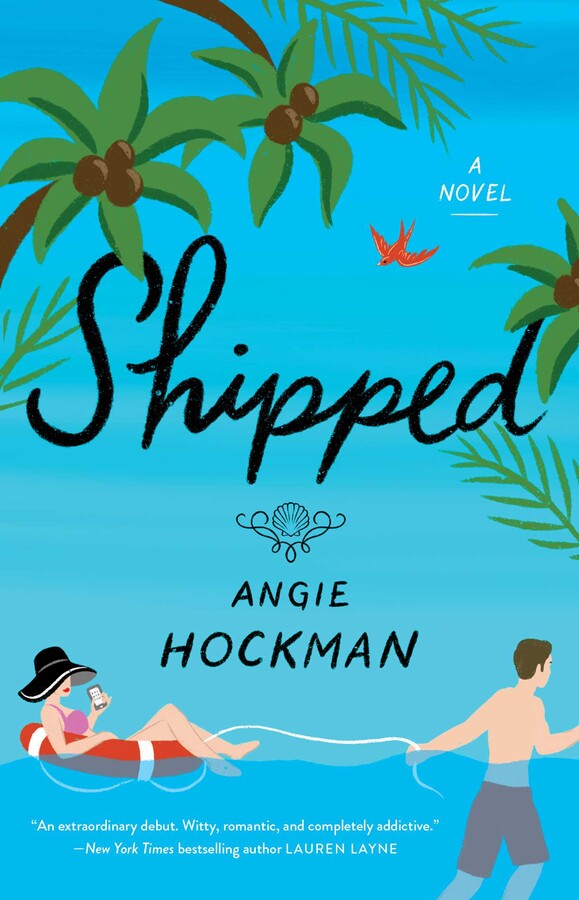
Shipped

Shipped by Angie Hockman

Shipped by Angie Hockman centers on an enemies-to-lovers romance on a cruise ship exploring the Galapagos. As the characters battle for a coveted promotion at the cruise line where they both work, they contemplate the travel industry’s responsibility to protect vulnerable species and ecosystems. These relatable characters’ choices challenge readers to evaluate their own actions and how those actions might affect other species on our fragile planet.  

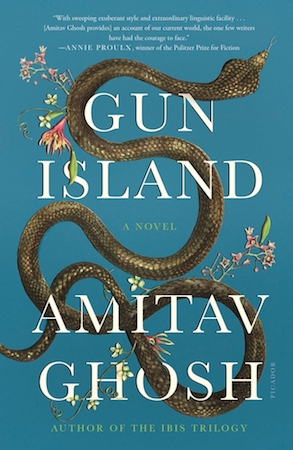
Gun Island by Amitav Ghosh

Gun Island follows the main character, Deen, as he travels from India to Italy to the United States in search of information about an old legend of The Gun Merchant. Deen witnesses exploitative obstacles facing climate refugees and observes species, such as bark beetles and poisonous water snakes, show up in non-native habitats. At the same time, fires scorch the Pacific Northwest in the U.S. Gun Island infuses real-world climate change with the Gun Merchant legend, which seems to be asserting itself in Deen’s life, giving this book a near-magical realism experience without ever dipping into magic.

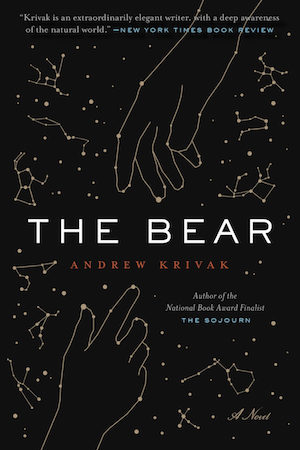
The Bear by Andrew Krivak

The Bear by National Book Award finalist Andrew Krivak is an elegiac fable about a father and daughter who are the last remaining humans on a future Earth. Krivak presents what could be considered a dark future for the human race, yet the story is infused with compassion and hope in the understanding that the Earth can outlive humans. All endings are just beginnings. Krivak’s prose fills the reader with awe for the greatness of nature and a nostalgia for the things we have not yet lost. 

JR Burgmann

Ghost Species by James Bradley

In Ghost Species, James Bradley introduces readers to scientists trying to avert future climate disasters and reverse existing environmental damage by resurrecting extinct species via genetic engineering. Hubris pushes them too far as they bring to life a Neanderthal baby named Eve, who very clearly does not belong in this time. Ghost Species brims with moral and ethical dilemmas related to technology, genetic engineering, and how we treat our planet and the creatures we share it with. 

Oryx and Crake by Margaret Atwood

Oryx and Crake by Margaret Atwood

Oryx and Crake presents a dystopian future framed by an imbalance in nature where engineered species that should not exist thrive, and species that we would recognize are gone. Characters in the book casually play a trivia game called Extinctathon, which involves deploying trivia about the numerous plants and animals that no longer exist. The climate disaster that led to plant and animal extinction is followed by a second gut punch that will strike readers differently post-2020. Climate change did not deliver the final blow to the human race; it was a global pandemic created in a laboratory and deliberately released. 

Dawn by Octavia E. Butler

After a nuclear war devastates the human race and destroys Earth’s environment, an alien race called the Oankali rescues surviving humans and puts them in a state of suspended animation for hundreds of years while they heal the Earth’s environment. The aliens choose Lilith Iyapo to wake her fellow humans and prepare them to return to their newly re-wilded planet. As she discovers the price of merging with the Oankali, Lilith struggles with her obligations to the human race, the aliens who rescued them, and the planet humans destroyed. 

Whale Rider by Witi Ihimaera

Whale Rider is the story of Paikea Apirana, a young Maori girl descended from Kahutia Te Rangi or the “whale rider.” In every generation, a chief emerges with the gift of communicating with the great sea mammals, but in Paikea’s generation, there are no male heirs, and her community cannot envision a girl as the whale rider. When hundreds of whales beach themselves, Paikea steps forward with the gift to help her community and the whales, underscoring the interconnectedness and interdependence of species. This book was initially written for young readers but was turned into a Sundance-winning film for all ages.

A Cultural History of Racial Fraud

Before the crisis, I dined at a bistro on England’s coast with a septuagenarian white man and woman with whom I am close. As is inevitable when dining out, we eddied into the topic of favorite restaurants. I mentioned a Chinese place where Peking duck pancakes are made by hand and long noodles served free of charge on birthdays, like cake. Once, the chef violated the health code to let me bring my dog inside, where he gifted us tea and oozing salted egg buns as if we were his treasured children. It is homey because his heritage is mine.

Ha, the old man interrupted. Do they serve dog? 

In improvisational theater, an actress must not contradict her partner on stage. She must keep alive the illusion of the fourth wall so everyone, including the audience, feels secure. The joke was my prompt to yes, and… 

Instead, I kept talking as if he’d never spoken. I ate my starter, two scallops on a white plate. The old woman, anxious, reminded me of the rules. It was just a joke. By the time the mains arrived––fish fillets whose carrots had been banished to a separate dish––the woman’s insistence had brought me to tears. I escaped outside, where I came across a door without a handle. Years of blue paint smoothed its boundaries. “A door that can’t / be opened is called a wall,” writes poet Victoria Chang in Obit. I banged it with the fleshy edges of my fists. No one would see the evidence of my anger. I would leave no marks.

For whom had I been performing with no one to watch, no one to patrol the fourth wall?

“Occasionally it is interesting to think about the outburst if you would just cry out,” Claudia Rankine writes in Citizen. “To know what you’ll sound like is worth noting—” I already had an idea of what I sounded like when I didn’t cry out. As a journalist, I used to record interviews with executives. When I’d play back the tapes, I’d be surprised by my high, tense tone. My sentences were punctuated by fake giggles, as if I were supplying the laugh track to my own performance. The interviews were usually on the phone or in a small room, just myself and the interviewee, often a white man. But theater requires an audience. For whom had I been performing with no one to watch, no one to patrol the fourth wall?


Some people are gifted at improv. We have names for them: con artists, grifters, frauds. A recent favorite among millenials is Anna Sorokin, a.k.a. Anna Delvey, the daughter of a truck driver from a town near Moscow. Using fake checks, hotel tabs, and Céline spectacles, she transformed herself into the German heiress of a €60 million fortune who tipped concierges in hundred dollar bills. After she was exposed in The New York Post and arrested for grand larceny, Sorokin captured the nation’s attention as easily as she’d once taken in cash. An Instagram account documents her outfits in court; Shonda Rhimes is producing a Netflix series. 

We can relate Sorokin and other fraudsters––see Leonardo DiCaprio in Catch Me If You Can and The Wolf of Wall Street––because they’re driven by a value system we’ve been trained in since we first lodged a coin in a gumball machine. The con artist affirms capitalism’s principles and confirms its boundaries, making our own actions appear acceptable. The hedge fund manager pretends he can beat the market; the therapist pretends to be interested in our thoughts. So long as the con artist is guided by capitalism’s dictates, we admire him for his stamina. In his essay “Why I Call Myself a Socialist,” actor Wallace Shawn argues a man’s life on stage is less exhausting than on the street, where he must act out capitalism without any breaks: “He knows that when he’s on stage performing, he’s in a sense deceiving his friends in the audience less than he does in daily life.”


In 1848, Ellen Craft, a light-skinned slave from Georgia, disguised herself as a white southern man. Illiterate, she lodged her right arm in a sling so she wouldn’t be required to sign her name at hotels during her escape north. Such desperate gestures toward freedom served a second function as a “practical joke on white society,” writes Black civil rights activist James Weldon Johnson in The Autobiography of an Ex-Colored Man, his 1912 novel about a biracial man who passes as white.

But racial fraud can take many forms. What is for some a matter of survival and necessity is in other cases a ruse undertaken for personal gain. Those already protected by whiteness pick aspects of non-whiteness that don’t threaten their safety: a new name, a new vocation. At the turn of the century, Archibald Stansfeld Belaney moved from England to Canada, renamed himself Grey Owl, and launched a career as a First Nations environmentalist. Segregationist speechwriter and Klansman Asa Earl Carter reinvented himself in the 1970s as Forrest Carter, a Cherokee memorist. In the 21st century, genealogy center librarian Michael Derrick Hudson submitted a poem under the name of a former high school classmate, Yi-Fen Chou. 

These women, once unmasked, can relax offstage, returned to whiteness. But a person of color has no break, because her stage is every space with a white person.

The latest trend is a white woman, estranged from family, who adopts what she perceives to be markers of Blackness: curly hair, spray-tanned skin, a mishmash of dialects. She changes her name: Rachel Dolezal becomes Nkechi Amare Diallo, Jennifer Benton becomes Satchuel Paigelyn Cole, Jessica Krug becomes La Bombalera. She surrounds herself with friends of color, goes to Howard University, assumes the presidency of her NAACP chapter. Having dedicated herself to the role, she begins to reap the benefits. A book by Krug was a finalist for a prize for books on slavery. Benton tried to inherit the estate of a deceased black friend by claiming to be her sister. 

These women, once unmasked, can relax offstage, returned to whiteness. But a person of color has no break, because her stage is every space with a white person. After the dinner with the septuagenarian couple, I privately played out what I imagined to be their conception of the Chinese. I’m going to eat you, I’d tease my dog. When the couple came to stay, I concocted a plan I wish I’d been reckless enough to execute: I’d place my dog in a kennel without informing them, then serve a mysterious meat dish and apologies about how special guests deserve special sacrifices. When I told friends, they cry-laughed. At least I’d entertained one audience.


Stage lights only illuminate if what’s offstage stays obscure. The audience’s view is made possible by the darkness in which the audience sits. In an interview with New York Magazine’s Vulture blog, novelist Kaitlyn Greenidge says, “The thing about whiteness is, of course, if you’re not white, you know whiteness and the rules of whiteness better than white people do, because you have to to survive.” Color, then, can be a tool for whiteness to understand itself. In the 1961 nonfiction book Black Like Me, journalist John Howard Griffin masquerades as Black in the Jim Crow South. His revelations of the treatment of Black Americans by white ones (probably not revelatory to Black readers) are less interesting than Griffin’s confrontation with his newly alien self, one created through skin dye, up to fifteen hours of daily tanning, and doses of the anti-vitiligo drug methoxsalen. In order to understand whiteness, he must transition through darkness. “Turning off all the lights, I went into the bathroom and closed the door,” Griffin writes. “I stood in the darkness before the mirror, my hand on the light switch. I forced myself to flick it on. In the flood of light against white tile, the face and shoulders of a stranger––a fierce, bald, very dark Negro––glared at me from the glass. He in no way resembled me.” A journalist maintains objectivity through distance from his subject; Griffin, distanced from this new body, can now be objective about what happens to it. Tellingly, the text of Black Like Me was first published in serial form under the title “Journey Into Shame.” Shame is the emotion that limps after trauma; victims feel they are to blame for things that were done to them, rather than things they did (which evokes the often confused emotion of guilt). Griffin’s text was written for whites. Their shame stems from the trauma white people experience when they lose the safety of whiteness, when they can no longer look in the mirror and identify themselves as human.

Their shame stems from the trauma white people experience when they lose the safety of whiteness.

Griffin wore blackface to expose trauma; others wear it to escape it. In the 2014 novel Your Face in Mine, writer Jess Row spins the tale of a Gatsby-like figure who transforms himself from white high school hipster to Black business mogul, all through a series of surgeries conducted at a clinic in Thailand specializing in gender confirmation surgery. The implication is that wishing for another racial identity is analogous to gender dysphoria. But the character undergoes this transformation––complete with a Black wife and children––less out of a feeling he is Black inside and more out of a desire to escape his life as it was when he was white: a lonely childhood with a paranoid single parent, an adolescence marred by a friend’s death. This character is revealed through the eyes of a white Nick Carraway-like narrator who is himself familiar with cross-racial cosplay, having studied Chinese, married a Chinese woman, and been invited by her parents to come live in China as their son. “Was I fleeing from something?” the narrator asks. “Was I certain why I loved this new language, with its four tones and eighty thousand characters, its unshakable alienness, its irreconcilability with any language, any world, I knew?” In popular culture, we are fascinated by aliens––the green-bodied, spaceship kind––not because of their own qualities, but because we want to know how the aliens see us with their big, googly eyes. The aliens can see us clearly because they come from the incomprehensible darkness of space.


During Queen Victoria’s reign, when Britain consolidated its power over a fifth of the earth’s surface, tea was a trade secret: its seeds, cultivation, and roasting were kept under the equivalent of intellectual property law by the insular Chinese government. The British fought two wars to force China to accept imports of Indian opium, the good that kept the British-Chinese trade balance in check. But Britain feared the Middle Kingdom would legalize opium farming within its borders and jeopardize its access to affordable tea. So in 1843 it dispatched to China a Scottish botanist, presciently named Robert Fortune. 

Like many on-the-ground agents of empire, Fortune came from a humble background, born to a hedger in the Scottish Borders. Thanks to a thirst for exotic flora, the working-class labor of gardening had been elevated to a science. Imperial botanists, also called plant hunters, travelled on ships to colonies and often held degrees for the practice of medicine on humans. This blending of human and plant body played out in science with Carl Linnaeus’s sexual system, which posited that flora could be categorized by their number of reproductive organs. Shortly before Fortune’s birth, Sarah Baartman, named the Hottentot Venus for her breasts and buttocks, was installed at Piccadilly Circus. For two shillings a head, visitors could marvel at “THE GREATEST PHOENOMENON Ever exhibited in this Country.” People also paid to ogle plant bodies; around the time Fortune was uprooting 250 plant species for British import, the sixth Duke of Devonshire spent the equivalent of today’s £10,000 for a Filipino orchid.

In For All the Tea in China: How England Stole the World’s Favorite Drink and Changed History, journalist Sarah Rose writes that Fortune initially viewed China “as an enigmatic society” and “himself as a missionary for the Western way of life,” but “the country inevitably began to assume a human face for him.” That face was first embodied in the Chinese staff who steered his ship, translated his deals, and carried his loot. Then Fortune transformed himself. His memoir, once of the period’s popular diaries of empire, recounts his entrance to the forbidden city of Suzhou: “I was, of course, travelling in the Chinese costume; my head was shaved, I had a splendid wig and tail, of which some Chinaman in former days must have been extremely vain; and upon the whole I believe I made a very fair Chinaman.” That fair Chinaman’s legacy was to bring Chinese tea to Indian terraces, end the British addiction to Chinese caffeine, and introduce new flavors of colonialism to the Indian subcontinent. The plant bodies Fortune displaced solidified his position in London as an educated man, far from his Scottish working-class roots. He had conned two populations: first the Chinese into thinking he was one of them, then the English into believing he belonged. 


Decades after Fortune’s visit, my great-grandfather was born in China during its “century of humiliation,” the period that began with the Opium Wars and ended with the expulsion of Japanese and French forces after World War II. My great-grandfather finagled a job as a cook on a U.S. military ship while the West fretted over Yellow Peril. Earlier, anti-Chinese riots had swept 200 American towns, including what some scholars call the largest lynching in the country’s history. Chinese were targeted for immigration bans by the U.S., Canada, and Australia, while Great Britain passed a special Chinese deportation act. Chinese men who did find a way in, often by forging documents, faced restrictions on where they could live, whom they could marry, and where their children could go to school. Such rules, crafted to protect the jobs and women of white men, excluded those deemed “undesirable” in a similar fashion to today’s points-based systems in Canada and Australia, due to be launched in the U.K. in January. 

My great-grandfather passed all the tests and settled in Cincinnati, where he opened a restaurant-nightclub credited with the discovery of a blonde singer dubbed the Shanghai Bird, later known as Doris Day. By many standards, he was secure, or he would have been if he were white. He performed the next best thing: patriotism, so often conflated with whiteness. When outside his household, my great-grandfather edited out his birth country and parents; in the revision presented to reporters, he had grown up in a California orphanage. When World War II broke out and the U.S. organized the mass theft of freedom and resources from other Asian Americans––those of Japanese descent––he tried to reenlist in the Navy. After they rejected him because of his age and his eight motherless children, he lobbied politicians and won a consolatory post as a guard at an Army depot where, according to an obituary in The Cincinnati Post, he was “always was half an hour to an hour early for work, and stayed well past quitting time.” He donated all his Army earnings to military non-profits such as the United Service Organizations. Congressman Robert Taft Jr. called him a “devoted American.” 

These prolonged performances are exhausting.

I would call him a desperate American. The white racial fraudster, faced with unmasking, drops her act to plead for forgiveness. Jessica “La Bombalera” Krug, realizing she was on the verge of being revealed, outed her “napalm toxic soil of lies” in a Medium article: “I am not a culture vulture. I am a culture leech.” Confession allows the fraudster to be rehabilitated. But no such option existed for my great-grandfather. To admit he was born in China would endanger his right to live in the U.S.; to not work for the Army for free would endanger right to live. Once he began his act, the backstage vanished; only he and the audience remained. And an audience exists only as long as an actor can hold its attention, which requires playing to its desires. Non-white Americans are praised for being “hardworking,” another way of saying they’re not Communist and therefore foreign; they are applauded for making sacrifices to send their kids to school, a site of inculcation and assimilation. These prolonged performances are exhausting. I’ve seen in my great-grandfather’s bloodline the signs of John Henryism, a phenomenon first documented among Black men in North Carolina who suffered unusually high rates of hypertension. Its namesake, John Henry, is depicted in folklore as a railroad worker who, fearing a new steam-powered rock drilling machine would devalue his labor, challenged it to a contest in front of an audience. Henry won, according to legend, but later died from the stress. A statue of him stands at the mouth of the 6,450 foot-long tunnel that was his final project. He holds a ten-pound hammer, his body tilted forward as if about to pound at rock. But his back is to the tunnel. He faces out, forever on stage. 

The Occupational Hazards of Hardboiled Eggs

“A is for artful (adj.),” Chapter 1 of The Liar’s Dictionary by Eley Williams

David spoke at me for three minutes without realizing I had a whole egg in my mouth.

I had adopted my usual stance to eat my lunch – hunched over in the stationery cupboard between the printer cartridges and stacked columns of parcel tape. Noon. It can be a fine thing to snuffle your lunch and often the highlight of a working day. Many’s the time I’ve stood in Swansby House’s cupboard beneath its skylight lapping soup straight from the carton or chase-licking individual grains of leftover rice from a stained piece of Tupperware. This kind of lunch will taste all the better when eaten unobserved.

I popped a hard-boiled egg into my mouth and chewed, reading a dozen words for envelope printed in different languages down the side of some supply boxes. To pass the time I tried memorizing each term. Boríték remains the only Hungarian I know apart from Biró and Rubik, named after their inventors – the penman and the human puzzle. I chose a second hard-boiled egg and put it in my mouth.

There was the usual degree of snaffling, face-in-trough rootling when the door opened and editor-in-chief David Swansby sidestepped into the cupboard.

It was only etiquette that gave David this title, really. He came from a great line of Swansby editors-in-chief. I was his only employee.

I stared, egg-bound, as he slipped through the door and pressed it shut behind him.

“Ah, Mallory,” David said. “Glad I’ve caught you. Might I have a word?”

He was a handsome seventy-year-old with a spry demonstrative way of using his hands which was not suited to such a small cupboard. I’ve heard people say that dog owners often look like their pets, or the pets look like their owners. In many ways David Swansby looked like his handwriting: ludicrously tall, neat, squared-off at the edges. Like my handwriting, I was aware that I often looked as though I needed to be tidied away, or ironed, possibly autoclaved. By the time afternoon tugged itself around the clock, both handwriting and I degrade into a big rumpled bundle. I’m being coy in my choice of words: rumpled, like shabby and well-worn, places emphasis on coziness and affability – I mean that I looked like a mess by the end of the day. Creases seemed to find me and made tally charts against my clothes and my skin as I counted down the hours until home time. This didn’t matter too much at Swansby House.

David Swansby was not a physically threatening presence and it would be unfair to say I was cornered by him in the cupboard. The room was not big enough for two people, however, and a corner was involved and certainly in that moment I was directly relevant to that noun becoming a verb.

I waited for my boss to tell me what he needed but he insisted on small talk. He mentioned something mild about the weather and recent sporting triumphs and dismays, then mentioned the weather again, and when he had got that out of the way I began to panic, mouth eggfulsome: surely now he must be expecting me to offer some response or to vouchsafe or confess or at the very least contribute a thought of my own? I considered what would happen if I tried to swallow the egg whole or chew it and speak around it, act as if this was normal behavior. Or should I calmly spit it, gleaming and tooth-notched, into my hand and ask David to spit out what it was he wanted, as if it was the most casual thing in the world?

David twiddled the handle of a label dispenser on a shelf near his eye. He straightened it a touch. This is editorial behavior, I thought. He glanced up at the skylight.

“I can’t get over this light,” he said.

“Can you? So clear.” I mumbled.

“Just look at that.” He switched his gaze from the skylight to his shoes in their weak pool of sunlight.

For my part, appreciative noises.

Apricide,” David said. He pronounced it with fervor. People who work with words like to do this: enunciate with admiring flourishes as if a connoisseur and to show that here was someone who knew the value of a good word, the terroir of its etymology and the rarity of its vintage. Then he frowned, paused. He did not correct himself, but unfortunately I remembered this word from Vol. I of Swansby’s  New Encyclopaedic Dictionary. David meant apricity (n.), the warmness of the sun in winter. Apricide (n.) means the ceremonial slaughter of pigs.


You might spot a volume of Swansby’s New Encyclopaedic Dictionary moldering somewhere as a prop book on a gastropub mantelpiece or occasionally see one being passed from church fete bookstall to charity shop to hamster-bedding manufacturer in your local area. Not the first nor the best and certainly not the most famous dictionary of the English language, Swansby’s has always been a poor shadow of its competitors as a work of reference – from the first printed edition in 1930 to today it has nowhere near the success nor rigorousness of Britannica and the Oxford English Dictionary. Those sleek dark blue hearses. Swansby’s is also far less successful than Collins or Chambers, Merriam-Webster’s or Macmillan. It only really has a place in the public imagination because Swansby’s is incomplete.

I don’t know whether people are endeared to an almost-complete dictionary because everyone enjoys a folly, or because of the Schadenfreude that accompanies any failed great endeavor. With Swansby’s, decades’ worth of work was completely undermined and rendered inconsequential by an ultimate inability to deliver a too-optimistic promise.

If you asked David Swansby about the nature of Swansby’s as an incomplete project and therefore a failure, he would draw up to his full height of circa two hundred foot and tell you he would defer to Auden’s quotation: that a piece of art is never finished, it is just abandoned. David would then check himself, escape to a bookshelf and come back ten minutes later and say of course that particular quotation belonged to Jean Cocteau. Another ten minutes would pass and David Swansby would seek you out and would clarify that line was actually first and best said by Paul Valéry.

David Swansby was a man who liked to quote and did so often. He was at pains to show he cared about quoting correctly. He would also not think twice about gently upbraiding people who misuse the verb quote in place of the noun quotation to which I would say, pick your battles, but I was only an intern.

I nodded once more. The egg in my mouth was Jupiter, the egg was my whole head.

Maybe the nation is fond of Swansby’s New Encyclopaedic Dictionary because it holds artistic or philosophical allure as an unfinished project. Not in the way David wanted to style it – Swansby’s is not the textual equivalent of Schubert’s Symphony No. 8, Leonardo da Vinci’s Adoration of the Magi or Gaudí’s Sagrada Família. You could certainly admire the work that went into it. The Swansby’s New Encyclopaedic Dictionary spans nine volumes and contains a total of 222,471,313 letters and numbers. For anybody who has the time or patience for mathematics, that is approximately 161 miles of type between the dictionary’s thick green leather-bound covers. I did not have the patience for mathematics, but on this internship I certainly had the time. When I was starting my role at Swansby House, my grandfather told me that the most important quality of a dictionary is that it could fit in your pocket: that would probably cover all the important words anyway, he said, and would be slim enough to go with you wherever you went without distorting good tailoring. I wasn’t sure that he understood what was involved in an internship (“Did you say internment?” he hollered down the phone, to no real response. He tried again: “Interment?”) but he seemed pleased for me. Never mind a bullet – the nine volumes of Swansby’s New Encyclopaedic Dictionary (1930) first edition could probably stop a tank in its tracks.

In the nineteenth century, Swansby House in London employed over a hundred lexicographers, all beavering away in the vast premises. Each worker, famously, was gifted a regulation Swansby House leather attaché case, a regulation Swansby House dip ink pen and Swansby House headed notepaper. God knows who bankrolled this operation, but they certainly appreciated uniform brand identity. The prevailing myth is that these lexicographers were coralled fresh from university, recruited for well-funded positions to bring about the British encyclopaedic dictionary. I thought about them occasionally, these young bucks probably younger than me, plucked from their studies and put to work on language in this same building over a century ago. They were under pressure to bring out the first edition before the Oxford English managed it, because what are well-defined words and researched articles if they are not the earliest to be acknowledged as great? David Swansby’s great-grandfather presided over the operation from the mid 1850s. He had the forename Gerolf, which always struck me as worth another round of spellchecking. His heavily-bearded, patrician portrait hangs in the downstairs lobby of the building. The word be-whiskered was made for such a face. Gerolf Swansby looked like his breath would be sweet. Not bad breath, just not good. Don’t ask me why I would think that or could possibly guess just by looking at a portrait. Some things just are possible to know to be true for no good reason.

I had been on this internship for three years. On my first day, I was given a run-down of the company’s history on my tour of the building. I was shown the portraits of its initial subeditors and funders who had vied to keep the business going both before and after the wars. It all began with Prof. Gerolf Swansby, a wealthy man who seemed to attract unctuous funding for his lexicographical enterprise. By the late nineteenth century, he had accumulated enough for building works to commence at an address overlooking St James’s Park. The property was built for purpose, and for its time was state-of-the-art, designed by architect Basil Slade and fitted with features such as a telephone, electric lift and synchronome master clock which used electrical impulses to ensure that all clocks in the building kept uniform time. Prof. Gerolf Swansby named the building after himself. The “state-of-the-art” lift was designed in order to go down to the basements of the building which housed huge metal steam presses, bought and installed from the outset by David Swansby’s be-whiskered great-grandfather to sit in readiness for the dictionary to be completed AZ and go to print. From the beginning, the enterprise hemorrhaged money.

The dictionary exists in an incomplete published form as a sad, hollow, joyless joke.

Before a single edition of the Dictionary was printed, before they had even reached the words beginning with Z, work came to an abrupt halt. All this early, costly industry on Swansby’s Encyclopaedic Dictionary was interrupted when its lexicographers were called up and killed en masse in the First World War. Every day I walked past a stone memorial to these young men on the side of Swansby House, their names chiseled alphabetically into its marble index.

The unfinished dictionary, its grand hopes for a newly ordered world truncated, potential never fully realized, was considered an appropriate memorial to a generation cut short. I get that. It makes me feel deeply uncomfortable, for various reasons, but I get it. The dictionary exists in an incomplete published form as a sad, hollow, joyless joke.

The original presses were melted down to make munitions for the World War. On my tour of the premises, I just nodded at this detail. My mind was solely on the fact that I would finally be making a living wage.

David and I worked in shabby offices on the second floor of Swansby House. Given its prime location close to St James’s Park and Whitehall and its wonderful period details and space, the lower floors and large hall of the building were leased out as venues for launches and conferences and weddings. It was all kept pretty plush and impressive for visitors, and David employed various freelance events managers to add marquees and banners and floristry according to various clients’ various tastes. The uppermost story was not open for events – while downstairs was kept spick and span, its brass fittings polished daily and dust kept at bay, the abandoned higher floors above our offices were untouched and unused. I imagined there must be enough dustsheets up there to keep a village of ghosts in silhouettes, with cobwebs hanging from the rafters as thick as candyfloss. Occasionally I heard the scuttle of rats or squirrels or unthinkable somethings running above my office ceiling. Sometimes this caused plaster to drift down onto my desk. I did not mention it to David. He never mentioned it to me.

The rooms we used were sandwiched between the prospectus-ready, glossy and celebratory eventeering of downstairs and these ghost-rat, deserted upper floors. Our offices had been reupholstered in a drab, blank, modern fashion: my room was the first one that any lost visitor might come across if they made their way up the stairs. It was next door to a dingy photocopying room, then there was the stationery cupboard, and finally David Swansby’s office at the end of the passage. It was the largest, but still felt cramped with books, filing cabinets and document folders.

These rooms were all that was left of the vast Swansby scope and ambition. I counted myself lucky that I had an office of my own, however tiny. The sole employee in such a large, formidable house. I should have felt glad to have the run of a place, even one that was state-of-the-art and now slipping into disrepair.

You may know the expression weasel words – deliberately ambiguous statements used in order to mislead, performing a little bait and switch of language. I think about weasel words whenever I hear the phrase state-of-the-art. It begs the question of which art and what state. For example, “my office has state-of-the-art air-conditioning” as a phrase does not specify that disrepair is technically a “state” and that the art in question might refer to “weird humming from a box above your head that drips rigid yellow sap into the printer every two weeks.”

The idiom weasel words apparently comes from the folklore that weasels are able to slurp the contents of an egg while leaving the shell intact. Teaching your weasel how to suck eggs. Weasel words are empty, hollow, meaningless claims. My reference and CV for this internship contained some weasel words concerning focus and attention to detail, as well as a misspelling of passionate.


It was my job to answer phone calls that came every day. They were all from one person, and all threatened to blow the building up.

I suspected the calls were the reason for my internship: it was not as though Swansby’s had any money to spare to lavish on “experience-hungry” (citation needed) twenty-somethings. My last job had paid £1.50 less per hour and involved standing by a conveyor belt and turning un-iced gingerbread men by 30 degrees. I did not mention this fact in my interview with David nor on my CV — at least being at Swansby’s meant no more dreams of faceless, brittle bodies.

To stop me going mad, I passed the time between calls by reading the dictionary, skipping through an open volume on my worktop. Diplome (n.), I read, “a document issued by some greater esteemed authority;” diplopia (n.), “an affection of vision whereupon objects are seen in double;” diplopia (n.), “an affection of vision whereupon objects are seen in double;” diplostemonous (adj., Botany), “having the stamens in two series, or twice as many stamens as petals.”

Use those three words in a sentence now, I thought. And then the phone would ring again.

“Good morning, Swansby House, how may I help you?”

“I hope you burn in hell.”

The nature of my duties had not been mentioned in my interview. I can appreciate why. On my first day in the office, answering the phone with no idea what was to come, I cleared my throat and said brightly, too brightly, “Good morning, Swansby House, Mallory speaking, how may I help you?”

I remember that the voice newly lodged on my shoulder sighed. In discussion later, David and I decided that its speech was disguised by some mechanical device or app so it sounded like a cartoon robot. I did not know that at the time. It was a tinny noise, like something unhinging.

“Sorry?” I said. Looking back, I don’t know whether it was instinct or first-day nerves. “I didn’t catch that, could I ask you to repeat—”

The moment the phone began to ring, my body cycled through all the physical shorthands for involuntary terror.

“I want you all dead,” said the voice. Then they hung up. On some days the voice sounded male, other times female, sometimes like a cartoon lamb. You might think that answering these calls would become commonplace after the first couple of weeks, as formulaic as sneezing or opening the morning post, but it was not long before I found this was my routine every morning: the moment the phone began to ring, my body cycled through all the physical shorthands for involuntary terror. Blood drained from my face and curdled thick in whomping knots along my temples and in my ears. My legs became weak and my vision became narrower, more focused. If you were to look at me the most obvious effect was that every morning as I reached for the phone, gooseflesh and goosepimples and goosebumps stippled all across the length of my arm.


In our close-quarter cupboard that lunchtime, David kept his eyes on some shelving. “The call?” he said. “Did I hear it come through at ten o’clock?”

I nodded.

David unfolded an arm and, awkwardly, hugged me.

I muttered thanks into his shoulder. He stood back and re-realigned the label dispenser on the shelf.

“Come along to my office once you’ve finished with your –” he glanced at the now-empty Tupperware in my hands, apparently noticing it for the first time – “lunchbox.”

And then the editor-in-chief left the intern-on-guard to her cupboard and the apricity and the skylight. I stood there for a full second then looked up Heimlich maneuver on my phone as I ate my remaining hard-boiled egg. It took four attempts to spell maneuver correctly, and in the end I let Autocorrect have its way with me.

Please Stop Comparing Things to “1984”

George Orwell’s 1984 is one of those ubiquitous books that you know about just from existing in the world. It’s been referenced in everything from Apple commercials to Bowie albums, and is used across the political spectrum as shorthand for the silencing of free speech and rise of oppression. And no one seems to love referencing the text, published by George Orwell in 1949, more than the conservative far-right in America—which would be ironic if they’d actually read it or understood how close their own beliefs hew to the totalitarianism Orwell warned of. 

Following last week’s insurrection at the Capitol, Josh Hawley said it was “Orwellian” for Simon & Schuster to rescind his book deal after he stoked sedition by leading a charge against the election results. Donald Trump, Jr. (who I absolutely promise has not read a book let alone that one), claimed after his father was kicked off Twitter that “We are living in Orwell’s 1984,” then threw in a reference to Chairman Mao for good measure. Far-right voices all over Twitter lamented the “Orwellian” purge of their followers after accounts linked to the violent attack were banned from the platform. It’s enough to make an English teacher’s head spin

Although we often urge our students to resist easy moralizing, the overt didacticism of 1984 has long been part of its pedagogical appeal.

I understand why Orwell’s dystopian novel is so appealing to people who want to decry authoritarianism without actually understanding what it is. It’s the same reason I relied on the text for years in my own classroom. Although we often urge our students to resist easy moralizing, the overt didacticism of 1984 has long been part of its pedagogical appeal. The good guys are good (even if they do take the last piece of chocolate from their starving sister or consider pushing their wife off a cliff that one time). The bad guys are bad. The story is linear and easy to follow; the characters are singularly-minded and voice their views in straightforward, snappy dialogue; the symbols are obvious, the kind of thing it’s easy to make a chart about or include on a short answer section of a test. (20 Points: What does the paperweight represent to Winston, and what does it mean when, after it is shattered, he thinks, “How small…how small it always was!”) Such simplicity can be helpful when presenting complicated ideas to young people who are still developing analytical and critical thinking skills. And so, like so many other teachers, I clung to Orwell’s cautionary tale for a long time as a pedagogical tool despite its literary shortcomings.

But when Trump began his rise to political power, I started to notice the dangerous inoculating quality that the text had in my own classroom. Because the dystopia of 1984 was such a simplified, exaggerated caricature, it functioned for my students not as a cautionary tale, but as a comforting kind of proof that we could never get “that bad.” I didn’t take the step to remove the text from my curriculum, but more than in previous years, I began to feel the need to charge the students to consider how things like “doublethink” and Newspeak related to our own political moment. But beyond the intellectual pleasure of the exercise itself (they were more than ready to offer examples of these methodologies across the political spectrum), most students could not bring themselves to consider that the United States could actually sink into the kind of totalitarian control that Oceania experienced. They cited our “freedoms”—speech, press, etc.—as mitigating factors. They trusted norms, even as those norms were being continually tested and broken in real time, the goalposts moving ever closer to political collapse. 

It functioned for my students not as a cautionary tale, but as a comforting kind of proof that we could never get ‘that bad.’

High school students aren’t always known for being thorough readers, to be sure, but even reading 1984 cover-to-cover doesn’t seem to have prepared Americans for the moment in which we find ourselves. If anything, it’s allowed us to scapegoat other people (the Nazis, Stalin, Big Brother—who is, to be clear, not a real person) other places, other times. A reading of 1984 in an American classroom has almost always brought with it comparisons between our system of government and the “evil” regimes against which we’ve historically placed ourselves in relief; we read it as being about those people, not about us. I’ve watched students who align with right-wing ideologies see the text as a clean-cut repudiation of communism without any sense of self-reflection regarding America’s own tyrannical past or present, and it’s hard to argue against their reading when a large part of Orwell’s critique was directed at Stalinism, one of the great totalitarian regimes of his age. 

Because white Americans of all political stripes so instinctively view themselves as living at the epicenter of history, they usually have trouble internalizing the historical context of the book. It’s a misreading Orwell couldn’t possibly have foreseen, of course. But because he set the story in in his own near future, he inadvertently also set it in a very specific political era for America. The year 1984 was, for us, the height of the Cold War, that easy shorthand for cultural oppression, with Russia and China serving as such nearly-unchallengeable scapegoats (hence Jr.’s reference to Mao in his tweet). It’s unfortunate that Orwell’s text gained a second life in this context, but worse, it makes it even harder for us to draw parallels from the text to our own political reality. Orwell wanted us to see the tyranny that rises from within. Instead, his parable only serves to steel our minds against facing the cognitive dissonance of our own capacity for authoritarianism. Doublethink, indeed.

The population of students to whom I was teaching the text were Jewish, predominantly white, mostly sheltered from the worst of America’s evils. If anything, their Jewishness allowed them, perhaps somewhat reasonably, to much more easily view the world of 1984 as a Nazi-adjacent dystopia: something perpetrated upon us, the good guys, rather than a horror of which we ourselves are capable. There is much talk in present-day literature pedagogy about stories being both a “window” and a “mirror.” For most of us, especially when we are young and understandably see our own experience as primary, the mirror comes first. To see the window takes work; some never discover it.
1984 lets them off the hook. It’s a text that allows them to frame themselves as the victim of their own unacknowledged atrocities.

“This is just like 1984!” the right-wing mob cries as it changes the very meaning of words to suit its nefarious aims. “So Orwellian!” its leaders cry as they demand unthinking fealty to an unhinged, unquestioned leader. For those insistent on ignoring the real and present danger that America poses for Black people, immigrants, Native people, the LGBTQ community, and so many other dispossessed people within our own borders, 1984 lets them off the hook. It’s a text that allows them to frame themselves as the victim of their own unacknowledged atrocities. Winston Smith, with his varicose ulcer and thinning hair, seems like an unlikely hero, which is part of Orwell’s rhetorical point. But in the hands of a 21st-century American reader (and I use the term “reader” extremely loosely), Winston is the likeliest victim in the world: a middle-aged, middling white male cog in the machine who just can’t catch a break. What white supremacist insurrectionist wouldn’t see himself in Orwell’s hapless hero of the rebellion?

Perhaps if they’d read to the end and actually seen Winston captured, brainwashed, embracing the figurehead of a totalitarian regime, they might have seen themselves in the text in a way that would have opened their eyes to their own folly. It’s hard to say. Poisonous ideas, like viruses, travel quickly and are not easily eradicated. But even those of us who do not find ourselves in this seditious camp can reflect on our own failures, both in our understanding of America’s legacy and our own participation in its most violent acts. We can seek out texts that are true windows and allow them to move us, to change us, to make us reconsider our place in the world and our role in the march toward justice. We can smash our own paperweight, the one we’ve filled with the myths we’ve told ourselves about America’s greatness, its rightness, its inability to fall prey to humanity’s worst inclinations, and expose those myths as false and insufficient for the task ahead. “How small,” we’ll say as we see their shattered remains strewn about the floor, “how small they always were.”