A Cultural History of Racial Fraud

Before the crisis, I dined at a bistro on England’s coast with a septuagenarian white man and woman with whom I am close. As is inevitable when dining out, we eddied into the topic of favorite restaurants. I mentioned a Chinese place where Peking duck pancakes are made by hand and long noodles served free of charge on birthdays, like cake. Once, the chef violated the health code to let me bring my dog inside, where he gifted us tea and oozing salted egg buns as if we were his treasured children. It is homey because his heritage is mine.

Ha, the old man interrupted. Do they serve dog? 

In improvisational theater, an actress must not contradict her partner on stage. She must keep alive the illusion of the fourth wall so everyone, including the audience, feels secure. The joke was my prompt to yes, and… 

Instead, I kept talking as if he’d never spoken. I ate my starter, two scallops on a white plate. The old woman, anxious, reminded me of the rules. It was just a joke. By the time the mains arrived––fish fillets whose carrots had been banished to a separate dish––the woman’s insistence had brought me to tears. I escaped outside, where I came across a door without a handle. Years of blue paint smoothed its boundaries. “A door that can’t / be opened is called a wall,” writes poet Victoria Chang in Obit. I banged it with the fleshy edges of my fists. No one would see the evidence of my anger. I would leave no marks.

For whom had I been performing with no one to watch, no one to patrol the fourth wall?

“Occasionally it is interesting to think about the outburst if you would just cry out,” Claudia Rankine writes in Citizen. “To know what you’ll sound like is worth noting—” I already had an idea of what I sounded like when I didn’t cry out. As a journalist, I used to record interviews with executives. When I’d play back the tapes, I’d be surprised by my high, tense tone. My sentences were punctuated by fake giggles, as if I were supplying the laugh track to my own performance. The interviews were usually on the phone or in a small room, just myself and the interviewee, often a white man. But theater requires an audience. For whom had I been performing with no one to watch, no one to patrol the fourth wall?


Some people are gifted at improv. We have names for them: con artists, grifters, frauds. A recent favorite among millenials is Anna Sorokin, a.k.a. Anna Delvey, the daughter of a truck driver from a town near Moscow. Using fake checks, hotel tabs, and Céline spectacles, she transformed herself into the German heiress of a €60 million fortune who tipped concierges in hundred dollar bills. After she was exposed in The New York Post and arrested for grand larceny, Sorokin captured the nation’s attention as easily as she’d once taken in cash. An Instagram account documents her outfits in court; Shonda Rhimes is producing a Netflix series. 

We can relate Sorokin and other fraudsters––see Leonardo DiCaprio in Catch Me If You Can and The Wolf of Wall Street––because they’re driven by a value system we’ve been trained in since we first lodged a coin in a gumball machine. The con artist affirms capitalism’s principles and confirms its boundaries, making our own actions appear acceptable. The hedge fund manager pretends he can beat the market; the therapist pretends to be interested in our thoughts. So long as the con artist is guided by capitalism’s dictates, we admire him for his stamina. In his essay “Why I Call Myself a Socialist,” actor Wallace Shawn argues a man’s life on stage is less exhausting than on the street, where he must act out capitalism without any breaks: “He knows that when he’s on stage performing, he’s in a sense deceiving his friends in the audience less than he does in daily life.”


In 1848, Ellen Craft, a light-skinned slave from Georgia, disguised herself as a white southern man. Illiterate, she lodged her right arm in a sling so she wouldn’t be required to sign her name at hotels during her escape north. Such desperate gestures toward freedom served a second function as a “practical joke on white society,” writes Black civil rights activist James Weldon Johnson in The Autobiography of an Ex-Colored Man, his 1912 novel about a biracial man who passes as white.

But racial fraud can take many forms. What is for some a matter of survival and necessity is in other cases a ruse undertaken for personal gain. Those already protected by whiteness pick aspects of non-whiteness that don’t threaten their safety: a new name, a new vocation. At the turn of the century, Archibald Stansfeld Belaney moved from England to Canada, renamed himself Grey Owl, and launched a career as a First Nations environmentalist. Segregationist speechwriter and Klansman Asa Earl Carter reinvented himself in the 1970s as Forrest Carter, a Cherokee memorist. In the 21st century, genealogy center librarian Michael Derrick Hudson submitted a poem under the name of a former high school classmate, Yi-Fen Chou. 

These women, once unmasked, can relax offstage, returned to whiteness. But a person of color has no break, because her stage is every space with a white person.

The latest trend is a white woman, estranged from family, who adopts what she perceives to be markers of Blackness: curly hair, spray-tanned skin, a mishmash of dialects. She changes her name: Rachel Dolezal becomes Nkechi Amare Diallo, Jennifer Benton becomes Satchuel Paigelyn Cole, Jessica Krug becomes La Bombalera. She surrounds herself with friends of color, goes to Howard University, assumes the presidency of her NAACP chapter. Having dedicated herself to the role, she begins to reap the benefits. A book by Krug was a finalist for a prize for books on slavery. Benton tried to inherit the estate of a deceased black friend by claiming to be her sister. 

These women, once unmasked, can relax offstage, returned to whiteness. But a person of color has no break, because her stage is every space with a white person. After the dinner with the septuagenarian couple, I privately played out what I imagined to be their conception of the Chinese. I’m going to eat you, I’d tease my dog. When the couple came to stay, I concocted a plan I wish I’d been reckless enough to execute: I’d place my dog in a kennel without informing them, then serve a mysterious meat dish and apologies about how special guests deserve special sacrifices. When I told friends, they cry-laughed. At least I’d entertained one audience.


Stage lights only illuminate if what’s offstage stays obscure. The audience’s view is made possible by the darkness in which the audience sits. In an interview with New York Magazine’s Vulture blog, novelist Kaitlyn Greenidge says, “The thing about whiteness is, of course, if you’re not white, you know whiteness and the rules of whiteness better than white people do, because you have to to survive.” Color, then, can be a tool for whiteness to understand itself. In the 1961 nonfiction book Black Like Me, journalist John Howard Griffin masquerades as Black in the Jim Crow South. His revelations of the treatment of Black Americans by white ones (probably not revelatory to Black readers) are less interesting than Griffin’s confrontation with his newly alien self, one created through skin dye, up to fifteen hours of daily tanning, and doses of the anti-vitiligo drug methoxsalen. In order to understand whiteness, he must transition through darkness. “Turning off all the lights, I went into the bathroom and closed the door,” Griffin writes. “I stood in the darkness before the mirror, my hand on the light switch. I forced myself to flick it on. In the flood of light against white tile, the face and shoulders of a stranger––a fierce, bald, very dark Negro––glared at me from the glass. He in no way resembled me.” A journalist maintains objectivity through distance from his subject; Griffin, distanced from this new body, can now be objective about what happens to it. Tellingly, the text of Black Like Me was first published in serial form under the title “Journey Into Shame.” Shame is the emotion that limps after trauma; victims feel they are to blame for things that were done to them, rather than things they did (which evokes the often confused emotion of guilt). Griffin’s text was written for whites. Their shame stems from the trauma white people experience when they lose the safety of whiteness, when they can no longer look in the mirror and identify themselves as human.

Their shame stems from the trauma white people experience when they lose the safety of whiteness.

Griffin wore blackface to expose trauma; others wear it to escape it. In the 2014 novel Your Face in Mine, writer Jess Row spins the tale of a Gatsby-like figure who transforms himself from white high school hipster to Black business mogul, all through a series of surgeries conducted at a clinic in Thailand specializing in gender confirmation surgery. The implication is that wishing for another racial identity is analogous to gender dysphoria. But the character undergoes this transformation––complete with a Black wife and children––less out of a feeling he is Black inside and more out of a desire to escape his life as it was when he was white: a lonely childhood with a paranoid single parent, an adolescence marred by a friend’s death. This character is revealed through the eyes of a white Nick Carraway-like narrator who is himself familiar with cross-racial cosplay, having studied Chinese, married a Chinese woman, and been invited by her parents to come live in China as their son. “Was I fleeing from something?” the narrator asks. “Was I certain why I loved this new language, with its four tones and eighty thousand characters, its unshakable alienness, its irreconcilability with any language, any world, I knew?” In popular culture, we are fascinated by aliens––the green-bodied, spaceship kind––not because of their own qualities, but because we want to know how the aliens see us with their big, googly eyes. The aliens can see us clearly because they come from the incomprehensible darkness of space.


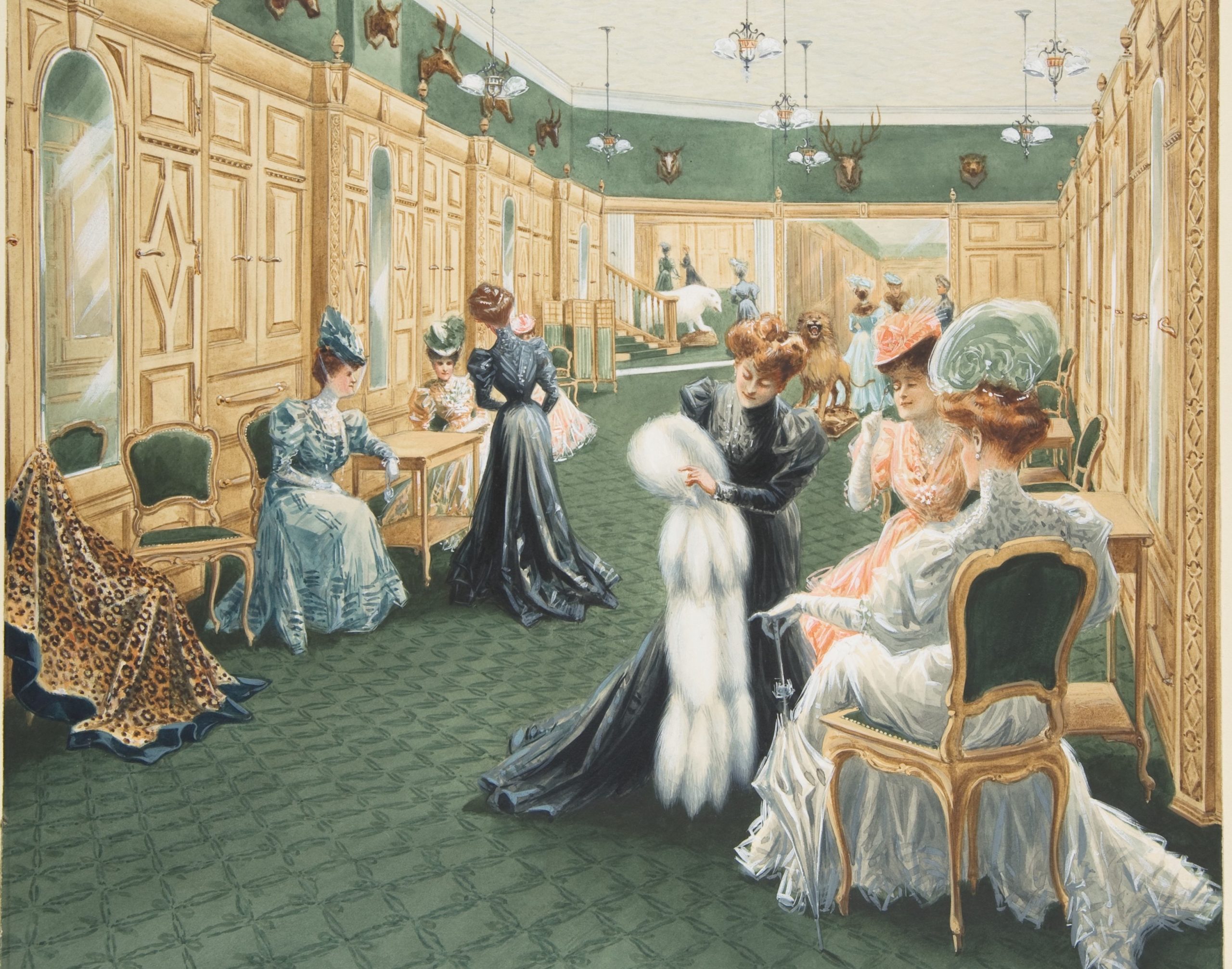
During Queen Victoria’s reign, when Britain consolidated its power over a fifth of the earth’s surface, tea was a trade secret: its seeds, cultivation, and roasting were kept under the equivalent of intellectual property law by the insular Chinese government. The British fought two wars to force China to accept imports of Indian opium, the good that kept the British-Chinese trade balance in check. But Britain feared the Middle Kingdom would legalize opium farming within its borders and jeopardize its access to affordable tea. So in 1843 it dispatched to China a Scottish botanist, presciently named Robert Fortune. 

Like many on-the-ground agents of empire, Fortune came from a humble background, born to a hedger in the Scottish Borders. Thanks to a thirst for exotic flora, the working-class labor of gardening had been elevated to a science. Imperial botanists, also called plant hunters, travelled on ships to colonies and often held degrees for the practice of medicine on humans. This blending of human and plant body played out in science with Carl Linnaeus’s sexual system, which posited that flora could be categorized by their number of reproductive organs. Shortly before Fortune’s birth, Sarah Baartman, named the Hottentot Venus for her breasts and buttocks, was installed at Piccadilly Circus. For two shillings a head, visitors could marvel at “THE GREATEST PHOENOMENON Ever exhibited in this Country.” People also paid to ogle plant bodies; around the time Fortune was uprooting 250 plant species for British import, the sixth Duke of Devonshire spent the equivalent of today’s £10,000 for a Filipino orchid.

In For All the Tea in China: How England Stole the World’s Favorite Drink and Changed History, journalist Sarah Rose writes that Fortune initially viewed China “as an enigmatic society” and “himself as a missionary for the Western way of life,” but “the country inevitably began to assume a human face for him.” That face was first embodied in the Chinese staff who steered his ship, translated his deals, and carried his loot. Then Fortune transformed himself. His memoir, once of the period’s popular diaries of empire, recounts his entrance to the forbidden city of Suzhou: “I was, of course, travelling in the Chinese costume; my head was shaved, I had a splendid wig and tail, of which some Chinaman in former days must have been extremely vain; and upon the whole I believe I made a very fair Chinaman.” That fair Chinaman’s legacy was to bring Chinese tea to Indian terraces, end the British addiction to Chinese caffeine, and introduce new flavors of colonialism to the Indian subcontinent. The plant bodies Fortune displaced solidified his position in London as an educated man, far from his Scottish working-class roots. He had conned two populations: first the Chinese into thinking he was one of them, then the English into believing he belonged. 


Decades after Fortune’s visit, my great-grandfather was born in China during its “century of humiliation,” the period that began with the Opium Wars and ended with the expulsion of Japanese and French forces after World War II. My great-grandfather finagled a job as a cook on a U.S. military ship while the West fretted over Yellow Peril. Earlier, anti-Chinese riots had swept 200 American towns, including what some scholars call the largest lynching in the country’s history. Chinese were targeted for immigration bans by the U.S., Canada, and Australia, while Great Britain passed a special Chinese deportation act. Chinese men who did find a way in, often by forging documents, faced restrictions on where they could live, whom they could marry, and where their children could go to school. Such rules, crafted to protect the jobs and women of white men, excluded those deemed “undesirable” in a similar fashion to today’s points-based systems in Canada and Australia, due to be launched in the U.K. in January. 

My great-grandfather passed all the tests and settled in Cincinnati, where he opened a restaurant-nightclub credited with the discovery of a blonde singer dubbed the Shanghai Bird, later known as Doris Day. By many standards, he was secure, or he would have been if he were white. He performed the next best thing: patriotism, so often conflated with whiteness. When outside his household, my great-grandfather edited out his birth country and parents; in the revision presented to reporters, he had grown up in a California orphanage. When World War II broke out and the U.S. organized the mass theft of freedom and resources from other Asian Americans––those of Japanese descent––he tried to reenlist in the Navy. After they rejected him because of his age and his eight motherless children, he lobbied politicians and won a consolatory post as a guard at an Army depot where, according to an obituary in The Cincinnati Post, he was “always was half an hour to an hour early for work, and stayed well past quitting time.” He donated all his Army earnings to military non-profits such as the United Service Organizations. Congressman Robert Taft Jr. called him a “devoted American.” 

These prolonged performances are exhausting.

I would call him a desperate American. The white racial fraudster, faced with unmasking, drops her act to plead for forgiveness. Jessica “La Bombalera” Krug, realizing she was on the verge of being revealed, outed her “napalm toxic soil of lies” in a Medium article: “I am not a culture vulture. I am a culture leech.” Confession allows the fraudster to be rehabilitated. But no such option existed for my great-grandfather. To admit he was born in China would endanger his right to live in the U.S.; to not work for the Army for free would endanger right to live. Once he began his act, the backstage vanished; only he and the audience remained. And an audience exists only as long as an actor can hold its attention, which requires playing to its desires. Non-white Americans are praised for being “hardworking,” another way of saying they’re not Communist and therefore foreign; they are applauded for making sacrifices to send their kids to school, a site of inculcation and assimilation. These prolonged performances are exhausting. I’ve seen in my great-grandfather’s bloodline the signs of John Henryism, a phenomenon first documented among Black men in North Carolina who suffered unusually high rates of hypertension. Its namesake, John Henry, is depicted in folklore as a railroad worker who, fearing a new steam-powered rock drilling machine would devalue his labor, challenged it to a contest in front of an audience. Henry won, according to legend, but later died from the stress. A statue of him stands at the mouth of the 6,450 foot-long tunnel that was his final project. He holds a ten-pound hammer, his body tilted forward as if about to pound at rock. But his back is to the tunnel. He faces out, forever on stage. 
The Occupational Hazards of Hardboiled Eggs

“A is for artful (adj.),” Chapter 1 of The Liar’s Dictionary by Eley Williams

David spoke at me for three minutes without realizing I had a whole egg in my mouth.

I had adopted my usual stance to eat my lunch – hunched over in the stationery cupboard between the printer cartridges and stacked columns of parcel tape. Noon. It can be a fine thing to snuffle your lunch and often the highlight of a working day. Many’s the time I’ve stood in Swansby House’s cupboard beneath its skylight lapping soup straight from the carton or chase-licking individual grains of leftover rice from a stained piece of Tupperware. This kind of lunch will taste all the better when eaten unobserved.

I popped a hard-boiled egg into my mouth and chewed, reading a dozen words for envelope printed in different languages down the side of some supply boxes. To pass the time I tried memorizing each term. Boríték remains the only Hungarian I know apart from Biró and Rubik, named after their inventors – the penman and the human puzzle. I chose a second hard-boiled egg and put it in my mouth.

There was the usual degree of snaffling, face-in-trough rootling when the door opened and editor-in-chief David Swansby sidestepped into the cupboard.

It was only etiquette that gave David this title, really. He came from a great line of Swansby editors-in-chief. I was his only employee.

I stared, egg-bound, as he slipped through the door and pressed it shut behind him.

“Ah, Mallory,” David said. “Glad I’ve caught you. Might I have a word?”

He was a handsome seventy-year-old with a spry demonstrative way of using his hands which was not suited to such a small cupboard. I’ve heard people say that dog owners often look like their pets, or the pets look like their owners. In many ways David Swansby looked like his handwriting: ludicrously tall, neat, squared-off at the edges. Like my handwriting, I was aware that I often looked as though I needed to be tidied away, or ironed, possibly autoclaved. By the time afternoon tugged itself around the clock, both handwriting and I degrade into a big rumpled bundle. I’m being coy in my choice of words: rumpled, like shabby and well-worn, places emphasis on coziness and affability – I mean that I looked like a mess by the end of the day. Creases seemed to find me and made tally charts against my clothes and my skin as I counted down the hours until home time. This didn’t matter too much at Swansby House.

David Swansby was not a physically threatening presence and it would be unfair to say I was cornered by him in the cupboard. The room was not big enough for two people, however, and a corner was involved and certainly in that moment I was directly relevant to that noun becoming a verb.

I waited for my boss to tell me what he needed but he insisted on small talk. He mentioned something mild about the weather and recent sporting triumphs and dismays, then mentioned the weather again, and when he had got that out of the way I began to panic, mouth eggfulsome: surely now he must be expecting me to offer some response or to vouchsafe or confess or at the very least contribute a thought of my own? I considered what would happen if I tried to swallow the egg whole or chew it and speak around it, act as if this was normal behavior. Or should I calmly spit it, gleaming and tooth-notched, into my hand and ask David to spit out what it was he wanted, as if it was the most casual thing in the world?

David twiddled the handle of a label dispenser on a shelf near his eye. He straightened it a touch. This is editorial behavior, I thought. He glanced up at the skylight.

“I can’t get over this light,” he said.

“Can you? So clear.” I mumbled.

“Just look at that.” He switched his gaze from the skylight to his shoes in their weak pool of sunlight.

For my part, appreciative noises.

Apricide,” David said. He pronounced it with fervor. People who work with words like to do this: enunciate with admiring flourishes as if a connoisseur and to show that here was someone who knew the value of a good word, the terroir of its etymology and the rarity of its vintage. Then he frowned, paused. He did not correct himself, but unfortunately I remembered this word from Vol. I of Swansby’s  New Encyclopaedic Dictionary. David meant apricity (n.), the warmness of the sun in winter. Apricide (n.) means the ceremonial slaughter of pigs.


You might spot a volume of Swansby’s New Encyclopaedic Dictionary moldering somewhere as a prop book on a gastropub mantelpiece or occasionally see one being passed from church fete bookstall to charity shop to hamster-bedding manufacturer in your local area. Not the first nor the best and certainly not the most famous dictionary of the English language, Swansby’s has always been a poor shadow of its competitors as a work of reference – from the first printed edition in 1930 to today it has nowhere near the success nor rigorousness of Britannica and the Oxford English Dictionary. Those sleek dark blue hearses. Swansby’s is also far less successful than Collins or Chambers, Merriam-Webster’s or Macmillan. It only really has a place in the public imagination because Swansby’s is incomplete.

I don’t know whether people are endeared to an almost-complete dictionary because everyone enjoys a folly, or because of the Schadenfreude that accompanies any failed great endeavor. With Swansby’s, decades’ worth of work was completely undermined and rendered inconsequential by an ultimate inability to deliver a too-optimistic promise.

If you asked David Swansby about the nature of Swansby’s as an incomplete project and therefore a failure, he would draw up to his full height of circa two hundred foot and tell you he would defer to Auden’s quotation: that a piece of art is never finished, it is just abandoned. David would then check himself, escape to a bookshelf and come back ten minutes later and say of course that particular quotation belonged to Jean Cocteau. Another ten minutes would pass and David Swansby would seek you out and would clarify that line was actually first and best said by Paul Valéry.

David Swansby was a man who liked to quote and did so often. He was at pains to show he cared about quoting correctly. He would also not think twice about gently upbraiding people who misuse the verb quote in place of the noun quotation to which I would say, pick your battles, but I was only an intern.

I nodded once more. The egg in my mouth was Jupiter, the egg was my whole head.

Maybe the nation is fond of Swansby’s New Encyclopaedic Dictionary because it holds artistic or philosophical allure as an unfinished project. Not in the way David wanted to style it – Swansby’s is not the textual equivalent of Schubert’s Symphony No. 8, Leonardo da Vinci’s Adoration of the Magi or Gaudí’s Sagrada Família. You could certainly admire the work that went into it. The Swansby’s New Encyclopaedic Dictionary spans nine volumes and contains a total of 222,471,313 letters and numbers. For anybody who has the time or patience for mathematics, that is approximately 161 miles of type between the dictionary’s thick green leather-bound covers. I did not have the patience for mathematics, but on this internship I certainly had the time. When I was starting my role at Swansby House, my grandfather told me that the most important quality of a dictionary is that it could fit in your pocket: that would probably cover all the important words anyway, he said, and would be slim enough to go with you wherever you went without distorting good tailoring. I wasn’t sure that he understood what was involved in an internship (“Did you say internment?” he hollered down the phone, to no real response. He tried again: “Interment?”) but he seemed pleased for me. Never mind a bullet – the nine volumes of Swansby’s New Encyclopaedic Dictionary (1930) first edition could probably stop a tank in its tracks.

In the nineteenth century, Swansby House in London employed over a hundred lexicographers, all beavering away in the vast premises. Each worker, famously, was gifted a regulation Swansby House leather attaché case, a regulation Swansby House dip ink pen and Swansby House headed notepaper. God knows who bankrolled this operation, but they certainly appreciated uniform brand identity. The prevailing myth is that these lexicographers were coralled fresh from university, recruited for well-funded positions to bring about the British encyclopaedic dictionary. I thought about them occasionally, these young bucks probably younger than me, plucked from their studies and put to work on language in this same building over a century ago. They were under pressure to bring out the first edition before the Oxford English managed it, because what are well-defined words and researched articles if they are not the earliest to be acknowledged as great? David Swansby’s great-grandfather presided over the operation from the mid 1850s. He had the forename Gerolf, which always struck me as worth another round of spellchecking. His heavily-bearded, patrician portrait hangs in the downstairs lobby of the building. The word be-whiskered was made for such a face. Gerolf Swansby looked like his breath would be sweet. Not bad breath, just not good. Don’t ask me why I would think that or could possibly guess just by looking at a portrait. Some things just are possible to know to be true for no good reason.

I had been on this internship for three years. On my first day, I was given a run-down of the company’s history on my tour of the building. I was shown the portraits of its initial subeditors and funders who had vied to keep the business going both before and after the wars. It all began with Prof. Gerolf Swansby, a wealthy man who seemed to attract unctuous funding for his lexicographical enterprise. By the late nineteenth century, he had accumulated enough for building works to commence at an address overlooking St James’s Park. The property was built for purpose, and for its time was state-of-the-art, designed by architect Basil Slade and fitted with features such as a telephone, electric lift and synchronome master clock which used electrical impulses to ensure that all clocks in the building kept uniform time. Prof. Gerolf Swansby named the building after himself. The “state-of-the-art” lift was designed in order to go down to the basements of the building which housed huge metal steam presses, bought and installed from the outset by David Swansby’s be-whiskered great-grandfather to sit in readiness for the dictionary to be completed AZ and go to print. From the beginning, the enterprise hemorrhaged money.

The dictionary exists in an incomplete published form as a sad, hollow, joyless joke.

Before a single edition of the Dictionary was printed, before they had even reached the words beginning with Z, work came to an abrupt halt. All this early, costly industry on Swansby’s Encyclopaedic Dictionary was interrupted when its lexicographers were called up and killed en masse in the First World War. Every day I walked past a stone memorial to these young men on the side of Swansby House, their names chiseled alphabetically into its marble index.

The unfinished dictionary, its grand hopes for a newly ordered world truncated, potential never fully realized, was considered an appropriate memorial to a generation cut short. I get that. It makes me feel deeply uncomfortable, for various reasons, but I get it. The dictionary exists in an incomplete published form as a sad, hollow, joyless joke.

The original presses were melted down to make munitions for the World War. On my tour of the premises, I just nodded at this detail. My mind was solely on the fact that I would finally be making a living wage.

David and I worked in shabby offices on the second floor of Swansby House. Given its prime location close to St James’s Park and Whitehall and its wonderful period details and space, the lower floors and large hall of the building were leased out as venues for launches and conferences and weddings. It was all kept pretty plush and impressive for visitors, and David employed various freelance events managers to add marquees and banners and floristry according to various clients’ various tastes. The uppermost story was not open for events – while downstairs was kept spick and span, its brass fittings polished daily and dust kept at bay, the abandoned higher floors above our offices were untouched and unused. I imagined there must be enough dustsheets up there to keep a village of ghosts in silhouettes, with cobwebs hanging from the rafters as thick as candyfloss. Occasionally I heard the scuttle of rats or squirrels or unthinkable somethings running above my office ceiling. Sometimes this caused plaster to drift down onto my desk. I did not mention it to David. He never mentioned it to me.

The rooms we used were sandwiched between the prospectus-ready, glossy and celebratory eventeering of downstairs and these ghost-rat, deserted upper floors. Our offices had been reupholstered in a drab, blank, modern fashion: my room was the first one that any lost visitor might come across if they made their way up the stairs. It was next door to a dingy photocopying room, then there was the stationery cupboard, and finally David Swansby’s office at the end of the passage. It was the largest, but still felt cramped with books, filing cabinets and document folders.

These rooms were all that was left of the vast Swansby scope and ambition. I counted myself lucky that I had an office of my own, however tiny. The sole employee in such a large, formidable house. I should have felt glad to have the run of a place, even one that was state-of-the-art and now slipping into disrepair.

You may know the expression weasel words – deliberately ambiguous statements used in order to mislead, performing a little bait and switch of language. I think about weasel words whenever I hear the phrase state-of-the-art. It begs the question of which art and what state. For example, “my office has state-of-the-art air-conditioning” as a phrase does not specify that disrepair is technically a “state” and that the art in question might refer to “weird humming from a box above your head that drips rigid yellow sap into the printer every two weeks.”

The idiom weasel words apparently comes from the folklore that weasels are able to slurp the contents of an egg while leaving the shell intact. Teaching your weasel how to suck eggs. Weasel words are empty, hollow, meaningless claims. My reference and CV for this internship contained some weasel words concerning focus and attention to detail, as well as a misspelling of passionate.


It was my job to answer phone calls that came every day. They were all from one person, and all threatened to blow the building up.

I suspected the calls were the reason for my internship: it was not as though Swansby’s had any money to spare to lavish on “experience-hungry” (citation needed) twenty-somethings. My last job had paid £1.50 less per hour and involved standing by a conveyor belt and turning un-iced gingerbread men by 30 degrees. I did not mention this fact in my interview with David nor on my CV — at least being at Swansby’s meant no more dreams of faceless, brittle bodies.

To stop me going mad, I passed the time between calls by reading the dictionary, skipping through an open volume on my worktop. Diplome (n.), I read, “a document issued by some greater esteemed authority;” diplopia (n.), “an affection of vision whereupon objects are seen in double;” diplopia (n.), “an affection of vision whereupon objects are seen in double;” diplostemonous (adj., Botany), “having the stamens in two series, or twice as many stamens as petals.”

Use those three words in a sentence now, I thought. And then the phone would ring again.

“Good morning, Swansby House, how may I help you?”

“I hope you burn in hell.”

The nature of my duties had not been mentioned in my interview. I can appreciate why. On my first day in the office, answering the phone with no idea what was to come, I cleared my throat and said brightly, too brightly, “Good morning, Swansby House, Mallory speaking, how may I help you?”

I remember that the voice newly lodged on my shoulder sighed. In discussion later, David and I decided that its speech was disguised by some mechanical device or app so it sounded like a cartoon robot. I did not know that at the time. It was a tinny noise, like something unhinging.

“Sorry?” I said. Looking back, I don’t know whether it was instinct or first-day nerves. “I didn’t catch that, could I ask you to repeat—”

The moment the phone began to ring, my body cycled through all the physical shorthands for involuntary terror.

“I want you all dead,” said the voice. Then they hung up. On some days the voice sounded male, other times female, sometimes like a cartoon lamb. You might think that answering these calls would become commonplace after the first couple of weeks, as formulaic as sneezing or opening the morning post, but it was not long before I found this was my routine every morning: the moment the phone began to ring, my body cycled through all the physical shorthands for involuntary terror. Blood drained from my face and curdled thick in whomping knots along my temples and in my ears. My legs became weak and my vision became narrower, more focused. If you were to look at me the most obvious effect was that every morning as I reached for the phone, gooseflesh and goosepimples and goosebumps stippled all across the length of my arm.


In our close-quarter cupboard that lunchtime, David kept his eyes on some shelving. “The call?” he said. “Did I hear it come through at ten o’clock?”

I nodded.

David unfolded an arm and, awkwardly, hugged me.

I muttered thanks into his shoulder. He stood back and re-realigned the label dispenser on the shelf.

“Come along to my office once you’ve finished with your –” he glanced at the now-empty Tupperware in my hands, apparently noticing it for the first time – “lunchbox.”

And then the editor-in-chief left the intern-on-guard to her cupboard and the apricity and the skylight. I stood there for a full second then looked up Heimlich maneuver on my phone as I ate my remaining hard-boiled egg. It took four attempts to spell maneuver correctly, and in the end I let Autocorrect have its way with me.

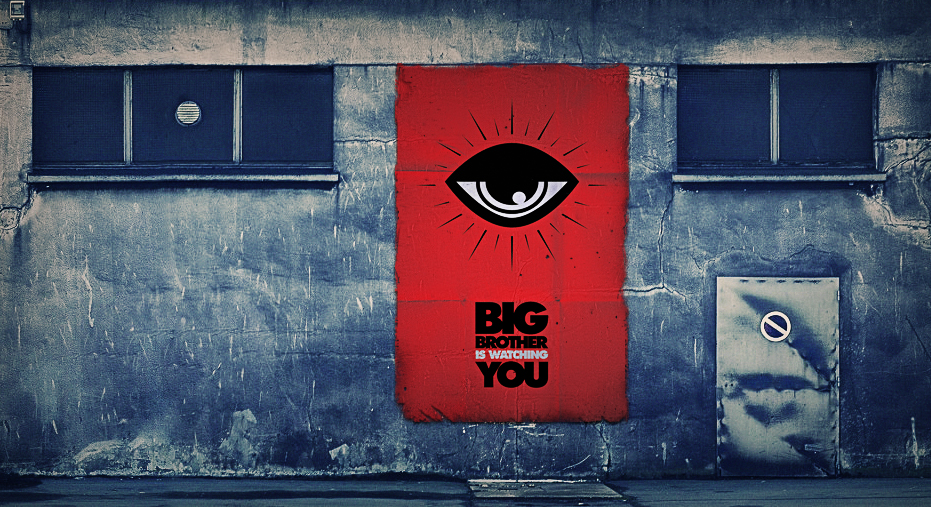
Please Stop Comparing Things to “1984”

George Orwell’s 1984 is one of those ubiquitous books that you know about just from existing in the world. It’s been referenced in everything from Apple commercials to Bowie albums, and is used across the political spectrum as shorthand for the silencing of free speech and rise of oppression. And no one seems to love referencing the text, published by George Orwell in 1949, more than the conservative far-right in America—which would be ironic if they’d actually read it or understood how close their own beliefs hew to the totalitarianism Orwell warned of. 

Following last week’s insurrection at the Capitol, Josh Hawley said it was “Orwellian” for Simon & Schuster to rescind his book deal after he stoked sedition by leading a charge against the election results. Donald Trump, Jr. (who I absolutely promise has not read a book let alone that one), claimed after his father was kicked off Twitter that “We are living in Orwell’s 1984,” then threw in a reference to Chairman Mao for good measure. Far-right voices all over Twitter lamented the “Orwellian” purge of their followers after accounts linked to the violent attack were banned from the platform. It’s enough to make an English teacher’s head spin

Although we often urge our students to resist easy moralizing, the overt didacticism of 1984 has long been part of its pedagogical appeal.

I understand why Orwell’s dystopian novel is so appealing to people who want to decry authoritarianism without actually understanding what it is. It’s the same reason I relied on the text for years in my own classroom. Although we often urge our students to resist easy moralizing, the overt didacticism of 1984 has long been part of its pedagogical appeal. The good guys are good (even if they do take the last piece of chocolate from their starving sister or consider pushing their wife off a cliff that one time). The bad guys are bad. The story is linear and easy to follow; the characters are singularly-minded and voice their views in straightforward, snappy dialogue; the symbols are obvious, the kind of thing it’s easy to make a chart about or include on a short answer section of a test. (20 Points: What does the paperweight represent to Winston, and what does it mean when, after it is shattered, he thinks, “How small…how small it always was!”) Such simplicity can be helpful when presenting complicated ideas to young people who are still developing analytical and critical thinking skills. And so, like so many other teachers, I clung to Orwell’s cautionary tale for a long time as a pedagogical tool despite its literary shortcomings.

But when Trump began his rise to political power, I started to notice the dangerous inoculating quality that the text had in my own classroom. Because the dystopia of 1984 was such a simplified, exaggerated caricature, it functioned for my students not as a cautionary tale, but as a comforting kind of proof that we could never get “that bad.” I didn’t take the step to remove the text from my curriculum, but more than in previous years, I began to feel the need to charge the students to consider how things like “doublethink” and Newspeak related to our own political moment. But beyond the intellectual pleasure of the exercise itself (they were more than ready to offer examples of these methodologies across the political spectrum), most students could not bring themselves to consider that the United States could actually sink into the kind of totalitarian control that Oceania experienced. They cited our “freedoms”—speech, press, etc.—as mitigating factors. They trusted norms, even as those norms were being continually tested and broken in real time, the goalposts moving ever closer to political collapse. 

It functioned for my students not as a cautionary tale, but as a comforting kind of proof that we could never get ‘that bad.’

High school students aren’t always known for being thorough readers, to be sure, but even reading 1984 cover-to-cover doesn’t seem to have prepared Americans for the moment in which we find ourselves. If anything, it’s allowed us to scapegoat other people (the Nazis, Stalin, Big Brother—who is, to be clear, not a real person) other places, other times. A reading of 1984 in an American classroom has almost always brought with it comparisons between our system of government and the “evil” regimes against which we’ve historically placed ourselves in relief; we read it as being about those people, not about us. I’ve watched students who align with right-wing ideologies see the text as a clean-cut repudiation of communism without any sense of self-reflection regarding America’s own tyrannical past or present, and it’s hard to argue against their reading when a large part of Orwell’s critique was directed at Stalinism, one of the great totalitarian regimes of his age. 

Because white Americans of all political stripes so instinctively view themselves as living at the epicenter of history, they usually have trouble internalizing the historical context of the book. It’s a misreading Orwell couldn’t possibly have foreseen, of course. But because he set the story in in his own near future, he inadvertently also set it in a very specific political era for America. The year 1984 was, for us, the height of the Cold War, that easy shorthand for cultural oppression, with Russia and China serving as such nearly-unchallengeable scapegoats (hence Jr.’s reference to Mao in his tweet). It’s unfortunate that Orwell’s text gained a second life in this context, but worse, it makes it even harder for us to draw parallels from the text to our own political reality. Orwell wanted us to see the tyranny that rises from within. Instead, his parable only serves to steel our minds against facing the cognitive dissonance of our own capacity for authoritarianism. Doublethink, indeed.

The population of students to whom I was teaching the text were Jewish, predominantly white, mostly sheltered from the worst of America’s evils. If anything, their Jewishness allowed them, perhaps somewhat reasonably, to much more easily view the world of 1984 as a Nazi-adjacent dystopia: something perpetrated upon us, the good guys, rather than a horror of which we ourselves are capable. There is much talk in present-day literature pedagogy about stories being both a “window” and a “mirror.” For most of us, especially when we are young and understandably see our own experience as primary, the mirror comes first. To see the window takes work; some never discover it.

1984 lets them off the hook. It’s a text that allows them to frame themselves as the victim of their own unacknowledged atrocities.

“This is just like 1984!” the right-wing mob cries as it changes the very meaning of words to suit its nefarious aims. “So Orwellian!” its leaders cry as they demand unthinking fealty to an unhinged, unquestioned leader. For those insistent on ignoring the real and present danger that America poses for Black people, immigrants, Native people, the LGBTQ community, and so many other dispossessed people within our own borders, 1984 lets them off the hook. It’s a text that allows them to frame themselves as the victim of their own unacknowledged atrocities. Winston Smith, with his varicose ulcer and thinning hair, seems like an unlikely hero, which is part of Orwell’s rhetorical point. But in the hands of a 21st-century American reader (and I use the term “reader” extremely loosely), Winston is the likeliest victim in the world: a middle-aged, middling white male cog in the machine who just can’t catch a break. What white supremacist insurrectionist wouldn’t see himself in Orwell’s hapless hero of the rebellion?

Perhaps if they’d read to the end and actually seen Winston captured, brainwashed, embracing the figurehead of a totalitarian regime, they might have seen themselves in the text in a way that would have opened their eyes to their own folly. It’s hard to say. Poisonous ideas, like viruses, travel quickly and are not easily eradicated. But even those of us who do not find ourselves in this seditious camp can reflect on our own failures, both in our understanding of America’s legacy and our own participation in its most violent acts. We can seek out texts that are true windows and allow them to move us, to change us, to make us reconsider our place in the world and our role in the march toward justice. We can smash our own paperweight, the one we’ve filled with the myths we’ve told ourselves about America’s greatness, its rightness, its inability to fall prey to humanity’s worst inclinations, and expose those myths as false and insufficient for the task ahead. “How small,” we’ll say as we see their shattered remains strewn about the floor, “how small they always were.”

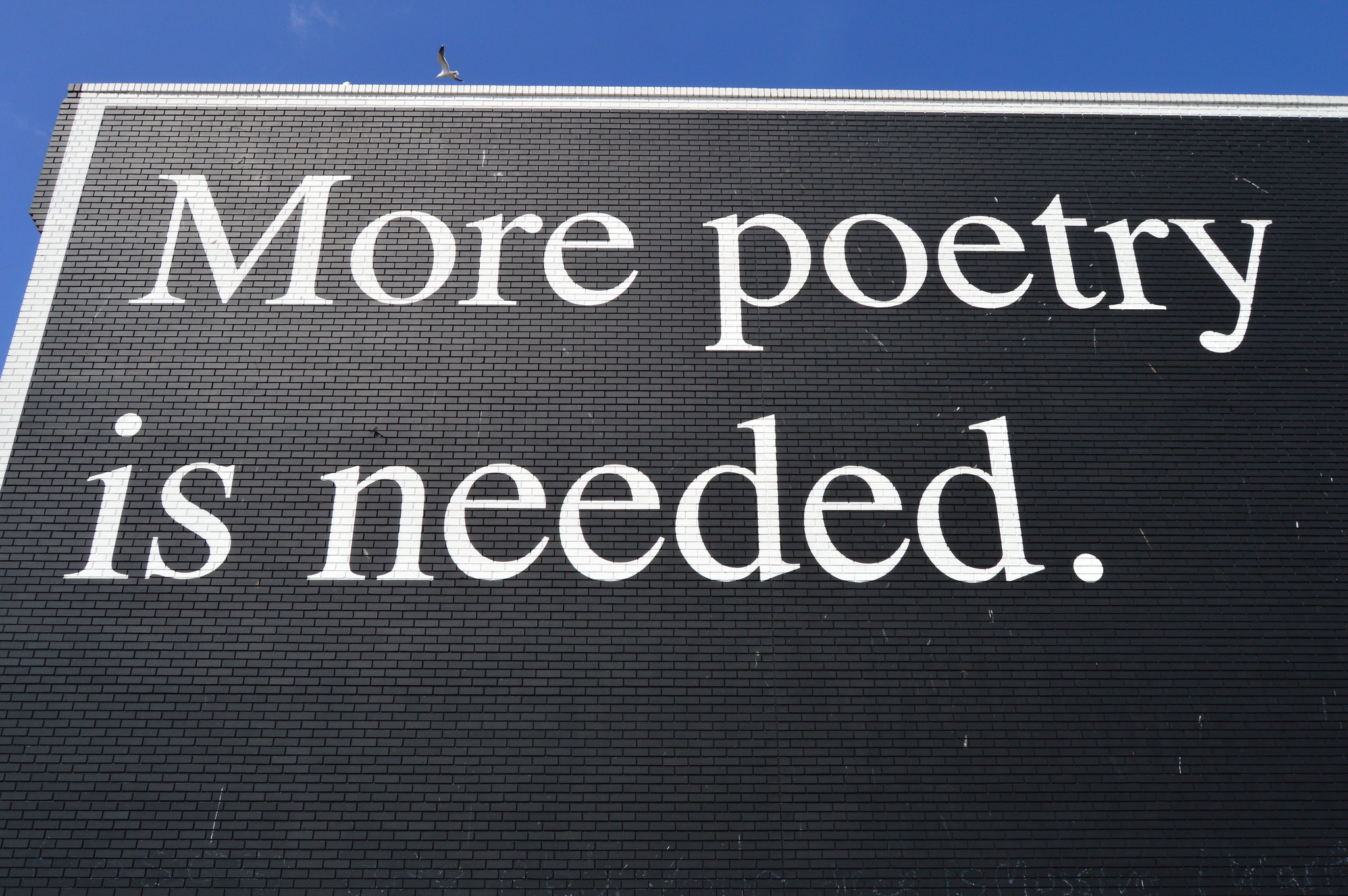
10 Highly Anticipated Poetry Books to Redeem 2021

I don’t need  to say that poetry got us through 2020, because poets get us through everything. 

I don’t say this to put a burden on all of the beautiful poets out there, of course. But when we’re acutely focused on small joys and precious moments, I can’t help but think that poetry might be the perfect medium for us. This is true now, this is true always. 

I can’t help but think that poetry might be the perfect medium for us. This is true now, this is true always.

Things have been distracting; life has changed irrevocably. We feel unsure, adrift, and anxious about so many things. We’re rethinking the media we consume, the ways we communicate, what’s important. If you’re anything like me, you’ve struggled to focus on anything beyond the absolute basics in order to get by. I watched the same shows over and over. While I was reading more often, I was only able to focus on things that felt familiar, where I knew what I was getting into. I’ve been in a bubble. Maybe you have, too.

It is during these times when I feel that I need poetry the most. I think back to all of the times in my life when I’ve felt lost or stuck, and poets have always been able to shake me out of it. Poetry is there for comfort and for radicalization, for pain and joy, for when we’re feeling trapped in our own fleshy meat suits and when we’re feeling like screaming at the stars. Poems give us new ways to look at life, nudge us to feel more and deeper, remind us that there is beauty in the world. Poetry carries us through.

So, here’s to the possibilities of a new year, and the poetry that will take us there. 

The Sunflower Cast a Spell To Save Us From The Void by Jackie Wang (January 26)

Drifting in and out of dreamstates, Jackie Wang’s debut collection explores the state of unrest caused by the looming threat of climate change, the economy and, ya know, all the other things that want us dead. Life can feel like a dream when you’re living in the margins and everything seems built to exclude you and people like you, Wang’s collection takes us to all the unfathomable places we sometimes find ourselves in, and reminds us there is also hope and brightness and bravery. 

Doppelgangbanger by Cortney Lamar Charleston (February 9)

It’s strange to think that this is Cortney Lamar Charleston’s first full-length book since 2017. He’s such a staple in the poetry world, as poetry editor for The Rumpus and all-around wonderful presence in the writing community. Doppelgangbanger is an introspective look at Black masculinity and boyhood, pop culture, and how our upbringings shape us. Charleston takes us from malls to basketball courts as he interrogates the language of growing up. 

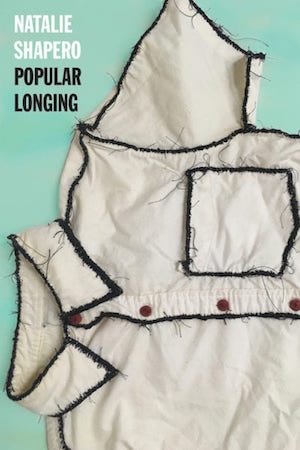
Popular Longing by Natalie Shapero (February 16)

Natalie Shapero is the poet I’d most like to have at a dinner party, and Popular Longing is a perfect example of why. Her sharp observations of human weirdness are just unparalleled. Popular Longing is cutting, clever, and a criticism of modern culture. Shapero knows no bounds here, and it makes for a remarkable read. 

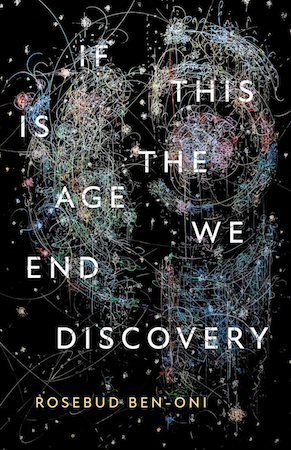
If This Is the Age We End Discovery by Rosebud Ben-Oni (March 9)

Rosebud Ben-Oni’s unique style blends physics and language, as if she is single handedly trying to break down the STEM/Humanities divide. Ben-Oni’s poems are filled with wonder for the world, causing readers to shift perspective and open up to new possibilities. This collection explores how we seek connection, love, and understanding in a way that is truly otherworldly.

Dēmos: An American Multitude by Benjamín Naka-Hasebe Kingsley (March 9)

In a superbly inventive collection, Benjamín Naka-Hasebe Kingsley’s work explores the living under the dominance of whiteness in America and the history of violence, particularly against Native communities. These poems ask: is racial violence in this country’s DNA? How far will it go, how long will this go on? It is a bold inquisition into the damage that has been done, accomplished with creative risk-taking. 

Waterbaby by Nikki Wallschlaeger (April 6)

Motherhood and family can provide a deep well of inspiration for writers, and Nikki Wallschlaeger’s new collection dives in head-first. Delving into Black womanhood, the postpartum body, and what it means to sustain love and warmth, Wallschlaeger’s work is unflinching in its honesty. It is about darkness and hope, struggle and survival, sinking and floating. 

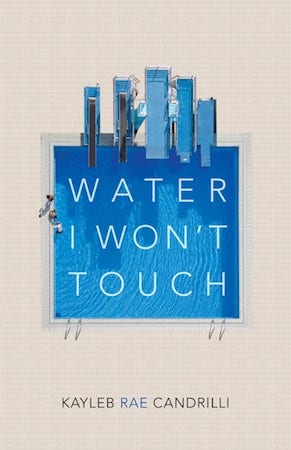
Water I Won’t Touch by Kayleb Rae Candrilli (April 20)

With thoughtful contemplations on home, the body, and adulthood, Kayleb Rae Candrilli’s new collection is full of confidence. These poems feel secure in what they are and to whom they are speaking, and are ready to leave the past behind and move forward into their blessings. With tender words to their partner and themself, Candrilli’s new collection speaks not only to the nonbinary/trans experience, but the experience of coming into one’s own self and finding happiness. 

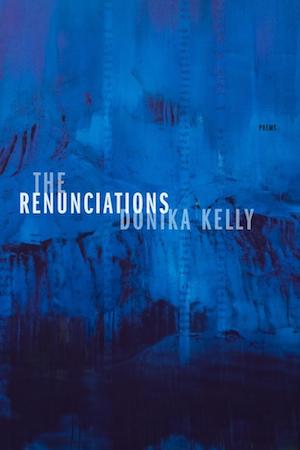
The Renunciations by Donika Kelly (May 4)

Donika Kelly is one of our best and brightest, and this collection is just hit after hit after hit. These poems discuss queerness, legacy, growing beyond our parentage, and finding solace in each other. This collection feels strong and rooted in the earth, and explores how we are connected, and how we can break free.

The Vault by Andrés Cerpa (June 15)

Andrés Cerpa’s sophomore collection grapples with loss, grief, and the disassociation that can come with being a survivor. Everything normal becomes slightly strange, things feel far away and unsteady. In these poems, Cerpa exhibits restraint and care, each thought purposefully positioned on the page. His work is somber, reflective, and deeply moving.

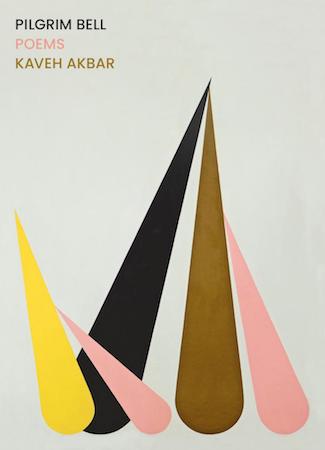
Pilgrim Bell by Kaveh Akbar (August 3)

I get genuine butterflies thinking about the fact that we’re getting a new collection of Kaveh Akbar poems to cherish this year. One of the most thoughtful and dynamic poets working today, Akbar’s work grapples with religion and godliness, addiction and Americanness, language and selfhood. Akbar’s work pulls no punches, and if “The Palace” is anything to go by, we’re about to get shaken to our very cores. 

There Are as Many Americas as There Are Pedros

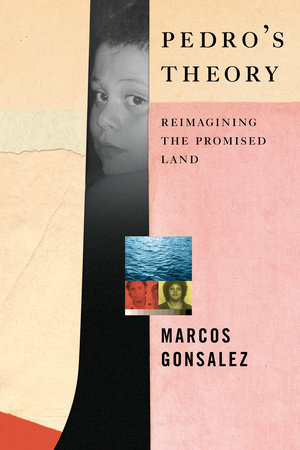
“The world will come between you,” writes Marcos Gonsalez in the prologue of his memoir Pedro’s Theory: Reimagining the Promised Land. The you here refers to both the author and his father, an immigrant from Mexico, captured in a photograph from the author’s childhood. “Hundreds of years of history, conquest, migration, and survival coming together to form a point of convergence in a small town in New Jersey. One photograph can tell so much,” he writes.

Pedro's Theory by Marcos Gonsalez

Gonsalez is most interested in what we can learn from snapshots, the physical and those of memory, such as the conversations had between classmates or a parent and their child, and when they occur in relation to history. He leads readers into his childhood school, down small-town streets, life in academia, New York City queer clubs, and everywhere in between. Filled with lush prose, the resulting memoir is a layered, scathing excavation of how the seeds of white supremacy have bloomed into damages on the everyday lives of immigrants, queer people of color, and others existing on the margins in the United States. 

I spoke with Gonsalez about whiteness in educational spaces, queer clubbing in 2010s New York City, specificity against the flattening effect of Latindad, and holding space for our past and present lives.


Christopher Gonzalez: Your memoir is a thorough indictment of whiteness and white supremacy in small towns, big cities, and academic spaces. What have you learned and observed as a student, as a scholar, as an educator, about how whiteness operates in academic spaces, specifically?

For the first few years in New York, I was trying to totally erase where I come from, who I belong to, because I wanted to be as close to whiteness as I could get.

Marcos Gonsalez: I was trying to work out the ways in which white supremacy in the United States is a means of violence and violation through a kind of nurturing. We’re not meant to question our educational system, beginning from kindergarten on to higher education. These systems are not apolitical, they’re not neutral. The ways in which we learn language, are taught to write, to speak, are deeply political things. I wanted to really change how we think about whiteness, how we think about how it operates in the United States, because I think we’re only taught to understand white supremacy or racism as these open assaults against people, like racial slurs or outward, physical violence. And those are important. Those are things that happen. But I wanted to touch upon the everyday, mundane instances of the ways in which we are taught to believe in white supremacy and hold it to be true, because the educational system upholds it. 

CG: Something that I started to think about while reading your book is how whiteness is very situational. It’s always in flux. You write about life in your hometown of New Egypt, New Jersey, and how you chose to identify more with your Puerto Rican heritage, because it afforded you a closer proximity to whiteness. Then, jumping ahead to your time in New York City, your desire is one more focused on upward class mobility and not whiteness alone. That’s the trick of whiteness for people of color, right? It’s always aspirational and never obtainable.

MG: In New Egypt, I couldn’t pass as white. I was still always racialized and marked in that way. But I’d seen a lot of my Puerto Rican family idolize whiteness or try to aspire to it, because of the benefits. Whereas my Mexican family, they couldn’t do that. They were much darker skinned, and that was always an impossible mission. I had seen very early on how physical skin color, how movement could be weaponized or could not be weaponized in different ways for the privileges to be proximate to whiteness. New York was a different game, a different kind of navigating. There was still an ethnic-ness that I had to hold up and couldn’t necessarily get rid of. For the first few years in New York I was trying to totally erase where I come from, who I belong to, because I wanted to be as close to whiteness as I could get. There also was the whiteness that was about queerness. I associated being queer with white. Going to clubs, they were very white spaces. The music was always Britney Spears or other white women artists. This switch happened where, if I wanted to be queer, if I wanted to be a part of this community, I again needed to idealize and idolize the whiteness of culture, of the body, of experience. And so, New York transformed what that was. Even if you were amongst queer people of color, we still always wanted to be proximate to whiteness. And I had to break free from that at some point. I’m glad I did.

CG: Leaving home for college, your acess to a queer community is through these predominately white spaces and white disireability politics. Could you talk more about that? And where did you ultimately find community?

MG: By this point, in the 2010s, in the last ten years, queer clubs for people of color had been shuttered. One of them was Escuelita. Black and Latinx people were welcomed there. There was hip hop and music in Spanish. And so, I’d go there a lot. That was where I realized that it didn’t always have to be these Hell’s Kitchen or Chelsea spaces filled with thin or overly muscular bodies that were overly white, prototypically masculine. There were places where you would see the play that would happen with gender and body size. I would go to places in Washington Heights, in Harlem, where they were only folks of color, queer people of color, too. And you would start to see how these possibilities would happen.

The world is extremely racist, queerphobic, fatphobic, all these kinds of things. And we have to carve out spaces wherever we go, because if not, life becomes unsustainable.

But, I also needed to be able to create space in white-dominated places. It’s about the people you are around, whether they’re white or not white. How do you create a mobile community so that wherever you go, you’re in good company? We have to create these wherever we can. That’s ultimately the lesson I learned with writing this book. No matter where you’re at, whether you are in a small town in New Jersey, or you are in New York City, or you are traveling to Mexico, wherever you’re going, you have to try to create community. You have to try to create a world that can work for you, because otherwise the world will try to take it away from you. The world is extremely racist, extremely queerphobic, fatphobic, all these kinds of things. And we have to carve out spaces wherever we go, because if not, life becomes unsustainable.

CG:  I see how that plays into the main conceit of the book, the idea of Pedro’s Theory. The Pedros in your book refer to you as well as other Mexicans and Central Americans, usually field workers and service workers, some of whom may be queer, and some maybe not. I don’t want to say you’re trying to identify exactly with them, but is it accurate to say you’re seeing within this group of people who are so often violently ignored and erased in society a potential for community?

MG: That is what was really important for me to grasp onto—how to be in community with them, with all kinds of different people, who are like me and who are not like me, in a way that isn’t about identifying with them, but to be in communication, to be in solidarity, to be in a politics of care. Some of them probably wish I did not exist for being queer. Or they probably wouldn’t agree with the kind of life I live. But I still want their well being, I still want them to be free of harm and violence. That was the idea behind the theory. How are we in alignment with one another, with our similarities and with our differences? And to be able to hold onto those differences rather than quickly try to erase them or overlook them. Oftentimes we try to overlook differences for the sake of solidarity and, especially, I think, for the sake of Latinidad. For Latinx people, too, there’s this drive to just be the same or critically look for the same. The driving interest for me was how do we mobilize around our differences, how do we work within our differences and value those differences in a way that doesn’t erase or flatten who we are and who we are in relation to one another.

CG: You mentioned Latinidad, which was hanging over my head as I approached this interview. To speak to that flattening that happens, over the last year, and the last two election cycles in particular, we’ve been met with a lot of Hispandering, the idea of a “Latino vote,” or even how much of our identity is linked to Goya beans. On the one hand, Latinx people are not a monolith, but on the other Latinidad is a racist, colonial framework. So I’m curious, what are your thoughts about the potential for Latinidad, if we even need it at all?

MG: That question of Latinidad has to start with what makes us different rather than what unites us. When I was really young and little, particularly from my Puerto Rican family, there was this mentality of “we’re all the same.” We’re all Hispanic, we’re all Latinos. I have two parents who have different skin colors, who have very vastly different histories. One comes from an island, the other comes from across the border. These aren’t the same. I think I had that question in the back of my head for a very long time, but I didn’t have the tools in which to explore it until recently. I came from two different kinds of ethnic cultures and saw how there was always friction, and even when my family tried to collapse those differences, they still manifested. I think any kind of Latinidad has to begin with an acknowledgement of the way race plays out in different places in Latin America, across the literal hemisphere. But I think people don’t necessarily want to engage with that because it’s a lot of work to learn about all of these different contexts and how these different histories have been mapped out. But if we don’t want to learn to do the work, then there can’t be a Latinidad, because it just erases or flattens people’s histories and lived experiences.

CG: To build off that, your book is a shift toward specificity. Specificity within your mother’s Puerto Rican and Caribbean background, within your father’s Mexican Indigenous background, and within yourself. How did you avoid overgeneralizing either of your parent’s backgrounds? Was it something you worried about at all?

MG: It’s so easy to fall into stereotypes. I think publishing, popular publishing, or popular culture in general, wants stereotypes. They demand them. Oftentimes we’re held to that standard and, if we don’t deliver, we won’t get acknowledged for the work that we do. I didn’t want to play into that game. From the beginning, I was trying to think about how I could capture the conditions of our lives, the conditions of my life, the condition of my parents, the condition of those who came before me, in a way that wasn’t about stereotypes or icons. I looked at what structured our lives, the conditions of the Puerto Rican migrations of my family, of my dad’s migration, and thought through what pushed us into this point where the story begins in New Jersey. That was always the guiding concern of mine. Even in random parts of the book that are perhaps not as narrative based, like where I’m talking about this wrestling match between my father and the cousin. It was a moment where I was able to see how masculinity operated in this town with Mexican American people, and how they had to show their masculinity in particular ways or not show it in particular ways. This was about Mexican American experience, but it wasn’t speaking to any kind of stereotype. For me, it was about how to show these scenes and portraits of our lives. No matter how boring, mundane, or everyday they are. These really boring moments of our lives show who we are, how we got here, and what might come next for us.

CG:  I want to talk about one of those everyday moments from your book. The first time your father ever writes his own last name is when he has to sign your birth certificate. It results in the Gonsalez spelling of your name, which some might view as incorrect, but you don’t view it as a mistake. And it’s not. It’s so much more than that. You write, “The impossibility of pronouncing our names is our possibility. Call it our American dream.” Can you expand on that?

MG: Like you said, it’s a very everyday thing of just signing a paper, but the signing of the paper wasn’t just the signing of the paper. It was still speaking to this history that has shaped us, that we can’t seem to break free from. And I think often that’s the question for me. I want to break free from these things, but I also want them to be contextualized. So quickly we try to be, like, yeah, that was a mistake, it should be this way. But all of it was a mistake. The colonization of the Americas was the big thing that should not have happened. I was trying to capture in the signing of the name this very long and dense history that still to this day shapes who and what we are and even how we relate to each other. For so many of us who come from colonized locations, who are colonized peoples and colonized histories, so much of our everyday life has a context to it, has a history that is literally about the way we connect to our fathers or the way we connect to our children, the way in which we love partners and our friends. It shapes everything.

Hot Vinyasa Flow for Crushing Self-Doubt

Corpse Pose

The position has to assume you,
like a fever, or a favor, or a black hole 
swallowing its own ballistics report. 
Like trying to believe you deserved
even a single afternoon 
two years ago, with an old friend
ascending the micro-climates
of Pacific Heights eating oysters.
Your jail cell is made of harp strings.
Nothing deserves your skepticism
more than a mirror. 
If you start here, in the middle,
then any progress will grant you 
both a beginning and an end.
Open and close your eyes
and sweep the front porch of your face.
Standing on the moon, you’d weigh 
less than a toddler
where the extended forecast
calls for no weather at all
and the coffee tastes like sand,
so best to admire the majestic from afar.
You don’t have to believe
your own story, 
you simply have to believe
you’re the only one who can tell it.
Instead of deleting the digressions,
erase the precedents. Beware of any wolf 
who goes still.

Sun Salutation

It’s the needlessness to this mess that makes it feel so endless, 
and unlikely 

            I’ll live long enough to know why.
  
I love what you didn’t do with the place.
  
                                                                                     All the regrets
  
cross-matrixed to failures,
             
          the piano there to hold up the family portraits,
  
the pink apple blossoms falling to the sidewalk
  
                                                                             as if to destroy us,
  
like a wildfire jumping a break.
  
The alley to the road to the capitol runs through me,
                                                                                     and the preposterous,
  
and in the end, I got exactly what I had coming, 
  
                                                      there must be some misunderstanding
  
say it with me, there must be some misunderstanding.
  

My Life Is a Result of the Legacy of Colonialism

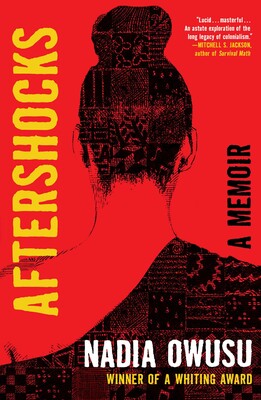
I first read Nadia Owusu’s debut memoir Aftershocks in June, as the United States—led by the white nationalist backed Republican administration—was several months into a still ongoing unchecked global pandemic which was disproportionately killing Black, Hispanic, and Indigenous Americans. Protests for racial justice sparked by the murders of Breonna Taylor, Ahmaud Arbery, George Floyd and so many others were taking place worldwide, even as white women like me were weaponizing the police against people who identified as Black and Brown. As a seventh-generation Mississippian descended from slave owners who now lives in a blue bubble, I was craving a book that would help me make sense of both America and the world right now.

Aftershocks

I found it in Aftershocks, which among other topics, explores the impact of colonialism and anti-Blackness worldwide. Owusu had a global upbringing, following her father, a Ghanian civil servant with the United Nations, across Africa and Europe, before settling in the United States for college. In Aftershocks, Owusu explores the mental breakdown she faced in the aftermath of complicated revelations about her father’s death. Along the way she wrestles with her own search for identity, reckoning with her early abandonment by her mother, whose family escaped the Armenian genocide, the problematic legacy of being descended from Ashanti royalty, and exploring what it’s like to live in America’s highly individualistic society when one is rooted in Ghana’s collectivist culture. 

Owusu, who is associate director of the economic racial justice organization Living Cities, is a winner of a 2019 Whiting Award. Her lyric essay, So Devilish A Fire, won the Atlas Review’s chapbook contest. Owusu and I spoke in early December and discussed global anti-Blackness, grappling with colonialism’s legacy, and rewriting narratives about mental health.


Deirdre Sugiuchi: I originally read this book this summer at the height of the protests for Black lives. You took part in the protests in New York City. How did you feel marching, knowing you had just finished a book which in part addressed global anti-Blackness?

The reasons that Black people are impacted disproportionately by COVID are very connected to global anti-Blackness and colonialism.

Nadia Owusu: Given how hard this year has been, it made so much sense that this was the moment that the uprising happened, because the reasons that Black people are impacted disproportionately by COVID, dying disproportionately—as are Native American and Brown communities—are very connected to global anti-Blackness and colonialism. These issues on the surface might seem coincidental, living through this moment of global pandemic and uprising, but I think those things can’t be more deeply connected, that in the midst of the global pandemic and the disproportionate impact on communities of color, you have the ongoing violence against Black people. It was not surprising that this was a significant moment in the movement for Black lives which has been ongoing and has been building for many years. At the same time, I think the thing that is significant is that until now white people could choose not to see, and now they could no longer.

I felt a lot of grief in terms of seeing the ongoing violence against Black people with all the loss we are experiencing already. At the same time I found a lot of hope in the radical reimagination that has been part of the movement in terms of calling out what we actually need. What we need is to actively dismantle the existing systems and create new ones. There is nothing individual Black people can do to change the systems, which are built on existing stories about who we are that are not true. It really is going to take large systemic change in order to shift the disproportionate outcomes.

Having spent all these years thinking and writing about these questions, and also in my day job working to close racial income and wealth gaps, it was a moment of deep reflection. How do I continue to interrogate myself? Although I am American, I didn’t grow up here and my Black history is not African American here. What is my role as an artist and an activist and an organizer?

DS: You write about colonial mentality and dealing with anti-Blackness at an early age, and having a father who actively taught you about Ghana and your family, yet also recognizing that colonial mentality was a fault line in the African body. How has this shaped your worldview and your writing?

NO: My life is a result of that legacy of colonialism, even the fact that my father’s siblings went to the U.K. for their education and settled there. It shaped my father’s choices as far as coming to the U.K. and going to university in the States. I literally would not exist had the world not been shaped in a different way, but that’s why that history felt important for me to reckon with. 

For Black people across the diaspora, the stories that are told about African histories and about Blackness and what our own Blackness means have been in many ways codified into the way the world is organized. It was literally the law of the land in many places in terms of what opportunities we had and didn’t have, which shaped how our families lived in the world. I think we don’t talk enough about that, which is why this most recent movement—the uprisings for Black lives and the clear pro-Black stance that people are taking—is an act of revision and correction against the stories, which, whether we like it or not, are in the groundwater, and everyone white and Black have been drinking our entire lives.

We live inside these stories. We are not always able to see them and I think at the same time they are doing a lot of destruction in Black people’s lives and in our bodies and in ourselves. I think the undoing of that in myself is going to be a lifelong project.

DS: How does coming from a collectivist culture influence how you operate in America’s highly individualistic culture? I know you studied urban planning. How does this inform your work?

What we need is to actively dismantle the existing systems and create new ones. There is nothing individual Black people can do to change the systems.

NO: I struggle with American rugged individualism. This is probably in part due to my upbringing. Trying to explain to my family in Ghana why Americans won’t wear masks is confusing. “It’s because of their freedoms.” “Freedom to do what? Kill people?” It doesn’t compute. It’s a very different worldview. Whether we like it or not we’re all, and not just human beings, every living being on this planet is linked. 

In terms of my work, that is a barrier I am constantly pushing against, because a lot of the solutions that are proposed in terms of policy have individualism baked in them. There are a lot of solutions that are proposed around supporting entrepreneurs of color, and I think those are positive things to do, but they are very focused on the individual, not so much addressing the broader system and the way we all live in community with each other. From an urban planning perspective, the focus on single family homes as opposed to affordable housing that is more communal and the zoning laws that privilege wealthier people who can afford single family homes, all of that is connected to that philosophy of individualism and its really hard because that’s what people aspire to.

If we actually shifted our idea about what’s possible when we care for each other differently and organize ourselves in society to live differently and organize ourselves to live more communally, I think there are different and more beautiful possibilities that can open up, but there is a lot of dissonance. 

DS: This book deals with the aftershocks of the death of your father as well revelations in the aftermath of his death. It also deals with maternal abandonment and a family legacy of abandonment. Did writing help resolve conflicting feelings?

NO: I started writing pieces of this book just for myself to work through some of those questions and feelings. I was coming out of a long period of depression and felt like I had avoided looking at those questions too closely most of my life. It was a personal project. Because I have always been a writer, I have always been someone who understands how I think through writing. 

Looking at the more personal aspects of my mom leaving and my dad dying and trying to contextualize our lives and their choices led me to do greater research about the history of the places they came from and their families. That also expanded my understanding of how my life was shaped and in ways that were positive and deepened my empathy. 

Because I grew up outside of my parents’ cultures, those were histories I was not familiar with. To reconnect with my ancestry and my homelands felt in some ways like writing myself home.

DS: You did an incredible job illustrating how mental health was viewed in your family as well as the culture at large, and also illustrating how in your family it was your job to keep it together. You wrote about a mental breakdown, which is typically taboo, and healing through art. Can you discuss writing about this?

NO: I think in many cultures, many of us grew up hearing this message that you cannot show weakness. There is a narrative that depression, grief, or mental illness is weakness. I think that for Black people and for Black women in particular, you do not show weakness, you have to work twice as hard for half as much. 

In my family, I felt a great deal of responsibility for holding the family together. It’s a lot of pressure to carry, particularly when I didn’t have a lot of examples in my life of how to deal with grief, depression, and anxiety that I was facing, so I tried to power through it for a very long time. What I was trying to write against was that message that mental illness was a form of weakness. We hear these stories in the Black community, that mental illness does not exist, that only white people have time to indulge themselves. I think those are really harmful messages and I understand why they came to be, it’s a product of white supremacy.

It felt really important to me to be honest. I wanted to write from inside the breakdown. I wanted to show what it feels like and present what it can feel like if we internalise different stories that are not so fear based, and that are kind and loving to ourselves and allow ourselves the space to breathe, so it doesn’t compound itself the way it did in my experience.

Art might not be sufficient in terms of healing, but I do think that the stories we tell are important in terms of what help we are willing to seek. I wasn’t willing to seek any help because of the stories I had internalized. I think it is important to use art to write ourselves different stories that we believe in, so that we can get ourselves the help and the community that we need in order to heal ourselves.

7 Contemporary Novels About the Victorian Era

It’s a truism that historical fiction reveals more about its own age it than the one it portrays. We can’t escape or even perceive our own biases, the reasoning goes, so we end up helplessly projecting them onto a past where they don’t belong. But the past is not a museum, and contemporary perspectives don’t necessarily distort historical subjects.

And to state the obvious, historical fiction isn’t history. Accuracy and authenticity are not the same things, and “distortion” is a loaded term to begin with. In The Underground Railroad, Colson Whitehead interleaves the archival ephemera of slavery with his own dystopian imaginings. That the two are often indistinguishable shows that narratives need not be strictly historical to be fundamentally truthful. Art is supposed to transfigure human experience, to make it newly meaningful. That’s what it’s always done. That’s what it’s for.

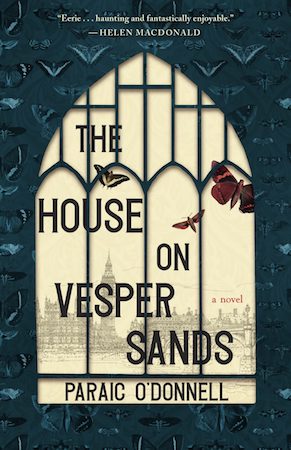
Of course, novelists don’t always begin with such lofty intentions. In writing The House on Vesper Sands, I began with no intentions at all. At the time, though, the U.K.’s Tory government was diligently stripping the vulnerable of what meager protections they depended on. Their souls, I remember thinking to myself. They’re devouring people’s souls. And since I found myself with one foot in Victorian London, where such notions were taken pretty seriously, I began to see new shapes in its familiar gaslit fog.

Fingersmith by Sarah Waters

Fingersmith by Sarah Waters

As important as representation may be, gay characters don’t need to appear in fiction for any particular reason. Waters describes her own sexuality as “incidental,” and in her Victorian England, lesbian women are naturally just present. Like everyone else in Fingersmith, though, they’re also schemers and strivers. Waters renders their erotic encounters with dependable virtuosity, only to use them as a fulcrum for one of the most breathtaking double twists in all of fiction. 

The Luminaries by Eleanor Catton

In historical fiction, verisimilitude isn’t always your friend. The line between authenticity and pastiche is vanishingly fine, but although Catton assuredly knows the risks, she bets the farm in this novel anyway. The Luminaries might be compared to an immaculately crafted piece of reproduction furniture, but one whose intricately inlaid surfaces conceal all manner of arcane inscriptions and secret compartments.

The Crimson Petal and the White by Michel Faber

Faber’s revivification of Victorian London is both exquisitely wrought and magnificently coarse. Although his embrace of all social classes invited comparison with Dickens, he has more in common with Chaucer, whose democratic instincts were much less hampered by paternalistic illusions. The only illusions here—as Faber reminds us in sly metafictional interjections—are our own: “You are an alien from another time and place altogether.”

Alias Grace by Margaret Atwood

In Atwood’s best-known fictions, for all their undisputed merits, character is often subservient to some overarching schema of ideas. Based on real events—involving an Irish maid implicated in a brutal double murder—Alias Grace provides a counterpoint in a character study as enthralling as it is forensic. It also demonstrates the necessity of revisiting grim historical realities, like the coercive medicalization of femininity, that have never quite gone away.

Oscar and Lucinda by Peter Carey

Oscar and Lucinda by Peter Carey

Like Eleanor Catton, the Australian novelist Peter Carey shows how Victorian certainties tended to dissolve at the periphery of their empire. When he undertakes to transport Lucinda Leplastrier’s glass church to the remote Outback, inveterate gambler Oscar Hopkins seems to embody Pascal’s conception of religious belief as a momentous wager. The same might be said of this novel’s unlikely but indelible love story, in which everything and nothing may be at stake.

Possession by A. S. Byatt

Possession by A. S. Byatt

Byatt might be unlikely to use the term herself, but in Possession she proves that you can be formidably erudite and also, well, extremely meta. True to form, she styles it “a romance” in the strict literary sense—that is, a quest narrative in which defining values are tested. But as its fusty Victorian scholars unearth a love affair between Victorian poets, they discover hesitant passions of their own. Think Inception, but with tweedy academics and polite rapture.

Shadowplay by Joseph O’Connor

Bram Stoker hadn’t written Dracula when he left Ireland for London, but he had begun to feel its dark stirrings. There, he managed the Lyceum Theatre and began a lifelong entanglement with Henry Irving and Ellen Terry, giants both of the Victorian stage and of egotistical excess. In O’Connor’s wholly masterful recreation, we also see him wander the Ripper-haunted streets, contemplating an era in decline and the monsters it might harbor and bequeath.

Abeer Hoque Is Going to Be Nice to You and You’re Going to Like It

In our series “Can Writing Be Taught?” we partner with Catapult to ask their course instructors all our burning questions about the process of teaching writing. This time we’re talking to Abeer Hoque, author of the memoir Olive Witch, who’s teaching a two-week seminar on one of the most challenging forms of writing in existence: the artist’s statement. (Please note that there will be one full scholarship for this course awarded to a Black writer—the deadline to apply is Jan. 25.) We talked about how editing relies on empathy.


What’s the best thing you’ve ever gotten out of a writing class or workshop as a student?

I am continually amazed and inspired by how some readers can deliver feedback in a way that energizes and excites rather than enervate and depress. I know some of it has to do with that workshop mantra which I recite to my own students: focus on getting the writer to the best version of their piece. But it’s a gift of empathy and compassion and kindness, as well as a skill of reading and analysis and craft. And it comes in handy not just in writing, but in life. I aspire to be better at it as I go, and luckily, teaching is a great way to learn. 

What’s the worst thing you’ve ever gotten out of a writing class or workshop as a student?

I started my MFA program around the same time my sister was doing her M.Arch and her accounts of their “crits” not only sounded horribly cruel but her fellow students all internalized their “value”—as if it weren’t a good critique unless it made you cry. There’s a lot of that in MFA school, and while my particular program wasn’t that bad, there was still a huge focus on looking for things to fix or expand. I fall into the same track myself sometimes but I want to learn how to teach (and learn) through positivity rather negativity. 

I think it covers so much ground if you start from kindness.

What is the lesson or piece of writing advice you return to most as an instructor?

Another Catapult instructor, the brilliant and funny Sofija Stefanovic, asks her students to agree to be extremely kind to each other. I love this so much I adopted it for my own classes. I think it covers so much ground if you start from kindness. The screenwriter Jacob Kreuger is one of my favorite teachers and he warns against prescriptive or negative feedback. He starts workshops by asking people to shout out only what they love and sometimes he stops there too. Because if you know enough about what your readers love, then you might know what to keep and what to change. Either way, only you know how to write your story. 

Does everyone “have a novel in them”?

A la Elizabeth Gilbert’s Big Magic, I think everyone has a creative drive. How that plays out could be a novel or a poem or a painting or a song or a dance or a garden or some combination or interstice of art forms. I think it’s more important to make time for that creative impulse, to honor its meaning, and capacity for connection and joy, than wonder if you should write a novel.  

Would you ever encourage a student to give up writing? Under what circumstances?

No. Choosing writing as an art form is a big deal, especially for BIPOC, immigrant, poor, undocumented, queer, disabled, and other marginalized communities. We need to read these stories as much as we need to write them. I recognize how much of a privilege it is to be an artist when you’re likely to make little money from making art. I’ve always had another job to pay the bills, but I’ve always worked part time so I’d have time to write. Some hardy full-time-job-having friends of mine have written whole novels in 15-minute chunks, or on weekend/summer breaks. In that vein, I love Audre Lorde’s assertion of poetry as the most essential and economical art form because it requires little in the way of materials (unlike visual art) or labor or time (unlike novels). 

What’s more valuable in a workshop, praise or criticism?

You can probably guess by now that I’m gonna go with praise! 

I actually had to pretend my first book would never see the light of day to keep going.

Should students write with publication in mind? Why or why not?

I suppose it depends on what you’re writing. I have a successful YA author friend who once shifted the plot of her novel because the editor thought another ending would sell better. Journalists and essayists might have to conform to a certain style or angle or pitch. That said, my first book project was a memoir, and there was no way I could have started or finished it if I had thought about its publication. It would have been way too stressful imagining what my family might think. I actually had to pretend it would never see the light of day to keep going. I also think it lets me play more with form and meaning, if I don’t have to worry about who will publish it. However, once I have a solid draft done, I’m more than happy to take cues from interested editors or beloved readers or themed lit mag calls in order to revise. 

In one or two sentences, what’s your opinion of these writing maxims?

  • Kill your darlings: I just save them in another file. 
  • Show don’t tell: I lean towards more show, but love a good tell. 
  • Write what you know: Sure, but if you know why you want to write about what you don’t know, I think it’s a great way to learn about yourself and the world. 
  • Character is plot: It can be! But plot can also just be plot and glorious for it. 

What’s the best hobby for writers?

There is no right answer to this question! I have a zillion hobbies (scrapbooking, dancing, hiking, organizing, cooking, gratitude journaling, gossiping with friends) and I can’t separate them from self-care let alone self-actualization. 

What’s the best workshop snack?

I’ve sometimes brought in samosas and empanadas (I live in Queens after all) and people have loved it. But frankly, it’s kinda greasy for your papers and keyboard. At home while writing, I love to eat popcorn with chopsticks! 

A Black Salesman Tries to Bring Down Corporate Racism from the Inside

It’s no secret that the tech world has a troubling track record with diversity in the workplace, especially with the dearth of Black and Latinx employees in key roles. Author Mateo Askaripour confronts the lack of diversity within the workplace with satire in his debut novel Black Buck. Some critics have been describing Black Buck as Sorry to Bother You meets The Wolf of Wall Street, but if you ask Askaripour he doesn’t see his novel as similar to Sorry to Bother You but has compared some elements of it to Death of a Salesman.

Black Buck follows an almost two-year journey in the life of Darren Vender, a young Black man from Brooklyn’s Bed-Stuy neighborhood. The valedictorian of his high school who is now working at a Park Avenue Starbucks, Darren is smart and full of potential but isn’t realizing it until a life-changing opportunity manifests in the form of a coffee order for Rhett Daniels, the white CEO of Sumwun, a powerful sales start-up. On his way up and after a tragic incident, Darren begins to realize he was simply a pawn in Sumwun’s affirmative action game and sets out to lift up his own people. But of course, challenging the racial politics of Sumwun and bucking against the system leads to consequences.

Askaripour and I, two Black men from different parts of Brooklyn, conversed about what’s really going on with race in the workforce as presented through Black Buck.


Kadeem Lundy: Black Buck follows the idea that in order to succeed in business a Black man must change his identity, in a sense. So can you talk a little bit about why you feel like that might be the case where a Black man has to potentially change his identity in order to succeed in business?

Mateo Askaripour: So I don’t believe that a Black man has to change in order to succeed in business. That’s a personal belief that I don’t hold. However, when it comes to the book, I believe that Darren, that specific Black man, had to change in that specific business, being someone at that startup in order to survive and then thrive there. Darren didn’t have to change if Darren went in there and he was like “yo, I don’t like how this is white guys talking to me. I don’t like how these white people are looking at me. I don’t like them calling me every, you know, popular Black person from MLK to Dave Chappelle.” You know, he could have stuck to his guns. But what would have happened in an environment like Sumwun is Darren would have experienced probably even more hell and then either left or just been fired. 

A place, a company or an organization like Sumwun is predicated on a certain amount of assimilation. Not all startups, not all companies, but that’s how many companies thrive. They believe that there is a culture that they need to establish: a culture that binds all of the employees together, typically with a common mission or goal in mind for them to achieve, whether that is going public, getting more funding, beating out the competition, creating something truly innovative. The goal is constantly changing, but within that culture that they established, there are norms. There are even sometimes ways of speaking, dressing, and so forth.

So, Darren, being the only Black person in the entire company, if he went in and said you know what, I’m not going to switch it up—and he wanted to remain as true to at least the beginning iteration of himself when we started in the book—I don’t think it would have worked out. But that doesn’t mean that he could have gone to another business with white people or Black people or non-Black people and remained who he was and thrived. He definitely could have done that.

KL: Yeah, I definitely get that, I understand that. When you think about that and when you talk about his transformation as well, he gets the nickname of Buck. So when you talk about the nickname of Buck itself, it kind of serves as a symbol beyond just the obvious of working at Starbucks. But it seems like it also has a deeper symbolic meaning. And so when you think of the nickname specifically and you think about how maybe the historical connotations of what buck meant for a Black man. Can you speak a little bit about that idea?

MA: I’d say there are three or four meanings to Buck. There’s the fact that right, he’s a dude who gets the name Buck and he’s Black. That he worked at Starbucks is number two. Number three, it’s a representation of Black wealth, Black bucks, you know, obviously talking about cash and bread and the idea that what Darren does and how he changes the game, even if only for a moment in time, will help more Black and Brown people make money and hopefully uplift their families and their communities. And this is obviously bold, but maybe beyond the way to be attaining some real wealth. And then the fourth way is the historical meaning of Black buck, right? What it means to be a Black buck. As you know, they were the unruly, big, wild, enslaved people who these white masters, these enslavers, believed were going to burn down the plantation, steal their wives, kill the animals, kill them.

And when I thought about that and I meditated on it deeply, I said, you know what, that’s the energy that I’m bringing to this book as the writer and the energy that Buck is bringing to the world of Black Buck himself and especially the world of these startups, which are overwhelmingly white now. Buck’s not going in and burning them down, but he’s changing them from the inside out in a very, I’m not going to say aggressive, but in a very intelligent way that these people at the top—I don’t want to call them enslavers. I don’t want to call them masters. That sounds like way, way too dramatic, even though shit, some people would call them that—but even without the people at the top, who are typically white, knowing what was going on right before their eyes. So I’m happy that you asked that question, Kadeem, because it’s at the core of this book. And sorry, the last thing I’ll say is we see that Buck pays for it, for bucking against the system. And we see how that plays out. 

KL: But there’s also kind of a situation that arises that where it ends up being, you know, there’s a saying that when you help your own people, sometimes it’s your own people that actually go against you. So if you could talk about how you dealt with that and is it really to be expected that it can always be your own people who will be the ones that can be your downfall?

MA: Wow, this is a type of question that I live for, a question that only the interviewer can ask me, and I haven’t heard this one before from anyone else. So thank you. And you’re asking me about my personal beliefs, so I can’t hide behind the fiction. And I wouldn’t even want to.

Personally, I’m not one of these people that are of the mind that when you give back to your own community, they will end up being your downfall or it’ll be detrimental to you. I don’t believe that. I don’t want to believe that. And I don’t believe it at all, you know, on a molecular level or a spiritual level.

Any Black and Brown people who read this book and have been in these situations will know that they haven’t been alone, will know that they don’t deserve to be made to feel less.

I wrote this book for many reasons, but the second reason specifically was so that any Black and Brown people—and obviously Black people, first and foremost—who read this book and have been in these situations will know that they haven’t been alone, will know that they don’t deserve to be made to feel less. They will know that they have the same rights just as much as anyone else to chase their dreams, that’s what I wanted. And this is to serve people who look like me now.

Right now, I’m wearing a hoodie from The Marathon Clothing (Nipsy Hussle’s brand) and Nipsy could be evidence of what you’re saying. Nipsy stayed basically in his hood. He did a lot for his community. He promoted a lot of Black entrepreneurship. And then he gets shot and killed right outside of his own store by another Black man. Right. And this is conjecture, I didn’t know the man, Nipsy. I know what he means to me, but I feel like if someone were to say a couple of years ago, Nipsy, this is going to be your life and then you’re going to get killed, would you still help out your people? Would you still stay in your neighborhood in terms of giving back and doing all of these things? I feel like he still would have done it. So that’s my personal belief. 

KL: A big theme in the book is about sales and the idea of sales. And I noticed in the book,  it is noted that sales isn’t about talent, it’s about overcoming obstacles, beginning with yourself. And so to go a little bit further about overcoming obstacles, how can you say a person can work through those obstacles if they can’t seem to fully understand what the internal obstacles actually are?

MA: If someone’s walking through the forest and they have bad eyesight and then all of a sudden they miraculously find a pair of glasses, they will then realize how much they couldn’t see before. It’s the same type of thing. It’s like I’m bringing up a bunch of analogies, just that people who are close to me and who inspire me, right. When Malcolm X was in jail, then he gets put on to the Nation of Islam and he changes course. You oftentimes need help. Almost always. You need help from somewhere, another person, a book, another form of art, just hearing a conversation in order to have your eyes opened or to be “awoken,” which is the term that a lot of people use today. Just years ago, it was conscious. Now it’s woke. So I think that someone is set on the path of liberation from the help of someone else usually. Self-liberation. I don’t know if liberation happens in a vacuum. We all need help. No one just all of a sudden wakes up and says, oh, I need to be free if they don’t know what freedom actually looks like. You need to realize those internal obstacles with the help of something or someone else to then surmount them. I think that so many of us who wake up to certain shackles in our own lives do it with the help of others.

KL: You just mentioned what you were embedded in the world of start-ups. Can you speak a little bit about how your experiences influenced the direction of the book?

It’s easy to post a black square. It’s harder to speak up. It’s harder to actually enact change: the changing of heart, then the changing of law, the changing of systems.

MA: I was able to write the book because of my experience, Darren and I actually had pretty different experiences within the workplace. I noticed things related to race, of course. Did I experience paranoia and anxiety, and sometimes think I may be overly sensitive about things dealing with race? Of course. I know how these startups function from the inside out, extremely intimately, even after I quit my job in 2016. I was traveling and I was writing, but then I began consulting with startups across North America, you know, again, very intimately. So I got to see how many startups work. So I was drawing from everything from personal experience, from the things that I felt. Every single character in the book, I feel as though I’ve felt every emotion that they felt, like I needed to feel these emotions in order to imbue them.

But in terms of the wild racism that Darren experiences within the workplace, I didn’t experience it like that, because I was on a different trajectory than Darren coming in as an entry-level salesperson. I started out in a startup for around four years, I came in as an intern then I did social media community management, then started a sales team, and then very quickly right within like a year or two, I was one of the top leaders within the sales organization. So that power  incculated me from a lot of things that I could have experienced because I was one of the people at the top. Now at the same time, a lot of what Darren experiences within the workplace, the wild racism as I called it, I’ve experienced outside of the workplace. I’ve experienced it in high school, I experienced it in middle school, I experienced it on sports teams, I experienced it in social groups. So I translated a lot of those experiences while they’re not one for one and the same things aren’t happening, I translated the severity of those experiences and how I felt about them and how I felt during them into what happens in the workplace with Darren.  

KL: And so my last question to you is actually going to be with your experience in sales, where do you see the future of sales going, specifically for people of color and Black people in positions of key roles of executives?

MA: Well, I’m not sure where anything is going, to be honest. I think about this specific moment that we’re living in even though it’s connected to a string of other moments. Related to the past few decades and hundreds of years and not just in America but around the world. And I think that this specific moment, especially after the murder of George Floyd, in the wake of these protests about Breonna Taylor, Ahmaud Arbery, and Elijah McClain, that there’s hope that real change is going to happen. I’d like it to happen no matter what but I don’t know if it’s actually going to happen because a lot of people who post these black squares are really fairweather friends. It’s easy to post a black square. It’s harder to speak up. It’s harder to actually enact change, that change I was talking about before the changing of heart and then the changing of law, the changing of systems.

So I don’t know what’s going to happen. And it’s the same in the world of sales. I’d like to say that more Black and Brown people will become sales-people especially in tech startups and that they will rise up and hire more people of color and Black and Brown people, and educate them. But it’s really important to note that—at least in the world of this book—the end goal isn’t just for these Black and Brown people to work for white people. Like that’s not it. I would hope that many of you Black and Brown people who work for these white companies, excuse me, white-owned companies and white majority companies, change them from the inside out, put other people on to get their paper, and then maybe start their own things if they want or find other ways to create spaces by Black and Brown people for Black and Brown people. I think that will be the true definition. At least one definition of freedom and liberation.