White partners in interracial relationships—especially white boyfriends and husbands—are a huge fixture in TV shows and movies. However, their race is often ignored or glossed over. They just happen to be white, unlike their racialized counterparts. When whiteness does get airtime, it’s usually in the context of more distant relationships, like between strangers or neighbors, teachers/students, coworkers, or even friends, rather than significant others. For these and other reasons, I love books that look directly at whiteness in romantic partnerships.
In part of my poetry collection, Replica, I write about being in a white male–Asian female relationship, a common interracial pairing that comes with its own stereotypes, acronym (WMAF), and memes. Besides being interested in the power dynamics—which of course vary in individual relationships—I initially wrote out of defensiveness: I too am with a white guy but am still my own person. I thought writing about my relationship could be a protective measure against being stereotyped—a strategy I still embrace. But the more I wrote about it, the more I saw how it matched the larger project of my book, especially the idea that poetry is an imperfect form for representing yourself.
Representation is a tricky endeavor. It helped me to read other writers who were also exploring whiteness in intimate relationships, even if representation wasn’t their main goal—or goal at all. In these genre-spanning books, power imbalances play out on small and large scales: at home, on social media, in pop culture, in the workplace. There are fantasies of ideal white partners, dating horror stories, an incel, and woke white boyfriends with questionable pasts. There are moments to look away from, and moments that make me look deeper within. These seven books zoom in on whiteness, as close as we can get to it.
A sentient blob found in an alleyway becomes 20-something-year-old Vi Liu’s pet experiment. As soon as she realizes Bob the blob can grow a human body, she prints out screenshots of movie stars for him to aspire to: “I don’t notice that all the pictures are white dudes until I’m done. But Bob’s hand is already white, and who am I to tell him he can’t be a white man?” Not only does he grow washboard abs, he also develops human desires. We watch him learn how to play frisbee, befriend frat bros, be what he wants to be. Bob as a brand-new, picture-perfect white boyfriend clashes with Vi as she reels from a breakup and reckons with the hotel job she hates, growing up half-Taiwanese, and the ideas of love and self-love.
In a category-defying hybrid poetry book, Sebree redefines field research in the aftermath of her relationship with a white man. The field in question is herself, with “maps made of men, of finger pads, of scrotal sacs.” Her study references everything from bell hooks to conversations with other black women to movies like The Avengers and Inception. Short sections, usually only a few sentences long, create a kaleidoscopic whole, asking us to look closer: “I can’t figure out the line between love and want, need and desire. // But it’s fishing-line thin, made of polyethylene fiber.”
We meet the main characters, a young Black gay man named Davis and his white boyfriend, Everett, twenty-four hours before their wedding day in the rapture and safety of sex. In their bubble, the two are “wildly, indescribably, incandescently in love.” Things take a turn when family members do (Everett’s) and don’t (Davis’s) arrive at Everett’s family’s Hamptons beach house for the wedding, and later, when news reaches them that Davis’s estranged father has been in a horrible car accident. Their newly minted marriage is tested by internal and external forces—Davis’s unprocessed childhood trauma, their families’ ideas on race, gender, and sexuality—that bubble up in the wake of the bad news.
Jacob’s graphic memoir opens with her six-year-old son’s obsession with Michael Jackson, a fixation that generates endless questions about race and identity—both the pop star’s and his own. Conversations with Z, who is half-Jewish and half-Indian, ramp up as the 2016 election approaches, prompting Jacob to self-reflect. Colorism in Indian culture, her childhood, her parents’ arranged marriage, even her own love life gets reconsidered. We encounter weird white guys, women across races, her first real boyfriend, who is Black, and Jed, a white classmate from childhood who becomes her husband and Z’s dad. Jacob’s relationship with Jed is only one of the threads followed, but their conversations on mixed-race parenting and Trump-supporting family members are some of the most salient and complicated in the book.
Rankine challenges herself to ask white men what they think of their privilege early on in Just Us, a hybrid text containing essays, poems, images, and research, in the lineage of her 2014 collection Citizen. Several airport/airplane interactions later, Rankine recounts her findings to her white husband, who “believes he understands and recognizes his own privilege. Certainly he knows the right terminology to use, even when these agreed-upon terms prevent us from stumbling into moments of real recognition.” This white husband is a minor character in a book that advocates for messiness, that probes the intimacy of conversations on whiteness with strangers and friends alike. But “lemonade,” a small section on their relationship and a session with a marriage counselor, deepens previous and subsequent conversations in the book and adds meaning to the title “just us.”
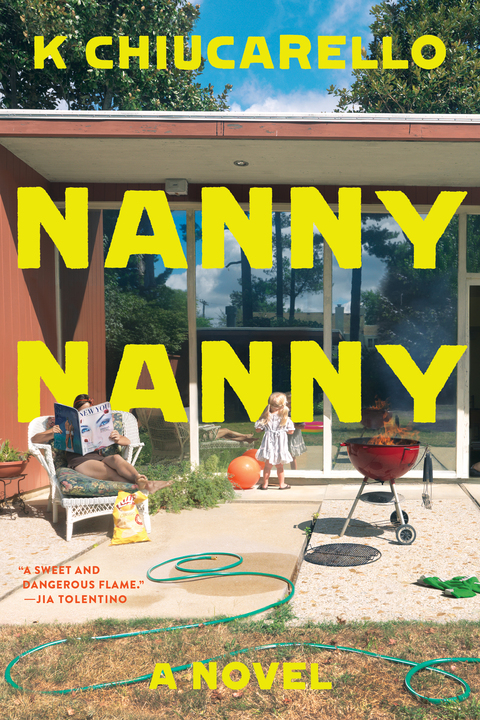
Emira Tucker is at a fancy grocery store with two-year-old Briar Chamberlain, whom she regularly babysits, when she is accosted for being Black while babysitting and accused of kidnapping Briar. Not only is this when Emira meets Kelley Copeland, a bystander who records the whole thing and later becomes her boyfriend, the incident also sparks complicated feelings in Emira’s boss (and Briar’s mom), Alix, whose white feminism turns into an infatuation with Emira as a younger Black woman. On the other hand, Kelley is charming, professionally stable, and fits the woke white boyfriend prototype, complete with his own crew of Black friends. Emira and Kelley are a fascinating case study of an interracial relationship and what it means to fetishize Blackness, but it becomes even more interesting as Kelley and Alix become foils for each other.
Across seven stories, Tulathimutte explores rejection—romantic, sexual, racial, societal—in its most intimate forms, as it intersects with whiteness, identity, and our online selves. In “The Feminist,” the first short story in Rejection, an unnamed white protagonist evolves from the eponymous “feminist” to an incel by the story’s end. A self-identified “narrow-shouldered man,” he gets friendzoned time and time again while preaching—and overperforming—feminism. He starts to believe, like the forums he frequents, “that narrow-shouldered feminist men are in truth the most oppressed subaltern group . . . a marginalization far worse than those based in race or gender, which were mere constructs, as opposed to the material fact of narrow shoulders.” In “Pics,” Alison struggles to get over a one night stand with her best friend, Neil. The story is about many other things, but we get a slice of Alison’s perspective on a WMAF relationship: “I can’t get over the absolute GALL of [Neil] trotting out his new hairless Asian child bride in front of me,” she texts her group chat.
Somehow, in the crowded party, Catherine and Andros were alone together in the living room. Catherine wasn’t sure how the room had emptied out, leaving just the two of them there, angled toward each other, him in an armchair and her on the couch, her legs crossed and a glass of mulled wine in her hand. She wore a crushed velvet cocktail dress and he wore a woolen button-up the color of slate. His hair was white and thick and his face was clean-shaven; his eyes were a light blue, light even in the darkly-lit room.
Catherine knew exactly who he was—she’d recognized him instantly—and he didn’t know her at all.
“You’re not a fan of Stein, then,” Andros said. “Tell me why. I’m very interested.”
“I haven’t read everything,” said Catherine. “I’ve read very little, in fact.”
Catherine couldn’t remember what she’d read exactly, but she knew she’d felt confused by whatever it was, and irritated by what seemed like a willful opacity.
“She’s one of my favorite female writers,” he said. “She changed literature forever. She changed language itself forever. We are all in her debt.” He shifted his weight in the chair, wooden and uncomfortable looking. Andros was old enough to make Catherine wonder if she’d been wrong not to offer him the couch, soft and sinking as it was. “I bet she’d be thrilled that you don’t like her, in fact. What is the opposite of turning over in one’s grave?”
“Giving a thumb’s up?” she tried, then instantly regretted it.
He laughed, and it didn’t seem like the laugh was just to make her feel better about having said something so incredibly stupid.
Catherine smiled and took a drink of her wine. Some of the others had gone out to the balcony to smoke weed and cigarettes, though it was cold and a soft snow was falling over the city. Another small group had gathered in the kitchen to assemble cookies and cake. Andros didn’t appear to smoke. He didn’t appear to drink alcohol, either; he was holding a can of Coke and wasn’t even drinking that. The party was the annual end-of-semester celebration hosted by Lawrence, the director of the NYU MFA program, held at his Park Slope apartment. Catherine had graduated back in the spring and she felt between groups: not student, not faculty, not friend, and certainly not a writer-writer. Lawrence seemed to know every writer in the city, even actually famous ones, though Andros was certainly the most well-known name in attendance that night. The only other person there from Catherine’s cohort was a boy on the balcony she’d never considered more than an acquaintance, despite two years of close proximity. If she’d ever talked to him one on one, she didn’t remember it.
Lawrence had introduced Catherine and Andros soon after Andros arrived. Lawrence told Andros in front of Catherine that she was something special, a compliment so nondescript it couldn’t help but be true. He was a little drunk already. A young Gertrude Stein, he’d said. Catherine had made a face, and Andros noticed.
Anton was his first name—not Andros—but nobody ever referred to him as Anton, or even as Anton Andros. He was just Andros.
“So what do you plan on doing with it?” Andros asked her now. “Your writing?”
“Publishing it, hopefully,” she answered. She wanted what every twenty-seven-year-old with a fresh MFA wanted: a book, then another, then another, a career half as successful as Andros’s—more than half, in Catherine’s case. Everyone around her was talented. She wanted her talent, however much she had, to not exist only as potential.
Soliloquy, Andros’s debut, was the one that made his name. She’d read the first third of it; she could tell it was very good, surely brilliant, about a young man tending to his mentally ill mother in Astoria. She put it down one day and never picked it up again.
What was that like, for your debut to be better than anything else you’d ever write? It was a problem she’d like to have.
“It’s on submission?” Andros asked.
She shook her head. She’d been trying not to look at him like all young writers must look at him, but she knew she was failing. A smile kept escaping her when it didn’t make sense to smile. He smiled back.
“I haven’t finished it yet,” she said.
“Stories?”
“Novel.”
“Ah.”
“It’s nearly done,” she said, crossing her legs, itchy in tights. The dress was a little short, now that she was sitting. She didn’t usually wear dresses. “I’m hoping to have a draft by the spring.”
The novel wasn’t anywhere near done. It had been tormenting her for five years and way too many workshops, and the shape of the story only seemed to be getting further away. The writing was strong, even great in some passages, everyone said so, but the story was missing some essential element that nobody could quite name. It was about her grandmother, Nana, and her long, terrible life—a great story, but the novel wasn’t working. Catherine knew it better than anyone.
“And do you have representation?” he asked.
“Not yet.”
One writer in her cohort had an agent already, Maggie. Catherine had thought she maybe had a crush on Maggie for the first year before realizing that Maggie was both incredibly straight and incredibly self-absorbed. Maggie was also talented, of course, but her stories always felt edgy in a forced way; some of them were audaciously close to episodes from Girls, but never as good. It was no surprise she had an agent before graduation, and she’d probably be quite successful. Catherine wasn’t bothered by that. It had nothing to do with her.
“So, Catherine Meyer, what do you do,” Andros asked musingly, “when you’re not writing?”
Her name sounded strange when he said it, like he didn’t believe it was her real name. If she was going to use a fake name, she’d choose better than Catherine Meyer. Still, she liked to hear him say it. It made her smile again, and he smiled back.
“I’m a nanny.”
“You like that work?”
“No,” she laughed, feeling the wine. For thirty hours a week she watched two sisters, three and six years old. They were exhausting, but at least they got along mostly and they were allowed to watch some TV on their tablets. “The money isn’t bad, not for now. I won’t do it for long.”
“Soon you’ll sell your book.”
“That’s right,” she said, unsure if he was making fun. Truthfully, shamefully, she had thought that the moment she was out of school, done with workshop deadlines and reading her peers’ work and teaching undergrads about the rhetorical situation and all the reading for her other courses, the novel would practically finish itself. Yet in the last six months she’d hardly written at all. The new time seemed to mock her more than free her—but the ambition persisted, inspiring an agita like unfulfilled lust.
She didn’t tell Andros that when she wasn’t writing or working, she was browsing social media and dating apps, dispassionately yet persistently. She sometimes went to drinks with those from her cohort who still lived in the city, but they left her in a seeking mood, so she’d go out to a bar or a club on her own after, looking for girls, and there they were, as if waiting for her, so she took them, hungry to get them into her bed. When morning came, she wanted to wake up alone. She’d had a girlfriend in college, but she’d never had any interest in a girlfriend since—she hardly had any interest then. The crush on Maggie was unusual, short-lived, and probably not real to begin with. If Maggie were here tonight and not skiing in Vermont, surely that’s who Andros would be talking to.
What are you looking for? her college girlfriend had asked her when they were breaking up but didn’t know it yet. The girls on the app asked her too. The app itself asked her. What are you looking for?
I’ll know it when I see it. That was the only true answer and the answer nobody wanted.
Now all Catherine wanted was to be right here, drinking this wine, with Andros’s full attention. Maybe he wouldn’t be talking to Maggie, actually. Maybe he would be talking to her no matter who else was here.
“One of my daughters is a writer, you know,” said Andros. “Iris.”
“Novels?”
“Screenplays. She’s in L.A. now, and she’s going to do well there. She’s meeting the right people, and she’s a very bright girl.”
The pride he felt, how it softened his whole face, made her jealous—a ridiculous response, but still, there it was. It wasn’t like Catherine didn’t have a father who surely bragged about her to strangers at parties. Outside, on the balcony, came a surge of laughter.
One of my daughters, he’d said. How many did he have?
“Will she adapt one of your books?” Catherine asked.
He shook his head. “Oh, absolutely not. She has more sense than that. She’s practical, savvy—more like her mother in that way.”
A wedding band was on his finger. Catherine fought the urge to pull out her phone right there and see what she could find out about his daughters and wife online. Andros wasn’t handsome, exactly, more stately and dignified than pretty, but the women in his life were surely stunning.
“So, Catherine Meyer,” he said. “When can I read your book?”
Before he left that night, Andros wrote his address on a piece of paper and folded it into her hand.
“Don’t wait until it’s done,” he said. “Send me the first chapter. By post, if you don’t mind. I can’t stand to read on a screen. All writing has more dignity on paper.”
She couldn’t believe he was really serious, but his eyes were unwavering.
“I will,” she said.
“Promise?”
“Promise.”
Catherine left the party soon after he did, seeing no reason to linger. That night she stayed up, retyping the first chapter, trying to make it sharper and fresher. Just imagining Andros reading it made it more smooth and alive. As she wrote, she took breaks to look him up online.
Soliloquy and a few of his other books were on several lists and referenced in many articles, but on Andros himself, there was very little. She kept encountering the same three photos of him, all taken decades ago. The Question of Joseph had also been popular, apparently. From what she could tell, it was a love story between two neighbors, again in Astoria. He didn’t seem to give many interviews, at least none in online magazines, and the sparse Wikipedia page didn’t tell her much she didn’t already know. He’d written eight novels, all told, and he was born in 1952 to Greek parents in New York. He’d won both the National Book Award and the Book Critics Circle Award, but not the Pulitzer.
Nothing on his wife or children, not even one name.
The pages had to be done in one week, at the most, she told herself. This was an offer with an expiration date, even if he didn’t say so explicitly. By the week’s end, she could hardly understand her own words. She knew it was strong—at least much stronger than it had been—and she aged the voice of the prose, making it more formal and even a little ornate, less simple and spare. She printed it out at the public library, adding her phone number and email address on the front page, and then she bought a long tan envelope with a clasp at CVS. On her way to nanny the next morning, she deposited it at the post office.
When Catherine arrived at the cafe, Andros was already there, sitting by the window. He wore the same shirt he’d worn to the party, or an identical woolen button-up, and a cashmere scarf, gray on gray. Catherine dressed more girly than usual, wearing a silk blouse from the back of her closet and her mother’s small gold earrings, a tinted lip balm. She’d entertained the idea of mascara but decided against it in the end, feeling enough like a doll already. The cocktail dress at the party she’d worn almost ironically, but he wouldn’t know that.
He didn’t see her right away; he was staring out the window, his expression somewhat vacant.
When she approached him and said his name, his face lit up.
“Catherine Meyer,” he said, smiling. “I took the liberty of ordering you a coffee. You like coffee?”
“Yes,” she said, though she’d already had too much that day. “Thank you.”
She fitted her coat over the back of the seat and set her bag on her lap; the floor was dirty with grime from all the boots before her. She’d never been to this cafe before—he’d emailed her and told her to meet him here, without a hint of how he felt about her chapter—and it was nicer than the places she usually went, with its high ceilings and white walls covered in framed paintings, all originals.
On the table was a thin book with a woman’s face on the cover. Slouching Toward Bethlehem by Joan Didion.
“How’s your book?” Catherine asked, gesturing to it.
“Oh, it’s brilliant,” he said. “You haven’t read it?”
Catherine shook her head, thinking already of a lie about what she’d been reading in case he asked. She’d found The Hunger Games on the bookshelf while nannying and had started reading it while the girls watched TV. She loved it.
“I’ve heard of it, though,” she said. She poured some cream into the coffee and took a sip; it was already a little cool. Truthfully, she’d been assigned to read Didion in college and didn’t even print the excerpt. One single reading reflection was such a small portion of her grade, she’d done most of the others, and she’d probably had some consequential paper due that week that took precedence.
“It’s a gift for you, then,” he said, pushing it toward her. Catherine took it in her hands; the cover was soft and the spine broken.
“Oh, I can’t take it—”
“Please,” he said. “I brought it with you in mind.”
“I’ll bring it back.”
“Don’t, please. I’m sure I have more than one copy.”
He looked at her the way he did at the party. It was a look she didn’t quite understand—paternal, maybe, avuncular, though not quite; something more mischievous than flirtatious, like they were both in on a joke. He wasn’t looking at her like he wanted to fuck her; she was pretty sure she knew that look at least. Most people seemed to assume she was gay, or at least queer—they picked up on what she was signaling both intentionally and subconsciously —but he might not, especially today, with her little earrings. He was surely an astute study of character, but he was also old. She was all right with him not knowing this about her.
“I loved your book,” she said, because she’d forgotten to say it at the party. “I’m sure people tell you that all the time. Soliloquy is the one I read.”
“Thank you for saying so,” he said. “I can’t say I feel the same.”
He took a sip of his tea and held the mug. An empty plate was next to him with pastry crumbs. How long had he been here before she arrived?
“I’ve written one good book,” he said. “Do you know which one it is?”
She didn’t dare answer.
“It’s a trick question. It hasn’t been published. I’ve given Iris instructions to publish it as soon as I die. They’ll take it then, I’m sure. That’s probably what they’re waiting for. It’ll sell much more once I’m dead.”
“What’s it about?”
“Myself,” he said. “What else?”
She smiled.
“So,” he said, leaning forward a little. “I read this story of yours.”
Catherine waited, reminding herself not to look too eager.
“It’s very strong,” he said. “Very strong, for such a young woman. This character, this Ada—I love her. I love the way she talks.”
“Thank you,” she said. “I rewrote it, the whole thing.”
He nodded, as if he could tell. Ada was based on Nana. Catherine had taken the true story and twisted it beyond recognition, knowing, too, that the stories Nana told weren’t entirely true either. The first chapter began with a young Ada leaving Ireland, traveling across the Atlantic by freight with her pregnant mother.
“You do still have some tells of a young writer, however,” said Andros.
He looked outside, gathering his thoughts. The sky was low and gray; there was a storm coming. It was supposed to start in the morning, but there was still no snow.
“You explain what doesn’t need explaining,” he said, his eyes back on her. “You don’t trust your reader, not completely. Your reader is every bit as smart as you are. You must treat him like it.”
This was something she’d heard before. She thought she’d done that, she did trust her reader—especially when Anton Andros was her reader. His book may not have been her favorite, but still, he had all the respect she had to give.
His book may not have been her favorite, but still, he had all the respect she had to give.
“Yes,” she said, reaching for her notebook in her bag, fishing for a pen. Usually she just wrote emails to herself, but she sensed he wouldn’t like it if she took out her phone as he was talking. Carrying a small notebook around made her feel like a writer and also like Harriet the Spy.
“There are some beautiful sentences in there,” he went on. “Smart sentences. But they were too beautiful; too smart. Do you understand what I mean? A sentence like that, you can tell the writer is proud of it. You can see him sitting back and saying, look at that! There’s ego in it, is what I mean. It points to the writer, away from the story. It’s an interruption—a lovely interruption, sure—but an interruption nonetheless. Didion will help you with that. Listen to her.”
He spoke as though he’d said this before, many times. Surely he had. He used to teach at NYU, a long time ago, and it was easy to imagine him saying all this to a group of adoring undergraduates. Lawrence had been his student. Andros seemed like the type who would have slept with a female student every so often, but only the really exceptional ones, and only in the time when that was still practically expected, even if not exactly respectable.
“I think I know what you’re referring to,” she said, wishing she had the pages in front of her. She’d found a pen, but she was afraid to write and break his gaze. “The passage when they’re boarding the boat, when Ada’s mother—”
“Write something new for me,” he said, lifting his hand to stop her. “Put this story in a drawer somewhere. This story very well might have a future, but you have to grow a bit more first. It’s been workshopped to death, I imagine?” She confirmed with a nod that it had. “I want to see what else you can do.”
His eyes, with a moment of sunlight coming in through the window, became a glacial blue. They were staring into hers.
It isn’t a story, she wanted to say. It’s a chapter.
“I know how to make it better,” she said. “I was just thinking this morning about—”
“Do you have a drawer?”
He was smiling, so she smiled, too.
“Yes, I have a drawer.”
“Put it in that drawer.”
“Okay.”
“Something new.”
“Okay,” she said. “Something new.”
She wrote down trust, drawer, new.
“Let me tell you why,” he said, leaning in, his elbows on the table. “I am not interested in that story, what you can do with it, how much better you can make it. I’m interested in you. You as an instrument.”
It was hard to look at him as he said this. Suddenly, she remembered who was talking to her: Andros. It’d been a long time since she took a breath.
“Thank you,” she said, unsure if it was the right thing to say.
“Some people have a light,” he said. “I can see it right away; it’s right there, right in their eyes. You have that. Your light isn’t hard to see, though, so I can’t give myself too much credit for spotting it. It’s your talent, your intelligence—and something inexplicable, undefinable. Lawrence saw it, too, you know. He told me you blew him away. Simply blew him away.”
She said thank you again, though she’d said thank you already too many times. She knew what light he was talking about; she knew she had it; she always had. She wouldn’t even attempt to write otherwise. But Lawrence had never said anything like that to her—and he always had plenty of critiques to offer her in workshop. Though when he said she was something special at the party, maybe that was a deeper compliment than she understood at the time. She chose now to believe it.
“It’s just the truth,” Andros said.
The cafe had filled up since she’d arrived, and the music was too loud—that’s what was wrong—someone must have turned it up all of a sudden, something indie she almost recognized. Still, no snow was falling.
“I don’t want to take up too much of your time,” she said, though that was precisely what she wanted: all his time, all his attention. She could hardly feel her body. Just being this close to him, her brain was becoming smarter, stronger, sharper.
“My time is yours,” he said.
“There must be a lot of writers who send you their work,” she said.
“There really aren’t.”
She smiled, unsure if she should believe him.
“Besides,” he said. “I have a lot more time on my hands than you might think. What does a writer do who can’t write?”
“Read?”
He laughed.
“I have a syllabus for you,” he said. “Books that will show you how it’s done. Write this down.”
Catherine had heard of some of the writers on the list, but not all. For those she recognized, the book titles were not their best-known works, and this gave a sense of the great depth of all she didn’t know. She was going to get more of an education from Andros in one hour than two years of her program, and it was making her giddy. On the way back from the cafe she went to the used bookstore nearby, just a little out of the way, and browsed the aisles for a long time, collecting all that she could find on the list.
That night, her roommate, a soft-spoken social worker, was making something elaborate and smoky in the kitchen, so Catherine closed herself up in her room and read Didion in her bed. Maggie texted a group chain about drinks somewhere but Catherine ignored it. Didion’s writing cut right into her; she’d never read anything quite like it. Catherine was right there with her in California, 1960’s, seeing everything, missing nothing. I could taste the peach and feel the soft air blowing from a subway grating on my legs and I could smell lilac and garbage and expensive perfume. . . Catherine eagerly turned the pages, then turned them back, to make sure she got every word.
How had she not read Didion before? How had no teacher ever put this book in her hands and said, you must read this immediately, nothing else before this, instead of burying it in a crowded syllabus? It was satisfying to think Andros had given it to her because he saw some likeness between them—could Catherine really be half as brilliant as this? Yes, she thought, she was. She could be.
But even as she loved the writing, she felt uneasy; she was missing Andros’s point in giving it to her. Catherine didn’t have any interest in writing essays, and some of Didon’s sentences seemed smart in the way Andros told her not to be, like I faced myself that day with the nonplused apprehension of someone who has come across a vampire and has no crucifix at hand. Catherine didn’t know exactly what kind of writer she wanted to be, besides a successful one. It definitely wasn’t Stein, but it wasn’t quite Didion, either.
Catherine put Didion down and read a little bit of The Hunger Games instead—she’d taken it home with her, just to borrow—then she gave up on that, too, in favor of her phone. She was soon searching for Iris Andros and found a private Instagram account with the profile photo of a beach and a few results from indoor track from many years ago. She was about ten years older than Catherine, then, probably, judging by the year of the results, which would still make Andros an old father. Second marriage, perhaps, or third. Iris had run for Horace Mann and hadn’t been very fast, which gave Catherine some pleasure, though she wasn’t much of an athlete either.
Andros still hadn’t mentioned another daughter since Lawrence’s party. Maybe the other daughter was a source of shame—an addict, a criminal—or, perhaps worst of all, a painfully ordinary girl of average intelligence and mild ambition. Catherine felt embarrassed for her, though she felt sympathetic towards her, too. It wouldn’t be easy to have Andros as a father, Iris as a sister.
Andros must talk to Iris on the phone, pressing his ear to the receiver, wanting to know how she is, how she fills her days.
I love you, baby, he’d say to her. I miss you so terribly.
I miss you too, Daddy.
When can you come visit your old man?
I don’t know, Daddy. I’m really busy. I’ll try to come home soon.
You know I’m so proud of you, baby.
I know, Daddy.
On the train to nanny the next day, a new story idea came to her, a story of young love. It seemed like the kind of story Andros might have a soft spot for—a little nostalgic, a little sexy. The thought occurred to her to make it two girls, maybe lightly based on her and her college girlfriend only with more passion between them—but she didn’t know what he’d say to that. Maybe she’d make it a queer relationship after he read it. When it was finished, she mailed it to him. A few days later, he emailed her to meet her at the same cafe. He was early again, sitting in the same seat. This time he’d ordered her an almond croissant.
“You’re trusting the reader,” he said. “I can see that. That’s good, very good. But there’s something missing. Can you tell me what it is?”
She’d just taken a big bite of the croissant, which was perfect. Flakes fell on her lips as she shook her head.
“I can’t find you anywhere,” he said. “I’m looking for you, and I can’t find you. Ned and Sara are adorable, I’m rooting for them, but you—what you care about—it’s not in this story.”
Ned and Sara weren’t adorable; that’s not what she’d intended. The character of Sara had become, kind of and kind of not, her older sister Rose, much more than her college girlfriend. Ned was based on Rose’s ex-boyfriend, a musician who had left Rose heartbroken and short-tempered for weeks. It was a strange surprise how Catherine found herself identifying more with Ned, the artist, the one who wanted nothing to do with anything or anyone but his art, art that didn’t even exist yet.
She was writing herself, she wanted to say. She was Ned.
“Write closer,” said Andros.
She wrote another; he asked for more. She wrote another. They met every few weeks at the same cafe all throughout the winter. He was always there first and stayed after she left, always with the same gray scarf and a different treat waiting for her. He never handed her back any pages. She started to wonder if he had a stack of them at home, or if he used them for kindling. Secretly, shamefully, she harbored the hope he was sending them to his agent or editor, and one day she’d meet him and he’d say, Congratulations, Miss Meyer! You have yourself a book deal.
She bought a new lip tint, this one with a little shine, a navy cardigan and a fair isle sweater at a thrift store. She began to think of certain items as part of her Andros costume.
One story was about her father, only he wasn’t her father; the father in the story was ill from some horrible but vague degenerative disease, not just living in Atlanta for work and still technically married to her mother in Fort Collins. The daughter in the story loved her strong, kind father, but she was hoping, secretly, that he would die faster, to get it all over with. Catherine found herself writing a scene in which the girl spoke directly to the father’s illness—and the illness spoke back—but it was too weird and didn’t work at all. Andros would think it was ridiculous.
The story was Andros’s favorite so far. She only wrote stories now, not chapters. The Nana novel was dead, and it felt amazing to give up all her efforts at reviving it. It was dead and had never been alive to begin with.
“There you are,” he said of the father story. “I’m finally starting to see you.”
Before they parted that day, he said, “I’ve read some of your work to Mary Beth, you know. She wanted me to tell you she loves it.”
“Mary Beth?”
“My wife.”
Catherine tried to hide her surprise that Andros would share her work with anyone. He’d say to his wife, Want to hear something from this young woman? She blew me away; simply blew me away. She’s something special. She has this light.
“Does she write?” Catherine asked.
“No,” he said. “She could, if she wanted, I’m sure of that. But no. Mary Beth was a singer, for a time. Her voice was—oh, it was like nothing you’ve ever heard.”
Catherine nodded, unsure what to say. He spoke of his wife like she was dead.
“She said, this is right up Bill’s alley, don’t you think? I told her I agree.”
Catherine tried not to look too delighted, and she had no idea who Bill was, but Andros’s eyes were shining; he knew this would make her happy. Bill sounded like someone big enough to need no last name.
Andros wasn’t offering anything, she knew that, but still, Bill had been mentioned, and Andros was smiling.
Before she left, Andros told her he’d be traveling for the next couple weeks.
“I’ll be in LA,” he said. “Visiting Iris. Would you mail me a story anyway? Mary Beth will be there. I’m sure she’d love to have some reading while I’m gone. I’ll get to it as soon as I get back.”
Catherine enjoyed the assignment, writing a story for his wife, this singer she’d never met. It opened up a new part of her mind, this strange audience. She thought Mary Beth might like a mother story, so she wrote about watching her mother apply makeup in the bathroom with red wallpaper that matched her red lipstick before she went out with a friend—male suitors, Catherine long suspected—and how the girl in the story waited up with her grandmother, playing Scrabble, never winning. When she read it over, she knew it was good.
Bill was Andros’s agent, it wasn’t hard to find. Bill McAndrew. He represented a few famous authors, and many she’d never heard of, but they all seemed to have plenty of big books. She was right up his alley.
It opened up a new part of her mind, this strange audience.
Spring came in a rush after that. In the afternoons, Catherine took the girls outside to the park across the street and they became sweaty in their long pants and jackets. The day she finished the story about her mother, she walked to Andros’s apartment to drop off the pages in his mailbox herself. It was a good day for a long walk, she had the whole day off, and she feared the mail would lose the pages, the best pages, the pages for his wife—maybe even for Bill.
When she approached the building, she checked the address against the directions on her phone to make sure it was the correct one: a modest but dignified building on W 75th and Columbus. There was his name, Andros, on the door. She wasn’t going to buzz; Catherine wasn’t ready to actually meet Mary Beth yet, not with how she was looking today, scrubby and normal, wearing not even one Andros costume item.
The front door was locked, of course it was, but she tried it anyway. There was a stand inside for a doorman but nobody was there. It didn’t feel right to drop the folder in the mail slot and leave it there on the floor.
For a minute she stood there, unsure what to do.
Then, the door opened, and a young woman about Catherine’s age came out. Their eyes met; there was something familiar about her, but what? She wore a blue bandana on her head, an oversized argyle sweater, and dirty sneakers. A tote bag was slung over her shoulder. She was a little older than Catherine, actually, it was clear with a closer look, just dressed like a college student.
“You’re looking for Anton Andros?” she asked. His name was right there on the folder.
“You know him?”
The girl smiled like she’d just heard a bad joke, but Catherine didn’t get it.
“You can’t leave the mail out here,” said the girl. “Give it to me. I’ll bring it in.”
The girl opened the door with a fob, allowing Catherine to follow her inside. She shifted her giant tote from one arm to the other; it seemed full of clothes. The doorman, an older white man with a navy suit and very pale skin, emerged then from around the corner. He smiled at the young woman in apology.
“Richard, hon, can you take care of this?” she asked.
“Yes, Miss,” he said, sliding it under the counter. He looked at Catherine, without suspicion, but he was looking at her. “Of course, Miss.”
Catherine followed the woman outside and waited until they were on the steps to thank her.
“It’s nothing,” she said, and descended the stairs, on her way out, done with Catherine.
“You’re his daughter,” Catherine called after her. It suddenly became clear. “I’m Catherine Meyer.”
She paused and turned back to eye Catherine. “Jules.”
Jules didn’t look like she’d ever heard the name Catherine Meyer before.
“You’re visiting?” Catherine asked.
“No, not visiting.”
The girl didn’t want to talk to her, but she wasn’t leaving yet, either. The resemblance to her father was striking, now that Catherine knew to look for it: the wide face, light blue eyes, though her coloring was paler. She wore no makeup; her dirty shoes were old Chuck Taylors.
“I didn’t know he had a new one,” said Jules flatly.
Catherine stood straight, not quite understanding; then she did understand.
“There’s nothing like that,” Catherine said, hating the insinuation. It revolted her, and it was an insult to her and Andros both. He never touched her, not even a hand on her shoulder; she reminded herself of that. He didn’t even give her that look. “Between your father and me—nothing like that at all.”
“He reads your work,” said Jules. “Is that it? He gives you advice, he introduces you to the people he knows?”
He hadn’t introduced her to anyone. The closest he’d ever done was mentioning Bill’s name one time, and that was nothing. Less than nothing.
“I know I don’t know you at all,” said Jules. “I don’t know one thing about you. But I know my father. When he has attention like this—it’s like a drug for him. He’s always looking for a fix.”
Jules stared at her, waiting for Catherine to speak, to offer a defense, but she had none.
“He’s reading my work,” Catherine said instead. “We have coffee, that’s all.”
Jules nodded, not disbelieving her, but she was done talking. She was on her way somewhere, and she’d already been delayed enough.
“I’m sure you’re very talented,” Jules said, as she began to walk away. “You always are.”
For days afterward, Catherine couldn’t stop thinking about Jules. Every time she tried to remember the woman’s face, what she said, how she said it—the image evaded her. Then, when she was finally thinking of something else, it would come to her, clear as anything, the whole interaction—when she tried to pause it, rewind, slow down, Jules’s face again turned to mist.
Jules didn’t exist online, not at all. Catherine searched and searched, digging deeper, from all angles she could think of—Julia, Julianna, Julie, Juliette. Nothing.
Catherine didn’t know if she should be grateful for Jules, or resent her, or discredit her—or if she should have any feelings about it whatsoever. Andros might have a good reason for keeping her secret—not secret, really, but quiet, or maybe just not worth his time and attention—though Catherine couldn’t imagine what a good reason might be.
Had Jules really told her something Catherine didn’t know already? Andros had read the work of other young writers before. Of course he had. Of course she was special and also not special. None of this was news, yet it felt like a revelation, and it made her stomach sour.
She wondered if any of this would have happened if she hadn’t worn that stupid cocktail dress at Lawrence’s party.
A few days later, Andros emailed to say he was back in town and he’d love to talk about her story, if she was free. They chose a date and time. The messages were short, as they always were, and she sounded normal, and so did he.
So Jules hadn’t told him they’d met, she thought, though perhaps she had. Maybe he would’ve emailed her anyway, as usual, and it didn’t change anything at all.
Andros had never lied to her.
Catherine dressed to see him, this time wearing a cropped shirt and old jeans; the day was barely warm enough. As she walked, she thought of what she might say to him about Jules—nothing, she wouldn’t say anything to him—she’d listen to his thoughts on her story, perhaps Mary Beth had passed some along as well, if she’d even read it. Catherine would take whatever she could from him; this was a transaction, after all, it always had been.
She walked. The day was overcast with a mild wind, the sidewalks eerily quiet, and as she walked she began to head in a different direction.
An idea occurred to her. Andros wouldn’t be home now. He’d be going to meet her at the coffee shop; he was always early. He would’ve left by now.
Catherine walked to his apartment. She stood outside for just a moment, afraid to lose her nerve. She wanted to see Jules.
She buzzed Andros’s number but nobody answered. This time the doorman was at his stand. She knocked and smiled at him. He gave her an inquisitive, not quite suspicious look, and opened the door slightly.
“Richard, is it?” Catherine asked. His face searched her, perhaps he did vaguely remember her. “I’m here to see Jules Andros, I was with her the other day. Is she in?”
“Who should I say is calling, Miss?”
“Catherine. Meyer.”
He took a few steps inside as Catherine moved out of the doorway. He lifted a phone, pressed three buttons and held it to his ear. It seemed to take a very long time. “Catherine Meyer is here to see you,” he said. Catherine could hear another voice on the line, just barely, not enough to make out any words, but it did sound like a woman’s voice.
“Yes, Miss,” he said. “Of course.” He hung up and looked at Catherine. “Miss Andros says you’re welcome to come up. 303F. Elevators are right this way.”
“Thank you.”
Catherine felt nervous, as nervous as she could ever remember. She felt like she was doing something illegal, though of course she wasn’t. There were no laws for things like this.
The building’s interior became a little shabbier in the elevator and down the hall—thin crimson carpets, fluorescent lights, a slight smell of cigarette smoke. She found 303F and stood in front of it, feeling absurd. Jules opened the door before Catherine could knock. She looked as if she just woken up from a nap; her eyes were tired, her hair unkept, her fingers stained blue and black from some kind of ink. She wore black leggings and an oversized tan t-shirt, no bra. Her breasts were large and a little uneven.
“I didn’t think I’d ever see you again,” said Jules.
“I didn’t either.”
“My father isn’t here. But I think you already know that.”
“He’s probably at the cafe right now. Waiting for me.”
Jules leaned against the doorframe, studying Catherine with a new interest. She had the same gaze as her father, intense and penetrating and a little amused. It was hard to stop looking at her.
“If you’re here to tell me that you never slept with my father, don’t worry about it,” said Jules. “I know you didn’t. And I don’t even care if you did. It’s not my business.”
“I’m not—no,” said Catherine, though she was relieved to hear this. “I just wanted to see you, if that’s okay. Just for a minute.”
Jules smiled a little, changing her whole face, as if she’d won a bet with herself. She had an unexpectedly lovely smile. She moved away from the door.
“Come in.”
Catherine followed her inside, and Jules shut the door slowly, taking care to lock it without making much sound. Behind Jules was a small kitchen; the counter was clear but the sink full of dishes, and a sprawling pothos was on the windowsill. It smelled like burnt eggs. The place was silent in a way that made her certain they were alone.
“Why do you want to see me?” Jules asked her.
Catherine didn’t have a good answer, she knew that. She hadn’t been honest with herself. She knew was never going to meet Andros today.
“Why did you let me up?” Catherine asked in return.
Jules shook her head with a smirk, as if still deciding whether or not she wanted Catherine here.
“We can sit in my room,” said Jules.
Jules led her down the small hallway, past a modest living room overrun with books, then two closed doors, one of which was surely Andros’s office, where he read her work. The bathroom door was open, showing a mess; the shelf next to the sink was full of products without lids and a purple towel lay on the floor.
Jules’s room was painted dark green, and it had one large window and several small lamps, Christmas lights and tapestries that gave it a collegiate feel. There were a few piles of books here, too—mostly graphic novels, by the looks of them, and art books. Catherine noted the bright colors of the spines, the funny fonts of the titles. One on the desk looked like a novel about a robot, maybe even Young Adult. Catherine had never even thought to write something like that. It had truly never entered her mind.
The walls were nearly completely covered with unframed art: drawings, sketches, paintings, all tacked up. The wall must be wrecked with holes. Catherine’s mother would have a fit if she did that.
“You made these?” Catherine asked, standing in front of a portrait. It was charcoal, of an old woman. She had dark bags under her eyes and folds in her skin, a sour expression, her features seemed intentionally exaggerated.
“From a long time ago, mostly,” said Jules, sitting crosslegged on her unmade bed.
“You’re so talented.”
“Who isn’t?” Jules asked, with a shrug. “It doesn’t mean anything.”
Suddenly, Catherine felt the exact same way. All her talent, whatever amount she possessed, hadn’t gotten her anywhere but here in this room, with a dead novel and mediocre stories written for an old man and some wife.
Catherine looked over the other portraits on the wall, some smaller than her hand. The ones with color were bright, green skin with blue lips, long chins and crooked noses. Catherine wondered if any of these portraits were of her sister Iris, but she didn’t want to ask.
“I did give him your story, if you were wondering,” said Jules. “I didn’t destroy it or anything.”
Catherine hadn’t even thought about Jules not delivering it like she said she would.
“Did your mother read it?” Catherine asked. “He told me it was for her.”
“No,” she said. “I don’t think she did.”
“Oh,” said Catherine, feeling ridiculous in her disappointment.
“I read it, though,” said Jules. “He just leaves them on the table. I can’t help myself.”
Her stomach dropped. Catherine swallowed.
“Have you read all of mine?” she asked.
Jules smiled. “I read whatever he leaves around. His other students’ stuff, I’ve read some, but they bore me, I don’t usually get past the first page. Yours didn’t bore me.”
Catherine took it in, imagining her pages here, in this apartment as it was, with the purple towel on the floor and the burnt egg smell. She imagined Jules reading the first page while standing in the kitchen, a slice of cheese in her hand, maybe, turning the page, then bringing it into this room, taking it into her bed. Catherine hadn’t written the stories for someone like Jules. She wanted to ask more about what she thought of them, what she thought was missing—Jules might be the person who could finally tell her—but she didn’t want to think about her writing now.
She would write again, she knew that. Andros didn’t get to have the power to make her stop. Nobody did. But she might need to not think about her writing for a long time.
Catherine felt strange still standing. She sat on the edge of the bed.
“What do you do? Are you in school?” Catherine wanted to know everything Jules would tell her.
“I got laid off last year,” said Jules, though she didn’t say from where. They sat in silence for a moment, and Catherine tried to sense what kind of silence it was. Jules was still looking at her. Catherine didn’t want to leave her bed.
“Nobody’s ever drawn a portrait of me before,” said Catherine.
“Are you asking for one?”
Catherine realized that she was. It had never once occurred to her that no portrait of her existed anywhere in the world, and it suddenly seemed like a very sad thing. She discovered she wanted one desperately.
“You have a good face,” said Jules. “I haven’t tried a face like yours. With how your eyes are like that, down at the edges.”
She said it so matter of factly, not a compliment or an insult. Catherine wasn’t sure whether or not she should say thank you, but she liked knowing Jules thought her face was good. Catherine never thought too much about her face; she wasn’t beautiful and she wasn’t ugly, it didn’t serve her or hurt her. Catherine closed her eyes. Jules moved closer and touched her hair, angled her chin down. It was more the touch of a mother than a lover, a correcting touch.
Jules reached for a black pencil, a piece of paper and secured it to a clip board. She leaned against the bed and held it in her lap, a posture she’d clearly assumed many times before. Catherine wasn’t sure what to do with herself, with her hands or her gaze.
“Can you look toward the window a little?” Jules asked. Catherine obeyed.
“Now look back at me,” said Jules. Catherine turned but kept her eyes downcast.
Pencil touched the paper; the sound sent a shiver through Catherine.
“He might be home soon,” said Jules.
Catherine nodded once. She had no idea what she would say to him and what he would say to her, but she did want to see the look on his face when he saw her here. She wanted to see the revision of who he thought she was play out over his eyes. He hadn’t seen her at all, of course he hadn’t: she’d shown him someone else. She wanted to watch him realize that.
But that wasn’t why she was here; she wasn’t here to spite him. She didn’t care about him right now. He didn’t exist.
“This might not look the way you want it to look,” said Jules.
“I don’t know how I want it to look.”
“Shh,” said Jules. “I’m going to do your mouth first.”
Catherine stayed very, very still, and listened to the pencil on the paper.
When Vigdis Hjorth’s novel Will and Testamentwas published in Norway in 2016, scandal erupted in its wake. In that novel, a character who resembles Hjorth recounts her struggles to communicate with her family after she tells them that her father sexually abused her as a child. In real life, Hjorth’s family protested that her allegations weren’t true, while Hjorth pointed out that the novel was, by definition, fictional. In 2017, her younger sister Helga wrote a novel of her own, Free Will, that told the story from her perspective, casting the older sister as a psychopathic liar. In 2018, her mother sued a Norwegian theater that produced an adaptation of Will and Testament. All of this controversy was good press: Will and Testament has sold upwards of 170,000 copies in Norway and received multiple literary prizes there, as well a place on the longlist for the National Book Award.
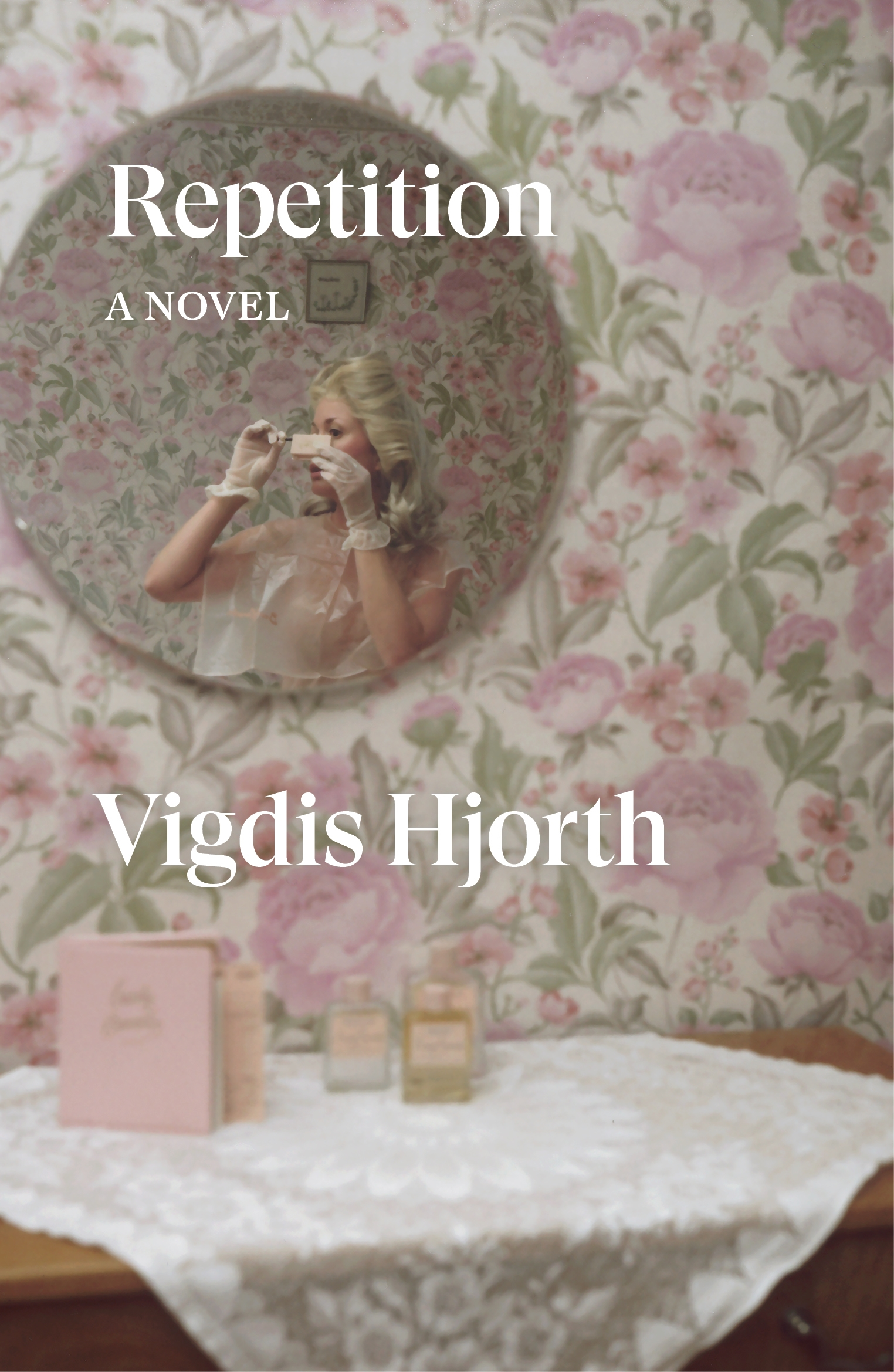
In her new novel, Repetition(first published in Norway in 2023), Hjorth delves into the experiences of a teenage girl whose burgeoning sexuality creates conflict with an abusive father and paranoid mother. “It’s not a secret that this book is autobiographical,” she told me frankly of Repetition, while also emphasizing that it is a work of fiction. At age 66, delving into memories of her experiences as a teenager is by necessity an act of imagination. Regardless of how fictional Repetition is, it provides a devastating window into how families live in the aftermath of childhood sexual abuse. Though the narrator’s father committed the crime, it is the mother who surveils and harasses her, terrified of any hint of sexual behavior. Later, when her mother discovers the narrator’s diary, in which she has written a vivid sexual fantasy, her parents act as though she has somehow violated them, instead of the other way around.
Perhaps losing her family in the wake of Will and Testament has allowed Hjorth both to speak more freely about her creative project, and lowered the stakes in writing about the brutal family dynamics she describes in both these novels. In Will and Testament, protagonist Bergljot maintains some form of hope that her family will be able to hear her. The novel’s pages are filled with her anxiety about interacting with her family members and the anger and devastation that comes every time these hopes are dashed. Repetition is as morally uncompromising as Will and Testament, but it is also a calmer novel, focused on analyzing the past. “If your family cuts you out and you accept that, you understand there is no way back. They don’t want to have contact with me,” Hjorth says. “Even though it’s a big, big sorrow and it’s hurt you, and maybe you are hurt in a way that never can [heal], you are also set free. It’s a kind of earthquake.”
In a conversation conducted over Zoom, we discussed the complicated position of women in her mother’s generation, the tendrils of sexual abuse, the Danish writer Tove Ditlevsen, and more.
Morgan Leigh Davies: In Repetition, you explore how child abuse affects other relationships within a family, not just the primary abusive relationship that we might focus on.
Vigdis Hjorth: That’s how family problems can be. Things happen, and maybe you can talk about what happened. Maybe you cannot. When grown-up siblings are talking about, What kind of family did we grow up in? they will have very different views. They will tell different stories about what they have experienced. When Will and Testament was read so widely, it must not have been because that many daughters or sons have experienced sexual abuse, but because a lot of them have experienced violence in a physical or psychological way.
You have the feeling you cannot talk about it, and if you try to talk about it, your siblings, or your mother, or the rest of the family, don’t want or aren’t able to believe you. It’s a pattern that must be more common than I knew when I was writing the book.
MLD: I found the depiction of the mother in this book really interesting. You make an effort to imagine the thought process she is going through—even though she’s failed in her responsibility to her daughter, she’s also in an incredibly difficult position. What was the process of trying to enter that consciousness?
VH: When you try, as a grown-up child, to understand your childhood, you very much want to excuse your parents. You try to explain how they could react as they did, because the worst thing is to conclude that, Oh, they didn’t care about me. They didn’t love me. They do not love me. You try to explain it: She had to do it, she had no other choice. But I also think that this is a question about generations. Most women were economically [dependent] on their husbands, that’s why they couldn’t divorce. They had no power: not in society, not in their marriage. Their only power was to have children that behaved, and a clean house. Their status depended on that. That explains how many of these mothers maybe had the feeling that something was not right, something must have happened, but they didn’t really want to find out because then they would have a dilemma that would be impossible to solve.
Maybe these mothers can’t imagine how important they are in their child’s life.
I let the mother character have a lot of space: Will and Testament and Repetition talk a lot about the daughter’s relationship to her mother. It’s just me guessing. And then this little girl that happened to be an author is looking at her thinking: Where is Mother? What is Mother thinking? What does Mother understand? And maybe these mothers can’t imagine how important they are in their child’s life.
MLD: Especially in that era where there wasn’t as much discussion about the psychology of children.
VH: Yes, yes, yes. For that generation of women, not in bourgeois but in middle class life, the main concern was, Do my children behave? And that was everything.
MLD: I would imagine especially for girls, right? In Repetition, that idea is so tied to sexuality, which is the worst kind of misbehavior possible. This mother knows on some unconscious level that this has happened to the narrator. Her intrusions into her daughter’s sexual life are not the same as sexually abusing a child, but it is a weird continuation or contribution to that abusive environment.
VH: I think that the mother in the novel, unconsciously or not, knows something has happened. She is suspicious, but she cannot ask the question. It’s an impossible question to ask. She knows that if she asks, the answer will be no, and she also knows that she will never be able to find the right words to ask. How do you ask a four- or five-year-old girl about that?
So what shall she do when she can’t ask? She observes the daughter’s behavior. Her nightmare is that this girl, at 15, 16 years old, will be promiscuous, because even at that time, everybody knew girls that behaved like that often had abuse stories. It sends a signal to the society that something is not right.
MLD: That comes to a head with her parents reading her journal, in which she describes her sexual fantasies. It’s very upsetting to imagine being violated in that way, especially by your parents. The narrator then says that this experience stopped her from writing for many years after. You’ve said before that writing isn’t therapeutic. But it obviously does serve some function or we wouldn’t do it, and suddenly this character no longer has that.
VH: Writing about your problems doesn’t solve them, but you can find something out. Sometimes I say, I don’t know what I mean before I see what I write. My writing is more intelligent and wise than myself. Maybe that’s because we have to talk to so many people during a day, and do a lot of unnecessary talk, but when we write, we can come closer to what is important.
I wrote a lot when I was a child. Not interesting things. But I must have found that writing, or drawing, was a way to calm down, to concentrate. When I was 14, 15, I started to write a diary. That was even more calming. I think I say in the novel, “Why do I write her or she when I mean me?” So it’s not a secret that this book is autobiographical, but I’m also afraid to use that term because what you write in 100 or 200 pages cannot capture what really happened.
What you write in 100 or 200 pages cannot capture what really happened.
When the girl in the novel—me in reality—makes up what happened with this boy she had fantasized about, inspired by porn magazines the boys had, that is a kind of fiction: her first fiction. That was a very special experience. I had this feeling of what literary inspiration was. I was really making it up. That had a much [stronger] impact than anything else I had said or written before. It was an insight into the power of fiction. It was impossible to say to my parents, It’s not true. It’s fiction. I made it up. I dreamed it. So in that first fiction experience, I saw the impact it could have. It was very traumatic in one way, but I also found out that it was a very powerful tool.
MLD: It’s so significant that it’s a sexual fantasy, that you’re able to create something that’s so different from the abuse. It’s no wonder you’re writing so fast and feeling so connected. The whiplash of that immediately being seen by your parents must have been extreme.
VH: Yes, it was. That’s why I can never forget it. When I say that I dreamed it, I didn’t dream it as a porn film. I wasn’t sitting there getting horny. It was not like that. It was as if I had been drinking or taken something. That was also the first time I felt free and lifted up by writing. The sentences were flowing, the words were coming. There was this feeling of everything going and going; the pen was flying over the paper. The most fabulous feeling as a writer. It has nothing to do with sexuality, but what she’s writing about are these phrases from porn and from romantic films. It’s a language every young girl that had seen films, especially American ones, at that time had inside them. It transformed my, her, body into language: all these longings, one scene after the other. It was the first time I ever experienced being taken away by an activity, forgetting everything else, just being in it. It was a lovely feeling.
She never read that again, of course. I never read it afterward because I threw everything away. But it would be very interesting to see what quality was in that piece of writing. I think it must have been a kind of singing, a kind of song. The Sámi people in Northern Norway that I met in my youth sang to each other, they sang their experiences. To me, it was the first song I made.
MLD: How did you get back to that process after so many years of not doing it?
VH: I used to tell this as a funny story. Often, when women are together, we talk about: How was your first time? Tell me about your first time. I told this story to make everybody laugh because nothing happens. It’s so stupid. Everybody laughed when I said that this boy was putting his arm around her shoulder and saying, “Now, you have become a woman.” I made it a funny story, and it is a funny story. But a month before I started to write this novel, I told it at a literary festival, everybody laughed, and when I went home, I felt so stupid and so guilty because I hadn’t taken myself as a 15-year-old girl seriously. So I tried really hard to find out, How did she really feel? In fact, it was a big trauma for her because she couldn’t say to her parents that her writing was a fantasy. She was left alone with this and couldn’t tell anybody because it was so shameful. I had forgotten that loneliness and shame, or I didn’t want to see it. I felt sorry for the girl I was. So I decided to find out about her, and the way I find out is to write about things.
It’s difficult to say what the literary aspect of the sentences is and what the so-called truth is, because the truth is always ‘so-called.’
MLD: It’s interesting to hear you say, Of course, this is me. The story of Repetition appears briefly in Will and Testament. For very understandable reasons, in interviews from five to 10 years ago, you really emphasized that your work was fictional. How much are you thinking about these books as part of a wider project? Are you thinking about people reading them together, or do you not think about reception at all?
VH: I’m not thinking about reception when I’m writing. But I would never have written a novel about my own difficulties if I didn’t think I shared this trauma with a lot of other people. I tried as much as I could to make the quarrel in Will and Testament—in-between the siblings, about the mother and the father—very common. I didn’t want it to be about my mother, my father, because then other people would have difficulty identifying with them.
It was stormy when it was published. Now I have nothing left to lose in my relationship with my family. They are lost to me because of Will and Testament. But I wouldn’t write a story to hurt them. Why should I? I write what I feel is necessary. And I think that what I write in Repetition is a phenomenon more common than we believe. Something has happened, it’s not possible to talk about it, but it has a lot of consequences. I use this true story because it is a good story. In one way, it is a funny story and it’s easy to identify with. In one way, you can say that this is one of the most autobiographical novels I’ve written. Still, it was written so long after I was 15. Was it like that? Or is this better fiction? It’s difficult to say what the literary aspect of the sentences is and what the so-called truth is, because the truth is always “so-called.”
MLD: I always like to ask people at the end if they’ve read anything recently that they really loved and would recommend.
VH: I read a lot and I love a lot, of course. This Sunday, I’m going to talk about Tove Ditlevsen, the Danish writer. My grandparents were Danish. All Danish people had Tove Ditlevsen. She was not translated, but they were living nearby. So that was the very first novel I ever read. Especially the third part of the Trilogy, Dependency. The first part is about growing up in the working classes, but you have read about that before. In Dependency, she’s writing about this milieu in Copenhagen where everybody slept with everybody, and she mentions every man she slept with and had children with by name. She writes about their children and abortion and everything. It was a big, big scandal. She was sued, of course. She was writing [in a sing-song voice]: He committed suicide, it was very sad, and I was taking this drug, and it was sad, and then I married this guy, and then the other one, and he had had children before, and that was way too busy for me, and then I was using this drug, and then I found another man.
She’s totally honest about everything, especially about abortion. When I’m talking about it, I’m not literary, but she’s literary. And so brave. She committed suicide. She had tried to commit suicide many times, writing about her attempts: she wrote about everything. Then more than 6,000 working-class women came to the funeral because she was the only one who wrote about their daily lives.
I’ll say one more thing. When she was in her sixties, this young journalist visited her in her home. You can see this on film. And he asked, What would you say if a former lover came to you and said that you’re not that good in bed? And she said, I am, I’m really good. Where’s the bedroom?
She’s a hero: very inspiring. [whispers] But I’m not as good in bed as she is.
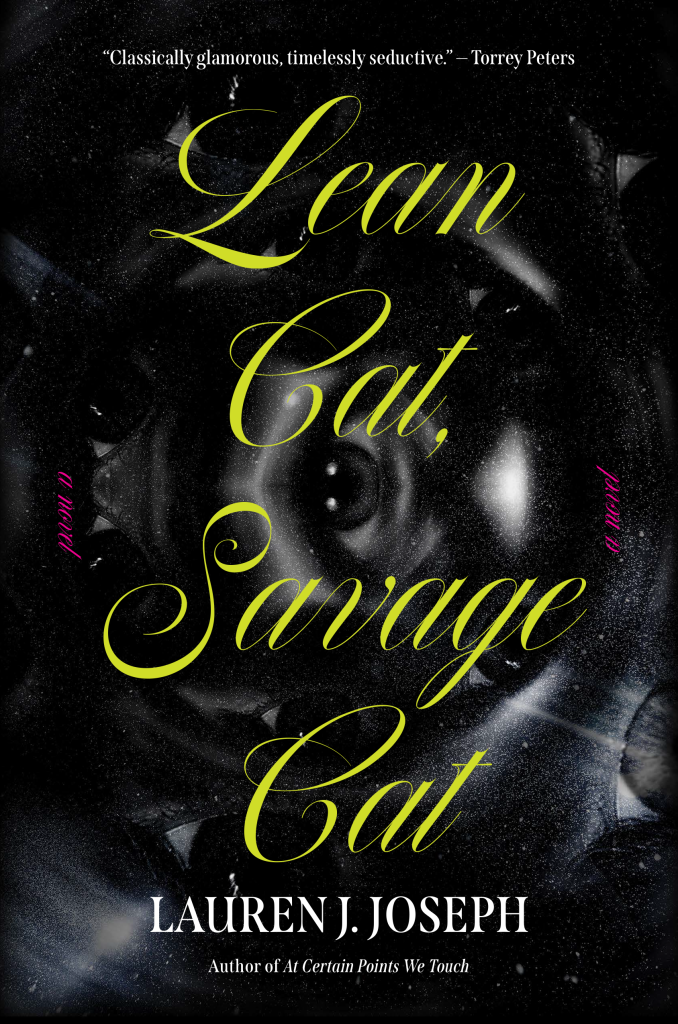
“I’d like to send this one out to Lou and Rachel,” Lou Reed croons at the end of the title track to his 1975 album Coney Island Baby. At the time, Reed was head over heels with Rachel Humphries, a Mexican-American trans woman who appeared alongside him on album covers, on stage, and through his lyrics during their five year relationship. No ‘70s rock star was complete without a controversial affair with a trans woman, it seems, yet these women have been swept into the footnotes by later biographers. Lauren J. Joseph’s second novel, Lean Cat, Savage Cat, spins this idea of the trans rock muse into an erotic phantasmagoria set in Berlin’s churching queer party world.
Charli is a trans art student doing everything in her power to avoid her PhD when she meets Alexander Geist, a glamorous and slightly menacing stranger who invites her to come with him to Berlin. Soon she is absorbed into the work of transforming Geist into the next David Bowie — a project fueled by drugs, sex, and the seductive allure of self-creation that quickly turns volatile. Joseph’s writing, at turns lacerating and hysterical, keeps us on our toes questioning not only these characters’ intentions but whether or not they even exist.
Over slices of bara brith, Lauren and I sat down on the sofa in her London flat, flanked by a Beryl Cook throw pillow on one side and a larger-than-life plush Garfield on the other, to discuss the novel, what it means to be haunted by your past personae, and the romance between David Bowie and Romy Haag that inspired it all.
Morgan M Page: Lean Cat, Savage Cat is set in the underground queer milieu of Berlin. You lived there yourself for a time. What is it about Berlin, and especially that strata of Berlin, that holds your interest?
Lauren J. Joseph: I think because it really felt like the Wild West to live there. In my mind, Berlin has the same function as Italy does for Shakespeare. You know, in Shakespeare’s time everything was happening in Italy, all these poisonous plots and backstabbings and great works of art. There’s a lawlessness to it. And the feeling that no matter how unhinged something is, it’s believable if it happens in Berlin. You have a lot of room to write in Berlin.
MMP: And do you feel like the history that pulses through that city also has an effect?
LJJ: Oh very much, yes. One of the anchors is this department store called Karstadt, where the characters are often going shopping or it’s used as a reference point—a club is close to Karstadt, or someone has an apartment close to Karstadt. And I think that’s a really good signifier of the 20th century history of Berlin. It was the largest department store in Europe in the ‘20s, and it was obviously destroyed during the war. It was rebuilt, bought and sold by private equity companies as the neighbourhood around Karstadt gentrified. It keeps shifting position as the thing that was the height of luxury and then the bottom of the market, and now has a sort of a cult position in Berlin’s history and topography.
MMP: This is a novel, in part, about the construction of persona. And interestingly, one of the main characters, Alexander Geist, has a curious history for you. Who is Alexander Geist? And what is this process of working one of your own personae into a novel?
LJJ: I was very inspired by people like Sophie Calle and Lynn Hershman Leeson. Calle did those famous pieces—Suite Vénitienne—where she met a man and then followed him to Venice and around the city taking pictures of him, he didn’t know. Or she did that piece where she became a chambermaid and took pictures of people’s belongings in their rooms (The Hotel). Hershman Leeson had a long term piece called Roberta Breitmore, where she became a character, rented an apartment, went to therapy, went to Weight Watchers, had a whole wardrobe and makeup look—and made this body of work about being this person she wasn’t and then handed off this person to other people. So both of these bodies of work were so interesting to me, and I wanted to create this figure of Alexander Geist maybe around 2010. I thought, wouldn’t it be funny if I made an alter-ego who is a fully functioning alter-ego but I put him in the public sphere as opposed to both of those artists’ work being very private and almost in the world of domestic espionage. I created a body of work—music and music videos—and later shipped him into the novel, basically. I had a whole bunch of other personas. I had one, Anna Mosity.
No matter how unhinged something is, it’s believable if it happens in Berlin.
MMP: [Laughs] Is that two words—Anna Mosity?
LJJ: Yes! And she was like a French couture model turned punk star. I was in a witchhouse band in which she was the lead singer. So there were a bunch of personae that hadn’t functioned for years. Alexander Geist was popular and I always thought there was more to him. Because he’d been relatively successful, he haunted my own life. I couldn’t quite get away from him for a while. Geist meaning ghost or spirit. He sort of haunts the text and becomes a figure of obsession for Charli, the narrator. I like shipping characters between works. I think it’s interesting to build a body of work like that. And my novels all share characters—usually a minor figure in one becomes a more central figure in another.
MMP: The protagonist, Charli, is a young trans art student at loose ends. One of her guiding obsessions is the ‘70s romance between David Bowie and trans nightclub owner Romy Haag. Tell me more about their story. And what is it doing in the novel?
LJJ: Well, the story as Romy tells it is that Bowie came to Berlin and because her nightclub was so popular, people were always begging her to come to concerts and so she said, “Ok, why not.” She went along to the concert and they saw each other and fell madly in love. He went home with her and they’re playing records and he said, “Why don’t you have any of mine?” And she said, “I’ve never heard of you.” [Laughs] The next day he had his record company send all his back catalogue over. From that point, they were inseparable. They lived together for a time. In his “Boys Keep Swinging” video, he’s dressed as her. They had this long relationship that covered the span of his three Berlin records—Lodger, Heroes, and Low. And apparently, they were quietly friends until he died, he still sent her Christmas cards. So she had a very profound impact on him and his work, but I’ve read so many biographies and watched documentaries about Bowie in Berlin, and they’ll always say something like, “Whilst Bowie was experimenting in Berlin, he often spent time with drug addicts and transvestites such as Romy Haag.” She’s always treated with such contempt and disrespect, swept into the corner. When really she’s still a celebrity in Berlin now, but she had this incredibly popular nightclub which everybody had to be at. The hottest spot in Europe. She also sold tons of records [as a disco diva] and had her own TV chat show into the ‘90s. So I sort of wanted to introduce her to people who weren’t familiar with her outside of German pop fans and Bowie obsessives. To make her the obsession for Charli, rather than Bowie. Bowie is kind of Alexander’s obsession. I wanted to use their story to underline the fact that this is a very old and common tale—Amanda Lear as trans muse for Dalí, Rachel the muse for Lou Reed. In rock and roll history, these women were always isolated or disrespected or pushed to the side.
MMP: And is that paralleled in Charli’s character in the same way that Geist has parallels with Bowie’s Thin White Duke persona?
LJJ: I would say so. A lot of Romy’s influence on Bowie was invisibilized, like Angie Bowie’s work or Albert Einstein’s wife or Elsa von Freytag-Loringhoven, the woman who did all the readymade’s before Duchamp. Women whose lovers become much more well-known, basically getting all the credit. And that does happen to Charli, too. She’s the one who’s ironing the shirts, organizing the interviews, giving him his salami and his orange juice. And she gets no thanks, and there’s a strange kind of masochism in that. But it also becomes a resentment for her, where she’s trying to deny the obvious, that he’s not abusing her horribly when he blatantly is.
MMP: The book lends itself to multiple readings. Is there an angle it should be understood from—or is the ambiguity the point?
I’m not in my US era right now—with the obvious exception of Bad Bunny.
LJJ: The ambiguity is definitely the point. There’s probably three theories of what is actually going on in this book, and I wrote them into the book, and then in the edit tried to make sure that each of them holds water. I don’t want this to be a book that has a definitive reading. I don’t think books ever really do. Maybe narratively, if you’re writing Agatha Christie you have to know who did it. But in this book, you definitely don’t. I don’t think a lot of the characters even know what has happened to them. Agatha Christie is sort of a reference point throughout this book, she comes up a couple of times as being the antithesis to this kind of story, to say there will be no clear resolution here. But I like that, it’s one of the things that has brought me back to reading The Turn of the Screw, American Psycho, and Pale Fire. In all of those books, you return to them and they only get richer, and you still don’t know. Is Miss Jessel really seeing ghosts? Do the children see the ghosts? I’ve read the book five times now, and I still don’t know, and that’s why I love it.
MMP: Part of this novel is about the creation of a rock star, a world you’ve dipped your own toes in before. How did you find writing about music? Were you “dancing about architecture,” as it were? And is music an important part of your writing process?
LJJ: Music is a part of my writing process, actually. I find if I get a bit sluggish, then I will stop and have a little boogie. But also a certain piece of music will definitely set the tone for something, and then I find myself listening to the same handful of songs over and over. With this I was listening to [Bowie’s] “I’m Deranged” a lot. And I was also listening to an old Bob Fosse/Gwen Verdon track called “Who’s Got the Pain When They Do the Mambo.” [Laughs] Quite off-kilter little songs but a piece of music can really set the tone. And for a book about music there is relatively little description of music. A lot of song titles come up, people are often listening to music or talking about bands, but the music itself isn’t ever greatly described. There’s one or two times when Alex is singing and the track is described, but for a book that is so much about music, there’s very little writing about music.
MMP: Your book is coming out simultaneously in the UK [with] Bloomsbury and the US [with] Catapult. Neither of these countries are particularly comfortable places to be transsexual in 2026. I have two questions for you about this. The first is about the novel itself. This is a literary novel dealing with psychological thriller elements. It’s got a touch of the Black Swan to it. Breakdowns, doppelgangers, addiction, maybe psychosis—who can say? It’s up to the reader to decide. And it’s entering a real world in which governments on both sides of the Atlantic are stripping us of our rights by labeling trans people as mentally unfit and unstable. Is there a tension here between writing the stories that speak to you and considering the ways they might be received?
LJJ: I think you always have to ignore the way they will be received, otherwise you end up writing for a voice that isn’t yours. I took a class with Shelia Heti once and asked a similar question to her, and she said you don’t have any control over how your work is received. When you’re writing a novel, you don’t even know if it will get published. And if it does get published, how do you know anyone will read it? Your first responsibility is to yourself, and you really have to resist it, otherwise you end up writing the “trans women are women” type of books—
MMP: Right.
LJJ: —where that’s the point of the book and people say that at least once a chapter. And that isn’t what I want to do. Sarah Waters said you can only write the book that calls to you, and this was very much the book that called to me. And I think it’s good to bear in mind that this moment is not the eternal moment. Things will change and this book will be read very differently in five years and in ten years, and beyond that.
MMP: My second trans-Atlantic question is actually a logistical one. Normally, you might travel to America to promote the book. But for many trans people this is an unappealing prospect at the moment. How has this made trying to market the book in the US different? Is it tricky?
LJJ: With my previous book, At Certain Points We Touch, I couldn’t travel because of the pandemic and then this time, my publisher was as generous as to offer to facilitate me financially—or as they say “pay for,” I believe in standard English [laughs]—but I’m not going. I thought that would be a big headache but it’s been picked up by tons and tons of Books You Must Read and these kinds of preview lists already, and I’ve been doing interviews, so it seems as healthy a reception as last time for sure, without having to go there. I’m honestly not desperately interested in American culture right now. There was a long time in my life where I was very much a student of Americana—I think definitely in At Certain Points We Touch, and in Everything Must Go, my novella, they really exist in a space of Americana. A bit like those PJ Harvey albums in the mid-90s that are by somebody British but someone in love with the Southern Gothic. I’m not in my US era right now—with the obvious exception of Bad Bunny.
MMP: USA is no longer A-OK!Changing tracks one last time, something I’m interested in is this idea we have in culture that writing is this lonely, solitary thing. Something you do on your own, you lock yourself in a room, and famously writers are introverts. But conversely, many of us have communities of writers and these communities have a surprising amount of influence on the work itself. What role does having a community of writers play in your process?
LJJ: I think it definitely keeps me updated on what’s happening. If I weren’t talking to other writers, I would have less of an understanding of what’s happening, what people are working on, and on their processes. I think it’s also good to have a community of writers to talk about the logistics and pragmatics of writing. And also because when you are friends with a lot of writers, you do get to share stuff with people, and often you get to see it a long time before anyone else does, which is a real amazing privilege. That influences me, for sure. I think the biggest influence is knowing that somebody will read it. Ultimately, I do know that somebody will read it, but there’s always that moment of thinking what if I write this for myself and it doesn’t go anywhere, my agent says it’s terrible and my publisher doesn’t want it, but you know that you’ll be able to share it with other writers. And those other writers are not really invested in any other way besides as early readers—they don’t get a cut, there’s nothing in it for them but to read it. That’s one of the most exciting things about writing, the moment when you can share it with other writers. They’re your peers, you know? I’m not a very competitive kind of writer, or a jealous kind of writer either, but there’s something of a Renaissance sculptor or painter to it. You do get a feeling that people are excited to say ,“Ta-da! Look what I just created.” Which is a nice feeling, really.
The mother-daughter bond, whether tender or fraught, is a formative one. Establishing a safe and secure connection early in life helps develop self-esteem, emotional well-being, and acts as a blueprint for future relationships. Although losing a mother impacts a woman’s life no matter her age, the loss of a mother in childhood is a grief that shapes a daughter’s sense of self for years to come. Daughters who lose their mother before adulthood tend to take on family roles too soon, becoming hyper-independent and isolated. As they age, grief can resurface at milestone moments like graduations and weddings. Motherhood itself can bring waves of anxiety and fear.
When I was eight, my mother was diagnosed with aggressive and widespread cancer, leaving little time to wrap my young mind around the gravity of her imminent passing. Afterward, part of me held onto a fantasy that she was not really gone. I imagined her showing up at school in her green convertible. The finality of death was impossible for me to comprehend, prolonging and delaying my grief for years. Layered over my sadness was shame about my new identity as the girl whose mother died. As a way to process my grief, I sought out books about loss. I devoured Lurlene McDaniel’s YA novels for their dependable terminal-illness narratives. Grieving for fictional characters was a cathartic release for my own unresolved sadness. As I got older, I turned toward memoirs written by actual women who knew the pain of mother loss. But many of these books featured protagonists who had lost their mother in late adolescence or early adulthood. I yearned for stories from daughters like me—who’d spent years sifting through memories trying to piece together a woman they hardly knew.
When I began writing Map of a Heart: A Memoir of Love, Loss, and Finding the Way Home, my memoir about building a hard-won family life after childhood loss, I once again looked for stories that reflected my experience. This time, a new crop of memoirs appeared that delved into the complexities of losing a mother in childhood. Through poignant prose, excavation of fragmented early memories, and sometimes humor, these memoirs explore the ripple effects of early mother loss on womanhood, motherhood, identity, and belonging. A loss that shapes daughters for a lifetime.
When Genevieve Kingston’s mother died, she left her a legacy that would tether them together for years to come—a trunk packed with handwritten letters and carefully chosen gifts to be opened on the birthdays and milestones in her daughter’s life that she wouldn’t be there to witness. The book opens as Kingston, a woman in her thirties, has just three gifts left—for her engagement, wedding day, and the birth of her first child. From there, the author traces her way back in time to reflect on the complex emotions of living with her mother’s illness in childhood. She examines how she worked through her grief as her family endured more painful losses and dislocations in the years that followed. Kingston explores how the loss of her mother shaped, and continues to shape, her experiences with love and womanhood. Her mother’s gifts serve not only as a connective thread but also as a window into the woman whose final wish was to remain a talisman for her daughter’s pivotal life moments.
Tiffany Graham Charkosky’s girlhood unfolded against the backdrop of her mother’s cancer diagnosis and declining health. Eighteen years later, as a woman finding her footing in marriage and motherhood, Charkosky’s grief and fear resurface when she discovers her mother’s illness was a result of a specific and rare genetic mutation. What follows is a familial excavation, genetic reckoning, and heartrending reminiscence of what is lost when a mother dies, leaving her young children with unanswerable questions that cannot be quieted, no matter the years that pass. Charkosky faces genetic testing and uncertainty as she unravels the mystery of her family’s legacy through her own DNA. Living Proof is a profound story of what we inherit through genetics, memory, and time.
The daughter of an Armenian mother and Ghanaian, United Nations official father, Nadia Owusu spent her childhood in perpetual motion. The first quake of disruption hits when, as a toddler, Owusu’s mother abruptly abandons her. Owusu spends her childhood moving with her father all over Europe and Africa. Her mother floats in and out of her life, disappearing for years before resurfacing in an intermittent cycle of rejection—aftershocks of her first departure. At thirteen, the author’s father dies after a prolonged illness, a tremor that crumbles any remaining stability. An orphaned Owusu is left to navigate her adolescence with a stepmother who is resentful of her new role as primary parent to a daughter she did not bear. Living in New York in her twenties, the author is directionless and unsure of her place in a world that holds no parents or home for her. Aftershocks illustrates how the complicated grief of abandonment—a mother who is both here and gone—is a uniquely painful loss.
What if your mother died because of a choice you could not understand? How would you remember her or make peace with the loss? This is the journey of Susan Lieu, the daughter of a Vietnamese refugee mother who built a successful business and raised a family in California, only to die young after a botched cosmetic surgery. In her debut memoir, Lieu seeks not only to write her mother into a fully formed and vital woman—which she does—but to reckon with the circumstances of her death. As the author unspools the cultural and societal beauty standards that shaped her mother’s decision, the reader is invited to be part of Lieu’s family dynamics, cultural traditions, and the intimate banter that floats between manicure stations in her mother’s beloved nail shop. The Manicurist’s Daughter is an unflinchingly honest account of a daughter’s quest to understand the mother she lost too soon.
The cover of The Full Catastrophe hints at the memoir’s impending upheaval. The title itself warns the reader. In the first pages, the author receives the unimaginable news that her son has died in an accident. What follows is a retracing of the tumultuous years that led her to that moment. By twelve, Walsh lost both of her parents within a year of each other. That early loss sets in motion an unwavering desire to recreate a maternal bond as a mother one day. Before graduating from college, Walsh marries and has three children, hopeful that a family of her own will repair her broken foundation. But when her marriage crumbles, she realizes she will have to become the safe haven she’s been seeking. Then, the foreshadowed catastrophe arrives—the death of her oldest son. Walsh, along with readers of her memoir, wonders how much loss one person can endure. The Full Catastrophe is a heartbreaking yet hopeful journey toward belonging.
Kat Chow, the daughter of Chinese immigrants, grows up in suburban Connecticut and loses her mother at thirteen. In the years that follow, she writes, “The way my family grieved my mother was to avoid acknowledging her altogether.” In Seeing Ghosts, Chow bridges her way back to her mother by excavating her family history and gaining a clearer understanding of her lineage. Through the lens of her mother’s death, Chow explores losses her mother endured: the country she left behind, her own mother’s death when she was a girl, and Chow’s stillborn brother. Despite cultural beliefs that speaking of the dead is unlucky, Chow invites these “ghosts” into her life—and the pages of her memoir. In turn, her lost family helps her shape an identity and preserve her mother’s story.
Actress and comedian Molly Shannon is best known for her energetic, over-the-top characters on Saturday Night Live. But behind the humor that brought her fame is a story of tremendous loss. When Molly was four, she survived a terrible car crash that killed her baby sister, cousin, and mother. Shannon’s memories of her mother are of a loving and joyful woman, but they are fragmented and coated with the trauma of her sudden passing. The loss only becomes more complicated as her father’s alcoholism shapes her childhood. In her memoir, Shannon explores how the pain of her experience fueled her drive to perform, describing comedy as both a calling and a coping mechanism. While her path to fame is a central theme, Shannon’s capacity to find forgiveness and create joy in the face of profound loss is the true heart of Hello, Molly!
When Conway loses her mother at seven, she assumes the identity of the “responsible girl”—parentified and agreeable, never causing disruption in her family or allowing herself space to mourn. Her father struggles in his new role as single parent. Instead of asking how Peg is coping, he asks her to pack lunches and start dinner for her two siblings. When he remarries a few years later, Conway finds herself in a new home with a new school, new furniture, and even a new birth certificate that erases her mother and replaces her with a stepmom. It isn’t until adulthood, when an accident awakens reverberations of early mother loss, that Conway realizes she must reassemble her identity to include the unresolved grief of being a motherless daughter if she truly wishes to heal.
Elementary school in Palmdale, California was a sprawling flatland of cement, and a fence around the perimeter separated us from mounds of brown dirt and rock. Even the buildings were flat, as if everything was made from clay pressed down by the palm of an eager child. When the sun was out, it was hot without relief. The cool air inside the library was a reprieve from the weather, and the loneliness, though I didn’t have words for it yet. My homely appearance as a child was the kind that is remarkable only in retrospect, for the isolation it added. My hair was straight and my mother would put a bowl on my head, hold it down, and cut right around the rim. I wore whatever she dressed me in, and style was never something she prioritized, even for herself.
When our class took group trips to the library, we gathered on a bright blue rug with cartoonish books and apples around the border. I always sat near the back. The librarian, seated on a chair at the front where we all faced her, pulled a book from the display on the shelf. Week after week she read to us from colorful picture books, her voice animated, her hands pressing the pages back where they wanted to turn. I was enraptured; I loved listening to her read, giggling at parts that were funny, studying the images on the paper.
Sometimes, she read from the No, David! books, where a devious little boy drawn with few hairs and fewer teeth wreaks havoc on his surroundings, against his parents’ wishes. At the end of every story, they remind him he is still loved, no matter how he betrays them. One week, the book was A Bad Case of Stripes, about a girl who wants to fit in but becomes covered in stripes that change to match whatever is happening around her. The image of her skin, the color of rainbow stripes or red white and blue stars captivated all of us on the rug that day. I never spoke when the librarian asked for audience participation, didn’t so much as whisper along to myself. After her reading time was over, I would find my way back to the book we had heard aloud, picking it up, listening to the crinkle of the cover where it was laminated.
My mother started picking up on the fact that reading was something I enjoyed. She took me to Barnes & Noble, holding my hand as we crossed from the parking lot to the entrance. I was always annoyed at having to hold her hand, her palms so warm they made my little ones clammy. Once inside the bookstore, I broke free, rushing to the children’s section as she followed behind. There was a reading area for kids: a slightly raised half-circle of wood like an amphitheater stage, benches arranged in a circle around it, and three-dimensional cutouts of trees against a backdrop of illustrated forest with woodland animals. Once, there were cutouts of Frog and Toad stationed next to the benches. My mother sat cross-legged to my right on the little stage, a stack of books to my left. The three of them watched me read: her, Frog, and Toad. She sat and patiently waited for me to sound words out loud, watching from behind her round glasses, smiling fondly. Despite having no interest in books, and that we mostly spoke in Vietnamese, she did this again and again.
In the house I now share with other graduate students, a pair of pink rubber gloves sits constantly by the kitchen sink. Nobody ever uses them, so I don’t know why they’re there. But these are the kind of gloves my mother always told, or rather warned, me to wear. A cautionary tale. If you don’t wear them when you wash the dishes, she’d say, you’ll end up with hands like mine. This would be her cue to look at her hands in disgust, at the textures of wrinkles and scars. She was always so afraid of me ending up with hands like hers. My mother wanted me to be different from her, to be better.Evidence of this pleased her, such as my living alone, traveling alone, even an ability to read music. Similarities between us upset her, like poor eyesight, gray hair, a fear of driving. I have never been able to understand this, because when I do something I’m proud of, I am reminded of her. I hear her in my laugh. In the way I talk to strangers, or read aloud, these things that she taught me. My mother taught me how to love reading and writing, though she rarely did either herself.
My mother wanted me to be different from her, to be better.
Now I write from a body that used to be part of hers, and this act is the final departure. I don’t know how to tell this story, can’t get myself to look at it directly. I have tried countless times. The problem with a story is that it needs a beginning, middle, and end. This story has no end. I can not find the beginning, though I have spent all this time trying to remember my way back to it. And so I find myself here, grasping at the middle, which is to say, at the moments of life that come between birth and death—at least the ones that linger in my memory. I keep wanting to give up. Instead, I’ll try again, to find the place where story begins.
Perhaps this is the location where it starts: the house I lived in from high school onwards. The last of five homes we lived in as I grew up, the place my parents would settle and, eventually, retire. I could start here.
INT. LIVING ROOM – NIGHT
A middle-aged woman and a college-aged girl sit side by side on a brown couch.
WOMAN The other day I was walking behind a group of people, I was in . . . Costco? Where was I. It was . . . where . . .
The girl, who has been watching the television, glances at the woman. She stares at her as she struggles through her sentence.
WOMAN I was . . . I don’t remember. I was . . . walking behind a . . . a group of people.
The girl rests her temple and the side of her face between her thumb and forefinger. She squeezes. She is no longer looking at the woman, or the tv, but rather at a space in the distance.
Or here.
INT. LIVING ROOM – NIGHT

The girl and the woman on the couch, next to a
middle-aged man.

WOMAN
I love that show. I could watch it 100 times and
never get bored.

MAN
(joking)
OK, that’s the one we’ll put on for you in the
nursing home soon. It’ll be like a new one every
time.

WOMAN
(laughing)
I think that’d keep me happy.

The girl shakes her head at the man and woman,
who don’t look at her.
But maybe here’s where it really begins.
INT. SUBURBAN HOUSE - DAY

A young teenage girl bounds down the stairs.
She heads for the door to the house. On the
way there, she passes a woman in the kitchen.

GIRL
I’m going out!

WOMAN
With who?

GIRL
Kate! To the mall.

The girl continues to the front door.
The woman turns around, following the girl.

WOMAN
Where are you going?

The girl furrows her eyebrows. She frowns.

GIRL
To the mall, with Kate, I just told you.

WOMAN
Oh.

The woman turns around, then turns back to face
the girl again.

WOMAN
Where are you going?
They repeat this exchange a couple of times. The
girlresponds with increasing panic. The woman
grows frantic, fearful. There is a high-pitched
ringing in the background, getting progressively
louder.

CUT TO:
The first time that time looped, it also stopped. For me and for her.
The internet tells me this was likely transient global amnesia. A temporary episode of memory loss that can happen, with no prior symptoms and no future recurrence. Diagnostic criteria includes having been witnessed by an observer, an absence of other cognitive impairment, and resolution within 24 hours. A unique feature is perseveration, in which the person methodically repeats statements with identical intonation like a sound clip looped over and over. After a few hours my mother was fine again, and she didn’t remember any of it. I was the only witness, the only one who remembers. An isolated incident of forgetting.
Nothing was really wrong, then. Maybe this isn’t actually the point where the story starts, but where my fear does. A few years later, my mother started to forget things. A few years later, everyone around her bore witness. Whether or not this incident was unrelated, I had already learned everything I needed to. How to dread. To pretend I was living in a movie and someone else was writing the script. To harbor a kind of fatigue so familiar it can only be observed, and cannot be expressed, so deep it presents itself only through the eyes of a third party, like someone looking at you and saying, you look tired.
Oh, I think. How tired I am.
Allegedly, there was a neurophysiologist from the early 1900s who departed from all previous cognitive research with his idea that memory is an illusion. There’s no evidence of Geoffrey Sonnabend’s existence beyond an exhibit at the Museum of Jurassic Technology in Venice, California, where I first came across his information last year. A video on his research plays on a small screen in the museum, and visitors can sit on the seat in front of it and listen. Sonnabend and his ideas could be completely made up; this museum is a place that straddles the line between fact and fiction. The exhibit makes little attempt to convince visitors that his ideas have scientific backing, but details about his life and theories bolster their persuasiveness.
In putting a life on the page, the words calcify into memory, regardless of truth.
According to Sonnabend, experience is the only thing that exists, and forgetting is the inevitable outcome of all experience. We are condemned to live in the present, he wrote, and against that, we have created this idea of memory “to buffer ourselves against the intolerable knowledge of the irreversible passage of time and the irretrievability of its moments and events.” Sonnabend did not deny the existence of memory, but saw it as just experience and its decay. To illustrate this more clearly, he created the Model of Obliscence.
All living things have a Cone of Obliscence through which we experience life. The cone is described as if it were an organ, integral and unique to each individual. The other element of the model is the Plane of Experience, a tilted flat surface which is always in motion. In the course of its motion, the Plane will intersect with the Cone. This movement depicts a sequence of events: being involved in an experience, remembering it, and then having forgotten it. The initial intersection of the Plane and Cone is the involvement. As the Plane moves through the Cone, past its base, this is remembering it. Once the Plane and Cone are no longer touching and the Plane has completely passed through, we have forgotten.
Image from Geoffrey Sonnabend: Obliscence, Theories of Forgetting and the Problem of Matter by Valentine Worth, With Diagrammatic Illustrations by Sona Dora
As presented, Sonnabend’s theory is based completely on narrative. Seeking verification of its claims leads only back to the museum itself, which places far more emphasis on telling the story than making sure a visitor can understand the concepts. The Model relies entirely on story, on making narrative out of something that would otherwise be too obsolete to be remembered.
In fourth grade, my mother signed me up for an afterschool program taught by my English teacher, Mrs. Jones. I whined and complained the whole way there, begging her to take me out of it. She simply kept driving, as if she knew something I didn’t. My mother had a habit of signing me up for things I had no interest in, which is how I also ended up at chess club after school, sitting uncomfortably in a circle full of white boys with glasses. I begrudgingly took my seat at a desk in the nearly empty classroom with Mrs. Jones at the front, swinging her permed blonde hair. She gave us writing exercises and encouraged us to write about what we were interested in.
At the time, all the girls I knew had an interest in a specific species of animal. The most common ones were horses and cats. I had decided I liked wolves after reading Wolves of the Beyond, so I wrote a few pages about them every week, and then I began to write short stories. Sometimes they were about made-up events. Most were based on my life. When instructed to describe an experience we had over the summer, I gave an account of how I almost drowned in the ocean on a family trip. Not about the fact that we had been having fun on the beach before I attempted to swim, or that we were in Hawaii, where the beauty around me had surprised and fascinated me. Without being told, I understood how to use my own fear as fodder for a story, where the narrative tension would have to come from, where the strongest emotions had appeared.
In capturing this memory, I forgot about all the new sights I had seen, about the good food we ate and how much we laughed. I had unknowingly limited the scope of my own ability to remember. In putting a life on the page, the words calcify into memory, regardless of truth, regardless of intention. The memory shifts. Eventually, it is replaced completely by the written account. Maybe it’s true what Lidia Yuknavitch once wrote, in that the safest memories are locked in the minds of those who can’t remember. I can’t tell if the story I am attempting to unlock will be the thing that saves or ruins.
I sat in the top bunk of the freshman dorm room I shared with two others. It was late at night, and I had just returned from dance practice in an empty garage. My roommates weren’t around. I didn’t know what to do with the feeling that filled my chest, clouding the edges of my vision whenever I was alone. I was barely 18 and months into college and my first real relationship, with a girl who swore that pain was a natural part of dating and queerness. After practice had ended earlier, when conversation petered out and people began to leave, I became acutely afraid.
I didn’t know how to ask someone to walk ten minutes back to my dorm with me, not because I was afraid of the dark or being on campus alone, but because I was afraid she would surprise me on the walk. I flinched at every person-shaped shadow that passed me on the way home. I was scared of the person I was becoming in the shadow of this relationship. I had no idea how to convey the depth of what was happening to me. I didn’t even understand it.
Resting my back against the beige wall, I stared into the eye-level fluorescent ceiling light. I wrapped the edges of my comforter around me and opened a blank Word document. Written in the second person, I began a letter to her, but, through writing it, realized it was also a letter to myself. I wanted to believe that I would survive this. I wanted to be able to look back one day and remember that I had. It was, at the time, a perfect catharsis. Writing brought me into a new register of understanding myself.
The relationship had a clear before and after, an easily understood narrative arc. As did the stories I wrote about my life then, ones that allowed me to neatly impose a beginning and ending. After college ended, I was living at home again, working and coming back and realizing how much worse my mother’s memory had gotten. I found myself writing about it constantly. I thought I would wrangle this body of thought, fit it into the neat shell of narrative, but it falls apart with every attempt to grasp it. Years of gradual decay. Some days are better than others. What do I do with that? With how you can know someone like your own hand and yet appear as a stranger to them? How do I make it into story, this unraveling mind, while I’m still disappearing in front of it?
During the time I lived in Korea in my senior year of college, I decided to visit a shaman. I took my friend Rose with me to translate, who was also interested in seeing what they would have to say. We walked together to the building where the fortune-telling place was located. Outside, multiple stories with storefronts advertised themselves on each level, a Tetris of multicolored vertical and horizontal signs. Our destination was on the first floor, and once inside, we were checked in and told to wait in the entry room. We sat on a couch with small circular tables around it, the surfaces strewn with open binders of different services and readings available. Rose and I agreed to the basic reading, and within a few minutes we were summoned into another dimly lit room. A candle burned from one corner of the table, a dark blue cloth laid out over the rest of it.
An older man with bright gray hair sat behind the desk, one chair directly in front of it, a few others around. He smiled and greeted us, then asked which of us wanted to start. Rose and I looked at each other, then she sat at the desk while I pulled up a chair beside her. The shaman asked Rose to pull cards from a Tarot deck. He spread them across the table, but didn’t look at them once. He spoke of her personality, relationships, her tendency to move countries throughout her life, her career. Later, Rose told me that his reading aligned closely with the one her parents had done for her with an expensive, reputable shaman when she was still a baby in Korea.
Then, it was my turn. Again, the pulling of cards and the shaman’s ignoring them. He spoke to me about the same things as with Rose, and said there was harmony between the field of writing and me as a person. He also issued a warning. He said I had a tendency to give up on endeavors once I felt like they were too difficult or weren’t worth the effort, something I already knew about myself. If I was to succeed, he told me, I would have to stop doing this. “You don’t follow through,” my friend translated. “You need to see things to their conclusion, to get where you’re supposed to be.”
I figure if the story inside me is still trying to break free then it hasn’t concluded. But maybe I’m just telling it so I can look away from the future in front of me. The splayed deck of cards. The stories we tell ourselves.
In Lisbon, at my first writing retreat during graduate school, I took an experimental poetry workshop. On the first day, we all wore masks, but a woman across the table from me caught my attention. The crinkle in her eyes was unmistakable. She tittered with friendly laughter at nearly everything anyone had to say. I was curious what was making her so happy, and ended up staring too long on a few occasions. When her blue eyes met mine behind her bright green glasses, she waved. When the class was over, I asked if anyone wanted to walk around, and she joined, smiling brightly.
I figure if the story inside me is still trying to break free then it hasn’t concluded.
In the blazing, unshaded heat of the Portugal summer, Hazel and I made the fifteen minute trek to an open plaza with one of Lisbon’s oldest churches, the Church of St. Dominic. I learned that Hazel was in her 50s, about the same age as my mother, and had come on this trip with her husband and daughter. We talked about everything but our writing. She laughed often, her joy so earnest that I couldn’t help but laugh too. It was my first time befriending someone my mother’s age, and she was so easy to be around. There was no tension in my shoulders when I listened to her speak, no tightness in my smile when I mirrored her expression.
Upon entering the church, a poster by the door described its history, that the building survived several earthquakes and a devastating fire in 1959. The effects of the fire were still visible, the church pillars scarred, the interior walls charred. In 1994 the church reopened, and the restoration purposely left the signs of the fire in place. Its visible damage served as a preservation of its history, a reminder to visitors of the impermanent nature of even such a grand structure.
Hazel and I meandered separately around, inspecting the stations of the cross and statues of saints around the walls. At the statue of Mary by the altar, I decided to light a votive prayer candle the way I watched my mother do so often growing up. I dropped a 50-cent euro coin in the box for donations, grabbed the electric lighter, and lit a candle near the edge of the row of candles. I closed my eyes for a few seconds and didn’t know what to do next, so I let images of her come to mind.
As I closed my eyes, I wondered what it would be like to meet my mother as a stranger here, in a foreign country, at a conference with shared interests. I wondered how it would feel to listen to her tell me about her children and her work with such clarity. If we would have gotten along well, if I would have also marveled at how easy she was to spend time with, been so grateful to meet her purely by chance.
The following year I found myself at a highly-attended, annual writing conference for the first time. In the conference hall around thousands of strangers, I walked through hundreds of booths trying to convince me to buy their magazines or submit my work. The feeling appeared in me vaguely and then acutely, the weakening of will. I was one of so many. I had only a hazy sense of why I was doing any of it or why it mattered and it was possibly the least useful thing I could have been doing with my time. I wandered around the building in a daze, as if on the precipice of splintering, when I saw her again. Hazel, in her bright green glasses, stood working by the entry area of the conference hall.
When she spotted me, she smiled widely and walked over to hug me. Even as she spoke about her divorce, about how it was the hardest thing she’d ever done, the mirth never left Hazel’s expression. She remembered the boy I had been dating at the time we met. She remembered the things we had done together in Lisbon. Hazel invited me to lunch later that day, and there in the restaurant, laughing over tea and dan dan noodles, I remembered. Writing had become a way for me to understand myself, but I had forgotten, for a moment, there was still a self outside this understanding.
In one of my favorite movies, The Boy and the Heron, a young boy follows a heron into a magical world, under the guise of being reunited with his dead mother. His mother died in the firebombing of a hospital during war, when the boy was only a few years old. The heron is a mischievous entity, the Birdman, in disguise. The boy goes on an adventure in this magic world, and meets his mother as a young girl, though he doesn’t know who she is. Eventually, the world starts to collapse in on itself and the boy must escape.
The girl grabs his hand and runs, leading him down a fluorescent rock tunnel that opens into a dark hallway, the floor an unfurled red carpet of velvet, the walls lined with endless doors. The girl brings the boy to the door that leads back to his world. Through it, he can see his father running through green fields, frantically calling his name. The girl goes over to another door, where a burning building awaits. The boy expects her to go with him, but she reveals her identity, and hugs him. He warns her she will die if she goes through that door. She smiles, tells him, I’m not afraid of fire, but it’s clear that she is. I’m so excited to be your mother, she says, it was the most beautiful thing for me.
I can’t remember which of them leaves first, just that they leave each other. Soon after returning to the real world, the boy starts to forget the details of what happened in the other one, and panics. The heron assures him, forgetting is normal, encouraging the boy to release his grasp on memory, to embrace the natural progression of its falling away. The Plane and Cone no longer touching. The boy is distraught. Memory is all he has of their relationship. It is the only thing that keeps his mother from being a stranger. Researching the film after watching it for the first time, I discovered that its original title was How Do You Live?
If I could have met my mother as a young girl, I wonder if she would have laughed like she does now, if I would have. If she would take my hand and lead me on adventures the way she did when I was a child and she was not. If she would choose the fire, if the fire is inevitable in every universe. So much if, could, would. How to know these things. The overlap between memory and experience is so brief and so temporary and there is only so much I can imagine. These days, my mother tells me, I want you to know if I died now I’d die happy, smiling like she knows something I don’t.
Writing had become a way for me to understand myself, but I had forgotten, for a moment, there was still a self outside this understanding.
When she was my age, she was still an undergraduate and her mother was still making her dinner after classes. She had just met my father. My mother used to joke that she was waiting for the day she’d see grandchildren. She doesn’t anymore. Now, she just wants me to eat well and do well and be happy, but I don’t know how to do that while remembering all that I am losing, even if memory is just a concept we invented and my hands are still her hands and the script repeats and loops and lacks narrative cohesion and I will never be a stranger and I hate this story for what it will never be. Here language is failing me, but language is all I have, and I don’t know how to let go. But I am trying. Can’t you see? I am trying.
In college, my friends and I took a day trip to a bookstore in Ojai. Fuchsia flowers and bright green vines climbed a trellis around the sign reading “Bart’s Books,” marking entry to the world’s largest open air bookstore. Shelves of books faced the street, spines of different heights and colors crammed into messy rows. The entrance opened up into a sprawling courtyard, tall reddish wooden bookshelves and palm trees standing sentry. Tin awnings covered the shelves that line the courtyard, overlapping canopy triangles and string lights stretched in the open space between. The space was peppered with shaded reading nooks, wooden benches, and potted plants. Walking through aisles of bookshelves simply led to more aisles, and even deeper rooms filled with dusty books of poetry.
We wandered around in the sunlight, idly pulling books from shelves, scanning their covers, putting them back. One friend and I walked into an indoor space lodged at the periphery of the courtyard. At a table inside the room, she found a palm reading deck opened, the cards spread out, invitational. I gave my friend my hand to examine and she tried to read my palm, squinting at the faint creases. I, too, studied them to no avail. The lines were inconclusive to us; we couldn’t form any narratives around them.
A few years after that day, another friend read my palm and found different versions of me in the lines etched into my skin. They studied my left hand cradled in theirs, and the lines indicated a split from a previous version of myself. The divergence must have occurred in the last two years. They asked if I’d changed a lot in that period, and it was around that time that I really started to pursue writing.
I was glad, when I first started, to have found something that I felt could contain my fears, could convince me there were ways to survive. I wish, now, I had lingered just a little longer in the days I didn’t put words to everything. The days I didn’t trap myself on the page, when time moved forward and memory was left untempered, and both were nothing to fear.
Around a year ago, I held a bouquet of flowers my mother handed me, a small arrangement the length of my forearm. She took each of the flowers out, one by one, trimming the stems until they were half their previous height. They needed to fit in the tiny, bullet-shaped vase attached to the flat slab of marble where my grandfather’s name was etched. Once she was finished, we walked over to the outdoor columbarium. We located one gray rectangle amidst many, and it was in the vase attached to it that we squeezed a few green stems. I stepped back and said a few words in my head, a hand up to shade my eyes from the sun. As we left and walked back to the car, my mother told me she wanted her ashes scattered in the ocean. I was immediately repelled by the idea. I thought I wanted something to come back to. When I asked her why, that day, she said something along the lines of wanting to be free. Now, I understand she didn’t want to tether us to anything. When the time comes, I’ll follow her wishes. I’ll wait for a day when the world is bright and clear, the kind of day when I’d tell her it’s beautiful outside and she’d agree without hesitation, it is. Find a boat or a shore and fill the creases of my hands with everything that she was and is and always will be. The way I’ve come to understand the world. Where I’ve been, where I’m going, the roadmap of my life. Cast it all across the ocean, my closed fist unfurling. An open palm facing the sky.
Electric Literature is pleased to reveal the cover ofNanny Nannyby K Chiucarello, which will be published November 17, 2026 by Ecco. You can pre-order your copyhere!
After years of caring full-time for the children of the rich and the famous, our narrator has been struck, finally, with baby fever. Over a drink with sympathetic friends, she lists all the reasons why she wants to have a baby, beginning with a story about the intoxicating, abusive relationship with an ex-wife that she barely survived. She ponders how to fill the gaping void left in the wake of such horrific domestic violence. What’s the next most violent thing a woman can do to herself? she asks. Have a baby.
Soon, her story opens other doors to the past—the seemingly idyllic childhood she spent under her father’s roof; the mentorship, and judgment, of female writers whose children she has reared; and the man, her first love, who now seems to be offering her a second chance. Each unraveling thread reveals the complex tangle of thrill and pain, tradition and progress that has led her to this moment, this calling. Is it time for her to become a mother?
K Chiucarello’s stunningly original debut novel explores the brutality of gendered violence, including the gossip that polices women’s choices and the conventions that determine which women have the right to tell their story, and how. With wit, candor, and unprecedented nuance, Nanny Nanny upends every expectation of a book about motherhood, queering the biological clock and subverting narrative bounds.
Here is the cover, designed by Vivian Lopez Rowe with art by Julie Blackmon:
K Chiucarello: Even before I sold Nanny Nanny to Ecco, my editor, Deborah Ghim, and I talked about cover ideas. We are both very visual people and we wanted our mutual tastes to guide the editing process. I remember referencing Helen DeWitt’s The Last Samurai, Fernanda Melchor’s Hurricane Season, Joy Williams’ Harrow—sparse covers where something was askew but the title read as grounded, assertive, nearly screaming. After we officially moved into editing, I created a mood board of original art work for more inspiration.
There was a lot of Robin F. Williams, Caroline Walker, Louise Giovanelli, Vanessa Baird, Rosalind Nashashibi, Genieve Figgis pinned—visual artists that focus a lot on gender performance and/or domestic labor. Something that Deborah and I spoke about often was that we didn’t want the cover to tip over into horror in any type of way, which became a difficult line to tread when pulling images.
When Julie Blackmon’s “Patio” landed it felt like the singular solution. In the expert hands of Vivian Lopez Rowe, our brilliant cover designer, Blackmon’s photograph perfectly encapsulates the world of NANNY NANNY. It was the lone photograph of the cover options but there was something nearly Kubrick-esque drawing me into the final product: the symmetry of the title, the geometry of the home, the flat perspective. There’s a lot of mirroring that happens in the novel—hetero versus queer relationships, city versus rural landscapes, the narrator’s ex-wife versus the children that the narrator nannies, etc. The little girl looking at an image of herself in the great hopes of finding an adult or something comforting inside, seeking out but being trapped in your own image or making, it spoke to the most major themes of the novel. The adult in the photograph that is reading a magazine entitled NEW YOU, the spiraled hose, the off-centered fire ablaze were little cherries on top.
Vivian Lopez Row: The publishing team and I agreed that we wanted the cover to depict motherhood, but not in a way that glamorized it or was idealistic about it. Early on I looked at paintings—to match the story, the women in them looked overwhelmed and exhausted. I then looked at photography and found the perfect cover image by Julie Blackmon. Her work blends the mundane and surreal moments of domesticity. This particular image, “Patio,” has a nostalgia that can relate to the main character’s childhood or her time as a nanny. It also shows a very real moment of exhausted distraction; even as a fire on the grill is blazing unattended, it’s like she has gotten used to the chaos in her life. For type, I went bold. I really wanted a contrast to the quieter elements of the cover image and to work with the fire to heighten the drama.
The doctor cut something out of my head, but I still couldn’t figure out how to live. Maybe that’s why she suggested the spinal tap.
It always happens on the sixth of the month. I lie on my side in a scratchy hospital gown, back exposed, waiting for the zipping sound as Jessica, my nurse, pulls open a sealed pack of tools. “Relax,” she tells me, and I wince when the cold wet tongue of the iodine-lapped brush squeegees down my back, her fingers searching between my vertebrae for a secret keyhole.
The drip-drip of clear cerebrospinal fluid (shortened to CSF in the after-visit summary) comes out like sap tapped from an old maple tree. It takes a little over fifteen minutes to get it all out. The nurse tells me it’s a good color and pressure—cloudy yellow would mean there’s an infection and too fast would mean there was too much pressure in the brain. She pats me twice on the shoulder after it’s done, the way a farmer might pat a milk cow. Atta girl. She can’t remember how to pronounce my name or my current dosage of Prozac, but that doesn’t matter. The labeled tubes on the tray are evidence enough. Right now, I’m perfect. My color is perfect. No one can take that from me.
But I can’t stop thinking about it the whole trip home. A part of me, tucked away into a steel lab case, off to be swabbed, sloshed around, gawked at and then discarded by a stranger. It bothers me. I picture myself as a hawk, breaking through the glass windows and clawing out the eyes of the lab technicians. But what then?
It takes a few late nights of online snooping for office floor plans and well-timed hovering when Jessica’s typing her password into the system. I find a small cupboard in the staff kitchen near the patient rooms where I can hide. It’s a bit cramped and smells like disinfectant, but it’s empty enough for me to curl my body inside with a keyhole big enough to peer outside. Feigning a trip to the bathroom after my sixth visit, I sneak into the cupboard and wait. People come and go, heating lunches, pulling green smoothies from the fridge, and making instant coffee. My legs and back start to ache, my nostrils filling with every kind of smell. I’m not sure how many hours pass. Eventually my whole body goes numb, but I try to think about other things. About clear pools of water on another planet and the three moons in its blood-red night sky, the feeling of extraterrestrial water on my punctured back, my spinal fluid leaking into the stream. It’s all in your mind. No one’s trying to hurt you. You just need to clear your head, the doctor had said, and she’s right.
Finally, I hear a different kind of shuffling: a saucepan being pulled from a cupboard, the flick of the stovetop lighter. I peer through the keyhole. My nurse, Jessica, in her calf-high boots and summery blouse, brings in a clinking tray. Rows of labeled test tubes like designer salts tagged with their place of origin. She pops open one of them and pours it into the pan. Then another, and another, until the whole tray is filled with empty tubes. She adds a few spoonfuls of granulated sugar and stirs the liquid with a wooden spoon, bringing it to a boil.
The smell of warm caramelized CSF fills in the air. It smells good. I smell good.
After a while, Jessica leaves, and I’m left alone with the sweetened spinal tap, steam rising out of the saucepan. “Are you okay?” I want to ask it, but that’s the thing about any part of the body—once it leaves you, you no longer speak the same language.
The doctors gather in one of the meeting rooms afterwards. One of the nurses calls over the receptionist because it’s her birthday and who doesn’t feel bad leaving someone out on their birthday? They tell her to shut the door on her way in. She stands near a half-dead potted alocasia near the printer as if trying to camouflage herself. I get it. I’m in the locker now, so they can’t see me. The starched white coats chafe my neck, but I like the sugary smell of the soap. I like observing. I’m good at staying quiet when I’m seeing something I shouldn’t be—I did it for years from my mother’s closet when she thought I wasn’t home.
Jessica puts a small glass bottle on the conference table. It looks like that clear artisanal soy sauce they sell for fifteen dollars at the fancy Japanese supermarket. The receptionist distributes paper cups and pours out small shots of sugared spinal tap for everyone because even if it’s her birthday, she’s good at reading the room.
Kerry (or Dr. Seller as I call her after each lumbar puncture) makes a toast. She says it’s been a tough year, that the election’s been rough for everyone, that the federal cuts may start affecting their research funding, their headcount, but they’re doing vital work, they’re saving lives.
“To life!” she says, raising her cup.
“To life!” the rest of them echo. The receptionist smiles the way she smiles when a patient asks her a question she doesn’t know how to answer—like she’s already blissfully left the room in her head.
They tap their paper cups to each other, nodding the way you see in old movies when the heroes are about to go to battle. When half of them don’t come back alive. This might be their last drink. They swallow me down in one gulp, eyes closed. I’m sweet and sticky on their lips. I travel down the wet tube of their esophagus, embraced in the dark warmth of their gut. I’ll be a part of them soon.
It’s beautiful. It’s so beautiful, I have to wipe my tears on a white coat.
After the office closes for the day, I finally step out of the locker. The halls are dark and intoxicating with that new furniture smell. Outside, the sun hangs on in the horizon like unpicked fruit, and dusk light powders everything in a shimmering orange sheen. Street vendors fan skewered meats on grills, peeling and slicing succulent fruits, ladling sweetened horchata tea. Everything is alive. My knees wobble; my whole body aches. But I feel good, better than I have in months. I feel alive.
When I get home, I dream about it. I picture myself in a Midwest forest, naked and still as a tree, a four-inch needle sticking out of my back, a metal bucket set behind my calves, catching the clear drip-off. The sky is on fire, and I am a life-giving god. The forest creatures are my children; they feast on my sweet life blood.
My back itches for days.
The next time I’m at the oncologist’s office, the receptionist tells me Jessica’s on leave. Something about vandalized lockers and stolen equipment.
“How awful,” I say.
She smiles.
“Do you have an appointment?” she asks.
“I’m here for my monthly lumbar puncture.”
She taps something into her computer.
“We don’t have you scheduled today.”
“Oh, I must have gotten the dates confused,”I apologize.
She reaches for a clear candy on the dish next to the hand sanitizer. That crystal clear color. I lick my lips and watch her unwrap the plastic. I wait for her to put it into her mouth before letting out a deep, aching sigh.
How does it taste? I want to ask her. How do I taste?
“Are you okay?” she asks, catching me staring.
I shake my head, apologizing again. She nods and then slides the tray in my direction as if finally understanding.
“Help yourself.”
As I unwrap one of the translucent jewels, Dr. Seller comes up behind the receptionist. She glances up at me and smiles like she can’t remember my name. That’s okay. It doesn’t bother me anymore. As I drop the candy into my mouth, the sweetness spreads across my tongue, and I think about how a piece of me is inside her forever.
I’ve long believed that there’s a folklore to every photo. Like different versions of “Little Red Riding Hood”—sometimes she’s eaten, sometimes she’s freed by the huntsman, and sometimes she tricks the wolf and saves herself—every photo contains multiple stories and conceals variant truths within it. Maybe this is why pictures were my first love. Framed fairy-tale illustrations throughout the house. Bedtime tales of hungry caterpillars and faraway wild things. Trips to museums and galleries. As fragments of facts, pictures must be viewed from many angles and there are always new details to discover, which means the story can always change.
My book, Necronauts, is a novel-in-flash (photo) fictions. Written in the form of ninety-five obituaries interspersed with vintage found photographs, it tells the story of a boy with a cosmonaut helmet grafted to his head. After watching too many campy 1950s sci-fi films, he believes he is an alien and builds a catapult in the Utah desert, hoping to launch himself into outer space and reunite with the mothership. The photos both compliment and undermine narrative, creating pockets of resonance and dissonance that at times seem like factual proof of the textual details and other times call into question the veracity of the story. By juxtaposing nonfiction forms alongside speculative aesthetics, the novel becomes a paranormal satire of small-town tradition and a meditation on faith, folklore, and found family.
Somewhere between childhood picture books and the literary world of grown-up fiction, images tend to disappear and leave in their wake a black sea of type. While I love words and their contortionist ability to stretch and twist and turn to create strangely enchanting story images in my head, I also love books that, like Necronauts, are unafraid to echo the nostalgic wonder of childhood picture books. The nine books below do exactly that, only instead of illustrations, they juxtapose photographs alongside the text, creating a bewildering tension between word and image, and dazzling with weird, wondrous, photo-embedded narratives.
While it would be wrong to say that Ondaatje’s book is the godfather of contemporary photo narrative, it was the first one I discovered as an impressionable young writer. A hard book to define—is it a novel? a fragmented epic poem? a speculative lyric essay? a novel in stories? a doctored poetic scrapbook?—it is ostensibly a collection of poetic works by the Billy the Kid, offering fragmented poetic snapshots and anecdotes of his life away from the sensationalistic exploits. But it is also a pseudo-historical, biofictional reimagining of an American outlaw that both reconstructs and deconstructs the mythology surrounding his life. Ondaatje tries—and succeeds—at showing us the flawed, fragile human behind the legend.
This National Book Award winner is a novel that wears many disguises. It is at once a deathbed dialogue between two friends and a spiraling, phantasmagoric collage of stories-within-stories, vintage photographs, archival documents, and biofictions all orbiting questions of queer history, sexual pathology, gothic psychiatrics, and the fable of identity. Existing somewhere at the borders of history, facts, and imagination, the novel reads like a haunted scrapbook—a secret window into what resilience looks like in the face of erasure. It is a frustrating book, one demanding a slow, careful reader willing to piece together this psychological jigsaw puzzle, but as Torres has suggested in interviews, frustration is its own kind of art.
Like Torres, Casey’s novella explores grotesque medical history as it reimagines the lives of nineteenth-century women institutionalized at the Salpêtrière Hospital in Paris. Through a series of vignettes, anecdotes, prose poems, confessionals, case studies, and neurologist Jean-Martin Charcot’s famous photographs, the book offers a panoramic portrait that gives voice to “hysterical” women via a lyricism that restores humanity to the marginalized. As Casey guides us through the consciousness of these women, the raw intimacy to the narrative portraits is made all the more troubling by the uncertainty of the images which appear without context or explanation. The book seems to be less about trying to recover the lost voices than inviting the reader to imagine what might have been, sending us adrift into a sea of mysterious empathy.
Few books are as enigmatically enticing as Ghostographs. Structured around dozens of “found” photographs—candid snapshots of unfiltered everyday life— from the author’s personal archives, this novella is a collage of prose poems, flash fictions, anecdotes, and micro-narratives that accrue into a kind of nostalgic lore for a nameless yet familiar small-town community. Like poems, the narrative fragments and their haunting photographic counterparts are a slow-moving avalanche of emotions and ideas whose lyrical repetitions and recurring motifs—light, dogs, rivers, sunflowers, fish—capture the surreal dream logic of childhood. The lyrical and mysterious voice guiding us through the weird, haunting incidents sounds like one of the dead calling out to the soon-to-be-dead to pay attention to what stories and images you leave behind. The photographs, full of light leaks and backscatter and a granular erosion, amplify the novella’s eerie, unnerving, but hauntingly beautiful vibe. Stated plainly: My book wouldn’t exist without this one.
What initially seems to be an innocuous road trip novel about a couple driving their children from New York City through the southwest slowly becomes a meditation on immigration, Native American history, and the disintegration of the narrator’s blended family. As the family journeys through a scarred desert landscape of grotesque machinery, abandoned gas stations, and dilapidated motels, Luiselli makes allusions and explicit reference to other road trips as diverse as TheOdyssey, Blood Meridian, On the Road, the 13th century Children’s Crusade, and David Bowie’s “Space Oddity.” Though mostly told through the mother’s perspective as she anxiously questions motherhood and terrifies the children with nightmarish stories of detained migrant children, the novel also shifts to offer the boy’s perspective of dreams deferred as the slow fracturing of the family mirrors an equally fractured country. It is a novel full of meditative twists and turns echoing politics past and present, punctuated by a sea of miscellaneous archival material—maps, endnotes, audio recordings—all culminating in a cache of Polaroids purportedly taken by the boy which illuminate the threat of vanishing that underpins archival investigation.
Liontaming in America reconfigures the archival history of the American West through a hybrid mingling of poetry and essay, centering women’s voices that have been silenced by patriarchal power structures. Like many of the books on this list, it is an unclassifiable collage about many things: poetic musings on the circus; a critique of settler colonialism in the American West; meditations on sci-fi utopianism in Hollywood; and an interrogation of Mormonism and revisionist spiritual biography of its most famous leader, Brigham Young, that somehow threads together Peter Pan with religious liturgy. Arguably, this is poetry (it was long-listed for the National Book Award in poetry, after all), but it is prose poetry that cuddles up to lyric essay with detours into imaginative biography, sermons, and novelistic digressions populated with archival photographs that function as roadblocks, enticing us to slow down and savor the language like a fever dream.
The concept of this novella is simple but elegant: Eymelt Sehmer’s photographs that utilize the vintage collodion wet plate process are paired with Scraton’s fragmented, lyrical meditations filtered through an unnamed narrator who recalls the forest, childhood, folklore, and climate change. Similar to the photographs, which are sometimes hazy and other times vivid, the narrative sections move with a kind of fairy-tale dream logic that serves to both crystalize the central conceit of how nostalgia and the vicissitudes of aging create shifting perceptions of natural landscapes and make this idea more mysterious. Perhaps at its core, this book is a curious entanglement of traveling and ghosts: To travel—whether physically or mentally, to strange new places or comforting familiar ones—is to be haunted by the ghost of yourself and confront the specter of who you were before undertaking a journey.
I love books written by or about flâneurs. Baudelaire, Wilde, Woolf, Proust, Bernhard, Walser, Sebald. There’s something exquisite about abandoning plot in favor of the linguistic forking paths of a loitering, observant mind. Cole’s novel follows in that tradition. It is a stroll through the streets of modern Lagos, where we wander alongside the narrator—a nameless, autofictional alter ego who is and isn’t Teju Cole—through labyrinthine streets as he reconnects with family and friends in a homeland that feels both foreign and familiar. The fragmented vignettes and anecdotes are punctuated by Cole’s original photographs of everyday life, which refuse the exoticism of Africa in favor of a disquieting, intimate voyeurism. Sometimes picaresque, sometimes nostalgically melancholic, but always rich with insight, the book is a meditation on the frustrations of home and homeland, and how there is often no sense or refuge in “the combat between art and messy reality.”
At face value, this is a debut novel about an aspiring artist living in Barcelona, her autistic brother, and an obsession with polar exploration. But it is also a shapeshifter of forms: at times a clandestine diary, other times a travelogue, occasionally populated with biographical portraits, and sometimes illustrated research notes examining the history of polar exploration. It merges science with philosophy, blurs facts with fiction, arranges archival photos alongside imagined drawings. But it is less a novelistic voyage in search of geographical places than a lyrical inquiry into the emotional landscapes of the body and the tensions that emerge when familial obligations and gendered hierarchies collide with artistic life. Juxtaposing feminine creativity against the history of masculine conquest, the book seems to ask: Who gets to live—to explore, to love, to obsess, to make dreams reality—and who gets proverbially frozen in ice?
This is my first opportunity to write to you as the incoming Executive Director and Publisher. While I’ve had two months to get used to the idea, I’m still adjusting to the weight of the responsibility I will soon carry. One thing is for certain: It’s an honor to be trusted with stewarding Electric Literature’s future. As outgoing Executive Director Halimah Marcus wrote in her resignation letter, “There is no other publication like Electric Literature, and its value in the literary landscape cannot be overstated.” I couldn’t have said it better myself. I have loved serving as Editor-in-Chief, and I’m excited for what lies ahead.
In the seventeen years since EL was founded, we’ve accomplished so much. We’ve introduced talented emerging writers to millions of readers. We’ve been awarded competitive grants and won prestigious prizes. We’ve published our first book! And through it all, we’ve remained committed to publishing writers from all backgrounds at a time when many communities are under attack. None of that will change; if anything, we are doubling down on our commitment to free speech, creative excellence, and providing a home for stories told by our most marginalized voices.
But make no mistake; as successful as we’ve been, there is more work to be done. My long-term vision for Electric Literature is expansive. I plan to grow our reach and influence by every measure, while maintaining our sharp, independent spirit.
During this time of transition, your support is more vital than ever. As we embark on building EL’s future, we must raise $35,000 to fund our next chapter. My goals for the organization extend far beyond our current moment. We have always been innovators, and I have every intention of continuing to push literature—and the publishing industry—forward. Every gift, no matter how small, will go a long way towards ensuring Electric Literature’s continued success. Help us find and champion new voices. Help us connect hungry readers with great writers. And as we turn a crucial page, remember this: Our very bright future begins with you.
Gratefully yours,
Denne Michele Norris Editor-in-Chief and incoming Executive Director + Publisher
DON’T MISS OUT
Sign up for our newsletter to get submission announcements and stay on top of our best work.
YOUR INBOX IS LIT
Enjoy strange, diverting work from The Commuter on Mondays, absorbing fiction from Recommended Reading on Wednesdays, and a roundup of our best work of the week on Fridays. Personalize your subscription preferences here.