The doctor cut something out of my head, but I still couldn’t figure out how to live. Maybe that’s why she suggested the spinal tap.
It always happens on the sixth of the month. I lie on my side in a scratchy hospital gown, back exposed, waiting for the zipping sound as Jessica, my nurse, pulls open a sealed pack of tools. “Relax,” she tells me, and I wince when the cold wet tongue of the iodine-lapped brush squeegees down my back, her fingers searching between my vertebrae for a secret keyhole.
The drip-drip of clear cerebrospinal fluid (shortened to CSF in the after-visit summary) comes out like sap tapped from an old maple tree. It takes a little over fifteen minutes to get it all out. The nurse tells me it’s a good color and pressure—cloudy yellow would mean there’s an infection and too fast would mean there was too much pressure in the brain. She pats me twice on the shoulder after it’s done, the way a farmer might pat a milk cow. Atta girl. She can’t remember how to pronounce my name or my current dosage of Prozac, but that doesn’t matter. The labeled tubes on the tray are evidence enough. Right now, I’m perfect. My color is perfect. No one can take that from me.
But I can’t stop thinking about it the whole trip home. A part of me, tucked away into a steel lab case, off to be swabbed, sloshed around, gawked at and then discarded by a stranger. It bothers me. I picture myself as a hawk, breaking through the glass windows and clawing out the eyes of the lab technicians. But what then?
It takes a few late nights of online snooping for office floor plans and well-timed hovering when Jessica’s typing her password into the system. I find a small cupboard in the staff kitchen near the patient rooms where I can hide. It’s a bit cramped and smells like disinfectant, but it’s empty enough for me to curl my body inside with a keyhole big enough to peer outside. Feigning a trip to the bathroom after my sixth visit, I sneak into the cupboard and wait. People come and go, heating lunches, pulling green smoothies from the fridge, and making instant coffee. My legs and back start to ache, my nostrils filling with every kind of smell. I’m not sure how many hours pass. Eventually my whole body goes numb, but I try to think about other things. About clear pools of water on another planet and the three moons in its blood-red night sky, the feeling of extraterrestrial water on my punctured back, my spinal fluid leaking into the stream. It’s all in your mind. No one’s trying to hurt you. You just need to clear your head, the doctor had said, and she’s right.
Finally, I hear a different kind of shuffling: a saucepan being pulled from a cupboard, the flick of the stovetop lighter. I peer through the keyhole. My nurse, Jessica, in her calf-high boots and summery blouse, brings in a clinking tray. Rows of labeled test tubes like designer salts tagged with their place of origin. She pops open one of them and pours it into the pan. Then another, and another, until the whole tray is filled with empty tubes. She adds a few spoonfuls of granulated sugar and stirs the liquid with a wooden spoon, bringing it to a boil.
The smell of warm caramelized CSF fills in the air. It smells good. I smell good.
After a while, Jessica leaves, and I’m left alone with the sweetened spinal tap, steam rising out of the saucepan. “Are you okay?” I want to ask it, but that’s the thing about any part of the body—once it leaves you, you no longer speak the same language.
The doctors gather in one of the meeting rooms afterwards. One of the nurses calls over the receptionist because it’s her birthday and who doesn’t feel bad leaving someone out on their birthday? They tell her to shut the door on her way in. She stands near a half-dead potted alocasia near the printer as if trying to camouflage herself. I get it. I’m in the locker now, so they can’t see me. The starched white coats chafe my neck, but I like the sugary smell of the soap. I like observing. I’m good at staying quiet when I’m seeing something I shouldn’t be—I did it for years from my mother’s closet when she thought I wasn’t home.
Jessica puts a small glass bottle on the conference table. It looks like that clear artisanal soy sauce they sell for fifteen dollars at the fancy Japanese supermarket. The receptionist distributes paper cups and pours out small shots of sugared spinal tap for everyone because even if it’s her birthday, she’s good at reading the room.
Kerry (or Dr. Seller as I call her after each lumbar puncture) makes a toast. She says it’s been a tough year, that the election’s been rough for everyone, that the federal cuts may start affecting their research funding, their headcount, but they’re doing vital work, they’re saving lives.
“To life!” she says, raising her cup.
“To life!” the rest of them echo. The receptionist smiles the way she smiles when a patient asks her a question she doesn’t know how to answer—like she’s already blissfully left the room in her head.
They tap their paper cups to each other, nodding the way you see in old movies when the heroes are about to go to battle. When half of them don’t come back alive. This might be their last drink. They swallow me down in one gulp, eyes closed. I’m sweet and sticky on their lips. I travel down the wet tube of their esophagus, embraced in the dark warmth of their gut. I’ll be a part of them soon.
It’s beautiful. It’s so beautiful, I have to wipe my tears on a white coat.
After the office closes for the day, I finally step out of the locker. The halls are dark and intoxicating with that new furniture smell. Outside, the sun hangs on in the horizon like unpicked fruit, and dusk light powders everything in a shimmering orange sheen. Street vendors fan skewered meats on grills, peeling and slicing succulent fruits, ladling sweetened horchata tea. Everything is alive. My knees wobble; my whole body aches. But I feel good, better than I have in months. I feel alive.
When I get home, I dream about it. I picture myself in a Midwest forest, naked and still as a tree, a four-inch needle sticking out of my back, a metal bucket set behind my calves, catching the clear drip-off. The sky is on fire, and I am a life-giving god. The forest creatures are my children; they feast on my sweet life blood.
My back itches for days.
The next time I’m at the oncologist’s office, the receptionist tells me Jessica’s on leave. Something about vandalized lockers and stolen equipment.
“How awful,” I say.
She smiles.
“Do you have an appointment?” she asks.
“I’m here for my monthly lumbar puncture.”
She taps something into her computer.
“We don’t have you scheduled today.”
“Oh, I must have gotten the dates confused,”I apologize.
She reaches for a clear candy on the dish next to the hand sanitizer. That crystal clear color. I lick my lips and watch her unwrap the plastic. I wait for her to put it into her mouth before letting out a deep, aching sigh.
How does it taste? I want to ask her. How do I taste?
“Are you okay?” she asks, catching me staring.
I shake my head, apologizing again. She nods and then slides the tray in my direction as if finally understanding.
“Help yourself.”
As I unwrap one of the translucent jewels, Dr. Seller comes up behind the receptionist. She glances up at me and smiles like she can’t remember my name. That’s okay. It doesn’t bother me anymore. As I drop the candy into my mouth, the sweetness spreads across my tongue, and I think about how a piece of me is inside her forever.
I’ve long believed that there’s a folklore to every photo. Like different versions of “Little Red Riding Hood”—sometimes she’s eaten, sometimes she’s freed by the huntsman, and sometimes she tricks the wolf and saves herself—every photo contains multiple stories and conceals variant truths within it. Maybe this is why pictures were my first love. Framed fairy-tale illustrations throughout the house. Bedtime tales of hungry caterpillars and faraway wild things. Trips to museums and galleries. As fragments of facts, pictures must be viewed from many angles and there are always new details to discover, which means the story can always change.
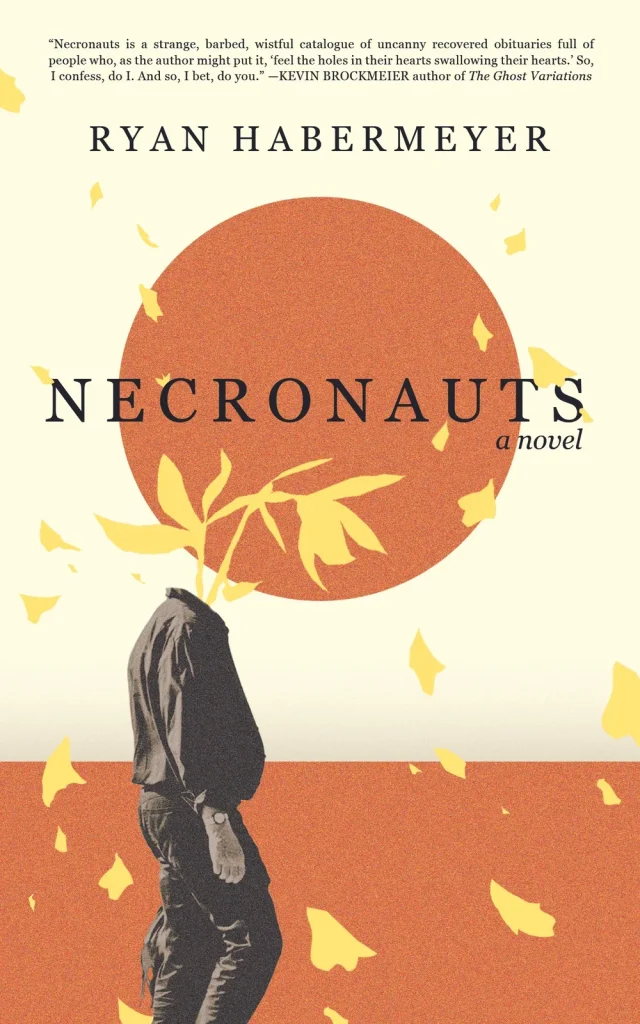
My book, Necronauts, is a novel-in-flash (photo) fictions. Written in the form of ninety-five obituaries interspersed with vintage found photographs, it tells the story of a boy with a cosmonaut helmet grafted to his head. After watching too many campy 1950s sci-fi films, he believes he is an alien and builds a catapult in the Utah desert, hoping to launch himself into outer space and reunite with the mothership. The photos both compliment and undermine narrative, creating pockets of resonance and dissonance that at times seem like factual proof of the textual details and other times call into question the veracity of the story. By juxtaposing nonfiction forms alongside speculative aesthetics, the novel becomes a paranormal satire of small-town tradition and a meditation on faith, folklore, and found family.
Somewhere between childhood picture books and the literary world of grown-up fiction, images tend to disappear and leave in their wake a black sea of type. While I love words and their contortionist ability to stretch and twist and turn to create strangely enchanting story images in my head, I also love books that, like Necronauts, are unafraid to echo the nostalgic wonder of childhood picture books. The nine books below do exactly that, only instead of illustrations, they juxtapose photographs alongside the text, creating a bewildering tension between word and image, and dazzling with weird, wondrous, photo-embedded narratives.
While it would be wrong to say that Ondaatje’s book is the godfather of contemporary photo narrative, it was the first one I discovered as an impressionable young writer. A hard book to define—is it a novel? a fragmented epic poem? a speculative lyric essay? a novel in stories? a doctored poetic scrapbook?—it is ostensibly a collection of poetic works by the Billy the Kid, offering fragmented poetic snapshots and anecdotes of his life away from the sensationalistic exploits. But it is also a pseudo-historical, biofictional reimagining of an American outlaw that both reconstructs and deconstructs the mythology surrounding his life. Ondaatje tries—and succeeds—at showing us the flawed, fragile human behind the legend.
This National Book Award winner is a novel that wears many disguises. It is at once a deathbed dialogue between two friends and a spiraling, phantasmagoric collage of stories-within-stories, vintage photographs, archival documents, and biofictions all orbiting questions of queer history, sexual pathology, gothic psychiatrics, and the fable of identity. Existing somewhere at the borders of history, facts, and imagination, the novel reads like a haunted scrapbook—a secret window into what resilience looks like in the face of erasure. It is a frustrating book, one demanding a slow, careful reader willing to piece together this psychological jigsaw puzzle, but as Torres has suggested in interviews, frustration is its own kind of art.
Like Torres, Casey’s novella explores grotesque medical history as it reimagines the lives of nineteenth-century women institutionalized at the Salpêtrière Hospital in Paris. Through a series of vignettes, anecdotes, prose poems, confessionals, case studies, and neurologist Jean-Martin Charcot’s famous photographs, the book offers a panoramic portrait that gives voice to “hysterical” women via a lyricism that restores humanity to the marginalized. As Casey guides us through the consciousness of these women, the raw intimacy to the narrative portraits is made all the more troubling by the uncertainty of the images which appear without context or explanation. The book seems to be less about trying to recover the lost voices than inviting the reader to imagine what might have been, sending us adrift into a sea of mysterious empathy.
Few books are as enigmatically enticing as Ghostographs. Structured around dozens of “found” photographs—candid snapshots of unfiltered everyday life— from the author’s personal archives, this novella is a collage of prose poems, flash fictions, anecdotes, and micro-narratives that accrue into a kind of nostalgic lore for a nameless yet familiar small-town community. Like poems, the narrative fragments and their haunting photographic counterparts are a slow-moving avalanche of emotions and ideas whose lyrical repetitions and recurring motifs—light, dogs, rivers, sunflowers, fish—capture the surreal dream logic of childhood. The lyrical and mysterious voice guiding us through the weird, haunting incidents sounds like one of the dead calling out to the soon-to-be-dead to pay attention to what stories and images you leave behind. The photographs, full of light leaks and backscatter and a granular erosion, amplify the novella’s eerie, unnerving, but hauntingly beautiful vibe. Stated plainly: My book wouldn’t exist without this one.
What initially seems to be an innocuous road trip novel about a couple driving their children from New York City through the southwest slowly becomes a meditation on immigration, Native American history, and the disintegration of the narrator’s blended family. As the family journeys through a scarred desert landscape of grotesque machinery, abandoned gas stations, and dilapidated motels, Luiselli makes allusions and explicit reference to other road trips as diverse as TheOdyssey, Blood Meridian, On the Road, the 13th century Children’s Crusade, and David Bowie’s “Space Oddity.” Though mostly told through the mother’s perspective as she anxiously questions motherhood and terrifies the children with nightmarish stories of detained migrant children, the novel also shifts to offer the boy’s perspective of dreams deferred as the slow fracturing of the family mirrors an equally fractured country. It is a novel full of meditative twists and turns echoing politics past and present, punctuated by a sea of miscellaneous archival material—maps, endnotes, audio recordings—all culminating in a cache of Polaroids purportedly taken by the boy which illuminate the threat of vanishing that underpins archival investigation.
Liontaming in America reconfigures the archival history of the American West through a hybrid mingling of poetry and essay, centering women’s voices that have been silenced by patriarchal power structures. Like many of the books on this list, it is an unclassifiable collage about many things: poetic musings on the circus; a critique of settler colonialism in the American West; meditations on sci-fi utopianism in Hollywood; and an interrogation of Mormonism and revisionist spiritual biography of its most famous leader, Brigham Young, that somehow threads together Peter Pan with religious liturgy. Arguably, this is poetry (it was long-listed for the National Book Award in poetry, after all), but it is prose poetry that cuddles up to lyric essay with detours into imaginative biography, sermons, and novelistic digressions populated with archival photographs that function as roadblocks, enticing us to slow down and savor the language like a fever dream.
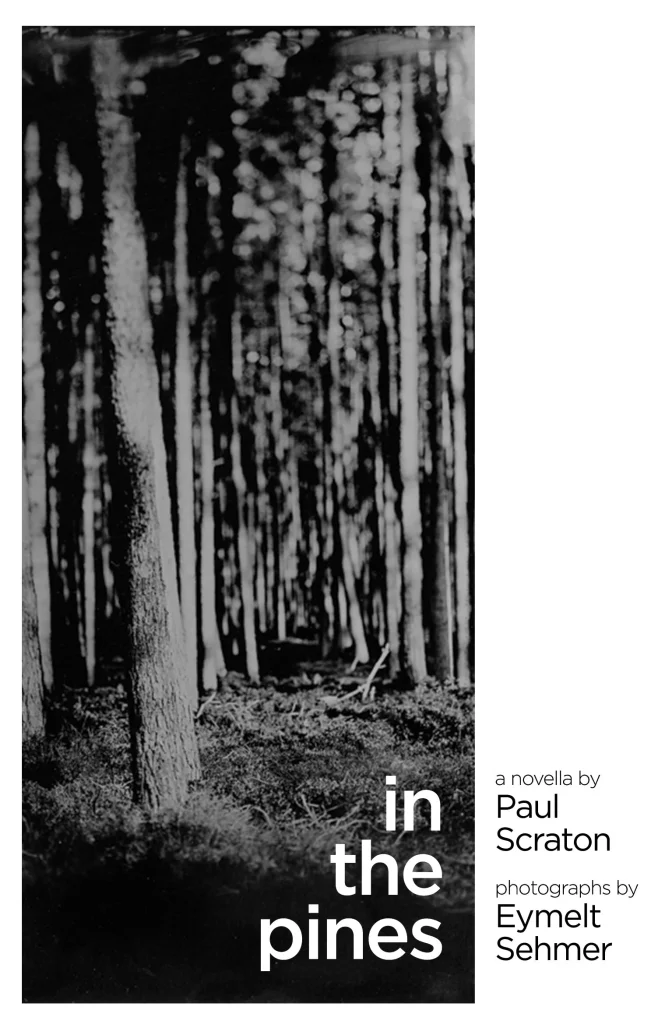
The concept of this novella is simple but elegant: Eymelt Sehmer’s photographs that utilize the vintage collodion wet plate process are paired with Scraton’s fragmented, lyrical meditations filtered through an unnamed narrator who recalls the forest, childhood, folklore, and climate change. Similar to the photographs, which are sometimes hazy and other times vivid, the narrative sections move with a kind of fairy-tale dream logic that serves to both crystalize the central conceit of how nostalgia and the vicissitudes of aging create shifting perceptions of natural landscapes and make this idea more mysterious. Perhaps at its core, this book is a curious entanglement of traveling and ghosts: To travel—whether physically or mentally, to strange new places or comforting familiar ones—is to be haunted by the ghost of yourself and confront the specter of who you were before undertaking a journey.
I love books written by or about flâneurs. Baudelaire, Wilde, Woolf, Proust, Bernhard, Walser, Sebald. There’s something exquisite about abandoning plot in favor of the linguistic forking paths of a loitering, observant mind. Cole’s novel follows in that tradition. It is a stroll through the streets of modern Lagos, where we wander alongside the narrator—a nameless, autofictional alter ego who is and isn’t Teju Cole—through labyrinthine streets as he reconnects with family and friends in a homeland that feels both foreign and familiar. The fragmented vignettes and anecdotes are punctuated by Cole’s original photographs of everyday life, which refuse the exoticism of Africa in favor of a disquieting, intimate voyeurism. Sometimes picaresque, sometimes nostalgically melancholic, but always rich with insight, the book is a meditation on the frustrations of home and homeland, and how there is often no sense or refuge in “the combat between art and messy reality.”
At face value, this is a debut novel about an aspiring artist living in Barcelona, her autistic brother, and an obsession with polar exploration. But it is also a shapeshifter of forms: at times a clandestine diary, other times a travelogue, occasionally populated with biographical portraits, and sometimes illustrated research notes examining the history of polar exploration. It merges science with philosophy, blurs facts with fiction, arranges archival photos alongside imagined drawings. But it is less a novelistic voyage in search of geographical places than a lyrical inquiry into the emotional landscapes of the body and the tensions that emerge when familial obligations and gendered hierarchies collide with artistic life. Juxtaposing feminine creativity against the history of masculine conquest, the book seems to ask: Who gets to live—to explore, to love, to obsess, to make dreams reality—and who gets proverbially frozen in ice?
This is my first opportunity to write to you as the incoming Executive Director and Publisher. While I’ve had two months to get used to the idea, I’m still adjusting to the weight of the responsibility I will soon carry. One thing is for certain: It’s an honor to be trusted with stewarding Electric Literature’s future. As outgoing Executive Director Halimah Marcus wrote in her resignation letter, “There is no other publication like Electric Literature, and its value in the literary landscape cannot be overstated.” I couldn’t have said it better myself. I have loved serving as Editor-in-Chief, and I’m excited for what lies ahead.
In the seventeen years since EL was founded, we’ve accomplished so much. We’ve introduced talented emerging writers to millions of readers. We’ve been awarded competitive grants and won prestigious prizes. We’ve published our first book! And through it all, we’ve remained committed to publishing writers from all backgrounds at a time when many communities are under attack. None of that will change; if anything, we are doubling down on our commitment to free speech, creative excellence, and providing a home for stories told by our most marginalized voices.
But make no mistake; as successful as we’ve been, there is more work to be done. My long-term vision for Electric Literature is expansive. I plan to grow our reach and influence by every measure, while maintaining our sharp, independent spirit.
During this time of transition, your support is more vital than ever. As we embark on building EL’s future, we must raise $35,000 to fund our next chapter. My goals for the organization extend far beyond our current moment. We have always been innovators, and I have every intention of continuing to push literature—and the publishing industry—forward. Every gift, no matter how small, will go a long way towards ensuring Electric Literature’s continued success. Help us find and champion new voices. Help us connect hungry readers with great writers. And as we turn a crucial page, remember this: Our very bright future begins with you.
Gratefully yours,
Denne Michele Norris Editor-in-Chief and incoming Executive Director + Publisher
The social fabric of the US is under assault at all scales, from the rapacious rents charged for homes to genocidal and colonialist campaigns in Gaza, Venezuela, Iran, and beyond. This blatant disregard for life has illuminated the necessity of bringing an alternative system into being. Whether via mutual aid for ICE-threatened neighbors or renewed interest in social housing models that put homes before profit, interest in mechanisms that bolster our mutual well-being is on the rise. While these efforts can feel small next to the predominance of militarism and capitalism in the US today, they are growing, popular, and not at all foreign.
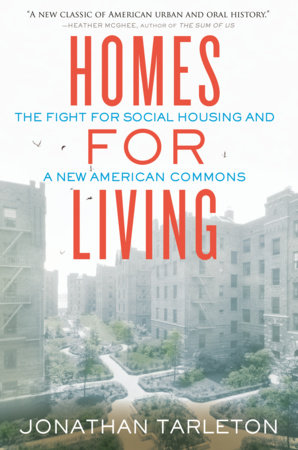
We’re frequently told that something like social housing—permanently affordable, decommodified homes with meaningful resident governance—either runs contrary to the American Dream or simply cannot work in the hypercapitalist US of A. Countering that idea was part of my motivation for writing Homes for Living: The Fight for Social Housing and a New American Commons. In it, I delve into the lives of two affordable housing cooperatives created under arguably the most successful social housing solution in US history, New York’s Mitchell-Lama program. By chronicling fiery debates among cooperators on whether to “privatize” their co-ops and profit from these public goods meant to remain affordable for the next generation, I chart the central ideas that underlie competing American visions for what homes are for and the narrative, strategic, and policy interventions needed to maintain and grow a more just housing system.
The books that follow share a similar concern with the roots of our commonwealth and the means of bolstering an ecosystem of support for its many components, from land and housing to our places of work, respite, and knowledge creation. Amid the seemingly incessant darkness of our current moment, they beckon us with light and purpose toward building a commonwealth—to retake and rebuild a broader commons in a country built on their pillaging.
The gulf between envisioning transformative ideas and taking action can be frustratingly difficult to bridge for many. Taylor and Hunt-Hendrix, two thinkers and organizers brought together by Occupy Wall Street, do so beautifully in this book that explores both the intellectual history of solidarity and its real potential when mobilized into mass politics. With analysis of solidarity’s workings within a wide range of social movements, they offer blueprints for how focusing on economic justice can bring us together across difference and cultivate the “secular sacred” through collective action.
No full consideration of the society we’ve built and one we can aspire to would be complete without going back to its very foundations: the land and environmental systems that form the most basic and most crucial infrastructure of our lives. Worth soaking up in one sitting, Purdy’s ruminations chart how we can remake our relationship with that infrastructure and transform the other material systems that form the architecture of our world. Rather than draw false boundaries between the natural world and human cultures, Purdy integrates them seamlessly in a call for a renewed environmental justice movement that would reconfigure how we value resources and relationships to better support our human and non-human communities.
Inspired in part by the science fiction of Octavia Butler, this “facilitation” in book form offers a framework for understanding and enacting social change, rooted in the rhythms and lessons of the natural world. brown draws from her own work as an organizer to chart a path through this sometimes messy and seemingly chaotic work to teach us how to adapt to change, recover from shocks, and embrace the nonlinear paths of progress. Far from a dry manual, you’ll be treated to poetry, journaling prompts, and wisdom from all manner of sources as you consider how to show up and “move toward life” in broader movements.
If you’re looking for a treatise that clearly and forcefully argues for housing as a key site of political formation and struggle, look no further. Madden and Marcuse outline both how the treatment of our homes as commodities is at the root of so many social ills and the opportunities before us to reshape the housing system to prioritize shelter over profit. While it has become increasingly difficult for speculators to ship the story that housing costs and houselessness are somehow mechanical and apolitical, this book leaves no doubts about the policy decisions behind who gets to live where and the indignities they must suffer to do so. By zooming into movements for housing as a right in New York, they suggest how to radically reform a system that’s clearly not working—or rather, working too well for an outcome that harms the many and serves only the few.
For those more interested in the nuts and bolts of good organizing, Spade offers this slim but packed volume on the practicalities of putting solidarity into action through mutual aid efforts to care for one another. Clear-eyed about the difficulties and joys of “working together on purpose,” Spade pulls on his own movement experience to talk through consensus decision-making, key leadership qualities to cultivate, and conflict that will inevitably arise. The section on potential pitfalls of mutual aid is particularly helpful for ensuring efforts at “solidarity, not charity” do not recreate the same structures and concepts they aim to dismantle.
Building our commonwealth means, among other things, reckoning with the deep and ongoing damage of racial hierarchy. As McGhee shows through dispatches from across the US that blend her perspective as a policy wonk and skill as a natural interviewer, the white supremacy at the core of American life has a cost for everyone, not just Black and Brown communities. Excising the mistaken zero-sum paradigm—the idea that this group only prospers by ensuring that another does not—from our policies offers up an alluring and real solidarity dividend that, McGhee tells us, is there for the taking by coming together to fund and maintain our public goods for the true benefit of all.
Kimmerer’s “intertwining of science, spirit, and story” combines her training as a botanist and Indigenous ways of knowing to offer a healing meditation on our inextricable relationship with the natural world. While the prevailing American approach to ecosystems is one of dominion and plunder, Kimmerer uses stories of plants to remind us of their self-possession and their gifts. Through a string of essays that loop back on one another in pleasing and self-reinforcing ways, the great rewards of close observation, care, and mutual thriving borne of deep relationships with the basis of life become ever clearer.
Covering three centuries of cooperative economic endeavors across a wide variety of Black communities in the US, political economist Nembhard’s study situates these democratically-controlled, collectively-owned businesses within wider movements for civil rights and self-reliance in the face of white supremacy. Ranging in scale from small businesses to regional federations of farm cooperatives, Nembhard uses the stories of these co-ops to speak to the importance of community support and ongoing education to realize economic independence and political power.
Schneider brings the cooperative conversation fully into the 21st century as he reports on the renewed rise of cooperative forms in the shadow of the 2008 crash. Especially well-versed in how co-ops offer an alternative to the precarity of the gig economy, he takes us inside new co-ops that counter the might of the likes of Uber by putting the ownership of digital platforms in workers’ hands and attempts to build fairer forms of cryptocurrency that don’t just reward existing concentrations of wealth and speculation. Alongside Nembhard’s Collective Courage, Everything for Everyone demonstrates the sectoral—tech, finance, agriculture, transportation, electricity—and geographical breadth that characterize cooperative endeavors today. A healthy antidote to the idea that there is no alternative to the exploitation embedded in our economies.
An excerpt from An Awfully Big Adventure by Beryl Bainbridge
At first it had been Uncle Vernon’s ambition, not Stella’s. He thought he understood her; from the moment she could toddle he had watched her lurching towards the limelight. Stella herself had shown more caution. ‘I’ll not chase moonbeams,’ she told him.
Still, she went along with the idea and for two years, on a Friday after school, she ran down the hill to Hanover Street and rode the lift in Crane Hall, up through the showrooms of polished pianofortes where the blind men fingered scales, until she reached the top floor and Mrs Ackerley whose puckered mouth spat out ‘How now brown cow’ behind the smokescreen of her Russian cigarettes.
She came home and shut herself in her bedroom off the scullery and spouted speeches. She sat at the tea table and dropped her cup to the saucer, spotting the good cloth with tannic acid, wailing that it might be a poison that the Friar Lawrence had administered. When Uncle Vernon shouted at her she said she wasn’t old enough to control either her reflexes or her emotions. She had always had a precise notion of what could be expected of her.
Lily had imagined that the girl was merely learning to speak properly and was dismayed to hear it was called Dramatic Art. She fretted lest Stella build up hopes only to have them dashed.
Then Stella failed her mock school certificate and her teachers decided it wasn’t worth while entering her for the real thing. Uncle Vernon went off to the school prepared to bluster, and returned convinced. They’d agreed she had the brains but not the application.
‘That’s good enough for me,’ he told Lily. ‘We both know it’s useless reasoning with her.’
He made enquiries and pulled strings. After the letter came Stella spent four extra Saturday mornings at Crane Hall being coached by Mrs Ackerley in the telephone scene from A Bill of Divorcement. Mrs Ackerley, dubious about her accent, had thought a Lancashire drama more suitable, preferably a comedy; the girl was something of a clown.
Stella would have none of it. She was a mimic, she said, and sure enough she took off Mrs Ackerley’s own smoky tone of voice to perfection. Admittedly she was a little young for the part, but, as she shrewdly observed, this would only stress her versatility. The audition was fixed for the third Monday in September.
Ten days before, over breakfast, she told Uncle Vernon she was having second thoughts.
‘Get away with you,’ he said. ‘It’s too late to change things now.’ He wrote out a shopping list and gave her a ten-shilling note. Half an hour later when he came up into the dark hall, jingling the loose coppers in his pocket, he found her huddled on the stairs, one plump knee wedged between the banister rails. He was annoyed because she knew she wasn’t supposed to hang about this part of the house, not unless she was in her good school uniform. She was staring at the damp patch that splodged the leaf-patterned wallpaper above the telephone.
He switched on the light and demanded to know what she was playing at. At this rate there’d be nothing left on Paddy’s vegetable barrow but a bunch of mouldy carrots. Did she think this was any way to conduct a business?
She was in one of her moods and pretended to be lost in thought. He could have hit her. There was nothing of her mother in her face, save perhaps for the freckles on her cheekbones.
‘Carry on like this,’ he said, not for the first time, ‘and you’ll end up behind the counter at Woolworth’s.’ It was foolish of him to goad her. It was not beyond her to run towards such employment in order to spite him.
‘You push me too hard,’ she said. ‘You want reflected glory.’
He raised his arm then, but when she pushed past him with swimming eyes his world was drowned in tears.
He telephoned Harcourt and sought reassurance, in a roundabout way. ‘Three bottles of disinfectant,’ he said, reading from the list in front of him. ‘Four pounds of carbolic soap . . . one dozen candles . . . two dozen toilet rolls . . . George Lipman’s put in a word with his sister. On Stella’s behalf.’
‘’Fraid I can only manage a dozen,’ Harcourt said. ‘And they’re shop-soiled.’
‘Am I doing the right thing, I ask myself?’
‘I don’t see what else is open to her,’ said Harcourt. ‘Not if the school won’t have her back.’
‘Not won’t,’ corrected Vernon. ‘It’s more that they don’t feel she’ll gain any benefit from staying on. And you know Stella. Once her mind’s made up . . .’
‘Indeed I do,’ said Harcourt. Although he had never met the girl he often remarked to his wife that he could take an exam on the subject, if pushed. His extensive knowledge of Stella was based on the regular progress reports provided by Vernon when making his monthly order for bathroom and wash-house supplies.
‘She caused an uproar the other week,’ confided Vernon, ‘over the hoteliers’ dinner dance: Lily got her hands on some parachute silk and took her to that dressmaker in Duke Street to be fitted for a frock. Come the night, with the damn thing hanging up on the back door to get rid of the creases, she refused to wear it. She was adamant. In the end none of us went. I expect you all wondered where we were.’
‘We did,’ lied Harcourt.
‘She took exception to the sleeves. According to her they were too puffy. She said she wasn’t going out looking as if her arms belonged to an all-in wrestler. I never saw her in it, but Lily said she was a picture. She’s burgeoning, you know.’
‘Is she?’ Harcourt said, and thought briefly of his own daughter who, in comparison with Stella, often seemed an imitation of the real thing. He had no idea whether his daughter was burgeoning or not; night and day she walked with rounded shoulders, clutching a handbag to her chest. ‘And how’s the cough?’ he asked. He listened to the faint scratching of Vernon’s moustache as it brushed against the mouthpiece.
‘No problem at all,’ Vernon said. ‘Absolutely none. Kind of you to ask. I’m much obliged to you,’ and he ordered a new bucket and a tin of bath scourer before replacing the receiver.
He told Lily that Harcourt believed they were doing the best thing. She was chopping up a rabbit in the scullery. ‘Harcourt thinks she was born for it,’ he said.
Lily was unconvinced. ‘People like us don’t go to plays,’ she said. ‘Let alone act in them.’
‘But she’s not one of us, is she?’ he retorted, and what answer was there to that?
They came down the steps as though walking a tightrope, Stella pointing her toes in borrowed shoes, Uncle Vernon leaning backwards, purple waistcoat bulging above the waistband of his trousers, one hand under her elbow, the other holding aloft a black umbrella against the rain.
It was a terrible waistcoat, made out of pieces of untrimmed felt that Lily had bought at a salvage sale with the purpose of jollying up the cushions in the residents’ lounge. She had meant to sew triangles, squares and stars onto the covers, only she hadn’t got round to it.
‘Leave me alone,’ the girl said, shaking herself free. ‘You’re embarrassing me.’
‘So,’ Uncle Vernon said, ‘what’s new?’ But his tone was good-humoured.
The three o’clock aeroplane, the one that climbed from Speke and circled the city on five-minute trips, had just bumped overhead. Alarmed at its passage the pigeons still swam above the cobblestones; all, that is, save the one-legged bird who hopped in the gutter, beak pecking at the rear mudguard of the taxi. It was such a dark day that the neon sign above the lintel of the door had been flashing on and off since breakfast; the puddles winked crimson. Later, after he had visited the house, Meredith said that only brothels went in for red lights.
Spat upon by the rain, Stella covered her head with her hands; she knew she was watched from an upstairs window. Earlier that morning Lily had sat her down at the kitchen table and subjected her to the curling tongs. The tongs, fading in mid-air from rust to dull blue, had snapped at the locks of her hair and furled them up tight against her skull. Then, released in fits and starts, the singed curls, sausage-shaped, flopped upon the tacked-on collar of her velvet frock.
‘In the grave,’ Stella had said, ‘my hair and nails will continue to grow.’
Lily had pulled a face, although later she intended to repeat the remark for the benefit of the commercial traveller with the skin grafts. He, more than most, even if it was a bit close to the bone, would appreciate the observation. To her way of thinking it was yet another indication of the girl’s cleverness, a further example, should one be needed, of her ferocious, if morbid, imagination.
Uncle Vernon paid off the cab right away. The arrangement had been struck the night before after a turbulent discussion in which Stella had declared she’d prefer to die rather than tip the driver. ‘I’ll go on the tram instead,’ she said.
‘It’ll rain,’ Uncle Vernon told her. ‘You’ll arrive messed up.’
She said she didn’t care. There was something inside her, she intimated, that would become irretrievably sullied if she got involved with the business of tipping.
‘You just give him sixpence,’ Uncle Vernon had argued. ‘Ninepence at the most. I can’t see your difficulty.’
To which Stella had retorted that she found the whole transaction degrading. In her opinion it damaged the giver quite as much as the receiver.
‘Well, don’t tip him, you fool,’ Uncle Vernon had countered. ‘Just chuck the exact amount through the window and make a run for it.’
Debating anything with the girl was a lost cause. She constantly played to the gallery. No one was denying she could have had a better start in life, but then she wasn’t unique in that respect and it was no excuse for wringing the last drop of drama out of the smallest incident. Emotions weren’t like washing. There was no call to peg them out for all the world to view.
Debating anything with the girl was a lost cause. She constantly played to the gallery.
Mostly her behaviour smacked of manipulation, of opportunism. He’d known people like her in the army, people from working-class backgrounds, who’d read a few books and turned soft. If she had been a boy he’d have taken his belt to her, or at least the back of his hand.
All that costly nonsense of keeping the landing light burning into the small hours. Lily said it was because she remembered that business of the night lights—for God’s sake, the child had been nine months old. He put it down to that poetry she was so fond of, all those rhymes and rhythms, those couplets of melancholy and madness that inflamed her imagination. Nor was he altogether sure she was afraid of the dark. Why, during the blackout, when the whole city was drowned in black ink, she had often gone out into the back yard and stood for an hour at a time, keening under the alder bush. And what about the time he had come home on leave and she had somehow slipped out of the shelter and he and the air-raid warden had found her crouched against the railings of the cemetery, clapping her hands together as the sugar warehouses on the Dock Road burst like paper bags and the sparks snapped like fire crackers against the sky?
She had always been perverse, had always, in regard to little things—things which normal people took in their stride—exhibited a degree of opposition that was downright absurd. He hadn’t forgotten her histrionics following the removal of the half-basin on the landing. She had accused him of mutilating her past, of ripping out her memories. He’d had to bite on his tongue to stop himself from blurting out that in her case this was all to the good. There were worse things than the disappearance of basins. It had brought home to him how unreliable history was, in that the story, by definition, was always one-sided.
Nor would he forgive in a hurry the slap-stick scene resulting from the felling of the alder bush in the dismal back yard, when she had run from the basement door like a madwoman and flung herself between axe and bush. Ma Tang from next door, believing he was murdering the girl, had shied seed potatoes at him from the wash-house roof. Ma Tang’s father, who was put out to roost at dawn with his scant hair done up in a pigtail, had sent his grandson for the police.
The basin had been a liability. More than one lodger, returning late at night and caught short, had utilised it for a purpose not intended. As for the alder bush, a poor sick thing with blighted leaves, it was interfering with the drains. On both occasions, and there had been many others, Stella’s face had betrayed an emotion so inappropriate, assumed an expression of such false sensibility, that it was almost comic. Perhaps it wasn’t entirely assumed; there had been moments when he could have sworn she felt something.
For her part, Lily had tried to wheedle Stella into letting Uncle Vernon accompany her to the theatre. She implied it was no more than his due. If he hadn’t known Rose Lipman’s brother when they were boys growing up rough together in Everton, Stella wouldn’t have got a look-in. And it wasn’t as though he would be intrusive. He was a sensitive man; even that butcher in Hardman Street, who had palmed him off with the horsemeat, had recognised as much. He would just slope off up the road and wait for her, meekly, in Brown’s Café.
‘Meekly,’ Stella had repeated, and given one of her laughs. She’d threatened to lock herself in her room if he insisted on going with her. Her door didn’t boast such a thing as a lock, but her resolution was plain enough. She said she would rather pass up her chance altogether than go hand in hand towards it with Uncle Vernon. ‘I’m not play-acting,’ she assured him.
Stung, though she hadn’t allowed him her hand for donkey’s years, not since he had walked her backwards and forwards from the infant school on Mount Pleasant, he had rocked sideways in his wicker chair beside the kitchen range and proclaimed her selfish. A sufferer from the cold, even in summertime, he habitually parked himself so close to the fire that one leg of the chair was charred black. Lily said he had enough diamond patterns on his shins to go without socks. The moment would come, she warned him, when the chair would give up the ghost under his jiggling irritation and pitch him onto the coals.
‘Keep calm,’ she advised, ‘it’s her age.’
‘I’m forced to believe in heredity,’ he fumed. ‘She’s a carbon copy of bloody Renée.’ It wasn’t true; the girl didn’t resemble anyone they knew.
When he shoved Stella into the cab he hesitated before slamming the door. He was dressed in his good clothes and there was still time for her to undergo a change of heart. She stared straight ahead, looking righteous.
All the same, when the taxi, girdled by pigeons, swooshed from the kerb she couldn’t resist peeking out of the rear window to catch a last glimpse of him. He stood there under the mushroom of his gamp, exaggeratedly waving his hand to show he wished her well, and too late she blew him a grudging unseen kiss as the cab turned the corner and skidded across the tramlines into Catherine Street. She had got her own way but she didn’t feel right. There’s a price to pay for everything, she thought.
Uncle Vernon went back indoors and began to hammer a large cup hook into the scullery door. Hearing the racket, Lily came running, demanding to know what he was doing. He was still wearing his tank beret and his best trousers. ‘It’s to hang things from, woman,’ he said, viciously hammering the screw deeper into the wood, careless of the paint he was chipping off the door.
‘Like what?’ she said.
‘Like tea towels,’ he said. ‘What did you think? Would you prefer it if I hung myself?’
Lily told him he needed his head examining.
The journey into town took less than ten minutes; it was a quarter past three by the Oyster Bar clock when Stella arrived in Houghton Street. She jumped out of the taxi and was through the stage door in an instant. If she had given herself time to think, paused to thank the driver or comb her hair, she might have run off in the opposite direction and wasted her moment forever.
‘Stella Bradshaw,’ she told the door-keeper. ‘The producer expects me. My uncle knows Miss Lipman.’
It came out wrong. All she had meant to say was that she had an appointment with Meredith Potter. While she was speaking, a thin man wearing a duffel coat, followed by a stout man in mackintosh and galoshes, came round the bend of the stairs. They would have swept out of the door and left her high and dry if the doorman hadn’t called out, ‘Mr Potter, sir. A young lady to see you.’
‘Ah,’ cried Meredith, and he pivoted on his heel and stood there, the fist of his right hand pressed to his forehead. ‘We’re just off to tea,’ he said, and frowned, as though he’d been kept waiting for hours.
‘I’m exactly on time,’ Stella said. ‘My appointment was for 3:15.’ When she got to know him better she realised he’d been hoping to avoid her.
‘You’d better come through,’ Meredith said, and walked away down the passage into a gloomy room that seemed to be a furniture depository.
The man in the galoshes was introduced as Bunny. He was the stage manager. Stella wasn’t sure whether he was important or not; his mackintosh was filthy. He gave her a brief, sweet smile and after shaking her hand wiped his own on a khaki handkerchief.
In spite of the numerous chairs and the horsehair sofa set at right angles to the nursery fire-guard, there was nowhere to sit. The chairs climbed one upon the other, tipping the ceiling. A man’s bicycle, its spokes warped and splashed with silver paint, lay upturned across the sofa. There was a curious smell in the room, a mixture of distemper, rabbit glue and damp clothing. Stella lounged against a cocktail cabinet whose glass frontage was engraved with the outline of a naked woman. I’m not going to be cowed, she thought. Not by nipples.
The stage manager perched himself on the brass rail of the fire-guard and stared transfixed at his galoshes. Meredith lit a cigarette and, flicking the spent match into a dark corner, closed his eyes. It was plain to Stella that neither man liked the look of her.
‘Miss Lipman told me to come,’ she said. ‘I’ve not had any real experience, but I’ve got a gold medal awarded by the London Academy of Dramatic Art. And I’ve been on the wireless in Children’s Hour. I used to travel by train to Manchester and when the American airmen got on at Burtonwood they unscrewed the lightbulbs in the carriages. Consequently I can do Deep South American and Chicago voices. There’s a difference, you know. And my Irish accent is quite good. If I had a coconut I could imitate the sound of a runaway horse.’
‘Unfortunately, I don’t seem to have one about me,’ said Meredith, and dropped ash onto the floor. Above his head, skew-whiff on a nail, hung the head of some animal with horns.
‘Actually,’ she amended, ‘I’ve only got the certificate in gold lettering. They stopped making the medals on account of the war.’
‘That damned war,’ murmured Bunny.
‘My teacher wanted me to do something from Hobson’s Choice or Love on the Dole, but I’ve prepared the telephone bit from A Bill of Divorcement instead.’
‘It’s not a play that leaps instantly to the mind,’ Meredith said.
‘Hallo . . . hallo,’ began Stella. She picked up a china vase from the shelf of the cocktail cabinet and held it to her ear.
‘Everyone is always out when you most need them,’ observed Bunny.
‘Kindly tell his Lordship I wish to speak to him immediately,’ Stella said. A dead moth fell out of the vase and stuck like a brooch to her collar. Meredith was undoing the toggles of his coat to reveal a bow tie and a pink ribbon from which dangled a monocle. Save for Mr Levy, who kept the philatelist shop in Hackins Hay, Stella had never known anyone who wore an eye-piece.
‘Tell his Lordship . . .’ she repeated, and faltered, for now Meredith had taken his watch from his vest pocket and was showing it to Bunny. ‘It’s tea-time,’ he remarked. ‘You’d better come along,’ and gripping Stella by the elbow he marched her back up the passage and thrust her out into the rain.
It was embarrassing walking the streets three-abreast. The pavements were narrow and choked with people and Meredith often slid away, dodging in an elaborate figure of eight in and out of the crowd. Stella wasn’t used to courtesy and she misunderstood his attempts to shield her from the kerb; she thought he was trying to lose her. Presently she fell behind, stumping doggedly along: up, down, one foot in the gutter. Meredith, the hood of his duffel coat pulled high, pranced like a monk ahead of her. She listened as he conducted an intense and private conversation, sometimes bellowing as he strained to be heard above the noise of the traffic. Someone or something had upset Bunny. He seemed to be in pain, or else despair.
Stella wasn’t used to courtesy and she misunderstood his attempts to shield her from the kerb; she thought he was trying to lose her.
‘It’s the hypocrisy I can’t stand.’
‘It always comes as a shock,’ agreed Meredith.
‘It hurts. My God, it hurts.’
‘If you remember, I had a similar experience in Windsor.’
‘My God, how it hurts.’
‘You poor fellow,’ shouted Meredith, as a woman trundling a pram, laden with firewood, prised them apart.
On the bomb site beside Reeces Restaurant a man in a sack lay wriggling in the dirt. His accomplice, dressed only in a singlet and a pair of ragged trousers, was binding the sack with chains. When he stood upright the blue tail of a tattooed dragon jumped on his biceps.
‘I shall die under it,’ said Bunny.
They had tea on the second floor of Fuller’s Café. Mounting the stairs, Stella had started to cough, had discreetly wiped her lips on Lily’s handkerchief and studied it, just in case it came away spotted with blood. She had known Meredith was watching. She could tell he was concerned by the urgent manner in which he propelled her through the door.
When Bunny removed his mackintosh the belt swung out and tipped over the milk jug on the table nearest to the hat stand. The pink cloth was so boldly starched the milk wobbled in a tight globule beside the sugar bowl. Bunny didn’t notice. The occupants of the table, three elderly ladies hung with damp fox furs, apologised.
Stella said she needed to keep her coat on.
‘You’re drenched,’ protested Meredith.
‘It’s not important,’ she said. Dressing that morning neither she nor Lily had bargained on her frock being seen. It was her best frock, her party frock, but the velvet attracted the dust. Time enough to buy new clothes, Lily had said, when and if she got the job.
As Meredith advanced between the tables a little shiver of excitement disturbed the room. The women, the afternoon shoppers, recognised him. There was a hitching of veils, a snapping of handbags as they slipped out powder compacts and began to titivate; pretending not to notice, they were all eyes. The manageress made a point of coming over to explain there had been a run on confectioneries. She boasted she was in control of two Eccles cakes. Mr Potter had only to say the word and they were his. ‘How very kind,’ he murmured.
‘I’m not hungry,’ said Stella, and stared into the distance as though she glimpsed things not visible to other people. Almost immediately she adjusted her lips into a half smile; often when she thought she was looking soulful Uncle Vernon accused her of sullenness. She felt ill at ease and put it down to Meredith’s monocle. One eye monstrously enlarged, he was studying the wall beyond her left shoulder. She tried to say something, but her tongue wouldn’t move. It was disconcerting to be struck dumb. Ever since she could remember she had chatted to Lily’s lodgers. Most of them had spoken dully of their homes, of the twin beds with matching valances; the sort of vegetables that grew best on their allotments. They had flourished hazy snapshots of wives with plucked eyebrows, of small children in striped bathing costumes messing about in rock pools. A few, in drink, had overstepped the mark and attempted to kiss her; one had succeeded, in the hall when she was pulling the dead leaves off the aspidistra. Though she had made a face and afterwards scrubbed her mouth on the roller towel, she hadn’t minded. None of them had ignored her.
‘How can I shut my eyes to it?’ moaned Bunny. ‘Disloyalty is unforgivable.’
‘I don’t agree,’ said Meredith. ‘There are worse things. Malice, for instance.’ The monocle jumped from the bone of his brow and bounced against his shirt front.
‘I know a man,’ Stella said, ‘who never closes his eyes. He can’t, not even when he’s asleep. His aeroplane crash-landed in Holland and his face caught fire. They peeled skin from his shoulders to fashion new eyelids, but they didn’t work.’ She opened her own eyes wide and stopped blinking.
‘How interesting,’ said Meredith.
‘When his sweetheart came to visit him she threw him over and omitted to return the ring. Afterwards she sent him a letter saying she knew she was a bad lot but she was afraid the eyelids would get passed on to the children. He says the worst thing is people thinking he looks fierce when most days he’s weeping inside.’
‘Oh hell,’ Bunny said. Scales of Eccles cake drifted from his shocked mouth.
Meredith appeared to be listening, but Stella could tell his mind was wandering. She had the curious feeling she reminded him of someone else, someone he couldn’t put a name to. Earlier she had thought him insipid: his complexion too fair, his expression too bland. He had taken so little notice of her that she suspected he was perceptive only about himself. Now, in the slight flaring of his nostrils, the disdainful slant of his head, she saw that he judged her naive. But for the discoloration of those tapering, nicotine-stained fingers drumming the tablecloth, she might have been afraid of him.
For a moment she considered giving way to another fit of coughing; instead she began to tell him about Lily and Uncle Vernon and the Aber House Hotel. She had nothing to lose. It was obvious he wasn’t going to give her the opportunity to recite her set piece from A Bill of Divorcement.
She admitted it wasn’t exactly an hotel, more of a boarding-house really, in spite of the new bath Uncle Vernon had installed two years ago. The sign had flickered over the door when Lily bought the house, and as the hotel was already known by that name in the trade it would have been foolish to change it. Lily had painted the window-frames and door cream, but the travellers walked past, bemused at the alteration, and Uncle Vernon reverted to red. Lily thought it looked garish. Originally Lily and her sister Renée had intended to run the business together, only Renée soon put the kibosh on the intention by skedaddling off to London. She wasn’t a great loss to the enterprise. Nobody denied she had style, but who needed style in a back street in Liverpool? The travellers, faced with those pictures in the hall, those taffeta cushions squashed against the bed heads, began to drop away. Several regulars, including the soap man with one arm and the cork salesman with the glass eye, were seen lugging suitcases of samples into Ma Tang’s next door.
‘What sort of pictures?’ enquired Bunny.
‘Engravings,’ Stella said, ‘of damsels in distress with nothing on, tied to trees without any explanation. Besides, her voice got on their nerves. It was too ladylike. She came back once and it was a mistake. After that trouble with the night lights, when the neighbours reported her, her days were numbered.’
‘What did the neighbours report her for?’ asked Bunny. He wasn’t the only one intrigued by the conversation. The women at the next table were sitting bolt upright, heads cocked.
‘Things,’ Stella said. ‘Things I can’t divulge.’ She looked at Meredith and caught him yawning. ‘Later on, Uncle Vernon stepped into the breach. He’s the power behind the throne. He says I’ll do least harm if I’m allowed to go on the stage.’
Bunny professed to like the sound of Uncle Vernon. He said he was evidently a man of hidden depths and it was clear Stella took after him rather than her mother.
‘Oh, but you’re wrong,’ she protested. ‘It must be my mother, for Uncle Vernon’s nothing to me.’
Meredith was still yawning. There was a glint of gold metal in his back teeth as he took a ten-shilling note out of his wallet and waved it at the waitress.
Excusing herself, Stella went to the ladies’ room where she made a show of washing her hands. In the mirror she could see the reflection of the attendant, red curls trapped in a silvery snood, slumped dozing on an upright chair beside the toilet door. There was no more than five pence in the pink saucer on the vanity table. It was not enough to pay for a share in a pot of tea for three, not with a tip and two cakes, and how could she slide it into her pocket without being heard?
Which was better, Meredith taking her for a golddigger, or being arrested for theft? She supposed she could faint. Mrs Ackerley had taught her how to make her muscles go limp, and to act a wardrobe. Meredith was hardly likely to demand a contribution to the bill if she was laid out on the floor. But then she might fall awkwardly, exposing her suspender tops like a streetwalker. I’m my own worst enemy, she thought. Uncle Vernon had offered her money but she had turned up her nose.
She managed to slip three pennies up her sleeve, heart thumping, before she lost her nerve and trailed out into the café to find the two men, coats on, waiting for her by the exit.
In the street Meredith said they would meet again when the season started. Bunny would be in charge of her. ‘But you’ve not seen me act,’ she said, startled; already she had reconciled herself to a career at Woolworth’s. He raised his eyebrows and said he rather thought he had. He told her the theatre secretary would be in touch in due course. She blushed when he shook her hand.
‘I look forward to meeting you again,’ said Bunny gallantly. He kissed her cheek and offered to hail a taxi.
‘I’ve some shopping to do,’ she said. ‘I’ll pick one up later. Uncle Vernon never travels by cab because he finds tipping degrading. Isn’t that foolish? Thank you very much for the tea.’
It was no longer raining, and patches of cold sunlight punctured the clouds. She ran over the road as though she had just spotted someone important to her, and continued to race halfway up Bold Street before stopping to look back. A tram, impeded by a coal cart, blocked her view; yet when it had rattled on she imagined she spied Meredith, hood pulled over his head, striding along Hanover Place in the direction of the river. Deep down she knew it wasn’t him. For the rest of my life, she thought, I shall glimpse you in crowds.
She walked on up the hill towards St Luke’s where she fancied her grandfather had once played the organ. There were purple weeds blowing through the stonework of the smashed tower hanging in giddy steps beneath the sky. Uncle Vernon called it an eyesore; he couldn’t see why the corporation didn’t demolish the whole edifice and finish off what the Luftwaffe had begun. She’d argued that the church was a monument, that the shattered tower was a ladder climbing from the past to the future.
Now she realised the past didn’t count and that her future had nothing to do with broken masonry. Love, she told herself, would be her staircase to the stars and, moved as she was by the grand ring to the sentiment, tears squeezed into her eyes.
At the top of the hill, on the corner by the Commercial Hotel, she telephoned Mother, using the three pennies pinched from the saucer in Fuller’s Café. The sun was already beginning to set, bruising the sky above the Golden Dragon.
‘I don’t feel guilty,’ she confided. ‘There are some actions which are expedient, wouldn’t you agree? Besides, nobody saw me.’
How can we cope with despair? I grew up in Northern Ireland in the 80s, when continuous sectarian hatred and state-sponsored violence seemed inevitable. The world was falling apart, so we joked about it. At funerals. In school. How could we not? I read Flann O’Brien’s The Poor Mouth—An Béal Bocht in Irish—and found my first true love in Irish literature. The characters get woefully, superlatively mistreated by the Irish countryside, by the state, each other, by the endless rain and the diabolical “Sea Cat”—and the cruelties both real and exaggerated are handled with an absurdist, roguish surrealism. There was glee in the surreal.
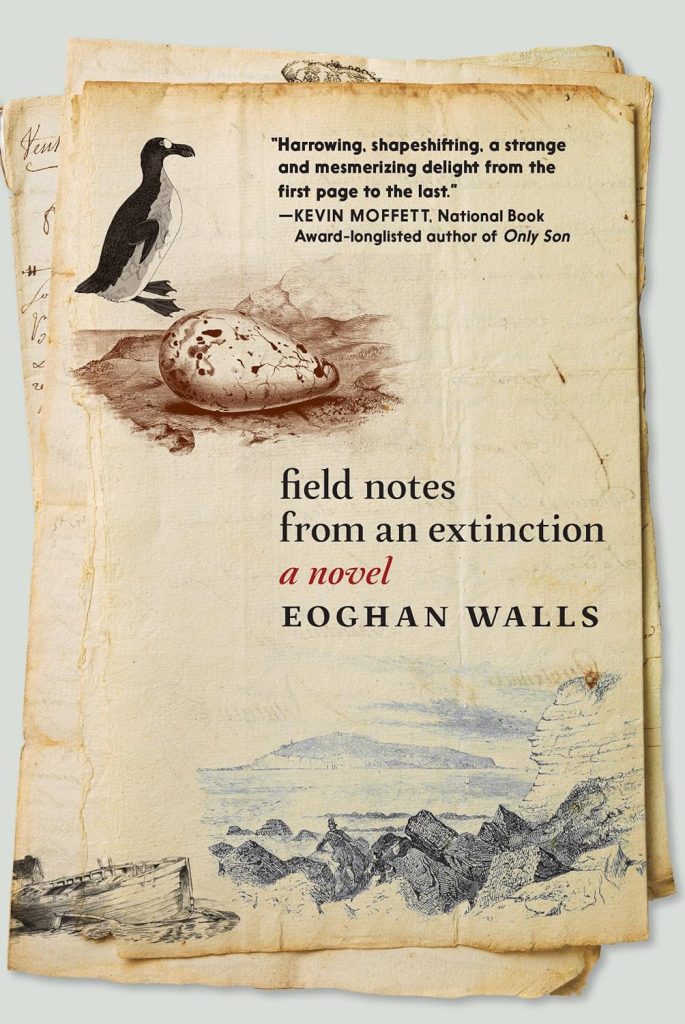
These days the air has a keen edge. A desperate edge. What forms can the imagination take when power seems nonsensical and cruelty deliberate? These questions haunt—and should haunt—our fiction. My new novel, Field Notes from an Extinction, deals with ecological disaster, weaponized starvation, and anti-immigrant sentiment. These are keenly felt today, but the Irish have always been immigrants—we build our souls on emigration and return—and I wanted to remind the Irish of this. But rather than now, I set my novel in the Irish potato famine—when there was money enough for great scientific enterprises, but people were let starve to protect market freedoms. When Irish immigrants were demonized too. My protagonist, Ignatius Green, an English scientist, has to suddenly deal with a starving half-dead child thrust onto his research outpost. The story is dark—with Great Auks and starvation and despair and the faintest hint of a werewolf—as it steps through realist suffering with humor and one eye on the surreal.
How can we dare surreal humor in the face of real desperation? As an Irishman, it’s the first tool I would reach for, and I am not alone in this. Surrealism, wit in the face of desperate times, seems to me everywhere in Irish writing now. Take these seven books as prime examples.
I wouldn’t be the first to say there is a deep vein of insistent surreal urgency that pumps through all Kevin Barry’s work. In Beatlebone, my favorite of his books, the protagonist is John Lennon—unassassinated, wonderfully free of the dirt of actual history, but trapped at an existential dip in his life and marriage, ready to escape the afterwake of his earth-quaking fame and the mundanity of marriage just to scream on an island, releasing his trauma. The Ireland he escapes to—1978, on the west coast, rainy and bizarre—is pitch perfect. The woes he runs from are common as rain. The whole book takes a brazen and bewildering fourth wall lurch right near the apex of tension. You begin the book knowing—maybe loving—John Lennon. You end the book hungover and vaguely bruised.
Miriam Gamble’s What Planet is a deeply philosophical and nutrient-rich book of poetry. Each line has a keen sense of cadence, and her pages are full of bitter, hurt animals, each lost in worlds of surreal keening and imminent philosophical abysses—but with a feral will-to-survive. The book holds wonders—from the fish in deep sea trenches who gnaw gristle off sunken carcasses and dream of a sun they will never see to an oak that both is and is not there. There are cats who sample suicide and an elegy for Scotland that baulked at the last leap to independence like a nervous showhorse. It is a book of surreal and impossible dreamscapes, made keenly felt through a drifting, intelligent music.
Stephen Sexton has reinvented the elegy in his first collection, If All the World and Love Were Young. Where most poetry debuts follow a largely biographical arc—my own did—his follows every level in Super Mario World. If this might deter some more traditional readers, it is simultaneously one long elegy for a mother who died when he was young, who bought him the SNES he escaped on. The pain and the beauty in the book is so deeply and achingly real, even as he moves through the Mushroom Kingdom and the Vanilla Dome in all their electric brilliance. The book has changed how poets write of death and computer games and pop culture.
The bleak desperation of a more recent Ireland is conjured in Caoilinn Hughes’s The Wild Laughter; a novel set in post-Celtic Tiger Ireland’s financial collapse, where a father in Roscommon, “the Chief,” is dying of age and poor investments and asks his sons to assist in his suicide. The pains in the book have a grand mythic scope—as of Cain and Abel or Saturn and his kids. There are intimate blood ties: Brothers are troubled in wild fields. Dogs howl at the damp horizons. The wild laughter of the title is the absurd—defiant? hopeful? despairing?—response to the new darknesses that drive us into the earth.
Michelle Gallen’s Big Girl, Small Town captures this wily surreal note too. Set in Aghybogey (made-up, but Christ it feels real), five years after the Troubles, the small town could be anywhere on the Irish border. A chipper, a pub, the dole. Majella, Jelly—the heroine—is a monumental figure—obese, complacent, and wily—who desires mainly fish supper and an occasional shag, but as life throws a disappeared father, an alcoholic mother, abusive men, and a murdered granny her way, she rises against the rainy hills with an awesome dignity. Here—the absurdity is in her perspective: the clash of a pointlessly cruel universe and the brazen defiance. Majella has majesty in the wildest of places.
Ailbhe Darcy’s Insistence is a poetry collection that reaches far beyond the shores of Ireland to wider, bleaker horizons. Through the American Rust Belt to the wake of Hiroshima, her voice is everywhere alert to pain and love. Almost pain through love. Everything aches, burns, and will die—human remains and newborn children together, and everywhere life insists, delicate but undefeated. The book reaches for the cosmic in the long poem “Alphabet”; the two poems entitled “After my son was born” frame this pain as the tremulous disjunction that is the basenote at the heart of all primordial love, “as though blood hadn’t always been there, waiting.” The whole act of survival—when even our own children ruin us—becomes weird, beautiful, aching.
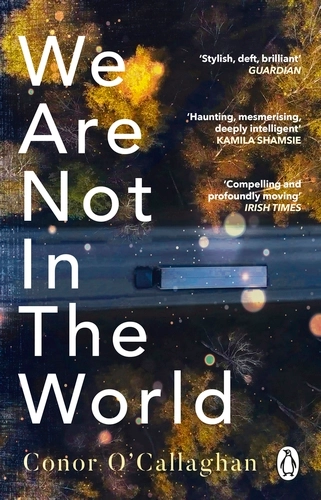
In Conor O’Callaghan We Are Not in the World, the protagonist, Paddy, turns to long distance lorry driving to escape his own past. He drives through refugee camps, away from a failed marriage and a daughter he cannot love adequately. The road he drives on is gritty and real, but he cannot thole the pain, as the story slips eventually, painfully, beyond the realms of the world. Like so much Conor O’Callaghan writes, Paddy is haunted by his own failures—but when his daughter turns up in his lorry, he thinks he might have a chance—however briefly—to right some of the wrongs he has partaken in on the earth.
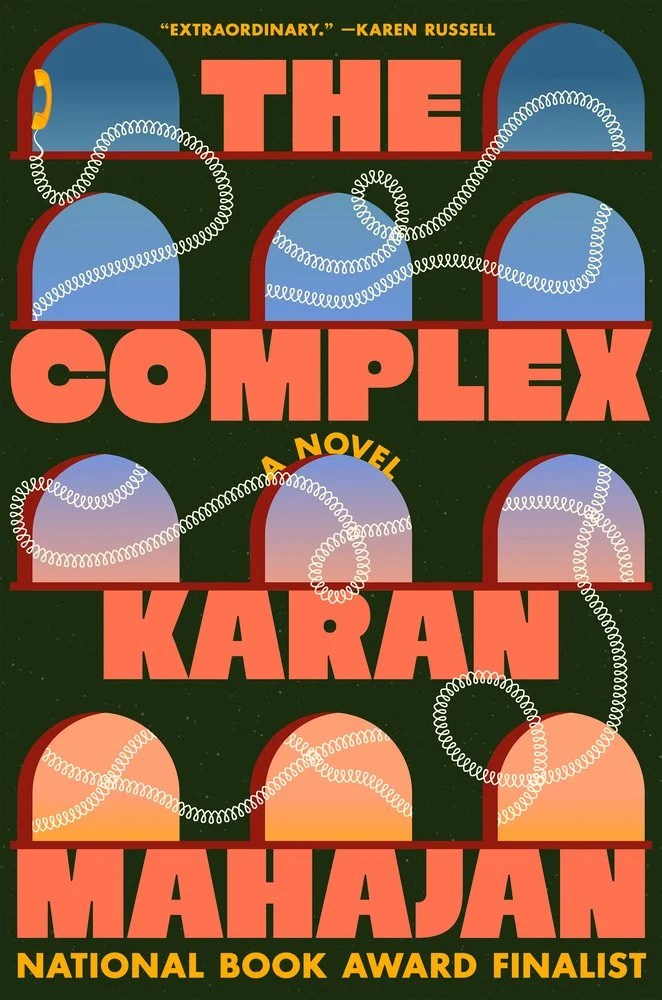
The drama of The Complex, Karan Mahajan’s new novel, is set off by a sexual assault. Gita, who has recently married into the esteemed Chopra family, travels back to Delhi from the United States to visit family and attend a wedding of one of her husband’s relatives. There, she runs into her husband’s uncle, Laxman, still young himself, who corners her during the wedding reception and rapes her. From this violent act, Mahajan unfurls decades of the Chopra family’s story. As Mahajan teases in the novel’s framing device, this rape sets off a chain of events that will finally lead to Laxman’s murder.
Part of the strength of The Complex is Mahajan’s willingness to enter the minds of all his characters, from Gita to Laxman himself. This isn’t the first time he’s tackled complex material: His previous book, The Association of Small Bombs, which was shortlisted for the National Book Award, was told partly from the point of view of terrorists. But as Mahajan explained, though writing these characters can be challenging, they also aren’t as abnormal as we’d necessarily like to believe: “One thing I could draw on as a human being is compartmentalization. People do a bad thing and then they’re just living their lives.” While Laxman—who becomes an important political figure in India and embodies the rise of the Hindu nationalist movement in the 1980s—is the novel’s crux, The Complex is engrossing because it is a portrait of a family, not just of one bad actor. In addition to Gita and her husband Sachin, who move between India and the United States, there is Karishma, another niece of Laxman’s by marriage with whom he embarks on an affair, and her son Mohit, who gets swept up in real political protests against affirmative action in the novel’s final section, a real-life episode that was inspired by Mahajan’s childhood memories.
This range of perspectives allows Mahajan to show nuances and contradictions that drive so many of the characters: Karishma, for example, being drawn to the unappealing Laxman in order to escape the dreary confines of her life, as well as her friendship with Laxman’s wife. As Mahajan says, “Laxman has committed sexual assault, but we know from the real world that many men like this exist and they have people who live with them and marry them and even love them, right? Our president is a man like that.”
In our conversation, conducted via Zoom, Mahajan and I discussed how to write rape from a female perspective, his ambivalence about the term “family saga,” using historical fiction to explore the present, and more.
Morgan Leigh Davies: How did the book begin, and where did the inspiration for it come from?
Karan Mahajan: It changed as I was writing. The initial impetus was that I was interested in the way the psychology of immigration works—the way immigrants often lie to themselves and say they’re going to go home, the way that they can become suspended between worlds. The character of Gita Chopra came first. She is someone who has moved to the US following her husband. She hasn’t made a conscious or a professional decision to immigrate herself. She longs to move back to Delhi, but feels cast out of home as well because she’s dealing with infertility and there’s a social shame and stigma attached to that.
That’s where the book started. I knew she would have this antagonist when she moved back to India, Laxman Chopra, but the novel really clicked and opened up when it became clear that they would be linked to each other through an act of sexual violence, and that it would bind these characters in a way that was negative and inextricable. It played up the idea that many people are connected to home not just by love, but by a wound.
MLD: Your previous novel, The Association of Small Bombs, was pretty dominated by men. But the way you handled Gita’s experience of rape really affected me. It is unusual to read a book by a man where this subject is handled so sensitively. What was the process of writing Gita’s perspective?
KM: I’ve certainly written male dominated novels. There’s always a risk one takes when stepping outside one’s own experience. But here, I felt I was dealing with a woman who is from my social class, a similar background in Delhi. Obviously, she is older than me, but I had been around women like her my entire childhood. I had a way in, and it would also, to be honest, be a learning experience to me. I’m of that school of people who are like, Don’t write what you know, write what you want to learn about.
Some of the research was very straightforward. I thought to myself, I’m a cis brown man. I don’t really understand how women relate to their own bodies. I know about it from having interacted with women, but not in any kind of lived way. I read Annie Ernaux’s book Happening, which is about her abortion. There’s a great book, Adopted Miracles, by Anamika Mukherjee about infertility and adoption. Those books are not quite about the experience I was describing, but they gave me some way of thinking about the difference between how a cis man and a cis woman might interact with their bodies.
In terms of the sexual assault, that was very difficult to write. I always start novels avoiding things that are risky. This was true of The Association of Small Bombs. There was no part of me that wanted to write from the perspective of a terrorist. I was going to just write about the victim. I remember at some point thinking, I can’t actually write this because I don’t understand why someone does this . . . so, I forced myself to write from that perspective. In this case, it was true of both the perpetrator and the victim. I was like, Okay, I don’t really know how a woman in the 1970s in India would deal with sexual violence. I had to be very careful not to inflect it with the way women would talk about it now. I didn’t want it to be a #MeToo narrative because that’s not the recourse they had back then. So I thought to myself, Okay, what can she do? I interviewed therapists who deal with Indian women. I read lots of different accounts of sexual violence. That’s one thing about the present day—there’s a lot of stuff online. There were podcasts that were really helpful. I don’t think I used anything directly, but they gave me some confidence.
I’m of that school of people who are like, Don’t write what you know, write what you want to learn about.
I also drew on my own experiences of shame, where there are things, even minor things, that I constantly think about and am not able to talk about with even the person I’m closest to. I think that was a part of it.
MLD: There are a couple of instances in the novel where the characters talk or think about the idea of double consciousness, which felt so present throughout the book in these characters either living with the experience of sexual violence, or just being a woman. Male characters experience this as well. I’m curious about setting up this family situation where everyone has to have that double consciousness to continue promoting the family ideal.
KM: I think double consciousness is the thing I’m most interested in writing, because the experience of being in a big Indian family, or even an Indian social setting, is one of feeling surveilled and knowing one has many eyes on oneself and that life is partly a performance. Of course, this is true everywhere, not just in India. There’s a private self and a public self, and somehow society is set up in a way that the two can’t meet. The characters have to constantly fluctuate between the two extremes. That’s when I know a novel is really working, when I feel that happening, because that feels like lived experience to me.
MLD: From a structural perspective, how did you make the decision to write this as a family saga that also deals with a lot of political ideas? The politics is mostly held to the end of the book, so the family problems wind up taking up most of the novel.
KM: One of the funny things about having written this book is I have a personal allergy to it being called a family saga. It’s not because it’s not a family saga, but because I don’t often pick up those books anymore. I was very conscious of the form. I knew it was a family story, but I was trying to renovate it in this way where the characters are linked to each other through violation rather than by patrimony or inheritance. The classic family saga is the story of the grandfather, then the father, then the son, or the grandmother, mother, and the narrator. I didn’t want to do that.
I wanted to take on this very technical challenge of writing with equal depth about the US and India and really recreating the feeling of going back and forth, which is something that immigrant novels don’t get into. Immigration is not a linear process—I’m talking about educated immigrants, obviously, not someone coming as a refugee. But you go back after two or three years, you see your family, then you come back and it changes you every time. One reason to write about Gita in that situation is she’s an outsider who is also suffering a trauma with the family. The going back and forth is actually an intensification of what happens with most people. But I think the biggest risk I take in the novel is when it shifts to Mohit’s perspective. I really tried to keep that very tightly linked to the main characters.
MLD: Mohit, who is from the next generation, is very important in that last third, but until then, children are not very important in the novel—except to Gita and Sachin, who can’t have them. How did you approach writing about children in this and the role that they play?
KM: I think it’s part of the inversion of the family saga. When I started writing novels set in India, I was conscious of how Indian fiction is studded with grandfathers and grandmothers. There’s a lot of writing about your dadi and dada. I remember thinking, I’m gonna make it modern by not writing about them. I’m gonna avoid that. My fiction, even when it’s dealing with family, stays within a generation; it doesn’t get too much into the children or into the grandparents, except for when there’s a relevant reason for them to take over the plot.
Immigration is not a linear process. You go back after two or three years, you see your family, then you come back and it changes you every time.
I do think that’s the dramatic irony of the book: On the one hand, there are these people who are longing for kids partly because they can’t have them. Between the sexual violence and then not being able to conceive, Gita becomes obsessed with having children. This is before IVF; they don’t know what they can do. On the other hand, there are other people who have a completely hands-off or neglectful relationships with their children. The children are painted as kind of annoying. They’re always in the background squabbling and screaming because, actually, the experience of children can often be that. This idea that children are going to cure you or give you happiness or give you meaning is just a social myth. But the real goal is the propagation of this particular clan.
MLD: Laxman becomes an increasingly influential Hindu nationalist politician near the end of the book. It felt to me that the family ideas—in terms of these patriarchal characters and the way that women are treated—and the political ideas become one in the same over the course of the novel because of the way it is structured. I’m curious about the synthesis of those two things.
KM: The writing of a novel like this is strongly influenced by the time we live in. Donald Trump was very much on my mind. It’s not a new observation that it’s not accidental that Trump is a rapist and has assaulted many women. It is part of the ideology. I’ve always been fascinated by the link between male sexual violence and political struggles and structures. There’s a strong link. A lot of it has to do with male entitlement, which plays out in sexuality. Rape is not necessarily about sex. It’s about power often.
I had this one throwaway line in The Association of Small Bombs where one of the terrorist characters imagines committing a sexual assault. A lot of people were struck by it, not in a negative way. People just pointed it out. And I remember thinking, Okay, I think people are resonating with that because it is just true. There are men walking around with this in their head. They’re not committing the act, but it’s actually a very commonplace thing built into the male psyche by the society we live in, which is one which gives men more power.
The writing of a novel like this is strongly influenced by the time we live in.
This was a period when rape was being discussed in a huge way in India because there’s always a crisis of sexual violence in India. I thought, How does one write about a character like Donald Trump without sympathizing or empathizing, but just recognizing that this is a person who exists in our world? From that, I very subtly weaved in the politics. Laxman first belongs to a more progressive reformist sect of Hinduism. But one of the things that Hindu nationalism does is collapse into Sanātana Dharma, which is more orthodox Hinduism, and does more idol worship. So very subtly, I show that shift. It might not be something that American readers get, but for Indian readers, it’s significant. Laxman moves towards this more ornate form of Hinduism even as he’s acquiring power partly through his sexual misdeeds.
The part that was really important for me was to show that it’s not all about power, that at some point he does actually adopt the ideology in a real way. To me, that was one of the most important breakthroughs in the book, realizing, Oh, even someone like Trump might actually start to believe this stuff. It’s not just opportunism. You see Laxman actually becoming a figure of the Hindu right and realize it’s partly because society has let him get away with his other misdeeds.
In a novel, it’s not all done consciously, but I was conscious of not beginning with the politics in a heavy-handed way and seeing if it could emerge one character, one thread, one event at a time.
MLD: It’s so hard to write about what’s happening in America right now, partly because things are changing so quickly and partly because people don’t want to read about it. Obviously, this book deals with politics in India, but why did you make the decision to set this in the past versus the current day?
KM: Some of it is just the way my mind works as a novelist. I am someone who is constantly trying to fill in different areas of darkness that exist around him. I was born in 1984. I grew up in Delhi. So I was interested in what was happening in the period right before I was born and when I was a child. I was six years old when these Mandal Commission anti-affirmative action protests erupted. I belonged to a class of people who were protesting against affirmative action. The image that led to that entire section in the novel is that I had a family friend who was in college who lay down in front of a bus to protest.
But yes, I agree. It’s near-impossible to write into the news cycle because things change so much. I do wonder about this with American writers, why there’s been such a failure to write successfully about the biggest political movement of the last decade. I think there’s a weird, puritanical dishonesty here about the fact that all of us contain all those forces. It’s not just them. It’s not saying that there’s something bad about me if I contain them. You live in the society, so you contain a germ of racism or misogyny or ignorance. You contain all those forces that are in Donald Trump, and you should be able to write about your experience and the experiences of people you know, and be able to draw out conclusions about the present moment. That requires some degree of non-black-and-white thinking, of willingness to transgress, of taking risks—willingness to get canceled, even.
I’ll take characters who come from a background similar to me and I will try to locate all these forces within them. That’s enough. I don’t need to write about Modi right now or about Trump right now. It’ll be clear to any halfway sentient reader that that’s what’s been commented on. And also, anything set in the past is completely inflected with the concerns of the present. It’s an artificial construction.
When I meet Arun’s parents for the first time that September, I bring flowers. On the drive down, he tells me not to worry: his parents will love me. I am an actual woman that he is dating. His mother will probably want to give me some of her jewelry, he says with excitement, as he turns into a neighborhood of cookie-cutter houses called The Landings.
But in his parents’ dark, shuttered house, we sit in silence. No jewelry is proffered, and my bubbliness falls flat. A large painting of Michelangelo’s David faces us. Their house is filled with fake flowers, Hindu gods, precious moment dolls, Italian statues of angels: monuments to a life that didn’t quite take off or land in the way they had hoped. They are eager for me to leave.
Later, Arun will admit that his parents advised him not to date me. It would be easy to walk away, they said, because we had only been dating for two months. I was another example of their family being cursed, they said.
It was true that we hadn’t known each other for long. We talked on the phone for the first time that March. Ambika, a childhood friend of mine, had decided she wanted to become a matchmaker for Indians in Atlanta. Like me, Ambika had been unlucky in love, was my hypothesis; now, she wanted to help others. Those who can’t do, teach. I had lost touch with Ambika, but my mother and her had stayed in contact.
One day, my mother said that Ambika had someone she wanted to give my number to. I had always refused to be introduced to an Indian man in this way because it sounded like an arranged marriage. But I had just turned 34, and I wanted children, if I could have them. After ten years in New York, I had just moved back to Atlanta, where no one was interested in me. I had also just gotten out of the hospital. It was a moment in time when I would have said yes to a dog. Ambika didn’t want money. Why not talk to this thickly accented Indian man in Durham?
But Arun, the guy on the other end of the line, did not have an Indian accent. He sounded Southern, like me. It felt almost as if we already knew each other. We did in a way, if shared backgrounds could do the work of backstory, which I suppose was the exact premise of an arranged marriage. We had both grown up eating thick, brown sambhars and thayir sadam mixed with baby mango pickles. We had both attended rival prep schools in Atlanta, two years apart. We were from such a thin lineage of Tamil Brahmins that we were likely related, far down, though why look too closely into that. He was handsome.
I had never been the kind of Indian girl that Indian guys liked, though I was interested in being that girl. This girl had skin a lighter brown than mine, and wore pink eye shadow and long, dangly, Indian-ish earrings. Her hair was straight, but not too straight. She was gorgeous and vegetarian; exceptional at yoga. She had no darkness to her.
The second time we talked, I told Arun I sometimes ate meat. I’d forgotten I’d earlier told him I was a vegetarian. He asked if I was trying to hide my meat eating, and if so, that was weird. I realized I could be myself with him: a vegetarian who had just started to eat red meat, for complicated reasons.
That May, Arun drove down from Durham, where he was finishing a fellowship, to look at apartments. He planned to move to Atlanta that July to start a new job, his first, as a cardiologist.
He suggested we meet and go for a walk. In person, he was tall and gentle, and nervous, with huge, light brown eyes that had nothing to hide. On the walk, I suggested we stop for a drink. He was funny.
I had never been the kind of Indian girl that Indian guys liked, though I was interested in being that girl.
Across a picnic table, he showed me photos of the blue ancestral home outside of Madras that he’d just visited. But he liked the Hawks, hazy west coast IPAs, and Bottle Rocket. A long time ago, an Indian friend had told me it would be impossible for me to meet someone like me because I was too odd a combination of Indian and American. But now that person was here, in front of me.
That July, Arun moved to Atlanta, and we began to go out night after night. We fell in love, giddy with our luck at having found each other after years of meeting people who weren’t right.
I had sometimes had this feeling that if something good happened to me, something bad must happen next—a certain, universal equilibrium to maintain. No one deserved it all. But maybe this would be different.
That February, one month before Arun and I first spoke, I had woken up with a fever. I ignored it, not realizing how sick I was. Three days later, I couldn’t breathe. My sister drove me to the hospital, and in the E.R., a nurse said, “she’s septic.” They stripped me in a back room. I begged for a blanket, but my fever was too high, the nurses said, as they took a mobile chest X-ray. I apologized for not wearing a bra, and the doctor in the room smiled awkwardly. This girl is about to die and is worried about a bra, is what that smile said.A nurse slid a bedpan underneath me.
I mentioned to one doctor that I had been to India the month before, and then no one could let go of that puzzle piece. Had this very anxious girl been to any dirty places in India? they kept asking.
One week later, I graduated from the ICU to the main floor of the hospital, after rounds of IV antibiotics for pneumonia, and assisted breathing and luck. I remember looking in the mirror (they did not have mirrors in the ICU) and feeling shocked. I had imagined the worst, and I looked much, much worse. I remember wild hair, a darkened, hollowed face.
After I passed a test of walking down the hall with an oxygen tank, I was discharged. I was ten pounds lighter and needed to regain my strength. I began to eat meat. Arun called.
As I recovered, my mother said that I looked better. She was so hopeful for and invested in my health in the way only a mother can be. But I felt scared. I had gone to different doctors over the years, saying that I felt sick, but each had dismissed me as anxious. It felt as if there was something in me that I couldn’t see.
Two weeks after Arun moved to Atlanta, I found a lump in my breast. It was the size of a pea, and hard, like a frozen pea.
The OB I sought out said it was a cyst. She chided me for doing my own self-exam because now, she had to send me for a mammogram. Three hours after my mammogram, I was the last, pink-robed person still in the waiting room. A radiologist came out and told me that they would do an ultrasound and biopsy of the lump, to be safe.
I got dressed and joined Arun, who was in his white coat in the outside waiting room. He had just started work at the same hospital, down the hall.
Another radiologist called three days later, on a Tuesday, to tell me the lump was cancerous. I hung up and called my mother.
“Hi, yes,” she said nervously.
“It’s cancer,” I blurted out.
In the past, I’d had trouble asking my mother for soothing, but in this moment, and in all moments of sickness, I knew to call her. Here, take this piece of information and do something with it. She said she and my father would be there immediately. I asked her if I should tell Arun. Gently, she said, “Yes, you have to call him.”
“What do you fear the most?” Arun asked me in darkness, later that night, in bed, back at his apartment.
We had just returned from my parents’ house. After I’d called my mother, my parents had apparated and brought me to their home. Arun had come straight from work. My parents and sister and cousin had fallen in love with Arun over dinner, despite the subterranean context of the meeting. Now we were alone, back at Arun’s place.
In three days, that Friday, I would find out what stage my cancer was. I could have found out the next day, but I hadn’t wanted to cancel my second class of the semester. I had just started teaching creative writing as an adjunct professor at Emory. It was a dream job for me, and I didn’t want to lose it.
“I don’t know,” I said.
“You probably haven’t thought about this, but do you want kids?” he said.
“Yes. Do you?”
“I think so,” he said.
“I really want kids,” I said. “That’s my biggest fear, that I won’t be able to.”
“When you meet the surgeon, can you ask her what your options are?” he said quietly.
“Yes.”
Two weeks later is when I went to Arun’s parents’ house for the first time. When I would badger Arun about their coldness, he would assure me I was imagining it.
Arun would later admit to me that his parents believed that their family had been cursed.
But then I’d find a text from his father saying we barely knew each other, so not to get too close to me. Arun would later admit to me that his parents believed that their family had been cursed.His older sister had eloped with a Muslim man. This was the worst thing they, conservative Hindus, could imagine, until their golden son met a girl with cancer.
The words underneath their words being: They didn’t want a daughter-in-law with cancer, who did? What if she’s always sick, his mother would ask Arun.
She cursed me, I yelled back at Arun, during fights later, when I was sick a lot.
A three day wait. A feeling of jet lag,my brain far behind my body, trying to catch up with what my body already knew.
In a tiny room with a surgeon at the end of that week, I hear the words “treatable and curable.” I text them to Arun. I want him to want to stay with me.
“Can I still have kids?” I ask the surgeon. I realize I have no idea how cancer works.
“You will still be able to have kids,” she says and pauses. “You should not have this.”
I ask her if I should freeze my eggs. She says there may not be time for that: The most important thing is for me to get the cancer out of my body. But she hands me the card of a reproductive endocrinologist.
Arun stands when he sees my mother, sister, and I walk back out into the waiting room. My mother, with all the hope in the world, tells Arun that I can still have children.
He smiles gently, as if he has walked through the wrong door. The door he had wanted was the one downstairs: the door to the OB office, where young couples hold hands, waiting to hear their baby’s first heartbeat. But this is the door that opened for him.
I had been wearing a long silver chain with a locket at the end that had an inscrutable piece of paper stuffed inside. Michael,a white guru that my mom found online, had given me this talisman two years earlier, to ward off evil. Michael practiced Vastu, the Indian version of feng shui, a “yoga for the home.” He had purportedly helped Bill Gates to rearrange the furniture in his first Microsoft office. My mother had asked Michael to shoo out the bad vibes from my Carroll Gardens apartment and open up new doors. I had ended up moving to Atlanta.
“It seems as if this silver pendant isn’t working as well as it could be,” I say to Arun.
In Hinduism, there is always a curse explaining why things have gone bad, and something you can do to try to remove the curse (talisman, short white man flitting around your apartment, using his phone like a compass, drawing yellow dots in corners, busily placing tiny stickers on windowsills.)
My parents’ neighbor used to take her golden retriever on walks in a stroller. My grandmother would watch and say confidently, “The dog must have done something very good in her last life.” There is a karmic equation, and it includes dogs. This slow-growing tumor, that started expanding in me ten years earlier, must have had its origins in some other layer of time.
One day, my father tells me that he’s always believed our family has been cursed, so this diagnosis makes sense to him. Before he was born, my father’s mother gave birth to two sets of twins. Each baby died before turning one. Bai, their family’s housekeeper, knew what to do. Bai was stout and only had a few teeth and was always squatting and washing dishes and speaking Hindi loudly and animatedly.
Bai said that for my grandmother’s next baby (my father) to live past one, my grandmother, a devout Hindu who believed in the holiness of cows, would need to watch a calf be killed. Afterward, Bai would need to sift my father in a banana leaf, like rice separating from its husk. She would need to throw my father up and catch him, like a rice kernel in a sieve. My grandmother would follow these instructions, and my father would live.
I want my cancer and new relationship worlds to stay separate, but they collide quickly.
The first reproductive endocrinologist I meet with, an older, icy Southern woman with perfect make-up, tells me that it is too late for me to preserve my fertility: I am 34.7, and I should have frozen my eggs in my 20s for IVF to work.
The second doctor I meet with, a kinder, older man, tells me that actually, I can have kids at 38, and Indian sperm donors are very popular right now. He says that even though embryos are more likely to end in live births than eggs, I should not freeze embryos with a new boyfriend. I wouldn’t want to end up in Sofia Vergara’s position.
I read online that frozen eggs are fragile and can crack when thawed; embryos tolerate freezing better. The summary of my research seems to be: If you know that you are going to want to have children with someone, freeze embryos.
There is a short, month-long window between my surgery, at the end of September, and the start of radiation, in November, in which I can freeze either eggs or embryos. If I want to freeze embryos, the conversation has to happen now.
One night that week, Arun and I are reading in his bed, which is a mattress on the floor. Since he has moved, our lives have been a storm of new jobs, new love, and new cancer, and our apartments feel like bare boned play sets. It feels as if we are still trying to figure out where things go, and what will stick and what will not, and what is worth investing in.
We haven’t talked about marriage, or children, except for that one quiet question he asked me in bed, the night of my diagnosis. But it feels as if we are heading in that direction.
I turn to Arun and casually ask him if he’d be open to considering freezing embryos with me.
“Do you think that’s wise to freeze embryos after two months?” Arun says, not meeting my eyes.
“I guess not,” I say and turn away and cry.
Of course, Arun is reasonable not to give away his valuable Indian sperm to someone he has just met. But option value, as my father, a finance professor, would say. The example of option value my father always gives is: Just bring the umbrella. If you bring the umbrella, you have the option of using it. That does not mean you have to use it.
What I want to say to Arun is, why not ensure our future happiness with those embryos in the bank? We are in love, we both want a family, and we are both morally fine with destroying embryos if we ever broke up. The clinic requires that we find a lawyer to draw up a contract stating this, since we are not married. I cannot see any downside to freezing embryos, only a greater possibility of having a family down the line with the person I love. I feel deep in my bones that we will stay together, and that this is our shot.
A few days later, we are eating tacos at Arun’s long, stainless steel kitchen island left behind by the apartment’s previous tenants. His apartment has become our world. The lucky bamboo plant that he gave me while I waited for my biopsy results sits on the island, next to a thick packet of my Livestrong paperwork. Livestrong provides financial aid for fertility preservation for cancer patients, but they only allow you to apply once, for either egg or embryo freezing. My application is due in two weeks. Chemo may permanently affect my fertility, but I will have to make this decision before I will know if I have to have chemo.
Pushing past my fear of difficult conversations, I bring up the option of freezing embryos again.
“I didn’t realize freezing embryos was a possibility,” Arun says, as if astounded by the technology that could make this possible.
I am astounded that he does not remember our earlier conversation. I realize at this moment that I do not know him at all. At two months, you can feel as if you know someone, but you can’t really know anyone without time.
He says he needs more time to think about it, and that he would like to involve our families. I suddenly don’t want him to be the perfect Indian son anymore. He walks to his balcony and sits alone.
I am trying to tether my fate to a stranger’s. We are orbiting on our own planets.
At night, we continue to meet each other’s friends at different noodle houses along Buford Highway, Atlanta’s long road of ethnic food stalls. We cheer on the losing Hawks and walk down the winding Beltline, admiring other peoples’ dogs. We both have career ambitions and work to make small marks at our new jobs.
I am astounded that he does not remember our earlier conversation. I realize at this moment that I do not know him at all.
I choose to have a lumpectomy surgery, in which my surgeon will remove my tumor, but leave the rest of my breast intact. After that, I will freeze eggs, or embryos, and finally, undergo radiation. When the surgeon takes out my tumor, the pathology lab will run a test on the tumor to see whether it responds well to chemo.
Before my lumpectomy, a nurse starts me on an IV of anesthesia, and I wave goodbye to my family. A moment later, I am awake again, facing Arun, in the post-op recovery room. I throw up.
“You look beautiful,” Arun says.
Back at my parents’ house, my father and I stand a few feet apart in the kitchen and play catch with a tiny, Vicodin pill. Things feel light. I love anesthesia.
A few nights later, Arun tells me my breast actually looks better. I look in the mirror. He’s right, my left breast is slightly more perfectly round, perkier. A science breast.
The weight of whether we are freezing embryos or not is still on top of every word we say. But I try to stay breezy and wait for him to bring it up again. I try to be as nice as I can, as if that might help.
An old couples counselor once told me that I tend to demand things angrily instead of asking for things softly, a more emotionally intelligent, subtle approach to negotiation.
The night before my Livestrong application is due, Arun and I are on opposite ends of his stiff, blue velvet Ikea couch.
“If you don’t know, you know,” I say finally.
Arun pauses and shifts.
“You’re right,” he says finally. “I’m not ready. You’re asking me to be a father and I’m not ready.”
“You have the option of being with someone else, years down the line, and having kids,” I say.
“Yes,” he says, as if that’s exactly right. “This feels equivalent to me asking you to marry me. I’m not ready for that,” he says and is strangely cold, and I am glad to know he doesn’t want to marry me.
“I’m going home,” I say then, getting up from his couch.
“I don’t know what you want me to say,” he says, getting up.
“I want you to say that you want to be with me. That this doesn’t affect how you see us or what you see for us in the future.”
With no other option, I choose to freeze my eggs and embrace injecting myself.
Later, as I will recover from my egg harvesting procedure, I will call to tell Arun that they retrieved 26 eggs. I feel proud of my body. “That’s great!” he says, and he will mean it.
I will try hard to push down any resentment I have.
That October, my mother, sister, and I wait to meet my medical oncologist, a young Indian woman who will go over my tumor’s pathology. A young Indian man storms into the office first, unannounced.
“You got pneumonia, and then cancer? What’s the connection?” he demands.
My sister and I make eye-contact and try not to laugh. Who is this kid-detective in an oversized suit?
Now, after having had years of lingering symptoms, I wonder about what that resident asked. Why wasn’t any doctor, including my doctor boyfriend, trying to connect the dots between my illnesses?
I want Arun to be my doctor, but he often doesn’t want another patient. He has trouble asking me how I am feeling when I am sick, which goes against my fantasy that it is his passion to uncover the source of my health issues and help me to regain my health. This seems as if it should be a built-in perk of dating a doctor: the ultimate concierge medicine.
But Arun will admit, deep in the throes of couples therapy later on, that it’s hard to be with someone who sometimes just has to sit on the couch instead of cleaning the kitchen because she is exhausted, again.
He has trouble believing that something more systemic could be happening in the underworld of my body. He says I do not look sick, unlike his actual patients, who are dying of advanced heart failure. Maybe there is a comfort in hoping and pretending as if the person closest to him, the person that he loves most, is healthy.
Maybe it is that he is a doctor, and he is used to death. Life moves on. I am still getting to know him and learning to understand what his silences mean.
My oncologist comes into the room and tells me that my tumor pathology has come back. I do not need chemotherapy.
The next week, I break down when I find out that the surgeon has to redo my lumpectomy because my tumor had positive margins. In every moment lives a recalculation: How many more days do I have to give to get my old life back. I don’t want to have to play Vicodin catch again. That night, I ask Arun to explain positive margins to me. He brings up something called micro metastases, and I beg him to stop. He pauses.
“Do you want me to talk to you like a patient or a girlfriend?”
“I don’t know, both,” I say.
On the back of a magazine, he draws two circles: the tumor and the circle the surgeon cuts out around it. The circle the surgeon cuts out should be larger than the tumor. Clear margins mean the excised tumor has healthy cells all around it. If the excised tumor has even one cancer cell on any edge, that means that there may still be cancer left in my breast. After my re-excision, my breast has been shifted a little wayward to the right, as if its sculptor’s priorities have shifted too; but the cancer is gone.
For the last six and a half weeks of my treatment, I lay daily on a mat as radiation techs, like Cinderella’s mice—if Cinderella had cancer—shift my clothing and hair and arms so I am in the perfect position for the radiation to hit. I watch other patients finish their final rounds of treatment and one by one ring a silver bell in the hall labeled “radiation vacation.”
On one of my last days of radiation, I spot a pre-med writing student of mine nearby, on Emory’s basement radiation floor. I run around the corner to hide.
I want my teaching world across Emory’s campus to stay separate from my sick, shadow, hospital world. I have a deep shame around having cancer, as if I have failed in some metaphysical way. As if, if no one knows about my diagnosis, I can still be perfect: a joke. Maybe the curse talk has settled in.
After my last session, the front desk attendant, Fatima, claps her plastic clapper hands and yells hahahaha with insane joy. My parents film on their cell phones as I ring the vacation bell, as if I am a radiation influencer now. My mother brings out a cake. I blow out the candles. Arun surprises me and shows up for the weird, joyful basement party.
They let radiation patients valet for free at the hospital. By the end, I realize why—there are no free rides. I can barely walk. The fatigue that comes with radiation crescendos, and is cumulative; you are most exhausted in the month after treatment. I begin to take tamoxifen, an estrogen blocker, which I will take for ten years; I wake up every night with hot flashes. But I made it. My job now is to rest. I am on vacation.
Around then, Arun and I go to the holiday party of an acquaintance, who stresses as her grandmother’s special cocktail glasses are broken one by one. I quickly have to leave because I am exhausted from standing. I had told Arun I was too tired to go, but relationships are always this negotiation between who we want our partners to be, and who they are. I could tell he really wanted me to try, so I pushed myself. Now I feel resentful.
In the parking lot, Arun runs to get his car and drives it as close to me as he can. He gets out of his car then and runs to me, picks me up and carries me back to his car. Back at home, he carries me to bed, wheezing the whole way. It’s an image and feeling I’ll never forget.
Through all of this, I won’t miss teaching a class or tell anyone outside of my immediate family and friends about my diagnosis. I only use my cancer to ask for a break once, when I’ve been asked to, for free, read through hundreds of essays for a writing prize I won the previous year. This reading period coincides with my radiation fatigue. I nervously call the founder of the prize and admit to him, with shame, that I have breast cancer and am too tired from radiation. “I’m so sorry I can’t do it.”
He pauses. Then he tells me, actually, he also had breast cancer and went through radiation. It actually made him really want to read, so it’ll help me to get through the radiation to have this reading work.
I laugh.
It’s as if the universe is saying—you’re lucky—you’re one of the lucky ones—don’t ask for breaks. I am one of the insanely lucky ones.
I select a few essays.
That New Year’s Eve, over enchiladas at a divey Mexican restaurant, Arun takes my hand. It’s been five months and a lifetime since we started dating. He tells me that he wants to buy a house, and he wants us to move into it together. He says he wants us to get engaged before we move in, and he wants us to get a dog. I think about those frozen eggs. My dreams are coming true, but in a different way. Why couldn’t he have decided all of this two months earlier?
If the excised tumor has even one cancer cell on any edge, that means that there may still be cancer left in my breast.
That summer, I email Ambika to tell her we’re engaged and to thank her for setting us up. I tell her that we’d love to invite her to our eventual wedding. She writes back within minutes and says that she’s not available to attend our wedding that doesn’t have a date yet, but she’ll add this to “her files.” I have this strange feeling that Arun and I were her only matchmaking experiment and that she is maybe a little sad that it worked. But I am grateful to her.
My favorite moment of our large, joyful three-day wedding will be napping with Arun in a dark hotel room, in between our 8 am ceremony, and 5 pm reception. I was supposed to have washed and dried my hair in that time, but I would have shown up with the greasiest hair in the world to our reception (and I did) to lay there in Arun’s arms, allowing the weight of the last two years to fall away.
We finally reach that miraculous point where we can try. I temporarily go off of tamoxifen, a teratogen that can cause birth defects if on it while pregnant. But tamoxifen is what prevents my cancer from recurring, so my OB says I should get pregnant fast. If, after three months, I am not pregnant, I should use my frozen eggs.
We try for three months, and I have one chemical pregnancy. I call my reproductive endocrinologist. This time, together, Arun and I will fill out paperwork and begin the process of making embryos with my previously frozen eggs. These embryos will be different from the embryos we would have made.
Everything I had thought would matter does not, due to sheer luck. 25 of my eggs fertilize, and ten of our embryos grow to “day five,” when the lab freezes them. After genetic testing, we will end up with six chromosomally normal embryos. Six perfect little embryos waiting to be born. I imagine a girl with pigtails, though I know they are just cells.
I get pregnant after my first embryo transfer. A few weeks later, Arun will come into our bathroom one night and find me keeled over, bleeding a lot. I will always remember his face—like one of those Italian pentimentos: underneath this sad face, a secret, sadder, more heartbroken face. So much is unspoken; if we can just have this baby, we can put the past and all of its darkness and resentments behind us. At an ultrasound the next day, a doctor tells us that the embryo’s heartbeat is low, but possibly viable. We take the ultrasound image home but do not know whether to tape it up or stuff it in a drawer. Two weeks later, the ultrasound tech can no longer find a heartbeat.
Though it isn’t like us to cope well, wedecide to drive up to Asheville for the weekend. We hike through rolling green hills and drink wine. Back at the hotel, while we watch basketball in bed, I begin to have rhythmic, unbearable pain. Instinctively, I know these are contractions. Arun drives me to an E.R., and just as they are about to give me morphine, a red, palm-sized sliver slides out of me: the last of that embryo. The pain is gone in an instant, a switch turned off.
At home, I ask the IVF clinic to send me my file. I want a project. In the file, the clinic accidentally includes a sheet of paper with a list of the genders of our embryos, a byproduct of genetic testing. We had told the clinic we did not want to know the genders. Now I see that the one I lost would have been a girl. We had both wanted a girl, so much so that we had named her: Lalitha. Was it the embryo, or was it me, or was it Arun’s decision years ago that has brought us here? Maybe those other ghost embryos would have worked. There is no counterfactual.
Later that summer, another transfer. This time, I get pregnant with M: my firstborn, my little soulmate.
For the last two months of my pregnancy, Arun and I live separately because it is March 2020, and Arun is potentially exposed to Covid in the hospital every day.
We reunite for M’s birth, and it is our best date. He swims out as “Under Pressure” randomly plays on my playlist. I am shocked that my baby has ten fingers, ten toes, and huge inky black eyes, and that he is perfect, and that we got here.
Two and a half years later, after another transfer, I have K: my angel baby. They lift K’s dark, brown, writhing body out—and hold him up over a blue curtain for me to see. He cries out.
There is no curse, I think as I watch them carry my baby away. There is no curse, I whisper to my baby on my chest, when we are reunited.
Everything I dreamt of for myself has come true.
When K is a newborn, I watch the other mothers at M’s preschool drop-off. The ones with babies wrapped to their chests like koalas, or babies cradled in the crooks of their arms like footballs. I am envious. I never want to let go of K, but find myself panting when I have to bring him with me.
We had told the clinic we did not want to know the genders. Now I see that the one I lost would have been a girl.
I watch these healthy mothers toss their children into car seats with ease: mothers whose arms and legs are strong and sculpted and young. I watch these mothers push their toddlers in double strollers and wagons, up and down the light hills of our neighborhood. Their silk shirts fill with breeze, like sails with wind, as they bike their children around town. They are free, and so their children are free.
My dream came true, but I wonder about my children’s dreams. I assumed the doctors would cut out my cancer, and I would move on and finally be healthy. But I realize on many days that I am still not healthy. I have two wide-eyed, brilliant creatures and am not able to take care of themin the consistent, epic, daily way I had imagined. I try as hard as I can, but I have to pace myself. One day there will be an army of us older, frailer mothers who got here, but who are struggling. And one day after that, an army of our children wondering how to navigate their adult lives without us.
When I was pregnant with M, my therapist told me I was brave to have M, which made me feel brave. Later, I wondered what she meant by that.
Another therapist leans toward me on my computer’s Zoom screen, and says, “You must think about it, as a writer, how cancer is inside of you.”
“Meaning?” I ask.
“Well it’s metaphorical, there’s a darkness in you, some people would say.”
“No,” I say. “I disagree, I would not say that.”
I leave that therapist, but wonder about what she said.
My aunt in New Delhi was the first to tell me I have a “black tongue” because I have dark spots on my tongue, like the goddess Kali (and chow chow dogs). In South India, dark spots on your tongue mean that the negative things you say about other people will come true. One time, as a child in the Madras airport, at baggage claim, I said with my black tongue that my sister’s suitcase would not show up. Then, it did not show up. My sister still brings this up.
My mother tells me I projectile-vomited every day until I was two months old. A doctor in New Delhi discovered that the passage between my stomach and small intestine was blocked and corrected this with surgery. But maybe my body lost a way to rid itself of something.
When M is born, Pati, my mother’s mother, warns me about “drishti”: the Tamil word for the evil eye. Indian mothers will line their babies’ eyes with black kohl so that drishti, or the evil eye, will bounce off the darkness of this kohl. The darkness protects.
Pati tells me not to take or post too many photos of M: This will invite envy on the part of others, which will curse M. When M comes down with a cold at one month, and his tiny nostrils struggle to breathe, though we are quarantined because of Covid, Pati says this is drishti. My baby is sick because I sent photos of him to too many friends, and they all said how cute he was.
Arun plays hard with our boys, who are now five and three years old. He wrestles them during their self-coined “tumble time,” plants trees with them, stays up late to cook for them. He takes our rescue dog Sambhar, whom we named after the brown gravy we both grew up eating, on late night walks.
He is still unable to help me with my health, but I can see better now that he would if he knew how. Doctors are trained to look for certainty. Uncertainty is more vexing. He has gotten better about asking me how I feel.
At night, M’s small hands reach for mine. I ask him if he knows how much I love him. He says: yes, more than anything in the world. I tell him yes, and I will love him this much forever, and in my mind, I think, unless I die.
Sometimes I imagine M and K, older, stumbling toward the edge of the earth, looking for their mother and not remembering me and our every day that we have now. Was she nice? Was she mean? Did she love me more than life itself? Did she wonder if she was making the right decisions? Was she a good mother? Did she struggle a lot? Was she happy?
Yes yes yes yes yes yes yes.
I write to rid myself of, and embrace, the darkness. I am trying to be more free.
On one date, after Arun and I are already married and are trying to get pregnant, I down a glass of red wine. I tell Arun, “Let’s imagine your second wife. She’ll be so nice, give you blow jobs, never criticize you, be so nice to your parents, always want to visit them, and they’ll be nice to her of course because your second wife won’t have cancer.”
“Stop,” Arun says, and I burst into tears.
I asked my old oncologist at some point, when I could consider myself cancer-free.
“Whenever you decide,” she said.
She meant never, technically.
A few years ago, I decided to make my original diagnosis date my “cancer-free” date.
That’s when I started fighting cancer, one therapist said.
With slow-growing tumors, it is the fifth through tenth years that they are more likely to recur. I am now in year ten. I write to rid myself of, and embrace, the darkness. I am trying to be more free.
The embryos Arun and I made were different from the embryos we would have made. The babies we have are different from the babies we would have had. M who whispers with excitement, “Mama, there’s a new shape!” and tells me about the square with slanted, parallel sides that he learned about, is mine, for a little while. K, who asks Alexa to play Enya, and says, “Let’s relax, Mama,” and sways his arms, and whispers that he’s so relaxed. Who comes home in leggings and bursts out, “Mama, you forgot to give me pockets today!” These are the only children I could ever want.
A curse is one way of saying someone in the past has done something that will affect you. Biology is another way of saying that. Our dog Sambhar recently went blind, seemingly overnight, while we were away on a trip. In the mornings now, M raps on each step of our staircase, while counting aloud, “One, two, three . . . ” Sambhar tiptoes down, following M’s lead, into his new, dark world.
For many writers right now, the hardest question isn’t how to respond to the world, but how to keep writing at all without losing the joy that made the work possible. The pressure to address crisis—to be timely, responsive, morally legible—has begun to attach itself not just to what artists make, but to how they measure their own seriousness. For some, that urgency sharpens the work. For others, it turns art-making into another site of exhaustion.
I’ve been thinking a lot about where writers go when they’re trying to hold those tensions at once: the desire to stay awake to the world as it is, and the need for spaces that allow art to remain sustaining rather than punishing. Over the past several years, the McCormack Writing Center has become one such space, actively interrogating what care, accountability, and literary community actually look like in practice.
Formerly known as the Tin House Workshops, the organization became the McCormack Writing Center this year after Tin House Books was sold to Zando. With the support of Tin House founder Win McCormack, the workshop continues as a new entity, carrying forward its core values while shedding the constraints of a structure no longer designed to hold them. The change came with real loss. The Tin House name meant something to generations of writers. But it also clarified what had always mattered most: not a brand or a logo, but the people who showed up, the rigor of the work, and a commitment to generosity alongside ambition.
In the conversation that follows, I spoke with Lance Cleland, Executive Director of the McCormack Writing Center, about what it takes to sustain that kind of space through transition. We talked about naming the world as it is, the ethics of paying artists for their labor, and how leadership can remain collective rather than individual. At a moment when many literary institutions are being asked to reckon with their responsibilities, this conversation offers a candid look at what it means to place trust—and the artist themselves—at the center.
Alexis M. Wright: The name Tin House meant something very specific to a lot of writers. As the organization became the McCormack Writing Center, what felt essential to protect and carry forward?
Lance Cleland: One of the most important things for us was staying a value-driven organization—making sure everything we do continues to move through the lens of our core values. The more people you have to run things by, the harder it can be to hold onto that, so protecting that clarity really mattered.
We wanted to keep the same basic structure we already had. We have an owner I’m accountable to financially, but who largely trusts us to make decisions around values and programming. That structure mattered to me, to A.L., to Yimei, to Autumn—to our entire staff.
AW: And on the flip side, did the transition allow you to loosen anything? Things you might have felt attached to before?
LC: We thought about partnering with another organization that could offer more resources, maybe a college or something similar. But the more we looked into it, the more concerned we became about losing our ability to adhere to our values and respond to the moment.
If you have a board or a larger governing body that only meets once a year, and you’re saying, “We want to fund this scholarship now,” but the answer is, “No, we’ll revisit that in 2028,” that’s not the kind of organization we want to be. We want to stay nimble and respond to our community in real time.
AW: The transition was about protecting values and responsiveness. I’m curious how those values translate into the atmosphere writers actually experience. How do you actually hold space for joy while still being honest about what’s happening outside the work?
LC: One of the big things we try to do as an organization is name what’s actually happening. Not referencing “trouble in the Middle East,” but calling it a genocide in Palestine. Not a vague mention of immigration, but acknowledging that our neighbors are getting violently kidnapped by ICE.
We want to stay nimble and respond to our community in real time.
By naming things right away, whether in opening statements, on our website, or in early communications, it lets people know this is a space where those realities will be acknowledged, and that they don’t have to carry the burden of naming them themselves. That kind of naming creates trust. And for anything to work in a workshop or residency space, there has to be trust in the organization.
What we’re trying to do is create a space where writers can engage deeply with their practice without carrying that weight all the time—where people can be in community and celebrate one another without pretending the outside world doesn’t exist. That balance is hard, but it feels necessary.
AW: You’re talking about trust as a foundation. When that trust is really working, what do you hope writers actually walk away with after a workshop or program, especially beyond the manuscript itself?
LC: Early on, we were really focused on the manuscript itself, especially because we had a magazine attached to us. Seeing writers move from the workshop into the magazine or over to Tin House Books was great.
But over time—through my own interest or our staff’s—the focus shifted away from the business side and toward a bigger question: How do we nurture an artistic practice outside commodification? I think of writing as something that’s meant to sustain you for your entire life. When you look back, hopefully you’re happy not only with the publications and the wins, but with the fact that you dedicated your life to creation. And the question for us became: How do we nurture that?
AW: That longer view really shifts the frame. When you think about community over time, what actually makes it last? What have you learned about how writing communities sustain themselves?
LC: Institutions can create paths to mentorship, but the most meaningful mentorship often comes from peers.
When you talk about community, you’re really talking about sustaining it. I love seeing people who came through our programs as students return to teach, whether through our fellowship program, which you were a part of, or as workshop instructors. That cycle is what makes a community feel alive. So many of our strongest mentors were once mentored by someone who came through the program themselves. I love that cycle.
AW: You’re talking a lot about collective effort and shared responsibility. I’m curious how that plays out internally, especially in leadership. You’re a small but mighty staff, right? You and A.L. Major make up the programming leadership. How has that alignment shaped the work?
LC: Yeah, having an aligned staff really changes things. For the last five or six years, A.L. Major has brought so much insight and integrity to this work and has helped move the program forward in really meaningful ways. Having someone else on the leadership team with a different perspective—and who is also a working writer—is invaluable.
We’re here to understand what the writer is trying to do with their work and how we can help them get there.
From a place of expertise, A.L. has pushed us to demystify the professional writing process, whether that’s helping writers think through artist statements or creating space to talk openly about things like query letters. They’re deeply committed to making this a place that supports writers at every stage of their careers.
AW: There’s a line I keep coming back to: “in nurturing the artist, you nurture the art.” I’m curious how you’ve seen that play out over time, and what kinds of support writers actually need, both during a workshop and after it ends.
LC: I think that’s where the community aspect comes in through things like affinity groups on campus and craft intensives that are more holistic, not just focused on advancing one part of the writing. There’s always a balance. We are here to work on manuscripts, but we’re not here just to make a manuscript better.
We’re here to understand what the writer is trying to do with their work and how we can help them get there. We’re all going to have different ideas about plot points or how a line of a poem should read, and those conversations can be useful, but ultimately, we want to listen to the artist.
The artist is saying, “Here’s what I’m trying to do with my work. Here’s my vision.” The question for us becomes: How can we, as an organization, help you get there? That’s where nurturing the artist ends up nurturing the art.
AW: I want to shift slightly here. Are there moments you can think of when something happened and you realized, “We’re losing people we actually want to keep”?
LC: The first thing that comes to mind is the shift we made to start offering targeted scholarships to bring more writers of color into the summer workshops. You start with the awards, then you begin diversifying the faculty.
And what you realize very quickly—and this is a very white instinct—is that none of that is a magic elixir. When you bring in communities that haven’t historically been supported or represented, they come with different expectations and different needs. You start to see the gaps you haven’t yet addressed in making the space genuinely welcoming and safe for those communities.
That’s something you always have to keep interrogating and adjusting. The work doesn’t stop at access. It’s ongoing.
AW: How did those moments change the way you approached leadership and equity going forward?
LC: We had to start asking ourselves whether we were actually bringing in writers who represented a wide range of identities. Not only in terms of sexual orientation, ethnicity, and background, but also genre, educational background, and approach.
And you learn. You have to learn. I’ve been fortunate to be in a position where I could learn, and where people were willing to teach me.
AW: This is incredibly hard but important work. Now that the organization describes itself as a center, rather than only workshops and residencies, what does that shift make possible?
LC: I think we always felt a little constrained by a name that didn’t fully describe the totality of what we do. One of the reasons “center” felt right is that it reflects being a hub for many different kinds of activity.
At our physical location, for example, we have a bookstore on the first floor, Bishop and Wild, that’s become a real gathering place. Book clubs meet there. Other organizations use the space for activism and community engagement. We recently hosted a group of genocide survivors for the National Day of Remembrance. To be a space that can hold readings and something like that is very meaningful to me.
We also host the Constellation reading series, which pairs local writers with our residents, and we partner with the Alano Club to offer space and a residency for writers in recovery. What we’re trying to be is a community-facing place that other organizations can use, especially when they don’t have a physical space of their own.
All of this is adjacent to our equity mission. It felt like “center” named what we had been building all along, and being able to finally call it that was really exciting for us.
AW: So, if I’m a writer deciding where to invest my time, energy, and money, what do you hope I understand about MWC that isn’t immediately obvious?
LC: You’re going to be respected. And respect shows up in a lot of different ways. Do you know who’s reading your work? When we send a rejection, are we making sure we got your name and pronoun right? If you’re on a waitlist, are we telling you that we liked your work and how that process actually functions? Are we transparent about where the money is going?
We’re trusting our community to do right by us because we’re trying to do right by them.
If a fee is what it is, it’s because we pay our readers and we pay our faculty. Everyone who works with us gets paid. The economics of arts programming aren’t talked about enough, but people deserve to be compensated for their labor. All of that is about respect.
We also try to honor the fact that writers aren’t an inherently affluent group. Respecting that means being transparent about what we charge and offering payment plans. By the time many participants attend a workshop, they haven’t paid the full tuition yet.
That’s trust. We’re trusting our community to do right by us because we’re trying to do right by them. And transparency also means being honest when we make mistakes. Saying, “We tried this, it didn’t work,” and committing to doing it better next time.
AW: And when you look ahead a year, what does success actually feel like day-to-day inside MWC?
LC: That people know our name. [laughs] Not because we’re trying to distance ourselves from Tin House—we’re proud of that legacy—but because we want people to understand that we’re both a new and an old entity. Same people, new face.
AW: I think you’ve shown that you can do hard things.
LC: Yeah. I’d like to think we can.
AW:Is there anything that you wish I had asked that I didn’t ask?
LC: I’m not sure what the question would have been, but I do want to acknowledge that we’re not the only organization that’s doing this kind of work. I’d like to think we’ve been a leader in some ways. Karaoke, certainly. [laughs] I see a lot of other workshops doing karaoke now, and I will fully take credit for that—that’s my one flag I’ll plant.
But seriously, a lot of organizations have made really meaningful changes, and that’s exciting. One thing that’s shifted for me is letting go of competitiveness. There was a time when I thought we were the only ones doing this work seriously, and that mindset doesn’t lead to growth.
I love that organizations are sharing resources and ideas now. I want the entire literary landscape to be more equitable home for nurturing all writers.
AW: Absolutely. So, what’s your go-to karaoke song?
LC: You know there’s not one!
AW: The people want to know, Lance!
LC: I mean, it’s probably gonna be Usher or Nelly. Those are the two I’ll lean back on, but really it’s gotta be new ones every time. As often as we’re doing this, you have to keep it fresh.
DON’T MISS OUT
Sign up for our newsletter to get submission announcements and stay on top of our best work.
YOUR INBOX IS LIT
Enjoy strange, diverting work from The Commuter on Mondays, absorbing fiction from Recommended Reading on Wednesdays, and a roundup of our best work of the week on Fridays. Personalize your subscription preferences here.