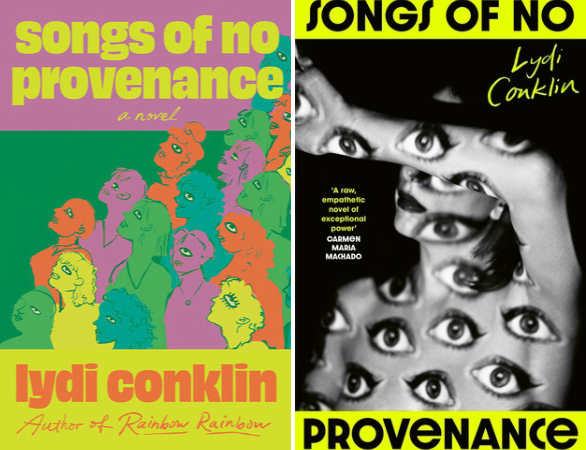
We’re all in the business of judging books by their covers. Admit it — when you’re in the throws of writing your novel (or short story collection, or poetry collection, or memoir, etc. etc.), you too spend your breaks daydreaming of a beautiful, captivating cover that will capture the essence of your book perfectly and also convince every single passerby in the bookstore to purchase their own copy. But had you ever thought to dream up two different versions of it?
Love it or hate it, the publishing world has decided that book cover styles should vastly differ, depending on what side of the Boston Tea Party you were on. Now is your chance to help us find out whose taste is better! We present to you: The 2025 Battle of US vs. UK Book Covers!
Voting starts NOW. Vote for your favorite covers before Wednesday, September 9 at 12pm Eastern to have your vote counted!
Love letters are a romantic gesture that are disappearing from our relationships. Today, we can shoot a text or an email within seconds, and we don’t have to think about the language we employ or the sentiment we’re trying to express. Emojis do all the work. But for centuries, we wrote letters to our loved ones. And because these letters could take weeks or even months (especially during wartime) to arrive, lovers had to use every word and sentiment at their disposal. They’d write on both sides of the page, up the margins, and even on the envelope, to let their lover know the depths of their heart and affection. When it comes to the love letters of famous authors, we can get a glimpse into the secrets of our favorite novelist’s heart. Was Franz Kafka as misanthropic as his Metamorphosisprotagonist Gregor Samsa? Did Jack Kerouac really believe in the free love/zero attachments romantic style of the 50s and 60s?
I’ve always been a collector of old love letters. Before writing my forthcoming historical fiction novel, Letters to Kafka, I was known about town as the gal who bought old love letters. I bought stacks of them at flea markets in Europe, had them framed, and hung them with pride on my bedroom wall. In Canada, I bought a stack of love letters sent during the Second World War from a Royal Canadian Air Force officer stationed overseas to the sweetheart he left behind in Toronto, and was so besotted by their story, I tracked down a living relative to learn the rest of the story. When I came across the love story of famed 20th century author Franz Kafka and his first translator, Czech writer Milena Jesenská, I thought to myself, “Wow, someone should write a novel about this.” And then I realized, “Wait a minute … I’m someone.”
Kafka, although from Prague, wrote exclusively in German. Jesenská, also from Prague, wrote to him seeking permission to translate his works into their native Czech. Their letters quickly turned romantic, and despite his frequent illness and her marriage, they met twice for lovers’ trysts. Kafka’s letters to her were posthumously published in the 1950s in the book Letters to Milena. However, Jesenská’s letters to Kafka were never found; they have been lost to time. In my novel, Letters to Kafka, I imagine what her letters to him might have said, and what might have happened on those trysts. Old love letters aren’t just full of saccharine sweetness and misguided devotion (although those elements are fun), they are also a snapshot into a time period long gone. For Kafka and Jesenská, theirs was a time of telegrams and inkwells, Poste Restante addresses, and horse-pulled carriages outnumbered the motorized vehicles. Like an eyewitness news report from the front lines of today, old love letters can give us a window into the particulars of a world forgotten.
Kafka and Jesenská’s epistolary love affair exists amongst great company; many literary icons of the past have pursued the object of their desire through the written word. If you’re jonesing for more historical letters from literature’s finest, here’s a list of my personal faves.
Beginning in 1920, Kafka’s letters to Milena very quickly become amorous, and the frequency at which they’re sent is fast and furious. In his letters, Kafka is consumed by her charm, wit, and intelligence, but also petrified she might reject him because of his illness, his small frame, and because he is Jewish. His words are so passionate, it’s easy to see why she was willing to risk her marriage for him. Some of the most famous declarations of love are found in his turns of phrase, including “You are the knife I turn inside myself. That is love. That, my dear, is love.”
The “greats” of the 1950s Beat Generation, like Jack Kerouac, Allen Ginsberg, and William S. Burroughs are all notably men. Before Kerouac made it to the big time with his book On the Road, he had a love affair with one of the women populating the scene in Greenwich Village: Joyce Johnson. As Johnson reflects in this epistolary memoir, she was a young 21 year-old trying to learn how to love in an era of emotional detachment ruled by men, while also figuring out her own voice and style. Their relationship was marked by passion but also distance as Kerouac was a largely peripatetic waif before On the Road hit the bestseller list. Their endearing and intimate letters capture both the thrill and the pain of a young affair but also how Kerouac, bit by bit, became more restless, more booze-dependent, and refused to commit to a besotted Johnson.
In the 1960s, before famed Canadian folk singer Leonard Cohen became a household name, he was a down-and-out writer and poet of universally ignored books like Beautiful Losers. He had taken up residence on the Greek island of Hydra to focus on writing when he met Norwegian author Marianne Ihlen, and embarked on a tumultuous, bittersweet love affair that lasted a decade, and is memorialized in “So Long, Marianne” and “Hey That’s No Way To Say Goodbye.” The eponymous book draws on the pair’s intimate love letters to tell their story.
An ocean of ink has been spilled trying to dissect the turbulent love affair between these two literary icons, but “dissect” might be the tamest word possible to describe the NSFW erotica their letters contain. You don’t have to take my word for it. Take Miller’s: “I love your loins, the golden pallor, the slope of your buttocks, the warmth inside you, the juices of you. Anaïs, I love you so much, so much! […]I am sitting here writing you with a tremendous erection.”
Martha Gellhorn was one of the first women war correspondents of the 20th century. She roughed it out in the trenches of the Spanish Civil War and was on the ground during the liberation of the notorious German concentration camp, Dachau. But when it came to love, her affair with literary giant Ernest Hemingway, which resulted in a doomed marriage of less than five years, takes the cake. Canadian author Somerville incorporates not only Gellhorn’s love letters to Hemingway (via ongoing access to Gellhorn’s restricted papers located in Boston), but also, quite often, his responses. It’s an unfiltered glimpse into their love, their marriage, their struggles, and ultimately, what separated them.
Letters to Felice by Franz Kafka, translated by James Stern and Elisabeth Duckworth
In order to understand the true nature of Kafka, one must look to his intimate letters to the women he loved. Kafka was famously engaged three times—twice to the same woman, Felice Bauer—however he never married. In a letter to Milena Jesenská, he once claimed that he loved Bauer because she “was good at business.” But his letters to her reveal much more. There is nothing Kafkaesque here—his letters convey a relationship that is sensitive and sweet. Readers may not associate Kafka with a wicked sense of humor, but his self-deprecation in these letters even veers into slapstick.
When famed director Jane Campion released her John Keats and Fanny Brawne biopic Bright Star in 2009 (which you must watch), she also released this book which compiles some of Keats most lovelorn letters. Despite the fact that Keats died at the age of 25, his letters to Brawne have been canonized as the gold-standard of epistolary love. “You are to me an object intensely desirable—the air I breathe in a room empty of you is unhealthy.”
Furious Love by Nancy Schoenberger and Sam Kashner
In the weeks leading up to her death, Elizabeth Taylor granted access to the love letters she exchanged with Richard Burton for this book. The two had famously caused an adulterous scandal on the set of Cleopatra as co-stars, and ultimately married, and divorced, twice. Although neither were writers, their love letters are second to none. Burton wrote to Taylor, “I am forever punished by the Gods for being given fire and trying to put it out. The fire, of course, is you.” And later, “My blind eyes are desperately waiting for the sight of you.” Taylor wrote in return that Burton “was magnificent at making love… at least to me.”
In 2020, Nino Haratischwili was nominated for the International Booker Prize for The Eighth Life, an almost 1000-page-long historical epic telling the history of the twentieth century in Georgia. For her follow-up, The Lack of Light, she turned to a period closer to her heart: the wake of the collapse of the Soviet Union in 1990s Georgia. As Haratischwili, who lives in Germany and writes in German, told me, “It was very difficult to explain my youth and my childhood to friends here, because when they talked about the nineties, they were talking about MTV and going out. For me, the nineties were Kalashnikovs and civil war—very harsh times.”
The Lack of Light is told through the eyes of four close female friends who live in the same apartment complex in Tbilisi: Keto, the narrator, whose brother Rati becomes involved in organized crime; Dina, her best friend, an iconoclastic photographer who is romantically involved with Rati; Nene, the daughter of the city’s leading crime family; and Ida, a closeted lesbian who pines for Nene but can never express her feelings due to the period’s regressive politics. In the first pages of the book, we learn Dina has died by suicide, and the three surviving friends have reunited after decades of separation at a retrospective honoring her work. Over the course of the book’s 700-plus pages, Haratischwili lays out the complex relationships between the girls, their families, and the men they love, who are doomed by corrosive masculinity and organized crime.
“At some point I felt, Okay, this is a little bit bigger than I may have planned in the beginning,” Haratischwili tells me of her epic novel. “But for me as a reader, it really doesn’t matter how long the book is, as long as it is good.” The Lack of Light is more than good, it’s a universe in and of itself that captures the nuances of a society that led the young men to violence and forced women to contend with that brutality. As the book makes clear from the beginning, not everyone makes it out alive.
In our Zoom conversation, Haratischwili and I discussed nostalgia for hard times, post-Soviet corruption, the novel’s reception in her native Georgia, and more.
Morgan Leigh Davies: You use a framing device of the surviving friends reuniting at an exhibition of Dina’s photography throughout the novel. How did you decide to structure it that way and use photography as the center of the book?
Nino Haratischwili: I was looking for a structure that would help me to get some distance. I always need distance—in time or geography—to be able to write. It’s a fictional book, but a lot of things in it are very personal to me. So I needed the distance.
I decided to structure the book so it has two timelines. It felt more natural to describe the nineties from a distance. I thought about using a funeral, but then I thought, they would just go there, say hi to each other, and then separate. I had already started that book, and one day, I had the idea of this exhibition where they would be forced to remember.
I was looking for a structure that would help me to get some distance. I always need distance—in time or geography—to be able to write.
I really do like photography as a medium. So I thought, Okay, let’s try to invent some photos. I was inspired by the nineties: we had a lot of great photographers. I tried not to copy them, but to get inspired by their aesthetics—I had fun creating the photographs. After I had this idea of exhibition and the two timelines, the writing process became much easier. It was like a puzzle that came together.
MLD: Reading the book, there’s such a feeling of nostalgia, but also a strong feeling of ambivalence—a lot of what happens is horrible and traumatic. But I think it’s hard for anyone to look back on the past without some form of nostalgia coming up.
What was the process of conjuring this place you love while writing about really violent and complicated things that took place?
NH: You’re right, of course—I’m not really sentimental about that time because it was too harsh, too dark. I was lucky enough to be younger than the girls in my novel, so I was not really aware of what was going on. I was just a kid, I still felt protected by my family, by my parents. As a kid, you can easily get used to things. You don’t have anything else to compare it to, so it’s easier. For the older generation, like my parents, it was terrible. It’s a nightmare imagining being as old as I am right now, having kids and responsibilities, and living back then.
Some years ago, before writing this book, I went to see a great film from a female Georgian filmmaker, called In Bloom. It’s about two girls growing up during that time. I was invited to a preview during a festival here in Germany. It was a very nice summer night in Hamburg, and we went out in the yard afterward. There were some tables and wine, and there were a lot of Georgian women between 30 and 50. I hadn’t met them before; we didn’t know each other.
Everybody was inspired by the movie. Everybody was remembering, talking, and sharing their experiences. They started saying, Oh, do you remember this and that? Do you remember the lack of electricity? Do you remember the violence? Do you remember the tanks? Do you remember the robberies? It got more and more terrible somehow. Very violent stories. I was observing and listening more than sharing my experiences, and I was observing the faces of the Germans. I realized, Okay, they’re shocked and becoming more and more shocked. But the very funny thing—I mean, not really funny—was that all the Georgian women were talking with excitement, with smiles on their faces, laughing a lot. It was like, Yes, yes, you remember, yes, I remember, and do you remember? If you didn’t know what they were talking about, you could think it was a party.
Then I realized, they’re talking about their childhood or youth. This period of life shapes you so much. Everything happens for the first time. None of the other phases in your life are as important. The first disappointment, the first excitement, the first love—first, first, first. You have this one childhood, this one youth—even if it was terrible and dark and violent—and you kind of miss the way you were back then.
The Germans were like, Oh my god, they all need therapy. I think this describes the mixed feelings I have about that time. I do remember a lot of very, very good stuff from the nineties, like empathy, being together, helping each other. I never experienced that later. I think everybody was aware we were depending on each other so much. Maybe because you never knew what would happen tomorrow, or if tomorrow would even come. You long for this feeling of being alive and being together and sharing things. I remember a lot of friends of my parents came every evening, and each of them would bring some food. They were drinking wine, laughing a lot, telling jokes, even singing, sitting with candles like they were in the eighteenth century. Of course it was a little bit absurd, but it’s a very human condition. When you feel in danger, you start to become more and more aware of things that you appreciate.
MLD: To that point, the relationships between the girls are so beautiful and moving, but at the same time there is always the weight of violence pushing down on them. It’s from their neighborhood but also from the unfurling national crisis. How did you write that conflict?
NH: It’s easier for me, as a reader, to understand huge political, historical stuff when I focus on characters. It’s easier to understand when it’s not a statistic. When you read, “20,000 people died,” it’s unimaginable. If I can follow a character, experience what he or she is experiencing, it becomes touchable.
You have this one childhood, this one youth—even if it was terrible and dark and violent—and you kind of miss the way you were back then.
The other thing that was really important to me was telling the story from a female perspective, because that period was very masculine—there was this toxic, mutated, degraded masculinity myth. When I think about it in hindsight, I really feel pity for them. They were very young guys. I was surrounded by them at my school, and a lot of them didn’t make it; they’re not alive anymore.
During that period, a lot of men had drug problems, went to war, had this criminal stuff going on, and didn’t survive. Women had to hold everything together. A lot of them went abroad to survive. They could not afford to be depressed. Men like Keto’s father were paralyzed for years because they could not cope and could not adjust, but women couldn’t afford that. For me, it was a tribute to tell this story from a female perspective.
Now, when I go to Georgia and meet teenagers, they’re so Western-orientated and open-minded. For them, it’s unimaginable that we had these values back then. In writing this book, I understood that these values were mutated and degraded because the whole society was. Everything collapsed and nothing worked, it was completely anarchistic.
MLD: In the book, you draw connections between larger problems in Georgia and these smaller instances of male violence. How were these things connected?
NH: Back then, I was not thinking about this—I had no space for empathy for the men. But while writing, I realized that a lot of them were victims of that system. I don’t think everyone who ended up in the criminal world was born a criminal; they were totally normal guys from totally normal families.
It was a sick time, a sick environment, a sick society. That is what happens when people don’t fear any kind of consequences for their behavior. It was rooted in the Soviet system, which was so corrupt that nobody had any kind of trust or belief in it. Everybody knew the state was stealing. You could buy everything, diplomas, status, whatever. So the thinking was: The biggest criminal is the state. When something bad happened, nobody would call the police because they knew they would get in much bigger trouble.
A parallel system arose where you had to steal. It was presumed to be better because it was a Robin Hood thing. Okay, you steal, but you steal from the biggest monster, you steal from the state and you share it with poor people, or you help somebody. This kind of thinking was already in their bodies and their flesh and their bones. They were completely used to it. It had started long before and climaxed in the nineties.
MLD: Women who are related or romantically involved with these men are treated like objects, yet still have emotional attachments to the people hurting them. The conflict really destroys these women; we see Keto self-harming, and Dina eventually dies by suicide. How does that dynamic work and what are the ways out?
NH: It’s a sadomasochistic chain. I know a lot of families in Georgia who lost everything due to their drug-addicted sons; who sold houses, apartments, even jewelry to rescue them. There was no rehab, no awareness. This was combined with shame. Somebody died at 23, 24, 25 and it was always, Oh, it was a heart attack, but everybody knew exactly what happened—it was heroin and so on.
Keto and Dina realize there is no healthy reaction. There cannot really be harmony in that kind of relationship, because there is hierarchy and they are objects. Even if these guys are in love, still, the system does not allow them to be free and to live the lives they want to live.
It’s impossible to do the right thing as long as you stay inside the circle. It was like a curse, and it lasted over a decade. I really do know a lot of people from my school and neighborhood who experienced these stories, lost their kids, lost everything. In our society, family is so important—you have to do everything for them. If your family member is jumping into the abyss, you’re following him. Mostly, of course, you couldn’t rescue them.
If you examine this from the point of view of love, it becomes clear that the women end up the way they do with these guys because the environment is a jail. You can only break out by leaving. There’s a scene where Dina is saying to Keto, just leave the country, go, because I cannot, but you can. Keto gets angry and asks why, what’s the difference between me and you. And Dina says, I cannot overcome this. She feels a duty. You cannot say she’s only a victim. I follow you, even if you jump. That is what happens to her.
MLD: One of the most interesting moments in the book is when Ida goes after the whole system in her role as a prosecutor, and her friends treat her like a traitor. Decades later, in the frame narrative, they make peace. Why did you decide to end the book on this moment of hope?
NH: That’s a very good example of what I meant about the system being so damaged and sick that it’s impossible to do the right thing. The different reactions I received about Ida and her decision from Georgians and Germans were very interesting. Of course, the Germans were all like, it’s like the best thing she could do; but a lot of Georgians were wary. It’s still kind of a betrayal.
Because there is so much suffering in the book, so in the end, I thought, we need some hope. As a reader, if I read this book, I would need, not a Hollywood-style happy ending, but the kind of hope that allows you to think, This is something and it’s over. It’s really over. At the end, it’s up to the women to see if they can reinvent their friendship and somehow stay connected. There is a moment… I felt huge relief while writing it, and it was very emotional for me. The women are sitting in a bar, drinking and talking, and Keto starts observing them. She says that they share this dinosaur love and that the way they loved and lived is not possible anymore. Nobody else really understands—after Keto moved to Germany she expected sympathy and wanted to be liked, but never expected love. At that moment, she feels a really strong connection to Ida and Nene. I think it is the beginning of her starting to let go of the past.
MLD: What has the reception been like in Georgia in general?
NH: I often get feedback like, It’s about me, it’s about my youth, it’s about my neighborhood, it was how I grew up. Not from my generation, but my parents’. They often mention that it’s too painful and they had to put it away for a while. One thing that my mother said after she read it was, Oh, how I hate remembering that time. I think the book feels very personal to some Georgians. It makes me humble if they feel represented by it.
My first panic attack came from the brain. I don’t mean that it was the product of my neurons, though of course it was, but that it was triggered by the spectacle of a human brain, cut in thick, soft slices like triple-cream brie.
I was sitting in the auditorium of NS101: Brain Anatomy & Physiology. It was my freshman year at Brown, where I had been accepted into a premed fast track program. The professor called on a girl in the front row to come take a look at what was inside the white bucket near the lectern. I had assumed a janitor had left it there.
“Nooope,” the girl said after looking in, shaking her head and then exhaling loudly before sitting back down.
“Those are slices of a human brain,” the professor said. “I don’t always have brain samples on hand, so today is your lucky day. I want each of you to come up, two or three at a time, and take a look. Come, come, don’t be shy.”
There was a constriction in my ribs, a tickle traipsing up my throat, and I kept taking sips from my water bottle to wash it back down, not unlike the rain washing the itsy-bitsy spider down the waterspout. Then I stopped being able to swallow. I tried to look calm, like I was leaving to take an important phone call. I bumped past the rows of knees, walked up the aisle, out of the lecture hall, and then broke into a sprint, trying to outrun it.
I had applied to the premed program at my father’s urging. I liked the idea of being someone who could make things right. I imagined an office with piles of medical journals and thank-you cards, happy patients and their bright faces opening at me like so many sunflowers. But now the years of anatomy and physiology courses, of organs in formaldehyde and my hands slicing through them, became real. I dropped the neuroscience class, losing my spot in the program. To fill the hole in my schedule, I enrolled in PL130: The Evolution of Angiosperms. The Plant Sciences Building was next to my dorm and it was one of the few classes that still had open slots.
The professor was a petite woman who often wore brightly colored scarves and silk ascots around her throat. She looked like a hummingbird and sometimes when she talked, I imagined the first flowers opening tiny and yellow, lighting up the dark ground like stars in the sky.
When people asked why I was studying plant biology, I talked about plants as a foundation of animal life, about taking energy directly from the sun without violence, about the color green. It was all true but I never told them the other truth: that I didn’t want to know the body’s secrets. I preferred to think of human bodies as something like claymation. I couldn’t take the idea that we were wet and hot just under the skin. That we were spotted with organs like a Jell-O mold with grapes.
Most of all, I didn’t want to learn what the brain did: if I knew where it all came from, thoughts and movement, memory and math and dreams and speech and even love, then I would know, really know, that a human was just mud, briefly shot through with lightning and then extinguished back into the earth.
I was doing research in the campus greenhouse when I first saw Megan. She was pale, freckled, and lanky as a giraffe, and her silky brown hair fell over her face as she bent to water a large orchid. She looked like a young Jane Goodall and moved with a precision that suggested deep intelligence.
“Wanna buy me coffee?” she asked, catching me watching her.
It was a miracle that she fell in love with me. And when she put her hand over mine so I could get the touch just right, and when the blush rose up her chest and neck and into her cheeks, and when she looked me in the eye, and when she made that sound like something was being torn from her, that was a miracle too.
I couldn’t figure out what it was she liked about me but had the sense to know nothing would be more unappealing than my own lack of confidence, so I only asked her once, a few months in.
“I like your big nose,” she said, tracing down the bridge with the tip of a finger. “And your big dick,” she said, playfully squeezing my groin through my pajama bottoms.
We kissed for a moment, and then she got serious, looking at me with eyes the color of diner coffee. “I like how gentle you are with the plants,” she said. “When you need to move a pot, you get all nervous and serious. When they need water or fertilizer, you measure just the right amount. When you touch the leaves, it’s like the way you stroke my hair.”
I pulled her close, her head pressed against my chest. I wanted to believe everything she said.
It turned out Megan was only working in the greenhouse until she could find a research gig in an entomology lab, which she did soon enough. And so our lives took on a pleasant rhythm: classes in the first part of the day, research for our respective labs after, and then dinner together at the same corner table in the dining hall. We would always split a wretched little dessert: say, a pumpkin and cream cheese Swiss roll or strawberry sponge cake with frosting of a questionable gray color. This was followed by studying, sex, and sometimes sleep with her back pressed against me, the xylophone of her ribs palpable under the skin. Megan had an ability to create habit and routine, and in doing so, carve shape into my life.
I liked my classes and my research, but most of all I liked telling her about it, watching her mind go taut and dart around ideas, weaving threads between them. Through her, I could see that behind the seeming randomness of the world, an intricate, beautiful, and almost geometric pattern held everything up.
Sophomore year we got solo dorm rooms in the same building, allowing us to practically live together without the hanging of socks on doorknobs and other roommate negotiations. And then junior year we did live together, in an apartment off campus. Seeing Megan munch on nuts or granola I had picked up at the co-op gave me the same warm feeling as watching house sparrows and robins eat at our little suction-cup bird feeder. I started teaching myself to cook from online recipe blogs. Megan had no patience for cooking—“Following a recipe is like doing lab work”—so she was gracious and appreciative, even with my fumblings. When the chicken I roasted was still pink near the bone, she smiled, gently removed the carving knife from my hand, popped it back in the oven, and gave me a kiss on the cheek.
I kept at it, keeping a notebook to track my kitchen experiments. I got better and then I got good. I loved the way Megan would go quiet sometimes, taking obvious and almost sexual pleasure in a meal. I teased her about it once—“Babe, I’m not sure you heard what I just said.”
She gave me her most winning smile.
“Your fault, you know how I feel about your sirloin.”
Fall of our senior year, we applied to the same graduate schools. California was where the most exciting research was happening, most of it around climate change. “Climate disaster,” she would correct me, mildly annoyed by the euphemism. We fantasized about collaborating on projects that spanned our fields: how early blossoming in figs was affecting honeybees or how increasing atmospheric CO2 was changing the relationship between aphids and apple trees. We would know it all.
In April, Megan sat me down on the saggy yellow couch in our off-campus apartment.
“I am pregnant and I’m going to keep it,” she said. I didn’t understand. We were always careful. I didn’t understand her voice, clear and level, her face, blank, while the spider came back up my throat with its too-many legs. “You have a choice to make. I’m going to go stay with my mom for a few days to give you time to decide.” She squeezed my hands, grabbed her backpack, and walked out the door.
My ribs were starting to squeeze. I had never seriously considered parenthood, but I had considered losing her. Mainly that I couldn’t. When we were apart for more than a couple days, the pattern started to go faint and I had to close my eyes and smell her pillow to get it bright again.
I took a long gulp of water and sprinted down the hallway after her.
“Let’s get married.”
Pregnancy made it hard to avoid knowing what bodies were made of. Megan was badly nauseated in the first trimester. Cheese and garlic were verboten. She brought a white plastic CVS bag with her to finals, retching into it without embarrassment.
When we moved to California, she was twelve weeks pregnant and the nausea was finally lifting. In our apartment in Davis, she liked to lie on the IKEA couch and read pregnancy books while I read research articles or did sudoku at our Craigslist kitchen table.
“Did you know my blood volume has already doubled?“ She would say. “Did you know I’m probably going to shit myself during labor?“
There were also the facts of the baby itself.
“It’s still inside of me, it’s still a fetus,” she would say, furrowing her brow, and I would wince at the word. After the initial shock burned off, I had grown attached to the idea. The baby would add something new to the pattern, a splash of hexagons or an iridescent sheen. We came to call it the seedling.
Megan liked to tell me about the stages of the seedling’s development: the appearance and disappearance of a vestigial tail by week eight, fingerprints at week 14, meconium at week 22.
“Did you know the brainstem—”
“Let me make you a snack, babe,” I’d say, interrupting her flow. The same spider would come up when she talked about brain development, so I’d take a long drink of water and calm myself by peeling jicama and then using the chef’s knife to cut it into white half-moons, or making the anchovy toast she seemed to crave constantly now: a thick slice of crusty bread slathered with unsalted butter and then covered in arugula, chili flakes, and tiny, pungent fish.
That summer was the first time in my life I had a span of open time. As a child, summer vacations were always spent in some kind of edifying camp. Summers during college I had done double duty, working minimum wage research jobs at Brown and a slightly above-minimum wage job as a line cook at Louis’s diner near campus.
Megan and I had saved money, planning to travel to Burma and Thailand during the summer. I was privately relieved that was no longer possible, happy to trade adventure for the novelty of three months stretching open like a meadow.
We spent the time reading or playing Scrabble in our apartment in the heat of the day. On Sundays, we went to the farmers’ market and drank fresh grassy green juices. I baked bread late at night, the only time cool enough to turn the oven on. Sometimes in the early mornings we went for easy hikes. Once we got caught in a rare summer rainstorm and Megan tipped up her face, letting the water wash over her. Her slim frame was rounding out and I had a strange, erotic urge to suffocate myself between her breasts, her thighs, under the growing curve of her belly. Happy anticipation hummed between us, a rosy new thread in the pattern.
It was like my life had finally started. The scrapes and humiliations of childhood—the time my father had for his work but not for me; the acne so bad I’d needed Accutane; the varsity teams I was never quite good enough to make; the girls who turned me down; my failure to become a doctor; the hours frying eggs at Louis’s while my rich friends padded their resumes with unpaid internships; the anxiety that sometimes seized my throat—it was finally over. I had Megan, and the seedling, and it was my turn for happiness. Back then, I thought that was how things worked.
When Megan was about six months pregnant, my program started and I began my thesis work on adapting pome fruits to the hotter, drier climate that was coming. The plants breathed out oxygen and water through tiny apertures in the leaves. Under a microscope, an aperture looked like a frog mouth with two fat lips. I was changing the numbers and size of the apertures to make apples and pears that could grow in the desert California would soon be.
On campus, I fell deep into it, absorbed in my micrographs, or dissecting protoplasts, or tending to seedlings and plantlets and then graduating them to the greenhouse. At home, I worried my excitement would remind Megan that her own program had been deferred, though she had seemed very matter-of-fact about the decision.
“You’re sweet,” she said. “But I’m busy with the seedling.” She touched her belly. “The bugs can wait.”
Everything was growing, growing, green.
I was glad Megan chose an epidural and I was glad she wanted me up by her head, holding her hand, and not down near the blood and Jell-O. Megan was by turns determined, exhausted, laughing from the exhaustion, and then riding another wind. When the baby was finally in her arms, a girl we called Poppy, she cried silently.
“I miss feeling her inside me already,” she said. “I feel like something’s missing. Like she’s lost and I have to find her.”
“Smell her head,” I told her. Our OB/GYN had told me about the sweet, soft, clean-laundry scent of babies’ heads. “She’s there. She’s okay.”
Megan and Poppy were together in a world I didn’t understand.
I had always thought of it as we were having a baby. We were becoming parents. But Megan and Poppy were together in a world I didn’t understand. I was in awe and envy and there was nothing I could do those first weeks except change diapers, do laundry, and feed Megan so she could feed Poppy with breasts that were no longer for me. We had gotten a marriage certificate at City Hall planning to do the big wedding later, but it was in watching the delight in Megan, in my uselessness and need to feed her, to see her eat, to nourish her, and to watch her nourish Poppy, like I was Adam and she was Eve and Poppy was the first baby on the face of the earth and no one, no one, knew about this joy or this mystery, that I became a husband.
Poppy was happy and calm and her big eyes rolled around and around tracking me and Megan and birds, dogs, squirrels at the park. She laughed early and often, a short little giggle of delight at the world around her. I loved to watch her, and to watch Megan watching her: her eyes soft, love dripping off her like honey. Poppy slept well and for long stretches that allowed us our own sleep and sleepy sex. At night, Megan fed Poppy in bed and I did the overnight diaper changes. Even the changes had a pleasing rhythm: the front to back movement with the warm water wipe, the gentle pats dry, pulling the new diaper up, securing the left tab and then the right, bending over to kiss her forehead, left cheek, right cheek, perfect button nose.
In the mornings, I packed my lunch and made one for Megan. In the evenings, I read to the both of them: newspaper articles, contemporary fiction from the library, drafts of the fellowship proposal I was working on. We bathed Poppy together before bed, admiring her chubby thighs, her big dark eyes. “We should’ve called you Black-Eyed Susan,” Megan would say, gently working detangler through Poppy’s blond waves.
I knew where I needed to be every moment of the day. I knew what I needed to do. I had no free time and I was happy. The decisions—the big ones, anyway—were made and I didn’t have time to worry anymore anyway.
Maybe it wouldn’t have happened if I had worried. If I had said a prayer of thanks every night on my knees. If I had called every lonely friend on their birthday. If I had invited every orphan for Thanksgiving. If I had given money to St. Jude’s at every grocery counter and movie theater. Maybe the pattern needed my fear to hold it steady.
Poppy was two years-old when it started, just getting the hang of handles and doorknobs, just starting to practice balancing on one foot for fun, her arms out while she made a brrrrr-ing airplane noise, and then a burst of giggles when she would start to tip. Megan was substitute teaching in an elementary school and working on getting a certificate to teach science. On that particular day, she’d worked a half-day and spent the afternoon with Poppy.
“Something weird happened,” she said over our dinner of harissa-roasted chicken and vegetables. “She was asking to see the elephants again, so I took her to the zoo. She was in the stroller watching them and then I noticed she sort of wasn’t there for, I don’t know, maybe half a minute. Like, she wasn’t asleep and her eyes were open, but she just wasn’t really there.”
Poppy was here now, picking up chunks of roasted sweet potato with her small hands and happily gnawing on them, humming to herself.
“Maybe she was daydreaming,” I said. “Poppyseed, were you daydreaming? Do you have the biggest imagination ever?”
She giggled at me, reaching for another sweet potato chunk.
And then a week later, I saw it happen: we were on the floor with the wooden alphabet blocks and she went dreamy, slipping inside herself for 10 or 15 seconds. She was an imaginative kid: she loved stories about talking animals, mermaids, unicorns, and anything that could fly.
“Poppyseed has got her head in flowers again,” we’d say and wonder what she was daydreaming.
For a year, it was only the daydreaming. And then I got a call from the preschool while I was harvesting leaves from a plantlet.
“We tried your wife first?” The young teacher said. “There’s been an incident? Poppy is at the hospital?”
An incident? What did they mean, an incident?
“Poppy felt a little warm? We were going to take her temperature? Then something happened? I think it was a seizure?”
And I was groping the lab bench for my keys, I was sprinting to the car, I was ripping out of the parking lot without looking, I was calling Megan on repeat. The pattern had cracked open under my feet. The spider spread its arms and legs up the whole length of my throat, and I couldn’t fucking breathe.
When I got to the ER, Poppy seemed to be sleeping, an oxygen cannula positioned gently at her nostrils. The doctor, an older Black woman with tired eyes, said she had been seizing for at least 10 minutes by the time she got there. They had gotten it under control with two doses of lorazepam, administered through an injection into her tibia.
“It’s not unusual for a fever to trigger a seizure in a small child,” the doctor said. “Has this happened before?” The doctor asked.
“Of course not.”
“Have there been any other kinds of seizures? They don’t always look like what you expect,” she said. “Sometimes a seizure can show up as just a twitch or a repetitive motion. Sometimes they can show up as a brief loss of consciousness where the eyes stay open. Have you seen anything like that?”
So that was it. My baby girl had been seizing for a year and I was so fucking dumb, so doped up and myopic with happiness, that I thought she was dreaming. We left the ER with a referral to a pediatric neurologist. Around the fissure, the pattern was limp and wavy.
Our appointment was a few weeks out, and Megan and I had decided not to worry until we had to. A week after the incident, I was making dinner, stretching pizza dough I had been cold fermenting in the fridge for 3 days, folding it over itself to coax the gluten into networks. At the kitchen table, Poppy was working as a ventriloquist for two of her stuffed animals who were engaged in a lively debate. Suddenly she was at my leg, holding onto it, looking up at me with her coffee-brown eyes wide and fearful.
“No, no,” she said, sounding close to tears. I wiped my hands on a dish towel and picked her up, holding her small, warm body against me. Her legs were getting longer and she had been losing her baby fat over the previous few months. In the odd moment or movement, I could see a rotation of spirits: her kneecap in the shape of Megan’s, her wrists turning knobby like mine, the line of her chin my grandmother’s. Poppy was made of pieces of her relatives, like each had given just 1/8 of their soul, to recombine into something, someone, new.
“What’s wrong, Poppyseed?” I asked her, holding her close and stroking her back with my thumb. I kissed the top of her head. Her hair smelled sweet and clean, like fresh laundry. She bucked against me into a stiff line and then began jerking, like a snap bracelet going taut and then curling, taut and curling, the recoil, the inevitable motion, rhythm, and storm. We took her back to the emergency room.
“Seizures are not actually that uncommon in young kids,” the friendly young resident told us after treating her with lorazepam. “Most of the time it’s a one-time thing and we don’t really know why it happens, but it never happens again.”
“She had one two weeks ago,” said Megan. “And she’s been having absence seizures for longer.”
The resident’s mouth kept smiling while a wince passed over her eyes. She sent us home with a prescription for nasal diazepam.
The absence seizures—what we had thought was daydreaming—continued. And after pizza night, the big new addition, the tonic-clonic seizures, continued two or three times a week, going for up to 10 minutes at a time: her body would go rigid (tonic) and the right side of her body would jerk and shudder (clonic). These are the seizures that used to be called grand mal: French for “big bad.” It seemed like the right term for the thing trying to blow our house down.
“During a seizure, it’s like she’s underwater,” the neurologist said. “Her brain can’t get the oxygen it needs and that can lead to cognitive problems.” During the big bads Poppy would start to fade, her rosy cheeks desaturating, her lips going from posy pink to violet.
Of course, I had to learn about the brain after that. I took 30 mg of propranolol before every neurology visit to stop my blood pressure from rising and the spider from creeping up my throat. I dug my nails into my palms to steady myself while the doctor explained about the synapses and the physiology of seizures and the parade of drugs with polysyllabic names. During a big bad, it looked like her soul was trying to leave her body. But I knew that it was not soul that she had gotten from us, but only DNA, a minute ladder of chemical information twisting in on itself and wrapped in coils and knots so its implausible length could fit in each one of her cells. The seizures were just misfirings in her brain, and her brain was just a jiggly half-dome of cells connecting end to end, wet and electric, with fat red worms of vessels resting in the grooves. She was full of Jell-O. It was the worst thing I had ever learned.
The crack in the pattern had split into a hole, to the back and right, big enough to stick my fist through. The rest of the pattern had contracted around it and was throbbing with right angles. Most of the time I was too busy to think about how Poppy was just plain matter, and so was I, and so was Megan, and so was every other person that I had ever cared about, small and erasable as an ant before an aardvark’s tongue. But in the mornings, my head hurt in a specific pinpoint spot, to the back and right, where this new knowledge lived.
The seizures could be triggered by a cold or flu, a hot day, too much sunlight. Megan thought they could also be triggered by too much excitement, too much sugar, not enough sleep, though I wasn’t sure.
“Even if you could identify every trigger, she would still get seizures,” the neurologist told us. “The triggers don’t cause her seizure disorder. Her seizure disorder causes normal things to be triggers.”
This was meant to comfort us, but it only made Megan more vigilant. She’d arrived at the ER that first day 15 minutes after me and immediately started writing things down on the back of a lesson plan, the only paper in her purse: the names of the doctors, the medication given to Poppy, the times and doses, unfamiliar terms like status epilepticus and soodep(?). After the second seizure, she began tracking Poppy’s medications, attacks, and everything she ate in a spreadsheet, doing regression analyses after Poppy went to bed. She didn’t seem to notice as the sun set and the room grew dusky and then dark, the blue of the computer screen illuminating her face like frozen moonlight. Sometimes I tried to kiss her or rub her shoulders but she would dip away from me, her eyes never leaving the screen. I wanted to pull her back to me, but she belonged to Poppy now.
Megan and the neurologist decided that we should start Poppy on Depakote. She portioned it out into a sparkly pink pill organizer. But when the Depakote didn’t stop the seizures, even with Megan’s regime of sun hats that Poppy tried to pull off and cool baths that Poppy whimpered through and the low-sugar diet without cookies or juice or even fruit, we tried Clobozam. Then Topomax, and then Zonisamide. Diamomit. Keppra. Fintepla, after an appeal to insurance, and a second appeal, and on our third appeal, a decision from an independent medical review panel who was swayed by a letter—written by Megan but signed by the neurologist—explaining the risks of sudden death in uncontrolled epilepsy. The drugs sometimes didn’t work at all and sometimes gave us a reprieve and then in two weeks, three weeks, six weeks, Poppy was seizing again.
We got used to the big bads, in a manner of speaking. The way palm trees are used to bending in category four hurricanes; the way South Beach is used to breakers that leave a path of Portuguese man o’wars, blue-black, iridescent, and venomous. Poppy would typically get a scared look on her face before one came on and run to us for comfort. We would lay her on her side on her bed or any soft surface nearby—in the green grass under the Jacaranda tree on campus, grass that was watered every night and should’ve been illegal given the drought; the backseat of a car; the woodchip playground mulch once; the ball pit at Chucky Cheese. We would put a pillow, towel, sweatshirt under her head and make sure her little red rosebud mouth was pointed down. You cannot swallow your own tongue during a seizure, but you can aspirate saliva or vomit into your lungs and get pneumonia. I got used to my spider, in a manner of speaking, which would spin up my throat every time Poppy gave me that particular frightened look. When a seizure went on too long, we administered her rescue meds, a two-person effort that reminded me of trying to shove a rabid cat into a tube sock.
I woke up often during the night, the spot in my brain alight with pain, telling me we were nothing but matter.
By the time Poppy was four, she was losing words, her tongue aging in reverse. She began to navigate in perimeters, hand pressed to the wall like a blind man, or holding the edge of the table with each step to steady herself. We had taken her to the pool every Saturday since she was six months old and she could tread water, swim breaststroke, go the length of the pool five times freestyle. And then her stroke started unraveling. In her inflated swim training vest, she would arc one arm overhead while her legs hung down in the water motionless. When the arm was back by her side, she would lift her legs to the surface and kick. When the kicking finished, she would arc the other arm. She could no longer braid the motions together but had to give each strand her full attention. Megan and I looked at each other and though her eyes, so like Poppy’s, were wide and fearful, she tilted her head towards the exit, silently agreeing to let me wait this one out in the car. The pattern cinched in tighter, angles compressing into barbs around the sinkhole. I woke up often during the night, the spot in my brain alight with pain, telling me we were nothing but matter. I knew now that words and bones are the only things that can last.
Poppy’s MRI showed cortical dysplasia: a spot where the outer part of her brain hadn’t formed correctly. To the untrained eye, it looked like a blur in the images, a place where the brie had melted. Genetic testing revealed a mutation in the gene HCN1. HCN1 makes up part of a channel in the cell membrane, critical to propagating electric signals within the brain. The channel was like an aperture that can open and close, like the apertures that breathed for my apple plants. It was inordinately hard for me to retain this information; Megan would explain it to me and then it would slip through the hole and I would have to ask her again until finally she wrote it on an oversized Post-It that she stuck to my desk. The mutation was unknown, something Poppy had not inherited from either one of us but that had gone wrong early, when she was smaller than a seed. It was mentioned nowhere in the medical journals that Megan scoured on PubMed. Poppy was singular. The young doctors regarded her as an interesting challenge. The old doctors shook their heads imperceptibly, their faces long with knowing.
Megan and I attended a meeting of an online support group for parents of kids with Dravet syndrome, which was the closest thing to what Poppy had. I had imagined they might be possessive of the diagnosis and wouldn’t welcome interlopers, but they were too sad to care. As they spoke, it was like someone was putting layer after layer of wet newspaper over my mouth and nose. I was getting less and less air, but I was in some kind of trance, too. I was captivated by their suffering; literally, captured. When the meeting ended, I looked over at Megan. Her brown eyes were glossy and half-closed. She was shallow breathing under newspaper, too. We never went back.
I longed to fall into my work but I stumbled through it, making bad mistakes, wasting my own time for months on end. I avoided my advisor out of shame. Megan stayed home taking care of Poppy during the day. At night, she stayed up late sucking on Swedish fish and reading neurology textbooks and medical journals and making complicated treatment plans with dependencies: if, then. She didn’t eat much in those days, said she couldn’t. Her face had become drawn and her eyes were pale and hard, the color of watered-down coffee. We used our hands and knees to push our grief down, but sometimes it came up through the ground anyway, like sewage after a rainstorm.
I still cooked dinner most nights though I was embarrassed to eat much around Megan, like it meant my grief was smaller than hers. When I was apart from her, I would sometimes eat three fast food hamburgers at once, or an entire Styrofoam carton of fried rice and General Tsao’s chicken from the food court at the outdoor mall. When I was eating, I was just fingers and mouth, a monster reminiscent of the cortical homunculus from her textbooks.
I still read to Megan and Poppy in the evenings, too. It was the only time Megan would really take a break from taking care of Poppy and her reading and studying and planning around Poppy’s disease. We’d all snuggle up on the couch together, the IKEA number with a chaise lounge, and Megan would close her eyes and fall half asleep. Poppy had a particular fondness for Dr. Seuss. I recognized in his illustrations the California flora that was so new to me: bottlebrush, torch lily, orange clock vine. All my life I thought he had just dreamed up these strange plants, but they were depictions, barely exaggerated, of what was growing around us in Davis.
As Megan grew thinner, thinner than she was even at 19, my belly grew bigger, into the paunch I recognized from my father and grandfather. Where Megan had once carved meaning out of randomness, she was now simply trying to wrangle some small order from chaos. Megan had always been stronger and smarter than me, so I let her lead, relieved that someone else was in charge, that someone else was making the decisions, and therefore someone else was ultimately responsible for the outcome. My job was to help her, and I did my best to be good help, loyal, dedicated, hard-working.
But even on the Fintepla, the seizures were continuing to starve Poppy’s brain of oxygen. A year before, she had sentences. Now she would say, “Mama, apple,” leaving out the implied subject, verb, article. She had taken to getting around by sitting on her butt and then pulling herself forward with her hands. “Dada, up” she would say, motioning for me to carry her up the stairs. She began to have tantrums and rages. It was not clear what of this was attributable to brain damage, or to physical pain, or to frustration at a body that was failing her. She would scream and thrash, a sort of loud caricature of her body in seizure, and Megan would sit down next to her, cross-legged like a Buddha, until Poppy finally went still.
Megan said now that Poppy had failed all the medications, brain surgery was the only thing left to try. The idea was to get a detailed map of the spot in her brain where seizures started and then cut it out, like paring bruised spots off an apple. “Okay,” I said.
Megan said that Poppy would have to stay at the hospital for three days with a thin electrode grid stationed under her skull, on the surface of her brain, to map the melted spot in micrometer detail. “Okay,” I said.
At the hospital, while Megan sat vigil, I brought her coffee and sandwiches she didn’t eat and magazines she didn’t read. In the evenings, I took her home and made her toast and then pulled her into the shower with me. She was so exhausted she would lean against the wall while I gently shampooed her hair and ran soapy hands over her body. We hadn’t had sex in months and it was a shock to see her nude body, her skin almost translucent and pulled taut over her points and knobs, her nipples bigger than before the pregnancy but her breasts shrunk to a suggestion. I wanted to gather her up in my arms like she was a wounded animal and rock myself into her, sweet and soft and slow, until my semen made her well again, until pleasure brought her back to me.
The brain mapping revealed not only the precise topography of the spot we’d seen on MRI, but three more melted spots in Poppy’s brain which had been too small to see. The surgeon said he could operate on the large spot, but the small spots were too close to her language and motor function centers.
“Will that be enough to stop the seizures?” Megan asked.
“Stop, no. Reduce, yes,” the surgeon said. “And the medications may be a little more effective if we can reduce the seizure activity.”
“And her speech problem and movement problems, will they improve?” Megan asked.
“If the surgery reduces seizure frequency, we should see some improvement in her cognition and coordination. But without being able to reach the smaller spots, we expect that she will still have major deficits.”
“Okay,” I said.
Megan slouched in her seat. There was an angry set to her jaw and a wet mark on her cheek was just visible under the fluorescent lights. She didn’t talk the whole ride home.
I ran a bath for my girls, who were both tired and silent. I undressed them gently. Megan got in the tub. I put a shower cap on Poppy to keep her bandages dry, and then lifted her in, leaned her back against Megan’s abdomen. Megan held her close and I sat on the toilet lid, reading to them both softly from Roald Dahl. Periodically I checked the water temperature, letting some run out, and then adding more hot water, testing the temperature against my wrist like breastmilk, until Poppy was fully asleep, her limbs relaxed and her face peaceful.
Finally, I lifted Poppy off of Megan and over my shoulder. Megan wrapped a towel around herself and then we both patted Poppy dry as softly as we could, like we were dusting a china doll. She stirred a little but did not wake. I put her on her bed to nap and then Megan and I stood over her, shoulder to shoulder, watching her sleep. Her arms were covered in soft golden down. There were pale freckles across the bridge of her nose and she was snoring very gently, like a nursed kitten. Her eyelashes were fluttering and behind her eyelids, her eyeballs darted back-and-forth. She was dreaming.
I went to the kitchen and began to make dinner. I rubbed rosemary and salt into lamb chops. I scrubbed dirt off new potatoes. I made a vinaigrette for baby greens for Megan and I and prepped baby carrots with butter and brown sugar to roast for Poppy.
Megan sat at the kitchen table watching my hands as I worked. I put a bowl of grapes in front of her but she shook her head.
“We need to talk about Poppy,” she said.
“Okay,” I said. I rinsed my hands clean and then sat down across from her.
She was quiet, gazing into the grapes, worrying her wedding ring. I wasn’t sure if she was waiting for me to say more or just gathering her thoughts. Finally, she closed her eyes and said, slowly, with her face very still, “What are we going to do?”
“Well, the doctor said surgery is the next step,” I said.
“Even in the best-case scenario, she’s sick.”
She was speaking in a measured way, the effort of her calm showing in pinpoints of sweat on her brow.
“I know it’s hard,” I said, “But what else can we do?”
She looked up from the grapes and studied my face. “Maybe we need to stop waiting for her to get better.”
I didn’t know what she meant, but when in doubt, I went for supportive: “I know you’ll figure out the right thing to do,” I said.
“Jesus,” she said. Her face broke open and she was glowering at me. “I’m asking you to make a choice with me. Everyone thinks you’re dad of the year because you make dinner. But all the real shit is my fucking job.”
I woke up in the night. Cold air was coming in through the open window and the perfume of the yellow trumpet flower outside wafted in. My head hurt in the same spot and I put my arm out to pull Megan close, but she wasn’t there. I rolled over, yawning, and swung my legs out of bed. I would tell her I was sorry we fought. That she just had to name it and I would do it. And that she had to sleep. That we both needed sleep to take care of Poppy.
But she wasn’t on the living room couch with blue light illuminating the very beginnings of crows’ feet. She wasn’t standing at the stove, waiting for water to boil for tea. The bathroom door was open and it was dark inside; she wouldn’t be there either.
The door to Poppy’s room was closed. I opened it just a little, careful to lift the knob and then push to avoid the creaking sound. Megan was bent over Poppy’s bed, motionless. She was holding a pillow over Poppy’s face and Poppy was still as a board.
Quietly, I pulled the door shut. I got back in bed. I slept. I slept like I used to; like a teenager; like someone who is busy eating and growing, eating and growing, cells constantly in a state of division. Poppy was out of danger and I could finally sleep.
I don’t know when Megan came to bed. I didn’t feel the mattress dip or disturb. I woke up before her, hearing the early morning bird song and the circling guh-guh-guh of a sprinkler.
I made coffee. There were no words in my head, no feeling in my body except a deep humming calm and the heat of the cup in my hands. I sat on our tiny patio in a ladder-back IKEA chair and watched a dark-eyed junco make a nest, gathering each small twig, one by one.
Megan came out a couple hours later. She looked at me, hesitating. She said my name, her voice breaking in the middle.
“Okay,” I said.
I stood up and embraced her. She sobbed and her body against me was hot and fragile and bony as a bird. I could feel the pattern of her skeleton through her thin cotton T-shirt and jersey bottoms.
“Okay. Okay,” I said.
After Megan made the necessary phone calls to tell Poppy’s doctors that she had passed in her sleep, to arrange the burial, to tell her parents and sister, she got in bed and stayed there for a week. I slept 10 hours a night, waking without head pain. She slept 12 or 16. We were too tired to talk, so when she was awake, we watched old Cheers reruns from bed. People sent gift baskets of dried fruits and nuts or left ceramic dishes of mac and cheese or homemade garlic noodles, which she ate, suddenly voracious.
There would be no funeral. Megan had her buried in a plain pine box, unfinished. She couldn’t bear to go to the grave site, so I went by myself after it was done. It was an overcast morning. I scattered wildflower seeds on the fresh earth above her and left her favorite books in a stack. The rain would come down on them, soak the pages. The words would mold and mulch.
In public, people either avoided me or said, “But how are you?” They thought Poppy’s death was the tragedy, but every day the pattern was knitting itself back over the hole, the weave softening from wire to wool. We had grieved while she was alive, a dozen times over. Now we could rest. Now we could work: Megan began taking as many substitute shifts as she could get. I could think about growing things again; about creating things for people to plant and harvest and consume. I could breathe. I could sit in the greenhouse and close my eyes and pretend I was in a Korean bathhouse and let the heat work its way through my clothes and release me. Every day the new sunlight ran an iron over the pattern, smoothing it out.
As the news spread out in ripples, the cards began to come. Hallmark cards from people we knew in high school and college, family friends, cousins, in the cursive script of mourning, in silver and white and celestial blue. She was in a better place, at peace, at rest, with God now, we cannot begin to imagine, so sorry, praying for you, thinking of you, all part of a plan, happens for a reason, take comfort, if you need anything.
But she was not in the sky. The wild lightning was gone from her. She was in the ground. In the ground, with fat earthworms and tunneling beetles and fungal spores blooming green on her cheeks. Poppy was over and so was our suffering. Poppy had no soul, but her teeth, her skull, her long bones: I pictured them sometimes, white in the box six feet under fresh black earth. They would last at least the length of my own lifetime.
Megan and I stacked the cards on the kitchen table, not wanting to open them after the first dozen or so. And then one evening, drinking wine after dinner in companionable silence, she started idly building them into a house of cards. I joined, leaning and stacking them into a big Jenga dare on the kitchen table. When it finally toppled, Megan shrugged, pushed off from the table, and left the room. I gathered the cards up into a stack and then dropped them one after another into the blue recycling bin.
I held Megan close that night, and we kissed deeply for the first time in many months. Though so much had changed, her mouth tasted like it always had: apricots, honey, seawater. She was coming back to me and relief washed through me like a cold and rushing river. I let it pull me down, down into a dreamless sleep.
In the morning, I found Megan sleeping in Poppy’s bed, a pillow pressed to her breast like a baby.
Enthusiastic readers of books from around the world often crow about how those stories transport them to exotic locales to experience a new culture, new people, and new adventures without the annoyance of lost luggage or language barriers. As a translator of prose and poetry from Central Asia, a place the vast majority of my English-language readers have never visited in person, I’m happy to help readers achieve that goal. But it wouldn’t be fair to the writers of the world to expect them only to portray places that we’d personally like to visit. Tourism aside, there is plenty to learn from unpleasant places, both in life and in literature.
The most unpleasant place of all is the wasteland—a landscape, either geographical or mental, where human visitors instantly find themselves unwelcome. It is a place where time stands still, hope is lost, and human beings cannot possibly thrive, even if they once did inhabit it or still, impossibly, do inhabit it.
In Sultan Raev’s novel Castigation, released this September in my translation by Syracuse University Press, a ragtag crew of seven people escapes a mental hospital and sets out across a post-Soviet desert to find redemption in the Holy Land. They don’t make much progress, but as they struggle across the inhospitable landscape, we readers learn each person’s backstory in two ways: from direct flashbacks of their lives (or past lives), and through their encounters with a surprisingly large number of other people and creatures who are living, working, or waging protests in the wasteland. This desert, then, paradoxically serves as fertile ground for revelation and understanding…up to a point. Spoiler: for most of them, it doesn’t end well.
To make your own pilgrimage through the wasteland, and see what it can reveal to you, I recommend exploring the barren reaches described in the novels and memoirs listed below. No two wastelands are the same, but here, in translation, they’re all open to exploration. The landscapes are harsh and unforgiving, but in each case, you can trust the translator to guide you safely to the other side.
Radiant Terminus by Antoine Volodine, translated by Jeffery Zuckerman
Much like Castigation, Volodine’s novel opens with a bedraggled, sick group of people wandering hopelessly through a wasteland that is slowly killing them. This particular wasteland is post-apocalyptic, the result of numerous nuclear disasters accompanying the fall of the fictional (so far!) Second Soviet Union. The cows, the spiders, and most of the people have been killed off, but a few human specimens remain oddly unscathed, which is not to say unaltered. These travelers—quite human, sympathetic characters—make it through the wasteland to a settlement where a pair of unsympathetic survivors rule a tiny community through psychological terror and inexplicable rituals.
In a startling and effective contrast to its bleak landscape, Zuckerman’s language in Radiant Terminus is radiant itself, skillfully channeling Volodine’s imagination into English with hypnotic results. It’s even occasionally funny. Laughter can be powerful medicine in the wasteland.
Kolyma Diaries by Jacek Hugo-Bader, translated by Antonia Lloyd-Jones
Elsewhere in the former USSR, Polish author Hugo-Bader charts his travels around one of the most harsh and remote regions in the Russian Federation. Kolyma is a place that many write off as a wasteland due to its absolutely unforgiving climate and painful history as home to brutal Soviet prison camps, yet this foreign traveler finds it curiously full of survivors.
Determined to explore this wasteland, the author recounts his experiences in large part through his conversations with local residents. The population is dwindling as young people escape and old people die out. Many of those that remain have harrowing memories of persecution and imprisonment, and most drink far too much vodka. Yet they persist, content to tell their tales, and we discover that a land holding the bones of so many dead in fact radiates a strange “positive energy,” as the author puts it, an energy readers can sense through Lloyd-Jones’s sensitive translation. We may not understand why these survivors are so attached to their wasteland, but we are rooting for them.
This novel was a shoo-in for inclusion in this list just by virtue of its front cover, where its Icelandic title, Öræfi, appears just above its translated title, The Wasteland. Ófeigur Sigurðsson’s disorienting tale plunges us into another northern-climate wasteland, one where the deadliness of the landscape is a result of the sheer unreliability that erupting volcanoes and shifting glaciers constantly produce.
That landscape is the perfect environment for the novel’s equally unreliable narrator, a man who stumbles out of the wasteland (or does he?) mortally wounded and eager to talk about his adventures. But the truth keeps shifting, blinding us like a snowstorm, as the story is sifted through an interpreter who speaks to a doctor who writes a report from which the entirety of the story is transmitted to a friend in a letter. “I have no option but to believe you, what you’re saying, or else the ground beneath my feet will open up,” the helpless doctor tells her interpreter, according to the letter-writer, as reported by real-life translator Lytton Smith. This Icelandic wasteland is easily the most aggressive geographical environment on this list. Keep your eyes open as you plunge into its rambling sentences and diverging trails, because this journey is a perilous one, but worth every moment.
Not Even the Dead by Juan Gómez Bárcena, translated by Katie Whittemore
Continuing west across the Atlantic and back several centuries, we join a hapless man named Juan on his reluctant quest across the jungles of the Spanish colony of Mexico to hunt down another man named Juan who is leaving death and ideological confusion in his wake. Juan’s pursuit of Juan runs north through the jungle, across the desert, and incidentally across many centuries to the present day.
There are dual wastelands at work in Not Even the Dead. The first is a wild landscape inhabited by a plague, sullen and possibly dangerous natives (they have their reasons, of course), and deranged missionaries (same). But as Juan crosses this geographical or cultural wasteland, our hero also finds himself wandering a historical and chronological wasteland, always two weeks behind his goal, moving in a trance through the ruins of one empire and the beginnings of another one to the north. Given that this history is also a wasteland, no improvement or progress is possible. Instead, what readers gain is a mesmerizing story told in beautiful prose, intricately styled, by our translator and guide Katie Whittemore.
Lojman by Ebru Ojen, translated by Aron Aji and Selin Gökçesu
Ojen’s terrifying, short novel, in contrast, refuses to let us wander. Here, the wasteland is not traversable, but rather all-encompassing and immobilizing. Selma, the woman at the heart of the story, already feels stranded in the countryside with nothing to do thanks to her husband’s job. She sinks deeper into depression when her spouse vanishes during a snowstorm, leaving her trapped in their government-issued lodgings with two children and a third very much on the way.
Having nowhere to go and nobody she is willing to turn to for help, Selma brings another life into the wilderness, translated in this book into the most stunningly, viscerally accurate scenes of childbirth and breastfeeding I have ever read in English. But the baby does not signify hope, because they are all in an emotional wasteland. Gradually, the members of this abandoned family—even the newborn—turn on each other as madness descends in a quite palpable form.
Suddenly by Isabelle Autissier, translated by Gretchen Schmid
The collapse of human relationships is also key in this novel, which features an Antarctic polar wasteland. Two adventurers and lovers, careful Louise and brash Ludovic, leave a comfortable life in Paris to sail around the world. They stop on a currently-uninhabited island for a hike, but their ship is destroyed in a storm, along with their radio and most of their supplies.
When the two of them run out of penguins to eat, and life in the abandoned research station they find becomes increasingly untenable, they must decide whether to stay stranded or set off across the hostile, frozen island in hopes that a better-equipped, and maybe even populated, research station might provide their salvation. Their troubles have changed their personalities, they can’t agree about what to do, and Louise ends up wandering this wasteland alone. Her desperate voyage occurs only halfway through the book. The second half of this page-turner finds her navigating another wasteland, one of guilt and recovery.
Seeing Further by Esther Kinsky, translated by Caroline Schmidt
The memoir by this noted writer provides a much-needed rest on our journey through unforgiving wildernesses. Kinsky’s book is a calm meditation on the wastelands of memory, as seen through the alternate universe of the movie screen. Kinsky becomes increasingly interested in a small village in rural Hungary that boasts an endlessly flat landscape, shrinking population, and abandoned movie theater. Though the town seems stuck in time, refusing to change, she recruits an ally or two to bring the cinema back to life, positing that the camera’s eye, and the universe on the big screen, could be a positive alternative to the bleak physical landscape and historical moment in which the local community has been stranded.
This is the only landscape in our list where violence plays merely a distant, background role, present in people’s memories of Jewish residents who fled or disappeared during the Holocaust and occasional references to life in the Soviet bloc. But Kinsky is also aware that the cinematic landscape she is trying to resurrect is gone, left in the twentieth century, when people didn’t have the option of exploring alternative universes on their own tiny, individual screens. Her efforts to purchase and refurbish the theater building, and then to draw an audience for the films she shows, produce results only slowly, and she has difficulty explaining her determination to herself or her friends back home in the city. But when a wasteland isn’t actively trying to kill us, and when it’s described with such insight, it can be a very alluring place to spend some time.
Moving back to Central Asia to wrap up our list, Seisenbayev’s epic work of historical fiction charts the gradual degradation of culture and community in late Soviet Kazakhstan through the individual stories of people struggling to either adapt or resist to changes dictated from on high. Seisenbayev’s large cast of fishermen, teachers, and local political leaders do not seek the wasteland, but look on in horror as it comes to them, until they are finally stranded inside it like the iconic ship on the book’s cover.
Today’s Kazakhstani wasteland was born of two Soviet-era projects resulting in environmental catastrophe: the draining of the Aral Sea for irrigation and the nuclear tests conducted at Semipalatinsk. Both activities poisoned the air and water, caused skyrocketing rates of cancer and birth defects, and slowly tore communities apart throughout the region. That means this novel is also set in a bureaucratic wasteland, where rigid Soviet hierarchies and ideologies prevent problems from being acknowledged or addressed, with devastating results. Farndon and Nakston’s patience with the text and careful handling of all its poetry, folk legends, and human emotions allow readers a glimpse into what existed and thrived before the wasteland claimed its victory.
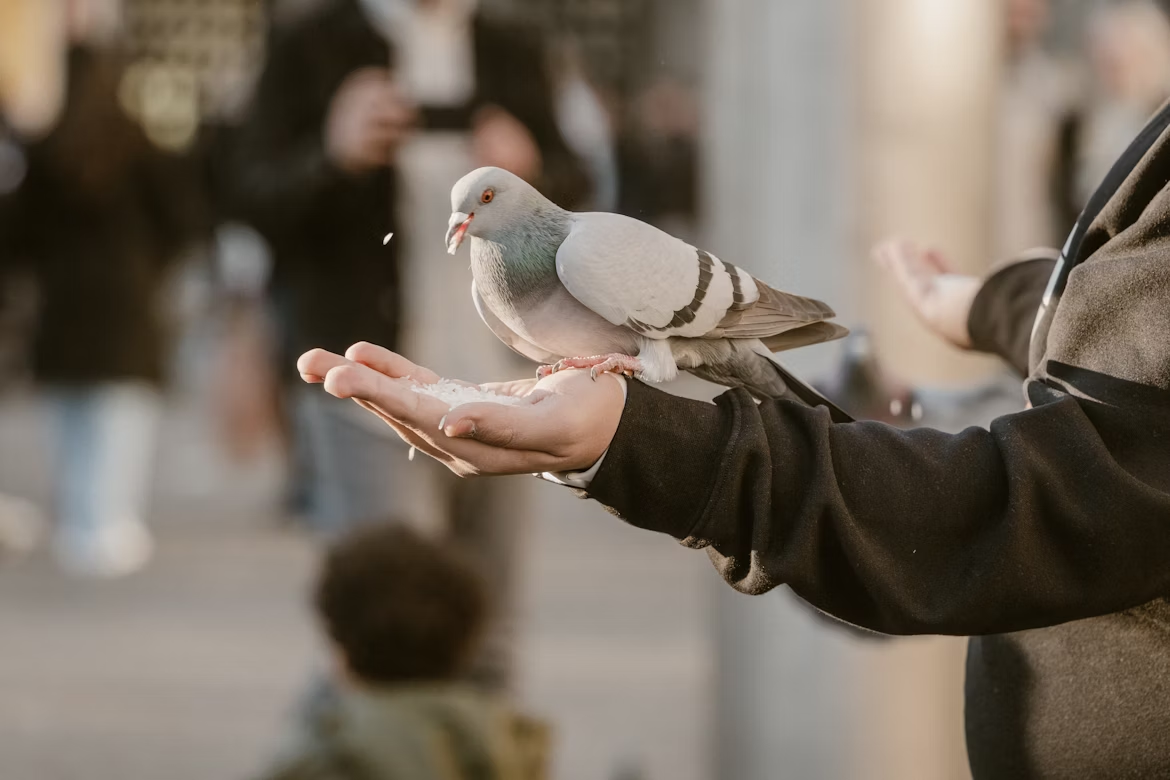
I don’t want to say human-animal relationship stories are to the book world what Christmas is to the Hallmark Channel, but there is a trap waiting for animal-loving writers where redundancy, sentimentality, and smarminess dwell. Perhaps I avoided that trap in We Should All Be Birds, a memoir I wrote about a wild pigeon named Two-Step, because I didn’t actually write it. (A health condition forced me to dictate parts of the story, and my coauthor helped me turn them into a book.) At their best, animal stories don’t just tug at the heart but shift how you see the world. My relationship with Two-Step did that for me, in ways both profound and hilarious.
Whether or not the writers on this list set out with the intention of saying something new or different about a person’s relationship with a wild animal, they did. (Like me, some of them may not even have planned to write a book, but the animals didn’t give them much choice.) As a result, each writer carved out their own niche—proving, as I found when illness contracted my world, that there is an infinite amount of space in even the smallest of circles.
They say you travel somewhere not to understand the place you are going to but to understand the place you came from. These stories show how our connection to wild creatures can help us understand animals, and perhaps more importantly, ourselves and, in the process, learn to live, thrive, and heal.
At the outset, it is important to note a couple of oddities. First, training hawks is called falconry. Second, I—a pigeon rescuer—am writing favorably about the pigeon’s enemy number one. (Tied for second are the raccoon and the cat.) MacDonald writes half for the head and half for the heart. A scholar and professor, she explores the biology, history, and mythology of predatory birds, especially the goshawk, one of which she adopts (and names Mabel). At the same time, she struggles to cope with the sudden death of her father, who also happened to be her childhood falconry buddy. Goshawks are extremely sensitive by nature, so MacDonald must observe her adopted bird with patience and a keen eye. Not only do readers get to see this beautiful creature in all its detail, but MacDonald also turns that same, trained eye inward, helping herself (and the reader) understand the complexities of loss.
People tend to think hares are the same as rabbits, though they are a very different species. Among their differences is that a wild hare is incredibly difficult to keep alive. On a walk one day, Chloe nearly steps on a newborn baby hare. What to do? Leave it so if its mother returns, she will find it easily? Move it into the grass where the mother might not find it? Or bring it home? In an act that will prove to be a gift to readers, she decides to take the young hare home.
From the start, Chloe’s goal is to NOT get close to the hare, literally. The biggest threat to a young hare is stress, and nothing causes a hare more stress than being handled and restrained. So Chloe holds a cloth in her hand before she picks up the hare to feed it from a syringe. She abandons early attempts at confining the hare and lets it have free rein in her home and garden.
Adding to the appeal of the book is Dalton’s understated crisis of her own. Previously an urban dweller consumed with her work in government, the pandemic forces her into a new life in the countryside. Though Dalton tries to maintain her old pace and lifestyle, she finds that the noise and activity are upsetting to the hare, so she begins living on the hare’s schedule and discovers a different pace of life. She doesn’t wear makeup, doesn’t watch the news, and doesn’t use lights in the garden at night. “It was excessive, it was absurd, it was beautiful,” she says. She realizes she has been waiting for life to go back to normal, but if this one hare can provide so much meaning and joy, what else might be awaiting her if she turns away from her old, hectic life?
In this exploration of the only eight-armed creature in the world, the reader will learn that the compellingly strange octopus has three hearts. The reader may need three for themselves, too, because Montgomery writes so beautifully about the mysterious cephalopod that a couple of theirs might just burst. With a background in journalism and having authored many books about other creatures (tigers, apes, dolphins, etc.), Montgomery is often referred to as a “popular naturalist,” and she has developed a writing style that is familiar and authoritative, funny and smart, and totally accessible. Over the course of the book, the popular naturalist gets to know several octopuses. (And, yes, octopuses is the plural of octopus, as is “octopodes,” which is also correct.) What stands out is Montgomery’s description of how these two creatures (human and octopus) have seemingly endless curiosity about each other. She becomes well acquainted with four different octopuses as the story progresses, and it turns out each one has its own personality. Using the term “personality,” though, is itself loaded, because animals, even the inquisitive and alluring octopus, are not people.
We learn from Montgomery that each arm of the octopus is essentially its own brain, capable of thought and emotion, and when she visits the aquarium and puts her arm in a tank, the resident octopus—whether it is Athena, Octavia, Kali, or Karma—will move its suckered arms across Montgomery’s un-suckered arm, sometimes blushing, sometimes retreating to a corner or tightening the embrace. And with each encounter, our estimation of this unique, marvelous creature grows, and we gain a greater sense of the depths of our compassion.
This is a memoir that crawls along at a deliberate pace—but it is far from slow. Pulling off that feat speaks to the writer’s craft and her scientific eye, since most of the book takes place with one character (the writer herself) confined to her bed, and the other (a forest snail) confined (mostly) to a terrarium that sits on a bedside table. The book is both reverie and revelation. (A single room? A snail? Really?)
The illness that incapacitates Bailey is so extreme that she can rarely leave her bed. Her visitors are few, but one brings a pot of violets, and serendipitously, this pot has a gastropodic stowaway. Grieving her busy former life—which included plenty of friends and plenty of time in the garden—Bailey turns her attention to the shell-covered, slow-moving creature who is living out its life beside her.
Such is Bailey’s curiosity (and what turns out to be the fascinating lives of snails) that it is easy to forget how extreme her illness is and how much suffering it brings. She launches into an investigation of all things snail, including a twelve-volume book by early naturalists, and along the way we learn things like how many teeth a snail can have (thousands) and how utterly complex snail slime is. This is not the voice of a person removed from the world but rather the voice of a person who has a new, strange world brought to her.
Yes, this is a YA book, and yes, this book can help a child fall in love with reading (as it did for me when I was around ten years old). While not a memoir, it is the true (or true-ish) story of a young whaler in the 18th century who is the sole survivor of a shipwreck. Survival in the Arctic seems unlikely, but Allan Gordon gets lucky when the sunken ship, now turned belly-up, becomes frozen in the ice. This bit of fortune provides Allan with shelter, warmth, food, and…rum. Lots of rum. The isolation and freezing temperatures are not enough to numb the existential pain, and his turn to self-medication shows young readers that seemingly black-and-white issues are often filled with shades of gray.
Allan’s second break comes when he befriends an orphaned baby polar bear. He names the bear Nancy after his beloved, whom he left behind and yearns to return to. This creature, who he had been taught to fear, becomes a companion and the answer to his existential distress.
Allan and Nancy have numerous adventures, including encounters with creatures that want to kill him, and creatures he has to kill, and a fortunate run-in with Eskimo people he has to decide whether to trust or not. What struck me at the time and sticks with me all these years later is how much companionship a creature that we may not have thought much of before (or would have feared in an encounter) can provide. Though Allan longs to return to his home, nature finds a way to impart a valuable, lifelong lesson: if you can’t be with the one you love, love the one you’re with. (Even if it is a polar bear.)
Reading is a migraine trigger for me, and as a result, I have only read two books in the past half dozen years, and this is one of them. I have no regrets about my choice. Darlington is a poet, and she has to be in order to describe owls in the way they deserve. Owls are shy, often invisible when they are right in front of you, and silent as they glide over a field where poor, scurrying creatures live. As Darlington canvasses the UK countryside and beyond in pursuit of owls and owl lore, she has to reckon with the health struggles her fellow explorer and helper is dealing with. That helper, Benji, is also her son, and the mysteries of his illness seem to mirror the mystery of the owl. Darlington not only writes gorgeous, rhythmic sentences, but her mastery of rhythm may be what helps her tune into the rhythms of the natural world (and in particular the habits and habitats of owls).
In Alfie and Me, behavioral ecologist Carl Safina recounts a transformative year spent caring for a rescued baby owl during the COVID-19 pandemic. Though Safina has spent a lifetime working with wildlife, this tiny, downy creature—Alfie, a “ginger” Eastern screech owl who at one point is the length and color of a sweet potato—touches something deeper in him.
As Safina tells the story of Alfie’s rehabilitation, he seamlessly weaves a fascinating tapestry of science, history, philosophy, and personal experience. He also conveys his abundant (and infectious) love for Alfie without a drop of sentimentality. As he prepares (and delays) Alfie’s soft release into a perilous freedom, Safina considers the bond they’ve formed and the difficulty of letting her go, asking himself: Should I open the door? Saying goodbye is complicated, but of course he does.
We won’t spoil the outcome, but Alfie’s part in it is uplifting. The human part is less so. Despite the charming relationship between these two gentle souls and their vibrant connection with the many beings in and around their Long Island backyard, the author makes sure we remain aware of greater threats to all life. As this clear-eyed scientist, guided by deep compassion, has said: “Technology won’t save the world, but our hearts may. And our hearts must.”
It appears that Raven, who has the fortune of having a bird for a last name, has made a deliberate choice to live a solitary life. As she says, she is alone but not lonely. She is “uncomfortable with dialog” and opts for “disappearing into the woods” to avoid answering questions that cause her anxiety, especially those related to her parents and her alone-ness. She is a biologist and a teacher of naturalist history, and she is well-trained in the close examination of the living things she encounters. She has a fondness and curiosity for all of them, not just the fox who routinely visits near her cabin but also the trees, weeds, flowers, magpies, voles, and even a black widow spider.
Early in her “relationship” (her chosen word) with fox, Raven is warned by a colleague that her non-interactions are okay “as long as you’re not anthropomorphizing.” Apparently, attributing human characteristics to an animal is THE cardinal sin in natural biology. But even in a moment when her training says she should not allow an animal into her “social circle,” she wonders if she is “imagining fox’s personality.” The reader feels a tension here, one that reveals Raven may not be as completely at peace with being alone as she claims.
“It is not mine to hold that you’re afraid of me and you think I am wrong because I exist. I have a right, me and my family, my chosen family, my friends, we have a right to live happy lives.”
-Tina Valentín Aguirre
“You think the queers are gonna go back into the closet? No child. Queers are gonna say fuck you, get off my dress.”
-Adela Vázquez
So Many Stars, collected and edited by Caro De Robertis, is the cosmology of trans lineage of color we desperately need right now. Trans history does not come easily accessible in our world. As trans people, we are deprived of our history. We don’t learn it in school, we don’t learn it at home (unless you’re lucky enough to grow up with parents who teach you about Martha and Sylvia). Trans lineage and history is mostly still existing tucked away in living rooms, at the kitchen table, in bathrooms, at the gay bar, on the streets. It lives inside our elders and in the oral histories we pass to each other whenever we kiki, en cualquier breteo.
So Many Stars gave me life in ways that I didn’t know I needed. This collection of oral histories by trans, nonbinary, genderqueer and two spirit people of color, this fabulous archive of incredible ways of existing and inhabiting the world beyond what we’ve been taught is possible, is a reclamation of our history. Our collective knowing. Traversing gender expansive childhoods, epic drag nights in forbidden mansions, AIDS, cross-dressing when it’s illegal, chosen family, exile, hormones through the black market. More importantly, it shows us how deeply trans people of color have loved—themselves and each other. This is a piece of us. Que nadie nos diga que no tenemos historia, que no venimos de ningún lado.
Full of humor and urgency and a complete mastery for storytelling, three pillars of transness—So Many Stars confirms we are fierce, gorgeous and endlessly resilient.
Julián Delgado Lopera: This book touches on so many elements dear to both of us. Everything about this project felt so close to my heart. Some of the people in it are part of my trans family. It’s also very Bay Area based. You and I have also known each other for a while, so I’d like for this to be more of a conversation. How was this project born?
Caro De Robertis: The project was born out of a fellowship I received from Baldwin for the Arts, founded by Jacqueline Woodson in collaboration with the Emerson Collective and Columbia University Center for Oral History. Jacqueline invited me to participate and create a collection of queer and trans BIPOC voices of the West Coast. Once it was under way, I was going into people’s kitchens and offices and living rooms, putting up my microphone, and listening to folks’ memories and insights. I was absolutely blown away not only by the power and beauty and dignity of people’s stories but also by the depth and richness of what they had to offer: an essential part of what should be our collective archive, and yet it’s missing. The original project was to create an audio archive that is now available online. But I am a novelist, and as I was seated in front of people, stunned by what I was hearing, I couldn’t help but start to imagine a book and really want to hear these voices on the page.
In this book, there are 20 narrators, and they are Black, Latinx, Indigenous, Asian. There’s transfeminine people, transmasculine people, trans men and women, people who identify as genderqueer, nonbinary, butch, genderfluid. That is a lot of different ways of knowing and being and existing. Even a wealth of 20 voices is not fully representative of trans BIPOC people, 20 is not enough, but it does open up the possibility of creating some range, and recognizing and celebrating how many different ways there are to be trans, to be gender noncomforming, to know yourself as a person of color, to walk the world with your whole authentic truth.
JDL: Structure plays an important role in this book. Why did you decide to divide the chapters by theme? Why those themes specifically?
Connecting with trans elders is enormously important.
CDR: At first, I thought I would create a chapter for each person as a sort of mini biography. Then I started reading more widely and took a very nerdy deep dive on the work of Svetlana Alexievich, who won a Nobel Prize in Literature for her oral histories. She really opened for me the possibility of building a broader narrative arc out of a collectivity of voices so the community is the protagonist. I then set out to do that, partly because I wanted there to be a broader narrative arc that people would be immersed in, that would be a satisfying, fulfilling read. Another reason is because I really would love for this book to be utilitarian. I want it to be useful to people. We have such a tremendous need to make transness visible in our own terms, to hear trans and gender nonconforming voices of color around themes of trans and gender liberation. This structure means that one person can look at it and say, oh there’s a whole chapter on activism and a whole chapter on how people respond to the AIDS crisis. Or I am a cis parent and I would like to know what it is like for kids to experience their gender in childhood, how they might navigate family, and how I might see my own possibilities as a parent trying to be supportive but not understanding everything. Or I am a young trans nonbinary person, here’s a chapter called “Thoughts for Younger Generations.”
JDL: I was thinking of the importance of trans lineage because most of the folks in the book are over 50. Trans lineage is something that I am constantly articulating for myself in a lot of the work that I do and something that is very relevant to this book.
CDR: Connecting with trans elders is enormously important. We live in a society in which there is a mainstream notion that transness and gender noncomforming are inventions of the young, and if it’s something that they just came up with, if it’s a fad, [then]it is easily dismissed. This hurts young people and erases the fact that trans people have always existed in every era of history, every culture and place in the world. The systemic silence of the archive has not allowed that to be visible. Our own lineage has become invisible to ourselves. In mainstream media, much representation of trans and nonbinary people is disproportionally white, and so for people of color, having that visibility of transness within our own racial and cultural and linguistic cosmologies and understandings is incredibly valuable and important.
Many trans people are not raised in trans households. We don’t automatically receive our cultural inheritance in our home and upbringing. Which is different from other cultural inheritances. I learned Uruguayan in my home growing up, but as a queer person with straight homophobic parents, I didn’t receive my queer culture as part of the way I was raised. I had to go out and find it.
JDL: I love what you’re saying. I always think about the spiritual connection in feeling a trans lineage, the big need to call on an ancestry. That has come very into focus with the passing of my trans mother, Adela Vázquez. We too have ancestors. We have a culture. A language. There’s something for me deeply spiritual to knowing there’s something so much larger than us holding us, especially during brutal times like this.
I’m amazed of the ways in which for so many trans people, the world shuts our light—institutionally, structurally, familialy—and how remarkable it is that we’re still here and we’re still trans. There’s that instinct of self-preservation and survival, that deep fierceness. Nelson D’Alerta, for instance, who’s my tía, creating drag shows in the middle of a homophobic dictatorship in Cuba, getting arrested and tortured for this. Adela Vázquez, also, coming from Cuba on a boat into a refugee camp in the middle of nowhere Arkansas and still managing to transition, be a San Francisco underground star, survive every single day walking down the street as a trans woman, and still be fierce and fabulous. I don’t want to romanticize it too much, because it is also problematic. But there’s something there.
CDR: One of the things that really struck me with these stories was the way the trauma often went alongside the joy. The transjoy, the incredible rocket fuel of gender euphoria and happiness that came from embracing one’s true gender, often came meshed with experiences of pain. Nelson being a perfect example. Putting on these shows to these packed houses of people hungry for these drag shows. You can see her descending from the staircase in these mansions at this Cuban beach, 17 years old, all glamorous, surrounded by her friends. And then she’s also getting arrested and tortured by the Cuban government because the drag shows are illegal at that time. The pain of that oppression is very clear. She described that vividly. And she equally described the beauty and power of those shows and how she wouldn’t trade those experiences for a second, even knowing the cost. It speaks for a really remarkable spirit.
These stories hopefully are for people who care about what it means to be fully human and alive, but they also have really great insights on what it means to live authentically, even when that means going against the status quo. The way the world is going, it’s something that everybody needs, and trans and gender queer people of color are experts at. We have a lot to offer there. These stories illustrate how our current lives are made possible by past acts of everyday blatant courage, and that means we can commit acts of everyday courage and thereby have a hand in shaping the future.
JDL: A lot of what folks are narrating are not only experiences relevant to trans people. The experience of having to deal with your body, of having imposed notions of what your body should look like, wanting to belong, wanting to be loved, wanting to be seen for who you are—we all people experience this. A lot of the stories are universal, they’re just being told through a trans experience.
CDR: That’s absolutely right. In the chapter “What Is Gender?” C. NJoube Dugas speaks to this when they say, “We’re living in an nonbinary world.” The world itself defies reductive categories of gender. If we look at the possibilities of liberation that gender expansive thinking offers, it offers a great deal for trans people and those who may not identify as trans, but who have felt their identity reduced. I’m constantly hearing from cis women and girls in my life and strangers at book events about how reductive and diminishing it can be to be treated like a woman/girl in society. And those of us assigned female at birth are no strangers to some of this. Gender liberation for trans people does catalyze gender liberation for everyone.
Gender liberation for trans people does catalyze gender liberation for everyone.
JDL: In plenty of conversations I’ve had as a queer historian, I’ve been asked about the need to have more transmasculine representation in the conversation around transness and trans history. I have had less access and knowledge of transmasculine elders—my direct ancestral lineage is mostly trans women—so it was such a joy for me to read so many transmasculine stories, to see myself in some of it, and not myself in some of it.
CDR: I really wanted to have a balanced representation. Transmasculinity has been less visible, and we have such a tremendous need to see ourselves. In terms of masculinity, it was so beautiful to hear people compare notes. In the chapter “Transitions”, I really appreciated how people’s understanding of masculinity built on each other and contradicted each other. There were a few transmasculine folks that shared very generously about their relationship to testosterone and to top surgery, as well as folks like C. NJoube Dugas, who shared about their decision not to do any medical transition, and another trans guy who is living completely as a man and chose not to use testosterone.
There’s also a discussion among the black transmasculine folks about transition. One of them says that a white trans guy who started passing came up to him and said, “Isn’t the privilege amazing?” And the narrator said, “If by privilege you mean being more likely to be shot on the street as a black man, then no, we’re having very different experiences.” There are very nuanced conversations between black transmasculine people of how they each experienced race in the process of transition. And there’s someone like Andres Ozuna, an immigrant trans guy, talking about how it took him time to figure out what kind of man he wanted to be. It was a hesitation for him because he didn’t want to repeat some of the behaviors that he sees in men that seem unkind. He’s like, I can create my own masculinity in alignment with myself. As we create those masculinities, those of us that identify as transmasculine make a contribution to cultural possibility for all masculine people, including cis men.
JDL: Exactly. I think trans guys and transmasculine people do a lot of work for cis men.
Something else that’s coming up is the role of chosen family. A lot of folks in the book had to leave their birth families or are estranged from them, which is a very common experience among trans people, including you and me. There’s extreme importance in this trans network created for many generations now, this chosen family that is very much part of trans culture of color. For instance, I had a trans mother, and I have trans tías and siblings and an entire house structure. We know that it is something we do for each other. We know we’re going to have to care for each other, even as unhealthy as they get, because they can also be very dysfunctional families.
CDR: Chosen families are real families with genuine bonding and depth and everything. Real families can have dysfunction and conflict and need for repair. Chosen families are one of the great innovations that queer and trans communities have given to the world. Born often out of a kind of brutality, whether a person is thrown out or disregarded or simply not seen by the people who are the original family, who should be the people loving and cherishing a person in their life.
Chosen families are real families with genuine bonding and depth and everything.
There is a whole chapter in this book called “Chosen Family.” The choice of chapters is born partly out of my own want to create a narrative arc but also partly out of what showed up in the interviews. For example, I thought AIDS activism would go in the chapter along all other forms of activism, but there was so much that this generation had done during the AIDS crisis that it insisted on becoming its own chapter. The same goes for art. I was going to put drag in the same chapter as all kinds of artistic expression, but there was so much richness about the art and power of drag that it insisted on becoming its own chapter. Chosen family also insisted on being a chapter, because there’s so much richness and beauty that people expressed. Whether it was being a trans mother or creating siblinghoods or ride or die friendships that carried people through. The story of Chino Scott-Chung being part of the sticky rice gang which looked at the first top surgery scars in the bathroom of a Chinese restaurant together. Chino Scott-Chung had a best friend, Christopher Lee, who was the first person within lesbian community that asked Chino Scott-Chung to call him “he.” Christopher Lee transitioned and took his own life, and Chino Scott-Chung was his power of attorney. When he saw that California had insisted on putting an “F” on Christopher Lee’s death certificate even though he had changed all his paperwork, Chino Scott-Chung ended up fighting to change California State law. There’s such a range of ways that people have forged bonds in defiance of what society assumes is possible for us as trans people. We are overflowing with love because we know how important it is in our collective well being.
JDL: I feel chosen family are angels sent to us. We have this deep need for love and guidance. A lot of the times it’s chosen family, the gay bar, and nightlife—which also has its own chapter—where we learn our inheritance, our lineage, and how to be in the world as trans people. It is guidance on how to live in this body, how to survive and how to exist.
CDR: Yes, guidance. It is not just the validation and the love. Some people are lucky, their birth families might support them but not understand. You also need guidance from trans and queer culture. It’s about hearing possibilities through the example of how people have done it before. Throughout the book, I really feel these narrators are saying “Here’s some love, here’s some guidance. I’ll be part of your chosen family.” Some of them say it directly. Donna Personna says, “I’m everybody’s mother. I’ll be your mother too.”
JDL: That’s a great place to end, but I’m going to ask you one more question. Is there something else you learned listening to everybody that could be applicable today with the rise of fascism we’re experiencing?
CDR: Everything. I learned a tremendous amount creating this book, including parts of our collective history that I didn’t know. For example, I was amazed that I had lived my whole life as an open queer person and still didn’t know the extent to which trans women, especially trans women of color, were pressured to detransition during the AIDS crisis in order to access services, because in the 80s a lot of AIDS and HIV services were created for gay men and so a lot of trans women were told, “Come in as a gay man and we’ll get you this life saving treatment.” Sharyn Grayson and Adela Vázquez speak to what it was like to witness this horrifying and demeaning reality and then to spearhead services for their sisters, realizing, oh, no one is going to come rescue us except us. That’s an example of learning a piece of history.
On a deeper existential level, listening to these folks helped make me more possible inside of my own soul. And now that we are living in these brutal times, I’ve gone back to the last chapter of this book, “Visions for the Future”, when I’ve needed sustenance and a beacon to follow, when I have felt terrified and afraid and embattled by the volatility of our current reality.
One of the pieces I keep coming back to is Joan Benoit saying, “The right wing, this is their last hurrah, this is backlash. They know they are a dying breed, which is why they’re being as violent as they are.” And Adela Vázquez saying, “You think the queers are gonna go back into the closet? No child. Queers are gonna say fuck you, get off my dress.”
Admittedly, you have not watched this movie. But it is Alex’s family’s favorite movie and you love Alex and her family, and sometimes when you’re at their house it’s playing and you catch scenes. Like when Bilbo Baggins sees the magic ring and for a second his face looks crazy. That part was too scary for you.
You are in kindergarten and Alex is in third grade, which makes her the coolest person in your world. She lives on the cul-de-sac down the street from where you live with your family and also where Rachel lives with hers. Rachel is your best friend. Alex is your friend, too, but it’s also sort of like she’s the lead singer of a band and you’re her backup singers. You’re not actually in a band together, but sometimes you make up choreography to the songs Alex loves and perform them for your parents and other neighbors. Well, Alex makes up the choreography, and you follow along.
Alex is the prettiest girl you’ve ever seen. When she gives you a copy of her school picture, you cut a heart around her face with safety scissors and put it in your treasure drawer. You’d probably do anything Alex asked you to do, but isn’t that what friendship is? Your dad once said that Alex is “bossy” and “not very nice sometimes,” but he doesn’t know her like you do.
What Alex loves most aboutthe Lord of the Rings moviesis Merry and Pippin, who are hobbits and, you’re pretty sure, brothers. When you play make-believe together, Alex is Pippin and you are Merry. Alex says that if there was a machine she could walk through to transform magically into a boy, she’d walk through it right away. Me too, you say, giggling.
Titanic
(Age 8)
You first watch this after school at Rachel’s house, on one of the many days it’s playing on TV. It’s about rich people and Irish people (Rachel is Irish, too) and a shipwreck that happened in real life. On the ship are two people (not Irish, you don’t think) who aren’t supposed to be together because Rose is rich and Jack is poor but they fall in love! They kiss a lot in an old car, and when they take off their clothes you see Rose’s boobs. You think that maybe you see Rose’s boobs a little too much, because you also see them when Jack draws her naked on the sofa with the necklace. Jack is an artist, and when he dies at the end it’s so sad that Rachel can’t stop crying, even though she’s seen the movie before. For weeks afterwards, whenever you and Rachel play together—Alex rarely plays with you anymore—you make-believe that one of you is Jack and one is Rose. You prefer being Jack, who you love with your whole heart. He’s so pretty he almost looks like a girl.
The Notebook
(Age 12)
After seeing this in your mother’s DVD collection for years, you finally watch it at a sleepover with your orchestra friends (you’ve been learning the cello). And guess what? YOU LOVE IT! You don’t like the old people scenes because you don’t think they act like the younger characters at all, and when they die at the end everyone at the sleepover cries except you. But you think young Allie is perfect in every way: she’s so smart, and so strong and sure of herself, and she wears the prettiest dresses. She’s played by an actress named Rachel McAdams, whose last name is very similar to your friend Rachel’s, and when she smiles she has the most amazing dimples. Noah is cute. Unlike in Titanic, you do not see any boobs, but you do see Noah touch Allie’s over her dress.
The Outsiders
(Age 13)
You don’t like this story’s violence, but you do like how nice the Greasers are to each other. You think, what if Johnny and Ponyboy kissed? Then you think: just kidding.
The Family Stone
(Age 16)
Rachel McAdams is in this, and once again her character is full of life and wit and beauty. This is the second role you’ve seen her in after The Notebook, which you and your friends still watch sometimes but ironically, having decided that neither of Allie’s love interests deserve her. In The Family Stone, Rachel McAdams has a gay sibling, like you and your sister do, and it’s the first movie you’ve seen where a gay character’s parents love and accept them without melodrama. Rachel McAdams wears pajamas in most scenes but still looks like an angel. Not much else to report about this.
Blue is the Warmest Color
(Age 18)
Pass.
Blue is the Warmest Color, Revisited
(Age 19)
After first watching this alone in your freshman dorm, you do a lot of research about it. You learn that the actresses (straight, female) who played the lesbians were actually treated very poorly on the set. Older feminists on the internet analyze the sex scenes, describing them as unrealistic and oversexualized, the male gaze embodied. The latter claim has to do with the amount of shots its director (straight, male) included of the actresses’ asses. This is patriarchal, the internet feminists say, because it gives men exactly what they want to see.
You prefer being Jack, who you love with your whole heart. He’s so pretty he almost looks like a girl.
You try not to think about whatwatching such scenes made you want to see. Instead, you nod along righteously to the criticism, relieved to have evidence that it’s not a good movie at all and definitely not worth dwelling on any longer. When a friend in your French class asks if you’ve seen it, you send her links to the feminists’ critiques.
Y tu mamá también
(Age 20)
You watch this on your own in a strange city. Throughout the movie, a thrum races the length of your body each time the adolescent protagonists—two boys—touch; you want so badly for them to make out that, when they do, you’re so excited you pause the movie to make yourself calm down. You tell yourself that this is a signifier of how much you love boys/men, of your desire for them to buck archaic codes of behavior and embrace tenderness however it finds them. In other words, your startling bodily reaction to this movie is because you are a worldly sort of girl/woman, straight and cisgender but keeping up with the times. After loving this movie so much, you work your way through a list of queer international films, through which you prove to yourself how very free-thinking you are. Such a passionate ally to the LGBTQ+ community.
Brokeback Mountain
(Age 21)
It just so happens that you see a clip from this movie one night and it stops you in your tracks. This occurs partway through your year studying in England, which is where you first meet self-described Marxists and also where two of your queer women classmates buy you drinks one night at a pub and ask you are you sure you’re not bisexual? America has just elected its very own fascist, and you tell yourself that the intensity of the Brokeback clip’s hold on you probably has to do with how melancholic and homesick you feel. These are cowboys, after all, and they can be so rough but also so, so sweet. Not at all unlike your childhood in the American Midwest, playing tackle football in backyards with neighbor boys and kissing Rachel, just once, on a trampoline.
After this night, there are many others that end with you looking up more of this movie’s clips using searches like “tent scene (full)” and “heath ledger spits in hand.” Thus far in your life you’ve been too chicken to seek out anything more pornographic than GIFs on Tumblr of people kissing, so these are the first depictions you’ve consumed of sex between men; in an attempt to understand the mechanics, you rewind the clips again and again.
It would be a lie to say that you don’t sometimes interpolate these with clips from Blue Is the Warmest Colour, but you do so only for research purposes.
Call Me By Your Name
(Age 22)
You see this in an old theater near the apartment you rent your senior year of college. Embarrassing as it is to admit later, it dissolves you. Devastates you. You see it in theaters again in full disregard of your financial situation, on the cusp of graduation with student loans coming due. It isn’t that sexually explicit of a movie, but when the Sufjan song hits, you think: I want to be like these characters. Then you think: I am like them, even though it’s a romance between two boys. After seeing it the second time, you say to your roommate something you’ve told her before—that you’re just really obsessed with queer coming-of-age films right now. “Imagine how much more you’d love them if you were queer,” your roommate says. This stirs something in you you have not planned for, something you’ve never admitted, not even to your diary. “I have to tell you something,” you tell her.
Teeth
(Age 25)
This is about a girl who has teeth in her vagina, teeth so powerful they can—and do—bite men’s appendages clean off. You don’t track anything else about the plot, though, because it’s shown to you by the first girl you ever have sex with, right before you have sex.
The girl—woman, really—is smaller than you, with tiny features and sharp clavicles, all of which she carries in an unmistakably sapphic fashion. While the movie plays she reclines Hellenically on her bed and wraps her arm around you. You nuzzle your head against her chest (!) and struggle to focus on anything besides the smell of her perfume/cologne. You never ask what it is, but it must be a common one, because afterwards you’ll frequently smell it on passersby. It’s sweet and heady and makes your knees go weak, even years later, even now.
In other words, your startling bodily reaction to this movie is because you are a worldly sort of girl/woman, straight and cisgender but keeping up with the times.
This woman has been practicing lesbianism for many years, and this is intimidating because she’s only a year older than you, and you already feel far too old to have no idea what you’re doing. But she is patient, a natural teacher. You take things slow then very fast. Unlike with the men—boys, really—you’ve been with, there is no expectation for either of you to orgasm, so when she does it feels like a revelation. Her back against your chest, your hand between her legs—oh, you think, it’s just like playing cello. You expected this all to be impossibly difficult, but you’ve been practicing for it for a long time.
She ghosts you a week later, teaching you what it feels like to have your heart broken by a femme.
Disobedience
(Age 23—26)
The one in which Rachel McAdams’s character asks another woman—played by another Rachel, no less—to spit into her mouth. You watch it while playing it very, very cool with a gay friend you have a crush on, who knows you’ve recently come out as bi but hasn’t made a move on you. You met her at a party with a boy you’d been on some dates with, who was her neighbor; halfway through the party, you confessed to her that you didn’t like the boy that much after all, and the two of you exchanged numbers so you could keep in touch after you broke things off with him. You keep in touch. You watch movies together, sleep over in each other’s beds; she joins your picket line when your union goes on strike, and you babysit her little dog when she goes out of town. Neither of you ever make a move. A year later, she moves to Dublin, where she soon finds herself an adorable (Irish) girlfriend, who looks and dresses like she time-traveled from the late Medieval peasantry. You’re happy for her.
As time keeps passing, the Rachel/Rachel spitting scene weaves itself irretrievably into your conception of your sexuality. The first person to act it out with you in real life is a trans person named—fittingly—Ray. They’re also among the first of your friends to call you by new pronouns, by a new name. A new type of life unfurls itself for you then, though it isn’t without its own set of insecurities, some of which are fairly idiosyncratic. You become hyperaware of power differentials, and for several years you tend to choose lovers who’d be your equal in the wildly unlikely event of a physical fight, who are more or less your height. You avoid close entanglements with cis boys, which feels like a necessary correction, at the time.
Miscellaneous
(Age 26—28)
Her back against your chest, your hand between her legs—oh, you think, it’s just like playing cello.
This is a period of your life in which watching movies doesn’t rank highly on your priorities list. When you do watch them, you watch for gender, for models. Diego Luna—then-teenaged star of Y tu mamá también, now comfortably in his forties and playing an intergalactic space communist—resurfaces powerfully in your psyche as a softly masculine archetype, slight of frame, a little facial hair but not much. A little anxiously, you begin to experiment with ways of cultivating a similar masculinity in yourself, like shaving your head, and taking a hormone that gently beckons changes. Gender seems to you at this time to be something foundational, bread and butter, but after a few years it strikes you more as a collection of grace notes. Your gender becomes impressionistic. You stop the hormone but keep the facial hair it gave you, not much but enough. You keep your tits, too, and start collecting the types of shirts they feel best swimming in. The gender anxiety is still there sometimes, but it’s no longer so loud that you can’t hear the other stories your body is trying to tell.
Conclave
(Age 29)
The pope dies, and this is as useful a pretext as any to reach out to the transfeminine person you recently started seeing, who is so gorgeous you sometimes have to look away. No pressure, you tell them, but if they happen to be free tonight, would they like to watch the movie about choosing a new pope with you? You just saw her two days ago, which makes the text somewhat risky, but she responds right away. Yes.
You expected this movie to have scandals and betrayals, cardinals in coordinated outfits. You also expected it to be at least a little gay, but you did not accurately anticipate how. Hold up, you say at one point, you don’t think that priest is…? By the climax, you’re both giddy, screaming at the screen. Yes, yes. Within minutes, you are repeating these words to each other in your bed. Yes, yes, yes.
For the record, you’ve come by now to believe that it’s not Blue Is the Warmest Colour’s ass shots that make it unfeminist. Instead, its fatal flaw lies in how it represents queer life as inevitably frigid (contrary to its title) and full of secret shames. You understand that this is true to some people’s experiences but it’s not true to yours. Throughout all of Blue’s famously lengthysex scenes, the characters only smile at each other once. That, you think as this beautiful queer beams radiance at you, is what’s truly unrealistic about it.
Buffy the Vampire Slayer, the Movie
(Age 29 ½)
Within minutes, you are repeating these words to each other in your bed. Yes, yes, yes.
Several pretty girls tell you to watch Buffy the TV series, and so you do—what are you to rocks and pretty girls? You watch several episodes with these women (your friends), but when you decide to watch the show’s precursor—the 1992 camp classic film—you ask a different friend to watch it with you, one with whom you’ve been flirting very, very carefully. This friend doesn’t describe themself as a pretty girl, though they are very pretty. You have similar haircuts, and you crop your shirts in similar ways, and they are much, much taller than you, though you’ve decided not to hold this against them. You’re nervous. You sit beside them on the sofa of the two-story house they share with many housemates; when Buffy slays her first vampire, they take your hand. By the movie’s credits, you are completely enfolded inside their long limbs. Your friend is a soft sort of nonconformist, who years ago described having “a non-binary twinge in the neck”; in the time since then, your respective gender arcs have brought you to meet in the middle of some borderless, anarchic land. You ask to kiss them, and the way they kiss you back feels familiar, feels dykey, but this is only peripheral to your attraction to them. Which is to say: unimpeachable dykeyness is no longer a standard by which you assess every cycle and turn of your intimate life. You’ve been friends for a long time and comrades for even longer—what else, you wonder now, matters? Perhaps this has to do with the fact that Saturn has recently returned to where it was in the skies when you were a newborn baby and knew nothing of gender. Or perhaps not. But some planet or other has brought you to a juncture in which your queerness is to you what Paris was to Hemingway: moveable, and evergreen. Queerness, you’re told, also occupies this role for the Buffy community, or maybe it’s the other way around. Maybe it even served that role for Hemingway, too, if he was half as lucky as you are now, kissing your genderbent friend on the sofa, climbing up their house’s creaking stairs.
The world is not kind to survivors. Kelly Sundberg has experienced the erasure, victim-blaming, and lack of justice that too many endure when speaking up about abuse. Following her debut memoir, Goodbye, Sweet Girl, about escaping an abusive marriage, Sundberg’s latest book, The Answer Is in the Wound, recounts the aftermath of this relationship as she battles post-traumatic stress disorder and fights to carve space for herself in a world that wants to silence her.
Though she was physically battered and emotionally wounded, Sundberg was not defeated by her marriage. She went on to publish her first book, earn a PhD, and raise a child as a single parent. The interconnected essays in The Answer Is in the Wound cover over a decade of healing, capturing the intense effort it took to survive. Sundberg shows readers what it looks like to rebuild a life, how trauma influences new relationships, and how troubling news stories appear all too familiar.
With a focus on lyrical forms, symbols, and repetition, the book is gut-wrenching, meditative, and vital. At times, the essays engage with prominent researchers in trauma psychology, weaving potent insights alongside Sundberg’s own experiences. Magic is a common theme of the book as Sundberg turns to crystals, tarot, and a psychic therapist with the desperate hope to alchemize her suffering. Similarly, this book is a form of magic. Despite suffering, it dares to offer hope.
I had the pleasure of speaking with the author about what is lost after trauma, the problem with being called “strong,” and what creativity looks like for her now.
Lizzie Lawson: Near the beginning of the book, you include an erasure poem composed of apology letters from your abusive ex-husband. For me, this opened a tension between the apology’s attempt to erase harm and the truth that comes through when parts of the apology are erased. Why did this feel like the right way to begin the book?
Kelly Sundberg: That’s a good way to describe it. When doing an erasure and thinking about publication, you have to transform the original material until it’s indecipherable. Publishing my ex-husband’s apologies in their full form would be illegal, and I wouldn’t have wanted to do that anyway. In the process of making the erasure, which I started as an intellectual experiment, I found that, although the language had been transformed, the essence of the apologies is the same. There was so much filler language within the apologies. When people are apologizing, particularly abusive people, they tend to go overboard and lavish praise on their victims. He would say things like, “you’re the most beautiful woman I’ve ever known,” which is such a cliché, but I’m human and susceptible to that.
The erasures kept the essence of the apologies but also made them more honest. The final line in the poem is “thank you for giving me you.” That wasn’t the line in the original letter, but that was what happened over the course of the relationship. I had been slowly erased. People could still look at me and know who I was, but I wasn’t the same. I never will be the same. That’s why parts of the erasure continue to show up throughout the collection. It shows that things in me were erased. They are gone. I’d like to say something more hopeful, like “you can capture these parts of yourself back,” but you can’t. Once some parts of yourself are gone, they’re just gone.
LL: The book returns to your hometown in rural Idaho and the time you spent in the wilderness as a young adult, revealing the origins of male violence in your life. One thing you attribute your healing to is getting out of your hometown. Was it always the plan for the book to return to Idaho?
KS: I can’t tell my story in any meaningful way without returning to Idaho. I love Idaho, but Idaho is a tough place. It was founded by people who went to the mountains because they wanted to be lawless, and that tradition has continued. When you see Idaho in the news, it’s oftentimes about white supremacy or the recent story about Teresa Borrenpohl, who was dragged out of a town hall meeting in Coeur d’Alene. A few years ago, I gave a keynote address at a domestic violence agency, and I was seated with the same sheriff who had her removed. He was aggressive with me because I talked about the response of the police when my ex-husband was arrested and he felt I was too critical of the police.
That’s a roundabout way of saying Idaho shaped who I was. Idaho has violence simmering under the surface. Male violence especially is excused, if not normalized. When I was in my twenties and going to bars with friends, it was not uncommon to see fist fights. As a woman, when you’re in a patriarchal place, the way you survive is by either making yourself invisible or hitching your wagon to patriarchy. I made myself invisible. When I talked about feeling erased in my marriage, it wasn’t unusual for me to feel that way because my childhood in Idaho was a system of self-erasure. If I was too assertive or too powerful, I’d invite aggression I didn’t want.
Idaho is one of the most beautiful places in the world geographically, but like a lot of beautiful places, it has a long history of exploitation, of the land and the people. I always thought I’d move back until recent years when our political climate became too much. I want to be clear though, there are also wonderful people in Idaho. The good people who last in Idaho are some of the best people you’ll meet.
LL: The book gently pushes back against people describing you as “strong” for surviving abuse. Could you talk more about that?
KS: People call me strong a lot. I get messages from people, and they call me strong. The reason I push back is because I don’t feel strong. I’m not sitting around in my daily life thinking I’m a strong person. I’m a vulnerable person. I’m tender. I’m prickly. I’m sensitive.
My childhood in Idaho was a system of self-erasure.
I survived my marriage not because I was strong, but because I had to. I didn’t have a choice. I wouldn’t call it strength as much as endurance. I kept going, and luckily there was light at the end of a very, very dark tunnel. It wasn’t strength that got me through it. It was a desire to stay alive.
When people tell me, “You’re so strong,” it feels like a lot to carry because they’re not seeing me for who I am. I want to be recognized as my real self, which is someone who’s vulnerable. I’m not weak, but in a lot of ways, I’m like an exposed nerve.
LL: Society has this idea of a perfect victim, one who doesn’t have flaws, doesn’t fight back, and doesn’t speak up. You wrote about this in relation to the media cycle around Amber Heard as well as the backlash you received for talking about your marriage. In one passage, you write, “It wasn’t leaving my abusive marriage that made me the problem. It was the act of speaking that made me the problem.” When writing the book, did you feel pressure to portray yourself a certain way?
KS: By the time I started this book, I was angry. I had no desire to present myself as the perfect victim. I also knew that was a kind of defiance. I knew there are going to be people who read the book and think, “maybe she deserved it.” In a Goodreads review of my first book, someone wrote, “I felt sorry for her husband.” I have lived with all kinds of things people say about survivors.
I’m not a perfect person. I can be mean. I try not to, but if I’m hurt, I can lash out. When I was married and my ex-husband was abusing me, I would fight back and say mean things, but that’s not mutual abuse. Mutual abuse is not a thing. Abuse is about one person having control over the other. After my marriage ended, my ex-husband told me I was mean to him too, and I responded, “But were you ever afraid of me?” He said no. That’s the difference. I was afraid for my life, and he was angry. Those are very different things.
I don’t know Amber Heard, obviously. I’m not defending her because I’m a fan. But the language that revolved around her felt recognizable. For example, Johnny Depp had a therapist diagnose her with borderline personality disorder, a diagnosis that is often weaponized against abused women. It’s straight out of the playbook. Complex PTSD can look like a personality disorder, but they’re not the same thing. My ex-husband claimed I had borderline personality disorder and therefore invited the abuse onto myself. My therapist swears I do not have it.
It was heartbreaking to me how many people believed that media narrative. I’d written Goodbye, Sweet Girl and other essays about domestic violence, wanting people to understand that violence happens in an ecosystem. When I saw the hate for Amber Heard, I thought, Why am I doing this? Because my work isn’t making a difference. I may have made a difference in some people’s lives, but now, watching the Diddy trial, I see people finding ways to blame Cassie. There’s never going to be a place in my lifetime where people don’t blame victims. I’ve had to come to terms with that.
LL: The book is made up of many short lyrical essays, and I admired their spiraling effect—how they circle around common themes, always adding something new. How did the structure come about?
KS: WhenI started writing, I realized the essays were inherently linked. I have a narrative voice that’s my own, and my experience hasn’t changed. I also wanted to find ways to describe the corporeal experience of living with post-traumatic stress disorder. I wanted the language to mimic this bodily experience. For example, when my PTSD was at its most activated, one of the things that I struggled with was hearing words people said to me, like incantations, repeating again and again. I wanted to use repetition in the essays to show how these voices became my own voice.
In a similar painful way, I wanted to show how my experience of time is circular. Having an event that fractures your psyche changes your relationship to time. There’s no way around it. I didn’t want to tell readers my relationship to time is different. I wanted to bring readers into that with me. There are moments where, for example, I was having experiences with my current partner, now husband, and I was simultaneously experiencing what had happened with my ex. It wasn’t a split personality. I knew it was my brain, but that didn’t make it easier.
LL:The essays often focus around symbols, like poppies for new life that springs up after a fire or the color red to represent rage. Do symbols help you find a way into the material?
I was afraid for my life, and he was angry. Those are very different things.
KS: Symbols helped me into the material because they help me in lived experience. This is probably why I became a writer, but I’ve always seen things in metaphor. One of the themes in the book is my clumsy attempts at magic. I’m not a practitioner of magic in any kind of professional way, but symbols and magic sort of go together.
When I attach meaning to a symbol, it brings comfort. Like the poppies. I’m comforted by the thought that this beauty comes from fires. The color red indicates anger to me in this overwhelming way. I wanted to share those with the reader. I don’t even know that I did it deliberately, but a lot of these images recur through multiple essays, not just in one or two pieces. They’ve become a sense of meaning-making for me.
LL: I appreciate your mention of the role magic and spirituality plays in the book. The book has a recurring psychic therapist and also deals with crystals, astrology, and tarot. What made you originally gravitate towards magic?
KS: I was raised in a religious family, and religion is a kind of magic. I lost religion around my late teens because my church was rigid, homophobic, and represented values I couldn’t identify with. Although I stopped believing, religion had meant a lot to me. It brought me comfort through a troubled childhood.
When I left my marriage, my therapist said, “you’re going to need to find something to fill the hole spiritually.” She made a pie chart with spaces for my family and friends, and she said, “what about spirituality? Where is that in the chart?” It was absent. I started gravitating towards magic out of fear. I guess there’s no other way to put it. I thought I could try and use magic to make my life better.
Magic is like prayer. Isn’t every prayer trying to create magic? I’m not sure how much of a believer I am, but what does it matter if it comforts me? I do believe in the psychic therapist though. She’s also a licensed therapist, and I wouldn’t be married now if I hadn’t found her. She got me through a lot of doubts, fears, and self-destructive tendencies.
LL: Near the end of the book, you reach a more stable place and talk about how difficult it was to finish the book because you no longer felt the same rawness and spiritual hunger. What does creativity look like to you now?
KS: I don’t know. I’m still trying to figure that out. I love having this stable life, but so much of my creativity was motivated by pain. I wrote one of the first essays for this book when I was twenty-six, so this book’s been in process for a long time. I’ve changed so much throughout that process. Part of the reason it was a challenge to order the essays was because I had to find some way to structure this process of incredible growth over many years.
I don’t want to be maudlin, but pain was a motivator for me to be creative. Now that I’m happy, I’m not as motivated to be creative. I like watching bad television with my husband. Ten years ago at 11:00 p.m. on a Friday night, I used to be in my office writing with a candle. Now, it’s like, “Let’s watch Nine Perfect Strangers.”
My relationship with creativity is still unfolding. I finished the book in September, then Roxanne Gay and I did edits together, so it hasn’t been finished for that long. Since then, I’ve given myself permission to be a human for a while. We bought a house, and I’ve put my creative energy into designing my new kitchen. I have a novel I’m working on, but I wouldn’t say I’m working on it in any deep capacity. As writers, we put pressure on ourselves to be writing all the time, but it’s okay to take periods to just be a person. When I’m ready to get back to writing in a passionate way, I will. For now, I want to enjoy what I have in my life.
I started by sewing together flakes shaken out from my bedding, unravelling fine cotton thread into finer strands to make my tiny stitches. But most skin cells were lost elsewhere, and of those I gathered, only a small fraction were large enough to sew, however delicately I did it. Then I learned to use Petra’s razor and peel off a long, smooth strip of skin every morning, which I’d fold gently into a tissue and add to the suit in the evenings.
It started by accident. I always stopped at Petra’s on the way to school, early enough to hang around and use her bathroom, where I’d take out her pink razor, shave my legs in long, fast, strokes, and carefully replace it in the drawer. I’d done this every weekday all year. No one had explained how, or how often, girls should shave their legs; I’d only gleaned that they should. Petra would be making her lunch and never noticed me enough to care how long I spent in her bathroom. Then, one time, her brother knocked on the door and in haste I pressed a little too hard, so that a gauzy layer of skin, one inch by two, folded up between the blades.
I pulled up my navy knee-high uniform socks, cleaned the razor with toilet paper, and flushed that away. When we were halfway to school, I finally felt blood-moistened fabric rubbing against flesh where it should have been touching dead outer skin, and thought about how I’d discarded one more part of me into city sewage.
This was all before I started working lunchtimes in the school canteen and earning my own pocket money. For two years, a supply of pads had appeared silently and regularly in our bathroom cupboard, and one time Dad gave me twenty dollars and waited in the mall carpark—as far away as possible from the entrance—while I tried on cheap bras in the department store. But I guess he never thought about his daughter wanting to shave. I owe that first suit to Petra and her razor.
The newly peeled skin was fresher and thicker than dry flakes, and grew over my stitches so the thread became invisible. I measured myself with the tape in Dad’s toolbox and made the skin to fit. I began to wear winter uniform year-round, long socks hiding where I’d taken skin to graft. I forged notes to skip PE and dropped out of swimming.
I resented having to hide it. Why would anyone remove hair when they could remove—and create—skin?
When it was finished, I repaid Petra’s friendship by wrapping the new skin around a chestnut sapling in my garden on the evening of the school dance, pulling the satiny dress she’d lent me over its crown.
“Be glamorous,” I said.
A liquid shuffle of branches into hunched shoulders, roots into flat feet, knots into dark brown eyes, autumn leaves darkening into black hair, and this smoother, firmer me stepped into the borrowed heels I’d placed on the ground. I waited until she strode around the corner and went to sit in silence next to Dad, who was watching TV.
He was astonished to find the tree uprooted in the morning, though he missed the blue nail polish stains on its bark. When I arrived a few hours later with the jewelry I’d found in the grass beside it, Petra yelled from behind the door that she would never forgive me. I didn’t learn what that version of me had said or done, but I glimpsed her in photos passed around at school the next week, wavy hair gelled and neatly held by Petra’s silver-beaded hairpins. She had indeed been glamorous.
Despite her solidity, the costume had already begun disintegrating along the early skin-flake stitches when I pulled it off the trunk. I let the remnants flutter apart in the warm nor ’westerly wind.
I had to use Dad’s razor to start again, discovering it was no different to Petra’s for my purposes.
Although I didn’t miss her razor, I missed her—her careless benevolence, the shield of her popularity. My classmates had started to notice me since the dance, but I didn’t want to be noticed that way. And I was lonely without her.
I stuffed the second skin with bedsheets on Athletics Day, drew on eyes with a ballpoint pen—I could paint them brown later—and told her, “Be powerful,” before I let her out the door and went back to sleep. She was round, sleek, and better muscled than the first. She was for me, not for everyone else. When she got back, we’d divide my chores between us, and I’d have a new confidante.
But swollen sheets were tearing through her skin when she returned dripping to my room, and the blue ink of her eyes had run. Even after I squeezed out the water, I couldn’t get the sheets back inside. I pulled the skin apart and discarded it, a little at a time, into rubbish bins and the toilet. I kept the swimming trophy that had dropped from her bloated fingers.
The next term, I was allowed to start working at the canteen and could buy my own razor. This time, I haven’t rushed. I used skin from all over my body, sewing multiple layers so the suit would be thick and strong. I waited until Dad was away for work to dig out the hole where the chestnut once grew, and fill the skin with its fertile earth.
And here you are.
I don’t need glamour from you, or power. Those never last—not even in those of us who grew into our bodies the usual way. Maybe you’ll have what it takes to reconcile with Petra. Or maybe you’ll find new friends.
Maybe this life will be worth something to you. If not, I hope you’ll find your own freedom later, when we’re older.
In the meantime, everything I leave behind is yours. Be me.
DON’T MISS OUT
Sign up for our newsletter to get submission announcements and stay on top of our best work.
YOUR INBOX IS LIT
Enjoy strange, diverting work from The Commuter on Mondays, absorbing fiction from Recommended Reading on Wednesdays, and a roundup of our best work of the week on Fridays. Personalize your subscription preferences here.