Trapped Inside While the World Burns

Early in Rumaan Alam’s third novel, Leave the World Behind, the author introduces the kind of alarming, unplanned events that are both becoming increasingly common and difficult to adapt to: vast blackouts, lost cellphone reception, social isolation, animals exhibiting mass unusual behavior. It could be nothing, a mere inconvenience, or it could be a catastrophe of unimaginable proportions.
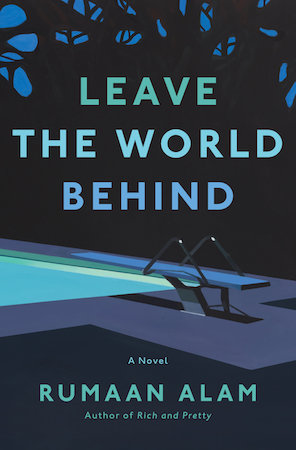
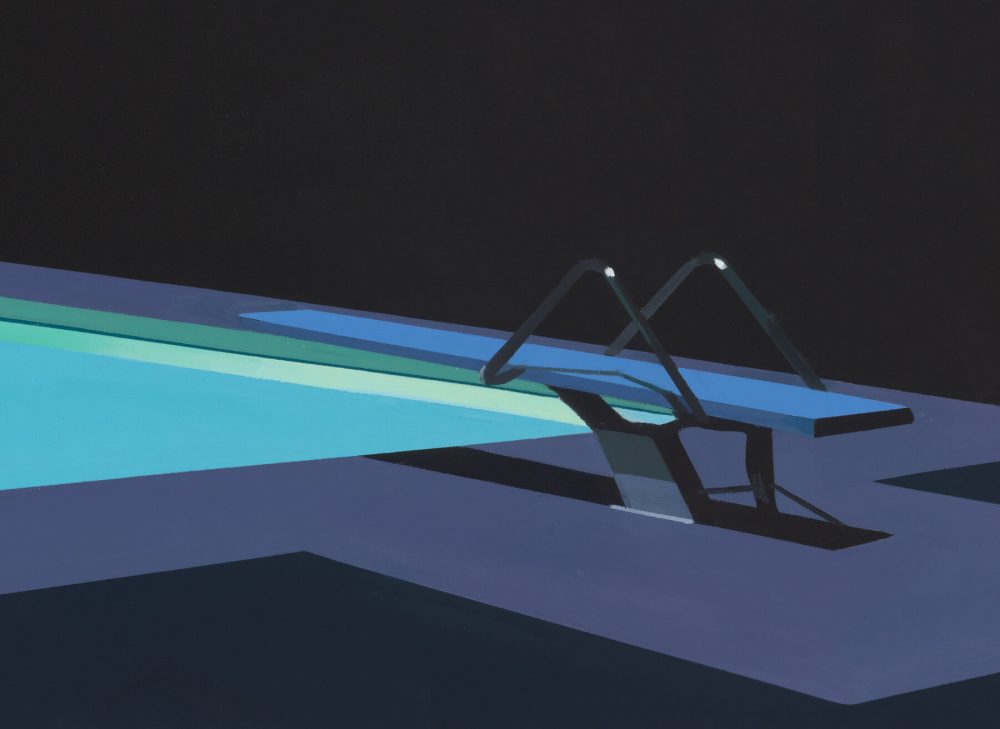
For the white family on vacation who rents a house on Long Island from an older Black couple, the unknown possibilities of the environment disrupt everything.

The novel seamlessly bounces between perspectives and occasionally zooms out to provide clues to the world’s state of emergency. The result is a panoramic view of how we handle being stuck in place and navigate personal and collective fear. 

In mid-September, more than six months into the global pandemic, I spoke with Alam on the phone from my house in Tallahassee. 


Aram Mrjoian: How were you thinking about this novel as both looking toward a speculative future, but also toward our present moment?

Rumaan Alam: When writing a book about people who are effectively trapped inside of a home, now with a readership who are also effectively trapped inside of their homes, it’s sheer coincidence. The bigger question that you’re asking is whether or not it’s the role of the artist to predict stuff, maybe not in terms of lottery numbers or concrete facts, but to predict a feeling or sensibility that will be prevalent. I think that’s probably the case. I keep forcing myself into conversation with these two other much better books. I should probably email the writers and ask for their forgiveness, but I think of these books as being really engaged in some sort of a similar pursuit as my own. One is Lydia Millet’s A Children’s Bible and the other is Jenny Offill’s Weather. They’re both books that are thinking about climate change and its effects on society and the individual psyche, they both possess a feeling of being trapped. They’re talking about a lot of the issues that I was talking about in this book. It’s maybe helpful to think of my book as a part of a larger segment or part of a larger interest in literature. Sometimes you can only make sense of these things retroactively. You need the context of a couple of years to understand what that movement was or what that line of inquiry was. 

I don’t know if it’s my work as a critic that’s helped inform that, although it is a case that since I’ve been working more as a critic, I’ve been reading more up to the moment. I’ve been more conscious of what some of the better writers out there are working on. Actually, you will have to include Ali Smith’s novels, the seasonal quartet, in this grouping of works that are interested in the individual psyche in a moment of global existential turmoil. 

I didn’t read any of these works I’ve just mentioned before I wrote my own book. So, again, it’s either just coincidence or it’s not and it’s really hard to say. The only thing I’ve been saying a lot is that it’s sort of like when people who watch fashion very closely, when a bunch of fashion designers use the color lavender in their collection, it’s like, well, where does that come from? Where do these resonances among artistic peers come from? I don’t really know the answer.

AM: You mentioned the way even something like reality TV can make it feel like we’re moving quickly and consuming a lot quickly even if we’re stuck at home. I’m paraphrasing, but I heard you on a podcast discussing the idea in Leave the World Behind of giving the readers the same sense of immediacy that the characters in the book are feeling. As someone who writes books and also has consumed a lot of books, film, music, art, what do you think about the notion that we are consuming culture and information differently today? Is that part of the vision of the book, that we have to adapt to things so fast? 

RA: The book aims to talk about the pace of contemporary life, which is a very commonplace motif. We hear all the time about lamentations of people’s attention spans, things like the discrete chunks on Twitter has affected people’s ability to actually read something, read like a 40-paragraph newspaper story, let alone a 500-page novel. I don’t think you can deny any of that is the case, right? That’s just what’s happening to us. And in the book, the way that plays out, or the way some of it plays out, is that the characters don’t have access to the Internet. And they experience to varying degrees, almost what you might describe as withdrawal symptoms. I’m just having fun with that in the novel. 

I wanted you to feel like you’re inside of this book. I wanted you to feel like you were stuck.

In a bigger sense, how will the actual book be received in a culture that reads this way now? I can’t control how people read or don’t read the book. I can only do what I’m doing on the sentence level or the page level. I do think that this is a strategy of the way this book functions, which goes back to what you were asking about, the reader inhabiting the same space as the character. It’s just a strategy for getting people to engage with the story. And in a way, I think that’s a question about genre, because it’s a book that is trying to use the conventions of genre, as I understand them, to create a certain kind of reading experience that I really wanted. I wanted you to feel like you’re inside of this book. I wanted you to feel like you were stuck. I wanted you to feel like you couldn’t stop turning the pages because you felt so much like the other characters in the book, which is that you just want to know what is happening.

And, of course, in the book and in life, there’s no real answer. Even if the book tries to deploy the strategies of the thriller or the work of horror, the fact remains that it’s fundamentally a realist book, because that, to me, is what reality is in a nutshell, your desire to know how the story ends, which you have to reconcile with the fact that you will never know how your own story ends.

AM: Yeah, I definitely felt that when I was reading. I read this book very quickly. It was one that I just sat down with over a weekend. I think it speaks to your expertise in doing exactly that. You mention the withdrawal symptoms from technology. Two of my favorite chapters in the book are early on. Amanda and Clay stock up on all this expensive and decadent food, these groceries for vacation, and there’s just these really beautiful details. I just kept thinking, well, what do we do with the fancy wheel of cheese, when the world goes to hell? Can you talk a little bit about your attention to detail and what details you were really focusing on?

RA: I mean, it’s funny, because one of the other ways in which I couldn’t predict this would be newly resonant is that the first thing so many of us did, upon hearing that we needed to stay home back in March was go to the grocery store. And there were people who wanted to get their hands on heirloom beans, then there were people who just wanted to get a case of ramen, or you know, whatever it is that meant to you that you would have sustenance. I spend a lot of time on a shopping list in the beginning of this book. I think that it provides a lot of exposition if you look at it closely. I’m sure there’s a reader who will just think it’s terrifically boring, but I think it establishes who these people are, how they see themselves, what exactly a vacation means for them, what their perspective is on their place in American society. There’s a certain kind of person for whom the splurge on those ugly heirloom tomatoes coming out of really crinkly cellophane wrapping tells the story of who they are as consumers and the story of people and where they stand in the class hierarchy. And that’s important. I found it really fun to write. And I hope there are readers who find it really effective as a tool for explaining these people to you.

The details contain the interesting stuff, right? Rather than saying, these are people of the middle class, who aspire to see themselves as people in the upper class, but they really aren’t. You can just have some fun writing about somebody buying cilantro at the grocery store.

AM: Amanda goes from very untrusting and standoffish to defensive and then kind of bounces between these feelings until eventually at one point she looks to Ruth for wisdom and security. For a minute, I was worried about the novel going in the direction of a stereotype by having Ruth as the wiser, older Black woman that is there to comfort Amanda. But I think that with Ruth’s character, internally and externally, it feels like you’re fighting against that. I was interested in that choice and if and how you are pushing against the problematic ways that Black women are portrayed in literature. 

RA: That is a really good question. There’s a challenge in writing about stereotype or archetype or convention. Because if you deploy the convention, are you then reifying it or are you critiquing it? It’s really, it’s sort of in the hands of the reader. In my second book [That Kind of Mother], I was writing about a white woman and her relationship with her Black nanny. And that’s a thing, right? There’s a tradition of that in this culture and it’s a valid thing to write about, but how do you write about it in a way that looks at it critically, but is also deploying it and playing it for what it is on the page. It’s a tough thing and so I wanted exactly the confrontation that you’re describing, where you might begin to suspect that the Black people are in this narrative to provide comfort or wisdom, which is such a trope, especially in Hollywood, the sort of typical Black person who is there to solve problems for the white person. That’s exactly what Amanda tries to do in the end. Ruth resists that, but I also think it’s a human impulse on Amanda’s part that she’s looking for human comfort. It just happens to be that a Black woman is the only person there and so there’s a complex moment where you think, no, it’s rubbing right up against stereotype and kind of looking at it and kind of not looking and not really resolving. 

I think you could argue that the book is deploying somewhat discomforting racial conventions from the outset. The notion of a Black person turning up at the door, unannounced or unexpected, and then you have to deal with the problem of their race—that’s just a convention from Guess Who’s Coming to Dinner. It’s a way of doing storytelling that we are comfortable with in this culture and it’s fun to deploy those conventions because people recognize them, which gets your guard up and it makes you react. Your hackles are up and you’re like, oh God, what’s going to happen right now? Hopefully, you feel like what happened isn’t necessarily what you would have expected. 

AM: It’s out of your control, but thinking about this idea of critiquing or reifying stereotypes, I know this has already been picked up by Netflix with some big-name actors to hit screens. What’s it like having the work kind of out of your hands? How involved are you in the process of seeing this adapted? 

RA: But that’s precisely what it’s like to publish a book anyway. You do the work on the page. You hope that you’ve done it well, and then you hand it over to the reader and the reader makes of it what they will. You may feel that you’re picking apart a complicated thing about racial dynamics and another reader may feel that you’re just reifying a really base stereotype. There’s no way to know, it’s just utterly out of your control and that’s just one of the things you have to make your peace with as an artist. The book only lives when it’s in the hands of an audience, but you have no role in dictating what that audience’s response is. In a way it’s something I’m familiar with, because this is my third book and I know that’s how it goes. 

With respect to the adaptation, I don’t really have a creative role in making the film. But I do have a lot of faith in the person who I chose to make the film with. Sam Esmail has a signature artistic approach. When you look at that work you see not only visual and narrative sophistication, but also an understanding of hard to articulate dread, things that are not quite said. I just have a lot of faith in Sam. I think he’s a brilliant artist. And I also accept that it will be his work more than it will be mine and that’s that’s totally fine. That’s part of what it is to work as an artist is to trust to whatever degree you can in what you’ve done. If I could have the conversation I’m having with you with everyone who picks up the book, then I could guide how the book went out into the world, but I can’t. It’s not part of a deal. It’s not part of the bargain. And so here we are. 

AM: Sorry, this is kind of both a bleak and hopeful question. I know you’re a father. In this novel, you have two teenage characters, who are kind of just finding themselves and still figuring out who they are. Again, to use a convention, two teenage characters are going on a family vacation and may not be the most excited about it, but then everything goes up in the air. Writing something like this, what are you thinking for the future and about the world that your children are inheriting? What was on your mind when you were writing those characters?

There’s a kind of animal instinct in protection of children and protection of the species.

RA: Absolutely. For me, that was the animating interest of the book. That was the principal concern and principal interest. You often hear this ascribed to Stephen King. I don’t know if it’s something he actually said. Stephen King said of the horror that animates his work, especially the early work, that it was about him as a father imagining the worst for his children. And I know what he means when you look at some of that work. That sentiment holds water for me. I hope it’s a book that’s not only effective if you are yourself a parent, but I do think there’s a kind of animal instinct in protection of children and protection of the species. 

I’ll leave it to you to tell me if the book is optimistic or pessimistic about what it’s actually saying about the world we’re going to hand over to our kids. I think it’s pretty clear what my take is on the state of the world is and what we have done to it and what previous generations have done to it and what children today are going to inherit from their grandparents and great grandparents’ generation. 
7 Dystopian Novels About Motherhood

I struggled to get pregnant for three years. During that period, I experienced miscarriages and surgery, and I injected my abdomen with more hormones than I could count. Finally, I was one of the lucky ones, and (albeit after an extremely traumatic labor) I gave birth to a healthy baby boy. However, the three-year battle to conceive had changed me. I had become wary of motherhood, viewing it as both fragile and destructive. Fragile, because it seemed to get broken so easily. Destructive, because it kept breaking me.

Having been through my own personal hell, I sought out books about motherhood that told stories of injustice and misfortune. Initially, I viewed my reading list as distinctly dystopian—I read books set in near-future scenarios involving climate crises, medical emergencies, technological dilemmas, and political upheavals. There was catharsis in seeing mothers and their children fight against far more extreme forces than I had done.

I wrote a novel too, about a woman who is torn between starting a family on Earth and leaving everything behind to become one of the first colonists on Mars. My book Bright and Dangerous Objects is a metaphor, I told myself, for my ambivalence about motherhood. Earth represents upheaval, sacrifice, fear; Mars stands for independence, ambition, escape.

Furthermore, in the two years since my son was born, my world has shifted. I have come to understand that I am in the midst of a climate emergency. Then, in the month that I conceived my second child—a daughter—a virus outbreak in China led to a pandemic that has claimed millions of lives across the globe. 

The novel that I wrote no longer feels like a metaphor. Earth is a place of upheaval and sacrifice. Bringing up the next generation on this planet does fill me with fear. And the dystopian stories that I have been reading have started to feel like essential and plausible reads. So, as the apocalypse looms over us on a daily basis, what can we learn about contemporary motherhood from these now not-so-far-fetched narratives of disaster?

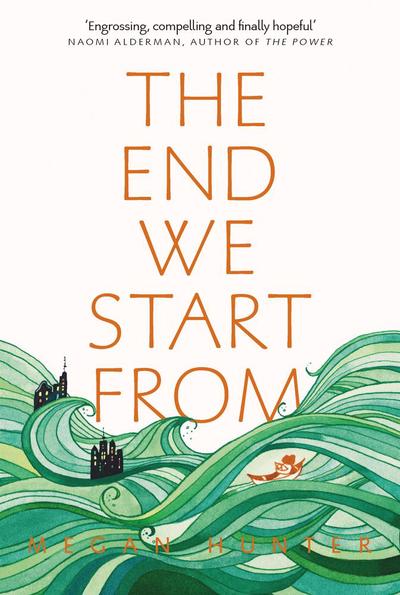
The End We Start From by Megan Hunter

London is underwater. And the floods are spreading. After giving birth, a woman is forced to flee north with her husband, R, and her baby, Z, in search of safety. Adrift in a place she barely recognizes, she becomes separated from her partner and bonds with Z, surviving in the face of disaster as well as she can. 

Written in slivers, reminiscent of Jenny Offill’s excellent Dept. of Speculation and Rivka Galchen’s smart Little Labours, we feel the narrator’s fragmented state of mind as she navigates new motherhood and her increasingly alien environment. As the narrator’s world is ripped apart and reconfigured, we are left marveling at her hope and strength in adversity. The author’s descriptions of breastfeeding, sleep difficulties, and the baby reaching new milestones all feel authentic and familiar, but recontextualized like this makes for a fascinating read.

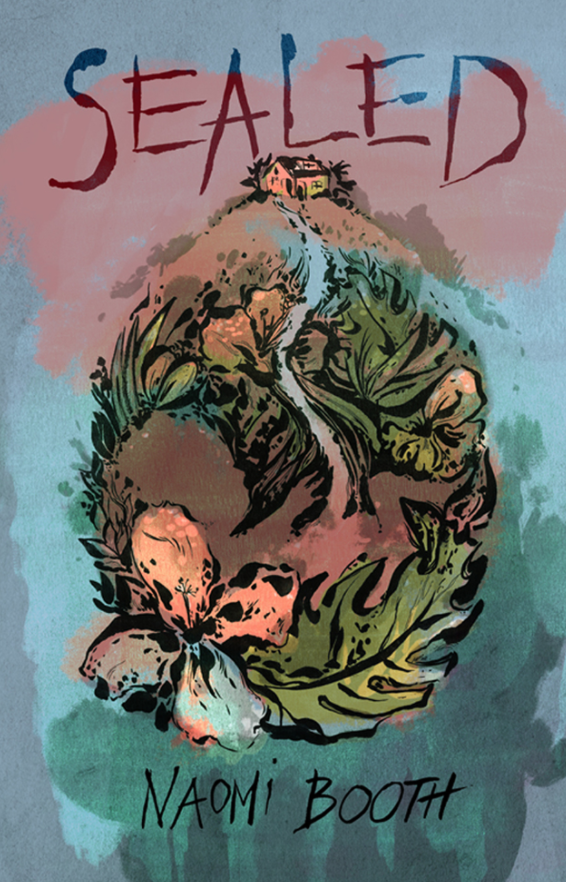
Sealed by Naomi Booth

An epidemic is infecting Sydney. Known as cutis, it causes people’s skin to seal up until they choke to death. Heavily pregnant Alice and her boyfriend, Pete, escape to a remote house in the Blue Mountains to start their family. But are Alice’s concerns about the epidemic founded? And is the countryside more inhospitable than the city? 

Booth’s gripping novel explores the fears so many of us experience in pregnancy—of the strange being occupying our insides, the dangers the outside world poses to it, and the precarious barrier of skin separating the two. Exploring issues of trust and ecological disaster in a way that feels evocative of The Glad Shout by Alice Robinson, Booth takes her book to a thrilling and gory conclusion that is not the faint-hearted.

The Growing Season by Helen Sedgwick

Human ectogenesis—the ability to grow babies in an artificial uterus outside of the body—is now possible. The “pouch” is provided by a company called FullLife, who have mysteriously begun providing a natural birth option to their clients. Piotr, a journalist, and Eva, a campaigner, investigate the organization while facing up to their own troubled pasts. 

The technology in this novel is not as futuristic as it sounds. We have successfully grown animal fetuses in artificial wombs, and scientists predict we may be able to support humans in this way within a decade. There are medical, egalitarian, and practical benefits, but also legal, financial, evolutionary, and ethical risks. Without judging, Sedgwick presents the arguments surrounding this delicate topic by interweaving her characters’ storylines to form an engaging psychological drama in the vein of Caeli Wolfson Widger’s Mother of Invention.

Who Fears Death by Nnedi Okorafor

Who Fears Death by Nnedi Okorafor

In a post-nuclear-holocaust Africa, two ethnic groups in Sudan are engaged in conflict. The light-skinned Nuru are guided by a religious text instructing them to enslave the dark-skinned Okeke people. Rebellion is met with slaughter. Onyesonwu is Ewu—neither light nor dark—because she is the child of an Okeke woman who was raped by a Nuru man. Furious at what happened to her mother, Onye embarks on a magic-fuelled quest for justice. 

Dealing fearlessly with subjects including racism, weaponized rape, genocide, and female genital mutilation, Okorafor creates a frightening but beautiful read. Onyesonwu’s mother might have had little choice over her terrible fate, but her child’s fierce determination to make amends for this—and for all who suffer—is engrossing and extremely moving. 

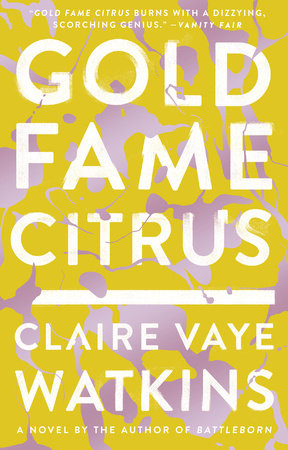
Gold Fame Citrus by Claire Vaye Watkins

Gold Fame Citrus by Claire Vaye Watkins

Severe drought has rendered California practically inhabitable. Young couple Luz and Ray attempt to stay, squatting in an abandoned celebrity mansion. But when they come across a neglected toddler, who they nickname Ig, parenting her gives them new purpose. They finally leave California, but as a battle between religion and rationality ensues, Luz must decide on the future she wants for herself and the child. 

Written in a blend of styles that include choruses, hallucinations, and documentary reportage, this is both a cerebral and nail-biting book that keeps the reader guessing. Involving a journey that moves from the familiar to the unfamiliar, the civilized to the deserted, in a way that echoes Samantha Hunt’s enchanting Mr. Splitfoot, Vaye Watkins asks us how we cope when our environments are no longer made for us. Perhaps the tiny concerns—mothering a child, for example—can end up being the catalysts that propel us to take on the colossal ones. And there’s no saying that we will always make the right decision.

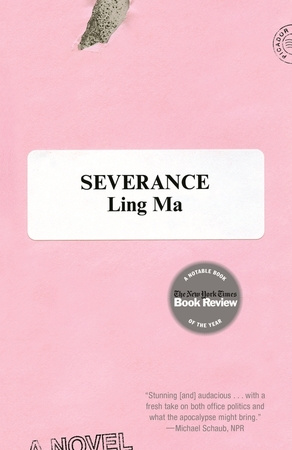
Severance by Ling Ma

New York suffers an outbreak of Shen Fever, a disease which causes sufferers to endlessly re-enact mundane daily routines without consciousness. Candace—a millennial working in an office block in Manhattan—is so settled into her life’s routine that even when things get truly awful, she chooses to stay. Then, when escape is her only option, she must work with a team of survivors to start a new society in an abandoned shopping mall. But Candace is harboring a secret.

The depiction of motherhood in this book is slow-burning and complex. Candace’s absent mother looms heavy in the text, and Candace’s relationship to parenthood gives the novel a drive and a darkness that makes it an uncomfortable read at times. Uncomfortable, but unforgettable.

Future Home of the Living God by Louise Erdrich 

Evolution is going backwards; women are giving birth to primitive species of humans. Four-months-pregnant Cedar is afraid. Trying to understand her baby’s origins and its chances of survival, she visits her birth mother, an Ojibwe woman, and speaks to her adoptive parents, a pair of Minneapolis liberals. But the world around her is becoming more and more unstable. As oppressive forces imprison pregnant women in mysterious medical facilities, can Cedar keep her baby safe? And if her baby turns out to belong to a primitive species—what then?

The novel is written addressed to Cedar’s unborn child—a child who may never have the capacity to understand language or appreciate modern culture. With echoes of PD James’s The Children of Men as well as Margaret Atwood’s seminal work The Handmaid’s Tale, and exploring similar territory to Diane Cook’s Booker Prize-longlisted novel The New Wilderness, Erdrich moves between subjects including religion, Native American history, mental health, and science. The story is tense, moving, and strangely relevant to our current reality. In a world so full of progress, how come it so often feels like society is moving backwards? What can we, as mothers, do to help our children look forward to—and create—a brighter, more evolved, future?

The American Dream Is Dead, What Do We Do?

In Mychal Denzel Smith’s latest book, Stakes Is High: Life After the American Dream, he writes of America at a reckoning point, one where we as a country will either choose freedom, or where we will allow Donald Trump to stay in power despite enacting openly racist and violent policies on Black, Brown, Indigenous people, targeting LGBQTIA individuals and women, and daily legislations that continue to assault the climate.

In Stakes Is High, Smith challenges us to recognize that the American dream is a fiction which never existed, to acknowledge that America has always implicitly or explicitly endorsed white supremacy, and asks white liberals to openly recognize the pain, frustration, and grief experienced by non-white communities. It’s a book that is beautiful, grim, yet hopeful of a future in which we choose to act collectively and work together to create a new narrative of America, one which provides for all of her people, but to act quickly, because climate change is imminent.

Smith is the author of the New York Times bestseller Invisible Man, Got the Whole World Watching. His work has appeared in the New York Times, Washington Post, Harper’s, The Nation, and more.

Smith and I spoke by Zoom about facing American mythology, coming to an abolitionist position, the need for imagination, and readying ourselves for revolution.


Deirdre Sugiuchi: You describe Trump’s rise as a backlash, akin to what happened after Reconstruction. How does Donald Trump connect to past figures, especially in this present moment?

Mychal Denzel Smith: If you were in charge of writing a Hollywood script in which (Trump) was a villain, they would send this script back to you and be like, “You are making him too evil.” This is like Andrew Jackson rolled up with Nixon, the complete racism of both, but Andrew Jackson ascends as this figure in the protection of white supremacy that speaks to this populist idea. Trump is doing the same, but doesn’t actually care. At the same time he is a complete antagonist of Black and indigenuous individuals and is enacting violence on them, but with the obvious corruption of the Nixon administration, rhetoric of law and order, and in a way that speaks to people in coded racist language, but then he strips all that bare. 

If you were in charge of writing a Hollywood script in which Trump was a villain, they would send this script back and be like, ‘You are making him too evil.’

We can talk all day about the limitations of representational politics, and all my issues with Barack Obama during and after his presidency, but even given all that, what (Obama) did represent for a section of this country was that the American identity was changing and that they would no longer have claim to all the things that American empire bestows upon those who have been traditionally in power. That riled them up. They didn’t want anymore to be fed the code language and Donald Trump nakedly said all the quiet parts loud. He started his campaign talking about Mexico sending rapists to this county. That’s not anywhere even close to the rhetoric in the years preceding. 

DS: He erased the facade. Our policies aren’t any different.

MDS: Not even close. There are particular cruelties to the Trump administration that we can point to, but it’s just accelerated on the Trump timeline. People want to say there wasn’t a policy of family separation under the Obama years. They floated it! The Muslim ban, suddenly people were pulling up old George Bush quotes because he said “we respect Islam as a religion.” He respected it so much that he bombed the shit out of all Muslim-led countries!

All Trump did was say, “Yes we don’t want those people” but it’s a continuation. If we are making our history much shorter and we only view Trump violence as its own set, and not indicative American violence as it has expressed itself throughout history, then it’s going to look worse.

DS: Right Because we’ve never admitted what America’s history is.

MDS: The entirety of American history that I learned in school was built on alternative facts from the jump. To not contend with that means that you’ll always be surprised when someone starts lying to you within the state, within positions of power, because you’ve been trained to believe that there is an American story that is true. 

DS: That ties into a major theme of your book, America’s unwillingness to admit that racism and poverty exist. Can you expound upon that?

MDS: We have this idea that America is the land of opportunity, but the existence of various forms of oppression are evidence to the contrary. (People only admit) they exist to the extent of personal failures or personal bigotry. “People are poor because they don’t work hard. Racism exists but it’s not the obstacle it once was. There are fewer racist people or the racists will die out. This person isn’t sexist, they come from a different era.” That’s just a continuance of a form of oppression that allows you to continue with the myth that one can overcome those obstacles and that America offers the opportunity to do so.

The entirety of American history that I learned in school was built on alternative facts from the jump.

That calls into question the premise of the American dream, not that there aren’t obstacles, but that America offers you the opportunity to overcome them. But why does that need to be the case? That people are deprived and must overcome these things not in the pursuit of extravagant wealth but of a decent life, just the basics one would need in order to survive. It doesn’t account for the machinations of those systems that continue to exacerbate the disparate material conditions that we continue to see in the context of this pandemic. Billionaires are literally making billions more dollars as more and more people file for unemployment, and we are saying that’s supposed to be the natural course of things. It’s not right for this group to exist in the first place whose wealth is drawn from all these different systems of oppression and can deny other people of the right to life.

DS: Or just the right to water. In Jackson, Mississippi, where I was born,you can’t even drink the water.

MDS: We are talking about the basics here. The most essential elements of human life. Water you cannot drink, and if you don’t have enough money to get enough water you will die. We are saying that sending people $600 a week is too much. We’re saying you have to pay for the water but we’re not going to give you money to pay for it. What is that but a death sentence?

DS: The other evening Kiese Laymon was reading about Mississippi governor Tate Reeves blocking a bill to give people free water during the pandemic. Why is that acceptable? 

MDS: I would put the question to Tate Reeves, to anybody who agrees with denying these people water, what does a person have to do to prove themselves worthy of water? Are we willing to say that it’s moral, ethical, just to deny people water on the basis of their race or economic status? What have they done to prove they are not worthy and what do they have to do to prove that they are worthy? If we are saying that’s okay, what does immoral look like?  Does immoral only look like you take out a gun and shoot people? Is that the only way to be immoral? If you can deny them water, just shoot them.

DS: And that’s one thing that’s happening. Currently there is unrest on the streets which directly results from violence caused by racist police forces. Can you outline historically how the police have always served the wealthy and why this has led to a call for abolition?

MDS: From their inception in England, the police were a chief alternative to the army to squash insurrection in Ireland. That got imported into the states. In southern cities the slave patroller’s job was to serve wealthy landowners and protect their property, enslaved people. In Nnorthern cities they had labor uprisings, so they established police units to break up labor strikes. The core functions never change. All that happens is that police get more duties.

We have this idea that America is the land of opportunity, but the existence of various forms of oppression are evidence to the contrary.

They continued the criminalization of Blackness and Black people by increasing the laws on the books based on moral crimes. You just keep having different iterations. The drug war has been transformed now into a hyper-militarized function because you have the advent of SWAT in the 1960s and the use of more military equipment, because when things get called wars, you call in soldiers. You see increased surveillance after 9/11 on Muslim communities.

Policing has never changed from its primary function which just establishes who falls on the dividing line of first class and second class citizens. Wealthy white people fall on the line of first class citizens, and everyone else falls on the lines of second class citizens. Whiteness offers some protection, but poor white people are subjected to policing as well. It’s funny, when you point out the number of Black people who are killed by police, and someone says more white people are killed, and it’s like “No shit, maybe you want to get in on this fight to end police violence.”

The point of coming to an abolitionist position is to say if police and policing have only preserved this function, in a just society in which people’s needs are taken care of, where there’s a prodigious welfare state that provides all the things one needs—﹘ water, healthy foods, clean air, adequate shelter, good homes, income, meaningful work, access to recreation arts, everything that allows for the full expression of humanity—﹘ what do you need police for? If you want to actually root out the violent behavior, you address the root cause. It’s not police that are going to solve this for you because all they can do and have ever done is protect property and establish who sits on the line of first- class and second- class citizenship, and they do this by violent means. 

DS: How can we fix this? How can we invest in collective power?

MDS: Part of this is believing that collective power is meaningful. Those of us who are  U.S. Americans are raised in an individualistic society that says that you accumulate wealth that you need, that you want by any means, and you exercise your power over other people, and that is what freedom looks like, essentially. That’s exactly what you are teaching in American schools right now, the idea that there is a single winner and that your destiny is tied up in winning by any means. It’s a scarcity model, the idea that there are only so many good lives to go around, that only so many people are going to be able to have a home, to care for their family, to live into old age, and be healthy and happy and have recreation.

It’s not true. We’ve got resources to make that possible for everyone. We have the technological know how. We are able, if we are committed to the idea that we are responsible for other people. for our community, in the broad sense that we all need each other. 

I think about that in the context of what we have been going through in regards to the pandemic and our physical distance from one another, and the impact that is having on people, because we do need each other, but then there’s the sense that you alone can do it for yourself, and that’s never been true from the beginning of humanity. When you are building the sense of collectivity, you have to build responsibility for each other and draw power from each other to do the things that we do. 

So much of how we define power now is about domination, is about coercion, and violence. It is just wrapped up in toxic ideas of masculinity. When you’re forming those bonds of power, in which you’re building bonds of compassion as opposed to dominance, it’s a different but stronger form of power, one which offers a greater future for greater numbers of people, as opposed to our individualistic ideas around power through domination.

DS: Can you discuss the importance of imagination, especially at this moment in time? How does this connect to getting rid of the American myth and choosing to tell a new story of America?

What does a person have to do to prove themselves worthy of water? Are we willing to say that it’s moral to deny people water on the basis of their race or economic status?

MDS: We don’t have that much time left. By virtue of human hubris and complete disregard for our planet, if we don’t get it together in the next ten years, we may just not have any time to be able to do the things that are necessary to make the planet inhabitable for us as a species. When I’m saying revolution and it must be swift, it’s because we don’t have time. If people cannot see the need to act in a collective manner right now, as we face human extinction, and I don’t think I’m being hyperbolic when I say that, then there is no hope. My appeal in this book is saying, how badly do you want to survive? Are you content with this narrative? Or will you choose truth and survival? 

DS: I keep thinking back to 2018, here in Georgia when Brian Kemp stole the election, how I kept thinking we should be revolting, but didn’t do anything. The right is obviously setting the November election up to steal it. Are we all just going to sit and watch?

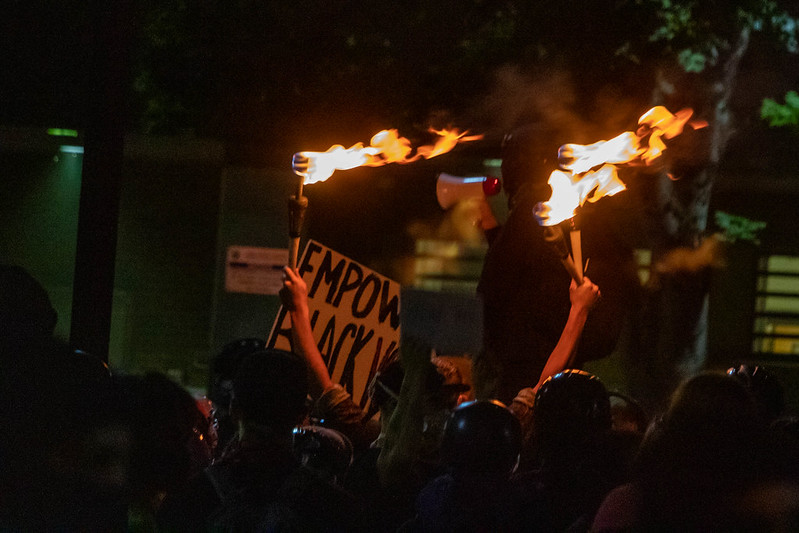
MDS: It feels like for so many white liberals that the strategy has been we either impeach him or we vote him out. Now they are planning on stealing the election, and I don’t think (white liberals) have the stomach for what has to be done. There is no sitting around another four years with this election.We can’t afford four years of a Biden presidency. We definitely can’t afford four years of a Trump presidency, and the daylight between those is not enough for what we need done. But even still, people have to be ready to hit the streets. People have to be ready to burn some things. To be honest, if we get a couple of years of Biden and there’s no movement, we have to be ready to hit the streets too, because we just don’t have time.

Lost in the Woods in an Election Year

Automatic Season

Oak, pine, and moss repeat 
like an ad for moss, pine and oak.

Scramble the woods 
you’ve walked in before, get the woods 

you’re about to walk in. The brain 
prepares its autumn efficiencies: 

auto-complete the colors of trees 
with their heads on fire. Put the song 

you sing to keep hunters away 
on loop. Watch your round blue body 

ravage the map, track your exhaust 
of mileage and elevation. In this life, 

information’s a kind of insurance 
against the sound of your own 

lonely voice, warbling When I fall 
in love, it will be forever into the leaves 

you mulch as you walk, each fallen 
at a different stage of loss: 

bone, leather, stone, rust. Against 
the young pine prone across the trail, 

mottled with brown so pigmented 
it’s purple, broken out in neon lichen. 

Here, in a palette trimmed from your vision 
for infrequent use – sky’s pre-winter blue, 

route highlighted in moss – 
is your mother telling you secrets 

she never recorded, parts of her 
that don’t belong to you. Here, 

above a puddle’s sudden ankle-depth, 
a hanging leaf scraped of its lamina 

so a threadbare fabric remains. 
A sentence you, with all your words, couldn’t 

have finished. 
                   Little blue pulse, 
your heart stopped at a rifle’s far-off report,

keeping your bad eyes peeled 
for pink blazes that promise

you aren’t lost: 
                    you’re a secret too, 

unfinished, unlikely organism, colors 
all wrong for the scheme and season. 

Election Year Diary

After the convention blooms a rash
of dark hibiscus: color of the lipstick
I put on to leave a certain print:
fainter, yet more permanent reflection.
At the rotary, all tempered glass,
a tour guide’s voice makes riders feel they’ve rounded
history’s bend. Just where his monologue
hairpins toward resolution and the route

loops back to Independence Hall—restrooms
and souvenirs—the flowers wad their wine-
red faces into the refuse of mourning, 
handkerchiefs strategically abandoned
among the old revolution’s symbols
as they fell: inked scroll, cannon, cracked bell. 

10 Books That Feel Like Going to a Bar

In some states the barflies have migrated back to patios and beer gardens, but it’s going to be a long time before a night out feels normal again. If you miss sampling expertly crafted cocktails in elegant lounges, sinking into happy hour conversations with coworkers after the office closes, or playing spirited rounds of pub trivia with your friends, consider turning to one of these ten books set in bars to tide you over until it’s safe to gather at your favorite local watering hole.

Ordinary Hazards by Anna Bruno

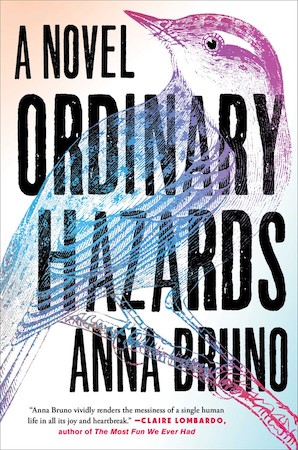
Bruno’s debut novel follows Emma, a hedge fund manager and MBA professor with a passion for story structure, as she sits in her local bar in upstate New York, drinking whiskey and descending hour by hour through her grief and guilt about the recent breakdown of her marriage. Why is she here when she has to be up before the markets open, or even upstate at all instead of on Wall Street? Why do her friends keep texting, trying to get her to come over? How far will she go to punish one of her ex’s friends who confronts her at the bar that night, and what will it cost him? How has Emma’s story become so broken?

Last Call at the Nightshade Lounge by Paul Krueger

Last Call at the Nightshade Lounge by Paul Krueger

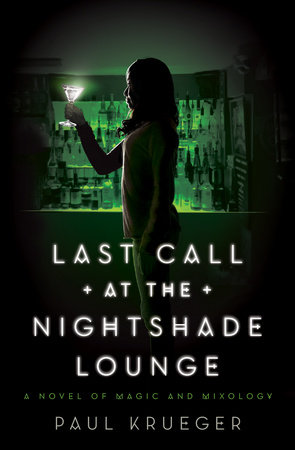
In Krueger’s light contemporary fantasy, recent college grad Bailey is living with her parents and bartending with her old high school hookup friend while trying to figure out her future. After killing an attacking demon, she discovers a deep history of monster-fighting bartenders and that certain magically mixed cocktails can give her temporary powers of super strength, telekinesis, and the ability to blast elemental energy to fight the demons. Her race to stop a series of gruesome deaths and navigate the shadowy world of bartenders is punctuated with 14 recipes from an ancient book of cocktail lore.

Devil in a Blue Dress by Walter Mosley

Walter Mosley’s 1990 debut novel introduces us to reluctant detective Easy Rawlins, a Black World War II vet recently laid off from a defense production plant. When a white mobster hires him to track down a French femme fatale who has disappeared with $30,000, Easy must track her through one bar and jazz club after another in 1948 Los Angeles.

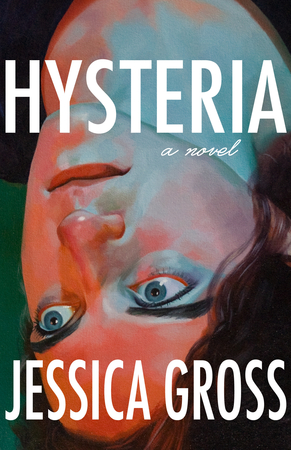
Hysteria by Jessica Gross

The unnamed millennial narrator of Gross’s debut novel lives too close to her parents and can’t seem to escape their shadow. A sex addict, she stumbles drunkenly from one encounter to another, from her psychiatrist’s parents’ colleague to her roommate’s brother. When she encounters a sympathetic bartender at local Pilz Bar who looks just like Sigmund Freud, she imagines them into a client-therapist relationship and begins to sort through her complex feelings for older men. The book is like “if Ottessa Moshfegh and Phoebe Waller-Bridge painted the town red together,” according to Courtney Maum’s front cover endorsement.

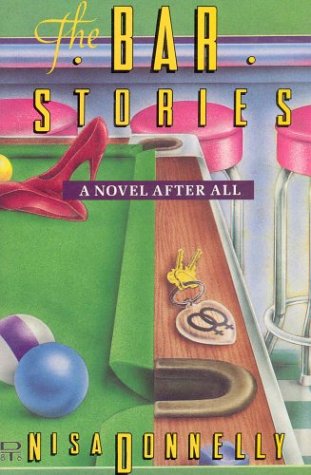
The Bar Stories: A Novel After All by Nisa Donnelly

Donnelly’s 1989 collection revolves around lesbian bar Babe’s in Oakland, California, and the many women who cross paths there. After shattering her leg in a roller derby accident, Babe Daniels rescues her partner and her partner’s baby from a shelter for unwed mothers and begins working in the bar she will one day buy. At her bar, we meet a prize-winning photojournalist who left her lover and drove across the country to document the lesbian nation, as well as members of the Dykeball Losers softball team, Babe’s ex, other roller derby players, and more. This collection won a Lambda Literary Award for Lesbian Fiction in the second year of the awards.

Smile by Roddy Doyle

Smile by Roddy Doyle

After splitting from his beautiful wife Rachel, Ireland’s television sweetheart, Victor Forde moves back to his hometown and spends his nights at Donnelly’s, the local pub. There he runs into an old schoolmate, Fitzpatrick, who seems to know more about him than anyone but Victor has any right to know. Victor can’t seem to remember the man, but their encounters in the pub kick up Victor’s memories of his Christian Brothers school teachers (at least one of whom sexually assaulted him once), his career as a rock critic and political journalist, and finally some shocking revelations about his relationship with Fitzpatrick.

2 A.M. at The Cat's Pajamas by Marie-Helene Bertino

2 A.M. at the Cat’s Pajamas by Marie-Helene Bertino

In Philadelphia, two days before Christmas, a fifth-grader whose mother recently died and whose father has withdrawn into drug-numbed grief dreams of becoming a jazz singer. After her principal, who always resented her mother, unfairly expels her, she sets off across town to find a jazz club called The Cat’s Pajamas. The club’s owner has been threatened by police with a shutdown if there are any more code violations, but he’s promised his talented underage son a chance to play in the house band that night. As the hours progress, the storylines of these and other characters finally converge at The Cat’s Pajamas.

Young Skins by Colin Barrett

Barrett’s debut collection of six short stories and a novella are all set in the fictional town of Glanbeigh in County Mayo, Ireland. The lives of its young men revolve around the local pub, as they sit at the bar over drained pint glasses and recount their failures to one another. The protagonists are often people on the fringes of society whose lives are occasionally punctuated with violence, their stories with world-weary wisdom.

Jazz Moon by Joe Okonkwo

Ben grows up in a poor, rural Black community in Georgia during the Jim Crow era but decides to run away to Harlem. Despite being attracted to boys, he agrees to marry Angeline, a girl he meets on the train north. The two arrive in Harlem and get jobs, but one night in a hot jazz club, Ben falls for another man, an abusive and controlling trumpeter from South Carolina who lures him away to jazz clubs of Paris.

When All is Said by Anne Griffin

In Griffin’s debut novel, octogenarian Maurice plans a night of drinking in a hotel bar in his native County Meath, Ireland. He raises five stout-and-whiskey toasts to four deceased loved ones and a son who has left to work in America. Through his memories of the five, we learn about his boyhood working in the manor house that became this hotel, his later successes in business, and the lasting repercussions of his youthful theft of a valuable coin.

Are Frats and Sororities Really Just Cults?

What lengths will we go to in order to belong? To be part of something exclusive? To be part of a sisterhood or brotherhood? That’s the searing question that authors Benjamin Nugent and Genevieve Sly Crane try to answer in their books about college Greek life.

Nugent’s Fraternity, a collection of linked short stories about some Delta Zeta Chi bros, tackles performative masculinity, existential crises, and brotherhood. In every story, a palpable sense of loneliness fuels the actions of the characters.

Crane was the pledge mistress of a sorority at the University of Massachusetts. Her novel Sorority follows the aftermath of the death of a sister, Margot. From hazing to eating disorders to sexual assault, Crane opens the closed-doors of life at a sorority with each chapter told from the perspective of a different sister.

Both Sorority and Fraternity take place at lightly fictionalized versions of the University of Massachusetts Amherst; Crane attended UMass as an undergraduate, and Nugent grew up ten minutes from campus. For Electric Literature, they talked about writing fiction set in a widely reviled subculture and using Greek life as a way of exploring questions about gender, misogyny, and privilege.


Benjamin Nugent: One of the things I love about Sorority is how unapologetic it is about how thrilling life in a troubling and politically objectionable subculture can be.

What are your feelings about showing us the pleasures, often perverse pleasures, of a subculture people are actively trying to shut down? [Editor’s note: As discussions of racism, inequality, and exclusion gain ground, the Greek system has been criticized for racist and misogynistic practices.]

Greek life exudes this simultaneous surge of degradation and power in deciding worthiness.

Genevieve Sly Crane: I felt compelled to write Sorority because the toxic approval system of Greek life marked me in a way that I couldn’t fully verbalize until I put it into fiction. Greek life, particularly rush (both as a sister and as a pledge), exudes this simultaneous surge of degradation and power in deciding worthiness. During rush, there’s the terror of possible exclusion. As a sister, there’s the terror of realizing why you were chosen, plus the fight to keep that status, sometimes at the expense of sanity or health. When I became a sister, I wish I could say I’d had some sort of grand protest about the system. But I didn’t. Why? Because the system picked me. It included me. And getting that sort of approval gave me a high.

I wrote Sorority within ten years of graduating from college, but even as I wrote it knew it was the documentation of a dying era. There is no way that sorority life in its current iteration should survive. As much as I loved (and still love) some of the women I met in my house, and as much as I liked being a sorority sister, my responsibility now as a cis white woman is to shut up and listen to what current students—especially BIPOC voices—have to say about what they want out of Greek life, if they want it at all. 

BN: I tried to write about fraternity life the way Faulkner wrote about Mississippi. Fraternities don’t deserve anything like the same level of notoriety as the Deep South in the early 20th century, but the same principle applies. Faulkner was smart enough to know that the political situation in Mississippi during his lifetime was an abomination, but it was the world he grew up in and he loved it fiercely. To recognize that there is horror and the sublime in a tightly knit community, and make the reader feel the horror and sublimity both, that was my goal. I think that’s a politically progressive mission for a writer. Even if you know that what people are doing is terrible, it can only help to understand them. And the only way to understand them is with the degree of attention that constitutes a kind of love.

The young women in Sorority fantasize about committing acts of violence against each other and sometimes do commit acts of violence against each other. It’s something that predates their joining a sorority. What are your thoughts on young-woman-on-young-woman violence? And how does sorority culture channel the violent rage that your characters, young women, experience for each other sometimes?

GSC: For whatever reason, I think women in general (maybe men, too?) have traditionally been taught that success (and in this case that can mean beauty, popularity, intelligence, relationships—all of it) is a finite resource, especially because as women we just “won’t be any better” than we are in our 20s. I don’t think I was ever explicitly told that I would have a limited window to be THE BEST but I believed it, and I knew that in order to the best, it had to come at the expense of someone else’s happiness or value. I don’t think sorority culture is necessarily the problem here; I think it’s just a vehicle for this ideology to be acted out. I am optimistic that this idea is dying out. Instagram has a whole lot of circulated platitudes these days about women supporting women, and I think my students are about a billion more times emotionally evolved than I was, so I’m hopeful that we can outgrow the trap.

BN: Is the sorority a place that brings people into a collective insanity, like a cult? Or a place that cures people of their delusions? Or both?

GSC: Oh, I definitely think any close-knit group is set up for frenzy. I just have an infant son and even the private mom groups on Facebook are echo chambers of parents saying something insane and then basking in the echo chamber while other parents assure them they are not, in fact, insane. Whenever someone asks me what Greek life is like, I’m like: “how familiar are you with the Stanford Prison Experiment?” But here’s the flipside: with the right people, sorority life is absolutely not insane. It’s affirming and supportive and completely lovely. And it changes every semester. You had a similar line in your book:

“I said that when the right guys are running a fraternity, it’s a place where people will tell you if you’re being an asshole…But if the wrong guys are running a fraternity it’s more like a barbarian tribe, where all that matters is whether you’re in it or not.”

Cults and clubs are such a great breeding ground for good fiction. Everything is heightened, but the silliness of the ritual can make it laughable in the right context. I look at your characters in Fraternity and think: of course a brother would drink piss out of a toilet bowl if asked. It’s revolting and hilarious, but why wouldn’t he? It’s a small price for love. 

BN: I wanted to take the reader’s hand and say, come, let’s go see the supposedly indecent people, the indecent and conservative institutions that sit at the center of Amherst, the somewhat smug liberal college town where I grew up. That line, about the right guys vs. the wrong guys running a fraternity, is spoken by a former fraternity president who now lives in LA. He’s trying to convey that Hollywood and other hierarchical communities—avowedly liberal ones—can have the same dynamics as fraternities, the same pathological view of power and insider-ness. They can be abusive in the same ways. Far worse, we know from #MeToo. 

My goal is to recognize that there is horror and the sublime in a tightly knit community, and to make the reader feel both. I think that’s a politically progressive mission for a writer.

GSC: From the other side of the fence, I’d look at the high schoolers of Amherst while I was at UMass, and I always wondered if our proximity to them somehow primed them to be a little more debaucherous or wild, as if our immorality could work through the town like an infection. 

Do you see any benefit to being in a fraternity? More specifically—do you think any of your characters in Fraternity were “good men”? 

BN: Definitely. The narrator of my story “God” is a closeted young gay man, and very kind, actually, and the reason he’s closeted is that being a member of his fraternity is great, for him. He loves everything about it, the bond he has with his brothers, the way they all come to him with their troubles. The frat house is a sexy place, for him, and pretty safe. He knows that if he’s truthful about his sexuality there’ll be a downward adjustment in intimacy, in his brothers’ willingness to open up to him. He hides his desires because there’s so much for him to lose.

GSC: There are two women in Fraternity who complete rites of passage and ascend to become more than sexual conquests. (I’m thinking of Claire and “God,” specifically.) Are they meant to illustrate how woman need to work harder to be considered “worthy” by the brothers, or is it just an extension of their own hazing?

BN: They do go through rites of passage, but they’re not evaluated according to the same system as men, by the men. It would never occur to most of the guys in Fraternity to think of a woman as having proven her worth or not proven her worth. They’re so nervous about their own performances in the company of women that it never occurs to them that the women are not just sitting there serenely judging them and evaluating them, that the women are on their own journeys full of suffering and transformation. It’s more fear and projection than objectification.

Frat boys have a tendency to incriminate themselves by filming themselves at their bad behavior. Did that ever happen at your sorority? Filming the house’s rituals and transgressions against common sense?

GSC: In “real life,” my chapter was incredibly secretive about its rituals. And it’s funny—Greek life feels like a game, but even now you still couldn’t pay me to confess what our rituals were. It’s less out of loyalty to the organization and more out of loyalty to the five or six women that I love so dearly from my time there. But I think if I didn’t have that sort of affection for my sisters—like maybe if I harbored some resentment—that it would be almost irresistible to document and leak secrets online. It would be an easy way to throw a middle finger at a system that can make you feel powerless. 

BN: Is it fair to say that the girls in your sorority are more self-aware than the boys in my fraternity? The pledge mistress knows she is “love bombing” the pledges, behaving like a cult leader. The pledges raise objections among themselves, talk about quitting: “I don’t want to buy my friends” and so on. But they stay. That seems to be one of the particular poignancies of your book: The sisters know what is happening, what unspoken needs of theirs are being served, what the psychological mechanisms are that will keep them in place. But they stay. They know exactly what’s going on but they choose it. 

GSC: Absolutely, and I think it’s because that’s what I experienced as real-life sister. Desire beat ethics. I did some things that I consciously knew were wrong. I did them because of something fiercely primal in me.

Writing Fantasy Lets Me Show the Whole Truth of Disability

The first time I saw deaf people in mainstream storytelling was in the Freeform family drama Switched at Birth. Switched at Birth is a TV show where two young women learn that, as babies, they went home and grew up with the other’s family. Almost two decades after the switch, they meet their biological families and get to know them. 

One of the women, Daphne, is deaf. When we meet her in the pilot episode, she both signs and speaks, “it’s nice to meet you.” She wears hearing aids.

The show aired in 2011, when I was on the cusp of entering my senior year of high school. I devoured the first season—it was a lifeline for me. I was the only deaf person both in my family and my school district. My deafness felt like a veil between me and everyone else, one I couldn’t tear down. I found solace in the existence of a TV show that featured deaf people, people like me. 

I couldn’t find anything that reflected my real experience. What I found instead was horror and fantasy.

When the second season came around, I wasn’t the only deaf person in school anymore. There were other deaf students at my university, and we’d found each other. My signing had improved. I had learned the difference between Deaf (a cultural label) and deaf (a medical label), and I was starting to claim my Deaf identity and affirm myself under that label, within that community.

I stopped watching Switched at Birth because I was preoccupied with the Deaf people I met in real life. But there was talk about the ninth episode in the second season, “Uprising,” which would be presented in only sign language. We all decided to watch. 

When I watched that all-signed episode, I felt my heart plunge into disappointment. It was no longer the lifeline it was in high school. The signing is stiff, the characters are stereotypical. Apart from the presentation, the episode is standard teenage drama, the plot of a Deaf school’s shutdown buoying romantic conflicts. It felt like a faint shadow of a culture and a community that I now knew was richer than what was on the screen. I was disappointed.

I tried to find a replacement for a show I’d outgrown. I wanted to find representation, something that could comfort and validate me as I move through a world that doesn’t accommodate me. I couldn’t find anything that reflected my real experience.

What I found instead was horror and fantasy.

Instead of real-world dramas like Switched at Birth, I started watching darker fare like Hannibal and Teen Wolf. Even though I couldn’t relate specifically to lycanthropy or hyper-empathy that borders on telepathy, I related with the emotional arcs these shows presented; both shows follow their protagonist trying to find their place in a world that either persecuted them or paid them little attention. I found myself rapt at the way they presented identity and community. Both Hannibal’s blood-soaked surrealism and Teen Wolf’s paranormal fantasy hit harder—and felt more relevant to my experience—than any realistic portrayal of deafness I found.

Paranormal fantasy hit harder—and felt more relevant to my experience—than any realistic portrayal of deafness I found.

Horror and fantasy let me see my struggle when I couldn’t find any other representation. Teen Wolf, in particular, has moments where the protagonist, Scott McCall, struggles with the demands that being a werewolf places on him; he is asked to be responsible, to assimilate, to go through the world without causing trouble. He clings to human friendships and resents the werewolf bonds he builds. He claims his identity as a creature of the night while struggling with a werewolf’s bloodlust. I understood his frustration, because I wanted to be part of a community without losing parts of myself that aren’t directly tied to Deafness. When I watched Teen Wolf, I almost felt like Scott too, part of a community that was both visible and yet hidden to the world at large.


Whenever I read disabled characters in literary fiction, I feel the same thrill of validation I initially felt with Switched at Birth, often followed by the same kind of disappointment. Often, authors sideline disabled people in literary fiction. Narrators or authority figures see them as unfulfilled, powerless, or saints. They are in need of saving either by God or by another person who might move through society with fewer barriers. This viewpoint upon disabled characters persists in work from decades past to contemporary work today, from novels like Carson McCullers’s The Heart Is a Lonely Hunter to Lara Vapnyar’s story “Deaf and Blind.” Seeing people like me with little agency or autonomy tells me that fiction does not recognize that disabled people can gain, wield, and enact power in a narrative. As a result, I don’t feel represented in those stories, even if the characters are superficially like me.

As someone who wants to write about deafness and disability, reading weak disabled characters frustrates me. It’s a trope that just doesn’t match my experience; I’ve never met a disabled person who hasn’t clawed their way past ableist gatekeepers and barriers alike to get to where they are. When we face ableist barrier after barrier and work harder than our abled counterparts, we don’t deserve to be represented in literature as just weak. 

When I transferred my loyalties from Switched at Birth to Teen Wolf, I already wanted to write disabled characters without this conventional weakness. But writing away from the traditional tropes of disability both excited and scared me. I didn’t know what to write—I only knew what I didn’t want to write. There were more touchstones to avoid than there were destinations to journey toward.

I found a new direction in speculative fiction. I read Karen Russell’s story “St. Lucy’s Home for Girls Raised by Wolves” in a fiction workshop, and the story stayed in my consciousness long after I’d moved to other readings. In that story, a group of werewolves are brought to a school to learn how to be human women. The werewolves felt pressure from the human nuns to erase their werewolf selves; the pressure to assimilate from the overseeing class, even as it was wrapped up in metaphor, resonated with me. I had read speculative fiction before, but never stories that negotiated ideas of identity so urgently and efficiently.

Speculative fiction gave me insight on how to write disability in ways that defied the convention of the weak disabled person.

There has been plenty of speculative fiction that shows systematic oppression in all its different forms, or, alternatively, that makes the invisible visible. Modern writers like Rivers Solomon and Helen Oyeyemi have highlighted systemic racism through science-fiction and fairy tales, respectively; Carmen Maria Machado and Leni Zumas have explored gender equality and gender expectations using surrealist and dystopian frameworks. In years past, writers like Octavia Butler and Angela Carter snuck revolutionary ideas and sensibilities about race and gender into science fiction, fantasy, and fairy tales.

When I read those writers, I saw ways to center disability in speculative fiction. I saw frameworks and tropes that could springboard conversations I wanted to have about disability. I felt the same emotional tug to “St. Lucy’s Home for Girls Raised by Wolves” as I did to Teen Wolf years ago. I could connect to these stories because speculative fiction allowed main characters to not only be human beings, but also otherworldly creatures. In speculative fiction, humans and creatures alike are given the same space to feel a wide range of emotions and to struggle against limiting decrees and ideas—instead of being weak or helpless. As with Teen Wolf, the struggles and emotions the werewolves face in Russell’s story were feelings I felt as someone trying to fit in a hearing society. Even today, I struggle with hearing people’s expectations of a Deaf person. Speculative fiction allows me to parallel my experiences in a hearing, ableist society with a werewolf’s struggle to fit in a human world. Speculative fiction gave me insight on how to write disability in ways that defied the convention of the weak disabled person. 


When I write about disability, I want to show the real experiences of people like me without having to lay out all the societal pressures and oppressions. I want that situation to be accessible to anyone. I don’t want to explain disabled experiences. I want to show them.

If speculative fiction let me, as a reader, overlay Deafness onto werewolf characters, I wondered if the reverse could work as well. Instead of lycanthropy in a human world, we could talk about disability in an ableist society, rendered with the same doubt and uncertainty. Deaf people could be seen as ghosts and aliens, existing outside of our current reality and following a separate kind of logic. 

I don’t want to explain disabled experiences. I want to show them.

By borrowing those genre tropes in my discussion of disability, I could give disabled people power with more efficiency and impact than was possible in realism. I could see disabled people haunting abled people or demanding correspondence with an abled leader. This use of horror and fantasy felt like a way of occupying a disabled experience without exploiting it, without making the disabled characters weak or ashamed. 

Speculative fiction gives me an efficient route in showing disabled frustration and struggle, without lengthy set-up and exposition. When we use speculative fiction to talk about disability, we allow the reader, regardless of their ability status, to feel the frustration a disabled person feels, rather than just intellectually understanding that ableism exists. Instead of explaining, we can go to another world or reality and show how an apparition or an alien can be equivalent to disability and struggle. We can talk about our situations within speculative fiction frameworks with more urgency and efficiency than most realistic situations allow.


If we can highlight the systems of oppression within speculative fiction, then we should also be highlighting change. We can show disabled characters in our reality, but there is only so much power in showing how ableism wears people down. If there is an acknowledgment of ableism, there should be an undermining of it too. Otherwise, it pushes the abled viewpoint onto us. A story that recreates ableism without undermining it is not a story for disabled people. 

I am not the only writer to have noticed this. In her book Disfigured: On Fairy Tales, Disability, and Making Space, Amanda Leduc writes, “[We] support and perpetuate a culture where the emphasis is on the cure rather than societal change—where the aim of the narrative is to eradicate the disabled life rather than change the world so that the disabled life can thrive. The stories we tell need to be different.”

Many writers use literature as an avenue to push for a better way of thinking and being in the world. Speculative fiction allows us to imagine situations not bound to our rules, and the next step in this literature is to take the opportunity to imagine change, whether on a personal level or on a societal level. In speculative fiction, this change doesn’t have to be bound to our rules either.

Speculative fiction gives us space and elasticity to envision or imagine how any one person might move through society.

Speculative fiction gives us space and elasticity to envision or imagine how any one person might move through society. Deaf and disabled people deserve to be seen, acknowledged, and imagined in a space that understands them. Instead of spaces where they are only seen as marginalized and weak, there should be spaces where they have the power to push back. There should be spaces where disabled people can feel safe and where we can thrive, as Leduc says.

I love being represented and seeing Deaf people in literature and media today. I love seeing disabled people take on challenges and overcoming them. But, as a reader, what I love more is people like me being seen as someone full of possibility and full of power. When I am given space to speculate about people like me, it makes me feel included. That kind of inclusion makes me feel proud to be myself.

A Memoir About Growing Up Undocumented in America

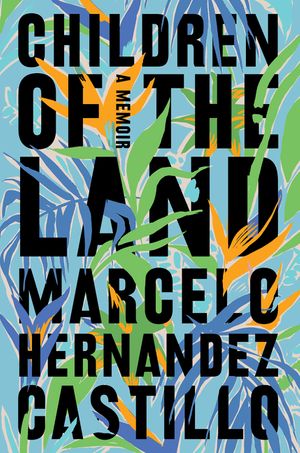
In his memoir Children of the Land, Marcelo Hernandez Castillo tells the story of growing up undocumented in California and having to navigate the convoluted and dehumanizing American immigration system.

Hernandez Castillo captures the emotional and psychological toll that being both invisible and surveilled from a young age has on someone as they grow older. Even after he’s achieved success as an educator and poet, Hernandez Castillo still feels the weight of anxiety and a disconnect from a sense of home. This memoir is also an act of bearing witness to his father’s story after deportation, his mother’s struggles with the immigration system, and their relationships to one another. He tells ancestral stories about his family’s many migrations—both voluntary and forced.

I spoke to Marcelo Hernandez Castillo about being vulnerable on the page in the act of creating this memoir, navigating familial stories even in the things left unsaid, and rethinking how we measure what we produce as poets. 


Leticia Urieta: Why did now feel like the right time to write this book? 

Marcelo Hernandez Castillo: I didn’t set out to write a book about this, mostly because I wasn’t ready at the time, having recently finished my first collection of poems, Cenzontle. I think it was an exercise in keeping myself busy, to start talking about my family in a more personal way because I had been private for so long. I even talked about it in the book, I think it still remains true how much I wanted to just confess or talk about it. I was at that tipping point where I was a balloon full of water and literally anything I got close to could have been a needle that just spilled it over.

I didn’t know this was happening after I finished Cenzontle, but I went into a very major depressive spell. I didn’t know at the time because I hadn’t been diagnosed, but I had my first severe symptoms of bipolar disorder. I had been in and out of therapy and psychiatrists and all that, but it was always just for depression or just for anxiety. I went and checked myself into a behavioral health clinic. And that’s when I started looking back at the book as a practice of what was happening with me personally. I kept a journal here, the big art book kind with thick pages and I put down my thoughts.

I don’t know if you have read Leslie Marmon Silko’s The Turquoise Ledge; it’s a nonfiction book about the time it took to write her novel, and it kind of felt like that for me. I don’t think I could have written that book now. I had to just check out, and I wasn’t thinking about the implications of the book or the thematic concerns, because it was just written in such a fury. I was angry that my mom had self deported. I was angry that I thought this was going to be the end of a long struggle and it wasn’t. And so writing this prose was the only thing that I was able to do in this manic state. I couldn’t write poetry at that time. Maybe poetry required more control on my part and required more of a balance of emotion. And I was very unbalanced at that time. So I don’t even think I could have written like a novel or fiction, it just had to be like a memoir.

LU: I really appreciated the raw honesty and vulnerability with which you discussed your struggles with anxiety and substance abuse as a coping mechanism and how that affected your relationship to yourself and your body.

I don’t think we get to see that kind of honesty often and when we do see those kinds of narratives, they’re often focused on people with privilege, and so you don’t always get to see that, especially in Latinx communities where talking about mental health in such a raw way is seen as weak or as airing your dirty laundry. Was it a struggle to be this vulnerable about your inner mental state on the page? 

MHC: Yes, I mean some people have the luxury to have these experiences, as if it’s a luxury right? The other side of the coin is the guilt that you feel having these feelings because you are suddenly placed in that position by the community who might say, “You have nothing better to do or you have nothing else to worry about, this is selfish.”

I think back to my mom’s generation, how she had all of these things going on, but it was physically impossible to process them because of the amount of work, because of the amount of worry of raising three boys by herself, because of just the amount of pressure that was placed on her. She didn’t have the luxury of processing or even reflecting on joy or despair, or anything like that. She only had a reaction to how tired her body was.

I felt a lot of guilt; I mentioned it in the book when I went away for grad school that I wasn’t happy, and I wasn’t doing okay. Writing in that vein, writing something that doesn’t portray me as any kind of hero, as any kind of sympathetic person, painting myself in a way that I didn’t necessarily want people to see me was the hardest part. The hardest part wasn’t saying how much I hurt, the hardest part was saying how little I cared about how other people hurt. This book revealed a lot of the callousness that I knew was there that I probably wouldn’t admit to, even to myself. That was part of this process of writing those moments. 

LU: How has quarantine during the pandemic affected your ability to create? 

MHC: Right before quarantine I was out a lot because of the demands that were being expected of me as the book was coming out: deadlines, emails, busy work and a lot of movement in general. And having immediately finished the book, I was in a place where I shut the world away, but those things that needed to be attended to were eating away at me. I’ve always had this fear of not being productive or have had guilt of not having done enough or being enough and then just the overcompensation of effort and achievement that I think I built over years of trying to convince my dad and myself that I was enough, even though I felt that I wasn’t. 

And when California enacted the first “shelter in place” order it felt like a relief because suddenly everybody was not doing something. It was only until after things started opening back up, that I suddenly felt that I started having to finally open back up. But just because restaurants and businesses are opening up doesn’t mean I have to.  I don’t move at the same pace as the economy. I think it’s important to be really conscious of the pace at which you move. 

LU: One part of the book that I felt was very beautiful and important is when you discuss how difficult it was for you to measure and affirm your work as a poet because you were not producing something tangible and measurable as work as when you worked in construction. I think that this is something that a lot of writers experience, but especially writers and artists of color or writers and poets coming from immigrant backgrounds for whom what you can produce is very hard to separate from your self-worth. What would you tell a poet or artist trying to develop their work who might be struggling with this feeling? 

Not everything has to be measured by its monetary worth or value. We are taught to say that nothing is free, but why can’t it be free?

MHC: The easy answer is that what we do is real work. That is something my mom told me when I was in graduate school, that what you do is a kind of work and that not everything has to be measured by its monetary worth or value. You can’t expect to use models of value ascribed to production, ascribed to capitalism, or ascribed to any kind of economy that expects something in return for something. We are taught to say that nothing is free, but why can’t it be free? Why can’t you write a poem without the expectation of publishing it or for it to lead to a longer project because we are trained to measure success and worth in terms of book-length units rather than thinking of poems as beginnings and endings.

I come back to what my mom said again and again, but the more difficult answer may be coming to terms with this idea that Mary Ruefle explores in her book, Madness, Rack and Honey, in which she quotes John Ashbery:

“I waste a lot of time. That’s part of the [creative process]…. The problem is, you can’t really use this wasted time. You have to have it wasted. Poetry disequips you for the requirements of life. You can’t use your time.”

She goes on to explain that a poem is meant to waste time, and that she doesn’t necessarily want you to gain anything from it. That has always struck me just how salient that is. That’s the place that I want to get to, but I know it is very difficult, maybe even practically impossible, but what I would say to other poets is to waste your time.

LU: The book is organized into “movements.” These are more lyric places in which you’re exploring familial history, legacy and also memories and points of childhood. Towards the end of the book, in “Further Notes and Observations,” you write, “I am always looking ten seconds into the future—looking for the nearest door to run through. Always needing to move.” This made me think about what movement means to different people; there are activist movements, artistic movements, there is movement as migration and mobility, and even birth. What does movement mean to you in this book?

MHC: I wanted a book that showed the instability that movement creates across generations and the emotional toll that that takes and how you process everything else in your life to adjust to inconsistency, to impermanence, so that you never really feel like the home you’re living in is yours. You never feel like the body you’re in is yours. Everything is on its way to something else. 

My dad’s idea has always been that movement can act like a reset switch; that if you change your landscape, if you change your surroundings, if you change everything else about you by moving that somehow you are a different person or somehow the outcomes of your actions would differ your situation in life. That is why people migrate, to change their lives and the lives of their children for the better. We tend to associate it with good, like upward mobility, but at the same time, for immigrant families who are at once stagnant because they can’t go back—people die here without being able to return to their country or see their mother before she dies, so for this reason movement is a double-edged sword.

That stagnation is reproduced in how we think and what we do, so those lyrical gestures in the book offered me a way to express something that contradicted chronology and allowed for gaps in time. They weren’t necessarily moments of self-reflection, but rather places where the narrative stalled. For many immigrant families or families that work in general, self-reflection, consciousness building, and processing are often happening during work and during movement. 

LU: Do you think writing your memoir in this way allowed room to explore all of the things you couldn’t, and may never be able to say, especially to your father? 

Sometimes calling ourselves ‘activists’ is what distances us from daily action and small acts of kindness that can be more effective.

MHC: I am conflict-averse by nature. That’s how I always grew up, where certain things are assumed or never asked, or in Spanish, “no se pregunta lo que ya se sabe.” You don’t ask what you already know. I didn’t want to contribute further to any other pain that others might be dealing with, and so I would avoid those kinds of confrontations. I have been meek, perhaps as a coping mechanism. So while writing in such a vulnerable way in this book and having these conversations with my family was the only way that I was ever going to say it.

As soon as my mother returned to the U.S., she enrolled in a literacy program at the library to learn English, which she had never had the time to do before. She is now reading my book for the first time and translating it word by word because she wants to read it to her sisters back in Mexico and the family is curious about what I have to say. Part of me is terrified by this. Even giving the book to my brother and sister was difficult because it isn’t as if they don’t want to read it, but they don’t necessarily want to face those uncomfortable observations that I have made.

In the book, I talk about my uncle who passed away and the mediation of grief across distance, and we are seeing that same thing now during the pandemic where nurses are holding up the phone to dying loved ones. For some of this, there has always been that distance. My mom says that she likes it and that she is proud of how I have recorded our family’s movement, but that reading some parts are hard. The damage has been done and we can’t go back to being the family that trusts each other enough to be as vulnerable with each other as I have been on the page. Speaking with other people in publishing about the book is like that too—-things don’t necessarily resonate because it’s like we are speaking two different languages. This is why I find it difficult to speak to these issues with my family because we can’t seem to find that common language. 

LU: I think that is what I am getting at. There is something cultural about families who are speaking two different emotional languages and you’re not able to find a common ground between why one person can be accountable to hurt and another cannot. 

MHC: I mention this in my syllabus that one of my goals for my students is that we can have a common vocabulary to talk about craft and literature so that we can each play a part in the conversation. That is a very difficult thing, especially in Mexican communities, to have that common language, though I have seen some families that do and I envy them for it. Maybe part of the difficulty is that there isn’t a common goal for the conversation, such as with my dad, who doesn’t see the benefit in talking about these things. That is a big hurdle to get over is that there has to be something to come out of it. 

LU: You co-founded the Undocupoets Campaign with Christopher Soto and Javier Zamora and you now organize the Undocupoets Fellowship program with Janine Joseph, and Esther Lin. Especially now, as the pandemic has affected undocumented people and artists, how has this work grown and what impact do you hope that the fellowship has for poets in the future?

MHC: I go back to the question that we talked about at the beginning of this conversation, “is what we are doing enough?” Sometimes calling ourselves “activists” is what distances us from daily action and small acts of kindness that can be more effective. I want to bridge that gap between what we consider activist work and what is necessary work so that people can see themselves being able to take action, and not just for the sake of posting it on social media and saying that you did it. We just selected the new fellows and they will be getting residency opportunities across the country. The poetry community is very insular, and everyone is doing something to be seen in a certain way. I want to make this kind of work ordinary and for people to have access to those experiences. 

For Sale: Spacious 2BDR, Great Views, Ornery Ghost

“Advice for the Haunted”
by Rachel Swearingen

Any other couple would have thrown away the former owner’s things and moved in, but two months after buying the apartment at auction, Nick and I were still using it as a playhouse. The former owner’s name had been Natalia. We had “inherited” all of her possessions, her pantry and freezer stuffed with food. Under the couch, she had wedged bottles of cheap red wine. Nick joked that we could survive at Natalia’s forever. “It’s like our own private fallout shelter,” he said, as we peeled back her bedspread and crawled under the sheets. We didn’t concern ourselves with the circumstances of her death. We were young and in love, and the misfortunes of others had nothing to do with us.

The flat had one bedroom, an office, and a narrow kitchen that opened into a long central room. Heavy drapes shut out the city view. The furniture was outdated; the Persian rugs, threadbare and stained. The ceilings and walls had recently been spackled, leaving bone-white spots. On the buffet, next to the dining table, were stacks of postcards of paintings, many of them torn or chewed at the corners. We found a half-used bottle of anti-anxiety pills in the medicine cabinet, a glass accordion in a folded tablecloth, a baggie of foreign coins in a boot at the back of a closet. In a rickety piano bench, we discovered faded Polaroids of two girls at what looked like a family picnic.

We were still paying rent for our own apartments and rarely talked of the future. At Natalia’s, we’d spend entire weekends pretending we were the last two people on Earth. We liked to camp it up. “Zombies?” I’d say.

“Meteorite.” He’d tear off his tie. “It’s at least three miles wide.” Sunlight would be breaking through the drapes. “Do you see how dark it’s getting?”

“What will we do?” I’d say, unbuttoning my blouse.

We ransacked her cupboards, pulled out soapstone animals from Africa. We placed the rhinoceros and giraffe in compromising positions. We played like children, pillaging her closets. Then we learned from the downstairs neighbor that Natalia had been a recluse who hadn’t left the apartment in years. Something had happened to the sister who brought her supplies, and Natalia had started venturing into the hallway. One day she left the building with a suitcase and somehow plunged to her death from the L platform just two blocks away.

We continued to rearrange her furniture and tchotchkes. We still pretended we were secret agents or a strange new semi-human species that had survived the apocalypse. Entire weekends passed before we left the apartment or ate a real dinner, but we studied her photographs more closely now. We invented roles for Natalia in our games: captor, hostage, aunt.

Once or twice a week, Nick and I met at Natalia’s during my lunch break. We were soaking in Natalia’s tub. Nick handed me a mug of wine. “Don’t look at me like that,” he said. “You know you’re not going back to work.”

We thought it was a shame Natalia had had to bathe alone in such a wondrous tub. The guy beneath us had said that the morning of her death, she said hello to him in the hallway. “But she was all strange and spacey. Really happy, you know. The kind of happy people get before they jump.”

“But the suitcase,” I said to Nick. “He said she was carrying a suitcase. Why would she, if she was planning on ending it all?”

He pulled a long leg out of the water and slung it over the edge of the tub. “She should have never left,” he said. “She had everything she needed right here.”

I stood and reached for a towel. I’d been hearing noises, and what I heard then was the sound of a wrench knocking against metal inside the bathroom walls. The door creaked open and cold air rushed in. I hopped out of the tub and shut it, but as soon as I turned around, it opened again.

Nick crossed his arms over his chest and in a rich falsetto said, “Natalia, stay out. We’re naked.”

I laughed out loud, but then came a sound like steel marbles rolling across the ceiling. I think even Nick had the feeling we weren’t alone. He handed me his mug. “Hold this,” he said, and when I reached, I slipped on the tile and struck my head.

Nick got out and examined my forehead. “It’s not that bad,” he said. “Barely a scratch, but you’re going to have a goose egg.”

“Natalia did it,” I said. I was only half-kidding.

We tightened our towels and made our way to the kitchen. I took a box of crackers and a jar of peanut butter from the cupboard. “I don’t know what it is about this place that makes me so hungry,” I said.

Nick dug into the peanut butter with a spoon. “It’s that we didn’t buy this food ourselves.”

“No, it’s like it’s not real. Like there’s no world out there.”

“Precisely,” he said. He pulled me close. “Let’s never leave.”

We joked about turning the apartment into a private country, a micronation like Christiania in Denmark. We’d call it the Republic of Natalia and design our own special stamp.


The next morning, I noticed an imprint in the bedding, as if someone had been sitting there watching us. Nick was in the kitchen paging through one of Natalia’s books, and he showed it to me. “Classical mathematics,” he said.

“No wonder she didn’t have any friends.”

“I thought you liked math.” He filled one of the miniature cups from her china set with coffee and put it down in front of the extra stool at the breakfast bar. “Good morning, Nat,” he said. “How’d you sleep?”

“She’s grumpy in the morning,” he said to me. “Doesn’t like to talk.” He winked.

“I think it’s time to tell Oscar and Joelle,” I said. “About the apartment, I mean.”

Oscar and Joelle were our closest friends. They were the reason we were together. And Oscar believed in ghosts. He was a sort of amateur ghost hunter. I wanted to get his read on the place. “Let’s have them over, for dinner or something.”

“You know how Natalia feels about company,” Nick said. “Besides, they don’t have visas yet.”

“I’m going to be late,” I said.

Nick put the book aside and got up to make another pot of coffee. “We don’t start before ten in the Republic of Natalia.”

“Too bad I don’t work for the Republic. If I keep this up, we won’t be able to afford to live in the Republic anymore.” I had intended the words more lightly.

“I never asked you to put up the down payment,” he said. “It didn’t need to be that large.”

So far we had managed to mostly avoid talking about the purchase or my paying more toward the mortgage. I was in the middle of several large acquisitions at work, and any conversation about interest rates and balloon payments was likely to turn into an argument about corporate greed in the face of famine and war.

I left Nick in the kitchen and went to Natalia’s closet to look for something to wear. We almost never stayed overnight during the week. I was traveling more for due diligence, always to other cities in the Midwest or the South. I was constantly shuttling between airports and hotels, between my own apartment, Natalia’s, and my office downtown. I felt disoriented, and my excuses for leaving work were growing absurd.

Most of Natalia’s clothes were outdated. I recognized a purple dress from a photograph of a much younger Natalia in front of a fountain with a boyfriend somewhere in Europe. We had propped the photo against a lamp on her dresser, and I looked at it again as I changed into the dress. The boyfriend had a goofy grin and thick hair that stuck up in a cowlick, and Natalia threw her head back to laugh. She must have been healthy then.

I searched her underwear drawer with dread, wishing I had brought an overnight bag. All of Natalia’s undergarments were plain white cotton, many with frayed elastic. I reminded myself that Natalia was dead and wouldn’t care if I wore something of hers, but I rejoiced when I found a lacy pair of silk panties that still had a price tag. I wondered when she had bought them, and why just one pair. I put them on and for a moment I was Natalia, untouched for too long.

At Fullerton, I waited on the platform for the Red Line. I checked my email on my phone, only partially aware of a pack of unruly school kids horsing around. One of them slammed into me. I stumbled toward the tracks, and an enormous woman grabbed me and pulled me back. I thought little of this until I was standing in the compartment and the woman pointed at my phone and said, “That thing’s gonna be the death of you.”

I squirmed against the sensation of the silk against my skin. “I’m wearing the underwear of a dead lady,” I wanted to confess.

I arrived at work late for yet another meeting and made up an excuse about a mechanical problem delaying my train. It was a harmless lie, but I had told so many by then I had the uneasy feeling I would be fired.

After work that evening I went out to meet my running club. They were a rugged group that ran even when temperatures dipped below zero. I wanted to be like them. At the waterfront, I tried to keep up. Lake Michigan frothed, and gulls struggled against the wind. The man in front of me lagged too. He kept wiping his arm across his brow. He tripped and regained his balance, and then his legs buckled under him.

At first I thought he had simply slipped, but he wasn’t moving and several other runners gathered around him. “I don’t think he’s breathing,” a woman said. I stood looking on with the crowd, and then sirens sounded and before long a paramedic was pushing us back, saying, “Give us some room, folks.” The others turned back, but I jogged another mile or two. I didn’t know the man, and that’s what I told myself all along the lake. He’s just a stranger. You don’t know him. This sort of thing happens every day.

I didn’t want to be alone, so I called Nick and went to Natalia’s. I pulled off my wet clothes and filled the bath. The refraction of my hands underwater made them appear broken off and reattached at the wrong angle. I ran my fingers over the welt on my forehead. I had fallen or almost fallen twice in less than 24 hours, and then, directly in front of me, a man had collapsed and probably died.

I got into bed, but not before putting the soapstone animals away in Natalia’s dresser, not before turning on the bedside light and making sure my phone was within reach. I couldn’t stop seeing the man at the lake, his legs giving way. I turned my face to the pillow and tried not to think of Natalia drooling into the same feathers.

Then Nick was standing in the bedroom doorway. He held his arms out and made his eyes dull, and I said, “Yes, please. Bring on the zombies.”

He vaulted into bed and got under the covers, and I jolted at his cold hands. “You’re so warm,” he said. “God, you feel good,” and then he was kissing me, we were turning together, the covers off now, tangled around our legs. I was kneeling in the middle of the bed, the two of us reflected in the mirror above the dresser. The drawer seemed to open a little more. Nick’s arm tightened around my waist. He kissed the back of my neck.

The apartment walls were mere skin. The patched spot on the ceiling seemed to pulse. I closed my eyes to make it stop. Nick’s breath was in my ear, and when I opened my eyes Natalia was there, hovering at the end of the bed. She was a blur, then her ashen face appeared, her mouth opened as if to scream, only it was me screaming, throwing Nick off me, and wrenching the covers to my chin.

“Who’s there?” Nick said. He stared in the direction of the dresser for several minutes and then crept back into bed. We huddled together and slept.

We said nothing about what had happened until the next morning when Nick teased me about my pushing him off the bed.

“But you saw her. I know you did.”

“I didn’t see anything. I thought someone broke in. You’re the one who screamed.”

“Then why didn’t you check the apartment? Why didn’t you check the door?”

He didn’t answer, just waved me away and went into the bedroom with his laptop to work.

He had canceled our meeting with a general contractor about the apartment remodel, claiming he had a deadline. He worked for an international relief organization and spent much of his time drafting reports and making overseas calls. Earlier in the year, two of his colleagues had been killed in a bombing, another taken captive. He had stopped reading the news, and when he mentioned work at all now it was to complain it was meaningless. I couldn’t be certain, but I thought there were new cans of soup in the cupboard, that he was secretly adding to Natalia’s stash and replenishing the store of wine under the couch. I found him staring into the mirror in the hallway talking to himself and thought I caught Natalia’s name. I worried she had worked her way into him, that if we didn’t do something soon, he’d be afraid to leave the apartment too.

What we needed was the company of friends, so I called Oscar and Joelle, and we met them at a nearby restaurant. It was almost like old times, the two of them telling such good stories. They were animated, flushed with life. They had a seven-year-old named Lucy and lived west of the city, and we hadn’t seen them in months.

“We bought a condo,” I blurted. “In Lincoln Park. Can you believe it?”

Nick pinched me under the table.

“It’s about time,” Joelle said. I noticed she wasn’t drinking and suspected she was pregnant again. They had been trying for several years to have a second child, going through fertility treatments, suffering one loss after another.

“It’s not official yet,” Nick said, glancing at me. “Even if we do get it, it could be months before the whole thing’s finalized.”

“You couldn’t pay me to live in Lincoln Park,” Oscar said.

“It’s small. Two bedrooms, one is barely big enough for an office,” I said, trying to downplay how expensive it was.

“It’s not that small,” Nick said. “Whole families live with less.”

“The woman who lived there killed herself,” I said, and Nick buried his face in his hands. “It went into probate. All her stuff is still inside.”

“How’d she do it?” Oscar asked.

Nick looked up at Oscar. “Don’t even go there. It didn’t happen in the apartment. And she didn’t kill herself. She fell in front of a train. She tripped or something.”

Oscar tore off another piece of bread and seemed to ponder it before wedging it into his mouth. “If you buy it, I’m bringing my equipment.”

“I’m telling you, it’s not haunted.”

“Does this mean there might be a wedding?” Joelle asked.

“Not if Natalia has her way,” I said.

“Natalia?” Oscar said. “You mean you knew this person?”

“No,” Nick said. “Like I said, we’re just thinking about buying it.”

Nick barely spoke the rest of the evening and was silent as we walked back to the apartment. When we got inside he said, “Are you happy now?” He gestured all around. “Now Natalia’s is going to be just like everywhere else.”

“It is like everywhere else, Nick. It’s just an apartment. You didn’t have to lie to them.”

“I can’t believe I didn’t see it.”

“See what?” I asked. “Do you know how much money we’ve been wasting?”

“Yes,” he said. “It’s always about money, isn’t it?”


The next morning I flew to Des Moines for work. When I tried calling Nick, he wouldn’t answer. I returned to the apartment several days later, and the place was littered with plates of half-eaten pasta, crumpled paperwork, Natalia’s CDs and albums. The carved animals marched in a parade down the hallway. The air smelled musty. All the drapes were pulled shut.

I opened the bedroom door and found Nick in bed, buried under a pile of blankets, a pillow over his head to block the light, the curtains blowing in cold air from the open window. I could just make out his whiskery chin. The armchair from the corner of the room was next to the bed, as if someone had been watching over him. The hair on my arms stood on end.

I pulled the pillow away and Nick blinked at me. “Hey,” he said.

“Hey,” I said, crawling under the covers. “Are you OK?”

“I can’t sleep,” he said. “The lights keep going on and off.”

“They’re probably doing electrical work somewhere in the building.”

“Maybe,” he said. “But what if Oscar was right? What if she’s here?”


We called Oscar and by evening the apartment was rigged with cords and computers, with sensors and blinking red lights.

Oscar had taken photos of Nick that showed a pinkish-red orb above his head. “See that?” he said. “Ectoplasm. You’re definitely haunted, Nicky. But not as much as this place.”

He found nothing in his photos of me. “Sorry, friend,” he said, patting my arm. “Don’t take it personally. The women have always had a thing for Nick.”

Nick and I slept at my apartment that night, and when we returned the next morning Oscar led us from room to room, indicating places of high activity. He was giddy with excitement. He showed us charts of energy fluctuations on his computer. “This is from the bedroom,” he said, pointing to a jagged line of temperature shifts he found disturbingly erratic.

I wondered about cell towers, but said nothing. Then Oscar played a series of recordings of thumping and rattling and what sounded like someone opening and closing cupboards.

“We’ve heard that before,” Nick said. “It’s an old building.”

“Then what do you make of this?” Oscar played a recording of a hollow, raspy voice saying what sounded like “Are you there?” and a second one that said, “Hurry. Hurry.” Or maybe “Hurray. Hurray.”

“Tell me you engineered that,” Nick said.

I expected Oscar to laugh, but instead he looked at us gravely and said, “You started this, dudes. The lady’s confused. You’ve got to get rid of her stuff. Every last thing. Throw her a going-away party or something. You’ve got to tell her it’s time to leave.”


It snowed the Friday of Natalia’s party, the first major storm of the season. We had cleaned the apartment and made a spread of her food and drink. Nick was more energized than I had seen him in months. He talked about refinishing the floors. He talked about a lead on a new job with a better NGO. We poured bottles of Natalia’s booze into an enormous punch bowl we found in her storage space in the basement, still in its original box. “If we’re going to do this, let’s really do it,” Nick said. He filled each room with light from Natalia’s emergency candles, and he made an altar of photos and figurines on the breakfast bar. He even went out and bought flowers for her, white chrysanthemums and roses.

“That’s what I love about this guy,” Oscar said. “He wants to make even the ghosts feel special.”

He and Joelle had left Lucy with Oscar’s mother and were staying overnight. Friends we hadn’t seen in ages arrived, and we stood around drinking, catching up, looking at Natalia’s photos. Oscar told ghost stories as he led them on a tour of the apartment.

In the kitchen, Joelle caught me staring at her drink.

“Two solid embryos. I really thought it was going to happen this cycle,” she said. “Oscar wants to see a different doctor, but I think I’m done.”

I tried to hug her, but she pulled away.

“This party must seem a little ridiculous right now,” I said.

“Yes,” she said. “But we could use a little ridiculousness.”

Most of our guests were like Oscar and Joelle, exhausted parents unused to staying out late. We stood around sipping from plastic cups. Then more people arrived, and the mood grew lively. We celebrated until midnight, when Oscar positioned himself behind the makeshift altar. He waved Natalia’s rhinoceros in the air and whistled loudly. Then Nick yelled, “Listen up, everyone. Let’s at least give this a shot.” Someone handed Nick a shot of whiskey, and he knocked it back and said, “Seriously, guys. Gather round.”

Oscar asked Nick and me to remove the hallway mirror, and then he encouraged everyone to hold something of Natalia’s. Someone placed a hand on the coffee table. Someone else, on the small oil painting Natalia must have gotten from a street vendor in Paris before she became ill. Joelle wrapped her hand around a floor lamp. A friend of Oscar’s grabbed the photo of Natalia before the fountain.

“I ask you,” Oscar said. His voice caught as he glanced at Joelle. “To silently help our friend Natalia let go of this world.”

One of Nick and Oscar’s old college pals said, “Oscar, you should have been a priest,” and there was laughter, and then the room quieted again.

“It’s time, Natalia. We’re going to close the gateway now.”

We held the mirror up facing the room. Oscar moved a candle closer and someone said, “Look,” and everyone gasped, and I knew they had glimpsed her reflection.

Oscar held up his hand. “Be calm, everyone. Don’t frighten her,” and just then the floor lamp turned on and Joelle screamed and jumped back, and one of Oscar’s friends yelled, “This is so staged.”

“Natalia,” Oscar said. “Stay with us. We’re here to help you.” He nodded at Nick and me to follow him to the sink. We carried the mirror like a coffin and rested it over the basin. Everyone crowded into the kitchen, and no one said a word. Nick filled his cupped hands with water and let it run over the surface.

“Tell her you’re letting her go,” Oscar said. “Tell her to cross over.”

Nick looked up at everyone. “Wow,” he said. “I can’t believe I’m doing this.” His voice came out soft at first and then louder as he said, “Natalia, can you hear me? There are a lot of people here for you.”

Oscar nodded at him to continue. “Come on, Nicky. Tell her.”

Nick said a few more words. He seemed flustered, and then resigned as he said, “I want you to look for the light and go into it. Don’t be frightened.” He stepped aside, and Oscar wrapped the mirror in a towel and set it next to the door to be gotten rid of with everything else.

“That’s it,” Oscar said. “Portal’s closed. She’s gone. I think.”

Then he burned sage, and people coughed, and some went out to the balcony, and others to the bedroom to find their coats and leave.

Nick and I pressed pots and pans into people’s arms. “Everything that’s left is getting donated or thrown out. You want something, take it,” we said.

We propped open the front door, said goodnight to those who were leaving, coerced them into taking extra dishes and trinkets. Furniture was hoisted and bumped down the stairs. The rugs, the postcards, the menagerie of animals, it was as if Natalia herself was being scattered throughout the city.

The downstairs neighbor came up to ask us to turn down the music, and we tried to give him a stack of old CDs. “No way,” Oscar said, snatching them back. “Too close to home.” The last of our guests left. A few lingered to talk in the stairwell. Then the apartment grew still. We had made up the bed for Oscar and Joelle, and Joelle stumbled to the bedroom to sleep. Oscar sat down on the floor, his equipment all around him. He had his digital recorder running again, attempting to pick up any lingering voices from the beyond. Nick and I bundled up and went to the roof to look out at the city. “It will be better now,” I said, and he said, “It’s weird, isn’t it? To think of this as ours?”

When I woke that morning on the pullout couch, Oscar, Joelle, and Nick were already awake and in the kitchen eating doughnuts from the bakery down the street. Joelle handed me a cup of coffee in a paper cup. Oscar stood at the counter, playing part of a recording from the night before. “That,” he said. “You didn’t hear that? Listen again.”

“I hear static, Oscar,” Nick said, biting into a doughnut. “Just static.”

Outside, rain turned to sideways sleet. We had scheduled a Salvation Army pickup for the next morning and had much to do. We threw the trash from the party down the garbage shoot. We set to work on the kitchen, emptying and cleaning the shelves and pantry, boxing the extra food. In the bedroom, we dismantled the bed and finished bagging the clothes.

“The mirror,” I said, pointing to the one over the dresser. “We forgot this one.”

Oscar looked alarmed. “Not to worry,” he said. “We’ll put it outside.”

We lifted the dresser out the door and down the stairs to the curb. The sky had cleared. People hurried past on their way to the L and were momentarily reflected in the mirror. We said goodbye to Oscar and Joelle as we made our way back. I was sorry to see them go, even sorrier once we were back in the near-empty apartment. Without the rugs in the living room and hallway, every footstep on the wood floor echoed. The windows rattled. If anyone had looked up into our apartment just then, they would have seen us standing in a vacant room, lovers perhaps, on the verge of moving in or out. We were suddenly tired, and we went to the bedroom. We had yet to remove the curtains there, and Nick closed them. We spread blankets on the floor, kicked off our shoes and lay down. I tucked my head into Nick’s shoulder, and we listened to the wind, to a helicopter whirring above the building on its way to the hospital.

“It’s almost like she was never here,” Nick said.

“Yes,” I said, but it wasn’t true.

We talked about the bright new things we would buy, the renovations we’d make. “I can’t wait to tear out those soffits,” I said. Nick shut his eyes, but I could tell he wasn’t sleeping. I stared at the spackled spot on the ceiling, at the dull walls, and tried to imagine the room in a shade of yellow or blue. Tomorrow we’d go grocery shopping. We would only stock as much as we needed to get through a week or two, never more. We wouldn’t hoard like Natalia had. We would throw parties and go out with our friends and never prepare for unknowable disasters. It would become an incantation, a theme song for the coming years. To never be like Natalia. To take the train downtown each morning. To never be afraid.

If You’d Eat a Cow, Would You Eat a Person?

Agustina Bazterrica is an Argentinian writer based in Argentina. Her new novel, Tender Is the Flesh, translated by Sarah Moses, follows Marcos, who works in a slaughterhouse to pay for his father’s medical bills. Only it’s not a normal slaughterhouse. In this dystopian future, meat from other animals is no longer edible because of a virus that, like the novel coronavirus, is of zoonotic origin. Rather than stop eating meat, humans have turned to cannibalism. When given a female to “rear” in his back garden, Marcos is forced to face up to the reality of this new, terrifying world—and his own complacency within it. I spoke with Bazterrica about her novel, and whether we still have time to change our ways. 


Elizabeth Sulis Kim: What compelled you to write a book about cannibalism?

Agustina Bazterrica: The novel is dedicated to my brother, who is a chef here in Argentina. He has an organic restaurant. He studied how food can make you ill or can cure you. I started making small changes to my diet, and all the books and articles I read told me that eating meat is not healthy. I actually stopped eating meat after watching the documentary Earthlings. It shows you how we treat animals that are abandoned, like dogs and cats, and how other animals are killed for food. It’s terrible. I couldn’t stop crying. 

Years later, I was walking through a butcher’s shop in Buenos Aires when I had a revelation. I saw corpses. I thought, here in Argentina we eat cows and pigs and chickens but in India, they don’t eat the cow because it’s sacred. So I thought: ‘the meat that we eat is cultural—we could eat each other.’

ESK: I grew up vegetarian and for me the novel felt very realistic. So the idea came from your personal experience—what other research did you do?

AB: There was a novel called De ganados y de hombres by a Brazilian author, Ana Paula Maia. It takes place in a slaughterhouse, so that was really useful for me to understand the process of how we slaughter animals. Afterwards, I read  Cuaderno de campo, by Carlos Ríos. And The Vegetarian by Han Kang. I also read a doctoral thesis called Pensar Caníbal (literally: Think Cannibal) by a Colombian author, Adolfo Chaparro Amaya. It helped me think about the theme of cannibalism. And Comí (I ate) by Argentine writer Martín Caparrós. He had an illness which made him unable to eat and he started reflecting on it—it was really interesting. A book that was really a revelation was Extraños Animales (Strange Animals). The author, Mónica Cragnolini, is an Argentine philosopher. She gives classes at my university where I study and she talks about animal rights. This book was really important for me because I thought a lot about how we humanize animals and how we animalize humans. Mónica read my novel. She wrote to me and told me that I captured the essence of her book in my novel—that was great. 

I didn’t read or re-read dystopian fiction because at the time of writing I didn’t think I was writing a dystopian novel. Of course, I knew that perhaps for a cannibal, it would be a utopia, but when I write I am not thinking: “Okay, I am going to write a dystopia.” It’s more of a visceral thing. I also watched a lot of documentaries and films and read a lot of manuals that explain how a slaughterhouse works. 

ESK: You show how violence towards animals is often entangled with other types of prejudice and violence in a capitalist system. Why do you think people ignore the issue of speciesism?

AB: Hannah Arendt says in her book Eichmann in Jerusalem: A Report on the Banality of Evil that the extermination of Jews in Germany and other European countries was not down to the pure evil of Nazi rulers, but to society’s indifference. This massacre, executed by bureaucrats, would not have been possible without the indifference of “good” citizens. Thus, we devour each other in a symbolic way because we are generally blind to our kinship with others. When faced with their suffering, we look the other way. And we do the same with other sentient beings. And I think that is because we are part of this matrix that we call capitalism that is teaching us to be violent. And we are violent with all the things on this planet. We don’t have another planet, we only have planet Earth. This is why the documentary Earthlings was so important for me—it’s a reminder that we are all earthlings. But we humans think we are superior [to] other beings, and we kill them, destroy, contaminate everything. And we do that with other humans. 

We devour each other in a symbolic way because we are generally blind to our kinship with others.

When I stopped eating meat, I couldn’t believe that I never thought that a piece of meat actually came from a part of a cow that was living a few weeks ago. Here in Argentina, barbecues are sacred. So that for me was terrible to realize. But the system teaches not to think where that piece of meat came from. We use the same logic with other people. Because they are not our brothers in life. So we can discriminate, we can kill because they are “others,” a threat. 

ESK: Returning to the topic of barbecue culture, I find it interesting how in your book you have the hunters and the people who are eating barbecued meat, who are quite open to what they’re eating. It’s as if they somehow feel in control with the gun or a fork. Do you think there is a certain vulnerability and desire for manliness around people who hunt for sport or people who are vocal about consuming barbecued meat? 

AB: Yes, maybe they are vulnerable, but aren’t we all? If you need to deal with your vulnerability killing innocent beings, well, I think it is really sad. In Argentina, it’s really serious how people react when you don’t eat meat. They don’t respect your decision. To begin with, they joke about it, and if you read the subtext, you understand that behind that joke they’re questioning your decision in a violent way. At some point my cousin, who I love, started sending me photographs of parts of animals being barbecued. I don’t get offended by it, but it’s aggressive. With meat, I think that people react like this because in some part of their brain they know that they’re eating another being and they hate you because in a way you are showing them that. 

ESK: With Argentina being a very carnivorous country, how are people responding to your novel? 

AB: Well, they love it because it’s in the fifth edition. My editor told me: “Your novel is a book that burns—you read it and you need to talk about the book with other people. You need to share it.” So, that is what is happening here. People read the book and a lot of them told me that they are recommending the book to everyone because they have this impact, they question things so they need to talk about the book with others. 

ESK: Have readers told you that your book encouraged them to become vegetarian or vegan? 

If I cared about the readers, I would never have written that ending. I don’t want to hurt people.

AB: Yes, definitely. On social media I receive a lot of messages from readers and I get tagged in posts. People have asked me if while writing I knew that it would have this impact. And I don’t really know because when I am writing I am not thinking about the future. I don’t care about the readers, either. Because if I do care about the readers, I would never have written that ending. I don’t want to hurt people. I think about what is best for the story I want to tell and what impacts me. The process of writing for me is really visceral.

A funny thing happened with one reader. A lady reported me to the Argentine Society of Writers because she was really furious with the ending, which she thought was an example of gender violence. Nothing happened, because what can the Argentine Society of Writers do?

ESK: So it worked in a way, it had a huge impact on her?

AB: Yeah—she was furious! And that was great for me. Reading the book made her pick up her keys, put them in her bag, take the bus and go to this place.

But I am really grateful for everything that is happening with this book. I thought that perhaps this book would be so terrible that no one would want to read it. You don’t know what is going to happen with a book like this. 

The best thing for me is that it is being read in schools. I am really happy about that. I’ve visited many schools where I’ve discussed it. Some have been in the middle of nowhere, eight hours from where I live. I think it’s really important for teenagers to start questioning the Matrix. And the great thing is that teachers are really happy to work with the book because teens finish reading it (this is something that teachers struggle with) and they like it, perhaps because it is a little bit gory. 

ESK: What role do you think fiction has in freeing us from state-normalized oppression? 

AB: I love literature that makes an impact and generates a response, but does not tell me what to do. In my own writing I want to generate questions. And a lot of people told me that after reading my book they stopped eating meat. I don’t know how much that decision endured. I don’t care if they stop eating meat for one day, one week or several years, it’s not the important thing. The important thing is that they start looking at reality in a different way. 

Language is one of the great political accomplices of capitalism. Language is never innocent.

That is why in the great dystopian novels like 1984 or Fahrenheit 451, or The Handmaid’s Tale, the [oppressors] destroy and prohibit books, and they change the language. Here in Argentina, we had a dictatorship and Spain with Franco as well. They censored books, they burned them because when you have people that accept reality as it is, you can control those people, you can oppress them. If you have people that start questioning things, that start looking at the world in a different way, you cannot control them so easily. Art, the good type, makes us think.

ESK: A lot of the cruelty and exploitation in your book happens because the perpetrators of it are in denial or detached. Through fiction, language and storytelling, how can we encourage people to connect with the thing that they are avoiding? 

AB: I think that language is one of the great political accomplices of this system that we call capitalism. Language is never innocent. In Spanish we have 101 synonyms to talk about or to say the word “whore” but there is not one word that is talking about the same thing for men—not even one. We don’t have the word “man-whore” for example—it doesn’t exist. And that reveals a lot about the oppressive system that is patriarchy where men that have sex with a lot of women are successful, but women who have sex with a lot of men are deemed “sluts” or “whores,” and they’re judged. 

Language gives us an identity; it speaks of who we are. That is why in Tender Is the Flesh I tried to work carefully with language. Creating a new matrix requires new words, new ways of naming new things, like when they call a human that is bred for consumption a “product.” But I also worked with silence, with the unwritten word, which is another form of cannibalism because by not saying certain things we become complicit; we help build and perpetuate that reality. When we don’t talk about femicide, for example, we give room to impunity, to thinking that women’s lives are worthless. By naming acts of violence and understanding them, we give them body and can work towards preventing them. By naming, we cannot continue to avoid things. 

By naming acts of violence and understanding them, we can work towards preventing them.

ESK: So it’s in finding words for silences. 

AB: Yes. Exactly. 

ESK: I think it’s interesting that the focus for most readers has been on the gruesomeness of this book. For me, there was that and it mirrored how I saw the world growing up. But what  troubled me the most, after reading, was that I was left with sadness, an existential feeling that nothing in the world is important anymore and nothing we deem worth saving. Can we really save the world if we don’t think that anything is sacred? 

AB: Wow. Yes, I definitely think that that is one important aspect of the book. The book has this whole existential void. The abandoned zoo is the place where Marcos was really happy with his father, and there was a little bit of connection with nature. And maybe, yes, my book doesn’t have a light. Maybe the reaction when you stop reading it is “oh my god, we live in this cruel system, we are part of it.” But perhaps from reading it, the reader can think: this is where we might be headed and change direction. We still have time to steer towards a kinder place.