If You’d Eat a Cow, Would You Eat a Person?

Agustina Bazterrica is an Argentinian writer based in Argentina. Her new novel, Tender Is the Flesh, translated by Sarah Moses, follows Marcos, who works in a slaughterhouse to pay for his father’s medical bills. Only it’s not a normal slaughterhouse. In this dystopian future, meat from other animals is no longer edible because of a virus that, like the novel coronavirus, is of zoonotic origin. Rather than stop eating meat, humans have turned to cannibalism. When given a female to “rear” in his back garden, Marcos is forced to face up to the reality of this new, terrifying world—and his own complacency within it. I spoke with Bazterrica about her novel, and whether we still have time to change our ways. 


Elizabeth Sulis Kim: What compelled you to write a book about cannibalism?

Agustina Bazterrica: The novel is dedicated to my brother, who is a chef here in Argentina. He has an organic restaurant. He studied how food can make you ill or can cure you. I started making small changes to my diet, and all the books and articles I read told me that eating meat is not healthy. I actually stopped eating meat after watching the documentary Earthlings. It shows you how we treat animals that are abandoned, like dogs and cats, and how other animals are killed for food. It’s terrible. I couldn’t stop crying. 
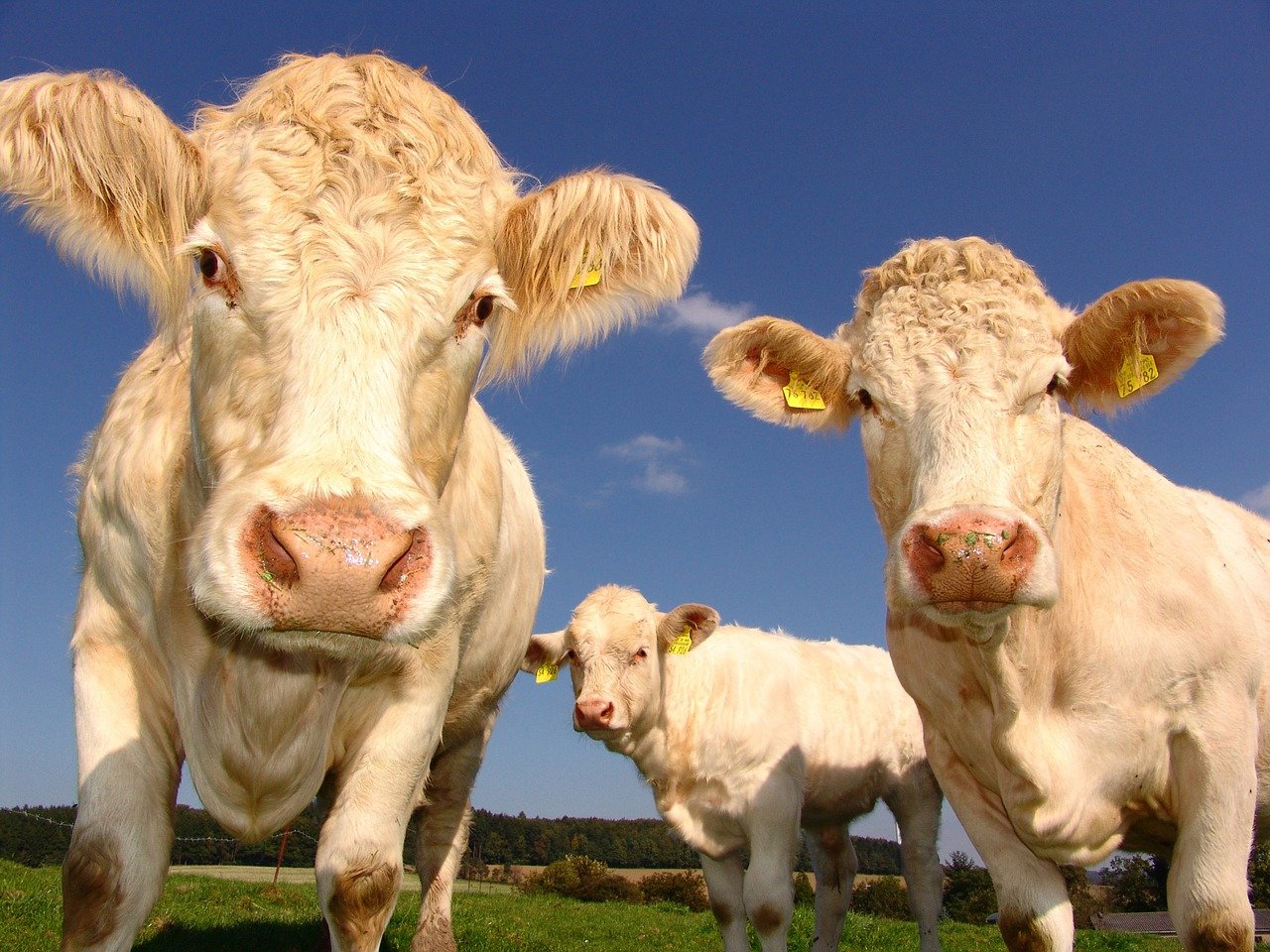
Years later, I was walking through a butcher’s shop in Buenos Aires when I had a revelation. I saw corpses. I thought, here in Argentina we eat cows and pigs and chickens but in India, they don’t eat the cow because it’s sacred. So I thought: ‘the meat that we eat is cultural—we could eat each other.’

ESK: I grew up vegetarian and for me the novel felt very realistic. So the idea came from your personal experience—what other research did you do?

AB: There was a novel called De ganados y de hombres by a Brazilian author, Ana Paula Maia. It takes place in a slaughterhouse, so that was really useful for me to understand the process of how we slaughter animals. Afterwards, I read  Cuaderno de campo, by Carlos Ríos. And The Vegetarian by Han Kang. I also read a doctoral thesis called Pensar Caníbal (literally: Think Cannibal) by a Colombian author, Adolfo Chaparro Amaya. It helped me think about the theme of cannibalism. And Comí (I ate) by Argentine writer Martín Caparrós. He had an illness which made him unable to eat and he started reflecting on it—it was really interesting. A book that was really a revelation was Extraños Animales (Strange Animals). The author, Mónica Cragnolini, is an Argentine philosopher. She gives classes at my university where I study and she talks about animal rights. This book was really important for me because I thought a lot about how we humanize animals and how we animalize humans. Mónica read my novel. She wrote to me and told me that I captured the essence of her book in my novel—that was great. 

I didn’t read or re-read dystopian fiction because at the time of writing I didn’t think I was writing a dystopian novel. Of course, I knew that perhaps for a cannibal, it would be a utopia, but when I write I am not thinking: “Okay, I am going to write a dystopia.” It’s more of a visceral thing. I also watched a lot of documentaries and films and read a lot of manuals that explain how a slaughterhouse works. 

ESK: You show how violence towards animals is often entangled with other types of prejudice and violence in a capitalist system. Why do you think people ignore the issue of speciesism?

AB: Hannah Arendt says in her book Eichmann in Jerusalem: A Report on the Banality of Evil that the extermination of Jews in Germany and other European countries was not down to the pure evil of Nazi rulers, but to society’s indifference. This massacre, executed by bureaucrats, would not have been possible without the indifference of “good” citizens. Thus, we devour each other in a symbolic way because we are generally blind to our kinship with others. When faced with their suffering, we look the other way. And we do the same with other sentient beings. And I think that is because we are part of this matrix that we call capitalism that is teaching us to be violent. And we are violent with all the things on this planet. We don’t have another planet, we only have planet Earth. This is why the documentary Earthlings was so important for me—it’s a reminder that we are all earthlings. But we humans think we are superior [to] other beings, and we kill them, destroy, contaminate everything. And we do that with other humans. 

We devour each other in a symbolic way because we are generally blind to our kinship with others.

When I stopped eating meat, I couldn’t believe that I never thought that a piece of meat actually came from a part of a cow that was living a few weeks ago. Here in Argentina, barbecues are sacred. So that for me was terrible to realize. But the system teaches not to think where that piece of meat came from. We use the same logic with other people. Because they are not our brothers in life. So we can discriminate, we can kill because they are “others,” a threat. 

ESK: Returning to the topic of barbecue culture, I find it interesting how in your book you have the hunters and the people who are eating barbecued meat, who are quite open to what they’re eating. It’s as if they somehow feel in control with the gun or a fork. Do you think there is a certain vulnerability and desire for manliness around people who hunt for sport or people who are vocal about consuming barbecued meat? 

AB: Yes, maybe they are vulnerable, but aren’t we all? If you need to deal with your vulnerability killing innocent beings, well, I think it is really sad. In Argentina, it’s really serious how people react when you don’t eat meat. They don’t respect your decision. To begin with, they joke about it, and if you read the subtext, you understand that behind that joke they’re questioning your decision in a violent way. At some point my cousin, who I love, started sending me photographs of parts of animals being barbecued. I don’t get offended by it, but it’s aggressive. With meat, I think that people react like this because in some part of their brain they know that they’re eating another being and they hate you because in a way you are showing them that. 

ESK: With Argentina being a very carnivorous country, how are people responding to your novel? 

AB: Well, they love it because it’s in the fifth edition. My editor told me: “Your novel is a book that burns—you read it and you need to talk about the book with other people. You need to share it.” So, that is what is happening here. People read the book and a lot of them told me that they are recommending the book to everyone because they have this impact, they question things so they need to talk about the book with others. 

ESK: Have readers told you that your book encouraged them to become vegetarian or vegan? 

If I cared about the readers, I would never have written that ending. I don’t want to hurt people.

AB: Yes, definitely. On social media I receive a lot of messages from readers and I get tagged in posts. People have asked me if while writing I knew that it would have this impact. And I don’t really know because when I am writing I am not thinking about the future. I don’t care about the readers, either. Because if I do care about the readers, I would never have written that ending. I don’t want to hurt people. I think about what is best for the story I want to tell and what impacts me. The process of writing for me is really visceral.

A funny thing happened with one reader. A lady reported me to the Argentine Society of Writers because she was really furious with the ending, which she thought was an example of gender violence. Nothing happened, because what can the Argentine Society of Writers do?

ESK: So it worked in a way, it had a huge impact on her?

AB: Yeah—she was furious! And that was great for me. Reading the book made her pick up her keys, put them in her bag, take the bus and go to this place.

But I am really grateful for everything that is happening with this book. I thought that perhaps this book would be so terrible that no one would want to read it. You don’t know what is going to happen with a book like this. 

The best thing for me is that it is being read in schools. I am really happy about that. I’ve visited many schools where I’ve discussed it. Some have been in the middle of nowhere, eight hours from where I live. I think it’s really important for teenagers to start questioning the Matrix. And the great thing is that teachers are really happy to work with the book because teens finish reading it (this is something that teachers struggle with) and they like it, perhaps because it is a little bit gory. 

ESK: What role do you think fiction has in freeing us from state-normalized oppression? 

AB: I love literature that makes an impact and generates a response, but does not tell me what to do. In my own writing I want to generate questions. And a lot of people told me that after reading my book they stopped eating meat. I don’t know how much that decision endured. I don’t care if they stop eating meat for one day, one week or several years, it’s not the important thing. The important thing is that they start looking at reality in a different way. 

Language is one of the great political accomplices of capitalism. Language is never innocent.

That is why in the great dystopian novels like 1984 or Fahrenheit 451, or The Handmaid’s Tale, the [oppressors] destroy and prohibit books, and they change the language. Here in Argentina, we had a dictatorship and Spain with Franco as well. They censored books, they burned them because when you have people that accept reality as it is, you can control those people, you can oppress them. If you have people that start questioning things, that start looking at the world in a different way, you cannot control them so easily. Art, the good type, makes us think.

ESK: A lot of the cruelty and exploitation in your book happens because the perpetrators of it are in denial or detached. Through fiction, language and storytelling, how can we encourage people to connect with the thing that they are avoiding? 

AB: I think that language is one of the great political accomplices of this system that we call capitalism. Language is never innocent. In Spanish we have 101 synonyms to talk about or to say the word “whore” but there is not one word that is talking about the same thing for men—not even one. We don’t have the word “man-whore” for example—it doesn’t exist. And that reveals a lot about the oppressive system that is patriarchy where men that have sex with a lot of women are successful, but women who have sex with a lot of men are deemed “sluts” or “whores,” and they’re judged. 

Language gives us an identity; it speaks of who we are. That is why in Tender Is the Flesh I tried to work carefully with language. Creating a new matrix requires new words, new ways of naming new things, like when they call a human that is bred for consumption a “product.” But I also worked with silence, with the unwritten word, which is another form of cannibalism because by not saying certain things we become complicit; we help build and perpetuate that reality. When we don’t talk about femicide, for example, we give room to impunity, to thinking that women’s lives are worthless. By naming acts of violence and understanding them, we give them body and can work towards preventing them. By naming, we cannot continue to avoid things. 

By naming acts of violence and understanding them, we can work towards preventing them.

ESK: So it’s in finding words for silences. 

AB: Yes. Exactly. 

ESK: I think it’s interesting that the focus for most readers has been on the gruesomeness of this book. For me, there was that and it mirrored how I saw the world growing up. But what  troubled me the most, after reading, was that I was left with sadness, an existential feeling that nothing in the world is important anymore and nothing we deem worth saving. Can we really save the world if we don’t think that anything is sacred? 

AB: Wow. Yes, I definitely think that that is one important aspect of the book. The book has this whole existential void. The abandoned zoo is the place where Marcos was really happy with his father, and there was a little bit of connection with nature. And maybe, yes, my book doesn’t have a light. Maybe the reaction when you stop reading it is “oh my god, we live in this cruel system, we are part of it.” But perhaps from reading it, the reader can think: this is where we might be headed and change direction. We still have time to steer towards a kinder place.

There’s a Better Way to Write Queer Romance

All relationships exist on a continuum, especially those between queer women. In Emily Hashimoto’s debut novel, A World Between, a chance encounter in a college dorm elevator sends Eleanor Suzuki and Leena Shah on a thirteen-year ride as girlfriends, roommates, best friends, crushes, exes, dating app matches, and more.

A World Between is a romance between two queer women of color, told from both of their perspectives, that spans their formative years. Eleanor and Leena spend days walking around their cities, sharing moments of their lives, having sex, eating dinner, and hanging out with partners and friends. Queer narratives too often still feel mired in idyllic ideas of relationships and healing, and too often feature extremely happy endings or extremely unhappy ones without much nuance. But what sets this book apart isn’t just the romance itself, but how it ends. Their relationship, with many comings and leavings, is crucial but in some ways a decoy for the ways they learn about themselves.

Emily Hashimoto and I covered writing a queer feminist romance, who gets to tell queer stories, the many ways queer love—and self-love—rendered across time and space can look, and how it’s never too late to figure out who you want to be.


Carolyn Yates: A World Between begins with an epigraph from Adrienne Rich: “The connections between and among women are the most feared, the most problematic, and the most potentially transforming force on the planet.” What drew you to open with this? 

Emily Hashimoto: I was a women’s and gender studies major in college and spent a lot of time with Adrienne Rich and Audre Lorde and so many other feminists. I think the book comes from a lot of places, but one is directly from my women’s studies education—perhaps strangely, for a book of its kind. I was thinking about her essay “Compulsory Heterosexuality,” where she talks about the lesbian continuum and how women can exist on different parts of it during the course of their life, and that it’s about the intimacy between women. I wanted to pay homage to that. So for me, there’s this mostly fun book about two women over the course of thirteen years, and it has this theoretical feminist underpinning. 

CY: The idea of the continuum comes across at various points, and that fuller landscape of possibility just felt so true and yet is so rarely seen. I’m curious about how you balanced what you’ve mentioned was a desire to write a fun queer romance during a personal rough patch in your relationship with this completely non-idyllic and very real rendition that spans this whole range.

EH: It really started from a place of wanting to go to a simple time. What ends up on the page is not that simple, but for me, in my mid-30s and thinking about college and how different things felt—and speaking now, and then, as a middle-class person of privilege—college was simple. I think it’s not that for everyone, but it certainly was for me. For me, I was foolish and obsessive about crushes and wrote diaries full of so much emotion, and wanting that time of something simple before the definition set in. 

What I learned is that it’s never too late to keep hacking away at who you want to be and who you don’t want to be.

What I learned is that it’s never too late to keep hacking away at who you want to be and who you don’t want to be. But it’s that time, maybe before your first serious job, when you’re learning so much and when you’re still so much in formation, and I was really interested in starting there.

CY: Eleanor and Leena have such different ideas about self-knowledge, especially as they come more into themselves, and at one point as Eleanor talks about already knowing her job is not right for her, Leena thinks, “a year wasn’t enough time to accurately calculate feelings.” Leena tends to weigh all the options and outcomes and risks, and Eleanor is more decisive and also more impulsive. What role does this tension play in the periods of their relationship and in the times when they’re apart?

EH: Some of the magic of writing this and of spending basically five years with these two, the thing that I managed to carve out is that it felt really real. How they plan, how they don’t plan, how they make decisions, or don’t. Something I wanted is that ability to see people and how they change through a decade plus.

They start where they start, exactly as you painted it. But in the end, they grow out of themselves and into other people. I was interested in watching them pass each other in those ways. It’s not explicit, but I’d like to believe that they sort of rub off on each other a little bit, and both come to some sort of good middle ground, somewhere in between.

CY: The perspective switches between Eleanor and Leena across their relationships through time and space. What moved you to take that alternating approach?

EH: It wasn’t always that way. When I originally started sketching it out, I was going to go through one of them or the other. I knew I didn’t just want to gallop through time. Originally when I would talk about this book—and it certainly departed—I would call it quote, lesbian, whatever, nostalgia, unquote. I was interested in picking up with people after a few intervals. 

I formalized the structure more because eventually we find ourselves at Leena’s sister’s wedding. And I felt the measure of discomfort at writing from the perspective of Leena at her sister’s wedding, because while there’s so much research that I’ve done and I am very lucky to have a lot of really close relationships in my life with Indian American women, it’s a different experience to be that outsider, I think, because I have been that. So that’s when the structure started to really take shape.

CY: To talk about a different type of switching, the sex scenes feel really embodied in a way that still doesn’t really come up very much in queer literature. What was important for you to show?

EH: I appreciate the word “embodied,” I think that’s just sort of a real 3D feeling of it, because I think sometimes it’s very soft, and metaphoric about lushness, and then it’ll just cut away. Or worse, the cut away even happens before there’s a lushness metaphor. I wanted to stay on them a little bit, and I think my women’s studies background was creeping in, thinking about who tells stories about women together having sex. I take very seriously being a queer woman creating scenes between queer women. 

I take very seriously being a queer woman creating scenes between queer women.

In my mind I was thinking, what feels really real? Early on, when Leena wants to be intimate but has her period and doesn’t know how to say it, I wanted it to feel real. I wanted it to feel sexy, I wanted it to feel like a conversation between the two of them. The whole book is them walking around, talking to each other, and I think in many ways the sex scenes mirror that.

CY: You’ve mentioned that “this is the book that little Emily would have wanted to read as a young woman, and I wrote it for her.” Tell me more about that.

EH: I’ve been thinking a lot about what other books are out there in this space, and I haven’t found that many in this kind of middle territory where it’s not soapy but not so serious or dealing with issues of huge gravity, while there are still serious topics.

The other piece is I haven’t seen many biracial characters, and to be able to represent that experience of intersectionality—feeling like you’re in a few places at once, not always feeling like there’s a perfect fit, a perfect home—was something I wanted to read and see, and see out there. 

Another piece of it is thinking about Eleanor and Leena’s community and who the characters are beyond them. What I’m used to in my own life is folks with different backgrounds of race, ethnicity, economics, folks who are trans, folks who are not trans, queer, not queer. I haven’t seen that a ton, and it was definitely wanting to show that, and that comfort, without tokenizing. 

Little Emily would have been intrigued by this and would have had a lot of questions after. That’s who I had in mind. I want so many people to enjoy this book, but someone who hasn’t seen themselves represented? I’m interested in that.

CY: One of the most incredible moments for me was the ending. Were you conscious of this ending as you were writing, and what can you tell me about it?

EH: I didn’t write what happens after, but it has a choose-your-own-adventure ending. People approach it from what they know, what they want, what they hope for, what they are nervous about. People come in with what they have. 

People approach it from what they know, what they want, what they hope for, what they are nervous about. People come in with what they have.

I certainly wrote many versions. There was a very draft-y draft where there was running through the airport, so this is a little different than that. I wanted to end with something that felt really fair to where they were in the moment. I think if I kept writing—and in some ways I think it’ll always feel unfinished—I don’t know. I’m happy where it ends. It felt good to put them where I put them because it’s sort of a feminist love story, and in that way they’re both happy and they both really love themselves in the moment where we leave them, and that feels pretty satisfying. It feels like a good place to leave them. And what happens after that? I have some thoughts, but I don’t know. 

CY: That’s beautiful. I’m like, wow, how much damage did I bring to this interview that that’s how I read it when other people read it a different way? 

EH: I don’t even think it’s that. I think it’s more, what do you expect of them? How have you read them? I think yours is a fair reading. Really objectively, not as their creator, I don’t know that they should be together, but I think they should be in each other’s lives. There’s history between them, there’s love between them, and I just want them to be happy, whatever that might be.

The Insidious Rise of the Author Photo

A few weeks ago, I had my author photo taken, completing a very peculiar and much-dreaded rite of passage toward achieving “literary legitimacy.” Barring the occasional sunglassed selfie, I have never loved the idea of a close-up photo, though this experience was particularly discomfiting. I was alone, unable to hide behind the buffer or camouflage of a group. With my made-up face and professional outfit, I also felt like an imposter, having spent the last few months costumed in pajamas and athleisure, discarding my mascara, eyeliner, and lipstick as if they were anachronisms of a foreign and antiquated past. Scanning my reflection like I would a piece of avant-garde art, I spotted flickers of the familiar amid a sea of uncomfortable inscrutability. I hoped that I looked sufficiently presentable —or at least sufficiently myself—to be “captured” by the lens. 

The pressure, after all, was on. To a writer, an author photo is almost like a diploma. It stays with you for life (or at least until it is replaced or superseded by another one). And while it may not necessarily hurt you if it is “bad,” it will most certainly help you if it is “good.” “An enticing author photograph can really help your book,” advise Arielle Eckstut and David Henry Sterry in The Essential Guide to Getting Your Book Published. “This doesn’t mean you have to look like a model; it just means you have to look your best.”

While it may not necessarily hurt you if your author photo is ‘bad,’ it will most certainly help you if it is ‘good.’

It is tempting and perhaps even warranted for me to lament the significance awarded to the author photo as an unfair, misleading, and superficial distraction from literary purity. But I know such complaints will fall on unsympathetic ears. This is the age of Instagram, a world where the “beauty” of the artist is not a peripheral detail, but a commodity to be optimized, showcased, and marketed just as much—if not more than—the art itself.  

Yet as I sat in my apartment experimenting with different poses, trying to emulate the blithe approachability of Ann Patchett or the sagacious wisdom of Jhumpa Lahiri, I couldn’t help but wonder: Who the hell came up with this idea? And why do they hate me?

The answer to my first question, I have since learned, is someone who lived a long, long time ago. In Uomini Illustri: The Revival of the Author Portrait in Renaissance Florence, Joyce Kubiski tells us that the author portrait has been an eminent and well-accepted motif since the first century B.C., with antecedents extending back into the Hellenistic era. Positioned at the beginning of a papyrus scroll, these ancient portraits displayed idealized versions of famous writers, who were featured as either the didactic “standing literatus” or the erudite “seated thinker.” Together with complementary statues, busts, relief carvings, mosaics, vases, and frescoes, these portraits served to commemorate the authors’ role in “the development and transmission of ideas” while bestowing godlike immortality to their work.  

I couldn’t help but wonder: Who the hell came up with this idea? And why do they hate me?

As early Christians sought a conveyable medium for evangelization, the codex, or bound book, gradually replaced the scroll as literature’s dominant format. Kubiski tells us that the codex’s large expanse helped to make author portraits more accurate and longer lasting, allowing for a thicker and more durable application of paint that would have otherwise cracked with the endless rolling and unrolling of a scroll. During the Middle Ages, such portraits were reserved almost exclusively for the four Gospel writers and the early Church Fathers, though illustrators still stuck to the Greco-Roman paradigms of the “standing literatus” or “seated thinker.” In keeping with classical tradition, these Christian illustrators tended to depict highly idealized figures who minimally resembled the original authors themselves, their identification resting solely on an accompanying inscription or the inclusion of certain iconographic features such as dress or hair style.  

During the Renaissance, renewed interest in the classics gave illustrators the license to commemorate the authors of antiquity alongside Christian patriarchs. Though physiognomically fuzzy, these “restored” portraits of classical writers were painstakingly accurate in terms of costume and setting, reflecting a concerted effort among artists to recreate aspects of the ancient world. Constituting the “frontispiece” of the codex, these portraits were often featured with illustrations of Renaissance-era patrons who had commissioned translations or reissues of classical texts. Subscribing to the Aristotelian notion that portraiture was a luxury reserved for the gifted or elite, these patrons sought to be immortalized alongside the ancients, their portraits helping to crystallize and canonize their identities as “Uomini Illustri” or “Famous Men.” 

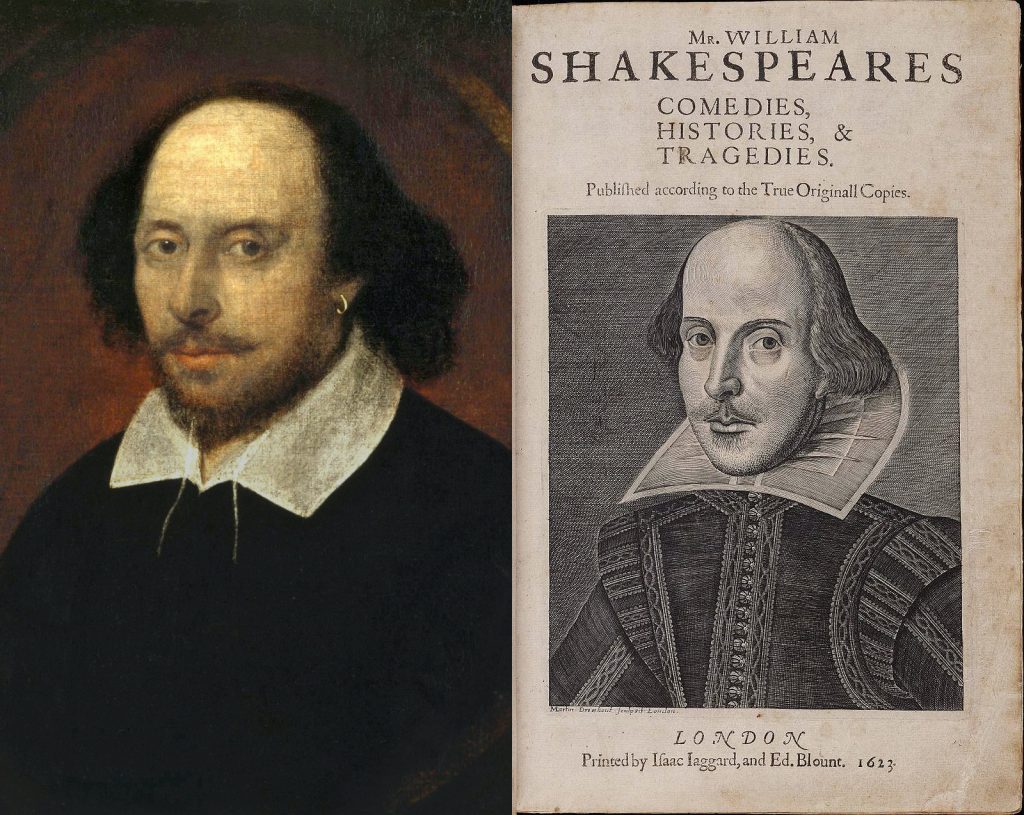
For most of the 15th and 16th centuries, portraiture remained an upper-class privilege, even for the most talented and influential of writers. In Searching for Shakespeare, former curator at London’s National Portrait Gallery Taryna Cooper writes that while the identity of the sitter in the so-called “Chandos portrait” remains inconclusive, its date of production (1600–1610) comports with the timeline of Shakespeare’s own material and social advancement. “It seems likely,” Cooper writes, “that Shakespeare chose to be portrayed after 1598, after he had purchased the lease on his house in Stratford-upon-Avon and had been successfully granted a family coat of arms.”  

The Chandos portrait (left) and the Droeshout engraving

Yet even if Shakespeare had followed social protocol in waiting for his alleged portrait, there is evidence that he rebelled in other ways. Cooper suggests that, unlike most portraits of the era, the Chandos portrait makes no reference to the Bard’s social status or probity but rather underscores his individuality, featuring a playful bohemian with a knowing simper and a single gold earring. Interestingly, the follow-up to the Chandos portrait, a 1623 engraving by Martin Droeshout, also diverges from classical tradition. Appearing in the first printed edition of Shakespeare’s plays (aka the First Folio), the engraving is the only portrait that “provides us with a reasonable idea of Shakespeare’s appearance,” writes Cooper. Praised by Shakespeare’s contemporary Ben Johnson for its accuracy, it jettisons conventional iconography in favor of realistic depiction, putting the Bard’s characteristically arched brows, receding hairline, droopy eyes, and prominent nose on full and unapologetic display.

While it is impossible to know what Shakespeare thought of the Droeshout engraving (it was commissioned posthumously), we do know that not all 16th- and 17th-century writers were comfortable with such realism. In John Milton: A Biography, Neil Forsyth tells us that when Milton’s publisher asked for a portrait to accompany the soon-to-be-released Poems of John Milton (d. 1645), the 38-year-old poet suggested that the engraver, William Marshall, refer to a picture of him at age 21. What Marshall produced was an ironic and unforgiving compromise, with one half of Milton’s face appearing young and the other half saddled with a double chin and a contorted frown. When the publisher refused to withdraw the portrait, a vengeful Milton composed a coded retaliation to accompany the frontispiece: “You would say,” he wrote in Greek,

 That this portrait was drawn by an ignorant hand, once you look at the living face; so friends since you do not see the likeness, laugh at the botched effort of this incompetent artist.

During the eighteenth century, writers began to exercise more control as portraits became more central to authorial promotion. Reflecting Romantic notions of self-expression and self-curation, books featuring an author portrait tended to be not only more expensive and more saleable, but also more personal, offering “a miniature surrogate of the book’s absent author.” Recognizing the power of the portrait while enjoying the still-maneuverable liberties of the brush and pencil, writers such as Alexander Pope, Benjamin Franklin, William Wordsworth, and Lord Byron took “great pains” to control and perfect their image as a performative reflection of their literary legacy, criticizing—or sometimes all-out rejecting—portraits which highlighted their physical imperfections, misrepresented their demeanors, or thematically deviated from their writing. Perhaps no one benefited from this artistic leverage more than the growing cadre of female authors, who, not unlike women today, were subject to harsh cosmetic criticism. Observers have long argued that Charlotte Brontë was both judicious and fortunate in her choice of artist George Richmond to paint her. In foregoing realism, Richmond chose to ignore Brontë’s characteristic pallor and fragility, instead depicting an ethereal woman with “eyes alight with the fire of genius,” wrote one turn-of-the-century critic

The creative flexibility afforded by the painted portrait, of course, would not last forever. In the mid-19th century, photography became portraiture’s predominant medium, a change that writers of the late-Romantic and Naturalistic eras tended to embrace as an extension of artistic transparency. “They are honest,” wrote Walt Whitman of his preference for photographs over oils as he praised the way in which “the photograph lets nature have its way.” Whitman’s contemporary and friend Frederick Douglass was an even more passionate advocate of the photographed portrait. To Douglass, photography was not only an honest but also a singularly equalizing medium that liberated portraiture from the shackles of racist interpretation. “Negroes can never have impartial portraits at the hands of white artists,” he wrote, arguing that it was “impossible for white men to take likenesses of black men, without most grossly exaggerating their distinctive features.” 

By the 20th century, photographic promotion had fortified the link between authorial photogenicity and authorial marketability.

Like many writers of his generation, Douglass made every effort to curate and publicize his photographed portraits, using them as promotional tools for his books, talks, and newspaper, The North Star. By the turn of the 20th century, this trend of photographic promotion had effectively fortified the link between authorial photogenicity and authorial marketability, all but cementing the (now very familiar) prototype of the picturesque “celebrity writer.” Throughout the early 1900s, photographed portraits of Mark Twain were repeatedly scattered across the pages of national magazines and newspapers as portraits of F. Scott Fitzgerald, the “hopelessly good looking,” clean-cut, preppy collegiate, served as a real-life advertisement of his novels, de-mythologizing the chimerical characters of Jay Gatsby, Amory Blaine, and Dick Diver. Though he was not as classically handsome, Ernest Hemingway’s looks too helped to bolster his consumer appeal, a fact that publishers knew and actively capitalized on. According to Leonard Leff, author of Hemingway and His Conspirators, Scribner’s 1929 serialization of A Farewell to Arms featured several photographs of Hemingway, signaling a “remarkable” departure from the magazine’s standard practice. Whether taken in Key West or Paris, the photos of Hemingway seemed to radiate “the silver-screen allure of Gary Cooper,” positioning Hemingway as both a famous writer and a consummate sex symbol.
Today, an alluring author photo has become less a “bonus feature,” as it was for Twain, Fitzgerald, and Hemingway, and more a golden ticket for literary success. “Interesting, beautiful or unusual photographs,” according to Eckstut and Sterry, “have a way of ending up in ‘pick of the week’ sections of newspapers, on the homepages of websites, or in the posts of bloggers.” Such “arresting visuals,” they tell the reader, can dramatically increase one’s chances of getting a feature or catching the eye of a publisher, publicist, or bookseller. 

There is evidence to suggest that the stakes surrounding a good author photo are higher for women than they are for men, leading many “American lady authors of a certain age” to indulge in the airbrush—the modern-day equivalent of the oil-painted touch-up. Though many have fought against this pressure, regarding it as both a distraction from and an adulteration of the sacred “compact between reader and writer,” publishers remain stubbornly beholden to pretty pictures, even going as far as to “re-do” portraits of female authors from history. In 2007, the British publisher Wordsworth Editions commissioned a new portrait of Jane Austen to replace the 1810 original. “The poor old thing didn’t have anything going for her in the way of looks,” said Helen Trayler, Wordsworth’s managing director:  

She’s the most inspiring, readable author, but to put her on the cover wouldn’t be very inspiring at all. It’s just a bit off-putting. I know you are not supposed to judge a book by its cover. Sadly people do. If you look more attractive, you just stand out more.
Responding to pressure to be a “‘highly promotable’ woman writer” (a pressure to which apparently not even Jane Austen is immune), many have boldly argued that books should be free of author photographs. Without such a distraction, writes Frances Wilson, a certain “dignity as well as democracy” could be restored to bookshelves, allowing “books [to] become words once again.”

To Wilson, I say sadly: “In Heaven, maybe.” 

The author portrait has been here for a long time and—much to my chagrin—isn’t going away anytime soon.

While it is true that we live in a visually obsessed society, the origins of this society are both ancient and impenetrably solid. The author portrait has been here for a long time and—much to my chagrin—isn’t going away anytime soon. 

But even in this age of aesthetically acquired likes and followers, there is still space for defiance and there is still space for truth. Of the hundreds of photos my wonderful and incredibly patient photographer supplied me, all are imperfect. In each and every one of them, I am able to identify a flaw, whether that be the line on my forehead, the creases around my eyes, the strands of grey in my hair, or the cellulite on my legs. 

But in each, I am also able to identify something greater—a membership, a belonging, to the ancient and beautifully flawed family that is writing. My imperfections and insecurities are not what will disqualify me from joining this family. They are what will let me in.

7 Books About Slavery and Abolition by Black 19th-Century Writers

The recent controversies and occasional toppling of Confederate monuments indicate, yet again, that the U.S. never really settled the conflict over slavery. Historian Eric Foner called the Civil War and Reconstruction “the unfinished revolution,” suggesting that the 19th-century promise of interracial democracy has never quite come to fruition. If this is true, Americans don’t even know how to make good on the ideas about equality which are supposed to form the core of our national identity. 

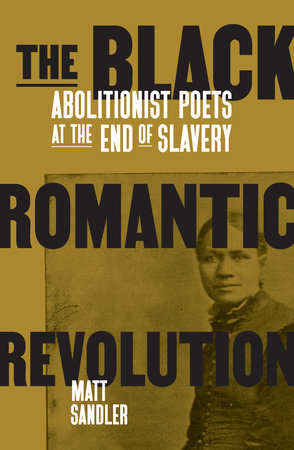
The Black Romantic Revolution by Matt Sandler

My book, The Black Romantic Revolution, finds prophetic visions of the end of slavery among the Black poets of the abolition movement. Frances Harper, James M. Whitfield, and Albery Allson Whitman wrote poetry as a part of their work as activists. Working through the international movement in art and philosophy known as Romanticism, they represented abolition as a revolution. They saw the end of slavery as a chance to rethink problems which still bedevil American life today: the distortions of racism, the misuse of land and nature, the inequities of capitalism, and the brutality of sexual violence.

Below I’ve listed some books in which you can find examples of Black Romantic depictions of slavery and abolition. Because the Black Romantics wrote in prophetic terms, their premonitions of eternal consequences resonate eerily in our moment, with its resurgent white supremacy and imperious violence against Black communities. Abolition was always about more than just putting an end to slavery in the narrow, legal sense. Abolition in these visions is a living dream.

Lyrical Liberators: The American Antislavery Movement in Verse, 1831–1865 edited by Monica Pelaez

Monica Pelaez’s handy anthology makes an excellent place to start, with its contents organized into sections of poems about themes like fugitivity, death, motherhood, and atonement. The anthology includes a number of poems which appeared in Black and abolitionist newspapers, often by anonymous authors brimming with political feelings too risky to publish under their real names. 

Black Bard of North Carolina: George Moses Horton and His Poetry edited by Joan R. Sherman

George Moses Horton lived for most of his extraordinary life near the campus of University of North Carolina, Chapel Hill, where he “hired out” his time from his enslaver with money he earned writing poems. Two collections of his poems appeared while he was enslaved, and a third while he was living in the “contraband camps” of the Union Army as it passed through North Carolina. His poetry is intensely symbolic; he hoped to “rise sublime/ On wings of liberty.”

The Works of James M. Whitfield edited by Robert S. Levine, Ivy G. Wilson

James Monroe Whitfield worked as a barber while organizing for abolition and Black nationalism in upstate New York and California. He also wrote the most psychologically complex and historically sophisticated poetry of his day. His 1853 book America and Other Poems sets the “impending crisis” around slavery in the U.S. alongside contemporary revolutions in Europe, and describes his own temperament as a poet: “From earliest youth my path has been/ Cast in life’s darkest, deepest shade[.]”  

6412584

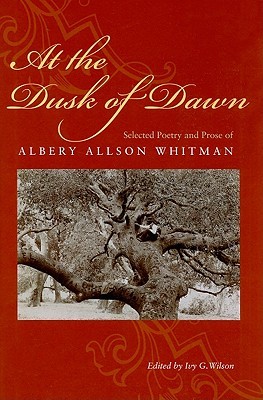
At the Dusk of Dawn: Selected Poetry and Prose of Albery Allson Whitman

Albery Allson Whitman was freed from slavery by the Emancipation Proclamation as a teenager, and went to school at Wilberforce University in Ohio. He became known as the “Poet Laureate of the Negro Race” for his epic poems about life on the frontier. In depictions of Black and Native people fighting white settlers and falling in dangerously fugitive love, Whitman sought to instigate an “apocalypse of sentiment.”

Iola Leroy, or Shadows Uplifted by Frances E.W. Harper

Frances Ellen Watkins Harper had been writing and working as an activist in both the abolition and temperance movements for decades when she published her best-known work Iola Leroy in 1892. She was first known as a poet in the abolition movement before the war, but this late novel, here meticulously edited by Koritha Mitchell, is the easiest way to access her work in print at the moment. And its language is that of a poet, for instance when its heroine describes her contemporaries as a “living argument” for Black liberation. 

The Slave’s Cause: A History of Abolition by Manisha Sinha

This award-winning recent history of the abolition movement centers the work of Black abolitionists in the struggle to end slavery. It also emphasizes the continuous, international scope of abolition across the Atlantic through the late 18th and 19th centuries. Sinha makes clear that abolitionists were not “single-issue” thinkers, but instead integrally linked to the activism of Native people, the working class, and women. 

American Anti-Slavery Writings: Colonial Beginnings to Emancipation

This anthology surveys a range of fiction, prose, and poetry written in service of anti-slavery from the 17th to the 19th century. It follows the movement from the spiritual deliberations of the Puritans like Samuel Sewall to the reasoned arguments of Enlightenment-era founders like Benjamin Franklin, culminating with the stormy Romantic language of Frederick Douglass, Harriet Jacobs, and Ralph Waldo Emerson. Take note of Emily Dickinson, thinking like her Black contemporaries in prophetic terms: “Color—Caste—Denomination—/ These—are Time’s Affair—” 

7 Translated Books About Queer Life in Taiwan and China

Before writing my debut novel Bestiary, I began a year-long process of translating letters written by my grandmother, many of which were addressed to people I didn’t know. While attempting these translations, I realized the impossibilities and possibilities of the task—the losses and gaps and misunderstandings that were embedded in my translations, as well as the moments of hybridity and discovery, where my own language layered over hers, hinging it open in strange ways and creating new meanings.

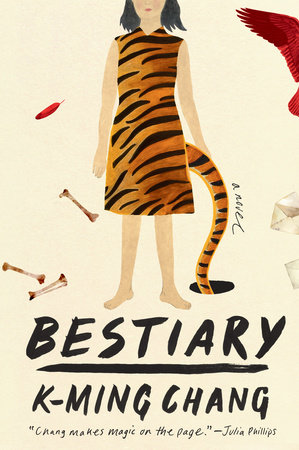
Bestiary by K-Ming Chang

In Bestiary, the narrator also translates a series of letters from her grandmother that are spat out by sentient holes in her backyard, and these translations are a deeply embodied experience, a process of reliving and birthing. My novel is also about translation between generations, and how memories are mutated or transformed through the process of being inherited and re-embodied.

Throughout my writing process, I returned again and again to novels in translation from Chinese, both their translations and their original texts. I immersed myself in the process of translation as inevitable change and alchemy, and was especially drawn to novels in translation about queer life in Taiwan and China that explored the themes that compel me to write: exile, tenderness, violence, queerness as possibility and transformation.

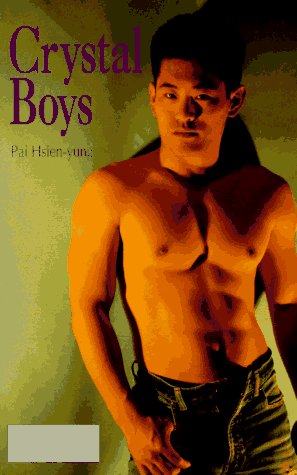
Crystal Boys by Pai Hsien-yung (2 star ratings)

Crystal Boys by Pai Hsien-Yung, translated by Howard Goldblatt

Published in 1983, Crystal Boys is often credited as the first gay novel written in Chinese. Whether or not this is true, it is a deeply formative novel in the Chinese-speaking world, and has taught me so much about subverting ideas of nation and citizenship. Set during the period of martial law in Taiwan, the book follows Ah-Qing, a young Taiwanese man who is brutally exiled from his father’s home after being caught having a romantic tryst with a fellow student. He flees to Taipei, where he discovers a community of gay men in New Park, creating a new home and sense of belonging among them. Crystal Boys is full of humor and love and desire and pain and myth—it’s not only about forging a new space of possibility, but about the limits of that process, too. It highlights the cyclical nature of generational violence and the enduring love between friends.

In the Face of Death We Are Equal by Mu Cao, translated by Scott E Myers

In the Face of Death We Are Equal draws upon the legacy of Crystal Boys. Many of the main characters share the same names as the boys from Pai Hsien-Yung’s novel, though the historical context is entirely different, and the language of this novel is compellingly strange, creating a surreal world that is more reflective of reality than more typical literary realism. Mu Cao’s innovative, non-linear novel follows Ah-Qing, a migrant worker from Henan Province who leaves his village in order to work in the city. Mu Cao centers the lives of gay, working-class Chinese migrant workers as they navigate a world of exploitation and precarity. This novel is observant and bizarre and humorous, completely unique in its narrative structure. 

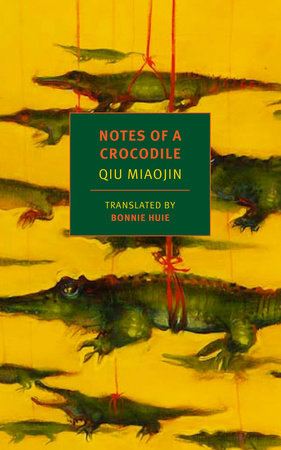
Notes of a Crocodile

Notes of a Crocodile by Qiu Miaojin, translated by Bonnie Huie

Qiu Miaojin is an iconic Taiwanese lesbian writer, and her novel Notes of a Crocodile is a brutal and beautiful book. It’s the kind of book that feels like it’s swallowing you whole with its language and characters and self-destructive voice. The novel follows Lazi, a young Taiwanese lesbian who falls in and out of love with an older woman in the most all-consuming ways. Her friends similarly fall into intense, destructive relationships. Spliced into the book are allegorical vignettes about crocodile people who are exiled and othered in society. This classic novel draws from bildungsroman traditions, but it’s also formally innovative and regenerative, incorporating diary entries, scripts, vignettes, and obsessive monologues. 

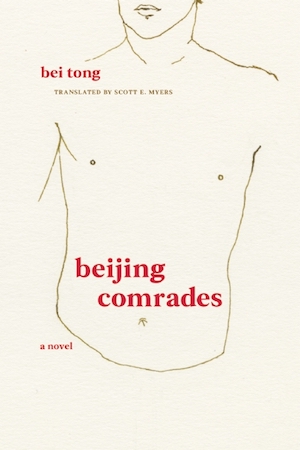
Beijing Comrades translated by Scott E Myers

Written anonymously and posted online, Beijing Comrades is an all-consuming novel that features one of the most frustrating narrators I’ve ever encountered. Set in late 1980s Beijing, the novel follows Handong, a seemingly cold-hearted businessman who picks up Lan Yu, a university student newly arrived to Beijing from Xinjiang. Lan Yu is vulnerable, naive, and sometimes elusive, while Handong can be incredibly cruel and obtuse. This is a novel about money and power that shrouds the possibility of romance, and though the ending feels unnecessarily tragic and sacrificial, it’s the kind of book that haunts you in your dreams after you read it in one sitting.

WHITE SNAKE AND OTHER STORIES

White Snake and Other Stories by Yan Geling 

The title story of this collection of stories by Yan Geling features a lesbian retelling of the classic White Snake legend in Chinese folklore. Yan Geling’s writing is fluid, seamless, and beautifully understated in many moments, and the White Snake legend has always had subterranean queer undertones, which Yan Geling brings to the surface. The story switches between different narrative voices but is cohesive in its gorgeous, subtle use of language. 

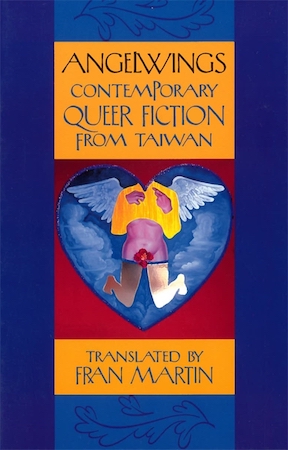
Angelwings: Contemporary Queer Fiction from Taiwan translated by Fran Martin

This anthology of queer fiction from contemporary Taiwan is an endless offering. The genre of tongzhi wenxue, or queer fiction, became especially prominent in Taiwanese literature during the 1990s. Featuring iconic women writers such as T’ien-Wen Chu and Qiu Miaojin, this anthology features a broad spectrum of styles and themes that incorporates mythology, religion, and daily life, and it’s worth reading for Qiu Miaojin’s story “Platonic Hair.”

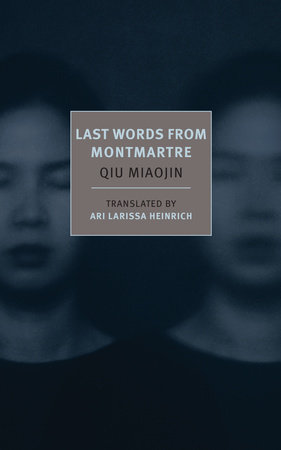
Last Words from Montmartre by Qiu Miaojin

Last Words from Montmartre by Qiu Miaojin

This innovative, visceral novel is written in letters and vignettes that can be read in any order. Qiu Miaojin’s work is brimming with emotional intensity, self-obsession, and desire. I often compare reading her work to being possessed—it feels like being haunted and absorbed. This novel—which feels also like an archive and artifact of a destructive relationship—is akin to being consumed by your own psyche and appetite. There is an immediacy and poetry to all of Qiu Miaojin’s writing, and this novel is unlike anything I’ve ever read. 

Hari Kunzru Explains How Cop Shows Contribute to State Brutality

When Hari Kunzru finished writing Red Pill in early 2020, he had no idea that the summer leading up to its release would see the uprisings that followed Derek Chauvin’s murder of George Floyd and other instances of police brutality against Black people, widespread calls to defund the police, or broader conversations about the history and present-day role of policing in American society.

Circumstances have made the fictional police drama Blue Lives that he includes in the novel, and his narrator’s concerns about the cultural power wielded by its alt-right showrunner, all the more prescient.

In the second of my two-part interview with Kunzru (you can read the first part here), we discuss cultural myth-making around state violence, whether TV audiences want police to break the rules, how to effectively push back if they do, and the ways in which American policing is and is not unique in the world. 


Preety Sidhu: In the wake of the uprisings against police brutality and systemic racism, there’s been renewed criticism of the role of TV procedurals in shaping public perceptions of policing. Your fictional show Blue Lives takes it even farther, showing more extreme brutality than is the norm on American TV. Your narrator becomes convinced that the man behind it has tremendous power to shape the future. How potent do you think this type of cultural myth-making around state violence is?

Hari Kunzru: I think it is quite potent. One thing I wasn’t expecting to feel so very topical was the stuff about Blue Lives. We’ve been living through the most sustained, and actually broadly supported, civil rights movement since the 1960s. I think the vast majority of Americans want to see some sort of change. And it has been interesting to me that there has finally been a focus on the portrayal of law enforcement in television. 

In the olden days it was very simple, the copaganda. The noble policeman, the terrible criminal. But we’ve got something very interestingly cynical that has happened. It’s been happening since the 70s. You might point to the Dirty Harry movies and remember Clint Eastwood as a sort of maverick cop in 70s San Francisco. He basically opened the lid on the idea that actually what people want is for the police to break the rules. They want the police to go beyond what they’re allowed to do in order to take revenge or keep us safe. The “us” being a very interestingly defined character. Who is the “us” who is being kept safe and who is the “them” that we are being kept safe from, is the big question in all of these obviously. Culturally, there’s the enduring interest in the lawman who breaks the rules, who goes beyond what’s acceptable and makes himself a kind of terrifying executioner figure. This is where I use this slightly obscure 18th-century character, the Comte de Maistre, who was an ardent opponent of the French Revolution and believed very much in state power. I think he’s very weirdly relevant to this moment.

Who is the ‘us’ who is being kept safe and who is the ‘them’ that we are being kept safe from?

I mean look at 24. I think for Brown people in America, the success of 24 has been a very weird and troubling thing, amidst its glorification of torture, its contempt for procedure, and its presentation of any kind of oversight as being something that just hampers the movement of justice. So all those kinds of things are in the mix. 

There’s also just the straightforward thing about cable TV, you can do more and show more stuff on cable TV. I mean Game of Thrones would look very different had it had to abide by broadcast rules. So there is this edging towards an increasingly graphic portrayal of violence, and particularly torture. And there’s this interest in good characters who represent the law doing bad things, and their suffering from doing bad things. This is the interesting twist on it all, the shows are often very interested in the moral cost to the person who’s committing this violence, because they’re doing it for the “us.” 

Yeah, I took this further. And I imagine, what does it actually say? What is the cynicism at the heart of this, about the possibility of having justice without torture and without the use of vigilante violence? And it’s coming really right to the fore. We’re speaking to the events in Kenosha. We see a 17-year-old boy who was apparently very infatuated with the police, and had been trained in some way by his local police force, some sort of course. Then he takes it upon himself to illegally acquire a weapon of war and insert himself into a very tense situation in another town and then—it seems very predictable that that kind of thing would happen. I don’t have particular sympathy for him, but I can understand how those events transpired. I think this culture of Blue Lives Matter, he’s part of that.

PS: I was absolutely thinking of 24 as I read this, because I had watched that when I was around undergrad age, about 15 years ago, and I was a big fan at the time and I did not think very critically about it. If I pull up an episode now, I’m sure that my response would be pretty different. At the time it was quite seductive to see what he’d do for the greater good.

Cop shows provide a kind of a supplement or substitute for a sense of closure or justice that real life doesn’t give us.

HK: People wanted to have the rebalancing that they felt was not being given them by real life. One of the ideological things these shows do is that they provide a kind of a supplement or substitute for a sense of closure or justice that real life doesn’t give us. Plot always is about the reduction of life’s complexity to a kind of simple structure and, if you plug in this deep desire for justice that people have—you know, off you go.

PS: Given that these narratives are so compelling, do you think that there are effective ways to push back, in a narrative sense or culturally?

HK: The way to push back is to seize control of the means of production. It’s for other people to be allowed to tell stories, for other people to be elbowing their way into the writers’ room, into the director’s chair. It’s great that we’re very, very belatedly seeing a recognition on the cable shows that Black stories are commercial. We have Watchmen and Lovecraft Country. These kinds of shows are turning up, and they’re wildly popular, and they are entertaining, and they center very, very different stories and perspectives than before. I think things are very different from what they were five years ago, in terms of the media landscape. When I look back to the kind of crumbs that we used to be satisfied with—when I was coming up and then in the 90s, we were just super excited if we saw a Brown face or a Black face on the screen.

PS: How do you think the contemporary American attitudes and media messaging about policing that inspired Blue Lives compares to other cultures and time periods you’re familiar with? Is there anything unique in the way that some parts of American society valorize the police these days?

HK: I mean, in every society there is a sort of standard right-wing law-and-order position. The idea of policing by consent, which is supposed to be the foundation of modern civilian policing, is less fictional in some places than it is in others. I think that the two unique American factors which make the situation much more volatile and much more urgent are—one is guns. I mean, just purely and simply police procedures. When the police go to do traffic stop here, they are trained to deal with the possibility that there will be a gun in this situation. Where it just wouldn’t occur to a British cop in a traffic stop that that might be a possibility. It would be a once in a lifetime—I mean many, many British cops will never encounter a person with a gun. Many British cops will never carry a gun. And because there’s so many guns in American life, all situations are potentially situations of armed violence. We’ve all watched endless depressing and sometimes very scary videos of these police stops where people are brutalized and the police are clearly in a sort of trance of tension. It’s very often because they’re extremely afraid and they’ve also been trained to think of themselves as a sort of militarized force. 

One phrase that keeps coming to mind is “bringing the war back home,” which was associated with the left in the Vietnam era. It was the idea that they would try and make the Vietnam War visible to ordinary Americans as a way of stopping the war. What’s happened since Iraq and Afghanistan, 20 years of these conflicts, is that we’ve got a huge pipeline of veterans and military equipment. The militarization of the police is an important part of this, using people who have a military mindset, who are equipped as soldiers and who treat the streets of the city they’re supposed to be policing as a battle zone. So in a very direct sense, the war has come back home and what we’re seeing right now is partly to do with that. 

But if you look further back, I think the second factor that is uniquely American has to do with the history of American police forces as slave patrols. Also, weirdly sort of revenue generating operations, if you look at Ferguson. Part of the roots of the Ferguson uprising, it was that the police gave a lot of quality of life tickets to a mostly Black town. The police, as they do in so many places, didn’t live in Ferguson. They live in white cities neighboring Ferguson. They use jaywalking, broken tail lights, incorrectly stored vehicles on your property. All these things are used to extract revenue from the residents and the police are acting as predators because they’re the only revenue generating operation that Ferguson really had. The city government wasn’t going to run unless they managed to extract a lot of money from people that way. 

Of course, we’ve got thousands of different police departments in the U.S. and they have different histories, but to broadly generalize, there’s never been a sense that these police departments grew organically out of the communities they’re policing. There’ve been many attempts in recent years to make them fit better in that way, but the notion of who’s getting protected and who they’re getting protected from is highly racialized, has this particular history, and is only really being interrogated now. I mean the call to defund and abolish police departments seems, I would imagine, almost incomprehensible to a lot of people in other countries. And of course to many white people in America, who imagine that this would mean anarchy. But it makes sense in this history of abolitionist tradition, which is a counter tradition to the tradition which comes out of slavery. So there’s such a particular history of police in the U.S. and it is not a happy one.

PS: Possibly because police appear so embattled here, they may get valorized, as a response from the people who feel they are being protected or they fall in the “us.”

HK: There’s a Blue Lives Matter protest for every Black Lives Matter protest. You can see the history in the fact that those two groups coalesce around the issue of policing.

Rax King Is Not Going to Let You Blow Smoke Up Her Ass

In our series “Can Writing Be Taught?” we partner with Catapult to ask their course instructors all our burning questions about the process of teaching writing. This month we’re talking to Rax King, who’s teaching a six-week nonfiction workshop on the personal essay. (Rax’s excellent Electric Literature essays on teen romance novels and Meatloaf should convince you she knows what she’s talking about!) We asked her the same ten questions we always ask, and she favored us with some gems about when to take a break from your writing, when to send in the Catholics, and when to eat an entire loaf of bread.


What’s the best thing you’ve ever gotten out of a writing class or workshop as a student?

I took the excellent Tony Tulathimutte’s CRIT workshop, and I can’t recommend it highly enough. Tony is a hardass Virgo and will not let you get away with any of your shit, writing-wise, and also he gave me a sick coffee table once. But the most eye-opening thing he did for me was point out that when I don’t know what to make a character do, I always have them smile. Like, I was devoting hundreds of words of fluff to people’s smiles, and I had no idea! Stuff like this is the best use of a writing class or workshop for adults who know basically what they’re doing, I think. Of course, there are lots of useful lessons about craft and writing practices that teachers can impart, but students will get the most use out of a good teacher’s experienced close reading of their work.

What’s the worst thing you’ve ever gotten out of a writing class or workshop as a student?

We leave all these narrative stones unturned, because we’re still stuck on the story we thought we were telling about ourselves.

I took a real weird writing workshop when I was in high school. I was the youngest student in the room by a country mile. The teacher was this pipe-smoking Robert Frost devotee who wore a lot of tweed—it was like he’d Googled “retired poet outfit.” And I’ll never forget that his big piece of advice for us, this advice that he teased us with week after week but never actually revealed until the last session, was “send in the Catholics.” As in, if a piece of writing isn’t working as is, make it a Gothic-type story about Catholicism instead. It was the worst thing I ever heard in my life, and to this day, anytime I’ve hit a wall with a piece of writing, I hear that smug mutherfucker in my head saying “send in the Catholics.” I hope that guy’s having a bad day, if I’m honest.

What is the lesson or piece of writing advice you return to most as an instructor?

If you’re stuck, don’t keep hammering away at whatever section is stumping you. Go do something else for half an hour and then look at the piece holistically. Grant yourself entry from another angle. I’ve never had any luck pushing through writer’s block with sheer brute force, but by focusing my effort elsewhere in the piece, I can usually open it up for myself that way. I think this is especially useful advice to my fellow personal essayists, because we fixate on the memoiristic precision of what we write—we struggle with structural or narrative overhauls. We pick and pick at the sentence level and leave all these narrative stones unturned, because we’re still stuck on the story we initially thought we were telling about ourselves.

Does everyone “have a novel in them”?

I’ll put it this way: I’ve written a novel myself, and I in no way “had a novel in me.”

Would you ever encourage a student to give up writing? Under what circumstances?

To give it up outright, probably not. To come back to it some other time, yes, absolutely. If your manuscript has stopped being a labor of love and is just unceasing thankless drudgery, put the damn thing down before you hurt yourself. And if all writing has started to feel that way, again, put the damn thing down before you hurt yourself.

What’s more valuable in a workshop, praise or criticism?

It does nothing for me to tell me my story sucks shit if you’re not going to help me fix it.

They’re equally valuable! It is, to me, of exactly equal value to know when some aspect of my manuscript is working and to know when it isn’t. What isn’t valuable is nonspecific praise or criticism—it does nothing for me to tell me my story sucks shit if you’re not going to help me fix it, and it does nothing for me to tell me it’s perfect when we both know I hate myself far too much to let you blow smoke up my ass.

Should students write with publication in mind? Why or why not?

Absolutely not. For many reasons, but practically speaking: you’re going to hate everything you publish five years after it’s published anyway. So you might as well write stuff you’re proud of, not stuff that you think is going to make some slush reader cream their jeans.

In one or two sentences, what’s your opinion of these writing maxims?

  • Kill your darlings: As advice, this has some value, but I always get stuck on the fact that it sounds so goddamn good to say out loud! “Kill your darlings” is the “cellar door” of tired writing advice.
  • Show don’t tell: If I never hear this shit again, it’ll be too soon. What does it even mean?! You want I should draw you a little picture so you don’t have to read my book? Is that it? A little diagram?
  • Write what you know: I’d amend this to: write ideas and perspectives that you’re confident you understand. Don’t talk out of your ass. Know when to cede the microphone.
  • Character is plot: I never heard this one before! It sounds silly as hell, though.

What’s the best hobby for writers?

I don’t know how to even begin to answer this, so I’m going to make something up. Embroidery. All writers should do embroidery.

What’s the best workshop snack?

An entire loaf of bread, consumed over the course of the workshop with butter. And I won’t share.

Tell Us Your Favorite Fall Food and We’ll Tell You What National Book Award Nominee to Read

Autumn means changing leaves, apple-based baked goods, decorative gourds, pumpkin spice lattes—and an avalanche of literary award longlists. If you’re feeling overwhelmed by all the must-read National Book Award nominees you’re now realizing you didn’t read, why not base your TBR pile off of your favorite fall food? If nothing else, it’s an excellent excuse to go out and restock your pantry, so that you’ll have reading snacks on hand. 

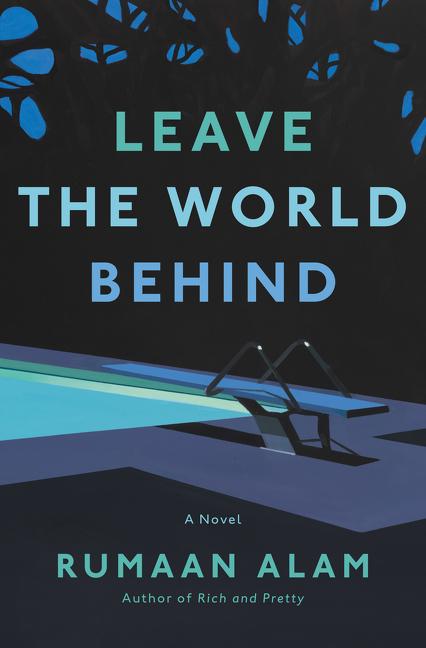
Apple crumble: Leave the World Behind by Rumaan Alam

You can’t get more American than apple pie, so they say—which means that a deconstructed version is the perfect pairing for Alam’s provocative novel about a crumbling vision of the American Dream. A white Brooklynite couple plans a summer getaway to Long Island; however, their idyllic plans are shattered when an older Black couple shows up, claiming to be the owners of the house. They have evacuated New York City due to a sudden blackout. Amidst global catastrophe, the tensions between the two different families escalate and the very idea of safety itself is questioned. 

Interior Chinatown

Pecan pie: Interior Chinatown by Charles Yu 

Are you one of those that reject the stereotypical pumpkin pie/apple pie binary, opting for dark horse candidate pecan as your fall pie of choice? If so, try Yu’s ambitious novel about Willis Wu, a self-identified “Generic Asian Man” who acts in bit roles for a never-ending cop show—the most Willis can hope for is to achieve the status of “Kung Fu Guy.” Structured as a screenplay itself, Interior Chinatown is a deft satire of Hollywood stereotypes. Like a pecan pie’s darkly spiced, sweet filling, Yu’s dark humor pervades the narrative, as does his lingering, poignant questions about representation and racism. Plus, rumor is that Chinese five spice powder makes for a killer secret ingredient in a good pecan pie. 

The Vanishing Half by Brit Bennett

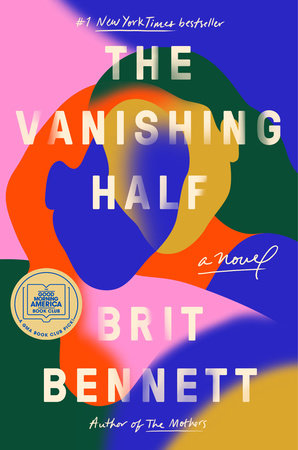
Pumpkin spice latte: The Vanishing Half by Brit Bennett

Pumpkin spice lattes have become synonymous with “basic” whiteness. So why tie them to this bestselling novel by a Black author about family and racial identity? Hear me out: “pumpkin spice” has taken on a set of connotations that are wholly divorced from actual pumpkins or even pumpkin pie; one could argue that pumpkin spice is a construct (check out this image for a better explanation). Bennett’s novel helps illustrate how race, too, is a social construct. The Vanishing Half is centered on two identical twins, whose lives take very different paths—one chooses to pass as white, the other does not. Through the twins’ family saga that spans multiple generations, Bennett explores the American question of “passing,” while also probing at the tension between individual choice and societal responsibility. And all constructs and symbolism aside—there’s no denying that both pumpkin spice lattes and Bennett’s prose are addictively good. 

(Bobbing for) raw apples: Shuggie Bain by Douglas Stuart

Nothing tastes as memorable or as uncomfortable as an apple that you’ve managed to finally catch, after many minutes of dunking your head into dirty, cold water. Stuart’s much-acclaimed debut (it is also a Booker Prize finalist) is just as unforgettable—and equally unsettling. Set in an economically destitute Glasgow in 1981, Shuggie Bain centers on a family struggling with alcoholism and poverty. Shuggie, a lonely but sweet boy, is the only child that will not abandon his alcoholic mother, Agnes. Warning: Like bobbing for apples, Shuggie’s heartbreaking story about the consequences of addiction and the tenuousness of familial love may leave your face wet.

If I Had Two Wings

Apple cider donuts: If I Had Two Wings by Randall Kenan

As Kirkus Reviews notes, this short story collection is “mouthwatering and matter-of-factly haunted.” What better book to read as you traipse through (potentially) haunted orchards, munching on an apple cider donut? If I Had Two Wings explores life in Tims Creek, a fictional small town in North Carolina, through ten stories. Kenan, a beloved author who passed away this August, masterfully blends the line between the mundane and the unearthly; his collection includes both river goddesses and small town diners, ghosts and retired plumbers. Kenan’s collection so masterfully explores the idea of appetite—as sexual desire, as hunger, as reveling in a feast—that having a delicious snack on hand is a must. 

A Burning by Megha Majumdar

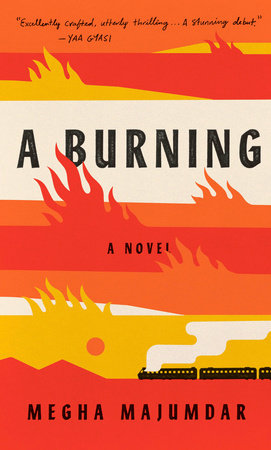
Roasted chestnuts: A Burning by Megha Majumdar

If you’re into the vibes of chestnuts roasting over an open fire, seeing the charred skins crackle open, try Majumdar’s equally-heated debut novel about power and corruption in modern-day India. A Burning begins with a terrorist attack that burns many to death; Jivan, an innocent observer, is thrown into jail when she posts a careless comment about the attack on Facebook. Jivan’s fate gets wrapped up with two other city residents: PT Sir, a PE teacher, and Lovely, a trans woman and aspiring actress. As all three characters aspire to achieve their version of power, they run into questions about morality and justice. Majumdar crafts a thrilling narrative that moves at a breakneck pace and plays with high stakes—one moment later, someone may end up destroyed, like a chestnut left too long in the flame. 

Cranberry sauce: The Index of Self-Destructive Acts by Christopher Beha

Cranberry sauce conjures up memories of Thanksgiving dinner—and the accompanying family drama—like no other food except turkey. If you’re looking for a book that’s equally vivid, flavorful, and prone to messy drips, try Beha’s family saga. A young journalist, Sam, becomes acquainted with the Doyles, an affluent family in New York City. Frank, the patriarch, is a baseball writer who is in hot water for making racist remarks. Over the course of one baseball season in 2009, Sam witnesses the disintegration of the Doyle family’s established empire. Like a sauce that has been simmering on the stove for hours, Beha’s narrative smushes a variety of themes and characters into a cohesive, sweeping portrait of one family and New York City. 

All the Church Ladies Are Having Secret Sex - Electric Literature

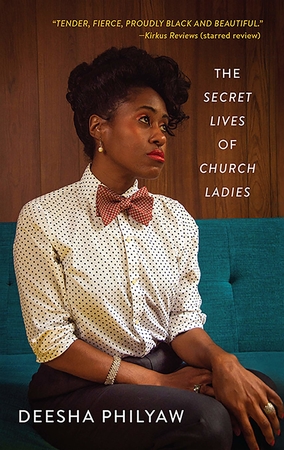
Hot toddy: The Secret Lives of Church Ladies by Deesha Philyaw

It is a well-known fact that you can put a hot toddy in a mug, and no one will ever be the wiser. Philyaw’s debut collection of short stories explore the lives of churchgoing Black women that are similarly secretive and gently spicy. In one story, a teen girl has a crush on the preacher’s wife; in another, a woman refuses to go to church because she will no longer wear a girdle. Philyaw’s characters explore, in various ways, what it’s like to publicly follow the rules of the church whilebreaking them in private, discovering new truths about themselves. Warm, intimate, and filled with verve, this short story collection will give you a wholesome buzz with or without the booze. 

In Lydia Millet's "A Children's Bible," the Kids Save the Parents from  Apocalypse - Electric Literature

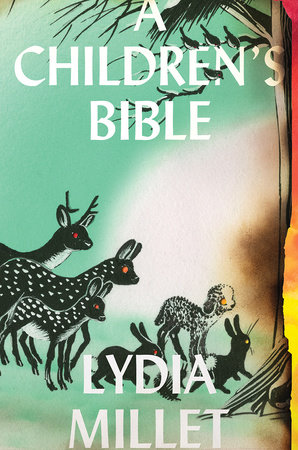
Caramel apples: A Children’s Bible by Lydia Millet

If this is your favorite fall food, I am genuinely confused—but there is a perfect book pairing for you. Millet’s tale starts at a lakeside summer resort (think: sticky-sweet caramel exterior), where a group of families are vacationing. However, things take more of a turn towards Lord of the Flies when a storm hits, leaving the adults apathetic and the kids to fend for themselves (cue: the mealy, bland apple interior). As author Jenny Offill notes, Millet offers a “cozy catastrophe” with a climate change twist; her narrative is both apocalyptic and allegorical, filled with pressing questions about responsibility, environment, and civilization. As a kid, I remember finding caramel apples to be consistently disappointing—but that disappointment does not hold a candle to the crisis-ridden, ecologically-devastated world that is fast becoming the legacy for kids today. 

The Great Offshore Grounds by Vanessa Veselka

Pumpkin bread: The Great Offshore Grounds by Vanessa Veselka

Arguably one of the best snacks for a fall road trip, pumpkin bread is a twist on the usual pumpkin pie. With a mix of spiced humor, reinterpretation of “family,” and dense, interlocking narratives, The Great Offshore Ground may be the book for pumpkin bread fans. Set in the Pacific Northwest, the novel centers on two sisters, Cheyenne and Livy, and their adopted brother Essex. At their father’s remarriage, Cheyenne and Livy reconnect with one of their biological mothers, Kirsten—who raised them, but only gave birth to one of the girls (and refuses to specify which). This triggers a road trip to find their other birth mother, who lives across the country in Boston; meanwhile, Essex enlists in the Marines for lack of anything better to do. Veselka draws a sharp family portrait of contemporary American poverty, one that’s both rich and thought-provoking. 

The Year the Bridges Failed

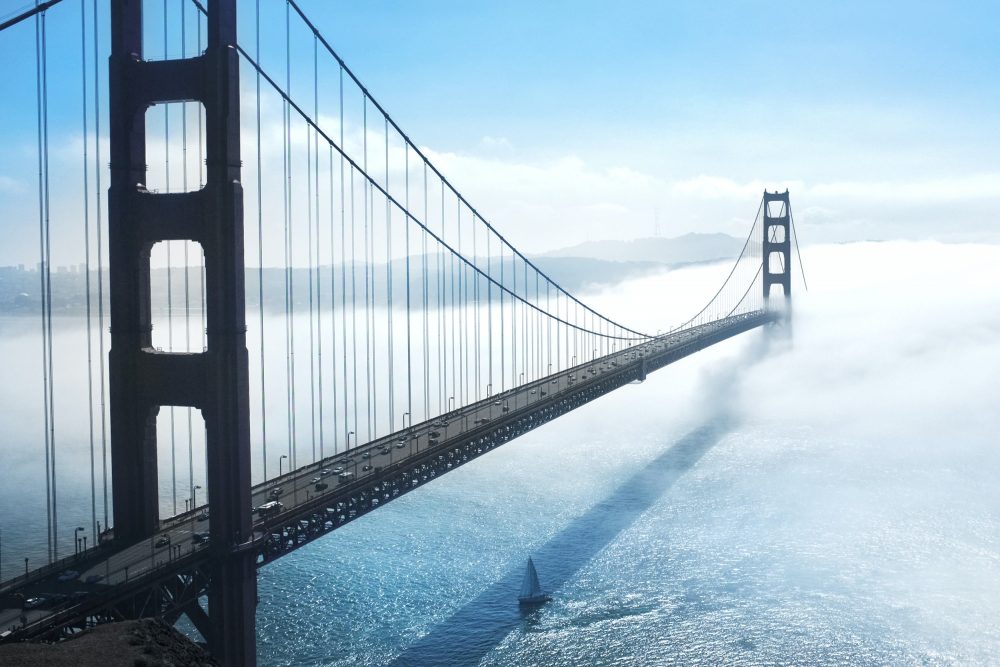
On March 23, 2020, in the midst of a rapidly escalating pandemic, Seattle officials announced the sudden closure of one of the city’s most highly trafficked bridges. In an emergency virtual press conference, the Mayor pronounced the West Seattle High-Rise Bridge cracked, deteriorated, structurally unsound—a road to certain catastrophe. Closure was imminent, and possibly permanent. They gave residents three hours’ notice.

This bridge was the “high road” between West Seattle and Interstate 5, the fastest route between the city’s largest neighborhood and the world beyond. Over 100,000 cars and 25,000 transit passengers crossed it daily. Commuters, cargo, school and metro buses sped high above the shipyards—a land of grain silos and shipping containers, a history of industry at the nation’s northwestern edge, where the shimmering Duwamish Waterway empties into Elliott Bay and flows to the Pacific. Crossing the bridge on a clear day, Mount Rainier rises like a pale god on the southern horizon, foregrounded by a fleet of orange steel cranes.

We took for granted that the bridge would suspend us, that the center would hold.

The moment Seattleites learned of the closure, we made a mental calculation about the last time we’d crossed it, and how soon we’d need to make the trip to West Seattle again. We took for granted that the bridge would suspend us, that the center would hold. And why not? Why not trust the DOT and your own two eyes? On the surface, the bridge looked like a good bridge. But now, we think of all the times we sailed across mindlessly, never questioning the road beneath our tires, not knowing or even seeing the structure that upheld us. 


On Friday noon, July the twentieth, 1714, the finest bridge in all Peru broke and precipitated five travelers into the gulf below. This bridge was on the highroad between Lima and Cuzco and hundreds of persons passed over it every day…

So begins Thornton Wilder’s 1927 Pulitzer Prize-winning novella, The Bridge of San Luis Rey, a slim moral fable that takes as its central question nothing short of the whole meaning of life. The story, echoed above, is set against a backdrop of colonialism and the Spanish Inquisition; its characters are well acquainted with disaster. Yet, “[t]he moment a Peruvian heard of the accident, he signed himself and made a mental calculation as to how recently he had crossed it.” People “had the hallucination of seeing themselves falling into a gulf,” and “there was a great searching of hearts in the beautiful city of Lima.”

There’s no formula for moving a person to care. But Wilder, a dramatist at heart, and the only American writer to win Pulitzers for both fiction and playwriting (twice, for “Our Town” and “The Skin of Our Teeth”), offers two reasons why this particular breach held sway over the national conscience. 

One is the act of witness. A Franciscan missionary named Brother Juniper “happened to be in Peru converting the Indians” when he saw the bridge snap. Brother Juniper undertakes to learn every detail about the fallen, to document his findings in a book that will prove a divine intention behind the accident, and God’s reason for choosing those five—three adults, two children—whose stories occupy the bulk of the novel.

But Wilder also points to the bridge itself, a man-made construction we imbue with near-invincible properties. It’s a kind of suspension of disbelief, a psychic control we surrender in order to get through our days, a dream of stability we occasionally startle from. “The bridge,” he writes, “seemed to be among the things that last forever; it was unthinkable that it should break.”


Before barricading the bridge, Seattle recruited international “structural experts” to monitor the damage. Interior cracks accelerated two feet in two weeks, an aging process that typically takes years. The Department of Transportation acknowledged mistakes; the media detailed them. How the DOT had defied logic to add a seventh lane in 2013. How band-aids to the problem—increased inspections, fastened gauges, epoxy—failed to stick. 

The metaphor is obvious, but it was the spring of Ahmaud Arbery, Breonna Taylor, and closer to home, Manuel Ellis—he, too, could not breathe. It was the spring of Christopher Cooper attempting to birdwatch in Central Park, an otherwise peaceful pastime. It was the spring and then the summer of warlike death tolls, ugly projections, grim facts of Black lives lost at a rate of three to one, a pandemic statistic that mirrored the disproportionate rate of Black death by lethal force at the hands of law enforcement. Protesters and counter-protesters clashed on the Brooklyn Bridge. Chicago drew its bridges as a medieval castle might, “the city of big shoulders” raising its arms. Portland’s historic Burnside Bridge was paved with bodies, thousands of them, on their backs for 8 minutes and 46 seconds. It was the summer of George Floyd.

Protesters and counter-protesters clashed on the Brooklyn Bridge. Chicago drew its bridges as a medieval castle might.

Those 8 minutes and 46 seconds were like a reverse moon landing. Months, years, decades led to one fateful film clip; Americans at home, paying attention because the cameras were on and we could not look away, could not make the old excuses, no time, gotta run, not today. The world tuned in with us to witness the man in uniform take the fateful step, an act at once inconceivable and inevitable, fundamental and antithetical to our species—and our nation, as the architects of the Constitution designed us. If the decimation of Native peoples is America’s original sin, a knee on the neck of Black man—more weight than any load-bearing back was built for—is our core wound. The wound cracked open. 


Perhaps it always goes back to the fathers, the founding. 

In recounting the origin story of The Bridge of San Luis Rey, Wilder said, “the central idea of the work […] stems from friendly arguments with my father, a strict Calvinist.”

Wilder did not share his father’s faith, or absolutism. (In one of Wilder’s journal entries, he defines an American as “a man who has outgrown his father,” according to Penelope Niven’s biography Thornton Wilder: A Life.) In contrast, The Bridge is riddled with “perhapses.” It boasts no heroes. And much to Brother Juniper’s dismay, the lives lost to the bridge don’t add up to easy answers, not a saint among them: the Marquesa de Montemayor, a wealthy drunk who becomes famous for sentimental letters penned to her estranged daughter; Pepita, an orphan and the Marquesa’s maid; Esteban, a reticent scribe; and Uncle Pio, trainer of Lima’s most famous actress, who crosses the bridge with the actress’s son in his charge. 

The book offers no obvious villain, either—except, perhaps, for the Inquisition itself, a headless horseman stampeding in the background, cowing citizens through a campaign of terror fueled by rumor, suspicion, and dehumanization, both targeted and free-wheeling. Even Brother Juniper isn’t immune; the monk spends his days calculating points of good and evil, only to die quite pointlessly, burning at the stake at the hands of that monstrous outgrowth of Catholicism, his own religious parentage. 

We prefer the safe ground of this side or that, good or evil, with us or against us, lock her up or set her free.

This liminal space between black-and-white binaries is not a comfortable place for humans, or readers, to be. We prefer the safe ground of this side or that, good or evil, with us or against us, lock her up or set her free. Perhaps it’s surprising, then, that Wilder’s novel sold out immediately, went through seventeen printings in its first year, became an American classic and required reading. Why this book?   

In a letter to a former student, Wilder wrote, “People who are full of faith claim that the book is a vindication of this optimism; disillusioned people claim that it is a ‘barely concealed anatomy of despair.’” In other words: literary confirmation bias. In a story of ambiguity, we see what we want to see. 

To the many readers who wrote demanding Wilder choose a side, the author invoked Chekov’s line that “the business of literature is not to answer questions, but to state them fairly.”

The Bridge, Wilder said, was also inspired by a fair question, one that Jesus poses in the Gospel of Luke, which seems as relevant to the events of 2020 as any: “Or those eighteen upon whom the tower of Siloam fell and killed them, do you think that they were worse offenders than all the others who dwelt in Jerusalem?”


It must be said: it was not a beautiful bridge. This was no Golden Gate, no Brooklyn, no London Bridge we’ll sing about. It was not vying for design awards, trading in art or poetics, padlocked hearts and marriage proposals. We’re talking seven lanes and 590 feet of pre-stressed concrete, cement grey and steel, buttressed by concrete box girders. Bridges are inherently vulnerable, at-risk, defying gravity with a sleight of engineering hand. But the West Seattle bridge cried bull. It was a stocky-legged freeway, functional until it was dysfunctional.

We weren’t in the room, but let’s imagine the bridge was built by good engineers with good intentions. Let’s give them that 21st-century benefit of the doubt, assume they were “doing the best they could with the information they had at the time.” Maybe someone phoned it in one day. Maybe they had a colicky newborn, or a dying parent, or the flu. Maybe a bit of ego got in the way, or the pressure of a deadline. We are human. We break down, crack up. Fault lines run through us, run from us, baked into the earth beneath our feet and all our creations.

At any rate, the bridge was fundamentally, categorically unsafe, in a way citizens would never see. The trouble ran below the surface.

The bridge was fundamentally, categorically unsafe, in a way citizens would never see. The trouble ran below the surface.

If the West Seattle Bridge were Wilder’s Marquesa de Montemayor—a woman “who had never brought courage to either life or love”—she might resort to rhetorical flourishes and deflections: sing London Bridge is falling down, or cry, “What about the dams? Nobody’s even talking about the dams!” Then she would pen a gushing, desperate letter: “Cover me in Band-Aids. Patch me over with denial. I was trying. It was the Nisqually Earthquake’s fault, in 2001, remember? Please love me.”  

The Marquesa’s story highlights the human tendency toward a shame response in the face of rejection or perceived judgment. In a desire to elicit love from her daughter, the Marquesa resorts to self-pity, blame, and avoidance, behavior which achieves the opposite result. Finally, just before her fateful trip across the bridge, a declaration of bravery by her young maid shocks the woman awake to her own dishonesty. She could not rewrite letters past, “but she could write some new ones, free and generous.” She cleared the table, and “wrote what she called her first letter, her first stumbling misspelled letter in courage.” This letter becomes famous throughout Peru and beyond, a modern Second Corinthians. “No one else has regarded it as stumbling.”

Or take Esteban, the silent scribe, who attempts suicide after his twin brother dies, just before he’s meant to leave on a voyage with Captain Alvarez—a man who is no stranger to loss, and overhears Esteban in his room.

The Captain stood on the stairs, trembling: “Perhaps it’s best,” he said to himself. “Perhaps I should leave him alone. Perhaps it’s the only thing possible for him.” Then on hearing another sound he flung himself against the door, fell into the room and caught the boy. “Go away,” cried Esteban. “Let me be. Don’t come in now.”

Esteban fell face downward upon the floor. “I am alone, alone, alone,” he cried. The Captain stood above him, his great plain face ridged and gray with pain; it was his own old hours he was reliving. He was the awkwardest speaker in the world apart from the lore of the sea, but there are times when it requires a high courage to speak the banal. He could not be sure the figure on the floor was listening, but he said, “We do what we can. We push on, Esteban, as best we can. It isn’t for long, you know. Time keeps going by. You’ll be surprised at the way time passes.”

Love, sometimes, sounds like apology. Stumbling, sometimes, looks like courage. Broad shoulders, sometimes, tremble and bow before the banal.

Maybe the uncertain present has me turning to the past, to Wilder, to a story built on “perhaps.” Maybe the hope I feel is contextual: a higher hope amid the public rallying cry for Walls! Walls! Walls! Is it passé, in 2020, to talk bridges instead?


Now, the conversation turns to a way forward. Uphold and repair the current structure, or dismantle and rebuild with the information we have now. Emphasis on the “R” words. Repair, Rebuild. Without the bridge, we cannot get across, cannot reach the places we want to go. 

We have a history of this in West Seattle. Four failed former structures—three variations on a swinging gate bridge, in 1900, 1910, and 1918—followed by a low-level bascule bridge that eventually caused one of the city’s worst bottlenecks. By mid-century, the West Seattle Bridge was mired in a 20-year replacement saga so replete with political corruption that it landed the Head of the Washington House Transportation Committee (HTC) and his conspirators in prison. The project was dead until an 81-year-old sea captain smashed his cargo ship into the bridge, earning the city federal replacement funds. (In a final twist, the captain retired in disgrace, and fearing bankruptcy, transferred his assets to his much younger wife, who blew through the cash, blew his head off with a shotgun, chopped up his body with a butcher knife and buried him in the backyard. She joined the head of the HTC in prison.) 

It took a century’s drama and a cool $150 million to build this bridge. Initial SDOT estimates put the cost of rebuild between $50 and $150 million. They projected a timeline of one year. In a city notorious for protracted permitting and deliberation—the “Seattle process,” described in a 1983 Seattle Weekly editorial as “seeking consensus through exhaustion”—that date rang like a punchline. The media reported two years, then four, then six.

In the meantime, nearly 80,000 residents are marooned, stuck at home, stuck in traffic, bottlenecked along a snaking two-lane highway known as “the low road.” That’s not including residents of Vashon Island or the Kitsap Peninsula who ferry through West Seattle. Without the bridge, West Seattle is itself a kind of island. One woman I spoke with, whose daily two-hour round-trip commute has more than doubled, was on the verge of tears, unsure how she could keep her job and maintain her family. 

Others, perhaps, have greeted the news of the bridge closure with indifference, even glee. Politicians eager to dethrone the mayor. City councilmembers: same. Developers, contractors chomping at the bid. A group of West Seattleites eager to “free West Seattle” from the city. Loners loathe to venture beyond the neighborhood. The grumblers who grumble, “Why should MY tax dollars pay for it? What about the pothole in MY road? If West Seattleites weren’t so busy complaining, they’d be halfway to work by now.”

This is America; we have our share of conspiracy theorists. Those who believe the city was in on it, the mayor was in on it, the conservatives or the liberals were in on it. Some saw the bridge’s near-collapse as an act of God. Some saw it as an act of Russia. What about the fact that the bridge was built in 1984? Coincidence? 

Some saw the bridge’s near-collapse as an act of God. Some saw it as an act of Russia.

You could trace a line from these voices to the London Bridge of antiquity, where a prevailing conspiracy theory held that the bridge would fall unless a child sacrifice was captured and cemented in the foundation. It sounds preposterous today, but history lives like song inside us. “Lock her up” is catching because it’s an echo—take the keys and lock her up—so familiar we forget we committed that verse to memory before we left the nursery.

You could trace a line from Manuel Ellis to Chief Seattle, from Seattle’s racist redlining to Ordinance No. 5, which passed easily among white settlers, and called for the removal of all Indians. They were already removed onto reservations, but the law would keep them from coming back for work. The view from the West Seattle Bridge could serve as a retrospect. The Duwamish River was once home to the Duwamish First Nations tribe, led by Chief Seattle, for whom our progressive city is named. Today, the Duwamish Longhouse sits amid shipping containers. Tribal lands run beneath Amazon’s headquarters. In 2001, the glimmering Duwamish River, a repository for 150 years of toxic industrial waste, was declared a Superfund site. Cleanup is like the democratic process: slow, messy, and if you believe in it, worth every effort. 


For years, scientists have predicted impending doom for Seattle in the form of the really big one, a tectonic clash that would rattle our homes and infrastructures, turn whole swaths of apparent solid ground to liquid beneath us. I almost never think of this unless I see a headline or pass tsunami warning signs at the beach—human stick figures scrambling for higher ground, the Sound a roaring monster at their heels—or until I am inching in traffic across a bridge. Suddenly, I’m reminded of my precarious place on the planet. Suddenly, I wonder if the Department of Transportation is paying attention, if the center can hold us all. I imagine myself a victim, like one of Thornton Wilder’s random chosen, who according to a Brother Juniper looked like “gesticulating ants” flung into the rift.

Some days, it feels as if the Big One is upon us. Some days, it feels as if we are peering over some dark edge, gesticulating ants flung about by fate and folly as we march the earth together for the briefest while: a colony. In the canyon of my mind, I hear the echo of my public schoolteachers across decades and miles. “Mira, mira—” says my Spanish teacher, a former priest who taught me about the Inquisition. Look, pay attention. “If we’re not careful, history repeats.” 

Like a chorus. Like a bridge.


In the midst of a public health crisis, a reckoning on race in America, and partisanship that threatens to snap us in two, the West Seattle bridge fractures. A fateful reminder or a meaningless coincidence that we were founded upon lofty ideals but inherently flawed designs. The Duwamish Waterway. The Dred Scott decision. Selma: a peaceful march met with state-sanctioned violence on the Edmund Pettus Bridge. These failings are our past and future, no matter how sound they seem on the surface, or in name, no matter how wishful our thinking or willful our forgetting. Like the Marquesa, we cannot revoke those pages from our history. But she could write some new ones, free and generous…

These failings are our past and future, no matter how sound they seem on the surface, no matter how wishful our thinking or willful our forgetting.

At the time of this writing, a petition is underway to change the name of the Edmund Pettus Bridge to the John Lewis, after the U.S. representative and Civil Rights leader who led the march across it. The current structure is named for a U.S. Senator, a general of the Confederate Army and a “grand dragon” of the Ku Klux Klan. 

In Seattle, the Mayor has convened a task force, and for the second time in the bridge’s forty-year history, issued a request for federal funds. The West Seattle Chamber of Commerce has started its own committee. At least one new community coalition has formed, its name full of optimism: West Seattle Bridge Now

Story is, as the writer Brian McDonald calls it, “survival information.” Life or death. If we are to look to literature for insight, then—in this case, a classic novel about a bridge collapse—we might turn to The End, to Wilder’s famous final lines: “[S]oon we shall die and all memory of those five will have left the earth, and we ourselves shall be loved for a while and forgotten. But the love will have been enough….” 

The tense—future perfectwas no accident on the author’s part. But as the story of The Bridge makes excruciatingly clear, love alone will not cure our suffering. We get closer through the operative “be,” love as transitive verb, in direct relationship to others, activated and made known through courage, no act too small. Call it connection. Call it common humanity, or beloved community, this invisible structure we spend our lives working and mending on our way to a more perfect union. We know this: how love degenerates along the low road of shame, greed and fear. We know this: the restorative power of apology, humility, and grace. We forget this: we have always known the way across.