How Women Prop Up the White Nationalist Movement

Seyward Darby’s Sisters in Hate: American Women on the Front Lines of White Nationalism opens with the author witnessing another white woman screaming a racial slur at a Black woman at a gas station in the Shenandoah Valley. Darby describes the Black woman’s face as revealing “only mild surprise—or maybe it was practiced defense.” In conversation, Darby is quick to note that she had no idea what the woman was going through internally, that this was all the woman was choosing to reveal, but Darby herself was caught off guard. When I asked Darby about her reaction, she described feeling complicated, the way she felt in the aftermath of the 2016 election, when “so many white people were surprised with the outcome, but anybody from a different perspective, particularly anyone who was Black, was not. I was surprised that I didn’t feel surprised,” Darby said. “I realized I had buried my understanding of race and what I had grown up around. When I wasn’t as surprised as other people,” she said, “I wondered what I had been ignoring.”

In Sisters in Hate, Darby profiles Corinna Olsen, Ayla Stewart, and Lana Lokteff, three women associated with the modern white nationalist movement, a sub-group often overlooked by the mainstream media. She explores their motivations for joining the movement, how they use their platforms to exploit the grievances and fears shared by a growing number of white Americans, and highlights the abuses the women are subjected to in this highly gendered environment. Along the way Darby traces the ties of the modern white nationalist movement to earlier hate movements such as the United Daughters of the Confederacy, the Third Reich, and Neo-Nazism, examining the connections between the far-right, white Christian evangelicals, paganism, and mainstream liberalism.

Darby and I spoke in early August on a day when America felt like it was literally unraveling—165,000 Americans, disproportionately Black, Hispanic, and Indigenous, have died from Covid-19, the protests for racial justice sparked by the murder of George Floyd are continuing, the economy is in free fall. Darby and I both identify as white. We discussed how white women have historically exercised power, how the far-right distorts demands for racial justice to provoke backlash, and what we can do to dismantle white supremacy.


Deirdre Sugiuchi: How have your views on whiteness changed over the course of writing this book?

Whiteness as an identity is a measure of power and of privilege as much as it is one of appearance, so even if I didn’t feel like I was white in any conscious way, I was benefitting from the identity constantly.

Seyward Darby: Growing up, if somebody asked me to list five things that described me, whiteness would not have been one of them. In the course of working on this book, I realized that whiteness as an identity is a measure of power and a measure of privilege as much as it is one of appearance, so even if I didn’t feel like I was white in any conscious way, I was benefitting from the identity constantly. My research also very much clarified for me what whiteness isn’t. It isn’t defined by the same things that define Black identity or any number of other identities. There’s not a white culture or clearly shared white heritage. Who counts as white has changed dramatically over time. Whiteness is a constructed category at the top of the social hierarchy, accessible only to some. 

I think that what the far right does, what white nationalists do, is they try to make whiteness into this coherent cultural identity. They are perfectly aware that it is a measure of power, but they don’t want to talk about it like that. They need it to be a definition of self and community that is at once more neutral and more tribal, something people can rally around and that critics can’t easily target. 

That’s frightening. Ashley Jardina, a political scientist who studies whiteness, has found that a substantial percentage of white Americans are now identifying as part of a racial group and that they are not satisfied with the group’s status.  She’s quick to say that a person who sees themselves as part of a white community isn’t necessarily bigoted, but here’s the thing: if there is a concretizing sense of white identity as demographics change in the United States, the far-right may well exploit it. 

DS: In Sisters in Hate, you follow three women from the modern white nationalist movement, but you also follow how white nationalism has operated historically, highlighting the work of the United Daughters of the Confederacy. Can you briefly trace how the UDC served to reinforce white supremacy?

SB: When you think about hate in America, the first thing that comes to mind is the KKK. That was a fraternal association when it was founded in the 1870s. No women were allowed at that point. White women were symbols, they were what the KKK was fighting for, what they were claiming they were trying to protect—the purity of the white woman, and by extension America as a white nation. 

At the same time, the UDC was organizing, and by the turn of the century, there were chapters everywhere. They were the soft power to the Klan’s hard power. The KKK was a terrorist organization that was lynching people, whipping people, doing horrible things. The UDC was sipping tea, talking about how can we erect monuments to the Confederacy? How can we demand that textbooks be edited to share this halcyon idea of the antebellum period? With the KKK, we can look at them and say they did terrible things, but with the UDC it’s more complicated because they were not breaking any laws. Their work is a side of the perpetuation of white supremacy that we don’t talk about as much, the part that’s more deeply ingrained in our everyday lives—what we see memorialized in the streets, what we read in books, how we understand the country’s history. It’s still an organization that people are involved in today.

This is the thing about hate: there are the very obvious crimes and slurs, the stuff that is so abhorrent, but there’s also the quiet and frankly more impactful work of writing narratives about what America is, what it should be, what history has been like. And I think that women have been crucial whitewashers.

DS: Definitely! They whitewashed white supremacy into heritage. What I love about this book is that you show us the history. Why is it important to trace the throughline between Reconstruction and now?

SD: People who are part of the far-right, particularly the digital neo-fascists of today, will try and separate themselves from the past. They’ll say they’re not in the KKK, they’re not neo-Nazis. They’re just asking people to see the truth about an anti-white agenda, to rebel against what they see as a  too-liberal mainstream. They are trying to make themselves into prophets but if you actually look at what they believe, it’s the same old garbage. That’s why the history is so important: it lets us hear the echoes and put the lie to what white nationalists today try to claim.

The other reason I wanted to trace the history is because whenever that history has been traced by journalists or scholars, everybody talks about these male figureheads, these idealogues, and women are just a footnote. I didn’t want to place George Lincoln Rockwell or Nathan Bedford Forrest or David Duke at the forefront. I wanted to highlight the work that women have done and to show the ways it’s still very similar to the work that women do today. In some ways, it’s almost a feminist approach to history, though what’s strange is I am trying to shine a light on people who are anti-feminist—giving anti-feminists a feminist treatment.

White nationalism is all about exercising and negotiating power. I remember early in my research I was speaking to Kathleen Belew who wrote Bring the War Home, about white nationalism in the post-Vietnam era. She told me that to understand how women have power in this space, you have to relocate and redefine what power is. If you just think who is the president of an organization, who is committing the violence, who is the face of an ideology, women are not going to seem that powerful. But if you think of power in a more intimate sense—in homes, communities, relationships—suddenly women hold a lot more. Thinking about activism in a more multifaceted way allows us to see women more completely in the movement. A handful of feminist historians have done that to an extent. I wanted to bring their work together and apply my own research.

DS: White nationalism is inherently sexist. It treats motherhood as the cornerstone of its racial project. You trace this historically to the Nazi cult of motherhood. Why is white nationalism appealing to white women?

SD: I think that the appeal for white women today is that you are promised value and power simply by virtue of being physically who you are, a woman who looks a certain way and can have children. You are necessary to the future of the white race because of your aesthetics and biology and voice. You are literally being told that you are empowered without having to do much of anything. That can be alluring to some people. 

The appeal for white women today is that you are promised value and power simply by virtue of being physically who you are, a woman who looks a certain way and can have children.

It’s a hyper-sexist space, but there are women I studied who weren’t finding their place elsewhere, who were disenchanted with other communities they’d been a part of, more feminist ones. White nationalism offered them a platform.  

There is a certain level of mental gymnastics involved in being a woman in this space. On the one hand, supporters claim that men of the far-right love and respect women and just want the best for them, but what “best” means is remarkably antifeminist and misogynist. The far-right does not remotely define women’s interest in any way that I would define them. 

They are coming to the table with completely different terms of the conversation, defining words in different ways, believing falsehoods. You cannot apply your way of seeing the world to their way of seeing the world. If you told a woman on the far-right that she was fighting against her own interests, she would likely say, “But my interests are the patriarchy, my interests are traditional gender roles, my interests are protecting my race.”

One of the tricky things about covering white nationalism is being able to see the world through white supremacists’ eyes, so that you can better grasp their motivations and aims. But you also have to be able to articulate why their way of seeing is unethical. You can’t just say that they have their worldview and you have yours and each is valid because frankly, that is exactly what they want outsiders to say. They want that to be the response from people who are covering them. But you also don’t get very far if you dismiss their worldview out of hand as idiotic or cruel and thus not worthy of serious analysis. Too often in history, unethical, fringe viewpoints have been treated that way, and so people are shocked when they gain traction. Understanding something doesn’t mean condoning it. You can understand something and still call it abominable. 

DS: Can you talk about how the deaths of Trayvon Martin, Michael Brown and Eric Garner awakened the far right?

SD: People talk about how Trump was so important as a catalyst, but the seeds existed before his candidacy in 2015-2016. Trayvon Martin was killed in 2012. When Dylann Roof murdered 9 people in Charleston in 2015, he pointed to the reaction to Martin’s death as the key awakening that he had. #BlackLivesMatter as a hashtag and a movement formed after George Zimmerman’s acquittal, but even before that Trayvon Martin had become this touchstone for Black and progressive activists. Later we saw protests in the streets after Michael Brown’s killing and Eric Garner’s killing. The chatter on the far-right was very much in the vein of “this is what we have been worried about. This is what we should have been planning for.” Black Lives Matter in the minds of the far right had to be—still has to be—anti-white lives. That myth became a rallying cry, an organizing kind of tool. It was the conspiracy theory of “white genocide” for the new millennium.

At the same time BLM was finding its footing and becoming the most important social movement of the last 25 years, the far-right was taking fuel from it in a different way. Backlash was forming. Dylann Roof is the ultimate example, but as Lana Lokteff, one of the women in my book, said, “2012 was a big year.” Why? Trayvon Martin was killed in 2012, and we started having this national conversation about police brutality, and then we started talking about the dignity of Black lives, so that by the summer of 2014, when Lokteff started to use her platform to go hard in a white nationalist direction, she was citing as all these cultural trends that would not have existed without the rise of a new kind of civil rights movement. 

I hate to be such a downer about the present moment because in terms of the activism this summer and people taking to the streets and demanding justice in such a nuanced way—it’s not just about police brutality, it’s also about supporting communities—that’s all just so deeply exciting. But at the same time, I think there will be backlash. There will be fuel for the far-right. They are already saying things like “we’ve been telling you that Black lives means anti-white.” I’m not saying this is going to lead to a Dylann Roof style massacre, but from an ideological perspective demands for racial justice are something white nationalists can use to play on white people’s fears and uncertainties about the present moment.

DS: In Unapologetic: A Black, Queer, and Feminist Mandate for Radical Movements, Charlene Carruthers writes:

“White rage in the face of college-aged people wearing polo shirts and khakis makes liberals fearful. They are fearful because the country they thought they knew is not only slipping away; they realize that it never truly existed.”

How do people get past the fear and recognize that white nationalism is as you wrote “a crisis of individual and collective responsibility”?

SD: I’m so hesitant to be prescriptive because I don’t think that I have any great answers, but I do think that the first step is realizing that we never had a post-racial America. Black scholars, artists, and activists have been saying this for so long—from James Baldwin to Ibram X Kendi to Nikole Hannah-Jones—insisting that we recalibrate what we mean when we talk about American ideals. In practice, they have been so exclusionary. Equality for some. Liberty for some. If we don’t acknowledge that and work from a place of truth, people are going to make the same mistakes and fall for the same tropes. 

DS: You write that women are the hate movement’s “dulcet voices and its standard bearers.” Given that white women have historically supported white supremacy, do you think that women who consider themselves white should play a particular role in dismantling white supremacy?

SD: Absolutely. I think that women have such an important role. White women are uniquely placed to recognize the mythologizing, the whitewashing, that far-right women engage in—seeing it for what it is and not letting people get away from it under the auspices of “we are just nice white women.” Also, white women who are not white nationalists can have an impact by recognizing the ways in which their own choices might play into structures of white supremacy and making new ones, better ones, more just ones. Certainly, this is where the podcast Nice White Parents and conversations about opportunity hoarding are important. The least white women can do is look at the ways in which our individual choices and actions play into structures that very much need dismantling.

The other important thing, as a white woman engaging in racial justice work of any kind, at any scale, is recognizing that you are going to say the wrong things. You are going to say things that don’t come off the way that you mean. You’re going to say things based on incomplete information or biases. Frankly you are going to fail sometimes, but if you want to be a real supporter of a better, more just future you can’t run away from the hard stuff, say “I can’t handle it.” That’s why one of the quotes at the beginning of my book is from Samuel Beckett, “Try again. Fail Again. Fail better.” To me that is a mantra almost. You’re not going to play the perfect part in dismantling white supremacy. That’s not the point, because it’s not about you in the first place. Certainly, in my own life, I’m trying to walk the walk.

DS: That’s part of doing the work.

SD: Right? And listening more. Knowing where you can contribute. People ask why did you pick this topic for a book? There are any number of reasons, one of which is that it was something I had unique access to as a white woman. I could spend time in this space in a way that maybe other people who don’t look like me couldn’t. I could interrogate my own life experience as I went. I was trying to approach the conversation about race and hate in America from the standpoint of what—as a white woman—was in my lane, as opposed to veering into someone else’s lane. That’s the work I think.
Numerous Poetic Facts About Swine

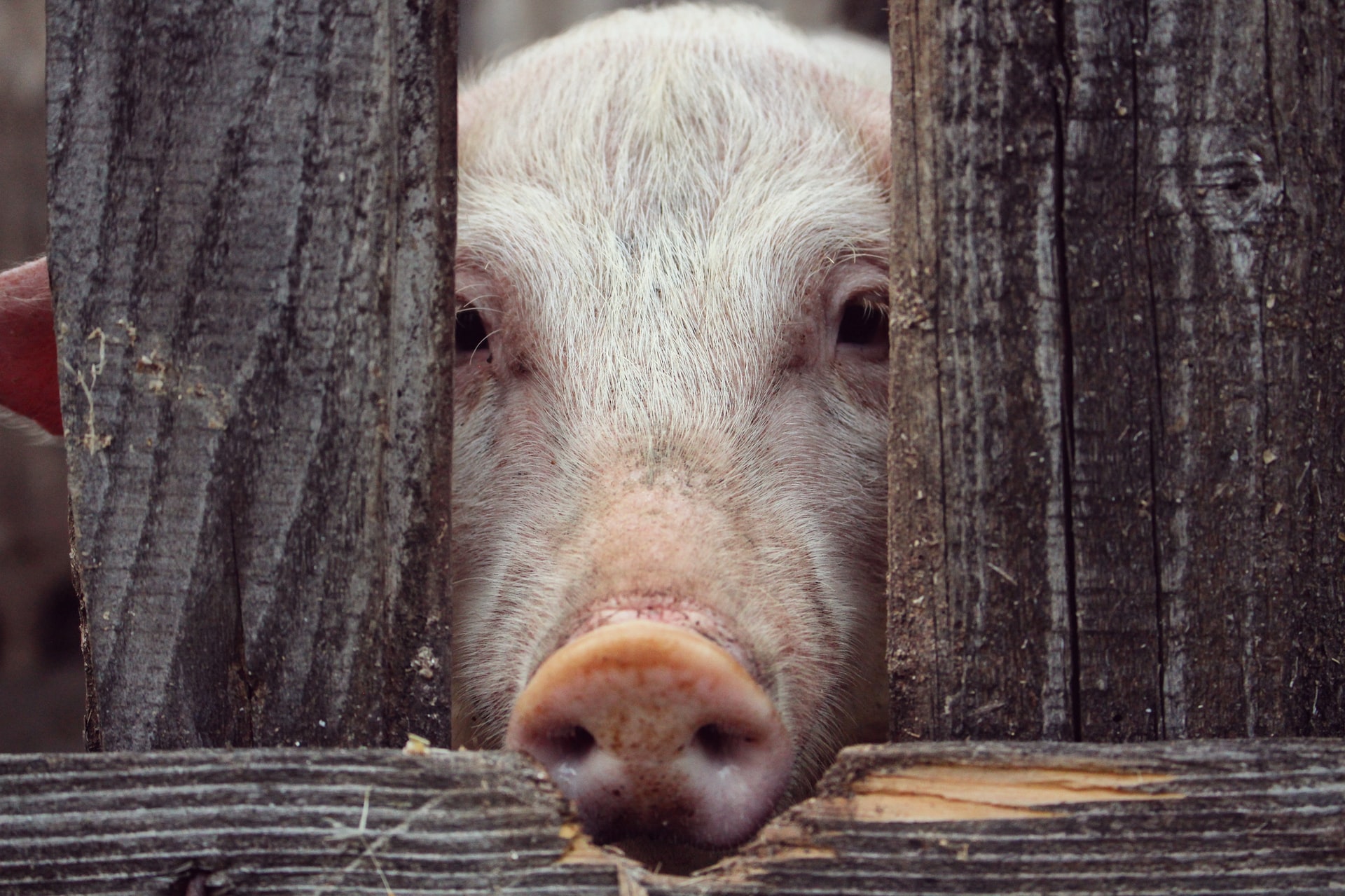
Pigs

They are born in a flood of magma.
They claw their way to the center of the earth.
They don’t know what a blouse is, and they don’t care.
There are seventeen constellations named for their kin.
They coordinate all the Monday briefings.
When they read the wrong books, they return them to libraries with bookmarks still inside.
They have decided not to have piglets.
They’re opposed to the question, “where is the healthiest seat on an airplane?”
They call their mothers.
They call out corrupt politicians.
In fact, they make calls every day.
They are good at advocating for what they want.
They understand the difference between camouflage and communication.
They do not dream of tumors in their flesh.
They don’t reply to spam.
Shovels are modeled after their mouths.
The sound of drilling makes them nauseous.
They use their perceived softness to their advantage.
They can actually make holes in wood with their snouts.
Which tells you something about softness. And persistence.
They never ask for the “good friend discount.”
They do appreciate the “old friend discount.”
They are made of soap, a little plastic, and red dye #5.
They believe putting books on a body is a healing act.
Their memory is 251 million years old.
They experience the world as time-lapse abundance.
They can’t look up.
At night when they are sleeping, wrestlers come.
They don’t use the word “casualty.”
They are excellent listeners.
They don’t mind perpetually wet nostrils.
When they relax, they make two figure fours with their legs.
They never say, “nature is constantly surprising us.”
For they remember the porcine age.
They keep the entire planet in delicate balance.
When they are angry they throw something extremely light, like feathers, or gods.
They’re not sure there’s a big takeaway.
Their ancestors spread fragments of the seven wonders all over the world.
Over centuries they have carried them, in their bifurcated hooves.
Rocks make them feel tender.
They get high on dust motes.
The worst insult is to be told they have “pigeon hands.”
They are often the only ones at the light therapy station.
They never shorten ‘yours’ to ‘yrs.’
What they want is simple.
They have no vestigial organs.

Slop

after Major Jackson’s “You, Reader”

So often I think of the men
who tried midnightly to enter
my room or how tidelike
we crawled skyward to ground
the teetering bus, and so often too:
keys in doors, doors wide open, credit cards
on tables in public spaces. Should I be offended
that my phone doesn’t recognize my face
in the morning? Should I throw my clay body
at every tottering night prowler? How I will
the tree’s craw to magick an owl there—
our unblinking communion!—how it is
in my mind, always, but for that one
time. If it’s true that there is only one
notable death, and that is the pig farmer’s,
I’ll speak, yes, you know what’s coming. Already
I have debased myself: the skin of my belly
hangs loose as a sigh, so yes. I see
how this slop unfurls before me: a sea
of nutritious glop and I sing its praises.
I am a mother, after all. Tell me again,
how you ate what I would not, could not;
how your skin burned like mine and I shamed
you for it, buried you beneath an idea
of something delicious that would
finally satisfy me. Take me by handfuls
and lay me down—the whole pudding of me.
It matters not that you won’t eat me, it matters
that you don’t. It was you who made me, one rib
at a time, and me who made you: domestic
and domesticated, both unfit for the wild
life, spewing methane and wallowing
in the puddle we’ve homed.

A Mother-Daughter Survival Story in a World Destroyed by Climate Change

The first time I read Diane Cook’s fiction—as a workshop classmate in Columbia’s MFA program—I followed her to the water fountain in Dodge Hall, professed my admiration, and insisted that we become friends and read each other’s work for the rest of our lives. Luckily, she wasn’t put off by my intensity. Eleven years later, I can attest to great friendship, much draft reading, and so very many novel writing pep talks.

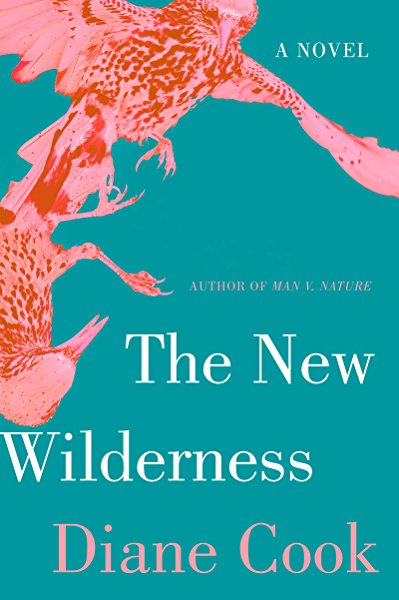
Even in the story that made me a Diane Cook superfan, which, if memory serves, involved a tragic accident with a pen on a crowded bus in Brooklyn, it was obvious that Diane had a singular voice and worldview, full of wisdom, wit, and yearning. Readers were introduced to this worldview in her acclaimed story collection, Man V. Nature

Now, Diane returns with her bold, haunting, Booker Prize-nominated debut novel, The New Wilderness, which takes place in a world destroyed by climate change, pollution, and overpopulation. Set in the near future in a country that resembles America, the book follows a group of twenty people chosen to participate in a government study where they’ll live in the last remaining Wilderness State. At the novel’s center are a mother and daughter: Bea, who fled the City for the Wilderness to save Agnes, her sick young daughter, who needed different air. 


Jessamine Chan: Not to limit your future subject matter, but I want there to one day be an English Lit course called “Climate Horror: The Fiction of Diane Cook.” Maybe it’s just going to be “the early fiction.” What drives you toward the end-times as a subject? 

Diane Cook: I really enjoy world-building, and perhaps I am too pessimistic, but in building future worlds or alternate worlds (which are often future worlds) I can’t help but predict a dire situation. A lot of my scenarios—in my stories or in the novel—seem impossible, but they’re actually playing out in some form currently. Sometimes when I think of my book, I forget it isn’t really happening somewhere. I like to use the big fictionalized world to blow out and make very visible something you could see today if you knew where to look or cared to see it. This isn’t often my intention when I set out, but our world seeps in when I’m writing. I can’t stop being a person in our real world even when I’m immersed in the one I created. 

JC: Without giving too much away, what are some ways the real world seeped in?

DC: Environmental deregulation. Most deregulation, actually. Immigration and migration and border enforcement. I remember early on in writing the book, I worried whether my premise seemed too far out there. But the Trump presidency has made it all seem almost inevitable. He sets twelve fires so you can’t put them all out. People can’t commit to all the issues all at once. Something falls through the cracks. He’s done major damage to the country and its future that most people don’t even know about because those weren’t the fires they were fighting. 

JC: I was struck by the many rules for survival, and the parallels, in terms of behavior for the common good, between pandemic rules and Wilderness rules. How did the government “study” and “the Manual” provide useful constraints for storytelling? At what point in the development of this world did these rules emerge? 

DC: I follow rules. Full stop. I have a lot of theories as to why…suffice it to say, something made me very rule-oriented. I’m fascinated by the different relationships people have with rules. How some people follow them, while others don’t think they are applicable. There are a lot of rules in my first book, Man V. Nature. There’s even a Manual. Rules govern everything about how our society does or doesn’t run. Most interesting to me might be the unspoken rules, the spaces between us where there aren’t bright red No Trespassing signs. Putting those constraints on a world brings out our prickly humanity. Which comes in handy in a book that is pressing characters toward their more animal sides.

I think the idea for the Rangers being nitpicky enforcers was there from the beginning, as was the Manual. I couldn’t envision a wilderness area without needing rules and a method of enforcement. I used to teach in a literature and writing program, and as part of the program, we went on camping trips into state and national forests. These trips seemed composed of one big rule to follow. That’s how it is in wilderness areas. I’ve never been in a wilderness where I wasn’t potentially breaking a law or rule. This is not me complaining—see above, big rule follower—but it’s interesting that to preserve something wild we must impose a system of regulation over it. It’s so stupidly and necessarily human. 

JC: How did you decide how much technology to use in a story set in the near future? There’s surveillance and drones, but the maps “look like a child had dreamed them up.” 

Rules govern everything about how our society does or doesn’t run.

DC: I didn’t so much decide as avoided. A pleasant byproduct of writing about people living as nomadic hunter-gatherers in the wilderness is you’ve built in a natural logic for not using technology. I had played around with a lot of different ideas about how their world might look in the future, about what kinds of tech would exist. But then I would get so wrapped up in the minutiae. What would it look like, what would it do, and how? And then I’d have to think about just how far in the future the book was, and what would be possible, and all of that parsing made me unhappy, and took me away from what I was actually trying to write about.

My book wasn’t about technology, and so I decided I would barely mention it at all. And that made me happy. In that way, any idea or object could be free from the association of the future, and could just be the thing that I felt made the most sense or created the image I wanted, or the idea I wanted to play with. The surveillance drones echo our current world. The childish maps evoked images of treasure maps, of x marks the spot, of kid adventure. I liked playing with the tension between this adventure narrative aspect of the book and the real life and death stakes. The maps have a menacing quality. Like kids playing a game that suddenly gets real. 

JC: What’s your own relationship to technology? We’ve talked sometimes about your aversion to social media.

DC: Social media is not for me. It turns me into my worst self. I’m happier away from it. I wish I could access the community aspect of it in a genuine way, but I couldn’t parse that from everything else. Best to walk away. I’m a bit of a luddite. I never update my phone. Half the emojis people send me are white squares or question marks. It’s fine. I don’t think I’m missing out on too much. It’s the thought that counts. I know I sound so boring right now. I just am not made for the future. Which is probably why I wrote a book about future people being forced to live like prehistoric people and no one has a cell phone. 

JC: Let’s talk about motherhood. Entire families are trying to survive in The Wilderness State, children are being born. A family is necessary to stay warm at night! The depiction of Bea and Agnes’ relationship is so unsettling, because you really get into the unknowability of parents and children. What were some of the mysteries of motherhood and daughterhood that you hoped to explore? 

As mothers and daughters, we are drawn together and repelled apart by the very relationship that binds us.

DC: I really wanted to look into the things we don’t want others to see in ourselves, especially when it comes to these big archetypal roles we inhabit. I long to know all of my mother’s secret feelings about motherhood. When she hated being a mom. What she really felt when our relationship was at its worst. What frazzled her as a young mom. When I broke her heart. The things she probably never would have offered up on her own, but maybe if I had asked…. When she died, all that potential knowledge left with her. Like the ways she might have instructed me in how to be a mom. Not in the tips and tricks realm, but in the secret feelings that would save me from feeling bad and ashamed of myself in my worst moments. I can complain or be candid with my friends, but it’s only a bit of tension release. It never feels truly liberating. If I could do that with my mom, though, it would feel like discovering truth. Because I am of her. If she felt it, then I would know there is nothing wrong with me. We are from the same line.

I wanted this line to be present for Bea and Agnes. I wanted this sense of loss to be present, even when they are together. To explore how, as mothers and daughters, we are drawn together and repelled apart by the very relationship that binds us. My mom was my person in our family. Without her, I feel pretty detached from everyone else. But, still, there was a distance between us that we always tried to bridge but never quite managed to. I think in the end we didn’t know each other as well as we wanted to. As I got older and became a mother, I think I looked for ways to know her as I never did before. It’s a poor substitute, but I think in the losses we experience we have to look for something to discover that we couldn’t have found otherwise.  

JC: We became moms around the same time, and being “art moms” is something we talk about regularly. Rather than asking how you “get it all done,” which male writers are never asked, I’d like to know how motherhood has informed your writing of this book, and generally.  

DC: It’s made me feel really protective of my ability to write as my work. To try to make sure this can always be my job. To that end I’ve been trying to, er, diversify. I love books. But I love writing more. I just want to write creative things. I want to write fiction. Whether it’s in book form or some other form. Like, I’ve written these two books. Now I want to be a writer on a broader scale. To try other forms. To know how to do it all. So I can always pivot when needed. Publishing is too fickle. I can’t put all my eggs into it.

Publishing is so hard because that very basic desire is never guaranteed, even when people care and work hard for it.

Being a mom has made me more practical about the act of creating. I remember going back to work after my daughter was born. I was on deadline—it was the most recent of many missed deadlines, so it’s possible I could have pushed it yet again. But I just felt like I had to just finish this fucking thing once and for all. It was time. Now that I had this kid I had to stop finding my way and be there already. So I went back to work before I was ready and it was really hard. It was a self-imposed thing that was physically painful. I felt like I was being a terrible mother, hurting and abandoning my daughter. But my other art friends and mom friends were good about reminding me that I was teaching my daughter something about ambition and passion and work, not about abandonment. There are so many things that she will encounter in her life that will attempt to derail her from what she is trying to accomplish. I want to make sure I give her an example where she feels loved and cared for, but also where she sees how to take the time she needs in order to make things, to do things for herself.

I just had another baby in June, and without even meaning to, I have already set myself up to start a new project when he is about four months old. I think I will have a different relationship with that return to work this time, but if anything, it makes me realize how important it is for me to do the work that I do. 

JC: And now your book has landed on the Booker Prize Longlist! Congratulations! What’s that been like?

DC: It’s been awesome and unreal. I’m really proud of my book, and all of us launching it were working hard. But before the announcement I was expecting that while The New Wilderness would have its fans, that group would probably be small. I’m not trying to be dreary or insecure by saying that, I’m just being realistic. My galleys shipped the week the country went into lockdown. They sat in mailrooms and empty offices rather than potentially getting read or piquing interest. I don’t have a social media presence. Most people didn’t know I had a new book coming out, even people who loved my story collection. With the longlist announcement that changed overnight. And I’m so grateful. Writers just want to find readers. Publishing is so hard because that very basic desire is never guaranteed, even when people care and work hard for it. Add in the global pandemic, and it just felt like an impossible situation. I now know that many more people will read my book and take it seriously. They may not like it. But they’ll read it. That is all I ever wanted.

10 Short Stories About Women’s Transformations

The Little Mermaid sacrifices her tail for a human soul. The Navajo Changing Woman grows old and is reborn with the seasons. The nymph Daphne becomes a tree to escape lovesick Apollo. Women transform because we are hungry. We transform because we’re restless, and because we’re dangerous. Women transform seeking liberation from domesticity, obscurity, prescribed roles, our own bodies. We transform for fun. 

Animal Wife by Lara Ehrlich – Red Hen Press Presales and Broadsides

My book Animal Wife is a collection of stories about women’s transformations, from girls into wives, mothers, and monsters. In “The Vanishing Point,” a woman constructs a mechanical deer suit to live in the woods behind her childhood home. In “Animal Wife,” a girl embarks on a quest to find her mother, who she believes is a swan. In “Desiree the Destroyer,” a timid proofreader creates a cage fighting alter ego. 

  I, and the ten women whose stories I’ve assembled here, use transformation to illuminate the raw places inside our female protagonists and their worlds. Our women escape, they devour, they create life—and they discover their true selves by stripping away their known skin.

The Bloody Chamber

“The Tiger’s Bride” from The Bloody Chamber and Other Stories by Angela Carter

In this story by the queen of modern mythology, a girl’s father loses her in a game of cards to a carnival-masked beast who carts her away to his palazzo, “a world in itself but a dead one, a burned-out planet.” She finds strength in her imprisonment (“He snuffed the air, as if to smell my fear; he could not.”), and when the beast offers to send her back to her father, she realizes that her existence has been as vacant as the clockwork maid who now serves her. “I was a young girl, a virgin, and therefore men denied me rationality just as they denied it to all those who were not exactly like themselves in all their unreason.” Rather than return to the father who had sold her, she transforms into a tigress whose vitality rivals the beast’s.

The Pushcart Prize XLI by Bill Henderson | Penguin Random House Canada

“The Mushroom Queen” from Tin House by Liz Ziemska

A restless wife wants more than she has; wants to be more than she is. One night, she wishes for “a placeholder, someone to keep her life intact while she goes on a little reconnaissance trip,” and she gets her wish, in the form of fungus. A mysterious Mushroom Queen transforms into the woman’s doppelganger and steals her life, while the original woman dissolves into a fungal colony, “the discontent of one calling to the desire of the other.” As the Mushroom Queen molds her new human life to her will, the original woman “runs her mycelium under fields of cabbages and cantaloupe,” trying to find her way back home.

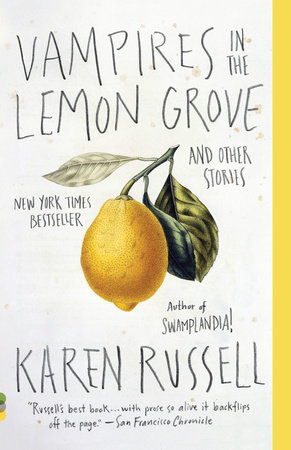
Vampires in the Lemon Grove by Karen Russell

“Reeling for the Empire” from Vampires in the Lemon Grove by Karen Russell

When a change in government bankrupts their families, women are recruited to work in a silk-reeling mill with the promise of an “imperial vocation” that would free their fathers and husbands from debt. They’re spirited away to a factory room with a single window where they’re forced to spin silk from their own bodies. As they feed their thread into a giant reeling machine, the girls transform into silk worms until “every droplet of our energy, every moment of our time flows into the silk.” The narrator, Kitsune, chafes in her new role and organizes a rebellion. “Who knows what the world will look like to us if our strike succeeds?” she says. “I believe we will emerge from it entirely new creatures. In truth there is no model for what will happen to us next.”

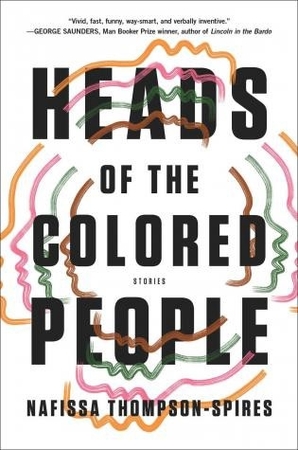
Fatima, the Biloquist: A Transformation Story” from Heads of the Colored People by Nafissa Thompson-Spires

Fatima, one of two Black girls at her private school, “had existed like a sort of colorless gas” before she met Violet, a Black girl with albinism who is as confident as Fatima is insecure. Under Violet’s tutelage, Fatima “absorbed the sociocultural knowledge she’d missed…through committed, structured ethnographical study,” like watching Fresh Prince of Bel-Air. Although Fatima enjoys a newfound sense of self—“there was something prettier about her now”—her “transformation” is tested when she begins dating Rolf, a white boy from her school:

“The conventions of such a transformation dictate that a snaggletooth or a broken heel threatens to return the heroine to her former life. That snaggletooth, for Fatima, was either Rolf or Violet, depending on how you looked at things…”

Babies” from Museum of the Weird by Amelia Gray

In this fierce, funny flash story, a woman awakens having given birth although she wasn’t pregnant. “But there he was, a little baby boy, swaddled among cotton sheets, sticky with amniotic fluid and other various baby-goops.” Although the woman’s boyfriend is “not amenable to babies,” she embraces her newfound motherhood and insists they keep the baby—and the one she births the next night, and the next…

The Husband Stitch” from Her Body and Other Parties by Carmen Maria Machado

This narrator owns her desires and knows what she wants. She savors the way her body transforms through desire—“the silky suds between my legs are the color and scent of rust, but I am newer than I have ever been”—and through motherhood, and in the aftermath of birth, when the doctor obliges her husband’s request for “that extra stitch.” She gives her husband all of herself, and all she asks in return is that he refrain from touching the ribbon she wears around her neck. But, “brides never fare well in stories, and one should avoid either being a bride, or being in a story,” the narrator says. “After all, stories can sense happiness and snuff it out like a candle.” 

Awayland by Ramona Ausubel

High Desert” from Awayland by Ramona Ausubel

A woman whose daughter drowned decades ago feels her uterus falling. She visits the doctor, she goes to the mall where she buys lime-green thongs—“they look fertile to her and she finds themselves wanting them, needing them”—she rides the bus. Throughout this deceptively simple day, the woman revisits the loss of her child and anticipates another loss as she considers a hysterectomy: “The problem is that her body was once a house where her daughter lived…. All these years she has carried the tiny inland sea her daughter swam in.”

The Wives are Turning Into Animals” from May We Shed These Human Bodies by Amber Sparks

Men recall their wives’ “soft smooth faces” as the women acquire bestial features and strange appetites. The husbands are concerned about violating social boundaries (“that the neighbors will complain about the carcasses littering their lawns”) and grapple with deeper worries that gnaw at the roots of their marriages, “that their wives will finally fly or crawl or swim away, untethered from the promises that only humans make or keep.”  

How to Survive on Land” by Joy Baglio

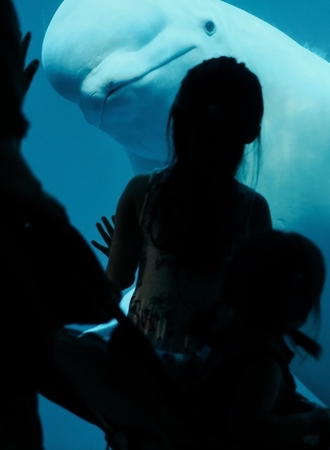
Amphitrite and her twin sister Thetis are accustomed to the strange things their mother does, like eating shellfish for breakfast, keening like a whale, and showing off her glistening tail. She’s a mermaid, after all. But when the girls are twelve, their mother begins to change, starting with a fateful day at the aquarium when she dives into the beluga whale tank.

“She was still wearing her floral-print blouse, and her hair and shirt billowed with weightless beauty. I had never seen her like this: both fish and woman, something ancient and forgotten, no longer an invalid in an aqua chair, but mythic and powerful.”

When her restlessness becomes unbearable, the mermaid leads her family on a voyage to the Arctic where her daughters must confront their ancestry. 

“Starver” from Fen by Daisy Johnson

In this story, which begins with the account of a 17th-century eel massacre, Katy stops eating. Her sister Suze tries to feed her, “surprising her with peeled carrots chopped into mouthfuls, chunks of melon, halved avocados,” but Katy resists and Suze can only watch helplessly as her sister withers and begins to transform into an eel. “[T]he skin on Katy’s arms was bleached of color; her mouth was a stretched line.” Even still, Suze enjoys a novel closeness with her sister. “In a way she’d never done when I trailed her to netball practice or balanced on the edge of the sofa while she and her friends watched films, she included me in this: her starving.” 

“Breasts and Eggs” Grapples with the Weird Mess of Women’s Bodies

Though you’ve probably only learned Mieko Kawakami’s name recently, with the release of Breasts and Eggs from renowned indie press Europa Editions, she’s been a well-known figure in the Japanese literary world for several years. Haruki Murakami called her his favorite young novelist, and the novella that became Breasts and Eggs was the winner of the prestigious Akutagawa prize. The novel is Kawakami’s first translated into English, as well as the first of a three-book deal with Europa. In Japan, she’s also a pop singer and popular blogger. In fact, the book began as a series of blog posts years ago.

Breasts and Eggs is presented in two sections. The shorter, novella-length section of the book centers around Natsuko and her sister, Makiko, as well as Makiko’s daughter Midoriko. Makiko and her daughter are visiting Natsuko from the more rural Osaka, and Makiko has come into the city to explore her options for breast implants. Though she works as a waitress and is a single mother, she’s set on breast implants as both a physical and mental manifestation of a femininity she can’t grasp. Natsuko doesn’t necessarily approve of her sister’s desire, but she also doesn’t interfere. Over the course of a few days, the personalities of the three women clash with their desires for their bodies and their minds, creating a simmering atmosphere of resentment and ambition.

The second, much lengthier section finds Natsuko ten years later, with a well-regarded novel, and confronting her own relationship with intimacy, sexuality, and fertility. This part of the novel is more experimental, and heavier on moral arguments. As Natsuko explores her desire for a child, and her options for having one considering that she’s repulsed by sexual contact, she gets involved with a community of people who were born from sperm donors. All the while, she questions whether she actually wants the child she is considering, and what it means to want a child in the first place. 

Kawakami was attempting an ambitious project with this novel: to question the role and function of the female body and how it is interpreted in society, through the lens of one woman with an unconventional path. We spoke via email about the role of the literary industry in the novel and the complex arguments the characters undertake with regard to fertility.

Translated by Hitomi Yoshio 


Rebecca Schuh: I loved how specifically Mieko charted the trajectory of Natsu’s writing career. What made you interested in showing the ins and outs of the literary industry to a broader audience?

Mieko Kawakami: It wasn’t my intention to write a kind of tell-all story about the literary industry, but when I set out to write seriously about the life of the protagonist Natsuko and the problems she faced in her life, it became essential to write about aspects of her writing career. The novel is about people who are drawn to things that are not of their own choosing—the urge for artistic creativity, sexual identity, the body—so perhaps that’s why, in that sense too, it became such a symbolic scene. 

RS: What inspired you to write about this triangle of  struggles, with  breast augmentation and fertility and sex?

The body is something that cannot be separated from the self, and at the same time, it is the closest other.

MK: I wanted to write responsibly about the cycle of how we are born, how we live and die, through the lens of one woman’s life. What happens to the body, and all the other aspects, during our lifetime? Breasts and eggs, as the title implies, are organs that are symbolic but also realities of women in terms of gender and sex. The body is something that cannot be separated from the self, and at the same time, it is the closest other. For me, writing relentlessly about the body—which is the ultimate personal experience—from all angles, is connected to writing and observing society and the distant unknown.

I had no intention of portraying what is generally perceived as the conflicts of a thirty-something woman. As women, we are often measured and defined by our gender and social roles such as motherhood, wifehood, and certain occupations and positions, existing merely as numbers in various statistics and data in society. But in reality, each one of us is an irreplaceable individual. There are parts of us that cannot be labeled, feelings that cannot be explained, and memories and circumstances that cannot be shared. This is called individuality, but these things can also be labeled as “abnormal” just because it is out of line with the norm. Heterosexuality, marriage, motherhood, a stable life… if you are not following this linear track, then you have no right to become a parent. In this sense, Natsuko Natsume does not meet the social conditions for encountering her own child. But she thinks, and she acts. Without borrowing the framework of a fable or science fiction, I wanted to write a story about one woman’s survival—a woman with no social status or power—within the same world order that the reader inhabits. 

RS: I was interested in Yuriko’s theory about the parental ego in the realm of donor conception, that parents care as much about their own fulfillment as they do about the well-being of children generally. She believes that parenting is fundamentally selfish, since the child is not asking to be born, and, by her estimation, 1 in 5 children are born into a life of pain. Do you think her theory has any credence, or is it mostly a reflection of Yuriko’s tragic past? 

MK: I understand Yuriko’s position well. Anti-natalism, or the idea that we should desist from procreating (note: for those who are already born, it is an imperative to live a virtuous life), has been eloquently expressed by Schopenhauer and Cioran, and more recently elaborated on by the philosopher David Benatar. However, I believe that anti-natalism from the perspective of women, whose bodies have the ability to give birth, is fundamentally different from their claims. Yuriko Zen has a painful past, but she doesn’t base her beliefs entirely on her experience alone. She truly believes that it is a tremendous violence to force a “body,” which is the premise of “pain,” to suddenly come into existence. Is childbirth really something to be celebrated wholeheartedly? The question Yuriko poses is an essential ethical problem that must be considered as reproductive technologies continue to be developed.

RS: What inspired your interest in donor conception that became such a deep throughline of the book?

The birth of a child often becomes a tool to perpetuate the model of normalcy.

MK: It is often said that the Japanese do not have a religion, but what plays its role instead is patriarchy and the pressure to conform. Most families are created on the basis of blood ties, and the hurdles of adoption are astronomical. There is little diversity in terms of family structure. The ethics and acceptance of sperm donation (also called artificial insemination with donor sperm, or AID) are completely different in the West and in Japan. The birth of a child often becomes a tool to perpetuate the model of normalcy, for the sake of the parents or the family name, and the whole ordeal is treated with absolute secrecy. I was moved when I read the accounts of those born through AID and to learn of their suffering and unceasing fears. And it’s not just men who enforce these oppressive norms. Many women have also internalized these patriarchal structures. 

RS: Can you talk a little bit about your life as a writer? 

MK: I grew up in a poor single-mother household. All through my teenage years, I’ve had to lie about my age so that I could work various jobs—as a restaurant server, dental assistant, dishwasher, cashier, factory worker, bar hostess, and many others. Now that I write as a living, I’m surrounded by highly educated intellectuals who grew up doused in cultural and economic capital, and I often feel dizzy because I cannot comprehend that we have inhabited the same world. I happened to be able to make a living through writing, but I cannot help feeling incredibly lucky. First of all, I was blessed with a body healthy enough to survive, a resilient personality, and a mother who was a loving, altruistic, and truly wonderful human being. I am grateful to her from the bottom of my heart for teaching me how to think, and to overcome any hardship with laughter. No matter where I am or what I write about, I will never forget the town where I grew up and the people who were there.

RS: Who are your favorite writers or artistic influences?

MK: There are many, but I learned from Haruki Murakami the intricacy of description, the manipulation of information inside a novel, and the persistence and perseverance toward the act of writing. He is an enormous writer for me. In a similar way, the artist Hokusai always gives me inspiration and courage. He’s an artist who produced so many works throughout his life with every fiber of his being, creating incredible masterpieces in his seventies while lamenting that he could not draw even a single cat to his satisfaction. At the age of 90, he is known to have said on his deathbed, “If I had five more years, I could become a true artist.” I want to live and produce work that lives up to their standards. 

9 Books About Living in Parallel Realities

I have been asked a lot about autofiction with my latest novel, which is about a Korean American adoptee named Matt who finds out that he has a doppelgänger, also named Matt, who has lived a much more successful life but has disappeared. Autofiction is not the genre for Disappear Doppelgänger Disappear, yet there is no mistaking the theme of multiple selves.

The genre Disappear Doppelgänger Disappear belongs in is Parallel Realism. Parallel Realism is fiction that represents the (real) experience of living in multiple realities through the fictional use of parallel universes. Lived reality for many people means being treated as if they are not themselves, or feeling like a different person than the person they have to be to survive. Parallel realism is not in the realm of science fiction or alternate histories. It is fiction about the multiplicity of now. I am partial to what Julio Cortázar said about his work—that he did not write magical realism; he wrote fiction more real than realism. Fiction’s real advantage is that it can explore experiences that can’t be explored via the dry facts of observable life. 

Here are nine parallel realist books I highly recommend, a list to which I would gladly, humbly, add my own.

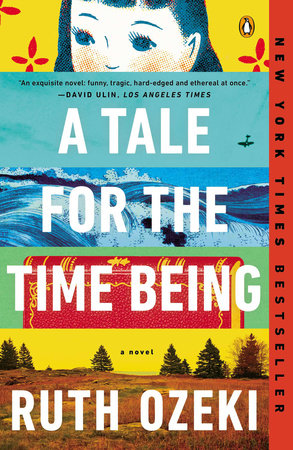
A Tale for the Time Being by Ruth Ozeki

A Tale for the Time Being by Ruth Ozeki

In Ruth Ozeki’s masterpiece, an author named Ruth discovers, washed up on the Canadian shore, a diary written by a girl in Japan. Ruth becomes more and more immersed in the troubles of the suicidal girl, until the diary entries, of course, eventually come to an end. It takes a connection across these two separate realities and times for these two very different characters to teach each other something about what it means to live.

A Murakami Fan Blog | Haruki murakami books, Haruki murakami, Murakami

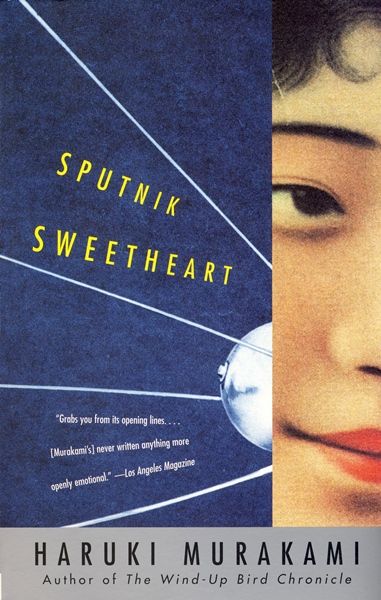
Sputnik Sweetheart by Haruki Murakami

This is not Murakami’s best book, but it contains the scene I remember best from all of his work. A woman at the top of a Ferris wheel sees into her own window below. In her apartment—is her. She watches herself do something she would never do, and she can do nothing to stop herself. The entire novel is worth it for this one scene, I think, which is what the book turns on.

New Directions Publishing | Fiction

All Fires the Fire by Julio Cortázar, translated by Suzanne Jill Levine

In particular, from this story collection, one should read the story “The Island at Noon,” in which a man takes a particular flight over a particular island again and again and finally decides to give up his life and move to the island. From the beach, he sees the plane he used to ride—suddenly it crashes into the ocean. An islander jumps into the sea and pulls out a man—who is the protagonist—from the wreckage and onto the empty beach.

Mr. Fox by Helen Oyeyemi

Mr. Fox by Helen Oyeyemi

A novel about the multiple lives we live through stories—both the stories we tell others and the stories we tell ourselves. Multiple characters who are also the same characters live and die, as an author trades stories with his imaginary—or is she real?—muse. Most fun is when the author’s wife gets involved in the story/self-making. Love always complicates what is real.

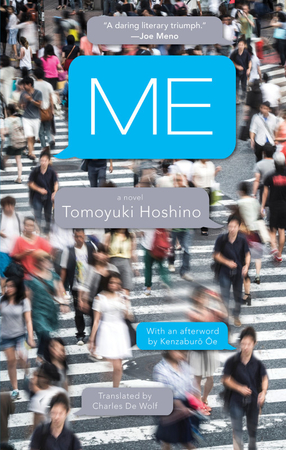
ME by Tomoyuki Hoshino, translated by Charles De Wolf

The narrator of ME comes home one day to find himself already inside. In other words, there is another version of him there with his wife. Soon, versions of the narrator are everywhere. Are these multiple realities or the reality of a person’s identity being an iteration one can’t control?

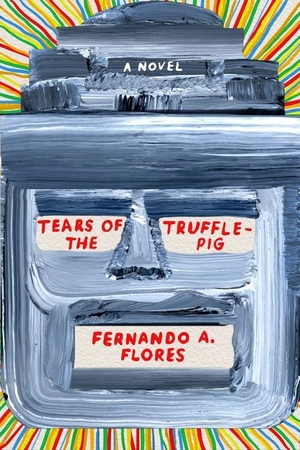
Tears of the Trufflepig by Fernando A. Flores

Rather than an alternate past, this novel depicts a parallel universe present. In South Texas, drugs have been legalized and the new contraband is “filtered” animals brought back from extinction. Arbitrary borders of all kinds are represented here. Flores’s novel is a great example of how parallel realities makes our reality even more clear.

Manazuru | Ingram Academic

Manazuru by Hiromi Kawakami, translated by Michael Emmerich

This might be fudging the rules a little, but this is my favorite of Kawakami’s books and it features a woman who feels someone—people? spirits?—following her, though no one else can see them. She is drawn again and again to Manazuru, which is where these two worlds seem to meet. On one trip, she is almost lost to this other world, these other beings, among whom may or may not be her missing husband.

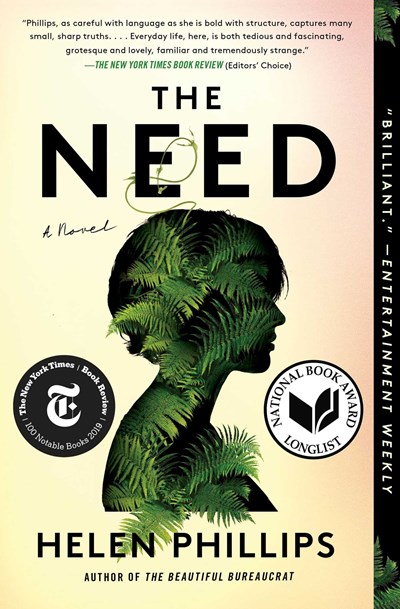
The Need by Helen Phillips

The Need by Helen Phillips 

One of the best books of 2019, The Need explores the multiple realities of work and parenthood, of love and grief, as a young archeologist discovers objects from a parallel universe in which, among other things, God is female. But along with the objects of another universe come the people and attachments of the other. Parallel realities here help depict the reality of how difficult it is to meet the expectations of being so many things to so many people at once.

Collected Fictions by Jorge Luis Borges

The Garden of Forking Paths by Jorge Luis Borges, translated by Andrew Hurley

Of course, this list could not be complete without The Garden of Forking Paths and especially its title story, in which the narrator meets a scholar of his eccentric ancestor-author, who apparently locked himself up in a garden labyrinth and wrote a final, sprawling book. The labyrinth was never found, and the book was a mess of contradictions. The scholar, however, explains that the book is the garden and is not contradictory but a representation of many realities at once. Borges’s story itself is an exploration of many possibilities and ends with the narrator’s choice to close off all other possible paths by following the one he least wishes to take. 

Karl Ove Knausgaard and Kim Kardashian Are More Similar Than You Think

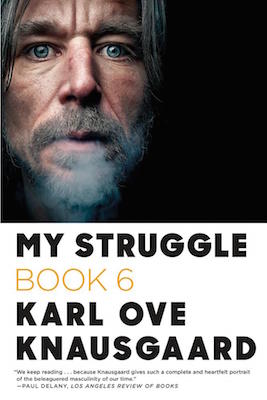
About a week after the New York City coronavirus quarantine measures were announced, I knew the time had finally come: I had to stop melting my brain with Keeping up with the Kardashians marathons and use this strange break from reality to do something that felt “productive.” Yes, it was time to pick up the daunting, 1,152 page The End: My Struggle Book 6 that had been accumulating dust in my bookshelf ever since Archipelago Books published the English translation in September of 2018; it was time to finally finish reading the self-told story of Norwegian author Karl Ove Knausgaard’s life. 

I’d torn through the first five volumes of My Struggle, but cowed by its prodigious size, I’d been letting The End languish since 2018. I bought the book the day it hit shelves, read the first five pages in my bed, then put it away next to the rest of the series with a vague commitment to “read it later.” This March, unemployed and surrounded by reports that we were not to leave our homes for the foreseeable future, it appeared “later” had finally arrived. As I embarked upon my “big quarantine project” of merely getting through this gargantuan novel, I began to realize that perhaps reading Book 6 and binge-watching Keeping up with the Kardashians were not so different after all.

At eighteen seasons (and counting) and 3,600 pages in their respective mediums, I can think of no two personalities who have been so devoted to faithfully capturing every moment of their lives—no matter how painful, private, or mundane—as Kim Kardashian and Karl Ove Knausgaard. Conventionally, society mandates that only those who have already reached widespread acclaim in their area of expertise deserve to write autobiographies, while only celebrities who have become famous in their own right deserve to have television crews chronicling their lives and the lives of their immediate family members. After all, why would we find it interesting to invest ourselves so deeply into the personal lives of those we don’t and will never know, unless we stand to gain something by it? Yet Kardashian and Knausgaard flip the very concept of “deserving” such fame on its head. Both Kardashian and Knausgaard became famous by acting as if they were already famous. 

When Kim Kardashian began filming Keeping up with the Kardashians in 2007 and Knausgaard commenced writing the “My Struggle” series in 2008, both enjoyed a small amount of fame—but nothing remotely near the astronomic level of celebrity they would achieve after establishing their respective franchises. As we all know, Kardashian’s father was the now-deceased Robert Kardashian, an attorney infamous for successfully defending O.J. Simpson in his trial for the murders of Nicole Brown Simpson and Ronald Goldman. In the early 2000s, Kardashian (fille) worked as a personal assistant for Paris Hilton, appearing alongside Hilton on a few episodes of The Simple Life and in countless paparazzi shots. Kardashian worked for a few other celebrities in ensuing years (most notably as a stylist for Lindsay Lohan in 2004) and, in 2006, opened clothing boutique Dash with her sisters—but what placed Kim most staunchly on the radar was a leaked sex tape featuring Kardashian and former boyfriend Ray J. Curiously, while Kim was at the time only a B-list celebrity at best, Vivid Entertainment—who bought the rights to the tape for $1 million and released it on February 21, 2007—chose to title the tape Kim Kardashian, Superstar

Both Kardashian and Knausgaard became famous by acting as if they were already famous.

Prior to the release of Kim’s sex tape, Kris Jenner—Kim’s mother, who has since trademarked the phrase “momager”—had discussed the potential of creating a reality show centered around the Kardashian and Jenner families with Ryan Seacrest, who had just created his own production company, Ryan Seacrest Productions. Seacrest was put in touch with Kris through a casting director as he sought to create a reality television show centered around a unique family (Seacrest was inspired by The Osbournes, the MTV series which centered around Ozzy Osbourne and his family). Seacrest delivered a test tape to E!, a network that at the time focused mainly on entertainment news. Capitalizing upon the intrigue generated by Kardashian’s sex tape, E! picked up the series. In August of 2007, E! announced that a new “non-scripted family sitcom” focusing on the Kardashian and Jenner families was in the works. By October of that year, the first episode had aired, and the world of media was changed forever.

Across the globe, Norwegian author Knausgaard had made somewhat of a name for himself in the world of fiction. After working a number of odd jobs throughout Norway (including such stints as assisting patients in a psychiatric hospital and pouring concrete on an oil platform), Knausgaard relocated to Sweden and published his first novel Out of the World in 1998, at the age of 30. The novel, which centers around the life of a 26-year-old substitute teacher disgraced for his relationship with a 13-year-old female student, went on to be the first debut novel from any author to win the Norwegian Critics Prize for Literature. Six years later, Knausgaard published his second novel, A Time for Everything, the narrator of which is a man who is writing a book about the history of angels. The book was again received generally warmly by critics and earned Knausgaard a nomination for the Nordic Council’s Literature Prize. Still, Knausgaard was not yet a global household name. In 2008, frustrated with attempts to fictionalize his tumultuous relationship with his father, Knausgaard decided to abandon fiction and traditional narrative forms altogether and write, in painstaking detail, about what he knew best—his own life. 

In linguistics, deixis refers to a word or expression whose meaning is dependent on the context in which it is used (for example: here, you, me, that one there, or next Tuesday). Deixis is inextricable from individual experience—when I say that “I am sitting here writing this piece now,” the reader will never know exactly where I mean by “here” or what precise moment I mean by “now” unless I provide them with additional information. Both Keeping up with the Kardashians and My Struggle have captured the collective consciousness as embodiments of deixis; by so painstakingly presenting us with each mundane detail of their lives, Kardashian and Knausgaard provide us with the intoxicating illusion of living in someone else’s “now.” The embodied deixis of Keeping Up with the Kardashians and My Struggle connotes a sense of urgency—the “here” and “now” are always changing, and as the very title of Keeping Up with the Kardashians reminds us, it is our duty as readers and viewers to keep pace.

Kardashian and Knausgaard provide us with the intoxicating illusion of living in someone else’s ‘now.’

Yet, while the central conceit of their projects is actually quite similar, the public could not perceive Kardashian and Knausgaard more differently. Where My Struggle has earned Knausgaard acclaim as a champion of the modern autofiction movement, Kardashian is generally viewed as vapid and superficial, undeserving of her fame and success. Apart from the obvious roles that gender or race (Kim is half-Armenian) might play in this disparity, perhaps one reason for this difference in public opinion are the diametrically opposed attitudes Kardashian and Knausgaard hold towards their own work. While Kardashian, at least on the surface, appears to unapologetically revel in her fame, Knausgaard repeatedly reminds us that he feels shame about his project, and remorse towards all those he hurt in his quest to write honestly about his life. This, however, raises an important question: if you feel ashamed about your work, why publish it? Why write it in the first place?

Knausgaard is more candid about his motives for writing My Struggle in Book 6 than ever before. “There is something all of us experience, which is the same for all human beings . . . but which nonetheless is seldom conveyed apart from in the private sphere,” writes Knausgaard in “Part One” of Book 6 (185). “All of us encounter difficulties at some point in our lives, all of us know someone with a drinking problem, mental issues, or some other kind of life-threatening affliction . . . these things are not represented and thereby seem not to exist, or else to exist only as a burden each of us must bear on our own . . . [in the newspapers and the media, death and sickness are] presented as facts, described from a distance as a kind of objective phenomenon. . . what kind of society are we living in, where everything that is sick, deviant, or dead is kept from sight? . . . I could have written an article about all this,” admits Knausgaard, “but it wouldn’t have said much because arguments have got to be rational, and this is about the opposite, the irrational, all the feelings we have about what it means to confront what has withered away into death, and what that actually is.”

And, for all of the shame Knausgaard expresses throughout the first five volumes of My Struggle about exposing those closest to him, he flips the script in Book Six and asks the reader to consider why we have built a society that causes us to feel this shame in the first place. “Some people are of the opinion I had no right to do what I was doing because in doing so I was involving other people besides myself. And this is true,” writes Knausgaard plainly. “My question,” he continues, “is why we conceal the things we do. Where is the shame in human decline? The complete human catastrophe? To live the complete human catastrophe is terrible indeed, but to write about it? Why shame and concealment when what we are dealing with here is basically the most human thing of all? What’s so dangerous about it that we cannot speak of it out loud?”

While news outlets, as Knausgaard mentions, share tragic stories of death and destruction, such reports are typically delivered in a distant monotone; whether the medium is a news broadcast or a written article, it is typically the job of a reporter to state the facts unemotionally, to appear objective and unbiased in their depictions of reality. Thus, it is not through the news, but through fictional protagonists that we are most often given a glance into the subjective, that we come to understand the unique emotional toll that death and destruction can take on a person. Nevertheless, no matter how meticulously authors render their fictional protagonists, they lack the element that Knausgaard brings to the table in My Struggle: veracity. By delving into his own, very real feelings about his father’s death—and, in “Part Two,” the most gripping section of Book Six, his then-wife’s bipolar disorder—Knausgaard merges the roles of journalist, author, and protagonist into one. For Knausgaard, writing about his life is a means through which to acknowledge the base aspects of reality, the sides of existence we’d rather gloss over—and the shame he feels about exposing those closest to him in the process is ultimately outweighed by his desire to faithfully depict “the complete human catastrophe,” to grant the reader unfiltered access into his “now.” 

While Knausgaard provides us with his ‘now’ as catharsis for reality, Kardashian’s ‘now’ is the ultimate escapist retreat.

And, if what Knausgaard advocates for is a shameless embrace of the “now,” no matter what hardships might arise, what better example do we have to turn to than Kim Kardashian? While Knausgaard provides us with his “now” as a cathartic means through which to absolve us of our own shame surrounding the darker sides of reality, Kardashian’s “now” is the ultimate escapist retreat—in her world of glamour and exorbitant wealth, the problems that do arise may feel so untethered to our own so as to appear totally minuscule and inconsequential by comparison. However, if we take a closer look, Kardashian’s problems aren’t so different from Knausgaard’s after all.

Much as we watch Knausgaard react to his father’s alcoholism in Book One, so too do we get to see Kim and her sisters react to the drug and alcohol abuse which their brother Rob Kardashian, Kourtney Kardashian’s on-again-off-again partner Scott Disick, Khloe Kardashian’s ex-husband Lamar Odom, and more side characters all struggle with throughout Keeping Up with the Kardashians, and it is Disick whose descent into alcoholism gets the most screen time. Scott’s alcohol abuse rears its head throughout much of the series, but perhaps never with more intensity than on Season 4’s aptly titled episode “Blame It On the Alcohol.” The episode, which aired in February of 2010, depicts a belligerently drunk Scott at Kim’s 29th birthday dinner. As Scott grows increasingly inebriated throughout the course of the dinner, their server refuses to provide him with more to drink. In a now-infamous act of disrespect, Scott, demanding more alcohol, eventually stands up and shoves a hundred-dollar bill into the server’s mouth.
In moments like these, Keeping Up with the Kardashians veers away from deixis as escapism and towards Knausgaard’s understanding of publicized deixis as universal catharsis. Knausgaard challenges us not to conceal the toll a family member’s mental illness might take on us, and “Blame It On the Alcohol,” which was broadcast to millions of viewers worldwide, certainly rises to the occasion. Like Knausgaard, the Kardashians here expose the ugly truth of a family member’s alcoholism and the distressing effect it has on their own psyches. No matter how much time we may spend watching Kim prepare for the Met Gala or jet set across the world in private planes, Keeping Up with the Kardashians would not feel honest without moments like Scott’s alcohol-fueled outburst; after all, there is no individual “now” that exists completely devoid of pain. 

After all, there is no individual ‘now’ that exists completely devoid of pain.

Academics or literary scholars who commend Knausgaard but are quick to dismiss Kardashian fail to recognize that, while their day-to-day experiences and the mediums through which they share their lives with the public are different, both figures’ commitment to embodied deixis is the same. Indeed, in a Season 17 episode of KUWTK entitled “The Show Must Go On,” Kim and her younger sister Khloe grow frustrated that their oldest sister, Kourtney, has grown increasingly guarded about sharing her personal life on camera. As Kim expresses her exasperation in a confessional scene, she astutely states, “All of the days that Kourtney isn’t filming, Khloe and I are having to pick up the slack and share more. Cause if we’re not sharing our lives, then what is the show?”

Kardashian and Knausgaard both understand that to create a successful reality television franchise or autofiction series—to allow the viewer or reader to completely lose themself in someone else’s “now”—moments of catharsis and escapism must act symbiotically to evoke a feeling of unfiltered honesty. If too much of one element exists without the other in either of these genres, critics may deem the work overly “scripted” or “fictionalized,” or just plain boring. If Knausgaard never spoke of simple happy moments with his family and only dwelled on his father’s death and his wife’s bipolar diagnosis, or the Kardashians never shared heated family fights or break-ups alongside all of their lavish fashion appearances and decadent vacations, neither project would feel “real.” And if the illusion of honesty disappears, the magic of embodied deixis—and, consequently, readers’ or viewers’ interest in your work—dissipates along with it.

There has perhaps never been a more relevant time than 2020 to heed Kardashian and Knausgaard’s message to embrace and publicize the “now,” even when that “now” is seemingly full of darkness. In the years leading up to this one, many readers and viewers may have felt a degree of resentment towards Kardashian and Knausgaard, no matter how much they indulged in or admired their work. How did these people gain international acclaim merely for publicizing their own mundane lives? we might have thought, with envy, on the way to our dreary nine-to-five office jobs or labor-intensive, underpaid shifts in the service industry. However, as the pandemic rages on and over 30 million Americans have lost their jobs, we have been forced to define ourselves not through our careers, but through a deeper understanding of who we are in stillness, who we are when we are forced outside of a capitalist framework. In accepting such stillness, the same mundanities that Knausgaard and Kardashian document begin to inform our own identities. 
In accepting such stillness, the same mundanities that Knausgaard and Kardashian document begin to inform our own identities.

No longer do Knausgaard’s long passages describing a simple family meal or even Kardashian’s hours spent trying on clothes and planning every detail of an outrageously expensive children’s birthday party feel quite as tedious. For many of us who are privileged enough to have kept our homes and remained in good health this year, similar small events have taken on a larger degree of importance as the pandemic has stripped our careers and favorite leisure activities away from us—take the bread baking trend or the collective obsession with Tiger King, for example. And, as the video of George Floyd’s horrific murder at the hands of the Minneapolis police made clear to us all, capturing “the complete human catastrophe” in real time can awaken a nation to long-standing injustices and inspire great societal change. 

We don’t have to agree with Kardashian or Knausgaard’s lifestyle choices or values—I often find Knausgaard to be a cold and unfeeling protagonist in his own novels, and as a democratic socialist, I believe that the Kardashians’ obsession with material goods represents pretty much everything that is wrong about a society built upon wealth inequality. Similarly, we don’t have to document every moment of our lives for public consumption; some of us may be more private than others, and you can share as much or as little about yourself with the public as you feel comfortable with. But we do need to recognize that there is merit in accepting Kardashian and Knausgaard’s premise: that every single moment of your life—even the darkest moment, even the most “mundane”—is important in its own right, and worthy of sharing, if you so choose.

Little Cousins Make Bad Third Wheels

An excerpt from The Death of Vivek Oji
by Akwaeke Emezi

Osita

Vivek chipped my tooth when I was eleven years old. Now, when I look in a mirror and open my mouth, I think of him and I feel the sadness crawling through me again. But when he was alive, when it first happened, seeing it just used to pump anger through me. I felt the same after he died, that hot anger, like pepper going down the wrong way.

When we were small, he and I were always getting into fights. It was mostly nothing, scuffles here and there. But one day, we were pushing each other in his backyard, our feet sliding in the sand under the plumeria tree, both of us angry over something. Vivek pushed me and I fell down against a concrete soakaway outside, splitting my lip, and that was when my tooth chipped. I cried, then was ashamed of crying, and refused to speak to him for a few days. He was about to leave for boarding school up North—some military academy that De Chika had insisted on, even though Aunty Kavita begged him for months not to send Vivek. But my uncle wanted him to toughen up, to stop being so soft and sensitive. I wanted him to stay, but I was too angry to tell him. He left and I stayed behind, nursing an injured pride that prompted me to fight anyone who brought up the missing corner of my tooth. I fought a lot in school that term.

By the end of the year, I missed him terribly and I started to look forward to when he would return home to Ngwa during the rainy season on holiday. It was during one of those long breaks that Vivek’s mother convinced mine to enroll us both in SAT prep classes.

“It’ll get the children ready for American universities,” Aunty Kavita said. “Then they can get scholarships and an F1 visa. Think of it as straightforward.”

She and De Chika expected Vivek to go overseas for university, with a certainty they passed down to him—a knowledge that his time here at home was temporary and that a door was waiting as soon as he was done with his WAEC exams. Later I realized that it was the spilling gold of the dowry that funded this belief, but back then I thought they were just being optimistic, and it surprised me, because even my own mother who believed in thick prayers had never mentioned me going overseas. The gold was a secret door, a savings account that could buy America for Vivek.

I didn’t want to take the test prep classes, but Aunty Kavita begged me. “Vivek won’t do it unless you do,” she said. “He really looks up to you. You’re like a senior brother to him. I need him to take the classes seriously.” She patted my cheek and nodded as if I’d already agreed, giving me a smile before she walked away. I couldn’t say no to her and she knew it. So every Friday and Saturday during the holidays, Vivek and I took a bus down Chief Michael Road to the test center. I got used to spending the weekends at Vivek’s house, to the Saturday breakfasts when De Chika would detach the cartoon section of his newspaper for Vivek and me, when Aunty Kavita made yam and eggs as if she’d been doing it her whole life.

She had learned to cook Nigerian food from her friends—a group of women, foreign like her, who were married to Nigerian men and were aunties to each other’s children. They belonged to an organization called the Nigerwives, which helped them assimilate into these new lives so far away from the countries they’d come from. They weren’t wealthy expats, at least not the ones we knew. They didn’t come to work for the oil companies; they simply came for their husbands, for their families. Some knew Nigeria because they’d lived here for decades, through the war even; others spoke Igbo fluently; between them, they taught Kavita how to cook oha soup and jollof rice and ugba. They held parties for Easter and birthdays, and when we were little, I used to follow Vivek to attend them. We would line up for the photograph behind the birthday cake; we dressed up as ninjas for the costume party and spent weekends in the pool with the other Nigerwives’ kids at the local sports club.

One year, when we were all around thirteen or fourteen, there was a potluck at Aunty Rhatha’s house. She was from Thailand and had two daughters, Somto and Olunne, roundfaced girls who laughed like identical wind chimes and swam like quick fish. Her husband worked abroad, but Aunty Rhatha seemed to get along just fine without him. She made pink and yellow cupcakes, fluffed with air and sugar, decorated with carefully piped designs and sugar decorations, birds and butterflies in startling colors. Though he had a bit of a sweet tooth, Vivek hated the cupcakes, but he took his share anyway so he could give it to me. We walked around the house as wings melted in my mouth, our bare feet against the cool marble tile. Aunty Eloise was pacing in the back parlor, on the phone with someone, probably one of her sons, who had already left for university in the UK. Eloise was short and plump, with thick sandy hair and a perpetual smile. She and her husband, a doctor from Abiriba, both worked at the teaching hospital, and Aunty Eloise liked to host dinners and parties at her place, just to get some sound back into the walls now that her children were gone.

“Why doesn’t she just go and join her kids?” Vivek wondered aloud.

I shrugged, peeling a cupcake wrapper off. “Maybe she likes living here? Or maybe she just likes her husband.”

“Please. The man is so dry.” Vivek looked around, at the other Nigerwives clustered in the dining room, arranging pans of curry and chicken and rice along the table. “Besides, most of them are only here because of their children. If not, they would have left from since.” He snapped his fingers for emphasis.

“Your own mother, nko?”

“Mba now, her own is different. She was already living here before she got married.” We heard the front door open and Aunty Rhatha’s high voice, shimmering as she greeted the new arrival. Vivek cocked his head, trying to hear the guest’s voice, then smiled wickedly at me. “I think that’s Aunty Ruby,” he said, wagging his eyebrows. “You know what that means—your girlfriend is here.” I was grateful he couldn’t see me blush through my skin, but his eyes were laughing at me anyway. Aunty Ruby was a tall woman from Texas who owned a daycare center; her husband owned a carpet shop, and her daughter, Elizabeth, was one of the most beautiful girls I had ever seen in my short life. She was a runner, lean and longboned, with a swaying neck. I once tried to beat her at a footrace but it was useless, she moved like the ground was falling away beneath her feet, the future rushing toward her. So I stood back and watched her race all the other boys in the area who thought they could take her on. Elizabeth always won, her chest high and forward, sand flying behind her. Most of the boys were afraid to even talk to her; they didn’t know what to do with a girl who was faster than them, but I always tried to chat with her a little. I think it surprised her, but she didn’t seem to like me the way I liked her. She was always nice to me, though, if a little quiet.

“Leave me alone, jo,” I said to Vivek. “Is it because Juju is not here?”

Vivek colored immediately, and I laughed in his face as Somto and Olunne came around the corner with a bowl full of sweets.

“Do you want?” Somto asked, her voice bored as she held out the bowl. She hated when her mother hosted things, because they always had to help set up and serve and clean afterward. Vivek shook his head, but I rifled through the bowl, picking out the Cadbury chocolate eclairs that were my favorite.

Olunne stood next to her sister, twirling the white stick of a lollipop around in her mouth. “What were you talking about?” she asked.

“His wife,” I said, grinning. “Juju.”

Somto kissed her teeth. “Tchw. Please. I don’t have energy to waste on that one.”

“Ah‑ahn,” Vivek replied, “what’s your own?”

“She never comes to these things,” Somto complained. “The rest of us have to attend, but that one just lets her mother come alone. Who does she think she is, abeg.” Somto was right:  Jukwase, who we all called Juju, didn’t like to come to the Nigerwives’ events. Her mother was Aunty Maja, a nurse from the Philippines who was married to a much older businessman. I’d watched Vivek pine after Juju for years, but the girl was too somehow, a little strange.

“Maybe she thinks she’s too janded to be here,” Olunne said, shrugging. Juju had been born overseas, even attended school there for a few years before her parents moved back to Nigeria. She’d been very young at the time, but her voice still kept an accent that was different from ours. It was too easy to gossip about her, especially when she avoided the rest of us.

“Don’t mind her, she’s there forming fine girl because of her hair,” Somto said, her lip curling. I bit my tongue; this hair thing was a sore point for Somto, who’d had to cut hers the year before when she started secondary school. Juju’s mother had enrolled her in a private school that didn’t require mixed girls to cut their hair, so Juju got to keep hers long, curling down her back. Vivek frowned, but he knew not to push Somto or defend Juju too hard. It wasn’t until we were on the way home that he lowered his voice to complain to me.

“The girls don’t give Juju a chance because they’re so jealous. It’s not fair.”

I nodded, knowing how it had cut at him to hear them talking about her. “It’s not,” I agreed, mostly for his sake. He just liked that girl too much. She lived down the road from De Chika’s bungalow, at the end of a quiet street near Anyangwe Hospital. We used to ride our bicycles up the street all the time, slowing down when we passed Juju’s house. Aunty Maja loved flowers, so their fence was covered with piles of pink and white bougainvillea.

“Go and knock on the door,” I told Vivek. “See if she’s home.” “And say what?” he replied, pedaling in slow loops in the middle of the road.

I shrugged, confounded by the intricacies of wooing a girl in her father’s house. We pedaled home, leaving our bikes next to the swing set in the backyard. There was a cluster of bitterleaf bushes in front of the boys’ quarters, fighting with an ixora hedge for space. Aunty Kavita and De Chika used to have a househelp who lived there, but she returned to the village after a year or two—a death in the family, I think—and they never replaced her. Vivek and I took over the housework; we would sweep her old room in the boys’ quarters as if someone still lived there, dragging the broom under the metal frame of the bed. We stayed there when we wanted to be away from the grown‑ups, our bodies sprawled over dusty‑pink bedsheets, eating boiled groundnuts and throwing the shells at each other. Aunty Kavita left us alone there, only shouting from the back door of the main house if she needed anything. De Chika never even set foot inside. All of this made it a little easier for me to hide Vivek’s thing from them when it started.


I don’t know how long it had been happening before I noticed. Maybe someone else noticed first and just didn’t say anything, or maybe no one did. The first time I saw it with my own two eyes was the year after he chipped my tooth, on a Sunday after I had gone to Mass with them. It was afternoon, and Vivek and I hadn’t even changed out of our church clothes. We’d eaten lunch, cleared the table, then escaped to the boys’ quarters with a small stack of Archie comics that Aunty Eloise had brought back from her nephews on her last trip to London. I had one splayed out on the cement floor, my head and one arm dangling off the edge of the bed, my feet propped against the flaking wall. Vivek was sitting cross‑legged on the mattress beside me, his comic in his lap, spine curving forward as he bent his head over the pages. The day was hot and quiet, the only sound the rustling of thin paper and an occasional cluck from the chickens outside.

Vivek’s voice broke into the silence, low and rusty. “The wall is falling down.”

I lifted my head. “What?”

“The wall is falling down,” he repeated. “I knew we should have fixed the roof after it rained last time. And we just brought the yams inside.”

I closed my comic and sat up. His head was still bent but his hand was unmoving, resting on a half‑turned page. His fingernails were oval, cut short down to the beds. “What are you talking about?” I asked. “Are you all right?”

He raised his head and looked right through me. “You don’t hear the rain?” he said. “It’s so loud.”

There was nothing but sun pouring through the glass louvers and old cotton curtains. I stared at Vivek and reached my hand out to his shoulder. “There’s no rain,” I started to say, but when I touched the cotton of his shirt and the bone of his joint underneath, his eyes rolled up into white and his body flopped sideways, falling against the mattress. When his cheek hit the foam, he jerked as if he was waking and scrabbled his arms and legs, pushing himself back up and gasping loudly. “What? What happened?”

“Shh! You’re shouting,” I said. I didn’t touch him because I was afraid of setting him off again.

His eyes were wide and jittery. He looked around the room, his gaze brushing past me as his breath settled. “Oh,” he said, and dropped his shoulders. Then, almost to himself, “This thing again.”

I frowned. “Again? Which thing?”

Vivek rubbed the back of his neck, looking uncomfortable. “It’s nothing. Just small‑small blackouts. Forget it.”

I kept looking at him but he wouldn’t look back at me. “You were talking about rain,” I said. “And yams.”

“Ehn?” he replied, cramming an is‑that‑so into one sound. “I don’t remember. Biko, fashi the whole thing.” He picked up his comic and lay on his side, turning away from me. I didn’t say anything, because that’s how he was: when he wanted to stop talking about something, he stopped talking about it, shutting down like metal protectors had fallen around him. But I watched him, after that—I watched him to see if it would happen again. 

There were moments when he would become very, very still,  just stop moving while the world continued around him. I saw it happen when we were leaving class one evening: Vivek stopped walking and our classmates jostled and pushed him as they filed past. I was a few people behind him but he still hadn’t moved by the time I caught up. The others were glaring at him, sucking their teeth as they shoved past. He was walking as if he was drunk, staggering and stumbling, his lips moving slowly and soundlessly. I grabbed his elbow and propelled him forward, pulling him against me so he wouldn’t fall. As the stream of people continued out of the compound—JAMB exams were coming up, and the test center was full of students—I got Vivek through the gate and pushed him out of the way, up against a fence by the roadside gutters. Finally, he shuddered and came back. “Are you all right?” I asked, letting go of his elbow.

He looked at me and the protectors fell over his face. “I’m fine. Let’s go.” I followed as he strode toward the bus stop, wary but silent.

Somehow it became like that whenever he was back from school, even when we went to the village house over the holidays, me watching him close and intervening when I could and Vivek never really telling me what was going on. If I stepped in like I had at the prep center, he just thanked me and we’d continue as if nothing had happened. I got used to it.

None of our parents noticed, maybe because he was always so controlled around them, never as relaxed as he’d been in the boys’ quarters. To them, it just looked like he had quiet spells. Aunty Kavita would assume he was tired and tell him to go and sleep. My mother told her to check if he was anemic, and Aunty Kavita fed him large portions of ugu for a while, just to be on the safe side. He and I still read our comics and ate boiled groundnuts in the boys’ quarters of his house when I was in town; we still rode our bikes down the street; we still knocked down guavas and mangoes with a hollow bamboo stick, then lay on the bonnet of De Chika’s car to eat them.

We were young, we were boys, the years rolled by in the heat. Later, much later, I wondered if I should have told his parents what was going on, if that would have helped him, or saved him a little.


Two years before I finished secondary school, I finally gathered enough courage to approach Elizabeth. She was taking the SAT classes with us and I toasted her the same way we all toasted the girls we liked—I bought her FanYogo after class and escorted her to the gate when her driver came to pick her up.

Vivek watched me and laughed. “You’re finally chyking this girl?” he said. “Thank God. At least you didn’t wait until graduation.”

After a week of sending her letters and carefully writing down the lyrics to the hottest love songs for her, Elizabeth finally agreed to be my girlfriend. She saved the letters, all written on sheets of foolscap paper torn out of my exercise books, and wrote me notes telling me how romantic I was. I visited her house in Ngwa a few times—I already knew I could never bring her to Owerri.

One weekend, she suggested traveling down with me when I was going home.

“I have an aunty who lives there,” she said. “And my parents know your aunty, so they’ll allow me to go with you. You know how the Nigerwives are.” She was starting to get excited about the idea. “We can take the bus together!”

I refused. I didn’t want to chance anyone seeing us together at the bus stop in Owerri and reporting me to my mother. She had already warned me about having girlfriends during a rant about the sins of the flesh, when she told me that if she ever caught me masturbating, she would throw me out of the house. I couldn’t believe she was the one talking to me about that instead of my father, but my mother didn’t care. By then, she was a hardened pillar of religious fervor and prayerful discipline. When De Chika told me stories about the cheerful young woman my father had married, the one he used to sit and gist with in the kitchen, I couldn’t recognize her as my mother. The mother I knew was a straight‑mouthed person who held nightly prayer sessions, always kept her hair wrapped in a scarf, and quoted her pastor in every second breath.

Meanwhile, my father was staying longer each day at the office and I was spending more weekends at Vivek’s house, even when we didn’t have SAT classes. My mother noticed this immediately, of course. How could she miss it when we were all she had? She complained to my father about his absence, and when he continued to stay late at work, she decided he had a mistress. It was a fear fed to her by the women in her church. Why else, they reasoned, would he stay away from his family? No, he had to be keeping some girl in a guesthouse somewhere. On the nights I was home, I sometimes heard the shouting from their room as she threw accusations at him in tight, balled‑up words.

“You think you can just go and take another woman, ehn?! And me, I will fold my hands and allow it? Tufiakwa! You will tell me who she is, Ekene—today today! You will not sleep until you tell the truth and shame the devil!”

“Mary, lower your voice,” my father said, his voice tired and level. “The boy is asleep.”

“Let him hear!” she said, her voice punctuated with claps. “I said, let him hear! Is this how you want to shame me in front of everybody? Oya now, let us start with our son!”

I covered my head with my pillow to block the sounds. “Your mother wants you to spend more time here,” my father told me the next morning over breakfast. “This is your home. Not your uncle’s house.”

I kept my mouth shut and ate my cornflakes, even though I wanted to tell him that he was just as guilty as me. He was never there. He was the one leaving me alone with my mother, who felt like a hammer instead of a person. So I stayed away from home when I could, making up an impressive roster of excuses: De Chika was sick and they needed me around the house. The road from Ngwa to Owerri was plagued with armed robberies and it wasn’t safe to travel. If my mother had simply told De Chika that she wanted me home more, he would’ve sent me along immediately, but she never brought it up and he didn’t notice how often I was around. I think my mother kept quiet because she didn’t want it to look as if she and my father couldn’t handle me.

Aunty Kavita had told me once that my mother had wanted more children, but that she’d stopped trying after several miscarriages. I couldn’t imagine what she’d gone through—how much of my mother’s life I missed because I was a child—but I wondered if that was what changed her. She must have prayed so much in those years. Maybe that’s where the bright, high‑spirited woman De Chika talked about went; maybe she’d been sanded down into dullness by grief and prayers that went unanswered.

Instead, she held on to her faith with a stubborn kind of bitterness, as if it were all she had left—a trapped and resentful love. Who could stay bright and bubbly after losing baby after baby? What do you do when you’re not allowed to be angry at God? I could see why she made everything so heavy, but I still ran from her, all the way to the boys’ quarters at De Chika’s house and to Elizabeth, who made me never want to go back to Owerri.

“I don’t like to be in my house either,” she told me. Her family didn’t have a lot of furniture, and although Elizabeth said it was just the style, I had heard my aunt and uncle talk softly about her father. He was a quiet man, gracious, always with a handkerchief in his suit pocket, but from what I’d overheard, he was also a drunkard. His carpet store was always in danger of closing—he spent their money as if it was water—and Aunty Ruby had to hide what she made at the daycare center from him. Elizabeth never talked about it and I never asked her. She let me come over when he wasn’t home, but she preferred to visit me at De Chika’s house, in the boys’ quarters.

“I like it here,” she said, twirling around the room. “It’s like our own little world.” My heart pounded as I gazed at her arms and legs, so long and brown, sticking out from her clothes, ending in narrow hands and sandaled feet. There had been one or two girls at school that I’d knacked before, but Elizabeth was the first girl I’d brought there, to that small room and the dusty‑pink bedsheets. She never stayed more than an hour or two; Vivek came looking for me there after his piano or French lessons, and she would always straighten her clothes and leave before he returned. I spent what time we had in disbelief that this person—the same one I used to watch as she cut through the air running—was here, choosing to be with me. I remembered in exquisite detail how, each time she won a race, her face would light up, her lips parted as she panted for breath, her eyes bright with victory. I wanted to re‑create that look. I wedged the door to the boys’ quarters shut and pushed up against her, and she giggled under my hands and mouth. “Don’t stop,” she sighed, as I kissed her neck. Her skirt was starched and green and pleated. I slid my hands up her thighs, but she pushed them away, so I just held her waist instead.

One afternoon we were making out on the bed, our hips grinding through layers of clothing, when Elizabeth pulled her head back and searched my eyes with hers. “Touch me,” she whispered, and I froze, wondering if I’d heard her correctly. She let her legs fall open and arched her hips up toward me. “Touch me,” she said again, and I obeyed, reaching under her skirt. We fucked right there on the mattress—the sweat of her body against mine, her legs around my waist—and it was like a better life. My hair was short then, but I kept it in little twists like I was trying to start dreadlocks. She slid her hand into my hair and tugged on it, and the pain in my scalp was electric and perfect. I had to strip the sheets afterward to hide where I’d pulled out and spilled all over them.

Two hours later, I lay on the bare yellow foam of the mattress and told Vivek about it, about the noises she made and how she felt inside. He was standing by the window in a green T‑shirt, leaning on the wall, eating chocolate Speedy biscuits from a purple packet he held tight in his hand.

“You didn’t use a condom?” he asked, making a face.

I shrugged. “Abeg, I wasn’t prepared. How I fit know today was the day the babe go gree?”

“That’s stupid,” he said, his voice flat.

“Small boy,” I sneered, a little stung by his comment. My cousin was a virgin and I knew it. He scuffed his foot and looked out of the window. There was a dark bruise around his right eye. I sighed and changed the subject, gesturing at his face. “Oya, who was it this time?”

“That Tobechukwu idiot from next door. Feels he can just open his mouth anyhow and talk rubbish.” He flexed his skinned knuckles and ate another tiny biscuit. It had been years since he’d chipped my tooth, but Vivek still fought a lot, just with other people now. He had a temper like gunpowder packed into a pipe, a coiled‑up strength that had developed with time, and because he was thin and quiet, no one expected the violence to explode out of his frame the way it did. I had seen a couple of his fights, and they were worse than when he used to fight me. At first, I’d tried to break them up, but I stopped after I arrived late once and saw Vivek beat the living hell out of the other boy. He didn’t need my help.

“Where did the two of you fight?” I asked, surprised he hadn’t gotten into trouble.

“Down the road.”

“You’re lucky his mother didn’t see you. What did your mumsy say when she saw your face?” I knew Aunty Kavita would have been upset.

“She hasn’t seen anything,” he snapped. “Fashi that one. Gist me about Elizabeth. How many times?”

I grinned. “Back to back,” I boasted. I didn’t tell him how it had felt when she gasped my name into my ear, her fingers digging into my back—like in that moment I was a whole entire world.

Vivek rolled his eyes. “It’s here you’ve been bringing her?” 

“Yes, but it’s just today we did that,” I said.

He glanced down at the speckled foam of the mattress. “Is she going to come here again?”

“Maybe. What’s your own?”

Vivek ran a hand over his shaved head, the skin like burnt gold. “I want to watch next time,” he said, lifting his chin at me.

I sat up on my elbows, my chest bare, still smelling of her and sex. “Wait, wait,” I laughed. “Repeat yourself.”

He raised an eyebrow and kept quiet. I flopped back down on the mattress.

“You dey craze,” I said, looking up at the popcorn ceiling. “Watch for where?” I sucked my teeth.

“I’m serious,” Vivek said. “Unless you want me to tell my father what you’ve started doing back here.” I sat up fully and stared at him, but he was holding back a smile and laughed when he saw the alarm on my face. “I’m not going to report you, abeg. I’m just saying you should include me small.”

“Why do you want to watch?” I asked. “Is it that you like her or what?”

He scoffed. “I just want to see what all the noise is about. You people that keep talking about this knacking, knacking, every time knacking.”

“Ehn? So you want to just collect a chair and sit in a corner folding your hands while you watch us?”

He gave me a sneering look. “Nna mehn, don’t be stupid. I can just see through the window.”

“And if someone catches you standing outside, nko?” 

“Who’s going to see me with all those bushes outside the window? I can just stay behind them.”

Vivek ate another handful of biscuits casually, as if he was suggesting something normal. I lay back and stared at the discolored walls, trying to imagine Elizabeth being there again, her short hair rubbing against the mattress in rhythm with my thrusts, except this time with a pair of eyes pressed against the torn mosquito net of the window.

“It’s not as if you’ll see me,” Vivek said impatiently, as if he’d read my mind. “Just pretend I’m not there.”

I gave in. I actually knew some friends who did things like this. They’d rent a hotel room and some of them would sit and drink on the room’s balcony in the dark, watching as the girl got fucked inside, laughing quietly behind the glass of the sliding door, hidden by sheer curtains and the lack of light. We were men together and we liked to show off, so I agreed.

The next week, Elizabeth came back. We sat together on the mattress, my back sweating. Her collar was unbuttoned, showing the stretch of her neck.

“How are you?” I asked, stroking the palm of her hand with a finger.

She smiled at me. “I’m fine. Happy to see you.”

“I wasn’t sure if you would come back after last time.” 

Elizabeth laughed. “Why not?”

“Maybe I didn’t do a good job.”

She gave me a look, and in that second, I saw that she was nowhere as innocent as I’d imagined. I had assumed she was a little inexperienced because she was quiet and played hard to get, so it had felt satisfying to be the one with her on that mattress when we fucked. Like I was accomplishing something. But the way she looked at me made me think maybe I knew less about what was going on than she did.

“If you didn’t do a good job, you think I’d be here?” she said, and gave me such a cocky smile that my voice left me for a few minutes.

“So you’re just using me for my skills, abi?” I managed to joke, and Elizabeth laughed, throwing her head back.

“Don’t worry yourself,” she said. “Just enjoy. What’s your own?” She leaned in and kissed me and I stopped thinking. I unbuttoned the white cotton of her shirt with my pulse pounding, not looking at the window in case I’d see Vivek’s face behind the thin curtains. He’d insisted I replace the sheets on the bed (“Are you mad? You want to fuck her on just foam?”), and that I use a condom (“I don’t care if it makes her think you’re expecting sex. You are expecting it. And what if she gets pregnant?”). So we washed the pink sheets and dried them out on the clothesline, and now my palm was pressed against them as I tugged at Elizabeth’s underwear with my other hand.

She sighed and threw an arm over her face, turning it away from me. I kissed her neck and a breeze from the window made the curtains flutter. I focused on the curve of Elizabeth’s ear and her hand came up to grasp the back of my neck, her palm cool and dry. The sounds she was making must have carried through the spaces between the glass louvers. I briefly wondered what Vivek was doing out there. Was he touching himself or what? Isn’t that what someone would do? And what if De Chika or Aunty Kavita caught him behind the bushes exposed like that?

Elizabeth wriggled a little under me, dragging my attention back to her open shirt and small breasts cupped in a lace‑trimmed cotton singlet. I pulled the neckline down and put my mouth on her nipple, fumbled between our legs, ignoring the condom in my pocket as I pushed and sighed my way into her.

“Nwere nwayọ,” she warned.

“Oh!” I braced my hands against the bed and pulled back a bit. “Ndo.”

She smiled and kissed me, then wrapped her legs around my waist, her skirt falling up to her hips. We moved gently, and when the pleasure started to get too sharp, I pulled out to catch a breath. Elizabeth laughed and touched my cheek—but then she glanced past my shoulder and suddenly screamed, scrambling to cover herself and pushing me away. I turned around and there was Vivek, standing in the doorway, looking over the room, his eyes hooded and unfocused.

“Jesus Christ!” I leaped off the bed and pulled up my trousers. “What the fuck are you doing?”

He held on to the door frame and didn’t reply, his fingers digging into the wood. Elizabeth was crying, pulling her clothes back together, her hands shaking. I shoved Vivek and asked again, louder, but he just rocked backward like rippling water, then flowed forward, staggering a little.

“What is he doing here?” Elizabeth shouted, between sobs of rage. “Get him out!”

I pushed him harder, then again, out of the room, and he just kept taking it, his mouth slightly open, looking like a fucking mumu.

“Chineke, what’s wrong with you?” I knew he was having an episode, I knew he was sick, but I didn’t care. I was tired of covering up for him, tired of him being sick or strange or whatever was wrong with him. I really liked Elizabeth, you know, and now she was there, angry and crying in a corner of the bed, after he’d been standing in the door watching us for God knows how long. So I pushed him with all the anger I had and Vivek fell off the concrete landing, two steps down onto the ground. He broke his fall as if by reflex, twisting so that his hips and shoulders hit the sand, but his head still rocked from the impact, his eyes were gone, he still wasn’t here. Elizabeth screamed and I ran back into the room, terrified that Aunty Kavita would hear her from the main house, terrified that I’d hurt Vivek by pushing him so hard.

“Shh—it’s okay,” I said, climbing back on the bed and wrapping my arms around her. “It’s okay.”

“I want to go home,” she sobbed.

“No wahala. Come.” I took her hand, then led her off the bed and through the door. Vivek was curled up on the sand below, with his hands pressed to his face, hyperventilating. “Don’t mind him,” I said as we passed. “His head is not correct.” I escorted her out to the main road and she entered a taxi without looking back at me, slamming the door so hard that the frame of the car rattled. I watched it drive away, spluttering black fumes from the exhaust. She was never coming back, I thought in that moment; our relationship was over. I dug my hands into my pockets and walked back to the house, dragging my feet.

When I got back, Vivek was sitting on the landing, his back propped against the door frame.

“I’m sorry,” he said, as soon as he saw me, trying to stand up quickly. “I don’t know what happened—”

“You know what happened,” I said. “I don’t even care again. I’m tired. Every time with this your thing.” 

“Osita, please—”

“I said I’m tired.”

He ran a hand over his head, distressed. “What do you want me to do? Should I go and say sorry to her?”

“Don’t fucking talk to her,” I snarled, and Vivek flinched. I shook my head and raised my palms, backing away from him. “It’s enough,” I said. “It’s enough.” I didn’t look back as I walked away. I threw my clothes into a bag, then caught a bus back to Owerri, knowing I’d miss the SAT class the next morning. I didn’t care.

My mother stared at me when I walked into our house. “You’re home,” she said, frowning. I hadn’t been back in a while. Usually she would shout at me for being away so long, but this time she just looked up at me, her shoulders rounded and tired. She was sitting in the parlor with a tray of beans in her lap, picking out the stones, and she looked like maybe she had been crying.

I put down my bag. “Yes,” I said. “I’m home.”

A Novel About Rebelling Against Toxic Positivity

Janet, the acerbic narrator of Lucie Britsch’s debut novel Sad Janet, is a resister. She’s sad—has been for most of her life—and doesn’t want to take the pills that big pharma, her mother, and the culture at-large is pushing on her to “fix” her. She’s content with sadness, and she’s not into the “h-word”—happy—and taking pills to be that way, a new normal she wants no part of.

Sad Janet by Lucie Britsch

After an intervention orchestrated by Janet’s mother, probably with the support of her boyfriend, Janet breaks up with him, reclaiming her ability to eat pizza and watch bad TV alone. She works at a dog shelter, a job that was supposed to be temporary, but she doesn’t want to leave because of the dogs, who make her the closest to happy she’s ever been, and because of her strong, unsentimental boss, Debs.

The toll of Janet’s sadness shows, despite her sarcasm and humor mixed with a dash of vulgarity and quips like “When life throws you lemons, remember there are dogs.” It’s the Christmas pill that finally gets Janet, a pill specially designed for people like her who can’t stand the hype and family drama of Christmas. Just resolving to take the pill makes her feel lighter.

Sad Janet feels like it could be set anywhere through Britsch’s wry capturing of drug advertisements, the pervasiveness of medicating, and the Christmas-fueled capitalism that feels more draining than depression. Janet’s world rings true for anyone who takes pills, has seen a drug commercial, or been alive during the holidays.

Britsch and I exchanged emails about big pharma, Christmas spirit, kooky families, just being you, and—of course—dogs.


Sarah Appleton Pine: What is it like to release a book so of this moment in the world?

I joke that I wanted the world a bit sad for my book but not this sad.

Lucie Britsch: It’s so long between when you write a book and when it comes out, so I wanted to sneak a few current references in there and hope they were still current. I love it when you read something and there’s actually a reference you get like that, like a song you were actually singing the other day, so it’s more relatable. I didn’t know of course just how of this moment Janet would be. I joke that I wanted the world a bit sad for my book but not this sad.

SAP: Can you say more about this moment and how Janet is a part of it?

LB: She would see all this sadness and anger now and be hopeful for real change. I didn’t know the world would be like this when I wrote it and it would be as apt and we’d all be struggling more than ever to feel happy about anything, but life is hard and being human is hard, being sad is a fundamental part of it. I remember on The Good Place Janet said something about humans are ultimately sad because we know we’re going to die, that about sums it up. 

SAP: For the most part, Janet describes herself as being sad—not depressed, not a goth. It seems like sadness and depression (and being goth) often get conflated. How do you distinguish between them? 

LB: I think it’s just she doesn’t want to be labeled and doesn’t identify with any group, it’s just who she is. Depression is something clinical that can be treated whereas sadness is a feeling, for Janet it’s a natural one we should embrace. There’s this idea of the happy existentialist, someone who sees the void at the heart of existence but accepts it and is free, that’s something I’ve always been interested in and strive for. For Janet goths are part of something and she doesn’t feel part of anything.

SAP: Janet is okay—happy even—with her sadness and doesn’t view it as a problem like just about everyone else does. Does sadness serve a purpose?

Life is hard and being human is hard, being sad is a fundamental part of it

LB: Sadness definitely serves a purpose, it’s a cliché but without it how would we know what’s good. You can’t only feel the things you want to feel, you should feel the whole spectrum of human emotion. I always say if you don’t feel every emotion in one day are you even alive? Everyone knows a good cry is cathartic, we need to feel these things not block them.

SAP: Janet’s sadness has a grunginess to it, which I think contrasts to a glamorized sadness we sometimes see, especially in drug advertisements, like Janet points out. If anything, Janet’s life is the opposite of glamorous.

LB: Yeah I definitely wanted to move away from glamouring depression, I think we’re all bored of these pretty sad people manipulating us to sell stuff.

SAP: And big pharma seems especially eager to sell us stuff. “There’s a pill for that” feels like a mantra throughout the book, like pills are the only answer—some people are pretty quick to take them, then take more of them, which doctors encourage. Janet pushes against the efficacy of that. Fortunately, her dad and a couple of other people in her life embrace Janet’s sadness rather than see it as something that needs fixing, with pills or otherwise. There’s just such a push for one-dimensionality, eradicating sadness and feelings on that end of the spectrum. Is there ever a point where we have an obligation to encourage treatment? I think this sort of comes up at the end of the book, but I don’t want to give that away here.

LB: I think you have to find what works for you, Janet is just trying to find what works for her and stay true to herself, she accepts other people’s choices and just wants people to accept hers the same. She wants people to know you don’t always have to take a pill, there are other options, you can tell your doctor to fuck off, you can work it out yourself, but if you can’t, that’s ok too. It’s this monetising of normal feelings in a sad world Janet is against.

SAP: Besides sadness, I notice other emotions in Sad Janet—the occasional laugh, fury, jealousy, sarcasm (is that an emotion?)—but, of course, sadness is so essential. How would you describe this sadness?

LB: Janet’s can’t believe everyone isn’t sad or mad all the time. I always say that if you’re not a difficult woman, you can’t be living in the same world as me. Life is difficult, especially for women.

SAP: I think about that all the time, like all the little ways and big ways the world is more difficult for women. And Janet deals with some of that, too, like her mom wanting her to be more feminine, or at least brush her hair, and her ex-boyfriend’s expectations.

Her mom is perpetually locked in a mid-life crisis and (mostly successful) attempts to foist her ideas on the people around her, and meanwhile, Janet’s brother seems like an immature 12-year-old boy rather than a grown man with a family. These family dynamics are hilarious.

You can’t only feel the things you want to feel, you should feel the whole spectrum of human emotion.

LB: I love books about dysfunctional families too, I mean for me that’s what family is. It’s messy. We all have our sadness and we all cope with it differently, some can’t cope without medication and some can’t cope with the thought of being medicated, we’re all just muddling through. People have to let people do whatever works for them, in a family, in the world, we all want the same things, to not feel so shitty all the time.

SAP: Janet’s family seems especially messy at Christmas, particularly with her mother’s obsession with it, so Christmas seems like the perfect choice for the pill forced on the Sad Janets of the world. Your description of the Christmas obsession is so vivid. You really capture the capitalist spirit of the early build up with carols and cookies and mall Santas to the insistency on it being this big, dramatic day and how tough that is for some people. 

LB: Yeah, I think we’re not far off this sort of pill to be honest—it’s coming, you wait. People would want it, that’s the problem, there’s already a market.

SAP: Janet’s doctor hones in on the Christmas pill being a perfect pill for Janet, even though he hasn’t succeeded in getting her to take anything in the past. He even tricks her into coming into the office to sell it to her. It’s kind of surprising given all of Janet’s skepticism about doctors and big pharma that she has zero concern about health insurance. A lot of Americans deal with insurance hurdles to see doctors, get medication, etc. Does the difference in British versus American healthcare factor in at all here?

LB: Thankfully here in Britain, we have free healthcare in the NHS, and when it’s working it’s brilliant obviously. And just seeing the amazing efforts through this pandemic has made me very grateful we have it. I know it’s different in America and I hope one day you guys get the health care you deserve, I mean it should be a basic human right. I think if you don’t have a problem with big pharma though, you don’t see what’s going on.

SAP: I think a lot of Americans are envying universal healthcare right now—whether they want to admit it or not.

I also found Janet’s tendency to label herself (and others) interesting. She splits herself up—Sad Janet, New Janet, Old Janet, Bad Janet—and the tension between a unified self and a self with separate parts feels notable.

Fuck being happy, be you.

LB: She can be kinder to herself maybe, like she can be outside herself and see she’s complex, changing, growing; she isn’t this fixed thing she has to hate always. We aren’t just one thing, we have all these versions of ourselves we have to live with.

SAP: Janet classifies dogs, too, so your cover caught my eye—a dog in a “stupid outfit,” as Janet would say. Did you have a hand in the design or any thoughts you’d like to share about it?

LB: The first cover they sent me didn’t feel right at all so I asked them to come up with something else and this one just felt right. I had rescue greyhounds a few years ago myself and they didn’t know this so it just sort of felt like fate. I don’t know anyone that’s immune to a dog in a sweater.

SAP: I still have a burning personal question: do you have a dog?

LB: I don’t have a dog right now, but soon hopefully, and it will be a rescue greyhound for sure. They’re the best.

SAP: Anything else you’d like to add?

LB: I have bi-polar but choose to not be medicated, and it’s fucking hard but it’s just who I am. I’m always open about it and if people can’t handle it, it says more about them. I don’t know who these people are that have good mental health?

Being human is the hardest thing we’ll ever have to do. The more people talk about mental health, the more people realize having mental health problems is the norm, not the other way round. I just hope people read my book and know they can be whoever they are and I’m rooting for them. Fuck being happy, be you.

9 New Translated Books by Women

August is Women in Translation month, dedicated to works of literature originally written by women in languages other than English. As we explained in our 2018 version of this list, such works make up a tiny percentage of the books published in the United States each year, though with increased attention and dialogue around them, publishers will have an incentive to put out more. Consider this your excuse to tour the globe, absorbing its richly varied stories through the eyes of women whose first language is Korean or Polish or Arabic or French. Below are nine translated novels that first appeared in English in 2019 or 2020. (If graphic narratives are more your speed, there are also many wonderful women authors on our recent list of translated graphic novels.)

That Hair

That Hair by Djaimilia Pereira de Almeida, translated by Eric M. B. Becker

Half-Angolan, half-Portuguese Mila moved from Luanda to Lisbon at the age of 3. As an adult, she makes one demoralizing visit after another to Portuguese salons that have no idea what to do with her “rebellious mane,” applying abrasive chemicals and time-consuming weaves that soon fall apart. Mila sees this tale as a geopolitical one that spans continents, and in an associative style, tells it through memories of her parents and grandparents, interrogating even her own compulsions to notice and want to police the behavior of other Black people.

In This Korean Best Seller, a Young Mother Is Driven to Psychosis ...

Kim Jiyoung, Born 1982 by Cho Nam-Joo, translated by Jamie Chang

Millennial Kim Jiyoung experiences rampant patriarchy at every stage of her upbringing in contemporary South Korea. As a young wife and mother, she finally snaps in front of her in-laws and questions the expectation that she must bend over backwards to serve them. Apologizing that she must be ill, her horrified husband ushers her to a male psychiatrist, whose notes constitute the novel. Jiyoung even starts to dissociate, believing that she can seamlessly transform into other women. Though in some ways a relatively straightforward catalog of relentless patriarchal pressure, Jiyoung’s critiques are also anti-capitalist, as she wonders who could possibly be happy even if they were the last person standing in a world with today’s priorities.

Little Eyes by Samanta Schweblin

Little Eyes by Samanta Schweblin, translated by Megan McDowell

In Argentine author Schweblin’s latest novel, a tech craze for cute, furry robot animals is sweeping the globe, dividing the world into “keepers” and “dwellers.” Keepers purchase a camera-equipped kentuki—which come in a range of species, from crows and dragons to rabbits and moles—while dwellers purchase a remote controller that pairs them with one kentuki elsewhere in the world, allowing them to interact with and peer into a stranger’s life through the robot. The novel runs through many vignettes of such pairings. From displaced maternal feelings to disturbing sexual demands, kentuki prove to be just the latest vehicle for anonymous connection and digital intimacy in our increasingly networked yet still frequently lonely internet age.

Tropic of Violence by Nathacha Appanah, translated by Geoffrey Strachan

Mauritian-French author Appanah tells the story of Moïse, a boy growing up in the postcolonial chaos of Mayotte, an island in the Mozambique channel and neglected department of France. When Marie—the white nurse who adopted him as an abandoned baby—dies suddenly, 14-year-old Moïse falls in with the brutal gang leader whose child soldiers run a nearby slum. Different characters narrate the many short, vivid chapters, some like Marie speaking helplessly from beyond the grave about the devastating yet inevitable events that ensue.

The Frightened Ones by Dima Wannous

The Frightened Ones by Dima Wannous, translated by Elisabeth Jaquette

In recent-day Syria, Suleima and Naseem meet in their therapist’s waiting room, leading to an intense affair that ends abruptly as Naseem flees Assad’s dictatorship for Germany. However, he soon sends Suleima an unfinished manuscript that contains a close fictional double of herself. Suleima, who escapes to Beirut herself, struggles with her mental health as she looks back on her family’s difficult history in Syria, her narration interspersed with chapters narrated by her fictional version in Naseem’s unnamed book.

Drive Your Plow Over the Bones of the Dead by Olga Tokarczuk

Drive Your Plow Over the Bones of the Dead by Olga Tokarczuk, translated by Antonia Lloyd-Jones

Nobel laureate Tokarczuk sets this mystical murder mystery in a Polish village near the Czech border that contains a few year-round locals and many second homes for city dwellers. Older English teacher Janina Duszejko is one of the former; she spends her free time translating Blake with former student Dizzy and drawing up horoscopes using elaborate astrological charts she believes in fervently. When local men, many of them hunters who mistreat animals and dismiss the eccentric Janina, start showing up dead and surrounded by animal artifacts, Janina believes said Animals (she, like Blake, prefers to capitalize the word) are finally exacting their revenge and is determined to convince others of the same.

The Girl in the Tree by Şebnem İşigüzel, translated by Mark David Wyers

In the wake of Turkey’s violent 2013 Gezi Park protests, a 17-year-old girl sits in a tree in Istanbul’s Gülhane Park, reading Italo Calvino’s The Baron in the Trees (of which this novel is itself a sort of update). Aware that she might appear like she’s lost her mind, she chats with a bellboy from a nearby hotel who brings her food and water for weeks. She reflects on various heartbreaks, from an aunt who disappears to friends who were killed in a bombing and a teacher who ridiculed a deeply personal story she wrote, until her reasons for the arboreal campout finally emerge.

Hurricane Season by Fernanda Melchor, translated by Sophie Hughes

In a provincial Mexican town, boys find the local Witch dead in a canal under a mass of black snakes. She was known for furnishing the women of the town with spells and cures, the men with orgiastic parties. Each of the chapters, which often contain pages-long sentences, provides a window into the consciousness of a different townsperson, showing how the Witch became the scapegoat for all the shames and desires they would have preferred to keep hidden.

The Lying Life of Adults by Elena Ferrante, translated by Ann Goldstein

Set in a more privileged neighborhood of Naples than the Neapolitan Quartet, Ferrante’s latest novel centers 12-year-old Giovanna, who comes to the story a good student and loyal daughter of progressive, educated parents. When her father makes a mean remark about how she looks like his estranged sister Vittoria, Giovanna sets off through the city to find her troubled aunt, forging a relationship and slowly untangling generations of family history that her parents had covered over with convenient lies, which leads her to new understandings about how she wants to conduct her own budding young adult life.