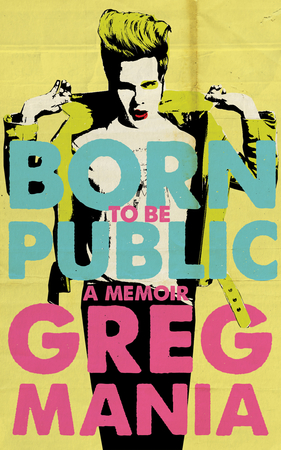
My memoir is not unique. But only in the sense that my story unfolds with New York City as the backdrop, where so many other stories have unfolded and will continue to unfold long after I’m gone. That’s the beauty of this multilayered city: it unravels you, and no one’s unraveling is alike. Yes, there are common denominators: exorbitantly priced breakfast sandwiches, not batting an eyelash when Jessica Lange is dining one table over, crying on the subway—but all of these elements leave a different imprint on a person.
I was lucky enough to experience NYC nightlife in the early 2010s, the tail-end of an era that I was fortunate enough—with the help of a fake ID—to experience. Don Hill’s was still around. You could catch a show at Trash Bar. You could grab a nightcap at St. Jerome, where my nightlife friends-turned-family spent many-a-night. I go-go danced at Nurse Bettie, a burlesque joint a few blocks over on Norfolk Street, for a few months during the spring of 2013. I’ve bumped into Debbie Harry at a party. I’ve spilled a drink on Lady Gaga (sorry, girl!). I could still wander into Trash & Vaudeville and get a hug from Jimmy Webb.
After graduating from Hofstra—which is only forty minutes east of Manhattan—I made the move to NYC a year later, in 2014. Nightlife faded into the background while I worked on my master’s at The New School, interned at various online and print magazines, and tried to carve a space for myself as a writer.
Below are seven books that helped me carve that space.
My first apartment was in East Harlem. I’d take long walks to the Barnes & Noble on 86th Street and sit my broke ass down to read whole books from the humor section. Don’t Worry, It Gets Worse was one of those books. Like Nugent, I, too, was a 20-something college graduate navigating adulthood with the same finesse I would possess at pole vault. Did the employees at the Upper East Side Barnes & Noble start to recognize me and cast looks of pity in my direction? Yes. But it was worth it, because this book made a confusing time in my life a little less lonely.
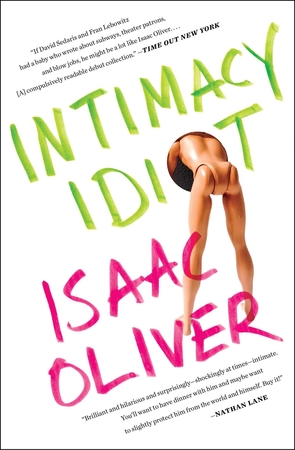
My pursuit of love and intimacy in NYC was, more times than not, misguided at best. Crying in a subway stairwell at four in the morning with a sad hashbrown in my hand at worst. I am approaching three years of being in a loving and healthy relationship somehow (witchcraft), but before I met my current partner, every relationship (which, by the way, is a generous term) I was in crashed and burned. No one gets it more than Oliver, who is able to articulate the ups and downs of emotional turbulence in a city notorious for its dating woes with heart and humor. I slept with this book by my side in between each terrible dude I boned.
If you could describe a book as a love song to the city that never sleeps/charges no less than $14.99 for a salad bowl the size of your fist, The Colossus of New York is that book. Few are able to capture the frenetic nature of this multifarious city with lyrical mediation and keen observation, forming an impenetrable bond between city natives and longtime dwellers. Every sentence from Whitehead’s fingertips is a full sensory experience. Swoon!
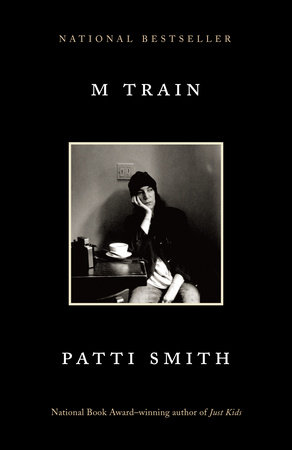
Just Kids is the Gideon Bible of coming-of-age in NYC memoirs, but M Train, to me, is a beautiful testament to the ordinary, a place we always return to. In Smith’s case, it’s that one tiny corner table in the West Village where she penned most of this book. Even though this book is woven with collections of her travel abroad, it is, at the end of the day, an ode to a first love.
This is a question for any writer: do you ever read a sentence that is so good that you want to throw all of your possessions into the sea and start anew somewhere far away? Because that is every third sentence in this book. JOHN GLYNN HOW DARE YOU. Glynn has this uncanny ability to capture that feeling of your heart and mind being trapped in a viscous dipping sauce, unable to strike a balance, while everyone around you seems to have their shit together. It celebrates the complexities of queerness beyond crossing the threshold from private into public, all to the tune of one Montauk summer. This book is my jam.
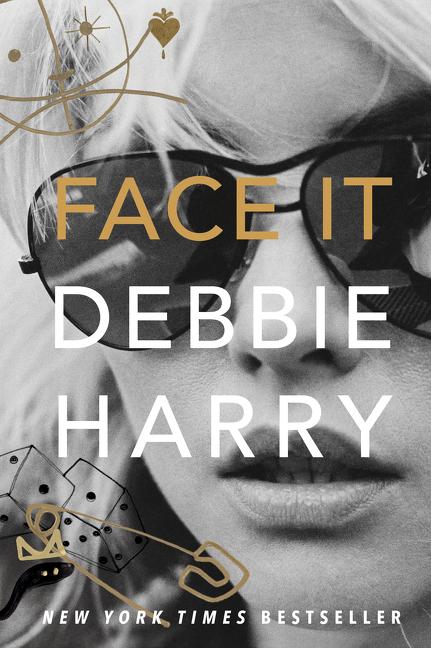
I mean, is anyone more New York than Deborah THEE Harry? My love for Debbie Harry contains multitudes beyond being a Blondie superfan. Like yours truly, she also grew up in New Jersey, and she tells a lot of stories about getting in her car and driving to the city at night to hang out with her friends in the Lower East Side, which is literally what my life looked like after I graduated from Hofstra and moved back in with my parents for a year. Face It also captures the Golden Age of New York City, when you could stroll into a bar and bump into a Ramone, see bands like Television perform on a random weeknight, and/or share a cigarette with a Warhol superstar. Also, this book is extra special to me because if you had told 18-year-old Greg that he would one day interview Debbie Harry, he would have hurled a box of Clairol frosted tips at you.
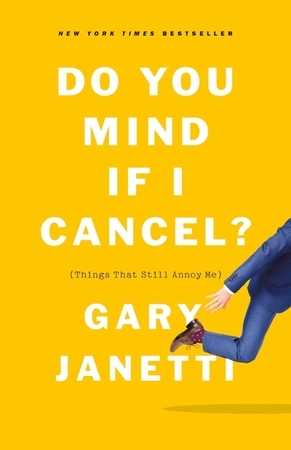
My heart will always beat for a fellow Hofstra alum. Yes, he’s the writer and producer of some of the most iconic television comedies of our time, but Janetti’s catalog of his twenties in New York—from trying to find a job before the internet to working at a hotel with an ornery bellman to a tale of soap opera addiction, all wrapped in a bow made from the finest observational humor—is a puzzle piece of universal fit. Also, please note that Lisa Rinna’s blurb for this book is just, “Gary.” Engrave that on my tombstone, please.
The lizard that lived around my apartment and popped up every once in a while died today. Found dead, cause unknown—the way they report it on the news. I burst into tears without quite knowing why. Perhaps because it too was a lone traveler within these walls, or because I had been rooting for it, as much as I have for myself, to survive this indefinite lockdown. If I were in the millennial habit of celebrating monthly markers, today would be the four-month-versary of my isolation. Not a particularly cheery thought: a hundred and twenty days since I have seen a familiar face, my nagging memory reminds me (somehow, video calls don’t feel like they count). I try to quell the burgeoning self-pity by skimming through the daily news, a concoction of public despair that leaves a bitter but less personal aftertaste. People would switch places with you in a heartbeat, I chide myself.The thought doesn’t really help.
When an acquaintance recommended May Sarton’s Journal of a Solitudeto me, I’d already spent nearly two months at home. The beginning of the lockdown, as far as beginnings go, had been quite comfortable. I procured enough supplies to get by, avoided the toilet roll mania and cooked healthy meals five days a week. I sent out an email newsletter for 40 consecutive days, for friends and acquaintances who were struggling to adapt to the new circumstances. I thought I couldn’t be more pandemic-ready. After all, wasn’t solitude the fuel to creativity?
I’ve lived alone in this apartment for the better part of two years, studying and working from home. Everyone who knows me knows how much I enjoy being on my own. Until recently, my version of solitude was the epitome of a comfortable existence. Much like the life Sarton describes in her journal, my schedule was interspersed with weekend trips and walks around town, weekly teas and lunches with friends, visits to relatives and social obligations twice a month. My meetings with people were intimate enough to refresh the soul and challenge the intellect, yet not so much as to intrude into my space. I relished my independence and indeed, fiercely guarded it. But as Sarton wrote, sitting alone on a freezing February day, “At what price would total independence be bought?” In retrospect, what I was thoroughly unprepared for was the actual solitariness of prolonged solitude, when it becomes imposed instead of chosen.
In A Room Of One’s Own, Virginia Woolf points out, with due apology for her bluntness, that a woman, in order to write or create, must have a certain financial standing. Wordsworth, in Daffodils, reflects a bourgeois sentiment in evoking the pleasures of leisure. Solitude, and the enjoyment of it, comes inherently imbued with a notion of class consciousness. I daresay if I found myself sharing a room with five other people, with interrupted supplies of water and power, struggling to put the next meal on the table, I would have time for neither solitude nor loneliness. There is nothing romantic about poverty, except when the affluent write about it.
Solitude, and the enjoyment of it, comes inherently imbued with a notion of class consciousness.
Even as I record my own reflections in a journal, I wonder what right I have to write about the nature of solitude. Living in an upscale urban neighborhood that borders India’s capital, equipped with the gift of the internet and a slew of social media apps, I have the ability to pick up my smartphone and see any one of my friends who live thousands of kilometers away. I have been home-bound, but I own the roof above my head, a sophisticated high-rise apartment roof with electricity and water, a well-stocked refrigerator, a weekly walk to the nearest supermarket for groceries. I can open my wallet without worrying, and can afford to casually buy a poor woman (or two) a liter of cooking oil that she will make do with for an entire month. After the third person peers hopefully at me, I can (not so) casually convince myself it’s all I can afford to do. I can come home and write an angry article about the government’s inadequacies and sign a few petitions. I can afford to put my upper-caste, majority-religion last name on them without fearing an arrest (yet).
But I am also the person who drifts around in an empty house quiet enough that you can hear the air displaced by whirring fan blades. A house that I have deep-cleaned like a crime scene, where dust still accumulates daily on chairs that no one sits on. I exchange pleasantries with a potted areca palm, leave the TV on for no reason, and assign names to stray reptiles that die on me. There are days when I successfully adhere to the “inexorable routines” that Sarton calls a necessity for surviving tempestuous upheavals, and then there are days when I succumb and lie on my bed for hours at a time—I have nearly decoded my crying schedule. I am half-sick of oblique gazes on electronic screens; more and more, I find myself wanting to turn off my phone and write a letter. I am not struggling as much as many others—but it matters that I too am struggling.
For a while now, I have dreaded reading the newspaper because I feel accountable to innumerable, nameless people for the luxury of my bad days, and even more for my good, peaceful ones. When people were walking hundreds of kilometers to reach their homes and collapsing on the way, I was dancing in my kitchen whilst cooking pasta. Even as a security guard reached home after a two-day shift, only to leave in a couple of hours again, I woke up fresh from eight hours of sleep, and went about watering my plants. A fire, literal and metaphorical, rippled across the world as I received a much-awaited acceptance letter for a poem I’d submitted. At what point in a dystopian existence do you stop celebrating your own little joys?
At what point in a dystopian existence do you stop celebrating your own little joys?
Growing up, my solitude was a comfortable given. The only child of working parents, I could amuse myself for much of the day with little trouble. As I went out into the world and learned how to share a room, I also discovered how rare my childhood usual was. Sarton describes the responsibility that an independent existence burdens a writer with: a noblesse oblige of sorts, to dive deep into oneself and cast a wider net, to raise a voice for the stories so often brushed under the carpet. Despite the difference between my time and hers, I find myself agreeing. My autonomy—financial, sexual and social—is a gift I did little to earn, one that is denied to a majority of my country’s people, and a majority of the world. I owe it to them to be as unpretentious as possible, to at least face, without any hypocrisy, my life’s reality.
I speak to a friend who has moved back with her family, who tells me about how they frequently interrupt her work. Another’s friend’s anxiety chronically gets triggered in close quarters, as she grapples with the uncertainty of her professional life. Many are suffering toxic domestic situations that they don’t want to stay in, but cannot completely abandon. Months ago, when I decided not to return to the house where my parents live, I agreed to pay a much smaller, albeit significant, price for my independence and solitude: periodic, debilitating loneliness. On my bad days, I try to remind myself of the good ones.
On my good days, even as I lift my pen to traverse narratives of discrimination, political censorship, sexual violence and feminism with relative ease, I falter, unlike Sarton, when it comes to a quietly confident exposition of my daily life. In her journal recorded over a year, with great self-assuredness, she touches upon several knotty subjects including racism, homosexuality, and patriarchy, but mostly, she writes at length about herself and her everyday struggles. What is of essence here is not so much what she narrates, but the fact that she chooses to say it at all—a confidence I and most women of my acquaintance sorely lack, a confidence hitherto the monopoly of white male writers. But truly, if alcohol can be the motif of Bukowski or Hemingway, why can’t Sarton’s gardening be hers?
From time to time, it becomes essential to find something that pulls you out of yourself, and reminds you of your place in the grand scheme.
The extraordinariness in her journal is its attention to the ordinary: the changing flowers, the antics of the parrot Punch, the turn of seasons, the visit of a feral cat or a boisterous raccoon—the kind of minutiae that might be termed mundane, privileged and irrelevant by critics, but that she seldom apologizes for. At one point, she questions herself: “What do you want of your life?” and realizes that all she wants is the same, but “to handle it all better.” From her isolation to mine, perhaps just as she intended, this has been the connection forged: an appreciation of one’s life as it is, without an inner voice intermittently wondering if this is how it ought to be.
In the interests of efficiency, solitude requires that one assume a certain weight of the world on one’s shoulders—in Sarton’s words, “think like a hero.” But here’s the catch: most heroes that populate history and literature are terribly self-absorbed. From time to time, it becomes essential to find something that pulls you out of yourself, and reminds you of your place in the grand scheme. Over these weeks, I am learning to transition from someone likely to blame herself for the death of a cactus, to someone who spends an hour each day pruning, re-potting, fumbling her way through the language of the soil, accepting alike the delight and disappointment. As I read about a garden in bloom in a patch of countryside half a century and half a world away, gazing out at my own backyard, it becomes increasingly lucid to me why nature is the unifying metaphor for human existence. There is nothing to be done, says Sarton, but to go ahead with life moment by moment and hour by hour. Today marks four months of my isolation. As I hum to myself while tending to a plant with curling leaves, I have finally stopped counting.
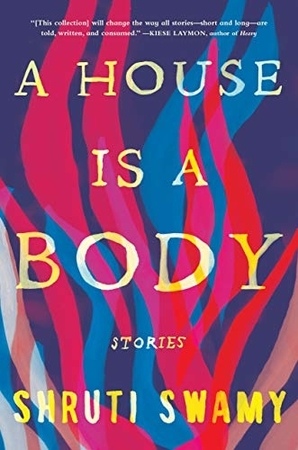
In one of the stories in Shruti Swamy’s debut collection, A House Is a Body, the main character says this about her own state of mind:
“The screen dropped from my self in those moments without me even realizing it; the terror came later, when I noticed it had fallen, when I was trying to gather myself up in raw handfuls, but I was like sand all over.”
The woman is, interestingly, a professional laughter artist for hire. To a large extent, the stories here are about exactly such singular moments in their protagonists’ lives when that inner screen drops and they perceive their own deep vulnerabilities.
Swamy examines these moments and vulnerabilities in her characters with language that is both precise and moving. Whether the character is a mother, a father, a sibling, a lover, a re-imagined mythical demon’s wife, or a contemporary version of a Hindu god, each is trying to occupy the various spaces they’re allowed with a self-awareness that isn’t insular but all-encompassing. Swamy’s narrative style gives their musings a dream-like intimacy so that we, as readers, do more than bear witness; we find ourselves, much like the dog with the cobra in “Night Garden,” in thrall.
Shruti Swamy and I exchanged emails to discuss how motherhood became a dominant theme in A House Is a Body and why space—physical, emotional, intellectual, or liminal—features so frequently, especially for mothers who are also women of color.
Jenny Bhatt: Several of the stories here feature mothers of various stripes trying to balance motherhood with their other relationships and their own physical and/or emotional needs. The struggles create various layered tensions that then play out in myriad ways. You’ve also written briefly elsewhere (a Catapult essay on learning to swim, which was my first introduction to your writing) about your relationship with your mother and your grandmother. To be clear for our readers, I’m not suggesting the entire collection is about motherhood narratives but that it is one of the main themes. What fascinates or draws you to explore the mother-child relationship throughout the collection?
Shruti Swamy: None of these stories are about my own mother, at least not directly, but I remember something that happened first as a young adult, when I looked at a familiar picture of my mother as a young woman and realized with a shock that she had been a person before me, not defined by me at all, with her own moods and thoughts and desires. I was around the age she was when the picture was taken, and I wondered, what was she like? Would we have been friends? The glamour of your mother, as soon as you can see her like this, an adult looking at an adult, and the mystery of her—I find these aspects very compelling.
On a more simple level, the mothers (and father, in the case of “Didi”) are mostly the parents of young children. During the time I wrote these stories, I was not yet a mother—fiction was a way for me to try that identity on, to play with the what-ifs.
JB: I agree. Whether we’re mothers ourselves or not, the mother-child relationship is a fascinating one to explore in fiction because it’s such an elemental one. We all have mothers, whether we’ve known them or not, loved them or not. That said, less than a decade ago, if there was a short story collection or a novel that honed in on motherhood as one of its major themes, it often did not get its due respect, got shelved under “women’s fiction” (which, as a genre label, is ridiculous, I know), did not receive much airtime from book critics or major literary awards, and more such. There are now, relatively speaking, more works centering on motherhood. Do you believe much has changed in the publishing world and among readers to make this a subject worthy of more respect and attention?
SS: I don’t think I’m qualified to comment on the publishing world! I can say that as a reader, I have always been hungry for stories about motherhood. It does seem like there were a great many books that were published all at once right around the time, coincidentally, I was pregnant with my daughter, and which were overwhelmingly written by white writers. There is room for many, many more stories still.
JB: Yes, I was thinking the same about how there have been a lot of recent books by white women writers exploring motherhood. They’ve been very good. I’m thinking of the most recent Want by Lynn Steger Strong (which, of course, is about more than motherhood but that’s an important aspect of the protagonist’s identity.) And, yes, we need more such from women writers of color.
Coming back to the mothers in these stories. One of the notable struggles they face is how to be a “good” mother. Certainly, it’s a rich vein to be mined because it’s not simply about living up to socio-cultural expectations or conditioning but also about figuring out and coming to terms with how motherhood fits in with a woman’s own sense of her identity and femininity. Could you talk a little about how you’ve worked, through these stories, to examine the ever-evolving alchemy of motherhood, how a mother’s relationship with a child is both draining and fulfilling, and how the intersections of race, culture, and class define “good mother” differently for all of us?
Culturally, we have an idea of who is a mother—whose bodies and bonds should be protected—and who is not.
SS: As a mother, I’m interested in what it means to be “good,” or at least, “good enough”, but in these stories, I was more interested in the opposite. I wanted to loose my characters from those neat scripts of motherhood and let them be human, to really fuck up. There was something exhilarating about letting them be “bad.” In the title story, for example, I was after this terrifying, giddy feeling I got when I read The Days of Abandonment [by Elena Ferrante]—what can go worse, how can things get even smaller and tighter around the neck of my character, what wildness will that provoke? Many of these stories, though, are interested in the worst thing that can happen, in motherhood and otherwise.
JB: Could you elaborate a bit more on the “neat scripts of motherhood” bit, please?
SS: To me, it’s less about the different definitions of “good” mothers across race, class, culture, etc, and more about visibility—who do we see?
I had this weird experience when I was pregnant: literally into the final week of my pregnancy, most people, like people on the street, or colleagues at work, didn’t notice I was pregnant. I was like all on guard about strangers trying to touch my belly or whatever, but it never happened, the flip side of that, of course, was that people rarely offered me their seat on the bus or even just smiled beatifically at me like I saw them do at other pregnant women. The weirdest part was that, almost down to the one, the people who did notice I was pregnant were people of color. Once, in my 38th week, standing on BART, a Chinese auntie (who, as a senior, should have also been offered a seat) shamed these two white girls into getting up for me. My pregnancy was a strange, temporary condition, so these incidents were disconcerting, but not wrecking. Still, it was a taste of what it feels like to be, I think, so outside of someone’s narrative of what a mother looks like that you become invisible.
It’s not a controversial statement that mothers are treated like shit in this country, some more than others. A couple examples: Black women are dying in or after birth at far higher rates than white women, for example. We are persisting in separating mothers from their children at the border. The people who are contracting COVID on the front lines as essential workers are disproportionately Latinx and Black, many of them mothers. We allow these things to happen, culturally, because we have an idea of who is a mother—whose bodies and bonds should be protected—and who is not. I don’t want to put too much on books; I don’t think a story should have to, or even can, prove someone’s humanity. But I do think that books by and about mothers of color, especiallyBlackwomen, should be uplifted and read with gratitude and care. Black feminism has so much to teach us all about how to be better citizens and mothers.
JB: The idea of “space” shows up both explicitly and implicitly in several of these stories. Whether it’s “The Neighbors,” where the protagonist, a mother, asks her new neighbor, also a mother, about how she finds the space to do anything else. Or, “The Laughter Artist,” where the protagonist muses on how a woman walking on the street is so self-aware of the physical space she’s occupying. Or, in the title story, where the mother feels as if her parenting takes up all her space and time, where she sees the house as not just a space to occupy but as a body that holds souls. There are more such examples. Why does the idea of space—physical, emotional, intellectual, or liminal—feature so frequently?
SS: Most of my life as a writer has been about trying to strike a balance between the time and space needed to do writing and the time and space to do everything else—to love people, to go grocery shopping, to make money. There was a terrible year when I had a terrible job that made me grind my teeth in my sleep. Which was ironic, because I had taken that job with the idea that the schedule and the relative simplicity of its tasks would allow me to write. I didn’t really write. I read slowly and tried breathing exercises and cried in the park on my lunch breaks and tried not to lose all faith in myself. But I had intense, vivid dreams, some of the most beautiful of my life. That year was very cramped for me, emotionally if not temporally, but even still, my subconscious was reminding me lovingly of the vast terrain always available to me, the richness and wildness of my consciousness. Any explorations of space in my work come from honoring that inner space.
JB: A number of women in your stories are dealing with depression, anxiety, and/or pathological worry. And these stories were written in times different from the one we’re currently living in. Given the global pandemic causing even more life-threatening dangers and fears, how have your thoughts changed on these issues and the ways that mothers, like the ones in these stories, might be coping, choosing, prioritizing?
I don’t think a story should have to, or even can, prove someone’s humanity.
SS: I wrote these stories in slightly less apocalyptic times than the one we’re living in now, but only slightly. In my city, Alex Nieto was killed in 2014. Every year, “wildfire season” stretches longer, and California burns for months and months on end. As a resident of the Tenderloin, and then the Mission, walking down the street is a daily reminder of the human suffering caused by the homelessness crisis and income inequality. We are absolutely at an extreme moment right now, but this crisis has deep roots. That anxiety, the feeling of being on the edge of collapse, thrums beneath the feet of many of my characters. One of the questions I am asking in this collection is about that: how do we live here at the edge? How do we find meaning? Unfortunately, I don’t think that my thoughts have changed, maybe just intensified.
JB: Yes, that sense of living on the edge of collapse came through frequently for me in these stories. It made me appreciate how your language truly immerses us in the interior landscapes of the main characters. They’re very self-aware, these women and men, of what they’re experiencing both emotionally and sensorially. I’ve always thought this kind of deep immersion is good for both the writer and the reader because, if done with due care and attention that’s not merely navel-gazing, we both come out of the writing and reading experiences having learned something about our individual selves, not simply about the characters. That’s my take and you don’t have to agree with it. But I’m curious to know how you think such immersion helps you as a reader, first, and then as a writer.
SS: I love the feeling of swimming in language, the feeling of living through language in someone else’s body and mind: more than plot or even character, it is this quality that offers me the greatest pleasure as a reader. Proust looks at flowers, at the brilliant sheet of sea at Balbec, revels in clothes, and music, and conversation. When you look up, you see it too: how exquisite the flowers are on your own kitchen table! The clarity of your lover’s eyes! The feeling of your hair against your cheek as the breeze blows into it! This is why I come to books, to tune my eye to the writer’s so I can look with it at my own life. And it is my goal as a writer: to offer the best of my vision to my readers.
When my grandma left me her teeth I had no choice but to take them. They were a bad fit, riddled with cavities, and I was sorry to see my own teeth, white, healthy, plucked loose from my mouth and stored in a glass display case until such time as I might bestow them on someone else. Not that I would. It’s some real fucked up nonsense, inheriting someone else’s teeth, carrying their bones in your mouth, sharp little marbles of memory.
Ever since the transplant I’ve gone mute. My grandma Helen was a dancer. The language inside her body was movement, and now the language inside mine is unrecognizable even to me. I was never an athlete. I was never an artist. There is no way for me to externalize these internal currents, so I don’t.
At night, my dreams are filled with Helen’s memories. It’s a second life for her—her memories reincarnate in my body—but it’s me who’s living it. She’s as dead as she was before the surgeon buried the roots of her teeth into the fresh craters in my mouth.
My mom calls to ask how I’m doing even though she knows I can’t answer. She was sad when her mom skipped her and went straight to me, but she was also relieved, and I can tell she feels guilty that I’m the one carrying this ancestral burden instead of her. Nana was never that nice in the first place.
“Is your mouth sore?” she asks me. “Are you eating?”
Inside my body I feel what it felt like to carry her as a fetus. I feel the deadweight of her girlbody asleep on my chest. I feel insurmountable anger when she calls after months of not calling to say she’s pregnant, not because she’s pregnant, but because I’m the one who’ll have to take care of the baby while she finishes school, builds a life, when all I want to do, all I’ve ever wanted to do, is dance, and this is the second time this girlchild has stolen that from me.
“You sound good,” my mom says, even though I haven’t said anything, and my body is all flex and angles, all hard-lined accusation. “Let me know if you need anything,” she says, because she knows I can’t.
I cook Campbell’s tomato soup on the stove, and while it cooks, I choreograph a dance that perfectly expresses all of my fury and sadness. When I try to enact it in the living room, I am a pre-lingual baby, imitating sounds without understanding their meaning, and it makes me feel like tearing the limbs from my body and replacing them with another, more fluent set. I leave the soup on too long and it burns a thick layer of sludge on the bottom of the pan, which I leave in the sink for someone else to clean.
My mom comes by with Tylenol and coffee. Her eyes roam my untidy apartment and land briefly on the display of teeth that have been extracted from my mouth. I have made an altar for them on the coffee table—votive candles, Hershey’s kisses, peppermints. When I eat, I set aside a little food for them. When I drink coffee, I pour them a small cup and sit with them and tell them what I am feeling without using words or movement and it is no small miracle that they understand me. They offer suggestions. They ask for a refill. These enamel rocks that want what they want and aren’t ashamed to ask for it.
“Are you having second thoughts?” my mom asks me, nodding towards the teeth which are no longer mine.
All of my thoughts are second thoughts, having been thought once, already, by Helen, but how can I say this? There is a body enacting breath, billowing up and down, up and down, repeated ad nauseum, and for once I try my hand at performing this speech-act in front of another human, in front of my mom, but it comes off spasmodic and weird and I want to grind my fists into my eyes until I see stars. I have a feeling that my teeth are laughing at me from their coffee table shrine, and I want to knock their socks off, metaphorically speaking.
“Maybe this wasn’t such a good idea,” my mom says, as if I had some choice in the matter. “No one would blame you for reversing the procedure.”
The teeth go sharp in my mouth, the roots clinging to my jaw like tentacles. How do I say I’m not alone? How does a body dance haunted? I remember the adrenaline rush of being backstage before a performance, the pulsing dark, the incipient light. I roll my head in a large, slow circle. I hunch my shoulders. My mom backs out of the apartment still holding both coffees, hers and mine.
I dream I’m dancing for an audience of Gaba girls. I dream about sex. The teeth want to keep dreaming, so I stay in bed all day, dozing through the morning, the afternoon, only rising at nightfall to pour some water on my extracted teeth, the poor thirsty darlings, before falling back into my bednest where I’m shaking cocktails for someone named Alfonse. When my mom calls, I send her straight to voicemail. When she calls again, I turn off my phone.
I am lying on a dance floor, watching other women leap over me. I am in a nude leotard on a rooftop slow-stepping in geometric patterns with women whose shoulders I never touch. I am good at this. I am the best.
In the bathroom mirror I meet a stranger with my teeth and someone else’s nose. First there’s fear, then panic, then the numbing sensation of a word repeated too many times, and a face is a face is a face and that’s not what’s important anyway.
In the living room, I move the furniture to the walls to make room for the words my body wants to say, but a full set of teeth, not mine, are shrieking for crusty bread and milk. They are desperate, these teeth, and I don’t truck with desperate. I unwrap a Hershey’s kiss and eat it, watching the teeth vibrate with envy, and then I eat another. When I’m finished with the chocolate, I eat the peppermints, and when I’m finished with the peppermints, I lick my finger and thumb and extinguish the candle’s flame.
I carry the teeth to the window—the night is balmy with spent rain—and I pluck them, one by one, from their setting until all that’s left is thirty-some empty cavities, a glass palate, a speechless tongue.
Given the recent news, we’ve been reminded just how vital the postal service is for our everyday life. With the June 2020 appointment of Louis DeJoy as the new Postmaster General, the USPS has seen a sharp decline into crisis; with the November presidential election rapidly approaching, many are concerned at what this means for mail-in ballots. Furthermore, for many indigenous, rural, and/or low-income communities, as well as incarcerated folks and people who need medication delivery, the USPS is often the only reliable source.
If this sobering turn of events has got you ruminating on the importance of mail delivery, below are ten books in which letters and the postal service—or lack thereof—play a crucial role. Ranging from academic studies about the diverse history of the USPS to a novel with original postcard artwork, these are books to write home about. (You should write home about them, and don’t forget to mail the letter!)
DeJoy now promises to suspend his mail-delaying shenanigans, but only because there’s been so much hue and cry. If you’d like to get in on that action, there are a number of ways to help support the USPS. Texting “USPS” to 50409 is an easy and time-efficient way to contact your representatives; here is a list of compiled resources of petitions and action items; and, of course, I firmly believe that one can never own too many stamps.
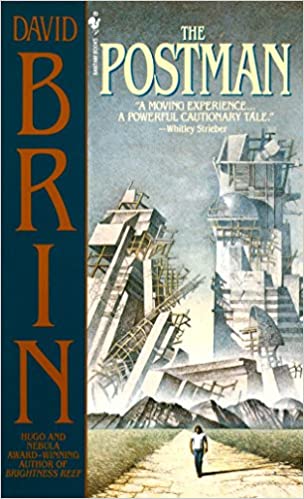
In Brin’s dystopian vision for America, the USPS is painted as the only source of hope. In The Postman’s post-apocalyptic world, a man puts on an abandoned USPS uniform and tries to barter mail for food. However, his initial fraud snowballs, as he claims to work for the “Restored United States of America” and civilians cling to the idea of a centralized government’s return. Meanwhile, the U.S. is ravaged by bio-engineered plagues and a group of white supremacist, misogynist, and hypersurvivalist militia. The Postman, AI scientists, and other opposition groups must band together to fight for the future of civilization. Originally published in 1985, Brin’s sci-fi novel resonates uncomfortably true in our current-day society.
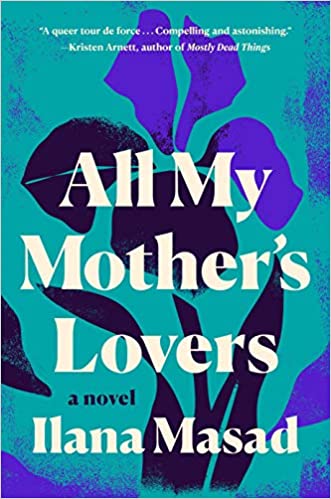
In Masad’s debut novel, a woman does her own postal delivery (as we’ll probably also be forced to if things don’t improve). When Maggie’s mother dies abruptly in a car crash and leaves behind five letters, Maggie is determined to hand-deliver the sealed envelopes to each address. Although Maggie always thought her mother, Iris, had the picture-perfect marriage, she realizes there was much more to Iris’s past than she ever dreamed of. All My Mother’s Lovers is a warm-hearted and intriguing exploration of family, the imperfect nature of relationships, the intersections of sexuality, gender, and identity—and how much five letters can change someone’s life.
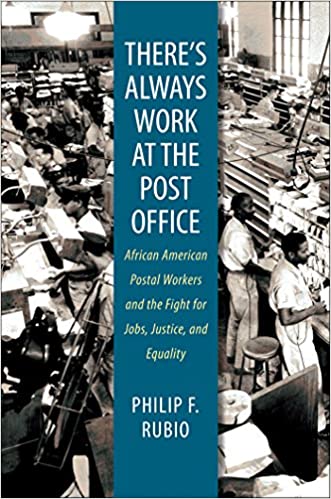
The Postal Service was the first public service to hire women and Black workers, and continues to have one of the most diverse workforces today. There’s Always Work at the Post Office highlights the stories of Black postal workers, and the ways in which they fought for a more equal work environment. A history professor and former postal worker, Philip Rubio shows how civil rights movements and Black labor protest traditions combined to help establish postal unions in 1971. For another analytic look that discusses how gender, race, and class play out within the USPS, try Linda B. Benbow’s Sorting Letters, Sorting Lives: Delivering Diversity in the United States Postal Service.
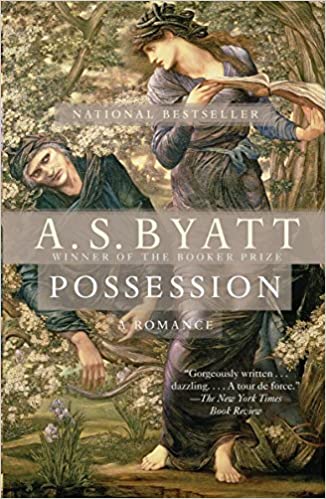
Byatt’s Booker Prize-winning 1990 novel is all about the paper trail we leave behind, and what others may make of it later on. Two scholars’ paths converge through letters, as they uncover a potential love affair between two famous fictional poets. Poring over drafts and getting tangled up with academic power struggles, the scholars make it their quest to find out the truth behind the letters. Byatt highlights our society’s obsession with written “truth” and explores what it means to collect historical artifacts, challenging the reader to ask questions about a text’s authority and the concept of possession itself.
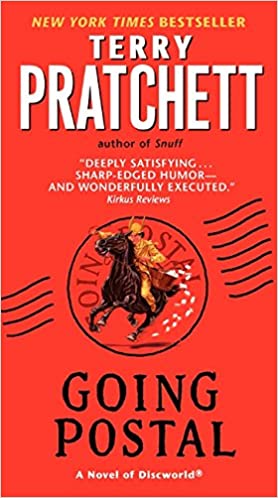
Feeling like our news is getting rapidly more absurd every day? Try Pratchett’s satiric take on the mailing system, set in his fantasy city of Ankh-Morpork. Moist von Lipwig, a con man, is forced by the city’s ruler to take over the decrepit Postal Service (for context: his other alternative is death). Faced with piles of undelivered mail, Moist must step up to his position to invent postage stamps, hire golem messengers, and fight off the monsters of communication monopoly. (And if you’re interested in Pratchett’s anti-capitalist take on banking, follow along with Moist’s further adventures in Making Money!)
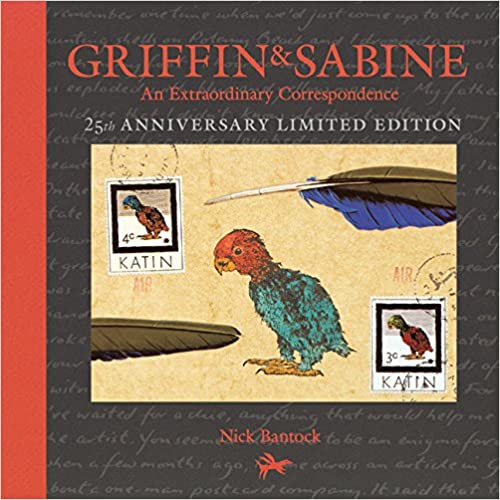
If you’re looking for a hands-on, fantastical adventure involving letters, Griffin and Sabine is the perfect interactive read for you: author and illustrator Bantock crafts a book where you can directly take letters out of colorful envelopes. Griffin Moss is a card designer in London living a lonely and bland life, until he receives a congratulatory (albeit mysterious) note about one of his postcards from a stranger in the South Pacific Islands. The stranger, Sabine Strohem, is a postage stamp illustrator. The two start up a correspondence, showcasing their personalities through their heavily-illustrated missives. The lovers’ story is part of a trilogy, continuing on in Sabine’s Notebook and The Golden Mean.
Before email and the Internet, the postal service was also the sole means of international communication. This 1970 classic is formed of real-life letters between Helene Hanff, a writer in New York City, and Frank Doel, an antiquarian bookseller at Marks & Co., 84 Charing Cross Road, London. The two bond over obscure British literature and their friendship blossoms into a twenty-year correspondence. Adapted into a popular play and film, Hanff’s collection of letters show both the literary and personal value of having a pen pal.
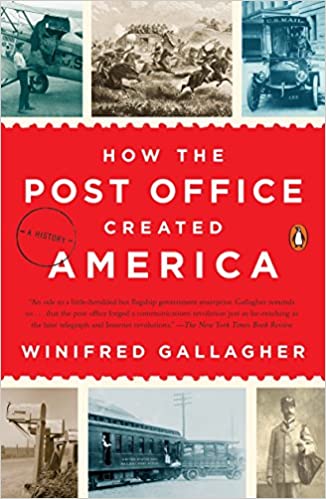
Did you know that the Founding Fathers established the postal system before signing the Declaration of Independence? Gallagher tracks why and how the development of the U.S. Post Office was crucial in binding the individual colonies into a centralized United States, and grew to impact every branch of American life as we know it today, such as industrialization, consumerism, migration, and settler colonialism. Public postal services have been a cornerstone of U.S. democracy since the beginning, and will continue to be vital in 2020’s upcoming presidential elections. If you’re interested in further reads that contextualize the historic significance of the USPS, check out: Neither Snow nor Rain: A History of the United States Postal Service by Devin Leonard.
Yes, I know. Bukowski. But listen: Post Office, the autobiographical work that catapulted Bukowski to national fame in the 1970s, is an extremely apt fit for this list. The book describes the day-to-day drudgery and debauchery of Henry Chinaski, who works as a mail carrier and sorter for the USPS. Between escaping guard dogs and dealing with hangovers, Bukowski’s anti-hero provides a biting look at America and the Postal Service.
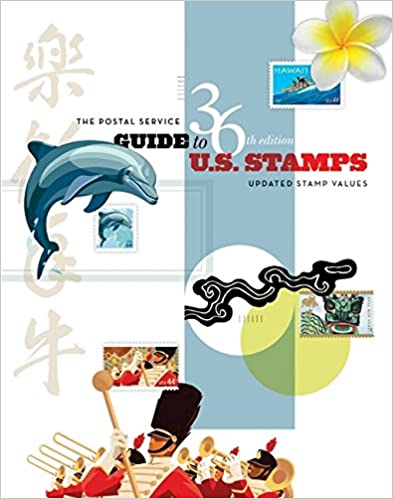
Lastly, if you want a book by the USPS (who knew they wrote books!) and/or are an avid stamp collector, consider flipping through The Postal Service Guide to U.S. Stamps. Starting from the 1845 Postmasters’ Provisionals to today’s stamps, this vividly-colored guide documents every single kind of U.S. stamp. Perhaps a good addition to your coffee table, while you sit there writing letters?
In recent months, we’ve been overwhelmed with suggestions to read James Baldwin, Ibram X. Kendi, Audre Lorde. But it may be even more illuminating to read more obscure Black authors, who are equally unabashed in their writing but never achieved mainstream acceptance and success. Many of them remain obscure specifically because they opted to write without making the white gaze their primary motivation in writing those unadulterated stories, and that kind of candid storytelling is what all readers, white and Black, need right now.
One of these authors is Robert Deane Pharr, who chose to write about Black people’s lives in an unfiltered manner, claiming “[only] I would let white people look at the Black man as he lives when the white man is not looking or listening.” With this aim, he’d create worlds with a writing style that was as colorful as it was prescient. And with the recent spark of global protests over systemic racism, set off when police killed George Floyd, Pharr’s writing should have some place in critical discussions of those issues.
This kind of candid storytelling is what all readers, white and Black, need right now.
I discovered Pharr’s writing in high school while working as a page at the Queens Public Library. Being in this job fed my voracious appetite for reading, especially for anything related to Black culture and history beyond the bland texts assigned to me. S.R.O. stood out to me visually first, before I had an idea of its contents: the cover, a desaturated city building with the title in bright red letters, gave it a noirish air. The blurb on the back was the kicker, speaking of Harlem in the 1960’s, which was when my late father used to live there. The novel was part of the “Old School Books” series by Norton featuring Black novelists from the 1960’s and 1970’s. I devoured all 544 pages and to this day, that book remains among my favorites to read.
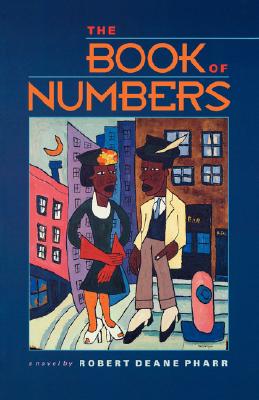
Pharr’s literary voice centered Black voices, mainly people from the margins of American society, depicting their lives in an unvarnished manner with cynicism and hope. No respectability politics for him. In his few available published interviews, Pharr cites being inspired by the writing approach of Sinclair Lewis, who was known for his poring observational tone. This approach was the basis for his first and most successful novel, The Book of Numbers, published in 1969. Pharr’s candid look at two men who create a numbers racket in the Black community of Richmond, Virginia in the 1930s garnered attention for its look at two waiters, Blueboy Harris and Dave Greene, who briefly achieve success before seeing it all end in tragedy. S.R.O., about a waiter’s life in a single room occupancy hotel in Harlem, and dark comedy Giveadamn Brownfollowedright after. Each of these novels drew heavily from Pharr’s own life experiences and observations as a longtime waiter after he graduated from Virginia Union in 1937—he was 53 as he was on the job at the Columbia University Faculty Club when he arranged for a professor to read his manuscript.
Pharr’s depiction of policing as an unreformable system built to brutalize and oppress Black bodies and others of color in his work rang true then and truer today. In The Book of Numbers, Blueboy dies in an agonizing way after cops beat him so badly they rupture his intestines. In Giveadamn Brown, the intimidating crime lord Harry Brown is called in to try to rescue a dealer from an abandoned building who’s kidnapped three white NYPD officers for stealing fifteen kilos of drugs from him. This exchange between NYPD senior official and Harry is telling:
“For God’s sake, Harry!! We can’t have no execution of three cops on TV. What the hell you think this is anyhow?” “I think it’s a damned good show.”
The dealer winds up dying with the officers when the rest of the police on the scene set off an explosion rather than have their misdeeds made public. The police don’t fare any better in S.R.O., where the protagonist Sid Bailey is being questioned as if he’s a criminal by one of two cops called to prevent a woman from stabbing him to death. After the incident, Sid develops a violent hatred of cops. He goes into a psychiatric ward after a nervous breakdown over the near stabbing, gaining insight on that hatred as well as his alcoholism. Reading this novel again, I find a striking connection in how Sid relates his treatment by the NYPD to the therapists and those conversations I’ve had with friends and relatives online and offline. Our conversations are as tinged with anger and resignation as Pharr’s dialogue was over 40 years ago.
Police brutality against Black people isn’t the only issue where Pharr prefigured our current concerns. He wrote of gentrification as a looming, leering colossus waiting to take Black people’s homes for the aims of white business and pleasure. This is playing out in cities across America at an alarming rate today, yet in Giveadamn Brown and S.R.O. of the ‘60s, Pharr already depictsColumbia University is that villainous colossus—an idea that still has validity as the school expands through West Harlem. This is expressed in a tirade in S.R.O. from Sid’s close friend, Blind Charlie:
Here I am, taking you for the first time to show you where a bastid what’s on Welfare should go to buy his daily bread, and you got the nerve to tell me what Columbia don’t own? Columbia owns every inch of ground you walks on every day. And don’t tell me it don’t! You aint been more’n five, ten blocks away from the Logan in months. And Columbia owns all this land for twenty blocks in any direction!
Pharr also anticipated the growing awareness that Black women, in particular, have been overlooked and undervalued. His Black women characters and other women of color are multifaceted personalities who have been forced to be the bedrocks of communities where the men have been decimated or torn down by hustling, war, alcoholism and prison. Though Pharr doesn’t avoid some outdated tropes, his female characters are more than mere foils. There’s Gloria Bascomb, Sid’s lover from S.R.O. who’s a former heroin addict and call girl who embraces Sid with a love that supports him through alcoholism and schools him on “the life,” but not without taking him to task for being cynical about Black liberation. There’s Margo Hilliard, the “Foxy Cool Momma” who is Giveadamn Brown’s first lover and hips him to the ways of the streets. Pharr also depicts women who love other women in a range of ways that show deep consideration, seen prominently through S.R.O.’s Joey and Jinny, a lesbian couple composed of an former Irish hijacker and a Black con woman who also become part of Sid’s “family” in the Logan. In Giveadamn Brown Pharr even has an asexual character, Connie Hawkins, which puts him ahead of most modern literature in terms of representing the full range of women’s desires.
Critics loved Pharr’s work, raving about his raw look at Black life. But some felt he was too raw.
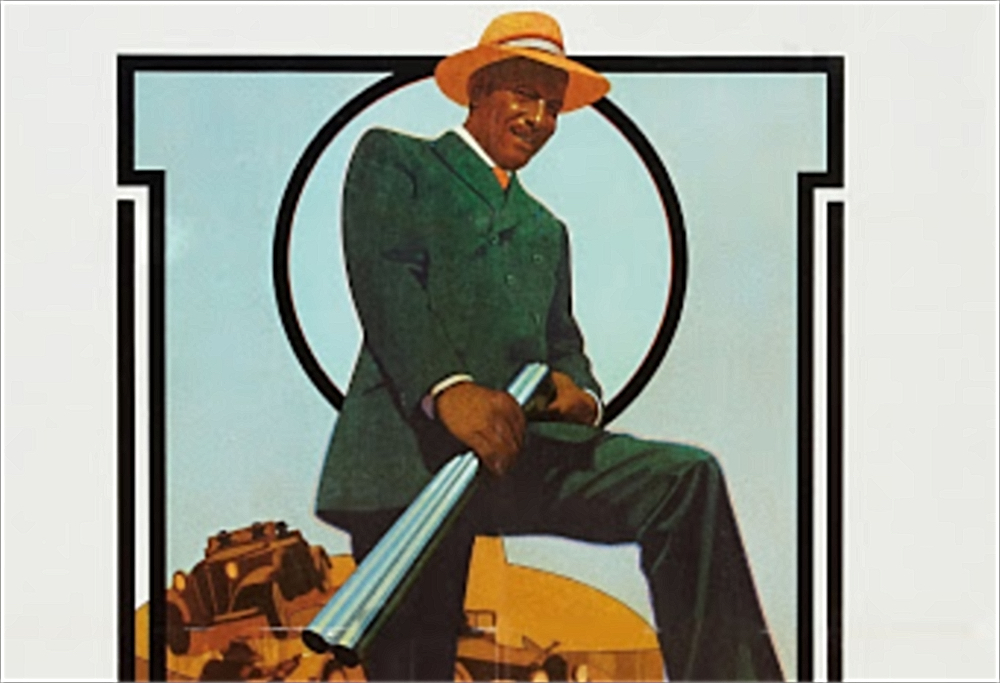
Critics loved Pharr’s work, raving about his raw look at Black life in America. This critical acclaim for his viewpoint led to a film adaptation of The Book of Numbers, part of the wave of Blaxploitation movies. But some felt he was too raw, and wanted to focus on writers who offered a more positive outlook on race relations in the U.S. This downturn would soon put him back into obscurity, fueled by his frustration with the publishing industry and his own battles with alcoholism. Pharr would go on to write two more novels—The Soul Murder Case and The Welfare Bitch, both so obscure that copies are a rarity. Pharr would live the rest of his days in upstate New York, passing away in 1989. But Robert Deane Pharr left American literature with some important lessons to be learned concerning Black people of all walks of life—lessons that deserve a second look amidst protesters’ calls for society to confront its dependence on systemic racism. The very things that keep Pharr obscure—his unwillingness to pander to white readers, his focus on writing about Black life at all levels of American society in a plain-spoken way, his anger at the way Black people have been abused and murdered in different ways by this society—are the reasons we need him right now.
Alisson Wood’s high school English teacher told her that Lolita was a beautiful story about love. She believed him—after all, there were so many similarities between Vladimir Nabokov’s famous novel and the relationship she and the teacher were forming, which she believed was true love. It wasn’t until college that she started to understand that Nabokov’s Humbert Humbert is an unreliable narrator and a sexual predator—and that her teacher was, too.
Wood’s debut memoir,Being Lolita, is a fearless interrogation of her own experience being groomed and manipulated by an older man—and a reclaiming of the narrative ofLolita, reminding readers that the cultural understanding of the novel still tends to favor the predator’s perspective, and that teenage girls need support, not objectification.
I spoke to Alisson Wood about the flawed expectation of catharsis in memoir, being the kind of teacher she wishes she’d had, and not having a neat and tidy ending.
Lilly Dancyger:In the book, when you describe the first time you told anyone else about your relationship with the teacher, you say it was “to open my hand and let the secret fly away. How free.” That made me wonder whether putting this whole story down in a book and sharing it with the world felt freeing like that, or if it was more re-traumatizing and scary. I expect it’s a combination of those things, but can you talk a little bit about what it’s like to put such a personal story out there? And especially one that was so built on the idea of secrecy?
Alisson Wood: I think that oftentimes with memoir, especially if it’s about something traumatic, people really want to hear authors saying, “it made me feel so much better, it lightened the load, it was cathartic.” But I have not found that to be my experience at all. I’ve published pieces about being raped, being almost killed by a stranger, and now this long-term, really terrible, abusive, awful relationship that made a huge impact on me. And nothing about putting those stories out there—not the writing, not the publishing—made what happened to me better.
So often women’s stories are put in a corner of being domestic, unimportant, ‘chick lit,’ and treated as if they don’t carry any real weight.
I do believe, however, that there is a lot of power in telling these stories, in particular for women. So often our stories are put in a corner of being domestic, unimportant, “chick lit,” and treated as if they don’t carry any real weight. So I think it is incredibly powerful and incredibly important for women to defy those stereotypes and tell their stories, as complicated and as messy and as imperfect as they are, and I’m very proud to be part of that tradition.
But it can cause a lot of stress, it can cause pain—especially for women and other marginalized folks who are often targeted on the internet. I’m certain that I will get a fair amount of vitriolic hateful emails about this book, because I have with every other piece I’ve written.
LD:How do you prepare yourself for that? Are you bracing for the hate mail? Or do you let it roll off your back at this point?
AW:Oh, it doesn’t roll off my back. But I have a wonderful therapist and this is something that we talk about a lot, because when you’re putting your trauma out for the world you don’t want it to be re-traumatizing. So you have to prepare and know what you’re getting into as much as you can. Intellectually I know I’m probably going to get some not very nice emails and comments, probably from white men. But understanding that doesn’t mean I’m not going to be hurt. It doesn’t mean it’s not going to upset me.
LD: I knew you’d have something interesting to say about the idea of catharsis, and that it’s not that simple. It’s actually a fight, it’s emotionally draining and challenging, and you’re met with a lot of resistance when you try to share a story like this.
AW:Completely. And that was why I chose to write this as a memoir. Throughout the process people were constantly asking, “Why isn’t this a novel? Have you thought about making this a novel?” And the whole time I was, like, “No! No.” The entire point of this book is that it is real. This happens to women. This happens to teenagers. This is not some fictional thing that you see on a page, that you read in Lolita. This really happens constantly—the abuse of young women, and the over-sexualization of teenagers, and manipulation, and domestic violence.
LD: That’s odd to me that people were pushing you to make it a novel. I found the tension between the fictionalized story of Lolita and the very stark reality of your own story to be a lot of what was so interesting about the book. And I could tell you were playing with that. Like how you used the structure of Lolita as a framework in the first two sections, but then broke away from it in the third section. That felt like such an important point. Like, we’re now departing from fantasy, and this is reality. I’d love to hear about that structural choice.
AW:I wrote the book out of order—it was much more impulsive and driven by urgency than driven by time or narrative plot. But at a certain point, when looking through how much writing I had and trying to piece it together, it just struck me: Oh. This is the same structure as Lolita. Part One is the extended grooming/“seduction.” The break between Part One and Part Two is when they sleep together for the first time/when Dolores Haze is raped in the novel. And then Part Two is their series of extended road trips to try to escape being caught. But the difference is that unlike Dolores, I didn’t die at the end. So I made a Part Three. I got to go on. So I tried to ask the questions, “What would have happened if Lolita had survived? What would her life have been like? How would it have been like mine and also not like mine? And how has this story, this relationship impacted me since then?” Which is, at this point, close to twenty years ago.
So, yeah, it was definitely a really conscious choice to engage so overtly with the Nabokov. And also it was just right there, I mean, the teacher had given me a copy of Lolita. He literally told me I was his Lolita, that it was a beautiful story about love, a story about us. He gave me Lolita-themed gifts. It wasn’t a stretch. But when I was a teenager I didn’t understand the book. I did not know what an unreliable narrator was. So I took the book at face value because that was what the teacher told me, and I was naive and believed him and thought he was so smart.
LD:Yeah, you mentioned the unreliable narrator, and seeing you have that realization in the book was such a powerful turning point in the narrative. You talked about realizing that Humbert is an unreliable narrator and how that helped you realize that the teacher was as well, but then you’re also questioning whether you might also be an unreliable narrator in the telling of this story. That made me wonder about memoir in general… do you think any of us are reliable narrators of our own stories? Is that possible?
AW:I definitely believe that nobody knows your story better than you, but I also understand that everyone has a point of view, everyone has a perspective, and memory is deeply, deeply imperfect. So those all complicate things a bit. But I did my best to use all the primary source documents I had, which were a lot. I had a dozen journals that I had filled from that period. I also had maybe two dozen or more of the letters that the teacher had written to me. Letters that I had written to him. Notes. Hall passes. Literal receipts from hotels with his name and address on them. I had so much stuff to work with. And what was really interesting was the times when what I remembered didn’t match what was in these primary source records. That’s the real reason I felt like I wasn’t actually a reliable narrator, because at the time that this was happening to me, when I was 17 and 18, I thought I was the luckiest girl in the world. I thought I was so special, I thought I was so powerful. But looking back, it’s very clear that I was being groomed and manipulated and taken advantage of from the get-go.
LD: A really powerful example that you talk about in the book is the photograph of you backstage at the school play, and how you remembered feeling so sexy and in control, but then looking at the photo years later you saw something very different.
AW:Finding that photograph was truly heartbreaking, because I remember it being taken, I remember what that felt like to have the teacher looking at me just out of frame of the camera. How I knew he thought I was sexy, and I felt so powerful with him looking at me and me looking back at him, and it’s this moment of what I thought was a beautiful romantic connection. And then I saw the picture—and I just looked so sad, and I looked so young. I did not look sexy or powerful or any of that. I looked like a 17-year-old girl, which is what I was. That was an example where I realized very deeply that what, at the time, I thought was happening to me was not what was happening to me. I was being victimized.
LD:I think holding that complexity is something that you did really beautifully in this book. You really did justice to adolescent desire, and you described the agency that you felt so sure you had at the time, but you also made it very clear that you didn’t have nearly as much agency as you thought. That’s a complexity that so often gets lost in pop culture and literary depictions of teen girls. What do you think is most often misrepresented there?
Women are still taught from a young age that their power is in their looks and their sexuality. Which connects to women’s role being as wives and mothers.
AW: I think it boils down to the fact that women are still taught from a very young age that their power is in their looks and their sexuality. Which connects to women’s role being as wives and mothers. As much as we would like to say that that’s not how it is anymore, it is. I think it’s getting better, but I don’t think we are beyond this at all. We were definitely not beyond this when I was a teenager 20 years ago. And when you’re taught that that’s where your power is, you wanna grab hold of that as fast as you can.
It’s incredibly complicated because I also deeply believe in the agency, and the maturity, and the intelligence of young women. But I think the problem is that they often aren’t supported in the way that they need to be, they aren’t encouraged to look at themselves and value themselves beyond their bodies. I think that if I had been supported and encouraged in different ways, it would have been a very different story for me.
I was very vulnerable. I was sad, I was lonely, I felt like no one understood me and no one cared about me. But in all of that I was asking for attention and for help. I was not asking to be fucked by my teacher. That’s not what I really wanted, but I didn’t know how to articulate anything and didn’t understand my body or my role or what I really wanted in the world because I was a teenager. I mean, a lot of adults are still struggling to understand their roles in the world, and what they want, and agency, and healthy relationships. But especially as a teenager, I was lost, and I got preyed upon.
I thought I was in love, because he was paying attention to me. I was feeling seen. It’s natural for a young woman or a young man who is feeling lost and vulnerable to feel complicated feelings when they finally get attention. It’s completely developmentally appropriate for a teenager to have a crush on an adult, especially someone in a position of authority like a teacher. It is not appropriate developmentally, morally, intellectually for an adult to not just have a crush but then to take action on that crush for a teenager. That’s not okay. And that’s the difference.
LD:The way you articulate those distinctions in the book, I think is powerful and important for anyone of any age, but I kept imagining a teenage girl reading your story and recognizing something about a relationship in her life, and having that realization that you didn’t have until later about what’s really going on. Which I guess comes back to the idea that there are bigger things than catharsis in telling a story like this.
AW: For me that would be the best outcome, to have an impact on someone and to make someone have a moment of deep understanding about their life.
I also think something that’s really important is that when we think about Lolita today, the book and as a symbol in pop culture, we think of Lolita as this sexual, powerful, in some ways dangerous young girl. Right? There’s a Kat Von D lipstick called Lolita and it’s this deep, beautiful, sexy red. When we talk about Lolita fashion it’s this super girly—like with lots of ruffles and bows—but also a very sexy way of dressing. And it’s just so fascinating because, really, when we talk about Lolita as a culture, we talk about the hunger of Lolita. This sexy “powerful” girl who’s going to seduce and take advantage of a man. Like Lolita is the predator. When, in actuality, Lolita is not even her name. Her name is Dolores Haze and she is raped and kidnapped. She is a victim.
LD: This book felt like very much like a reclaiming of that narrative.
AW:Yes, definitely. It was a conscious act to try to do that. And one of the most powerful parts of writing this book was realizing that that’s what I want to do and I can do that. That was very empowering and made me feel really good. But writing the book as a whole did not make anything better. It did, however, give me a better understanding of what had happened and of myself because the project of the book took so much research. Rereading or reading for the first time so much Nabokov. And not just his novels but his work on butterflies, his research. Rereading every single primary source—all of my journals, all of the teachers notes, and letters, and everything multiple times. Which was, again, very painful and I do not recommend anyone do it for fun. But it really made me understand things about what happened in a way that I just simply hadn’t. And at every stage in writing the book I understood more. And I’m still understanding, I’m still unfolding what happened and how it still impacts me.
So often with women’s memoirs, the end is ‘and then I got married and had a baby and everything’s great.’ That wasn’t my story.
I think something interesting about memoir is that it’s a never-ending process. Just because a book ends doesn’t mean that the story does. It doesn’t mean that the ending is a nice, little bow tied up neatly. The ending was really hard for me because so often with women’s memoirs, especially if there’s trauma involved, the end is, “And then I got married and had a baby and everything’s great.” And that wasn’t my story. I am very happily single and independent, but I found love in teaching and I found love in writing. And I wanted to express that, but it’s very difficult because it’s not the traditional ending that you would expect or maybe want from a book like this.
LD:Yeah, I love that though. I think that came across really well. There’s something so vindicating and healing about seeing you become a teacher, and a good teacher. It’s clear that you care a lot about your students, but you also describe the very clear, firm boundaries that you draw of not getting personal with students, making sure to maintain that professional distance. So that correcting of patterns in an interpersonal sense, and also seeing you teach Lolita to students with so much more insight… That felt like a victory in the end, to me.
AW: I teach Lolita the way that I wish it had been taught to me, with context. We read the Rebecca Solnit essay “Men Explain Lolita to Me,” that wonderful McSweeney’s piece, “If Women Wrote Men the Way That Men Write Women,” which I’m in hysterics over every time I read it because it is just too accurate.
And professionalism is incredibly important to me because I think that’s important to model. I am very clearly in charge of my classroom and as a teacher I know that I have a certain authority, and I want to demonstrate for my students, especially the young women, that you do not have to depend on your body to have power, or to be smart, or to be valued.
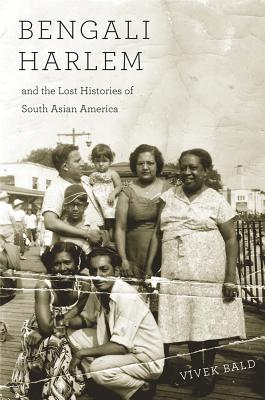
There is a knot at the heart of South Asian America. Racism against Black people runs deep within our communities, some of it carried over from our respective countries, some of it learned here in America, encouraged by the possibility of economic mobility and a myth that tells us that the acceptable South Asian American aligns with white culture and its dominance over Black people. But this was certainly not how the first South Asian Americans did it, as Vivek Bald details in Bengali Harlem and the Lost Histories of South Asian America, a book that has come to be canon among a generation searching for their histories. Bald digs up stories of what he considers the first significant settlement of South Asians in America, and uncovers how, when met with racist immigration practices in America as they traveled from a homeland colonized by the British, they built communities with Black people in order to survive.
In 1897, a dozen Bengali men disembarked from the S.S. St. Louis docked at Pier 14 in New York City, a detour from its usual stop at Ellis Island, where the building set up to inspect immigrants had been (accidentally, according to records) burned to the ground overnight. These men had journeyed a long way across British-controlled waterways and debaucherous port cities like Colombo, Karachi, and London. They were armed with delicate, chikan-embroidered fabric that they planned to sell along New Jersey’s beach resorts, on the sunny, teeming boardwalks of Atlantic City to Asbury Park. These were popular goods: Americans were infatuated with the smells, sounds, and aesthetics of the mystical Orient and would gladly pay a pretty penny for rugs, curios, and silks if it meant that they could seem worldly.
These passengers were part of the roughly 1,500 Bengali men who came to America between 1880 and 1920, recounts Bald. They hailed from Hooghly, West Bengal, and loosely regarded each other as family. And a small number of them had chosen to make America their home. Before Bald’s research, most records of South Asians in America in the early 20th century indicated a small population of students and other temporary residents, who spent some time in the United States before returning to their homes, with a few outstanding exceptions in the West coast. But the men Bald studied kept coming back.
They occupied a strange place in the American imagination, which did not know what to do with anyone who fell between acceptable whites and dehumanized Black people. Some immigrants, like the Irish, were gradually shuffled into whiteness, but the Bengalis were hard to characterize. They were seen as “exotic and peculiar, inscrutable and fanatical, ridiculous and treacherous,” writes Bald. Like South Asians today, these men were subject to the whims of an immigration system that could choose to rescind its acceptance at random. As they are today, these men were entering a country that loved their culture, but did not love them.
These men were entering a country that loved their culture, but did not love them.
As they disembarked the ship, the travelers were handled like cattle by medical practitioners, who combed their hair for lice and checked under eyelids for trachoma. Immigration professionals interrogated on jobs, political and religious views, marital statuses. To the last question, some men may have responded that yes, they were married, and that their wives lived in America. Some Bengali merchants had moved inwards to places like Tremé, New Orleans, where they had fallen in love with Black women, had operated their businesses within Black communities, and had become fathers to Black-Bengali children.
But these answers didn’t pass muster: they were seen as little more than economic threats. The immigration official decided that the men of the S.S. St. Louis must be breaking the Contract Labor Law (1885), an extension of the Chinese Exclusion Act (1882) that stopped companies from bringing in contracted workers, a law that was supposedly created to protect American jobs. After twelve days in detention, the officer ordered them deported back to their previous London port.
The deportation didn’t last very long. Within the year, the merchants had found their way back into the U.S., splitting into smaller groups and trying different ports of entry to make their efforts less obvious. There was poetry to their bravery, explains Bald. Despite the odds stacked against them, they may have returned because they had started to feel at home within Black communities in America. With the women they loved and their neighbors, Bengali men would have shared a thread of oppression, one group brutally enslaved, pillaged, and left to live in poor enclaves even after they were freed, the other group invisible in America and under colonial rule in the homes they had left in India.
Among these men were those like Sofur Ally, who moved to New Orleans in 1895, married America Santa Cruz, a woman of Afro-Cuban and Creole descent in 1900, and by 1910 had three sons. Bald unearths records that indicate a string of difficulties for Ally: in the 1920s, he had naturalized and had become the proprietor of a “dry goods” store. But by 1930, the Depression had set in, and the records no longer showed that Ally owned the store. Most likely, he had gone back to street peddling along with his sons, the very trade that had brought Ally to the town. Eventually, after 35 years in New Orleans, he began to act as a middle-man between New Orleans and arriving Bengali communities, helping with paperwork, signing as witness on immigration documents, setting up welcome events at local churches.
America has been presented as an equal opportunity provider. But the history shows that this is a convenient bending of the past.
South Asian Americans have been molded to show that they have had relative academic and financial success; because this is the dominant representation of us, we have to mimic these qualities in order to be seen. In turn, America has been presented as an equal opportunity provider, one where people from different countries can immigrate to and with a little bit of hard work, be on equal financial footing with white people. But the history of those like Ally shows that this is a convenient bending of the past.
In between color lines, when race was still seen as a binary between black and white, Ally would have faced several challenges and privileges. In these years, South Asians were even more foreign than their Asian counterparts, immigrants from China who had inspired the Chinese Exclusion Act. In the minds of Americans, they came from a nebulous, strange place that spanned the Middle East, North Africa, and large swaths of Asia. This meant that they were not neatly classified into the stark color lines enforced by Jim Crow laws, which had divided nearly every public facility: whites to one side, Black people to the other, the Black side poorer and seen as inferior. Bengali peddlers fanned out to segregated cities like Chattanooga, Charleston, and Dallas and crossed between these lines.
Journalists scratched their heads trying to define South Asians in reports, with one 1900 story on sailors in New York City stating that the men were “all so dark as to be taken easily for Negroes, but their features are Caucasian, and their hair is straight, stiff, and wiry.” They were still seen as dangerous, however, “peaceable and orderly up to a certain point and then they lose all self-control and generally resort to the knife.”
Some made use of the gray areas that South Asians occupied, like Reverend Jesse Routte, a Black man who wore a velveteen robe and a turban on his head and lived in a white Mobile, Alabama hotel, eating in downtown restaurants and willfully passing the color line. But being a South Asian did not make one safe. They were still considered inferior to white people, like Abdul Fara, who sat in the free white persons section in New Orleans and was eventually attacked by a fellow passenger, who took a heavy wooden sign and smashed it over his head.
No amount of pleading could change the fact that these men were not white. Abba Dolla, an Afghan trader who was part of the Bengali network and moved to Savannah in the 1890s after working the New Jersey summer resorts, offered proof to the courts of his whiteness, touting his skin, transparent enough for his blue veins to show, and his ownership of a piece of land in Savannah’s white-only cemetery. Though Dolla won, Bald describes the case as an anomaly, an argument that the U.S. government soon came to vigorously oppose when other South Asians presented it. Perhaps even more interestingly, Bald’s research shows that Dolla had gotten two Black men to testify for his good character, though he claimed that they were merely people he conducted business with. Most likely, Bald reveals, Dolla lived in a Black neighborhood, and had managed to win citizenship through the use of his silver tongue.
In the minds of Americans, they were not neatly classified into the stark color lines enforced by Jim Crow laws.
With the Great Migration, many Black Bengali families that had settled in the South moved to cities in the North. Nazaf Ali, a Bengali man, and his Black wife Juanita Lambert Ali, moved from New Orleans to Chicago in 1918. In Chicago, Najaf found work alongside Black men in the city’s stockyards, where so much meat was produced that the city became known as the “Hog Butcher to the World.”
Bald makes clear that these men did not come to America with grand ambitions, like our modern myth of the diligent immigrant. They likely came with the aim of disappearing. There was no way that they could be both seen and exist. Yet, if we trace their ancestries, many of their stories lived on.
Margaret and Bahadour, the Black-Bengali children of Moksad and Ella Ali, moved north with four siblings to New York City and registered as “colored.” Bahadour listed himself as an “actor,” and changed his name to Bardu in the 1920s. That was the start of Bardu Ali, a man who would become pivotal in shaping the Black entertainment scene in America.
The Baltimore African-American profiled him as a dancer on the Black vaudeville circuit in 1926, describing him as the son of a “Turkish” father and “Creole” mother. By the 1930s, Bardu had made a name for himself as a popular emcee with a smooth style. Next up was his own nightclub, when Bardu moved to Los Angeles in the 1940s, teaming up with Johnny Otis, a white drummer big on the R&B scene, to open Barrelhouse, a nightclub devoted to R&B. Before he died, he made his foray into television, as the business manager of high-flying standup comedian Redd Foxx in the 1970s, who acted in hit series Sanford and Sons.
White people would not have accepted these men. Their success and happiness relied on Black people.
Not all were as prolific as Bardu Ali. Countless others disappeared into the ether. But because Bald’s stories are vague, we are free to imagine the lives of these men as rich and as full as we choose to. Last year, I met a Bengali American man who owned a pizza shop outside of Detroit. He told me how he’d heard about Bengali Harlem for the first time last year, and how it had helped him come across what faintly, and for the first time ever, felt like his history. His grandfather had sailed to America for work, disappearing for decades, returning to Bangladesh when the pizza shop owner was just a child. His grandfather was quiet about his experiences, but slowly unveiled stories of a vivid life of love, and friends, and commerce over the years.
The first significant settlement of South Asians in America was Muslim, not the Hindu, upper caste, highly educated poster children America chooses to celebrate. They were not cherry-picked from their home countries for the purposes of their labor and placed in antagonistic positions in America. Instead, their journeys were much more like the undocumented immigrants who traverse borders today.
When South Asian Americans celebrate what we consider to be our achievements in America, it’s important that we take the stories of the Bengali sailors as proof that these are due to new privileges granted to a select few. If our success was the result of pulling ourselves up by our bootstraps, the Bengali sailors might have had an easier time.
White people would not have accepted these men. Their success and happiness relied on Black people. Years later, South Asians are yet to repay that debt and acknowledge those histories. That’s why it’s imperative that we, all of us South Asians, say that Black lives matter. By saying it, we acknowledge that our own lives matter too.
She knew before the lines appeared. She knew before she bought the test. Growing up, there was an old woman in the village over who could tell in one glance if you were, and some of the barren wives who knew they were not would go see her in case her powers could extend beyond sight and inspire them to become so. The barren wives would pay a week’s earnings, for what? Useless soups made from fish guts and chicken scraps, her grandmother had said. Tiantian herself never paid attention. She never cared who wasn’t and why not or who was and shouldn’t be. Other people cared. Other people talked. She did not. Yet here she was.
Wo you le, was what they said: I have it, I got it, I with it. How did that translate?
Wo you le, she thought. And the lines turned pink.
Robert Cao was unprepared. This had become his natural state. Many years back, he had one foot in front of everyone else. When the sparks of unrest began to scatter across the universities of China, he received his acceptance letter to the University of Pennsylvania. After the ugliness passed, his road to citizenship opened. He landed his first job. His wife joined him overseas, and with his connections and her biology degree, found work at a lab. The Chinese were known to be diligent. They opened 401Ks. They signed their names next to mortgage papers. Everything transpired in an upward motion to carry him toward a prosperous future.
And then.
Then came economic disaster, layoffs, hair loss, face loss—everything but weight loss. Returning to China, working for an executive half his age, getting re-educated in how to sing the right praises despite all evidence of incompetence. Then came his wife’s scorn, tightly concealed but always detectable. Then came age. Age, and all its embarrassing accoutrements. The minutes wasted in front of the toilet, his life dripping away from him. Tubes shoved up his rectum to trace the growths along his colon. Nothing to be alarmed about, his doctor said before scheduling another scope, six months later. Then came flabbiness. His shrinking limbs flailing against a growing belly. The exhaustion that swept over him from time to time, utter and complete, like he had been knocked to this shore of life by ten-foot waves, his body so battered and waterlogged he could not imagine lifting an arm, much less standing, walking toward the next task.
This was what Robert thought as he sat across from his mistress—beautiful, lovely Tian’er. Occasionally, he still felt a jolt, not of desire but surprise, a sudden disconnect in the pattern of his life. Where had she come from? How did she fit into this? At times, he was unprepared for her.
She watched him from the sofa, her body folded into the space between the cushions. The thin plastic strip sat nestled in tissue papers on the coffee table in front of them. She was waiting for him to say something, but the exhaustion incapacitated him.
He studied the white walls, stained by the harsh Beijing air. When he invited her to move in, almost two years ago, he told her she could decorate as she wished. After all, she was here yearlong, caring for his property, while he toggled between Beijing and Boston. At first he thought that fear of displeasing him prevented her from acting. She wouldn’t want to offend him while they were still learning each other’s habits and sensibilities. Then he attributed it to lack of imagination. Finally, he decided it was lack of effort. Tiantian was one who lived through television and books. She always knew the plot of whatever show was being broadcast and she cried when reading novels. She could live forever in her imaginary worlds, but a child would draw her out, ground her. That was why people had children—to embellish one’s life with milestones, to push themselves forward to the next goal and leave a mark on the world. Back home, his daughter’s growth and accomplishments were framed in rows of photographs—a piano recital, a tennis match, suddenly her high school graduation. He imagined these walls exhibiting the same rhythm of life in progress, starting again from the beginning, a piece of his old tired self made new again.
She could live forever in her imaginary worlds, but a child would draw her out, ground her.
“Forget it,” Tian’er said. “I’ll take care of it. I’ll find a nice river and drown myself.”
“Why would you say a thing like that?”
“What else is a woman in my position supposed to do?”
Robert blinked as he searched for a response. Though they were in a country of government-enforced birth control, he knew nothing of the actual process for procuring an abortion. There would be paperwork involved. There was paperwork for everything. Documentation—sometimes false, sometimes real—and always, always stamped.
“A child is a gift, isn’t it? A mother’s greatest joy?” He heard an echo of his wife’s voice.
“A mother’s joy,” Tian’er mocked, “is also a mother’s burden.”
She pushed on past his silence. “Will you give this child your name? Pay for clothes, toys, school? What if he falls down? Gets hurt?”
Robert moved next to her on the couch. “So. You think it will be a boy?”
Speaking in Chinese, Tiantian had not specified gender, but the image of a child falling evoked for Robert the picture of a boy kicking a soccer ball down a green field. Tiantian herself had been thinking of a bundled up toddler, sex unapparent, walking through a door and tumbling down a long flight of stairs into nothing.
Noiselessly, she began to weep.
Her long hair spilled forward as she hugged her knees, so Robert could not gauge the distress on her face. He patted her shoulder and rubbed circles along her back, remembering the hours he had spent soothing his daughter after her night terrors.
“There, now,” he said. “You’ll be okay, we’ll be okay, and our son will be just perfect.”
Six weeks after Robert’s sperm collided with Tiantian’s ovum, the cascading, rippling ring of cells cleaved and coalesced until it exerted a heart to beat. At seven weeks, a face began to emerge, the outline of a nose, a mouth, printed on a mung bean. The buds of arms and legs twitched.
Tiantian felt none of this, on her knees in front of the toilet. She stocked up on loose-fitting tops and searched for timely moments to ask Robert for gifts and money. When he was assigned back to the U.S., he gave her a good twenty thousand kuai for vitamins and other herbal supplements. She sent some home to an aunt and put the rest into a CD.
At ten weeks, an accumulation of blood along the folds of the chorionic membrane streamed down her uterine lining, leaving a russet stain on her underwear. She did not notice at first while squatting over the toilet at the KTV where she worked part-time—the part during which Robert retreated to the U.S.—but when she wiped, blood bloomed red on the tissue. She stared at the bright feathery petals. Sometimes they tested people for insanity by having them read blots of ink. She couldn’t decipher what signs her body was sending her, so she cleaned up and asked her friend Bella for a pad.
All night, Tiantian waited for the agony. She smiled at guests, sang a few ballads, let them grope her sore breasts, all the while steeling herself for cramps that would squeeze her clean and wring her dry. She hadn’t cried once since Robert left. She couldn’t find the motivation. It was as if she, too, had grown a fibrous membrane. She didn’t care what anyone thought, she didn’t care about anything. Finally, she had grown tough. So tough the pains did not come.
She considered, after that incident, methods of forcing the pain. With Robert gone, she had greater flexibility, but it was too late for the pill. She’d have to do the other thing. Like scraping out a cantaloupe, Bella had said. The last woman they knew who did this got an infection, was laid up for two weeks and returned to the countryside to recover. Bella said she was back now, but no longer hostessing, choosing to waste away at a clothing stall instead, earning next to nothing. Tiantian hadn’t seen her since.
A child wasn’t so bad. She’d always thought she’d have a child, just like she’d thought she’d get married, too. This year she would turn twenty-six. If she had stayed in the village, she’d probably have two kids clinging to her already. In the city, there were years of good money left. Pregnancy was like early retirement. No lotions or procedures could save you after that. But she was taken care of, supposedly. Robert was a good man. A good investment.
Let fate run its course. Wasn’t that what the dao espoused? She let the dao do its work as she poured over episodes of the original Shanghai Bund on Youku, wondering if her compulsive media consumption would grant her child Chow Yun Fat’s soulful eyes or Angie Chiu’s sculpted cheekbones, like how mothers before her had tried to create a generation of tyrannical Maos by poring over his image. She learned that if she shined a flashlight on her belly, the child would turn away and burrow into her womb. It knew a place inside her that she herself had never touched.
Robert, when he could, called between 7 and 8 p.m. They were separated by exactly twelve hours. She pictured him exactly halfway across the world, preparing for board meetings behind a black desk, fiddling with an arrangement of glass paperweights lit up from the inside like Dale Chihuly’s glowing orbs. When he called, she could pretend he was a typical husband apologizing for working late.
In actuality, Robert called from the parking garage. He propped the phone on the Camry’s steering wheel as he ate lukewarm oatmeal packed from home. The wireless was not strong enough to support the video feature on WeChat, but he preferred the photos that she texted later anyway.
“Show me your belly,” he said.
“Don’t be silly. Only my boobs have grown bigger.”
“Show me those, too.”
He snuck peeks later during conference calls and in the bathroom, hidden from his wife. On any day, he could count the number of things Lan said to him: Garbage. Dishes. Driveway. Lan was one of those women whose elegance was epitomized by the word quiet. Even slicing sweet potatoes required the same focused intensity Robert imagined she brought to the lab, presiding over rows of test tubes. Perhaps for Lan, the act of cooking really was as complicated as preparing assays. Her family had come out of fortune, then famine. Until they had no food, they had servants who helped cook it. They did not fare well in the revolution. Robert’s family, descendants of a proletarian hero, saved them from dishonor.
Lan was one of those women whose elegance was epitomized by the word quiet.
Lan did not approve of China. She did not trust economic booms or technological advancements, like the high-speed rail or the subway lines her husband raved about. She did not like that he made his money in China, and she did not like that the promise of easy money and an easy life was drawing her daughter there, too.
“People will take advantage of you,” she told Tiffany over Thanksgiving dinner. Once they were all lethargic from food and pie, Tiffany had announced her plans to study abroad spring semester.
Lan was full of questions about her grades, her credits, and why she would want to leave her friends and that secret boyfriend when this was her last semester, but Robert cut her off before she could figure out where to begin.
“Your mother only knows the old China. Beijing is a lively, developed city. I think you’ll like it.”
Robert always said whatever it was that would win Tiffany’s favor, never bothering to consider consequences. He blithely sailed along, gone for half the year, and left all the worry to her. He knew nothing, and she shot him a look to tell him as much.
“Shouldn’t you stay on campus to work on your thesis?” Lan asked, turning back to Tiffany. “What about the credits you need to graduate?”
“I have one credit left, thanks to all the AP classes you signed me up for.”
“What about your friends?”
Tiffany willfully misunderstood her. “They probably need more credits.” She was already collecting her dishes, getting ready to leave. Her daughter was adept at quick exits, always an excuse at hand: study sessions, acapella shows, her roommate’s cat that must receive its anti-anxiety medication on time lest it tear apart their shoes again.
“Let’s talk about it tomorrow,” Lan tried.
“It’s done, Mom. I turned in my forms yesterday.”
Silence reverberated after the front door swung shut. Though Robert had only returned a few days ago, they’d already exhausted all the noteworthy updates. Had he known about Tiffany’s study abroad? She didn’t want to ask. He offered to help put food away. She turned him down. He was no good at fridge organization, and there was so much turkey left. Like every year, it was too dry. They’d swallowed down what they could.
“Why don’t you just go to bed?” She was uncomfortable with him lurking behind her, his gaze still bleary from jet lag. She’d rather be alone than in a room with someone half-present.
She scrubbed the greasy pans and listened for the sounds of her husband moving through the house. Always when he returned, this took some getting used to. The stairs creaked as he headed up. The door to the bathroom shut. He could be in there for upwards of half an hour. She tried to grant him the privacy these matters deserved, but she couldn’t help but wait for the sound of a flush.
All around her, inside her, patterns were shifting. Her body was writing a new alphabet, etching a unique set of fingerprints onto the clump of cells growing inside her. She craved the foods she once hated and couldn’t stomach the smell of pork. Her nipples darkened, and she no longer had to puff out her stomach when she posed for photos.
Tiantian was unable to hostess in this state, but Kai was a good manager. Much better than her old manager, at the more upscale KTV where she and Robert met. Kai waived the stage fee and offered her an apron instead. Now Tiantian served drinks and snacks, gagging at the smell of dried cuttlefish. Christmas and New Year’s were busy, mostly with foreigners who left generous tips but didn’t know to ask for additional services.
After her last shift, a few days before Robert was due to return, Bella led her into an open karaoke room and a chorus of other hostesses shouted, “Happy baby shower!” They brandished balloons and stood around a bucket of Yanjing beers.
“Western customs for your western baby.” Bella grinned, handing her a plate of frosted sponge cake, layered with fruit.
Tiantian burned with both embarrassment and affection. She didn’t even know some of these women, but they were her sisters. She knew enough.
One woman pulled out a birth chart that no one could decipher and guaranteed Tiantian a son.
“A boy is better insurance,” Bella said. “No man forgets the woman who gives him a son.”
“But don’t let him take the boy to America without you,” another woman warned.
“Your luck is so good. An American laogong. Do you think your baby will look western?”
Bella scoffed. “How can two Chinese people make a baby with blue eyes?”
“Chinese people in the U.S. look different from us. It’s the milk they drink.”
“No, it’s all the sugar they eat. They grow tall and beefy. Our Sugar will have a sweet, sturdy son. Her namesake.”
They all used English names at the KTV, and hers was Sugar, because tian meant sweet. Sweet girls were naive. They refrained from meeting men’s eyes and only spoke an inch above a whisper. They never failed to notice when a man’s glass was empty or when his self-confidence was low. Sweet girls got pregnant and accepted it as ming yun. Sweet girls surrendered completely, even when they were only pretending.
Sweet girls got pregnant and accepted it as ming yun. Sweet girls surrendered completely, even when they were only pretending.
But Tiantian could not say this, because she was indeed lucky. Robert had stood up for her when his colleagues got too drunk and too rough. He’d continued to support her, even now, when she could no longer work. She said instead that Robert had seen his wealth rise, that his wife was ugly, that he’d build her a second home in the U.S.
Kai, who’d snuck in quietly and stayed back by the corner, looked on with a skeptical smirk, arms crossed over her cropped tuxedo jacket. She stopped Tiantian on her way out, waving a red envelope. “Bonus,” she said. “Take it. Watch out for yourself, Sugar. If you need anything, tell me.”
“I’ll be fine. Robert’s a trustworthy man.”
“Of course. Sure. But you’ll learn.”
Robert, trustworthy or not, was at least good and decent. He was much gentler than her own father, who died years ago after a fit of rage sent a blood clot into his brain. After Robert returned, he woke early to make lumpy millet porridges and soups that coated her lips with salt. He served them to her with American vitamins and hummed off-key lullabies to her belly at night. He took her to see a doctor, and paid the additional fees for someone with no urban registration.
But as attentive as Robert was, she knew he lied to her, too. He swore no more feeling existed between him and his wife, yet he never mentioned any desire to leave her. He said there was nothing he wouldn’t give up for the sake of their child. He came home complaining about having to work late, even though she could smell his clothes and his hair, reeking of grilled meats and cooking oils.
When a phone call came late at night, and he took it into the kitchen and spoke with soft, appeasing tones, she knew he was speaking to a woman, and that this woman was not his wife.
Tiantian trapped him in the kitchen. How could he this to her? How could he get her into this state and then abandon her? Was he really so heartless, so shameless? Had he been placed on this earth to ruin her? Had she been placed on this earth merely to suffer? And if he didn’t care about her suffering, then what about the pain of their unborn child?
Her performance left her breathless, dizzy. She needed to sit down, and Robert ushered her to the sofa, his mouth working noiselessly. She’d stunned them both. Her hands were shaking as she tried to quiet this unexpected rage. The baby inside her thrashed furiously.
“My daughter,” Robert finally said. “She’s here.”
He would introduce them, he promised. He would do the right thing.
All her life Tiffany had wished not to be an only child. Her father knew this, which made the situation that much more cruel.
“The fuck, Dad. If I told Mom that I were having a baby. This is way worse.”
They were seated in a lavish Peking duck restaurant, where she couldn’t cause a scene or even raise her voice. She hadn’t wanted to come tonight. She was sick of rich foods and her father’s attentions, the way he watched her so carefully, like a child fearful of punishment.
“We didn’t plan it,” he said. “It was an accident.” As if this kind of stuff happened all the time.
And maybe it did. Mistresses were common in China. They were called xiao san, little thirds, modern-day concubines. Tiffany knew this but never could have imagined her father being one of these men. Where did he get the money, the nerve, the stamina?
The duck fat clung to her tongue in a tasteless film, coagulating in the back of her throat.
“She wants to meet you.”
“Why?”
“For the baby. For family.” He ducked his head, chastened by her glare. “Lunar new year is coming up. I hope you’ll give her a chance.”
“How did you—” She ran through the places where mistresses might prowl. Massage parlors. Bathhouses. Gross. Maybe she was just some mousy secretary. “Nevermind. I don’t want to know.”
“She’s really nice.”
“Dad. Please.”
Tiffany waited for something like an apology—repentance—but there was none.
“You’re grown up now,” he said. “You know that your parents are just people, too. We make mistakes. We’re not perfect.”
“No one asked you to be perfect.”
They left most of the food uneaten, walking back toward the subway station in silence. Cars sped by beneath them as they crossed the skybridge. Squares of light glimmered in the canopy of buildings. For the first time since she arrived in Beijing, Tiffany felt a pang of homesickness, not for home in general but for some kind of cellar, a hiding place. Her mother’s closet, the rustle of skirts above her. Somewhere, far away, her father was counting to ten and getting ready to look for her. Only now, she hoped she wouldn’t be found.
Before they parted ways at the station, her father managed to recover enough paternal instinct to make demands of her again.
“Come to the house for New Year’s. It’ll be good for everyone.” And then, “Don’t say anything to Mom, okay? I’ll talk to her.”
Her stomach sank even before the escalator began to lower her into the tunnel.
“You know.” She turned to look back at her father. “She must have some seriously sad story. Sticking with you for three years.”
Tiantian followed her grandmother’s steps for making the dough and the dumpling filling, chopping up cabbage, ginger, pork. When she was young, she would watch and wait until her aunts returned from their shifts at the textiles mill and the groceries stall, gossiping and laughing as they maneuvered rolling pins with the heel of their hands and shaped ingots and lotuses inside their palms. A cloud of flour-dust would rise around them, and soon there would be enough dumplings lined up on the bamboo mats to feed all the uncles and cousins and perhaps a few neighbors who chanced to wander by.
But now her aunts were all old and bitter, her cousins scattered across different cities, no one very satisfied with the decisions they’d made and even less happy when they compared their lot to someone else’s.
Tiantian folded the dumplings herself. With each one she sealed, she resolved to hold tighter to this life she had stirred up. The baby inside her kicked. Robert’s gurou. His bone, his flesh. The same cut as his daughter’s.
The girl showed up just shy of seven, two hours late. “I thought it was dinner,” she said.
Tiantian assured her that all was fine, no need to be polite. After all, there were no outsiders here.
She studied the girl hungrily, drinking in each detail of her face. There was Robert’s nose and brow, but the lips and jaw were someone else’s, more delicate. Pretty. Her hair hung loose and messy over her shoulders, streaked with coppery highlights. She wore no jewelry or makeup, and her oversized sweater hung shapelessly down to her knees. She had no reason for pretension and made no effort to hide her displeasure. She was insolent and rude, but she ate with exquisite care. She took small, delicate bites, and her lips never parted while she chewed.
Tiantian could copy her poise but not that other thing, that American-ness. Tiffany was not burdened by worry or guilt. She acted in a way that was only possible when you were a hundred percent assured of your own safety. She had done nothing wrong yet, or she had not been taught to recognize when she did wrong.
Tiffany was not burdened by worry or guilt. She acted in a way that was only possible when you were a hundred percent assured of your own safety.
Would her child learn these same Western ways? Robert had started looking at schools, not in America but here, where there were plenty of ex-pats coming as teachers. He could pay the expensive tuitions and also tutor the child at home, ensure he would be ready to apply for universities abroad. Harvard and MIT were both near Boston.
Tiantian had learned some English when she first started hostessing, to better attract western patrons. She’d select a few phrases to practice during each shift. After she met Robert, he’d bought her language-learning apps and helped her study so she could apply for different jobs that would put her into a better career. He made introductions and bought her a suit jacket for interviews. When those jobs turned out to pay less than what she made before, she gave up looking and he didn’t push her.
Now she studied to make herself a suitable mother. She downloaded podcasts full of stilted English conversations and stole two books from an ex-pat café. One cover featured a cowboy and a big-breasted woman in a ripped dress, the other one an ancient Roman coin. She got a notebook and wrote down each vocabulary word.
When the girl switched to English, Tiantian could understand little bits.
“Did you talk to Mom yet?” the girl wanted to know.
Robert said he’d been too busy. Work was exceedingly stressful.
“Should we call her? It’s a holiday.”
Robert switched back to Chinese. “The holiday doesn’t start until the 19th, and I’m needed in Boston before that.”
This was the only holiday they would have together, so Tiantian insisted on a family photo. She set her phone on Robert’s desk and started the timer. Robert raised a freshly cooked dumpling into the air, but the skin ripped. Hot soup and oil spilled onto his lap, followed by the nugget of meat. The camera managed to capture both his frank astonishment and Tiffany’s grim smile.
Tiantian made the best of it. “So cute,” she said. “I will print copies.”
Later, when she and Tiffany were in the kitchen, she said, “You miss your mom?”
The girl shrugged.
“I miss my mom. She die when I was baby.”
The girl looked genuinely sympathetic. “I’m sorry.”
Tiantian shrugged. “Is good she does not see that I am scoundrel.”
“Well, that’s kind of harsh.” The girl took a plate from her and began drying it. “I mean, we all make bad choices.”
The girl seemed to soften, and Tiantian wondered what kind of bad choices she was imagining. She didn’t want the girl’s pity. Pity could only be played one way.
She smiled conspiratorially. “Are you scoundrel?”
“I’m lying to my mother.”
“So we are scoundrel sisters.”
“Actually, I’m sister to that one,” Tiffany corrected, pointing to the belly. “But age-wise, nothing makes sense.”
“I hope that one not scoundrel.”
“You should maybe find a different word.”
“You help teach me English?”
The girl didn’t like that suggestion. She set the plate down. It clattered against the counter. “Look. We’re not actually family.”
And then she left to join her father in front of the television.
When Spring Festival arrived, Tiantian was alone all day in the apartment. Firecrackers thundered across the city. After a sleepless night, she stepped out in the early morning, walked abandoned streets littered with torn red paper. Storefronts were shuttered as migrants returned to the countryside and locals ventured out on vacation. She relished losing herself in the quiet morning fog, walking aimlessly for hours while running through vocabulary lists in her mind. The movement lulled the baby to sleep inside her, and each word she conjured was like an incantation to guard the child and project to it pleasant dreams. The least she could do while they still shared her body.
Lan had always credited herself with a sixth sense for disaster. Many women had it. Intuition, they called it in the U.S. Hers was different. Hers was an inheritance from the women in her bloodline who had watched their husbands wracked by opium, their children hunted by the Japanese, their riches burned or pillaged by the Communists and the Kuomingtang. Generations of misfortune had taught her how to sense imminent peril.
Naturally, she thought first of her daughter. At a dinner with family friends, she cornered Tiffany’s confidante and asked all the leading questions. She knew how to find her way in. A few compliments and some light discussion of college life, then a rapid interrogation about drugs, alcohol, mental health, sexual behavior. By the time she was done, the girl couldn’t form a coherent sentence, but Lan had gathered nothing useful.
When her husband returned, she peppered him with questions, trying to uncover every detail her daughter had hidden about life in Beijing. So preoccupied with this task, she failed for weeks to take note of her husband’s unwarranted cheerfulness. He walked around the house, humming—old Chinese ballads from the ‘80s, a children’s song their daughter used to sing about washing her white handkerchief. The praise came showering down, too. How she had flavored the pork just right. How sharp she looked in her green blouse. Yet he made no overtures in the bedroom. So, he had taken a lover. She hoped he did not embarrass himself. How a man his age must exert himself to keep a lover. A costly endeavor, too. She completed a thorough review of their finances, but found nothing amiss. He had a separate account in China she couldn’t access.
She meted out her punishment in small doses. A raw spicy pepper hidden beneath a slice of beef in the bowl she served him. A small slit to the garbage bag before he took it outside. She waited to start the laundry only after he had jumped into the shower. Although the house was too big for her to hear his yelp of surprise when the water turned ice cold, she still found satisfaction in it.
She meted out her punishment in small doses.
Yet her right eye continued to twitch in anticipation of the danger she could not see.
“Don’t eat from any street stalls,” she told her daughter whenever her daughter deigned to pick up her call. “Don’t ride in any black cabs. If the driver kidnaps you, no one would ever know.”
“Why would they kidnap me? There are tons of wealthier kids in Beijing.”
But she had two healthy kidneys, a fertile or yet to be proven otherwise womb, and a pretty face. Her life was full of riches she took for granted, but she’d only get mad if Lan mentioned this.
She should have checked her husband’s phone sooner. She’d been generous not to. It only took three attempts to crack the password. The year Tiffany was born. The evidence took more searching. She knew it would be linked to WeChat, but the app required some navigating.
The girl was very pretty. Big eyes and long black hair, no dyes or highlights. A traditional beauty. Robert looked ridiculous next to her, his broad smile an assault. Lan burned with shame on his behalf.
Other photos followed. Adventures in paddle-boating. Adventures in fine dining. Adventures in buffet dining. Enough time passed that the girl began to look more comfortable, more settled. Her hand latched tightly onto his arm. Years, the relationship had gone on. But then came the change. Out of both respect for the girl’s privacy and distaste for seeing others exposed—physically, yes, but also spiritually—Lan flipped quickly through the stream of photos documenting the stages of metamorphosis from girl to mother. At the sonogram image, a distant heartbeat came thudding into her ears. Her own, it turned out. She scrolled forward until the screen stopped at the image that stopped her heart entirely.
Her daughter, seated at the table with her father and his mistress. In the photo, Robert had yet to recover from the surprise of getting caught and Tiffany smiled cruelly, looking directly, it seemed to Lan, at her, laughing at her foolishness.
The belly continued growing. It reached the point of grotesque and kept going. Tiantian no longer wanted to be seen in public with it. In a moment of stupid weakness, she called Bella, who rushed over all too happily.
“Look at you,” she cried. “How could he leave you in this state? Men. They are worthless. You shouldn’t be alone right now.”
And that was how Bella moved in. She was a messy roommate, and she brought her business with her, one or two guys a week. Tiantian could hear them from her bedroom, but it was always over in a few hours. Worse was how much talking Bella did. She had an Eileen Chang quote for everything, which she’d recite in an even more supercilious register.
On all the new girls Kai was hiring at the KTV: “So you are young? So what? In two years, you will be old.”
After Tiantian ended a call with Robert: “A man will never love a woman he thoroughly understands.”
When Tiantian’s irritation finally broke through: “She grew angrier and angrier. Then she had a child.”
Without being solicited in any way, Bella offered up all kinds of solutions to rescue Tiantian from whatever troubling predicament she had imagined. Hold the baby hostage and charge him every time he wanted to see it. In cash, of course. Get him to pay for an education. Learn a new trade, something on computers.
As Bella went on about her friend’s sister’s computer vision glasses, Tiantian’s phone buzzed with a WeChat ID she did not know. WuZhenLan. The profile photo was the standard gray silhouette.
The message: This is Robert’s wife. It is time we talk.
She shut her phone before Bella could catch anything amiss.
Gathering her composure, she stopped the other woman mid-sentence. “You’ve been so kind to stay here with me, but I shouldn’t trouble you anymore. Robert will be home soon, and I will need to make sure the place is clean and fresh.”
Bella prepared to leave the next day. “We’ve known each other a long time, haven’t we,” she said, her face as guarded as a walnut shell.
Tiantian nodded. “You’re a good friend.”
“I helped you. I got you a good job. You’ve had it easy, but a child is a serious matter. A child can take a mother’s life, and then come back asking for more.”
“You’re not wrong. But a child can also bring life’s greatest reward.”
After the woman left, Tiantian let the solitude expand around her. She steeped within it all night, sitting with her back against the wall, facing the heavy front door with its gleaming wood finish.
In the morning, Robert called at the usual time, her phone juddering next to her on the floor. She readied herself for news, but he was full of unexceptional cheer. She bored of his rambling thoughts, clenched her teeth at the onslaught of details and trivialities she had no use for.
When it was done, she wolfed down some breakfast and waited until her hunger abated before she began. Even though Lan had written in Chinese, Tiantian used a dictionary to compose her message in English.
I am called Tiantian. My parents died young, leaving me and my very poor grandmother. We worked hard but received little wages. In China, life is difficult for a woman. You are pushed always to be stuck. As a woman yourself, you must understand me. Will you find it in your kind heart to lend a helping hand? Can you do it yourself to drag someone out of her struggle?
After Lan picked up her daughter from the airport, Tiffany seemed to sense her displeasure and thus desire her closeness. It was like when she misbehaved as a child, needy for affection after her time-out or her scolding. Instead of going to bed as she should, Tiffany requested a movie—any movie, and sidled close to her on the couch. Lan could not get comfortable. China had stained her daughter. Even after her shower, she smelled polluted.
Later, she wanted to climb into bed with her. “Just for awhile,” she said. “Maybe I’ll get sleepy. It’s not like Dad’s here.”
Robert had returned to China two weeks ago, blissfully ignoring Lan’s coldness toward him. And while things were still unsettled, subject to the caprices of fate, she had nothing to say to him.
“Do you miss him when he’s not here?”
“Who? Your dad?”
Tiffany nodded. Only her head poked out from under the covers.
“I’m used to it. When you’ve been married for so long, some separation is helpful. Everyone needs to live their own lives.”
“What if one person goes too far? Takes on too much of another life?”
“Do you have an example?”
She wanted her daughter to say it, to tell her, to be on her side. The silence stretched into the space between them.
“No. Not really.” The girl’s voice was soft and miserable.
“You sleep now,” Lan said. “Get some rest. I have some more work to finish up.”
“I’m glad to be home,” Tiffany added.
“Well. Home is where you belong.”
Downstairs, with her laptop glowing on the kitchen island and all the lights in her house turned off, Lan composed another message to her husband’s mistress. Across the dark expanse of lawn, shadows moved over the lighted window shades of the neighbor’s house. So many lives locked into each square of land. How odd, that the person she felt closest to lay across the ocean, in bed probably with her husband. But who else knew the topology of her husband’s body? Who else knew the weight of his child, tucked against her bones? As she typed, affection rose from the pit of her stomach, something like gratefulness. Here was this person with whom no more secrets needed to be kept.
After suffering for hours the indignities of childbirth, Tiantian clawed free from the pain to find a small purple mass squealing on her chest. The child was a boy. He did not look right to her.
As she typed, affection rose from the pit of her stomach, something like gratefulness.
The nurses and Robert cooed over him, calling it little treasure, budding scholar. “Mom’s still recovering,” one of the nurses told Robert. “She must take great care during the convalescence month. Bonding will come naturally.”
In the end, Robert could only get two weeks off work so he compromised by working from home, which meant that he constantly got in the way without being able to offer any real help.
Tiantian gave herself over to the child’s unceasing needs. She searched his small, pimpled face for a sign of intelligence, character, or warmth. During the brief hours the baby slept, she scrolled through articles about autism and hydrocephalus and birth defects related to paternal age or air pollution. What was not readily apparent now would take many more years to manifest. She had no doubt something was waiting to emerge from those tangled strands of DNA.
Robert, however, was pleased, swearing a resemblance only he could see.
“Must be all the wrinkles,” Tiantian said, feeling mean and knowing she could get away with it. This was probably the closest she would ever get to the insolence that buoyed every day of Tiffany’s life.
The child was underweight but voracious. Every hour, he cried for her nipple. By the end of the month, her milk was gone and her nipples cracked like dried riverbeds. Despite the pain and inflammation, she was relieved to no longer be the child’s only source of sustenance. Robert had, at the very least, brought back a supply of formula. Her body adjusted slowly its new shape, and she reveled in its lightness.
The morning Robert left to complete the citizenship paperwork at the embassy, to get all the proper stamps, Tiantian called Lan via WeChat while giving the baby a bottle. She had to try three times before Lan picked up.
The other woman sounded breathless, as if she had rushed. “You’ve thought it through?” she said. “You won’t change your mind?”
Her putonghua was flawless, unaccented by country or city.
“I stand by my word,” Tiantian promised.
“He’ll come after you. What will you do if he finds you?”
“He won’t find me.”
“How can you be so sure?”
“He thinks he knows China. He doesn’t.”
She would go back to the KTV and talk to Kai, who had connections across many cities. With the money, she could sign up for proper classes somewhere. There were endless paths one could take. It was re-tracing steps that was hard.
There were endless paths one could take. It was re-tracing steps that was hard.
“Will you be safe? The boy. What if he gets sick?”
As if on cue, the baby began fussing, letting out a mewling cry as its tongue rooted for food. Tiantian gave him the tip of her pinky.
“You could give us more money then.” Sweet girls did not ask for things or make demands. Perhaps it was time to change her name, too.
“Hospital bills can add up so quickly.”
Tiantian tamped down her impatience. “Haven’t you made up your mind? Don’t let a crying baby break you. Today’s my chance. Will you let us go cleanly, or will you tether us down with your worry?”
“Your child is my husband’s. We’re connected whether we like it or not.”
“Your daughter’s very beautiful.” Tiantian wanted to say something nice. “Smart, too.”
“She graduated from college today.”
“You must be very proud.”
“Childhood is so brief.”
“Yet I still feel like a child myself.”
A long pause on the line. Tiantian held her breath.
“Take care,” the woman finally said and hung up.
Tiantian confirmed the transactions and double checked the amounts as she packed her suitcase. She’d only take one bag to clear out of this borrowed space. There were only so many things for her to keep. When she finished, she gazed deeply into the baby’s sleeping face, trying to see, finally, what kind of face it would become. In the end, she had to accept that his would never be a face she could recognize.
Before she left, she sent one more message. Scoundrel sister. I have left you a brother. Treat him nicely. Don’t be too mean.
Tiffany was half-dressed when her phone buzzed, straddling her not-boyfriend, Andy, whom she had been not-dating for the past four years. Breaking up a non-relationship, as it turned out, was nearly impossible to do, but surely they would graduate from this soon, too. As with all things graduation, it deserved some final fanfare.
“Leave it,” Andy said, when Tiffany reached for her phone.
“It’ll just take a sec.” She was worried about her mom, who seemed so distant and vulnerable now. At any moment, the secret could overcome her, and Tiffany will have failed to give her warning.
“You’re ruining the mood.”
She read the message again, trying to make sense of it.
“Do you want to, or not?”
When she looked back down at the boy, a curl of disgust licked her stomach. Why had she wasted so much time with him? Four years of college gone by, and what had she made of it? All this time, money, opportunity. Had she squandered it?
The next chapter was waiting for her to enter. Could she be better this time? Could she be braver? She wondered what would it take to become someone she admired and was happy to be. She wondered how long it would be before she found someone she actually enjoyed passing the time with, and whether she would take his word for truth, or shadow his every step, searching always for a lie.
When Robert returned home, the infant was crying weakly in wet soiled clothes. He turned about in search for Tiantian, a curse under his breath, no patience left for her laziness and negligence. All day he had stood in line and argued with idiots, all for her. Then he froze, noting the open bureau doors and pillaged closet. He picked up the closest object, a pen, and held it in front of him as he prepared to approach her dead body. When he was certain she had left of her own accord, simply packed her things and walked away, he kicked the desk in rage and stubbed his toe. Then, he fed the baby.
In the years that followed, a tingling numbness would occasionally creep over his toes and remain there for days. Each time, humiliation seeped forward from the past, as fresh and fetid as in this moment now, sweat pooling at the small of his back and within his armpits.
His wife asked for a divorce when he returned home with the child. Before the divorce papers went through, she discovered a lump in her left breast, and accused him of bringing it about through the bitterness he had caused her. Because she needed him, she stayed. Over time, mutual guilt tempered mutual anger.
They told their friends they had adopted the boy from distant relatives, recently deceased. He grew up healthy and gentle-spirited, never quite displaying the same quickness as Tiffany. Because of Tiantian’s many assertions that the child was not right, Robert appraised him often for signs of disability. There appeared to be none, but he remained so watchful that he was significantly gratified when the child was placed in a remedial math class.
At eight years old, Albert Cao loved cars, Legos, and art. He did not like writing or subtracting. His favorite person in the world was his sister, who built the best Lego cars and who never studied him as if she were trying to measure up something inside him. He liked to draw pictures of his sister, his cars, and his mom, whom he had never met. His auntie said that his mother was not here because she had no heart, because wolves had eaten her heart.He did not believe her, though, because his sister told him this was not true. Then his sister had shown him his mother, on a narrow strip of photo paper. She was sitting at the dinner table, smiling broadly over a bowl of dumplings. Albert asked if he could keep the photo, and Tiffany had let him.
Her new anthology is an extension of the projects she’s become known when it comes to always prioritizing disabled voices and lives. Wong’s work has brought together vast communities online and continually serves as a space of education and enlightenment; she has given grants to disabled writers unable to market books, and provides resources for not only her own anthology but other disabled writers whose work we should know. She also worked on the #CriptheVote campaign, encouraging political leaders such as Bernie Sanders and Elizabeth Warren to be transparent in their stances on disability policies and rights. Her latest anthology builds a roster of new and previously published essays around policy, honoring those lost, unity, and love.
Wong and I spoke about the differences between Disability Visibility and her first anthology on resistance, perspectives and approaches to centering marginalized stories, and making this anthology additionally accessible to readers.
Jennifer Baker: Disability Visibility is not your first anthology.
Alice Wong: This is my first from a major publisher. In October 2018, I self-published a very small anthology called Resistance and Hope: Essays by Disabled People. This was done out of just feeling the need to respond to our times. Especially after Election Day 2016. And it really became a meditation on what is the relationship between resisting oppression and having hope. I really wanted to center it on disabled people, especially marginalized disabled people because activism and resistance and movement building happened way before 2016 and our current administration. So, how do we build on that? And what are the messages, and what are disabled people doing in response to our times? Because it’s not just about our present, it’s about our past and our future. That was a lovely first experience with self-publishing. I learned a lot about how to self-publish and all the different things about formatting and registering for ebooks and herding cats. This is a small collection of sixteen essays and it took me, I guess, a year and a half to get done. I had people asking me “When is this coming out?” I think people underestimate how much work it takes to be an editor. I would say that editors deserve some kudos too because it’s a lot of work that happens behind the scenes that doesn’t really show up in the same way [as it does for writers].
Jennifer: And it worked out well. It came out beautifully.
Alice: I’m very happy with it. I think it was a labor of love. And it was really important to me for it to be free. I just wanted to make something that was available for people. Compared to what I’m doing for 2020, that was a great experience and almost a practice run for this anthology, just really understanding the mechanics of it all.
Jennifer: I was reading your interview with Nicola Griffith when Resistance & Hope came out. You talk about your background being in qualitative research and sociology. So you didn’t study writing like many of us and I think that’s to your benefit. You come at this in a certain way that you communicate it so directly.
Alice: Sometimes I feel a little hesitant to call myself a writer with a capital W. I didn’t get an MFA. I never did those kind of publications of literary journals. It’s really hard to think of myself as a writer the way I see other people write so beautifully. I try to just tell my truth. I’m not a fancy writer and I think that’s by orientation in terms of how do I communicate. Talking about complicated things and rooting it back to my experience. I think my background in qualitative research helped me find the connective tissue for stories.
And because both you and I are podcasters. I think that really gave me a leg up in terms of just listening, made me very intent on listening and responding to people. Doing the work of asking good questions. I think almost the construction of a good question to really invite the interviewee gives them that space.
Jennifer: When you were creating a new compilation, how did you come to Disability Visibility?
Alice: It shares the name of my project that I started in 2014, the Disability Visibility Project. I think that has been the throughline for everything I do with my podcast. It’s advancing the concept of disability visibility. It’s really sad in 2020, I think it’s still a rather radical notion even though it really shouldn’t be. I just thought it’d be a nice way to build on my previous work through that phrase. The real hook of this book is 21st century stories. I think that was what makes it a little bit different from Resistance & Hope, which I think had a much more narrower theme. That one was about resistance, it’s about politics, and the current political climate. But Disability Visibility, I wanted it to be a little bit broader and be a little more expansive, and really about the now. And I think that’s the unique offering of this anthology compared to what I’ve done before, and hopefully compared to other comparable books that are out there. It’s really about the most recent work that I personally feel so deeply about. And these are stories that I just feel everybody should know more about. These are writers I want everyone to pay attention to. That was just some of the thinking behind it.
Jennifer: Speaking of your podcast, you’ve become so well-known. And I hope you recognize that you are an entity in yourself of how many people are aware of and appreciate the work you’re doing. When you create an anthology like this that is so vivid—I hate the word “diverse” now because people have co-opted that word.
These are stories that I feel everybody should know more about. These are writers I want everyone to pay attention to.
Alice: I want to retire it and “diversity” and “inclusion.” “Diversity,” “inclusion,” “intersectionality,” which has been co-opted and watered down and frankly misused by other people. And I think the fourth one is “awareness.” Nothing gives me [more] hives. I would just love to retire all those words because I just want to talk about those things by doing them. By showing, not telling.
Jennifer: Exactly! And that’s why I love the word “visibility.” I think a lot about that word because we hear “I want to give voices to the voiceless” and that is so presumptive. Even choosing the name, placing your project’s name on the anthology, how do you feel visibility works in terms of activism because you exist?
Alice: This is the concept that means a lot to me. Sometimes it’s not enough to say “Hey, pay attention to us.” It’s not about trying to attract attention by those who are in the center. It’s about how we as different kinds of communities take our power and center ourselves and dictate the terms about how we want to be visible. It’s not about how the dominant majority defines “what is visibility?” Really it’s us who should dictate that. So that to me is what visibility is about, it’s identity and it’s about power, but also about love of who we are in our community. Literal visibility. For the majority of people with disabilities, with mental health disabilities, or interracial disabilities. But despite the numbers we are nowhere close to parity in terms of representation or political power in almost every field basically. We are here and many of us do identify and we’re very visible and yet at the same time we’re not seen or heard. Visibility is not just about being seen literally, it’s about being recognized and also taken seriously. To me the kind of crux is to be visible is to be understood. I think understood and accepted for where we are, understanding us for where we are instead of us trying so hard to be palatable, to be people’s ideas of what’s their biggest ideal. And to also push at the edges. Our lives, our culture, our ways of the world, there’s so much that’s not understood and some of it needs to be expanded and deepened.
Visibility is not just about being seen literally, it’s about being recognized and also taken seriously.
Jennifer: And that’s part of the brilliance of this anthology. You’re not speaking to anybody else but to the people exploring their own stories. To me that’s not easy to do editorially. There’s just so many layers to this story. And beginning with Harriet McBryde Johnson’s story, it’s so intense and there’s so much gray area. Can you talk a little about the culmination of these pieces that are so honest and true and how they really do immerse readers into a life we either do or do not understand?
Alice: Thank you so much for recognizing that. I think that was a real labor of love that this shows. The way I put the order of the book. The way I kind of made those sections. The challenge of thinking about the reader. I just feel like categories are limiting. Using verbs “being,” “connecting,” “doing,” these are ways I thought would help the reader connect with the stories and the different larger themes.
And Harriet’s piece is a punch in the gut. I was very deliberate. I wanted that very first because if there’s one essay I want readers to start with I want it to be this one. If they don’t read anything else then that’s a loss, but I think if I get them to read Harriet’s piece that’s going to do a lot. I think what Harriet is so brilliant at is talking about the everyday lived experience of being disabled in a non-disabled world, but also about the tensions within the disability community. How do we respond to a famous philosopher, who I will not name, who calls for our deaths? These are super heavy issues that we still confront daily. Thinking about the pandemic, we’ve seen how Black, Brown, disabled, older people have been considered disposable. Nothing has really changed. Eugenics has always been alive. And I really wanted readers to understand for so many of us we are fighting for our existence every day. I do not want any disabled person in the future to feel like we have to ask for permission to exist. I don’t think we’re really there yet. But I want to be in a world where everyone belongs. That’s kind of the undercurrent of this kind of book: for people to really see us as we are. We’re not asking for permission. We’re not asking for acceptance. We’re not looking for your approval. But you are invited in to this opportunity to engage in our wisdom.
Jennifer: And there’s a ton of brilliance in here.
Alice: I was very deliberate in the end with the brilliant s.e. smith’s essay about disabled people coming together. If they read from beginning to end, I wanted to leave people on this high note of just love and just feeling uplifted. And I think that’s what s.e. describes at a performance of disabled dancers and how ephemeral and magical it’s like to be with your people. That’s what’s almost similar to reading this book. Leave reading this book feeling maybe changed. But I do hope people feel unsettled or, you know, wanting to learn more.
Jennifer: And that access to learn and gain information and be in the experiences we’re reading, period, is so key to larger and representative communities who will read and recognize their own experiences in this book as well.
We’re not asking for permission. We’re not asking for acceptance. We’re not looking for your approval.
Alice: Sometimes I feel like as a person of color we don’t take any opportunity for granted. If this is my big shot, I thought a lot about how do I leverage it into bringing in as many people as possible. Making the book as accessible as possible. So, what I did on my own without even telling the publisher, I commissioned a discussion guide by a disabled writer Naomi Ortiz—it’s free on my website. This is a discussion guide for any teacher, reader, book group to use with Disability Visibility. From what I heard and gauged from people with intellectual disabilities is that books are not accessible for a lot of readers. So I hired Sara Luterman, an autistic writer and journalist, and she wrote a plain-language summary of my anthology, and it’s also free on my website. So if people can’t buy the book, which again is another access barrier, if people feel like the book is dense in terms of language there is a plain-language summary that anybody can access. These are the different ways that I just want to use as many different ways to get the book out there in different formats. People don’t have to read or buy the book to talk about the deeper themes. Other people can read the plain-language summary and skip the book all together, but either way they will still get a pretty good sense of what the book is all about. I’m learning all the time how to improve my own kind of processes, but these are things I wanted to offer to the world on top of the book.
Jennifer: Also, you have an amazing list of suggested reading in the back. It’s categorized. So that’s another great resource you’re offering as well.
Alice: I think this book is the tip of the iceberg. I’m very careful not to say this book is everything because it’s not possible. But this is really an invitation to start. And I think that’s the goal.
DON’T MISS OUT
Sign up for our newsletter to get submission announcements and stay on top of our best work.
YOUR INBOX IS LIT
Enjoy strange, diverting work from The Commuter on Mondays, absorbing fiction from Recommended Reading on Wednesdays, and a roundup of our best work of the week on Fridays. Personalize your subscription preferences here.