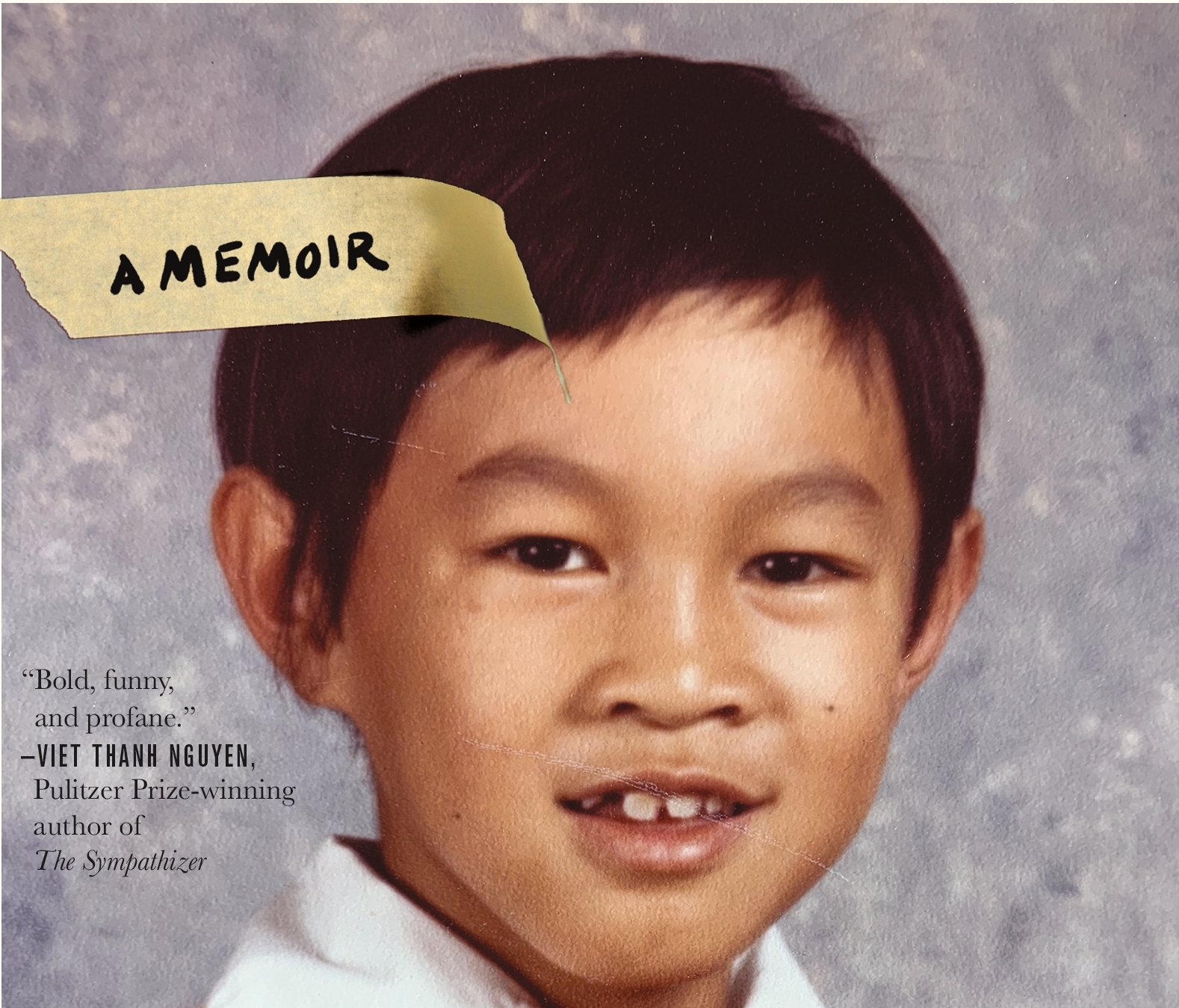
Viet Thanh Nguyen and Phuc Tran On Being Vietnamese American Weirdos

I love alternate takes and extended scenes on DVDs.  

It’s a chance for me to see what the movie or show might have been like and to understand the effect of the director’s choices: camera angles, tweaks in the dialog, actors’ performances. The deleted scenes from The Office, for example, are as hilarious as (if not better than) the broadcast versions.  The extended scenes for The Lord of the Rings add so much depth to the characters’ relationships. The deleted scenes from Return of the Jedi add a layer of conflict between Vader and the Imperial guards that make him (and the Imperial bureaucracy) more sinister. Outtakes give us a little peek into the shoulda-woulda-couldas of a cinematic universe. 

The alternate take rarely happens in real life, but from time to time, you’re lucky enough to see another version (or at least to imagine that you’re seeing another version). This past April, I had the distinct pleasure and privilege of sitting down and chatting (over Zoom) with Viet Thanh Nguyen, Pulitzer Prize-winning author of The Sympathizer. It was the day before my coming of age memoir’s publication, Sigh, Gone: A Misfit’s Memoir of Great Books, Punk Rock, and the Fight to Fit In, and I had a realization: one of us was the alternate take.

You see, Viet and I are both refugees and our families escaped South Vietnam in 1975. Both of our families ended up at the same relocation camp in Fort Indiantown Gap, PA that summer (along with 20,000 other Vietnamese refugees). Once they left the relocation camp, Viet’s family stayed in Harrisburg, PA for three years before moving to San Jose CA in 1978.

My family was sponsored by some magnanimous Lutherans in Carlisle, PA who helped all twelve of us as we started our lives over. The Trans stayed in small-town PA for two decades, living out the federal government’s deliberate dispersal of Viet refugees to avoid ethnic enclaves. According to the Refugee Dispersion Policy, our separation from other Vietnamese people would accelerate our assimilation (lawmakers specifically talked of avoiding Vietnamese ethnic enclaves). Within a decade, despite the dispersion, many refugees found each other in California, Texas, and Virginia to establish expatriate communities. This was what the federal government was trying to prevent: delicious banh mi and fragrant pho.  Hello, Little Saigons! Vietnamese people found each other.

But not the Trans. We grew up without any larger Vietnamese community besides our immediate family, and our Americanization was as swift as it was relentless. In the grand experiment of acculturation and assimilation, we were the control group. Or were we the experiment?  

When Viet read an advanced copy of my memoir, he wrote to me: “You gave me a glimpse of what my life could have been like if I had stayed in Harrisburg.” Was I the ghost of Christmas Could Have Been?

As Viet and I spoke in April, I noted that we had scattered from Ft. Indiantown Gap in ultimately opposite directions (I’m in Maine and he’s in California). And that disparateness may illustrate our life’s directions, too: I went to a small liberal arts college, majored in Latin and Greek, and then served a tattoo apprenticeship in New York City. I’ve been teaching Latin and tattooing for 20 years. And Viet? He went to Berkeley, earned his PhD, and won a Pulitzer, so you know…

In 2016, I began writing a memoir about growing up in Carlisle, a project that was ignited by my 2012 TEDx about language and identity. I wanted to present the complexity and contradictions of my experience both within my small town and within my family. I survived (maybe even thrived) with the discovery of both the ‘80s skate punk scene and great works of literature—two seemingly paradoxical guides. But then again, I’m also a Latin teacher and a tattooer.  

I may not contain Whitman’s multitudes, but at the very least, I’ve got a duality. I’m the final cut and the alternate take.

—Phuc Tran 


Viet Thanh Nguyen: Even before you became a writer you had found other artistic pursuits, like tattooing, which I find completely terrifying. I assume there’s a relationship between your creative interest in tattooing, and your creative interest in writing.

Phuc Tran: Yeah, I suppose so. I’ve been trying to sort of right those two angles—two facets of myself—but other than being deeply grounded in self-expression, I’m not sure if they make a lot of sense, if they’re co-planar. I think they’re facets of myself, and I think I’m okay with that. I love the question, but I haven’t come to a satisfactory arithmetic for how those things connect. It makes me think about Steve Martin and his banjo playing; I wonder what he says when people ask him, like, “Tell us about being a master banjo player and an amazing stand-up comedian—how do those interconnect?”

VTN: I’m actually much more pissed off that he writes books.

We’re complicated people, and there are parts of us that are paradoxical.

PT: Yeah, amazing, right? And then he does the narration for it. You know my thought, Viet, is that we’re complicated people, and there are parts of us that are paradoxical, or not co-planar, and at least part of my writing of the memoir is an invitation to the reader, as well as to myself, to sort of constantly churn in that paradox of who we are.

VTN: So, the memoir, it’s very much a memoir about, you know, being Vietnamese in America, Vietnamese American, Asian American, whatever you want to call it. But, inevitably, there are very explicit markers of identity, subjectivity, and experience in the memoir, about yourself and your family, and so on. The tattooing, from what I can see from your Instagram, is not necessarily related to those autobiographical or personal things. And I’m interested in that because, for those of us that are classified, whether we like it or not, as Vietnamese or Asian American writers or minority writers, the questions of our autobiography and our identity are imposed on us all the time, even if we may sometimes want to deal with them. When you get to visual arts and cultures, of which tattooing is a part, that autobiographical link can be severed. I wonder if that’s true for you, if people see you as the Vietnamese American tattoo guy, or they think, the tattoo artist?

PT: That’s a great question. Tattooing is so interpersonal, since my clients are coming to me with the subject matter that they want already. If they say, “I want a tattoo of a mallard duck,” there’s not any part of my persona, or at least my personal history, that I’m imposing onto that execution of a tattoo of a duck, let’s say.

VTN: So, I’m curious about your relationship to these two kinds of experiences. Not just that they’re very different kinds of creative practices, but that they’re also very different—I assume—psychic spaces, in that sense, with Sigh, Gone, you really had to go deeply into your autobiography, your identity, and all that. Is being a tattoo artist more freeing, or are these just completely different?

PT: I think both. The visual arts are very different from the literary arts, but then also I think it is generally freeing. I think also because Vietnam doesn’t have a long history of contributing to the tattoo aesthetic as much as, let’s say, Japan does. People are coming to me and asking me to do what they want. It’s like being a house painter and you ask me to paint your kitchen purple; I don’t really have a say in that. I just say, “Okay, Viet, I’m gonna paint it purple,” and do the best that I can. It’s a craft, I guess.

VTN: No one ever just comes up and says, “Hey, I want you to do your version of the Sistine Chapel on my body.”

PT: It’s very rare. It’s not, like, omakase.

VTN: (laughs) That would be an interesting concept.

PT: It does happen, and I often will put it back on my client. I take the tattooing very seriously, and I feel like it’s so much responsibility for me to craft something that someone will have to wear forever, in which they have zero input.

VTN: I would find it hard to believe someone would just let you do it without even having an idea, but saying, “Sketch me something, and I can see whether I would want it?”

PT: Yes, for sure, and I always say, “Okay, give me like your top five things that you like, and then I’ll sort of look at that and cull that down to something that I think might be workable.”

VTN: With writing, of course, we learn how to be writers by writing, and we make a lot of mistakes and we graph and all that in the privacy of our own minds, it takes years and years…in your case, it only took four years, so you know…

PT: (laughs) No no, there’s a lot of bad writing in there too.

VTN: But with tattooing, how does it work? The drafting part, like, where does the learning part come in? Who do you work on? Who’s going to let you experiment on their bodies?

PT: Yeah, I mean, it’s very gradual, you start off with simple, foolproof designs, where the margin of error is much wider, and then as you get much better, you take on more complex projects where the margin of error is much smaller. And it’s cyclical; you do a great tattoo and then two weeks later you think you could have done something better. The drafting process happens in the drawing phase of it, really. To me, that’s the most important part of it. You can correct a great drawing that’s been tattooed badly, but you can’t fix a bad drawing once it’s been tattooed, or it’s harder to. When I had an apprentice, I always emphasized that the drawing part was more important for her to learn than the tattooing part. You can’t unlearn bad drawing, I guess.

VTN: Is there a book on tattooing in your future?


PT: (laughs) I don’t know, I’m open to it. I didn’t expect at my middle-age to be writing a book. Would you like to read a book about tattooing?

VTN: Well, of course, I mean it all depends on whoever writes it and does he know how to write a book. Whether that’s an autobiographical book about tattooing or profiles of tattoo artists…isn’t there a bestselling novel called The Tattoo Artist of Auschwitz out right now?

PT: Yeah, that’s right, and John Irving just wrote a book about tattooing also—fiction.

VTN: And now, of course, everybody and their grandmother has a tattoo, so…

PT: Except for you, apparently.

VTN: Did you know that you wanted to write a book, could write a book, or was it just a decision that you made right then?

You can correct a great drawing that’s been tattooed badly, but you can’t fix a bad drawing once it’s been tattooed.

PT: No, I had thought about it… I thought when I retire from teaching and tattooing, I’ll write a book, you know, 30 years down the road. So, there was an idea there. And when I embarked on writing the book, I thought a lot about E. B. White’s injunction to writers, you know: you’re writing for an audience of one. If I’m writing for myself, then the work is going to be more authentic to who I am. I wanted to write the book that I would want to read, and if people get it and they appreciate it, that’s great, and if they don’t, I think that’s okay too. Right out of the gate, I wrote the prologue of the book almost exactly as it is, and I thought, if the agent says, oh this is great I wanna go for it, great, and if not, then that’s okay too. I was fully prepared to not be the right person to tell my story, and I think many people are in that position, as you’ve said, for whatever reason.

VTN: I think a lot of writers, aspiring writers, don’t get that. They want to tell their story, but they have so much anxiety about who they’re telling their story to, or who might be listening in on their story, whether it’s the agent or the editors or whatever, but also if they’re writing a memoir, their own family and friends. Did you feel trepidation about that other audience? You include them in your story, it’s not just your story, it’s the story of all these other people.

PT: I did. I think having a tenuous relationship with my parents gave me, not in a callous way, some freedom and license to be more honest to myself and to my reader than someone else would have. And it’s not that I’m disregarding how they’re going to receive the book, but I’m not as afraid.

Who’s your audience? Do you subscribe to that idea of the audience of one with your writing as well?

VTN: Well, our trajectories are different, because I wanted to be a writer for a long time; I set that goal for myself. I’m the person I describe, who was anxious about my work, and “will I get published, will I get famous, will I get the recognition that I so truly deserve?” Those were disabling thoughts, and so it took me 20 years to get to the moment of simply saying, I’m going to write for myself. I literally thought, fuck it. I’ve written 20 years for other people, and now I’m just going to write for myself. And that was really liberating. I’m not as well-read as you, I haven’t read E. B. White. But every writer that I know, who I think of as having written some kind of important work, has reached that moment, where they decided, the hell with it, I’m just going to say exactly what I want to say, and deal with the consequences later. And that’s a very liberating kind of moment.

PT: And one of those consequences could be not getting published, right, like you’re too weird, or ahead of your time, or out of your step. And that’s okay too.

VTN: I think that’s okay too, it’s easy for me to say, but, for the people who want to be published, it’s pretty hard to live with. And the number of people I’ve met who I would describe as being genuine artists, in the sense of doing exactly what they want to do, and not care about getting published or exhibited or whatever, it’s a very small number of people.

PT: I think for so many people, you’re threading the needle between being true to yourself in the process, and not thinking about your audience in the creative process. But then at some point, there’s a reckoning when you release it to the wider world, and now all of a sudden you’re dealing with the interface of the thing that you created and the audience. I think about the inherent irony to what Thoreau was doing, where he was writing this total loner manifesto, Walden, and then he publishes it! It makes sense, in a larger way, in that he’s talking about this social contract that we need, that we are all interconnected, even if you are an artist and your manifesto is, “I don’t need people, and I’m gonna go live in the woods in this shack…but then, also, I’m gonna publish this book and I really hope people read it.” It’s this paradox that you have to reconcile.

VTN: We’re all stuck in it. For most of us, there’s no way of getting around that. So, the book is gonna come out tomorrow. What are you feeling about it, right now?

I was wracked by this question, ‘Who the hell am I to tell this story? Who the hell am I to be writing this?’ and I figured I’d just go for broke.

PT: I feel really excited. I’ve been in my own echo chamber for so long, with so few readers, and going back to what we were saying about the solitary nature of writing, and then the idea of being able to interact with your readers…I think for better or worse, the Internet has made that interaction with readers so low-barrier now. Anybody can go on Goodreads or Twitter and just tell you what they thought about your book. And, yeah, what little feedback I’ve gotten has been really moving, from people who’ve just said, “I’m so touched by the book,” or whatever.

I think even five years ago when I thought, “Who wants to hear my story?” I had no idea. I don’t want to sound cavalier—I was sort of wracked by this question, “Who the hell am I to tell this story? Who the hell am I to be writing this?” and I figured I’d just go for broke. If my agent and the publisher thought I had a reasonable crack at it, why not? I’d much rather regret having tried to do it, right?

VTN: I’m thrilled to have it. I think that what struck me in reading the book was, from the very first pages, its energy, its unique perspective—which is a polite way of saying that you’re a weirdo.

PT: I appreciate that!

VTN: I read a lot of books by Vietnamese and Vietnamese American writers, and it’s always refreshing to find people who don’t conform. And most of the people who write books don’t conform—but to go way off…

PT: (laughs)

VTN: This book could just be described as a tangent, by most Vietnamese American people. You know, all the wrong things with your life, basically, but it worked out. We need more stories like that, to inspire other Vietnamese Americans—among others—to be weird, to do exactly what they want to do. I go around the country giving lectures, and I meet so many Asian American students and young people who say, “I really want to do something that my parents don’t want me to do. How do I do it?” And I’m always at such a loss to tell them what to do, it’s such a difficult situation to find yourself in. So, books like yours, I think, help to give people permission and an example, not that they want to do exactly what you’re doing, but to break conventions, and to break that family mold.

PT: Which is painful, and there’s a loss there, that’s part of the reckoning, I think, in writing the book—the things you lose in the process of being your own person. That individuation is painful. Thanks for acknowledging that I’m trailblazing for Vietnamese weirdos.

A Queer Memoir About Navigating Toxic Masculinity

I met David Adjmi at a fancy writing residency. The kind of place where you work all day alone and then eat dinner together, have a drink in the parlor afterwards. I remember a night when someone suggested watching a movie. As people were perusing the house copy of the criterion collection people began offering their favorite films. What’s your favorite film, Diane, someone asked. Film? I didn’t really watch films, I watched movies. And at that point, I wasn’t sure what the Criterion Collection was. Stunned, I said, E.T.? David was there and he looked at me playfully. He’s brilliant and he had already offered a proper film to the conversation. But in that mirthful look he gave me, I felt, as they say, seen. It wasn’t until reading his debut memoir Lot Six that I fully realized how literate he was across the breadth of culture and subject—from Montaigne to Three’s Company. And it makes sense why.
In Lot Six, he tracks his increasing alienation within the small, insular Brooklyn community of Syrian Sephardic Jews community (known colloquially as SYs) he was born into and eventually fled. As he moves from one environment to next, Adjmi develops what he calls “an experimental self,” trying on radically different roles with the hopes that he can build a “new self” and escape his past. Nothing is off limits in this quest. The book is everything David embodies; it’s hilarious, meditative, knowing, inquisitive, experimental, artistic and a little heartbreaking.

We chatted over Skype about Ricky Schroeder’s breakdown in The Champ, cowboy hats as gay kitsch, Derrida, and more.


Diane Cook: You write about taking trips into Manhattan with your mother when you were a kid, and how culture becomes your outlet. You have these epiphanies at a young age—not just in theatre and with art, but also with slightly trashy or melodramatic TV movies and soap operas. I was really interested in how the lowbrow and highbrow inform your development as a person and a writer. 

I was such a faker and a liar, but so much of what I faked ultimately helped me to peel back something true.

David Adjmi: I am naturally pretty omnivorous in terms of the culture I consume, and I can trace this back to my childhood. My parents were both high school dropouts, so growing up there was no concept of highbrow art, or like, even a definition of what culture was. So when it came to this very nebulous sphere of “culture” everything had equal valence—TV, theatre, visual art, books—these were my links to life. I was a very lonely, sort of depressed kid, and I was something of an outsider in my own family, so I needed something to fill in my inner experience and give it more context. So yeah, watching Ricky Schroeder deal with his alcoholic father in The Champ and experience intense anguish when his father dies caused a huge psychic shift in me. I was able to trace my own experience of life against those contours. And the soap operas were trashy, but I saw them as expressionist melodramas—not that dissimilar to Fassbinder’s take on Sirk in films I watched much later, like Martha—which I write about a little. And maybe Falcon Crest doesn’t have the depth or acuity of Ovid or whatever, but it is still a delicious artifact of the human experience. 

DC: So much of your book is devoted to this very elaborate project of you recreating yourself.  In high school you begin adopting a bunch of roles. At one point you write that a self was like a garment you could “wear and remove at will,” and at another point you talk about yourself as if you were a drawing in pencil, and wonder if you could simply “erase it and start over.” One thing I loved about your book was how the line between artifice and reality is incredibly blurred and unclear. And you do really transform over the course of your college years, and part of this transformation is due to the many roles you try on. Like, not all of it falls away, some of it stays with you. 

DA: Yeah, that’s true. I mean, I was such a faker and a liar, but so much of what I faked ultimately helped me to peel back something true. In some way, these roles I tried on were a way for me to build a relationship with myself. It’s like any relationship, you need to experiment with it to understand when it feels good, and when it doesn’t, and in the process you go through uncomfortable phases. So, like, no, I do not speak with a French accent anymore—which I did for a full year when I was 18—but I’m sure there’s stuff I tapped into during that year that I’m sure is still part of me. But I don’t know what’s innate about me, exactly. I can’t even speak with a Brooklyn accent anymore—isn’t that crazy? I tried the other day, and it sounded fake. Montaigne has this idea that there’s a social self and a “true” self, and that the true self is like a “room behind the shop.” That like, hidden under all the layers of social pleasantries and affectations is the quote-unquote real you and the only way to become conscious of who you really are is to retire from society and remove the mask, but I don’t believe this. I don’t know what the “real you” is and I don’t know how to separate the social self from the private self—or, like, the artificial from the “real”. That feels very knotty and unknowable to me. 

DC: Can you talk about the Keanu Reeves shrine in your bedroom? 

DA: (laughs) Um, it wasn’t a shrine

DC: Well, don’t you call it a shrine in the book? Shall we call it a monument?

I wanted to adopt every patriarchal heteronormative standard because I was terrified of being cast out of society. So I kept trying to make myself toxic so I could fit in.

DA: I cut out a photo of him from a Rolling Stone fashion issue and kept it over my bed. I guess in the book I compare it to keeping an icon of the Virgin Mary. That was the photo with the cowboy hat. I was completely obsessed with Keanu Reeves and with that hat, and I ended up buying it. There was this whole cowboy theme in the late eighties. So I got this cowboy hat and I started speaking with a Southern accent and pretending I was a cowboy, because it made me feel macho or something. Of course, I had no idea I was doing gay kitsch. I was so naïve—I couldn’t read how Gaultier was coding sexuality and gay archetypes into his clothes. All that was lost on me.  

DC: You just mentioned wanting to be perceived as macho. Reading the book, I was really interested in how you talk about masculinity. How do you think your ideas about gender evolved into your twenties and thirties? 

DA: I mean, I didn’t understand gender as a construction when I was younger, because, you know, they weren’t really teaching Judith Butler at the yeshivah. (Laughter) But I grew up in Brooklyn in the 1980s, and what we’re calling toxic masculinity now was the mold for manhood, so I wanted to adopt it. I wanted to adopt every patriarchal heteronormative standard because frankly I was terrified that I would be cast out of society if I didn’t. So I kept trying to make myself toxic so I could fit in. 

DC: I loved when you talked about forcing yourself to listen to a Bad Brains album someone gave you in college, even though you hated that band. You called it a form of homeopathy, “a bit of poison to cure me.” And there’s that great scene where you’re a closeted undergrad at USC, and you’re trying to lose your virginity to a woman, and you get wasted and take her back to your dorm room, and you go through all this choreography in your head—you’re trying to go through it the way you imagine a straight guy would do it. 

DA: Yeah, like “Oooh, I should squeeze her neck—maybe she’ll think I’m straight if I do some neck squeezing!” (laughter) Yeah, that was awful. I felt like I was wearing steel armor and it was like 100 degrees and inside I was suffocating. And I was so wooden and scared to move my arm or smile in a way that might reveal me as gay. It was a moment to moment deeply arch, painfully self-conscious performance. I was miserable, but I thought I deserved to be miserable.  

DC: When did that change for you? 

I was miserable, but I thought I deserved to be miserable.

DA: Well, so, in the book, I chart my little sort of Candide-like journey through toxic masculinity, and all the really lame and very laborious efforts I made to be a macho man. I laughed writing it all down—these crazy scenes with me wandering around with packs of straight boys and playing frisbee and wearing tie dye… It was—I mean if you know me—It is so ridiculous to think of me that way. But at some point I got tired of exerting all this effort to fit in with groups of people I didn’t like. I became more academic, and I actually did read Judith Butler, and Foucault, and a lot of other writers who freed me up. And I transferred to Sarah Lawrence, which is this amazing, very progressive place, and I was surrounded by queer people. I just started to relax a little bit. 

DC: I’m really interested in the way you crafted your book around identity and taste and sexuality. They all helix and wrap around one another. 

DA: But these are all linked, though. It’s all about desire. How can I come to express my desire when I’ve been encouraged to believe I’m shit, and anything I like is shit? In many ways the book is exploring this tension between accepting one’s desire and becoming civilized—because desire is messy and maybe disgusting to other people, and one wants to be part of the world, right? So what’s that unbalancing act like? What does it mean to be civilized, and whose norms are you adopting to do the so-called civilizing of oneself? What’s a legitimate object for desire? What’s a legitimate subject for art? For a long time I believed that I could slink unobtrusively through the world. I wanted to camouflage myself. I wanted to find a cloud of signifiers that would camouflage me. I thought I could just decide “Ok, so I’m going to like this thing, and that’s going to be my taste.” But human beings aren’t just endlessly moldable—I mean yes, we are moldable, and we have to be for our survival, but there is a stubborn little nucleus of every human self that is resistant to change. That’s both a good and bad thing. 

DC: And when you’re at Juilliard that stubborn part of you—which I guess is the artist in you, right?—that becomes an obstacle to your survival in the program. Like, you’re incredibly protean and able to shift and change, but when it comes to your writing, and your artistic core, you can’t figure out how to adapt or protect yourself. To me, it’s one of the most moving parts of the book. Like when you force yourself to see a commercial Broadway musical because you think you and this will finally give you something in common with a professor who hates you, and her response is sort of like, “Ew, who would ever want to see that play?” (laughter) And you describe the look your teacher gives you, and how in taking in that gaze you felt almost poisoned. 

DA: It’s funny, there’s a lot of poison imagery in the book. It was all unconscious—but I think in any bildungsroman, or any story where a person leaves home to tarry with the big bad world, there is always a threat of death hovering over that person. And I really believe that to come into one’s self, one has to experience a psychic murder and be in some way reborn. But what if you’re not reborn? What if there’s just a death, and you can’t come back from it? That’s the fear I tap into in that Juilliard chapter. Change is always invasive, because to change, one has to let something into the very fragile ecosystem of a human psyche. That doesn’t come without risk. But I was basically optimistic, and I believed the poison would ultimately heal me. And I think it did heal me, actually. My year at Juilliard shattered me, but the shattering forced me to put myself back together in this new way, and that changed my writing and ultimately it changed my life. 

DC: Near the end of the book, you write that being a Lot Six–which in the SY community is slang for queer—that this was your redemption, that it “turned your nightmare into dreams.” And it feels like accepting your queer self and your artist-self feel very linked, which is so interesting. Do you think being closeted for all those years and making these attempts to erase your identity and start over—like, were these consciously linked for you at the time? 

How can I come to express my desire when I’ve been encouraged to believe I’m shit, and anything I like is shit?

DA: Yeah. I deeply believed that everything I liked was somehow wrong, and would relegate me to some abject terrible existence I didn’t want. So I was running away from that. But at the same time—and it’s so complicated—but at the same time that I was hiding and camouflaging myself, and pretending to be all these people I resolutely was not, I was also building myself, I was building a vocabulary for who I could one day become. Some of the fake stuff became activated and real. 

DC: Did you ever, through all of this shifting and self-creation, did you ever think, like, “I miss my Arab roots?”

DA: No, because I felt very deracinated as a kid, and my heritage never felt like it belonged to me. Derrida once wrote—and I’m probably gonna mangle this but it’s something like: “I speak only one language, and it’s not my own.” And I completely relate to that. Nothing from my past felt native to me. And the Arab sensibility wasn’t ingrained in me, or—I mean, it was very diluted and mixed with this Brooklyn mall culture. I never really got it. And this community, the SY community, didn’t exactly want me. It was sort of like a super capitalist Little House on the Prairie, and when I left the prairie, they were like, “Ok, bye!” I knew there was no future for me there. But I didn’t just ditch my past—I abandoned it but then I returned to it, and found a way to embrace it in my work. 

DC: Once it no longer threatened you. 

DA: Right. Once it evaporated into nostalgia—or maybe that’s not the word, but once my past wasn’t hurting me anymore; once the nightmares stopped. Nabokov has this great line in Speak Memory, he writes that a spiral is the “spiritualized form of a circle,” that it “frees the circle from its vicious containment.” I love this image—there’s an implied return to the origin, but at the same time you’re moving away from that origin. It’s both at the same time. That’s what art makes possible, that double movement. That’s why it’s magic. 

8 Books That Will Make You Glad You’re Not at the Beach

Although socially distanced outdoor activities are certainly safer than indoor ones, this year a lot of people will be avoiding crowded beaches and packed seaside bars out of fear of COVID-19. But the beach was fraught with peril anyway. From gulls attacking your sandwich to jellyfish stings to undercurrents that could drag you out to sea, many things can go wrong to interrupt an idyllic beach vacation in even the best of years. If sprawling out on the sand with a typical beach read is not in the cards for you this summer, consider diving into one of the following books that might make you glad to be far from the shore after all.

Index of /wp-content/uploads/2020/03

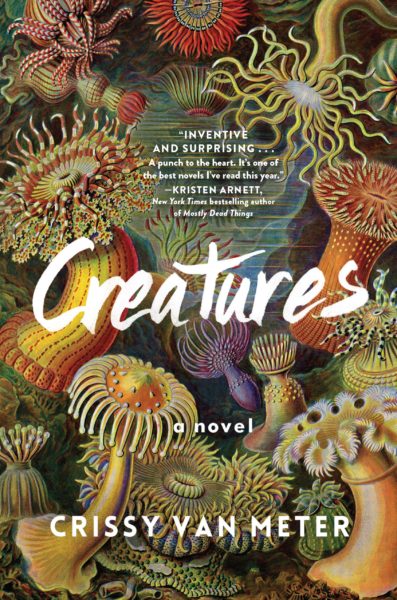
Creatures by Crissy Van Meter

Evie, the bride-to-be protagonist of Van Meter’s debut novel, prepares for her wedding on a fictional island off the coast of southern California. However, the festivities are overshadowed by the presence of a malodorous beached whale carcass, the uninvited arrival of Evie’s long absent mother, and the fact that the groom (a fisherman) might be lost at sea. Circumstances prompt Evie to confront the topic she’d most like to avoid: her unstable upbringing and complicated relationship with her charismatic, drug-dealing father.

Here Comes the Sun by Nicole Dennis-Benn

30-year-old Margot works as a desk clerk at a Jamaican beach resort frequented by wealthy white tourists. Pimped out by her abusive mother at a young age, she now has sex on the side with white men who visit the island looking for poor women to exploit. While she does this to pay her younger sister’s tuition at a private school, her romantic inclinations tend toward a wealthy local lesbian who has been branded a witch by their village.

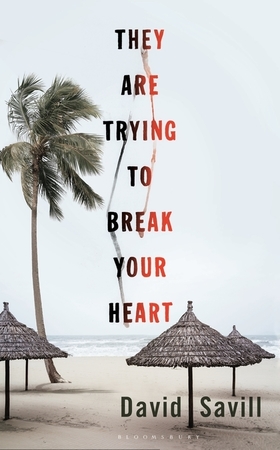
They Are Trying to Break Your Heart by David Savill

Human rights researcher Anya travels to a beach resort in Thailand for Christmas in 2004, hoping to track down a presumed-dead brigade commander who may have participated in the gang rape of a Bosnian woman during the war a decade earlier. She also hopes to reconnect with an old boyfriend teaching English in Bangkok, but the imminent Boxing Day Tsunami threatens to engulf her in another horrific international crisis.

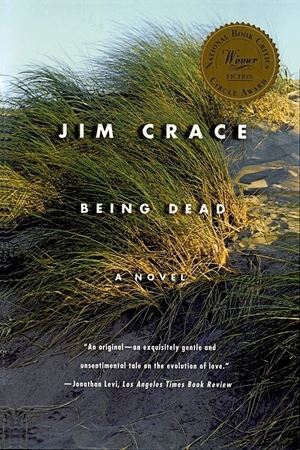
Being Dead by Jim Crace

Middle-aged zoologists Joseph and Celice, who have been married for 30 years, revisit the sand dunes of Baritone Bay, where they first met and made love while researching their doctoral dissertations. There they are surprised, robbed, and murdered, their bodies left to return to nature in the dispassionate manner they themselves used to teach about. Chapters about their shared history and their daughter’s search for them are interspersed with chapters narrated by their decomposing corpses.

Sex and Vanity by Kevin Kwan

Sex and Vanity by Kevin Kwan

If you’re looking for a more light-hearted beach disaster, consider the latest release by Crazy Rich Asians author Kevin Kwan. In this updated twist on E. M. Forster’s A Room with a View, half-Chinese half-WASP Lucie meets George, an attractive boy from Hong Kong who has spent years surfing in Australia, at an over-the-top wedding on the Isle of Capri. Though the two have instant chemistry, a drone-related PR disaster forces them apart. By the time they reconnect at the Hamptons years later, Lucie is freshly engaged to a terrible, social media-obsessed nouveau-riche white guy.

The Last Night at Tremore Beach by Mikel Santiago, translated by Carlos Frías

In this debut novel by Spanish writer Mikel Santiago, creatively blocked composer Peter rents a secluded seaside house in County Donegal, Ireland. His only neighbors are an older couple who live down the beach. Returning from dinner at their house one night, Peter is struck by lightning and begins to experience violent headaches and visions of disasters befalling his children, girlfriend, and neighbors. Are these a mere side effect of the lightning strike, or is Peter now able to see the terrible things that may be lurking in his future?

Jaws

Jaws by Peter Benchley

In this 1974 novel that inspired the hit Spielberg film, the fictional seaside resort town of Amity, Long Island is plagued by a great white shark. After the first victim’s body is found, the local police chief attempts to close the town’s beaches, but the mayor—worried about lost tourism revenue and declining real estate prices—overrules him and beachgoers flood into town. More attacks ensue, until a trio of shark hunters set out by boat to solve the problem once and for all.

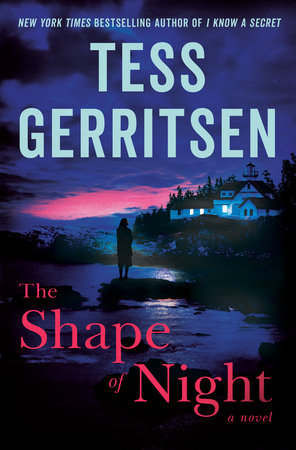
The Shape of Night by Tess Gerritsen

The Shape of Night by Tess Gerritsen

In this supernatural thriller from the author of the Rizzoli & Isles series, Boston food writer Ava escapes to the coast of Maine after a tragic incident, renting the house of a 19th-century captain who was lost at sea, where she hopes to finish a cookbook project in peace. However, she soon discovers the captain’s ghost stalks the house, looking to seduce her. Then a dead woman’s body washes up to shore, and Ava learns that the previous tenant left in a hurry, the townspeople may be covering up a longer list of dead women, and a killer—human or ghostly—might even now be on the loose.

The Feminist Confessional Poetry of Alanis Morissette

I’ll never forget riding in my mom’s car as a high school student in the late ‘90s, and hearing a male DJ on the radio introduce the Alanis Morissette song “Unsent” by commenting snidely that “someone should tell Alanis that not everything she writes in her diary needs to be turned into a song.” I laughed along at the joke, but on another level I felt alarmed. If we were all mocking Alanis for sharing her words with the world; for having the self-indulgent audacity to think that her private thoughts and feelings were worthy of the public, what did that mean for me? Like so many women and girls do all the time, I laughed at the joke because I didn’t want to be the butt of it.

To be undeservedly fair to the sexist ‘90s DJ, though, “Unsent” is a lot. It’s four glorious minutes and ten seconds of Alanis’s most personal reflections on her past relationships, naming each ex-boyfriend one by one, i.e. “Dear Lou, we learned so much,” and “Dear Marcus… You got me seriously thinking about spirituality.” The whole thing feels very TMI, but that’s what I love about Alanis. The unabashedly confessional foregrounding of personal detail that characterizes so much of her work ranges from the cringe-y to the profound, but it’s empowering by virtue of how it claims space for an unapologetically complicated, messy female experience—its assumption that duh, of course the world should care. It reads like therapy homework or a NaPoWriMo prompt—”write an angry letter to each of your exes”—but Alanis doesn’t see any reason why her personal catharsis shouldn’t also be on the radio. As a teenager, Alanis’s music often made me feel all at once like maybe she was no good—like the DJ said—but also like, hey, wait, the poems that I wrote in notebooks hidden in my bedroom were maybe not that bad. 

Alanis doesn’t see any reason why her personal catharsis shouldn’t also be on the radio.

After some success as a pop singer in Canada, Alanis Morissette burst onto the music scene in 1995 with “You Oughta Know,” the hit single off of her album Jagged Little Pill: a scathing takedown of a cheating ex-lover. “I’m here / to remind you / of the mess you left when you went away,” proclaimed the song’s chorus. Alanis’s songs shared intimate details about ex-boyfriends and power-abusing record executives alike, sometimes still hot with rage, and always unflinchingly vulnerable, and most people didn’t really know what to do with her. While Morissette has never identified who “You Oughta Know” is about, it was rumored to be Full House’s Dave Coulier—a fact that was widely regarded at the time as laughably absurd (Joey Gladstone, really?) but is actually pretty disturbing when you consider that he was 35 when the song was recorded, and Morissette was just 20. It’s far from the only one of Alanis’s songs to touch on power imbalances and abuses in relationships with men: “You took me for a joke / You took me for a child,” she writes in “Right Through You,” addressing a lecherous music industry gatekeeper, “You took me out to wine, dine, sixty-nine me / but didn’t hear a damn word I said.” And in her 2002 song “Hands Clean,” she reflects on breaking her silence about a secret teenage relationship with a much older man, speaking from his perspective, “If it weren’t for your maturity, none of this would have happened. / If you weren’t so wise beyond your years / I would’ve been able to control myself.” “Oooh this could be messy,” the song’s chorus chides, the sickening words of a manipulative creep seducing a teen girl flipped on their head and turned into permission for other girls to do the same. With Alanis, it always gets a little messy. That’s the beauty of it. 

There’s a tricky history of critics and readers conflating the speaker in writing by women with the author herself, but in this case, Morissette has never been shy about her personal investment in her work. Before writing the album Jagged Little Pill, Alanis worked with a team who didn’t encourage her to write her own lyrics, but she said in a 2015 interview that she always knew she was a lyricist — and that once she began writing, her lyrics took on a “hyper-autobiographical” quality. “Only I could write these stories,” she said. Morissette has talked about how her own life has served as the inspiration for many of her songs—but at the same time, whether or not they were purely autobiographical doesn’t really matter. What makes them powerful is that they foreground the experiences of a firmly female speaker, everyday observations that so many women share but are often seen as not valuable or worthy of being called art. They place an emotional female speaker in a position of authority that she’s regularly denied by a patriarchal culture, which so often requires women to subsume our feelings in order to be taken seriously. 

Personal writing by women is often seen as indulgent, while personal writing by men is more often lauded as high art.

Personal writing by women is often seen as indulgent, while personal writing by men is more often lauded as universal, reflective of the human condition, high art. As Lori Saint-Martin writes in Confessional Politics: Women’s Sexual Self-Representations in Life Writing and Popular Media, “The realm of the personal and sexual has always been literary for men (Saint Augustine, Rousseau, Michel Leiris, Henry Miller) and confessional for women (Colette, Erica Jong, Anais Nin).” Many critics were condescending in their reception of Alanis’s work—even in ostensibly positive reviews. In a 1995 profile, Rolling Stone’s David Wild called Morissette “queen of this year’s pop culture prom,” whose live performance is “less like a concert than modern-rock group therapy.” And AllMusic’s Stephen Thomas Erlewine wrote, “Her bitter diary entries are given a pop gloss that gives them entry to the pop charts.” Then there was all the widespread discussion of how the scenarios presented in Morissette’s hit song “Ironic” were in fact not actually ironic.

The brash vulnerability and confessional nature of Alanis’s lyrics often led to sexist critiques and dismissals like the one I encountered in my mom’s car that day. And yet her music felt right on time. Morissette has never framed her work’s expression of anger as overtly political, but it’s hard to imagine that her transition from bubble-gum pop to emotionally charged confessional rock wasn’t influenced by the political moment, centered on women’s outrage, into which she wrote these songs. Or that the vast popularity of Jagged Little Pill wasn’t, in part, the result of a culture ready to hear women divulging the details of their repressed anger; a generation of women that were growing quite angry themselves.

Jagged Little Pill came out just a few years after Anita Hill’s testimony during Clarence Thomas’s Supreme Court confirmation hearings, and Rebecca Walker’s subsequent coining of the term “third wave feminism.” In her 1992 article for Ms., Walker writes that the hearings served as an appraisal of women’s credibility and power. “He was promoted,” Walker states, “She was repudiated. Men were assured of the inviolability of their penis/power. Women were admonished to keep their experiences to themselves.” The court’s dismissal of Hill’s account is a particularly abysmal example of a culture in which women’s stories of injustice or pain are not taken seriously. Across a spectrum from the dismissive treatment of Hill—and later, the similar treatment of Christine Blasey Ford—to our culture’s condescension towards confessional women artists like poet Sylvia Plath and Alanis Morissette, the overwhelming message to women is that their stories should be kept to themselves. Walker concludes her Ms. essay by noting that the Thomas hearings have radicalized her, shaken her awake. She ends her article with a plea to other women: “Let this dismissal of a woman’s experience move you to anger.” 

Twenty-five years after the release of Jagged Little Pill, we’re feeling a cultural déja vu.

The emotionally charged, truth-telling elements of Morissette’s music also resonate with activism of the past several years centered on women’s discounted experiences of sexual assault and abuse. The past several years have a lot in common with the ‘90s. Both eras brought a “year of the woman“: a record-breaking number of women elected to public office in response to the country’s grappling with high-profile sexual misconduct cases, and women’s rising outrage and resistance. After Hill’s testimony, Congress passed the Civil Rights Act of 1991, giving victims of workplace sexual harassment more legal resources, and anti-sexual harassment programs became standard in workplaces across the country due to work by feminist activists. Similarly, the Women’s March and the #MeToo and #TimesUp movements brought a long-overdue cultural tipping point in overall tolerance of sexual misconduct. But still, not nearly enough has changed. Twenty-five years after the release of Jagged Little Pill, we’re feeling a cultural déja vu. Perhaps that’s why the album has now been translated into a musical, which debuted on Broadway in December of 2019. 

Written by Oscar winner Diablo Cody and featuring songs off the 1995 album and others by Alanis, the Jagged Little Pill musical follows The Healys—Mary Jane (Elizabeth Stanley), Steve (Sean Allan Krill), and their teenage son and daughter Nick (Derek Klena) and Frankie (Celia Rose Gooding)—a suburban Connecticut family that, from the outside, appears picture-perfect. The show deals with sexual assault and trauma—and looks at how trusting women is key to changing a culture of pervasive misogyny and victim-blaming. That the play has been well-received thus far shows how, in some ways, our culture has caught up with the themes of Alanis’ music, at least on the surface. In his New York Times review of the show, Jesse Green writes that it feels like a summation “of our world’s worst ills but also the way song can summon resistance to them.” It’s reassuring to see the general public taking art addressing sexual misconduct seriously. But the play also reminds us of how far we still have to go — there’s still a predator in the White House, after all, and two on the Supreme Court. And the Democratic nomination of a septuagenarian white dude who led the Senate Judiciary Committee that grilled Anita Hill nearly 30 years ago feels like a disappointing thud after so much feminist activism over the past four years—and that was before he was accused of sexual assault.

It’s no surprise that confessional women artists like Morissette have been so frequently patronized by cultural gatekeepers.

In the Jagged Little Pill musical, high schooler Frankie performs “Ironic” as an “essay, poem, story-type thing” in a creative writing class. When her classmates tear down her work for not being technically ironic, a nod to the endless criticism of Morissette’s lyrics, a new student named Phoenix defends her: “You’re obviously a great writer,” he says. “Their only defense is to be super literal.” It’s no surprise that confessional women artists like Morissette have been so frequently patronized by cultural gatekeepers. Women have long used their anger and personal stories to call attention to inequities in this country, and when their voices aren’t taken seriously, it’s for good reason. As Rebecca Traister writes in Good and Mad: The Revolutionary Power of Women’s Anger, about the many social movements catalyzed by women’s outrage, “What becomes clear, when we look at the past with an eye to the future, is that the discouragement of women’s anger—via silencing, erasure, and repression—stems from the correct understanding of those in power that in the fury of women lies the power to change the world.” 

Before the pandemic, Alanis was set to go on tour this summer in celebration of the  25th anniversary of Jagged Little Pill, and the release of her new album Such Pretty Forks in the Road, which is due out this month. I was planning to go see her at the Xfinity Theater in Hartford, Connecticut, formerly Meadows Music Center, the same place where I saw her perform in the summer of 1996, my second-ever concert. Radiohead opened for her. I went with my older sister and her friends, and I had just been dumped by my 8th grade boyfriend and was about to start high school. I wrote a poem about him recently, just because why not. Our first kiss was in a neighboring town’s two-dollar movie theater. When he broke up with me, I was on a cordless phone in my bedroom and he told me that relationships are like books; you can like the beginning but you might not like the end. And I cried for weeks, until I met a new boy. It was totally earth-shattering, and it was totally ordinary, and if I could sing about it on the radio, I would.

I Reject the Imaginary White Man Judging My Work

It felt like someone was standing over my shoulder. The presence was palpable, so much so that I physically kept turning around even though I knew I’d find no one standing there. When I turned back to my laptop to finish the personal essay I’d been working on for about two months, the sinking feeling that someone was watching and judging me returned. That voice in my head repeated the questions I kept trying to push back: “What will they think?” “Will it sell and to whom?” “Will these words activate the Defcon level of racist trolldom I’ve seen other writers endure?”  

These inquiries felt detached from my personal intentions and yet they still pummeled me. They were integrated somehow into my being, even as they unraveled me emotionally. They distracted me from the questions that should have been most important at the time: “What did I really want to say in this essay?” “How will I best show confrontation in my story?” “What does dignity look like when disrespect has been enacted against it? And why is dignity necessary in this particular telling?” “What is dignity anyway?” Inevitably, as one can see here, questions like these lead me outside myself. Who defines what it means to be dignified in American culture? How has dignity and respectability been defined for Black folks and how should that show up in our art? These questions take me outside of my lived experiences as a Black woman raised in the South and living on the East Coast; a mother wrestling with all the things moms do; a person with a story to tell that might be more unique than universal. They lead me into the realm of perception and how said perceptions potentially affect the way I tell my story and where it will ultimately be read. They lead me to the white gaze. 

These questions take me outside of my lived experiences as a Black woman. They lead me to the white gaze. 

Toni Morrison once said, “What I’m interested in is writing without the gaze, without the white gaze. … In so many earlier books by African-American writers, particularly the men, I felt that they were not writing to me. But what interested me was the African-American experience throughout whichever time I spoke of.” What I gather from the godmother of literature is that it doesn’t only matter that I’m a Black woman telling my story. What matters is the lens through which I’m telling it. And sometimes, many times, that lens, if we’re not careful, can be tainted by the ever-present consciousness of Whiteness as the default. Whiteness as gatekeeper. Whiteness as the dominant narrative even in stories where all the players are Black. Thankfully, in the last five to ten years or so, there have been writers, particularly in non-fiction and memoir, who have walked with pure swag and intention through the door that Mother Morrison kicked down. 

Regina Bradley, assistant professor of English and African Diaspora Studies at Kennesaw State University and author of the forthcoming book Chronicling Stankonia: the Rise of the Hip Hop South, recently challenged the threads of white supremacy—which ultimately fuels the white gaze—in Southern literature. “In particular, the southern literary canon is a monument of white supremacy,” she wrote in a Facebook post (which I’ve reproduced with permission). “People get huffy and in their feelings when you de-center white people [when] talking about the south. Cut and dry, the canon represents what is considered the ‘best of’ for a particular historical moment that is documented in literature and culture. Usually this documentation is heralded as white, male, conservative. It [also] tokenizes people who ain’t white, male, or conservative.” She goes on to dismiss this presentation of Southern literature as authentic, especially the canon’s interpretation of Black southern characters and writing:

When I study southern Black writers, I keep “southern blackness ain’t a monolith” and “white folks ain’t needed to understand southern blackness” at the front of my mind. I write about Jesmyn Ward [author of the memoir Men We Reaped] and Kiese Laymon [author of Heavy: An American Memoir] in my book. I use southern Black lit and culture to understand what they are trying to do. It’s a pushback against trying to push them out of the Black South into the comforts of a white imagination. I address the Faulkner parallels because they’re both from Mississippi but point out that they subvert Faulkner’s Yoknapatawpha trope (Laymon’s Melahatchie County and Ward’s Bois Sauvage) to center southern Black people. White folks on the fringes. That’s real. In their work, southern Black folks are complicated, broke, and far from flat. They let the messy and the ugly shine through with the tenderness and humor and communities they inhabit. What southern white writer do you know that can create messy, janky, and humane black characters?

I know the answer to that. There are none. Because while white writers can certainly access messy and potentially janky, the white supremacy that shows up even in their most progressive and well-intentioned attempts always seems to leave the humanity out. 

Black writers who have been able to successfully disconnect themselves from the white gaze seem to do so with extreme intentionality. Rebecca Carroll—cultural critic, host of WNYC Studios’ podcast Come Through with Rebecca Carroll: 15 Essential Conversations about Race in a Pivotal Year for America and author of the forthcoming memoir Surviving the White Gaze—chose to “divest from the white gaze” in telling the story of forging her identity as a Black woman in light of a completely white childhood.  “[I wanted to] unpeel the layer of definition it painted on me as a child and then all the way through my childhood,” Carroll told me in an interview. “And that definition was multifaceted. It was about beauty standards and language and anti-Blackness and erasure—so I had already begun to disengage from that voice and disempower that gaze when I started writing the book. And that I think is a process that is very personal. There’s no one way to do it, because how to disarm it has so much to do with its original hold on you.”

The white gaze looms for Black writers who want to be published in the mainstream, because overwhelmingly, white people still hold the keys to the kingdom.

For me, the original hold of the white gaze is very much connected to the trauma response of “I am not enough.” Because of how I processed early childhood experiences, I’d long become invested in this idea that I had to be three times better, stronger, and more persistent than anyone else in order to be generally seen and loved and recognized as talented. Triple all of that if I wanted the perception of me to be equal to the way white people are perceived—white people who may or may not even have the same level of tenacity or talent as I did. This has never been more evident than when I entered the publishing industry as a writer and editor. The white gaze looms for Black writers who want to be published in the mainstream, because overwhelmingly, white people still hold the keys to the kingdom. The recent uproar over #publishingpaidme is a prime example of the extreme disparities that exist in the industry despite Black writers proving their worth and work a hundred times over.

Carroll makes it very clear that the white gaze is still pervasive in the publishing industry, even now, in a time when the business has gone near-acrobatic in trying to contort itself as Black lives-affirming by publishing any and every Black voice possible. Even as I personally choose to leverage this access, I can’t help but be somewhat skeptical of it. Carroll affirms that skepticism:

It’s everywhere in marketing and jacket copy—all the Black characters are described as Black, and the white characters are just people. Because, of course, the default is always white. Insofar as interest in Black stories in publishing…amid this so-called “racial reckoning”—I will say that it’s not a reckoning if there isn’t long-term accountability and transparency around the evolution of thinking. So if you’re super hype for my Black folks’ lives and stories right now because people are protesting, you’re going to need to be very clear about why you weren’t interested six months ago. And also be really honest about where you think you’ll be with that energy in six months from now. It’s not just about making permanent change, it’s about finding the language of accountability.

The good thing is, memoirs like Heavy by Kiese Laymon, The Cooking Gene by Michael Twitty, and More Than Enough by Elaine Welteroth—all very different stylistically—seem to have been able to eschew the white gaze while still finding acclaim within the “system” of publishing. Maybe there is a glimmer of hope? I’m not sure. I often wonder what it means that we (the collective “we”) are so desperate for the validation of the mainstream. But then I remember that, for some, it has less to do with validation and everything to do with access and resources. I’ve published both traditionally and independently. The latter gave me freedom, the former gave me access. I could never deny how intertwined these two things are. I would never deny that I want both.  

If we choose to not write about race or social issues related to race, are our stories just as viable? They should be.

Nevertheless, if we are solely considering the work, it’s evident that we are seeing more writers free themselves from the gaze. Take Laymon’s Heavy, for instance. He writes: “My body knew things my mouth and my mind couldn’t, or maybe wouldn’t, express. It knew that all over my neighborhood, boys were trained to harm girls in ways girls could never harm boys, straight kids were trained to harm queer kids in ways queer kids could never harm straight kids, men were trained to harm women in ways women could never harm men, parents were trained to harm children in ways children would never harm parents, babysitters were trained to harm kids in ways kids could never harm babysitters. My body knew white folk were trained to harm us in ways we could never harm them.” Laymon doesn’t try to hide from the intersectional nature of violence. He clearly delineates the perpetrator and victim at every intersection—gender, race, sex, age. It’s all there, without apology. 

One of the ways that Black storytelling is often subverted by the white gaze is the insistence on defined categories for our work. If we choose to not write about race or social issues related to race, are our stories just as viable? They should be. A few years ago, I wrote an article for The Guardian about the complexities of writing and race within the publishing industry. I stated that too often it’s believed that “good” writing by black authors is birthed from oppression; that marginalization is viewed as a key marker for black literature. Sadly, this implies that there is some mandatory link between the sociological or political status of Black people and the authenticity of the stories that come out of that experience. Today, in the wake of the uprisings around the murder of George Floyd and Breonna Taylor, the New York Times best sellers list is filled with books about race, racial justice, etc. And rightfully so. But I suppose I wonder if the white gaze subverts the breadth and depth of other stories by Black writers. 

Any time a writer takes the courageous step to tell a story, it’s a revolutionary act. It’s an act of exposure.

Any time a writer takes the courageous step to tell a story (fiction or nonfiction), it’s a revolutionary act. It’s an act of exposure. For Black writers, this is especially true. If we consider revolution to be about overhauling a culture or society or overturning the systems that hinder a culture or society from working at its best and most humane…then who does that better than the scribes who feel led to chronicle our stories? Writers have the capacity to expose the nuances and complexities of a culture and its people—good and bad—and shift how that group is seen, and maybe more significantly, how that group sees itself. 

The challenge is when that capacity becomes a clearly defined box that hinders the telling of stories outside of what white folks in publishing deem “Black enough” and therefore sellable. 


The elders in my family certainly were storytellers. I grew up in Louisville, Kentucky. I used to sit and watch my aunts and uncles play Spades or Pokeno and tell the tallest of tales. My nanny (great-grandmother) used to talk about growing up in Alabama, and every time she’d tell the story, a little bit of it would change. This gave me an incentive to listen. I suppose she could have explained the economic disparities that led to having no shoes or having to leave school to work the fields. I’m not sure I would have been moved by that as much. It was her joy and pain and carefully crafted avoidance of “foolishness” that made her stories real to me. 

There has always seemed to be a desire by some Black writers to tell the stories that exist outside of or in tandem with our social positions. Stories where the narrative is less about commenting on political or social challenges directly—as the white gaze often expects us to do—and more about illuminating our humanity within these white supremacist power structures and institutions. To tell an “ordinary” story about the joy I felt as a little Black girl doing cartwheels in a park is, maybe sadly, revolutionary. To tell a story about being a Black man who falls in love and loses said love and then falls in love again—and to tell it with no agenda, with no apparent consciousness of the “white gaze,” with no firm commitment to the pathologies of the hour—is necessary.

To tell an ‘ordinary’ story about the joy I felt as a little Black girl doing cartwheels in a park is, maybe sadly, revolutionary.

Breaking news: Black people have families and jobs and romantic interests and hobbies and challenges and yes, we have all of this within systems not designed for us, and yet we exist. We live and love and die. Those institutions and structures don’t HAVE to be in the forefront of the stories we tell and it’s also okay when they are. The question is more about who is driving the agenda of which stories get told.

Unfortunately, most Black writers who aspire to do this for a living must contend with is reconciling the work we want to do with the ways in which it’s received. This raises the question of whether we can ever truly be rid of the white gaze. Black stories and literature will always be critiqued through the lens of wherever Black people exist in society in that moment. 

So as I continue to write my essay, fully cognizant of the white man standing over my shoulder and the white supremacy and patriarchy that looms ever present in this business, attempting to distract me from my story with tainted whispers of “what if no one loves it?” and “maybe that’s a wee too Black,” I choose to, in the vein of Laymon and Carroll and others, banish him to the void where he belongs. If I’m honest, it’s hard to not tie my worth to these stories I tell. But if I’m going to do that, they might as well be fully and wholly my stories, told the way I would tell them, for people who will get it. Gaze be damned. 

Emma Straub on the Future of Indie Bookstores

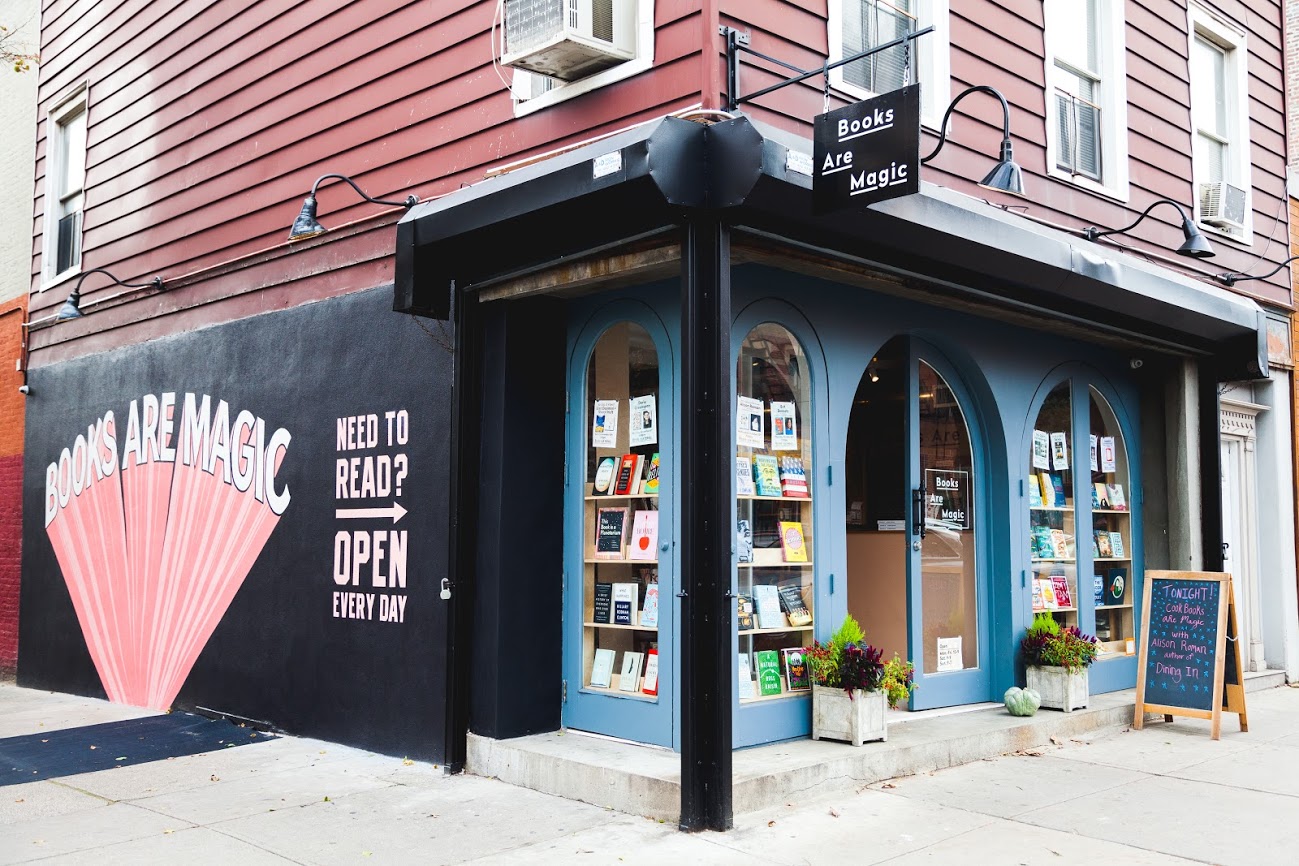
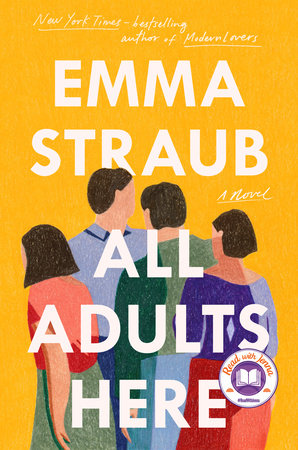
Emma Straub is a New York Times bestselling author and owner of the beloved independent bookstore, Books Are Magic in Brooklyn. Her latest novel, All Adults Here, explores the complexity of love for your family, the love for yourself, and for the town you grew up in. 

All Adults Here by Emma Straub

The story revolves around Astrid and her adult children, all living in a small town where people love to talk but rarely address the unresolved issues they have with one another. The day Astrid witnesses Barbara, a woman whom she doesn’t necessarily like, get hit by a bus everything changes. Astrid starts questioning her role as a mother, lover, and human. Life suddenly seems messier to Astrid, more fragile, without always allowing enough time to say what needs to be said. 

But this isn’t a sad book about life’s frailties. Quite the contrary. It’s a feel-good story at its finest, with characters that are humble, real, dysfunctional, and downright delicious. Each one is so finely layered, relatable, and easy to love—flaws and all. The flaws especially. Everyone knows everyone in this cozy little town of Clapham. Childhood friends have long since blossomed into adult ones, neighbors aren’t afraid to get into each other’s business, and the kids are often more in-tuned than the adults think. But everyone has their secrets, which begs the question: how well can we truly know a person? 

And although the world, and the people in it, can remain a mystery one thing this book reinstates is the importance of togetherness in one family. Your family is always there for you no matter what. And no matter how crazy they can drive you.   


Carissa Chesanek: I love how the book is about family—and a big one at that—relating to the complications and drama, but also the love that is unconditional. Where did the idea behind this particular family come about? 

Emma Straub: It starts with one person and then you build it from there. I knew that I wanted it to be multi-generational so I knew the family had to be of a certain size. I wanted sibling relationships, parent to child and grandparent to child. I needed all of those interconnecting and overlapping relationships. I just kept adding people until I felt like the family was there.

CC: Astrid changed after witnessing Barbara get hit by a bus. It ultimately allowed her to grow closer to her children and show more affection while giving her the courage to come out about her relationship with Birdie. Why do you think that is?

It’s so hard to run a business right now. People are scared, the world is scary.

ES: I think all of us are holding on to certain things. You know, certain slights or psychic traumas of one kind or another, and we don’t always recognize those things consciously. But I don’t think Astrid would have had Barbara on a list of things that were weighing on her before she got hit. It was seeing this thing happen during this experience that provided a sense of relief and sort of release. It just sets her on her merry way.

CC: I’d like to go back to the subject of affection and relationships for a minute. The story intertwines this sense of love within family and love within personal relationships, which to me, seems similar in a lot of ways. Astrid questions her love for Birdie, wondering if it’s romance or codependence, with this “overwhelming need for another person in order to function.” Yes, that is romantic but that also seems a lot like unconditional love for family. Porter also says “knowing a body so long and watching it change” can be both maternal and martial. Was intertwining the two types of love something you were interested in exploring?

EM: Yeah. My husband and I have been together for almost 20 years. Your partner becomes your family, not just with time or when you get married or whatever. It’s not the symbolic act, but it’s the literal number of days that you spend together under the same roof and the amount you have to trust each other and rely on each other. I think that I do see those things more equivalent maybe than I used to when I was younger.

CC: I’m glad you brought up the past because I feel that’s examined a lot in this story. More specifically, how the past impacts the present within grief, loss, and heartache in general. Astrid and her kids still mourn the loss of Russell, while Porter also grieves the loss of a high school love, and both Nicky and Elliott struggle with their mother’s past reactions that caused them pain. How important were these issues for you when writing this story?

EM: That’s definitely something that I didn’t think about or plan. It sort of evolved. That’s one of the things I love about writing fiction. I started writing this book thinking that I wanted to write this very romantic, small town love story but then as you get to know the characters, things deepen and change. The loss of their father was a thing that I didn’t really figure out until several drafts in when these kids, who are now pushing forty, are in these moments of change in their adult life or in emotional crises, and would think about the parent they were missing in addition to the one who’s still there. And, you know, at least some of them, maybe all of them, would idealize the parent that was gone. Because, you know, how can you not, right?

CC: We’ve been chatting a bit about Astrid’s kids, who are not actually kids anymore, but let’s veer toward someone who is in fact, a kid: August, who plays a significant role. August is transitioning to Robin and ultimately shows us the importance of being true to oneself no matter how scary. Can you talk more about this?

We are all trying our best to keep our businesses afloat and to make sure our employees have jobs. But man oh man, we are tired. 

EM: Generally, I can just say that I know a lot of young people, who, to me, seem like kids or very recently have been kids, who have transitioned at a point in their life where not only was I not aware of myself at all, but even if I had been, I wouldn’t have made such a brave choice. I’m so amazed by all of the young people I know: kids, teenagers, and young adults who have come out and transitioned.

CC: It is pretty remarkable and inspiring to see. 

EM: I just think it’s so beautiful. 

CC: I’d like to ask about your Brooklyn bookstore, Books Are Magic. What has it been like running the store during the lockdown?

EM: Running the bookstore during the pandemic has felt like triage—months and months of triage. The whole business changed overnight, once the booksellers were all quarantined at home in March.

I think most people think of bookselling as a vocation, and something that has to do more with the brain than with the body, but in the last three months, all the actual bodily work has fallen on my husband and our two managers, and it is an astounding amount of work. There’s a lot that can happen remotely—our events and marketing folks, for example—but the actual work of getting books into people’s hands requires bodies, whether in our store, or in warehouses, and I feel deeply aware of all the labor that all of us take for granted when we order something on the internet. I will never, ever take it for granted again. Obviously ordering from Amazon is against my religion, but what this period has cemented for me is how important it is to support your local businesses, and to support them with patience and humanity. We are all trying our best to keep our businesses afloat and to make sure our employees have jobs, and to make sure our customers get what they want. But man oh man, we are tired. 

CC: I can imagine. Thank you and your team for all that you do. During these strange times, you’ve also had to change the way you hold literary events at the bookstore. How has it been going from in-person to virtual?

EM: My events team has been heroic. They totally changed course overnight and entered the wild word of Zoom. In some ways, I think it’s been great, because obviously now anyone from anywhere can come, and we can host authors from anywhere. Those are exciting things, for sure, but I think like everyone else, there’s some Zoom fatigue. Aren’t you fatigued?

CC: My eyes have never seen so much screen time. The virtual space is a great resource, but it has changed the way we interact with the book world. Besides everything being done virtually these days, how else do you think the bookselling business has changed during COVID-19?

[That feeling] of finally walking back into your favorite bookstore, and looking at real books chosen by real people just for you? There’s no substitute for that kind of care and attention.

EM: For months, it was all shipping and processing, with almost no staff. Now it’s pick-ups and masks and hand sanitizer. It keeps changing over and over again, and we’re the lucky ones. There are two wonderful stores in NYC that have decided to close: Stories and Bank Street. Both beautiful, meaningful children’s bookstores. I know that’s true across the world, that stores are struggling. It’s so hard to run a business right now. People are scared, the world is scary. We’re trying to be as conservative as we can, and to plan ahead for the long climb back to normal, or to a vaccine, or to whatever’s on the other side of this. 

CC: On that topic of “the other side,” what do you think the future of indie bookstores will look like?

EM: Well, I think that indie bookstores are the past, present, and future, that’s for sure. I think indie bookstores are the best way to buy books and to sell books. I think everything else is a pale imitation. The internet doesn’t do it, the big chains don’t do it. Those places will sell you a book, of course, and they’ll do a fine job, but how will you feel about it? And how do you feel finally walking back into your favorite bookstore, and looking at real books chosen by real people just for you? There’s no substitute for that kind of care and attention. And so I feel fine if it’s just a few people in the store at a time for now. We’ll get back to capacity eventually. People have been supporting us wonderfully throughout, and we have never worked harder—-none of us, not the events team, or the booksellers, or my husband and me. I know it’s been the same for many of my bookseller friends. But we’re getting through it. And who knows. Someday, I might even have childcare again. Then there’s no stopping us. 

What 2020 Booker Nominee Should You Read, Based on Your Quarantine Habits?

There’s no question that the pandemic has negatively affected our attention span (not that our society was doing particularly well with that in the first place). But we are dealing with huge amounts of unconscious stress, according to psychological experts, that limit our ability to process information. Although it seems like the perfect moment to get back into reading, it’s trickier than usual to focus on a novel. 

On a brighter note, there’s also no question that this year’s Booker Prize longlist is an exciting one, filled with more debuts than usual and encompassing a wide array of new voices. If you’re thinking of picking up a book for the summer, why not start with a critically acclaimed list? With the extra time on your hands—now that you’ve mastered the sourdough loaf, own multiple Animal Crossing houses, and become intimately acquainted with Zoom—read below to see what Booker longlist novel you should read, based on the quarantine habits and trends you’ve picked up. 

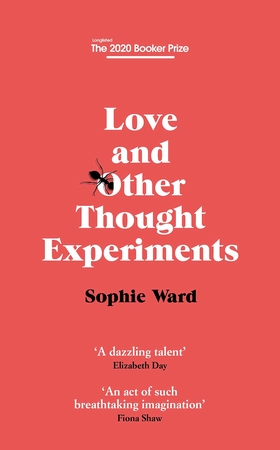
Taking your temperature 200 times a day: Love and Other Thought Experiments by Sophie Ward

Looking for another way to mess with your perceptions of the world? If your quarantine habit is to constantly check up on all COVID-19 symptoms and wear down your thermometer by testing potential fevers, you might relate to Rachel, one of the novel’s protagonists who wakes up one night, convinced that there is an ant stuck in her eye. Rachel and Eliza are deeply in love, considering parenthood—but when Eliza, a scientist, does not see any ant, she can’t bring herself to believe Rachel’s terror. Ward’s debut novel explores love, yes, but also probes at the concept of reality itself. Playing with perspective and philosophy in ten interconnected chapters, Love and Other Thought Experiments may prove to be an intriguing, thought-provoking distraction from self-diagnosis. 

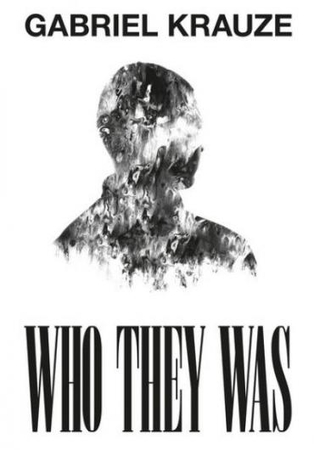
Sleeping at bizarre times: Who They Was by Gabriel Krauze

Don’t worry: Krauze’s autofiction about a life of London crime makes any sleep schedule—say, a nap at 8pm, bedtime at 11am, or morning coffee at 1am—look extremely normal in comparison. Who They Was centers on a young man living in South Kilburn, who is involved in violent crime while simultaneously completing a university degree in English. Krauze’s first-hand account of drugs, gangs, robberies, and stabbings is sure to jolt even the sleepiest reader awake, with his striking, eloquent prose.

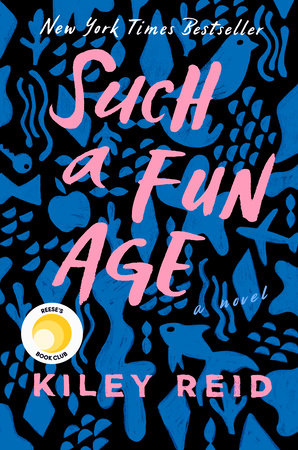
Such a Fun Age by Kiley Reid

Eating like a kid: Such a Fun Age by Kiley Reid

Has quarantine thrown “adult” eating habits out the window? We’re talking about the dream menu of your eight-year-old self here: ice cream for breakfast, popcorn for dinner, fries at 2am. Lean further into the world of kids—and childcare—with Reid’s debut novel about a babysitter. When a grocery store security guard accuses Emira, a young Black woman, of having kidnapped the white girl she is babysitting, the conflict sets off a whole series of complications for Emira and her white, wealthy employers. Reid’s acclaimed, page-turning debut explores the intersections of class privilege, race, and transactional relationships; it’s also a page-turning read that pairs excellently with popcorn. 

Buying new work-from-home clothes that are just pajamas: The Mirror & the Light by Hilary Mantel

Thank goodness that we don’t need to wear doublets or corsets when hopping on Zoom calls! If you crave the decadence, familiarity, and little kick of adrenaline that comes with putting on a new silk pajama set, you might be interested in The Mirror & the Light, the final in Mantel’s well-acclaimed trilogy. No one does historical fiction of Tudor England like Mantel, as we’ve seen with her previous books in the series, Wolf Hall and Bring Up the Bodies. You can savor national drama of the 1500s and witness Thomas Cromwell’s rise to power, while lounging luxuriously in your new pajamas. Soundtrack to the musical Six is optional. 

Redhead by the Side of the Road by Anne Tyler

Fostering or adopting a pet: Redhead by the Side of the Road by Anne Tyler

Adoption and fostering rates have skyrocketed during the pandemic, to no one’s surprise—stuck at home all day, many of us seek a furry friend that helps disrupt the monotony of quarantine. If you’re interested in a protagonist who is also learning about the limits of routine, try reading about Micah Mortimer, a man who has spent years constructing an idiosyncratic yet orderly routine. But when a strange teenager claims to be his son and his “lady friend” is evicted because of her cat, Micah’s life is turned topsy-turvy. Beloved author Tyler’s new novel is a humorous, compassionate look at how we connect to others–perhaps an ideal novel to curl up with alongside your new pet. (Side moral of the story: foster/adopt with caution!) 

How Much of These Hills Is Gold

Binge-watching Tiger King: How Much of These Hills is Gold by C Pam Zhang

Everyone seemed to be binge-watching Tiger King in April, the show about big cat conservationists and even bigger, nefarious human drama. If you’re looking for a new kind of big cat adventure and thrilling narrative that is larger than life, Zhang’s debut novel may be the one for you. Two Chinese American siblings struggle their way across Zhang’s re-imagined Western frontier during the Gold Rush, looking for a place to properly bury their recently-deceased father. Through the siblings’ quest for a home amongst a landscape ravaged by settlers and abound with symbolic tigers, Zhang fuses myth and fiction to ask searing questions about the American Dream. 

Real Life

Baking sourdough: Real Life by Brandon Taylor

Have you been testing batches non-stop and tinkering with flour/water ratios, in order to get that perfectly risen loaf? Baking sourdough bread is not quite a full-blown science experiment (although I don’t dare say this to my roommate, who approaches her sourdough with reverent precision), but perhaps it’s gotten you in the mindset to read about a biochemistry graduate student. Real Life’s protagonist, Wallace, researches microscopic worms at a Midwestern university. His current situation is a far cry away from his traumatic childhood in Alabama, but one weekend, Wallace is forced to reckon with his past and how it shapes his future. Taylor’s debut is a campus novel about scientific research, yes, but more specifically about being Black and queer in academia, and how we deal with past trauma. 

Drinking dalgona coffee: Burnt Sugar by Avni Doshi

Much like sourdough, it seemed as if everyone was making and drinking dalgona coffee—the hand-whipped instant coffee originating from a South Korean street sweet, dalgona, which is literally burnt sugar—during early quarantine. Although this labor-intensive coffee has given way to cold brew, why not read Doshi’s debut novel as an alternative form of burnt sugar? The book centers on a fraught relationship between Tara, a previously bohemian mother who never cared much for her child, and her grown-up daughter, Antara. As Tara’s memory and mental abilities decline, Antara is now faced with the task of caring for her mother. Doshi’s lashing, acerbic prose is as equally full of hand-whipped tension as dalgona coffee; through the tense narrative, she excavates devastating observations about scorched family ties. 

Apeirogon: A Novel by Colum McCann

Doing puzzles: Apeirogon by Colum McCann

Have you designated an area in the center of your living room as the “puzzle space,” and do you spend most evenings wondering what sky-blue piece might join to another slightly-less-blue piece? If you enjoy an infinite number of pieces fitting together in a kaleidoscopic whirl to form a bigger picture, you might enjoy Apeirogon, named after a polygon with an infinite number of edges. examines the lives of two men, Rami and Bassam. Although one is Israeli and one is Palestinian, they become friends when they realize that they have both lost their daughters. McCann’s take on Israeli-Palestinian relations ties together many elements, crossing eras and borders to craft a multigenerational, epic whole. 

Cutting or dyeing your own hair: The New Wilderness by Diane Cook

Cutting your own hair is definitely venturing out into a new terrain of wilderness. Who knows where you can go next? Bleaching? Buzzcut? For the truly bold: bangs? Your hair is your oyster. If you’re looking for a daring novel filled with action, try Cook’s new novel. The New Wilderness presents a more sobering terrain, but one that is quickly becoming our reality: a world devastated by climate change; within this world, a mother tries to save her daughter. Cook’s novel highlights the urgency of respecting nature and the necessity of coming to terms with what we can’t fix—a message that will resonate with people who are buckling down and doing their own barbering instead of protesting closures. Like a home stylist right after the clippers slip, we’re already too late to reverse the damage, but now is the moment when we could stop it from getting worse. 

Working in bed: This Mournable Body by Tsitsi Dangarembga 

Working in bed could emblematize our era of late capitalism, quarantine edition, where we are constantly working in any environment, striving to find ways to be ever more productive in both our professional and personal lives. If you’re feeling burnt out, This Mournable Body might help you gain perspective. Dangarembga revisits her protagonist from her debut novel, Nervous Conditions. Tambudzai, or Tambu, is now a middle-aged woman, living in a run-down women’s hostel. Tambu has left a job as a copywriter, and is dealing with both the pressure of imminent poverty and the claustrophobia of Harare society. While Tambu is faced with humiliation after humiliation, she tries her best to hold onto her identity and her dignity.

Getting into Twitter fights: The Shadow King by Maaza Mengiste 

Bored and craving conflict? Or genuinely enraged about the potential fascism of… well, let’s say contemporary affairs? Looking for ways to rise up against the many industrial complexes that dictate our society (looking at you, prisons and police departments)? Try reading The Shadow King, if you’re looking for a fight worth fighting for. Mengisteexplores female power and highlights a part of WWII history that has been looked over, focusing on Ethiopian female soldiers that rise up against Mussolini’s Italy. Set in Ethiopia in 1935, The Shadow King follows Hirut, who starts out as a maid but winds up organizing female troops for Ethiopia. 

Taking out home loans in Animal Crossing: Shuggie Bain by Douglas Stuart

If you enjoy witnessing daily life progress in a virtual village, try Stuart’s searing, hyper-realistic, and visceral description of a mining town in 1981. Set in an economically destitute Glasgow, Stuart’s debut novel centers on a family struggling with alcoholism and poverty. Shuggie Bain, a lonely but sweet boy, is the only child that will not abandon his alcoholic mother, Agnes. Shuggie Bain is a heartbreaking look at the tenuousness of familial love, no matter how damaged, and the consequences of addiction. Endless grinding to catch fish to pay off your three-million-bell home debt will look positively idyllic by comparison.

The Brutal Secret I Share with My Neighbor

“The Neighbors”
by Shruti Swamy

At that time my daughter was eight, and my son had just been born. I sat on the front lawn with him and stopped him from putting fists of grass into his mouth. It was late July, and hot, a rich, thick heat that reminded me of the descent into summers of my childhood in India. My son gazed up at the trees in wonder. Still small enough to look slightly absurd, almost like a fish with the gaping mouth and eyes, but then he would move his head a little bit, wave his arms, and he would look suddenly, startlingly human.

My daughter came running down the street with no shoes on. Only this morning I had combed her hair, but you wouldn’t know it to look at her.

“Mom, someone’s moving in to Mrs. Hildebrandt’s house.”

There was a moving truck pulled up in the driveway of the empty house at the end of the street. We could see them through the trees. A girl—then two—emerged from the passenger’s side of the cab, from the driver’s a tall man, then a short-haired woman.

“Where are your shoes?” I said. I watched the family as they opened the door to their new house. In fact I had been keeping an eye on the place since it became vacant. It had a similar floor plan to ours, all the houses on the street were Eichlers, but better sun in the yard, and the last owner, an elderly woman who had died some months ago, planted roses that bloomed even in her absence, and not one but two fruit trees, lemon and orange. The girls ran in first. The woman stood a few paces away from the door, and the man behind her. She turned to the man to say something to him. She was much smaller than him, and had to lean up to do it. The man put his hand on her head, right at the nape of her neck. She looked so vulnerable there, at the back of the head, with her hair so short, short like a baby’s, so close to the soft skull. His hand there was familiar to me, the gesture full of the brutal tenderness of husbands. I couldn’t see her face to tell if she was happy or sad.

That evening I lay my son down in his crib and went to the bathroom to comb my hair. Almost as soon as I put him down he began to cry, and the door didn’t blunt the noise. I wanted to comb my hair. When I was younger, my hair was thick and rich and scented, after washing I used to spread it on a wicker basket under which burned a lump of frangipani. Once as a girl, finishing the thread I was using to sew a dress for my home crafts class, I had plucked a strand of my own hair and threaded the needle with it. It was long enough and it held.

Of course I lost quite a bit of my hair after my two pregnancies, which my gynecologist told me is common. For a while I thought my hair would grow back, but it never did. Then I began to comb it less frequently, sometimes I forgot for days. I had remembered today because of the woman and her short hair, which had shocked me. But she had seemed beautiful, even from such a distance. I could hear the mewling cries of my son, rising in pitch and frequency. The reflection in the mirror surprised me. Who was that woman? I thought of myself as young, a girl, and hardly ever looked at myself anymore. Then I began to comb my hair, tugging hard at the snarls, so hard that my scalp bled. When I was finished it lay flat and shining against my skull.

It was three days later when I opened the door to the neighbor woman. She had baked a batch of pale cookies and seemed to be visiting the entire neighborhood with them. Up close she was older than I expected, older than me, her face all angles, as well as her body, which was so slender it was boney. She wore a pale blue dress that left her legs and freckled arms bare. Under the right eye the skin was slightly darkened, the ghost of a bruise. Her two girls stood behind her. The elder was surely my daughter’s age, the younger, no more than three, plump, with bright gold hair, like a little doll.

“God it’s hot as anything out here,” the woman said, handing me the cookies. A bit of hair stuck to her damp forehead. “I didn’t feel like baking, but when you move you should always bake something for the neighbors, I think. Anyway, I hope you’re not allergic to anything or vegan, they’re lemon cookies—lemons from the tree—” she pointed to her yard, “I didn’t want them to go to waste. I’m making marmalade with the rest of them—the oranges are too sour to eat. I don’t know anything about orange trees.”

The sound of the sprinkler, two houses down, hissed up between us. The woman smelled of flowers, yellow flowers I imagined. Other neighbors had made similar overtures over the years. But after a little while, they left me alone. “I don’t know anything either about orange trees,” I said.

“I’m sorry, I didn’t even say my name,” she said. She was older than me, but her face looked young, and flushed slightly like a girl’s. “I’m Luisa. And this is Camille and Geenie. My husband, Richard, is at work. We moved in to the house down the street. They’re shy, the girls are. Say hi, girls.”

“Hi,” they said. The elder’s voice sounded bored, the younger’s was a whisper.

“Would you like to come in?” I said. “My husband is also at work.”

Luisa looked down at her two girls, then looked back at me. A strand of gold, terminating in a tiny star, hung from each ear. “That would be wonderful.”

I led them inside—seeing the shoes at the door, they took theirs off on instinct—and sat them down in the living room, where the baby, in his swing, had began to bunch up his face, but he relaxed when he saw me, held out his arms. I carried him so much in those days that my body had gotten used to the extra weight. When I put him down, there was a feeling that came over me, almost like vertigo, a mixture of dizziness and exhilaration, of terrible, terrific lightness. It wasn’t like this with my daughter, who was always independent and self-contained as a cat, and who had learned to read when she was five, which was when I lost her to her mind’s vast interior. She was her father’s child.

“A baby!” said Luisa, “He’s beautiful. How old is he?”

“Four months,” I said. He smelled of milk, my baby, and he grasped my shirt in his hands and wiped his nose against my shoulder. “His name is Manoj. I’ll get my daughter, I think she’s your age, Geenie.”

Then I went to the bottom of the stairs and called her, sweetly and urgently, so they would think I was a good mother. “Manisha!”

She took a while to appear. Backlit by the window at the top of the stairs, there was a crown of hair frizzed around her head, and I couldn’t see her eyes. The soles of her feet were also out of my vision, but their state I could guess; black from her barefoot summer, black and leathery, like the child of a beggar. “What.”

I spoke to her in Hindi. “The neighbors are downstairs. The new neighbors. Will you come down?”

Her body held the heaviness of a sleepwalker, but she came, and followed me back into the living room. Luisa sat on the sofa with a girl on either side of her, and they were talking in low voices. I could hear the unmistakable sound of whining, and the equally unmistakable sound of stern hushing. “Manisha?” said Luisa, she said it like an Indian, with a soft uh sound instead of a hard a Americans put in the first syllable. Manisha, my daughter came home crying with anger her first day at school from the cruel mispronunciation. “This is Geenie, and Camille, and I’m Luisa. Geenie’s going to be starting fifth grade in the fall.”

“Manisha too,” I said. Geenie was a year older, then: Manisha had skipped a grade. She had been a misfit before the change, and she was a misfit now, because of her age, and, I suspected, her solitariness, which came off as cool pride. “Manisha, do you want to show Geenie your room?” Manisha looked at me, not a little warily. The mention of school had shaken her out of something, the thick dreaminess I had seen on her at breakfast. “You can show her all your books,” I said.

“Okay,” she said. I could see her eying Geenie, her pretty clothes, the little ribboned clips in her hair. Their feet were quiet on the stairs, carpeted to cushion a child’s fall, dark to hide stains. I shifted the baby in my arms. He was sucking his heel, then his fist.

“Can I hold the baby?” Camille whispered to her mother.

“Babies aren’t dolls, Cami, they’re not toys.”

“I know,” she said. Her eyes were caught on my son’s. Hers were pale blue, like her mother’s dress. “Can I?”

It was all addressed to her mother, but I said, “Go wash your hands, the bathroom is just right over there. Then you can hold him.” We watched her pad out of the room.

“You have a beautiful house,” said Luisa. The sink turned on. Camille was on her tiptoes, we could see her through the open door.

“Same as yours,” I said.

“No, I mean, the way you’ve arranged it. The furniture is so beautiful. It’s very bright and friendly. You have a good eye for things—you and your husband, I should say.” Of course, it had all been me, and I smiled with pleasure. It wasn’t often I had guests, though I did my best to keep the house clean. “Come, let’s have some of these cookies.”

“No, no. I’ve had enough already,” she said. “You have them later.”

“Where did you move from?”

“Colorado—Denver. Richard had a job there.”

“What does he do?”

“He’s in sales. And I’m an artist.”

“An artist?”

“Yes. I paint. Mostly watercolor.”

“What do you paint?”

“Oh, lots of things, really. I paint those two a lot, if they sit still. We lived in Arizona before Denver, and I liked living in the desert. I liked painting how dry and red everything was out there, especially in the evenings. Richard calls it my Georgia O’Keeffe period, of course.”

“How do you have the time for it?”

“It’s just a matter of practice.” She had slipped her legs beside her on the couch. There was something avian about her, the elegance and ease of her pose. Yet I felt something unsettled in her too.

“But the space I mean.”

“The space?” she said. “Usually we make some space in the garage.”

“Not that kind of space,” I said,  but I  didn’t  know how to say what I meant, and let it drop. A small silence followed.

“And you, what do you do?”

“When I was young I wanted to be a pilot,”  I said. The sink switched off. Camille’s little hands were red. “Come here,” I said. She sat next to me on the love seat.

She smelled of my soap—sandalwood— and kid’s sweat, and thinly, the floral scent of her mother. Sitting with her back against the back of the love seat, her feet just reached the end of the cushion. “If he cries you mustn’t be upset, okay? He’s shy, just like you.”

I eased Manoj into her arms. “Keep the head up, like this.”

I could see the storm gathering in his face. I held his hand, and sang to him the Indian anthem, which always soothed him. He began to laugh.


Late at night, I was awoken by the sound of glass breaking, or glass broke in my dream, and I awoke. I was flung awake. My husband lay on his back, sleeping, and the baby was asleep too, in his crib, which we kept in our room. Father and son slept dead like each other, bodies gone thick and heavy and soft, slept without moving, barely breathing until they woke. My son’s sleep was particularly disconcerting, because he slept with his eyes half open, and during the weeks after he was born I had often held a mirror under his nose, to see if it fogged up with his breath. I went to my daughter’s room, and stood in the doorway, casting my shadow over the floor. The room had filled up with her breathing, warm and not wholly pleasant. She curled on her bed with all the blankets flung off dramatically. Her window looked onto the street, from the vantage of the second story. I stood there in my nightgown. The lawn below me was nearly blue in moonlight and streetlight. There was someone in the street. I saw him, his shoulders, his hot blonde hair, then lifted my gaze, to where all the lights were on in the house down the street. I must have stood there for a long time. I felt my own mind, tingling like a limb come awake. The street was empty, then the light went off in the house, still I stood, remembering a night long ago, when I stood at a window in another country. It wasn’t nostalgia. My life was crowded then with family, and I worked hard. Yet this space was there. I thought about it for a long time. I couldn’t say whether I was happy, or sad, or sorry for myself.

Then my daughter cried out in her sleep, and just like that, the space closed. My mind and body turned to her. She blinked up at me, like she had as a baby, with her black eyes. “Mom?”

 Was she awake or dreaming? I felt irritation and tenderness in equal parts. “Go back to sleep,” I said.

“I was being eaten, someone was eating me,” she said.

“Just a dream,” I said. She was scared, shaking and I held her, she allowed me.

“You don’t want me anymore,” she said.

“What?”

“You don’t want me anymore.”

“You’re dreaming,” I said. “You’ll feel embarrassed about this in the morning.”


Every morning, I combed my daughter’s hair before I fed both the children breakfast. It was a challenge, because the baby was always clingy right after he woke up and my daughter had trouble sitting still for more than a few minutes at a time. If I put the baby down, he would begin to cry, and Manisha would use the distraction to run off. Then I would have to start the whole process over.

“You said Manisha means mind. You said that the mind is the most important. That’s what you said.”

“Mind is important, hair is important. Already you run around the neighborhood like a wild thing.”

“So my hair is as important as my mind?”

“No.” I had put the baby in a sling against my chest, so my hands were free. The sling reminded me of the peasant women in the fields, who worked for hours with their babies tied to their bodies in old saris. But mine I bought at Target. “It is important to look nice for people.”

“Why?”

“I don’t know why. I don’t know why you are so difficult, why you don’t just listen to me.”

“Because you don’t make sense!”

July mornings were cool and felt strange on the skin after waking; afterward the days became brutally hot. The baby was still small enough to bathe in the sink, and I bathed him often and massaged his body with oil. Manisha came in only when she got hungry, and I cleaned the house and made sure the dishes were out of the dishwasher, made lists of things I needed to get from the store, paid all the bills and called the health insurance company about a birth-related expense they had not yet reimbursed. I was in the process of applying for citizenship, which also produced a large amount of paperwork. I fed the baby, changed the baby, put the baby to sleep and picked him back up when he woke, sang to the baby, talked to the baby, read to him. Manisha came in and reported that Luisa was letting her kids run through the sprinklers. “Geenie has a bikini!”

“You don’t want a bikini.” 

“Yes, I do.”

I sighed. “Wasn’t it you who was only caring about the mind this morning?”

She shrugged.

“Do you want to go and run out in the sprinklers with them?”

“I don’t know.”

“We could put the sprinklers on here.”

“Then we’ll be copying them.”

“Fine.”

Luisa was stretched out on a plastic lawn chair in shorts and a tank top and a hat that covered her face. She was reading a gigantic magazine. She waved when she saw us approaching.

“Glad you’re back, Manisha. Brought your suit?”

Manisha pulled up her T-shirt, showing the swimsuit underneath.

“Go on then.”

Manisha hesitated. Geenie and Camille had not taken any notice of her. They looked half-wild on the lawn. They would grow up to be beautiful, like their mother, with their small faces, Geenie’s heart-shaped, and Camille’s oval, their wide eyes and little noses and soft, elegant mouths. Their beauty was startling because they were so unaware of it; it was strange to see them act with such abandon, like children, with those faces. Like two princesses from a storybook I read Manisha, one dark, one fair, the water glittering on their skin. As the sprinkler changed direction, it fanned into a rainbow. Manisha took off her shirt and shorts and stood barefoot in her yellow bathing suit. Her belly puffed out, and the way she stood with her feet turned outward made her look like a duck.

“Girls, Manisha’s here,” said Luisa. The girls looked up from their play. Camille’s knees were stained with mud. Her little pink tongue came out of her mouth and licked her cheek. “We’re playing cats.”

“No we’re not,” said Geenie. She was, as reported, wearing a ruffled pink two-piece, the top of which lay flat against her chest. She cast a scornful look at her sister. “Cats hate water.”

“Not all do,” said Camille.

“Yeah, all do. They’re from the desert.”

“I like cats,” I heard Manisha say. She was allergic, and had an instinctual fear reaction to most animals, throwing her hands up to protect her face when they came near.

“We’re going to get one, Mom says,” offered Camille.

“We’ll see,” said Luisa.

The baby and I were both sweating, but I was glad at least that I wasn’t pregnant in this heat. “It’s hard enough being responsible for the two of you. Though at this point maybe a third life wouldn’t make any difference.” She had put down her magazine, and she took her hat off to fan herself. On the underside of her arm there was a constellation of yellow marks. “Tell me, how long have you lived in the neighborhood?”

“Well, let’s see. Manisha was four and a half when we moved. So I would say about three and a half years.”

“I hope we stay here that long.”

“How long were you in Denver?”

“Only a few months. Richard’s job. Three schools in two years.”

“That must be hard on them.”

“But you know, I moved around a lot as a kid, my dad was in the army—so I think of myself as sort of a gypsy now. Richard says I romanticize my childhood, but he wasn’t there, was he? I like change, moving around.”

The baby sneezed. It was a tiny noise, but it rocked him. He looked up at me, bewildered, and I stroked his cheek so he would feel reassured. Ever so slightly, I shifted him in my arms, so that the bruises at my throat would be visible between my dupatta and the neck of my blouse. I looked to see if Luisa noticed; if she had her face didn’t register it. “Moving around so much—it must be nice, in some ways.”

“Yes, it is.”

“To feel . . . how does it feel?”

“Just about how you’d expect, I think. Sometimes it’s hard, you get so attached to a place. There are so many places to miss. And you just have to pack everything up, your clothes and pots and things, you start to hate your stuff. You want to throw it all away and start over on the other end.”

I remembered how I felt when I was young, slight as a plastic bag, caught on nothing, riding the wind. But I had been caught. Again, I shifted the baby in my arms, more clumsily, less carefully, to show her where, three days ago, hands had squeezed my neck as though pulping a fruit. I stood there with her in an expectant silence, feeling the start of a sweeping relief, like a person in a wreck who sees through the windshield the Jaws of Life. I had, until this moment, never said it to anyone, not even to myself. Instead I had extinguished each event at the root of the candle, before it had time in my mind to burn. Then I looked at her and realized she was refusing. Not only to say it, but to see, just to see it, to see me. Her eyes were hard and faraway, the eyes of a stranger—which, of course, she was. With haste I covered the spots on my neck and looked away.

There was a cry from the girls, and I turned around to see Manisha tripped or fallen in the grass. She was wet now, and lay for a minute stunned on the ground, facedown. Geenie and Camille stood still, grazed every now and then by the edge of the sprinkler, Geenie’s face proud, Camille’s full of the innocence I hoped she would always have, would never leave her.

“She tripped,” said Geenie.

“Are you okay, Manisha?” said Luisa. She rose from her lawn chair but didn’t approach my daughter. Manisha lifted her wet face. There was grass stuck in her hair. For a moment I could not bear to look at her face, full of humiliated anger. She looked too much like me.

“Manisha?” I said.

She would not cry. She came to her hands and knees, then picked herself up gingerly, and, as though her legs were untrustworthy, treaded carefully over the wet lawn. When she had reached the sidewalk, she began to run.

“Manisha!” I called. She didn’t turn around. I watched the black soles of my daughter’s feet slapping the pavement.

9 Books Where Women of Color Tell Their Own Stories About Mental Health

I often describe my debut collection, This Is One Way to Dance, as essays about race, place, and belonging written across twenty years. But they are also meditations on friendship, time, and love; on how to keep moving in the face of trauma and loss. My book is about making one’s way in the world, finding and claiming home. This Is One Way to Dance includes travel narratives, linear narratives, and several lyric essays. At some point I learned the name for a form I had begun writing: the lyric essay—a hybrid form between the essay and the lyric poem, in which utterances, circling, unparaphrasable plot is the norm.

Although I shaped and revised essays to make a memoiristic arc, when I reread This Is One Way to Dance, the gaps and silences in the narrative surprised me. In an essay I wrote about my relationship to food and cooking, I mentioned that I spent much of one year on my couch, depressed, watching reruns of Friends. But I didn’t mention the story behind the story: that I had been diagnosed with a major mood disorder and had a terrible time finding a medication that allowed me to speak, that didn’t have the side effect of aphasia, my sentences trailing off; that I had lost my confidence after repeated harassment by a professor in my program; and that I had struggled to make sense of myself as a writer of color in a creative writing program with a racist and silent workshop model, standard at the time.

Last year, in an essay not in my book, I wrote about neurodiversity and manic depression. I could only write that essay after other essays that were, in so many ways, about what could not be said at various points in my life. During those years, I looked to writers and books who showed me a way forward: women of color who had reference points other than Western medicine or binary models of illness and health. Books helped me feel less alone. They helped me find words to talk back. 

Sister Outsider by Audre Lorde

Sister Outsider by Audre Lorde

Sister Outsider has been a touchstone for me ever since reading Audre Lorde’s essay, “The Transformation of Silence into Language & Action,” in college. In an interview with Adrienne Rich, Lorde said, “One thread in my life is the battle to preserve my perceptions–pleasant or unpleasant, painful or whatever…I kept myself through feeling. I lived through it.” This belief in Lorde’s value of her experience as a Black lesbian showed me that you can choose to value your perception in a world that would rather gaslight you. Rereading “The Transformation of Silence” helped me survive racism and sexism in academia, health care, and the workplace–and to fight for my mental health and to write about it. The titles of Lorde’s essays are keys and seem especially prescient right now: “The Master’s Tools Will Never Dismantle the Master’s House.” Lorde reminds us, “In a world of possibility for us all, our personal visions help lay the groundwork for political action.” 

Talking Back: Thinking Feminist, Thinking Black by bell hooks

In these essays, hooks writes of the difficulty of claiming a voice, the anguish of speech, the use of a family name as a pseudonym. I bought this book in the ’90s when I was in graduate school and continued to refer to it over the years. Hooks described a “fear of madness” and how she was sure madness was the “destiny of daring women born to intense speech.” Like many women, she was taught to talk in a way that was also a kind of silencing. In Talking Back, hooks connects the defiant speech that could be seen as madness to the same impulse that allowed her to claim herself an independent thinker and writer.

Olive Witch: A Cross-Cultural Memoir by Abeer Y. Hoque

In this lyrical memoir, Abeer Y. Hoque writes about her childhood in Nigeria, her Bangladeshi heritage and family, and coming of age in the United States. Weather conditions and poems frame each chapter. We travel through Hoque’s childhood in Nigeria and her later life in the United States through institutions and cultures: high school, universities, academia, a psychiatric ward, to Dhaka, Bangladesh with extended family. The entire meta-framing of the memoir resists a Western binary of illness and health. Our whole concepts of health and illness are cultural, which is made clear by this memoir that spans continents and cultures. During her stay at a hospital for atypical depression, Hoque points out that “silence is a terrible spokesperson.”

Since my mother grew up in Kenya, I especially appreciated reading about Hoque’s third culture and the specificities of being a child in Nssuka, and her relationship to Bangladeshi culture and to various parts of the U.S. 

Citizen: An American Lyric by Claudia Rankine

I heard Claudia Rankine read from Citizen: An American Lyric in 2016 on the last day of November. I saw a book-length lyric essay make something visible that was all too visible to some of us in the U.S. and completely invisible to others. Rankine’s use of white space, images, and words link microaggressions to macro aggressions, explore issues from the exhaustion of anti-Black racism on elite college campuses, to Serena Williams, to a list of Black men killed just for existing. For a time, I used an excerpt from Citizen as an epigraph to my book:

“You take in things you don’t want all the time. The second you hear or hear or see some ordinary moment, all its intended targets, all the meanings behind the retreating seconds, as far as you are able to see, come into focus. Hold up, did you just hear, did you just say, did you just see, did you just do that?”

And I felt as though I was not crazy—to see the range and kinds of ways these words injure, it made me feel sane. It wasn’t just me. Of course, it wasn’t just me. It’s a system. It helped to see this Black essayist write as resistance to a world that harms. Rankine’s artistry is a call to fight back.

Care Work - Dreaming Disability Justice

Care Work: Dreaming Disability Justice by Leah Lakshmi Piepzna-Samarasinha

Care Work: Dreaming Disability Justice opened my mind from the preface, where Leah Lakshmi Piepzna-Samarasinha, a queer, disabled, femme writer, organizer, performance artist of Burgher/Tamil Sri Lankan and Irish/Roma ascent, writes about the long tradition of writing from bed.

Disability justice allowed me to understand that me writing from my sickbed wasn’t me being weak or uncool or not a real writer but a time-honored crip creative practice. And that understanding allowed me to write from a disabled space, for and about sick and disabled people, including myself, without feeling like I was writing about boring, private things that no one would understand.

And suddenly, I saw a framework for the way that I, too, had worked. Piepzna-Samarasinha writes about the history of the term “disability justice” and its connection to disabled Black and Brown queer liberation. Reading Care Work helped me write into the silences in my essays and helped me to write about and claim my neurodiversity and invisible disabilities. From Care Work: “We know we are powerful not despite the complexities of our bodies, but because of them.”

Dear Friend, from My Life I Write to You in Your Life by Yiyun Li

Dear Friend, from My Life I Write to You in Your Life by Yiyun Li

The dedication page of Dear Friend reads, “This book is part of a conversation with Brigid Hughes.” So many books and works of art come out of conversations and collaborations with long-time friends, many of them other writers. This book is an exploration of living with depression and suicidal thoughts, recoiling from the autobiographical I (Li is a primarily a fiction writer), but using it nonetheless to tell a story. To write, “What kind of life permits a person the right to become his own subject?” I appreciated Li’s definition of memory, of memoir: “Memory is a collection of moments rearranged–recollected–to create a narrative. Moments, defined by a tangible space, are like sculptures and paintings.”

Image result for collected schizophrenias by esmé weijun wang

The Collected Schizophrenias: Essays by Esmé Weijun Wang

In this sharp collection, Wang shows us what it is like to be the crazy subject, but even then, the tone is cool, collected, smart, considered. A few essays stand out: In one of my favorites, “Yale Will Not Save You,” Wang writes, “‘I went to Yale’ is shorthand for I have schizoaffective disorder, but I’m not worthless.’” In “High Functioning,” Wang notes, “There are shifts according to any bit of information I dole out. Some are slight. Some tilt the ground we stand on.” She considers the ways those who have mood disorders or other disabilities perform our worth, our competence, our value in our capitalist culture. I admire her awareness of identity as complicated, situational, multi-valenced. Her essays argue that we are each more than our histories or backgrounds or diagnoses.

Minor Feelings

Minor Feelings: An Asian American Reckoning by Cathy Park Hong.

I, like many Asian Americans, loved this book so much—was waiting for it. Hong, a gifted poet and essayist, names and defines “minor feelings: the racialized range of emotions…built from the sediments of everyday racial experience and the irritant of having one’s perception of reality constantly questioned or dismissed.” Hong draws upon Rankine’s work in Citizen and looks at what happens to Asian Americans who are often read as or considered white-adjacent, or the dreaded model minority.

One of the many things I admire is that Hong opens the book with this line: “My depression began with an imaginary tic,” and wrote, in the first essay, “United,” about looking for a Korean American therapist because “I thought I wouldn’t have to explain myself as much. She’d look at me just know.” This is the dream, I’ve seen writers exclaim on Twitter. It doesn’t quite work out that way in Minor Feelings, but I appreciated that a book that was so far-ranging as to cover Richard Pryor’s standup, the cross-genre artist Theresa Hak Kyung Cha’s memoir, Dictee, college friendships, Chinese Exclusion Acts, the 1965 Immigration Act began, simply, with Hong’s depression and the search for a good therapist. 

How We Show Up: Reclaiming Family, Friendship, and Community by Mia Birdsong

Mia Birdsong’s How We Show Up: Reclaiming Family, Friendship, and Community is a book we all need now. Written well before COVID-19, How We Show Up was released in June 2020. Birdsong, a Black activist, writer, and storyteller, captures the loneliness and isolation for so many in our fractured American culture. How We Show Up addresses the ways in which the American Dream, never an option for many, and “toxic individualism in family-unit form” is failing even those who may appear to have achieved it, as she has. “Not having deep connection is causing us mental and physical harm,” she writes.

Birdsong offers us a map to reimagine and extend kinship and belonging, looking to Black and queer communities, who have historically defined family more broadly. Drawing from research, interviews, and her own experiences as the daughter of a white American mother and a Black Jamaican father, Birdsong has written a guide for how we can live more connected lives, investing in friendships and community. Raised by a single mother, Birdsong grew up poor and working class and built the family network she needed to thrive.

I met Mia through our close friend, Cat, chosen family for us both. How We Show Up has made me feel hopeful, even during the pandemic. Birdsong reminds us: “All of us have ancestral memory of what it’s like to live connected, interdependent lives…this is a process of decolonization.” 

8 Books to Take You Back to the 1980s

Ah, the 1980s. New Wave, post-punk, huge hair, the brat pack. Dancing next to Grace Jones at AREA, eating at The Empire Diner at 4 a.m., and spying artist Keith Haring drawing on New York subway walls with chalk. The ’80s was an age of fantasy and freedom. So why are novels set in the 1980s so sad? Because beneath a veneer of hedonism and fun, the 1980s was an era of intractable social stratification, racism, and thousands of deaths from AIDS. There was little sympathy in the air—the 1980s was a materialistic, cynical, and mean decade. Television shows like Dynasty and Dallas glamorized corruption and competition. Reagan’s trickle-down economics and tax cuts for the 1% sharpened the divide between the haves and the have-nots. It is chilling and inevitable to compare the US government’s reaction to AIDS to COVID-19. Just as the Trump administration has allowed the virus to run rampant and to ravage the U.S., the Reagan administration denied AIDS as a health crisis for most of the decade.

Age of Consent by Amanda Brainerd

I was a teenager in the 80s, and in my novel, Age of Consent, I explore themes from the decade through the lens of my teenage characters. My protagonist, Justine Rubin, a Jewish scholarship student from an intellectual but impoverished family, arrives at boarding school in Connecticut. Justine befriends Eve Straus, a sheltered girl from a wealthy New York family. Both Jewish, they hail from different backgrounds, yet forge a deep friendship. Justine must navigate complex class hierarchies, and slowly learns the nuances between the wealth of the Upper East Side and Soho and how her friends Eve, India and Clay fit into this unfamiliar class and wealth puzzle. The novel is set in 1983 when the United States was in the grip of AIDS but in deep denial. 

February Grace Notes | Mac's Backs-Books on Coventry

The Prettiest Star by Carter Sickels 

Sickels’ novel is a beautiful and poignant portrait of a young man returning to die in the rural community that rejected him. It is a new kind of portrait of the AIDS crisis, told as a closely observed family drama.

Christodora by Tim Murphy

The Christadora is a famous apartment building in NYC’s East Village, and its evolution from a squat to luxury apartments has become a symbol of the neighborhood’s gentrification. This ambitious novel moves between the Tompkins Square riots of the 1980s, which were aimed at eliciting a proper governmental response to AIDS, to the glass high rises of today. Murphy paints a compelling picture of the community of activists that transformed queer life in the 1980s, and the people who stood in solidarity to show the world that AIDS was a disease that affected more than just gay men. 

Sag Harbor by Colson Whitehead

Sag Harbor by Colson Whitehead

An intimate portrait of the wealthy Black community in the Hamptons, Whitehead’s coming of age novel is set in 1985 and follows 15-year-old Benji during a summer in Sag Harbor at his moneyed parents’ house. Growing up, I was keenly aware of the racism and anti-Semitism in the Hamptons, which was the New York City version writ large, fueled by money and hidden behind private hedges. 

Swing Time by Zadie Smith

Swing Time by Zadie Smith

This is a tale of the bond between two teenage girls from the projects, and the story of how friendship can tether us to home and comfort even if we travel far away.

Tell the Wolves I'm Home

Tell the Wolves I’m Home by Carola Rifka Blunt

Another beautiful and personal story of loss. June adores her uncle Finn, a successful artist. When he dies of a mysterious disease that June’s mother cannot bear to name, June sees a strange man hanging around Finn’s funeral. A few days later, she receives her uncle’s teapot, with a note from this man, Toby, her uncle’s lover. June and Toby form an unlikely friendship, sharing stories and memories of Finn in order to heal, while June’s sister Greta is unraveling. 

Red at the Bone by Jacqueline Woodson

Red at the Bone by Jacqueline Woodson

Woodson’s glorious story of an unexpected teen pregnancy bursts with stunning prose. The story revolves around Iris, a Black teen from a prosperous family, and Aubrey, the son of a struggling single mother. When Iris gets pregnant, the story explodes, divides, and mutates. Woodson examines the choices we make and the ripples that never dissipate.

Black Swan Green by David Mitchell

Black Swan Green by David Mitchell

An exquisite coming of age novel is set in a rural British village in the 1980s. The novel is composed of thirteen chapters that stand alone as stories themselves. I loved the precocious voice of 13-year-old Jason, and how Mitchell portrays the world, once magical, sometimes macabre, through Jason’s young eyes.

Veronica by Mary Gaitskill

Veronica by Mary Gaitskill

Gaitskill is a master of the deadpan. But beneath her vicious descriptions of cruelty, debauchery, and self-harm, lies a tenderness towards her characters, which once discovered is all the more incisive. Veronica alternates between the present and the past of the 1980s, a narrative that the New York Times accurately described as a “’where are they now’ for the Nan Goldin crew.”