So You Want to Write in the Second Person

Welcome to Read Like a Writer, a series that examines a different element of the craft of fiction writing in each installment, using examples from the Recommended Reading archives. Each month, the editors of Recommended Reading—Halimah Marcus, Brandon Taylor, and Erin Bartnett—will select a few stories that illustrate a specific technique, style, or writing challenge such as how to write a story with only one character, use the first person plural “town” POV, or write an ending that is surprising yet inevitable.

The challenges to writing second person fiction do not apply only to second person fiction, which is to say that they have to do with persuading the reader to abandon their doubt. All of fiction involves overcoming the resistance readers have toward circumstances that conflict with their own sense of reality. The difference is, second person has to overcome this resistance hundreds or thousands or tens of thousands of times as the story unfolds. In a fantasy story, we might have to accept, broadly, the premise that magic exists or that dragonfolk walk among us. But in a second person story, we have to accept, in a really minute way, that yes, you do lift your hand to your face to wipe sweat from your brow when you are not doing that at all. 

Second person fiction is confrontational. It forces the narrator and the reader into an alignment of opposition. In third person or first person, the reader is free to identify with the narrator at their own leisure, guided of course by the rhythms of the narration itself. Consider the way that Jane Austen coaxes us, in moments of great emotion, to identify with Anne Eliot in Persuasion, but when the moment passes, we ebb away from her and to a more aloof narrative distance. But in second person fiction, the reader is forced into identification with a character for the duration of the story. You are a young, West Indian woman being told how to wash in clothes in Jamaica Kincaid’s “Girl.” You are a privileged white guy on a coke bender in Bright Lights, Big City. You are a witty adulteress in Lorrie Moore’s “How to Be an Other Woman.” There is no room to breathe in the second person. We do not flow in and around the character so much as hurtle along through the narrative space, the world of the story rising up to meet us like passing cars on the highway. What makes second person so challenging to write is that the author must overcome the reader’s response to this forced identification with the you of the story

But that identification is one of the great strengths of second person. The author can force the reader into a position of uncomfortable subjectivity or implication. Or the author can, with a few deft strokes, conjure the eerie, oblique angle between a person who has been traumatized and their sense of themself. Yes, second person is a POV that discomforts in part because it refuses to erase the artifice inherent in storytelling, but this artifice, when done successfully, gives the story a three-dimensional aspect. Second person stories can be playfully meta or crushingly profound. 

Below, you will find a sampling of second person stories from the Recommended Reading Archives, selected by the editors. —BT


How Does a Person Become a Nun? A Practical Guide by Blair Hurley

Blair Hurley demonstrates the formal play possible with second person in “How Does a Person Become a Nun?” The story’s structure is drawn from the set of steps one makes toward taking vows. The reader watches as Molly and her mother, who is an Easter/Christmas Catholic and a feminist, grapple with Molly’s apparent calling. 

As editor Erin Bartnett says in her introduction to the story: “Written entirely in the second person, ‘your mother’ is the one who cries, ‘Why do you have to punish yourself to be good?’ And ‘you’ are the one who wants ‘to explain to your mother that you have a sensual life too: you are seeking a greater intimacy with God.’ You, the reader, by way of Hurley’s lyrical prose, are lulled into identifying with Molly. But no, wait, of course, not youyou don’t want to be a nun, do you? The magic trick of this back-and-forth between recognition and alienation, is that you end up feeling, at the most intimate level, what it must be like to be Molly and also what it’s like to be her mother.” —BT

The Bird Is a System” by Gabrielle Hovendon

An easy way to piss off someone born in the early- to mid-1980s is to call them a millennial. The bounds of the generation are technically 1981 to 1996, but few people born before 1986 are willing to identify as such. This defensiveness is a compelling reason for “The Bird is a System” by Gabrielle Hovendon, a story about millennial malaise, to be written in second person. Every person who reads it—even, or especially, the millennials—will resist believing “you” applies to them. 

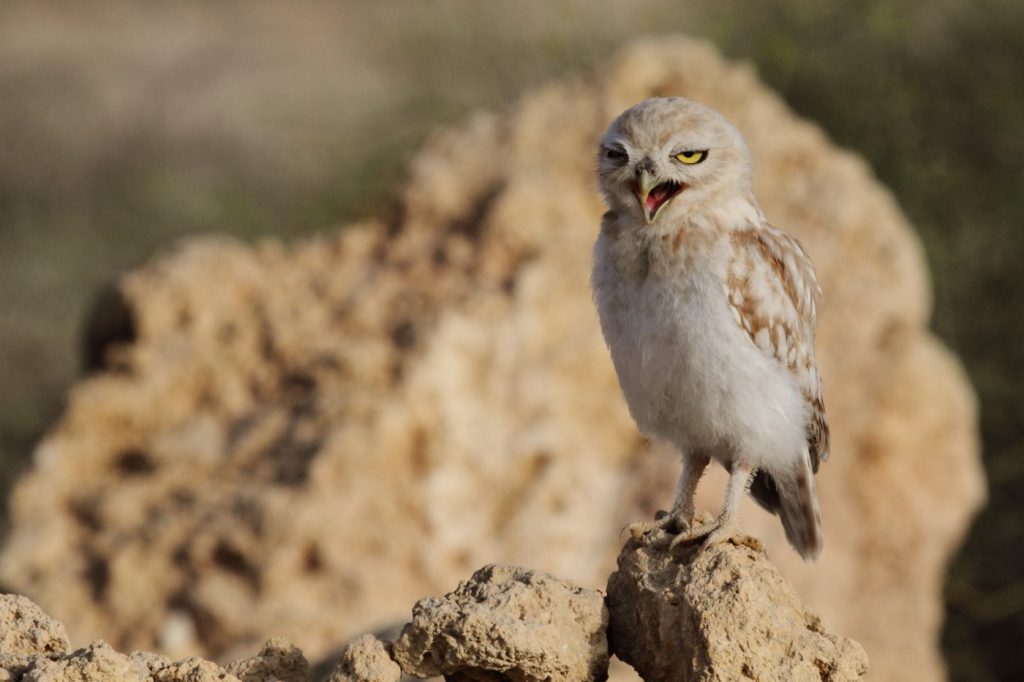
The narrator, a recent college graduate, is working at a down-and-out owl sanctuary while she contemplates her life goals, purpose, and romantic possibilities. Throughout the story, the narrator capitalizes phrases like “Thrive Under Pressure,” “Following a Nontraditional Path,” and “Building Character.” One has the impression that these phrases are not organic to her, they are inherited from parents and career counselors; people who have placed expectations on her that she has been unable to fulfill. People who started most of their sentences  with “you should” and “you have to.” Along with the second person, these phrases signify the distance between her life as it is happening, shoveling owl shit and flinging mouse carcasses, and her life as she expected it, which, she begins to realize, she never bothered to picture with any specificity. 

Hovendon also makes excellent use of the transportive properties of the second person, finding unexpected beauty in the owl sanctuary: “All around you, the evening insect sounds were beginning. Lightning bugs speckled the aviary.” As the narrator gives herself over to indecision, to the particular joys of being in medias res, so too does the reader give themselves over to the second person’s direct address. Maybe it isn’t so bad to be an aimless twentysomething, a life full of possibility ahead of you. —HM

Maroon” by Ladi Opaluwa

“Maroon” by Ladi Opaluwa is a story about sexual violence, an experience that defies narration. The narrator, a 19-year-old unnamed woman, is studying in her dorm room, listening to a thunderstorm outside, when she is interrupted by an uninvited visitor: “You did not hear Pastor James knock.” The sentence is simply and immediately terrifying. Every time I read it, I feel that knock in the bottom of my lungs. Pastor James, we come to learn, is the leader of the Spring Living fellowship that the narrator is also a part of. 

In this story, the second person POV is operating on complex registers. The second person creates a reflective but separate experience of the trauma for the narrator to relate, as one would describe the face in the mirror. You, but not you. But Ladi Opaluwa also deftly uses the second person to subvert the power dynamic, putting the narrator in control of the storytelling, and submerging the reader into the immediacy of being acted upon: “You knew where he was going but wanted to be sure, to wait and see, to be a spectator over yourself, a witness to your own calamity.” It makes the reader “a spectator over yourself” in a visceral way, and asks what it means to witness. —EB

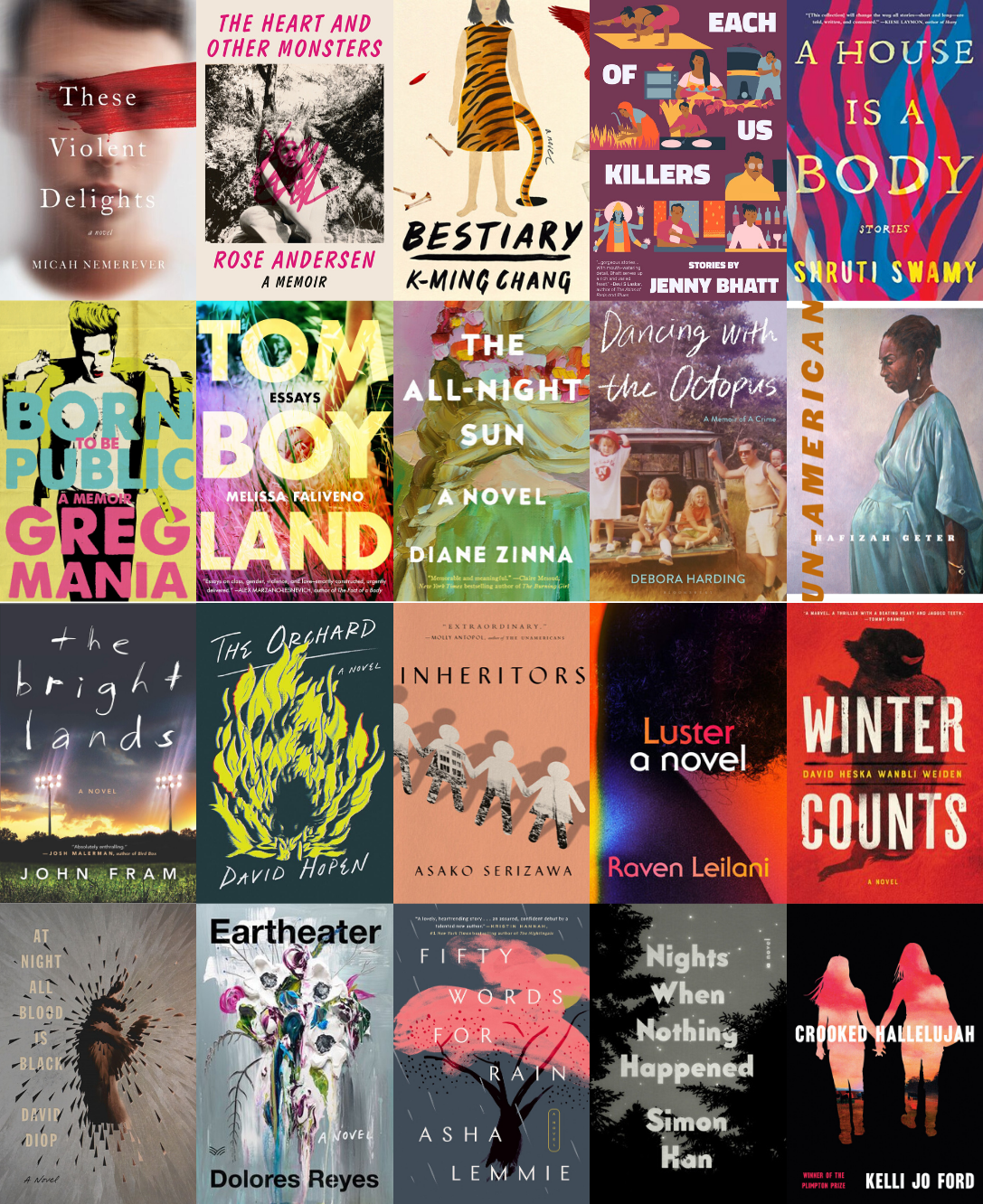
The Most Anticipated Debuts of the Second Half of 2020

There’s no doubt COVID-19 has forever changed the world as we know it. A small slice of life that had to shift trajectory is the publishing industry.

Debut authors are especially struggling as the books they have worked on for countless years are released into a world without in-person book tours or physical bookstore browsing. Many indie bookstores have shifted to virtual programming to help authors promote their books and connect with readers. My own site Debutiful, where readers can discover new authors, interviewed an additional fifteen authors whose tours were canceled due to the pandemic.

These efforts from the literary community are one step to helping these newly published authors pursue their art. Another small and simple step readers can take to support debut writers is by pre-ordering their books. Luckily, the second half of 2020 has just as many amazing debuts as the first half. 

July 

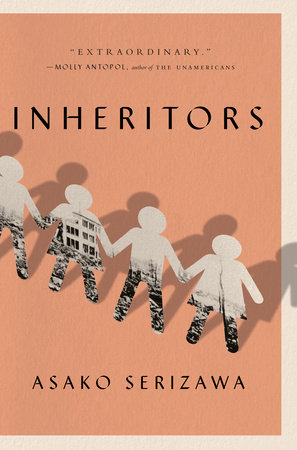
Inheritors by Asako Serizawa

Inheritors by Asako Serizawa

Set between Japan and the U.S. across 150 years, O. Henry award-winner Asako Serizawa’s interconnected stories look at the reverberations of World War II from the eyes of the colonized and the colonizers. 

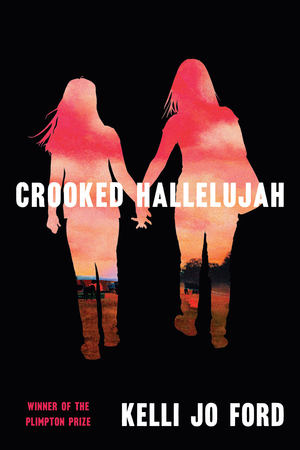
Crooked Hallelujah by Kelli Jo Ford

Kelli Jo Ford, the 2019 Plimpton Prize winner, weaves a story of four generations of women from the Cherokee Nation of Oklahoma. Page after page, she offers devastating plot and astonishing language. 

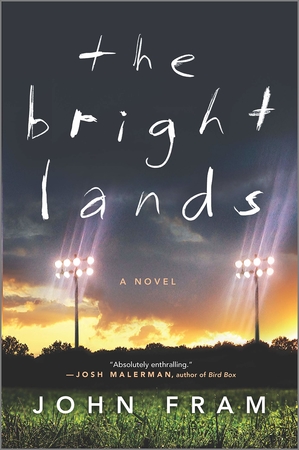
The Bright Lands by John Fram

A friend recently pointed out that I only seem to gush about queer stories set in a rural location. That’s exactly what Fram’s debut novel is. He expertly crafts a slice of new Americana about queer life in a small town where secrets and anxieties come to a head in a way that changes the community forever.

The Heart and Other Monsters by Rose Andersen

After her younger sister died of a heroin overdose in 2013, Andersen began exploring their shared past. It starts narrow in scope—a portrait of a dysfunctional family—and expands to tackle the opioid crisis in our country.  

August 

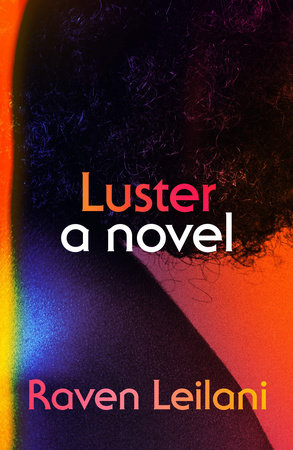
Luster

Luster by Raven Leilani

Sometimes there’s a book that everyone in the publishing world is talking about. Luster is that book. Leilani’s novel is about a young Black woman, struggling to make it as an artist, who finds herself in the middle of a white couple’s open marriage. 

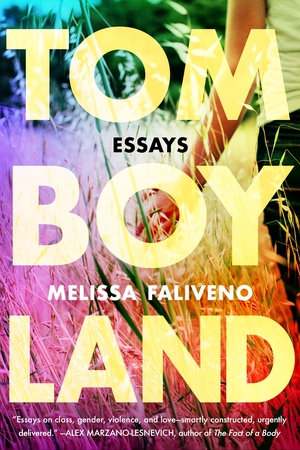
Tomboyland by Melissa Faliveno

In this essay collection about identity, class, sex, and gender, you’ll find deeply personal revelations that anyone can connect with. Each essay offers a unique perspective on topics we’ve all thought about, whether we’re a tomboy from the suburbs, a straight mountain man, or anything in between. Because there is no binary. 

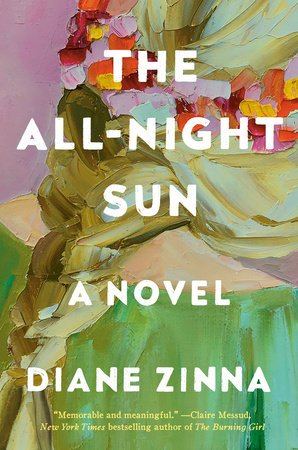
The All-Night Sun by Diane Zinna

The All-Night Sun by Diane Zinna

In The All-Night Sun, a lonely college teacher, Lauren, finds herself in an intense friendship with a new charismatic student, Siri, in her class. Lauren follows Siri on a trip back to her home in Sweden, only for their friendship to unravel, culminating in an explosive Midsummer.  

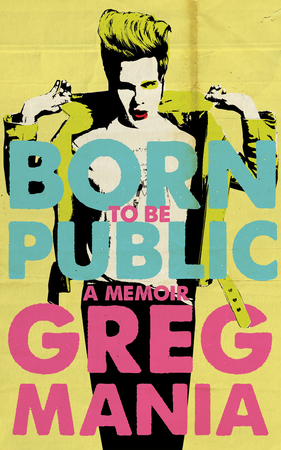
Born to be Public by Greg Mania

Greg Mania is one of the funniest up-and-coming writers cranking out work and he is finally releasing his laugh-out-loud memoir. He’s won script writing competitions, interviewed authors and celebrities (most notably Kathy Griffin). Come for the laughs, stay for the heartwarming story of coming out in the most millennial way possible. 

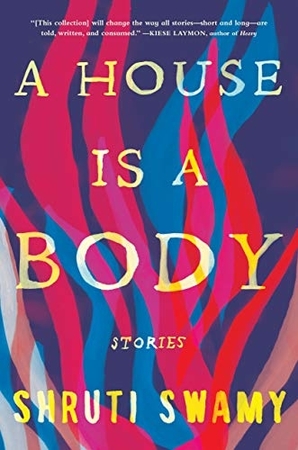
This House is a Body by Shruti Swamy

O. Henry award-winner Shruti Swamy blurs reality over the course of a dozen stories set in America and India. Swamy has a knack for creating captivating stories filled with unforgettable characters, but what makes this collection truly mesmerizing is her ability to play with structure and reinvent herself story to story.

Winter Counts by David Heska Wanbli Weiden

In Winter Counts, Virgil Wounded Horse serves as an enforcer-for-hire on the Rosebud Indian Reservation in South Dakota who gets tangled up with drug dealers based out of Denver. This gritty thriller is filled with the twists and turns expected from a crime novel, but Weiden also offers deeper insight into racial identity and the violence that Native Americans face on a regular basis.

September

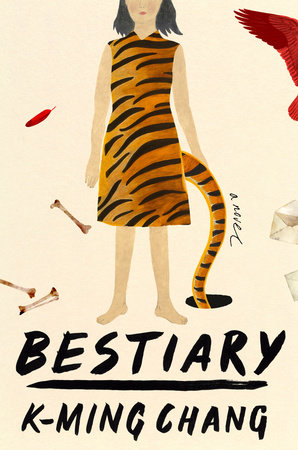
Bestiary by K-Ming Chang

Bestiary by K-Ming Chang

A tiger spirit haunts generations of a Tawainese family in Chang’s mythical debut. A tale of queer desire and family secrets, Bestiary is a kaleidoscopic tale of the women in this family as the youngest eventually finds herself in America decades later.

These Violent Delights by Micah Nemerever

This campus novel set in 1970s Pittsburgh—about two college students whose codependent friendship is tinged with cruelty—is far from quiet. Pitched as a “taut Hitchcockian story,” readers who need some thrill in their life will find this page-turner very binge-able. Micah Nemerever showcases a lot of skills on the pages, but it is the intricate plotting that propels this novel forward.

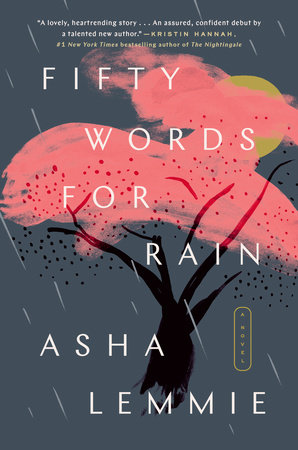
Fifty Words for Rain by Asha Lemmie

Fifty Words for Rain by Asha Lemmie

The story is about an outsider seeking belonging in post-World War II Japan. Nori is the daughter of a black GI and a Japanese aristocrat, raised in isolation by her grandparents who are ashamed of her dark skin. When her older half-brother arrives to claim his inheritance, Nori finds herself questioning her sequestered life and wondering if she can be truly accepted by society.

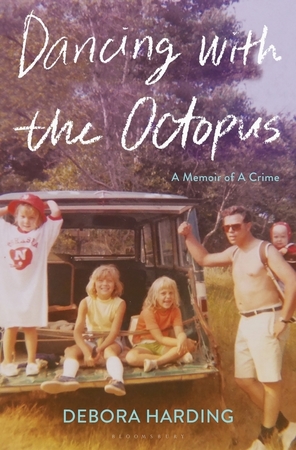
Dancing With the Octopus by Debora Harding

When she was 14, Debora Harding was kidnapped and left for dead. Against all odds, she survived but the trauma never left her. As an adult, she decides to meet her incarcerated kidnapper to understand his history and motivations. A gripping memoir, Dancing With the Octopus is both a heartbreaking reconstruction of a crime and a powerful account of healing from trauma. 

Each of Us is Killers by Jenny Bhatt

The stories in Jenny Bhatt’s debut collection explore characters in Midwest America, India, and England as they seek to fulfill their hopes and dreams. Bhatt places her characters in the cracks of society and doesn’t give them a clear cut identity. This ambiguity is the driving force in most of her stories, questioning the societal expectations forced upon BIPOC individuals.

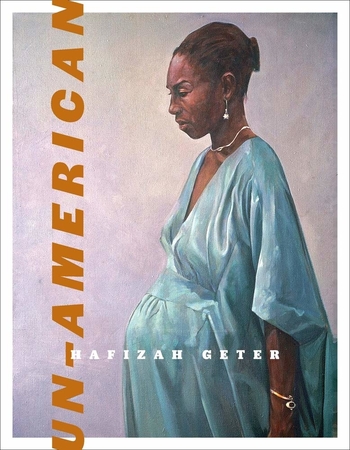
Un-American by Hafizah Geter

The poems in this debut collection are both lyrical and narrative. Nigerian American poet Hafizah Geter writes about confronting racism and trying to fit into a country that doesn’t seem to want her. Geter also delves into queerness, loss, and migration over the course of nearly three dozen poems.

October

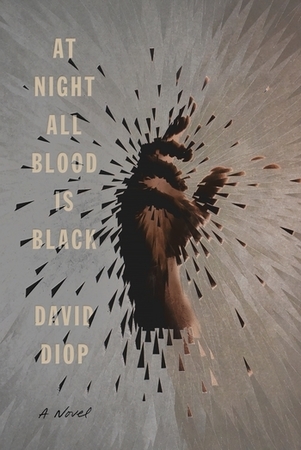
At Night All Blood Is Black by David Diop, translated by Anna Moschovakis

French Senegalese author David Diop’s English language debut was selected by students in France to win the Prix Goncourt des Lyceens Award. At Night All Blood Is Black tells the story of a Senegalese man who finds himself confronting the horrors of the trenches when he is drafted in the French army during World War I. Diop’s novel offers profound insight into the overlooked history of Senegalese soldiers who fought in the French army during the war. 

November

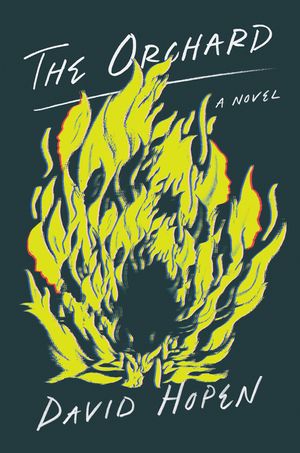
The Orchard by David Hopen

A devout Jewish student comes of age in David Hopen’s debut about a teenager who moves from ultra-orthodox Brooklyn to a fancy Miami suburb. As Ari Eden enrolls in a wealthy Jewish academy and enters the secular world, he experiences culture shock and begins testing the boundaries of his religious beliefs.

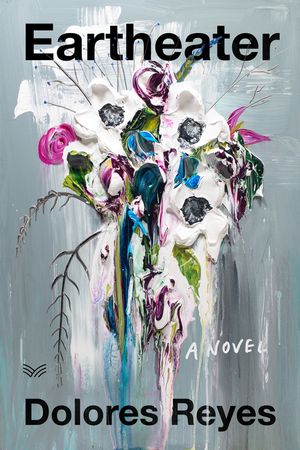
Eartheater by Dolores Reyes, translated by Julia Sanches

The award for best elevator pitch goes to this novel: an Argentinian woman is drawn to eating earth and when she does, she gets visions of missing and murdered people. It becomes part magical realist murder-mystery but more importantly, it’s an exploration of the people who are left behind and forgotten by society.

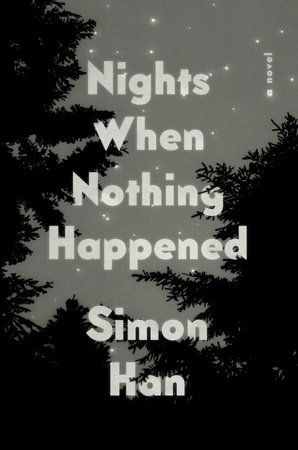
Nights When Nothing Happened

Nights When Nothing Happened by Simon Han

Simon Han’s debut novel follows a Chinese family living in Texas who seem to be living their American Dream. But that illusion quickly unravels when their young daughter begins sleepwalking, setting off a series of unexpected events and bringing low-buried secrets to the surface.

Is Technology Your Friend or Your Enemy?

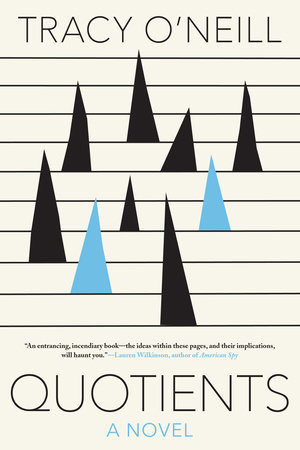
Tracy O’Neill’s new novel, Quotients, is the global story of Alexandra Chen and Jeremy Jordan: their growing love, their sealed pasts, their connections to vast intelligence agencies, their hopes to feel whole while still withholding. They marry, move, change careers, adopt. They try not to lie, so they mislead. Of the novel’s background, of the shifting, insidious space behind, and often between, Jeremy and Alexandra—well, this is the world. History. Reality. The world of the 7/7 London Bombings, of call centers and hedge funds and catfishing and social media obsessions, of The Troubles, Operation Banner, the Terrorist Identities Datamart Environment. The tension within this landscape produces an accomplished work of art with encyclopedic reach and poetic concision. 

Quotients by Tracy O'Neill

On the page, O’Neill is a constructer of both bright high-rises and pulse-deep perceptions. She makes connections between continents of information. She unpacks the words that form a name. A lemon is “a great yellow orb.” Family advice is “legacy wisdom.” The application process for an adoption: “To become a family, their hands filled blanks.” A couple lies to avoid “becoming quotients.” On the phone, I found O’Neill—a National Book Foundation 5 Under 35 honoree—to be just as insightful as her narrator. We talked about some of the book’s themes, such as the value of privacy, the construction of the self, the misleading comfort in numbers. 

The book’s cover—a lined landscape of slightly tilted geometry—has the same dramatic ambiguity as its title: “quotients,” a word from the language of mathematics, a referential language, a system of clamped meanings—yet, as word alone, “quotients” takes on a dislocated longing, a lyrical grief.


Alexander Sammartino: There’s a scene late in Quotients when two characters are talking about posting on the novel’s social media platform, the cleverly named Cathexis. One character asks: “What’s the worst that could happen if strangers knew the happiest part of your life?” And his friend responds: “Anything you say can and will be held against you.”

I thought we could start the interview here, with a discussion on the value of privacy, since this feels like a central tension in the book—that is, the characters in Quotients often seem to be either struggling to obtain privacy, or, having obtained it, are struggling with the consequences of privacy. Privacy also feels like the ultimate existential struggle in the information age: what meaning, if any, can be found in the unseen life. 

So I want to begin by asking, do you believe there is something sacred in privacy? And, if so, what specifically do you think is important about privacy to the characters in Quotients

Tracy O’Neill: We have the obvious problem of surveillance capitalism. But I think privacy is also important to being able to experiment with thought and affect, to play with and consider ideas that perhaps are not going to be your permanent position on a particular subject, and grow from discussing and processing them, as in—-just for one example—therapy. So this is not just about public life but also in our personal lives. The characters in Quotients—many are trying to find a stronger sense of self or stronger relationships. And I think that feeling safe to take risks in both regards matters. 

In the Information Age, information that we give is used often not in the way that we intend, whether that is to sell us things, on mortgage decisions, or to track and discipline political speech. Think about how facial recognition technology—built with images from platforms like Flickr where users wanted to simply share moments of their personal lives—has been used to identify protesters. We are in a terrible position right now where online spaces that we use for communication and expression are weaponized against free speech. 

When we look at this current moment—people, say, having Zoom events, or kids using video conferencing for school—we don’t yet know what some of that data will be used for. Then the question becomes: how do we feel safe to cultivate our identities, express ourselves freely, or risk connection in online spheres where information may be used for something other than what we wish it to be? Some of the characters in this book want to push back against violence in their lives, but they don’t know if they can safely.

AS: I love this distinction between surveillance capitalism and a notion of self, and I think both are explored in Quotients: you’re able to show these external consequences related to privacy, but also for the characters what’s at stake personally, emotionally, spiritually. And I think there’s this interesting tension there, because in our most private moments—that’s when we’re able to commit acts of great dishonesty. That’s true of the relationship at the heart of the novel, with Jeremy and Alexandra. I’m wondering if you can say a little more about that—about how, in our private moments, when we are capable of defining ourselves, we are able to most betray those we love. 

TO: That tension is so central to the book. Early on, a lot of the cautiousness in Alexandra’s character has to do with her sense of always being perceived: there’s a way in which she’s anticipating a gaze on her. And that makes her even more secretive. There are a couple of moments in the narrative where she’s sort of testing the boundary to see how Jeremy would perceive something that she is considering saying or considering talking about, and he tends to fail these little tests because he is also performing this role in which he is not somebody who has a rather large secret about his own past in intelligence work. 

In this book, it’s not that I wanted to suggest that privacy is unimpeachably the most important value, but, rather, that privacy is valuable specifically because it may afford openness in certain ways that the characters tend not to take. I don’t know if that answers your question.

AS: It totally does. 

I also thought it was brilliant to have the narrative time be Jeremy and Alexandra’s relationship, how they’re our point of access to these bigger organizations. Can you talk a bit about that decision? 

We are in a terrible position right now where online spaces that we use for communication and expression are weaponized against free speech.

TO: I have asked myself a lot of questions about what the novel is supposed to do as a form, generally. What makes the novel matter. What effects are supposed to occur in the reader. And although I suspect that we have undervalued certain things that the novel can do—like presenting a political rhetoric, or ideas—I acknowledge that most people are probably reading with the sense that fiction’s primary recommendation is its ability to confer emotion, or the feeling of feeling. 

I wanted to use this relationship in order to accomplish that function and simultaneously be working in these other modes which are often associated with other forms of discourse or text, like journalism or scholarship. I was thinking about their difficulties in forming a loving, safe family as synecdochic for our difficulties in forming a society of love and safety.

AS: Your novel reminded me about something that is so inherently special to the form, something the novel can do far better than film, which is the ability to show the consequences of time passing. I think this is partly a result of you choosing to foreground Jeremy and Alexandra’s relationship, how we see this couple age together, the consequences that come with age. 

What’s also interesting about this relationship is that both people, within their respective communities, are outsiders: Alexandra is an Asian American woman in London; Jeremy is, well, because of his secrets, his history in intelligence work, he also remains an outsider. I was wondering what connections you saw in their histories? That is, what made you conceive of this relationship, between these two people, with these sets of properties?

TO: Both of these characters are very aware of surfaces. The way in which people perceive them is both different from who they are and a part of how they negotiate their identities. So I think one of the ways in which they’re similar—and maybe they don’t even entirely sense this about each other—is that they’re always trying to represent themselves to others in a way that will ferry them toward love, security, happiness. At the same time, their relationship fails at moments they’re secretive with each other. If they were to sort of pull back the scrim, they might find each other to be more empathetic than they anticipate.

AS: To shift a bit here, I want to ask about the 7/7 London bombings, which, in the timeline in the novel, happen early on. What drew you to that specific event for Quotients?

TO: I was interested in writing about a terrorist event that was not on American soil, because it was important to me that this was a book that had a global plot. I wanted to get at the way in which the moment that we live in is not only an information age but also an age of globalization. 

The 7/7 Attacks were not centered around a single location, like in the way that we conceive of 9/11 being centered around the Twin Towers. They were suited to portraying that sense of being surrounded by terror, the sense the characters have that when a terrible thing happens, it doesn’t mean another terrible thing isn’t going to happen.

AS: So I also want to ask about The Troubles. At one point Wright, a former spy, says: “Everywhere is Belfast with a different flag.” What brought you to The Troubles?

TO: I wanted to step away from conceiving of terrorism as grounded in jihadi extremism, which I think we’ve too often tended to do, at least in the United States. It was important to me that in The Troubles there is some moral ambiguity tied to the use of terrorism for the purpose of Northern Irish independence. In this book, I was really trying to critique some of the ways in which our attraction to and reliance on data, categorization, and quantification often elides a more complicated picture. So I was interested in the Troubles because there is not a completely neat overlap between the Protestant-Catholic divide and the divide over self-determination. You also have people fighting each other who look like each other, and that you can’t see the ideological difference—was almost an oblique tie to how the identities of people online are made anonymous.

There’s also that the Good Friday Agreement was only a couple of years after the internet became commercially available. It could be said to coincide with the transition into the Information Age. 

AS: I want to talk about two sentences that I love. 

Here’s one, which comes from a scene when Jeremy, at a bar in New York, is watching the bartender cut a lemon: “Jeremy watched the man scalp an arc of skin off a great yellow orb.” 

Also, from the prologue, when Jeremy is working in a call center: “Sound huddles waves into intimacy.”

Can you talk about these sentences, as well as about your relationship to language as a writer?

TO: I’m often thinking about sentences in a few ways. 

The first example you gave—“Jeremy watched a man scalp an arc of skin off a great yellow orb.”—is an example of a circumlocutionary technique. It is trying to get at the feeling of feeling, the textures of experience. In that sentence, yes, there is the physical description of what’s happening, but it’s also that we are seeing this moment through Jeremy’s consciousness. This is a man who has the stuff of war so deeply entrenched in his psyche that it becomes his reference point. Scalping. There’s a violence to it.

When information is extracted and then militarized or used for surveillance capitalism, we aren’t made safer.

That other sentence—“Sound huddles waves into intimacy.”—I want to build out this psychological and thematic substrate. It’s a scientific fact I gloss, but I’m trying to project a larger thematic note about what happens in the book and also get at the way Jeremy is thinking about intimacy. In this prologue, he’s involved in some magical thinking. He’s bargaining. He’s thinking if he’s a good enough guy, then nothing bad is going to happen to Alexandra. I hope the magical thinking is made slightly more emphatic by using that language of science as a counterpoint. 

Syntactically I am often trying to create a shift, a plot of sorts, so that a reader’s understanding of what is happening in the course of a sentence changes. I don’t want someone to read the first half of a sentence and anticipate the second half all the time. I’m using sound to drive the work forward rhythmically and also create certain groupings, senses of pattern and anomaly. That is particularly important in this work, which is about people trying to see patterns but finding their stories don’t fit into the schemas.

AS: I know we began the interview with this broader discussion of privacy, so to end I thought we might talk about our larger cultural obsession with knowledge and how that appears in Quotients. 

Of course in some sense numbers are symptoms of our yearning for omniscience, and I was thinking of how we see this in your characters. For example, Alexandra has an app that lets her track her mother’s purchases and general online activity. You write: “Now she could see where the money went, she could see what her mother wrote, and it mollified something to know she could know.”

So, lastly, I want to ask: what do you think is mollified in our ability to know? Both for these characters, and, maybe, more broadly, at this particular cultural moment?

TO: All of these characters are facing a world that feels very dangerous. Part of that danger is not knowing what is true or who to trust. They don’t know if they can trust online friends, their governments, their loved ones. 

Early in the book, Lyle and his friend Bri are bantering. They invoke Hannah Arendt: “If everybody always lies to you, the consequence is not that everyone believes the lies, it’s that no one believes anything any longer, and with such people you can then do what you please.” The characters in Quotients are facing the potential to be immobilized by misinformation and disinformation. How can you call out state violence when you don’t know what’s true? How can you know who to affiliate with, who your community or your family or friends are, online? How does that affect how you love? How can you speak freely if your signal boosting becomes data collected by police to then target protest? And how does that affect how you politically organize? 

One of the things the characters want mollified for them is a sense that their worlds can be trusted and that therefore they can exert agency in their lives. It comes down to this fundamental question about whether they can enjoy a level of self-determination, create bonds, invest in a better future. They want to lead lives that feel existentially worthwhile, but they confuse information and knowledge.

Throughout this book I wanted to trouble that distinction. I wanted to convey that when information is extracted and then militarized or used for surveillance capitalism, we aren’t made safer. We have to gamble love in our relationships, love in our communities and global politics without falling back on the myth that weaponized information will save us.

8 Anti-Capitalist Sci-Fi and Fantasy Novels

Karl Marx may be famous for his thorough, analytic attack on capitalism (see: all three volumes and the 1000-plus pages of Das Kapital), but let’s be real: it’s not the most exciting to read. What if, just as a thought experiment, our works that reimagined current structures of power also had robots?

Speculative fiction immerses the reader in an alternate universe, hooking us in with a stirring narrative and intricate world-building—or the good stories do, anyways. Along the way, it can also challenge us to take a good look at our own reality, and question with an imaginative, open mind: how can we strive to create social structures that are not focused on white, patriarchal, cisgendered, and capitalist systems of inequity? 

As poet Lucille Clifton says, “We cannot create what we can’t imagine.” Imagination is an integral element to envisioning concrete change, one that goes hand in hand with hope. Although certain magical elements like talking griffins and time travel might be out of reach (at least for the present moment), fantasy and sci-fi novels allow us to imagine worlds that we can aspire towards. Whether through a satire that exposes the ridiculousness of banking or a steampunk rewriting of the Congo’s history, the authors below have found ways to critically examine capitalism—and its alternatives—in speculative fiction. 

Everfair by Nisi Shawl

A speculative fantasy set in neo-Victorian times, Shawl’s highly-acclaimed novel imagines “Everfair,” a safe haven in what is now the Democratic Republic of the Congo. In Shawl’s version of the late 19th-century, the Fabian Socialists—a real-life British group—and African-American missionaries band together to purchase a region of the Congo from King Leopold II (whose statue was recently defaced and removed from Antwerp, as a part of the global protest against racism). This region, Everfair, is set aside for formerly enslaved people and refugees, who are fleeing from King Leopold II’s brutal, exploitative colonization of the Congo. The residents of Everfair band together to try and create an anti-colonial utopia. Told from a wide range of characters and backed up with meticulous research, Shawlcreates a kaleidoscopic, engrossing, and inclusive reimagination of what history could have been. “I had been confronted with the idea that steampunk valorized colonization and empire, and I really wanted to spit in its face for doing that,” Shawl states; through her rewritten history of the Congo, Shawl challenges systems of imperialism and capitalism. 

Parable of the Sower

Parable of the Sower by Octavia E. Butler

Although written in 1993, Parable of the Sower’s vision of the 2020s rings bleakly true: renowned sci-fi writer Butler grounds her novel in a collapsing society, plagued by climate change, wealth inequality, and attacks on minorities. Her protagonist, Lauren Oya Olamina, grows up in a sheltered bubble near L.A., away from the demise of U.S. capitalism; Lauren also has “hyperempathy,” a condition that renders her both vulnerable and incredibly sensitive to others’ emotions. However, when her home is destroyed, Lauren must pursue a new vision for community. While Butler paints an acutely dark picture of capitalistic greed, she also offers a hope-filled alternative to dystopia, or ways to transform society beyond these destructive models. And if one book of this universe doesn’t sound like enough for you, Lauren’s journey continues in Butler’s sequel, Parable of the Talents.

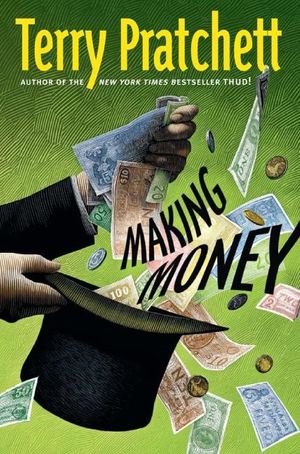
Making Money by Terry Pratchett

If you stop to think about it, isn’t the concept of a credit card ridiculous? Pratchett’s characters would certainly agree. Pratchett’s Discworld series, as the Guardian noted, “started out as a very funny fantasy spoof [that] quickly became the finest satirical series running.” This installment follows con-man Moist von Lipwig (who first appeared in Pratchett’s spoof on the postal system, Going Postal), as he gets roped into the world of banking. The Discworld capital, Ankh-Morpork, is just being introduced to—you guessed it—paper money. However, citizens remain distrustful of the new system, opting for stamps as currency rather than use the Royal Mint. Cue the Financial Revolution, with Golem Trust miscommunications, a Chief Cashier that may be a vampire, and banking chaos. In his signature satirical style, Pratchett points out the absurdities of the modern financial system we take for granted. 

Dark Lord of Derkholm by Diana Wynne Jones

When Derk, a placid magician farmer, and his ragtag family (one sorceress wife, two human children, and five speaking griffins) are somehow put in charge of organizing the “Pilgrim Parties,” everything starts going awry. The Pilgrim Parties are a live-action tour where citizens from Earth can visit to fulfill their own fantasy adventure. However, these tours come at the cost of the agrarian land’s citizens, such as Derk’s family. After all, someone needs to act out the part of the Dark Lord, and transform their comfortable home into foreboding ruins. More seriously, peasants’ homes are routinely pillaged, and the land is suffering at the cost of providing entertainment. The only person benefiting from this exploitative system is an ordinary-looking businessman from Earth, Mr. Chesney, who is armed with economic savviness, malicious desire for profit—and a powerful demon. So, how to stop his reign of business terror? If you thought Jones’s books were just for children, think again. Dark Lord of Derkholm is a rollicking adventure filled with high fantasy and humor, but also examines the damaging effects of the tourism industry and capitalistic intent. 

Autonomous by Annalee Newitz

In Newitz’s vision of a technological future, pharmaceutical businesses dominate the world—after much of humanity has been decimated through plagues (yikes); here everything can be owned, patented, and/or programmed. Autonomous follows Jack Chen, a Robin Hood-like “pirate” who develops and distributes free drugs to help the public. When Jack accidentally delivers a lethal drug that makes people into workaholics, driving them to insanity or physical unsafety, she must try to find a reverse cure—and discovers a dangerous secret about the pharmaceutical industry along the way. Meanwhile, the companies send a robot and military agent to track Jack down. Newitz’s framework of work “productivity” as a deadly drug is one we can all afford to keep in mind, as our workplaces and gig economy culture become increasingly focused on production alone. Autonomous is a thoughtful exploration on the dangers of consumerism, as well as a nuanced exploration of AI (robot sexuality is another integral theme). 

Foundryside by Robert Jackson Bennett

Foundryside by Robert Jackson Bennett

In Foundryside’s city of Tevanne, magic, or “scriving,” has become industrialized and controlled by the Merchant Houses. The Merchant Houses have used scriving to encode everyday objects; as a result, Tevanne runs like a brutal, well-oiled machine. All this may change when Sancia, a young thief with an ability to sense scriving, is sent to steal an artifact of immense power. This artifact, responsible for generating the codes for the current system, is equally capable of revolutionizing and rewriting the world of Tevanne. (Not to bring in too much Marx here, but Bennett’s “artifact” really reminds me of the famous quote in The Communist Manifesto, where Marx and Engels proclaim that the tools for overthrowing the bourgeoisie will grow from the very system of capitalism itself.) Using magic as a framework, Foundryside—the first book in Bennett’s series—doesn’t shy away from examining the ethics of capitalism and the consequences of corporatization. 

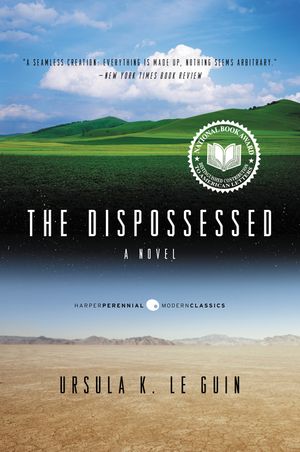
The Dispossessed by Ursula Le Guin

If we are talking about speculative fiction and potential utopias, Ursula Le Guin cannot be left off of this list. In The Dispossessed’s universe, the planets of Anarres and Urras have been long divided by political rifts. Anarres is based in anarcho-syndicalism, an ideological system that prioritizes the worker and seeks to abolish the wage system. Urras, on the other hand, is split between two warring factions: a capitalist, patriarchal state and a closed-off, authoritarian government. Shevek, a physicist from Anarres, seeks to peacefully unite the Anarres and Urras, and end the centuries-old tradition of hate and mistrust. Reflecting on her work in 2017, Le Guin wrote of The Dispossessed, “I started by reading a whole mess of utopias and learning something about pacifism and Gandhi and nonviolent resistance. This led me to the nonviolent anarchist writers [with whom] I felt a great, immediate affinity … So, when I realised that nobody had yet written an anarchist utopia, I finally began to see what my book might be.” Although other anarchist utopias have been published after The Dispossessed’s publication 1974, Le Guin’s novel remains a classic sci-fi text. 

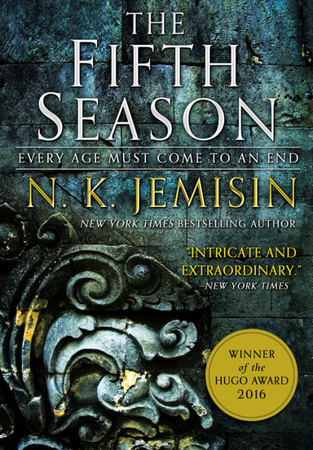
The Fifth Season by N. K. Jemisin

As we’ve seen above, “anti-capitalism” is usually directly associated with, well, political and economic structures. However, as Marxist postcolonial scholars have continuously noted, “capitalism” doesn’t exist in a vacuum from the other societal systems of oppression; racism is an inherent building block of capitalism. Jemisin’s much-acclaimed novel is, at its heart, an exploration of oppression. Set in “Stillness,” a bleak supercontinent that is regularly ravaged by climate catastrophe and caste systems dominate society, The Fifth Season focuses on three female “orogene” narrators. The orogenes are a caste that has the power to control the earth’s energies; the rest of the population depend on their powers to help subdue climate crises, while simultaneously exploiting them for their own benefit and treating them inhumanely—orogenes are subjected regularly to systematic murders. As the New York Times notes, “Systems of power stalk [Jemisin’s] protagonists, often embodied as gods and primeval forces … When escape comes in her novels, it is not a merely personal victory … Her heroes [are] smashing through oppressive systems and leaving them behind like shed skins.” Even within this dystopian landscape, Jemisin allows room for change, showing various ways to revolutionize and dismantle the system—whether that is an underground community or a utopian deserted island society. 

Everybody Ejaculates

If you read almost any pre-WWI novel, you’ll find liberal use of the word “ejaculated” in moments of intense dialogue. Prior to the early 1900s, authors often used it to denote an exclamation; in the words of the OED, to ejaculate can mean “to utter suddenly.” This literary supercut repurposes these sudden utterances from 35 novels including The Hunchback of Notre Dame, Anne of Green Gables, The Adventures of Sherlock Holmes, and Riders of the Purple Sage.

Climactic Literature: A Literary Supercut           

“Oh, Jem!” Jane ejaculated.

“Ah!” ejaculated Grace.

“Humph!” ejaculated Mrs. Thorne.

“Humph!” ejaculated Chet’s mother.

“Dolly!” ejaculated Mrs. Boncassen. “She’s a woman, through and through, if ever thar was one.”

“She is,” ejaculated Keith, looking meditatively at the stove.

“Very glad, very glad!” she ejaculated.

“Good lord!” ejaculated the old man, sitting down feebly and staring.

“Brian!” ejaculated the banker. (The clerk ejaculated the length of his toothpick.)

“Me?” ejaculated the Society Editor, disdainfully.

“As sure as I’m in this room!” he ejaculated.

“But—me!” ejaculated Victor, rolling his eyes upwards in astonishment.

“Confusion!” ejaculated Piers.

“It was a confession,” I ejaculated.

“Heaven give me patience!” ejaculated Penrose.

“Never!” ejaculated Hippy fervently.

“Never!” ejaculated Pendry and Mail together, Tonkin smoking in silence.

Phillip gasped and stared in amazement. “Dondersteen!” he ejaculated loudly, and nearly dropped his half-conscious and swaying burden on the ground.

“What’s that?” ejaculated Joseph Stagg in a sharp tone.

“A comet of gold!” ejaculated the captain. “Thatsh good!”

Freddie nearly rolled out of his chair.

The father of Samoylov threw himself back, and ejaculated broken words behind his wife’s ear. The mother ejaculated in a sudden burst of excitement; she minded less his somewhat rude ejaculation: “Ho! Ho! South! South! The vervloekte Keerl! the plepshurk! the smeerlap!”

“What on earth does this mean?” I ejaculated.

“Can’t you see with your own eyes?” he ejaculated, attempting to walk on.

“Ha!” ejaculated the old lady.

“Hum!” ejaculated Mr. Stagg.

“O Lord!” ejaculated Titmouse, involuntarily, and almost unconsciously, staring stupidly at Gammon. Mr. Gammon soon felt the presence of his secret.

“Lord, Mr. Gammon!” ejaculated Titmouse, passing his hand hastily over his damp forehead—his agitation visibly increasing. Gammon gazed at him for a moment with fury; and “Good thunder!” they ejaculated.

“Great God!” ejaculated the others.

Dinmont at length got up, and, having shaken his huge dreadnought greatcoat, as a Newfoundland dog does his shaggy hide when he comes out of the water, ejaculated. The Little Russian ejaculated. Aunt Nettie, of course, ejaculated, “goodness gracious!” and laughed.

Ben Zoof broke out into the most vehement ejaculations.

“Gentle!” ejaculated Bartlemy, the artist, with profound conviction.

“He’s our little pet,” said Rob. “Come here, Ben, dear. Ben Zoof!” he called aloud.

“Ben who?” inquired the major.

“Zoof! Ben Zoof!” ejaculated Servadac, who could scarcely shout loud enough to relieve his pent-up feelings. “That’s our—our nice—gentle—oh, dear me!—our nice, gentle, old Ben.”

“Well, this is a pretty piece of business!” ejaculated Marilla.

“Incredible!” ejaculated the colonel.

“Incredible!” echoed the major. But of a sudden he ejaculated. “God bless my soul!” ejaculated that startled gentleman adventurer, and collapsed onto a settee as if his legs had been mown from under him.

“Holy cats!” he ejaculated.

“Brother!” ejaculated the other.

“Bless my soul!” ejaculated the landlord, in bewilderment. “Where did he come from?”

“Bless me! Yes!” ejaculated the hardware man finally.

“Humph!” ejaculated the hardware dealer again.

“Eh wow! Eh wow!” ejaculated the honest farmer, as he looked round upon his friend’s miserable apartment and wretched accommodation—“What’s this o’t! what’s this o’t!” he ejaculated.

The place was, in fact, becoming less tenable. Members of the congregation were interjecting, “Glory Hallelujah!” “Praise be His Name!” and the other worshipful ejaculations which make a sort of running accompaniment on such occasions.

“Great Heavens above!” ejaculated Piers.

“Heaven be praised!” ejaculated the captain, and he went on in the tones of a keen excitement.

The Dominie groaned deeply, and ejaculated.

At this unexpected and involuntary explosion of his weapon, the Dominie exclaimed, “Prodigious!” which is his usual ejaculation when astonished. “Great God!” ejaculated the others, but “Pro-di-gi-ous!” was the only ejaculation they ever extorted from the much-enduring man. This escaped my notice at the time, you may easily believe; but in talking over the scene afterwards, Hazlewood made us very merry with Dominie’s ignorant but zealous valor.

The good Dominie uttered his usual ejaculation of “Prodigious!” and then strode back to his post.

Hazlewood seconded him with great spirit. “Oh, your Excellency,” ejaculated the orderly, “look there! look there!” Then pointed to a table, upon which was some cold meat, and a spirit lamp, and a captain of the 8th Artillery & two officers who had presumed to do their duty.

Hazlewood longed to accompany the military. The Dominie looked upon him with that sort of surprise with which we can conceive a tame bear might regard his future associate, the monkey, on their being first introduced to each other. Sir Robert Hazlewood was rather puzzled at this intimation. “Please!” he ejaculated.

But the other heeded not, and with head thrown back against the wall, and brawny chest expanded, almost drowned the rest of the voices by his marvellous roars. Then with an ejaculation of “Here goes!” he jumped over the intervening crack of space and landed in the middle of us like a sack of coal. Had I not been seated really I think he would have knocked me off the rock.

“Cursed friar!” I ejaculated mentally.

“Well, I never!” ejaculated Abner Balberry.

“For Heaven’s sake!” ejaculated Aunt Nettie. “Thanks to the saints no further harm was done,” ejaculated the old lady shuddering. And with this compassionate ejaculation, she retreated into her own premises. (No wonder the girls ejaculated at her smartness.)

The good Dominie stretched out with a murmur of relief and comfort. The ground felt like the softest couch. “Hullo!” he ejaculated softly.

“You!” ejaculated Halicarnassus, contemptuously.

“The devil!” ejaculated Pritchen.

As for the Dominie, my father took an opportunity of begging to exchange snuff-boxes with him. The honest gentleman was much flattered with the proposal, extolled the beauty of his snuff-box excessively, smiled at the snuff box fondly, caressing it with his finger.

My father looked at him again. “This snuff box, to which so great a value is attached!  How did you get such a… Gold!” he ejaculated, but the Dominie made no answer.

Peter meanwhile was looking at the snuffbox, which the priest still held in his hand, and admiring its brave repoussé work of leaves and flowers, and the escutcheon engraved on the lid. “My that’s fine!” he ejaculated, wiping the perspiration from his forehead with the sleeve of his coat.

The Dominie groaned. “Wait. I’ll tell you the whole story. You shall see for yourself.”

“Go on,” ejaculated Tregear.

“Yes, yes, yes,” cried Tinfoil, “where did you get such a thing as this?”

“Oh!” I cried.

The Duchessa’s eyes were intent. “The story—? Tell me the story,” she pronounced in a breath, with imperious eagerness.

He told his story accordingly, often interrupted by ejaculations.


Source texts in order of appearance:

In the Closed Room by Frances Hodgson Burnett
Grace Harlowe’s First Year at Overton College by Jessie Graham Flower
Esther by Rosa Nouchette Carey
Carolyn of the Corners by Ruth Belmore Endicott
The Duke’s Children by Antholy Trollope
The Frontiersman by H. A. Cody
My Antonia by Willa Cather
Woven with the Ship by Cyrus Townsend Brady
The Re-Creation of Brian Kent by Harold Bell Wright
I Walked in Arden by Jack Crawford
Missy By Dana Gatlin
From Farm To Fortune, Or, Nat Nason’s Strange Experience by Horatio Alger, Jr.
The Bars of Iron by Ethel May Dell
The Adventures of Sherlock Holmes by Sir Arthur Conan Doyle
Bernard Brooks’ Adventure by Horatio Alger, Jr.
The Adventures of Dick Trevanion by Herbert Strang
The Land of Joy by Ralph Henry Barbour
The Laughing Cavalier by Baroness Orczy
Off on a Comet or Hectory Servadac by Jules Verne
The Little Warrior by P. G. Wodehouse
Mother by Maksim Gorky
Grisly Grisell by Charlotte M. Yonge
The Laughing Cavalier by Baroness Orczy
Gala-Days by Gail Hamilton
Ten Thousand a-Year: Volume 3 by Samuel Warren
The Red Badge of Courage by Stephen Crane
Guy Mannering by Sir Walter Scott
The Little Grey House by Marion Ames Taggart
Anne of Green Gables by Lucy Maud Montgomery
The Hunchback of Notre Dame by Victor Hugo
Hilda Lessways by Arnold Bennett
When the World Shook by H. Rider Haggard
A Christian Woman by Emilia Pardo Bazán
The Ivory Snuff Box by Arnold Fredericks
Riders of the Purple Sage by Zane Grey
The Cardinal’s Snuff-Box by Henry Harland

The Untold POC History of California

Rishi Reddi takes “epic” to the next level with this untold PoC history of California. Passage West is a novel of California, of the U.S.-Mexico border, and of America, that you probably had no idea you needed in your life. The novel begins with Karak Singh on his deathbed in a Los Angeles hospital in 1974 bequeathing a box of “of things only you and I know about” to his old friend and farming partner, Ram Singh. 

The letters send the Punjab, India-born Ram back to 1913 and to his early days as an immigrant in America. Reddi then introduces us to the early farming landscape of California’s Imperial Valley—and to the Sikhs, Japanese, and Mexicans who work the land as sharecroppers and laborers—and their white overlords. As they raise cotton and cantaloupes out of the desert sand, their lives are challenged by shifting legal realities, anti-immigration fervor, fragile harvests, and lopsided sales deals. World War I intrudes and sends two of the community’s young men, Amarjeet, and his Japanese American friend, Harry to the European trenches. 

The war’s end brings more racism and new laws against land ownership by “aliens”—which leads to severe losses and eventually, to a murder. Passage West edges over 400 pages but Reddi’s prose, measured and with exquisite attention to sonics of accents and multiple languages, makes it a pleasure. The exacting renditions of the immigrants’ newly acquired languages, be it Spanish or English, charm and lay bare the bewilderment of living in another tongue. More than once it cleaved my heart. Take this line, for example, from the Japanese farmer Tomoya Moriyama upon being evicted from his land, shortly after his American-born son dies in World War I: “What country take only son and not let you to stay?” 

I spoke to Reddi about writing a global history, imagining lone women, and to whom any land ever really belongs. 


J.R. Ramakrishnan: While it’s centered in California, your novel has a global scopethe Punjab, Manila, France, and Mexico are some of the places your characters have been. Where did this story begin for you?

Rishi Reddi: I had originally wanted to write about a love triangle between a newlywed Punjabi man who temporarily comes to the US to make money (Ram), and the wife he leaves behind (Padma), and a Mexican woman who has fought in her country’s revolution (Adela). But my research into the 1910s opened many other doors: the revolutionary Ghadar party’s global movement to overthrow the British in India; the adventures of America’s World War I troops in France, and the manner in which that war intersected with the 1918 pandemic. The more I learned about the South Asian experience of those years, the more I felt that the depiction of that historic moment through these characters needed to touch upon all these factors. 

JRR: You’ve woven together multiple histories—–British India, early South Asian immigration to the U.S., California farming, the Mexican Revolution, World War I, Spanish Flu, and much else. The characters who experience these events are on the precarious fringes of life. How long did it take to research the historical settings, and how did you go about it? 

RR: I started with trying to flesh out my protagonists, Ram and Karak, and I read a few studies by sociologists about the communities formed by South Asian immigrants at this time. I also looked at many contemporaneous newspaper articles, magazines, governmental reports, transcripts of court cases and Congressional testimony, and even the lyrics of musical scores. It was fascinating to find how much South Asians and the subcontinent had captured the imaginations of folks living in America. The most important part of my exploration led me to the grown children of the real men who had lived in California in the 1910s and ‘20s. These children shared their family stories with me. My research came in fits and starts and took me a long time, about a decade. I wanted the novel to depict the lives of everyday, ordinary people, as well as the historical figures we still know about today.

JRR: Ram is an outsider in the U.S. but he’s also an outsider in the farm in that he is part Hindu and not Sikh like the rest of the farm family. His father was Sikh but he wasn’t raised in the tradition. Ram seems defined by his fatherlessness. Would you tell us about how you shaped Ram’s identity (of mixed religion and othered to the Sikhs), especially as he himself expresses concerns about miscegenation later on in the novel?
RR: I am not Sikh and was not raised in the faith, so I cannot speak about the religion from an insider’s perspective. But if one reads about the history of the religion, one finds, in earlier years, a fluidity between the Sikh and Hindu communities in India. Among certain strata of Punjabi society, there was intermarriage and, it seems, mutual respect.  The relationship between Sikhism and Hinduism is complex and has been the subject of significant research and scholarly writing. Ram’s identity as half Sikh and half Hindu might symbolize some of this complexity and search for identity within each faith. I am not sure that Ram would have experienced his parents’ interfaith marriage to be akin to his interfaith love affair with Adela…. It’s an interesting question you present! I do think that his initial attraction to Jivan is rooted in his grief over never having known his own father, who was an observant Sikh.

JRR: There are two scenes that seem quite important in the depiction of Sikh identity. The first is when Jivan throws his British army medals into the Salton Sea, and the second is when Karak asks Rosa, his soon-to-be Mexican wife to cut off his hair. I was wondering if you could talk about these scenes and how you chose to describe the realities of maintaining historical identity and culture in America?

RR: During my research, I read that both of these incidents had actually occurred to real men, although in slightly different form. When I learned of them, I thought there was no better way to dramatize the tension between loss of cultural identity and the pressures of assimilation. I had to include them in the book.

JRR: I was so hopeful for Padma, Ram’s wife left behind in India. Can you share a little about how you imagined her?

RR: Padma may be the character that suffers and loses the most in the book, and her life is emblematic of so many South Asian women who were left behind while their husbands went abroad for work. Because of the collective family structure, their desires, hopes, and dreams often went unrecognized and unrealized. When people today think of these women, they don’t allow themselves to imagine the fullness of their internal world: how did Padma cope with her loneliness? Couldn’t she have had a secret sweetheart—which may have been unfathomable in strict society, but nevertheless would occur? Couldn’t she have had a talent, a skill, a sense of humor, or an intelligence for which she would be known? Of course she would. 

I wanted to give Padma a powerful voice in the novel, but that was difficult to do in a tale that focused on men’s experience in western lands. So I chose to represent her point of view directly—through her own letters. I wrote her epilogue in its final form years ago. I knew that was the emotional note on which I wanted to end the book. Padma, fittingly, has the last word.

JRR: Adela was also super intriguing. She is a widow of a man who fought in the Mexican Revolution. I was horrified when Ram cast her aside. Who/what inspired her?

RR: In creating the character of Adela, I was inspired by the stories of the real soldaderas, Mexican women who filled a wide variety of roles during the Revolution, including that of a soldier on the frontlines. Some were camp followers who provided emotional and sexual comfort for the male soldiers, some were spouses who traveled with their children in tow. I thought of Adela as initially following her husband into battle, but then taking up arms herself, in an idealistic bid for freedom. 

JRR: The scene of the Angel Island immigration interview that Padma undergoes is upsetting. Most people might be less aware of the history of Angel Island, perhaps maybe because Ellis Island is the story of old-time immigration that is the preferred, more European one. Could you talk about how this piece of the story came together? It was incredibly interesting that you had one of the immigration officers be a Punjabi American. It recalled for me the Latino border patrol agents who police the US-Mexico border in our contemporary moment. 

The story of the arrival of Spaniards and Chinese and other Asian groups has always occupied an inferior role in the U.S. narrative.

RR: Throughout the writing of Passage West, I was interested in the way that the mythologized history of US immigration follows the European trail, and is founded on the early Dutch and British presence in the Eastern states. The story of immigration in Western parts of the U.S., the arrival of Spaniards and Chinese and other Asian groups, has always occupied an inferior role in the US narrative. The early South Asians— students, traders, revolutionaries, intellectuals, farmers, and laborers were significant (if not numerous) members of this western landscape. The idea for the U.S. immigration employee of Indian origin came to me after I read an account of the ship Komagata Maru in Vancouver, during which at least one Punjabi man was suspected to be working for the Canadian government against Punjabi immigrant interests.

JRR: World War I enters the novel when Amarjeet, Jivan’s nephew, and Harry, the son of the Moriyama family who farm the neighboring plot, enlist. I can’t think of many books which portray PoC in WWI. The situation seems somewhat more representative with WWII (The English Patient, backstory of White Teeth, Miracle at St. Anna, etc) beyond the Tom Hanks versions/The Bridge on River Kwai/Changi Prison narratives. Was it your intent from the start to have WWI be a part of the novel?

RR: We know that President Woodrow Wilson actively encouraged immigrants from all nations, including Japan and China, to become part of the US military, and undertook a propaganda campaign to that end. My research revealed that there were numerous men of South Asian descent that had enlisted in the US Army during WWI. We have some records of those men, and we also have records of South Asian American publications that were encouraging men to enlist because of the skills that they would learn in the military. This fact was too compelling to leave out of my novel. I chose to include it because I think that many Punjabi men, especially those who came from families with a military background, would have considered the army as an employment option. 

JRR: It’s been a while since I cried in the course of any book but I did when Moriyamas got the news of Harry’s death after believing he was coming home, having been honored for his bravery after saving a racist fellow soldier. What a devastating moment! Then, things get worse for the Moriyamas with Alien Land Law and the family lose their farm. The question of belonging and to whom land belong seems to be very much at the heart of the novel. You have Karak’s grandfather who loses land in India and Karak meditates on the different previous owners of the farm from the U.S. government to the King of Spain to its indigenous forebears. Jivan asks: “Who belongs in what place on this earth? The British did not belong in India…Perhaps he did not belong in the Imperial Valley either.” It seems that you’ve lived many places yourself and I wonder what your personal take is on Jivan’s question? 

RR: I lived in many different cities and three different continents during my growing-up years, and have not been able to answer that question. I think that’s why I have Jivan ask it…. I’d love a good answer!

7 Dark Thrillers About Friendships Gone Wrong

I braved the dating scene for nearly five years in New York, but it was a friend breakup that hurt me the most during those tumultuous early-20s. It felt so sudden, so cataclysmic, so altogether unexplainable. I found myself wanting so badly a chance to have another conversation—to get some sort of closure. A years-long friendship was over in a flash over what felt at the time like a big miscommunication. It all blew up over email on a Tuesday morning, and I found myself in my boss’s office, failing to hold back tears, before I could even step out for lunch. The end of my romantic entanglements were relatively tame and healthy in comparison.

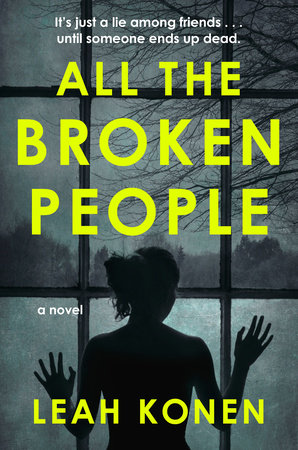
All the Broken People by Leah Konen

When I set out to write my first thriller, All the Broken People, I knew I wanted to center the intricacies and intimacies of female friendship. The book follows Lucy, a Brooklyn woman who flees to the country and gets more than she bargained for when she helps her new best friend, Vera, fake her husband’s death. The blossoming codependent friendship between the two women has all the tension, intrigue and betrayal of a complex love affair—and the circle of women and friendships that surround them add plenty of interconnected drama to the mix. Kirkus even highlighted many of the friend-to-frenemy imbroglios, noting the “webs that slowly contract, strangling characters in the threads.”

Here are a few of my favorite thrillers about friendships gone wrong: 

Behind Her Eyes by Sarah Pinborough

It’s your classic girl meets boy but the boy is her boss and his wife is about to become her new best friend story. Though the love triangle is firmly set-up between single-mom Louise, her boss David, and David’s beautiful wife Adele, the true sparks and tension come through in the battle of wits between these two unlikely friends. Add an ending that’s unlike anything you’ve ever read in a suspense novel, and you’ve got a manically modern and inventive read.

The Herd

The Herd by Andrea Bartz

Two sisters. Four college friends. One elite women’s coworking space. One dead body. What could possibly go wrong? Andrea Bartz’s follow-up to The Lost Night is rife with the complexities of female friendship—she expertly turns up the tension with long-hidden secrets, jealousies, blackmail, and betrayal. 

Social Creature by Tara Isabella Burton

Social Creature by Tara Isabella Burton

Everything changes for scrappy, barely-scraping by Louise when the wealthy, enigmatic Lavinia hires her as an SAT tutor for her younger sister. A one-off job quickly morphs into a wildly toxic and codependent friendship—and obsession—that opens doors, both financial and literary, for the increasingly manipulative and dangerous Louise. It’s a lavish New York City novel that ushers in a new brand of millennial-centric noir. 

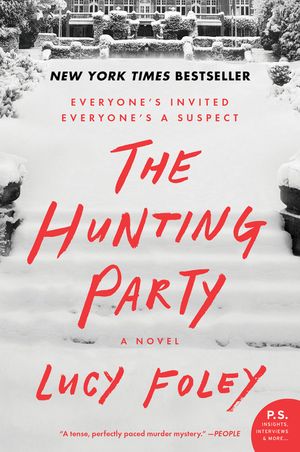
The Hunting Party by Lucy Foley

This classic closed-door murder mystery in the tradition of Agatha Christie and Ruth Ware follows a group of 30-something Oxford alums on a snowed-in New Year’s getaway at a rugged estate in the Scottish Highlands. When one of them turns up dead, tensions rise as these friends are forced to come to terms with decades of secrets and betrayals, from adultery to stalking. The drama between the self-absorbed and manipulative Miranda and her reserved best friend Katie is particularly juicy. 

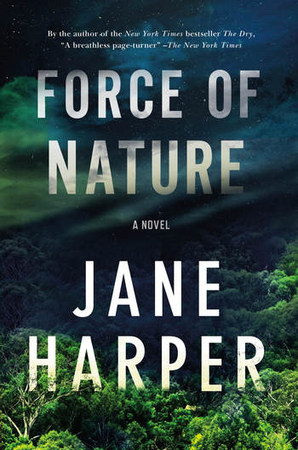
Force of Nature by Jane Harper

A corporate retreat in remote bushland goes awry when one of five women turns up missing on a days-long hike. Detective Aaron Falk is on the case, as the missing woman is a whistleblower set to help him take down her corrupt company. As this slow-burn mystery unfolds, we get a look into the complicated friendships, secrets, and duplicities that keep tensions simmering among this quintet of women. 

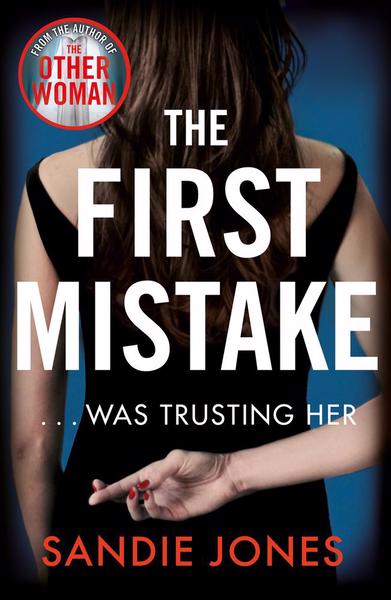
The First Mistake by Sandie Jones

When Alice, the brains behind a successful interior design firm, suspects her husband, Nathan, of cheating on her, she turns to her best friend, Beth, for solace and comfort—but while her husband has plenty of secrets of his own, Alice will soon discover her confidante does, too.

The Family Upstairs

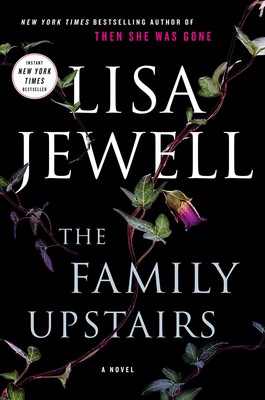
The Family Upstairs by Lisa Jewell

In Lisa Jewell’s compelling domestic suspense, 25-year-old Libby inherits a multi-million dollar estate in London’s tony Chelsea neighborhood. The catch? 25 years ago, the police were called to the house with reports of a baby crying. Downstairs, three people were dead and the four other children were gone. Though family drama dominates this who- and whydunnit, the catalyst is a toxic friendship that manages to tear apart a family from within. 

Like the Salons It’s Named For, “Tertulia” Is a Political Meeting Disguised as a Party

I’ve been to many a tertulia in my life. In Costa Rica, these informal literary, artistic, or intellectual gatherings are as common and important as Sunday mass, and just as enlightening. Recently, thanks to Vincent Toro, I’ve experienced two types of tertulias I hadn’t thought possible—the first, his unforgettable new collection titled Tertulia, and the second, this unforgettable interview with him. But like all those intimate, late-night gatherings, I could convene with Vincent about his poetry, his inspirations, and the deeply personal and unapologetically political nature of his art. With his book like the background melody of a guitar played by a good friend, he and I sat across from each other digitally and invoked our own healing, illuminating tertulia. 


John Manuel Arias: We who are Latin American know very well what it is—this incredible communing of friends, of minds, celebrating what is art and what is political and how they intersect. I’d love to know, what has your experience been with tertulias? Do they differ based on geography, on language?

Tertulia by Vincent Toro

Vincent Toro: I have to admit that I wasn’t aware of the tertulia—as word, event, and concept—until I was in my thirties. My grandmother frequently had gatherings in her house in Puerto Rico that were clearly tertulias, if no one was overtly calling them by that name. 

Back in college I was also participating in what could also be categorized as tertulias. My schoolmates and I were bored and broke, and were itching to do something that wasn’t a school sponsored club event or fraternity party. I don’t know how it was initiated, but we found ourselves gathering on weekends in the dorm bathrooms to share poems and stories we wrote, hold musical jam sessions, perform improv, and play surrealist games. In many respects, my path as an artist was forged from what we did to occupy ourselves with those gatherings.

It wasn’t until later that I came to know of tertulias as a Spanish and Latin American tradition with a centuries-old history. In learning about them, I’ve come to understand that they do differ based on cultural and geographic circumstances. The Latin American tertulias seem to be rather more intentional in their outcome. The participants are well aware that they are building community and creating an experience from which one can develop. Back in college, we weren’t considering how our gatherings could be put to some larger use. As “Americanos,” our gatherings tend toward the brazen and the raucous. We weren’t being mindful of how these gatherings could be impactful. But the Latin American tertulias, though also committed to joy and play, have a decidedly political bent to them. The tertulias were acts of civil disobedience in places where fascist regimes were repressing people and prohibiting large groups from holding public meetings and events. So I think what is at stake is different, and as a result how the tertulias are enacted, what they represent, and what is spawned from them is quite a different thing. 

The tertulias were acts of civil disobedience in places where fascist regimes were prohibiting public meetings and events.

JMA: I want to celebrate the musicality in the collection—one of my favorite parts of a tertulia is someone whipping out their guitar to accompany the voice of a drunken friend. There are many references to music throughout—discos, demo versions, club mixes—how does music inform the form and rhythm of your poetry?

VT: The music is everything. Poetry is, at its core, music. Sound is what draws me into a poem. There is music in other writing, but poetry centers music in a way that other writing genres do not (except for maybe theater, which is fundamentally poetry spoken in many voices). 

I’ve often confessed that I am a poet because I was not able to become a musician. Music is an absolute obsession of mine. With poetry I can create a kind of music, though it never fully subdues that longing I have within me to have been a great singer or instrumentalist. The influence of the music I love is spilling out on every page of my books, to be honest. The records I was listening to when I was working on these collections impacted the formal structures of the poem, their syntax and rhythms, and their thematic elements. Tertulia is in many respects a dialogue with the music, films, and books I was digesting at the time I was crafting those poems. 

And I should also say that this intimacy with music is essential to my revision process. I perform the poems out loud and listen to their music and melody to shape and polish the poems. As I tell my students, the poem on the page is sheet music, it is a map, a blueprint from which to draw out the performance of the poem. 

JMA: This musicality shows up in two important families of poems—your “Cicastristes” series (which still haunt me; they’re beautiful), and your “Areyto” series. The latter has me especially fascinated. For those who don’t know, Areytos are essentially Taíno epics, sung to celebrate past heroes, danced to honor their deeds. I’d love to know why the precolonial areyto in these poems? 

VT: I decided in the early stages of composing my first book that I would use the areyto as a conceptual engine for all my poetry. My aim is for all my books to have “areyto” poems included in them. I suppose I imagine all my poems as areytos. But I title certain poems with the word for a very specific reason rooted in my anti-colonial ideology. The areytos were powerful cultural agents for Taíno people. They were events that unified the tribes. They were celebratory and they were instructional. The areytos not only celebrated heroes, but also offered prophecy and, like all theater, provided the community with a lens through which to reflect upon itself. The areytos are actually a kind of precursor to the tertulia, one with entirely indigenous origins. During the colonization, the invaders acted to deliberately eliminate the areytos, because they knew that the areyto was a source of power for the Taínos, that erase them would be a way of erasing their history and thus dominating them. As an act of preservation of that history, I use “areyto” to title poems that I feel embody their elements and their design (at least as far as we know what they looked and sounded like from the salvaged history). 

JMA: It’s impossible to be a Latinx person and not weave politics into your poetry. That is definitely true as a Boricua, as Puerto Rico is still a colony of the American empire, and especially after the tragedy of Hurricane María. “Puerto Rico Is Burning Its Dead” is particularly devastating, and becomes the most seething criticism of the empire’s neglect of the island, and your people. How do your own politics inform the way you write about Puerto Rico?

VT: I am first and foremost the offspring of the Nuyorican poets. Like them, I am a diasporic Boricua. My relationship to the island is one of a distant relative. With regard to the founding Nuyorican poets, their poems were charged with a longing to return to the island, to reclaim Puerto Rico as their home. Poets like Pedro Pietri, Sandra Maria Estevez, and Piri Thomas write Puerto Rico as the treasure that was taken from us. This idealization of the island was a necessary response for displaced people who have been stripped of homeland, history, and culture through forced occupation. 

I am first and foremost the offspring of the Nuyorican poets. My relationship to the island is one of a distant relative.

Much of my poetry unabashedly takes up this performance of Puerto Rico as idealized motherland, but I try to be cognizant of my position as a New York–born Puerto Rican. Puerto Rican writers born and raised on the island, and later generations of diasporic Puerto Ricans, they still exalt the island and its culture, but they bravely also engage with its complexities and its problems. I have tried to commit to that in my more recent writings. I still have a political and personal need to make music of the island as idealized homeland, but I am also trying to get “closer to it” by using my work to try to understand the reality of those who live on the island and therefore feel the impact of colonization in a much more direct fashion. 

Even with “Puerto Rico is Burning Its Dead,” the impetus for writing that poem was born out of the anxiety I was feeling about our family here in the States losing communication with our family on the island after the hurricane. We did not know for several days if everyone was okay. This uncertainty was stressful, but I understood that my worry was nothing compared to what my family, and everyone on the island, was experiencing. There’s just no equating those two distinct circumstances. And yet there is a connection there, one that is truly and deeply felt. 

JMA: I took special notice of your “Core Curriculum Standards” series, where the settings are often schools, and explore themes of masculinity, class difference, and even empire. I know you are an educator. How does observing what is happening in school systems now, as well as your own schoolyard experiences, play into these poems?

VT: A good number of the poems were composed in classrooms next to my students as they were writing. Their content came from our discussions and our project work. For the past 20 years I have served as a social justice arts educator. I teach art—creative writing and theater—through a process that balances the teaching of craft with how to use that craft for the aims of social change. Social justice pedagogy is equal parts artistic practice and civic practice. In this method, art is not a product, but a process to understand the world and create healthy paths to change. 

We tackle some really difficult issues, and I have to say it is quite inspiring to watch, for example, a room full of fifth graders discuss sexism, or to listen to high school students share research for their poems on U.S. immigration policies. I have found the only way to conduct this kind of work successfully is to also “take the class” with my students. I do the work that I challenge them to, work that requires compassion and courage from all participants. A good number of the poems in the book were a result of my doing this work alongside my students. 

If my poems are gritos, then these poems are gritos about the systemic violence I witness in the education system. This violence, to be clear, is not a violence that students commit on each other. This violence is a violence committed by powerful adults on children. We often hear rhetoric from adults in leadership positions about how children are precious, and yet their attacks on the safety and growth of young people through their policies reveals that they actually do not believe them to be precious at all. Especially if those children are black and brown. 

But I want to be clear: the adults I am talking about are not the ones teaching in the classrooms. Teachers are doing the good work. They should be honored. I’m talking about the so-called “education reform” politicians, the corporate leaders and executive administrators who feel that an education should be provided only if they can profit from it. 

JMA: One of the poems that stood out to me—that continues to wrack my brain and challenges me to do the work—is “On Money.” This year at AWP in San Antonio, I took a Lyft to the convention center, and the driver began telling me about himself—he was Cuban, he had been in the States for about 20 years, without his family. He also told me he had been a lawyer back in Cuba. And he was a Christian (that he made sure to repeat). He then began saying that he was writing a book about how Capitalism is the ultimate expression of Christianity—the subjugation of all the world and its species as was mandated by God in the Old Testament. I saw that striking resemblance in “On Money.” 

Many people have expressed that they don’t understand metaphor. Yet their entire life is organized around the belief in metaphor that is money.

VT:  I have no answers about money, so I don’t know what the reader should extract from the poem. I guess I hope that the poem will do for the reader is to ignite an impulse within them to conduct their own inquiry about money, its value, its function, and its meaning.

There is, maybe, a parallel idea that I am attempting to confront in “On Money.” Money—as a thing, as an idea—has always troubled me. I recall being a child and trying to understand how money could prevent people from getting things that they should fundamentally have a right to, like food, shelter, medical care, and education. In my working-class family, money was a powerfully oppressive force that often tore at the connection we had to each other. This has motivated me to try to learn about how money actually operates and why humans created the machine of money to organize their world. Primarily, I wanted to comprehend how money gets its value. I read a number of texts on economics and money, and what I found was that even economists don’t seem to know what gives money its value. But one text I read, Money: A Biography by Felix Martin, was quite explicit in saying that money is not a thing, it is a representation, a symbol, and what gives it its value is human beings faith in its value. Or, at least, that is what I deduced from the book. I guess in that sense I understand your Lyft driver, for faith is considered a religious act and Christianity is a religion. Both money and religion depend on faith.

This led me to a great irony: in my work as a poet and literature teacher, so many people young and old have expressed that they don’t understand metaphor. Yet their entire life is organized around the belief in metaphor that is money. Money is a symbol of human need and desire, it is a metaphor bridging that need and desired with an object that one thinks might fulfill that need. It is a representation, a promise. But it is not the thing itself. 

8 Poetry Collections on Blackness

Times like this come every few years. The summer begins, and so do the Black deaths due to state-sanctioned violence. But this time, the corporations and publications say they want to change. They finally admit—if they hadn’t already done so in the past—that Black Lives Matter, and so do Black writers. 

At a time where each week, we are fighting for a new Black person’s justice, I turn to Black poetry. At a time where I cannot be in physical community with the people I love, poetry reminds I am not alone. I have the company of those who are also resisting, whether it be in their joy or pain, their fight or struggle to fight. 

And even when we’re not out protesting each day, even when the world seems to be peaceful, I lean on other Black poets for understanding of this life. Of this skin. Of this America. Here are ten poetry collections by Black writers to turn to during any moment, but especially this one: 

When Rap Spoke Straight to God by Erica Dawson

This book-length poem combines some of the most celebratory elements of Black culture: music and faith, but more specifically, Christianity. Dawson interrogates what it means to be a Black woman, what it means to be Black during the Trump era, and how rap can help us navigate this life. With each line music itself, I turn to this collection of poems to remind myself of the joy of being Black, despite the struggles. 

A Fortune for Your Disaster by Hanif Abdurraqib

The poems in this collection explore how to live and celebrate when other things—even Black people—are being grieved. One of my favorite poems from this collection is one that has a recurring title, “How Can Black People Write About Flowers at a Time Like This,” which I have hanging on my wall. This collection, and this poem in particular, reminds me that we deserve to write about flowers and all the other things we sometimes don’t have the capacity to focus on. 

& more black by t’ai freedom ford

& more black, a double-sided poetry collection written mostly in sonnets, rejects and resists systems that don’t love ford’s Black, queer body. This collection also celebrates Black experiences—speaking in ebonics, not being able to double dutch, and more. ford calls on Black cultural icons and artists to rejoice in being Black, even when our neighborhoods and our lives are being stolen. 

The Malevolent Volume by Justin Phillip Reed

Justin Phillip Reed’s second poetry collection uses myth and monsters to explore Blackness and the violence (of all kinds) imposed on Black people. The Malevolent Volume allows a “collective Black spirit” to revolt against all people and things that have wronged us. In inverted poems on black pages with white text, Reed engulfs you in darkness. This poetry collection is one I turn to when enraged, when I am seeking a world that will give us more — even if we have to take it. 

Magical Negro by Morgan Parker

These poems reckon with the word “magic” in relation to Black lives. With wit and humor, Parker explores the histories of our ancestors and interrogates our oppression. She critiques whiteness while praising Blackness, and explores politics and celebrity status side by side. When I can’t put words to the racism and sexism I’m experiencing, I turn to Magical Negro.

Don’t Call Us Dead by Danez Smith

The poems in this collection navigate being Black, queer, and HIV positive. In the poem “every day is a funeral & a miracle,” Smith brings it all together—Black people’s fear of the police, their own reckoning with HIV, and the miracle of staying alive despite every weapon formed against them. This collection also delves into desire—in spite of and despite the systems that continue to harm Black people. But still, it is a collection that is both elegy and hopeful. 

The Tradition by Jericho Brown

Winner of the 2020 Pulitzer Prize in poetry, Jericho Brown’s The Tradition grapples with the terrors of this world and calls out society’s harmful traditions while creating his own rituals. Brown relies on the body as a garden, examining how it either blooms or dies—or brings itself back to life through desire. He examines whiteness and Blackness in this collection, our card tables and historic deaths, and white people’s desire to be seen as “good.”

The BreakBeat Poets Vol. 2: Black Girl Magic edited by Mahogany L. Browne, Idrissa Simmonds, and Jamila Woods

I turn to this anthology when I want to feel like I am experiencing life with a sisterhood of Black women. This anthology celebrates Black womanhood, questions the patriarchy, mourns our lost Black women, and tells us that we matter. All in all, it reminds me that we’re magic, despite the violence we endure.

My Son the Medium Can’t Even Tell Me Why We’re Here

“The Country”
by Joy Williams

I attend a meeting called Come and See! The group gathers weekly at the Episcopal church in one of the many, many rooms available there but  in  the way these things are it’s wide open to everyone—atheists, Buddhists, addicts, depressives, everyone. The discussion that evening concerned the old reliable: Why Are We Here? And one woman, Jeanette it was, offered that she never knew what her purpose was until recently. She discovered her purpose was to be there with the dying in their final moments. Right there, in attendance. Strangers for the most part. No one she knew particularly well. She found that she loved this new role. It was wonderful, it was amazing to be present for that moment of transport. It was such an honor being there and she believed she provided reassurance. And she shared with us the story of this one old girl who was actively dying—that was her phrase, actively dying—and at one point the old girl looked at Jeanette and said, “Am I still here?” and when she was told yes, yes, she was, the dying woman said,“Darn.”

“She was so cute,” Jeanette said.

My fellow travelers in Come and See! listened to this with equanimity. Jeanette was as happy as I’d ever seen her—she doesn’t come every week—and enthusiastic as she shared with us how positive and comforting it is to witness the final voyage. She’s affiliated with the church somehow, she studied chaplaincy services or something, so she has a certain amount of access to these situations; that is, she’s not doing this illegally or inappropriately or anything.

I sincerely cannot remember the circumstances that brought me to Come and See! for the first time and why I continue to attend. I seldom speak and never share. I sit erect but with my eyes downcast, focusing on a large paper clip that has rested in a groove between two tiles for months. Surely the chairs must be folded and stacked or rearranged for other functions and the floor swept or mopped on occasion, but the paper clip remains.

Beside me, Harold—he’s sixty-three and the father of two-year-old triplets—says, “I believe we are here for the future, to build a better future,” blandly cutting off any communal amplification of Jeanette’s deathbed theme.

My eyes lowered, I stare at the paper clip. I dislike Harold. Triplets, for god’s sake. One day I will no longer come here and listen to these wretched things.

After Come and See! there is a brief social period when packaged cheese and crackers and cheap wine are provided. There is always difficulty in opening the cheese packets. Someone always manages to spill wine.

Jeanette appears before me. After some consideration, I smile. She says,“I’m sorry, I’ve forgotten your name.”

“That was my best wintery smile,” I say.

“Yes, it was quite good.”

I hope she thinks I would be a challenge, an insurmountable challenge.

Poor Pearl limps up. She has multiple sclerosis or something similarly awful and she begins talking about being with a number of her cats over the years as they died and it is not something she would wish on her vilest enemy and how she never learns from this experience and how it never becomes beautiful.

I leave the ladies to thrash this one out and exit through the courtyard, which is being torn up for some reason of regeneration. Or perhaps they’re just going to pave it over with commemorative bricks. Last year, Easter services were held in this courtyard because the sanctuary had been vandalized. Worshipers arrived for the sunrise service and found the sound system ripped out, flowers smashed, balloons filled with green paint exploded everywhere. Teenagers going through an initiation into some gang, probably. Several goats in some fellow’s yard were beaten and harassed that morning as well, the same group most likely being responsible, although the authorities claim there are no gangs in our town. No one was ever charged. The church would forgive them, that’s the way the church works, but the man who owns the goats is still upset. Perhaps the poor creatures were meant to be scapegoats in the biblical sense, cast into the wilderness of suffering with all the sins of the people upon their heads.

There is such evil in the world, so much evil. I believe Jeanette is evil, though maybe she’s more like one of those medically intuitive dogs they’re developing or exploiting. The dogs don’t suffer from their knowledge. That is, empathy is beside the point here; they can just detect that illness is present in a body before, sometimes long before, more standardized inquiry and tests confirm it. In Jeanette’s case, though some groundwork is undoubtedly required, she’s honing her instinct of arrival, appearing just before another is about to enter the incomprehensible refuge. She’ll be writing a book about her experiences next. I leave the courtyard and commence my walk home. It’s not particularly pleasant but there is no alternative route, or, rather, the alternatives are equally dispiriting. Highways are being straightened and widened everywhere, with the attendant uprooted trees and porta-toilets for the workmen.

I navigate my passage across the first monstrous intersection, where a sign announces the imminent arrival of a dessert parlor named Better Than Sex. I would like to move to the country but the boy refuses. Besides, “the country” exists only in our fantasies anymore. When I was a child, the country was where overly exuberant family pets often found themselves. One of our dogs, Tank, who liked to wander and eat clothes and the dirt in flowerpots, was dispatched to the country, where he would have more room to run and play and do his mischief under the purview of a tolerant farmer. When I returned from school that afternoon, Tank was settling into his new home. My parents’ explanations and assurances became so elaborate that I knew something terrible was being withheld from me.

Above me, billboards advertise gun shows, mobile-telephone plans and law firms that specialize in drunk-driving cases. I looked into renting a billboard recently but my application was rejected.

THE GREATEST PROSPERITY COMES TO ITS END, DISSOLVING INTO EMPTINESS; THE MIGHTIEST EMPIRE IS OVERTAKEN BY STUPOR AMIDST THE FLICKER OF ITS FESTIVAL LIGHTS
— Rabindranath Tagore

it would have said.

The billboard people told me they didn’t know who Rabindranath Tagore was and could not verify anything he might have thought. He was certainly foreign and his sentiments insurrectionary. As well, what he was saying wasn’t advertising anything. This night I see that space I tried to claim depicts black-and-white cows painting the words eat more chiken on the side of a barn.

I could far more easily drive to church and spare myself the discomfort of walking through this wasteland but I am in no hurry to reach home. I never know whom I will be coming home to, whether it will be mother, father, wife or son. Often it is just my son, my boy, and matters are quite as they should be, but since the end of school things have become more volatile. We live alone, you understand, the child and I. He’s nine, and the changes in this decade have been unfathomable. Indeed, it’s a different civilization now. My parents, with whom we were very close, died last year. My wife left in the spring. She just couldn’t feel anything for us anymore, she said, and was only trying to salvage the bit of life she could.

Dusty pickups speed by, gun racks prominent. Gun racks in vehicles have surged in popularity. Even expensive sedans display cradled weapons, visible through lightly tinted windows. People know their names and capabilities like they used to know those of baseball players. Not my boy, though. He doesn’t know these things. He knows other things. For example, we planted a few trees in the yard after his mother left, fruit trees, citrus. The tree that bears the fruit is not the tree that was planted. He knows that much, it goes without saying.

It’s almost dark now as I turn down our street. It’s garbage day tomorrow and my neighbors have rolled their vast receptacles to the curb. The bins are as tall as the boy and they contain god knows what, and over and over again.

The door is unlocked, the lights are on. “Hi, Daddy,” Colson says. He’s in the kitchen making sandwiches for supper.“Daddy,” he says,“we have to eat soon because I want to go to bed.” I’m not disappointed that he’s himself tonight, though more and more, given the situation, that self seems imaginary. He likes to play the Diné prayer songs tape as we eat, particularly the “Happy Birthday, My Dear Child” track. The chants are unintelligible but then the words Happy Birthday Happy Birthday to You arise in this morose intonation and he never tires of it.

In the morning my wife is in the yard, cutting back the orange tree. We rush out and prevent her from doing more. Summer is not the time to prune anything of course and we just planted the trees, they haven’t even adjusted to being in the soil yet with the freedom of their roots to wander. She dismisses our concerns but flings down the little saw, which I have never seen before, and leaves, though were you to ask if we actually saw her leave we would have to say no. The tree looks terrible and with small cries we gather up the broken buds and little branches. Still, it will survive. It has not been destroyed, we assure each other, at least not this day. There is no question of our planting a replacement. This would not be a useful lesson to learn.

Perhaps she is annoyed because, since her absence, Colson has seldom tried to invoke her except in the broadest terms. That is because, he explains, she is only gone from us, not from the world she still inhabits. I think her arrival this morning was a shock to him and I doubt she will visit us again.

I pick up the curved saw. It looks new but now blond crumbs of wood cling to its shiny serrated teeth.

“Should we keep this?” I ask Colson.

He frowns and shakes his head, then shrugs and returns to the house. He’s through with her. I wonder if somehow I have caused this latest unpleasantness. I have never known how to talk about death or the loss of meaning or love. I seek but will never find, I think.

I toss the saw into the closest container at the very moment I hear the trash truck moving imperiously down the street. It’s garbage day. Garbage day! The neighborhood prepares for it with joy. Some wish it would arrive more than once a week.

Later I bring up the possibility of moving. We could have an orchard and bike trails and dig a pond for swimming. We could have horses. “You can pick up horses these days for a song,” I say.

“A song?” the boy says.“What kind of song?”

But I can’t think of any. I gaze at him foolishly.

“Like the Diné prayer songs,” he suggests.

“Yes, but we don’t even have to pray for horses. We can just get them.”

Immediately I realize I have spoken infelicitously, without grace. He doesn’t say anything right away but then he says, “You have to be here to prepare for not being here.”

The voice is familiar to me because it is my mother’s voice, though I find it less familiar than it once was. She’s been in a grave for over a year now, my father with her. They’d been working at an animal sanctuary in their retirement and were returning home from a long day of caring for a variety of beasts. They had borrowed my car, as they were getting new tires for their own. I had planned to drive them home that night but the arrangement had been altered for some reason. We still don’t know exactly what happened. A moment’s inattention, possibly.

The sanctuary that was so important to them was controversial, as the animals were not native to this region, though the natives hardly enjoy grateful regard here, being considered either pests or game. It has since closed, the animals removed to what are referred to as other facilities, where some of them can still be visited. In fact, Colson and I went out to see one of the elephants my father was particularly fond of. There were two in the original preserve—Carol and Lucy—but they were separated, which seemed to me a dreadful decision. We visited Carol, who is an hour closer. She has some disease of the trunk that makes it difficult for her to eat, but someone was obviously still taking care of her. It wasn’t a good visit, not at all. We felt bad that we had come. Knowing what we now know would break my parents’ hearts, I think, but when Colson talks on their behalf they do not speak of elephants, those extraordinary beings. They do not speak of extraordinary matters. Colson does not bring them back to perform feats of omniscience or magicians’ tricks. I don’t know why he brings them back. I tried to prevent him at first. I appealed to his reasonableness, though in truth he is not particularly reasonable. I threatened him with psychiatric counseling, hours of irrelevant questions and quizzes. I told him his performances were futile and cruel. I teased him and even insulted him, saying that if he considered himself gifted or precocious he was sadly mistaken. Nothing availed.

When he enters these phases I become exhausted. Sometimes, I admit, I flee. He doesn’t seem to need me to fulfill his conversations with the dead, if indeed they are conversations. They seem more like inhabitations. And  they’re  harmless  enough, if  disorienting, though this morning’s remark disturbs me, perhaps because his mother, my wife, had just made her unnecessary appearance. Really, why would she return only to hack wordlessly at our little tree? It seems so unlikely.

“Sorry?” I say.

“We are here to prepare for not being here,” he says in my mother’s soft, rather stroke-fuddled voice.

It’s as though he is answering the very question posed at Come and See! I took him there once. Sometimes someone brings a child or grandchild, it’s not unheard of. He listened attentively. No one expected him to contribute and everyone found him adorable. “Don’t ever take me into that stupid room again,” he later instructed me.

He may be right that it is a stupid room and that of all the great rooms he might or will enter, attentively and with expectation, it will on conclusion be the stupidest.

I study Colson. My dear boy is skinny and needs a haircut. He rubs his eyes the way my mother did. Don’t rub your eyes so! we’d all exclaim. But I say nothing.

Colson says, “Then you’re in the other here, where the funny thing is no one realizes you’ve arrived.”

He sits down heavily at the kitchen table.“Would you like a cup of tea,” I ask.

“That would be nice,” he says in my mother’s voice of wonderment.

But I can’t find the tea. We haven’t had tea in the house since they died. We’d keep it on hand just for them when they visited.

“I’ll go out and get some right now,” I say.

But he says not to bother. He says,“Just sit with me, talk with me.” I sit opposite my boy. I notice that the clock on the stove reads 9:47 and the stovetop is dusty, as though no one has cooked on it for a long time. I vow that I will cook a hot, nourishing and comforting dinner tonight. And I do, and we talk quietly then as well, though nothing of import is being decided or even said.

I find it easier to be with my father when Colson brings him. Though he always seemed rather inscrutable to me he now doesn’t sadden me so. He would not accept an offer of tea that he suspected was unlikely to be provided. He was able to confer with the animals in a way my mother couldn’t, and felt that great advances would soon be made in appreciating and comprehending animal consciousness, though these advancements would coincide with the dramatic worldwide decline of our nonhuman brothers and sisters. Once, I’m ashamed to say, I maudlinly brought up the Tank of my childhood, and my father said he had been shot by a sheriff ’s deputy who thought he was a stray, and that the man had also shot a woman’s horse in winter, making the same claim, and that he had been reprimanded but neither fined nor fired. Yes. And that they had lied to me, my mother and father. It was Colson who told me this in my father’s voice, Colson, who had never known Tank or felt his “happy fur,” as I called it as a child. Bad, happy Tank. He ate his dinner from my mother’s Bundt pan. It slowed him down some, having to work around the pan. He always ate his food too fast.

But this was the only time a disclosure occurred, and I am more cautious now in conversation. I find I want neither the past nor the future illuminated. But my discomfort is growing that my boy will find access to other people, people we do not know, like the woman the next town over who died in a fire of her own setting, or even one of Jeanette’s unfortunate customers. That I will come home one evening and that Colson will be not himself but a stranger whose death means little to me and that even so we will talk quietly and inconsequentially and with puzzled desperation.

The week passes. Colson has a tutor in mathematics for the summer who is oblivious to the situation and I have the office I’m obliged to occupy. Colson wants to be an engineer or an architect but he has difficulty with concepts of scale and measurability. The tutor claims he’s progressing nicely but Colson never talks about these hours, only stubbornly reiterates his desire to create soaring nonutilitarian spaces.

At the end of the week I return to Come and See! My passage through the construction zone is much the same. I suppose change will appear to come all at once. Suddenly there will be a smooth six-lane road with additional turning lanes and sidewalks with high baffle walls concealing a remaining landscape soon to be converted to housing. The walls will be decorated with abstract designs or sometimes the stylized images of birds. I’ve seen it before. Everyone’s seen it before.

Jeanette is the only one there. I feel immediately uncomfortable and settle quickly into my customary chair. There is the paper clip, as annoying and meaningless a presence as ever.

“There’s a flu going around,” she says.

“The flu?” I say.“Everyone has the flu?”

“Or they’re afraid of contracting the flu,” she says. “The hospital is even restricting visitors. You haven’t heard about the flu?”

“Only in the most general terms,” I say. “I didn’t think there was an epidemic.”

“Pandemic, possibly a pandemic. We should all be in our homes, trying not to panic.”

We wait but no one shows up. There’s a large window in the room that looks out over the parking lot, but the lot is empty and continues to be empty. The sky is doing that strange thing it does, brightening fiercely before dark.

“Why don’t we begin anyway?” she says. “‘For where two are gathered in my name . . .’ and so on. Or is it three?”

“Why would it be three?” I say.“I don’t think it’s three.”

“You’re right,” she says.

She has a round pale face and small hands. Nothing about her is attractive, though she is agreeable, certainly, or trying to be.

“I’m not dying,” I say. God only knows what possessed me.

“Of course not!” she exclaims, her round face growing pink.“Goodness!”

But then she says,“On Wednesday, Wednesday I think it was, it was certainly not Thursday, I was in this woman’s room where the smell of flowers was overwhelming. You could hardly breathe and I knew her friends meant well, but I offered to remove the arrangements, there were more than a dozen of them, I’m surprised there wasn’t some policy restricting their number, and she said, ‘I’m not dying,’ and then she died.”

“You never know,” I say.

“I hope they let me back soon.”

“Why wouldn’t they?”

“Thank you,” she says quietly.

“I meant to say why would they?”

She stands up but then sits down again. “No,” she says, “I’m not leaving.”

“It’s disgusting what you’re doing, you’re like the thief ’s accomplice,” I say. “No one can be certain about these things.”

Suddenly she appears not nervous or accommodating in the least.

We do not speak further, just sit there staring at each other until the sexton arrives and insists it’s time to lock the place up.

At home, Colson is watching a television special on our dying oceans.

“Please turn that off,” I say.

“Grandma wanted to watch it.”

He has made popcorn and poured it into a large blue bowl that is utterly unfamiliar to me. It’s a beautiful bowl of popcorn.

“You have another bowl like that?” I ask. “I want to make myself a drink.”

He laughs like my wife might have when she still loved me, but then returns to watching the television.

“This is tragic,” he says.“Can anything be done?”

“So much can be done,” I say. “But everything would have to be different.”

“Well,” he sighs, “now Grandma and Poppa know. She wanted to watch it.”

“Have you heard anything about a flu,” I ask. “Does anyone you know have the flu?”

“Grandma died of the flu.”

“No. They died in a car accident. You know that.”

“Sometimes they get mixed up,” he says.

Colson’s the age I was when I was told about the country. Ten years later I’d be married. I married too young and unwisely, for sure.

“Do they sometimes tell you stories you don’t believe?”

“Daddy,” he says with no inflection, so I don’t know what he means.

We finish the popcorn. He did a good job. Every kernel was popped. I take the bowl to the sink and rinse it out carefully, then take a clean dish towel from a drawer and dry it. It really is an extraordinarily lovely bowl. I don’t know where to put it because I don’t know where it came from.

A few days later my father is back. He was a handsome man with handsome thick gray hair.

“Son,” he says,“I don’t know what to tell you.”

“It’s all right,” I say.

“No, it’s not all right. I wish I knew what to tell you.”

“Colson, honey,” I say.“Stop.”

“That’s no way to have an understanding,” he says.“Your mother and I just wish it were otherwise.”

“Me too,” I say.

“We wish we could help but there’s so much they haven’t figured out. You’d think by now, but they haven’t.”

“Who’s they,” I ask reluctantly.

But Colson doesn’t seem to have heard me. He runs his fingers through his shaggy hair, which looks damp and hot. My boy has always run hot. I wonder if he’s bathing and brushing his teeth. My poor boy, I think, my poor dear boy. Someone should remind him.

The following afternoon when Colson is with his tutor, who, I think, is deceiving both of us, though to all appearances he is a forthright and sincere young man, I drive almost one hundred miles to see Lucy, the other elephant. She is being sponsored by two brothers who maintain the county’s graveyards, some sort of perpetual care operation, though to be responsible for an elephant is quite another matter, I would think. The brothers are extremely private and shun publicity. It was only after great effort that I learned anything about them at all or the actual whereabouts of Lucy. Someone—though neither of the brothers, a friend of the brothers is how I imagine him—agreed to show me around the grounds that she now occupies, but I find that once I reach the gate I cannot continue.

I turn back, ashamed, and more estranged from my situation than ever.

When I return home the tutor has left and Colson is putting his drawings in order, cataloging them by some method unknown to me. When my mother and father were taken from us so abruptly I knew that Colson was terribly bereaved. Still, he did not want my father’s safari hat or his water-bottle holster. He did not want his watch or his magnetic travel backgammon. Nor did he want my mother’s collection of ink pens, which I suggested would be ideal for his drawings. He wanted no mementos. Instead he went directly to communication channels that are impossible to establish.

“Where were you, Daddy,” Colson asks.

“Why, at work,” I say quickly.

Surely I am back at my usual time. I seldom lie, indeed I cannot even remember the circumstances of my last falsehood. Why would he ask such a question? I kiss him and go into the kitchen to make myself a drink but then remember that I have stopped drinking.

“A lady came by today but I told her I didn’t know where you were.”

“What did she look like,” I ask, and of course he describes Jeanette to a T.

I am so weary I can hardly lift my hand to my head. I must make dinner for us but I think the simplest omelet is beyond my capabilities now. I suggest that we go out but he says he has already eaten with the tutor. They had tacos made and sold from a truck painted with flowers and sat at a picnic table chained to a linden tree. I have no idea what he’s talking about. My rage at Jeanette is almost blinding and I gaze at him without seeing as he orders and then reorders his papers, some of which seem to be marked with only a single line. I feel staggeringly innocent. That is the unlikely word that comes to me. Colson puts away his papers and smiles, a smile so radiant that I close my eyes without at all wanting to, and then rather gently somehow it is day again and I am striding through the bustling wasteland to Come and See! The reflection concerns Gregory of Nyssa. He is a popular subject but I am forever having difficulty in recalling what I already know about him. Something about the Really Real and its ultimate importance to us, though the Really Real is inaccessible to our understanding. Food for thought indeed, and over and over again.

When the meeting concludes and we are dismissed I practically hurl myself on Jeanette, who has uncharacteristically contributed nothing to the conversation this night.

“Don’t ever come to my house again,” I say.

“Was I really there, then? I thought I had the wrong place. Was that your son? A fine little boy. He can certainly keep a secret, can’t he.”

“I’ll call the police,” I say.

“Goodness,” she laughs.“The police.”

It sounded absurd, I have to agree.

“I was concerned about you,” she says. “You haven’t been here for a while. You’ve been avoiding us.”

“Don’t ever again . . .” I say.

“A delightful little boy,” she continues.“But you mustn’t burden him with secrets.”

“. . . come to my house.” I couldn’t be more insistent.

“Actually,” she says,“no one would fault you if you stopped attending. How many times must we endure someone making a hash of Gregory of Nyssa? People are so tenacious when they should be free. Free!”

I begin to speak but find I have no need to speak. The room is more familiar to me than I would care to admit. Who was it whose last breath didn’t bring him home?

Or am I the first?