8 Books That Celebrate International Scholars

With this week’s announcement on student visas, ICE implemented new restrictions on international student visas in the U.S. Students who are taking online-only classes must transfer to a class that’s offering in-person instruction, at a risk to their personal health, or face deportation. This announcement only serves to heighten the series of restrictive immigration policies that the Trump administration has been implementing throughout the pandemic.

So what does this mean? In some of these cases, students will be forced to leave the country. In other cases, it may result in unsafe, premature university openings that could cause a spike in coronavirus cases. This isn’t just bad news for the students themselves. The American Council on Education issued a statement on the recent ICE decision, pointing out that international students “yield an estimated economic impact of $41 billion and support more than 450,000 U.S. jobs.” Apart from boosting economic growth and facilitating better global relations, international scholars—professors, researchers, and students alike—help foster cultural and intellectual diversity in the U.S. Furthermore, cross-continental intellectual exchange is by no means new news—it has been a cornerstone of shaping our current-day, globalized society. 

A better understanding of the international student experience won’t automatically make people value us—but perhaps it’s a start.

As for the many international students and scholars, we are faced with a difficult decision. I am one of those international students, one of over one million. Not all students have the resources to continue their research from their home country. Not all students have the option to return. In the midst of a global pandemic, we remain stranded without even a legislative safety net. As an international Ph.D. student noted on Twitter: “the message is clear: our lives are cheap, our work unvalued.” 

A better understanding of the international student experience won’t automatically make people value our work or our physical well-being—but perhaps it’s a start. (You can also sign petitions, call on your higher-ed institutions to protect their students, and spread awareness of the issues.) Here are 8 books that discuss the experiences and contributions of international scholars within the U.S. higher education system. Some are acute explorations of what it means to be ostracized in society, regardless of qualifications; others are a satirical look at academia, humorously pointing out the ways in which class, nationality, and language converge; still others are a thoroughly researched, academic investigation of international students’ circumstances. 

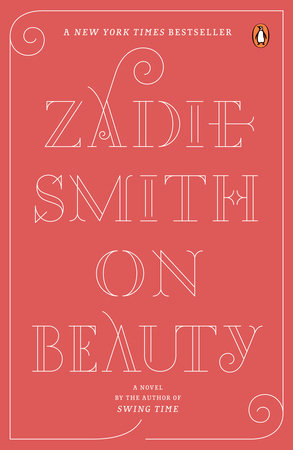
On Beauty by Zadie Smith

On Beauty by Zadie Smith

On Beauty deals with not one, but two visiting international scholars (and their respective families). Howard Belsey is a white English scholar of art history; his Black wife, Kiki, and their children relocate with him to the U.S. for his job. Meanwhile, Howard’s nemesis, Monty Kipps, is a controversial Trinidadian scholar who is against affirmative action. Hilariously, they both end up moving to a small suburban university town in Massachusetts. Imbued with Smith’s bitingly satirical wit, the novel tackles both political correctness and neighborly drama, as well as the intersections of nationalities, race, and class in an American liberal arts college. 

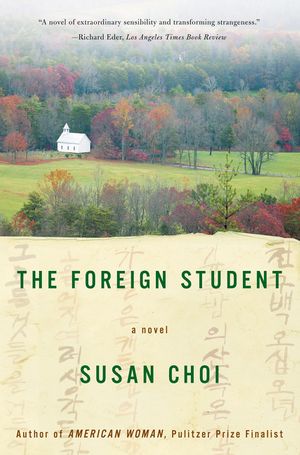
The Foreign Student by Susan Choi

Set in a small Southern college in the 1950s, Choi’s debut novel tells the story of a relationship between a young, war-scarred Korean student and a Southern heiress. Chang, or “Chuck” as an American soldier re-names him, comes to Sewanee on a scholarship. Haunted by memories of the Korean War, he doesn’t speak of his past—until he meets Katherine, who is also struggling with her past. The Foreign Student explores post-war trauma and interracial relationships, showing how one can find deep connections in unexpected places. 

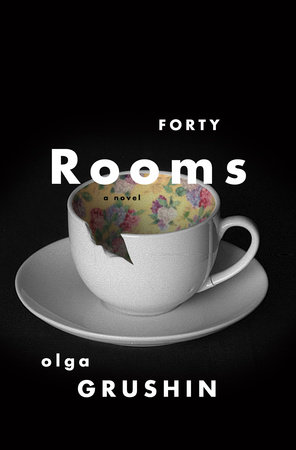
Forty Rooms by Olga Grushin

Forty Rooms by Olga Grushnin

Forty Rooms centers on the concept that a woman will inhabit 40 rooms from birth to death; moving from room to room, the novel tells the life story of a Russian woman. The book starts in a small apartment bathroom in Moscow, then tracks how the narrator moves to attend college in the U.S., harboring dreams of becoming a poet. Grushnin imbues her narrative with rich literary references and hints of the supernatural, while also keeping the story grounded in everyday details. Forty Rooms is a story about immigration, education, and assimilation; simultaneously, it’s a meditation on what it means to be a woman, and the ambiguous consequences of dreaming big. 

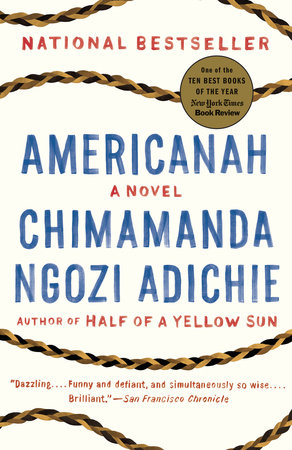
Americanah by Chimamanda Ngozi Adichie

Americanah by Chimamanda Ngozi Adichie

Yes: you’ve probably already heard of it. You’ve most likely read it. It’s worth re-reading! Americanah centers on Ifemelu, a strong-willed Nigerian woman who comes to the U.S. for college. Ifemelu grows up in Lagos, along with her high school sweetheart, Obinze; however, as Nigeria’s political landscape changes, Ifemelu is sent away to the U.S. for higher education, while Obinze winds up in London as an illegal migrant worker. Adichie’s acclaimed 2013 novel still feels hyper-relevant today, with its nuanced, intersectional analysis of race, immigration, and identity. 

The Namesake and The Lowland by Jhumpa Lahiri

I couldn’t pick between these two novels, both of which depict life as an international student in U.S. universities. So, both! In The Namesake, Lahiri tracks a multi-generational epic from Calcutta to New England. Lahiri is acute in her depictions of what it means to be “othered” in American suburbia, and the balancing act between family tradition and cultural assimilation. In The Lowland, two brothers’ lives veer apart when one remains in India, working with revolutionary movements, and the other wins a scholarship to study science in Rhode Island. This family saga explores sacrifice, love, and the consequences of the brothers’ respective decisions. 

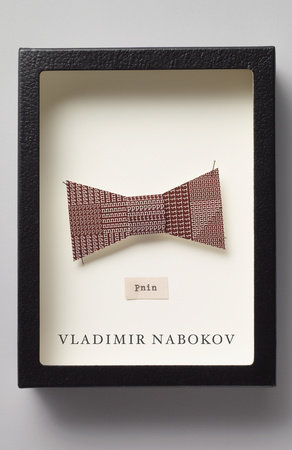
Pnin by Vladimir Nabokov

Pnin by Vladimir Nabokov

Although U.S. immigration policies have been directly linked to racism and inhumane discrimination—from the Chinese Exclusion Act of 1882 to current-day detention camps for Latinx migrant children—they also affect groups that have traditionally been in power, like straight, white, European men. Nabokov’s protagonist in Pnin is one such example, as a Russian émigré professor at an U.S. university. However, Professor Pnin is far from being a model scholar; he can’t seem to keep track of his papers (or train schedules, let alone academic conspiracy theories), struggles with delivering lectures in English, and writes tirelessly to his ex-wife. Written with Nabokov’s trademark humor, Pnin satirizes bumbling professors, the author’s own Russian accent, and the glamorization of America.

International Students and Global Mobility in Higher Education ...

International Students and Global Mobility in Higher Education: National Trends and New Directions by Rajika Bhandari and Peggy Blumenthal

This academic book may not be the most exciting narrative, but it is definitely comprehensive. If you’re curious in learning more about national investments in global education, economic consequences of a more mobile labor market, and policymaking surrounding international students—this is the book for you. Bhandari and Blumenthal analyze global student mobility patterns, in order to point out existing trends and predict what they entail for our future. 

7 Books About New York City’s Drastic Economic Divide

It’s been said many times already that the coronavirus pandemic has laid bare the dramatic economic inequality in New York City—which of course ties into deeper systemic issues around race. But to pretend those inequalities haven’t been obvious before this time—to pretend they haven’t always been part of the city’s history—is a serious fiction. I grew up as the daughter of a building superintendent on the Upper West Side. In a single morning my father might be asked to prevent a homeless man from stealing the newspapers out of the lobby to re-sell on the street, to manage a group of contractors who were re-tiling someone’s bathroom, and to massage the haunches of the cat in the penthouse while the tenants were away at their summer house. In the course of a very short time period and in a very small space, all sorts of examples of vast inequalities occurred in the building where we lived.

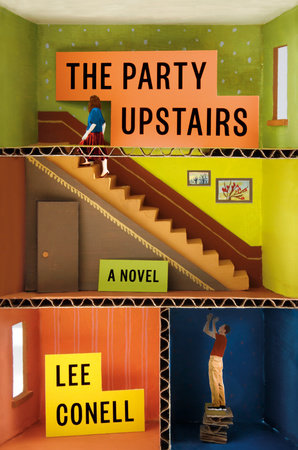
The Party Upstairs by Lee Conell

In my novel, The Party Upstairs, I wanted to draw on the setting of a single building on the Upper West Side to explore some of the complicated power dynamics that emerged between residents there. Throughout the course of a day, a building super and his daughter try to navigate between different socioeconomic worlds they must inhabit and perform in. They have to reckon with their own past mistakes, with their wildest hopes, and with the facades they must keep up in day-to-day life in order to survive in the city.

In writing the novel, I was drawn to other books that approached socioeconomic inequality in the city in a way that neither fetishized the wealthy nor seemed to exploit the suffering caused by poverty. I wanted to tackle my characters’ anger at the city’s inequality while also recognizing the many moments of joy and connection the city brings too. The following books helped me think with more nuance about some of these concerns.

A Lucky Man by Jamel Brinkley

A Lucky Man contains nine stories, set mostly in Brooklyn and the Bronx, all of which do a brilliant job of creating narrative tensions around the interlinks between race, class, and masculinity. The story “I Happy Am” is an especially strong example of this: It centers around a group of boys from the Bronx who are driven out to the suburbs, expecting to spend the day at some rich white people home and to swim in their pool. The story twists and turns in a way that beautifully reveals how a kind of performance of gratitude so often plays into power relationships between white people and people of color, and between the wealthy and the working class. At the same time, moments of unexpected tenderness also occur in this story and throughout A Lucky Man, making these stories deeply human even as they tease apart the systems that try to dehumanize many of Brinkley’s characters.

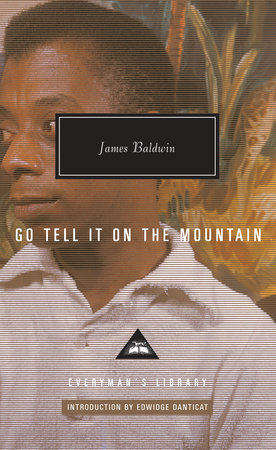
Go Tell It on the Mountain by James Baldwin

Go Tell It On the Mountain by James Baldwin

Baldwin’s first novel opens in Harlem on John Grimes’ 14th birthday. But Baldwin moves around in time and space, exploring the lives of several characters in the rural South before they move to New York City. Many of the book’s characters held onto hope that living in an urban center in the North would feel different but as the novel shows, police violence, racism, economic injustice, and segregation persists in the city, too. Baldwin shows this sharply when his characters’ look at cultural institutions such as the Museum of Natural History and the Met. One of the most moving moments occurs when John takes a long walk and winds up at the 42nd Street New York Public Library: “But he had never gone in because the building was so big that it must be full of corridors and marble steps, in the maze of which he would be lost and never find the book he wanted,” Baldwin writes. “And then everyone, all the white people inside, would know that he was not used to great buildings, or to many books, and they would look at him with pity.” John Grimes’ resistance to looks of pity help lead to an unflinching look at the city itself throughout this novel.

The Friend by Sigrid Nunez

The Friend by Sigrid Nunez

In The Friend, a writer in New York inherits a Great Dane from her recently deceased friend and fellow writer. The novel grapples with sitting with grief, but there’s also a real sense of financial strain and risk: In order to keep her rent-controlled apartment in a building that doesn’t allow for pets, the narrator must hope that nobody reports the dog to her landlord. “It’s not like you’ll be put out on the street overnight,” a friend assures her. The super warns the narrator about the threat of eviction, which the narrator understands: It’s his job on the line as well. Nunez’s book demonstrates the way that housing instability in the city and the weight of class don’t need to take center stage in a narrative to make their presence felt on a character in the midst of great loss.

Staten Island Stories by Claire Jimenez

Jimenez’s stories, both joyful and rageful, all take place on Staten Island and are populated with smart people with terrible bosses, including angry adjuncts, underpaid office workers, photographers at the DMV, teachers, and grant-writers at nonprofits. There’s a keen awareness of the city and specifically Staten Island’s socioeconomic and racial tensions in this collection, and the way those tensions manifest even in people who would eagerly deny contributing to those tensions in any way (in “The Grant Writer’s Tale,” all the narrator’s office mates are white and have “expressed polite concern in the past about police brutality;” Jimenez’s use of “polite” is quietly damning and devastating). Jimenez tackles inequality and political upheaval while holding onto a sense of humor and humanity—a sense that animates her book’s narrators so that their voices seem to launch off the page.

The Privileges by Jonathan Dee

The Privileges by Jonathan Dee

The Privileges centers around “a charmed couple,” Cynthia and Adam. They start off in New York City as kind of rich and then—thanks to Adam’s insider trading scheme—get a whole lot richer, complete with penthouse overlooking the Museum of Natural History’s planetarium. But the two are so coolly observed, their life seems not glamorized so much as unnerving. As a reader, I was halfway waiting for the family to get punished by society in some way, to receive their comeuppance, but this kind of authorial move would, weirdly, feel cheap and dishonest, and Dee, in avoiding it, winds up saying something far more interesting about how class operates in America. The Privileges doesn’t feel like a voyeuristic look into the one-percent so much as a portrait that, in denying a too-perfect narrative justice, reflects the city’s own socioeconomic asymmetries. 

The Collected Stories by Grace Paley

Grace Paley’s New York is one where resiliency in the city is most tied not to affluence but to a lively curiosity: “All that is really necessary for survival of the fittest, it seems,” observes a Paley narrator, “is an interest in life, good, bad, or peculiar.” Inequalities in the political and urban landscape of Paley’s characters are not treated as mere background but as a key component of their reality. Her characters—single mothers, shouting children, activists, grocers, writers, social workers—speak out in voices that feel somehow both undeniably New York and undeniably Paley-ish.

Approaching Eye Level by Vivian Gornick

The essays in Approaching Eye Level are attune to class, power, and city life in all sorts of ways, but the collection’s opening piece, “On the Street: Nobody Watches, Everyone Performs” is itself a virtuosic performance—a close examination of walks in the city, the strangeness and the thrill of them. “The streets attest to the power of narrative drive: its infinite capacity for adaptation in the most inhospitable times,” Gornick writes. There are devastating inequalities to see in the city streets but there’s also a kind of storytelling power in the many ways people survive.  “Nothing heals me of a sore and angry heart like a walk through the very city I often feel denying me,” Gornick continues. “To see in the street the fifty different ways people struggle to remain human until the very last minute—the variety and inventiveness of the survival technique—is to feel the pressure relieved, the overflow draining off. I join the anxiety. I share the condition. I feel in my nerve endings the common refusal to go under.”

The Future We Were Promised Never Existed

Lynn Steger Strong’s highly-anticipated new novel Want plunges us into the psyche of a woman for whom the intertwining nature of existence is more fraught and urgent than usual. That makes the book sound complicated, but really it’s simple: the protagonist, Elizabeth, is a person being pulled in many directions, practically, ethically, personally, and professionally, and she can’t stop thinking about it.

Like Elizabeth—and, indeed, like Strong, whose fiction nods heavily in the direction of her excellent personal essay series for Catapult—I came of age in a generation that was taught we could be anything we wanted to be, and that our careers would be the place we’d find the deepest satisfaction. That, indeed, “to be” was to be employed in some spiritually (and financially) fruitful activity.

I talked over email with Strong about how these promises have and haven’t panned out, and how she managed to render such a moving and relatable portrait of a woman for whom peace of mind is a swiftly moving target.


Adrienne Celt: Can you talk about how you placed this novel in the historical moment? Your protagonist Elizabeth talks about 9/11 and the recession as events that disrupted the world she thought she’d inherit, but also says “that world never existed.” So, how does history connect to financial mobility (upwards or downwards) for you and your characters? And how, in the wake of this year’s events, do you imagine their (shall we say) spiritual-economic condition continuing to unspool?

Lynn Steger Strong: This is maybe a different conversation, but I don’t think any book lives outside of the historical moment or the politics in which it’s being written, whether it admits it or not. But this book is very much placed in a particular space of rupture, both for Elizabeth and for a certain group of Americans. I think (and I would put both Elizabeth and myself in this category) there was, for a long time, a group of us who felt sort of inured to historical ruptures. We were engaged, maybe. We had ideas about how we thought the country should be. We felt sad and angry about choices that were made by our government, but we had also largely been cloistered from the consequences of so many of the system’s failures and flaws. But then here we were, in our 30s or 40s. Maybe we had kids and jobs. We went to the right schools. But, for a lot of us, none of it was what we were told it would be. 

Here we were, in our 30s or 40s. We had kids and jobs. We went to the right schools. But, for a lot of us, none of it was what we were told it would be.

An important part though, at least for me, of this moment, is that for most people in this country, it has never been the thing we thought it was. The horror and the precarity that people like me felt gobsmacked by with the confluence of the gig economy, student debt, the tearing and tattering of the social safety net, the 2016 election, the seeming feeling that any sense of stability we had was crumbling, had long been just a fact of living in this country for most people. 

I think the more recent and more jarring rupture of this virus is in many ways an extension of that. For years, we’ve been watching for the final frayed and tattered thread of the systems under which we live to break and for all of us to go into free fall, and now here we are. It’s hard for me right now to see forward, but the one thing that’s sustaining me right now is the hope that there might be a massive structural reckoning on the other side.

AC: I’d love to hear you talk about how you approached Elizabeth’s intellect and physicality. Running is very important to her, but I’m also thinking about how her emotional life comes differently alive when she’s discussing books with colleagues vs. when she’s with her children, and how sex is a release and a sort of political crucible for her. Once or twice, you describe nursing as the baby “eating”—not drinking or even, simply, nursing—which I had a really visceral reaction to. How do these elements balance for you—how is Elizabeth differently aware of herself (the personal, political, intellectual) because she’s balancing these elements? How does her physical being alter, and perhaps enhance, her intellect?

LS: I guess, and this makes me think a little of the first question, I feel sort of adamantly that they are all—the personal, the political, the intellectual—inextricably linked. Maybe the body is the space that connects them all; maybe, even though I studied political philosophy in college, that’s why I decided I wanted to tell stories instead: to watch bodies interact and react and move through space feels to me to be the one of the most useful ways to see how all of it is mixed together and overlaps. I’m not sure I’ve ever taught a workshop that has not at some point involved me saying—too loudly and no doubt with aggressive gestures—that we have to see and feel the bodies, that if you watch the bodies, and let them act, everything else will come. 

I think the female body, in particular—acting and being acted upon, having sex, making and feeding babies, reading and thinking—is most interesting to me: it is all deeply personal, but also political, it can also be intellectualized. Hormones, biology, chemicals; none of it happens in a vacuum. My experience as a reader and a writer was forever altered by what happened to my brain and body when I became a mother, when I spent so many nights not sleeping, when I was nursing, when I was reading or writing or teaching, but still thinking of my children all the time. It was important to me that Elizabeth still be nursing, that she be, literally, physically, not just emotionally and intellectually, sustaining her kids. I think that’s where “eating” came from. I wanted the image to be substantive and physical, not liquidy and light. It was also important to me that they all get sick at some point, that there be vomit and fevers and that sort of feral desperate state of vulnerable bodies trying to care for one another and themselves. When she gives to Sasha, I wanted that, too, to be something physical and concrete. I think part of the project of the novel was to show how often our attempts to navigate feelings or ideas as abstractions wholly separate from the body can prove useless in our actual lives. 

AC: “Remember the bodies” is such excellent literary advice (and not bad moral advice, tbh). Can you expand on your thinking about how this relates to Elizabeth’s femininity, especially by way of her motherhood? There are elements of the “personal vs. political” divide (or lack thereof) that apply equally to any gender, moments in the book that could be essentially unchanged with a male protagonist—and then there are moments of great difference. 

What I’m getting at is, you elegantly forefront different structural inequalities (racial, socioeconomic, gender, etc.) at different times—so can you talk about how you moved between them, particularly in very intimate spaces? Do you believe there are moments when our political personas drop in the face of immediacy—whether moments of desperation, or moments of grace? Do we ever get to calm the fuck down in private, or no?

LS: This might shock you, having read the book, but: it is very very hard for me to calm the fuck down. I think, in some ways, this book was me building a plot in which the driving force is both a desperate drive toward and an overwhelming fear of just calming the fuck down. And some of this, the fear especially, I think is structurally built and perhaps particularly feminine. We have been taught this strange game of performing perfectly in order to maybe, maybe get to a space of solidity or stability, but if we stop, even for a second Being Vigilant, Doing What We’re Supposed To, there is an extraordinary fear, at least for me, that it will be taken from us or we’ll be found to be a fraud. 

I think the sex is connected to this: for Elizabeth, withholding sex from her husband is this safe space to use her body as a political act of being something other than she knows she is supposed to be, but then it also shows the personal ramifications of the political: she likes her husband; she likes having sex with him. It’s not a reasonable or effective act of protest, but it’s what she has. 

We are living in a time of extraordinary rupture, death, destruction, terror. There are these glaring, devastating, structural inequalities.

I wrote a good portion of this book in the summer of 2018. It is, as we talk, April 2020. The COVID-19 deaths in New York City reached 12,000 today, and our President just announced that his daughter and his slumlord son in law will be heading the “reopening the country task force.” Yesterday, my phone told me that I’ve been checking Twitter roughly 5.5 hours of every day. We are living in a time of extraordinary rupture, death, destruction, terror. There are these glaring, devastating, structural inequalities. But, to me, and I think this does come back to “Remember the bodies,” what is most devastating about all of this is the way it makes it impossible for so many people to experience those, as you say, small moments of desperation or grace. This book is my attempt to show a life informed by the knowledge of these inequities while not being touched by all of them, to show the constant subtle ways that our own desperation, combined with our constant overwhelming knowledge of the desperation of everyone around, can make it hard to just like, wake up, make breakfast, live your life. 

Again, that’s why I am trying to work all of this out in fiction, because I want to go to all those spaces that are supposed to provide those moments, the daily mundane ministrations, and show how, in the face of this underpinning of anxiety, it can be impossibly difficult to stop your brain from rattling. 

With regard to Elizabeth’s femininity and motherhood, I guess it only all gets messier, the rattling sort of ratchets up. It feels differently important (and also maybe political) to be present in one’s body for one’s children. In this strange moment of quarantine, it feels necessary to me to find and hold those small moments with our children, even as the world feels like it’s burning all around. It feels important not least because if we were to fall victim to this virus THAT is the thing I’d be most sad to lose, those minutes with them, their specificity and strangeness, their yelling at me and making dumb jokes during “homeschool,” their morning smell. 

AC: I think your fear of calming down is palpable in the book, and (at least I found it to be) deeply relatable. There’s always so much in the world to be aware of. And yet awareness is not enough.

One way this awareness manifests in Elizabeth, which I found really interesting, is her relationship to her parents: she’s very aware that her financial situation comes in part from her rejection of her parent’s money and values, and yet it’s deeper than that: like the way her family struggles is also evidence that her rejection was correct (or anyway, valid). She talks about how she and her husband were so inappropriately insulated from reality that they “didn’t feel the first hits” to that insulation—9/11, etc.  We tell ourselves stories in order to make sense of the world, and in order to survive, but sometimes—often, maybe—those stories can calcify, become harmful, and then shatter. How do you relate to those stories? Why is it so hard to change them, even inside ourselves? Why do we feel so much shame?

LS: I think the short answer to that question, at least for me, is that knowledge is not nearly as powerful as we wish it was. I know the lies I’ve been told in order to protect me, in order to fuck with me, in order to implicate me in systems I would never have been implicated in had I known; I know the ways certain narratives around what and who I am, that I did not create and that I reject, are bullshit, but that doesn’t mean I am capable of obliterating them. I think the tricky thing about those calcified, foundational, familial, societal stories is that they live inside us. And this brings us back to bodies. The stories that we’re given and that are told about us before we know enough to stop them haunt us, embed themselves within us; they have been used to construct us, and, just because you reach a point at which maybe you understand that they’re just stories, it’s not like you can rid yourself of them. It’s not like you suddenly know what to be or what to tell instead. I think my shame comes both from knowing all the problems with the stories I’ve been told or have been telling, but not being able to do anything to stop them or to fix them, feeling deeply about things, but also knowing how worthless those feelings are. It comes from knowing stories about myself that I wish that I could overcome but sometimes I’m too tired or too scared or just don’t have enough power and I can’t. 

AC: Going back for a moment to the topic of sex, sort of: You do a beautiful job navigating the erotics of female friendship, particularly between Elizabeth and Sasha—and I’m curious if this was a topic you set out intending to write towards, or if it was a natural outgrowth of Elizabeth’s friendships and thoughts about power. I’m thinking here of the desire to possess or even embody one’s beloved, which is not quite sexual (or, not only) and thus not quite queer, but is in fact a deep intertwining of the spirit; how young women often lose track of where they end and their closest friends begin. Does that sound true to you? 

LS: I like what you say, “sex, sort of,” which I think, with Sasha especially, was exactly my intent. I think this is one of those moments when stories, and bodies, and language are all sort of at odds and overlap. I don’t think gender or sex are anywhere near as clear as the language we’ve been given for them tells us that they are, nor are most of the stories we’ve been told about them; but I do think, I hope, that one of the jobs of stories can be to make space within the language we’ve been given to re-consider the sorts of bodies that exist and how they interact. 

Depending on where and when and how you grew up, what you were exposed to, and the stories you were given, if you were young and had a female body and it felt compelled toward another female body, you might have assumed that you wanted to be this girl’s friend; you might have thought you wanted to look or dress or act like her; you might have fantasized about becoming her somehow; and that was probably some or all of what that feeling was, but maybe also, you didn’t have the stories or the language for what else it might have been. Alternatively, if you were compelled toward a male body in that place, at that time, you might have assumed you wanted to have sex with him; you might not have acknowledged that you might also want to be him, to inhabit or deploy some of his powers, or to engage with his intellect, to be his friend. 

It’s impossible, I think, to separate our bodies wholly from the stories we’ve been told about them. This is different though not separate from sexuality in that I think there are these hard lines delivered to us by virtue of a lack of language and a lack of stories for our feelings, even as our bodily experience might be more fluid and complex. 

AC: Finally, I’d love to hear you talk a bit about tenderness. Throughout the novel, Elizabeth is alternately prickly and devoted with/to the people in her life, but she has a great deal of trouble extending that tenderness to herself. (She seems fine with extending the prickliness.) Do you feel tender towards Elizabeth? Do you think that it is, in fact, important to feel tender towards oneself, or one’s fictional characters? Is your tenderness for her manifest in her tenderness for others?

LS: This has to do with the running, I think. The running is the closest that she can get to any kind of tenderness to herself, which, by itself, I hope, is telling: the way she runs is brutal. She doesn’t jog. She goes for hard fifteen mile runs in the dark and freezing cold. And because of this, because her body is so clearly Working, I think it is a way she’s able to stay steady, to slow the constant anxious brain-whirring, which is not the same as tenderness but is maybe as close as Elizabeth can get. The fact that she is only able to give to herself in this way has to do with a certain kind of person, I think often female, who is wary of getting anything for which she does not also pay a price. 

The Bear That Stole My Identity

If I Had a 3D Printer

I’d print out a crocodile & feed it
my left hand, then print out another,
prosthetic hand & feed it that one,
etc., ad infinitum. The beast would be
hungry, & I have less use for myself
these days since all the plastic filament
in the printer can be replenished
with online ordering. I’ve nested
in blankets on my couch, not even
going to bed, not ever leaving home
because the job I’ve probably been
fired from hurts less than losing
an appendage. Lonely, I’ll have
a friend in the crocodile, symbiotic
natural relationship because he’ll
need my hands & I’ll need his love.
What will appear first, his tail or head?
If head, will the teeth begin to bite
before his heart is printed, before
he can feel the sick, reptilian love
between us telling him to stop eating,
to wait for a new hand to devour?

The Charming Bear

It dug through my trash for gorgonzola
& popped the slimy hunk in its mouth
using its claws like human fingers,
though it couldn’t have. They can’t.
It would overcome the lock on the bear fence,
I knew, I could read its mind
as it polished off my food waste
& moved on to my mail. Invoices,
statements, blood test results,
all things my wife said to shred
—but around here, who steals your trash?
This bear. He looked at me
& I knew he was going to steal
my identity. Could he hack my accounts?
Had he overheard my mother’s maiden name?
The neighbors’ garage thundered open
& he ran. To get him back,
I took a styrofoam tray of ground beef,
ripped away the plastic wrap, & squeezed
the soft mass so the juices dripped & its scent
blossomed a message in my yard: Bear,
a gift. On all fours in the bushes,
my own hands smelled like sweet iron.
I licked the juice from one, plucked
tiny red berries from the shrub,
smiled over the ants & water bugs
weaving among the moist pine mulch.
I shoved a handful in my mouth,
chewed it like gum, forgetting
where I was & why.

Porochista Khakpour’s “Brown Album” Takes on Race and Identity in America

When I was growing up, everyone I fantasized about becoming was blonde. Jessica Wakefield, perfectly popular across Sweet Valley. Britney Spears, queen of my heart, then and forever. Barbie, not always blonde, but definitely in the avatars I preferred her. Blondness was the baseline from which my fantasies extended—an unreachable goal, through and through. 

Until a few days ago, that is, when I Googled pictures of Porochista Khakpour as a ridiculously gorgeous, platinum blonde. 

Iranian American writer Khakpour has had a lifelong fascination with blond hair too—and not just on white girls. Her mum, she writes, always had some variation of extremely light to blonde hair, while in turn, the ladies of ‘Tehrangeles’ — L.A. “Westside neighborhoods filled with wealthy Iranians”—sported expensive shades of flaxen and gold. The idea of a brown girl going blond had never seemed remotely possible to me, but, as Khakpour writes, “going blond was the most Iranian thing I’d ever done.”

Brown Album

Khakpour’s fourth book, Brown Album: Essays on Exile and Identity, sits precisely at these complex intersections of identity—a patchwork text whose shifting chronology perfectly mirrors the experience of immigration and diaspora. The past is always encoded in the present, which in turn leaps ahead to a hopeful, uncertain future. By turns funny and sad—and always incredibly thoughtful—Brown Album’s razor-sharp prose spans over a decade of Khakpour’s writing on Iranian America. These essays, she explains, are “a testament to the greatest and worst experience of my life: being a spokesperson for my people, a role I never asked for.”

Brown Album is also where I learned this important fact: blonde hair is such a rare genetic mutation that only 2 percent of adults across the world are natural blondes.  

Khakpour writes, “To survive our moment in 2020 and perhaps all the moments to come, we need to remind them who the real minorities are.” She’s talking about whiteness, but I can’t help but think of every blonde girl I’ve known, and how every so often, resilient brown interlopers muddy her story. 

I spoke to Khakpour about Barbie, class, the false comfort of Americanness, and whether brown solidarity will ever truly be possible.   


Richa Kaul Padte: I’d love to start by talking about the word Persian, one that “often equate[s] with Iranian” but that signals a glamor and softness (rugs! cats!) that the latter typically doesn’t. I don’t think this is just a Western thing, either. My mum grew up in Bombay, a city that is home to several iconic Irani cafes. Set up by the Iranian Zoroastrian community under British imperialism, these cafes are known for, among other things, distinctive keema (mutton) preparations, bun maska (sweet bread), Irani chai, and menus sweetly pressed between colorful checkered cloth and glass tabletops. But I think Indians claim Irani in the same way, perhaps, as Americans claim Persian—assimilated fondly, but entirely divorced from their country of origin. You write: “After the September 11 attacks I began insisting on using [Iranian] over Persian. I didn’t want to stand for more convenient euphemisms.” What changed since you began to do this, and conversely, what perhaps remained the same?  

I was always very uncomfortable with ‘Persian.’ It was clear that it was a euphemism designed for basic survival.

Porochista Khakpour: I was always very uncomfortable with “Persian.” It was clear that it was a euphemism designed for basic survival. In Los Angeles, it seemed as though some of the most self-hating of my people used it. So when I began saying “Iranian” more as an adult, it felt much more honest. It also allowed me to take the temperature on certain people. I’d watch their eyes, I’d look for a raised eyebrow, any sign of discomfort. I’d also see my own people—those who went by “Persian”—grow very uncomfortable with me, like I had told on us. But I think most Westerners now know those terms are the same thing, so what use is there to hide? We are generally very consistently hated by those who have always hated us!

RKP: When I was growing up, I was obsessed with Barbie (obviously the whitest ones, definitely not the sari-clad ones). But reading Brown Album reminded me of an even bigger obsession I had: Zoroastrian girls, and in particular, their initiation ceremonies (navjotes, or sedreh-pushis). These extravagant parties usually featured beautiful pastel décor, where the lucky girl wore the most perfect, doll-like dress. Resentful that I would never undergo this rite of passage myself, I made my parents buy me my own “navjote dress”: a frilly baby-pink affair with echoes of Barbie’s wardrobe, the most expensive item of clothing I’d ever owned.

You have a lovely piece in Brown Album on Barbie, beauty and identity. In the essay’s final moments, a white middle-aged coworker spitefully mutters under at you over lunch: “Persian Barbie.” You write: “She left before I could jump out of my seat and give her the hug of my life.” Porochista, I cried with such joy at that moment; I felt like I shared it so deeply with you. Are we simply claiming our victories where we can, or is there a particular power in triumphs that whiteness will never see? 

PK: I loved the way you put this: triumphs whiteness will never see! I mean, that is probably my most winky essay. I have conflicted feelings about Barbie, and of course about the sexualization of women as well as white feminism and how it views all bodies. So there are no answers in that piece, but instead the roller coaster of emotion that comes from being a woman of color. 

And wow, yes, I know what you speak of regarding the Zoroastrian girls—we went to a Zoroastrian temple in Southern California for a time (we were not technically Zoroastrian but my dad really wanted us to be!) and I felt the same alienation from those girls, who seemed so fancy and rich and acceptable.

RKP: You describe yourself as “the anomaly of anomalies in L.A.: the poor Iranian, that incomprehensible being who received either the cold disregard or the flushed pity of rich Iranian ladies.” Unlike your family, these women often lived in Tehrangeles, where the iconic designer Bijan established the most expensive store in the world (prices range from a $120,000 bedspread to a $10,000 limited edition gold revolver). You once worked in a smaller designer store across the street, and one day while you were sweeping outside, an elderly Iranian woman remarked: “Persian girl, how did this happen to you?”  Can you talk a bit about this?  

Americans love an absurd, flashy, repulsive minority that they can feel superior to, all the while feigning a sort of connection and respect.

PK: Well, firstly it’s not an anomaly in reality—it’s an anomaly in public perception. Many Iranians themselves hate to be portrayed as anything but affluent; even if you are lower middle class, they assume something went terribly wrong. But they certainly also know this a ruse. And the more I wrote about class issues, the more I had Iranians my age writing me, thanking me for that representation. I also think the West has much more fun seeing us as super fancy and ostentatious. This is a weird take on the “model minority”—as if wealth equals virtue. But I see this like some Cruela de Vil caricature, because capitalism is, of course, bloodthirsty and evil. I think being honest about status is so important and one thing I love a lot about Islam is how material wealth is seen as absolute bullshit.

RKP: In the last decade, the opulent, gold-plated wealth of Tehrangeles has been positioned in less flattering ways though: for example, the now-defunct website uglypersianhouses.com. Have the lines between the “right” and “wrong” kind of Iranian become increasingly blurred, or is that simply an outsider’s perspective, a gaze developed by people who never really saw those lines at all?

PK: I think it’s just lazy characterization made by people who don’t know us. And the scary thing is some Iranians will feed right into that—as if they are laughing along with the joke, not really internalizing that the joke is on them. It’s why I felt so conflicted writing about the reality TV show Shahs of Sunset. On the one hand, those Iranians do exist, but on the other hand, yikes, that is not the representation we have waited for! I actually think the cast is playing into the stereotype and perhaps they were asked to as well. They know entertainment like that is lucrative—to give people what they want, to deliver on expectation. Americans love an absurd, flashy, repulsive minority that they can feel superior to, all the while feigning a sort of connection and respect.

RKP: There’s a tendency among the upper caste Hindu diaspora—a group I’ve been a part of—to claim “brownness” as a homogenized experience (over-bearing mothers! body hair!) but to then pull up the definitional drawbridge as soon as something complicates this entirely surface solidarity (“lower” caste immigrants, for example, or Islamophobia). 

One of my favorite things about Brown Album is that despite its name, you never universalize a “brown experience”. You write Iranian America, but more specifically, you write your particular experience within that very broad category. You also show us the complexities of identity—for example, the interplay between Zoroastrianism, Islam, America, and Iran in your own life. Is there a way for us to claim solidarity across brown identities; one in which we flatten neither ourselves nor others in the process? 

Whiteness requires that all ‘others’ constantly undermine each other and fight for crumbs, while they themselves continue to ascend.

PK: That would be a dream for me. I used to tell an ex of mine, who was also brown but Latinx, that imagine if there was true brown solidarity—we would be most of the world! But of course, brown means so many things to so many people, and our communities are often at odds with each other—often by design, as that’s how white supremacy gets most of its power. Whiteness requires that all “others” constantly undermine each other and fight for crumbs, while they themselves continue to ascend. White supremacists rarely seem to have conflict with each other. You don’t see Americans of French descent fighting those of Irish descent fighting those of German descent, [at least not] that often or that clearly. 

RKP: Porochista, I’ve followed you for several years online — but I didn’t find your writing on Iranian America until much later; I followed you for your illness writing (side note: your memoir Sick is a masterpiece). And one of my true online joys recently has been witnessing your return to New York after a long period of terrible illness and difficulty; seeing you doing well in a city that holds you well. But your book gave me an entirely new insight into your relationship with New York: it isn’t just where you feel most at home (I say “just” as though that’s a small feat!) but a home you dreamt up for yourself as a child growing up in L.A.; a home that you determinedly forged into unlikely existence. I’ve never been there, but when you write, “I am a New Yorker”, I absolutely know that you are. 

PK: Ah yes. Well, for me New York has always been the polar opposite of Los Angeles, where I grew up. But now I have lived in New York much longer than L.A, and I think my personality—the good and the bad—was very much molded by this place. And 9/11 probably cemented my identity as a New Yorker. Now, living here in the heart of the pandemic, I still feel there is nowhere I’d rather be in America. I truly love this place. I often wish people would call me “Iranian New Yorker” rather than “Iranian American.”  And yeah, hilariously, it is where I heal the most from illness each and every time. It’s funny how the body knows where home is, more than you or doctors can imagine.

RKP: I’ve long suspected something similar in my own illness journey too! That our bodies are impacted by our ability to feel at home in the world — by how that world holds or rejects us. 

PK: I think setting is so important. We are sold the lie that no matter where you go, you still are yourself. And while that is true in a sense, I think we can’t underplay the impact of surroundings. And this is not an aesthetic thing but a deeply cultural one. It is very hard to exist in a culture that you feel in opposition to.

RKP: In Brown Album’s final essay (which is so wonderful that I won’t give much away), you write of Halloween:

“My aunt sewed me a perfect Snow White dress and I…wore that dress to school in misery. I looked nothing like Snow White, but the women in my family did not see that. They saw their dreams: skin as white as snow.”

Reading this, I thought again about my Parsi navjote fantasies, and whether perhaps they weren’t only about exclusion, but also about whiteness. The fairest girls in school, dressed in white, surrounded by pastel décor and warm, bright lights. 

One thing that perhaps unites many brown people around the world is the belief that we are closer to whiteness than we are to any other ethnicity. I always thought this had to do with colonialism, but reading Brown Album made me realize it might be something else. What, according to you, is this something else—and how do we eradicate that shit?

PK: I think it is colonialism. Good old-fashioned racism and white supremacy. There is no way to sugarcoat it. If you are what many, even most, consider brown—and you choose to say you are white, then you are feeding into racism directly. I felt so much better as a human when I stopped wanting the approval of the white world, when I just collapsed into what I was all along. The white gaze is so uninteresting to me. It sells you the lie that it matters so much, but there is a whole world—indeed most of the world—out there that has nothing to do with whiteness. I have very few white friends left: it’s not that I hate white people individually, it’s just that once I learned to turn down the volume on them, a whole other world that was there all along opened up. 

You know the saying, “Go back to your country” or “Go back to where you came from”, that racists love to use? Well, I find myself thinking about that a lot these days, as America grows more openly racist by the second. I think I am going to move to Asia, where I am from, in the next year. And no one is kicking me out of America; I am making that choice. Once I started seeing the rest of the world properly, I realized there was so much power and beauty in claiming my West Asian heritage.  When I think like that, I feel so excited about the future. I used to fear being a refugee again, but I now just think of reclaiming what was supposed to be mine all along, and shedding the false comfort of Americanness. One day, when they ask me about America, I want to be that Mariah gif, the one that says: “I don’t know her.” 

8 Spine-Chilling Books About Occult Mysteries

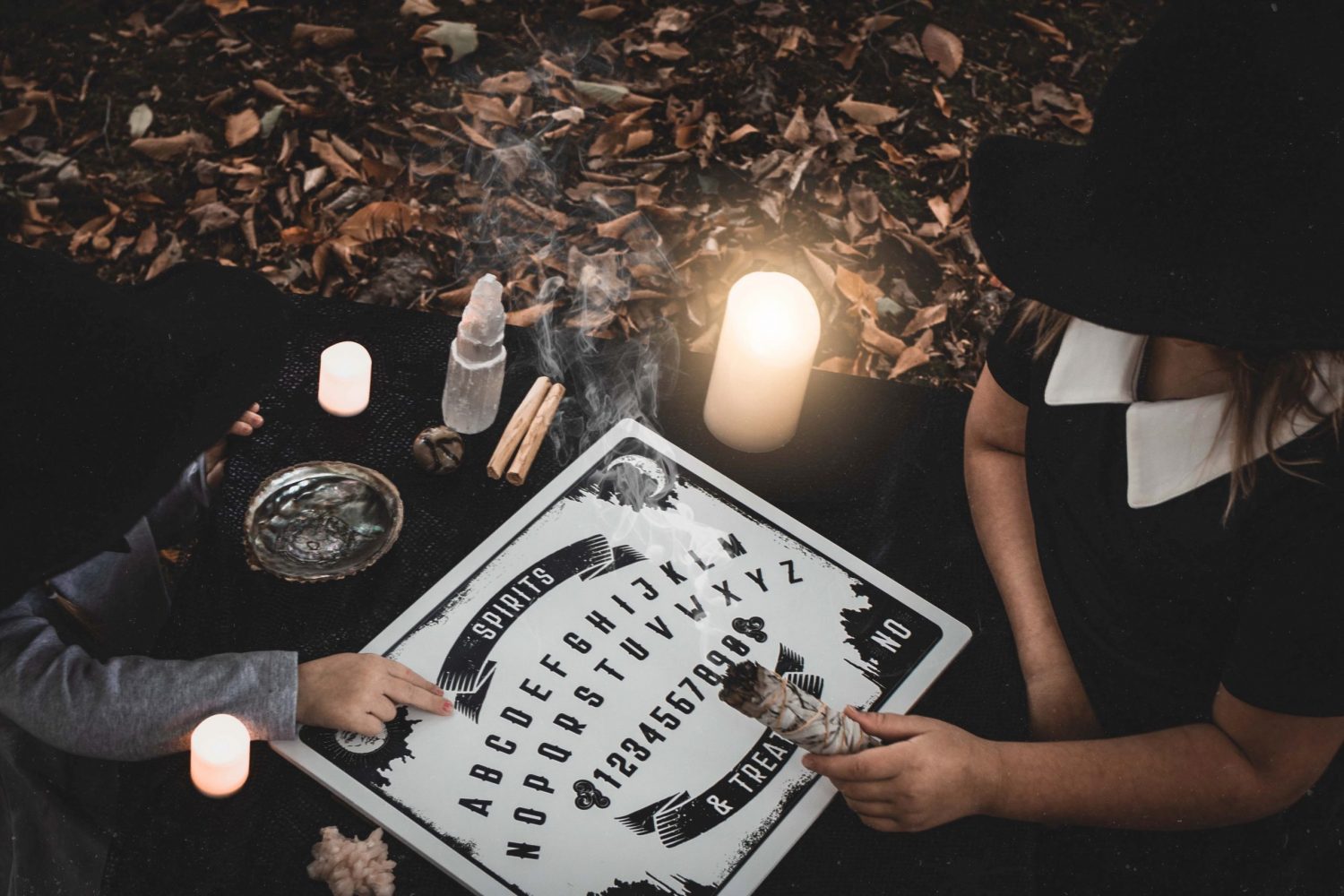
At some time in every child’s life, the occult makes its mark. Nothing truly Exorcist level, but scary nevertheless. Remember all those ghost stories, and getting a little too excited about being freaked out on Halloween? I personally never did a Ouija board—too chicken! Even though I always doubted the truth of these things, they still chilled me. Growing up in Baltimore, kids would tell various stories about the legendary Black Aggie. In my neighborhood version, if you switched the bathroom lights on and off, twirled around, and chanted “Black Aggie, I love you!” seven times, she’d show up in your mirror appearing dead and drowned. It was over a year before I’d go into a dark bathroom alone.

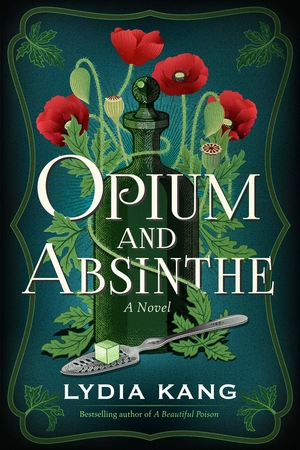
Writing Opium and Absinthe deliciously tapped into that fear and fascination. The book is a trip back in time where mystery and the occult intertwine until truth sheds light on a family disaster. My main character, Tillie Pembroke, is driven to solve the murder of her sister, whose body is found drained of blood in the shadow of the Metropolitan Museum of Art. It’s 1899, the same year that Bram Stoker’s Dracula is released in the United States. 

I’m a fan of Stoker’s book, but the modern cinematic version by Francis Ford Coppola left an indelible mark in my memory as well. Opium and Absinthe is a tribute to Dracula, and to those who love to be scared while reading and wondering what’s real and what isn’t—in the safety of their very non-occult home.  

The Rules of Magic

The Rules of Magic by Alice Hoffman

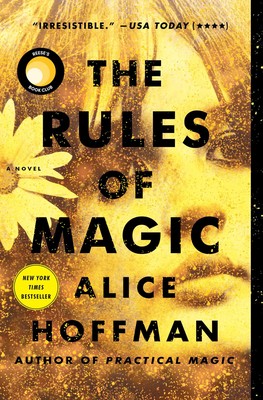
I’ve been a fan of the movie Practical Magic since it released in 1998, but didn’t read the book until much later. When the prequel came out, I knew I’d gobble up the back story to this family of witches. The book brings you into the charmed (and not so charmed) lives of Franny, Jet, and Vincent. The story is more of a slow unfolding of truths and revelations, rather than a true mystery. But no doubt you’ll be reading it as if secrets hide on every page. 

In the Shadow of Blackbirds by Cat Winters  

Cat Winters is a friend and a favorite author of mine. She does historical fiction so well that I asked her to read A Beautiful Poison for accuracy. Her historical fiction is immersive, and this book not only has a supernatural element to it (seances and spiritual photography) but also covers the fear and panic of the 1918 influenza epidemic. 

The Golem and The Jinni by Helene Wecker 

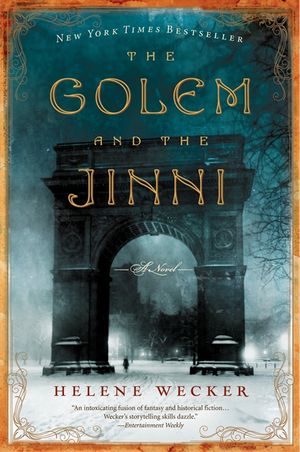
This book also takes place at the turn of the last century (I can’t help it! I love that time period!). Chava is a golem, a creature made of clay, and Ahmed is a jinni, a creature of fire born in the Syrian desert. They meet in the dirty, difficult, noisy world of New York City. As their creation stories and present stories intertwine, I was absolutely transported into their world. It’s one of my favorite books, ever. 

Affinity by Sarah Waters

Affinity by Sarah Waters

If you’re not already a fan of Sarah Waters, this book will make you one. In Victorian-era England, Margaret Prior begins to visit Millbank Prison for women and becomes enamored with one of the inmates. The story evolves wondrously with its medium and spiritualism, twists, and forbidden loves.

The Club Dumas by Arturo Pérez-Reverte, translated by Sonia Soto

The main character is a book detective. How can you not love that? Lucas Corso is trying to authenticate a portion of the original manuscript of The Three Musketeers by Alexandre Dumas, but is pulled into a whirlwind mystery involving devil worship and a cast of characters as memorable as those in The Three Musketeers. Entertaining from start to finish.

Between the Devil and the Deep Blue Sea by April Genevieve Tucholke

This book—a gothic tale with a delicious romance that seems both otherworldly and timeless—is steeped in atmosphere and creepiness. April’s writing is gorgeous, and it’s easy to get lost in this fictional sleeper town where odd things start happening, and you’re not quite sure if you’re awake or dreaming.

The Diviners by Libba Bray

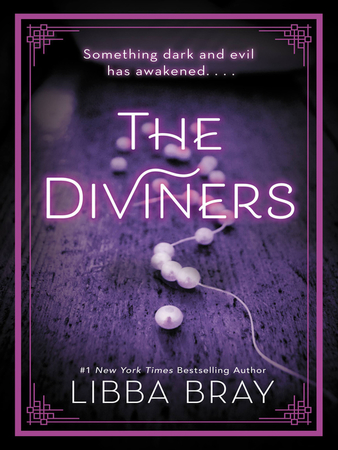
This is a young adult novel, but don’t let that stop you from reading it. In the roaring 1920s, its heroine tries to solve a set of murders, possibly by an awakened spirit named Naughty John. The opening chapter has a Ouija board which nearly made me scream out loud. I couldn’t put this novel down. The Diviners was nominated for the Bram Stoker award, for good reason. 

A Phoenix First Must Burn by

A Phoenix First Must Burn: Sixteen Stories of Black Girl Magic, Resistance, and Hope edited by Patrice Caldwell

How can I say no to sixteen stories of the supernatural from some of my favorite authors? You’ll find witches and sun beings, a sorcerer’s apprentice, a girl who can turn hearts to ash, charms, and curses. You’ll find strength and resiliency, sadness and heartbreak. Yes, you will get goosebumps, and no, you won’t be able to put it down. Some of my favorites are by Rebecca Roanhorse, Karen Strong, and Dhonielle Clayton. Brilliant.

A Look at the Partners Behind Great Writers in Literature

Behind so many writers and thinkers, there has been a supporter, editor, typesetter, listener, advisor, child-rearer, cleaner, cook, and lover.

Many writers’ spouses have influenced or made possible the great books we still read today. Some, it’s true, have not been quite so helpful. Below are glimpses of a few relationships, ranging from the indispensable to the disastrous.

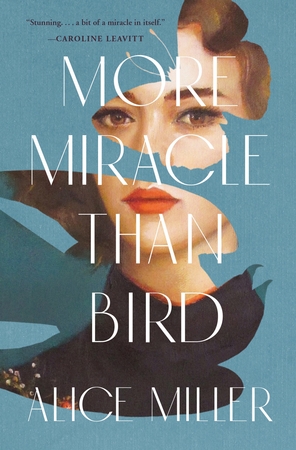
In this list you’ll find Georgie Hyde-Lees, the subject of my first novel, More Miracle than Bird. Brilliant and independent, Georgie worked in a war hospital in First World War London, had very unusual ideas about death, and took extraordinary actions to enact those ideas. But the main reason we remember Georgie’s name now is because she ended up marrying one of the most famous poets of the twentieth century, W.B. Yeats. Theirs is one of the strangest love stories I’ve ever heard.

William Godwin and Mary Wollstonecraft, 1797

William Godwin and Mary Wollstonecraft, 1797

Cut short by Mary Wollstonecraft’s early death (after giving birth to the couple’s daughter Mary, who would one day write Frankenstein), this relationship was remarkable for being so modern. In fact, the partnership of these two philosophers would be the model for Leonard and Virginia Woolf’s relationship more than a century later. 

Mary Wollstonecraft and William Godwin’s friends thought they were mad for maintaining two different households after they were married. Every morning William walked to his office and read and wrote until 1pm on his own, and Mary stayed at home and wrote herself. While both parties were happy with this arrangement, Mary found that as she was the one at home, far more of the domestic tasks were left to her. At the time it was unheard of to suggest that her writing time might be as important as his, even though Mary had already published several books, including A Vindication of the Rights of Woman. While William and Mary agreed on the equal importance of their work, the imbalance of domestic tasks was never resolved. Still, when their relative independence worked, it worked well. “I wish you, for my soul, to be riveted in my heart,” Mary wrote, “but I do not desire to have you always at my elbow.”

Count Leo Tolstoy and Countess Sofia Tolstoy (née Behrs), 1862-1910

Determined to be entirely honest, 34-year-old Count Leo Tolstoy gave the 18-year-old Sofia Behrs all his diaries to read in the week between his proposal and their marriage. Sofia was extremely upset by the revelations in these diaries, particularly on reading of Leo’s early exploits with peasant girls. Still, the couple read each other’s diaries for their entire marriage, only stopping in the final year of Leo’s life where he controversially vowed to keep a diary for himself only. Over the course of the marriage, Sofia raised their 13 children, copied out his voluminous works many times over, and despite being married to one of the most famous men in the world, was left nothing when her husband died because he did not believe in property or copyright. In Leo’s diary from 1897, he wrote: “So[fia] has read this diary in my absence and is very distressed that people might afterwards conclude from it that she was a very bad wife.” The year after, one of Sofia’s diary entries reads:

“I was wondering today why there were no women writers, artists or composers of genius. It’s because all the passion and abilities of an energetic woman are consumed by her family, love, her husband – and especially her children. Her other abilities are not developed, they remain embryonic and atrophy. When she has finished bearing and educating her children her artistic needs awaken, but by then it’s too late.” 

Elizabeth Lilith Plaatje (née M’Belle) and Solomon “Sol” Plaatje, 1898-1932

This couple struggled to understand one another at first. Despite the fact they both spoke several languages, he did not understand her Xosa and she only understood some of his Setswana. In their South African context, this caused problems beyond just communication; as Sol observed:

“My people resented the idea of my marrying a girl who spoke a language which… had clicks in it; while her people likewise abominated the idea of giving their daughter in marriage to a fellow who spoke a language so imperfect as to be without any clicks.”

Instead the couple read Romeo and Juliet together, and Sol quipped that their ability to converse in English was the only thing that saved them from “a double tragedy in a cemetery.”
Elizabeth was a teacher and her husband liked to point out that she was the better educated of the pair. As members of the small African elite in South Africa, both Elizabeth and her husband sought equal rights for African people and inclusion in the broader British context. Sol was a novelist, journalist, politician, and a founding member of what would become the African National Congress. He traveled abroad a great deal for his work, during which time Elizabeth had to sell their house and move in with her brother in order to keep the family safe and solvent. Throughout his life, Sol was continually struggling for recognition, publishers, and the means to support his family, and these concerns plagued him up until his death from pneumonia in 1932. Although Elizabeth outlived him by a decade, it was not until the 1970s that her husband was recognized as a leading figure in South African history.

Virginia Woolf (née Stephen) and Leonard Woolf, 1912-1941

Reporting the news of her marriage, the 30-year old Virginia Stephen announced: “I’ve got a confession to make. I’m going to marry Leonard Woolf. He’s a penniless Jew. I’m more happy than anyone ever said was possible.” Of the marriage itself, she wrote that they both wanted “a marriage that is a tremendous living thing, always alive, always hot, not dead and easy in parts as most marriages are. We ask a great deal of life, don’t we?” The marriage was not without obstacles; there were sexual problems from the beginning. The Woolfs wanted to have children but were advised against it because of what was referred to as Virginia’s “mental instability.” Over the course of their marriage, Leonard would help Virginia through multiple bouts of depression and numerous suicide attempts. For some years, Virginia had an affair with Vita Sackville-West with Leonard’s blessing. 

In 1917, the couple set up the Hogarth Press—publishing Virginia’s novels as well as works by T.S. Eliot, Katherine Mansfield, and Sigmund Freud—and Leonard wrote in a letter: “I should never do anything else, you cannot think how exciting, soothing, ennobling and satisfying it is.” A writer, publisher, and former colonial administrator, Leonard appeared content at the end of his life that he would be remembered as Virginia’s husband. Virginia famously wrote in her suicide note in 1941: “What I want to say is I owe all the happiness of my life to you. You have been entirely patient with me and incredibly good . . . I don’t think two people could have been happier.”

Dorothy Pound (née Shakespear) and Ezra Pound, 1914-1973

“I feel quite sure,” the Irish poet W. B. Yeats wrote in 1915, “that Ezra & his wife who are obviously devoted must have fallen in love out of sheer surprise & bewilderment.” Dorothy, an English painter, met the American poet in 1909 in London, where she fell for him, and he fell for her and her set—Dorothy’s mother was the great friend and former lover of W.B. Yeats, the very man that Ezra had crossed the Atlantic to meet. After Dorothy married Ezra in 1914, they stayed in England for the war, before moving to Paris where Ezra finally enjoyed the adulation and fame he had sought. 

In 1924 Ezra began an affair with the classical pianist Olga Rudge, and they had a daughter. Their affair would last for 50 years. While Ezra’s infidelity was well-known, Dorothy’s response was a dignified silence. Dorothy stayed with her husband, moving to Italy, and giving birth to a son, who was sent back to England to be raised by Dorothy’s mother. Around this time Ezra was also fostering another devotion, to Mussolini, fascism, and anti-Semitism. After he was arrested for his pro-Mussolini broadcasts, he was taken back to the United States and declared insane. Dorothy moved to Washington and tended to Ezra, his needs, and his papers, until his release from St Elizabeth’s twelve years later. Ezra briefly hoped to marry one of the students from what he called his “Ezuversity,” despite her being nearly 50 years his junior. It was around 1960 that Dorothy and Ezra parted for good. Ezra spent the last decade of his life with Olga, and Dorothy and Ezra never met again. In 1971, Dorothy published a book of her own watercolors and drawings, and she died the year after Ezra, in 1973.

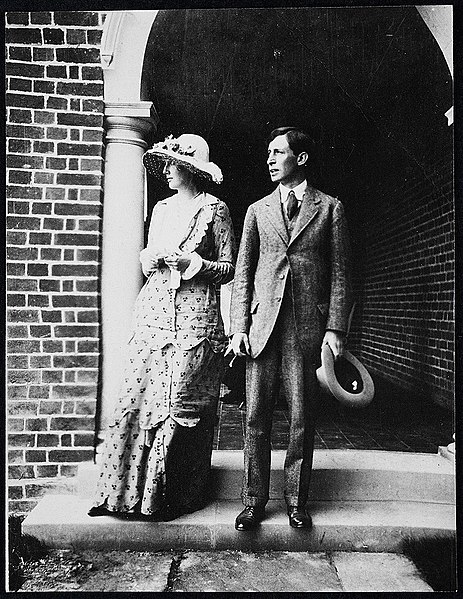
Walter de la Mare; Bertha Georgie Yeats (née Hyde-Lees); William Butler Yeats; unknown woman by Lady Ottoline Morrell.

Georgie “George” Yeats (née Hyde-Lees) and William Butler Yeats, 1917-1939

When Georgie Hyde-Lees and W.B. Yeats married, the public laughed. Here was Willy Yeats, a famous poet at 53, who had spent many decades publicly mooning over—and being rejected by—the beauty, actress, and heiress Maud Gonne. Now, finally realising he’d never had a chance with Maud, he’d found himself a 25-year-old (“rich of course” one man quipped) and agreed to marry her. Although the beginning of the relationship was very difficult—and provides some subject for my upcoming novel—the marriage went on to last for more than twenty years.
Georgie, known as George after her marriage, raised their two children in a medieval tower with no electricity or running water. When Willy Yeats died in 1939, Georgie was still only 46, but in a way, her task as the poet’s wife was only half complete. Known to be brilliant but a very infrequent letter writer, she received a letter from Ezra Pound demanding: ‘Wot the hell Do yu do with yr mind?’ Many people urged George to write a book about Yeats but instead she continued quietly in her role at the helm of what she called “the Yeats industry,” dealing with the poets’ extensive works and assisting the streams of academics arriving to study him. When she was struggling with this role, the Irish writer Frank O’Connor wrote to reassure her that this was “the last big job” she would ever do for him. Finally recognised for her contributions, George replied in an unusually emotional note: “That phrase will be in my mind for ever. It is the first time anyone has written such a sentence to me.”

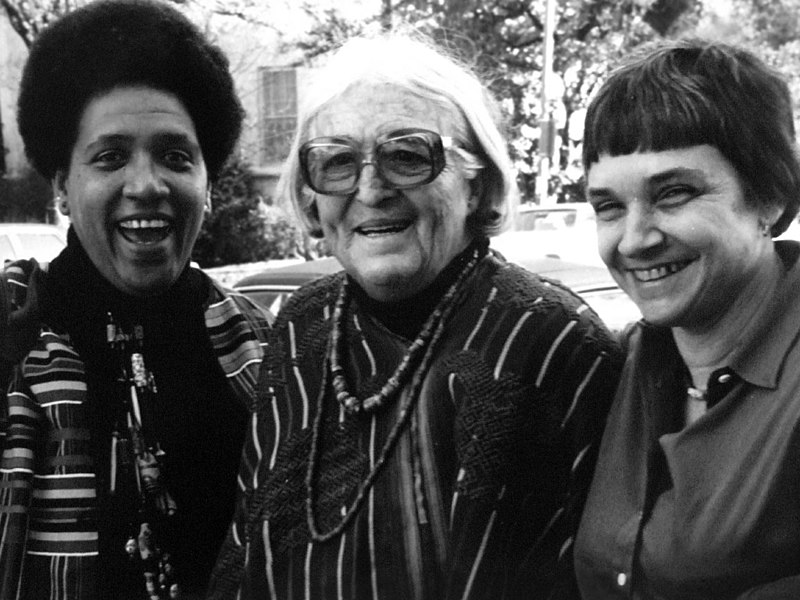
Audre Lorde, Meridel Lesueur, Adrienne Rich. They led a writing workshop together in Austin, Texas.

Michelle Cliff and Adrienne Rich, 1976-2012

A year after the Jamaican American writer Michelle Cliff and the Jewish poet Adrienne Rich met in 1975, they became partners for life. Adrienne’s first collection was published in 1951 when she was selected by W.H. Auden for the Yale Younger Poets Prize; Auden famously praised her poems for being “neat and modestly dressed.” As time went on, Adrienne’s poems were criticized by the literary establishment for becoming “strident” and “too personal,” as she began to directly address the plight of women and lesbian existence.

Writing across a wide range of genres, Michelle addressed colonialism and racism in her work. She declared her own creative intention in her 1991 essay “Caliban’s Daughter” to “reject speechlessness” and “to invent my own peculiar speech with which to describe my own peculiar self, to draw together everything I am and have been.” Together and separately, Michelle and Adrienne worked to encourage and amplify repressed voices. In 1981, they became joint editors of the multicultural lesbian journal Sinister Wisdom.

The details of Michelle and Adrienne’s relationship were always kept private. Of her marriage to a man back in the 1950s, Adrienne said: “I married in part because I knew no better way to disconnect from my first family. I wanted what I saw as a full woman’s life, whatever was possible.” After she came out, she noted that “the suppressed lesbian I had been carrying in me since adolescence began to stretch her limbs.” Over the course of Michelle and Adrienne’s relationship, which lasted more than thirty years, Adrienne pursued work, as she put it in one poem “for the relief of the body / and the reconstruction of the mind.” Adrienne died in 2012, and Michelle died four years later.

The Book You Need to Fully Understand How Racism Operates in America

For years, we’ve been taught that racism is rooted in ignorance and can be combated by education. That’s not exactly true. Racism was constructed by highly educated men, and used as a conduit to gain and sustain power, as well as financial gain. To truly address racism, (white) readers must move beyond just understanding how it operates, and come to terms with how racial disparity is built into the very foundations of the United States. 

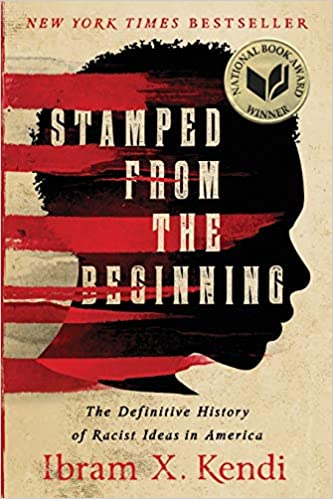
Highly respected race and history scholar Ibram X. Kendi’s How to Be an Antiracist is one of the books that has been making rounds on coffee tables as of late. In Kendi’s most recent publication, the professor of race and international relations at American Universtity pushes readers who claim not to be racist to become anti-racist—“people who support ideas and policies affirming that racial groups are equals,” despite their differences. Instead of exploring American’s racist behavior, Kendi examines his own racist practices, which is imperative to combating racism. With this, Kendi is being the change that he wants to see. While How to Be an Antiracist is an informative and necessary read, it is his National Book Award-winning, Stamped from the Beginning: The Definitive History of Racist Ideas in America that deserves extra attention. If we want to uproot the current racist system, it’s mandatory that we understand how racism was constructed. Stamped does just that.   

Stamped from the Beginning takes its name from an 1860 speech given by former Mississippi senator Jefferson Davis, who announced that the inequality of white and Black races was “stamped from the beginning.” Kendi centers his work on two questions that people have historically asked themselves about racial inequality: One, what are Blacks doing wrong? Two, what are “we” doing to the Blacks? 

Kendi identifies the two camps as segregationists and assimilationists. Segregationists are those who blame Black people for racial disparities. Assimilationists—a group that includes Abraham Lincoln—recognize that discrimination exists, but also rest on an assumption that Black people are inherently lesser. Segregationists attract the most criticism, while assimilationists may appear to be nonracists. “So many prominent Americans,” Kendi writes, “many of whom we celebrate for their progressive ideas and activism, many of whom had very good intentions, subscribed to assimilationist thinking that has also served up racist beliefs about Black inferiority.” In other words, assimilationists promote freedom but neglect equality. 

Assimilationists promote freedom but neglect equality. 

For instance, noted freedom fighter William Lloyd Garrison, editor of the 19th-century abolitionist newspaper the Liberator, and a founder of the American Anti-Slavery Society, explained his opposition to slavery by arguing that it had degraded Black people. In his introduction to the Narrative of the Life of Frederick Douglass, he wrote: “Nothing has been left undone to cripple their intellects, darken their minds, debased their moral nature, obliterate all traces of their relationships to mankind.” Even Frederick Douglass himself, Kendi argues, held some racist views. Racism is such an indelible part of American history that even the opponents of slavery—even the former slaves—based their beliefs on an assumption of Black inferiority. 

Let’s look at another alleged friend of Black folks, President Theodore Roosevelt. Because Roosevelt expressed “interest” in Howard University by dedicating new buildings to the campus, funded by Congress, many believed that he was antiracist. But his support came from a belief that buttressing HBCUs would reduce lynchings, because lynching was a response to Black criminality. It makes one wonder how Roosevelt would have reacted had he witnessed the civil disobedience at HBCUs where students made attempts to disrupt Jim Crow. 

Recently, the House of Representatives passed the George Floyd in Policing Act of 2020. This broad bill bans police chokeholds, a tactic used by Daniel Pantaleo to kill Eric Garner in 2014. The new bill will also track police misconduct, and prohibit certain no-knock warrants, a method used to murder Breonna Taylor. Also, television companies are removing films, and shows. Record labels are removing the term “urban” from its hip-hop and R&B departments. NFL commissioner Roger Goodell apologized for not listening to NFL players earlier, yet he said nothing about Colin Kaepernick. All of this sounds good, but none of the above measures uproot the current system that’s in place. These actions are maneuvers by skilled assimilationists.  

Exercising subtle and effective racism requires a critical thought process and potent language, which usually comes from years of rigorous study. It must be noted how Lee Atwater explained to the Reagan Administration how to use abstract racist language without sounding racist to the public. These types of conversations continue behind closed doors. By not recognizing harmful language, many Blacks unknowingly assisted in the passing of the “tough on crime law,” written by Joe Biden and signed into law by Bill Clinton in 1994. The “tough on crime law” was one of the main contributors to mass incarceration, which overwhelmingly affects minorities. 

It’s hard to distinguish between authentic goodwill and those motivated by self-aggrandizement.

We must also be critical of Black assimilationists. Recently, it was alleged that CNN anchor Van Jones helped law enforcement and White House staff write the George Floyd in Police Act of 2020. Jones alleged involvement in constructing a loose police reform bill, parallels the controversial views of Booker T. Washington. During Washington’s 1895 Atlanta Compromise speech, the Hampton University graduate suggested that Blacks should accept segregation, and focus on vocational training as opposed to academic pursuits. Washington’s theory was that corporate America would not allow Blacks into professional spaces. While there was some truth to Washington’s philosophy, he was also telling Blacks to deny their constitutional rights, particularly the 14th amendment, which is exactly what systemic racism does: deny equality to Blacks. 

With current civil unrest in the U.S., educated and even well-meaning activists, senators, mayors, governors, CEOs, etc. will make promises, and may have good intentions to stand on their promises. It’s hard to distinguish between authentic goodwill and those motivated by self-aggrandizement. With this, a thorough study of Stamped from the Beginning prepares readers to be aware of abstract language, examine their own racist views, and have a better understanding of how racists, and assimilationists operate. 

Our Family History, Packed in Mom’s Garage

“You’ll Be Honest, You’ll Be Brave”
by Kelli Jo Ford

Justine pulled into Lula’s as the morning sun began to glow behind the hills. She sat in her truck trying to massage the feeling back into her legs after the long drive, as sleepy birds chirped from the power line on the far side of the gravel road. After being on the Cherokee Nation’s list for so long that she forgot she was on it, her mother Lula had finally gotten her dream house in the country. The small three-bedroom rancher with green shutters overlooked Little Locust Creek, where a cloud of fog wafted into the humid air, leaving a dreamy haze over everything. Under different circumstances it would be a peaceful place to come home to.

Sheila already had her purse on her arm when Justine stepped stiffly inside. Sheila’s eyes looked tired, but her bun, teased and sprayed at the back of her head, didn’t betray a single stray hair. She gave Justine a long hug.

“Sorry I have to get to work, Teeny,” Sheila said. “I wish I could stay with you.”

“Don’t know what we’d do without you,” Justine said. She looked toward the closed bedroom door. No matter how Justine tried to square things in her mind or heart, coming home broke her open. She was not accustomed to being unable to contain what spilled out. “How is she?”

“Sleeping now,” Sheila said, leading Justine into the kitchen. “She hasn’t had a spell since right after I got here yesterday.” Sheila opened the fridge and pulled out a big mason jar of brown liquid. “I made her some bone broth. That might perk her up some.”

Justine hugged Sheila again and began to cry. She could rest her head on Sheila’s, so she did.

Sheila, tiny and full of movement even at rest, always made Justine think of her daughter Reney. Sheila had gone back to the church—and Samuel—after Justine and Reney moved back to Texas that last time. With baby crow’s-feet in the corners of her eyes, Sheila could have been nearly any one of the women Justine grew up with, perpetually on the verge of middle age and capable of anything from banging out a hymn on the piano to tying up her skirt and tacking a shingle back in place to making a pot of beans for sick neighbors with a baby on her hip.

Reney, meanwhile, was aging in reverse, it seemed. After she’d left that prick, she traversed the country picking up work as banquet waitstaff wherever she decided to pass time. Now she was a college student in Portland, Oregon, of all places. Finding herself.

“We’ve got to trust the Lord,” Sheila said. “All we can do.”

“Y’all go to the doctor now, don’t you?” Justine said. “Can’t you talk to Mama?” She eased herself into a chair at the same kitchen table she’d eaten at as a girl, picked up a packet of syrup from a bowl, and began to fiddle with it.

“She’s old-time Holiness like Daddy. Plus . . .” Sheila said with shrug, “she’s too ornery.” She smiled. “She’ll be happy to see you. She talks about you, Josie, and Dee all the time.”

“I don’t know why she won’t go to Tennessee and live with them. There’s Holiness churches out there. Beautiful country. Two daughters who love her.”

“Whoa, sufficient unto the day!” Sheila said, smiling and waving her hands to show she wanted no part of that argument. “Samuel went and got her car. Amazingly, it’s not much worse for the wear. Muddy mainly, a couple of scrapes, but fine.”

“That’s about right,” Justine said.

“I know, isn’t that something!” Sheila laughed and shook her head in wonder. “God is good.” She gathered her keys and headed toward the door. “Samuel will bring the car over later today.”

“Wish he wouldn’t.”

“I’m not brave enough to fight that battle either,” Sheila said as she closed the front door and left them alone.

Justine stood in Lula’s doorway a long time before going in and sitting on the edge of the bed. When Lula woke up, she smiled.

“Miss my baby.” Lula ran her tongue around her dry lips. “I suppose they told you I had a spell?” She looked toward the wall. “Sheila said my car isn’t here?”

“No, Mama,” Justine said. “Your car isn’t here.”

Lula patted Justine’s hand, closed her eyes, and said, “We will get it tomorrow.”


When Justine had gotten the call from Dee, her oldest sister, she’d been on the phone with Reney, putting another new zip code in her address book so she could send the old photos Reney’d been asking for. Justine clicked over, and before she could get out a hello, Dee’s voice cut in.

Lula had the seizure while she was out on one of her countryside drives, taking in scenery she’d seen a million times—probably on her way home from McDonald’s. Thankfully, she’d only run through somebody’s barbed wire fence. No one was hurt, though she was still having the seizure when a man stopped and called 911. Lula came to in the back of the ambulance and demanded to be brought home.

“When can you get up there?” Dee asked.

Justine closed her address book, put fifty dollars in Reney’s card, and sealed it shut.

“Teeny?”

“This is why I wish she’d come out there with y’all,” Justine started in. “Or at the very least, let them take her to the hospital. At least we’d have time to figure out a couple things.”

“You know we can’t make her do anything she doesn’t want to do,” Dee said.

“The bank’s going to come get my truck if I don’t get their check mailed,” Justine said. She could hear Dee tapping on computer keys.

“I’m looking for tickets for me and Josie, but I don’t know when we can get there.”

“I don’t know how long I can stay,” Justine said, but when she got off the phone, she set about doing all the things she needed to do: leaving a message for her boss, shoving Reney’s pictures and card into a box to mail later, writing Pitch a list he’d ignore, grabbing the bills that most desperately needed to be paid, running deodorant across her armpits because she just got off work and didn’t have time to shower, slinging shit into a bag, running by the Smokehouse to grab some brisket and beans since Lula ran the roads too much to stock a cupboard, and, finally, driving through the night.

Now here Justine sat, back in Beulah Springs, propped up on a pillow next to Lula, reading her the Gospel of John as she dozed. After Samuel dropped off the car, she had hidden the keys behind a dusty can of commodity orange juice in a kitchen cabinet. By evening, Lula was up, pouring herself Mountain Dew and wanting to ride to McDonald’s. Justine microwaved her a plate of brisket and beans and told her to be thankful she wasn’t wrapped around a telephone pole. Feeling bad for that one, she’d then taken her for a drive to watch the sun set over Tenkiller.

Justine was sitting in the living room flipping though a Reader’s Digest when Dee and Josie showed up late that night. They came in dragging suitcases and bag after bag of crap. They’d already stopped by Walmart and bought the store. Josie carried in a television with a built-in DVD player.

“You know Mama’s going to lose her mind when she sees that thing,” Justine said.

“I told her.” Dee dropped her purse beside the couch and plopped next to Justine.

“I’m not showing it to her, are you?” whispered Josie, as she heaved the box into the other bedroom and closed the door.

“How is she?” Dee asked. “The car doesn’t look so bad.”

“You know,” Justine said. “Still slow and groggy but getting back right.” She tossed the Reader’s Digest aside. “Whatever that is.”

Dee ran her fingers through the short hair she kept dyed strawberry blonde. Bracelets on her wrist jangled. “Bless her heart,” she said finally. “And yours. She driving you crazy yet?”

“Asking for her keys,” Justine said. “That’s all she’s really worried about. She knows she shouldn’t be driving.”

“Can’t nobody tell that woman what to do,” Josie said, forgetting to whisper as she walked into the kitchen. She had already dressed in her satin pajamas and had a sleep mask propped on her forehead. “About like somebody else I know, huh, Teeny?”

Justine and Dee shushed her at the same time.

“I’m just saying, the woman’s hardheaded. She’s going to do what she’s going to do, whether it’s run the roads or flush her meds.” Josie had come back into the living room with a plate of cold brisket. “I don’t know how we lasted sixteen or eighteen or however many years with her.” She sat on the other side of Dee and sawed on the meat with the side of her fork.

“You both left my ass as quick as you could,” Justine said. She was trying to make a joke, but it didn’t come out right.

Dee put an arm around her and pulled her closer.

“Mama did the best she could,” Justine said. “But the way we were raised up . . . it’s kept us from . . .” She had that feeling again. She wanted to get in her truck, point it south, and turn the radio up so loud she could not think. She could point it west for all she cared, as long as she got gone.

“At least Granny was here,” she said, finally. “For my sake and Mama’s.” She was crying again, and now so were her sisters. “I’d handle being beaten every day better than what went on inside my head.” She wiped her face.

“Mama tried that too,” Josie said.

Dee whacked her with a pillow.

“Hell,” Justine said. “I don’t even know what goes on inside my head.”


By Sunday, Lula was back to herself, or so the sisters thought. She threw them a curve and skipped Sunday school. After exchanging a round of looks and whispers, they took her to McDonald’s for her beloved flapjacks and then piled back in the car and drove her to Brushy Mountain. Lula didn’t say much unless she was pointing out a bird or a rock formation she probably could have mapped. Dee and Josie oohed and aahed, pretending the scrub hills were as majestic as Lula thought. Justine did her best to keep quiet.

By the time they got back to the house, Justine’s back was on fire. Since she’d hurt it slinging a broken pallet into the dumpster at work, she couldn’t sit long, and the drive up had just about done her in. She did best when she kept moving, so she decided to work in the garage, which was stacked with boxes they’d hauled over from the attic of the last rent house. Dee and Josie got busy in the flower beds, and when Lula wasn’t dozing, she stood over them giving directions.

It was a fight to get Lula to let anything go. Ketchup packets and McDonald’s napkins bulged from kitchen drawers; stacks of Styrofoam coffee cups lined the counters. The garage wasn’t much better. Half the crap was junk, useless stuff that lacked even sentimental value. The other half: photo albums and Lula’s old artwork that had been left in the heat. If Lula didn’t care any more about it than this, Justine figured she could clean it up and take what she wanted for Reney. She told herself she was saving the trouble of having to do it later, with the added benefit of getting to it before her sisters. She told herself she wasn’t worried about getting caught.

When she leaned her ear to the thin door that separated Lula’s bedroom from the garage, she heard nothing from inside but the pull chain clinking against the light in the ceiling fan. She adjusted the box fan whirling in the heat of the open garage door. Then she wiped sweat from her forehead and dug into a dusty cardboard box with DREFT stamped on the outside. Pulling out a warped photo album, she listened for Lula one more time. Then she dusted off the cover and started flipping.

She stopped at a photo of Reney, who couldn’t have been more than two, sitting on Granny’s lap. Reney was doing this thing she’d always done to whoever was holding her: pinching and rubbing elbow skin. But Granny, of course, was wearing long sleeves, so it was really polyester that Reney was rubbing.

In Portland, Reney was taking on debt to study books she could have read for free, as far as Justine could tell. Her Reney, who after high school had become such a hard woman, so cautious with money and closed off. Sometimes it seemed this kid she’d more or less grown up with, the girl she’d loved and fought with and rocked in the night—her daughter, her very soul—was a whole different person.

Reney called whatever it was she was going through her rebirth. She lived in a communal house of some sort and dated two different men that she called feminists. She’d taken to asking questions about her “Cherokee heritage” when she called home, wanting to hear old stories. Justine had stories aplenty; few that she cared to tell. Nonetheless, she found herself telling them all.

It was often late at night when Reney called. She asked for Justine’s advice, something she’d never done back home. They could talk for hours now that she was gone. Justine wondered what Reney was doing right then. She thought about calling her.

Justine jumped when she heard footsteps. She shoved the album into the box she’d set aside for Reney and felt relieved to see Dee standing beneath the garage door.

“We’re about to go to Walmart. Need anything?”

“Again?” Justine said. She stood and stretched her back. “Josie better take that damn TV back.”

“I told her, but you know—”

“You know what?” Josie said, peering over Dee’s shoulder. She was the middle sister but had always behaved more like the baby.

“Mama finds your devil box, all hell’s going to break loose,” Justine said, going back to her sorting.

“She finds my TV, I’m directing her to the ice chest full of Coors Light in your truck.”

“You can’t even get any channels out here,” Justine said.

“I’ve got a whole season of ER. Clooney’s an Oklahoma boy, you know. We’re the same age. If I’d played my cards right and not run off with old whatshisname, maybe we would have got married.”

“Bullshit,” Justine said. “Bring back bleach. Did you see the bathroom? I swear Mama’s eyes are slipping. Her nose too.”

“Well her ears aren’t, so you two better pipe down,” Dee said.


Justine was in a groove when Lula opened the door leading from her bedroom into the garage. She wore house shoes, but her hair was neatly braided. She held bobby pins in her mouth as she wrapped her braid around itself on the top of her head. Justine noticed a piece of paper stuck to her cheek. It looked like a tiny curled tail growing out of her face. Justine was compelled to go wipe it away—she knew it would embarrass Lula—but she was feeling annoyed at her own fear over nearly being caught.

“You need your rest, Mama,” Justine said.

“I get lonesome for my girls. Thought you all might like to drive to McDonald’s.”

“Dee and Josie went to the store,” Justine said. “I’m sorting through all this junk.”

“Those folks behind the counter love me,” Lula said. “They treat me like a queen.” The paper stuck fast to Lula’s cheek as she spoke. It looked like it had come from inside the ring of a spiral notebook.

“I know, Mama,” Justine said. “Maybe later.”

She thought Lula was about to go back inside and leave her be, but then she stepped down into the garage. Lula scanned the boxes and garbage bags and then peered into the box Justine had been working in before moving to an untied kitchen trash bag.

Using her index finger, she shifted the trash bag open and pulled out a little Indian doll. The braided hair had come undone and matted. The faux buckskin dress came apart at the touch, and the nose had been chewed away to white plastic. The most intact thing about it was the bold lettering spelling China on the doll’s underparts.

“Mama, that thing’s been in a box for twenty years. Mice got to it.”

“Well, I’d appreciate you not throwing away my belongings,” Lula said. She carried the doll back into her bedroom.

Justine was so relieved at not being accused of stealing what she wanted before Lula died that she ignored the urge to barge through the now closed door and argue. Instead, she dug the album out again and flipped back to the picture of Reney and Granny.

It struck her that unless Granny was caught in a moment with one of her half sisters, she rarely smiled in photos. Even in this picture with Reney, who Justine knew was one of Granny’s secret favorites, her lips turned downward in a soft C.

The Granny of the photograph—old Granny—was a gentle woman who tucked her laughter into all of the places in their house that lacked. But “old Granny” had been far from a pushover. When it had gone bad with Lula, Granny acted as Justine’s and her sisters’ buffer.

Justine turned the page to a faded picture of Uncle Thorpe and his gang of kids—her cousins. The boys wore long pants and long sleeves and crew cuts. The girls were in long cotton dresses and pigtails. Most of them were barefoot— they’d probably been playing outside before whoever had the camera rounded them up and told them to freeze. She wiped a smudge over John Joseph, the cousin who’d been closest to her in age and her best friend. She smiled at the thought of the two of them fighting over who got to memorize “Jesus wept” for Sunday school.

In the picture, John Joseph stood off to the side a little, caught midstruggle, leaning back trying to hold a full-grown German shepherd. His hands hardly met around the dog’s barrel chest, and the dog’s outstretched legs were planted firmly on the ground. The movement must have caused John Joseph to be out of focus. There weren’t a lot of pictures of him, and this one was out here, ruining in the garage.

Justine shook her head and stood up to rub her back as she scanned the garage. She set the album back into Reney’s box before moving to another corner. There was no telling what had been lost.

She knelt before a new box and pulled out another picture of her granny. She was young in this one, her hair still black, her skin dark brown. She stood in a wooden wagon full of watermelons with Justine’s grandfather, a severe-looking white man in a cowboy hat and rolled-up blue jeans.

Justine squinted into the photograph, trying to imagine her grandmother so young. She had been a maid in a big ranch house when she’d met Justine’s grandfather, a barn hand who Justine knew had been a terrible drinker. It wasn’t hard to imagine Granny’s strength. She was kind, but she was not soft. That’s where Lula got it, where Justine got it, and Reney, too, Justine figured, though she’d done her damnedest to keep Reney from ever having to access that kind of strength. Granny had been brought up in Indian orphanages and, later, Indian boarding schools. She’d never taught her grandchildren the language beyond basic greetings. She simply said that life was harder for those who spoke it.

Justine thought of all the times she’d bought herself or Reney language tapes and materials at the Cherokee Nation gift shop. You could probably start a library if you gathered up the books, flash cards, and tape sets that she’d purchased over the years, only to stash them on a bookshelf until they made their way to boxes in the heat of her own garage.

This time, she didn’t even peek over her shoulder as she slid the photo inside the album in the box of thieved treasures. She took out a manila envelope with folded pieces of paper inside. From it, she pulled one of Lula’s charcoal teepee drawings. She marveled over her mother’s talent. No matter how many sets of pastels or pencils Justine sent her, Lula would not—said she could not—draw any longer.

Justine put the teepee in Reney’s box, too, and set the manila envelope to the side. In the bottom of the Dreft box was a leather journal, stiff with age. She thought it was one of Lula’s diaries, which Justine always felt bad about reading, though she could never help herself. Filled with Lula’s perfect cursive, the diaries spoke of deep loneliness and sorrows. It was a side of Lula that she didn’t reveal to anyone, as far as Justine could tell. Justine checked the door and opened the book. She nearly gasped when she saw the writing inside. She hadn’t seen her grandmother’s sweet scribbly handwriting in years. It looked like Granny had used the book as a record of their days, no matter how mundane.

May 25—In Hominy with Celia all week. Caught perch and catfish—big mess. Celia’s baby son graduated high school today.

May 30—Sweet Service tonight. Bro. Buzzard came and preached good.

June 2—Sister Irene picked us up for church but had to leave early for a sick little one.
Thorpe gave us a ride home.

June 3—Lula made a cowgirl cake for Reney’s birthday, so pretty. Reney is always sweet and precious. She stayed all night here again.

At that entry, Justine set the book down and cried so hard she had to pinch the top of her nose to keep quiet. After Reney divorced, she’d started calling Granny her soul mate. She said Granny came to her in dreams and had ever since they’d moved to Texas when she was a little girl. In taking Reney to Texas, Justine knew she’d taken her away from Granny, who, it turned out, had been Reney’s buffer too.

Reney had tried her best to follow in Justine’s footsteps in her sorry choice of men, and the more Justine pushed her to do better, the more Reney dug in. Until she let go and drove off without a word.

“Are you ready to go to McDonald’s?” Lula stuck her head out the door, surprising Justine again.

Justine jerked her shirt over her eyes and pinched them dry.

“Teeny?”

“McDonald’s is disgusting,” Justine said. “You need to take better care of yourself.”

Lula leaned heavily on the doorway to ease down into the garage. “Is everything okay?” she asked.

“Mother,” Justine nearly shouted. She took a breath then continued: “I’m fine.”

Her mother cupped Justine’s cheeks, as if Justine were a little girl and Lula were checking her face for cake icing. Justine wouldn’t meet her eyes. Instead, she studied the piece of paper, still stuck to Lula’s face. Lula must have fallen asleep studying her Bible and drooled.

“Mama loves you, Justine,” Lula said. “But only Jesus can make it all better.” She turned to go but came back and said, “Please don’t throw away my belongings.” Then she passed through the open garage door and climbed into the dented-up Pontiac.

“Where’d you get those keys?” Justine asked.

“I can rummage through my belongings too,” Lula said. Then she settled into the driver’s seat and started down the hill.

Justine picked up the box she’d been filling with treasures and sat with it in front of the fan. She pulled the rest of Lula’s artwork from the manila envelope. There was a smaller envelope inside, too, labeled “Teeny” in Lula’s looping letters. It was her High School Equivalency Certificate, lost nearly as soon as she’d gotten it all those years ago after Reney was born. She’d always been embarrassed to say she had only a GED, but right now, she felt proud of the yellowed piece of paper, saved all these years by Lula. She remembered what it meant when she got it. She was sixteen, but she could get a good factory job, a job with benefits. She could take care of Reney. She could help Granny and Lula.

She wiped the sweat from her face and pushed her hair behind her ears. Then she spread her GED on the floor before her, smoothing its creases. She placed a rock on top to keep it from blowing away. She added her grandmother’s journal and Lula’s drawings, all of them she could find. She placed the old pictures around everything, too, finding stones and knickknacks to place on each one. A pressed cardinal feather fell from an album. Justine sat there for some time, smoothing the feather between her fingers, letting the wind blow heat over her and her makeshift altar.

She looked back toward the road, where dust from Lula’s car was still settling. Justine knew she should have taken her mother to McDonald’s, where Lula was certain the pimple- faced kids saw her as royalty and not as the strange woman in a long dress who over-enunciated her order and huddled over her flapjacks. Now it was too late. But maybe tomorrow.

The Words That Will Bring Us Through the Chaos

I read Octavia E. Butler’s short story collection Bloodchild and Other Stories in the last year of my father’s life. He was in treatment for Stage IV colorectal cancer in Loma Linda, California—our home country of Malawi had only two oncologists at the time of his diagnosis in December 2016—and so I did a lot of reading on what effectively became my regular commute between Philadelphia, where I have lived for the last nine years, and Los Angeles, the nearest major airport to Loma Linda. The book was recommended to me by a friend from college when I’d gone to visit her in Michigan for her dissertation defense party, and I read the collection slowly over many flights to visit my father while he was in treatment, trips that became so frequent I quietly dubbed the route The Cancer Commute. 

The story that stuck with me the most, “Speech Sounds,” is set in a post-apocalyptic Los Angeles; the main character, Rye, has spent the last three years just surviving, but not much more than that. She lives alone, having lost her husband and three children to a disease that killed most of the population and left survivors either unable to speak or unable to read. Rye can still speak, and so she has lost her ability to read—but speaking is worse than useless, as she has no one else to talk to, and has learned over three years in the now-wasteland of Los Angeles that displaying her ability to speak would invite violently jealous aggression from others who could not. 

The Los Angeles of “Speech Sounds,” then, is in a near-total breakdown. When my family first moved back to our home country of Malawi from Canada after its troubled transition to democracy in 1994, there was a similar thread of breakdown that seemed to weave itself through everything. My new school had signs on the backs of its classroom doors with instructions for both fires and riots, and my new friends talked often about the violent unrest of the year before, when they’d had to hide in the school library as gunshots rang out in the neighborhood outside the school gates on a particularly violent day. Not wanting to appear soft in a new environment—in Canada the most unsettling thing to happen to anyone I’d known was a classmate having his bike stolen once—I stayed quiet through all of their recollections, and then asked my father some weeks later about what had happened before we’d returned to Malawi. 

My father’s assigned driver was rumored to have been a member of the former government’s paramilitary wing. After my father and two of my uncles were hijacked at gunpoint one night on their way home from a business trip, my father hired a bodyguard, too. They had been fortunate to survive their ordeal; three months later one of the guidance counselors at my school and her husband were also hijacked, but did not make it. My siblings and I never left the house after sunset: one of the few times I remember ever being allowed to go out at night in my adolescence was when I went to a school dance with a friend whose father owned the country’s best-known private security firm, and was personally in the car both to and from the school grounds. And if Dad had to drive by himself at night he always carried his gun with him. Thankfully he only had to use it once. 


Although I kept coming back to “Speech Sounds,” I really didn’t care for the main character, Rye. I think I found it annoying, grating even, that her existential baseline was so barely above survival, and that she seemed so hardened and cold, even if that orientation was understandable in the story’s context. In my own life while Dad was sick, though I often felt like I was barely going through the motions, I also tried to lean into joy when I could, whereas it seemed like Rye was almost allergic to it—assiduously protecting her solitude, insistently shirking the help of a man who could see she was in danger on the Washington Boulevard bus she’d attempted to board, until the looming threat of assault meant she had no choice but to allow him to protect her. 

Contrary to Rye, in that particular time of our family’s breakdown, I swung more energetically at life than I had before. I was in two friends’ weddings, as maid of honor in one and as the officiant of the other; I traveled for work events, I went to friends’ birthday dinners, I met colleagues for happy hours. It didn’t seem right that cancer, having already appropriated my father’s body and stolen our family’s future together, should also be able to obliterate the life I had spent years building into a castle of love and personal pride. And as clichéd as it sounds I look back on that time as a period of a life particularly well-lived, perhaps to the point of exhaustion or even past it, but with a determination I consider in retrospect to be admirable—no matter the disease’s chosen course, cancer would be insistently kept outside of the gates, unable to destroy the order I had so painstakingly constructed within. 


When states began instituting their formal stay-at-home orders in March, I found myself feeling concerned at how unconcerned I was. Not about COVID-19—it scared me then and scares me now. It was that folks around me seemed to be extraordinarily anxious about being in isolation, and I was not; I adapted immediately to it, with such ease that I realized this wasn’t quite new to me. With my parents being so protective of us in Malawi, my siblings and I were acculturated early to making our home our fortress; more recently, the final month of my father’s life in Loma Linda, October 2018, had effectively been its own quarantine, with our activities confined to our apartment building, the grocery store, and the hospital. 
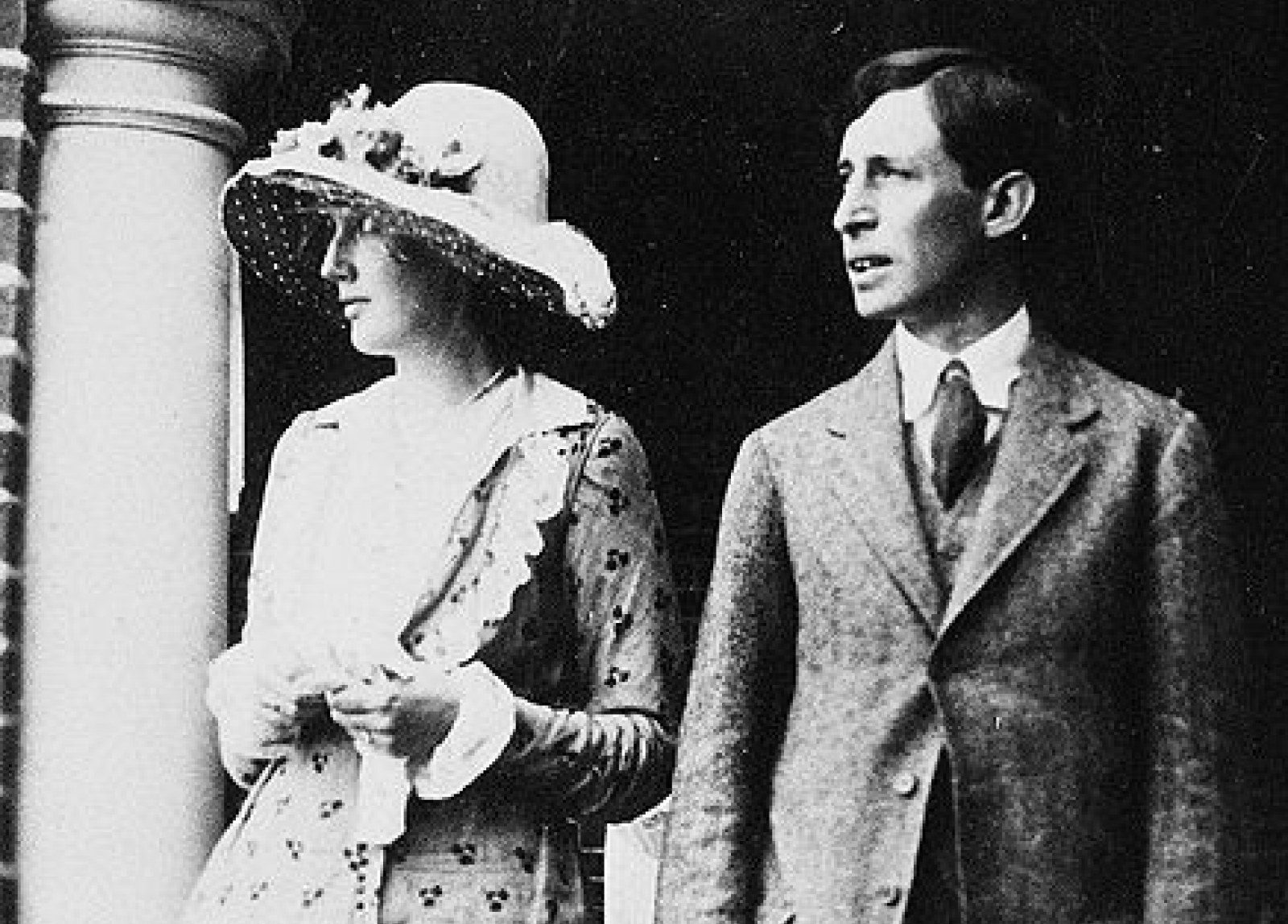
My recollection of the importance of structure in chaos is what made going into isolation as easy as it was for me.

After nearly two years of building a life in Loma Linda around Dad’s illness, we had developed routines and structure that shepherded us through that time of cataclysm. My recollection of the importance of structure in chaos is what made going into isolation as easy as it was for me. I knew that routine was the difference between being able to get up and being emotionally flattened by the fearsome surrounding reality, and I quickly made an infinitely-habitable fortress of my Philadelphia apartment, which felt, at least in imagination, like it was keeping the danger outside at bay. I got up at the same time every day, showered and changed and brushed my teeth, ate the same food I always ate at the same time I always did, cleaned and laundered as I normally would have. I went shopping once a week at the local Giant Heirloom Market, and twice a month at the further away but still walkable Trader Joe’s; I went for daily walks, first in the evenings, then in the mornings as the weather became warmer. I took on volunteer work distributing lunch in my neighborhood with a Philly-area nonprofit, Mighty Writers, that teaches writing to pre-school through 12th grade students from underserved communities, and later accepted a teaching commission from them, to teach a virtual class on news literacy in the COVID-19 era. Even though I knew the disease was rattling at all of our gates, I really felt as though insistent routine would keep those gates firmly locked.

So when the protests against the killing of George Floyd began, I was oblivious in my apartment fortress to the violent unrest that rapidly followed; it was only when the curfew alert flashed across my phone screen that I realized that things must have become a lot more serious in Philly than I’d imagined. “Something must have popped off,” I murmured out loud, entirely to myself in my small one-bedroom apartment. And it very much had—a Google search revealed overturned police cruisers, smashed store fronts, burning cars, and violent clashes between cops and protesters. That night loud explosions were heard all over the city; the news the next day claimed that a cluster of ATMs had been blown up in a series of cash thefts, but the explosions have continued every night since, and those of us who live in the city think it must be something else.

Rye, too, kept assiduous order in her life, which is perhaps what took her so long to accept the help of the stranger just outside the Washington Boulevard bus. She has her routines—the house she stays in, the fresh food she grows, the canned food she forages for and stores. Her routines in her solitude are what have kept her alive, and she didn’t want to now have to think about potentially adding someone else into that mix. But the stranger—whom she privately calls Obsidian for the smooth black rock he shows her in lieu of a spoken name—is kind, and she realizes that she can either choose the risk of trusting him or the certainty of being assaulted by the other former bus passengers. For me, it wasn’t strangers I struggled to let in, but friends. During the lockdown, friends with cars offered to bring me groceries and I declined. When the city began to fall apart at the beginning of the protests and riots, two friends who lived outside the city separately called me to offer their places as temporary refuge, but I declined those offers, too. I would feel more disoriented at someone else’s house, even if far away from the chaos, than I then did in my apartment, and I needed the feeling of security more than I needed the actual certainty that I was far away from looming destruction. 

The hardness is her attempt to protect herself in a world where everything that used to protect her is gone.

In the first few months after Dad’s death I was like this too. Then, it wasn’t as much about needing to protect an established order; it was about protecting what little order I had left in my life since he’d left my life. I committed what little energy I had left after the whirlwind of the previous two years toward that project. I turned down all but the most meaningful invitations: I went to my friend Alex’s Passover Seder, but not drinks with an acquaintance who was briefly passing through the city; I went to my friend Jules’s wedding, but not for Saturday movie night at Josh and Lynn’s. I showed up at work, but barely did any, staring blankly at my screen for much of the day and taking walks often, occasionally going to cry in the tree-lined walkway around the corner from the office building. Keeping oriented and forward-facing was my full-time work back then; everything else felt like noise, like the fight that broke out on the Washington Boulevard bus that first brought Obsidian into Rye’s life. If Rye seemed cold at first encountering her in “Speech Sounds,” I finally came to understand that she was not so much cold as she was desperate not to fall apart; the coldness is merely her riot shield, the hardness is her attempt to protect herself in a world where everything that used to protect her is gone, as the person who most protected me in the world now was, too. 


The language of “Speech Sounds” is notably desolate and spare, skirting atop the surface of the action, saying only the most necessary words to convey meaning. But one gets the sense that even if she were able to safely speak in a way that others could understand, Rye still wouldn’t have the words for her particular grief: at her entire family lost, at her former self destroyed by the illness, at the world around her having disintegrated into a worst case scenario version of itself. Perhaps, in ceasing to speak, she is recreating the safety and security that was ripped from her when the virus first took hold three years before. Her silence protects her, in other words, and my memory of that final year with Dad—especially the last six months—feels similarly protectively silent.

By then, Dad’s exhaustion had begun to steal his mind from him. We could no longer talk the way we used to, long into the night, over a bowl of fresh fruit in the living room while watching an Al Jazeera documentary special, or in the kitchen over a cup of tea. He would instead sleep nearly all day, and when he wasn’t asleep he said very little, his sentences more and more clipped, his focus disappearing mid-thought. I found myself having to slow down my speech, make my voice slightly louder, sometimes explaining things multiple times, all of which felt searingly painful. My father had four degrees—five if you counted his intermediary masters on the way to gaining his Ph.D.—and part of the closeness in our relationship, complex as it was, had been the constant feeling of playing catch-up to the speed of his mind. It wasn’t so much that I was dismayed at having caught up to him—it was that he had started to leave the race, but not of his own will.

I learned to stop trying so hard to speak in a way that he could easily comprehend, and to just be glad to be silently in his company.

Cancer, between the disease itself and exhaustion of the treatment regimen, was effectively shorting out his body and his mind. By June of 2018—four months before he died—I learned to stop trying so hard to speak in a way that he could easily comprehend, and to just be glad to be silently in his company, whether he was awake or asleep. I’d queue up the various afternoon Judge shows he and my mother had come to enjoy hate-watching—“these people have nothing better to do than cause trouble for themselves?” he used to say on the increasingly rare occasions that he was awake at that time—and would have them on in the background while he slept. Occasionally I would also cook while watching those shows, either the lunch he’d missed while napping or else early dinner preparation; it was something I began to do a lot more in my final visits in those final months. Perhaps cooking for him was a way of telling him I loved him without me having to speak the words. Nonetheless I began to miss my father a long time before his body decided it had finally had enough, on the final Monday in October, just as the day’s last rays disappeared over the nearby San Bernardino mountains.


Whenever I was back home visiting my parents in Malawi, Dad always seemed to be several steps ahead of the latest threatened boit of chaos. Not just through his job and connections, but also because of his sharp instincts about the directions that any imminent winds of chaos might bend in. Whenever he spoke of approaching trouble—electricity and fuel shortages, a rash of violent robberies, death threats from the government after voicing his opinion too loudly again—he always made light of it, because he’d already assessed it and figured out what he was going to do with it by the time he vocalized his thoughts. The levity he applied to situations like that was not mere levity, but home policy: whatever was going on in the world outside our walls, it wouldn’t be allowed to destabilize us within them. I thus always understood danger in Malawi to be something that happened around us, but never directly to us. Now in this moment the U.S. I didn’t know whether to believe the danger was merely acting around me, or would soon be upon me. 

The atmosphere in Philadelphia was charged—charged with excitement, charged with anger, charged with nerves. What I did not expect, though, was to find my days charged with grief. I cried in the mornings, I cried listening to my favorite playlists, and had the class I teach on Tuesdays been a college class and not a class of teenagers with a Philadelphia non-profit, I would have canceled class that day, the first Tuesday after the protests began. I didn’t know where it was coming from. I am a Black woman in America, and to live in this body in this country is, on an existential level, to live inside an American-made cauldron of grief every day. I am used to that. And I was enraged at white America for it having had to take watching a man’s life be slowly choked out of him by the unrelenting knee of an agent of the law before they would believe that racial oppression in America didn’t end with the signing of the Civil Rights Act. But it wasn’t all of that that was making me cry. 

To live in this body in this country is, on an existential level, to live inside an American-made cauldron of grief every day.

Then I had a particularly vivid dream of my father, in the middle of that first week of nightly curfews and explosions. Nothing particularly special happened in the dream—he was going somewhere, and I was following him; he looked healthy, pre-cancer healthy, which I was happy about, as for a long time my dreams of him were only of him in his cancer-stricken body. He was happy in the dream, I remember that, and glad to see me, but we never made it to where we were going, because I woke up. And in that moment of waking, that drop of my heart when I realized he wasn’t really here, I simultaneously understood exactly why I was so wracked with grief as potent as those first weeks after he died—because for the first time since he died I felt palpably unsafe. I had to find out on my own the information my father would have once found out for me; attempt to rest assured in my own political threat analyses when I would have asked him for his; plan my own stockpiling, when he would have once just sent me a list without me even asking for it. In a time of real danger he wasn’t here to protect me against what might be coming.


For a brief moment in “Speech Sounds,” Rye begins to dream of a life for herself and Obsidian: “Now she did not have to go to Pasadena… Now she did not have to find out for certain whether she was as alone as she feared. Now she was not alone.” It was in these moments, with her guard down, that I liked her the most; every time I’ve re-read the story, especially in the early period after Dad died, I insistently liked her best in the parts where she admitted to herself that she didn’t want to tough life out by herself anymore. Maybe because it was what I needed to do for myself; even as I didn’t have much energy for people, I simultaneously secretly wished for my shell of grief to be not just embraced as so many friends did do, but to be shattered, to stop feeling as though I was walking in a universe parallel to the one everyone around me was in, everything that had held meaning to me suddenly feeling hollow, any language I had standing insufficient to the circumstance. 

But Rye’s reason to live turns out not to be Obsidian—he ends up being murdered, just moments after she had been fantasizing about their future together. Her reason to live turns out to be the two children of the unknown woman he was killed trying to protect—children Rye tries to leave behind at first, for fear of once again having hope snatched away from her just as quickly as it arrived. But she realizes she has to go back for them, as without an adult to protect them they would be unlikely to survive: “She would have to take the children home with her. She would not be able to live with any other decision.” In returning for the children—as well as the bodies of their mother and of Obsidian, so she can bury them in her backyard—Rye reconnects herself with core elements of her pre-illness world: caring for children, burying the dead. And it is critical that this moment occurs immediately after the moment where she nearly severs her connection to that same world, in considering leaving all four bodies, both living and dead, behind. Moving forward despite grief and loss is like that—eventually finding new things to care for, while simultaneously seeking to revive the parts of oneself thought to be lost to the immediate task of survival. The months immediately after Dad died were filled with such moments for me, too: fork-in-the-road moments in which I had to choose to lean into the life around me, or to reject it. I chose, in most cases, the actions that brought me back into the world of the living again, figuring my heart would catch up in time. Largely, it did.

As Rye begins to move the children’s mother toward her car, the dead woman’s daughter suddenly screams, “No!” In shock, Rye drops the body; she realizes the children can speak, and in that moment her blind faith that taking them home with her would be the only right thing to do crystalizes instantly into purpose. Importantly, though, her new understanding of her life’s meaning arrived after her decision to live. And perhaps my own instinctive understanding of how purpose in a life can often show up after the decision to just do something is what drove me to keep moving, too—whether trucking through my ongoing grief, or sorting through the chaos of this particular moment in history. Her reason for actively living, rather than merely surviving, arrived through Obsidian, but not directly from him; perhaps the hole that is left in us when someone we love leaves us is not a mortal wound, then, but a door. Rye doesn’t know if the children are immune to the disease or if it has simply run its course and any children born after its initial impact are unaffected. But she also doesn’t care—she simply wants to take care of them, to protect them and teach them what she knows. The last line of “Speech Sounds” is Rye telling the two kids she has taken home with her, “It’s okay for you to talk to me.” If we choose to walk through the door that loss creates, our lives might very well find new light.


In these protests it is not that people have finally spoken: most have been speaking for a long time, and some for their whole lives.

In the protests, the country heard the protesters’ grief. For a life forced brutally to its end by an agent of the state; for all the lives lost before whose worth had been so casually written off, the truths of their deaths overwritten. For all the lives still being lived, that have been silently consigned by the state to that same continuum of perceived worthlessness and ongoing historical disregard. I was too far away from any of the protests to be able to audibly hear them, yet they nonetheless felt loud, as booming as the explosion sounds displacing those early summer nights. But if the nighttime explosions rattled me, then the daytime protests rattled the country, and thus I was—even at my most scared—deeply glad. The images coming through my phone screen hour by hour felt apocalyptic (one of the students in my class later said he believed we were actually in the end times, living out the prophecy of the Book of Revelation) but a necessary apocalypse, an end to a world where a part of the population binds brutality with silence and the other part are commanded to comply. In these protests it is not that people have finally spoken: some of them have, certainly, but most have been speaking for a long time, and some for their whole lives. It is that this particular death—which happened in the eye of an unprecedented countrywide shutdown for which the entire country was brought to a standstill, and in that national silence was forced to finally see truth—shattered the comprehension barrier between speakers and their willfully unhearing audience. Finally, the audience heard the speakers; and finally, the audience began themselves to speak out, too. Thus grief brought comprehension, unsteady as it still feels, and even the possibility of hope, despite our remembrance of so many past hopes for real change shattered. Hope in the life of the nation we live in, hope in the newly-bound lives of the children and Rye.


At the end of the class that happened during the first week of the protests, one of my students asked me, “Do you think things are going to get better?” No, I wanted to say. It’s going to get a lot worse. Except I couldn’t; the average age in the class is 15, and as hopeless as I felt it felt wrong to bring them along in my hopelessness. They’re too young. Three of the students’ screens had the video cut; the other three stared at me expectantly, and I understood, staring back at them, that what I said in that moment mattered more than I’d ever meant it to when I had first accepted the class assignment six weeks prior. “It’s going to get complicated,” I said. “But with everything you have all told me in class I am really confident that you all are going to be a part of making it better, and together we will.” The student who had asked the question nodded a little and leaned back, and I took that to be as good a sign of approval as I would ever get.  And, in seeing their belief, I found myself—despite my own decided lack of hope—believing it too.

My father enjoyed the feeling of triumphing over chaos; to him, becoming derailed by unexpected circumstances wasn’t an acceptable human reality so much as it indicated a personal failure to appropriately adapt to one’s reality. But cancer was a chaos that none of us could triumph over despite our best routines and best battle strategies, and now I live in a world without him. Yet he is the one who taught me how to built fortresses amidst disorientation, how to pluck life’s solutions out of chaos; in those ways he never left, and in those ways he gave me the ability to turn on my own capacity for protection, and bring it to the students I have come to really care about. Rye will bury Obsidian and the toddlers’ mother in her backyard next to her husband and children, but as brief as his sojourn through her life was, he will not leave her either; thanks to his decision to protect her in the moment she badly needed it, she has now arrived in the children’s lives to do the same for them. He will always be there, guiding her protective hand. And though my father is now buried in the garden behind his parents’ house he will always be here too, gently pressing his own protective hand into the sunlight around my fortress, encouraging me to continue to speak.