It’s Time for Disabled Writers to Tell Their Own Stories

Alice Wong’s work as an activist, podcaster, writer, qualitative researcher, and editor is on full display in her new anthology Disability Visibility: First Person Stories from the Twenty-First Century.

Disability Visibility by

Her new anthology is an extension of the projects she’s become known when it comes to always prioritizing disabled voices and lives. Wong’s work has brought together vast communities online and continually serves as a space of education and enlightenment; she has given grants to disabled writers unable to market books, and provides resources for not only her own anthology but other disabled writers whose work we should know. She also worked on the #CriptheVote campaign, encouraging political leaders such as Bernie Sanders and Elizabeth Warren to be transparent in their stances on disability policies and rights. Her latest anthology builds a roster of new and previously published essays around policy, honoring those lost, unity, and love. 

Wong and I spoke about the differences between Disability Visibility and her first anthology on resistance, perspectives and approaches to centering marginalized stories, and making this anthology additionally accessible to readers.


Jennifer Baker: Disability Visibility is not your first anthology.

Alice Wong: This is my first from a major publisher. In October 2018, I self-published a very small anthology called Resistance and Hope: Essays by Disabled People. This was done out of just feeling the need to respond to our times. Especially after Election Day 2016. And it really became a meditation on what is the relationship between resisting oppression and having hope. I really wanted to center it on disabled people, especially marginalized disabled people because activism and resistance and movement building happened way before 2016 and our current administration. So, how do we build on that? And what are the messages, and what are disabled people doing in response to our times? Because it’s not just about our present, it’s about our past and our future. That was a lovely first experience with self-publishing. I learned a lot about how to self-publish and all the different things about formatting and registering for ebooks and herding cats. This is a small collection of sixteen essays and it took me, I guess, a year and a half to get done. I had people asking me “When is this coming out?” I think people underestimate how much work it takes to be an editor. I would say that editors deserve some kudos too because it’s a lot of work that happens behind the scenes that doesn’t really show up in the same way [as it does for writers].

Jennifer: And it worked out well. It came out beautifully. 

Alice: I’m very happy with it. I think it was a labor of love. And it was really important to me for it to be free. I just wanted to make something that was available for people. Compared to what I’m doing for 2020, that was a great experience and almost a practice run for this anthology, just really understanding the mechanics of it all. 

Jennifer: I was reading your interview with Nicola Griffith when Resistance & Hope came out. You talk about your background being in qualitative research and sociology. So you didn’t study writing like many of us and I think that’s to your benefit. You come at this in a certain way that you communicate it so directly.

Alice: Sometimes I feel a little hesitant to call myself a writer with a capital W. I didn’t get an MFA. I never did those kind of publications of literary journals. It’s really hard to think of myself as a writer the way I see other people write so beautifully. I try to just tell my truth. I’m not a fancy writer and I think that’s by orientation in terms of how do I communicate. Talking about complicated things and rooting it back to my experience. I think my background in qualitative research helped me find the connective tissue for stories. 

And because both you and I are podcasters. I think that really gave me a leg up in terms of just listening, made me very intent on listening and responding to people. Doing the work of asking good questions. I think almost the construction of a good question to really invite the interviewee gives them that space. 

Jennifer: When you were creating a new compilation, how did you come to Disability Visibility?

Alice: It shares the name of my project that I started in 2014, the Disability Visibility Project. I think that has been the throughline for everything I do with my podcast. It’s advancing the concept of disability visibility. It’s really sad in 2020, I think it’s still a rather radical notion even though it really shouldn’t be. I just thought it’d be a nice way to build on my previous work through that phrase. The real hook of this book is 21st century stories. I think that was what makes it a little bit different from Resistance & Hope, which I think had a much more narrower theme. That one was about resistance, it’s about politics, and the current political climate. But Disability Visibility, I wanted it to be a little bit broader and be a little more expansive, and really about the now. And I think that’s the unique offering of this anthology compared to what I’ve done before, and hopefully compared to other comparable books that are out there. It’s really about the most recent work that I personally feel so deeply about. And these are stories that I just feel everybody should know more about. These are writers I want everyone to pay attention to. That was just some of the thinking behind it.

Jennifer: Speaking of your podcast, you’ve become so well-known. And I hope you recognize that you are an entity in yourself of how many people are aware of and appreciate the work you’re doing. When you create an anthology like this that is so vivid—I hate the word “diverse” now because people have co-opted that word.

These are stories that I feel everybody should know more about. These are writers I want everyone to pay attention to.

Alice: I want to retire it and “diversity” and “inclusion.” “Diversity,” “inclusion,” “intersectionality,” which has been co-opted and watered down and frankly misused by other people. And I think the fourth one is “awareness.” Nothing gives me [more] hives. I would just love to retire all those words because I just want to talk about those things by doing them. By showing, not telling.

Jennifer: Exactly! And that’s why I love the word “visibility.” I think a lot about that word because we hear “I want to give voices to the voiceless” and that is so presumptive. Even choosing the name, placing your project’s name on the anthology, how do you feel visibility works in terms of activism because you exist?

Alice: This is the concept that means a lot to me. Sometimes it’s not enough to say “Hey, pay attention to us.” It’s not about trying to attract attention by those who are in the center. It’s about how we as different kinds of communities take our power and center ourselves and dictate the terms about how we want to be visible. It’s not about how the dominant majority defines “what is visibility?” Really it’s us who should dictate that. So that to me is what visibility is about, it’s identity and it’s about power, but also about love of who we are in our community. Literal visibility. For the majority of people with disabilities, with mental health disabilities, or interracial disabilities. But despite the numbers we are nowhere close to parity in terms of representation or political power in almost every field basically. We are here and many of us do identify and we’re very visible and yet at the same time we’re not seen or heard. Visibility is not just about being seen literally, it’s about being recognized and also taken seriously. To me the kind of crux is to be visible is to be understood. I think understood and accepted for where we are, understanding us for where we are instead of us trying so hard to be palatable, to be people’s ideas of what’s their biggest ideal. And to also push at the edges. Our lives, our culture, our ways of the world, there’s so much that’s not understood and some of it needs to be expanded and deepened. 

Visibility is not just about being seen literally, it’s about being recognized and also taken seriously.

Jennifer: And that’s part of the brilliance of this anthology. You’re not speaking to anybody else but to the people exploring their own stories. To me that’s not easy to do editorially. There’s just so many layers to this story. And beginning with Harriet McBryde Johnson’s story, it’s so intense and there’s so much gray area. Can you talk a little about the culmination of these pieces that are so honest and true and how they really do immerse readers into a life we either do or do not understand?

Alice: Thank you so much for recognizing that. I think that was a real labor of love that this shows. The way I put the order of the book. The way I kind of made those sections. The challenge of thinking about the reader. I just feel like categories are limiting. Using verbs “being,” “connecting,” “doing,” these are ways I thought would help the reader connect with the stories and the different larger themes. 

And Harriet’s piece is a punch in the gut. I was very deliberate. I wanted that very first because if there’s one essay I want readers to start with I want it to be this one. If they don’t read anything else then that’s a loss, but I think if I get them to read Harriet’s piece that’s going to do a lot. I think what Harriet is so brilliant at is talking about the everyday lived experience of being disabled in a non-disabled world, but also about the tensions within the disability community. How do we respond to a famous philosopher, who I will not name, who calls for our deaths? These are super heavy issues that we still confront daily. Thinking about the pandemic, we’ve seen how Black, Brown, disabled, older people have been considered disposable. Nothing has really changed. Eugenics has always been alive. And I really wanted readers to understand for so many of us we are fighting for our existence every day. I do not want any disabled person in the future to feel like we have to ask for permission to exist. I don’t think we’re really there yet. But I want to be in a world where everyone belongs. That’s kind of the undercurrent of this kind of book: for people to really see us as we are. We’re not asking for permission. We’re not asking for acceptance. We’re not looking for your approval. But you are invited in to this opportunity to engage in our wisdom. 

Jennifer: And there’s a ton of brilliance in here.

Alice: I was very deliberate in the end with the brilliant s.e. smith’s essay about disabled people coming together. If they read from beginning to end, I wanted to leave people on this high note of just love and just feeling uplifted. And I think that’s what s.e. describes at a performance of disabled dancers and how ephemeral and magical it’s like to be with your people. That’s what’s almost similar to reading this book. Leave reading this book feeling maybe changed. But I do hope people feel unsettled or, you know, wanting to learn more.

Jennifer: And that access to learn and gain information and be in the experiences we’re reading, period, is so key to larger and representative communities who will read and recognize their own experiences in this book as well.

We’re not asking for permission. We’re not asking for acceptance. We’re not looking for your approval.

Alice: Sometimes I feel like as a person of color we don’t take any opportunity for granted. If this is my big shot, I thought a lot about how do I leverage it into bringing in as many people as possible. Making the book as accessible as possible. So, what I did on my own without even telling the publisher, I commissioned a discussion guide by a disabled writer Naomi Ortiz—it’s free on my website. This is a discussion guide for any teacher, reader, book group to use with Disability Visibility. From what I heard and gauged from people with intellectual disabilities is that books are not accessible for a lot of readers. So I hired Sara Luterman, an autistic writer and journalist, and she wrote a plain-language summary of my anthology, and it’s also free on my website. So if people can’t buy the book, which again is another access barrier, if people feel like the book is dense in terms of language there is a plain-language summary that anybody can access. These are the different ways that I just want to use as many different ways to get the book out there in different formats. People don’t have to read or buy the book to talk about the deeper themes. Other people can read the plain-language summary and skip the book all together, but either way they will still get a pretty good sense of what the book is all about. I’m learning all the time how to improve my own kind of processes, but these are things I wanted to offer to the world on top of the book. 

Jennifer: Also, you have an amazing list of suggested reading in the back. It’s categorized. So that’s another great resource you’re offering as well.

Alice: I think this book is the tip of the iceberg. I’m very careful not to say this book is everything because it’s not possible. But this is really an invitation to start. And I think that’s the goal. 
9 Books About Disreputable Women by Women Writers

I’ve always loved a woman on the margins. Women who drink too much, stay out too late, exist on the far side of sexual propriety, whether for love or money. In 19th century novels about women like this, often written by men, they always have to die some appropriately punitive death by the end. But over the last century, something wonderful happened and these young women started to tell their own stories. The strippers, showgirls, part-time hustlers, and wild girls—sometimes sad, often funny—offered a clear-eyed perspective, through the kaleidoscope of a city at night, on a world that treats a female body as a commodity.

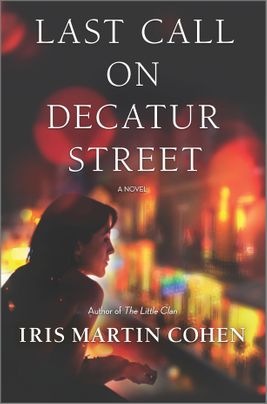
Last Call on Decatur Street

My book, Last Call on Decatur Street, follows Rosemary, a burlesque dancer, through one long night out on the town in New Orleans. She has her flaws: too much booze and bad men, mistaking self-destruction as a form of freedom. But she is smart and funny, a tribute to this archetype of a hardboiled and heartbroken showgirl that I have always loved. The novel is also about race and the things we inherit from the places we are from—how differently these stereotypes resonate for a woman of color and the privileges and exclusions of the white imagination. Rosemary, who is white, spends the night trying to understand what went wrong in her closest friendship with Gaby, who is Black.

Here are 9 books about disreputable women in their own words:

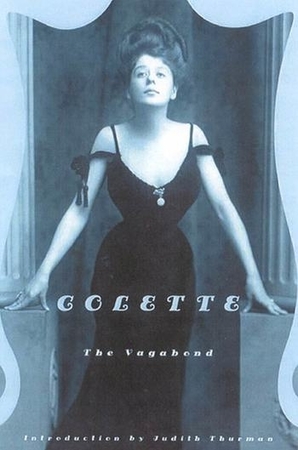
The Vagabond by Colette

I loved the story of Renée, the disillusioned writer who takes up a music hall career in turn of the last century Paris so much that I literally started burlesque dancing in my 20s just to be like her. Colette writes the female experience with aching beauty and razor precision. An independent woman, lonely and cynical, with a French bulldog named Fosette? Maybe my perfect novel.

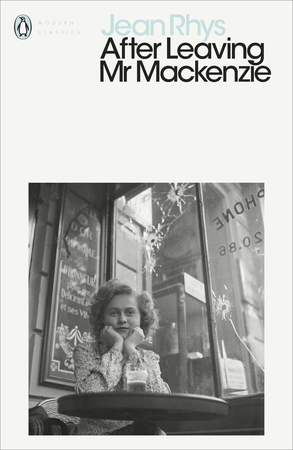
After Leaving Mr. Mackenzie by Jean Rhys

Another writer who spent time in Edwardian music halls, Rhys wrote three novels about her protagonist Julia’s social and economic descent: wandering around Paris, drinking too much, living in a cheap hotel after her lover stops sending her money. A perfect, gorgeous modernist novel about a woman who is broke, drunk, and depressed; it immediately made me want to write a book.

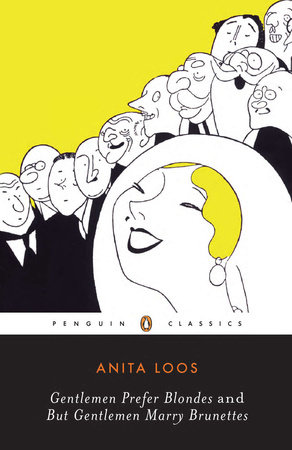
Gentlemen Prefer Blondes and But Gentlemen Marry Brunettes by Anita Loos

Gentlemen Prefer Blondes by Anita Loos

Anyone who only knows Lorelei Lee from the Marilyn Monroe movie (which is also great) should spend time with Loos’ unrepentant, gold-digging flapper here in her vicious, hilarious prose. This book is witty, as effervescent as champagne, and an absolutely lacerating critique of the relationship between the sexes and the commodity culture of the 1920’s. 

The Artificial Silk Girl by Irmgard Keun

The Artificial Silk Girl by Irmgard Keun, translated by Kathie von Ankum

A bestseller in Weimar Germany, this novel follows a young flapper, Doris, through the nightclubs and cafes of Berlin as she tries to enjoy herself and her city despite her reliance on men for drinks and meals and even the occasional fur coat. A study of sexual freedom and economic precarity, it’s like reading the journal of someone I desperately want to hang out with.

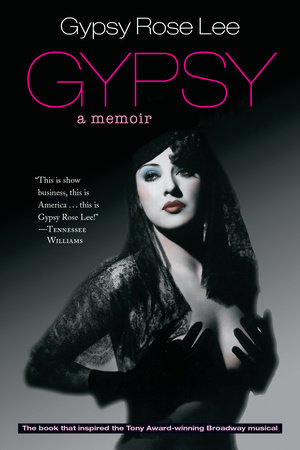
Gypsy

Gypsy by Gypsy Rose Lee

Although this really entered the American imagination through the musical, you have to go to the original to fully appreciate Lee’s inimitable voice about a sex worker telling her own story. It’s a history of vaudeville—the fleabag hotels, the ostrich feathers and glitz, all told with the wit and humor and heart that made her so famous. She also wrote a great murder mystery.

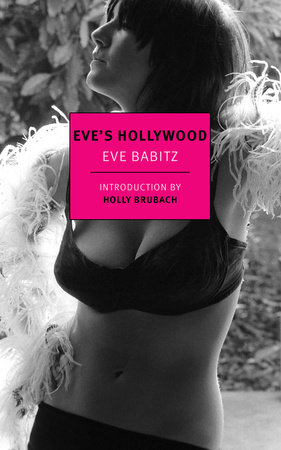
Eve's Hollywood

Eve’s Hollywood by Eve Babitz

I think as an essayist, Babitz is unrivaled. Her subject is her life as a girl on the town in 1960s Los Angeles—going to parties, trysting with famous men, worrying about clothes or weight or relationships. But she just happens to be brilliant and funny. A perfect stylist, she makes her life bloom into something wonderful and profound. She is my Knausgaard, if Knausgaard had a sense of humor about himself.

Bad Behavior

Bad Behavior by Mary Gaitskill

Who doesn’t love this book of stories? For a generation of women, Gaitskill’s sex workers, adulterers, drinkers, and women behaving badly felt like a gift. Women on the margins accorded their full humanity with icy, flawless, gorgeous prose. Every woman who has been declared or written a character deemed “unlikable” owes her a debt of gratitude. 

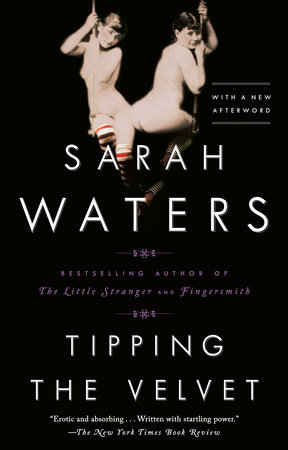
Tipping the Velvet by Sarah Waters

Tipping the Velvet by Sarah Waters

Water’s big, luscious novel about two women performing in the music halls becomes an irresistible journey through the queerness of Victorian London. It’s the kind of book you can’t put down, but also an amendment to the historical record that feels like a long-held exhale. Finally, these queer women get to live their stories in all their rich, complicated glory.

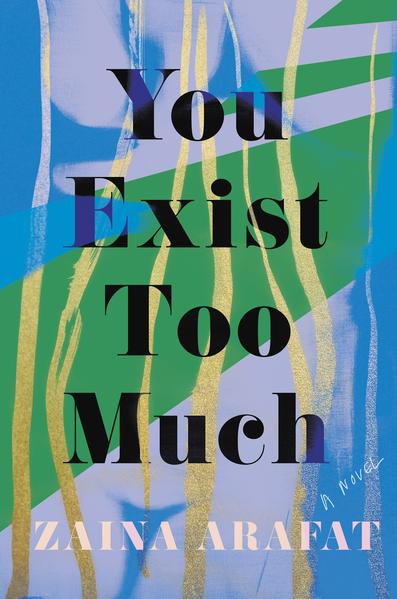
You Exist Too Much: A Novel by Zaina Arafat – Catapult

You Exist Too Much by Zaina Arafat

Arafat’s unnamed narrator is a wild girl in recovery from drugs, alcohol, an eating disorder, and love addiction. Not only is the writing of this recent debut just exquisite, but she plumbs the inner life, the cause and effects, of why some girls seek to lose themselves in this kind of wild disorder. I was so grateful to have the perspective of a queer woman of color speaking on these tropes. Also, a perfect title. I would bet every character and writer on this list would second that feeling.

The Bad Things We Have to Do to Be Good Girls

Melissa Faliveno’s Tomboyland: Essays is a debut collection that covers the concept of “genderqueer” along with the taste for a family spaghetti and meatballs recipe.

Along the way, tornadoes, tectonic plates, kink clubs, softball leagues, cozy B&Bs, and so much more captivate readers who haven’t had the good fortune to encounter Faliveno’s writing in Prairie Schooner, Midwestern Gothic, LUMINA, or Poets & Writers, where she was until recently the senior editor and producer/co-host of their podcast “Ampersand.” 

Faliveno, who has a BA in creative writing from the University of Wisconsin/Madison and an MFA from Sarah Lawrence College, teaches writing at the latter when she is not rehearsing with her indie rock band, Self Help. She and I spoke about the many elements explored in Tomboyland, from control to class to being closeted. 


Bethanne Patrick: I think a lot of people might not realize when they see the title Tomboyland, that it’s also a book about socioeconomics, not just gender constructs. I think it’s very important in terms of control and choice in terms of what you talk about and what you don’t talk about. 

Melissa Faliveno: I think a lot of people sort of hold on to the elements of gender and sexuality in this book. I love that because it’s about that. But to me, this book is more about class than anything else. And so I’m really glad you picked up on that. I grew up in a place where we never talked about money. I didn’t know where we fit, where my family fit in terms of class. It’s not something I ever thought about because everybody was the same, where in my town, everybody was of the same sort of socioeconomically, working class to lower middle class.

And those are words that were never used. It wasn’t until I moved to Madison, Wisconsin, to go to college, when people started using the term working class and used it to describe my family. I went to college and I was going to be learned, sophisticated, fancy, learn this life. I resisted where I came from when I left home as so many people do, especially if I think from small towns. But my parents, despite their so-called lack of education, encouraged me. They said if you want to be a writer, you can be a writer.

BP: At one point in the essay “Meat and Potatoes” you’re talking to your mother about being a vegetarian, and she says that she can’t make a similar decision because “If I think about it, then I have to look at my whole life.”

MF: I love that that line stuck out. When we had that conversation, it was one of those moments that a graduate teacher of mine refers to as “thresholds,” moments when you’re thinking about something and a kind of portal opens up, you’re standing on the ledge, there’s possibility.  Every other question in this book, I wanted it to stand for the things we ask ourselves and the things we refuse to ask ourselves, the stories we tell and the stories we don’t tell. 

BP: Your first essay in Tomboyland is “The Finger of God” about the power of tornadoes. You mention “tornado closets,” these little rooms that exist all over the Midwest where families are supposed to go when disaster looms—but otherwise, they’re just gathering places for detritus, old Christmas decorations and cleaning supplies. But there’s a lot of relief when you come out of that closet. Right? 

MF: Absolutely, a weight has been lifted. I guess I didn’t even realize for a really long time how much weight was on my shoulders because I was still in the closet in some ways. A lot of that is the internalization that I talk about in the book too. I’m in a relationship with a man, I don’t have to burden my parents with this because it’s not necessarily going to make sense to them. It’s not going to change anything. I always kind of had this understanding with myself that if and when I am in a relationship with a woman, I will tell them about my bisexuality. I just never even imagined having that conversation with them because it’s so complicated. You don’t just go to your Midwestern parents and say I’m genderqueer and I don’t really know what that means, so I don’t expect you to know what that means. You can keep calling me she/her, it’s fine! None of it really made any sense to me and none of it seemed necessary. 

But after the 2016 election something shifted in me and it became necessary for me to make sense of it. I think I started giving out a little more clues. I started talking about queerness on social media a little bit, knowing that my mom is sort of lurker on social media and well, she’s probably going to see this. If she has questions, she can ask. For a long time, I thought I could ignore it, though it doesn’t change the fundamentals of who I am. But at a certain point, things did change. Part of it is coming to terms with mortality in parents’ lives, part of it has to do with wanting them to know me as me, and then, a large part of it has to do with what my therapist calls your little t and Big T truths. And it feels better. I was never afraid they were going to disown me or anything. They’re very supportive and loving, in the best way they know how. 

BP: One of your lines is “Not every tomboy grows up to be queer. But a lot of us do.” 

MF: I know that a lot of it had to do with what I saw around me and, and how I sort of internalized the ways that boys were treated and the ways that girls were treated and. The interests that I’ve always had an interest the girls were supposed to have. And, and I just always had the interests of the boys. I was never into dolls, never did the things that my girl counterparts did. I think that part of it was just liking what I did and was doing, partaking in the activities that I wanted to partake in. 

You can’t tell me that I have to play with a Barbie. I will take her head off!

But I think that part of it was definitely pushing against this boundary that I felt when I was told to put my shirt on, when I was told that girls were supposed to like pink, or whatever. I remember feeling that resistance and feeling angry and feeling, even when I was very young. You can’t tell me that I have to play with a Barbie. I will take her head off! Which is problematic in its own way. 

BP: You have a powerful moment in the essay “Switch Hitter” where you realize that part of what’s going on is because you want to be a “good girl.” You were “programmed” to obey.

MF: We learn as girls, are taught as girls, to be good—but we are also expected to do things that are bad in order to gain approval. For example, I became a leader in Young Life, the Christian organizations, and so I was teaching kids a few years younger than I was not to do this or that, all the while doing this, that, and the other things so that I’d be cool with my peers. All the while thinking “I am a good girl. I am good.” 

I spent many years in an unhealthy dynamic of sleeping with inappropriate people, predominantly older married men. When I got into BDSM, I wanted so badly to please men. And that is what I was doing. I was trying to be wanted, to be loved and accepted. Which is what I was taught, as a girl, to strive for on my way to womanhood. To perform for, and please, men. 

BP: So you look at your whole life, then find that you really don’t want this. But on the other hand, are you doing this because you really want it, are you doing this because you are not actually looking at something you need in your life? 

MF: I don’t care what anyone does if it gives them real pleasure, but when you’re doing something because you aren’t looking at it, maybe you need to reconsider. Tomboyland is really about home and what it can mean.

BP: And that means you’re working into accepting everything about your origins and your life? 

MF: For a long time I felt my life as an adult was at odds with the place where I grew up; I found myself clinging to that description Midwesterner. When I moved to New York City for graduate school I felt the distinctions of class more acutely than I ever had; certainly than I had in Madison. I felt like such a yokel. And I still totally do sometimes, but this interesting something happened where I was no longer pushing against where I came from, but claiming it very fiercely. I don’t have to pass as an intellectual because I’m not. I went to college and I went to graduate school to be a writer, but I don’t think of myself as an intellectual. I come from a place of emotional sort of connection to these things. 

BP: I have to ask, then, about a very emotional section of “Switch Hitter,” in which you talk about an unhealthy relationship you had with your high-school softball coach. 

MF: That was the hardest essay to write, and I almost cut it. But I realized this relationship to sports and athleticism and softball in particular is so important to both my origin story and my coming of age, in learning to inhabit my body in a different way. For a long time, I was trying to write around that element of the story, this coach who I was in love with, or infatuated with. It was such an important part of the story. I realized I couldn’t write the piece without writing that element because so much of what I did was to get his attention. I thought I would be loved by him, you know?

We learn are taught as girls to be good—but we are also expected to do things that are bad in order to gain approval.

It was such an important part of the story, because I think this is so true for so many girls. You live under the veil of that male gaze your whole young life. Even in situations where there isn’t abuse going on, that gaze is so powerful, and can be so debilitating. It took me a long time to understand how it colored every decision I made, all of my behaviors, and that led to a lot of problematic shit during my twenties. It took me a long time to break away from that gaze, to look back at it, to see it for what is was. For a long time, I blamed myself. I was the instigator, I told myself. The bad girl.

BP: What made you think you were “bad”?

MF: I was trying to seduce this teacher, I told myself. And then, as I slowly started to tell people this story, they were like: “Oh no no no. Your teacher was the one in the wrong.” Recently I was talking with my therapist about the story and she very gently said, yes, there’s a difference between abuse and dynamics that people get engaged in when they’re very young. She challenged me to inhabit the space where I could take agency, and I realized that I could not have done so in this case. 

This was a person I latched on to who sort of latched on to me. It was totally inappropriate. It wasn’t abuse, but it wasn’t healthy, either. As I said, I almost cut the essay, partly because I don’t want to hurt anybody. But I had to examine a power dynamic in which as an adolescent girl of 16, 17, 18 I believed I had power because of the way a man looked at me, and then realized I never had any power. It’s a complicated space to navigate.

BP: What was it like to re-navigate that complicated space, in order to write about it?

MF: I have huge gaps in my memory, and a lot of that I think is trauma. And a lot of that is alcohol abuse and the passage of time. But I started to wonder, as I was finishing this book, am I remembering this right? Is this true? Did I actually feel this way? Is this how it went down? And then this really miraculous thing happened a few weeks ago. My mom found all my journals and mailed them to me. And I was reading all of my journal, which is a mind fuck, but I was like, it was true. You know, I remember it as it was. And I was like, just being in this head space of this girl who was obsessed with this man and, and would do anything, you know, to get his attention and to want so desperately for him to love her. And thinking that that was love.

And that’s what it was, it was, you know, a 16-year-old girl who wasn’t getting the kind of attention that she needed from this impossible source. And so there was something to work toward and there was something to obsess over and there was something to like, a wish to conquer. I felt as if, if I can just get this, it will all be OK.

BP: In “Switch Hitter,” you also talk about waking up to your body, and it’s not in a sexual way necessarily. It’s more about an intimate way of learning to live with who you are, how you want to move and look, and appear and all of that. 

MF: That essay was about the difference between molding bodies, and using bodies for someone else, Then, transition into inhabiting our bodies for ourselves. For me, now, that means, getting strong for myself and lifting weights and being an athlete, but not to impress men, or to be accepted socially. In small Wisconsin towns, athletes are the gods. I was nobody until I was an athlete. I was a little nerd. And then I became an athlete in high school. I was a jock and I was an athlete and I was obsessed with being not just good, but perfect. 

It was not, then, about feeling good about myself. In fact, it was pretty problematic, my eating was problematic. My working out was problematic, and it was more about feeling in control. It took me a long time to reclaim my identity as an athlete, as an adult. As a strong human being. 

9 Classic Gothic Books From the 20th Century

Maidens in peril, isolated estates, and an atmosphere of suspense. These are some of the typical elements of Gothic novels.

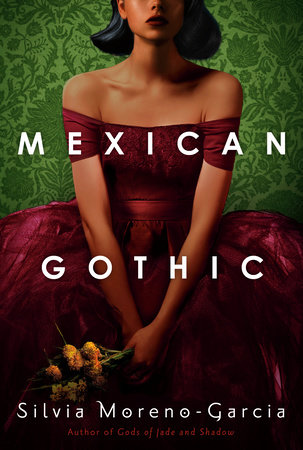
Mexican Gothic by Silvia Moreno-Garcia

Scholars generally classify 18th-century Gothic novels in two modes: the male Gothic novel (The Monk), which has supernatural elements and more sensationalistic content, and the female Gothic novel (The Mysteries of Udolpho), where there is a rational explanation for the mystery at hand and romantic elements. Although some researchers have quibbled about whether such distinction is accurate, one thing is for sure: Gothic novels made a huge comeback in paperback form in the ’60s and ’70s before wilting away once more. My novel Mexican Gothic, set in a former mining town in the mountains of Hidalgo, is inspired by this long history of the Gothic tradition.

If you’re seeking Gothic thrills or wish to know where to start reading, here’s a list of books for you. 

501817

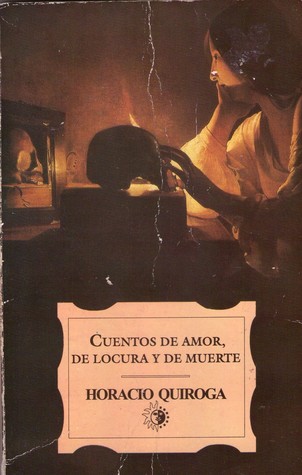
Tales of Love of Madness and of Death by Horacio Quiroga (1917)

The title says it all. Sometimes called the Edgar Allan Poe of South America, Quiroga’s melancholic stories are suffused with an ever-present violence and the whiff of death. The book contains one of the most clever vampirism stories I’ve ever read. 

122856

Dragonwyck by Anya Seton (1944)

A young, romantic woman visits a distant relative’s estate. Her cousin is dashing and tied to a frumpy, annoying wife. Cue the young maiden falling head over heels in love, not only with the man but with his lavish lifestyle. The wife dies and Mr. Perfect is suddenly available. However, when fairy tales come true, they can get rather dark. 

18869970

My Cousin Rachel by Daphne du Maurier (1951)

More kissing cousins. Gothics tend to keep it all in the family. Daphne du Maurier’s most famous novel is Rebecca. But My Cousin Rachel is worth mentioning because it has an inversion. Rather than a young woman being attracted to a mysterious, older man, we have Rebecca as the intriguing, potentially dangerous older woman who has enthralled the twenty-something, inexperienced narrator. 

3026151

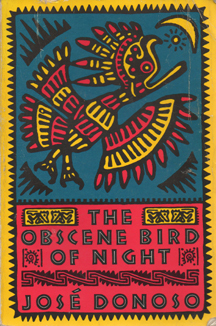
The Obscene Bird of Night by José Donoso (1970)

Surreal and weird. That’s probably the way to succinctly describe this novel by Chilean writer José Donoso. People who like linear plots might want to skip this one, but fans of David Lynch will enjoy the feeling of living through the waking nightmare that is the aristocratic Azcoitia family.

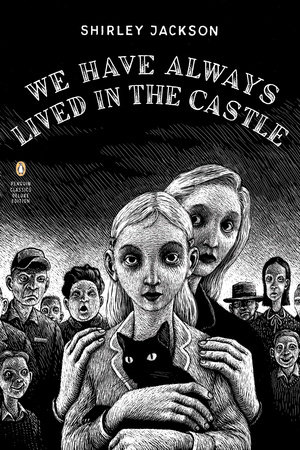
We Have Always Lived in the Castle by Shirley Jackson

We Have Always Lived in the Castle by Shirley Jackson (1962)

Shirley Jackson always had a way with opening lines and with challenging female characters. One of her most interesting creations is Merricat Blackwood, a teenager who lives in an isolated house with what remains of her family. A visit from an estranged cousin threatens the stability of her self-enclosed world.  

Beloved

Beloved by Toni Morrison (1987)

The tale of a haunting, in more than one sense. Sethe, a formerly enslaved woman, killed her child rather than have her taken back into slavery. Now that child seems to have reappeared in the shape of an enigmatic young woman called Beloved. 

595395

Aura by Carlos Fuentes (1965)

The past also returns to haunt the protagonist of this novella. A young man answers a help-wanted ad and finds himself in a decrepit house in downtown Mexico City inhabited by a senile woman and her mysterious, beautiful granddaughter. 

Image result for wide sargasso sea book

Wide Sargasso Sea by Jean Rhys (1966)

If you ever thought Rochester from Jane Eyre was not a great romantic hero, then this is the book for you. Wide Sargasso Sea gives voice to the mad wife in the attic, taking us to the Caribbean for a “prequel” to upend all prequels.

Mary Reilly by Valerie Martin

Mary Reilly by Valerie Martin (1990)

Another retelling of sorts, this one from the point of view of a maid working for Dr. Henry Jekyll. Told in epistolary form, it displays a voice that is faithful to its time period and does justice to the oppressive elements of Gothic fiction.

Han Kang on Death, the Color White, and Her Writing Influences

The Han Kang I know is a true artist. Someone for whom issues of art, humanity, and the beauty of the world and of people are more pressing and real than awards. Someone who feels and empathizes with the pain of others, who ponders over a question she is asked for days. Someone haunted by history, someone private, fiercely compassionate and as uncompromising as the books she writes. 

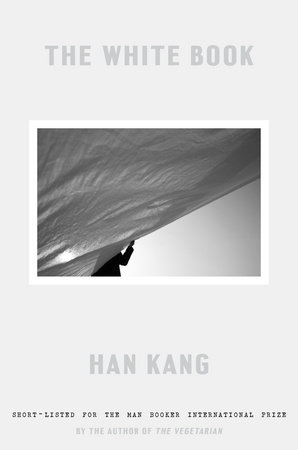
The White Book by Han Kang

To much of the English-reading public, Kang is best known for the 2016 Man Booker International Prize-winning novel The Vegetarian, as well as the novel Human Acts about the 1980 Kwangju Uprising and its aftermath. The White Book, her most recent novel in Korean and English, may appear to be new territory for Kang in terms of material and form, but readers of Han Kang’s oeuvre know that each book is a new expression, a tunneling into experience. The White Book is about the cycle of birth, death, and resurrection in both its metaphorical and literal meanings. It is also, obviously, about the color white, a symbolic color with multiple significances in many cultures, including Korea.  

Han Kang and I met one sunny spring afternoon in Seoul to talk about the significance of the color white and the death of her sister. 


Krys Lee: The structure of The White Book is held in as fine a balance as the book’s themes, and from a writer’s point of view, an exciting journey. Did form come first in the writing of The White Book, or the material that had to find a form? And did you intend to collapse the line between genres?

Han Kang: With The White Book, I originally intended to make a book out of fragments. I started with a list of white things then gave each of those white things a title, and intended to make small fragments out of those. Some of those fragments were a few pages long, and others, a few lines. As a result, it stands at the border between poetry and fiction.

I’ve always liked lyrical essay collections, but I didn’t embark on the book planning to write something between the essay and the poem. I just knew I wanted to write about white things, and decided later that this was the best form to express what I wanted to do. Usually when I write a book, it’s ignited by an idea, or a feeling, but I can’t properly begin the book until I discover its structure.

In the case of The White Book, the sense I had from the beginning from was that it would begin with the swaddling bands associated with birth, and progress from birth to death. I was in Poland when I began the book, at an art residency. Another aspect of the structure that I discovered there while writing was the relationship between me and the narrator of The White Book. That I was imagining her and calling up her presence in part one, and in the second part, I realized that she was living through me. In part three, we would have to part from each other, since our lives can’t co-exist. For one to live, the other has to die. So that became the other way the book found its structure. The book might go from swaddling bands to mourning robes, but then there was me, her, and our parting at the end. That was how I perceived the book. Only when I sent the manuscript it in, my editor—who is also a poet—asked me, what should we call it when we send it to bookstores? The White Book is poetry, a novel, and also in some sense, an essay, so I said, let’s just call it a book. She said that was impossible since bookstores require a genre to display it, and asked me to make a decision. I thought about it a lot, and decided that it was a novel for me, and in retrospect, I believe it really is that: a novel.

KL: Traditionally, “white” has multiple meanings in Asian and Western cultures. How did you take those meanings and made them your own in The White Book?

White is the color of mourning. It’s also a color without a true color, maybe a color somewhere between life and death.

HK: I’ve always been interested in the color white. It seems to me the most fundamental color. Like salt. Also light, if we had to identify light as a color, I think it would be white. Also, perhaps this is a custom unique to Korea, but when a baby is born, he is wrapped in white swaddling bands as soon as he emerges from the mother’s womb. The color is also the color of mourning. It’s also a color without a true color, maybe a color somewhere between life and death, so I was always interested in it. I’ve mentioned this elsewhere before, but the word “횐” is different than the word “하얀”, though they both mean white in Korean. “하얀” has a lovely connotation, all that is pure, clean, bright. But “희다” has more room for darkness, sadness, and death. So I was already very interested in the color white, but when I was thinking about my older sister who died at birth, I thought back on the color. When I first started with the baby clothes, that naturally brought me to the subject of my older sister. I realized then that this book would be dedicated to her. I end with the mourning robes, and saw then that the book would all come together.

KL: The White Book seems to be partly inspired by the landscapes of the many places you’ve been. Can you share some of those places with us? In general, how does place influence your writing?

HK: First when my parents first got married and my father became an elementary school teacher and as newlyweds, I was told that they went to Gwansan with one suitcase in each hand, and began married life together. They told me this story many times when I was young. I don’t know everything but I often imagined what had happened to them there, the death that happened, and their pain afterward. The place where they had they loved each other so much and suffered so much together, is re-imagined in my novel. 

Then when I was in Poland, I didn’t know much about the city before arriving. I knew its very basic history, but as I also wrote in the novel, I went to the Warsaw Uprising Museum and saw a film about the city in ruins. I’d only known it as a city covered in snow, but the city in the film was one shattered into stone fragments and completely destroyed. This shocked me. I realized then that all the streets I had wandered through had been ruined and rebuilt. It was so surreal, to realize that this was a city that had been resurrected. I then began imagining my resurrected older sister walking through the resurrected city. I decided to walk through the city and experience it through her eyes.

KL: Was that a difficult time for you?

HK: No, it wasn’t. Once I decided to see the city through her eyes, everything started looking different to me. It was as if I was looking through her innocent eyes, maybe because she left the world before she had a chance of being scarred or hurt. The only thing she’d ever experienced was my mother saying “don’t die, please don’t die,” so imagining her walking through those streets made everything new, fresh. I also wanted to show her good things, since I imagined myself giving her these experiences, so I tried to have good thoughts, and tried to see good things. That’s why I didn’t feel sad at all. In fact I felt comforted. In a sense it was as if I wasn’t alone. so I felt less lonely. I wasn’t as if I’d become a ghost or anything, since of course she was me, too, so in that sense it was as if I were loaning my eyes and senses to my older sister. I had a similar experience when writing Human Acts. I had thought then that I was loaning the dead my eyes and my senses. But I hadn’t disappeared; we were together.

KL: Beauty and suffering are often companions in your work. There seems to be suffering, dying, destruction, and birth, that can potentially lead to regeneration that run throughout. There is never a simple pain, or happiness, or beauty. Can you talk about what this relationship is, for you?

Suffering and beauty seem to intensely exist together.

HK: There is another layer of suffering that lies underneath the surface of The White Book. I actually began it during a difficult period in my life. It was also after writing Human Acts, when I still hadn’t recovered from how difficult writing that novel was for me. That suffering is subsumed in the book. That city I was living in had been destroyed, experienced violence, then over time buildings had risen from those empty spaces. This characterized the city. The narrator who comes to the city is also that kind of person, as she gains a strange set of new eyes while in the city, so the city and the narrator resemble each other. So death, regeneration, birth, all of this exists together, which is why the “횐,” not the “하얀.”

KL: There is also beauty, and happiness. Is this what cleanses and brings us to the condition of white, or is beauty and happiness aspects of white itself?

HK: I still am not sure what happiness is, not yet. When I look at something, I don’t think I have a way to measure happiness. I don’t think of a person as happy or not happy, but I think of it more as light. I think more of what their state of mind is. Or of their dark, light, or their texture. Questions I asked myself when I was young was, Why was I born? Why do we suffer? Why do we die? Also, why is the world so beautiful? I think beauty has the power to constantly surprise me, moment to moment. But naturally, pain also exists in equal measure. Since I can’t ignore that, when I gaze at life both pain and suffering walk dramatically.

Light and texture is largely how I approach life, the world, and people, and when I consider the senses and emotions that we rely on. It might be the influence of poetry, which was what I first wrote when I was young. Countless sensations exist in light and darkness, and pain and tenderness. But there doesn’t seem to be any way to measure happiness, for me. Luminous, beautiful, or tender moments exist, but I don’t think those moments can necessarily be called happiness.

There are beautiful people, and even people who aren’t “beautiful,” are beautiful at moments. Like beautiful decisions. So I’m not saying that I judge a person by whether they are beautiful or not, but that I’m often surprised by the moments of beauty in people. Suffering and beauty seem to intensely exist together.

I don’t have much faith in happiness but I do often think about people. It’s a very important theme in the book I’m working on right now. Human suffering, violence, love, light, and beauty are all things I want to explore and am still exploring. 

All my different thoughts above seem to say something about my attitude toward life. This question had me thinking a lot the last few days, and it led me to look deeply within myself.

KL: “Clean, cold light that had bathed her eyes, scouring her mind of all memory.” (page 87, The White Book) That sense of a necessary cleansing reminded me also of Human Acts: I wonder if history can also be cleansed in the way that the narrator is cleansed of memory.

HK: The cleansing here was about emptying my head of what I had to, and what was right to, let go of. But I believe that mourning is very important. So in one sense this is a book of mourning. It was the same with Human Acts. One can’t do that with history. In Poland, how they memorialize tragic historical events and conflicts in statues and monuments in public made an impression on me. That made me think about my own country. South Korea, in contrast, seems to replace the old with the new, or erect memorials where they are hidden from view, when they should be located downtown, visible to all.

Last March, I did a fifth performance at the Carnegie International exhibition titled, ”I Do Not Bid Farewell.” It was related to what happened in Gwangju and Jeju Island. When I was looking into opportunities to perform the piece, I looked into performing at the Ilmin Museum of Art in downtown Gwanghwamun. It would have been the perfect location for such a performance, to be able to mourn together in the heart of Seoul. It didn’t work out, but we have to return to the historical memory and mourn, and mourn again.

KL: Any last words or thoughts?

HK: My oldest sister was never given a name since she died so early, so in the book, I gave her the name Seol-yeong. (which means Snow Flower.) By chance, I heard about how the writer Park T’ae-won gave his daughter this name. Sometimes I still think about the time I spent loaning my body to my sister, and wonder to myself if that time was a kind of prayer. What I remember was walking a lot. It was a strange silence since I didn’t know any Polish, and inside me was only my native language. Even though I was surrounded by so many people talking and street signs, it was a strange silence. I was like an island. I thought about white, about my book, about my sister. Every day, I would take notes on the bus. I walked then wrote bits down at a traffic light, and after walking all day I would write some more when I returned home. I spent four months there, and after a month of settling in, I spent the rest of the time this way after I realized that I was in a white city. That process felt like a kind of prayer. Even now when I look back, writing The White Book felt like a kind of prayer.

Don’t Ask Me What I Did With the Bodies

The Squirrel

We argue
over the squirrel
flat on his belly,
clinging with
his tiny nails
to the rough bark
branch, stomach
contracting every time
he screeches—
sounding more
like a house cat
than the animal he is,
tail going stiff
as if electrified
in the process.
You think
it’s a mating thing.
I think he’s saying
something terrible
is happening,
proclaiming danger or
his own desperate
suffering. Either way
the squirrel goes on
screaming. Because
we don’t know
what is happening, we keep watching.


Observance

I wanted to watch tadpoles grow into frogs
so I brought my plastic yellow bucket to the lake,
caught dozens of the squirmy things
and carried them home, careful not to let any creature
or water spill out over the rim as I walked.
I left them by the side of the house in the sun,
thinking, like plants, the tadpoles would need light.
Then I went inside, played Monopoly with my sister
and forgot about the future-frogs.
Days later I returned with a handful of grass to feed them.
Instead of frogs, I found a bucket of floating skeletons.
I could see all the tiny, terrifying bones in their spines,
their tails hanging down like sad dogs.
Their skin had disappeared, but their eyes were still there
staring up at me.  
I can’t remember what I did with the bodies—
maybe I poured them back into the lake
or dumped the bucket behind a pine tree.
Whatever I did, I did it fast and didn’t tell anyone
what I’d done, murderer that I was. 
Bad mother, bad mother, I remember saying to myself,
banging my empty bucket against my knees,
punishing myself in the small ways I could.
In my haste to hide the evidence, I didn’t plan
a funeral. It was different with the birds
that hit the kitchen window on sunny mornings
while I was eating Lucky Charms—
their deaths were not my fault.
I helped my mother dig holes for their feathered bodies
in the garden, where we buried them among the marigolds
and bowed our heads. I made crosses
out of broken twigs tied together with grass,
marking their graves so we wouldn’t forget
where each bird was, wings folded, waiting
to be turned into something else by the eyeless worms.

Dear Hollywood, Please Adapt These New Books

Remakes, reboots, and sequels, oh my! There have been six Transformers films and somehow Hollywood still wants more. It’s not just the mega-blockbuster franchises that are getting milked dry. Perfectly good ’80s comedies and action flicks like Overboard and Red Dawn were remade for… some reason. 

In mid-July, another film that should have been left in the past had a remake announced: Jon Hamm will be starring in a new Fletch. More power to you if that sentence didn’t make you audibly groan and slouch in your chair as you give up at the lack of originality in Tinseltown. Hollywood is obsessed with remaking existing intellectual property because it’s less of a gamble. That’s why books are a rich source for them as well. This year alone we’ve seen Normal People and Little Fires Everywhere become runaway hits on Hulu. And with the hundreds of Stephen King adaptations only batting .250, why not adapt new books by debut authors instead?

Film scouts, here are ten adaptations of brilliant new books that should be greenlit immediately!

Catherine House by Elisabeth Thomas

Logline: A new student unravels the twisted secrets of her mysterious college.

Director: Nia DaCosta has one of the best new eyes in Hollywood. While people keep giving Jordan Peele credit for the new Candyman, it is DaCosta who deserves all of the praise.

Writer: Lena Waithe’s strengths are in telling tightly wound stories in off-kilter ways. This gothic novel will give her a new challenge by taking her away from the slice-of-life style she does so well.

Starring: Letitia Wright (Black Panther), Cristin Milioti (Palm Springs)

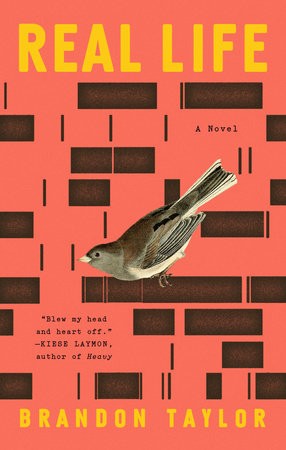
Real Life by Brandon Taylor

Real Life by Brandon Taylor

Logline: A queer Black Ph.D. student navigates homophobia and racism over the course of a summer weekend.

Director: Barry Jenkins has already put on a masterclass in black, queer film. This could be his Everest.

Writer: Brandon Taylor is one of the most talented writers around, whether it’s this novel, his essays, or his hilarious Twitter feed. Screenwriting is his next evolution.

Starring: Sullivan Jones (Slave Play), Timothée Chalamet (Ladybird)

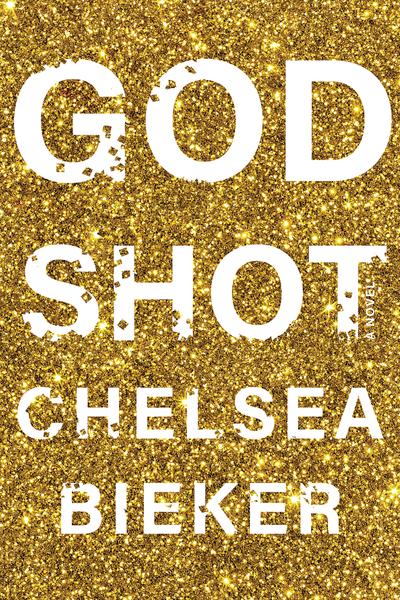
Godshot: A Novel by Chelsea Bieker

Godshot by Chelsea Bieker

Logline: A coming-of-age story about a teenage girl caught in a cult in small-town California.

Director: Greta Gerwig.

Writer: Greta Gerwig has already proven she can craft both amazing original and adapted films. Giving her the fresh voice of Bieker to follow will put this film more in line with Lady Bird than Little Women, and that’s the breath of fresh air that Hollywood needs right now. 

Starring: Kaitlyn Dever (Unbreakable), Sarah Paulson (American Horror Story)

The Yellow House by Sarah M. Broom

Logline: A true story about race, class, and family in New Orleans East.

Director: Ava DuVernay, need I say more?

Writer: Issa Rae’s comedic chops are on full display with Insecure. This offers her a chance to prove she can write a thought-provoking drama as well.

Starring: Teyonah Parris (Chi-Raq, Candyman), Angela Bassett (What’s Love Got to Do With It)

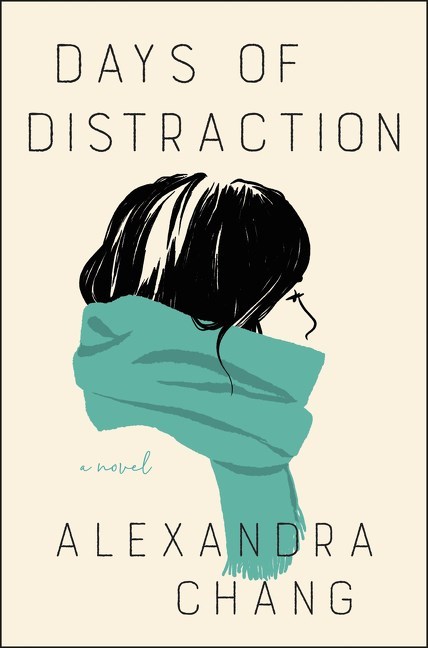
Days of Distraction by Alexandra Chang

Logline: A Chinese American woman explores race and belonging in America.

Director: Lulu Wang charmed us with her bittersweet movie The Farewell, starring Awkwafina who returns to China to be with her terminally ill grandmother who doesn’t know that she’s dying. We’d love to see Wang and Awkwafina reunite for an adaptation of this introspective novel.

Writer: Alice Wu finally followed up her 2004 debut Saving Face with this year’s Netflix movie The Half of It.

Starring: Awkwafina (The Farewell), Lucas Hedges (Manchester By The Sea)

In West Mills by De’Shawn Charles Winslow

Logline: An intimate portrait of a headstrong woman living in a tight-knit community in rural North Carolina.

Director: Lee Daniels knows how to direct powerful actors and the leading actress in this needs to be a tour-de-force.

Writer: Steven Canals’ Pose is one of the most diverse and visionary shows on television right now. He knows how to write strong characters who can command a scene with just a close-up of their face. Give him a crack at Azalea “Knot” Centre.

Starring: Viola Davis (How To Get Away With Murder), Paapa Essiedu (I May Destroy You)

The Affairs of the Falcóns by Melissa Rivero

Logline: A Peruvian family searches for their American Dream in 1990s New York City.

Director: Alfonso Cuarón

Writer: Alfonso Cuarón’s ability to tell a vivid family saga was on full display in Roma.

Starring: Nathalie Kelley (Fast and Furious), Oscar Isaac (Ex Machina)

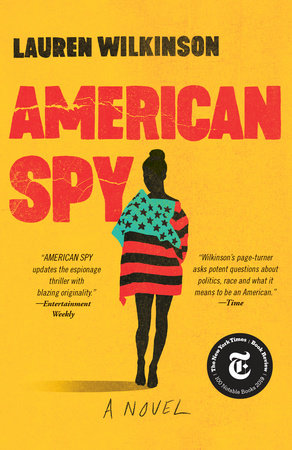
American Spy by Lauren Wilkinson

American Spy by Lauren Wilkinson

Logline: A Cold War thriller about an FBI agent who travels to Burkina Faso to take down the “African Che Guevara.”

Director: Donald Glover teaming with actors from his Emmy-winning show Atlanta (see below) to recreate that well-oiled magic.

Writer: Lauren Wilkinson is currently working in a writer’s room in Hollywood. Given that experience, she’s the logical choice to turn her novel into a unique spy film that avoids all of the typical cliches.  

Starring: Zazie Beetz (Atlanta), Lakeith Stanfield (Atlanta)

This image has an empty alt attribute; its file name is Webp.net-resizeimage-7.jpg

The Bright Lands by John Fram

Logline: A man returns to his rural hometown to investigate the disappearance of his younger brother, a star quarterback.

Director: Richard Linklater knows Texas and this conservative small-town city is a vital character in Fram’s queer noir.

Writer: Joey Soloway’s ability to write complex queer characters is perfect to adapt this novel about football and teenage masculinity.

Starring: Ben Platt (The Politician), Lola Kirke (Mistress America)

In At the Deep End by Kate Davies

Logline: A Millennial Londoner has a queer sexual awakening.

Directed by: Phoebe Waller-Bridge. This smart, raunchy, and funny novel is perfect for fans of Fleabag.

Written by: Phoebe Waller-Bridge can do no wrong. Fleabag stopped everybody in their tracks. Killing Eve is a killer adaptation. She’s even done rewrites on the latest Bond film.

Starring: Anya Taylor-Joy (Emma), Florence Pugh (Midsommar)

A.E. Osworth Thinks You Should Go Ahead and Eat a Tuna Melt in Class

In  our series “Can Writing Be Taught?” we partner with Catapult to ask their course instructors all our burning questions about the process of teaching writing. This month, we’re talking to A.E. Osworth, New School instructor and author of the forthcoming We Are Watching Eliza Bright, who’s teaching a class about something notably rare and precious these days: joy. Osworth’s class on “joy-first drafting” helps writers break free of the over-structuring and self-seriousness that sometimes hinders creativity, so we were excited to get their thoughts on how they maintain that sense of delight through their teaching.


What’s the best thing you’ve ever gotten out of a writing class or workshop as a student?

I have a lot of best things; my identity as a writer and my process have been deeply impacted by the act of workshopping and being in community with writers there-in. I could talk for days on the things workshop has given me and I will try to stick to the highlight reel. My first novel, We Are Watching Eliza Bright (forthcoming from Grand Central in April 2021) actually started as a two-page literature seminar assignment in Shelley Jackson’s class at The New School, where I got my MFA. If we take “thing” as literal, that’s the best “thing.” But I’m also grateful for all the concepts I’ve learned as part of workshop—a lot of my pedagogical framework is based off things I learned from Tiphanie Yanique, who mentored my teaching as well as my writing. Helen Schulman gave me The Ninety-Ten Rule (you will discount ninety percent of what you hear in workshop and act on ten percent of it) to keep us all from our desire to please our peers and workshop leaders. Just this last January, Namwali Serpell introduced me to asking for “wild speculation” in workshop as a tool to reflect the groundwork an author has already laid out but is not yet aware of. Ugh, so many things! Workshop is such a gift.

What’s the worst thing you’ve ever gotten out of a writing class or workshop as a student?

I’ve rarely been in a workshop where I couldn’t find something of value, but one time I did rewrite some sections of my book because the professor and a fellow student thought I should be nicer to cops in my fiction—I really did not trust my taste, my skill or my moral compass at the time. Don’t worry, all those parts are changed back now.

What is the lesson or piece of writing advice you return to most as an instructor?

Potters can’t make something without any clay; first drafts are the ‘clay’ of writing. Formless, messy.

I really do remind my students (and myself) often that all first drafts are shitty. Potters can’t make something without any clay; first drafts are the “clay” of writing. Formless, messy. They’re the raw material.

Does everyone “have a novel in them”?

You know, I have no idea because I don’t think it’s a valuable lens through which to consider writing! It doesn’t actually matter if an individual has a novel in them; it matters if they’re able to get it out of them. I mean that in the normie personal discipline way—do you sit down and write it? Do you do that every chance you get?—and also in a structural justice way. Who has the opportunity, the unstructured time, to sit down and write? Who is able to partake in the world of traditional publishing and who is being impacted by bias, and at which stages? Mostly I don’t care if everyone has a novel inside them, but I deeply care that we as writers and readers do our best in making sure that if someone stumbles upon a novel in them, they have the tools and time to get it out of their body where it belongs.

Would you ever encourage a student to give up writing? Under what circumstances?

My original answer was no, but upon reflection I do think I would encourage a student to quit if they were using writing as self-harm in some way. Storytelling is one of the things I value the highest in this life and, even then, it should never cost someone their happiness and sanity. 

What’s more valuable in a workshop, praise or criticism?

Given the workshops I’ve taken, I feel like my take is hot: praise. Infinitely more valuable, especially when workshopping first or early drafts. If a workshop identifies what is working or electric and an author is given the encouragement to write and edit toward those things, most of what’s “not working” falls away.

Should students write with publication in mind? Why or why not?

You can’t be an artist without people’s interaction with your work, and that interaction is thrilling magic.

I feel like there are two things this could mean, and one of them I strongly like and the other I strongly dislike. I don’t think students, or any author really, should chase what they think is “publishable.” The recent past means nothing anyway (things are always changing!) and you can’t write to trends unless your heart just happens to be really into whatever the world is fashionably loving at the moment. But the other way to take this is to remember that books are for readers the same way music is for listeners, plays are for audiences. You can’t be an artist without people’s interaction with your work, and that interaction is thrilling magic. Trust your readers and treat them well as you write. Remember that every reader will read your text differently than you thought they would, and differently from each other. As a writer, you are building a jungle gym and readers will play on it however they play on it. Give them fun brain shit to do.

In one or two sentences, what’s your opinion of these writing maxims?

  • Kill your darlings: Great advice—not everything you love will work for the story you wind up telling. But if your darling includes your only gay or trans character and killing them means either taking them out or their death in the plot, think real hard about why they’re the only one and why they have to die. 
  • Show don’t tell: Great advice—but not everything in the story weighs the same. Help guide a reader to the buried gold by not over-describing the dirt and the shovel.
  • Write what you know: Great advice—writing what you know is a one way to cut down on your research time and make sure you’re staying in your lane. But it’s not particularly brave or particularly sustainable; write toward what you want to know as well, accept that you will fuck several somethings up royally and ask questions with a beginner’s mind.
  • Character is plot: I’ve actually never heard this one before and had no idea it was a maxim! But given what I think it means, why stop there? Everything is everything—all the elements of the story are playing in concert to create one joyous, glorious whole.

What’s the best hobby for writers?

Anything that brings you joy; anything that brings you into a community you love. 

What’s the best workshop snack?

Normally I would say anything without a smell or a crunching sound but it’s pandemia—you are in your own home and you can mute your mic, rock on with your tuna melt and your Doritos. 

What Would America Look Like If Hillary Never Became a Clinton?

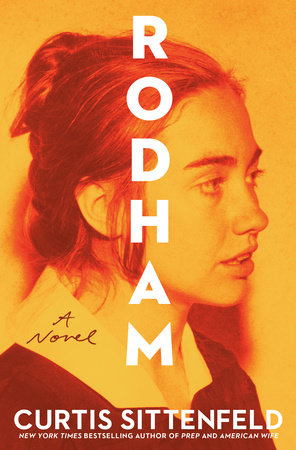
In Rodham, Curtis Sittenfeld tells a story about someone we think we know: Hillary Rodham. Of course we all know about Hillary Clinton, Yale graduate, ambitious, at the forefront of women’s rights, the woman who met and fell in love with Bill Clinton, a man with the charisma and drive to match Hillary’s. We all know about the soon-to-be Mrs. Clinton. But, who we don’t know is Hillary Rodham. Sittenfeld has created the character Hillary Rodham through a course of reimagining history in order to answer the question, I believe more than one of us has had throughout our knowing of Hillary as a public figure: What if Hillary had never married Bill?

Rodham by Curtis Sittenfeld

It is an interesting premise, the idea of reimagining the life of someone by changing one crucial fact that leads them down the path to the person we all know in our reality and presenting an entirely separate universe of possibility. Over the four decades following her decision not to marry Bill Clinton, Hillary Rodham creates her own political path. The journey of reading Hillary Rodham’s life feels like a deep dive into a parallel universe, that in some ways would be a refreshing reprieve from our current political woes but also present some lasting changes without such positive outcomes. 

I spoke with Curtis Sittenfeld about genre labels, her choice to write about someone so famous, and what 2020 would look like if Hillary were our president.


Tyrese L. Coleman: While I don’t know exactly how I would label Rodham, to me, it is more along the lines of historical fiction, however, there are others who have referred to the novel, or parts of it, as fanfiction. Not to disparage the term or imply anything negative about fanfiction, but is Rodham fanfiction, why and why not, and how do you feel about the novel being compared as such?

Curtin Sittenfeld: I have no problem with Rodham being called fanfiction. I think it meets the definition, though I also have wondered if all fiction is fanfiction. In general, it seems to me that genres and labels are used more as sales tools by publishers and bookstores and less by readers or writers.

TLC: Like Rodham, your 2008 novel American Wife is also about a woman whose life is complicated by politics, her own and that of the men in her life. What draws you to writing about the private lives of women within the public sphere, specifically politics? 

I have no problem with Rodham being called fanfiction. I think it meets the definition, though I also have wondered if all fiction is fanfiction.

CS: I’m still making sense of what made me write both American Wife and Rodham. I’m tempted to say it’s the particular stories of individual people, but two very political books do start to seem like a pattern. In politics, pushing some sort of agenda is supposed to be in the forefront, and personalities are supposed to be in the background, which has the perverse effect of making me more interested in the personalities. Meanwhile, when personalities are in the forefront—in many reality TV shows, for example—I’m less interested in them.

TLC: American Wife was the story of a fictional First Lady whose life is similar to Laura Bush, but the book is not explicitly about Laura Bush. Why did you decide to make Rodham about a specific historical figure instead of fictionalizing the main character like before? What did you want to reveal or what did you hope to reveal by personalizing this character and making her the actual person we know and whose history we are already familiar with?

CS: I used real names in Rodham for a rather small and mundane reason, which is that I didn’t want to confuse the reader. If I changed Hillary and Bill’s names to, say, Helen and Bob and I also changed the historical timeline—having “Helen” choose not to marry “Bob”—I worried that the two changes together would confuse or distract the reader. The reader might think, I thought this was about the Clintons at first, but maybe it’s not. My logic was similar to that in a science experiment where you change only one variable at a time. 

TLC: As I read, I often found myself comparing the history that I know about the real Hillary Clinton and the story presented by Hillary Rodham that you give to us. I realized that I ran two separate narratives in my mind: the real history vs. the fictional one. I am sure you anticipated that readers would do this. How do you want readers or how do you expect readers to balance the different narratives? Especially when historical events occur that are very similar but significantly changed, for example, the interview that Bill and his wife, in real life and in Rodham, have with 60 Minutes regarding sexual assault allegations. 

CS: When I was a graduate student at the Iowa Writers’ Workshop, the then-director, Frank Conroy, would say that fiction is a conversation between the writer and the reader. I think this conversation is especially complicated and interesting when the reader brings certain knowledge or expectations to the story, and the writers knows the reader is doing so, and the reader knows the writer knows. I suspect that each reader’s experience of Rodham is a little different, but of course that’s true with every novel. 

TLC: How did you decide what real life historical events were necessary to include in Rodham and which ones to change or omit?

One of the reasons I’m drawn to novels as both a reader and a writer is how they’re complex, open to interpretation, and subjective. 

CS: I went on a case by case basis in terms of thinking of what was most interesting or held the most resonance. Certain events from the past can feel like they contain a different meaning than they did at the time based on everything that’s happened since. For instance, the Supreme Court confirmation of Clarence Thomas has extra echoes after the Supreme Court confirmation of Brett Kavanaugh.

TLC: There are two relationships that I find myself drawn to the most. One is obviously her relationship with Bill. Would you say that Bill is the villain or antagonist of this book or is Hillary her own antagonist?

CS: This is a great question that I think might be better left to others to debate. One of the reasons I’m drawn to novels as both a reader and a writer is how they’re complex, open to interpretation, and subjective. 

TLC: I am going to admit something that would probably get me kicked out of any feminist group I try to join, but toward the end of the book, I started to actually feel sympathetic toward Bill. Granted, I don’t think he deserves my sympathies, but I found myself sucked in by the charm you gave him on the page. I couldn’t tell what was real and what was part of his innate politician nature, or, have I been brainwashed by patriarchy toward these emotions.  

CS: Interestingly, during his presidency, a lot of feminists supported Bill Clinton (including in their assessment of his involvement with Monica Lewinsky). My goal in Rodham wasn’t to eliminate Bill from the historical record or to make marrying him seem ridiculous or off-putting. In fact, my goal was the opposite—I wanted Bill and Hillary’s fictitious break-up to be devastating. Making difficult choices isn’t usually fun in real life, but it can make for a gripping novel.  

TLC: The other significant relationship is between Hillary and her mentor Gwen Greenberger, a Black woman legal professional from Yale and who is one of Hillary’s closest friends in the novel. Is she based on a real life character in Hillary Clinton’s life? If so, who? If not, why did you choose to include this character?

CS: While some parts of the novel are based loosely on real-life events that are part of the public record, I didn’t attempt to specifically portray any real people or situations. That said, I did want to grapple with the way white feminists have often, going back hundreds of years, failed Black feminists. 

TLC: For me, what Gwen reveals are two things: 1) a certain level of blind ambition on the part of Hillary Rodham where she is more concerned about her own historical rise than what her success would mean in the long run for others, and 2) the complexities of race v feminism. For me, Gwen’s feelings and her behavior rings true to how many Black women feel when it comes to white women like Hillary Rodham (and in some ways, Hillary Clinton) — that when push comes to shove, they will think of themselves over the good of minority women. 

CS: The plotline you’re alluding to (where, spoiler alert, fictional Hillary chooses in 1992 to run in the Illinois Democratic primary for the U.S. Senate seat against Carol Moseley Braun) is another example of the writer and reader being in conversation. In real life, Carol Moseley Braun won the primary and went on to become the first Black female Senator in history. In the novel, fictional Hillary decides Carol Moseley Braun is not electable and runs against her. Of course, most readers know that fictional Hillary’s assessment of her opponent is incorrect, and that the assessment says more about Hillary than about Moseley Braun. Ultimately, though it takes a long time, fictional Hillary herself also comes to this realization. 

TLC: We are suffering with a global pandemic that has taken millions of lives all over the world. In this country and aboard we have seen widespread protests and outrage over the police murder of George Floyd,  Breonna Taylor and others, giving renewed vigor to the Black Lives Matter movement. 2020 in real life feels like a much more volatile time than it could’ve been because Hillary Clinton did not win the 2016 election. How do you imagine Hillary Rodham would handle these unpredictable, unprecedented times?

CS: There are so many reasons I wish Hillary had been elected in 2016. I certainly think she’d have approached the pandemic in an organized, compassionate, science-focused way. I also think that even though the real Hillary does not have a perfect record when it comes to fighting racism and racial inequality, she has worked toward racial justice for most of her career, and she made continuing to do so an explicit part of her presidential platform. 

When I watched news clips or read articles from the 2016 presidential campaign cycle while writing Rodham, I was often struck by the cynicism, skepticism, and hostility directed at Hillary, as if the fact that she’s not perfect (and I don’t believe any political candidate is perfect) meant she was no better than her opponent. I sometimes think that if she had become President, an unprecedented level of ugliness and criticism would have been directed at her. Still, I’d vastly prefer a contentious world where she was President than the contentious one where she isn’t.