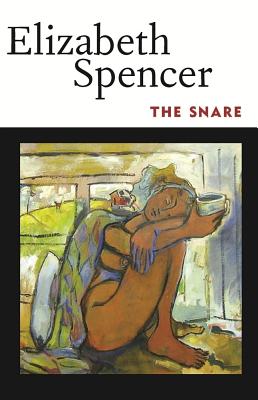
About two thirds of the way through The Snare, Elizabeth Spencer’s seventh novel, the protagonist, Julia Garrett, has the following exchange with her uncle, Maurice (who speaks first):
“Don’t let the past pile up, darling. It’s bad, but it’s gone and we can’t help it. Think of the wake of the boat.”
“Oh, no, that won’t work . . . it’s all around . . . around. . . .”
The line is quintessential Julia, whose every word seems matched not just to the present moment but to a personal inquiry or revelation. In this scene, she is specifically grieving the sudden death of her former lover, a wealthy (and married) Mississippi man named Martin. More broadly, though, she is articulating the root of her existential problem—the thing that, in the course of 400 pages, carries her to the brink of self-destruction—which is that Julia cannot, perhaps does not want to, escape her traumatic past.
Spencer’s gift for characterization reaches enviable depth in The Snare. On the surface, Julia Garrett is a society girl who pursues fulfillment in the seedy underbelly of post-war New Orleans. But this overarching plotline is anchored by the protagonist’s interior turmoil, which is both nebulous and rife with conflict. We spend a lot of time in Julia’s head, reflecting on her past and watching her cobble together abusive events with survivalist instincts. Chief among her preoccupations—what prompts her routine flashbacks and uncertain streams of consciousness—are her abandonment by her father and her relationship with her great-uncle and Maurice’s father, Henri “Dev” Devigny.
Though long dead at the start of the book, Dev is the subject of Julia’s love and revulsion, the figure who inspires her to consider herself both a vibrant, sensual “creature” and a whore. For Julia, Dev is “a constant heavy sun along the horizon of her spirit self,” both illuminating and blinding, comforting and oppressive. The implication is that Dev sexually manipulated Julia from the age of six, but Spencer never states this explicitly. Rather, she hews to the intimate third-person perspective that dominates the novel, an authorial choice that creates narrative tension and feels authentic to the way many women process sexual trauma. Julia cannot name what happened to her, so Spencer resists rendering it in categorical terms.
Spencer, who died in December, at age 98, had a penchant for writing characters who are concerned with their pasts. Frequently, they conduct themselves within their own historical contexts, recalling family sagas and ancient grievances amid ordinary affairs—an engagement party, a Christmas pageant, a vacation in the Blue Ridge Mountains. Often, they are Southern, reflecting Spencer’s own heritage as a native Mississippian, and as a person who, like me, was born into a cultural obsession with bearing and unravelling legacies. Early in her career, critics likened her to Faulkner, though she resisted the comparison, citing her subject as the sole similarity. In 1989, she told The Paris Review, “If my material seems like his, as I say, it must be that we are both looking at the same society.”
When she left the South—for Italy and, later, Canada—her fictional landscapes shifted, too, though her interest in familial burdens and societal constraints remained constant. For some readers, it was this focus that cemented her as a next-generation Faulkner. Others saw glimmers of Henry James in her tales about Americans abroad. As I make my way through her astonishing body of work, I find myself thinking most often of her friend Alice Munro, so penetrating is her insight into female experiences of complex class structures and rigid social mores.
And yet, despite the fact that her name often appears in grand company, and despite her prize-winning canon that includes nine novels, a memoir, and six collections of short stories, Spencer is largely overlooked in contemporary literary circles. Her best-known work is The Light in the Piazza, a novella she published in 1960 and later called her albatross. “It probably is the real thing,” she said. “But it only took me, all told, about a month to write, whereas some of my other novels—the longer ones—took years.”
Her trauma exists in the backdrop of her quest for self-actualization, an honest reflection of how many women move through their lives.
The Snare is one such novel. It was published nearly five decades ago, but I first encountered it late last August, while entrenched in a reading cycle that seemed pulled from a graduate seminar in #MeToo-era literature. Piled with books like Susan Choi’s Trust Exercise, Jia Tolentino’s Trick Mirror, and Julia Phillips’s Disappearing Earth, my desk signaled my devotion to contemporary examinations of gender and power. In this sense, I was primed to appreciate The Snare as a significant book, one that explores female identity with nuanced precision, and one that captures the messy and prolonged impact of sexual trauma. Immediately, I was drawn to Spencer’s deep exploration of Julia Garrett’s psyche and the way she wields narrative ambiguity to convey the detachment and confusion with which many women internalize abusive events. For all the broadening of conversations around sexual violence that has occurred over the past two years—for all the brilliant books I’ve consumed that deal explicitly and painfully with the subject—I am aware that navigating the aftermath of such a trauma is confusing and, often, intensely private. As she considers the qualities that separate her from her upper-crust society and propel her toward an electric yet dangerous and ultimately violent lifestyle, Julia Garrett struggles in isolation to understand her past. It is not surprising that Dev finds his way into her tortuous musings. “What was it Dev, the old man, had said?” she thinks, at one point. “‘Passion is what you’ve either got or haven’t got. . . .’ Out of such scraps she had stuck her own truth together.”
In many ways, The Snare is a feminist novel, far ahead of its time in its handling of female sexuality and desire, as well as the influence of early and unwanted experiences. Among works aimed at deepening mainstream discussions about sexual exploitation, it becomes essential reading; but one cannot claim the subject as the book’s central concern. Probably, this is why I like it so much. What occurred between Dev and Julia slinks through her mind, never revealing itself as a certain memory and yet never receding completely. Her trauma exists in the backdrop of her quest for self-actualization, which strikes me as an honest reflection of how many women move through their lives.
It is worth noting that what is so potent to the contemporary reader barely registered with the book’s initial critics. One needs only a cursory grasp of cultural history to imagine why. The Snare was first published in 1972, a year before the term “domestic violence” entered the American lexicon, and two years before Barnes v. Train attempted to tackle workplace power dynamics. Issues of child sexual abuse hardly resonated in the public consciousness and would not garner substantial legal attention until the enactment of the Child Abuse Prevention and Treatment Act, in 1974. Spencer’s novel incorporates these themes to varying degrees, usually with the type of subtle probing that suits the introspective Julia. Specifically, Spencer’s deliberate blurring of Julia’s past trauma elicited confusion among reviewers in an era when Americans had, at best, an inchoate appreciation for the sexual autonomy of women and girls.
The novel received a lackluster review in the New York Times and a misogynistic one in Kirkus Reviews. (What the Times described as narrative complexity Kirkus labeled as melodrama, declaring that The Snare was not far removed from “Southern belle lettres.”) The Georgia Review picked up on the necessity of Spencer’s painstaking attention to her protagonist’s history and interiority—elements the Times alternatively described as “the novel’s most damaging flaw”—but determined that the structure was too elevated for the book’s thematic content. This, too, has a sexist ring, considering the great extent to which female desire propels the storyline.
The blurring of Julia’s past trauma elicited confusion in an era when Americans had an inchoate appreciation for the sexual autonomy of women and girls.
Among these pieces of criticism, what was largely agreed upon was the plot. In great or spare detail, each described the events of the book in a similar fashion: Julia Garrett, the adopted niece of Maurice and Isabel Devigny, a respectable New Orleans couple, is tired of her well-bred lifestyle. She seeks excitement with Jake Springland, an aspiring musician and somewhat ambivalent disciple of a religious zealot. With Jake, Julia enters a world of late-night jazz shows and drug dealers and, soon, murder. The novel begins in the 1950s and spans at least a decade, thrusting a clash of societal standards into the backdrop of Julia’s experience. (Her roommate, Edie, a girl from “some dusty little dried-up town,” is her prudish foil.) Julia is, as the book’s title suggests, resisting the snare of the stifling and polite realm in which she was raised; but she is caught nonetheless by a confluence of her own impulses.
The preeminent Spencer scholar, Peggy Prenshaw, further elucidated the central themes of The Snare in 1993, when she wrote an introduction to the book on the occasion of its paperback release. “Julia Garrett,” Prenshaw writes, “seems a misfit, a woman enlivened by sexual experience and nearly destroyed by it, a woman bored by status-seeking and acquisitiveness, whose indifference brings her to the edge of hunger and homelessness.” She goes on to explain that the novel’s setting in New Orleans mirrors Julia’s seductive power and dueling instincts. Like Julia, Prenshaw says, the city is steeped in manners and tradition, but beneath its glossy exterior it is an exotic, indulgent place.
Prenshaw also references the novel’s mixed critical reception, noting the issues reviewers had with narrative ambiguity, but she does not fully explore the resonance of this authorial choice with the book’s violent plot points. Spencer’s rendering of Julia’s darkest moments is frenetic and fragmentary, allowing certain mysteries to rest in the reader’s mind as uncomfortably as they do in Julia’s. In these scenes, the events are clear, but their details are often foggy, punctuated by an image here, a sensation there. We see, for example, the flash of a blade held to Julia’s neck and glimpse, through euphemistic language, the shame she associates with what follows. As in, “After that . . .” and “I’m just going to call it an awful headache.” For Julia, what is contained in the words that and it is unspeakable, even as it holds dominion over her identity.
Crucially, vagueness distinguishes Julia’s memories of her relationship with Dev. Speaking of her protagonist in 1990, Spencer said, “Her early experience with her guardian mentor, . . . a French Cajun man who may or may not have seduced her, had a profound effect on her.” Prenshaw interprets this effect decisively. “The indisputable fact seems to be that Julia does not regard the relationship with Dev as injurious. If corrupting, it was a necessary and inevitable introduction to the ‘crooked world.’” This statement aligns imperfectly with my own impression, because it ignores the yearning that is so critical to Julia’s idea of herself. She does not want to regard the relationship with Dev as injurious. She wants to imagine it as inevitable.
Spencer makes clear that, for Julia, it is easier to live with a terrible thing when it is remembered indistinctly. Julia’s past with Dev haunts the novel because it is essential to how she views herself, and yet she is unable to define it. Violence and sexual exploitation pervade her adult life, too, and yet she never names it as such. Rather, she absorbs it all with a pronounced detachment, as though each experience is the logical conclusion of who she is in the world. After the doctor for whom she briefly works as a receptionist chases her around the office, she thinks: “. . . life was more peaceful than not with him, now that he’d made his pass.” After Jake Springland, her musician boyfriend, rapes and beats her, she thinks: “Why didn’t I find somebody good?” and then concludes that “she hadn’t because she hadn’t wanted to.” She is kidnapped twice, thanks to her association with Jake, and subjected to torture. After the first time, she thinks: “It was something in me . . . Something that wanted to go down forever, to hit the absolute muddy bottom where there’s nothing but old beer cans, fishhooks and garbage.” After the second time, she thinks: “She would gladly live like an animal, simply, instinctively, for the day only.”
For Julia, it is easier to live with a terrible thing when it is remembered indistinctly.
Julia’s enthusiasm for New Orleans and its various vices—her sensual and subversive nature—is palpable and seemingly within her control. From the start she is an intelligent woman who knows her sexual power. But as we navigate the conflicting aspects of her mentality, we learn that her empowerment is marked by shame. At times, she reduces herself to her sexuality. Dressing for a courtroom gallery: “Might as well try to de-sex herself, she thought, as stamp out her natural looks.” Her early sexualization by Dev forms a critical aspect of her identity and self-worth, convincing her that she is incongruous with anything virtuous. She thinks, “The idea of goodness beckons forever to those who can’t have it, but once they catch up to it by luck or accident, they immediately feel uneasy, restless, miserable.”
This vivid interiority is what is largely missing from any summary or critical analysis of The Snare. How Julia decodes her own experiences is a vital aspect of the novel that seems only to have puzzled reviewers in 1972 and failed to thoroughly engage scholars in the following decades. I only learned of the book because several people recommended it to me. Each had read my work and assumed I would appreciate Spencer’s meticulous characterization of Julia Garrett. But at some early point in my first reading, Julia began to resonate as more than a technical feat. We are wildly different people, and yet I identify with her tendency toward self-examination through imperfect recollections. I possess the kind of memory that blurs even the recent past. It recalls the worst things dimly and everything else with rosy nostalgia. This has the effect of making me suspicious of my negative or painful emotions. I am unskilled at relaying the detailed origins of my deepest wounds without a large amount of ambiguity. Spencer captures this deficiency, too. After Jake assaults and abandons her, Julia says, “I don’t think I was even born a virgin.” Her effort to make sense into the plainly nonsensical seems to me like an inherited impulse, something derived from generations of cultural stagnation around gender-based violence.
Months before her death, I spoke with Elizabeth Spencer over the phone. She talked about the months she spent in New Orleans, researching the novel’s setting, and recalled her use of narrative ambiguity as the deliberate choice I had assumed it was. And yet, I absorbed from her a sense that her fixation on Julia’s past diverged from my own. “I don’t spend too much time psychoanalyzing,” she said. I felt somewhat disappointed by her answer, at first. So much of Julia’s persona appears drawn from an intellectual understanding of the functional ways in which human beings process trauma. But maybe Spencer’s more intuitive approach is what accounts for her novel’s brilliance. Perhaps her resistance to determining direct cause and effect is what allowed her to craft such a complicated and authentic character. Julia is not whittled into a particular set of psychiatric ailments, and her interior current is rich and evolving, never cyclical, never wholly diminishing. Spencer allows her protagonist a limitless quality, that of a woman constantly interpreting and reinterpreting her place in the world through her experiences. Who among us isn’t?
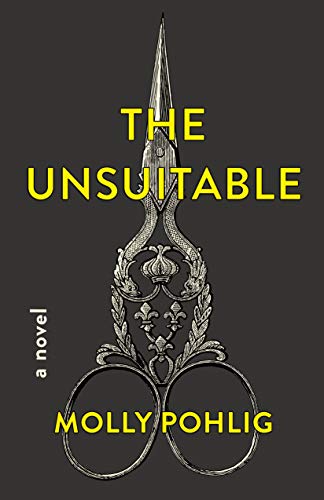
One of the most important things I knew about the main character of my novel, The Unsuitable, was that she was not going to be likable. She wasn’t going to be pretty or smart. She wasn’t going to make good choices; she wasn’t going to generate instant empathy.
When I first moved to New York, I worked as a nanny for a couple who owned a bookstore, and one day the mother insisted I take home Clarice Lispector’s The Hour of the Star (full disclosure: I never brought it back), which is about a young Brazilian woman overlooked by the world for her dim wits and unremarkable looks. Since then, this idea of books driven by characters you might think have nothing to offer the world or the reader has obsessed me. How do you take a person that most would deem uninteresting, perhaps objectionable—possibly even repugnant— and make the reader care about them?
The Unsuitable is the story of Iseult Wince, unloved, unremarkable, possibly insane and possibly possessed by her dead mother. She has trouble forming connections with others, and she turns her misery in upon herself. She self-harms to maintain her precarious equilibrium, but rather than use this as a tool to merely shock the reader, I wanted to express the inner turmoil that would lead her to such desperate ends. I was curious to see if readers could stay invested in the story of a woman that many would find off-putting, given that as a reader, I consistently find myself drawn to female characters I don’t necessarily like.
These eight books, written by women, champion the unlikable woman, the hard-to-understand woman, and the madwoman.
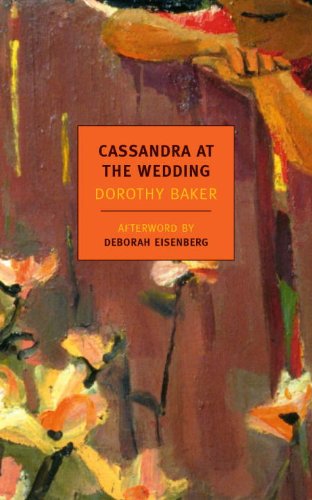
Let’s start with a sort of…lighthearted take on mental illness? The titular Cassandra is reminiscent of some sort of Zelda Fitzgerald: her madness, obnoxiousness, and connivance are only just outweighed by how charming and brilliant and beautiful she is. It’s a beautiful, rapturous book, but you can’t help but fear for Cassandra’s future.
Based on the Parker-Hulme murders (recognizable to modern audiences from the film Heavenly Creatures), Bainbridge’s first novel is about a curious thirteen-year-old with a decidedly nasty side, who ropes her more naive friend into a devious plan to humiliate a middle-aged man. A critic wrote: What repulsive little creatures you have made the two central characters, repulsive almost beyond belief!
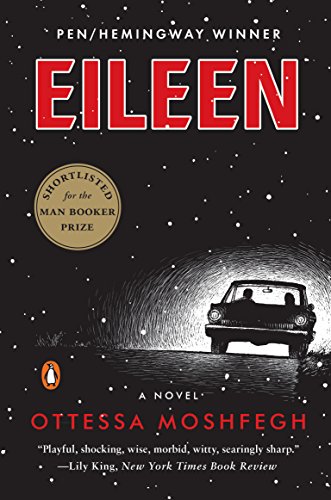
Eileen is dull, she’s unhappy, she’s perverse, and she has a range of distasteful personal habits ranging from poor hygiene to a laxative obsession. She gets away with a wild crime because she is not a person people notice or take care of; if a person has been neglected and turns out reprehensible, do they still merit our empathy? Eileen is not a woman you’d want to be friends with, but she’s undeniably fascinating.
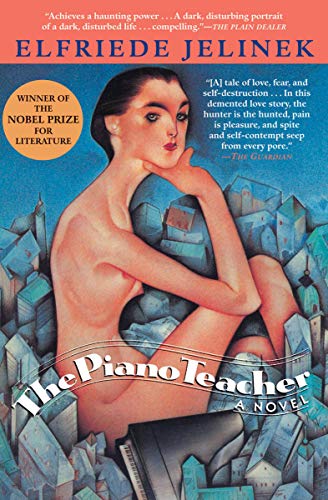
Jelinek is a master of the grotesqueries of the human condition, and this novel of self-destruction and degradation is no exception. Erika’s quiet life as an accomplished piano teacher living with her mother belies her sadomasochistic obsession with a student, and her practices of self-harm. This novel is so shocking that drew the notoriously disturbing German director Michael Haneke, who adapted it into a movie.
Oh my heart. Macabéa is ugly, pathetic, stupid, unloved by anyone, not even the repugnant man you can’t quite call her boyfriend. This brilliant novella takes an unfortunate waif that most writers wouldn’t even consider main character material, and makes the reader’s heart bleed for her, asking, “Who has not asked himself at some time or other: am I a monster or is this what it means to be a person?” We are all monsters in one way or another, but no one story is more or less deserving of being told.
This tiny novel packs a helluva punch. You are aware from the get-go that spinster Lise is not quite right, with her outbursts, hysterics, and bold-faced lies. You are aware from chapter 3 that she is going to be murdered, and all you can do is sit back and watch her hurtling towards her doom.
You certainly don’t want to identify with the protagonist of this novel, a 19-year-old girl who has set out to seduce a 12-year-old neighbor boy, and exchanges letters with an imprisoned child killer. It’s a twist on Lolita in a way, presenting us with a horror of a human being, asking if anything human remains therein.
The women of Kang’s three-part novel are, in a word, extreme. On one level they are calm and collected to the point of blasé, but underneath they are savage, self-punishing, almost feral. They offer no explanations for their motivations, and the line between madness and sanity becomes ever more elusive, but even as it does, their reactions to their surroundings and families are so unique and unexpected that you can’t put the book down.
Muslim women are not a monolith. We wear hijaabs and hoodies and pum pum shorts on the dance floor, drive souped up Honda Civics and McLarens on racetracks, shred electric guitars at thrash metal concerts. This surprises many. When Ibtihaj Muhammad won a medal at the 2016 Olympics, seemingly celebratory messages about her accomplishment were punctuated with wonder that a Muslim woman could be, of all things, an athlete. When Brazilian rock star Gisele Marie Rocha is interviewed, she is asked about her burqa and niqab, not so much her Gibson Flying V electric guitar or her musical influences, which include Jimi Hendrix and Lucia Jaco.
Muslim women are fed up. Or at least this Muslim woman is. Frustrated by narratives that confine us to narrow definitions of Muslim-ness and woman-ness, ignoring that gender is a social construct we perform each day, and that there are as many interpretations of Islam as there are people who identify as Muslim, I wrote a prose poem. Titled, “Yes, Muslim Women Do Things,” the poem featured Muslim women achieving such astonishing feats as reading books and taking naps.
That poem led to Muslim Women Are Everything: Stereotype-Shattering Stories of Courage, Inspiration and Adventure, a book that celebrates transgendered, cisgendered, queer, disabled, devout, on-the-fence, Muslim women, who are rocking the worlds of performance art, politics, baking, astrophysics, and much more. Muslim Women Are Everything is a lyrical, illustrated love letter to us, in all our complicated, multi-hyphenated glory.
Troubling the boundaries of what it means to be Muslim and a woman, are the following books by Muslim women authors. Serving a giant F you to those who attempt to confine us, these works of poetry, fiction, and nonfiction illuminate the experiences of Muslim women and tell the many truths of our lives.
Ismat Chughtai refused to apologize in court for writing “Lihaaf,” “Quilt” in English, a short story published in 1942 for which she faced obscenity charges under British India’s homophobic laws. The story that threatened to send the young mother to jail featured the indescribable pleasures between a housewife and her female maid. Ismat was unapologetic in life as in fiction. This collection includes Lihaaf and stories that talk fearlessly about caste-defying desire, friendship across religious boundaries, and sex work.
Muslim lives in quotation marks in the title of Zahia Rahmani’s second novel, much as the protagonist lives within the constraints of this imposed label. Merging oral histories with lyric essays and autobiography, we trace the Berber woman’s journey through desert camps and cities, as she recalls Islamic history and folktales from her childhood. A story of displacement, languages lost and colonialism, “Muslim” challenges the boundaries of genre, much like Rahmani complicates physical boundaries and the complexities of multiple, sometimes conflicting, identities.
A Sudanese woman explains that she misses the call to prayer to a Scottish bloke who doesn’t quite understand; an Egyptian woman laments the loss of her mother tongue; a white Muslim Scotsman visits his fiancé in Sudan. These stories by the winner of the Caine Prize for African Writing feature mostly Sudanese and Egyptian women who have moved from Cairo and Khartoum to Aberdeen and London. Leila Aboulela—who herself left Sudan for Scotland in her mid-twenties—writes of homesickness, accents and spiritual paths. Elsewhere, Home is intimate and emotional, without veering into sentimentality.
Mistress of the short story form, Randa Jarrar’s collection is a masterpiece I read over and over again. These are stories of mothers and daughters, circus tightrope walkers, chimeric creatures that are half-woman half-ungulate, each navigating love, lust and ambition. From women seeking sisterhood in fiction, to those rolling their eyes at novels in which immigrants return home transformed by their journeys, Jarrar’s characters are irreverent, raunchy and real.
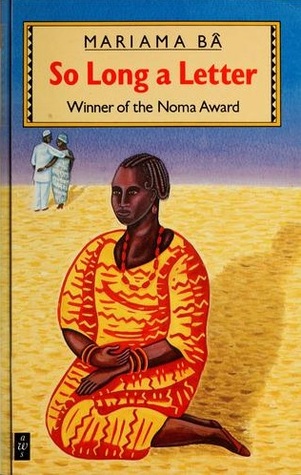
Mariama Bâ’s debut novel, So Long a Letter, was published to critical acclaim in 1979 when she was 50 years old, winning the Senegalese author the inaugural Noma Award for African writers published in Africa. The epistolary novel emerges through a series of conversations between Ramatoulaye and Aissatou who recount their loves and losses. Bâ who described books as peaceful weapons, declared this novel “a cry from the heart of Senegalese women…a cry that can symbolize the cry of women everywhere.”
Yassmin Abdel-Magied was 21 years old when she began working as a petrochemical engineer on an offshore oil and gas rig, one of few women and the only Sudanese-Egyptian-Australian Muslim, among 150 men. Her memoir, published at age 24, recalls her childhood in Sudan, her family’s migration to Australia, and her love affair with activism and race cars (a journalist branded a young Abdel-Magied “peculiar” for dreaming of becoming the first Muslim woman Formula One race car driver). Brash and funny, Yassmin’s Story, also makes for a refreshing read: the big hopes of a young woman who believes she will change the world.
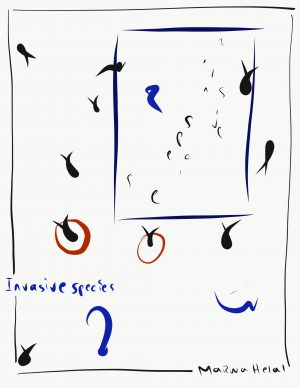
Hip hop lyrics, prose, and poetry take us from immigration offices and embassies to Heathrow airport and a McDonalds in Cairo, in Marwa Helal’s genre-bending collection. Scientific abstracts, newspaper cuttings, and letters sit next to questionnaires and an ode to DJ Khaled. Invasive Species is so damn bold it had me rewriting sections of my poetry manuscript, flouting rules I had been careful to follow. Not surprising, given Helal invented a poetic form called The Arabic, which is written right to left and “vehemently rejects you if you try to read it left to right.”
—Yellowstone National Park


Wet maw of earth painted like a parrot fish     frilled

at the banks     saying AH with extraordinary breath     coffee

makes my teeth earthen     plant them and grow a city

when I go don’t bury them deep     scatter my ashes

like the spring’s rings     in imperfect concentric circles

each one a different shade     on a cliffside color is how

geologists tell the when     I want to know the why     azure

turquoise kelly-green     canary mustard apricot     I swear

Earth is a carnival queen     embellished here by heat-loving

bacteria around a boiling center     they say life began

in a pond like this     volcanic and sun-splayed

minerals washing down the mountains into the basin

where the unfathomable happened     why

is anything alive?     why do tourists throw their refuse

into a pot of phenomena?     why aren’t we extinct yet?

all I know is when I was young     I wanted to be

something grand     I stand by the railing     and watch
Record Rainfall
I read a devastating line of verse
and then the sun came out,
the first time in weeks.
I was masturbating as I read
and looking out the window.
Many things were happening.
Each drop of dew on an oak leaf
distinguished itself—a clear
round seed. In the distance, the storm
painted gray walls behind the pines,
but in the foreground, ferns
shook out their hair, striking me
with light. Am I halfway through
my life, or a third? Everywhere yellow
needles from the wet year. They fell
in an airy rain and continued to fall
as the day dried. The young pines
looked older than they were.
The ancient oaks, never greener.
The sun beat down on them both
as I stepped from the house
like something else that was still itself.
If you live in New York, there are probably a lot of noises you miss right now. Neighbors on their stoops, the bustle of a lively park, the chaos of a crowded bar—even rush hour honks sound pretty good compared to eerie silence and ambulance wails. And if you don’t live in New York, but you’re still sheltering at home, you might be pining for the sound of… well, literally anything else besides your own house.
We’ve been particularly nostalgic for the quiet hum of a busy bookstore or library. And apparently the library’s been thinking of us, too. The New York Public Library has released an album of all the sounds you might miss—including the sound of the New York Public Library, which closed all its branches in mid-March.
Each track, NYPL says, contains its own little narrative: “The Library recording, for example, follows a New Yorker entering a branch, running into a tour group, interacting with a helpful librarian looking to make a reading recommendation, walking past a toddler story time and then sitting down to begin quiet work.”
Now you can put on the album, close your eyes, and pretend you’re surrounded by sunbathers, subway dancers, cab drivers, and drunks—when in fact, if my house is any indication, you’re only surrounded by drunks. Or, if you like your social activity to contain a little social isolation at the best of times, just rent an e-book from NYPL’s curated lists and put the library track on repeat.
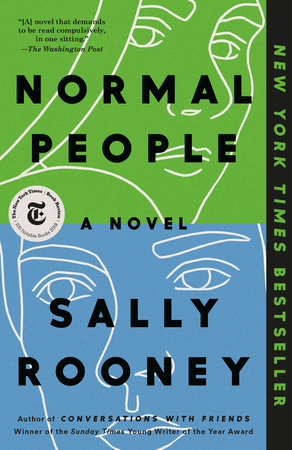
Physical intimacy doesn’t start when a hand (or mouth) touches skin. It starts a moment before. I couldn’t escape that realization while watching the television adaptation of Sally Rooney’s Normal People, which has no shortage of moments where we see its central couple all but quake with anticipation when they’re in each other’s company. Watching Marianne and Connell come alive on screen, their blushes and sighs so beautifully rendered byDaisy Edgar-Jones and Paul Mescal, forced me to reconsider Rooney’s achingly intimate novel. Even as it more forcefully puts its protagonists’ bodies front and center, Normal People’s adaptation makes us realize that being touched, or being denied touch, is something that goes far beyond literal physical contact.
When I first read Rooney’s novel I was drawn to it as a story about alienation. “She hates the person she has become, without feeling any power to change anything about herself”: this was the line, I thought, that captured what this novel was all about. And, indeed, in Edgar-Jones’ hands, Marianne emerges as a fascinating character constantly battling the baffling decisions she makes about herself and her body. But what was on the page a kind of arm’s-length character study (despite Rooney inviting us into her character’s inner monologues) becomes, on screen,a lived-in, fleshed out portrayal. Watching Normal People encouraged me to revisit the novel, sensing it had excavated something that was already there: on the page, after all, this is ultimately a novel about touch, about the ability to reach out to another person who not only sees you as you are but knows you so intimately it’s as if they were constantly reaching inside of you and rearranging your own sense of self.
Indeed, one cannot leaf through Rooney’s novel without happening upon that word, “touch,” and realizing just how central a role it plays in the various duets the novelist stages between aloof Marianne and bashful Connell. It’s such a banal word, but now it pulses with a different kind of power. Tracking it through Rooney’s prose becomes a way to track its entire arc: “He touched her leg and she lay back against the pillow,” “He touches his lips to her skin and she feels holy, like a shrine,” “He had never, ever touched her in front of anyone else before,” “The outside world touches against her outside skin, but not the other part of herself, inside,” “He touches her hair. She feels his fingertips brush the back of her neck. Do you want it like this?” and so on and so forth.
The novel signals its fascination with touch even before the first page. “It is one of the secrets in that change of mental poise which has been fitly named conversion,” the George Eliot epigraph reads, “that to many among us neither heaven nor earth has any revelation till some personality touches theirs with a peculiar influence, subduing them into receptiveness.” Even before we meet our two protagonists Rooney alerts us to the fact that Normal People is a story about the impressions we have and leave on one another. Moreover, in the context of Rooney’s narrative, Eliot’s prose ends up feeling tinged with the erotic. The image of submission and reception it conjures is laced with images of heated sexual intimacy—or anyway, that’s how Rooney’s novel reframes it for us. From the moment Connell first kisses Marianne in her palatial home (where his mother is employed as a housekeeper: “Don’t tell anyone at school,” he says) and establishes their twisted relationship (“He pitied her in the end,” Marianne thinks to herself soon after, “but she also repulsed him”) to the point where Marianne takes part in BDSM scenarios with a man she barely stands, the novel establishes its fascination with the way the difference between power and sex is one of degree, not of kind. It’s the distinction between a caress and a slap, a hand held and a hand cuffed. “Ever since high school he has understood his power over her,” Connell notes at one point in the novel. “How she responds to his look or the touch of his hand. The way her face colors, and she goes still as if awaiting some spoken order.” Even their emotions feel weighted with tactility. When Connell first tells Marianne he loves her (before questioning whether he does, actually) we’re told he just felt it happen, “like drawing your hand back when you touch something hot.”
‘Touch’ is such a banal word, but now it pulses with a different kind of power.
As Marianne and Connell grow up, their lives intertwining every so often as they attend university and later move to different cities, the intimate way they know one another’s bodies anchors them to each other. “Being alone with her is like opening a door away from normal life and then closing it behind him,” as Connell puts it; their every encounter is a journey through that closed-door room they let themselves explore away from everyone else’s prying eyes. To have read about such intimacies on the page was one thing. Rooney’s prose can be almost clinical in those instances: “Her breath sounded ragged then. He pulled her hips back against his body and then released her slightly. She made a noise like she was choking. He did it again and she told him she was going to come. That’s good, he said.” But to see Connell and Marianne exchange all-too-knowing glances before finally giving in to their basest instincts up on the small screen, Mescal and Edgar-Jones’s flushed faces and heavy breathing anchoring their every interaction, sexual or otherwise, brings to the forefront the very visceral eroticism that’s often sublimated in Rooney’s prose.
When they first have sex, director Lenny Abrahamson (also responsible for the big screen adaptation of Room) keeps both characters in close-ups. This has long been a trope in television when trying to denote sexual intimacy without showing too much, particularly when dealing with underage characters. Close-ups and labored breathing do the heavy lifting of suggesting what’s taking place, a kind of visual synecdoche where the closeness of the camera stands in for the intimacy of the characters at hand. Moreover, the gesture is supposed to make us feel that much closer to these characters, letting us into their state of mind. With no music to score their awkward and steamy encounter, Abrahamson lets us feel like intruding voyeurs—putting us in the very position Marianne had first fantasized about. As she confesses to Connell soon after, when she’d seen him playing rugby earlier, she had realized how much she had wanted to watch him have sex. “Not just with me,” she clarifies. “With anyone. What would it feel like?”
For many watching Normal People while in self-isolation, such a query will resonate less as a rhetorical question and more as a grave concern. Marianne may have been merely being coy and self-effacing—the better to face the popular boy at school who pretends not to know her at school despite meeting her in secret at his house—but her desire wasn’t just a lack of imagination. Sometimes being a spectator can feel like the best way to play out a fantasy. And that fantasy in turn can become a learning opportunity. That’s how Connell himself, who goes on to study literature (of course), conceives of the power of books. When reading Pride & Prejudice all alone, he’s amused at how wrapped up he gets in Austen’s novel. “It feels intellectually unserious to concern himself with fictional people marrying one another,” Rooney writes. “But there it is: literature moves him. One of his professors calls it ‘the pleasure of being touched by great art.’” He notes that such a line sounds almost sexual, “And in a way, the feeling provoked in Connell when Mr Knightley kisses Emma’s hand is not completely asexual, though its relation to sexuality is indirect. It suggests to Connell that the same imagination he uses as a reader is necessary to understand real people also, and to be intimate with them.”
Watching Normal People in a world ruled by social distancing mandates and self-isolation orders makes its message all the more urgent.
Such a line of thinking teems with possibility on the page. But what of the power of television, which depends less on our imagination? Away from the interior monologues that make up Normal People the novel, the Hulu/BBCThree adaptation forces us to more pressingly think of Marianne and Connell’s bodies. His rugby physique, especially when seen next to her lithe body, already speaks volumes about the teetering power imbalance they will constantly trade back and forth. The hunger that you read about between the two, that unquenchable yearning they have for one another’s body, is palpable on screen, even when Abrahamson focuses solely on Connell’s clavicles, Marianne’s breasts, or their moaning mouths that give way to tender kisses. Their blushes leap off the screen and make you flush just as much. It’s no surprise that to score a montage of their increasingly acrobatic secret rendezvous the show chooses Imogen Heap’s “Hide and Seek,” a song that’s long been associated not just with the second season ender of The OC but with shocking and schlocky scenes on TV. Pit against Marianne and Connell’s budding intimacy its opening lines are reframed anew: “Where are we? What the hell is going on? The dust has only just begun to form, crop circles in the carpet.”
On screen, Normal People is both more erotic and more melancholy than on the page. Or, perhaps, I found myself more entranced by its depiction of the erotic and melancholic relationship Marianne and Connell create with one another because, like many others, I’m famished for connection, for touch. Heap seemed to be singing about this young couple who doesn’t yet know what’s ahead, but she was also singing about all of us watching. By the time she coolly croons “When busy streets, a mess with people, would stop to hold their heads heavy,” over an image of Marianne raking idly through the sand while sitting on an empty beach with Connell, I realized that watching Normal People in a world ruled by social distancing mandates and self-isolation orders makes its message all the more urgent. Its focus on touch, on intimacy, on the alienation that comes from being alone and the brief succor that can only come from feeling held by someone whose touch jolts you even before they actually make contact, feels needlessly timely. A balm I didn’t know I needed. This is why so many of us are retreating to novels and TV shows and movies: not just to escape from the touchless reality around us, but to seek what Connell (and Rooney) so clearly understand about the intimacy that can be nurtured between reader and novel, between viewer and show. We read and watch to remember, perhaps, what it’s like, to live out in the world like…well, normal people.
It’s possible that one day I’ll get away from writing about childhood trauma and the effects it has on the grownups we become, but that day is not today, nor was it five years ago when I started thinking about a new novel.
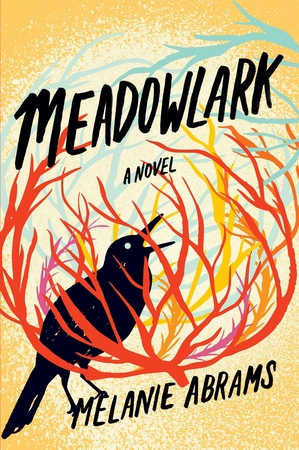
I’ve always been fascinated by cultish environments, and what better way to screw up a kid than to remove them from the world and force them to adopt a world view that’s questionable at best? Ergo, Meadowlark, a novel with two cult-like communities—one a harsh spiritual compound with strict expectations even for children and the other a kid’s theoretical dream world without rules (or school!).
Both extremes prove problematic to the kids in the novel but being able to justify going down the rabbit hole of research in service to the book was incredibly fun (although, obviously, at times difficult) for me. I got to read a ton of books about alternative ways of raising children, from the truly painful (I recommend staying away from anything about The Children of God) to the cringingly misguided (Google “Indigo children” for a good time waste).
Below you’ll find eight books about alternative parenting gone awry because there’s nothing we love more than reading about parents who do a worse job than we do.
Well-meaning missionary parents bring their four daughters to the Belgian Congo to proselytize to the natives and to teach their girls how to save the savages. Instead, one daughter ends up dead, the others reject Christianity altogether, and the “savages” revolt.
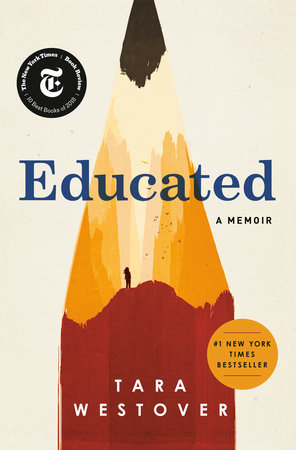
Tara Westover’s memoir is about her parents’ commitment to bringing up their family with bizarre survivalist and religious dogma. Schooling consists of reading the bible, medical care is limited to herbal tonics, and horrific abuse is deemed part of family life.
What happens when a rich socialite mother is left penniless with no way to provide for her family? She hatches a scheme to hide her four children in her wealthy parents’ attic, promising to come get them when her father dies and leaves them his fortune. Chaos ensues. Spoiler alert: one kid is killed by rat poison-laced donuts, another kid’s growth is forever stunted, and the last two end up in an incestuous relationship that goes on for another five novels. Compulsive tween reading. Also, NOT FOR TWEENS.
Walls grows up with parents who prize nonconformity and idealism over basic needs. Their nomadic lifestyle works out just fine until the family is crippled by the father’s alcoholism and the money runs out. The Glass Castle is the rare memoir where the writer can hold both criticism and compassion for her parents’ lifestyle choices.
Rosemary’s father is a psychologist who studies animal-human behavior, and what better way to study animal-human behavior than to raise your human child alongside a chimpanzee? The novel traces Rosemary’s tragic loss of Fern, her chimp sister, and the fallout from her parents’ early choices.
Selected by her parents’ guru, Sri Chinmoy, as the chosen one, Jayanti Tamm traces her bizarre childhood in this memoir about what it was like to grow up alongside a “living god” and what happened when she finally decided to break free.
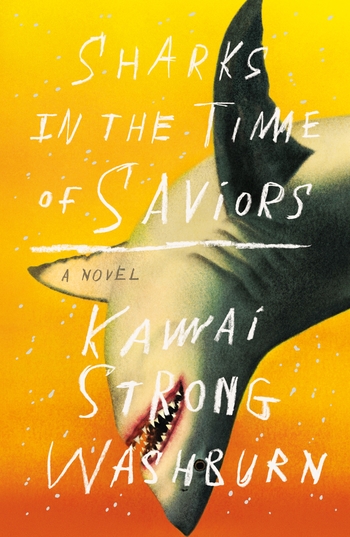
In Kawai Strong Washburn’s Sharks in a Time of Saviors, a young boy falls into the ocean and is carried by a shark—in its jaws—back to his mother. The boy, Nainoa, soon begins to display miraculous healing powers.
But he’s been touched by Hawaiian divinity from the very start of his life. On the night of his conception, which opens the novel, his parents see the Night Marchers, the spirits of ancient Hawaiian warriors. Nainoa’s supernatural abilities shore up the family, who had been hit by the collapse of the sugarcane industry, for a while. Eventually, economic realities force Nainoa and his siblings to leave for the mainland for school and work prospects.
Washburn, who was born and raised on the Big Island, offers a Hawai’i that takes in its technicolor-saturated vistas: “And there was the Waipi’o Valley: a deep cleft of wild green split with a river silver-brown and glassy, then a wide black sand beach slipping into the frothing Pacific.” Equally, he renders the precarities of paradise for Hawaiians through the family’s continued struggle to survive.
I spoke to Washburn about saviors, deeply-in-love PoC couples in fiction, and the prospect of another Hawaiian son, Barack Obama reading his novel.
J.R. Ramakrishnan: I must say that my reference points for Hawai’i are woefully limited to watching reruns of Magnum P.I. in my teens dreaming of the beaches. Also then more recently, Barack Obama, of course. So you were born in Hawai’i?
Kawai Strong Washburn: Born and raised! I was born on the Big Island. In fact, I spent the majority of my youth in Honoka’a where the book begins. It’s actually my hometown.
JRR: And your family’s roots are indigenous Hawaiian?
KSW: Actually, I’m a lot more like Barack Obama like that. My mother is African American. She grew up in Kansas. My father is, I guess you could say, is European American. He grew up in Oklahoma. Both moved there for school. They met, got married, and decided to stay there to raise a family. So I’m not actually native Hawaiian ethnically. I am local to the island. I spent all my formative years there.
JRR: You open the book with quite a spectacular scene of Noa’s conception in a truck and the Night Marchers. How did the novel’s story come to you?
KSW: The opening image was the one that just showed up in my head one day. I don’t know what made it happen. At the time, I was working on short stories and I didn’t see it as being something that I was going to turn into a novel and so I just let it fall away. It kept showing up for about a year and a half. So I finally started thinking about it: what is this image of a child being pulled from the water by sharks? For me, when I think of children, I think of the family naturally as an extension. I started wondering, where’s the family? The questions I started asking about the family, as well as, the image itself—–why were the sharks carrying the child?—–started to build parts of the story. Once I had some ideas about who that family was, I really started digging into them, and into some of the mythology that might explain why a shark might save a child.
JRR: Could you talk about the mythology that informs the novel, and perhaps in particular, the Night Marchers?
KSW: The mythology of the island is something that I have carried around subconsciously. A lot of it was floating around in me and I had a partially remembered knowledge of it from growing up in Hawai’i. One of the strongest recollections was the Night Marchers. My understanding of it as a child was that they were very specific to Waipi’o Valley, which is the valley that you see in the novel. It turns out that they don’t necessarily have to be specific to that valley or that place.
The idea of tying the Night Marchers to Nainoa and with what he represented came out later in the revision process as I was trying to get a better understanding of what tied the family together and of the questions about heritage, and the relationship between the family and the land. I started to recognize different ways in which the characters experience the voice of the land.
One of the things that novel subtly, maybe not so subtly, I’m not sure, questions is the idea of a singular savior, who would be the way out of difficulty. I knew the novel was going to be about that and I knew Nainoa would represent that flawed idea of this great man theory of history. What would it look like then if the powers that he has were to be present in the other members of the family but they may or may not be conscious of them? That was sort of where I started getting the idea about how the different characters experience the stuff that Nainoa experiences and their journey to understand these powers.
JRR: I adored the portrayal of Nainoa’s parents. They obviously have to deal with a lot in their whole lives but Malia and Augie seem totally in love. Him always trying to get in her pants is so endearing. I don’t know if we see many loving relationships (untouched by deep dysfunction in themselves) between PoCs in fiction too often.
I wanted to show a side of Hawai’i that people might not be familiar with, the economic challenges for people that live there.
KSW: That was really important for me. I wanted to show a side of Hawai’i that people might not be familiar with, and I think a lot of people that visit the island might not realize the extent to which it is an economic challenge for people that live there. Most have to string together two or three jobs, drive really far to do them and a lot of jobs are tough, service-oriented ones. Poverty and economic struggles were important to talk about, but I wanted to balance it so the novel wasn’t entirely bleak.
People of color and families in poverty are constantly depicted as dysfunctional. Because they’re in poverty, they must have poor relationships. That’s certainly nothing like what I had experienced growing up in the islands, which is really that you can even have a certain level of, I don’t want to say, thriving, but you can reach a level of happiness and contentment, even in economic precariousness. I wanted to depict that, to have families know each other very deeply and especially the parents. The source of their resilience is that joy for each other and their very physical joy for each other.
JRR: I want to ask you about the landscape because I feel that is perhaps the main reference point of Hawai’i for people not from there. I thought you did such a tremendous job of rendering the environment in the novel.
KSW: At one level, I wanted to describe what I had felt when I’ve gone on hikes in the remote areas or when I was surfing and hovering about the reef in the current. I wanted to write about all the different experiences I had growing up in the natural environment, and how singularly transformative it all felt. I also wanted to figure out a way to describe the islands in a way that almost personified the landscape into a character in the novel. The idea was to build a physical presence that was tactile for the reader, which also reinforces the characters’ relationship with the land.
JRR: Can you recommend some books about Hawai’i that you think I should read to cover my unfortunate gap in the Hawaiian part of American literature?
KSW: The first author I encountered as an adult searching for stories about the island was Lois-Ann Yamanaka. She has written novels, short stories, and poetry. Look for Saturday Night at the Pahala Theater, Blu’s Hanging, and Wild Meat and the Bully Burgers. Kiana Davenport’s Shark Dialogues, which is the start of a trilogy. Kristiana Kahakauwila’s short story collection, This is Paradise. For Hawaiian mythology, there are the books of Martha Warren Beckwith.
JRR: Do you think Barack Obama has read your book yet?
KSW: That’s a scary thought! I don’t know. He’s so well-read. The book’s had a certain amount of visibility. I have a feeling it will probably be on his radar at some point. He’s so well-read and I appreciate his taste. He’s also from the island, which makes it an even more daunting prospect that he might read my book! It would be interesting to see what his thoughts are, and if it resonates with him at all. I try not to hold out hope or let it keep me up at night.
JRR: In some ways, he’s a bit like Nainoa, isn’t he? He’s from Hawai’i, exceptional, and, I think, some (or many) would say, with special powers too.
KSW: Yes, it’s funny. Like Nainoa, Barack Obama is the sort of character that people on some level ascribe ideas of greatness and larger-than-life saviorship. Given the speeches he’s made and what he’s tried to focus people’s attention on in and out of office, I think he is just an individual who’s trying to accomplish a set of things. I don’t think he’d consider himself that special to think that he’s capable of things that none of us are capable of or anything like that.
“The past mishandles everybody,” Alani Baum declares in my novel Vanishing Monuments. The novel starts as they learn that their mother—who they haven’t seen in almost thirty years, when they ran away from home at seventeen—has lost her ability to speak due to her worsening dementia. This news spurs Alani into taking an impromptu trip home to Winnipeg, and as with all our homecomings, Alani finds themselves wading through the mire of their memories the city holds.
This isn’t a unique experience, being haunted by our personal history—especially emotionally intense times in our life, like our youth. I think most of us, in some ways, are always trying to climb over what has happened to us (and what we have done) in an attempt to exist in our present; in an attempt to pretend we are inside the life we are living, rather than constantly trying to surface from the life we have lived.
Here is a list of eight books where the characters—like Alani—are trying (and sometimes succeeding) to get over the past.
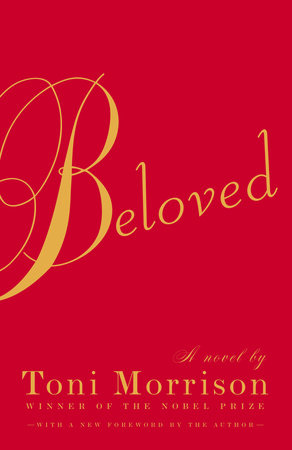
It’s hard to talk about books where the past casts a shadow over the present without including Toni Morrison’s Beloved. From the first sentence—“124 was spiteful”—we know we’re in for a haunting. Set eighteen years after Sethe escaped to Ohio from a life of slavery on a farm called Sweet Home, Sethe is still living with the memory of what happened to her there. I don’t want to reveal too much about the book, but if you’ve somehow slept on Beloved, it’s high time to open the book and meet her.
One of my favorite novels of the last few years, the earthquake room is a story about k and bea, and the guilt k feels about cheating on bea after bea—in the first pages of the book—finds herself infected with a Herpes sore (yes, that’s what’s on the cover). Wracked with guilt and seeking punishment, k spirals into shocking, self-destructive behavior. the earthquake room is an intimate story about a relationship, but through that intimacy, and k’s inability to forgive themselves, the novel feels almost apocalyptic.
Winner of the Lambda Literary Award for Gay Fiction in 2019, Jonny Appleseed is an almost picaresque novel that slowly tells the story of Jonny—a Two-Spirit Indigiqueer sex worker currently living in Winnipeg. The plot of the novel is built around Jonny trying to find a way to get back to the rez, which is a few hours north of the city, to attend the funeral of his stepfather. As he tries to catch a ride, we are bombarded with stories of Jonny’s life, stories about his sexwork, about his kokum, about his growing up the only Two-Spirit kid on the rez. For as much pain and trauma there is in this book, particularly in Jonny’s complicatedly intimate relationship with his childhood friend Tias, there’s also so much love and beauty. Laugh and cry, Jonny’s perseverance is as infectious as the liveliness (and sexiness!) of his voice.
Composed of three novellas, The Dark Room grapples with World War II from the perspective of three German civilians: Helmut (a photographer early on in the war in the 1930s), Lore (a twelve-year-old girl trying to escape the Russians to West Germany in 1945), and Micha (a teacher living in contemporary/late 90s Germany). In Micha’s novella, Micha is shocked to learn that his grandfather was a Nazi, and finds himself obsessed with learning the truth about what his grandfather’s role in the war was. Micha’s dark and relentless curiosity begins to create rifts in his family as he refuses to stop unearthing what they would prefer remain earthed. Reminiscent of Michael Verhoven’s film The Nasty Girl (1990), The Dark Room’s final novella does an excellent job of capturing the discomfort and trauma people experience in learning their proximity to both atrocities and their perpetrators.
I’m mad at a lot of people for not reading Brother, so if you want to get in my good books, please read this good book. Set in Scarborough, a lower-class neighborhood in Toronto which is home to many immigrants, Brother follows Michael and his brother Francis, who live with their mother in a housing complex. The novel is framed in the contemporary moment, when Michael’s childhood love interest Aisha comes back to Scarborough to visit—some twenty years after Francis’ tragic and violent death. When Aisha returns, she finds that after all this time, Michael hasn’t done anything but work in a grocery store, and he and his now mostly-silent mother still live in the same apartment. Neither have been able to begin to get past the fact of Francis’s death. Brother is one of the most beautiful and infuriating novels (due to injustice) I’ve read in years.
This stunning short novel—published by scrappy Canadian publisher Metatron—tells the story of a young woman who survives a sexual assault, and who shortly after gives birth to a hummingbird. Yes, a hummingbird. From then on, the hummingbird (and the sound of its constant hum) is ever-present in her life, and for a long time irritates her as she tries to figure out what it wants. A touching allegory, Hum is about the jagged journey of healing as she learns to coexist with a trauma she will have to live with forever.
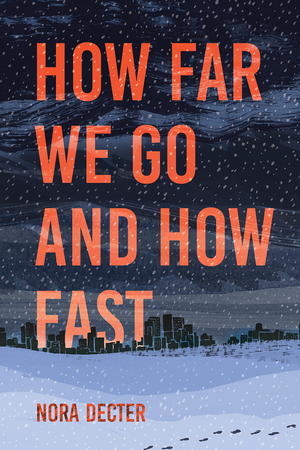
This list wouldn’t be complete without one more book set in Winnipeg. Nora Decter’s How Far We Go and How Fast—which won the Rakuten-Kobo Award for Emerging Writers in 2019—tells the story of sixteen-year-old Jolene (named after the Dolly Parton song) in the aftermath of her older brother—and hero—Matt leaving home unannounced one night. As the book progresses, and while Jolene clashes with her drunk and karaoke-obsessed mother—all the while trying to save up money for a bus ticket to the west coast, where Matt went—we slowly learn more about Matt and what happened to him. I can’t think of a book that captures teenage angst as well as Decter does here, while also deftly illustrating the many effects of loss.
This book is one of the most beautiful and gutting books I’ve read in the last few years. On its surface, it seems to be a book about the beauty of hockey, and about how the game allowed Saul Indian Horse to survive the brutal realities of life in a residential school. But more than hockey, Indian Horse isabout the ways in which the genocidal institutions that were the residential schools destroyed generations of Indigenous people in North America. The way Saul’s passionate and seemingly reachable ambition to become a professional hockey player is interrupted by the manifestations of his trauma is as heartbreaking story of colonial injustice as has ever been told.
“On Growing Ferns and Other Plants in Glass Cases, in the Midst of the Smoke of London” by Daniel Mason
1.
Sometimes, during the night, she wakes to a presence, a creature sliding through the darkness, watching, waiting to descend. She doesn’t dare to look; to move even slightly is to risk waking the child, and it’s for him she knows the ghost has come. There is nothing she can do but remain in utter stillness, beside the boy, so close that she can feel his exhalations on her cheek.
Watching, as his blankets softly rise and fall, and the shadows stir around them, and the dim light plays against the pale blue paper on the wall.
She can hear it then, the boy’s breath quickening as the ghost draws closer. Very faintly, from deep within his chest, the tickling of a wheeze. Just a whisper, but she has become a great student of his breathing, an expert. She knows, then, what is coming. The boy so peaceful now, and yet in seconds, the ghost will be upon him, he will lurch awake, tearing at his sheets, his chest heaving as he throws his covers from the bed. Desperately, she will try to calm him, but to no avail. She will pray: that this attack won’t be the final one, that it will pass as all the others, that the earth will continue on its turning, bringing spring and warmth, the end of winter burning, and perhaps, if fortune smiles, their escape.
A patterning of raindrops at the window . . . a shift in the room’s currents . . . and the wraith halts in its descent. Now, from above, she senses a retreat, the dark smoke whisking back in viscous eddies. Inches away, William’s breath slows again and softens. The wheezing vanishes. For a moment—another hour, perhaps the night—the danger has passed.
The attacks—paroxysms, the doctors would call them, though there was no mistaking the focused violence of the assaults—had begun the previous winter, when the boy was six. For half as many years, since her husband’s accident and death, they had been living with her sister Katherine in Finsbury, in the spare room on the third floor. Elizabeth had not intended to remain with them so long. Her sister had a family, a husband with a growing reputation, and—now that their two sons were away at school—a social life requiring careful cultivation. And yet where was she to go? Beyond some distant relations in Herefordshire, Katherine was her family. And even if Katherine were concerned solely with others’ opinions, it would have been quite indelicate for her to cast her sister out.
Of course, no one had spoken of reputation; these were Elizabeth’s worries, and ones that plagued her mostly in the moments of her doubt. In fact, Katherine had welcomed her with warmth, and Charles, who himself had grown up without a father, treated William with—if not the attention he had given his own children—affection nonetheless. This wasn’t difficult. William was an easy child: thoughtful, quiet, compliant in his studies, with a beguiling deference, as if he had never outgrown the sense of having just arrived in that new, unfamiliar house. As each morning Charles departed early for the firm, the sisters took breakfast together, while the boy ate at a second, smaller table a few feet away. This was followed by an hour of bathing and dressing, and another reviewing his lessons before the arrival of his tutor. In the afternoon, after the man’s departure, William would clamber into his mother’s lap and recount that day’s Latin or mathematics. She had little interest in either, but it didn’t matter, for she was happy just to look at him, so much like her husband, with Edward’s mop of flax-brown hair, and Edward’s arching, impish eyebrows, and a long, sloping neck that gave his high, stiff collar a dandyish air.
And they would read together, or play a game of chess or draughts, or head out into the city to explore. Which was where, that December morning, three days before the turn of the year, the problems began.
Later, questioned by the doctors, she would wonder if the illness hadn’t started earlier. Certainly, she had heard him wheezing, coughing. Certainly, there were times when, hurtling up the staircase, he’d grown short of breath. But this was London, after all, and at the peak of Industry. Everywhere were forges and manufactories, tanyards, dyers, iron foundries, glassworks, breweries with their plumes of dark, thick smoke. Once, looking over her shoulder at an illustration of Mount Etna, William, age four then, had pointed at the volcanic vents and shouted, “The Docklands!” Who didn’t cough and wheeze? Alone, discreetly spitting into her handkerchief, she found it specked with grit, and there were days, if the potash kilns were burning, that tears ran down her cheeks. Morwenna, the housemaid, often disappeared to distant rooms to hide her fits of hacking. At the butcher’s, in the piles of pink sheep pluck, the lungs of city animals were black and half the price.
At the butcher’s, in the piles of pink sheep pluck, the lungs of city animals were black and half the price.
Had she noticed? the doctors asked. Yes, but in the way she noticed everything about her son. The way he twisted his fingers around one another when he was thinking. The way, when he thought she wasn’t looking, he skipped the page in Robinson Crusoe with the engraving of the savages. The way that, still, in haste, he sometimes put the left shoe on the right. So: yes, a cough, at times, at times a shortness of breath. But this was true for all of them; no, she never believed him to be sick.
December, then, the city sodden with Christmas toddy, hearth fires lolling the ash of sea coal into the Thames fog, the sugar mills reburning. That day they had been up near Clerkenwell, on an errand, when, passing through the dark exhalations of a forge, William, bundled deep in coat and scarf, began to wheeze. It was an inhuman sound; for an instant, she mistook it for the hissing of a steam valve. But then she turned to see him doubled over, hands on his knees, chest heaving.
She fell to him, skirts pooling across the cobbles.
Another whinny, this equine, and bearing down beneath a whip. She swept her son up and carried him out of the black cloud and through the nearest door, into a tavern, where for the next half hour, beneath a lurid painting of gambling monkeys in cuffs and pirate hats, William slowly, very slowly, regained his breath.
And then he was well, laughing at the monkeys, one of whom, she realized with a start, was rustling a free hand up the frilled skirts of a monkey wench. Time to go! But at the door she paused, gauging the sifting soot that drifted past the window. And if it happened again? she wondered. She didn’t note it then, but that moment marked a beginning. Of a new vigilance, a division of the world, into places where William could breathe and those he couldn’t.
That moment marked a beginning. Of a new vigilance, a division of the world, into places where William could breathe and those he couldn’t.
But how else were they to get back home? She took her shawl and wrapped his head so that only his eyes were visible. He watched her, puzzled. “Because of the smoke,” she whispered, as if it could hear her, too.
The second attack came two weeks later, on Ludgate Hill, in the grey pall sliding from the ranks of terrace chimneys. The third, the following morning, when he leapt over a shattered hogshead in the street outside their house. Both short, mercifully so, the shock of the first onslaught now replaced by a gnawing recognition of a new, tenacious presence in their lives. Still, she said nothing about it to Katherine or Charles. She would not worry them, she told herself. It was a passing cold, an inflammation, perhaps a mild “asthma” he would outgrow. For as long as she recalled, her father, stout and hearty, had regularly suffered a late summer tightness that he spoke of almost amiably as his “little ’heeze.”
There was another shadow to this thought, she knew, which was that she couldn’t trouble Katherine or Charles. That when they had taken her in, it was with the understanding that she would bring no complications. That her mourning would never pass into hysterics. That the boy, pattering gaily down the stairs, reciting Virgil, would remain a gift, and not a burden, someone who brought joy into their home.
And then the fourth attack, in Bloomsbury, where, on the occasion of William’s seventh birthday, the four of them had made a celebratory excursion to the Museum.
They were in the Egyptian hall when it happened. All morning, getting ready, she had sensed a slight whistle to his breath, but the air was particularly foul that day, an oily coal smoke, dull as aspic, which sifted through the antique glazing of the windows and left a scrim upon the sills. Her own eyes burned as they walked through an amber haze, even Katherine was coughing, and by the time they reached the Museum, all of them were complaining of a soreness in their throats. But the galleries had brought relief, and they were progressing toward the mummies when William, unable to restrain himself, bolted forward eagerly, only to draw up short as if someone had punched him in the chest. Instantly, Elizabeth was at his side, but when she touched him, he pushed her hand away. Palms braced against his knees. Shoulders rigid, eyes wide, nostrils flaring. Even in the dim hall, the cold air, she could see drops of perspiration beading on his forehead, a gathering pallor to his skin.
By then Katherine and Charles had reached them.
William? Elizabeth, what’s happening? But the answer was there before them, sucking at the air, chin jutting like the horrid rictus of a gargoyle, the muscles in his neck pulled taut.
The attack lasted nearly two hours. They moved him from the center of the room and to a bench. A crowd gathered; a doctor was summoned—or promised, for none came. From time to time, a helpful citizen urged the curious to “give the boy some space.” But to Elizabeth, all this was happening as if at a distance. It seemed as though William was so intent on breathing that he was unaware of anything around him, and she was unaware of anything but him. His belly bellowed with each heaving, and when at last the ghost released him from its coils, he gave a cry and crumpled into her lap.
It was dusk when they found themselves outside. There, the smell of heating coal sent her heart into another flurry, yet, thankfully, her son, asleep against her shoulder, didn’t stir.
In a carriage on the way home, the three adults were silent. “We must send for a doctor,” Katherine said at last, but Elizabeth protested. They didn’t need a doctor. It was just the air, she said.
“It’s not the air,” said Katherine. “I breathe the air. There’s something wrong with him.”
Memories now of Edward broken by the calomel purges, retching, pleading for his doctor to stop.
But Charles agreed with Katherine. And he had acquaintances in the Scientific Club: learned, experienced men who would know how to help.
2.
There would be three of them, three learned, experienced men: Watts of Hyde Park, and Moss of Harley Street, and Underwood of the Magdalen Hospital, an expert in diseases of women and childbirth, author of a popular book on physical culture and the raising of boys. One after the other, they climbed the stairs to the nursery, drew out their long stethoscopes from their traveling bags, listened, tapped, prodded, prescribed. The attacks, the fits of wheezing, were indeed symptoms of an asthma, they all concluded, addressing Charles, though they disagreed as to whether it was acute catarrhal asthma or dry catarrhal asthma, or mucous catarrhal asthma, or humoral asthma or pure nervous asthma or symptomatic nervous asthma, or just suffocative catarrh. And then the other possibilities they murmured in lower voices, these words long and Latinate, more like the scientific names for sea creatures than any disease Elizabeth knew. But nothing to worry about, not yet.
Three doctors! The thought of one had frightened her enough; had she known there would be three, she never would have consented. But their prescriptions, however different, all had the same effect: they only worsened William’s breathing. The niter prescribed by Watts sent her son into fierce fits of coughing, as did the tobacco, the lobelia, the squills. Moss, in turn, dictated increasing doses of laudanum; when she told him, quietly, eyes lowered, that it had reduced her child to a state of confused, hallucinating languor, he thundered that she would rather have him dead. Underwood had nodded sagely when she told him of the others’ failings. Of course: cure must be heroic; they hadn’t done enough! The spasmodic constriction was dependent on an existing irritation of the mucous membrane of the air passages—this must be reckoned with, and forcefully. But she refused his recommendation of a bleeding. And it was only after another attack in late January that she consented to a “mild blistering,” restraining William with a sickening sense of complicity as the doctor ground an azure fly into a gleaming powder and applied it to excoriations on the boy’s bare chest. This did nothing but throw her son into a frenzy. Eyes wide and accusatory, screaming, Mama, stop him, unsure whether he should fight her or seek the shelter of her embrace.
There would be no more doctors, she told herself after this. The first two were proof enough of Medicine’s uselessness; to believe that a third, a fourth, could cure him was lunacy. But Charles—good, kind Charles—persisted. For God, in constructing the world, had not done so with whimsy. In his twelve years as an engineer, Charles had seen nothing less than the forces of nature reduced down to their most basic forms. Monthly, at the meetings of the Club, he listened as mysteries were unraveled: light dissected into her spectra, electricity spawned by the movements of magnets. In comparison, asthma was nothing. Gravity had been conquered; balloons streamed skyward from the fields of Vauxhall. Lyell had explained the shifting of the continents. Herschel had made a map of Mars.
She couldn’t disagree, of course. Charles was the man who let her son stand on a chair and peer into his microscope, who only chuckled when William was discovered to have added his own illustrations to a volume of Britannica, right on the very plates. She couldn’t disagree: she’d seen what happened when Katherine attempted. How kindly and patient he could be! But it was like arguing with Reason itself.
Yet it was more than just Charles’s authority that secured her acquiescence. William’s illness, she understood, had begun to alter the unspoken terms of charity. Her gift to them had revealed itself as something broken. Or worse: a threat. For already, he was transforming their home from a place of hope and optimism into one of constant fear and worry. Into a hospital. Already she sensed a reluctance in her sister to host acquaintances. And how could she, when upstairs there was a child of such fragility that any dinner might be interrupted by a death?
And so it was that when Charles announced the visit of a fourth doctor, an expert in the lungs and auscultation with whom he’d entered into correspondence, Elizabeth said nothing, just reasserted her resolve—there would be no bleeding, no fly, no squills. She would listen, but she wouldn’t let anyone hurt her son.
The new doctor’s name was Forbes. From her window, Elizabeth watched, fist tightening around the curtains, as the carriage pulled up outside their gate that day in early February, and three men in black descended from the cab.
They met in the parlour, a room of fading green wallpaper and green silk-upholstered furniture, where a dim light filtered through the sooted glass. The doctor was removing his gloves as she entered. He was flanked by his two apprentices, young men trussed soberly in sable stock ties, still silvered by the mist. Despite her instinctive antipathy to any man of Medicine, to her surprise she sensed her vigilance yield instantly with this new one. He was tall and older, with Grecian, windswept hair and a calm and quiet to his movements, and she was struck to find herself registering how handsome he was, with concerned blue eyes that studied her as if she were a person of importance. Then Charles directed her to her seat, and Katherine took William to an alcove on the far side of the room.
In contrast to Watts and Moss and Underwood, Forbes had many questions—endless questions, really. He wanted to know about the circumstances of each attack, the presence of similar afflictions in her family and that of her deceased husband, of all remedies attempted and their effects. At first, she was succinct in her answers. She worried that she was boring him. For all her love for William, she could not help wondering why this man, this expert, would devote himself so entirely to her son. There was the fee, of course, and the advantages to be gained from curing the nephew of a man like Charles Nash, just as there was—she apprehended as the exam progressed — a particular antipathy to Dr. Underwood. But it was more than this, for as the visit continued, she realized that Forbes already knew much of the story from Charles, and that he had been enticed there less by fee or fame than by the challenge of a particularly severe case. As if her boy were a specimen, offered up by Charles as currency in the great scientific exchanges. Like a rare fossil or the newest galvanic device.
For a moment, this thought broke her reverie, and Elizabeth looked away. Across the room, out of earshot, William was peering at a heavy volume, his hair falling into his eyes, his tie and jacket painting the very image of the scholar at work. How could anyone suggest he was anything but healthy? But now a new appreciation of the gravity of his condition was dawning. There was no doctor after Forbes, she knew. He was—to use the phrase—the very end. The end, and yet this word now appeared to her not with its usual sense of hopelessness, but rather: destination, even destiny. This man would care for him, for her, for them.
As if with his attentive questions, he was gathering up her fears and sadness and making them his own.
At last, it was time for the examination, and William was called over, asked to undress before a lantern. He was shaking; he, too, recalled the blistering. She drew him to her, stroking his hair, whispering promises that no one would hurt him, never again. She expected the doctor to scold her, but Forbes only smiled gently, without showing his teeth. When they were ready, he began with William’s eyes and nose and mouth, his skin and hair, his nails, pausing only to note faint areas of rash. When at last one of the apprentices removed the stethoscope from its bag, he passed it to his master with the air of handing a scepter to a king. Forbes took it without ceremony, without a glance. It was a wooden tube, burnished with the craftsmanship of an oboe, half the length of those of Watts and Moss and Underwood, which now seemed to have been designed to keep their patients at a distance. As Forbes listened, his head was so close to William that wisps of the doctor’s white hair brushed against the boy’s chest. It tickled. For the first time, William smiled, then let out a nervous giggle, which Forbes silenced with a touch.
Inch by inch, she knew, her son’s lungs were taking form again, in Forbes’s imagination. What could he see? she wondered. She pictured clouds of exquisite carmine filigree, slowly lifting and falling.
The room was still. The doctor’s eyes were closed in concentration as he asked the boy to inhale and exhale, to take quick breaths and long ones, to cough, to lean forward, lift his arms . . . Watching, Elizabeth at first could only marvel at the beauty of the child, and her heart swelled with such pride that she reflexively touched her fingers to her throat. Something so perfect couldn’t be flawed or broken. The proof was there in his slight, gently rising shoulders, in the way he looked around at everybody watching him, no longer trembling, now proud to be the object of such interest, a look of amusement on his lips. It was only as the exam proceeded that she let her eyes drift to the doctor. Inch by inch, she knew, her son’s lungs were taking form again, in Forbes’s imagination. What could he see? she wondered. She pictured clouds of exquisite carmine filigree, slowly lifting and falling. Until suddenly, across this scene, there flashed an image of sheep pluck, coal dark upon the butcher’s floor.
At last, the doctor stopped.
“You may get dressed,” he said. The boy abided, bound into his mother’s lap.
Instead of addressing Charles, Forbes spoke to her. “You have been given, I think, a diagnosis.”
She nodded.
“My assessment is the same. I might add only that while Dr. Underwood, I believe, felt this to be catarrhal asthma, I would emphasize the component of a spinal irritation. But this is a matter only of degree. You have tried, Mr. Nash tells me, everything, save bleeding.”
He must have anticipated her protest, because he raised a finger. “Such a course is not unexpected. There are few diseases less amenable to interference. But there is no need to expose the boy further to such torments. You may stop.”
She held William closer, needing him near. Should she send him from the room? she wondered. Or would this only frighten him more? Forbes went on. “Perhaps if he continues to decline, we can discuss a treatment. For now, I have great confidence that with the avoidance of inciting stimuli, the asthmatic child may achieve a long life, even in so severe a case. This means stimuli both chemical and nervous. The diet must be bland. He must not be frightened, must avoid pain or overexcitement. He must not laugh too much or breathe too deeply. Above all, he must keep from taking cold.”
She nodded in understanding. This was good, wasn’t it? she thought. He might achieve a long life! There was hope, then. Why did she feel as though she would cry?
Outside the high window, the far side of the street was obscured by haze. Cautiously, she asked, “And if the air itself is a stimulus?”
Forbes nodded, for this was what he was coming to. “Then he must avoid the air.”
The solution, of course, was that they must leave London, and as soon as possible. Quickly, Katherine and Charles fell into making arrangements. Charles had an aunt in Newhaven, in Sussex, by the sea. A letter was sent, an answer received. By good fortune, there was a room to spare; his aunt could use an extra hand, though Elizabeth should understand that life would be simple, without the diversions of the city. As for the boy, there were many such refugees in Newhaven who had found the sea air salubrious. The aunt asked only that Elizabeth comport herself as a widow, and not a woman who was “unattached.”
Listening to Katherine and Charles discuss her departure, Elizabeth sensed a rising enthusiasm; they wished to help, she thought, but they were also relieved to be free of William’s sickness, to return to hosting dinners, unhaunted by the wheezing child in the pale blue room above. And she, too, was relieved, by the prospect of departure, of no longer being a burden to her sister, of building a new life, a simpler life, at last.
Preparations progressed quickly. They would travel by private carriage to the Whale Inn in Southwark, where they would get the morning mail coach to Brighton, and from there proceed to Newhaven by the coast road. Charles and Katherine would come along. It would do them good to pass a week in the country, they said, though Elizabeth could not help but feel that they were escorting her out. The day arrived, they woke early, bags were hurried to the carriage. William, who had been plied with promises of seashells and shipwrecks, had dressed himself with an extra ribbon around his waist: her natty little buccaneer. He nearly tumbled down the stairs in excitement. Elizabeth wanted to restrain him, to keep him from overexertion, as Forbes had warned. But it was hard not to feel that their flight was an adventure rather than a doctor’s solemn order. As they entered the carriage, a wind was blowing from the north, clearing the skies ever so slightly, and the street glittered in the light of sunrise. How bright it all was! Columns of yellow tallow glowed in a chandler’s window, green alfalfa dusted the plum tights of the driver, and when they stopped, little boys pushed fistfuls of carnations against the glass. A smile passed between Elizabeth and Katherine. Charles hummed. They were just crossing Blackfriars Bridge, with the factories of Southwark arrayed before them, when the boy began to wheeze.
3.
There have been complications, Charles wrote that evening to Dr. Forbes. The child is too delicate, the coal smoke too pervasive. The trip had to be suspended. Perhaps with summer and the end of winter burning, they could try again.
They were sitting in the parlor, at the same table at which the doctor had carried out his examination. Upstairs, William was sleeping, exhausted; the attack had lasted much of the morning, and they had been forced into another public house to get shelter from the soot. Dazed, Elizabeth watched as Charles folded the letter. How simple it all seemed as he described it! The child was too delicate. And yes, of course, they’d try again.
But the trip had marked a change. Not only by the violence with which the attack descended upon him in the carriage. Not only by the horror of his fishlike thrashing against the walls, the sounds of her sister screaming. Not only by the choking supplications, or the cold in William’s fingers as she grasped his hand.
Instead, the full realization would come later that night, when, at last returning to the room, pausing above the sleeping child, Elizabeth had leaned across the bed to kiss his forehead, and felt the faint thrum of his wheezing on her lips, and understood the ghost, the great constrictor, had followed them home.
Doctor Forbes’s reply was swift, affirmative, and girded with recipes, for inhaled stramonium and a tincture of poppies, to calm the boy and help him rest.
“Summer, then!” said Charles, radiating determination. And they would travel north, and make a great loop and so avoid the mills of Southwark altogether. Perhaps the warmer weather would come early that year. They might even try in May, just three months off.
And Reason had spoken, flexed its muscles. It was simple, a matter of seasons, winds. Why then did she accept Morwenna’s saucers of vinegar, the dried ear of a donkey sent for from Cornwall, the spar stones the maid enclosed in a little bag around William’s wrist? For could he make it to May? Every morning, Elizabeth awoke to find someone thinner, paler. He hardly ate. In her dreams at night—the same dreams that conjured up enchanted corridors coursing through the sulfurous fog—he slurped ravenously at glistening stews. But the doctor had warned against anything rich or salted, and William pushed away the tepid clabber Morwenna delivered to their room. He moved as if his whole body were very heavy. By the time February finally turned to March, sapped by the fits at night, by the poppy tincture, he scarcely left his bed.
She read to him. One by one, she brought out all his favorites: a children’s Ovid, Crusoe, books of science, and illustrated fairy tales. But how different these stories seemed now! Watching him out of the corner of her eye, she found herself wondering what he thought of them: the mocking vision of a crystal carriage, these fables of children consumed by witches, of mothers offering their firstborn to malicious goblins?
These metamorphoses. A girl transformed into a laurel tree, a crocus, a galloping heifer.
A boy into a murmuring brook.
For I saw the sea come after me as high as a great hill, and as furious as an enemy, which I had no means or strength to contend with: my business was to hold my breath, and raise myself upon the water if I could; and so, by swimming, to preserve my breathing, and pilot myself towards the shore, if possible, mygreatest concern now being that the sea, as it would carry me a great way towards the shore when it came on, might not carry me back again . . .
Let us read something different, she said to him, but by mid-month, he was sleeping much of the day. Alone then, she tried to turn her mind from the thoughts that rose up from the darkness. The blame was hers: she had done something to deserve this. Other times, she felt the needle shift and point toward him. If he didn’t get so frightened. If he ate the food Morwenna prepared for him. There must be some solution, some secret he knew the answer to, some reason they had been imprisoned in their tower, in their room of pale blue paper, that parody of the sky they couldn’t see. Didn’t he wonder? Didn’t he ask himself why his life had become so unlike that of other children? Was that why he couldn’t carry himself to the window and look out? For she couldn’t bear to see them either, hated them, hated all the healthy. Hated the city, dreamed that a great quake would come and flatten the factories and mills.
Didn’t he wonder? Didn’t he ask himself why his life had become so unlike that of other children? Was that why he couldn’t carry himself to the window and look out?
Oh to be free of such terrible ruminations! But her sleep was increasingly plagued by them, and she could hardly focus long enough to read a book. All she could manage, really, was to thumb, distractedly, through back issues of Katherine’s magazines: women’s journals and literary quarterlies, but mostly a pair of gardening monthlies, which, with their lists of cultivars, and illustrations of planters overflowing with pelargoniums and moneywort, offered, if briefly, an escape:
“A Report upon the best Varieties of Gooseberry.”
“A new Descriptive Catalogue of Roses.”
“A Note upon the Black Corinth Grape.”
And then one day in late March, midway through one of the issues: “On growing Ferns and other Plants in Glass Cases, in the midst of the Smoke of London; and on transplanting Plants from one Country to another, by similar Means.”
William turned. Would she sing to him?
“In a moment, sweetheart. Hush.”
It was but two pages, wedged between an article on Cape heaths and a “Descriptive Notice of the Gardens of Misses Garnier at Wickham,” this filled with exquisite images of rose-lined pathways and trellised garden seats. The author was one “N. B. Ward, Esq.” of Wellclose Square in White- chapel, and his article began with an account of how, for many years an avid gardener, he had long dreamed of nothing greater than to have, in the garden of his London home, an old wall covered with ferns and mosses. Many times he had tried to transplant species collected in the woods, but all had died, killed no doubt by smoke blasting from the nearby manufactories. He had all but given up hope when one day, in a glass bottle in which he was trying to hatch a chrysalis, he spied tiny specks of vegetation, which soon revealed themselves to be a species of Poa and a Nephrodium fern. For the subsequent three years, the plants flourished on his windowsill, dying only when the cap to the bottle rusted and rainwater flooded in. Following this, he had repeated the experiment with over sixty fern species—and here he listed the genera: Adiantum, Aspidium, Asplenium, Blechnum, Cheilanthes, Davallia, Dicksonia, Doodia, Gram- mitis, Hymenophyllum, Lycopodium, Nephrodium, Niphobolus, Polypodium, Pteris, Trichomanes—as well as flowering plants such as anemone and veronica, all with great success. Indeed, he had stayed up one night watching mushrooms growing in one of his vessels, and had kept, for weeks, in a large glass case closed with oiled silk a very happy songbird, a species no longer seen in the city, further proving that the effects of smoke were the same on the leaves of plants as on the lungs of animals, and that even the most delicate species could thrive if protected from the London air. It was simply necessary that the cases be sealed so as to allow for the diffusion of gas but not soot, after which there was no reason to suppose that their Edenic contents could not persist ad infinitum. And one could imagine the many applications, from the collection of fragile specimens in far-off Brazil or Van Diemen’s Land, to the brightening effect that such boxes might have on the dreary lodgings of the poor, provided Parliament rescind the onerous tax on glass and . . .
There was more, but by now her fingers were shaking so hard she had to stop.
4.
Bye, baby Bunting,
Mother’s gone a-hunting,
Gone to get a lion’s skin
To wrap the baby Bunting in.
5.
Who of you recall that night in March in 1836? The cold, the mist, the Thames wind sweeping through the alleyways, carrying the knocking of the ships’ hulls, the creaking of the wharfs? Who remembers the way the lanterns winked, the broth that slipped down from the smokestacks? Who heard, among the thousands of footsteps, the patter of a haunted figure, hood drawn closely about her neck? Who saw her hurrying, breaking into a run? Down Bishopsgate, down Houndsditch, down Aldgate, into Whitechapel’s streets?
Did you wonder where she was racing, skin hot, eyes gleaming with tears brought on by weeping, by the sulfur suspended in the fog? Did you think her mad, to brave this night?
Who was there? In Finsbury, in Bishopsgate, in Whitechapel? For someone must have seen her, must have pointed her the way. Was it you who led her? Or did she find it on her own, that house behind the sailors’ church, the windows green with life?
6.
And at the door, a brass knocker in the form of fiddleheads.
The clanking echoed up the stairs.
Silence. Then more knocks, urgent. Then: more lights, footsteps.
“Yes?”
It was a maid, a girl with bright red cheeks, a glow that seemed to emanate from the home itself.
“I wish to speak with Mr. Ward about his cases.”
“Mr. Ward?”
Mr. N. B. Ward, Esq. She realized that she didn’t even know his Christian name.
The girl pulled a shawl more closely about her shoulders. “It’s nearly midnight. Is he expecting you?”
And, bewitched, Elizabeth answered, “Yes.”
But such is the power of enchantment that the girl didn’t question her, led her up a long stairway into a room of such green light as to leave her blinking. There were palms and figs, creepers spilling from their planters, climbing vines and profusions of mosses pressing wetly against their glass enclosures. And ferns, ferns everywhere, suspended from the ceiling, crowding the windowsills, cases upon cases. The maid departed, but Elizabeth didn’t even notice. Now, flushed, still breathless from her haste, she drifted through the plants as if dreaming, the words of the monthly intoning like a hymn. Adiantum, Aspidium, Asplenium . . . The narrow path seemed to lead deeper within the grove, until at last she stopped before a great capsule, set on a table and towering nearly two feet above her head. Condensation on the inside of the glass caught the chandelier light, illuminating an explosion of ferns, dark green and emerald, with pale lime stalks curling from their hearts. And in the center of the tableau, and rising from a stone above the rest: a species she had never seen before, frilled, fimbriate, the end of its fronds fine to translucence, its lace hairs glistening with drops of water. Despite the glass that separated her from the plants, she could taste the moisture in the air.
Condensation on the inside of the glass caught the chandelier light, illuminating an explosion of ferns, dark green and emerald, with pale lime stalks curling from their hearts.
From somewhere behind her, she heard two sets of footsteps, then the voice of the maid.
“Here, sir. She says you were expecting her.”
The other didn’t answer. In the reflection in the glass, Elizabeth watched a dark figure approaching through the leaves and vines. It was her moment to speak, she knew, her moment to explain her haste, her breathless midnight pilgrimage, her petition. But now that it was time, the words available to her were mocking. This crystal carriage, this corridor, this lion’s skin. Ashamed by her impudence, her lie, her desperation, she couldn’t speak. For what, in truth, was she to say? That Providence had led her to that issue of the Gardener’s Monthly? That even Ward’s own name seemed to be a sign sent to her, with its suggestion of both a hall for convalescence and a child in another’s care? That together, that very night, they could begin to assemble the house of glass, the crystal carriage, that would transport her son to the sea air where he might breathe? Gently, Reason scolded her with its paternal chuckle, kind but firm. For who, what, had led her there, stumbling through the dark streets of Bishopsgate and Whitechapel? What madness, Elizabeth? Come home.
Deep within her pocket, her fingers released the torn pages of the Monthly and rose to touch the glass.
“Trichomanes speciosum,” said Nathaniel Bagshaw Ward behind her. “From the woods of Killarney — it is the most delicate of the bristle ferns. Can you see how it is thriving?”
My mother turned. My mother could.
DON’T MISS OUT
Sign up for our newsletter to get submission announcements and stay on top of our best work.
YOUR INBOX IS LIT
Enjoy absorbing fiction from Recommended Reading on Mondays, strange, diverting work from The Commuter on Wednesdays, and a roundup of our best work of the week on Fridays. Personalize your subscription preferences here.