Growing up in Baltimore, my world of Westerns was replete with white cowboys. When the idea for my novel Book of the Little Axe came to me, white men filled my first imaginings. This was despite knowing that the story of Western America is much more than the circumscribed narrative of white man versus everything in his path. I had to do the work of undoing all the tropes, bad history, the stereotypes, and in developing my story, I found myself in awe of all the writers before me who found and created stories of non-whites in a West that isn’t always easy to traverse or love.
In researching my novel, I came across writings on Edward Rose, a Black man who was also a member of the Crow tribe. I learned that Rose was a guide to many of the early Western “explorers,” yet somehow he’s disappeared from most historians’ accounts of the time. Rose is featured in Book of the Little Axe where I attempt to illustrate the interconnectedness of multiple worlds and challenge how we think of the West.
I hope the 9 books I’ve chosen by Native writers and writers of color will do for you what they did for me: open you just a little to the possibility of a broader definition of what it means to be of an expansive, bountiful, multifaceted land where our stories are embraced.
I remember the first time reading this novel, my heart felt like it was in my throat. It’s thrilling, haunting and redemptive in the best and most vengeful way. Yes, I love revenge! Set on a reservation in North Dakota, the story is told by a thirteen-year-old Ojibwe boy whose mother has been brutally raped. Like any good Western, there are good guys and bad guys, but the good guys in this story are a family who love deeply and who find themselves impotent in the face of violence. The story grapples with the startling numbers of indigenous women who are victims of violent crimes, as well as the implications of a landmark Supreme Court case that limits prosecution of crimes committed on indigenous lands. As a lawyer myself, Erdrich taught me an additional thing or two about America’s quite fallible case law. To entertain and to teach is the novelist’s sweet spot. And Erdrich does this by giving life to a story through unforgettable characters who have big hearts.
Vivid and alarming, Rao introduces us to two girls who find themselves part of a unique friendship in Indravalli, a small village in modern-day India. If you read lots of immigrant literature, the story of two impoverished girls struggling to make it isn’t all too unfamiliar, but Rao manages to zoom in with a tight lens to show us the stifling existence of domestic life for these two very courageous girls. When the story nods toward the United States, I, like someone who forgets not to buy into the myth of America, grow hopeful. Seattle will save these girls, won’t it?! But Rao manages to both invite and destroy symbols of the American West. She wields this power with a series of twists and turns through a network of human trafficking that take us through a violent and rugged Western America, while keeping our hearts hopeful that these two girls will make it back to each other.
There is something restorative about reading Harjo’s words on Cree history and her ruminations on the intertwining lives of African and indigenous peoples. I smiled a lot while reading this memoir, not that it wasn’t heartbreaking at times, but it was as if I was remembering things I’d once known and was happy to be reminded again. “Magical realism” is what some might call Harjo’s more memorable encounters with the spiritual realm, but Harjo helps those of us who believe in an ancestral world remember our connections. She says she wishes in her writing for the “intricate and metaphorical language of my ancestors to pass through to my language, my life” and Harjo accomplishes this.
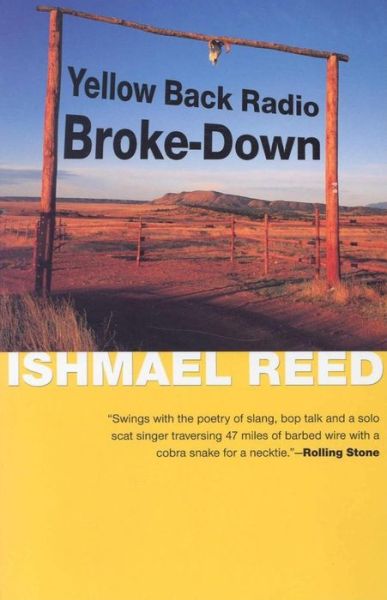
“Oh Ishmael!” is what I exclaimed after reading this book. It feels like a mad mad carnival and yet the writing is so smart and so devilish in its critique of the usual American Western narrative that you can’t help but be smitten by this story. Reed tells the story of Loop Garoo Kid, a Black man who seeks revenge on Drag Gibson, a white cattleman who murders children. The story has no regard for time or place and feels like a smoldering jazz tune that is at once joyful and raw in its riffing criticism of capitalism, colonialism, and racism. What a mind Reed must have to write such a wild jaunt! Reading it for a second time, I feel like it could’ve been written last year and I’m sorry it’s taken me so long to revisit it. But as is often the case with the best books, they find you when you need them most.
McConigley won the Pen Open Book Award for this collection, largely about South Asians living in the west. The book opens when a young Indian girl has an encounter with white boys in Wyoming who don’t seem to know or want to know the difference between her brown and any other brown. They tell her to go back to picking cotton. McConigley handles these moments with care, for her writing is both lyrical and profound. Many of the stories, rich and strange, are set in the Wyoming where McConigley spent her childhood.
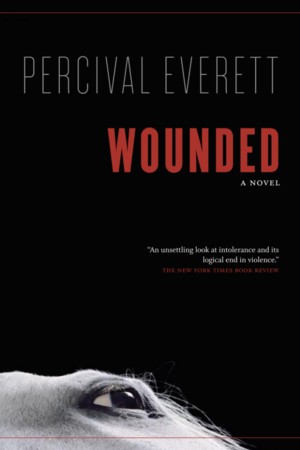
Wounded is a Western in the truest sense. Set in Wyoming, John Hunt is a Black horseman who lives with his uncle and is making a peaceful life for himself after the death of his wife. Everett offers us a twisting story of out-of-towners who come to wreak havoc, and in the face of all this, we find apathy, revenge, horses, big sky, big hearts, and lots of American-style prejudices. Hunt is a character you’ll like immediately though you might not always know why.
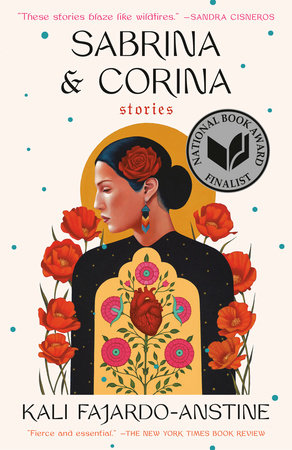
These stories, set in Colorado, will crush your little heart. And still you won’t want to turn away. Fajardo-Anstine’s work is gorgeous, and I found characters who, like the women in my family, heal with roots, don’t believe in coincidence, and pray in many languages. Their lives are complicated and messy and the love and tenderness between the women in these stories are a clear reflection of the love and tenderness Fajardo-Anstine put into this fine piece of work.
Wilkerson’s book on America’s Great Migration is a must read for anyone interested in understanding why America looks as it does. Wilkerson details the journeys of three African Americans to New York, Illinois and California from the South, while shining a journalistic lens to the larger Black migration from the end of the Civil War into the 1970s. Having grown up in Baltimore and a frequent visitor to cities like Chicago and Oakland, I began to better appreciate the cultural landscapes of Northern and Western cities based on the migratory paths from certain locations in the Deep South, as well as to understand that like other periods of immigration, Black migration proved just as challenging. Though it is not a book set only in the West, I don’t think you can really understand any part of America without this tour de force.
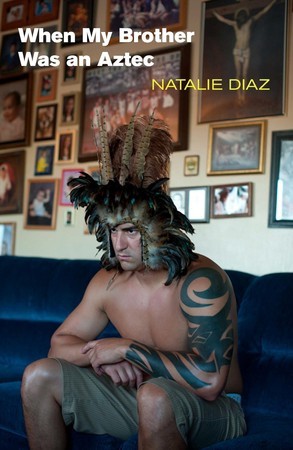
I probably don’t have to tell you this, but great poetry can offer a reader as much of a thrill as a kick-ass novel. And Diaz is a kick-ass poet. These poems are earnest and vibrant with stanzas that produce heartbreak and sometimes even sobering laughter. Diaz writes about her brother’s addiction and the impact on her family. The lines she writes makes us want to call our loved ones, for they show us the commitments and bonds and resentments that make family, family. Diaz offers a rich palette of modern Native life, both on and off the reservation.
Growing up in the East, I knew little about how indigenous bodies are hunted by external and internal forces so much like in my own community; this hunting makes for both sad and triumphant stories. As a Black woman, these poems felt both familiar as in I know these people, but also new, as in why don’t I know all this? I am humbled by a collection that shows us how the west can be a setting for both a people’s nadir and also a people’s healing.
The mother worried passersby would hear the full-throated accusations and mean begging and prolonged shrieking and think to themselves, Well, that is a household I do not envy. Hugging their coats tighter around themselves. Walking quickly. Their white breath before them.
To not be envied! The loneliest hell.
We’ve got to do something, they said to each other, once the children were in bed.
Mmhmm. We will.
The mother made stew. The mother made pasta. The mother made hot dogs with French fries. The mother ordered in. The father halving and then quartering his portions. The father laying his knife and fork across his plate, their closeness funnily sensual.
The children leapfrogging from table to sofa. Ignoring their food or demanding it be destroyed. Taken away. Put on trial, convicted, sent to the gallows.
Eat! That was how it usually started. The mother saying, Eat!
She’d once seen her sister tell her own son to fuck off. It was a memory the mother held close, almost dearly. He was young enough to clutch a toy truck to himself. Young enough to not know what the word meant. Young enough to peel into laughter. Her sister’s eyes twin pools of dark glitter. Her sister’s mouth firmly shut and her nostrils pulsing, as if she were out of breath and trying to hide it.
That’s right, Eddy, you fuck right off.
The mother had tried to tell that story over the years. She never could get it right. It was something to do with her fear of her sister, a terror that felt ancient, beyond her. All of that had started ages ago, in their yellow bedroom with its bare window, which gaped at the mother, her cheek mashed into the musty carpet. Her sister’s breath hot in her ear.
There just wasn’t an end to the story, was the thing. No punch line, no bowing. What was the point?
Perhaps their mother should have yelled at her sister more, back then, all those years of a shared bedroom. This the mother considers this as she attacks a cheap pot with a sour rag. Nothing is ever nice! she rails. I can’t have one thing! A macaroni noodle is stuck to the toe of her sock. That is the straw that, you know.
She begins to narrate the evening in a loud, bitter tone. Here I am cleaning up after you! I have tried to feed you and now I must tether myself to this sink until all the dishes are done! For if I don’t, there will be no dishes for the next meal you will shit on! I asked you what you wanted to eat! Why did I do that? Am I some kind of a sucker? (The middle child begins to beg for a lollipop.) What is in this for me? She turns to face them. They are watching her like they watch the television. Flat, shining eyes. Mouths twitching. The husband drifts by; he is determined not to join in the yelling on this night.
Poor Eddy! With time and the arrival of her own children, the memory still smarts. There is no retroactive sympathy for her sister, even as the mother curses at her own children. His fat hands and skinned knees! What had he done to prompt a mother to say such a thing?
As if there were ever a reason!
Now he is a pimpled teen. At Thanksgiving he made fun of the mother’s mashed potatoes. I can tell these are from a box, he announced, swiping a finger through. He arranged his body to take up all three sofa cushions. The bottoms of his socks were charcoal black. Let it go, her husband whispered to her in the kitchen, patting her shoulder as if she were a neighbor he disliked.
I won’t let this one go! she shouts now. Her throat aches. The point is, she was a different sort of mother. Does that even matter to you? she says, nearly screaming. She holds a wooden spoon; the dog eats the noodle from her sock.
You’re an idiot, her sister had said, pushing the mother’s face into the carpet. It stung; it smelled of dust and fiber and dog pee. Say it, her sister said. Her voice quiet, like she was letting a secret.
I’m an idiot, the mother said. I’m an idiot, okay?
There is a window above the sink. The evenings started so early this time of year. The mother watches the woman reflected in the dark pane approach. She leans over the sink. The mother decides she deserves a closer look.
For poets, springtime is especially sacred. With big book releases, National Poetry Month, and the conclusion of the slam season, there is so much for readers and writers to look forward to. Then came the coronavirus pandemic. We’ve seen readings canceled, book tours halted and budgets slashed. Thankfully, as ever, poets remain resilient. In the wake of the pandemic, events have gone virtual thanks to the bonds of community and love for words.
For those who are unfamiliar, these online events are a great way to get into poetry and connect more deeply with the community. So much discovery happens at these events, and many of your favorite poets have gotten their start on the slam stage. These stages have historically been spaces for healing and care, which is something we need so much right now.
Here’s a list of events, readings, and livestreams to get your poetry fix throughout the rest of the pandemic. (Most of the events below are often pay what you wish, or free.)
Nuyorican Poet’s Cafe
Nuyorican Poet’s Cafe is NYC’s landmark Lower East Side poetry venue. It’s been the host of poets of color since 1973. In place of their in-person Wednesday and Friday night poetry slams, they’re holding online open mics on Mondays and Thursdays via Zoom. Soon they will be also offering online classes, music, and monologues. Their online information can be found here.
Bowery Poetry Club
Bowery Poetry Club is another NYC staple. Nestled in a former Formica factory, poets typically take the stage on Sunday and Monday Nights. Now, Bowery has rotating programming Sunday, Monday, Wednesday, and Thursdays. They are hosting low-cost workshops and open mics. You can find the most up to date information on their Instagram.
Da Poetry Lounge
For those favoring the west coast, Da Poetry Lounge hosts the largest weekly open mic in the United States. Originating in 1998 and based in Los Angeles, poets take the stage on Tuesday nights. The third Tuesday of the month is the poetry slam, while the rest are open mics. They’ve pivoted to online, operating via Instagram live.
Not A Cult Workshops
Not a Cult is a small publishing company based in Los Angeles. They have released work from writers Yesika Salgado, Dante Basco, Aziza Barnes, as well as many others. They also hold frequent events within their partner space, Junior High. With the closure of Junior High, Not a Cult has begun offering donation-based workshops online. Facilitators include the talents of Jon Sands, Jose Olivarez, and Karla Cordero. The schedule is updated weekly on their Instagram.
Girls Write Now: Salons & Live
Girls Write Now pairs underserved girls and gender-non conforming young adults with established writers, forging lifelong mentorships. They prepare the teens for college, help cultivate their craft and publish their work in anthology series. Girls Write Now will be hosting readings via their Live series. They also host a Salon series introducing guest artists, celebrating poets like Mahogany L. Browne and Rosebud Ben-Oni.
Jon Sands: Ps and Qs
Since the beginning of stay-at-home orders, poet Jon Sands has gathered his colleagues to converse with him on Instagram live. He calls it Ps and Qs. Sands gets intimate with other poets every Wednesday through Friday.
So Many Poetry Slams
With so many great slams, it didn’t feel fair to pick just one. The poetry slam is a competitive form of spoken word, where teams gather and compete to go to the national convention. The season usually runs from September to May. As the slam season comes to a close in May, just know that folks will still be competing at the International Poetry Slam. It’s slated for August and has yet to be canceled. The Philly Pigeon, Brooklyn Poetry Slam, Toronto Poetry Slam, Boston Poetry Slam have all moved online. Youth poetry slams Louder Than a Bomb and Get Lit’s Classic Slam are slated to be held via Zoom sessions.
The idea for my debut novel, The Down Days (a magical realist whodunit set in quarantined Cape Town), came about after chancing upon an exhibition at a medical history museum about the effects of epidemics on the history and culture of South Africa. The idea that Cape Town was so profoundly changed and shaped by disease struck a chord. Like the fact that, if it hadn’t been for scurvy, the city would have never been colonized as a pit stop between East and West.
While researching the history of disease (in South Africa and across the globe) further, three things stood out for me: Firstly, how misinformation spreads like wildfire during epidemics. Secondly, how nations throughout history have repeatedly used epidemics as excuses to feed existing prejudices. And thirdly, how periods of great upheaval, when normal rules no longer seem to apply, give ordinary people the chance to shed their skins (for better or for worse). In a way, I think, we are all Russian dolls composed of layers of masks that hide us from ourselves and others, that protect us, remake us, absolve us. In times of crisis, we surprise even ourselves to see what we can transform into.
The characters in my novel, apart from finding themselves in a situation where they are physically forced to wear masks in public, all take on new identities, new masks to navigate a post-pandemic world. Masks to survive, to hide from their pasts, from the truth and also from their grief.
One could argue that most novels are about masks in some way. And that the best books allow their readers a chance to put on new masks or skins and be transformed.
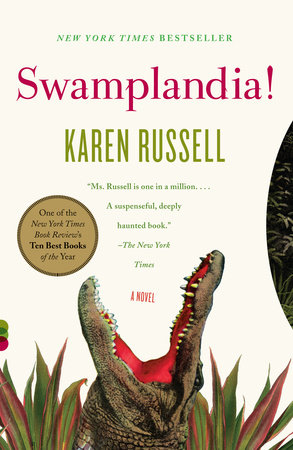
A family of alligator wrestlers run a gator-themed island theme park in the Florida Everglades. When the matriarch and star of the show dies, the family starts to unravel. A magical realist coming-of-age tale about the lies and myths we tell ourselves and our families for love and what happens when these masks/myths become undone. It’s also about the masks we put on to hide from our grief and the ones we cling to to insulate ourselves from the realities of the outside world.
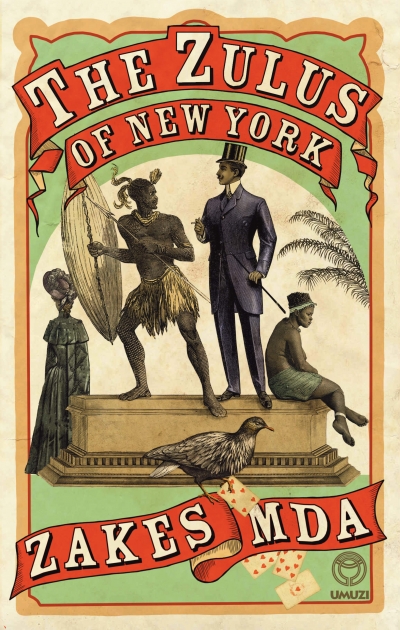
Two sideshow acts fall in love in 1800s America. Inspired by the true history of “Farini’s Friendly Zulus,” this is the story of a South African Zulu man, exiled from his tribe, who travels to the West where he makes a living performing as a Zulu in a sideshow act. As he spends his days wearing and acting out the masks society has created for him, he is continually getting reminded that the audience doesn’t want to know who he really is, that they just want spectacle. Mda manages to get a book about terrible historical injustices and the trauma of being regarded as less than human to ring with hope and magic and the triumph of the human spirit over adversity.
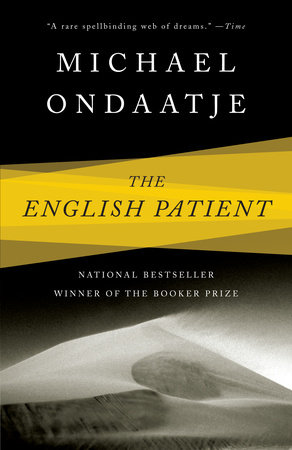
A man without a face falls from the sky wearing a helmet of flames, and then both literally and figuratively sheds his skin. Can we abandon the masks of race, nation, and class we are born with and become something new? Ondaatje’s Booker Prize-winning novel is about all this and then some. Novelist Kamila Shamsie calls it “that rare novel which gets under your skin and insists you return to it time and again, always yielding a new surprise or delight.”
Truth is stranger than fiction in this memoir of a Brooklyn travel writer who returns to Zimbabwe to rescue his ageing parents from violence/ruin during the land invasion upheavals in 2002 only to discover that his parents are much more resilient than he thought – having turned their backpackers into a brothel (complete with a pot plantation). This is a book about resilience in times of strife. How we change and adapt and renew ourselves when necessity calls for it. About the everyday heroism of surviving in interesting times. And the ability to laugh at the absurdities of life.
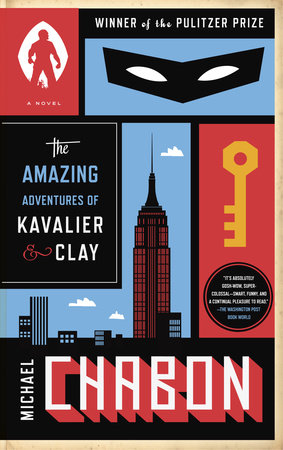
In this novel, the 2001 Pulitzer Prize for fiction winner, a young Jewish escape artist smuggles himself out of Nazi-invaded Prague and lands up with his Brooklyn cousin in New York City where they grow up to create a comic book empire, featuring a masked superhero, The Escapist. It’s about the masks we dream up to help us escape (from war, from ourselves, from the masks society expects us to wear). And it’s about finally finding the courage needed to break free.
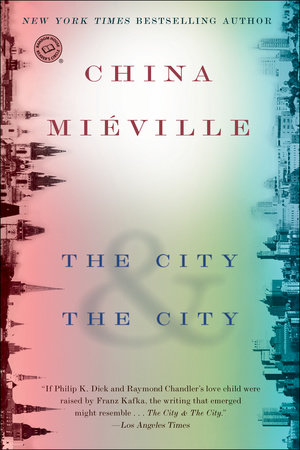
A detective has to see the unseen in this metaphysical murder mystery set in a post-Soviet style world where two cities exist in the same space at the same time. Citizens can see each other but are forbidden to look. When a murdered woman ends up on the wrong side of the border, the mask that the detective has been forced to wear since birth has to slip.
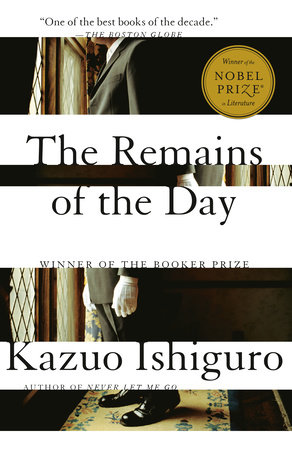
In this classic Nobel Prize-winning novel, Kazuo Ishiguro creates a character for whom it’s a point of pride never to let his mask slip and admit the truth of his own emotions, even to himself. In the summer of 1956, an ageing butler goes on a motoring holiday to visit an old colleague. The journey becomes a chance to reflect on his past and the mistakes he made throughout his long career in servitude. Ishiguro slowly peels back the layers of masks the protagonist has been wearing to protect himself from hard truths.
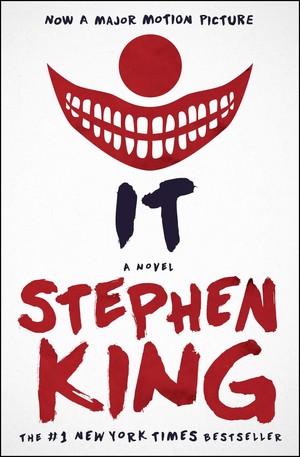
The mask of small town America (with something sinister lurking underneath the surface) has been a favorite theme for horror writers for decades, and Stephen King is a master of the trope. In this classic, the small town of Derry is terrorized by a supernatural being in a clown skin. But the seemingly bucolic town itself hides many evils, from prejudice and indifference (there are many scenes in which good people look the other way) to violence.
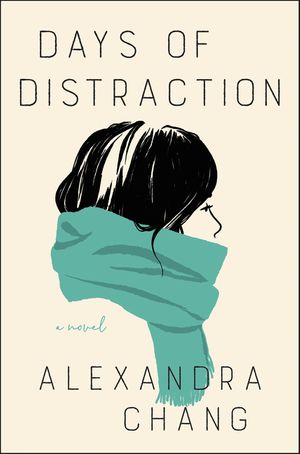
As I was reading Days of Distraction, Alexandra Chang’s debut novel, a pandemic swallowed the news cycle, infiltrated my thoughts and implanted itself into the arc of the story, inseparable now from the story of a young woman struggling to find her place in her career, family, and love relationship. Such is the nature of modern life, the novel suggests. For its narrator, life proceeds in app platforms, work chat streams, text messages, media, memories, and of course, IRL interaction—and this is reflected in the novel’s fragmented form. Chang often writes in succinct bursts of narration, cutting through the din, allowing incisive commentary about racism, sexism, and the everyday multitudes of being Asian American.
Cathy Erway: Your book is written in fragments—the story of the protagonist’s journey from a technology reporter in the Bay area to following her boyfriend to upstate New York for his grad school is interspersed with flashbacks, reflection and often snippets of media, like historical records. Do you think that in this day in age, our lives and our decisions are more influenced by the things we’ve read, at some point in time?
Alexandra Chang: I do think that’s the case, at least for me. I, in any given day, will read bits from articles, read Tweets, go on Instagram, watch TV, then read a book. There are so many sources of information that I’m taking in during any given period of time, and I might not be aware of each individual one affecting my state of mind or an opinion that I might develop. The form allows for a lot of different sources to fold into the narrative in a way that, for me, felt more natural to the way that I take in information.
I was also interested in the fragmented form because it’s really malleable and can dramatize the psychological and emotional state. The fragments dramatize the ways the narrator in the book is grasping to find a sense of self, and then at times failing, and how she’s looking to various sources, whether it’s in her own past or something that her parents or coworkers say or doing research.
CE: As the narrator is struggling to feel at home after leaving her job and the city that felt like home to her to live with her boyfriend across the country, there is a fragment from Maxine Hong Kingston’s memoir, Woman Warrior. Did her work have an influence on yours? I noticed there weren’t too many other novels excerpted.
AC: I read Woman Warrior when I was an undergraduate, in my sophomore or junior year. Before that, I had never read a memoir by a Chinese-American woman… It was a foundational text to me and a book that I have gone back to time and again, so it felt apt to include a bit of it in the novel.
CE:Did you consider writing this story as a memoir? There are a lot of parallels between your life and that of the narrator’s — being a reporter for tech publications, then traveling across the country to live with your now-husband as he attended grad school.
AC: No, I never considered writing it as a memoir, mostly because I didn’t think my life was really interesting enough to be put down as memoir. I am also not as familiar with the genre and form. For me, fiction is where I feel comfortable, and where I can access and hopefully put down on the page some emotional truths about my existence and the way I see the world without having to exactly adhere to my own experiences. In a lot of ways the book drew from my life, but in many other ways it strays and it’s stylized, and in that way it’s fictional—it feels very fictional to me.
CE: Speaking of fragments in your book that are historical records, there are a couple pages that had back-to-back clippings from American newspapers the late 19th century, discussing Chinese American immigrants. Then the narrator follows it with:
“Excerpt 1: Pit minority races against one another to benefit white supremacy. The creation of the model minority. Excerpt 2: Thirteen years later: This model minority no longer benefits white supremacy. Therefore, no more allowed in this country.”
Why do you think it was important to include these pieces, specifically?
AC: As the narrator is trying to figure out her place in the world, she seeks out these historical documents and sees these parallels between the past and the present and [those two clippings] are important for her to recognize her place in the world as tied to a history of white supremacy in the United States.
Racism against Asian Americans is not something that exists outside of racism against all marginalized people.
For me growing up, I was in predominantly white spaces—and this is reflected in the book in certain places—that I did sometimes have this desire to fit in or to be accepted in white society. As I got older, I started to realize that chasing assimilation was not actually the way I wanted to live. Also, racism against Asian Americans is not something that exists outside of racism against all marginalized people, so in this moment, the narrator is pointing out and recognizing how racism against Asian Americans is part of a larger system of white supremacy, how white supremacy can utilize one race against another.
CE: Did you happen to read a recent op-ed by former presidential candidate Andrew Yang that is receiving a lot of pushback from the Asian American community?
AC: Yes, that’s an example of what I was talking about, where there is this desire for assimilation and to prove one’s humanity and existence to white society. That the burden is on Asian Americans to do this work. I could have related to that feeling when I was younger, but I have very much grown out of that. It’s definitely not the message I would want Asian Americans to hear and to follow, and I was glad to see such a concerted pushback from the community.
In the book, the narrator is concerned with these individual moments of racism that happen to her as an Asian American woman, but she’s also on this path to better understanding how that fits into this larger system of racism which affects more than just her. It doesn’t seem like Andrew Yang has considered this yet.
CE: Unfortunately, your book’s publication coincides with a rise in hate crimes against Asian Americans. How does it feel to publish a book that explores Asian American identity in a time where racism against this group is making headlines?
AC: It’s strange and sad to think that my book might be more “relevant” now because of the increasing visibility of anti-Asian racism and xenophobia. The book takes place is in 2012 and 2013, and a lot of it is about the ways in which the narrator experiences and navigates veiled forms of racism—microaggressions from supposedly well-intentioned people, lack of visibility, lack of access to opportunities, an overarching feeling of loneliness. At one point in revision, I cut a scene where a friend of the narrator’s, during the heat of an argument, calls her a “chink.” It felt too melodramatic to me at the time, too much of a departure from the more minor, but persistent and insistent, experiences of racism in the book. Today, seeing Asians in America not only increasingly called this and other racist slurs but also physically assaulted—that scene feels, sadly, ordinary.
CE:In the book, the narrator struggles a bit with her interracial relationship. There is one passage where the narrator observes that her white boyfriend, J, can’t hear the difference in tones when she says something in Chinese. It feels like a loaded description. Do you think this reflects an inherent inability on his part to really understand her or her culture?
A lot of this book is about this experience of struggling to find a way to exist in the world authentically beyond outside perception.
AC: I didn’t necessarily write it with that specific intention. I wrote that section from personal experience, knowing that my white husband and many white friends aren’t able to hear the differences in the inflections of Mandarin. But there’s another moment where J persists in calling the narrator the family nickname even though he pronounces it differently than her family does. That is a moment that exists in this gray area, where he isn’t able to access this person who she feels she is with her family, but he persists in calling her this name. So for her, she starts to think of it as this different version of herself. I do think all of these moments add up throughout the book to show how even in this intimate relationship, they can’t ever fully understand one another.
CE: Your novel begins with a fragment about how people underestimate the narrator’s height. Have people underestimated you?
AC: What’s interesting about that first paragraph is that it has always been the first paragraph of this novel, it has never changed. It speaks to this struggle that the narrator has in defining who she is, while she being very aware of the ways people perceive and misperceive her. It’s also about these distances in how she wants to be and how she experiences the world based off of other people’s/society’s perspective of her.
I have been in many situations where I’ve been underestimated or made to feel small. In the workplace, for example, not being acknowledged for the work that I’ve done or having to do a lot more in order to be acknowledged or rewarded. A lot of this book is about this experience of struggling to find a way to exist in the world authentically beyond outside perception, and of course, that is something that I also still struggle with today.
CE: Is there anything else you want to say about your book?
AC: I wanted to add that there seems to be a renaissance in Asian American literature right now and I feel like very lucky to be part of this resurgence—there are so many books by Asian American authors that have come out this year and the months to come, so I just wanted to shout out a few of the ones I’ve read and loved, including: Meng Jin’s Little Gods, C Pam Zhang’s How Much of These Hills Is Gold, Kevin Nguyen’s New Waves, Cathy Park Hong’s Minor Feelings, and Maxine Mei-Fung Chung’s The Eighth Girl. I’m also excited to read Tracy O’Neill’s Quotients, Megha Majumdar’s A Burning, and Asako Serizawa’s Inheritors.
Even though this book addresses a lot about the experience of feeling invisible or feeling underestimated as an Asian American woman, what is really invigorating and heartening right now is that I do see many more stories by Asian American authors coming out and to be a part of that is really great.
When I was growing up in West Virginia, I thought nobody wanted to read books set in my home of rural Appalachia. All the stories seemed to be about people in cities, living far more important and exciting lives. By the time I’d fallen in love with words enough to begin writing fiction, this lack of representation allowed a certain shame to settle in. A quiet voice telling me that my experiences didn’t matter. It took years, and several perspective altering books, to dispel those notions.
When I was writing The Poison Flood, a novel about a reclusive musician whose small West Virginia town is threatened by the environmental disaster of a toxic chemical spill, I was aware of the tremendous privilege and responsibility involved in writing a version of Appalachia that was nuanced, sympathetic and honest to my experience. Nearly twenty-five million people across thirteen states make up the region of Appalachia. That’s a lot of stories.
The title may put readers in mind of West Virginia legends such as The Mothman or Flatwood’s Monster, but Sheryl Monk’s collection is largely based in stark realism. Only the title story, an apocalyptic fever dream where a woman and her husband catch and display monsters in a nightmare carnival might be considered speculative fiction or even horror. The monsters depicted here are often adults, either violent men like the outlaw brothers in “Justice Boys” who menace a lone mother trying to take her sick infant to the hospital or the disappointing father from “Little Miss Bobcat,” a standout story where an impoverish elementary school girl tries to save up enough money to win her school’s Little Miss Bobcat crown. Monk is often showing young women coming to terms with the disappointing nature of their elders. In “Barry Gibb is the Cutest Bee Gee” the jaded female relatives who sunbathe with the adolescent narrator try to instruct her in all the wrong ways about love. The book makes actual monsters seem less captivating than the flawed humans who are frightening in their commonplace inability to be kinder to one another.
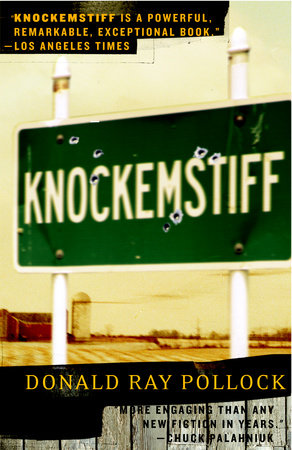
I was an ambitious young writer trying to find the courage to send out my stories when I first read this collection. I’d never encountered anything like it, but neither had anyone else. By following a similar structure to connected works like Winnesburg, Ohio, or Olive Kitteridge, Pollock explores the desperate aspects of rural America from an insider’s point of view. There are many depraved moments, but even the most outrageous scenes manage to avoid the feeling of exploitation. Pollock’s characters often act in reprehensible ways, but there is empathy here for the young narrator of “Real Life” who only wanted to watch Godzilla at the drive-in but is forced to fight another boy by his father, the addicts searching for a fix in “Bactine,” the weightlifter pressured into using steroids by his abusive father in “Discipline” and the lovesick loner of the title story. Together, the tales weave a panoramic view of a community on the brink of collapse and those caught in the decline.
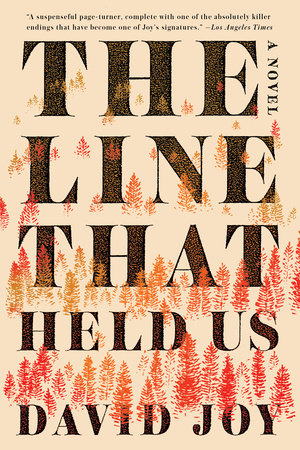
While poaching deer to keep meat in the freezer, Daryl Moody accidentally shoots and kills the brother of Dwayne Brewer, the dangerous antagonist of Joy’s novel. Joy uses this thriller premise to explore Appalachian people’s connection to the land and their loyalty to family and friends, even when that loyalty ruins all they strive for. The true revelation of the book is Dwayne Brewer, who despite being an obvious villain, Joy imbues with intelligence and a warped moral code created by years of injustice. In a world full of chaos, Dwayne believes a man must make his own brand of reason. Such a character might have been only brawn and menace. Instead, Joy writes an antagonist who philosophizes on the nature of evil, often choosing a wicked path while knowing he should act differently. Consider an early scene that introduces Dwayne drinking beers at the local Walmart. After watching a teenager abuse a younger boy, Dwayne follows the bully into the bathroom, makes him remove his new shoes at gunpoint and submerge them in shitty toilet water. This need to right the injustices of the world is Dwayne’s main motivation throughout the novel. If life had been a little less vicious, readers can speculate that Dwayne might have chosen a better path.
Winner of The Ernest J. Gaines Award for Literary Excellence and The Weatherford Award for Fiction, Crystal Wilkinson’s novel follows several generations of African American women living in Opulence, Kentucky from the 1960s through the 1990s. The novel is episodic in scope, each vignette a specific moment of importance in the Goode or Clark family’s story. While each chapter focuses on one individual, Wilkinson employs an omniscient narration that occasionally drifts about the scene allowing us brief access to many of the characters’ interior thoughts and emotions. In the hands of a lesser writer, this approach might keep the novel from feeling cohesive, but Wilkinson manages to make the moments of church dinners, births, love affairs and break-ups carry the same weight in fiction as they do in our everyday lives. The novel must be read for its sentences. Entrancing, lyrical and other adjectives often used to praise writing feel inadequate in expressing the captivating nature of Wilkinson’s prose.
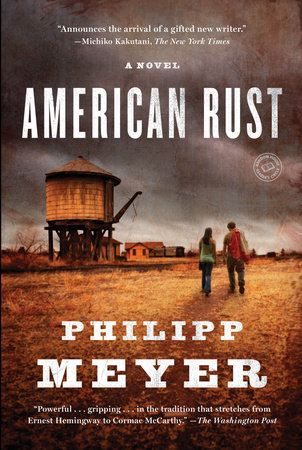
After missing out on college to take care of his ailing father, Isaac English decides to leave Buell, Pennsylvania, the fictional, economically destitute steel town Meyer uses to represent the very real parts of America abandoned by prosperity. Recruiting his best friend, Billy Poe, the two set out on a doomed exodus that is sidetracked by an act of violence. Meyer smoothly transitions to others in Buell like Chief Bud Harris, who is busy policing a town with increasing crime, and Isaac’s sister, Lee, currently attending Yale University and experiencing the uncomfortable truth that her birthplace will keep her from fitting into her new privileged environment. Those circulating the more prominent Isaac and Billy could feel like distracted digressions, but none of the large cast are underdeveloped. Written in a Modernist influenced stream of consciousness reminiscent of literary giants like Wolfe, Joyce, and Faulkner, Meyer’s prose never delves into imitation. Social class, masculinity, family obligation, and the other well-explored literary themes never feel tired. Frankly, it’s the sort of debut novel that makes other writers jealous.
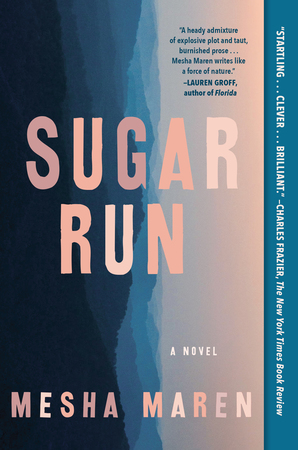
After nearly two decades in prison, 35-year-old Jodi McCarthy is released into a world she no longer recognizes. While on a trip to reconnect with the younger brother of a lost lover, Jodi meets Miranda Matheson, a struggling single mother fighting a former country music star for custody of their children. Jodi and Miranda’s romance sparks in barrooms and motels, but drab locales never detract from the moments of grace found in their connection. Maren, who spent years teaching creative writing at the Federal Prison Camp Alderson in West Virginia, understands the challenges Jodi experiences with sudden freedom. Whether it’s being overwhelmed by menu options at a Waffle House, or Jodi adjusting to having personal agency over where she travels, the novel shows real authenticity in these moments. With language as lush as the Appalachian landscape, it’s a profoundly engaging book.
In his most well-known and powerful novel, Rash introduces readers to Serena Pemberton, the vengeful wife of a 1930s North Carolina lumber baron. Serena is both intelligent and rattlesnake cold from the earliest pages where she witnesses her husband kill the father of Rachel Harmon, a young woman he’s impregnated during his short time in the country. Throughout the novel, Serena holds an almost supernatural sway over the land, its animals, and the men of the lumber camp, yet patriarchal values stifle her ambitions. Eventually, jealousy turns Serena’s aggression toward Rachel and her husband’s illegitimate child. The historical narrative deals heavily in these themes of revenge, oppression, and class warfare while bravely allowing Serena to be a multifaceted, yet unlikable protagonist. It also contains a brilliant conclusion that feels both unexpected and inevitable.
A Children’s Bible (Chapter 1, Excerpt) by Lydia Millet
Once we lived in a summer country. In the woods there were treehouses, and on the lake there were boats.
Even the smallest canoe could take us down to the ocean. We’d paddle across the lake, over a marsh, down a stream, and come to the river’s mouth. Where the water met the sky. We’d run along the beach on a salt breeze, leaving our boats on the sand.
We found the skull of a dinosaur. Or maybe a porpoise. We found skate eggs and shark-eye shells and sea glass.
Before sunset we’d paddle back to the lake, returning for dinner. Loons sent their haunting calls across the water. To wash the sand from our ankles, we jumped off the dock. And screamed. We dove and flipped as the sky turned violet.
Uphill from the dock, deer ambled onto the sweeping lawn. Their grace was deceptive, though: they carried ticks, and ticks carried disease. It could make you crazy, steal your memories, swell your legs. Or droop your face like a basset hound’s.
So when they bent their elegant necks to nibble the grass, some of us shouted taunts. Sprinted toward them, flailing.
Some of us enjoyed seeing them panic. They’d bolt in a high-kicking flight toward the trees, frightened by our power. Some of us cheered as the deer fled.
Not me. I kept silent. I was sorry for them. The ticks weren’t their fault.
What are you? asked his ears. And oh. What am I?
To a deer, people were probably monsters. Certain people, anyway. At times, when a deer saw a man walking in the forest, he might prick up his ears and stand still as a statue. Waiting. Wary. Meaning no harm.
What are you? asked his ears. And oh. What am I?
Sometimes the answer was, You’re dead.
And the deer crumpled to his knees.
A few pets had come with us for the summer: three dogs and a cat, a pissed-off Siamese with a skin condition. Dandruff. We dressed up the dogs in costumes from a wicker chest, but could not dress the cat. She scratched.
One dog got makeup applied to its face, lipstick and blue eye shadow. It was a white-faced dog, so the makeup showed up well. We liked to have an impact. When we were done, the lipstick went back into some mother’s Fendi handbag. We watched her apply it, unaware. That was satisfying.
We put the dogs in a play and invited the parents, since there was no one else to be an audience. But the pets were poorly trained and failed to take direction. There were two soldiers and a fancy lady we’d dressed in a frilly padded bra. The soldiers were cowards. Deserters, basically. They ran away when we issued the battle cry. (A blaring klaxon. It went hoh-onk.)
The lady urinated.
“Oh, poor old thing, she has a nervous bladder!” exclaimed someone’s chubby mother. “Is that a Persian rug?”
Whose mother was it? Unclear. No one would cop to it, of course. We canceled the performance.
“Admit it, that was your mother,” said a kid named Rafe to a kid named Sukey, when the parents had filed out. Some of their goblets, highball glasses, and beer bottles were completely empty. Drained.
Those parents were in a hurry, then.
“No way,” said Sukey firmly, and shook her head.
“Then who is your mother? The one with the big ass? Or the one with the clubfoot?”
“Neither,” said Sukey. “So fuck you.”
The great house had been built by robber barons in the nineteenth century, a palatial retreat for the green months. Our parents, those so-called figures of authority, roamed its rooms in vague circuits beneath the broad beams, their objectives murky. And of no general interest.
They liked to drink: it was their hobby, or—said one of us—maybe a form of worship. They drank wine and beer and whiskey and gin. Also tequila, rum, and vodka. At midday they called it the hair of the dog. It seemed to keep them contented. Or going, at least. In the evenings they assembled to eat food and drink more.
Dinner was the only meal we had to attend, and even that we resented. They sat us down and talked about nothing. They aimed their conversation like a dull gray beam. It hit us and lulled us into a stupor. What they said was so boring it filled us with frustration, and after more minutes, rage.
Didn’t they know there were urgent subjects? Questions that needed to be asked?
If one of us said something serious, they dismissed it.
MayIpleasebeexcused.
Later the talk grew louder. Freed of our influence, some of them emitted sudden, harsh barks. Apparently, laughing. From the wraparound porch, with its bamboo torches and hanging ferns and porch swings, moth-eaten armchairs and blue-light bug zappers, the barks of laughter carried. We heard them from the treehouses and tennis courts and from the field of beehives a slow neighbor woman tended in the daytime, muttering under the veil of her beekeeping hat. We heard them from behind the cracked panes of the dilapidated greenhouse or on the cool black water of the lake, where we floated in our underwear at midnight.
I liked to prowl the moonlit grounds by myself with a flashlight, bouncing its spot over walls with white-shuttered windows, bicycles left lying on the grass, cars sitting quiet on the wide crescent drive. When I came into earshot of the laughter, I’d wonder that any of them could actually have said something funny.
As the evenings wore on, some parents got it into their heads to dance. A flash of life would move their lumpen bodies. Sad spectacle. They flopped, blasting their old-time music. “Beat on the brat, beat on the brat, beat on the brat with a baseball bat, oh yeah.”
The ones with no flashes of life sat in their chairs watching the dancers. Slack-faced, listless—for practical purposes, deceased.
But less embarrassing.
Some parents paired off and crept into the second-floor bedrooms, where a few boys among our number spied on them from between the slats of closet doors. Saw them perform their dark acts.
At times they felt stirrings. I knew this. Although they did not admit it.
More often, repugnance.
Most of us were headed to junior or senior year after the summer was over, but a few hadn’t even hit puberty—there was a range of ages. In short, some were innocents. Others performed dark acts of their own.
Those were not as repugnant.
Hiding our parentage was a leisure pursuit, but one we took seriously. Sometimes a parent would edge near, threatening to expose us. Risking the revelation of a family bond. Then we ran like rabbits.
Hiding our parentage was a leisure pursuit, but one we took seriously.
We had to hide the running, though, in case our haste betrayed us, so truer to say we slipped out quietly. When one of my parents appeared, my technique was: pretend to catch sight of someone in the next room. Move in a natural manner toward this figment of my imagination, making a purposeful face. Go through the door. And fade away.
The first week of our stay, in early June, several parents had mounted the stairs to the rambling attic where we slept, some of us on bunk beds but more of us on the floor. We heard their voices calling out to the youngest. “Coming to tuck you i-in!”
We hid under our covers, blankets pulled over our heads, and some of us yelled rudely. The parents retreated, possibly offended. A sign went up on the door, parent free zone, and we spoke to them sternly in the morning.
“You have the run of the mansion,” said Terry, calmly but forcefully. “Your own private bedrooms. Your own private attached baths.”
He wore glasses and was squat and very pretentious. Still, he looked commanding as he stood there, his short arms crossed, at the head of the table.
The parents sipped their coffee. It made sucking noises.
“We have one room. For all of us. One single room!” intoned Terry. “For pity’s sake. Give us our blessed space. In that minuscule scrap of territory. Think of the attic as a reservation. Imagine you’re the white conquerors who brutally massacred our people. And we’re the Indians.”
“Native Americans,” said a mother.
“Insensitive metaphor,” said another. “Culturally.”
“One of the mothers has a clubfoot?” asked Jen. “Huh. I never noticed.”
“What is a clubfoot?” asked Low.
His name was actually Lorenzo, but that was too long, plus he was the tallest one of all of us, so we called him Low. Rafe had coined it. Low didn’t mind.
“It drags,” said Rafe. “That shoe with a thick heel. You know? That fat one’s Sukey’s mother, I bet.”
“Sure, sure. Is not,” said Sukey. “My mother’s way better than that shit. My mother could kick that mother’s ass.”
“It can’t be no one’s mother,” objected Low.
“Well. It could,” said Sukey.
“There are some single ones,” pointed out Juicy. He was called that because of his saliva, which was plentiful. He liked to spit.
“And childless couples,” said Jen. “Sadly, barren.”
“Destined to die without issue,” added Terry, who fancied himself a wordsmith. His real name was Something the Third. As if that wasn’t bad enough, “the Third” translated to “Tertius” in Latin. Then “Tertius” shortened to “Terry.” So obviously that was what they called him.
He kept a private journal in which his feelings were recorded, possibly. The possibility was widely mocked.
“Yeah, but I saw the fat one in the kitchen groping Sukey’s father,” said Rafe.
“Untrue,” said Sukey. “My father’s dead.”
“Been dead for years,” nodded Jen.
“And still dead now,” said David.
“Stepfather, then. Whatever,” said Rafe.
“They’re not married.”
“A technicality.”
“I saw them too,” said Low. “She had her hand right on his pants. The package. Right on there. Guy had a raging boner.”
“Gross,” said Juicy. He spat.
“Goddammit, Juice. You almost hit my toe,” said Low. “Demerit.”
“Your fault for wearing sandals,” said Juicy. “Mega lame. A demerit to you.”
We had a system of accounting, a chart on a wall. There were merits and demerits. A merit was for an outrage successfully committed, a demerit for an act that should bring on humiliation. Juicy got merits for drooling into cocktails undetected, while Low got demerits for kissing up to a father. Probably not his own—Low’s parentage was a well-kept secret. But he’d been spotted asking a guy with male-pattern baldness for wardrobe advice.
Low was a baby-faced giant of Mongolian descent, adopted from Kazakhstan. He was the worst dresser among us, rocking a seventies look that involved tie-dyed tank tops and short-shorts with white piping. Some made of terrycloth.
We wouldn’t have been able to keep the parent game going if not for the parents’ near-total disinterest. They had a hands-off attitude. “Where’s Alycia?” I heard a mother say.
Alycia was the oldest of us, seventeen. And already a freshman in college.
“I’ve barely seen her since we got here,” went on the voice. “What is it, two weeks now?”
The mother was speaking from the breakfast room, out of my field of view. I liked that room a lot, with its long, oaken table and glass walls on three sides. You could see the bright sparkle of the lake through the glass walls, and sunlight shifted through the moving branches of an ancient willow that shaded the house.
But the room was teeming with parents every morning. We couldn’t use it.
I tried for a voice ID, but when I edged into the doorway the conversation had turned to other matters—war in the news, a friend’s tragic abortion.
Alycia had gone AWOL to the nearest town, hitching a ride from a yardman. The town was a gas station, a drugstore that was rarely open, and a dive bar, but she had a boyfriend there. Some decades older than she was.
We covered for her as well as we could. “Alycia’s in the shower,” announced Jen at the table, the night she left.
We checked the parents’ expressions, but no cigar. Poker faces.
David, the next night: “Alycia’s in her bunk with cramps.” Sukey, the third: “Sorry, Alycia’s not coming down. She’s in a pretty bad mood.”
“That girl needs to eat more,” said one woman, spearing a roasted potato. Was she the actual mother?
“She’s thin as a rail,” said a second.
“She doesn’t do that puking thing, does she?” asked a father. “With the vomit?”
Both women shook their heads. Puzzle unsolved.
“Maybe Alycia has two mothers,” said David afterward.
“Two mothers, possibly,” said Val, a tomboy who didn’t say much. Mostly she parroted.
Val was so small and slight it was impossible to tell her age. Unlike the rest of us, she was from somewhere in the country. She mostly liked to climb. High and nimbly—buildings or trees, it didn’t matter. Anything vertical.
“Kid’s like a goddamn monkey,” a father once said, watching her scale the willow.
A group of parents were drinking on the porch.
“A gibbon,” said another. “Or Barbary macaque.”
“White-headed capuchin,” offered a third guy.
“A pygmy marmoset.”
“Juvenile black snub-nosed.”
A mother got fed up. “A shut-your-face,” she said.
We were strict with the parents: punitive measures were taken. Thievery, mockery, contamination of food and drink.
They didn’t notice. And we believed the punishments fit the crimes.
Although the worst of those crimes was hard to pin down and therefore hard to punish correctly—the very quality of their being. The essence of their personalities.
In some arenas we had profound respect. We respected the house, for instance: a grand old fortress, our castle and our keep. Not its furnishings, though. Several of those we opted to destroy.
Whoever had the most merits, at the end of each week, got to choose the next target. What object would it be? Choice Number One: a china statuette of a rosy-cheeked boy in knee breeches, holding a basket of apples and smiling.
Choice Two: a pink-and-green sampler embroidered with a dandelion and, in a swirly script, the words Take a Breath Gently. Blow. Spread Your Dreams and Let Them Grow.
Choice Three: a plump duck decoy with a puffed-out chest and creepy blank eyes, sporting a weird painted-on tuxedo.
“It’s a fat faggot duck,” said Juice. “A bowtie duck. A faggot, like, crooner duck. A Frank Sinatra duck faggot.”
He giggled like a maniac.
Rafe, who was out and proud, told him to shut his trap, homophobe idiot.
The winner was Terry that week, and he chose the apple boy. He fetched a ball-peen hammer from the toolshed and smashed in its head.
The house itself, though, we’d never have harmed. Rafe enjoyed setting fires, but limited his arson to the greenhouse: a pile of hockey sticks and croquet mallets. He also burned stuff in a clearing in the woods—immolated a garden gnome. Its melting plastic gave off thick smoke and a disgusting smell. One of the parents noticed the smoke rising above a stand of pines and elected to stay on the porch, nursing a dry martini.
The smoke dispersed, after a while.
We respected the lake and stream and most of all the ocean. The clouds and the earth, from whose hidden burrows and sharp grass a swarm of wasps might rise, an infestation of stinging ants, or suddenly blueberries.
We respected the treehouses, an elaborate network of well-built structures high up in the forest canopy. They had solid roofs, and ladders and bridges were strung between them to make a village in the sky.
Crude drawings, names, and initials had been etched into their planking by previous vacationers. Those old initials could harsh my mellow fast. Maybe the offspring of the robber barons themselves had carved them—the scions of the emperors of timber or steel or rail, long since turned into baggy triple-chinned matrons of the Upper East Side.
I’d sit up high on a platform, now and then, with others sitting around me, swinging their legs, drinking from soda cans or beer bottles. Idly throwing pebbles at chipmunks. (The little boys put a stop to that, citing animal cruelty.) Braiding each other’s hair, writing on each other’s jeans, painting their fingernails. Trying to sniff glue from the so-called rec room we didn’t use. It never gave you a high.
I’d stare at the initials and feel alone. Even in the crowd. The future flew past in a flash of grim. The clock was ticking, and I didn’t like that clock.
Yes, it was known that we couldn’t stay young. But it was hard to believe, somehow. Say what you like about us, our legs and arms were strong and streamlined. I realize that now. Our stomachs were taut and unwrinkled, our foreheads similar. When we ran, if we chose to, we ran like flashes of silk. We had the vigor of those freshly born.
Relatively speaking.
And no, we wouldn’t be like this forever. We knew it, on a rational level. But the idea that those garbage-like figures that tottered around the great house were a vision of what lay in store—hell no.
Had they had goals once? A simple sense of self-respect?
They shamed us. They were a cautionary tale.
The parents had been close in college but hadn’t gotten together as a group since then. Until they picked this season for their offensively long reunion. One had been heard to say: “Our last hurrah.” It sounded like bad acting in a stupid play. Another one non-joked, “After this, we’ll see each other next at someone’s funeral.”
None of them cracked a smile.
Anonymous, we put descriptions of their careers in a hat. It was a collapsible top hat from the toy closet, where many antique artifacts were kept. (We’d found the klaxon there, and BB guns and a worn-out Monopoly.) We wrote the job titles in block letters so that the handwriting couldn’t be easily distinguished, then pulled the papers from the hat and read them out.
A few were professors, with three-month summer vacations. Others went back and forth between their offices and the house. One was a therapist, one a vagina doctor. (A raucous laugh from Juicy, then a quick kick by Sukey to his knee. “You got a problem with vaginas? Say it: vagina. Va-gi-na.”) One worked as an architect, another as a movie director. (The slip of paper read making gay movies. “Demerit for homophobia,” said Rafe. “When I find out? Major demerit to the closeted queen who wrote that. Followed by a beating. It better not be you, Juicy.”)
Went without saying: our parents were artsy and educated types, but they weren’t impoverished, or they couldn’t have afforded the buy-in. A great house didn’t rent for cheap. Not for a whole summer. We figured there were probably a couple of charity cases, or at least a sliding scale. David, a techie who dearly missed his advanced computer setup back home, had let slip that his parents rented. Received a demerit for that. Not for the lack of home ownership—we hated money snobs—but for getting soft and confessional over a purloined bottle of Jäger.
Drink their liquor? Sure, yes, and by all means. Act like they acted when they drank it? Receive a demerit.
For it was under the influence, when parents got sloppy, that they shed their protective shells. Without which they were slugs. They left a trail of slime.
My own parents were: mother scholar, father artist. My mother taught feminist theory and my father sculpted enormous busty women, lips, breasts, and private parts garishly painted. Often with scenes of war-torn or famine-struck locations. The labia might be Mogadishu.
He was quite successful.
Our younger siblings were a liability in the parent game, constantly threatening to reveal our origins. These belonged to Jen, David, and me.
Jen’s eleven-year-old brother was a gentle, deaf kid named Shel who wanted to be a veterinarian when he grew up. He suffered a bout of food poisoning just one week in and had to be tended by their parents, so that ID was made. The mother had adult braces and droopy shoulders, the father a greasy ponytail. He picked his nose while talking. He talked and picked, picked and talked.
We’d thought you grew out of public nose-picking in grade school, but in his case we were wrong. It was actually mind-boggling.
We felt bad for Jen.
And David was toast too. His sisters, IVF twins named Kay and Amy, were straight-up brats and had no interest in the game. They’d sold him out on day two, grabbing and caressing their mother—even going so far as to sit cuddled in her lap, nuzzling her neck. Whispering sweet nothings.
My own small brother, Jack, was a prince among boys. When he contracted poison ivy he came only to me, refusing to ask a parent for assistance. I felt proud. Jack had a sense of duty.
I ran baths for him and sat beside his bunk holding cold compresses to his legs. I smoothed on pink lotion and read to him from his favorite books. He barely complained, saying just, “It does itch, though, Evie.”
Jack was hands down my favorite person. Always had been.
Still, he was just a little guy—I worried he might slip up. Vigilance was required.
And at a certain point we made a collective decision: we had to tell the parents about the game. It was getting too hard to evade them through tactical maneuvers alone.
Of course, we’d put a positive spin on the thing. We didn’t need to reveal why we’d been playing in the first place. It didn’t have to be spoken aloud that our association with them diminished us and compromised our personal integrity. It didn’t need to be mentioned that direct evidence of our connection had been known to make us feel physically ill.
We needed a project, we’d just say. Hadn’t they deprived us, for the whole summer, of our most dearly beloved playthings and lifelines? Hadn’t they confiscated our cell phones, our tablets, all of our screens and digital access to the outside?
We were being held in an analog prison, said David.
The authorities were most receptive in the magic hour before dinner, when they were lightly, pleasantly buzzed. Earlier, they tended to be cranky and might refuse. Later, they might be shit-faced and not remember the next morning.
Drinking and talking time, they called it.
It was then that we broached the subject.
“We’re playing this game,” said Sukey.
“A social experiment, if you will,” said Terry.
Some parents smiled indulgently when we explained, while others resisted, trying to master their annoyance. But finally they said OK. They made no promises, but they’d attempt to avoid incriminating us.
Also, we planned to camp on the beach for a few nights, said Rafe.
Practicing self-sufficiency, added Terry.
“Well, now, that’s another ball of wax,” said a father.
One of the professors. His specialty was witch-burning.
“All of you?” asked a mother.
The youngest ones nodded—except for Kay and Amy the IVF twins, who shook their heads.
“Good riddance,” muttered David.
“But we didn’t bring tents!” said a second mother.
That mother was low in the hierarchy. Wore long, flowing dresses, in floral and paisley patterns. Once, drunk-dancing, she’d fallen into a potted plant. Bloodied her nose.
I sensed some condescension coming toward her from the other parents. If they were being hunted, she’d be the first one abandoned by the herd. Sacrificed to a marauding lioness whose powerful jaws would rip and tear. Next vultures would peck indifferently at the leftovers.
It would be sad, probably.
Still, no one wanted that mother. We pitied the fool who would be implicated, down the road.
“We’ll handle it,” said Terry.
“Handle it how?” asked a third mother. “Amazon Prime?”
“We’ll handle it,” repeated Terry. “There are tarps in the toolshed. We’ll be fine.”
Jen, impressed by Terry’s masterful attitude, consented to hook up with him in the greenhouse that evening (we’d piled a nest of blankets in a corner). Jen was strong but had notoriously low standards, make-out-wise.
Not to be outdone, the other two girls and I agreed to play Spin the Bottle with David and Low. Extreme version, oral potentially included. Juicy was fourteen, too immature for us and too much of a slob, and Rafe wasn’t bi.
Shame, said Sukey. Rafe is hella good-looking.
Then Dee said she wouldn’t play, so it was down to Sukey and me. Dee was afraid of Spin the Bottle, due to being—Sukey alleged—a quiet little mouse and most likely even a mouth virgin.
Timid and shy, Dee was also passive-aggressive, neurotic, a germaphobe, and borderline paranoid.
According to Sukey.
“Suck it up, mousy,” said Sukey. “It’s a teachable moment.”
“Why teachable?” asked Dee.
Because, said Sukey, she, yours truly, was a master of the one-minute handjob. Dee could pick up some tips.
The guys sat straighter when Sukey said that. Their interest became focused and laser-like.
But Dee said no, she wasn’t that type.
Plus, after this she needed a shower.
Val also declined to participate. She left to go climbing in the dark.
This was while the parents were playing Texas Hold ’Em and squabbling over alleged card counting—someone’s father had been kicked out of a casino in Las Vegas.
The younger kids were fast asleep.
Spin the Bottle was a weak choice, admittedly, but our options were severely limited. All the phones were locked in a safe in the library. And we hadn’t cracked the combination.
I was apprehensive, but since Dee had pulled out I had to hang tough. And as it turned out, I got lucky. I only had to French-kiss Low.
Still, unpleasant. His tongue tasted like old banana.
We set out the next afternoon. Packing and loading the rowboats had taken hours.
“Lifejackets!” screeched Jen’s mother from the lawn. She held a wine bottle by the neck, a glass in the other hand, and wore a white bikini with red polka dots. The bottom exposed her ass crack and the top was pretty funny: her nipples showed through the white of the bra cups like dark eyes.
“Make it stop,” said Jen, wincing.
“Put on the lifejackets!”
“Yeah, yeah. Christ on a cross,” said Sukey.
We didn’t bother with the lifejackets, generally. Except for the little boys. But we were under scrutiny, so I brought a pile of them—bright orange and spotted black with mildew—from the boathouse. They scratched our skin and were bulky. Once we were out of sight, they would come off. Most certainly.
When we pushed away from the moorings various parents waved from the porch and others clustered on the dock. We rushed, worried that they’d betray us with last-minute asinine chitchat. Sure enough, one dimwit yelled: “Did you remember your inhaler?” (Two of us were asthmatics.)
“Shut up! Shut up!” we implored, hands over ears.
None of us wanted to see a man go down that way.
“And what about the EpiPens?” shouted the low-status mother.
I’d been reading a book about medieval society I’d found in the great house library. It had a dusty paper smell I liked. There were peasants in the book: serfs, I guess. Using the filter of that history, and with reference to her flowing-dress wardrobe, I’d come to see her as the peasantry.
We ignored them and rowed with all our strength. Damage control.
“Damn they are imbeciles,” cursed Low.
I was looking at him with my head cocked, I think—musing. Remembering the taste of banana.
“Mine were cool as a cucumber,” boasted Terry.
“Mine didn’t give a flying fuck,” bragged Juice.
The parents were still trying to communicate with us as our boats drew farther offshore. A few made exaggerated gestures, flapping ungainly arms. Jen’s father was doing some sign language, but Shel turned away from his waggling fingers. The peasant mom dove off the dock—in hot pursuit? Taking a dip? We didn’t care.
We reached the creek and shipped our oars. Coasting along to the ocean. This was a narrow waterway, and often our vessels would bump the banks, lodge in the muddy shallows and need to be freed.
The water carried us: we were carried.
We lifted our faces to the warmth, closed our eyes, let the sunlight fall across our eyelids. We felt a weight lift from our shoulders, the bliss of liberty.
Dragonflies dipped over the surface, brilliant tiny helicopters of green and blue.
“They live ninety-five percent of their lives underwater,” said Jack helpfully. He was an insect fan. A fan of all wildlife, in fact. “In nymph form. You know, larvae. Dragonfly nymphs have big huge jaws. They’re vicious predators.”
“Is that interesting?” asked Jen, cocking her head.
Not mean, just speculative. She hadn’t decided.
“One day they come out of the water, turn beautiful and learn to fly,” said Jack.
“Then they drop dead,” said Rafe.
“The opposite of humans,” said David. “We turn ugly before we drop dead. Decades before.”
Yes. It was known.
The injustice floated over us with the dragonflies.
“We have been granted much,” announced Terry from the prow.
He tried to stand up, but Rafe said he’d flip the boat. So instead he sat down again and made his voice hollow and self-important like a preacher’s.
He pushed his glasses up on his nose with a middle finger.
“Yes, we have been given many gifts,” he projected. “We, the descendants of the ape people. Opposable thumbs. Complex language. At least a semblance of intelligence.”
But nothing was free, he went on. Watching the parents in the privacy of their bedrooms of a night, he’d been struck by the severity of their afflictions. They had fat stomachs and pendulous breasts. They had double asses—asses that stuck out, then sagged and bulged again. Protruding veins. Back fat like stacks of donuts. Red noses cratered by pores, black hair escaping from nostrils.
We were punished by middle age, then long decrepitude, said Terry mournfully. Our species—our demographic in the species, he amended—hung out way past its expiration date. It turned into litter, a scourge, a blight, a scab. An atrophied limb. That was our future role.
But we should shake it off, he added, suddenly trying to wrap up his speech with an inspiring takeaway. We should summon our courage! Our strength! Like Icarus, we should rise on feathered, shimmering wings and fly up, up, up toward the sun.
For a moment we considered this.
It sounded OK, but was devoid of content.
“You know it was his own fault the wings melted, right?” said David. “His father was a genius engineer. He told him not to fly too high or low. Too hot up high, too wet down low. Those wings were baller, man. Icarus totally ignored the specs. Basically, the kid was a dick.”
If one thing will be irrevocably changed by the coronavirus pandemic, it is American’s sense of “home.” By the start of April, almost everyone in the country was under stay-at-home orders. Some estimates indicate that one in five Americans are currently unemployed. Primary and secondary schools are closed until next fall and colleges sent their students packing seemingly overnight. Still others are unable to go home at all, working essential jobs, stranded overseas, or split from their loved ones by brutal immigration restrictions that have only expanded under the pretense of the virus. Like never before, the pandemic has forced us to confront what it means to be home in America, and, ultimately, who in America is able to call this country home.
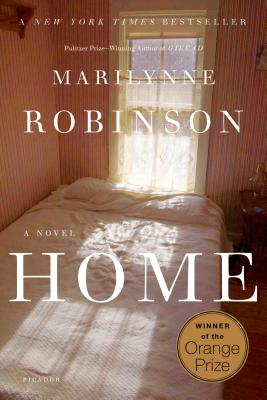
Coincidentally, the day my office announced its indefinite closure because of the pandemic, I opened a book I had long tried and failed to read: Marilynne Robinson’s Home, her third novel and the second in her soon-to-be-quartet based in the fictional town of Gilead, Iowa in the 1950s. This reticence wasn’t due to lack of zeal, as I love Robinson’s work, but because she is a writer who requires immense patience. Her prose is not difficult; in the Gilead sequence, in fact, it is exceedingly simple, almost crystalline. Yet, her language seems to unfold like the layers of a flower, revealing with a slow, measured grace its buried workings. If you don’t take the time to study it and dwell within it, its meaning escapes you, like a dream. And if I saw anything before me as quarantine began, it was––precariously so––time.
In one of the most beautiful passages of Homecoming, Robinson’s first novel, the narrator wonders, “[W]hy do our thoughts turn to some gesture of a hand, some corner of a room on a particular anonymous afternoon… What are all these fragments for, if not to be knit up finally?” Home moves like this, through intimate, almost mundane gestures whose meanings only bloom the longer the book is read, until they become heartbreaking, miraculous, glittering. It tells the story of Glory Boughton, who returns to Gilead to tend to her dying father, and the subsequent return of her brother Jack, who has been absent for some twenty years and now seeks to make peace with a haunted past.
Home is a narrative about family and religion, but, in the end, is also a meditation on racial injustice. As the coronavirus pandemic ravages all sense of normalcy and exposes the profound rifts in American society, Home came as a revelation, both a comfort and crucible for America’s hopes and hypocrisies. At a time when millions of people are living at home, there may be no better work of fiction to read. Even if it doesn’t mend you—in fact, it breaks you again and again—it might leave you with something else essential: faith.
At a time when millions of people are living at home, there may be no better work of fiction to read.
Home is an anti-pandemic book: whereas a pandemic is constantly expanding, totalizing, ravaging, Home is inflowing, domestic, sometimes nourishing. Glory and Jack Boughton are isolated members of a family in an isolated town in an isolated state. By this nature alone, Home feels serendipitous. Do we all really need to read The Plague or The Decameron right now? In fact, the Boughton’s lives are not totally unlike those of us under shelter-in-place orders: they read, drink coffee, cook, play music, garden, go on aimless drives. The novel’s insularity is something of a consolation, a reminder that all of life’s movements––joy and bitterness, rage and forgiveness––continue to pass even when very little happens.
But the solace of going home is not all Robinson is able to capture; more than anything, she evokes its defeat. Glory, the novel’s protagonist, is a 38-year-old former schoolteacher who has returned home not only because her father is ill but because her years-long engagement ended with her abandonment. “Did she choose to be there, in that house, in Gilead?” she wonders to herself. “No, she certainly did not. Her father needed looking after, and she had to be somewhere… What an embarrassment that was, being somewhere because there was nowhere else for you to be.” For Glory, who always tries “to make the best of things,” going home is a sort of a capitulation, a return from adult life to a simulacrum of childhood, as if all the years in between were just a dream. For those who have gone home because of the pandemic––especially those who have been forced to do so––the feeling might be familiar: what was all that work for, in between, if the world would just drag me back to where I began?
Wrapped up in this resignation is the more complicated disappointment that “home” might not provide the succor one envisioned it would. When the eight Boughton children are all uprooted and away at college, Robinson writes, they “studied the putative effects of deracination, which were angst and anomie, those dull horrors of the modern world.” And yet, whenever they visit Gilead, they ask themselves: “What kinder place could there be on earth, and why did it seem to them all like exile?” Inevitably, the idea of home has a way of supplanting itself––your memory of it comes to define it, and when you return, you find this conception does not align with reality. “The past was a very fine thing, in its place,” Glory thinks. As with the Greek concept of nostos, the home you go back to is not the same as the one you left. In fact, as Glory encounters the objects of her nostalgia––Gilead, her father, and, most of all, Jack––we begin to see that the past itself was never pristine.
Jack’s return, a sort of a prodigal son narrative, is the fulcrum upon which all of Robinson’s Gilead novels rest. A troubled child, he is a black sheep among his pious siblings and the apple and anguish of his father’s eye, a Presbyterian preacher who feels his son’s delinquency is his one sustained failing as Christian. As a boy, Jack vanishes and returns without a word, leaving only the knowledge that some crime or misdeed has been committed during his absence. The crux of Jack’s waywardness comes as a young man, when he seduces and abandons a young, poor girl. She has a child who Jack’s father tries to support, only to be spurned by her family, and the child subsequently dies of an infection. By then, Jack has disappeared into a twenty-year void of alcoholism and dereliction when his family hears nothing of him, even after his mother’s death.
The idea of home has a way of supplanting itself––your memory of it comes to define it.
A weary man in his forties, Jack has come home to reckon with this past, with his father, and in particular with the congregationalist preacher John Ames, the narrator of Gilead, who is his father’s best friend and distrusts Jack most of all. But it is Jack’s relationship with Glory, which buds from awkward tolerability to kinship and compassion, that propels Home. Indeed, many of the book’s lessons for those of us stuck at home, perhaps more enmeshed with family than ever before, can be drawn from the Robinson’s masterful tapestry of the intricate dynamics of family life.
At first, Jack’s sudden presence in the Boughton household vexes Glory. He quickly “resume[s] his place in his father’s heart,” a place Glory both resents and is relieved by. She discovers boundaries where there were none before: in entering Jack’s room, in asking about the last two decades of Jack’s life, and, primarily, in speaking about Jack’s illegitimate child. Privacy becomes a communal thing, as the house, despite once holding eight children, is small enough that no conversation really passes unheard. Home, far more so than Gilead or Housekeeping, hinges on dialogue, on the said and unsaid. Each conversation in the novel peels away yet another layer, reaching toward the unutterable heart of the matter.
These hidden truths forge Jack and Glory’s relationship. Jack learns of Glory’s failed engagement, and Glory learns through pieces––a mysterious phone call, letters Jack surreptitiously sends––that Jack is in love with a woman in St. Louis who does not or cannot love him back. But there are more than just the Boughton’s sins and failures at the nucleus of Home. Early on, Jack and Glory discuss W.E.B Du Bois and communism and Jack later gives her a copy of Engels’ The Condition of the Working Class in England. After Jack purchases his father a television, they watch on the news as a black crowd is attacked by riot police. Jack’s father, until then the apparent moral conscience of the book, witnesses Jack’s distress at the footage and tells him “it is necessary to enforce the law… You can’t have people running around the streets like that.” Later, a similar conversation ensues while the two are discussing Emmett Till’s murder, and his father says, “The colored people… appear to me to be creating problems and obstacles for themselves with all this––commotion… They bring it on themselves.”
These conversations are short, strained, fleeting, yet manage to flip the moral schema of the book on its head. How can the sinning, faithless child now be the voice of justice, while the wise, pious father is an apologist for racial violence? Robinson refrains from didacticism. These discussions of race seem, for much of the book, to be minor gestures, historical framings, undertones that contribute to the book’s overall narrative of wrongdoing and forgiveness. But in the final pages of Home, these undertones seethe to the surface. Jack has left his father on his deathbed, finally defeated by, or at least resigned to, the truth that his past is irrevocable and his love for Della, the woman in St. Louis, is doomed. Yet, not long after he has left Gilead, Glory finds Della on her doorstep. She is a black woman, and Jack has had a son with her.
The real stakes of Home, we come to see, are not merely faith and family or sin and forgiveness, but hatred and hypocrisy.
Jack’s return, we realize, was not merely to confront his ghosts, but to see if Gilead, the only semblance of a home he ever had, might be willing to accept a relationship that the rest of the country rejects with blood and vitriol. Ulysses S. Grant had once called Iowa the “shining star of radicalism,” as Jack mockingly quotes, and much of the preceding Gilead explores the town’s history as a haven for runaway slaves on the underground railroad. And yet, Jack discovers in his father an apathy and disdain for black Americans that varies by only a few degrees from the racism captured on the news. The real stakes of Home, we come to see, are not merely faith and family or sin and forgiveness, but hatred and hypocrisy.
From the moment coronavirus entered the American consciousness, discourse about it was tainted by prejudice, beginning with rash and egregious fears of Asians and Asian Americans. And yet as cases began to appear, and then multiply, the topic of race was otherwise largely absent from conversations about the pandemic. Only now, as the virus has razed the country, with New York City itself registering more cases than any other country on earth, has the horrifying racial and socioeconomic toll become clear. The virus, spread largely by affluent people able to travel, has affected front line workers who cannot miss their jobs, families living in dense or concentrated homes and neighborhoods, and those without access to adequate health care. People of color have been inordinately affected by these factors: in New York City, the virus is twice as deadly for black and Latinx people as it is for white, a statistic that is proving consistent in major cities across the country, including Detroit, Chicago, and New Orleans. In Louisiana, despite making up a third of the state population, around 70 percent of those who have died from the virus are black, and in Illinois 43 percent of those who have died are black, though making up only 15 percent of the state. The coronavirus is also roiling jails and prisons, where inmates say they face little to no protections and remain forced to live in close quarters. On Rikers Island, where the majority of those jailed are people of color, at least 365 inmates and 783 correctional staff had tested positive as of April 20.
The novel operates as a sort of microcosm for the unmasking of American democracy.
The coronavirus has exposed, on a dramatic scale, the disparities in justice along racial and socioeconomic lines in America. How, then, can a novel as provincial and, frankly, as white as Home provide a lens to understand America’s ongoing, latent political and racial violence? In fact, the novel operates as a sort of microcosm for the unmasking of American democracy. The plot never feels overtly influenced by race––the characters are white for 99% of the book––and yet, in the end, the story becomes inexorably determined by it. Robinson’s brilliance is to show that when you chip away at the domestic novel, it too splits along the same fault lines as American society.
In the end, Home is not necessarily a salve for these wounds. Jack leaves, seemingly for good, before Della arrives; Della ventures into Gilead only for a moment, in constant trepidation of the risk she is taking by driving as a black woman in a white town; and Jack and Glory’s father lies delusional on his deathbed, never quite sure of the state of his son’s soul. And yet it is through Glory, the novel’s core, that we experience a glimmer of hope. As she contemplates Della and her son after their departure, she confronts the harsh truth that “they could not walk in [her] door. They had to hurry, to escape the dangers of nightfall.” In the world they live, the Boughton home can never be a home to Della. And yet, as she considers this, Glory envisions a future when the house is hers and she is “almost old.” In this future, Jack’s son has come back to see the barn, the lilacs, even the petunias his father once told him of. Glory will speak to him and invite him onto the porch, and though he will only stay for a short while, he will know this was his father’s house. It is a minor vision of a just future, but a future nonetheless in which Glory has transfigured her home into a place a black boy can call his own. To change one’s home, the novel suggests, is also to change America. Upon that hope Glory rests her faith.
About two thirds of the way through The Snare, Elizabeth Spencer’s seventh novel, the protagonist, Julia Garrett, has the following exchange with her uncle, Maurice (who speaks first):
“Don’t let the past pile up, darling. It’s bad, but it’s gone and we can’t help it. Think of the wake of the boat.”
“Oh, no, that won’t work . . . it’s all around . . . around. . . .”
The line is quintessential Julia, whose every word seems matched not just to the present moment but to a personal inquiry or revelation. In this scene, she is specifically grieving the sudden death of her former lover, a wealthy (and married) Mississippi man named Martin. More broadly, though, she is articulating the root of her existential problem—the thing that, in the course of 400 pages, carries her to the brink of self-destruction—which is that Julia cannot, perhaps does not want to, escape her traumatic past.
Spencer’s gift for characterization reaches enviable depth in The Snare. On the surface, Julia Garrett is a society girl who pursues fulfillment in the seedy underbelly of post-war New Orleans. But this overarching plotline is anchored by the protagonist’s interior turmoil, which is both nebulous and rife with conflict. We spend a lot of time in Julia’s head, reflecting on her past and watching her cobble together abusive events with survivalist instincts. Chief among her preoccupations—what prompts her routine flashbacks and uncertain streams of consciousness—are her abandonment by her father and her relationship with her great-uncle and Maurice’s father, Henri “Dev” Devigny.
Though long dead at the start of the book, Dev is the subject of Julia’s love and revulsion, the figure who inspires her to consider herself both a vibrant, sensual “creature” and a whore. For Julia, Dev is “a constant heavy sun along the horizon of her spirit self,” both illuminating and blinding, comforting and oppressive. The implication is that Dev sexually manipulated Julia from the age of six, but Spencer never states this explicitly. Rather, she hews to the intimate third-person perspective that dominates the novel, an authorial choice that creates narrative tension and feels authentic to the way many women process sexual trauma. Julia cannot name what happened to her, so Spencer resists rendering it in categorical terms.
Spencer, who died in December, at age 98, had a penchant for writing characters who are concerned with their pasts. Frequently, they conduct themselves within their own historical contexts, recalling family sagas and ancient grievances amid ordinary affairs—an engagement party, a Christmas pageant, a vacation in the Blue Ridge Mountains. Often, they are Southern, reflecting Spencer’s own heritage as a native Mississippian, and as a person who, like me, was born into a cultural obsession with bearing and unravelling legacies. Early in her career, critics likened her to Faulkner, though she resisted the comparison, citing her subject as the sole similarity. In 1989, she told The Paris Review, “If my material seems like his, as I say, it must be that we are both looking at the same society.”
When she left the South—for Italy and, later, Canada—her fictional landscapes shifted, too, though her interest in familial burdens and societal constraints remained constant. For some readers, it was this focus that cemented her as a next-generation Faulkner. Others saw glimmers of Henry James in her tales about Americans abroad. As I make my way through her astonishing body of work, I find myself thinking most often of her friend Alice Munro, so penetrating is her insight into female experiences of complex class structures and rigid social mores.
And yet, despite the fact that her name often appears in grand company, and despite her prize-winning canon that includes nine novels, a memoir, and six collections of short stories, Spencer is largely overlooked in contemporary literary circles. Her best-known work is The Light in the Piazza, a novella she published in 1960 and later called her albatross. “It probably is the real thing,” she said. “But it only took me, all told, about a month to write, whereas some of my other novels—the longer ones—took years.”
Her trauma exists in the backdrop of her quest for self-actualization, an honest reflection of how many women move through their lives.
The Snare is one such novel. It was published nearly five decades ago, but I first encountered it late last August, while entrenched in a reading cycle that seemed pulled from a graduate seminar in #MeToo-era literature. Piled with books like Susan Choi’s Trust Exercise, Jia Tolentino’s Trick Mirror, and Julia Phillips’s Disappearing Earth, my desk signaled my devotion to contemporary examinations of gender and power. In this sense, I was primed to appreciate The Snare as a significant book, one that explores female identity with nuanced precision, and one that captures the messy and prolonged impact of sexual trauma. Immediately, I was drawn to Spencer’s deep exploration of Julia Garrett’s psyche and the way she wields narrative ambiguity to convey the detachment and confusion with which many women internalize abusive events. For all the broadening of conversations around sexual violence that has occurred over the past two years—for all the brilliant books I’ve consumed that deal explicitly and painfully with the subject—I am aware that navigating the aftermath of such a trauma is confusing and, often, intensely private. As she considers the qualities that separate her from her upper-crust society and propel her toward an electric yet dangerous and ultimately violent lifestyle, Julia Garrett struggles in isolation to understand her past. It is not surprising that Dev finds his way into her tortuous musings. “What was it Dev, the old man, had said?” she thinks, at one point. “‘Passion is what you’ve either got or haven’t got. . . .’ Out of such scraps she had stuck her own truth together.”
In many ways, The Snare is a feminist novel, far ahead of its time in its handling of female sexuality and desire, as well as the influence of early and unwanted experiences. Among works aimed at deepening mainstream discussions about sexual exploitation, it becomes essential reading; but one cannot claim the subject as the book’s central concern. Probably, this is why I like it so much. What occurred between Dev and Julia slinks through her mind, never revealing itself as a certain memory and yet never receding completely. Her trauma exists in the backdrop of her quest for self-actualization, which strikes me as an honest reflection of how many women move through their lives.
It is worth noting that what is so potent to the contemporary reader barely registered with the book’s initial critics. One needs only a cursory grasp of cultural history to imagine why. The Snare was first published in 1972, a year before the term “domestic violence” entered the American lexicon, and two years before Barnes v. Train attempted to tackle workplace power dynamics. Issues of child sexual abuse hardly resonated in the public consciousness and would not garner substantial legal attention until the enactment of the Child Abuse Prevention and Treatment Act, in 1974. Spencer’s novel incorporates these themes to varying degrees, usually with the type of subtle probing that suits the introspective Julia. Specifically, Spencer’s deliberate blurring of Julia’s past trauma elicited confusion among reviewers in an era when Americans had, at best, an inchoate appreciation for the sexual autonomy of women and girls.
The novel received a lackluster review in the New York Times and a misogynistic one in Kirkus Reviews. (What the Times described as narrative complexity Kirkus labeled as melodrama, declaring that The Snare was not far removed from “Southern belle lettres.”) The Georgia Review picked up on the necessity of Spencer’s painstaking attention to her protagonist’s history and interiority—elements the Times alternatively described as “the novel’s most damaging flaw”—but determined that the structure was too elevated for the book’s thematic content. This, too, has a sexist ring, considering the great extent to which female desire propels the storyline.
The blurring of Julia’s past trauma elicited confusion in an era when Americans had an inchoate appreciation for the sexual autonomy of women and girls.
Among these pieces of criticism, what was largely agreed upon was the plot. In great or spare detail, each described the events of the book in a similar fashion: Julia Garrett, the adopted niece of Maurice and Isabel Devigny, a respectable New Orleans couple, is tired of her well-bred lifestyle. She seeks excitement with Jake Springland, an aspiring musician and somewhat ambivalent disciple of a religious zealot. With Jake, Julia enters a world of late-night jazz shows and drug dealers and, soon, murder. The novel begins in the 1950s and spans at least a decade, thrusting a clash of societal standards into the backdrop of Julia’s experience. (Her roommate, Edie, a girl from “some dusty little dried-up town,” is her prudish foil.) Julia is, as the book’s title suggests, resisting the snare of the stifling and polite realm in which she was raised; but she is caught nonetheless by a confluence of her own impulses.
The preeminent Spencer scholar, Peggy Prenshaw, further elucidated the central themes of The Snare in 1993, when she wrote an introduction to the book on the occasion of its paperback release. “Julia Garrett,” Prenshaw writes, “seems a misfit, a woman enlivened by sexual experience and nearly destroyed by it, a woman bored by status-seeking and acquisitiveness, whose indifference brings her to the edge of hunger and homelessness.” She goes on to explain that the novel’s setting in New Orleans mirrors Julia’s seductive power and dueling instincts. Like Julia, Prenshaw says, the city is steeped in manners and tradition, but beneath its glossy exterior it is an exotic, indulgent place.
Prenshaw also references the novel’s mixed critical reception, noting the issues reviewers had with narrative ambiguity, but she does not fully explore the resonance of this authorial choice with the book’s violent plot points. Spencer’s rendering of Julia’s darkest moments is frenetic and fragmentary, allowing certain mysteries to rest in the reader’s mind as uncomfortably as they do in Julia’s. In these scenes, the events are clear, but their details are often foggy, punctuated by an image here, a sensation there. We see, for example, the flash of a blade held to Julia’s neck and glimpse, through euphemistic language, the shame she associates with what follows. As in, “After that . . .” and “I’m just going to call it an awful headache.” For Julia, what is contained in the words that and it is unspeakable, even as it holds dominion over her identity.
Crucially, vagueness distinguishes Julia’s memories of her relationship with Dev. Speaking of her protagonist in 1990, Spencer said, “Her early experience with her guardian mentor, . . . a French Cajun man who may or may not have seduced her, had a profound effect on her.” Prenshaw interprets this effect decisively. “The indisputable fact seems to be that Julia does not regard the relationship with Dev as injurious. If corrupting, it was a necessary and inevitable introduction to the ‘crooked world.’” This statement aligns imperfectly with my own impression, because it ignores the yearning that is so critical to Julia’s idea of herself. She does not want to regard the relationship with Dev as injurious. She wants to imagine it as inevitable.
Spencer makes clear that, for Julia, it is easier to live with a terrible thing when it is remembered indistinctly. Julia’s past with Dev haunts the novel because it is essential to how she views herself, and yet she is unable to define it. Violence and sexual exploitation pervade her adult life, too, and yet she never names it as such. Rather, she absorbs it all with a pronounced detachment, as though each experience is the logical conclusion of who she is in the world. After the doctor for whom she briefly works as a receptionist chases her around the office, she thinks: “. . . life was more peaceful than not with him, now that he’d made his pass.” After Jake Springland, her musician boyfriend, rapes and beats her, she thinks: “Why didn’t I find somebody good?” and then concludes that “she hadn’t because she hadn’t wanted to.” She is kidnapped twice, thanks to her association with Jake, and subjected to torture. After the first time, she thinks: “It was something in me . . . Something that wanted to go down forever, to hit the absolute muddy bottom where there’s nothing but old beer cans, fishhooks and garbage.” After the second time, she thinks: “She would gladly live like an animal, simply, instinctively, for the day only.”
For Julia, it is easier to live with a terrible thing when it is remembered indistinctly.
Julia’s enthusiasm for New Orleans and its various vices—her sensual and subversive nature—is palpable and seemingly within her control. From the start she is an intelligent woman who knows her sexual power. But as we navigate the conflicting aspects of her mentality, we learn that her empowerment is marked by shame. At times, she reduces herself to her sexuality. Dressing for a courtroom gallery: “Might as well try to de-sex herself, she thought, as stamp out her natural looks.” Her early sexualization by Dev forms a critical aspect of her identity and self-worth, convincing her that she is incongruous with anything virtuous. She thinks, “The idea of goodness beckons forever to those who can’t have it, but once they catch up to it by luck or accident, they immediately feel uneasy, restless, miserable.”
This vivid interiority is what is largely missing from any summary or critical analysis of The Snare. How Julia decodes her own experiences is a vital aspect of the novel that seems only to have puzzled reviewers in 1972 and failed to thoroughly engage scholars in the following decades. I only learned of the book because several people recommended it to me. Each had read my work and assumed I would appreciate Spencer’s meticulous characterization of Julia Garrett. But at some early point in my first reading, Julia began to resonate as more than a technical feat. We are wildly different people, and yet I identify with her tendency toward self-examination through imperfect recollections. I possess the kind of memory that blurs even the recent past. It recalls the worst things dimly and everything else with rosy nostalgia. This has the effect of making me suspicious of my negative or painful emotions. I am unskilled at relaying the detailed origins of my deepest wounds without a large amount of ambiguity. Spencer captures this deficiency, too. After Jake assaults and abandons her, Julia says, “I don’t think I was even born a virgin.” Her effort to make sense into the plainly nonsensical seems to me like an inherited impulse, something derived from generations of cultural stagnation around gender-based violence.
Months before her death, I spoke with Elizabeth Spencer over the phone. She talked about the months she spent in New Orleans, researching the novel’s setting, and recalled her use of narrative ambiguity as the deliberate choice I had assumed it was. And yet, I absorbed from her a sense that her fixation on Julia’s past diverged from my own. “I don’t spend too much time psychoanalyzing,” she said. I felt somewhat disappointed by her answer, at first. So much of Julia’s persona appears drawn from an intellectual understanding of the functional ways in which human beings process trauma. But maybe Spencer’s more intuitive approach is what accounts for her novel’s brilliance. Perhaps her resistance to determining direct cause and effect is what allowed her to craft such a complicated and authentic character. Julia is not whittled into a particular set of psychiatric ailments, and her interior current is rich and evolving, never cyclical, never wholly diminishing. Spencer allows her protagonist a limitless quality, that of a woman constantly interpreting and reinterpreting her place in the world through her experiences. Who among us isn’t?
One of the most important things I knew about the main character of my novel, The Unsuitable, was that she was not going to be likable. She wasn’t going to be pretty or smart. She wasn’t going to make good choices; she wasn’t going to generate instant empathy.
When I first moved to New York, I worked as a nanny for a couple who owned a bookstore, and one day the mother insisted I take home Clarice Lispector’s The Hour of the Star (full disclosure: I never brought it back), which is about a young Brazilian woman overlooked by the world for her dim wits and unremarkable looks. Since then, this idea of books driven by characters you might think have nothing to offer the world or the reader has obsessed me. How do you take a person that most would deem uninteresting, perhaps objectionable—possibly even repugnant— and make the reader care about them?
The Unsuitable is the story of Iseult Wince, unloved, unremarkable, possibly insane and possibly possessed by her dead mother. She has trouble forming connections with others, and she turns her misery in upon herself. She self-harms to maintain her precarious equilibrium, but rather than use this as a tool to merely shock the reader, I wanted to express the inner turmoil that would lead her to such desperate ends. I was curious to see if readers could stay invested in the story of a woman that many would find off-putting, given that as a reader, I consistently find myself drawn to female characters I don’t necessarily like.
These eight books, written by women, champion the unlikable woman, the hard-to-understand woman, and the madwoman.
Let’s start with a sort of…lighthearted take on mental illness? The titular Cassandra is reminiscent of some sort of Zelda Fitzgerald: her madness, obnoxiousness, and connivance are only just outweighed by how charming and brilliant and beautiful she is. It’s a beautiful, rapturous book, but you can’t help but fear for Cassandra’s future.
Based on the Parker-Hulme murders (recognizable to modern audiences from the film Heavenly Creatures), Bainbridge’s first novel is about a curious thirteen-year-old with a decidedly nasty side, who ropes her more naive friend into a devious plan to humiliate a middle-aged man. A critic wrote: What repulsive little creatures you have made the two central characters, repulsive almost beyond belief!
Eileen is dull, she’s unhappy, she’s perverse, and she has a range of distasteful personal habits ranging from poor hygiene to a laxative obsession. She gets away with a wild crime because she is not a person people notice or take care of; if a person has been neglected and turns out reprehensible, do they still merit our empathy? Eileen is not a woman you’d want to be friends with, but she’s undeniably fascinating.
Jelinek is a master of the grotesqueries of the human condition, and this novel of self-destruction and degradation is no exception. Erika’s quiet life as an accomplished piano teacher living with her mother belies her sadomasochistic obsession with a student, and her practices of self-harm. This novel is so shocking that drew the notoriously disturbing German director Michael Haneke, who adapted it into a movie.
Oh my heart. Macabéa is ugly, pathetic, stupid, unloved by anyone, not even the repugnant man you can’t quite call her boyfriend. This brilliant novella takes an unfortunate waif that most writers wouldn’t even consider main character material, and makes the reader’s heart bleed for her, asking, “Who has not asked himself at some time or other: am I a monster or is this what it means to be a person?” We are all monsters in one way or another, but no one story is more or less deserving of being told.
This tiny novel packs a helluva punch. You are aware from the get-go that spinster Lise is not quite right, with her outbursts, hysterics, and bold-faced lies. You are aware from chapter 3 that she is going to be murdered, and all you can do is sit back and watch her hurtling towards her doom.
You certainly don’t want to identify with the protagonist of this novel, a 19-year-old girl who has set out to seduce a 12-year-old neighbor boy, and exchanges letters with an imprisoned child killer. It’s a twist on Lolita in a way, presenting us with a horror of a human being, asking if anything human remains therein.
The women of Kang’s three-part novel are, in a word, extreme. On one level they are calm and collected to the point of blasé, but underneath they are savage, self-punishing, almost feral. They offer no explanations for their motivations, and the line between madness and sanity becomes ever more elusive, but even as it does, their reactions to their surroundings and families are so unique and unexpected that you can’t put the book down.
DON’T MISS OUT
Sign up for our newsletter to get submission announcements and stay on top of our best work.
YOUR INBOX IS LIT
Enjoy absorbing fiction from Recommended Reading on Mondays, strange, diverting work from The Commuter on Wednesdays, and a roundup of our best work of the week on Fridays. Personalize your subscription preferences here.